
The Sui-Tang Grand Canal is the world’s earliest and largest canal. In 605 AD, Emperor Yang of Sui ordered the excavation of the Tongji Canal. After five years, the Grand Canal was completed, centered around Luoyang, stretching from Yuhang (Hangzhou) in the south to Zhuojun (Beijing) in the north, spanning over 2,700 kilometers in length. The canal’s opening has had a profound and lasting impact, significantly advancing the development of China’s economy and culture.
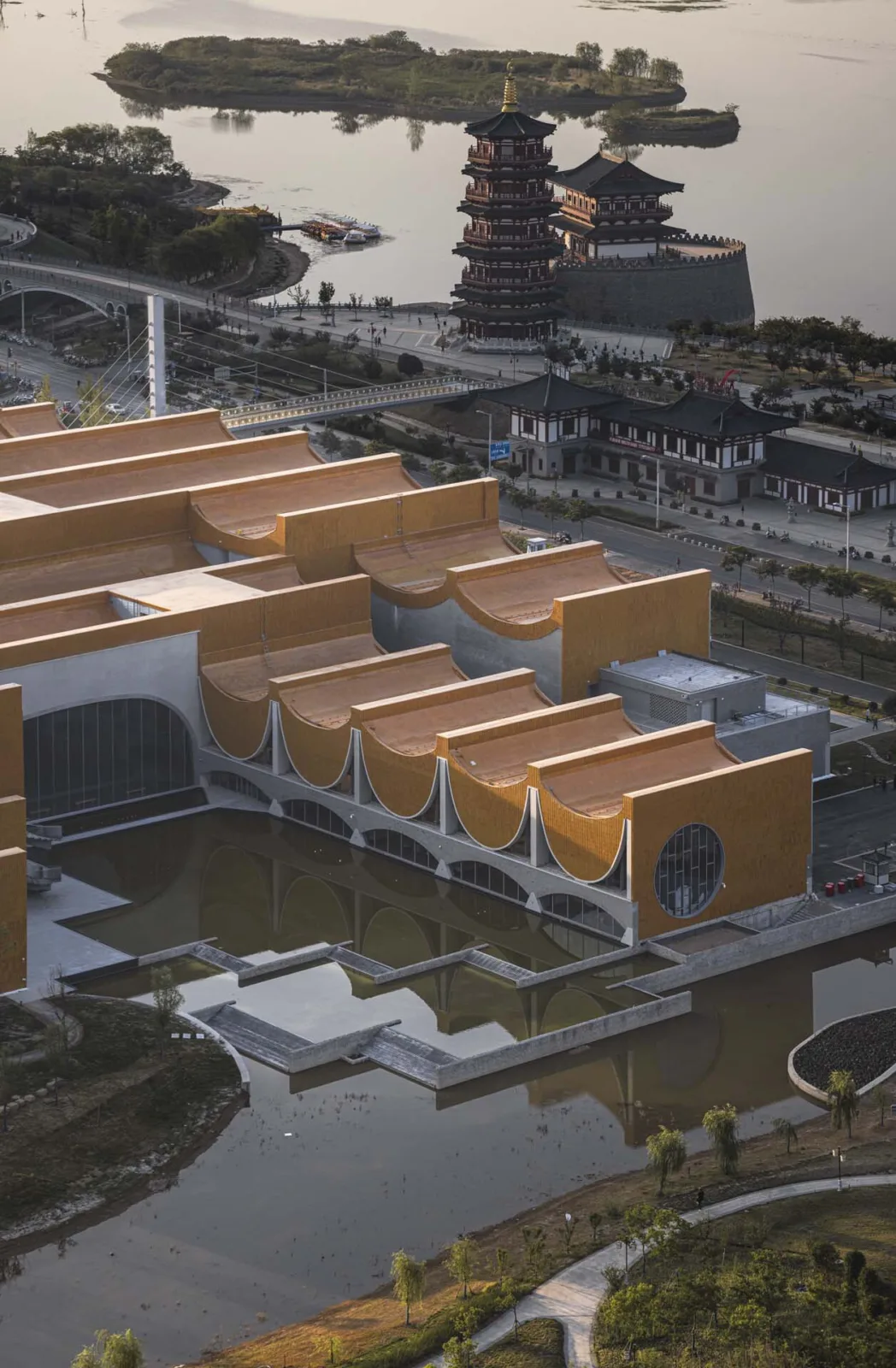
The Sui and Tang Grand Canal Cultural Museum serves as a key project within the national canal cultural strategy for the new era and is also an important cultural initiative of the 13th Five Year Plan. Situated in the northwest corner of the Laohe River mouth within Luoyang’s urban area, the museum houses multiple functional zones including exhibition spaces, public leisure areas, research and conference facilities, and cultural relic storage. It is a comprehensive canal-themed museum that integrates cultural relic preservation, scientific research exhibitions, and public education.
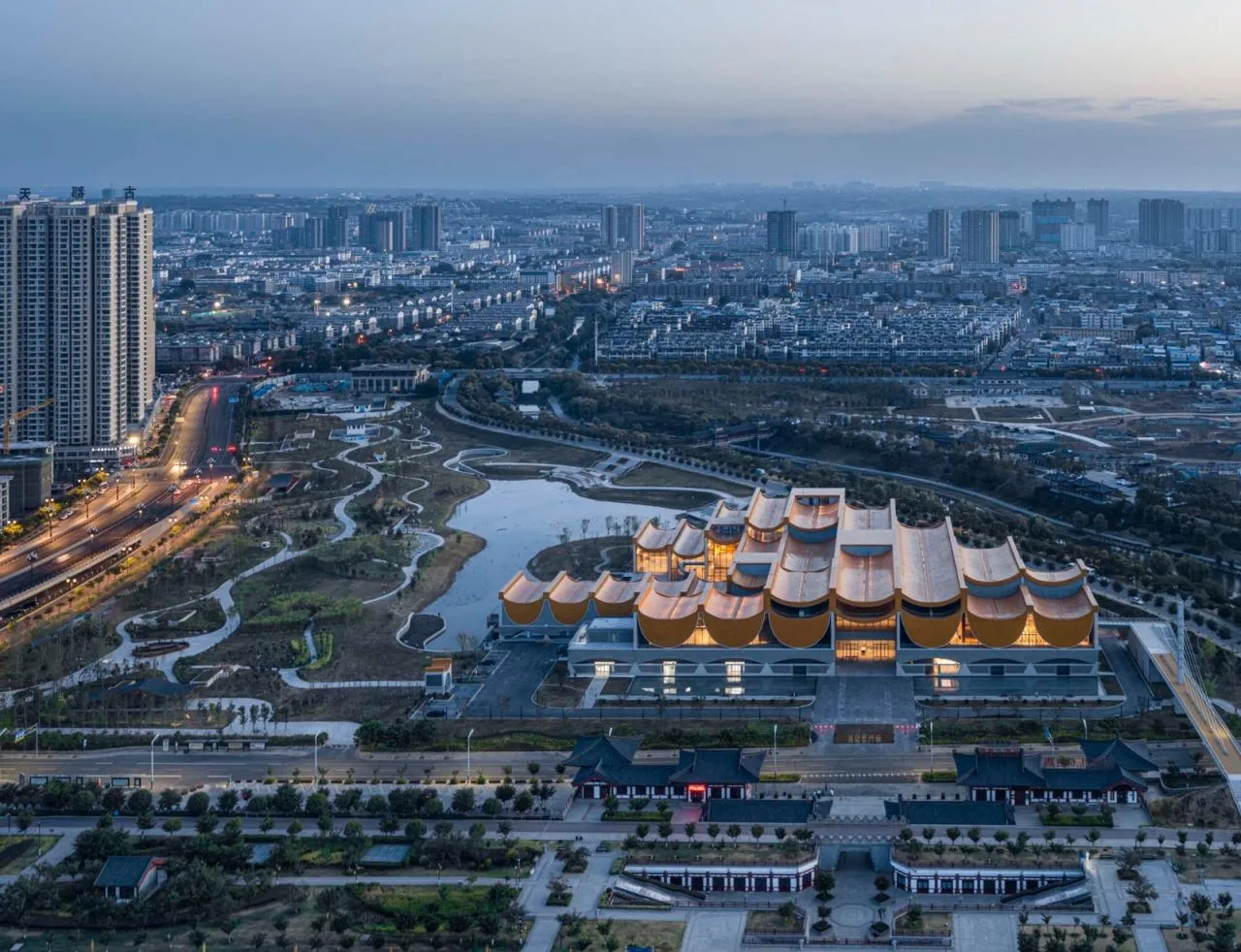
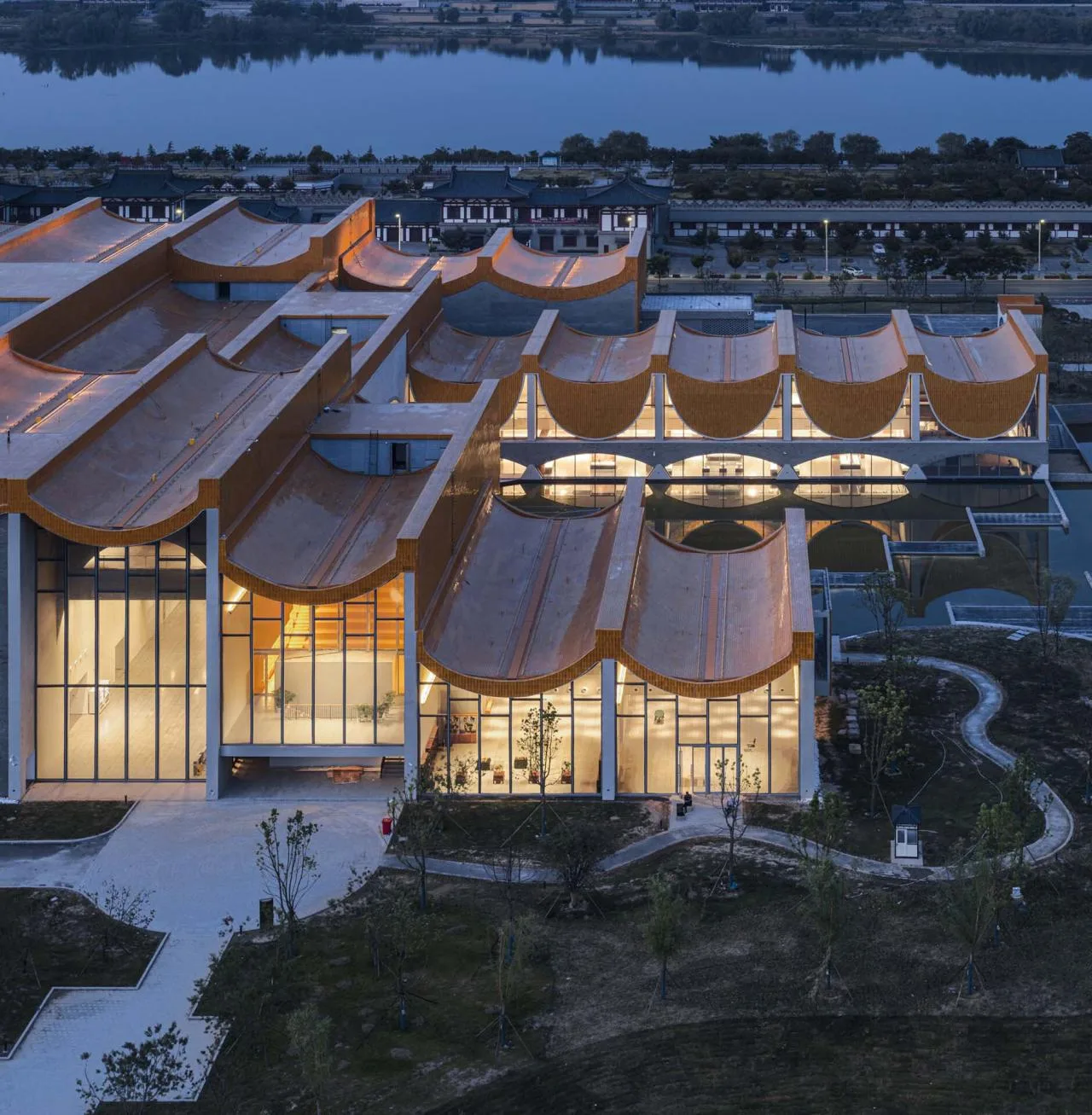
The architectural design is defined by the triangular site located at the confluence of the Luo and Qiao Rivers, which naturally limits spatial organization. The museum’s layout respects and echoes the central axis of the Tang-style architectural complex “Juehe Zhuying” along the Luo River embankment. Internally, a layered and progressive spatial arrangement is employed to mitigate the effects of the terrain, creating a continuous exhibition hall unit that offers a rich and diverse spatial experience.
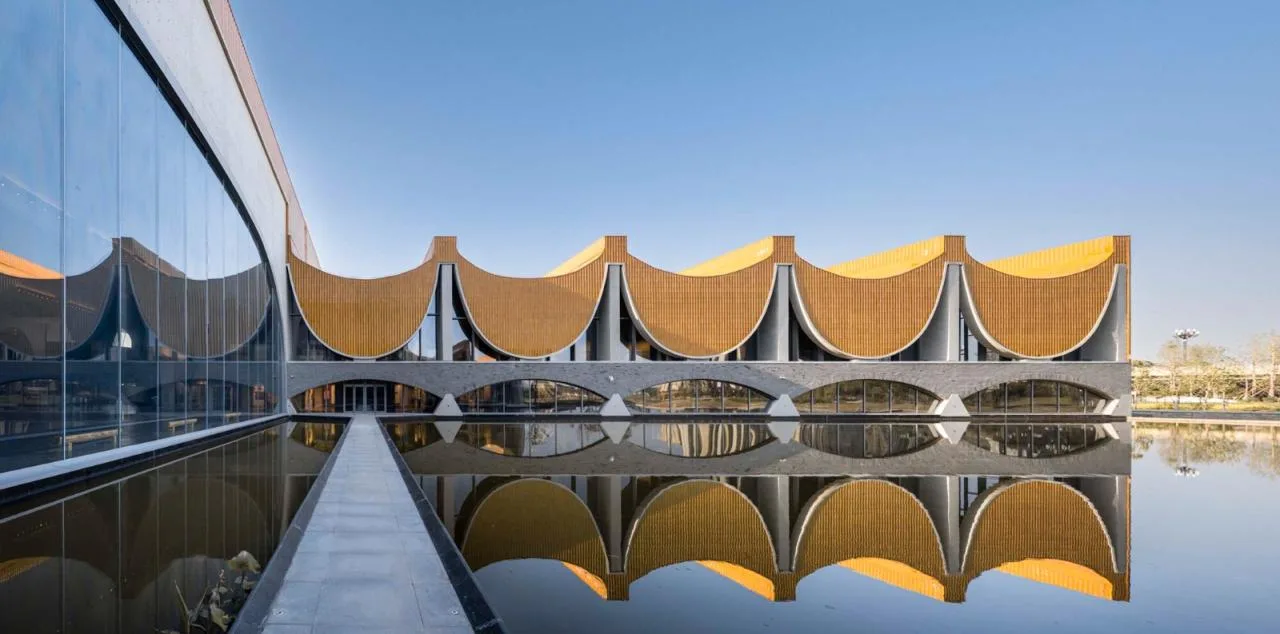
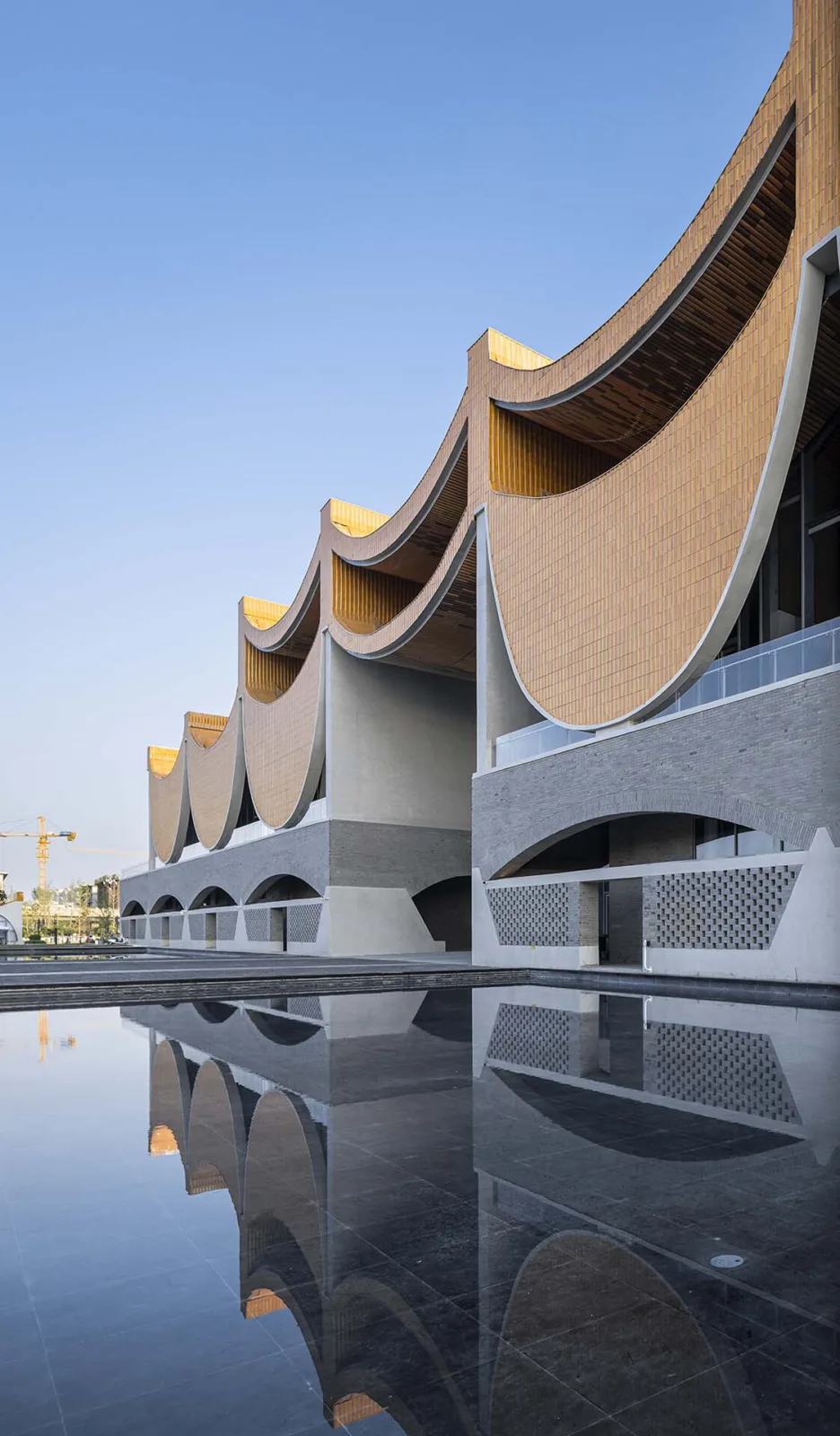
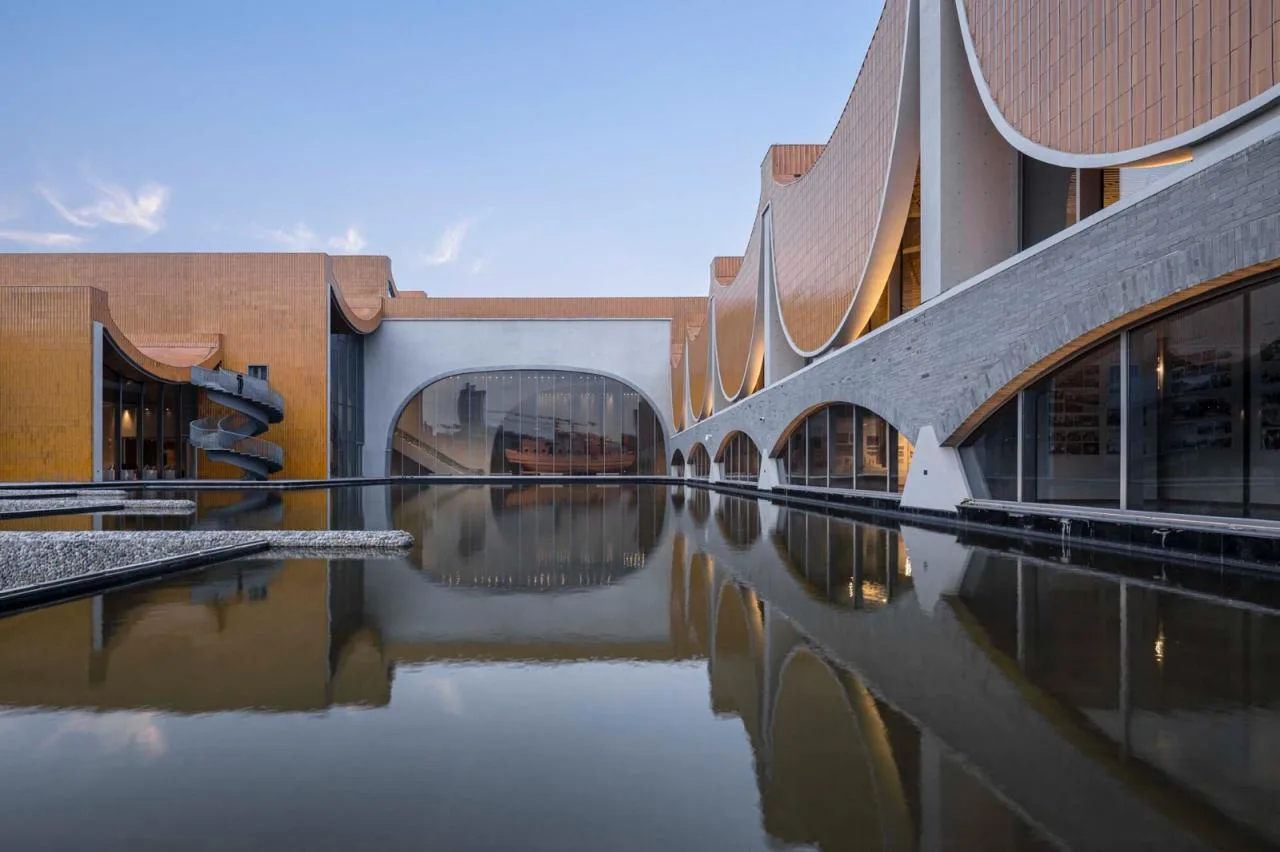
Architecturally, the museum is part of the Sui and Tang Grand Canal National Cultural Park, located within the ruins of Sui and Tang Luoyang City. The area is planned with numerous Tang-style landscape buildings. While the conventional expectation would be for the canal museum to follow Tang architectural styles, our design intentionally breaks free from traditional imitation. Instead, it explores alternative perspectives on the history and culture of the Sui and Tang dynasties.
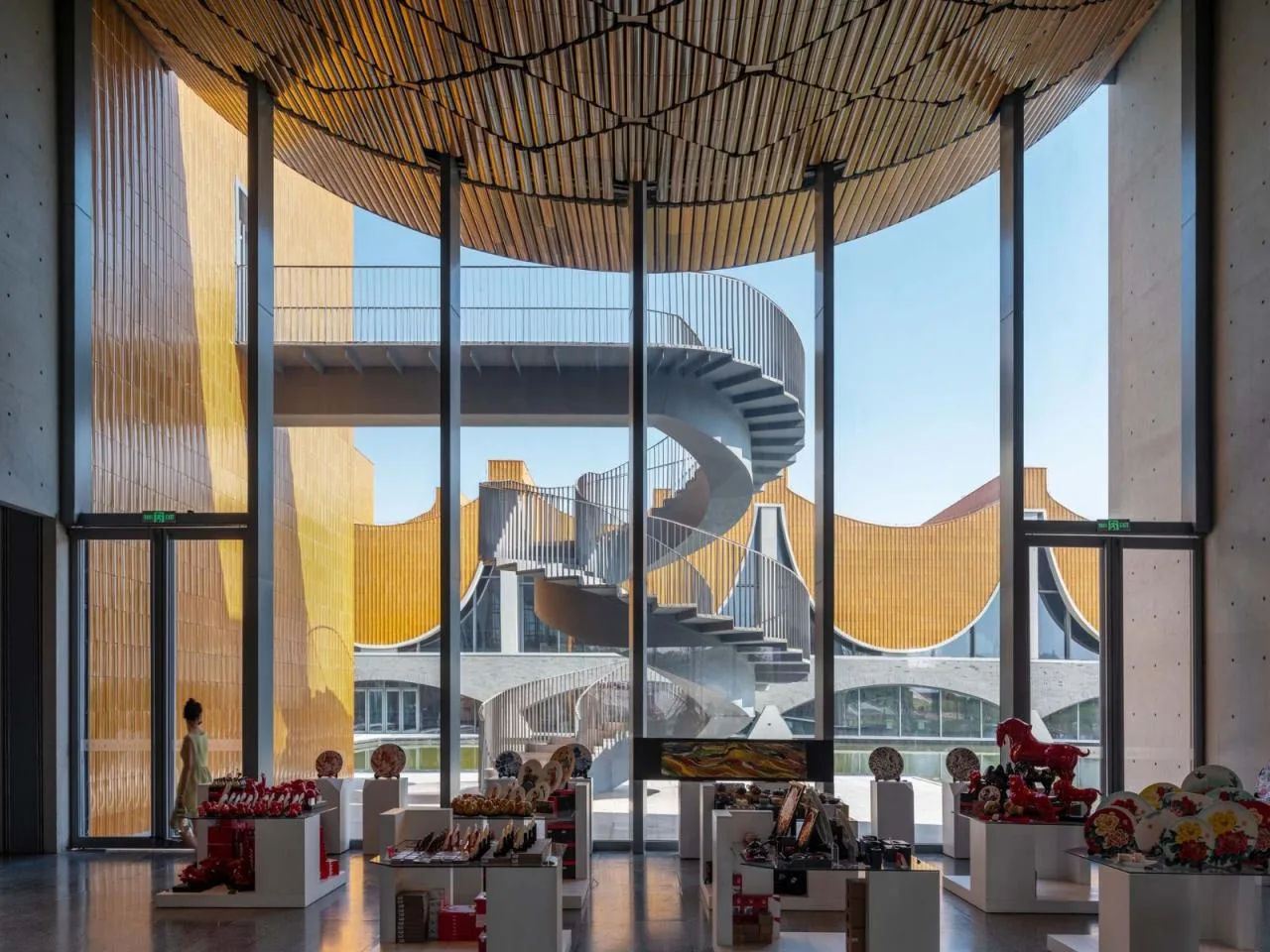
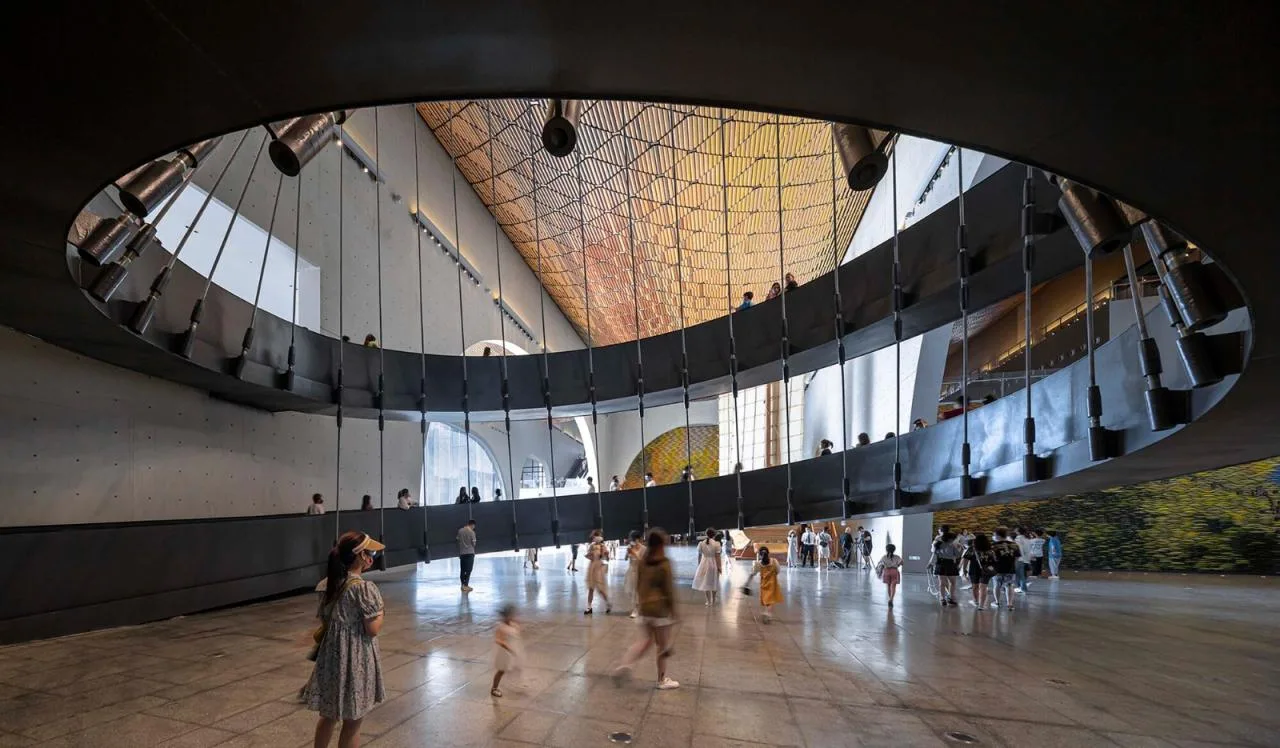
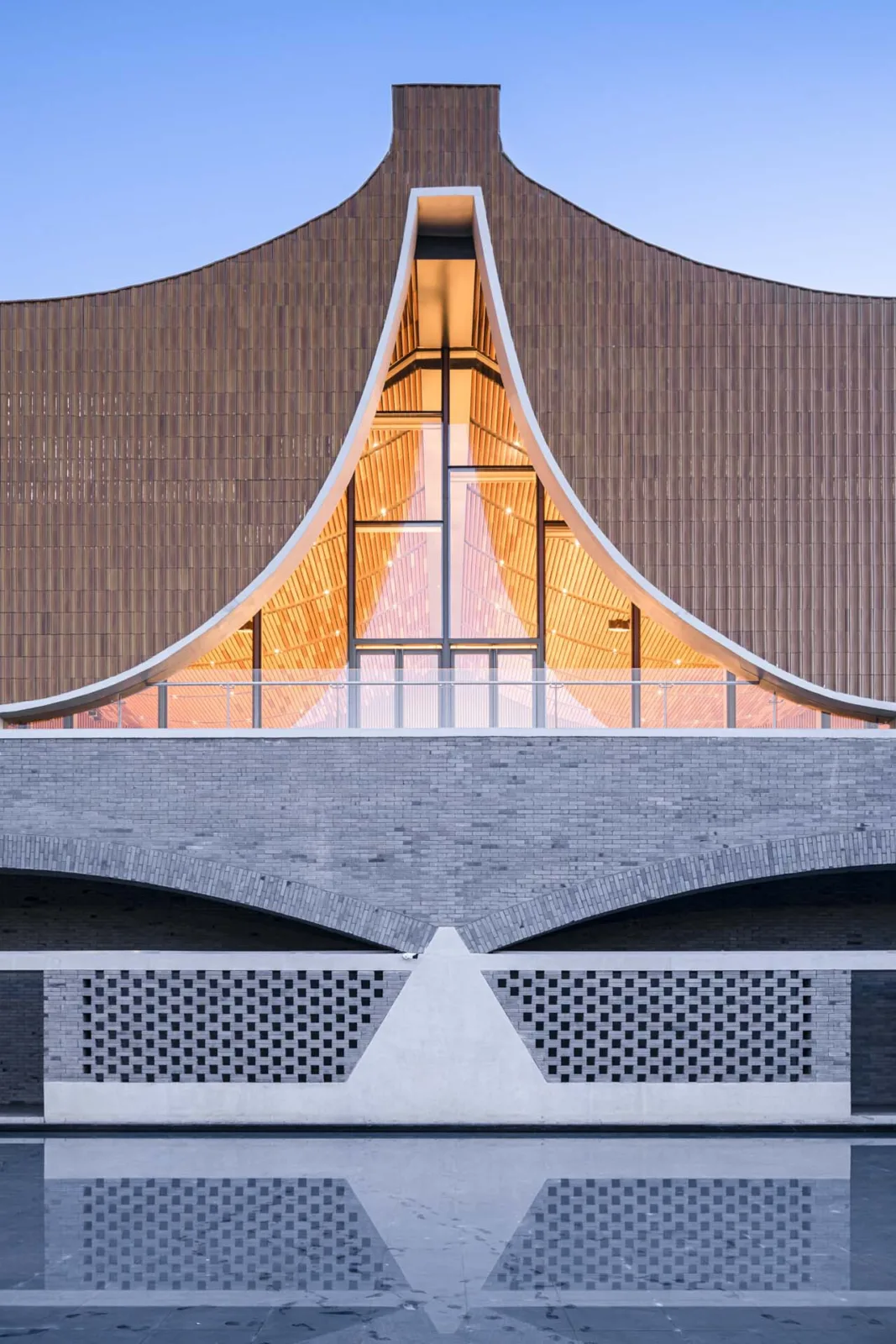
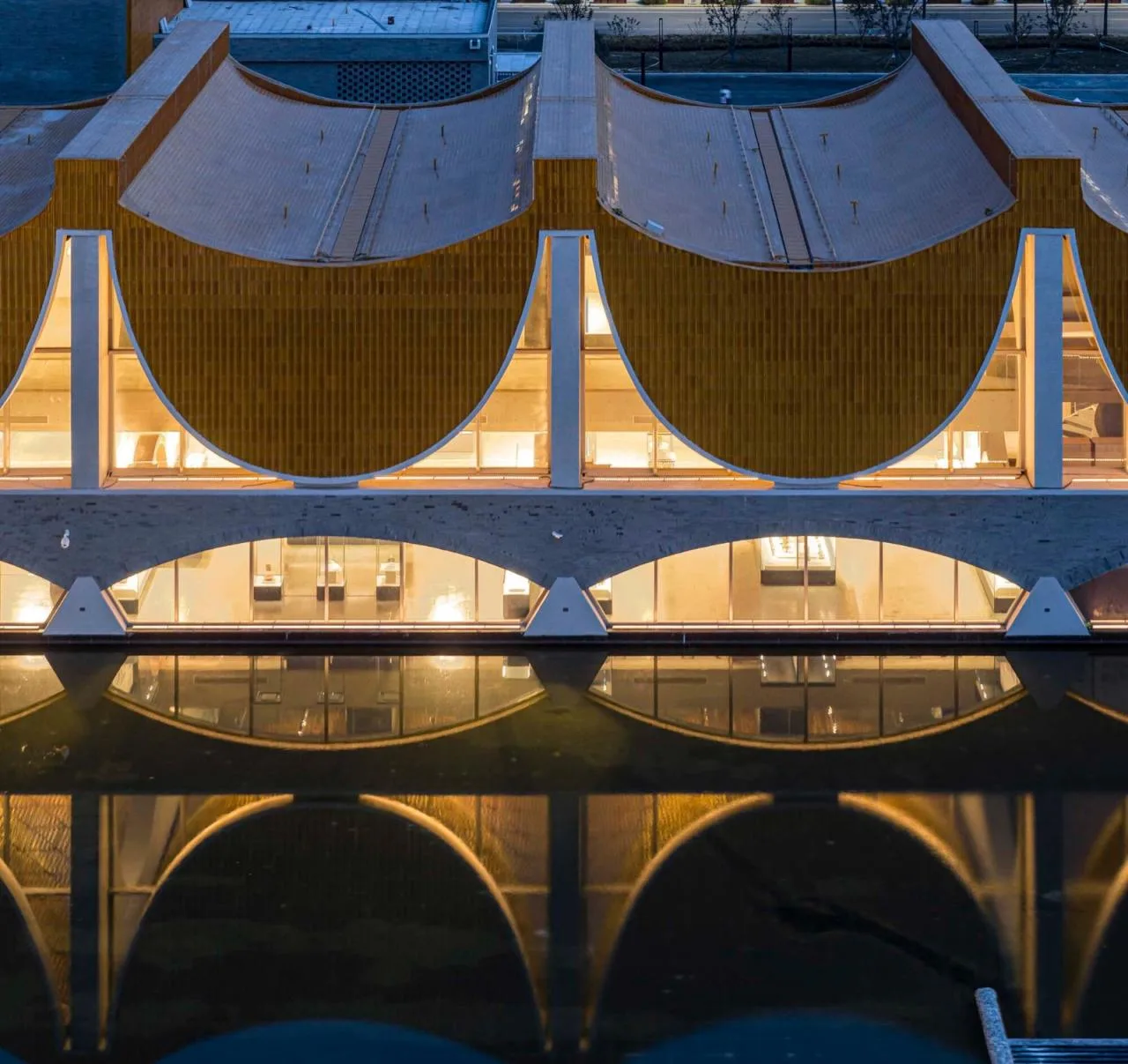
The Sui and Tang dynasties marked a pinnacle in ancient China’s technological progress, with large-scale urban planning of Luoyang spanning the Luo River. This era produced significant civil engineering achievements such as Mingtang, Tiantang, the Longmen Grottoes, and the Grand Canal excavation. Drawing inspiration from the canal’s technical features, especially the arch bridge structures across the Luo River, our design replaces traditional style imitations with modern construction techniques, creating a dialogue between ancient heritage and contemporary innovation.
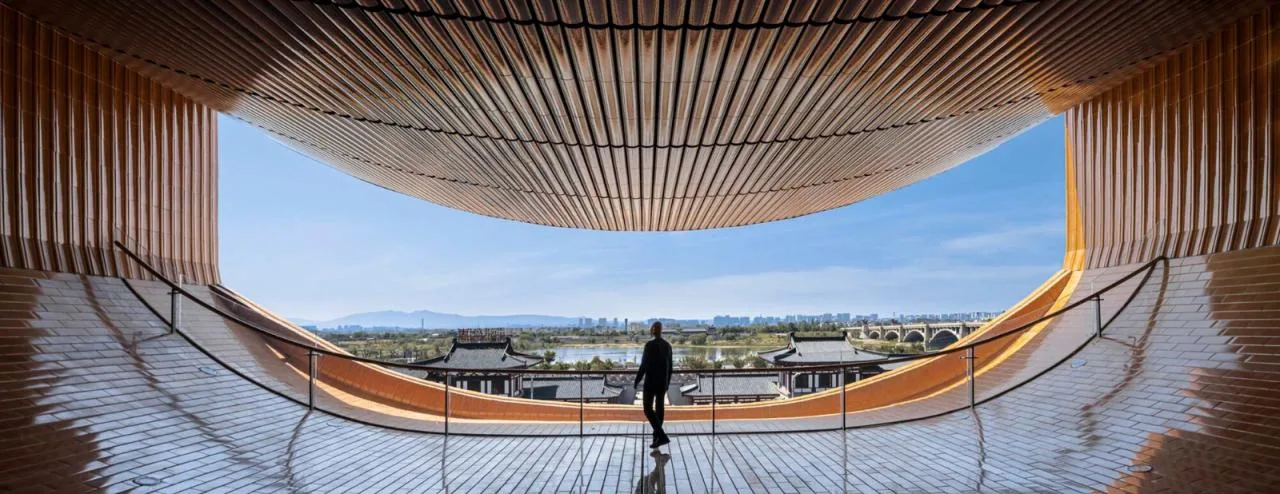
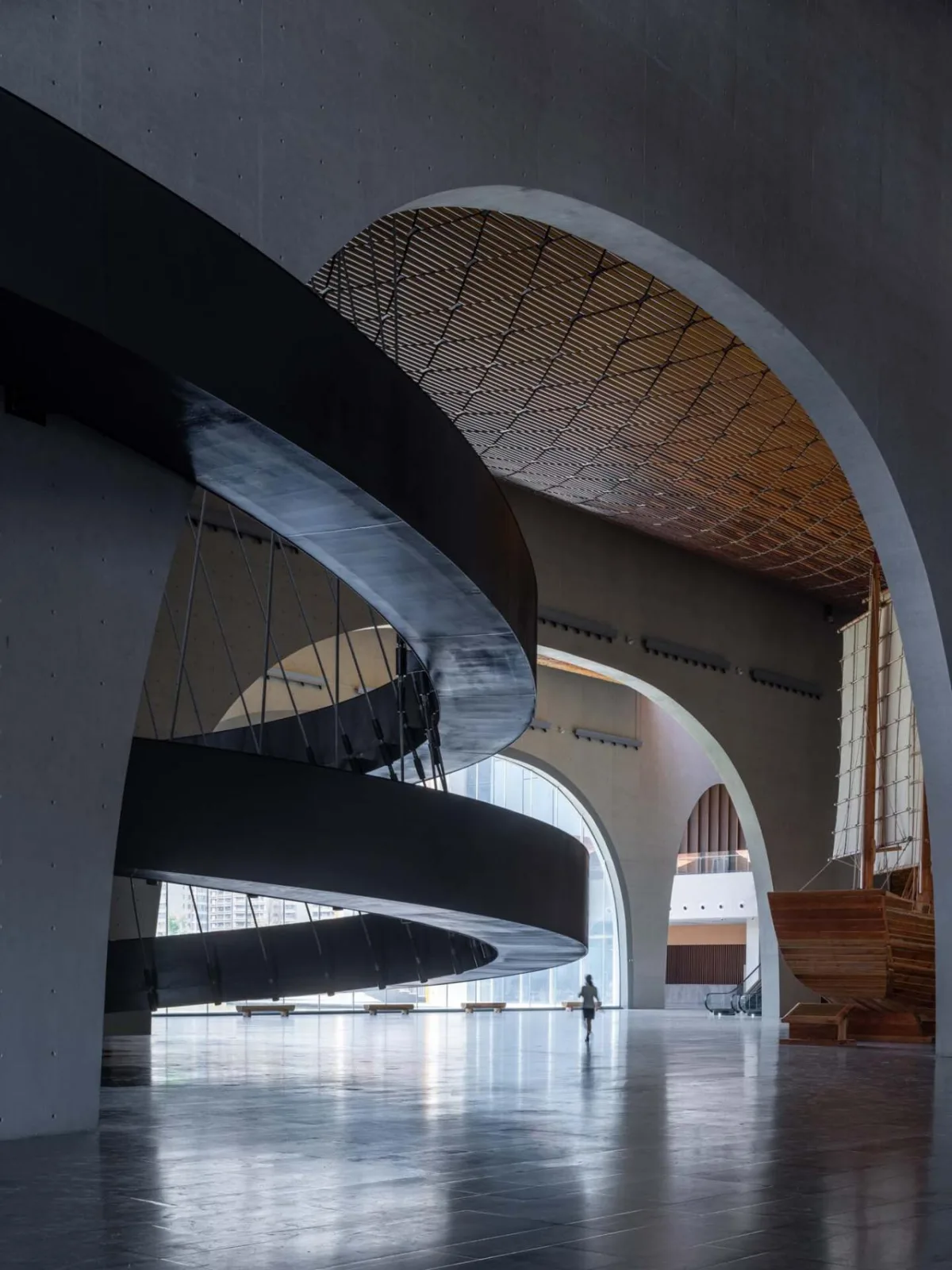
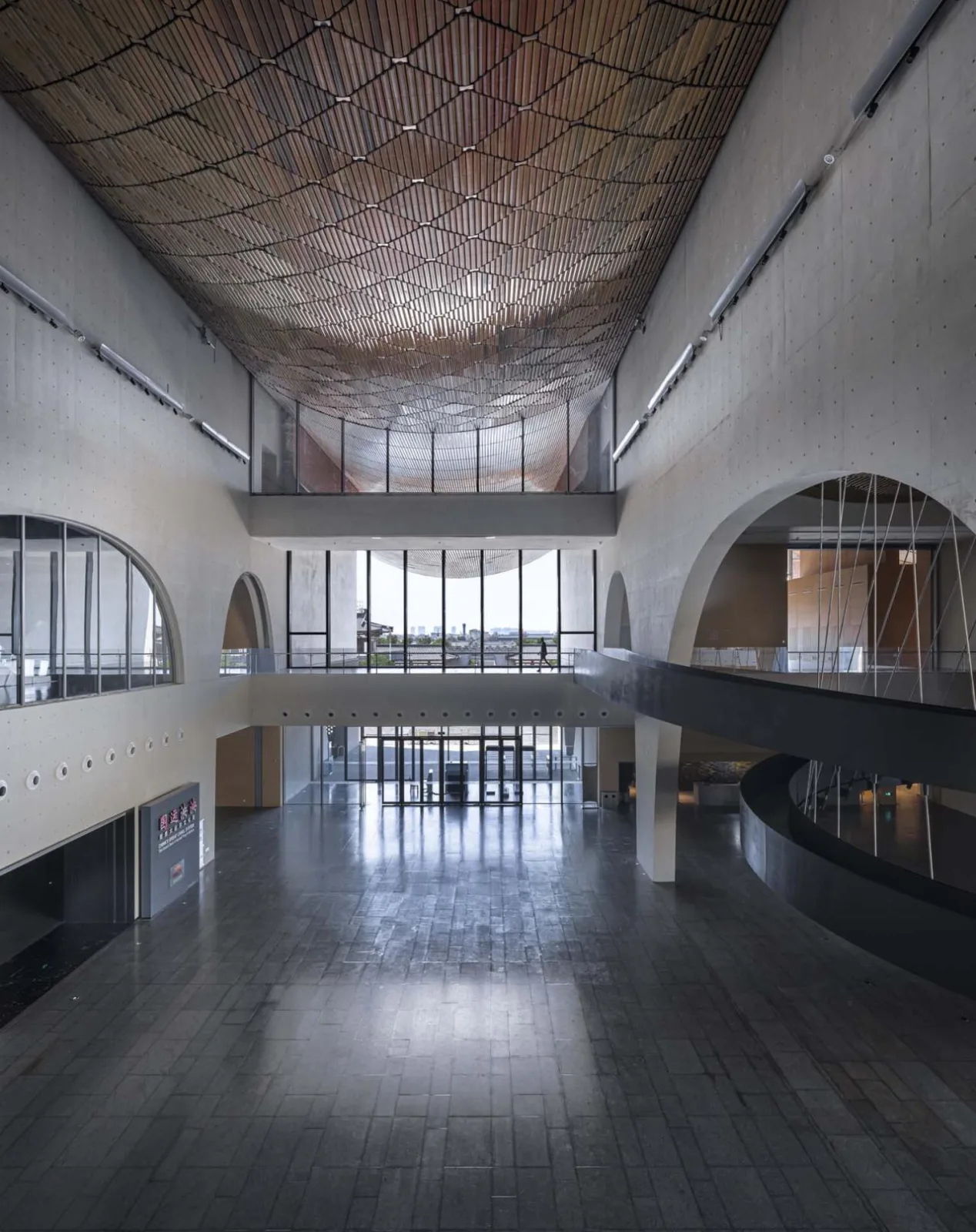
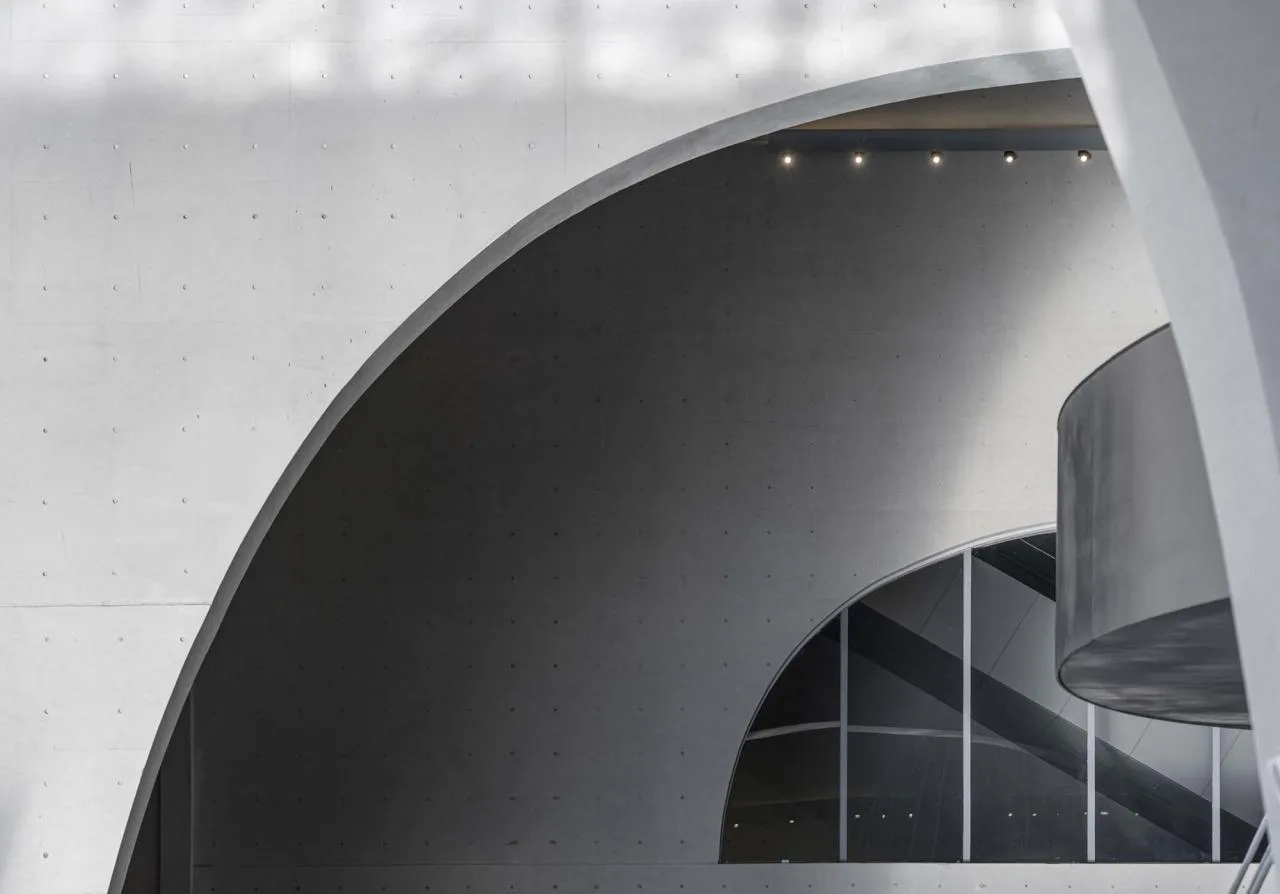
The structure employs a dual system featuring an effective bidirectional seismic design through interwoven transverse and longitudinal arch shear walls in the floor plan. Vertically, the roof comprises a closed shear wall system consisting of a prestressed concrete suspension slab, end concrete “Tangwadang” elements, and arch shear walls at the base. The planar structural duality is expressed with plain concrete poured using large templates to define the interior spatial framework. Meanwhile, the sectional duality carries historical and cultural significance through the use of traditional ceramic and green brick materials.
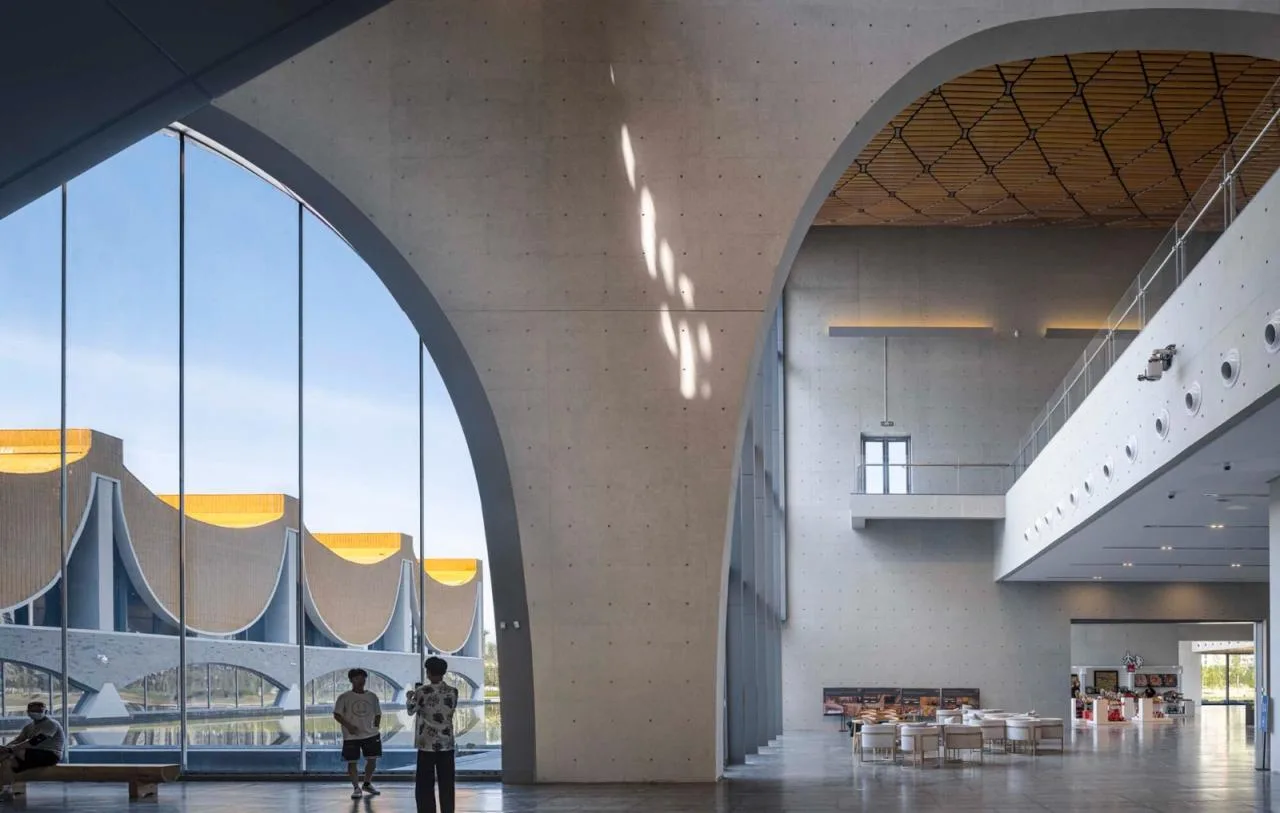
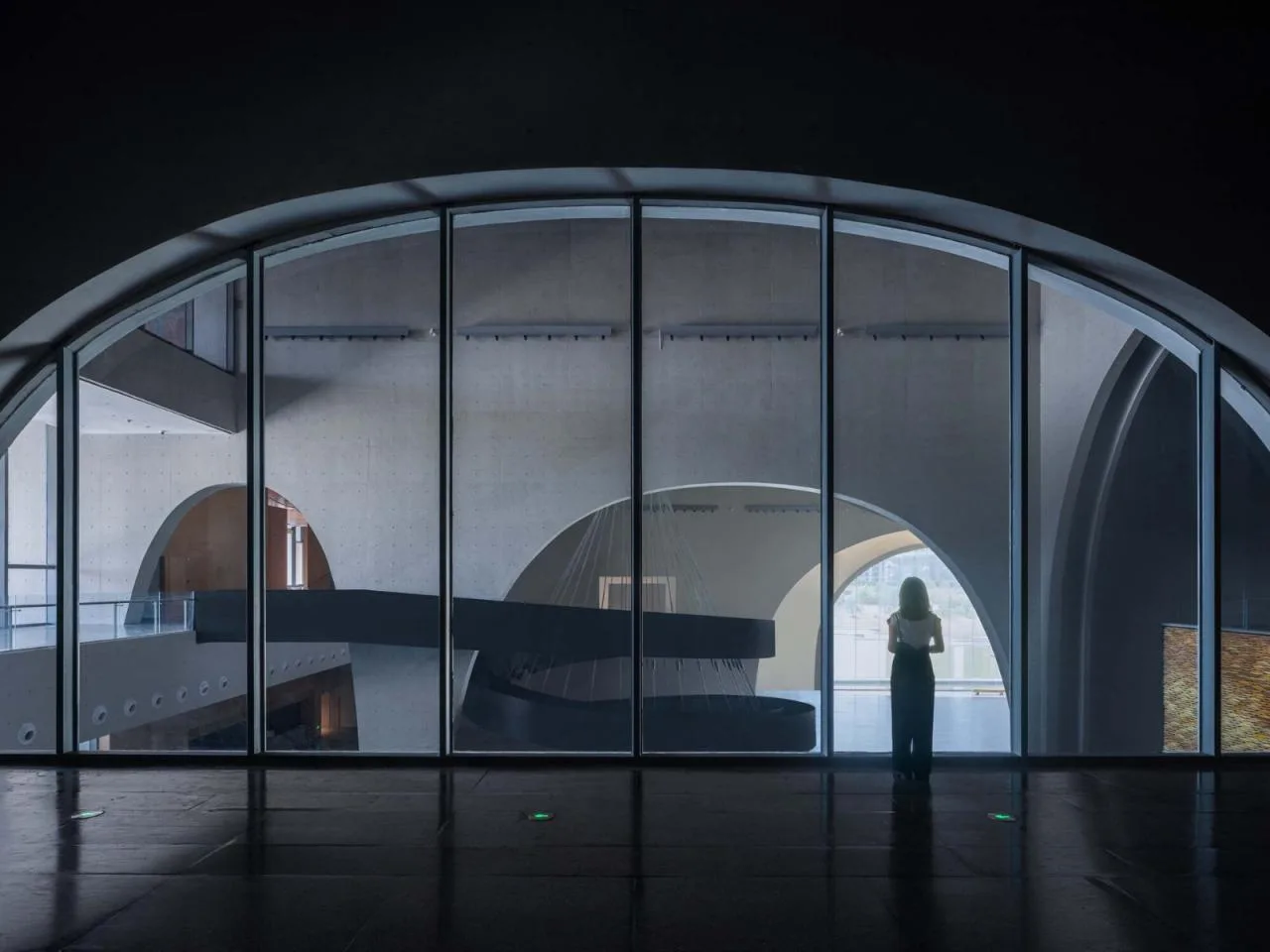
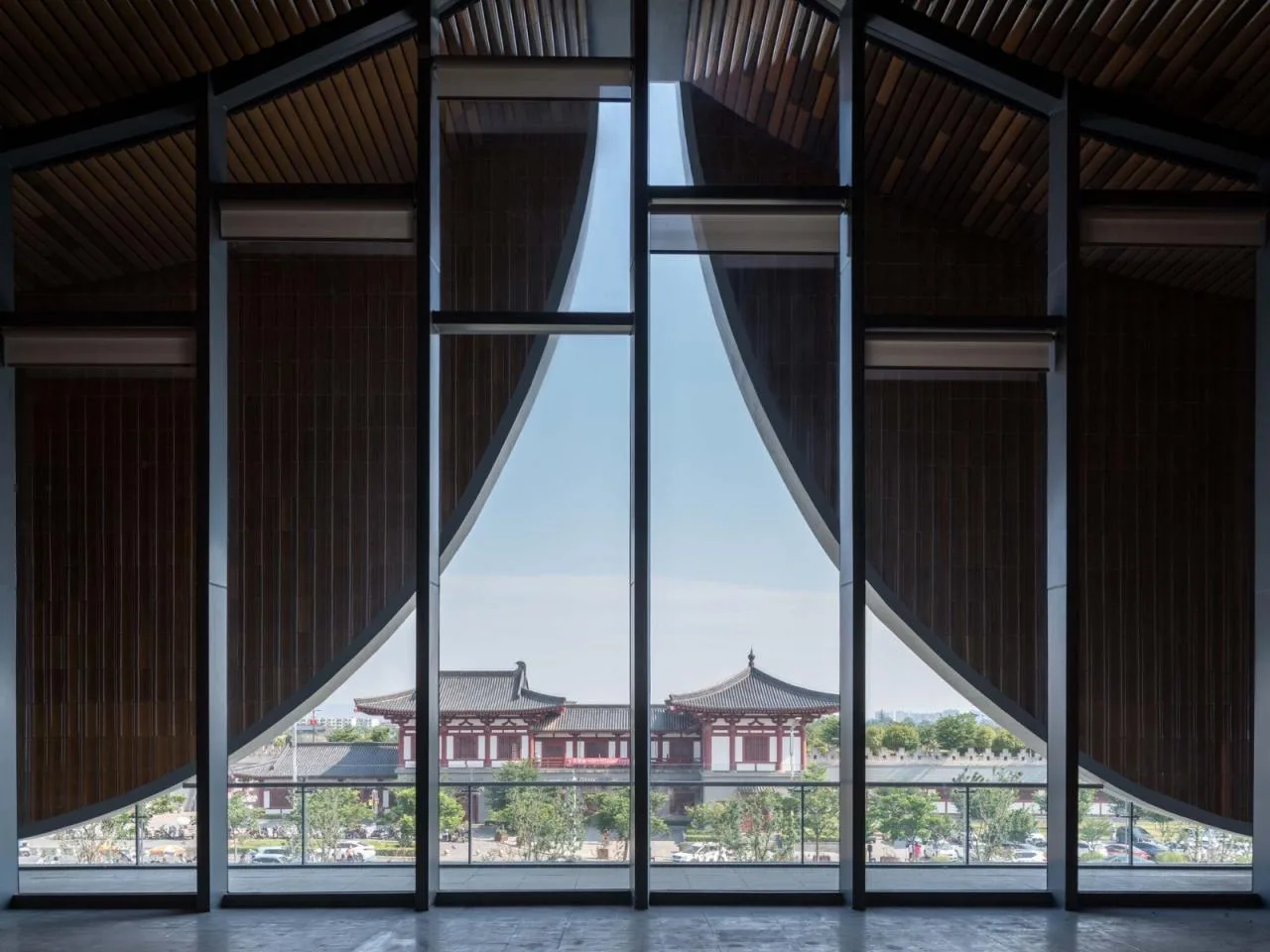
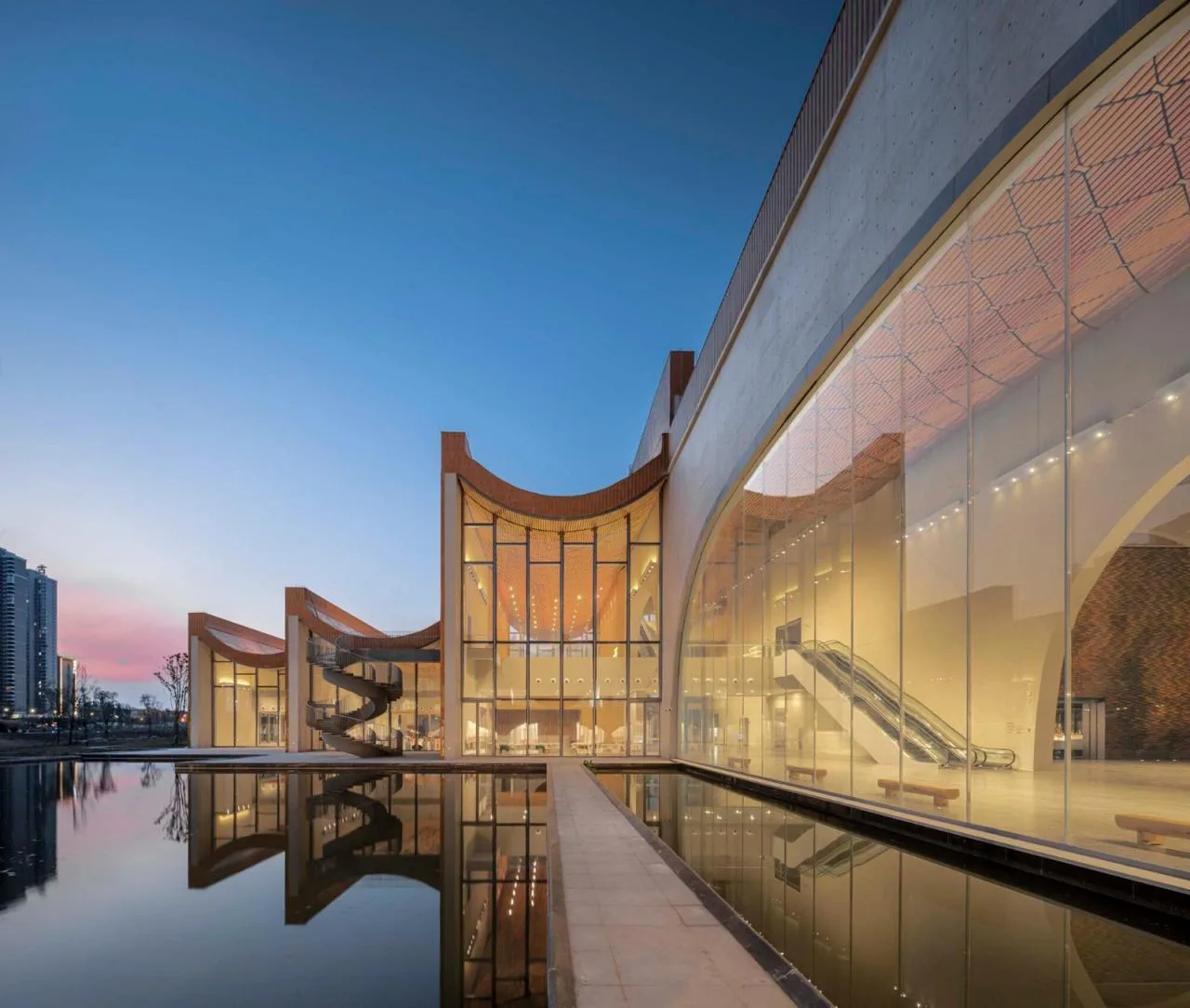
The museum’s exhibition spaces depart from the traditional closed layout typical of museums. Except for exhibits that require strict temperature and humidity control, most galleries feature an open design that blends seamlessly with public areas and the surrounding park landscapes. Functionally, the public conference area faces the Luo River to the south, while the cultural, creative exhibition, and educational experience zone opens to the Grand Canal Park in the north. This design enhances the museum’s role as a vibrant urban living room.
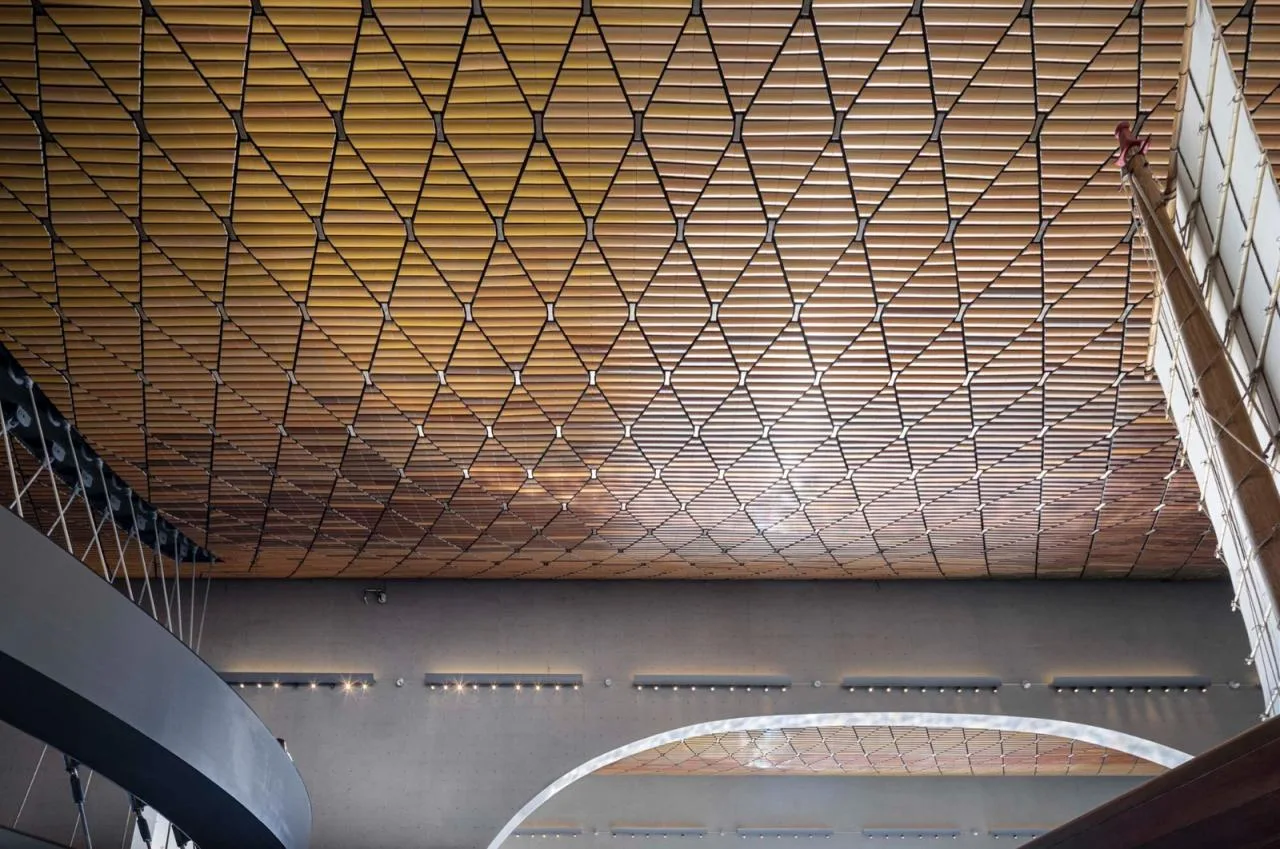
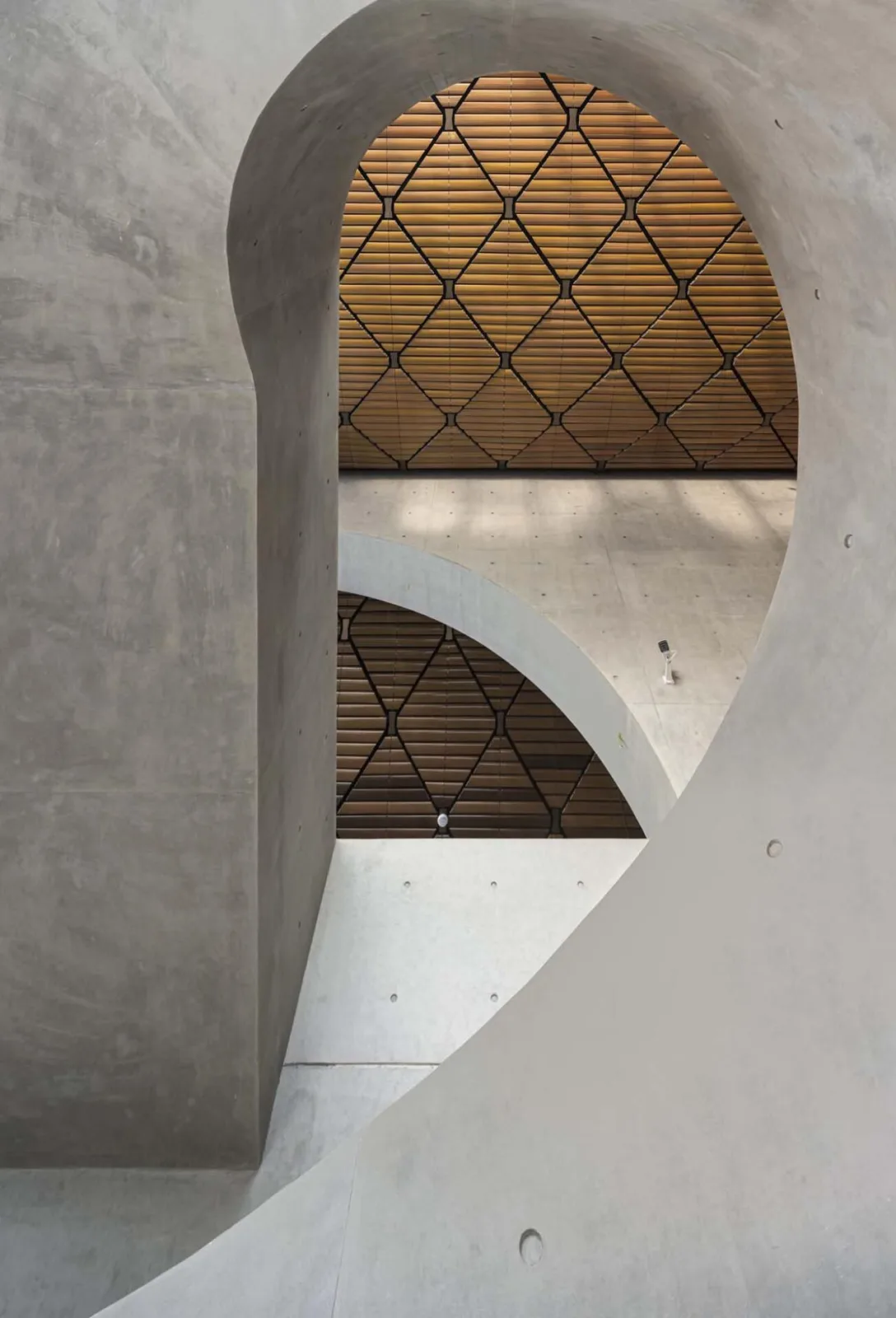
The choice of primary building materials emphasizes local sourcing — “Made in Luoyang.” Numerous enhanced Luoyang tri-colored ceramic hanging panels are used both indoors and outdoors, effectively reducing the alienation and acoustic shortcomings often caused by plain concrete interiors. The ceiling artwork, named “Yunfan,” incorporates 126,986 tri-colored ceramic units, making it the largest ceramic ceiling art piece in the world to date.
Throughout the design process, extensive discussions were held with local ceramic artists Guo Aihe and Gao Shuiwang. By combining traditional handcraft pottery techniques with modern design and production methods, the project promotes innovative development in Luoyang’s traditional ceramic industry.
Project Drawings
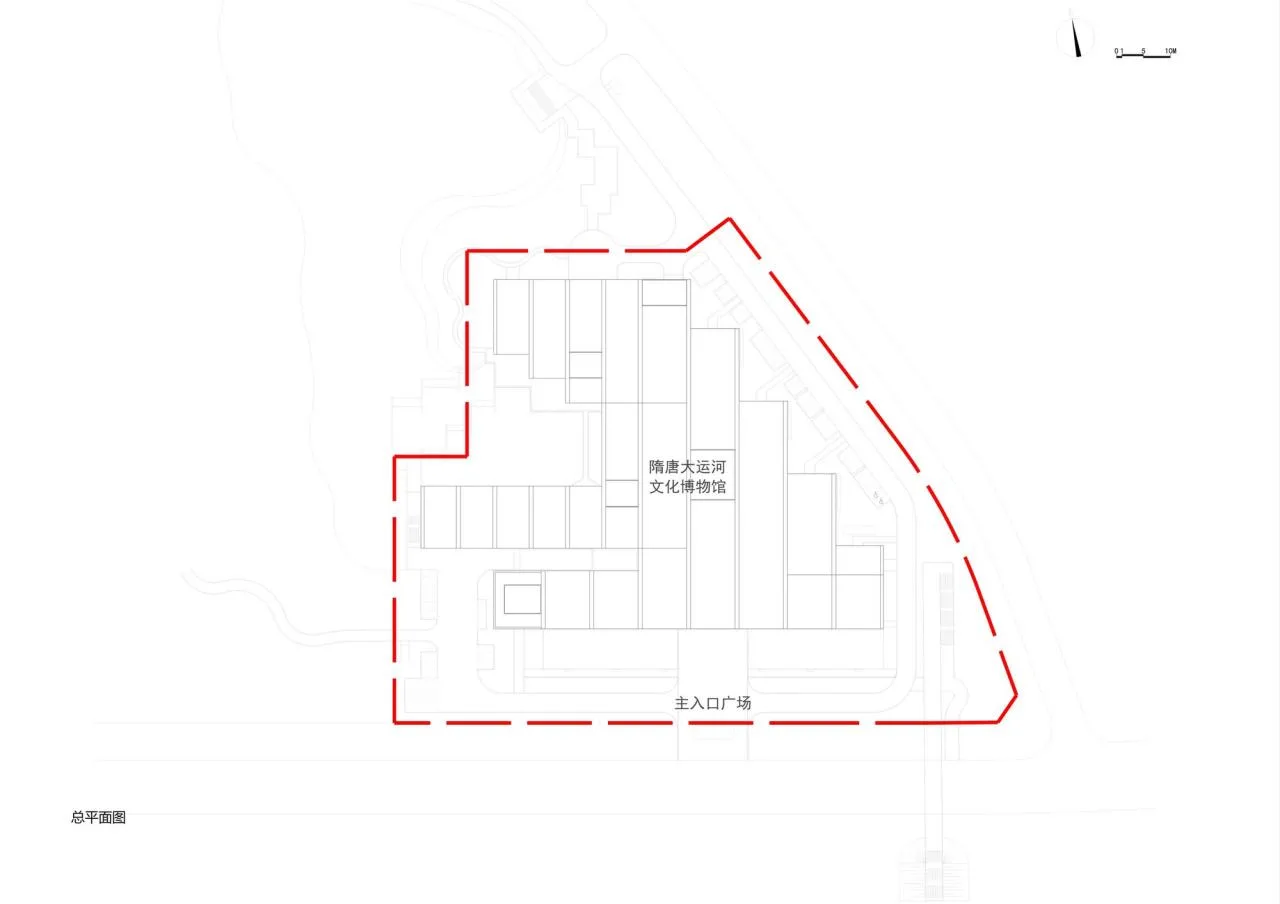
△ General Layout Plan
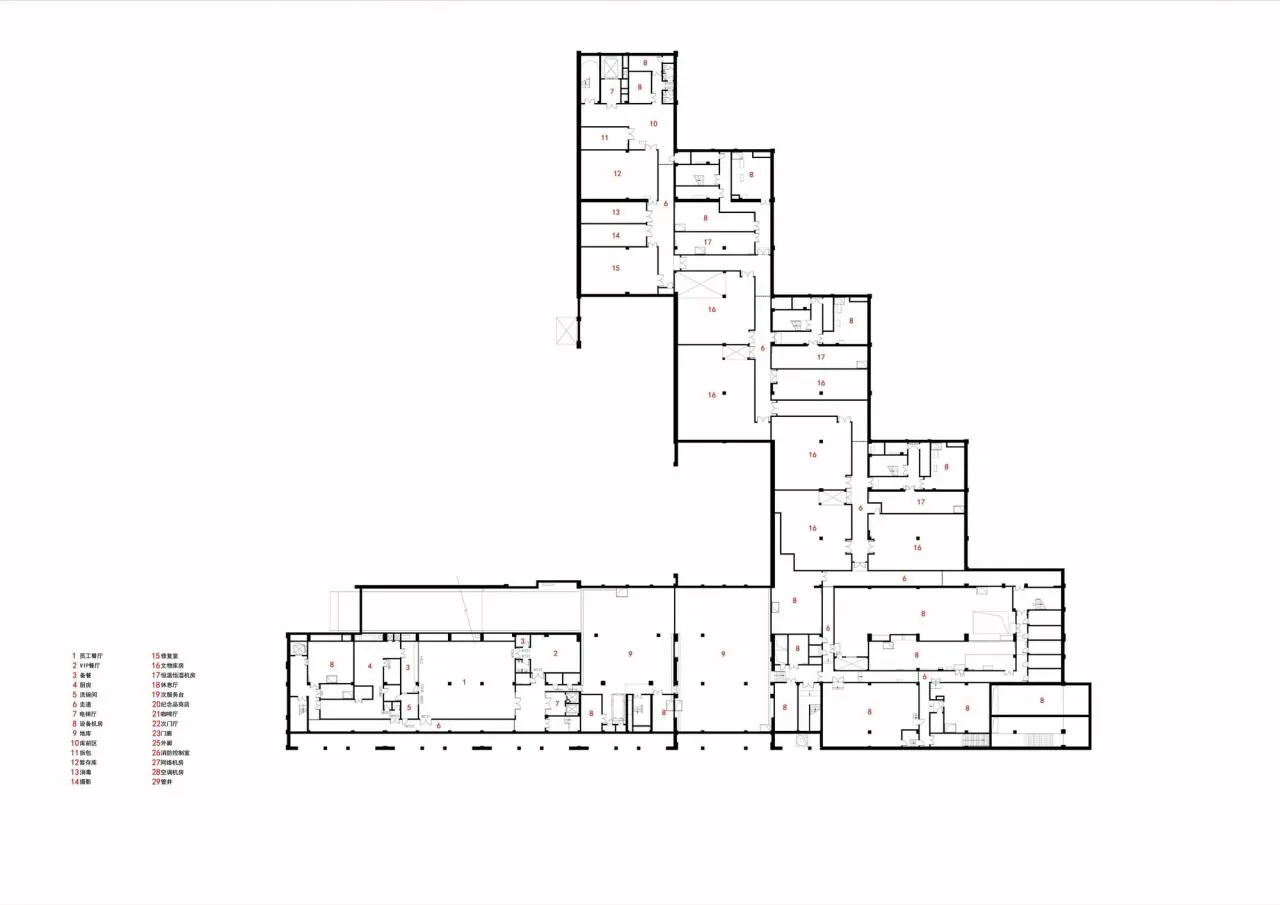
△ Basement Floor Plan
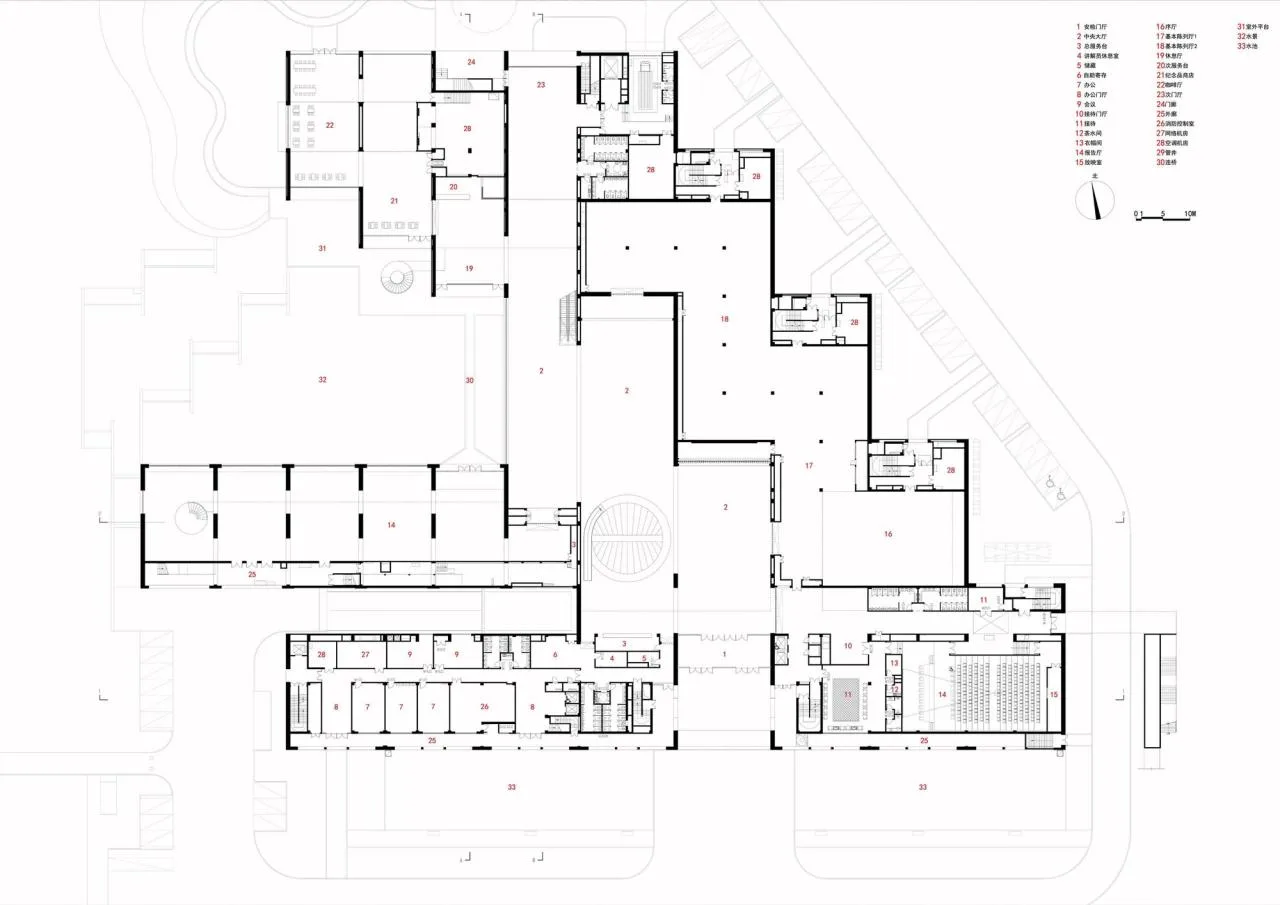
△ First Floor Plan
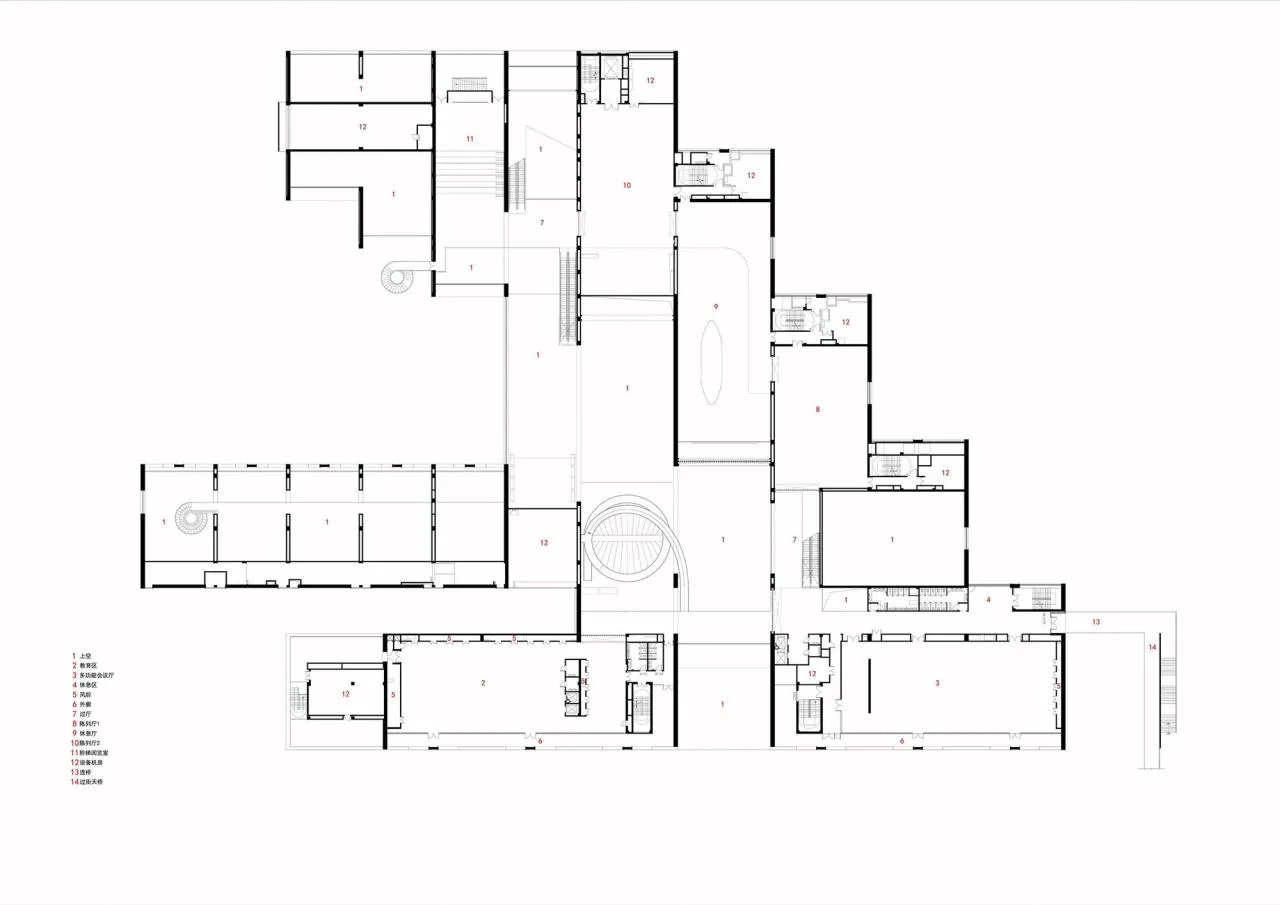
△ Second Floor Plan
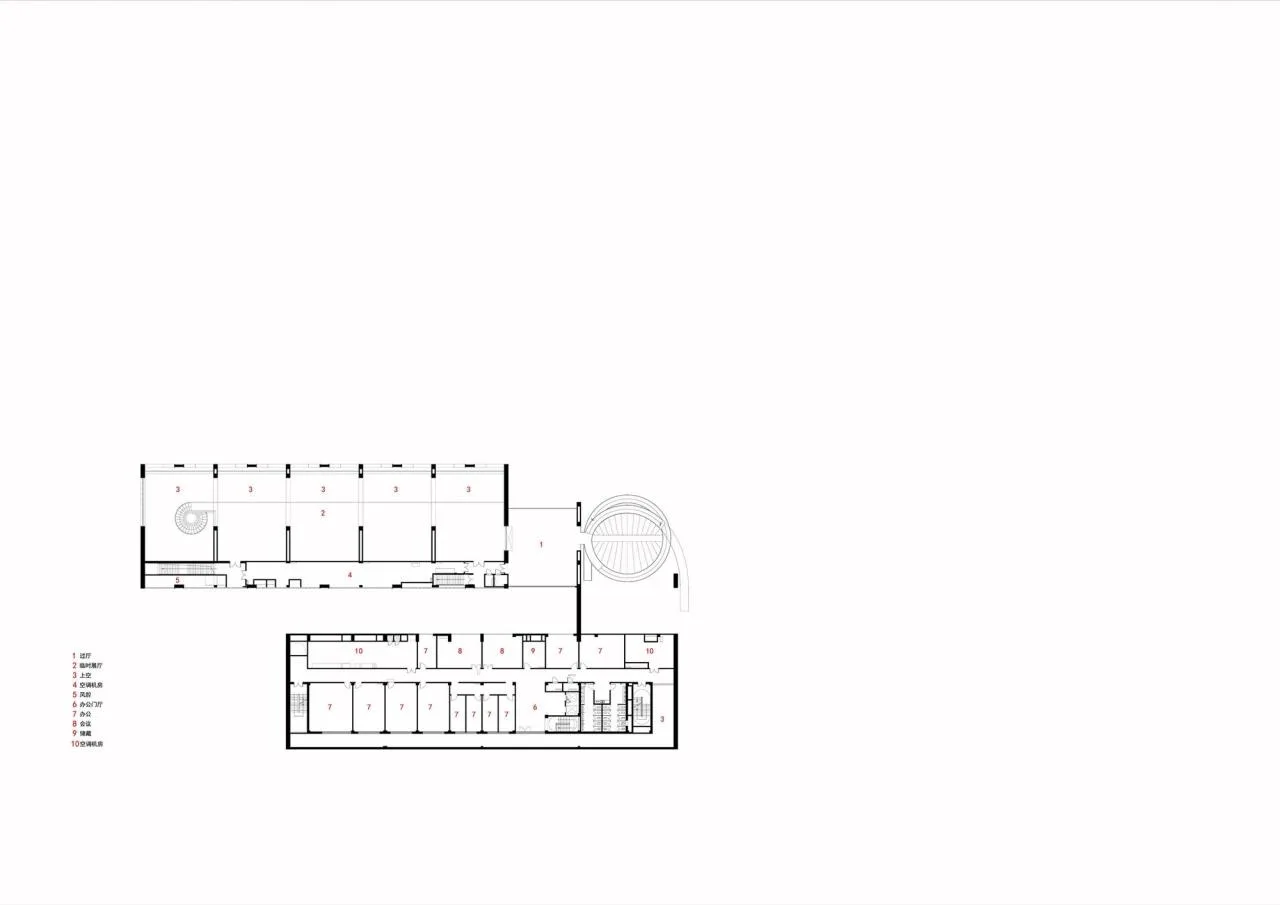
△ Mezzanine Plan
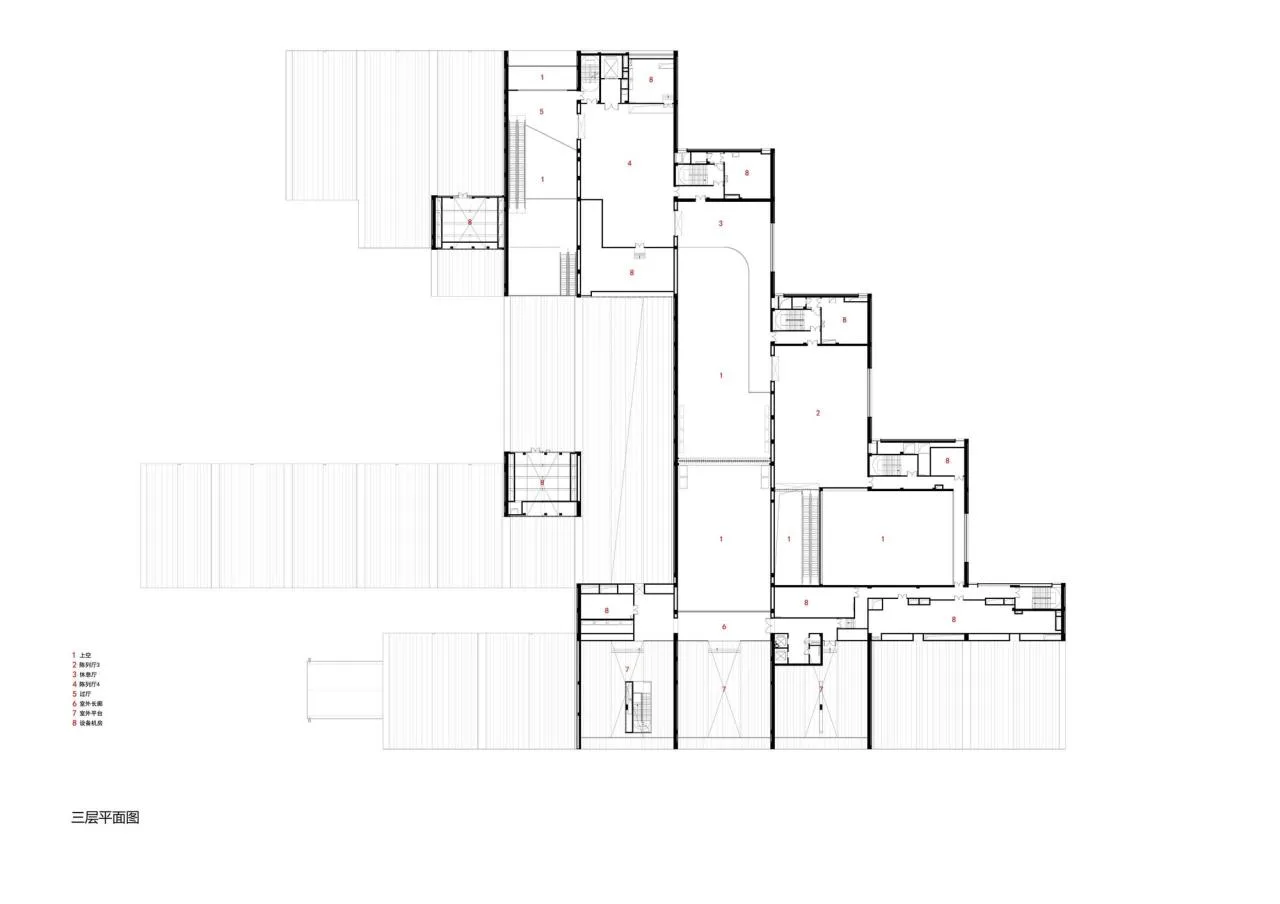
△ Third Floor Plan
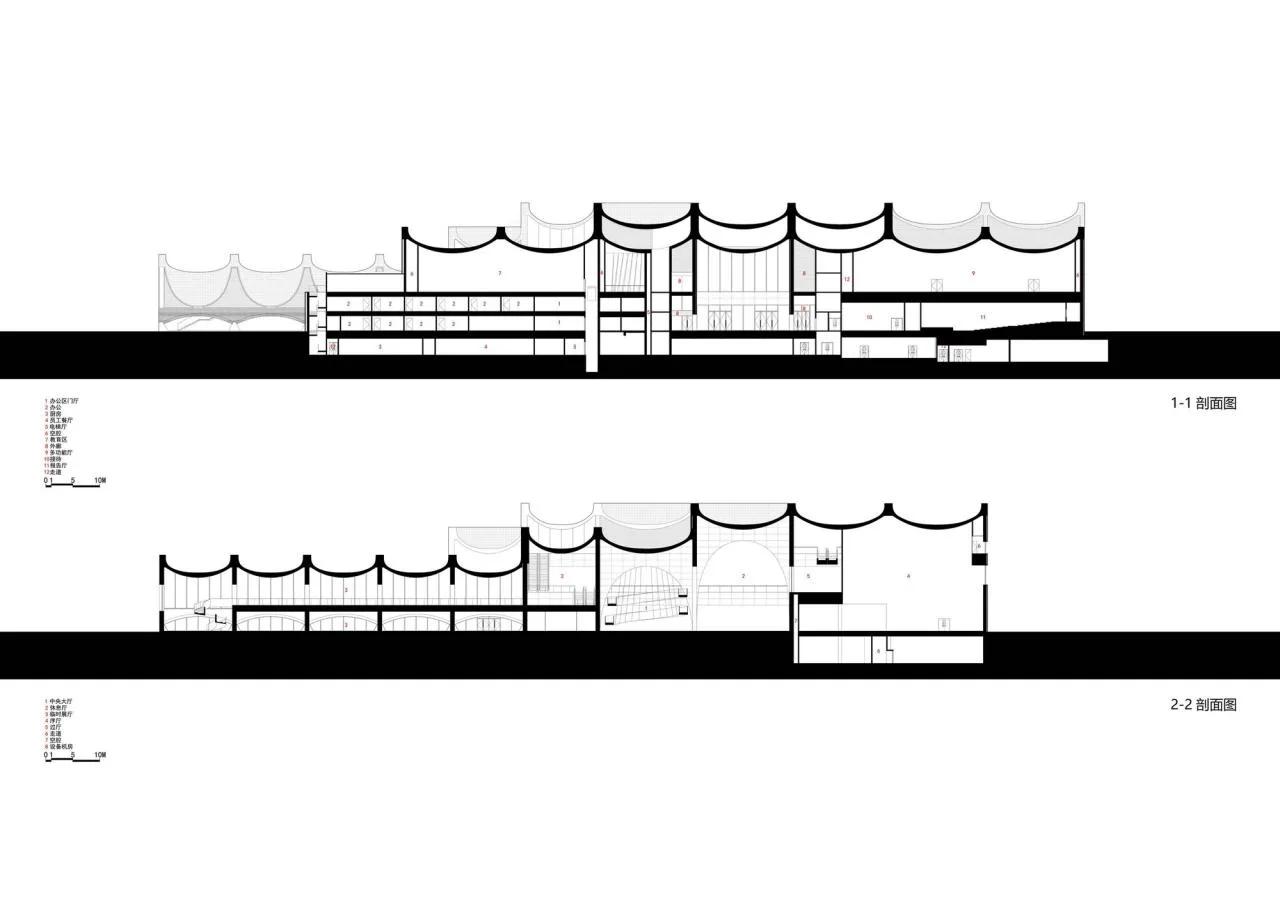
△ Section Diagrams
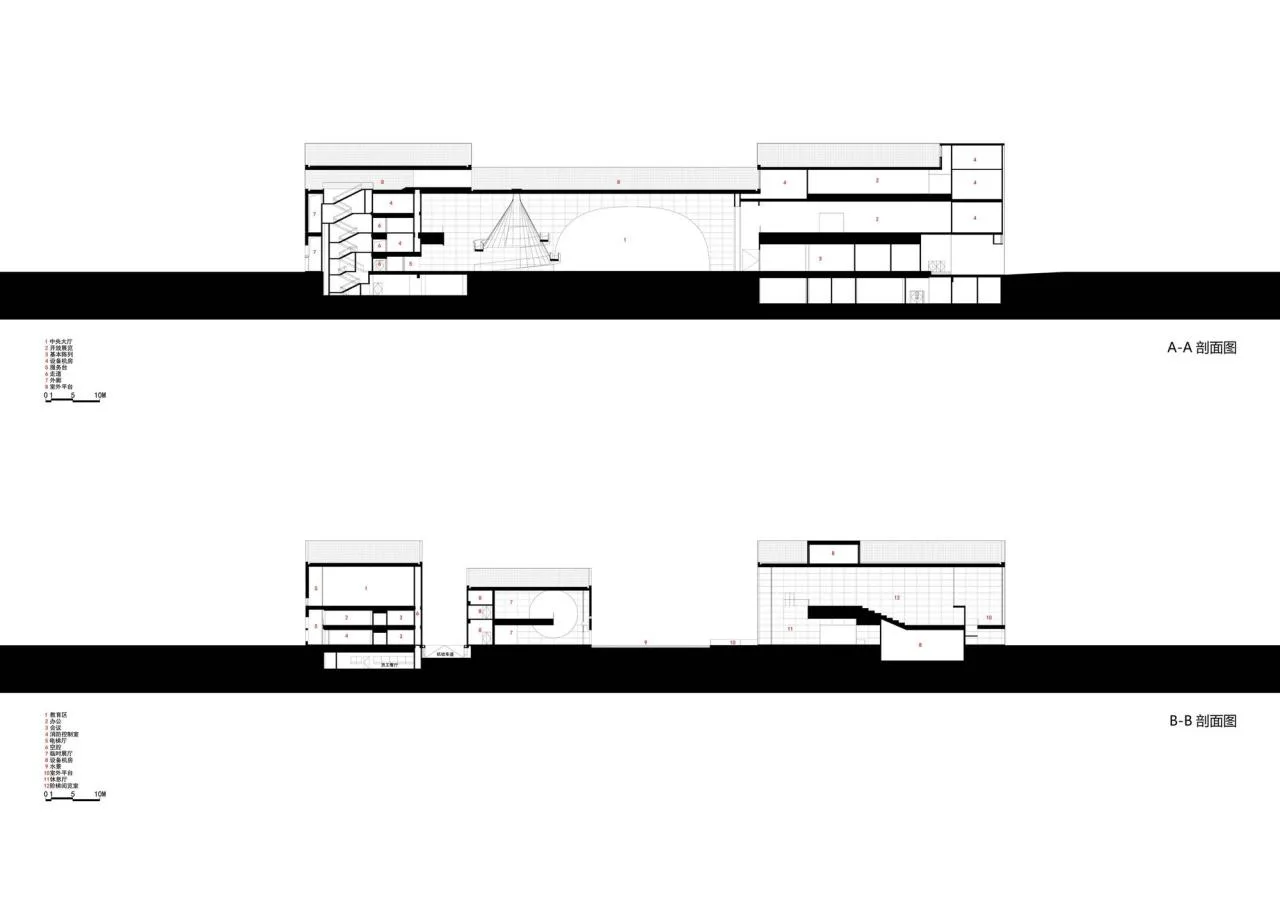
△ Section Diagrams
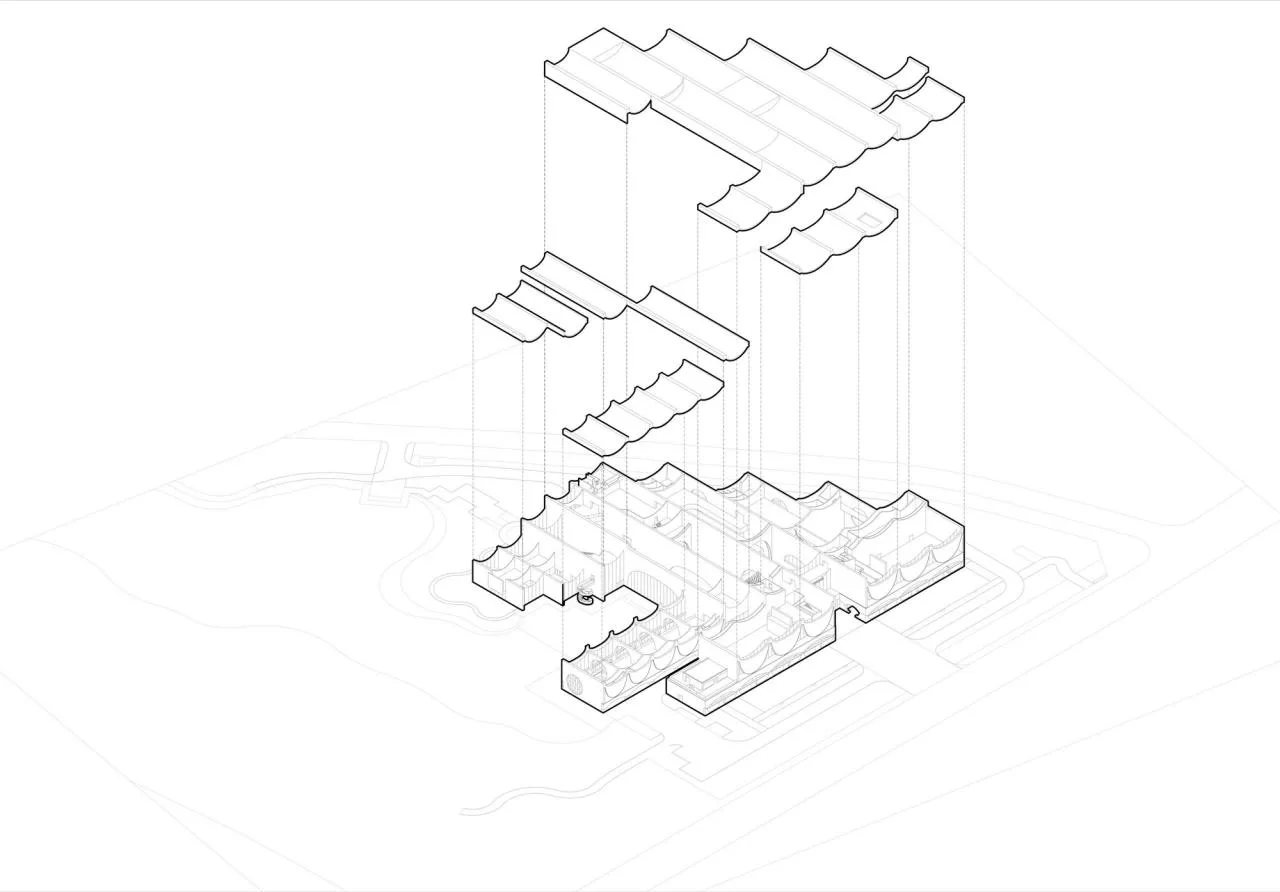
△ Axonometric Diagram
Project Information
Architect: Tongji Ruoben Architecture Studio
Area: 32,986 m²
Project Year: 2022
Photographer: Yao Li
Lead Architect: Li Li
Design Team: Gao Shan, Wang Wensheng, Xiao Yunfeng, Zhou Jun, Hu Haining, Ye Wen, Hao Jing, Li Sa, Shen Yinzhu, Li Jiyuan, Zhang Suzhi, Li Yanxi
Structural Design: Zhang Zhun, Zhang Jinxiao, Ma Weiqiang, Gao Wenhong, Gao Ge
Tri-colored Pottery Production: Guo Aihe, Guo Jiaqi (indoor), Gao Shuiwang (outdoor)
Lighting Design: Yang Xiu, Bian Chen, Du Yiting, Chen Xingru, Cai Wenjing, Li Binhao
Curtain Wall Design: Jin Ying, Yan Yunbin, Zhang Liang, Li Genheng
Resident Architect: Li Sa
Resident Structural Engineer: Kong Yichen
Exhibition Outline: China World Cultural Heritage Center, Chinese Academy of Cultural Heritage
Exhibition Design: Shanghai Kuanchuang International Cultural Technology Co., Ltd
Exhibition and Construction: Tianyu Culture Group
Construction Contractor: Henan Sanjian Construction Group Co., Ltd
Client: Luoyang Cultural Relics Bureau
Location: Luoyang














Must log in before commenting!
Sign Up