
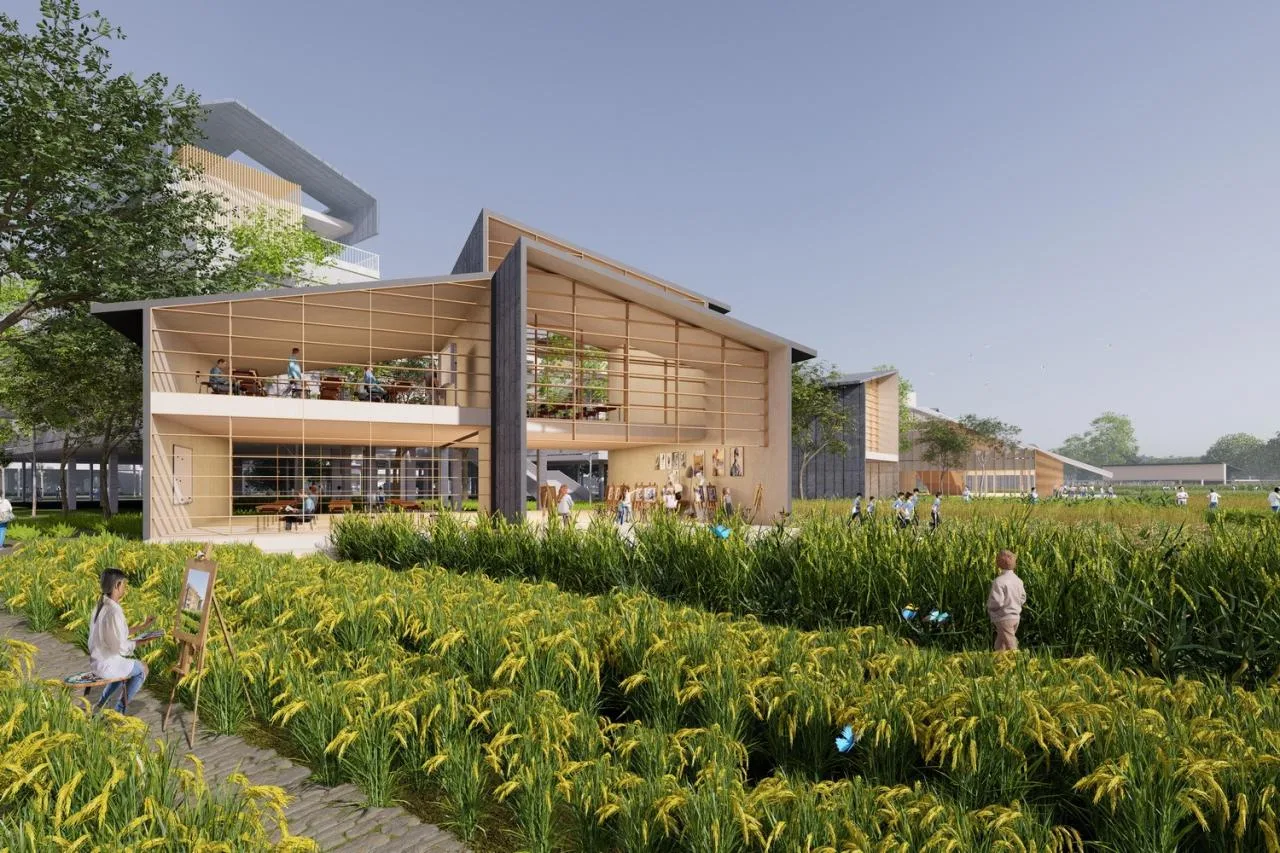
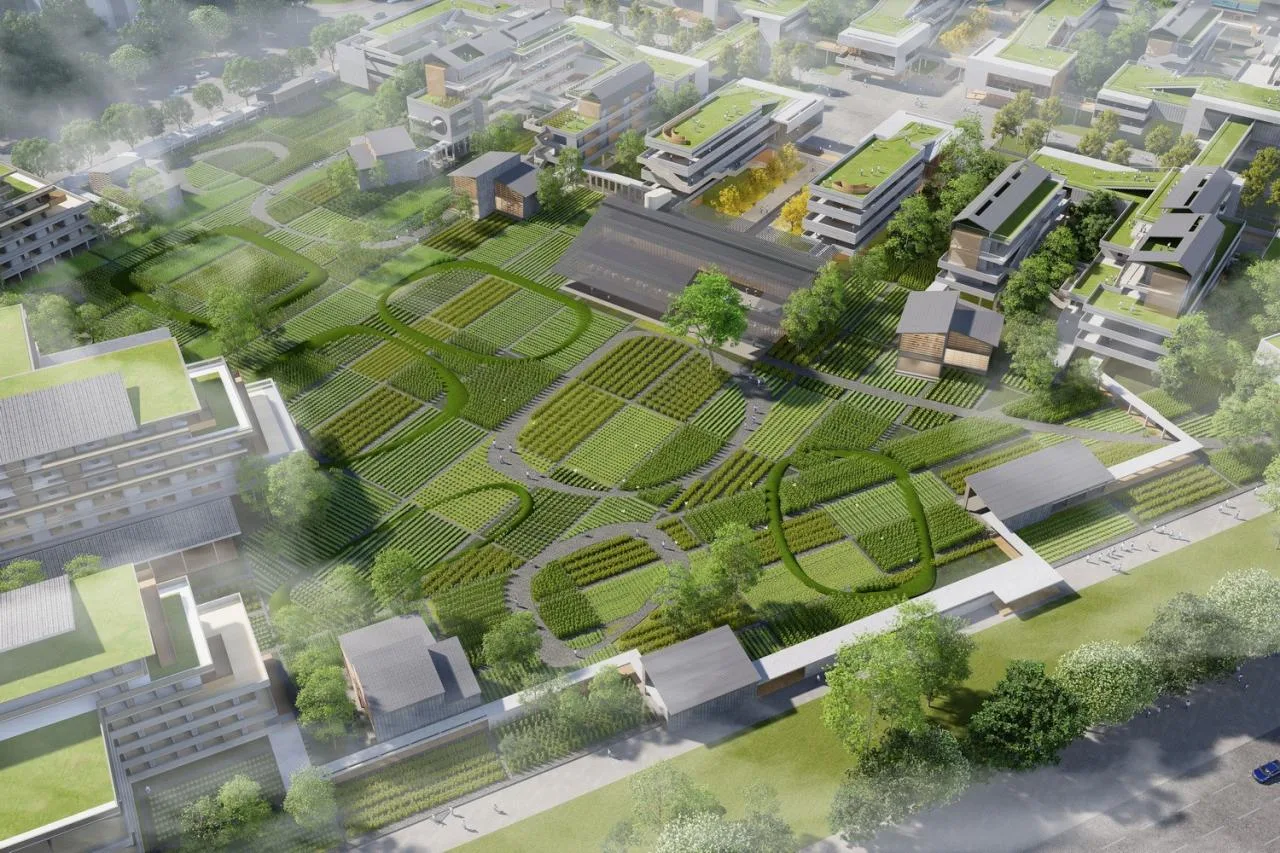
△ Foshan No.1 Middle School Shunde School Construction Project Full Process Design – Qianmo Academy, Inheriting Virtue – © AG Huichuang
Localization Research: Adapting to Future Education
Located in Shunde District, Foshan, this project sits at the heart of the Guangdong-Hong Kong-Macao Greater Bay Area’s innovation core. Upon completion, Foshan No.1 Middle School Shunde School will become a leading center for high-quality modern urban education in Lecong.
AG Huichuang draws on extensive experience designing educational buildings in the Bay Area, focusing on adapting to future educational needs. The design incorporates advanced international educational concepts while deeply integrating Lingnan’s local culture and ecological heritage. The entire project is envisioned as a “Modern Qianmo Academy,” connecting historical context, environmental memory, and architectural composition to create a Lingnan-style modern campus that resonates with Tiantang Village and the surrounding new city, preserving cultural continuity.
△ Scheme film © AG Huichuang
Embracing Site Memory: Creating a Diverse ‘Qianmo Academy’
Foshan No.1 Middle School Shunde School is rooted in a rich local heritage, surrounded by abundant natural ecology and cultural villages. The design adopts an ecological strategy of “surrounding the city with nature,” inspired by Lingnan courtyard traditions such as halls, corridors, pavilions, and alleys. It incorporates elements like alleys, water management systems, corridors, and wind passages to orchestrate spatial sequences. The goal is to build a “modern three-dimensional academy” that harmonizes with nature, where architecture envelops gardens.

↓
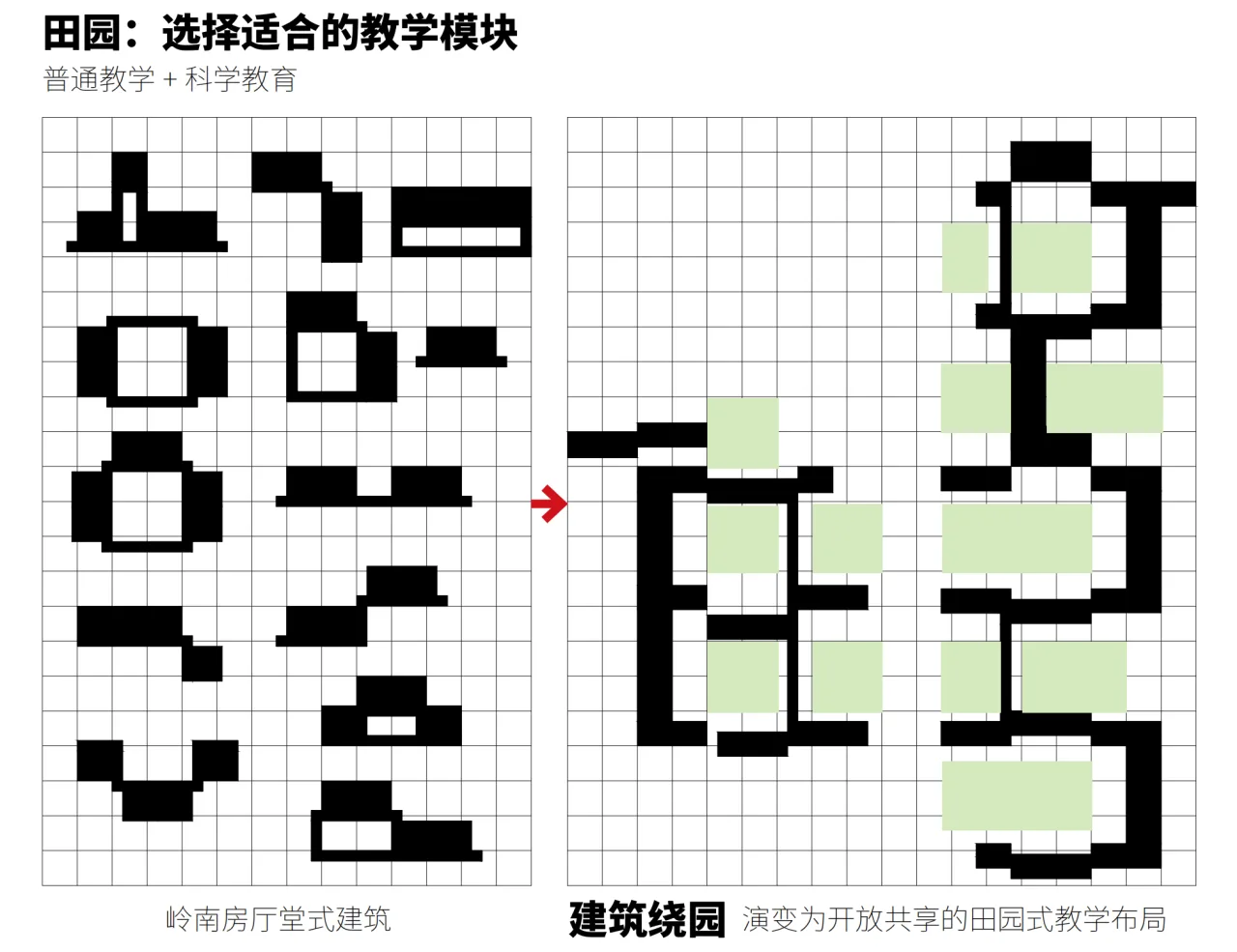
Building modules research © AG Huichuang
These modular blocks and academies are connected through covered wind and rain corridors. The design responds to the surrounding villages, ecological ponds, fields, commercial zones, and residential areas, preserving site memory and extending the concept of a “single field.” Nature envelops the entire campus, offering teachers and students an immersive learning environment that feels like “returning to nature and living in the fields.” The scent of rice crops mingles with the fragrance of books, embodying a deep connection between nature and scholarship. “Nature” is carefully integrated into every courtyard.
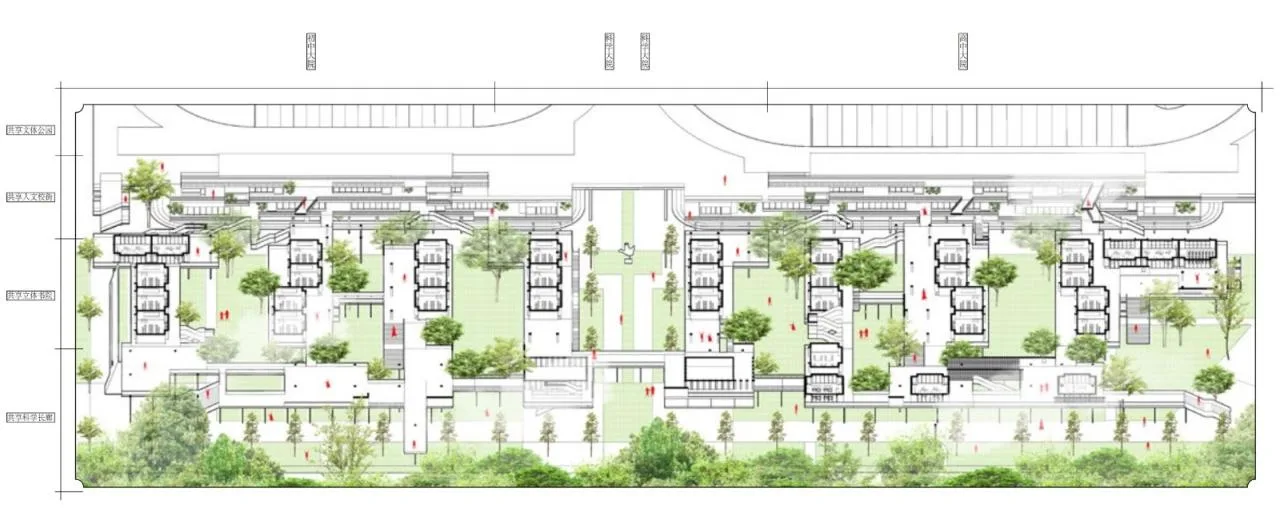
△ A natural, book-inspired communication and learning environment, shaped by dynamic block arrangements and enclosures © AG Huichuang
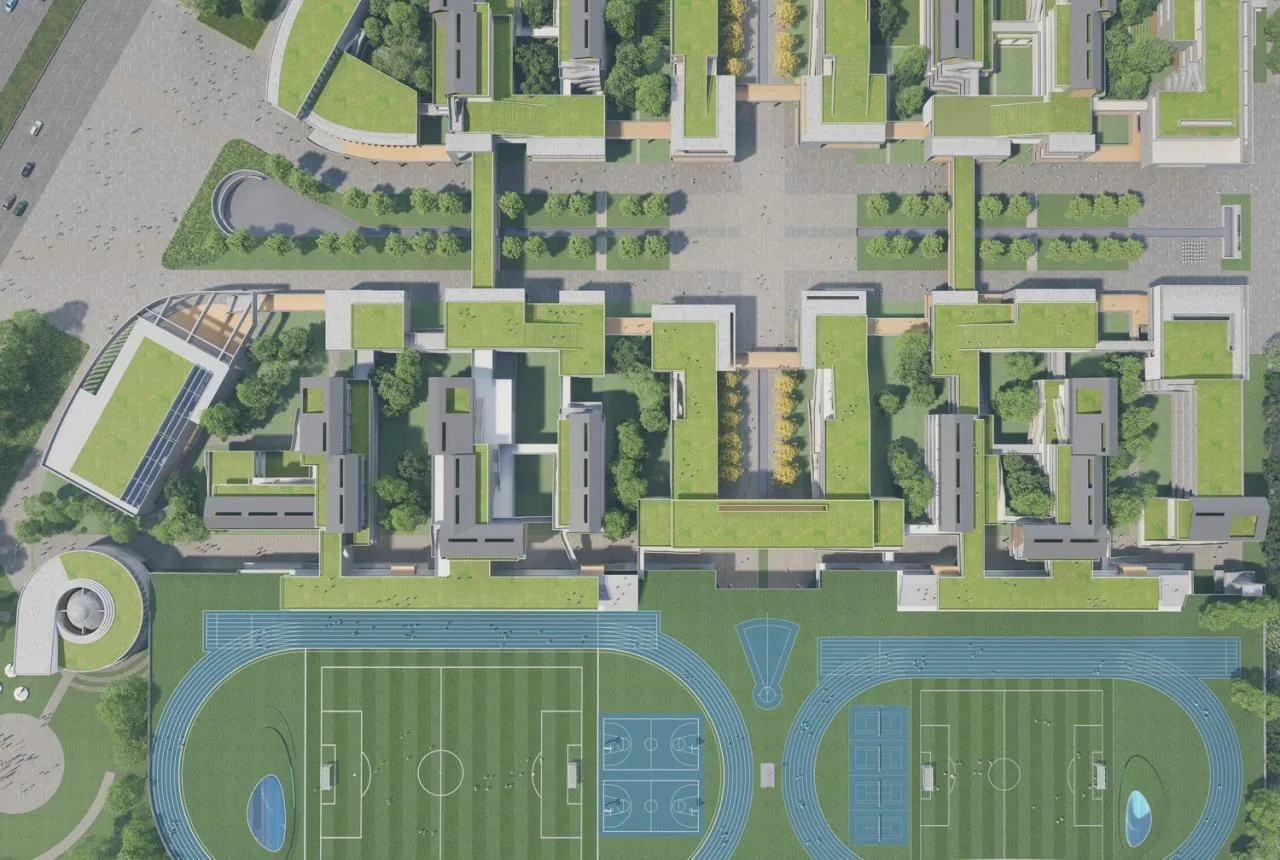
The campus integrates sports facilities, parks, and pedestrian paths, featuring community-shared cultural and sports parks alongside all-weather open sports fields along the street. These elements remove physical boundaries, maximize space utilization, and address the shortage of local sports resources, fostering friendly interaction between the community and the city, turning the campus into a vibrant public park and social hub.
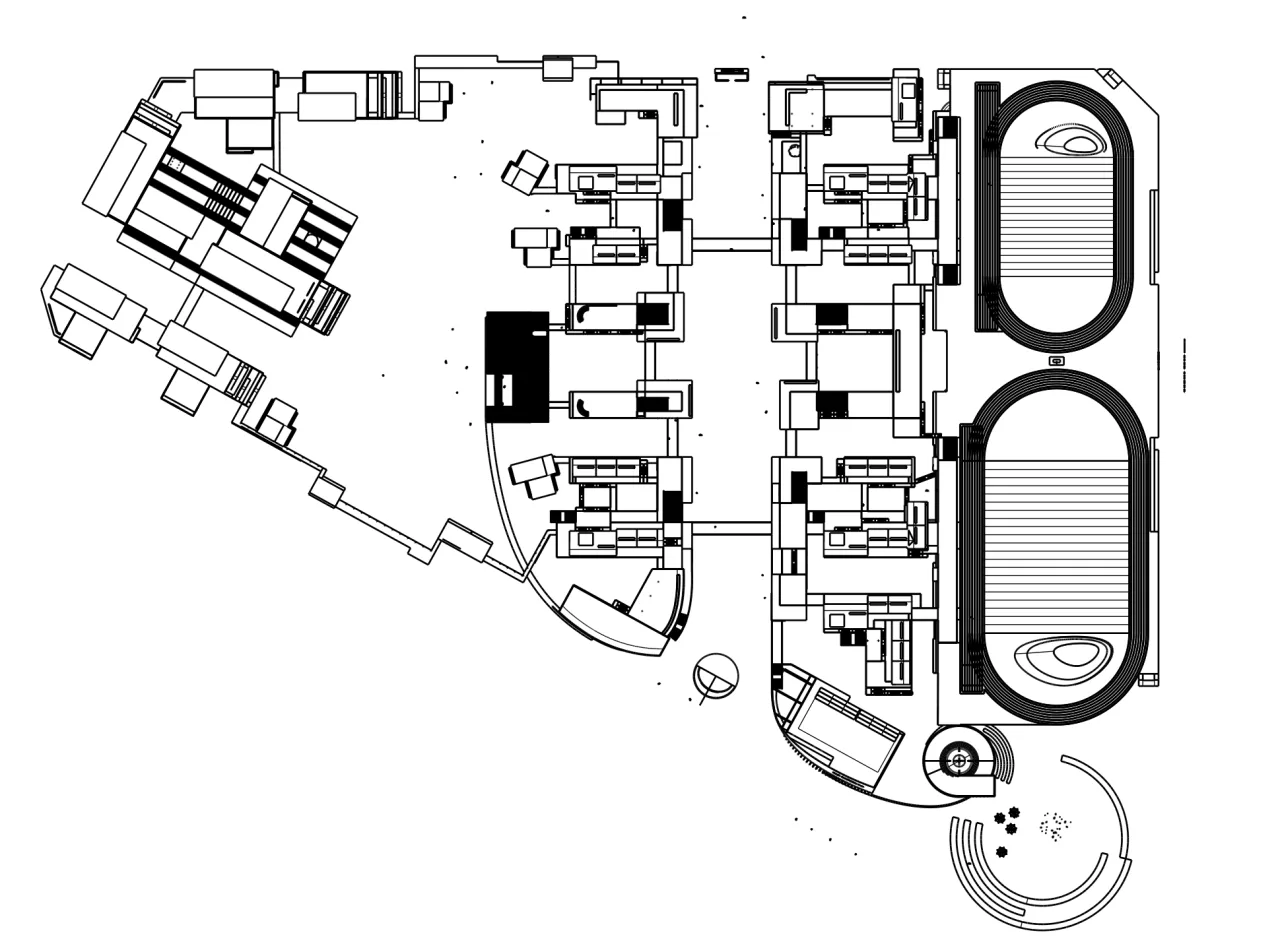
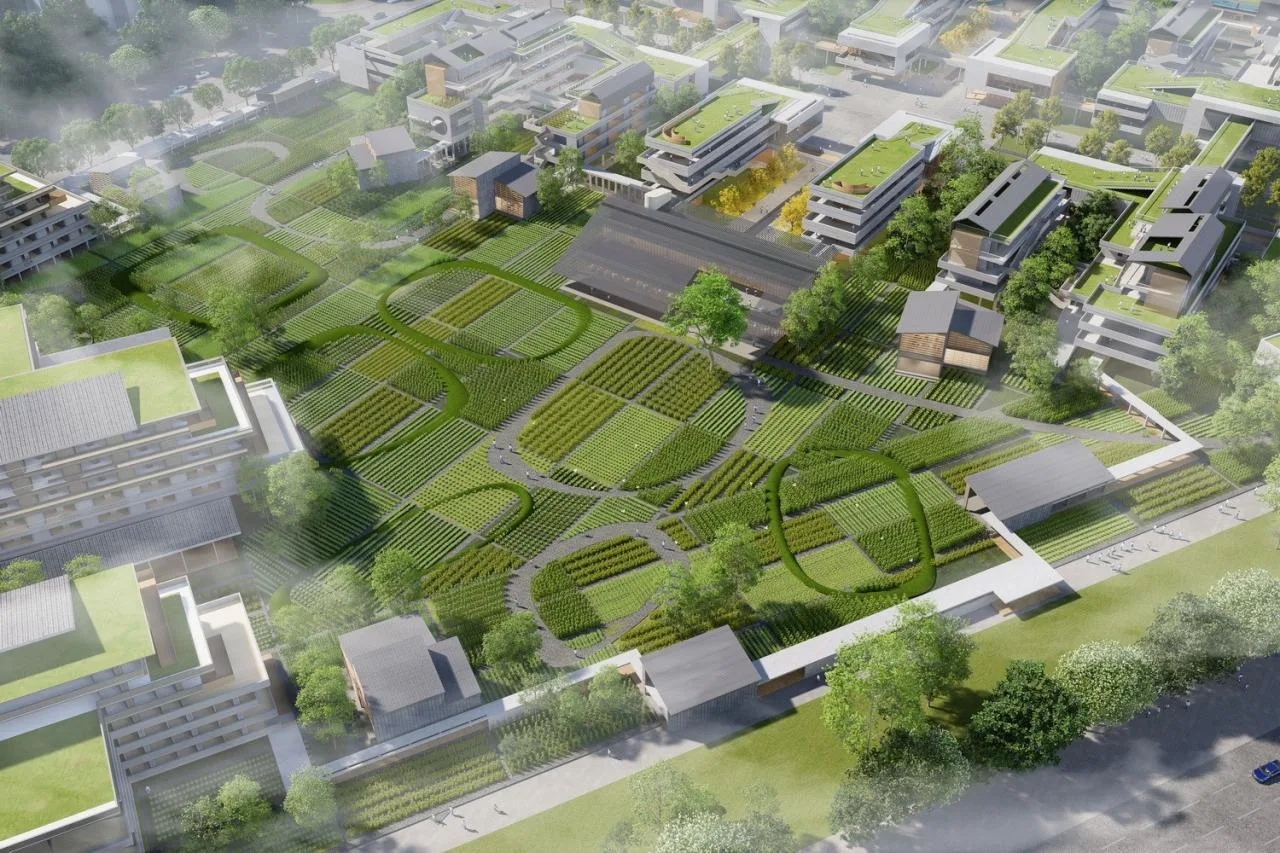
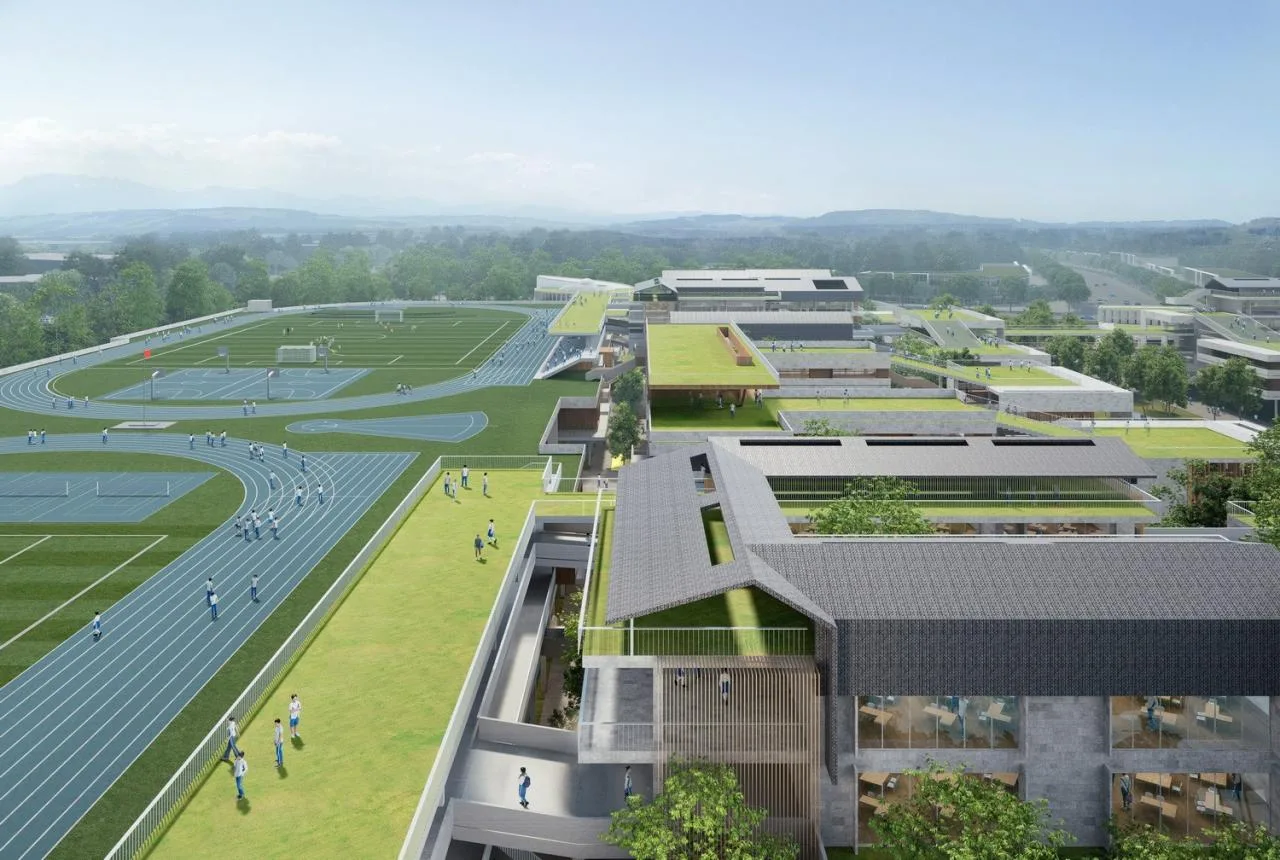
△ Site plan: Emphasizing humanistic ecology, low-carbon three-dimensional academy, corridors and alleys, unique scenic views at every turn, blending nature into every corner of the campus © AG Huichuang
Creating a “Micro City” to Support Urban Leadership
Schools function as “micro cities,” where the learning environment shapes students’ perspectives on life and nature. Our design aims to foster a strong sense of belonging, participation, and dialogue among teachers and students, while also aligning with the city’s future development.
Foshan No.1 Middle School Shunde School achieves a high level of integration between urban planning, ecology, and architecture. The north-south axis connects residential and commercial districts, while the east-west axis links urban open spaces with teaching and living areas, following principles of openness transitioning to privacy. Building heights are limited to 24 meters to maintain a human scale. The campus is organized along “vertical and horizontal green axes” that link three shared centers—ecology, culture, and sports.
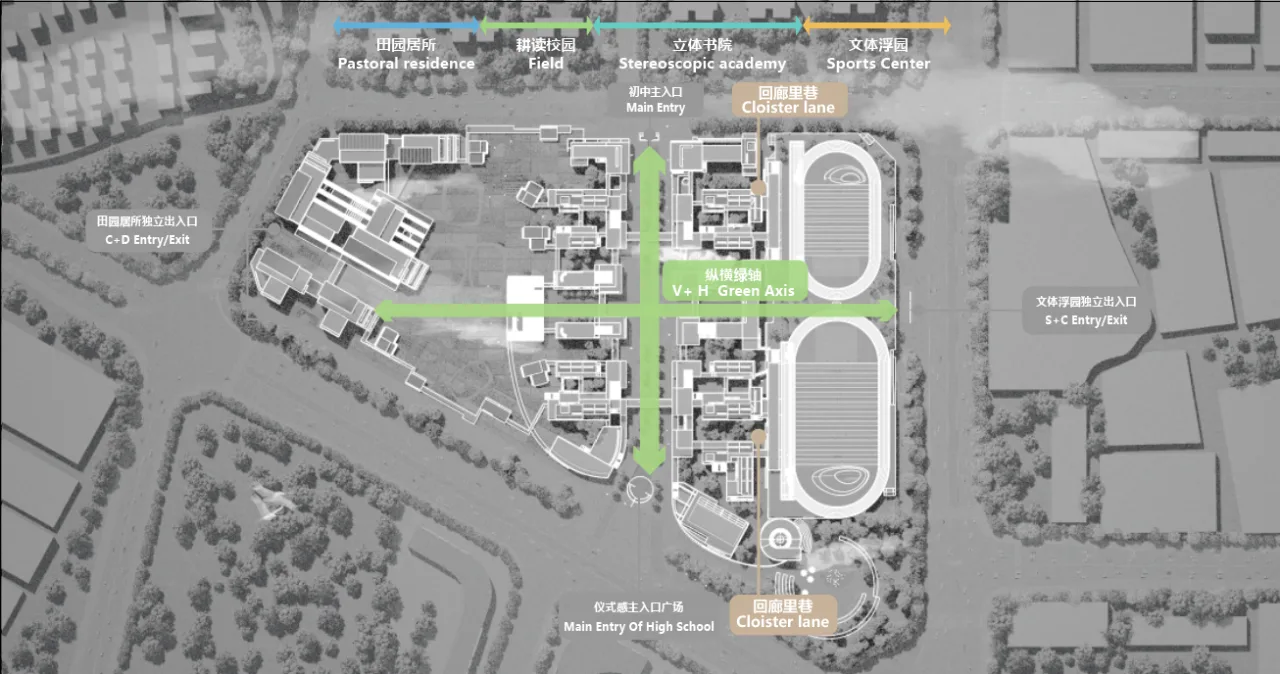
△ Site plan: Compact and efficient spatial layout with clear zoning between active and quiet areas © AG Huichuang
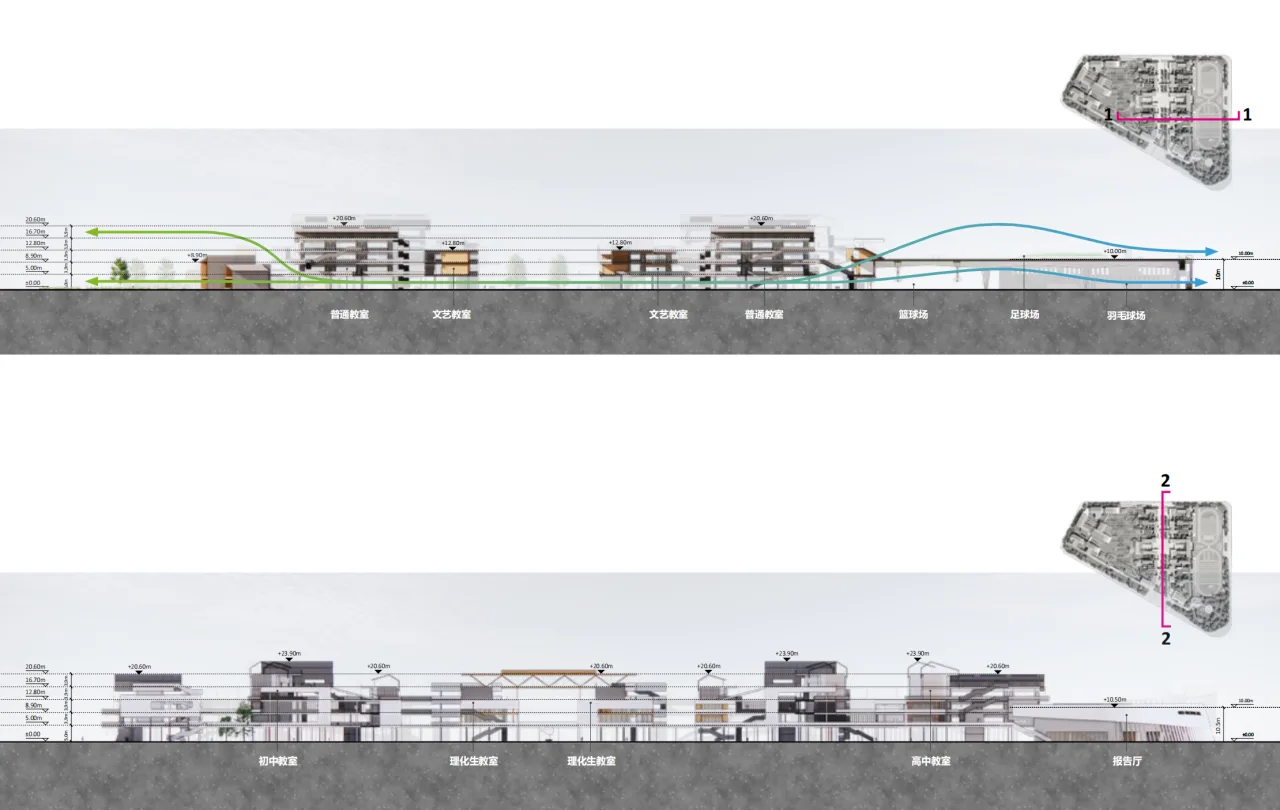
△ Building sections and facade views © AG Huichuang
Based on Lingnan’s climate, local ecological resources, and architectural textures, the design emphasizes personalized education and healthy student development. Seven key themes define the campus: cultural and sports floating gardens, vertical and horizontal green axes, ceremonial entrance plazas, corridors and alleys, three-dimensional academy structures, farming and reading campuses, and rural residences.
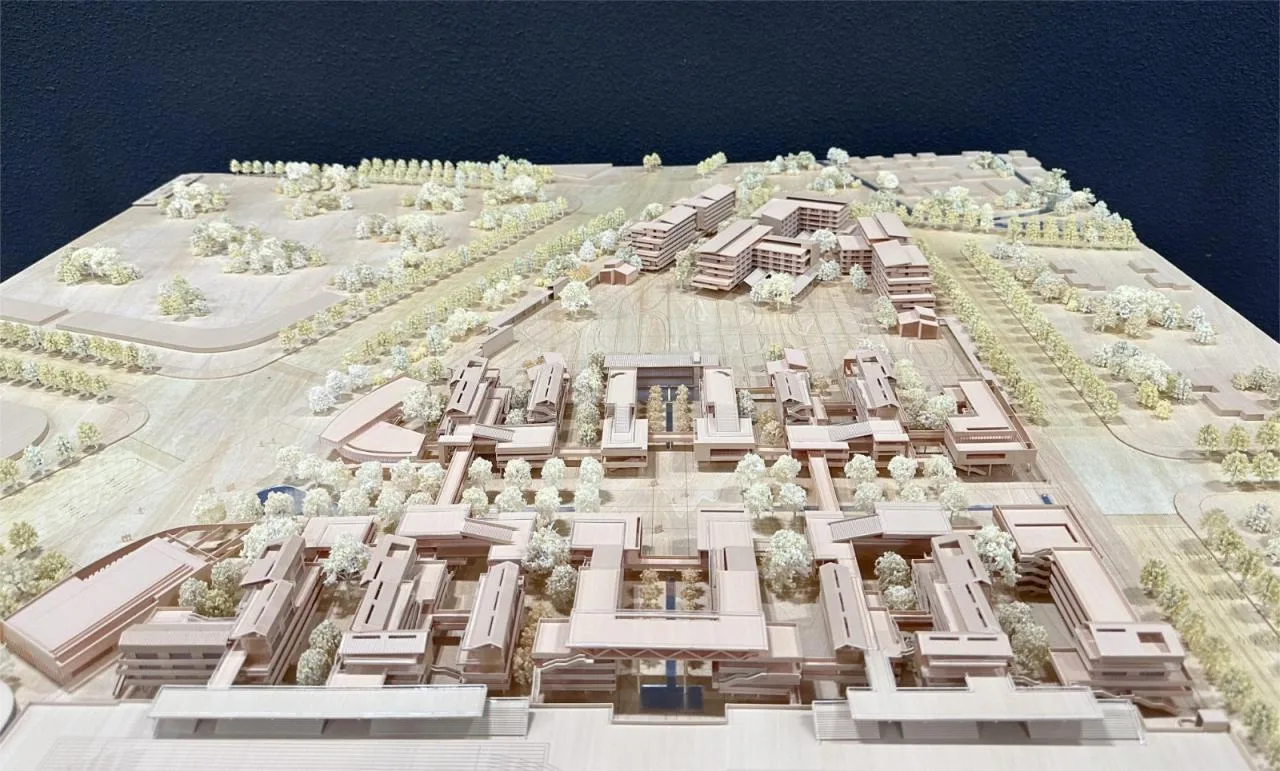
△ Model © AG Huichuang
Cultural and Sports Floating Garden
The Cultural and Sports Floating Garden supports the school’s daily activities around the clock, allowing students and staff to experience nature throughout the seasons. It links the southern parkland with sports facilities, establishing a welcoming and open urban frontage along Huayang South Road.
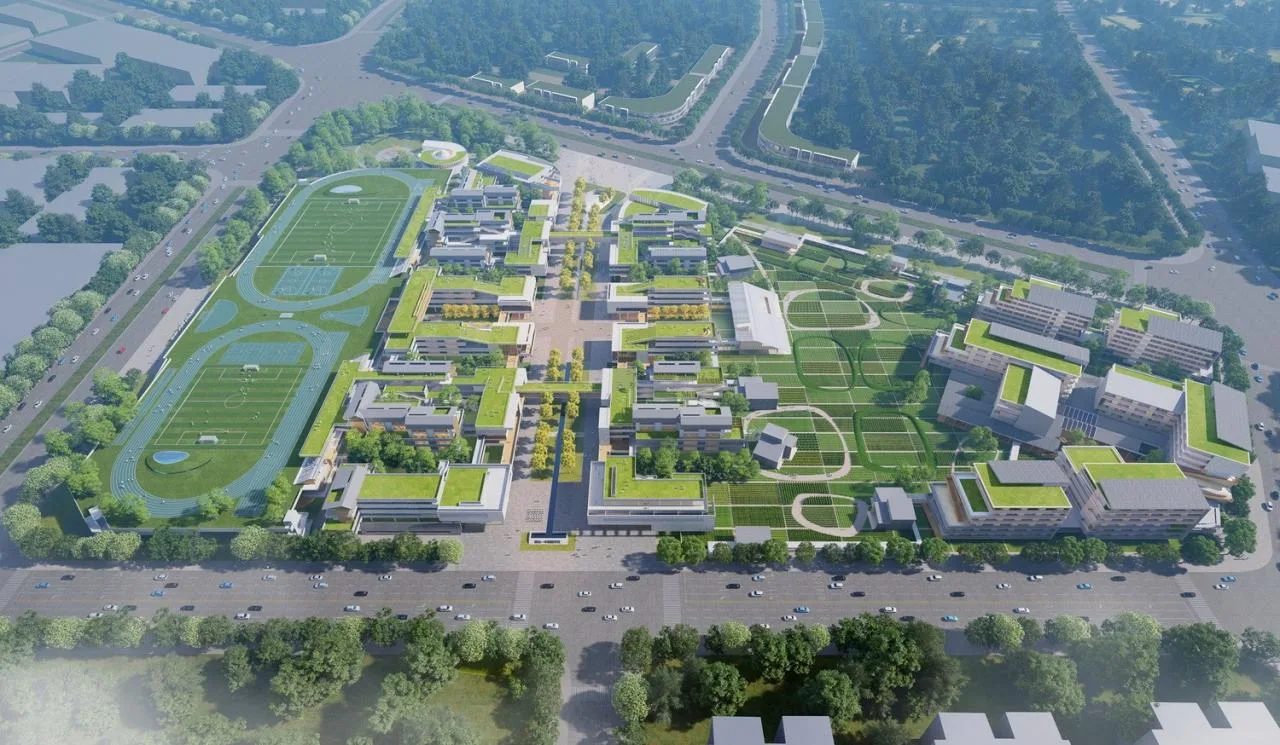
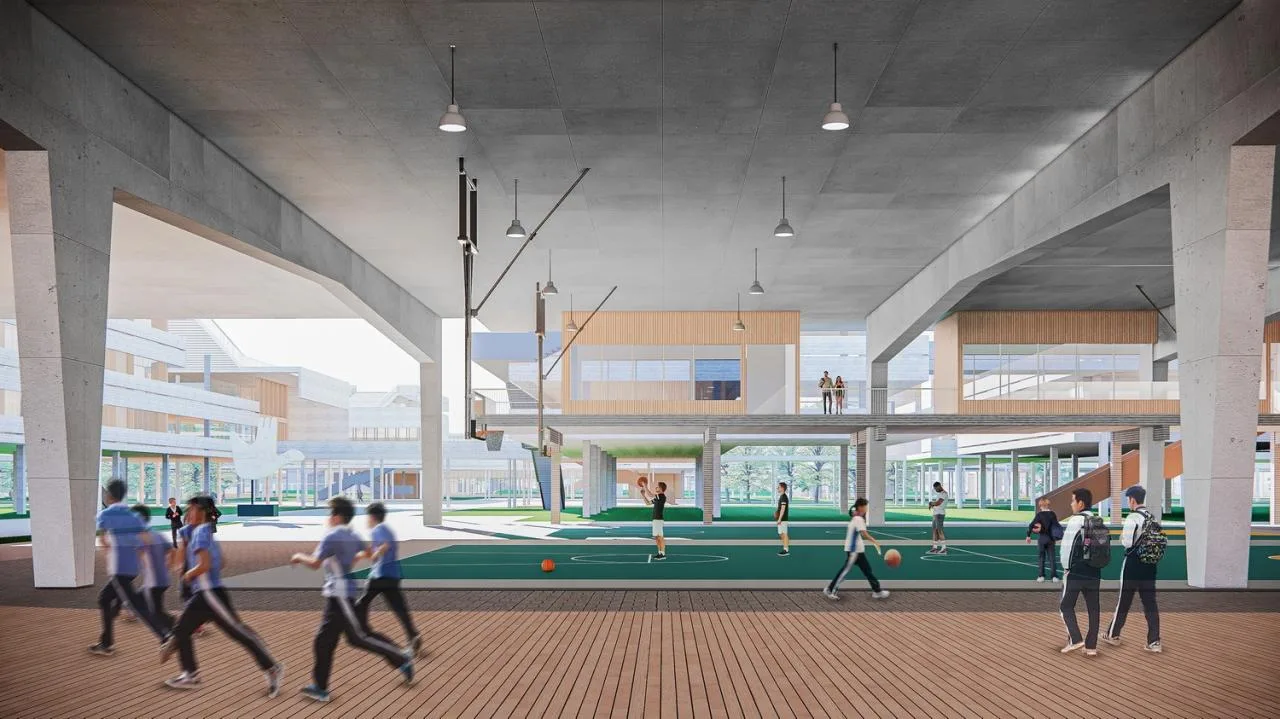
△ Diverse shared cultural and sports parks alongside all-weather sports fields © AG Huichuang
Vertical and Horizontal Green Axes
At the heart of the campus, intersecting vertical and horizontal green axes echo the broader urban master plan. These axes connect key communication hubs for all teachers and students. The corridor bridges offer unobstructed views and an all-weather accessible learning trail throughout the campus.
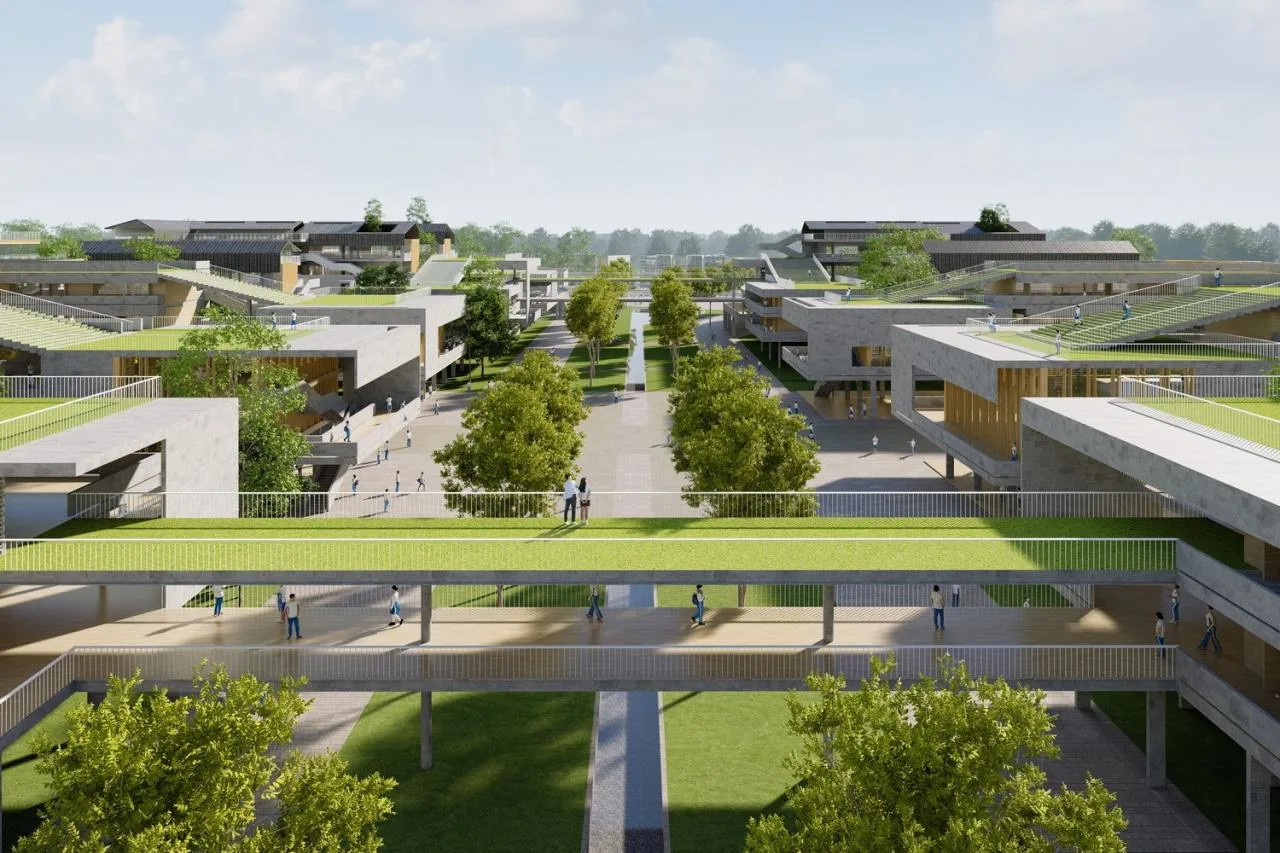
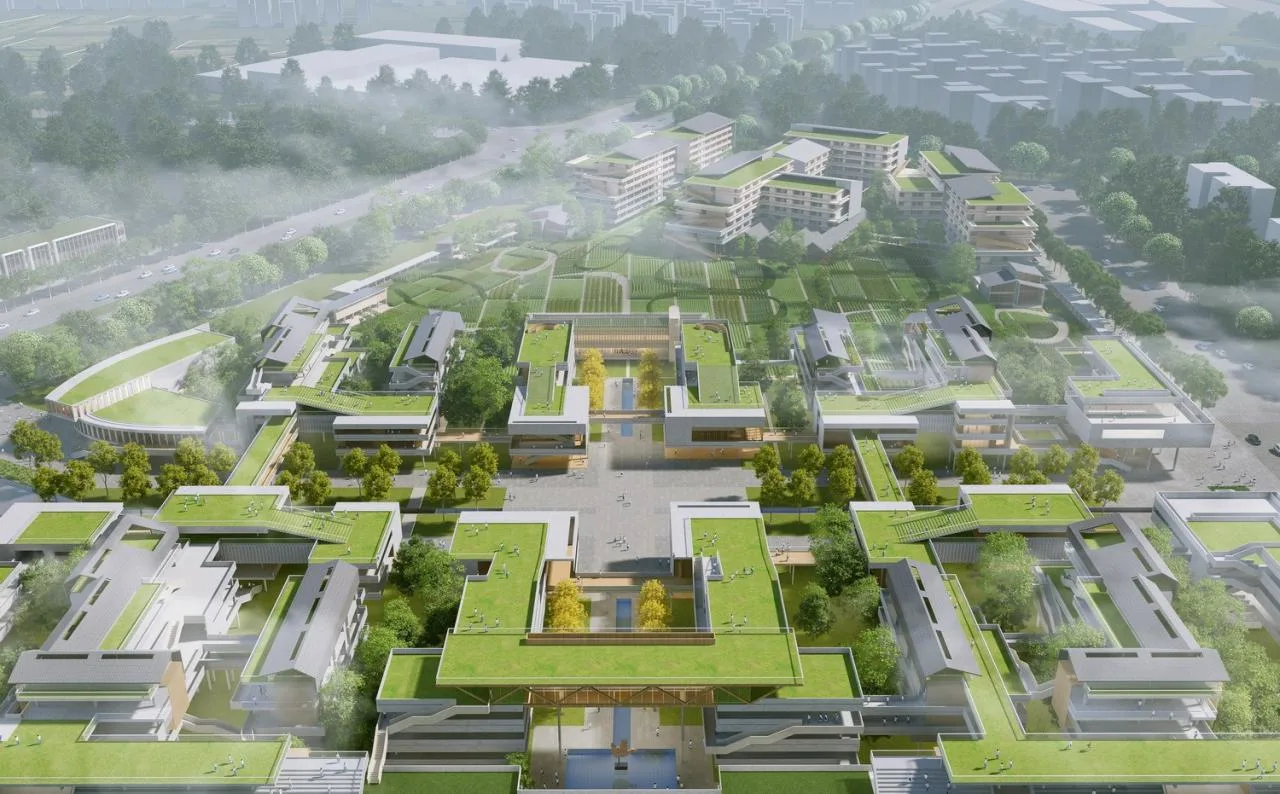
The vertical and horizontal green axes unite all teachers and students, fostering interdisciplinary collaboration across grade levels © AG Huichuang
Near the north entrance, a grand multifunctional hall, exhibition space, and administrative building are situated. These feature a continuous Lingnan-style colonnade and a richly composed north-south campus entrance plaza, reinforcing the urban interface and creating a ceremonial entry experience.
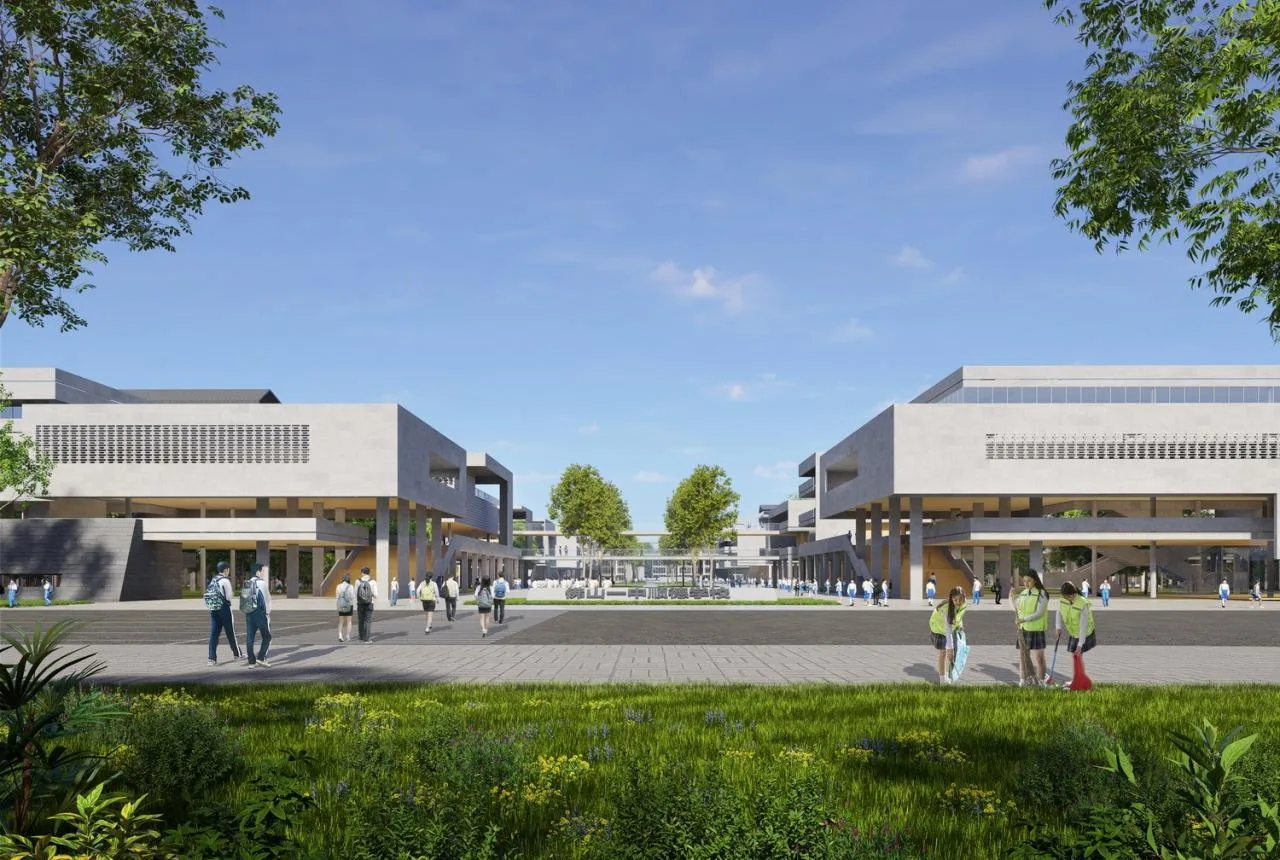
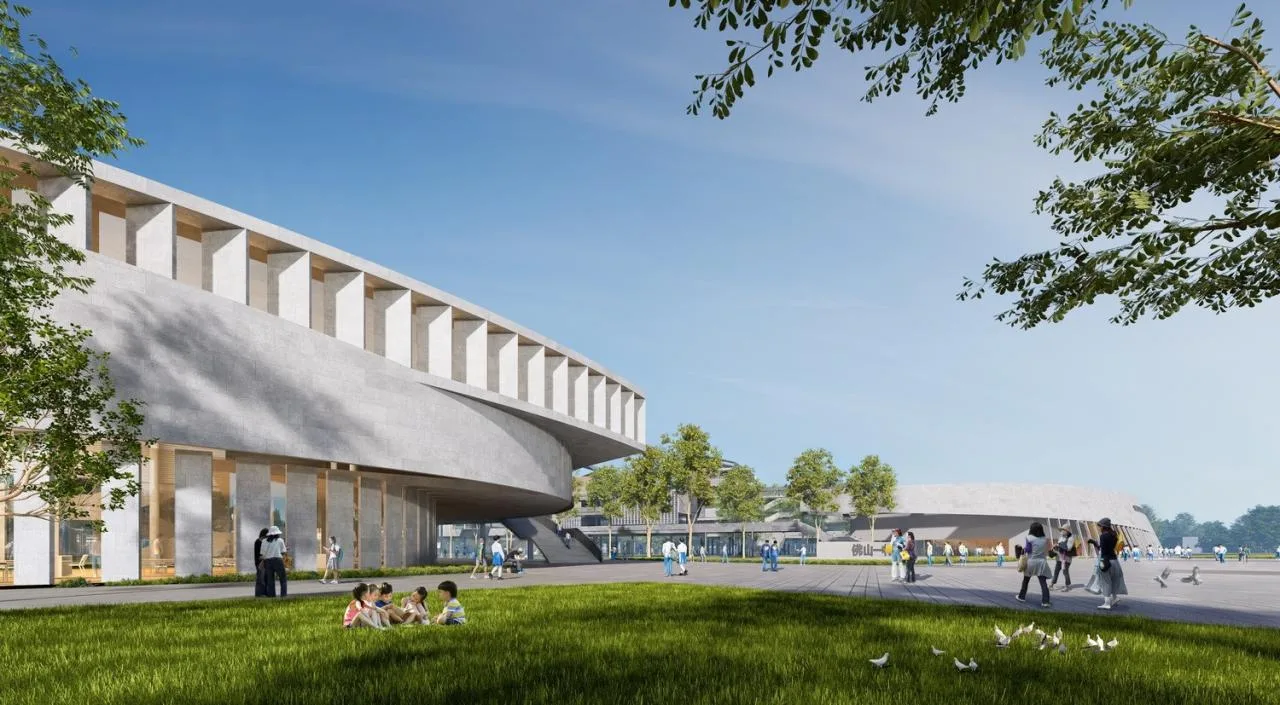
△ North-South Entrance Plaza: Integrating campus culture and establishing a modern city gateway © AG Huichuang
Corridor Lanes
The interplay of courtyards and “alleys” offers natural shade and ventilation, reflecting Lingnan’s courtyard culture. Corridors connect classrooms and spaces, encouraging fluid movement and functional interaction. This network stimulates innovation and vitality on campus, crafting a humanistic, artistic educational corridor that prioritizes low-carbon and ecological principles.
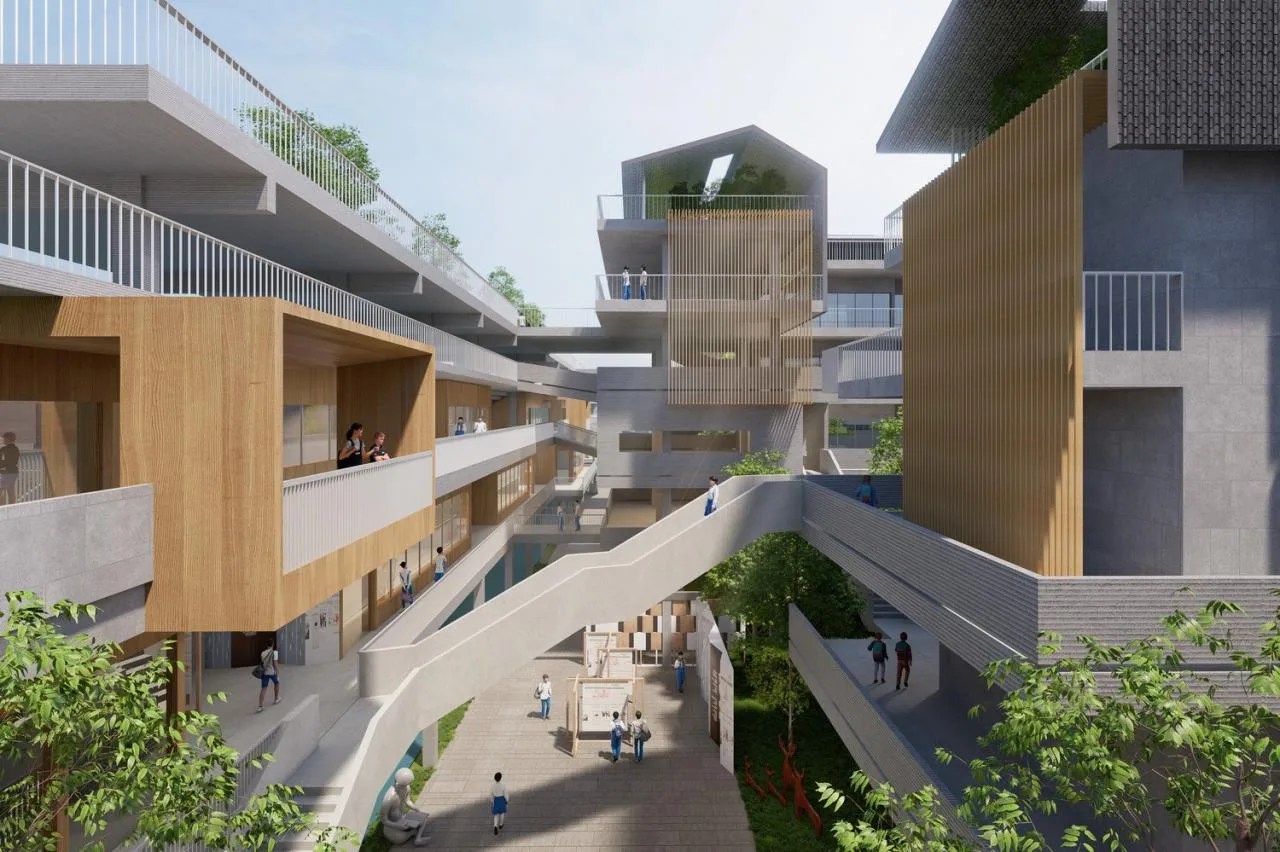
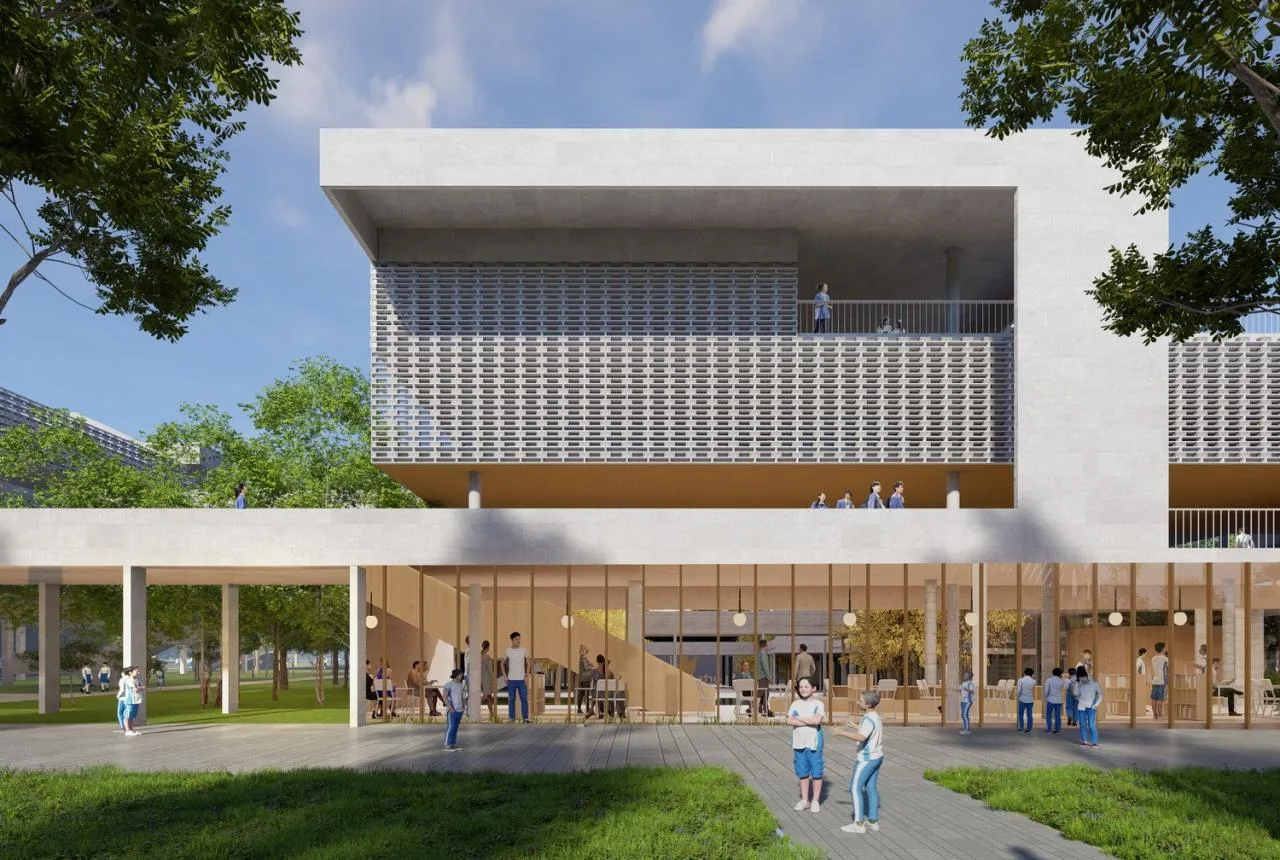
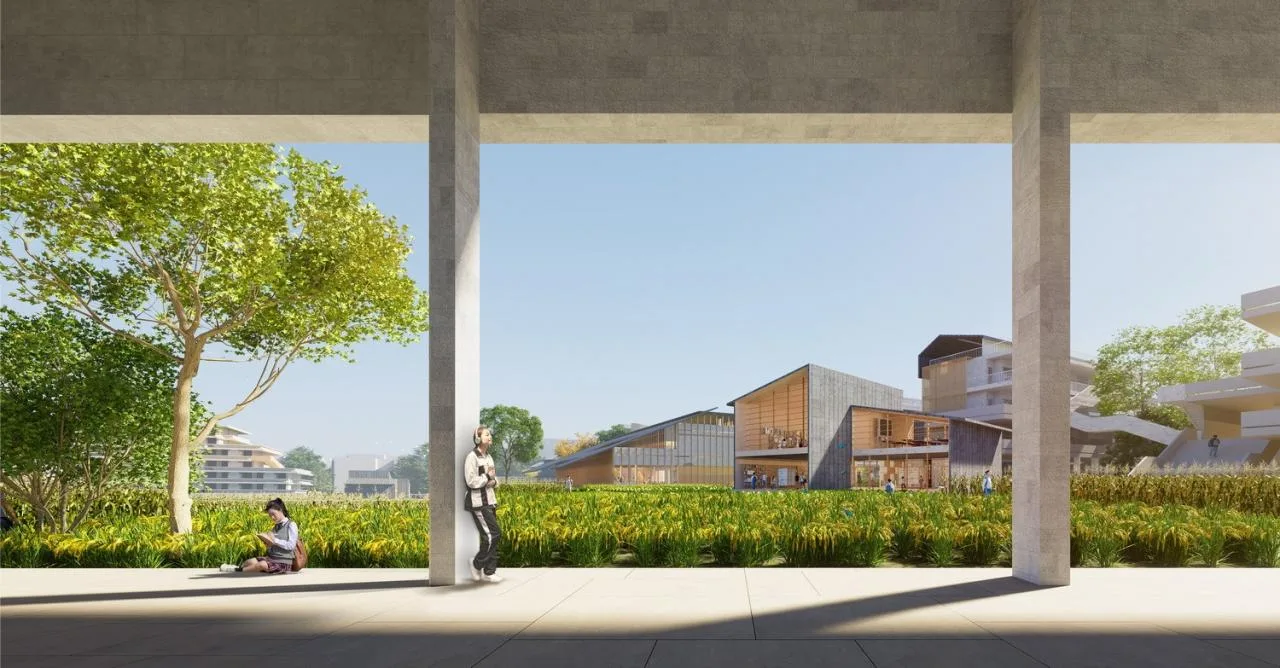
△ Corridor Lanes – A humanities and arts educational street © AG Huichuang
The campus architecture reflects Lingnan’s traditional “three-dimensional academy” style, inspiring teachers and students through cultural heritage. Interconnected corridors and bridges provide accessible learning routes, linking flexible, diverse educational spaces seamlessly.
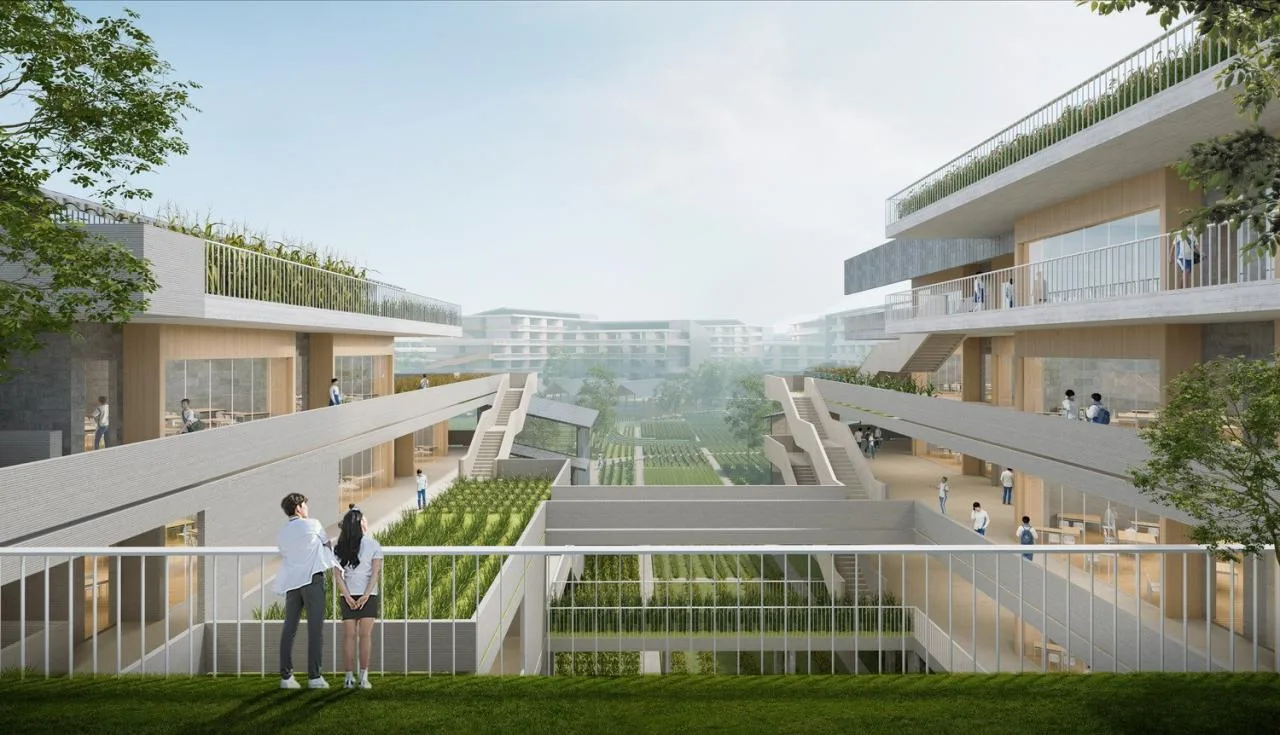
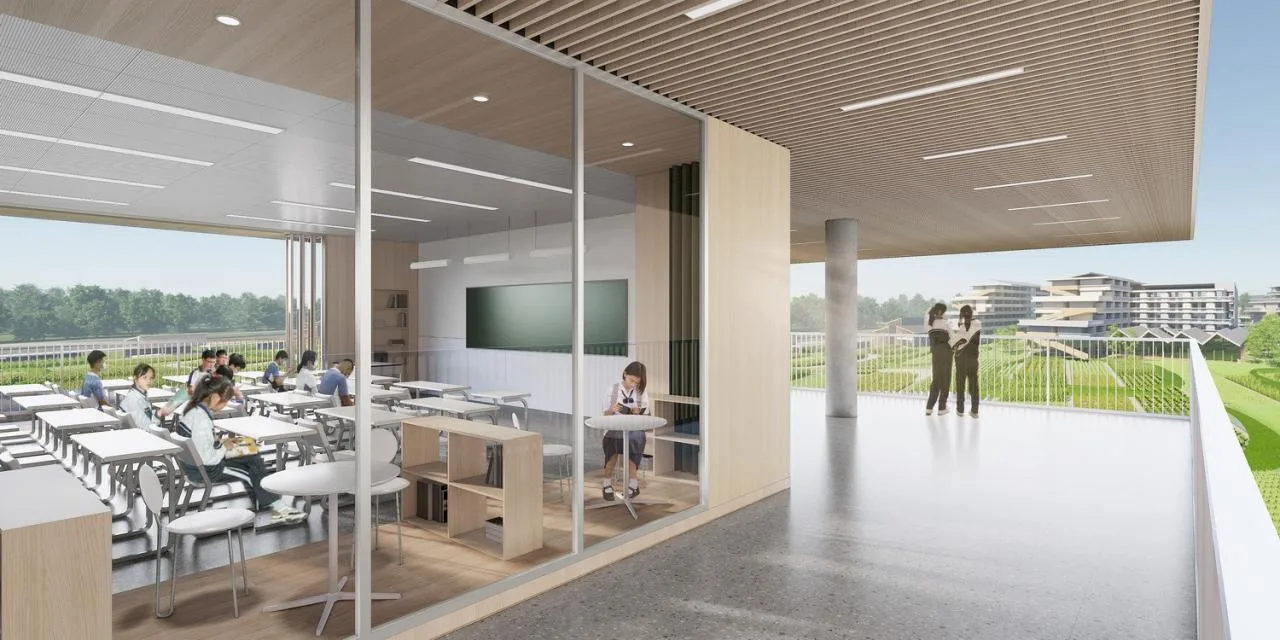
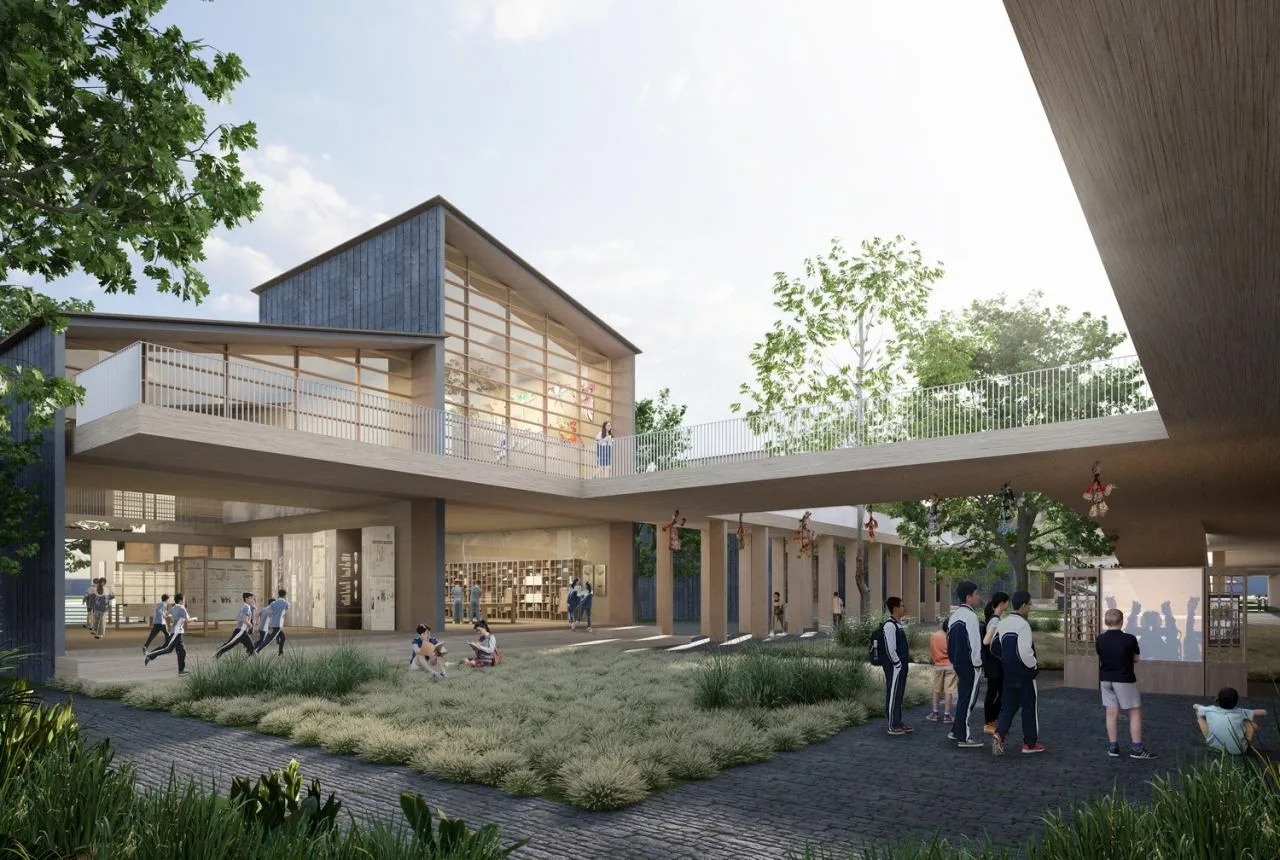
Continuing Lingnan’s “three-dimensional academy” architectural tradition, corridors and bridges create an accessible learning environment that feels organically bounded yet borderless © AG Huichuang
Three-Dimensional Academy
The campus features multiple courtyards that rise and fall, offering changing views and a deep connection with nature. Students experience the spatial rhythms of the four seasons throughout their daily life.
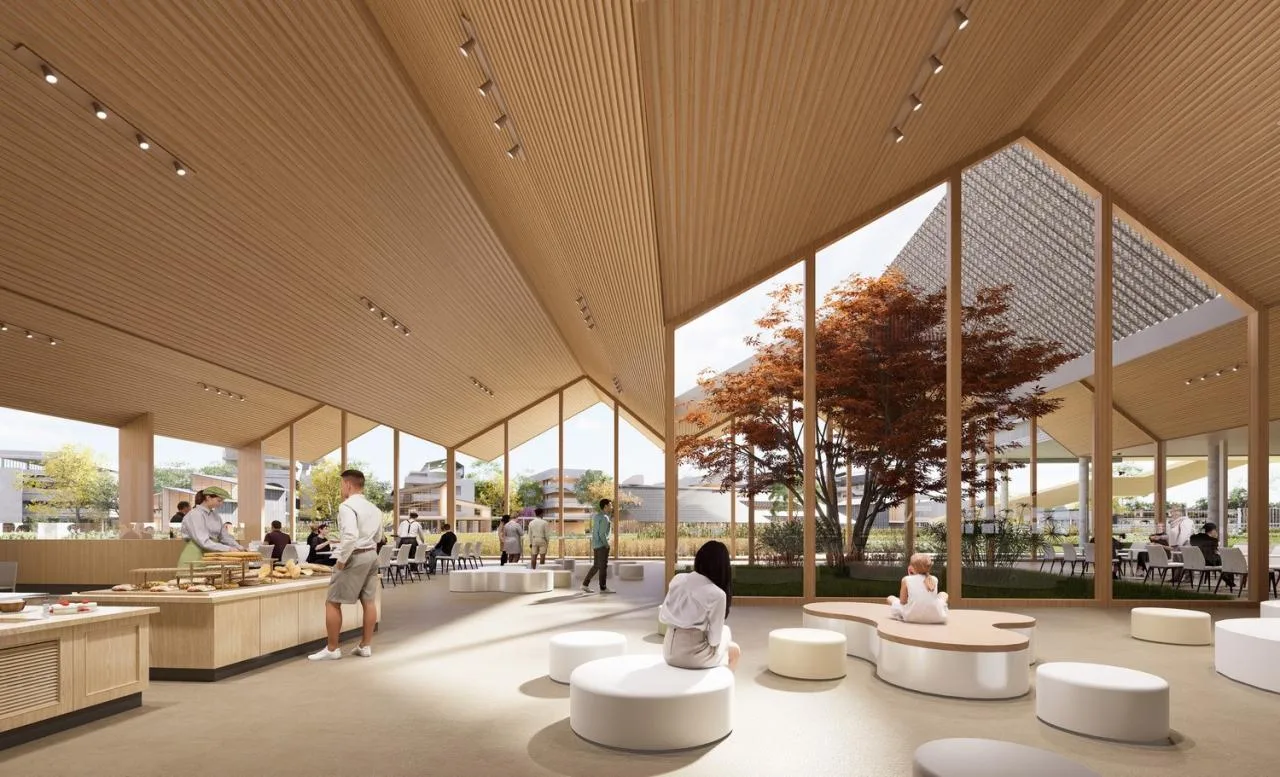
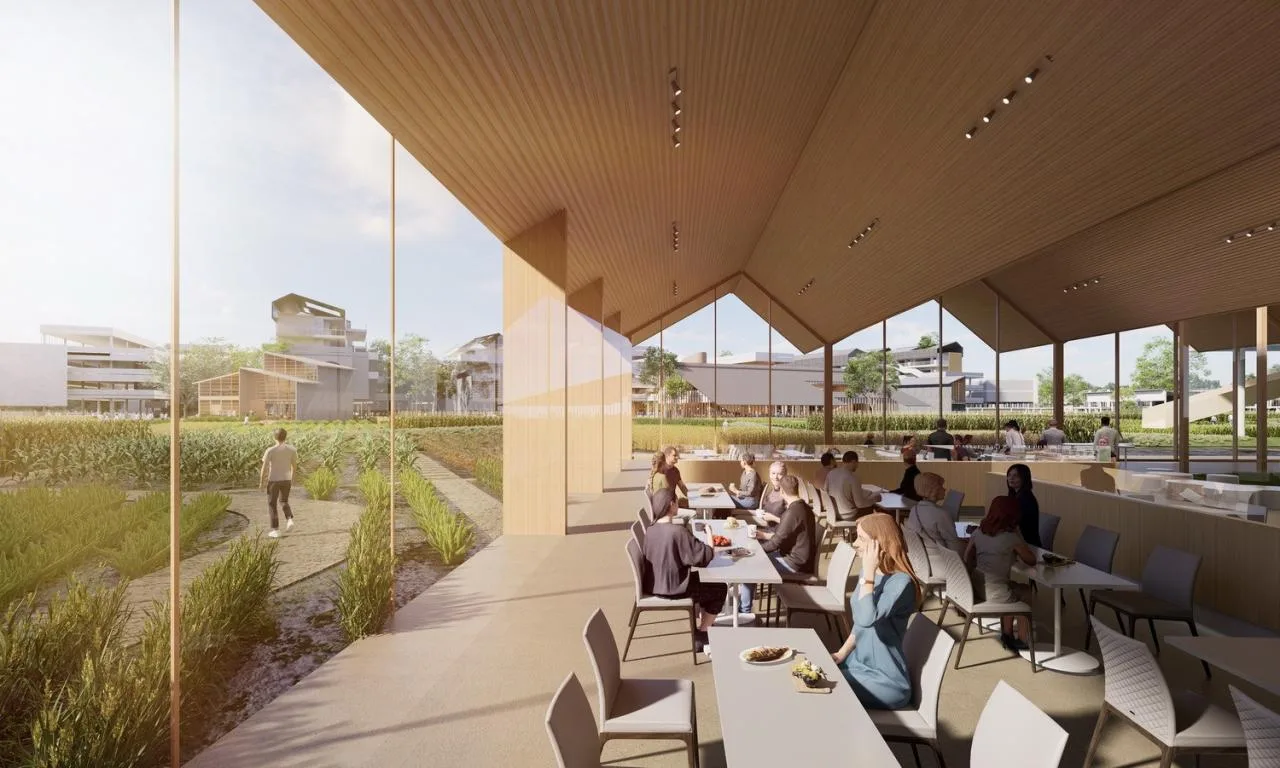
A dining environment seamlessly integrated with nature, without boundaries © AG Huichuang
The library and science classrooms engage in a natural dialogue with the fields, offering open views where students can read and collaborate outdoors. The low-profile attic and library face natural surroundings, designed with sunlight analysis to ensure consistent daylight and fresh air indoors.
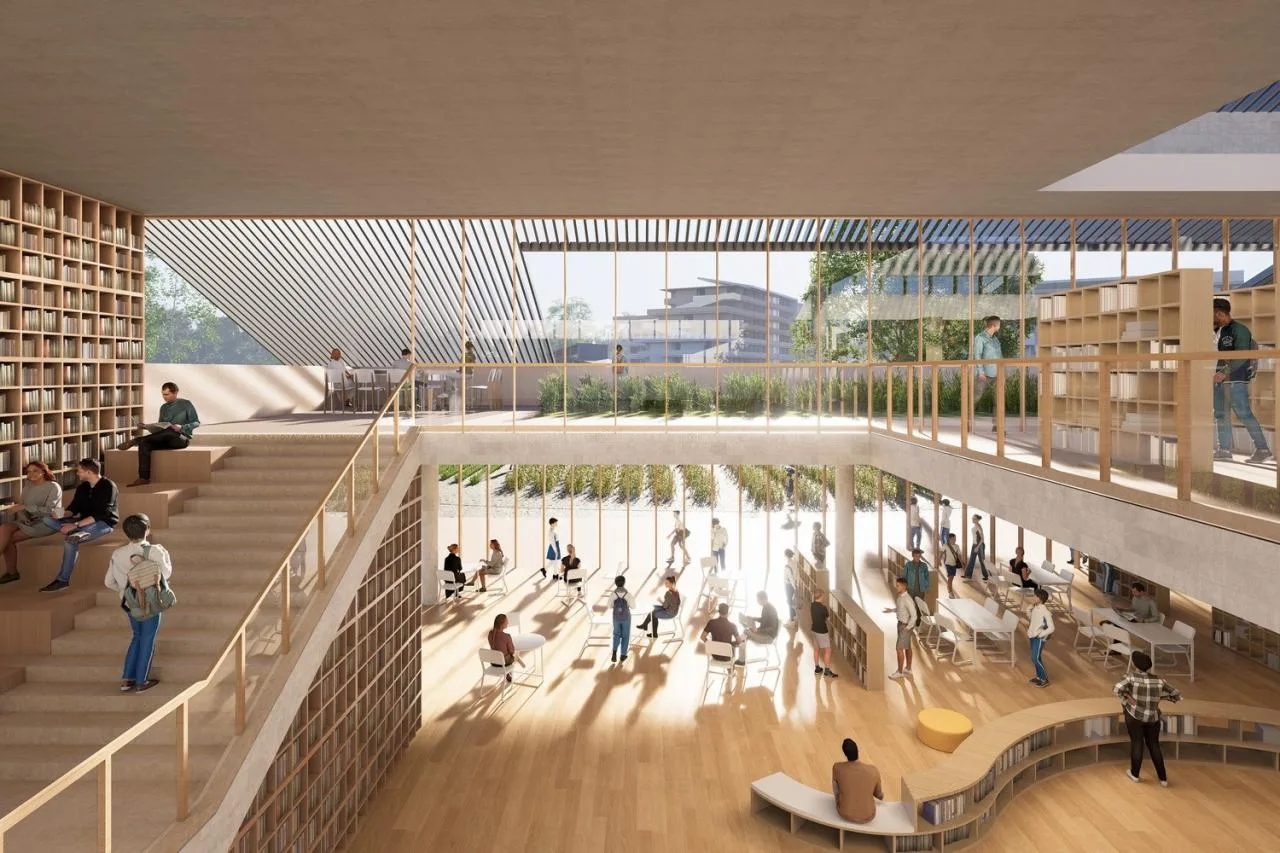
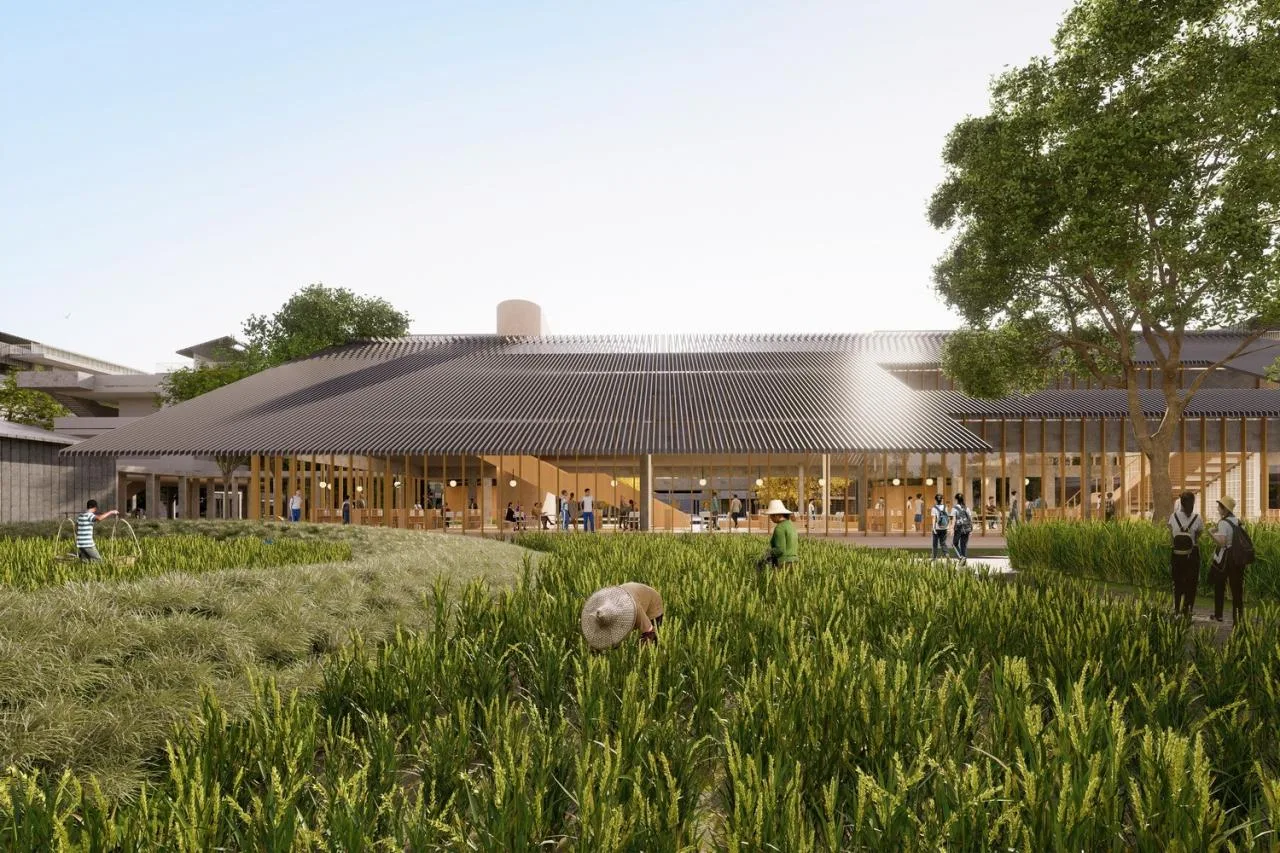
Low-profile attic and library © AG Huichuang
Farming and Studying on Campus
“Farming” activities allow students to reconnect with life and hands-on productive labor. Rice paddies, mulberry trees, crops, and native wild grasses create a new ecological environment on campus, seamlessly linking daily life with nature. This setup enables teachers and students to observe seasonal changes closely, and flexible land use planning reserves opportunities for future development.
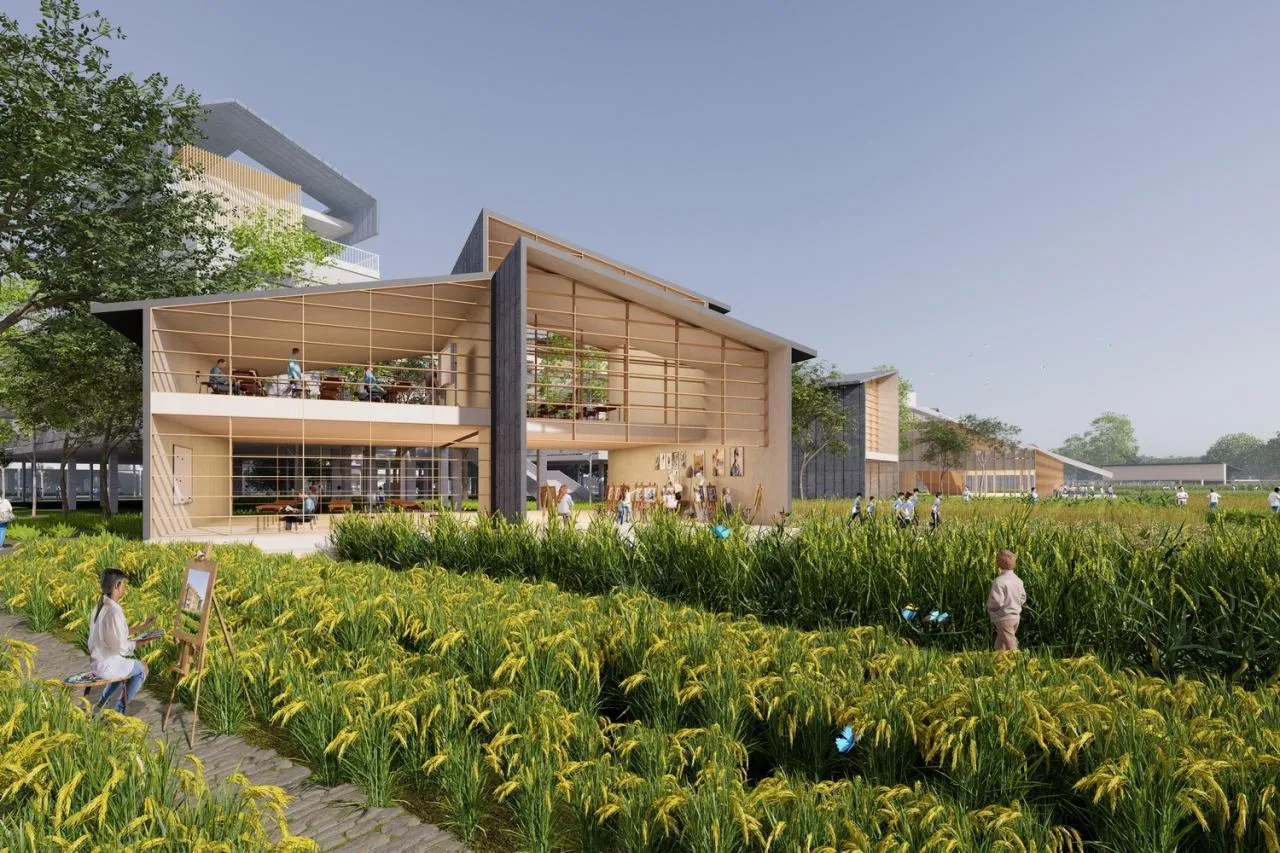
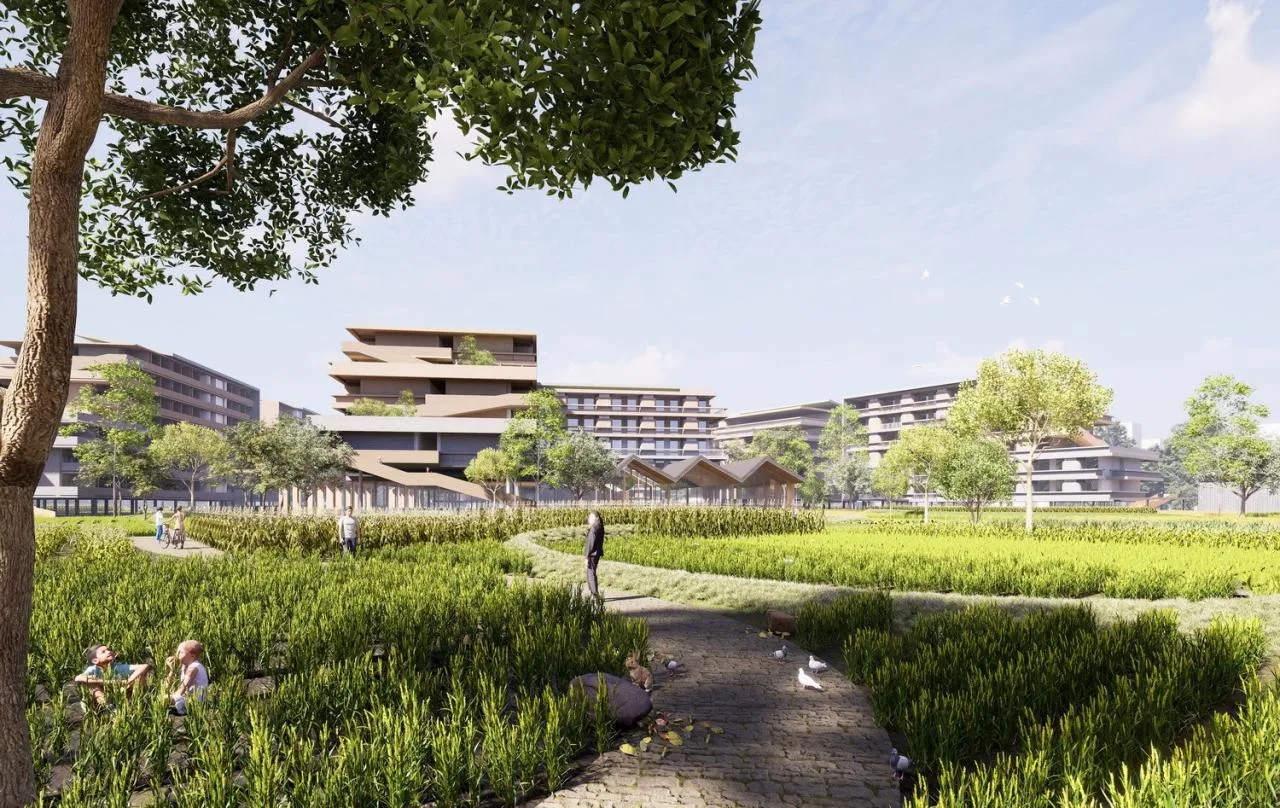
The wind carries the scent of rice fields and the fragrance of books, blending nature and study in a truly immersive experience © AG Huichuang
Rural Residence
Acting as a poetic element within the courtyard, the rural residences aim to shape students’ outlooks on life and nature. Living adjacent to the fields allows students to reconnect with nature, a new educational architectural approach by AG Huichuang. Here, students are encouraged to engage with the natural environment, fostering curiosity, courage, and a spirit of exploration.
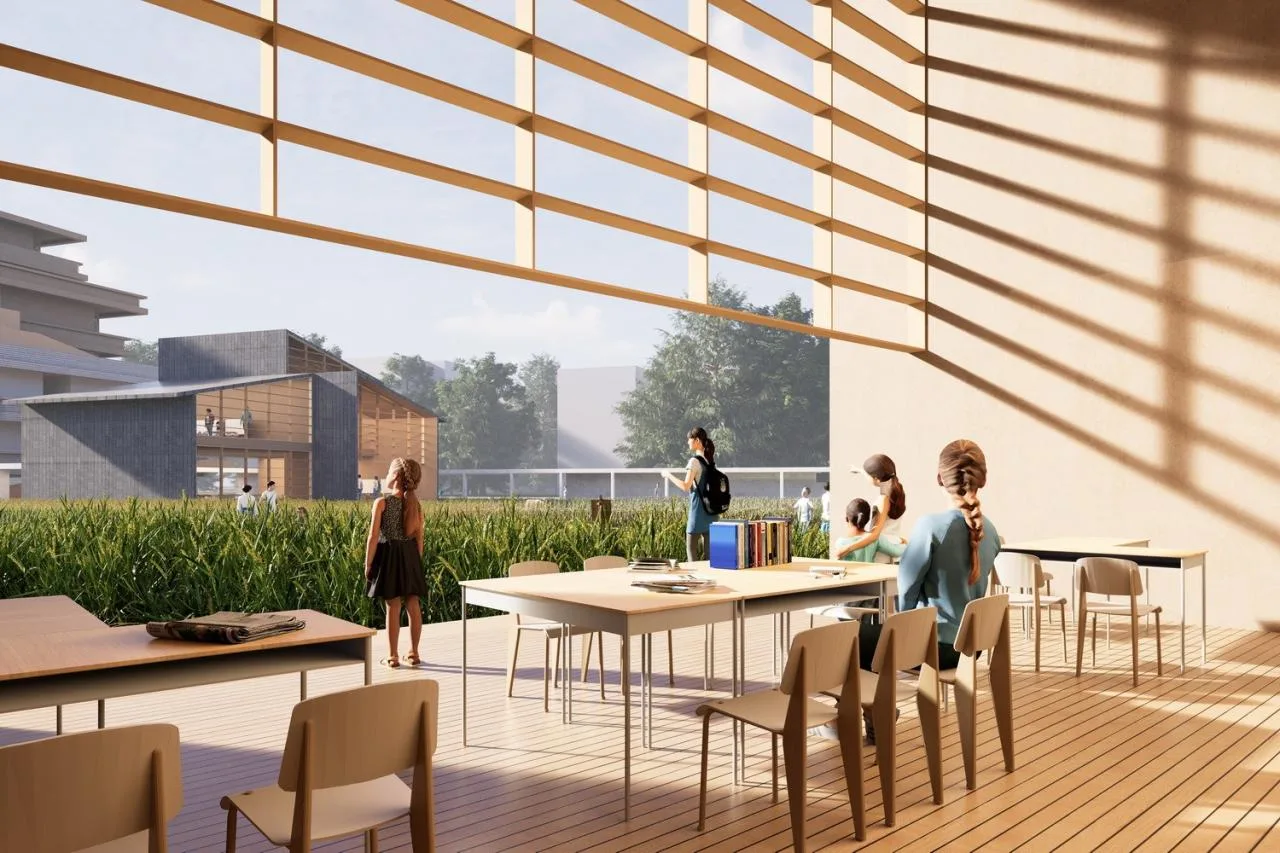
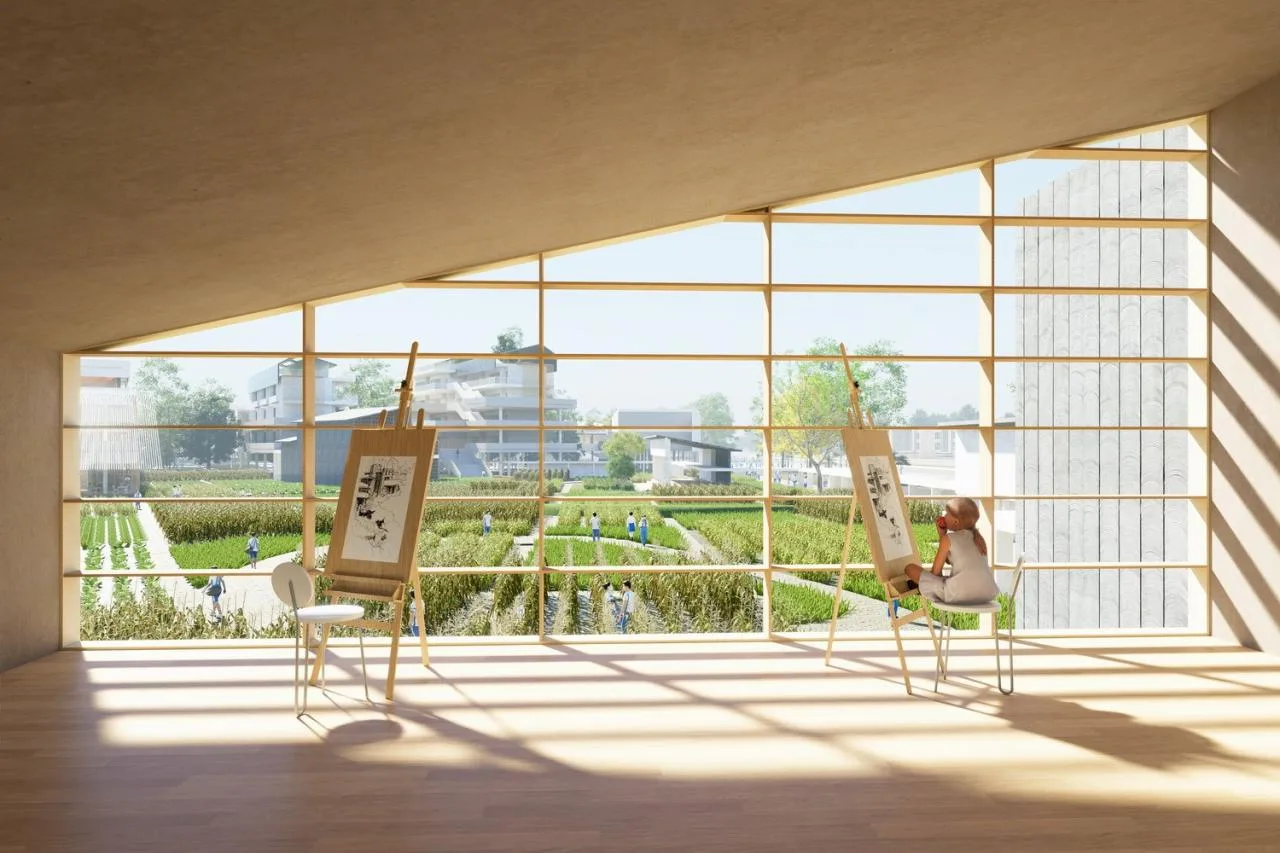
Organic boundaries, borderless schools, living by the fields, and reconnecting with nature © AG Huichuang
Project Information
Project Name: Full Process Design of Foshan No.1 Middle School Shunde School Construction Project
Location: Shunde District, Foshan City, China
Building Area: 162,607 square meters
Project Type: Educational Architecture
Project Status: Awarded Bid Proposal
Client: Shunde District Engineering Construction Center, Foshan City
Design Team: AG Huichuang + Shendu Design Group (Consortium)
Lead Designers: Lv Dawen, Cai Hui
Architectural Design: He Zhenfeng, Tao Ran, Li Jia, Wang Zixun, Huang Jiamin















Must log in before commenting!
Sign Up