
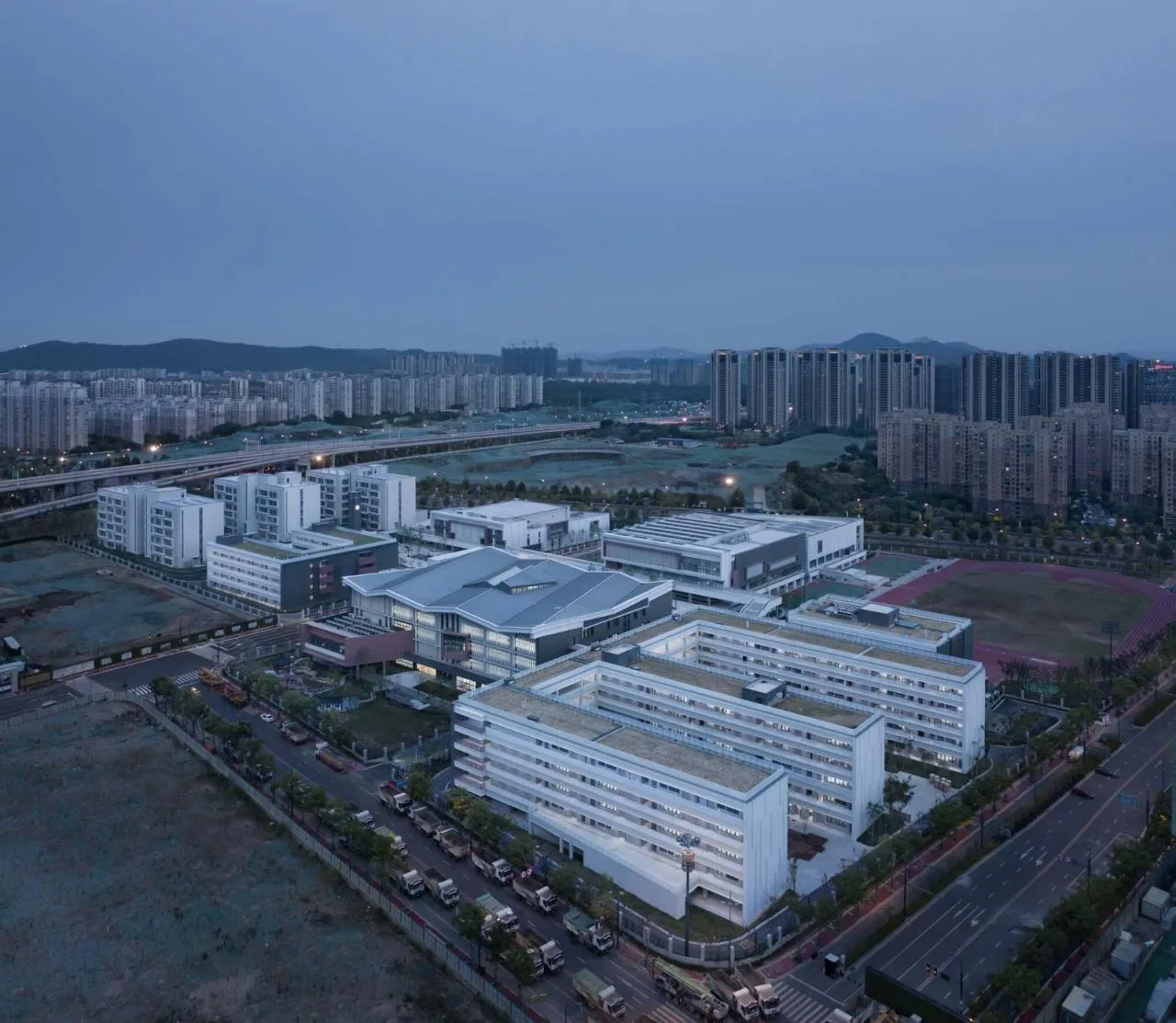
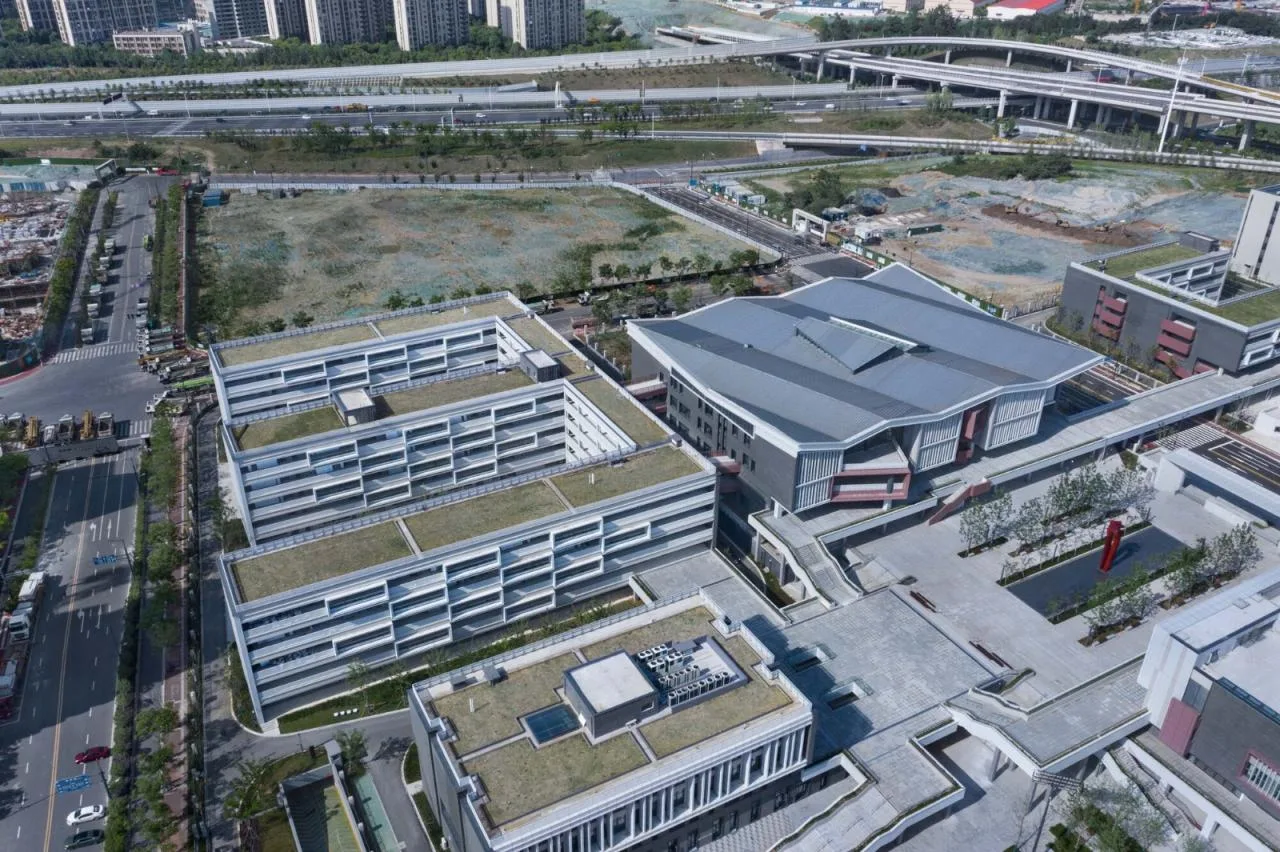
The Yuhua Campus of Zhonghua Middle School is a key project as part of the relocation of five prestigious universities in Nanjing. Situated centrally in the Yuhuatai District, the campus spans approximately 12.15 hectares, with a total construction area of 103,326.73 square meters. On August 30th, the grand opening of the Yuhua Campus marked the launch of the innovative “Stream Learning Center,” a symbol of the future educational model. This center provides a solid foundation for integrating theory with practice and fostering interdisciplinary teaching approaches for future development.
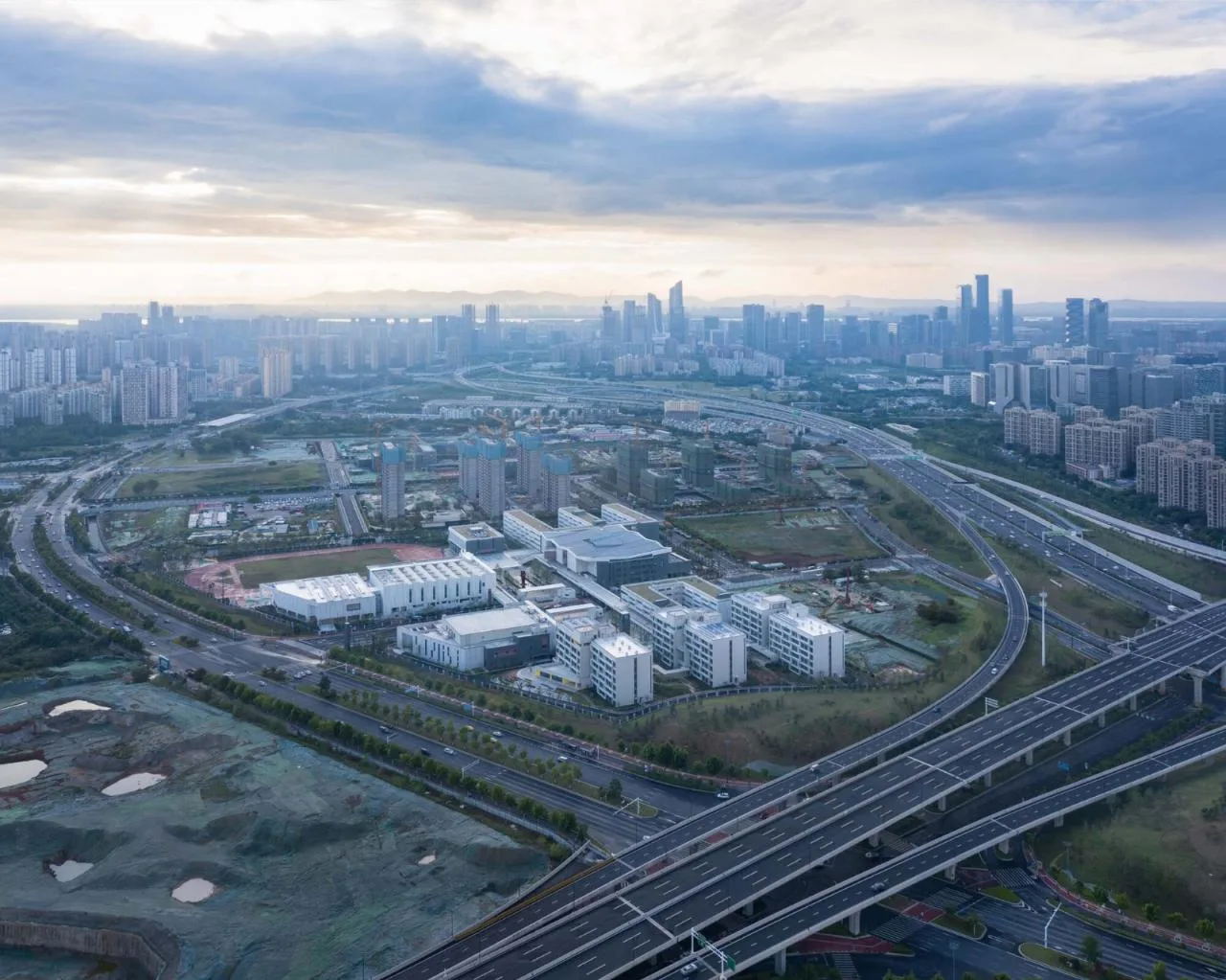
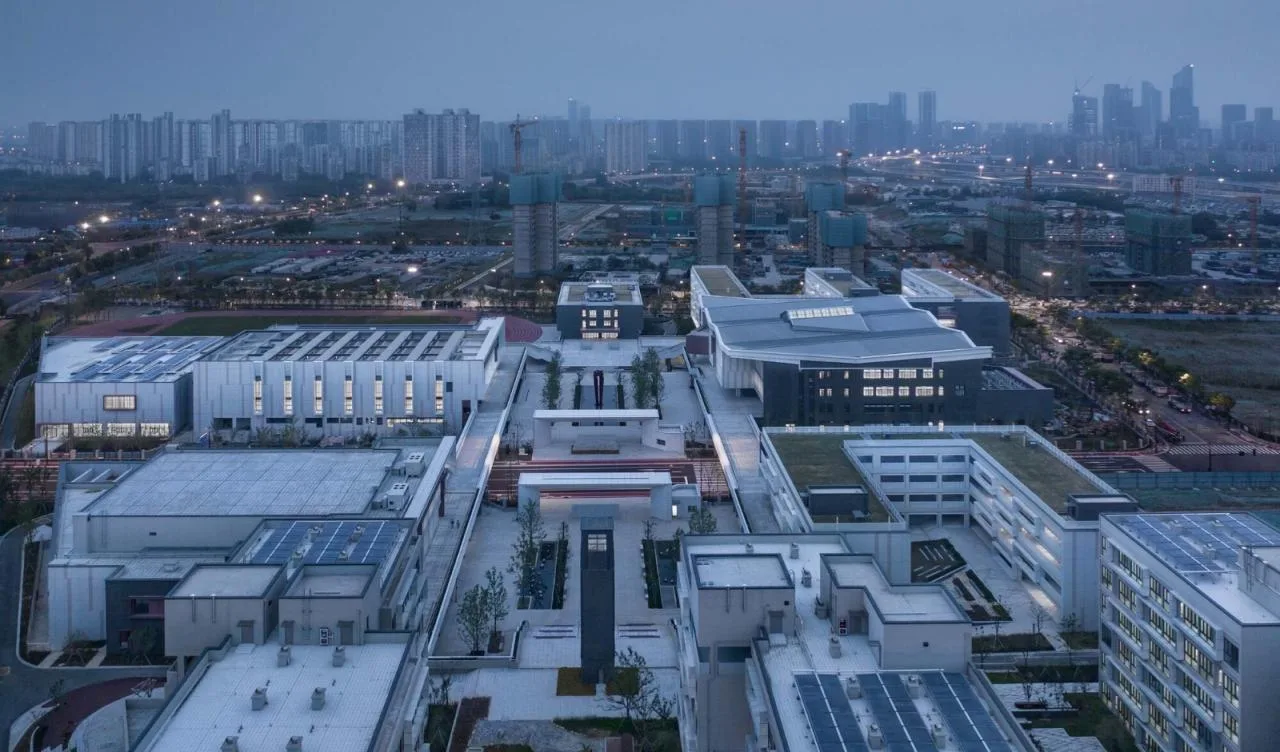
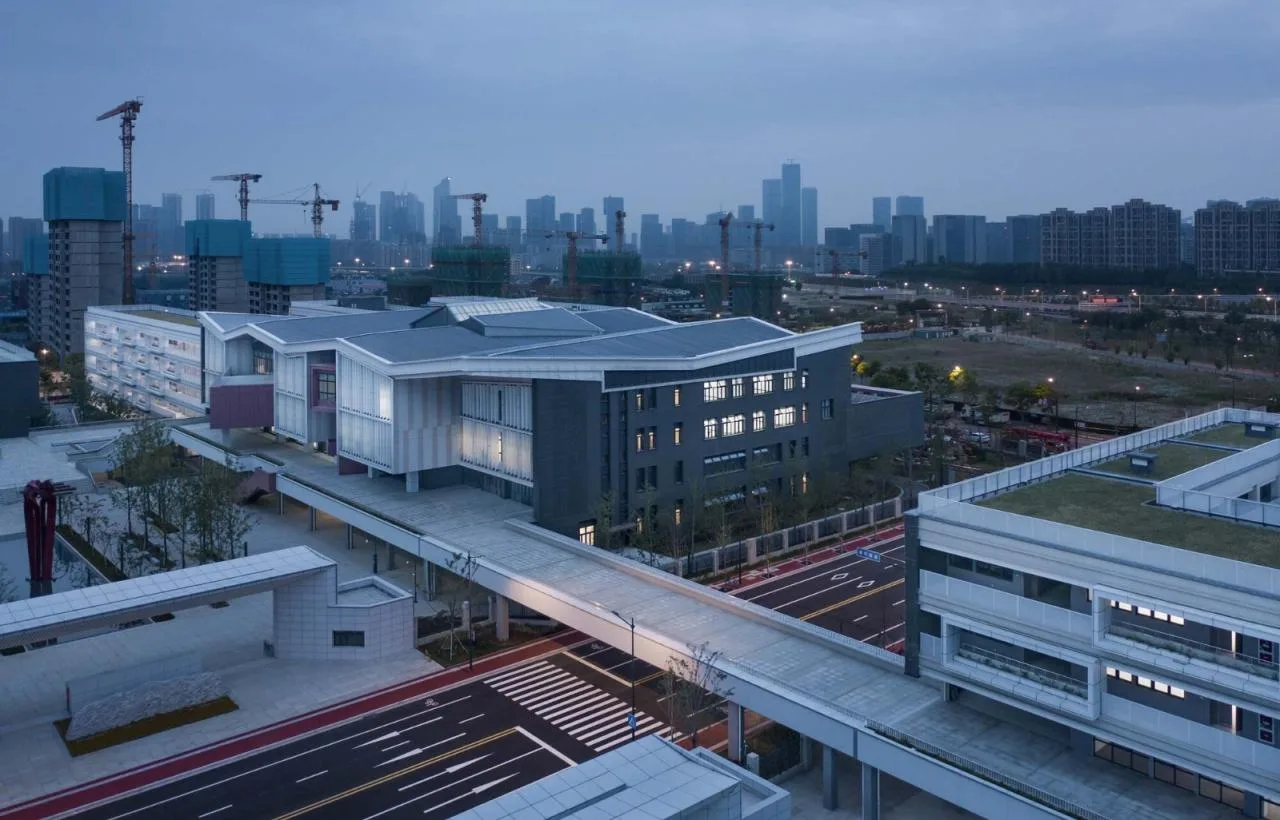
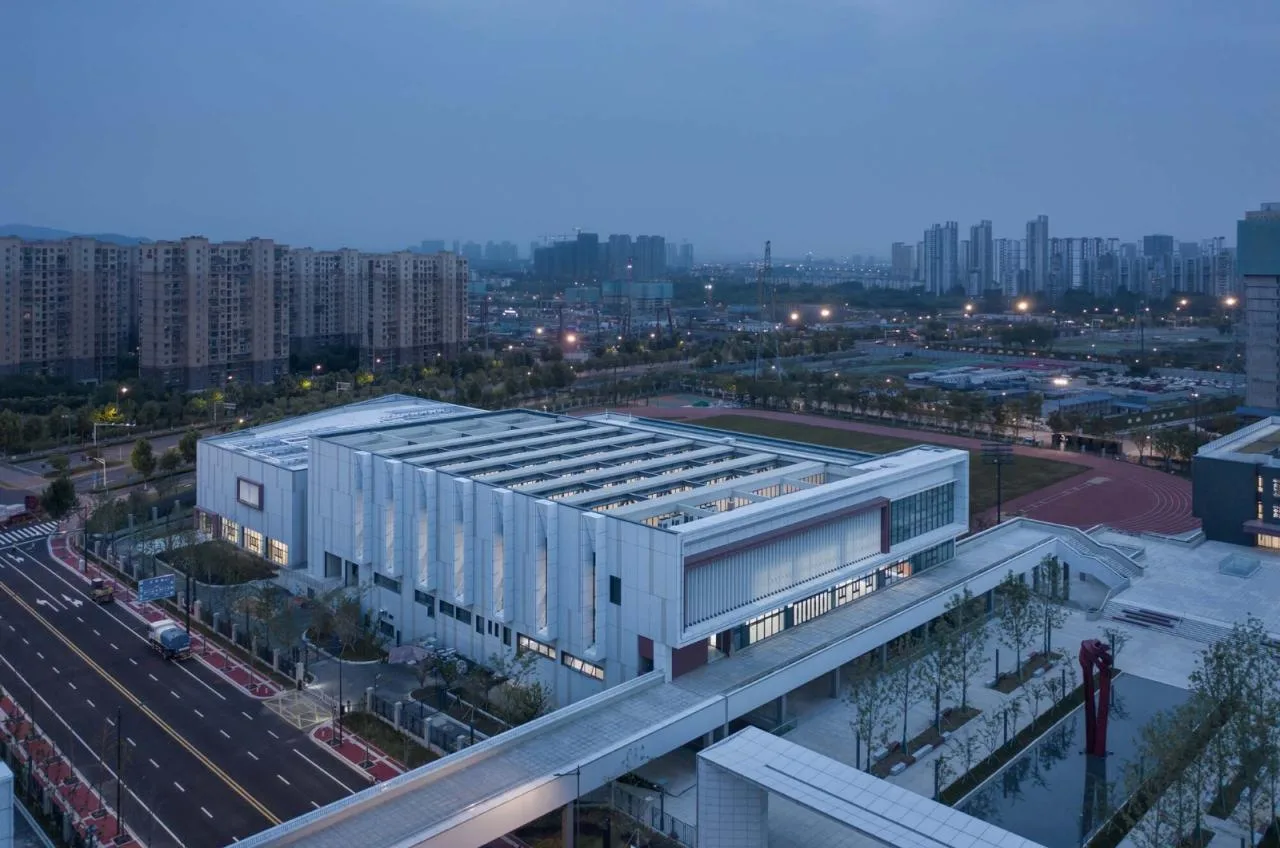
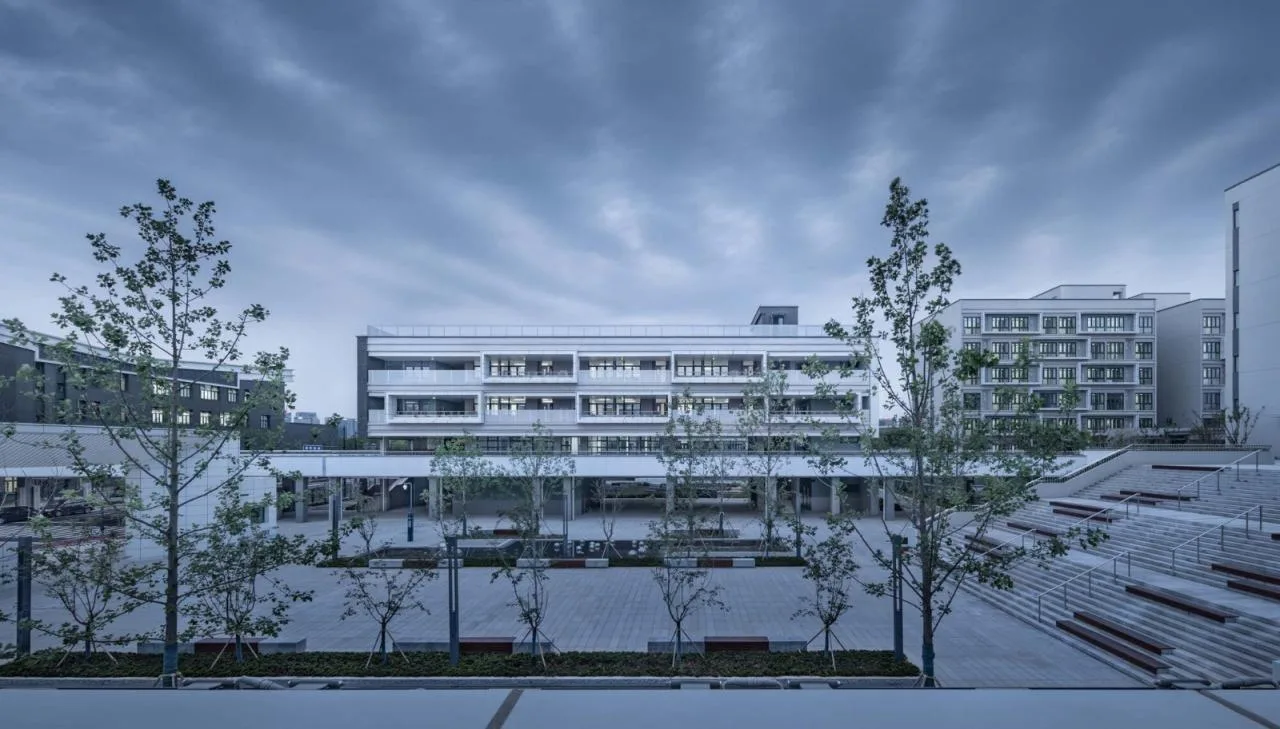
To seamlessly connect the east and west campuses, which are divided by urban roads, the design incorporates two pedestrian overpasses at the northern and southern ends. These overpasses link the Stream Learning Center, gymnasium, cafeteria, and auditorium, forming a “knowledge ring.” This two-story ring road connects the most frequently used buildings, creating a unified and efficient campus layout. The enclosed ring road also defines the ‘Central Park,’ where the entrance plazas of the east and west campuses face each other, merging into the campus’s core open space. At the terminus of the east-west axis, administrative buildings and bell towers stand as focal points. The design cleverly utilizes the site’s natural elevation changes to minimize earthwork removal and create a three-dimensional green campus landscape.
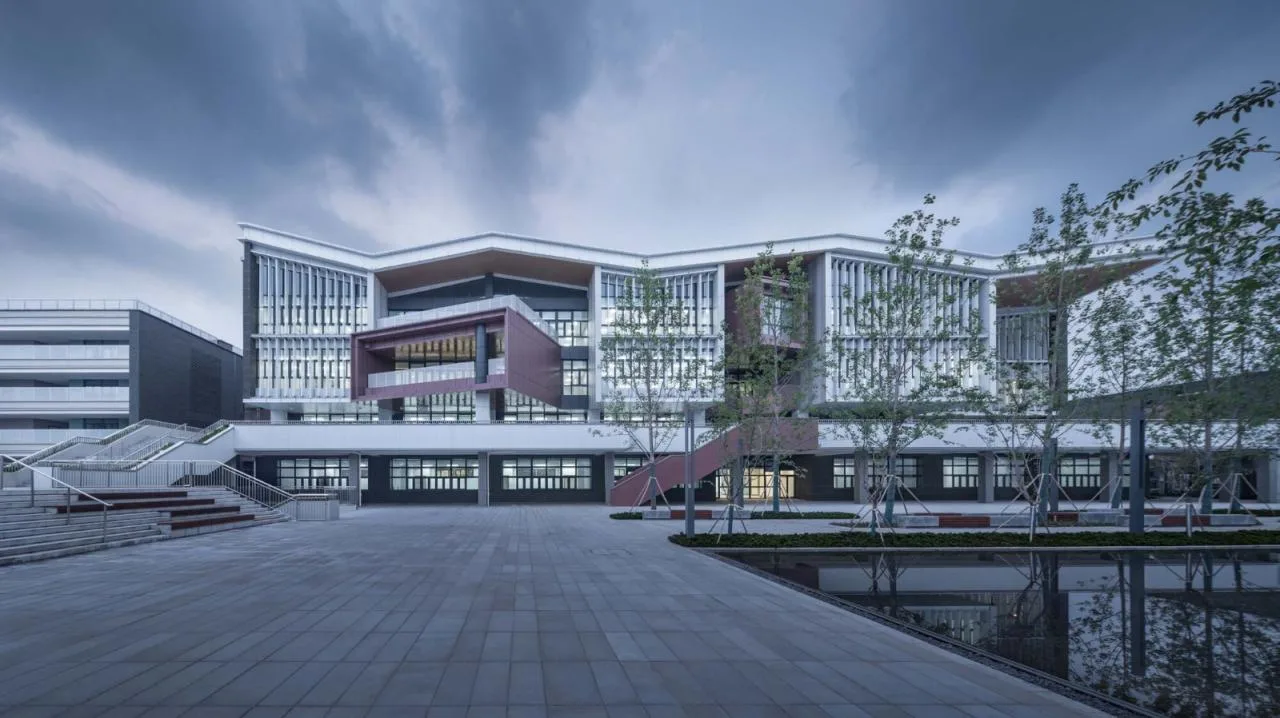
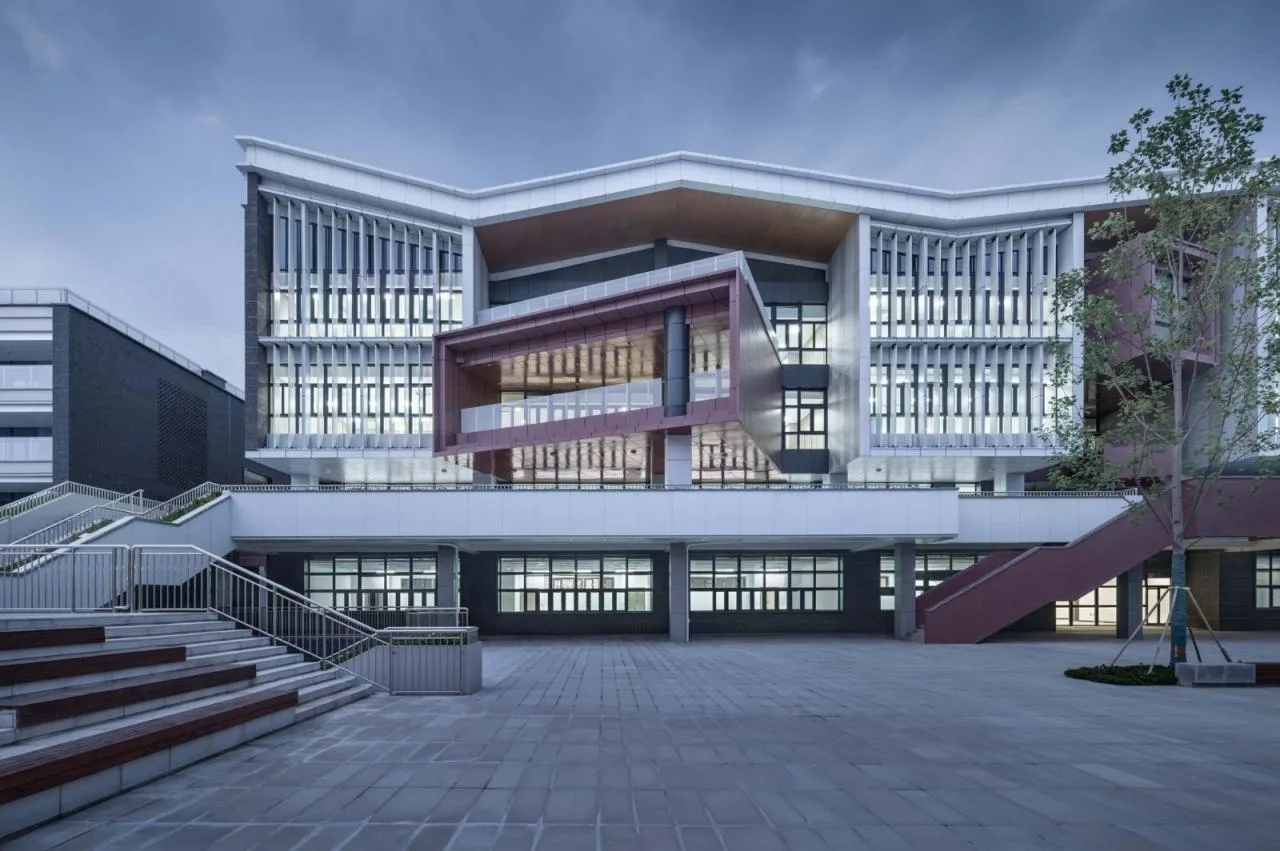
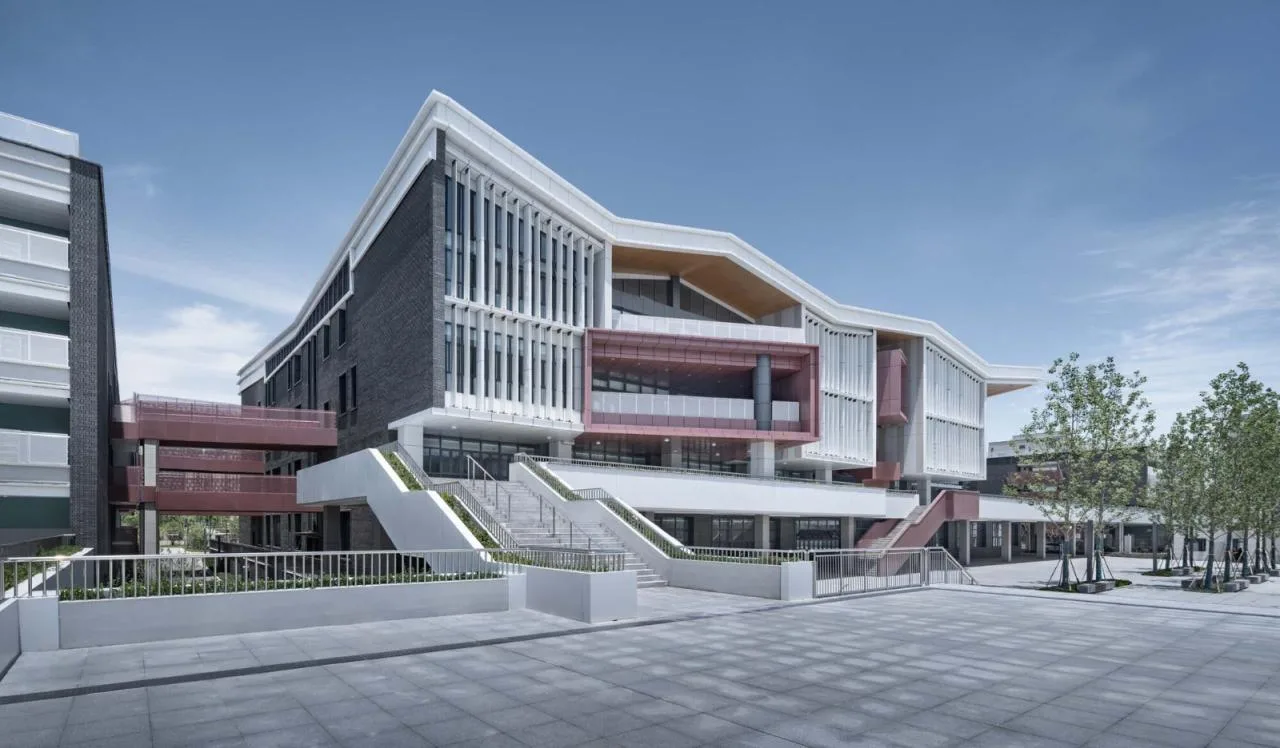
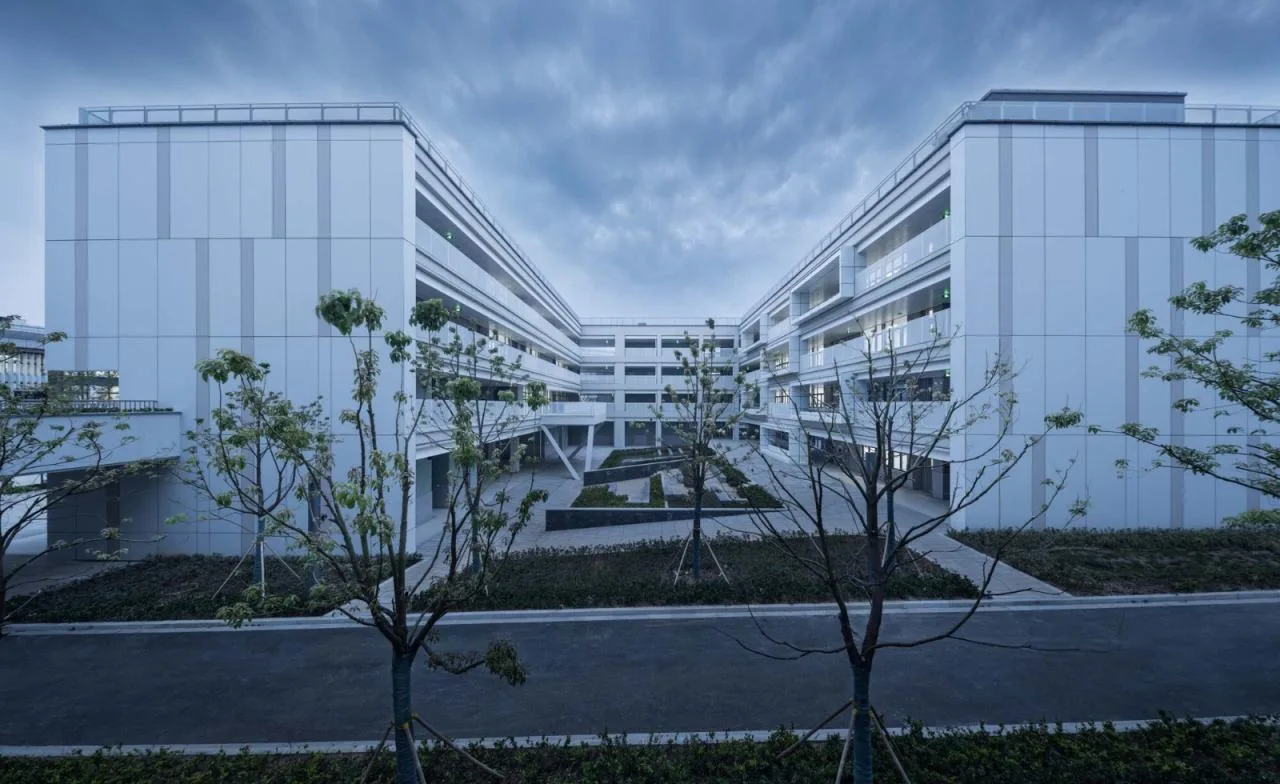
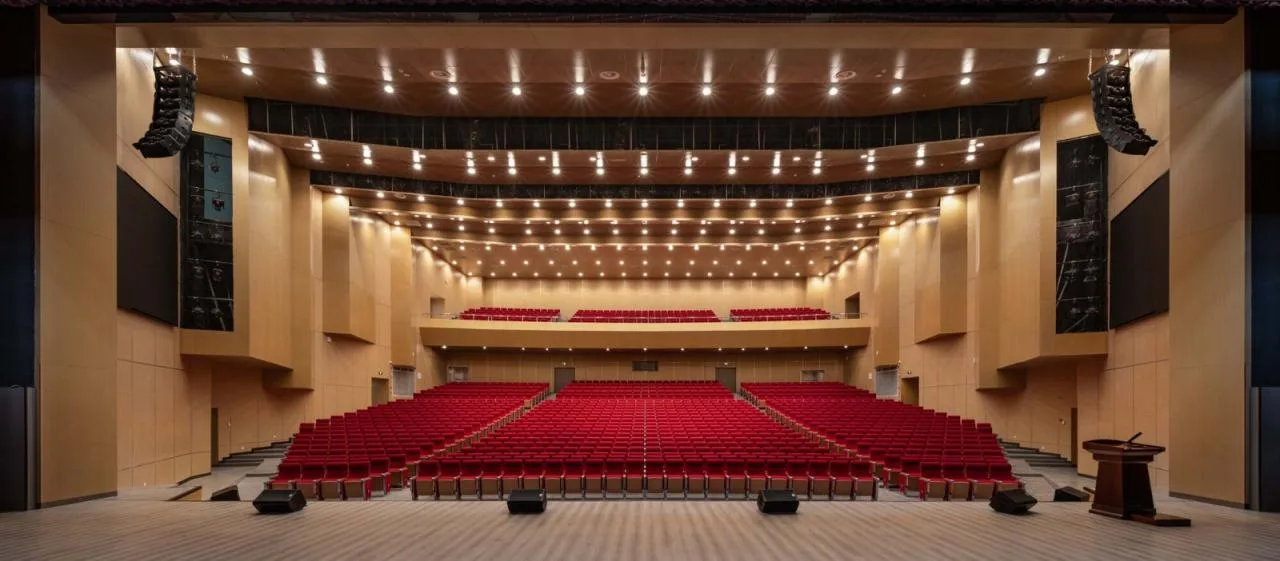
The campus is divided into two distinct zones: the East Campus, focused primarily on residential life, and the West Campus, dedicated mainly to learning. The East Campus houses the International Department Teaching Building in its northwest corner, featuring 18 international classrooms. Opposite it stands a large auditorium with a 1,500-seat capacity, ideal for assemblies. The dormitories are arranged in a courtyard style, accommodating over 1,700 students comfortably.
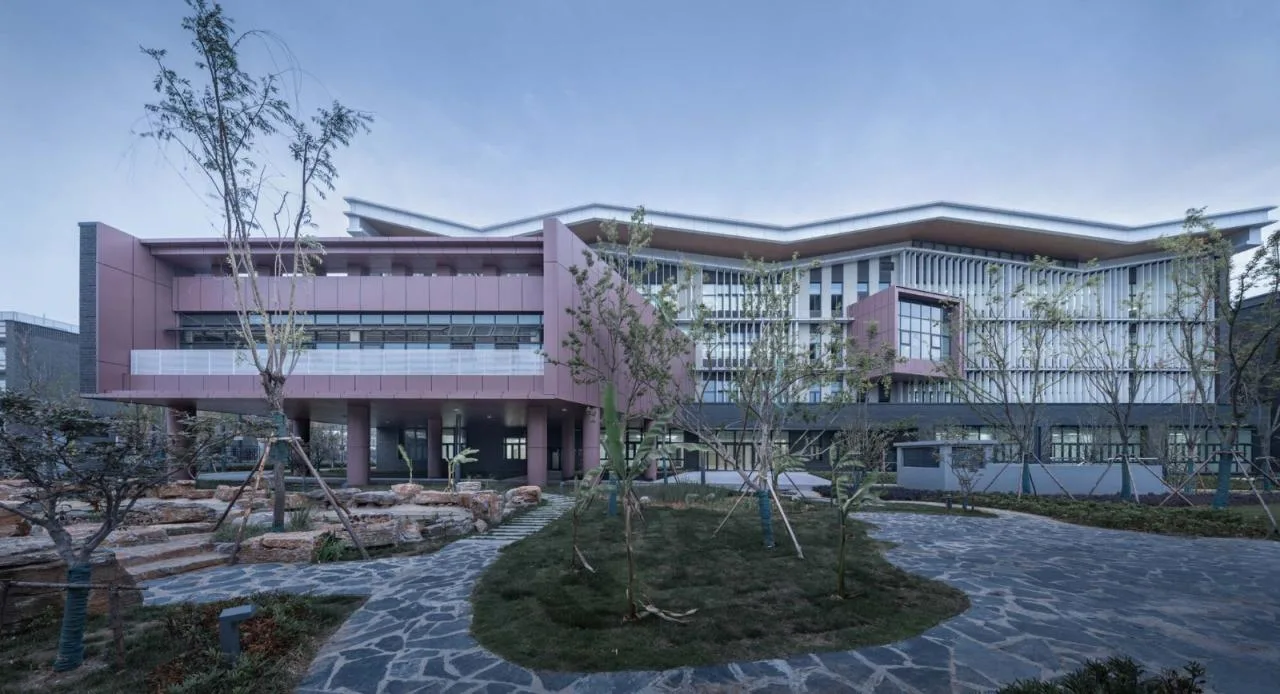
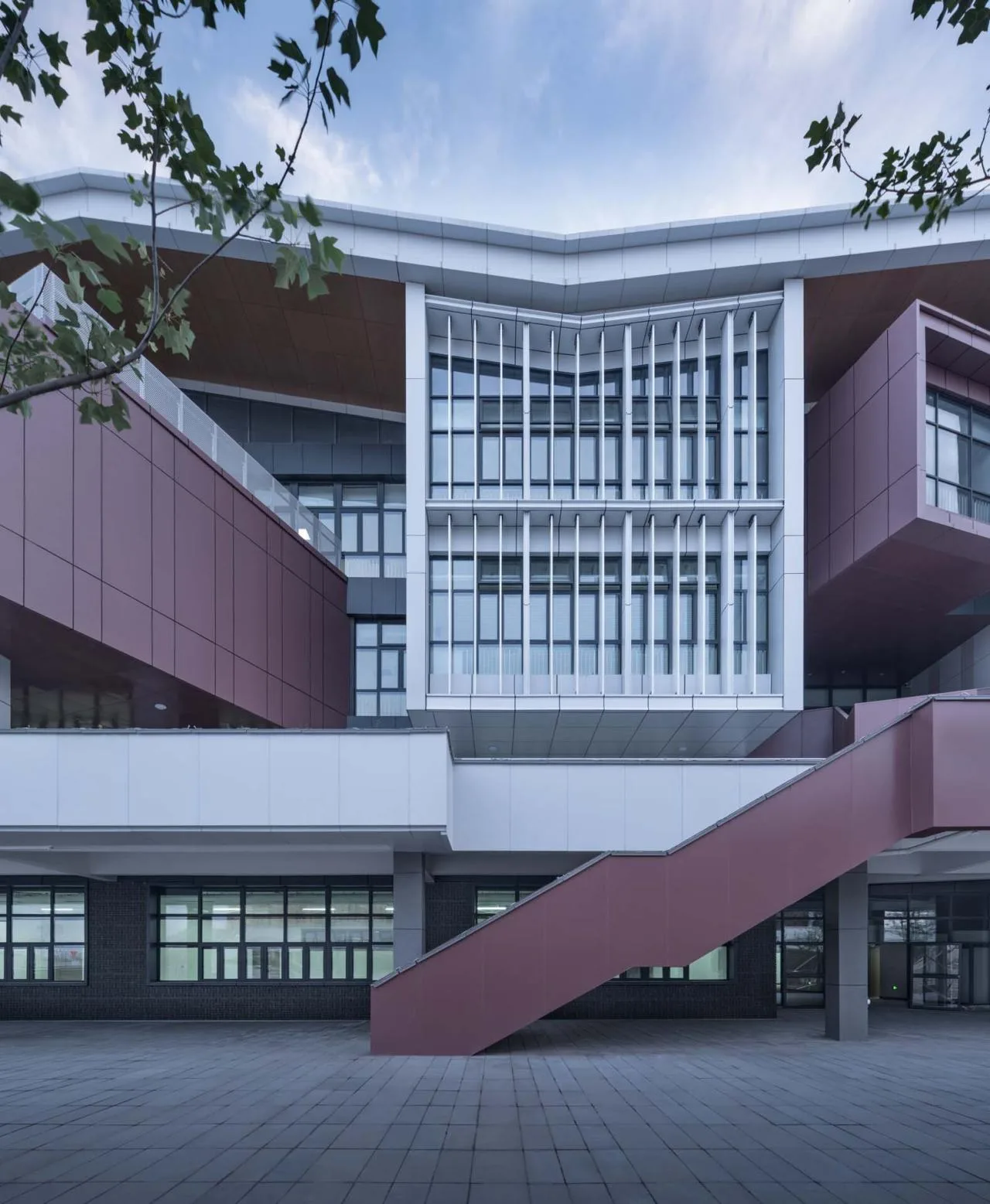
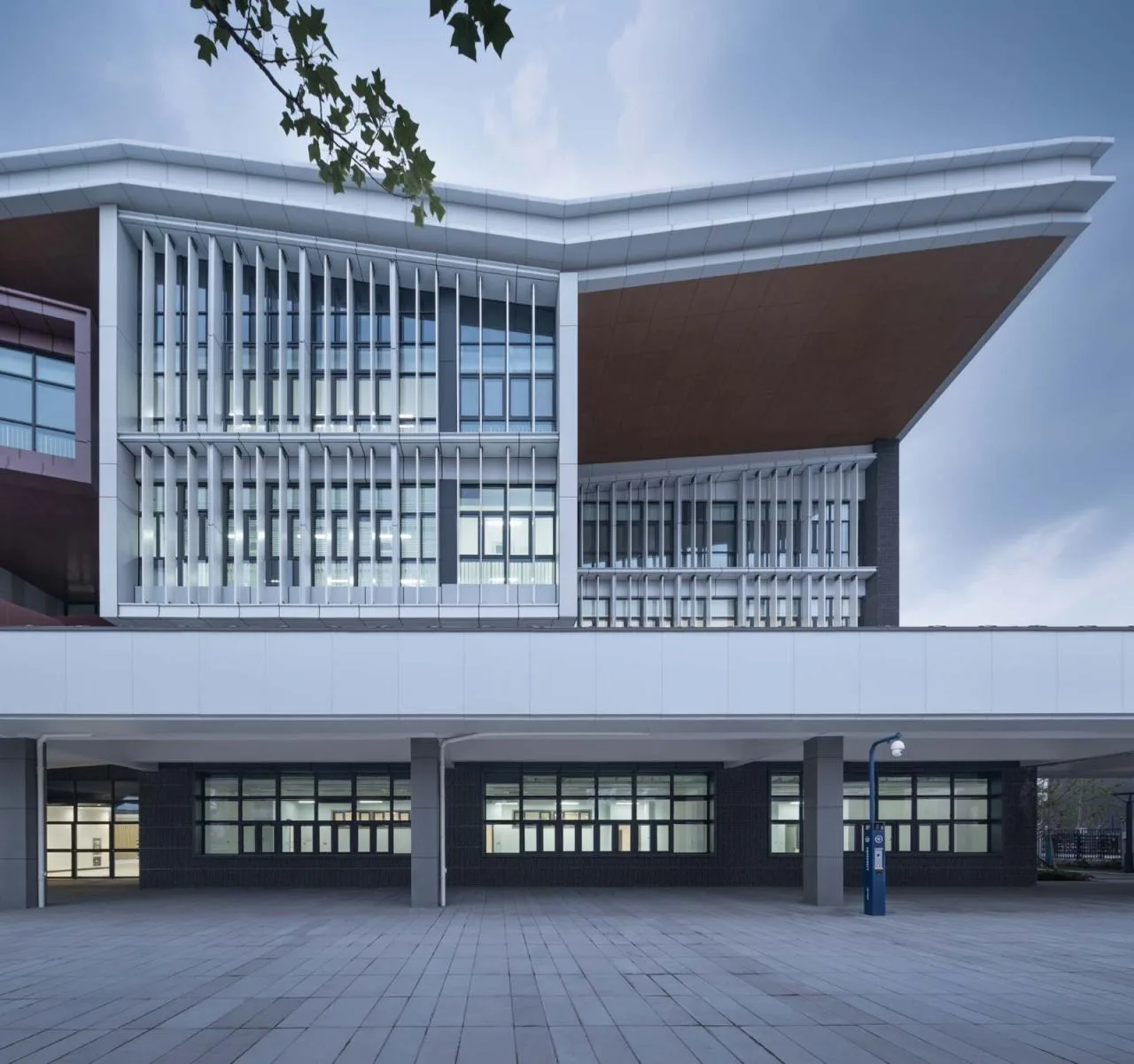
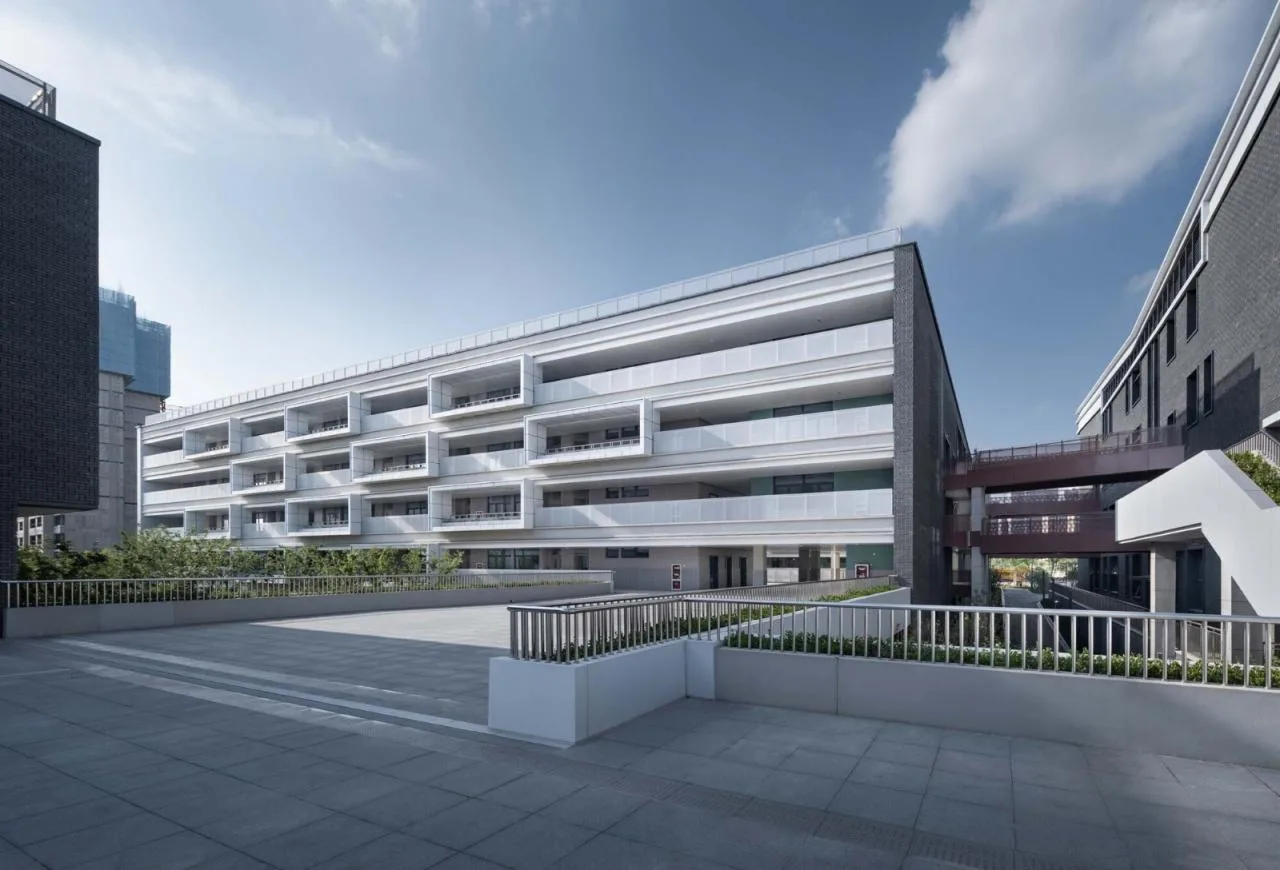
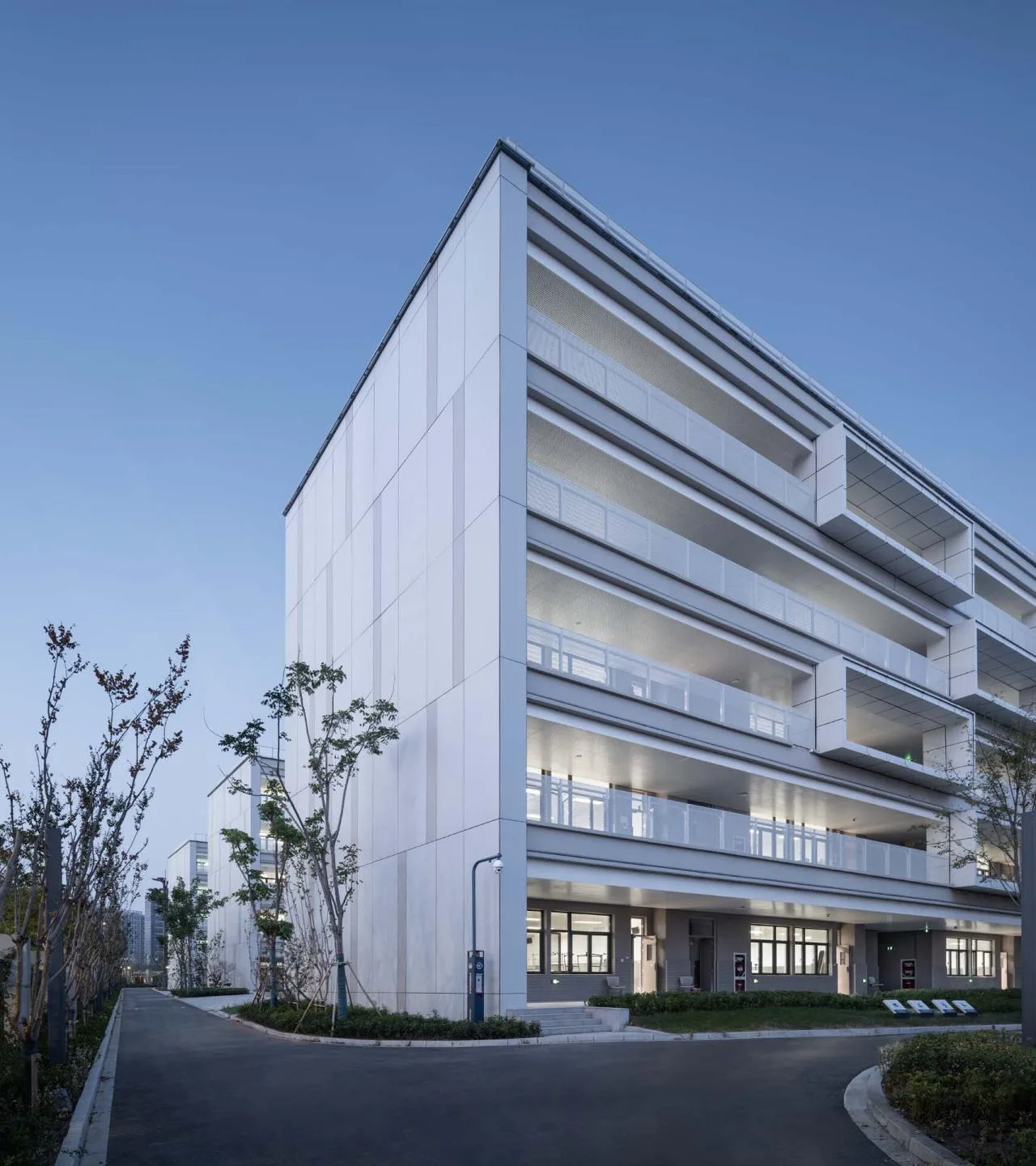
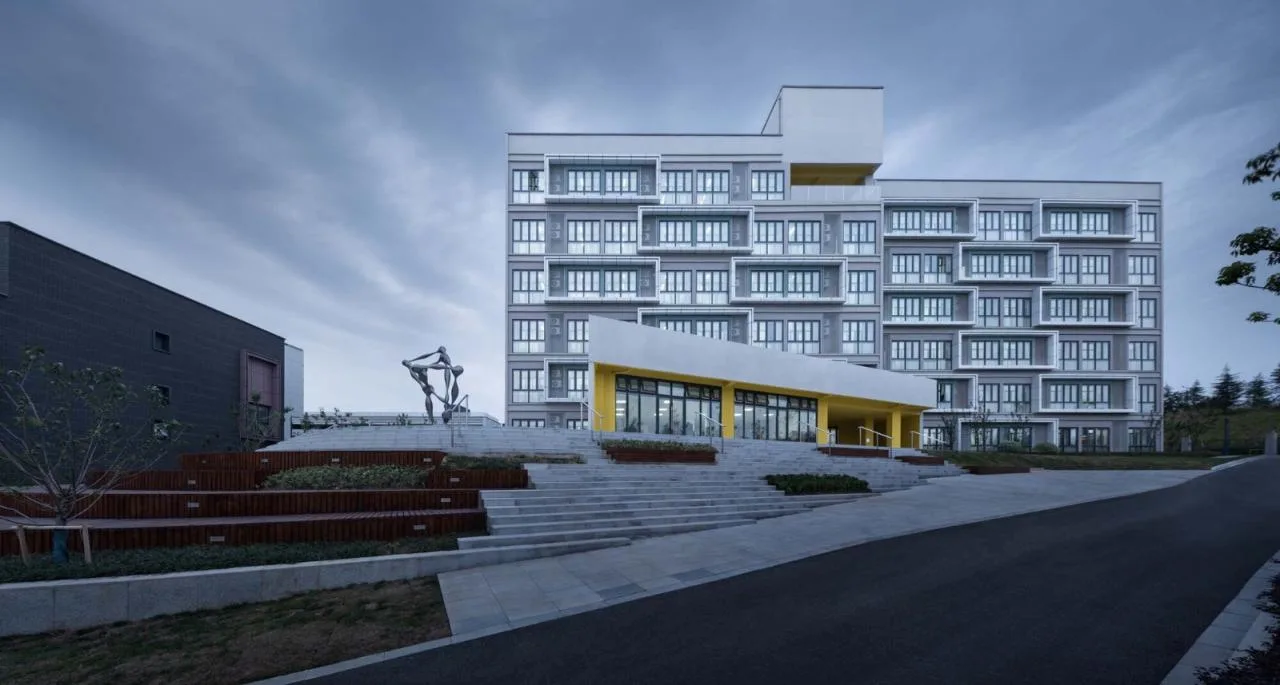
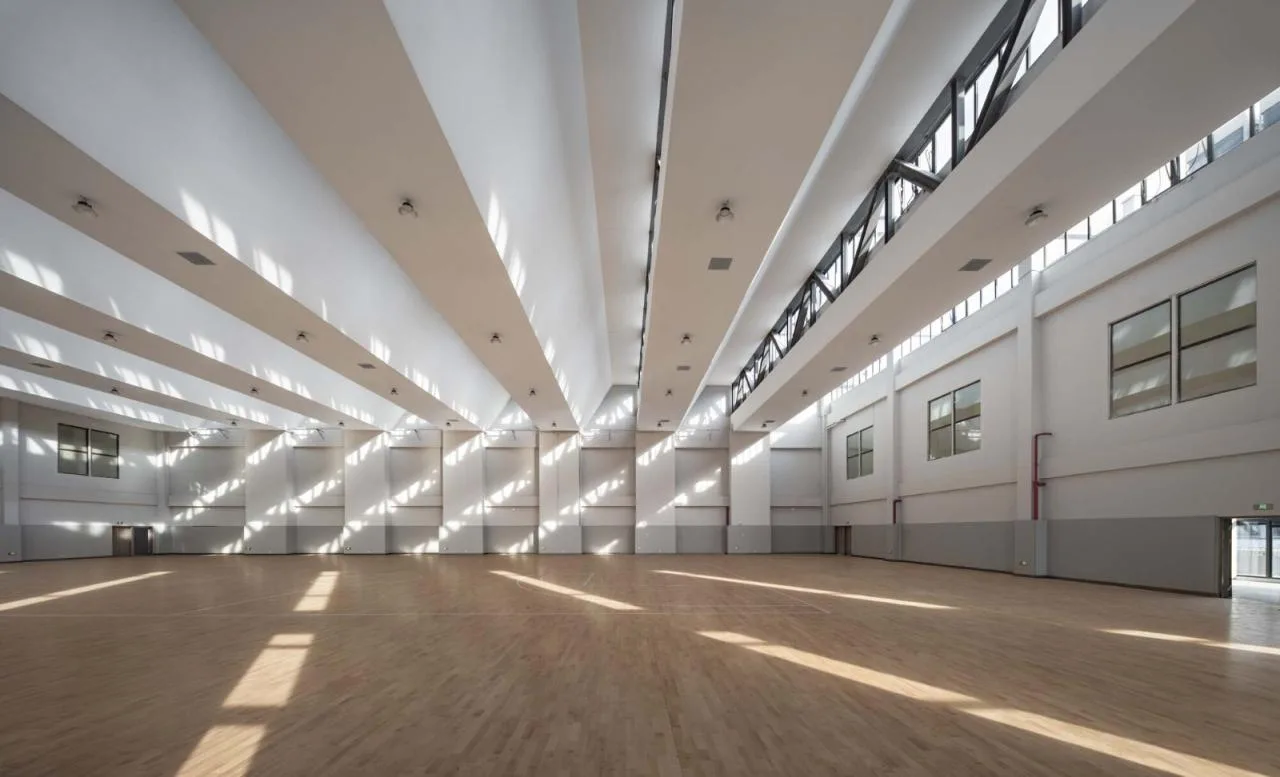
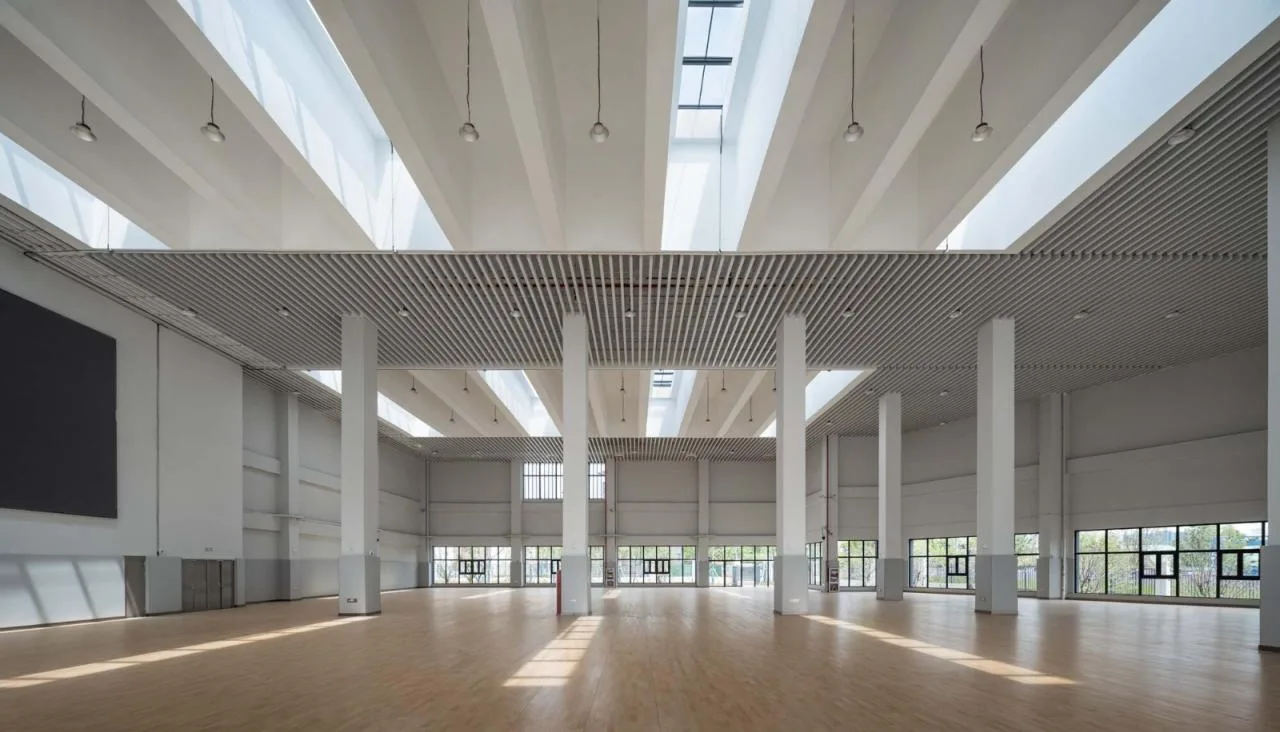
On the West Campus, the teaching building is positioned in the northwest corner and consists of three parallel structures, each dedicated to different grade levels. Each building contains 20 standard classrooms, interconnected by a shared corridor. Teacher offices are conveniently located on each floor adjacent to the corridor, fostering effective communication between faculty and students. The administrative building stands prominently on the central axis of the West Campus, complementing the bell tower and commanding the campus. Its exterior features a dry-hung gray brick curtain wall, echoing the architectural style of the original campus. The cafeteria and gymnasium are one and two-story buildings, accommodating approximately 2,000 teachers and students simultaneously. The third floor houses a covered playground and an arts training hall, equipped with a running track and skylights to ensure ample natural light. Notably, the Stream Learning Center, regarded as the campus’s “core spiritual fortress,” is strategically located at the main entrance of the West Campus.
Education at the Yuhua Campus emphasizes a comprehensive approach. Architects have developed a new teaching model called the “TREAM Learning Center,” inspired by the social nature of education. This model aligns with the Ministry of Education’s 2016 “13th Five Year Plan for Education Informatization” and has received strong support from school leadership. TREAM expands upon the traditional STEM framework by integrating reading and art education, fostering not only scientific and technological literacy but also artistic and literary skills. This interdisciplinary approach encourages deep learning and holistic understanding through the interaction of diverse disciplines.
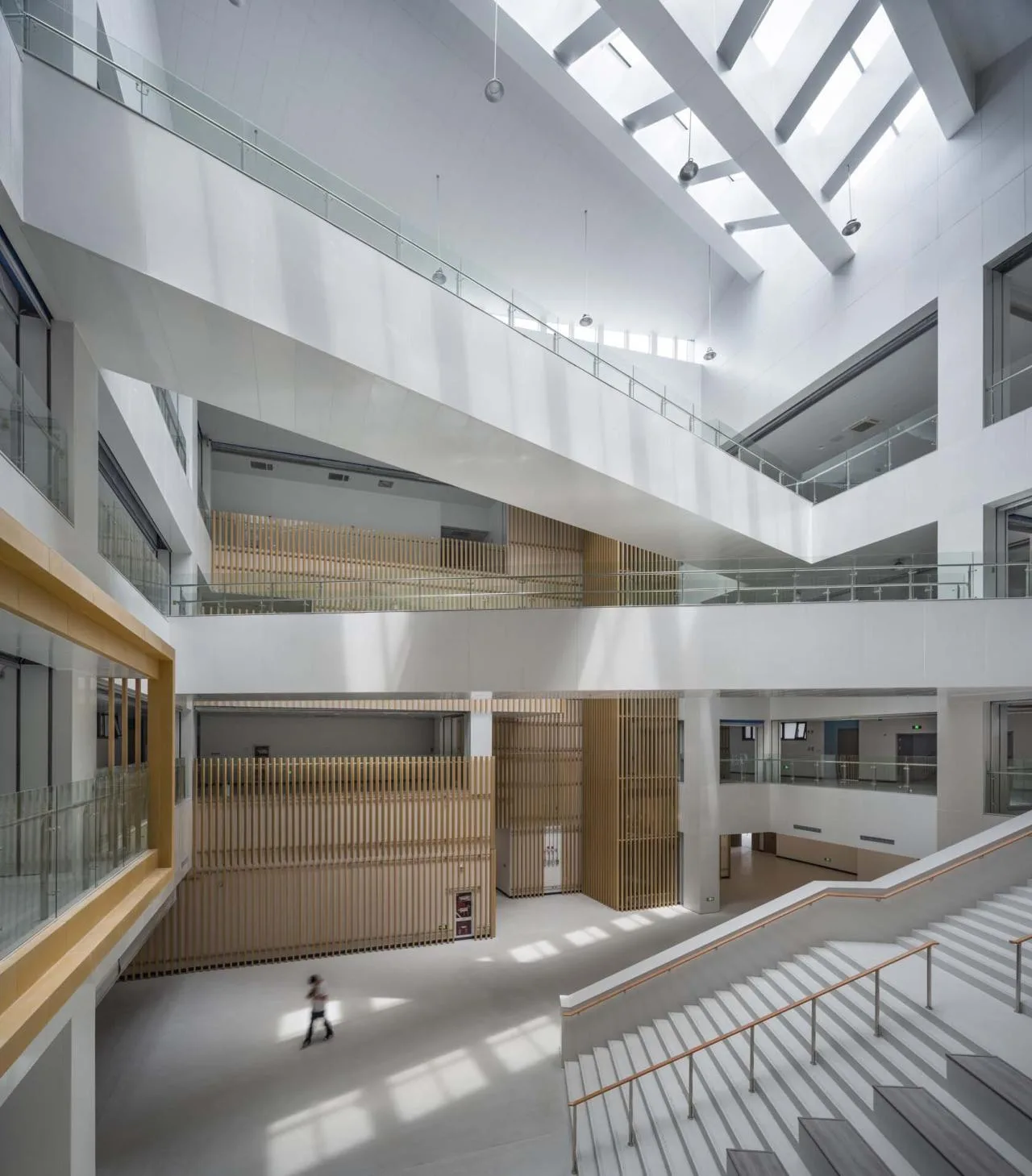
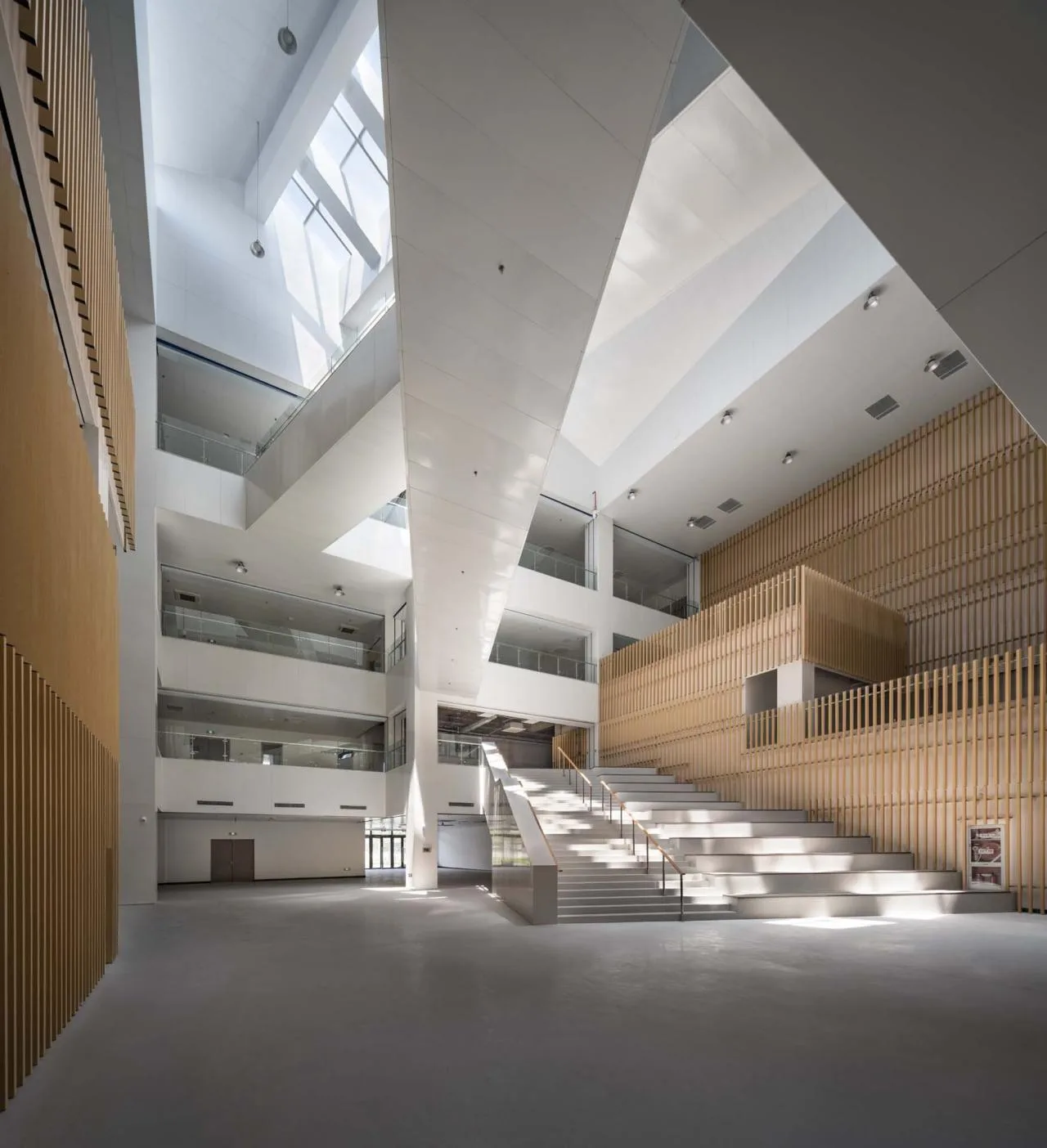
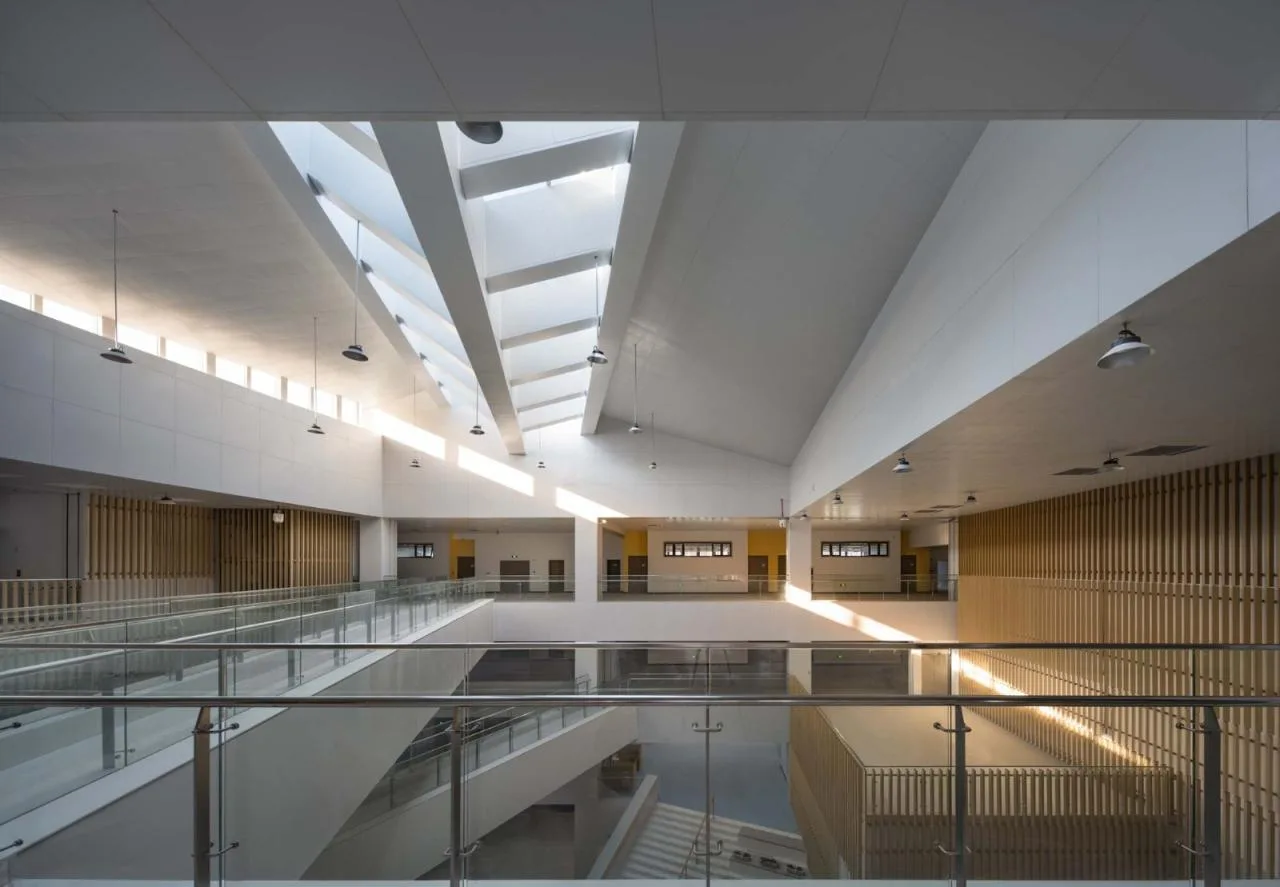
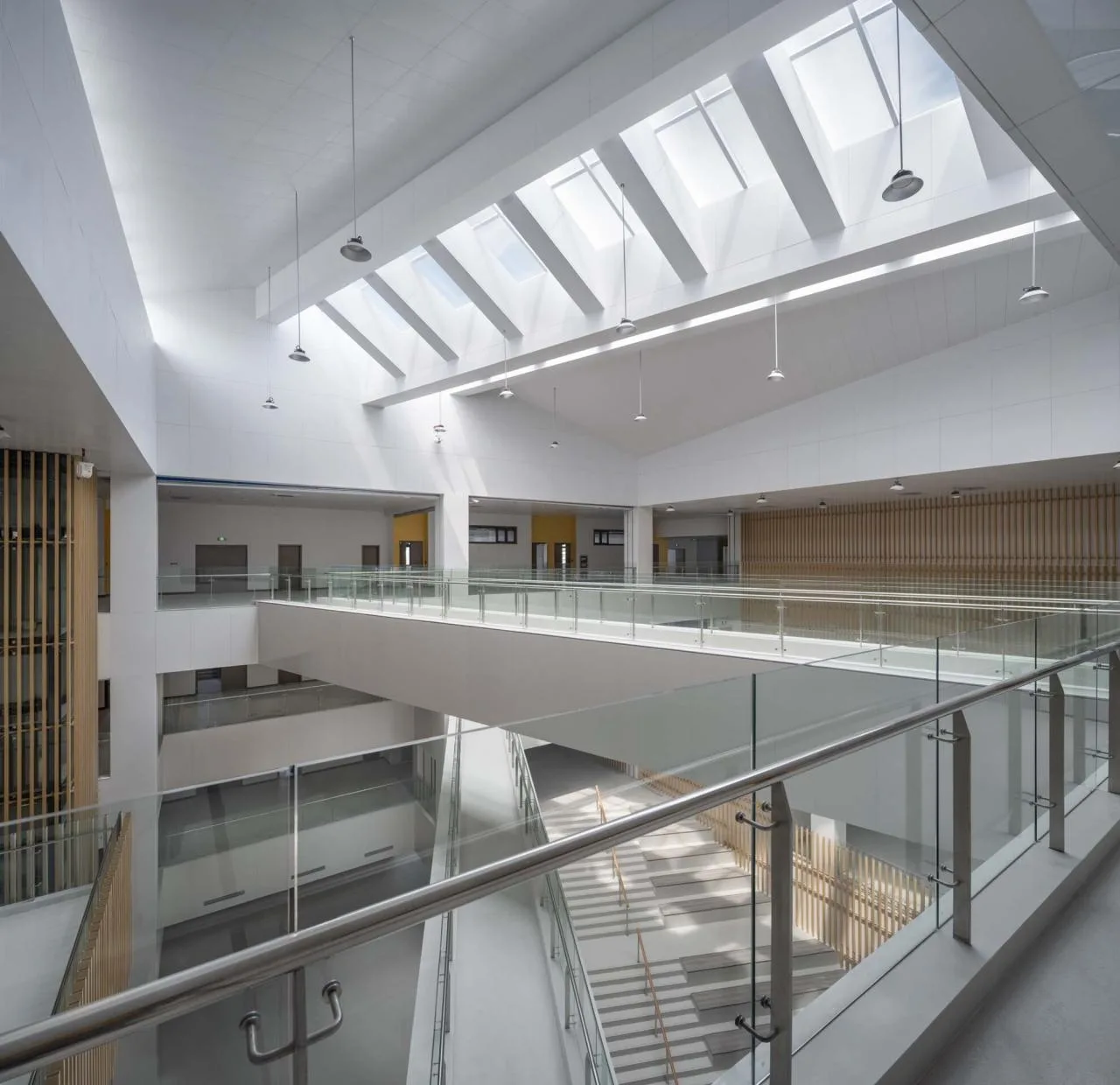
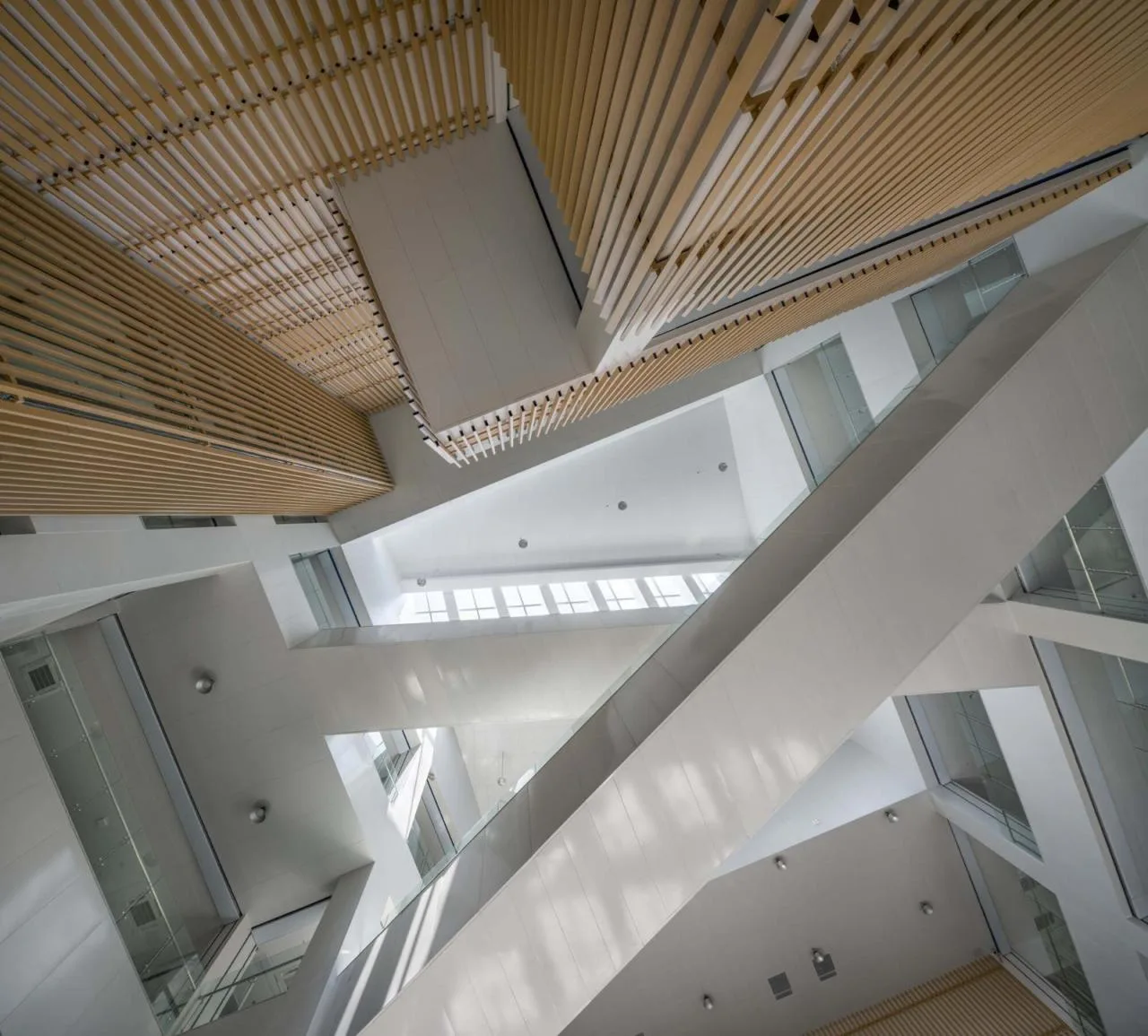
The Stream Learning Center consolidates all specialized educational facilities within a “comprehensive” layout. Professional classrooms are arranged compactly along the building’s perimeter, while an open atrium space offers students a variety of study areas. This design creates multiple internal pathways and diverse options for student breaks and social interaction, effectively addressing the challenge of “one-hour blank” scheduling gaps where students otherwise have no designated spaces.
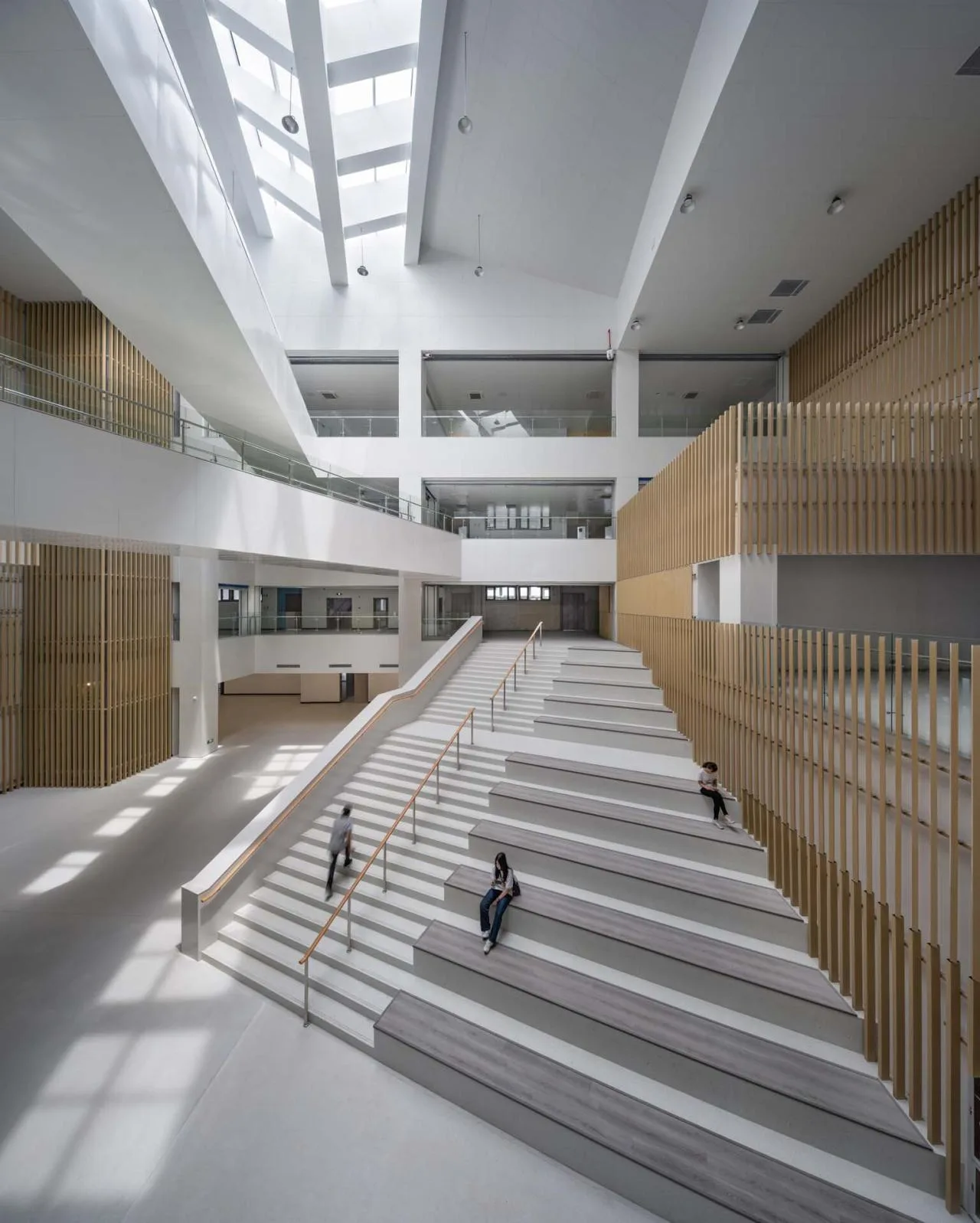
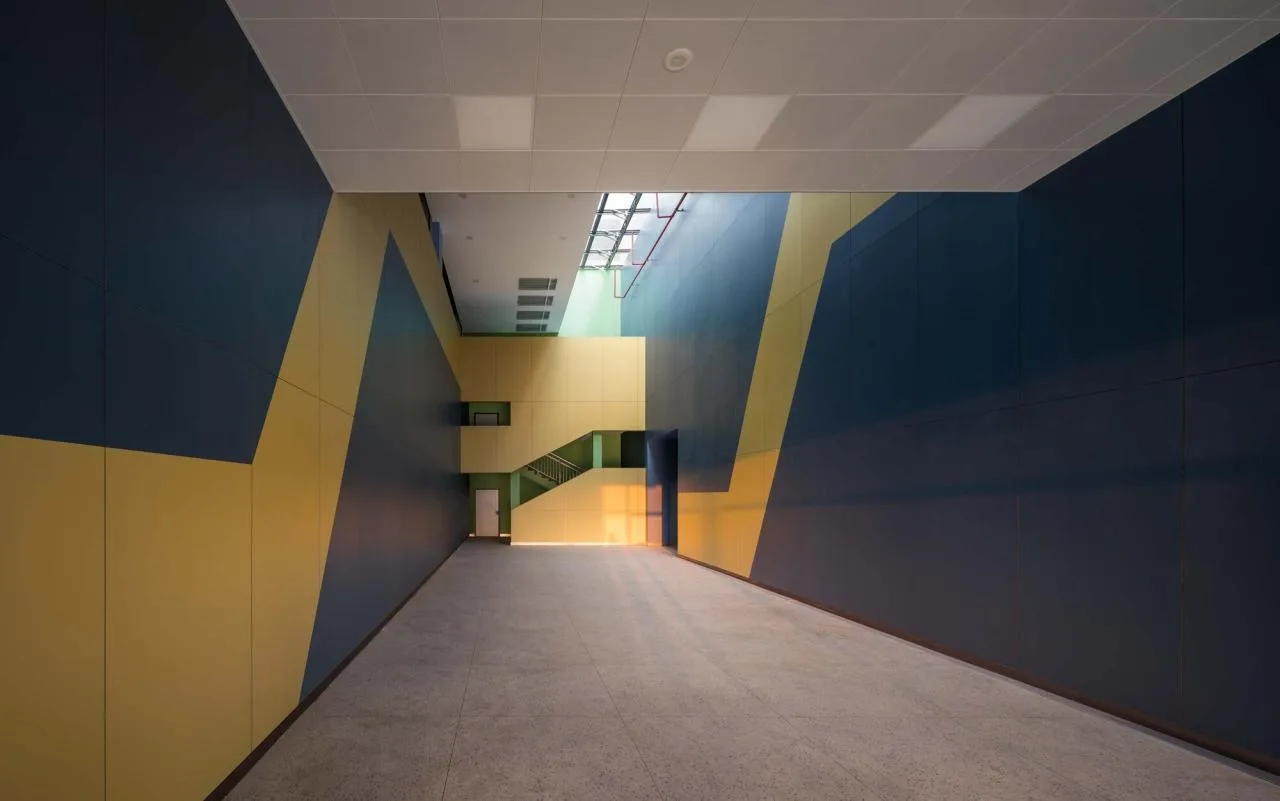
Natural daylight streams through skylights on the roof, creating a magical connection between light and space that encourages exploration. Beneath the skylight, a public staircase links the first floor to an expanded second-floor platform and reading room, as well as a pedestrian bridge connecting the third and fourth floors. This narrow, tapered staircase doubles as a space for reading, socializing, and showcasing STEAM achievements during breaks. By incorporating courtyards, corridors, and multiple platforms, the design expands functional spaces vertically into a three-dimensional environment, offering a dynamic and versatile setting for student interaction and study.
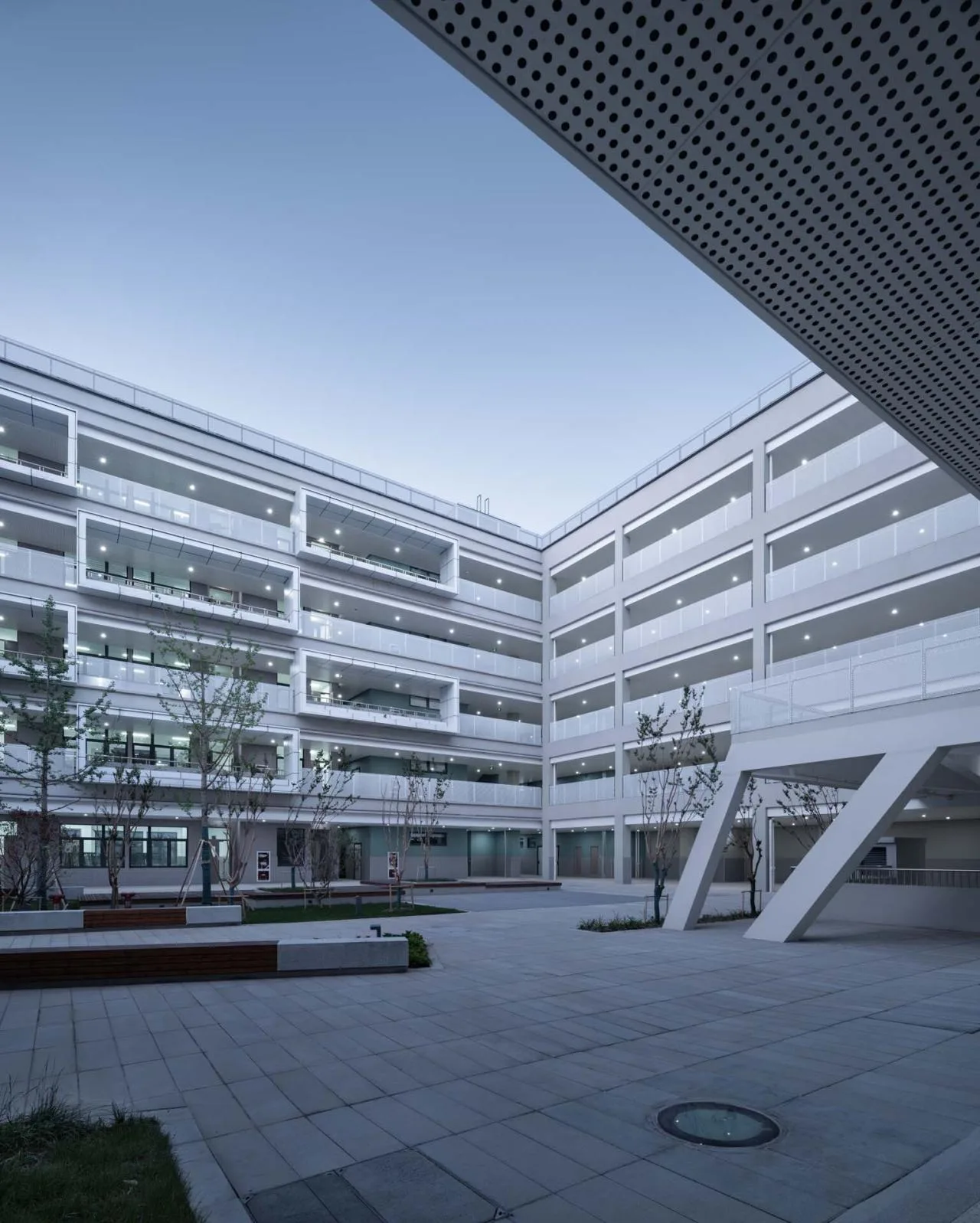
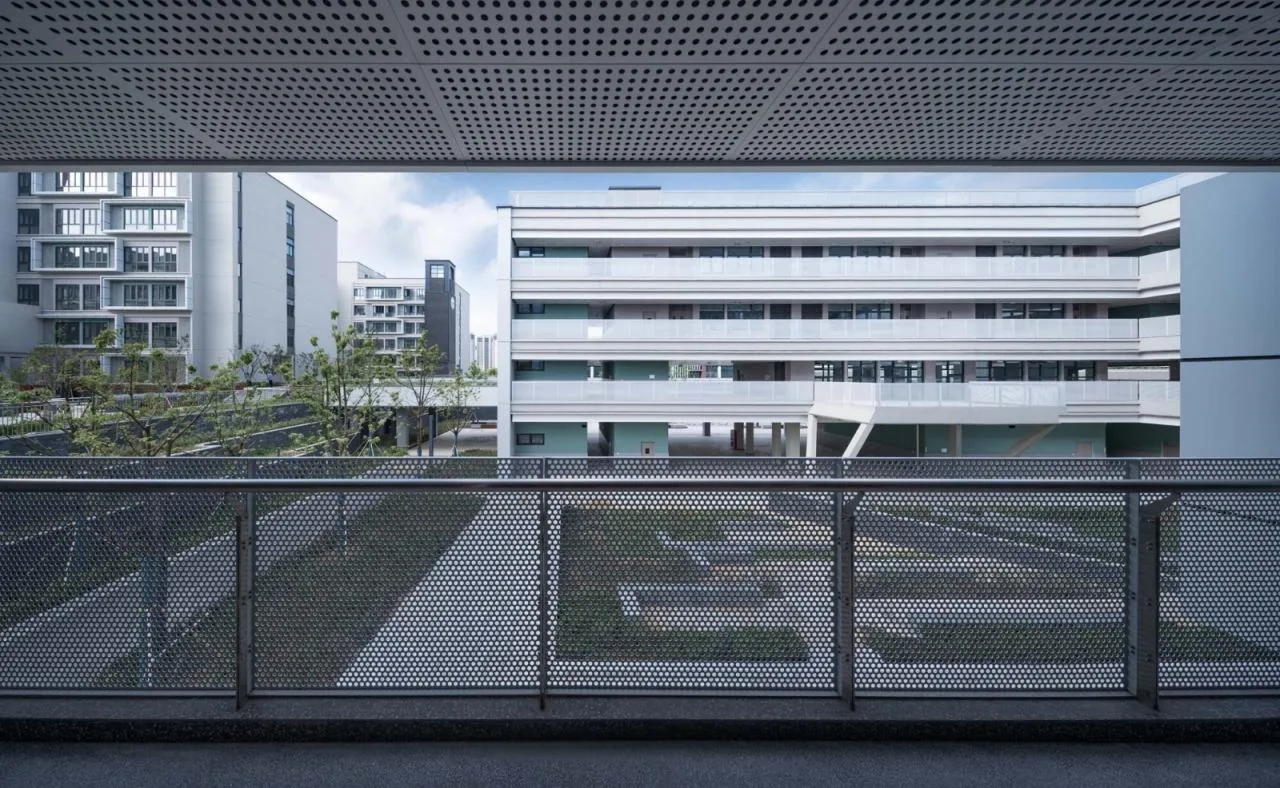
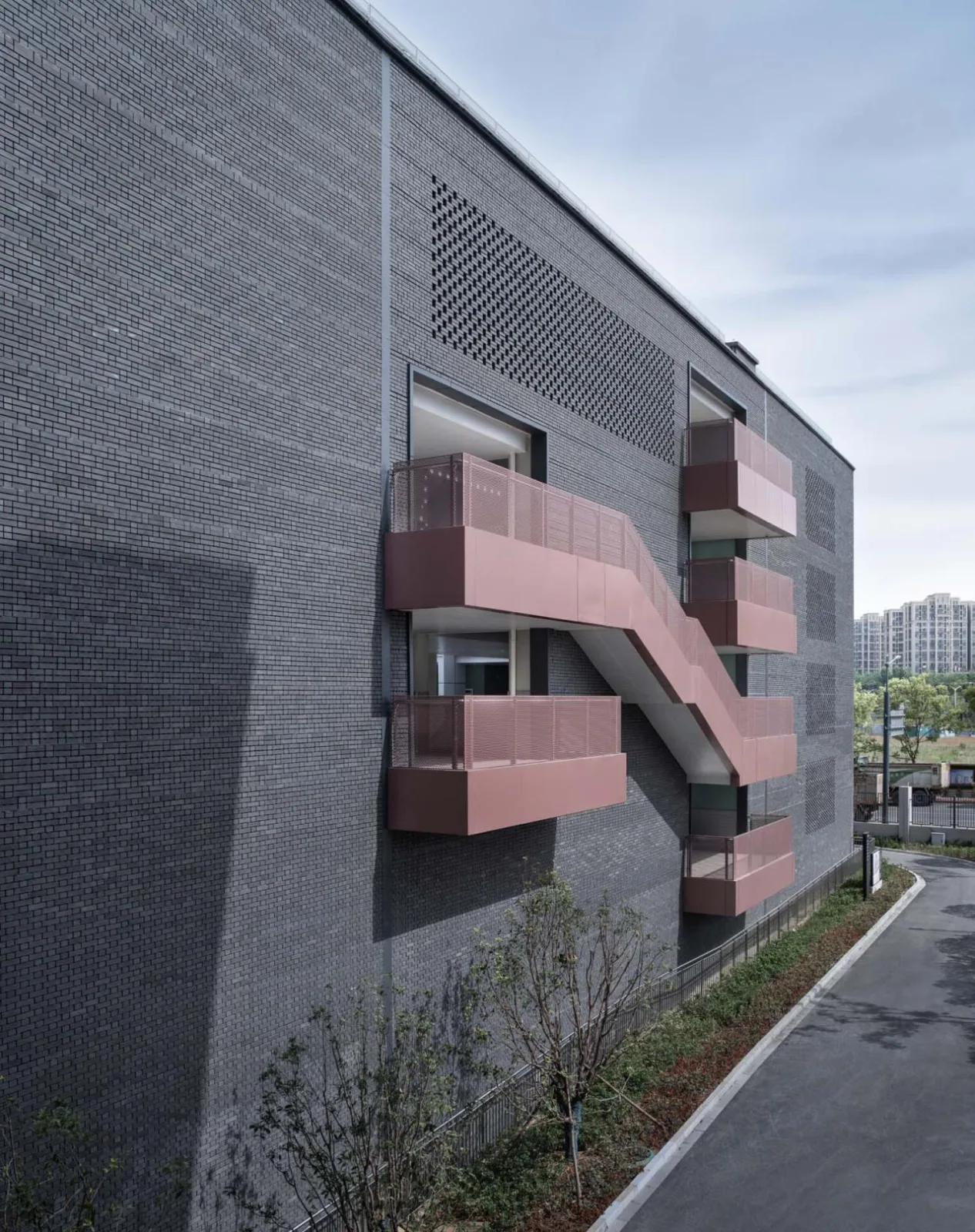
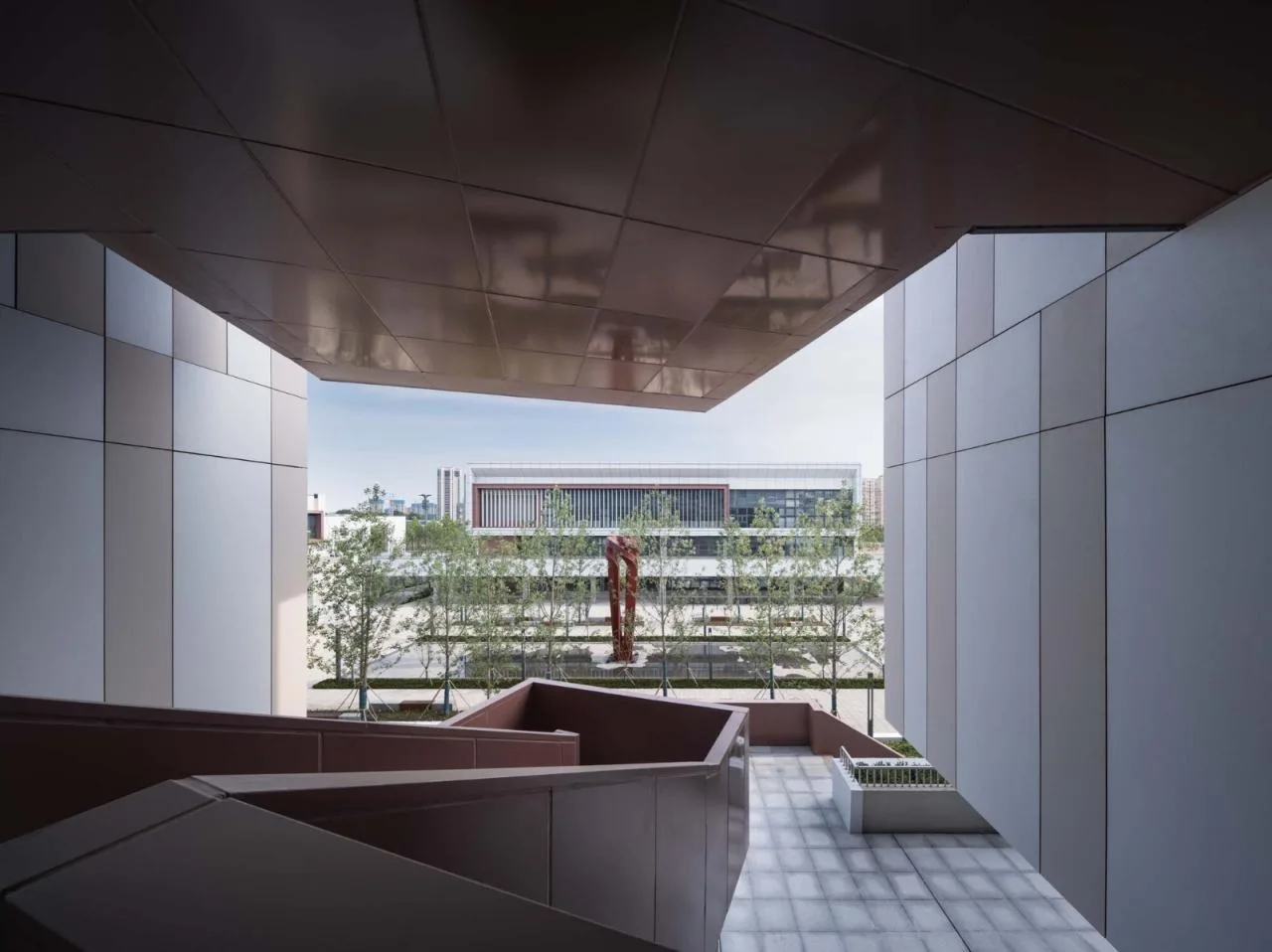
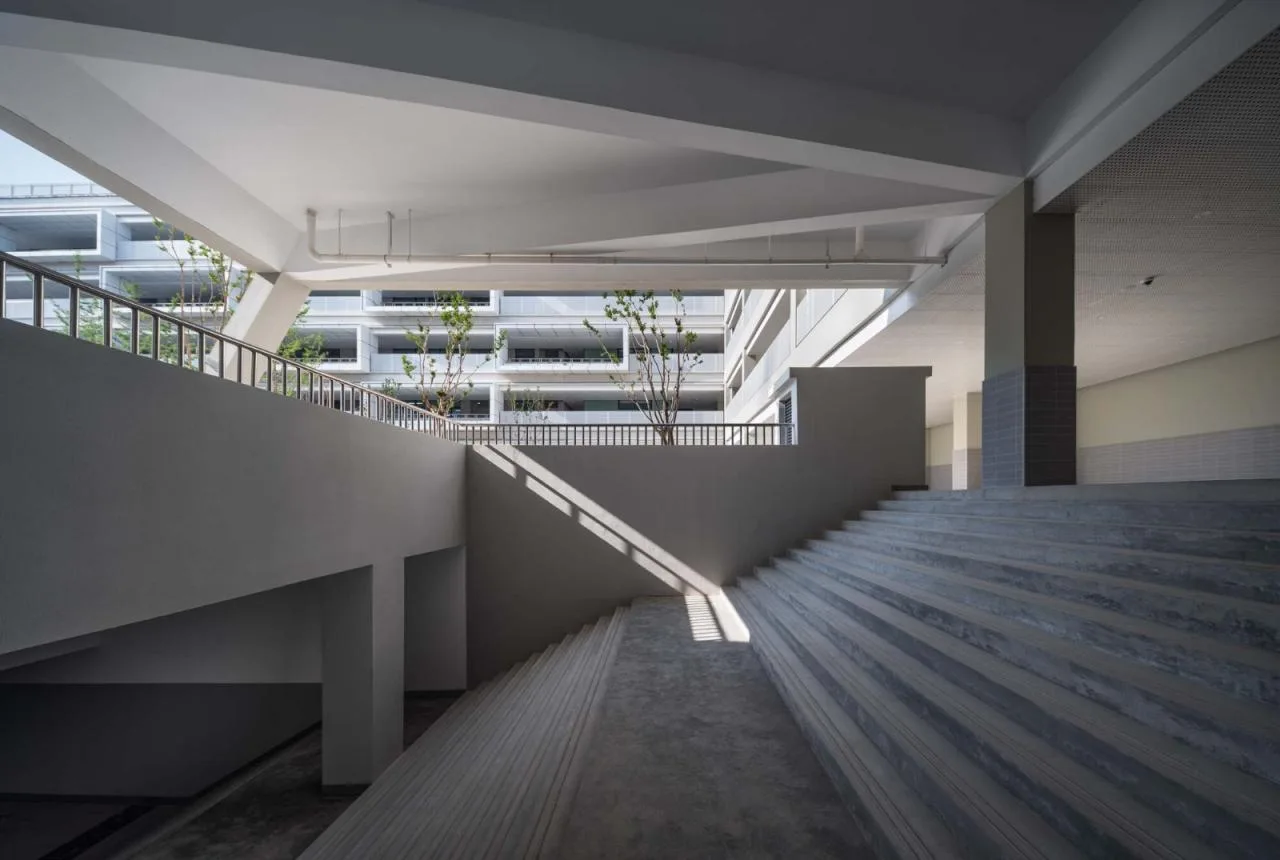
Outside the Stream Learning Center, a vibrant exterior space featuring corridors, platforms, and multi-functional grey areas encourages student interaction and extracurricular activities. By arranging and rotating functional rooms, the design creates dynamic interfaces with the outdoor environment, serving as venues for student socializing during breaks. This approach leverages the “SRTEAM Learning Center” concept to promote interdisciplinary education and informal learning through seamless transitions between indoor and outdoor spaces. The architects explore how the “SRTEAM” educational model can be integrated with a multi-dimensional spatial layout that naturally stimulates student communication and engagement.
Project Drawings
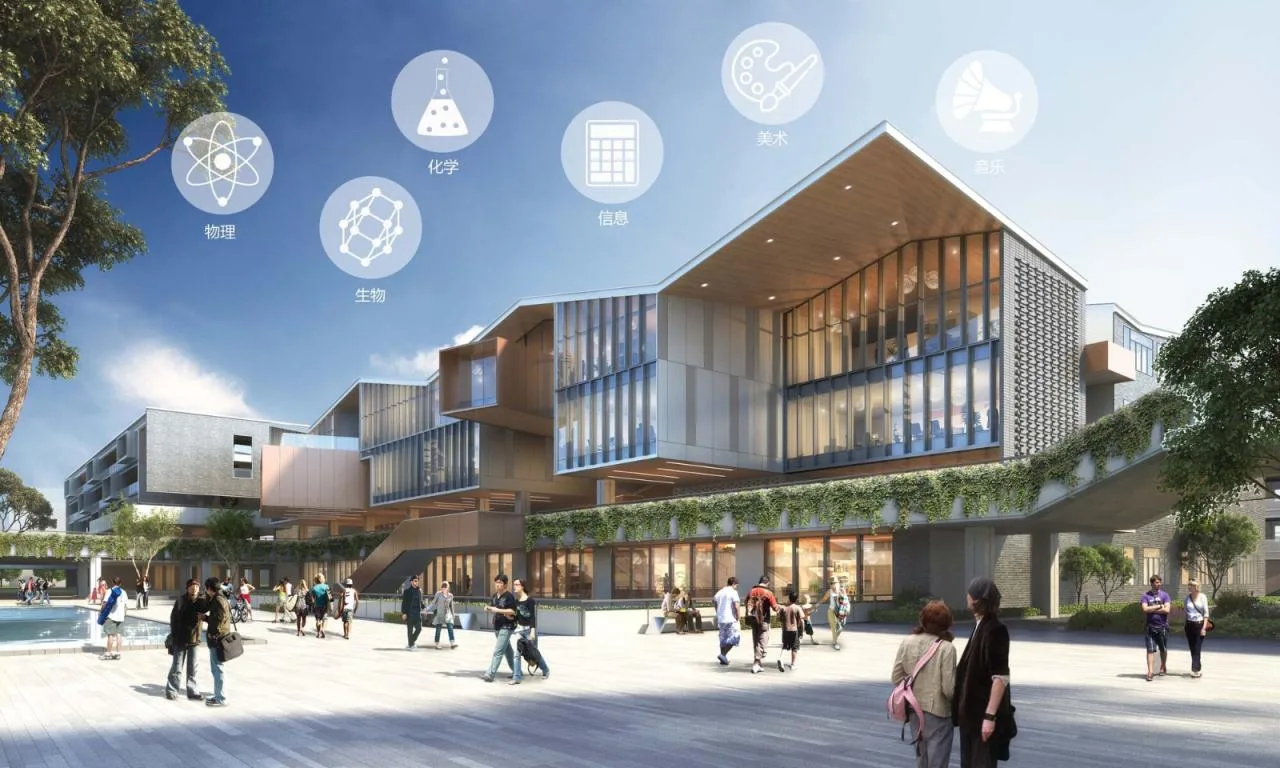
△ Project Rendering
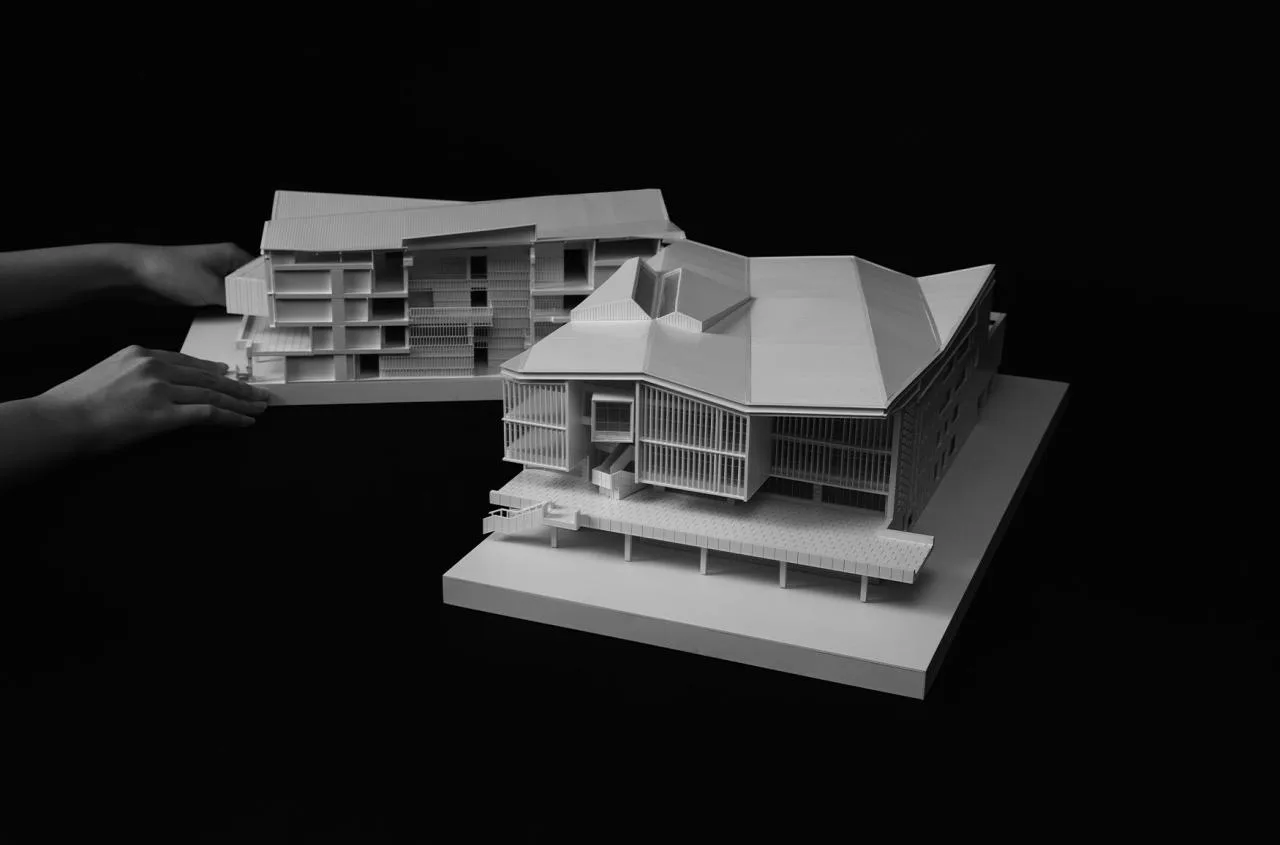
△ Project Model Diagram
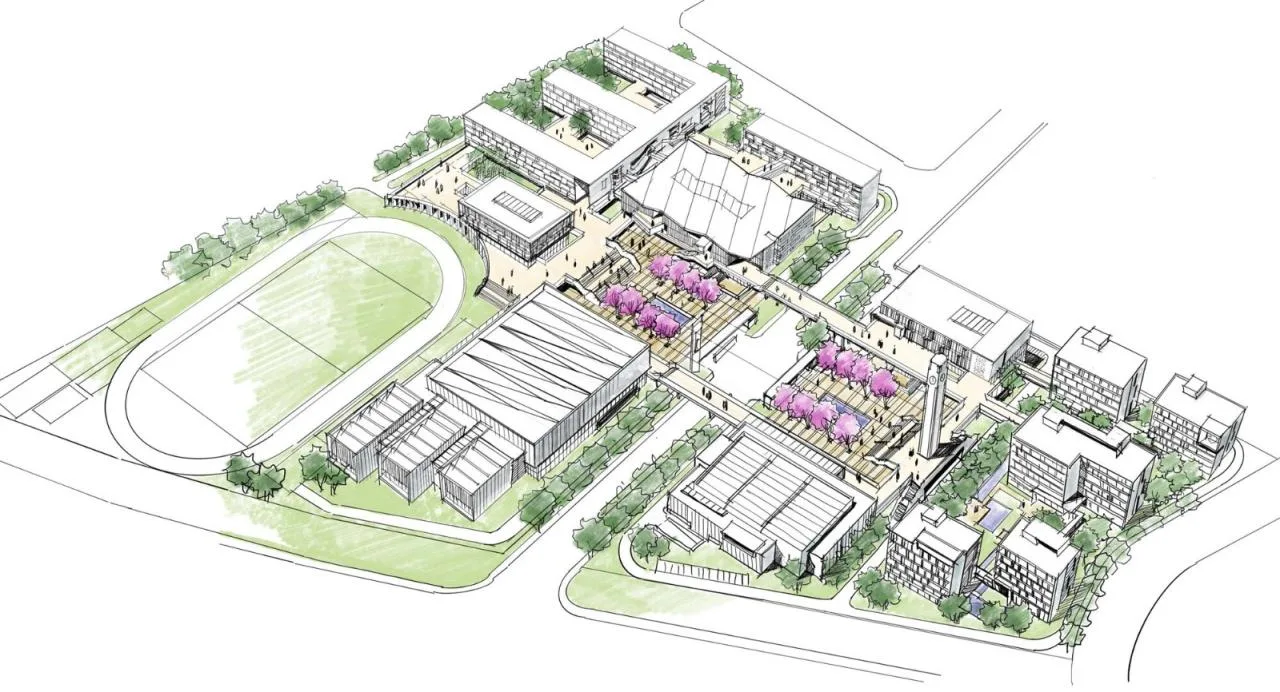
△ Hand-Drawn Axonometric Drawing
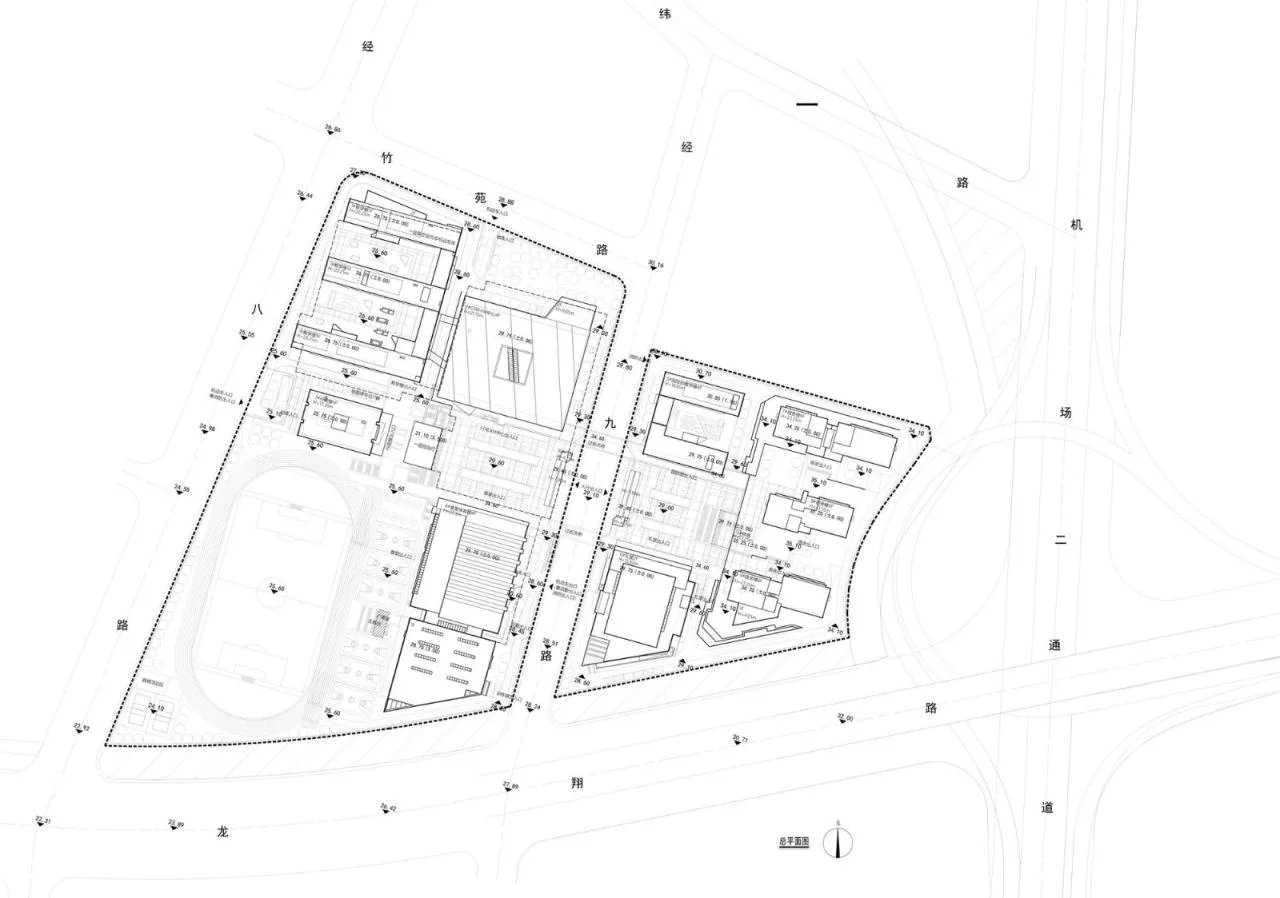
△ General Layout Plan
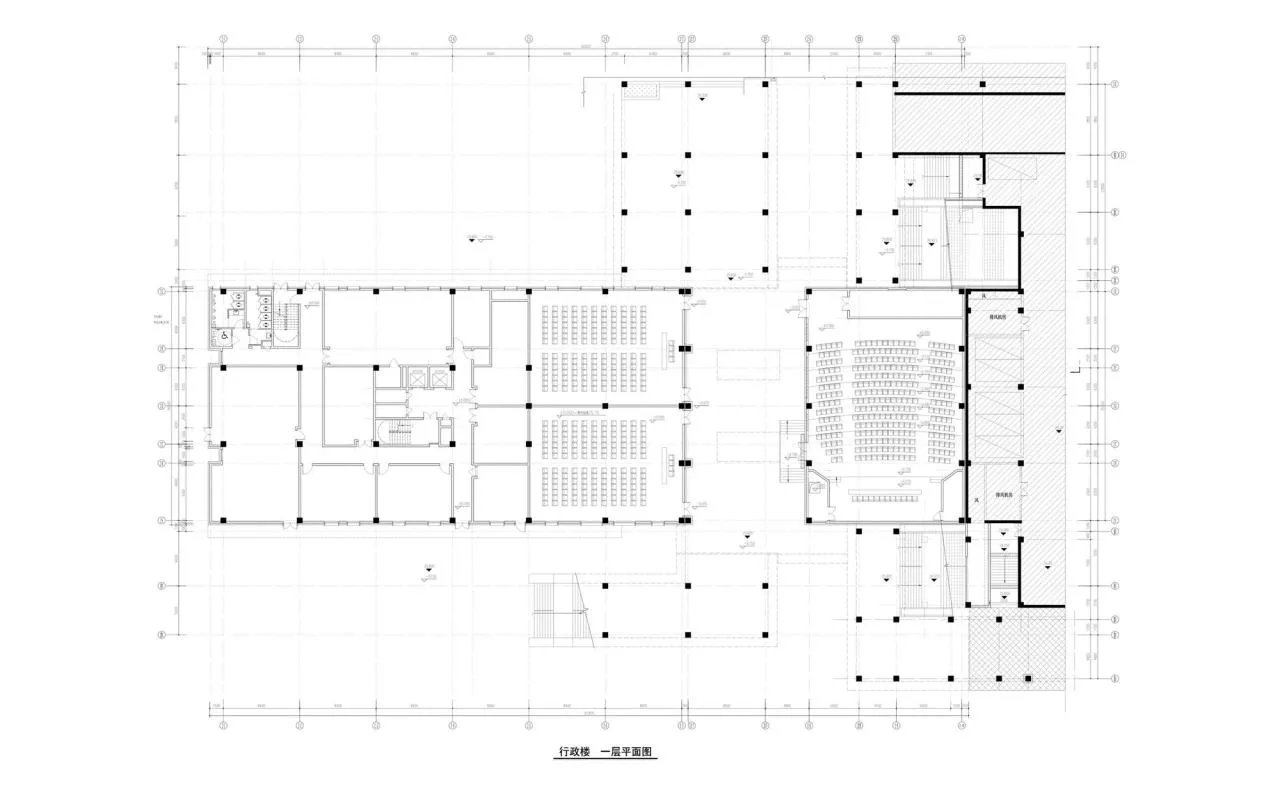
△ First Floor Plan of the Administrative Building
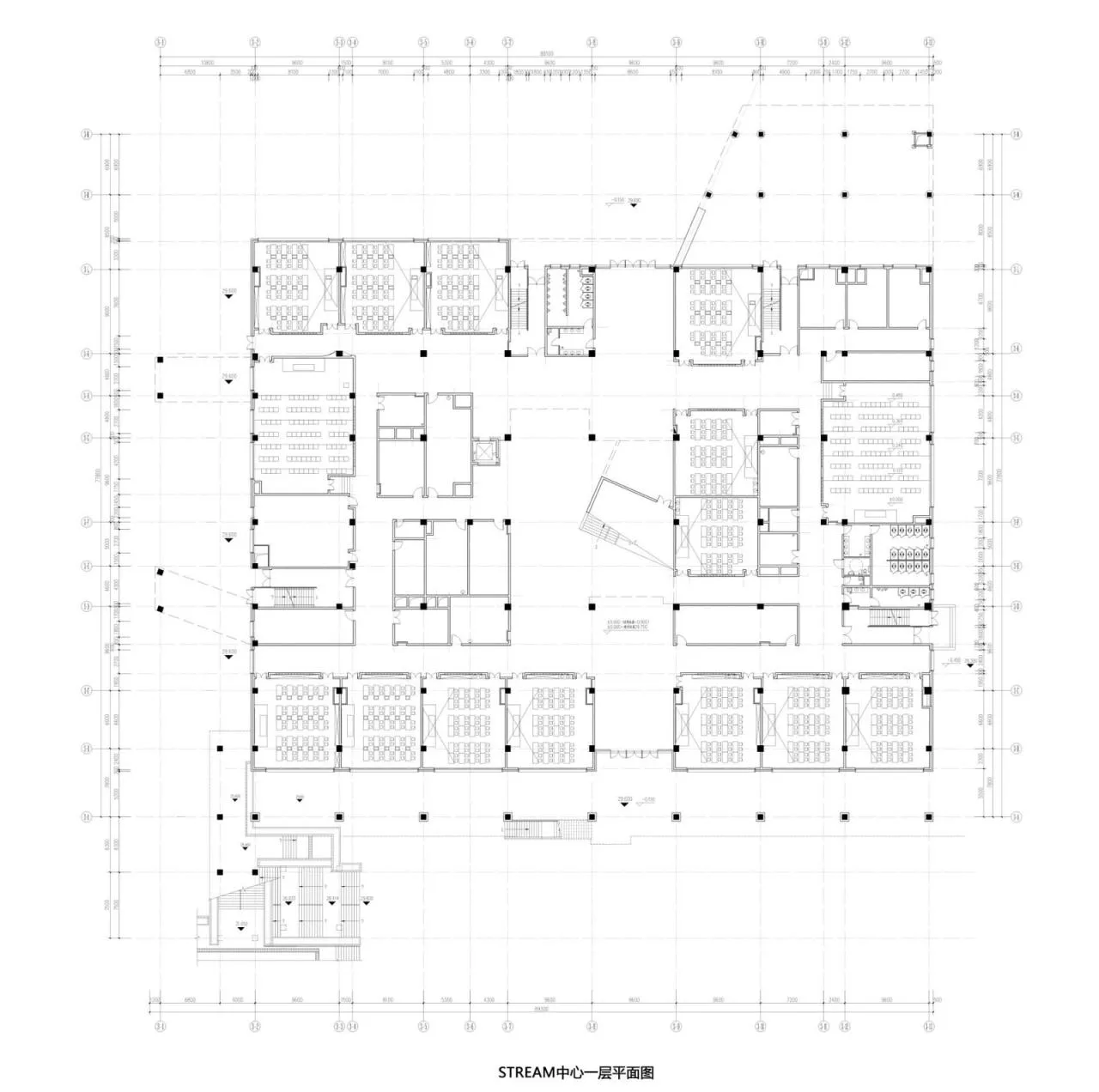
△ Stream Center First Floor Plan
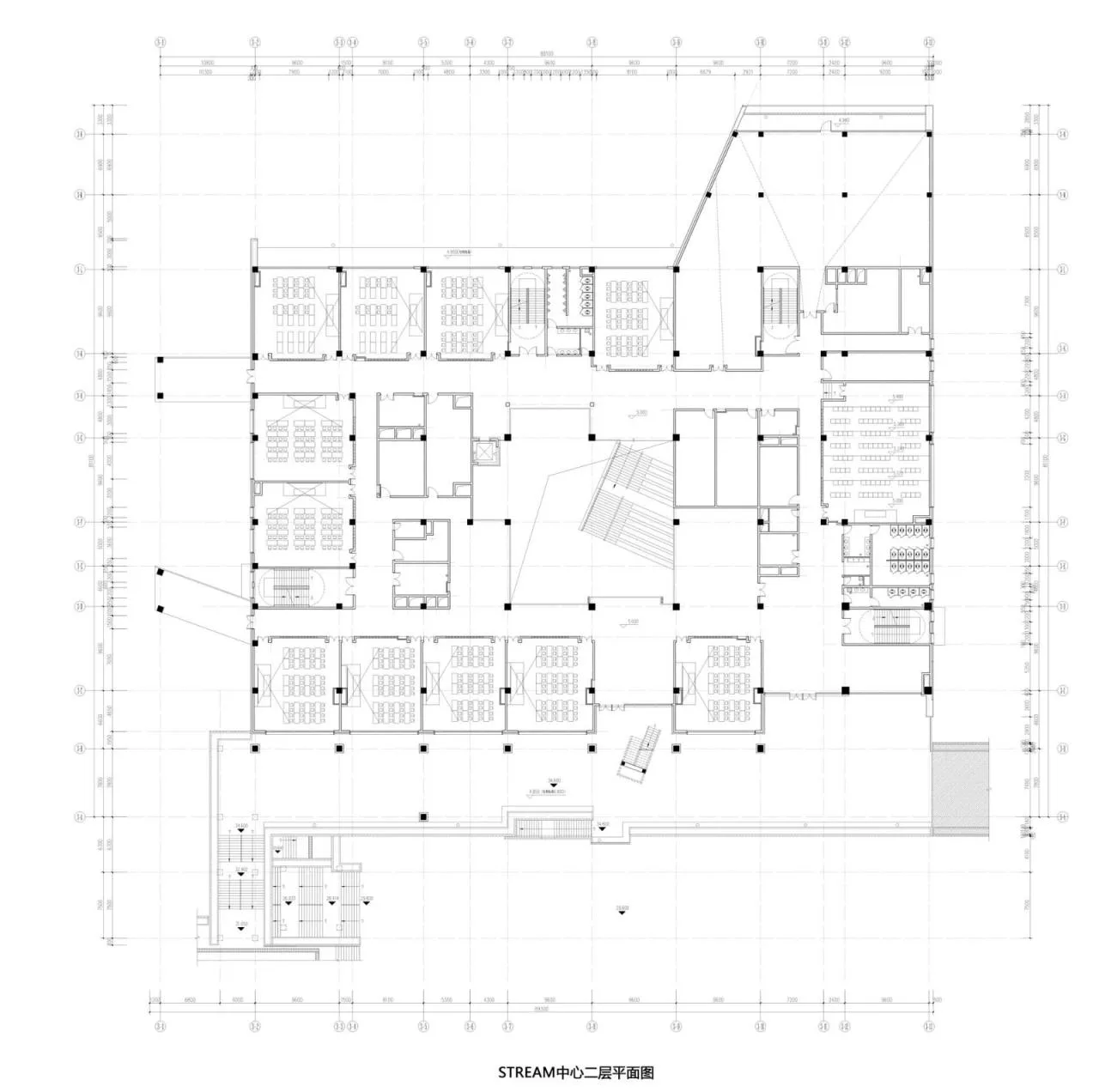
△ Stream Center Second Floor Plan
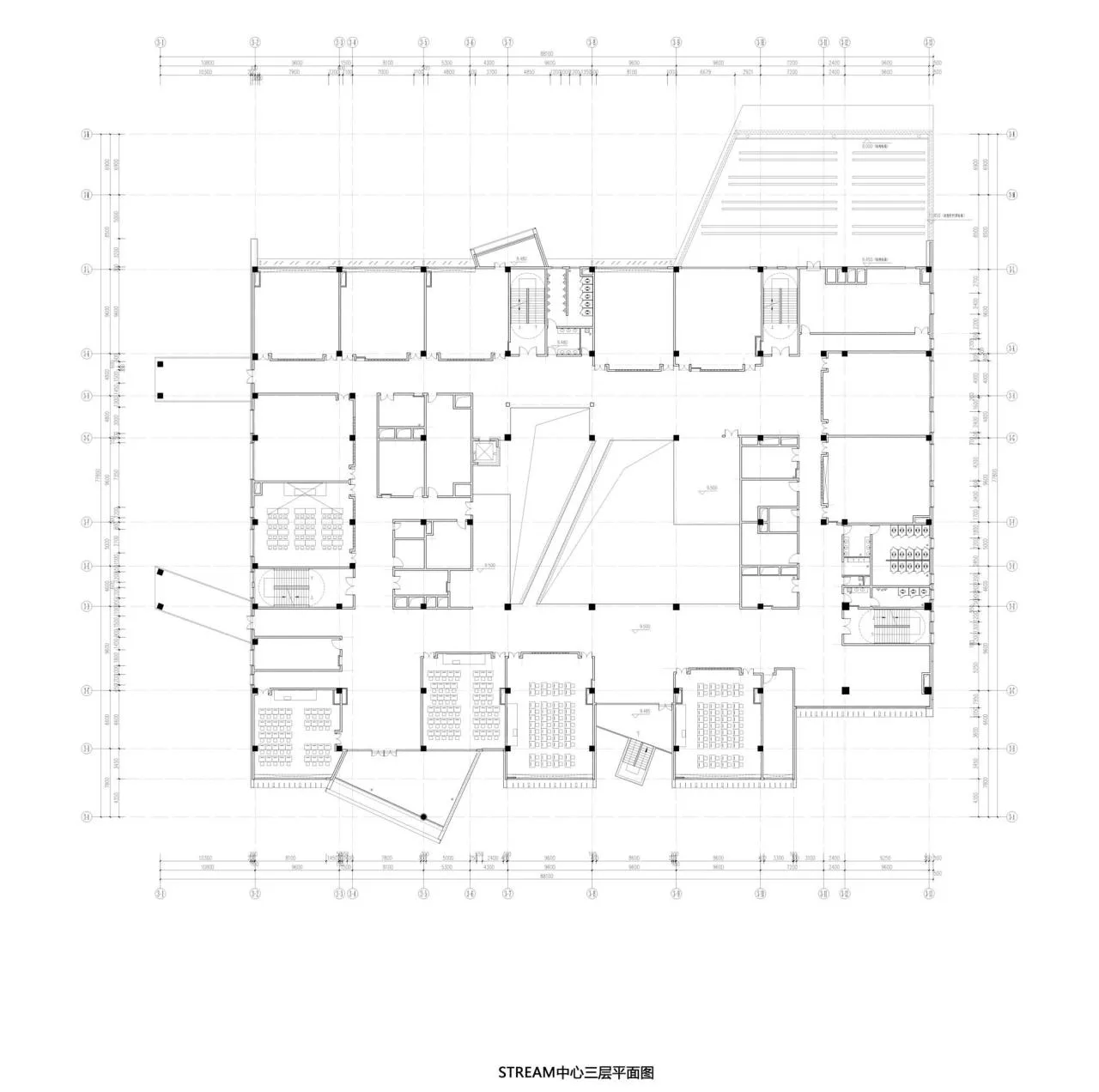
△ Stream Center Third Floor Plan
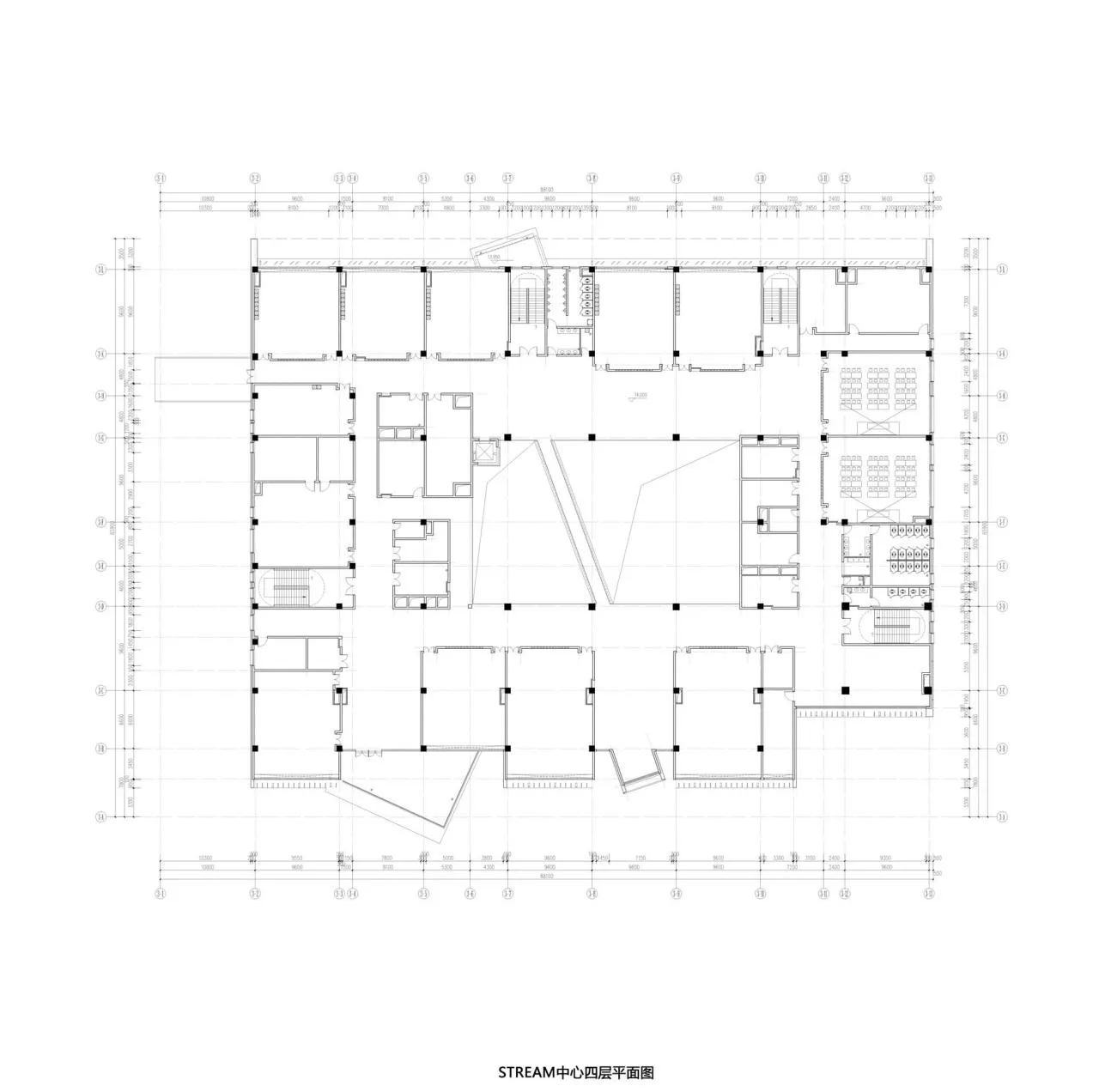
△ Stream Center Fourth Floor Plan
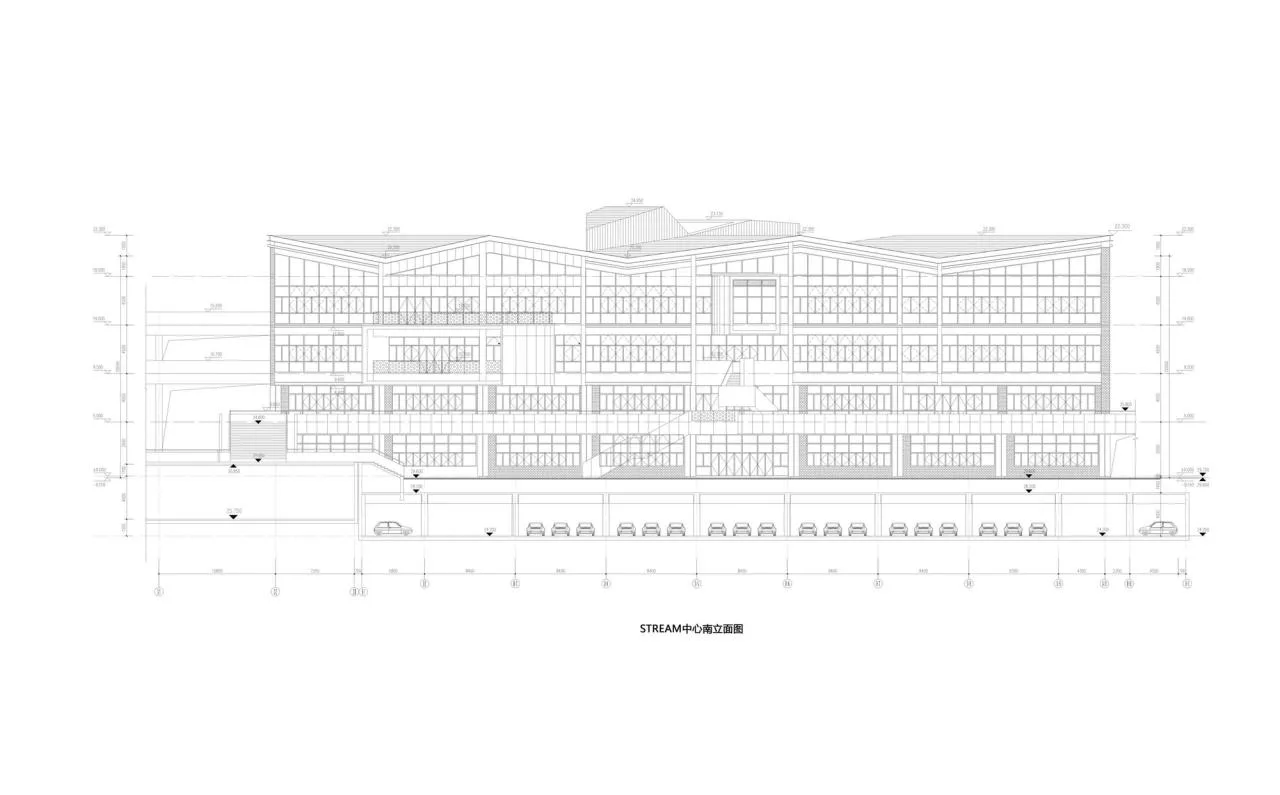
△ Stream Center South Elevation
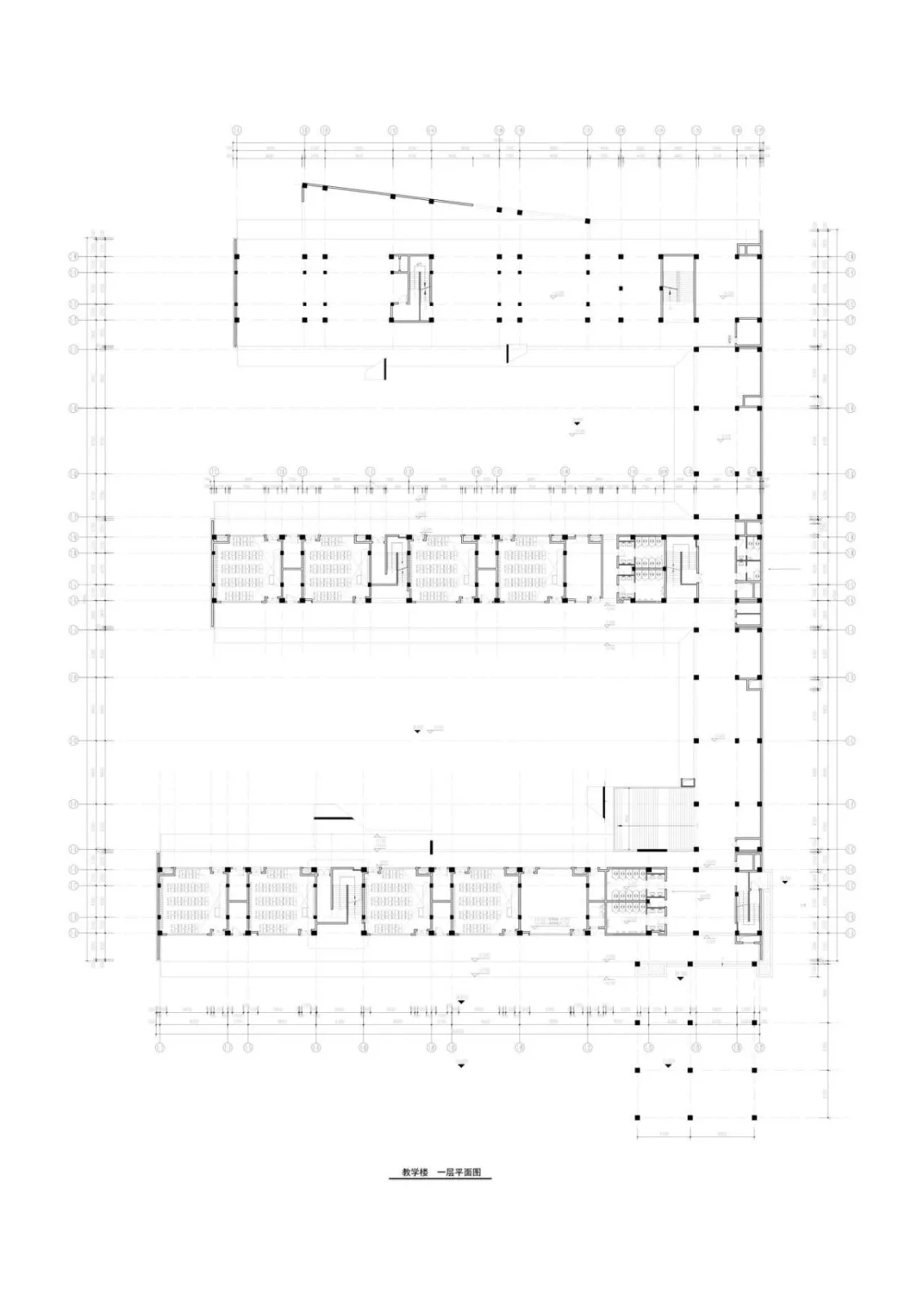
△ First Floor Plan of the Teaching Building
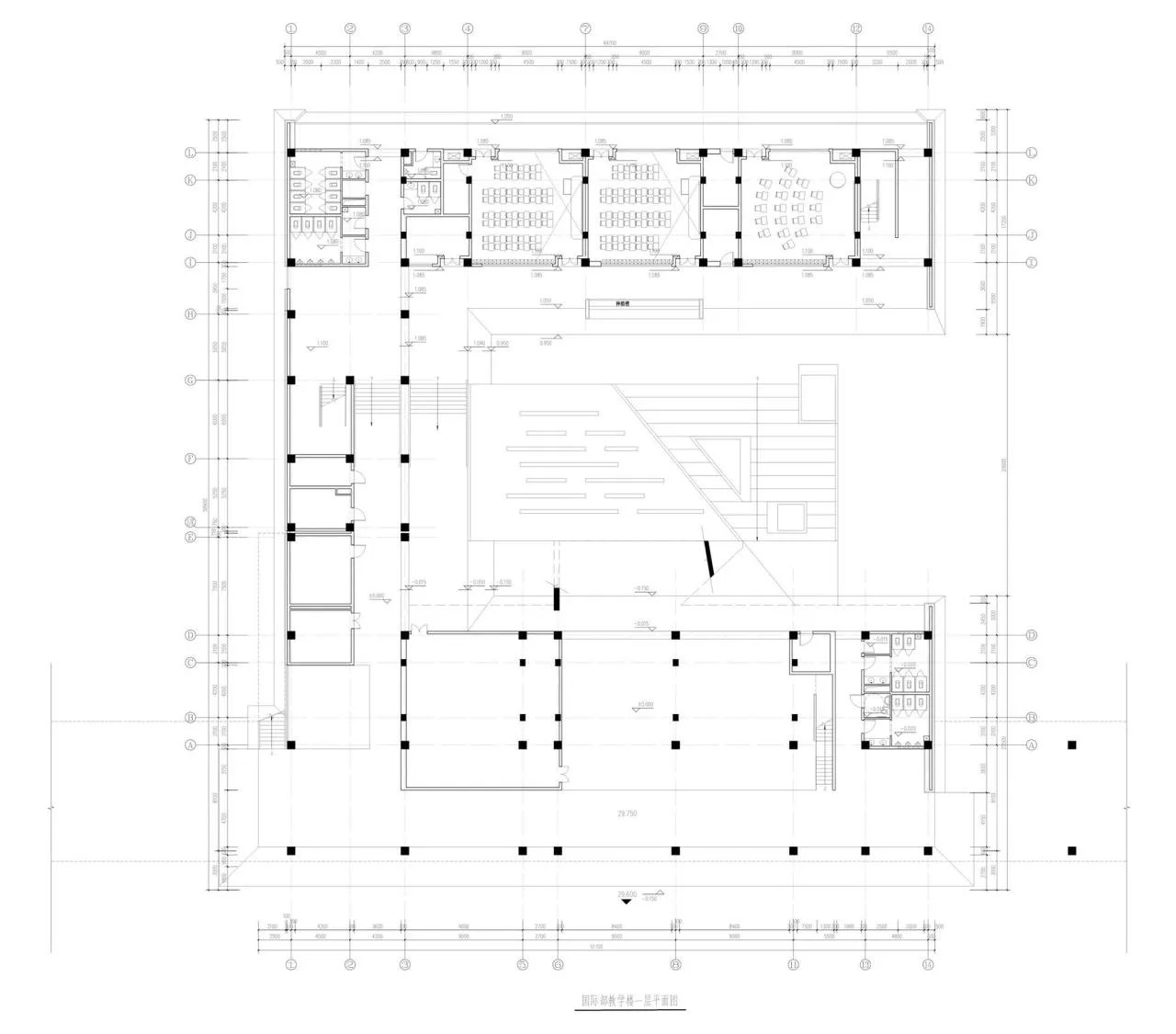
First Floor Plan of the International Department Teaching Building
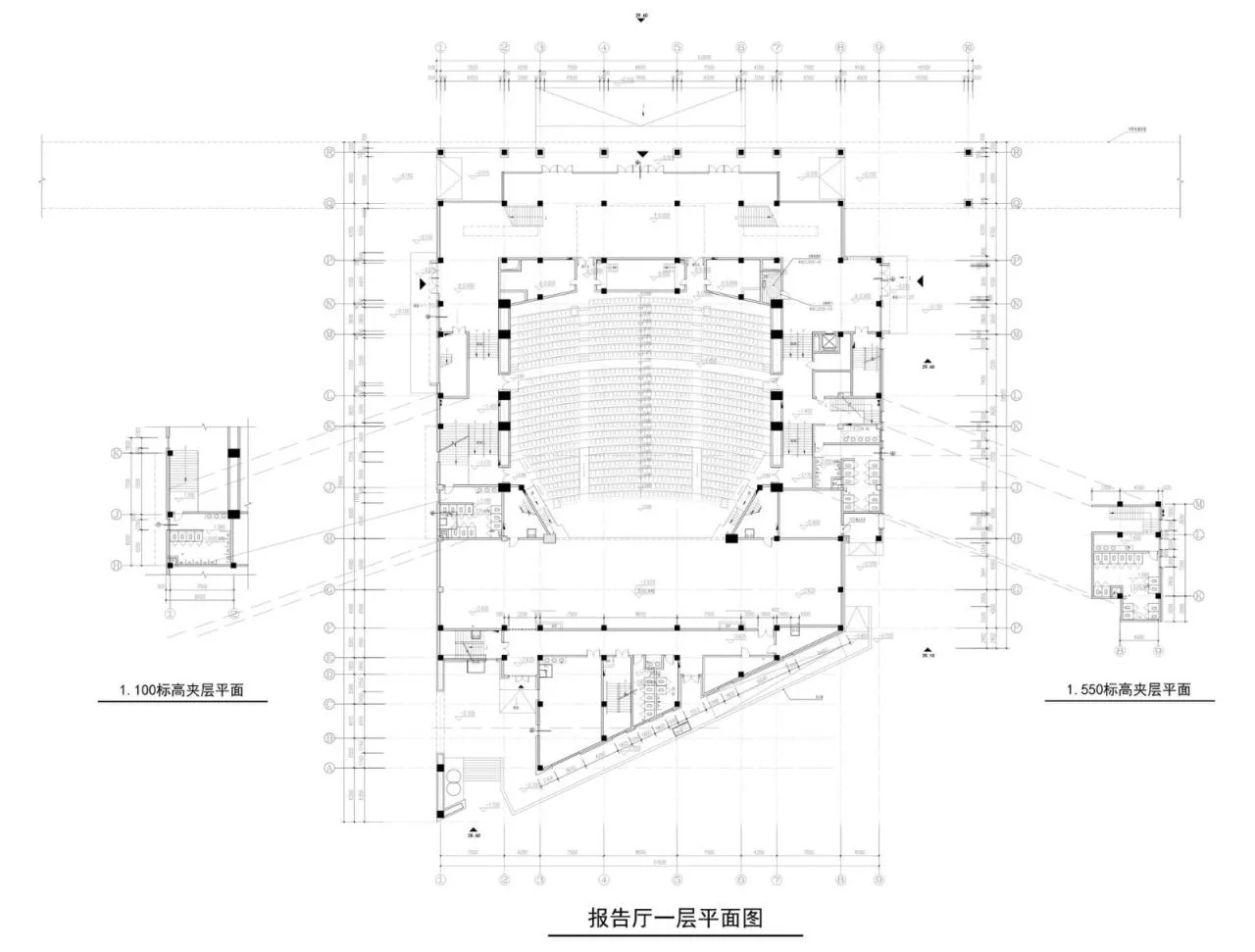
△ Lecture Hall Floor Plan
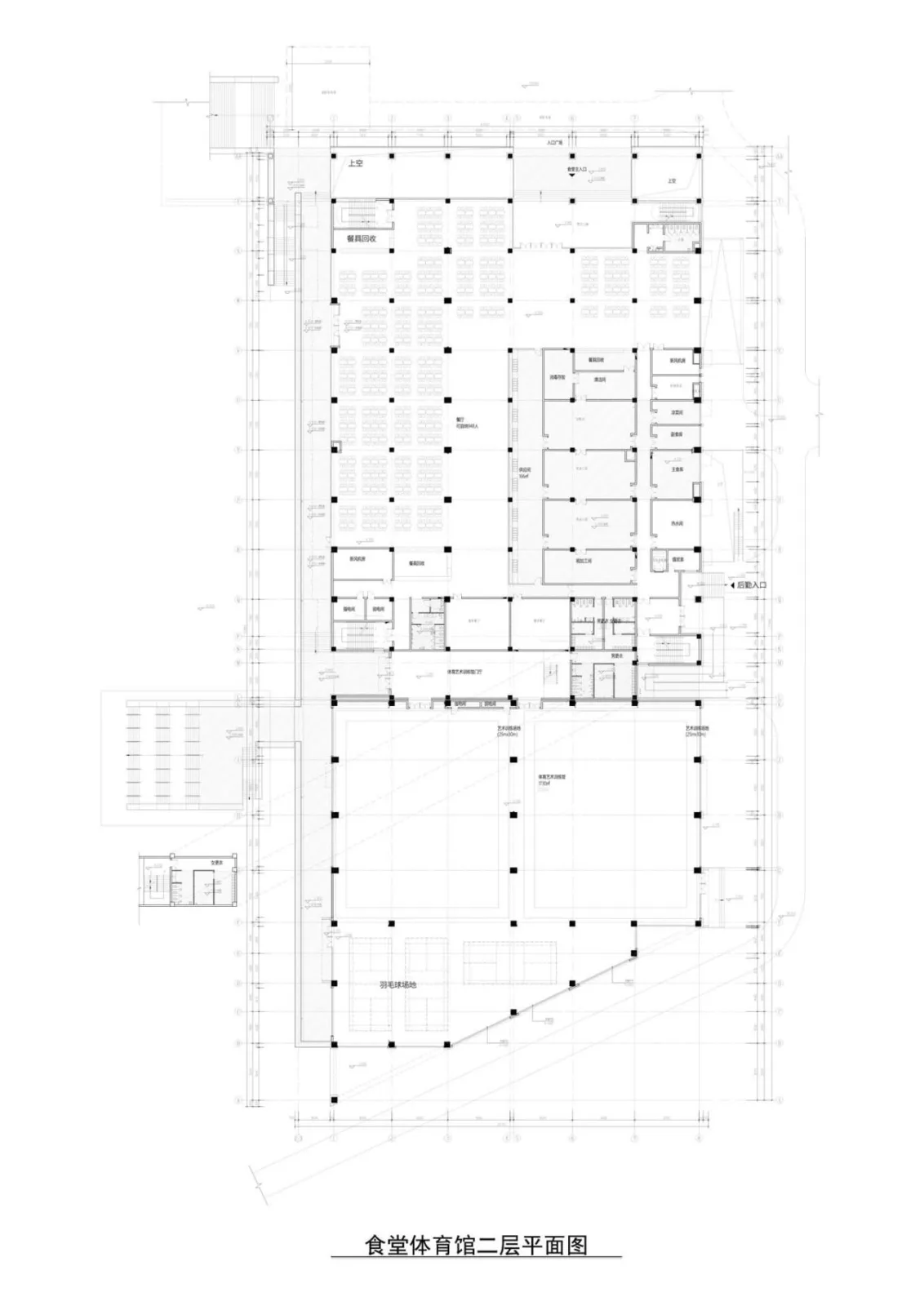
△ Second Floor Plan of the Canteen and Gymnasium
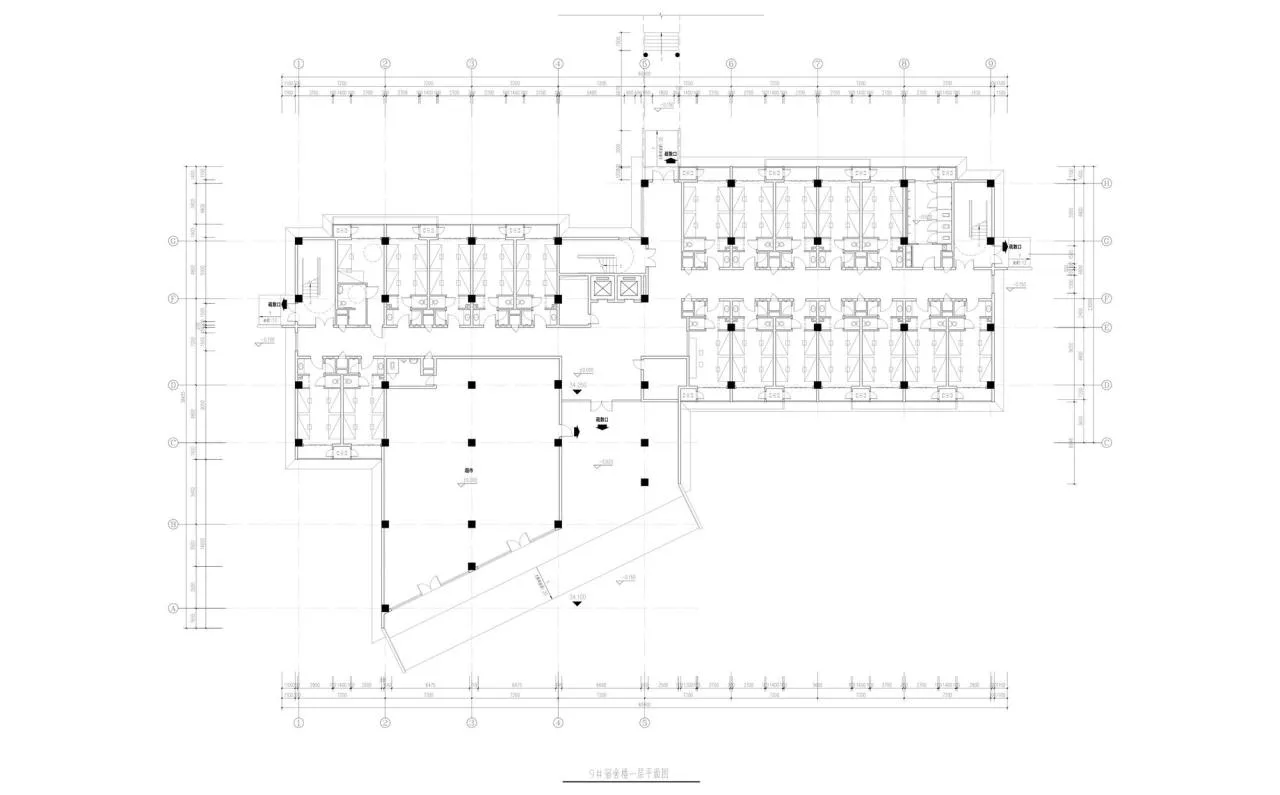
First Floor Plan of the Dormitory Building
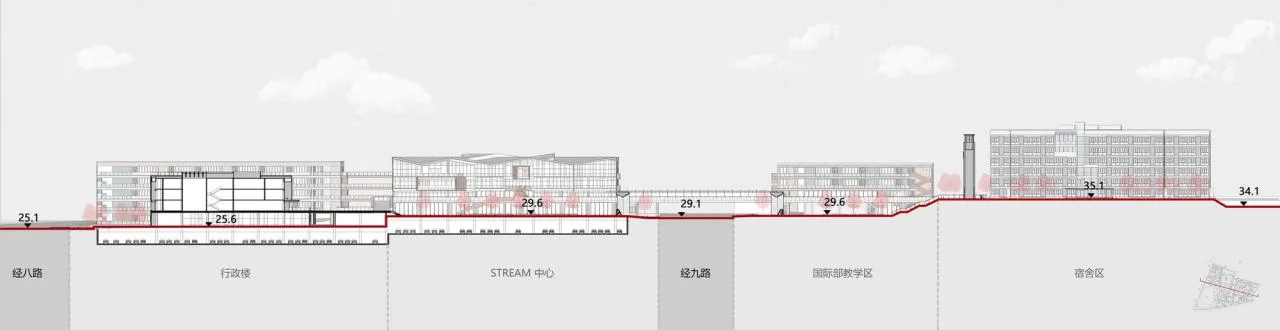
△ Section Diagram
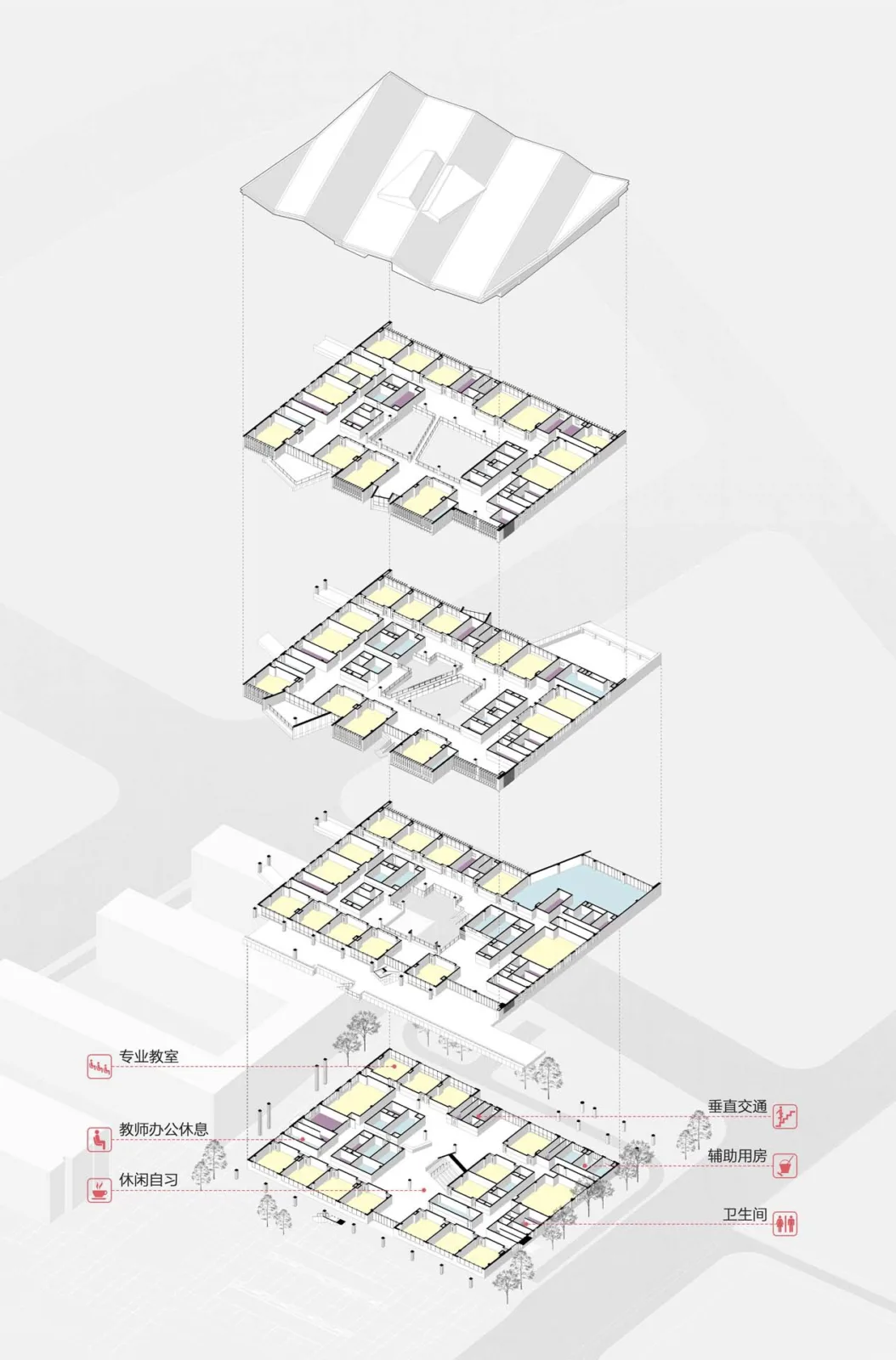
△ Exploded View
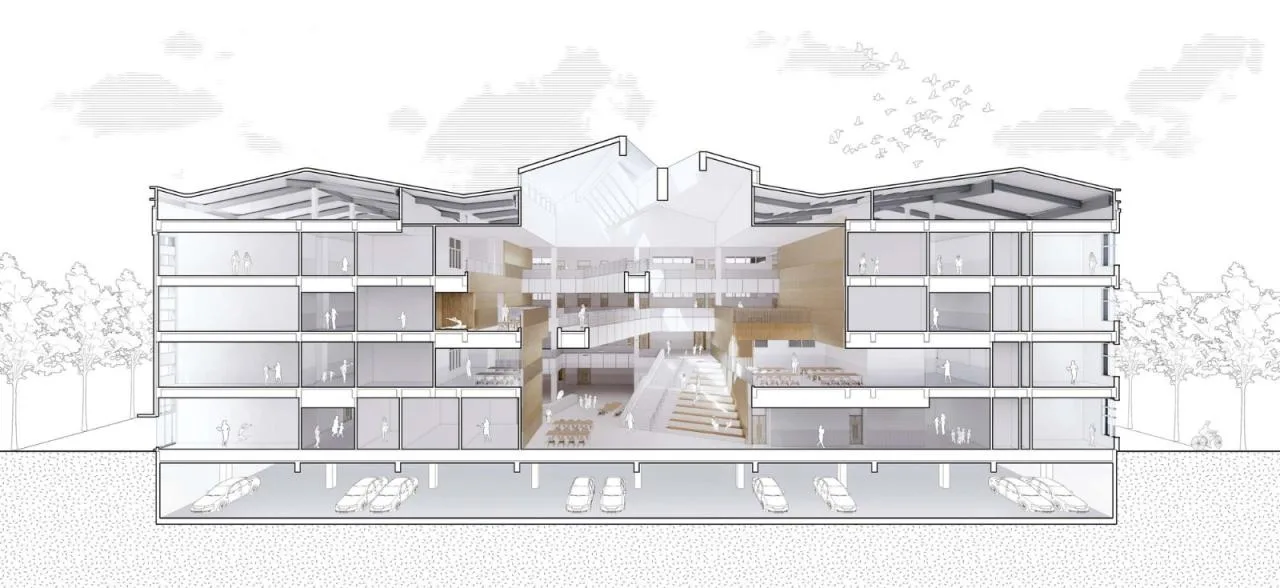
△ Sectional Perspective
Project Information
Architect: Southeast University Architectural Design and Research Institute
Area: 103,327 m²
Project Year: 2022
Photographers: Hou Bowen, Jian Yao
Manufacturers: Nanjing Nage Aluminum Industry Co., Ltd., Yixing Dingcheng Ceramics Co., Ltd., Puli, Jiangsu Maiteng Aluminum Industry Co., Ltd.
Lead Architect: Ma Jin
Design Team: Ma Jin, Zhang Ke, Han Xiao, Zhai Shiyang, Liu Wansong, Fan Qinfeng, Liu Yingzhu, Jian Hairui, Jin Haoji, Liu Yinghao, Xu Jiahang
Construction Drawing Design: Southeast University Architectural Design and Research Institute Co., Ltd. Third Institute
Client: Nanjing Yuhua New City Development Co., Ltd.
Location: Nanjing, China















Must log in before commenting!
Sign Up