
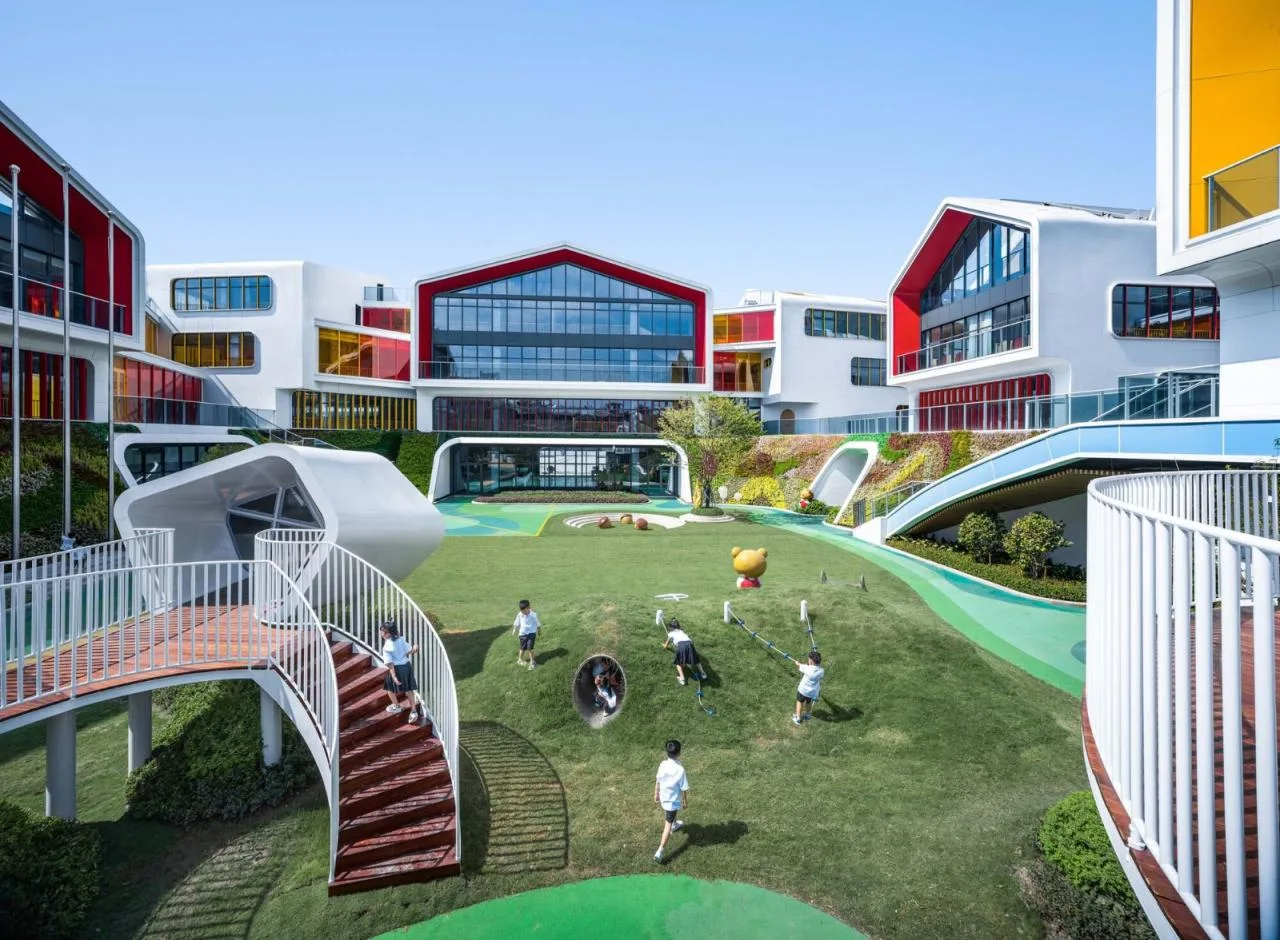
Recently, 01 City completed the integrated architectural and interior design of the Jinchang Mondfel Kindergarten in Shaoxing. This kindergarten, officially opened to the public, meets the highest standards of kindergarten architecture in China. It features 18 classrooms within a total building area of 16,512 square meters.
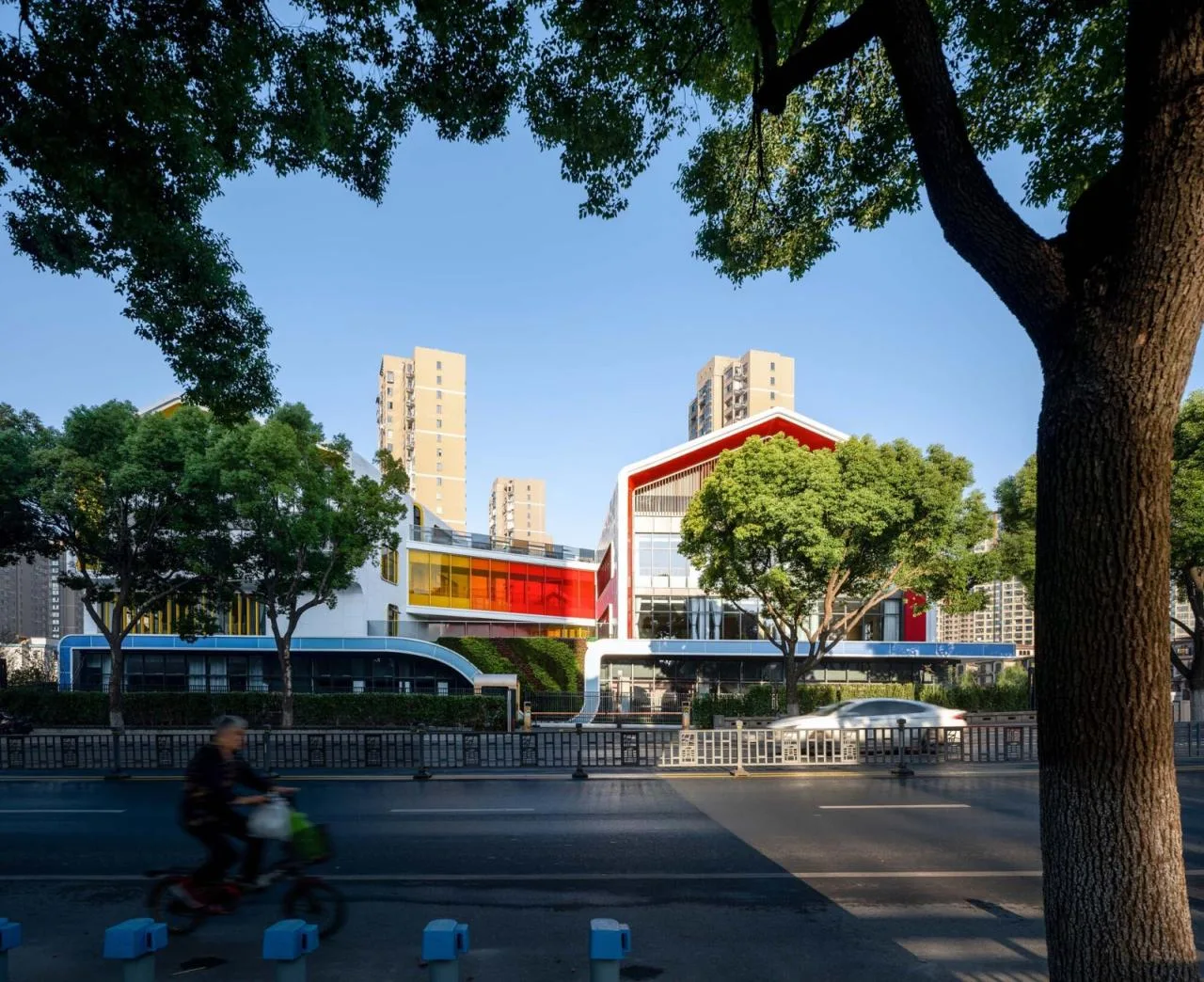
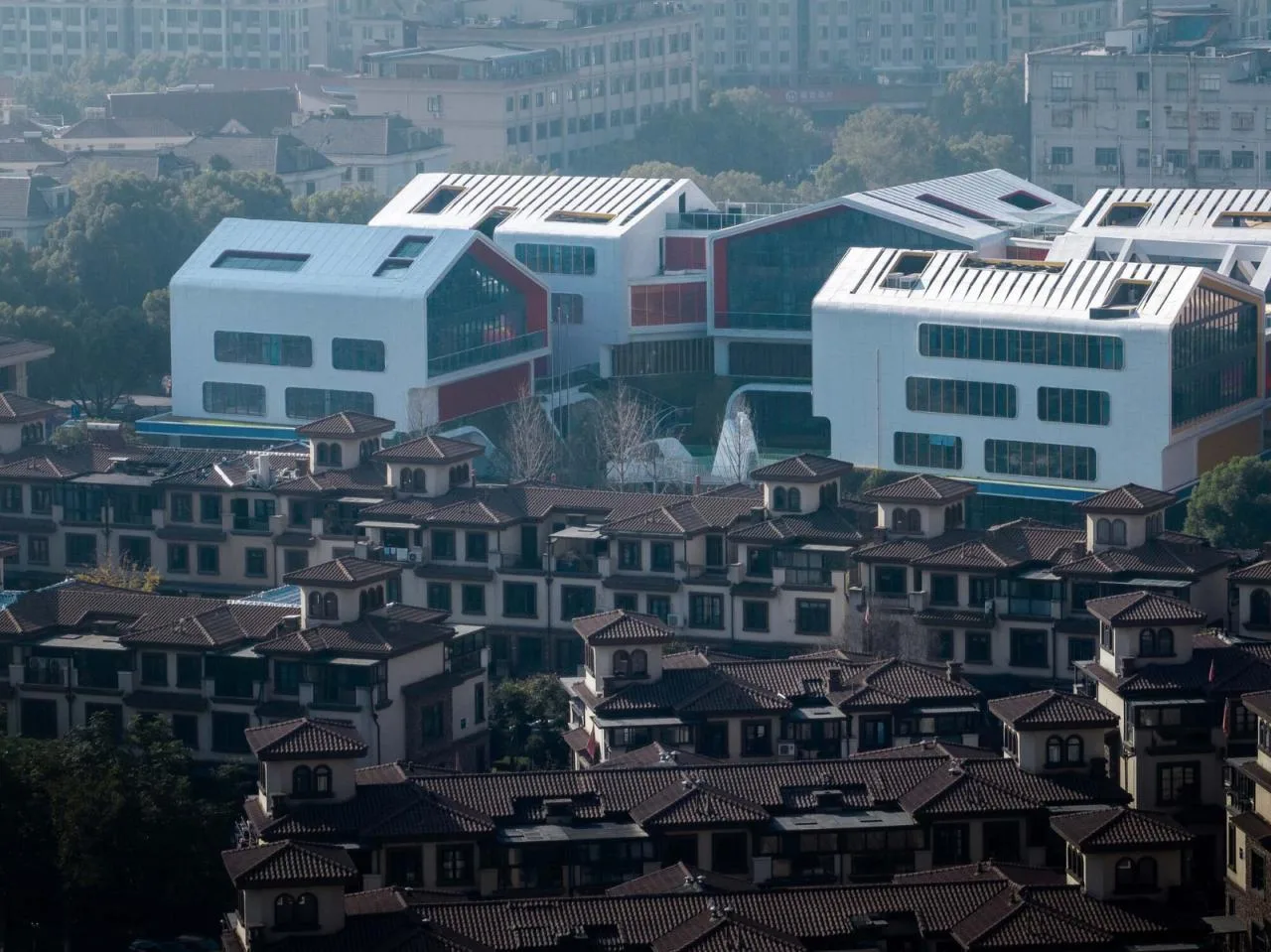
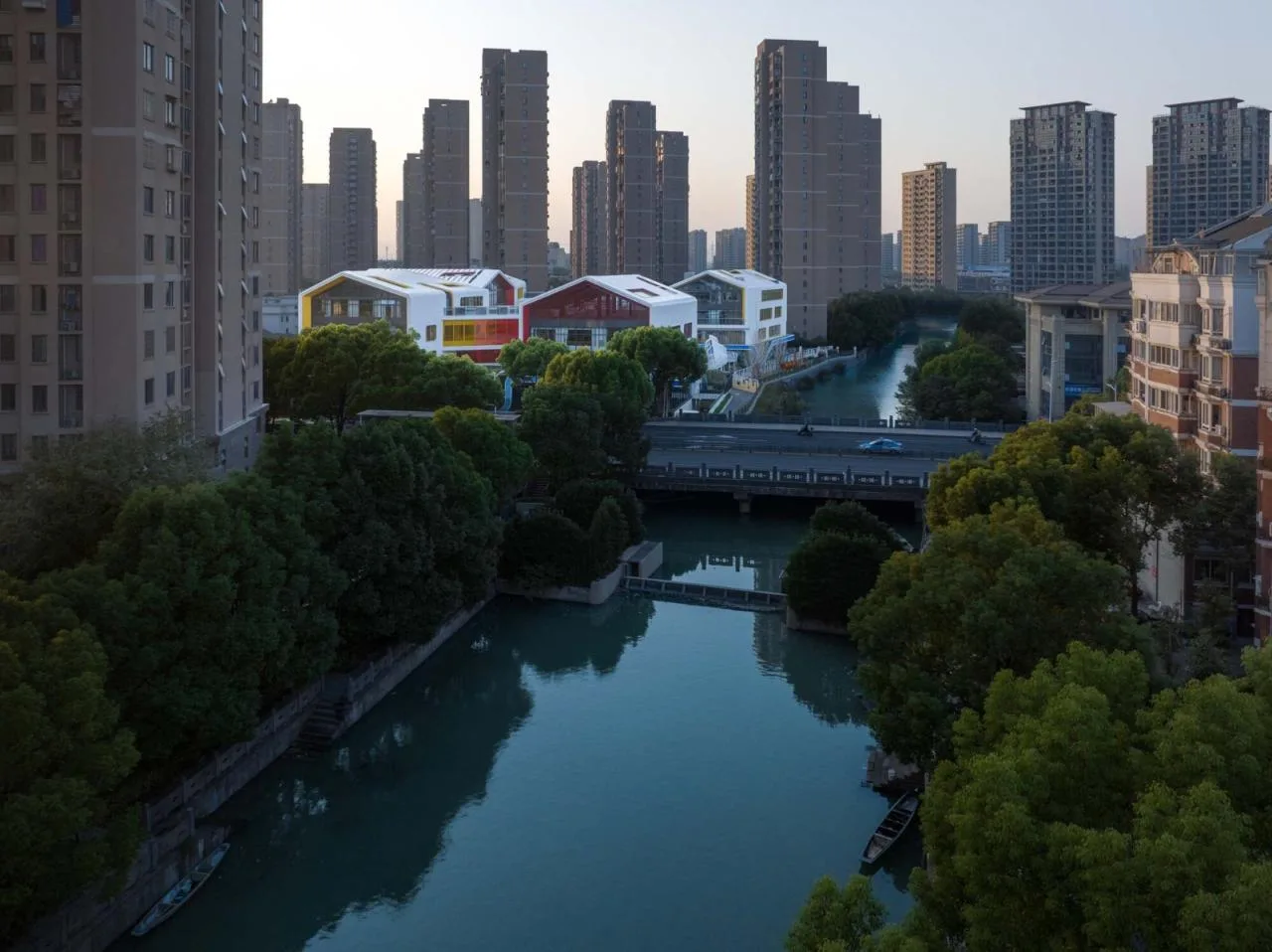
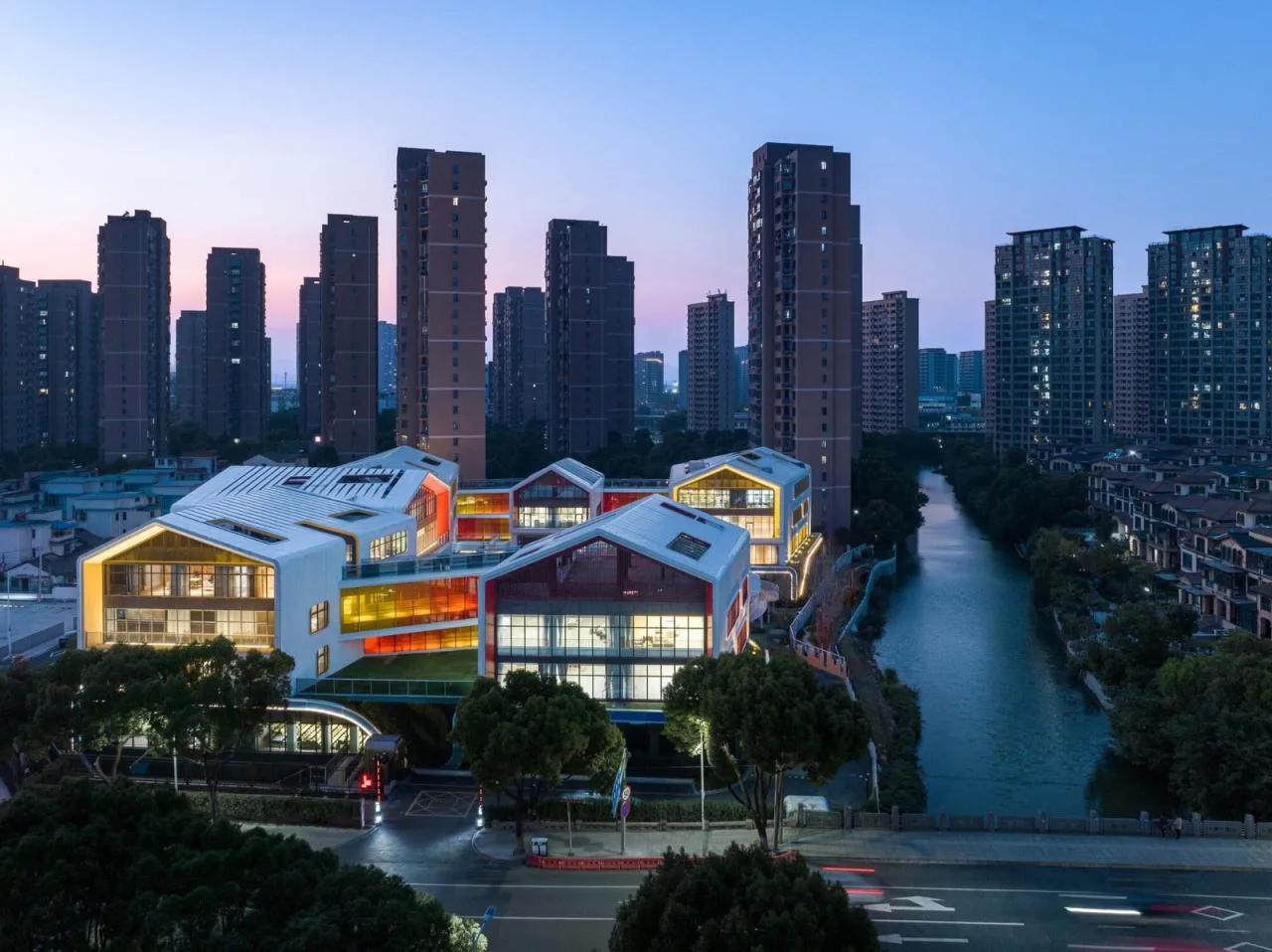
Located in a densely populated old city area surrounded by residential neighborhoods from various eras, the site is graced by the tranquil flow of the Xiaoshao Canal to the southeast, reflecting the calm and peaceful lifestyle of the historic city. With a plot ratio as high as 1.3, this project is a rare example of a high-density kindergarten.
The greatest challenge was to design a friendly and inviting four-story kindergarten that encourages children to connect with nature and sparks their imagination.
“Education is not the filling of a bucket, but the lighting of a fire.” – Plutarch
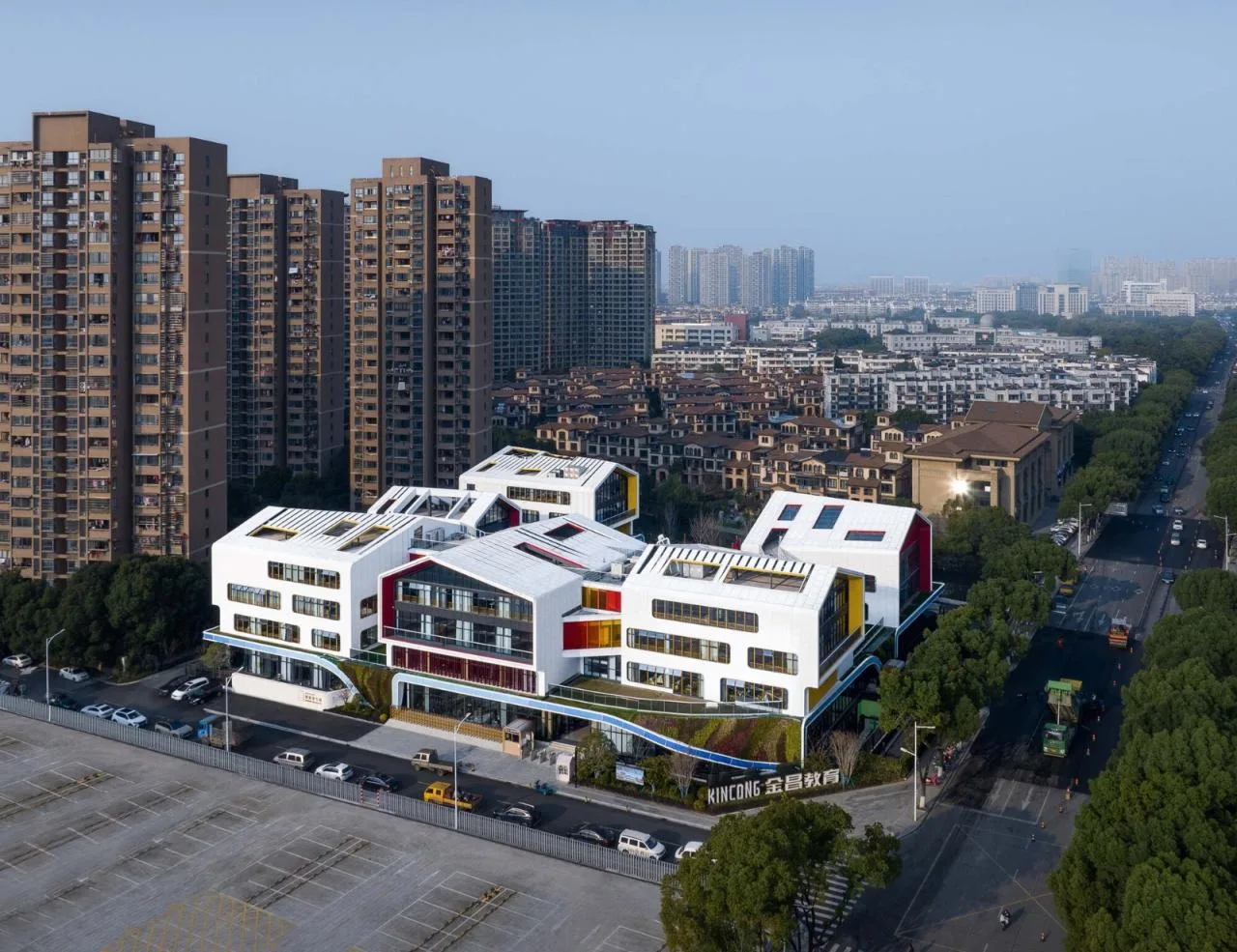
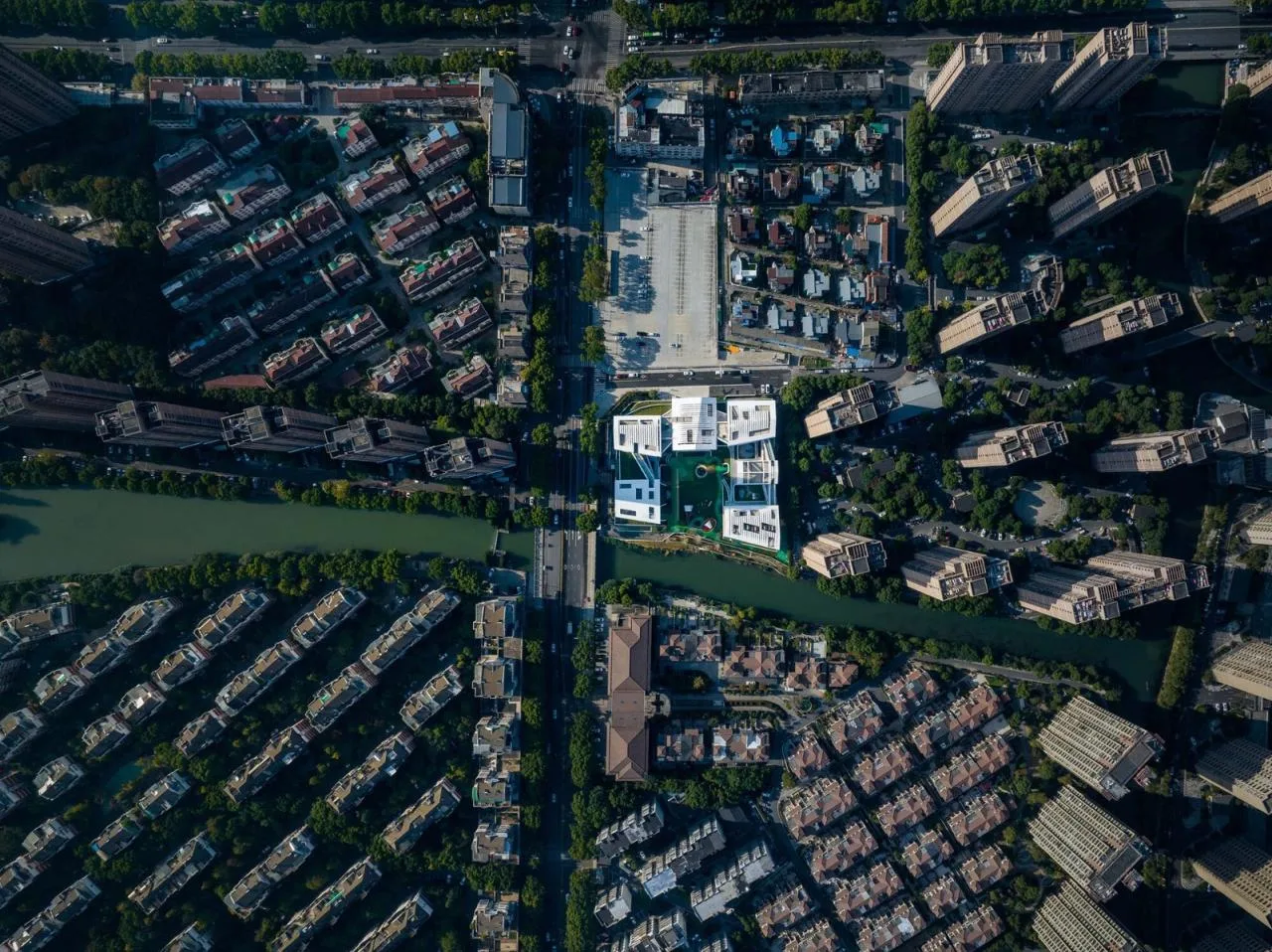
The design team, inspired by “The Wizard of Oz,” centered their concept on “exploration.” The kindergarten is composed of six white “cottages” facing the river, situated atop a gently rolling “green carpet.” These white buildings blend seamlessly with the green landscape, creating multi-dimensional, three-dimensional activity spaces that hide structures within nature and recapture the innocence and wonder of the story.
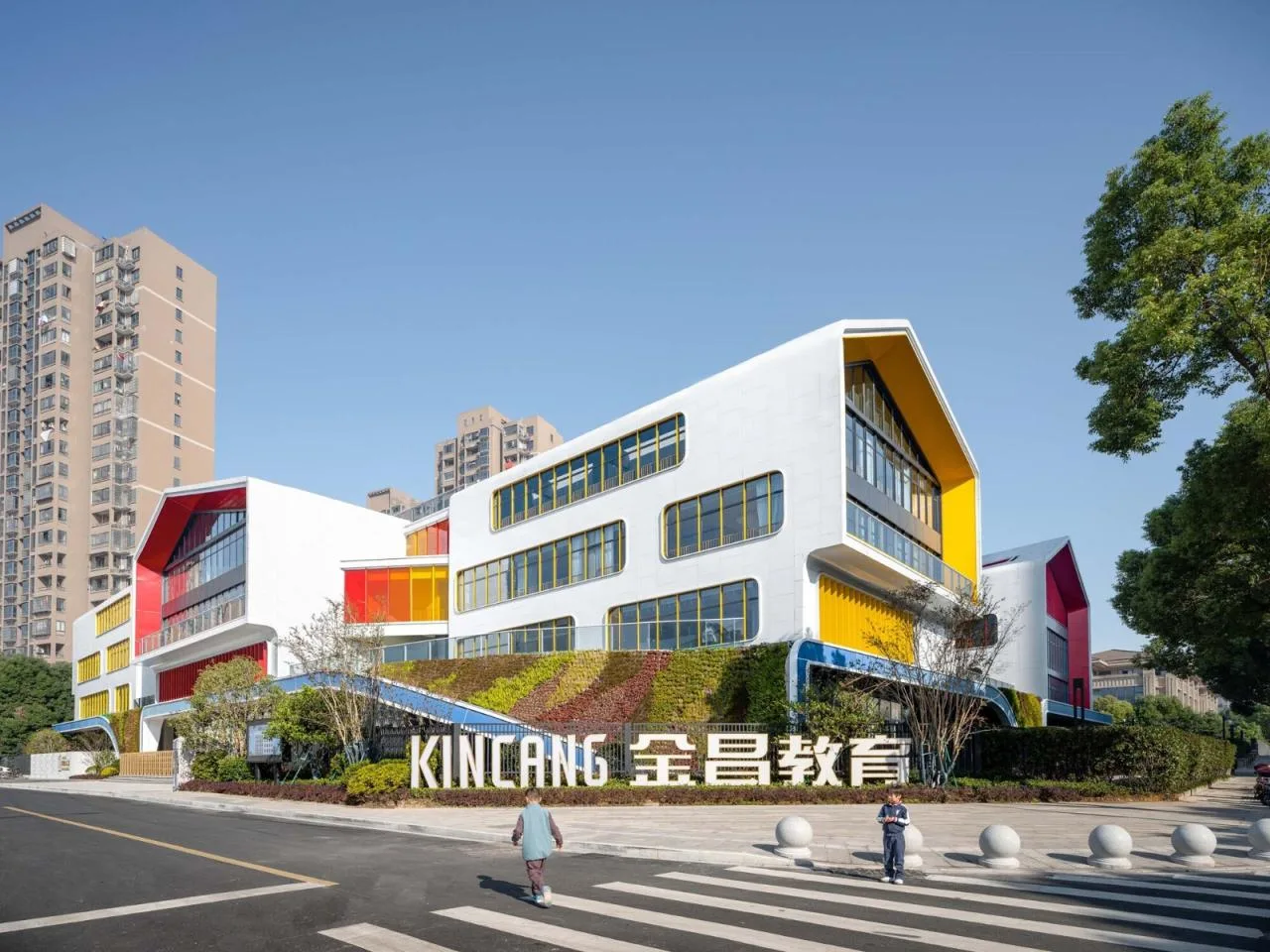
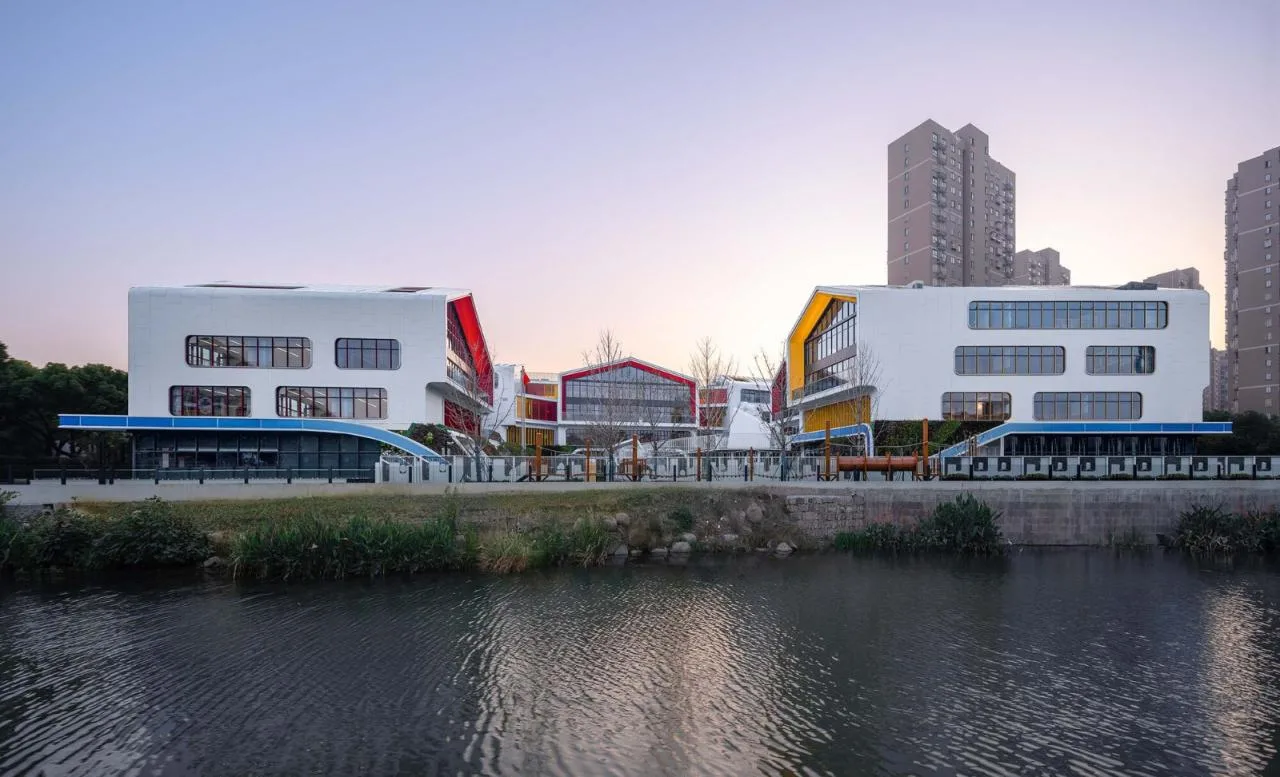
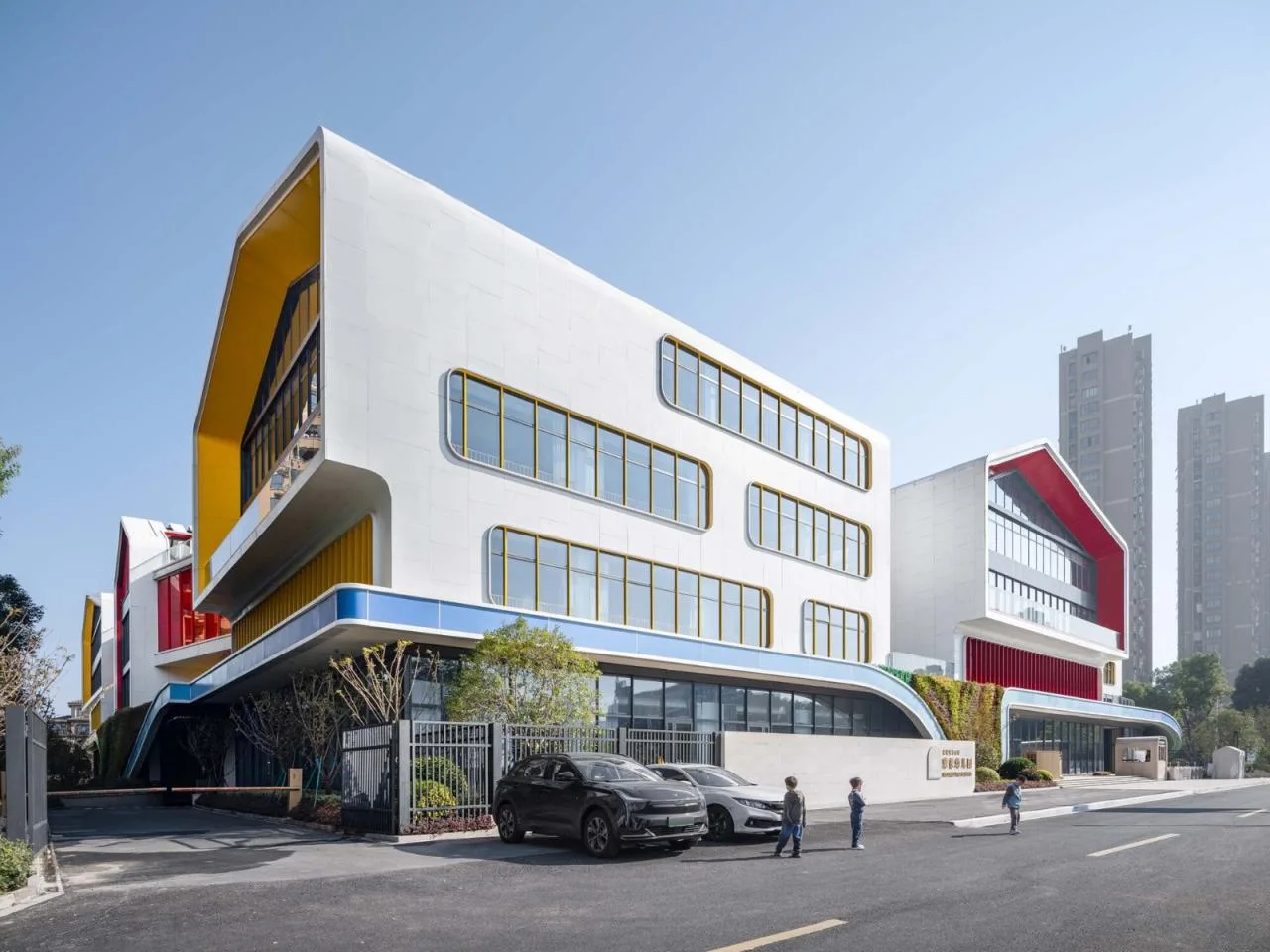
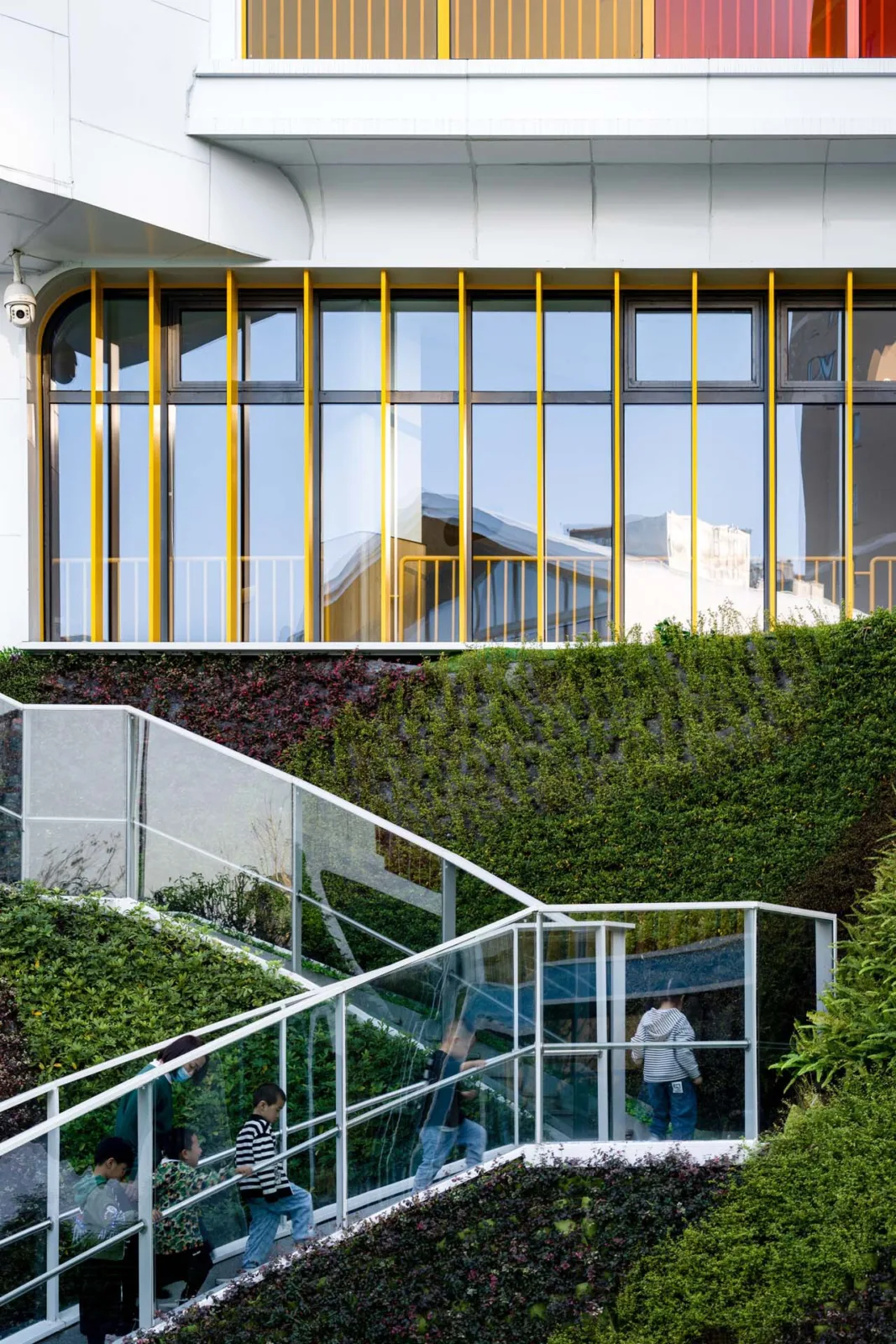
The “green carpet” ecological park is inspired by the vibrant variety of nature. Achieving multiple green spaces suitable for children within a high land use intensity (plot ratio of 1.3) was challenging. The building mass is divided into six rounded, elastic, double-pitched small houses arranged in a U-shape around a large courtyard. The green carpet extends through the courtyard and second-floor spaces, creating continuous grassy slopes that offer children a sense of security and enclosure.
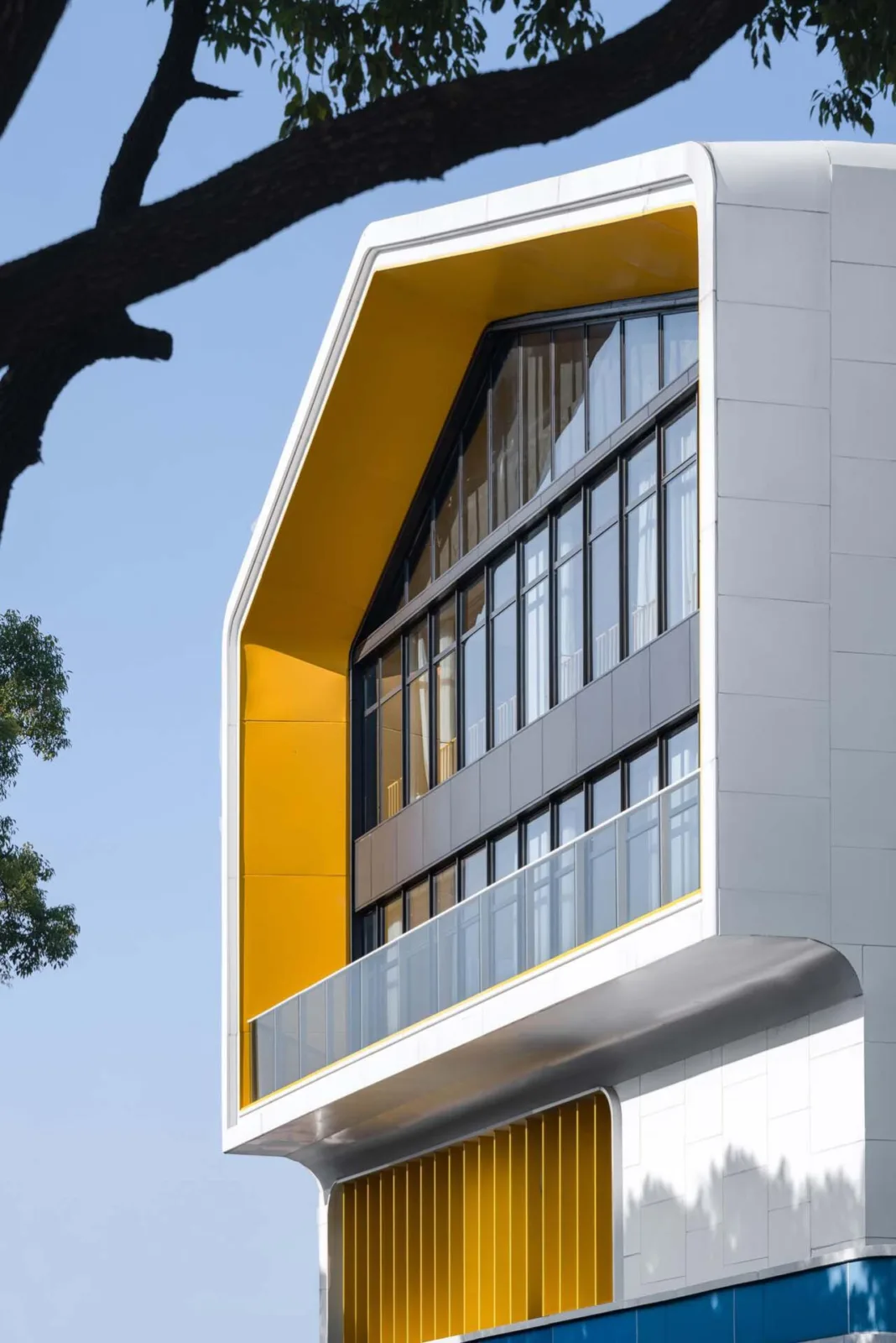
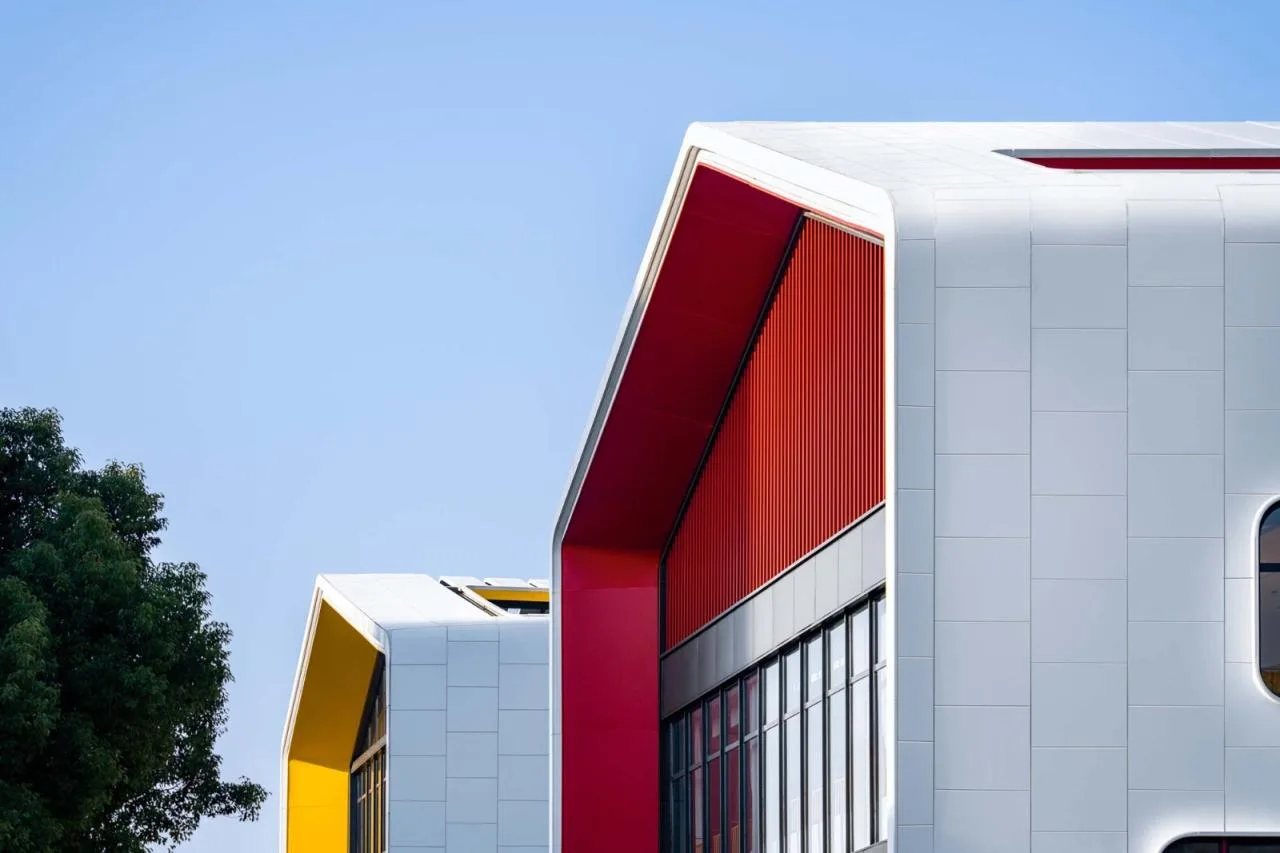
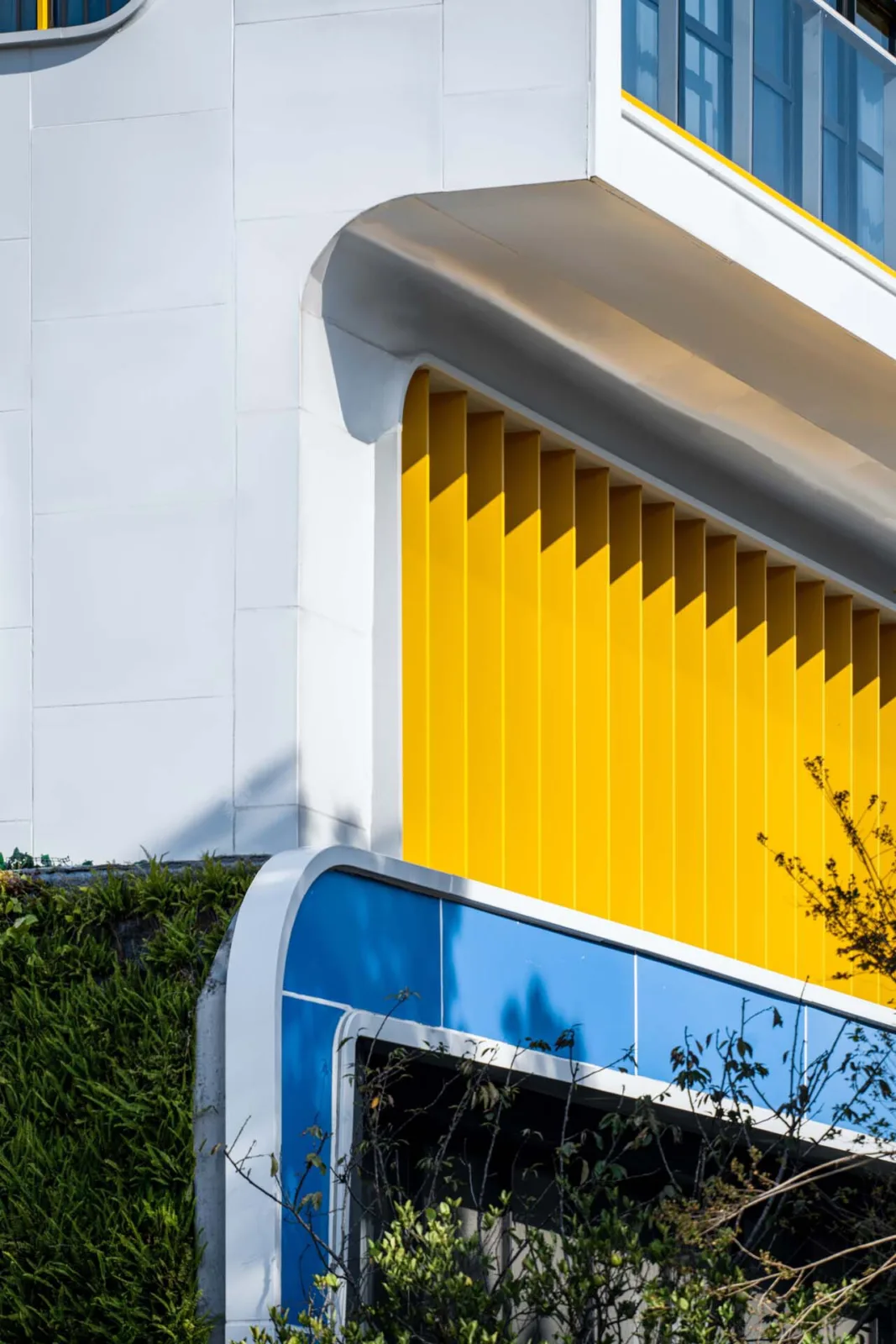
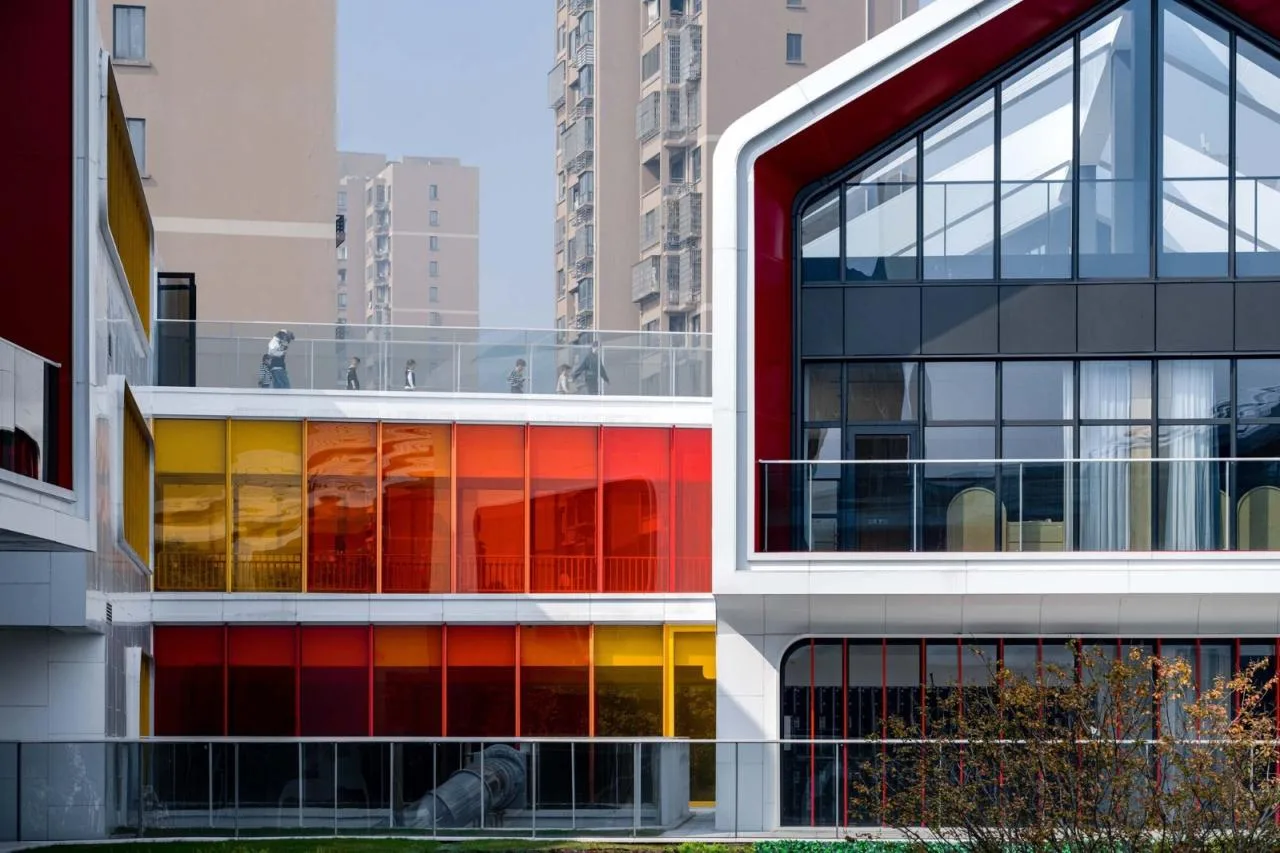
The architecture balances diversity and harmony, featuring white as the primary color accented by warm yellows and reds reminiscent of sunlight, injecting vitality and joy into the space. Custom-designed small houses foster a sense of identity and belonging, transforming the campus into a playful environment. Departing from traditional symmetrical pitched roofs, each small house features subtly deflected ridges, creating a hyperbolic, asymmetric roofline that adds dynamism and childlike charm.
Additionally, the building’s eaves and windows are rounded and chamfered to provide a warm, intimate atmosphere for children. To unify the roof and facade, white aluminum panels were chosen for the roofing, while integrated panels form the facade. Innovative vertical joints replace conventional horizontal ones, elegantly blending different materials.
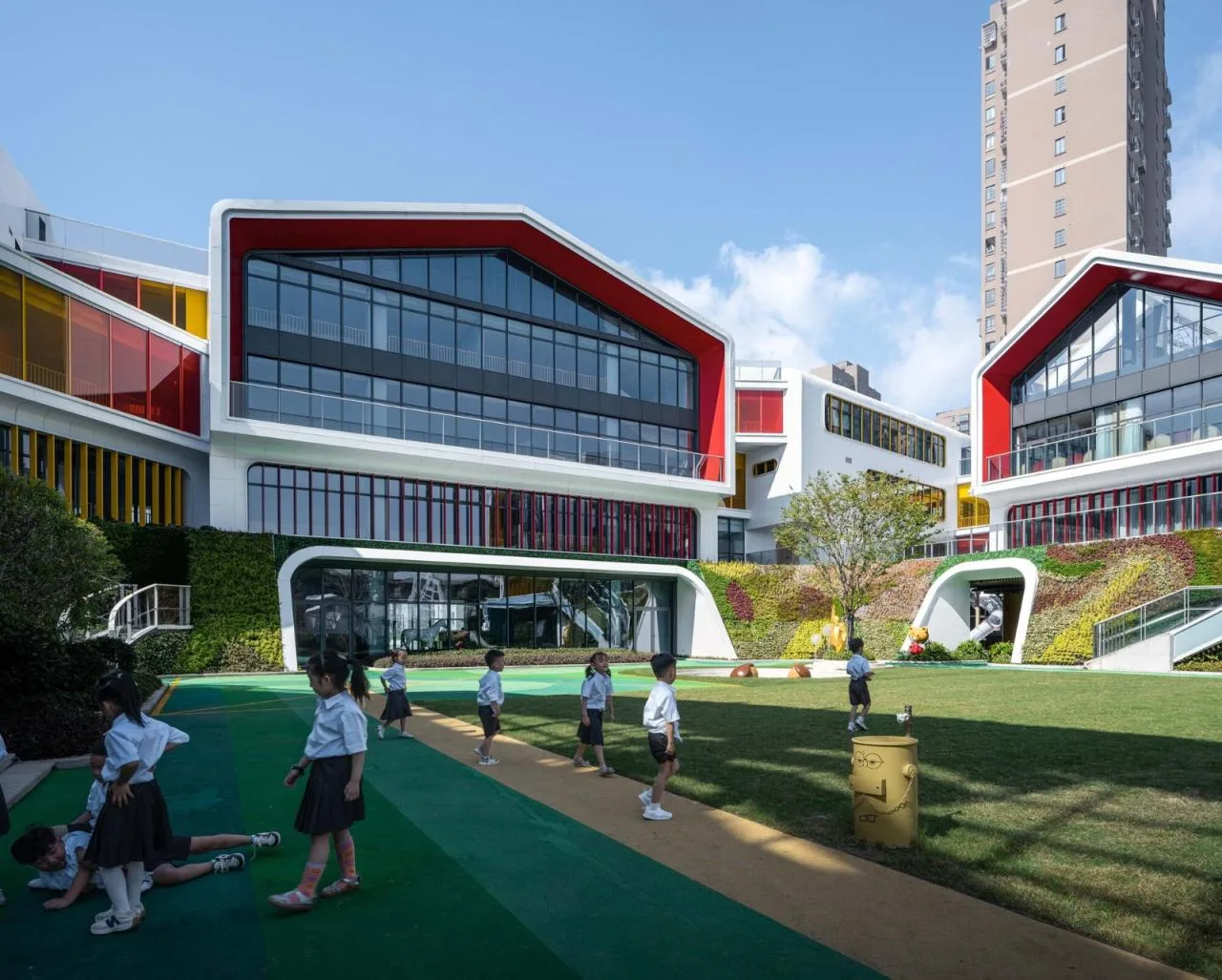
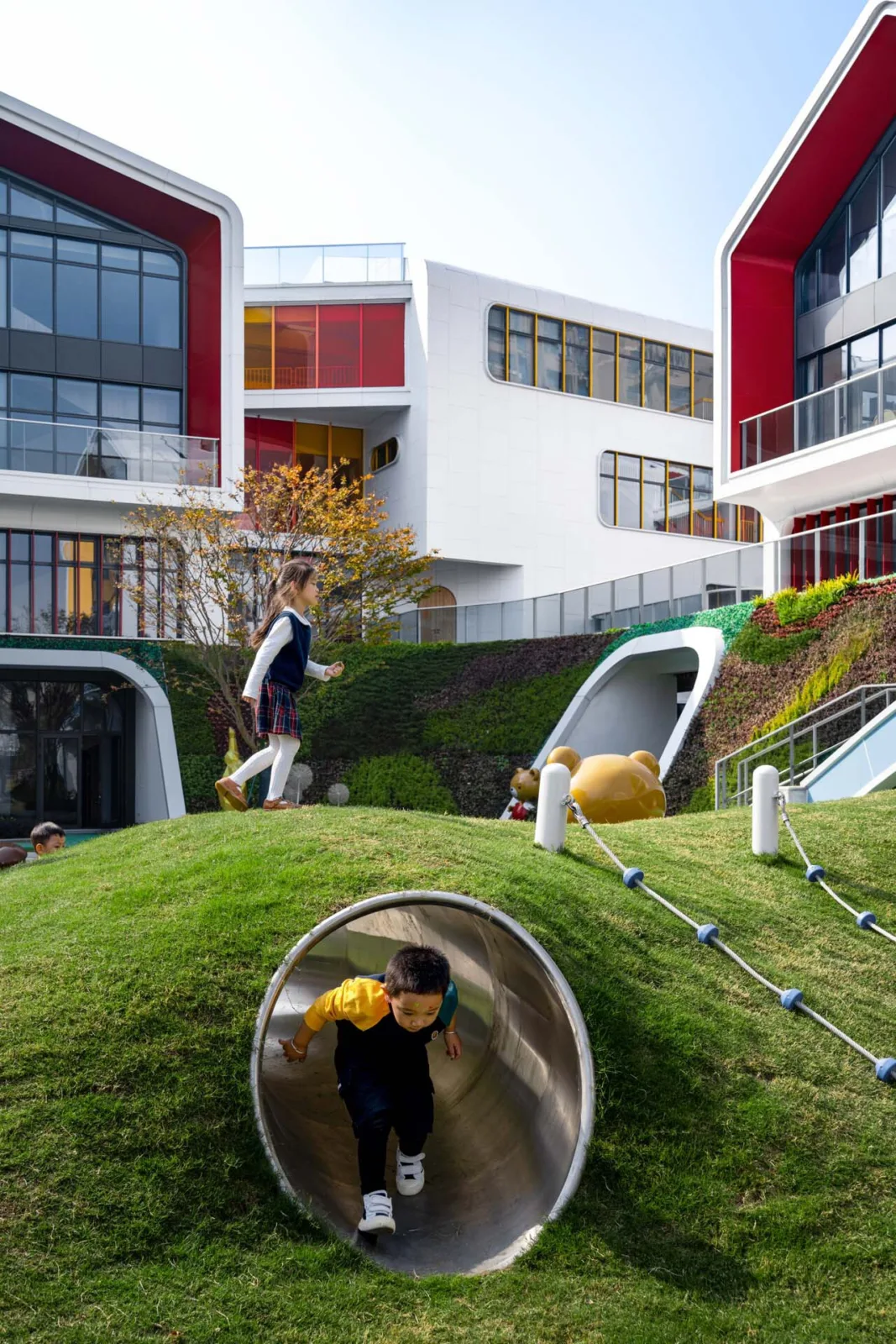
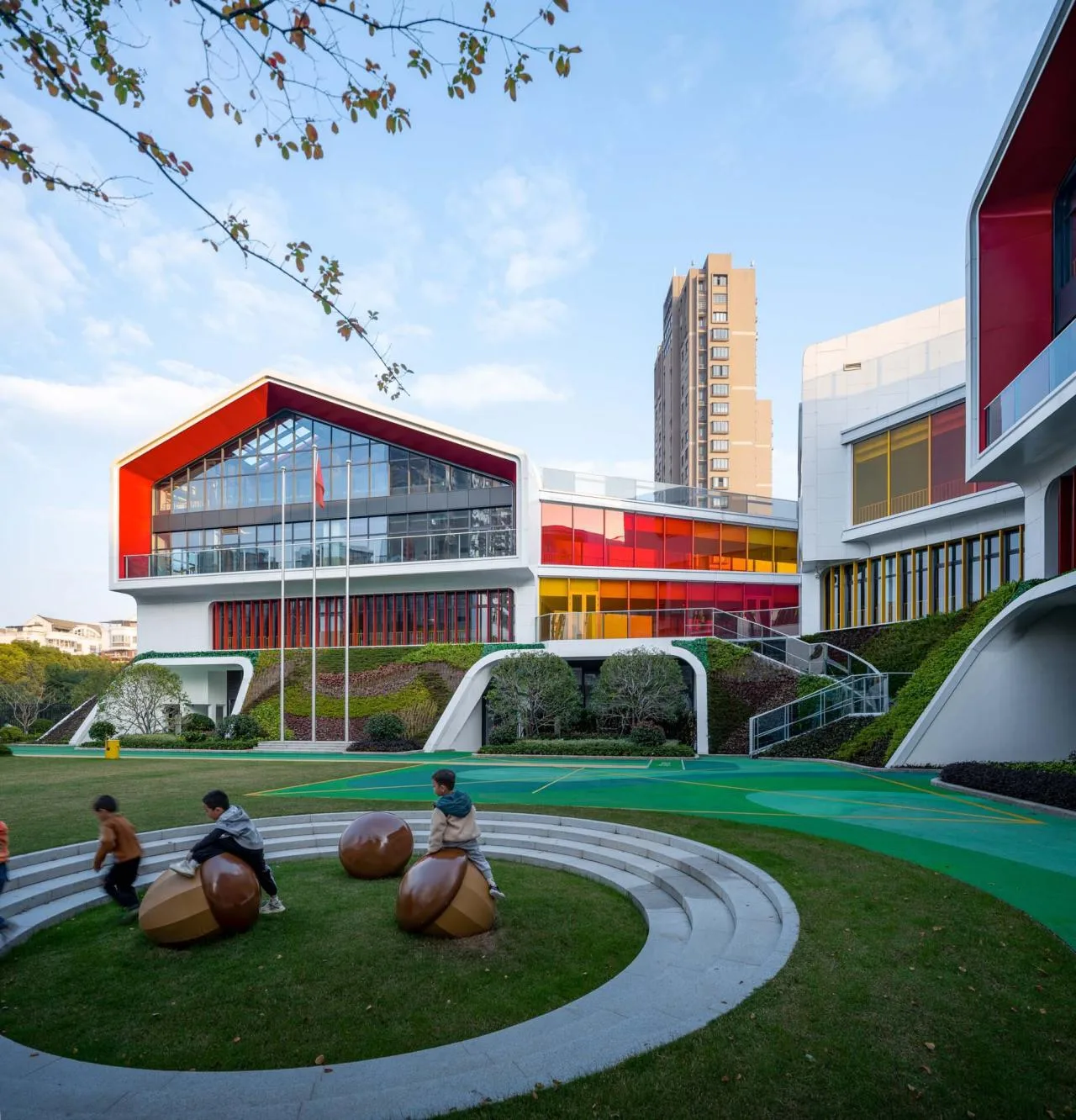
The central garden faces the river, offering children a direct connection to nature. On clear days, the lush greenery complements the sparkling river waves, inviting children outdoors to explore. They run on the grass, play hide and seek in grassy tunnels, and slide down slides, filling this small ecological paradise with laughter and joy.
Within the campus, children interact with a variety of plants and flowers and care for loaches in small ponds and other animals in the backyard along the river. These experiences actively build their cognitive understanding through hands-on interaction with nature.
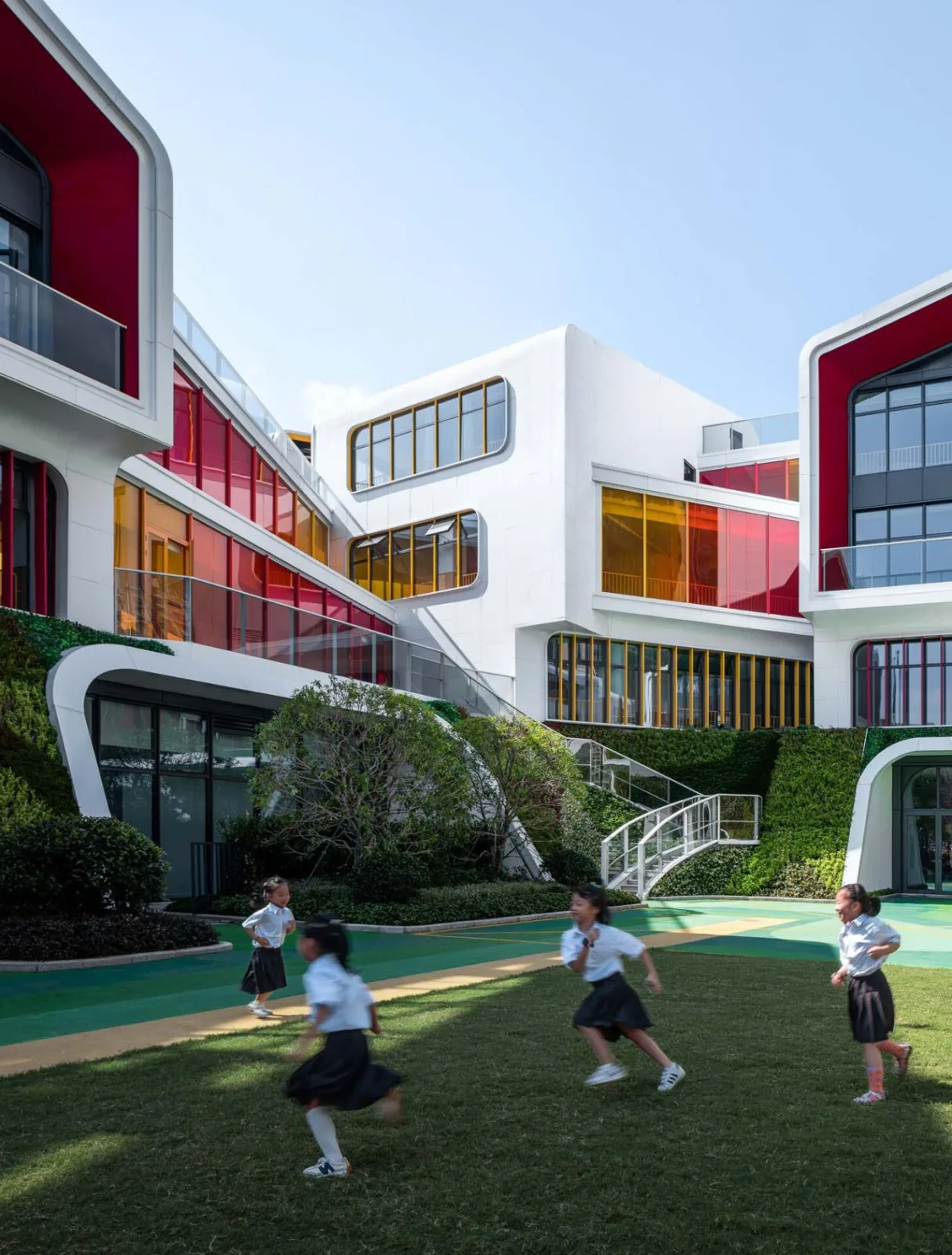
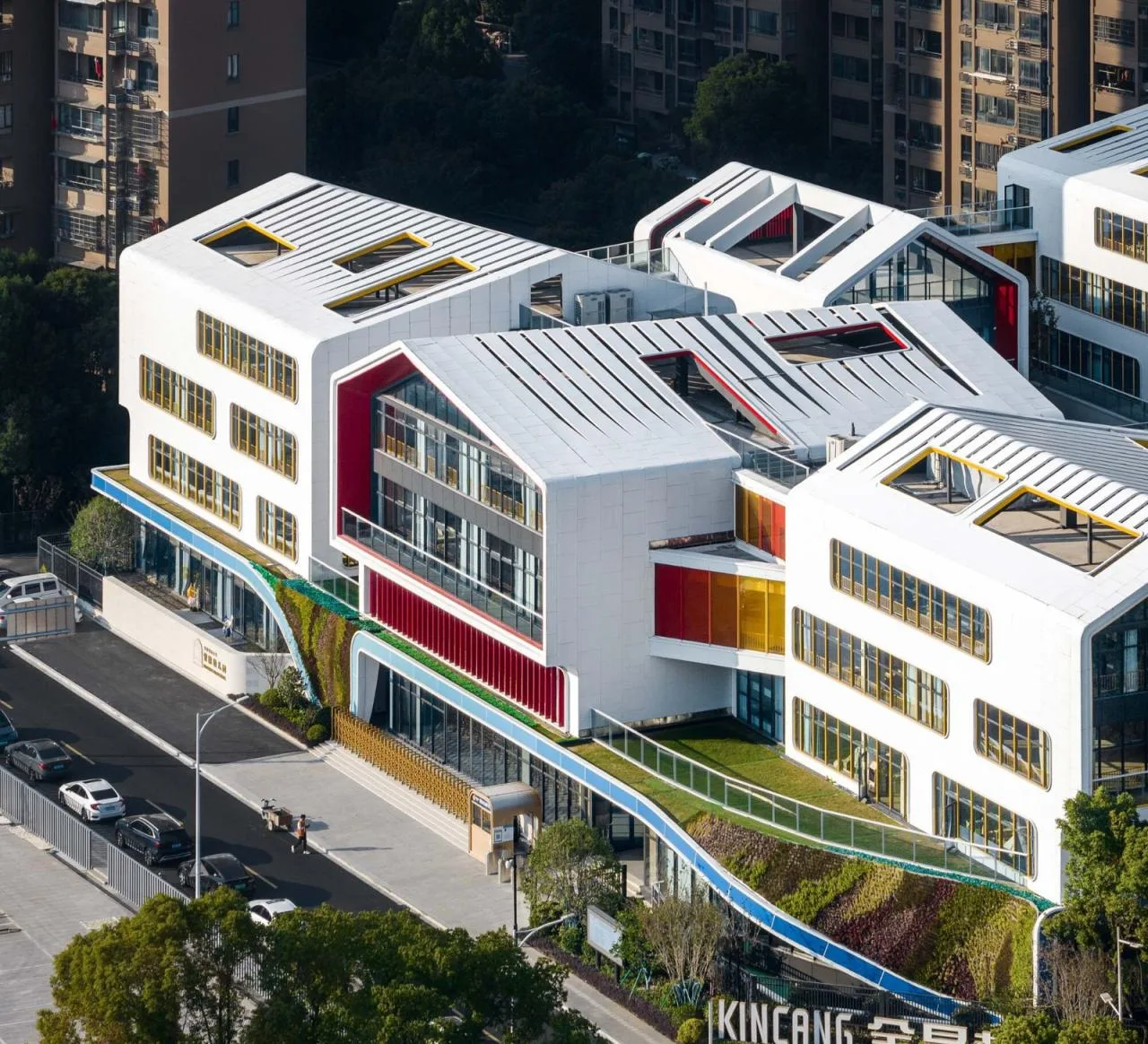
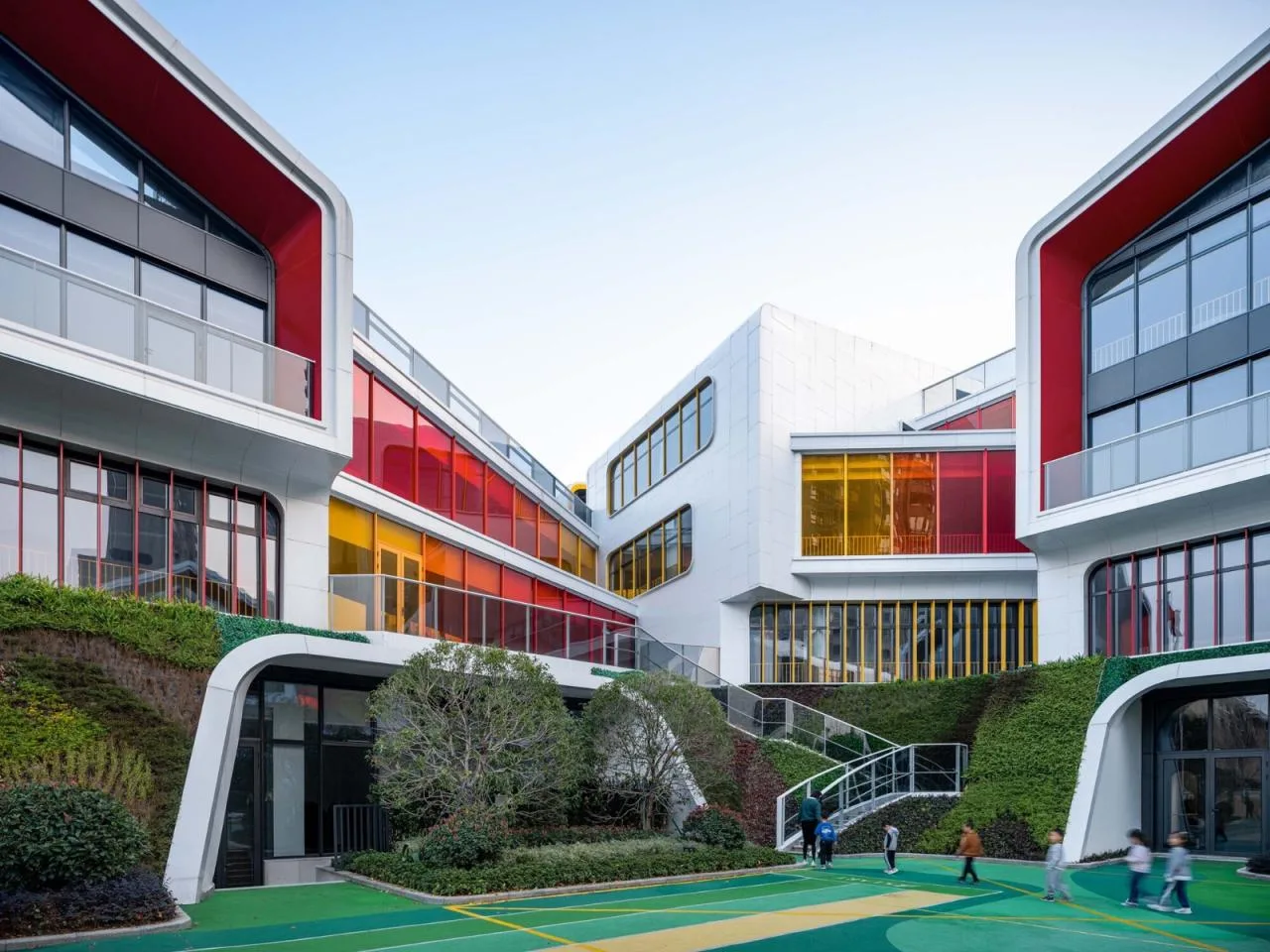
The multidimensional interconnected spaces of The Wizard of Oz form a series of three-dimensional activity areas. Following Montessori’s philosophy that children’s psychological development results from “experiences gained through environmental exploration,” the vertical green grassy slope divides the building into two levels.
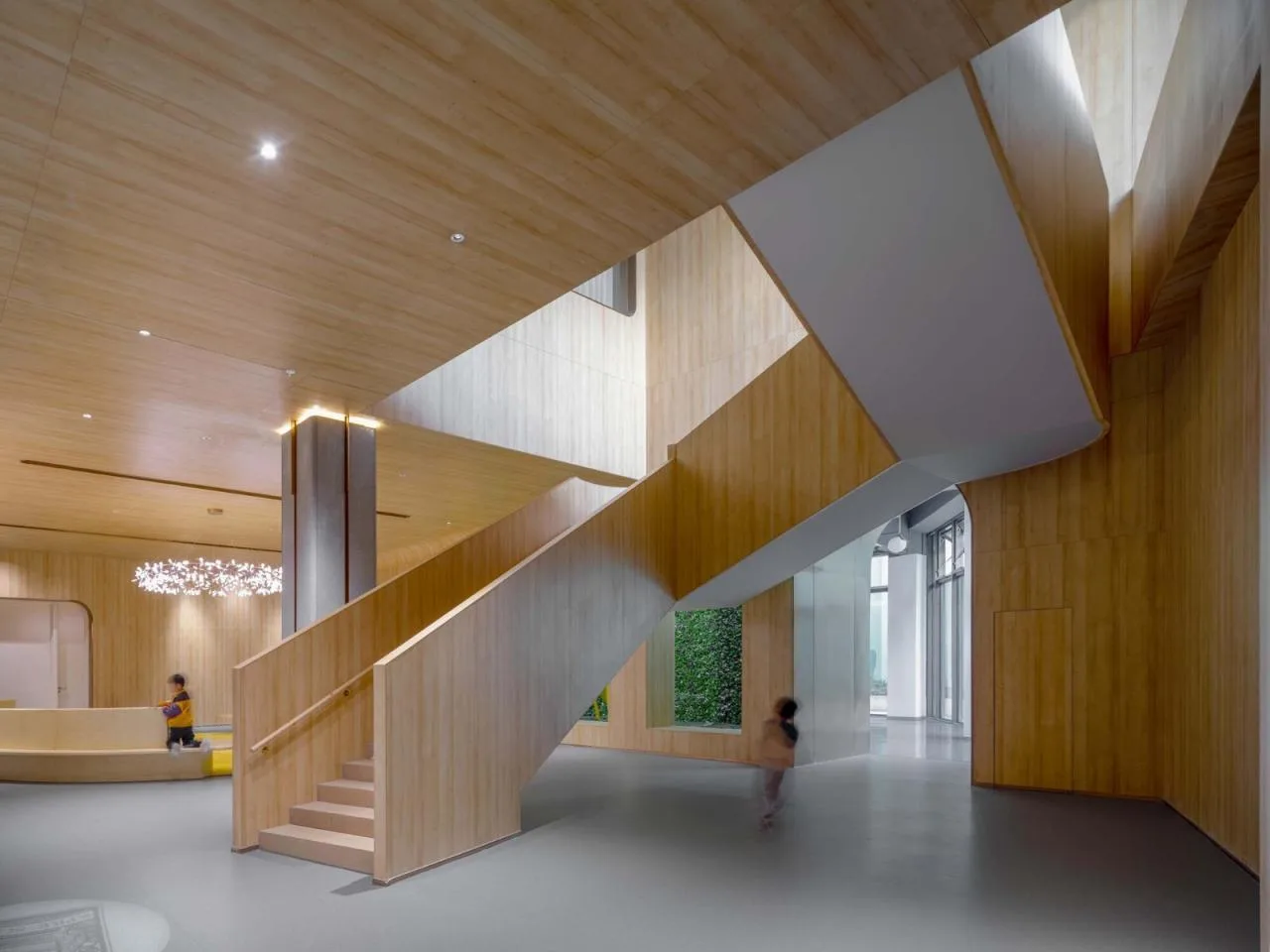
These levels are connected through stairs and corridors, blurring the traditional floor divisions and creating multi-level open spaces. Children can access the outdoor corridor on the second floor via stairs on the grass slope or quickly reach the central courtyard to play after class.
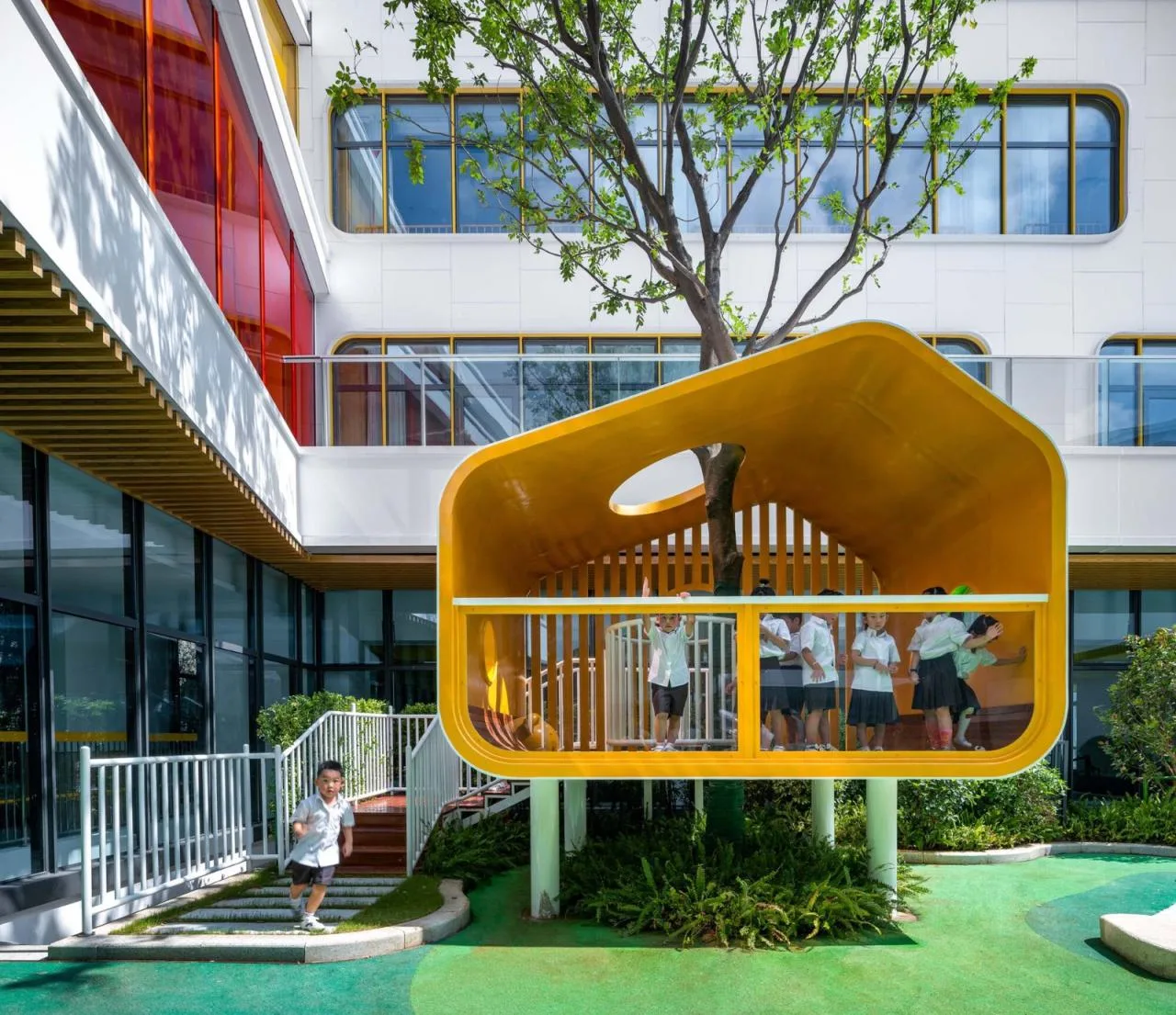
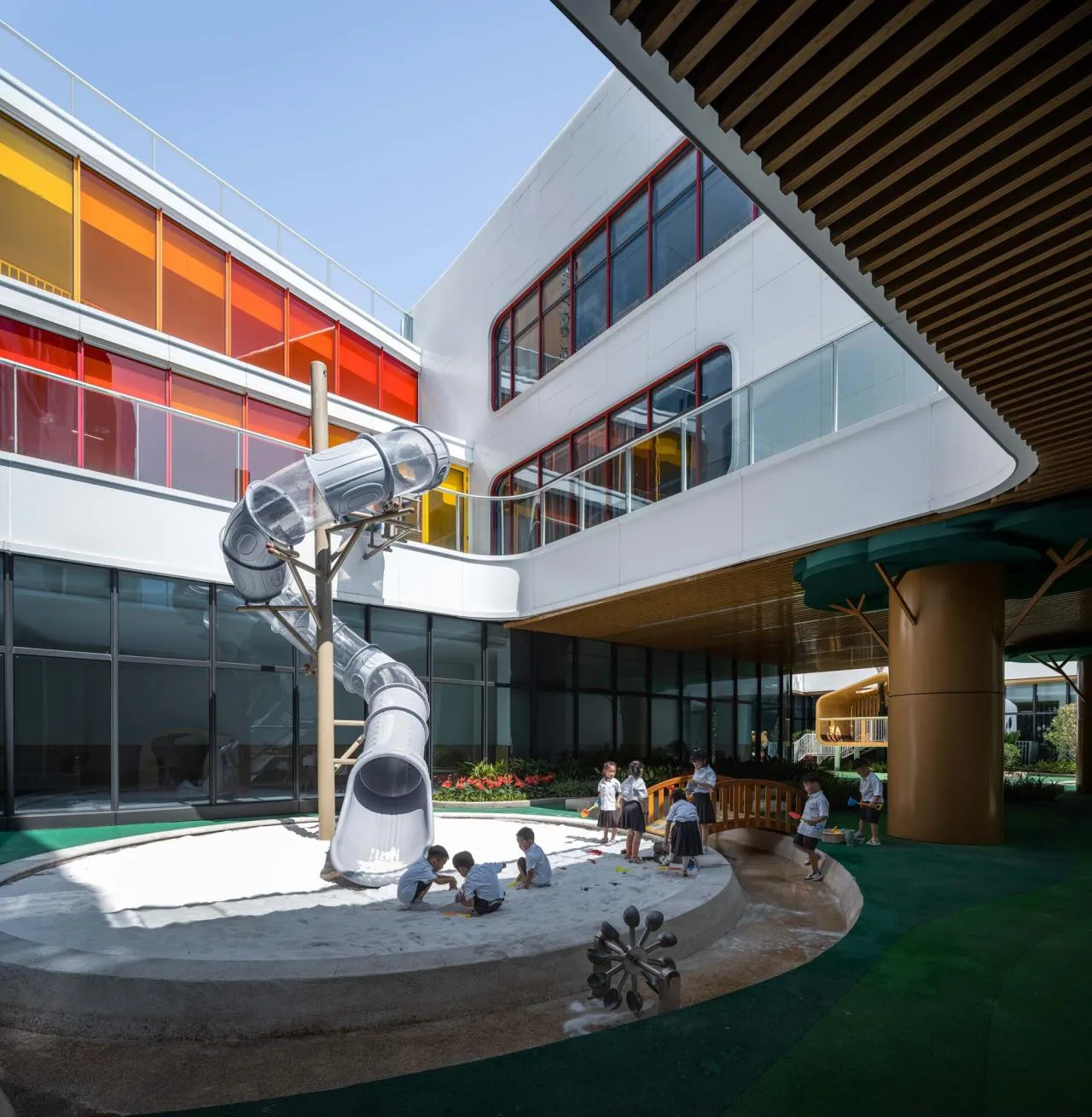
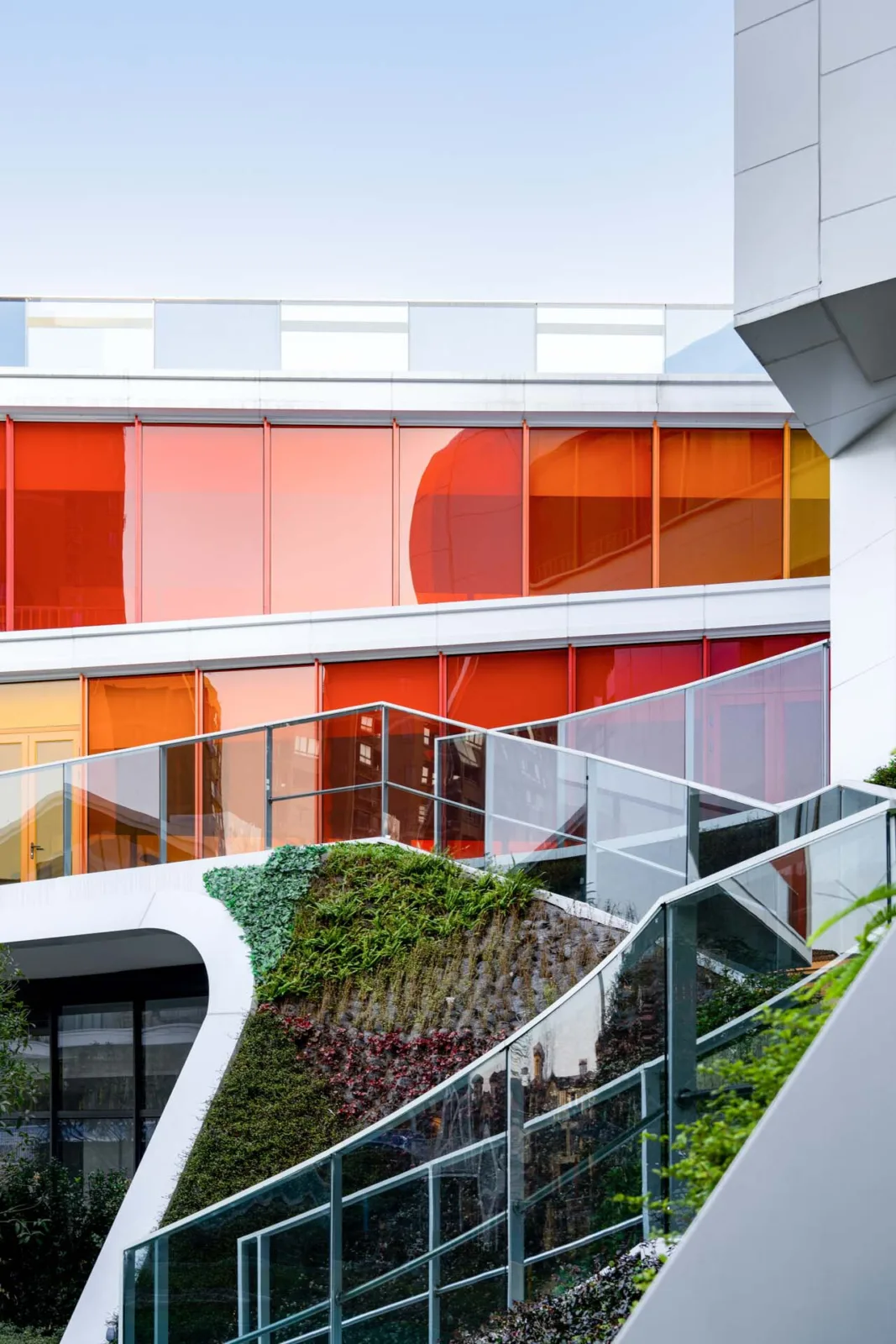
Six small buildings are connected by colorful glass corridors. These not only enhance the visual diversity of the facades but also enrich the experience of moving between different blocks. Light filtering through the colored glass creates a playful, child-friendly atmosphere and helps guide movement through the spaces.
Children see the outside world through these colored panes, experiencing unique views that change with the light. The rooftop activity area extends outdoor play vertically, accommodating a variety of activities that depend on weather, time, and space.
Besides free play, the rooftop can host learning activities such as planting, reading, stargazing, exhibitions, and performances. From the ground-level garden to the rooftop playground, children can independently plan their activities, freely explore, and increase physical activity during their discoveries.
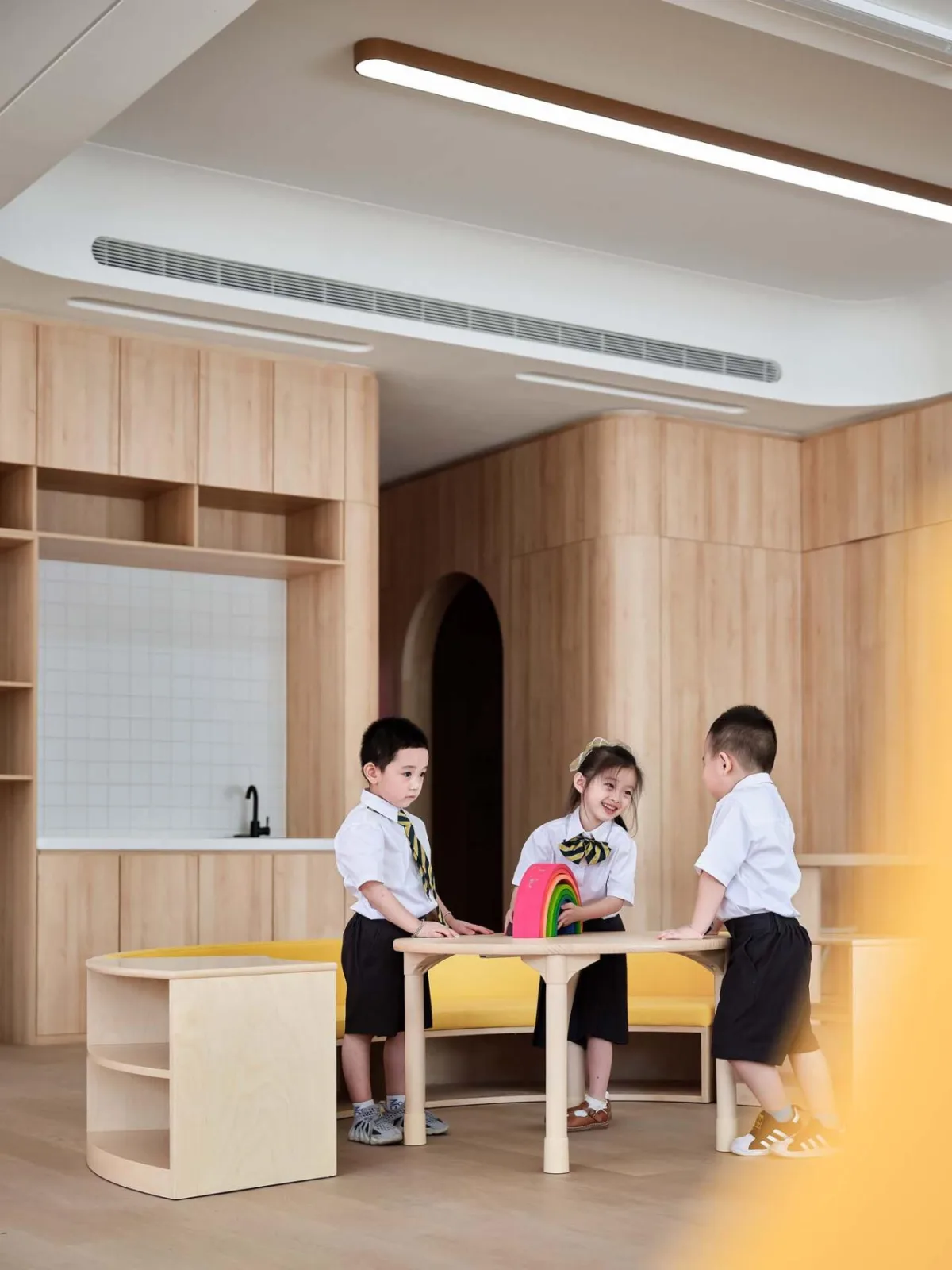
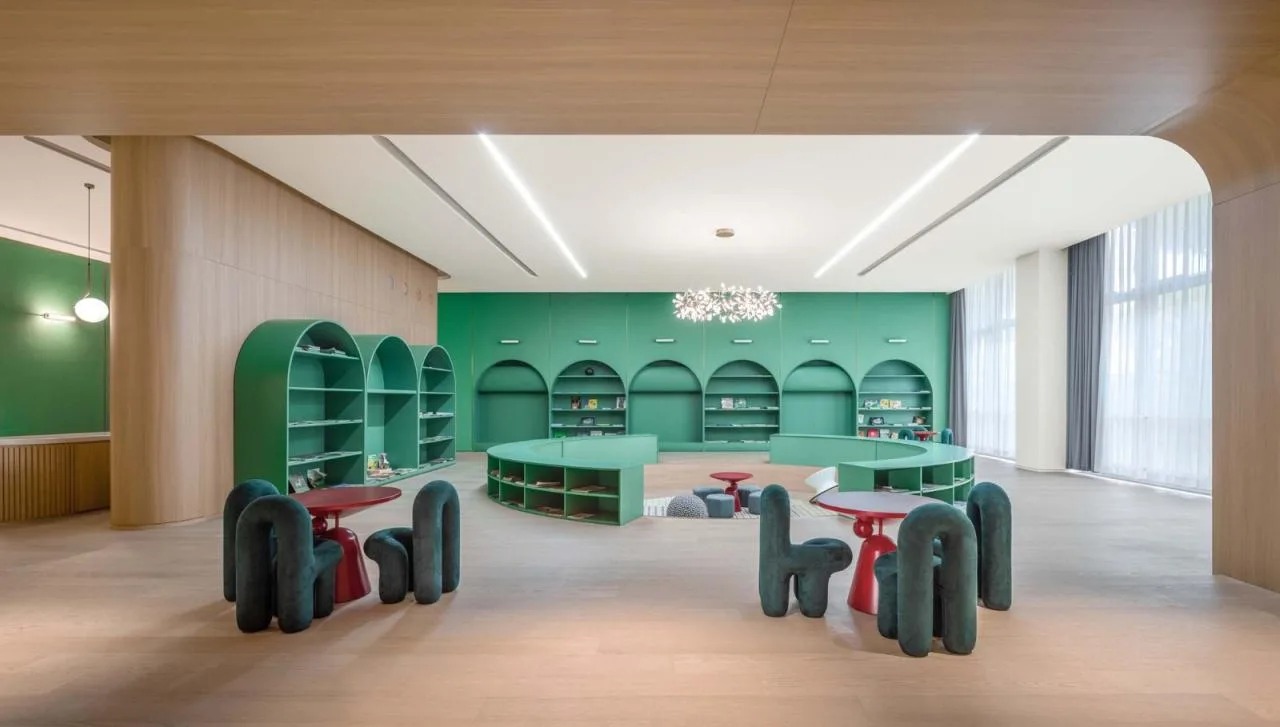
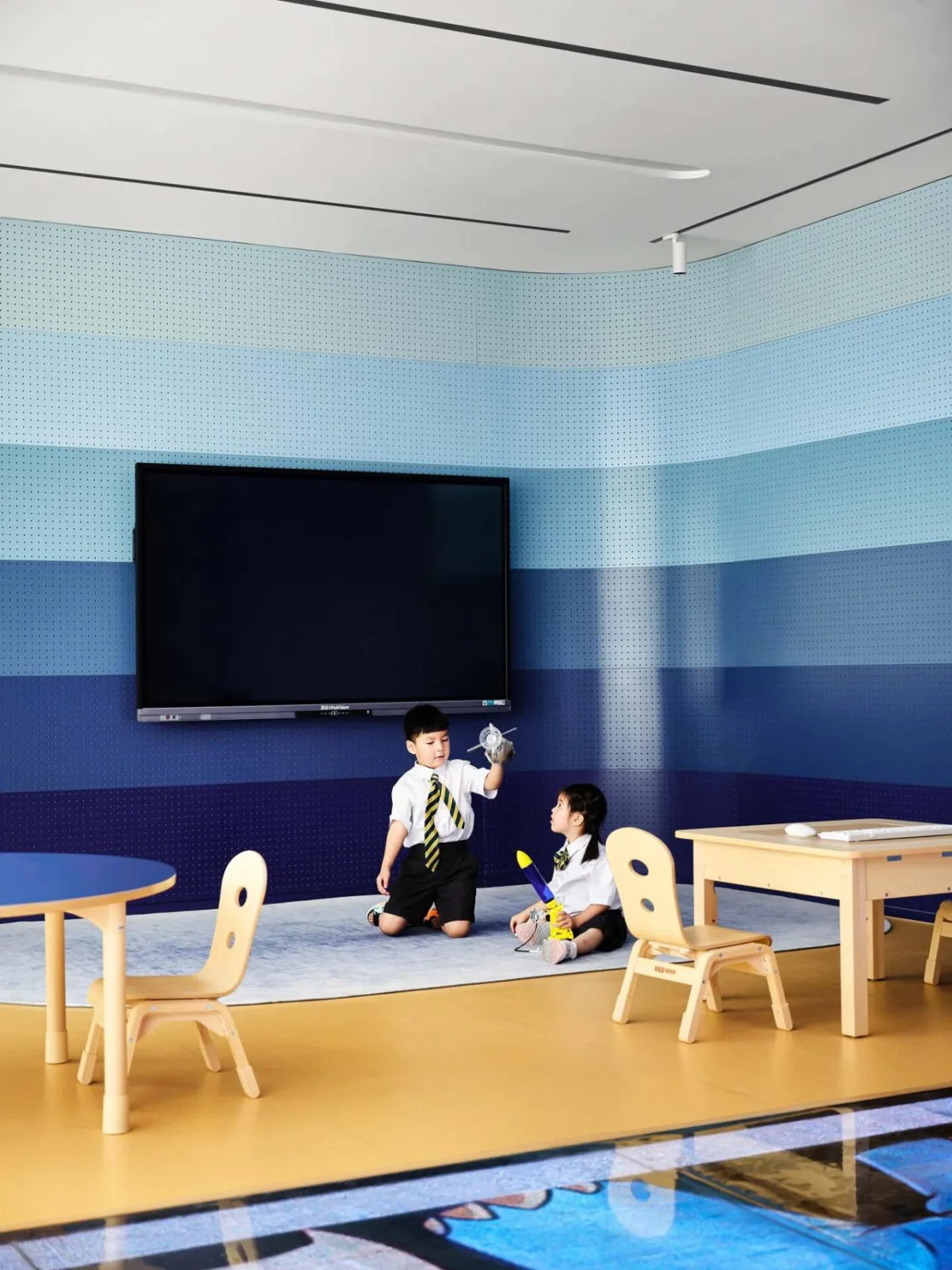
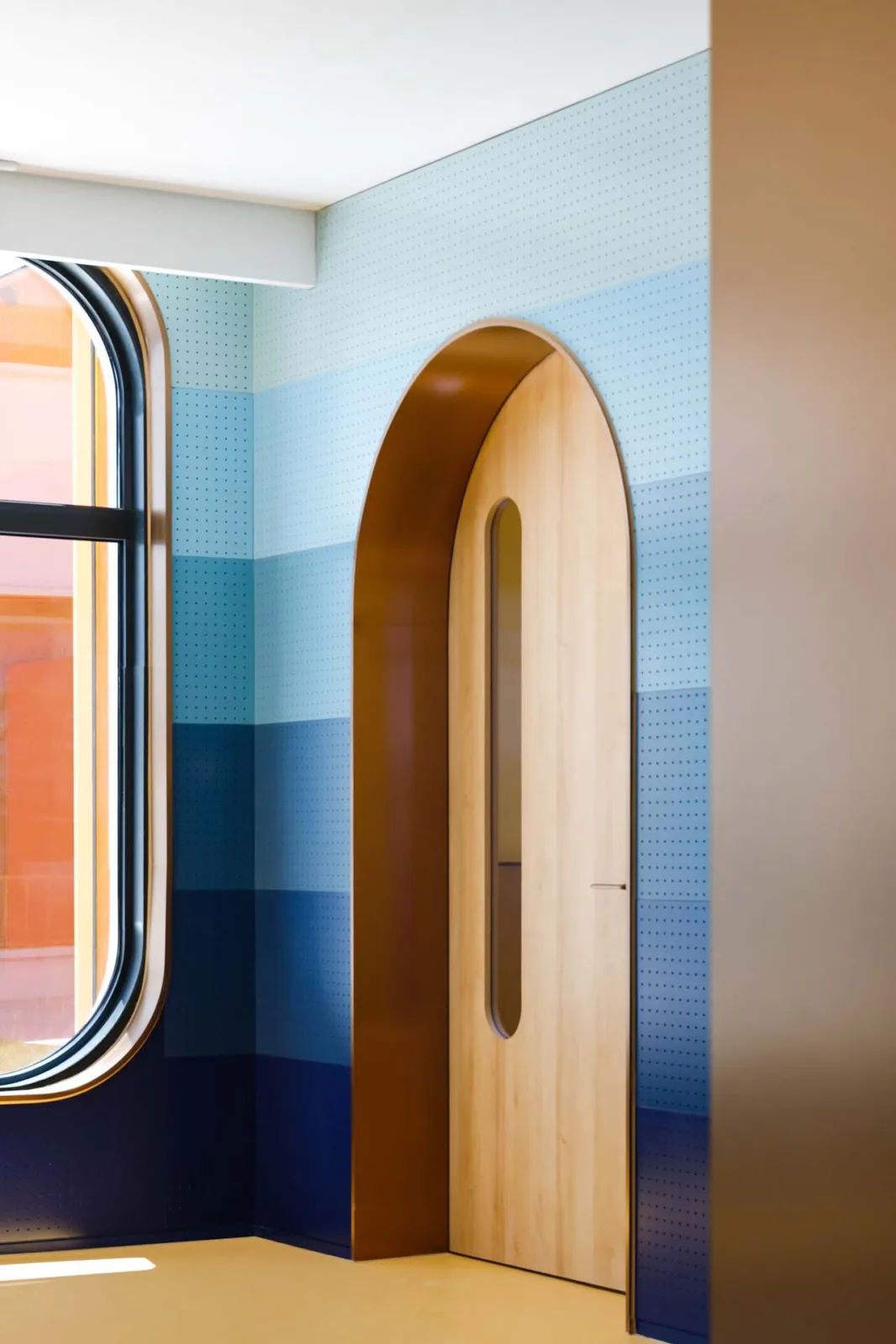
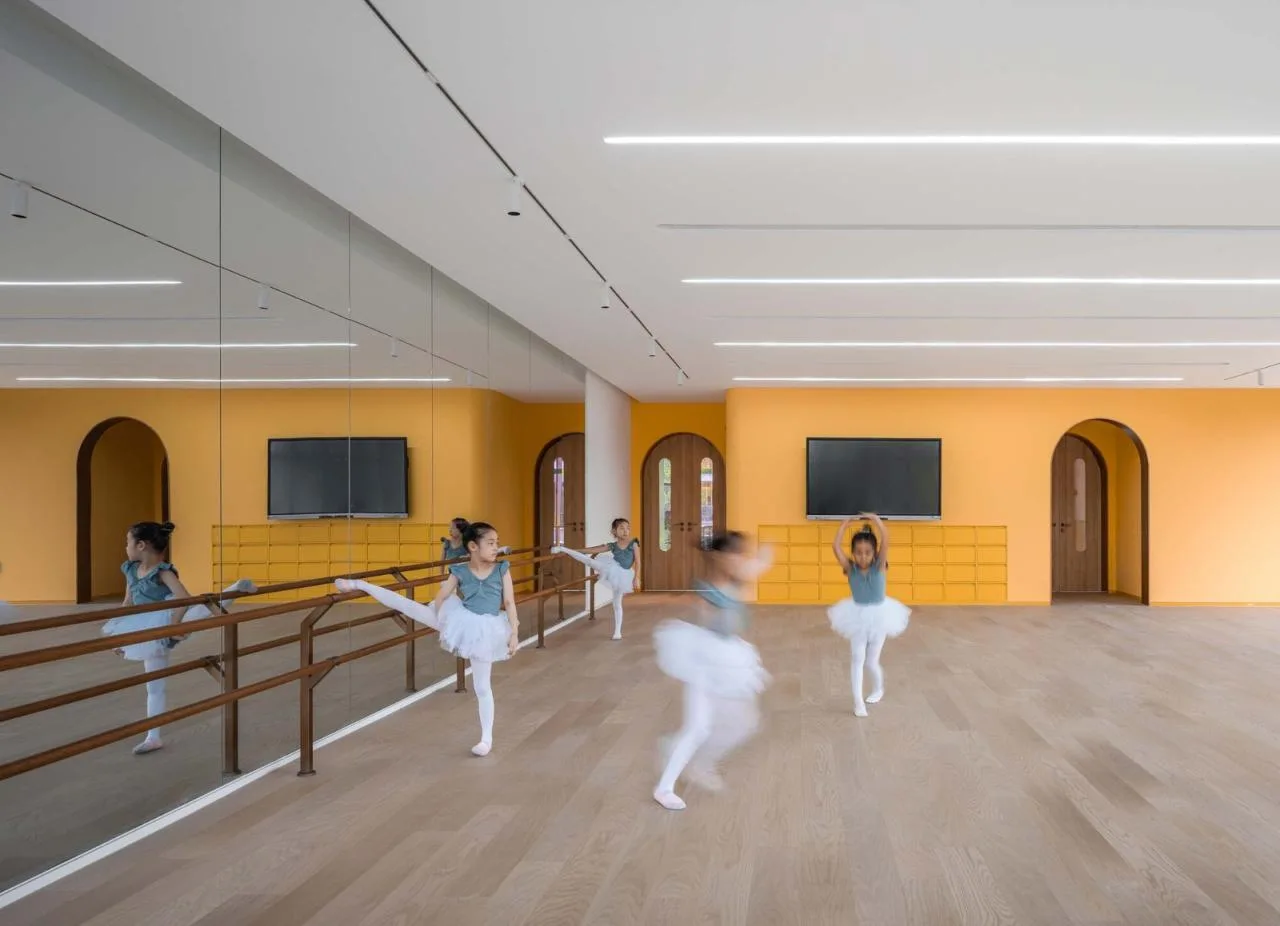
Themed indoor environments further enrich the “Wizard of Oz” concept. The interiors feature high-saturation colors, combining large blocks of bright hues with warm natural wood tones. Functional zones are simply and effectively organized, with child-friendly elements like arches and chamfered edges integrated throughout.
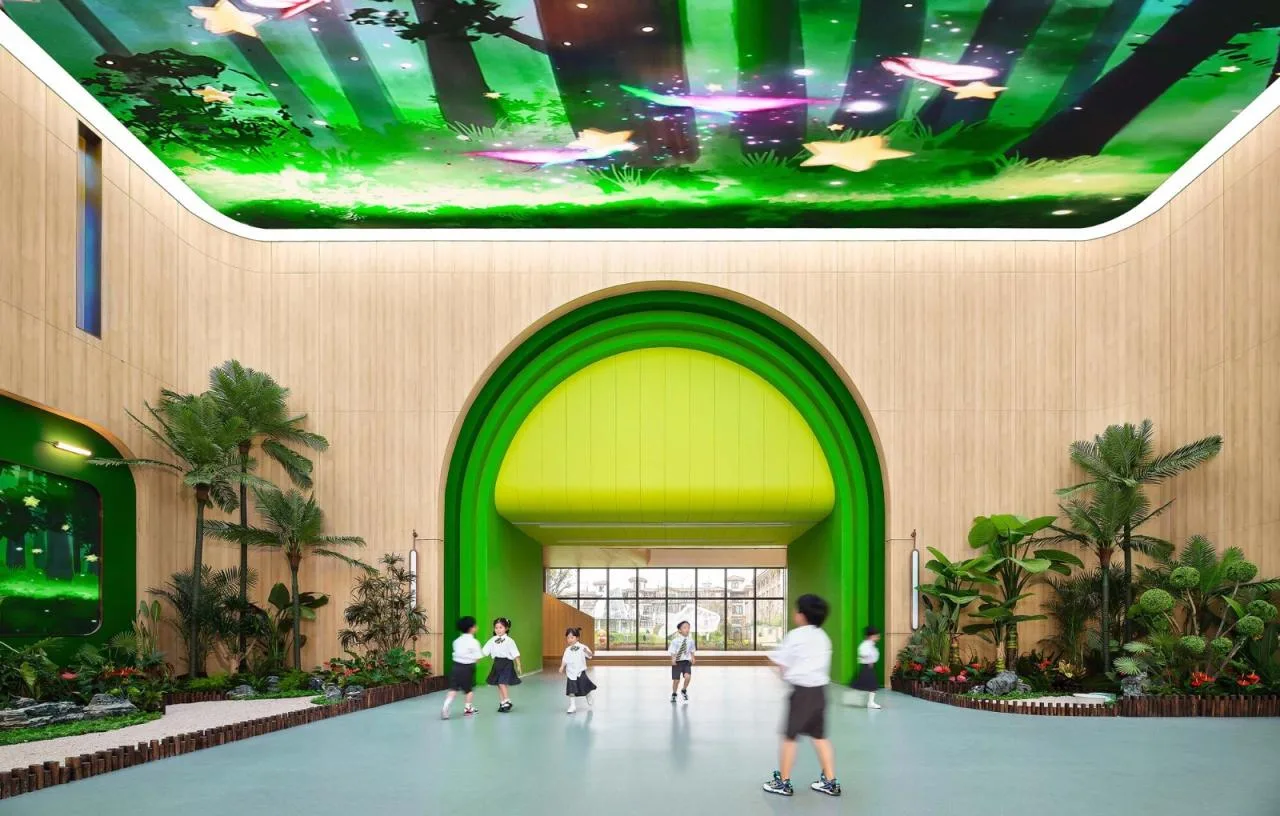
Spaces are ergonomically tailored to children, creating personalized teaching environments that feel like immersive scenes. Each morning, parents safely drop off children at the underground area. After passing morning health checks, children enter the lobby, which evokes a “fantasy forest” atmosphere with layered greens, abundant warm wood, and views of the central garden.
Going to school here becomes an experience children eagerly anticipate.
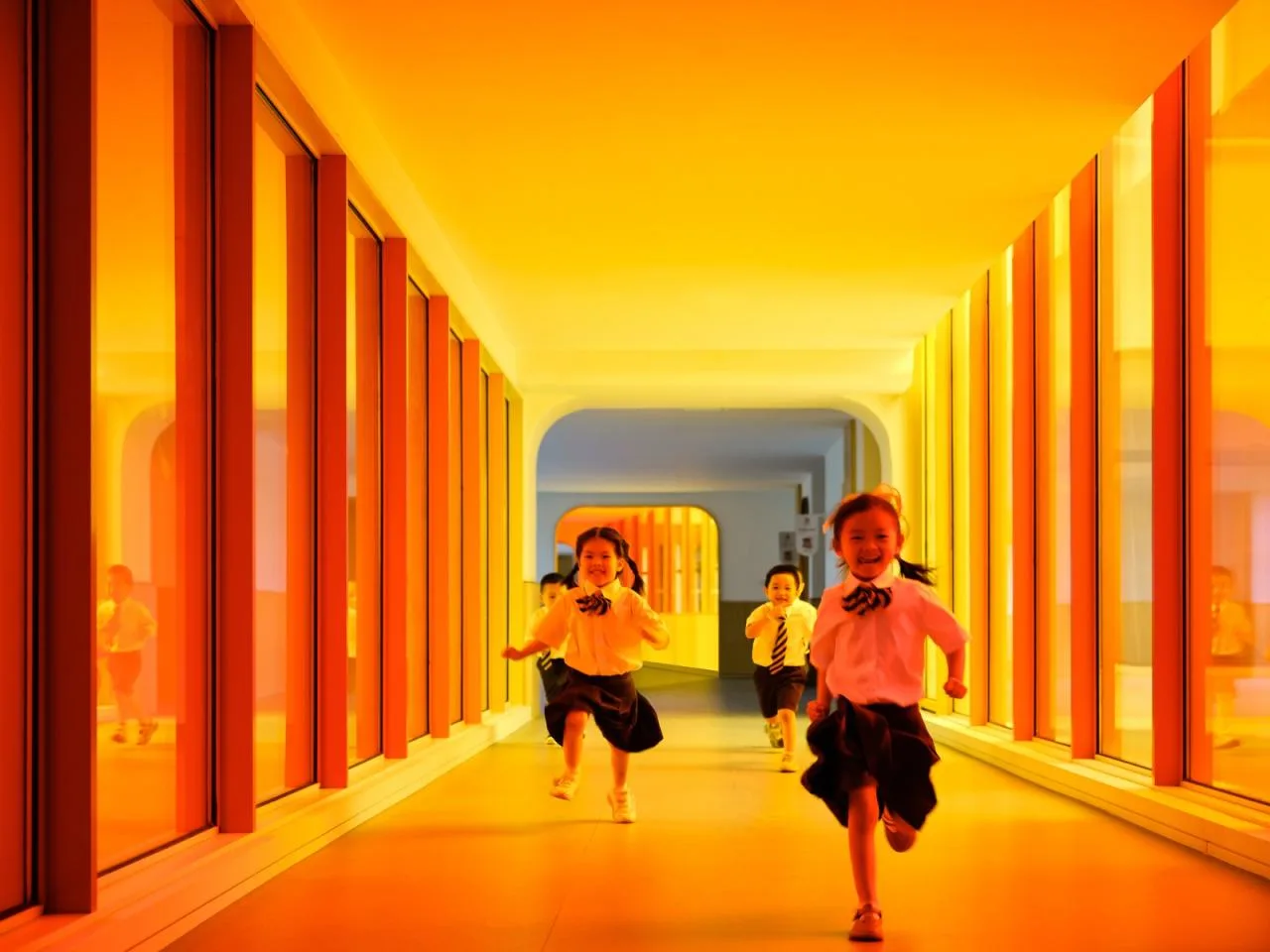
From a child’s perspective, the campus is an adventurous forest. Favorite slides and playful installations appear around every corner, with play areas thoughtfully distributed. Design details such as child-height-appropriate railings and rounded corners quietly support children’s exploration.
Social activity spaces are essential for early development. The first floor includes basketball courts, a small theater, parent-child dining areas, a picture book hall, and a swimming pool, all arranged along an activity corridor that feels like a “dream parade,” serving as a foundation for children’s social awakening.
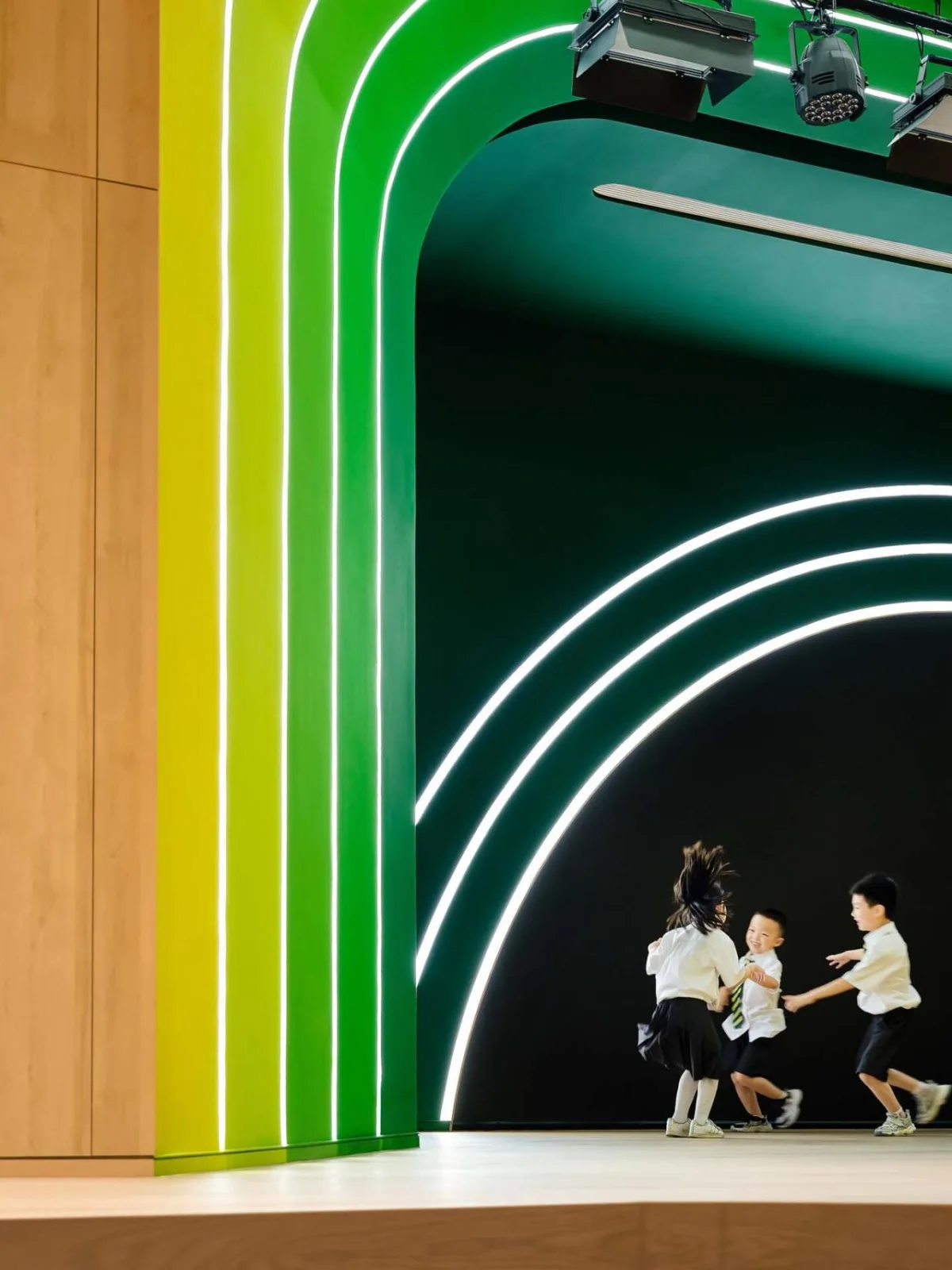
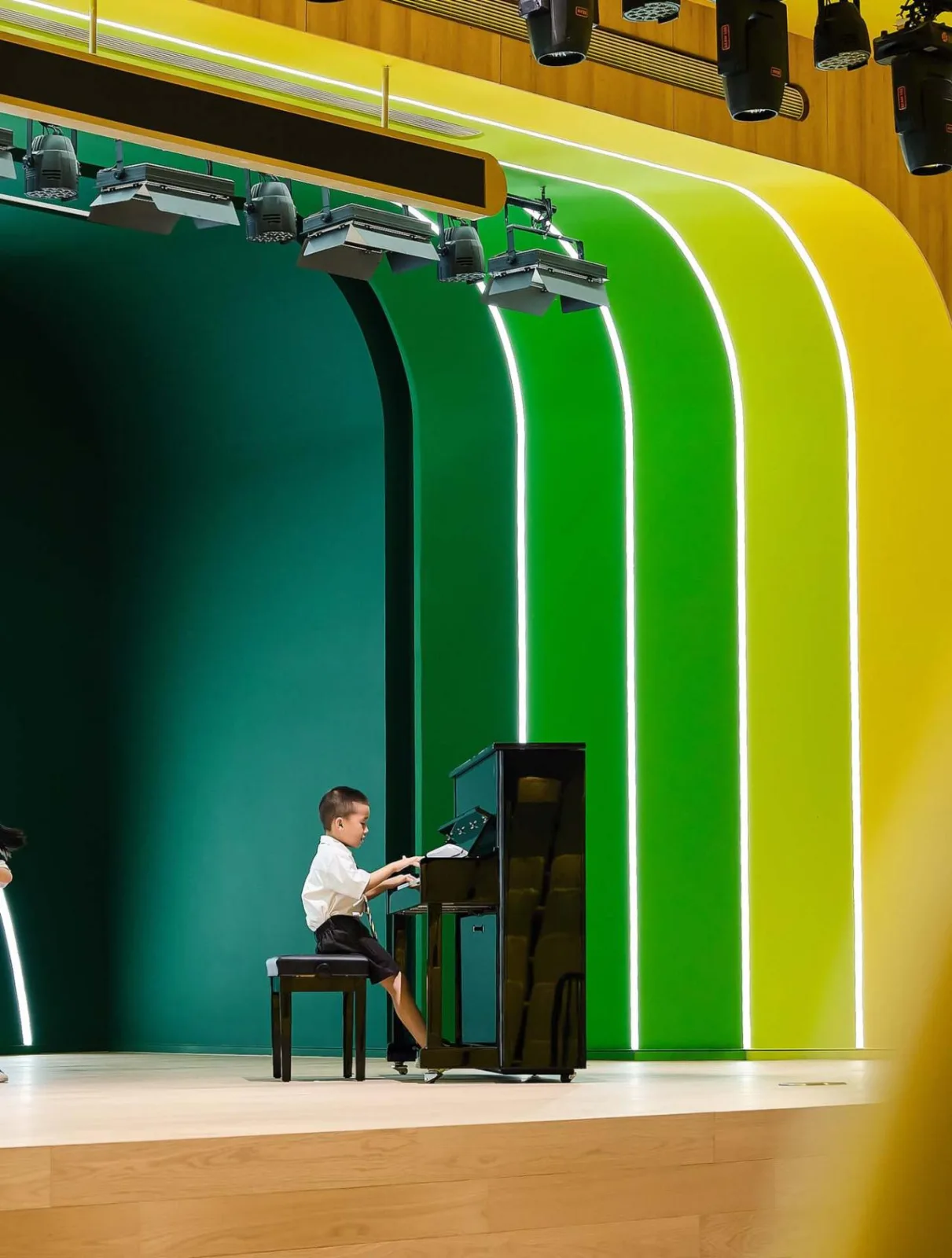
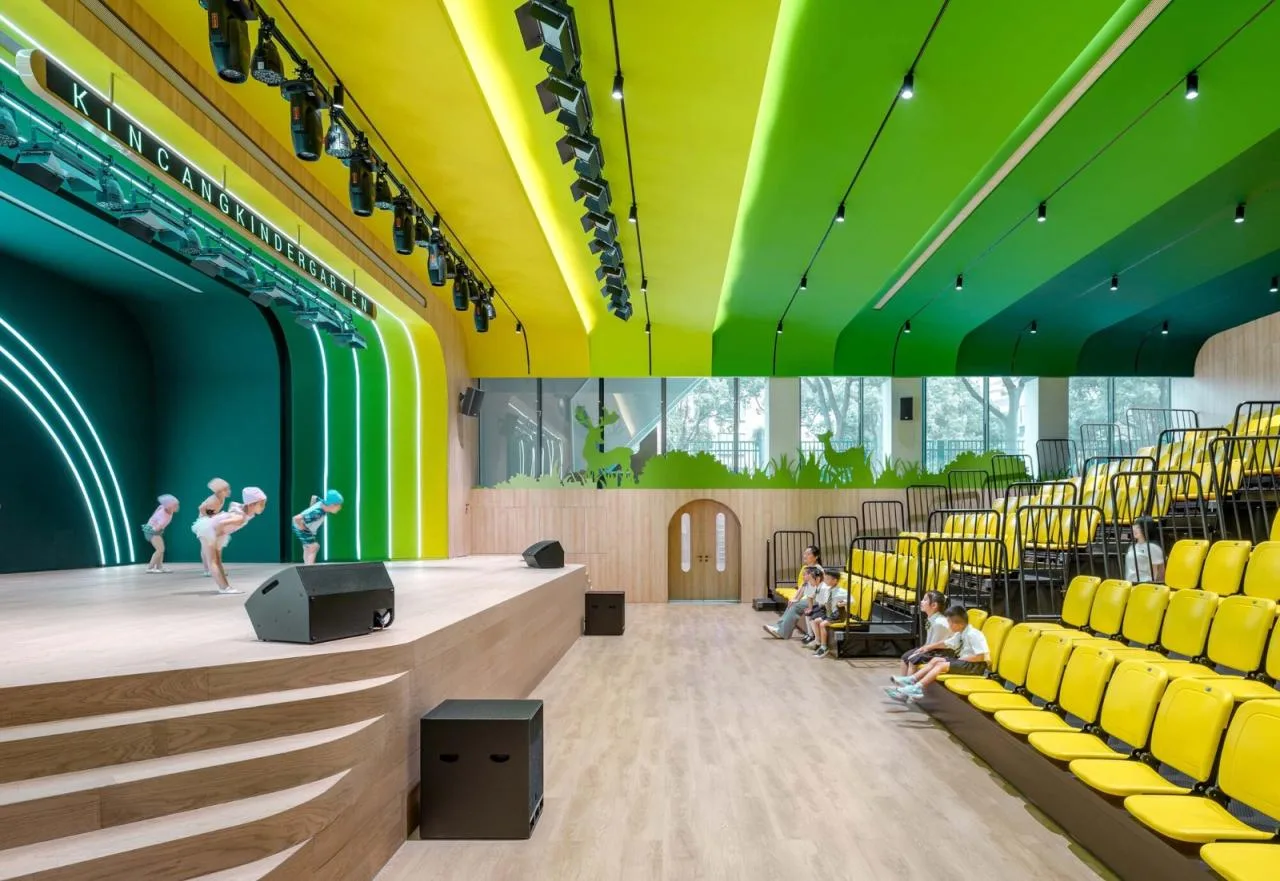
The small theater accommodates 200 people and hosts daily activities and performances. It features flexible, retractable seating to adapt to different needs. A multi-level ceiling and vibrant color stage design create an energetic atmosphere that inspires children’s enthusiasm for performing.
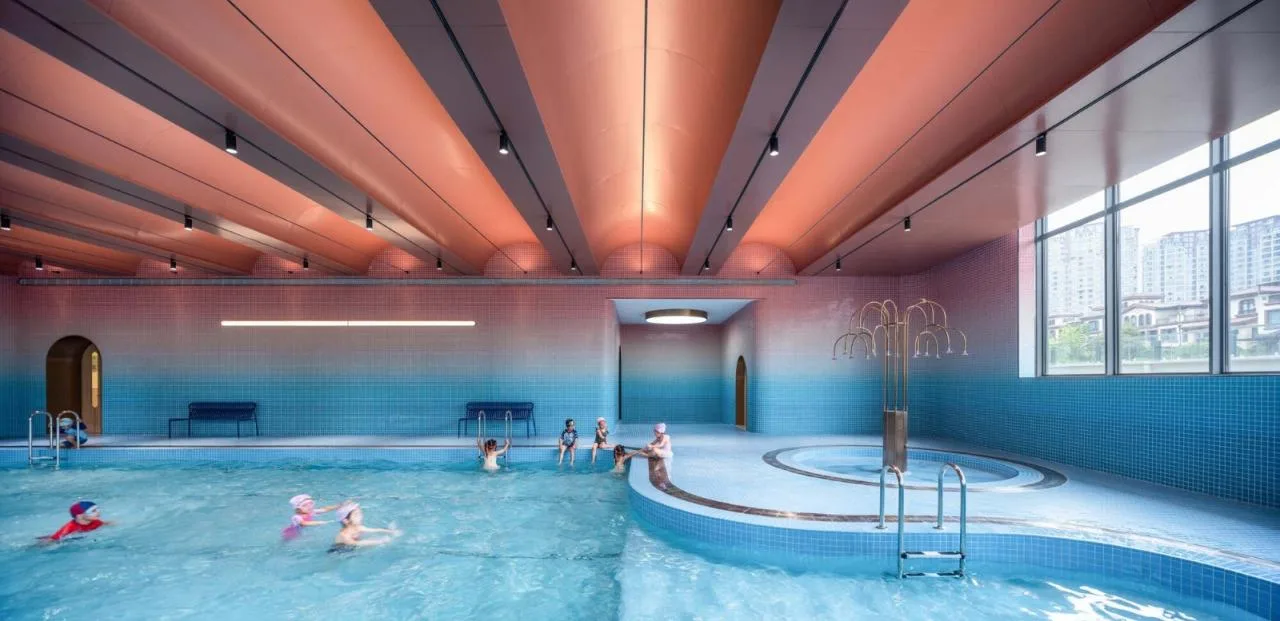
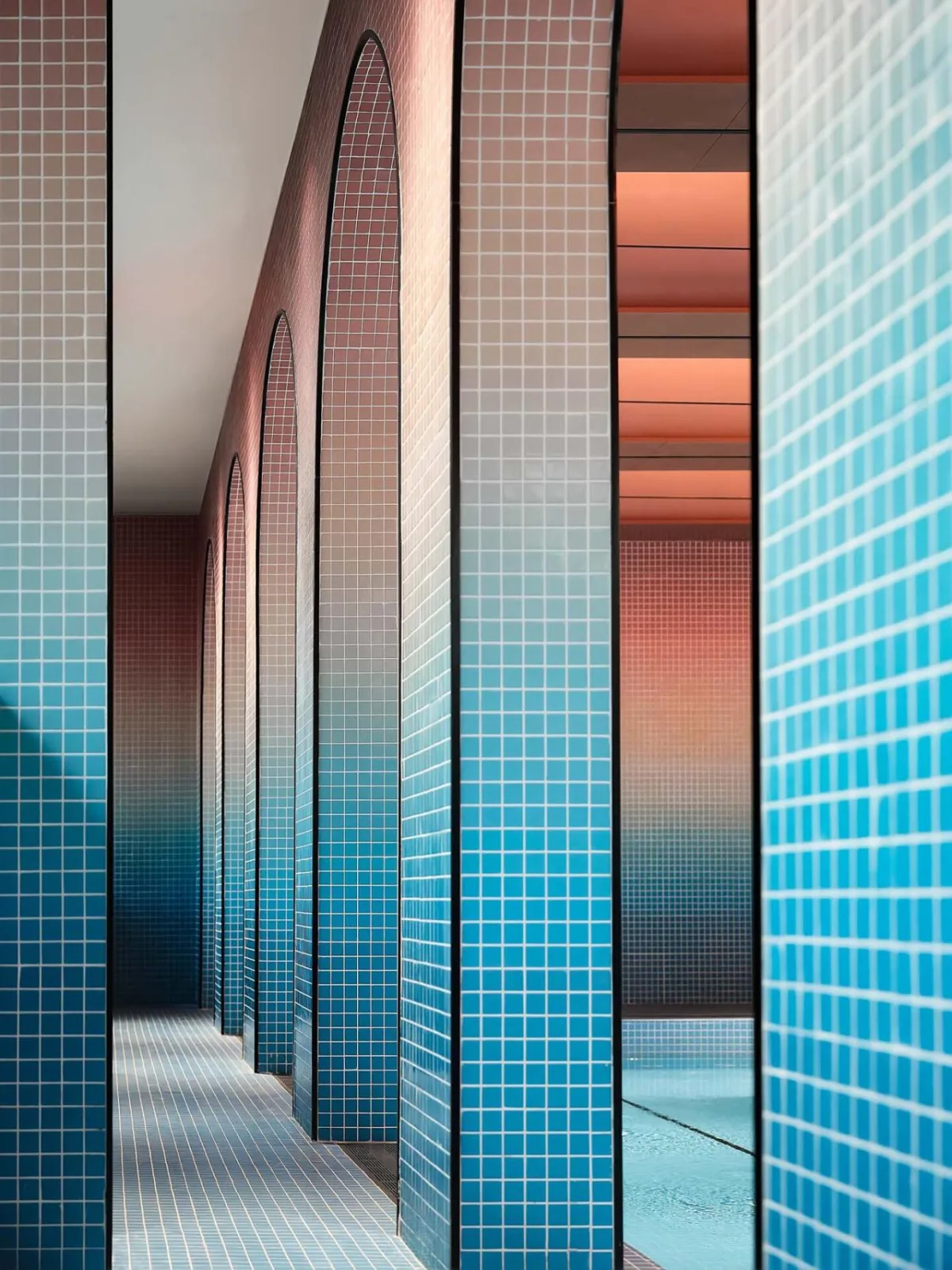
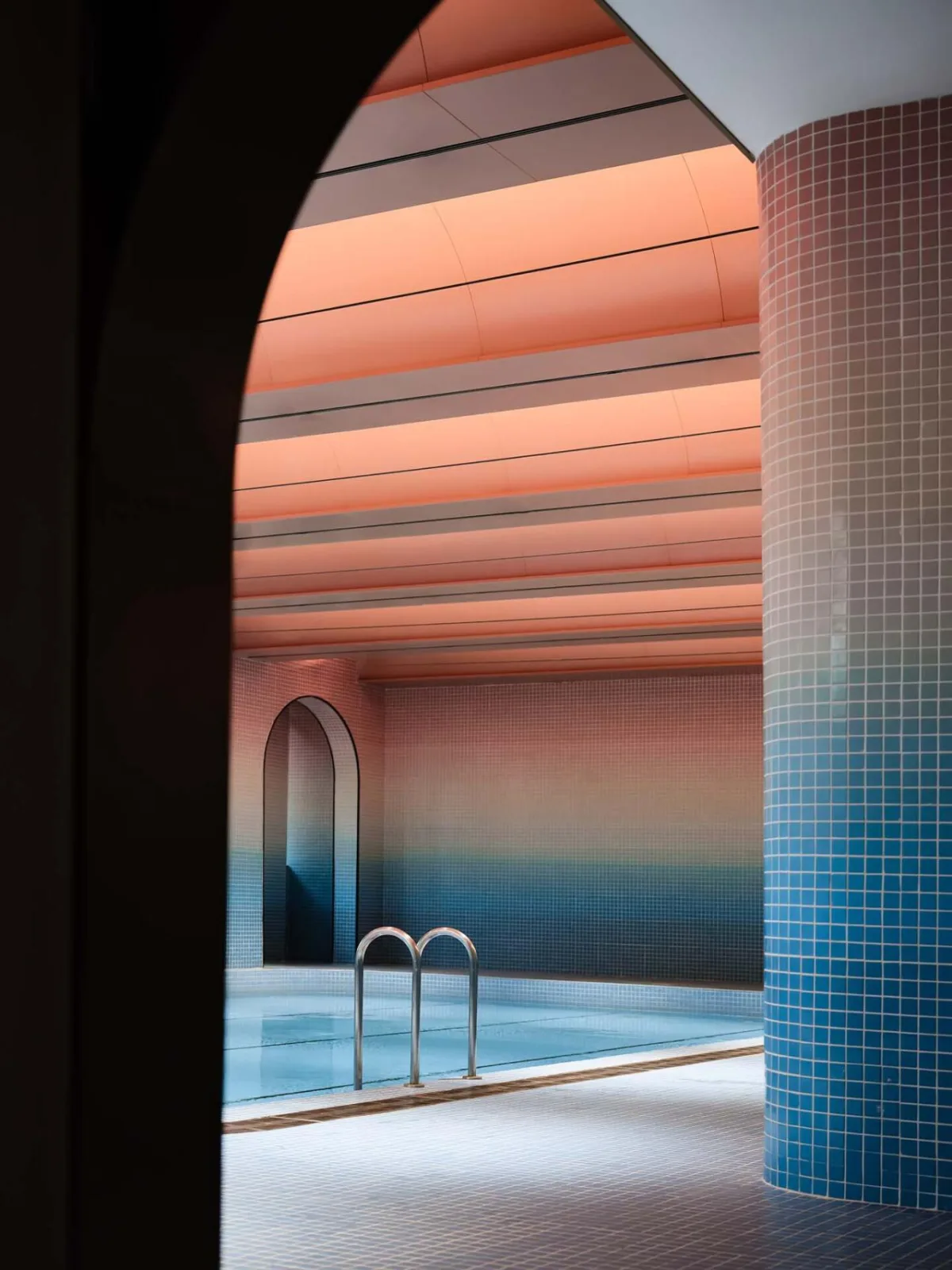
The swimming pool, a favorite summer spot, breaks from conventional designs with pink and blue gradient tiles, continuous arched ceilings, and playful doorways. The dreamy setting is filled with water splashes and the joyful sounds of children playing.
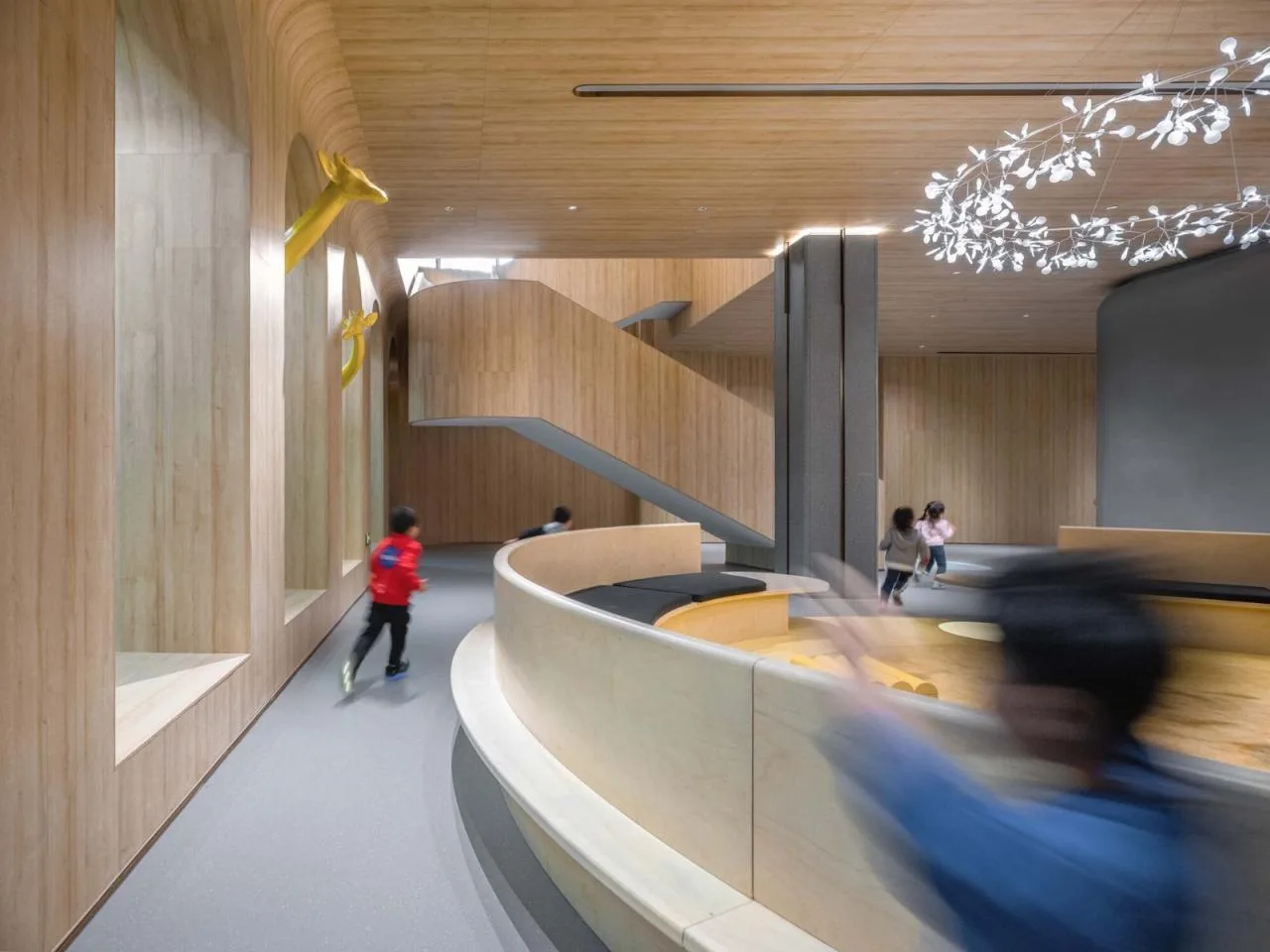
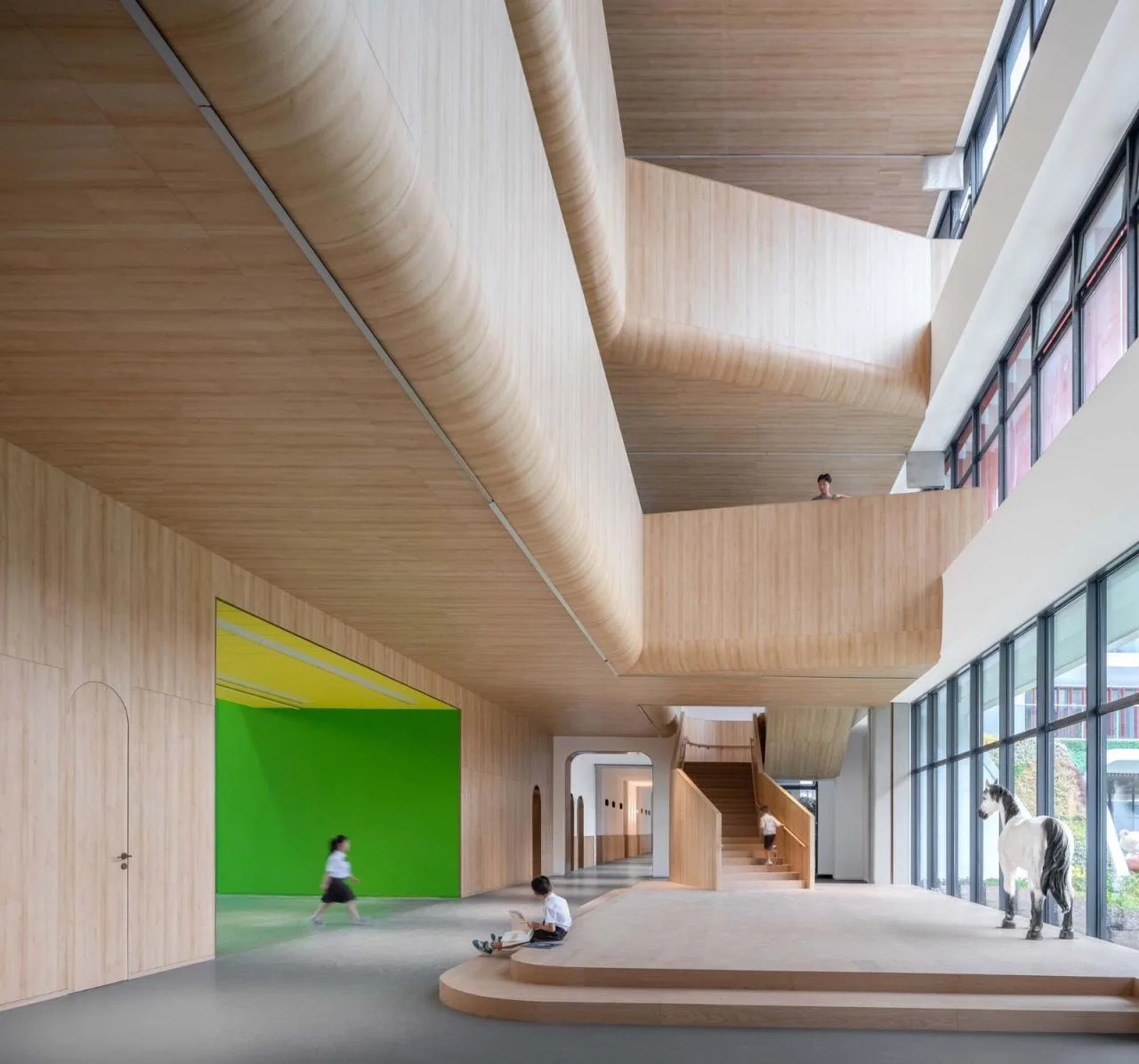
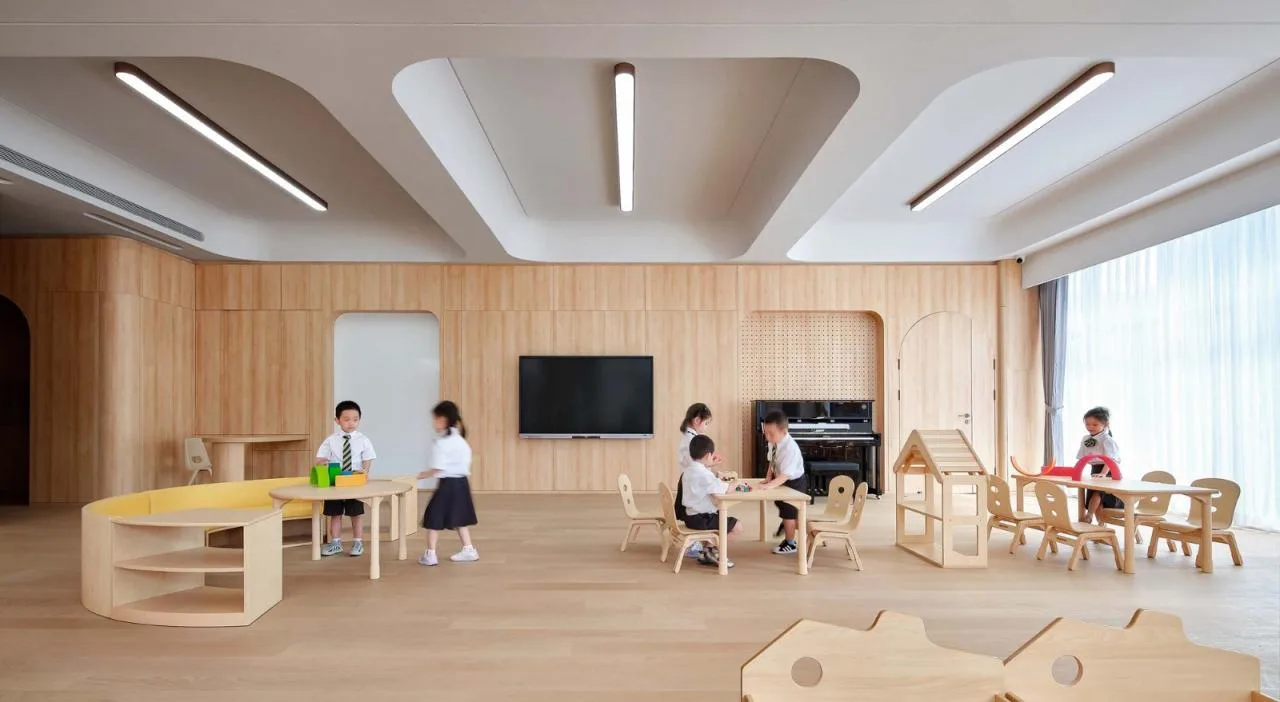
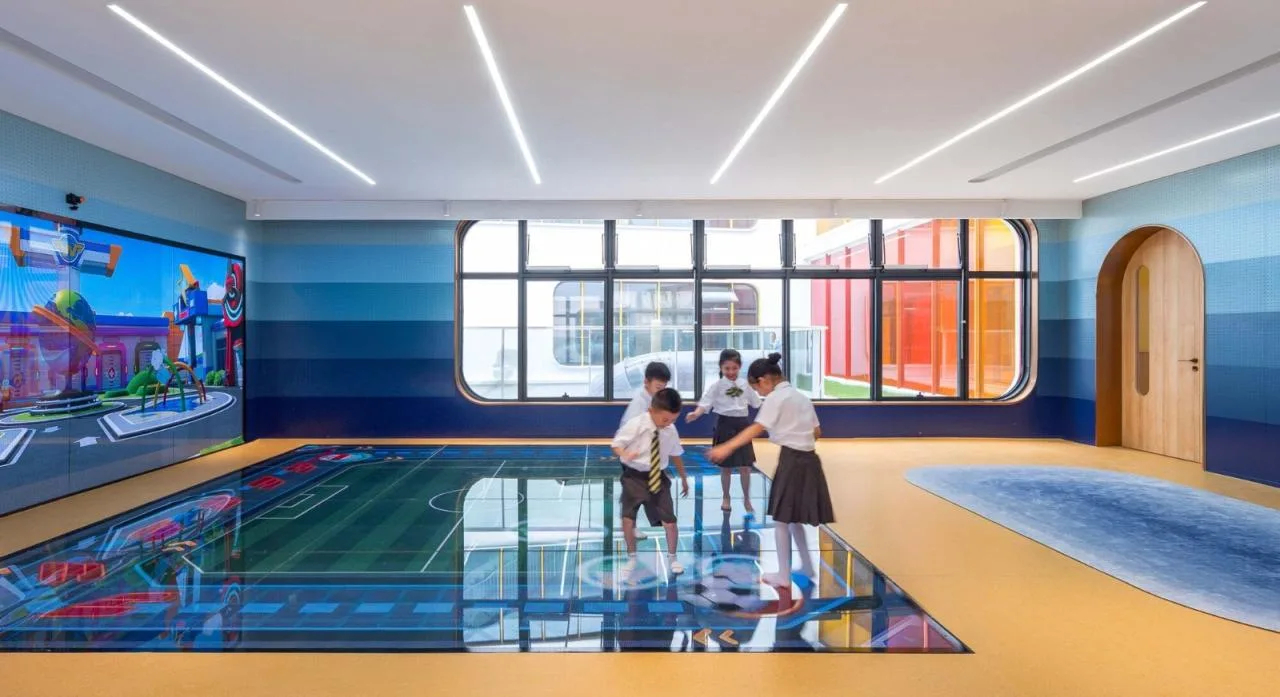
As an international kindergarten pioneering a diversified curriculum, “Exploring the Future” is the core theme of the teaching spaces. Various learning modes, including dual-screen interactive lessons, scenario-based animation classrooms, and artistic training, provide children with a broad range of knowledge and experiences.
Each basic classroom includes activity areas, nap zones, drinking water stations, cloakrooms, and bathrooms. The flexible furniture in activity areas supports adaptability to different learning scenarios, encouraging hands-on skills and self-care development.
From architecture to interiors, almost all materials are premium, environmentally friendly, fire-resistant, and safe. These choices contribute to good thermal inertia, creating warm, welcoming indoor spaces.
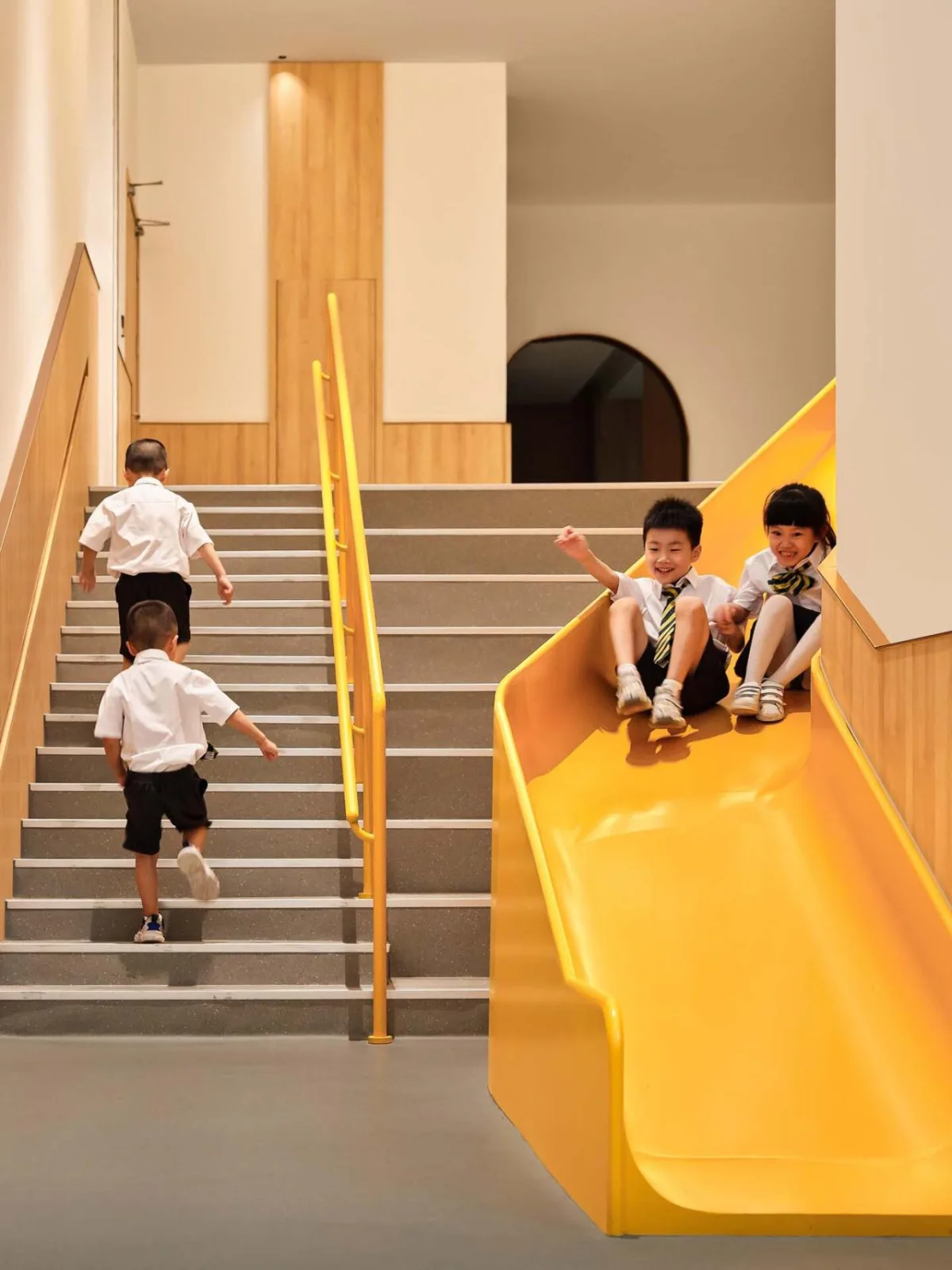
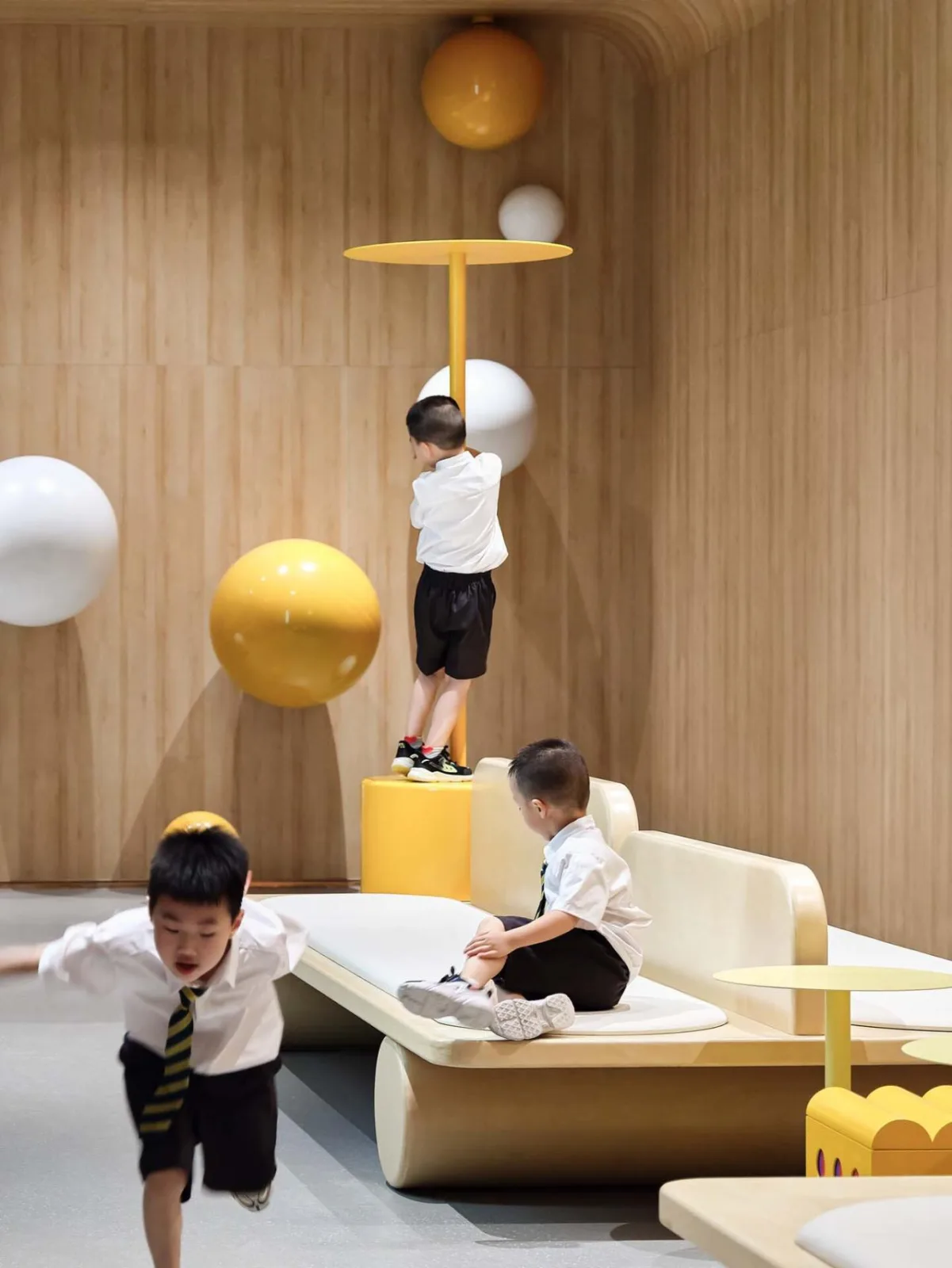
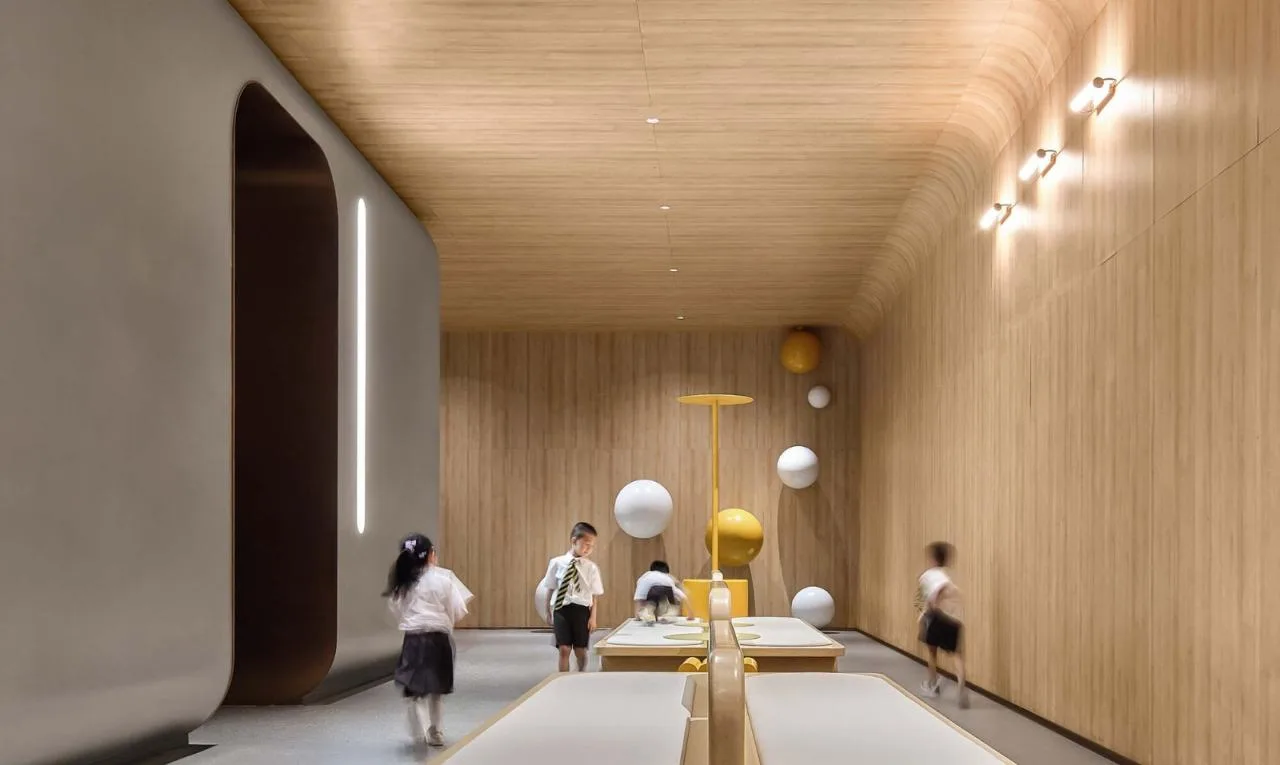
Conclusion: The Wizard of Oz Kindergarten represents a bold new exploration by One City within high-density urban environments, setting a model for educational architecture in urban renewal projects. The design team invested two years visiting numerous construction sites and factories to ensure the design’s flawless execution. This project marks another significant milestone for One City in educational architecture.
Project Drawings
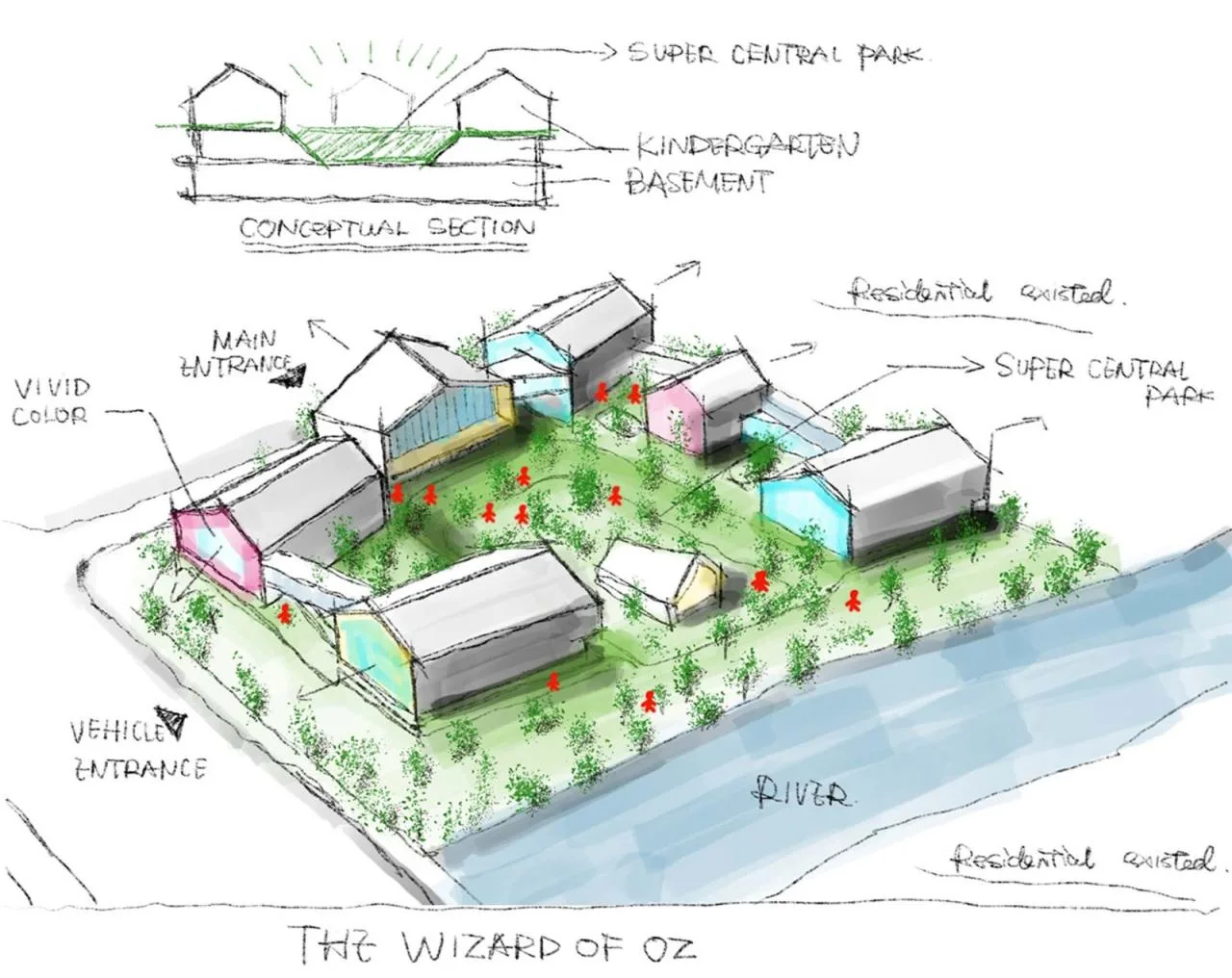
△ Hand-drawn sketch
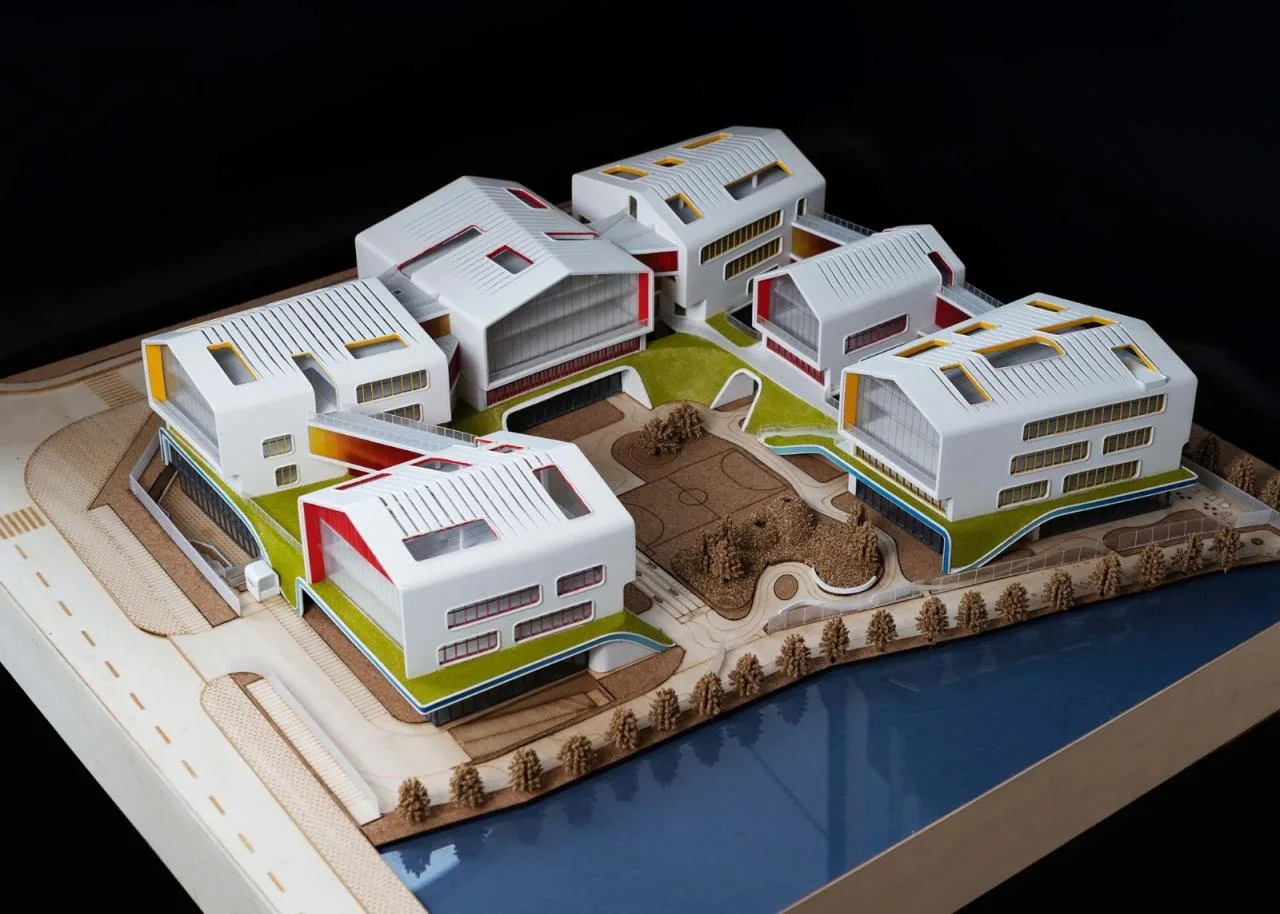
△ Model diagram
Project Information
Architect: Zero One City Architecture Firm
Area: 16,512 m²
Project Year: 2022
Photographers: Wu Qingshan, Shanghai Benxi Vision
Design Team: Ruan Hao, Chen Wenbin; Nie Yueyue, Zhang Jingjing, Mao Yiren, Kong Shifeng, Yan Yuechen, Gong Zijun, Tang Huiping, Ma Guangyu
Interior Design: Zhang Lei, Zhang Xiaomin, Wei Jiani, Yu Jiaqi
Soft Decoration Design: Zhang Qiuyan, Zhao Yifan, Ke Anran
Landscape Design: Hangzhou Yidun Planning Architecture Landscape Design Co., Ltd.
Collaborating Design Institute: Tongchuang Engineering Design Co., Ltd.
Curtain Wall Design: Zhejiang LiLi Construction Co., Ltd.
Lighting Design Consultant: Tianshang Design Group Co., Ltd.
Construction (Civil Engineering): Zhejiang Zhongqin Construction Co., Ltd.
Curtain Wall Construction Contractor: Hangzhou Hangda Decoration Engineering Co., Ltd.
Integrated Board Construction: Hangzhou Chunhe Building Decoration Engineering Co., Ltd.
Interior Construction: Zhejiang Zhengdao Yixin Decoration Co., Ltd.
Principal: Zhejiang Jinchang Real Estate Group Co., Ltd.
Location: Shaoxing















Must log in before commenting!
Sign Up