
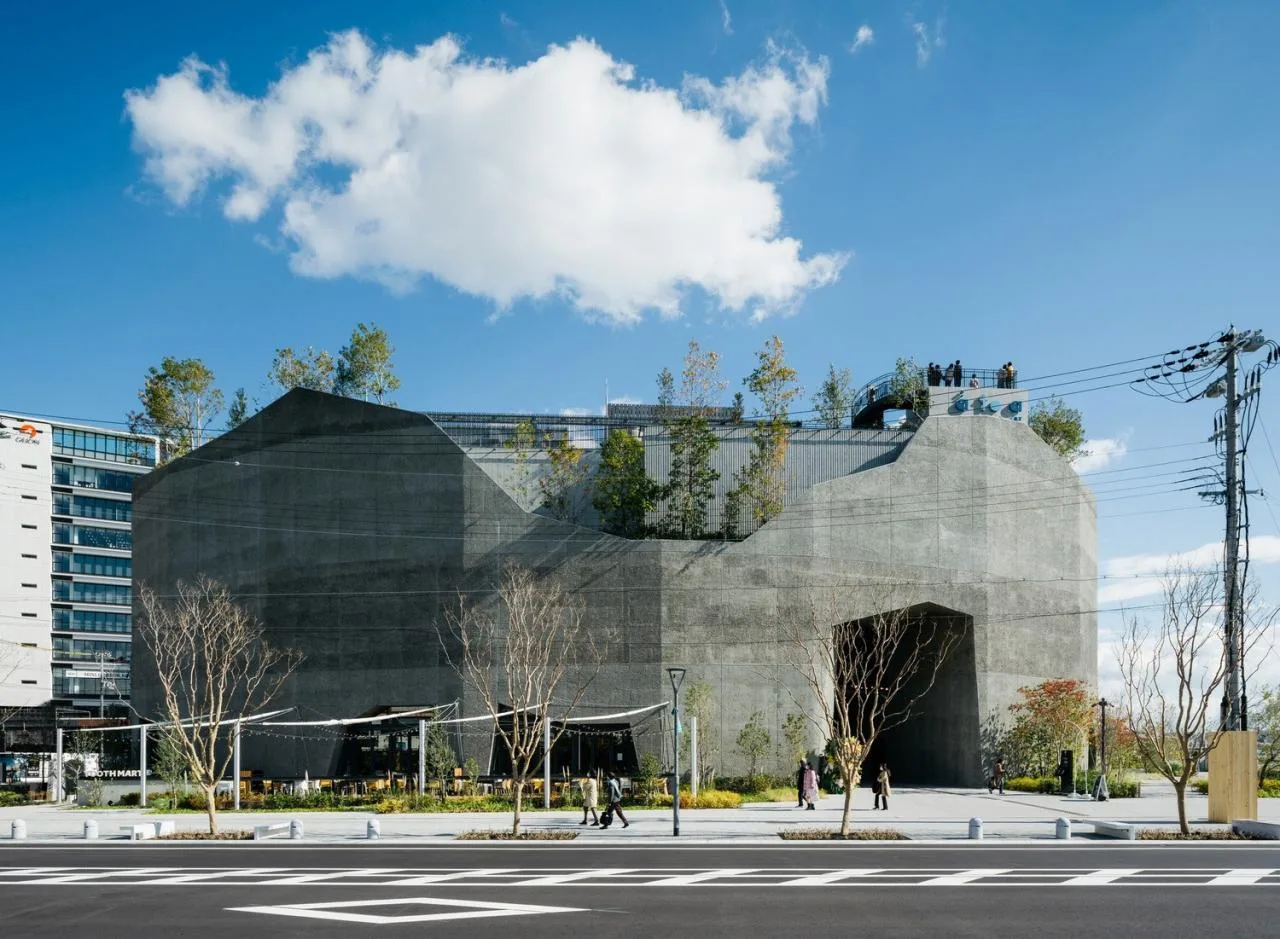
Amphibious Architecture
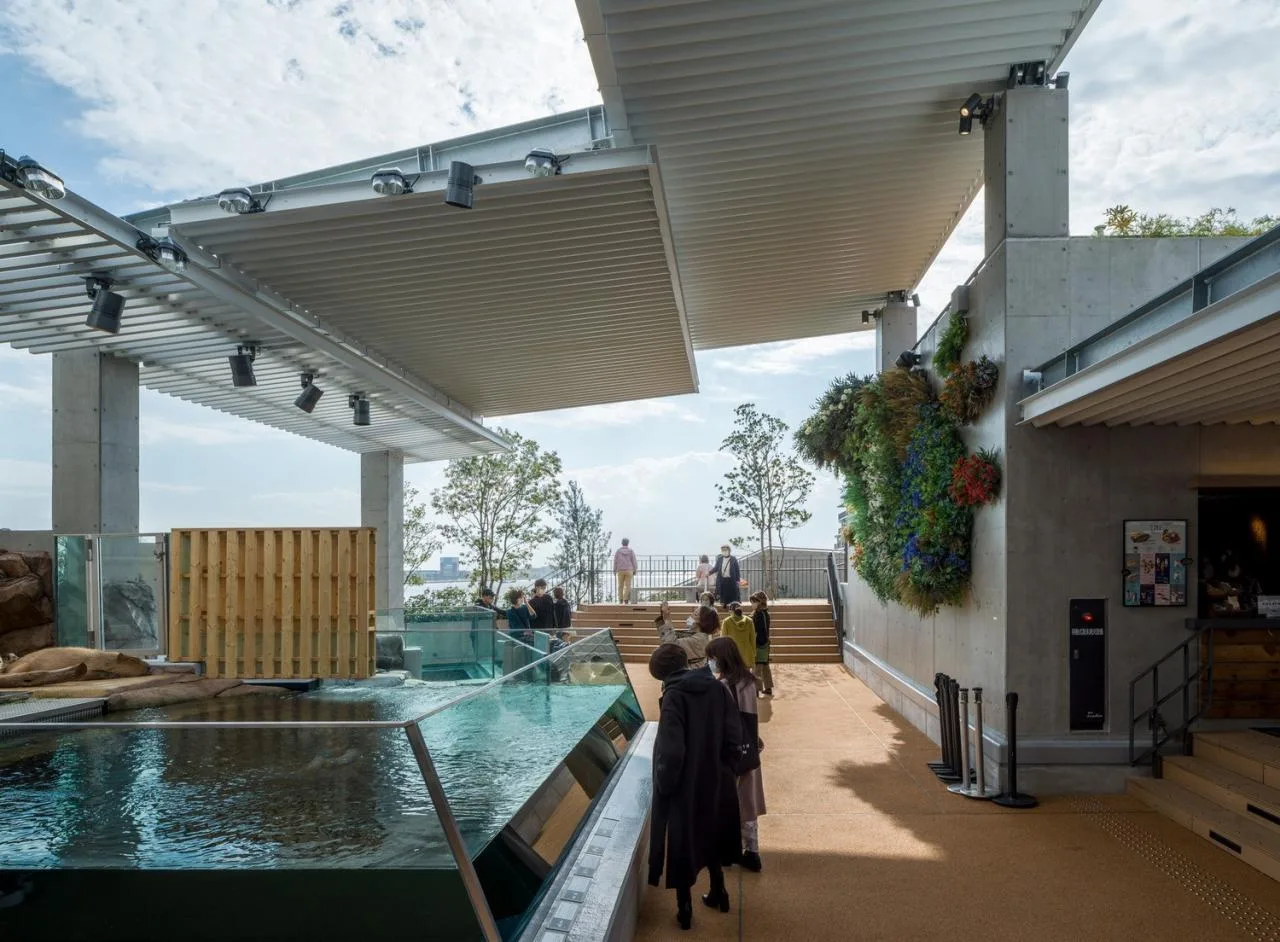
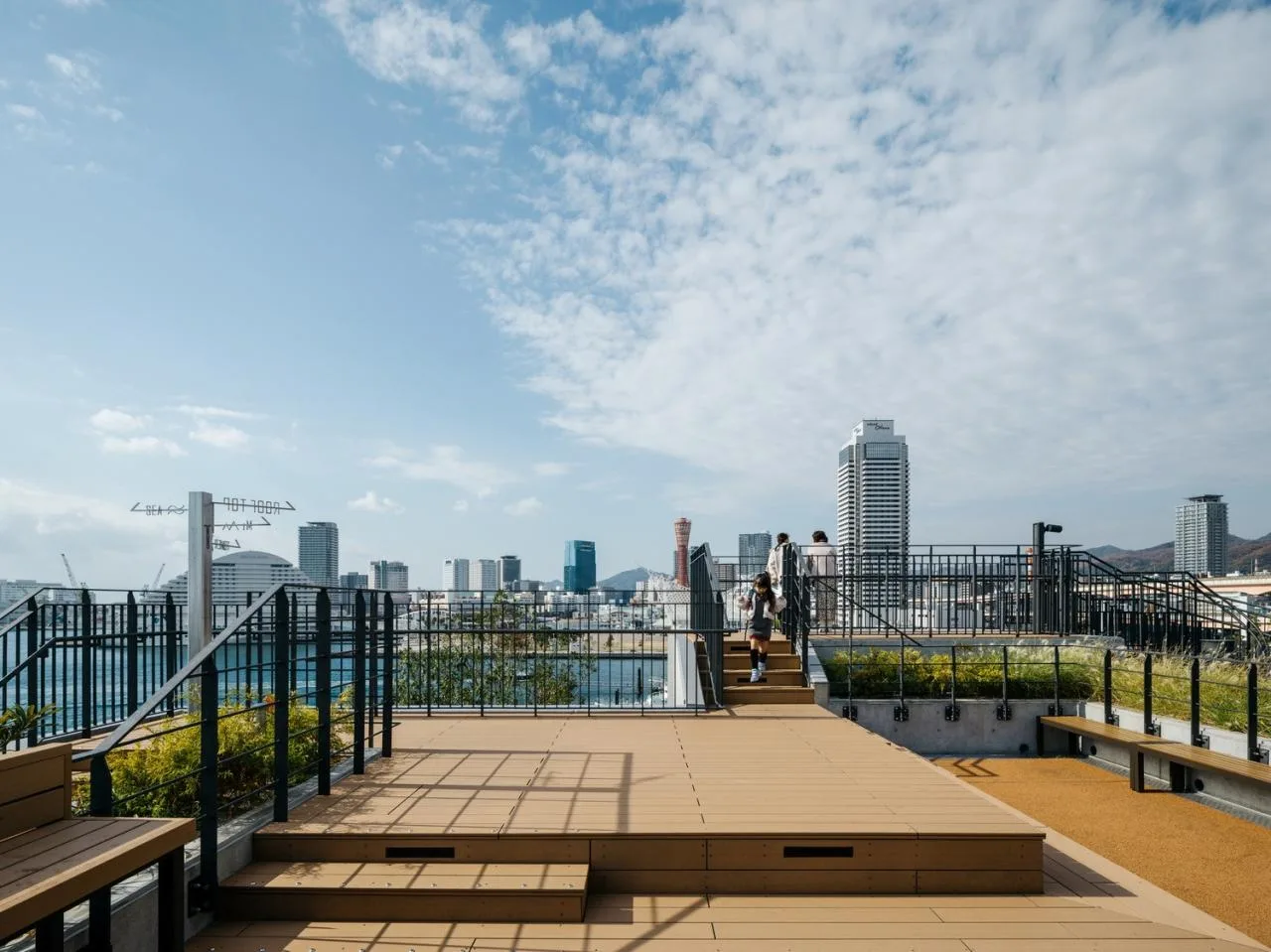
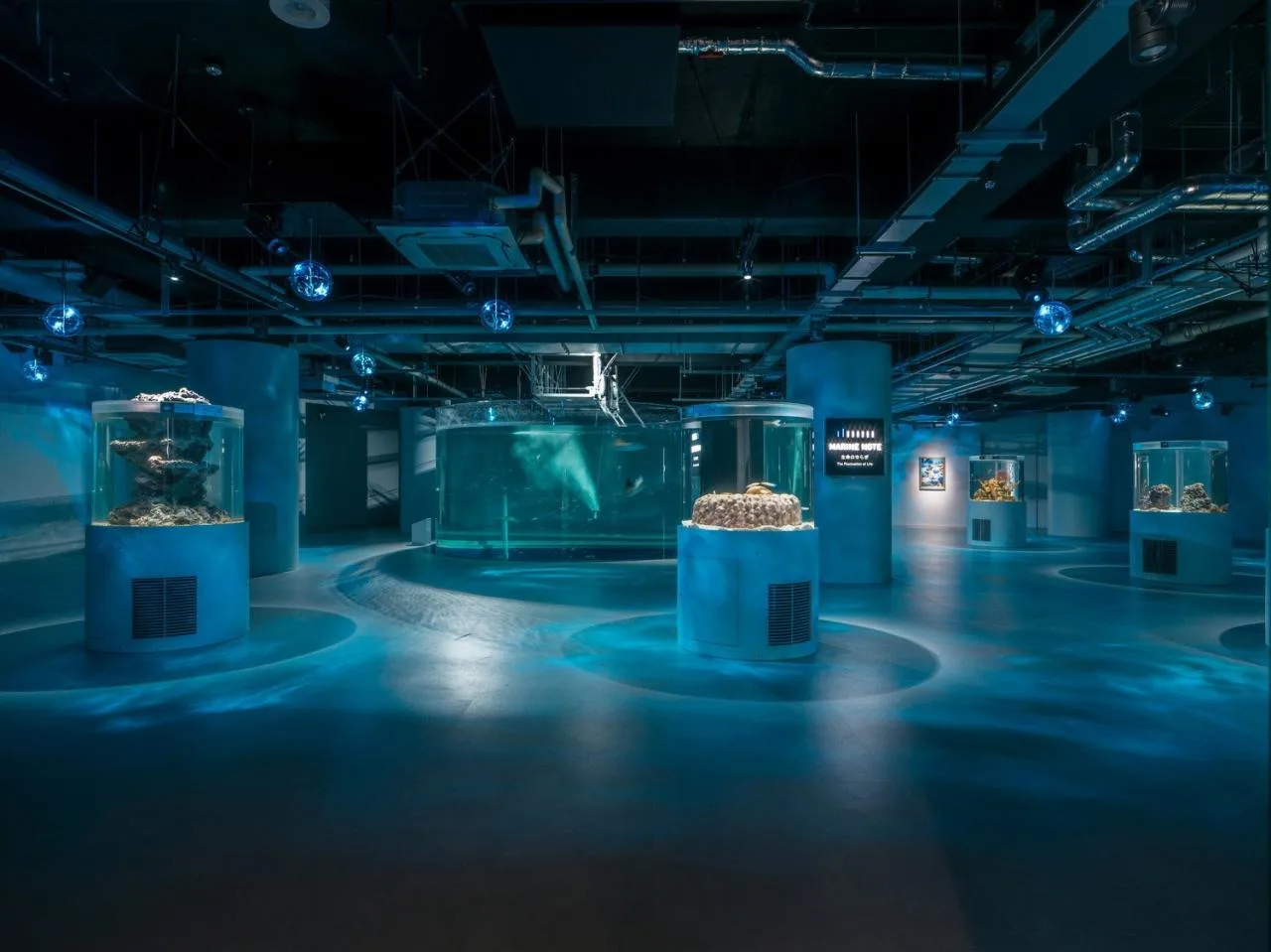
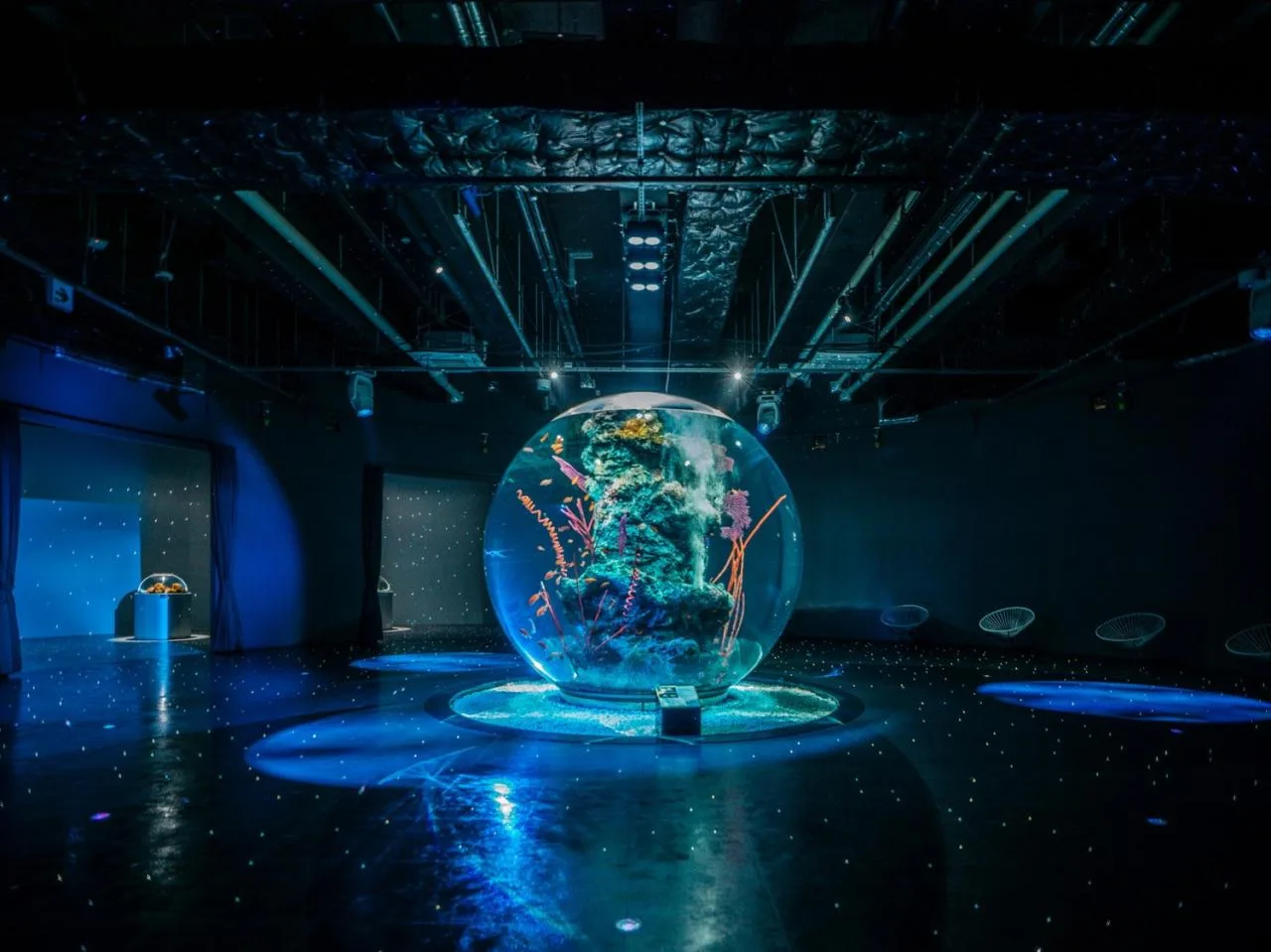
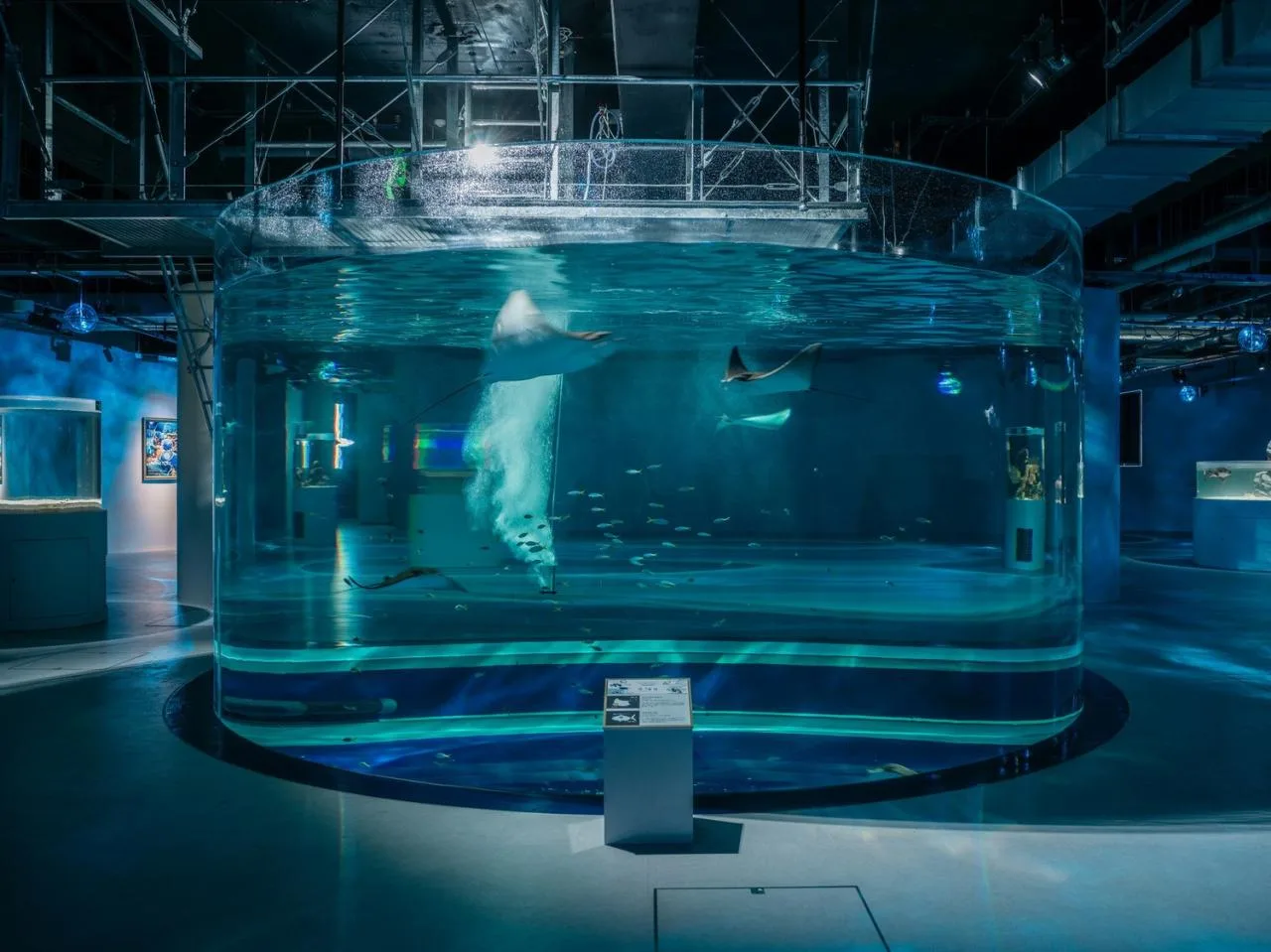
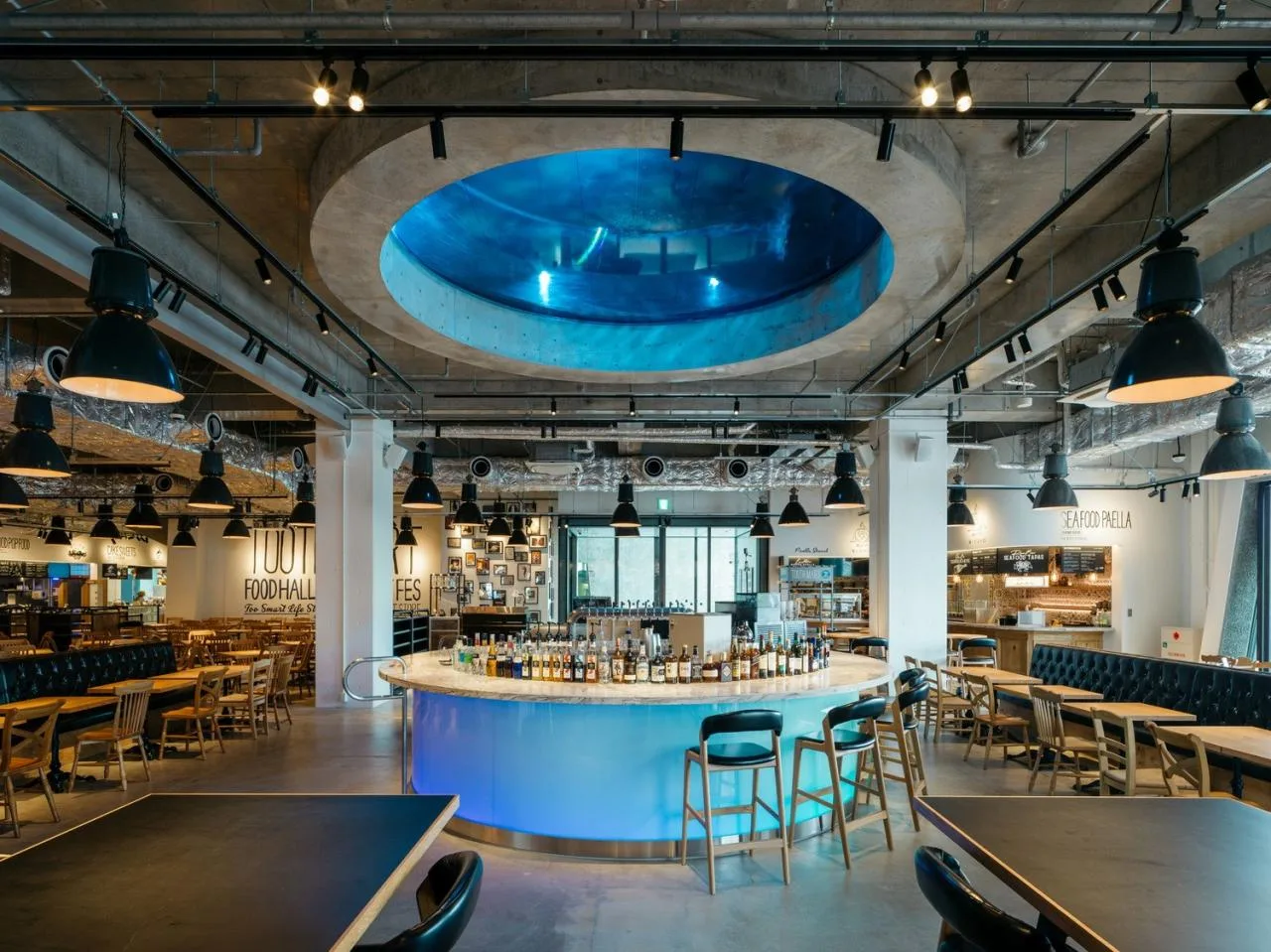
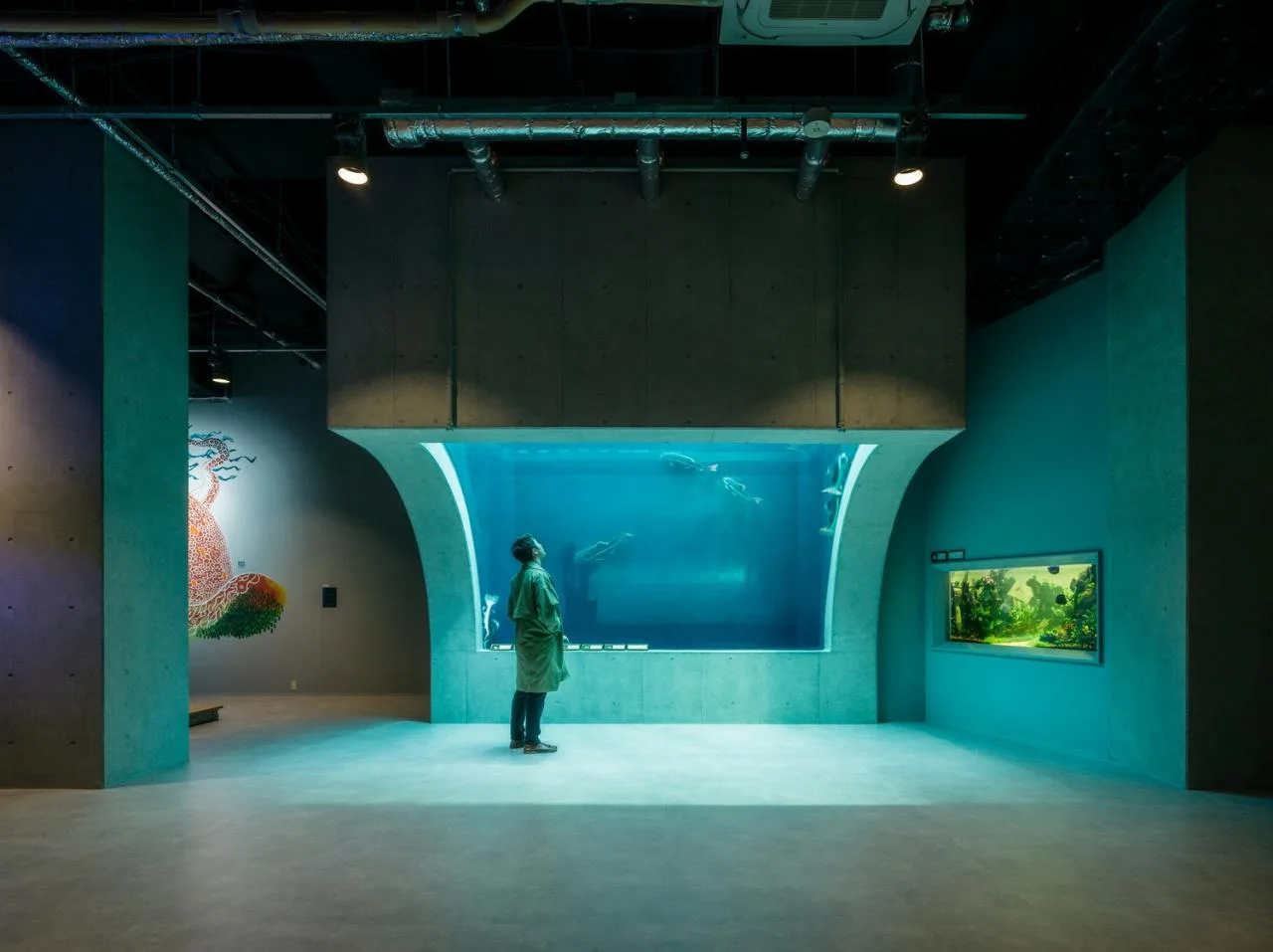
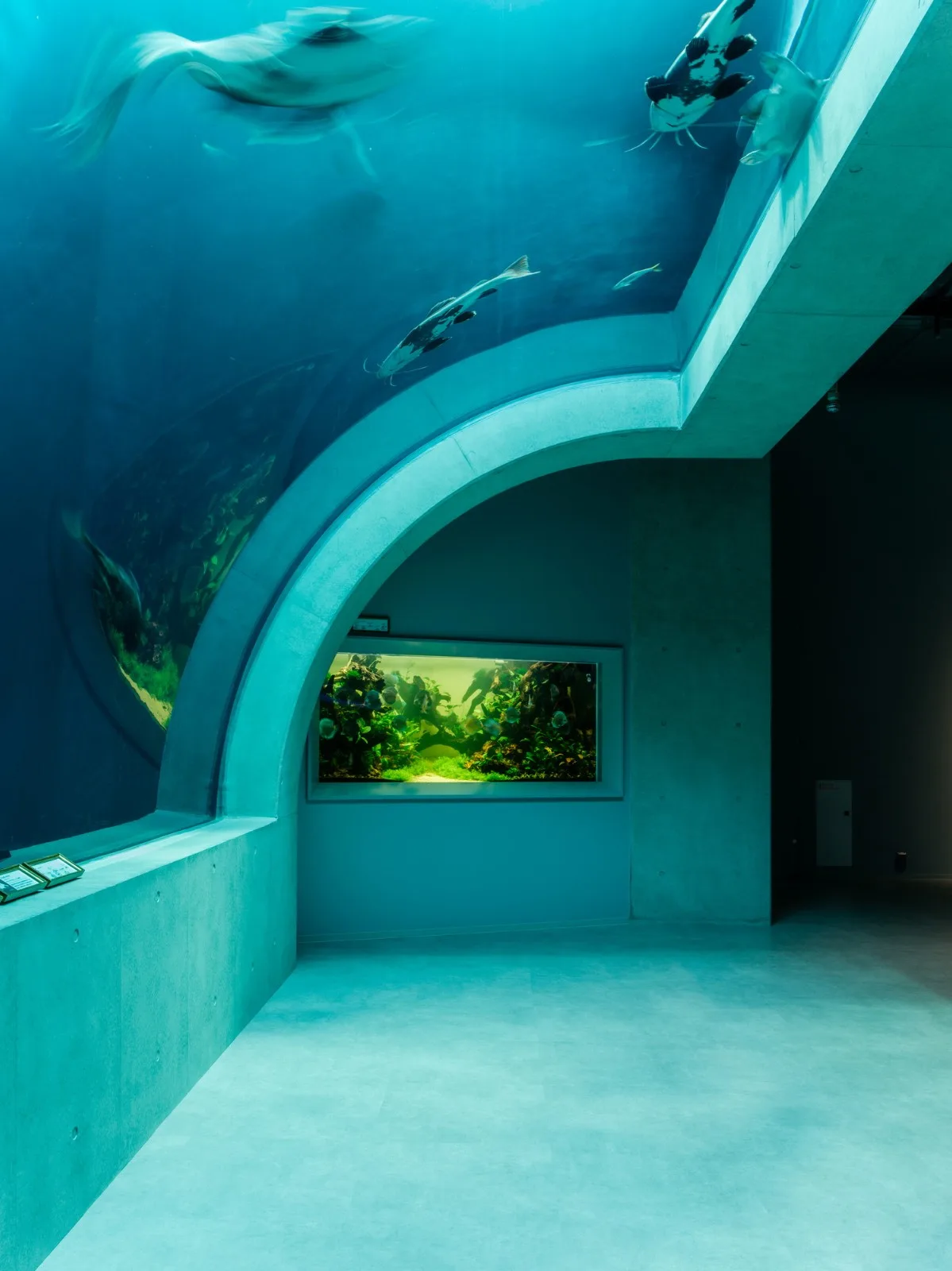
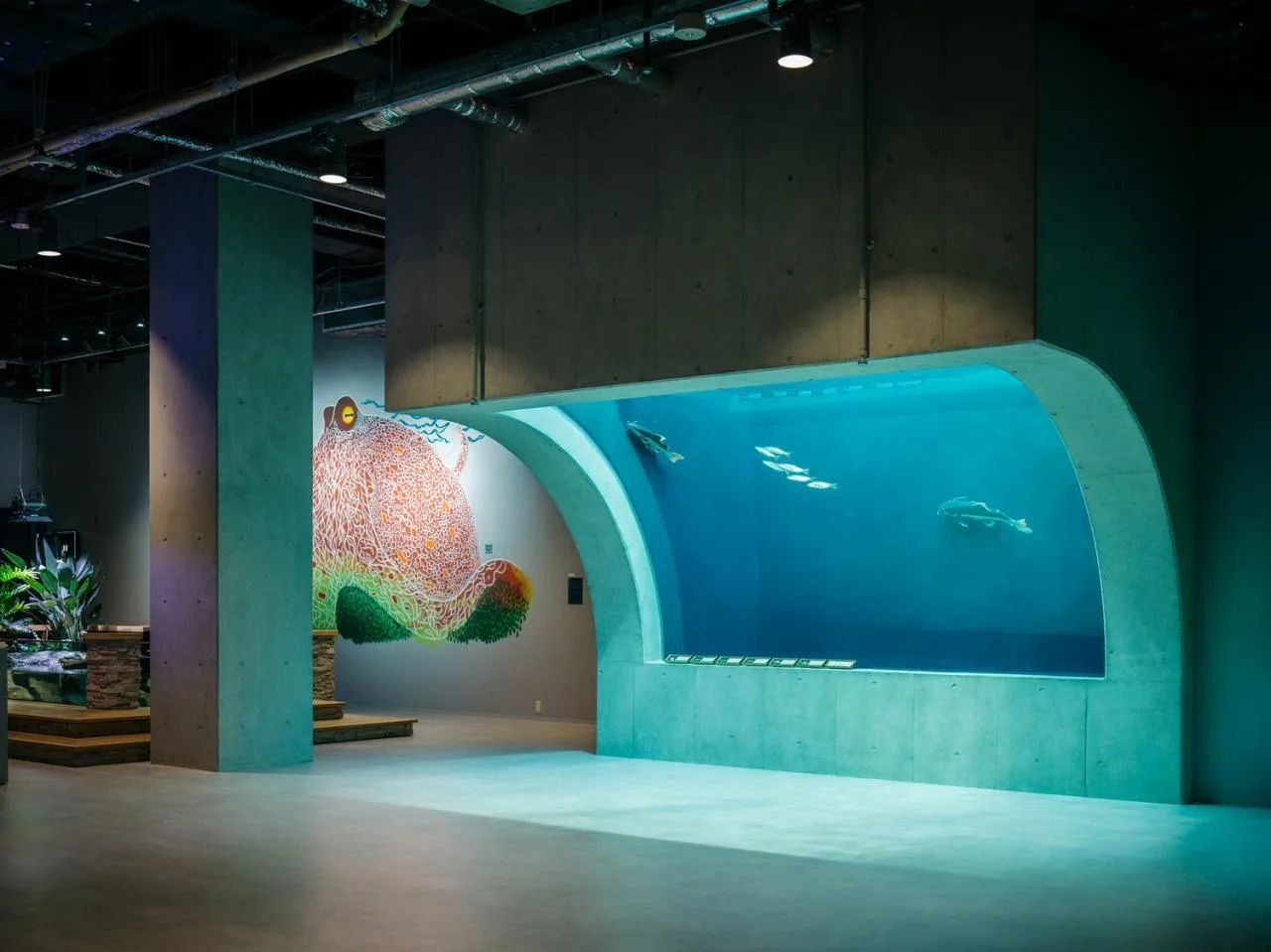
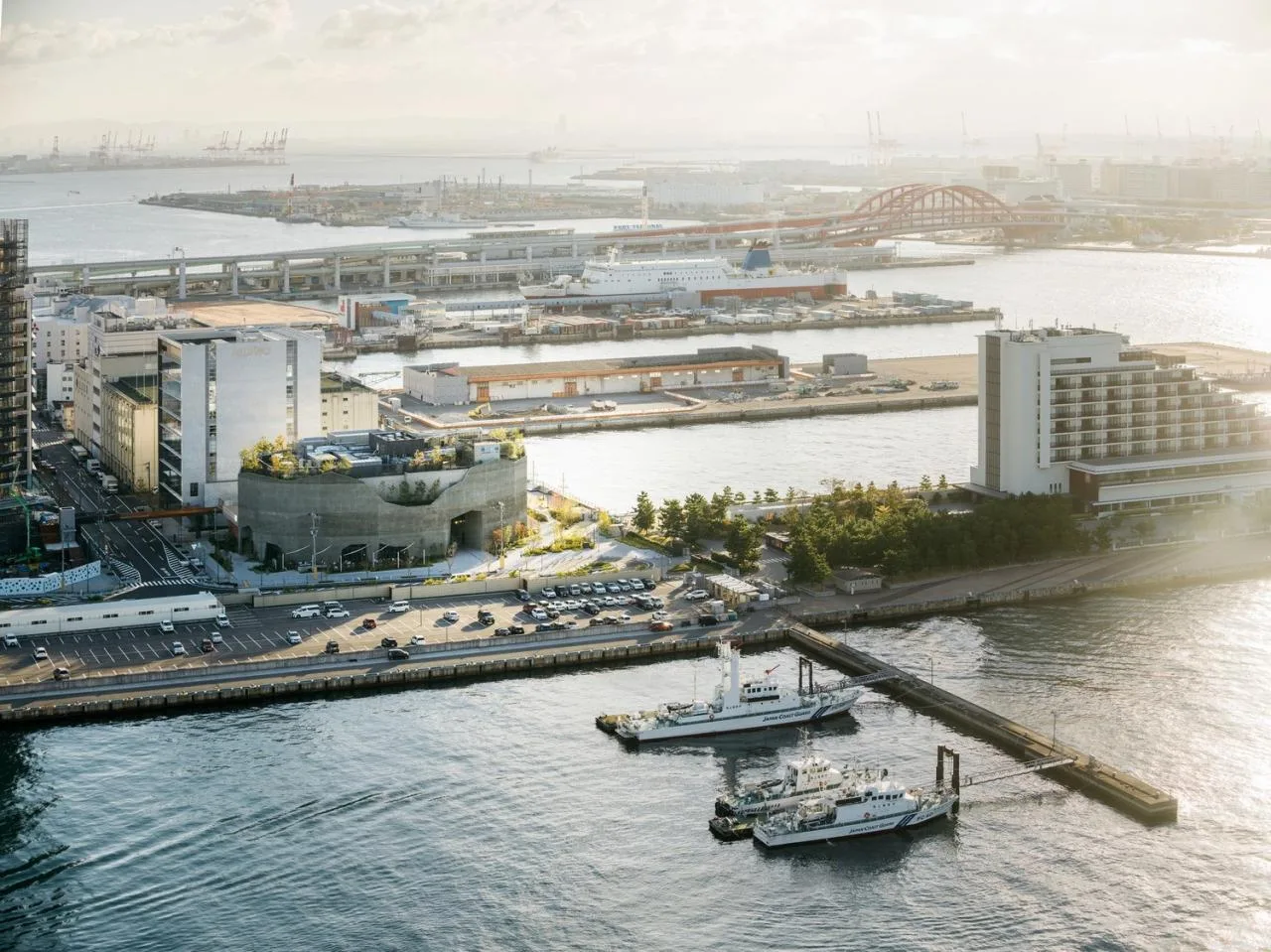
The Kobe Port Museum serves as a versatile cultural hub, featuring an aquarium, a food court, and a rooftop terrace. Nestled uniquely between the Seto Inland Sea and the Rokko Mountain Range, Kobe’s dock area is a carefully planned space preserving the memories of the Hanshin Awaji Great Earthquake. This area aims to educate visitors and commemorate the event.
The museum’s design concept embraces the region’s history, symbolizing resilience through architectural expression. It conveys the idea that despite the frequent shifts of the earth’s crust, the people, events, and history of this land endure alongside the passage of time.
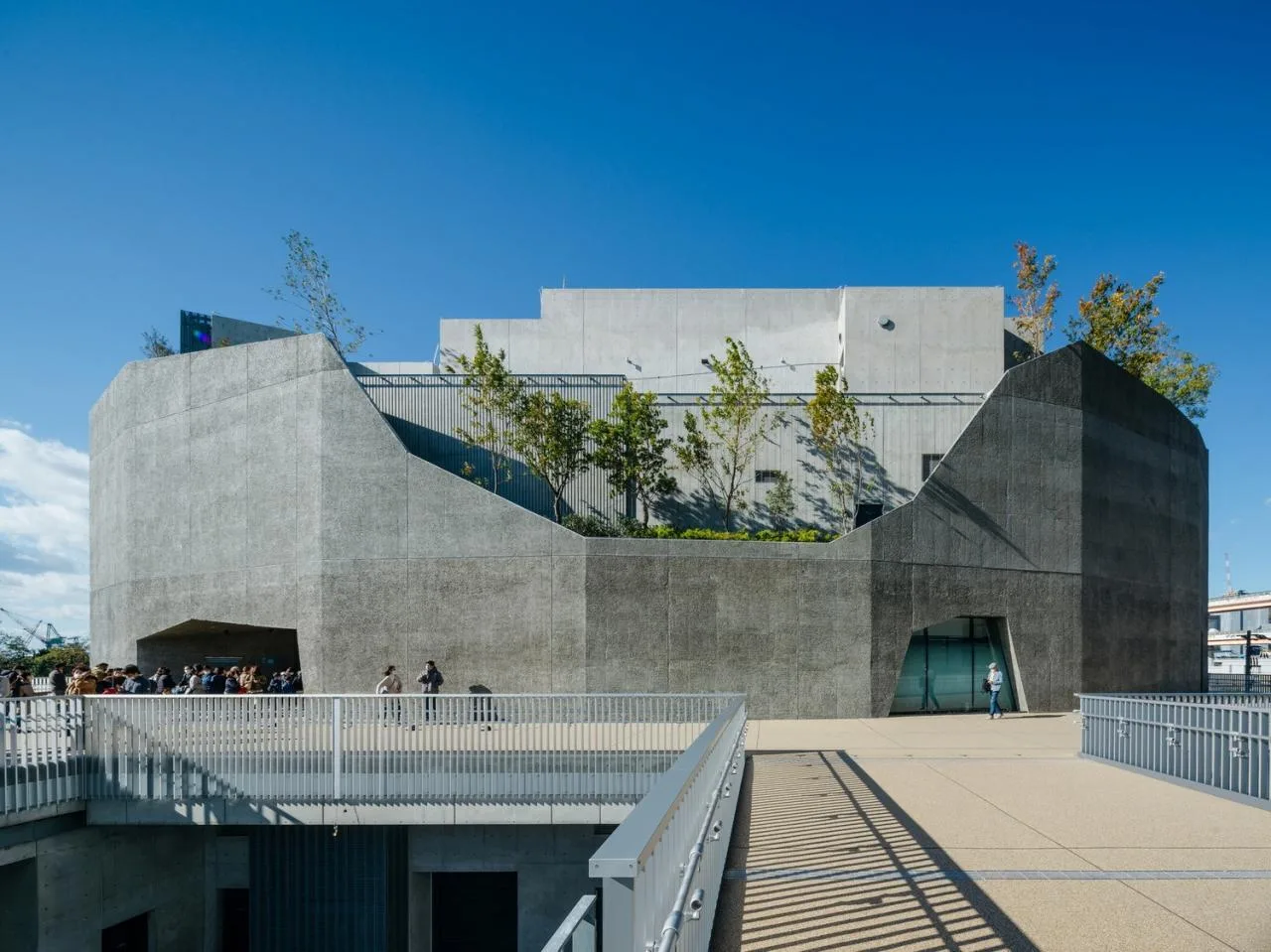
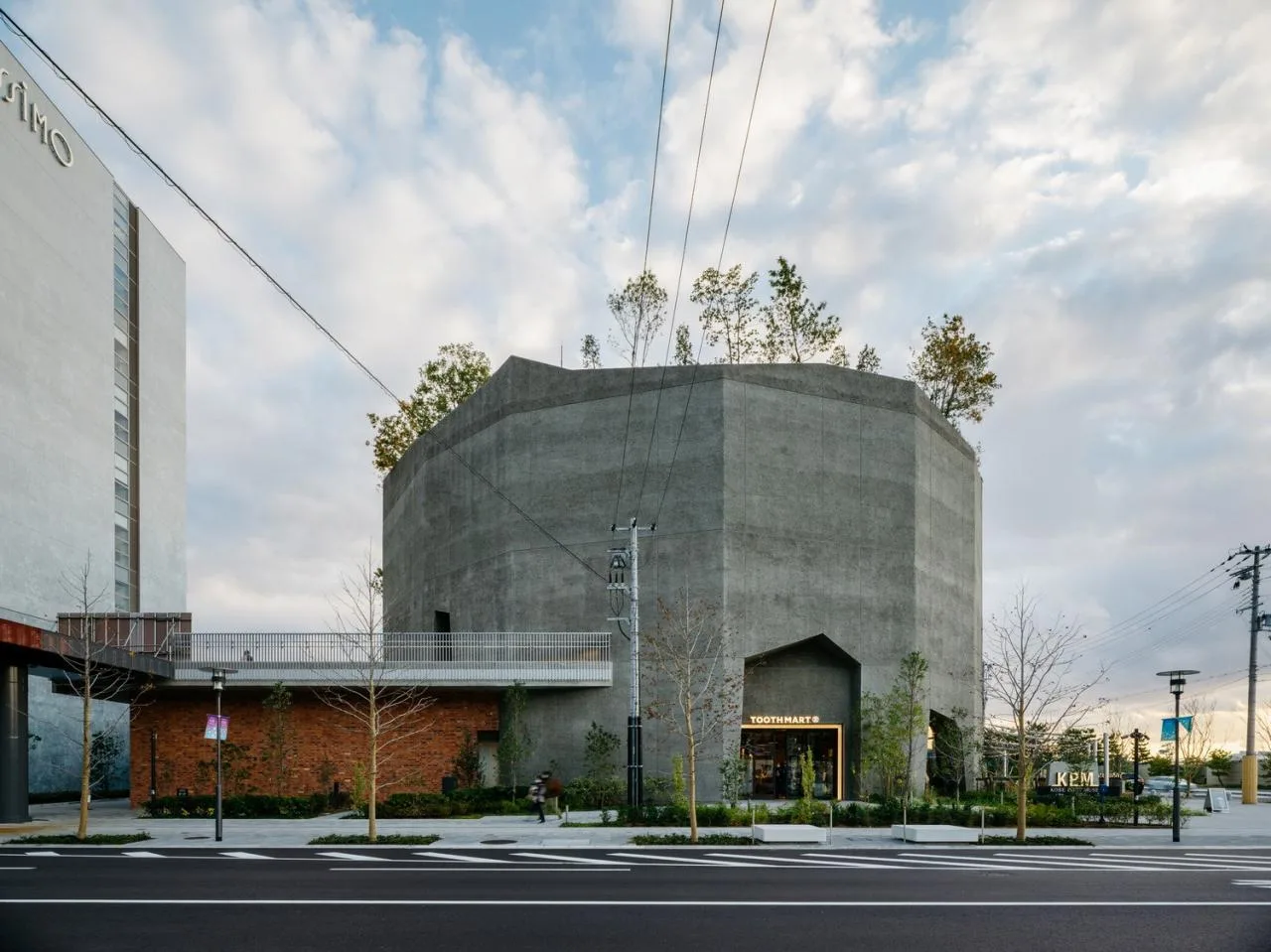
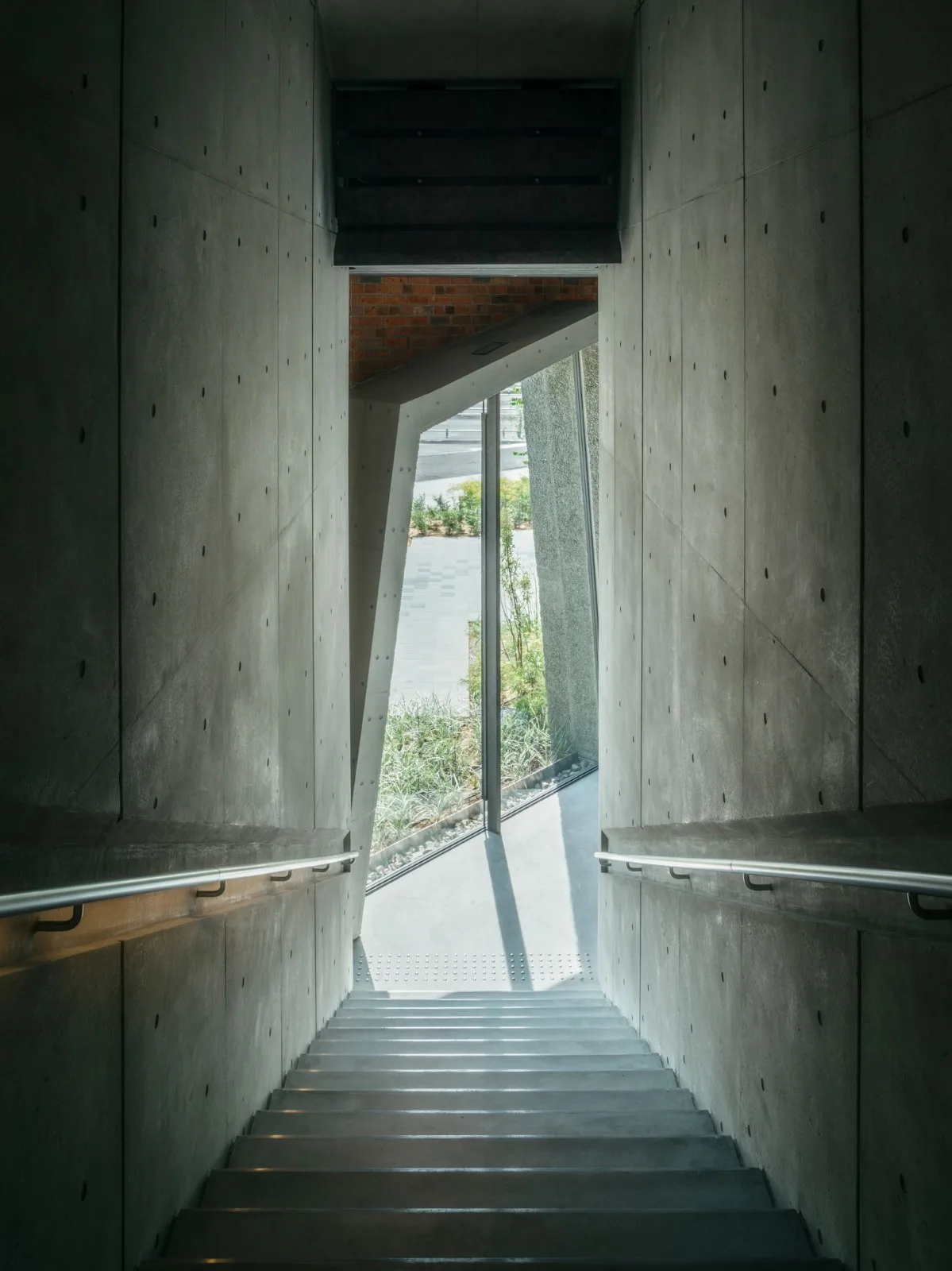
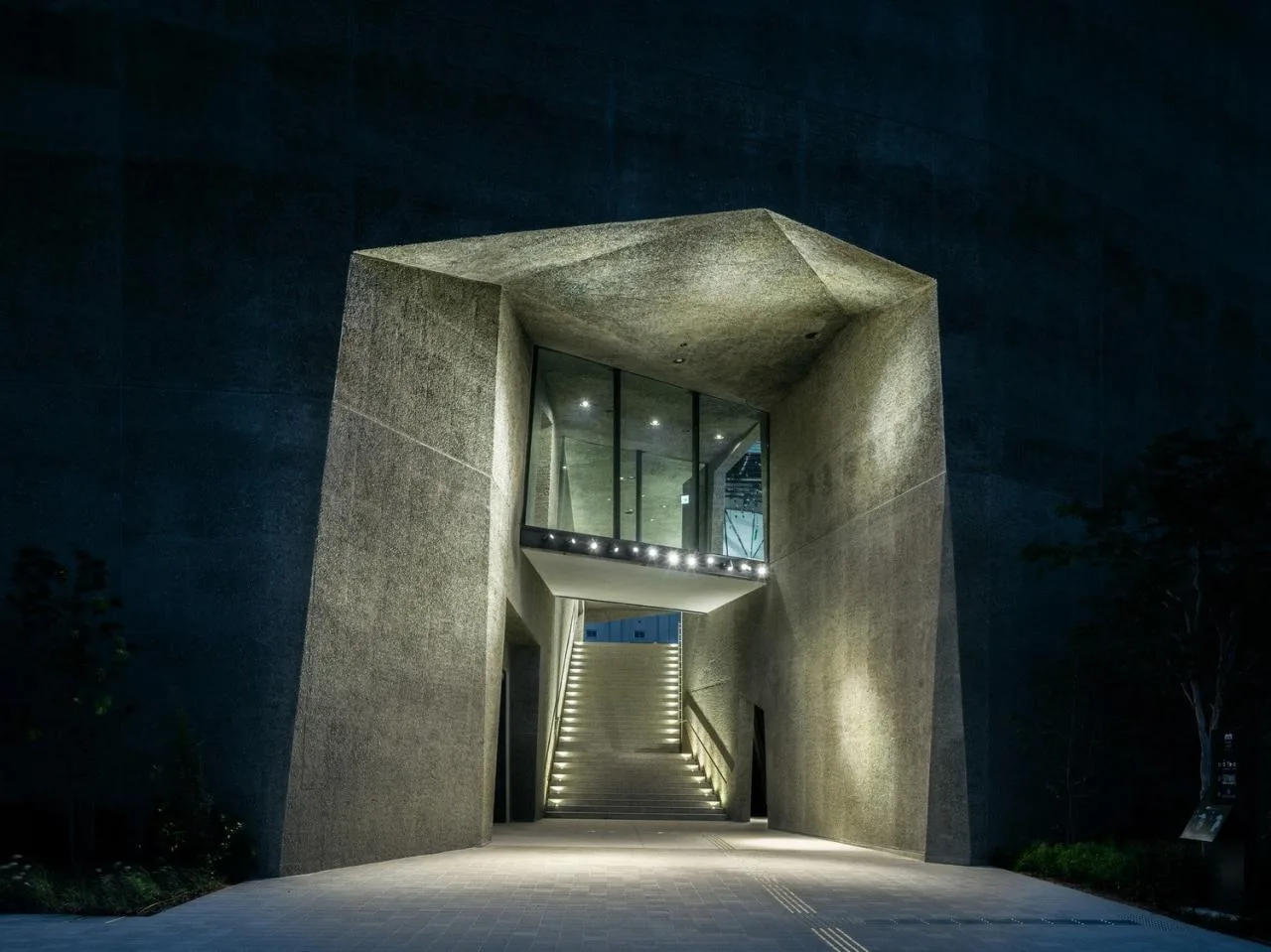
The architecture transforms and extends the ground itself. By reimagining materials and construction techniques native to Kobe, the architects recreated the city’s terrain, crafting a ‘ground extension’ that is deeply rooted in Kobe’s identity. Over time, this structure is designed to return to a more natural state, gradually covered in greenery.
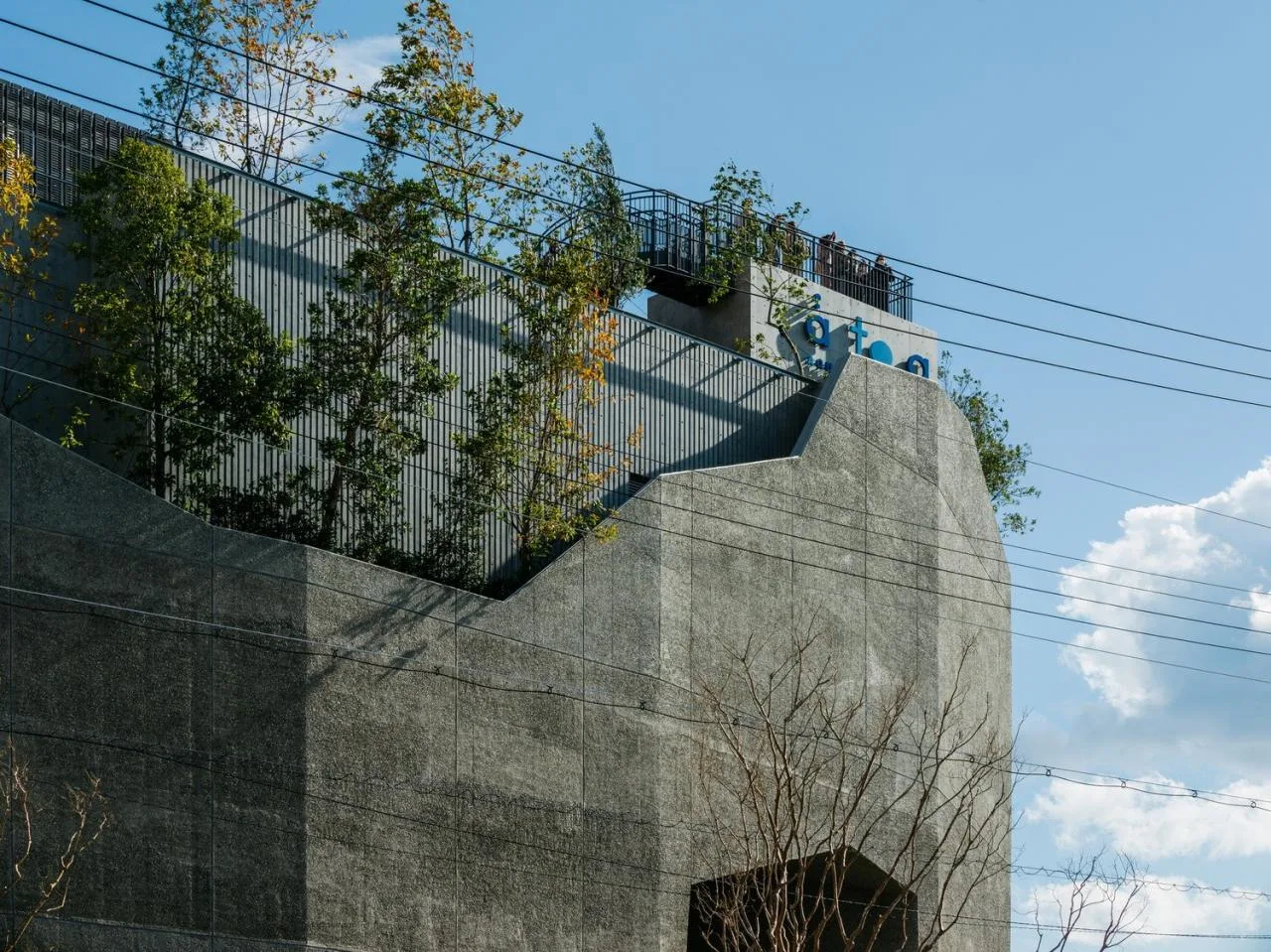
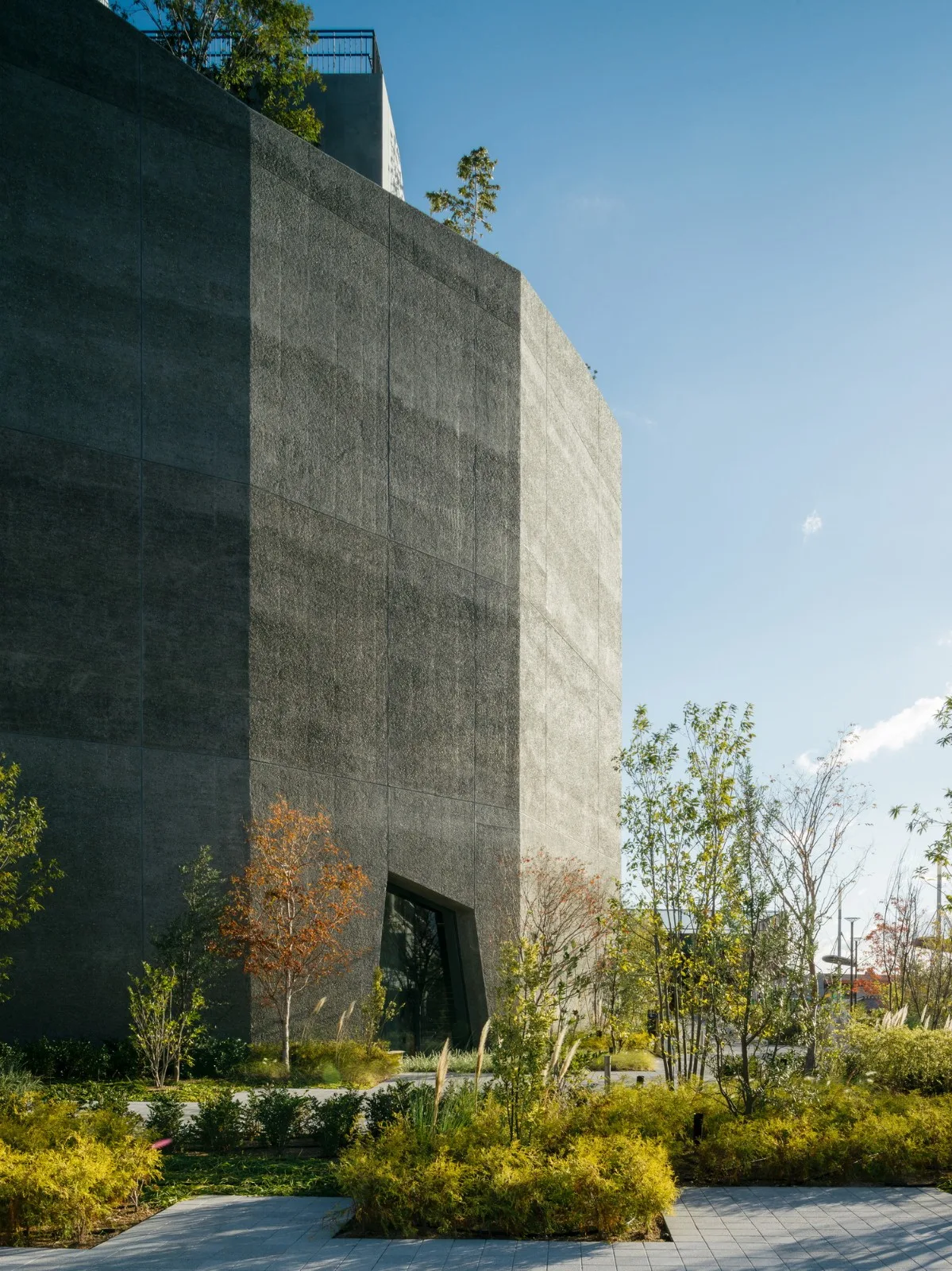
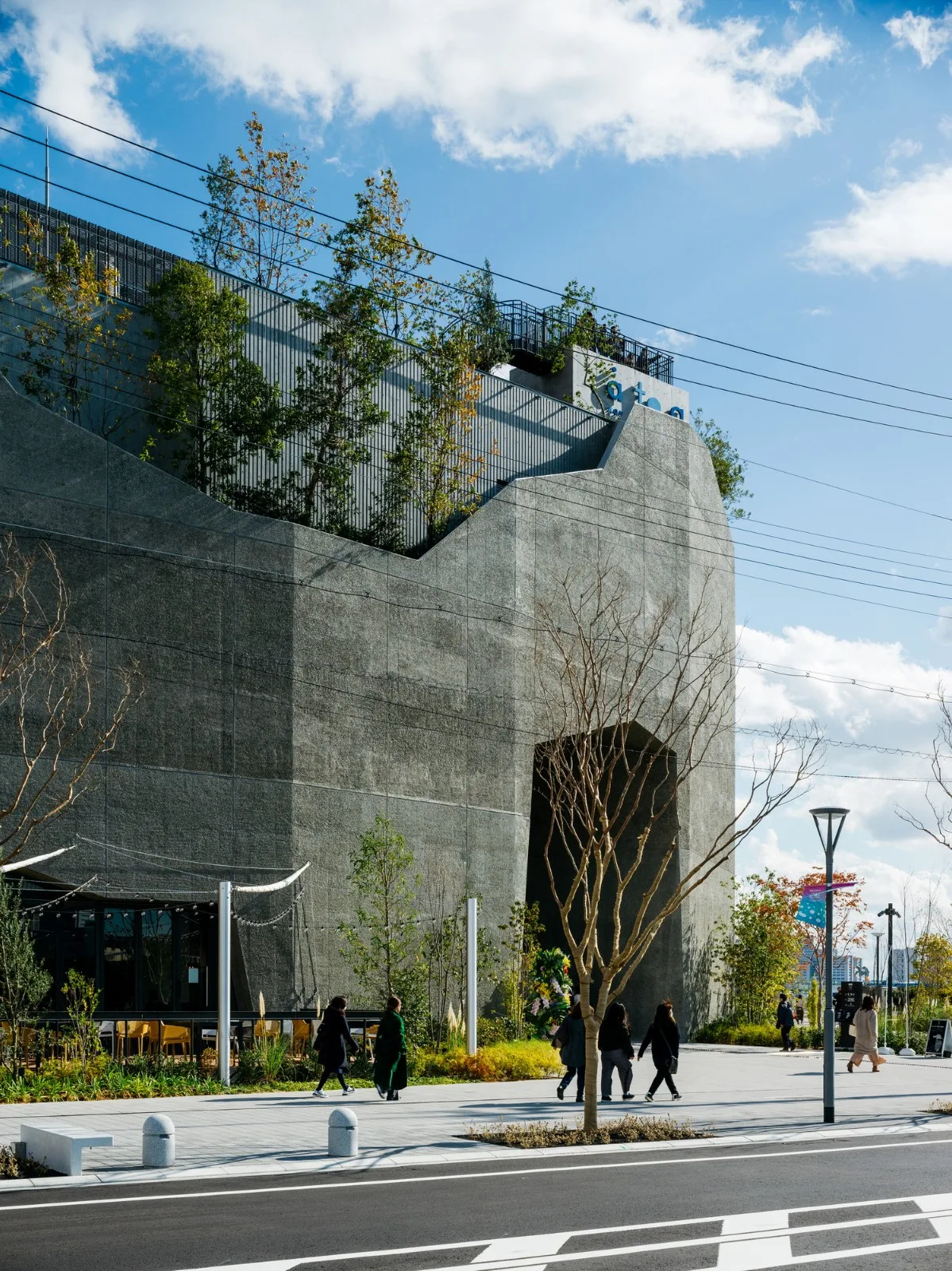
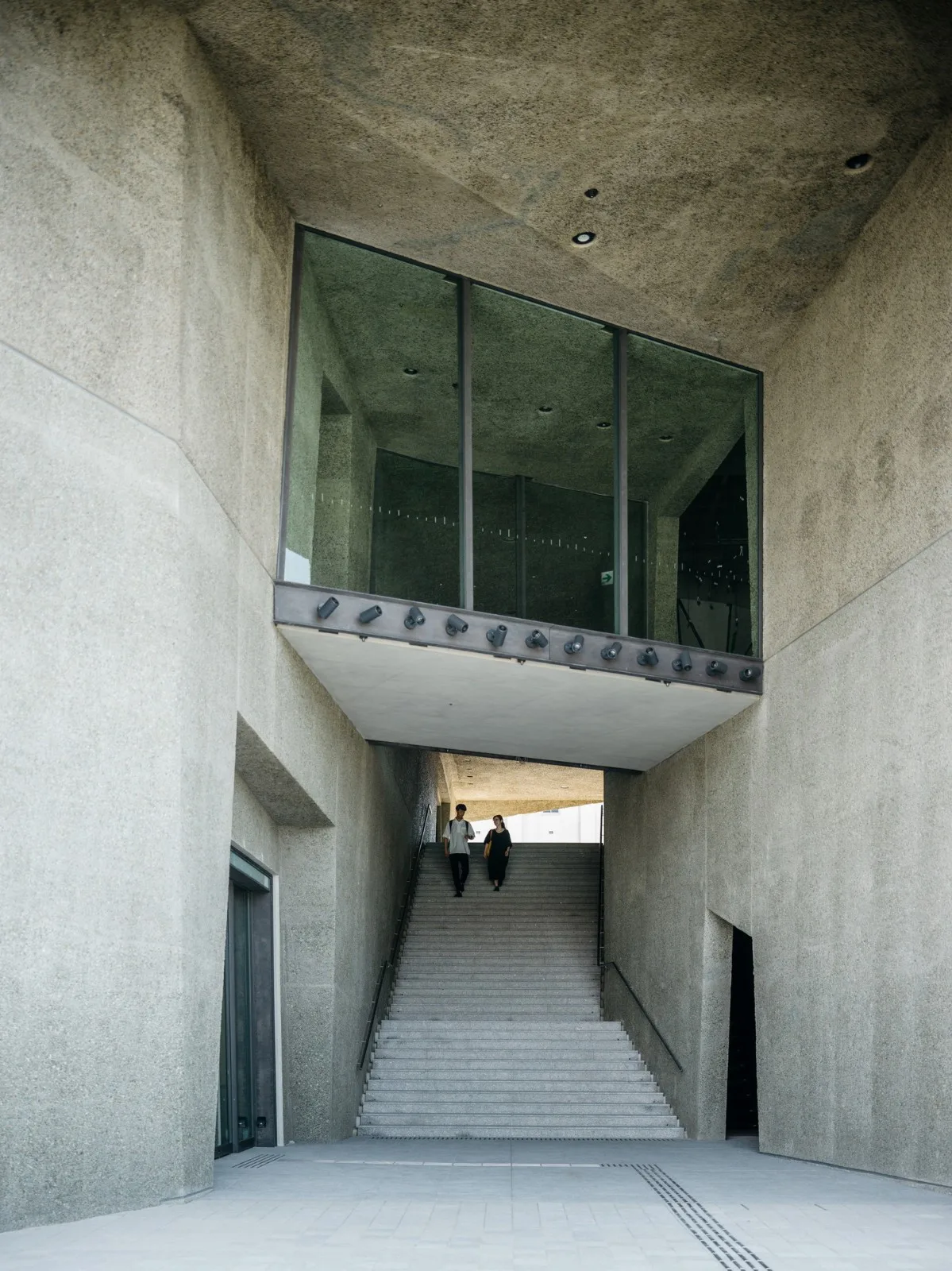
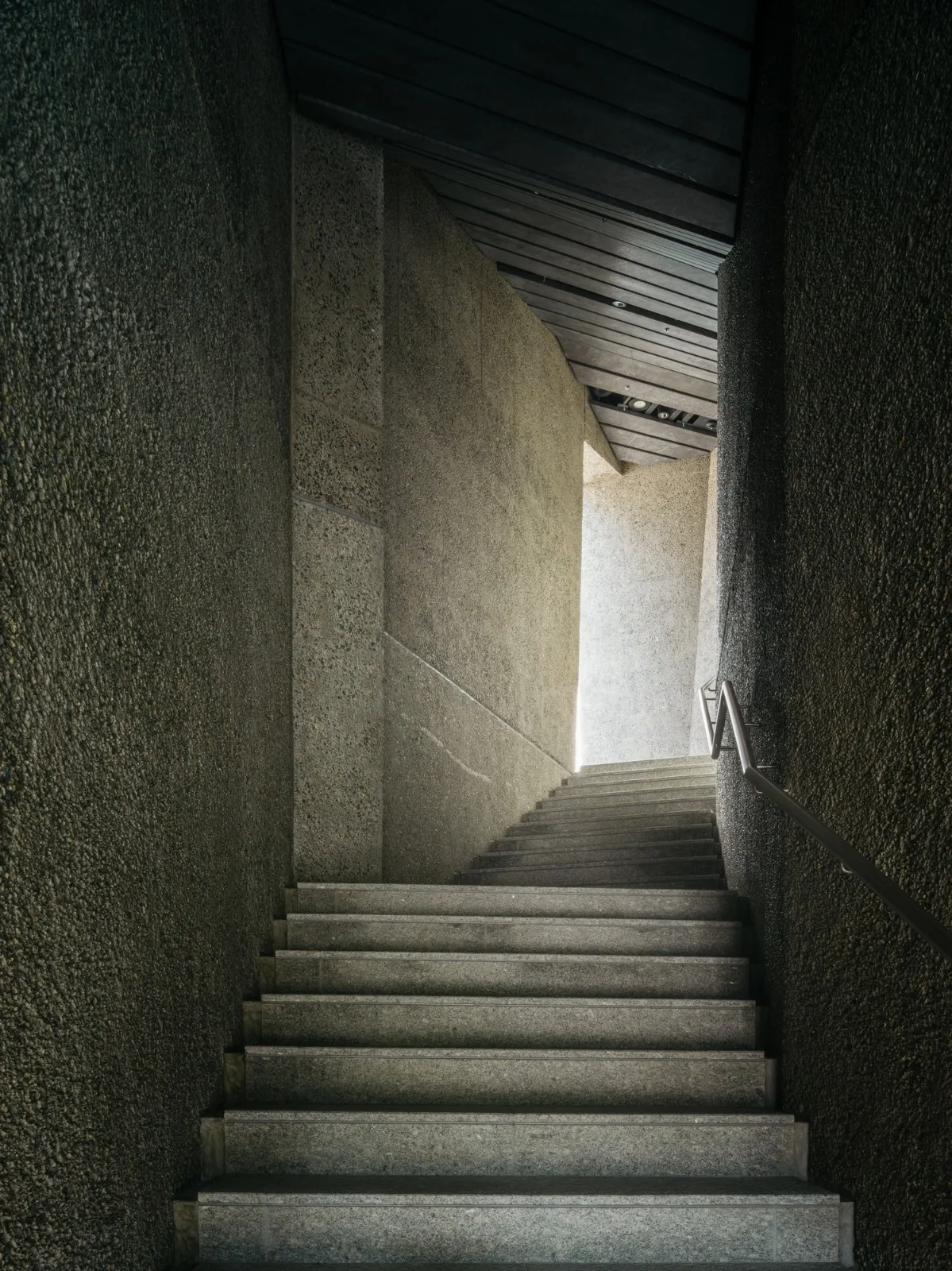
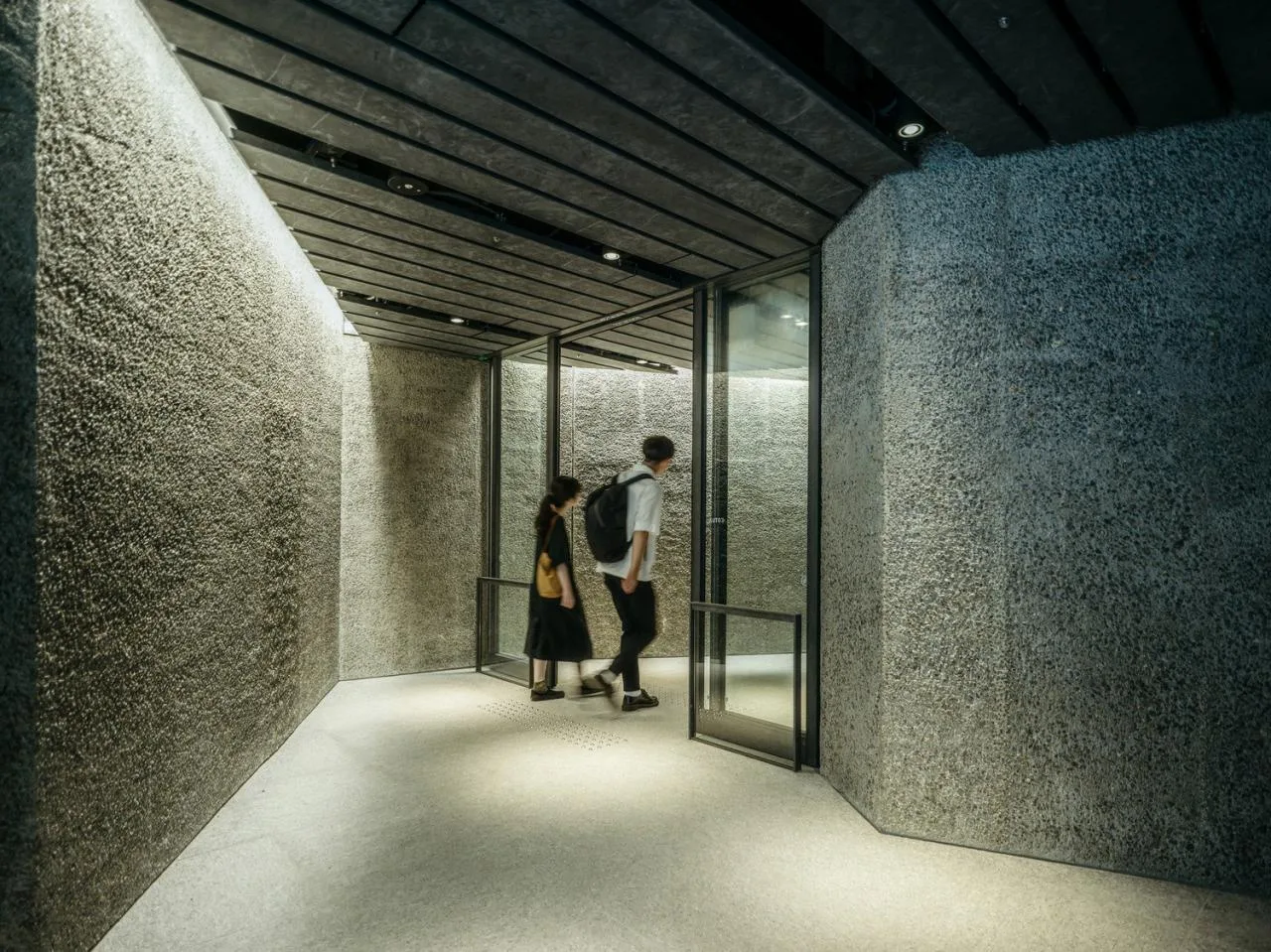
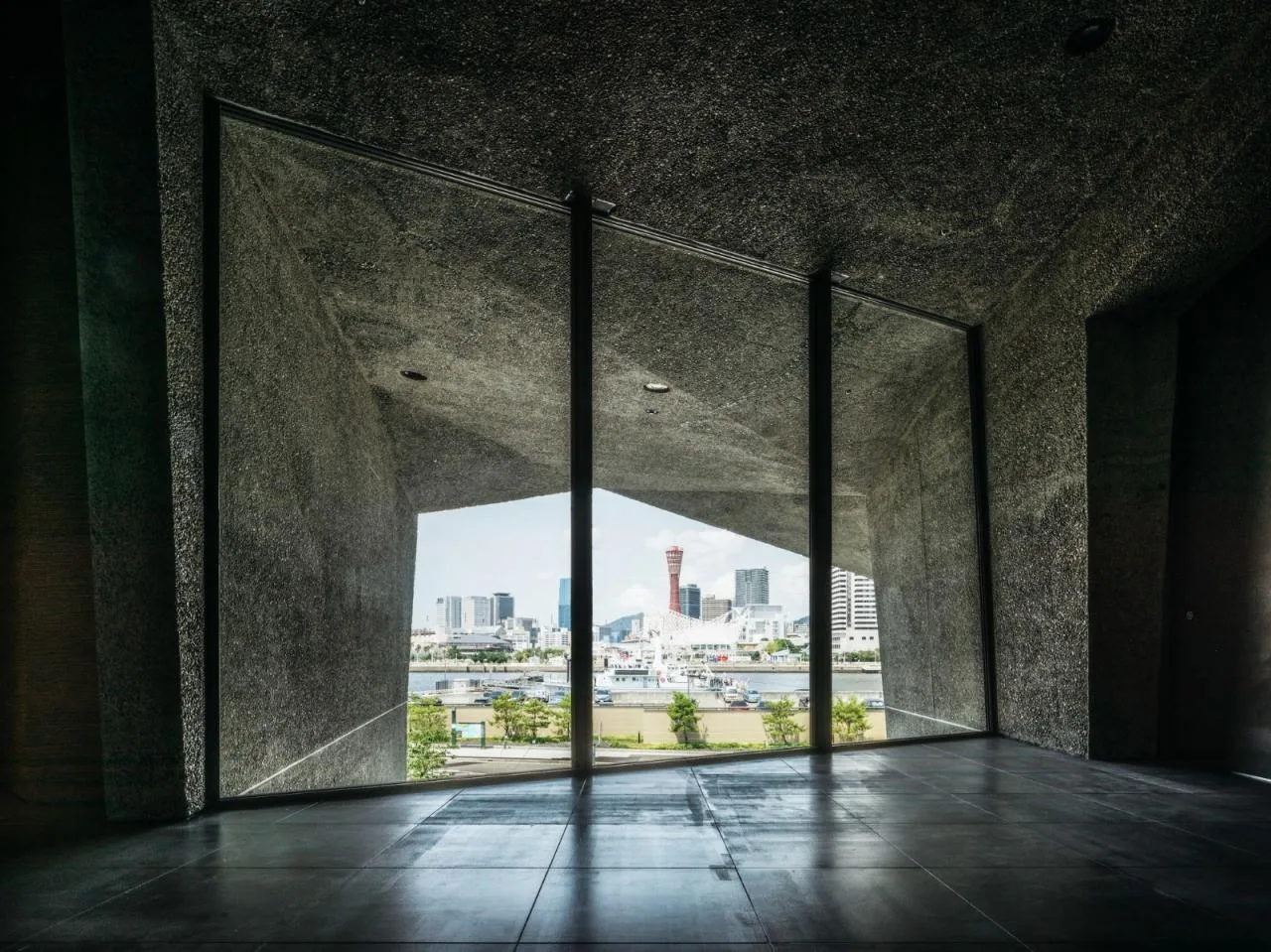
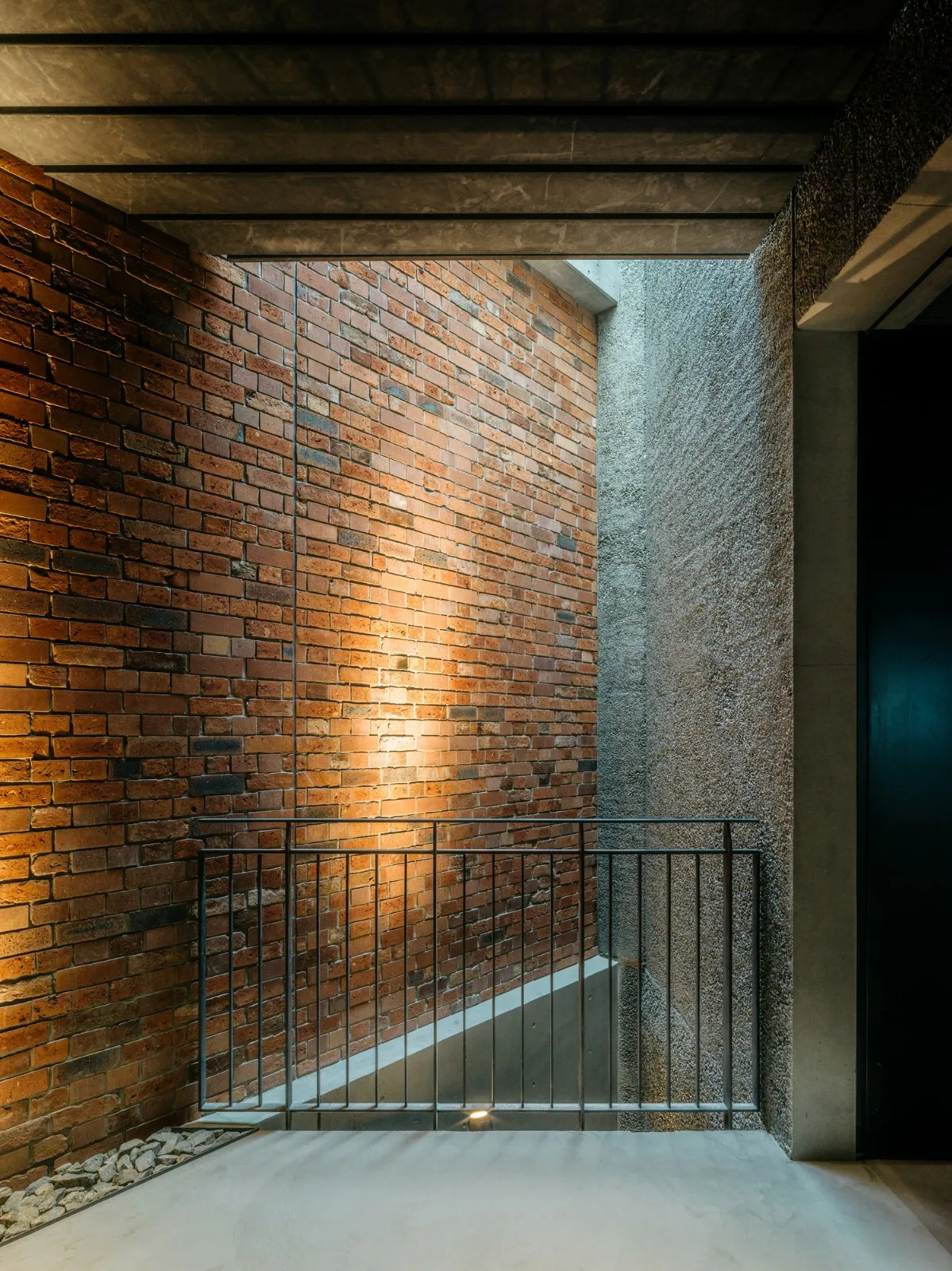
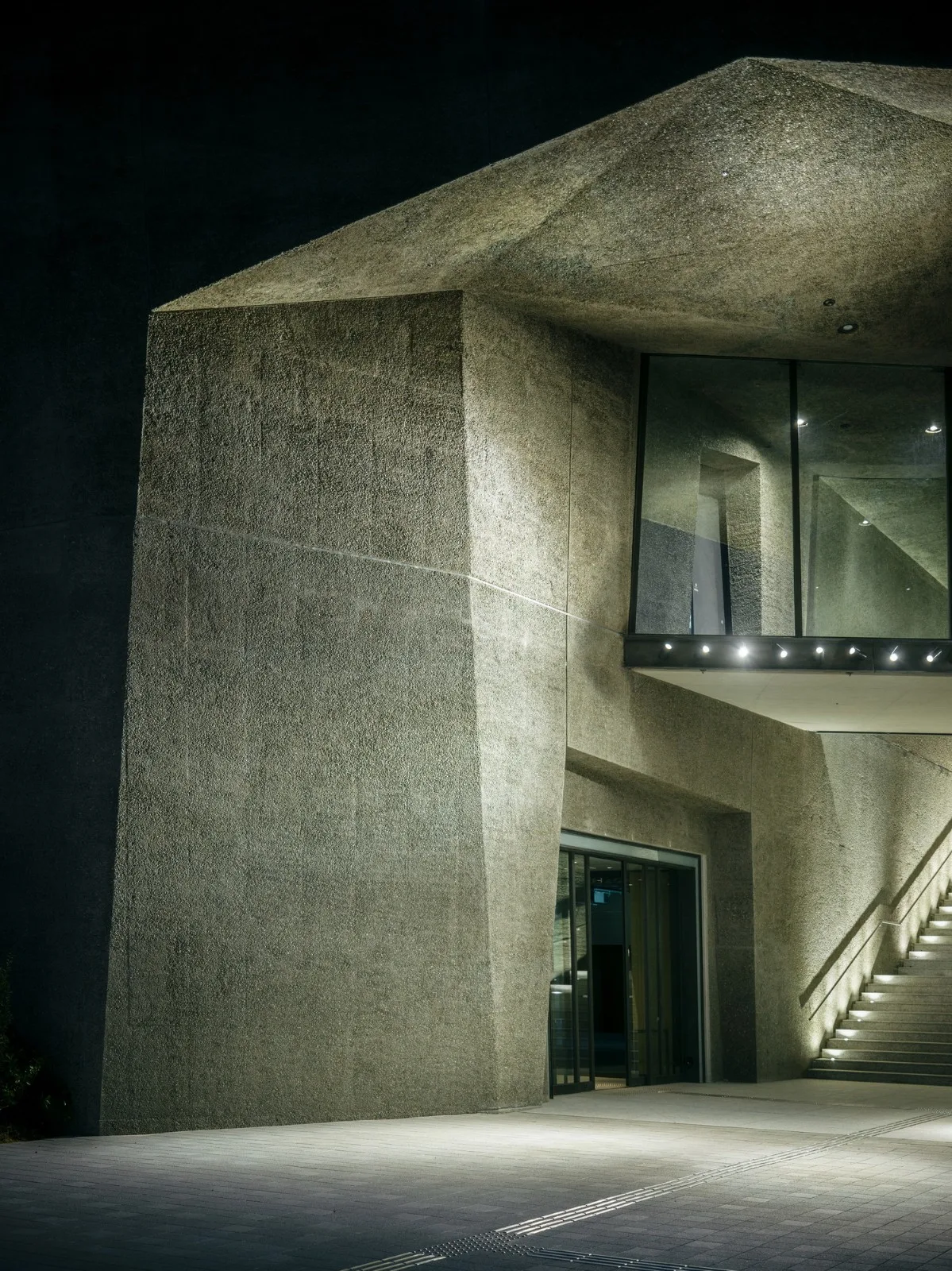
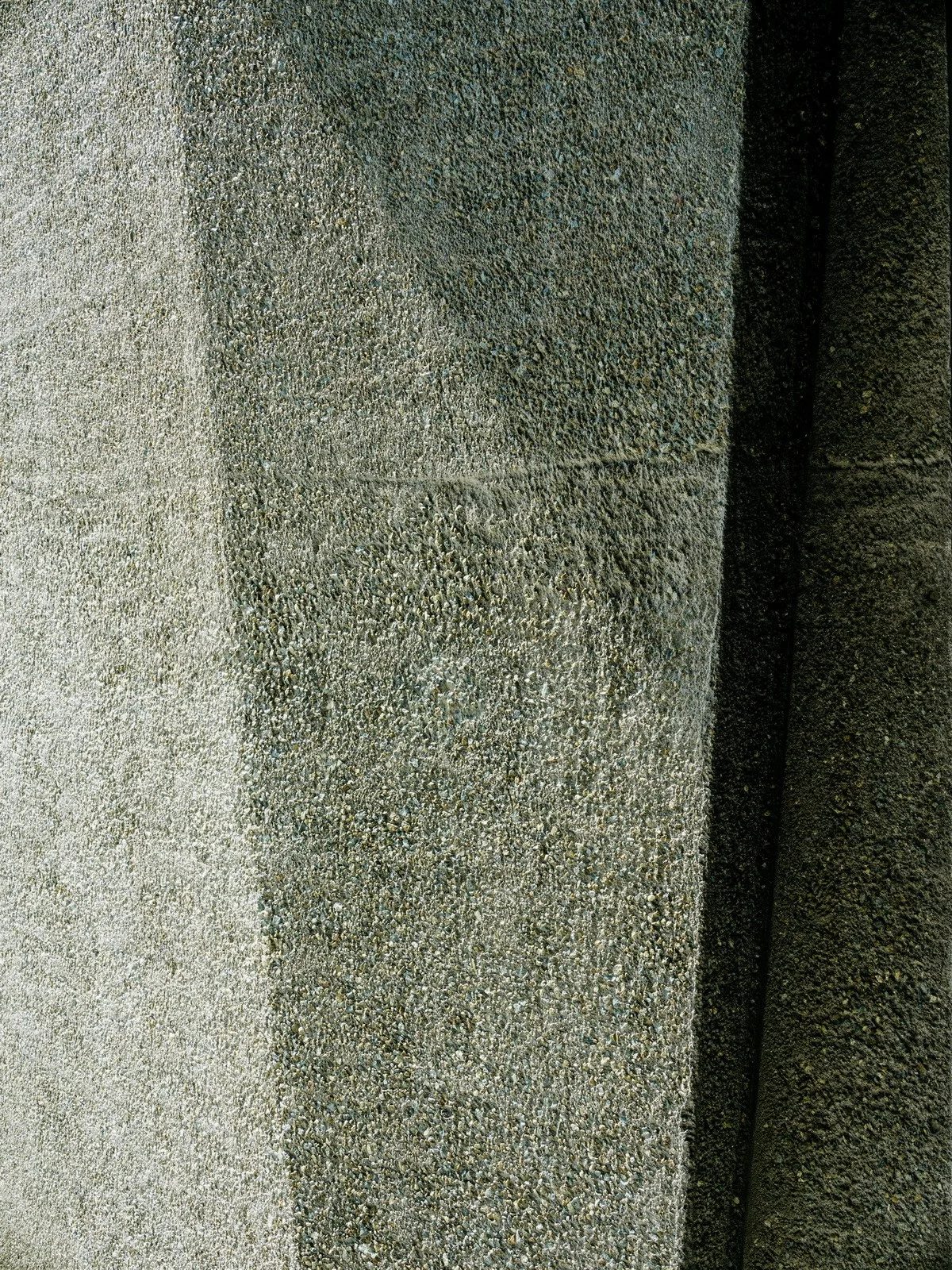
The concrete aggregates used in the construction were locally sourced: from Nishijima in the Seto Inland Sea and the Arino area in the Rokko Mountains. Through ultra-high-pressure washing, the aggregate’s natural colors were revealed, transforming the inorganic concrete into materials resembling raw earth.
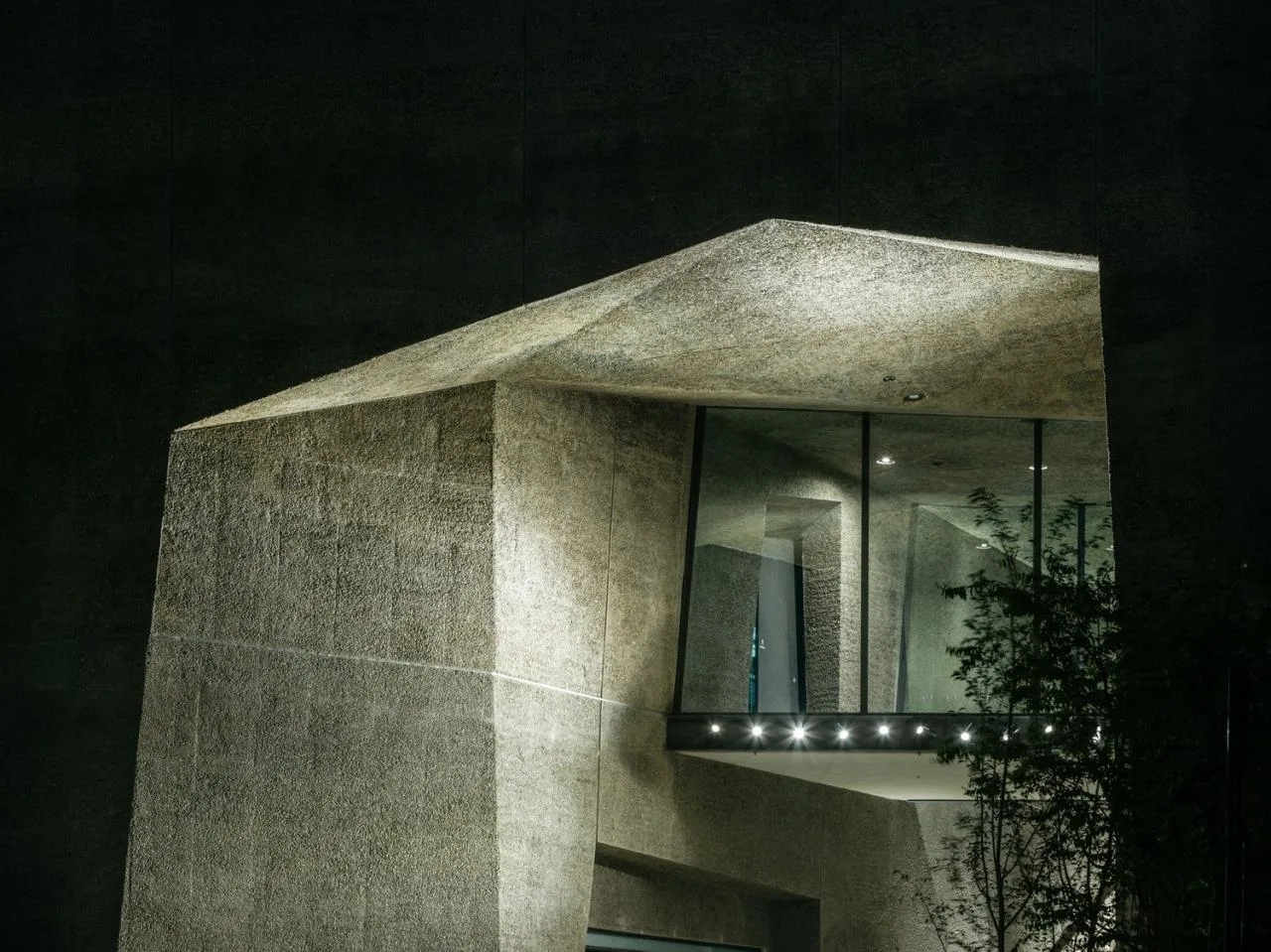
Approximately 4,000 square meters of cast-in-place concrete were treated with high-pressure water to create a facade with the texture and quality reminiscent of geological layers.
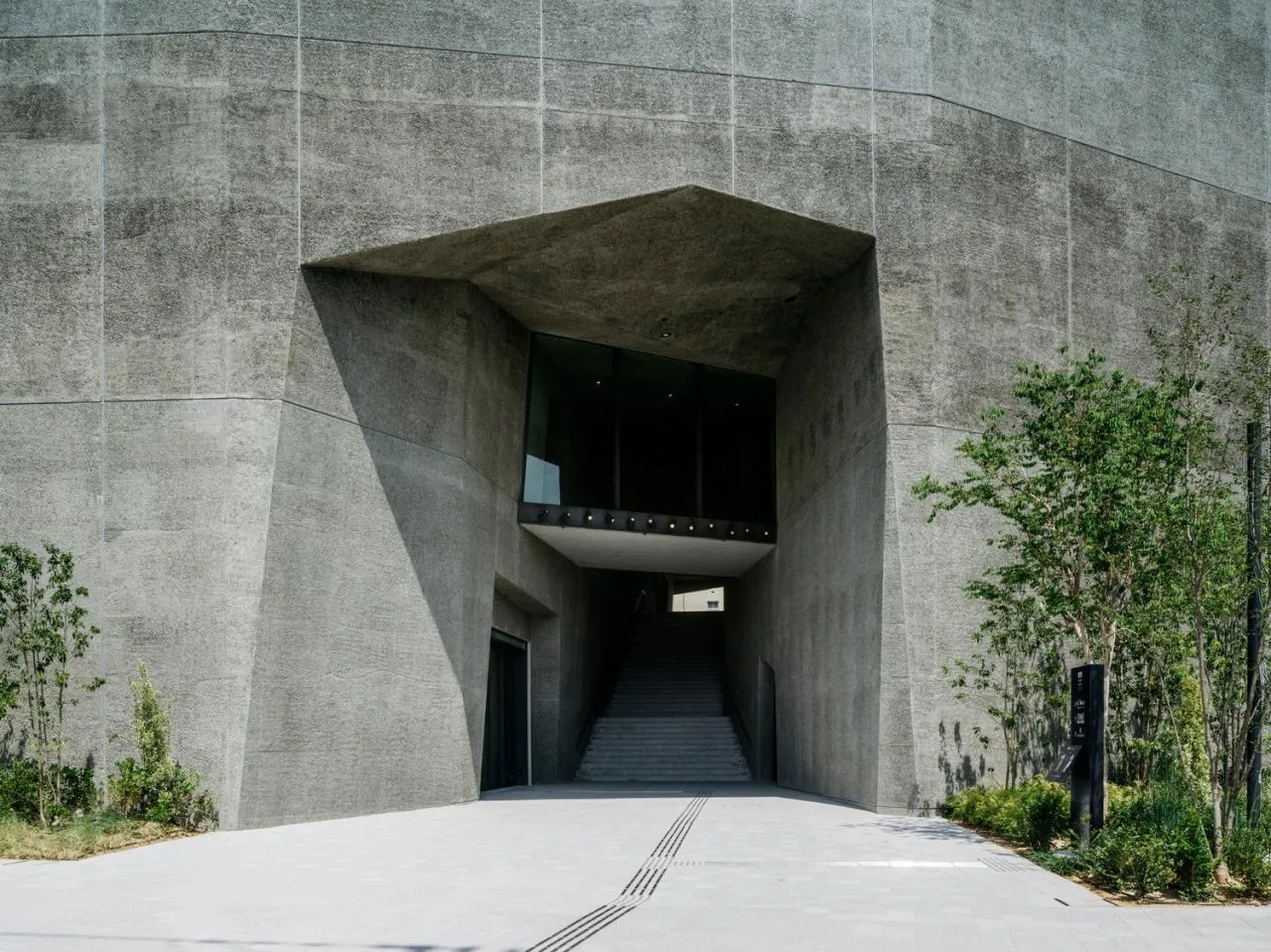
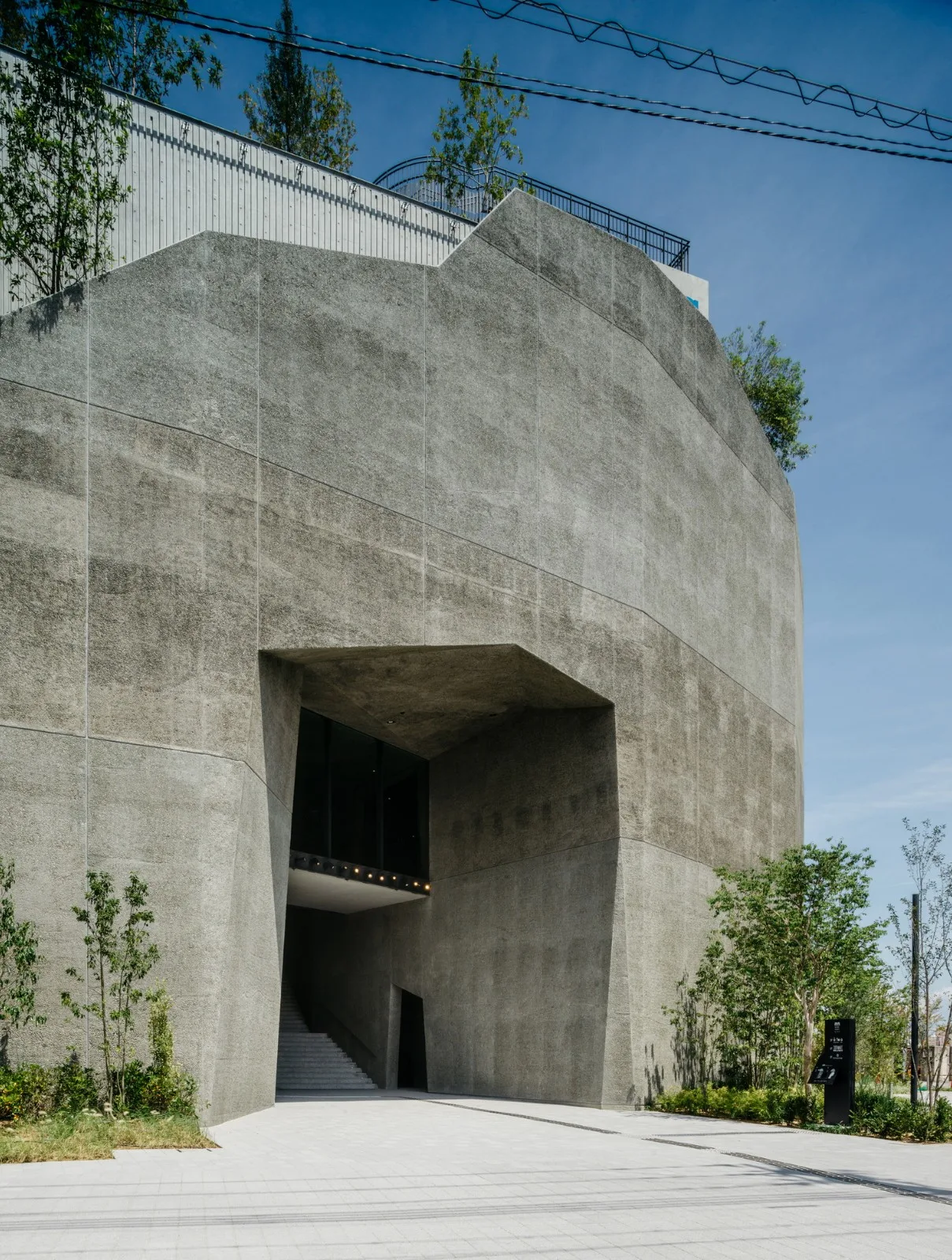
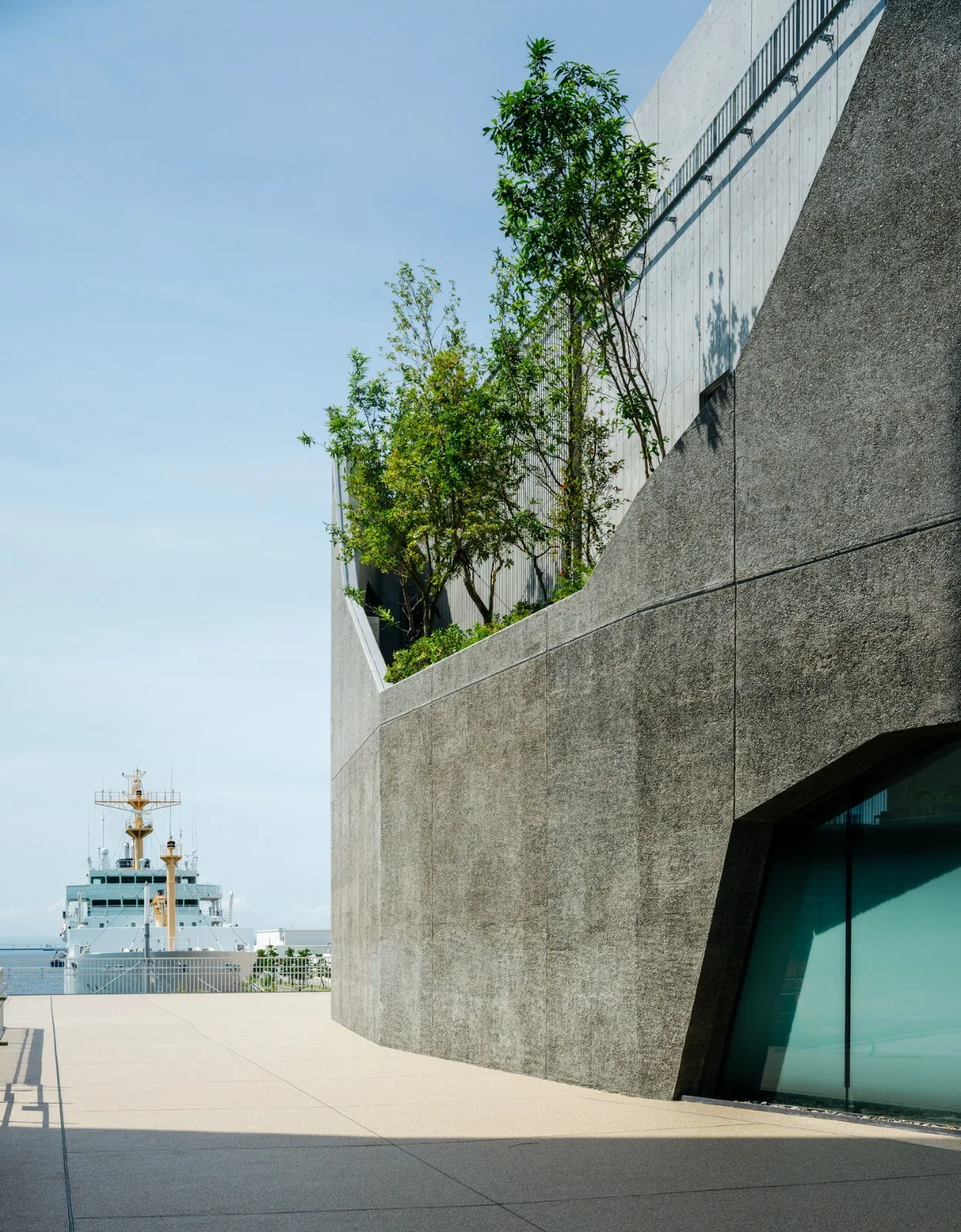
Due to centuries of crustal activity in the Kobe area, sea levels have risen and fallen more than ten times, resulting in layered soil formations alternating between seabed sediments (clay layers) and alluvial deposits from the mountains (sand layers).
To reflect this dynamic geological history, the architects used ocean-derived aggregates in the first and third concrete layers, and mountain-derived aggregates in the second and fourth layers. This design allows the Kobe strata to extend visibly above ground.
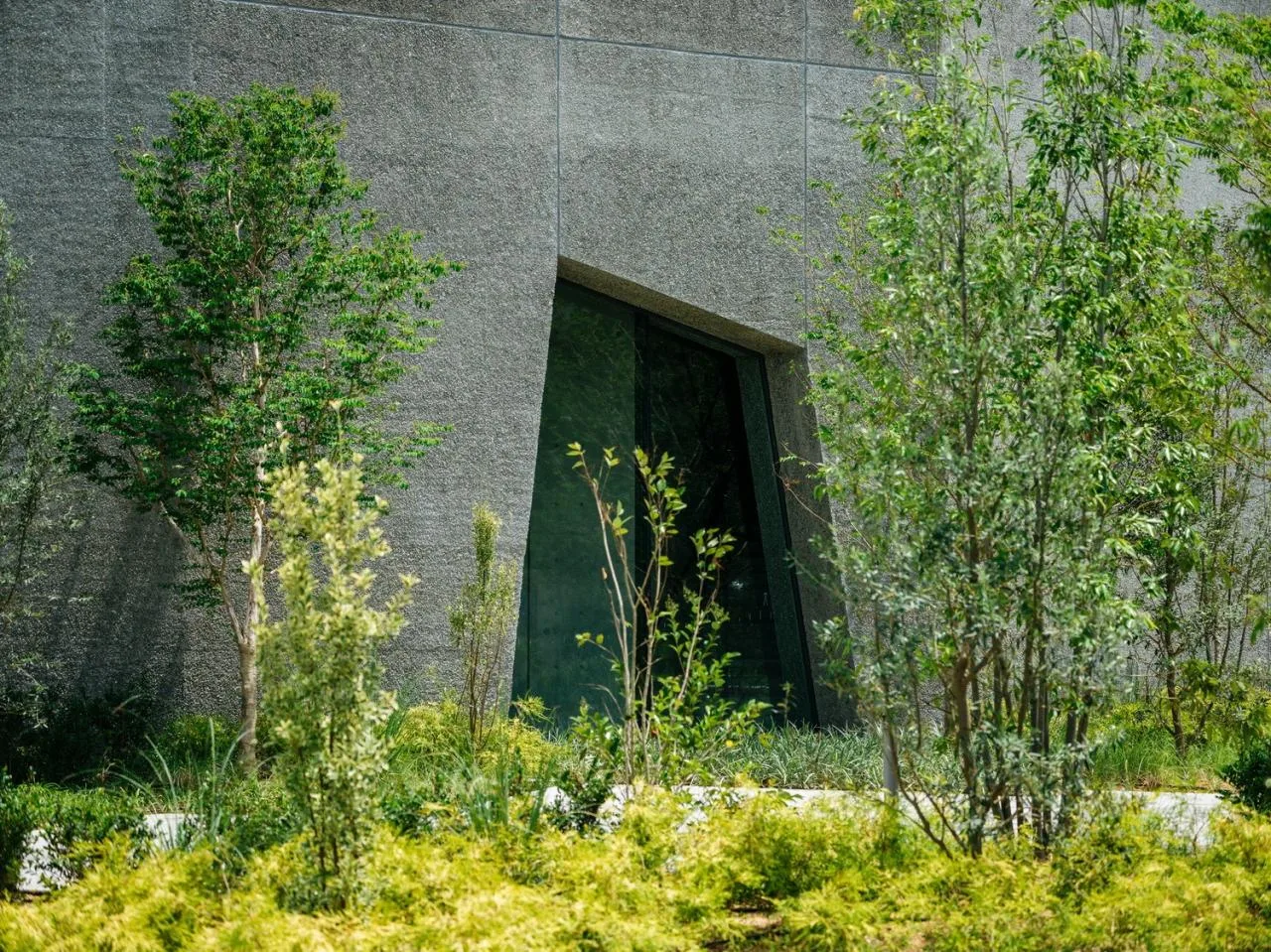
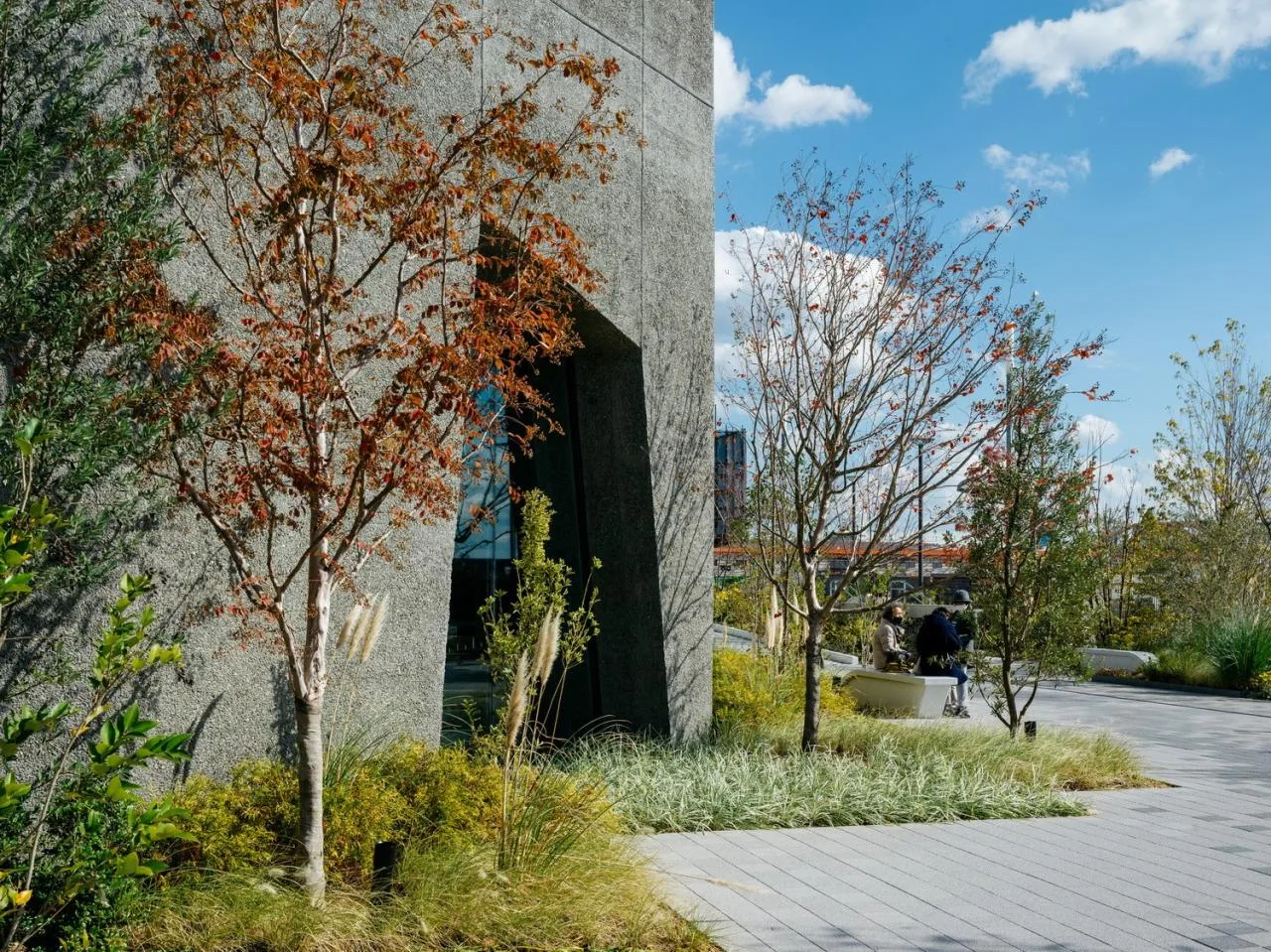
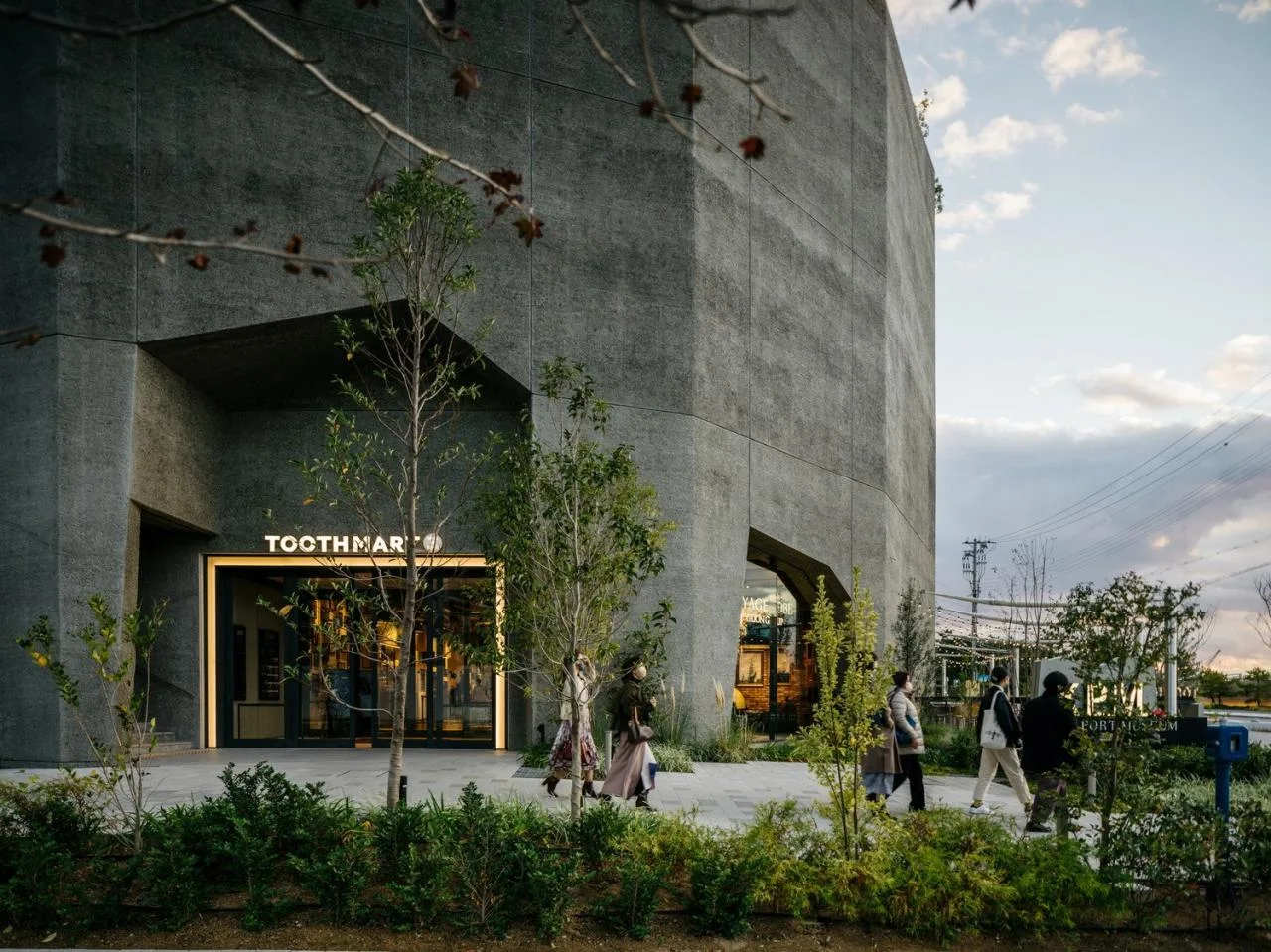
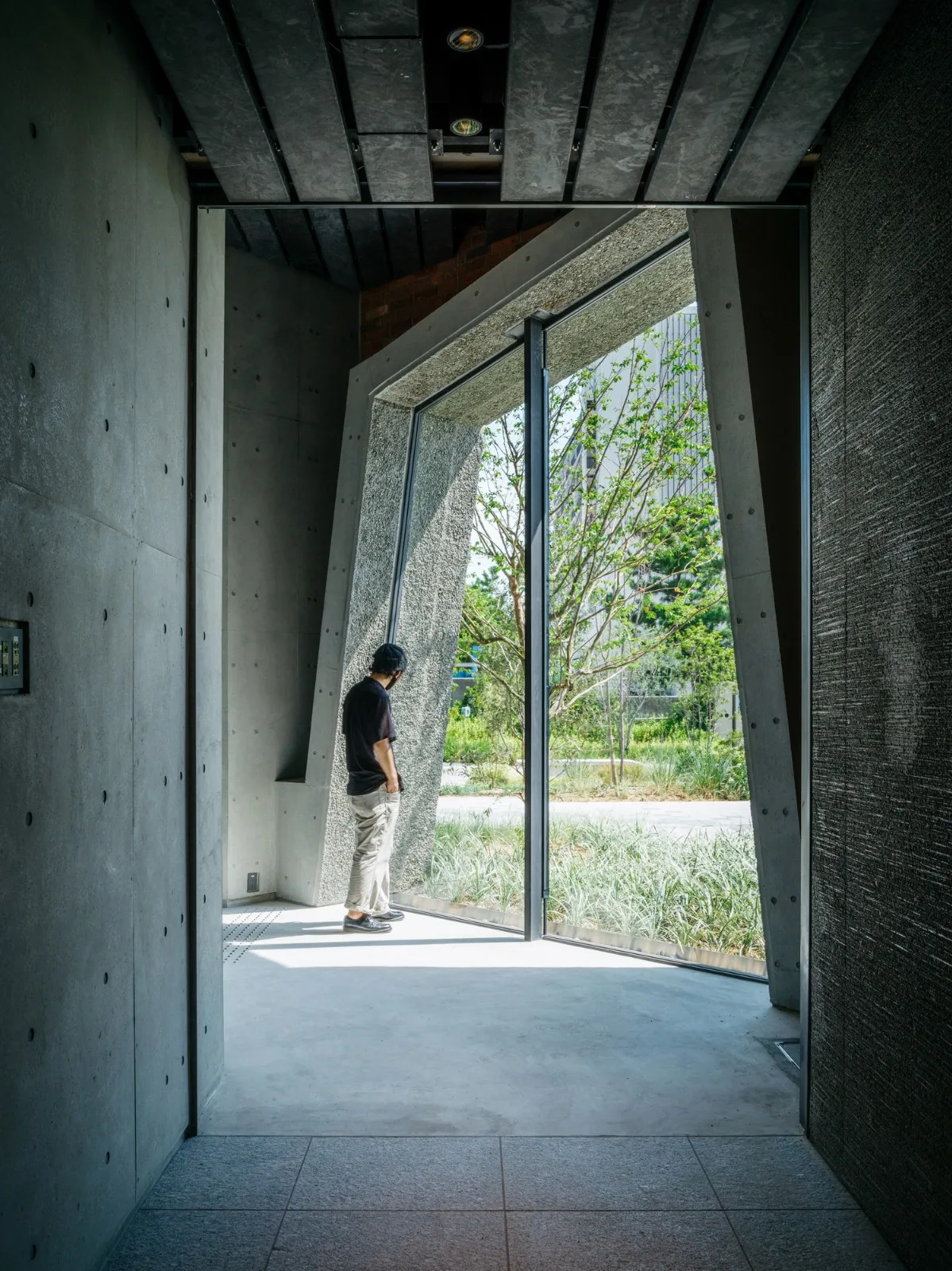
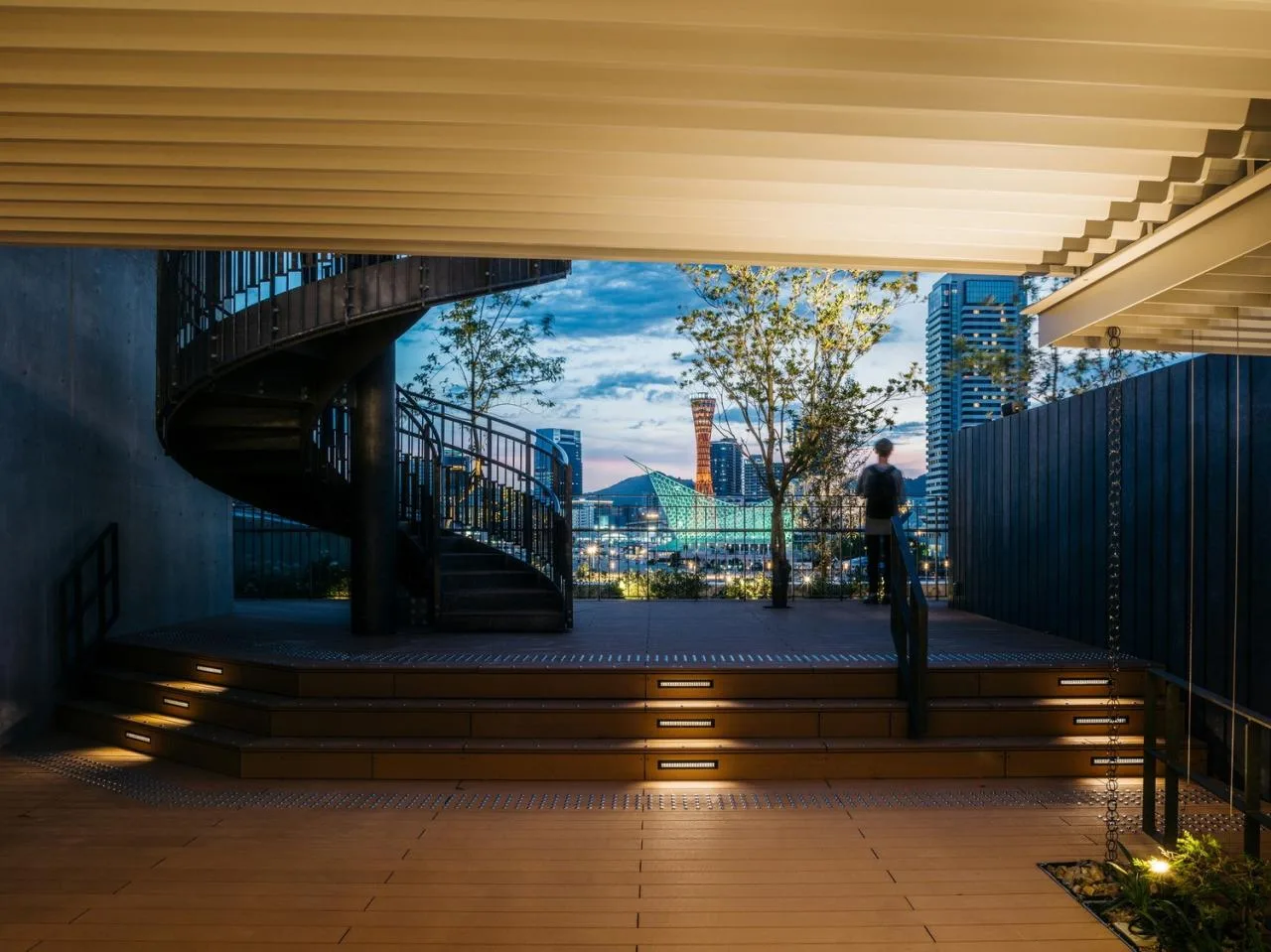
The building’s elliptical volume features multiple integrated openings that channel winds from the Rokko Mountains and the sea. These openings harmonize with Kobe’s existing landscape elements like the Port Tower.
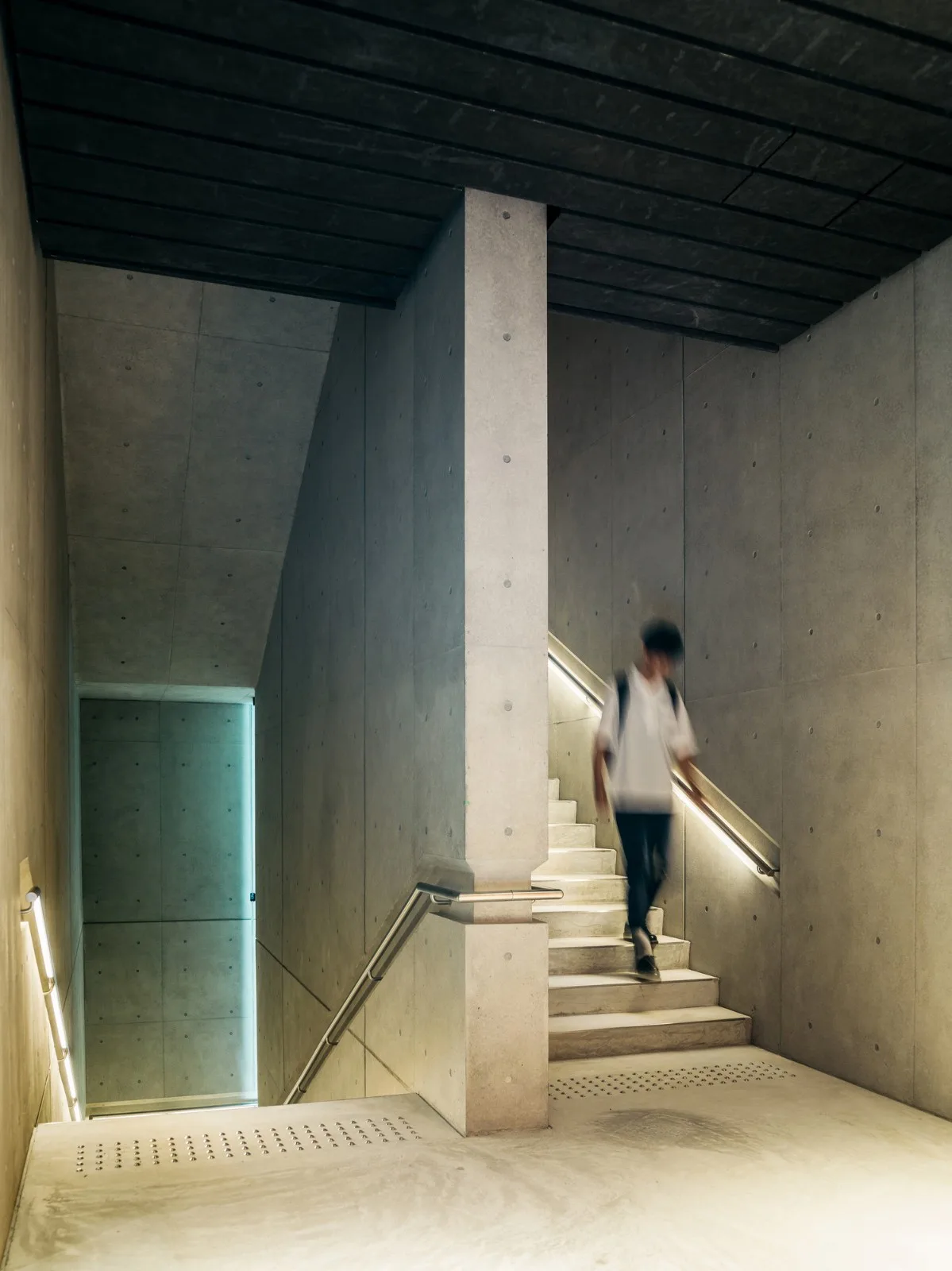
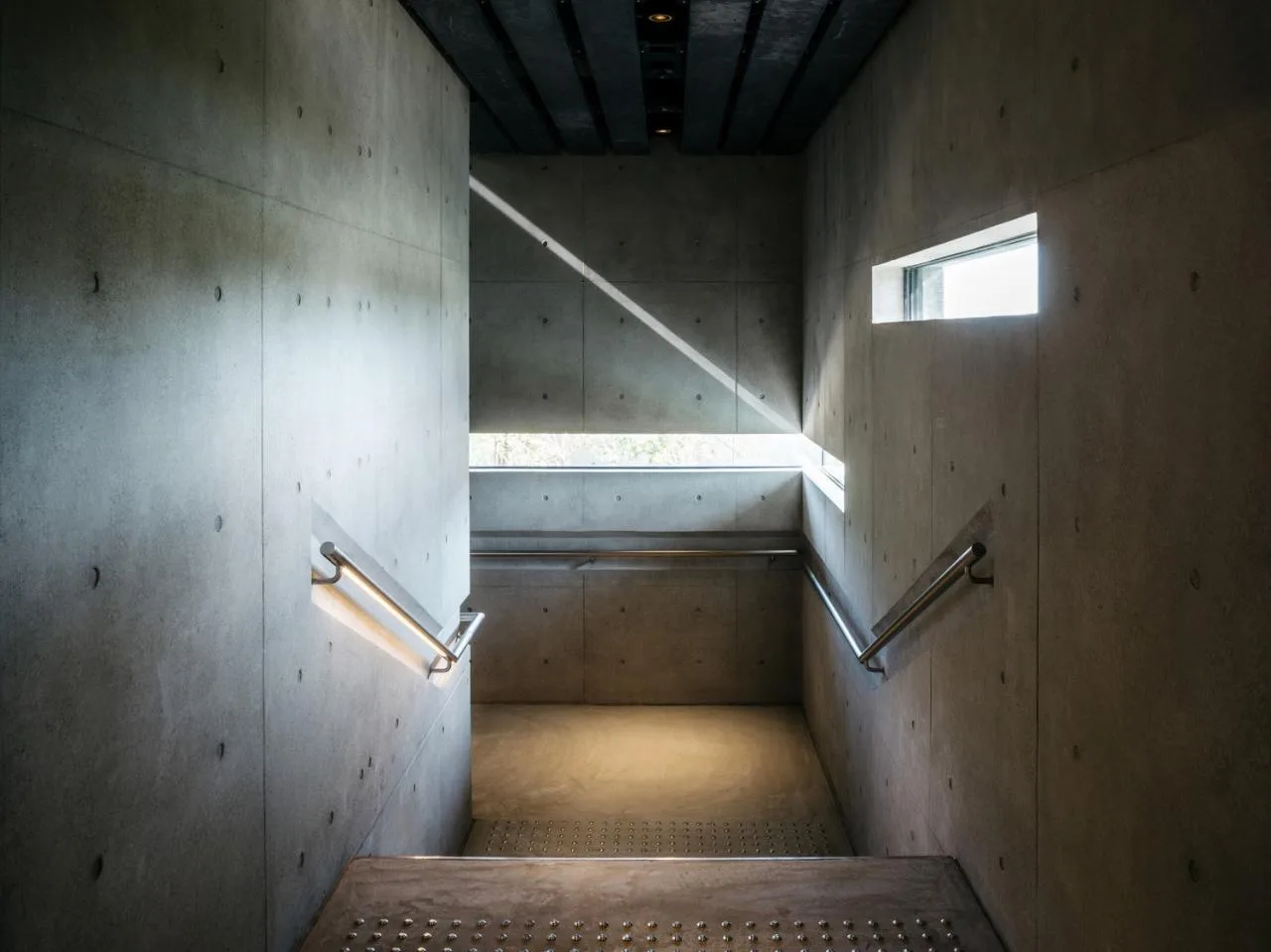
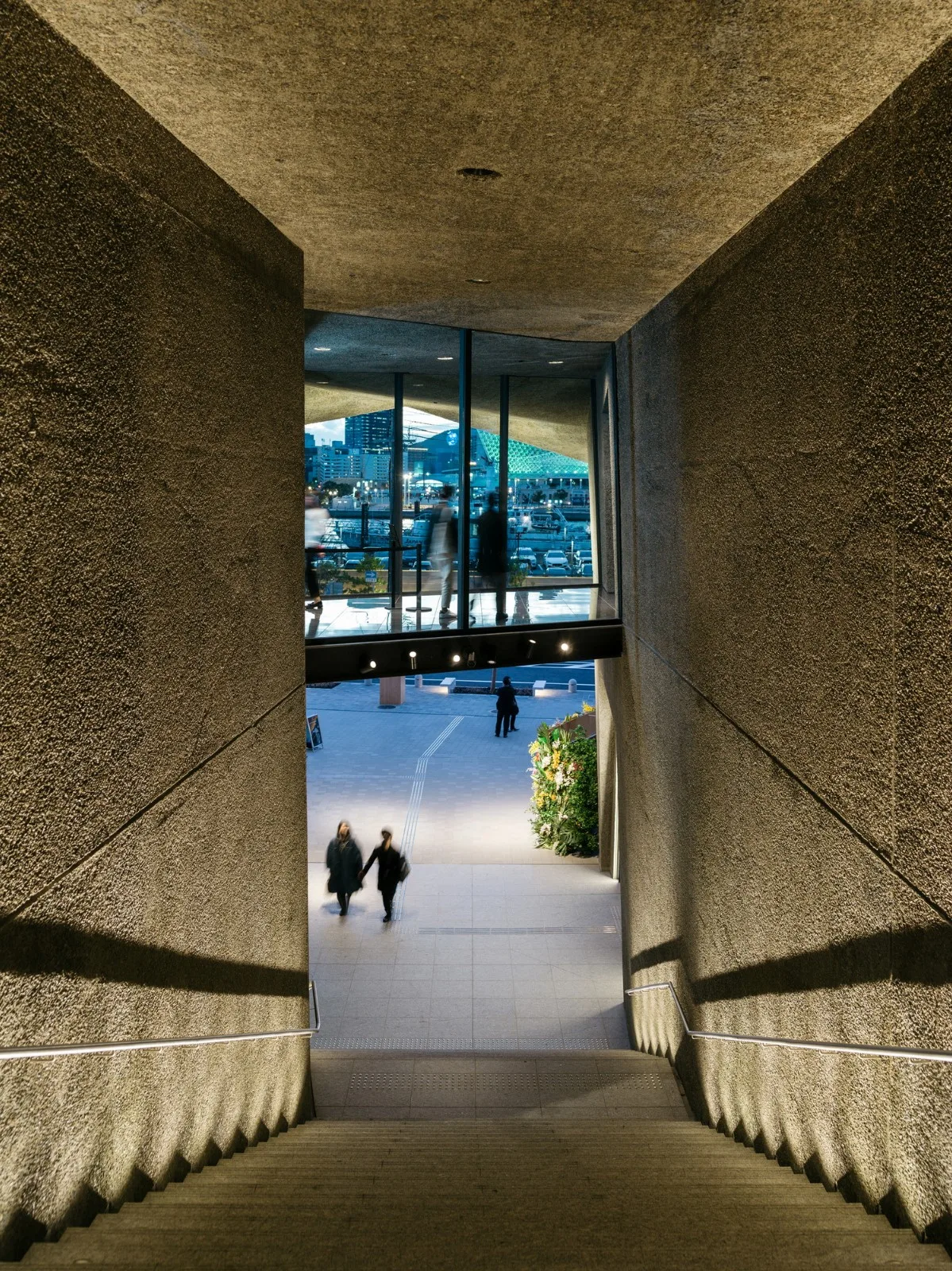
These voids serve as pathways for wind flow, connecting pedestrian movement with the surrounding environment. They create a scenic line akin to a mountain trail, guiding visitors from the rocky atrium at the main entrance to the rooftop terrace.
Along this ascending route, strategically placed openings and skylights allow natural light and water to permeate the interior, evoking the sensation of sunlight filtering into a cave.
Project Information
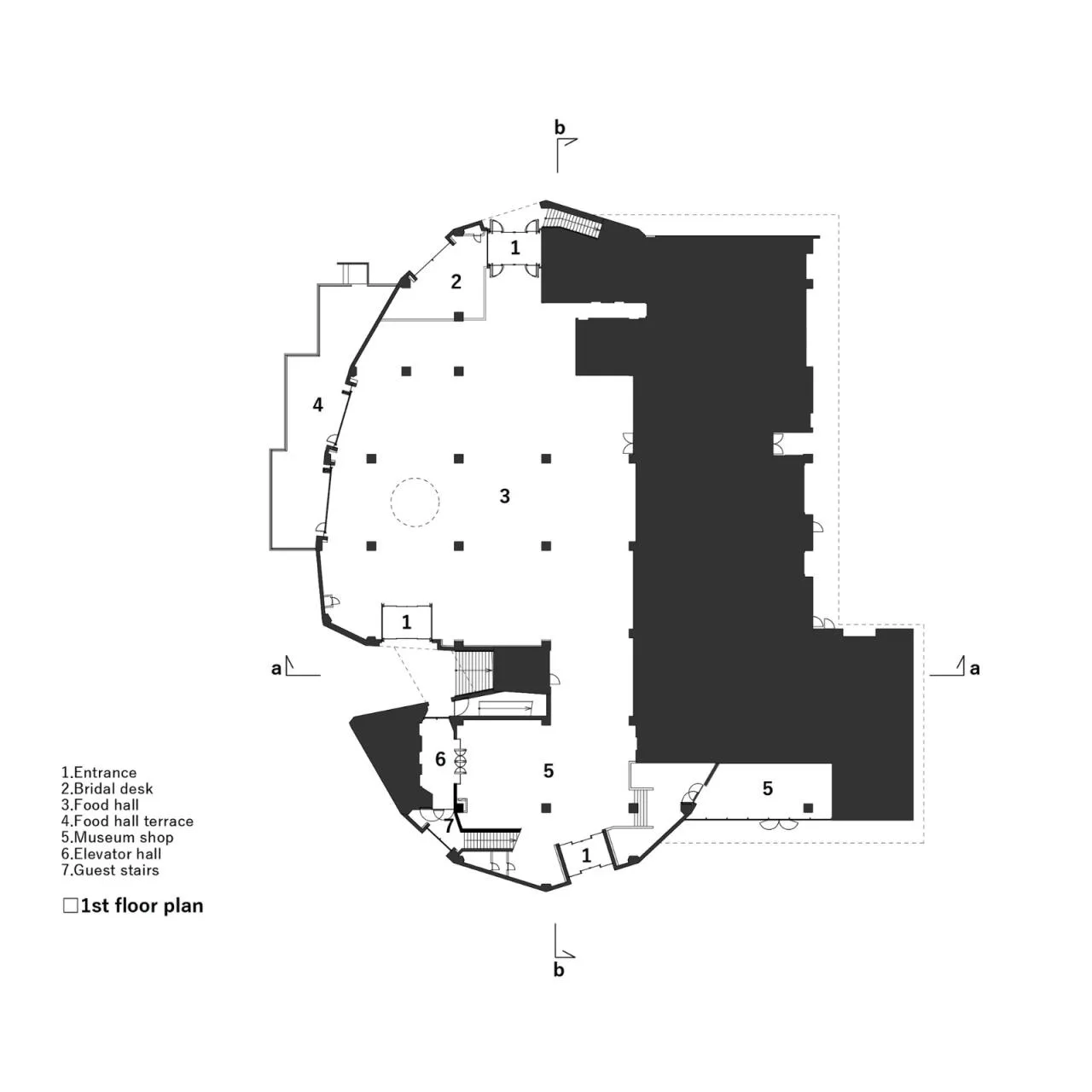
△ First Floor Plan
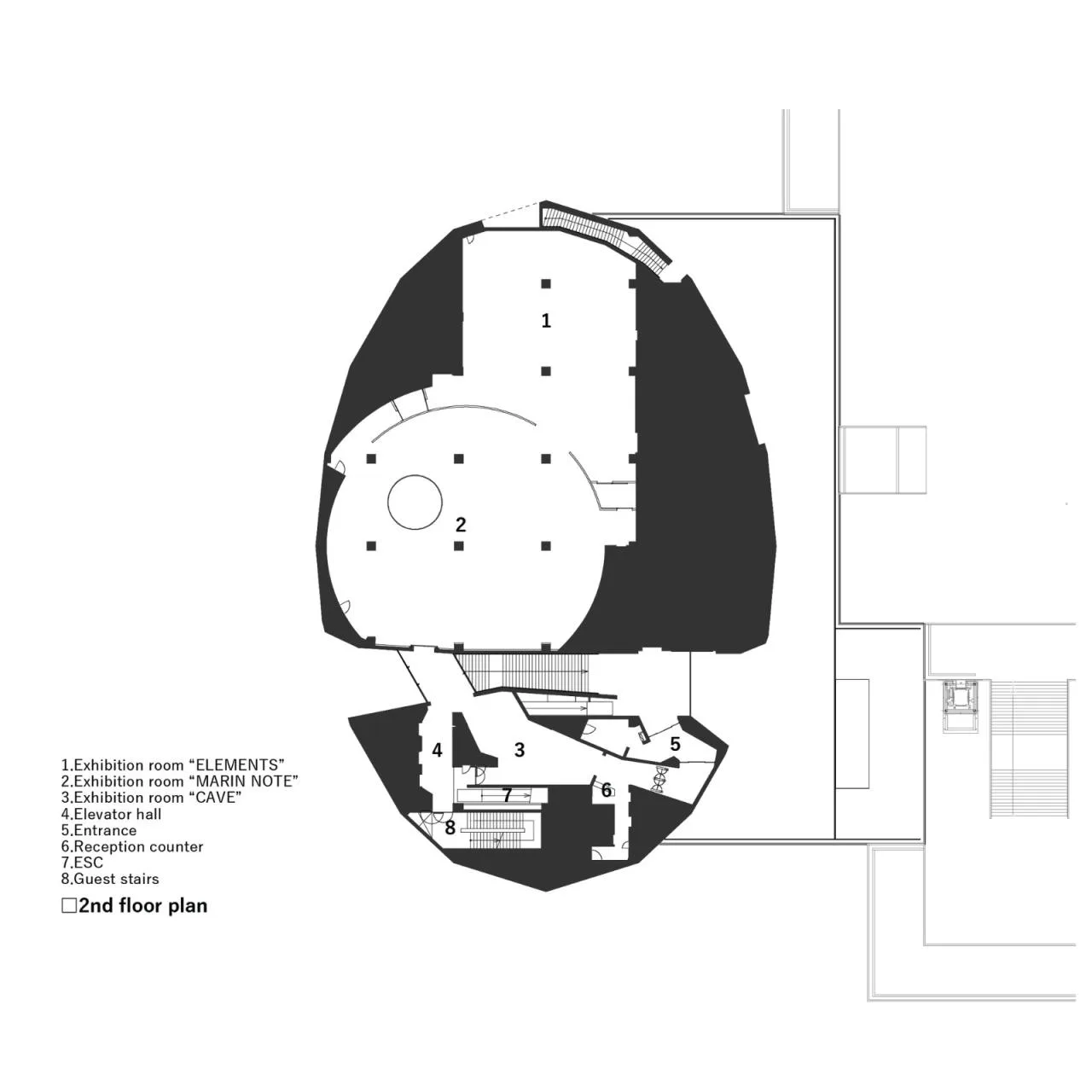
△ Second Floor Plan
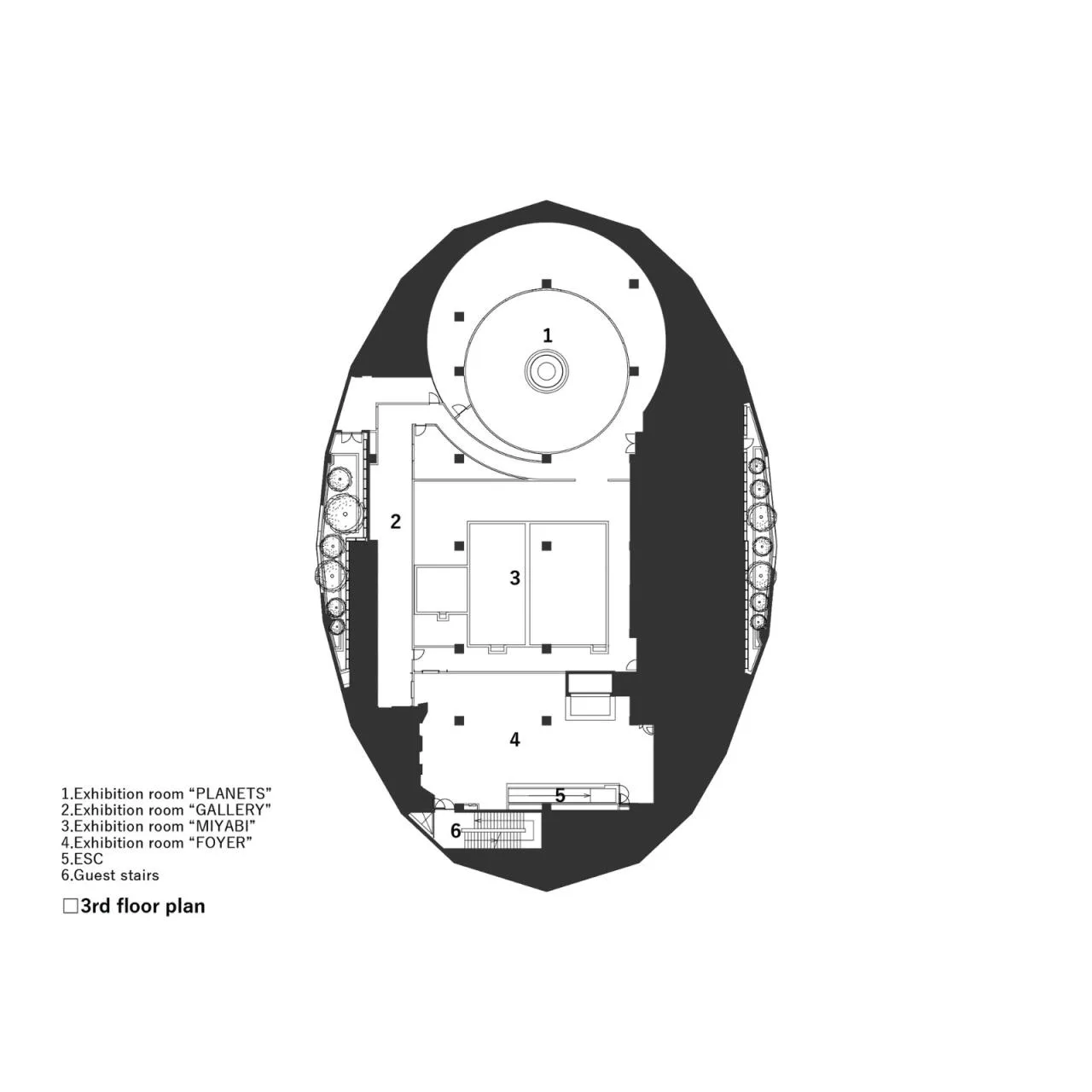
△ Third Floor Plan
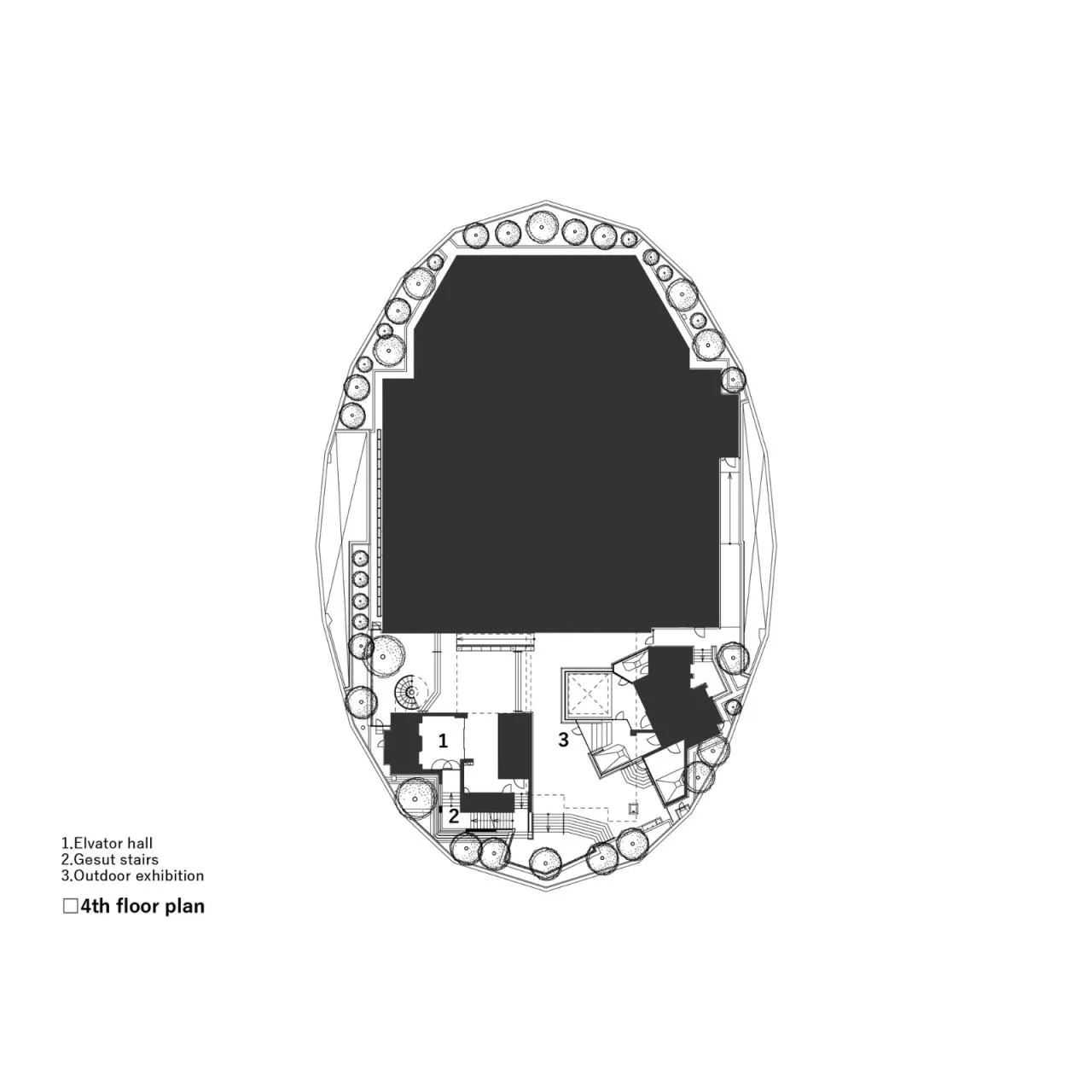
△ Fourth Floor Plan
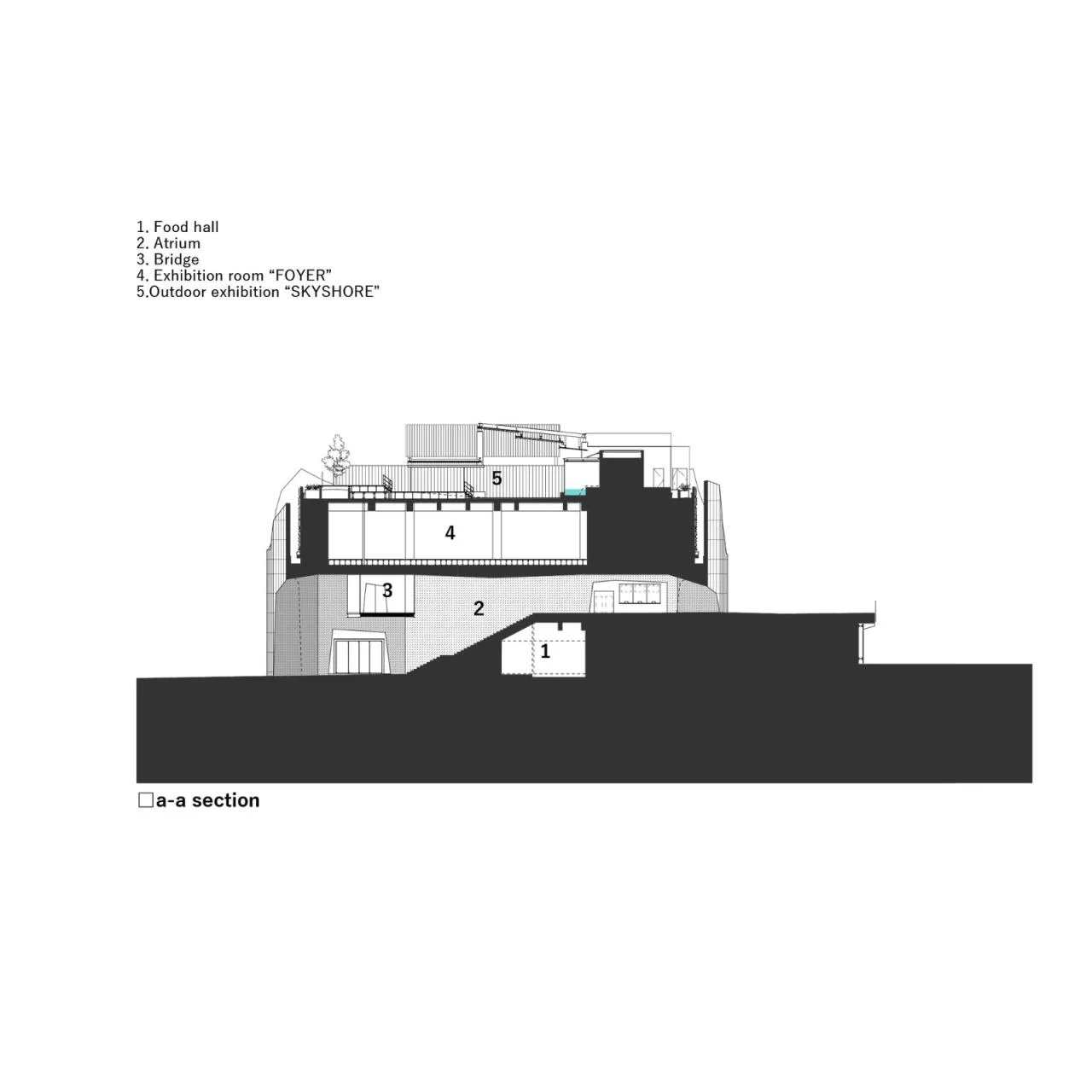
△ Section Diagram
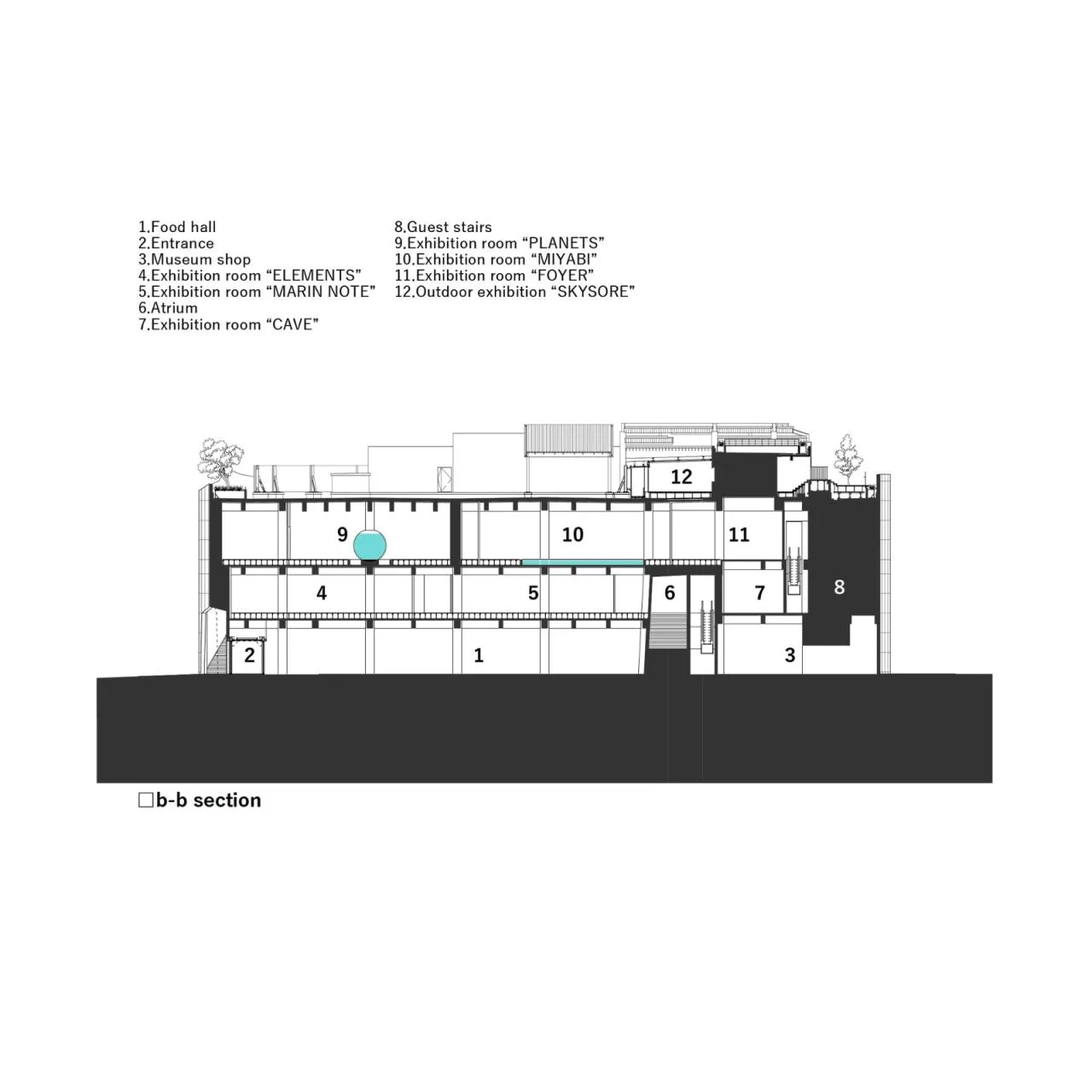
△ Section Diagram
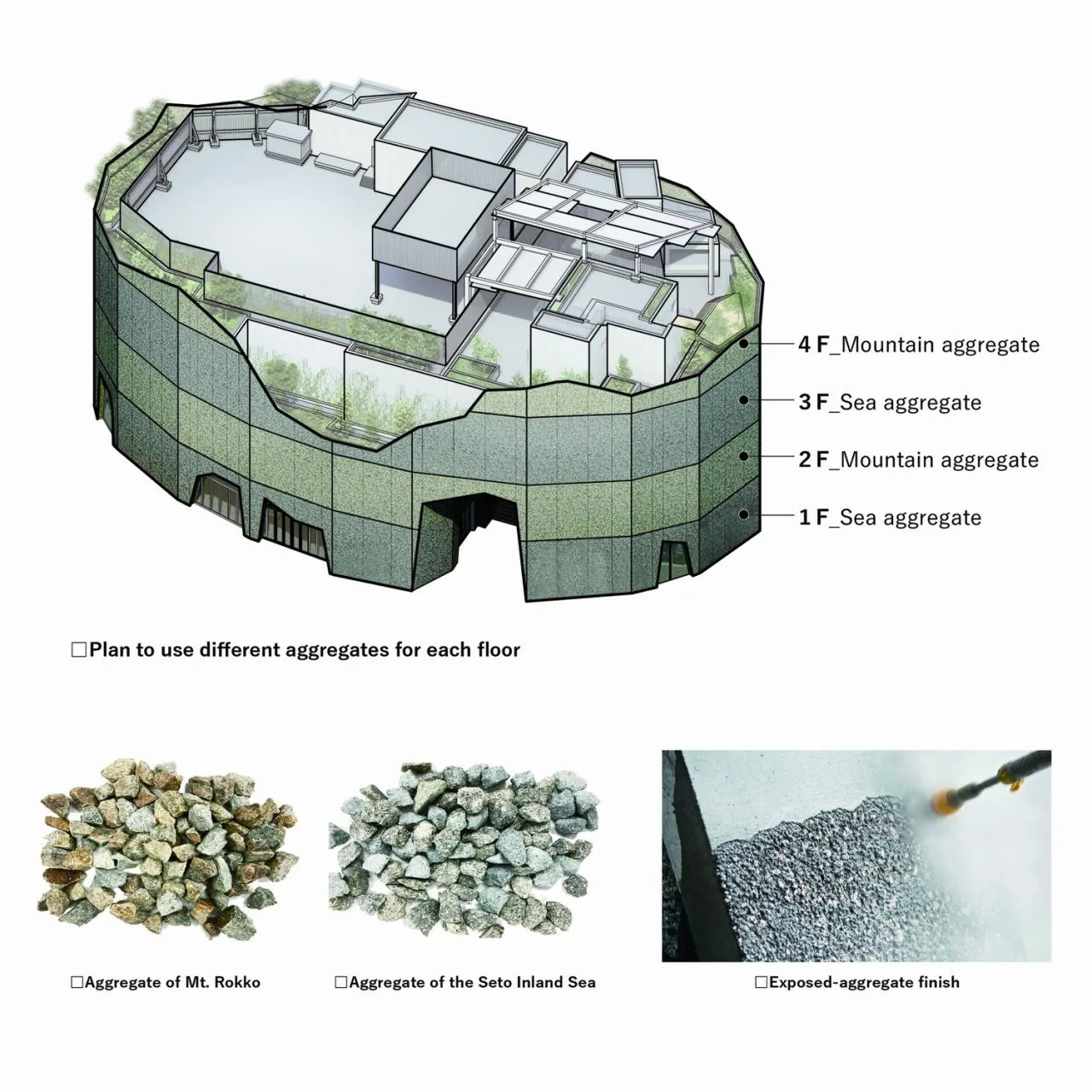
△ Analysis Chart
Project Details
Architect: Dacheng Construction
Area: 7,283 m²
Project Year: 2021
Photographer: Katsumasa Tanaka
Suppliers: Oshirox Co. Ltd., YOKOMORI MFG. CO., LTD., Yamaki Kogyo
Design Team: Kenichi Takashima, Takefumi Doi, Kensuke Harada
Structural Engineers: Eiichi Yamazaki, Yoshitaka Sakai, M. Mahdi Raoufard
MEP Engineers: Jun Takagi, Syunsuke Irie, Yasuaki Nemoto
Aquarium Equipment Engineers: Satoru Kosuge, Norifumi Inaba, Daiki Naito, Yuji Ota
Principal: AQUART KOBE G.K.
Architectural Design: Dacheng Construction
Restaurant Interior Design: RIC DESIGN Inc.
Contractor: Dacheng Construction Co., Ltd.
Location: Kobe, Japan












Must log in before commenting!
Sign Up