
Donghu Lake in Wuhan, famously known as the “Land of White Clouds and Yellow Cranes” in the east, offers vast waters and stunning scenery. Nestled within this renowned Donghu Scenic Area, the comprehensive hotel project designed by the Weisiping architectural team integrates high-end business facilities with an urban vacation experience. This development promises to introduce a new landmark to Wuhan’s Donghu region and establish a vibrant commercial district within the scenic area.
01 Crane Dance Spreading Wings, Charm of Chu Feng Shui
Rongshan Huishui is a cultural landmark building that embodies the spirit of freehand nature.
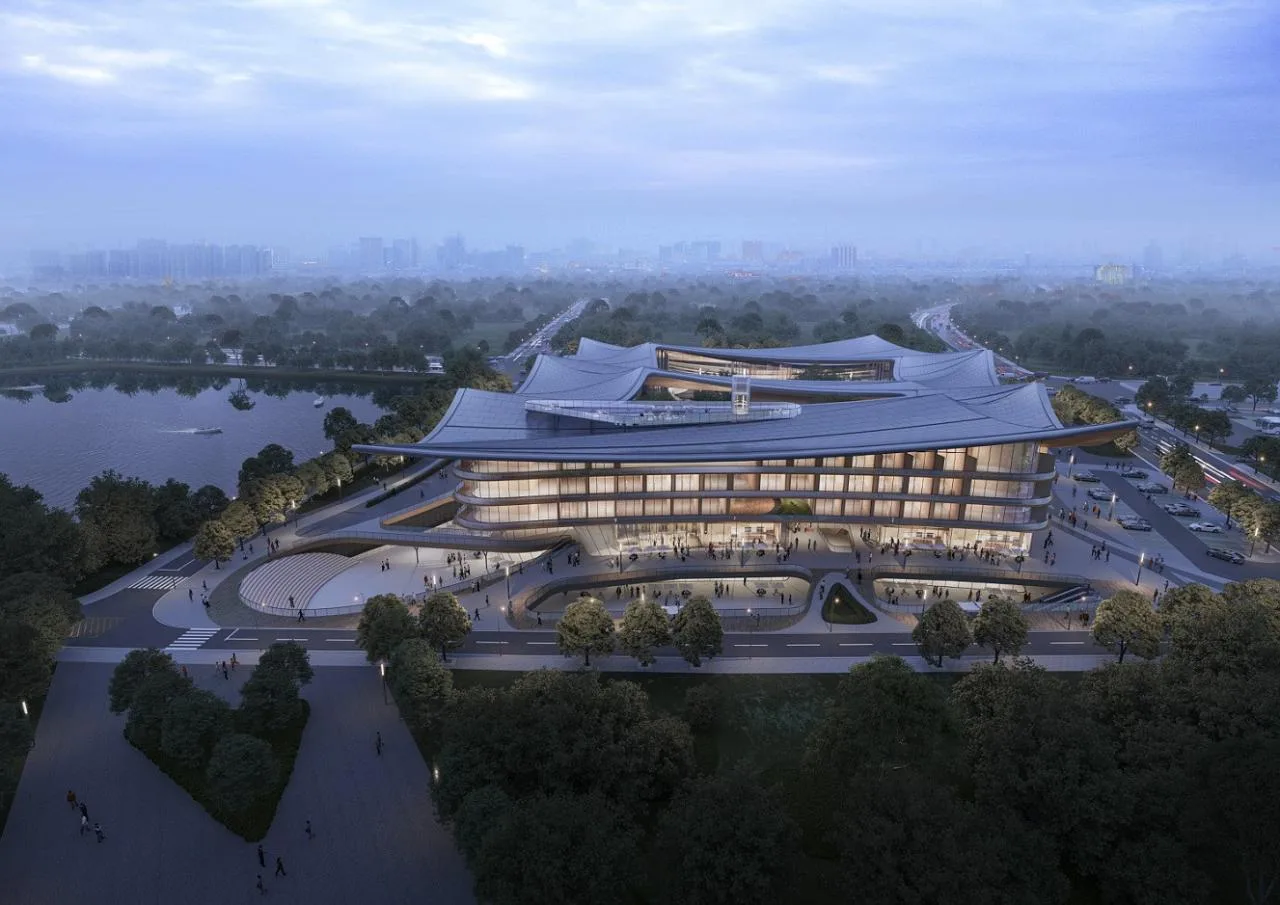
▲ Aerial view of Wuhan Huguang Overture City Resort Hotel
Located in Donghu Scenic Area, Wuchang District, Wuhan, the project benefits from convenient transportation due to its proximity to the urban ring road on the west side. To the east, the adjacent Donghu Greenway attracts numerous tourists, offering rich natural resources. The design balances the functional requirements of a high-end hotel with the commercial and tourism demands of the area. It aims to establish a landmark that harmoniously blends the cityscape with the Donghu environment.
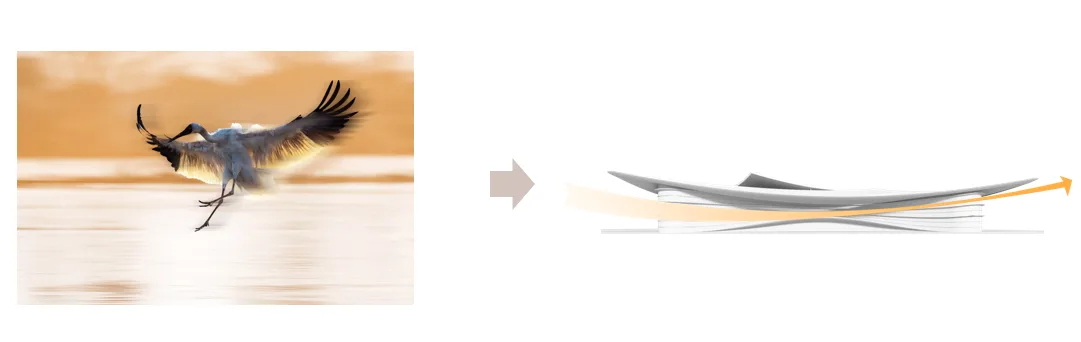
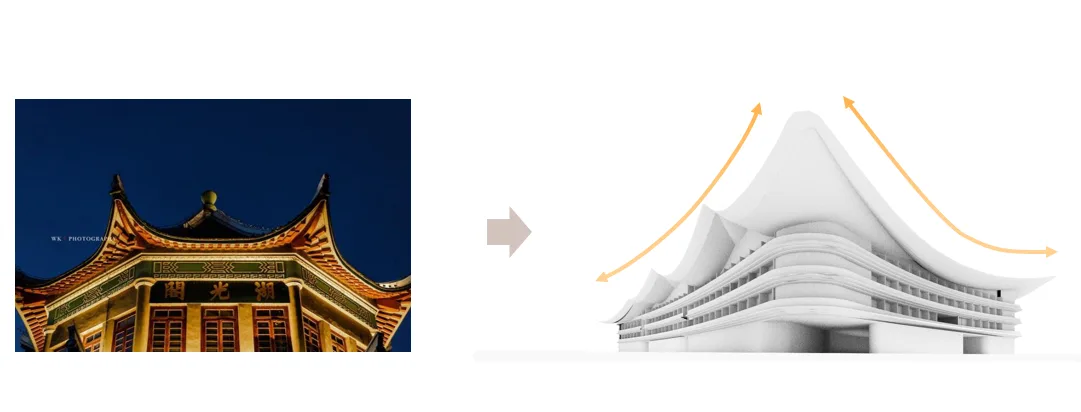
▲ Design Concept Diagrams
Weisiping draws inspiration from the subtleties of Chu-style architecture, blending traditional culture with modern architectural techniques. The design aims to create a roof and facade resembling a crane spreading its wings, symbolizing the charm of Chu Feng Shui and the mountain-like eaves. By carefully shaping the building’s exterior and integrating urban elements with the character of Donghu Lake, this modern hotel stands as a cultural landmark within the scenic area.
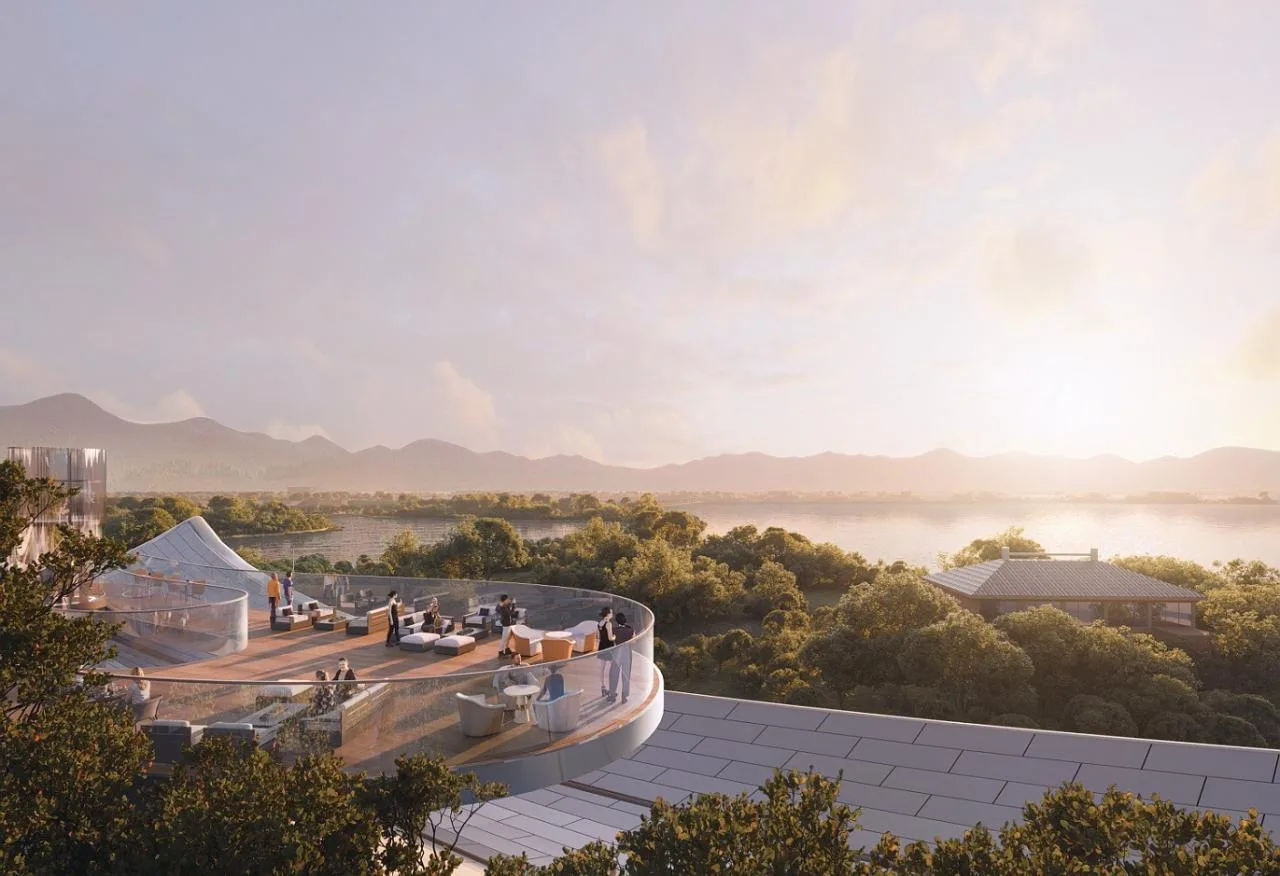
▲ Roof Landscape Platform Rendering
The planning and design process integrates site resources and functional needs to develop a refined layout. Humanistic and regional characteristics are embedded into the architectural and environmental design from a fresh perspective. This approach results in architecture that harmonizes closely with the natural surroundings, creating an ideal setting for scenic area architecture.
02 The Eaves Symbolize Floating Light and Leaping Gold
The dynamic roof design reflects the winding and layered green mountains of Moshan.
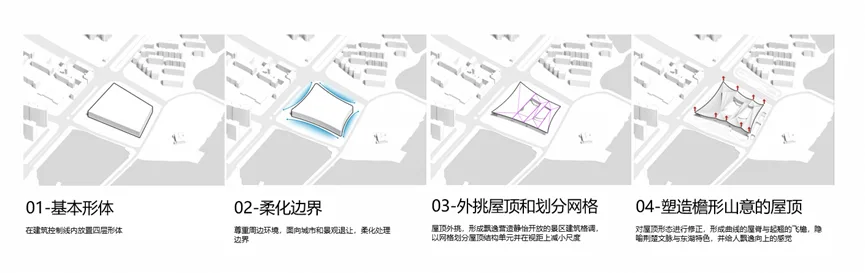
▲ Roof Design Development Diagram
To preserve the scenic beauty of Donghu Lake, the building height is restricted to 20 meters. The lush trees surrounding the site and existing scenic spots create a natural buffer from the lakefront. Given these constraints, the design team focused on the roof as the building’s signature feature, crafting a landmark visible from Donghu Lake and nearby attractions.
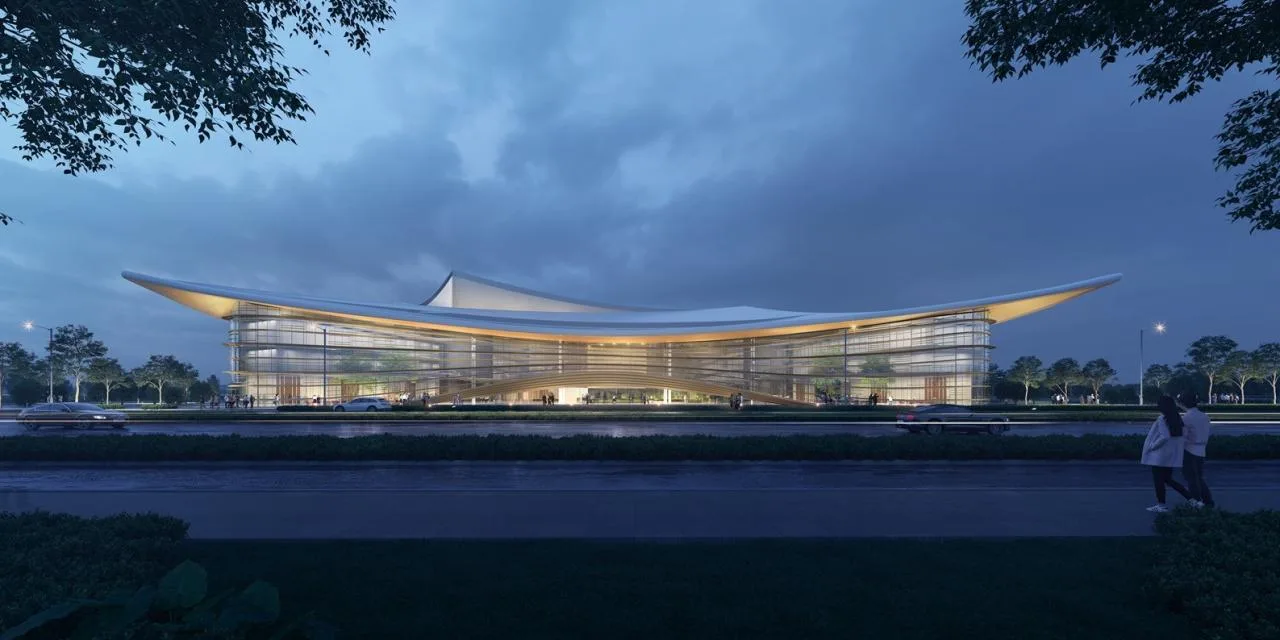
▲ Roof Detail View
The design incorporates cultural elements from Wuhan, such as “white clouds and yellow cranes,” “lake and mountain scenery,” and “Chu-style flying eaves.” Architectural techniques like extension, folding, and lifting are employed to evoke the dynamic imagery of cranes dancing amidst mountains and waters.
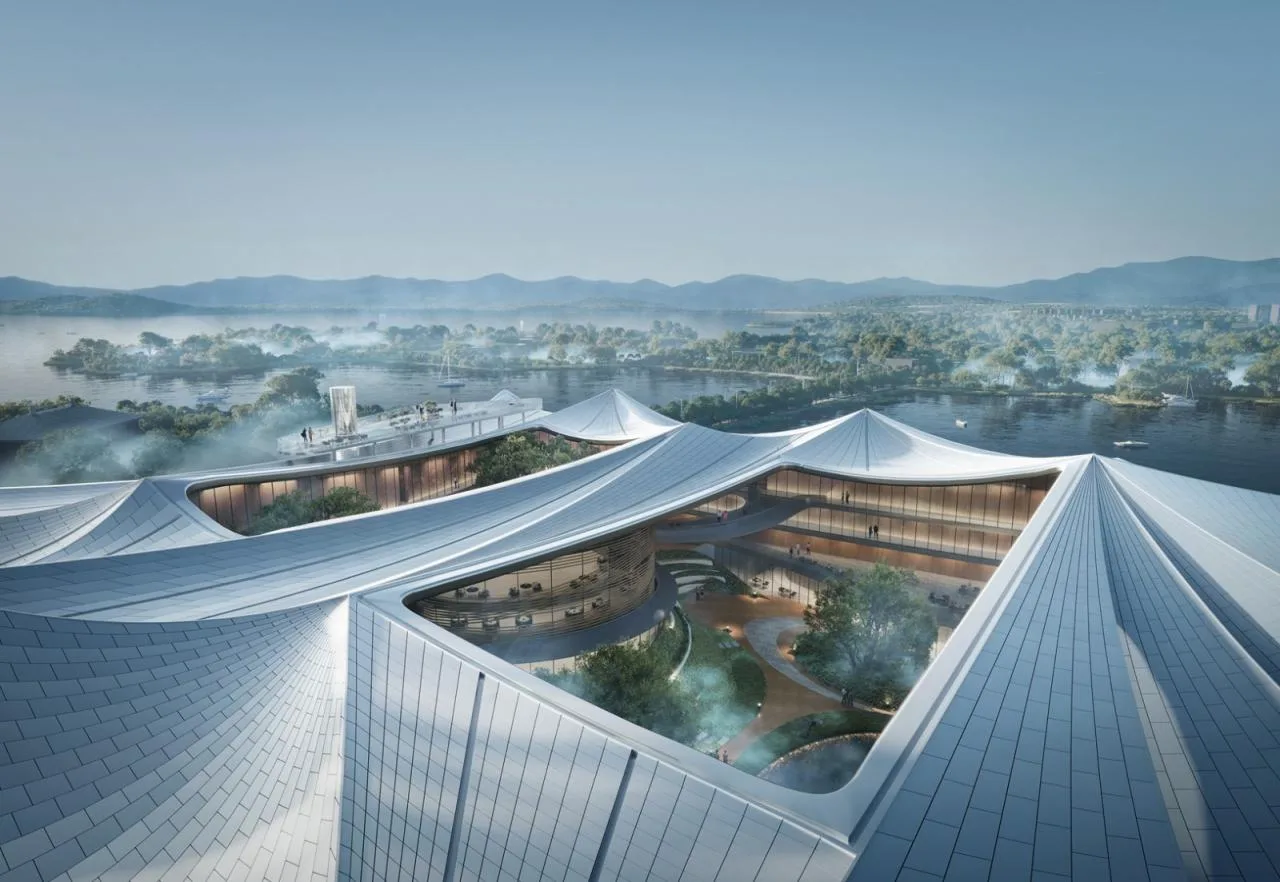
▲ Aerial Roof View
The elegant, flowing roofscape complements the broad blue waves of Donghu Lake, blurring the boundaries between mountains, water, and the urban environment. The winding roof design echoes the greenery of the courtyard as well as distant mountains and islands, achieving an ideal integration of city and nature.
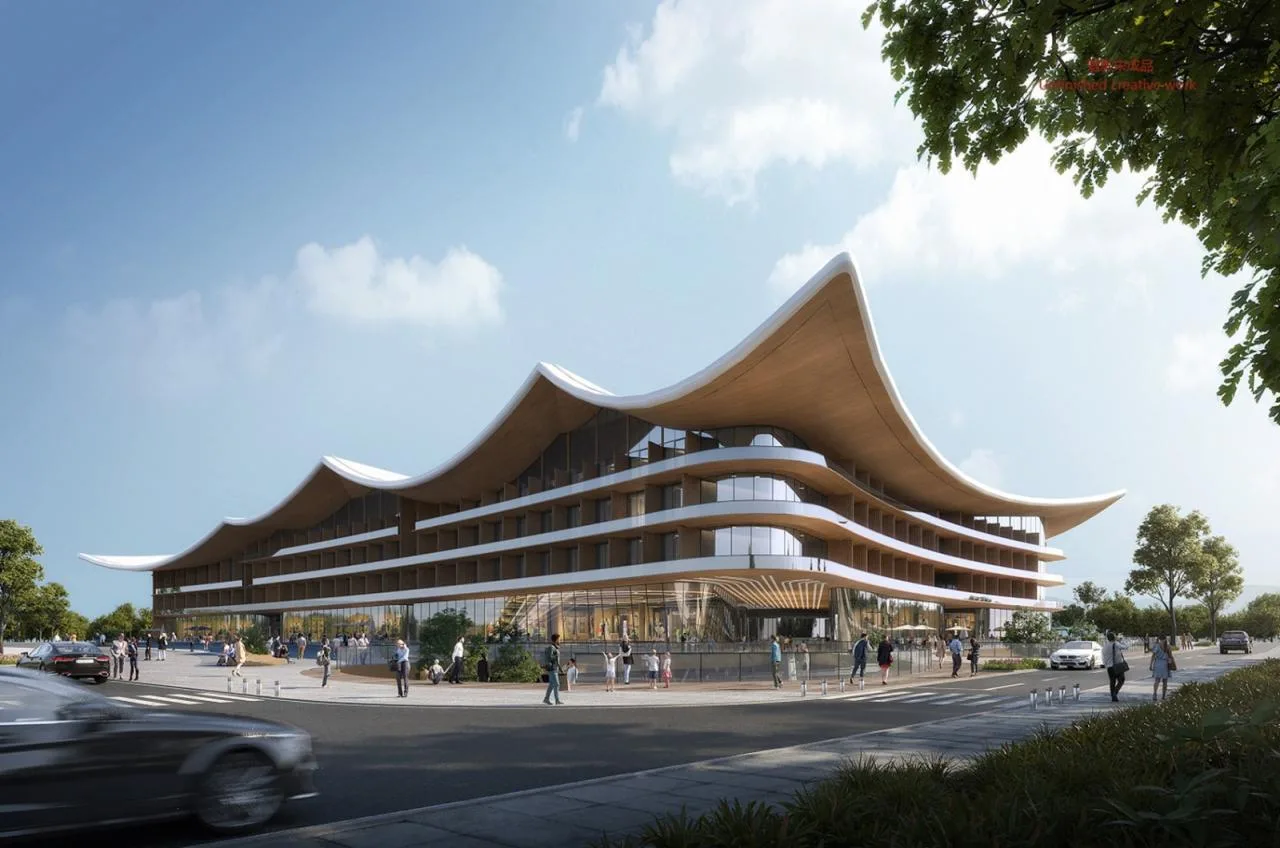
▲ Roof Detail View
03 Integrating Urban Landscape with a Connected Axis
Responding to site conditions while creating a functional urban interface.
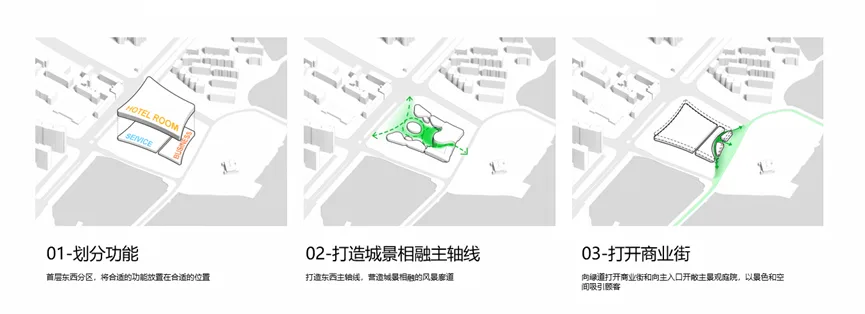
▲ Functional Zoning Analysis
The site is divided east to west into two main zones. The western zone, adjacent to the city road, serves as the hotel’s main entrance and projects the city’s image. The eastern zone, next to the Donghu Greenway, functions as a commercial street catering to scenic area tourists, gathering foot traffic while presenting a welcoming facade to Donghu Lake.
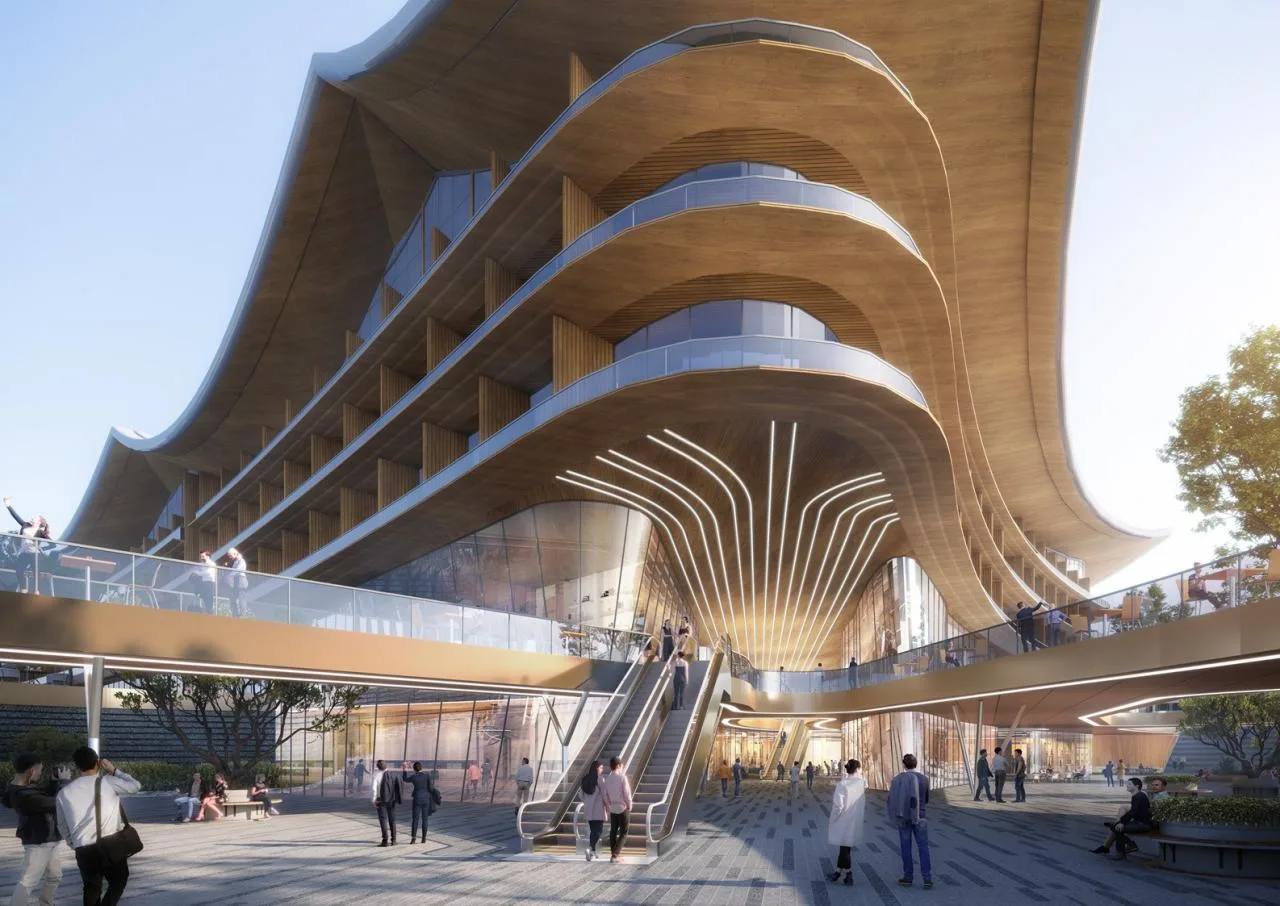
▲ Hotel Entrance View
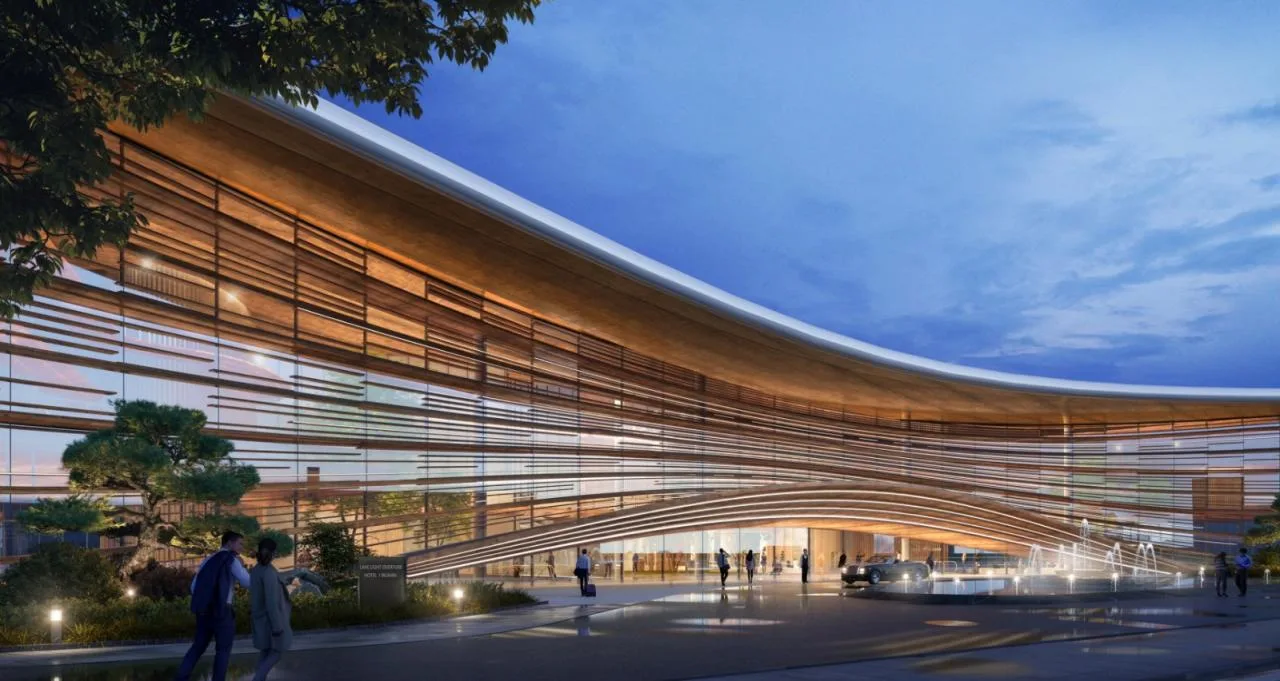
The hotel’s guest rooms are elevated above ground-level public spaces, reflecting a design philosophy of “gently placing the building on the site.” The transparent glass curtain walls on the first floor softly mirror the surrounding environment. Ecological greenery is prioritized, and the overall aesthetic is dynamic and inviting.
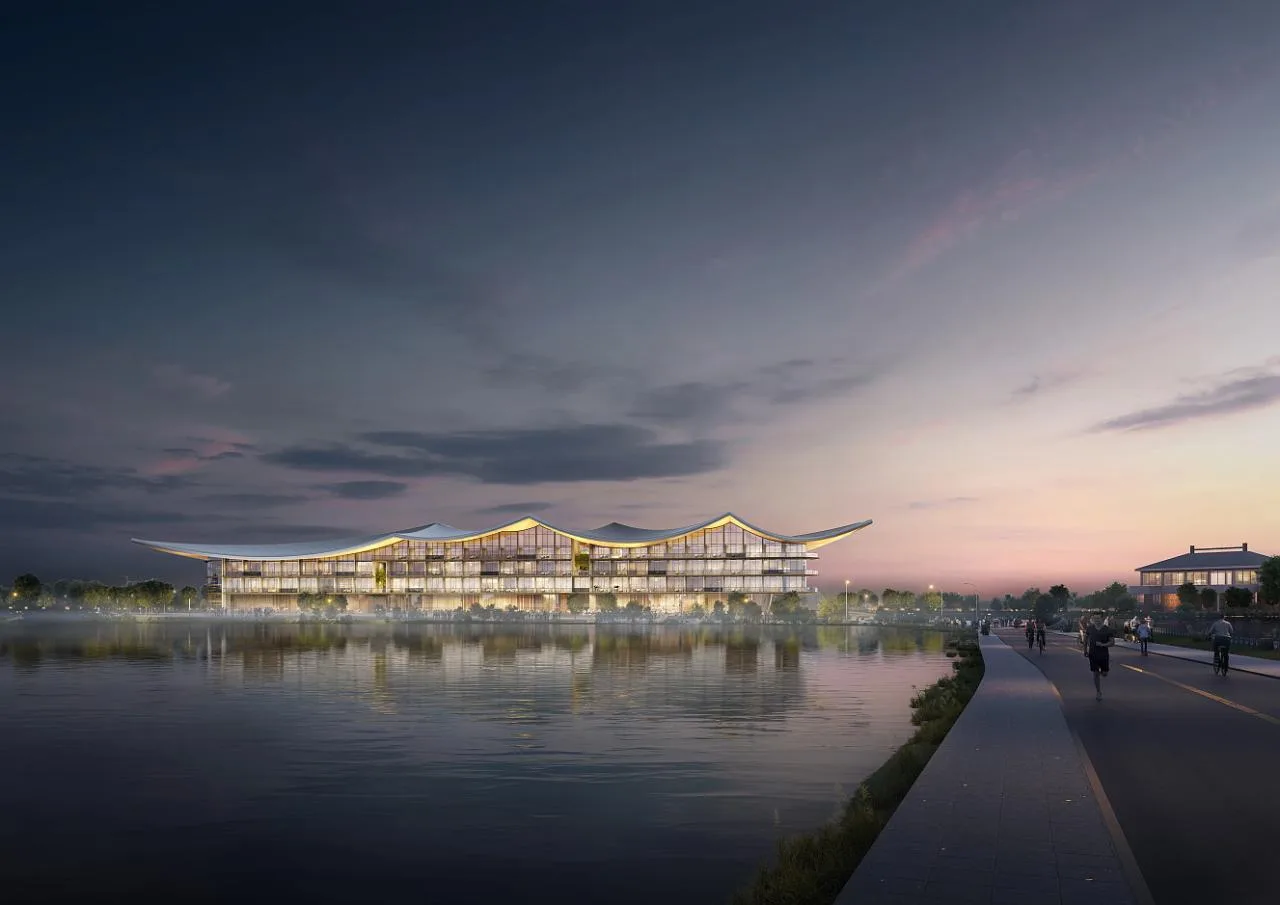
▲ Human Scale Perspective
Maximizing hotel value, guest rooms are arranged in a U-shaped layout along the east, south, and north sides, ensuring lake views from all three sides. The facade features gold and wood-colored metal panels that harmonize with the natural Donghu landscape, while the white metal roof reflects the shimmering waves of the lake.
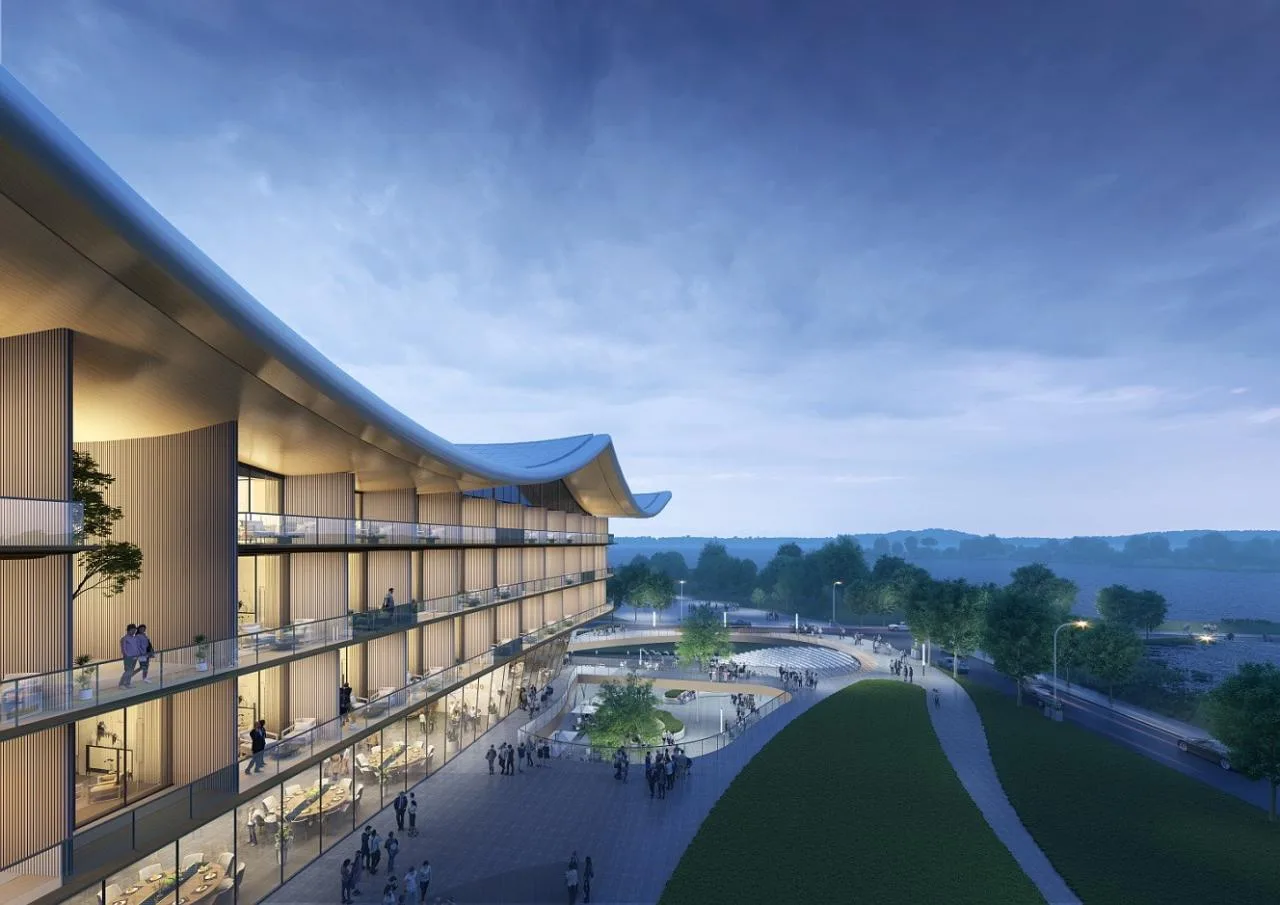
▲ Facade Rendering
04 Poetic Wildness in the Courtyard
Water, Clouds, and Sky: A Boundless Natural Landscape Courtyard
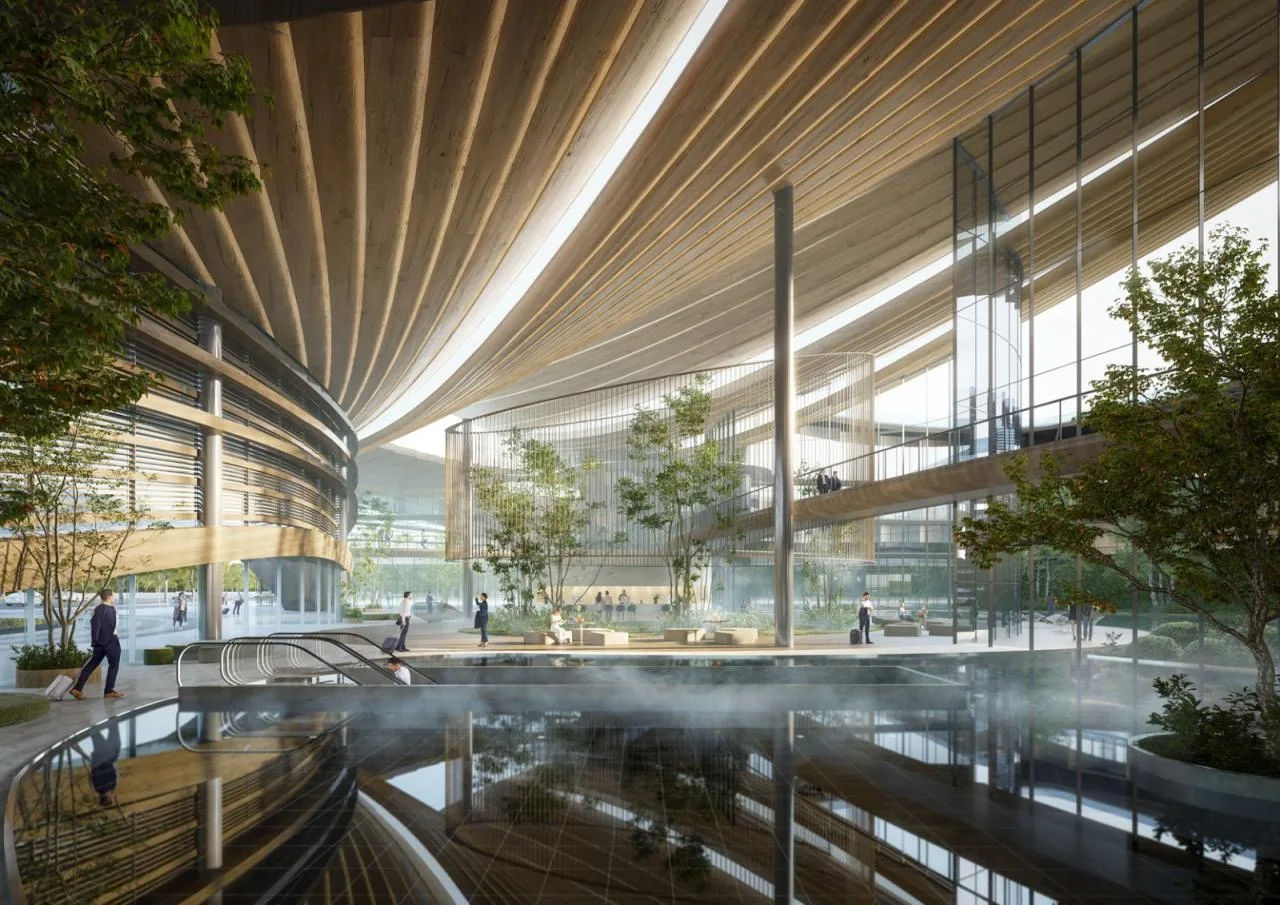
▲ Courtyard Rendering
The flowing water features within the hotel lobby seamlessly connect the indoor space with the outdoor courtyard and surrounding water scenery, creating an immersive experience where people become part of the natural environment. The Yunmeng Living Room employs high ceilings and four-season courtyards, blurring the lines between indoors and outdoors. This design fosters continuity between front and back gardens and leaves a lasting impression on guests.
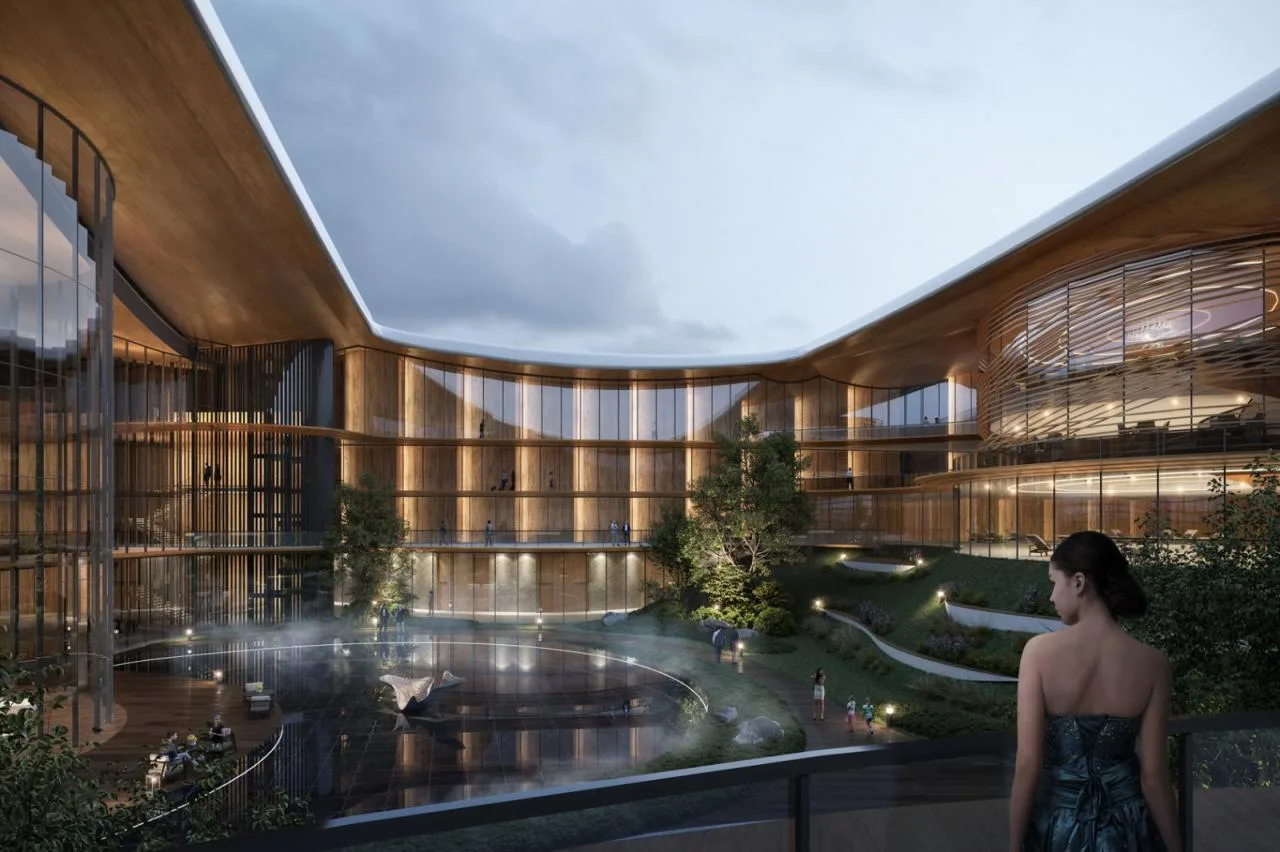
▲ Courtyard Rendering
The outdoor courtyard draws inspiration from water, clouds, and sky concepts, inheriting the essence of the ancient “Cloud Dream Great Ze” environment. This creates a harmonious blend of urban living and natural scenery. As the hotel’s core space, Yunmeng Realm is inspired by the natural mountains and waters of Donghu Lake, combining public functions with landscape gardens to evoke the ecological connection deeply cherished in Chinese culture.
Summary
Weisiping firmly believes in “designing for people,” emphasizing that architecture should celebrate life and human experience. Their approach balances the relationship between the site, surroundings, and urban culture, addressing the complex needs of the city through thoughtful design.
The roof design of Wuhan Huguang Overture City Resort Hotel embodies Jingchu culture, integrating traditional Chu architectural elements. The winding roof mirrors distant mountains and islands, forming a cultural landmark that respects the city’s historical context and rich regional heritage.
Project Information
- Project Name: Architectural Design of Wuhan Huguang Overture Hotel
- Design Unit: Weisiping Architectural Design
- Owner: Wuhan Donghu Ecotourism Scenic Area Management Committee; Wuhan Natural Resources and Planning Bureau
- Design/Completion: 2022
- Land Area: 4.02 hectares
- Building Area: 22,300 square meters
- Design Content: Architectural and landscape design
- Project Type: Hotel Architecture
- Design Team: Qu Keming, Zeng Rui, Zhang Xusheng, Wu Wanying, Ding Yushuo, Li Jiaze, Sun Ying, Ma Hongmei
- Chief Designer: Wu Gang














Must log in before commenting!
Sign Up