
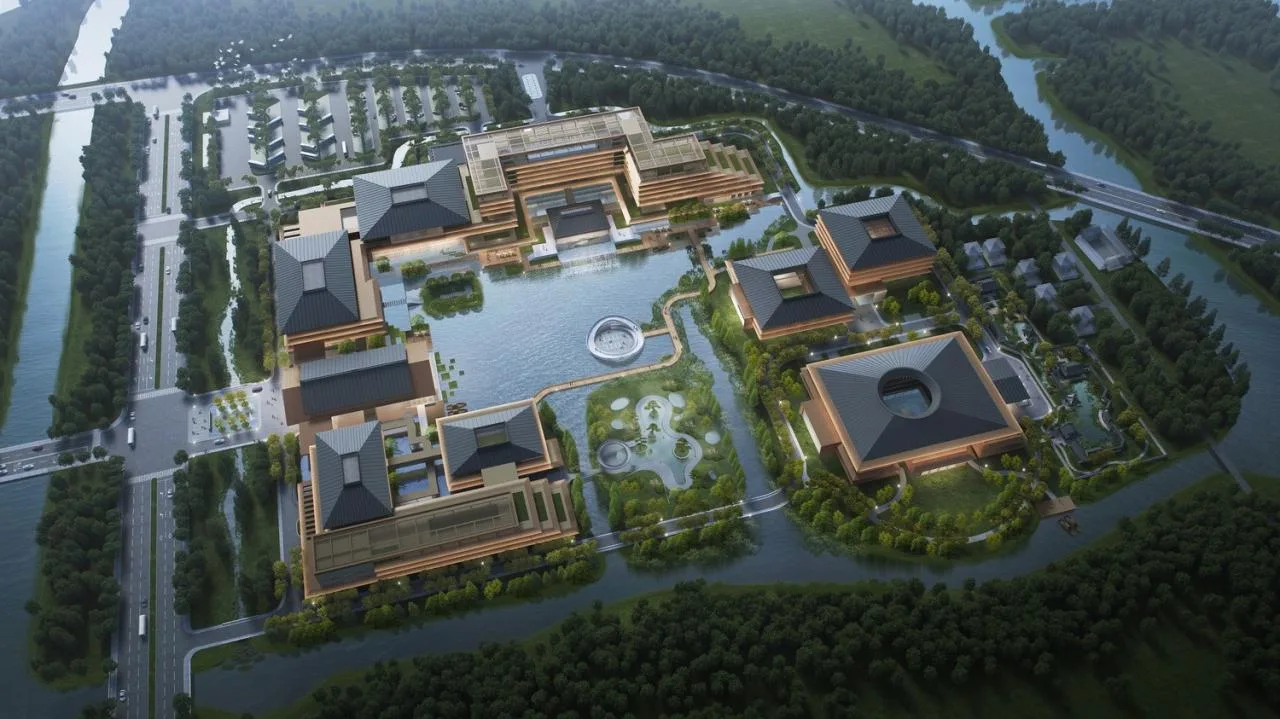
The ancient town of Qintong, embraced by clear blue lakes, is renowned for its eight scenic spots.
Yu Meiren – The Eight Scenic Spots of Qintong
01 Project Location: The Pearl of the Water Town
Taizhou, a water city without mountains within its urban area and surrounded by water, has shaped the soul of this historic town. The Qinhu Tourist Scenic Area, situated in Taizhou’s eastern suburbs, is a natural wetland paradise with a wild charm. It boasts the serene beauty of vast tea plantations spanning thousands of acres typical of Jiangnan, vibrant ancient streets filled with colors and fragrances, and a rich cultural legacy rooted in the Shuitian Buddhist Kingdom.
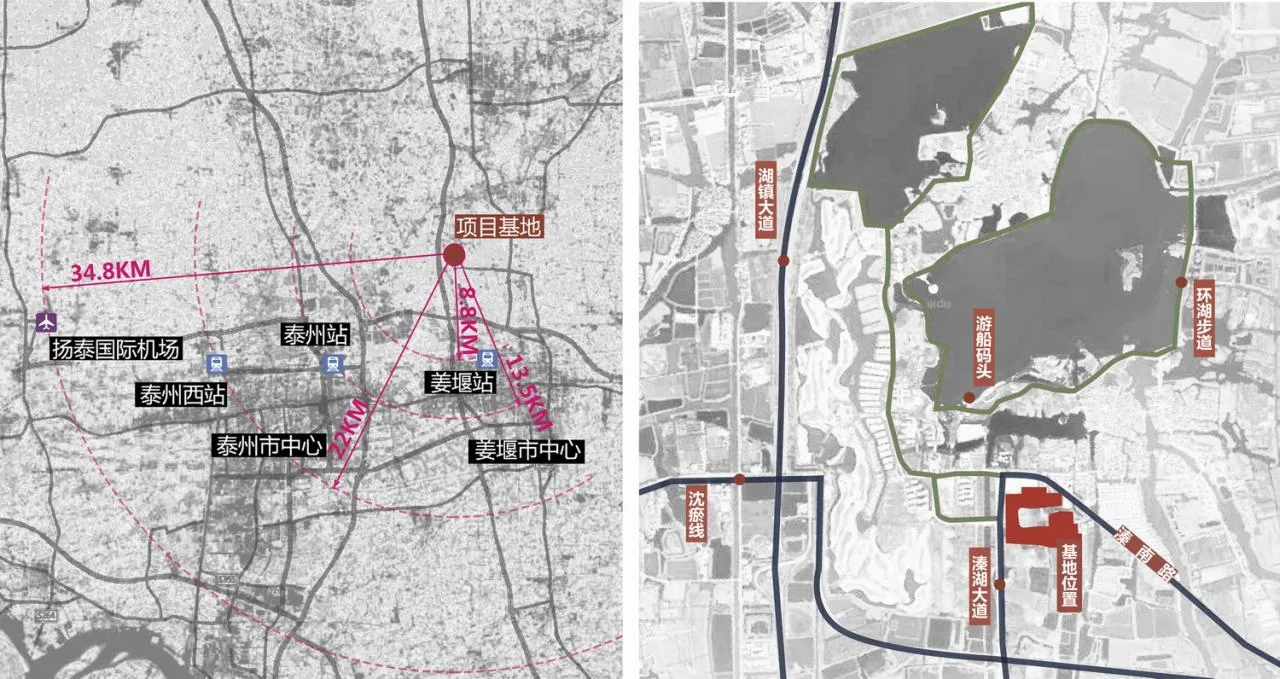
△ Project Location
Since being designated a national 5A-level tourist attraction in 2012, Qinhu has evolved into an ecological tourism hub integrating wetland sightseeing, ancient town tours, hot spring retreats, and cultural folk experiences, earning the title “Pearl of Water Town”.
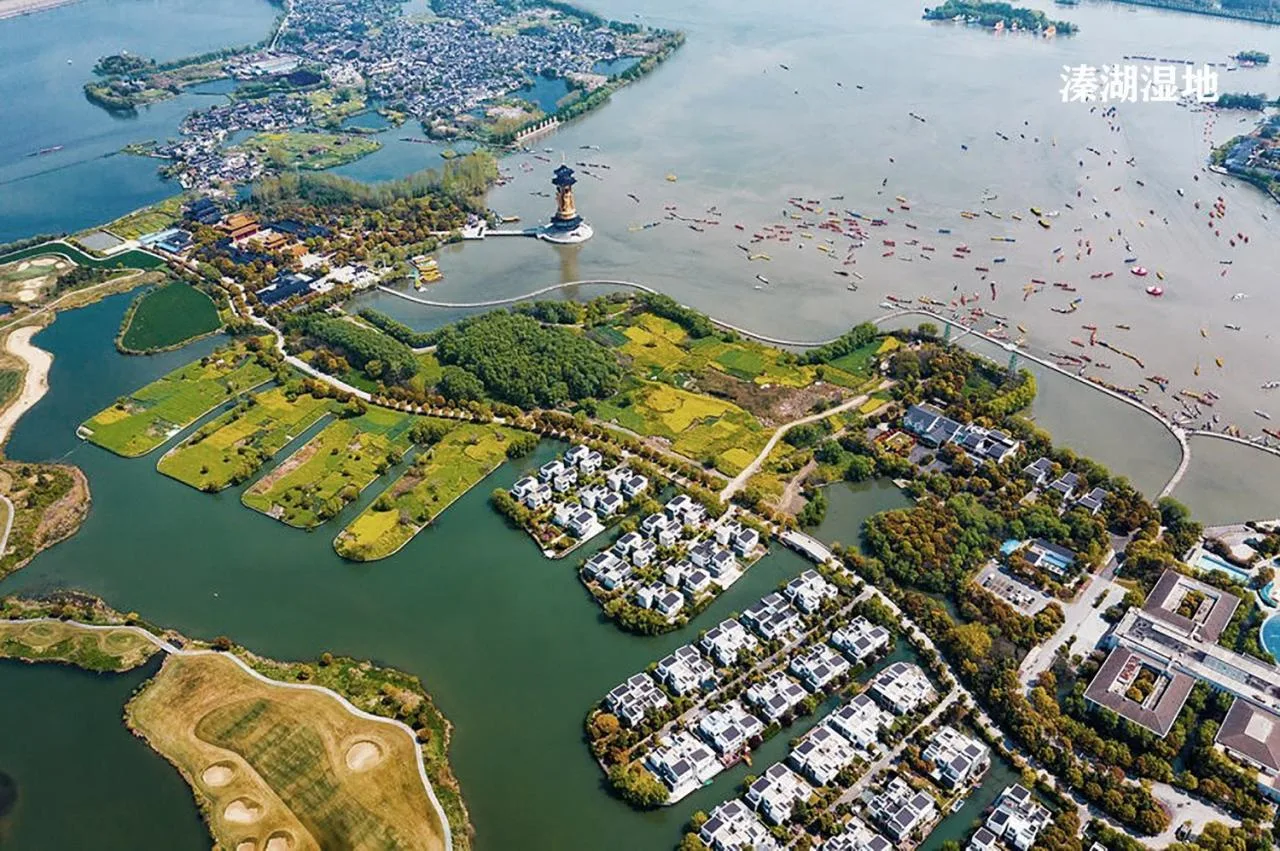
△ Scenic Area Features
The project site lies within this “water town pearl,” adjacent to Qinhu Avenue, just 1 km from the scenic area’s southern entrance and within 1.5 km of its center, allowing easy access to all tourist attractions.
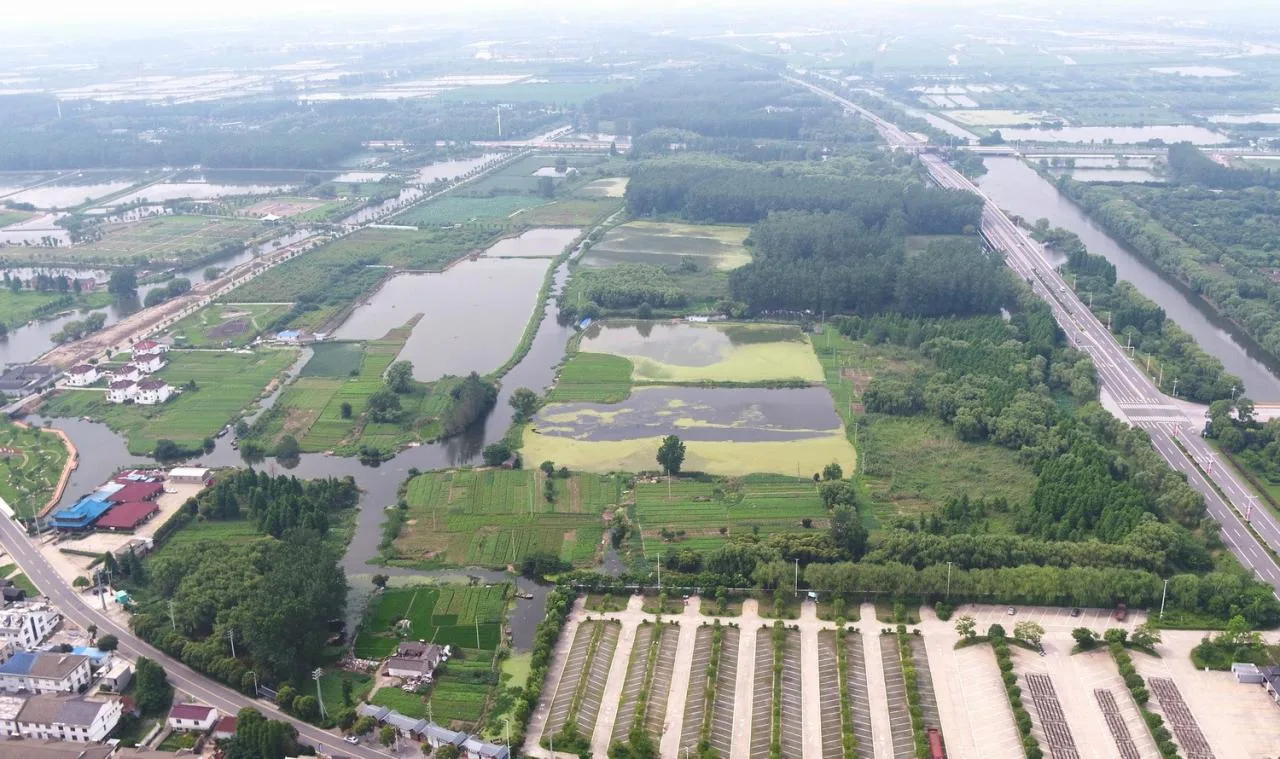
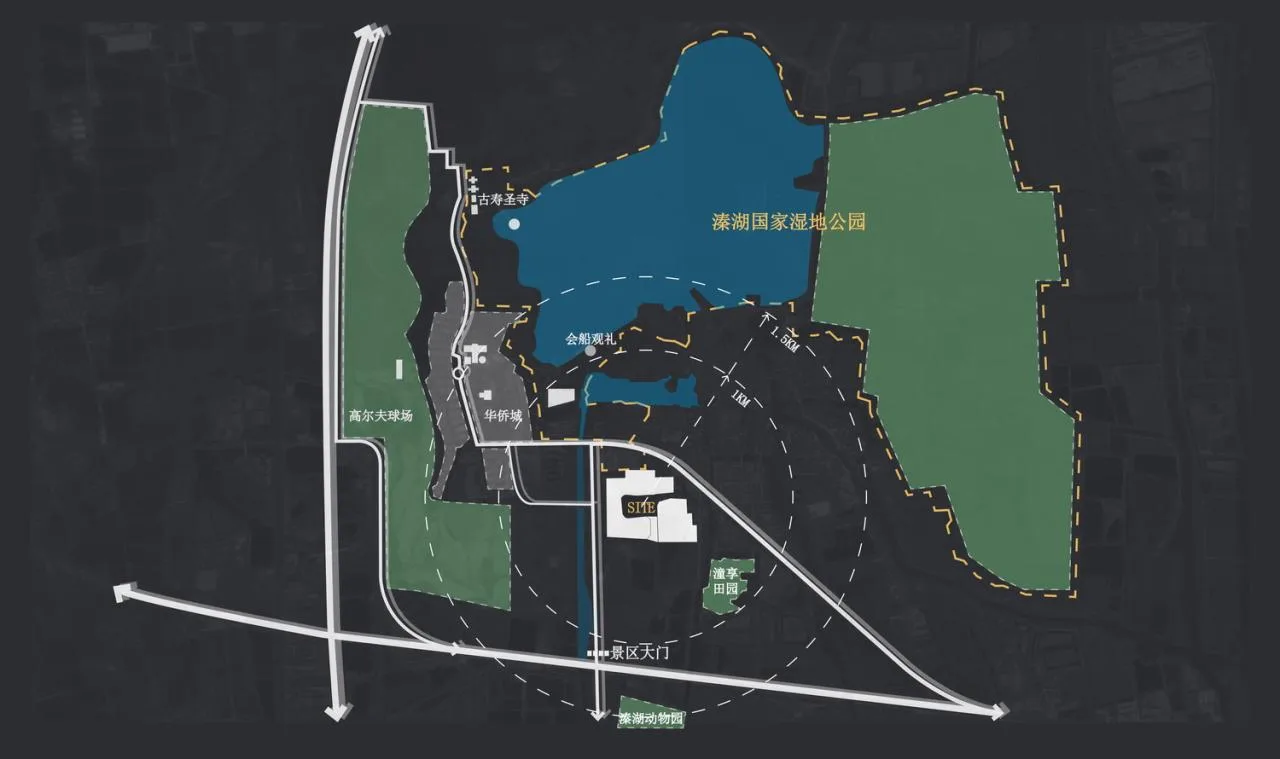
△ Current Site Conditions
The site is divided into two plots: Plot A covers 64,474 square meters, and Plot B covers 36,359 square meters. Plans include constructing a resort hotel, executive lounge, hotel-style apartments, and related facilities, totaling 390 guest rooms.
02 Planning and Design: The Wetland Floating Island Concept
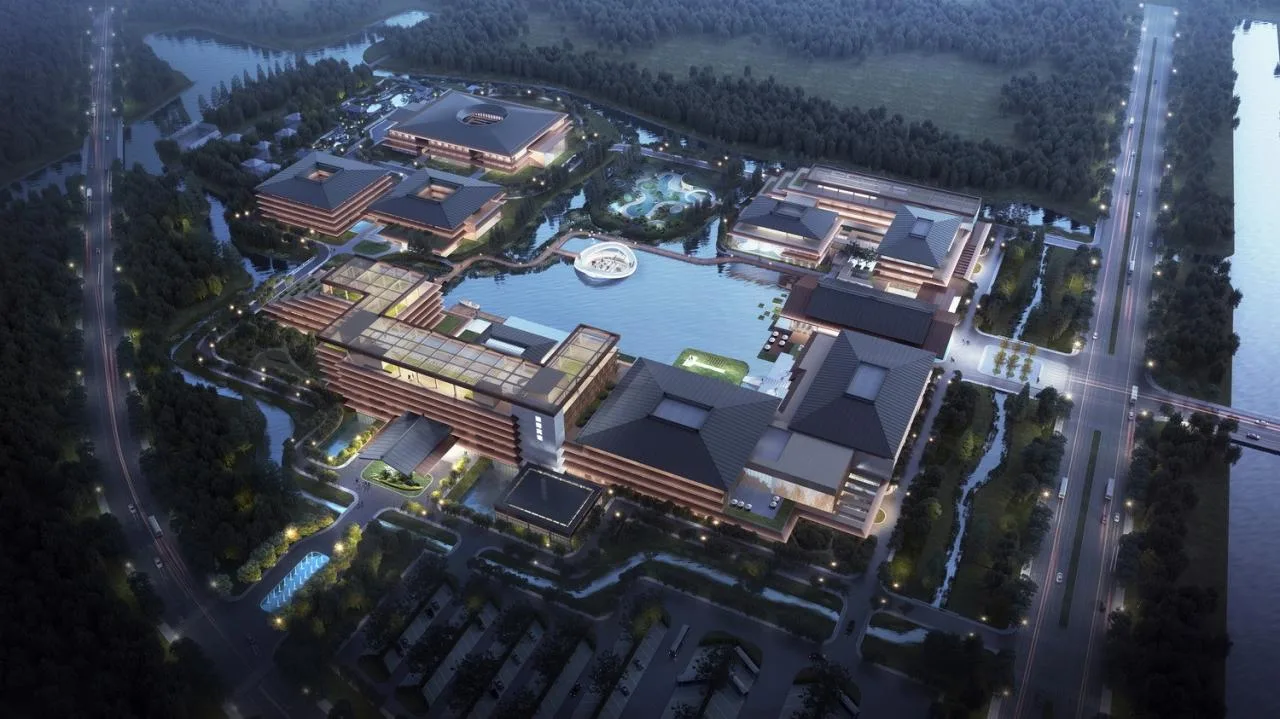
Located at a key transportation node within the scenic area, the site plays a crucial role in complementing accommodation and entertainment amenities. Surrounded by roads on three sides, it forms a “peninsula” shape. The design team integrates the surrounding water network, introducing natural water features into the site’s core to create an internal landscape that embodies the “floating island” concept.
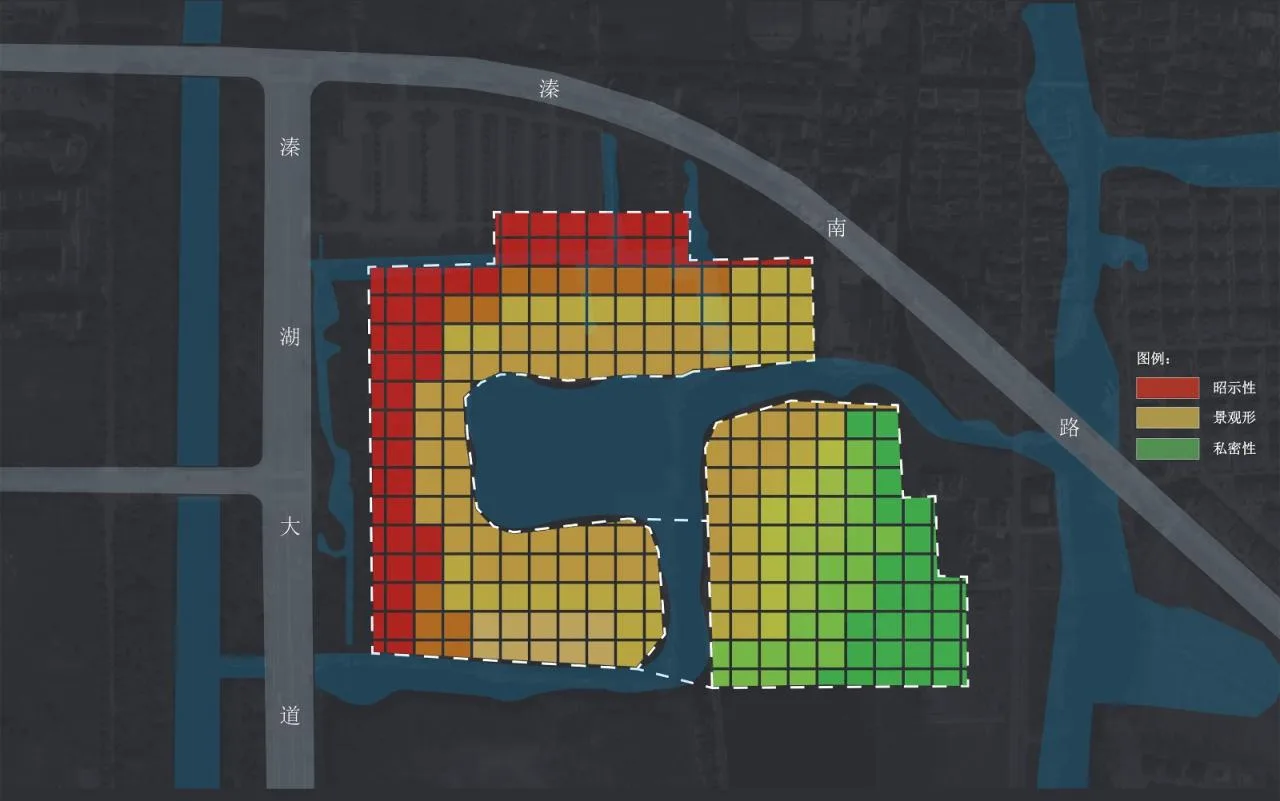
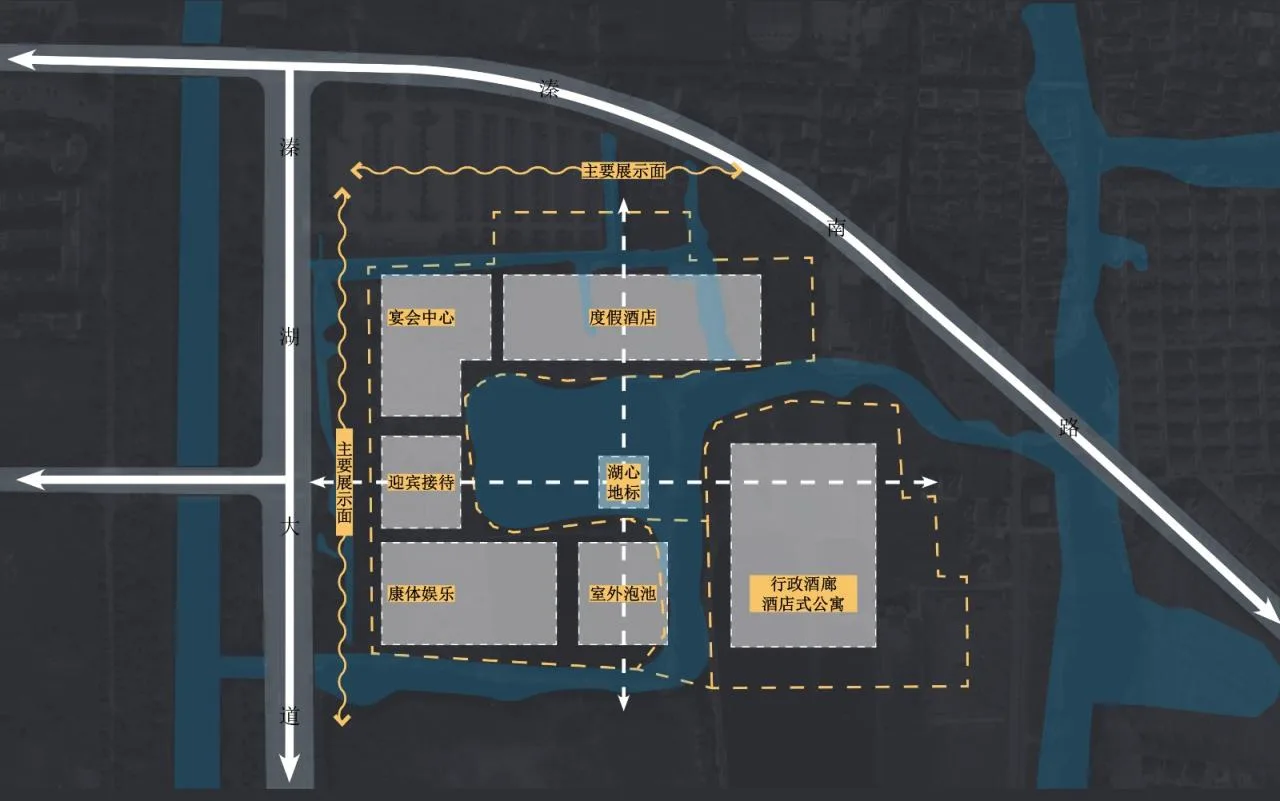
The land is U-shaped, bordered by municipal roads and waterways with a central lake. The design strategically places functions such as vacation hotels, reception areas, banquet halls, and fitness facilities along Plot A’s main frontage facing the lake. The layout skillfully merges flowing horizontal spaces with designated functional zones.
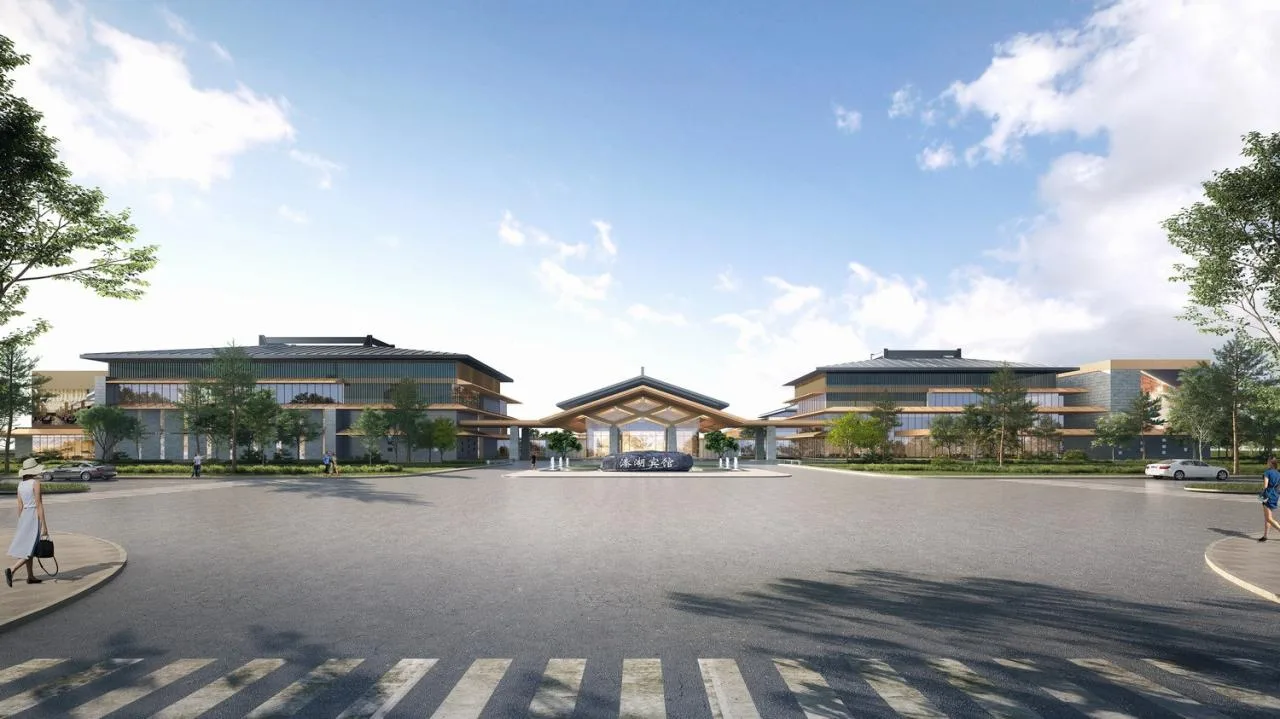
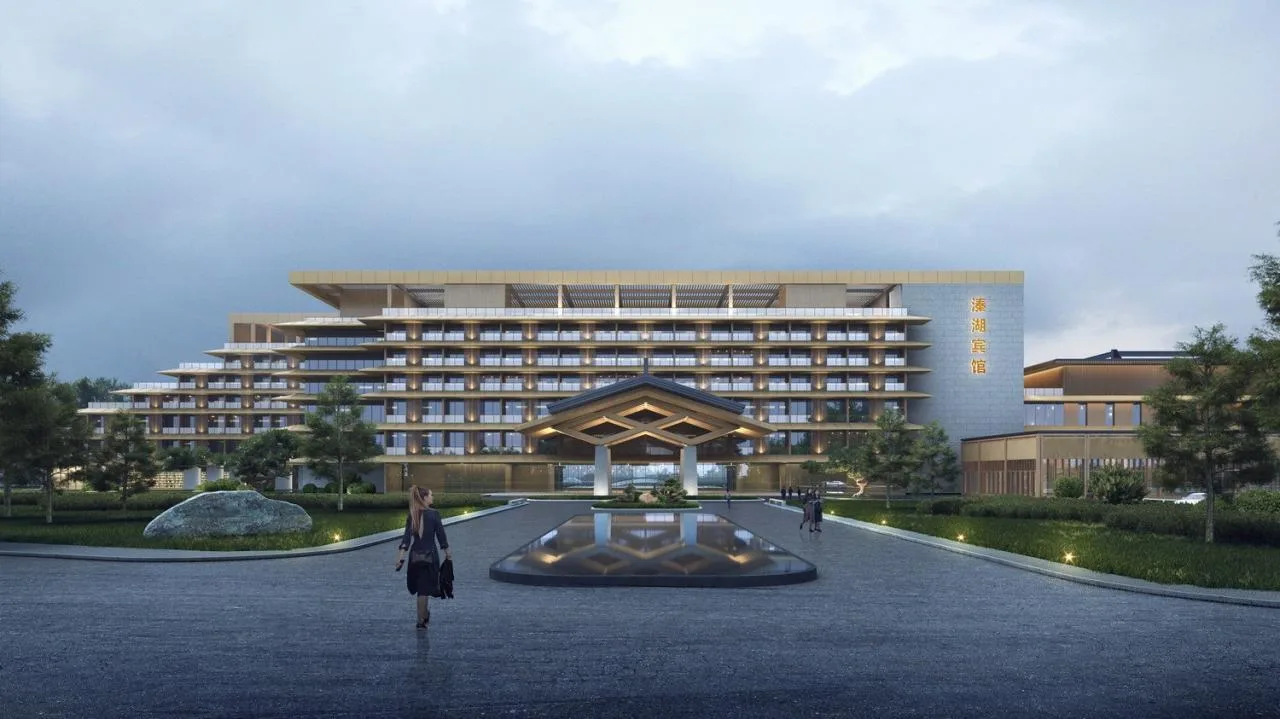
The executive lounge and hotel-style apartments are arranged in a dynamic courtyard layout within the more private Plot B.
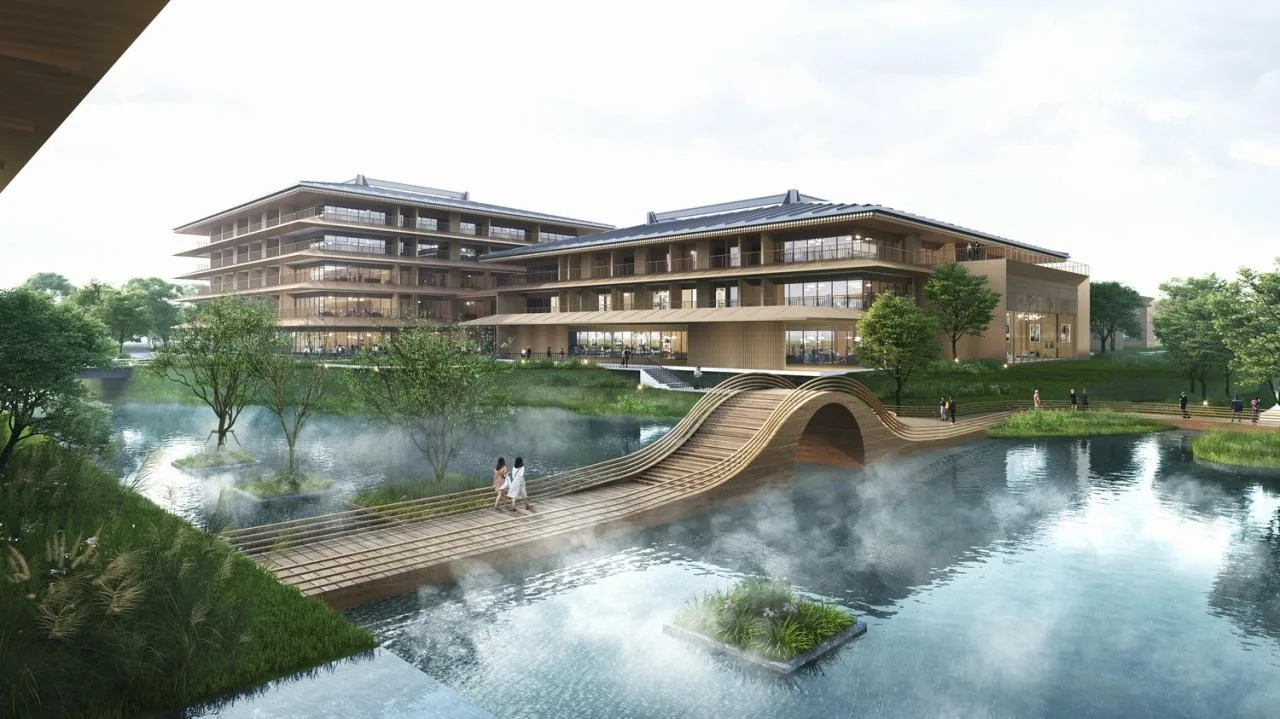
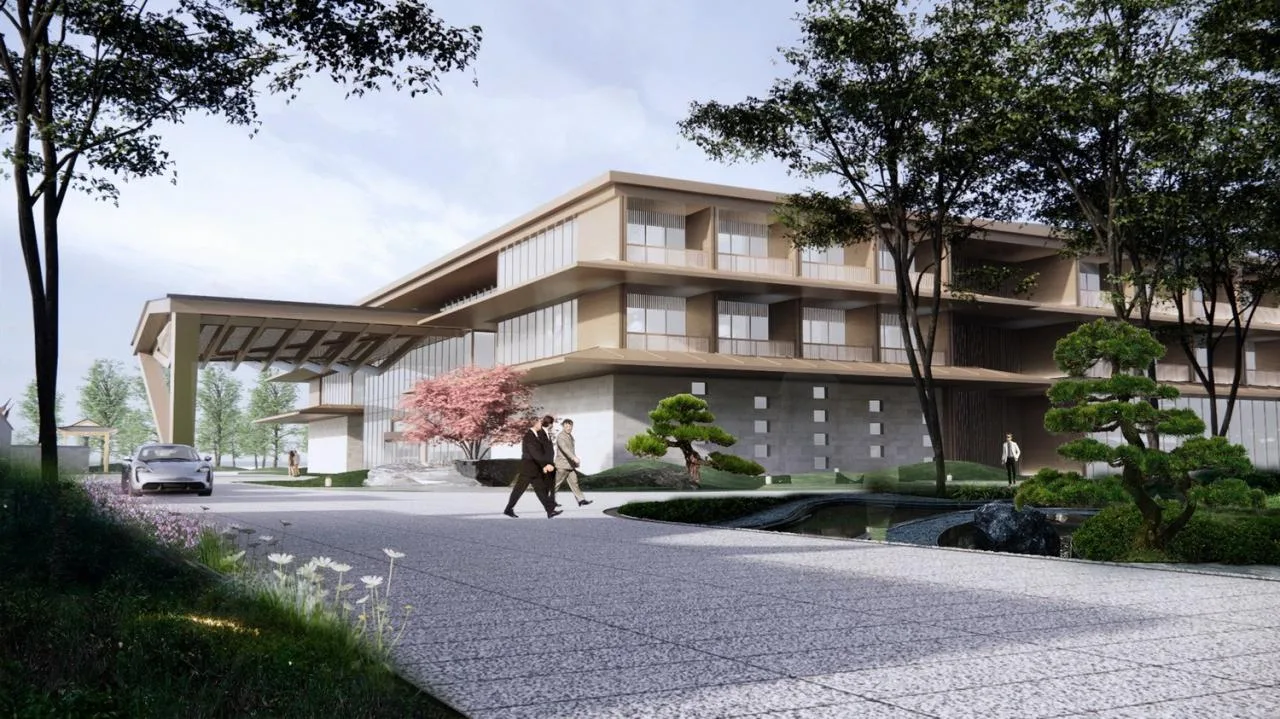
Despite the relatively narrow U-shaped plot, the design transforms this limitation into a feature inspired by the wetland landscape—cofferdams form islands interconnected by waterways. Buildings of varied sizes are thoughtfully staggered, mimicking the intertwined deep blue lakes and river networks, outlining scattered beaches and islands.
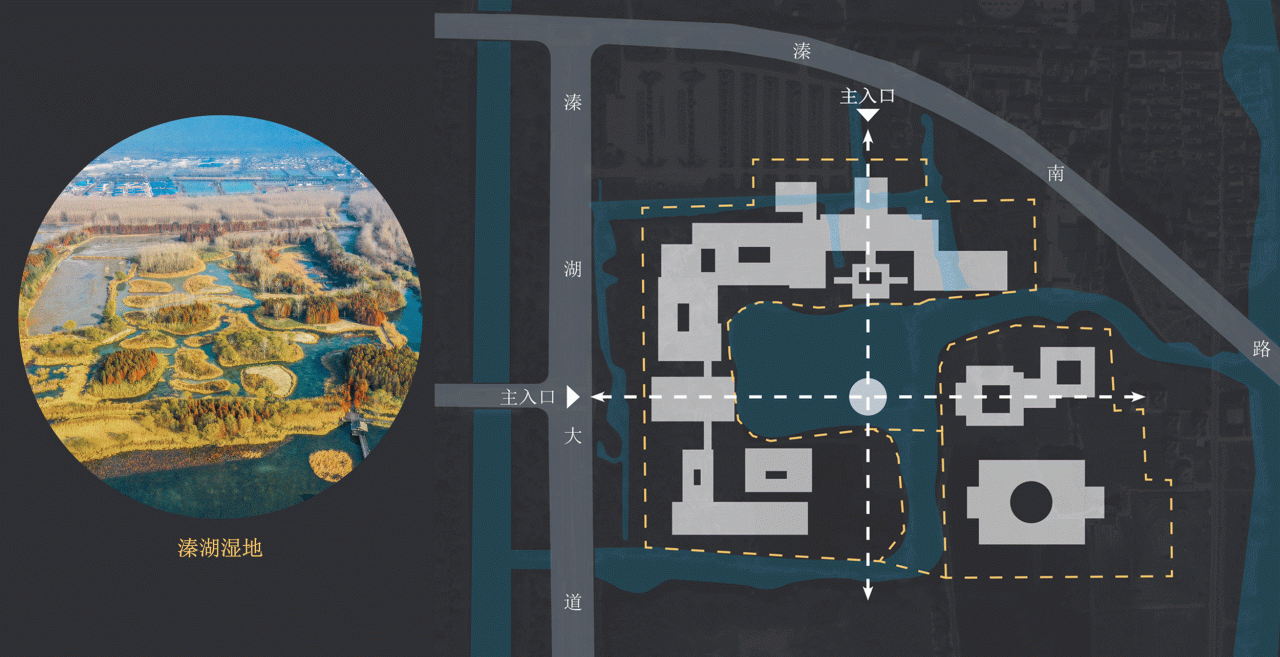
△ Overall Layout Generation
The cross-shaped plan centers on the guest reception and hotel entrance, naturally linking the floating islands in an organized yet casual flow. Key architectural spaces and landscape nodes are designed with three-dimensional spatial relationships that harmonize with the surrounding scenery.
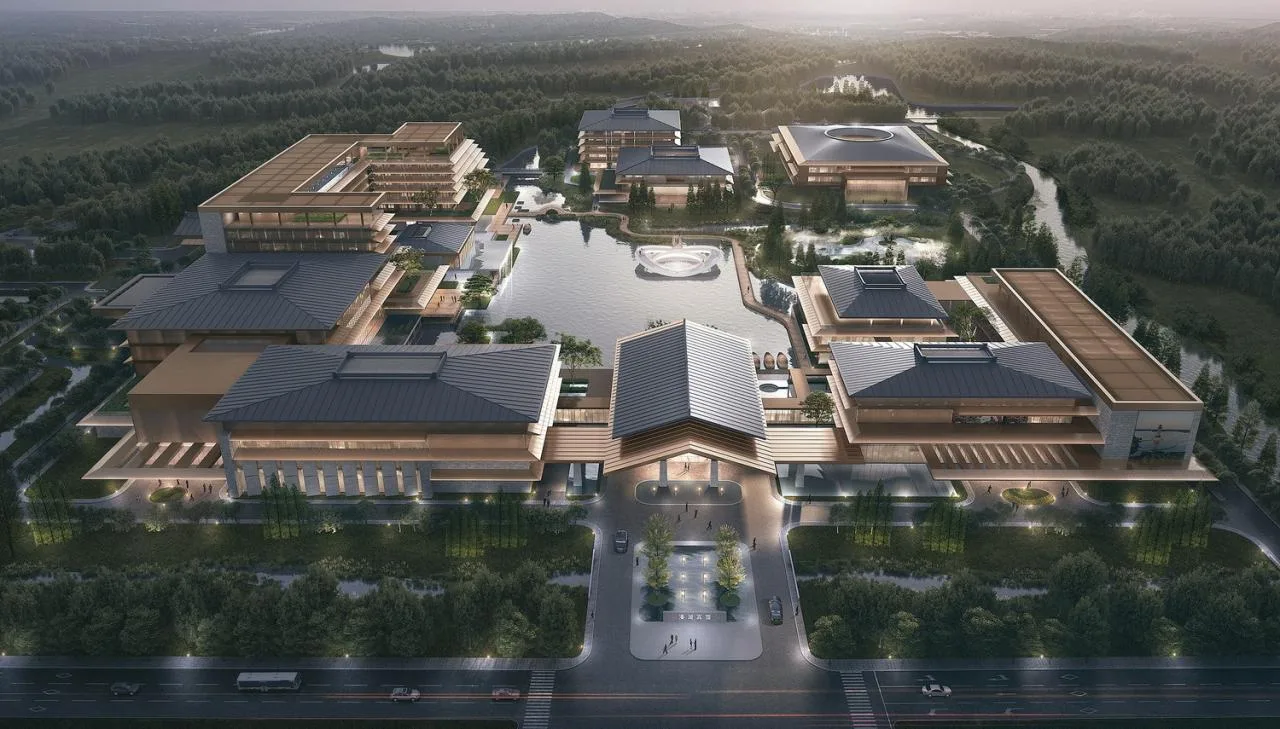
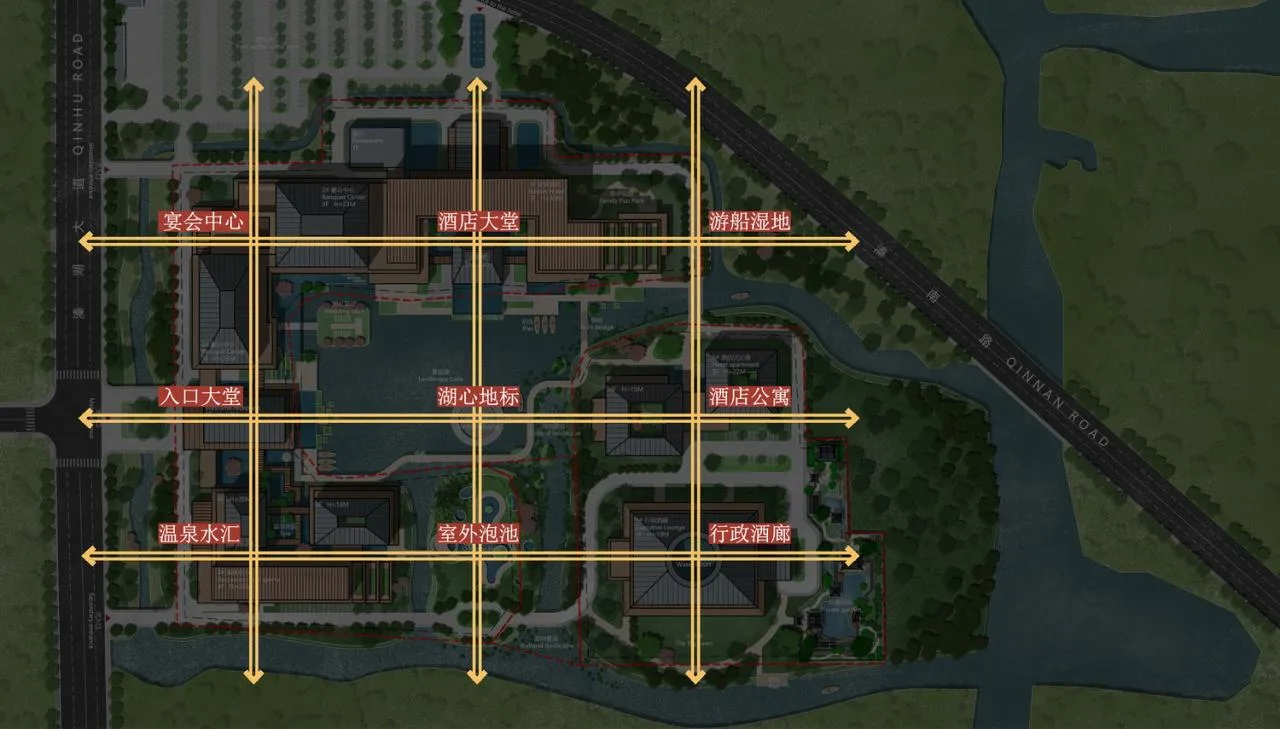
Other functional areas are connected by flowing waterways weaving through the archipelago, forming a lakeside layout that maximizes scenic views while ensuring balanced spatial rhythm and creating a distinctive environment.
03 Architectural Design: Embracing Qintong’s Ancient Style
Qintong Ancient Town, with its millennia of history, features riverside homes connected through gardens and courtyards, fostering close-knit communities. Qinhu Hotel embraces this tradition, extending horizontally along the water’s edge with low-profile structures. The roofs combine flat and gentle slopes, scattered across facades dominated by horizontal lines, creating a unified, harmonious style that blends softly into the natural setting.
The arrangement and interconnection of building blocks are carefully designed to maximize views and create rich courtyard spaces.
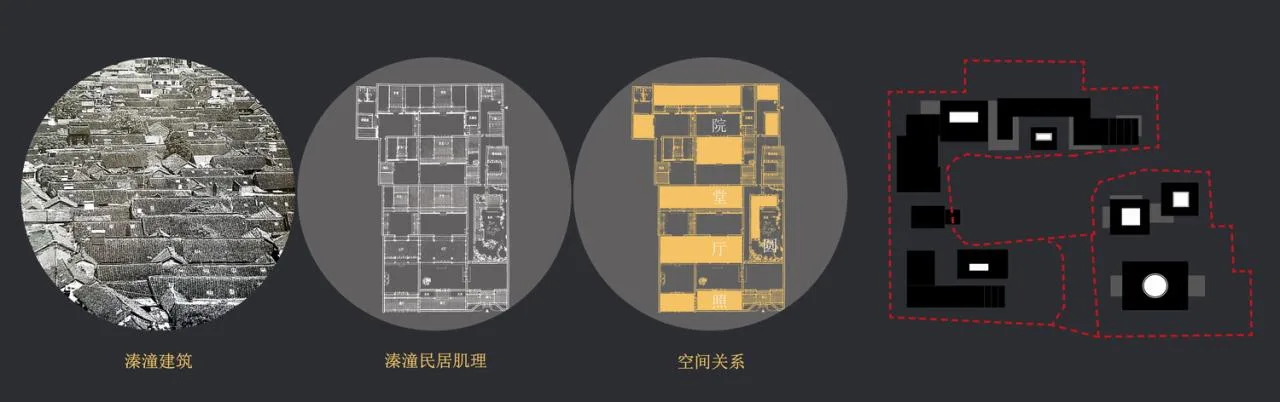
The design team draws inspiration from history while situating it within present and future contexts, adopting a forward-thinking approach.
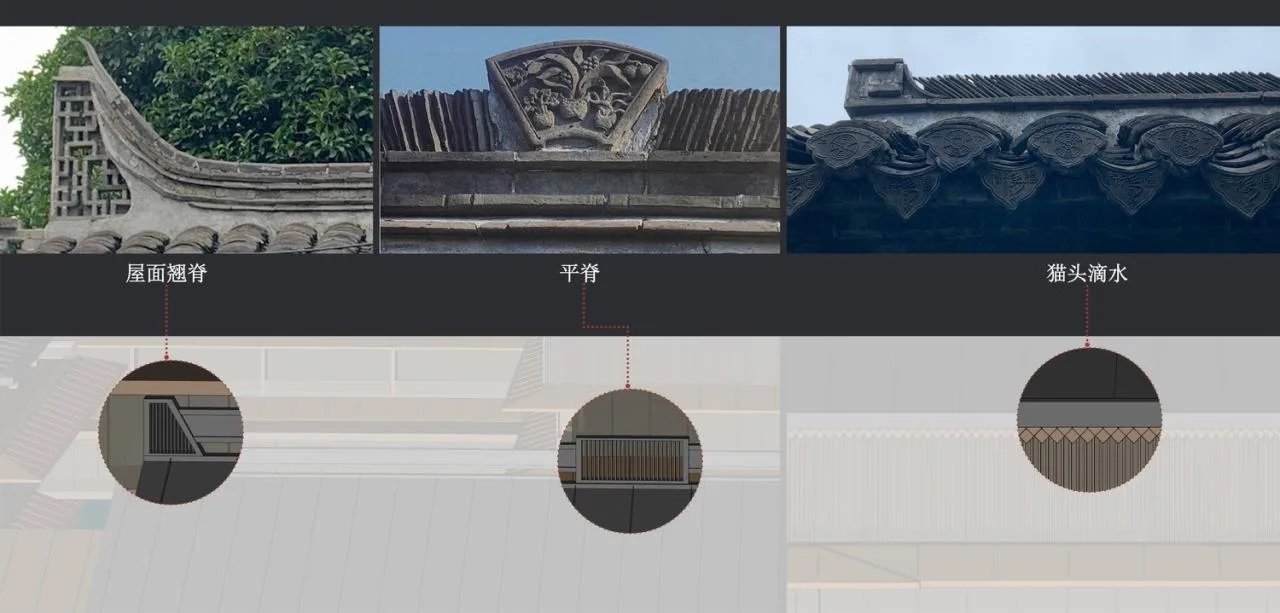
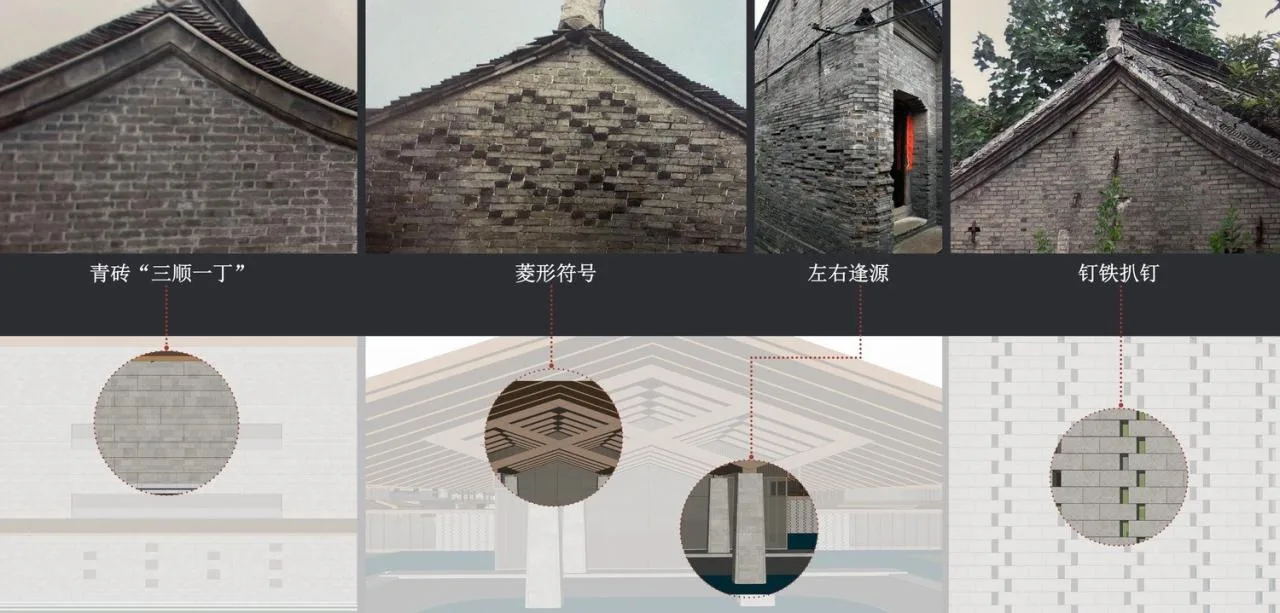
Extracting traditional residential elements
This “extraction” does not directly replicate specific elements but serves as a design guide.
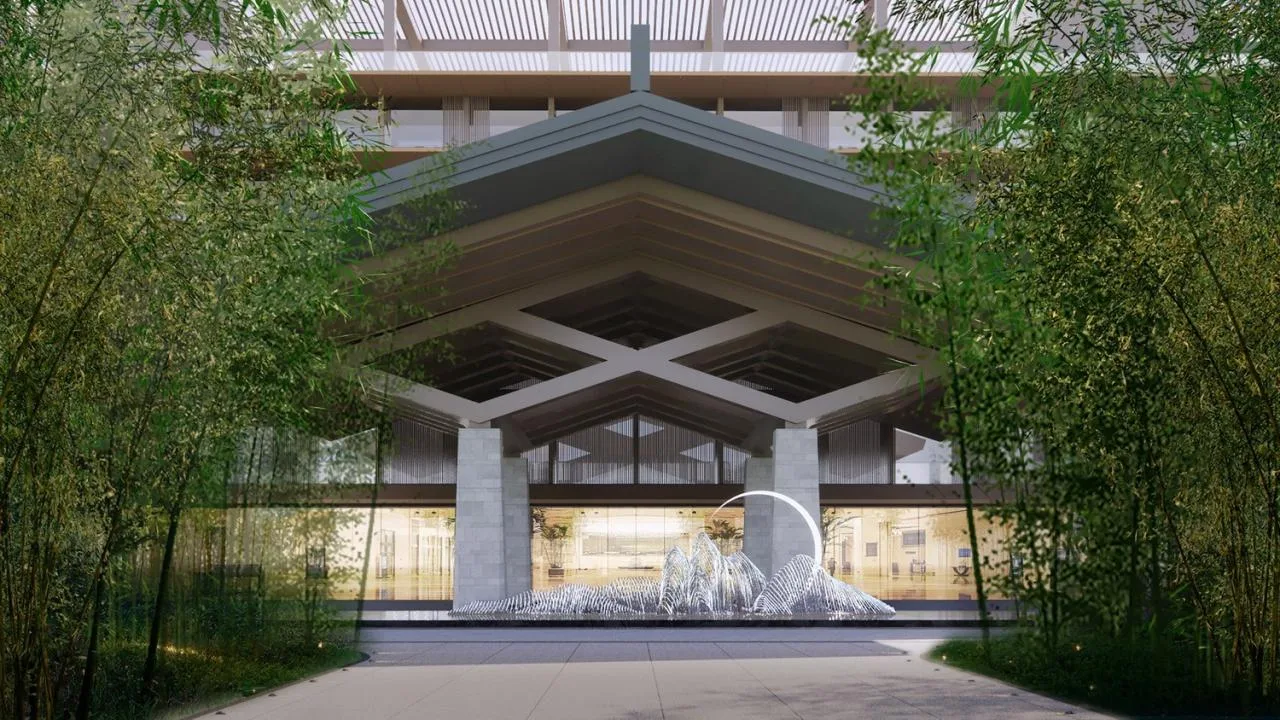
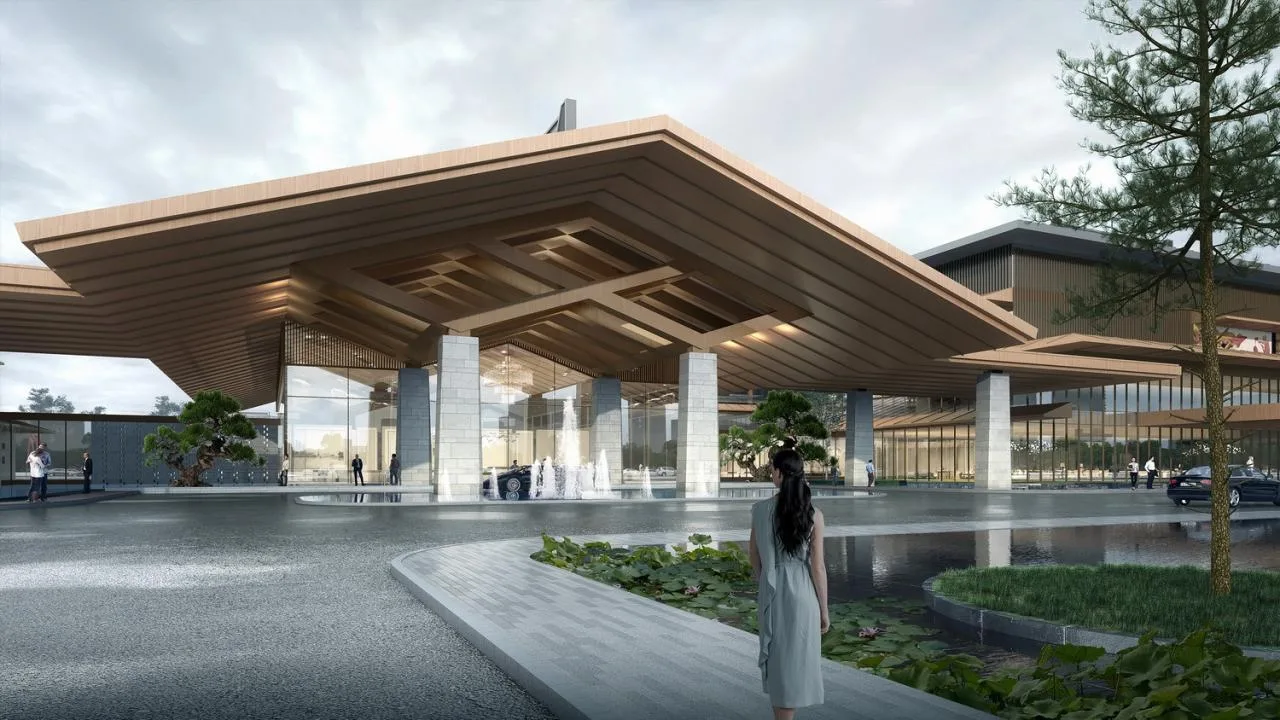
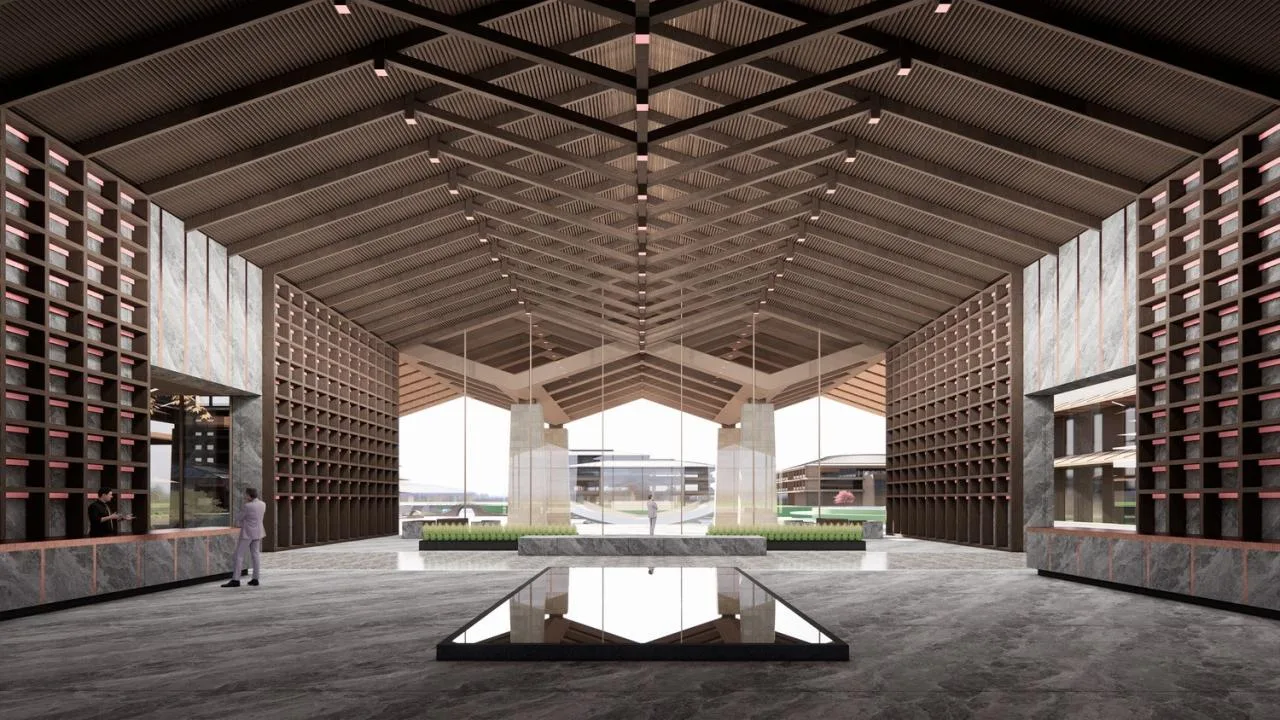
Contemporary techniques reinterpret traditional roofing ridges, green bricks, and gray tiles, utilizing wood, stone, and paper materials inspired by local dwellings to enhance the hotel’s texture and sense of belonging.
04 Functional Flow: Resort Hotel Complex
The Qinhu Hotel complex consists of a resort hotel with 260 rooms, a banquet center featuring 17 halls, an executive lounge with 30 rooms, hotel-style apartments with 100 rooms, and a large hot spring club. These components are designed to operate both independently and collectively.
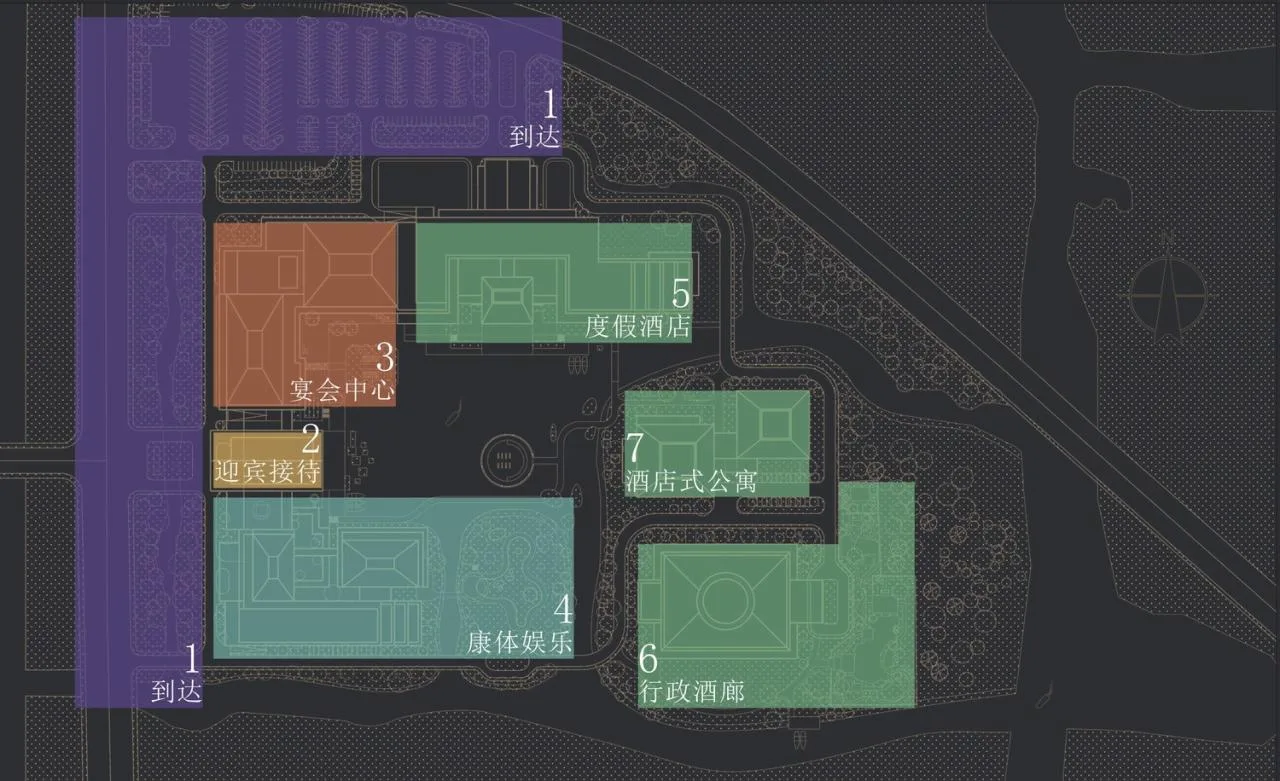
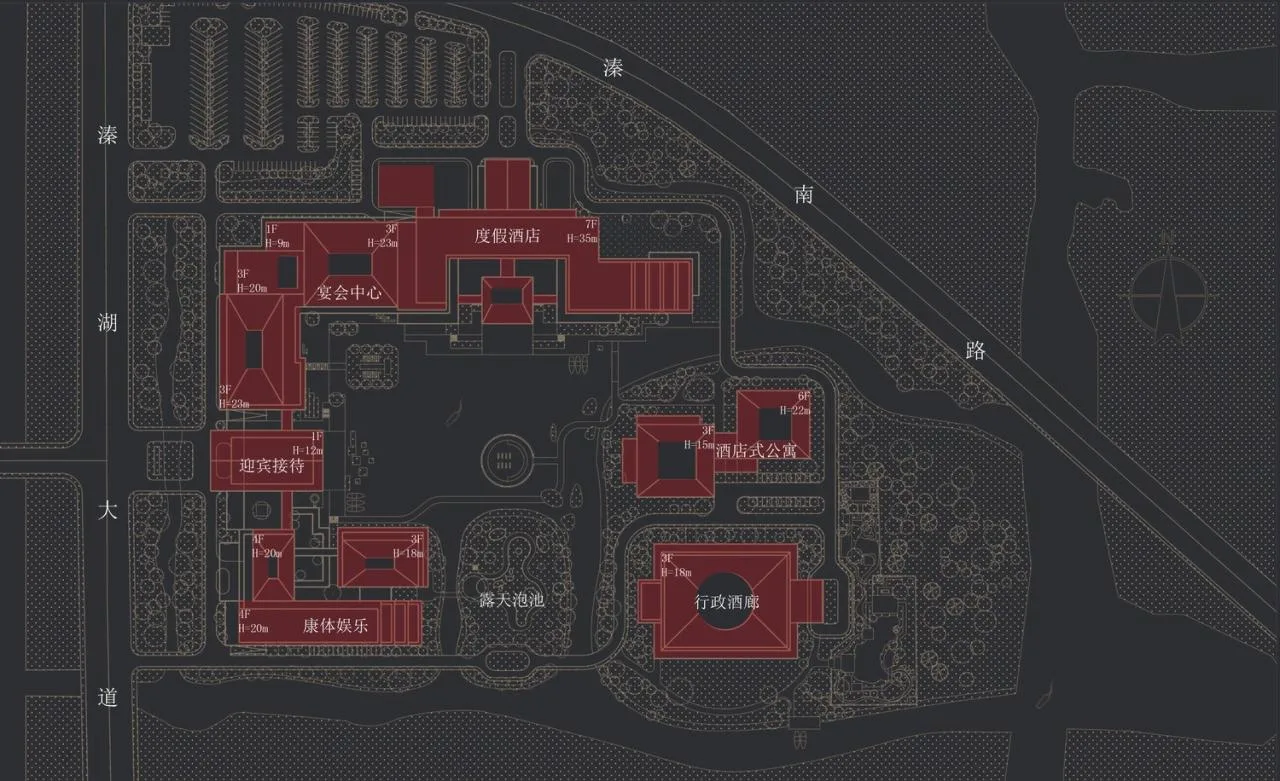
△ Functional Layout
Given the narrow plot, efficient functional organization and well-integrated pedestrian and vehicle flows are critical for operational success and guest experience.
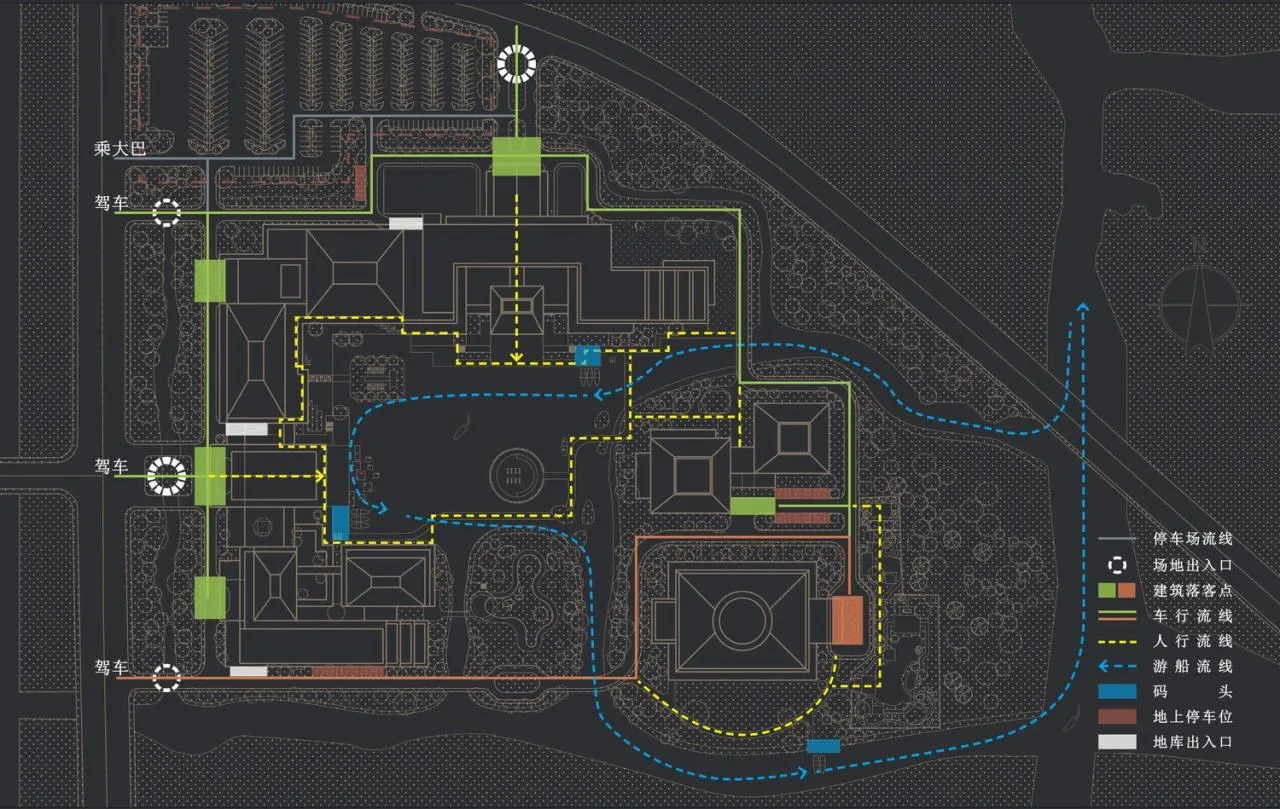
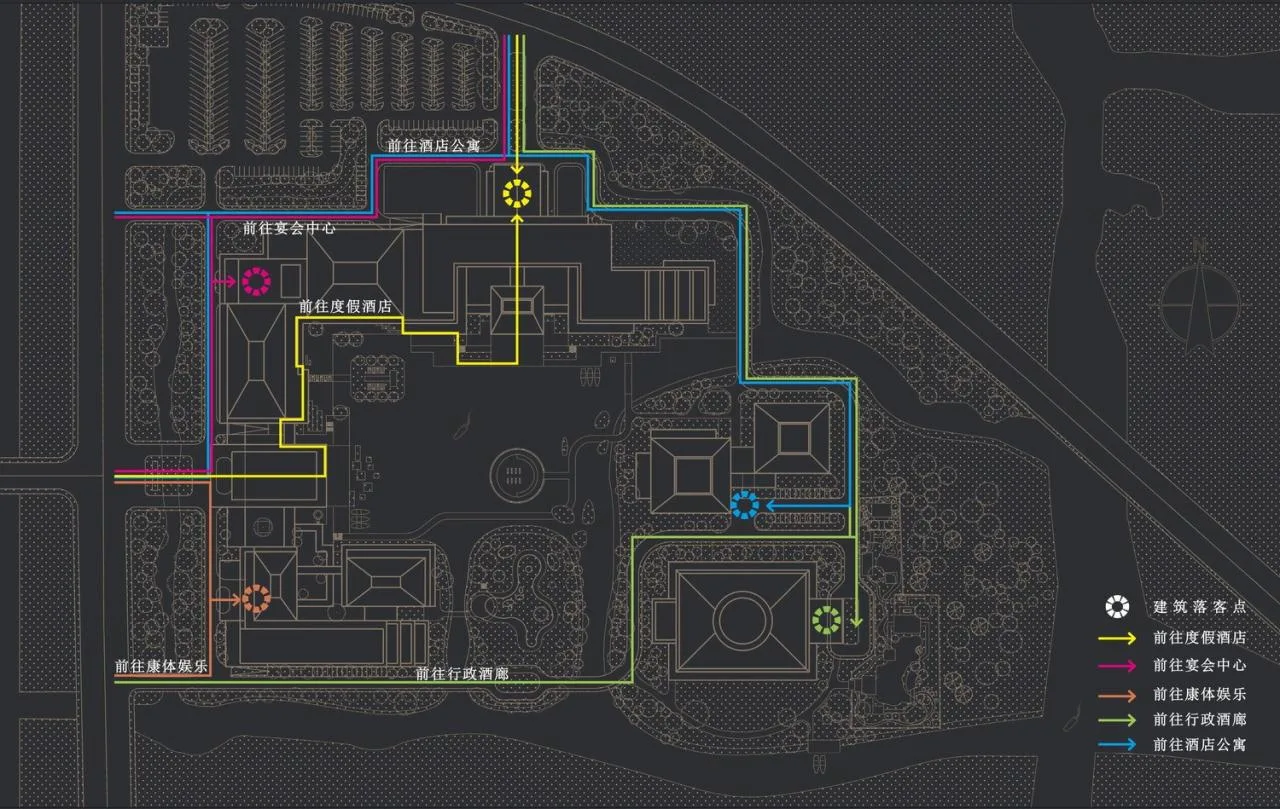
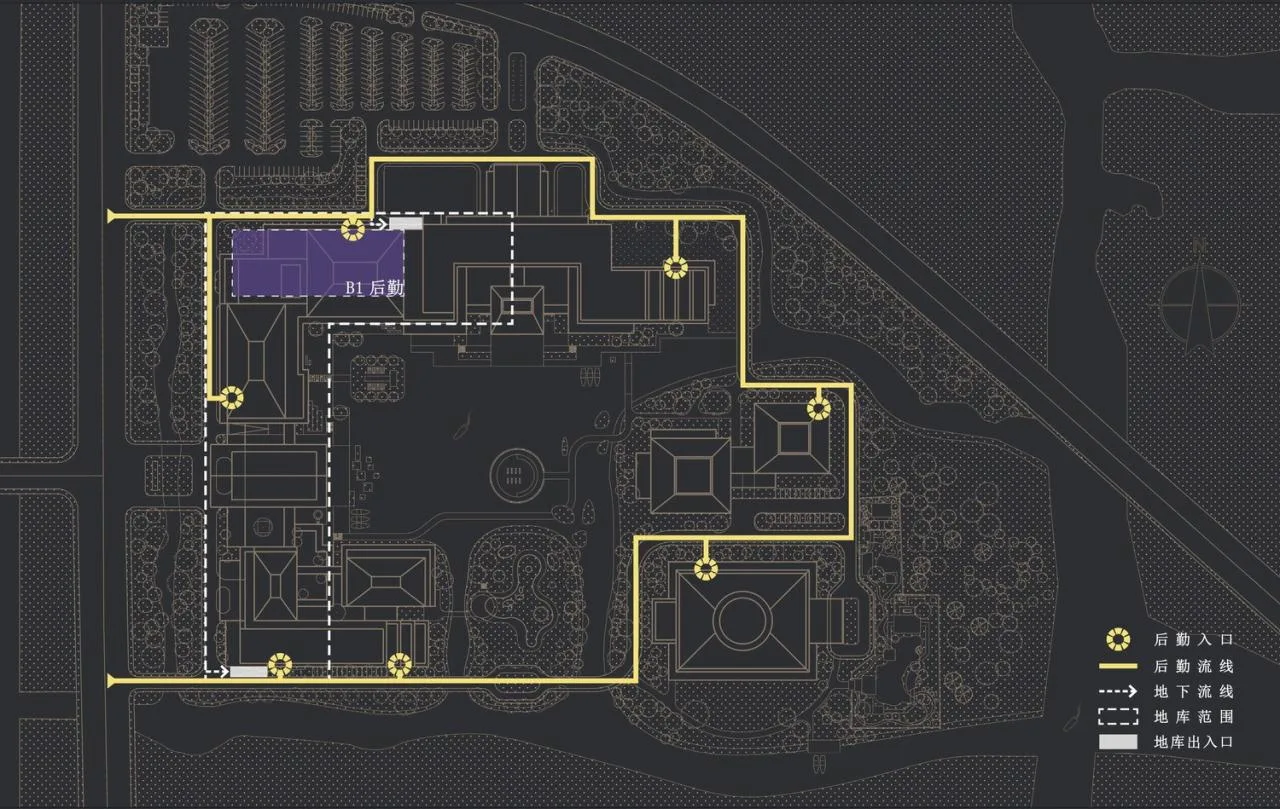
△ Traffic Flow
The complex features four vehicle entrances: the west entrance serves as the main access for banquets, receptions, health, and entertainment facilities, while the north entrance primarily accommodates the resort hotel and apartments.
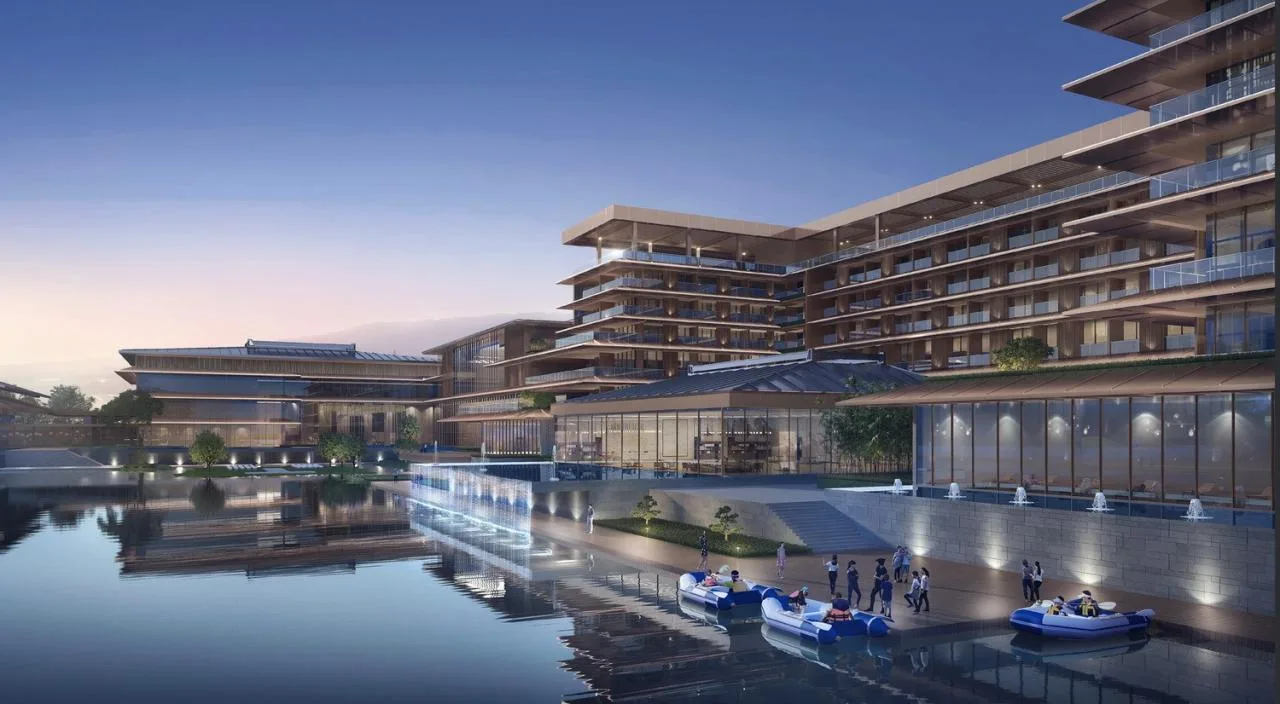
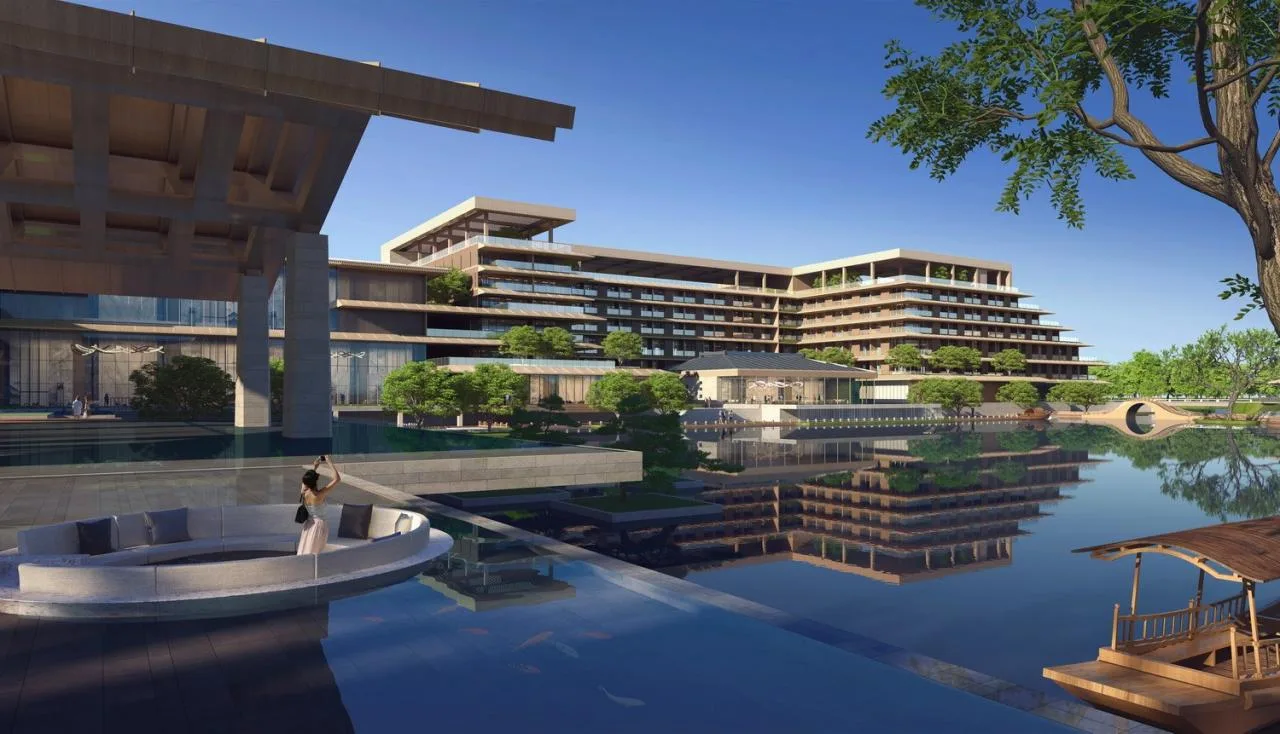
To prevent pedestrian and vehicle conflicts, a “dual ring” three-dimensional block design is implemented. Vehicle lanes and fire rescue routes are positioned on the outer ring, while a central pedestrian ring features water elements, walkways, courtyards, and leisure platforms, creating a layered, slow-traffic system.
05 Landscape Design: The Nine Scenic Spots of Qinhu Lake
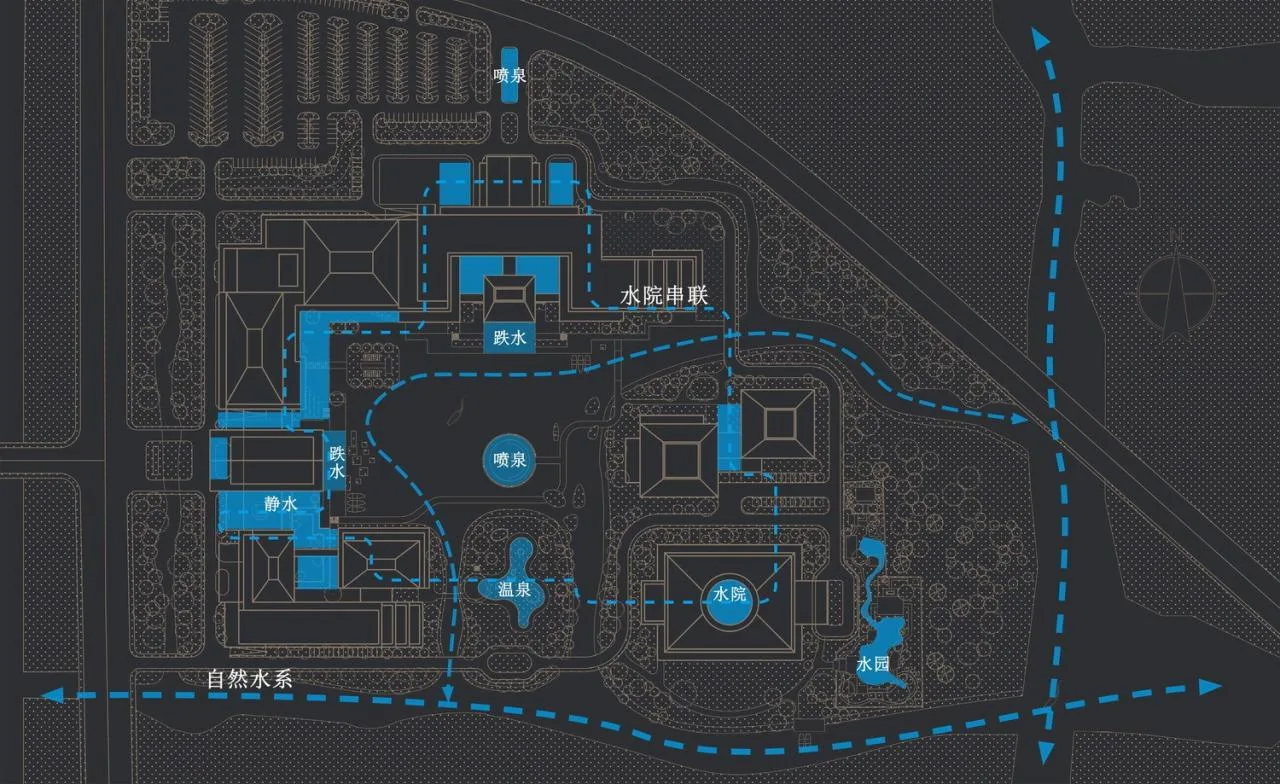
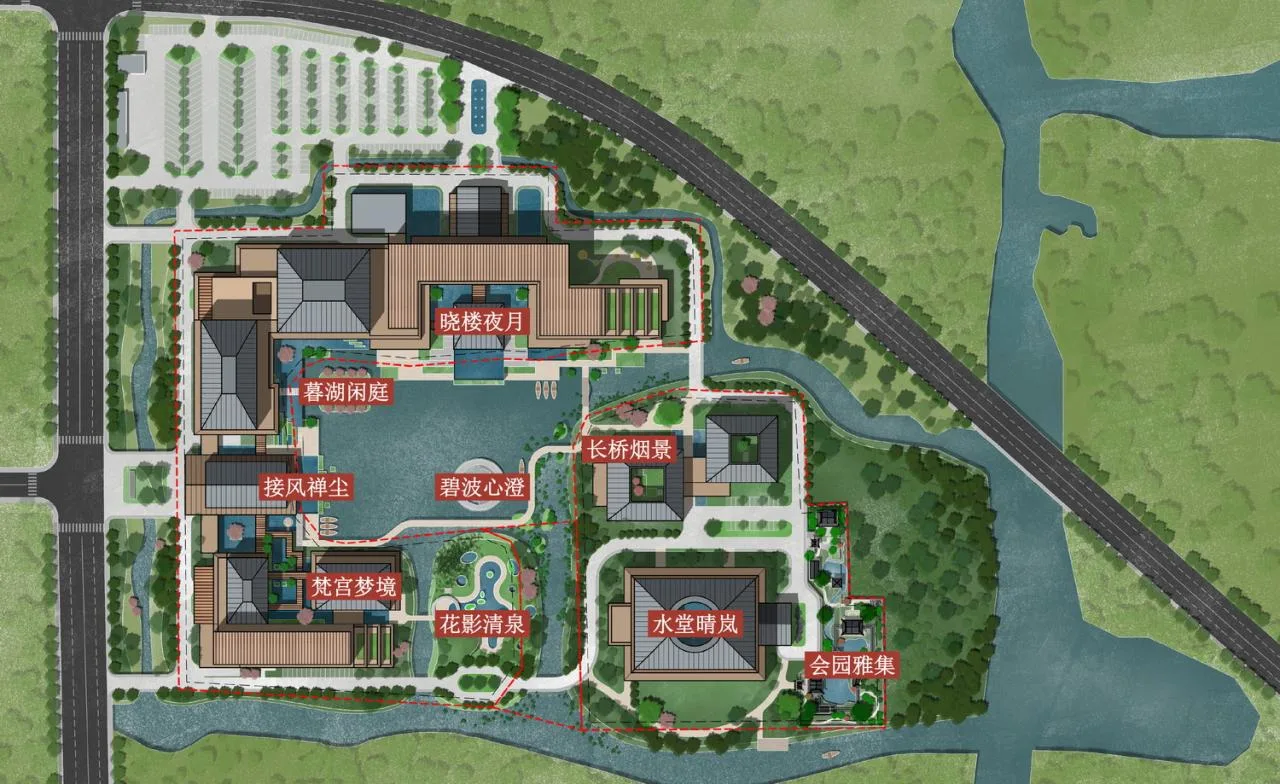
The landscape design continues the “water town” architectural theme, originating from the resort hotel’s positioning. It emphasizes “Zen” and “wild enjoyment” themes, intertwined with Qintong and Qinhu’s cultural essence, creating nine distinctive scenic nodes rich in meaning.
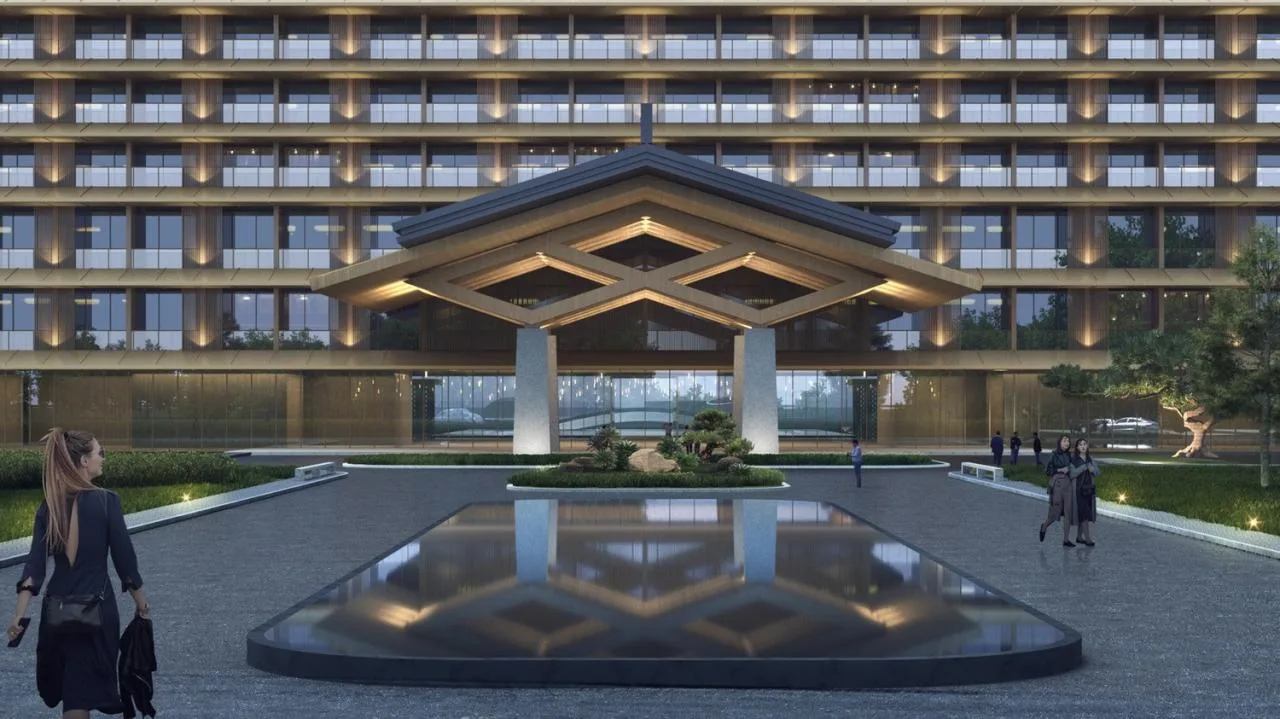
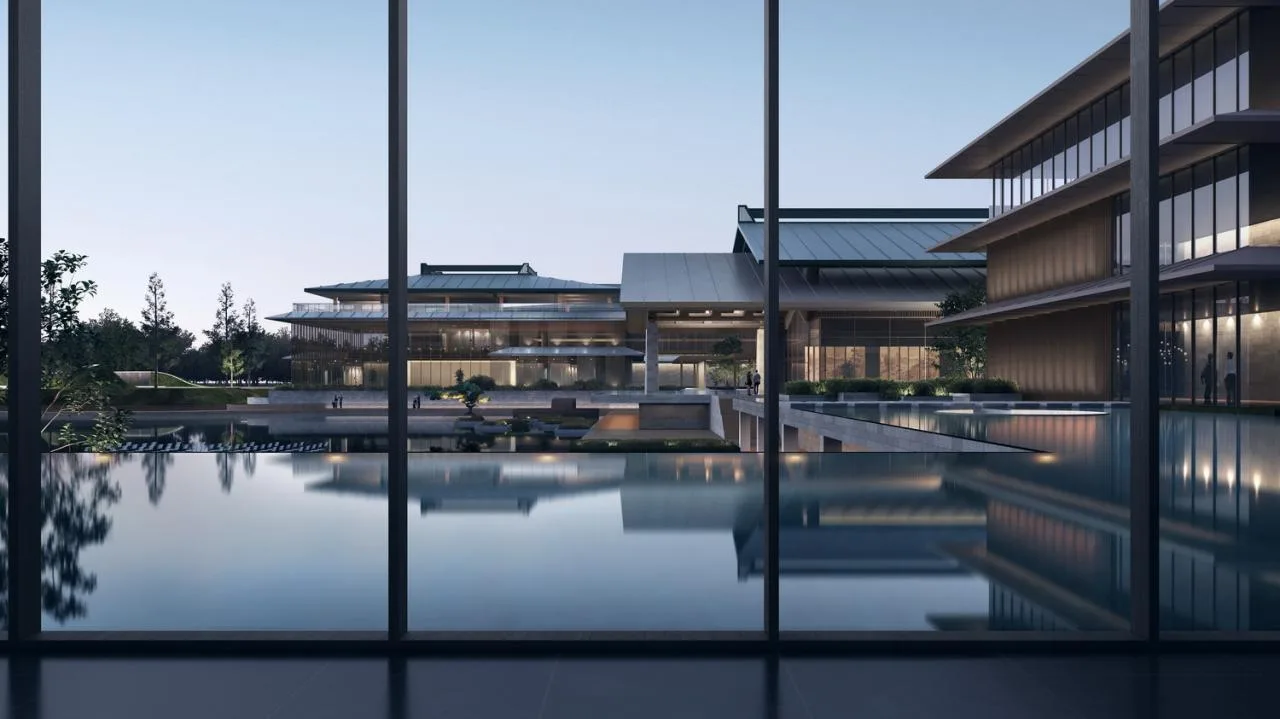
The hotel’s banquet and fitness areas feature extensive static water surfaces, visually extending the lake and enhancing the waterfront experience.
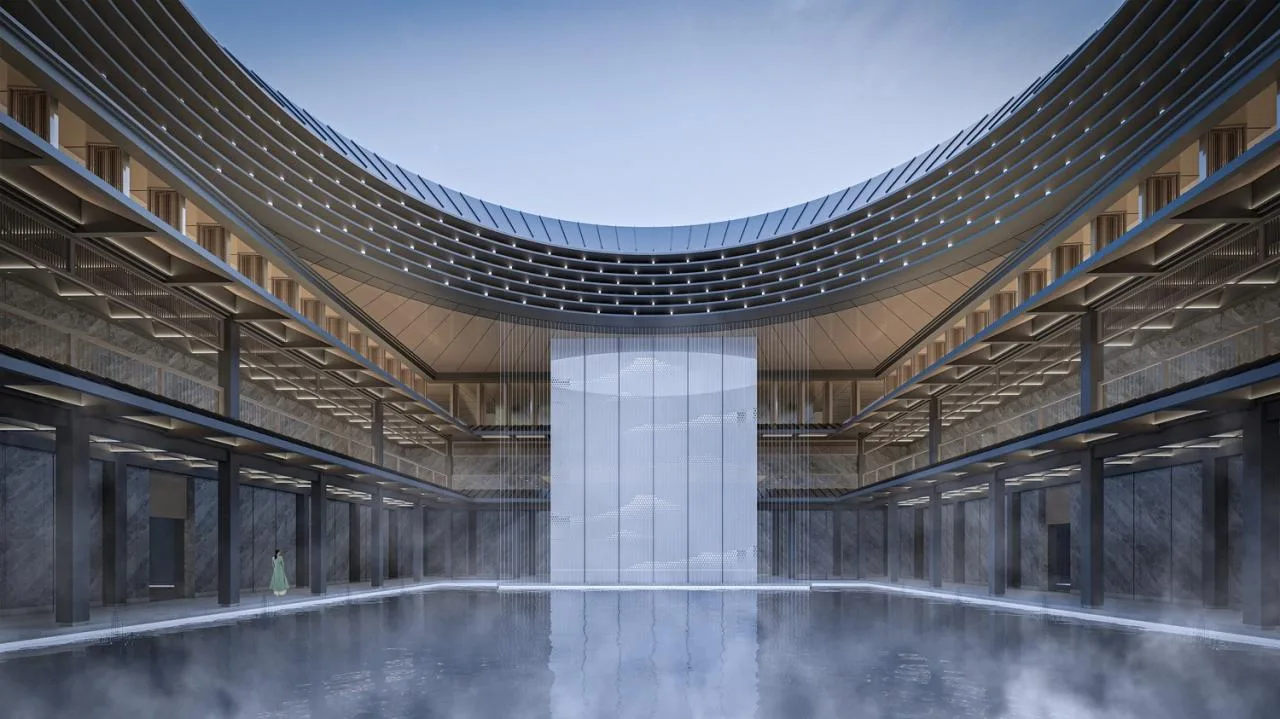
The outdoor pool and Plot B’s southern section adopt naturalistic wetland features, incorporating landscape sprays and mist devices to create immersive experiences.
06 Theme Planning: Multiple Flow Paths
Beyond the architectural design, the team prioritizes user experience, recognizing its lasting impact. Integrating the “Nine Scenic Spots of Qinhu Lake” with building functions, they carefully plan routes for families, wetland cruises, weddings, and social media check-ins to cater to diverse visitor groups.
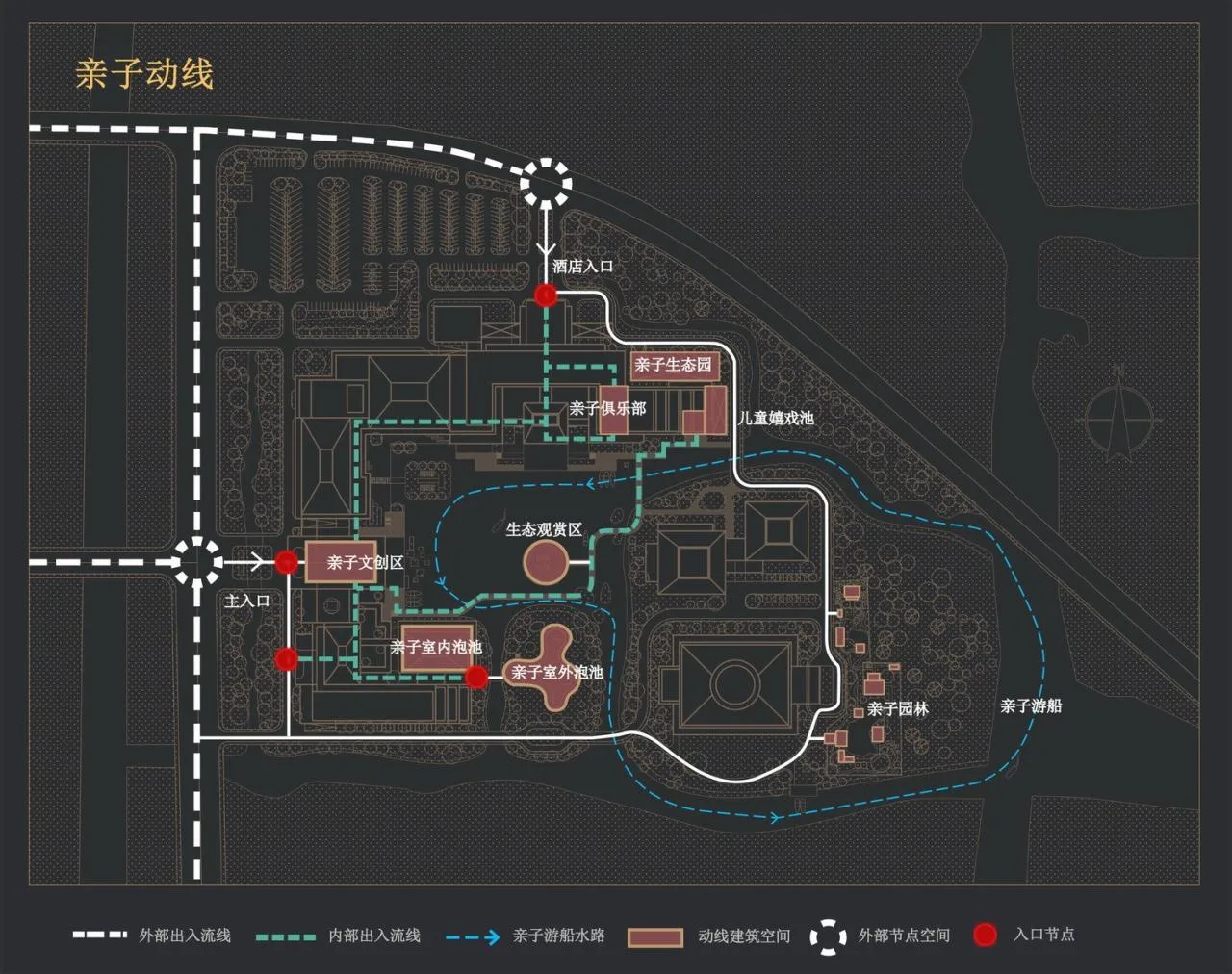
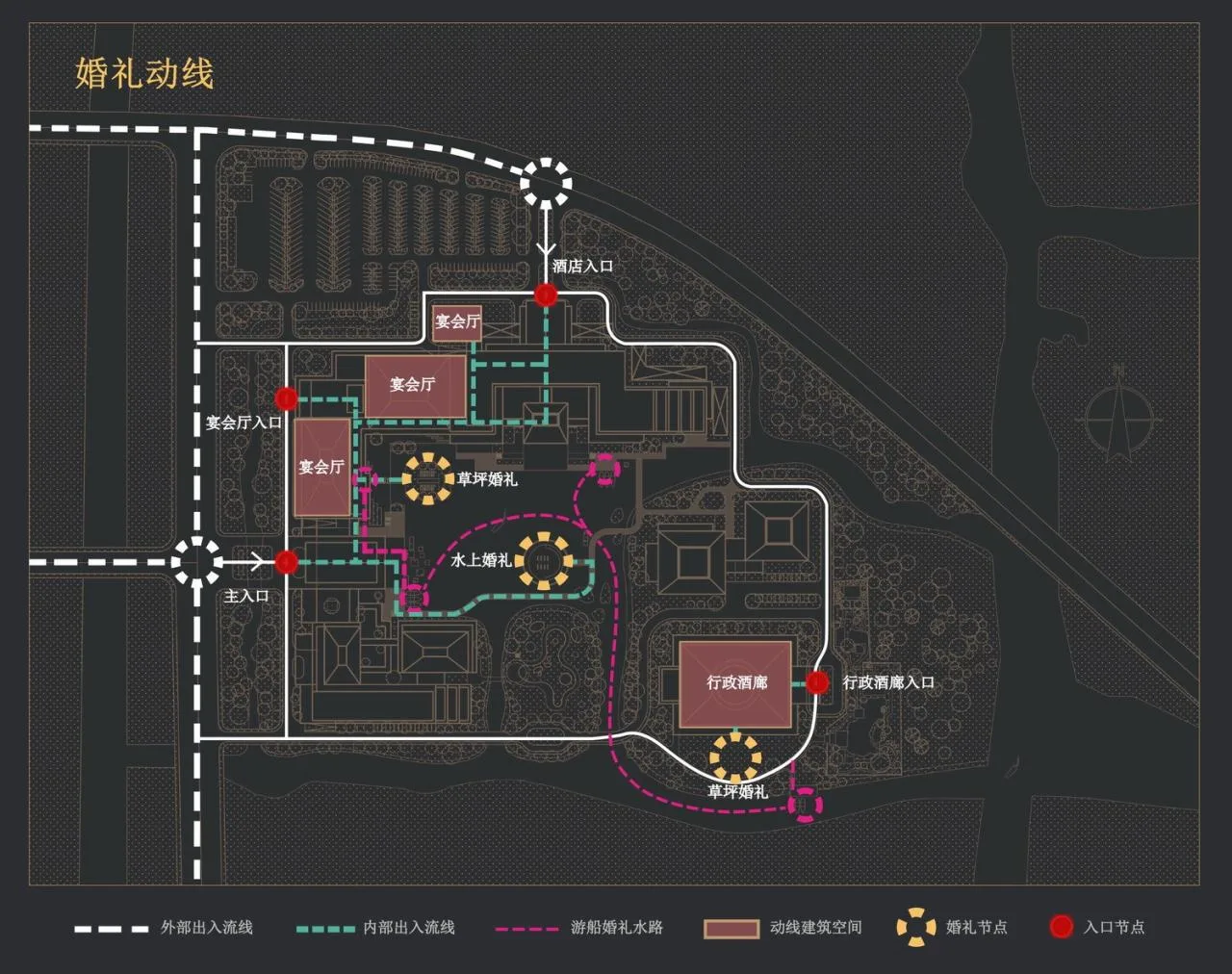
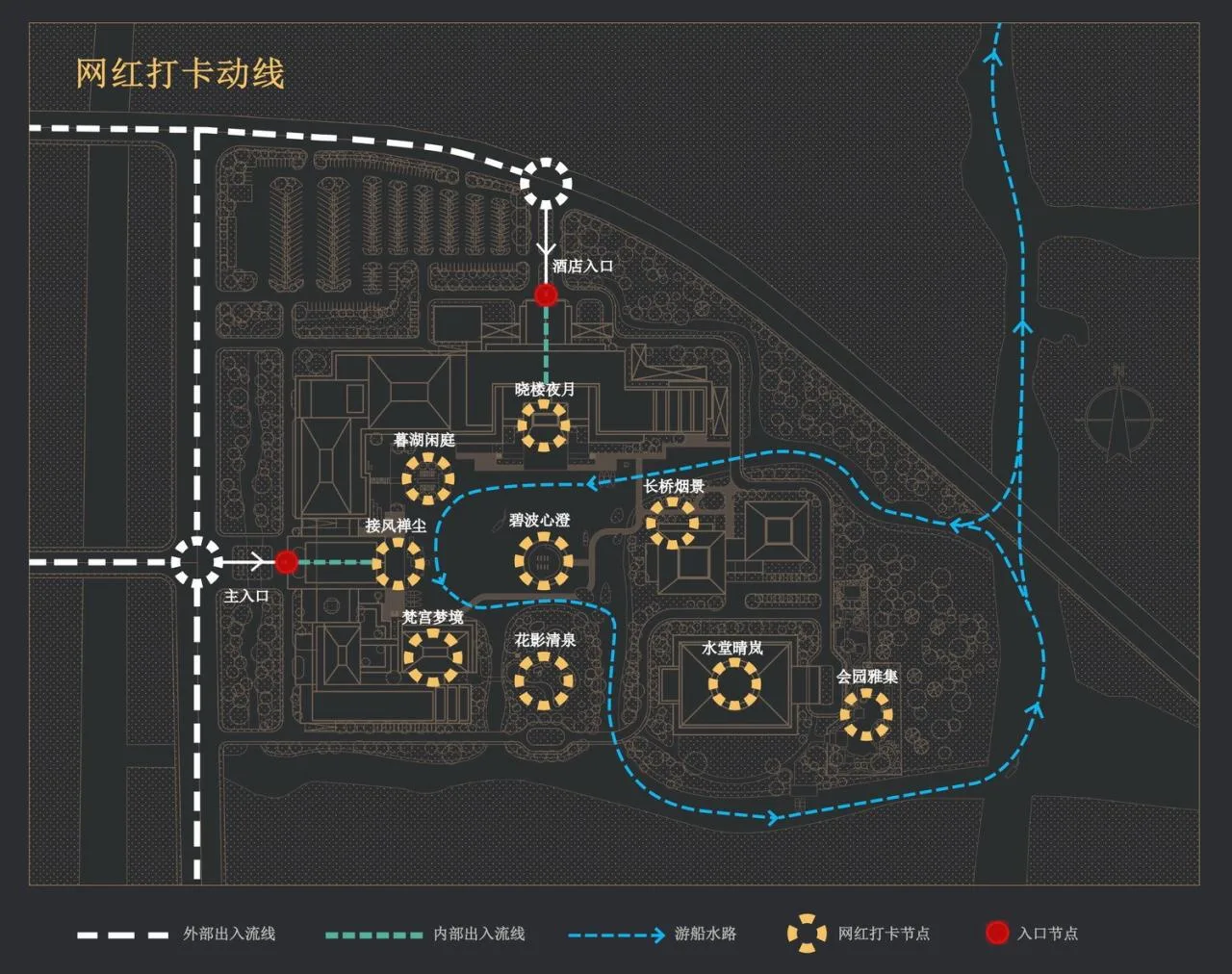
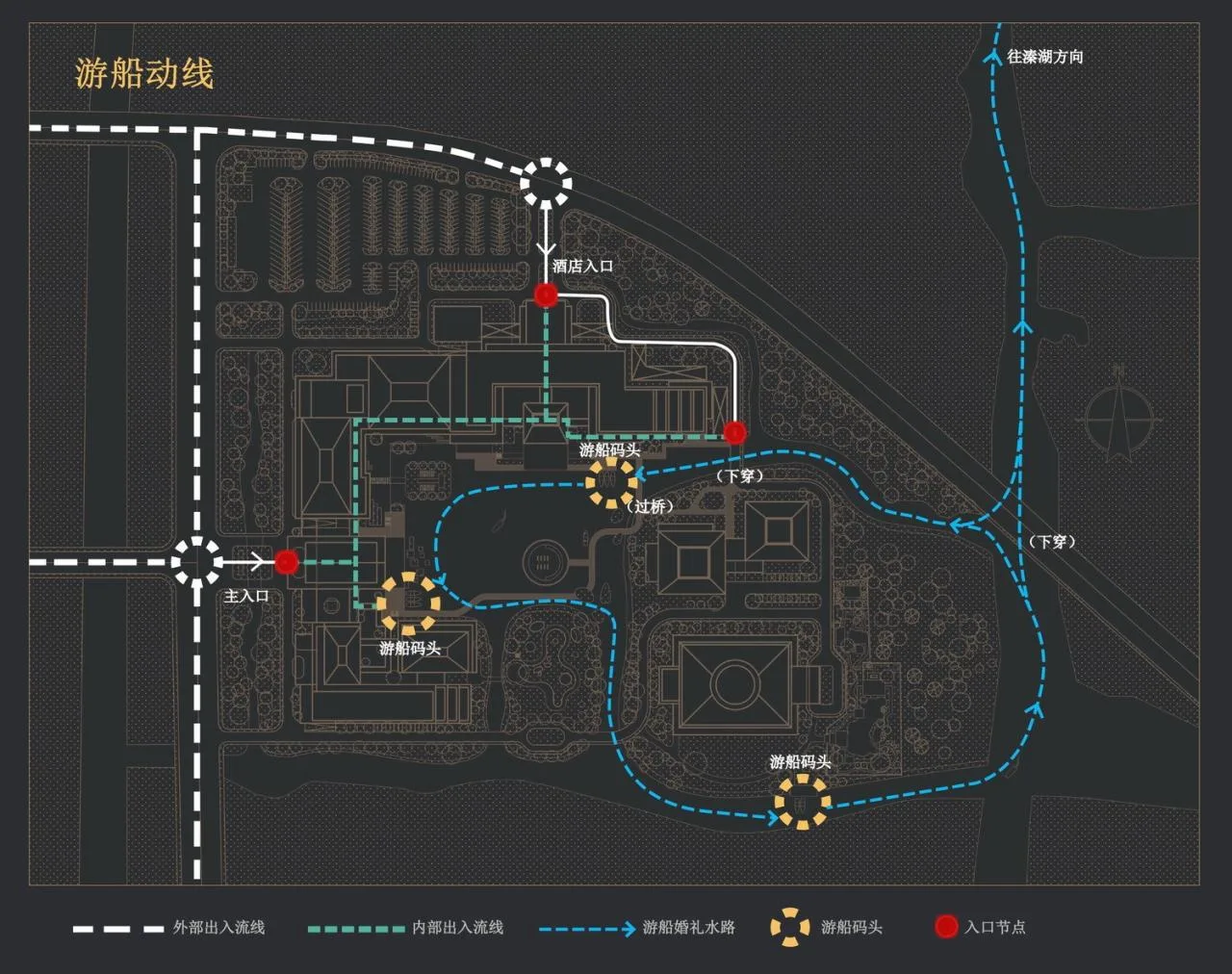
△ Multi-Scenario Planning
At the center of the scenic lake, where the hotel lobby and reception hall’s cross axes intersect, lies the heart-shaped “Blue Lake Heart Clear,” connected by a boardwalk and visible from all angles.
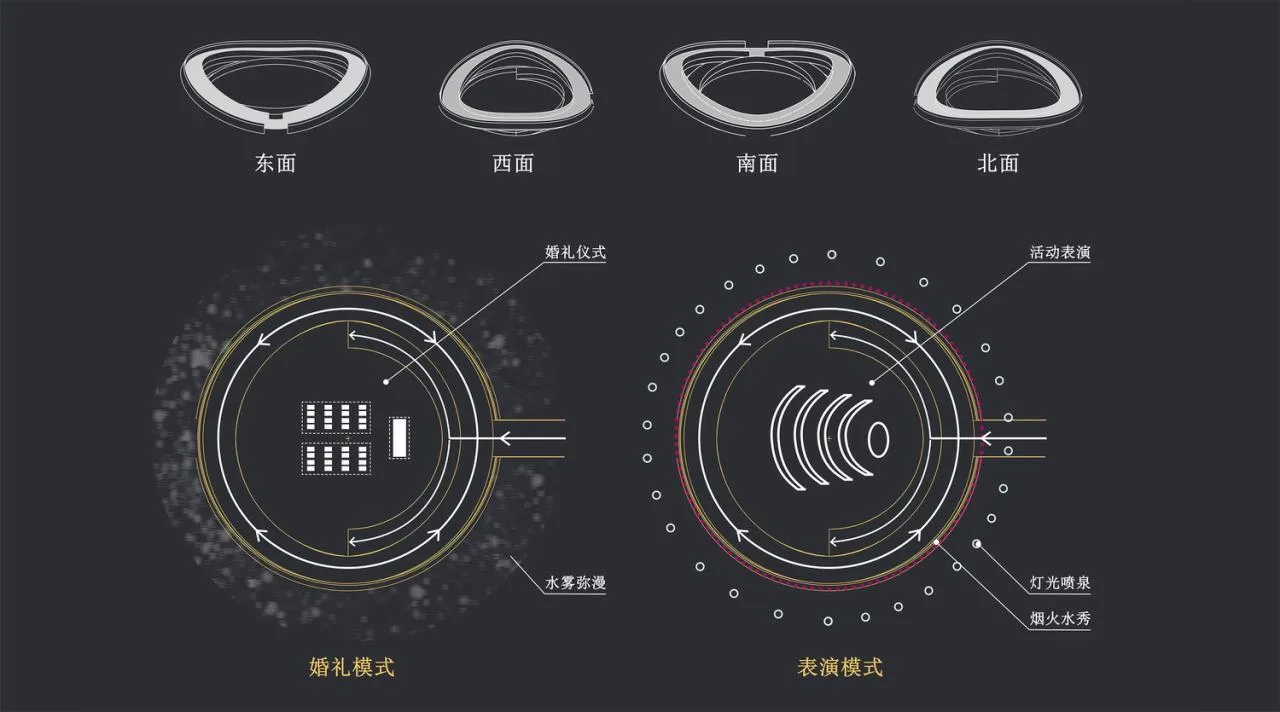
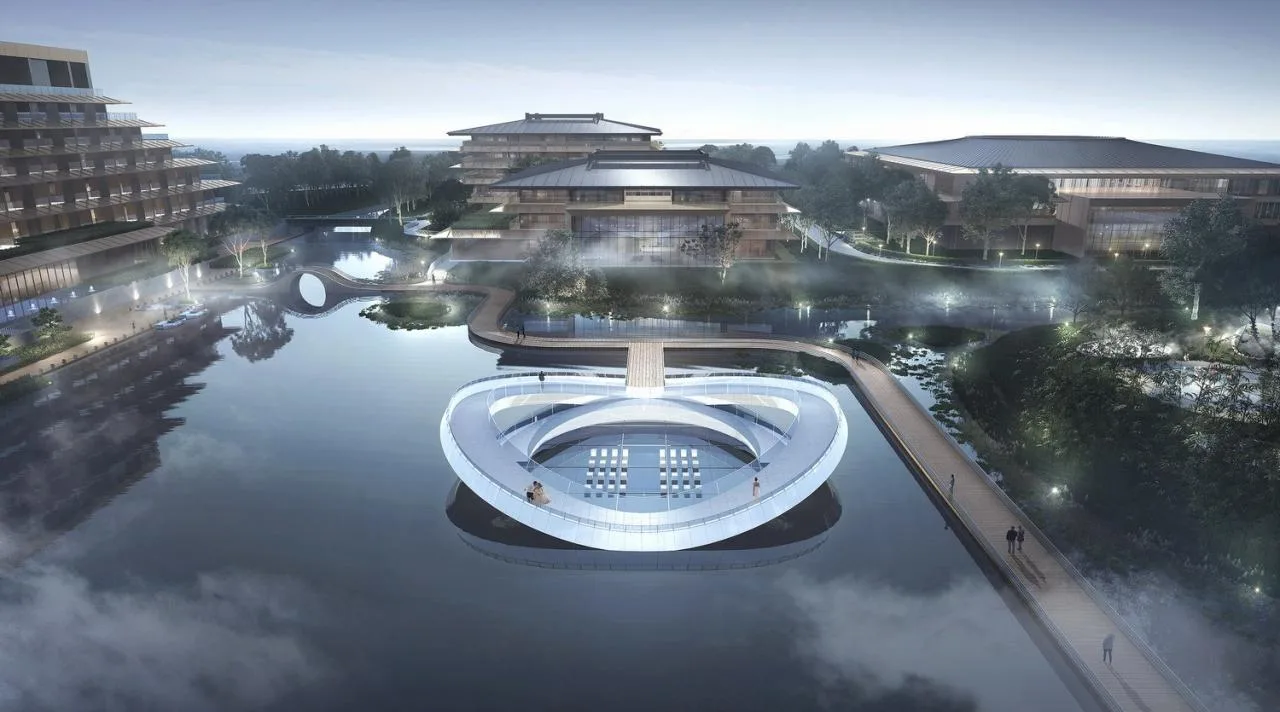
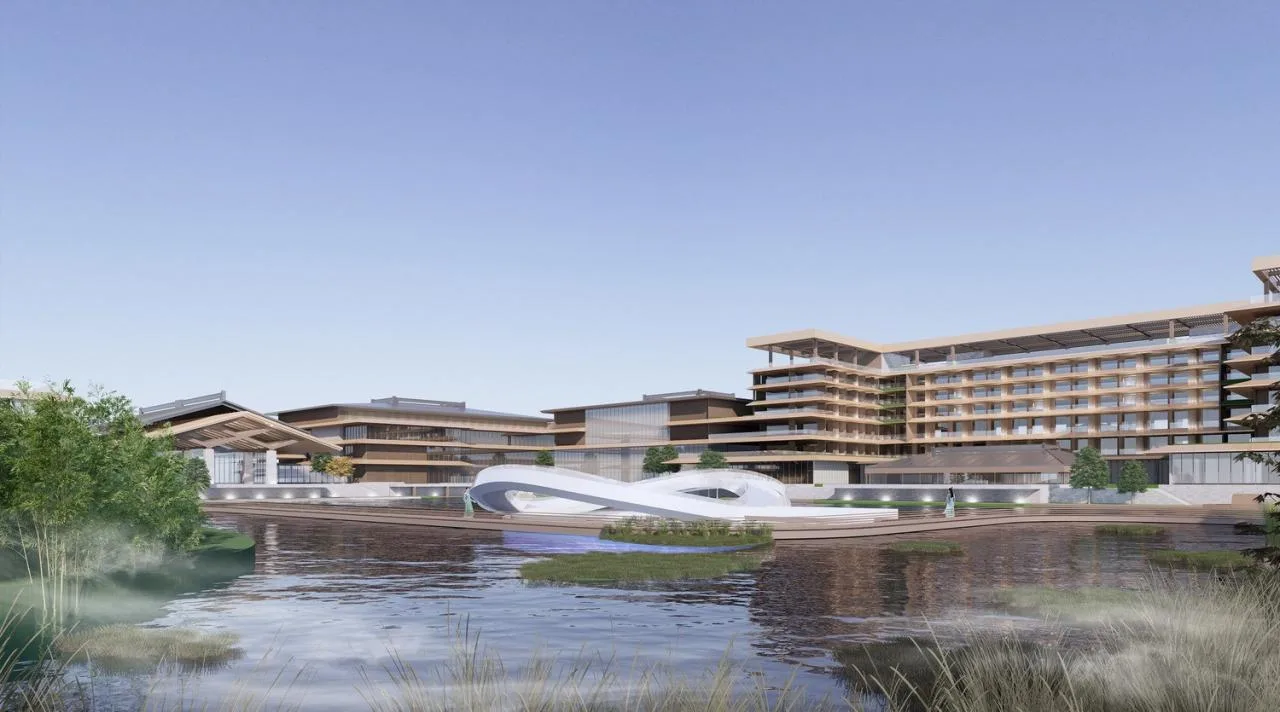
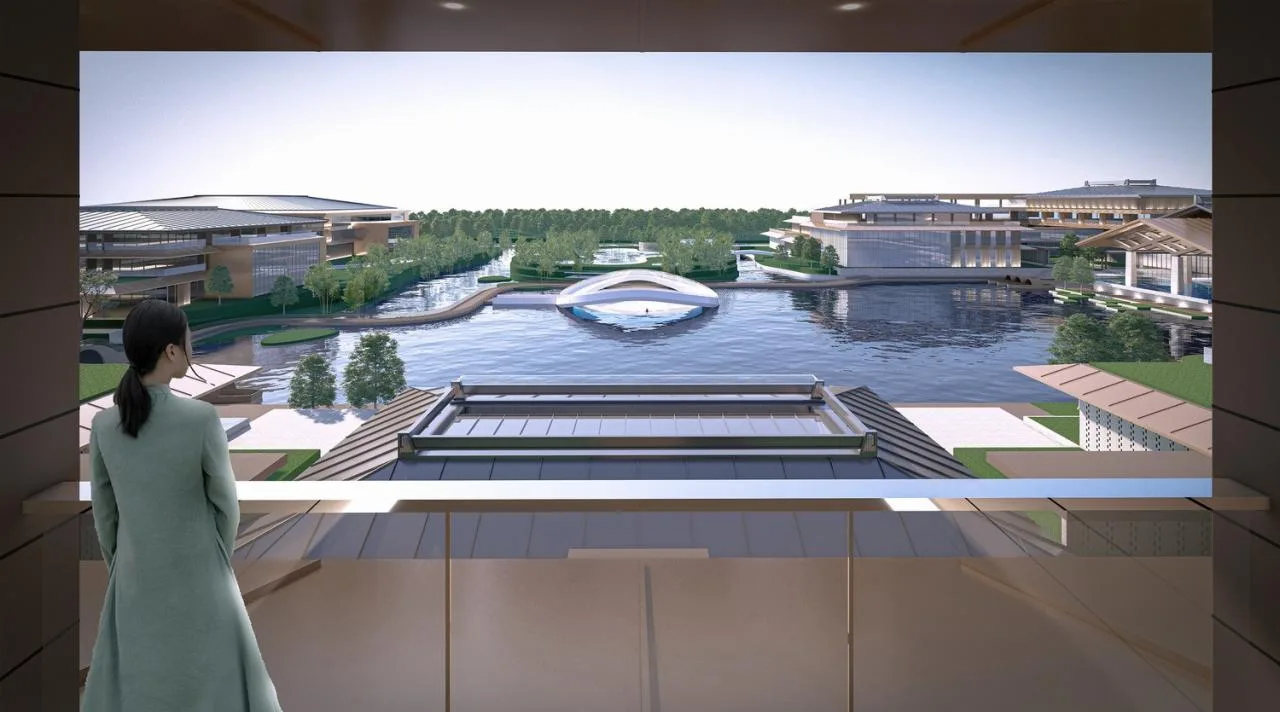
This area accommodates various routes with spaces to pause, enjoy views, and host water weddings, performances, and events. Surrounding features include sprays, fountains, fireworks, lasers, and other performance elements that bring the site to life.
07 Conclusion
The design team has deeply engaged with the local cultural context, refining it into a layered, three-dimensional centerpiece aimed at creating a unique resort hotel complex. Rooted in its environment and led by user experience, the project aspires to build vibrant memories, grow harmoniously with nature, and become an inseparable part of the landscape over time.
Project Drawings
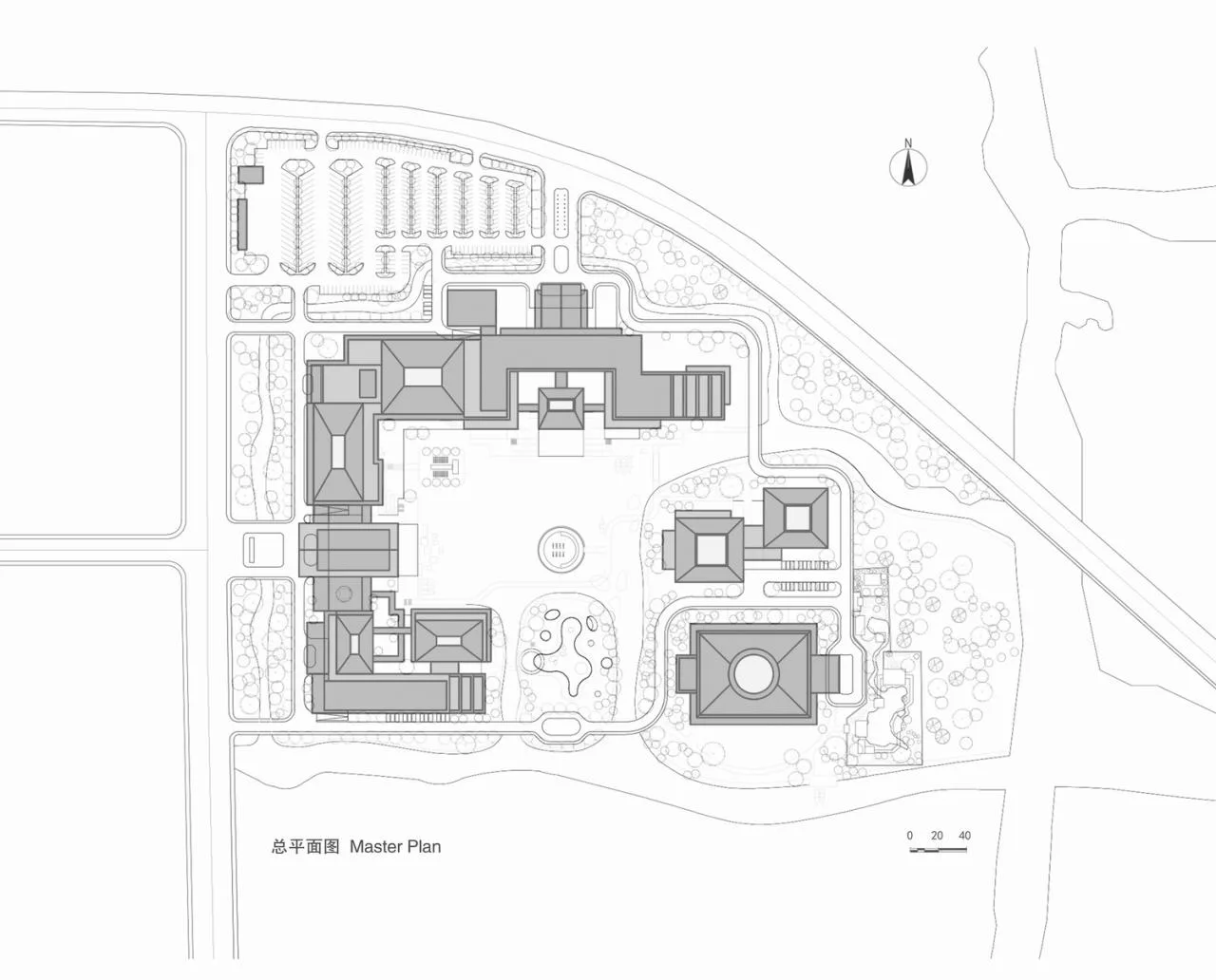
△ General Layout Plan
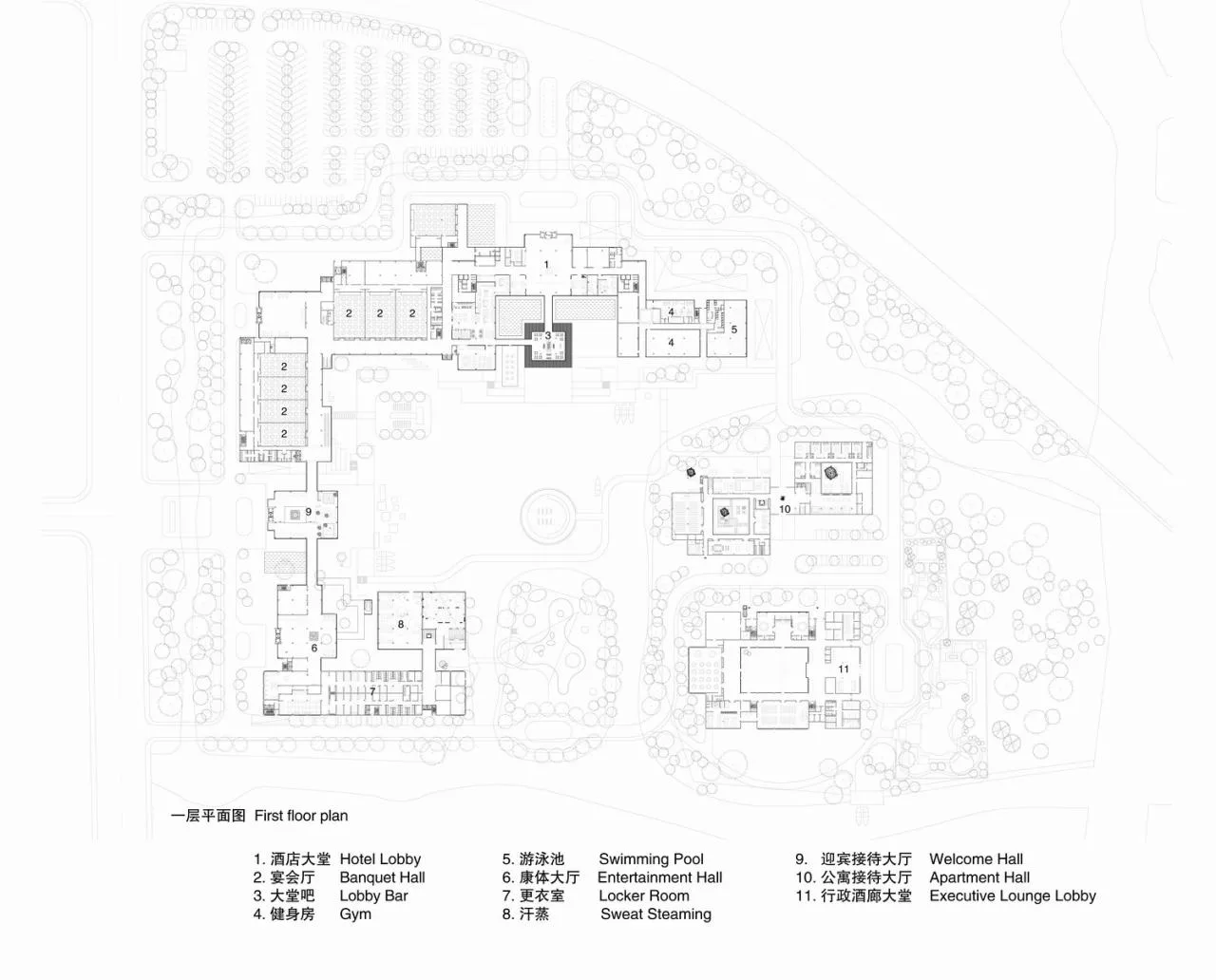
△ First Floor Plan
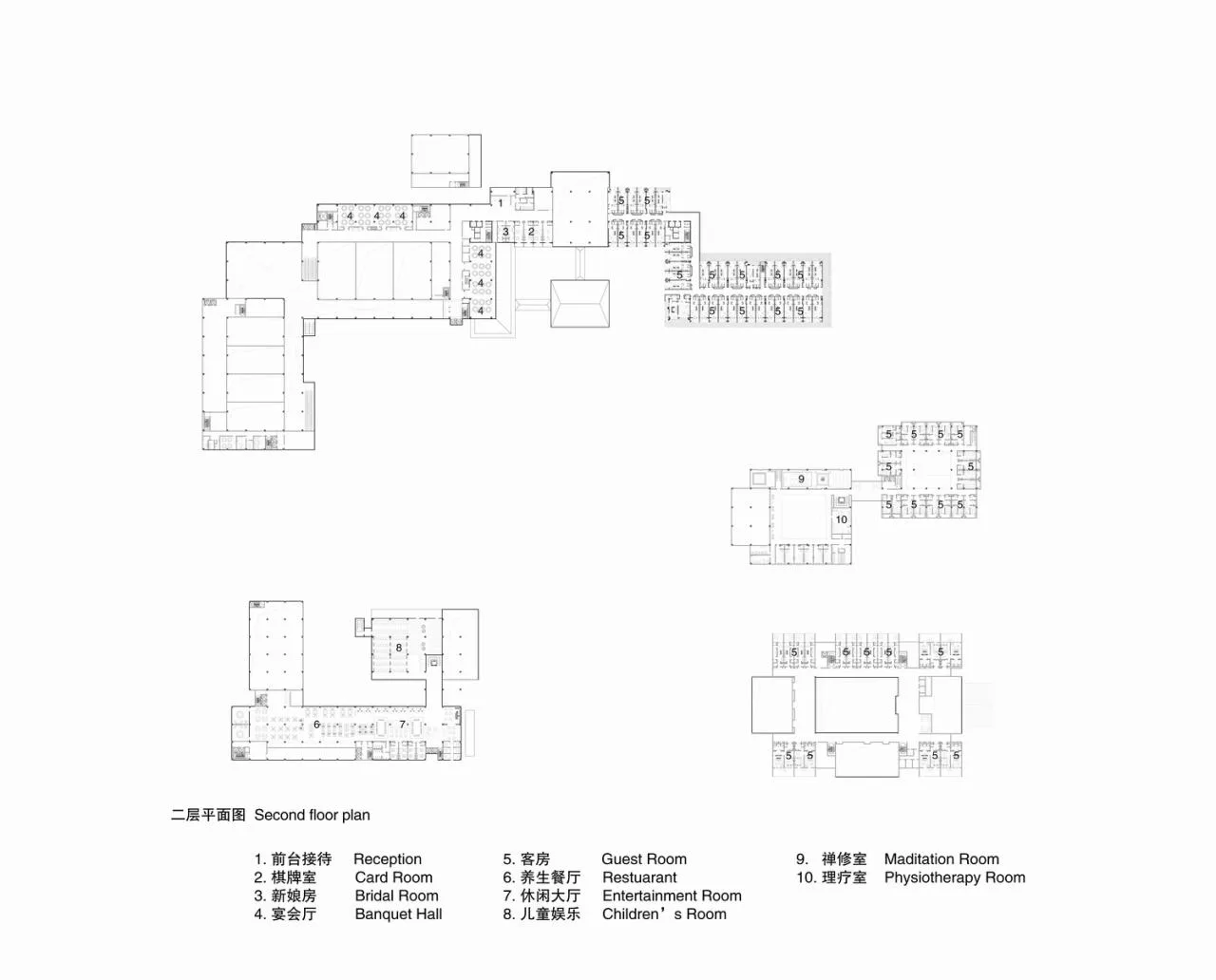
△ Second Floor Plan
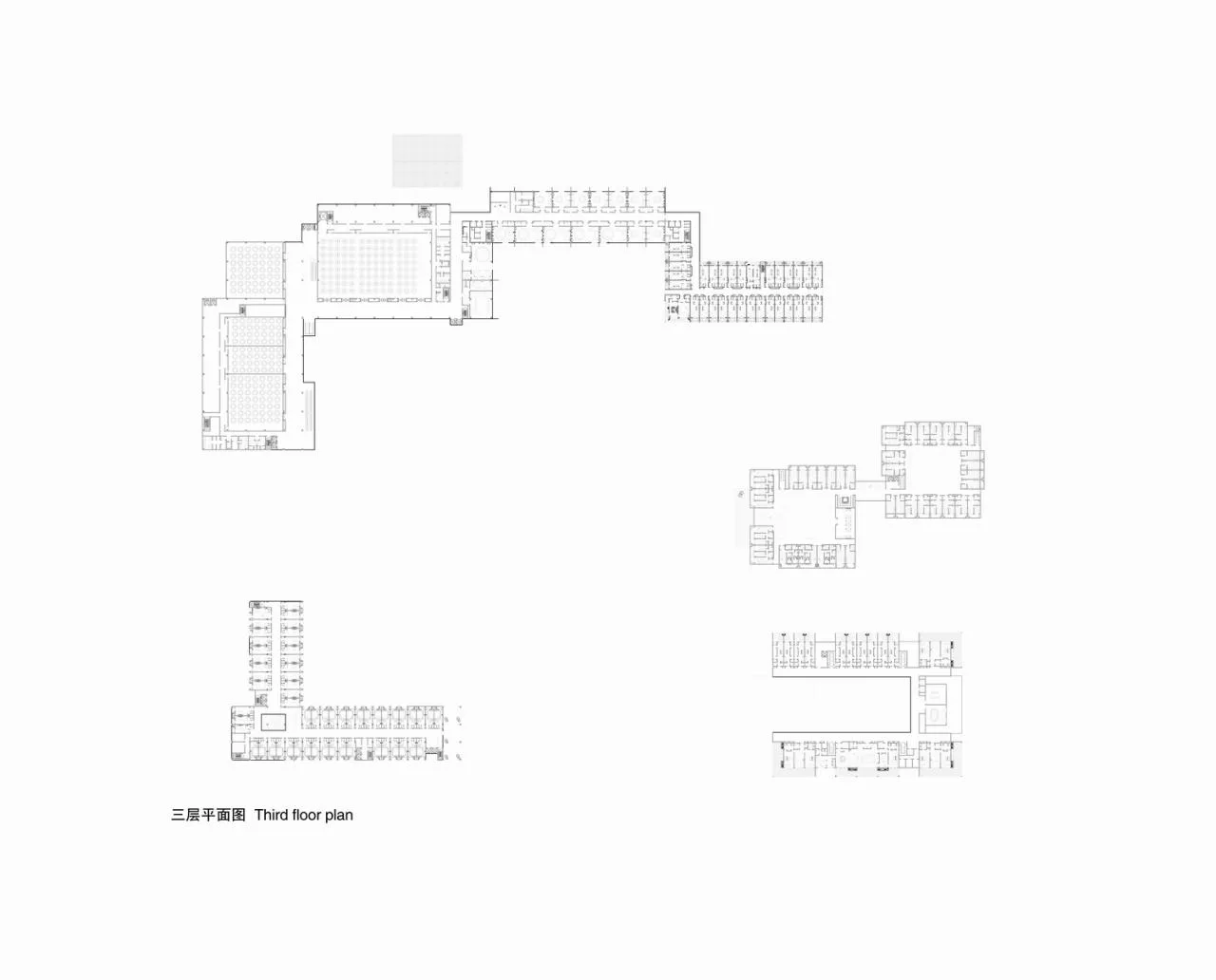
△ Third Floor Plan
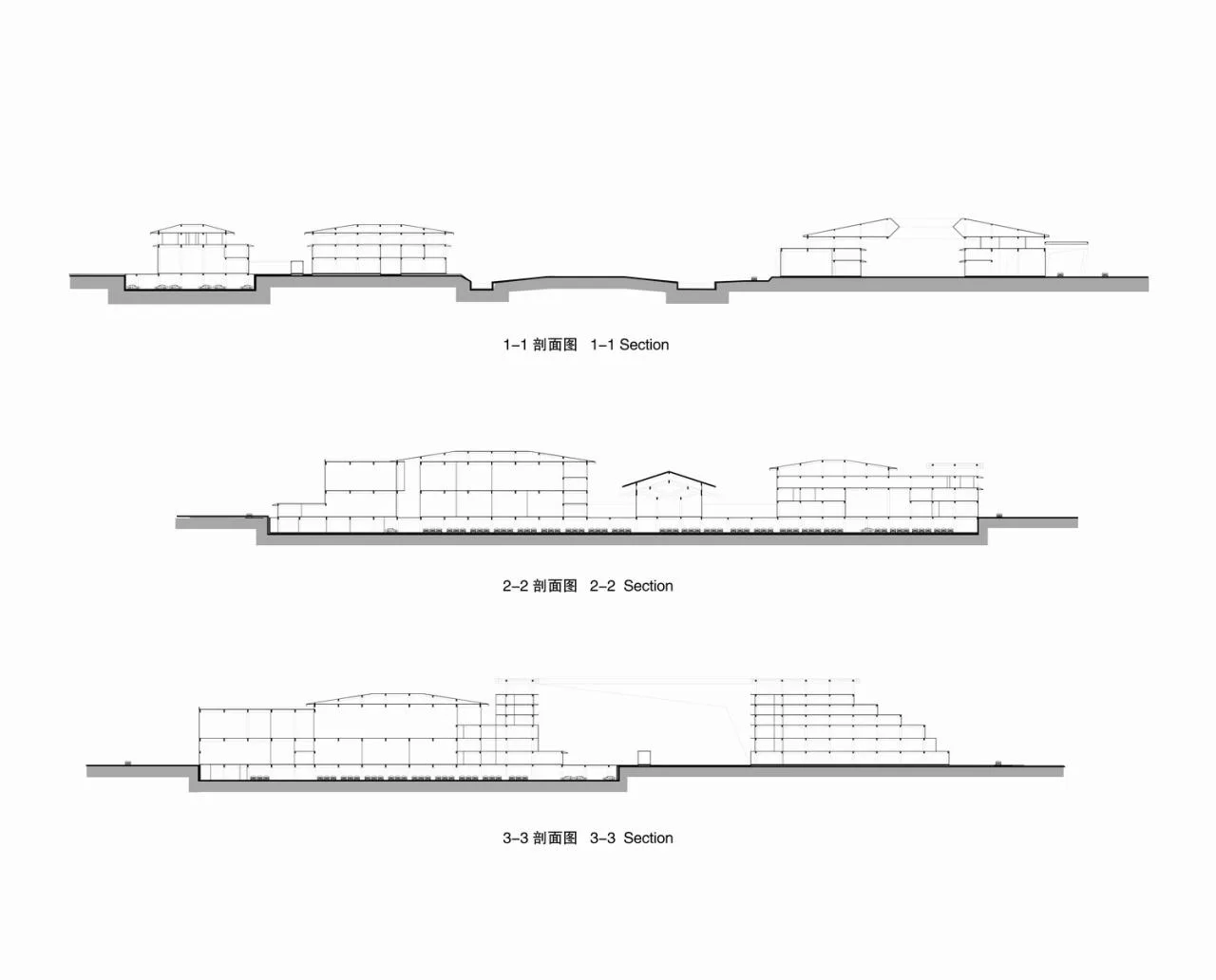
△ Section Diagram
Project Information
Project Name: Qinhu Hotel Construction Project
Developer: Qinhu Culture and Tourism Group Co., Ltd.
Project Size: 92,000 square meters
Design Period: October 2022 – December 2022
Design Phase: Proposal Bidding
Lead Architects: Zhang Xu, Zhu Qixiang
Design Team: Chen Ming, Xiao Kai, Chen Lei, Shi Feng, Liao Hanlu, Song Changchun, Wang Bicheng, Wu Xuanyi, Ji Zhenghua, Sun Zhenyue
Technical Team: Yun Chao, Tu Zhiyan, Zhu Jiayou, Tao Wei, Wang Tao, Zhu Yan, Xu Cheng, Fan Chao, Chen Yan, Hu Yukun, Zhou Zhiwei, Tong Shanzhong, Ren Kaiyan, Yin Dongzheng, Zhang Qiuxu, Ye Qing, Huang Haiyan















Must log in before commenting!
Sign Up