
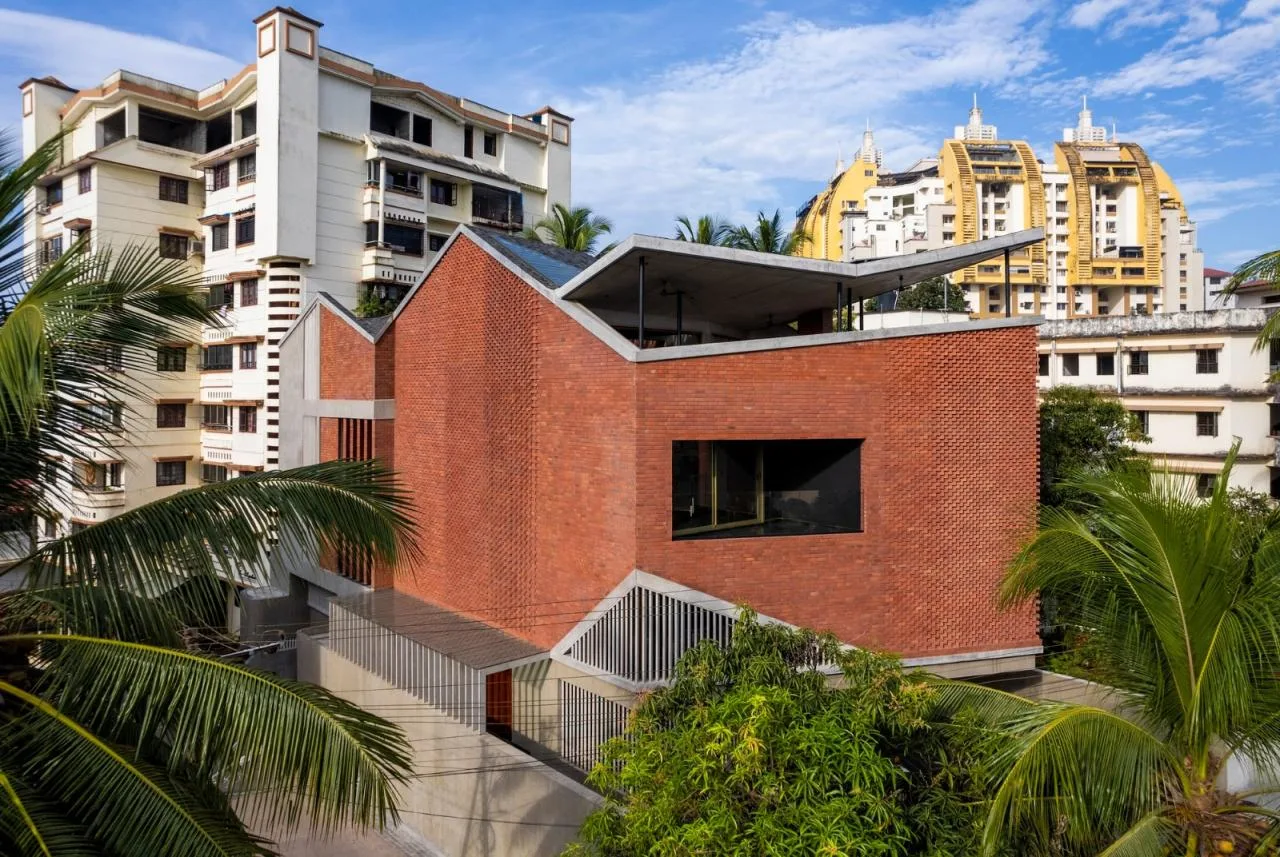
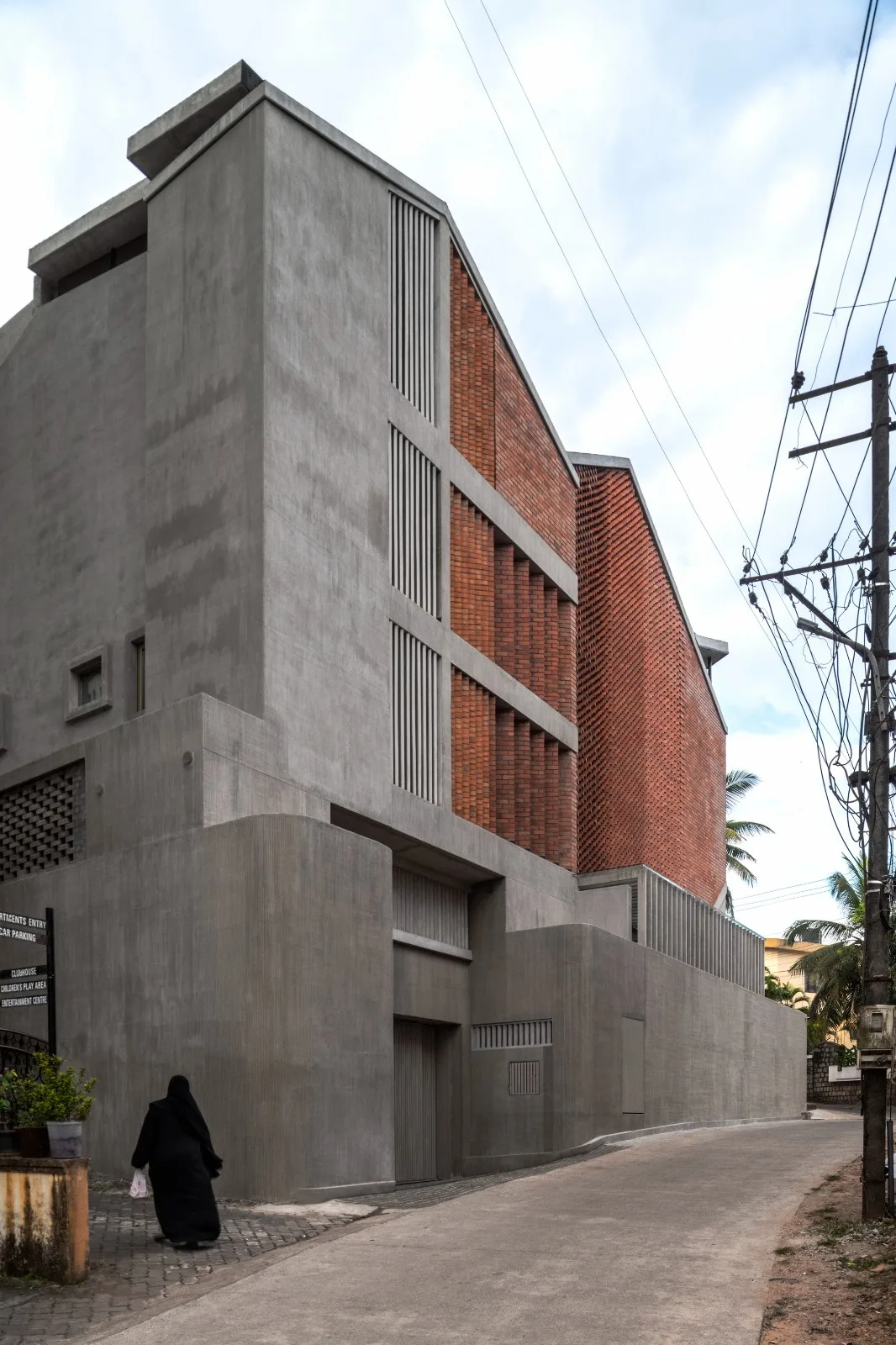
This brick house is situated in Mangalore, a coastal city in southern Karnataka known for its diverse cultures, distinctive landscapes, and scattered historical ruins in the old town. The site lies within a densely populated urban area. After relocating to Saudi Arabia, the client wished to establish a family residence close to their ancestral home.
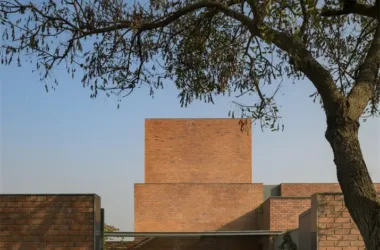
The design concept draws inspiration from the client’s childhood memories of an old brick factory and the chimney, which appears as a shadow behind a coconut tree. The use of red iron oxide flooring and lime-decorated walls helps maintain a fresh atmosphere throughout the house.
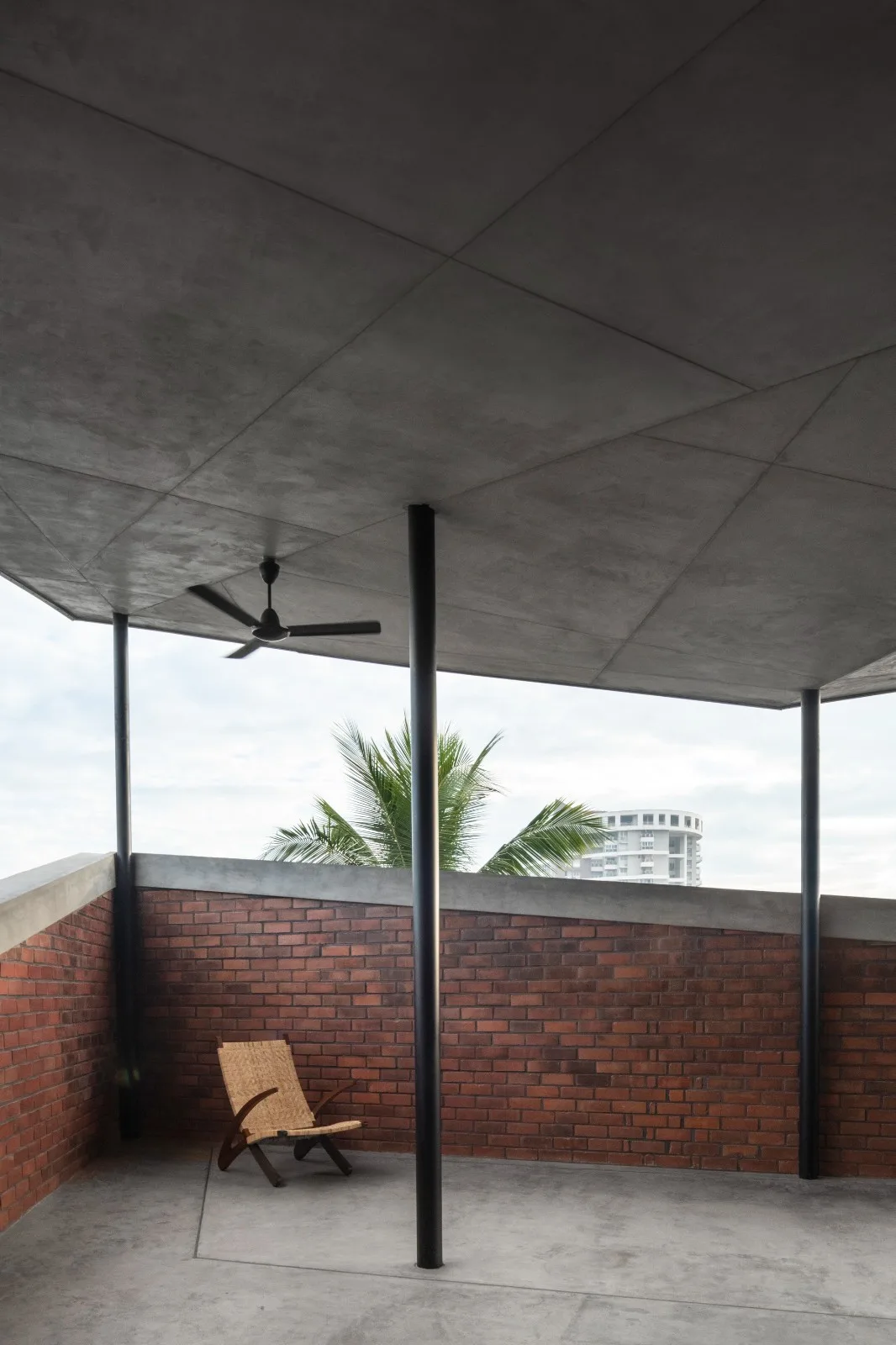
Overall, this family home aims to evoke nostalgia while preserving a unique architectural identity that balances tradition with modern aesthetics. Given Mangalore’s tropical climate, characterized by heavy to moderate rainfall and hot summers, the architects incorporated passive design strategies and thoughtful planning to ensure consistent cross-ventilation.
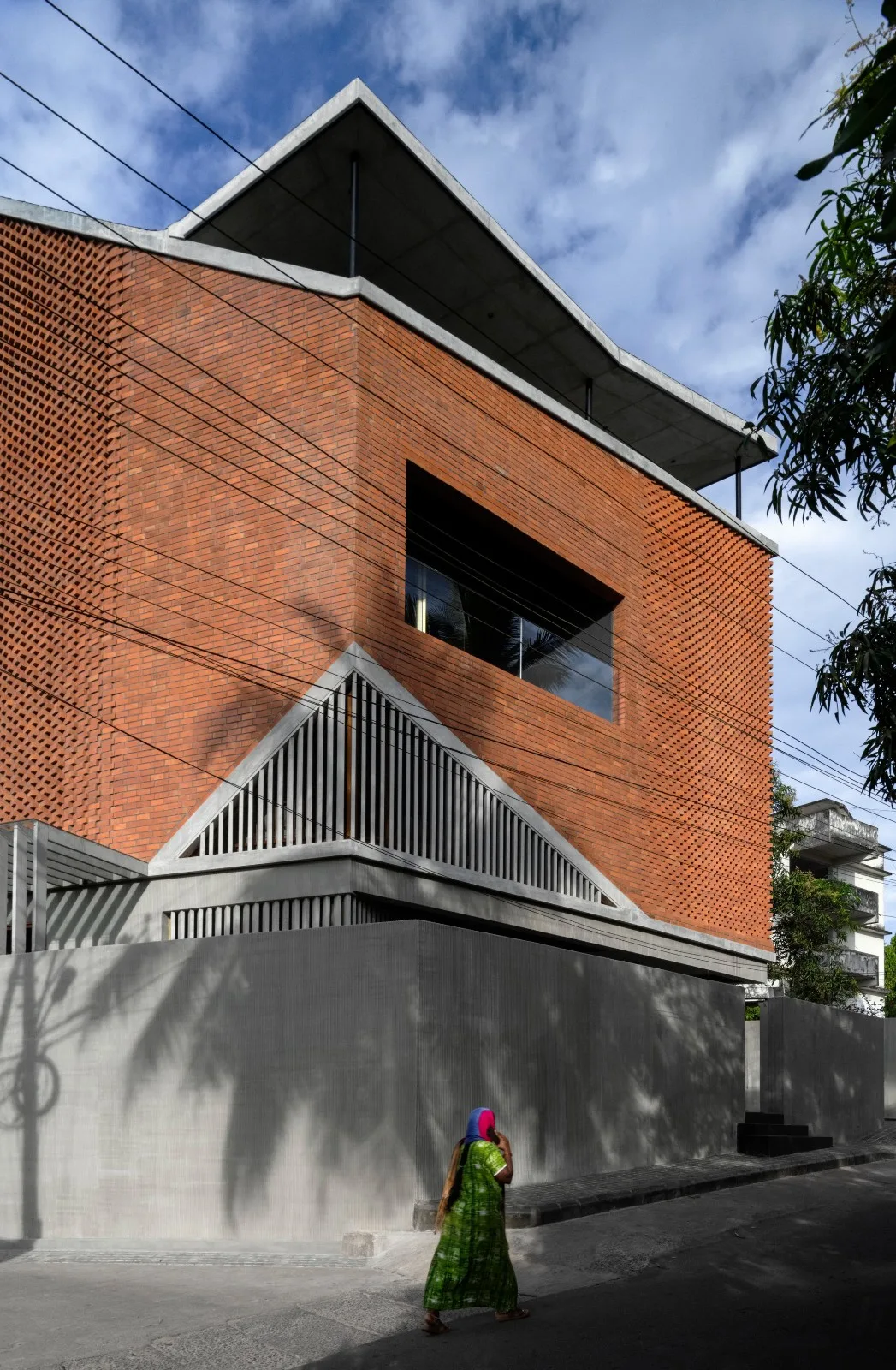
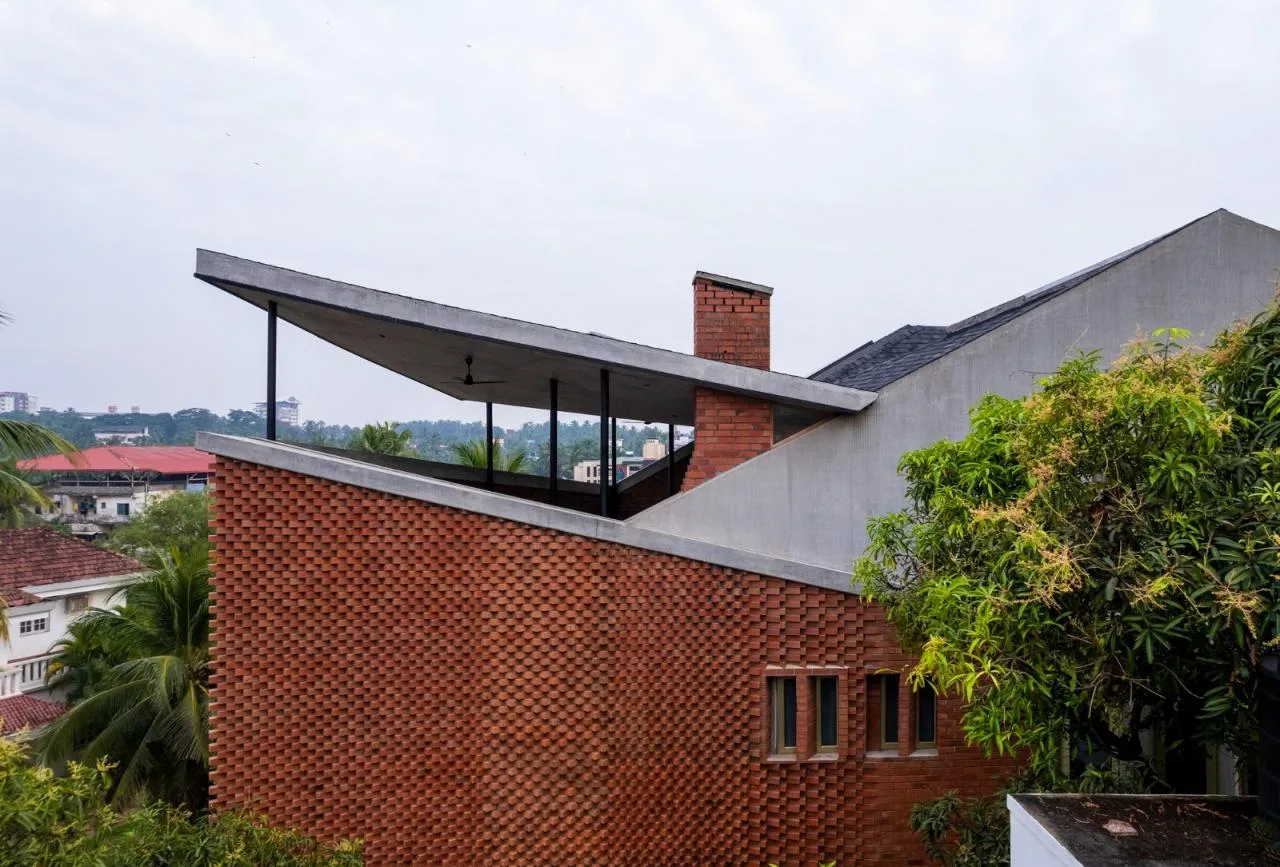
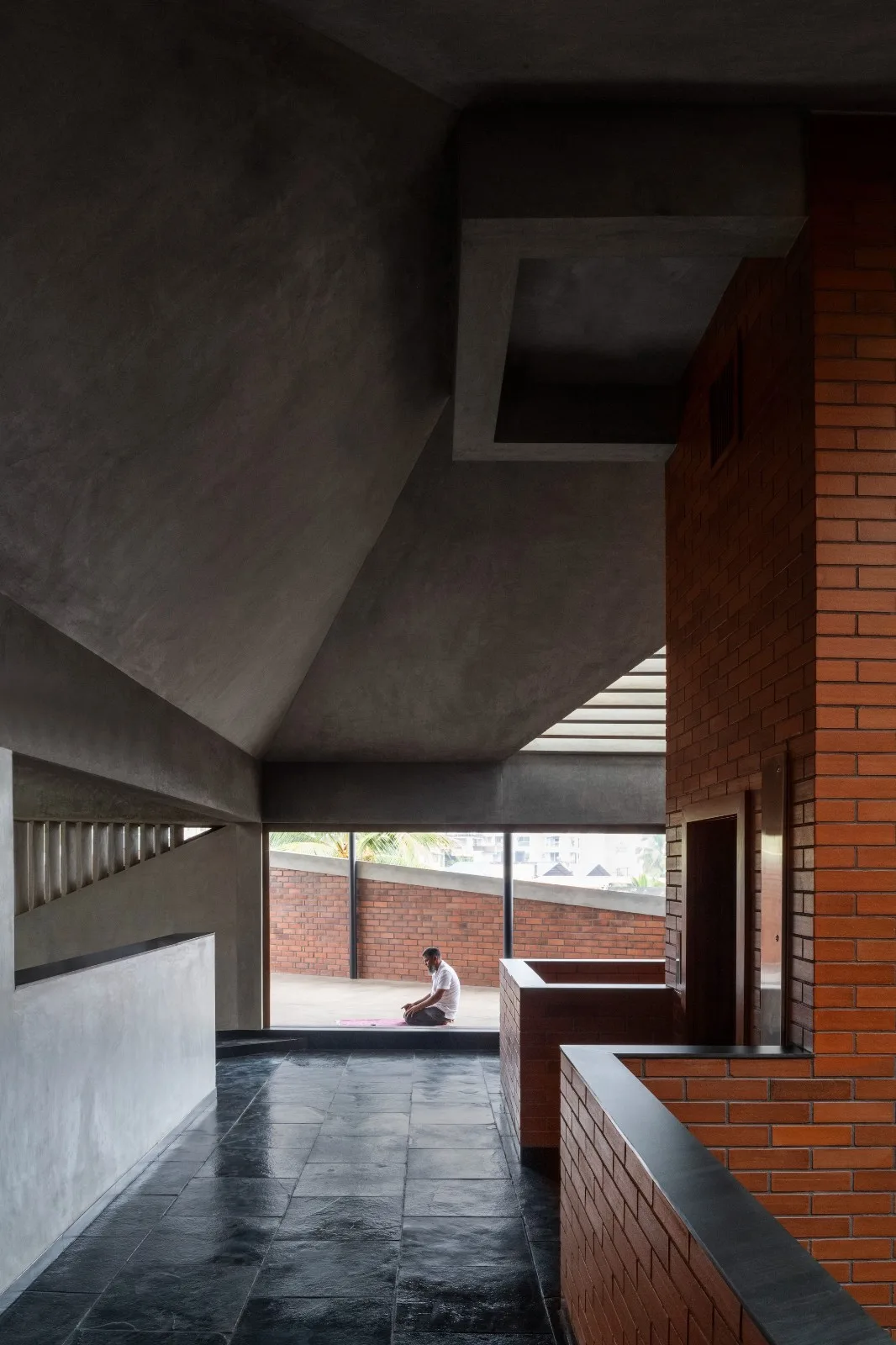
Designed on a corner plot with necessary setbacks, the house features multiple floors. The two lower floors serve semi-private functions, while the upper floor is a fully private, independent level intersecting with a previously planned atrium. The adjacent inclined ramps provide access to the house from two different levels.
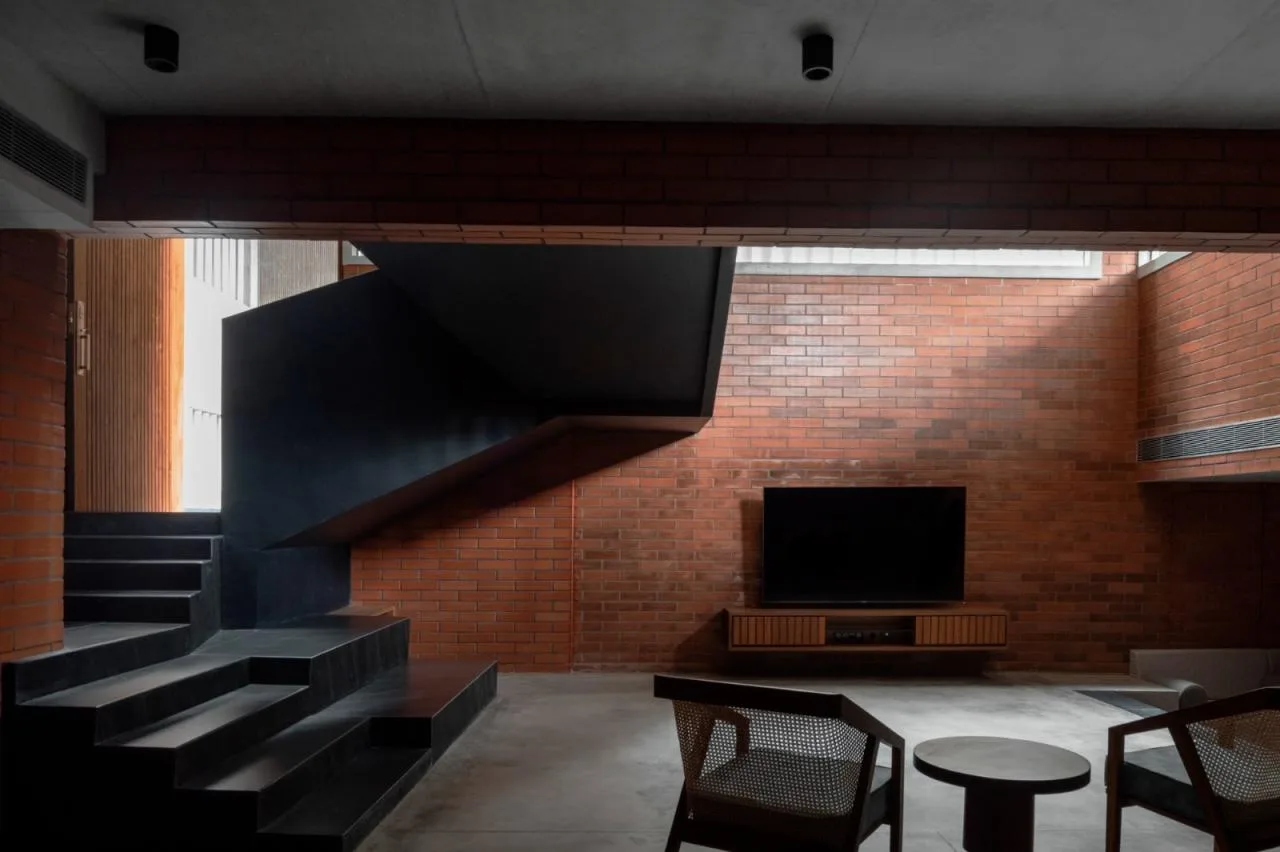
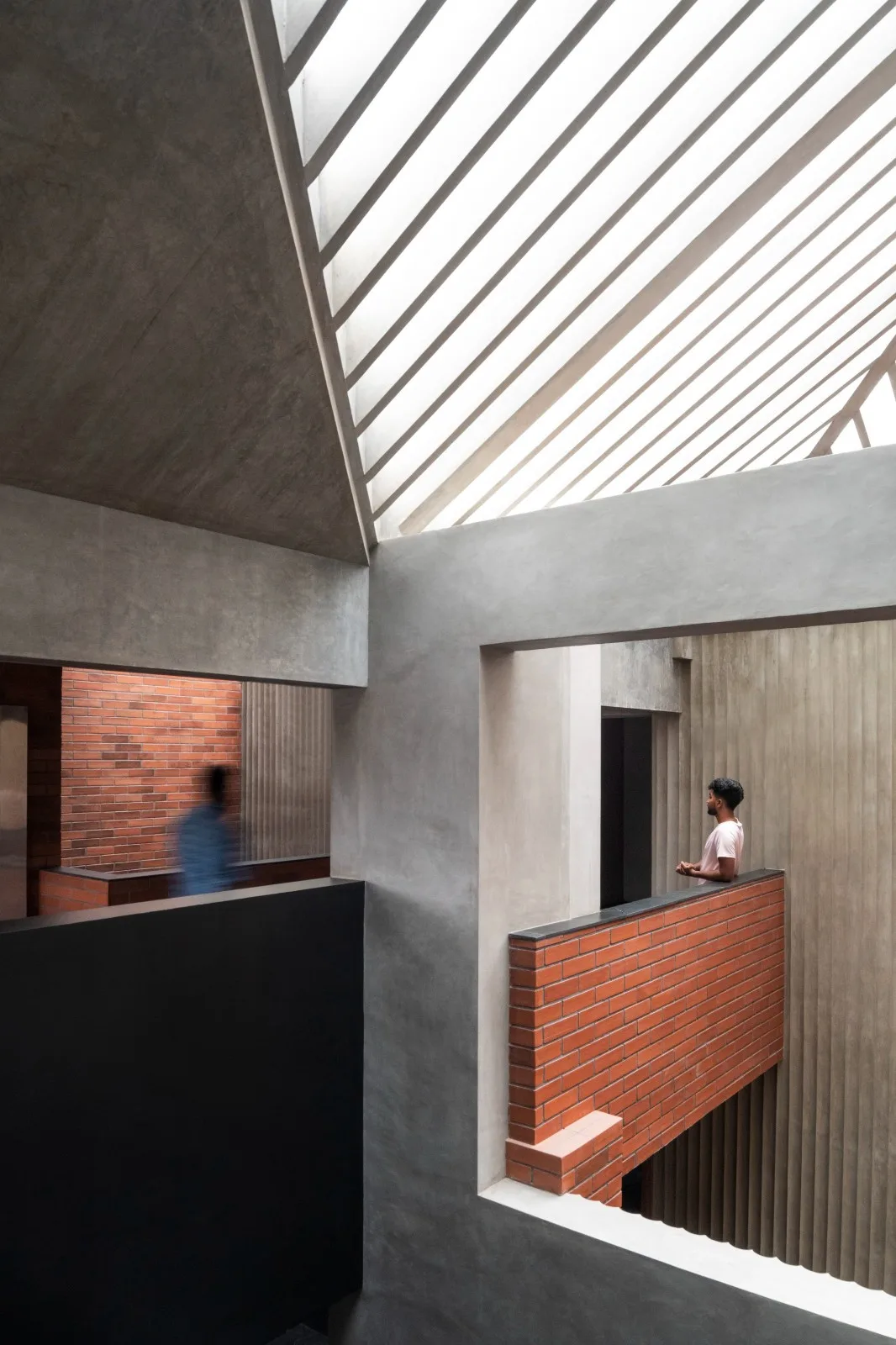
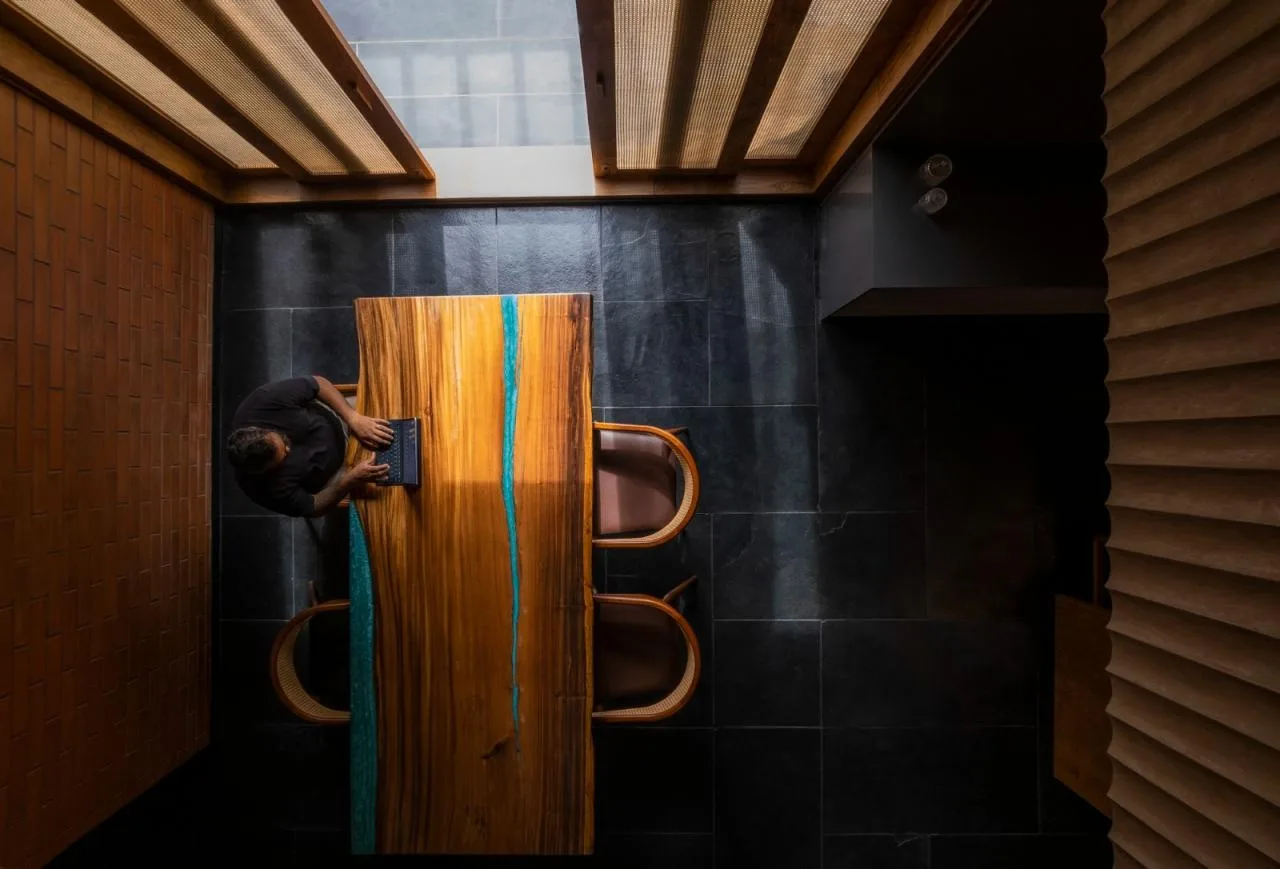
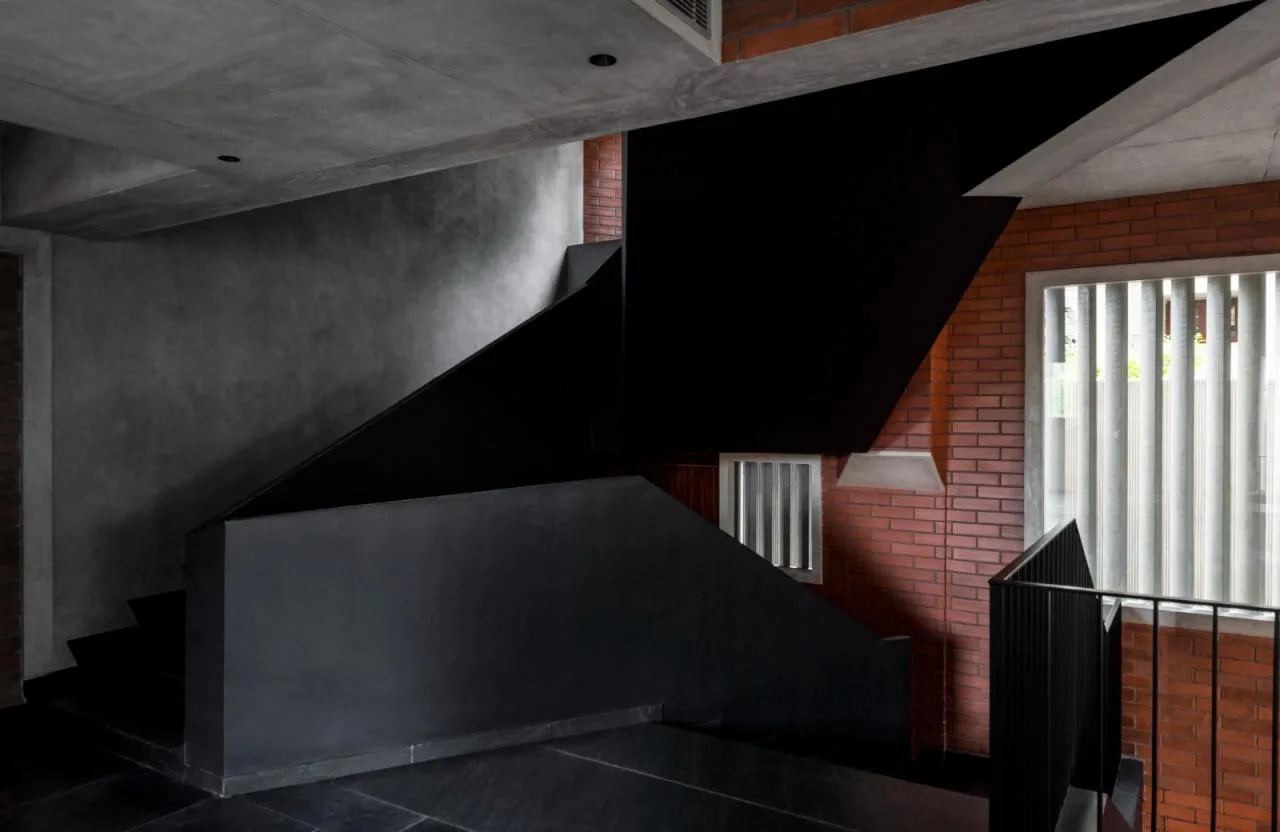
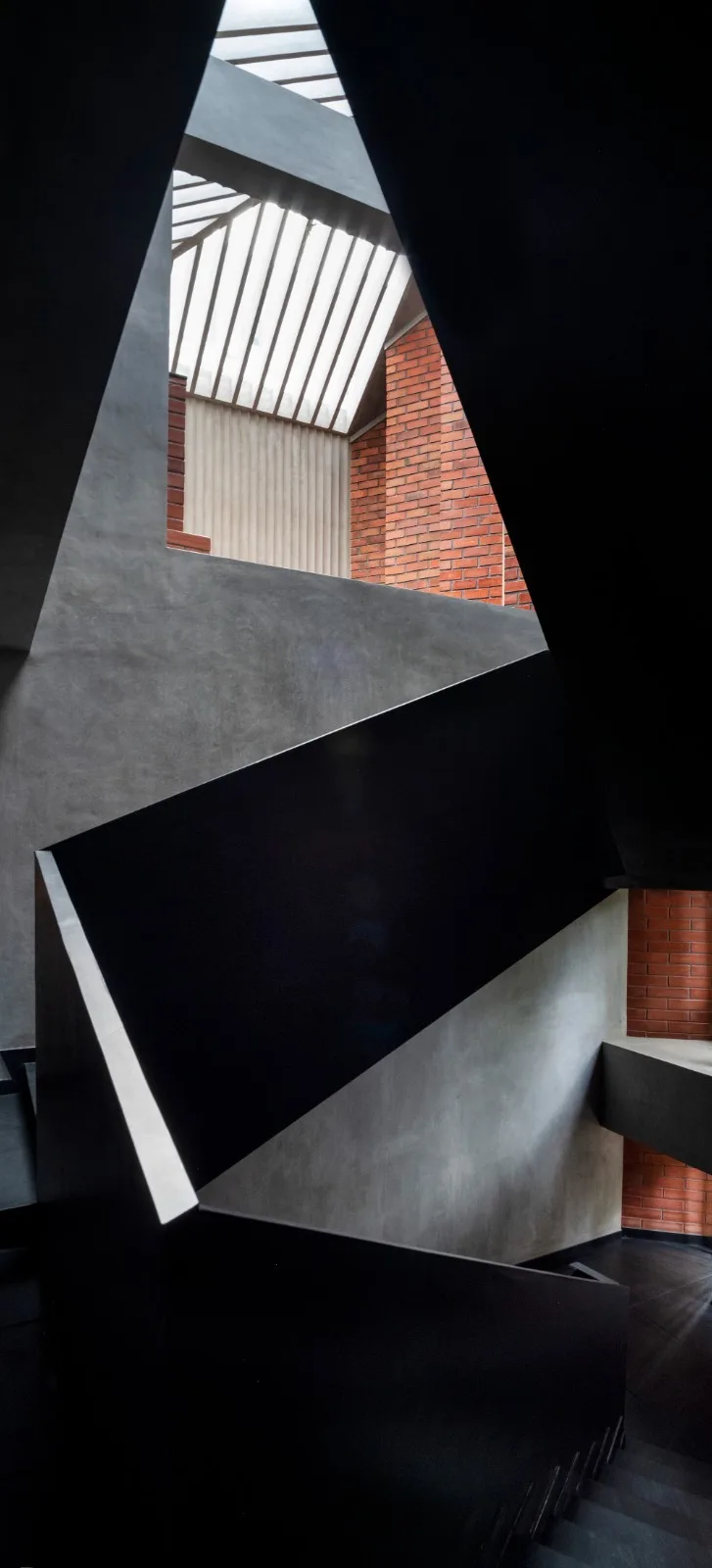
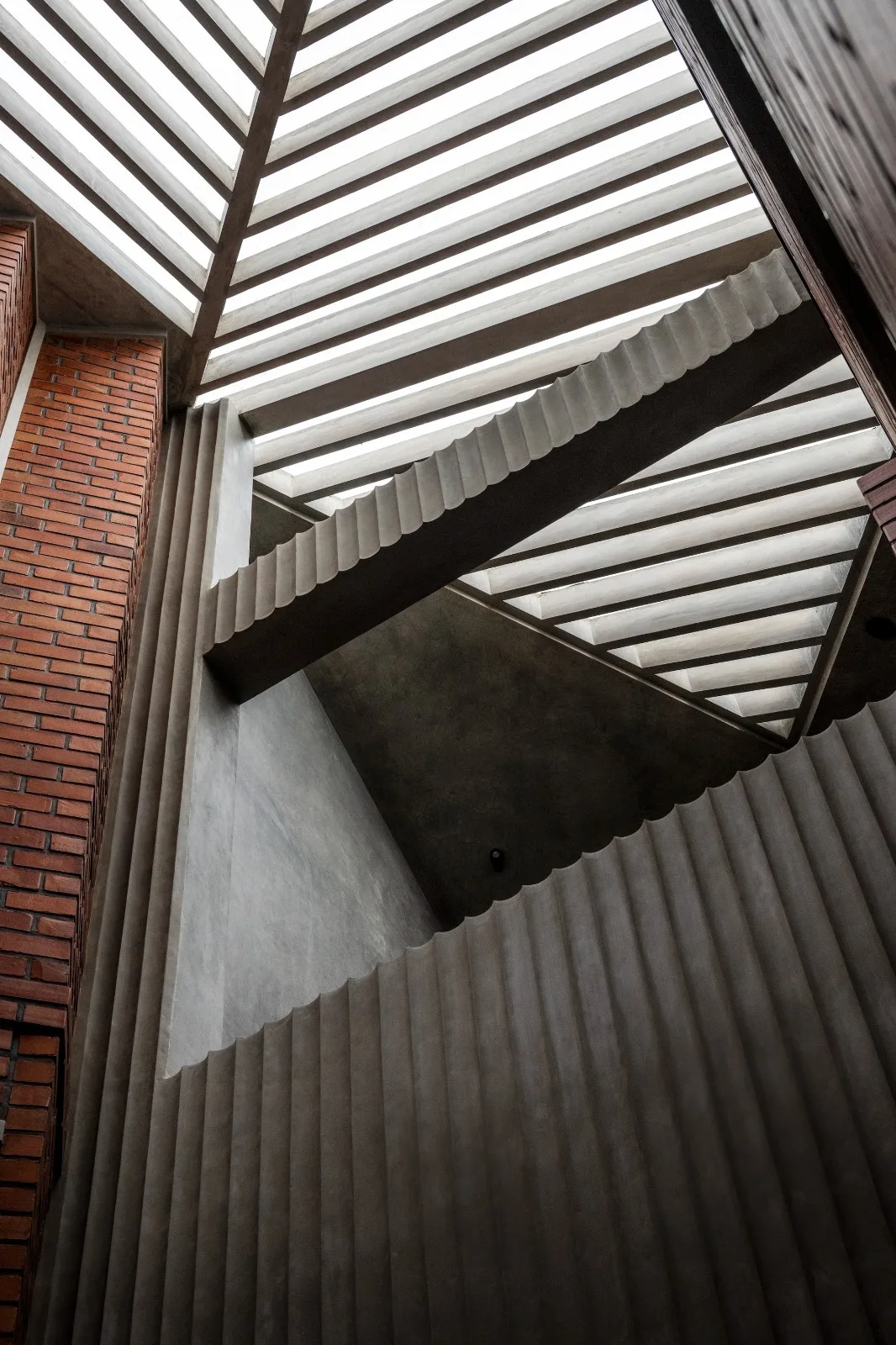
The basement houses an entertainment area known as “Majalis,” while the upper level functions as the main entrance for formal living and dining. The entrance is positioned beneath a striking three-story skylight that extends from the ground upward, connecting the interior with the sky.
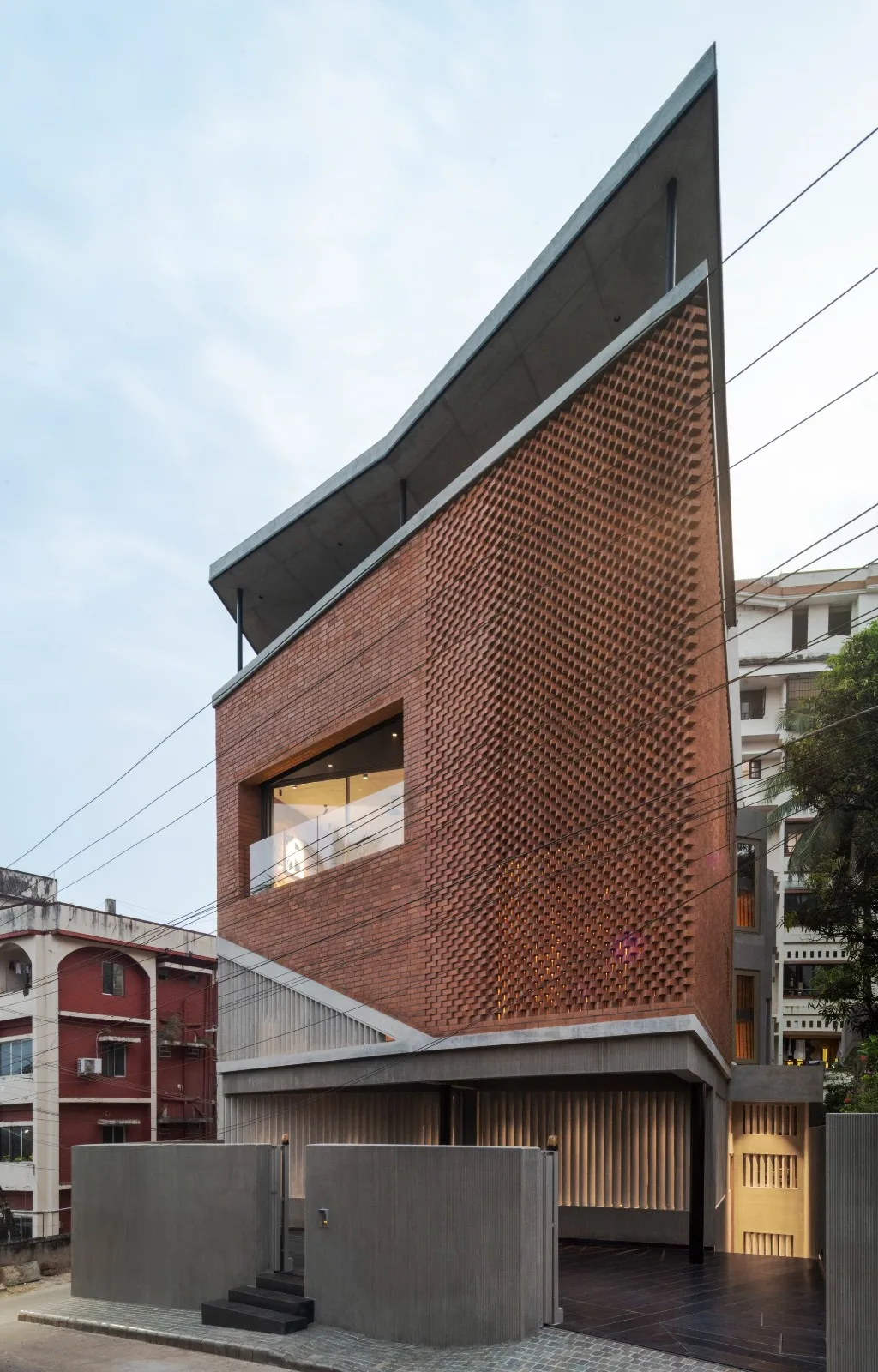
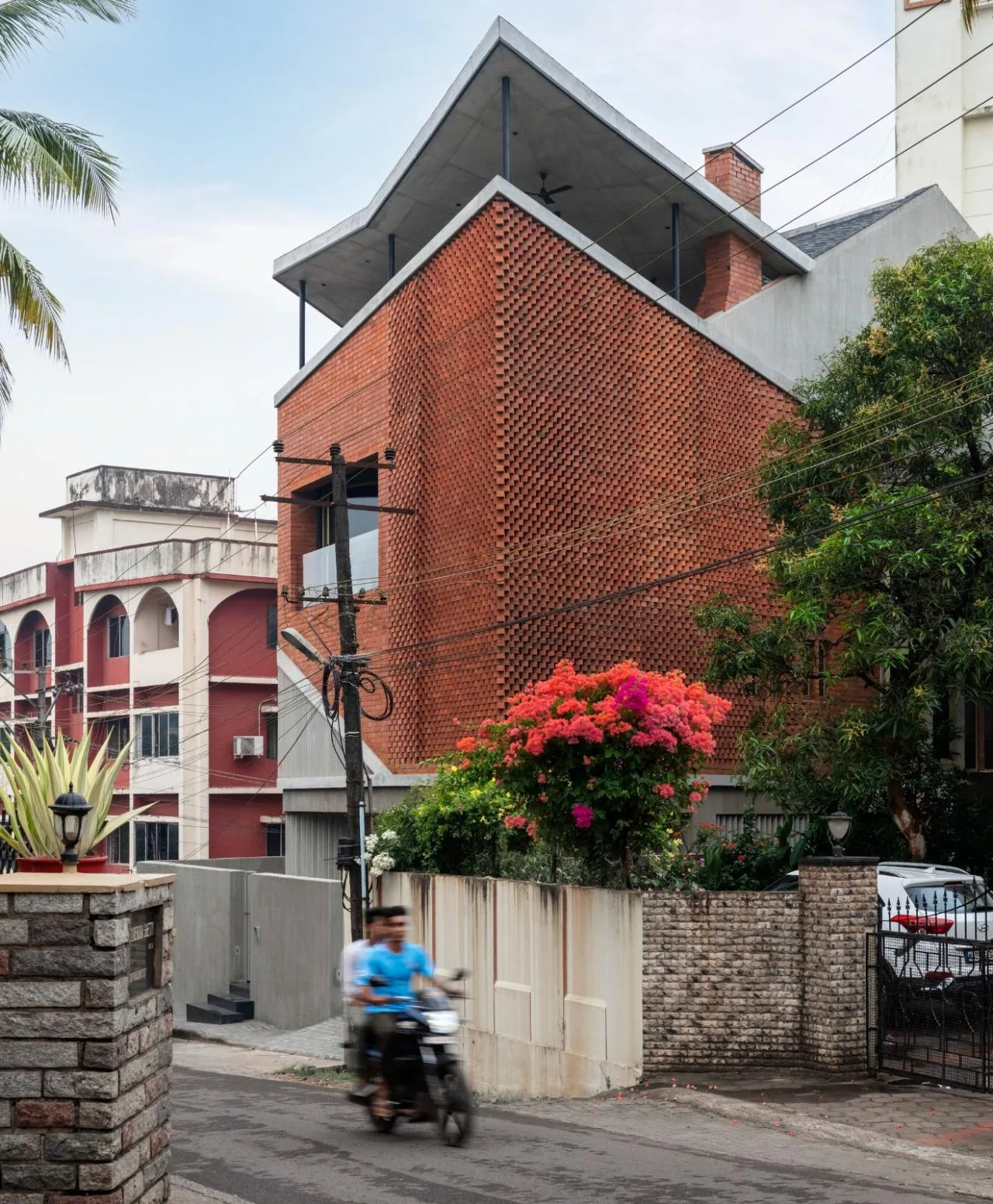
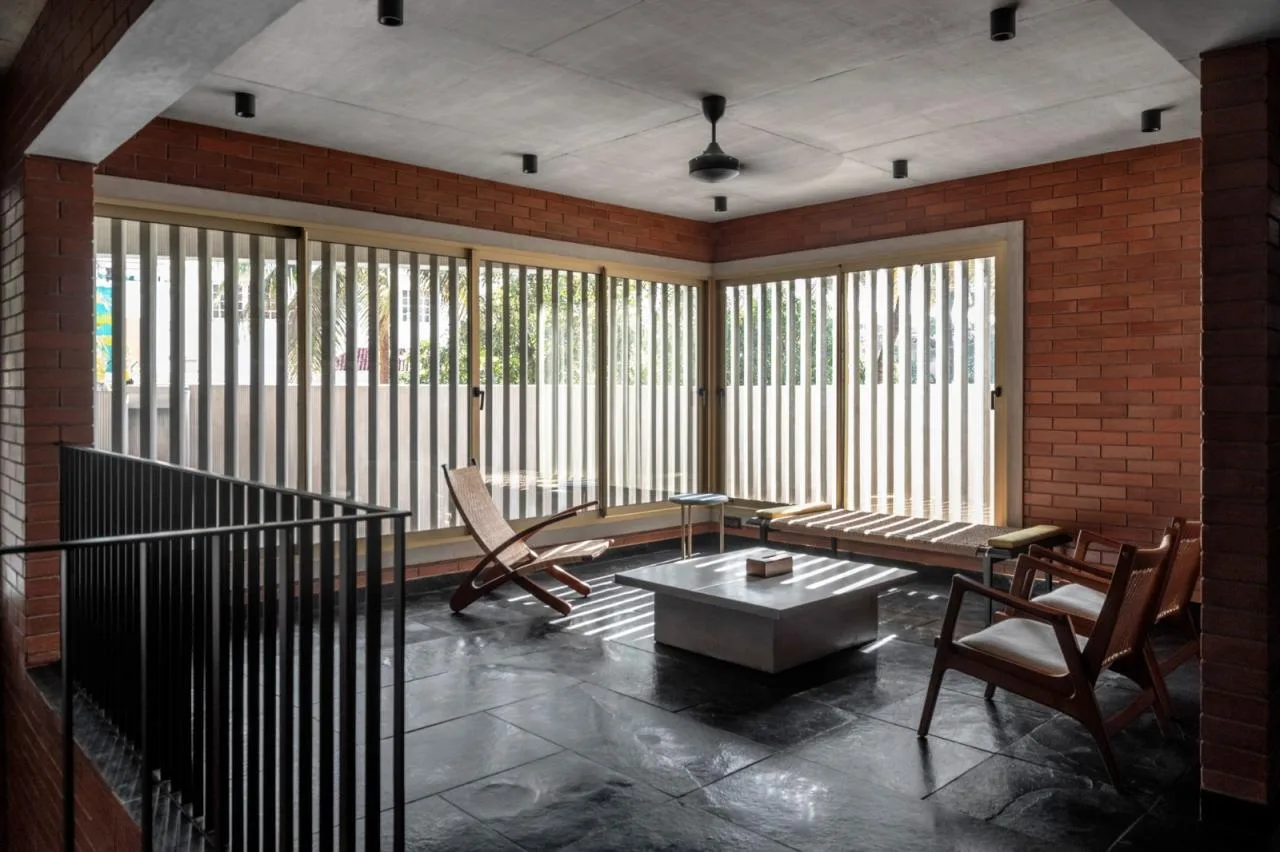
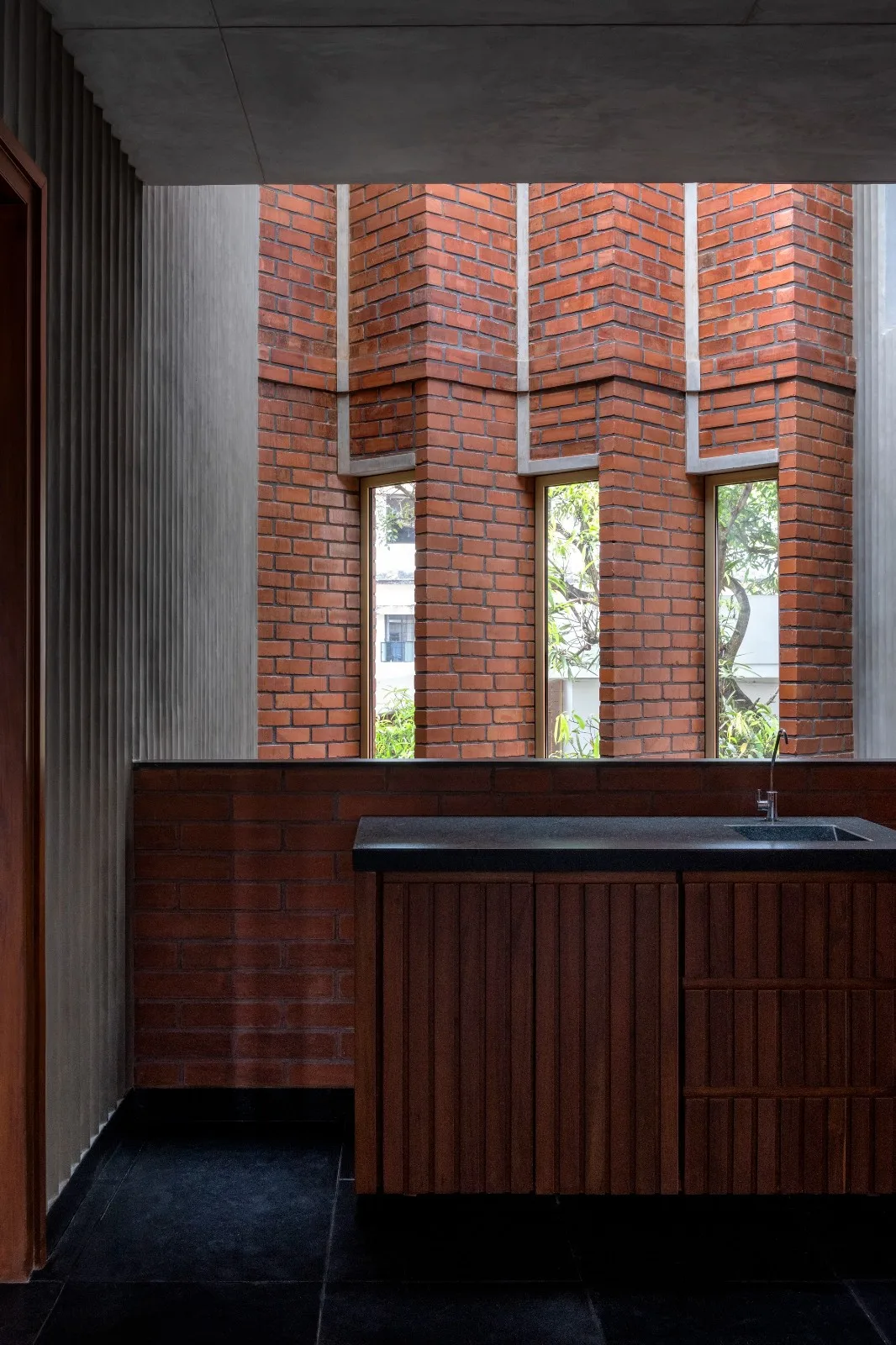
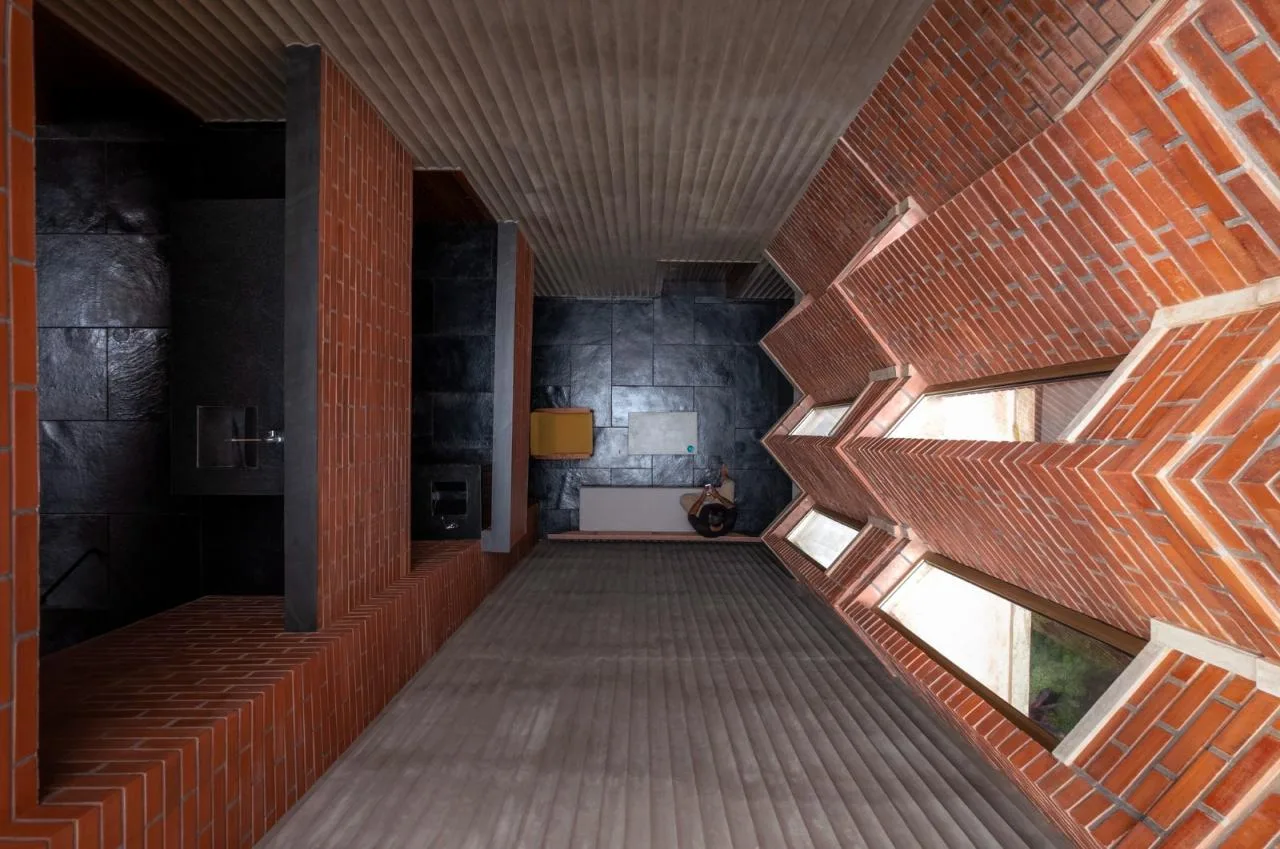
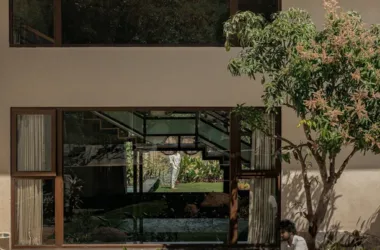
The building features multiple courtyards of varying volumes and floor levels, inspired in part by the traditional “ThottiMane” (quadrangle courtyard). Natural light filters through the brick screens into these courtyards, and gentle breezes circulate through the open spaces.
The staggered arrangement of atrium spaces allows all occupants to enjoy expanded outdoor courtyards adjacent to their private areas, fostering a connection between indoor and outdoor environments.
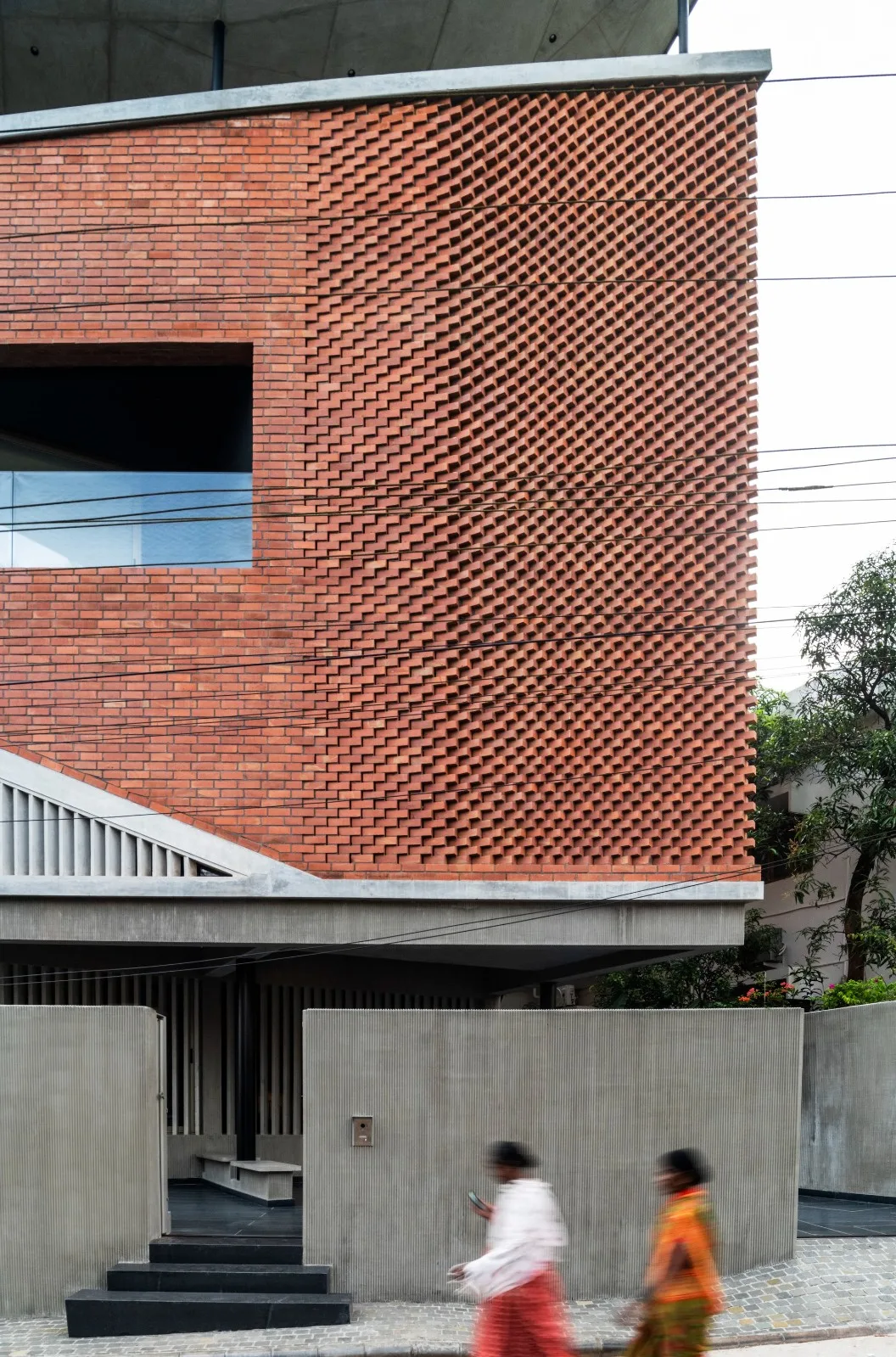
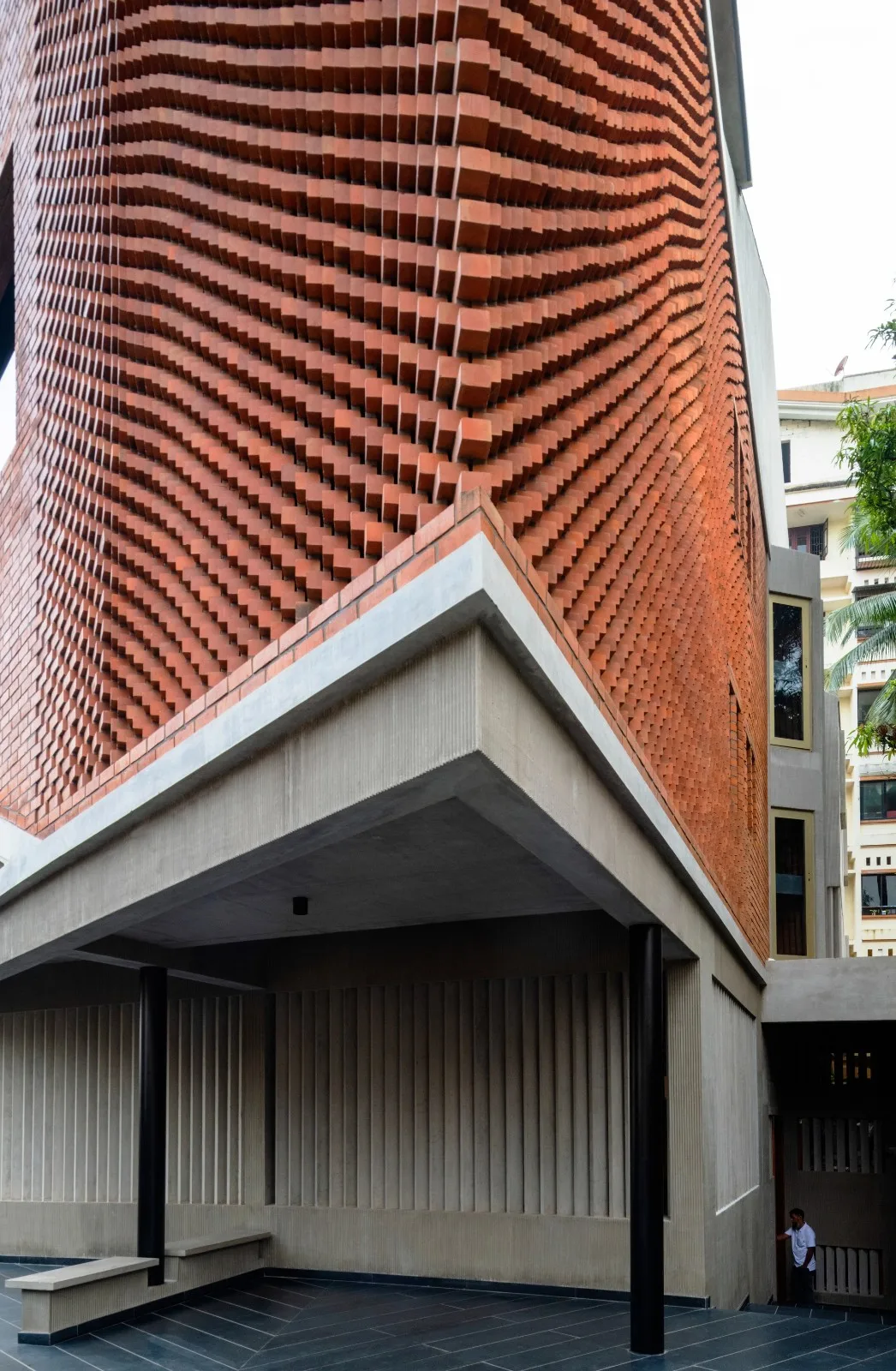
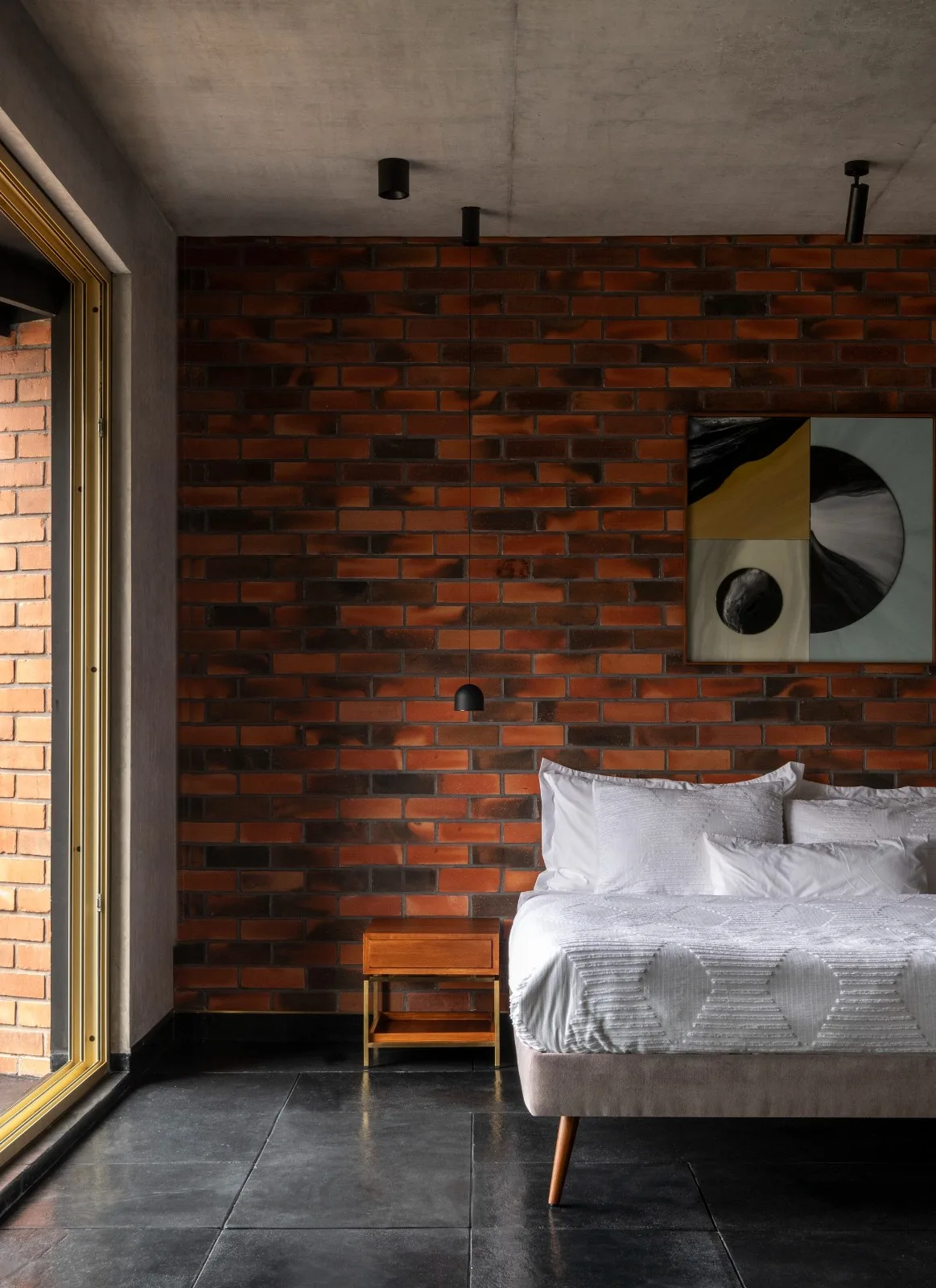
The building’s façade consists of multiple layers designed to maintain cool and insulated interiors. Each room features triple-layered walls, with outer and inner brick shells sandwiching red clay brick masonry in between.
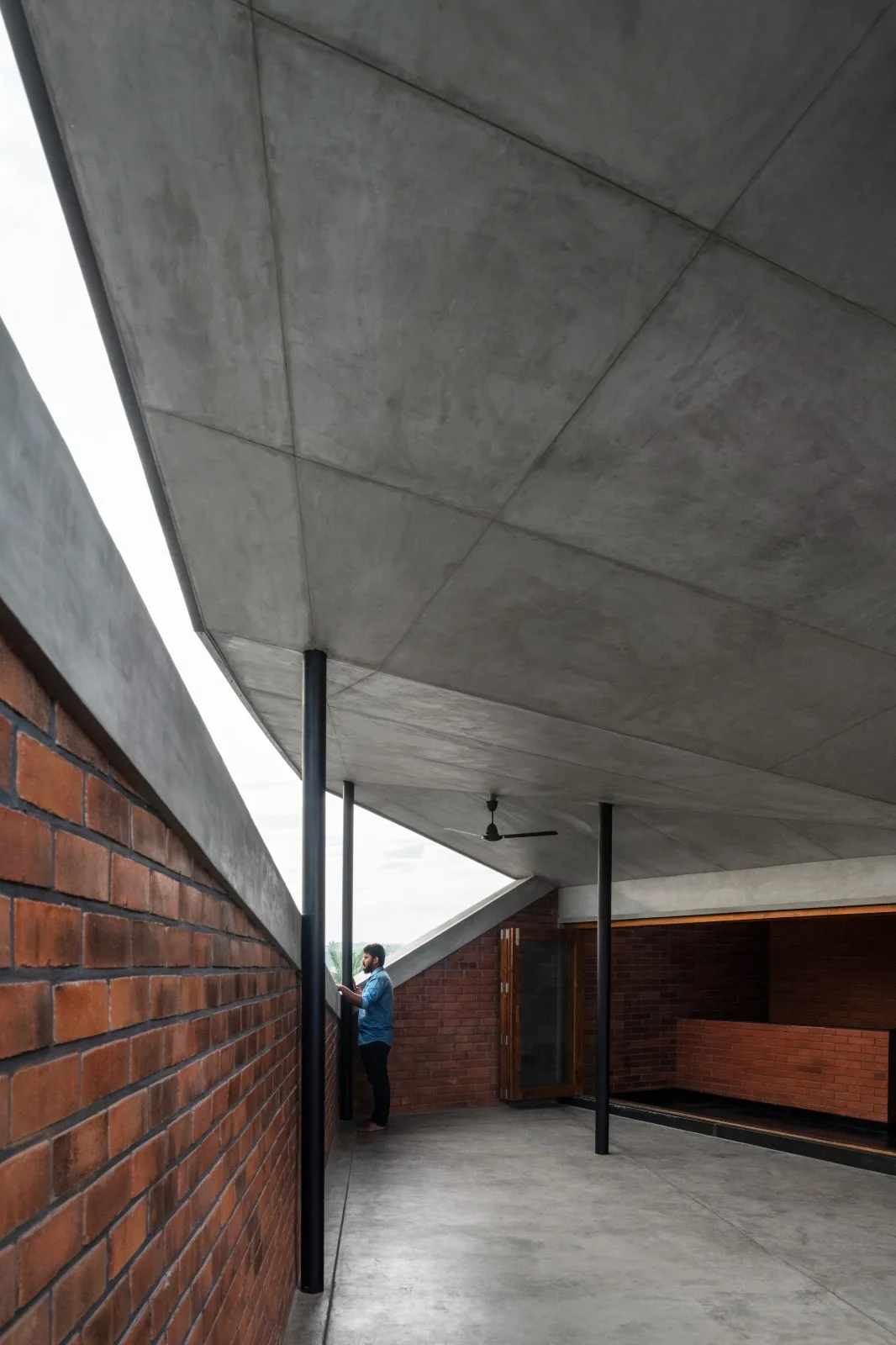
The brickwork on the façade is arranged in distinctive patterns, creating a visually expressive surface that also reduces the apparent mass of the building. The design echoes traditional sloping tile roofs, giving the structure a dynamic appearance as people move past it.
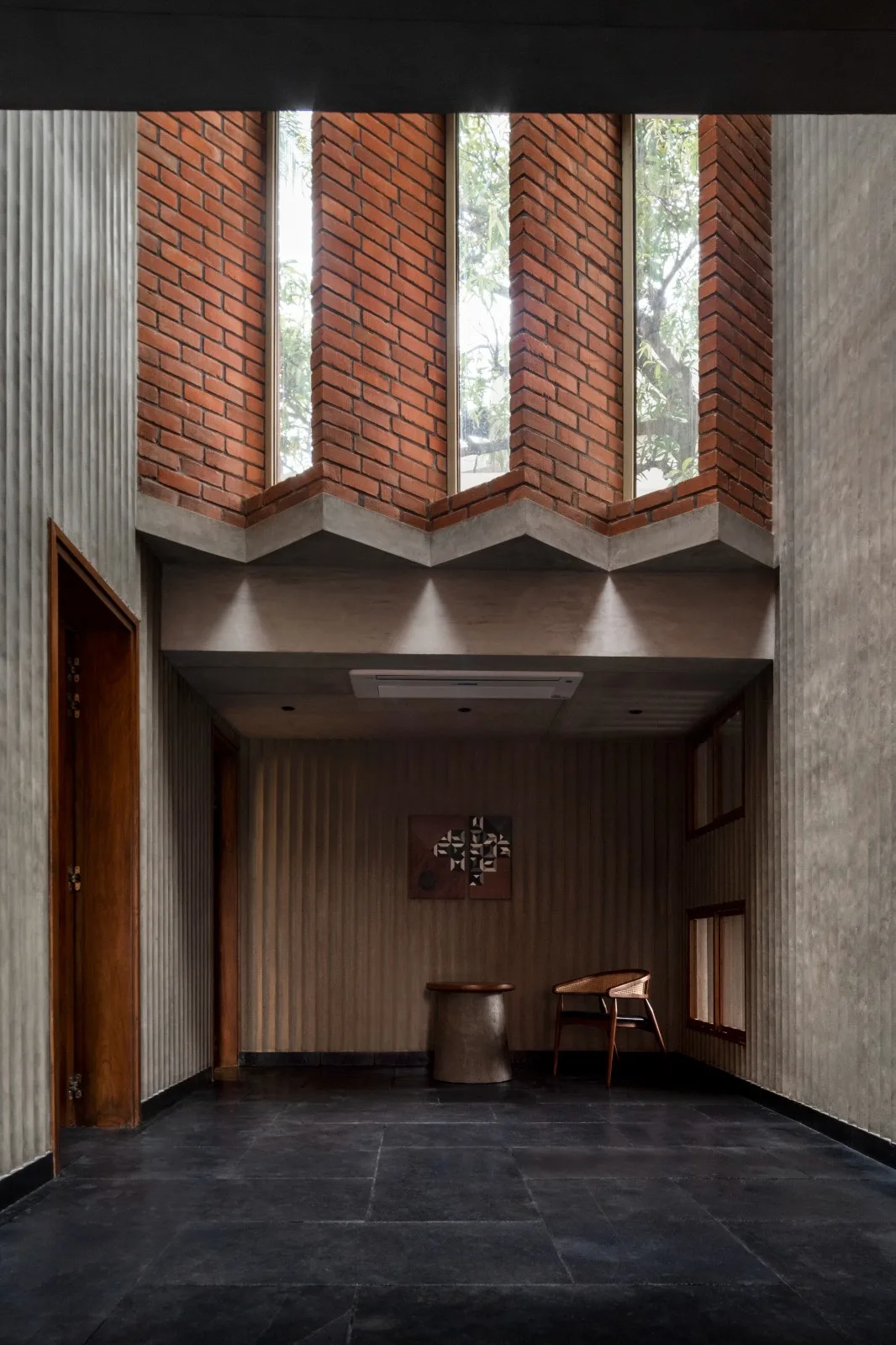
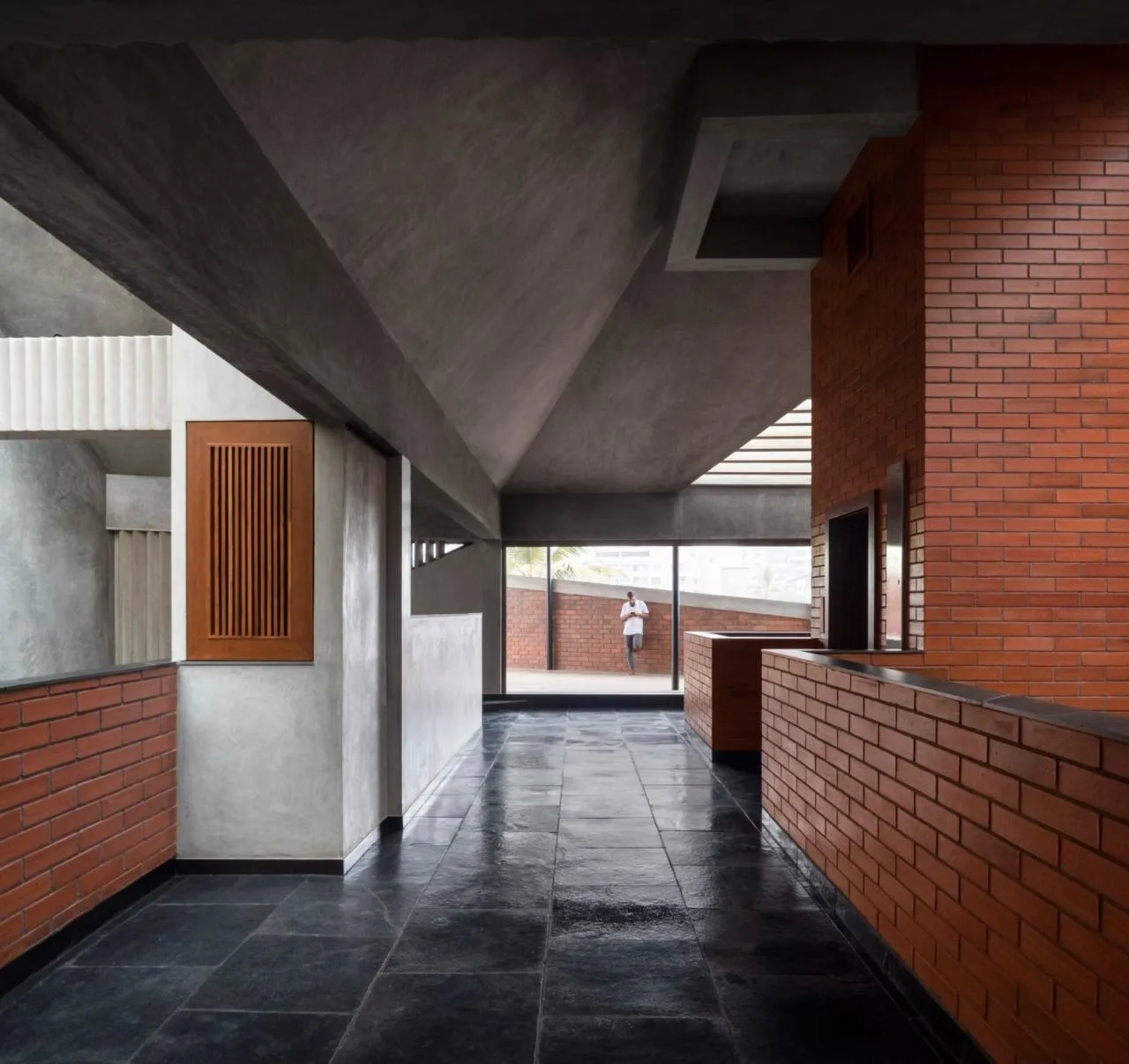
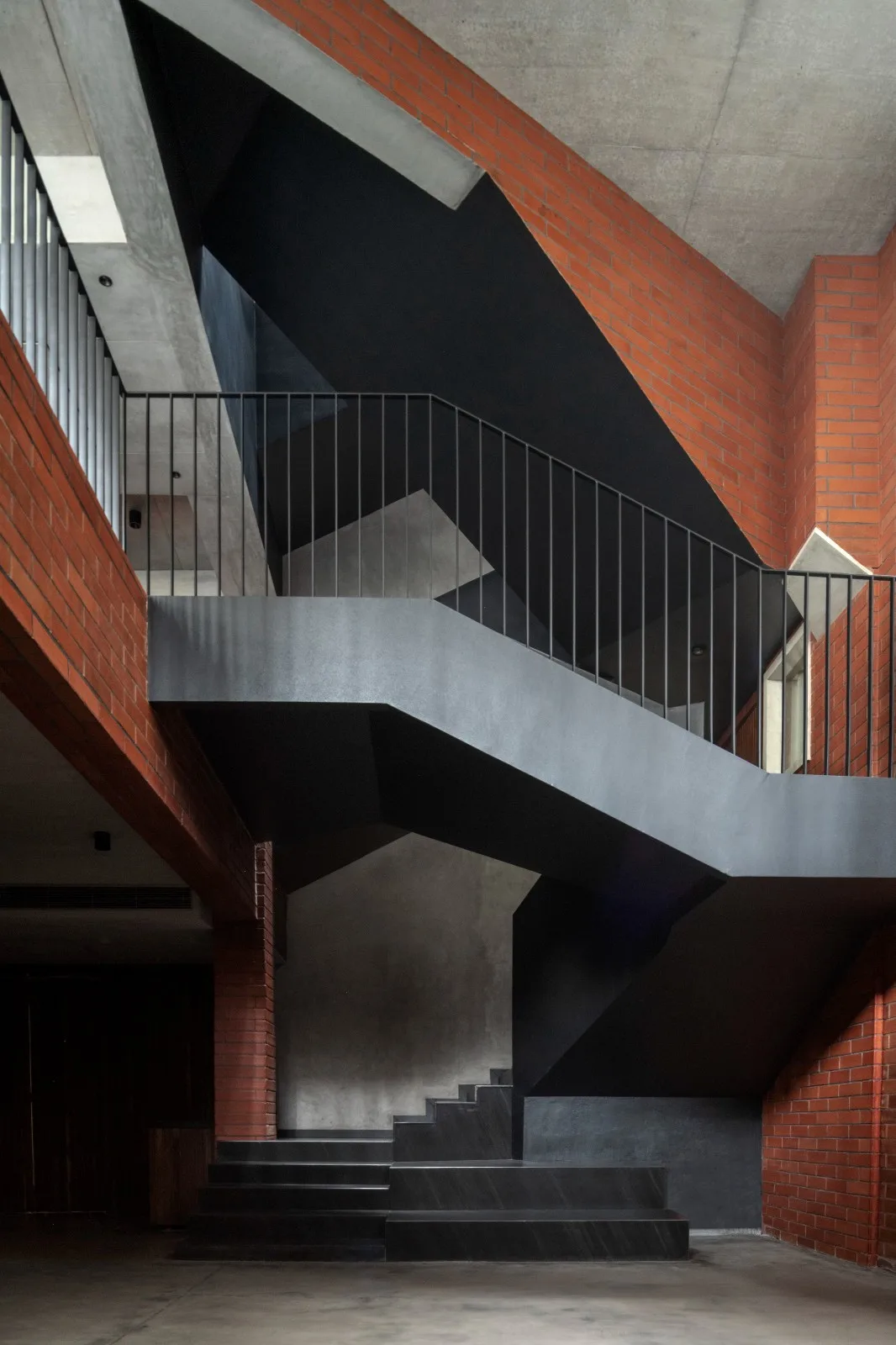
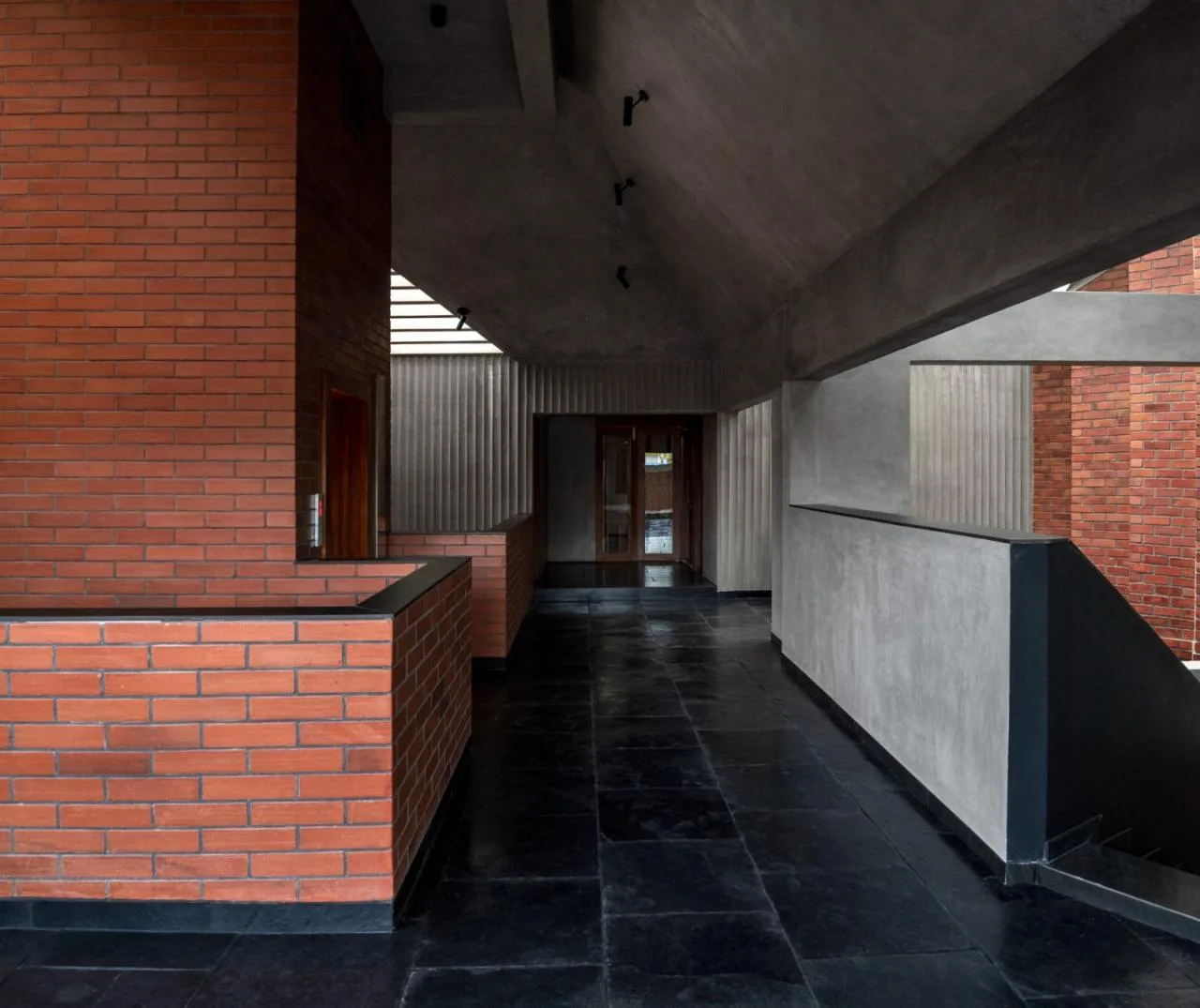
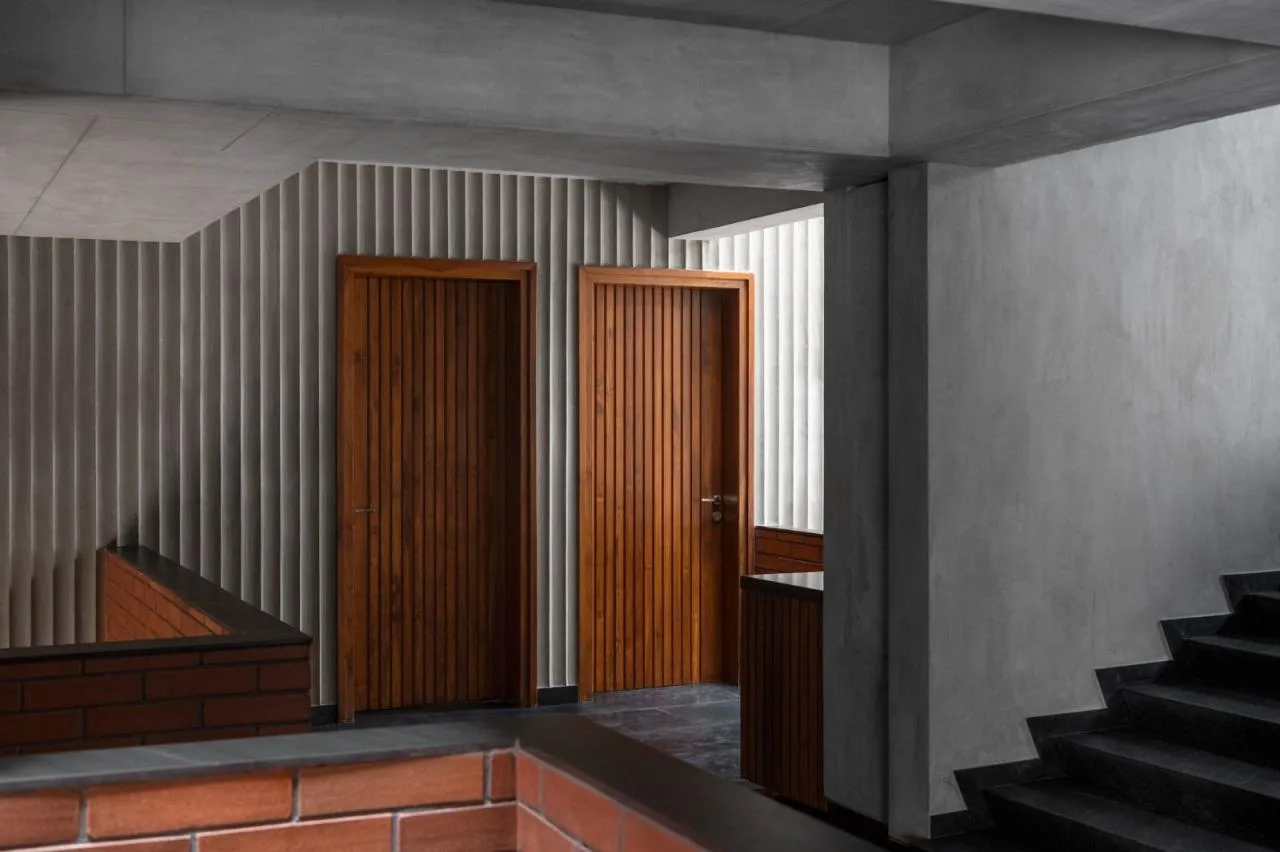
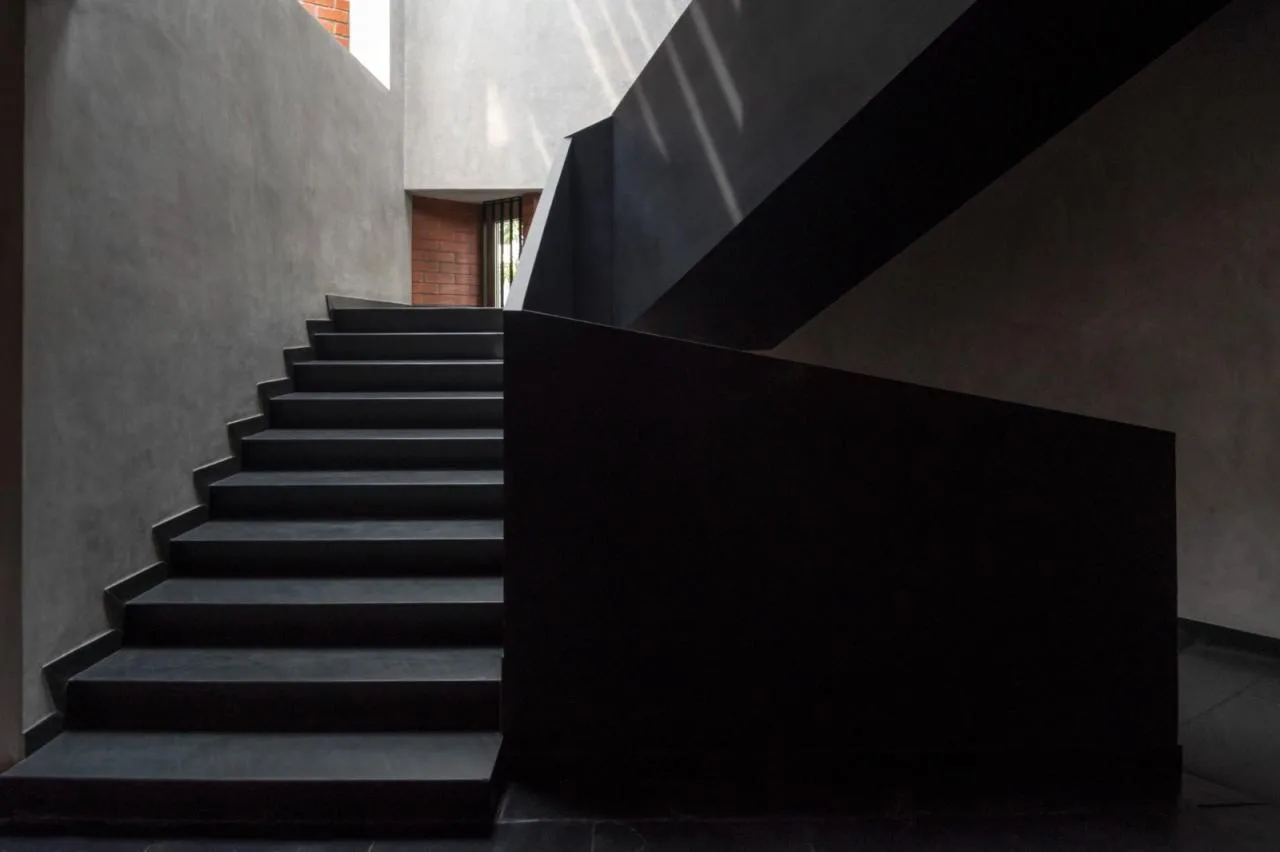
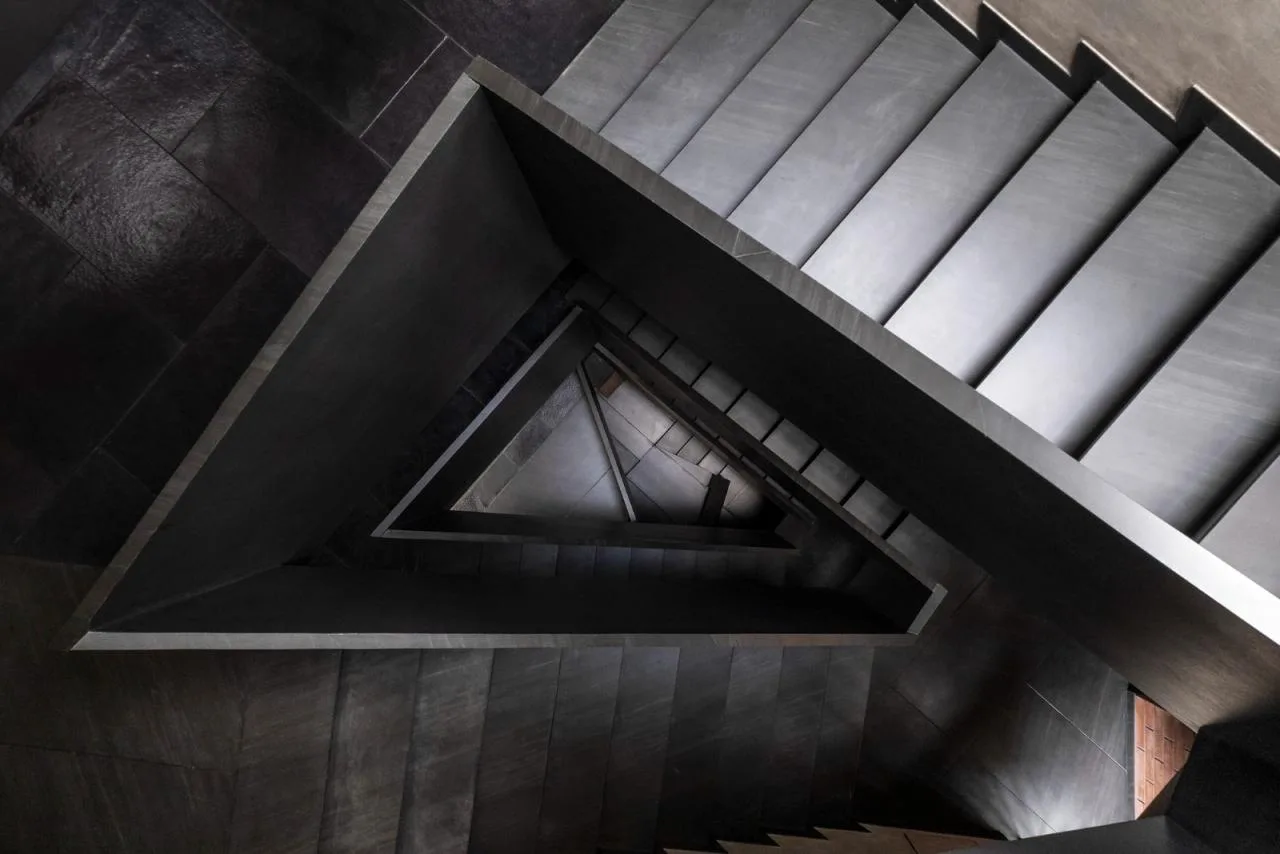
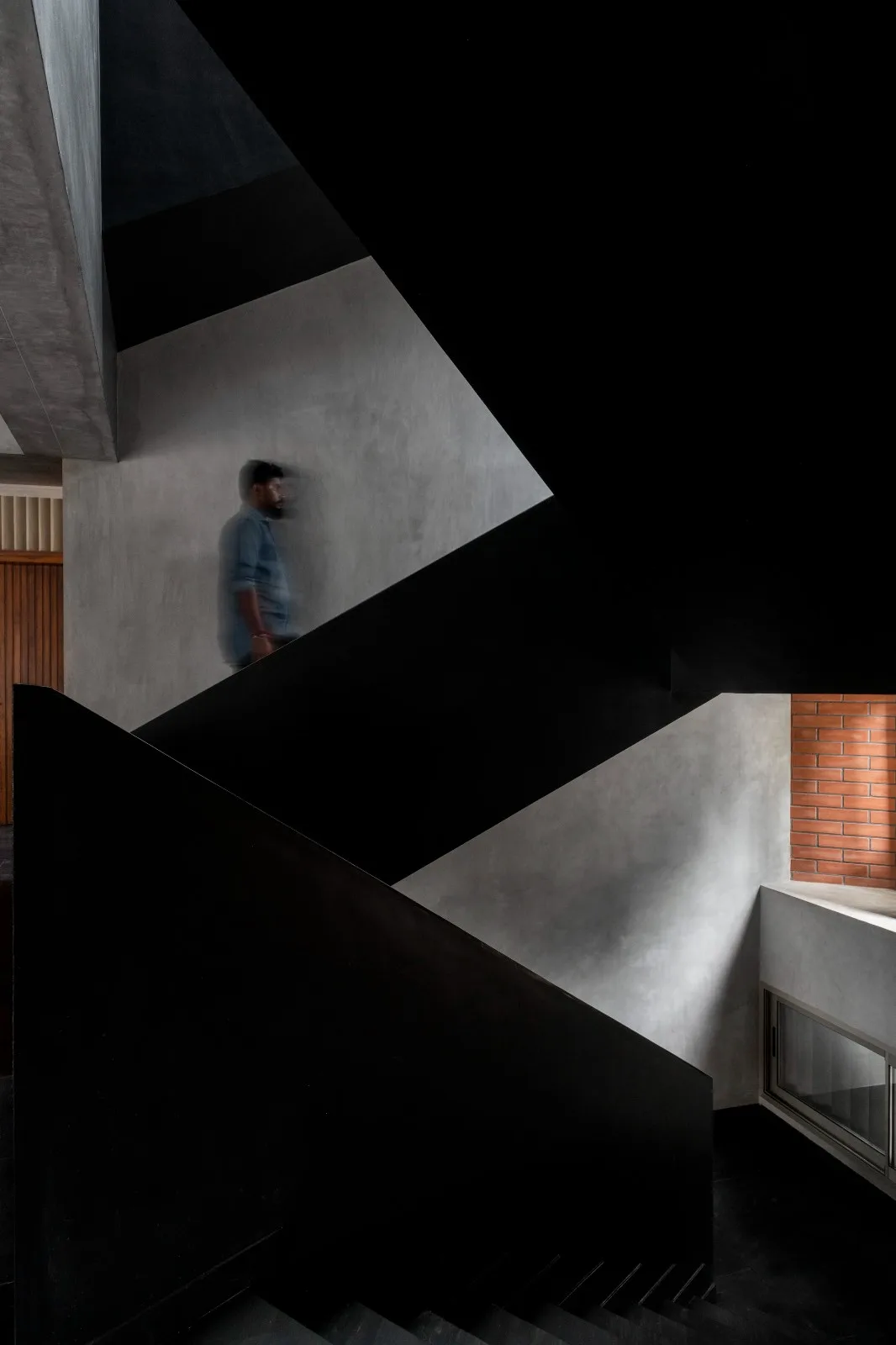
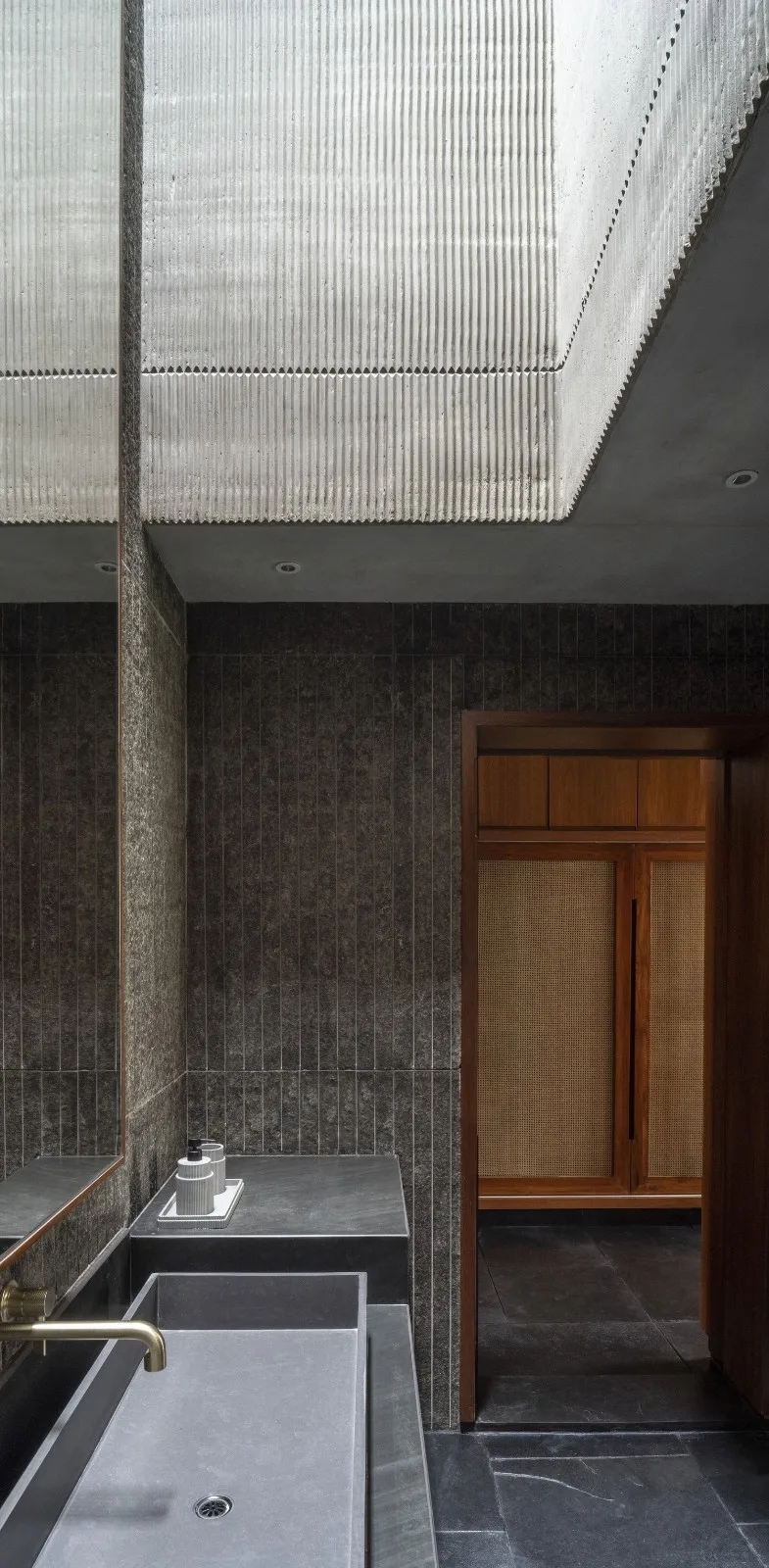
Inside, the design concept is further enhanced through the use of natural materials. The gypsum walls are finished with black limestone and gray Tandur stone.
Collaborating closely with contractors, various gypsum finishes were executed on site, highlighting both the production process and the craftsmanship involved. The client actively participated in the design and on-site analysis, fostering a collaborative atmosphere throughout the project.
The architectural concept, developed and commissioned by the project architect as part of the design team, embodies the firm’s architectural philosophy. The material choices tie the design to the past while elegantly moving forward into the future.
Project Drawings
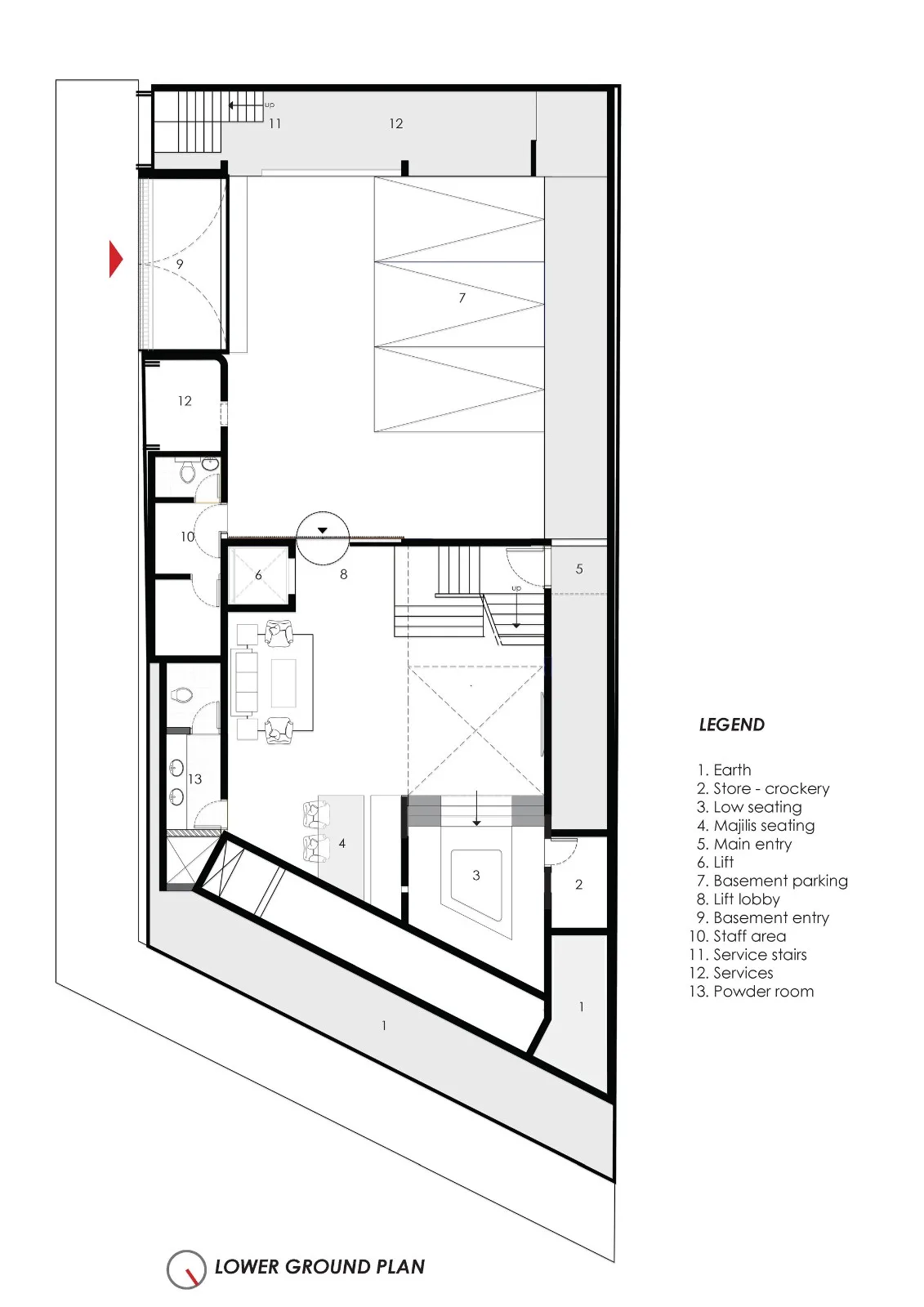
△ Underground Floor Plan
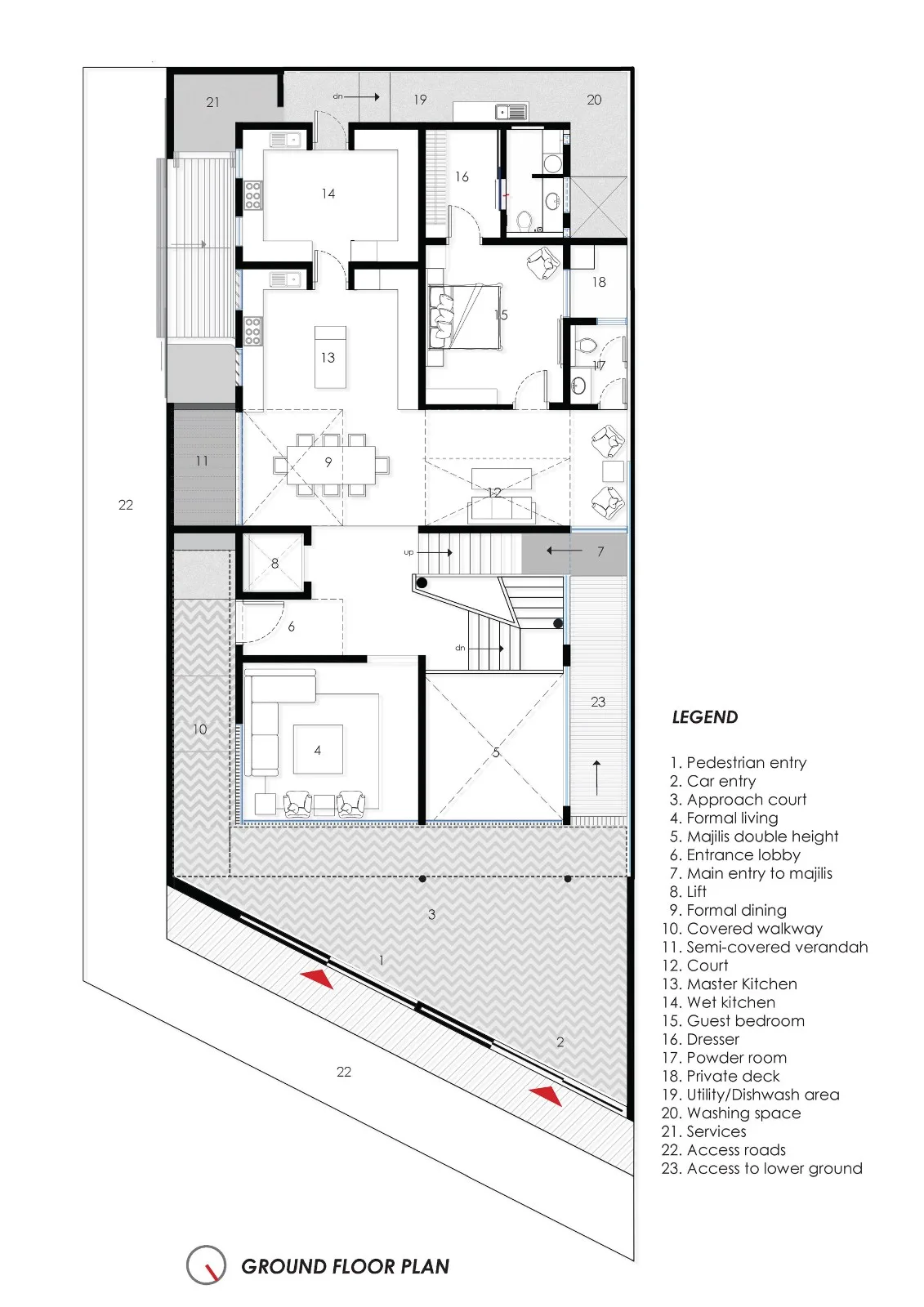
△ First Floor Plan
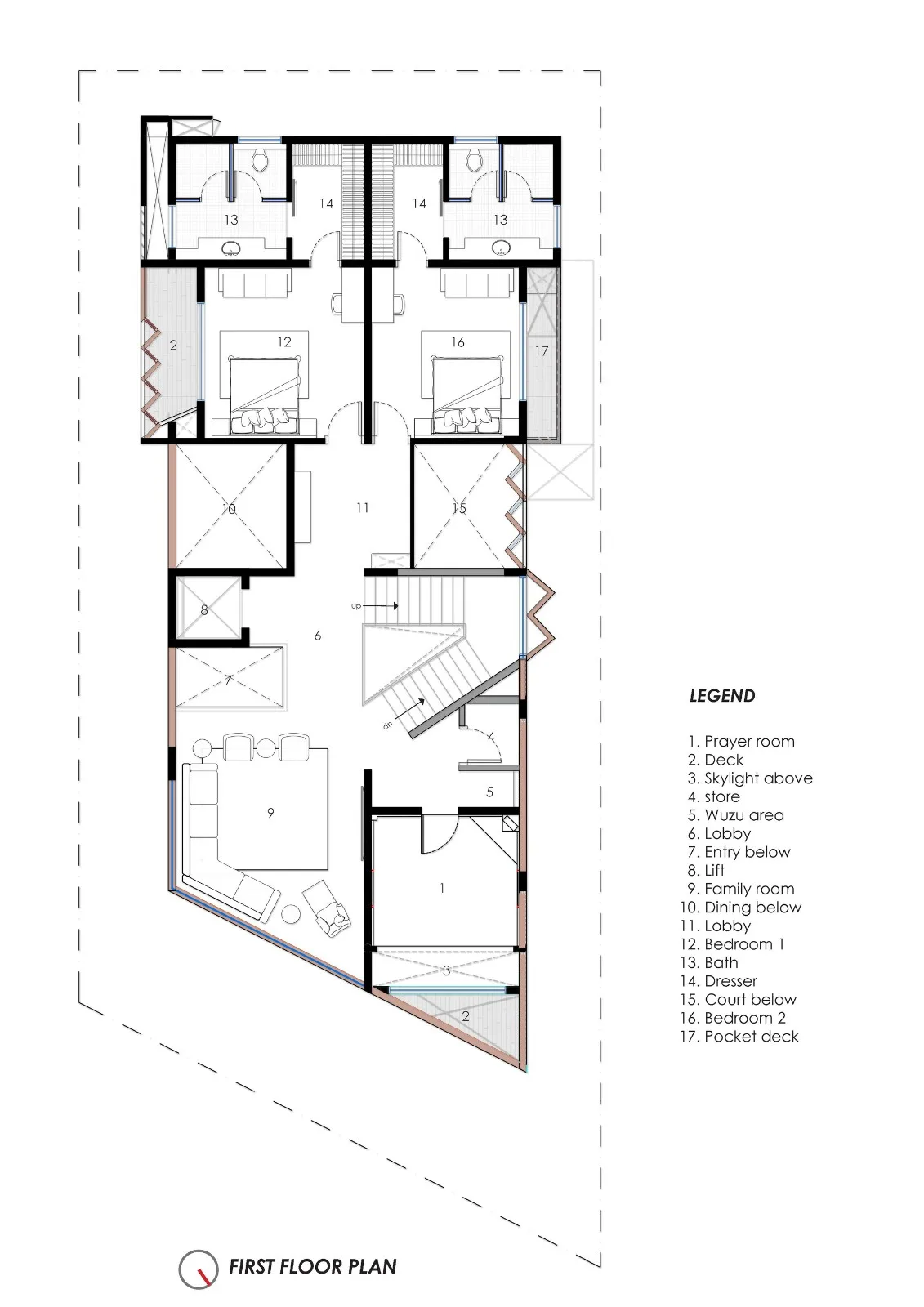
△ Second Floor Plan
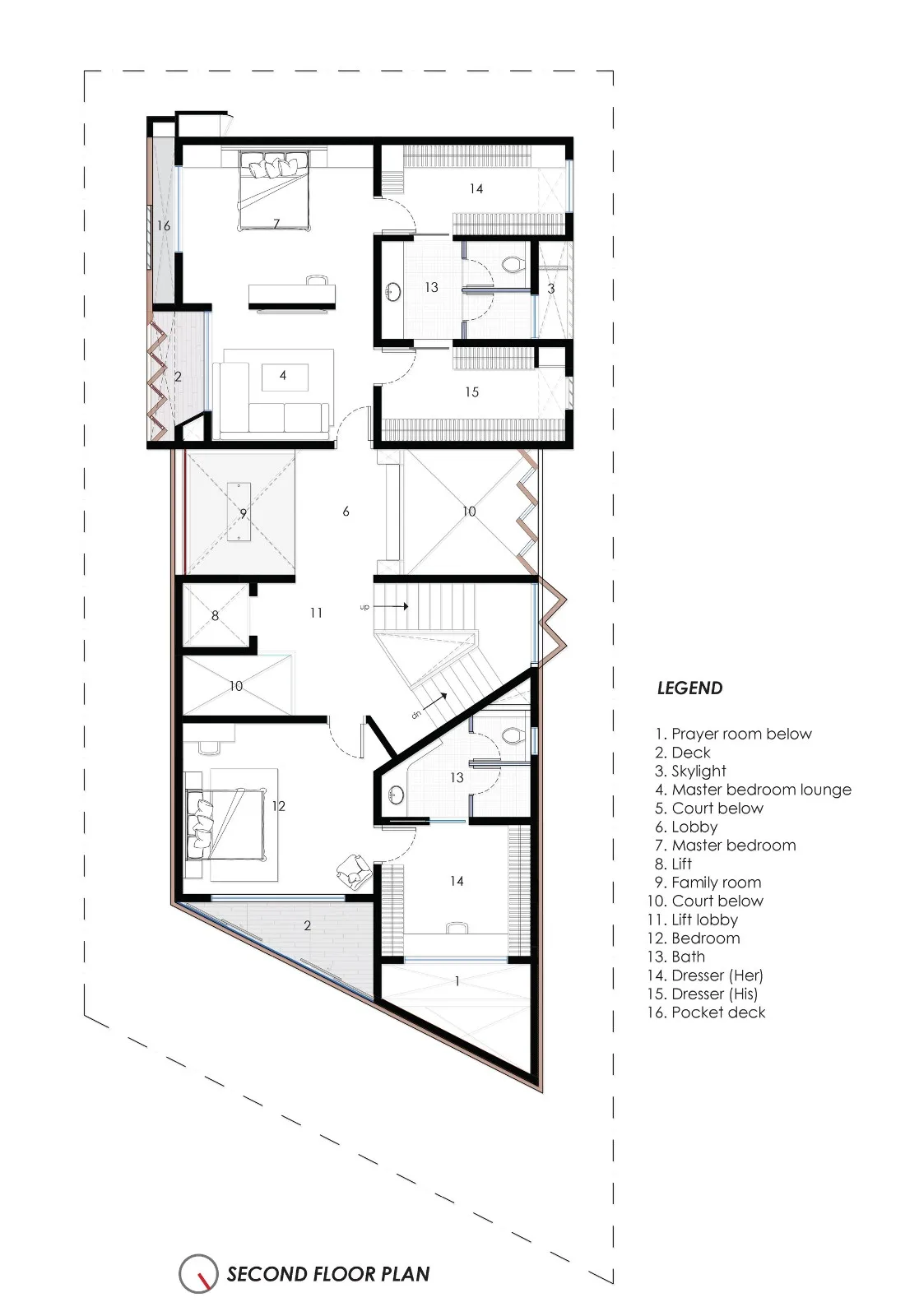
△ Third Floor Plan
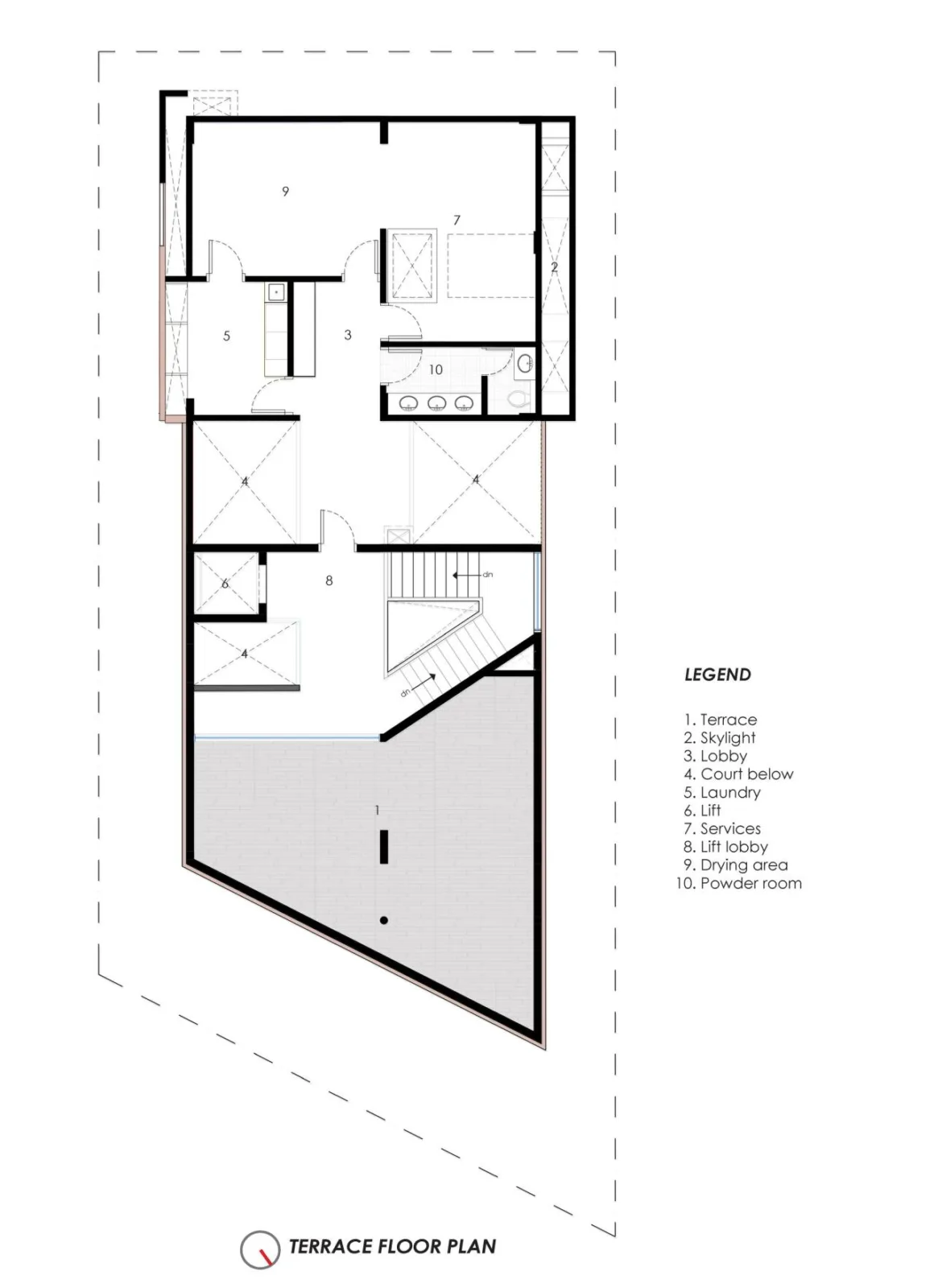
△ Fourth Floor Plan
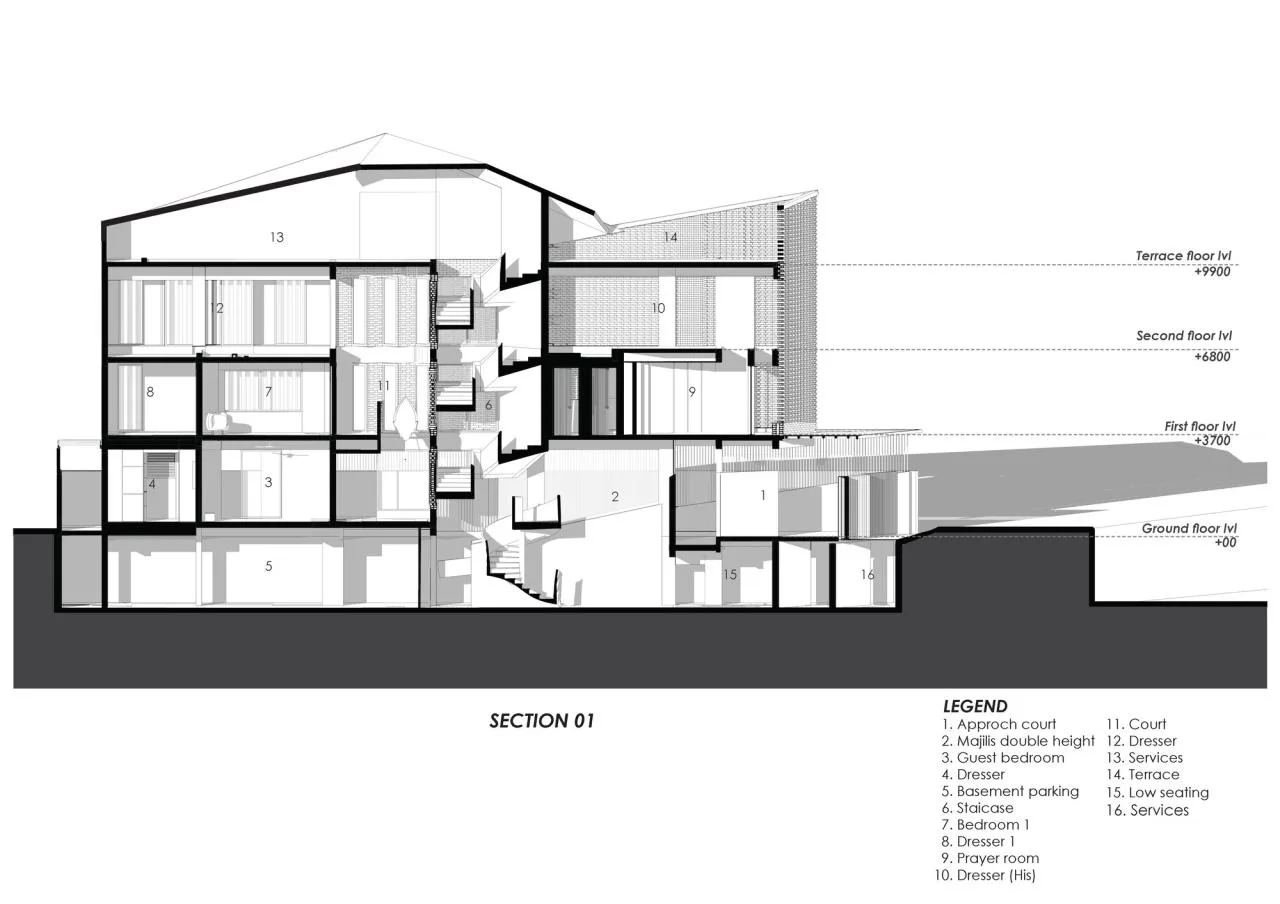
△ Section Diagram
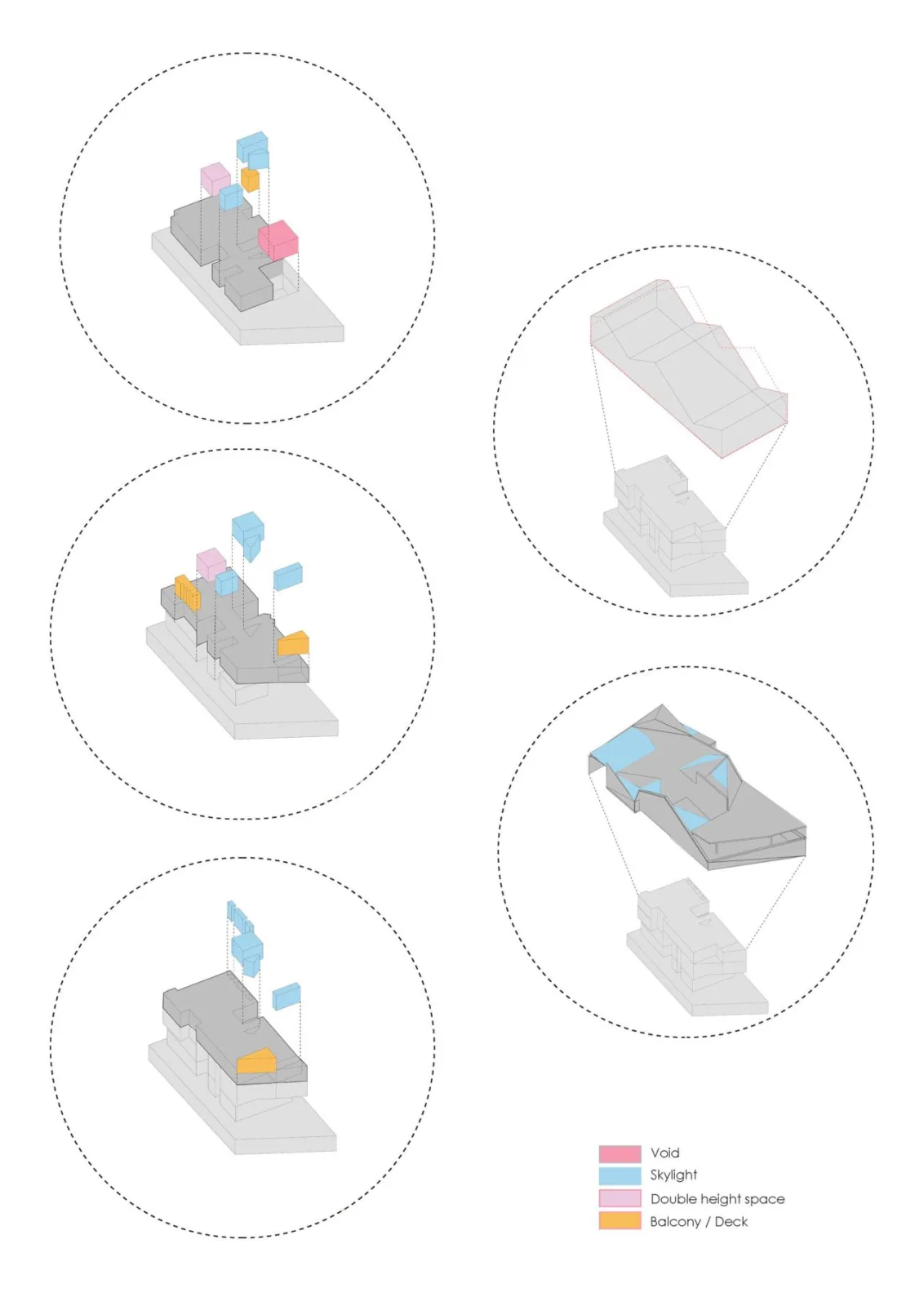
△ Analysis Chart
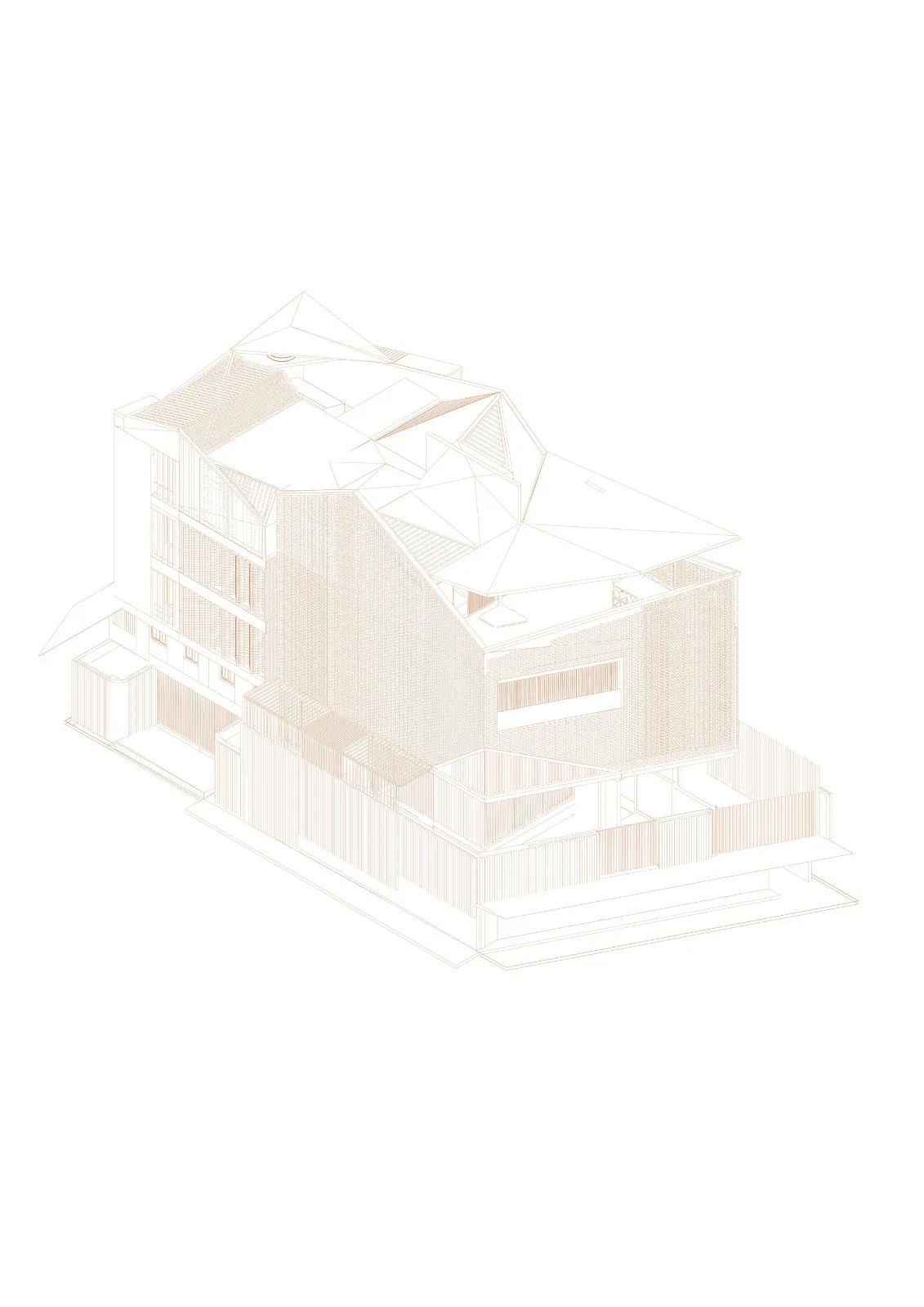
△ Axonometric Diagram
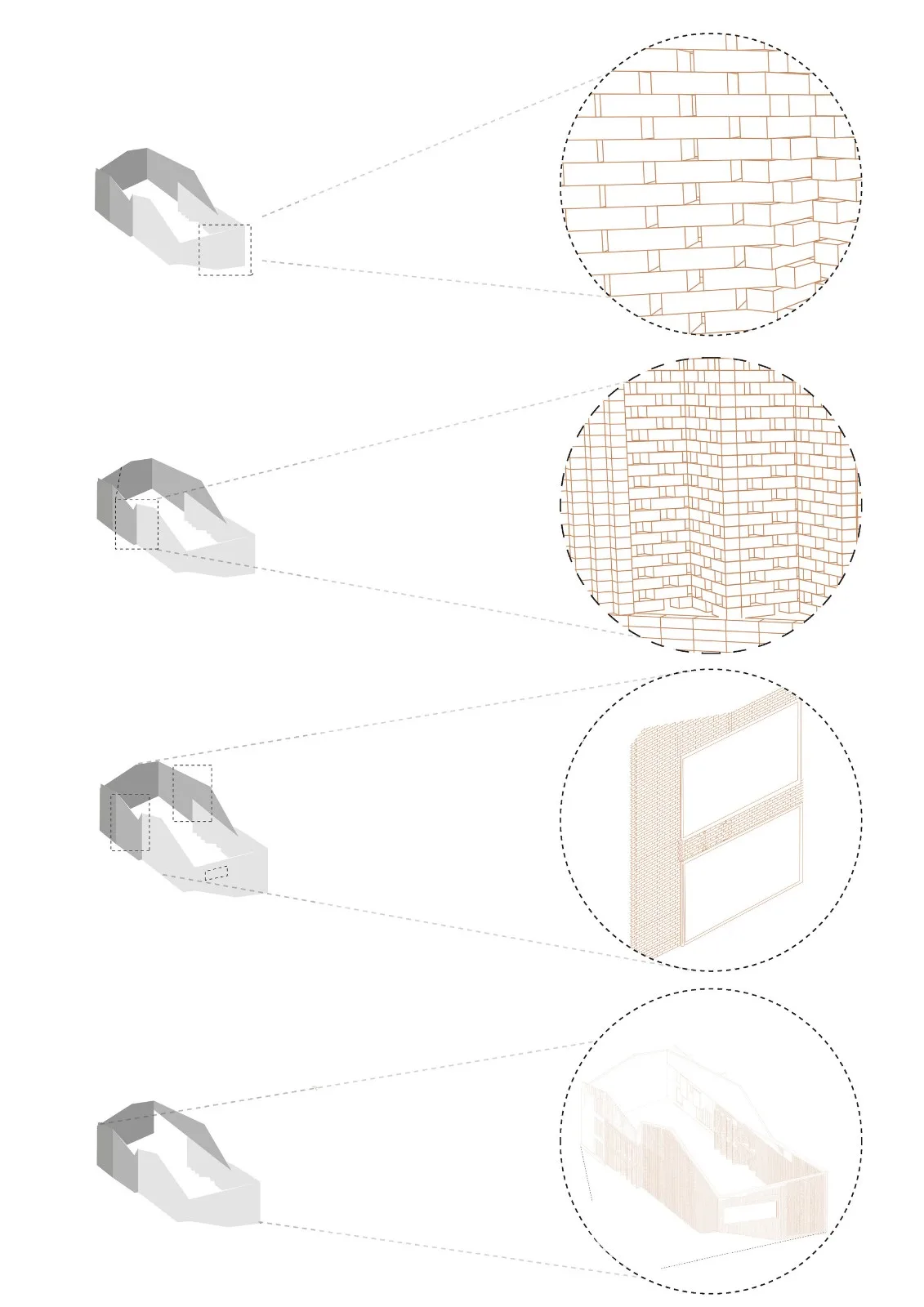
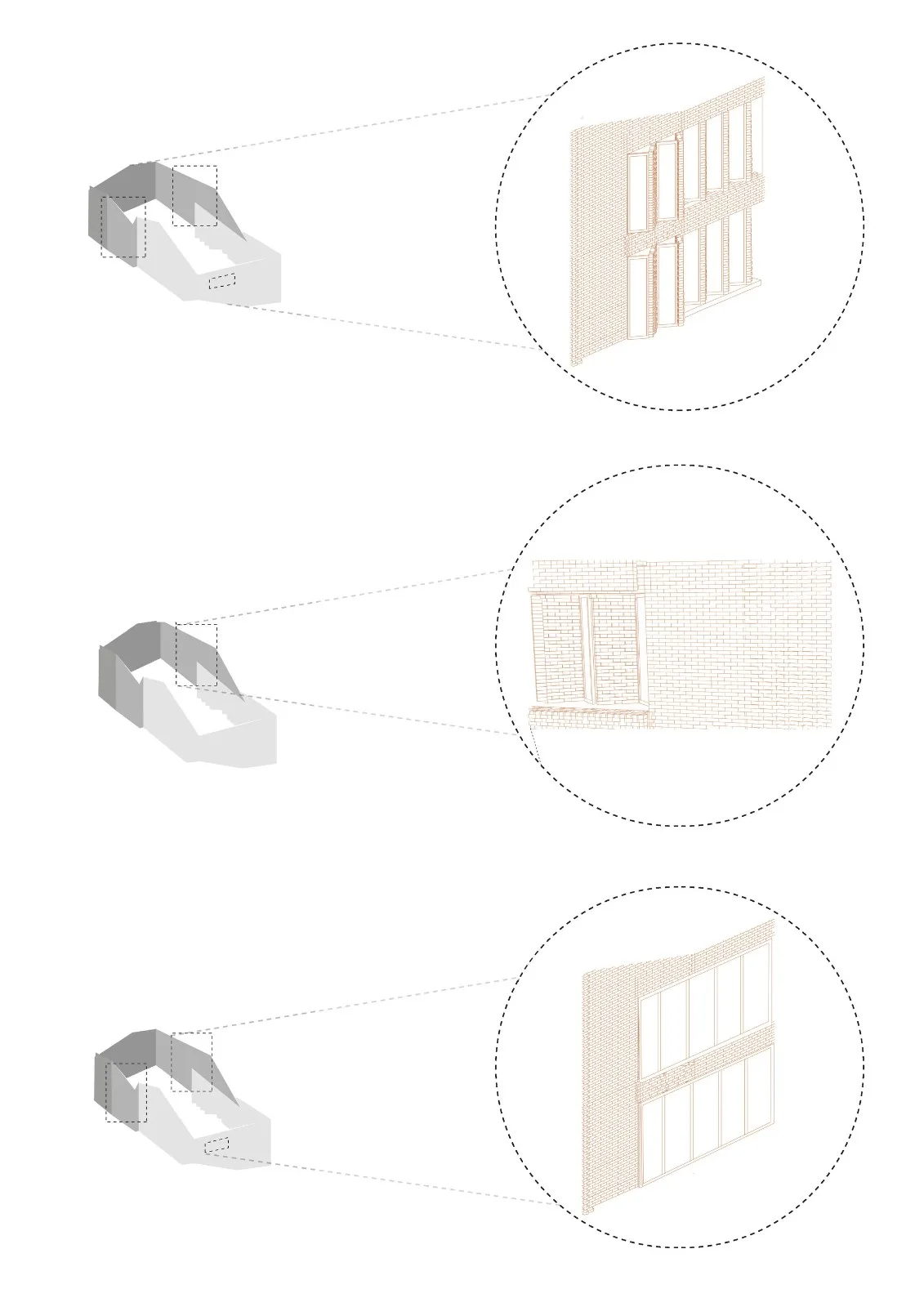
△ Analysis Chart
Project Information
Architect: The Purple Ink Studio
Area: 13,500 ft²
Project Year: 2022
Photographer: Suryan // Dang
Manufacturers: Alumil, FCML, MM INTERIORS, Panasonic, STONELIFE HYDERABAD, Schindler
Lead Architects: Akshay Heranjal, Aditi Pai, Siddharth Waze, Jaikumar, Amal
Project Architects: Siddharth Waze, Amal Jain
Engineer: Jaikumar V
Architectural Design: The Purple Ink Studio
Structural Consultant: Ashok Associates
MEP Consultant: Ceecon Engineers
Location: Mangaluru, India












Must log in before commenting!
Sign Up