
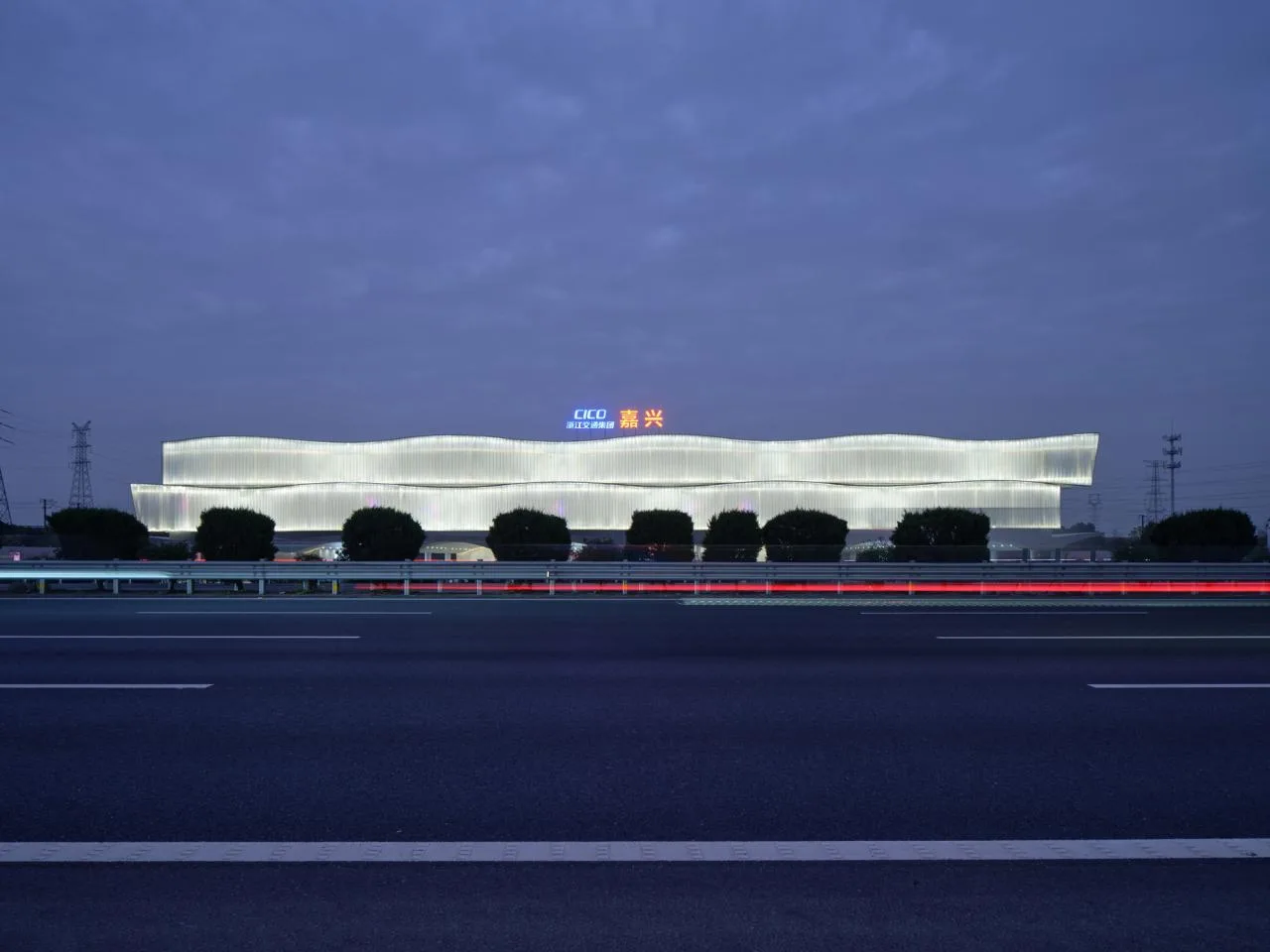
Regardless of the design concept, architects share a common responsibility:
to bring unexpected ‘surprises’ to everyday experiences.
—— He Jian
CEO & Chief Architect, Goa Elephant Design
1. The Gateway to Zhejiang from the West
The Jiaxing Service Area is situated in Xiuzhou District, Jiaxing City, Zhejiang Province, along the Shanghai-Hangzhou Expressway. It serves as the first highway service station entering Zhejiang from the Shanghai-Jiangsu direction. The original facility consisted of two separate areas, north and south, featuring a traditional layout with a straight service building paired with an open-air parking lot.
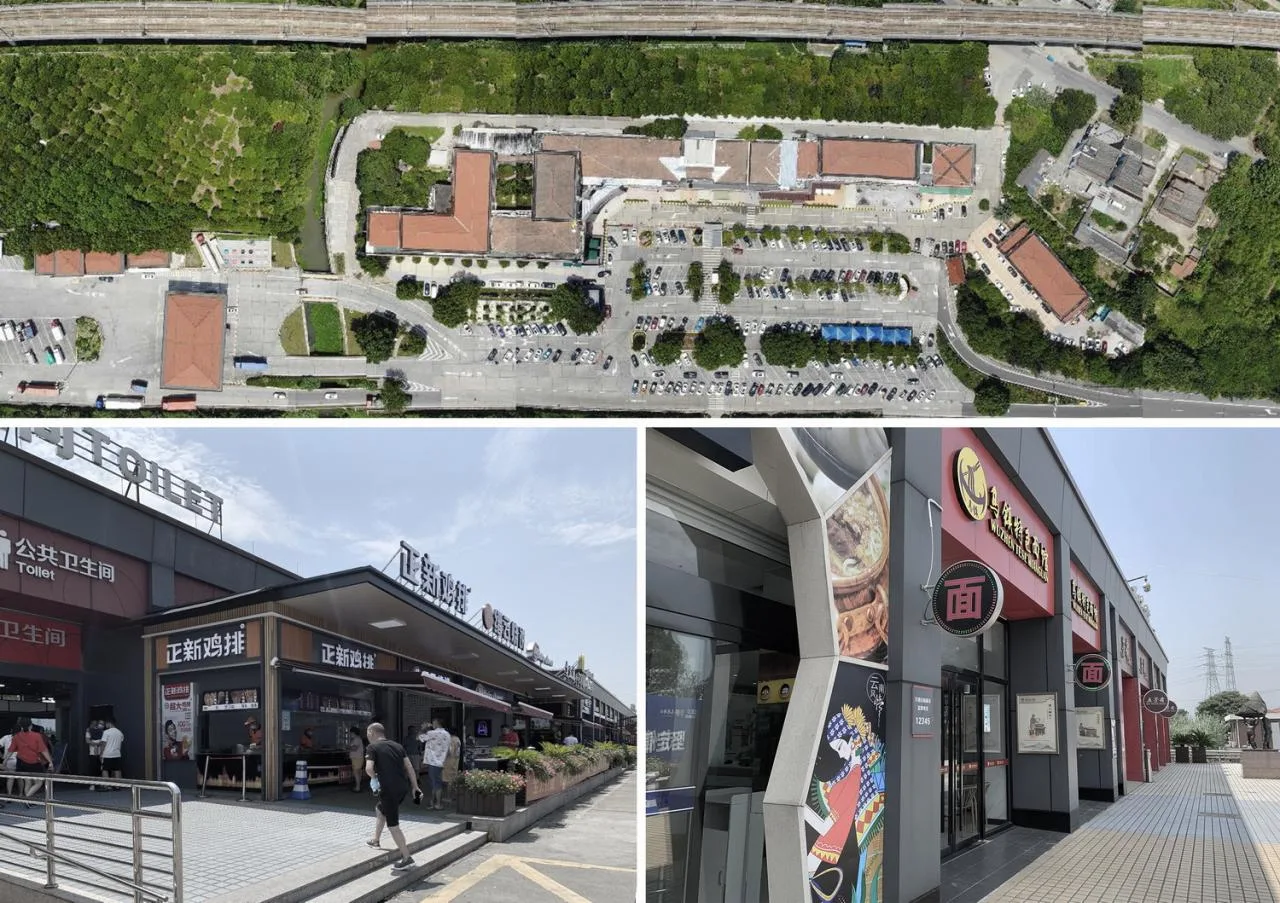
△ This straight service building has been operational since 1999.
Since opening in 1999, Jiaxing Service Area has explored diverse business models. Notably, it hosted the first Starbucks on an expressway in China and helped popularize Jiaxing Zongzi nationwide.
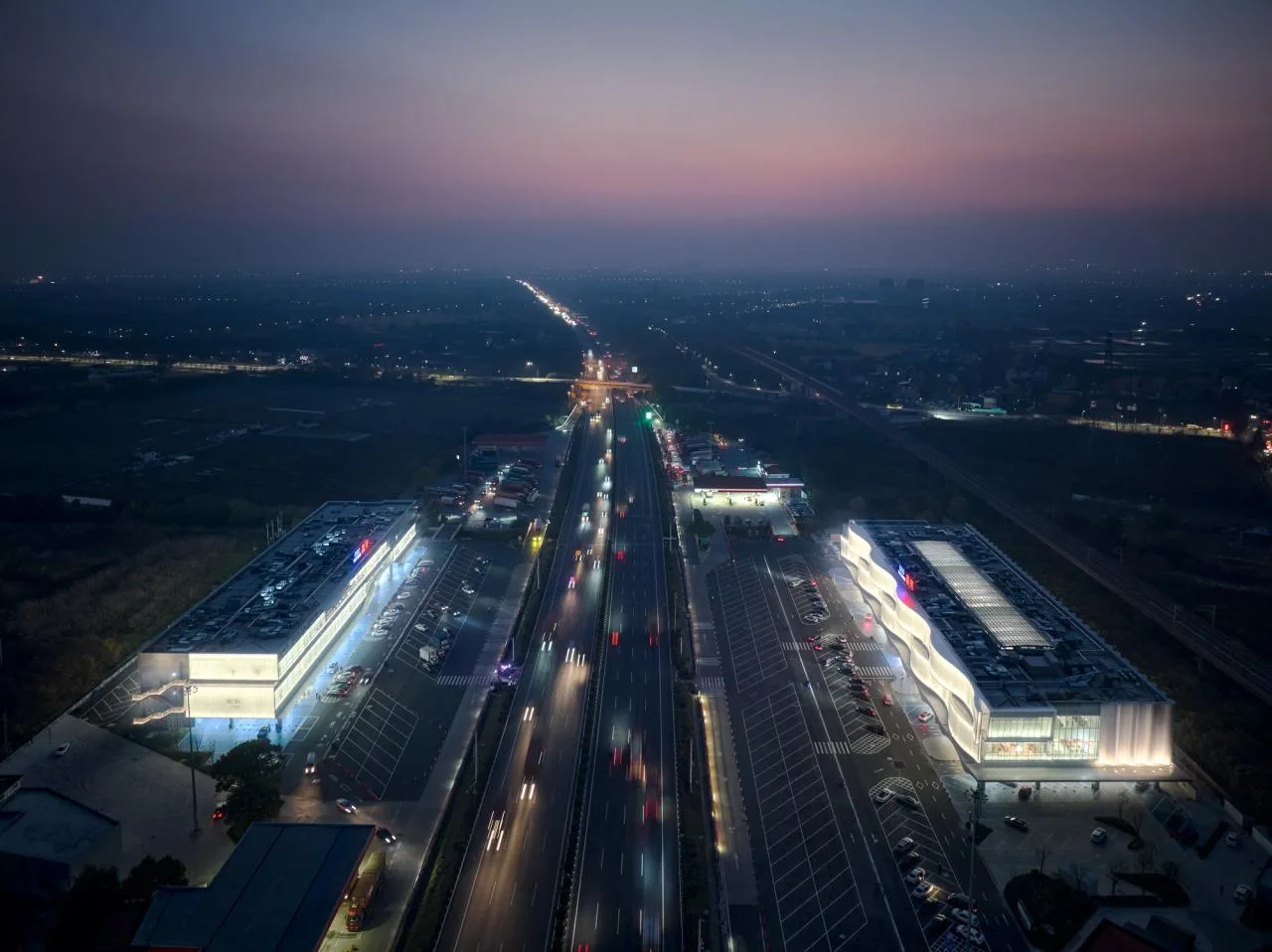
However, limited site conditions and outdated facilities could not accommodate growing traffic and service demands. In 2020, Zhejiang Communications Investment Company initiated a comprehensive renovation project through open bidding. Goa Elephant Design won the contract, transforming this “East Gate of the Highway” into Zhejiang Province’s first comprehensive service area featuring a ground-level overhead structure.
2. Creating a Multifunctional Service Hub
The design process began with a critical reassessment of the “expressway service area” typology. As a key transfer point, the service area naturally gathers traffic and offers essential amenities. More importantly, it provides a concentrated gateway for visitors to experience local products and culture.
With this in mind, the architects envisioned contemporary service areas as dynamic, multifunctional platforms that extend beyond basic services to deliver enriched cultural and commercial value.
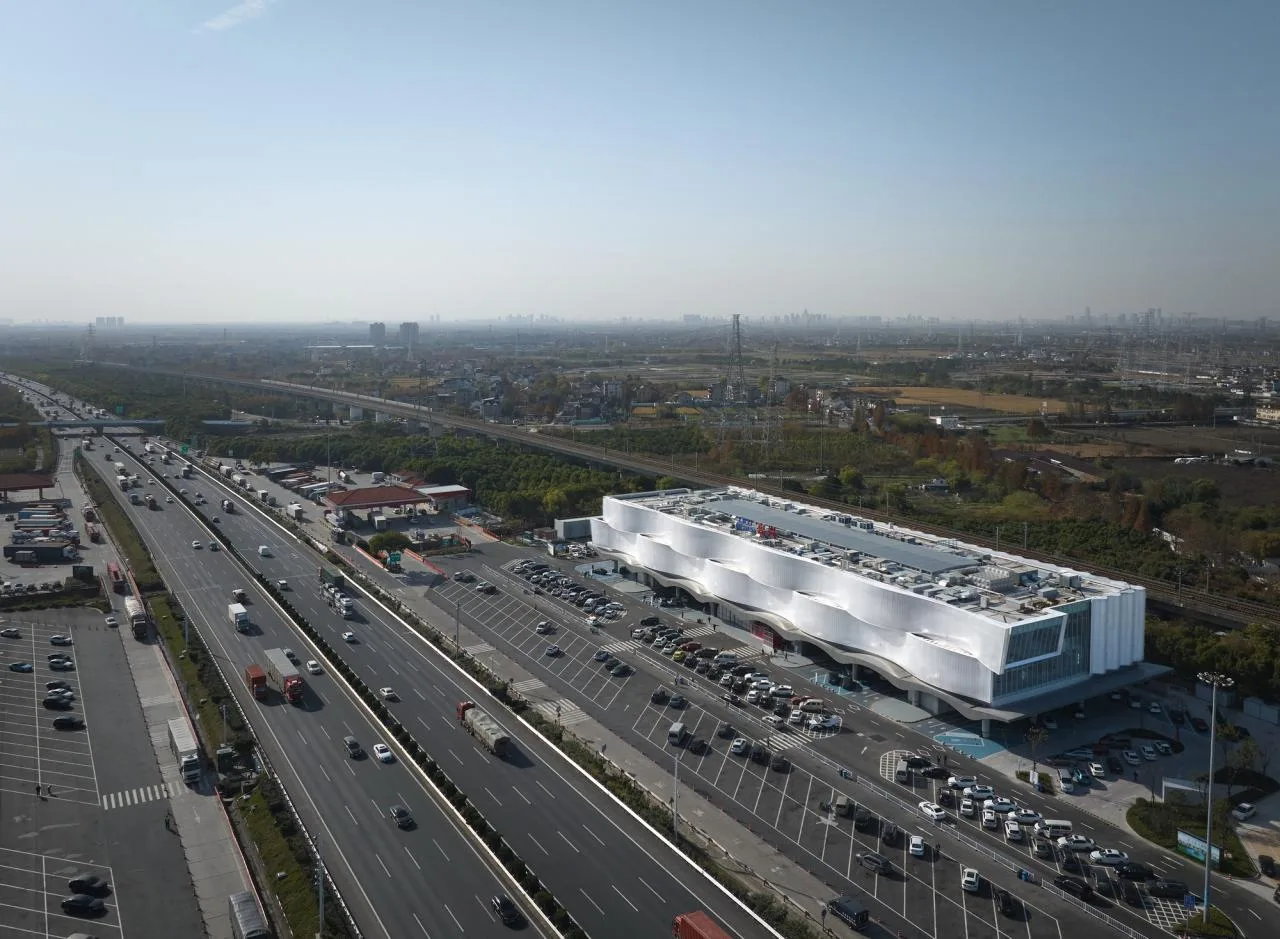
The team introduced the concept of “Service Area+” — leveraging the expansive service radius and concentrated traffic of the expressway to expand cultural outreach, enhance commercial appeal, and enrich service offerings. This approach transforms the service area into a comprehensive hub and a highway landmark representing Jiaxing City to visitors.
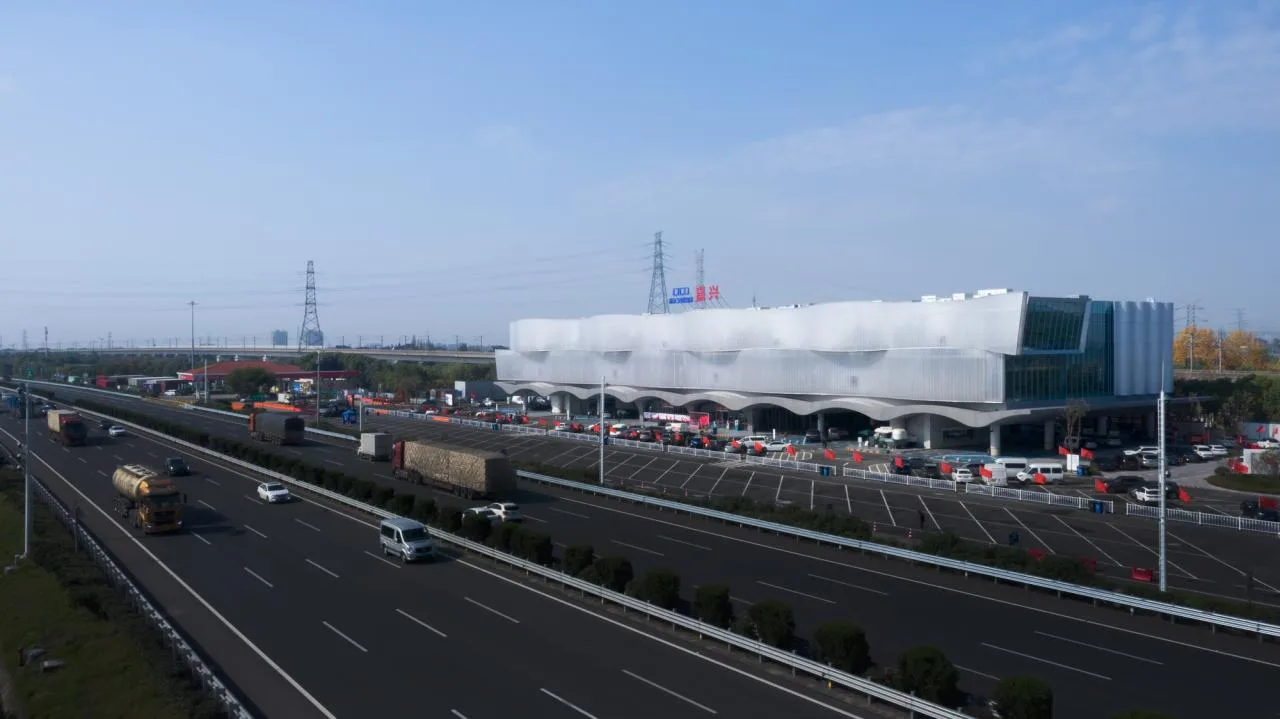
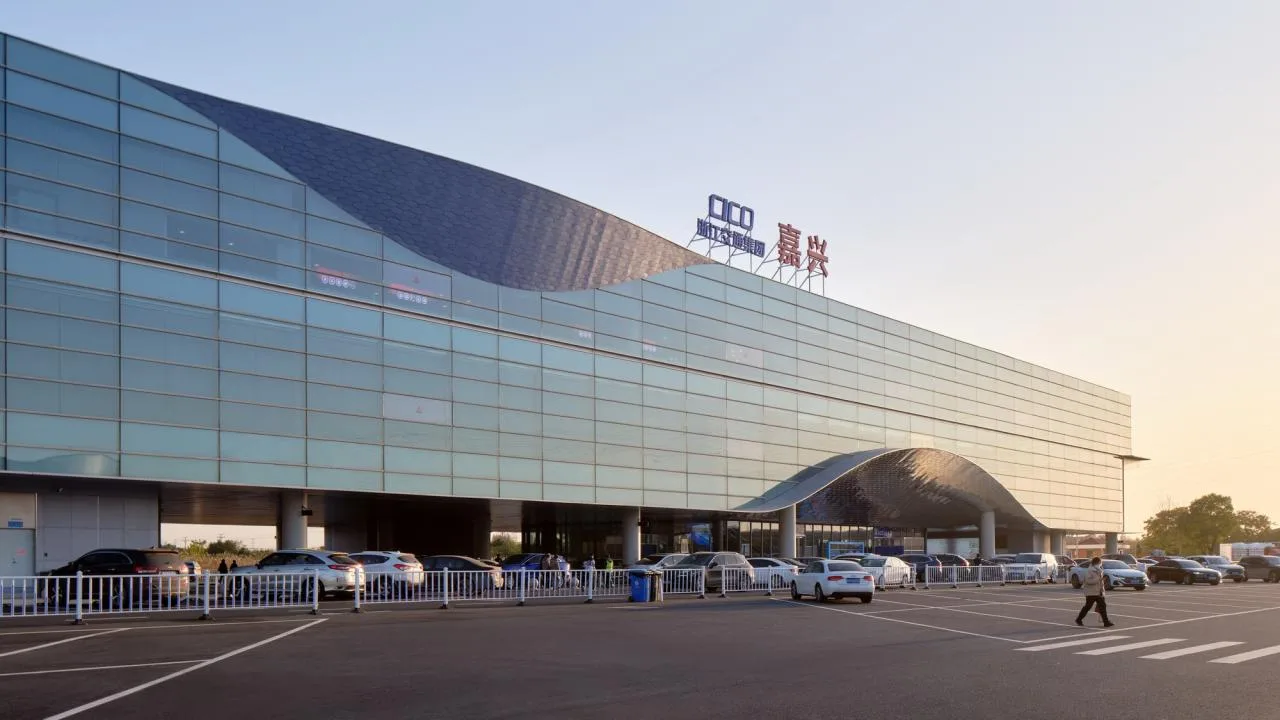
Scenes of the newly completed North and South District service areas.
3. Vertical Integration & Intensification
The multifunctional setup demands increased spatial capacity, which is challenged by limited land availability. The architects transformed these constraints into opportunities by adopting a “three-dimensional integration” strategy. This approach delivers innovative, compact solutions within existing boundaries, accommodating expanded functions and higher parking capacity.
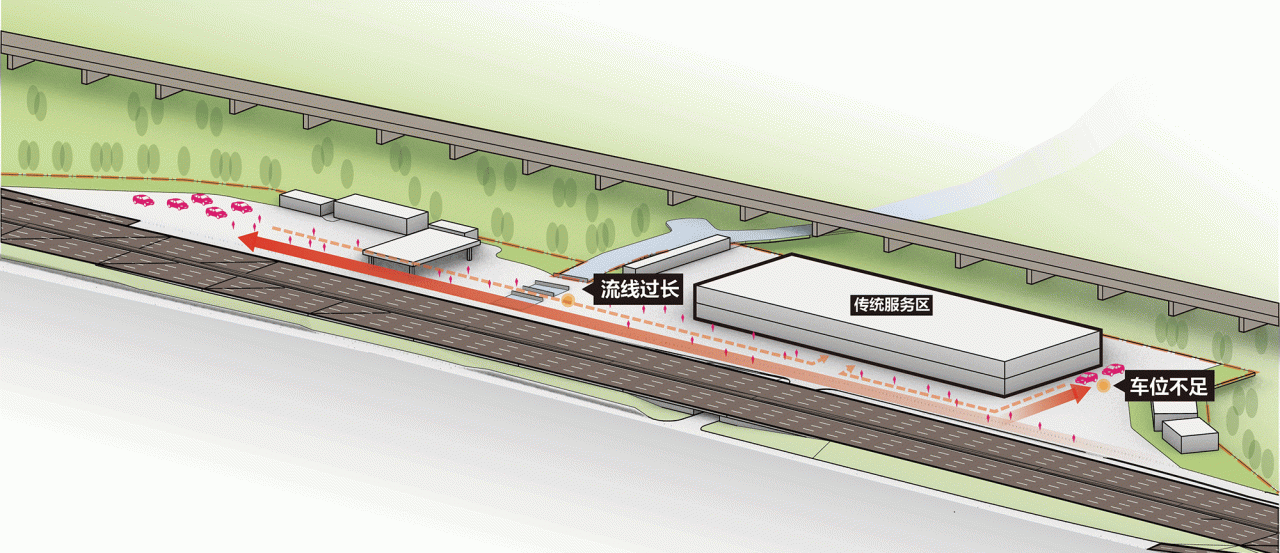
Comparison of multiple land use solutions © Goa Elephant Design
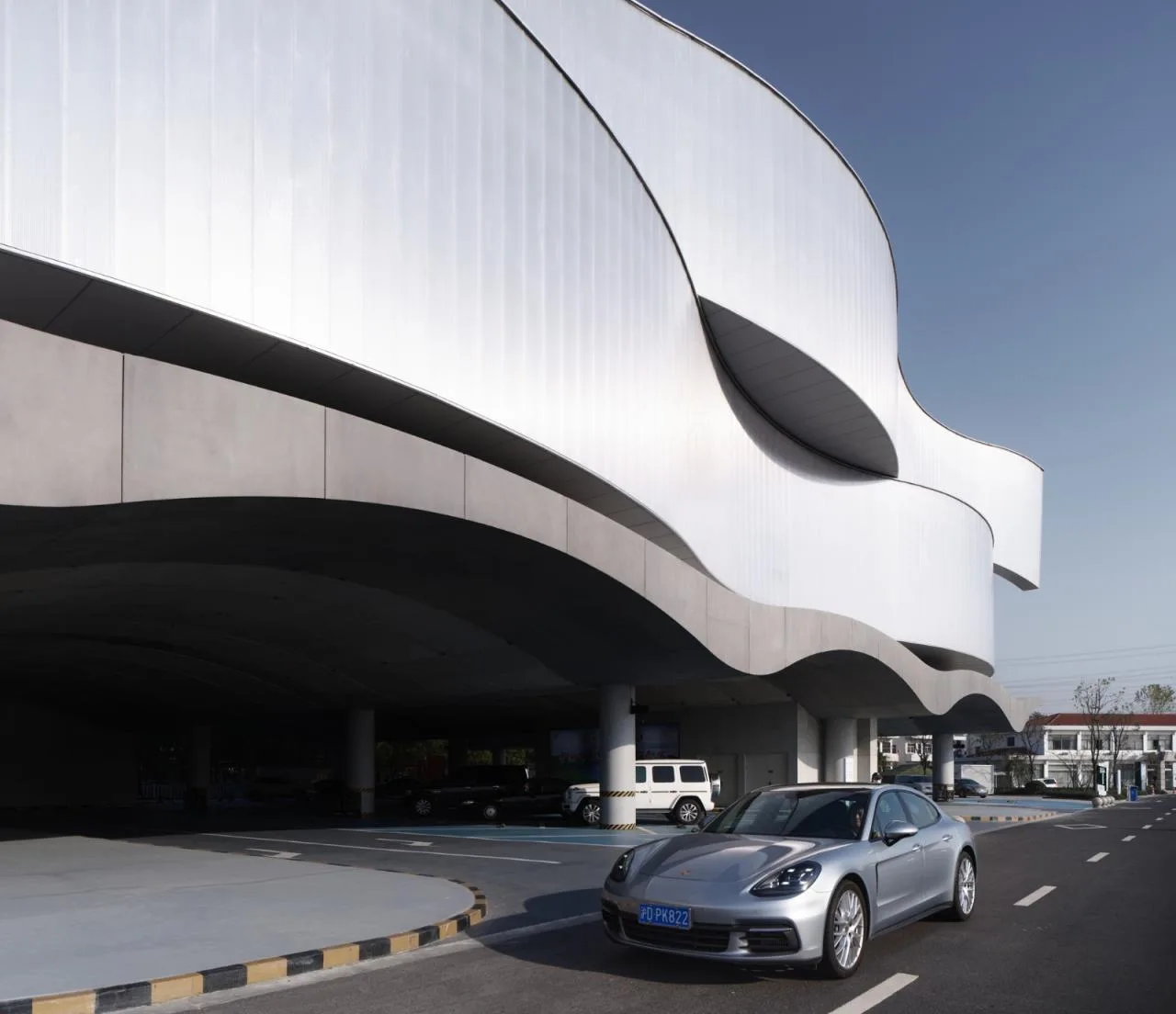
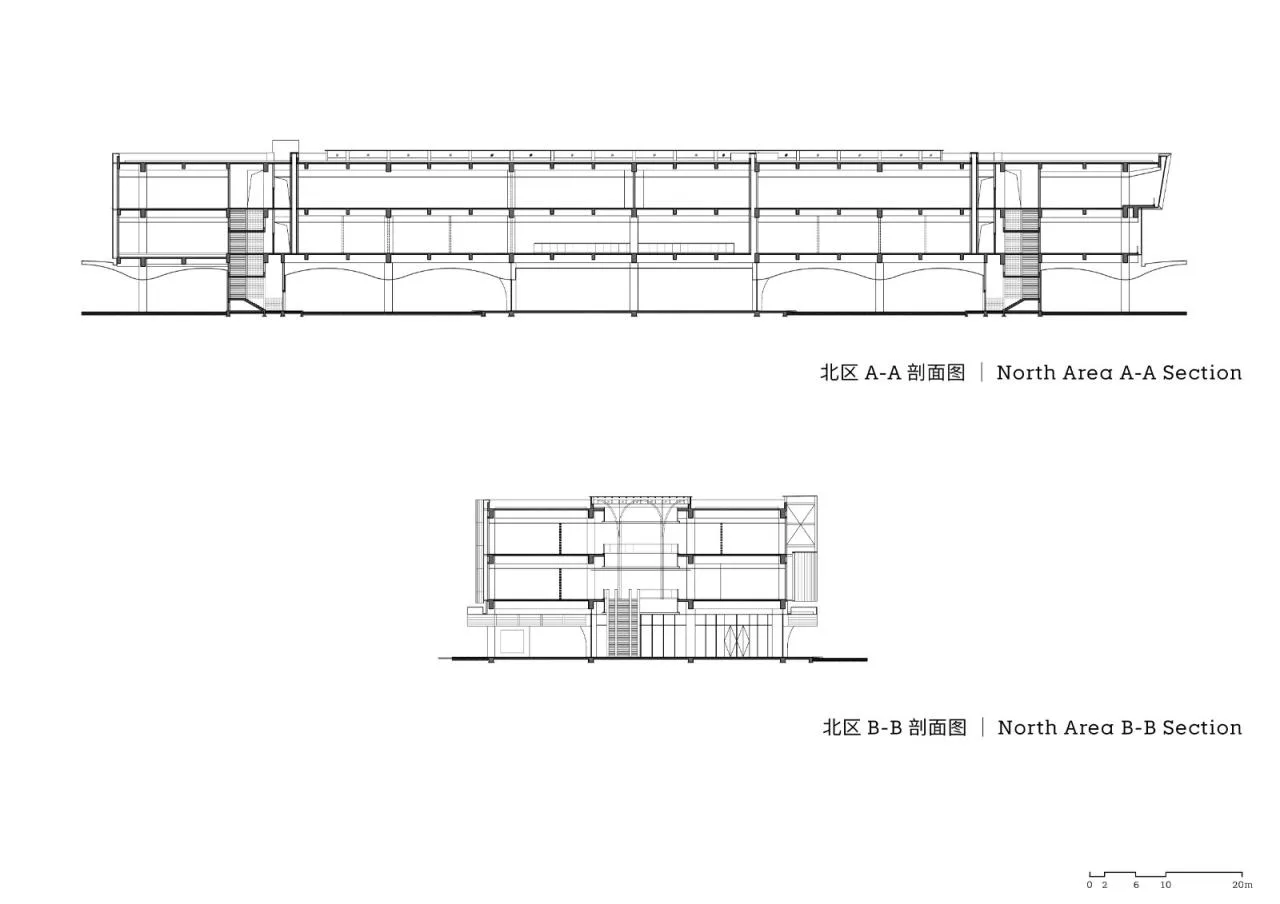
The core strategy relies on “underground and elevated parking.” By elevating the buildings and freeing ground space, the design optimizes traffic flows and significantly increases parking efficiency.
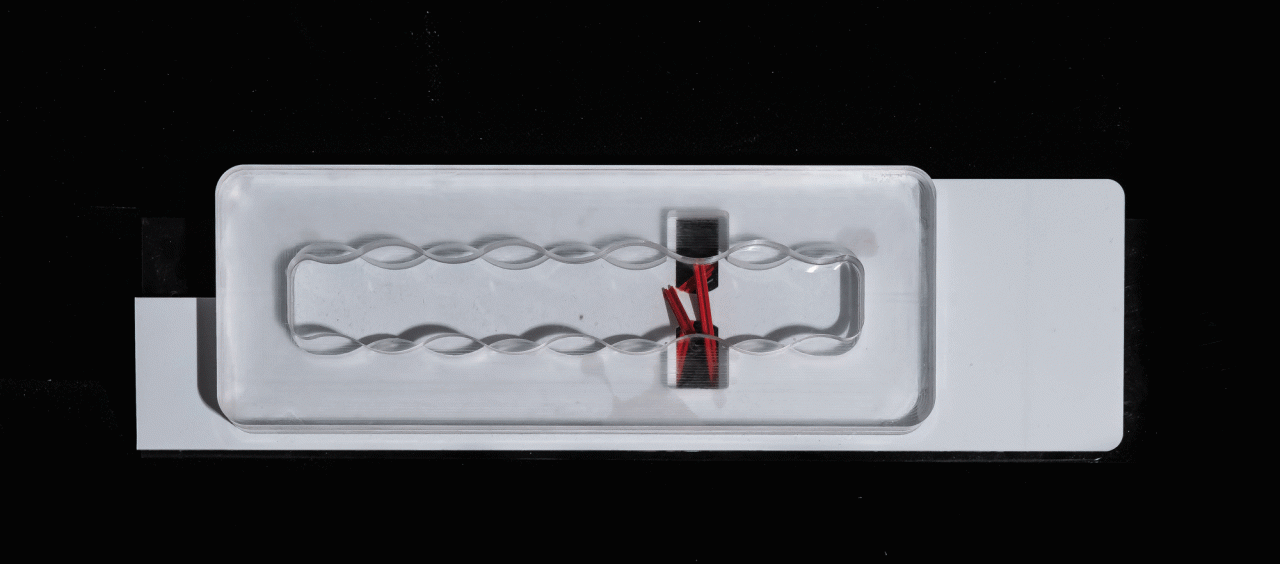
△ Process model © Goa Elephant Design
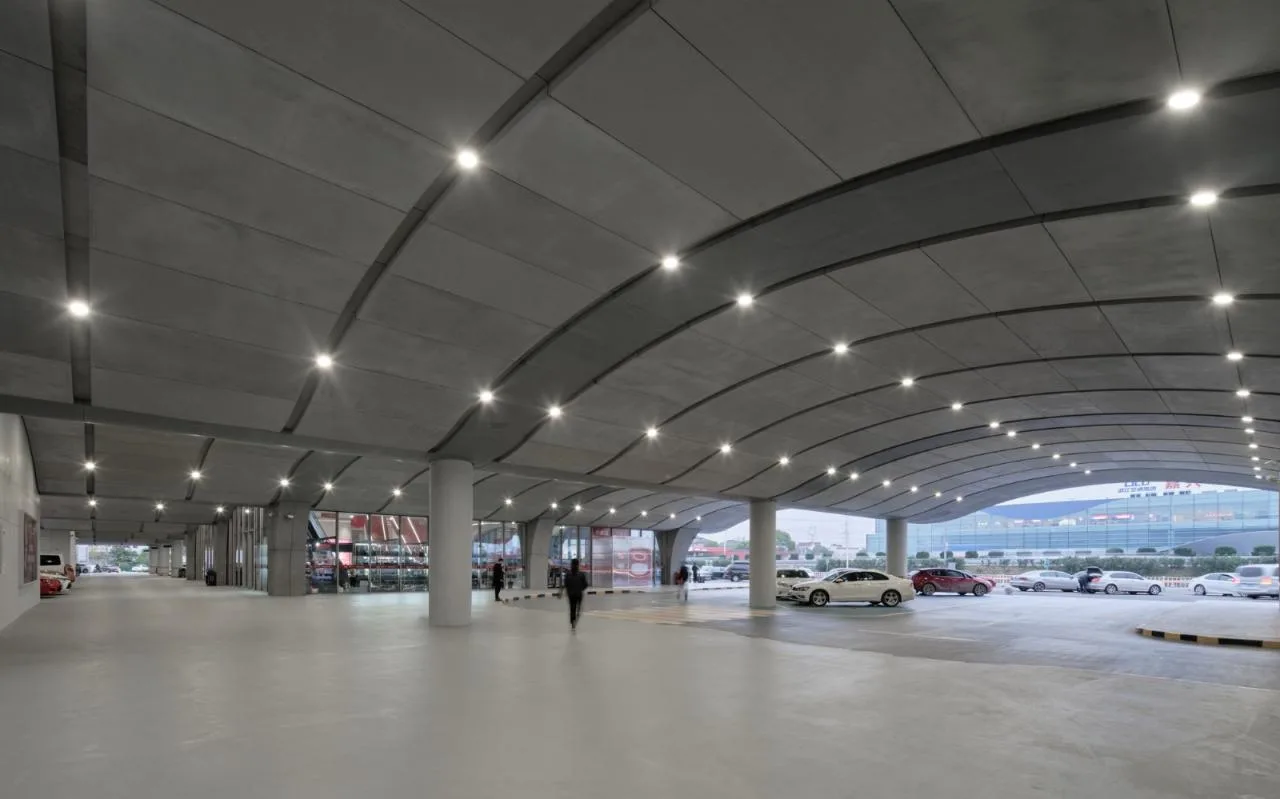
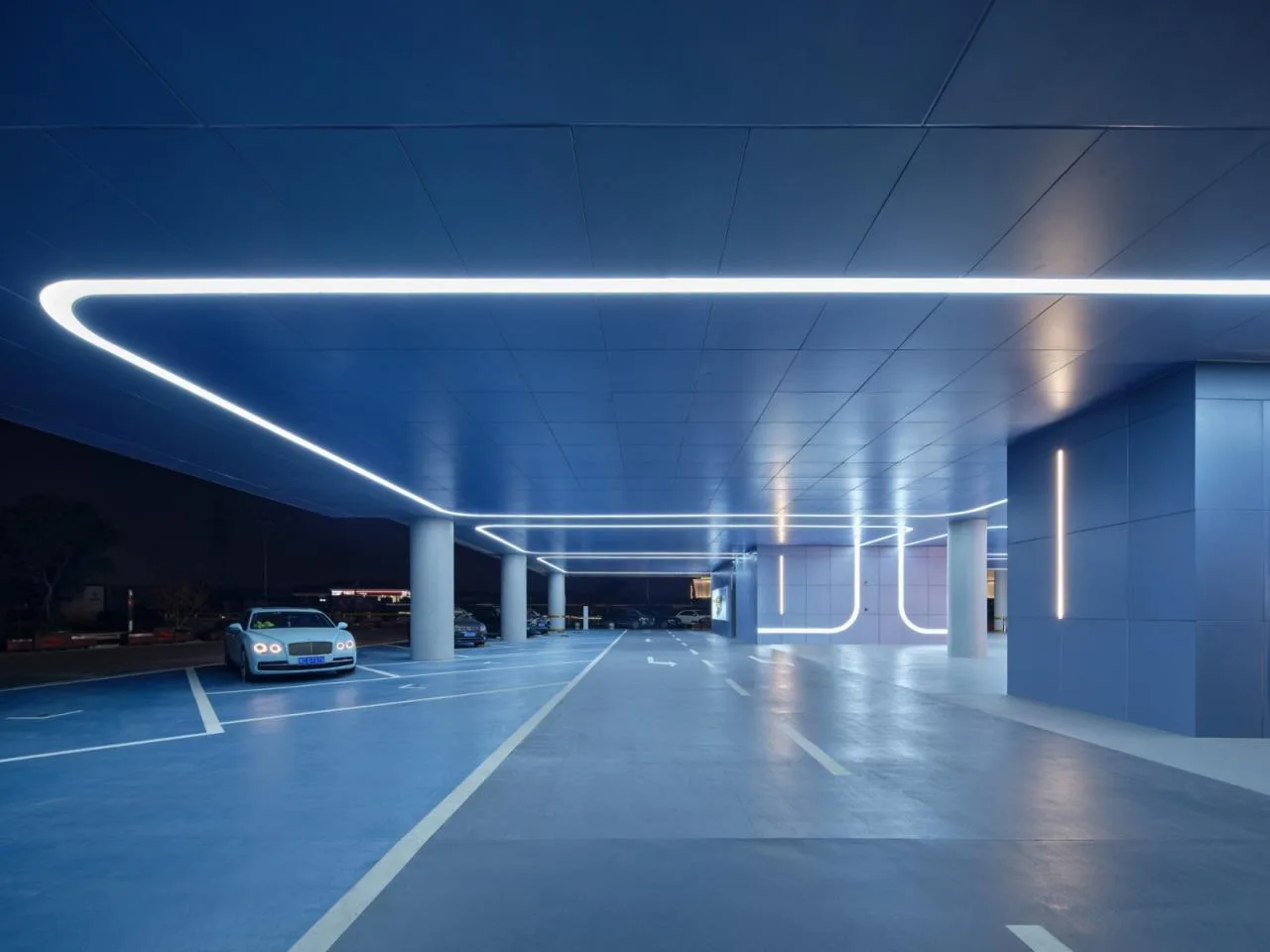
△ Elevated parking in the North and South Districts
4. Enhancing the Travel Experience
Jiaxing, a typical Jiangnan city, experiences dry, rainy summers and cold, humid winters. Incorporating elevated layers into the design reduces risks related to adverse weather, allowing travelers to arrive and depart with greater ease and comfort, thus enhancing the overall user experience.
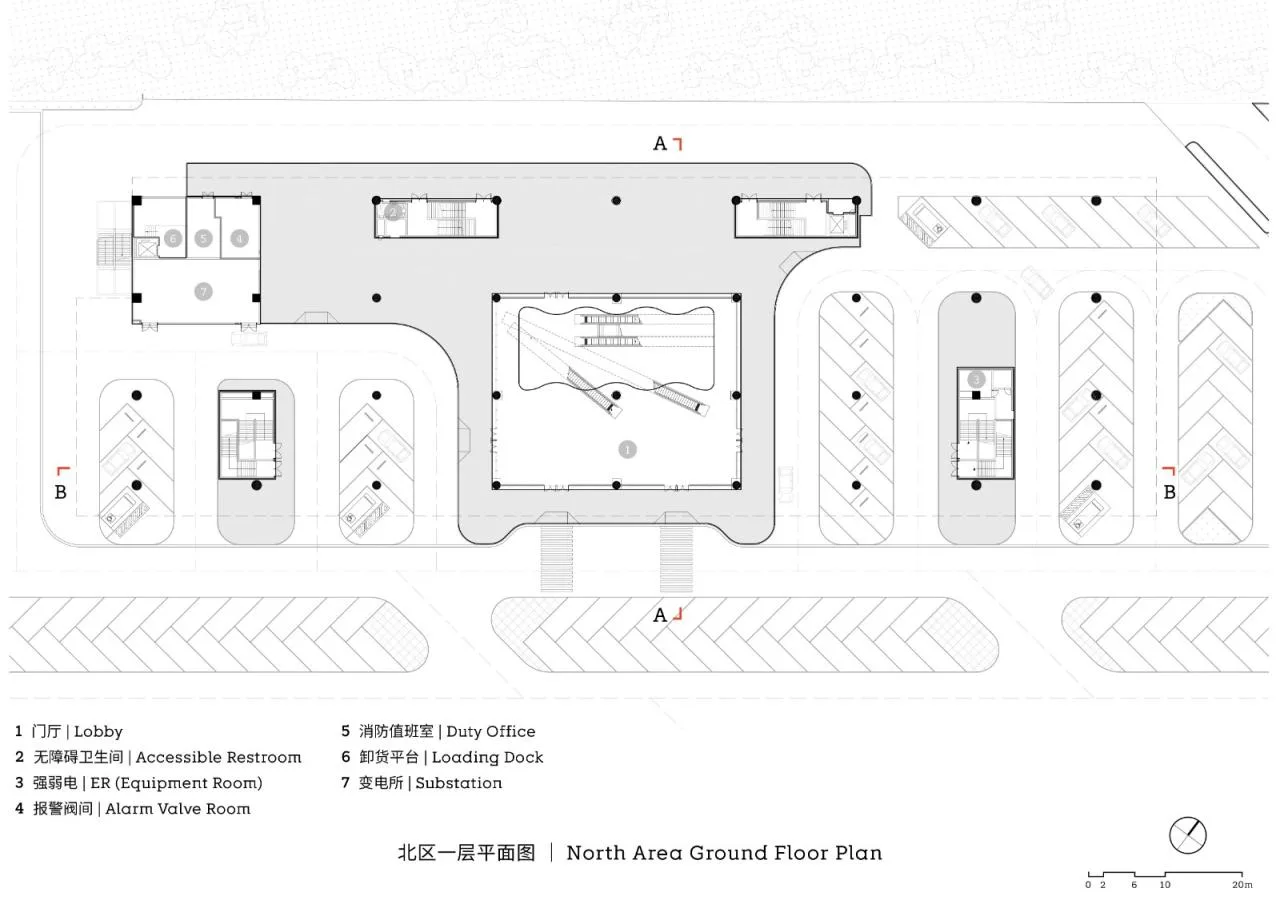
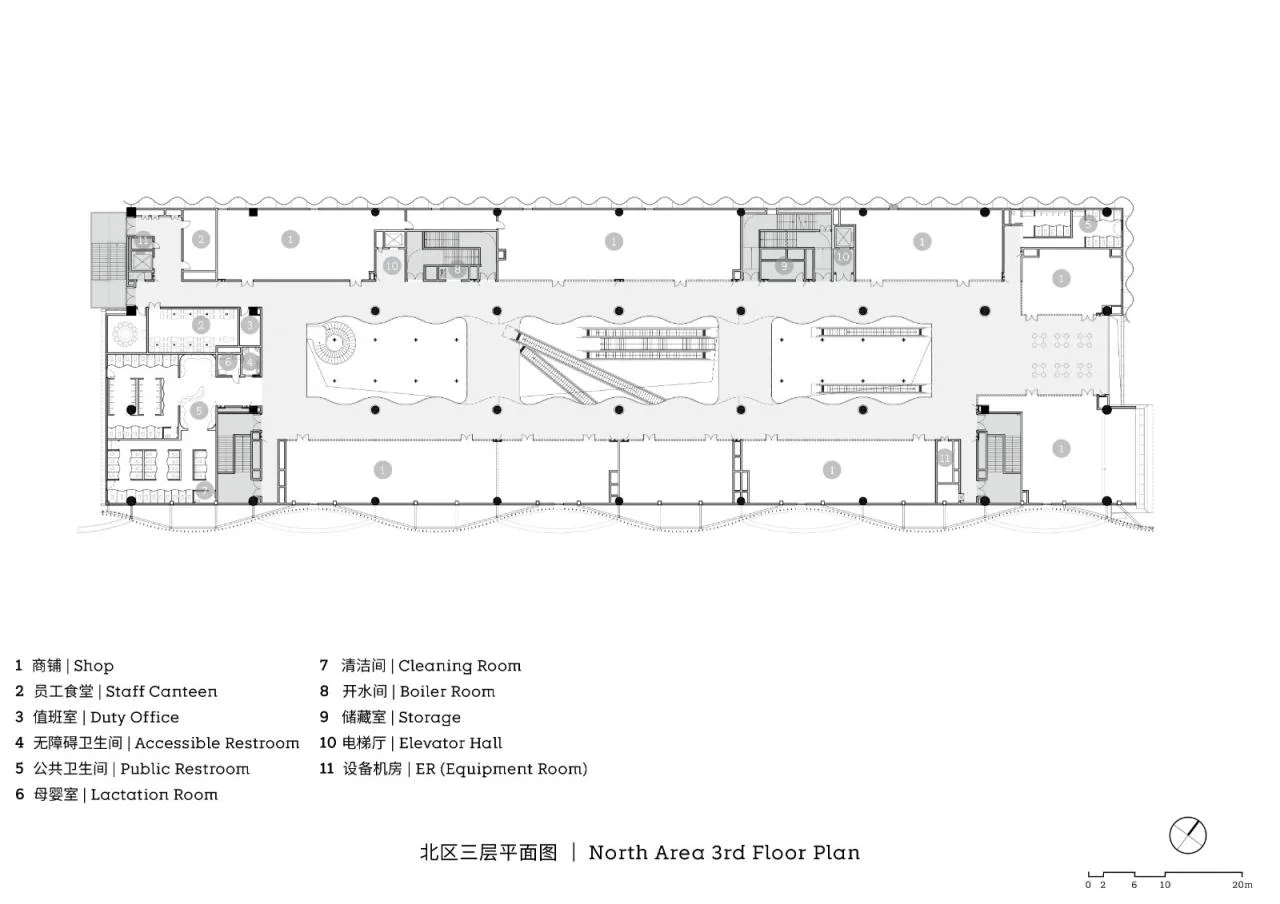
The building’s interior centers around a funnel-shaped atrium, narrow at the bottom and broad at the top. Vertical circulation is provided by escalators rising from the lobby across two to three floors, resembling a tree trunk branching upwards. This design attracts arriving visitors and disperses crowds efficiently.
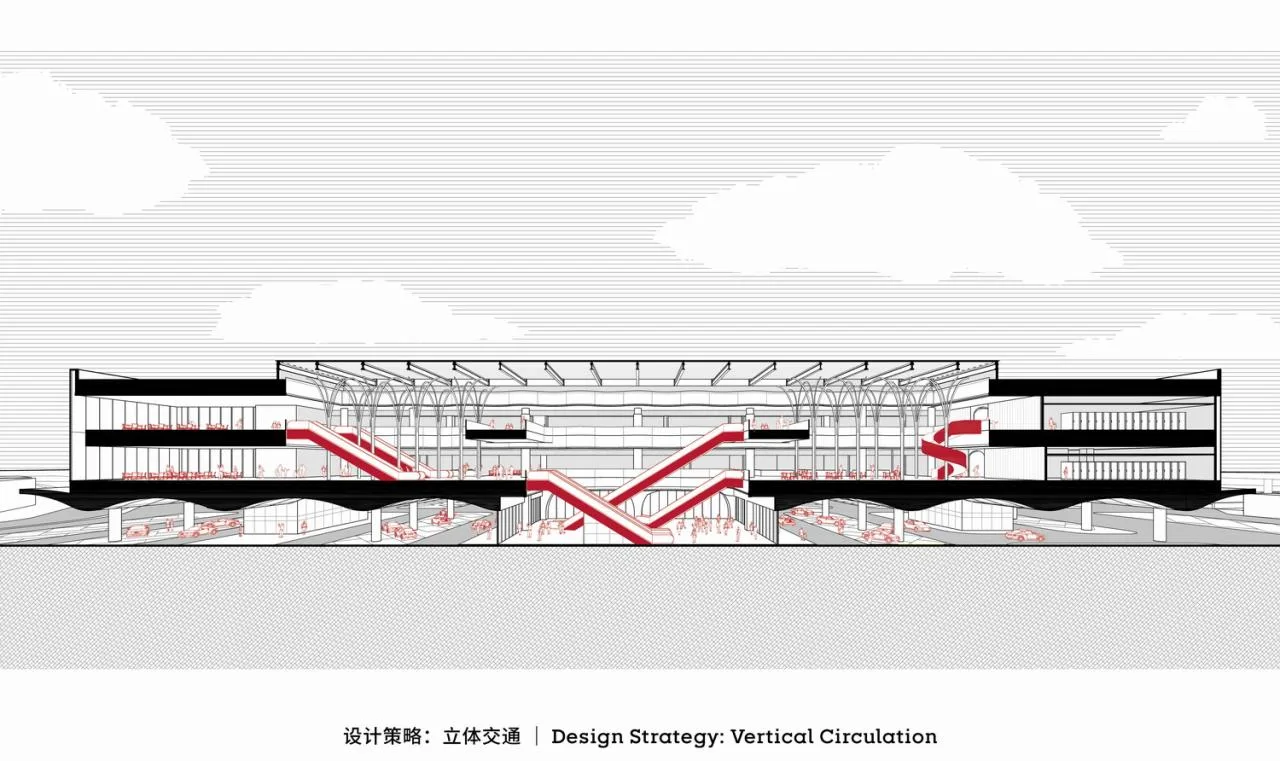
Funnel-shaped atrium and vertical circulation © Goa Elephant Design
Commercial and dining spaces surround the atrium at various elevations, forming a “tree crown.” The architects designed the space to accommodate visitors with different time constraints: those with leisure time can explore the courtyard, while those in a hurry can quickly access restrooms or dining areas via multi-level escalators. The goal is to encourage relaxed, autonomous movement rather than rigid, controlled flows.
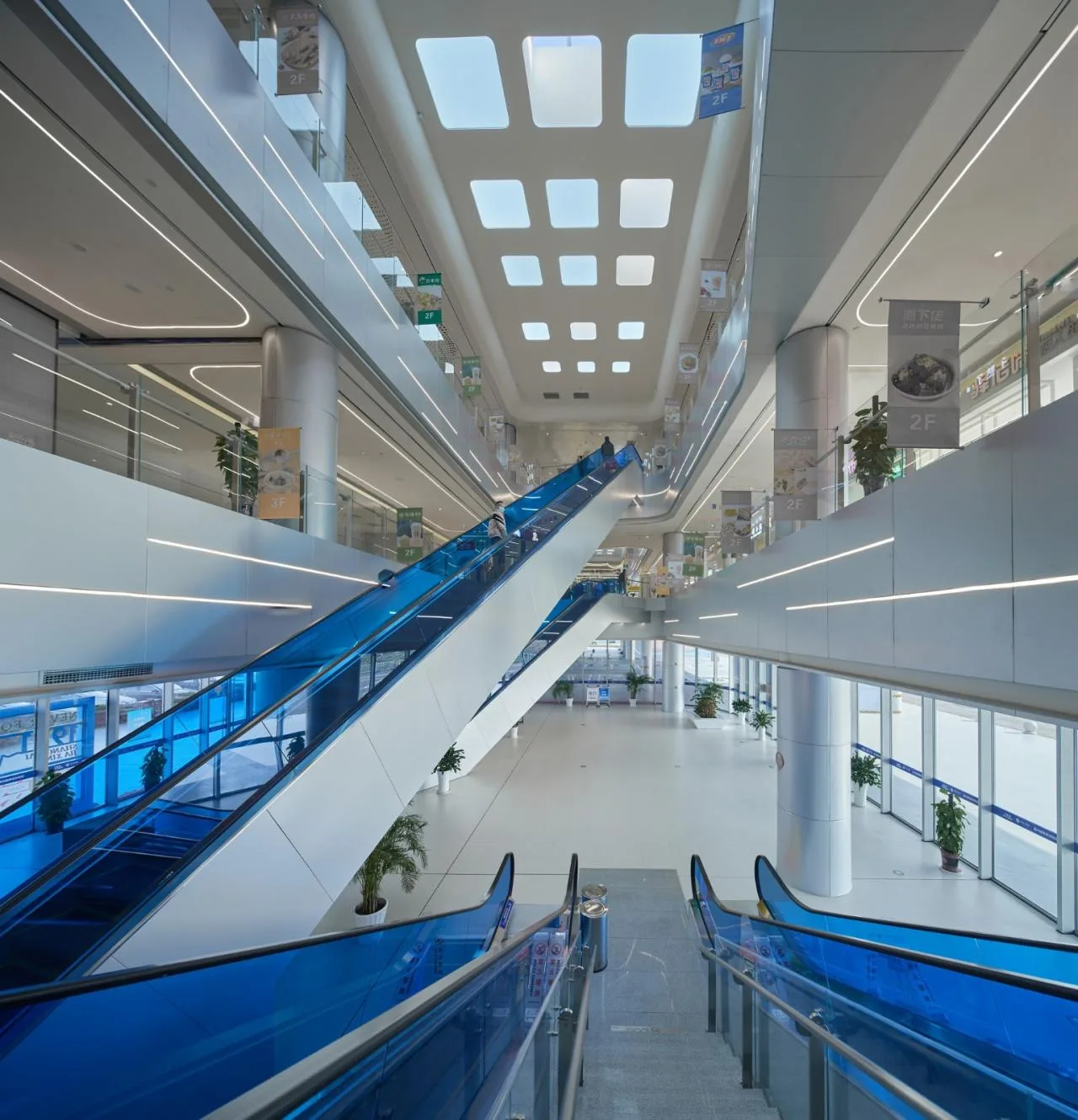
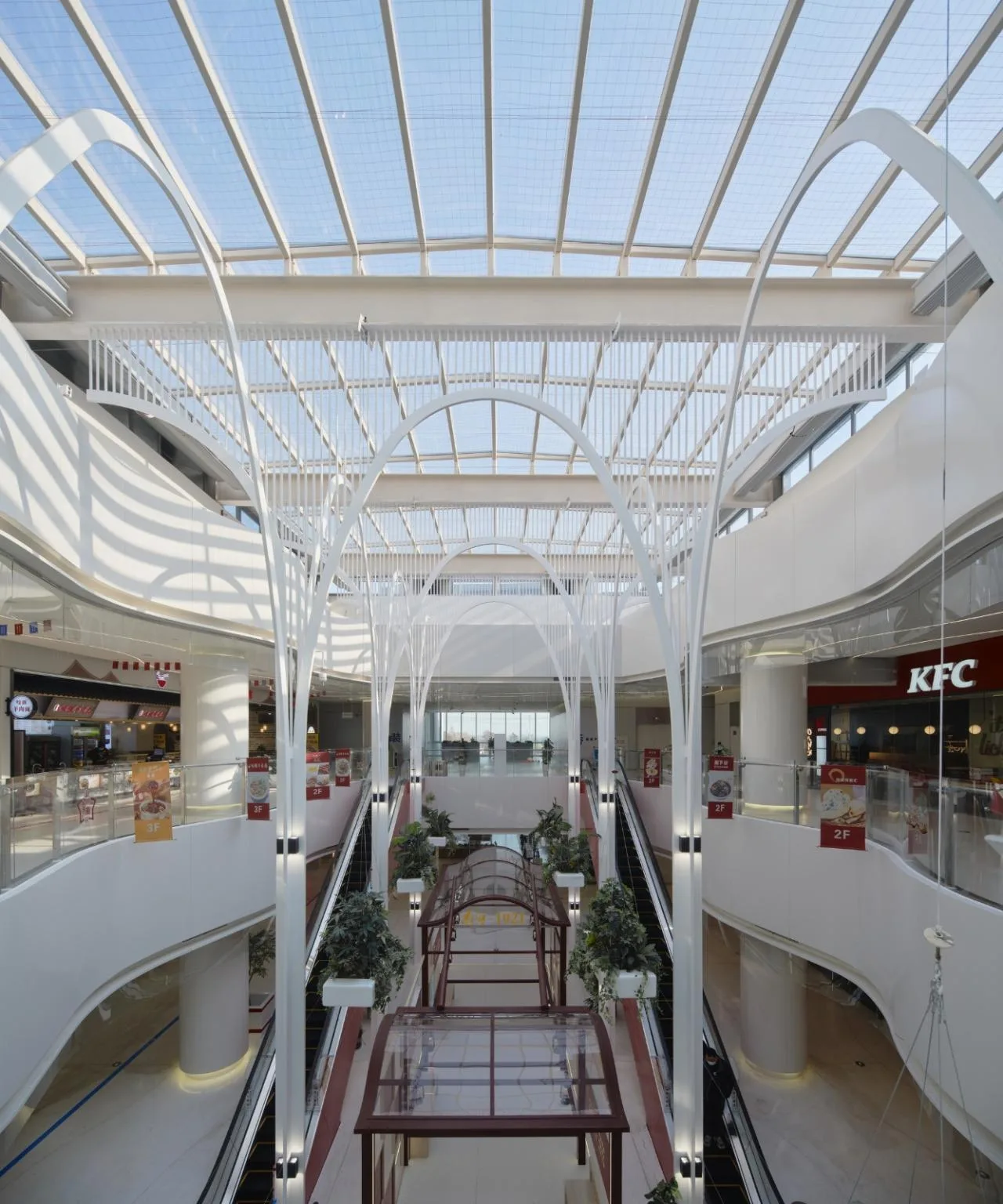
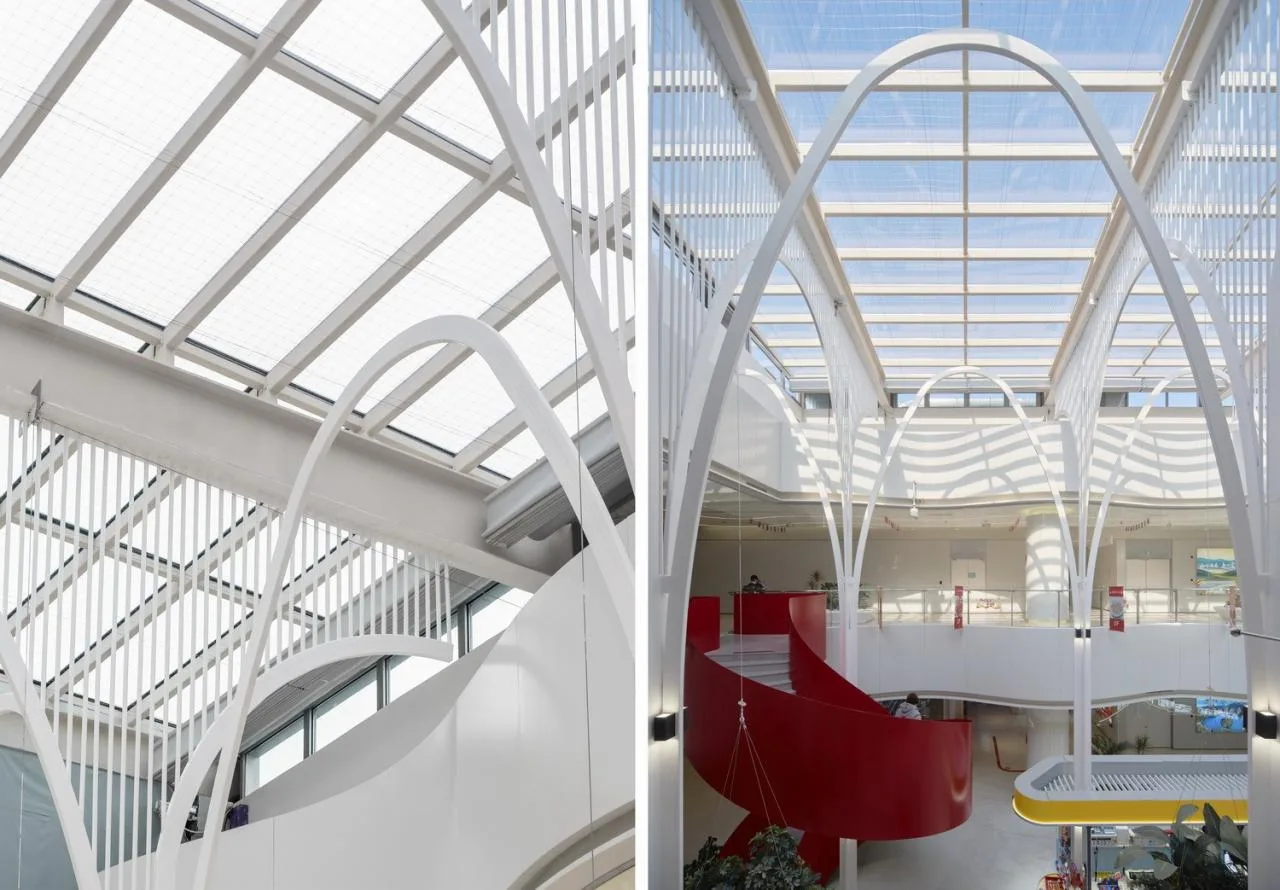
To accommodate special needs, the architects added an accessible restroom and elevator on the first-floor elevated level, ensuring an inclusive experience for all visitors.
5. Highway Landmark Design
Located on the Hangzhou-Jiaxing-Huzhou Plain, surrounded primarily by farmland and villages, the Jiaxing Service Area stands out along the highway. Rather than employing stylized architectural language, the design uses modern, expressive techniques to create a concise and strong visual identity that breaks the monotony of typical highway scenes while reflecting Jiaxing’s unique regional culture.
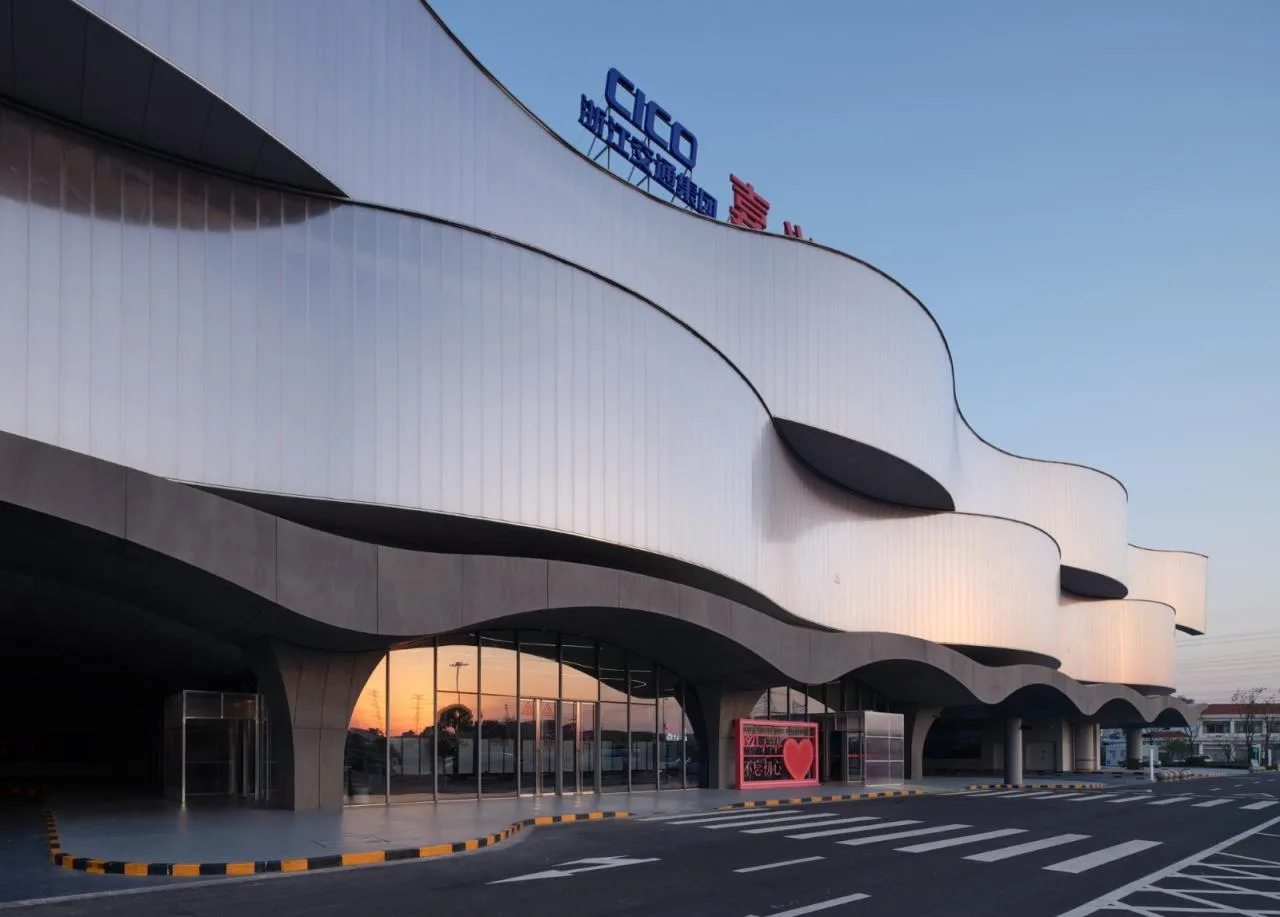
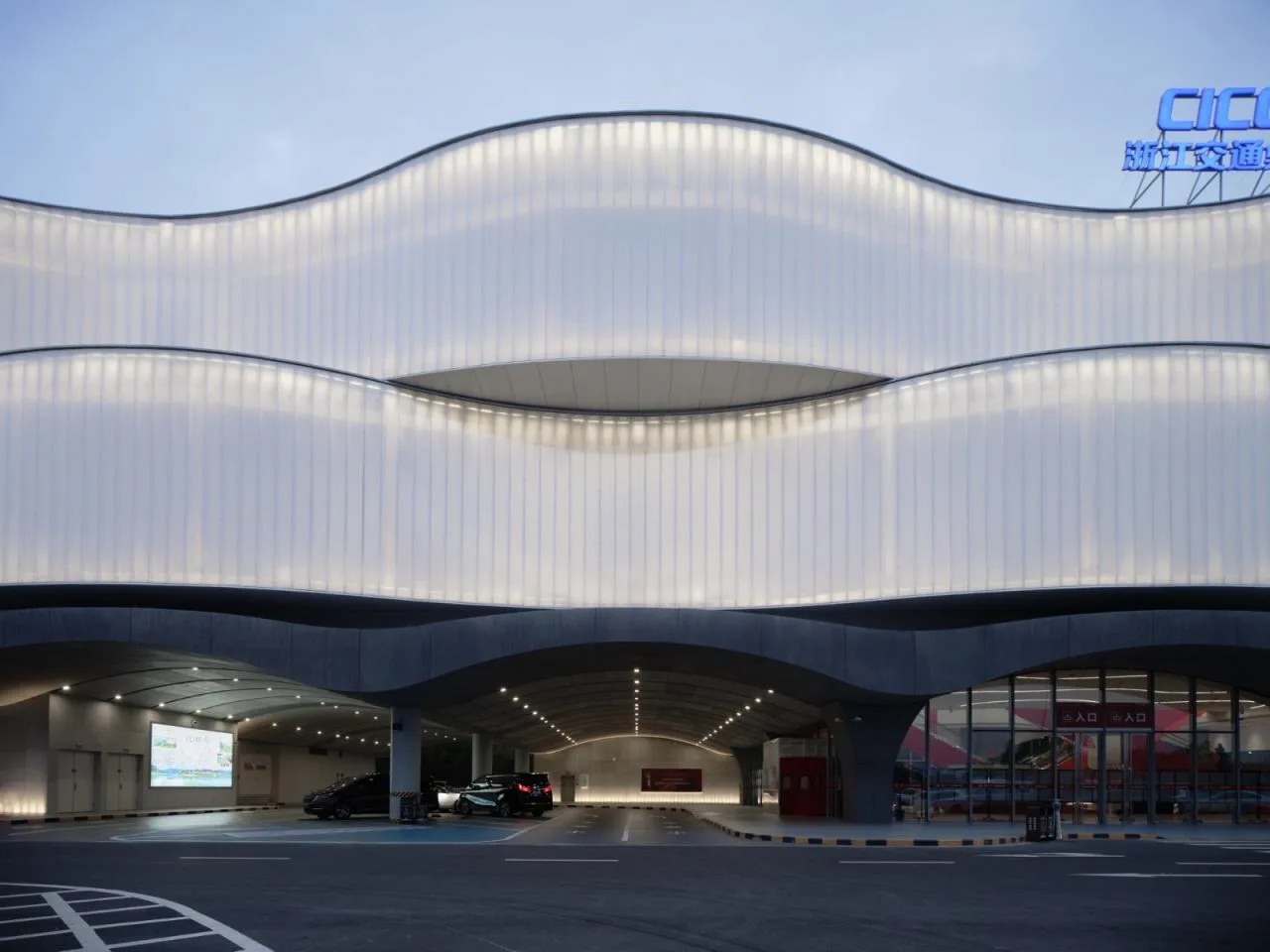
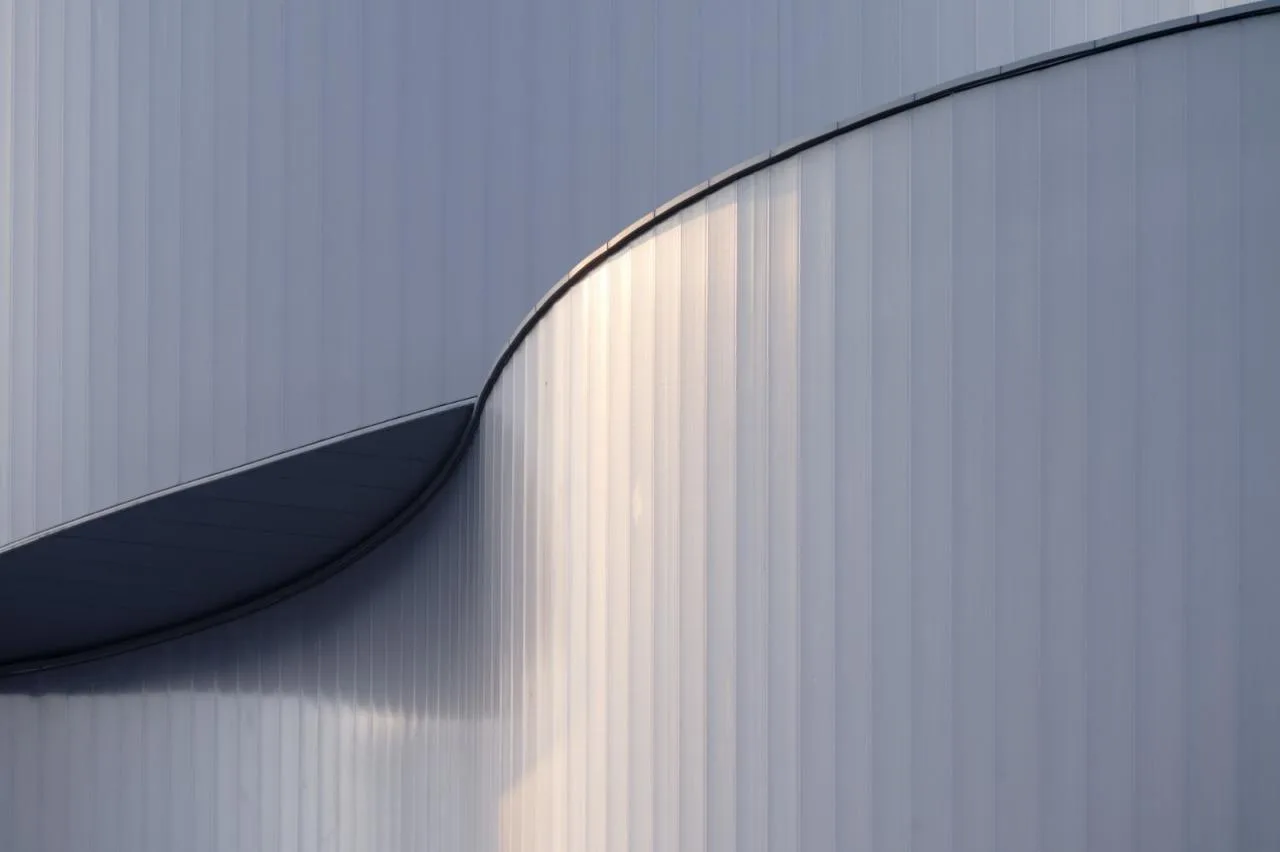
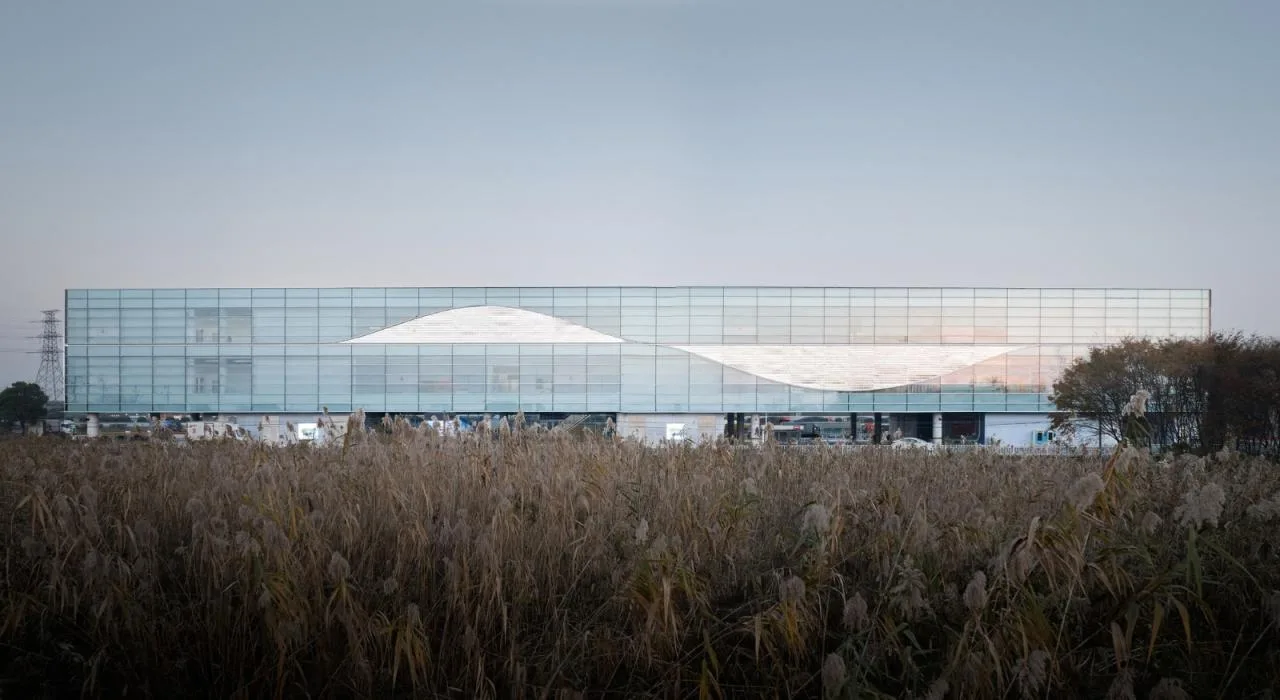
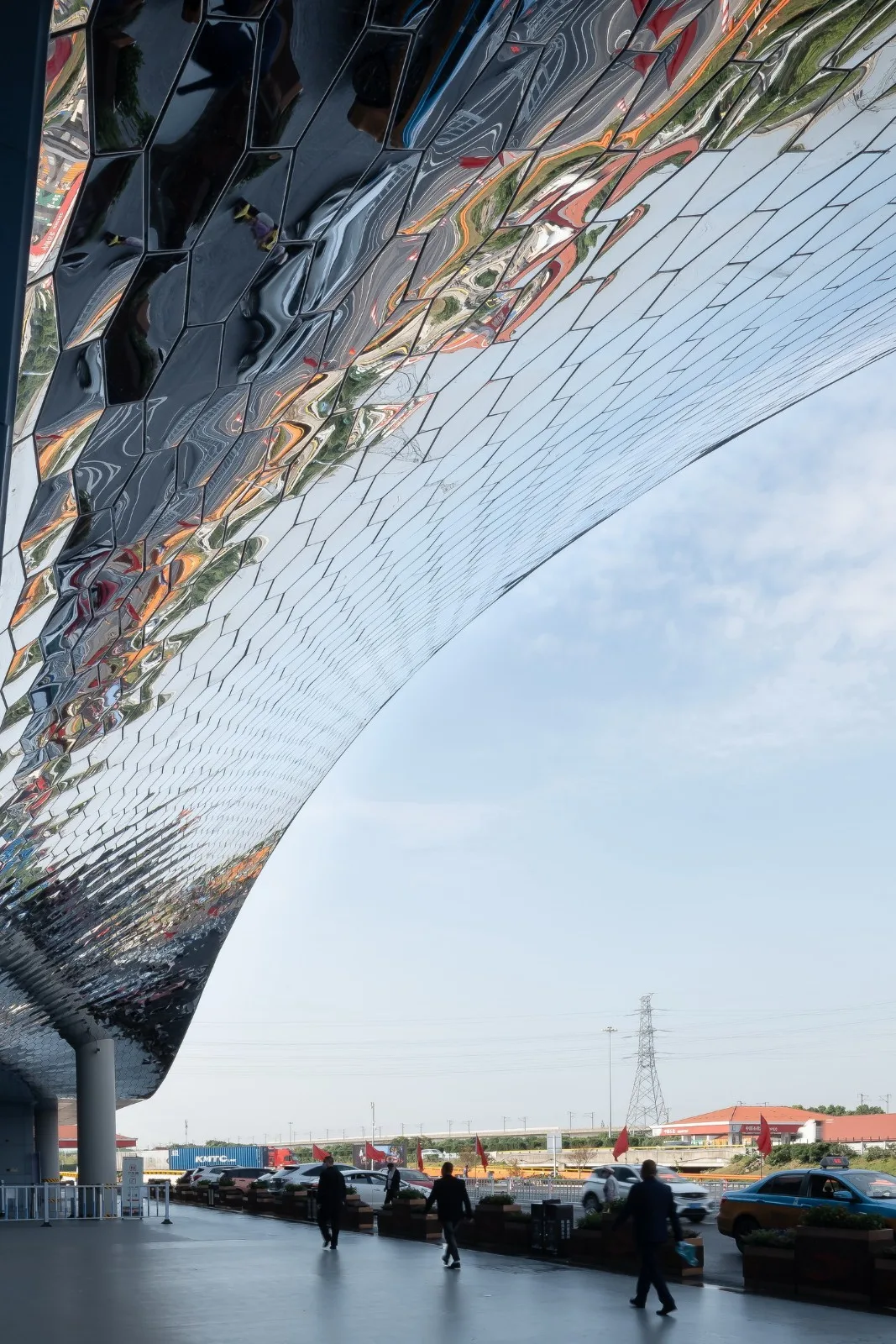
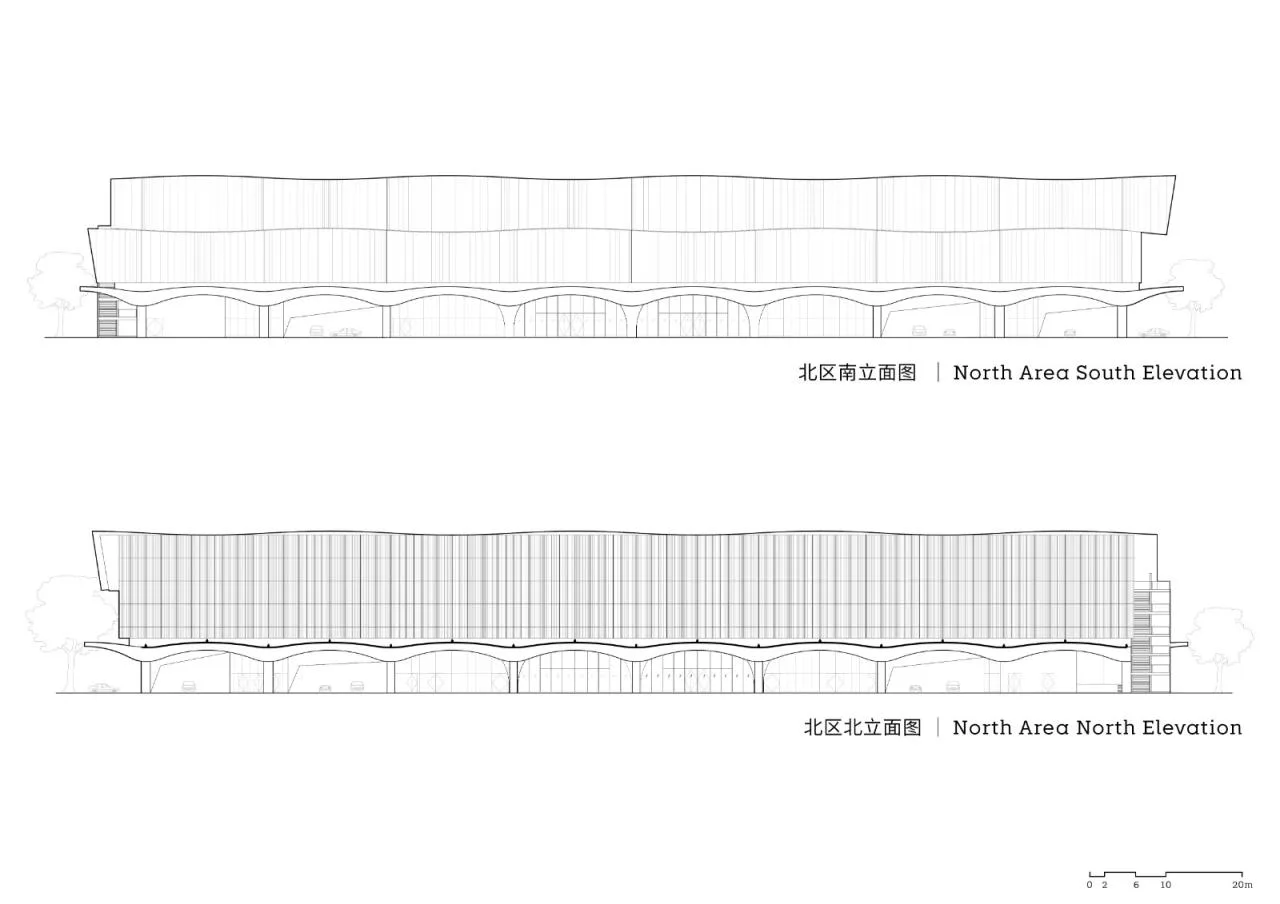
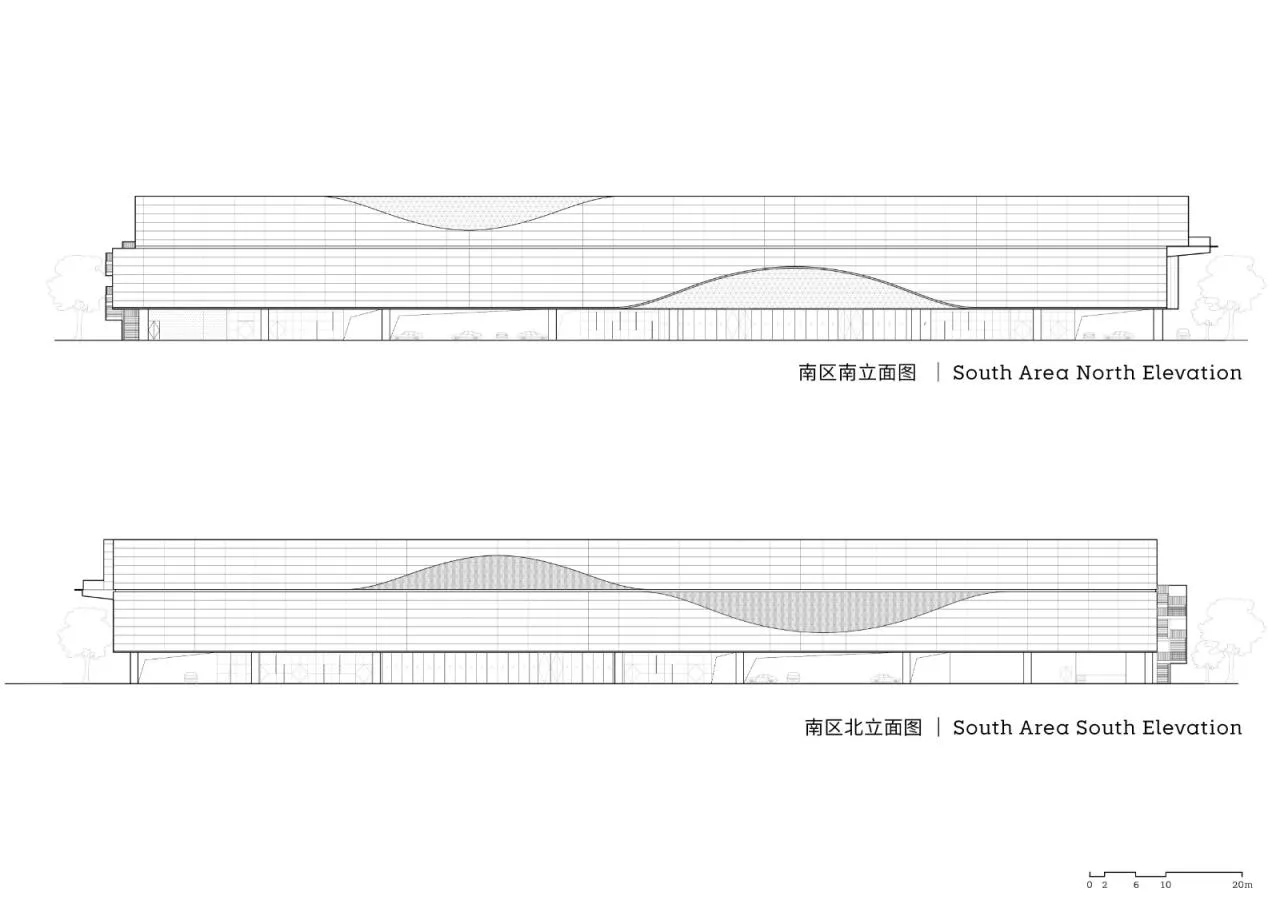
The north and south service area buildings present as two striking geometric volumes suspended over the highway. Their lively facades draw inspiration from Jiaxing’s Red Boat culture, abstracting elements such as water, boats, and Jiahe (river harmony) to express the theme of “rowing along the water.” The northern building’s undulating texture evokes wheat fields swaying in the wind and the rippling waves of South Lake, while the southern building features a sleek metallic finish with three-dimensional curves, symbolizing a futuristic vision.
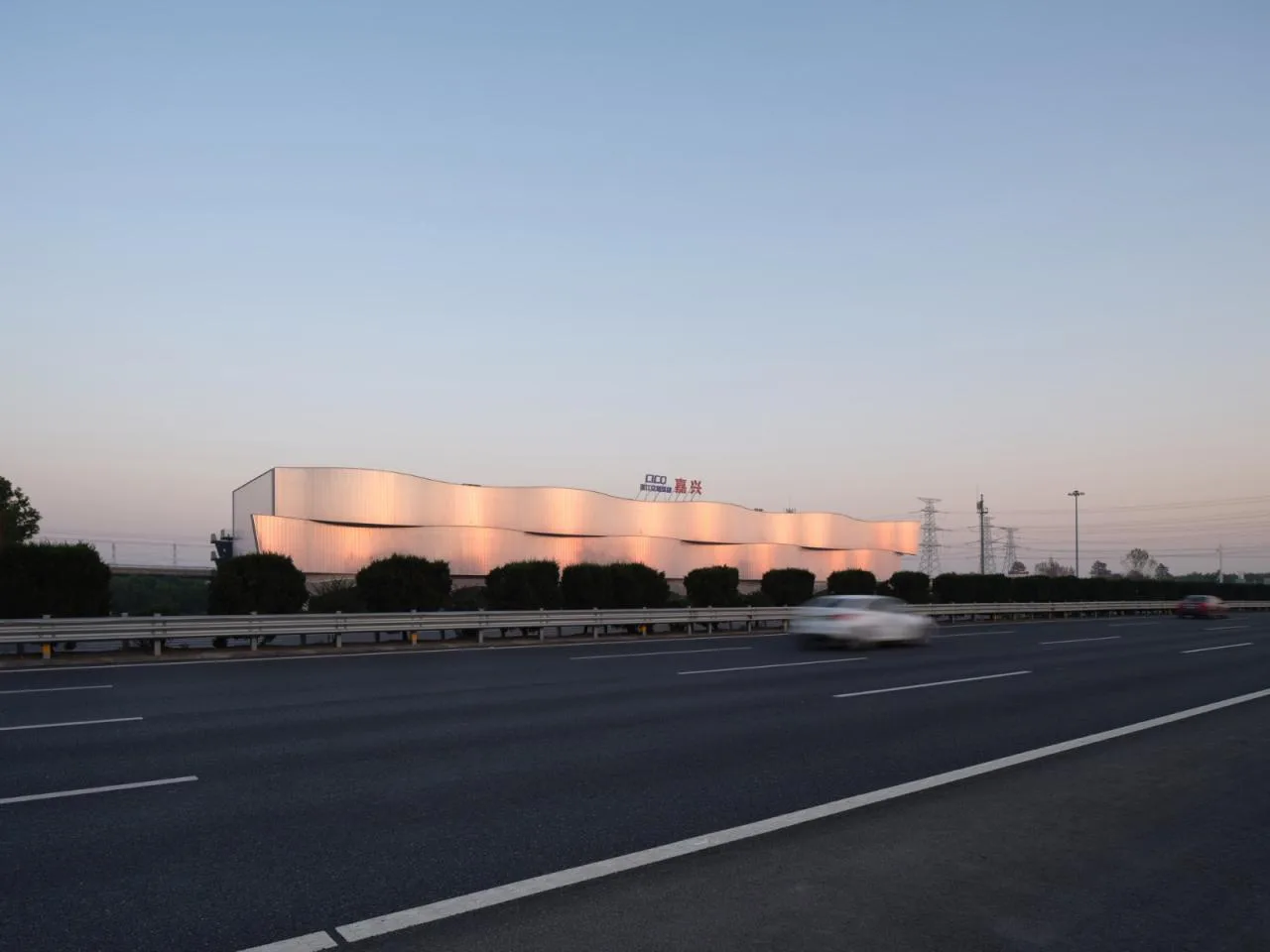
Details of the North Region
The curved façade in the northern area is constructed from polycarbonate panels, chosen for their excellent performance and ease of installation. Their semi-transparent quality creates a natural, warm ambiance and contrasts dramatically with the thick cement fiberboard ceiling.
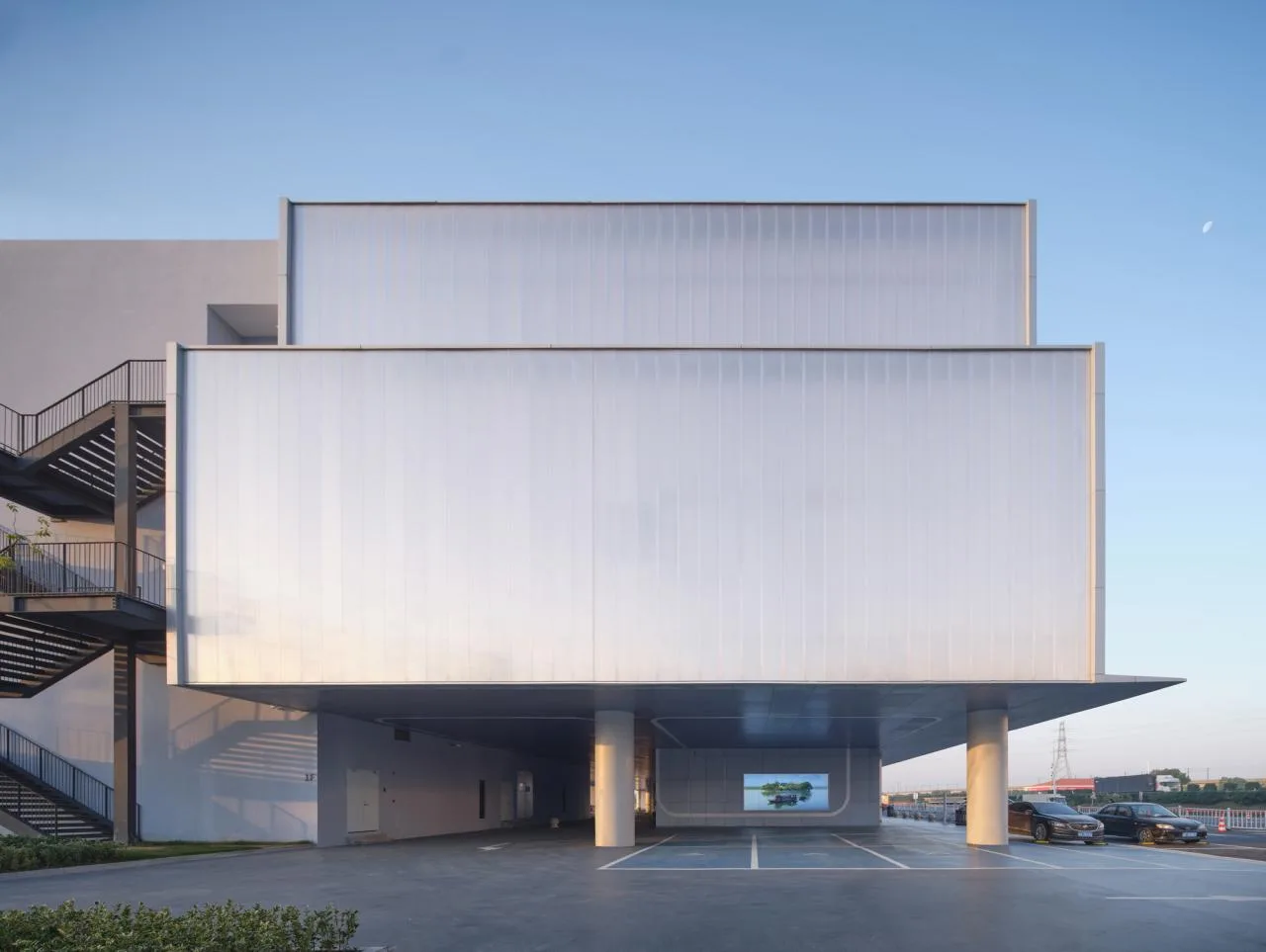
Architectural details also aim to delight travelers. At the entrance of the South District Comprehensive Building, the shimmering mirror-finish stainless steel ceiling reflects visitors, creating an unintentional yet engaging interaction between people and the architecture.
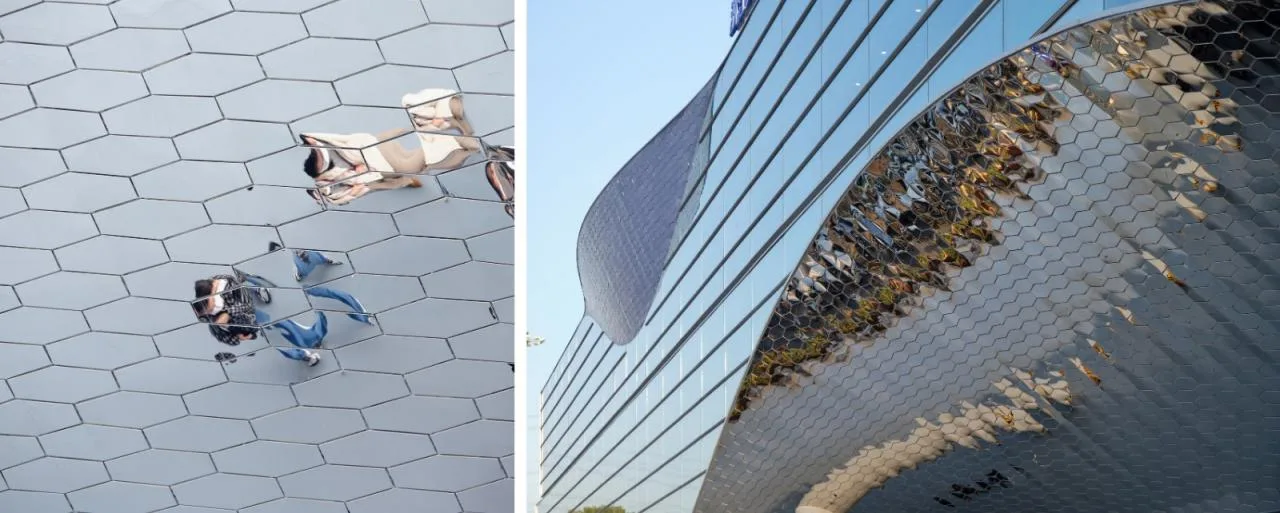
Details of the South District
Thanks to meticulous material selection and on-site testing within a controlled budget, both the northern and southern buildings achieve a balance of comfort, durability, and cost-effectiveness.
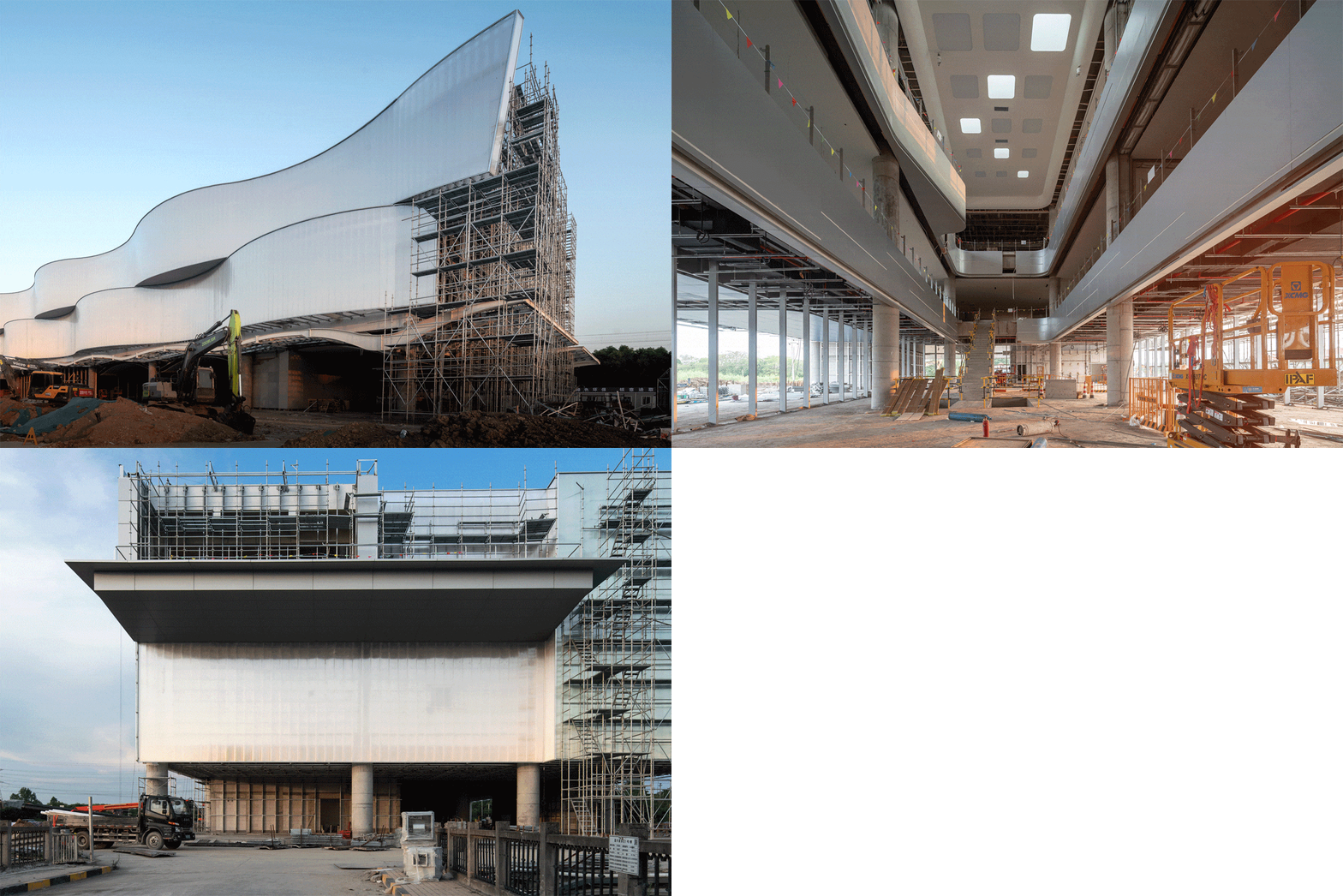
△ Construction Highlights
6. Forward-Looking Transportation Architecture
As economic growth and technological advances reshape travel habits, expectations for highway infrastructure evolve rapidly. He Jian, the project’s chief architect, emphasizes that “transportation building design must always be future-oriented.” In response to changing lifestyles, architects have a duty to explore innovative possibilities and create environments that consistently show genuine care for users.
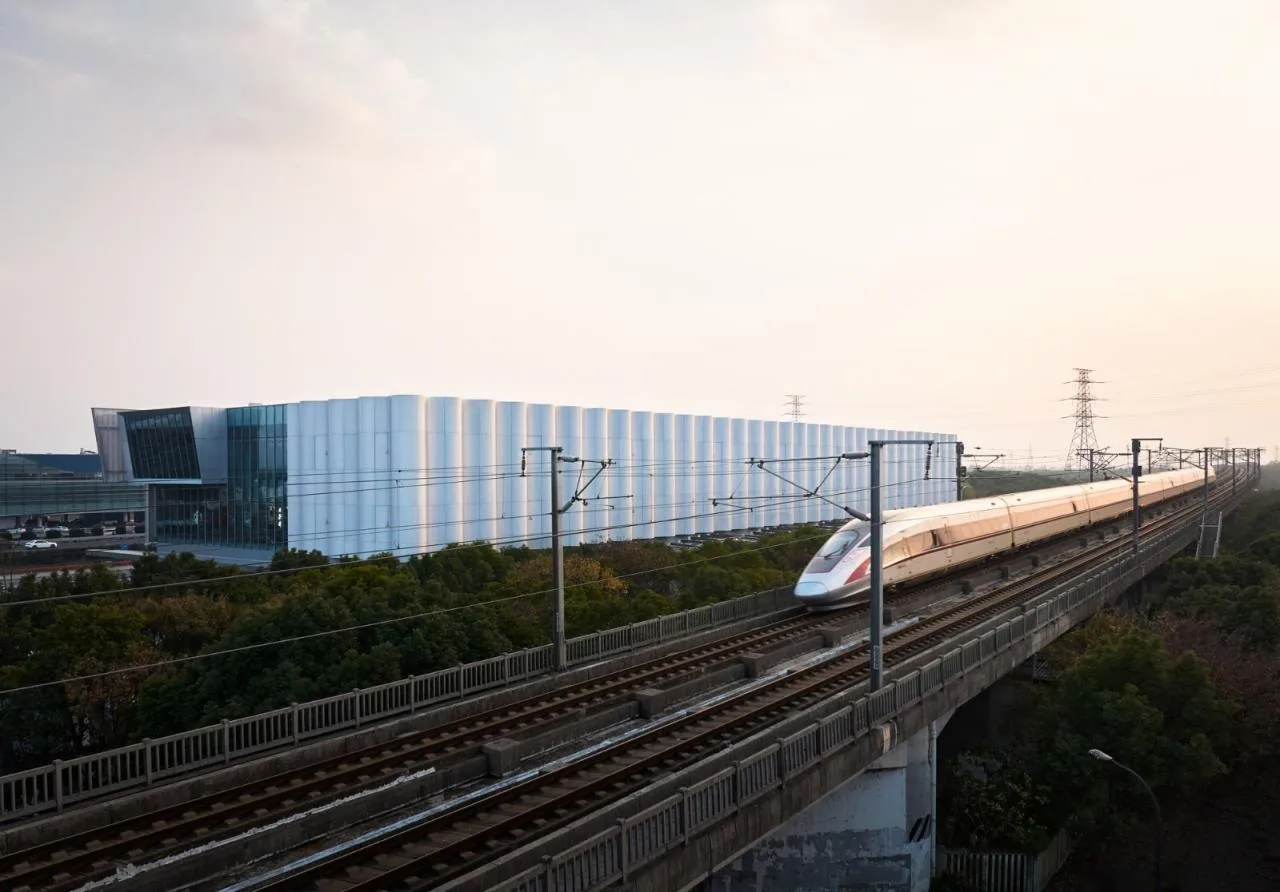
This forward-thinking, human-centered approach drives the design team to continuously challenge existing models, opening new possibilities and delivering creative solutions for the ubiquitous highway service area typology.
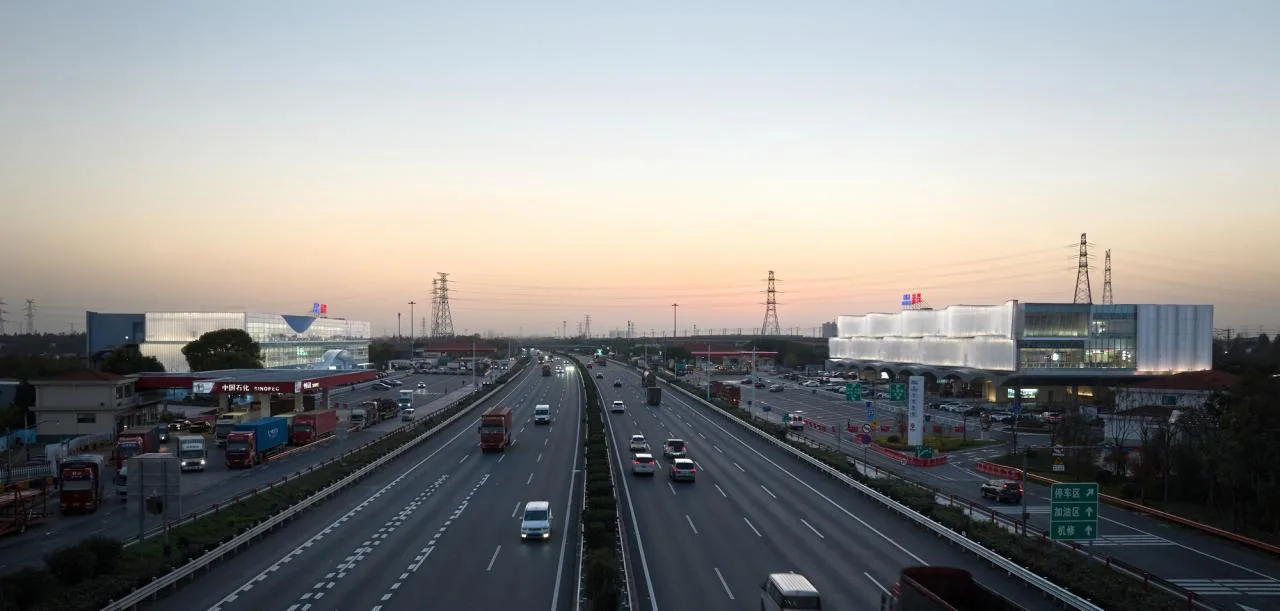
Project Drawings
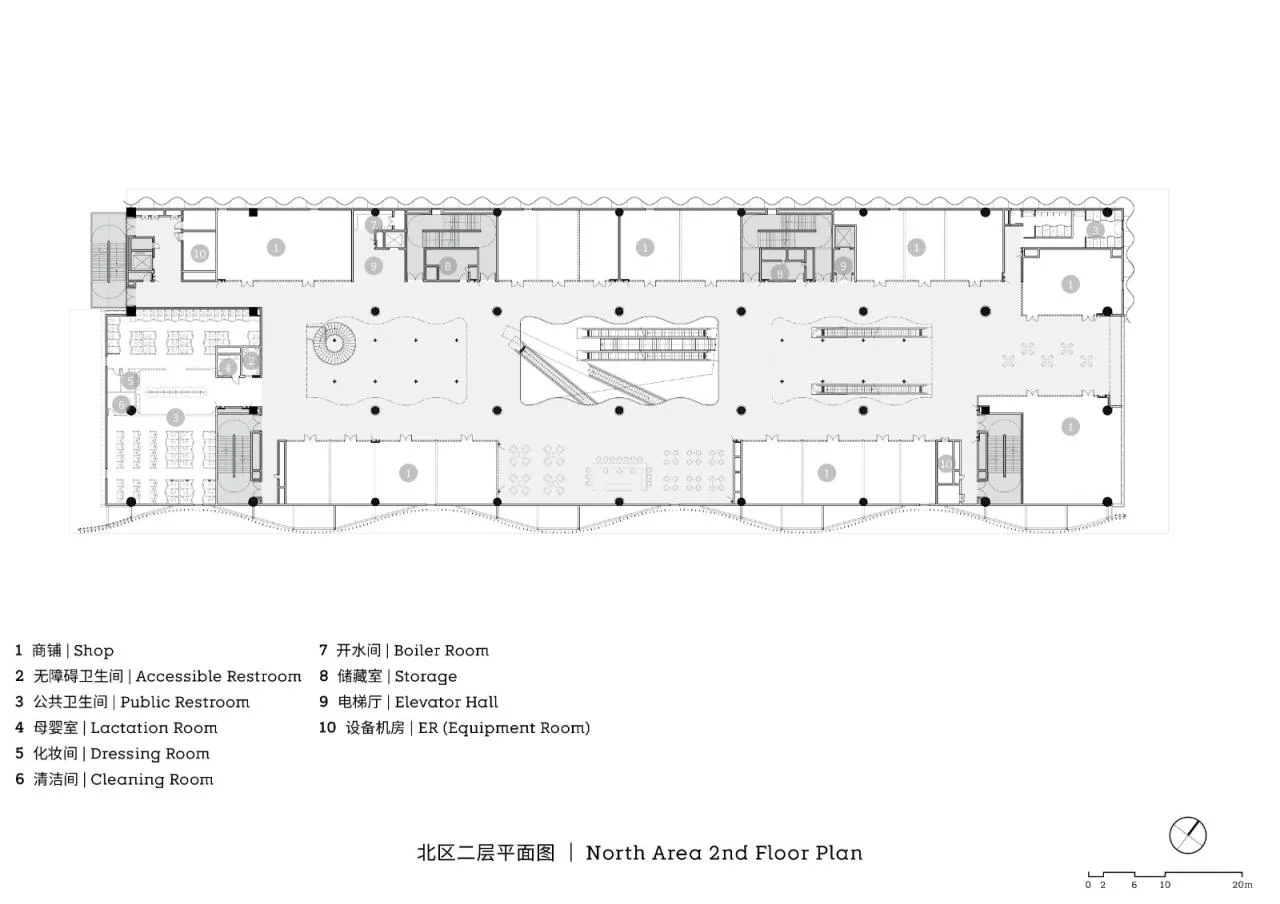
Project Information
Location: Jiaxing City, Zhejiang Province
Design/Completion: 2020 / 2022
Building Area: 21,800 m²
Owners: Zhejiang Transportation Investment Group Co., Ltd., Zhejiang Commercial Group
Architectural Design: Goa Elephant Design
Project Management: Goa Elephant Design
Construction Unit: Xinjie Construction
Engineering Supervision: Urban Construction Technology Group (Zhejiang) Co., Ltd
Curtain Wall Consultant: Jiaduo Design
Flood Consultant: Hangzhou Zhongxun Lighting
Operating Unit: Zhejiang Commercial Group
Image Copyright: AOGVISION Architecture Vision, Goa Elephant Design














Must log in before commenting!
Sign Up