
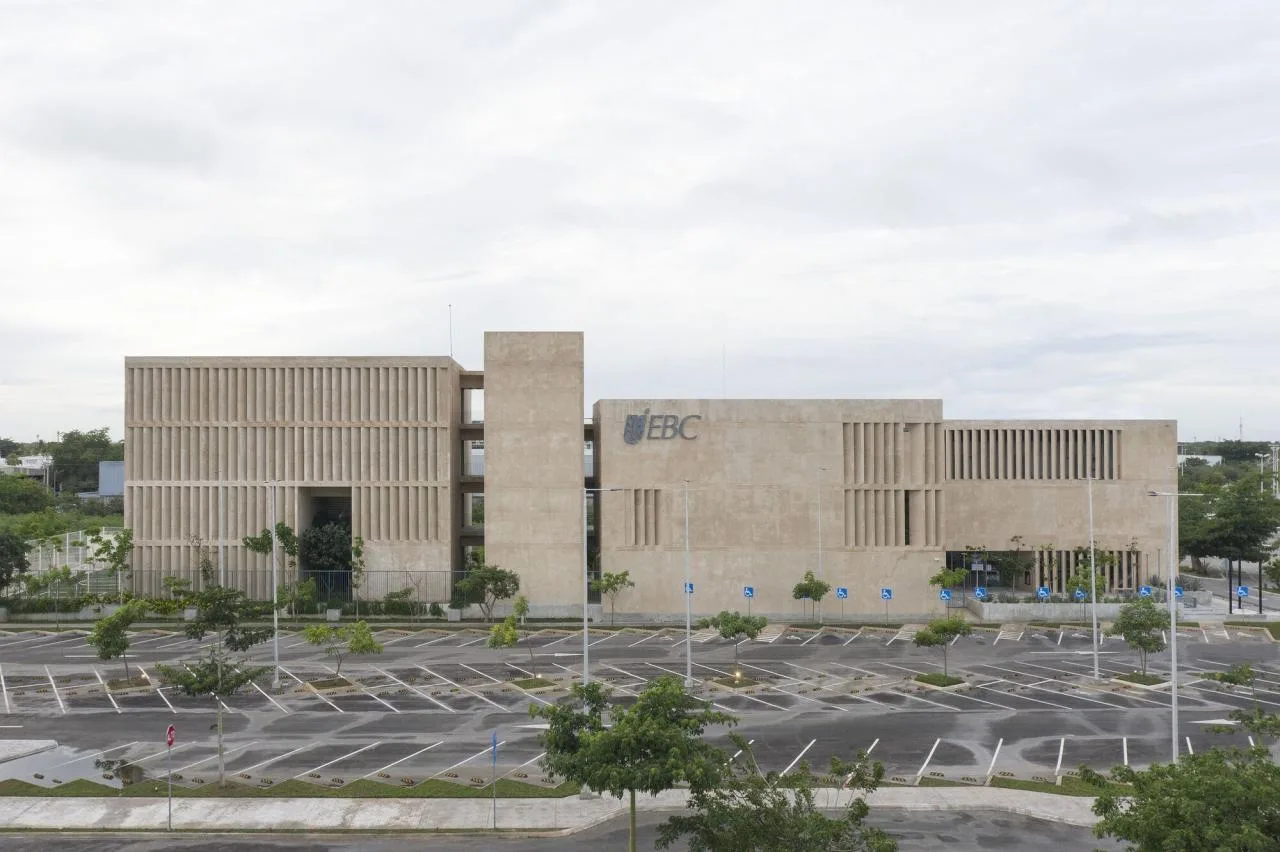
Merida Bank and Business School is situated in northern Merida, Mexico, serving as the institution’s second campus in the city. Located in a developing area, the new building is designed to accommodate more students. The design process revolves around three core principles that guide the building’s layout, materials, and functionality: practicality, site topography, and the region’s bioclimatic conditions.
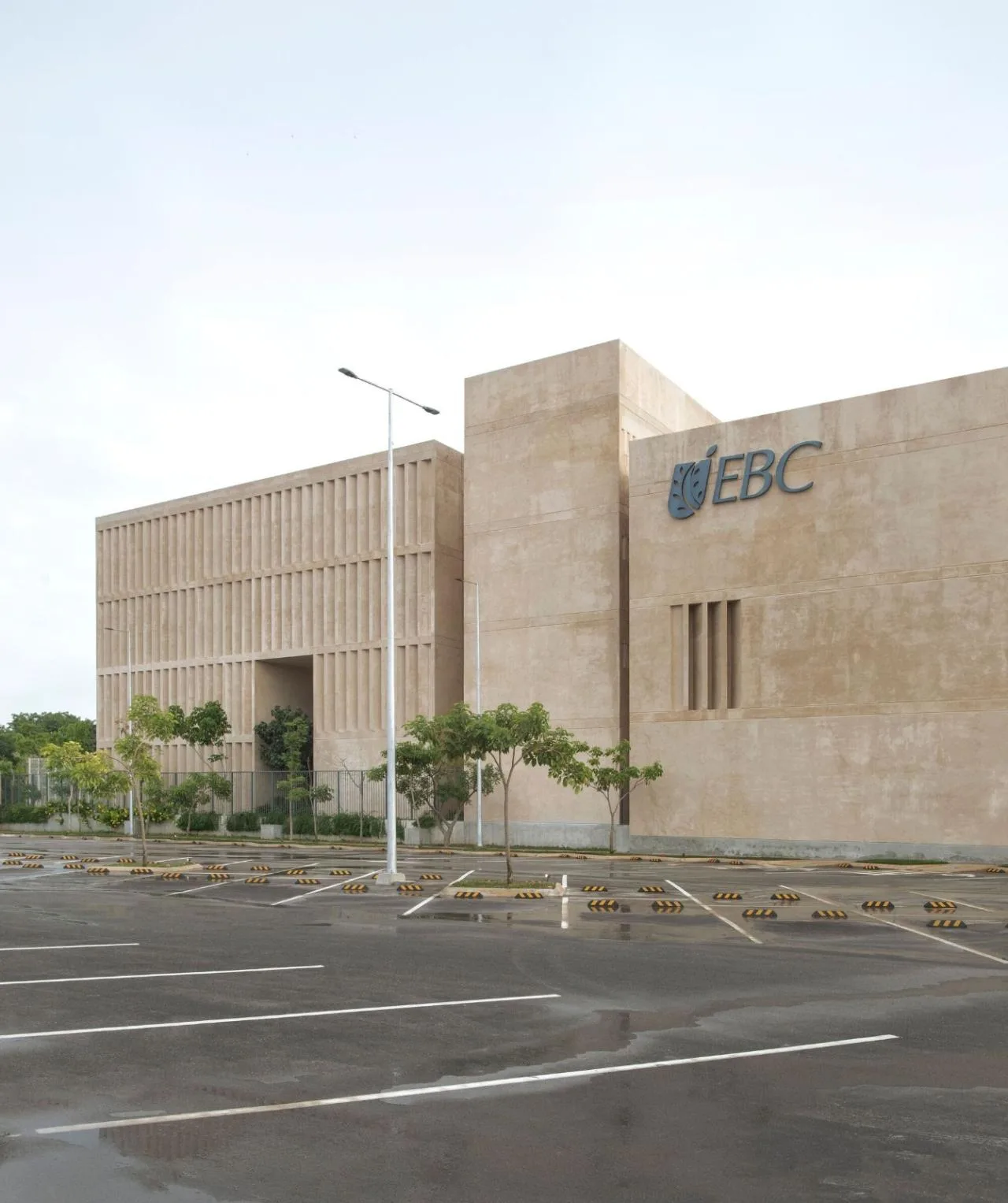
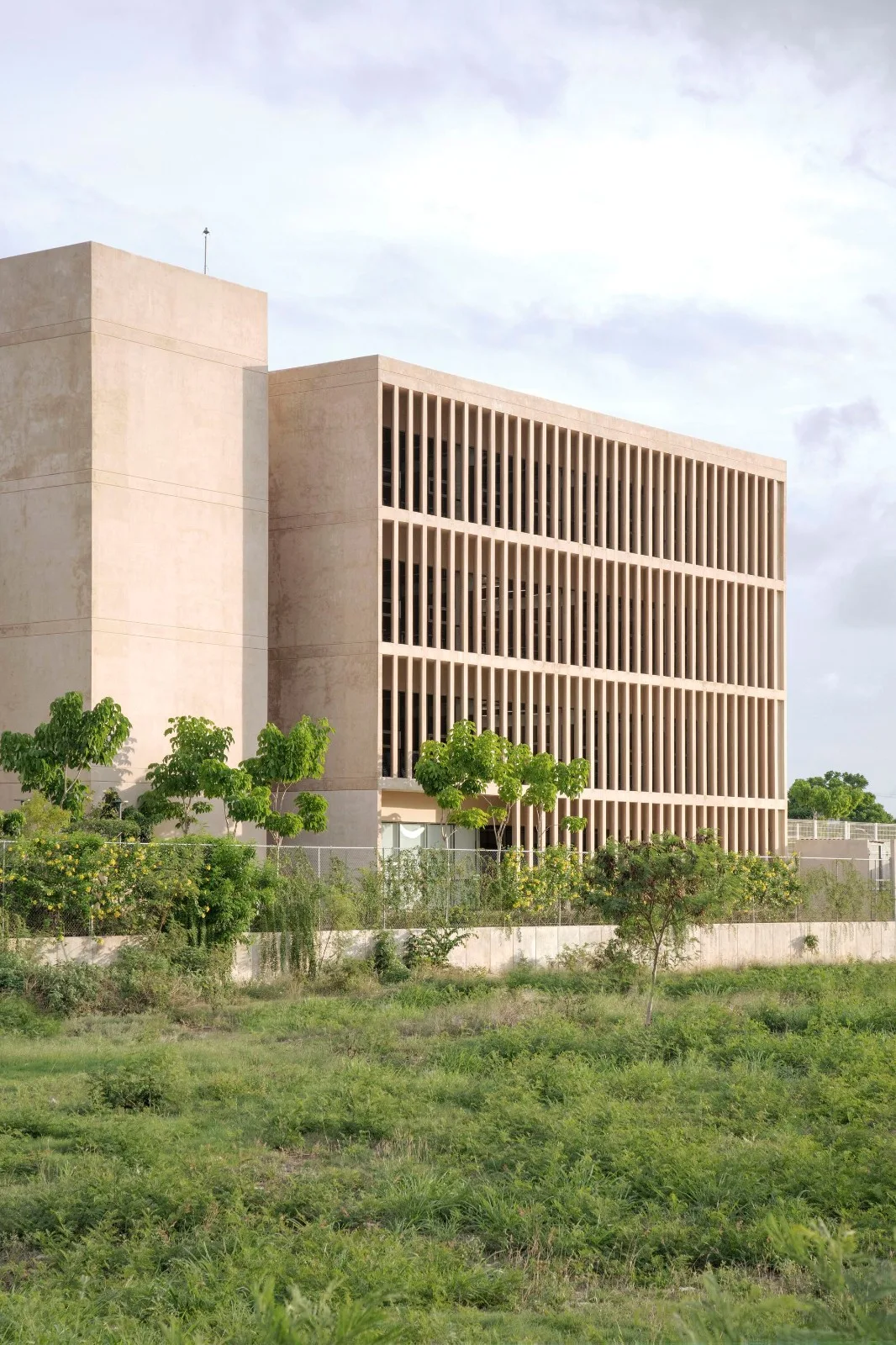
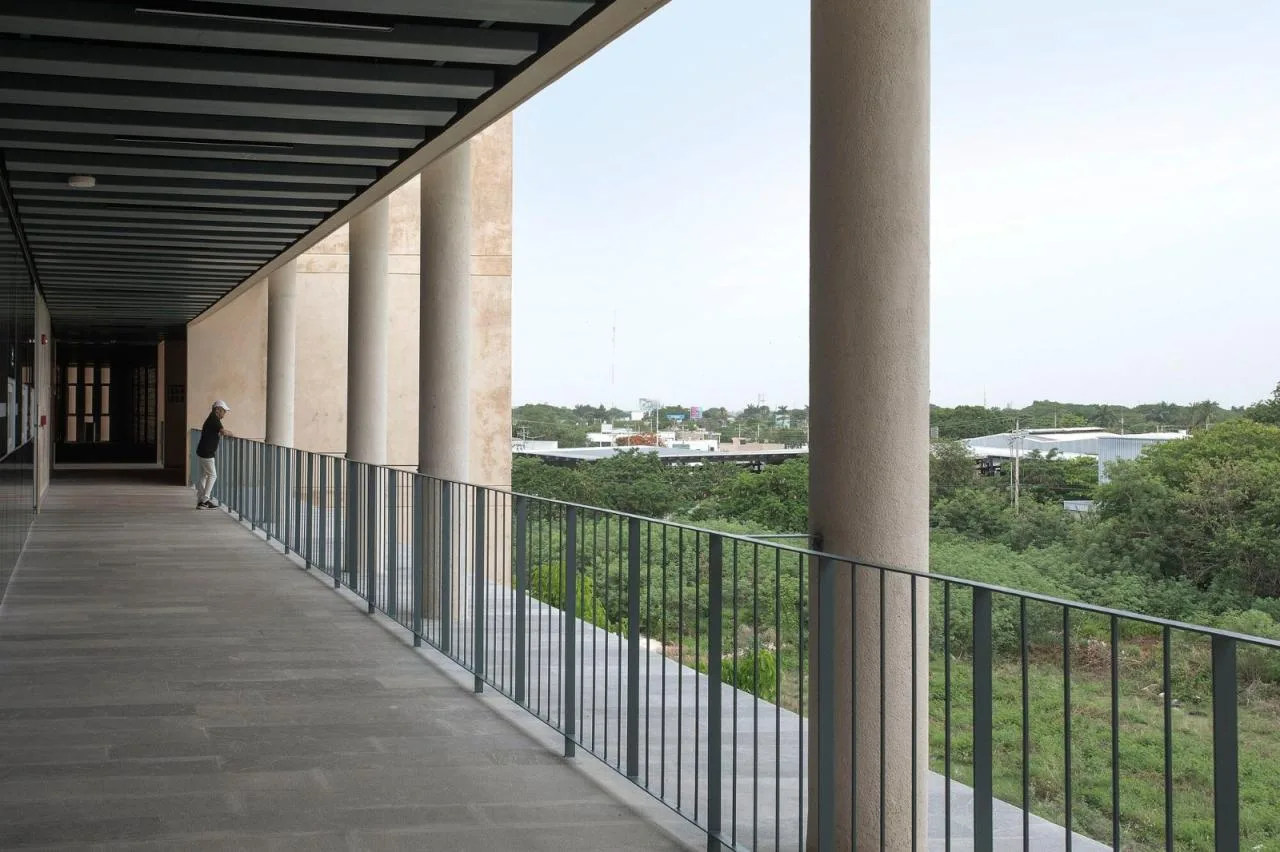
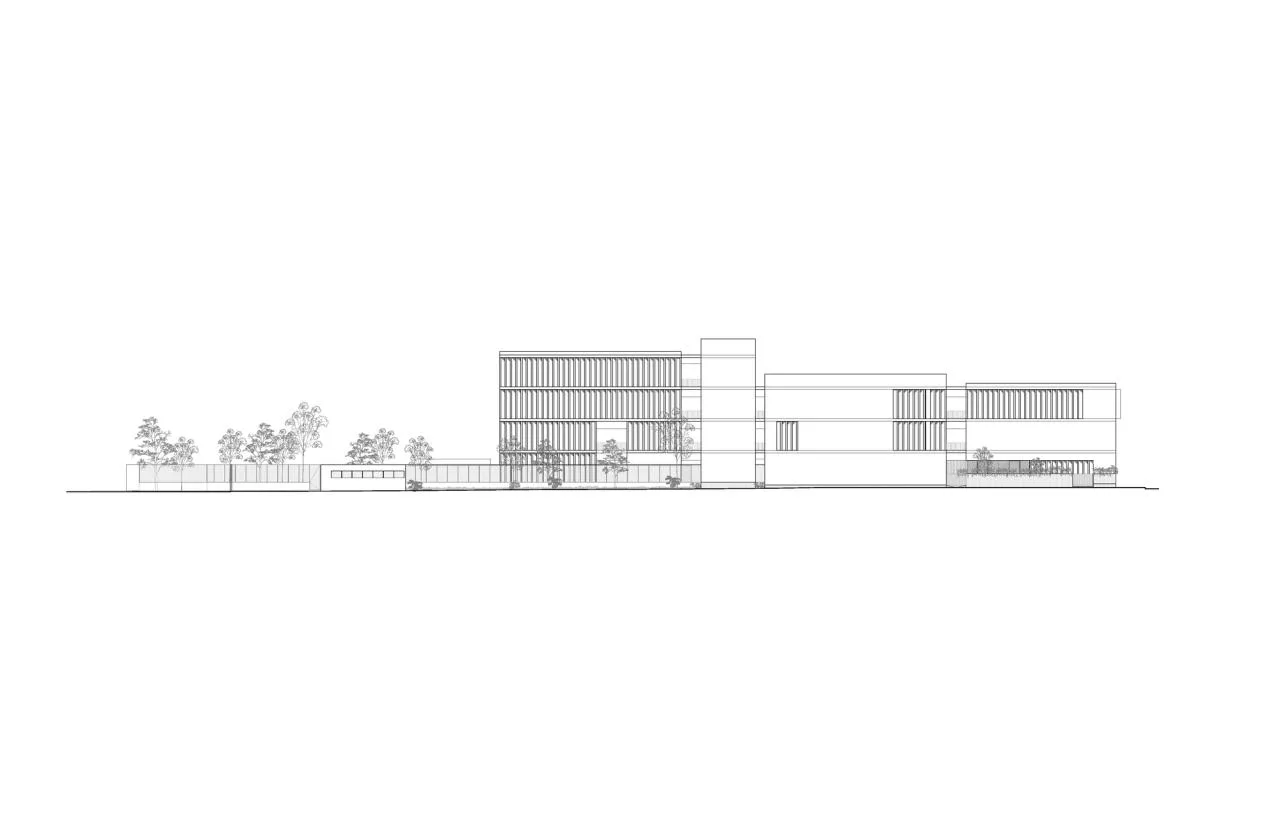
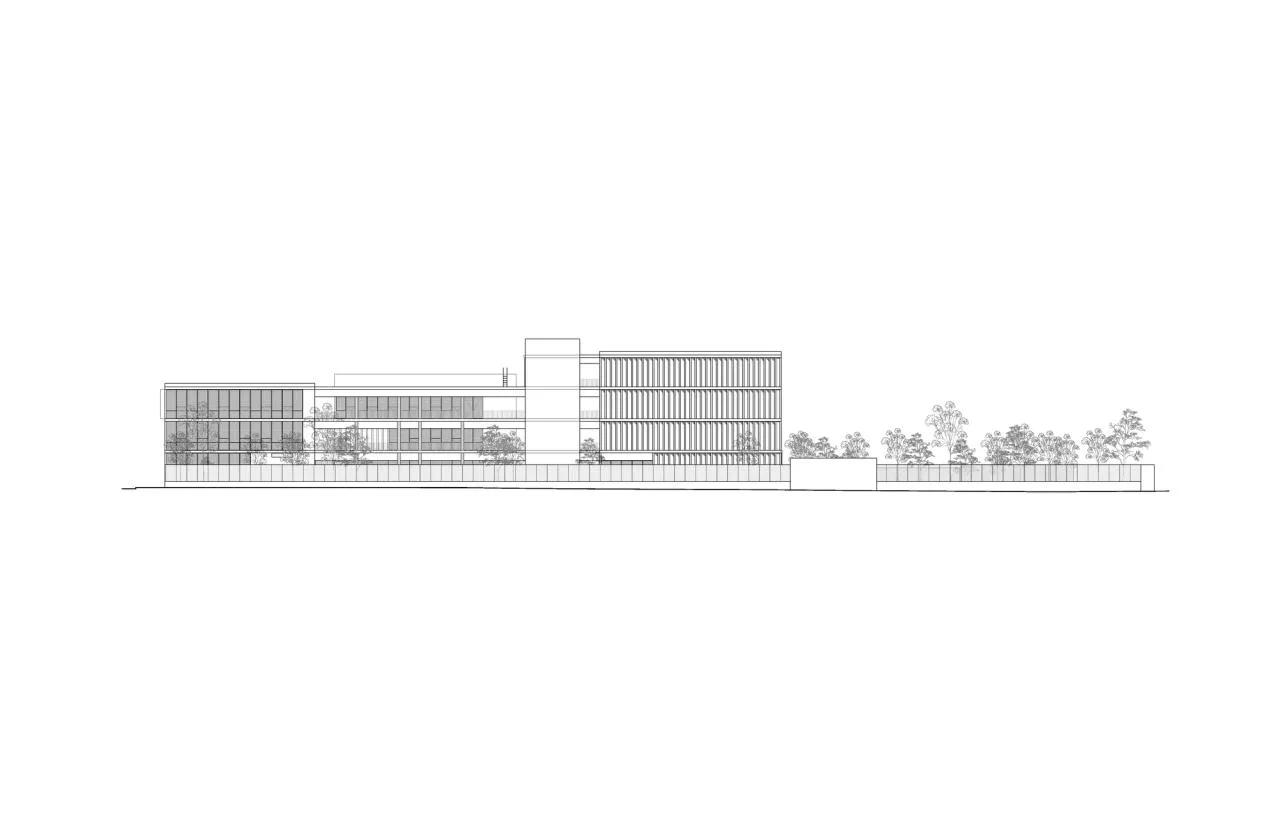
Merida experiences extreme bioclimatic conditions: hot, humid weather with intense sunlight and high temperatures. Additionally, frequent north winds bring a combination of wind and rain, which required detailed consideration during the design phase. As a result, the campus has a solid, heavy appearance, with building orientation and functional layout aligned to its form. The south, east, and west sides are relatively enclosed, while the north side is fully open. This design reduces the impact of intense sunlight and heat, providing uniform lighting throughout all learning and working spaces.
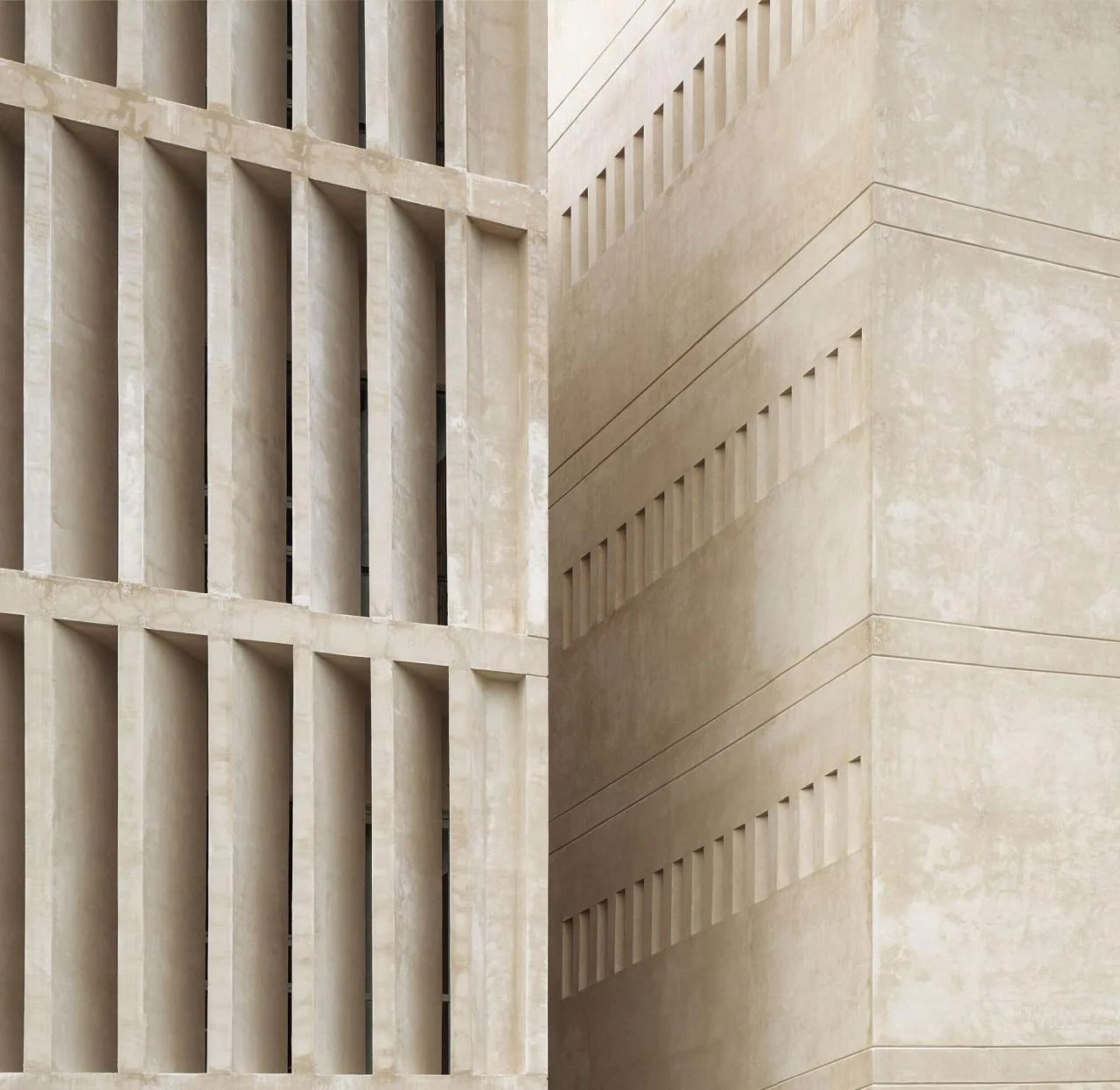
The building employs a consistent material—“chukum”—a locally common, durable, and low-maintenance finish.
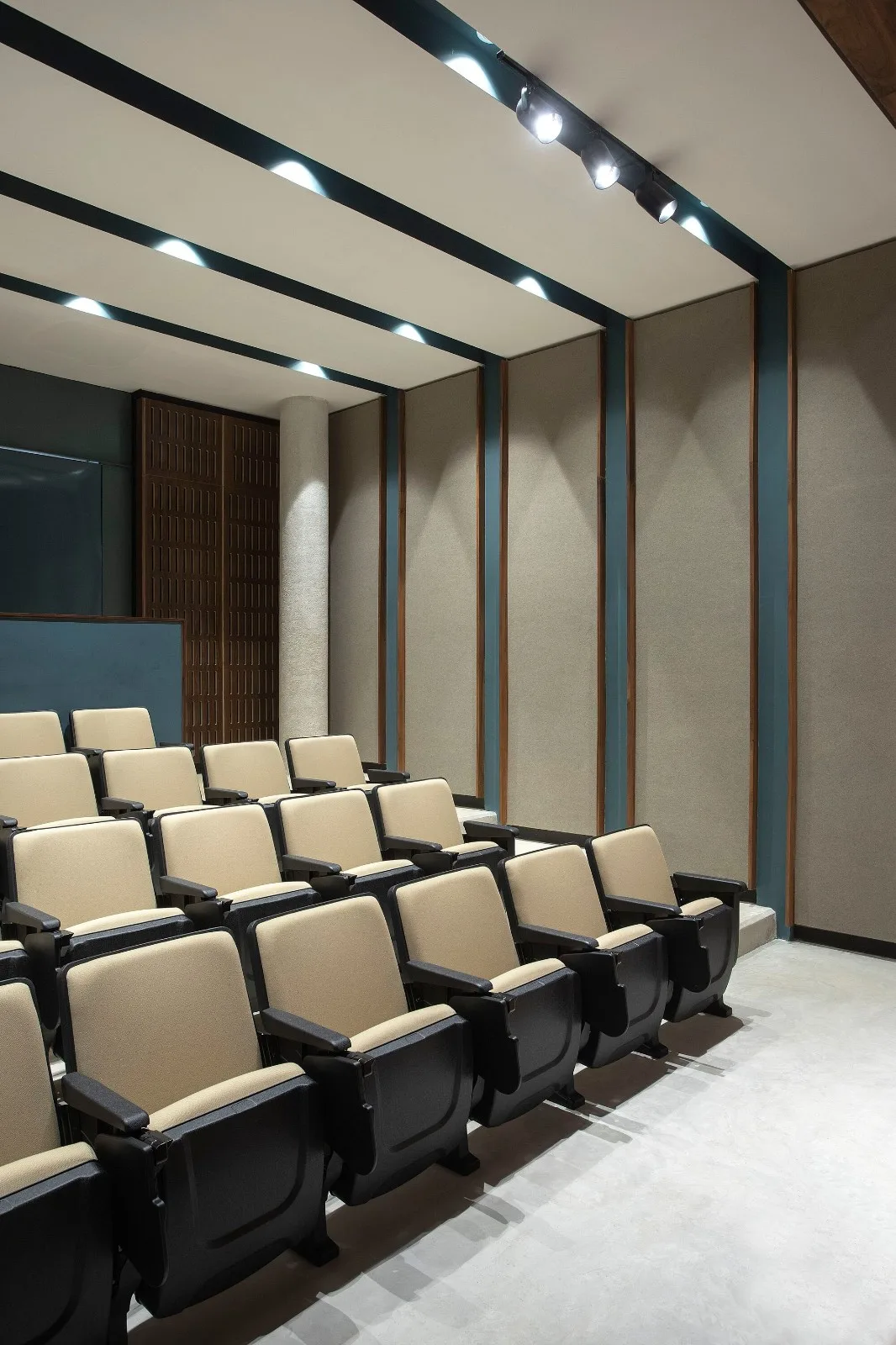
This campus demands precise functional zoning to meet diverse needs. It includes twelve classrooms for 18 students, nine classrooms for 30 students, seven classrooms for 40 students, rooms for online courses, lecture halls accommodating 40 people, multifunctional rooms, auditoriums for up to 200 attendees, cafés, learning centers, libraries, studios, courtyards for student activities, gyms, administrative offices, and various service areas.
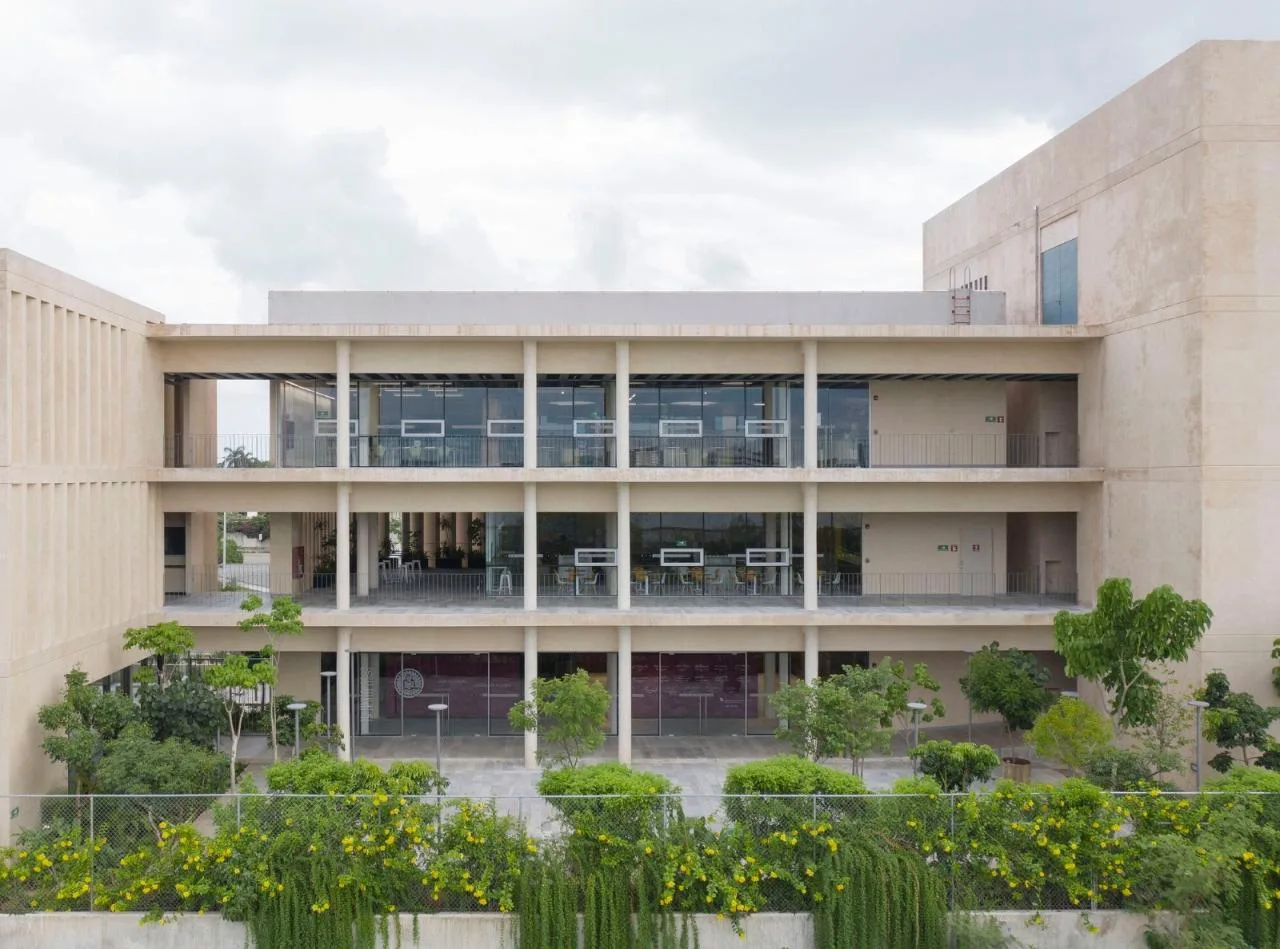
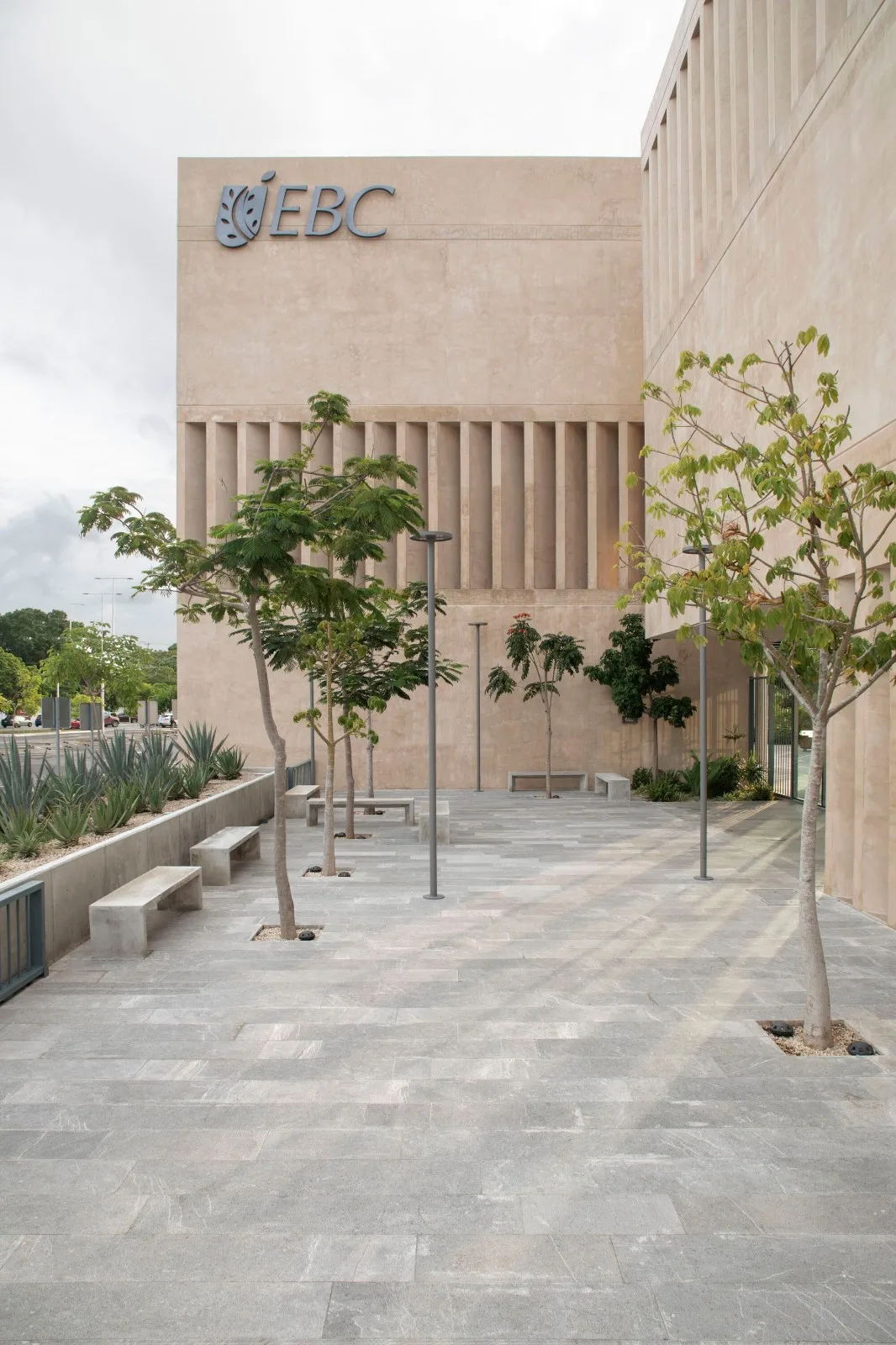
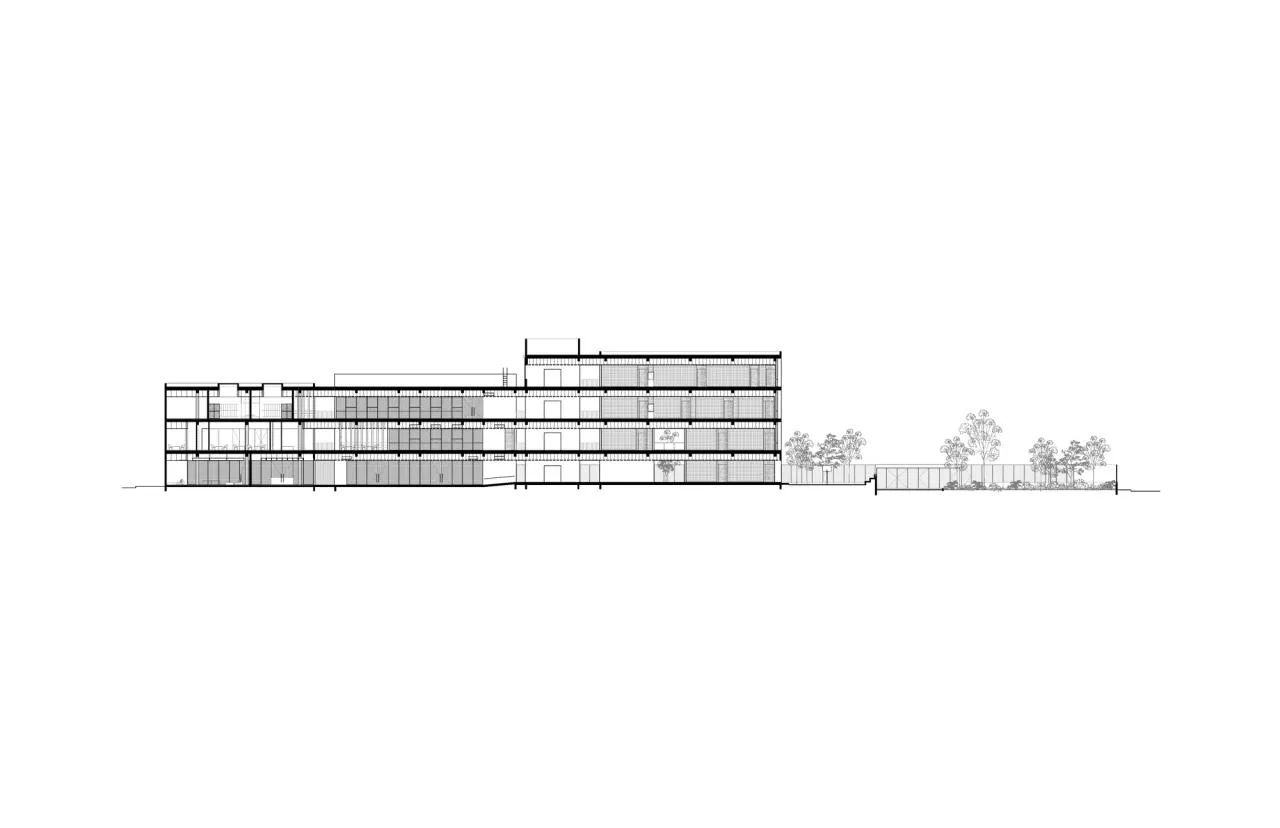
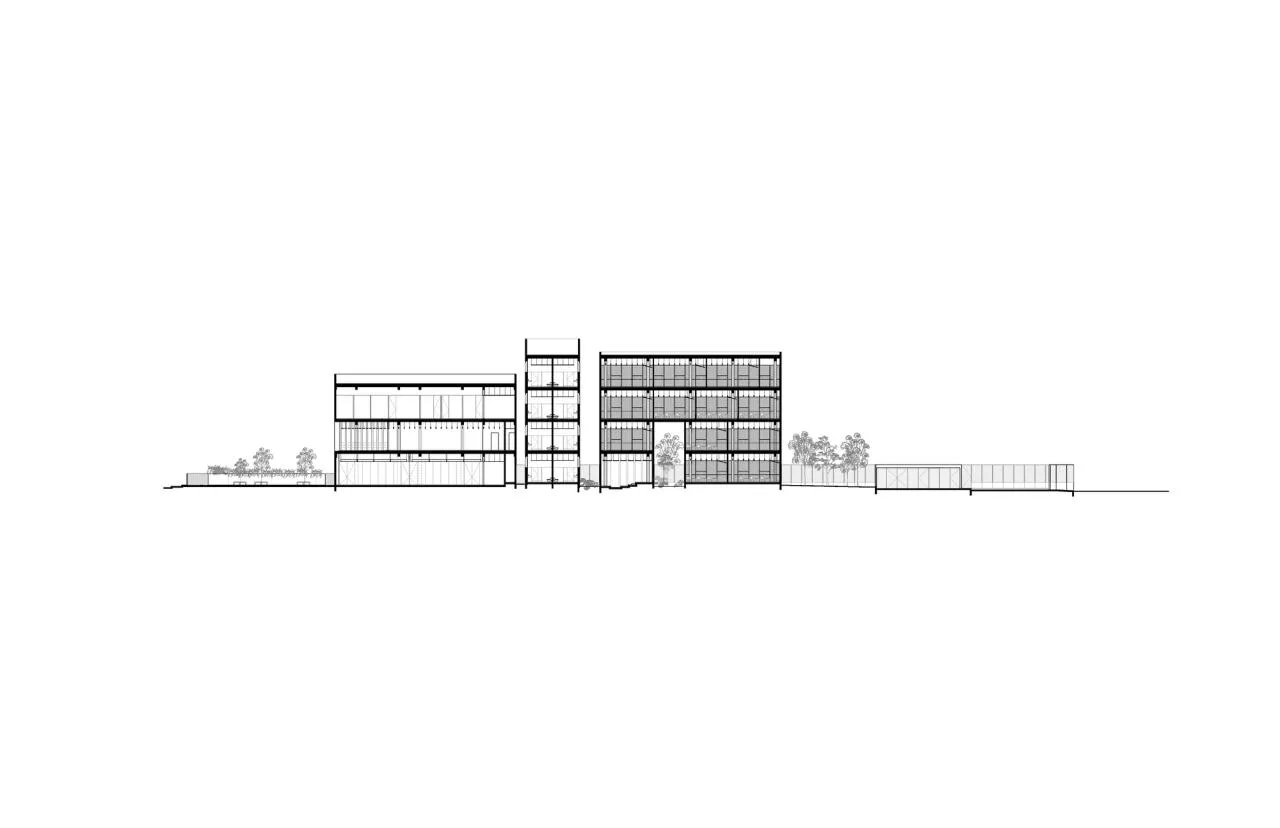
The site is a narrow 30 by 140-meter rectangle, bordered by roads on three sides and a future residential area on one side. The campus is arranged linearly across six buildings, each dedicated to specific functions. This layout organizes functional areas efficiently, activates public gathering spaces between buildings, and shapes the campus’s overall atmosphere.
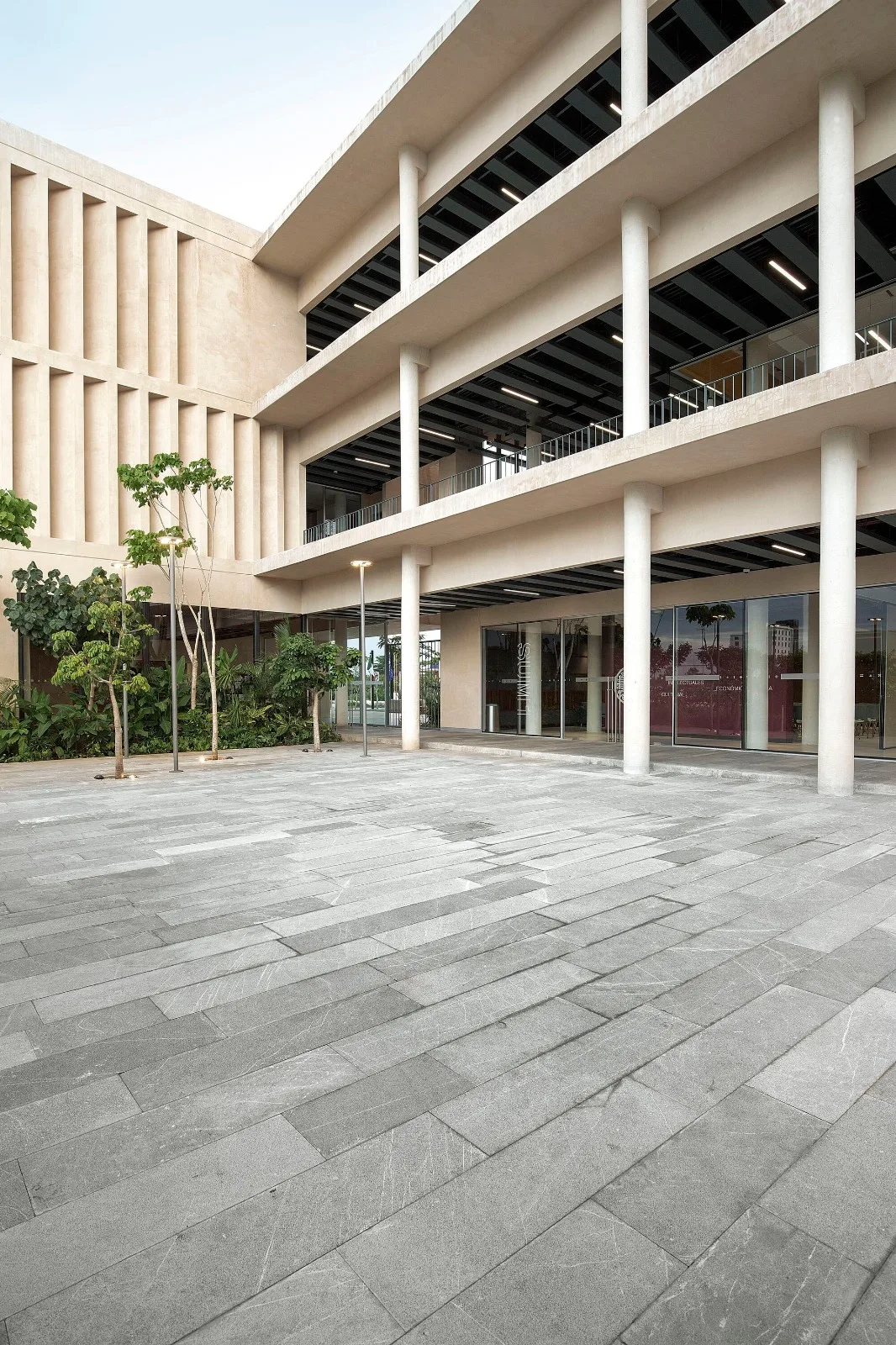
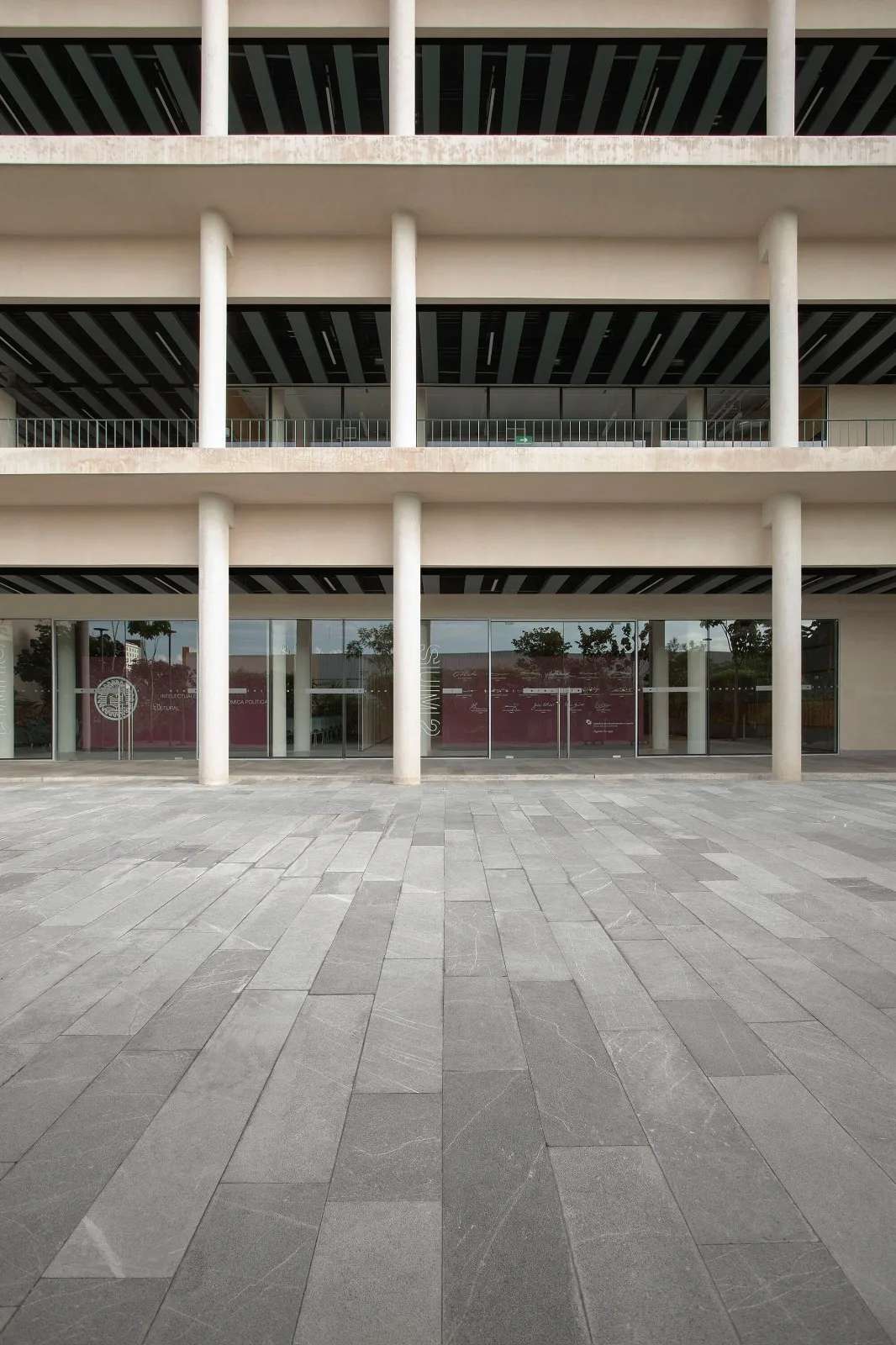
The first building functions as the entrance and administrative hub. The second building hosts public and flexible spaces such as multi-purpose rooms, indoor and outdoor cafés, and a learning center. Centrally located, its first floor opens to the central square, serving as a communal gathering space across three levels.
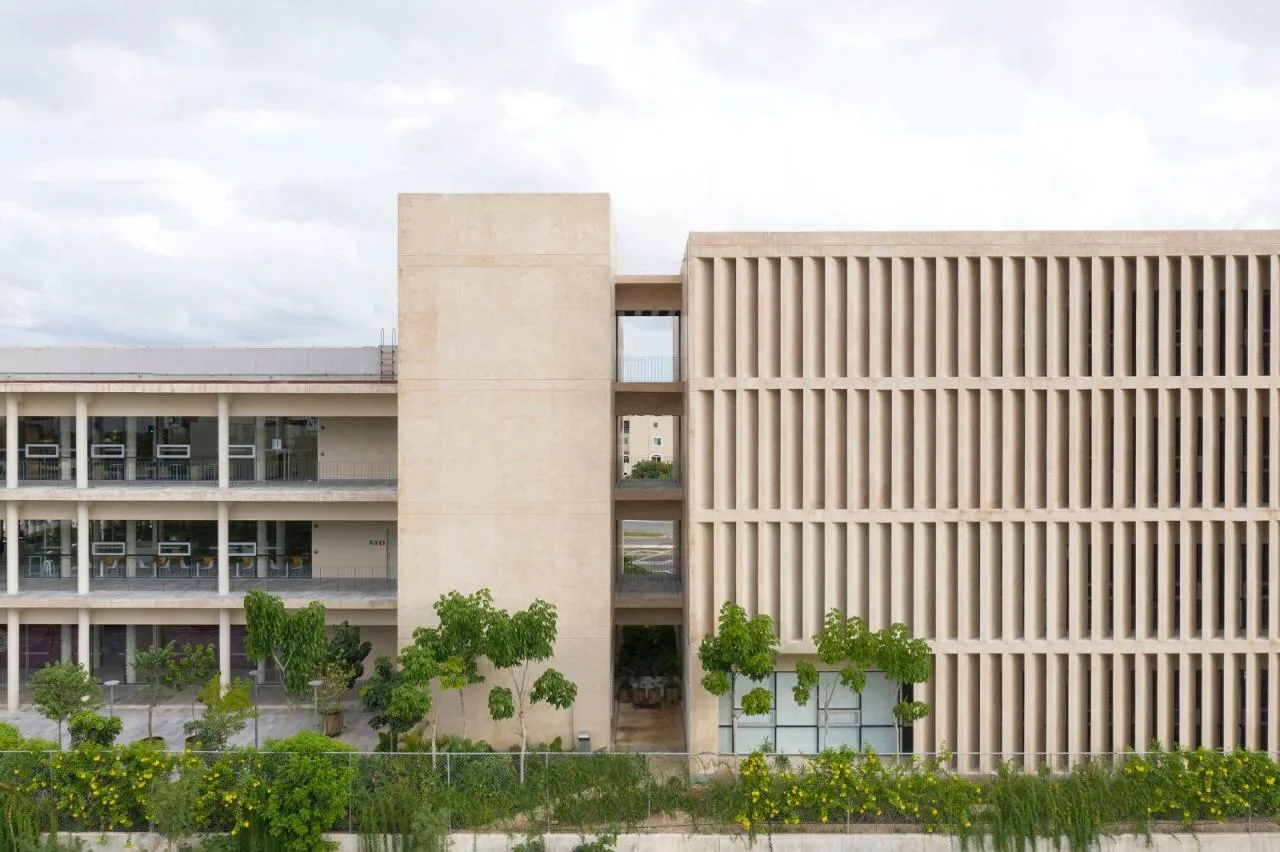
The third building is the tallest yet smallest, housing service areas and vertical transportation. The fourth building is dedicated to education, with four floors comprising 28 classrooms. The fifth building, still under construction, will add nine classrooms as an extension for future campus growth; its base currently serves as a multi-purpose sports stadium. The sixth building is the only single-story structure, containing equipment, mechanical rooms, and campus maintenance facilities.
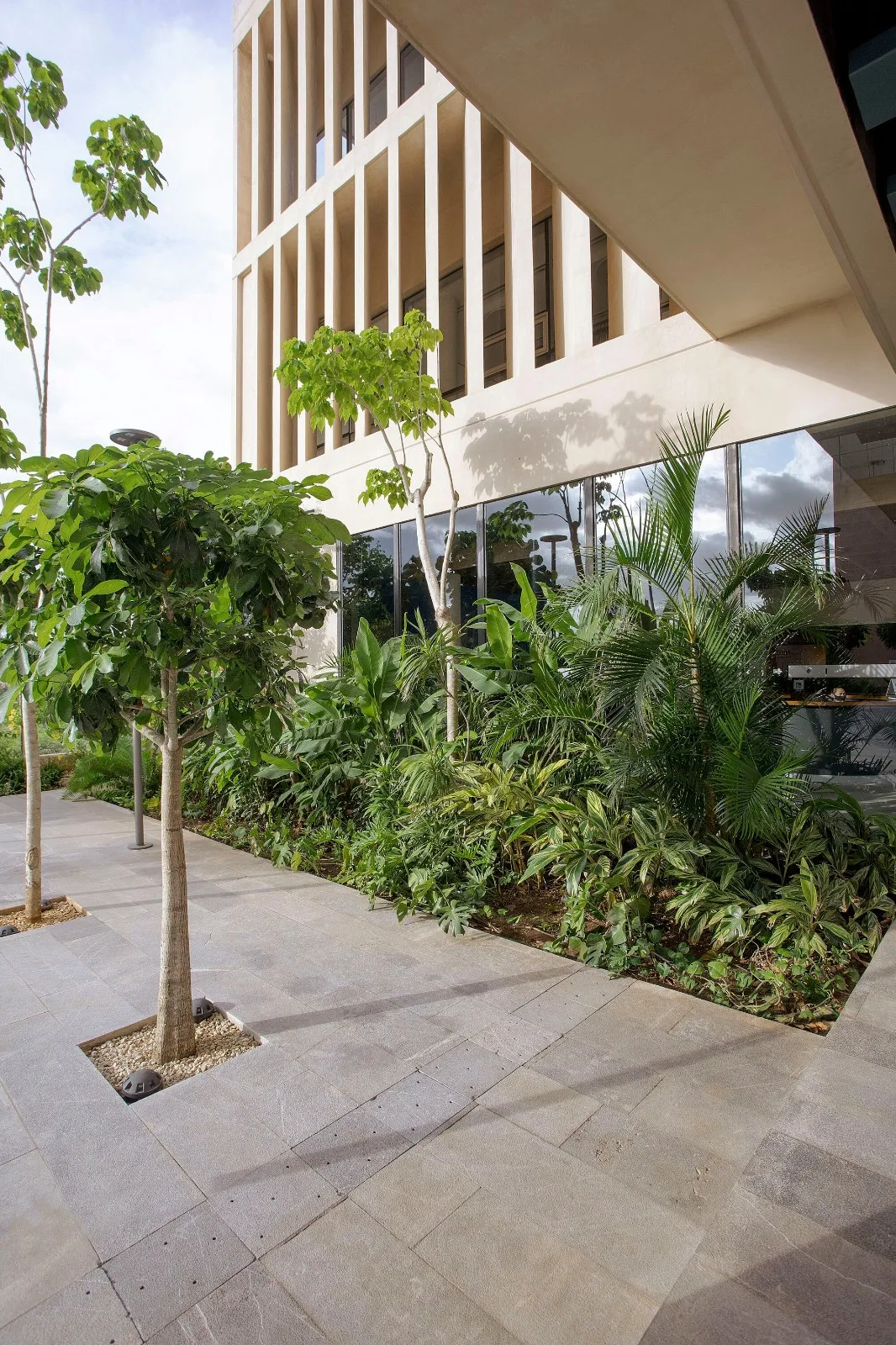
The arrangement of the six volumes creates a complementary, square-like space. The internal layout carefully considers building orientation and sun angle. The campus acts as a large wall providing shade to public areas, with a central square offering an almost all-weather shaded gathering spot. The fragmented layout allows wind to flow freely, promoting cross-ventilation rather than obstructing air circulation.
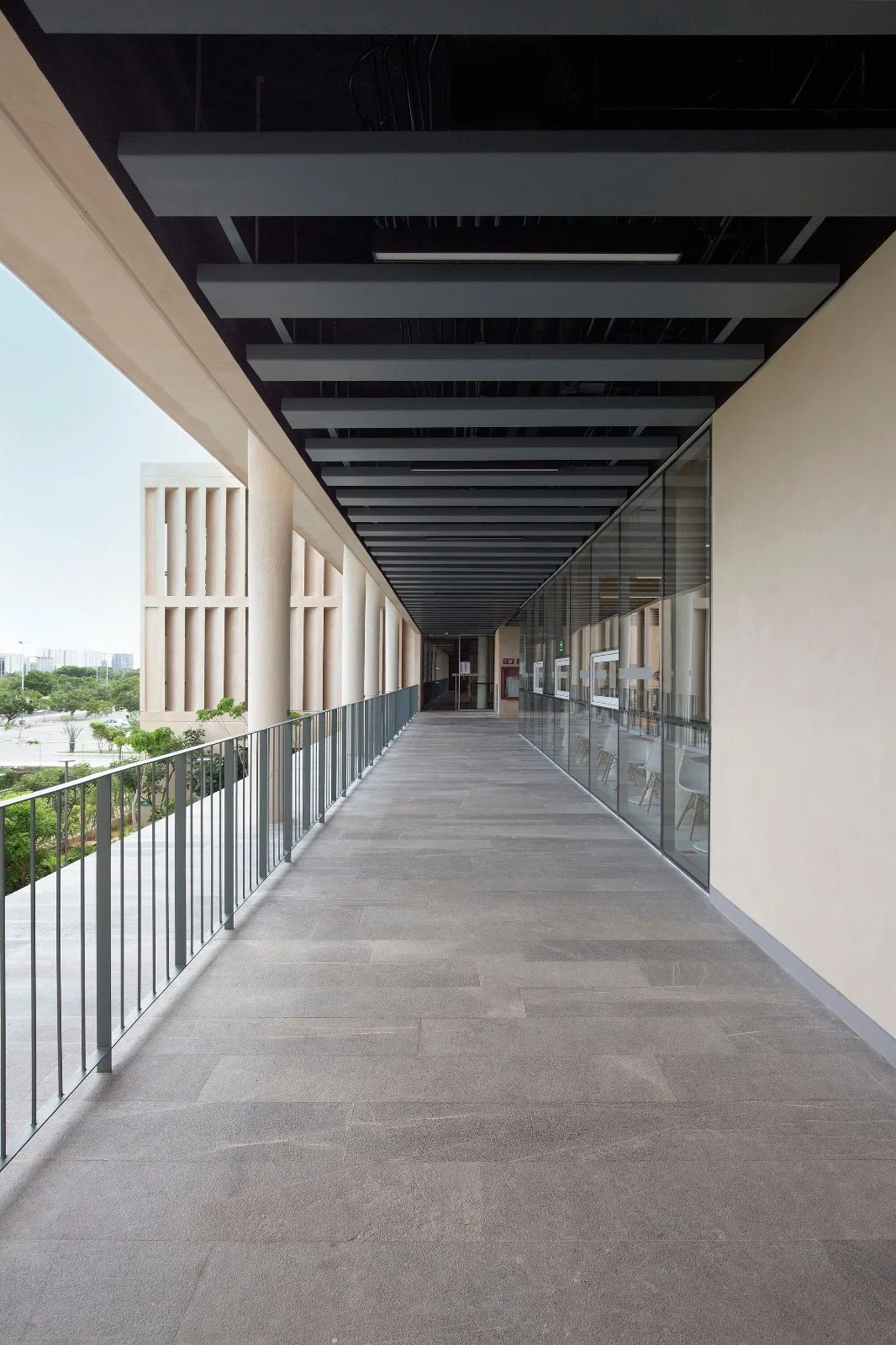
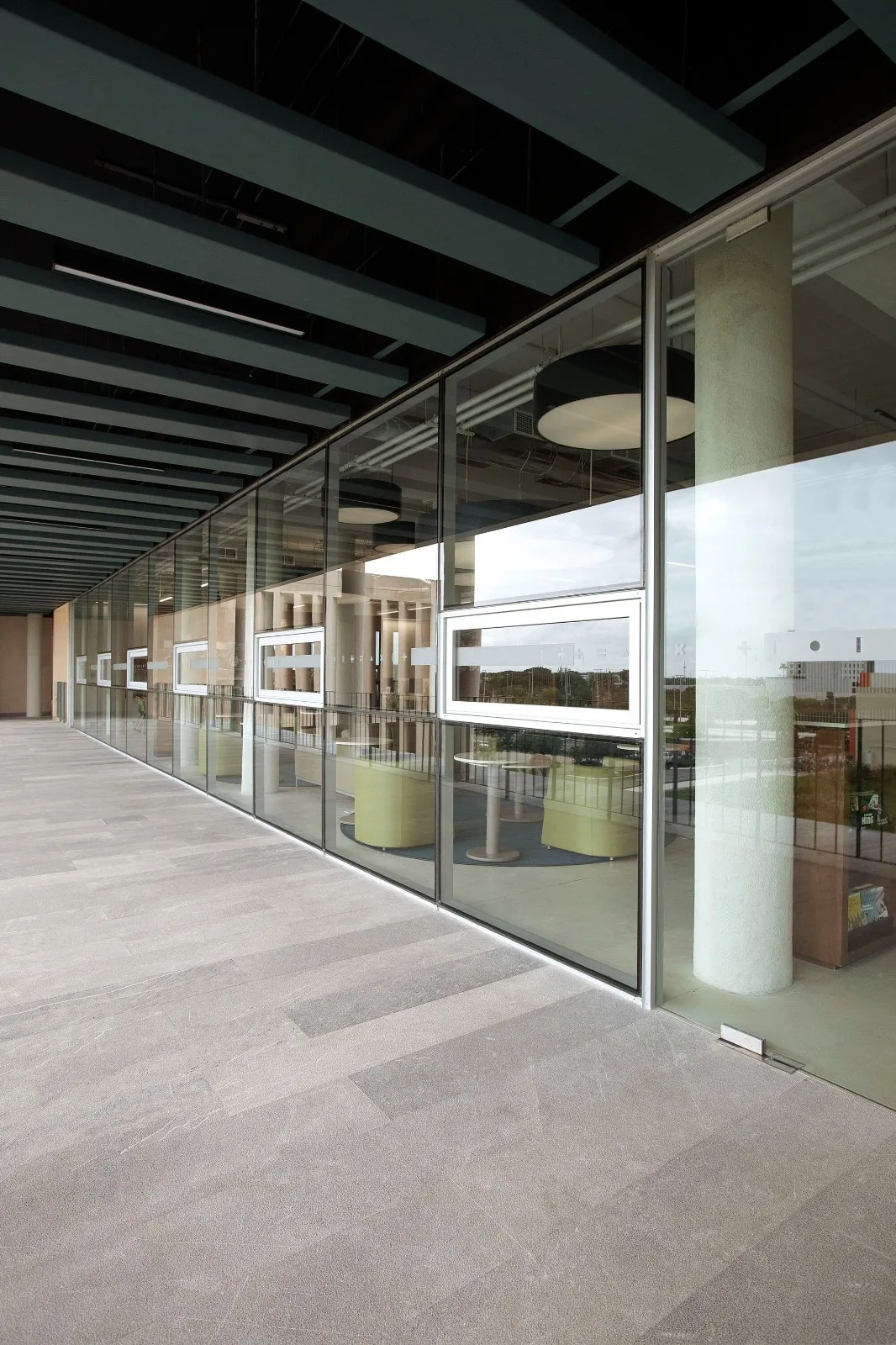
All six buildings are aligned along a central axis and connected at key points: the second-floor entrance, main entrance, and parking entrance. Additional levels are linked by 3-meter-wide corridors and bridges, centrally located or positioned on building sides, expanding to 4.5 meters at certain nodes. These corridors, also known as “wind and rain corridors,” shelter students from rain and strong north winds.
In the educational buildings, design extends beyond classrooms to include spatial gaps, circulation, and functional zones connecting all rooms. These corridors, varying by floor, have evolved into social spaces beyond classroom use.
Project Drawings
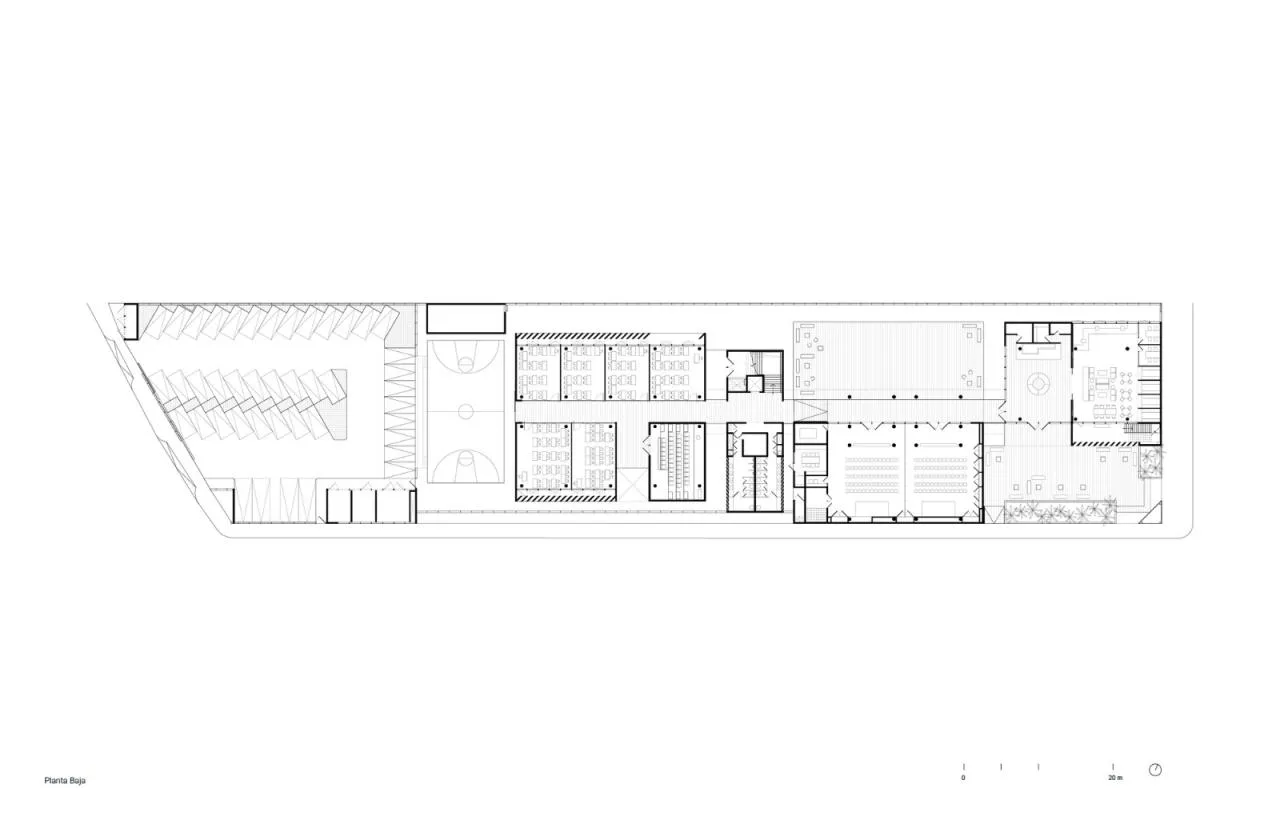
△ Underground Floor Plan
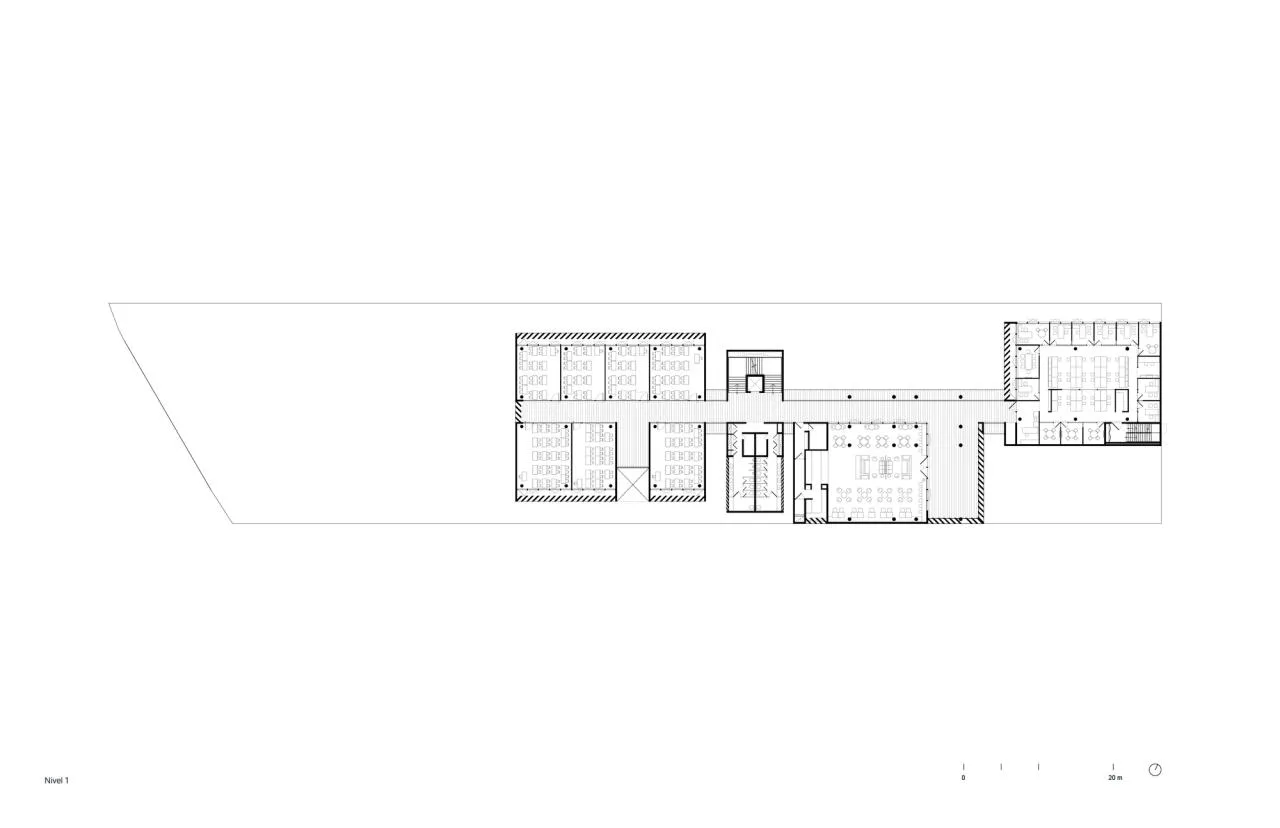
△ First Floor Plan
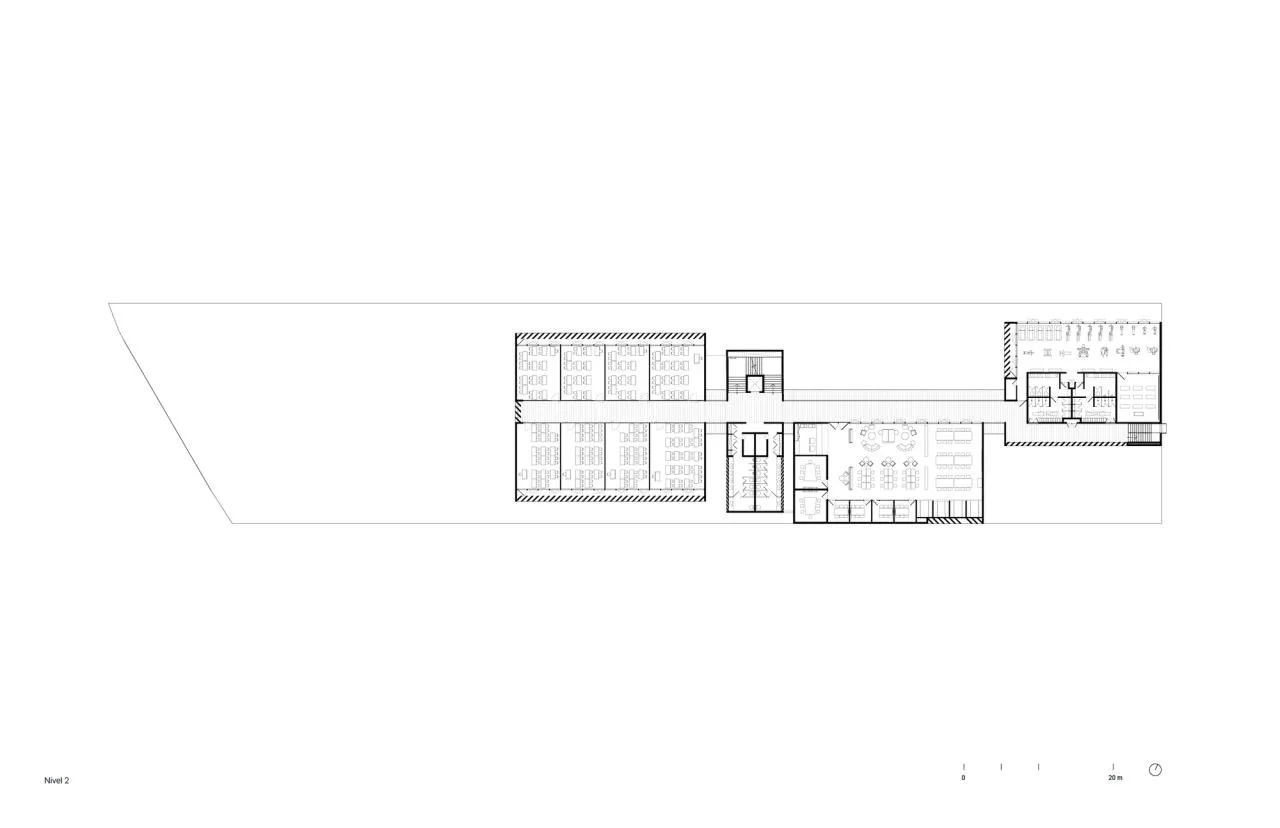
△ Second Floor Plan
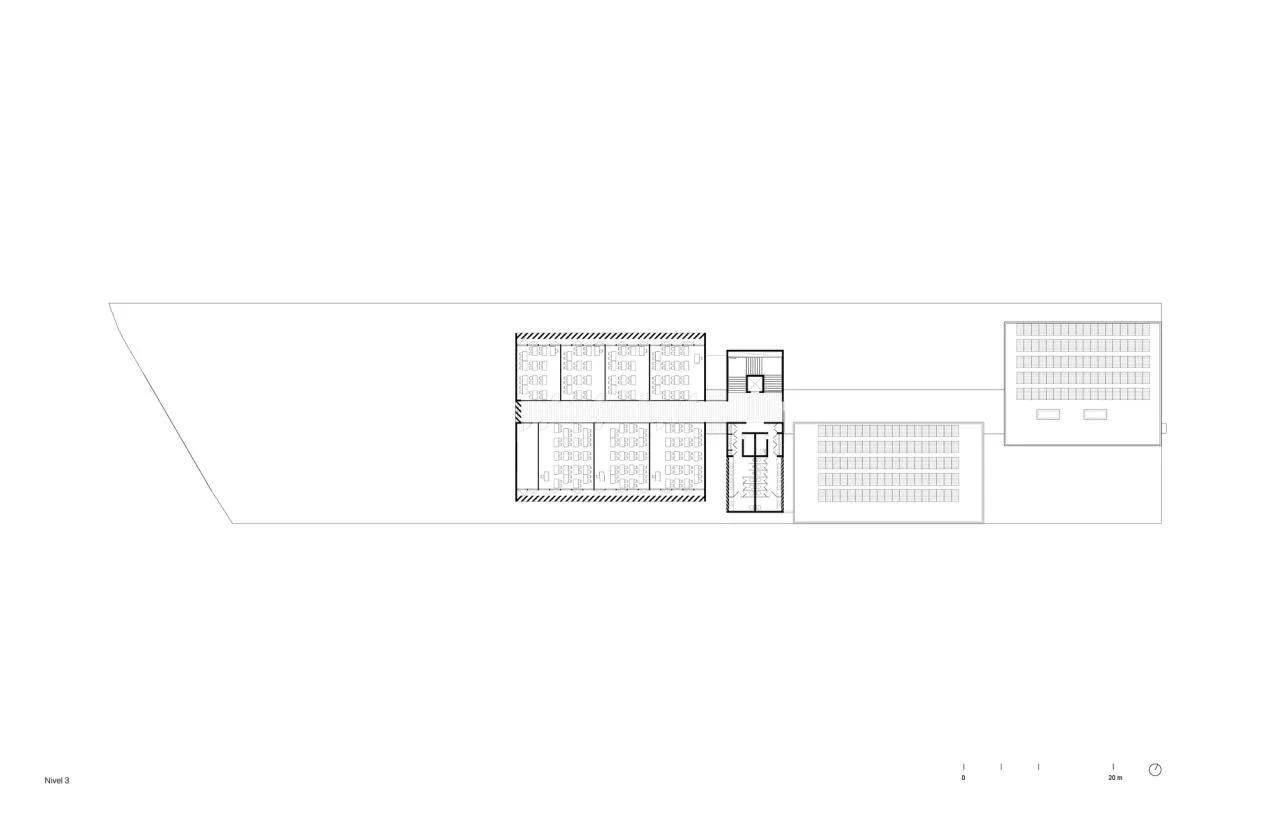
△ Third Floor Plan
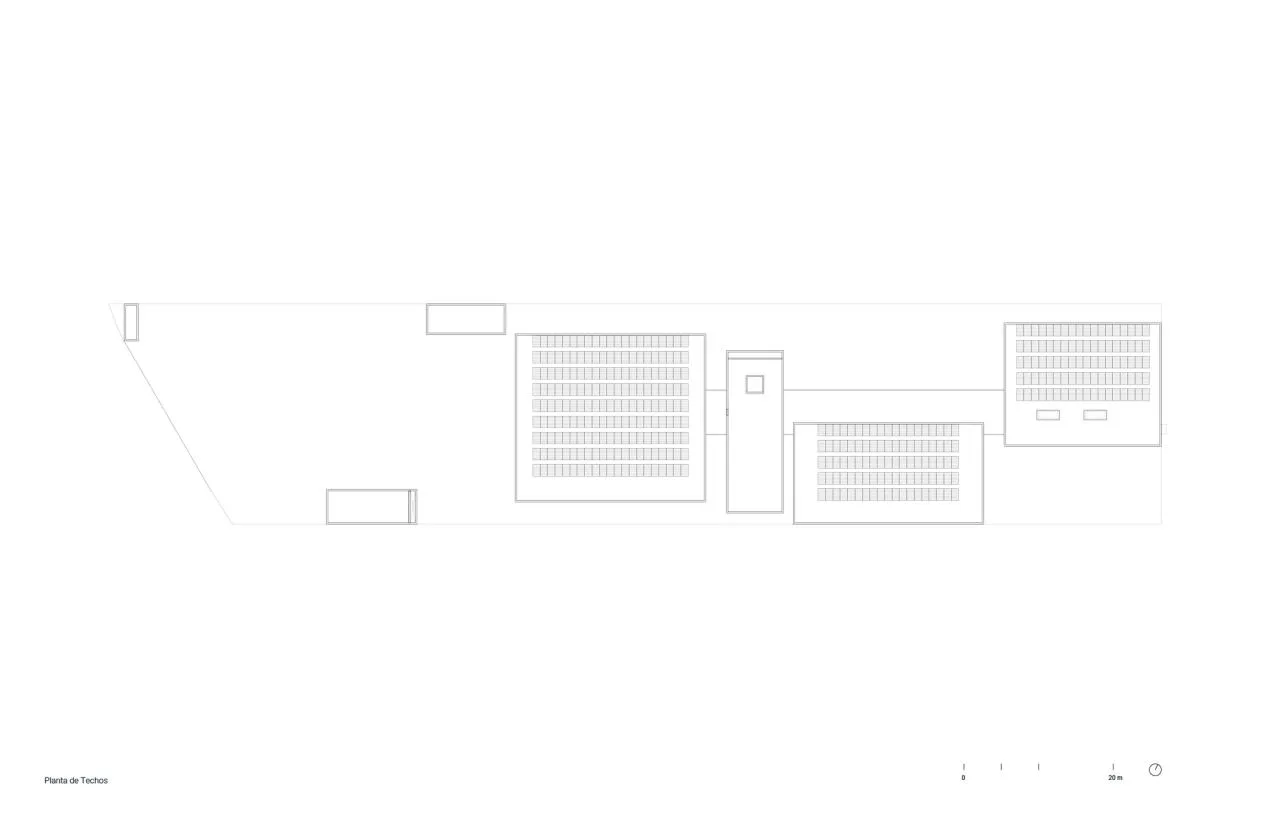
△ Roof Plan
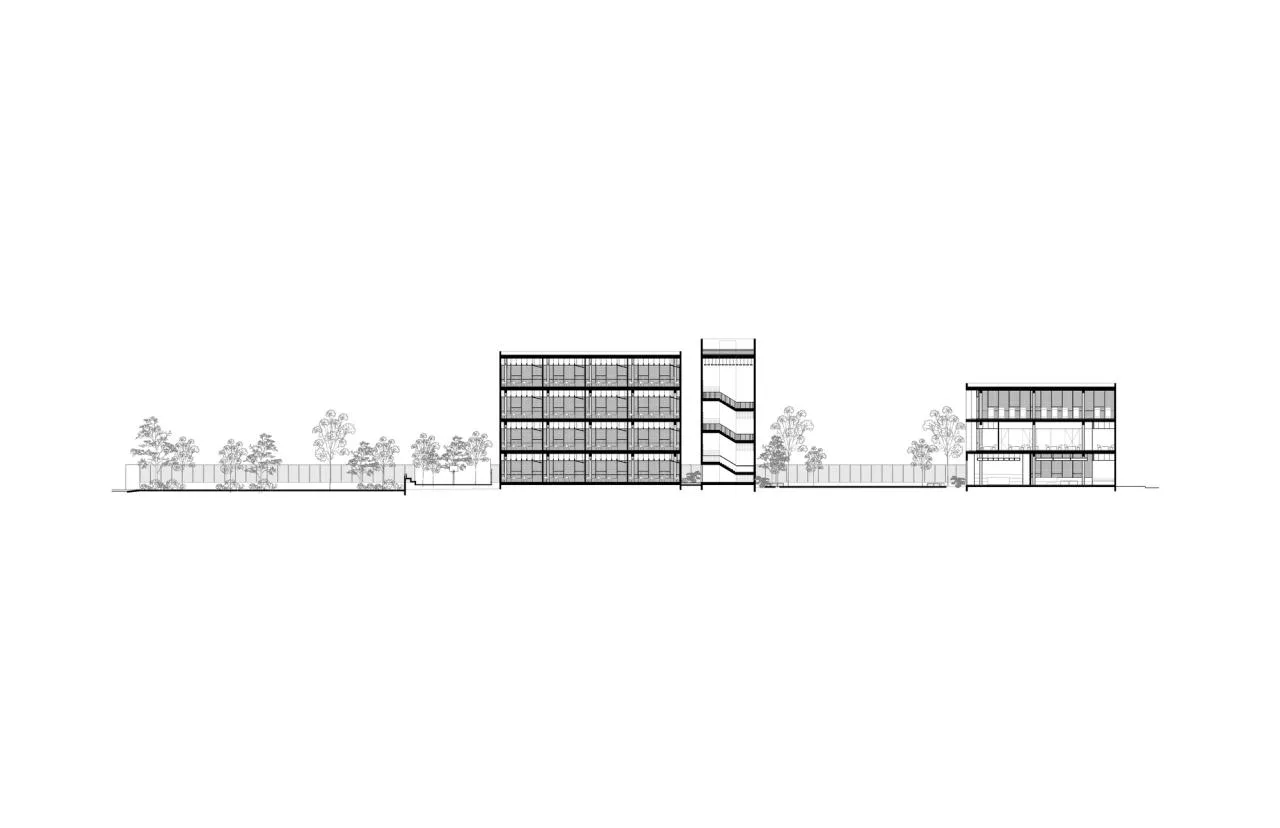
△ Section Diagram
△ Section Diagram
△ Section Diagram
△ Elevation Drawing
△ Elevation Drawing
Project Information
Architects: Co Lateral, IUA Ignacio Urquiza Arquitectos, Rodrigo Valenzuela Jerez
Area: 6,698 m²
Project Year: 2021
Design Team: Ignacio Urquiza Seoane, Camilo Moreno, Daniel Moreno, Héctor René Campagna, Michela Lostia di Santa Sofía, Paula Bodelón, León Daniel Chávez, Fabiola Antonini, Andrés Suárez, Andrés Pérez
Southeast Studies and Surveillance: Eric Raygoza
Engineering: AKF Group
Recent Design: Genfor Landscaping (Tanya Eguiluz)
Interior Design: Taller Leticia Serrano (Leticia Serrano, Andrea Guereca)
Development and Coordination: EBC (Jeronimo Prieto, Andrea Cornú), Terral (Pablo Prieto, Raúl Silva)
Location: Merida, Mexico












Must log in before commenting!
Sign Up