
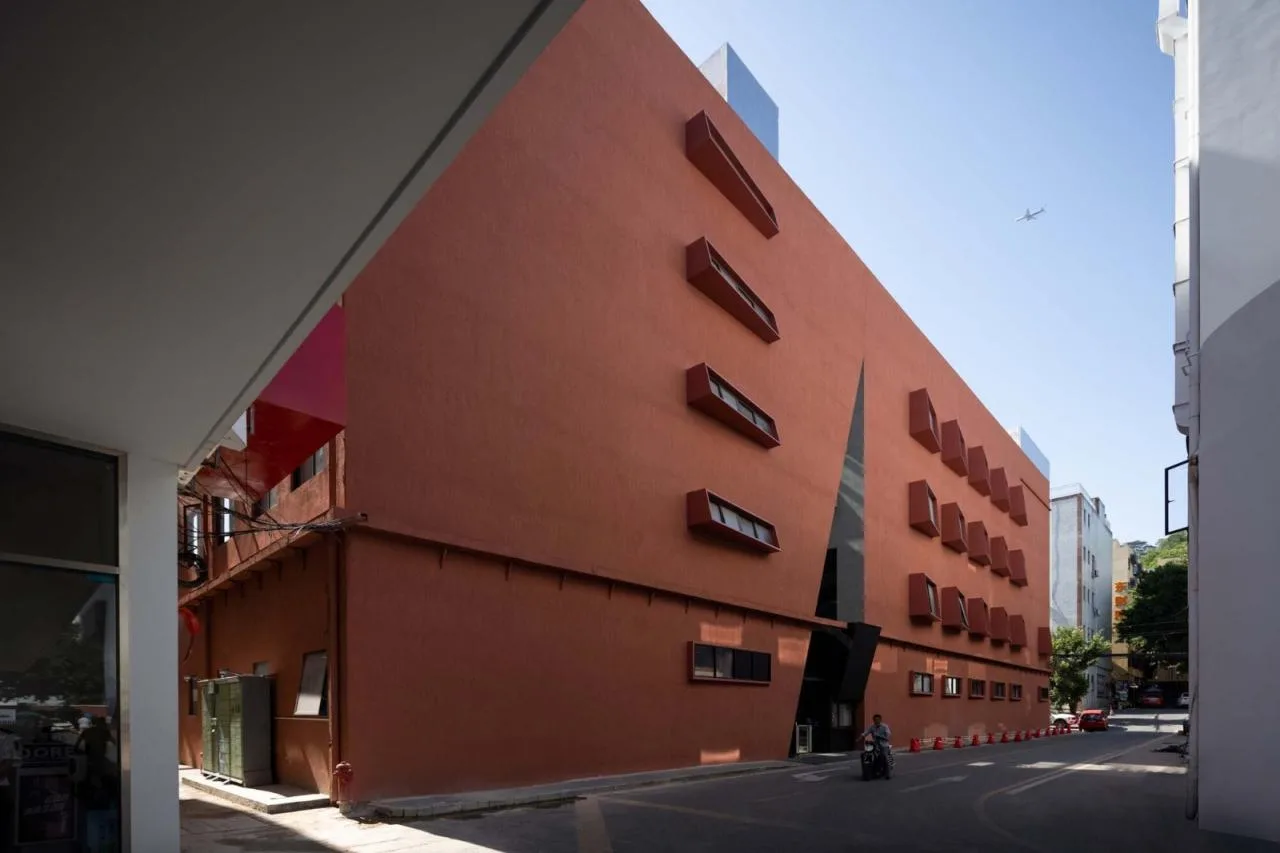
Dongchai Industrial Park represents a typical urban factory complex in Shenzhen, marked by high efficiency, uniformity, and a utilitarian, austere atmosphere. As urban expansion pushes industries towards more distant suburbs or other cities, the park’s ownership and industrial functions have grown fragmented and diverse due to ongoing transformations.
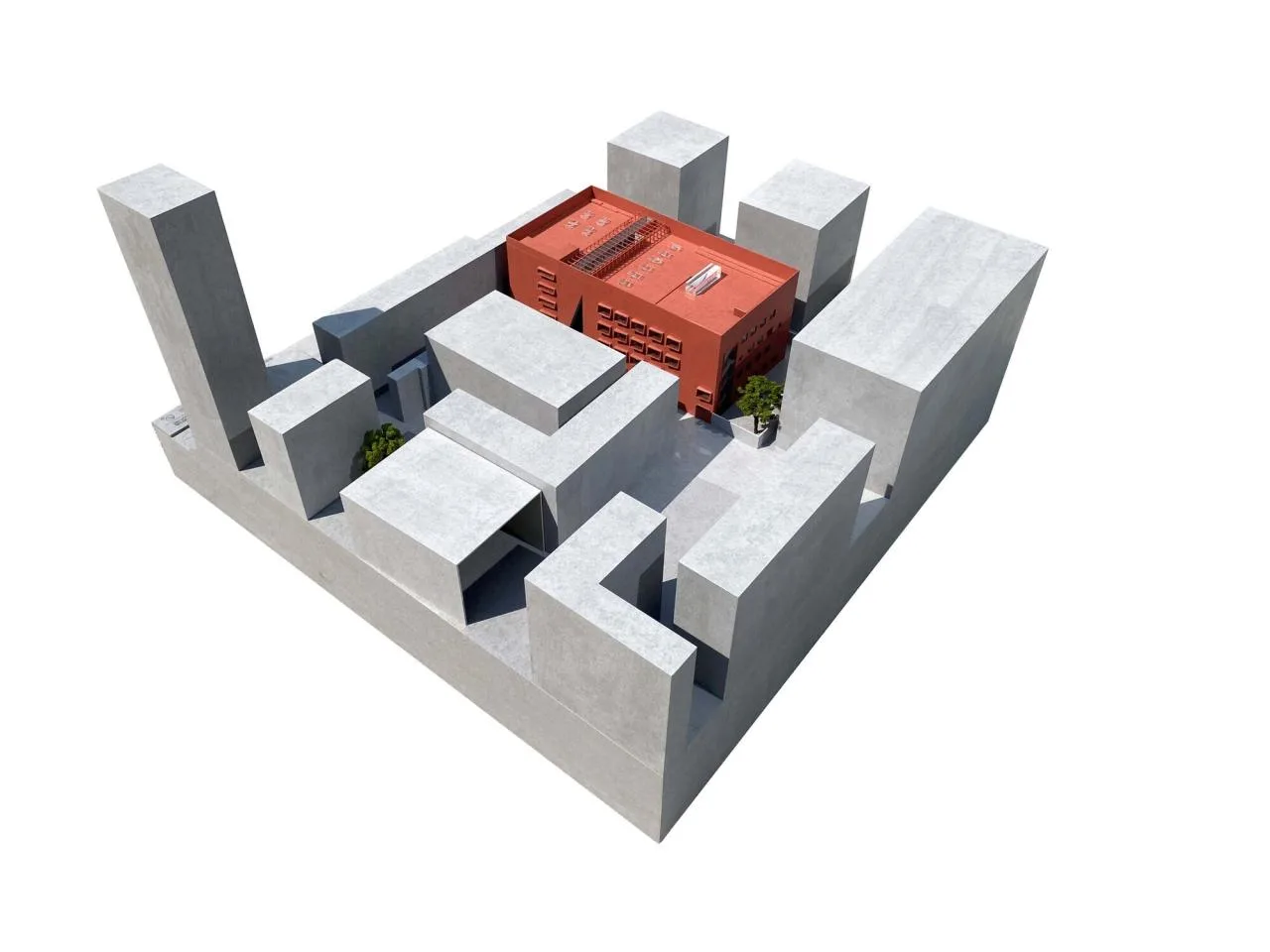
Situated within this context, the SMOORE headquarters has emerged as a distinct, enclosed main campus through several years of renovation. However, Buildings 7 and 8 remain separated from the core park by urban infrastructure, undergoing diagonal renovations to redefine their roles.
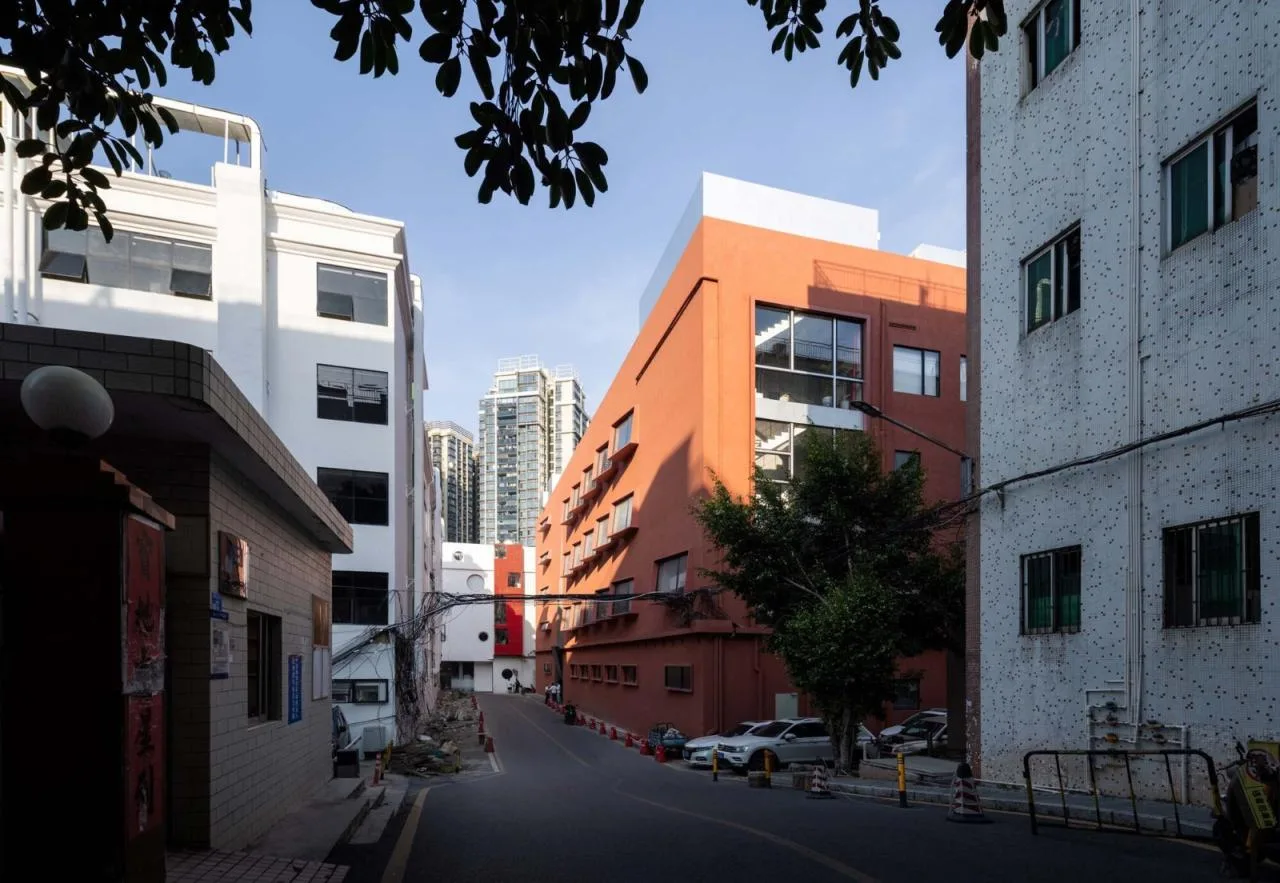
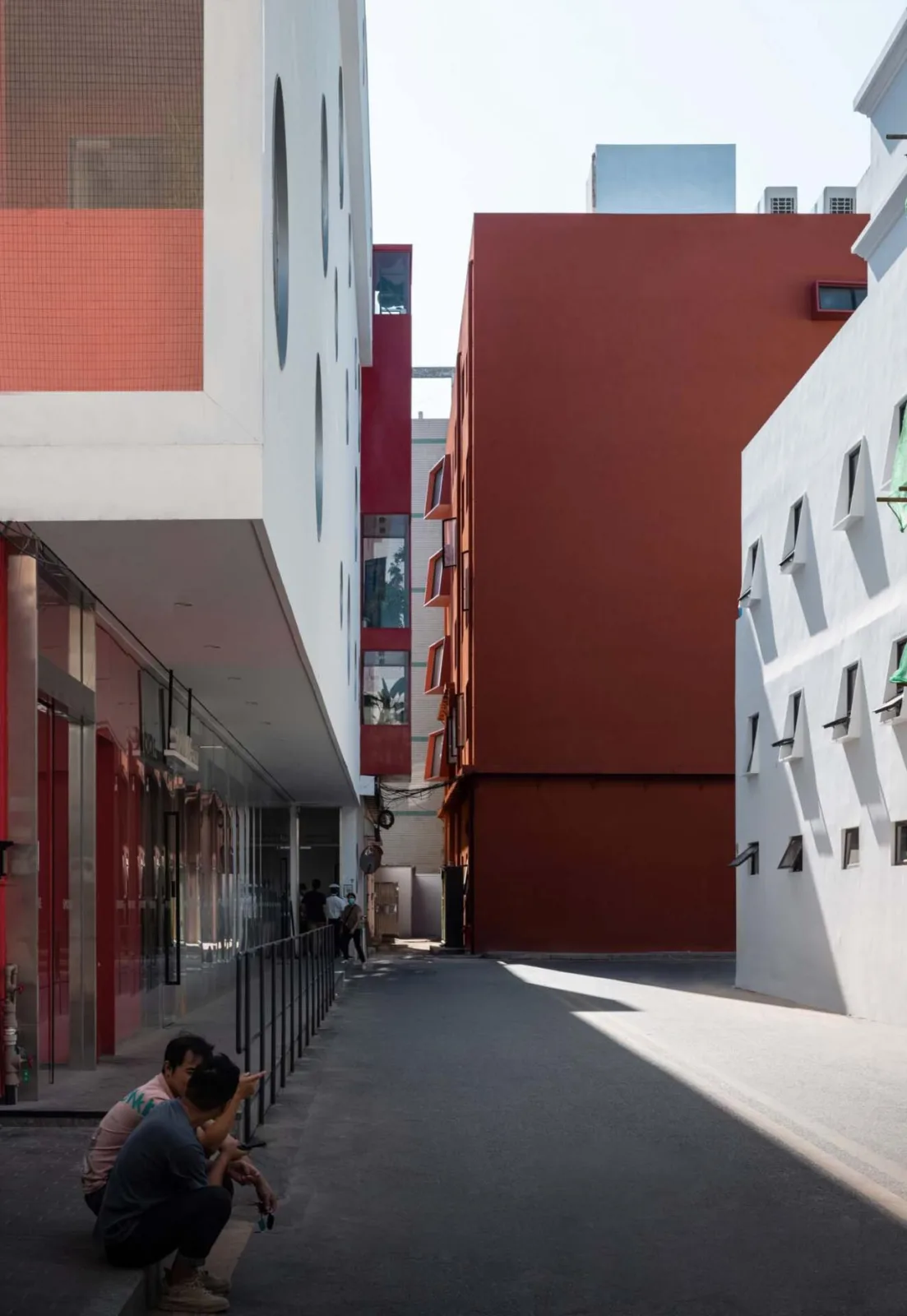
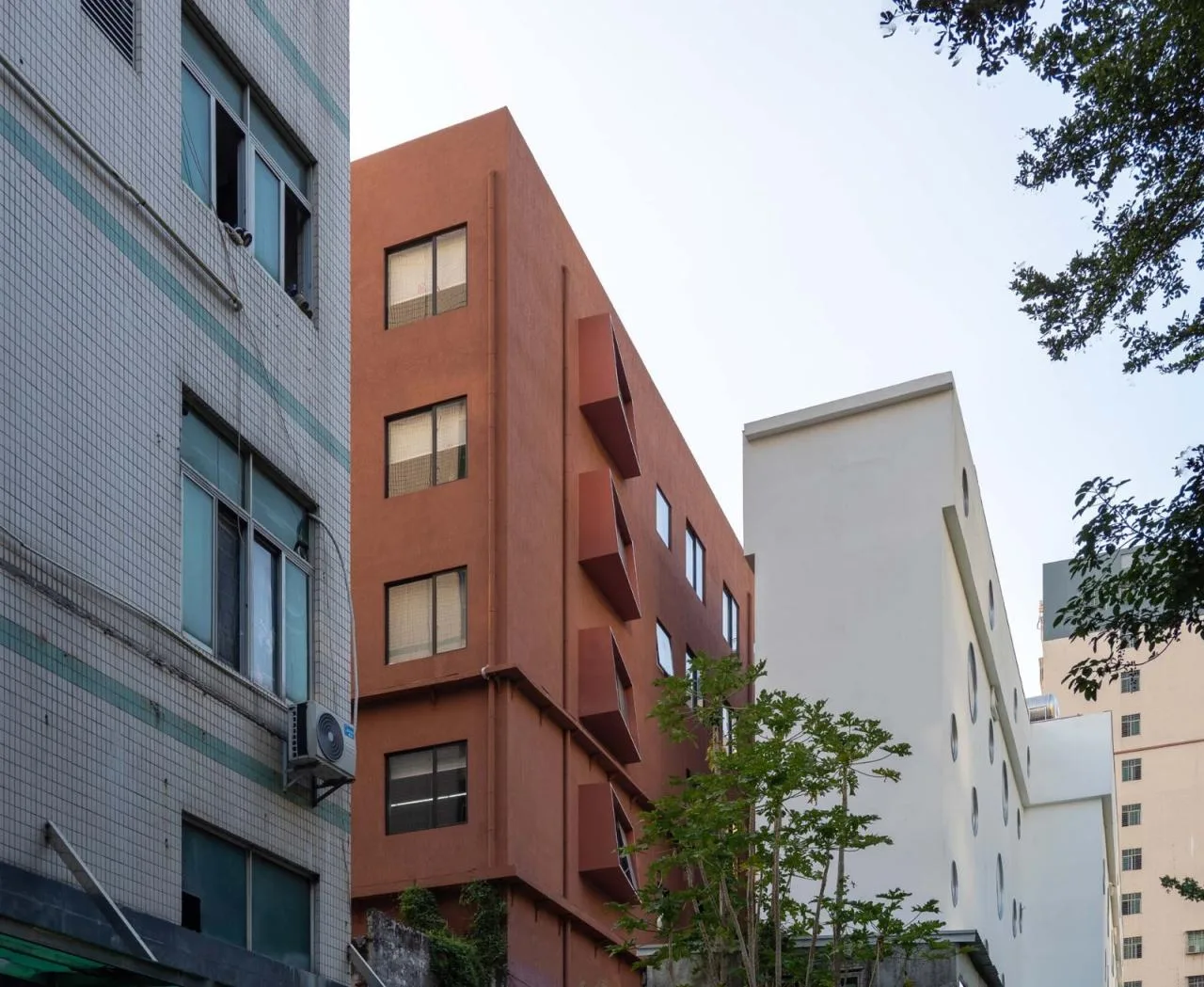
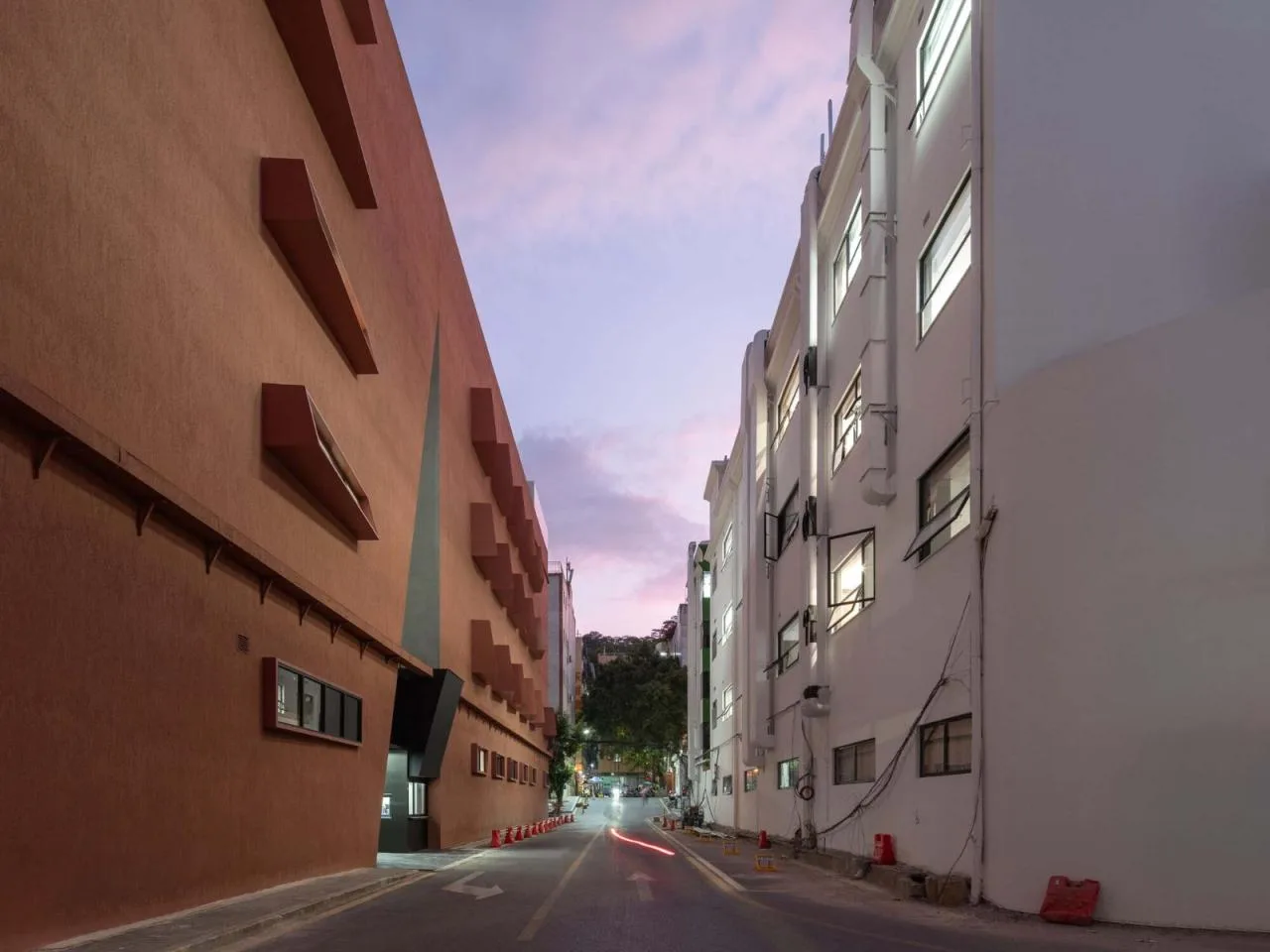
Originally, Building 7 served as a five-story dormitory, while Building 8 was a four-story industrial facility, together spanning 5,400 square meters. These buildings face the industrial park and the city only on the eastern side, along a municipal road, which forms their sole urban frontage. A narrow 4.5-meter-wide slit separates the two structures along this road.
The renovation aims to repurpose Buildings 7 and 8 as SMOORE’s experimental and office spaces. Due to the confidential nature of their research activities, the buildings have limited interaction with their surroundings, creating a visual and physical barrier that isolates them.
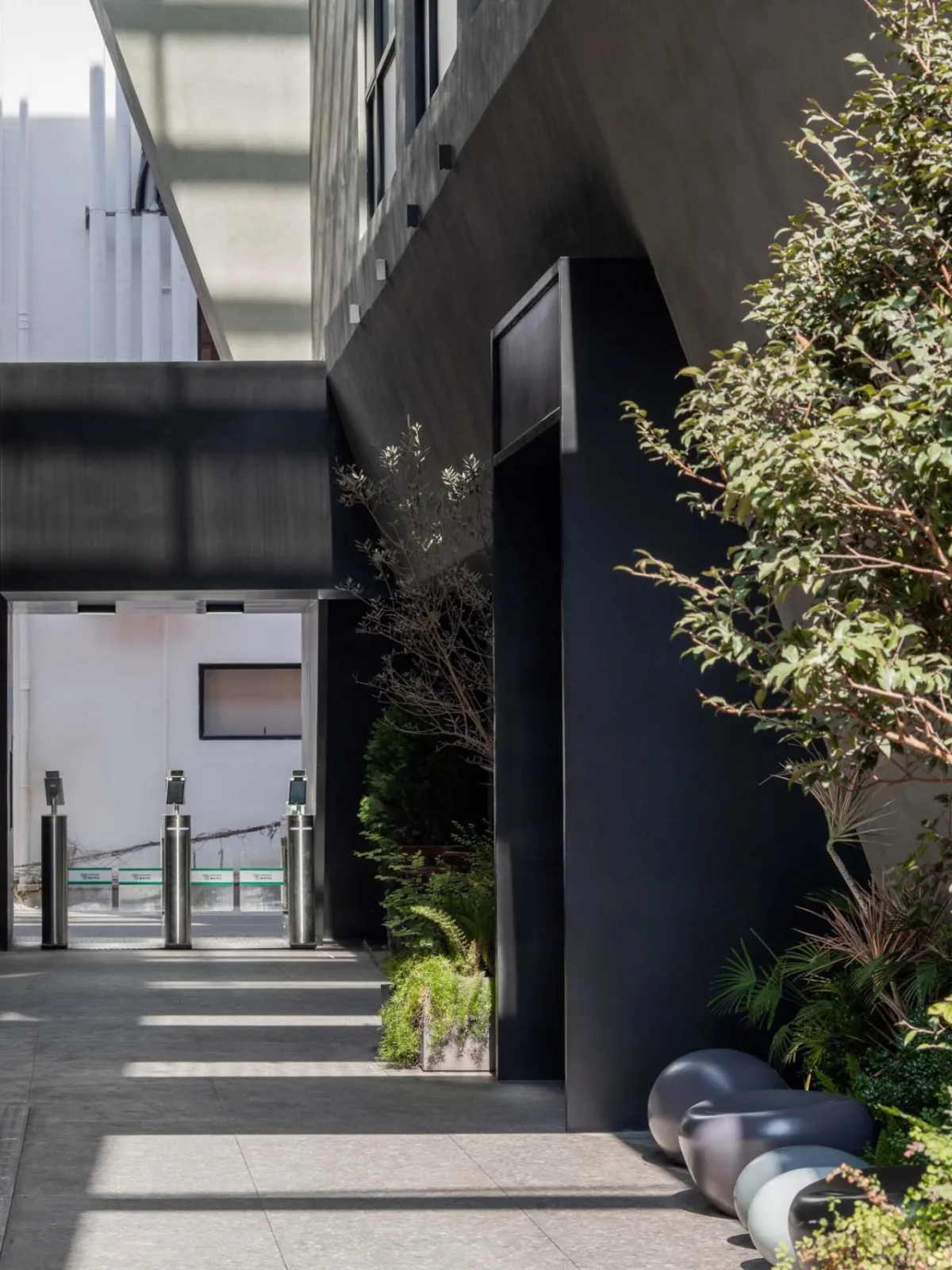
To address this, the design restructures the interface by connecting Buildings 7 and 8 into a cohesive whole, converting external boundaries into internal shared spaces. The negative space between the buildings transforms into positive courtyards, creating a buffer against the industrial park’s noise and disorder.
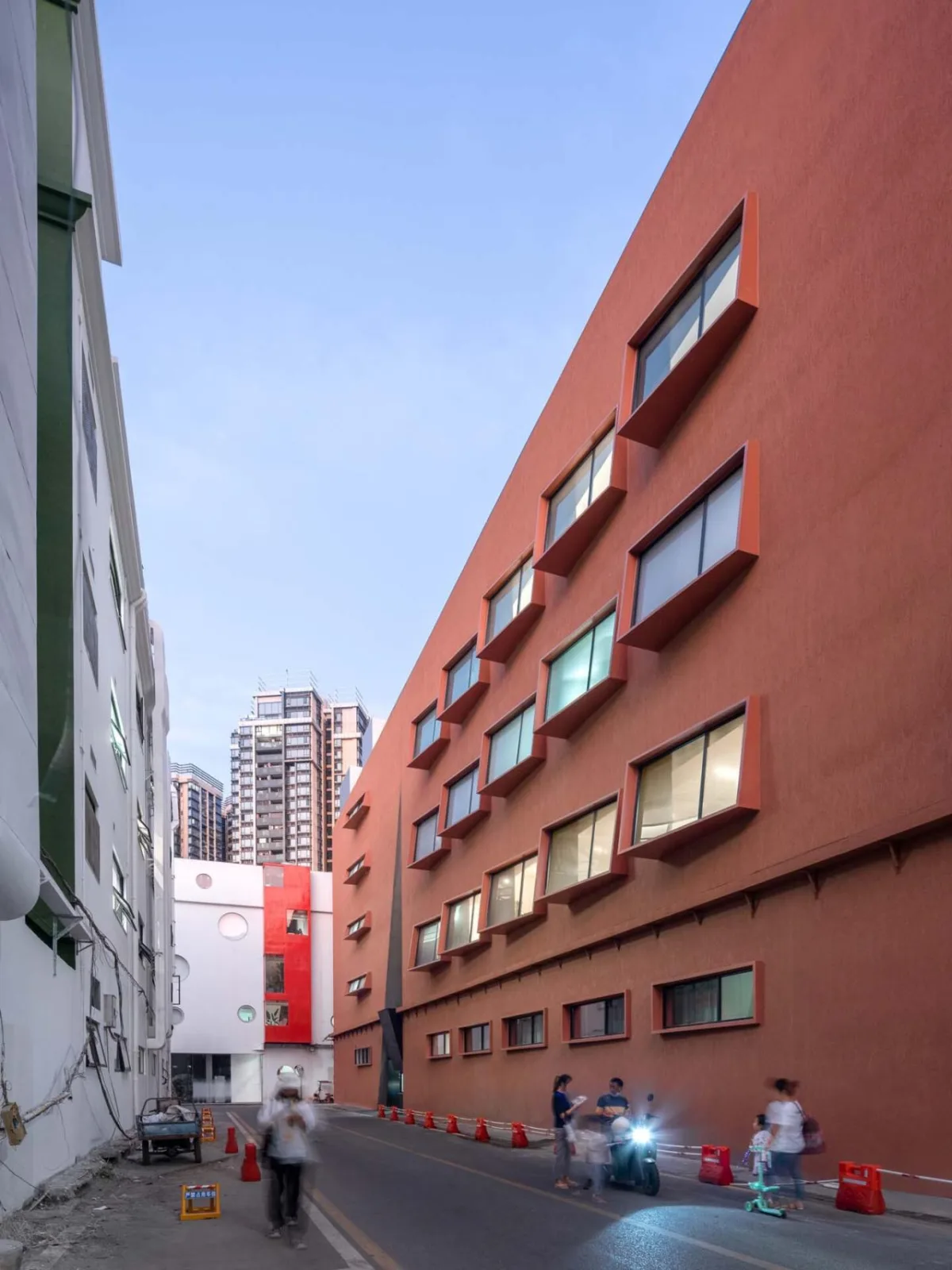
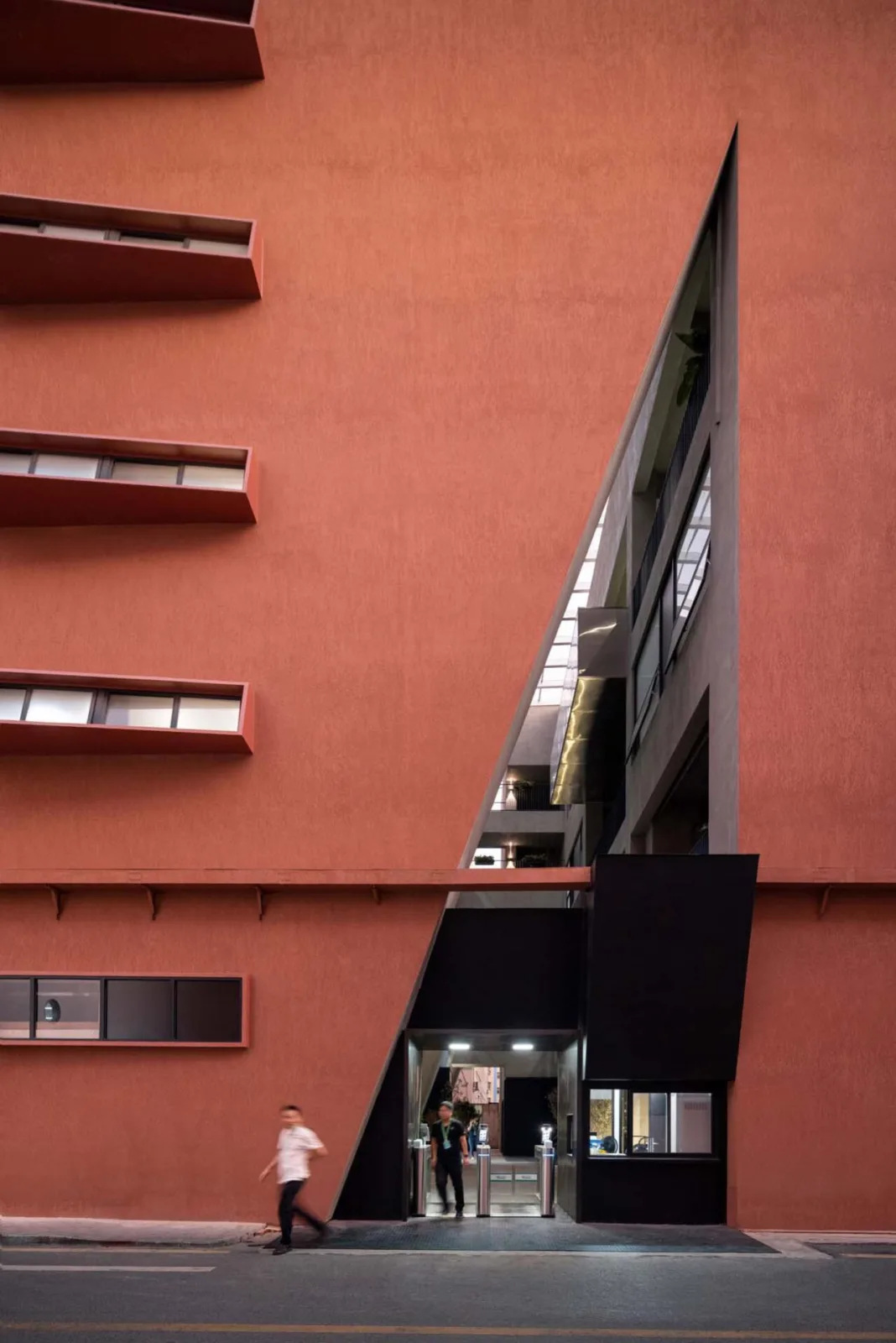
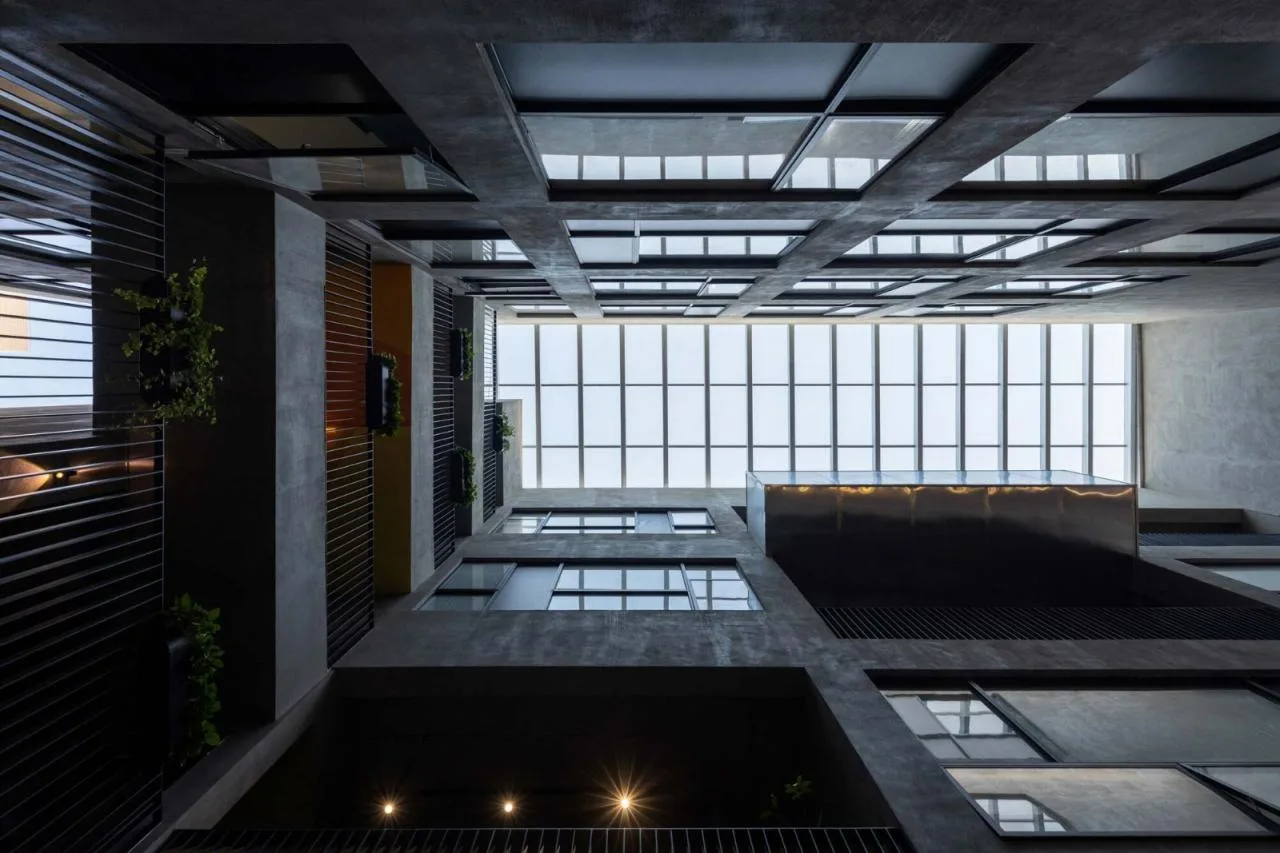
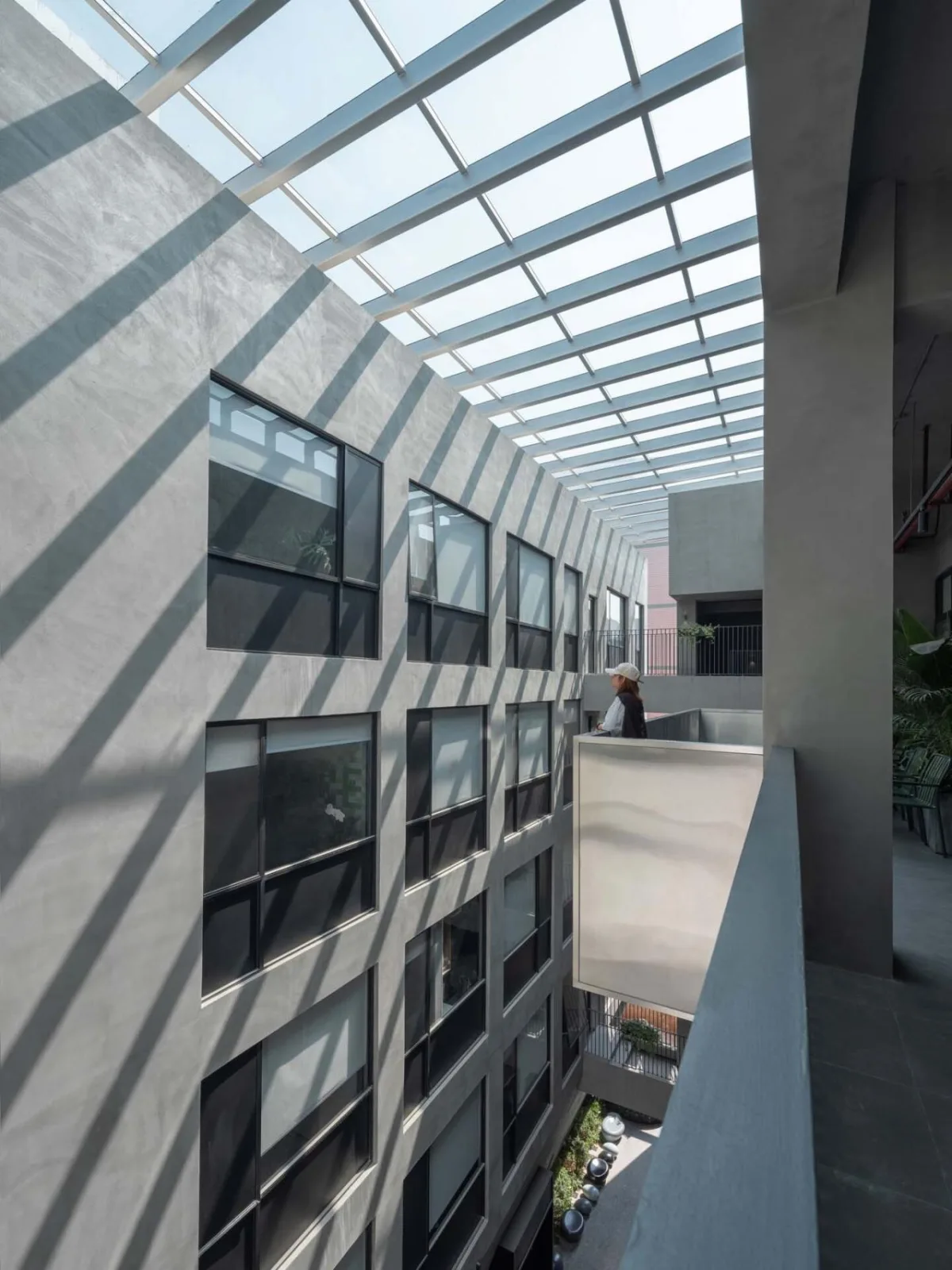
While maintaining the continuity of the external space, the design breaks the monotony typical of dense industrial parks. Three distinct openings—the main entrance, an atrium skylight, and a staircase overlooking a large tree—establish a dialogue with the environment.
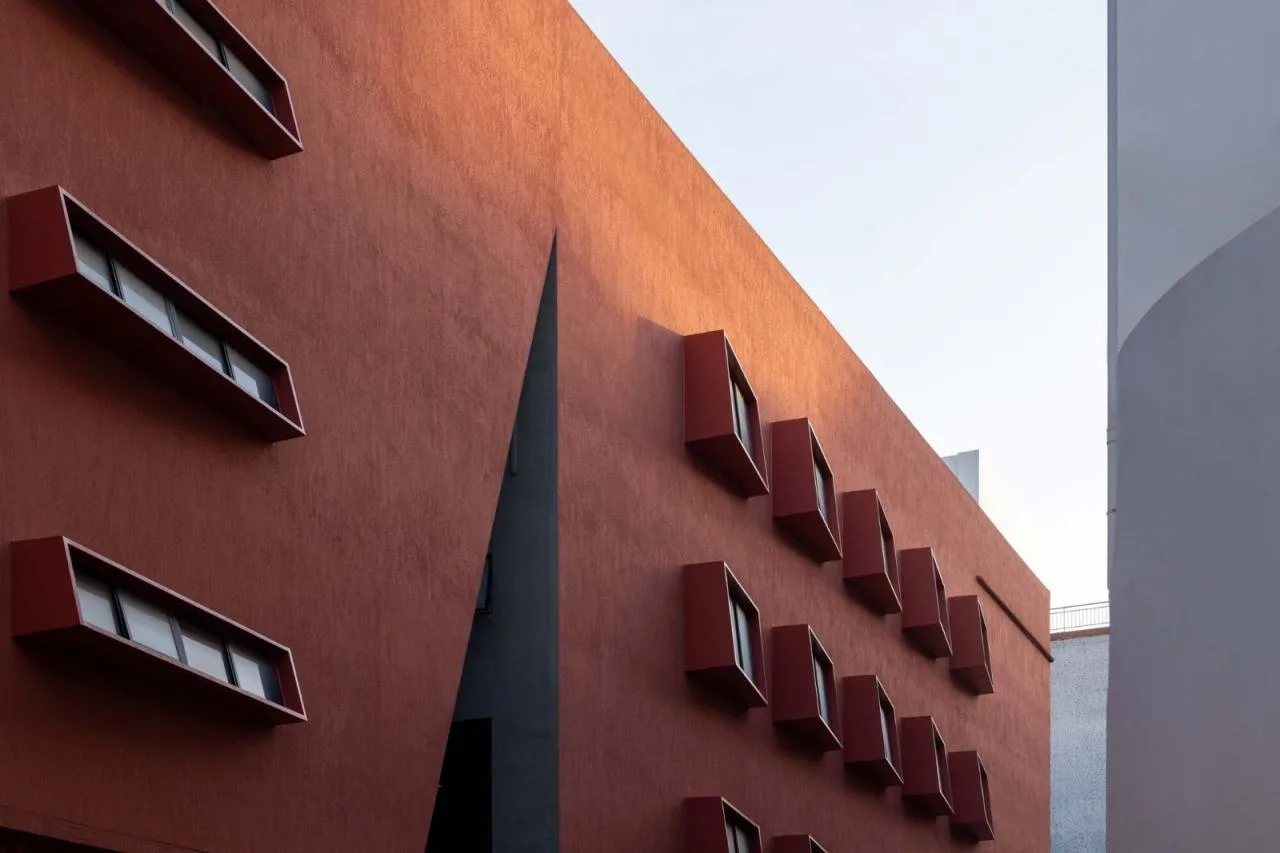
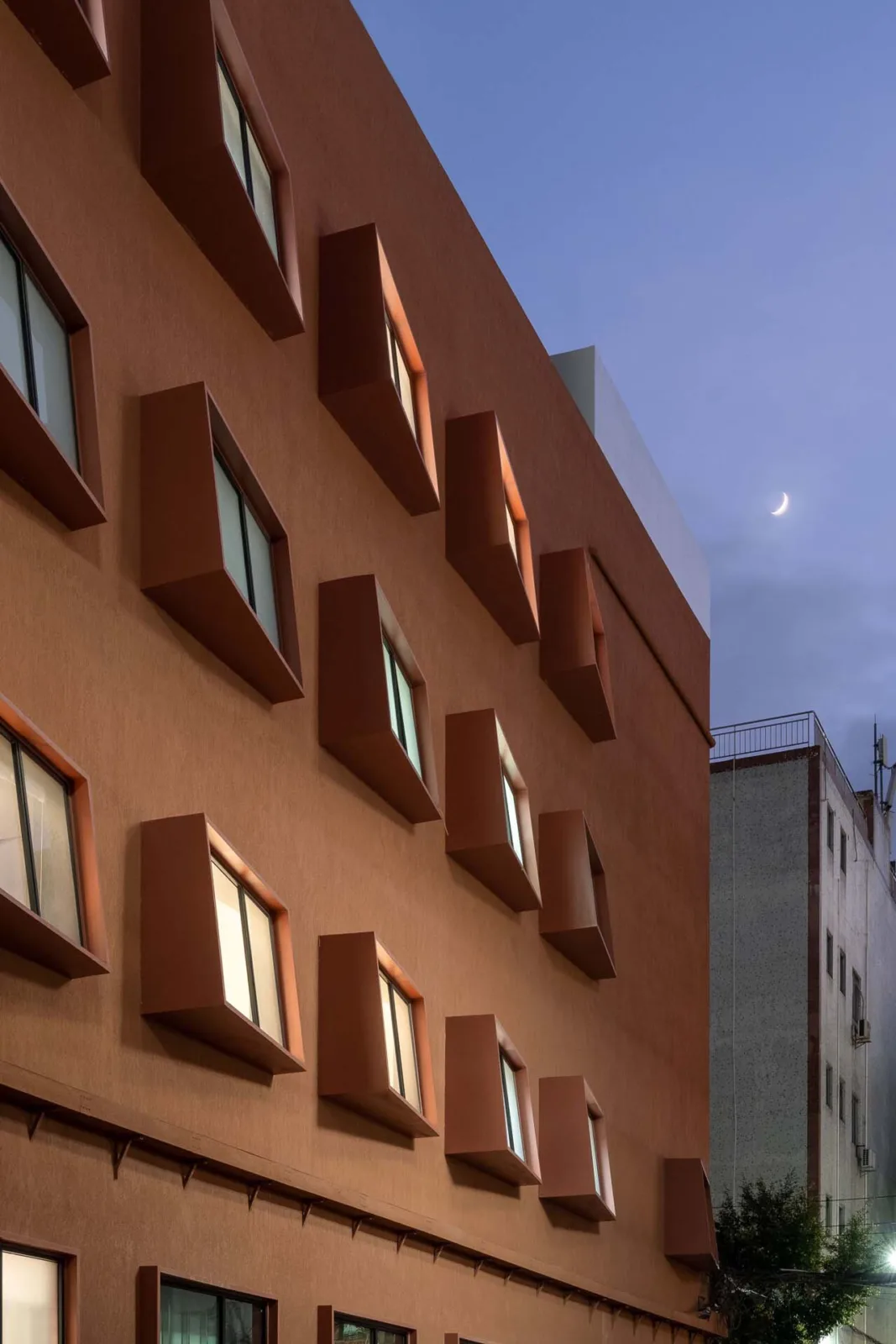
One notable feature is a protruding window, emerging from the solid wall like a tube, which serves as a conduit for external elements such as sound, light, and rain. The deep windowsill provides a transitional space from the interior to the dry, industrial surroundings, doubling as a moist botanical garden, a warm tea corner, and a cozy reading nook.
The windows tilt upwards at a 5° angle, effectively blocking distracting views from the street level while capturing sunlight filtering through the dense urban fabric.
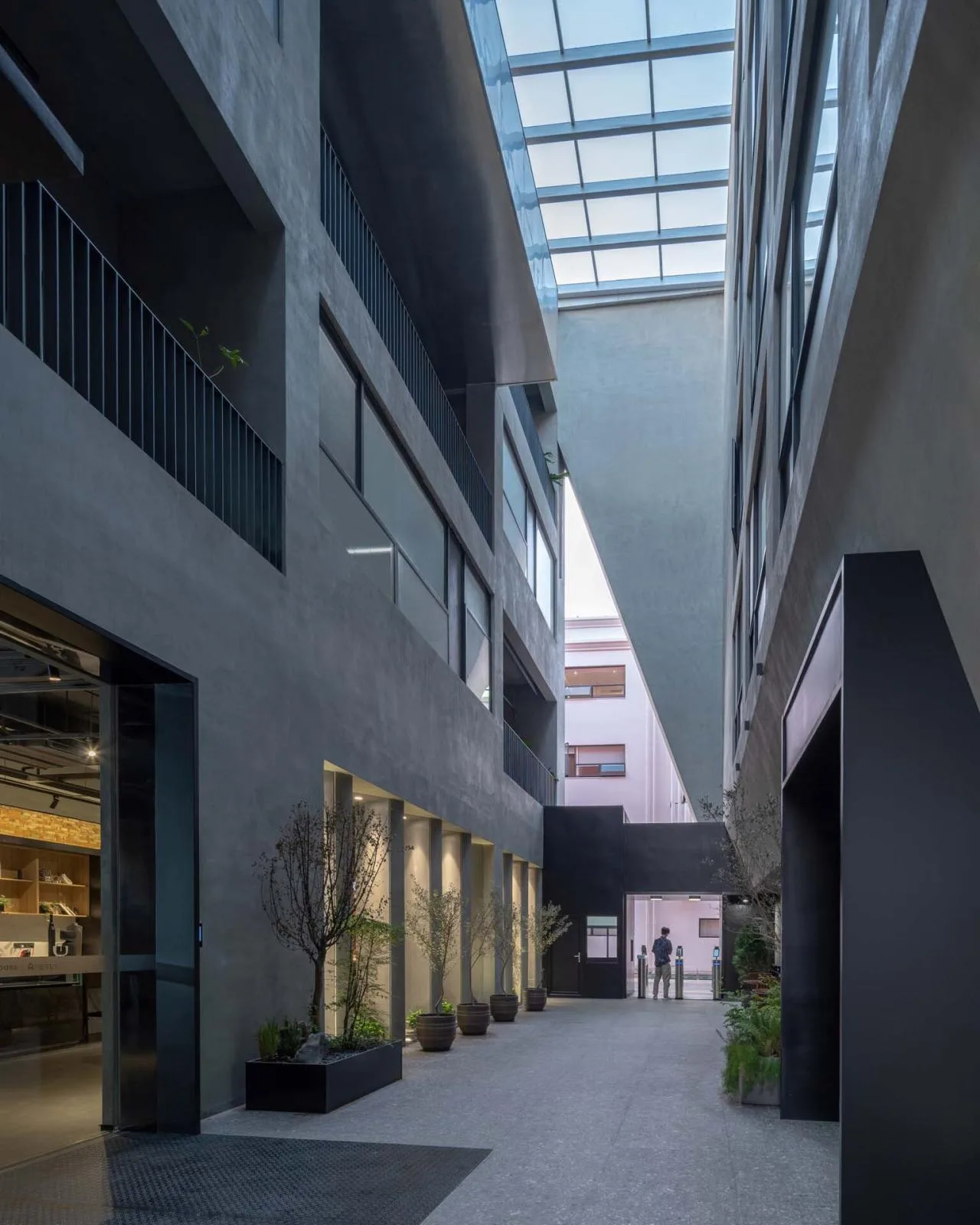
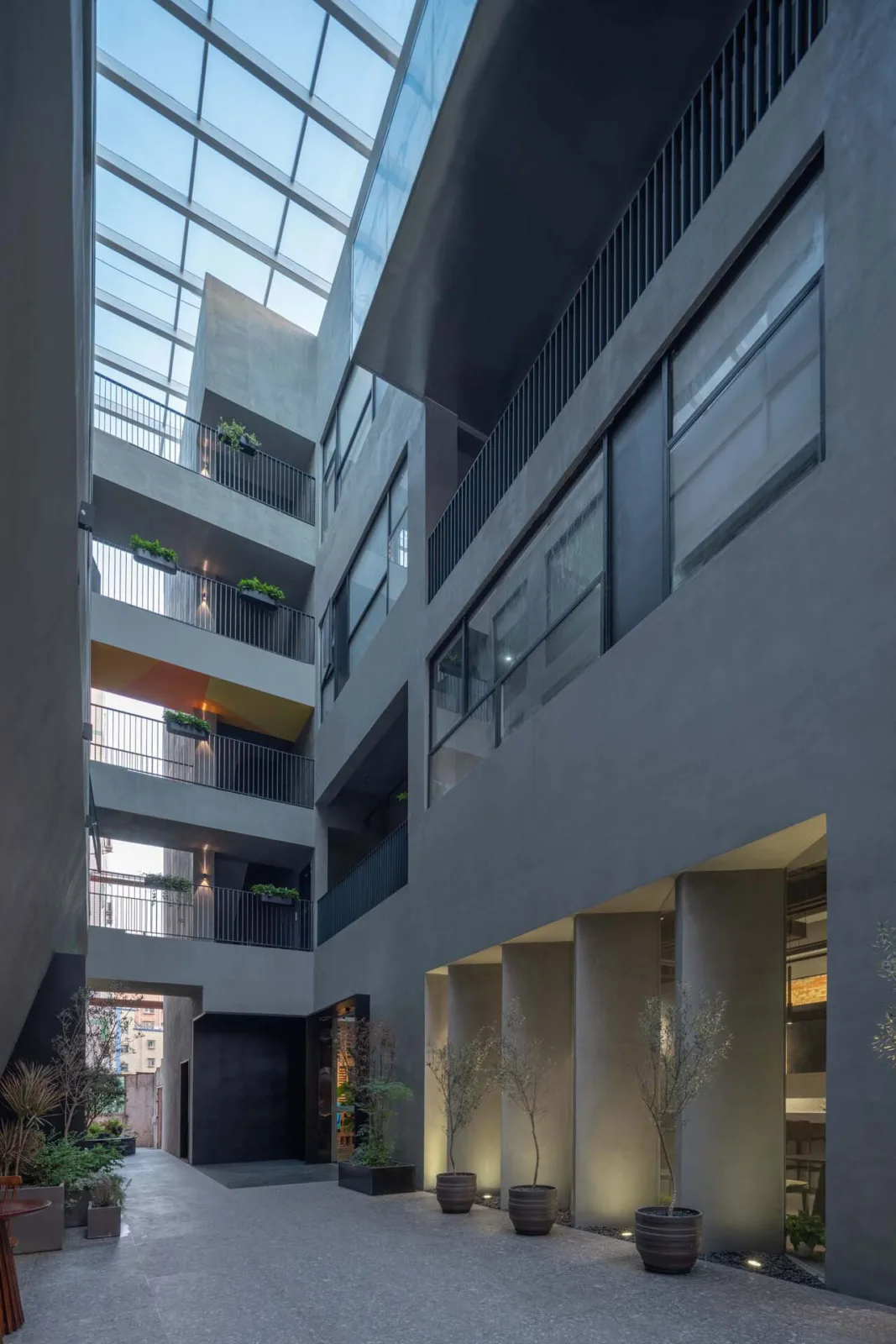
The atrium’s open skylight creates an all-weather space, welcoming wind and rain, which encourages diverse and flexible uses. Within the constraints of the renovation, Building 7 maximizes openness along its interior façade, guided by its structural frame.
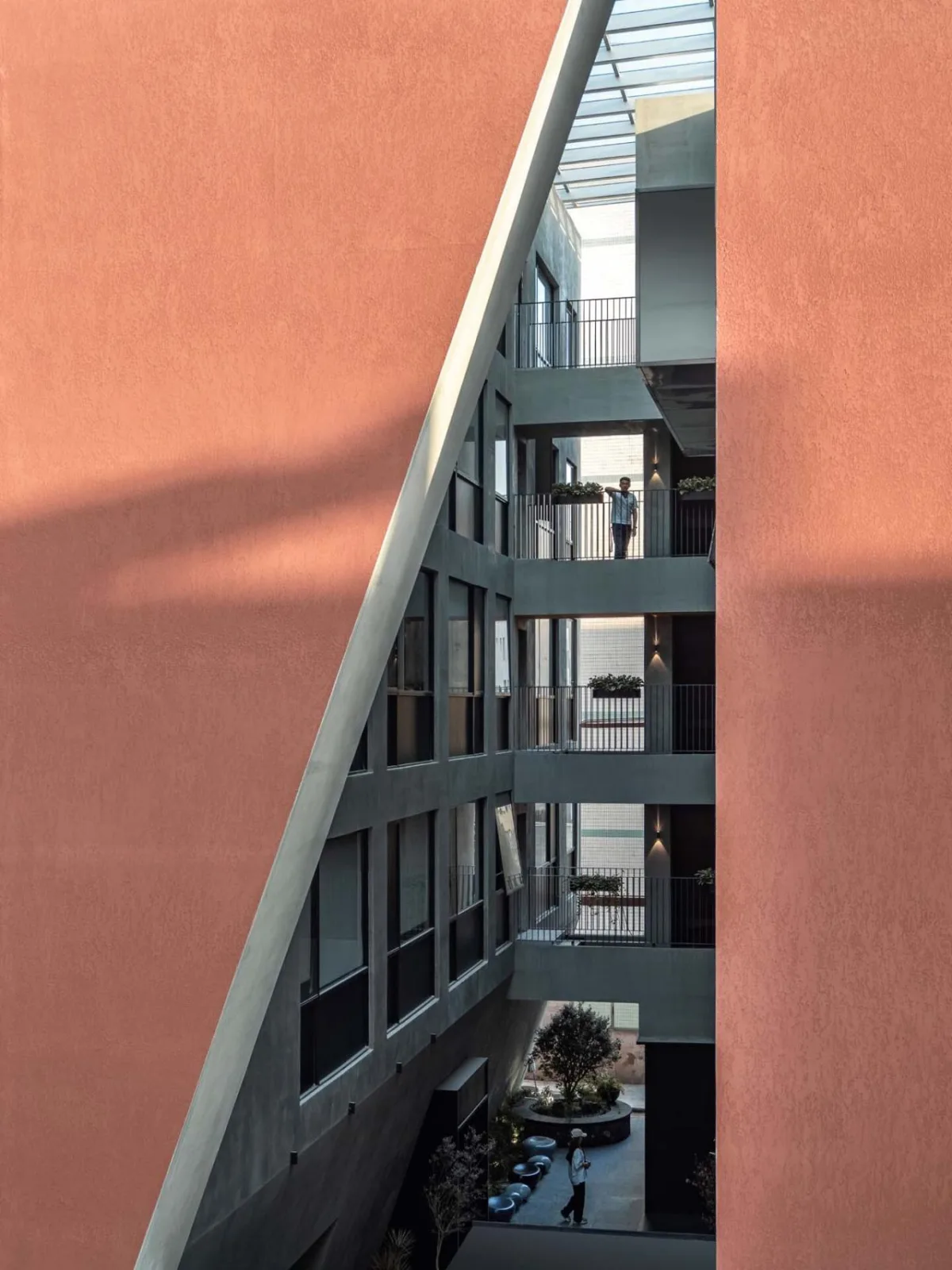
Meanwhile, Building 8 features a dynamic façade with concave and convex balconies that interact with the interior spaces, forming an engaging “street-side” atrium facade that combines static and kinetic elements. This façade acts as a stage, and the corridor becomes a running track where light, time, people, and activities flow freely between the buildings and extend into the courtyard.
This design approach dissolves the oppressive feeling of narrow gaps and instead celebrates the vibrancy of daily life, events, and stories unfolding within the space.
The building’s south side first floor houses a laboratory with reinforced walls that create a focused environment for experiments. Adjacent to the exterior wall, a rest area offers a quiet retreat.
On the north side, the R&D department hall visually blocks the entrance and opens inward. Evacuation stairs serve as crucial connectors between the two wings.
Together, the two buildings combine form and function to establish a managed, small-scale park that stands apart from the larger industrial complex.
A distinctive triangular cut serves as the only street-facing opening, symbolizing the ambiguous yet strong connection between the two buildings. Alongside the upward-tilted windows, this shape emphasizes both inward and outward orientations, giving the building a subtle expressive character after removing unnecessary elements.
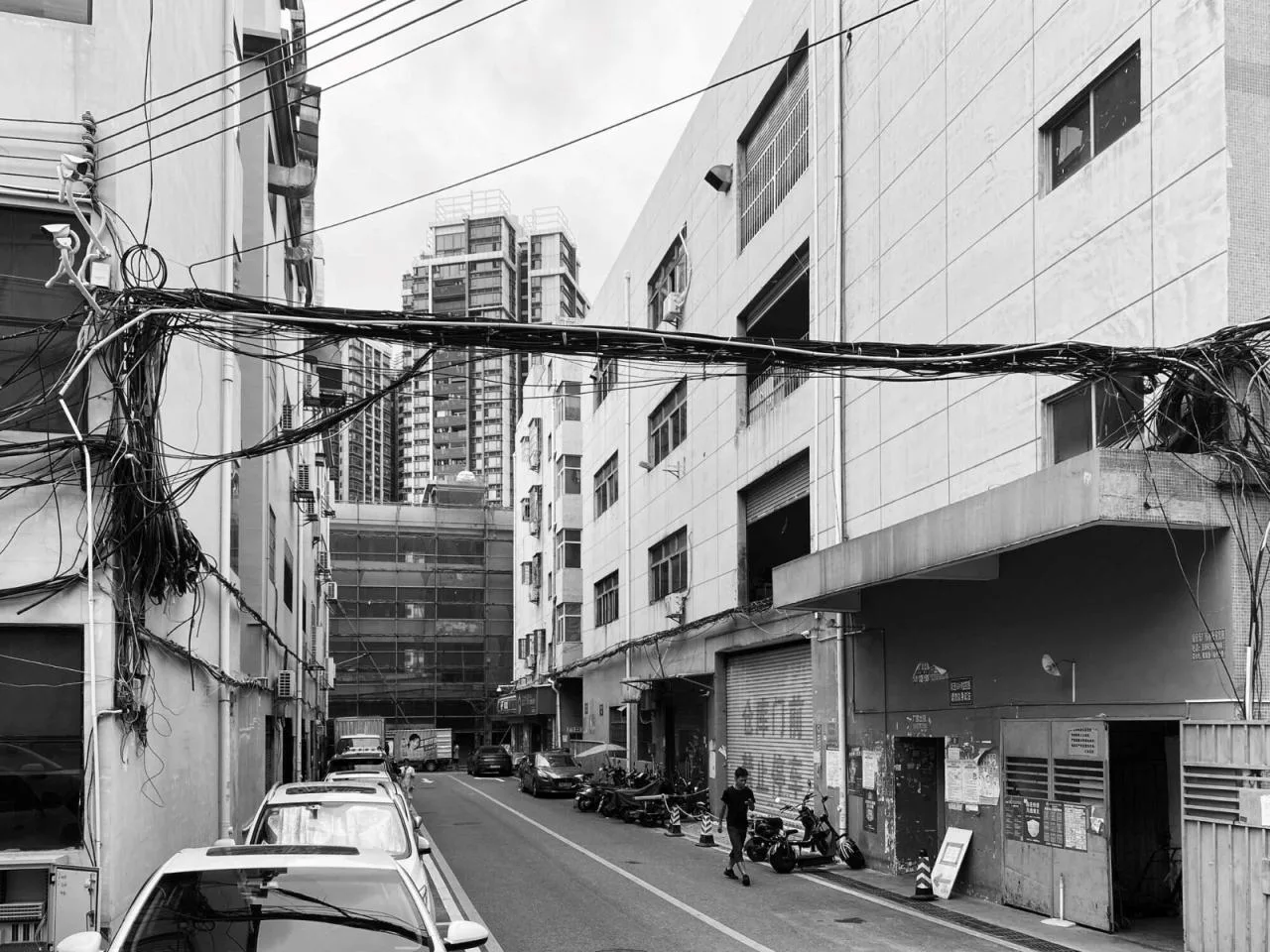
Before the renovation
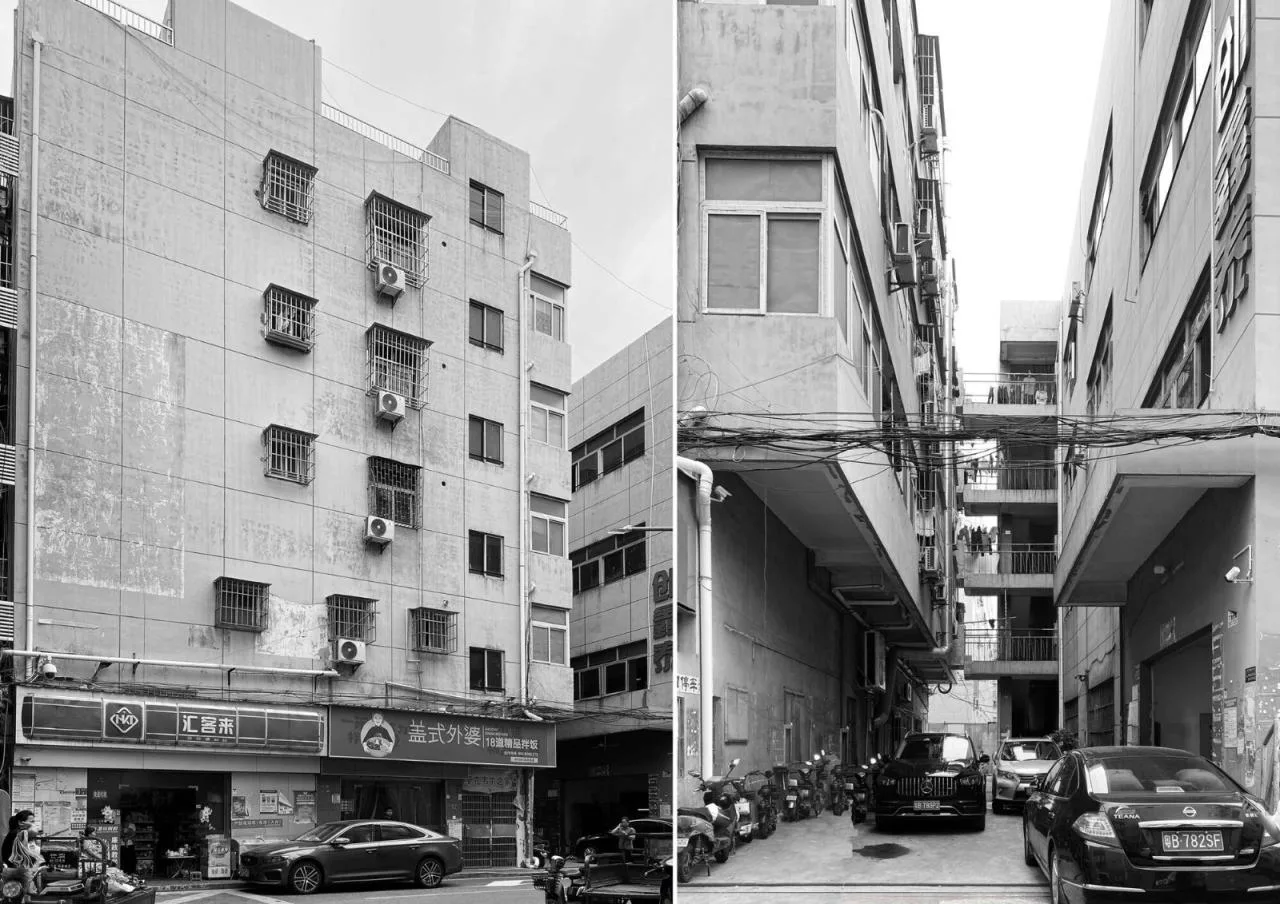
Before the renovation
Project drawings
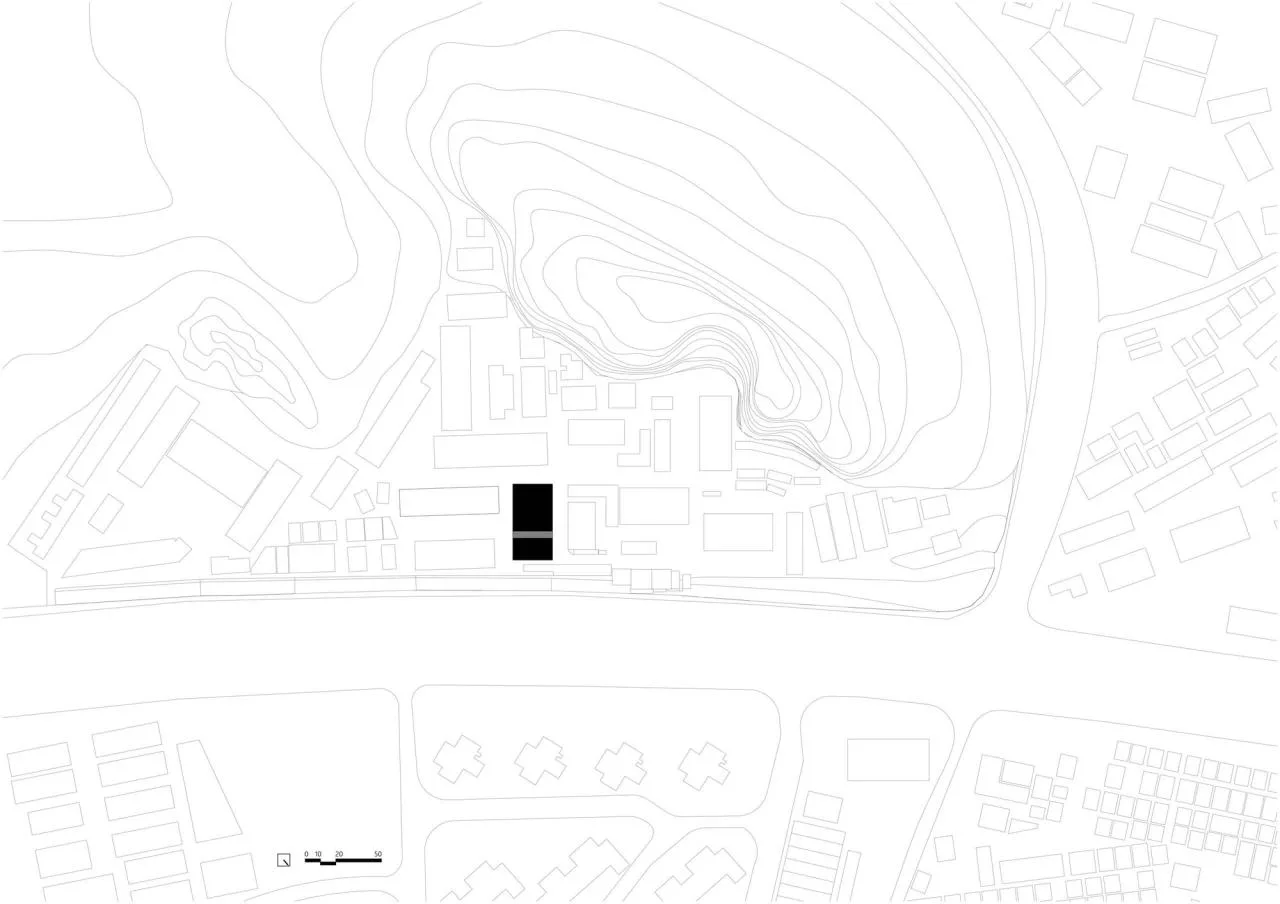
△ Base schematic diagram
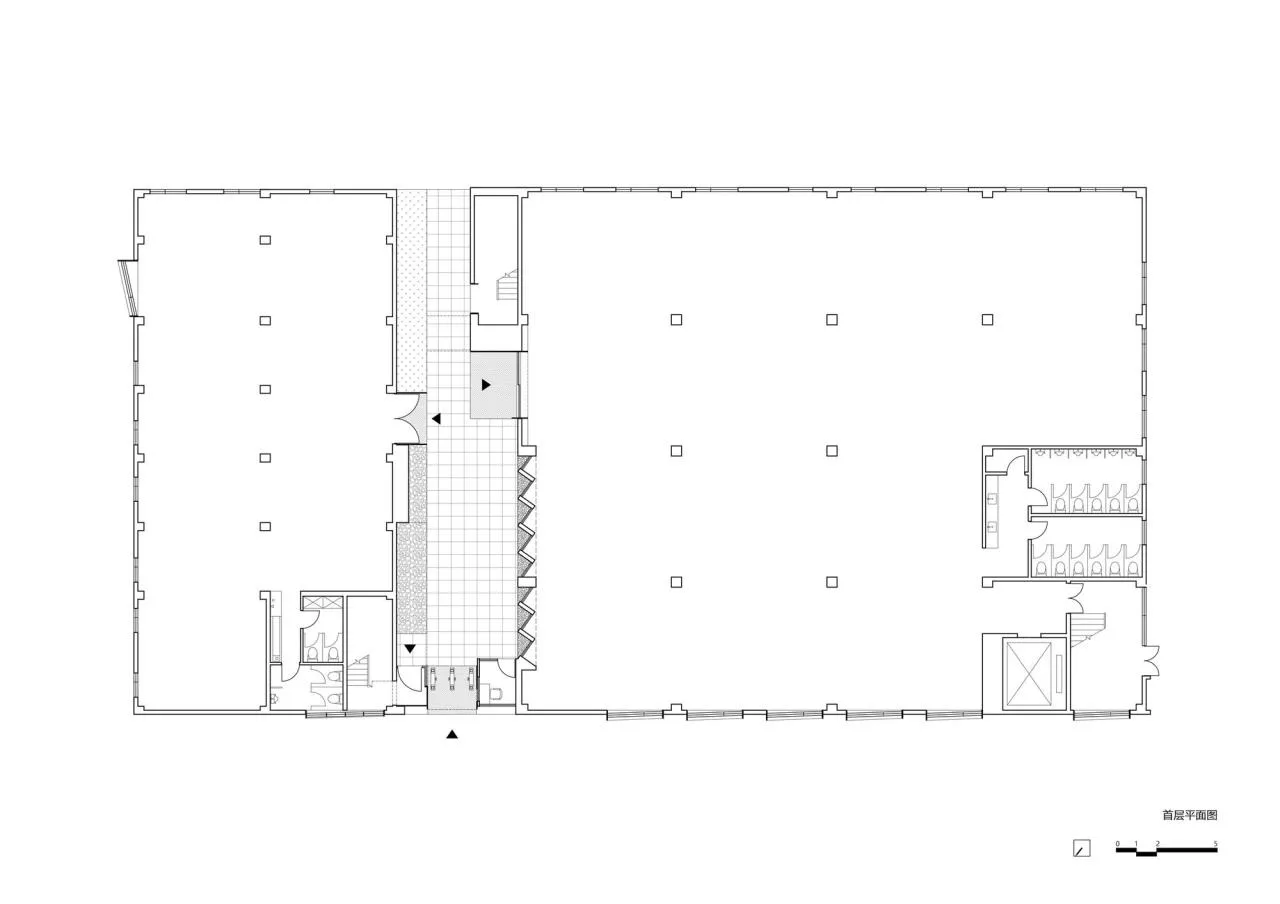
△ First floor plan
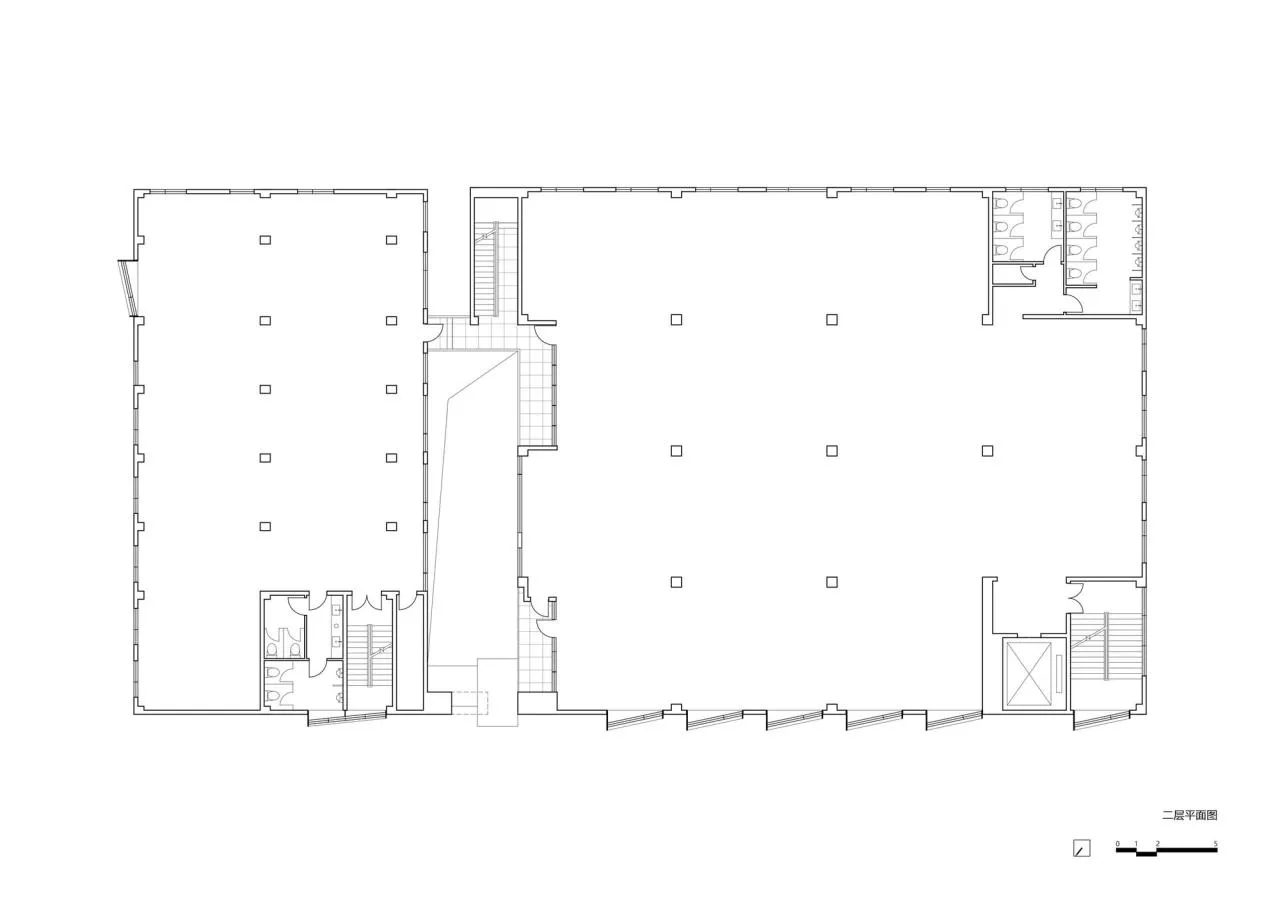
△ Second floor plan
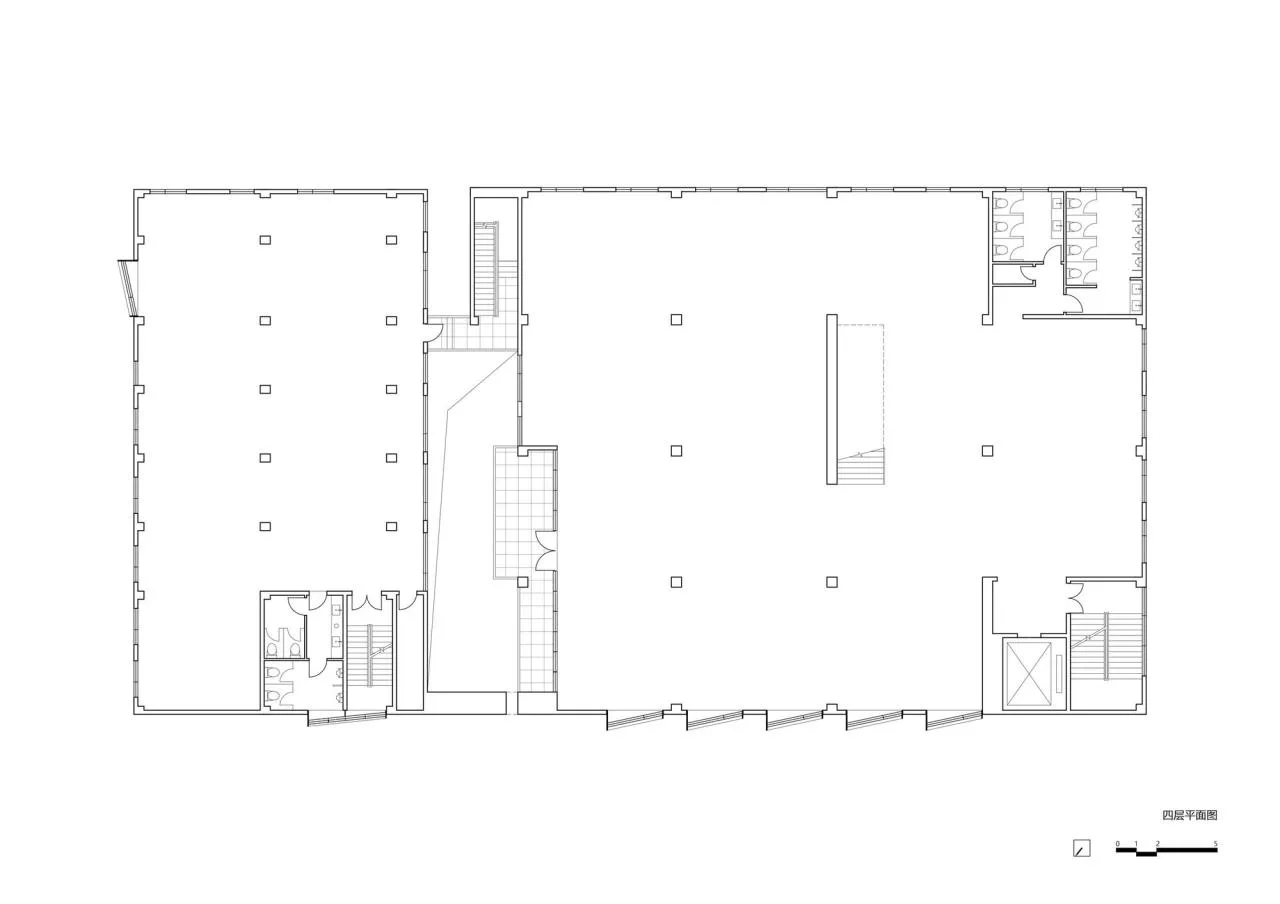
△ Fourth floor plan
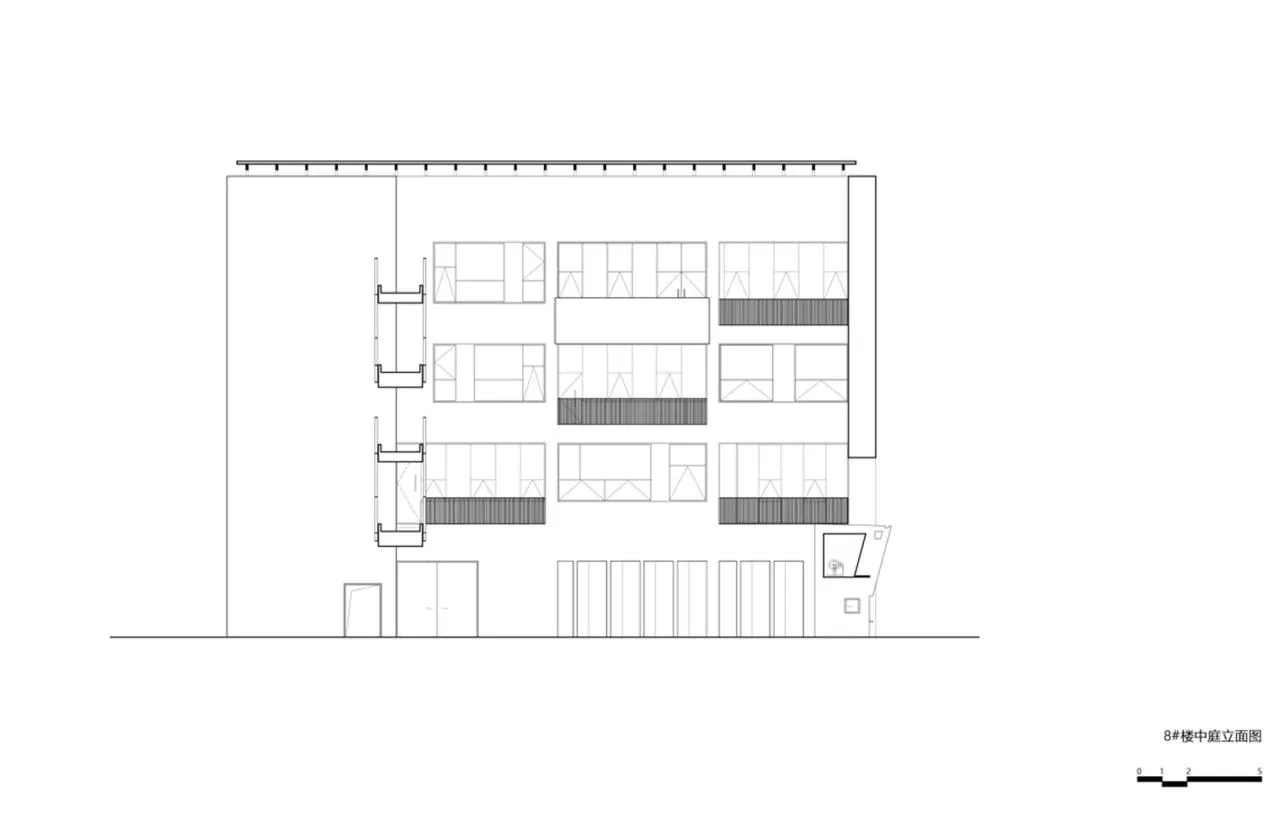
△ Elevation drawing
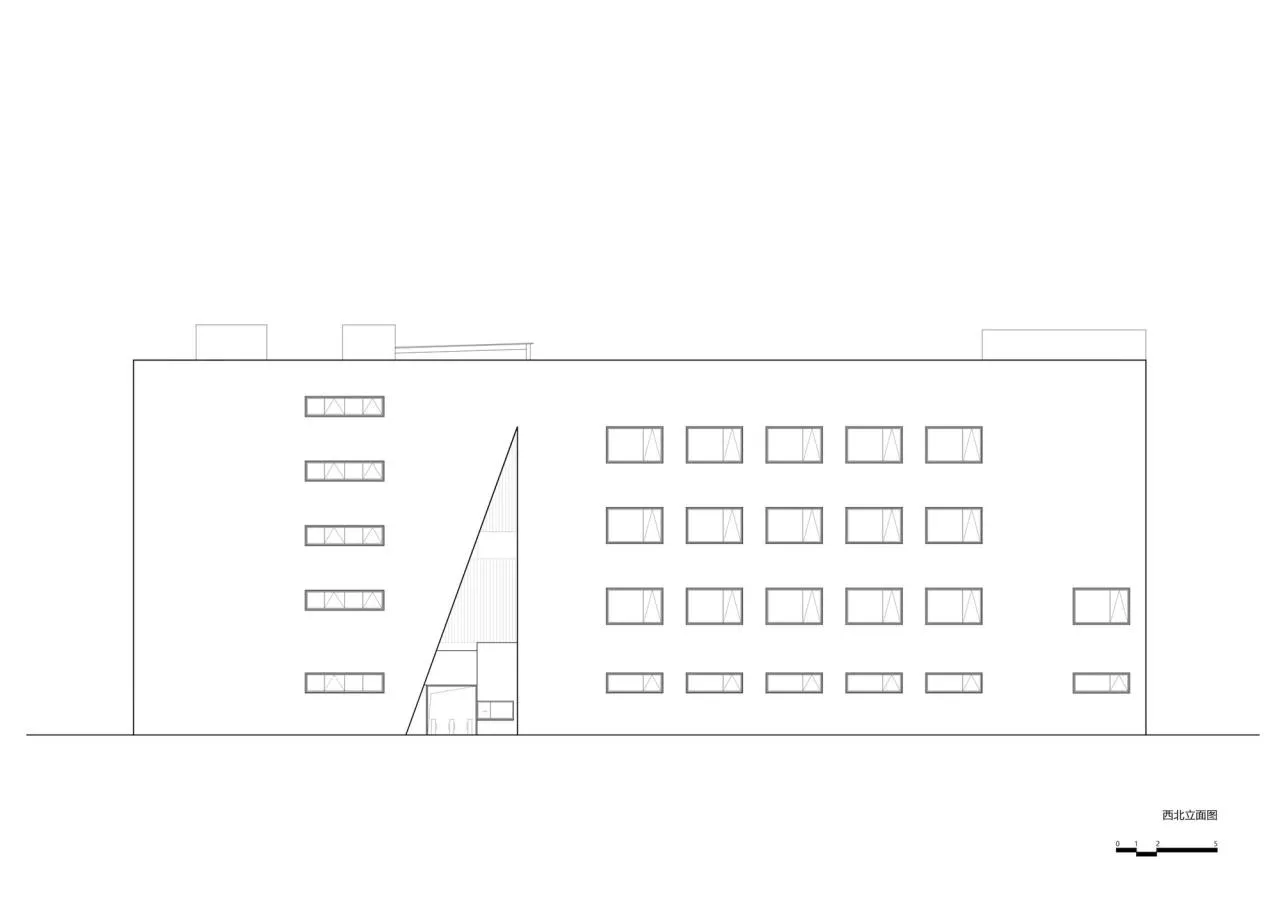
△ Elevation drawing
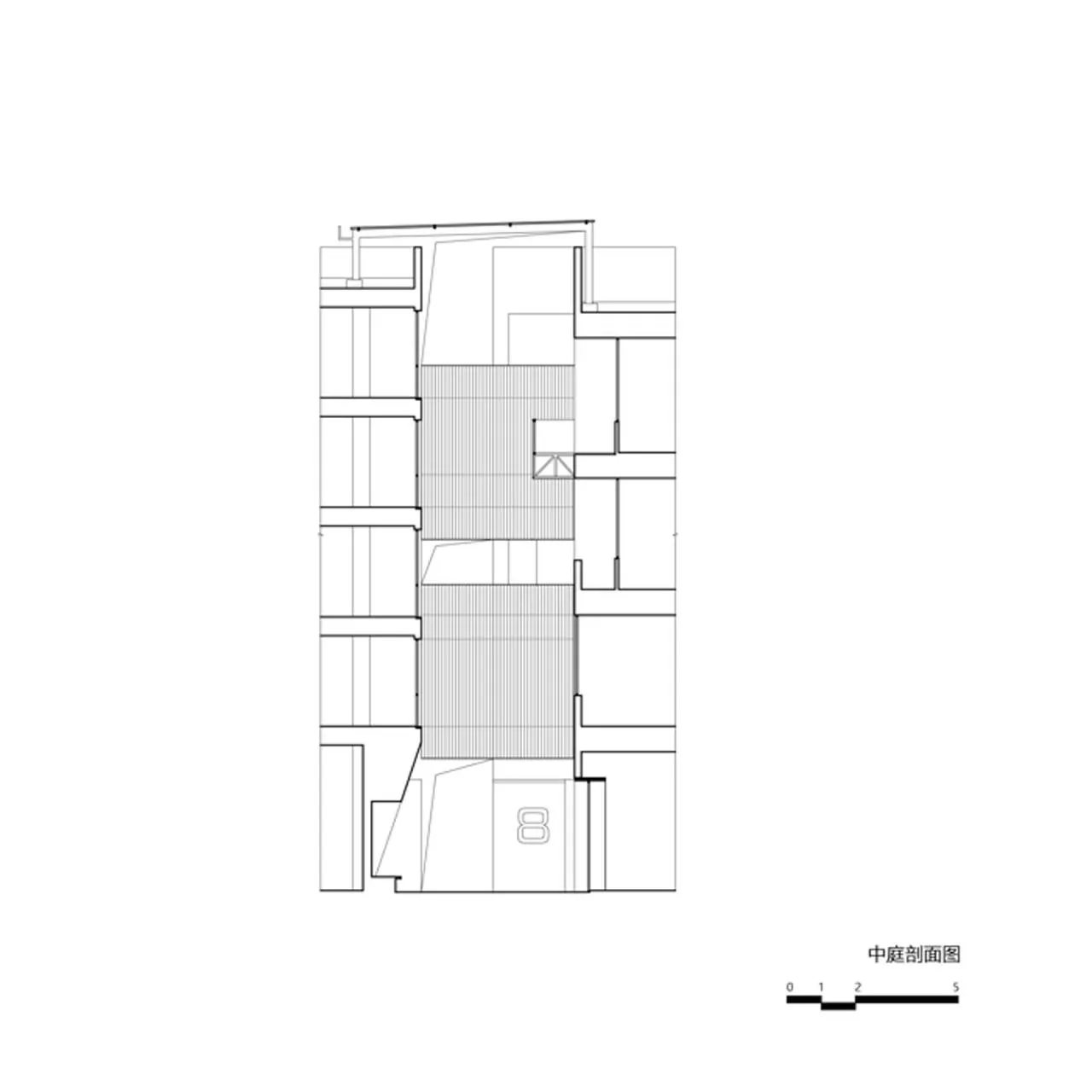
△ Section diagram
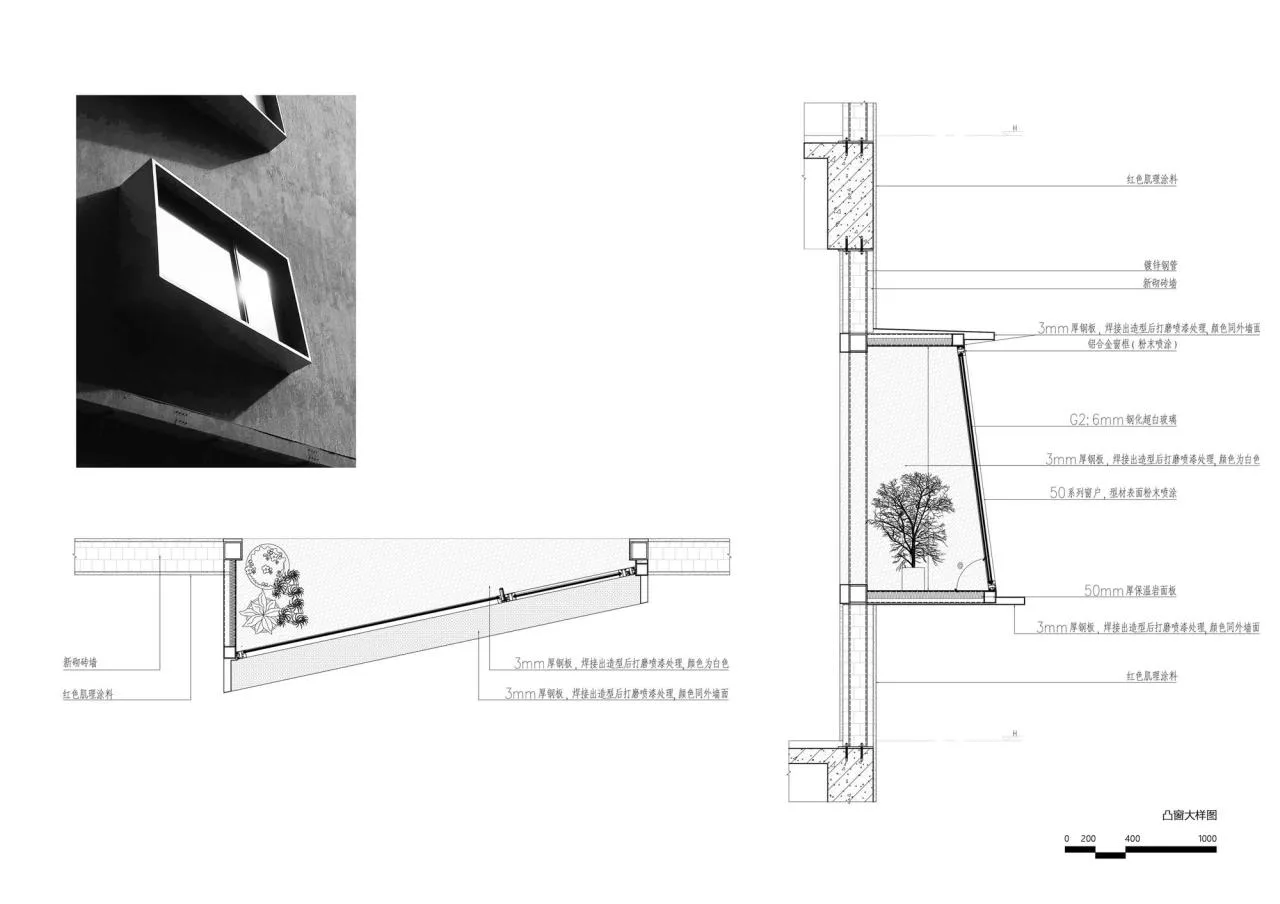
△ Detailed drawing of convex window
Project Information
Architect: Diagonal Architectural Design
Area: 4113 m²
Project Year: 2022
Photographers: Ce Wang, Chao Zhang
Lead Architects: He Qifan, Yin Shibo, Cui Yisong
Curtain Wall Design: Shenzhen Sigma Curtain Wall Design Consulting Co., Ltd
Location: Shenzhen















Must log in before commenting!
Sign Up