
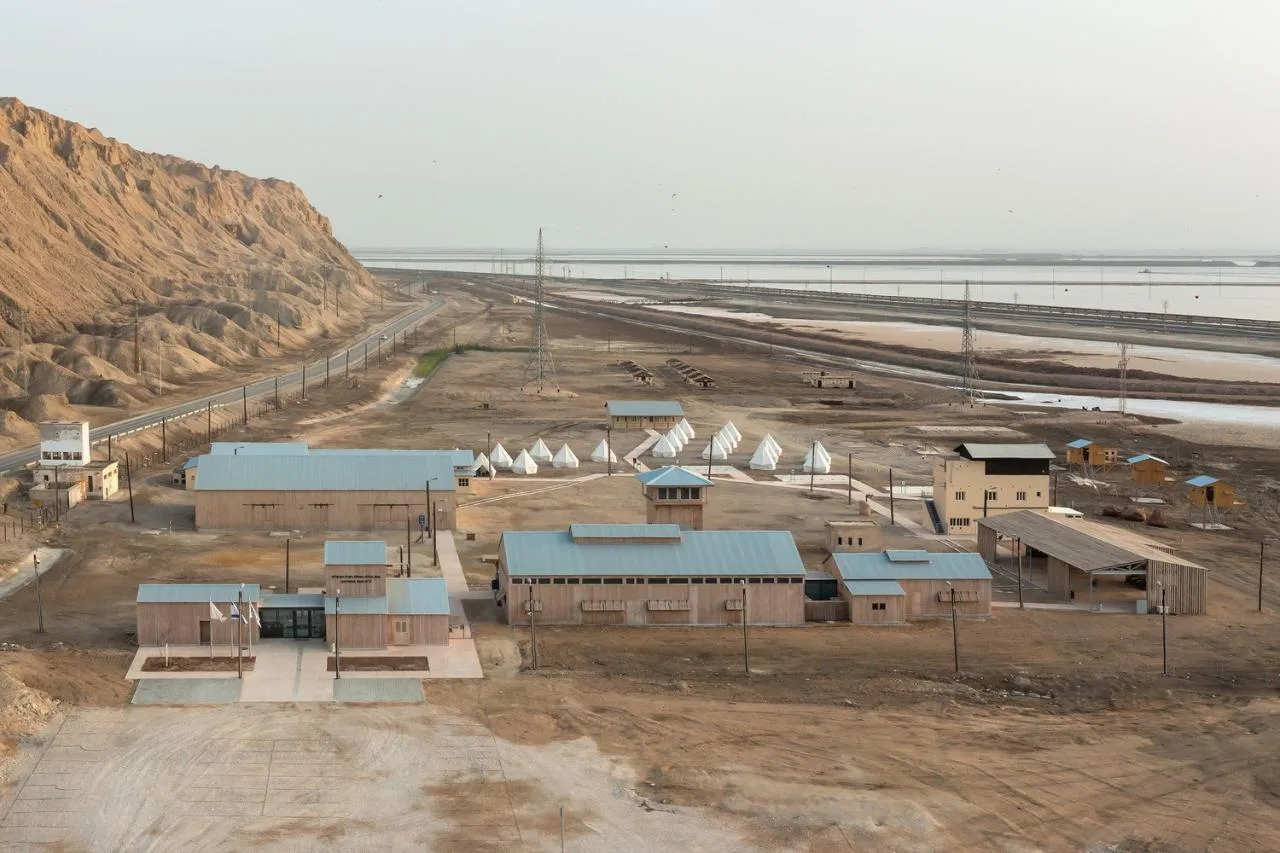
Kimmel Eshkolot Architects have officially revealed the design of the new Moshe Novomysky Visitor Center in Sodom, Israel. This open-air museum offers visitors panoramic views of the Dead Sea and educates them about the region’s life and industry from the 20th century to today.
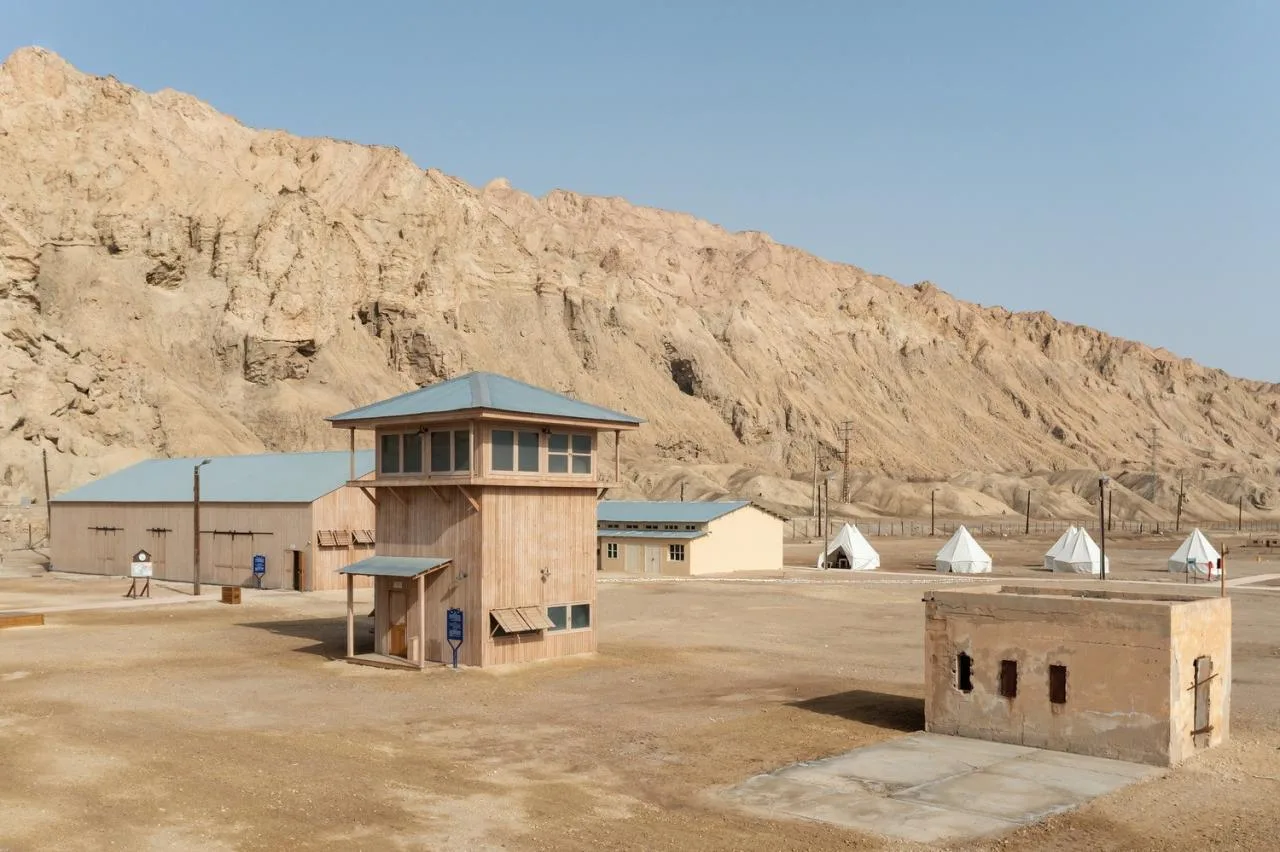
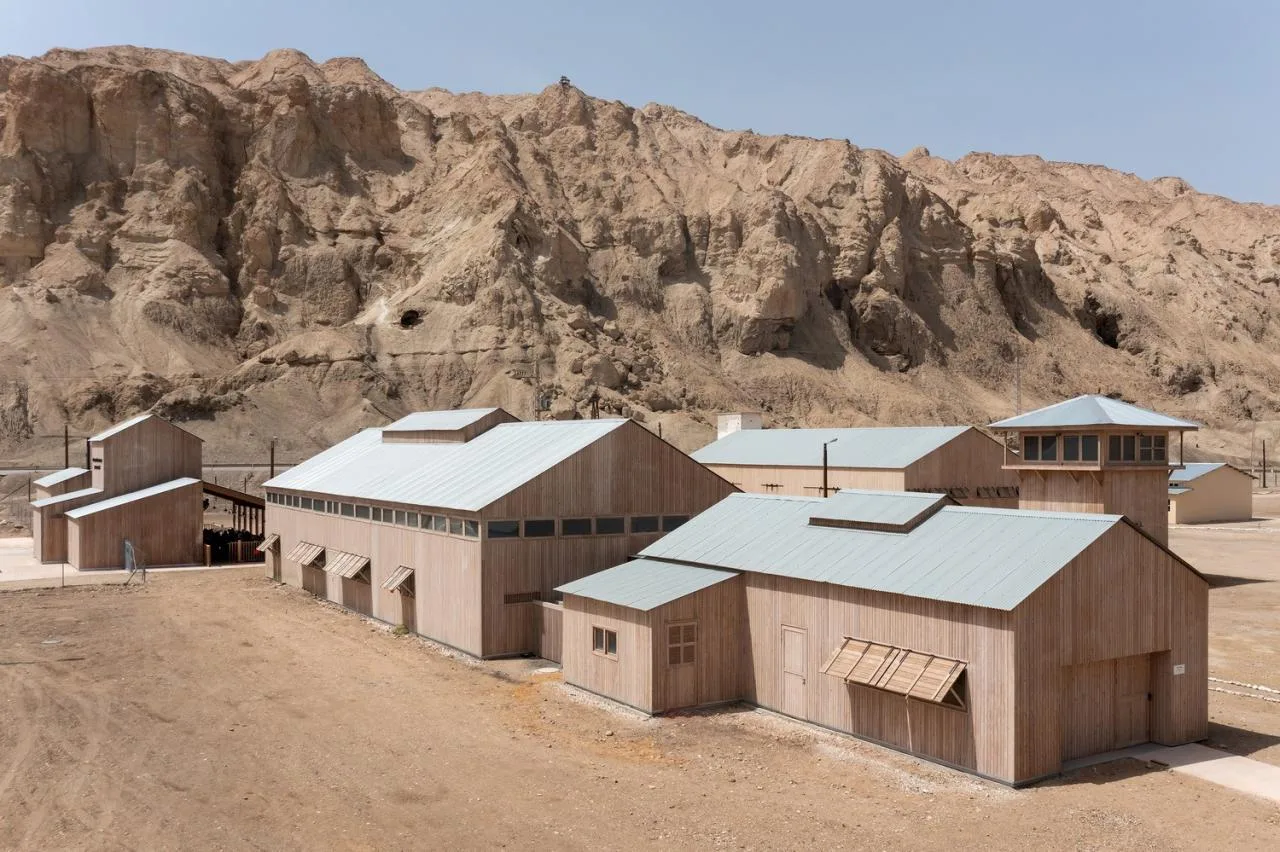
The Dead Sea is a unique ecological wonder, situated at the Earth’s lowest point—427 meters below sea level. It is also the world’s deepest hypersaline lake. The opening of this new visitor center reflects Kimmel Eshkolot’s philosophy of creating distinctive yet timeless architecture while enriching Israel’s cultural landscape.
The design preserves and protects the site of the original Sodom Potash Company, historically linked to the biblical story of Sodom and Gomorrah.
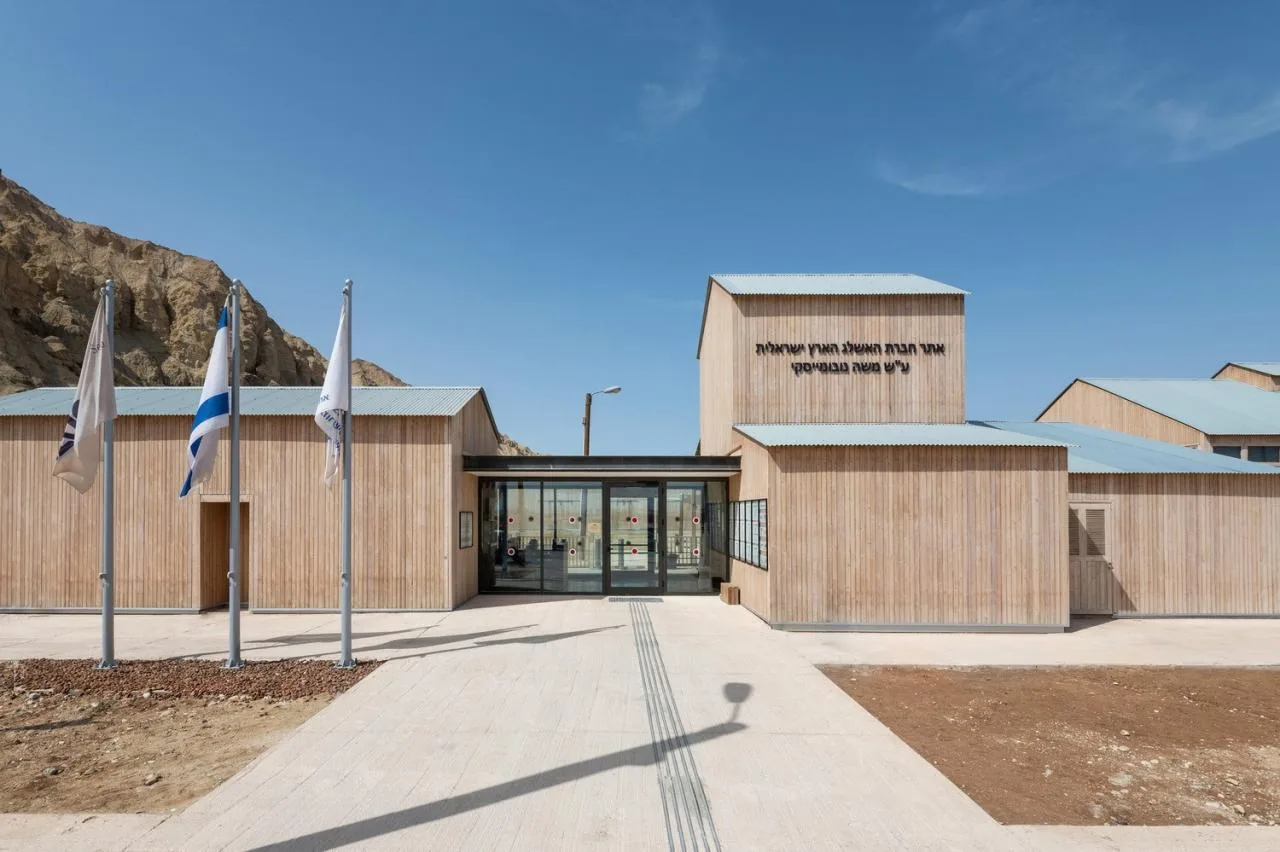
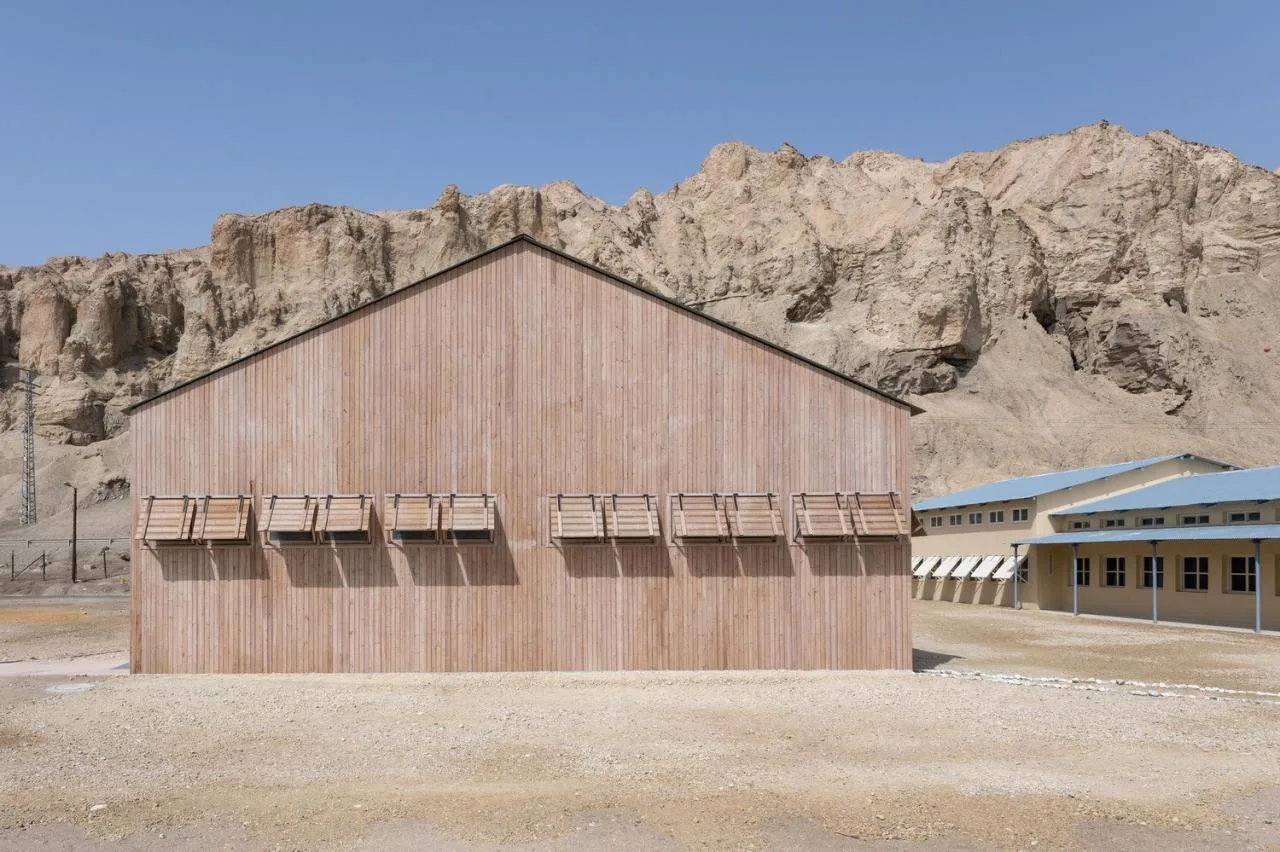
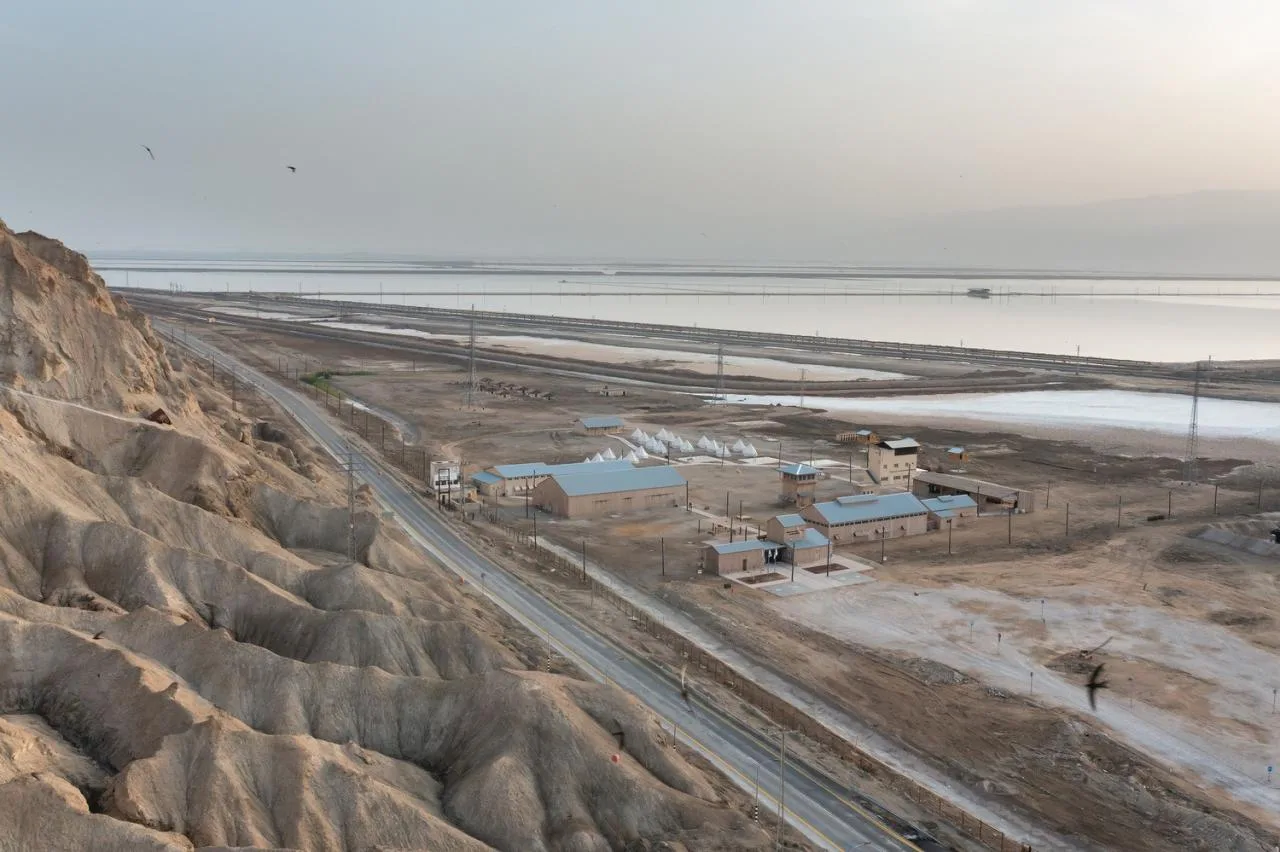
The visitor center reinterprets the early 20th-century pioneering campsites and public buildings linked to Israel’s salt mining industry. Located along the scenic yet arid Highway 90 in southern Israel, the complex harmonizes with the limestone landscape, preserving its natural characteristics as a functional environment for work and life.
This site captures Israel’s agricultural history and the ecological evolution of the Dead Sea region. Visitors can explore preserved buildings including industrial facilities, commercial spaces, restaurants, and residential courtyards, all restored and adapted to house exhibitions, historical photographs, and multimedia presentations about the Dead Sea’s heritage.
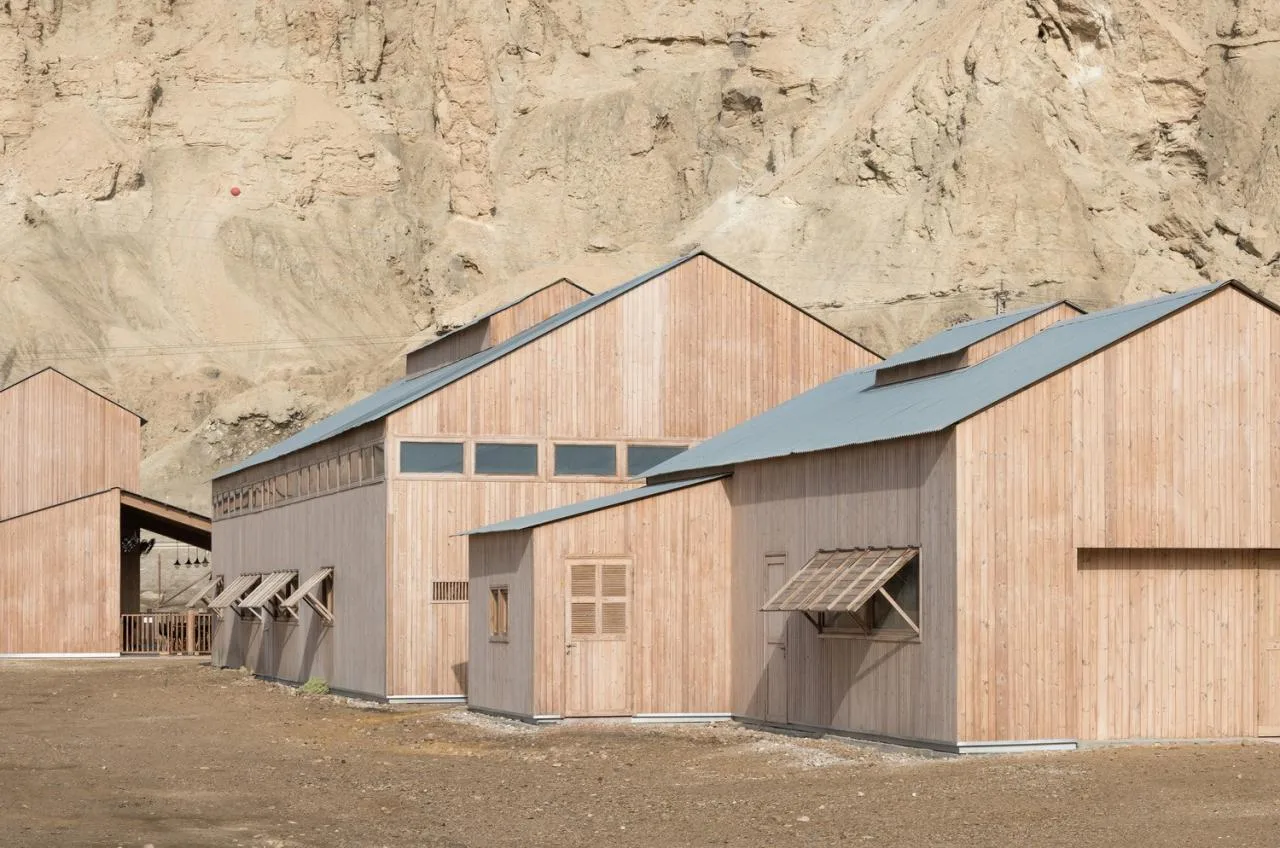
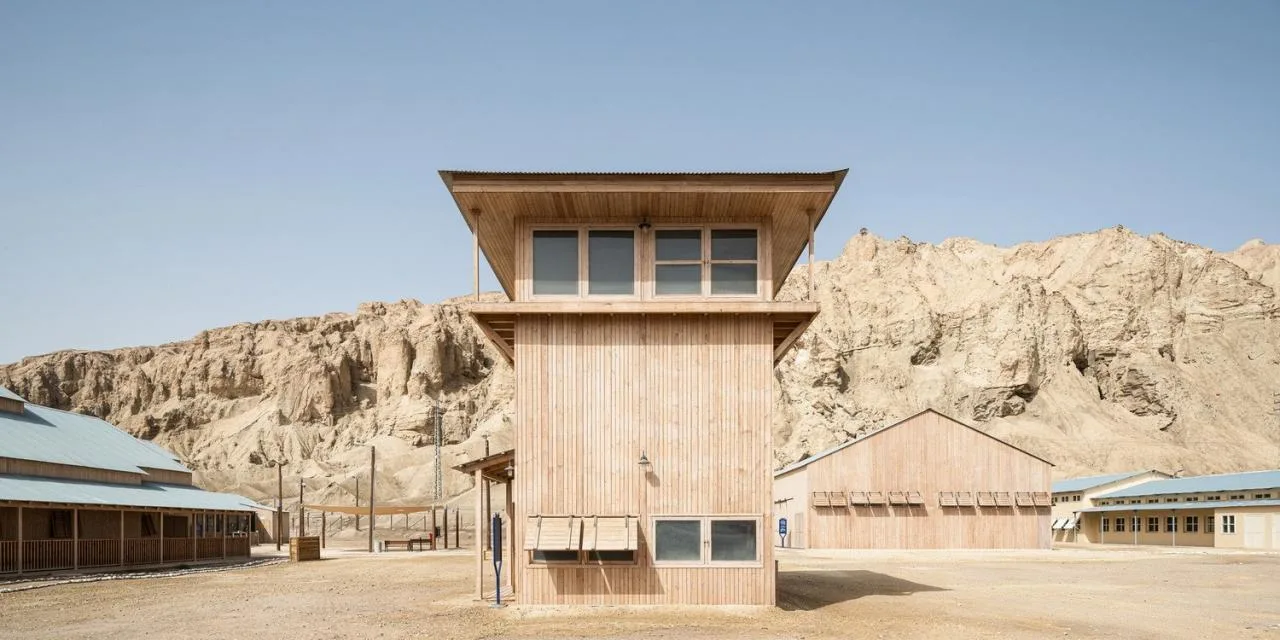
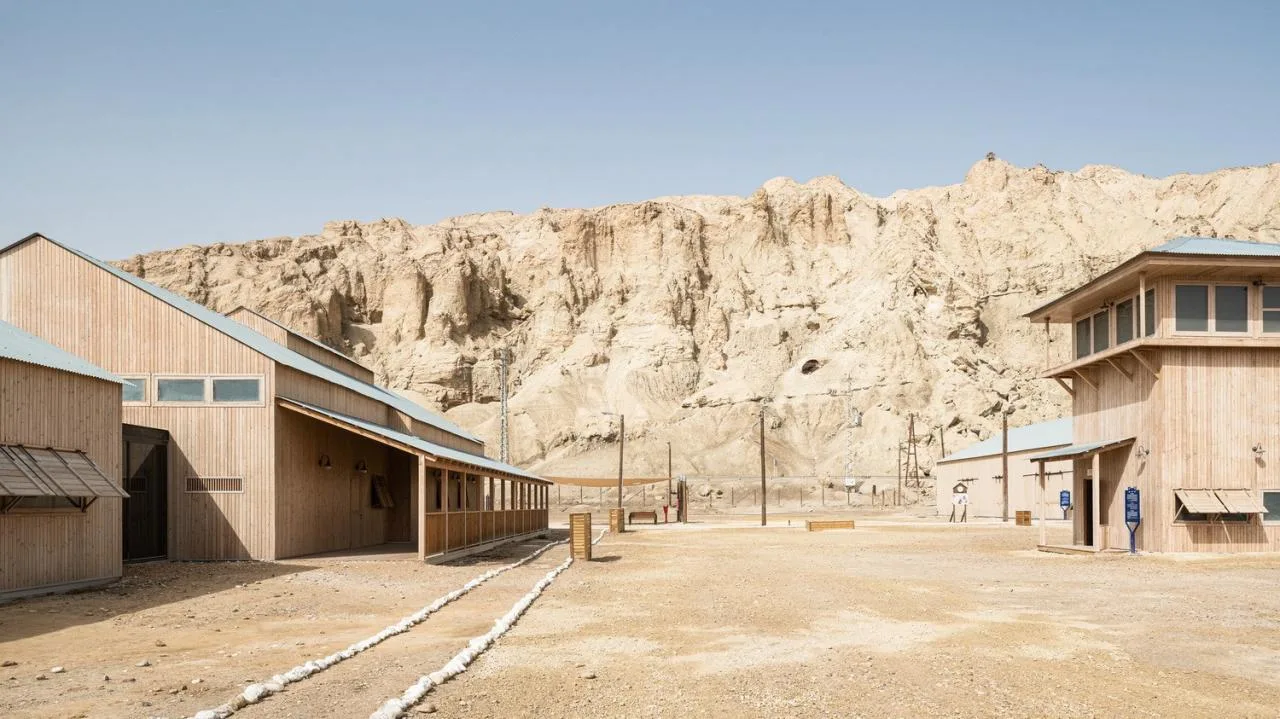
Kimmel Eshkolot preserved the visitor center’s north-south orientation and introduced modern air conditioning for visitor comfort. Given the extreme local climate, with temperatures soaring up to 50°C, the design incorporates wooden and metal shading inspired by 1930s architectural practices to provide shelter.
The original buildings were oriented and constructed without air conditioning in mind, but the architects found that a south-facing layout enhances natural ventilation. To further combat extreme heat, each structure rests on concrete slabs 1.5 to 2 meters thick and features wooden cladding with special surface treatments to resist drying, drought, and solar radiation.
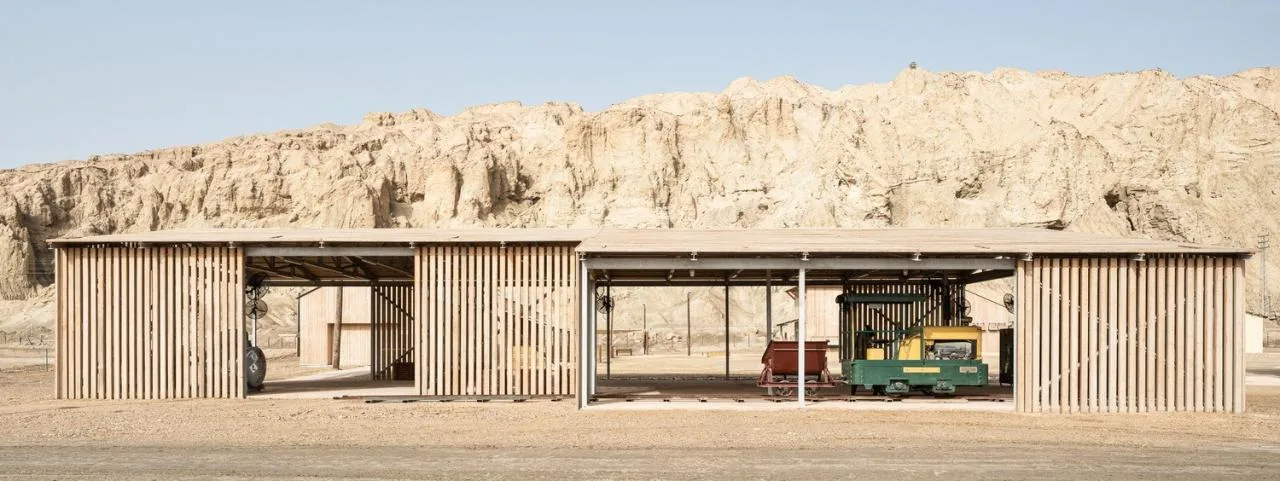
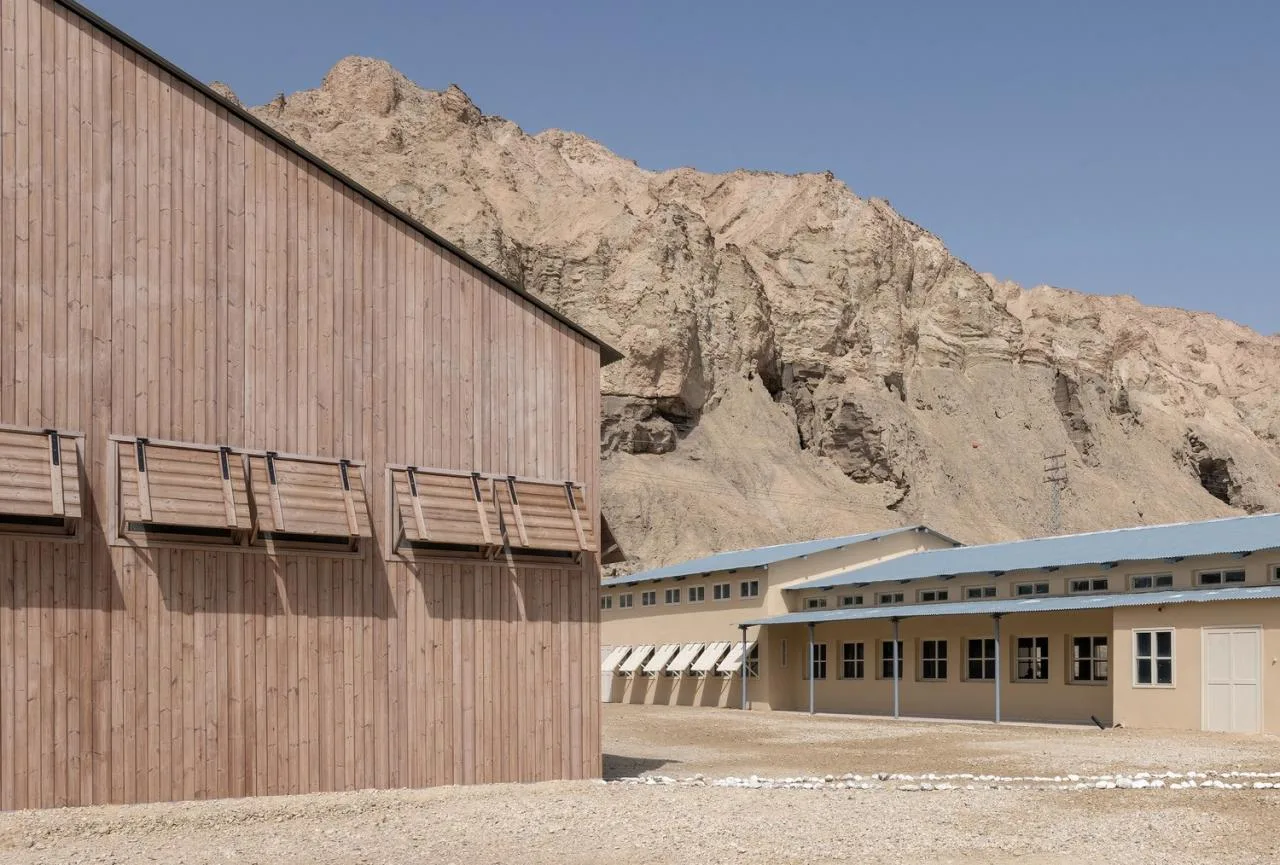
Following its revival, the former potash company site has been transformed into an open-air museum that highlights the lifestyle of the Dead Sea region’s original inhabitants. It celebrates their determination to rejuvenate this remote, barren land, inspired by the legend of the Foolish Old Man who moved mountains.
The visitor center’s design draws inspiration from traditional tapestry, using the building’s historical context as a foundation. Through careful restoration and the addition of new elements and functions, it has become a contemporary museum that blends gracefully into the rugged surrounding landscape and rocky terrain.
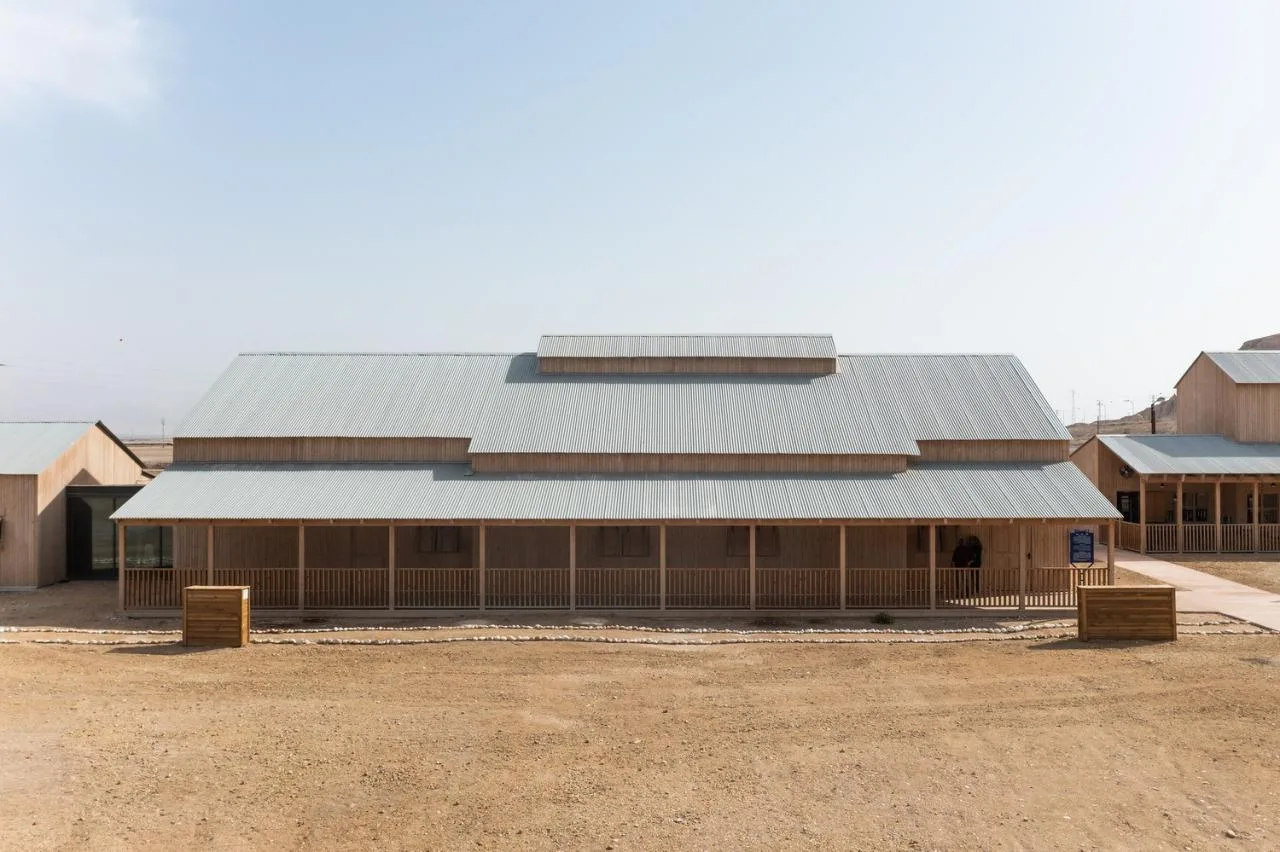
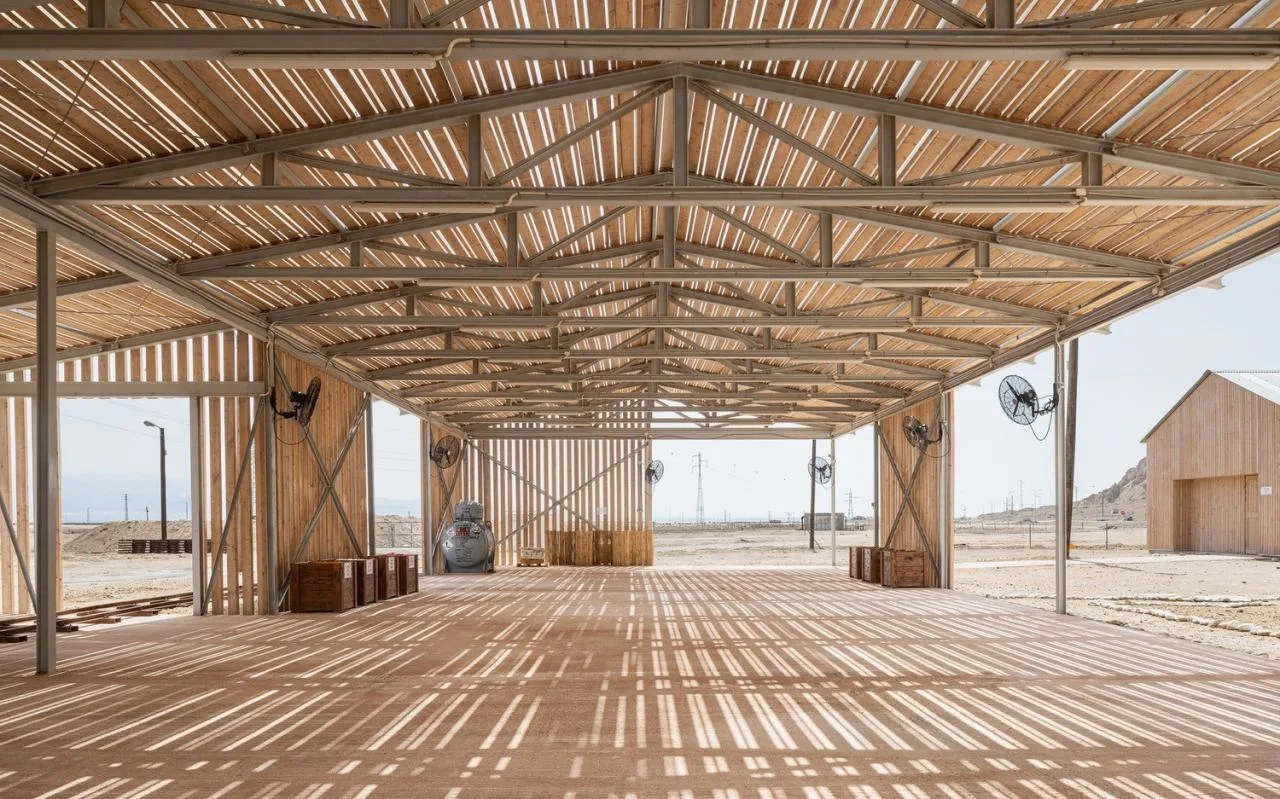
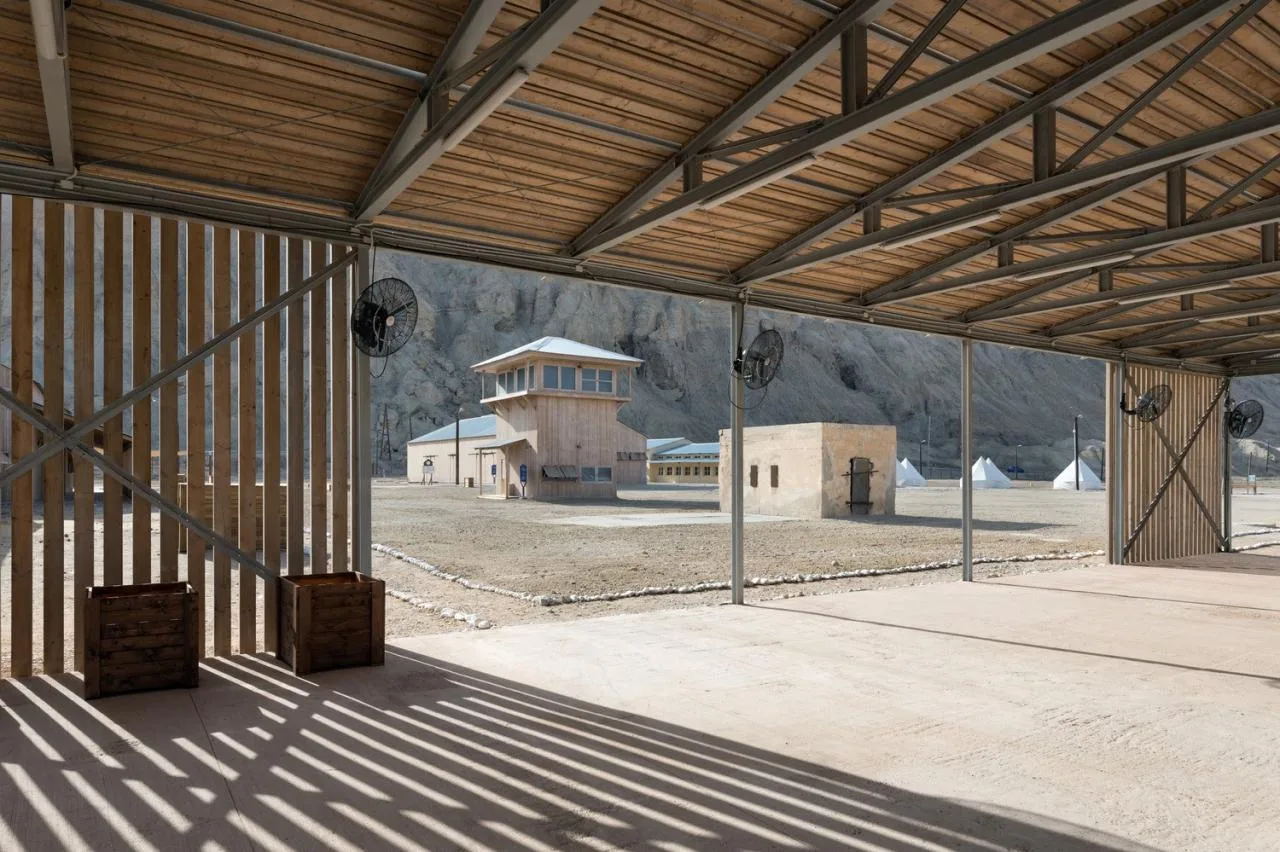
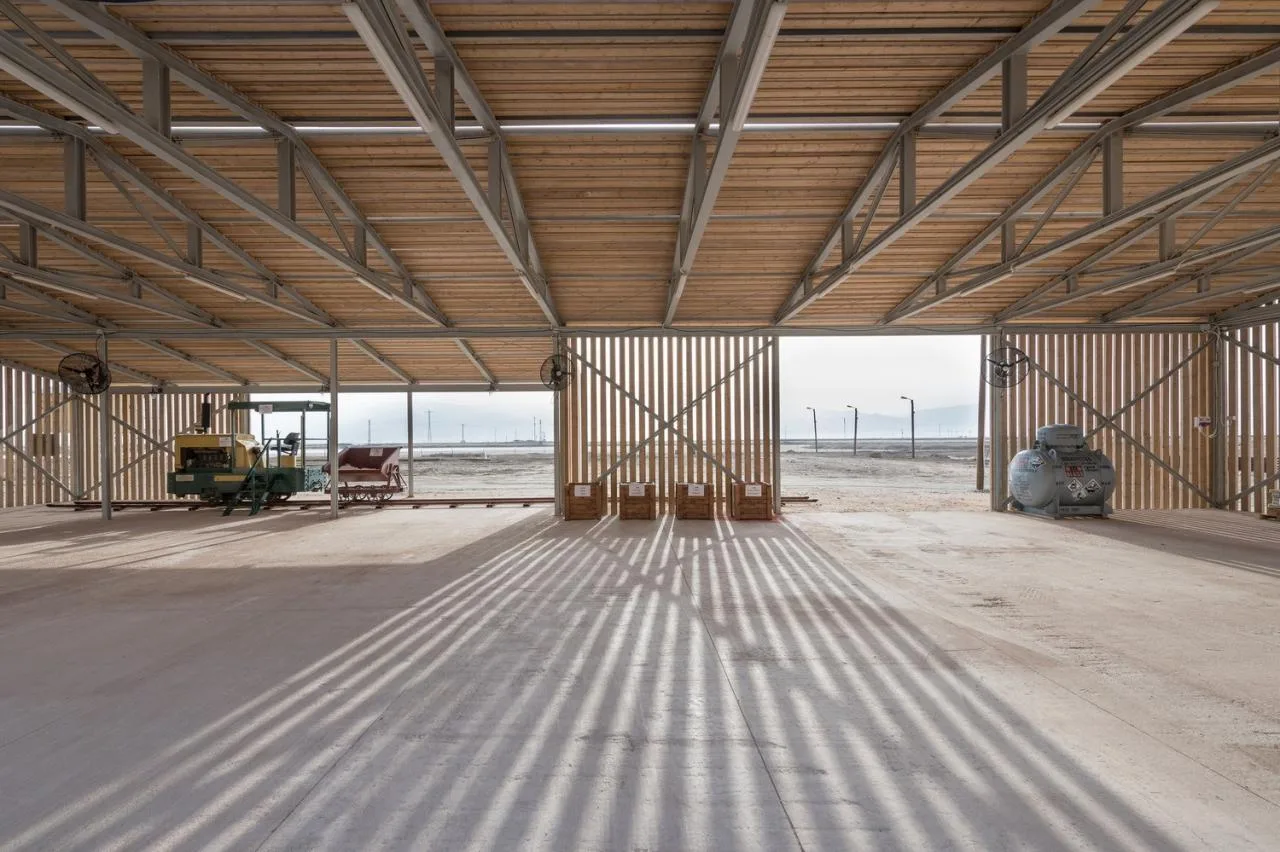
A variety of themed attractions have been created within the center to offer diverse experiences, while prioritizing the preservation of the village’s architectural heritage. This approach supports sustainable development in this remote area.
The Moshe Novomysky Dead Sea Visitor Center marks another significant cultural project by Kimmel Eshkolot, following works such as the Albanian Jewish Museum in Vlorë (2025), Tel Aviv’s Steinhardt Natural History Museum (2019), and Jerusalem’s Herzl Mountain Memorial (2018). The firm is led by an award-winning architect, recipient of Italy’s Dedalo Minosse Award, with the Herzl Mountain Memorial highly praised internationally.
Project Drawings
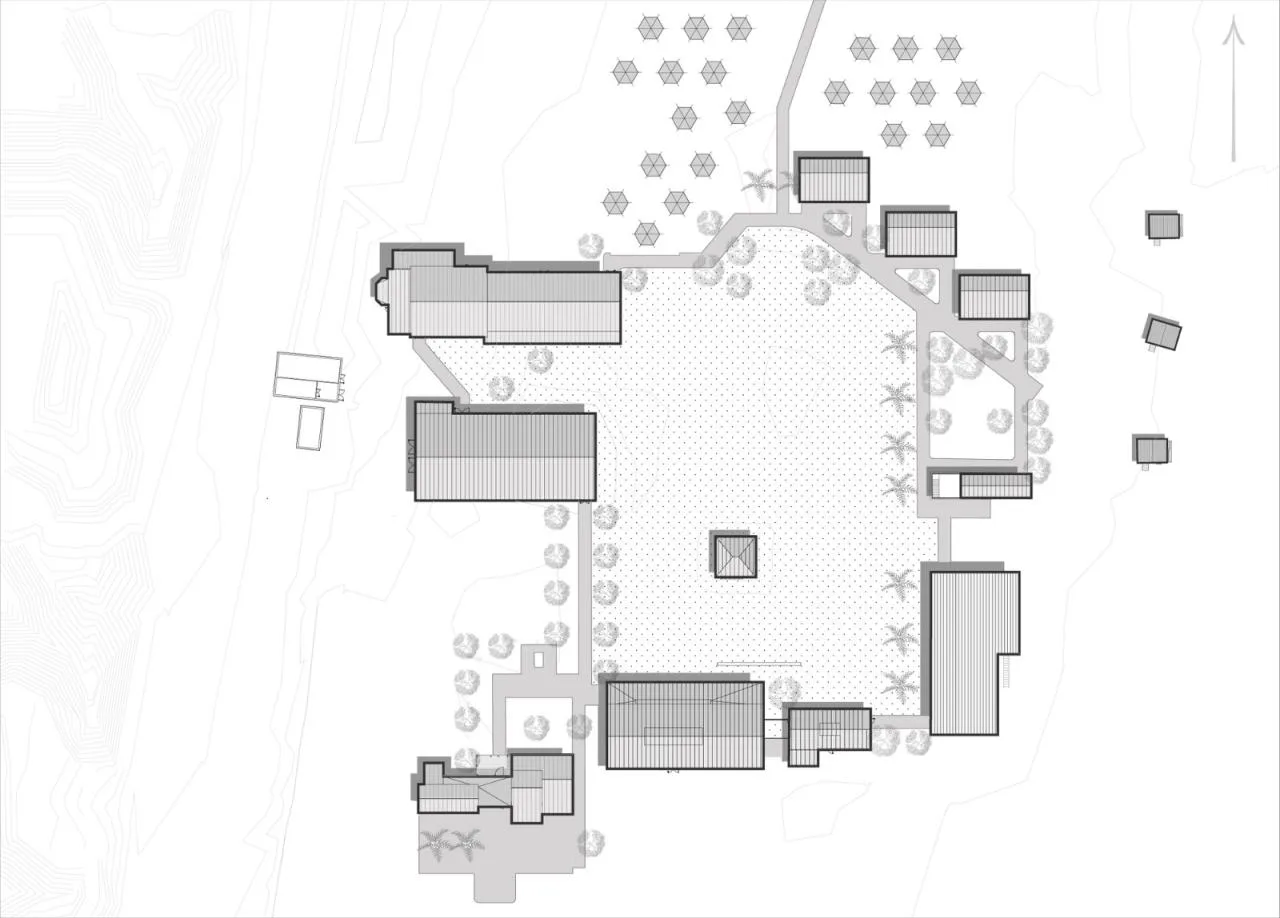
△ General layout plan
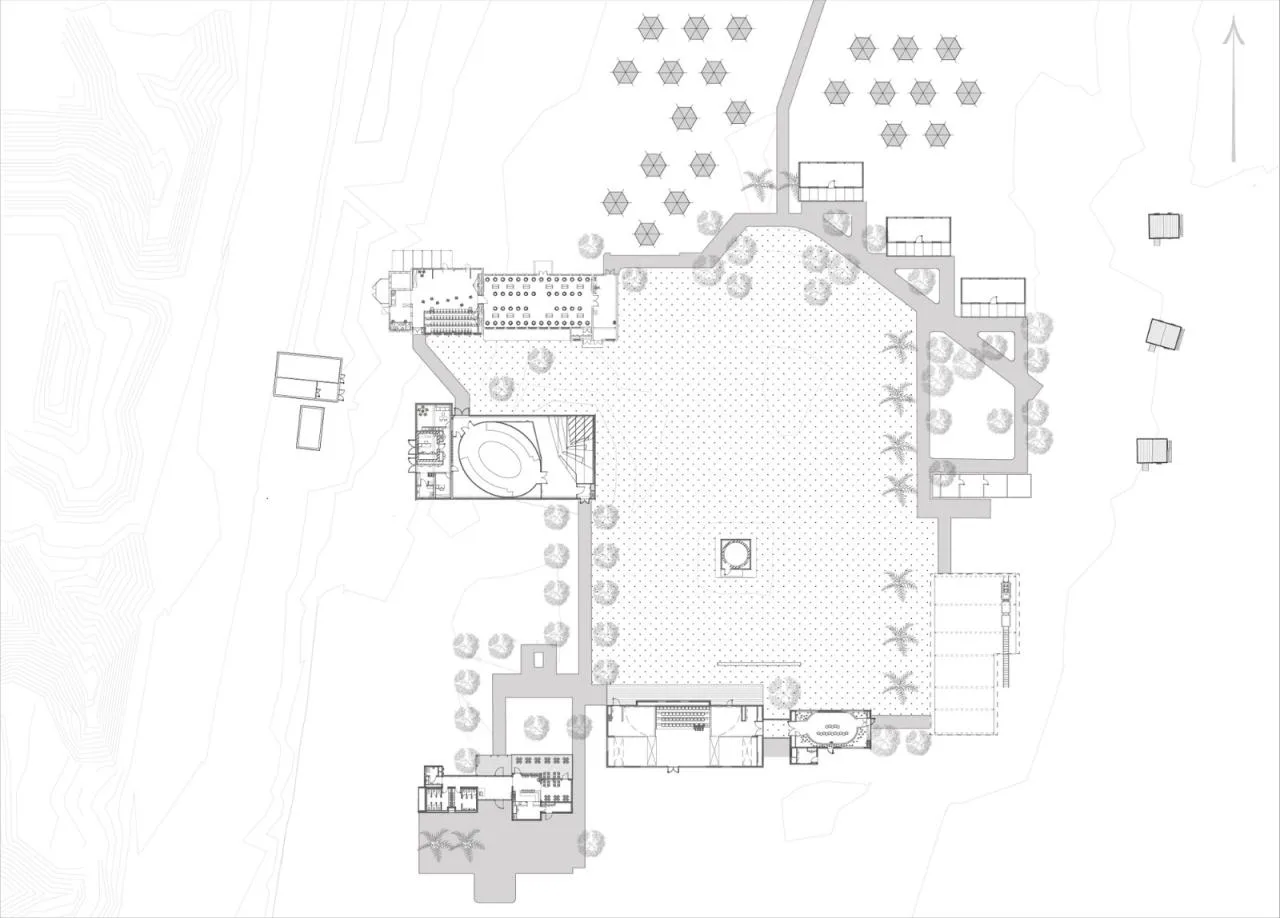
△ First floor plan

△ Elevation drawing

△ Section diagram
Project Information
Architect: Kimmel Eshkolot Architects
Area: 3,500 square meters
Year: 2022
Photographers: Amit Gosher, Harel Gilboa
Design Team: Inbal Pintzov, Liran Malka
Architectural Design: Kimmel Eshkolot Architects
Location: Israel













Must log in before commenting!
Sign Up