
This project is situated in the historic district of Dongcheng, Beijing. The design focuses on renovating existing Ming Dynasty-era buildings lining the street and converting their interiors into private residences.
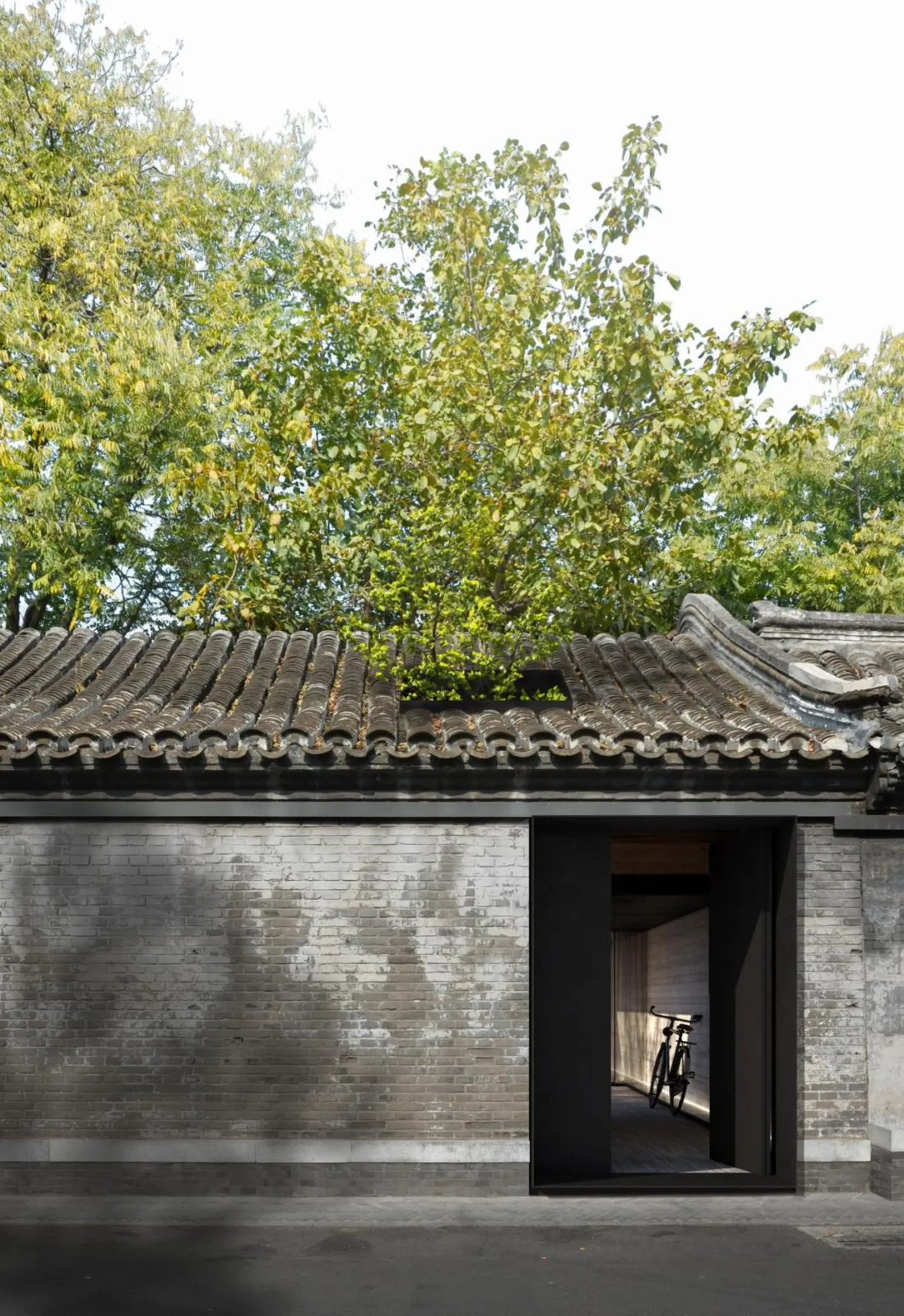
The design approach carefully balances respect for historical elements with modern interventions, ensuring a seamless integration of old and new. The original brick walls and structural framework of the old buildings have been preserved. Two parallel new buildings were added, forming three consecutive courtyards.
The new structures draw inspiration from the surrounding traditional architecture but reinterpret it with contemporary design: the classic double-pitched tiled roof is maintained but features a gentler slope and extended eaves. Instead of traditional wooden framing, a combination of slim steel structures and wooden rafters has been used.
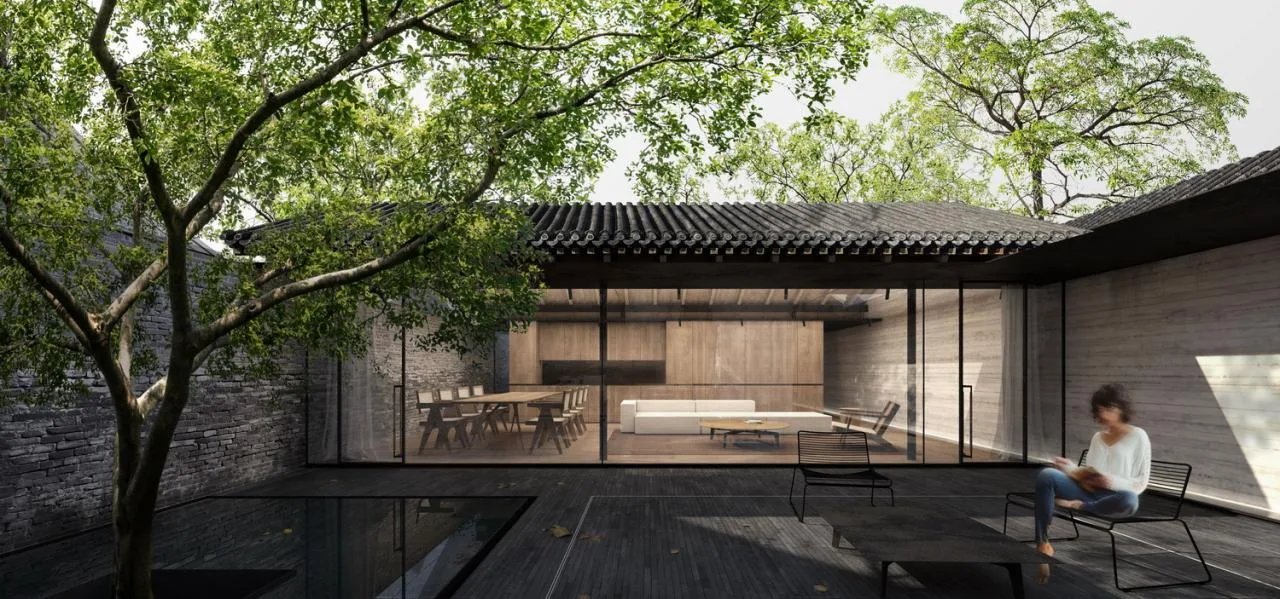
The courtyards are organized with increasing levels of privacy from the outermost to the innermost spaces. Guest rooms and living areas are arranged around the first courtyard, while the second and third courtyards are reserved exclusively for private bedrooms and studies.
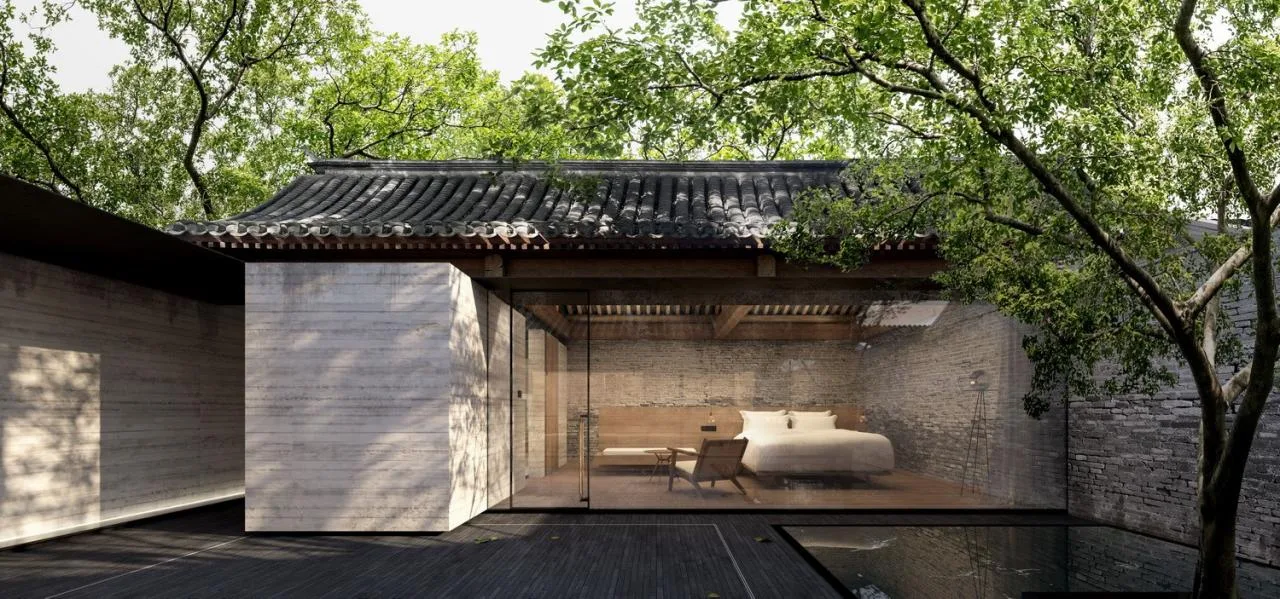
▲ Entrance Courtyard
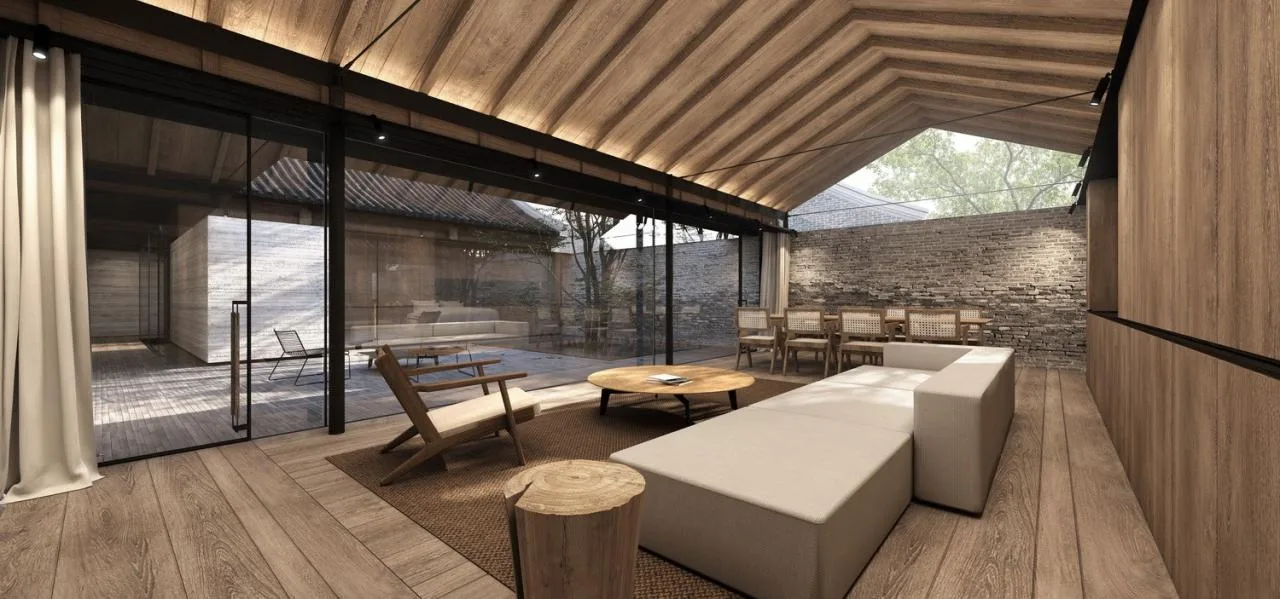
▲ Living Room
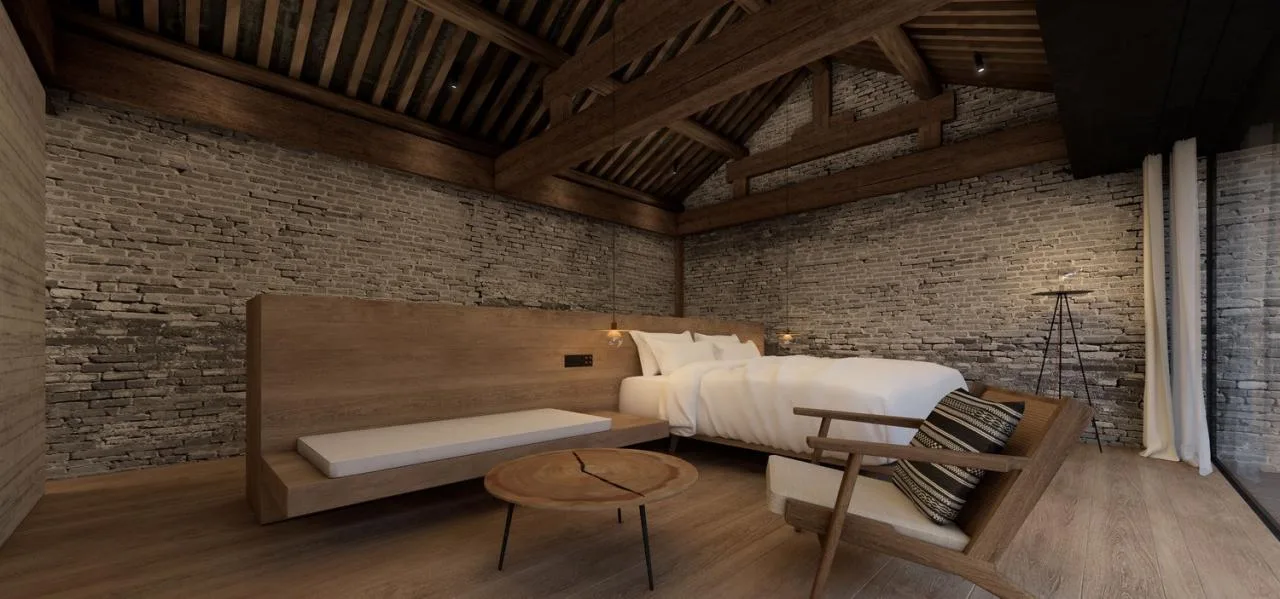
▲ Guest Bedroom
The three buildings are connected by a sleek, ultra-thin black steel ceiling that discreetly conceals the structural elements. This design feature naturally forms the entrance to the courtyard and creates a corridor linking the three courtyards. This horizontal line also serves as a unifying boundary for frameless glass windows in both the old and new structures, while providing shade to the southern exterior wall.
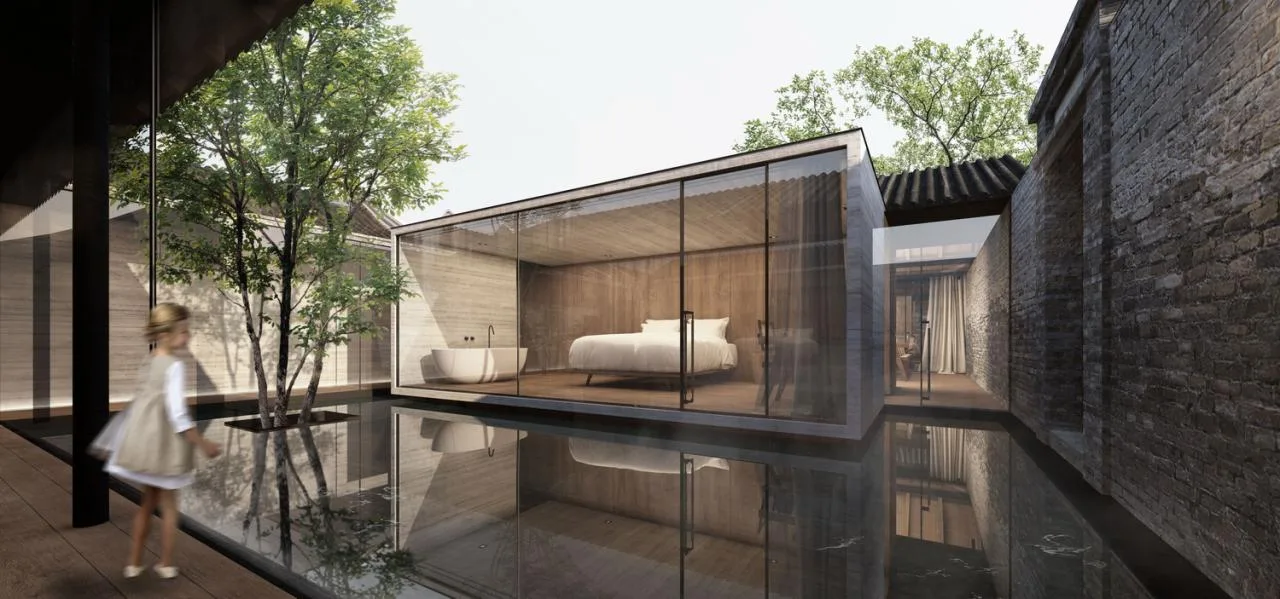
▲ Concrete Frame Bedroom
Three concrete elements have been integrated into the overall design: two enclosed “box” bathrooms embedded like modular additions within the buildings, and a concrete-framed bedroom appended behind the living room.
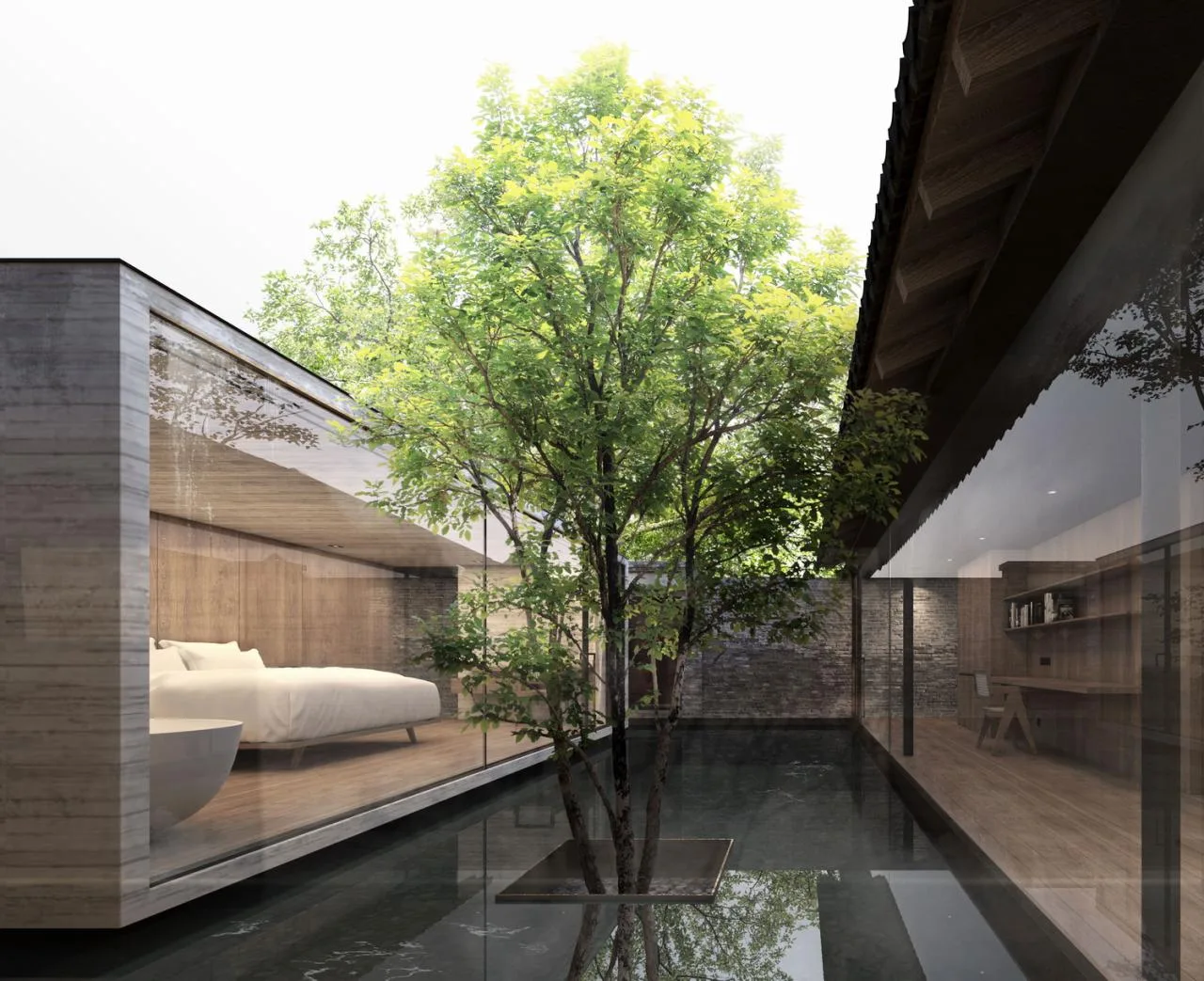
▲ Concrete Frame Bedroom
The majority of the site was previously undeveloped. After confirming the feasibility of creating underground space, the swimming pool and gym were positioned below ground level. These spaces benefit from natural light entering through a courtyard at the northern end of the plot and a linear skylight on the side. Exposed structural beams add character and enhance diffuse lighting throughout the underground areas.
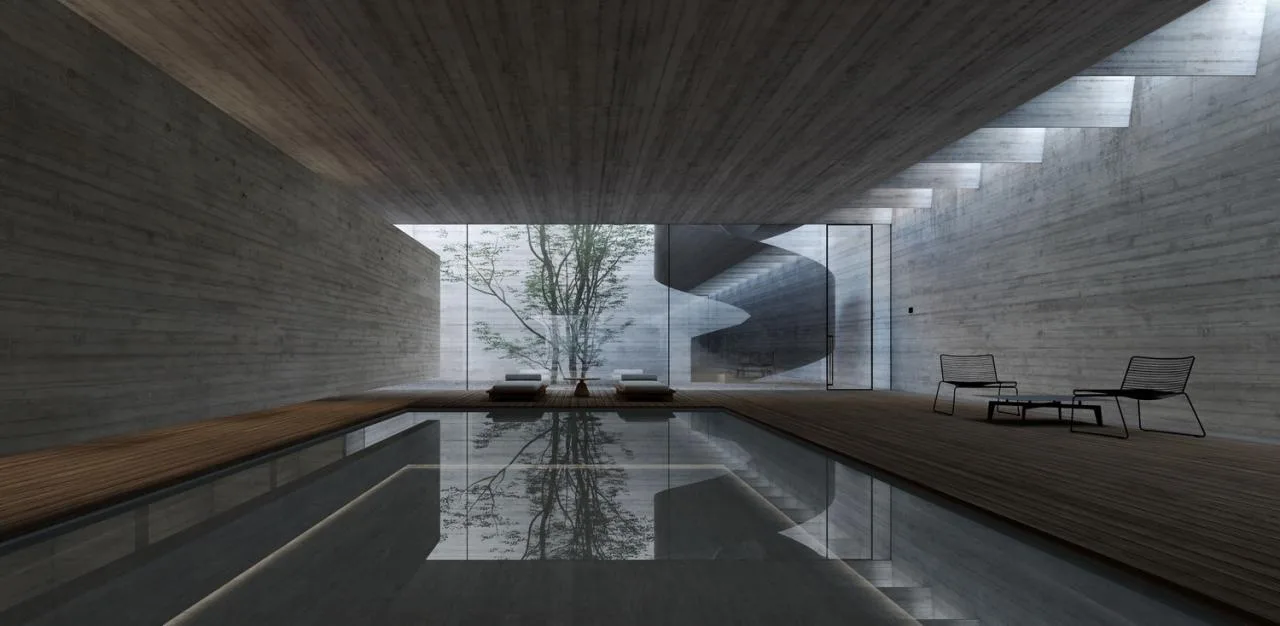
▲ Negative First Floor Swimming Pool
The contrast between the ground floor and the underground level is striking: the first floor showcases traditional Chinese roof forms carefully integrated into the historic cityscape, while the underground level embraces a rugged Fauvist architectural language. Using concrete as the primary material, the underground spaces create dynamic and intriguing light and shadow effects.
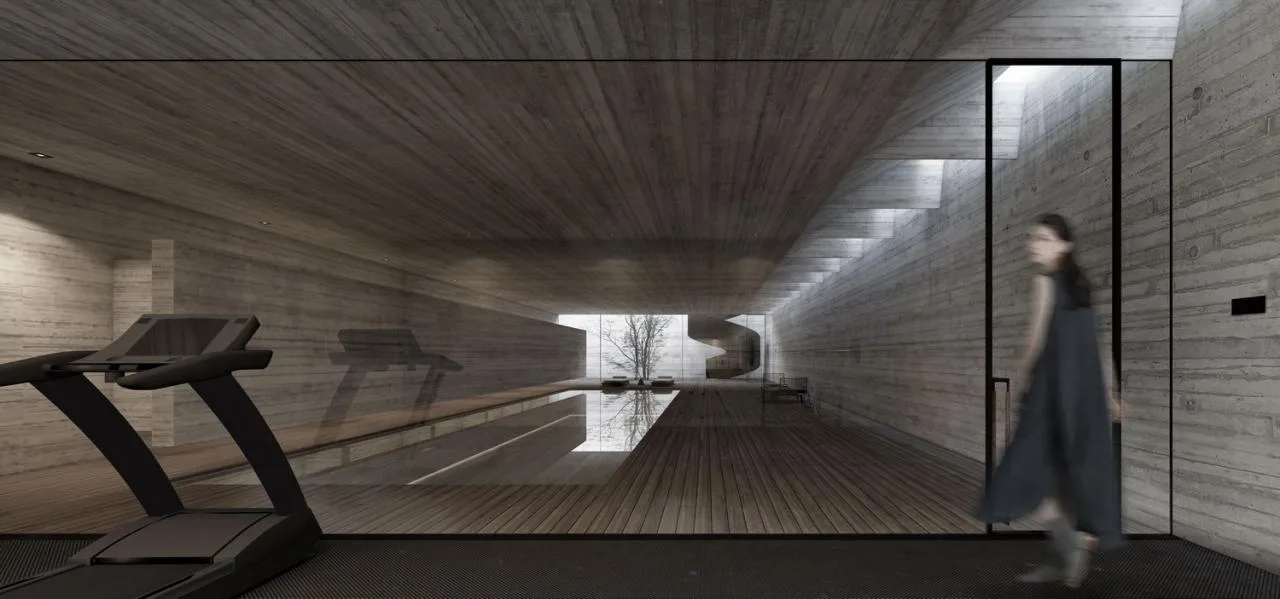
▲ View from the Negative First Floor Gym
Project Drawings
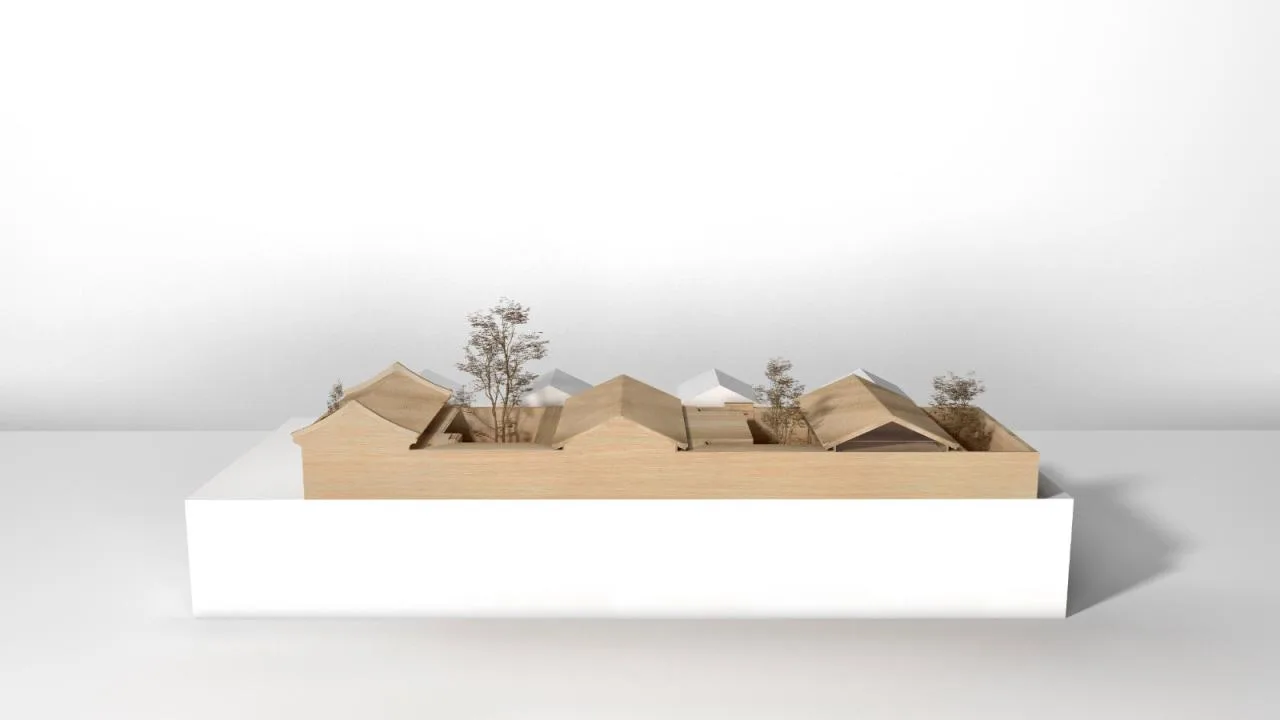
△ Model Diagram
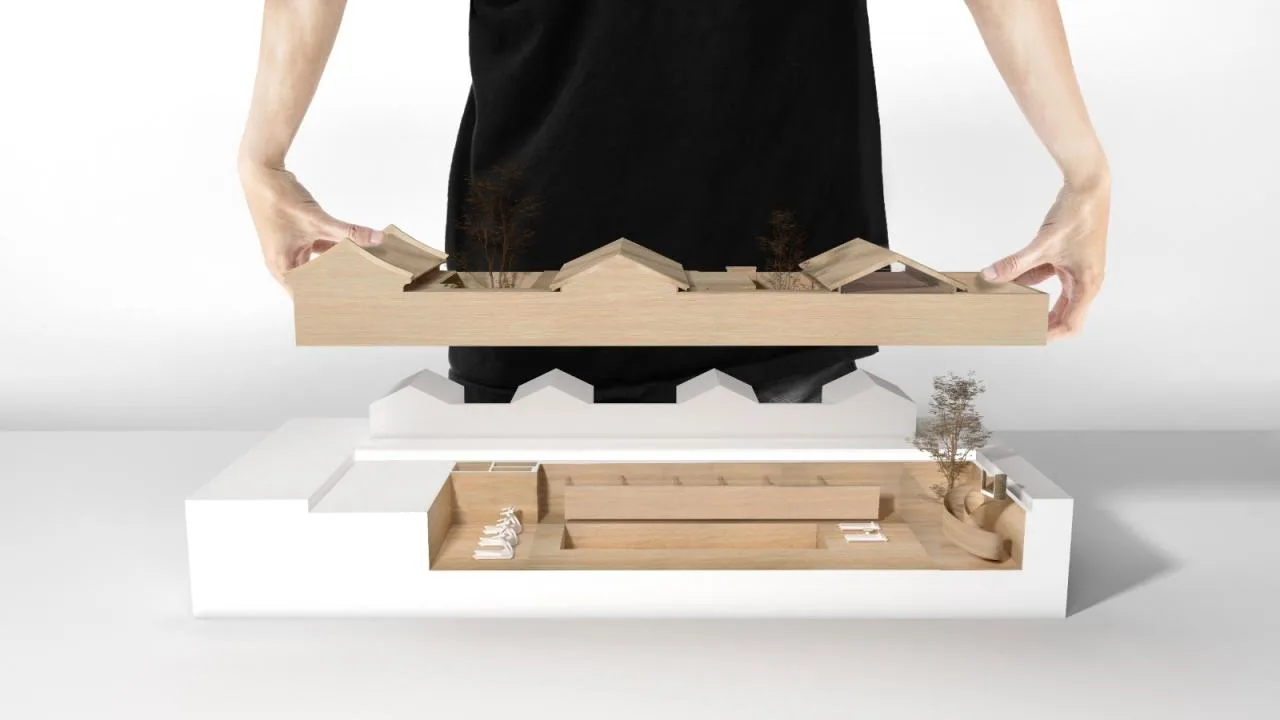
△ Model Diagram
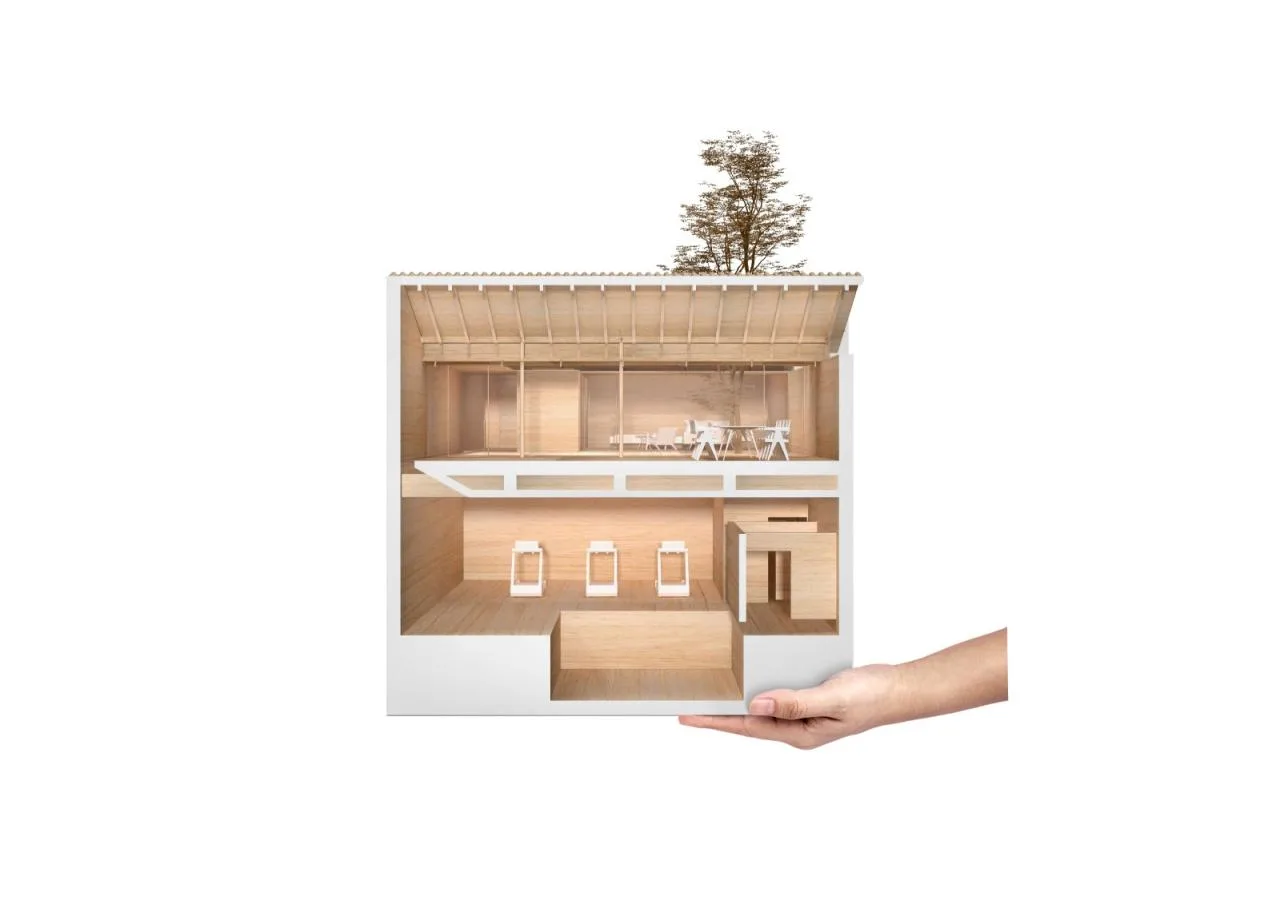
△ Model Diagram
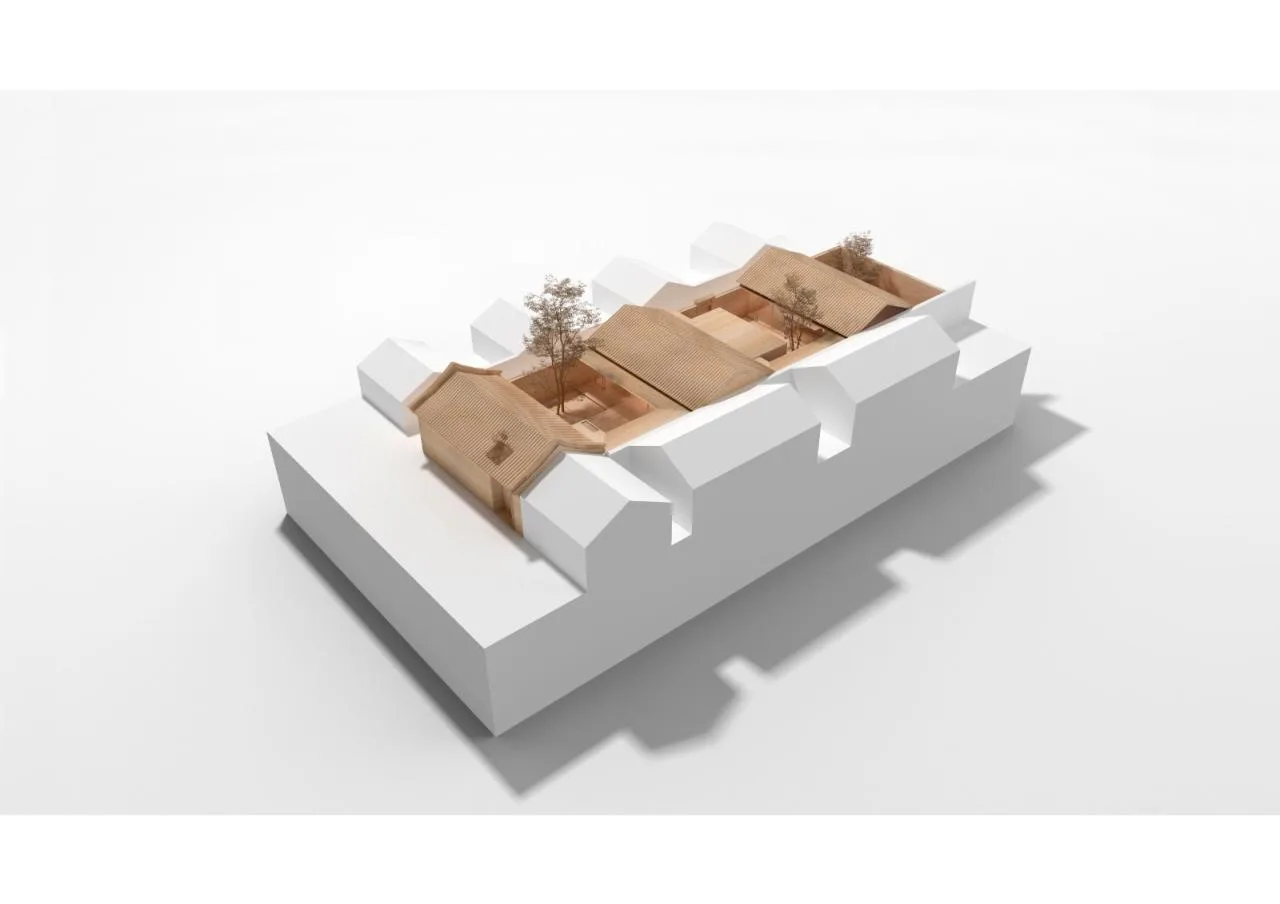
△ Model Diagram
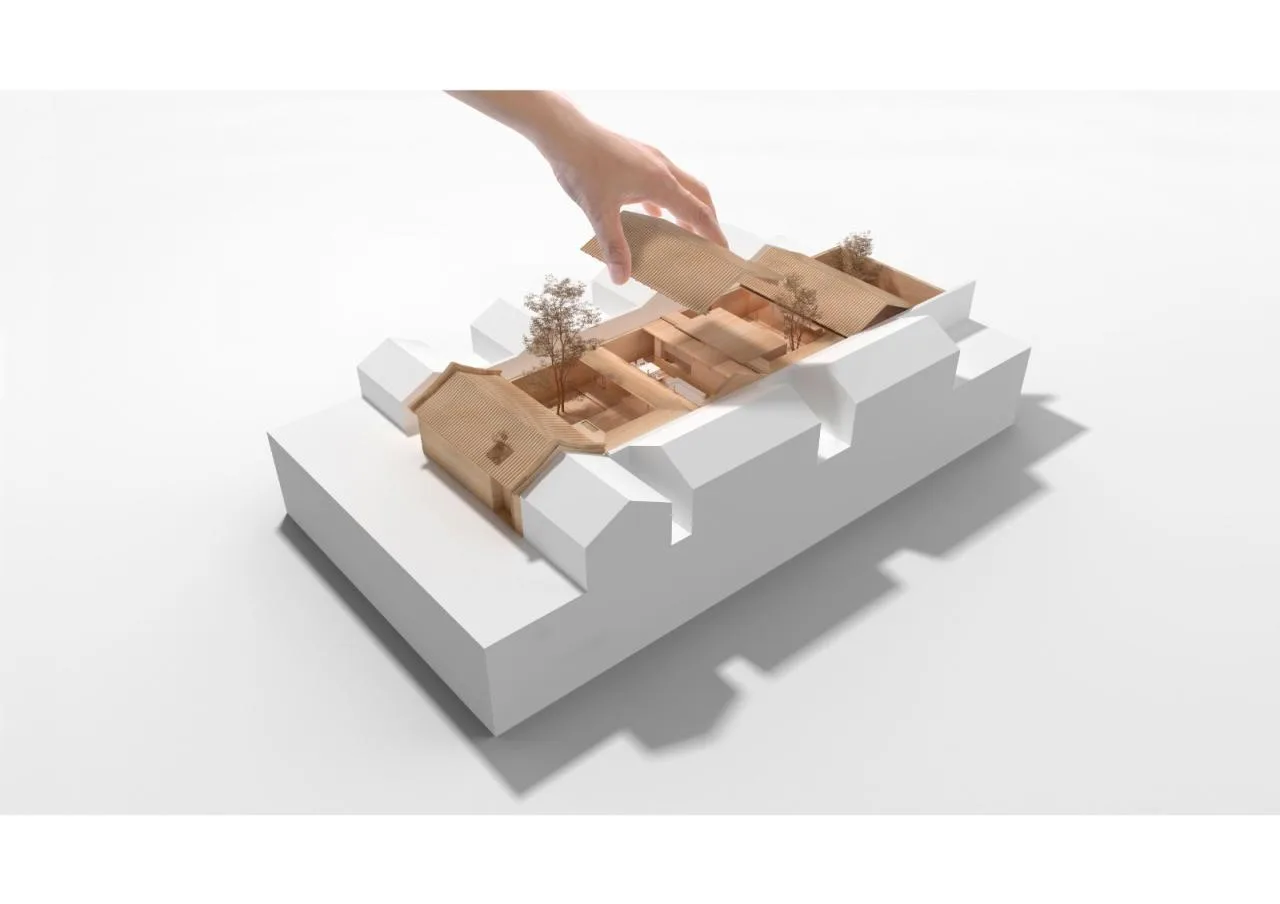
△ Model Diagram
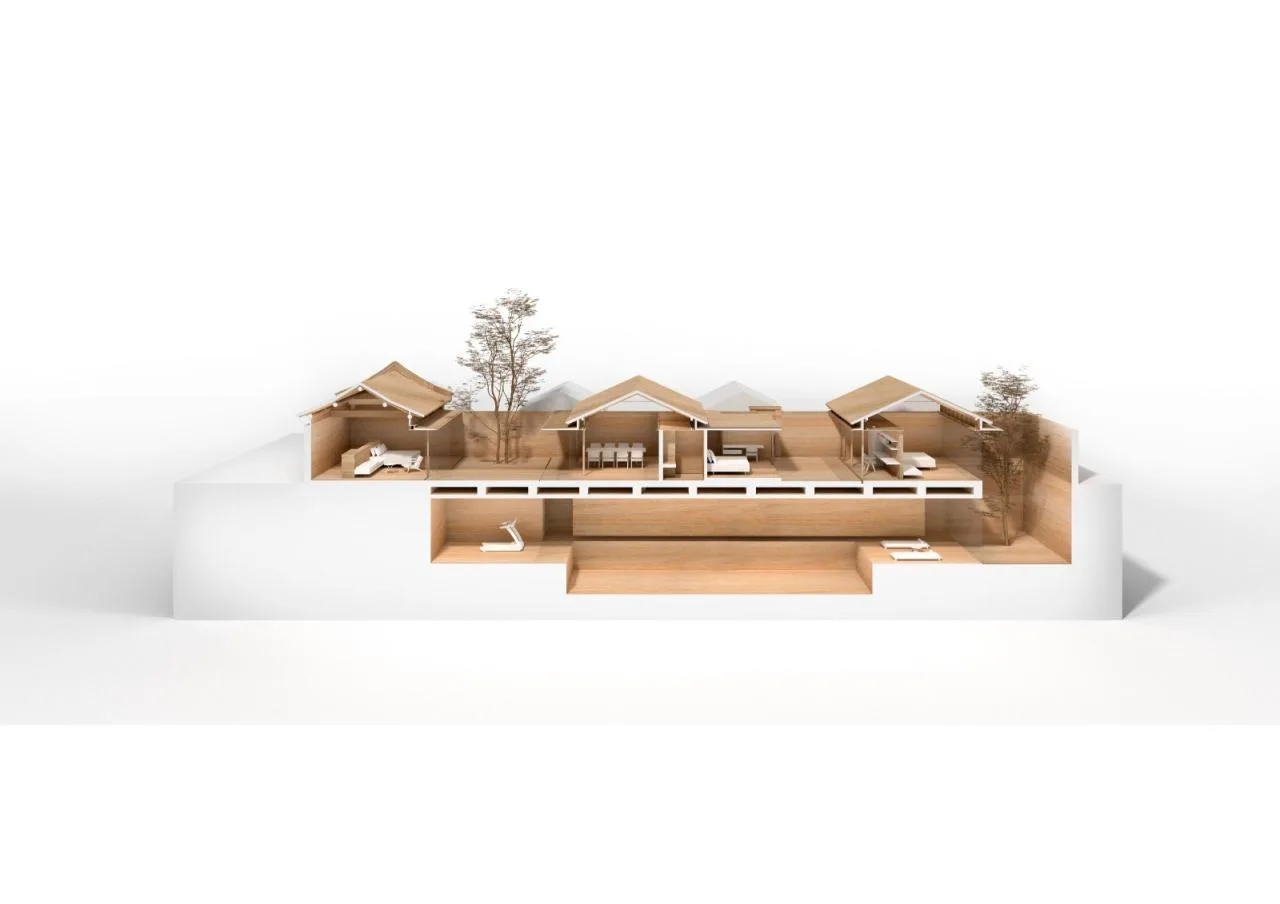
△ Model Diagram
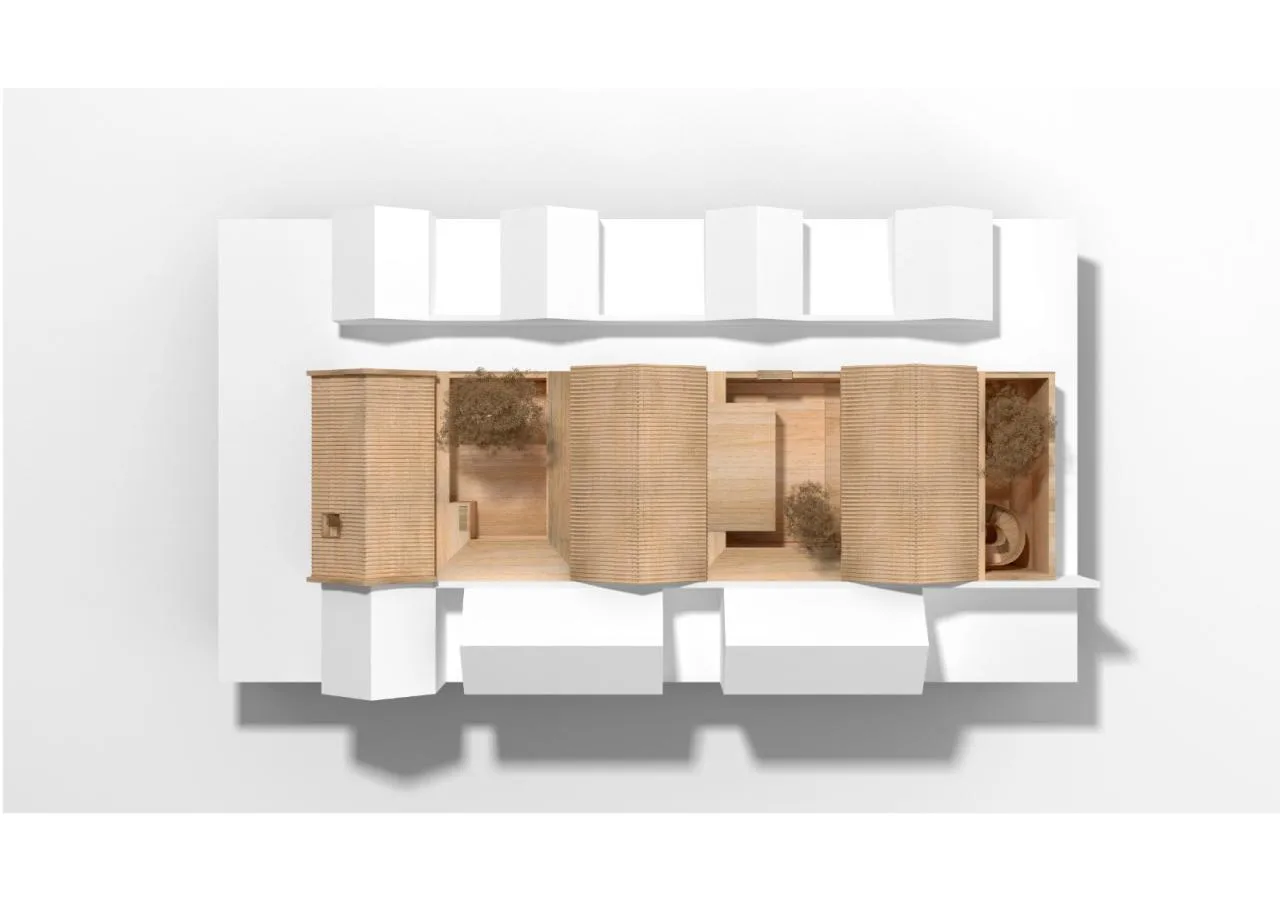
△ Model Diagram
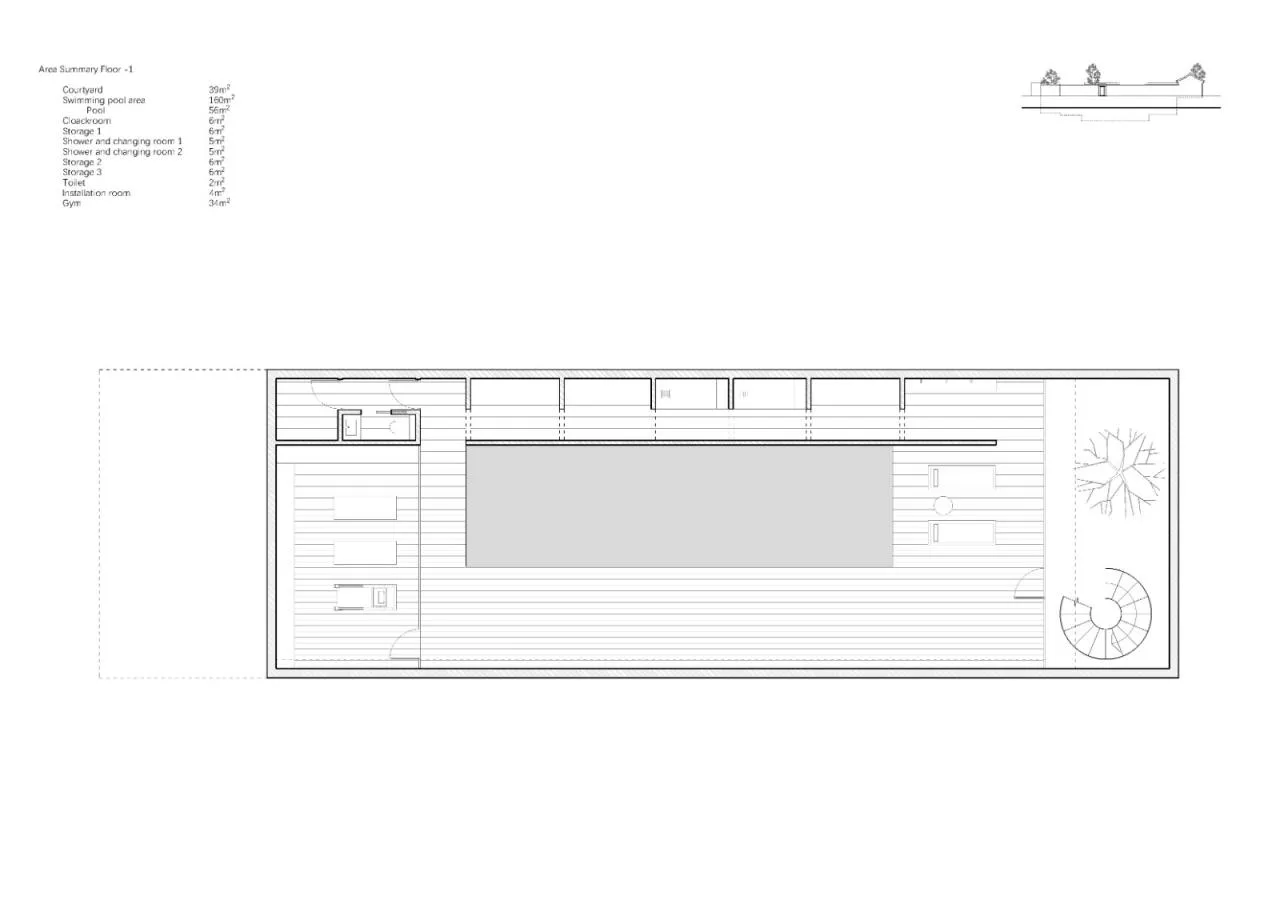
△ Underground Floor Plan
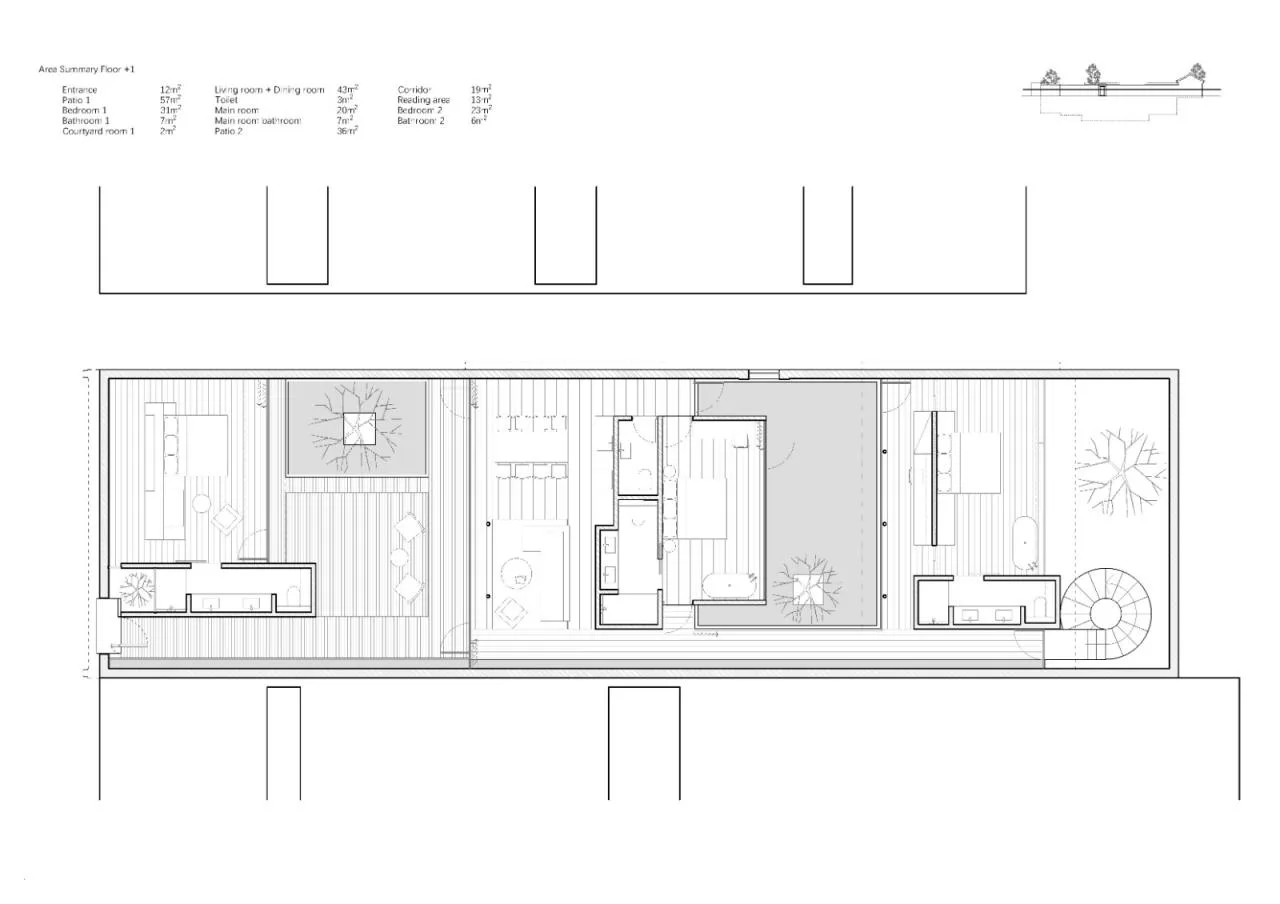
First Floor Plan
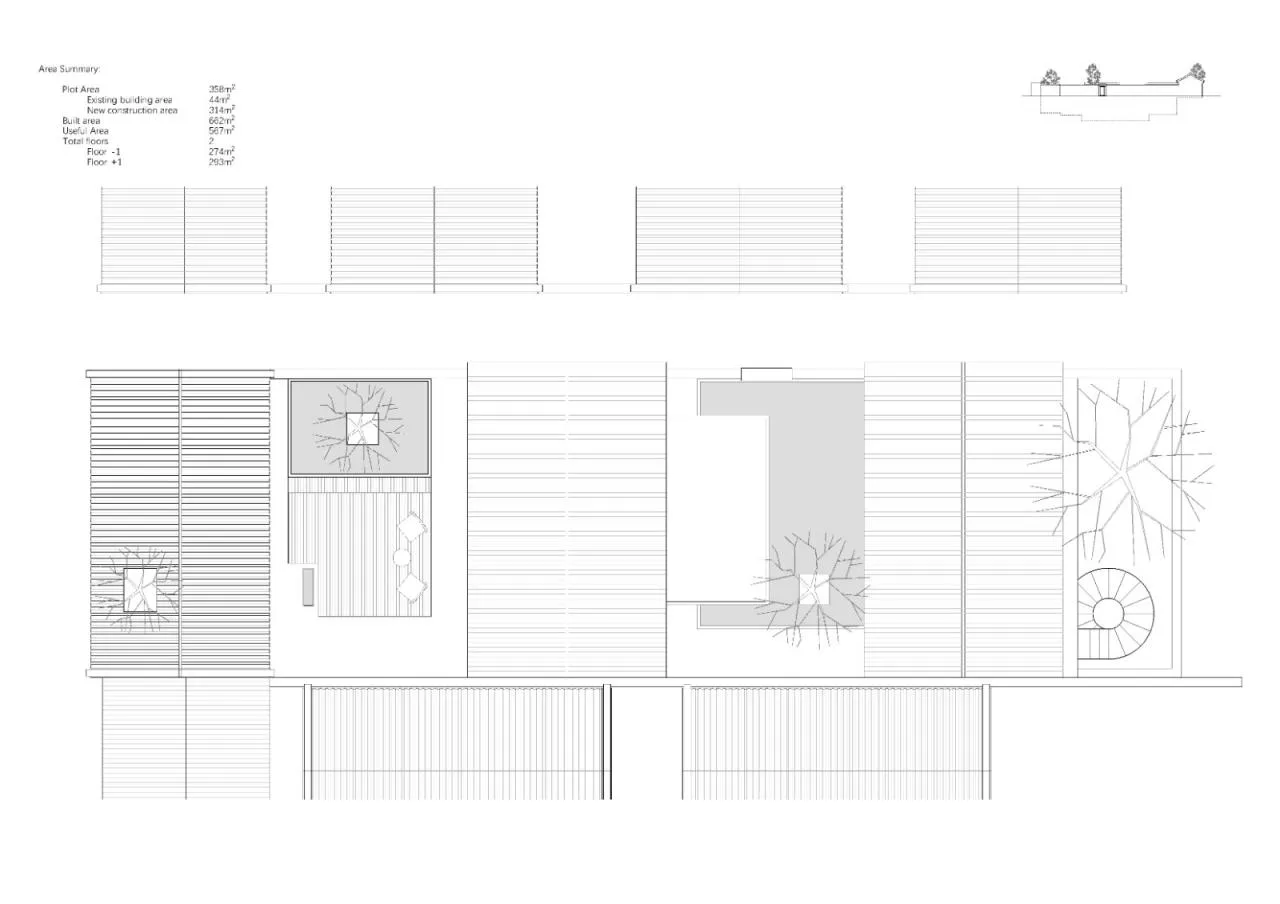
△ Terrace Plan
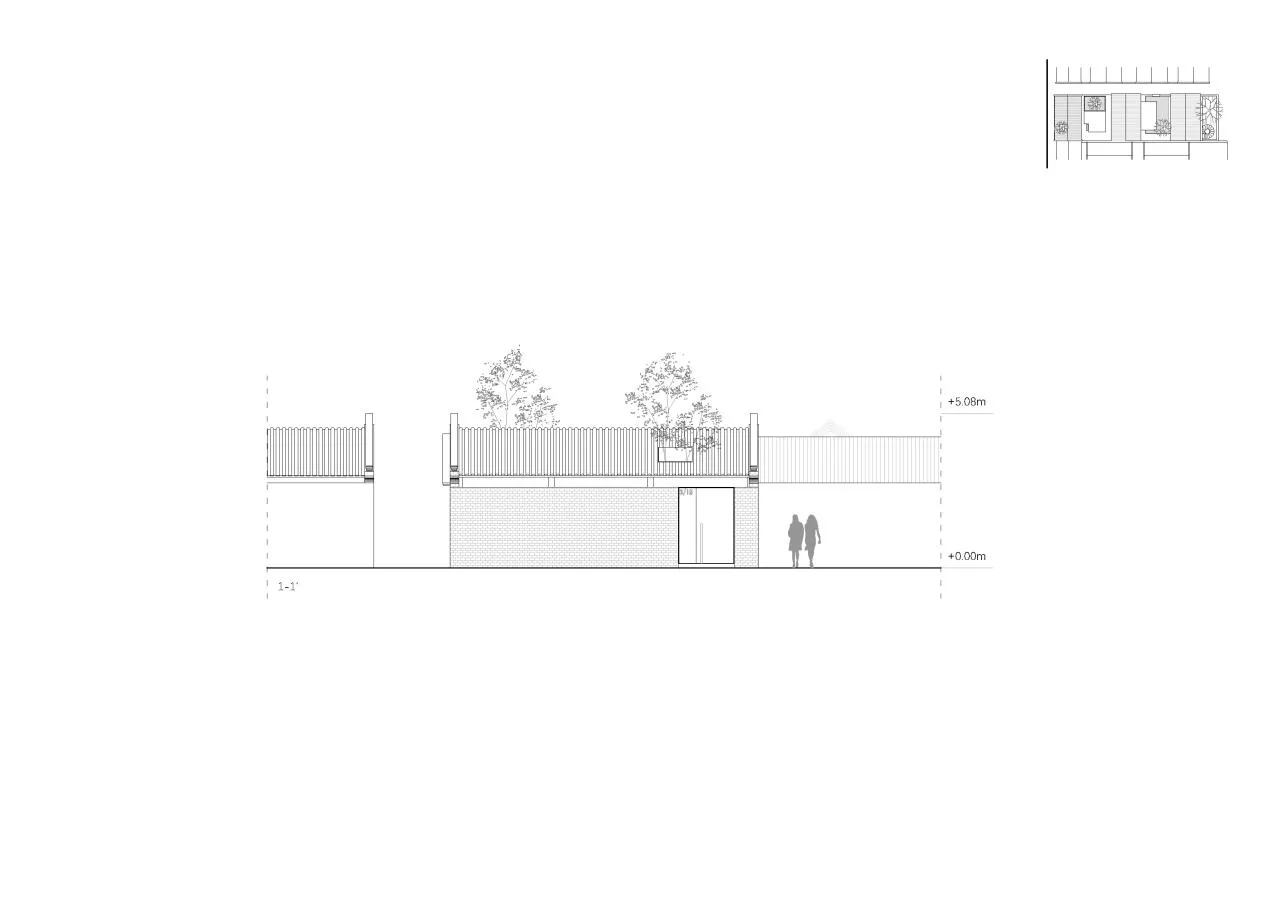
△ South Elevation View
Project Information
Project Name: Dongcheng Private House Renovation
Project Type: Architectural Design, Interior Design, Landscape Design
Project Status: Concept
Lead Designers: Johan Sarvan, Florent Buis
Design Period: February – June 2022
Indoor Area: 660 square meters
Materials: Sanitary Ware by SARVAN
Image Credits: JSPA Design















Must log in before commenting!
Sign Up