
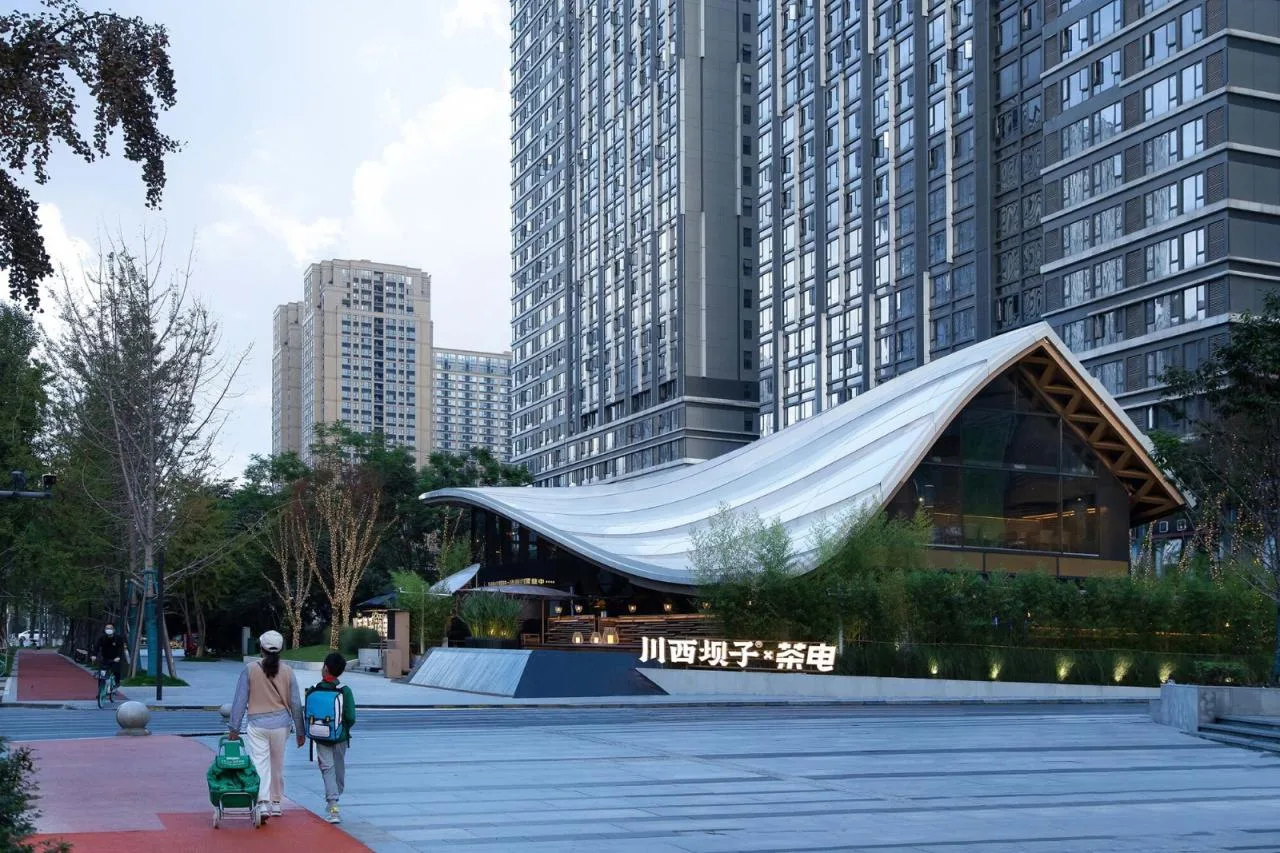
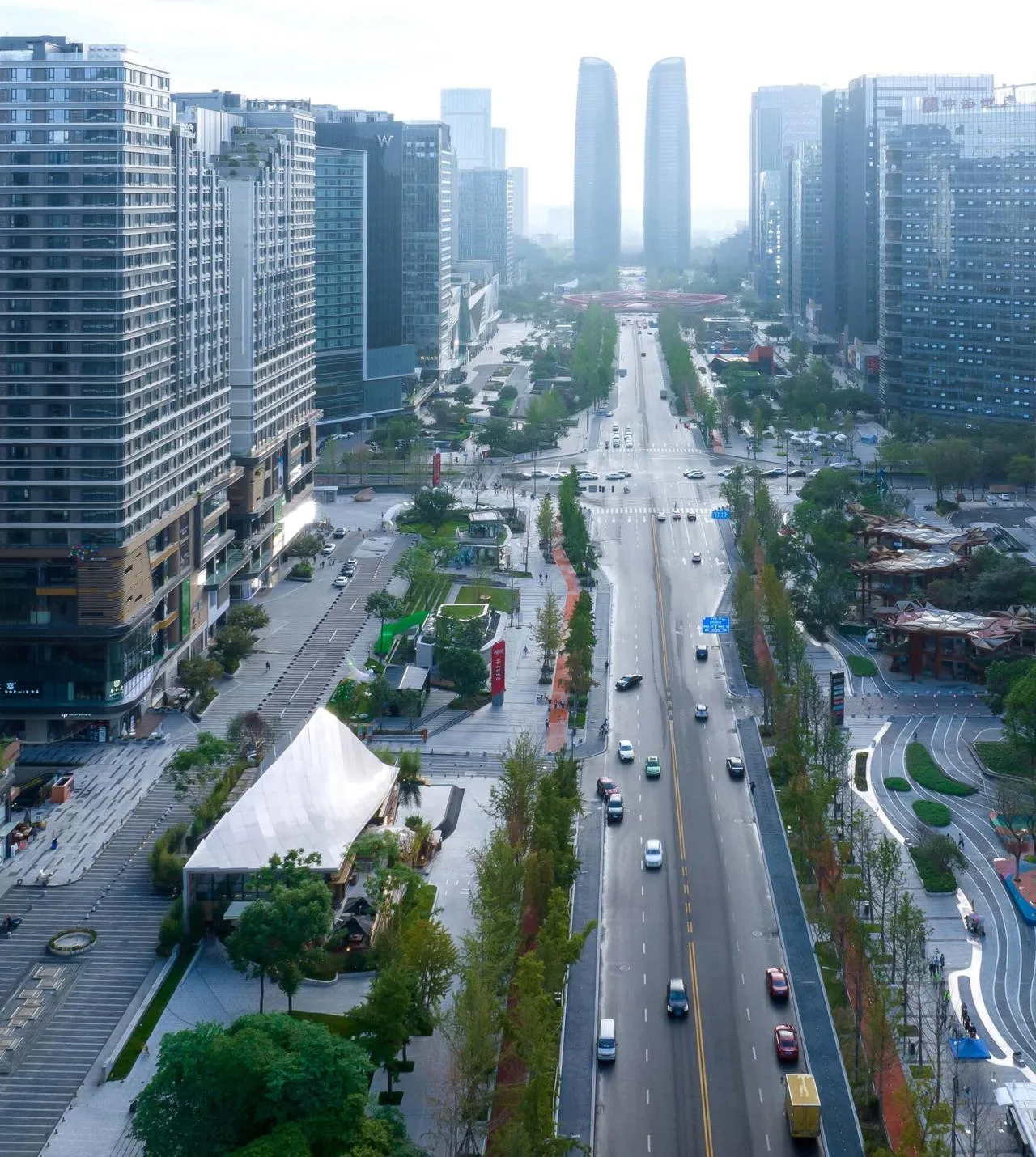
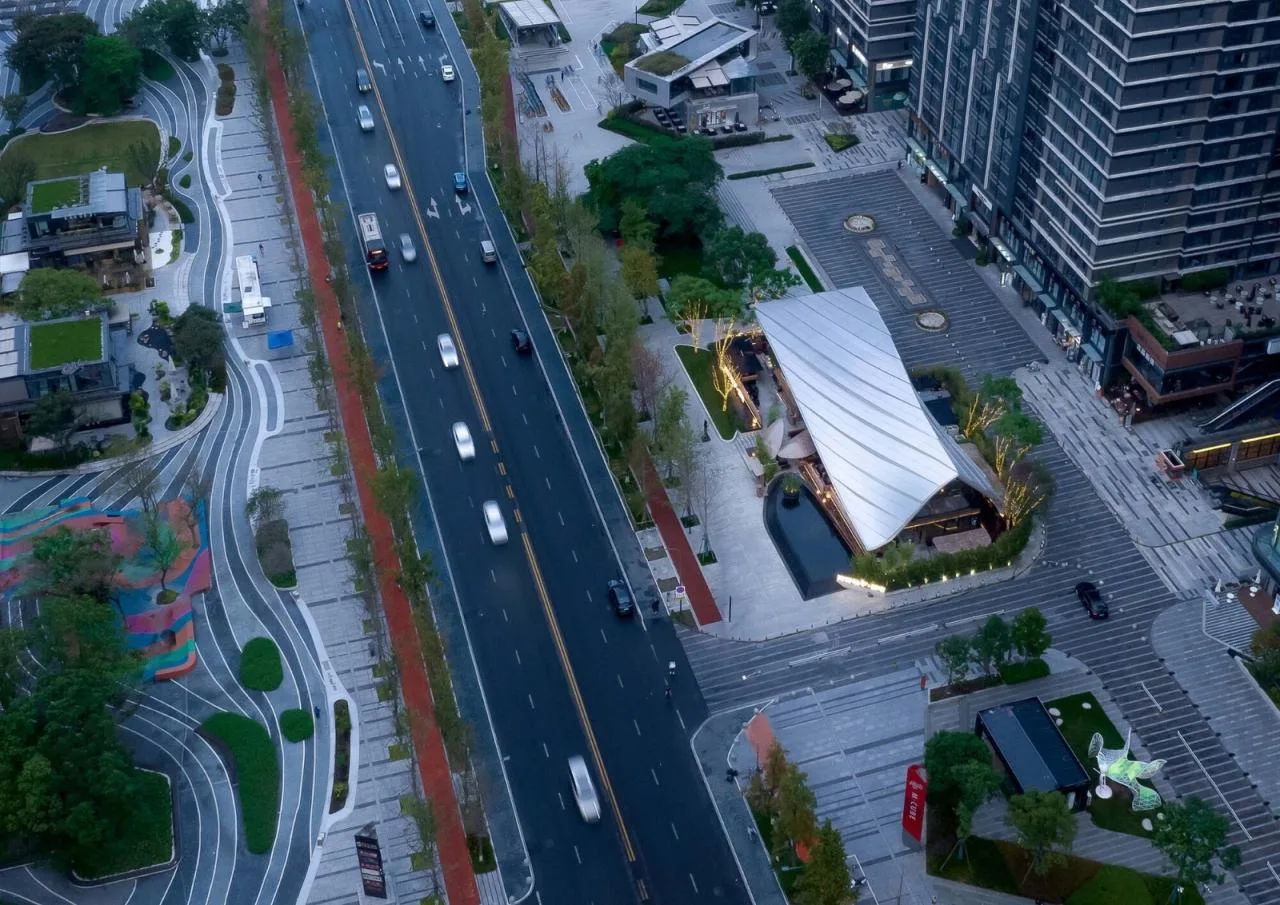
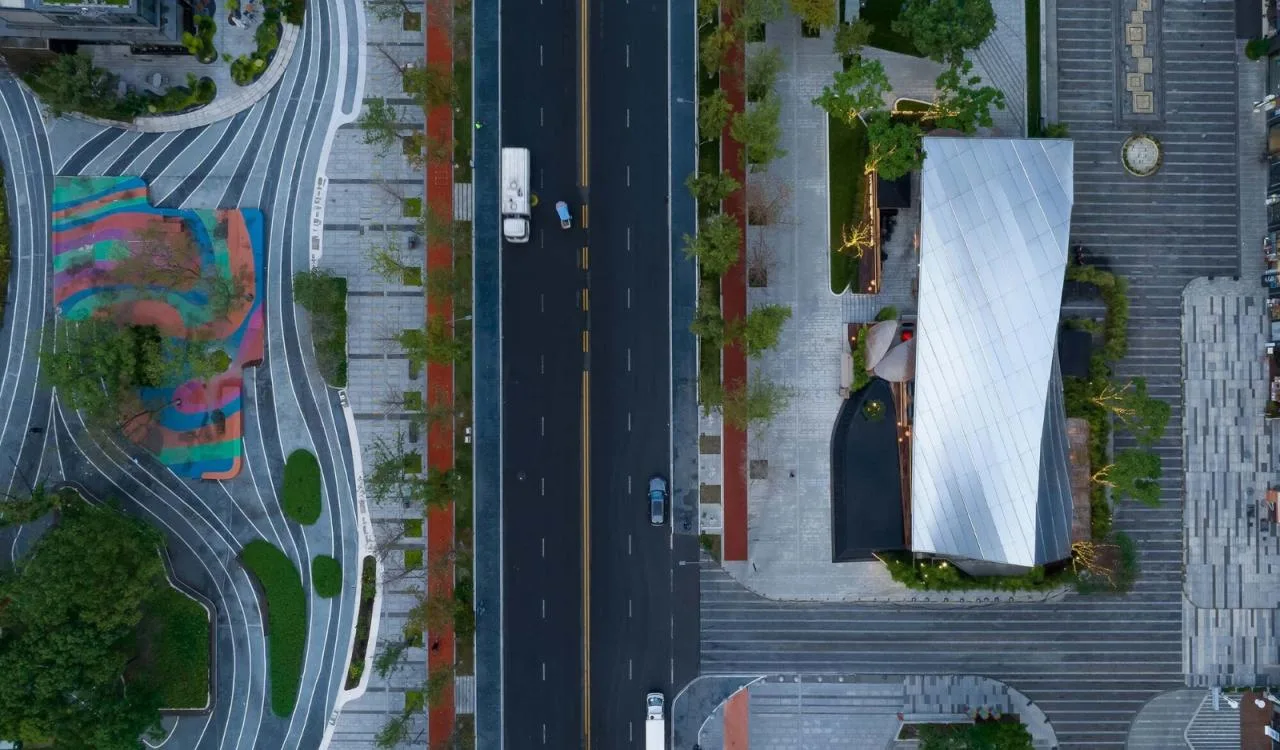
Chengdu’s Jiaozi Avenue stretches two kilometers east to west, lined with trees and featuring pedestrian-friendly landscapes about 50 meters wide on each side. More than 20 service stations of varying sizes, from several hundred square meters upwards, are scattered along the avenue. This project focuses on a catering building situated on plot N4-3. The building’s south side faces the city road, while the north is separated by a lane from towering residential high-rises. To the east, the twin towers at the end of Jiaozi Avenue come into view.
Upon first visiting the site, we sensed the urgency of city life amid the bustling concrete surroundings. This inspired us to design a building that exudes a natural atmosphere, one approachable through its construction form and material choices, offering a relaxed, leisurely dining space amidst the city’s hectic pace.
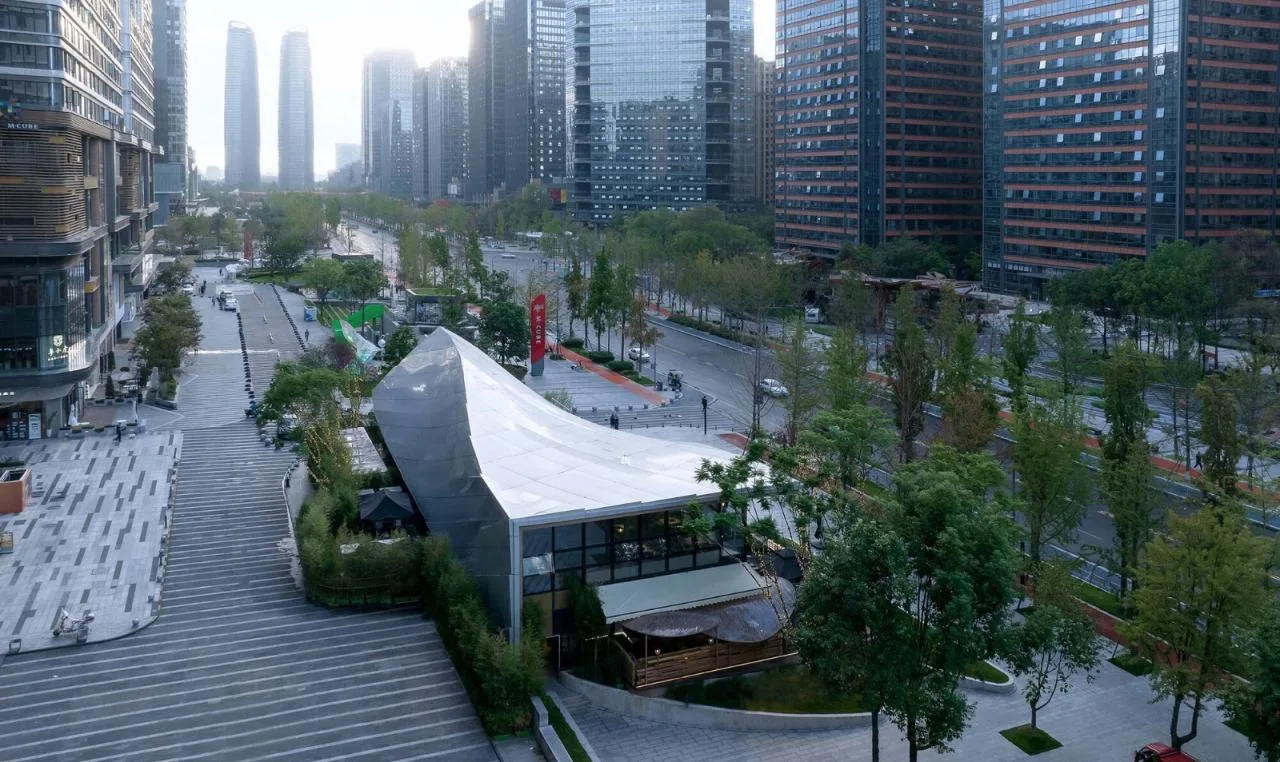
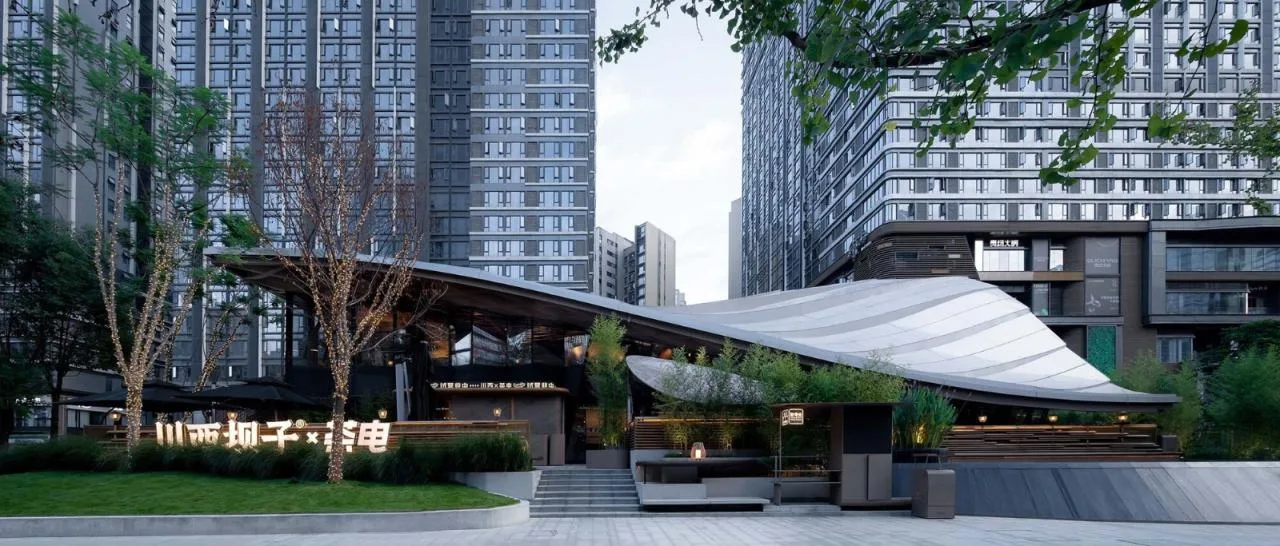
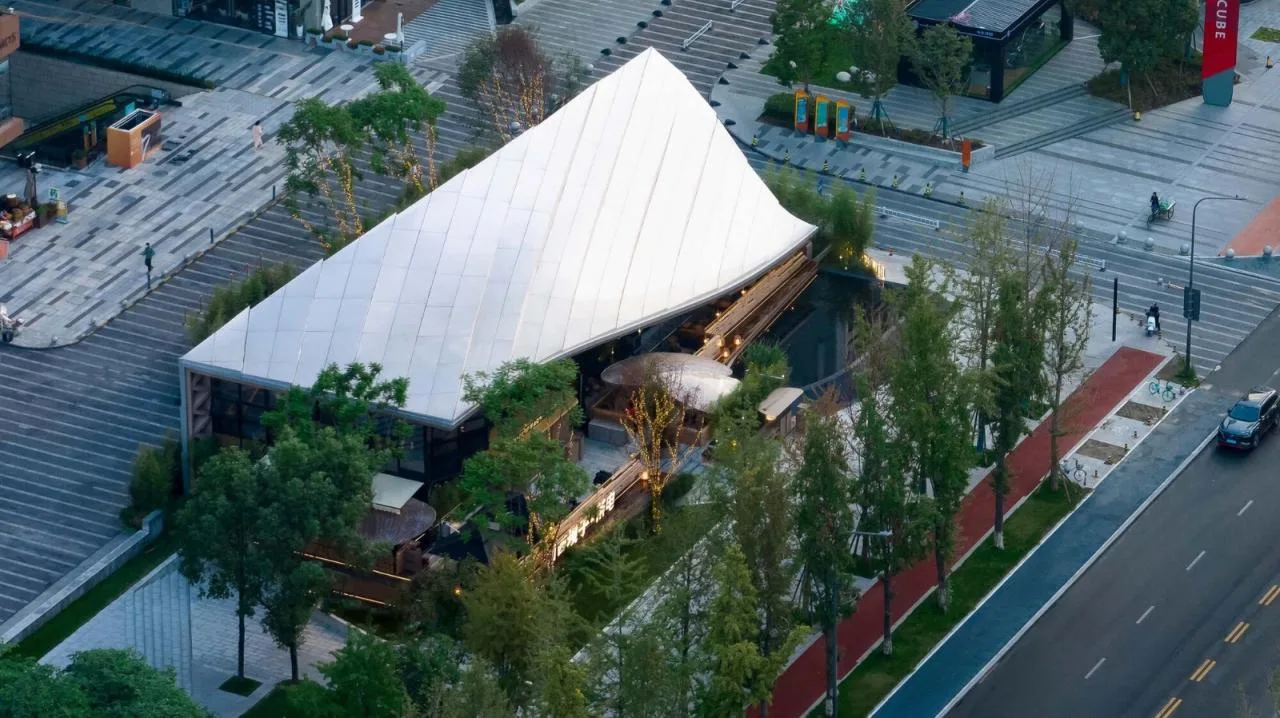
The restaurant occupies around 600 square meters, featuring a two-story dining area on the south side that maximizes views of the landscaped trails. The kitchen and logistical spaces are concentrated on the north side. A reflective pool sits to the south of the site, serving as a serene transitional area before entering the building. The water mirrors the stretched roof and sky, creating a tranquil setting for visitors to unwind in fleeting light.
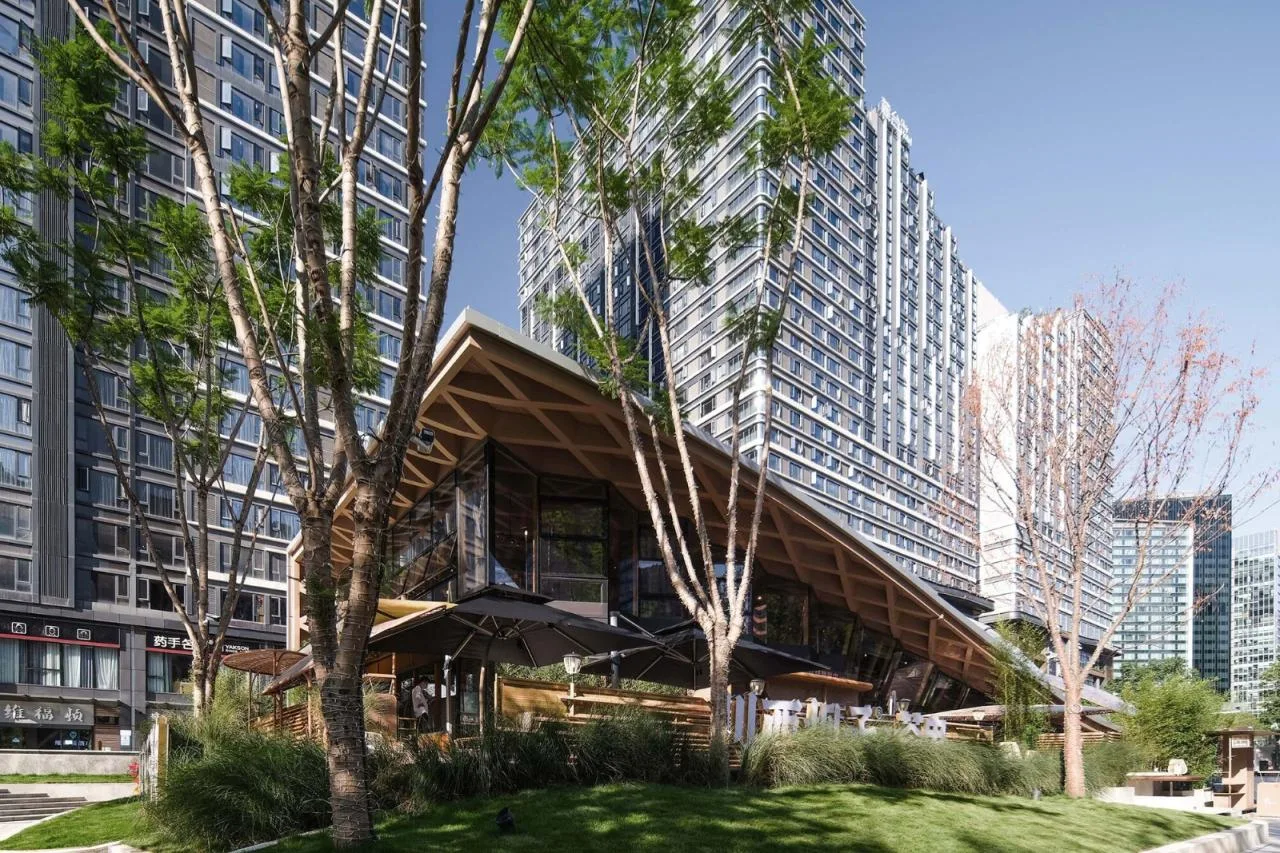
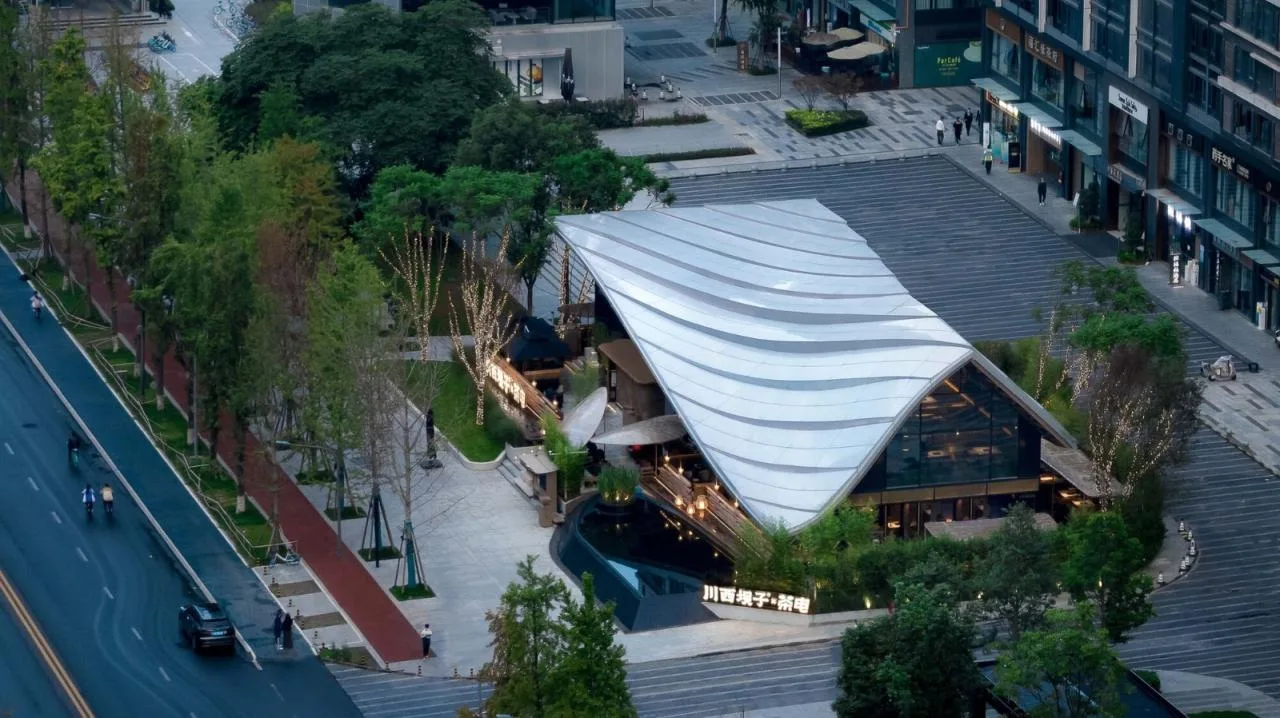
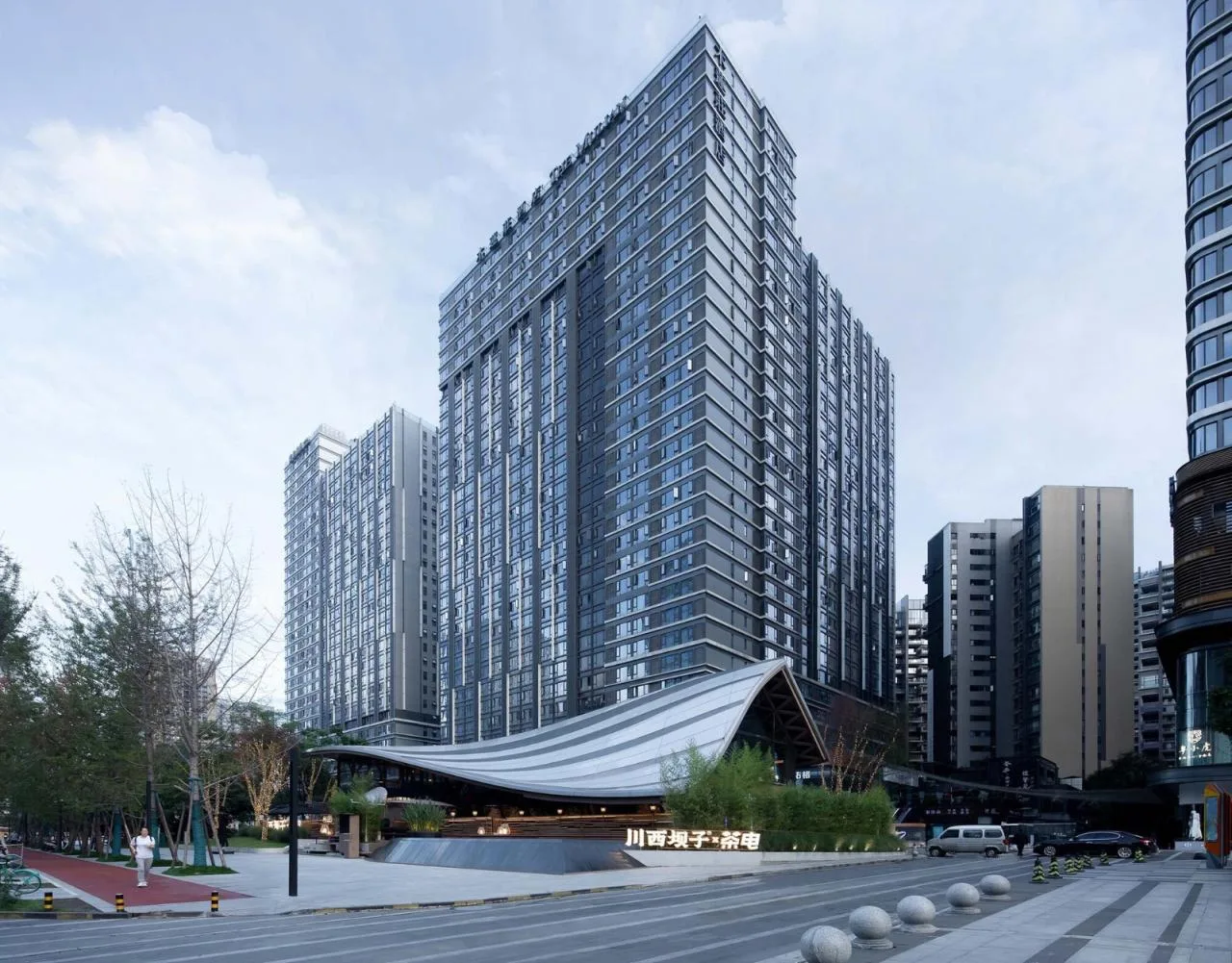
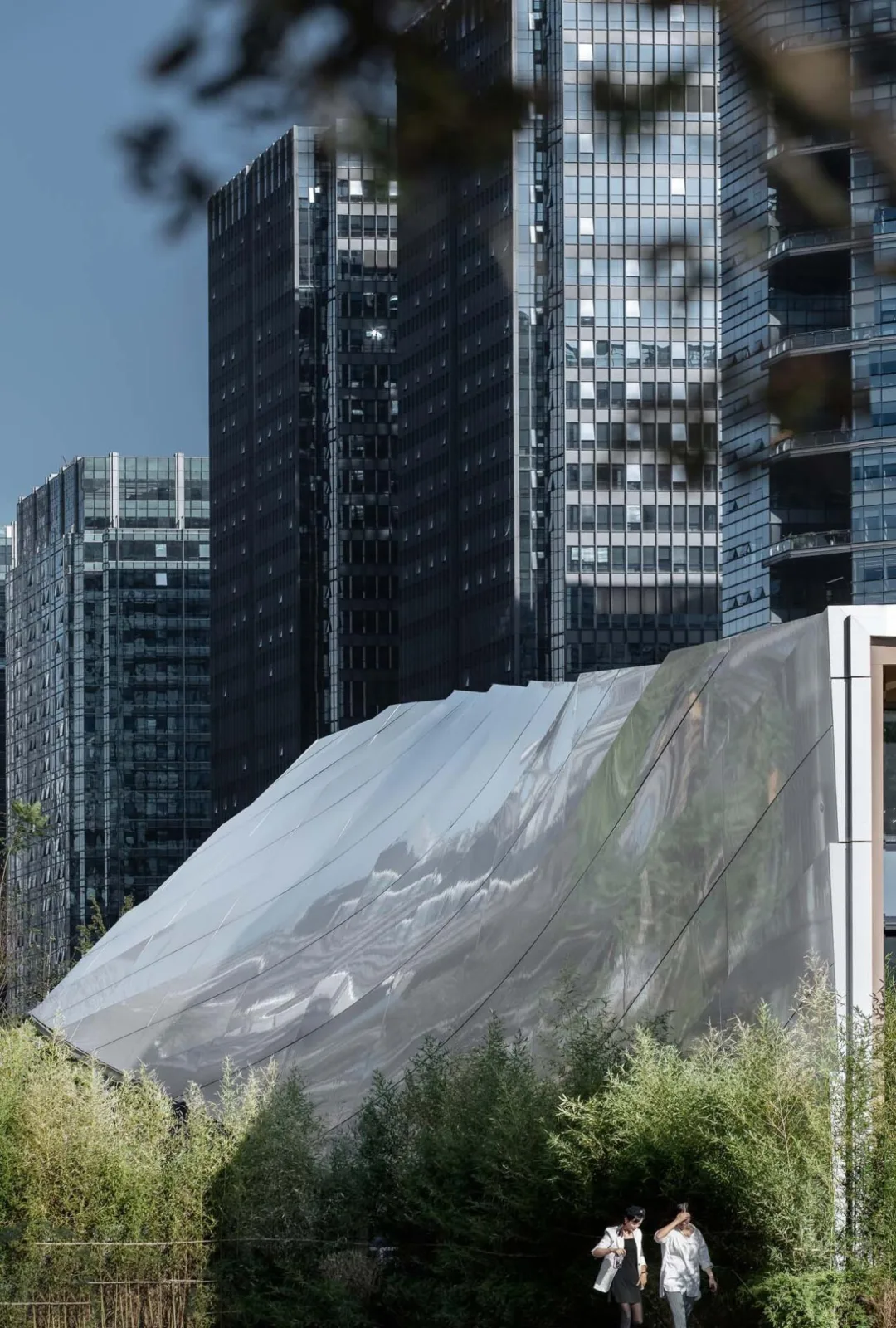
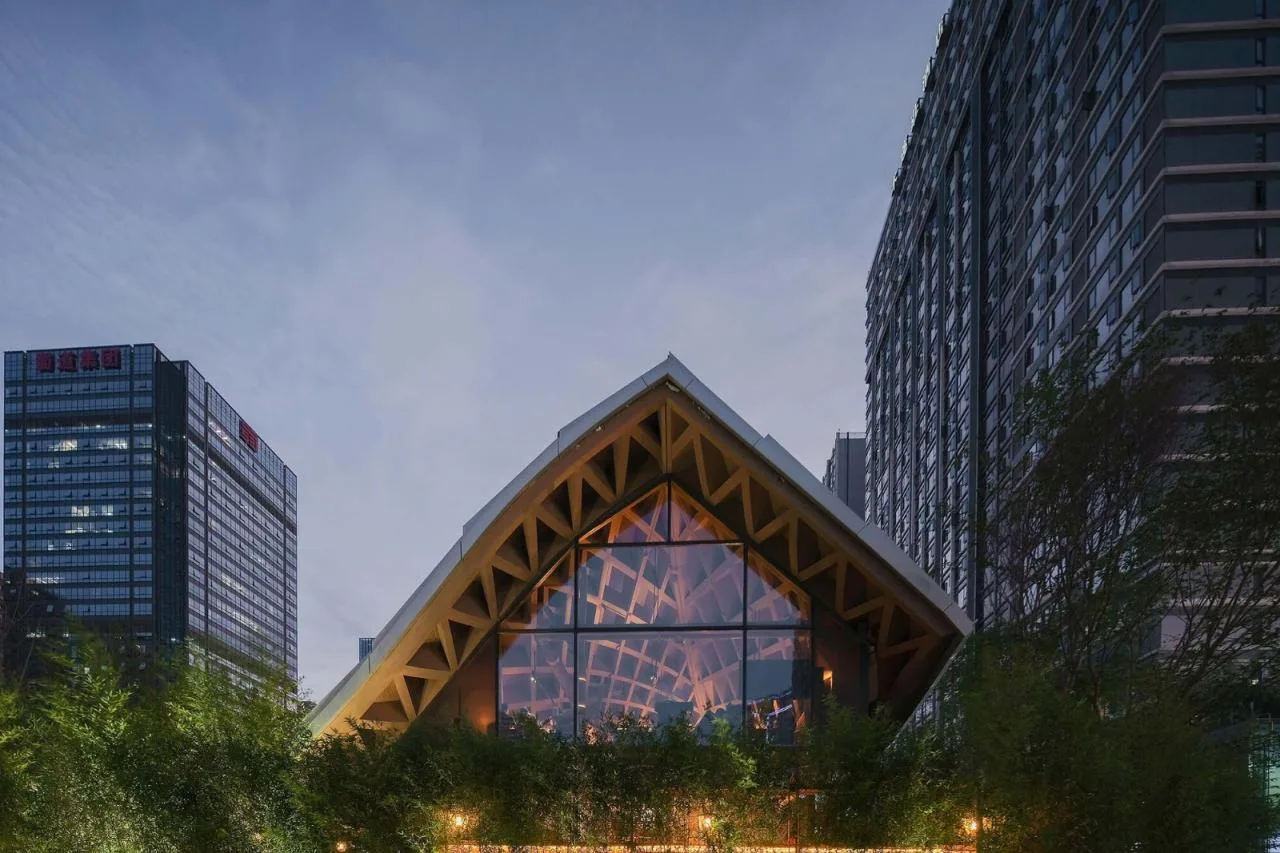
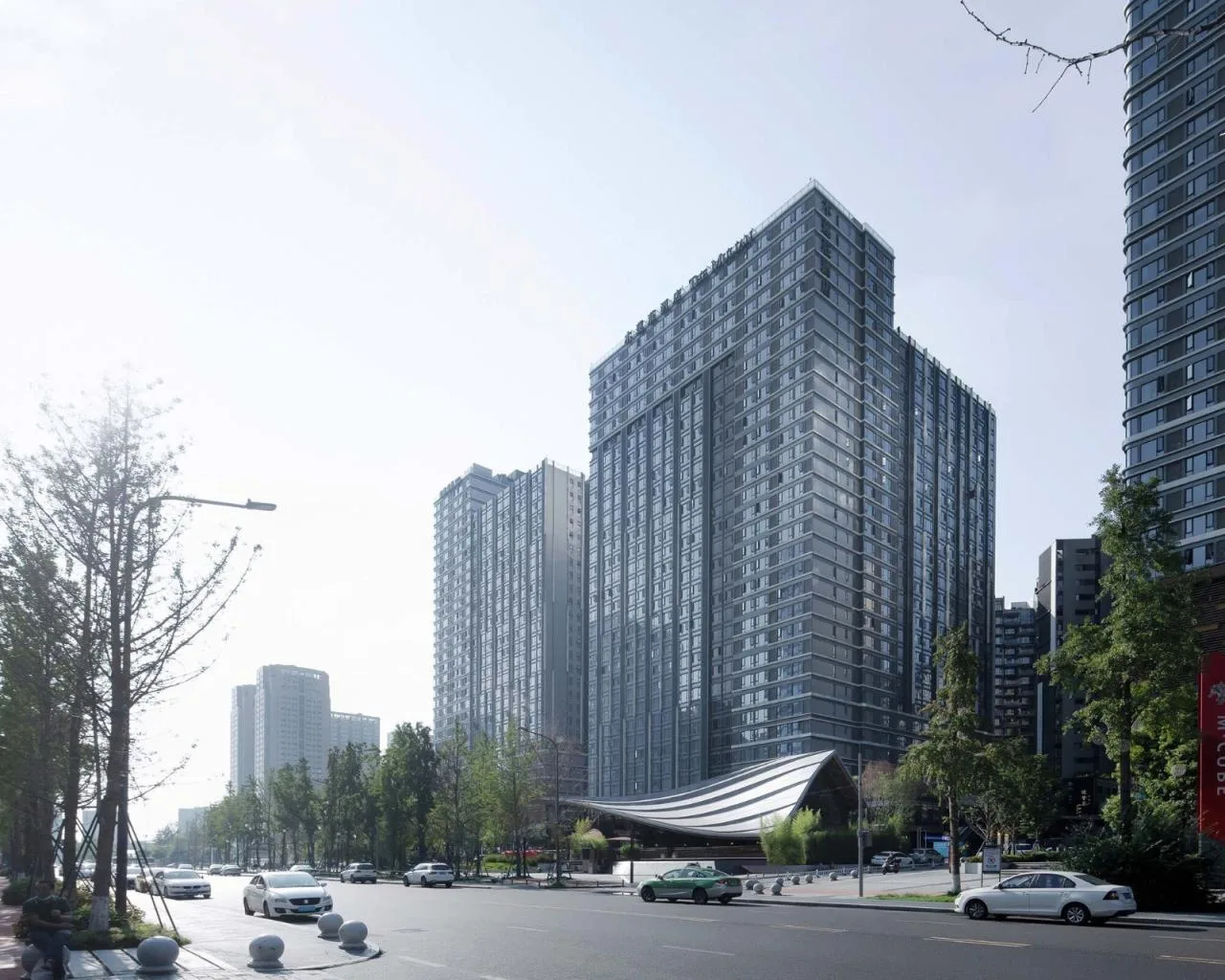
The architectural design creates a dialogue between traditional Sichuan sloping roof dwellings and the sleek simplicity of modern urban architecture. The restaurant’s east facade echoes the sloping roof contours and textures of traditional Sichuan wooden buildings, while the west facade integrates with the architectural language of Jiaozhi Avenue. These two distinct forms are seamlessly connected by a twisted roof.
The roof’s outline is light and wing-like, featuring dynamically undulating hyperboloids that follow a winding ridge line. It gently covers the lower restaurant and surrounding landscape, crafting a spatial atmosphere that feels free-spirited and dynamic for diners.
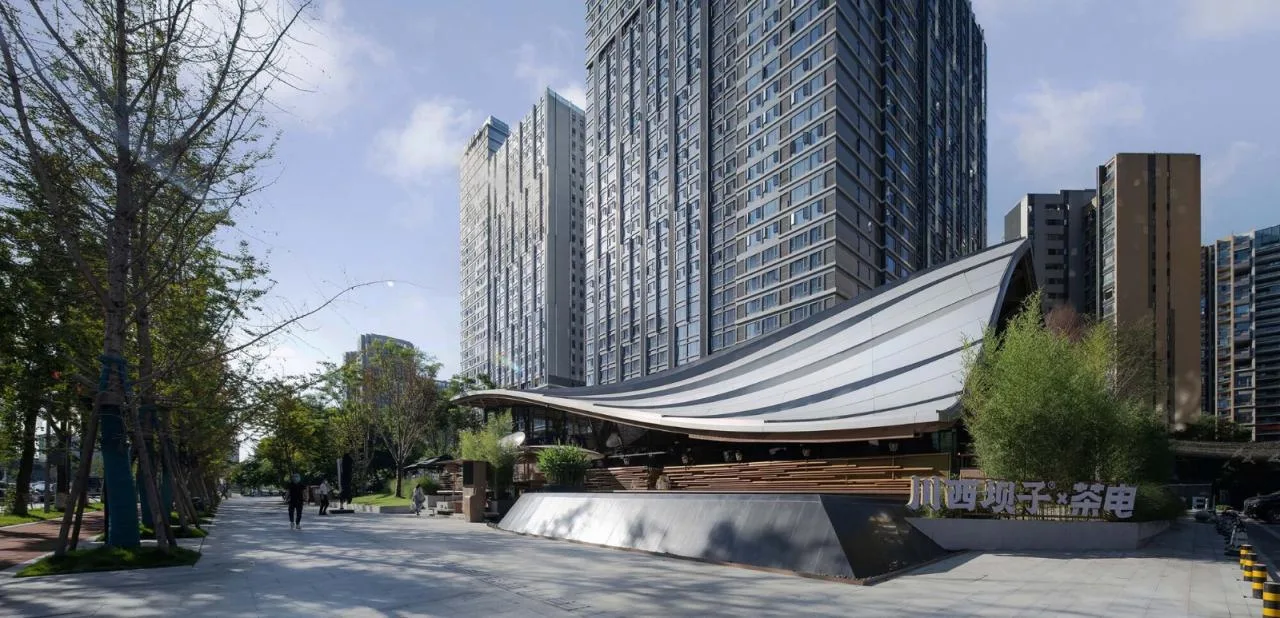
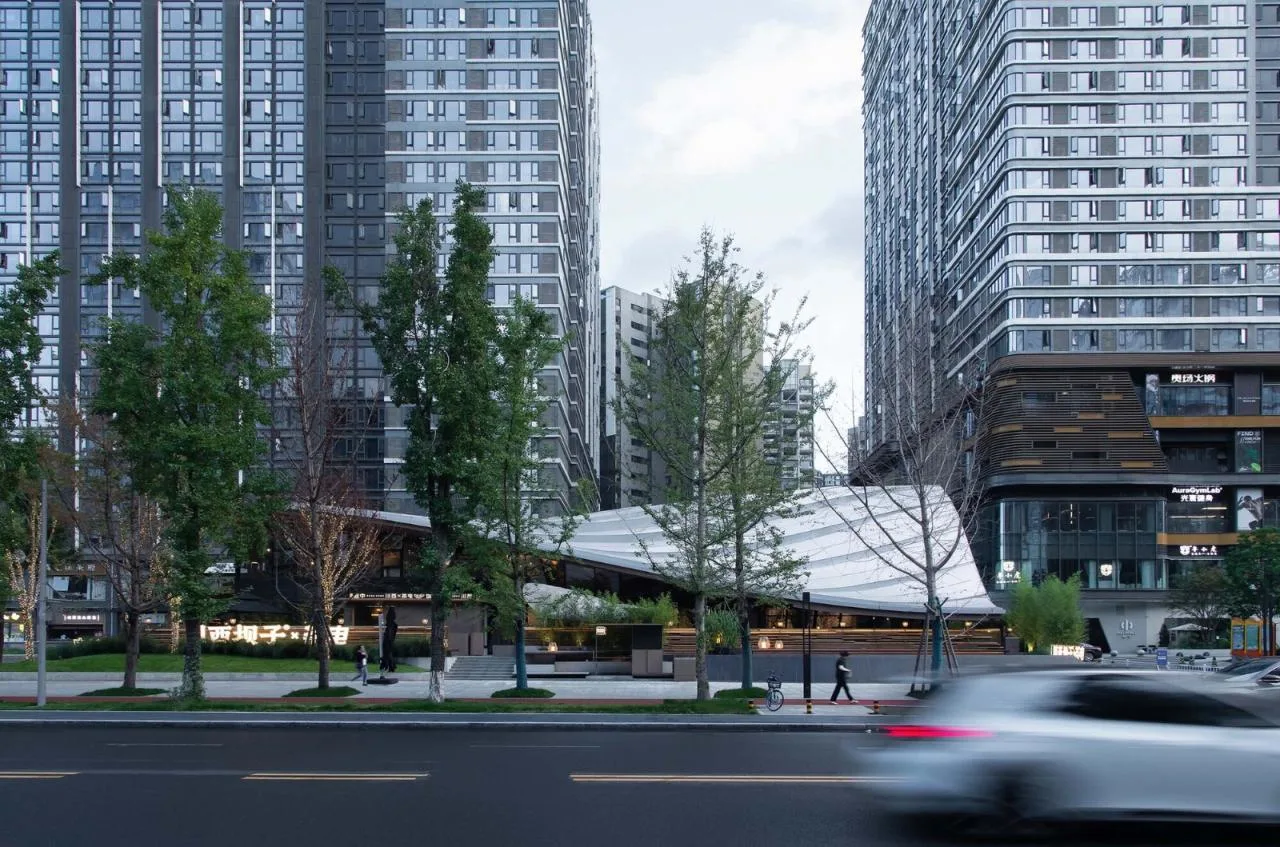
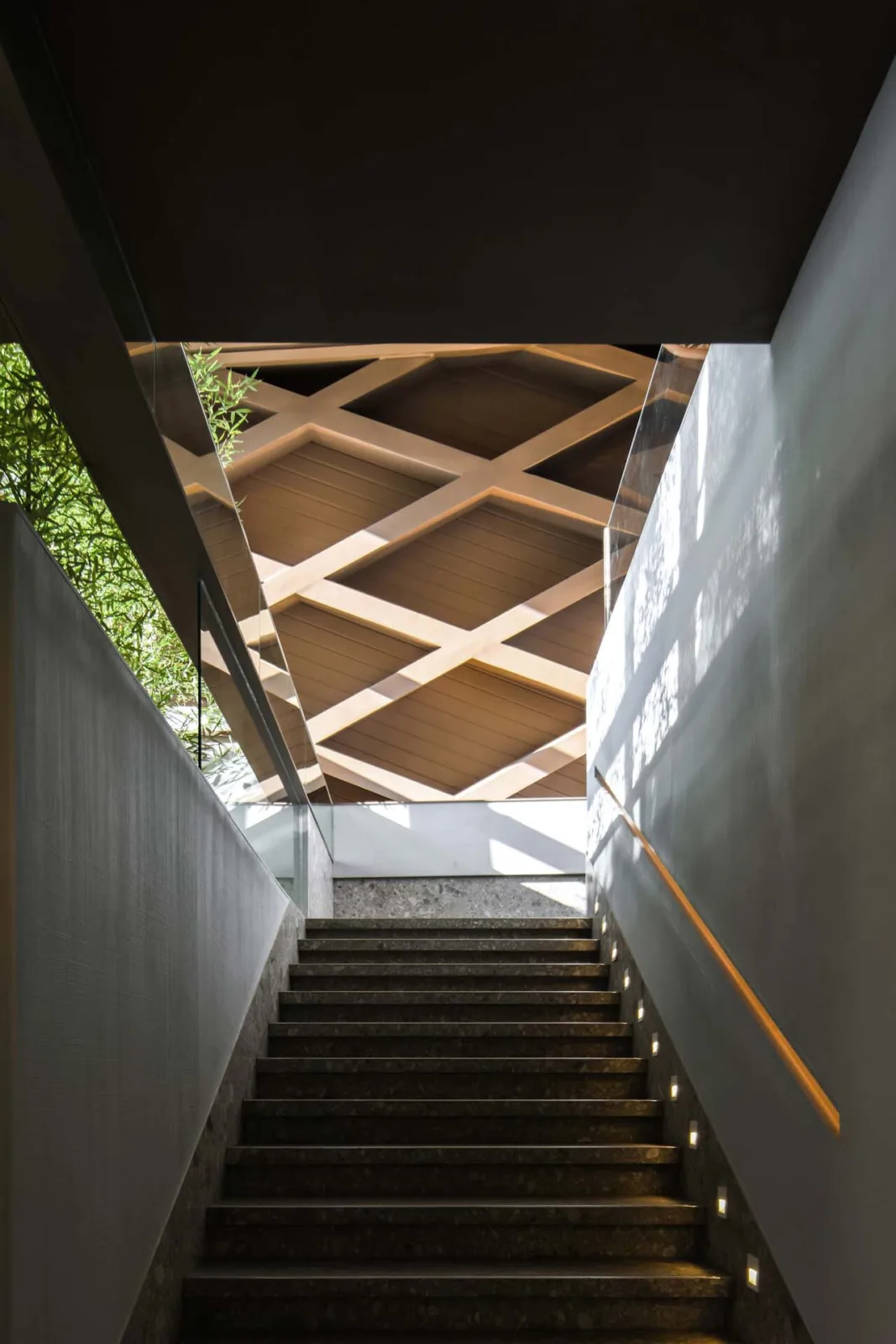
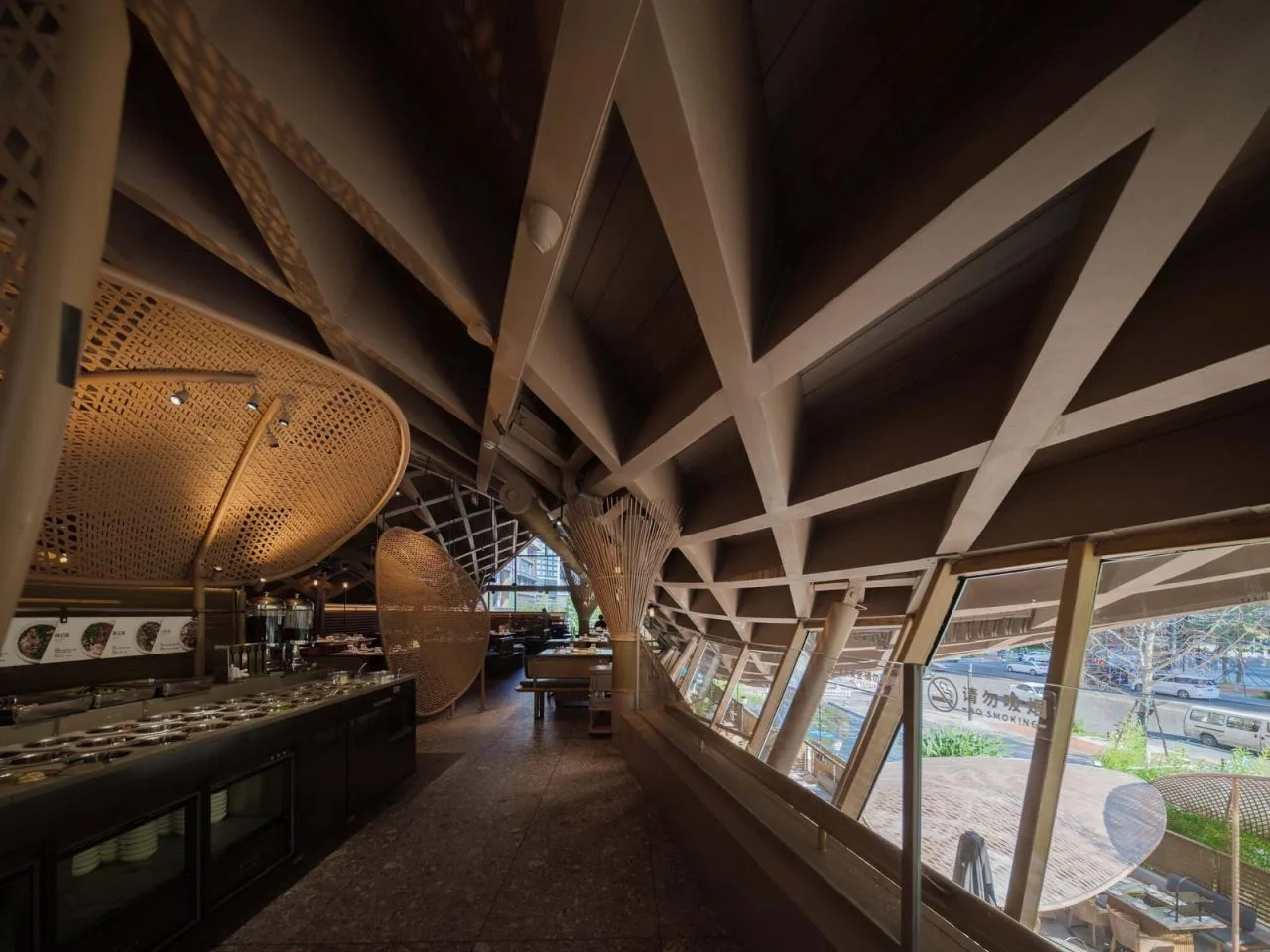
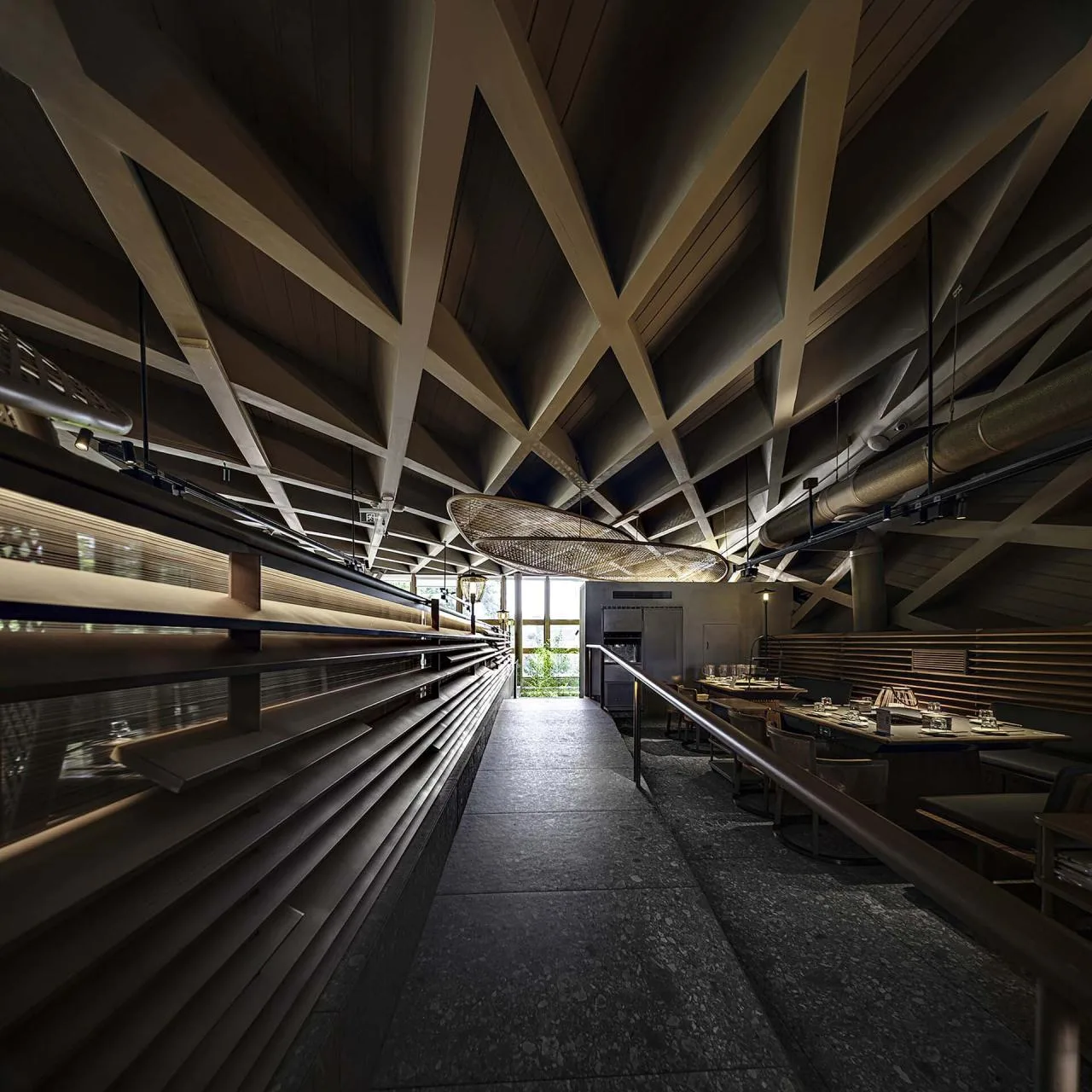
The building features a hybrid steel and wood structural system. Diagonally intersecting grids of glued laminated timber beams follow the hyperbolic roof shape, extending from the interior all the way to the eaves. This design fosters a harmonious relationship between constructed nature and the surrounding greenery. For enhanced stability, steel columns split above the second-floor slab and connect with cross-shaped steel beams at the center points of the timber grids, forming tree-like structural elements.
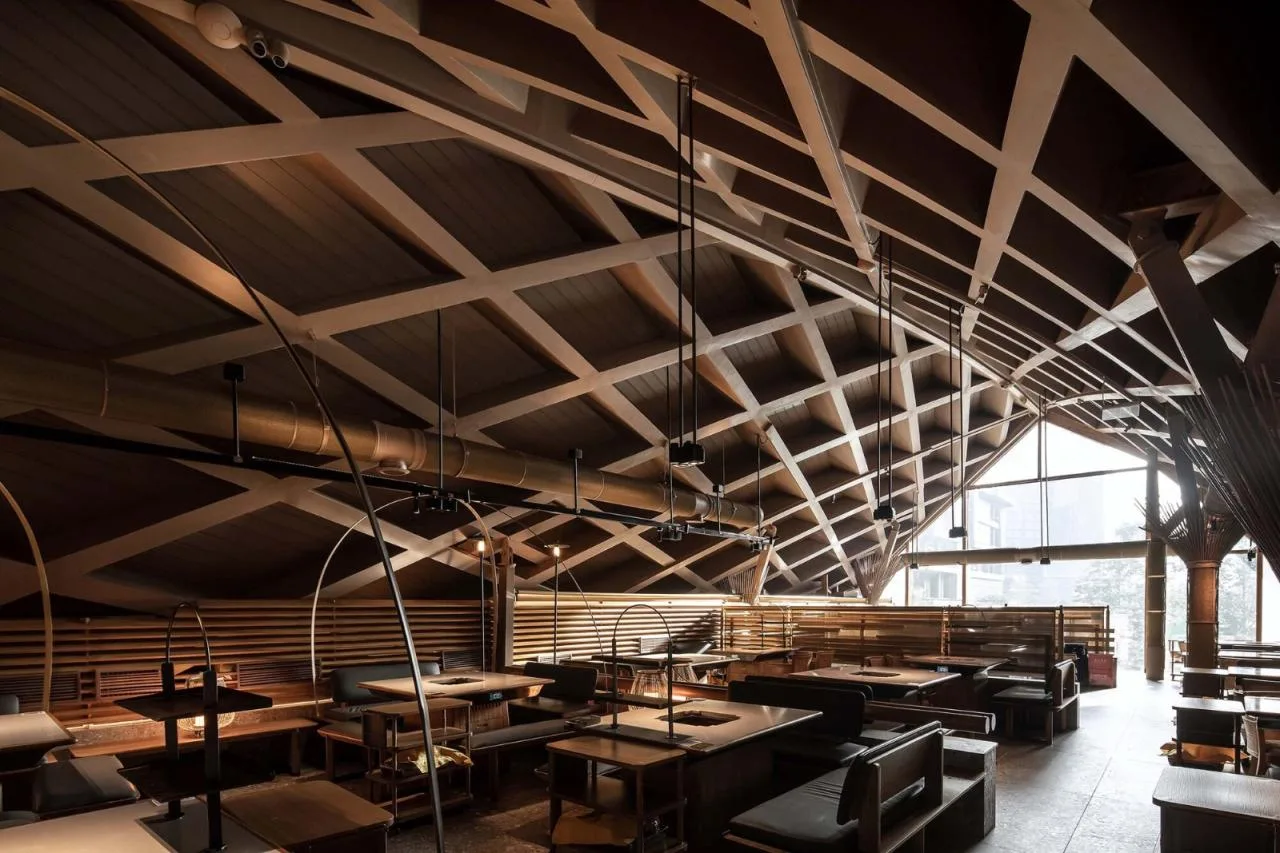
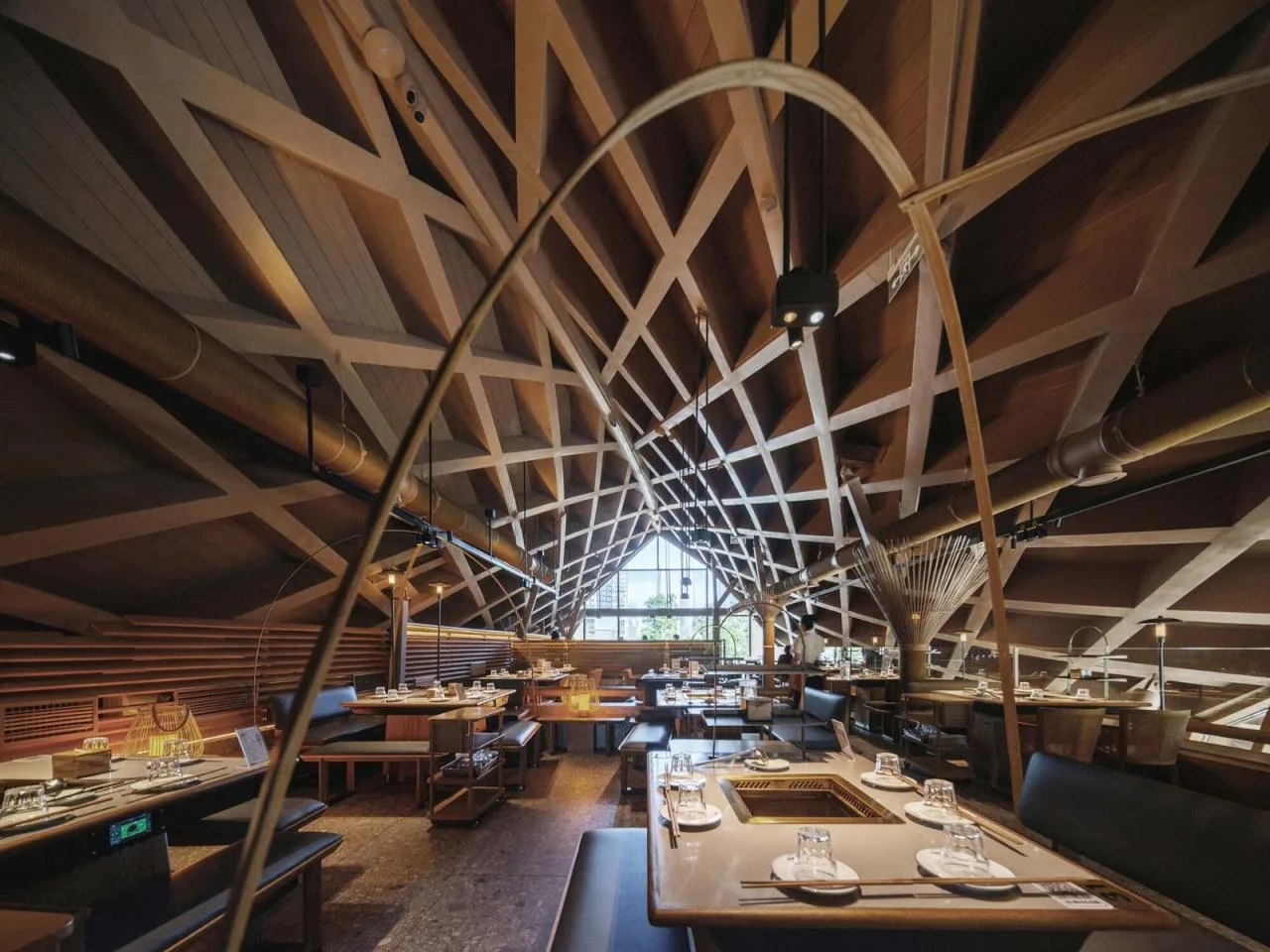
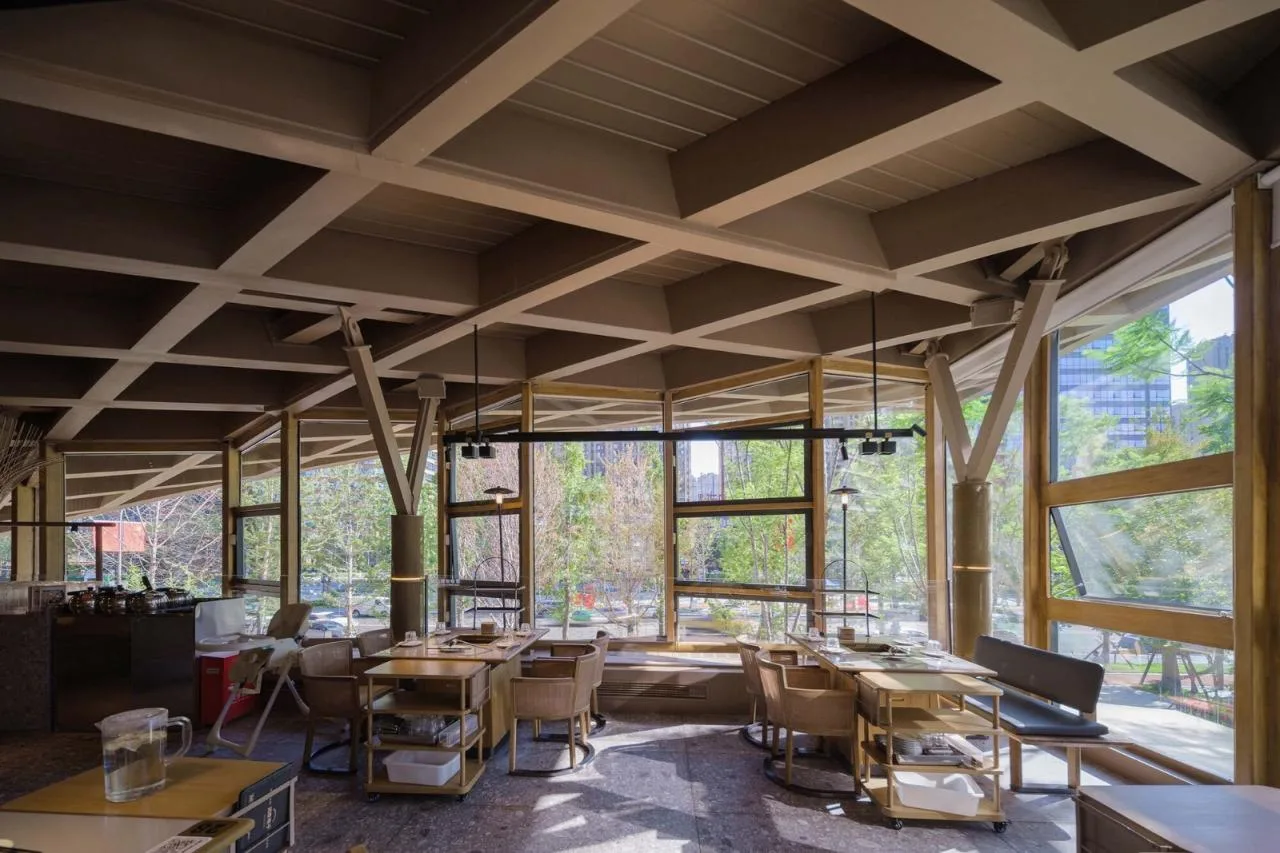
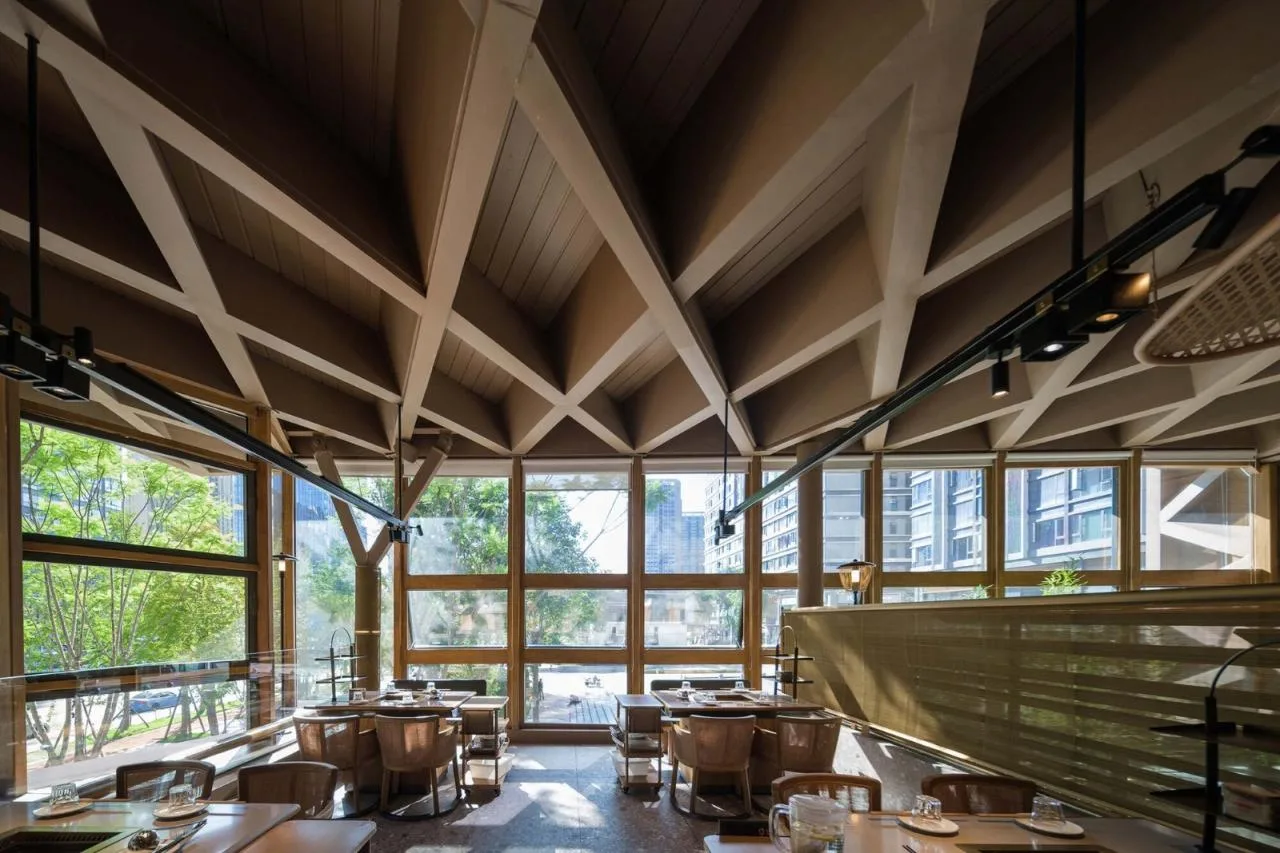
The greatest structural challenge was achieving a roof overhang exceeding four meters on the south side. To support the wooden beams and allow the roof to hover low above the reflective pool without dropping columns, four diagonal columns were added atop the front steel columns. This also created a narrow overhang along the curtain wall, enabling first-floor visitors to appreciate the vibrant wooden structure of the second floor.
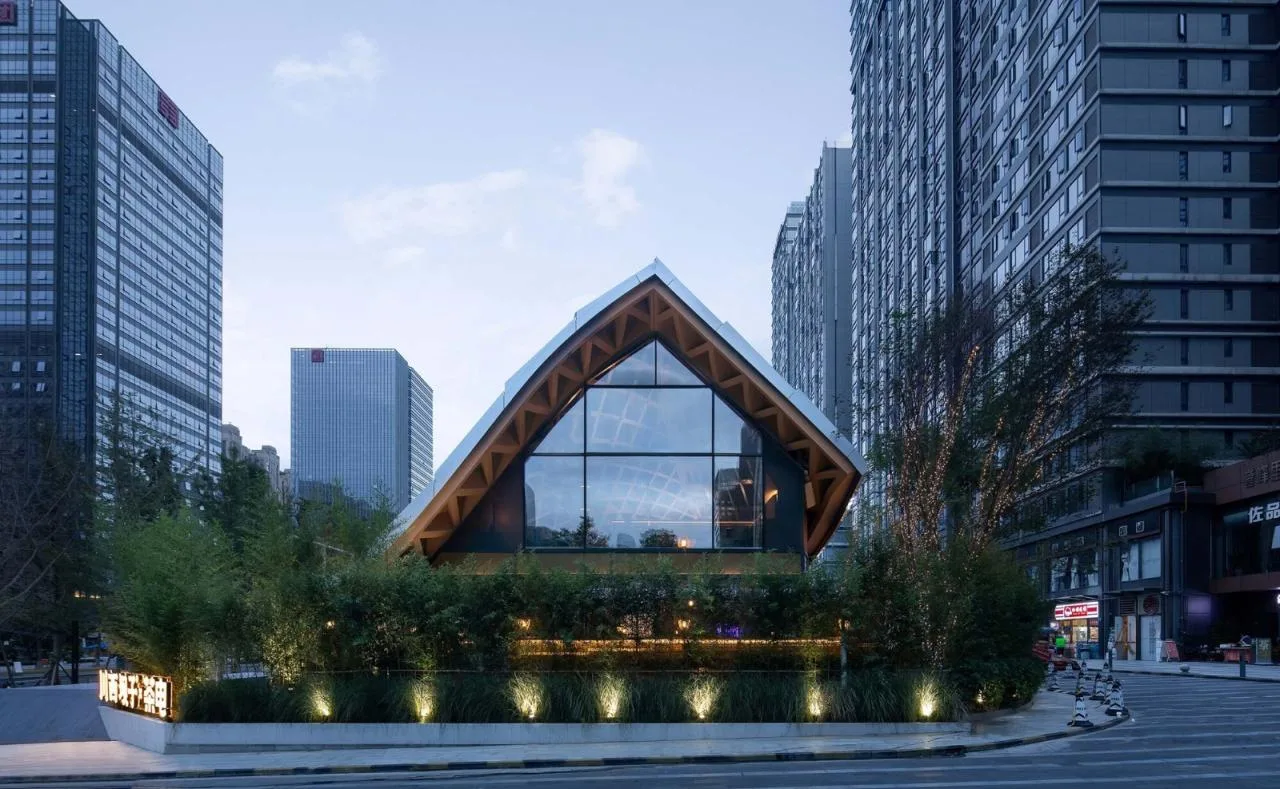
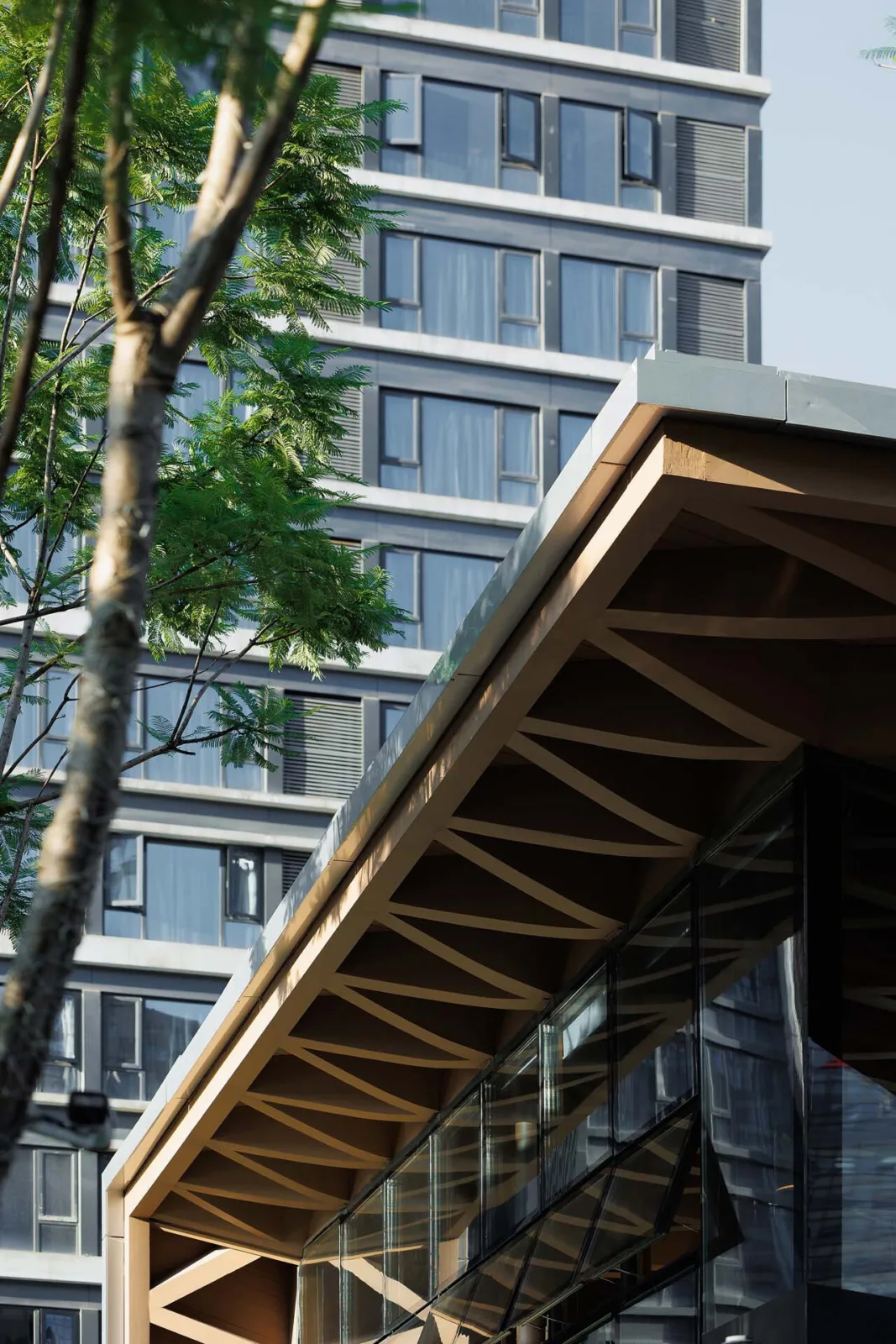
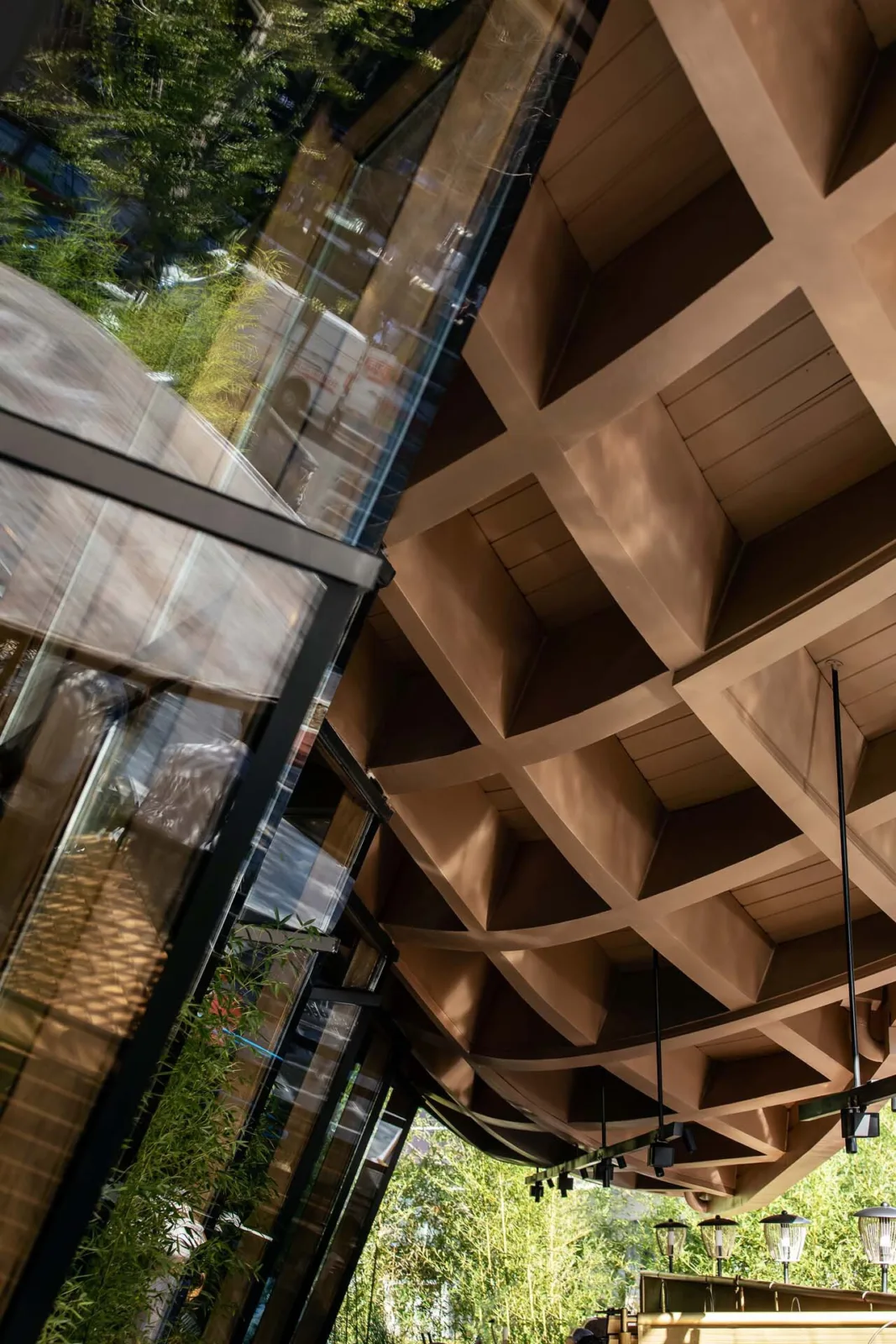
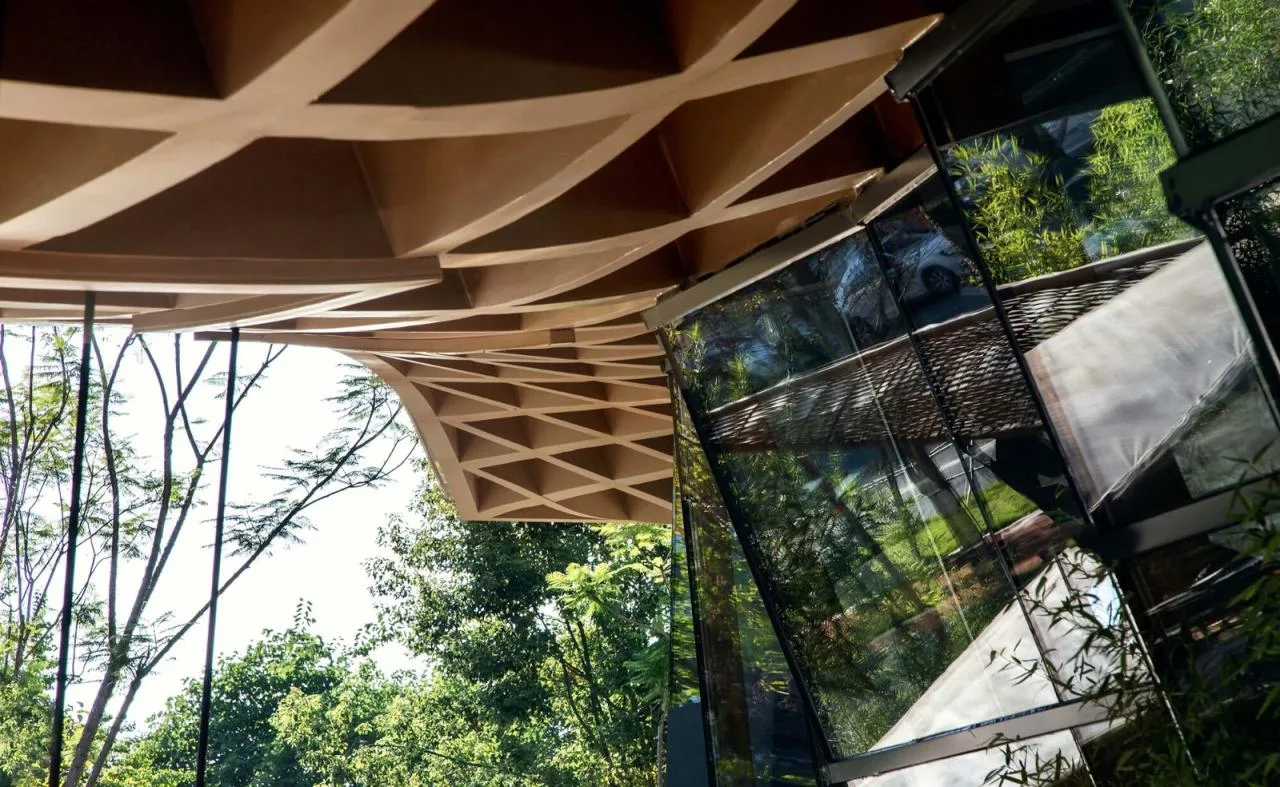
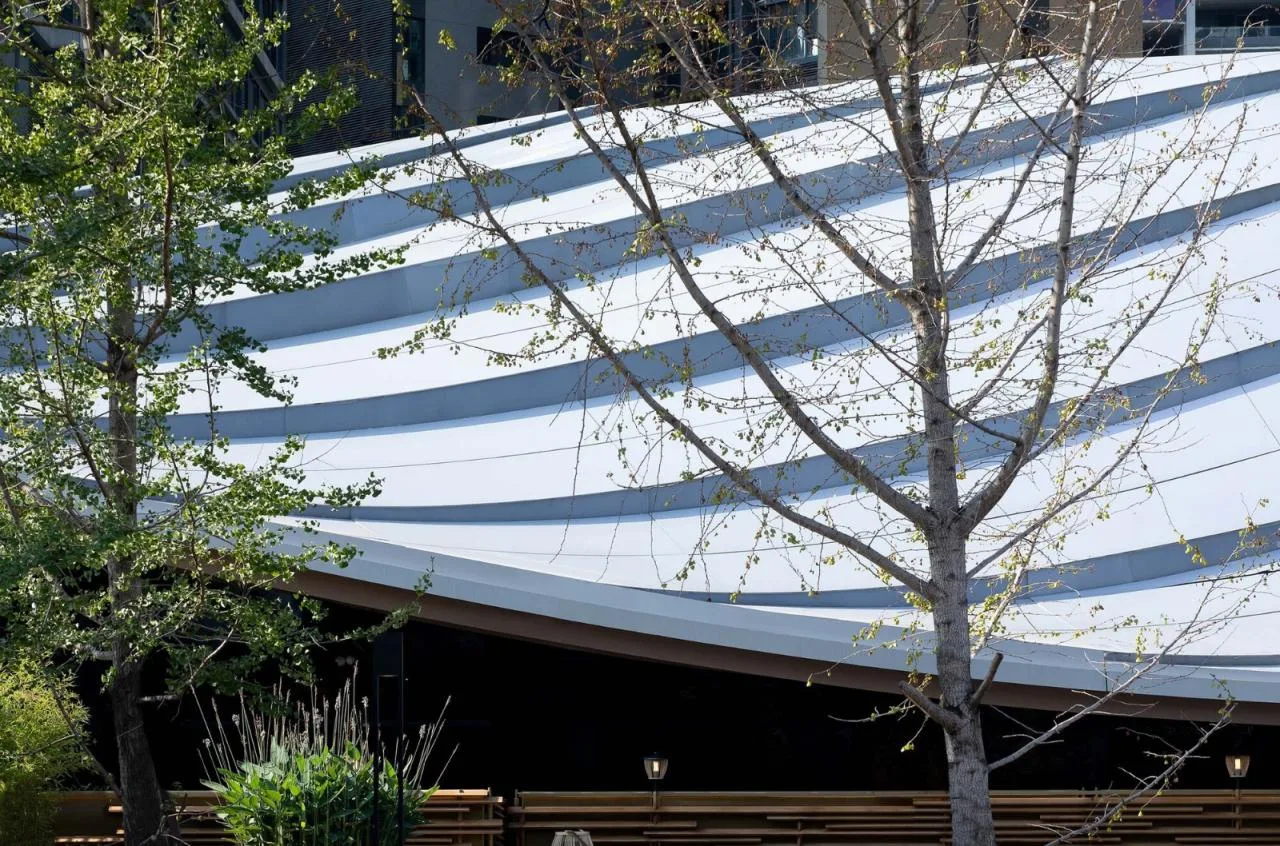
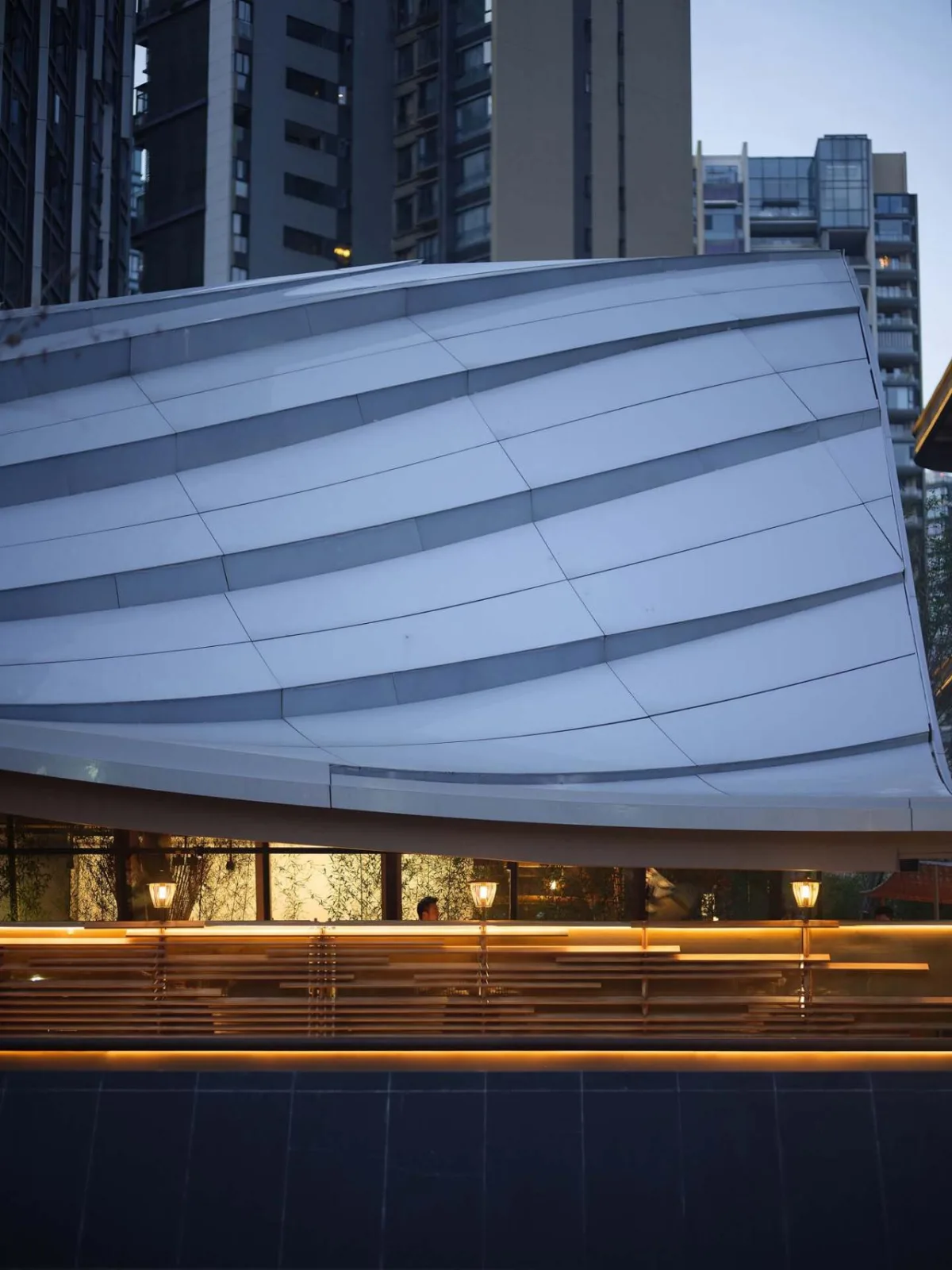
The building’s exterior cladding is designed to be as transparent as possible, emphasizing the continuity of the wooden structure inside and out. Glass curtain walls on the north and south sides align with the direction of the wooden roof beams, naturally forming a dynamic, continuous contour. Illuminated from within, the wooden roof is clearly visible to pedestrians outside. The roof itself is clad in honeycomb iridescent aluminum panels that shimmer with a gradient luster in sunlight.
These aluminum panels wrap the dynamic roof in layered formations, with milky white acrylic and LED lights integrated at the junctions between each layer. At night, these emit a soft glow, gently blending the roof’s layers together.
Project Drawings
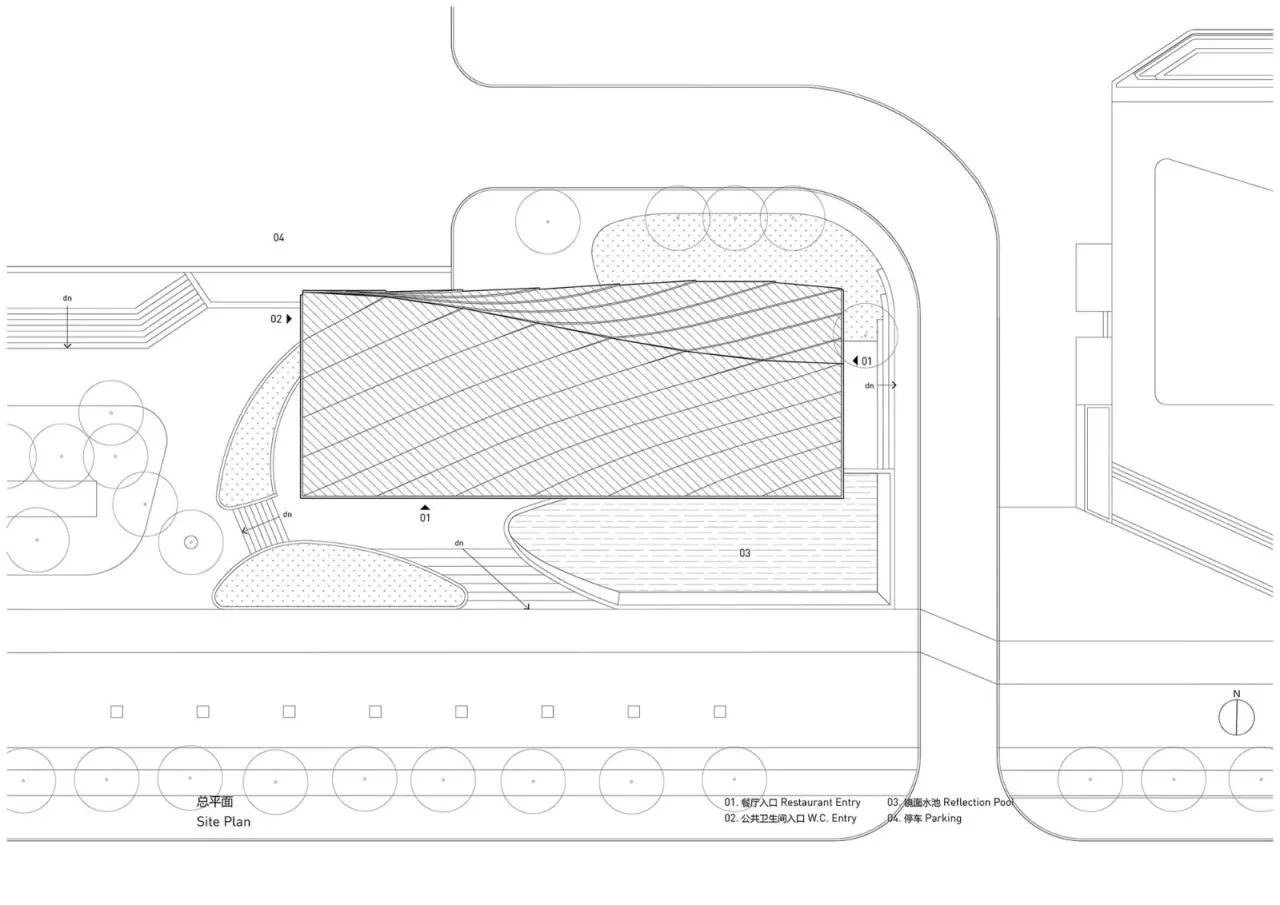
△ General Layout Plan
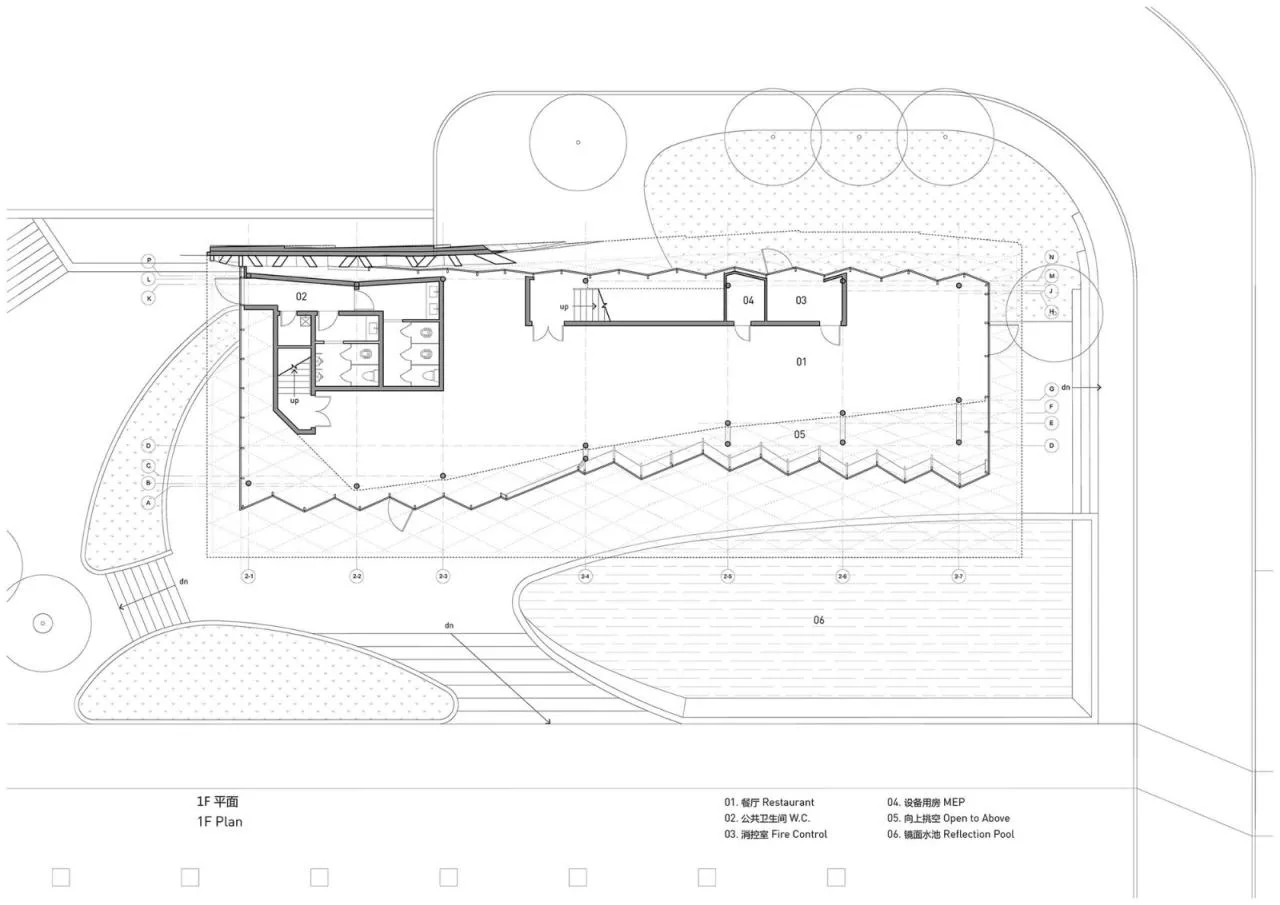
△ First Floor Plan
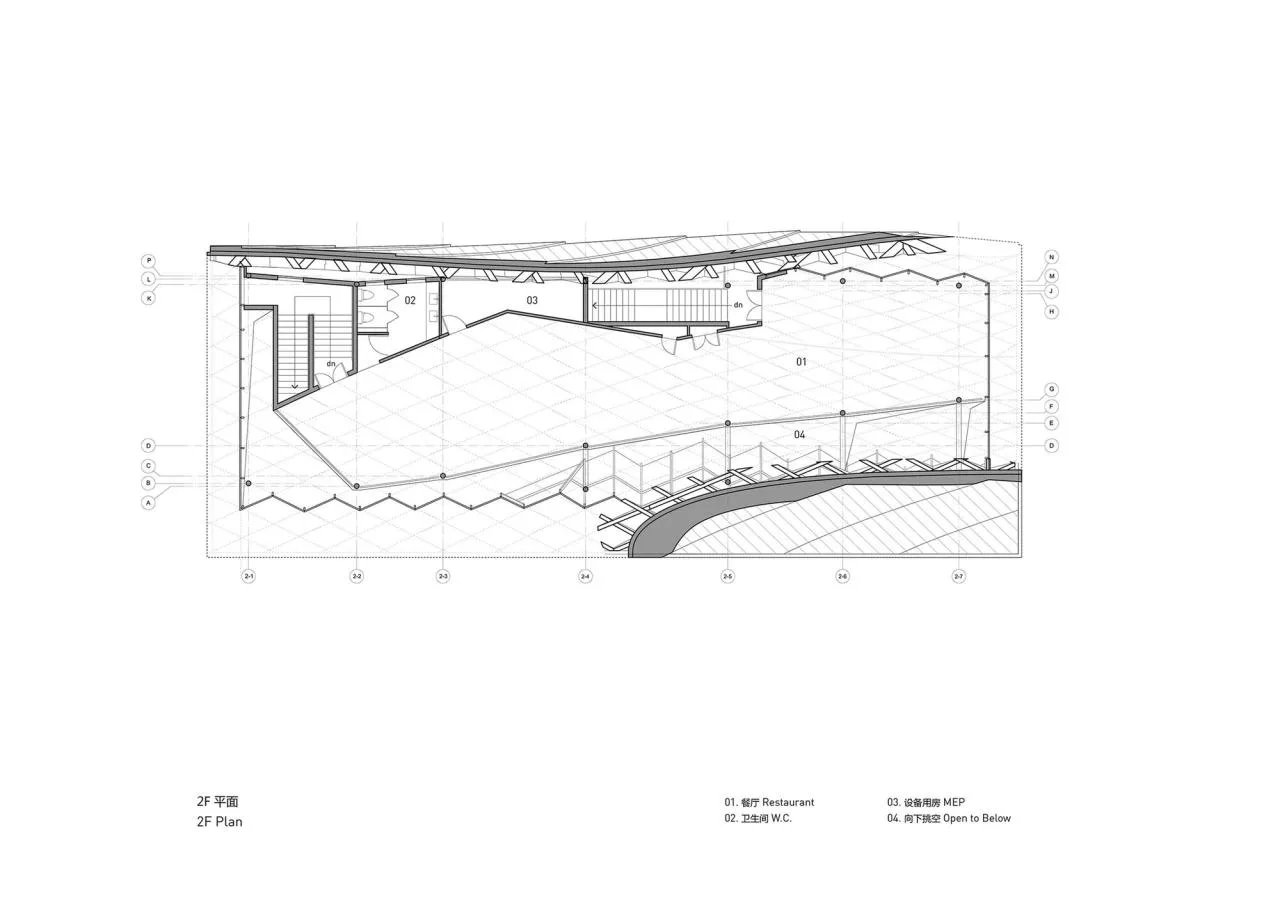
△ Second Floor Plan
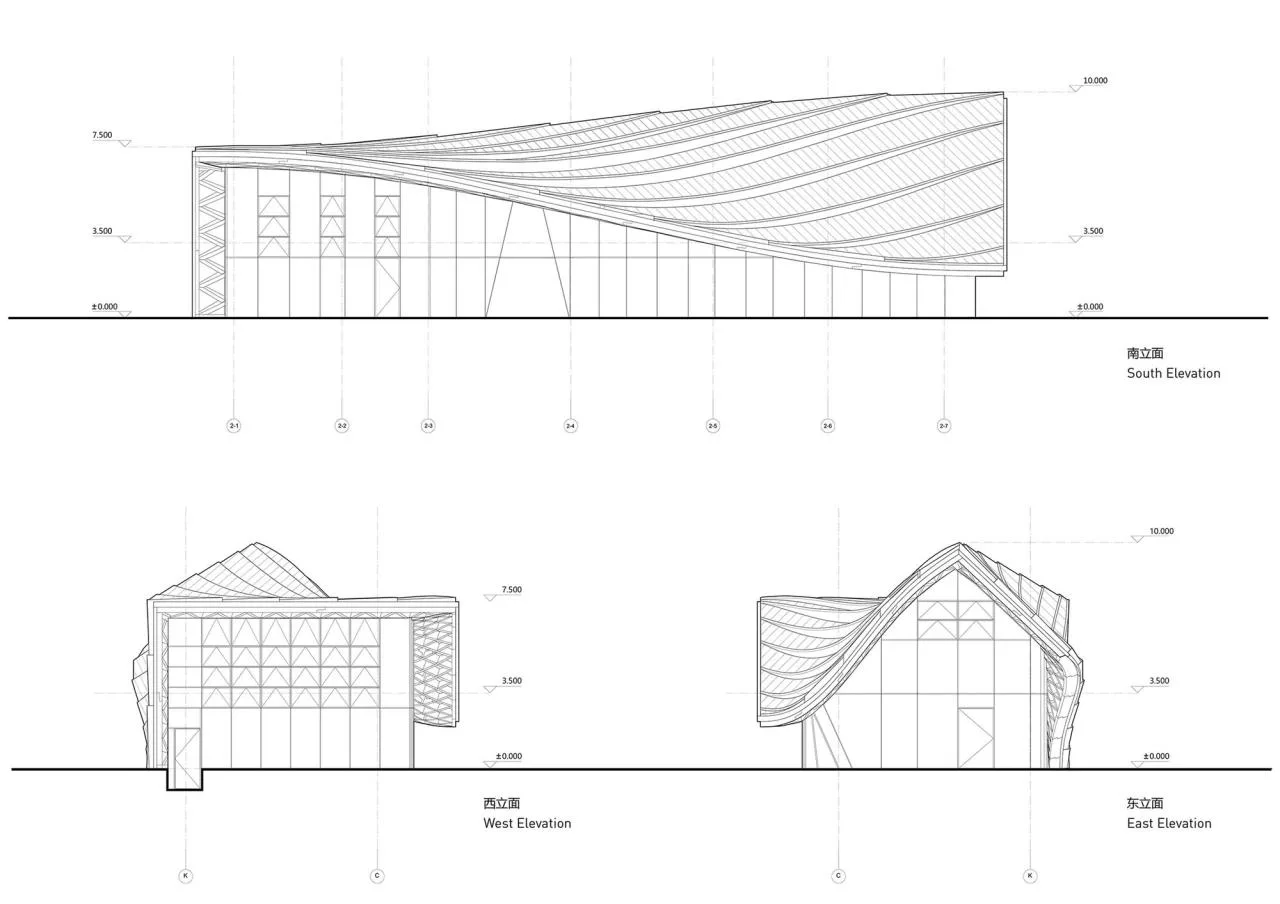
△ Elevation Drawing
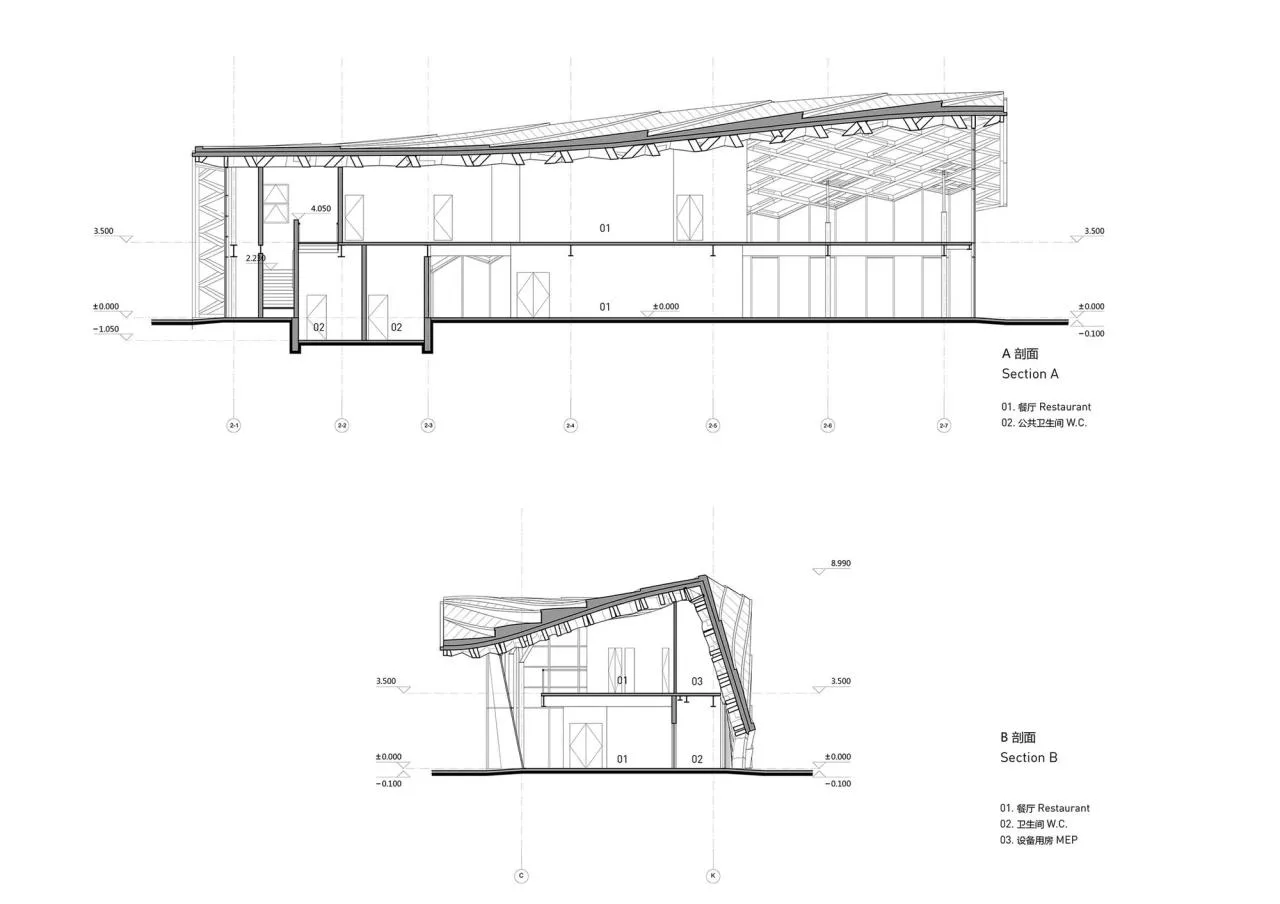
△ Section Diagram
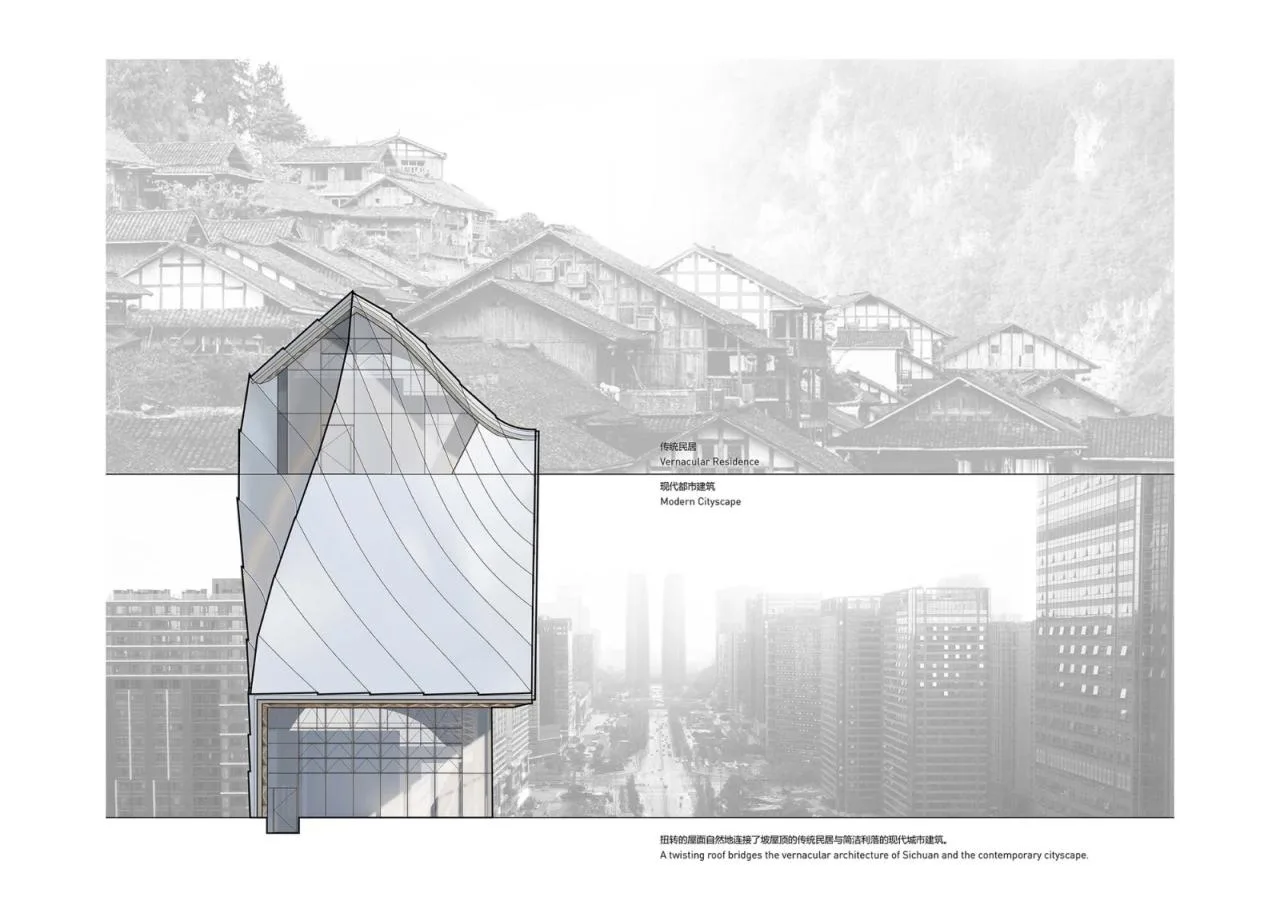
△ Analysis Chart
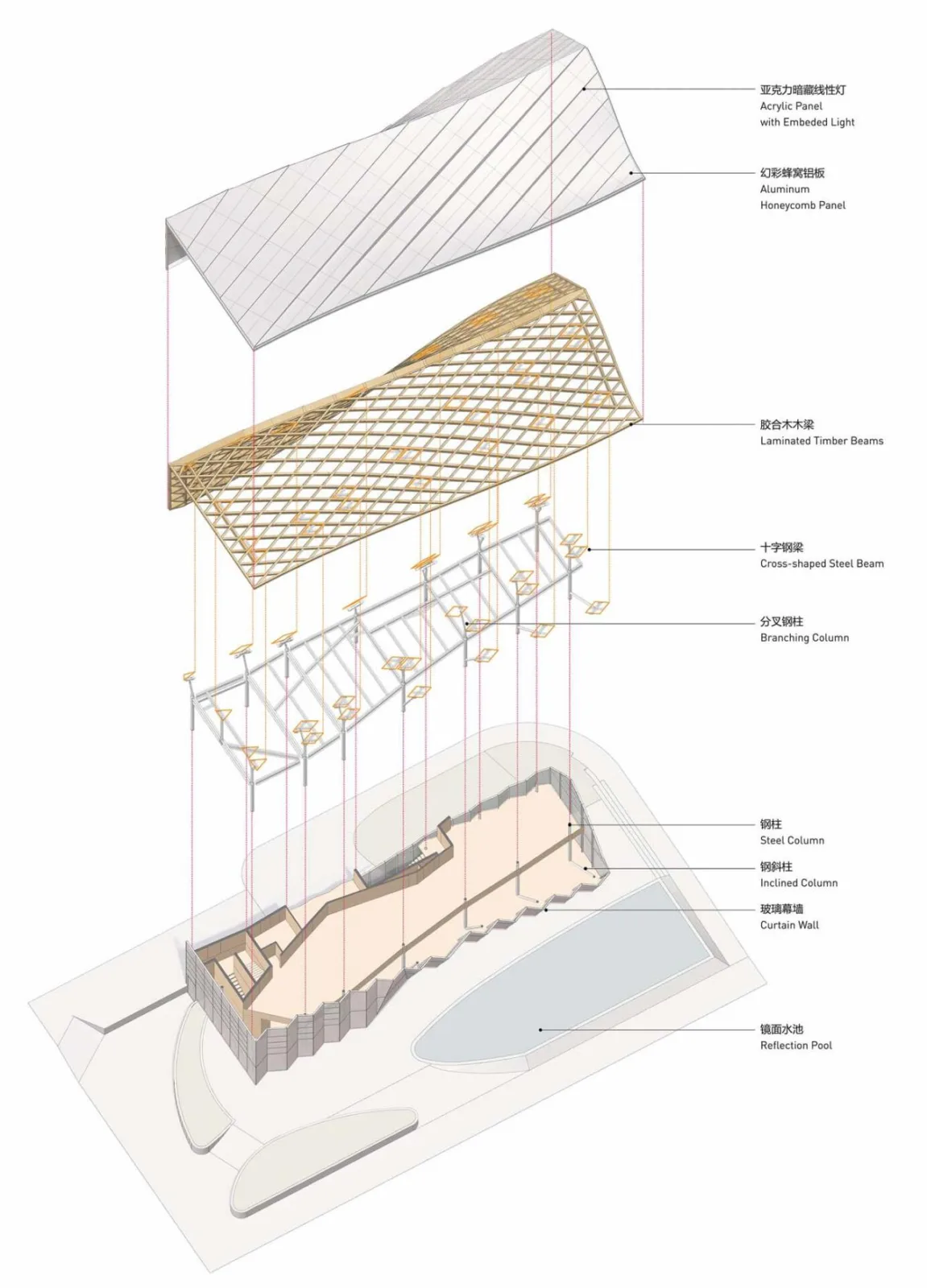
△ Analysis Chart
Project Information
Architect: Zhiye Architecture
Area: 600 square meters
Year: 2022
Photographers: Virtual Clothing Photography, Chen Shangru
Manufacturers: Shanghai Hingwah Honeycomb Technology Development Co., Ltd., UPM
Principal Architects: Zhang Mingzheng, Ouyang Jianqiu
Design Team: Zhang Mingzheng, Ouyang Jianqiu, Li Yingbo, Shangguan Jinwen, Chen Yijun, Sun Jianbin
Client: Chengdu Gaotou Construction and Development Co., Ltd
Construction Drawings: Sichuan Provincial Institute of Architectural Design and Research
Interior Design: HDC Hummingbird Design
Contractor: Chengdu Beite Construction and Installation Engineering Co., Ltd
Curtain Wall Contractor: Zhongzhi Construction Group Co., Ltd
Landscape Design: BEIVIE Wild Architecture
Location: Chengdu














Must log in before commenting!
Sign Up