
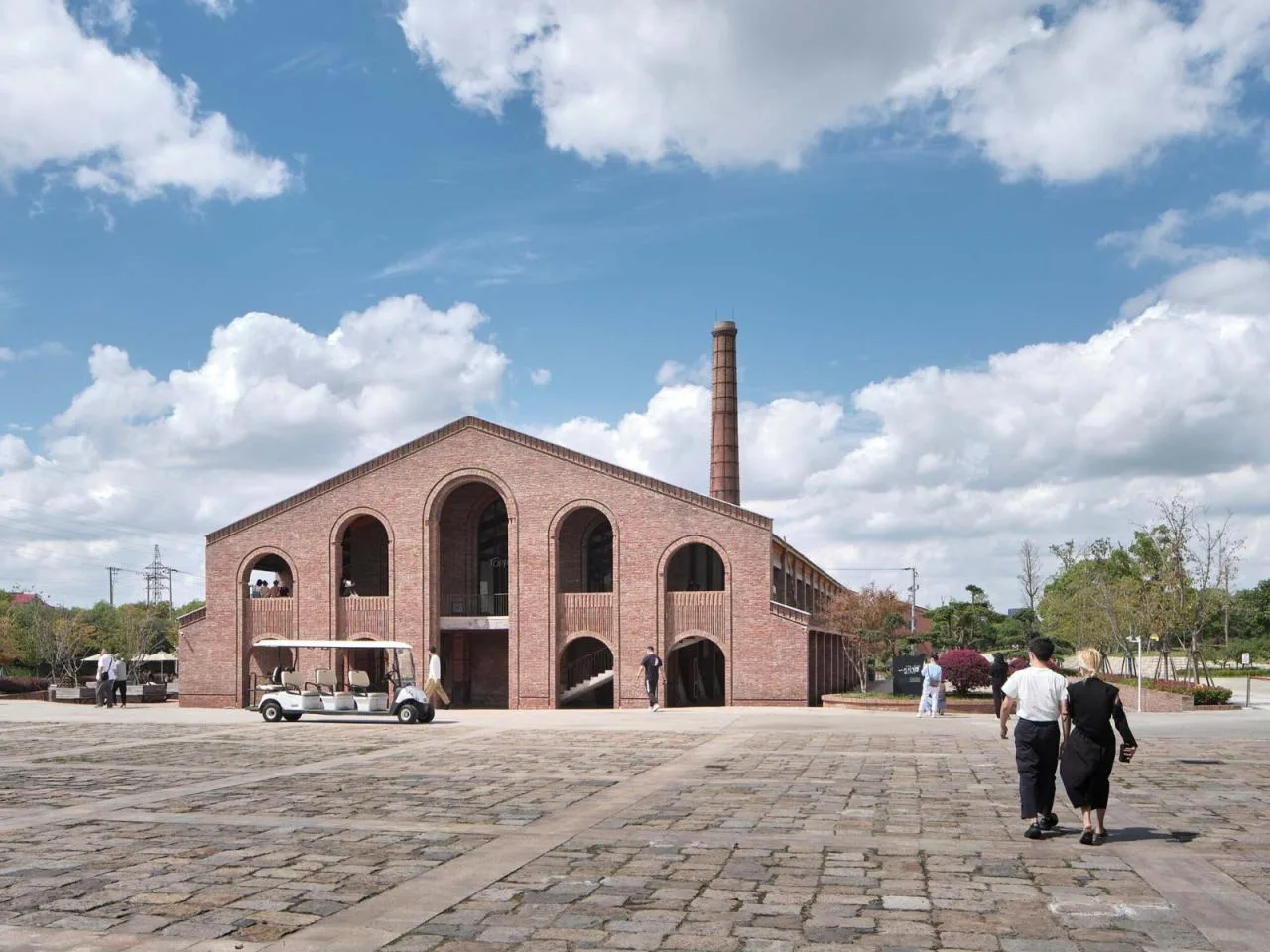
Pudong Red Kiln, located in Laogang Town, Nanhui District of Pudong, is a classic example of a Hofmann kiln. This kiln design, created by German engineer Hofmann in the mid-19th century, features a flat surface shaped like a circular runway. Praised for its high efficiency in brick firing, it became widely used globally and appeared in Shanghai’s landscape by the early 20th century.
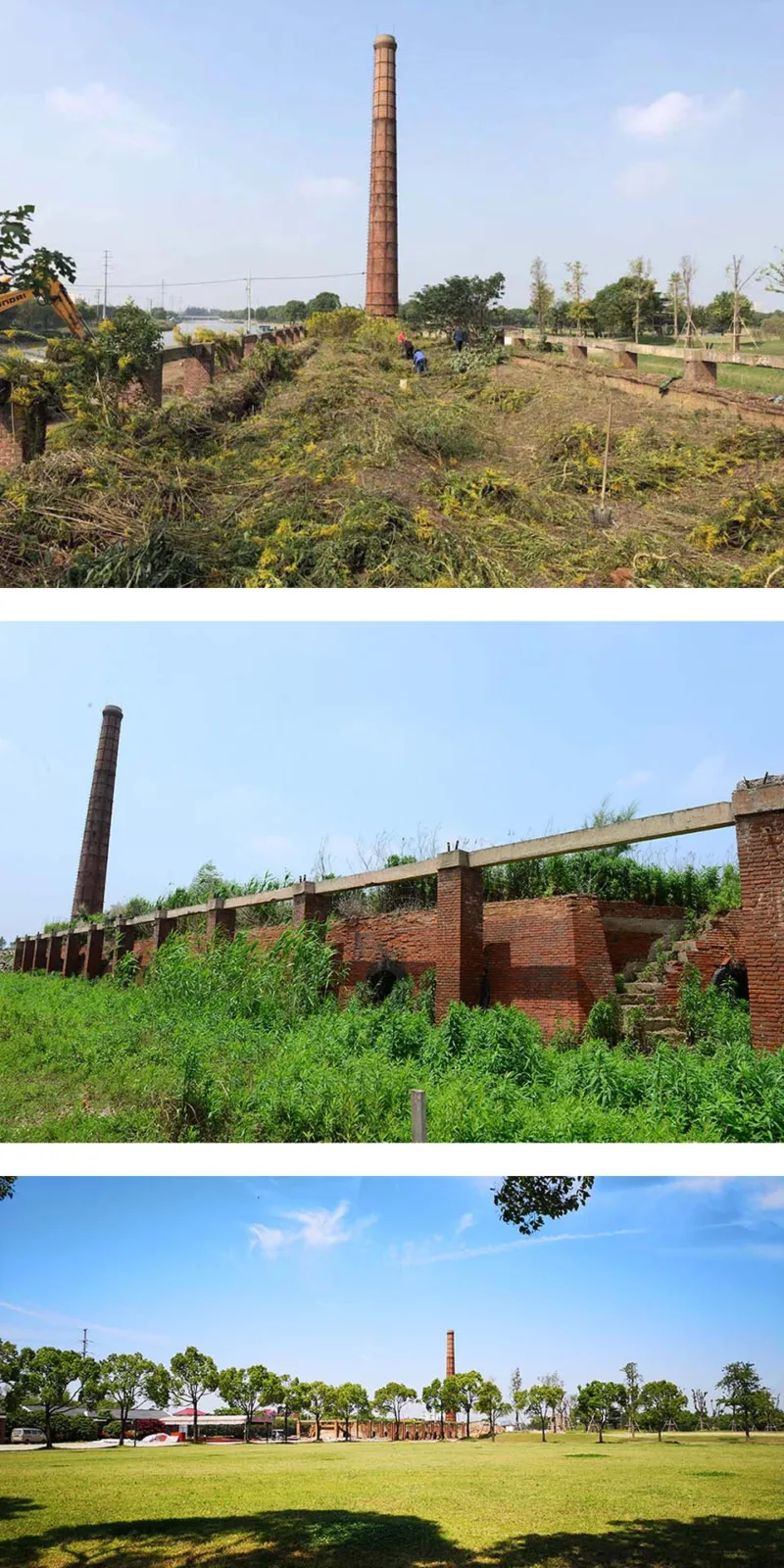
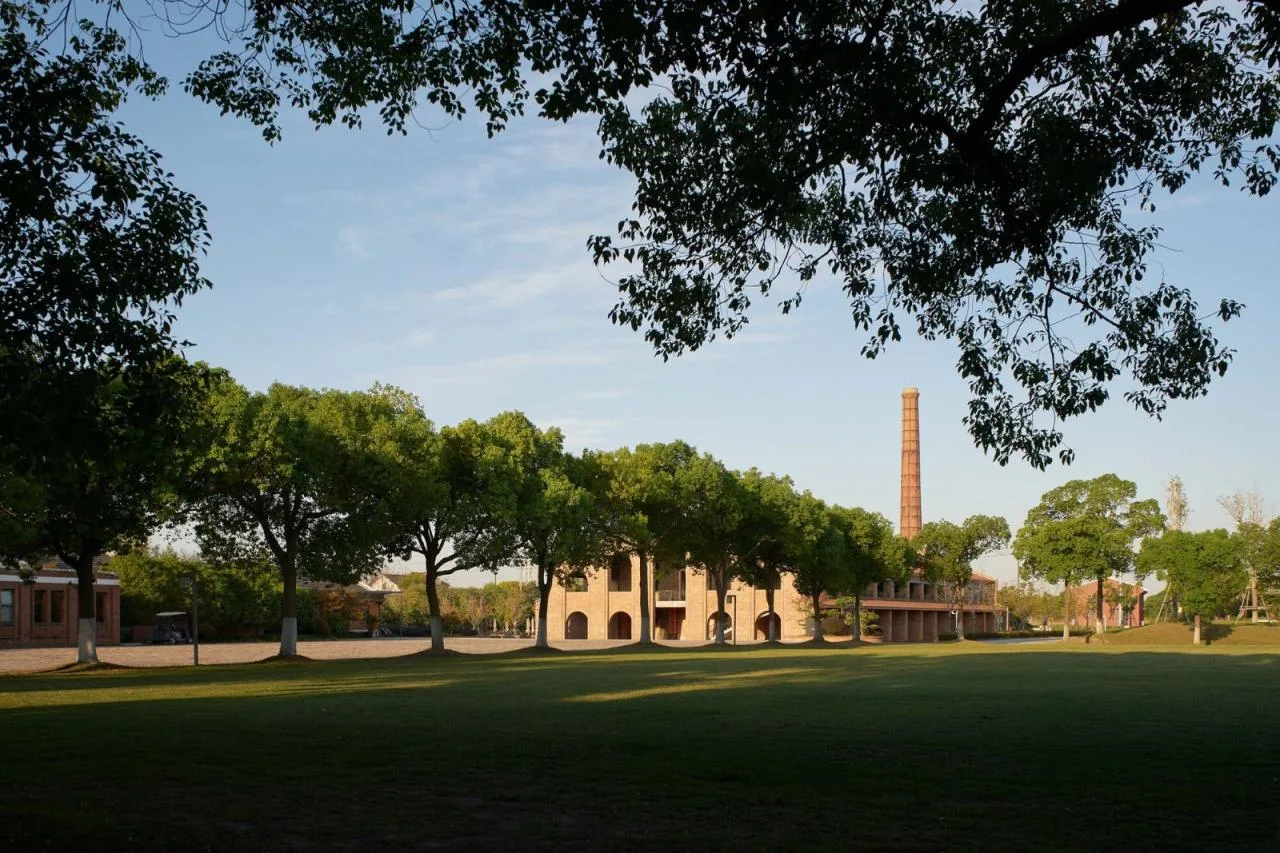
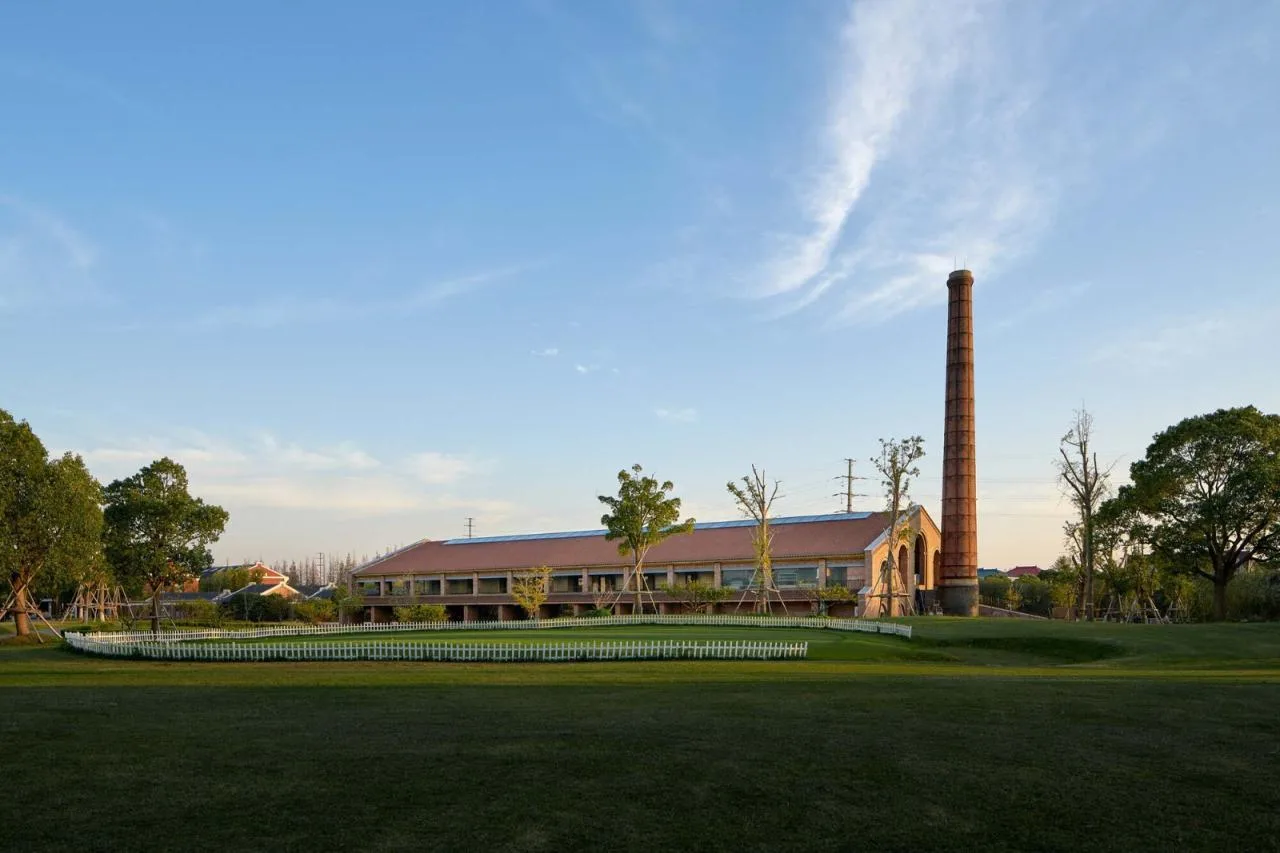
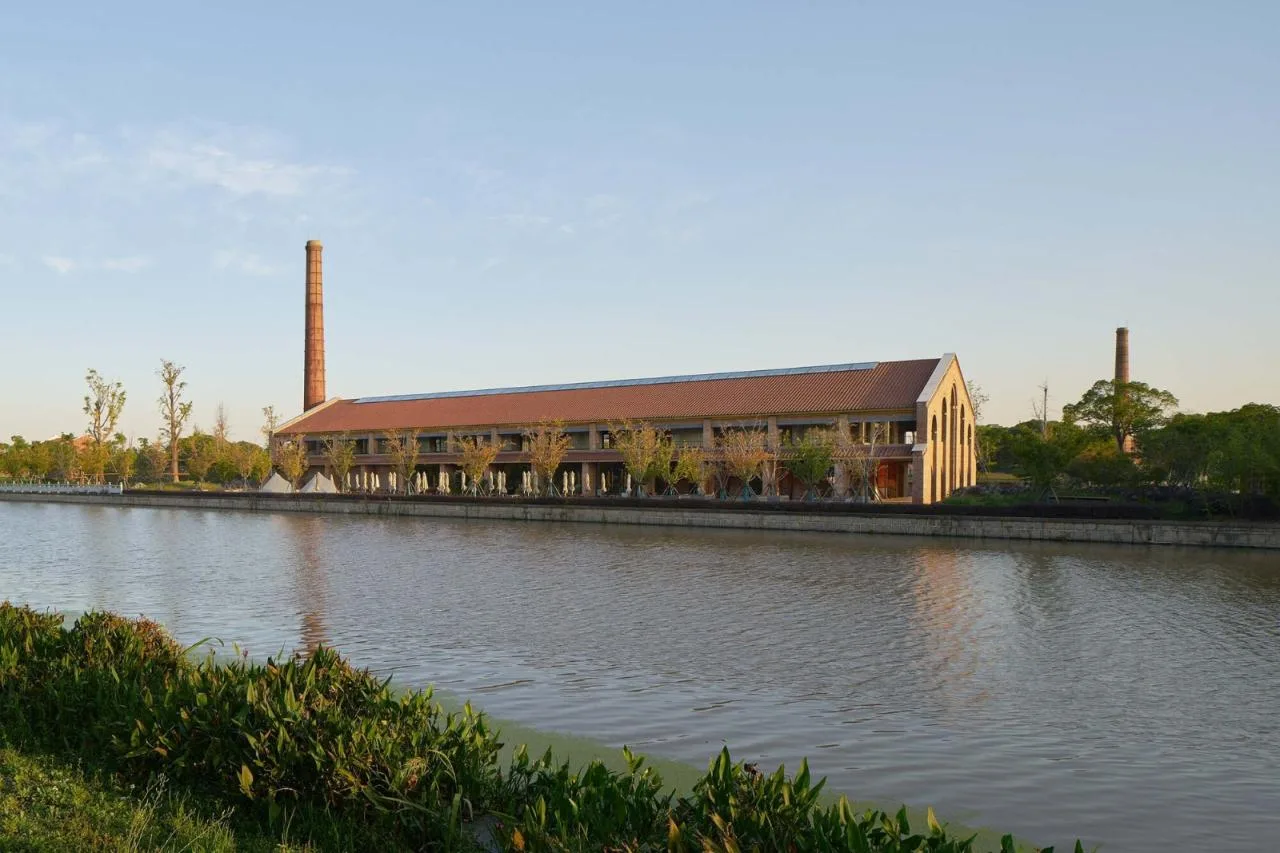
When we began this project, the kiln had long ceased its original function. Its roof and maintenance structures were collapsed and severely damaged. The upper section of the kiln’s ring had been buried under soil and overgrown with weeds. These ruins now stand quietly on the edge of an elegant yet abandoned golf course, bordered by a canal flowing from the town center to the East China Sea. With plans to convert this golf course into a suburban leisure park, the Red Kiln is also set to transform from an industrial relic into a public space accessible to all.
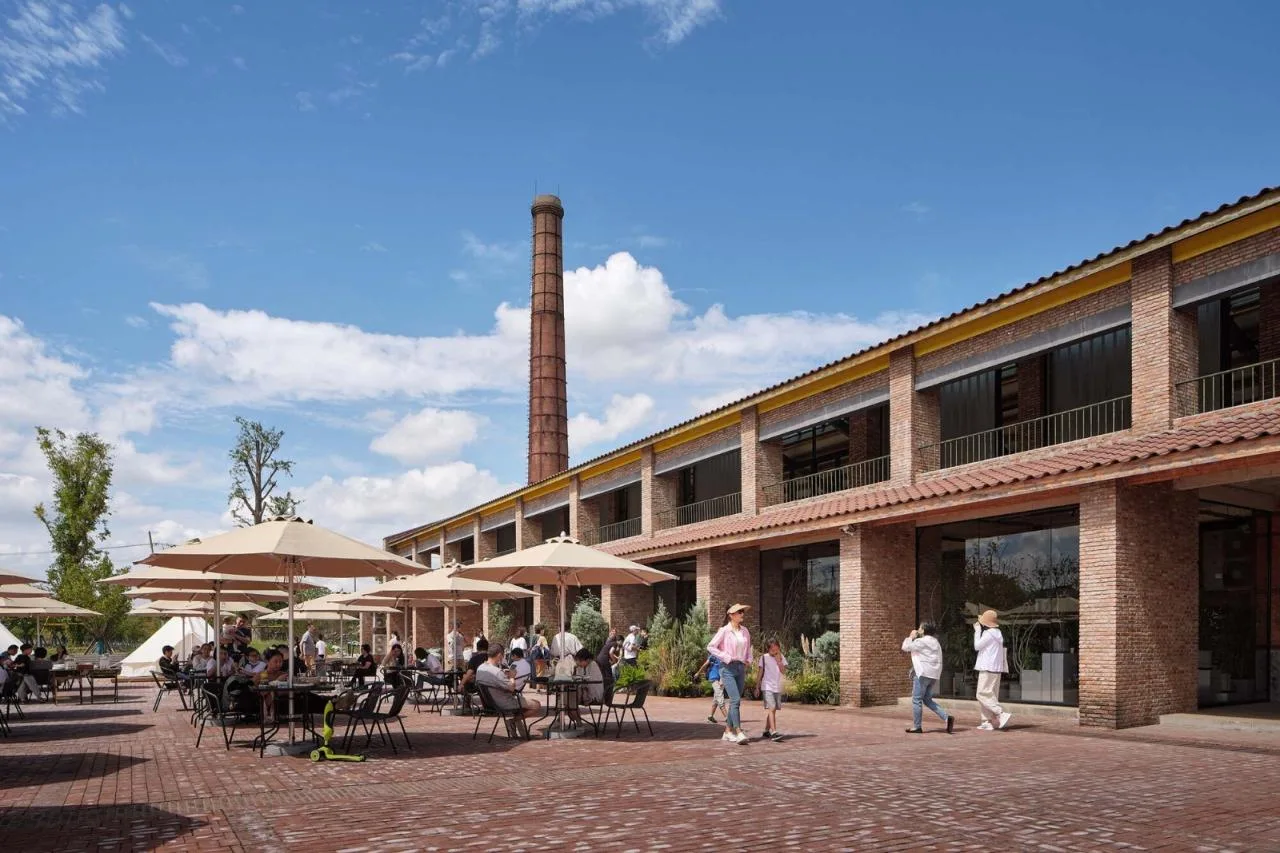
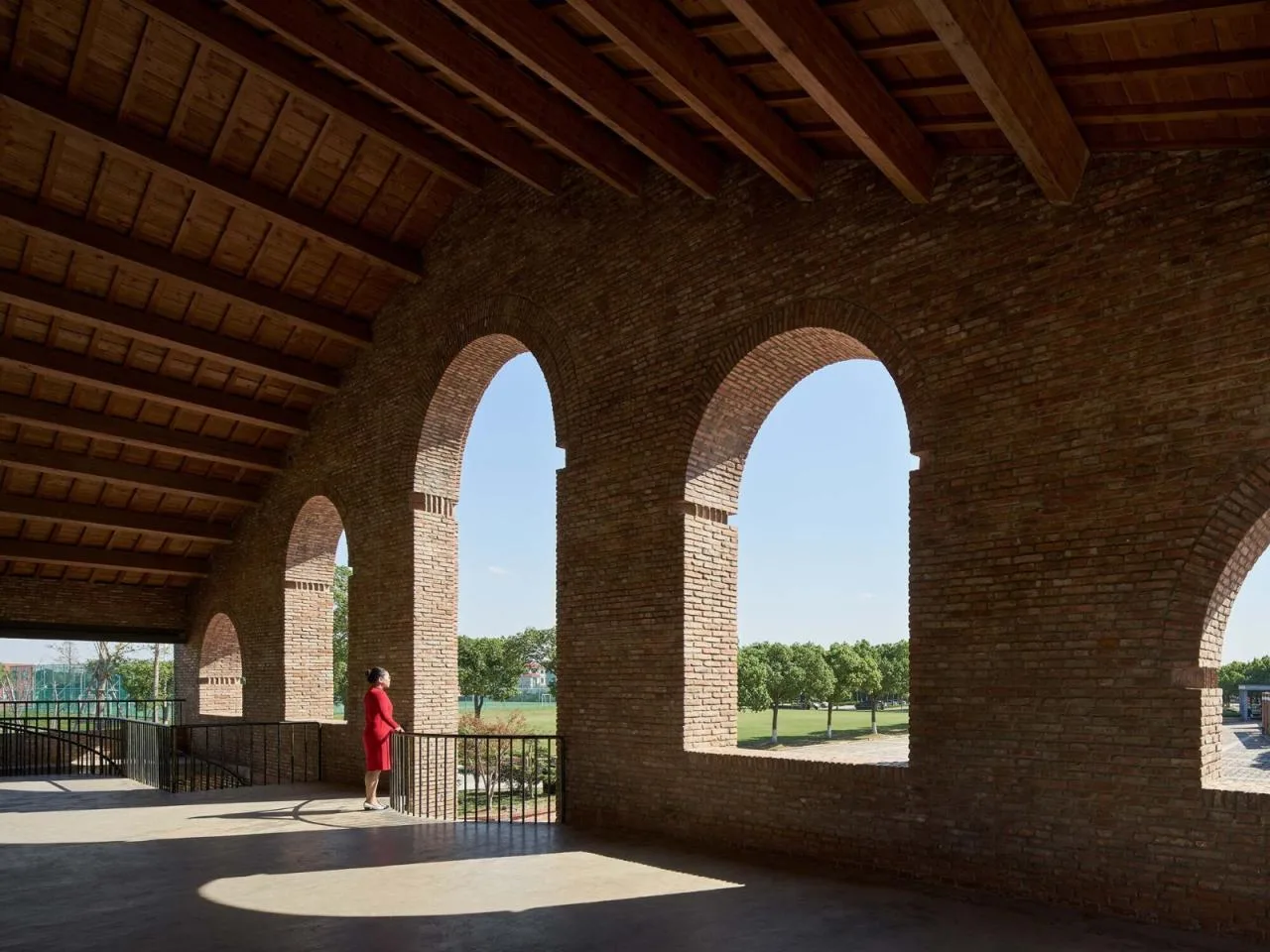
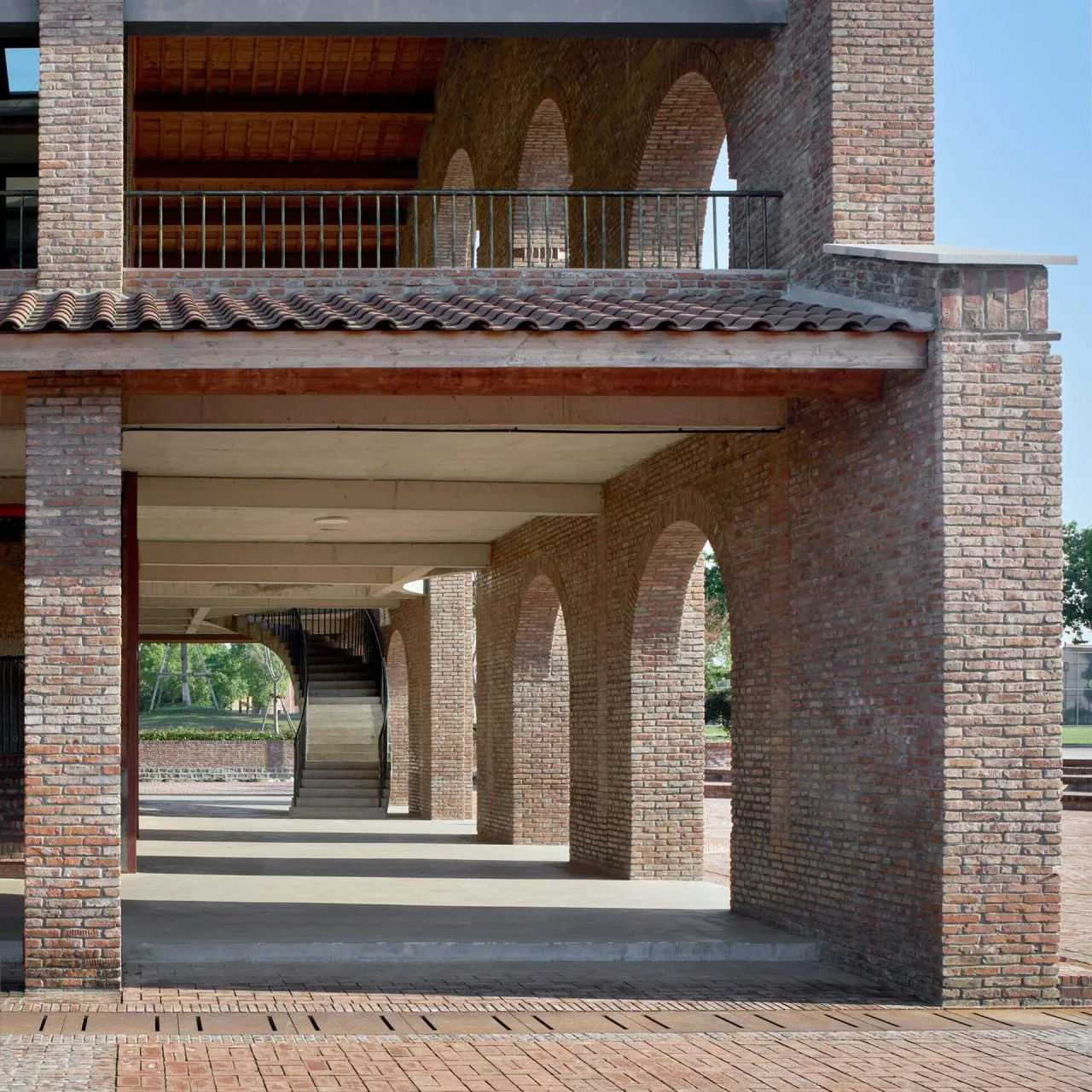
While Hofmann kilns were once widespread, few have retained their original spatial layout or been adapted for modern use. This renovation project aims to maximize the kiln’s original characteristics, preserving its classic layout, materials, and scale, while enhancing the site’s usability and spatial appeal.
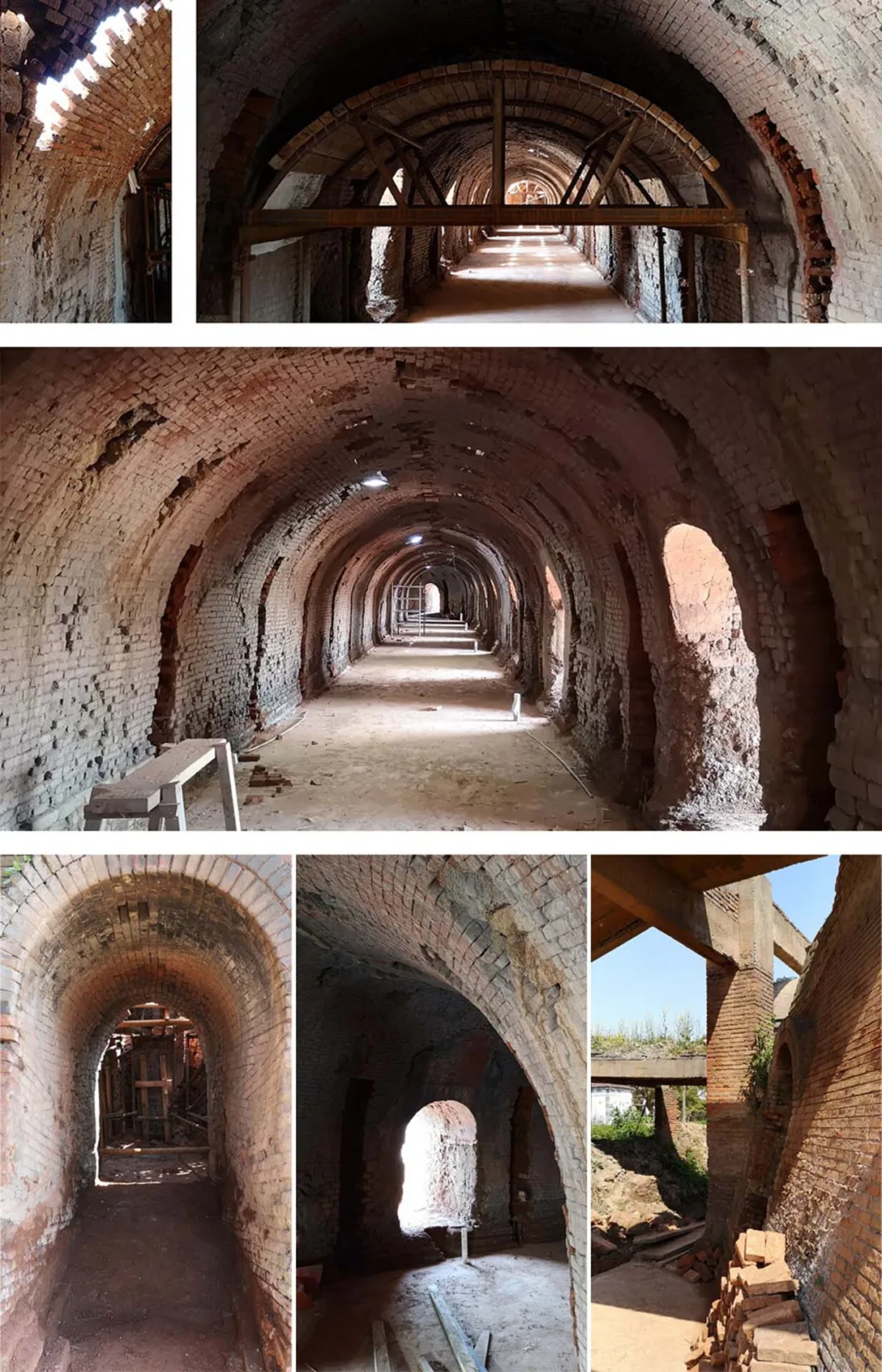
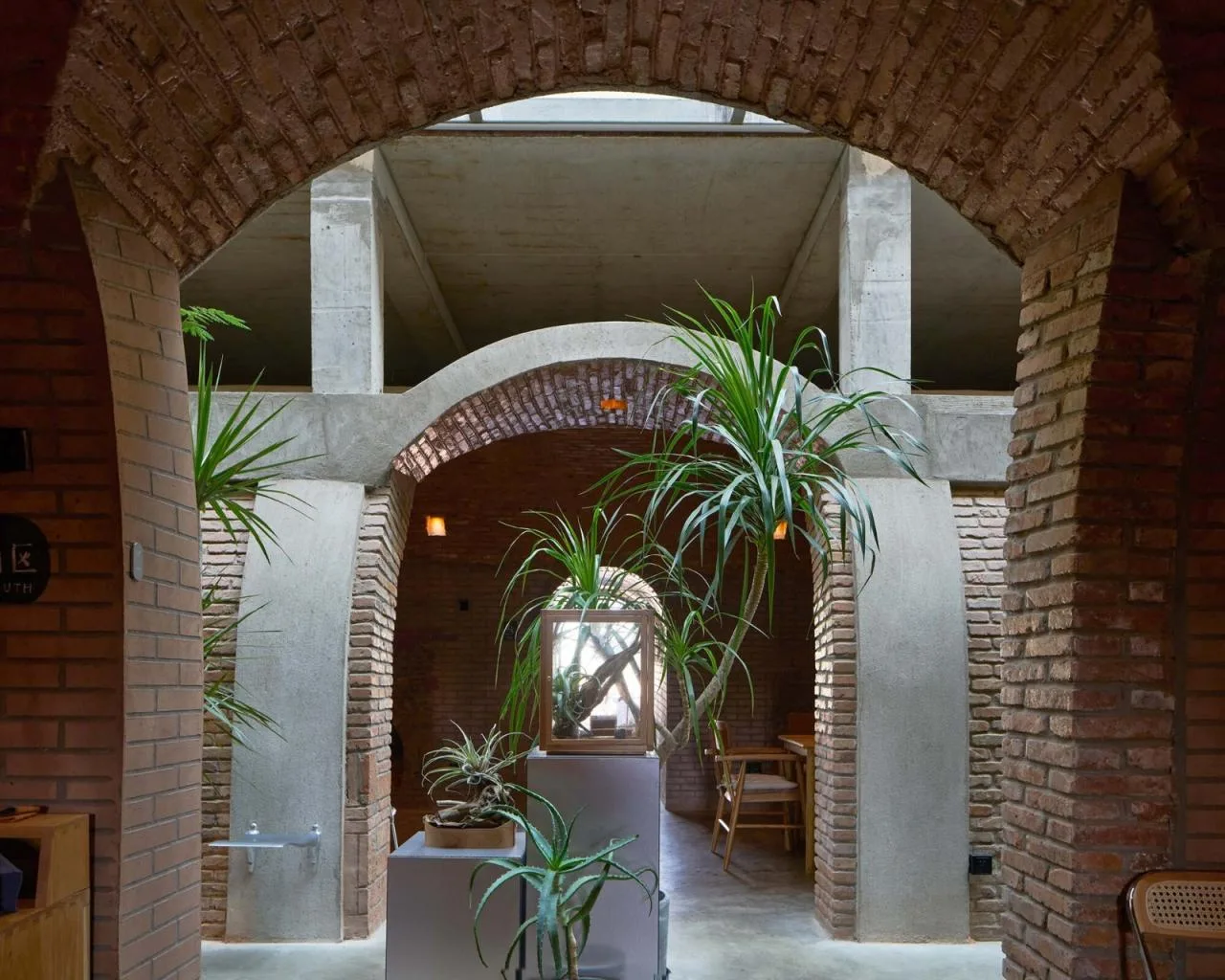
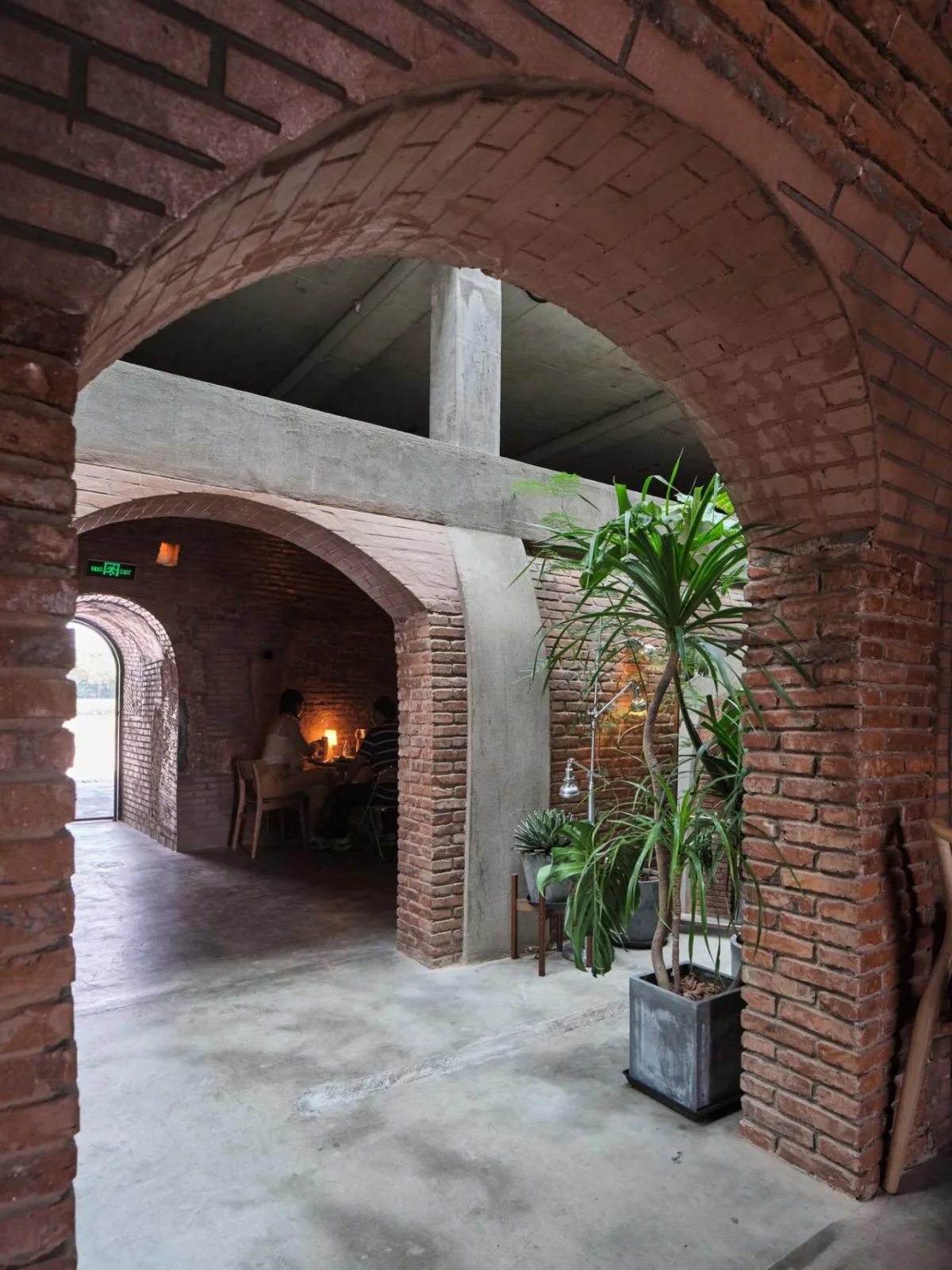
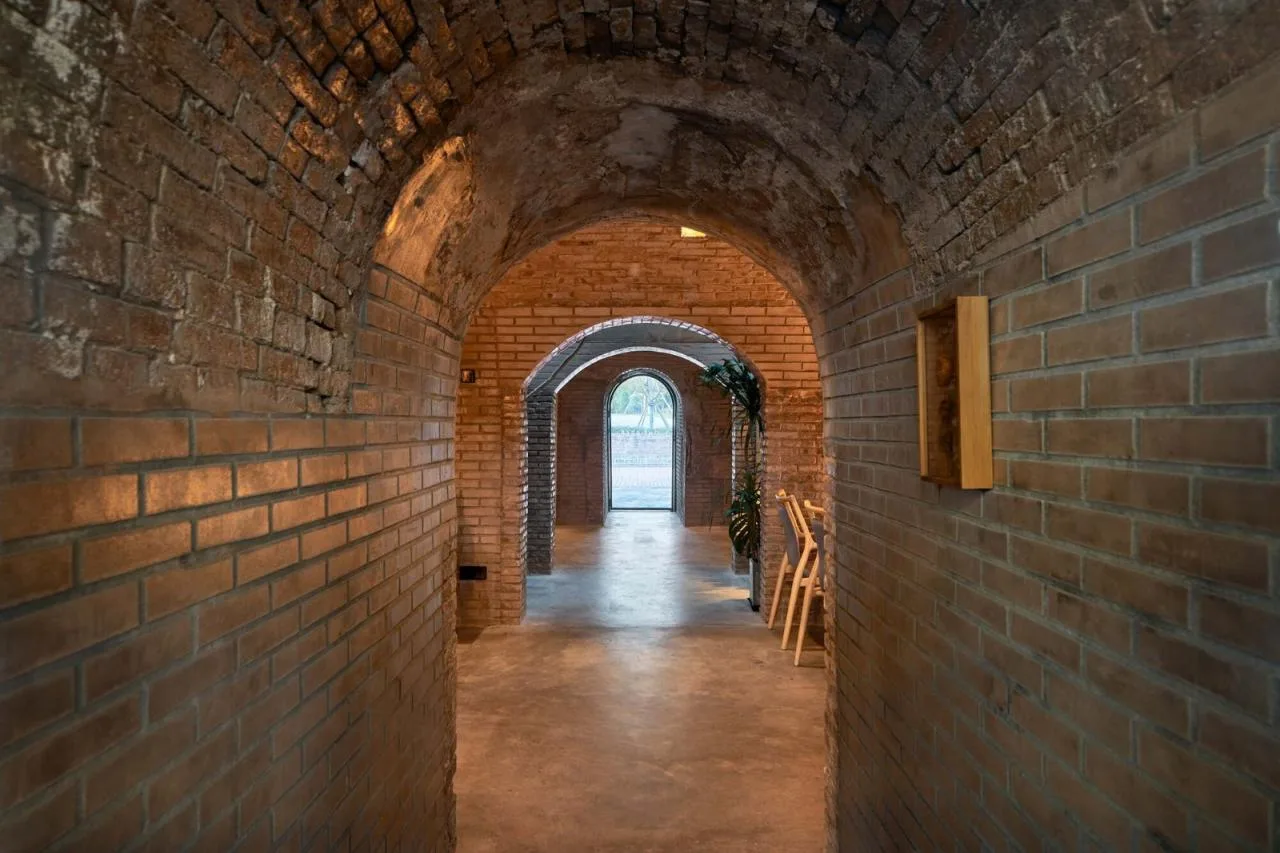
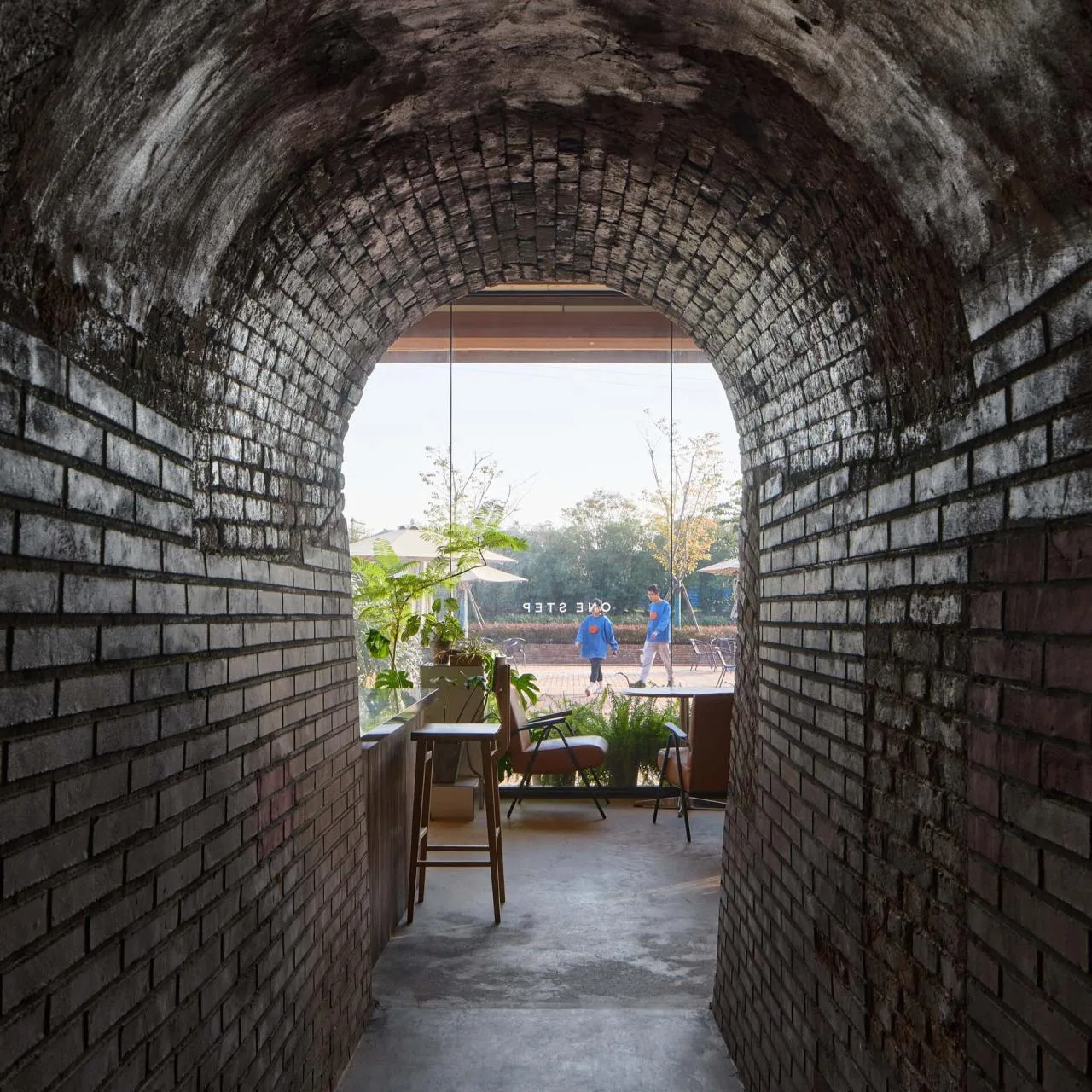
The project involved simultaneous on-site cleaning, structural reinforcement, and design work. Initial surveys revealed that steel reinforcements had already been added to areas where the old brick arches were damaged, ensuring the overall structure remained intact. Inside the kiln, the circular arch motif repeats throughout the ring roads, corridors, and doorways. Walking through this space offers an immersive experience into the industrial heritage of brick firing from the past century.
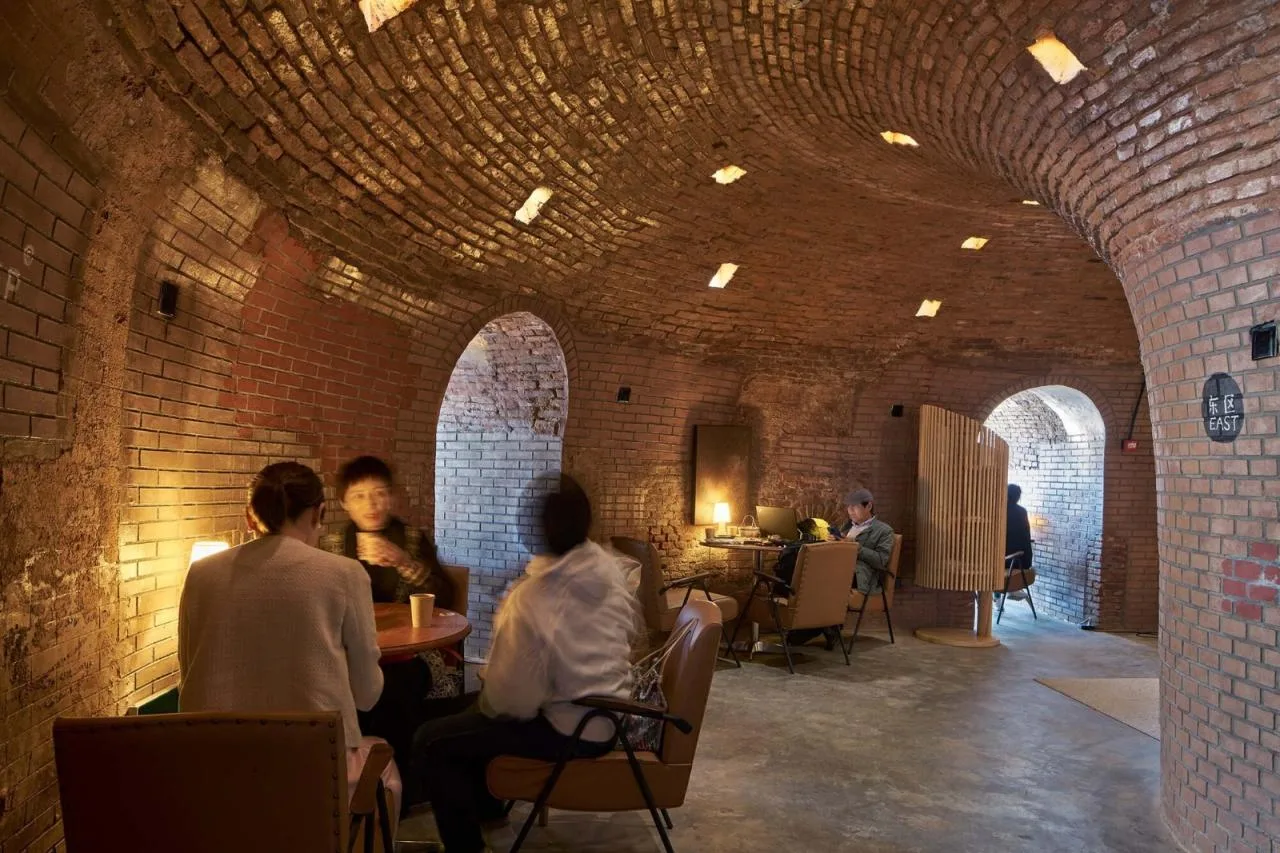
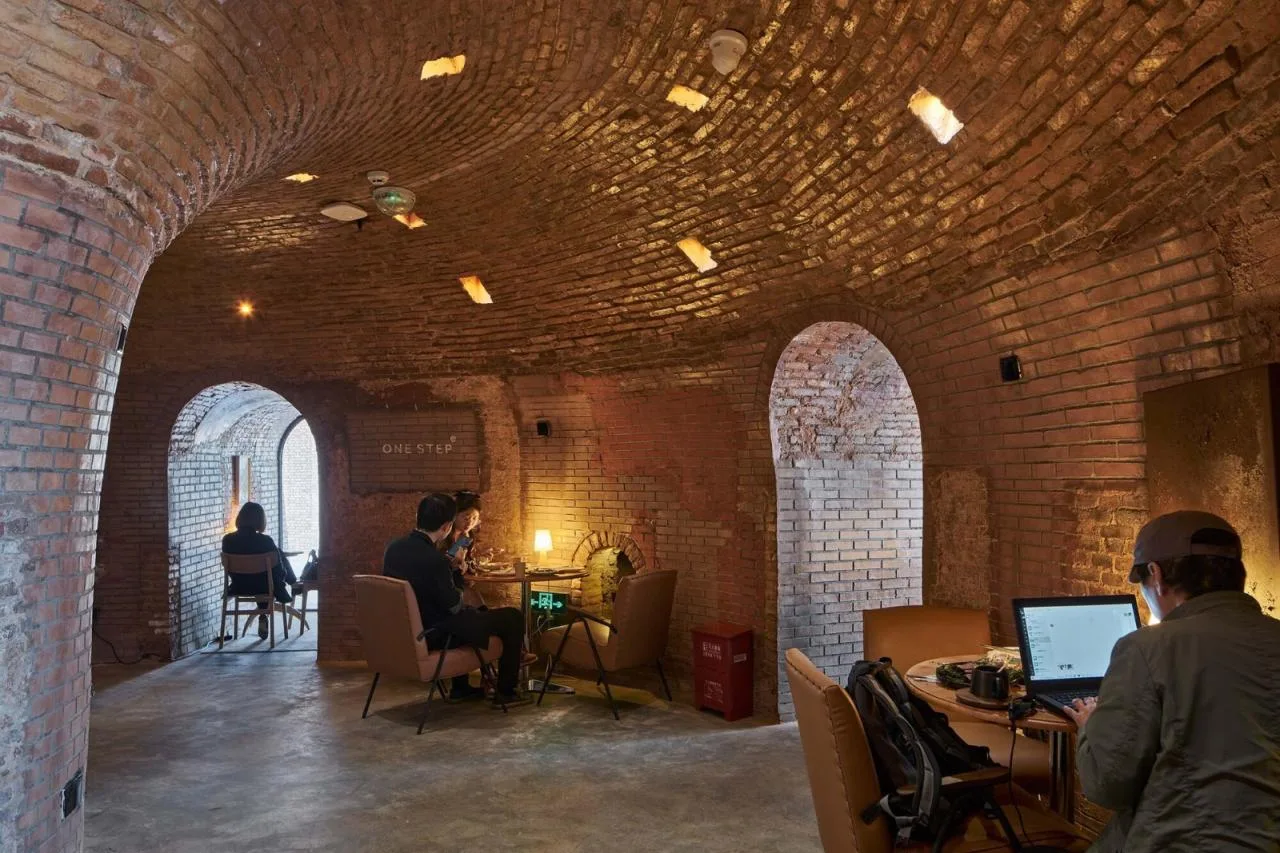
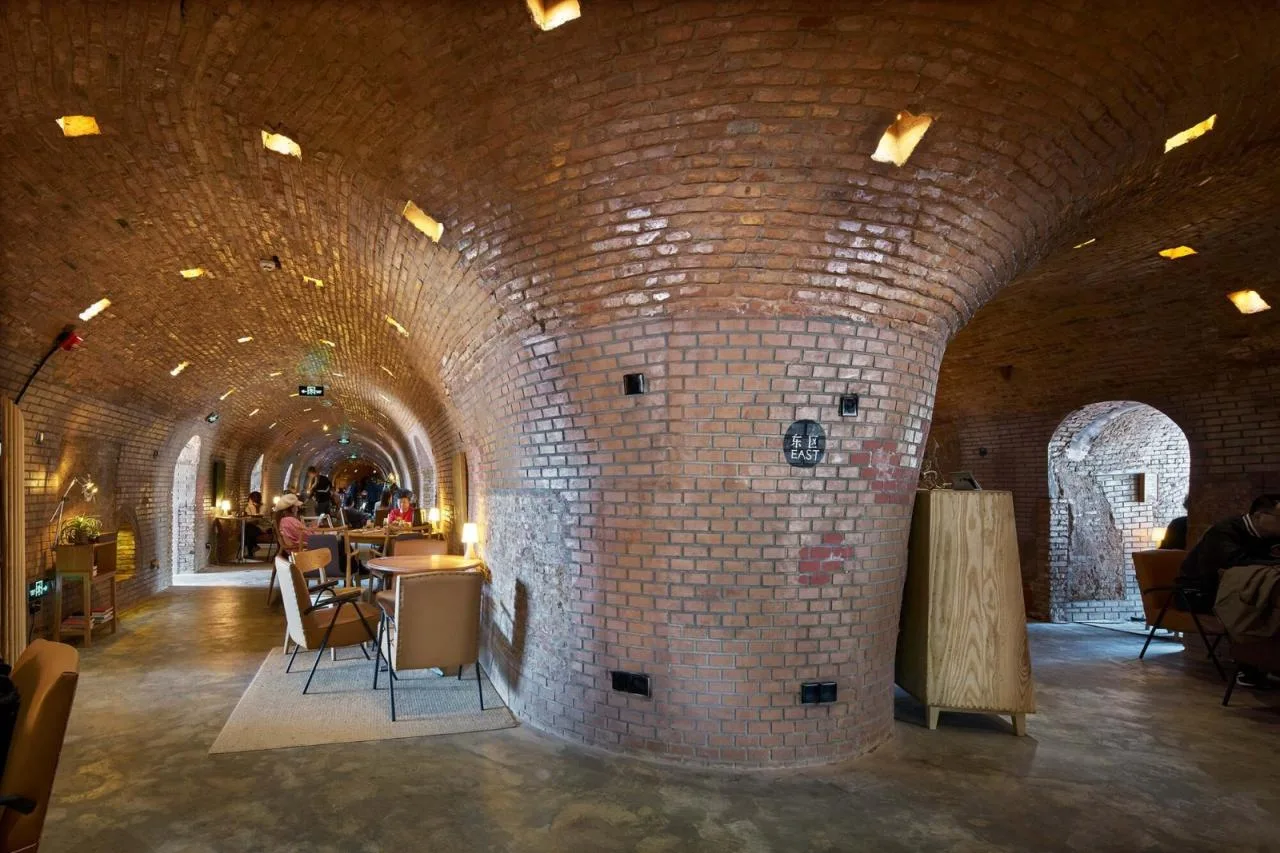
During the design process, we discovered that the enclosed flue surrounded by the ring road could be opened up and integrated with the outer ring road. Originally, a low opening connected these spaces to allow smoke exhaust. By enlarging this opening and supporting it with the second-floor slab structure, we created a pedestrian-scale doorway. This modification introduces shortcuts and multiple interesting paths within the original circular flow.
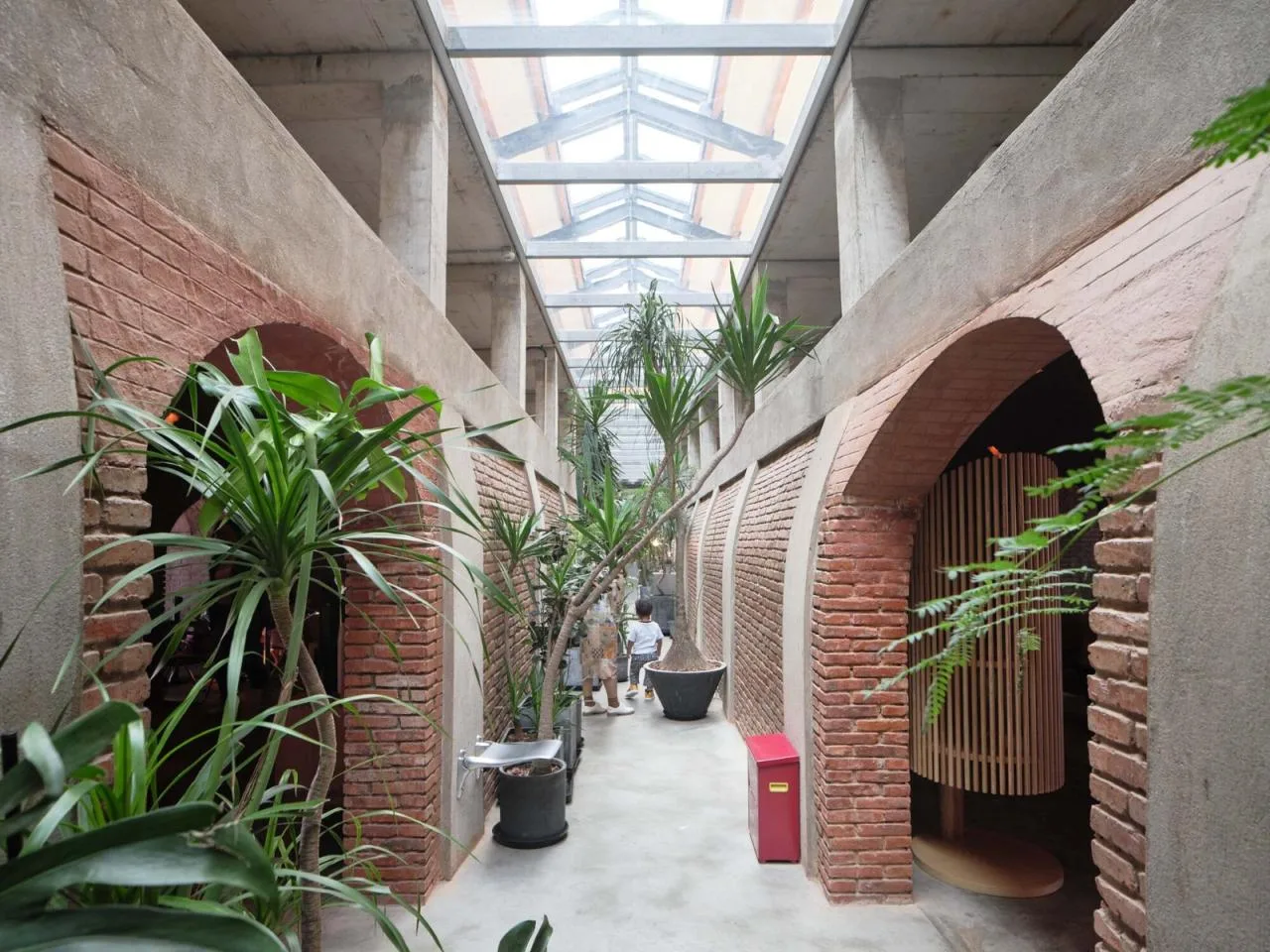
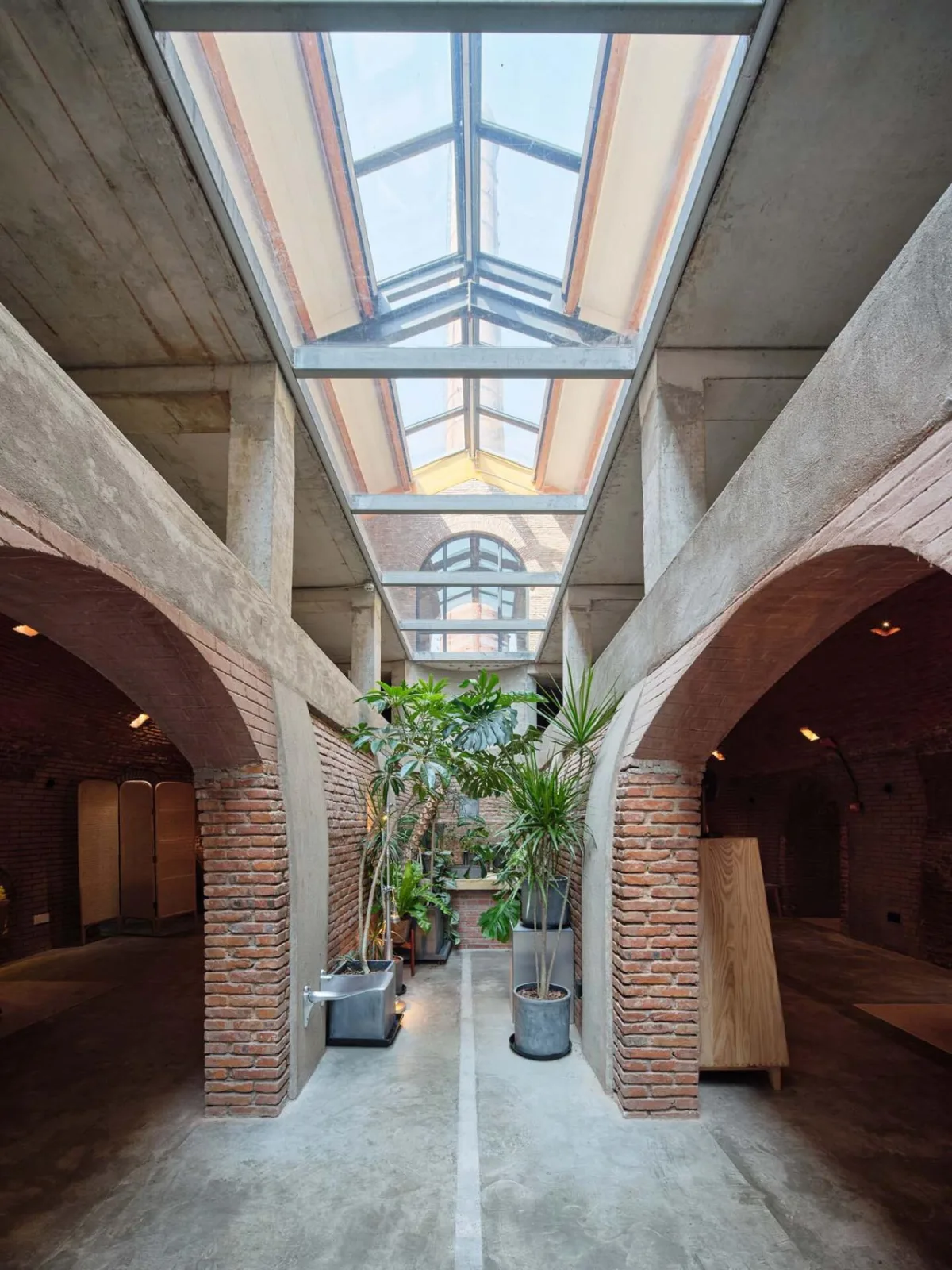
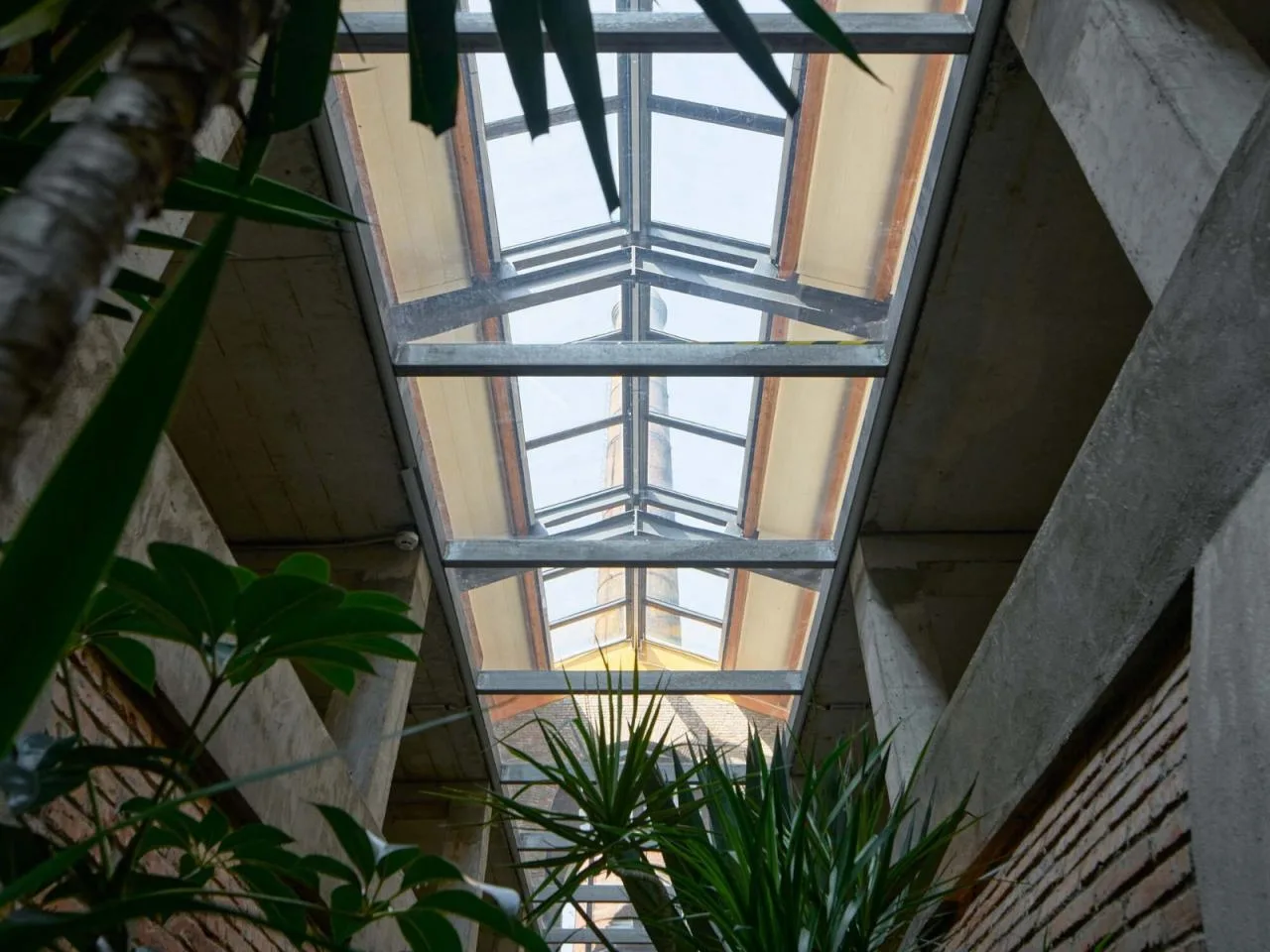
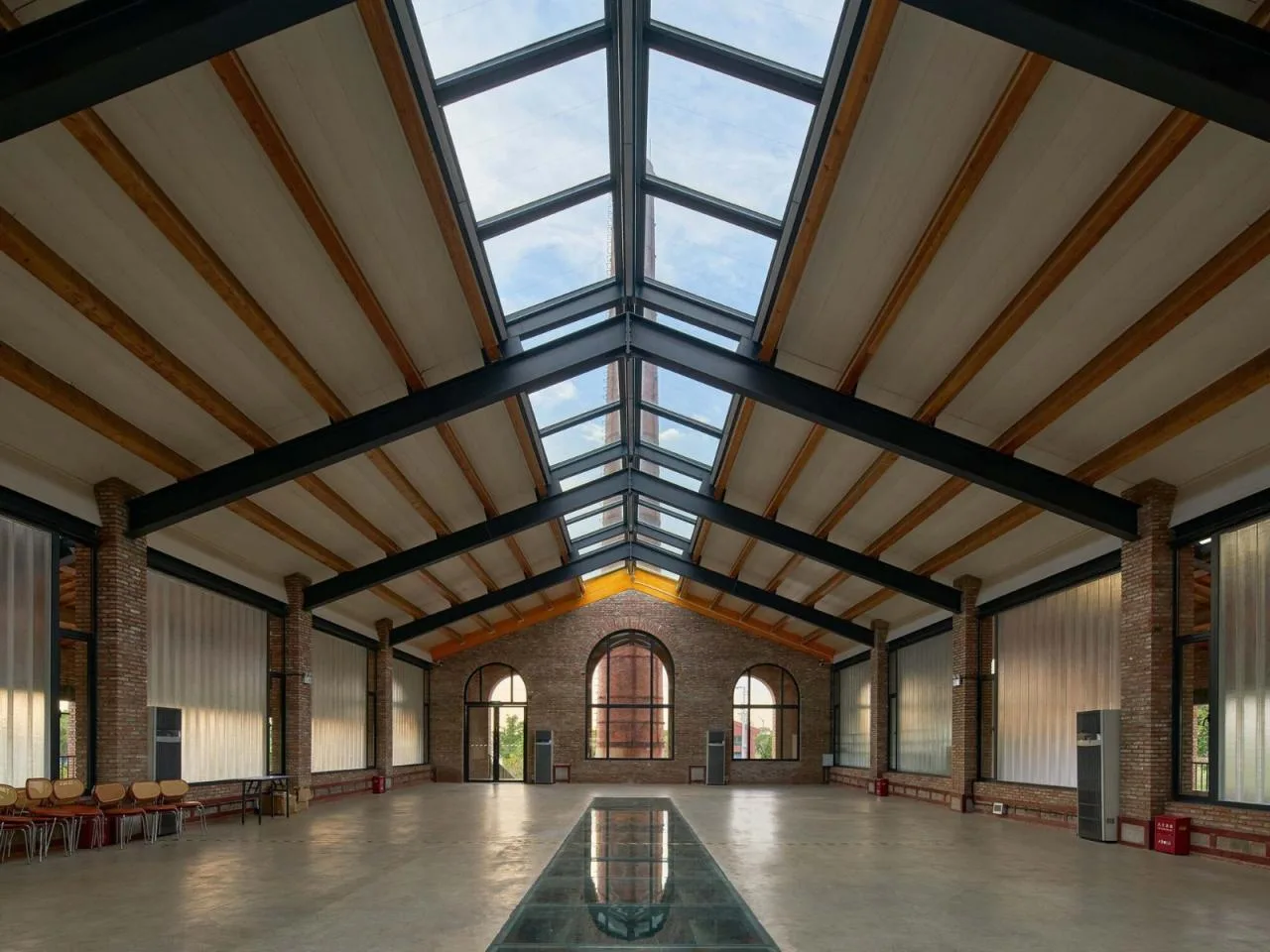
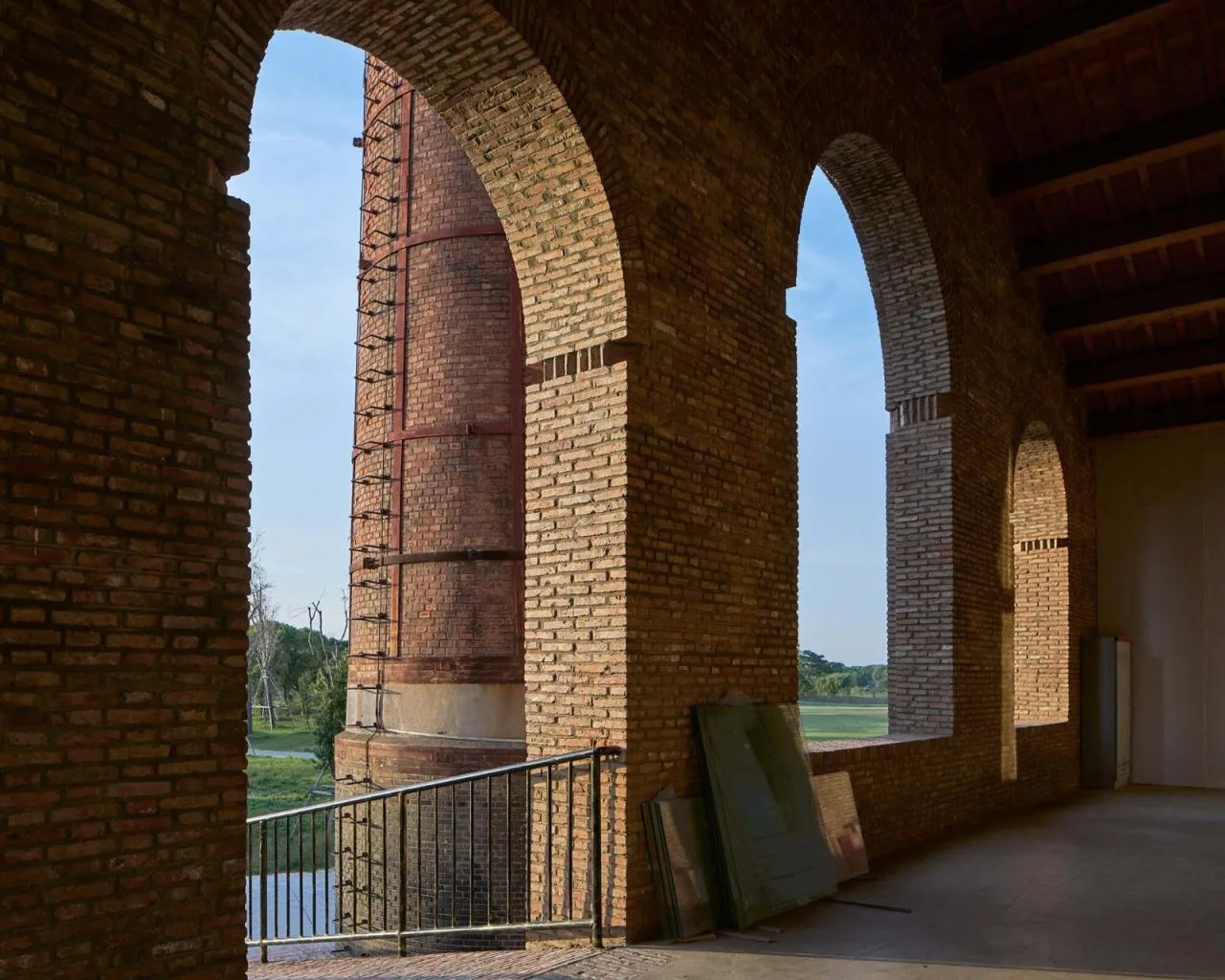
Due to its narrow width and lack of natural light, the flue was unsuitable as a primary activity area. To address this, we transformed the floor above into a glass floor and installed a skylight in the roof, creating a light well that establishes a new spatial relationship between the flue and the ring road. From the first-floor atrium or under the skylight on the second floor, visitors can look up to see the towering chimney—a symbol of the site and building.
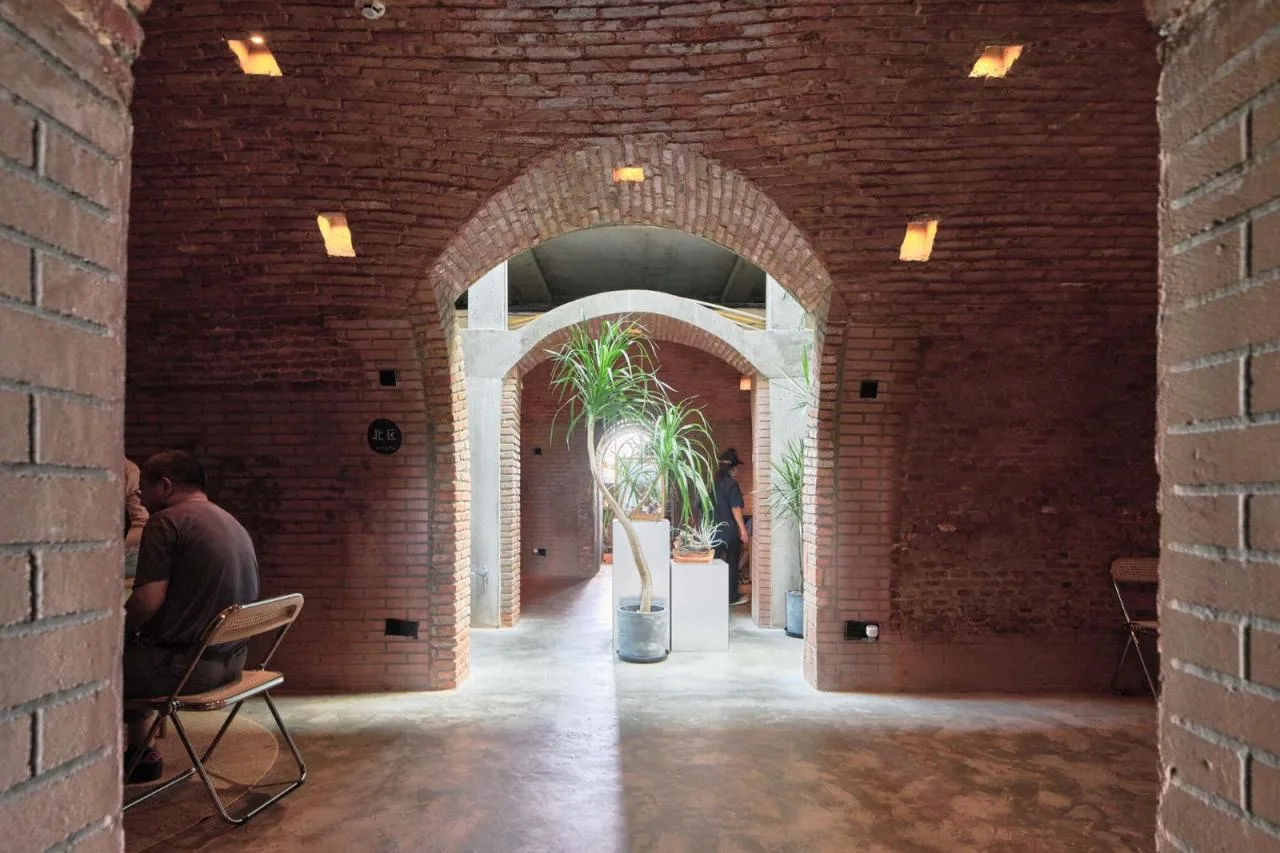
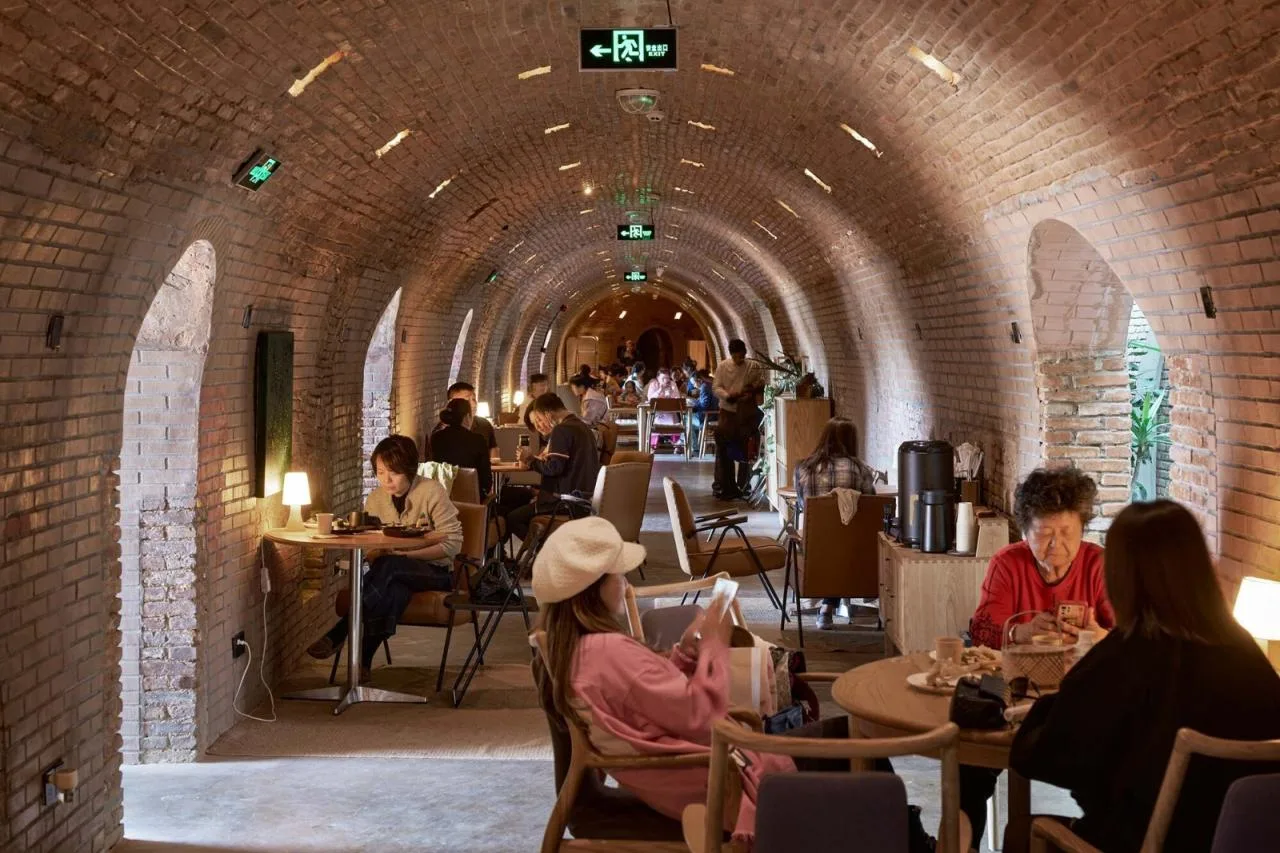
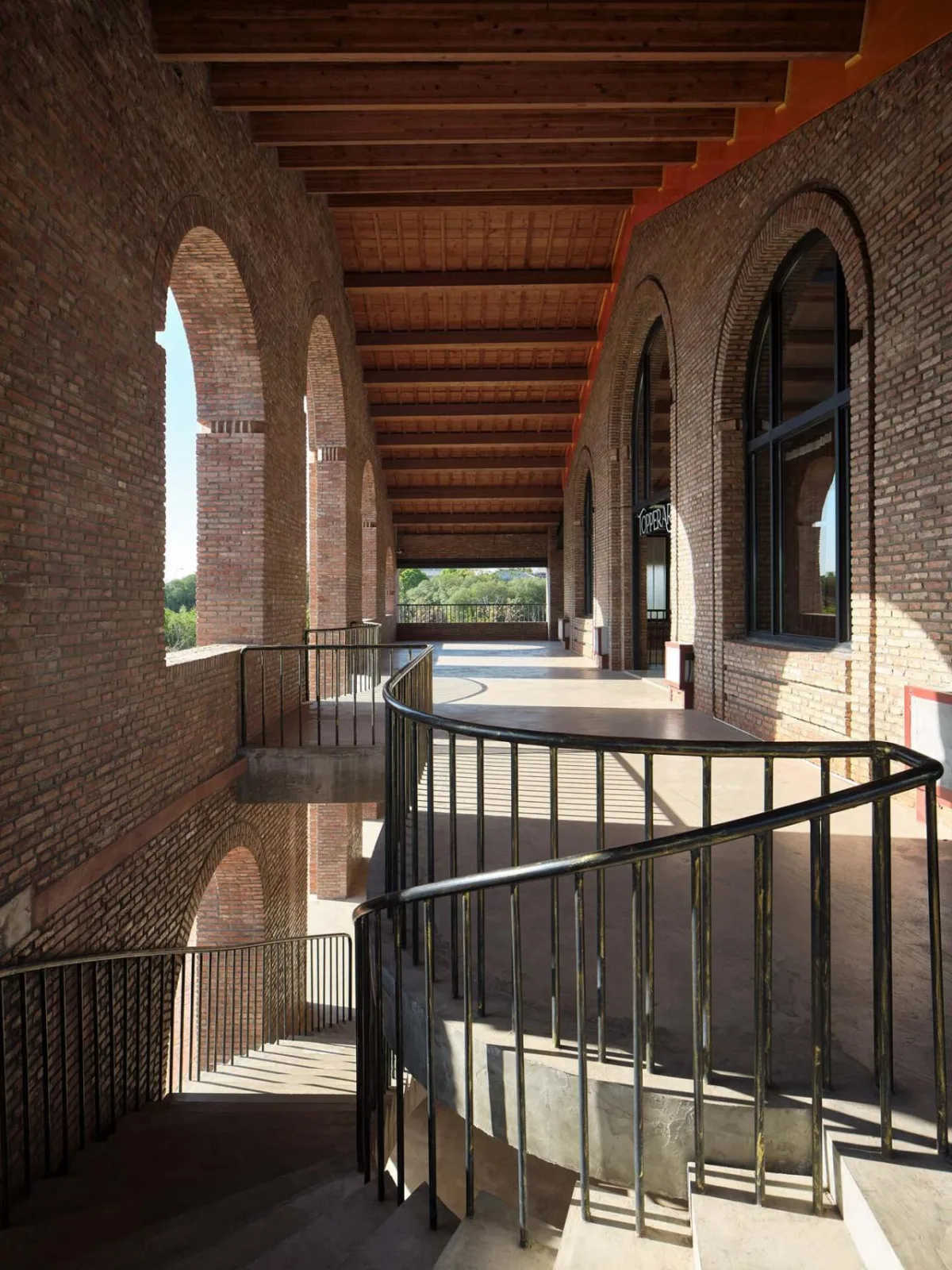
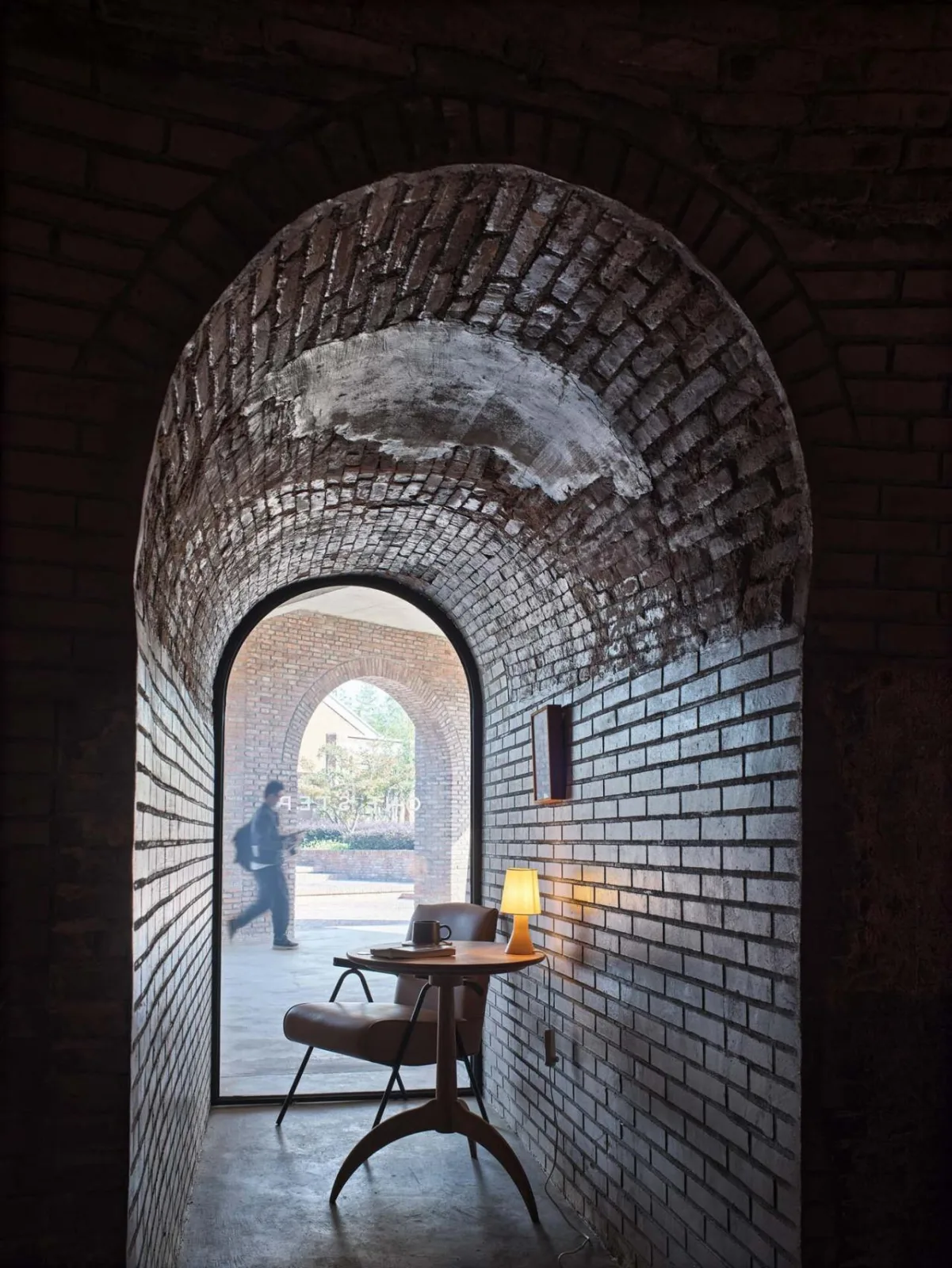
Sunlight filters through the arches flanking the light well, casting shadows reminiscent of a porch surrounding a courtyard or atrium. The arches on the outer side of the ring road form the external climate boundary, creating intimate niches that function as private pockets of space.
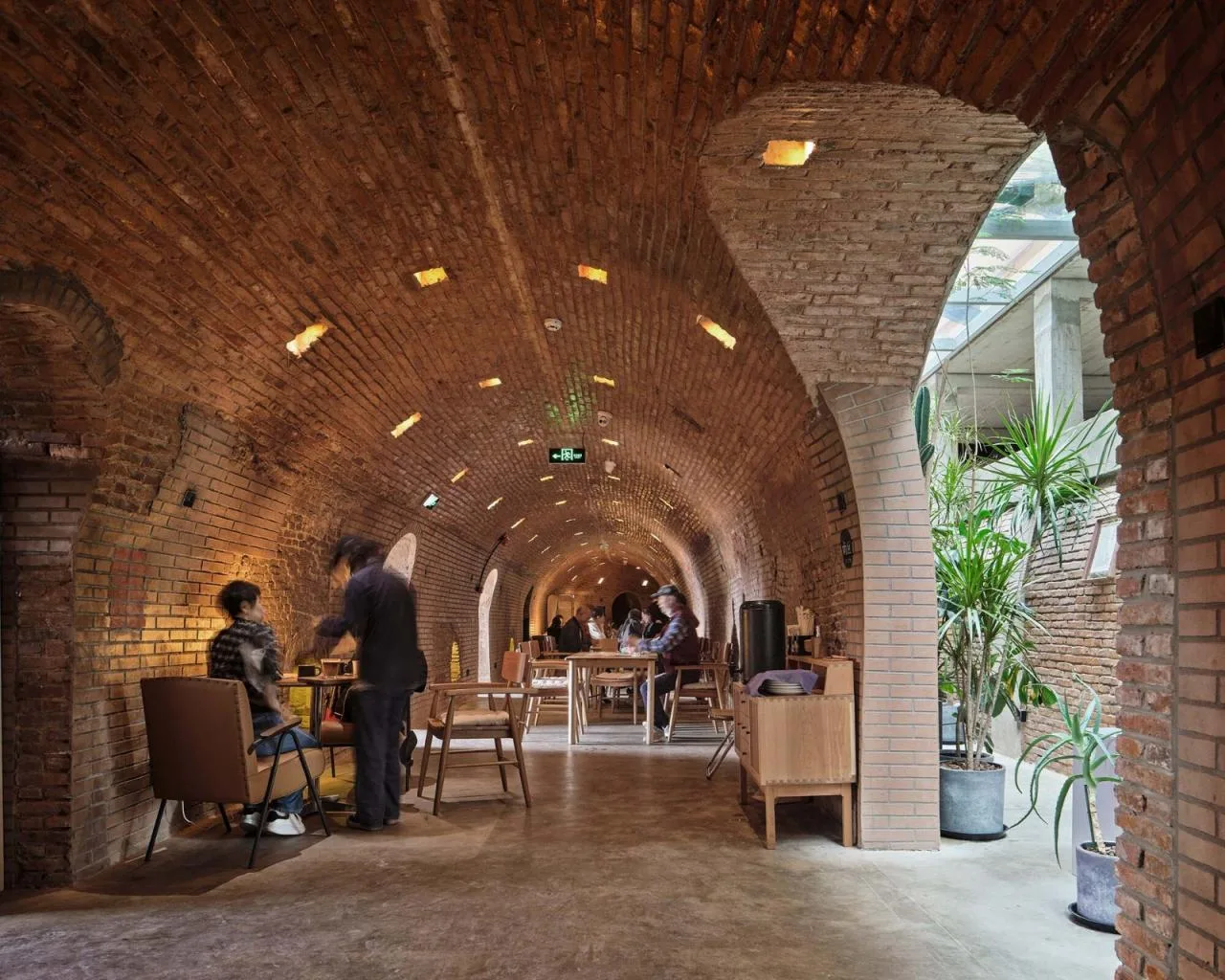
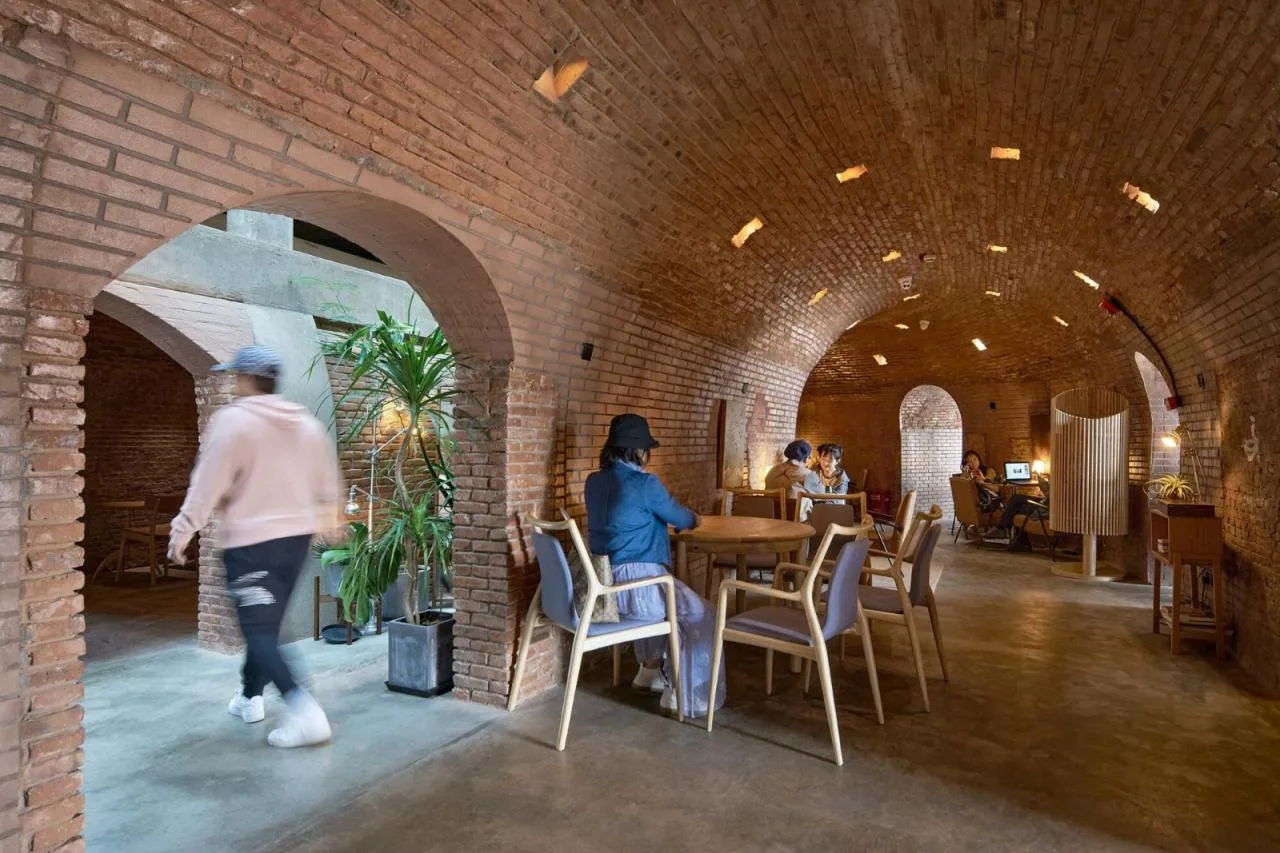
The flue and its surrounding cavities played a crucial role in air treatment during the brick firing process. Repurposing them as spaces for equipment and conduits continues the site’s system logic. We preserved the original star-shaped exhaust holes in the circular brick arch, adapting them for lighting and misting, while the lower exhaust holes serve as air conditioning vents.
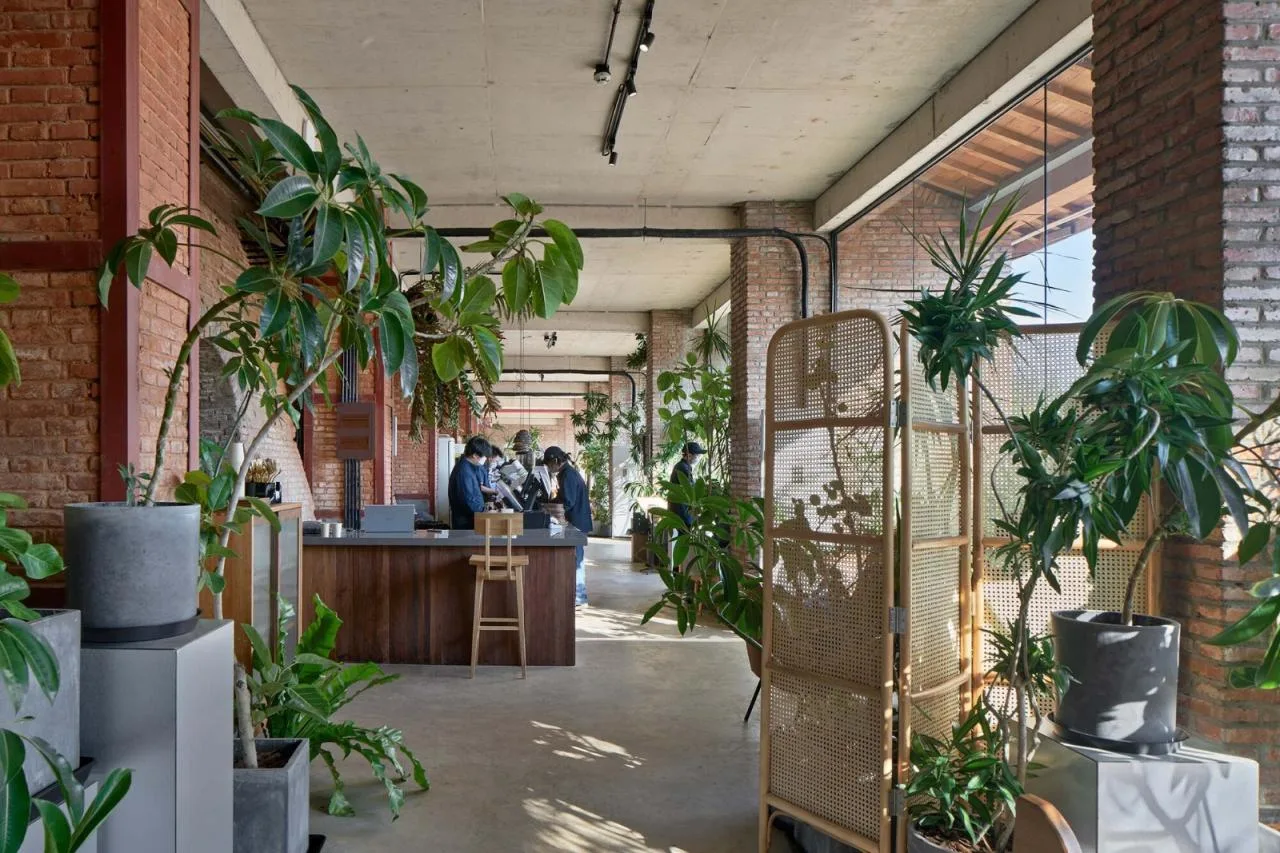
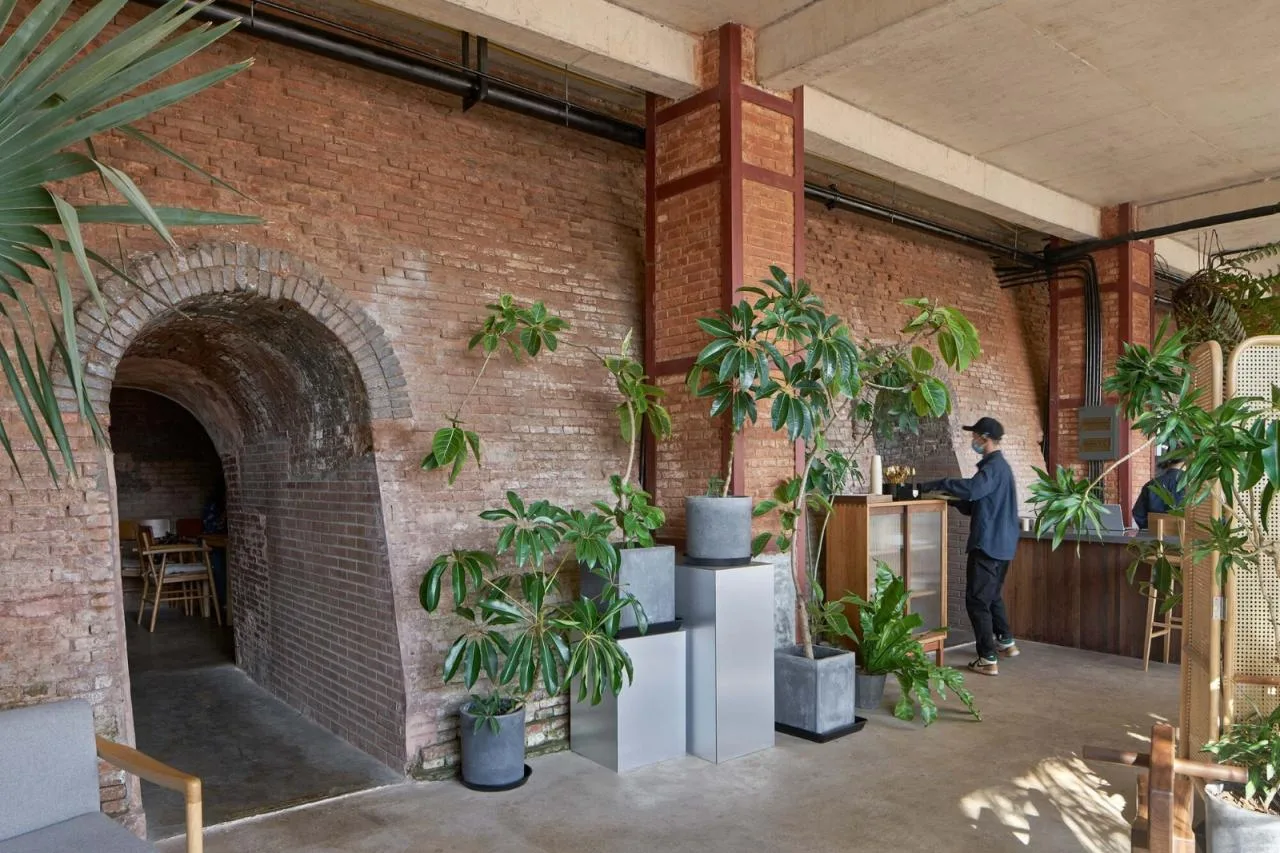
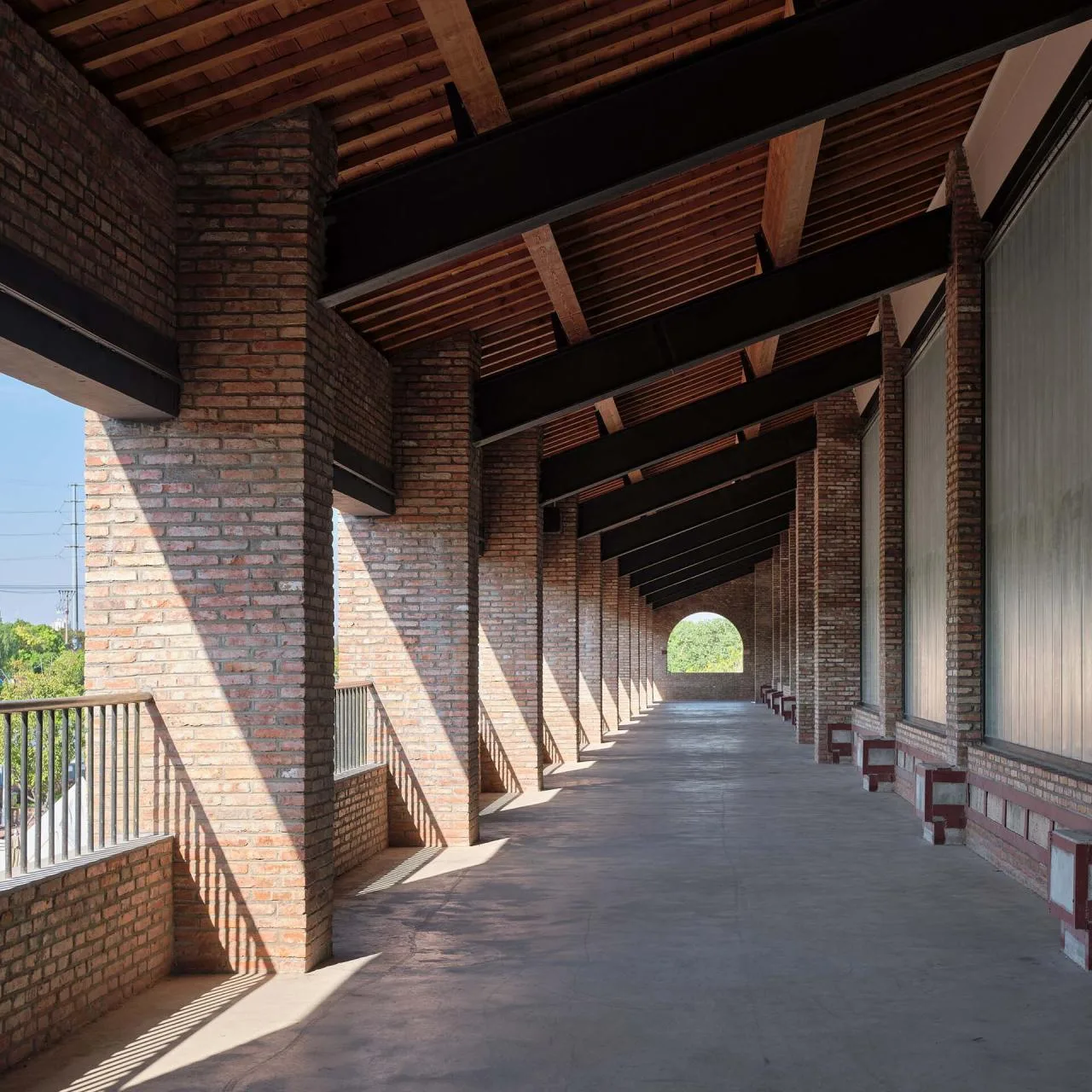
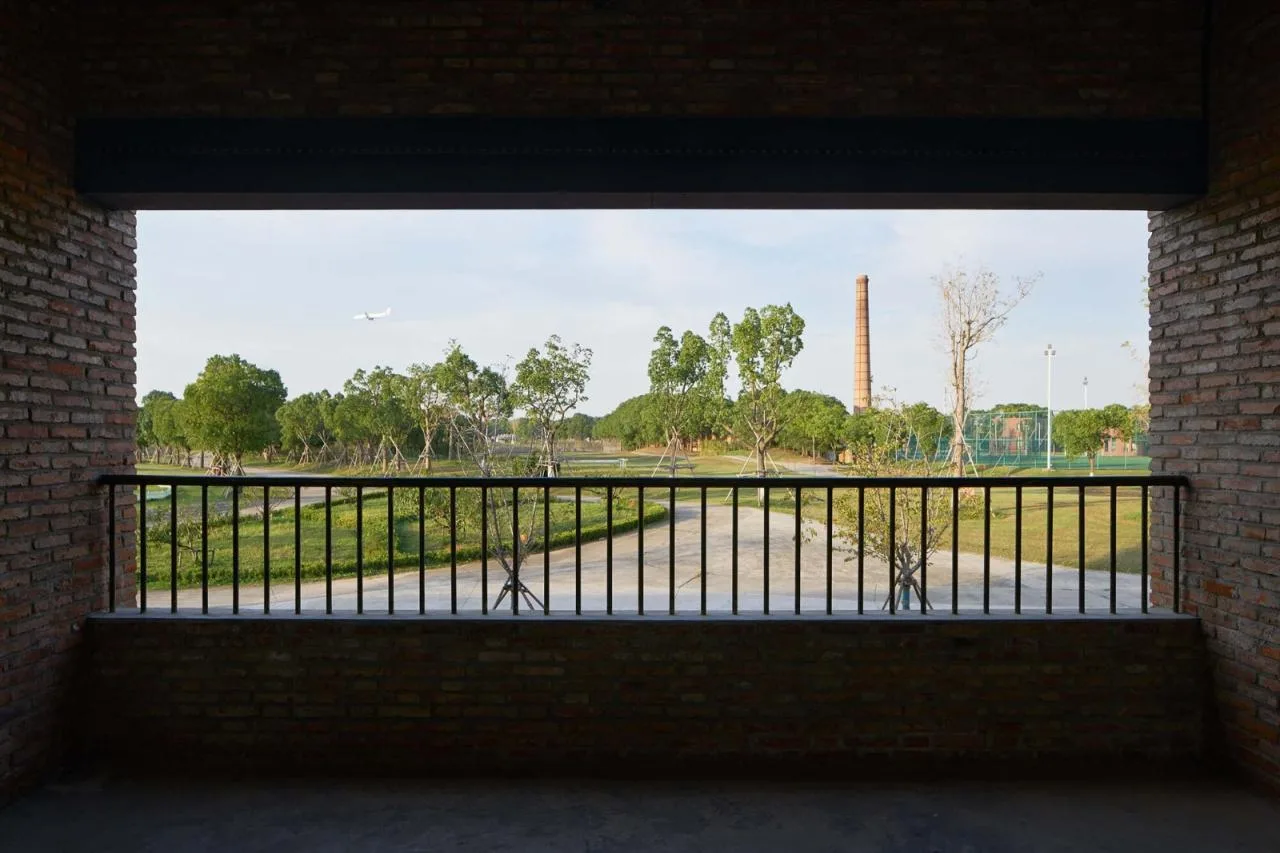
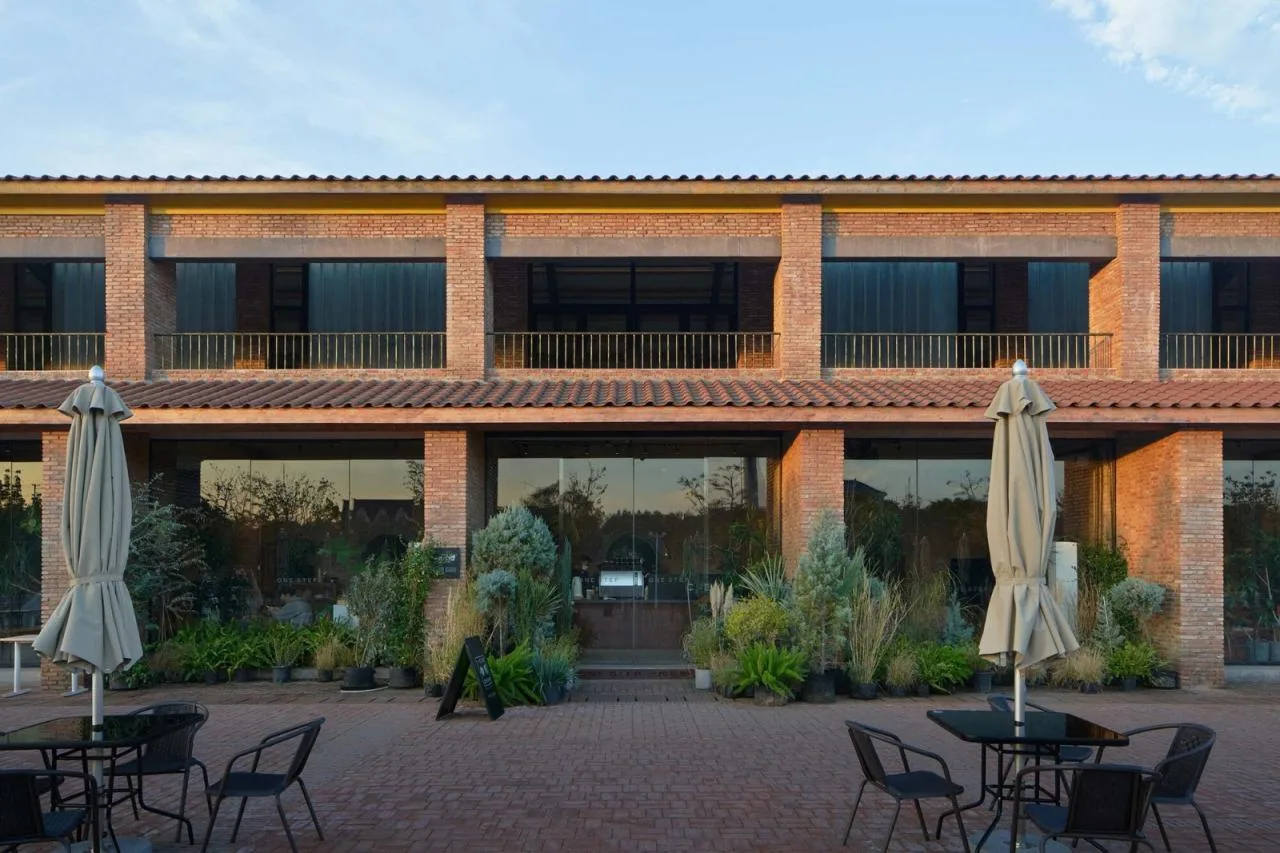
The building’s second floor houses a multifunctional hall with a transparent facade. External corridors on both the first and second floors serve as evacuation routes as well as viewing platforms. The exterior enclosure is minimal, with arches forming the main facade on the east mountain wall, hinting at the interior space.
During renovation of the east side’s second-floor platform, an old brick transport staircase was preserved, complemented by the addition of an evacuation staircase. The west platform, located near the chimney, utilizes an existing passage for evacuation, maintaining the building’s original spatial relationships and the walking experience as much as possible.
Shanghai is one of China’s earliest cities to blend Chinese and Western cultures. The introduction of the Hofmann kiln symbolizes the industrialization of its suburban rural economy. This transformation of the Red Kiln goes beyond simply preserving abandoned industrial forms as exhibition sites; it breathes new life into the space by enabling it to support contemporary public activities. The old building now plays a broader social role beyond its architectural significance.
Project drawings
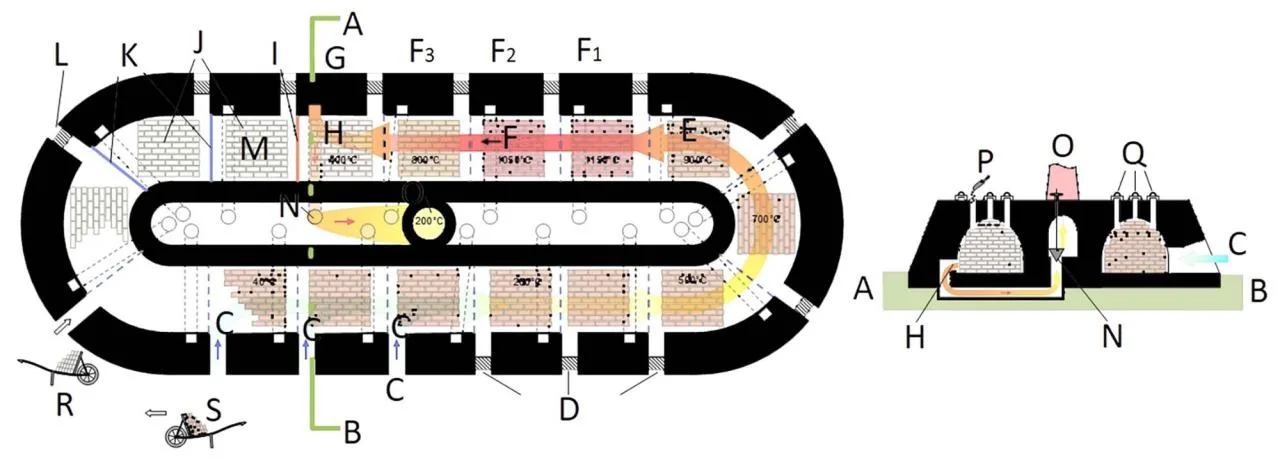
△ Analysis Diagram
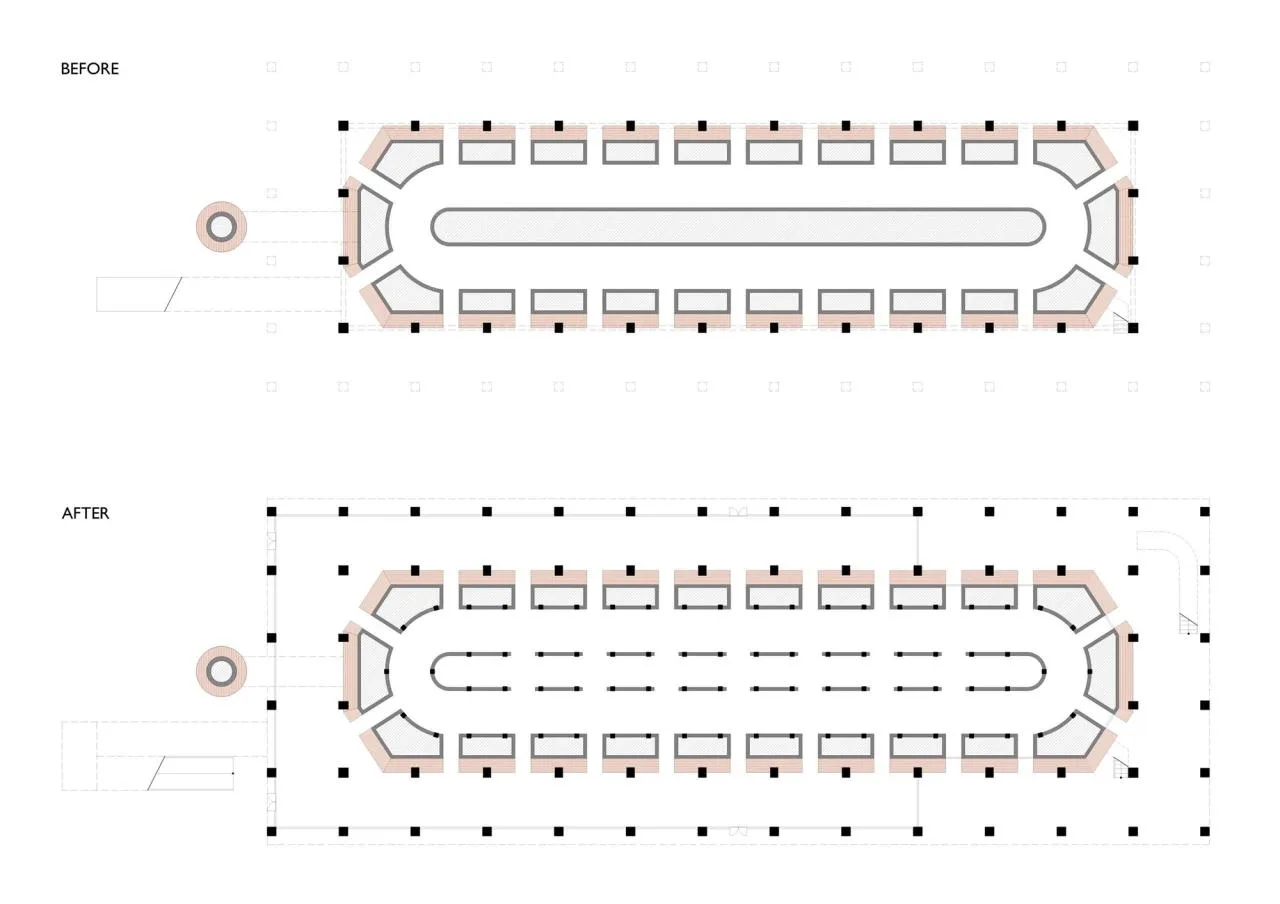
△ Floor Plan
Project Information
Architect: Hechen Building
Project Year: 2022
Photographer: Zhu Qingyan
Design Team: Chen Hao, Hu Chenchen, Ge Ziyan, Liu Zehong
Construction Company: Shanghai Evergrande
Location: Shanghai, China















Must log in before commenting!
Sign Up