
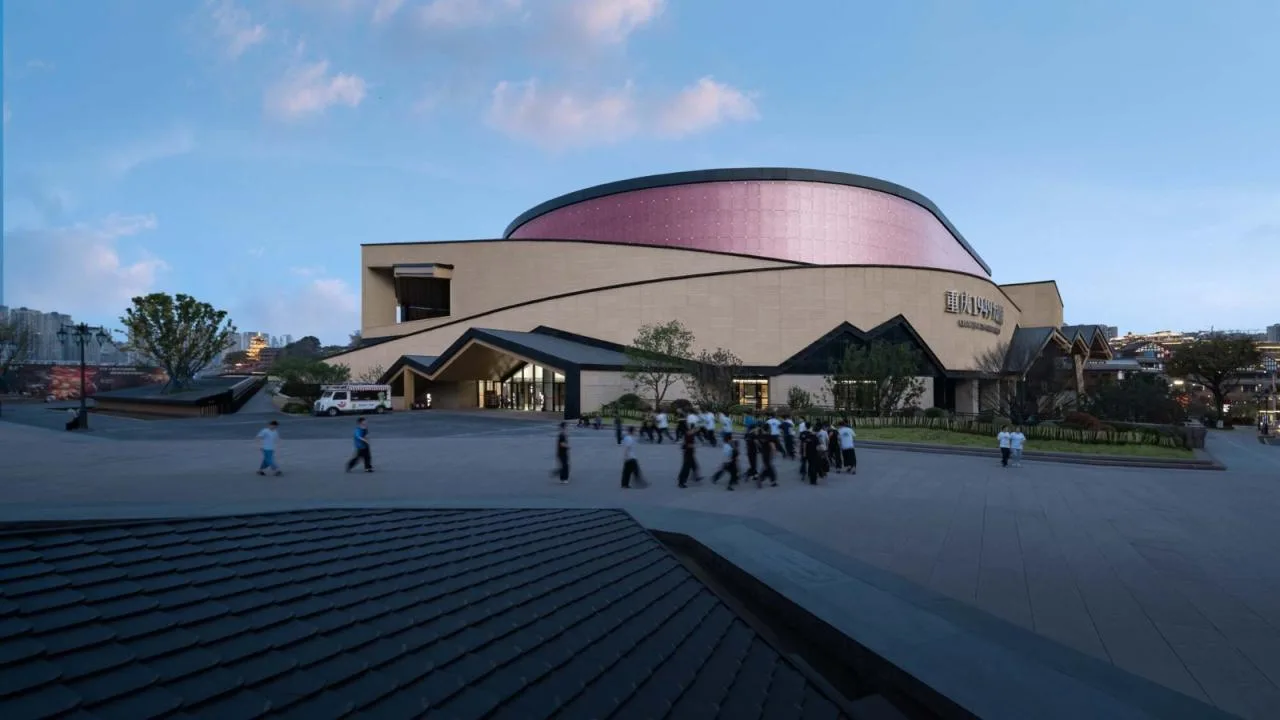
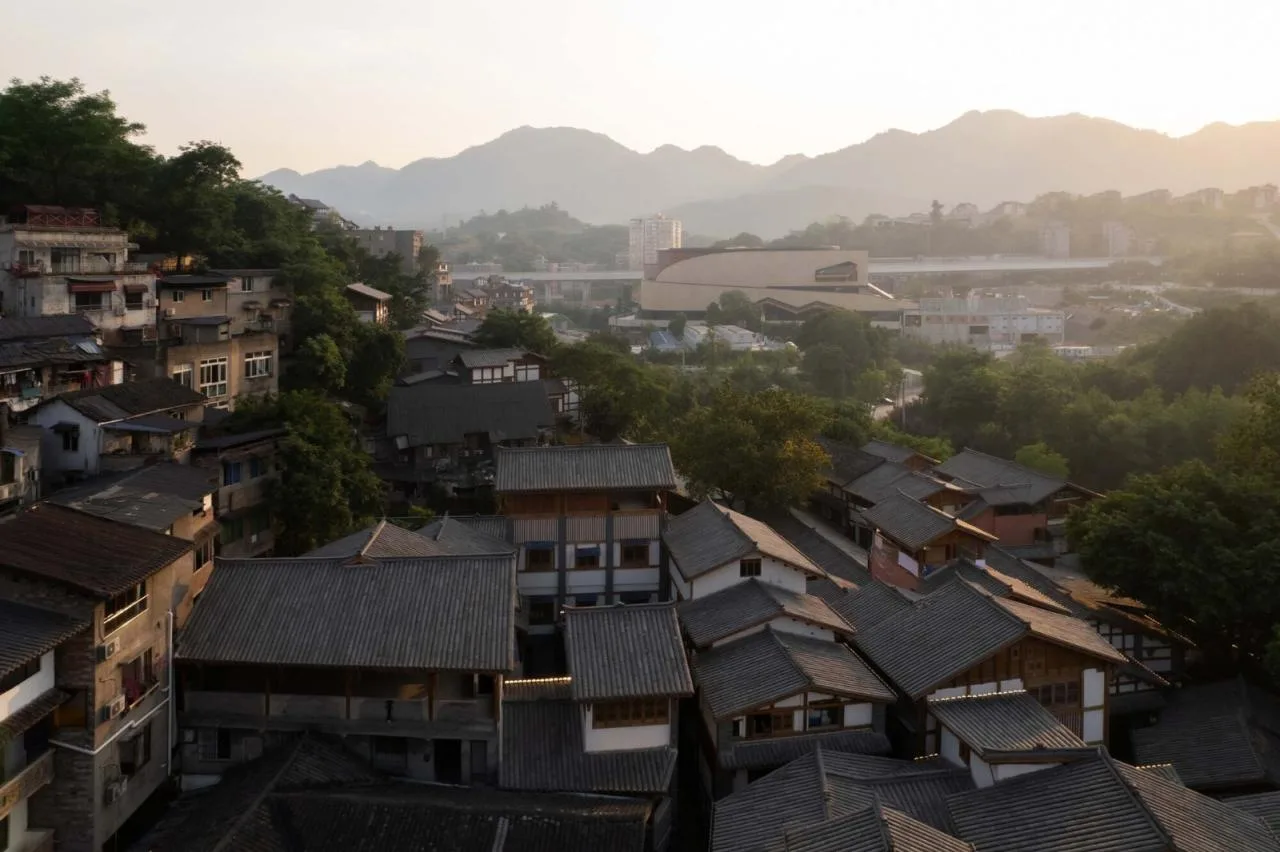
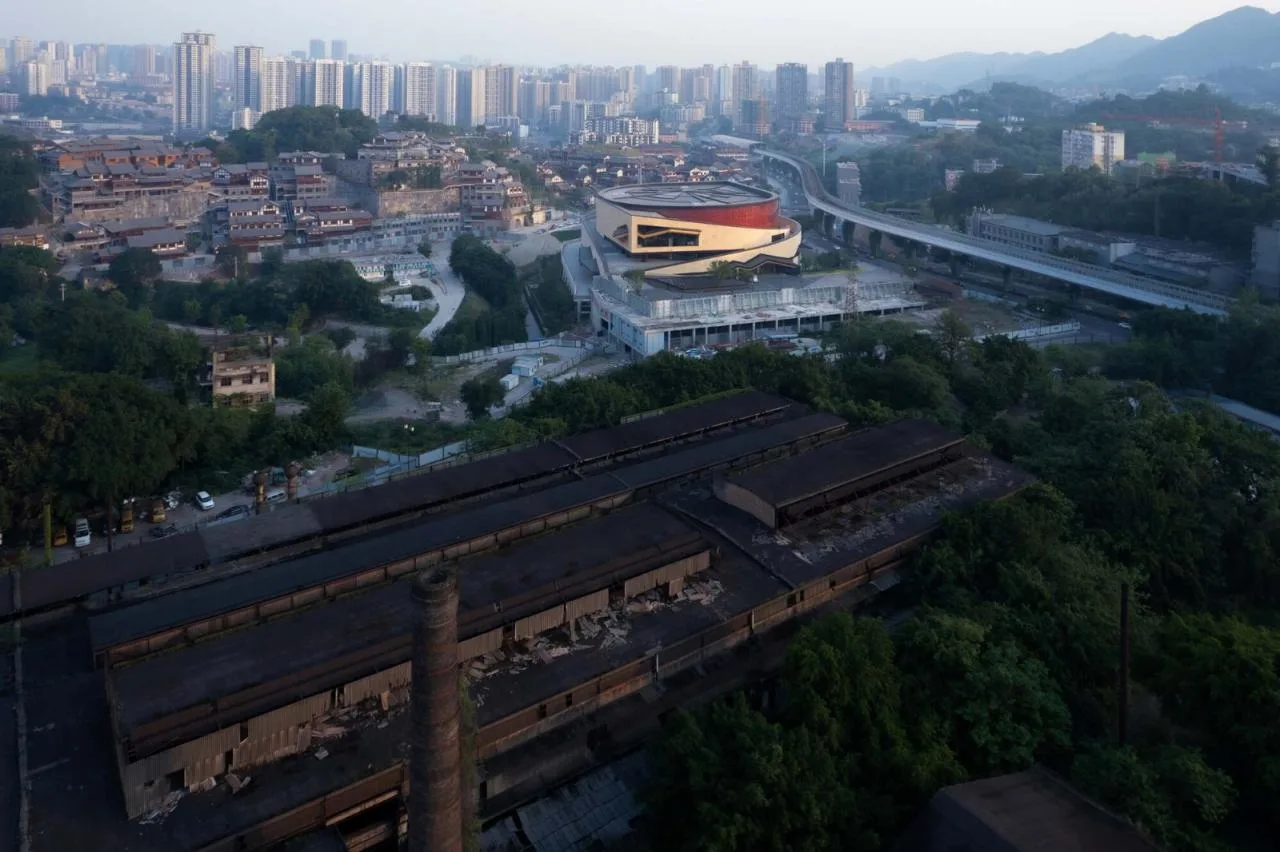
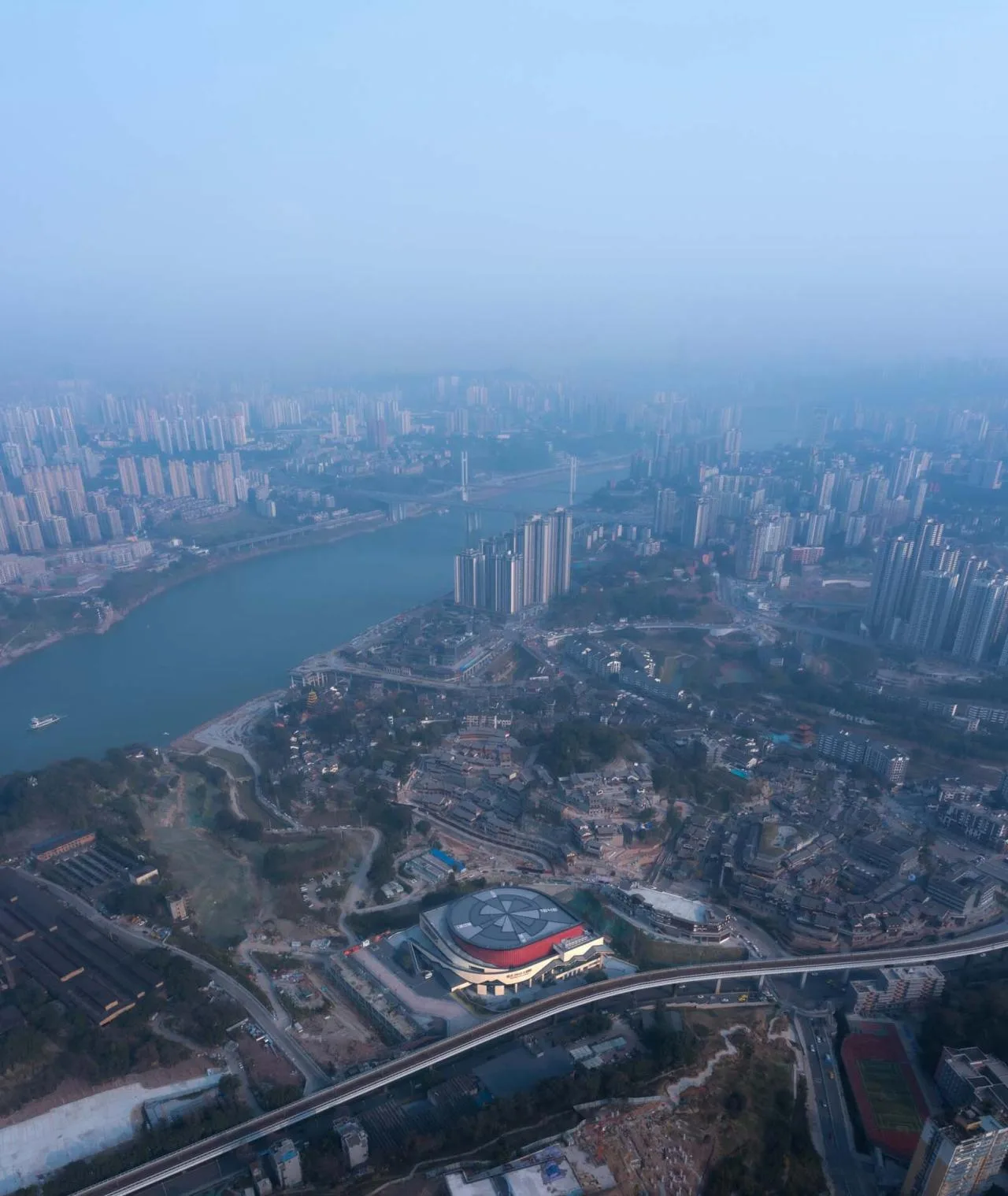
In recent years, large-scale indoor theme theaters celebrating regional cultural industries have grown increasingly popular in China, inspiring a wave of innovative architectural designs. The Chongqing 1949 Grand Theatre serves as the first phase of the Chongqing Ciqikou Jinbizheng Street cultural and tourism district. This dedicated venue hosts performances of the grand red historical stage drama “Chongqing 1949”.
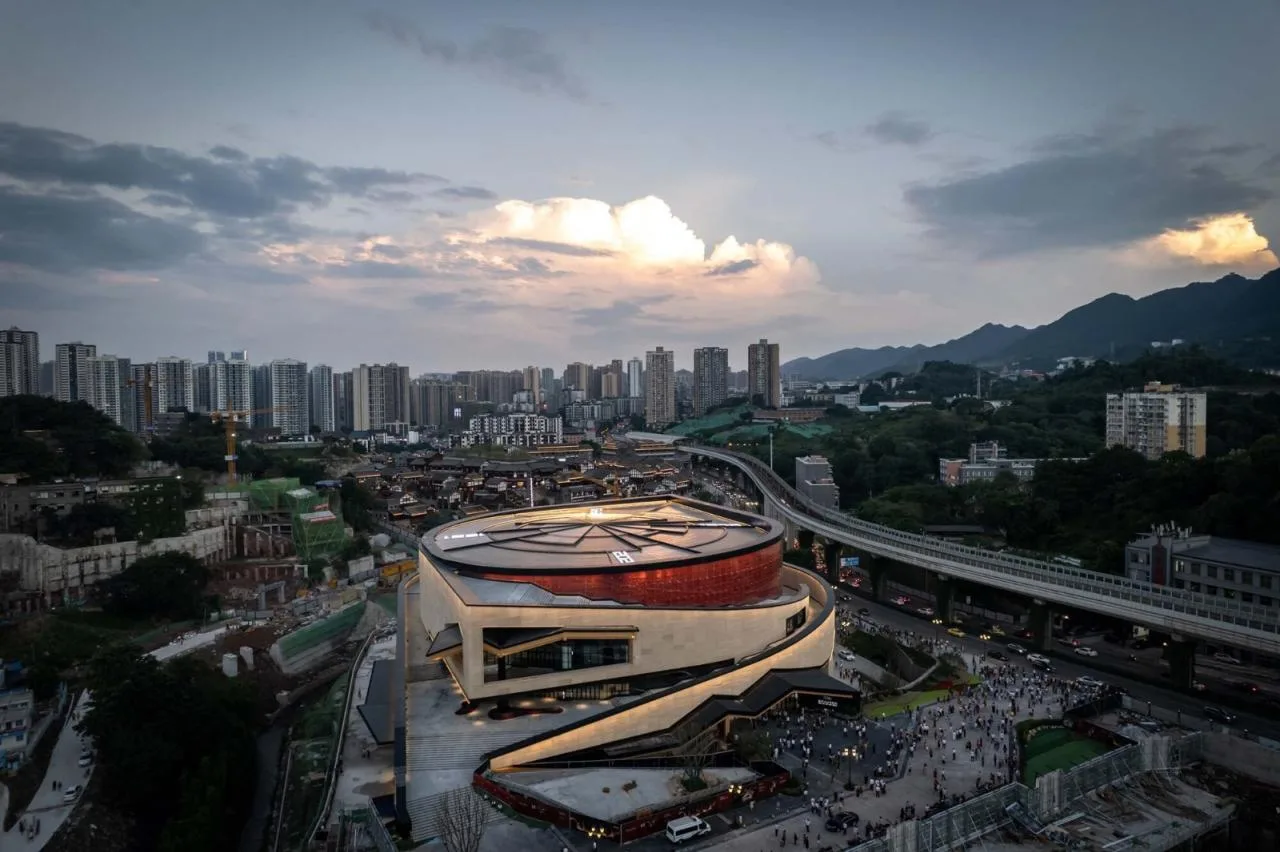
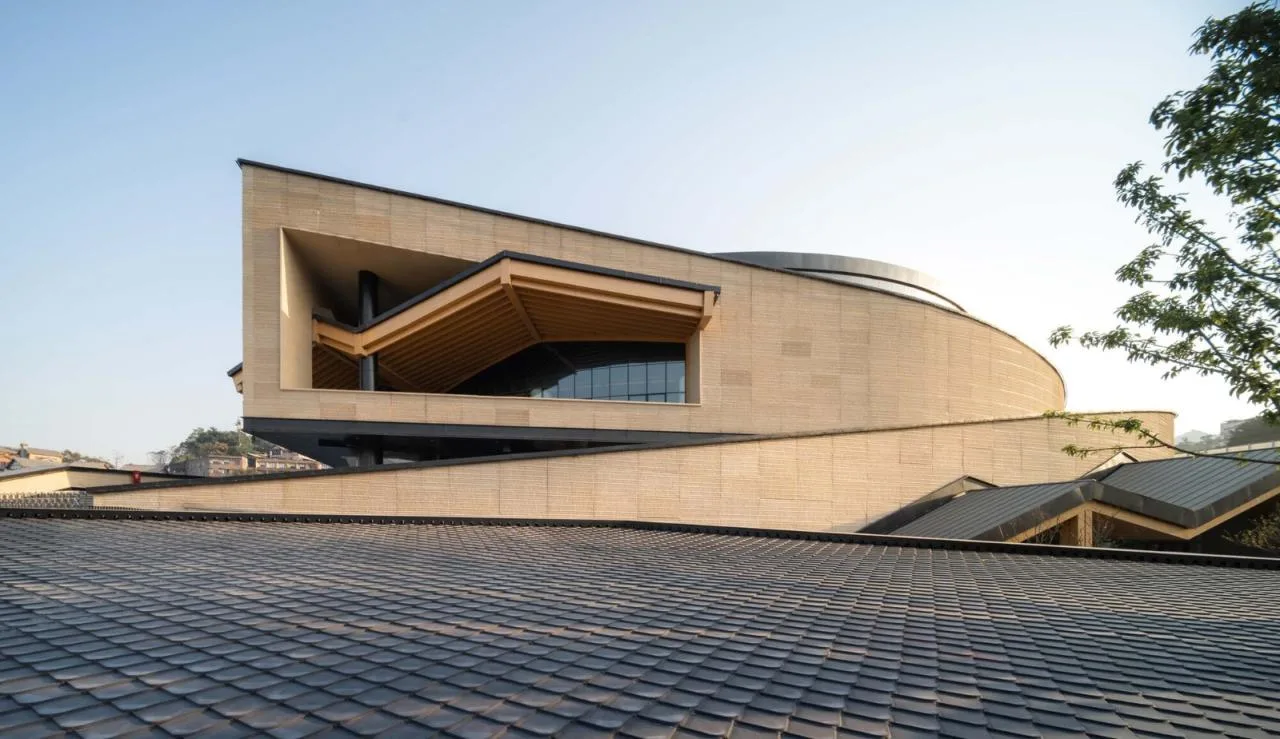
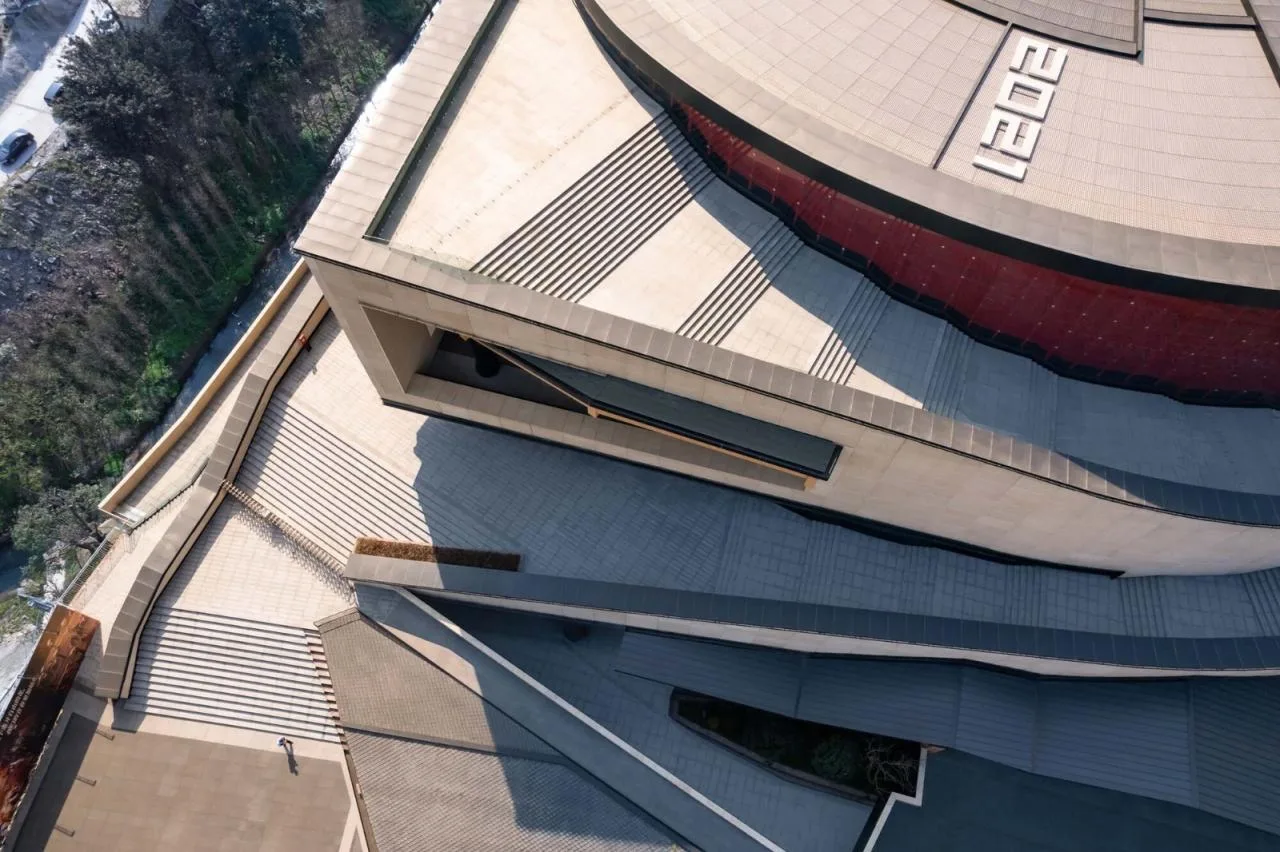
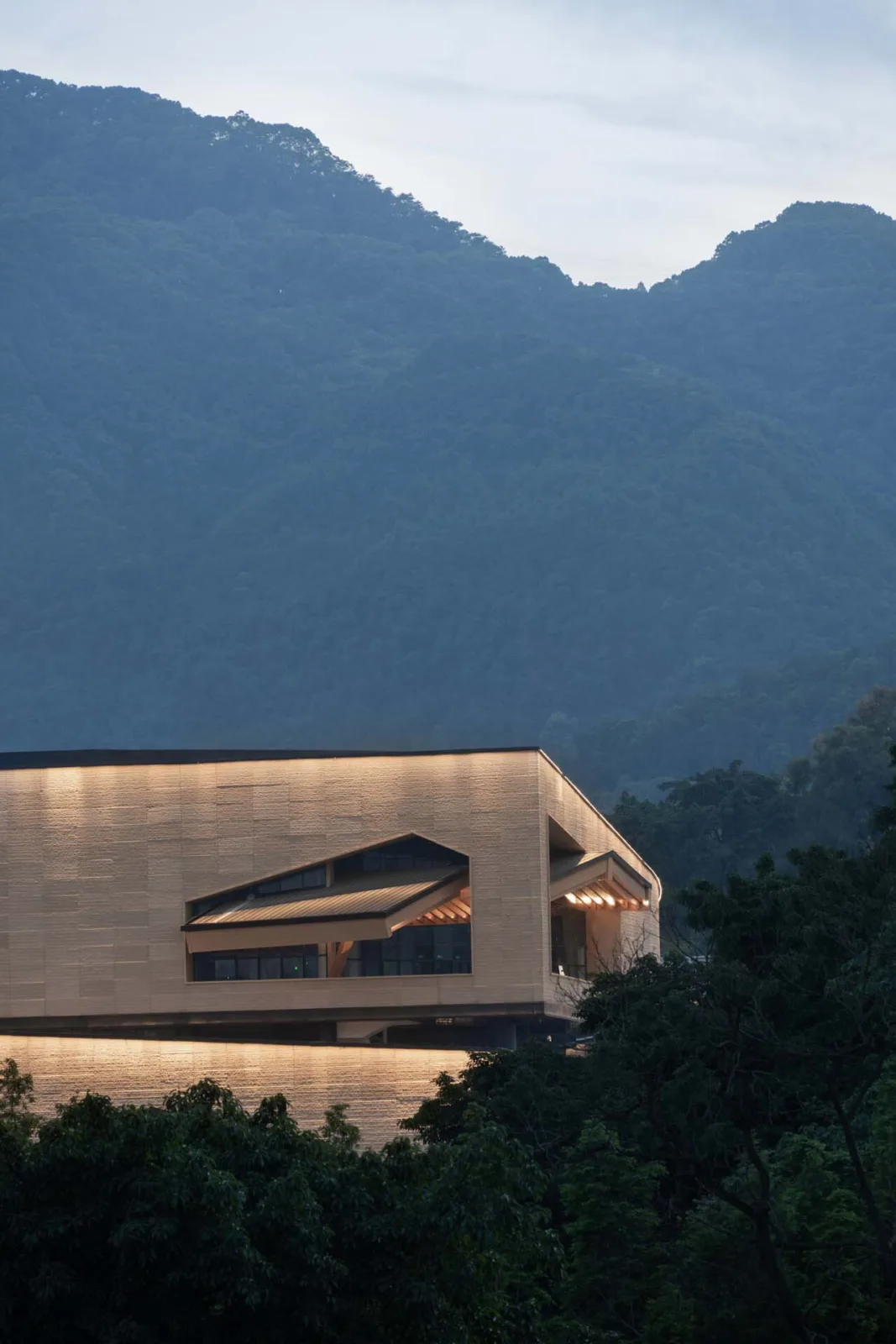
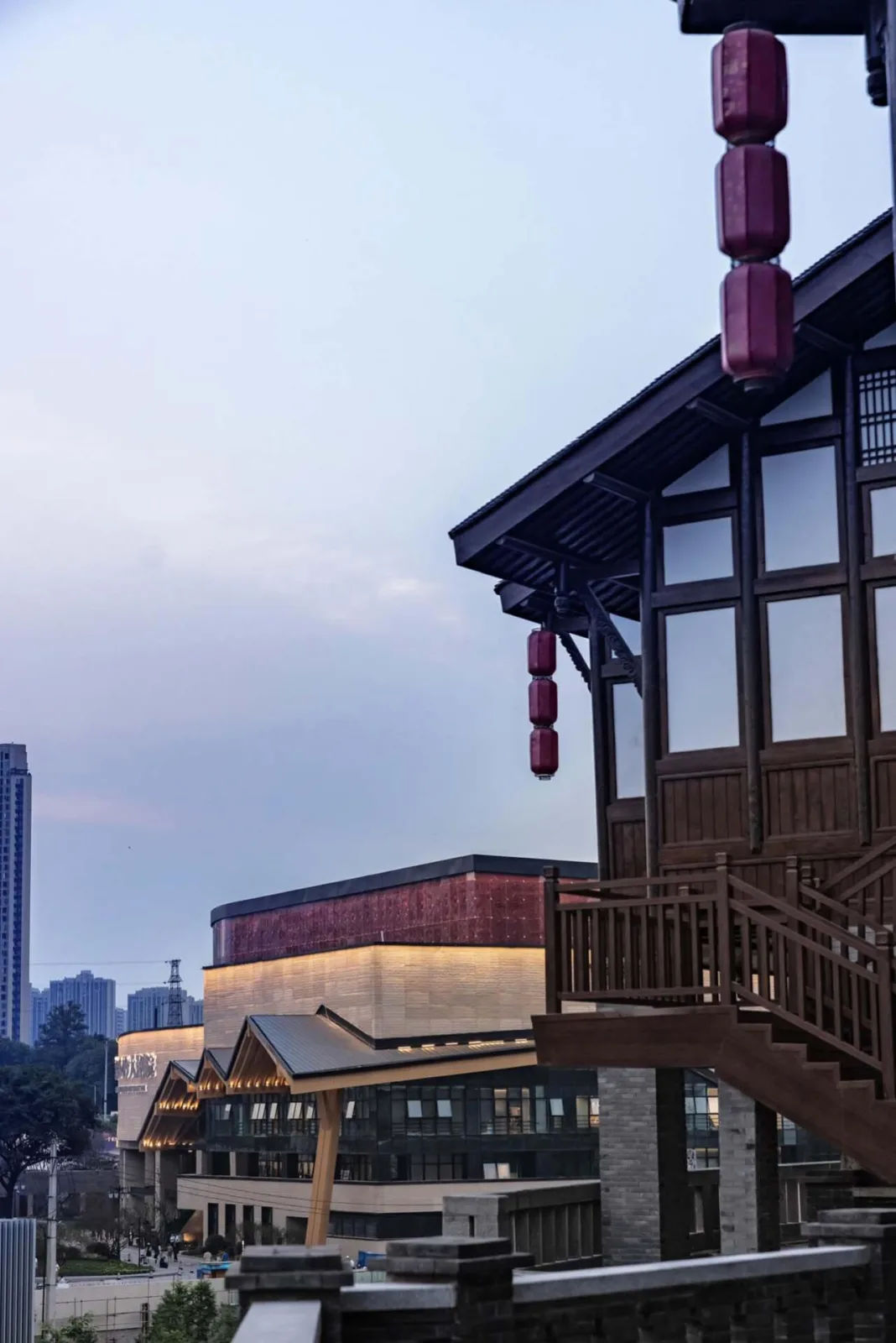
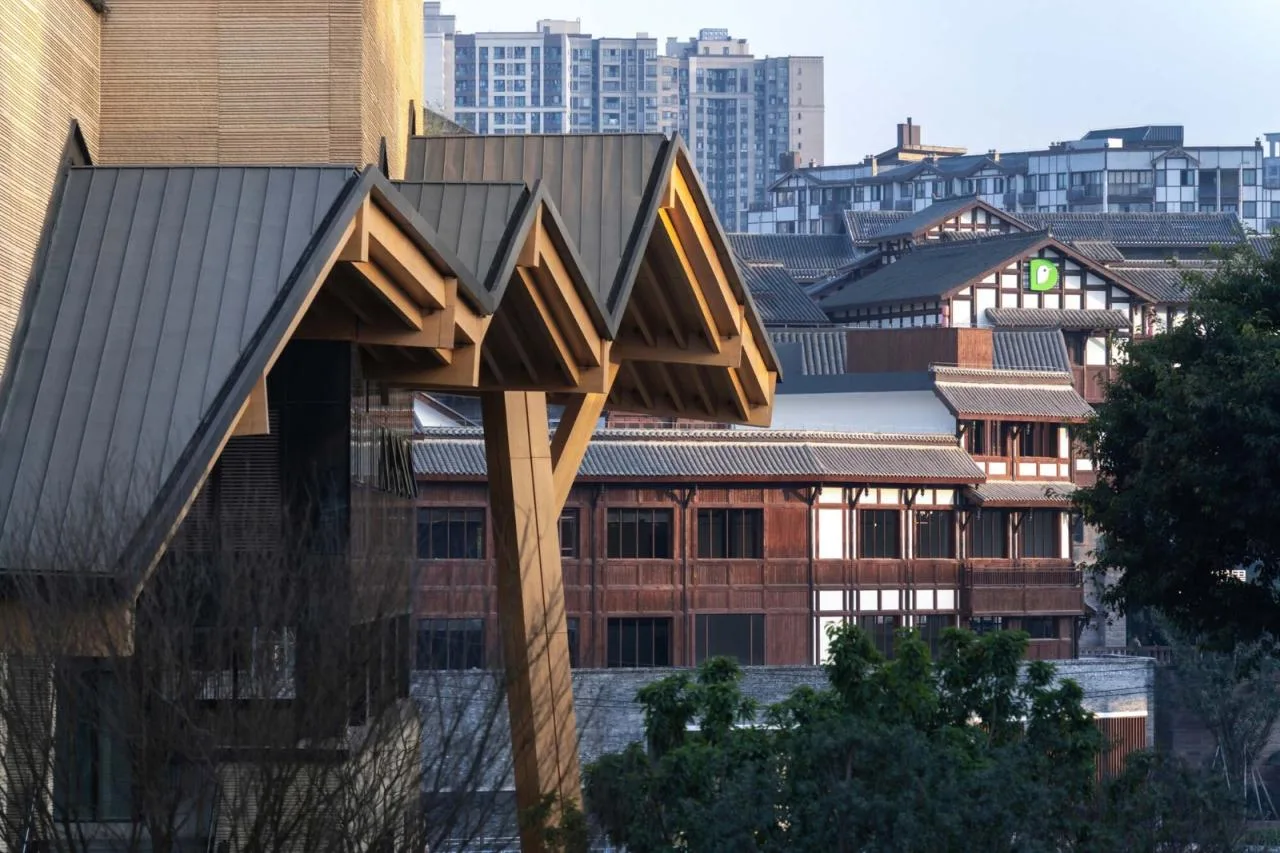
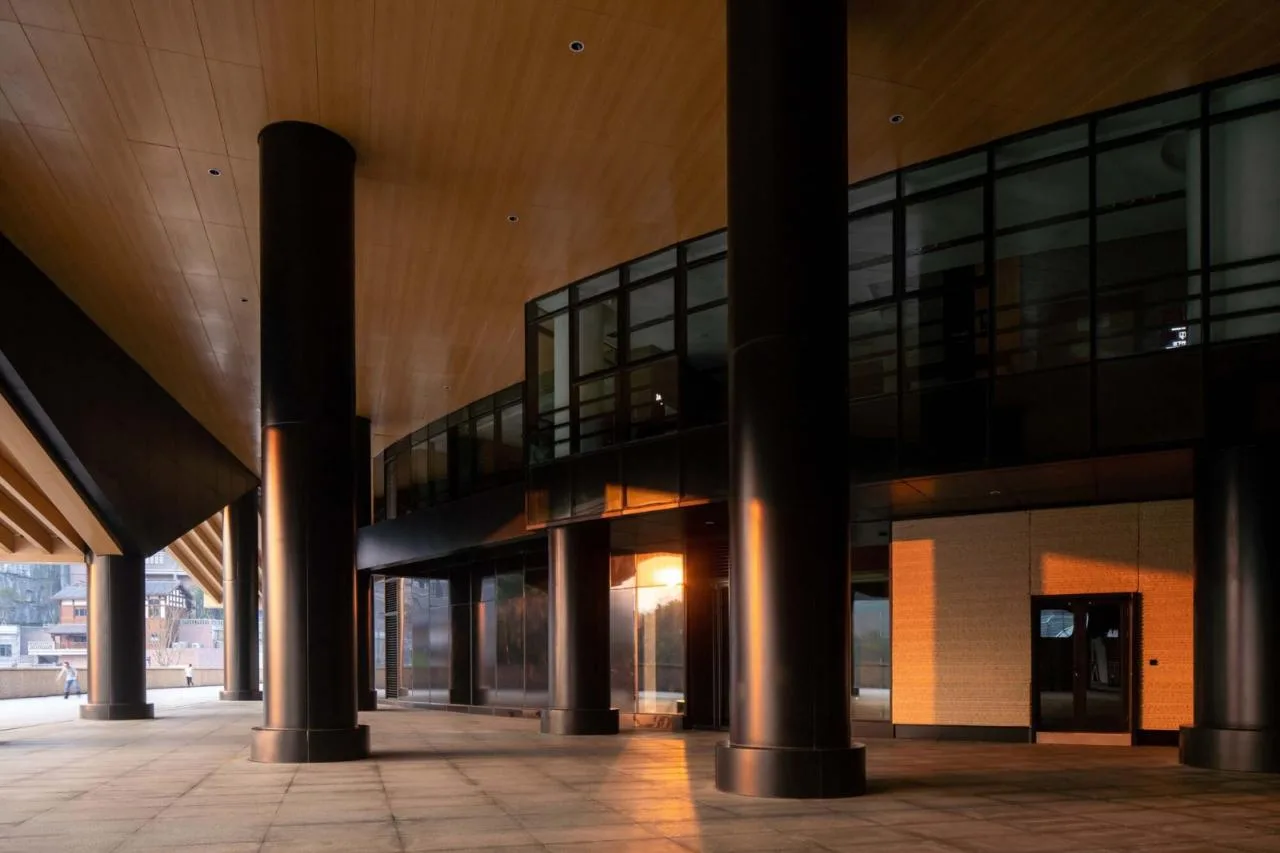
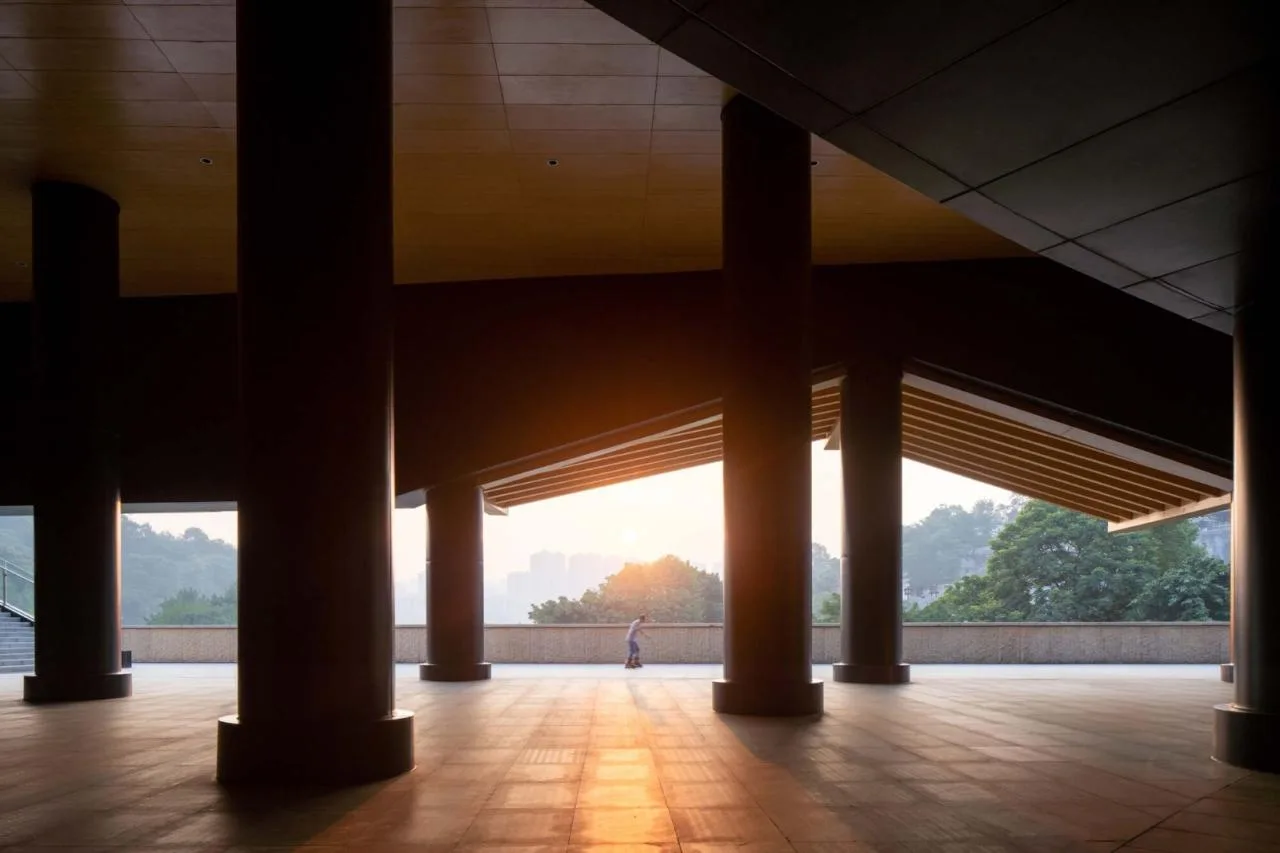
When designing the relationship between the project and its surroundings, the architects focused on two key principles: dissolution and integration, followed by control and organization. They softened the building’s massive scale through spatial design, integrating it harmoniously with the surrounding complex environment in terms of space, function, and movement flow.
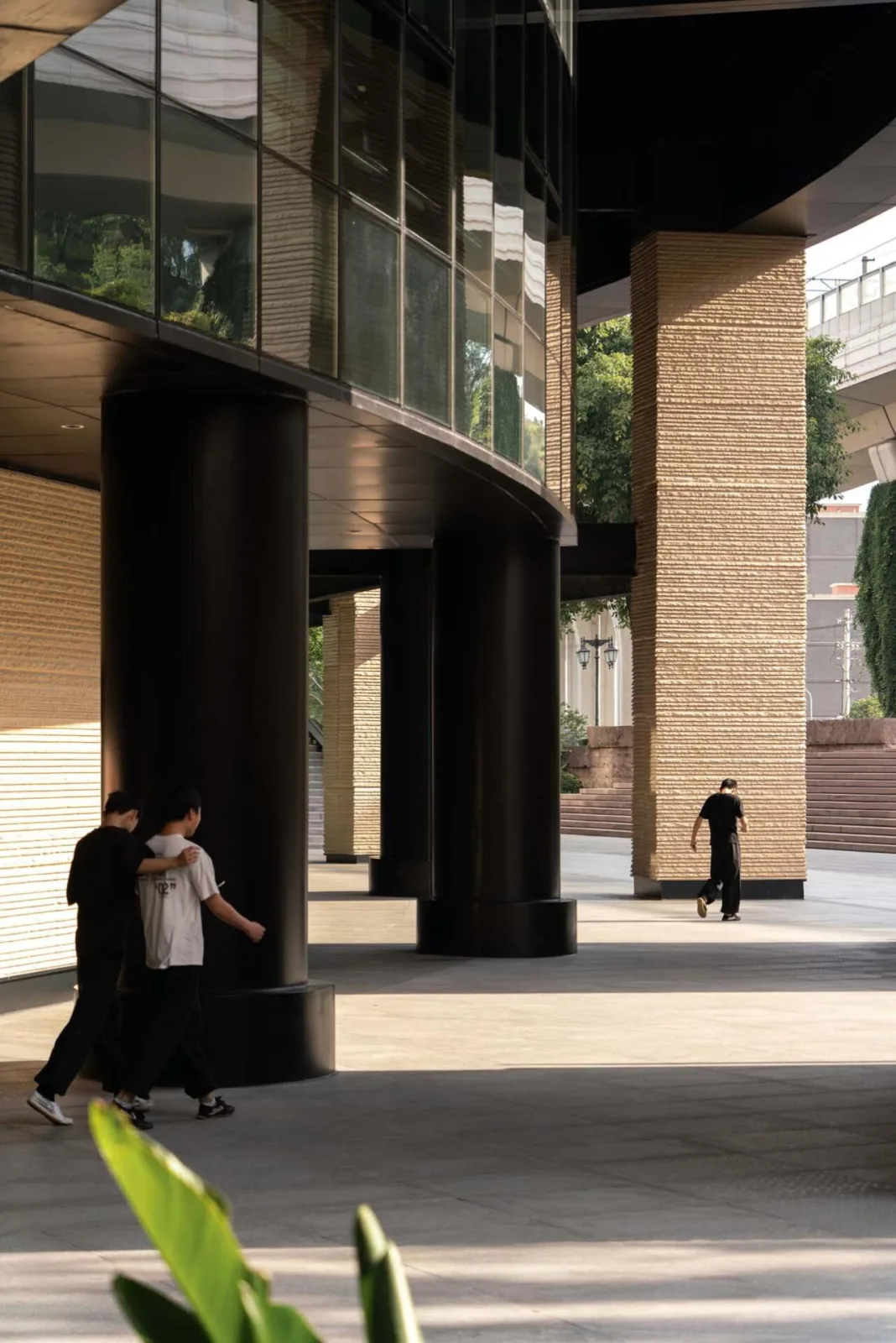
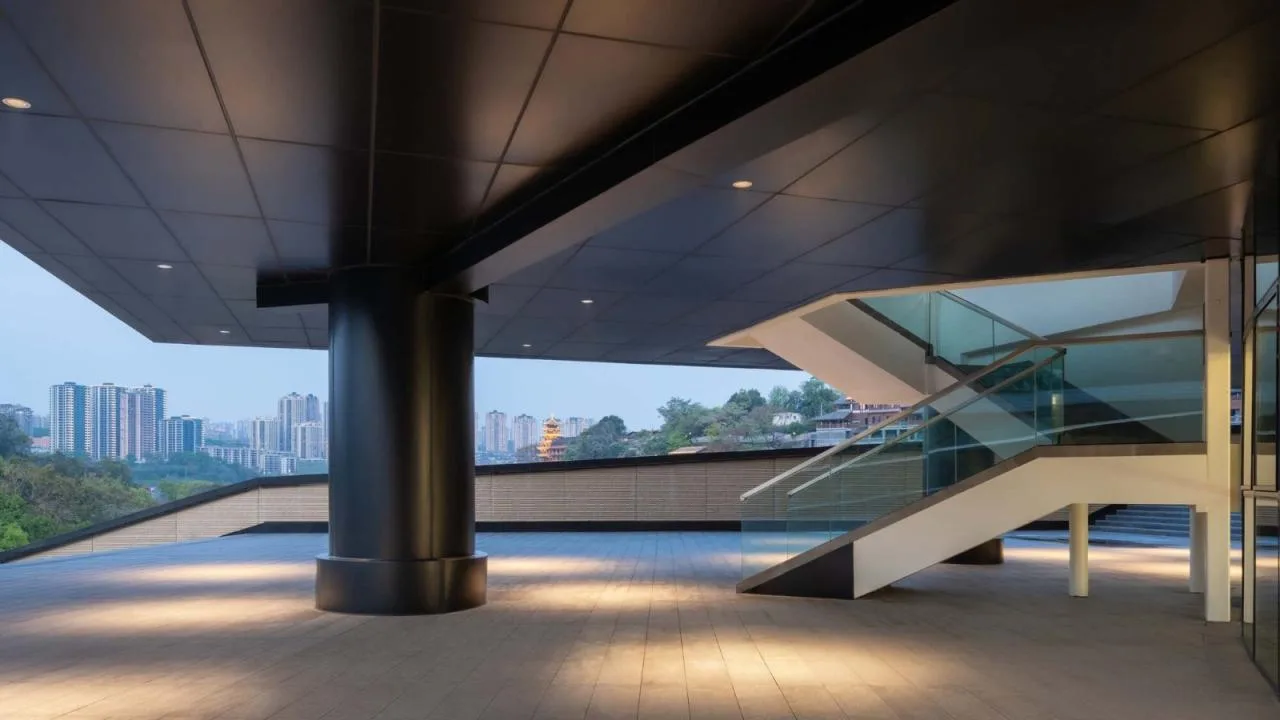
Simultaneously, by leveraging the unique spatial and formal characteristics of theme theaters, they managed the external environmental elements to create a dynamic interplay between individual components and the collective whole. This approach effectively dissolves the boundaries of the venue, allowing for seamless interaction between the setting and its users while fostering a shared spirit within the space.
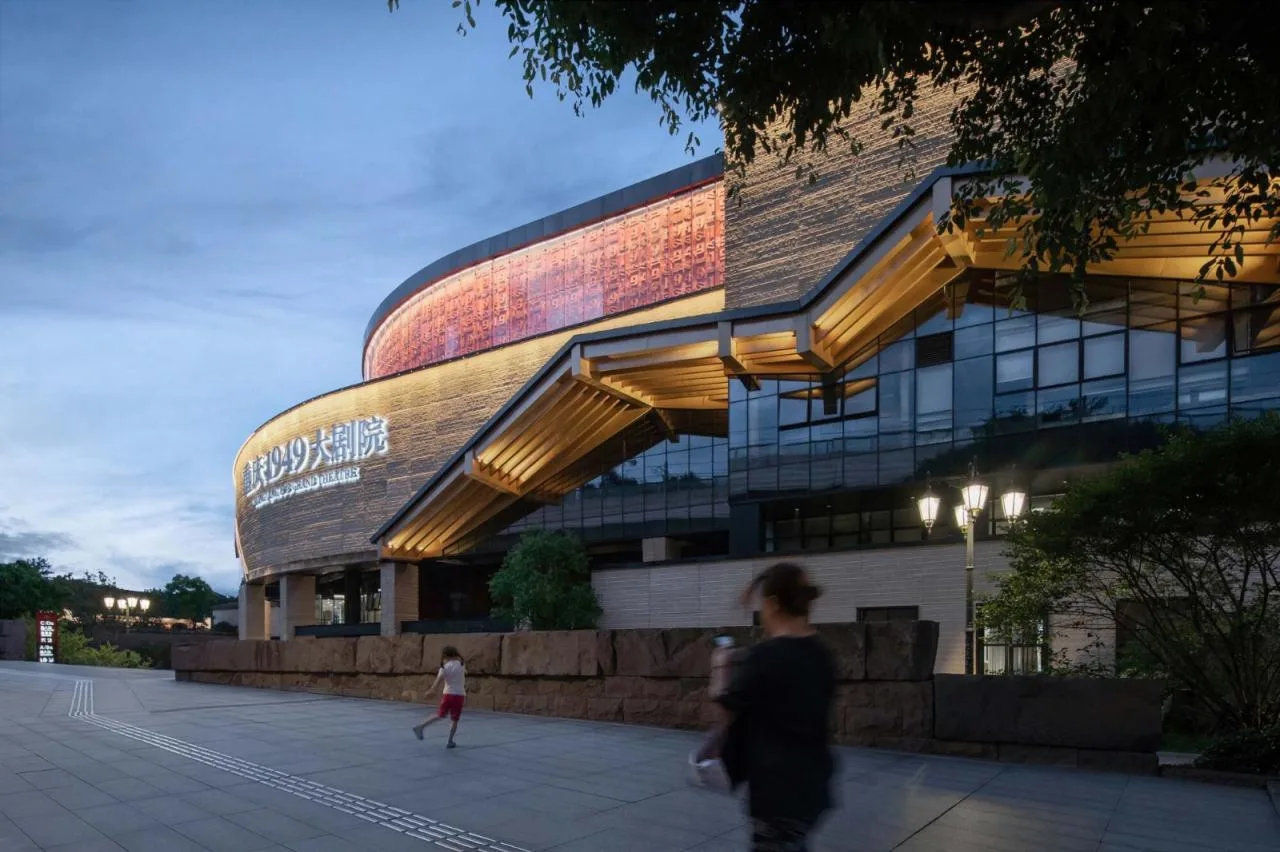
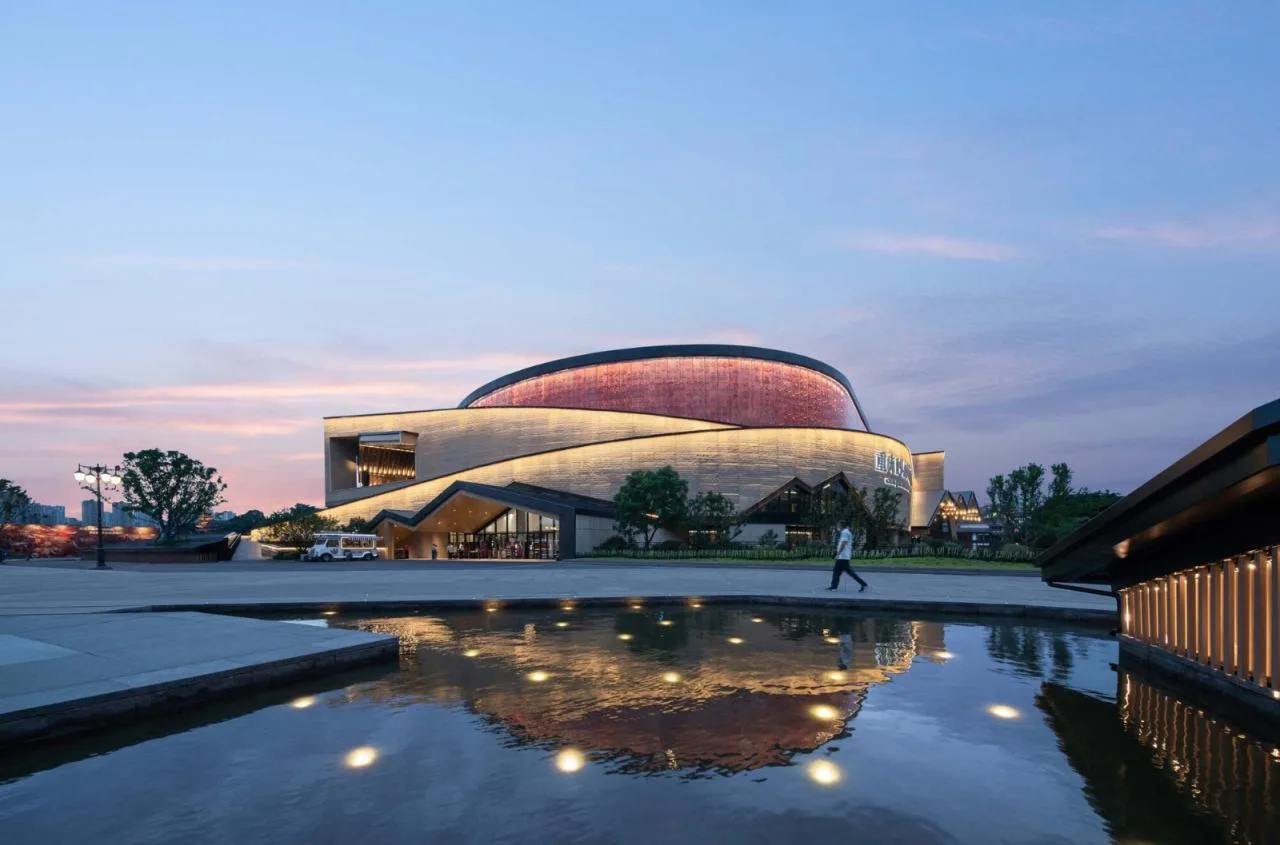
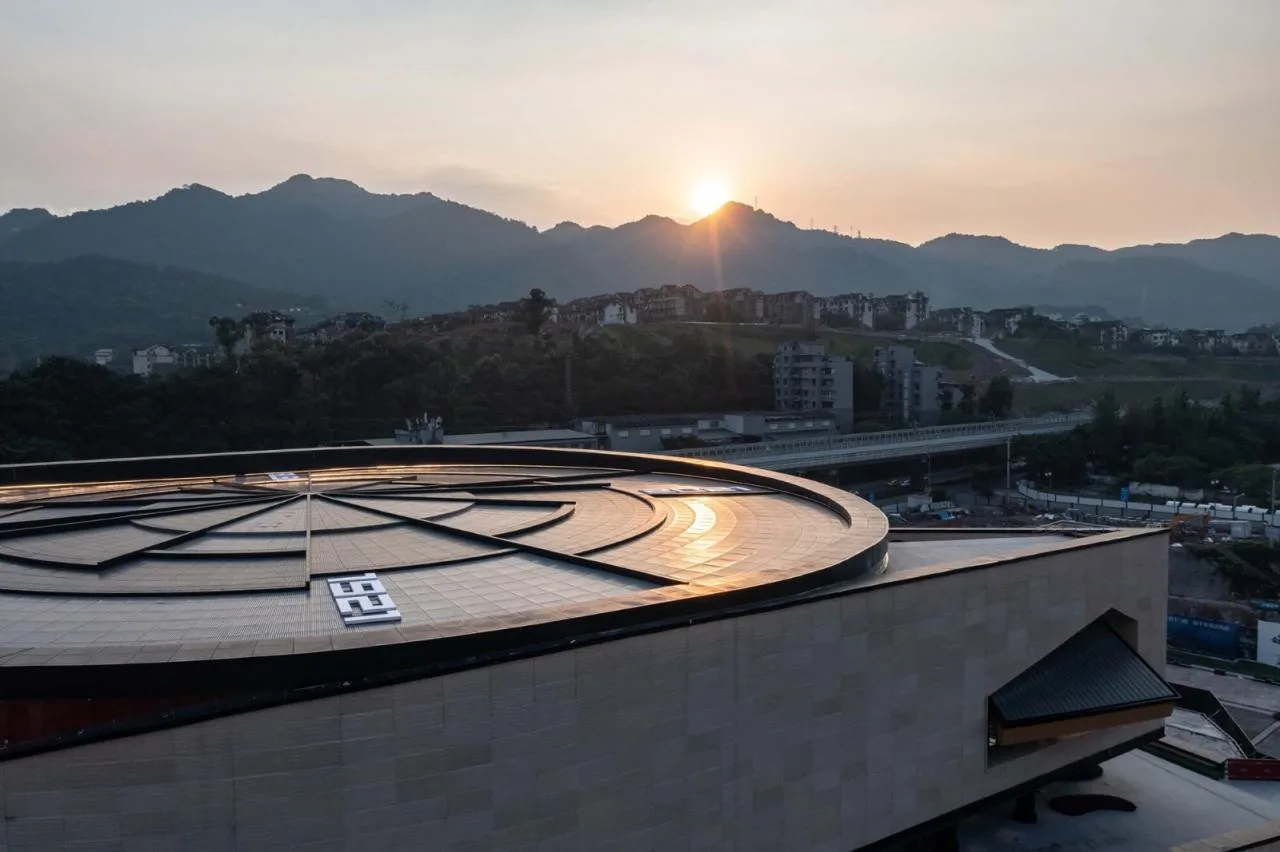
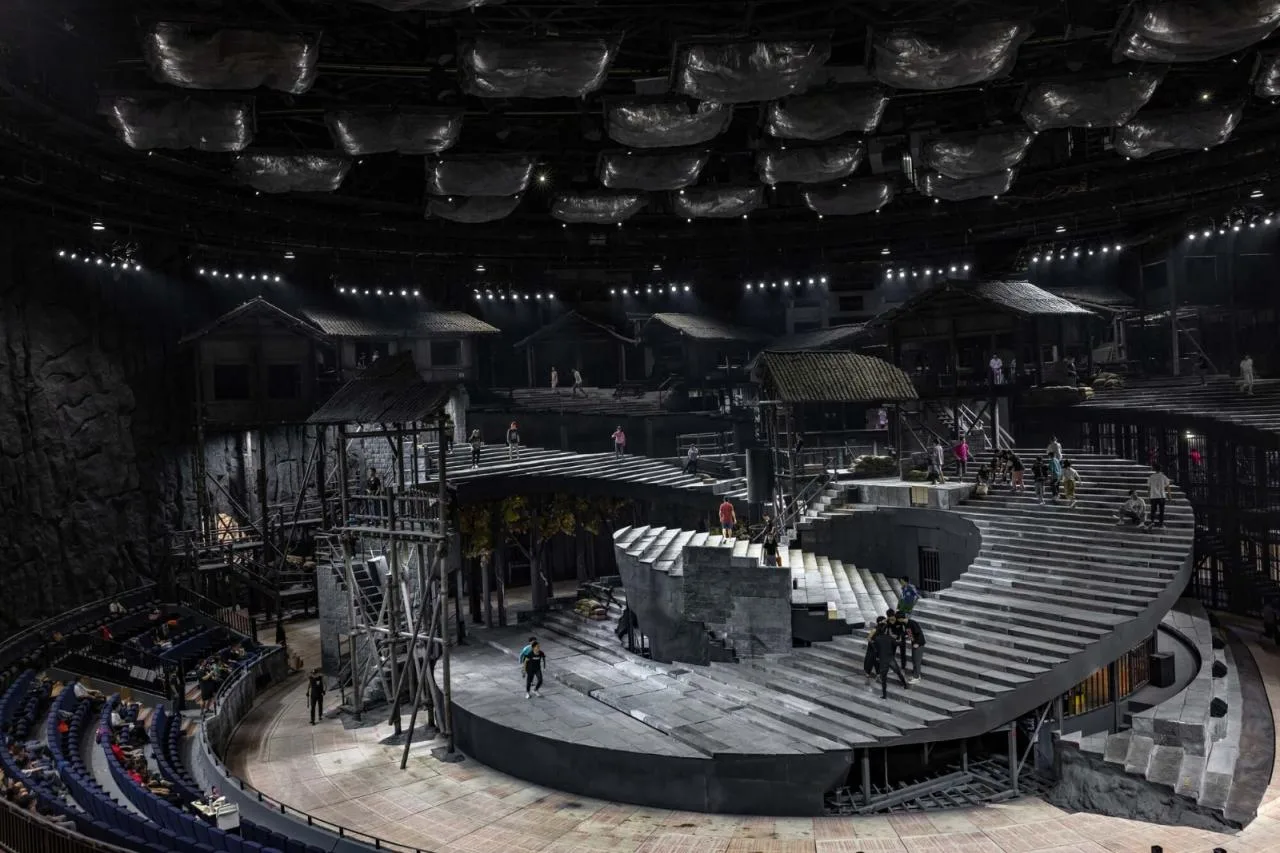
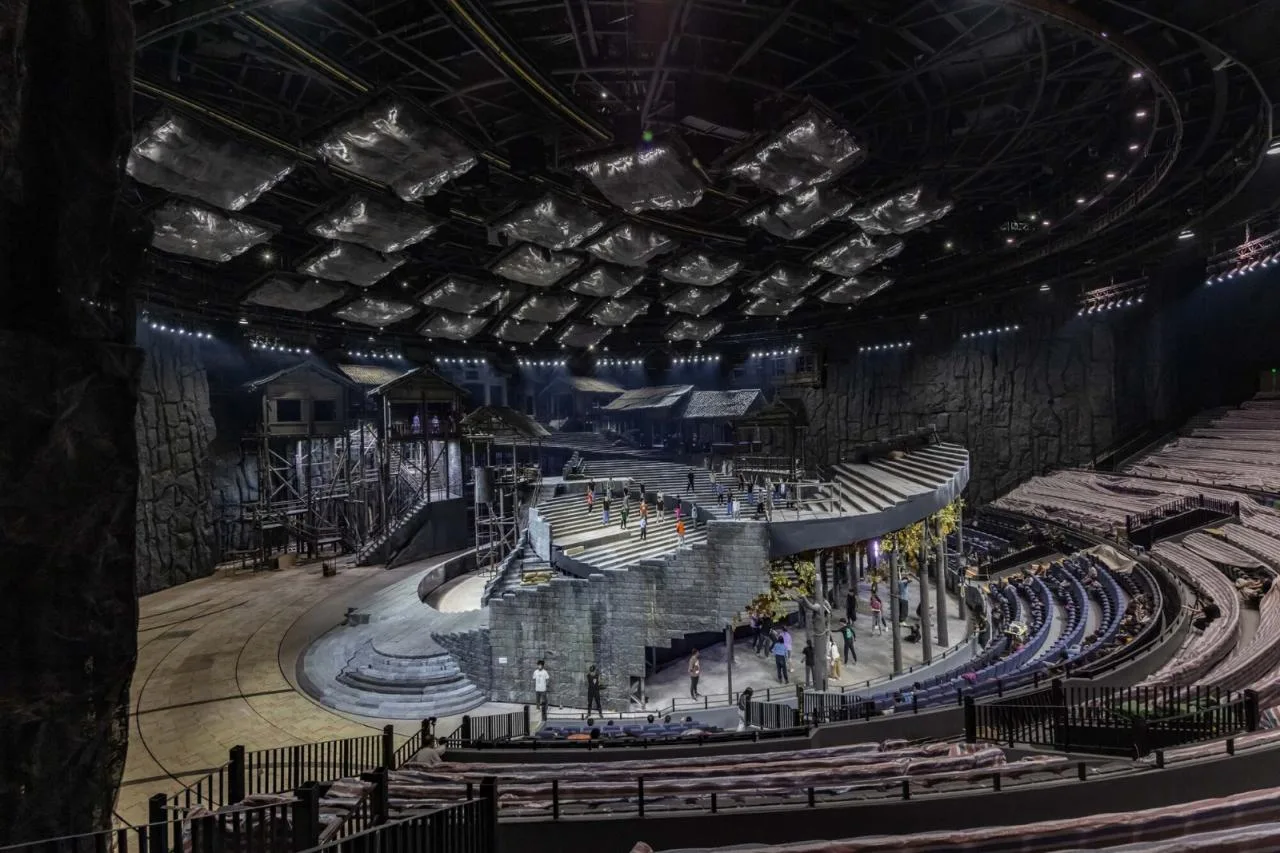
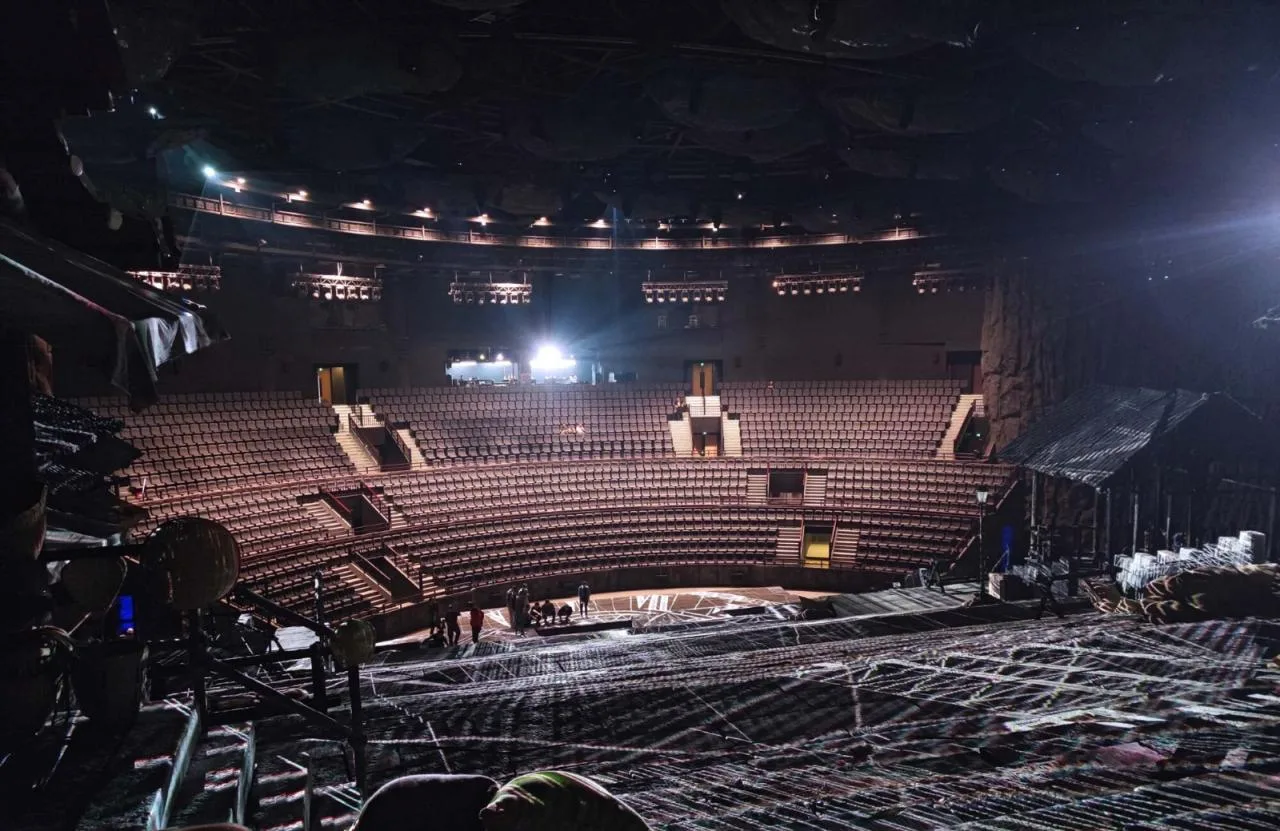
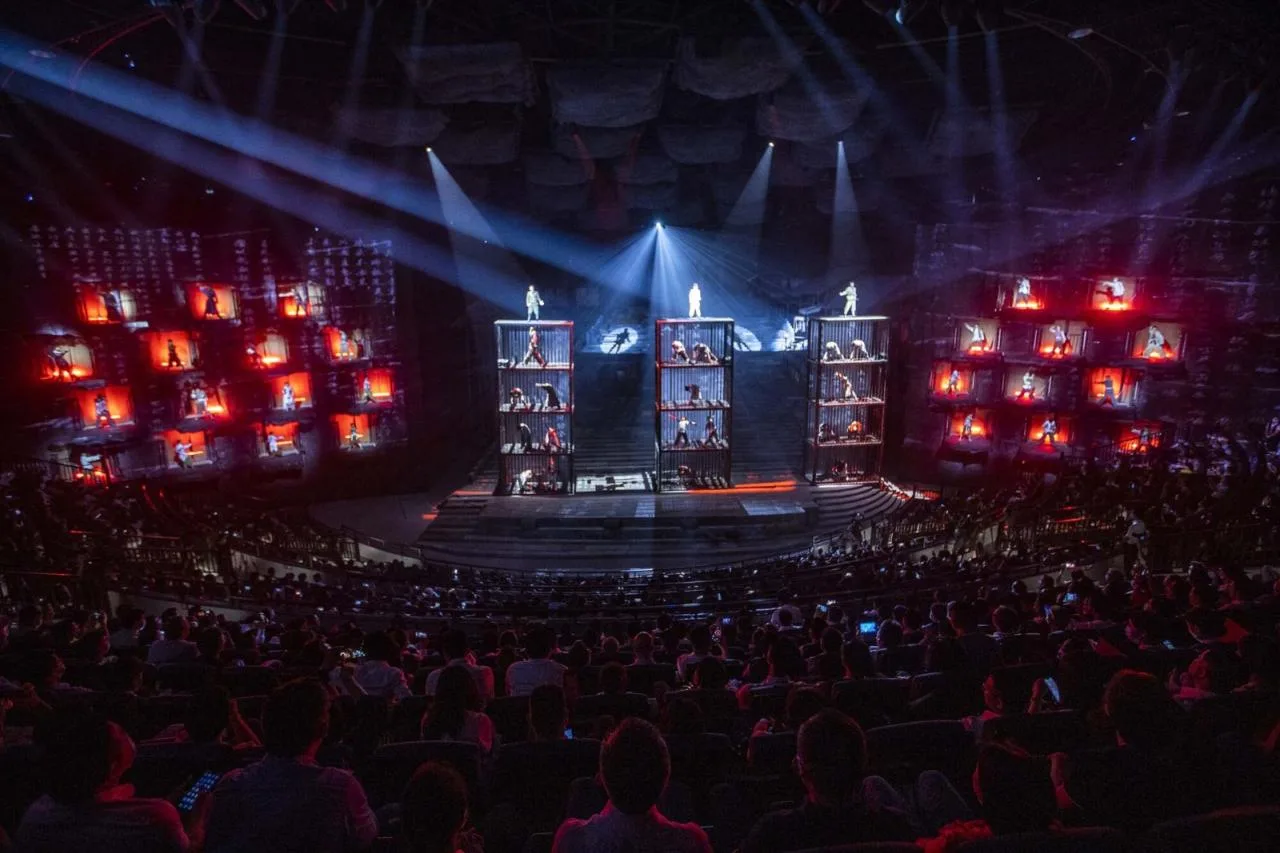
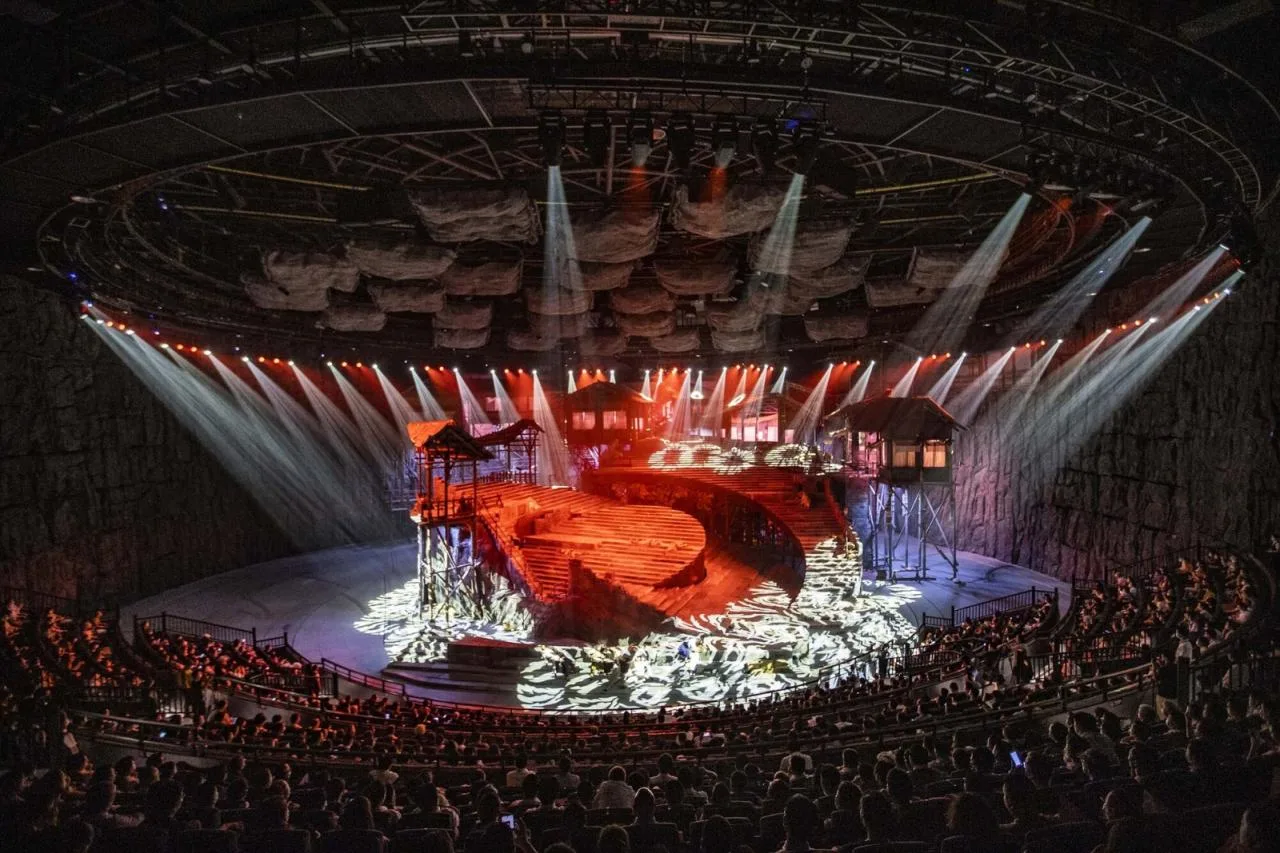
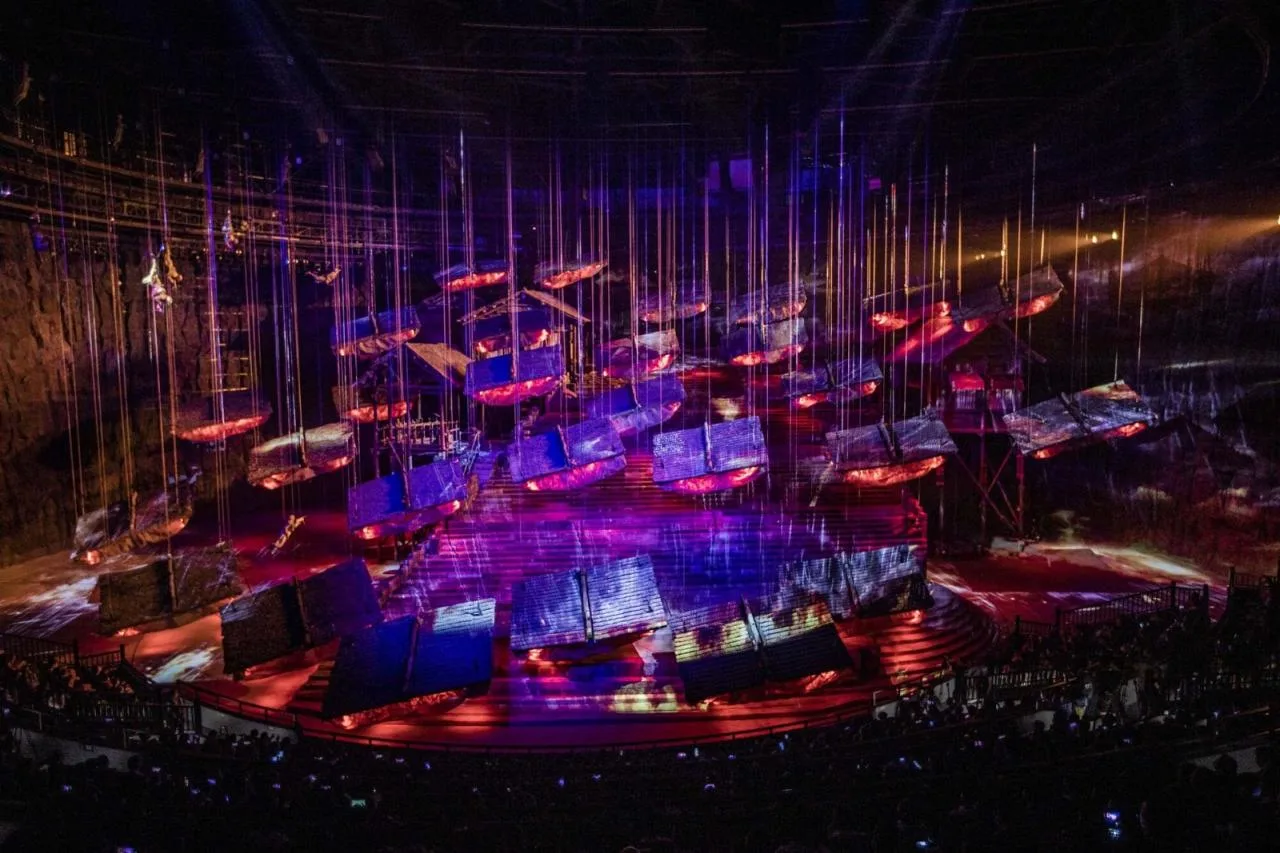
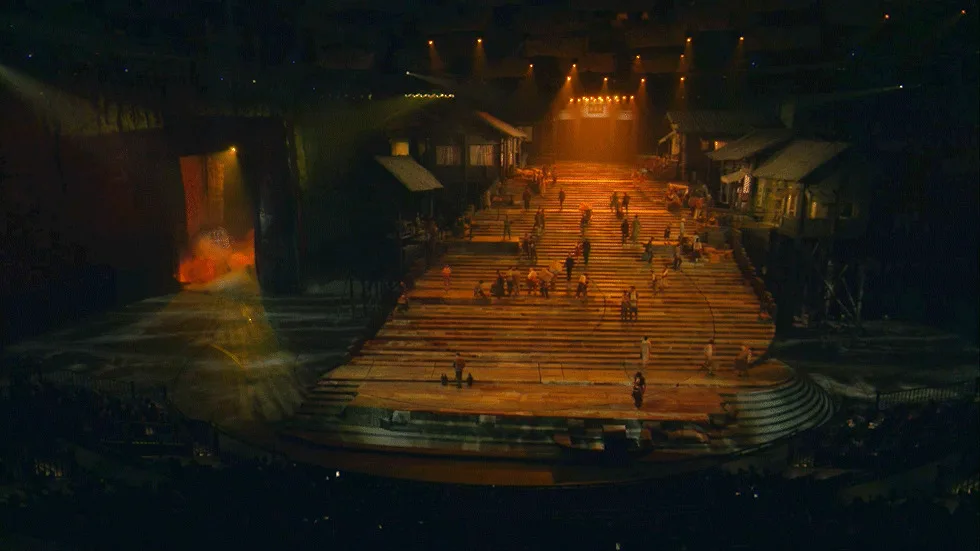
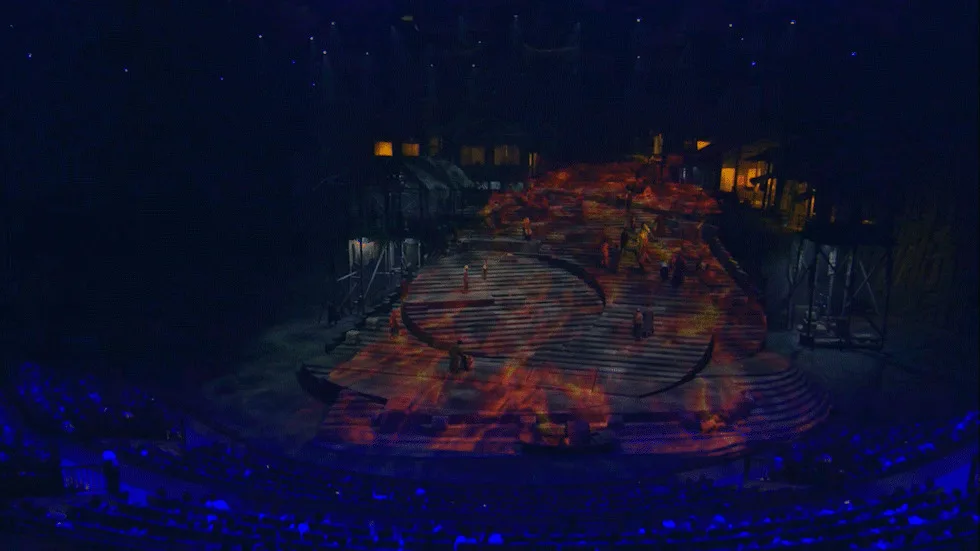
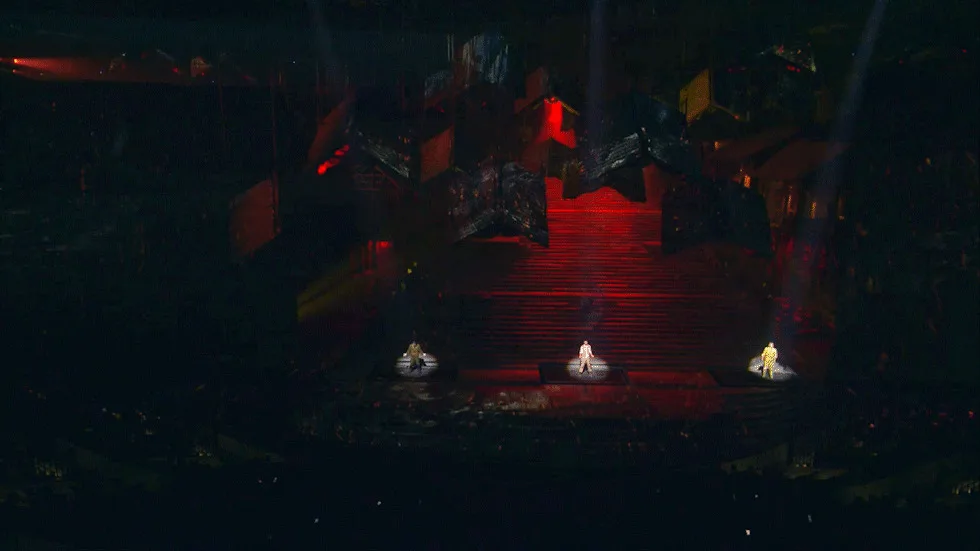
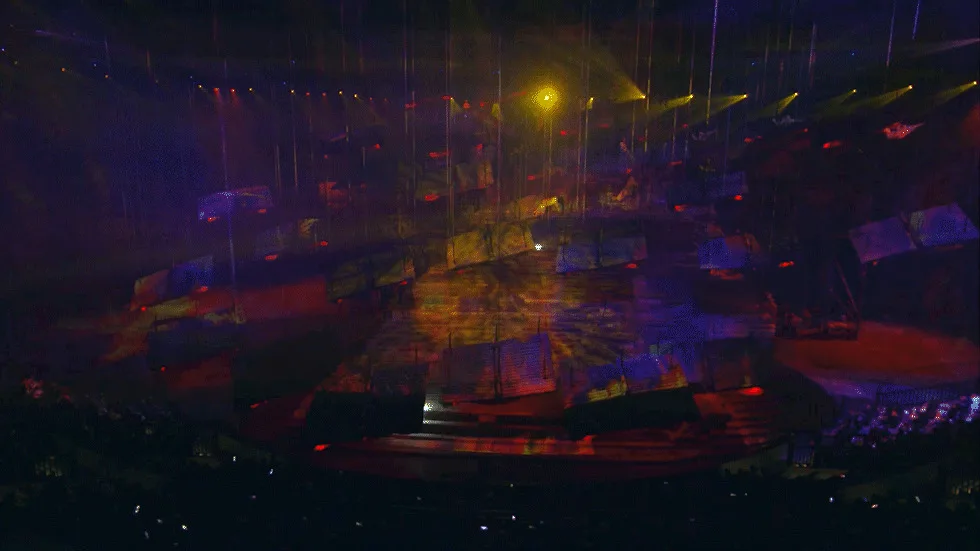
The core architectural space combines viewing and performance within a grand hall measuring 80 meters long, 72 meters wide, and 26 meters high. All theater spaces and equipment, including rotating stands and movable stages, are intricately linked to the plot’s development.
The building’s form is based on a centripetal spiral divided into inclined planes, featuring a striking red curved glass curtain wall at its center. This element acts as the focal point, with the structure spiraling upward from a square base. Embracing the concept of shared spaces, the theater includes diverse areas such as coffee shops, cultural and creative experience stores, and themed exhibition halls, all designed to encourage local engagement and activate the space.
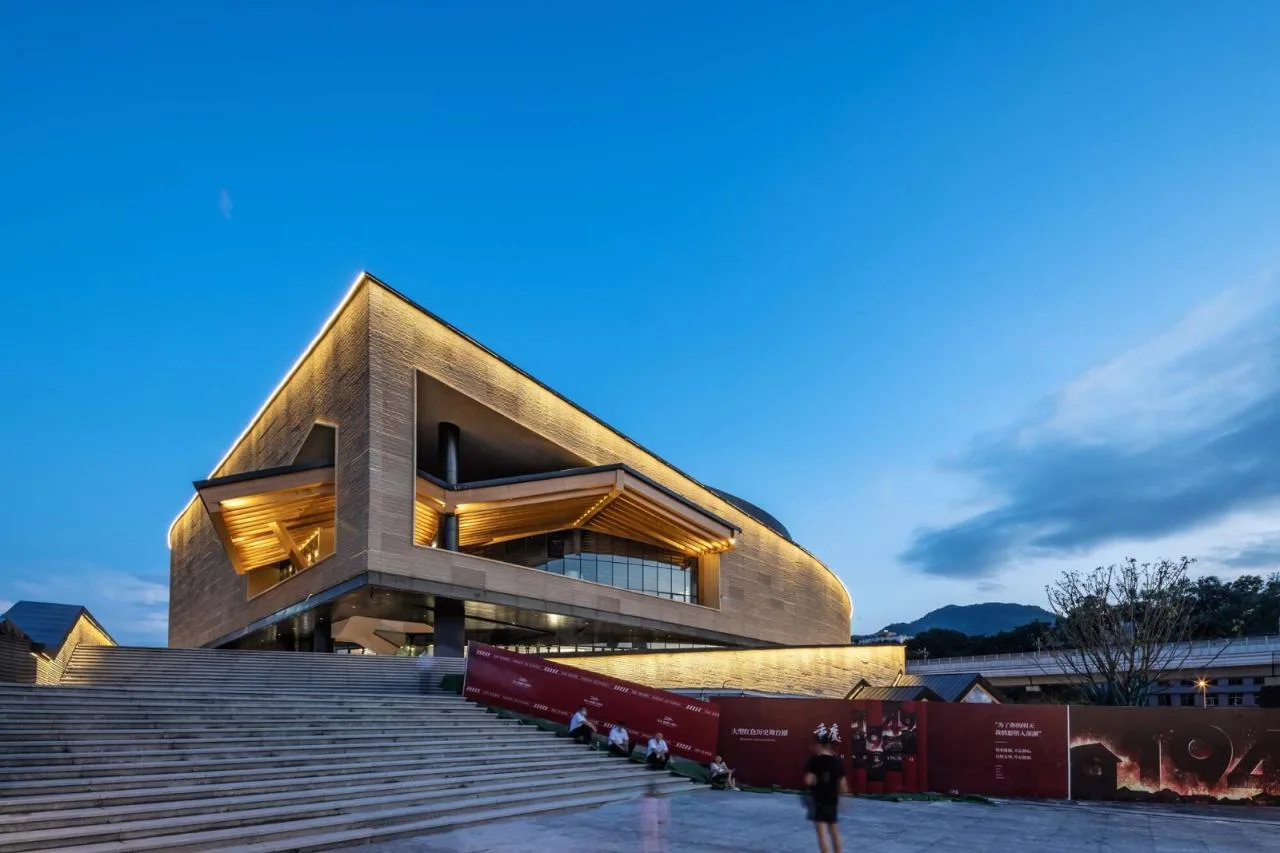
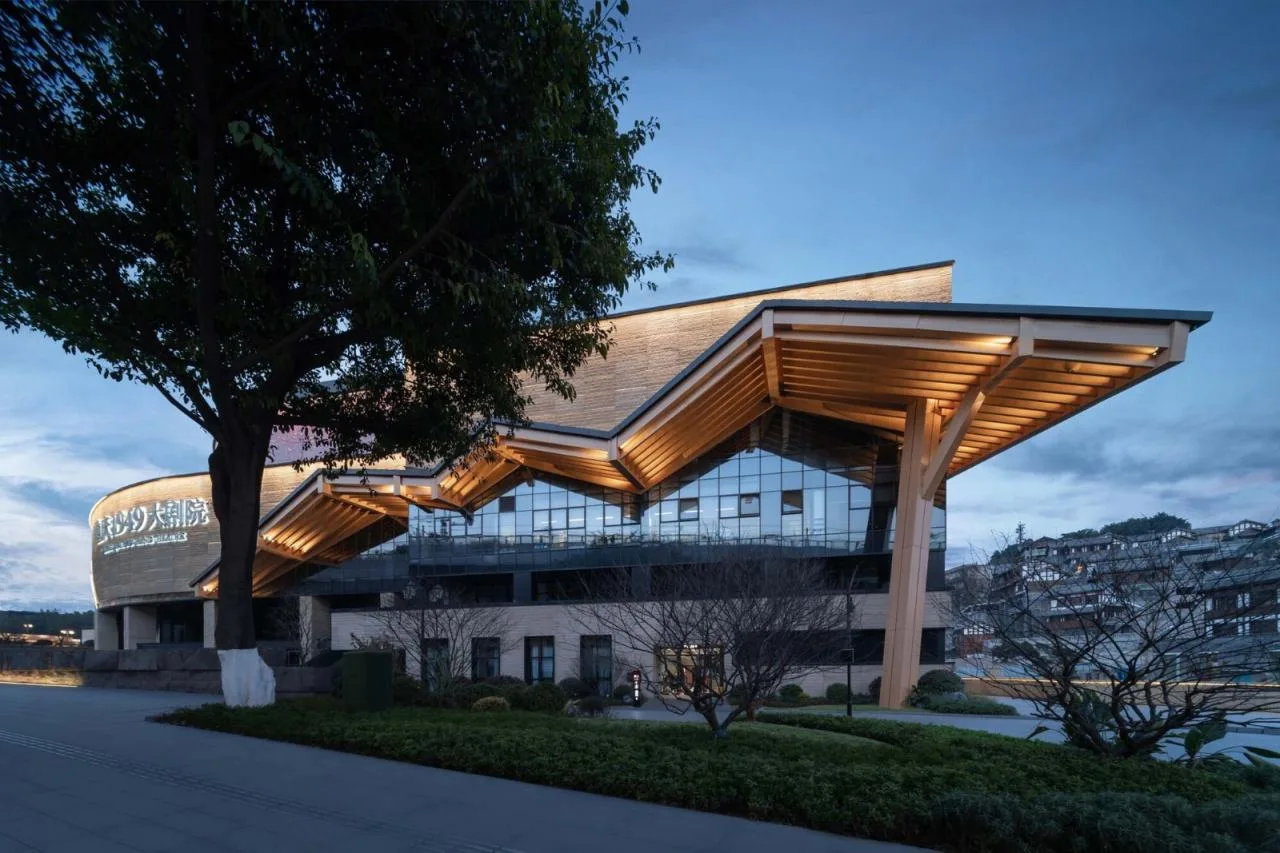
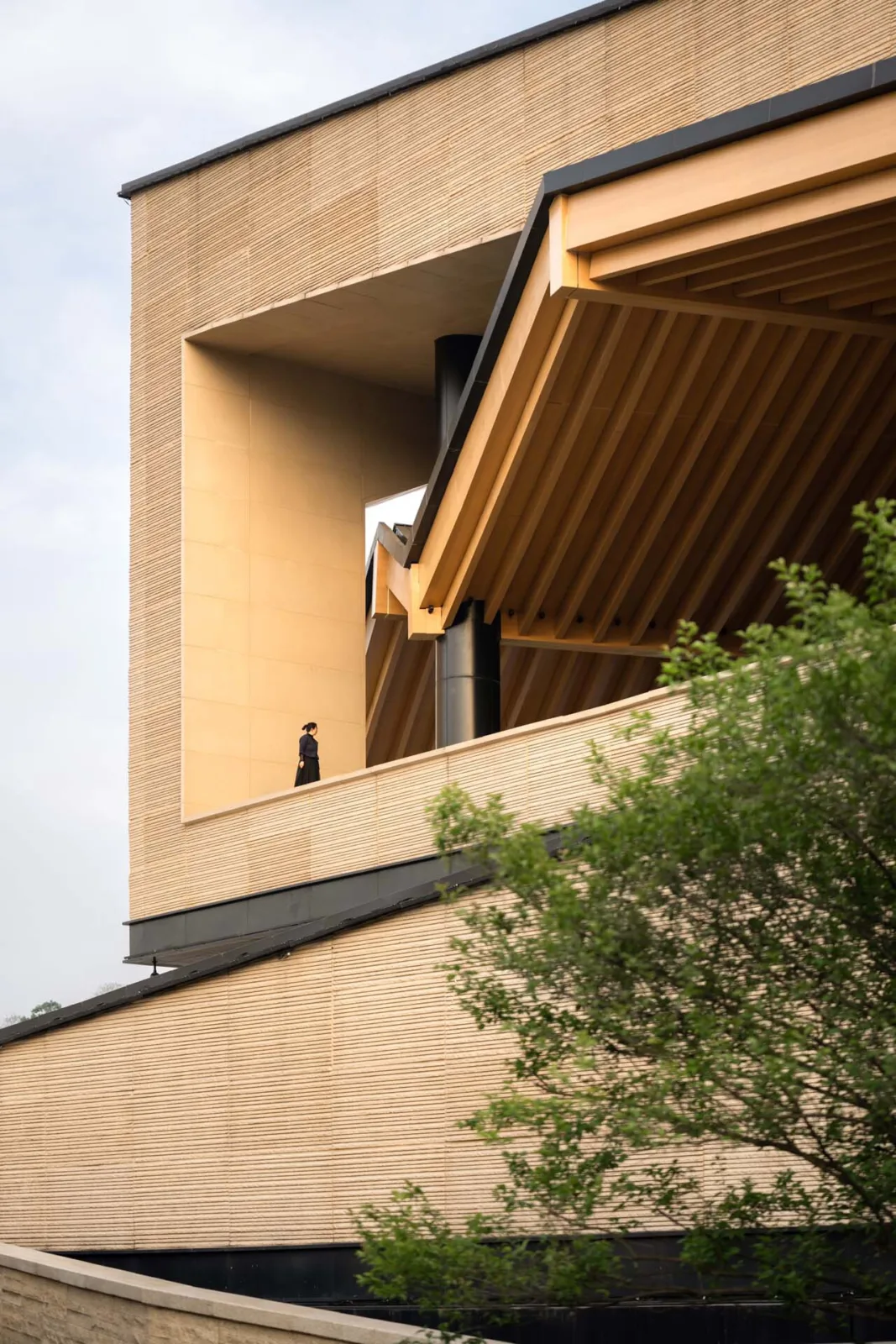
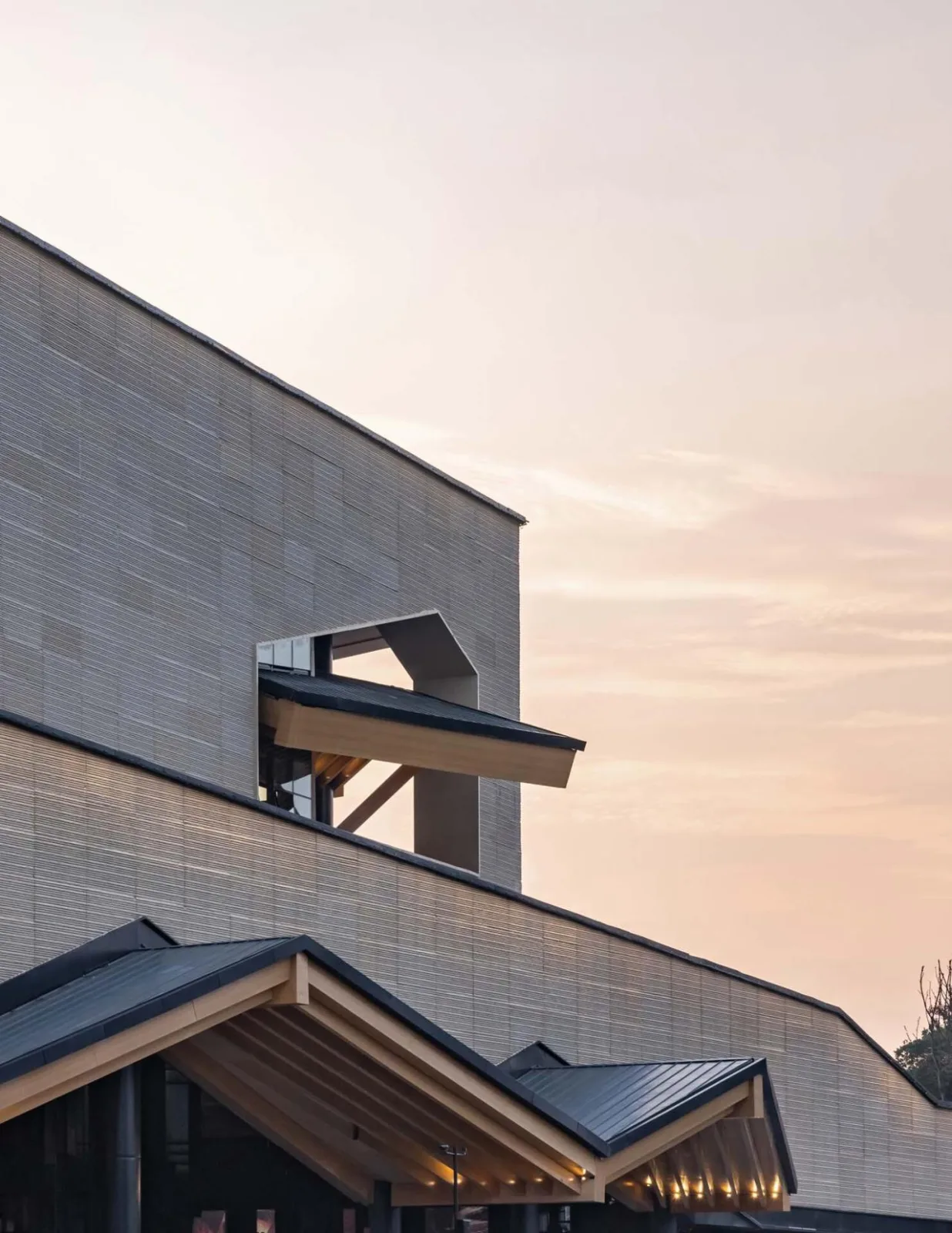
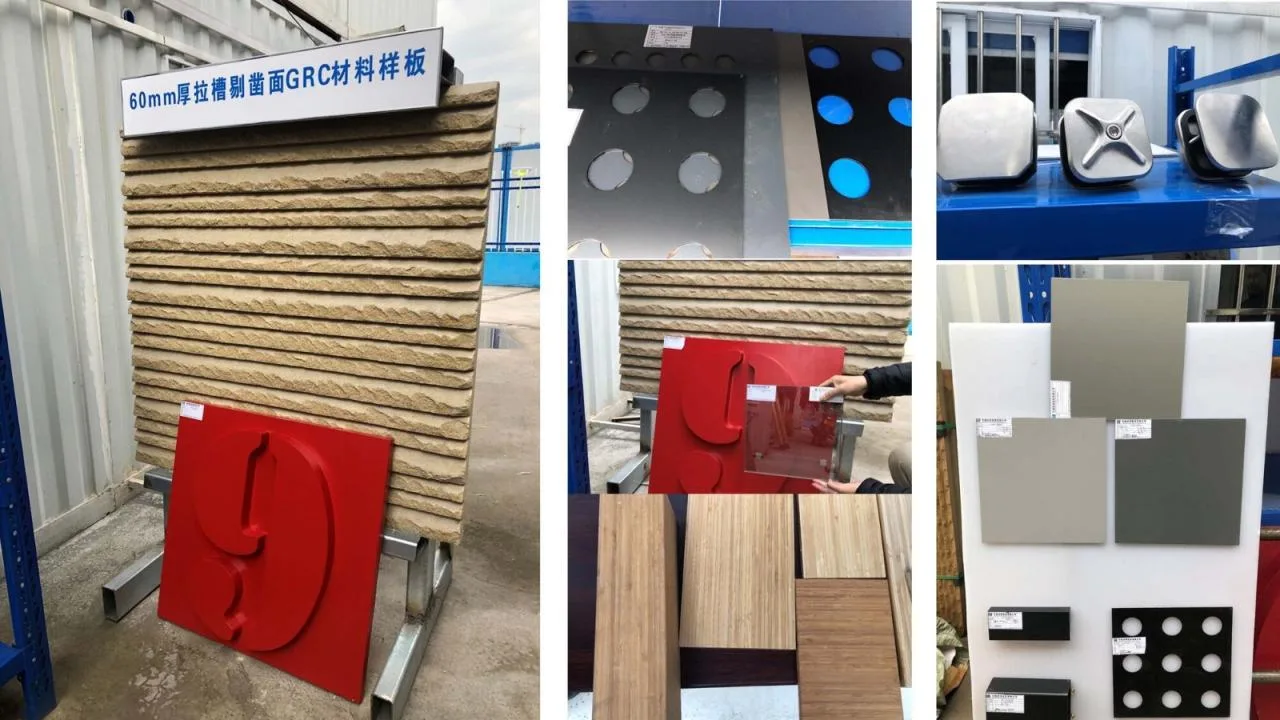
The curved centerpiece of the structure is formed by a transparent glass curtain wall, wrapped in red relief walls that feature the numbers “1949” in various fonts. The building’s main walls are constructed from textured GRC artificial stone, with each panel hand-chiseled to produce unique textures, enhancing the tactile and visual richness of the façade.
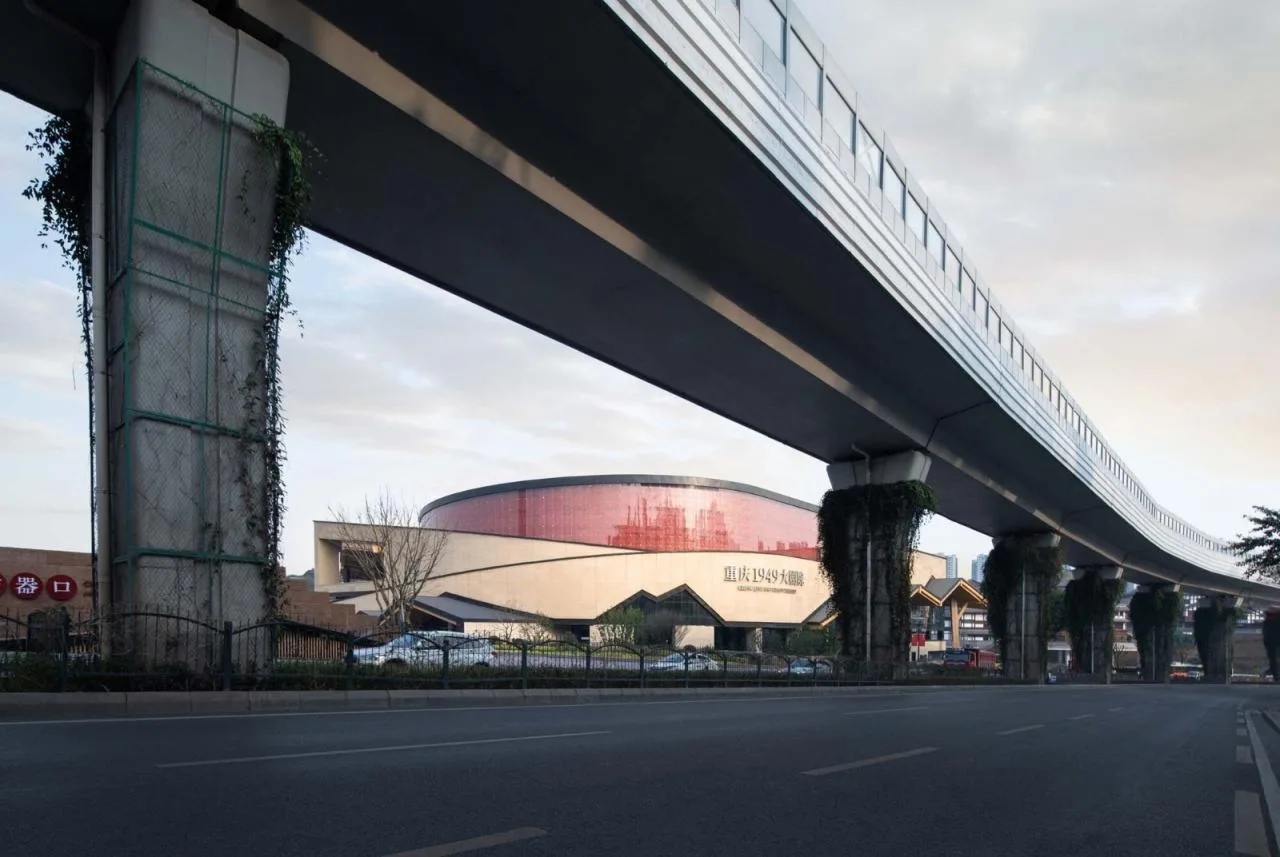
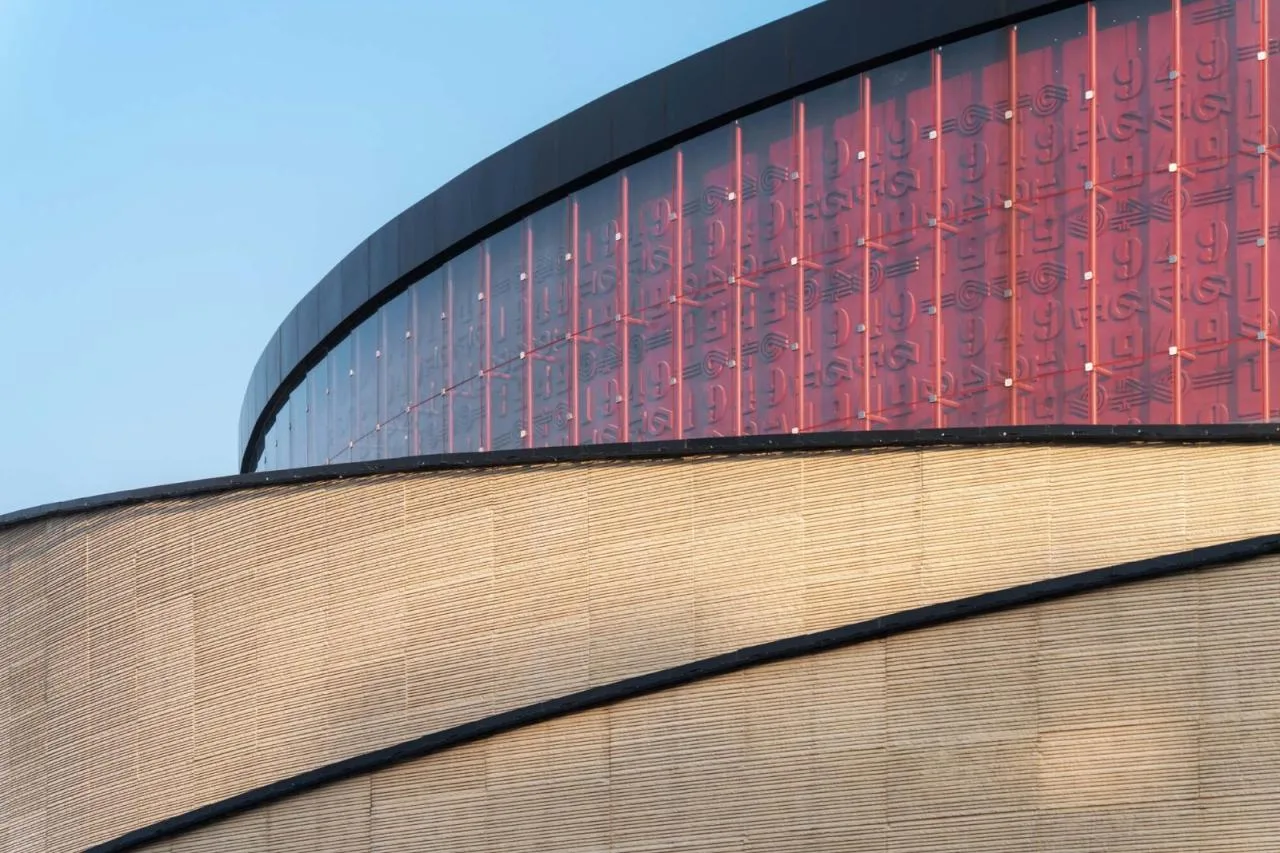
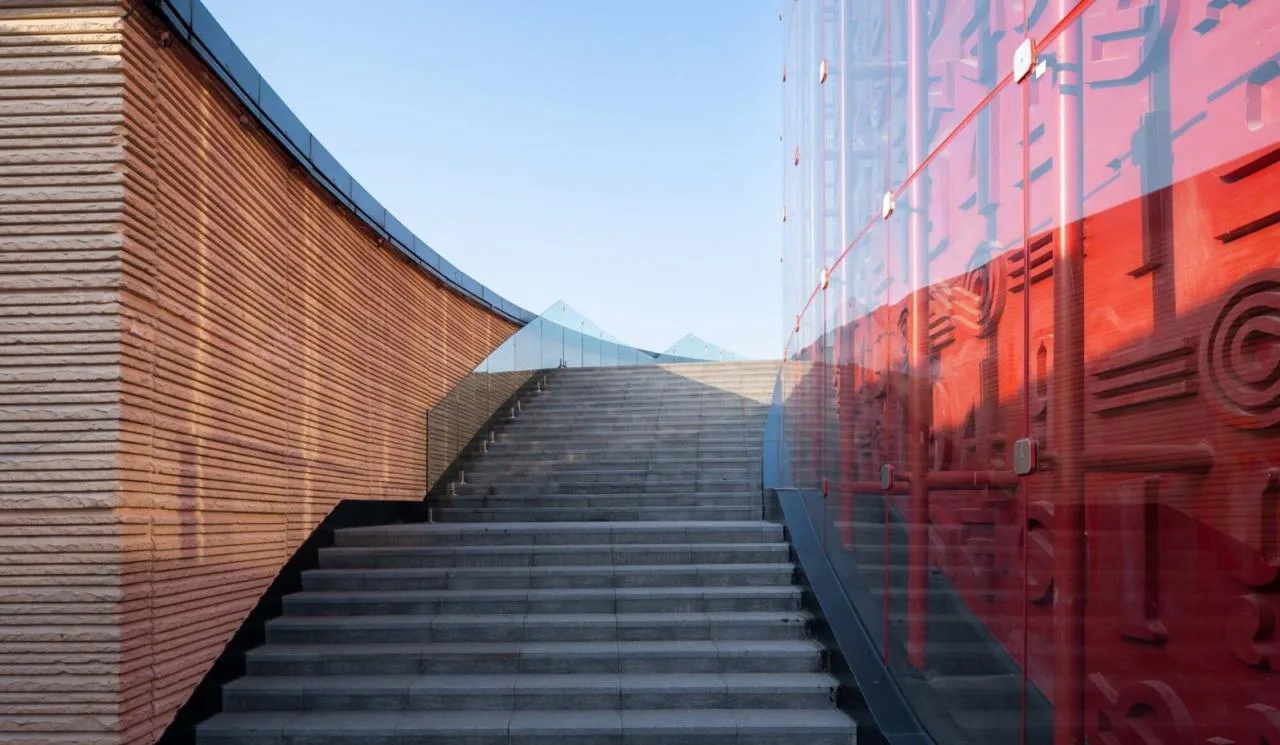
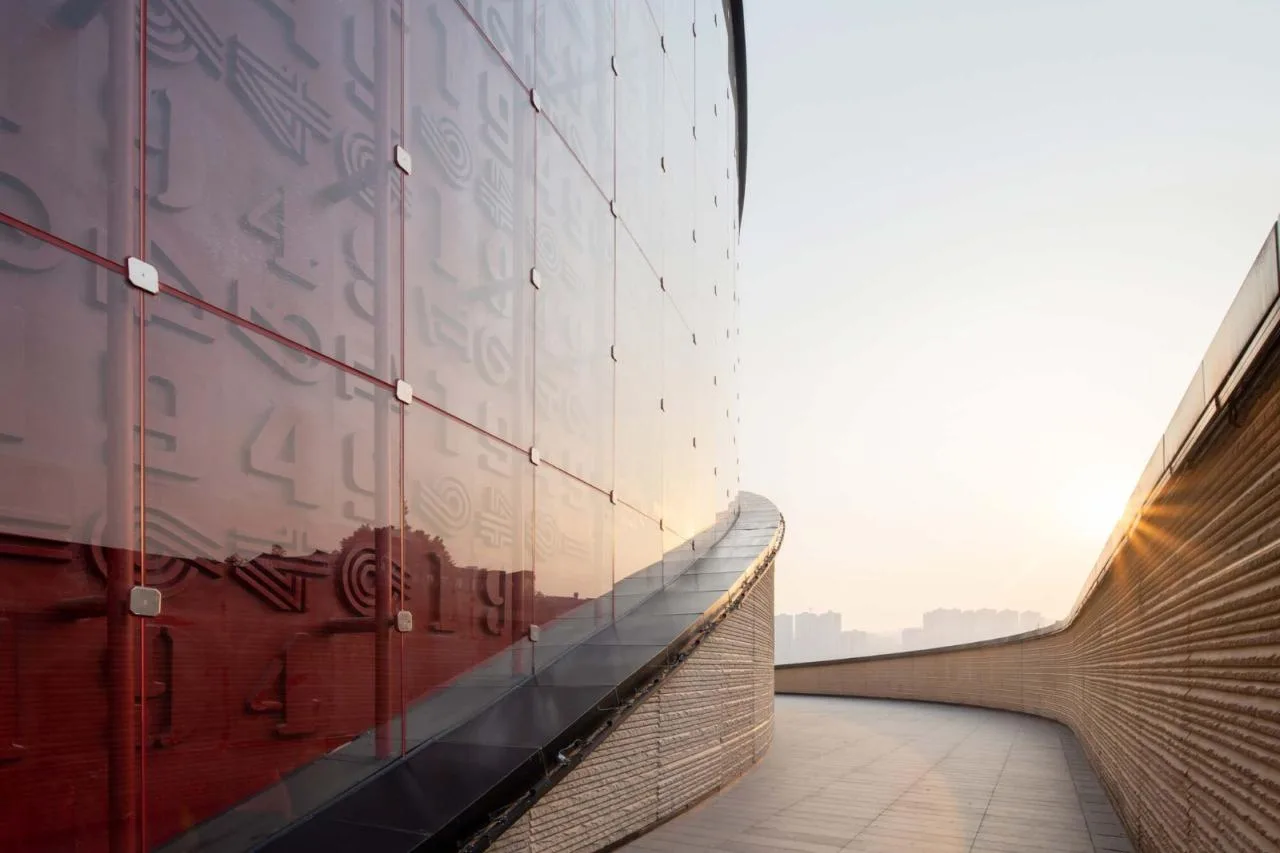
The design team’s deep appreciation of the red theme and regional culture allowed them to authentically interpret Chongqing’s cultural essence. The project successfully continues the legacy of red culture and delivers a strong representation of local identity.
Marking the 100th anniversary of the founding of the Communist Party of China, the Chongqing 1949 Grand Theatre held its inaugural performance, earning widespread acclaim from both audiences and media alike. It has rapidly become an iconic symbol for Chongqing’s urban cultural and tourism landscape.
Project Information
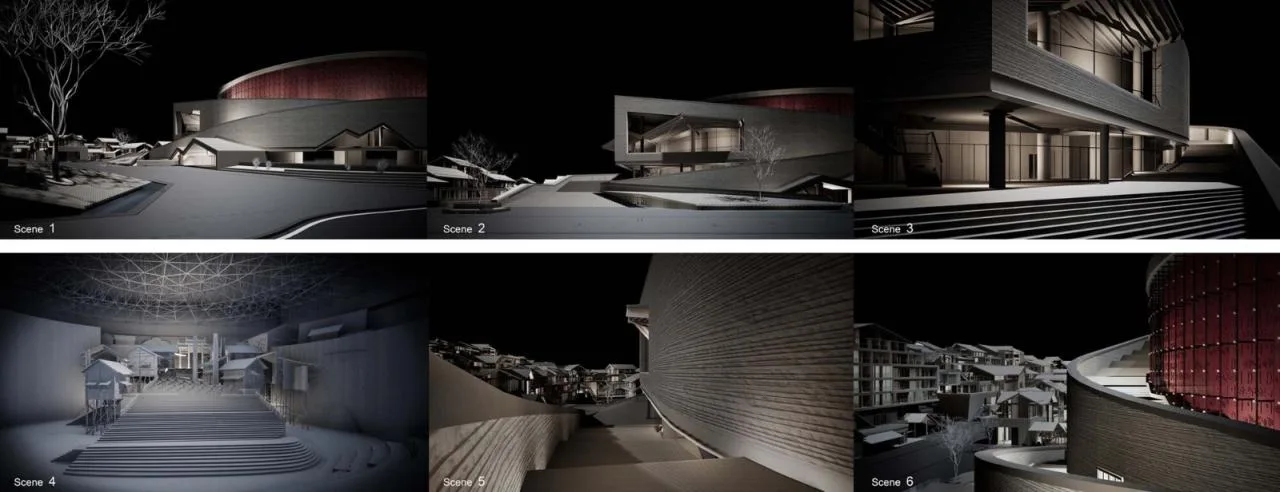
△ Model Diagram
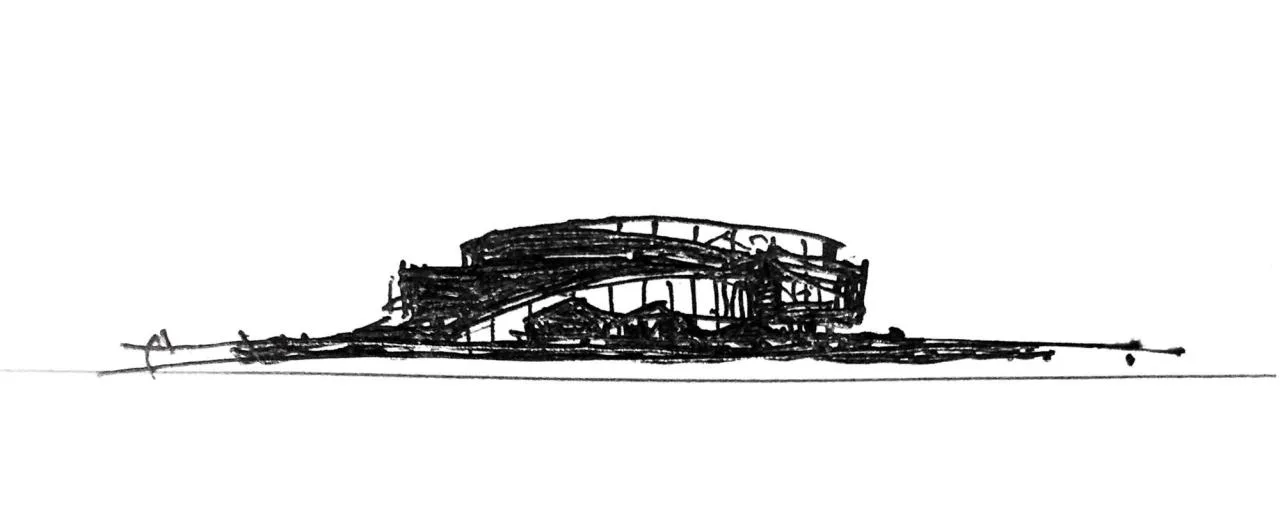
△ Hand-Drawn Sketch
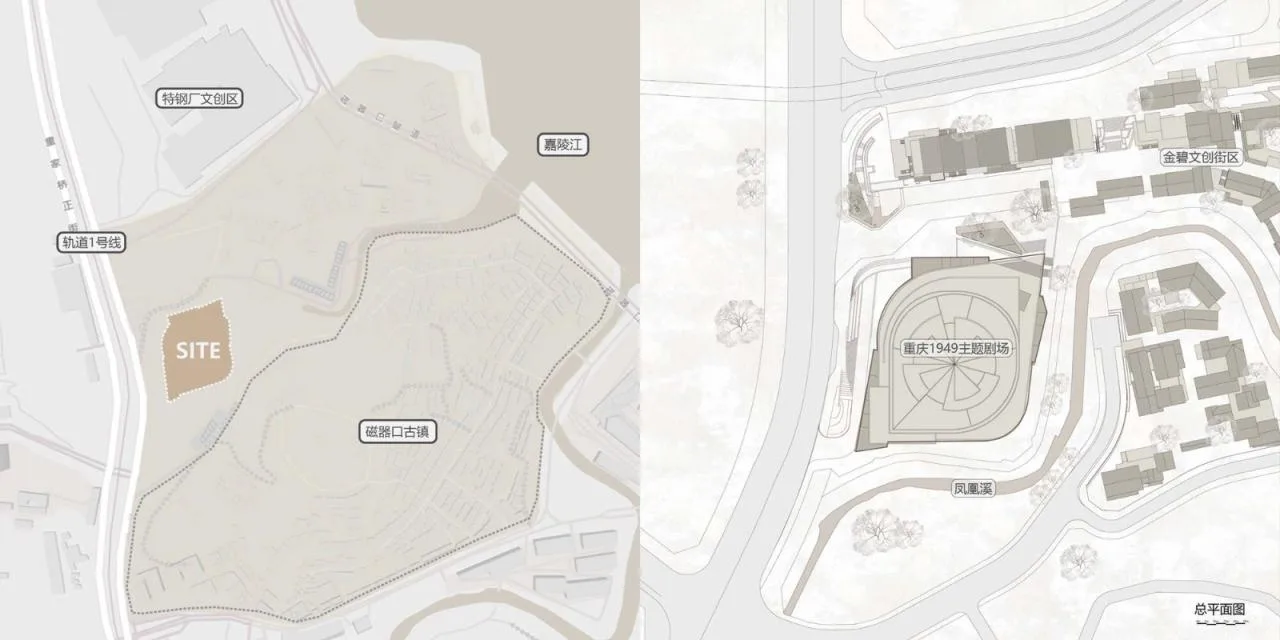
△ General Layout Plan
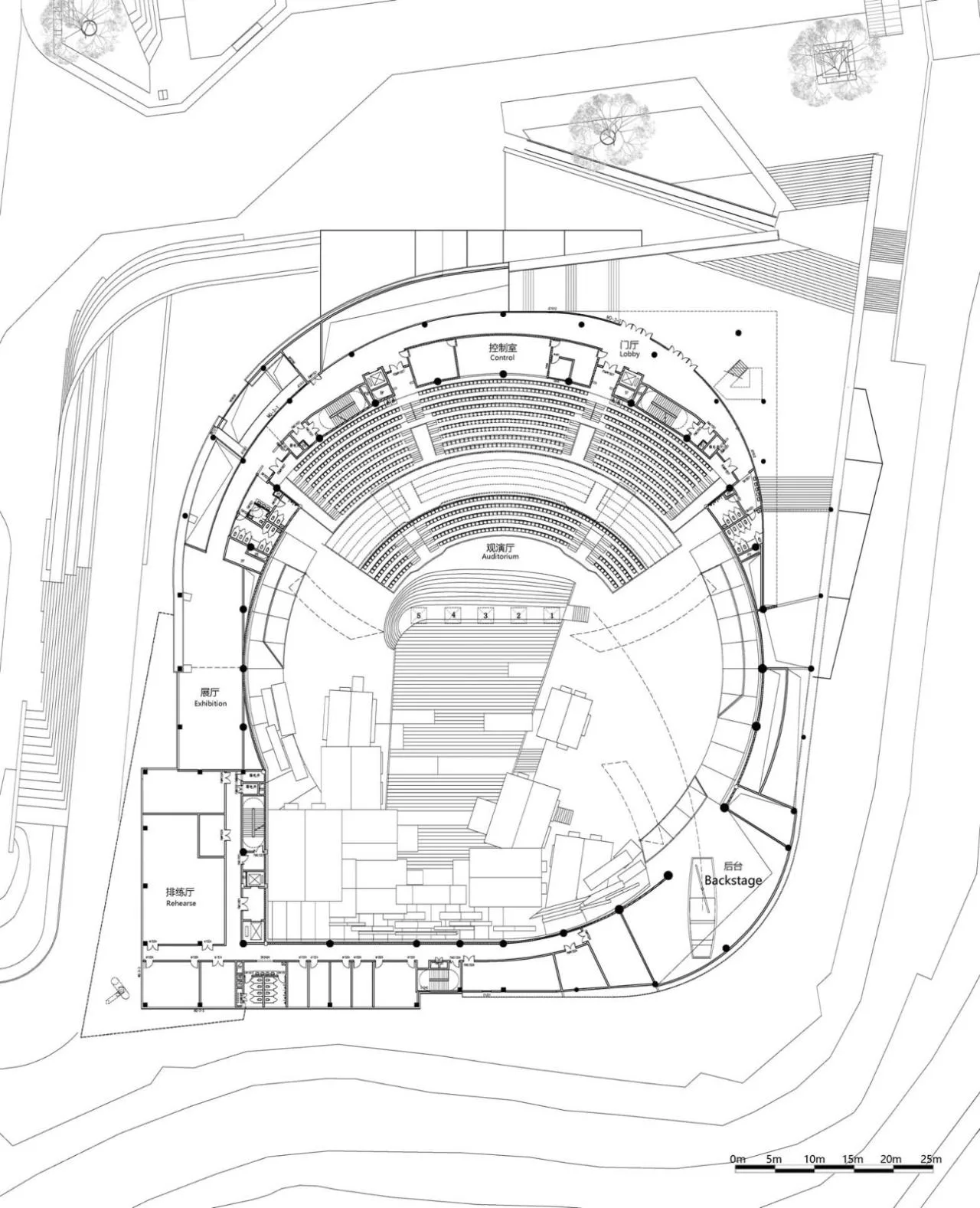
△ Floor Plan
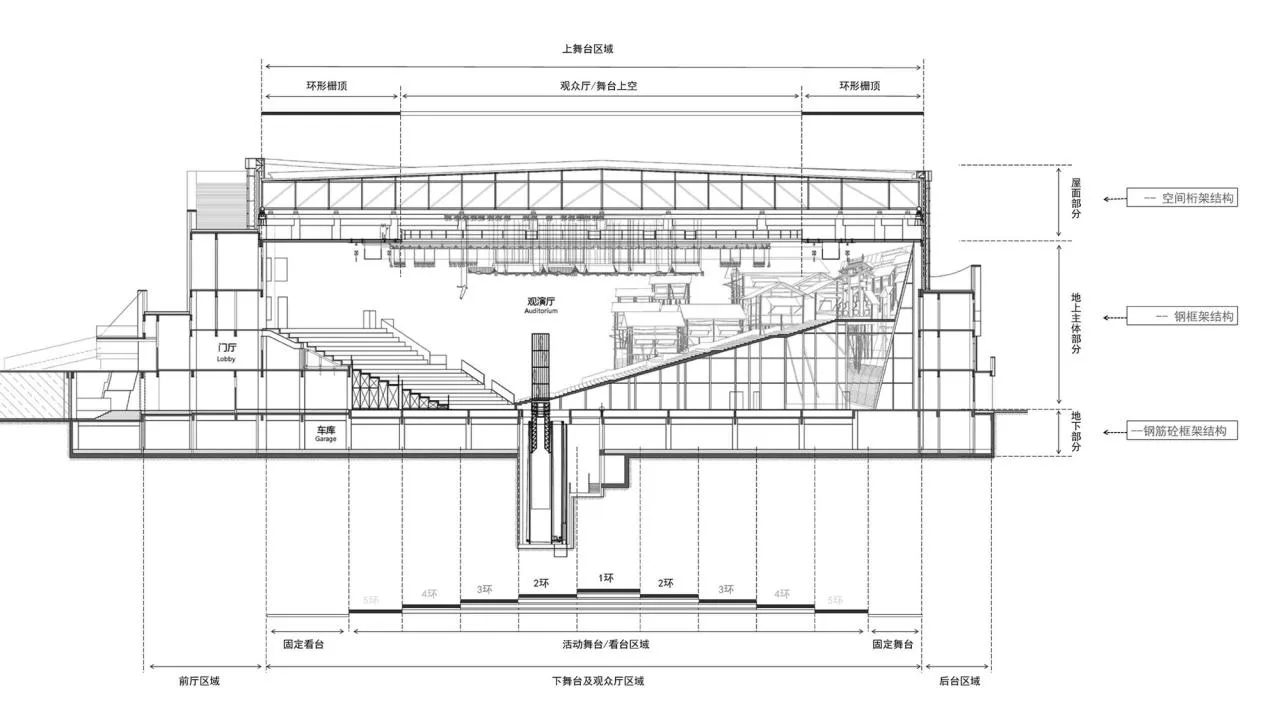
△ Partial Section
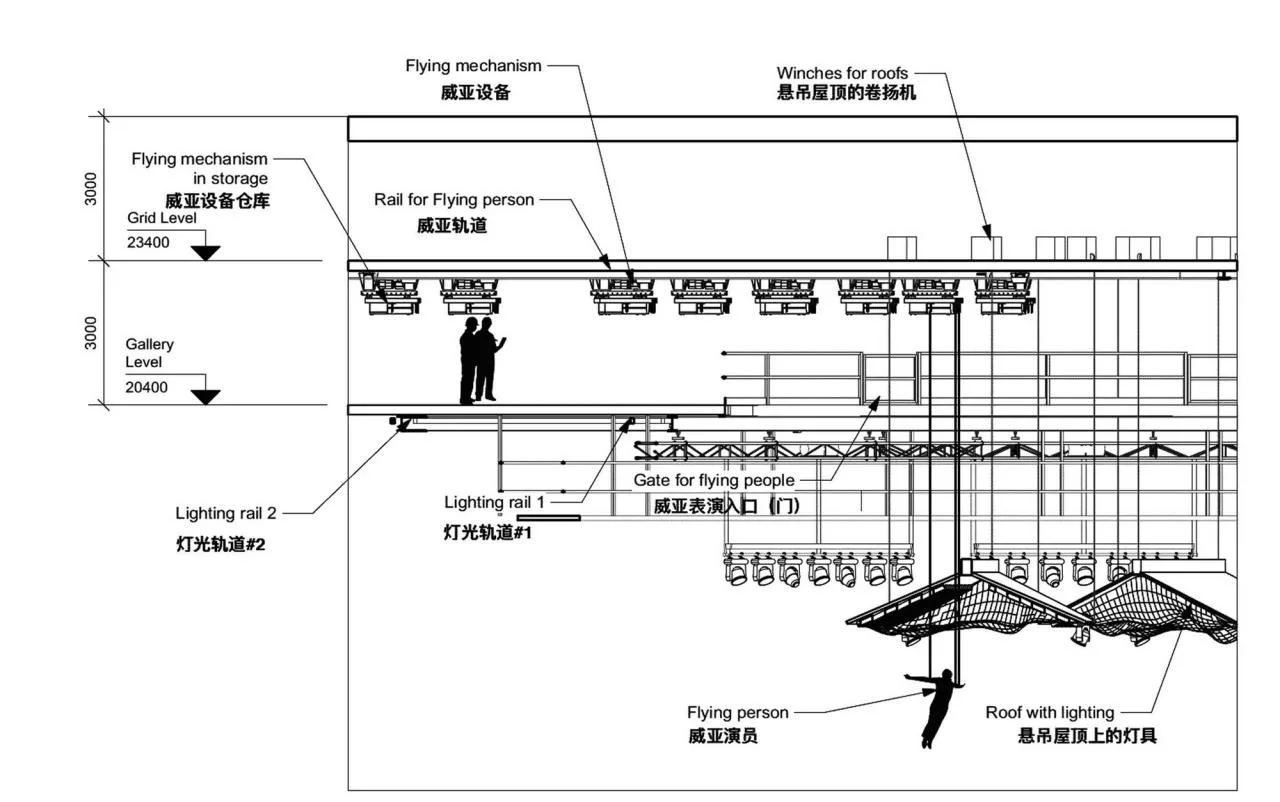
△ Analysis Chart
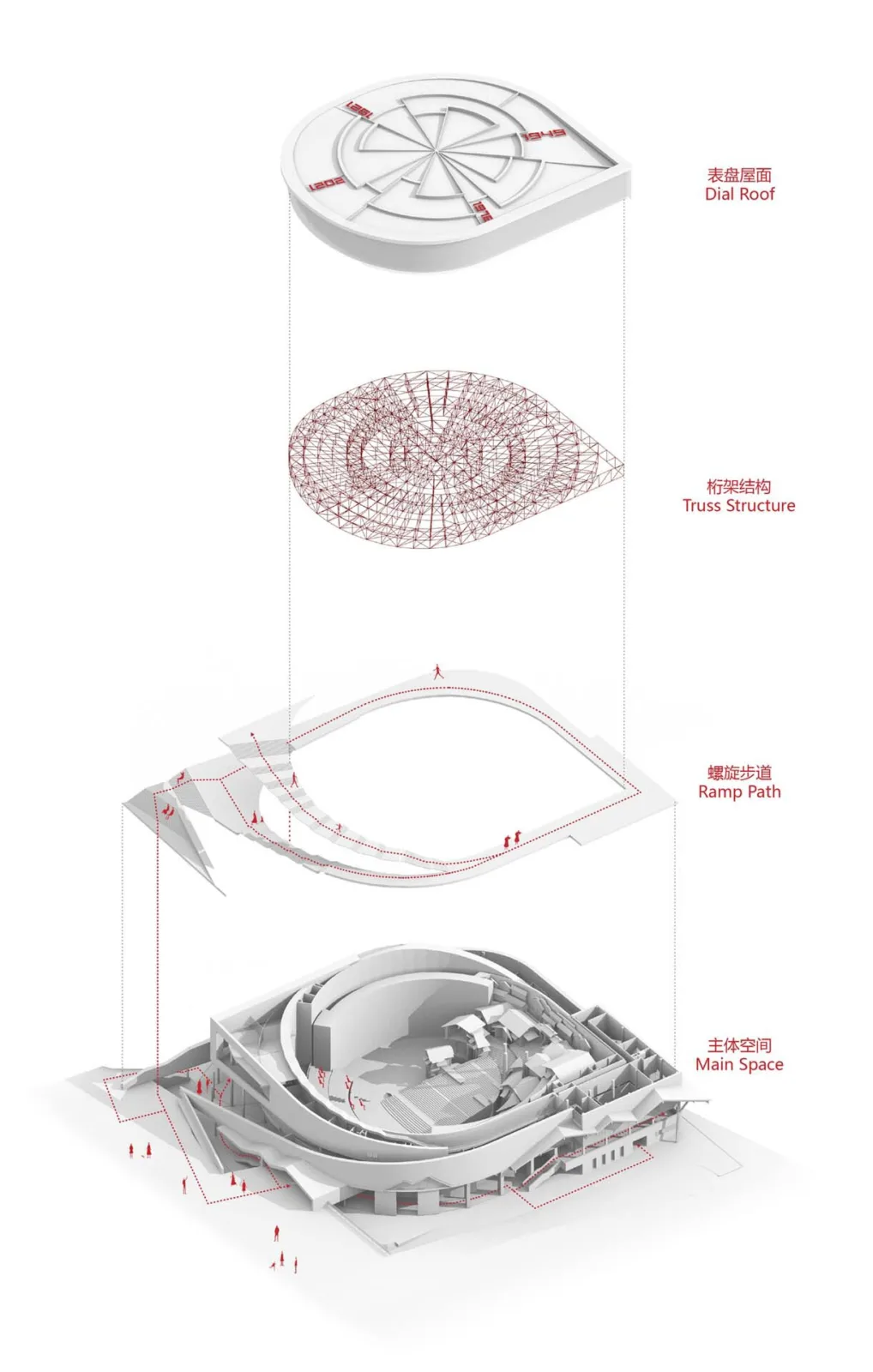
△ Analysis Chart
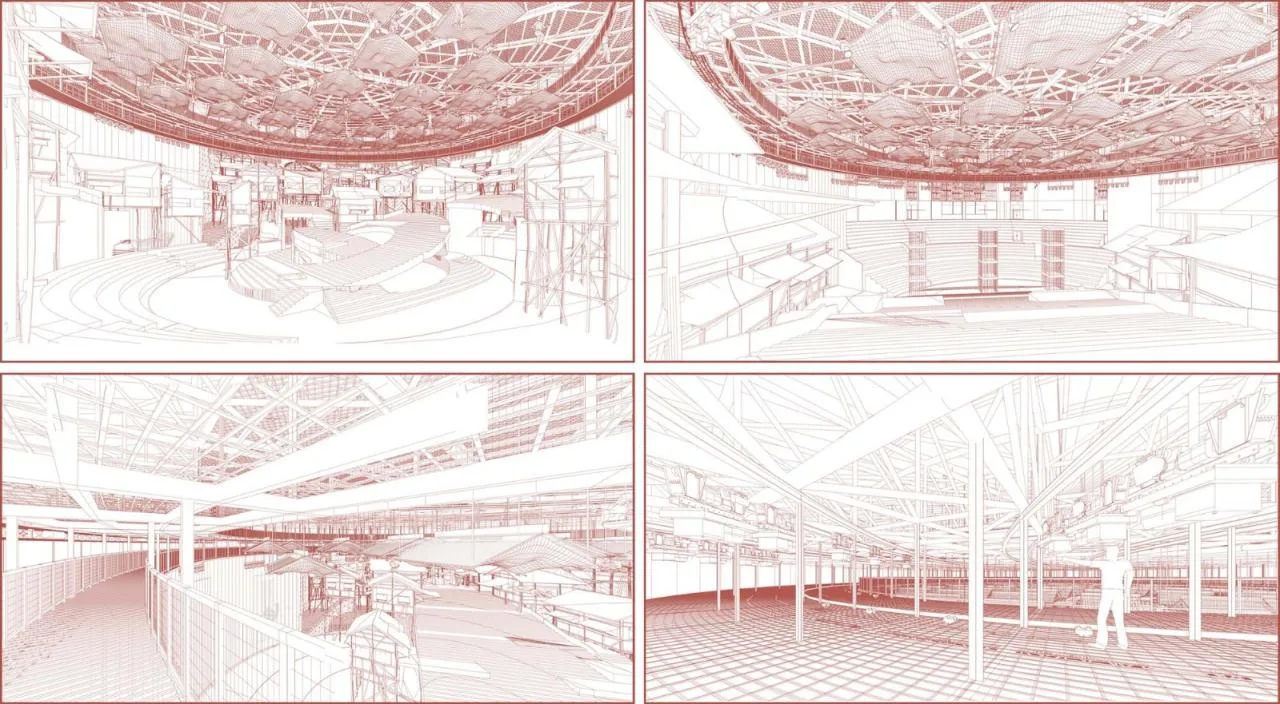
△ Analysis Chart
Project Details
Architect: Yueji Architecture
Area: 25,200 m²
Completion Year: 2021
Photographers: PrismImage, Blackbow
Lead Architects: Li Jun, He Biao, Tian Qi
Design Team: Li Tao, Li Jingyu, Tan Meng, Lv Yi, Xu Jingfeng, Wu Jing, Xu Xiangdong, Guo Jian, Wan Liangqing, Huang Ying, Wang Yuansheng, Liu Peng, Wu Meng, Wang Yuedong, Zhao Shudong, Xie Chengping, Dan Chenghu
Design Consultants: He Zhiqiang (Planning), Xiong Gang (Steel Structure), Gan Min (Structure), Yu Qunli (Architecture), Chen Jinhua (HVAC), Zhao Ying (Water Supply and Drainage), Li Jun (Electrical)
Principal: Chongqing Xingya Holdings Group Co., Ltd
Construction Drawing Design: Chongqing Hefang Urban Planning and Design Co., Ltd
Location: Chongqing, China















Must log in before commenting!
Sign Up