
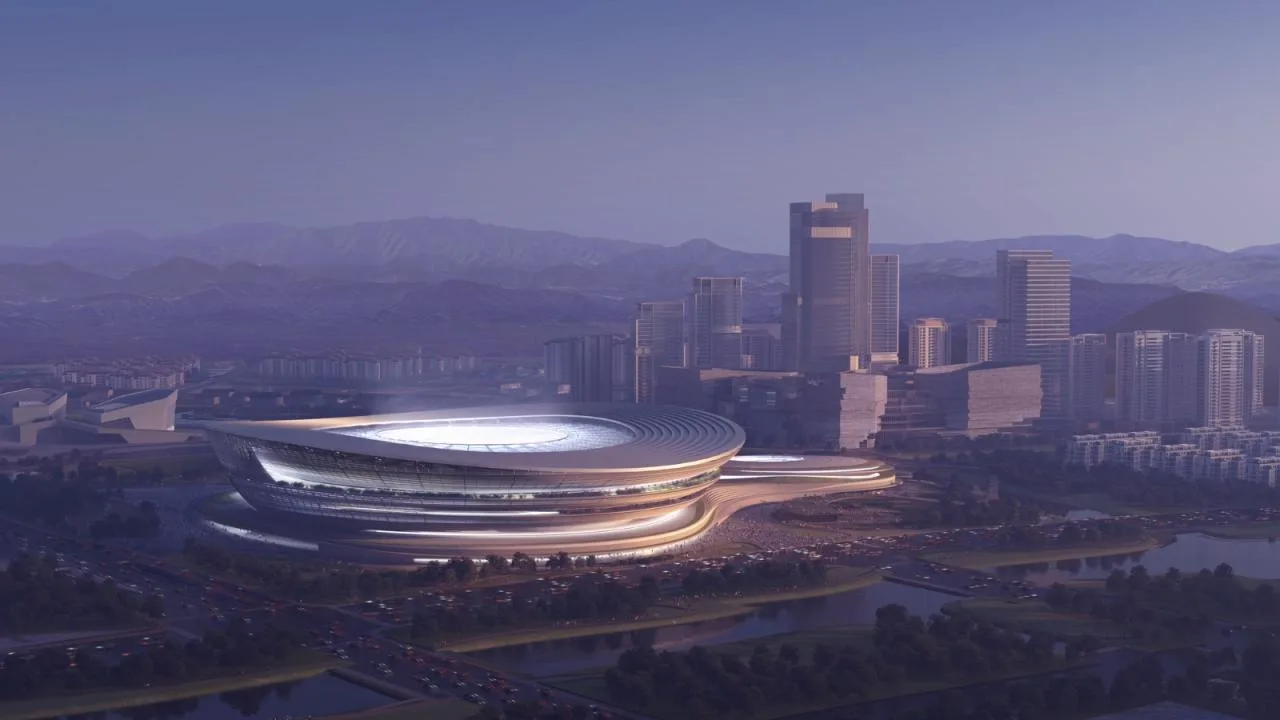
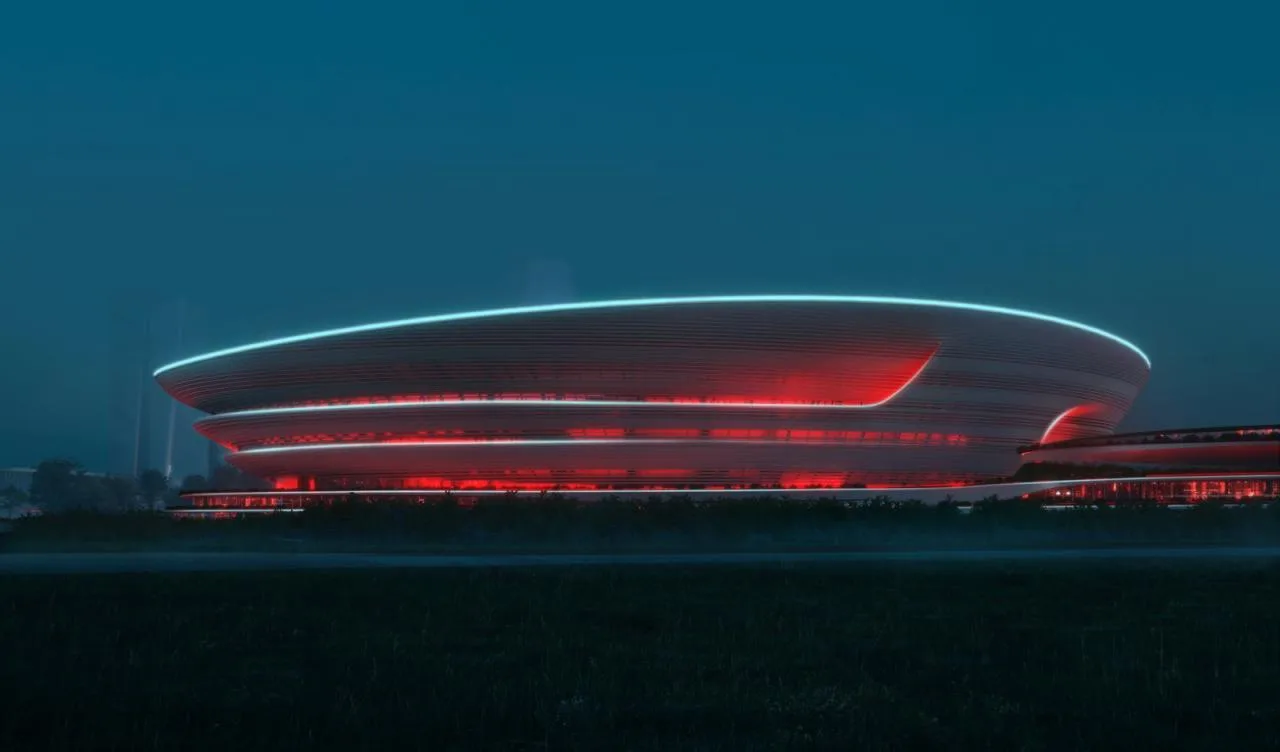
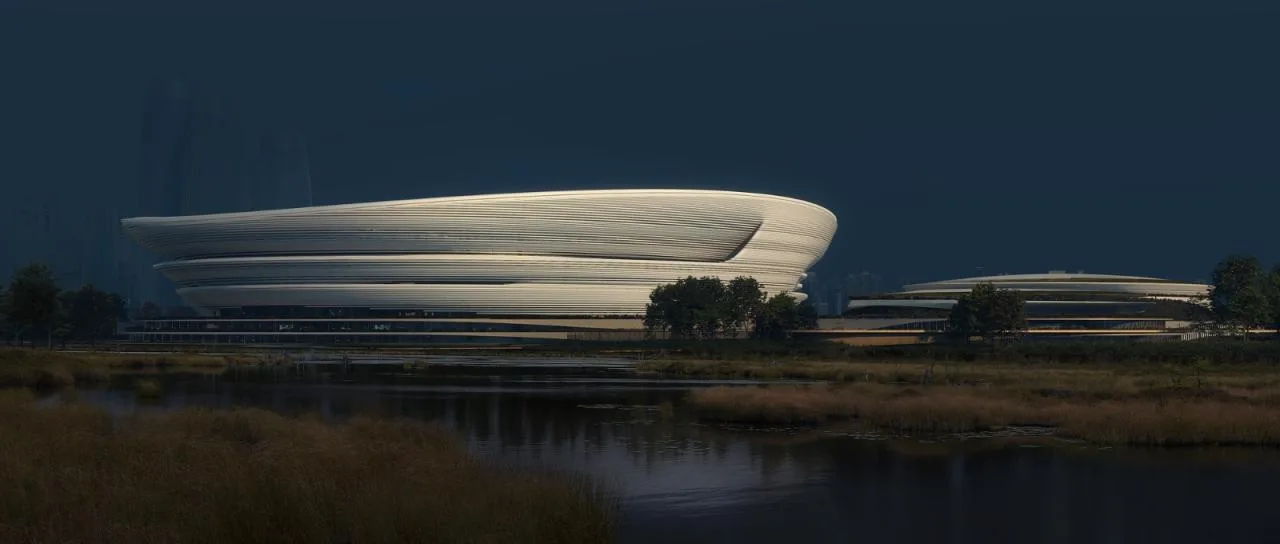
Zaha Hadid Architects has won the design competition for the new Hangzhou International Sports Center. This landmark project centers around a 60,000-seat football stadium and a practice field. It also features a 19,000-seat indoor arena, a water sports center with two 50-meter swimming pools, and various supporting facilities.
Located in Hangzhou’s future technology and cultural district, the development will introduce new waterfront parks, public squares, and vibrant public spaces for the city. The International Sports Center will be seamlessly connected to Hangzhou’s expanding subway Lines 3 and 5.
As a major global e-commerce hub, Hangzhou hosts some of China’s largest technology companies and attracts IT professionals and entrepreneurs nationwide to live and work here.
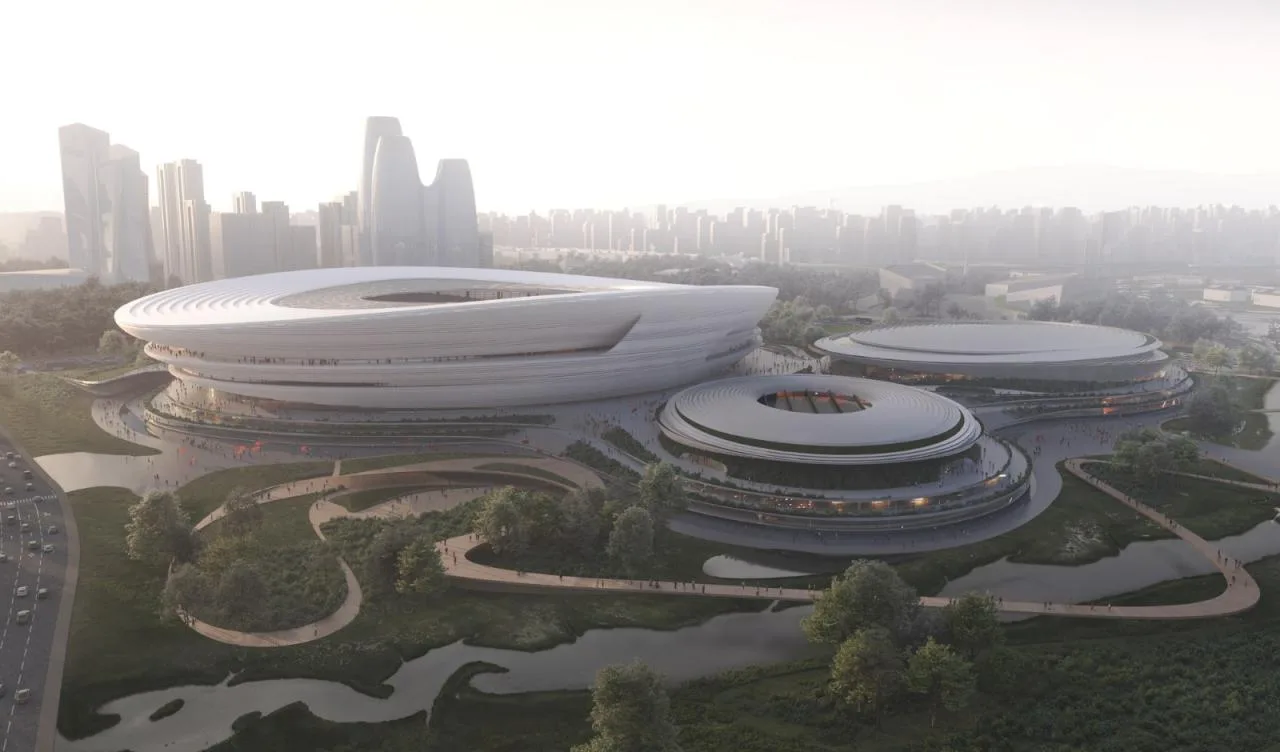
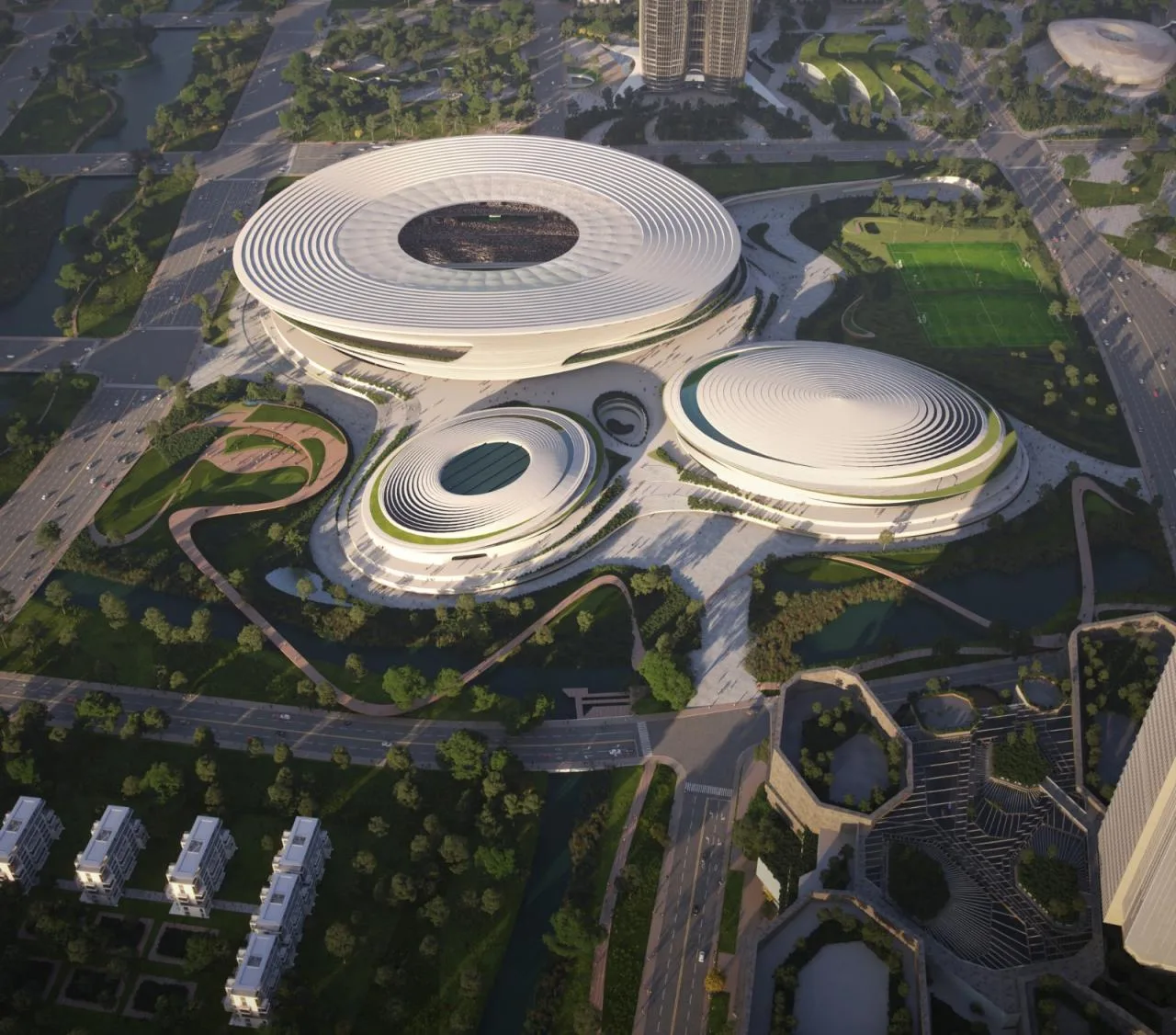
To accommodate Hangzhou’s growing population, the International Sports Center’s design offers diverse facilities catering to everyone—from grassroots sports enthusiasts to professional athletes. Each venue is compactly arranged with thoughtful orientation and effective spatial design.
Nearly half of the site is dedicated to creating new public spaces within the city. The design integrates seamlessly with the region’s urban planning and the natural riverside landscape, forming a new park that serves as a hub for activities, entertainment, and leisure.
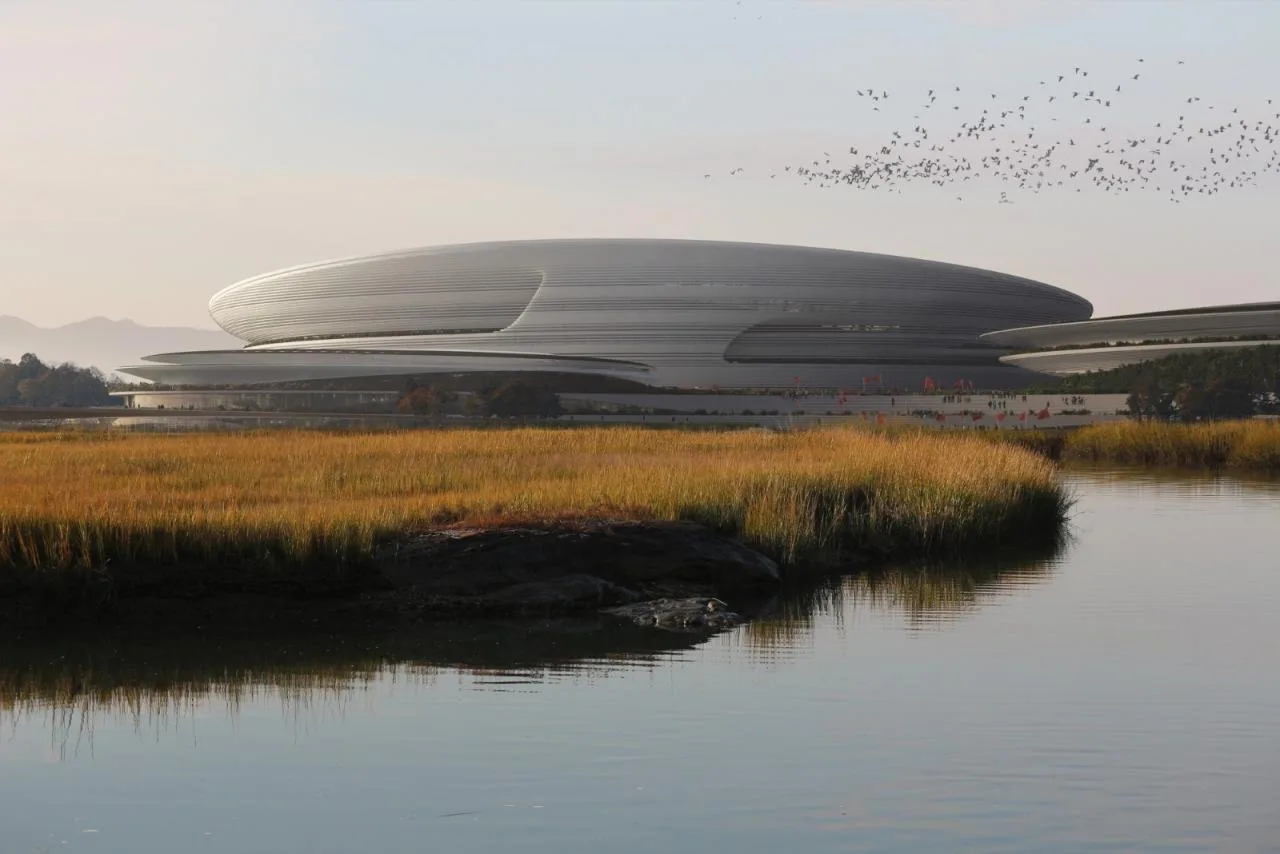
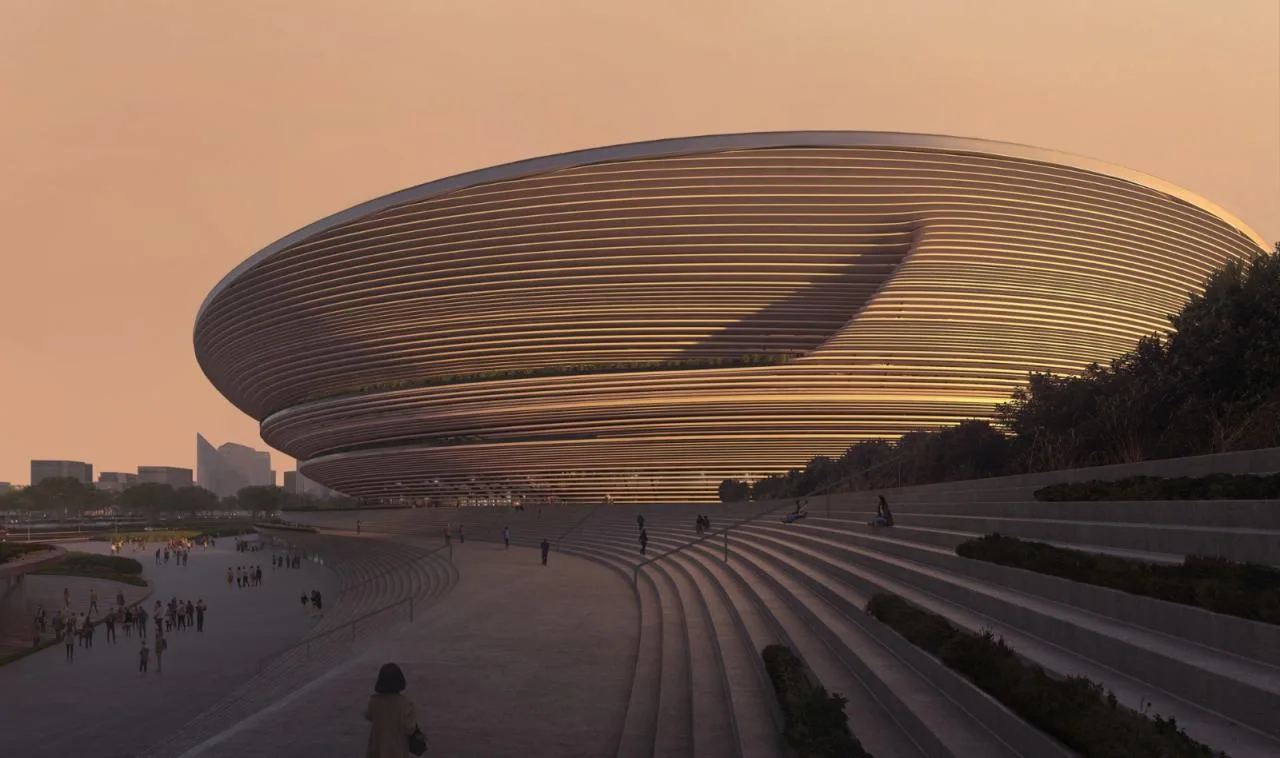
The 135,000-square-meter football stadium is the centerpiece of the International Sports Center. Positioned on the east side of the new park, it faces the entire city.
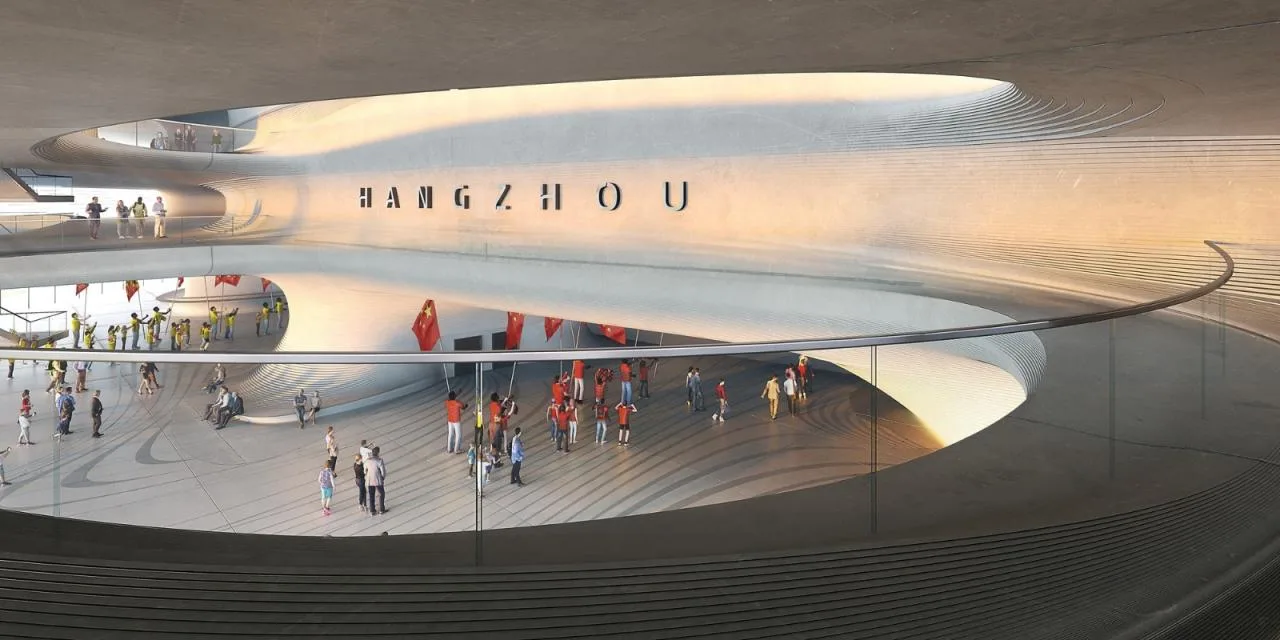
The indoor arena and water sports center are located to the west of the football stadium. Connecting these venues is a layered and interwoven podium building inspired by the terraced tea gardens surrounding Hangzhou’s mountains.
Spanning 45,000 square meters, the podium houses shared facilities such as training and fitness centers, changing rooms, offices, shops, restaurants, and cafes. These spaces surround a courtyard and a landscaped “terraced fields” area, creating inviting communal zones.
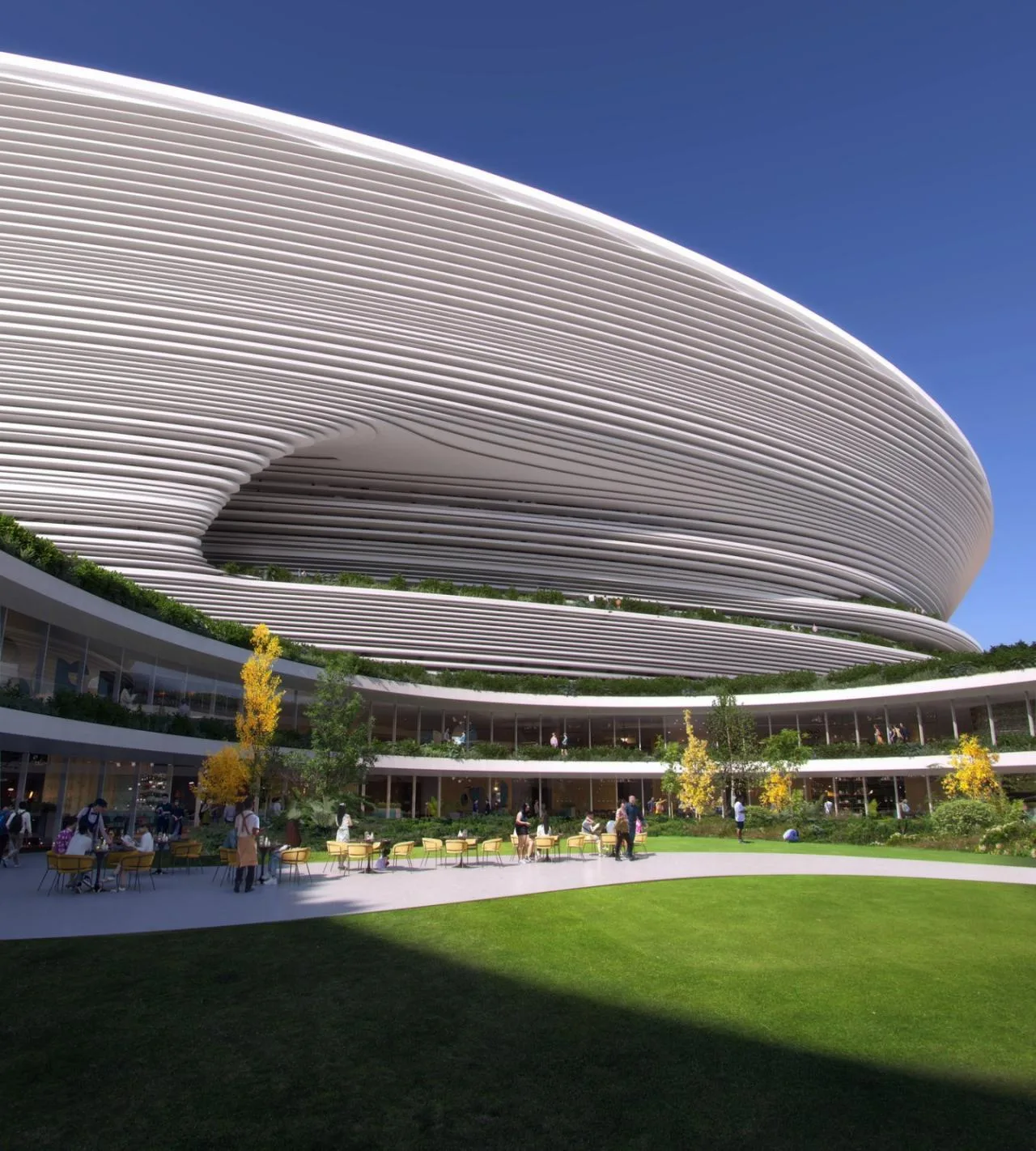
Unlike many sports venues with solid, closed facades, the stadium’s curtain wall is open and transparent. The layered blinds conceal terraces with various restaurants while preserving panoramic city views.
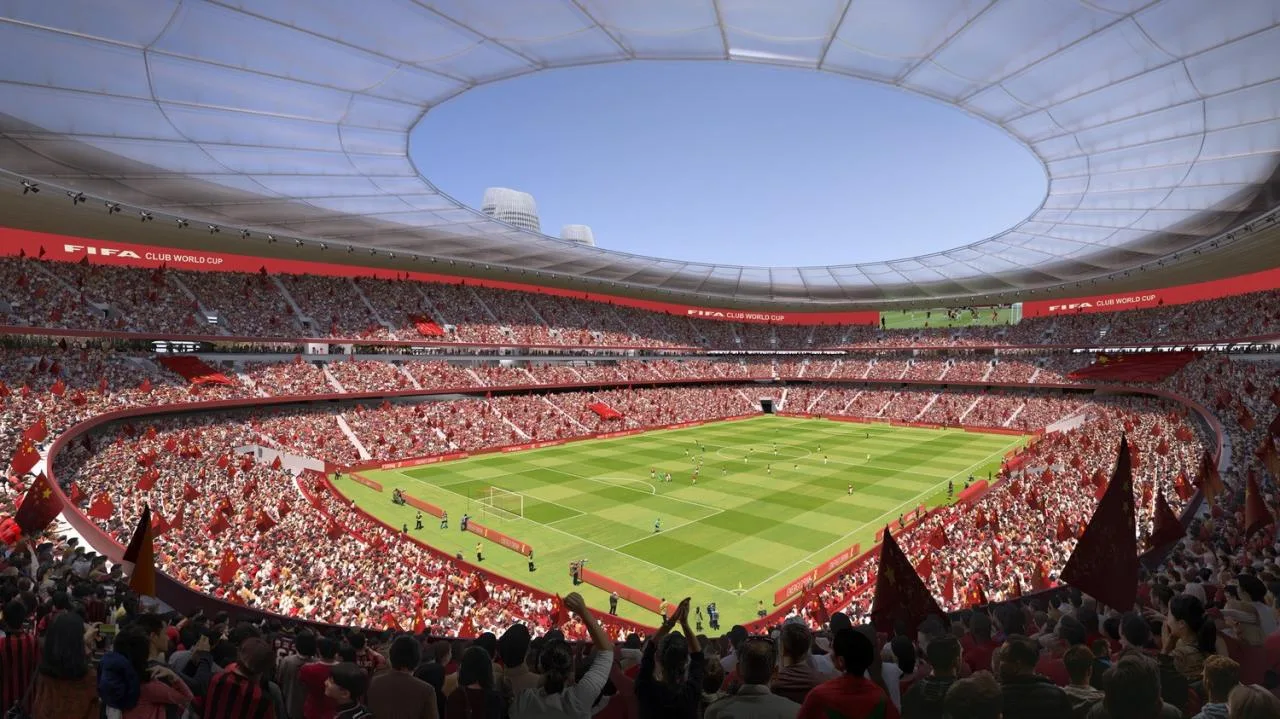
The football stadium is designed according to FIFA standards, with seating arranged to bring all spectators as close to the field center as possible. This layout ensures excellent, unobstructed views from every seat while creating an intense, electric atmosphere on match days for players and fans alike.
The building’s functional needs shape its sculptural, undulating geometry and louvered curtain wall design. The louvers blur the line between interior and exterior: up close, their layered, tactile quality evokes the natural terrain; from afar, the facade appears transparent, visually connecting the public space beneath the seating areas with the city beyond.
The 74,000-square-meter indoor arena seats 19,000 and can operate independently of the stadium. Its flexible design accommodates basketball games, large-scale concerts, and cultural events, making it a versatile venue for a variety of popular domestic programs.
The 15,000-square-meter water sports center sits on the park’s west side and features two 50-meter swimming pools. It caters to a wide range of users—from beginners and elite swimmers to divers—supporting competitions, training, and lessons.
The pools can host up to 800 spectators for district-level events and serve as a community resource, offering swimming courses to thousands of local children every week to teach essential water safety skills.
Recently, Zaha Hadid Architects also won the bid for the Jinghe New City Cultural and Art Center project in Shaanxi Province. Additionally, the firm has celebrated inauguration ceremonies for the Design Museum in Seoul and the new headquarters of BEEAH Group in Sharjah, United Arab Emirates.












Must log in before commenting!
Sign Up