
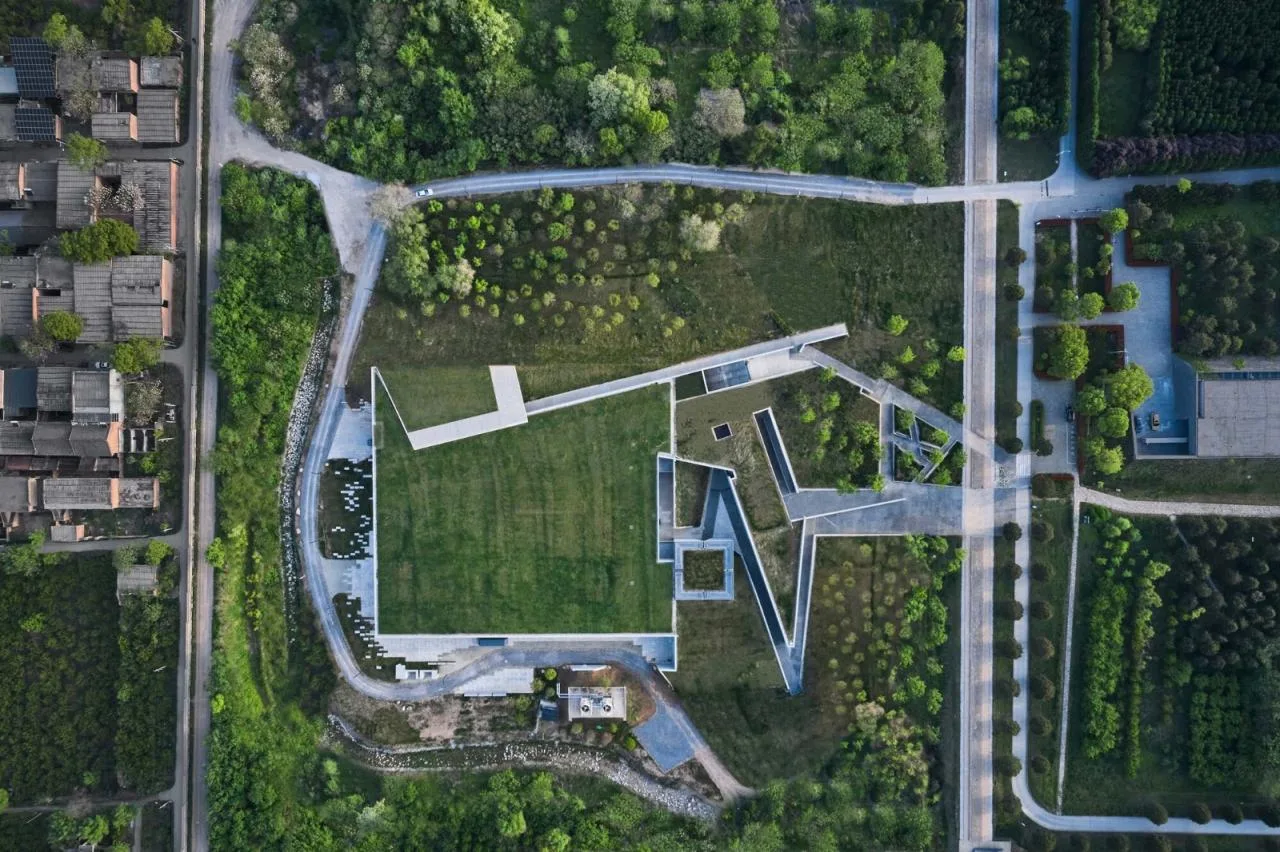
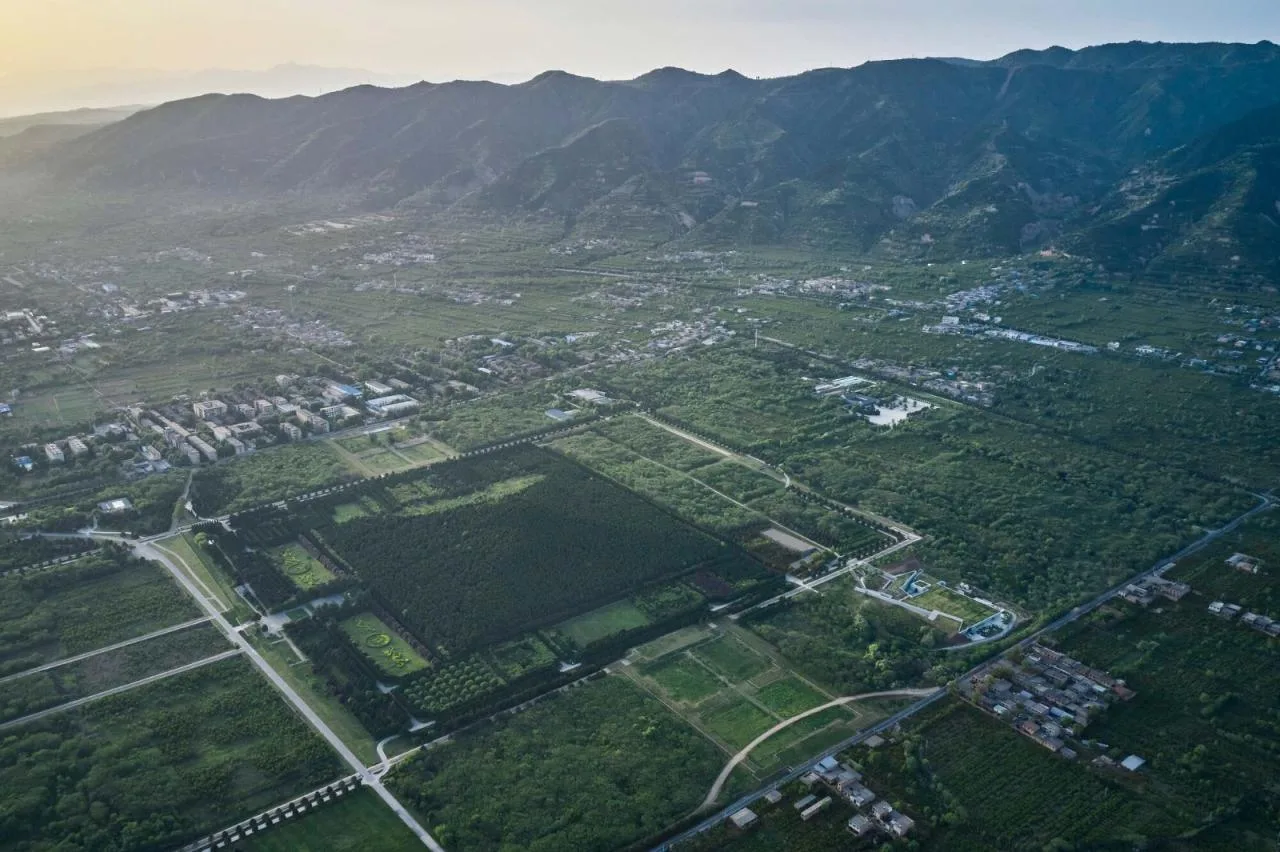
Project Overview: Situated in Lintong, Xi’an, the lush Li Mountain extends hundreds of miles from east to west. On the vast plain that gently slopes northward from the mountain’s base stands a towering, pyramid-shaped mound—majestic and solitary. This is the tomb of Emperor Qin Shi Huang, founder of China’s centralized imperial system that lasted over two millennia.
Despite the rapid urban development sweeping modern China, the area surrounding the mausoleum still preserves the ancient mountain-plain spatial structure, radiating the enduring aura of the First Emperor, whose legacy has transcended thousands of years. The Mausoleum of Emperor Qin Shi Huang was among the first heritage sites in China to be inscribed on the UNESCO World Heritage List in 1987.
In the new millennium, the Xi’an Municipal Government planned to establish a museum dedicated to protecting, exhibiting, and interpreting two nationally treasured cultural relics: the painted bronze chariots and horses discovered within the mausoleum complex. This initiative also aims to ease the heavy tourist congestion at the nearby Terracotta Warriors site.
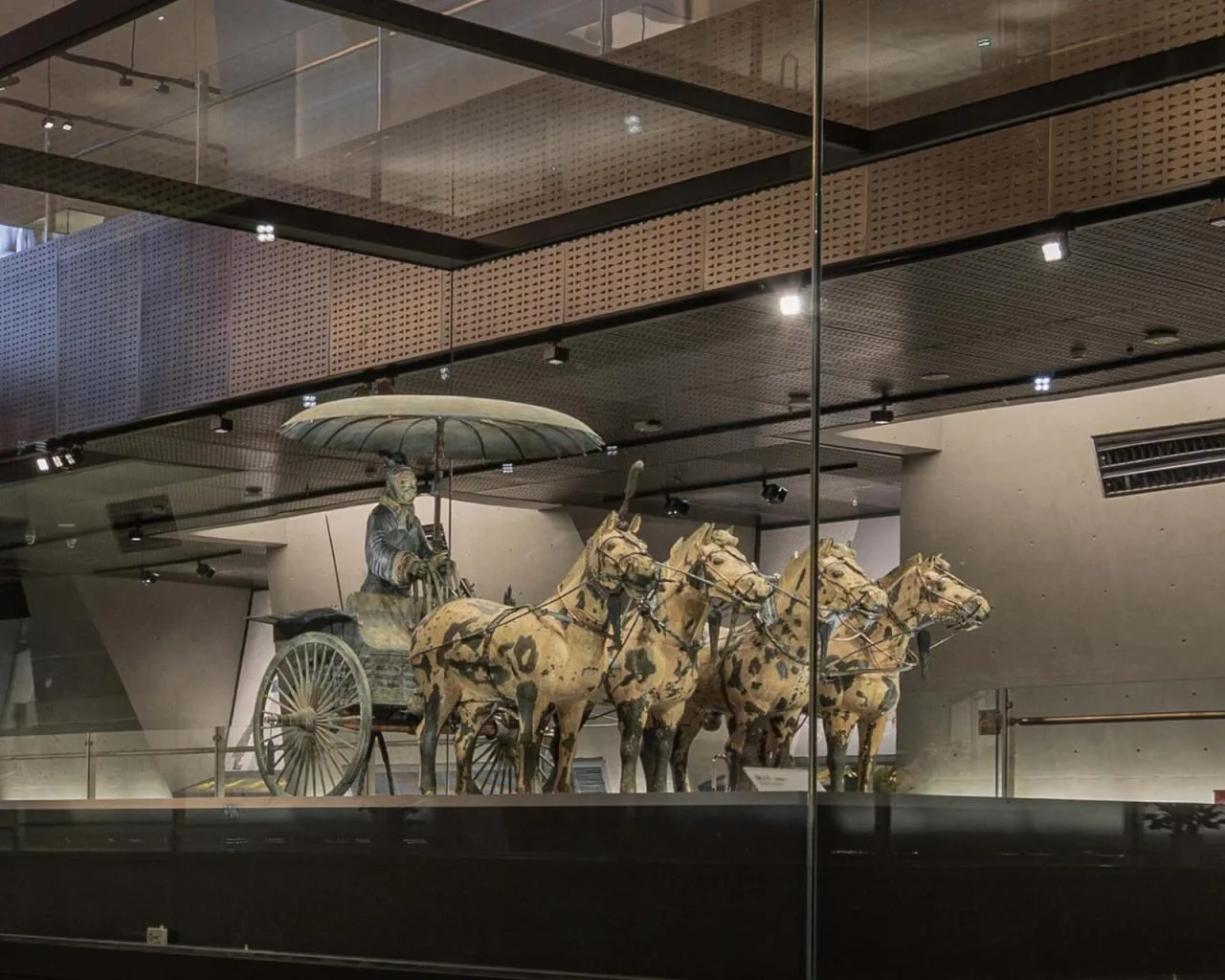
Unearthed about 8 meters below ground on the western edge of the imperial tomb mound, these painted bronze chariots and horses are half the size of their real-life counterparts, yet astoundingly composed of thousands of intricately crafted metal parts. Their exquisite workmanship showcases the pinnacle of human manufacturing technology from over 2,000 years ago.
Between the inner and outer city walls of the tomb lies a large gully known as Yuegou, formed historically around the Ming Dynasty. This gully—several meters deep—was the only feasible site for constructing the museum, as it ruled out the presence of buried relics beneath the surface. This factor played a key role in the National Cultural Heritage Administration of China’s decision to situate the museum here after thorough consideration.
Forty years after the discovery of the painted bronze chariots and horses, the chance to return them to the foot of Fengtuling Mountain offers a remarkable opportunity to reconnect with one of the world’s most mysterious emperors.
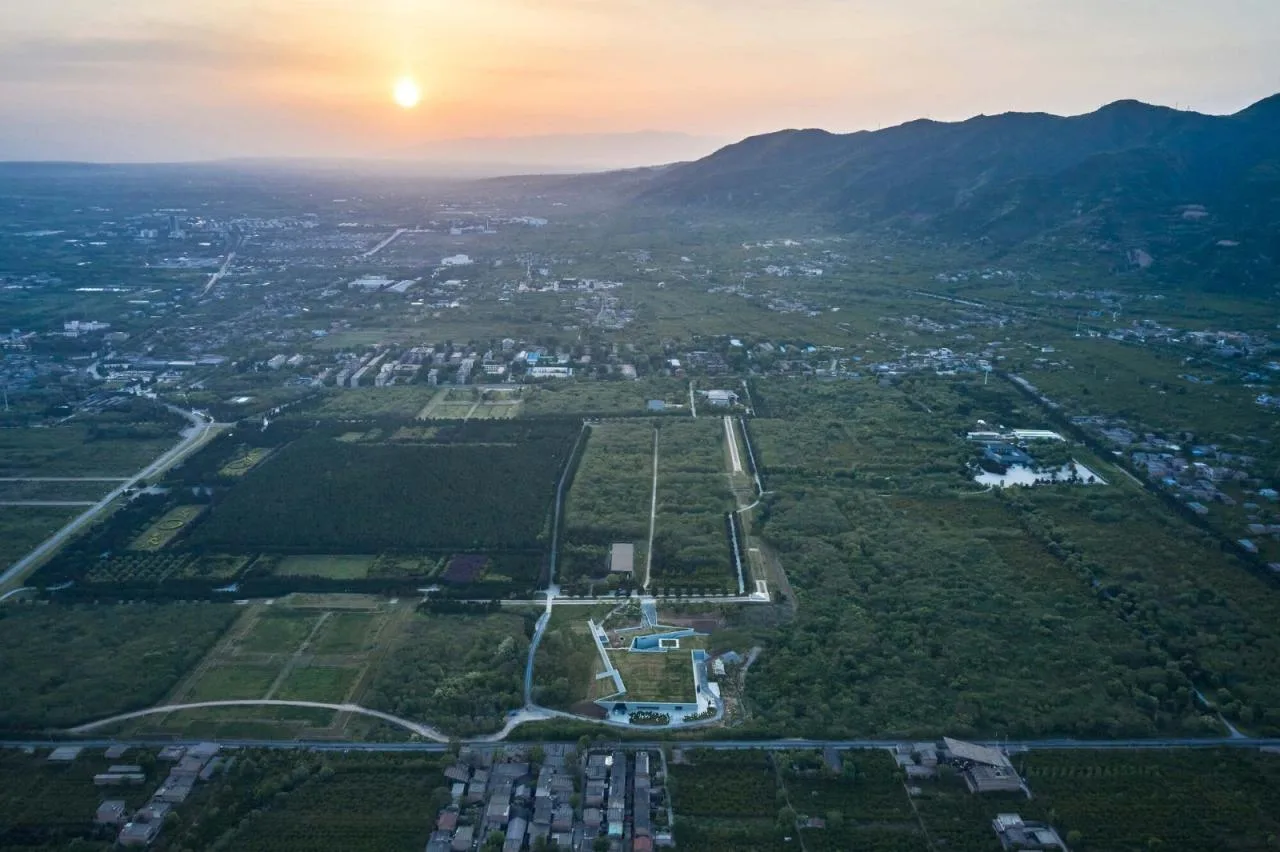
The design team faced three major challenges: how to accommodate an average of over 30,000 daily visitors within a compact 8,000 square meter museum (with a 4,000 square meter exhibition space); how to showcase the cultural relics with exquisite and profound interpretation; and how to respect and integrate with the unique historical context of the mausoleum area.
Winning the design rights through the 2016 international competition, the team developed solutions tailored to these demands.
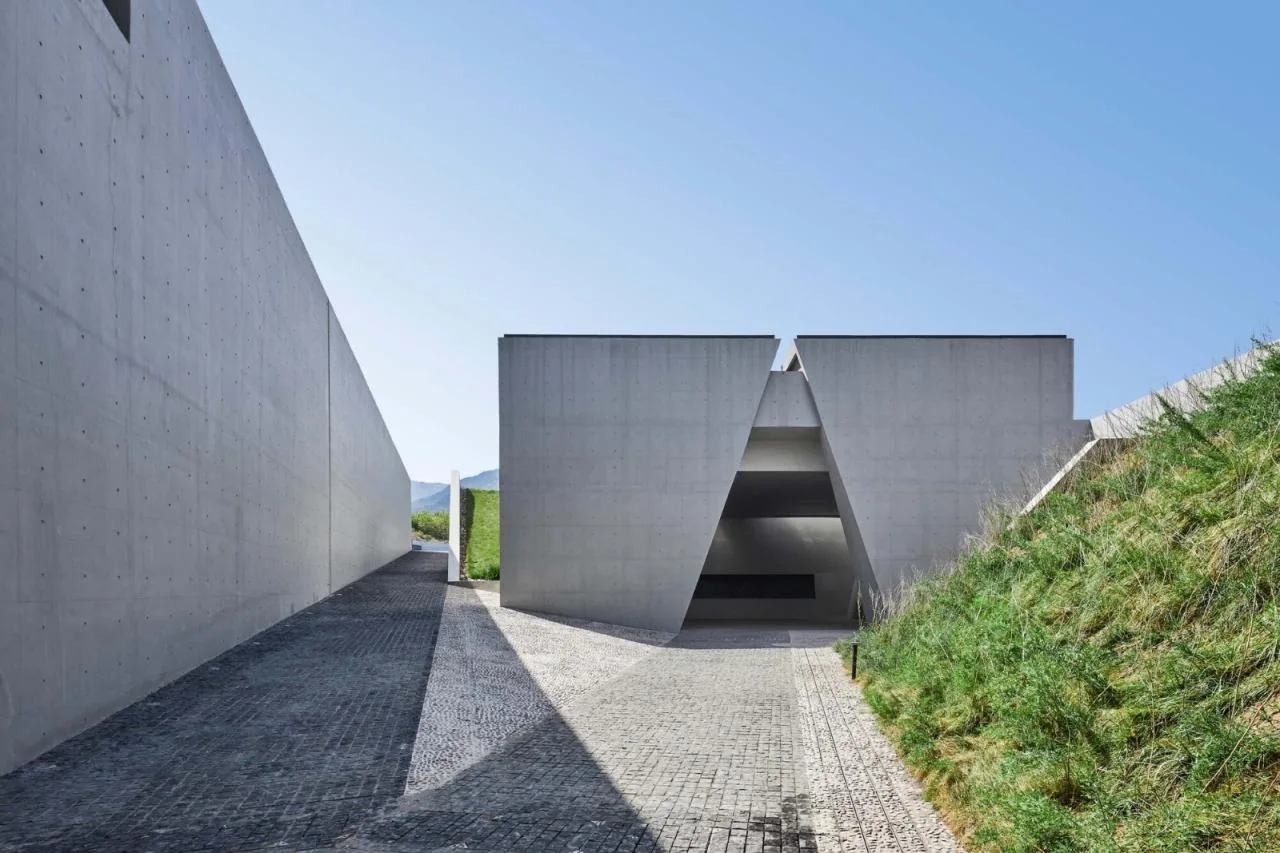
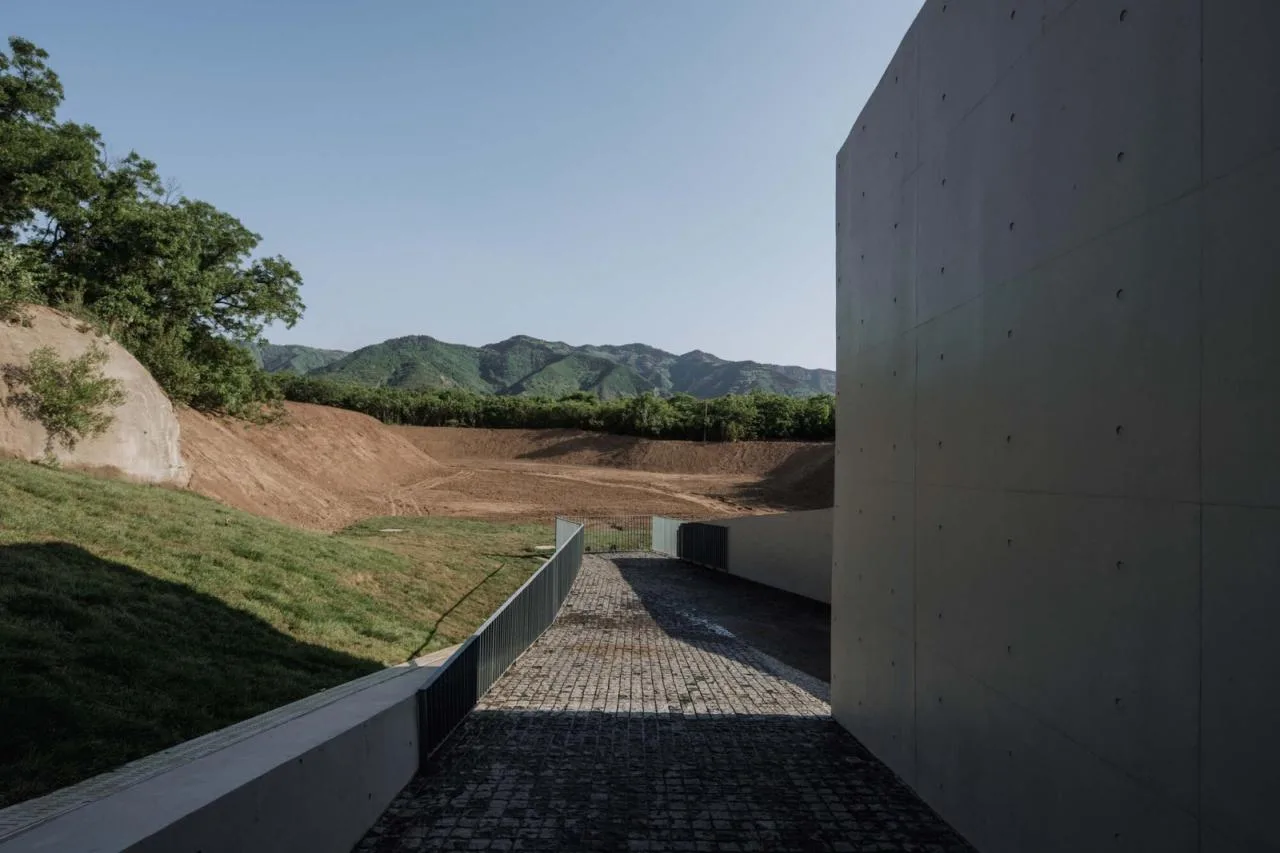
Guided by the principle of preserving the heritage environment and spatial patterns, the planning concept carefully expresses the cultural relics’ meaning and value through spatial and circulation design. It explores and interprets the relationship between archaeological findings and the historical environment, re-evaluating and extending the historical narrative actively.
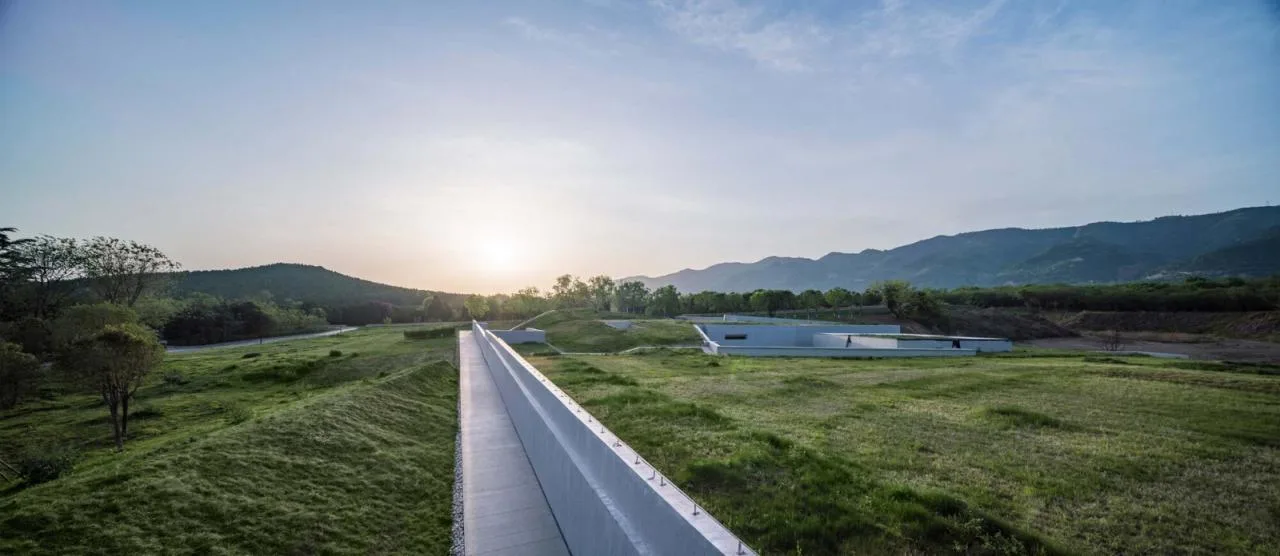
The design’s core lies in organizing the museum’s visitor path, which is also a unique chance to interpret the imperial tomb’s historical environment. Managing the relationship between the building and its exceptional site is even more crucial than the building’s spatial form itself.
Through a dialogue with Li Mountain and the tomb mound, the building anchors itself firmly on the site, blending seamlessly into the mausoleum area. The museum experience extends beyond the exhibition halls, encompassing the approach and departure, each stage carefully structured with spatial and visual intentions. This elevates the site’s environmental features to the same importance as the relics displayed within.
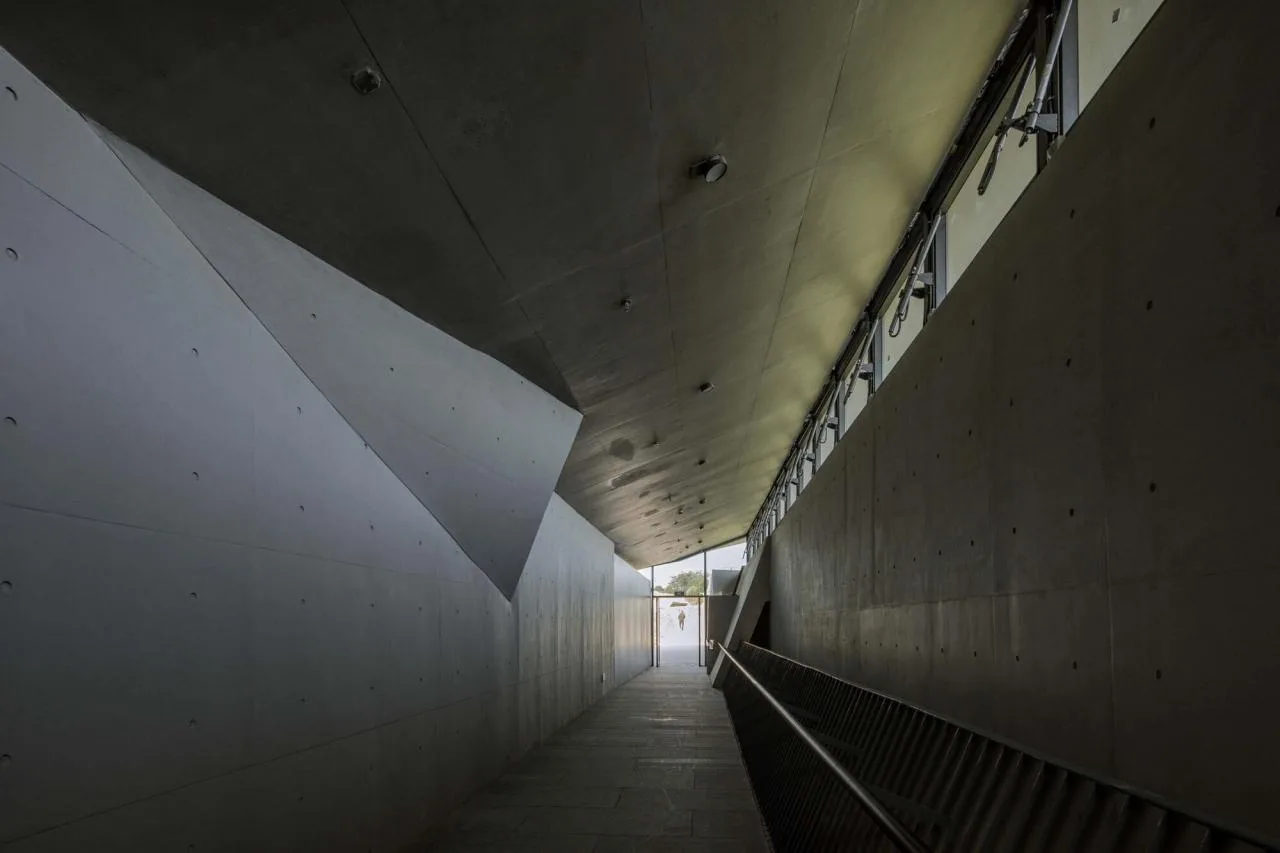
Visitors enter the museum from the scenic area’s ground level, descending via a ramp with two turns. As the path lowers below the gully’s ridge, outside distractions fade, allowing visitors to calm and focus. Upon turning south, the expansive Li Mountain dominates the view, creating a striking contrast between the mountain’s vast horizontal presence and the gentle slope of the ramp. This powerful visual sets the tone and imprints the connection between Li Mountain and the imperial tomb in visitors’ minds.
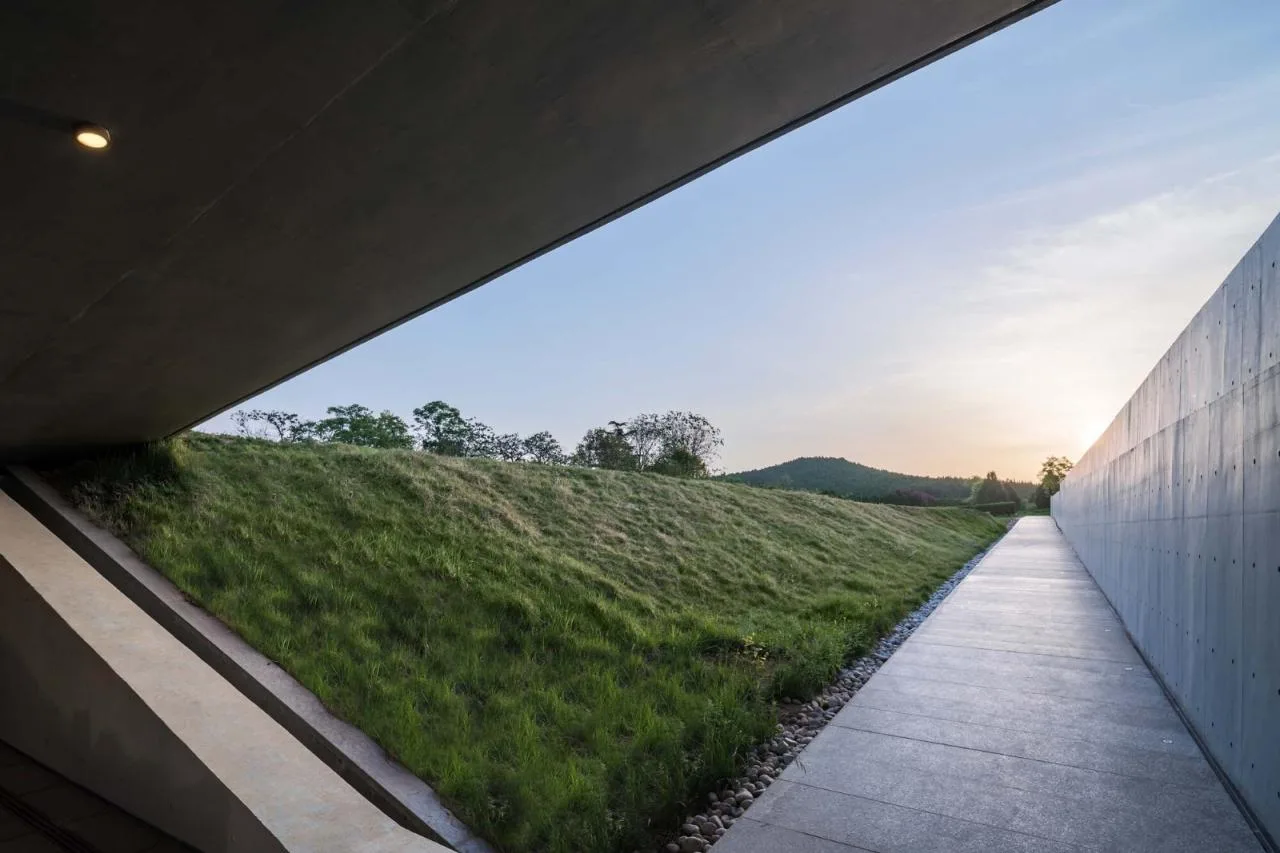
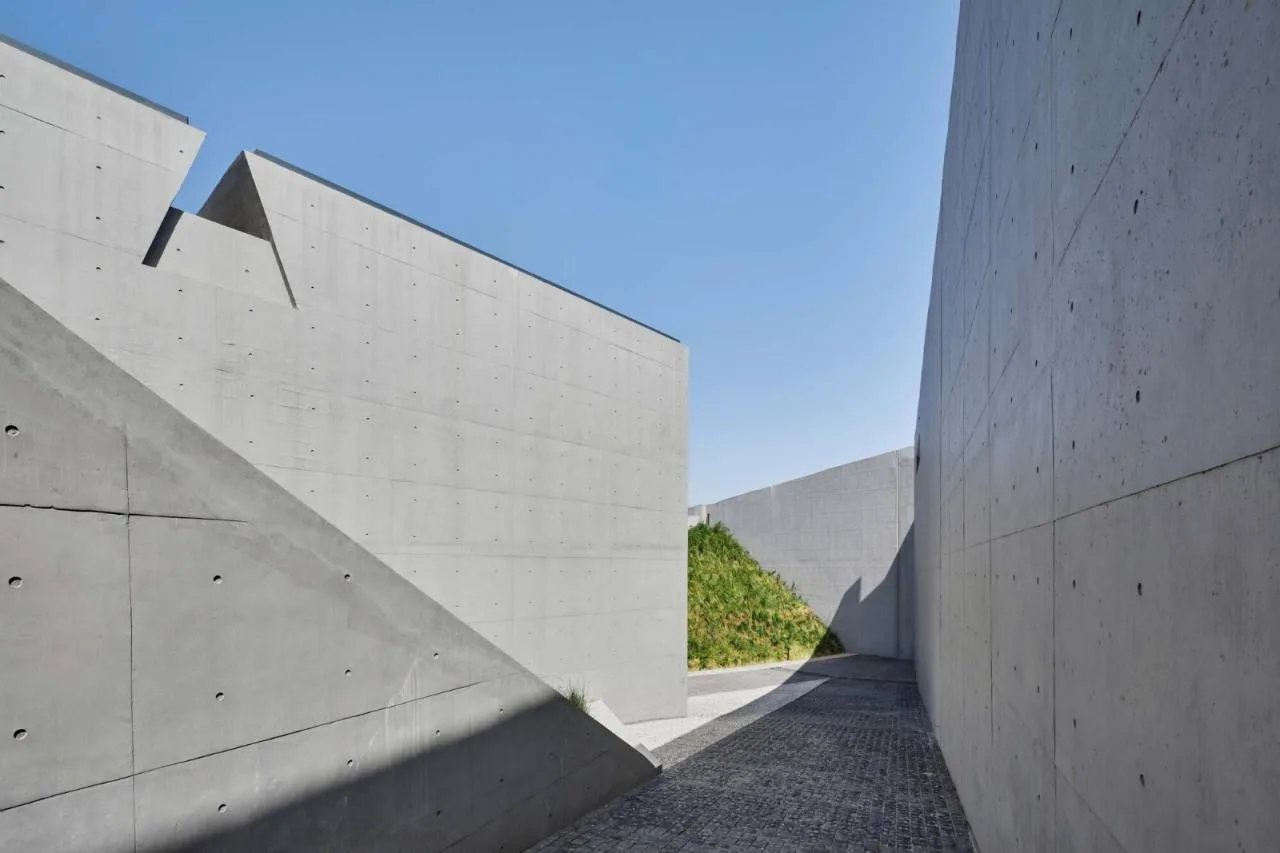
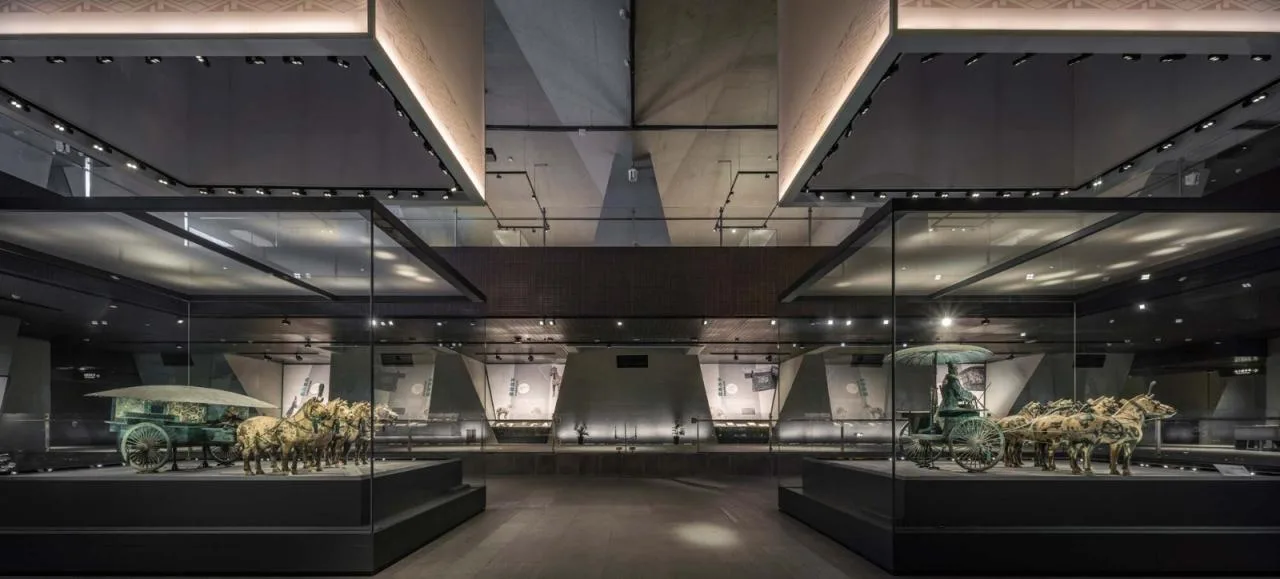
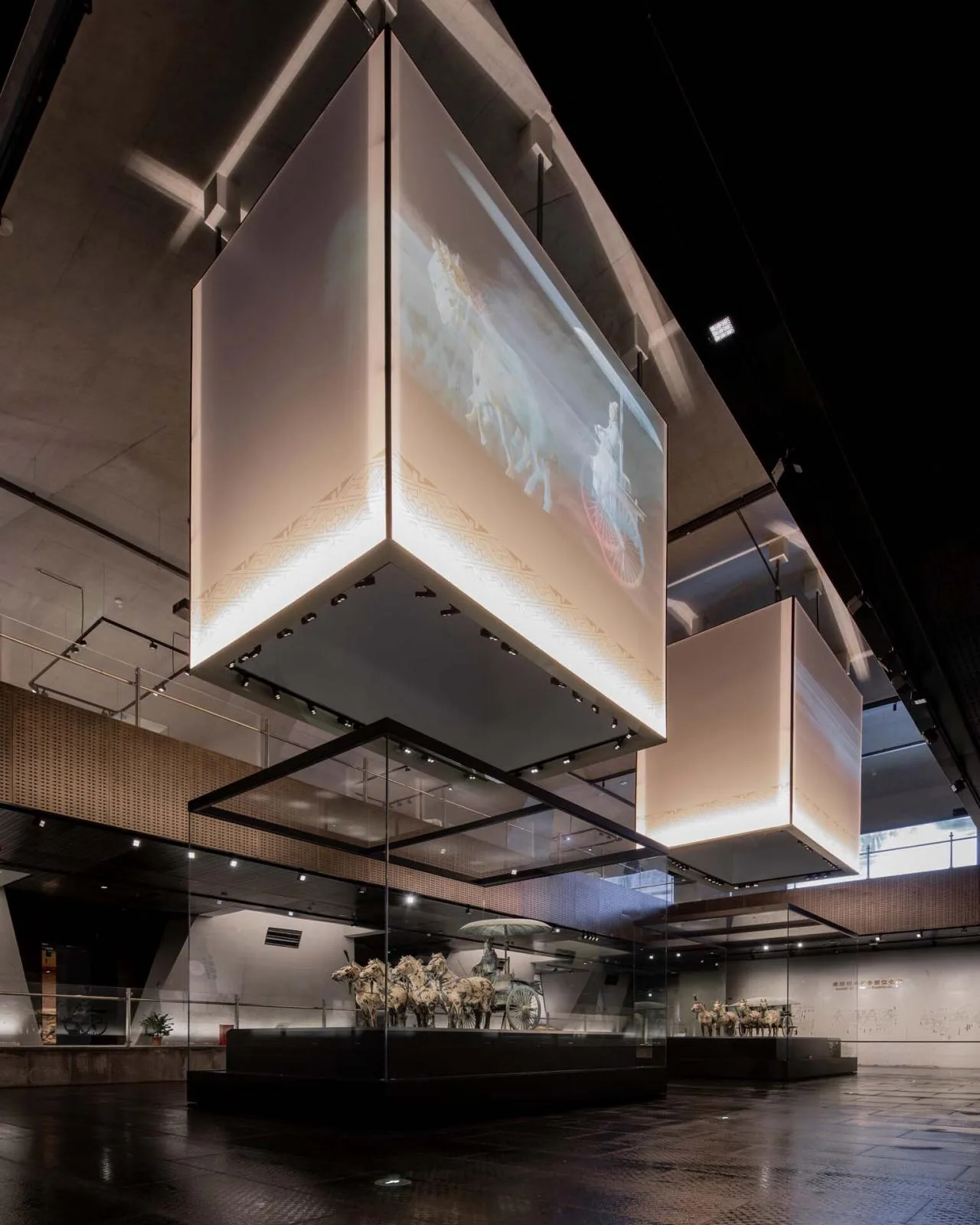
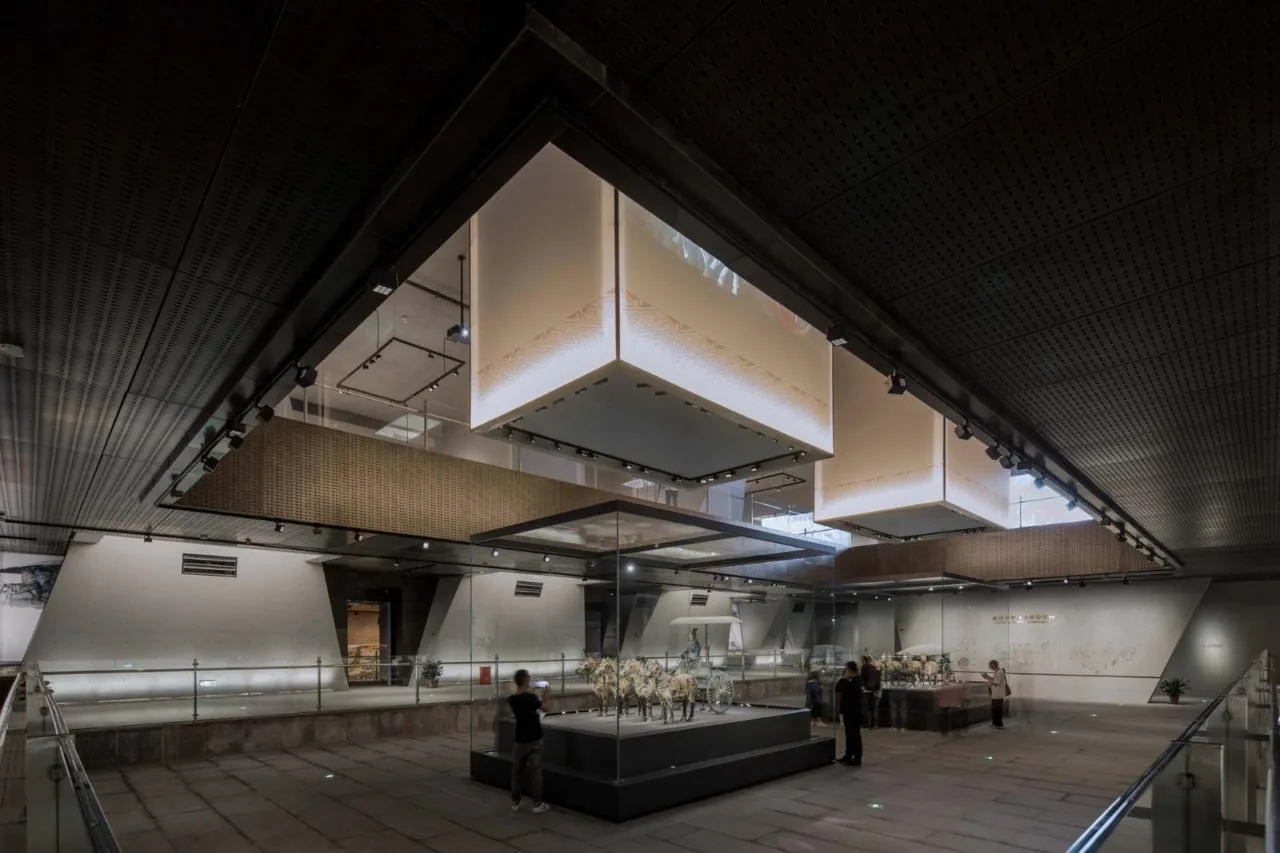
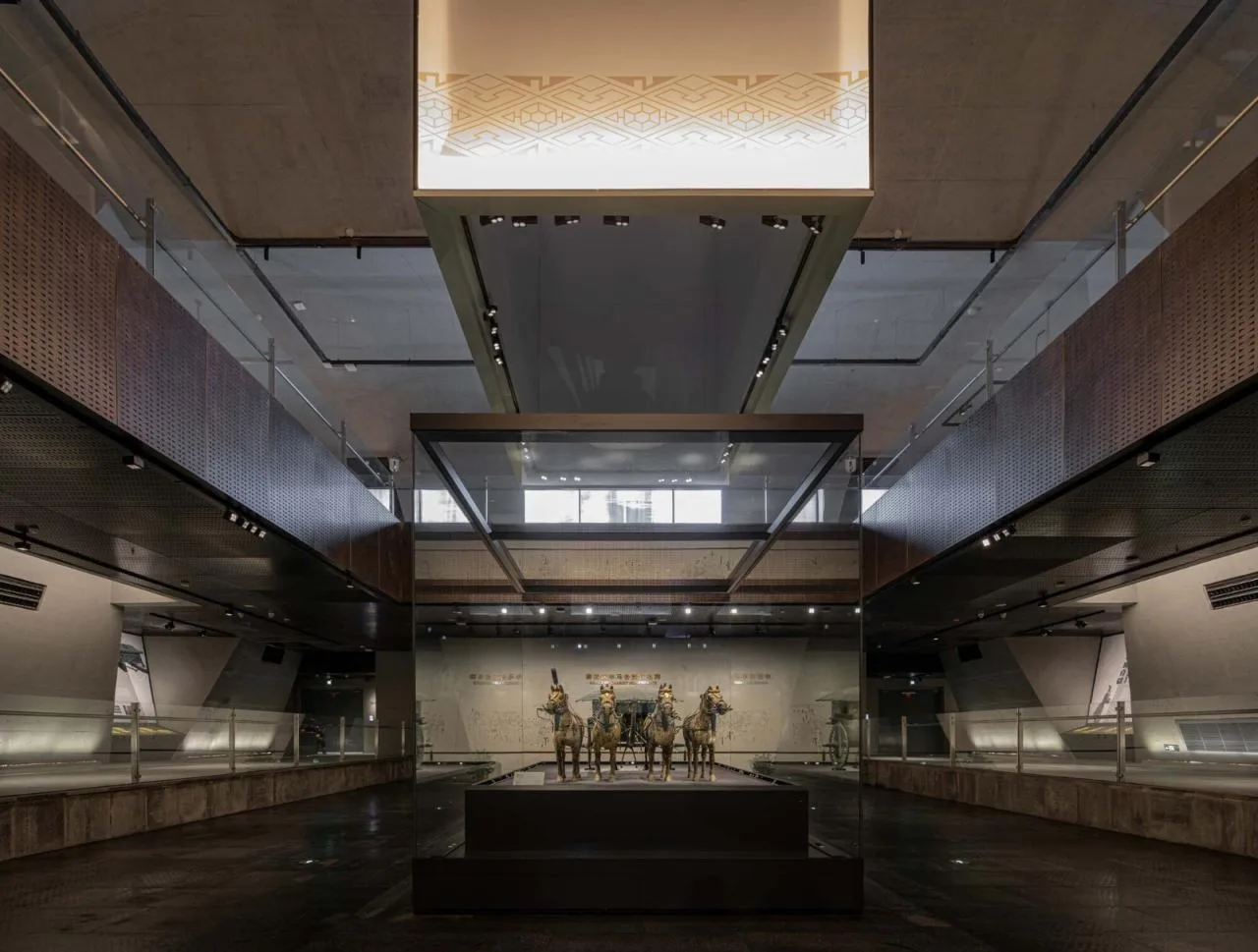
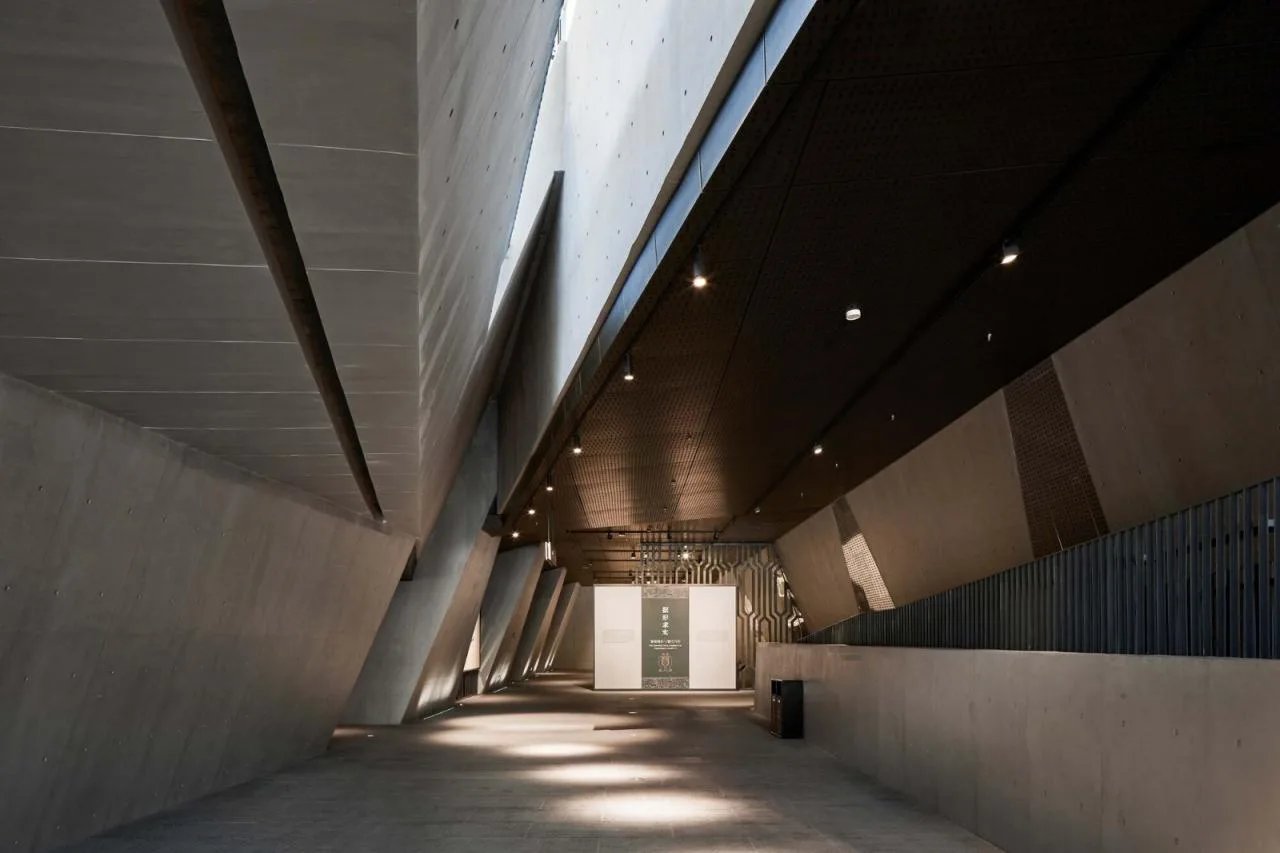
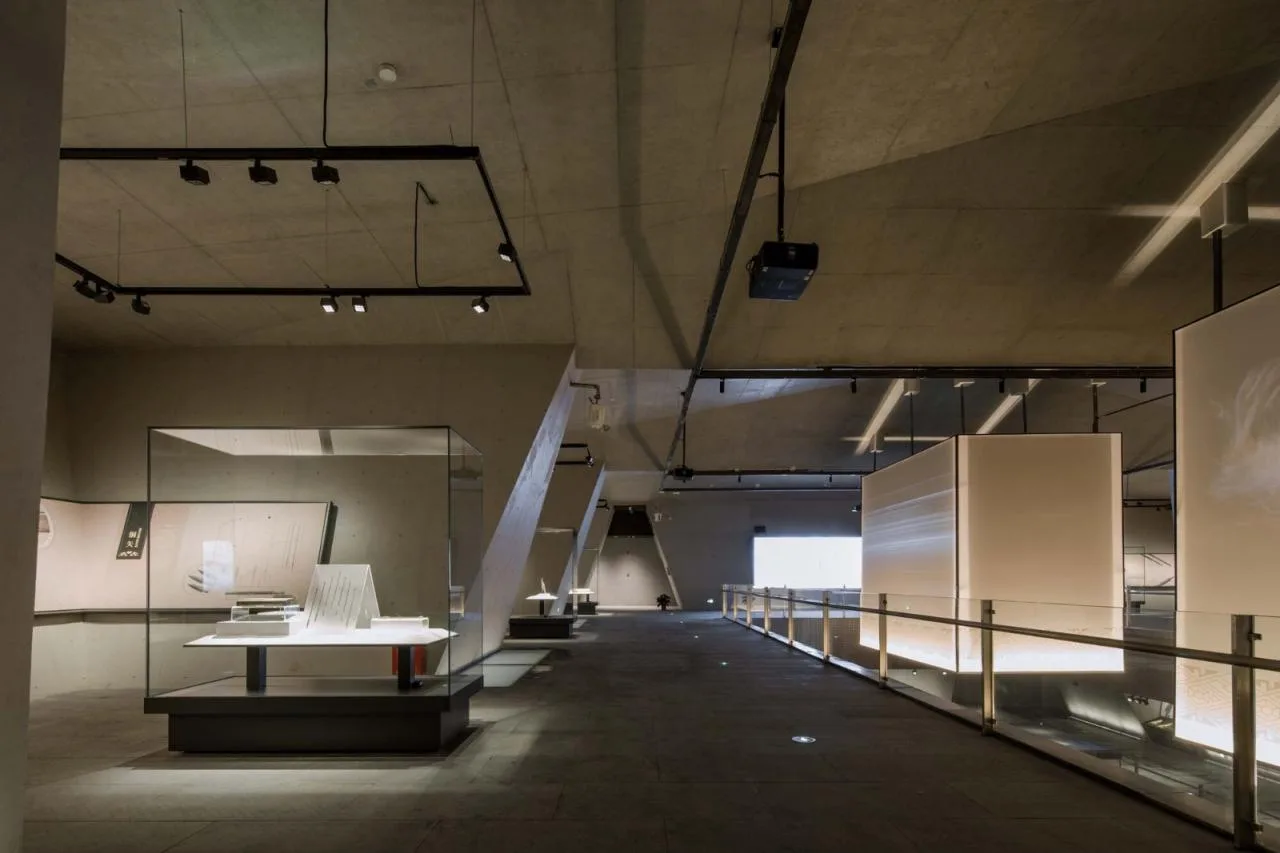
Inside the museum, the visitor path follows the concept of “proceeding all the way to face the real artifact.” From the entrance, visitors descend continuously along a 200-meter-long ramp leading to the central exhibition hall. The first exhibit to greet visitors in the dim, mysterious setting is the specially illuminated painted bronze chariot and horse, delivering a stunning visual impact.
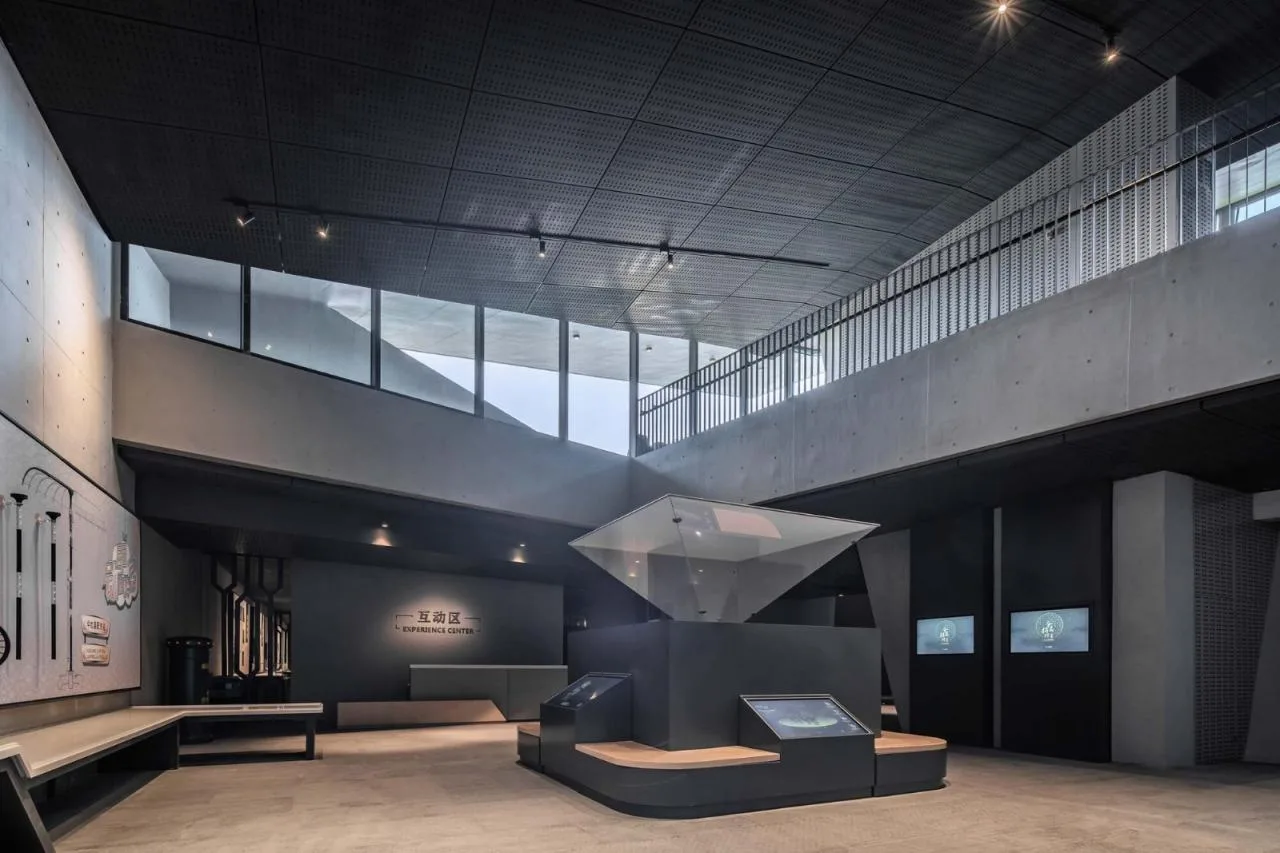
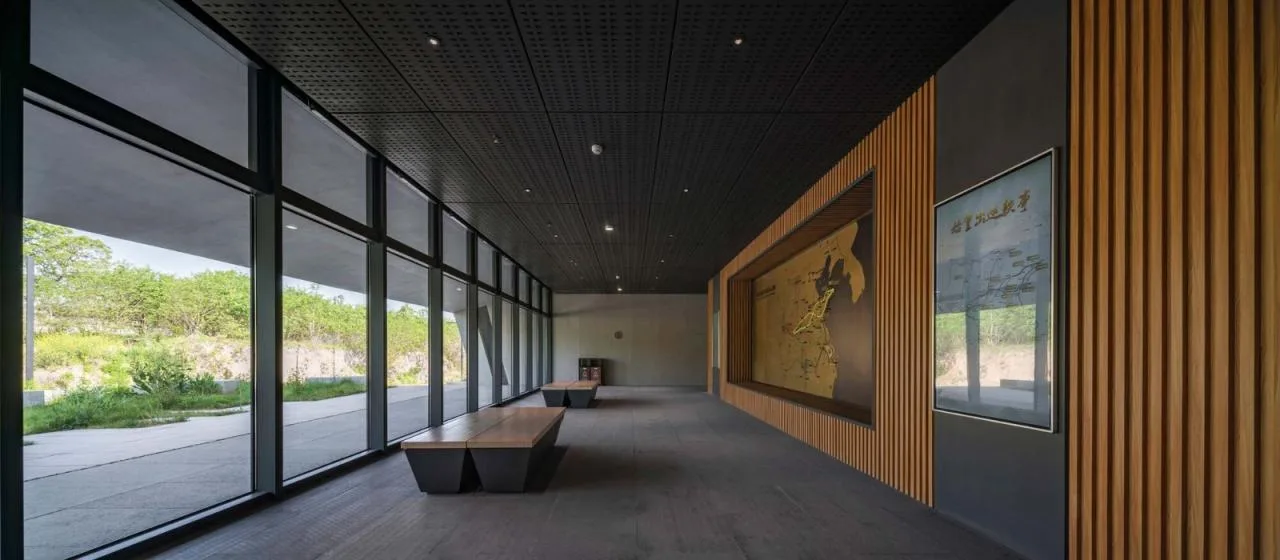
Following the exhibit, visitors exit through the lounge, multimedia screening room, permanent exhibition hall, and souvenir shop, gradually easing their experience. As the ramp ascends, the bold and concise silhouette of the imperial tomb’s seal soil mound comes into view. Moving along the guiding wall—which conceals the waiting area for electric scooters—the seal soil mound becomes increasingly prominent, drawing visitors’ attention back to this ancient emperor.
This journey—from descending underground to emerging into sunlight—creates a continuous narrative of highs and lows, taking visitors on a distinctive experience that transports them beyond contemporary life.
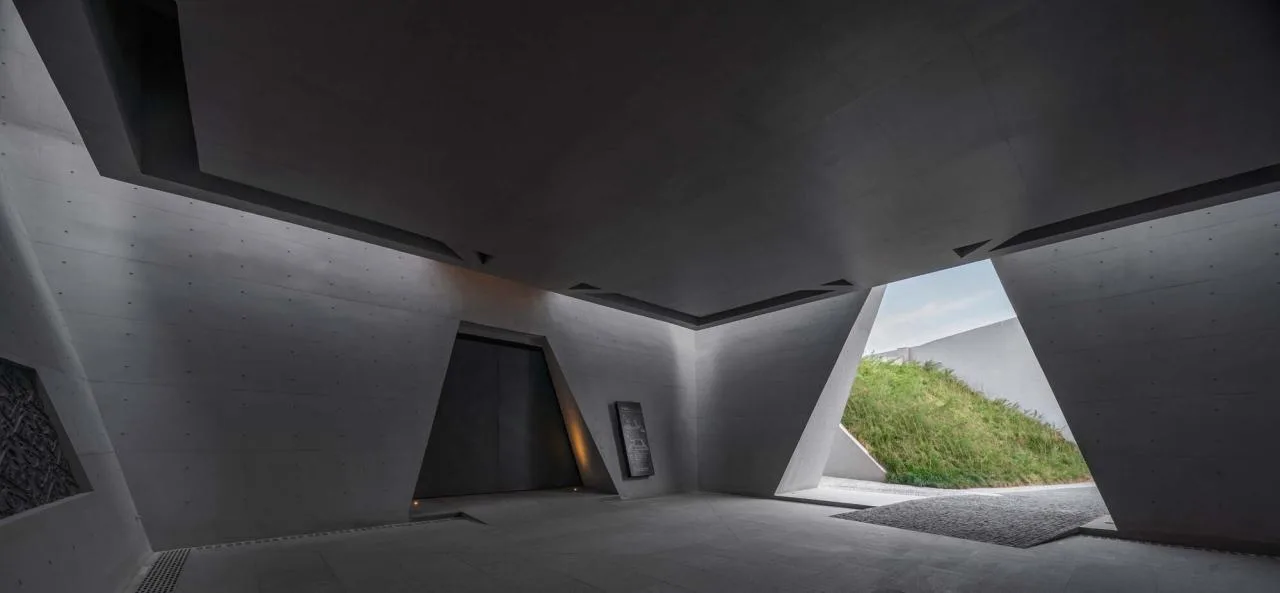
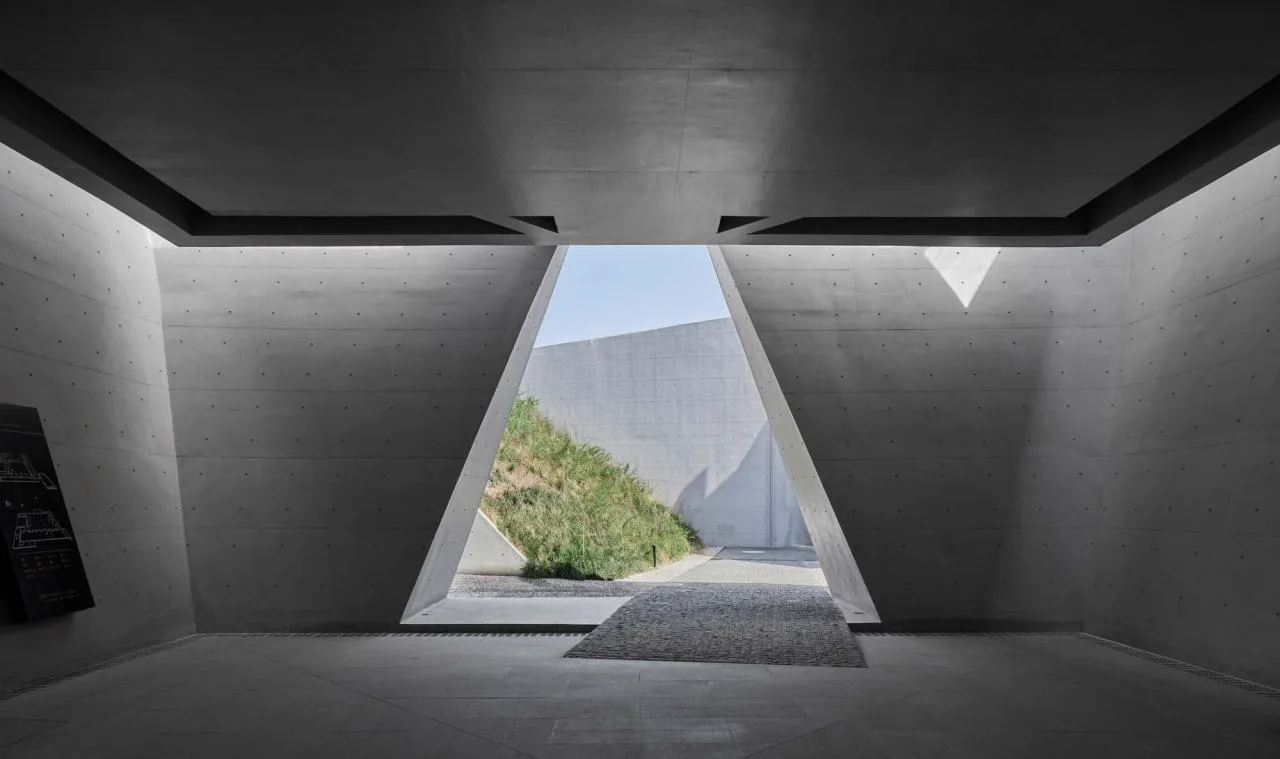
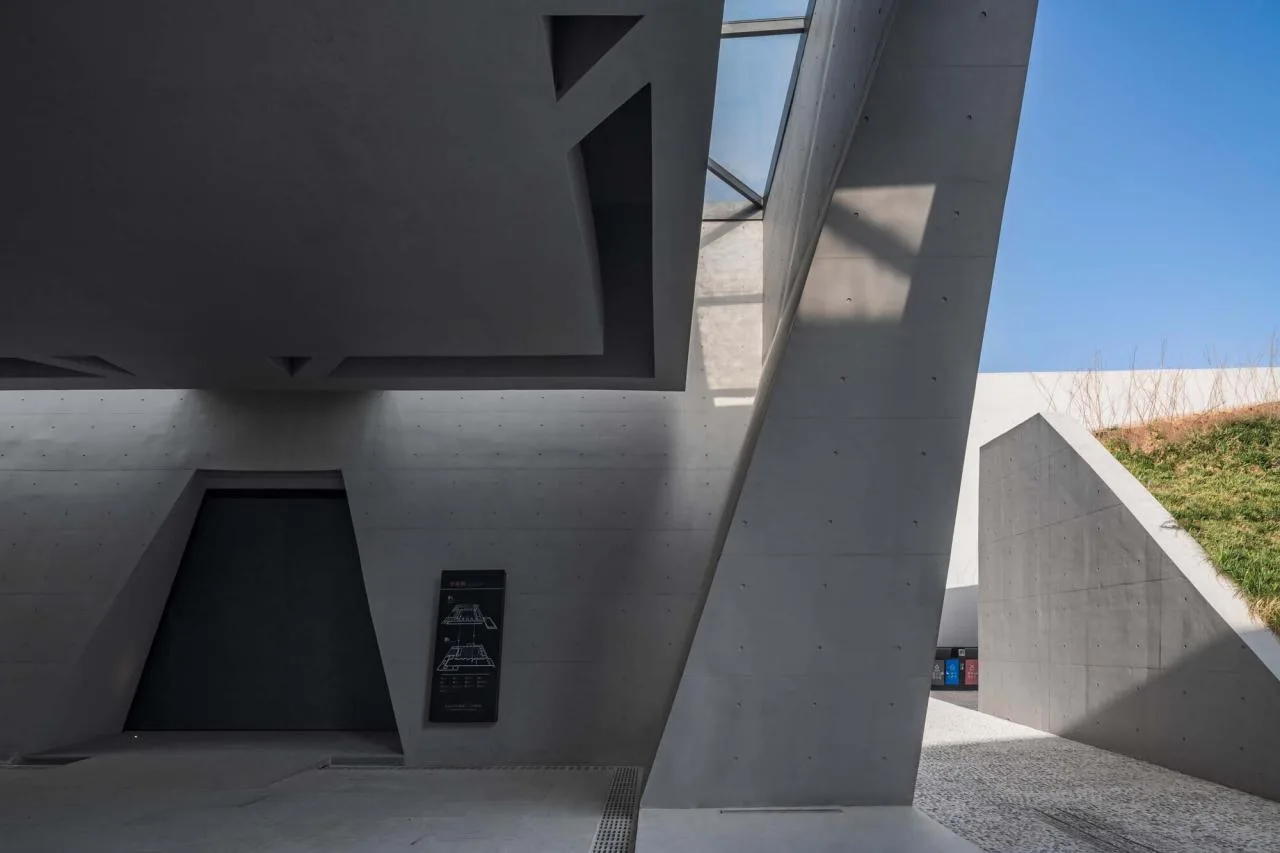
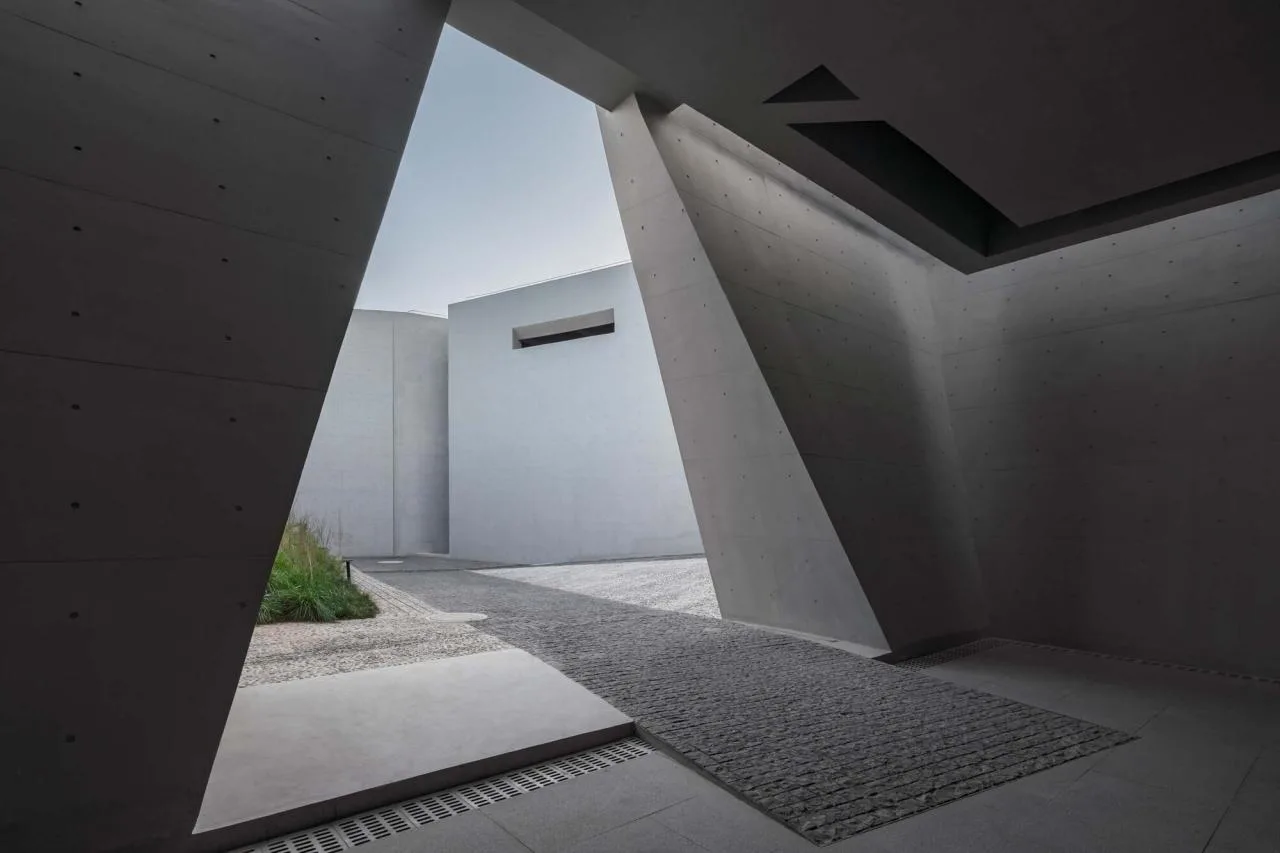
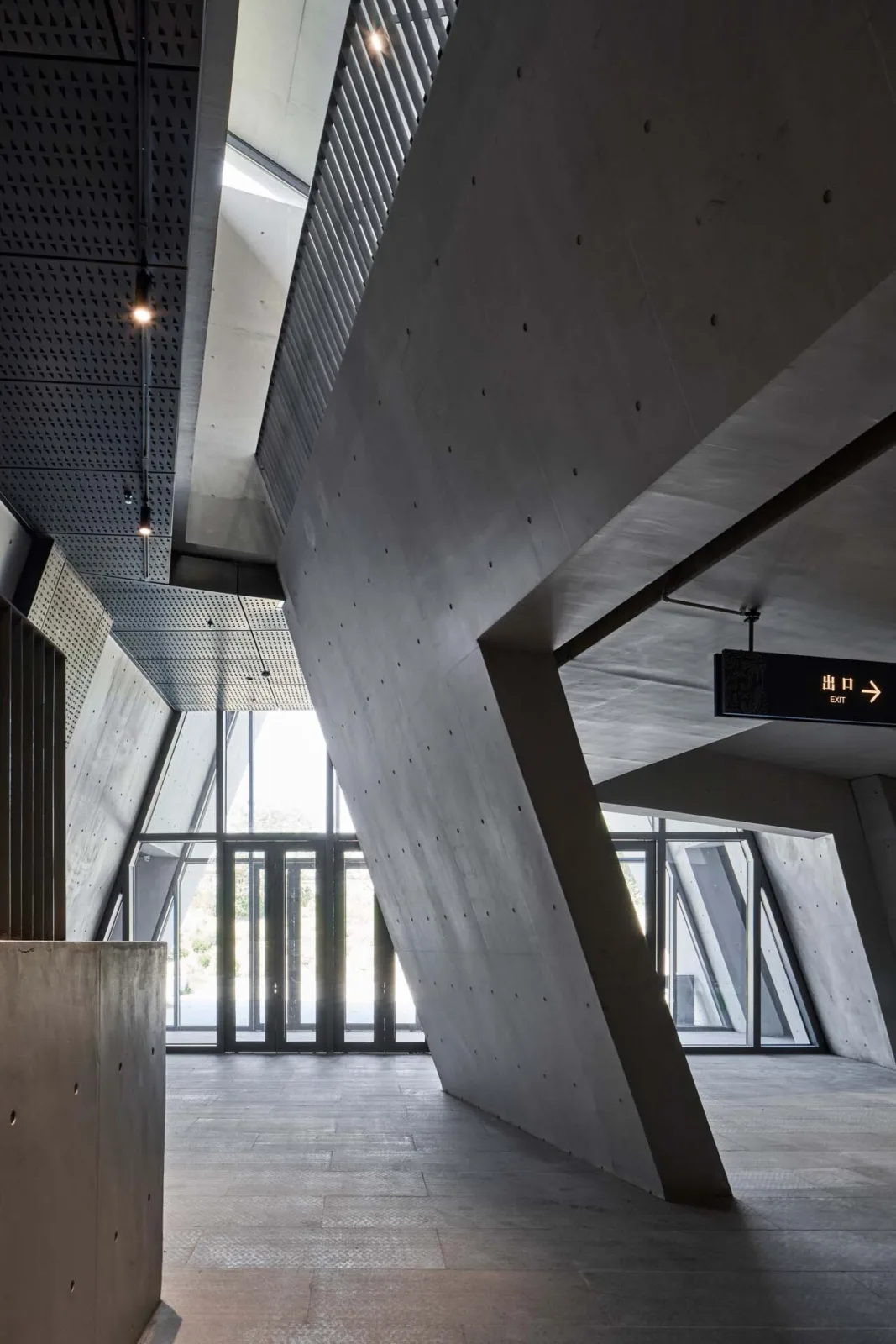
The material palette favors plain concrete as the primary surface for both interior and exterior spaces, left undecorated to reveal the structure’s raw strength. The steady, subtle character of concrete provides a pure, mysterious backdrop that accentuates the cultural relics.
As a semi-buried building, only two facades face the ridge at the bottom of the gully, while the extensive roof is covered with soil and grass, perfectly blending into the surrounding cemetery landscape. This design ensures that the new structure remains invisible from key vantage points within the large-scale scenic area, allowing only visitors inside to experience the tactile concrete surfaces.
The design intentionally avoids traditional Qin Dynasty architectural materials such as bricks, tiles, or wood. This choice underscores that the museum is not a simulation of ancient underground tomb spaces but a contemporary 21st-century building encouraging fresh perspectives and media for re-examining history’s defining moments without distracting archaeological references.
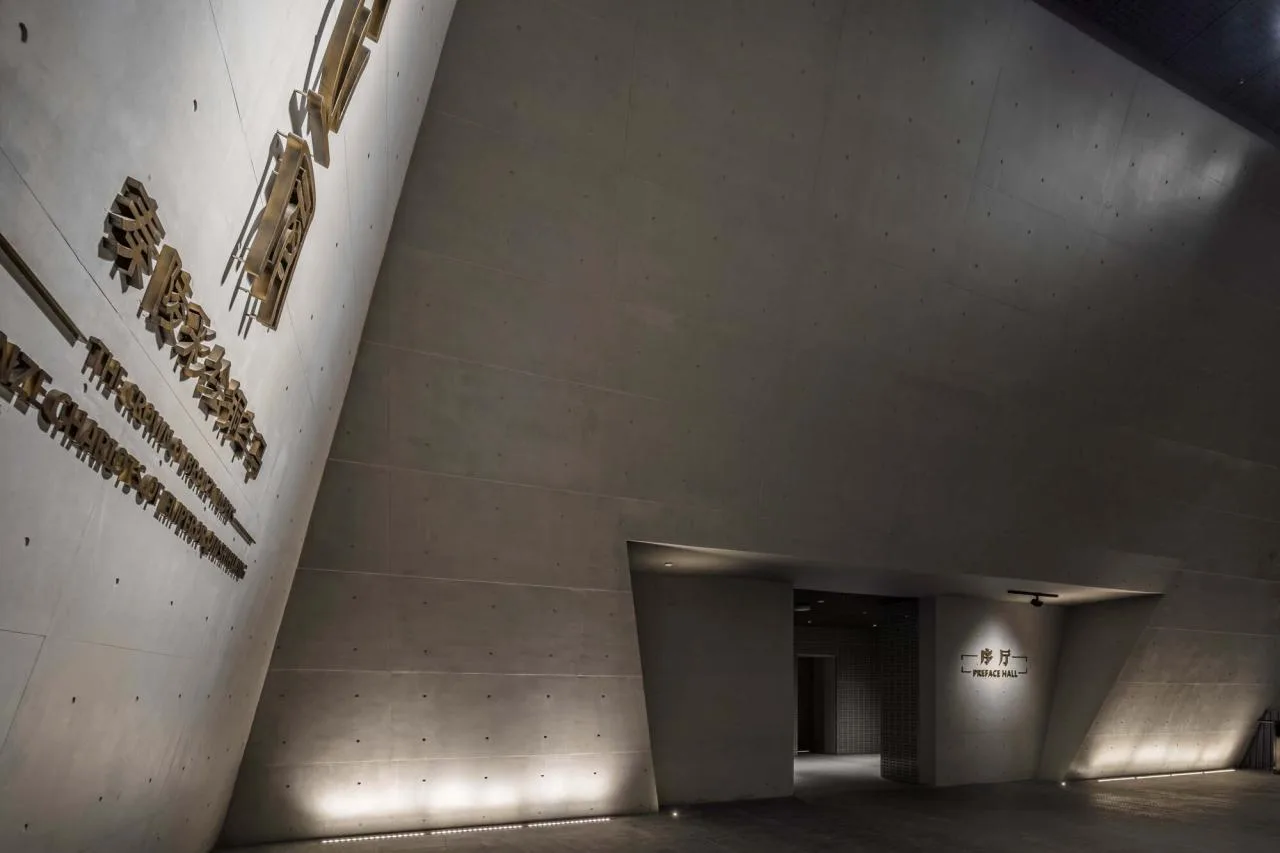
The interpretation of historical truth is, itself, shaped by contemporary perspectives. This design strives to reconstruct the past in visitors’ minds by integrating natural landscapes with human culture, allowing history to continue its dialogue with the present.
Quietly nestled within the world cultural heritage site, the new building first honors the historic environment with utmost respect. It then employs diverse architectural elements and techniques to carefully organize circulation, forging visual connections among the heritage’s key historical resources. This approach sparks visitors’ curiosity and reflection, enabling the building’s core value to come alive.
History seems to reemerge: looking north towards Li Mountain, a lone horse crosses a flat river in the vivid world the First Emperor Ying Zheng prepared for his afterlife, resting silently beneath the towering pyramids. Nearby, in the museum’s enigmatic core, the buried Luan Jia radiates a thousand-year-old glow in the darkness, just as it did long ago.
Project Drawings
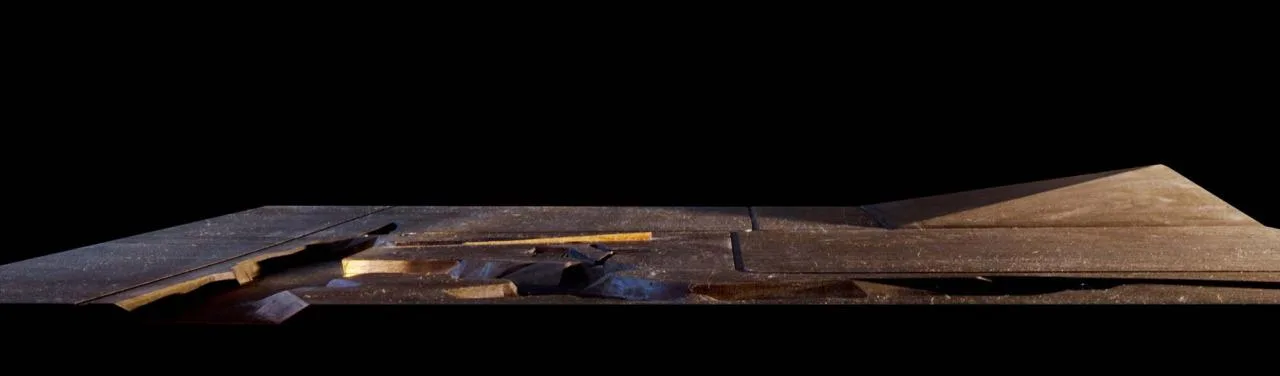
△ Project Model
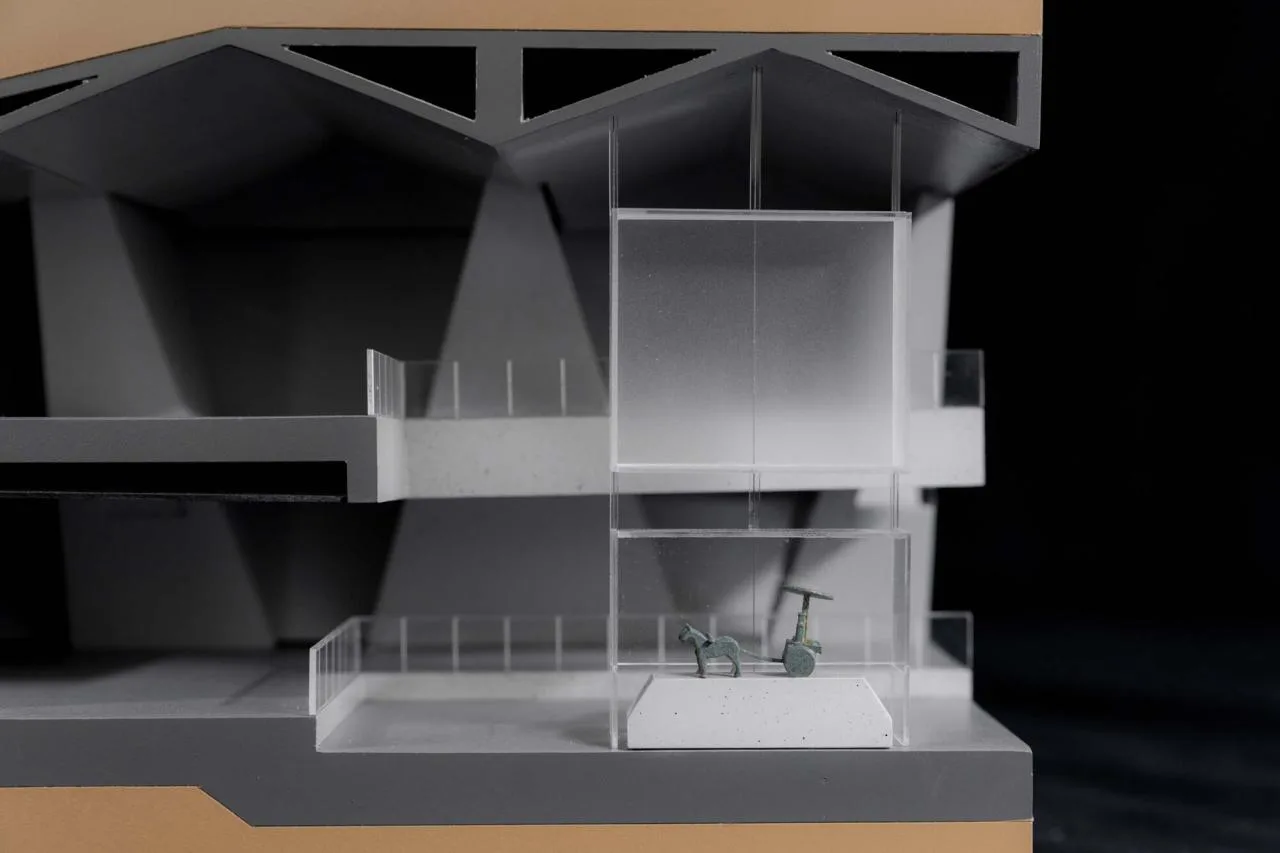
△ Model Diagram
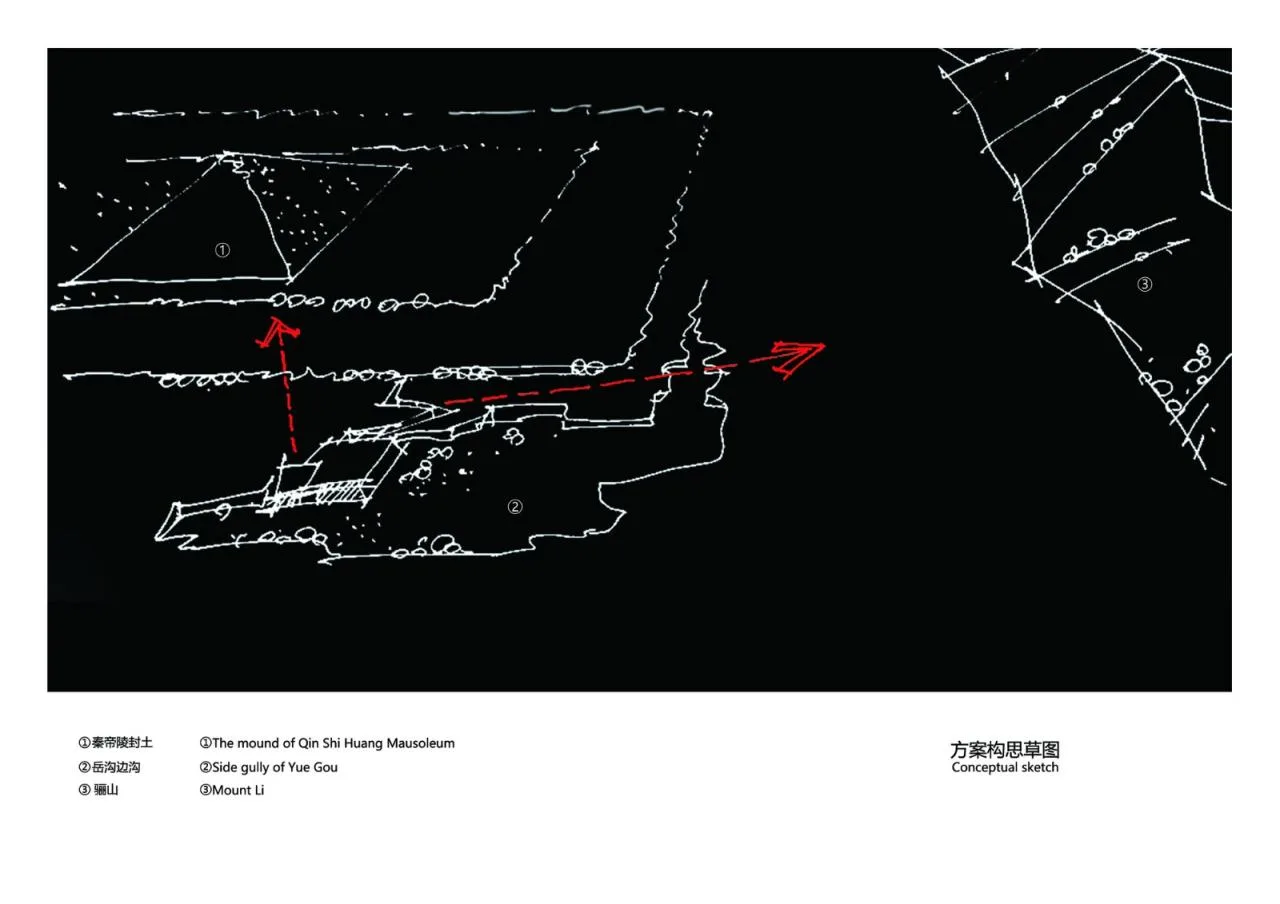
△ Concept Sketch
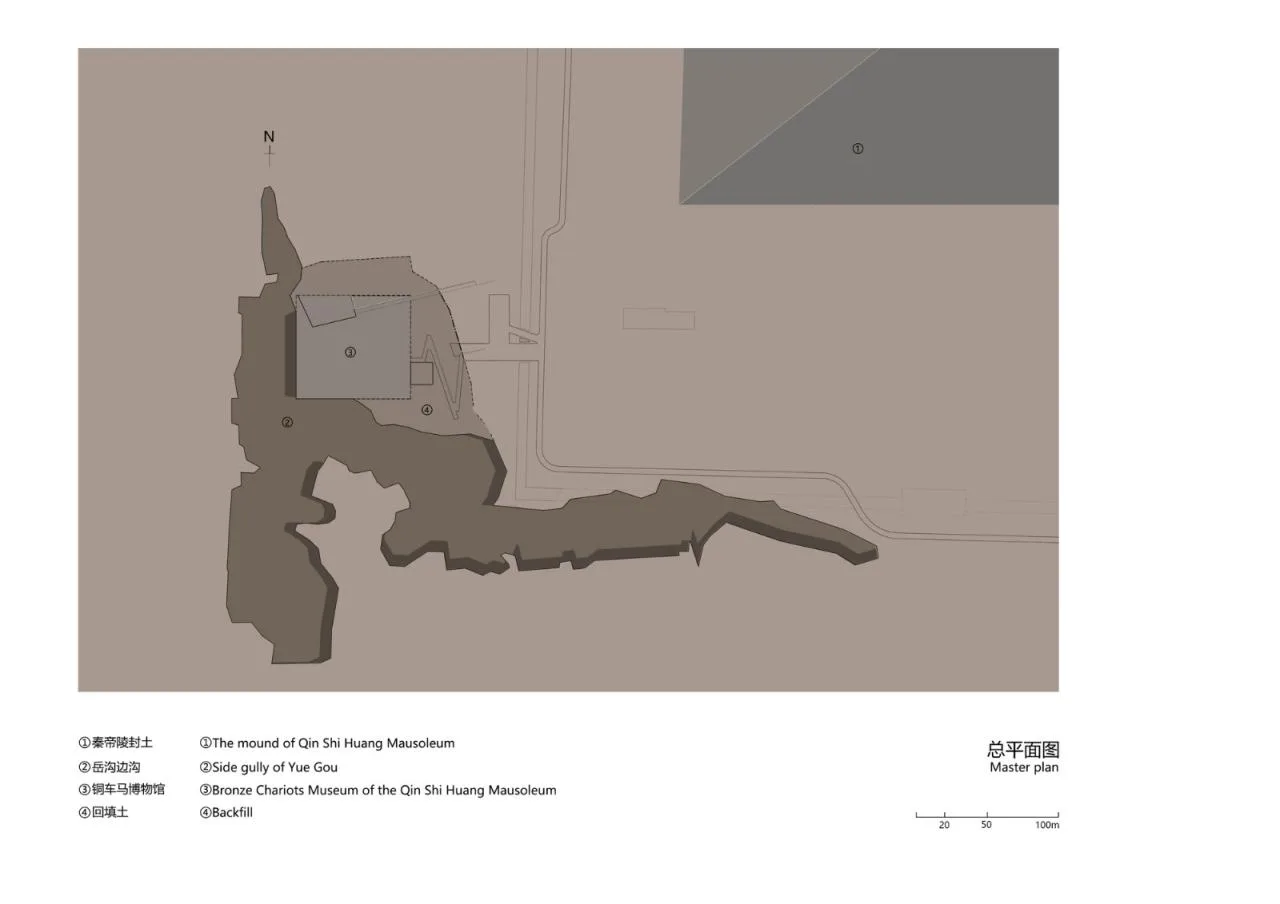
△ General Layout Plan
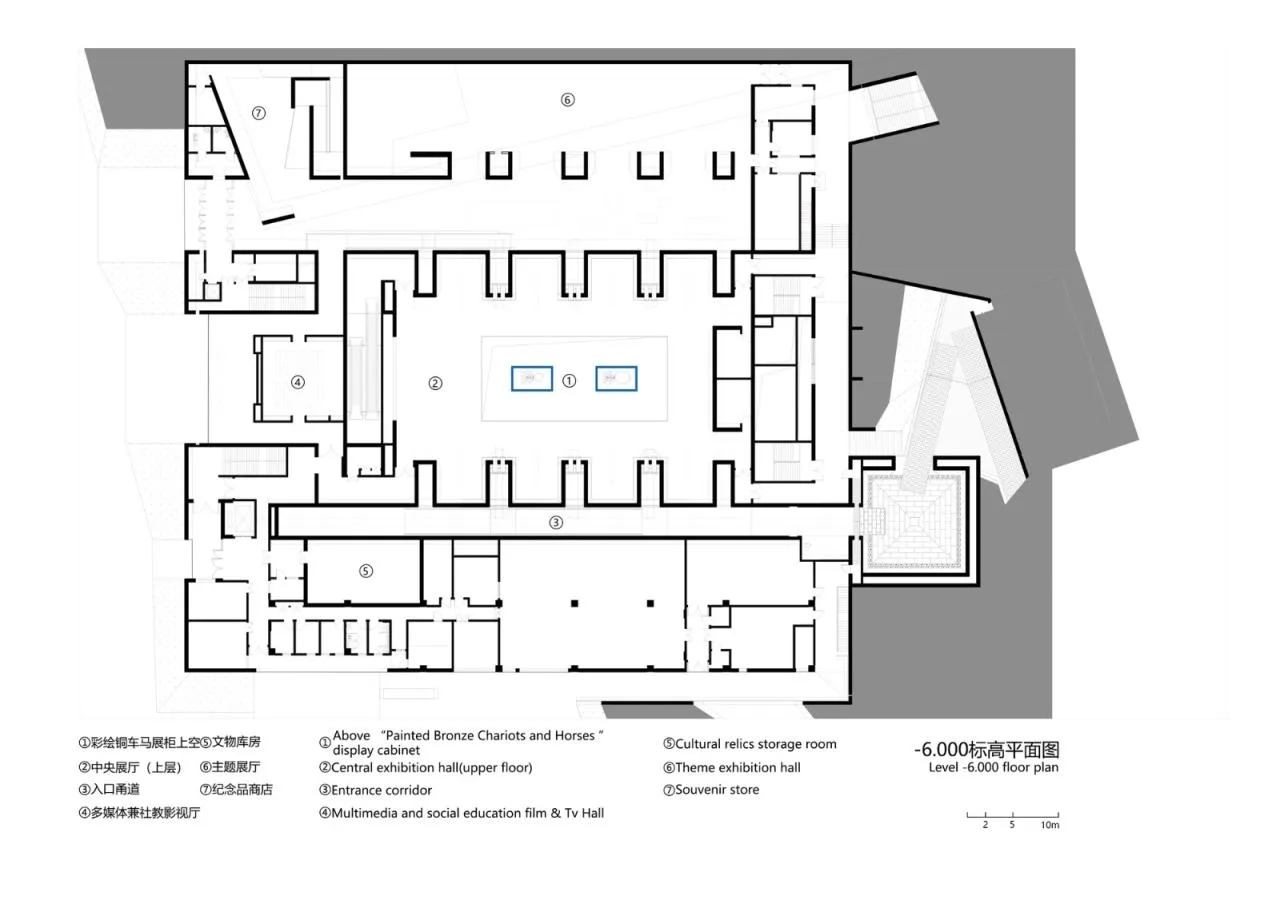
△ -6000 Elevation Plan
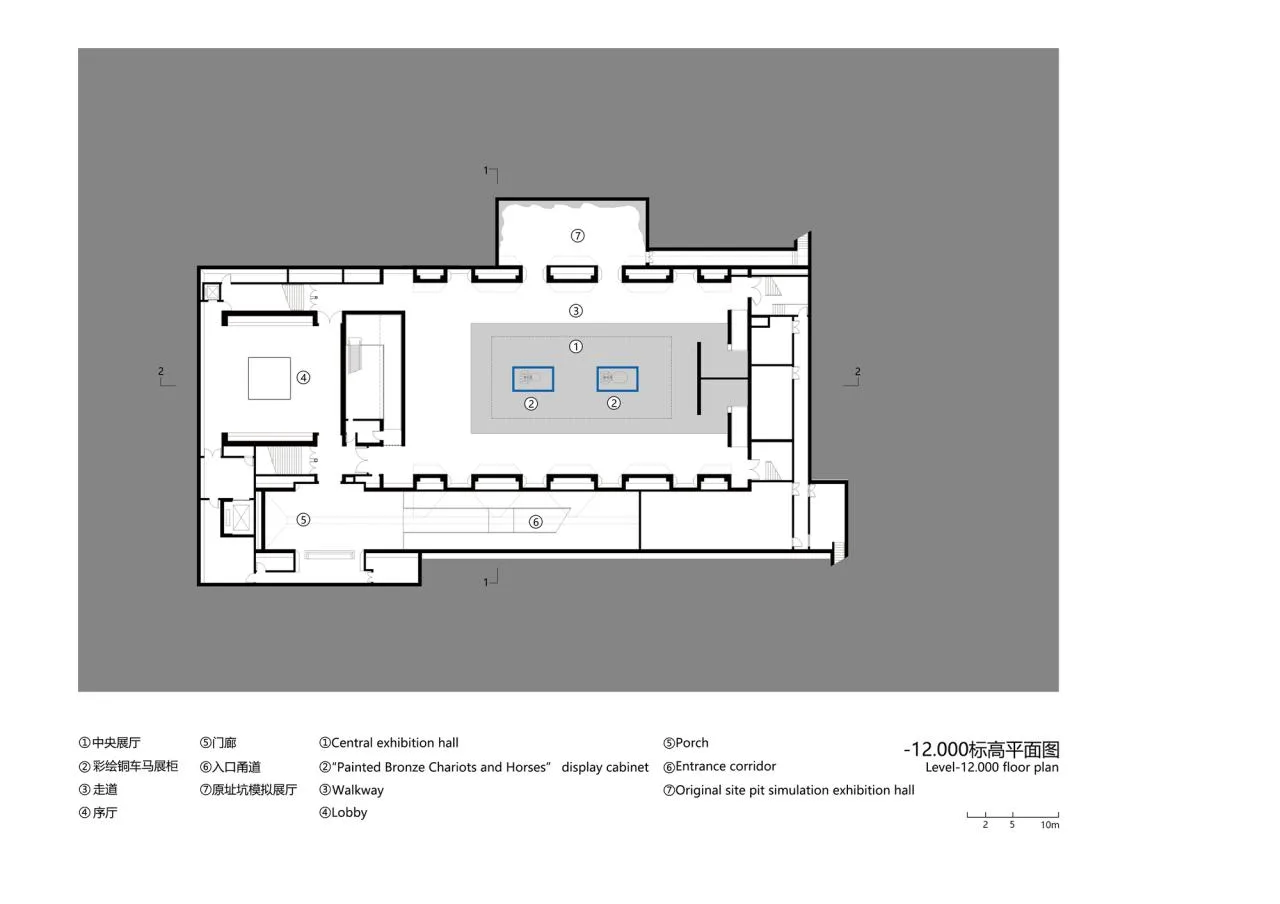
△ -12000 Elevation Plan
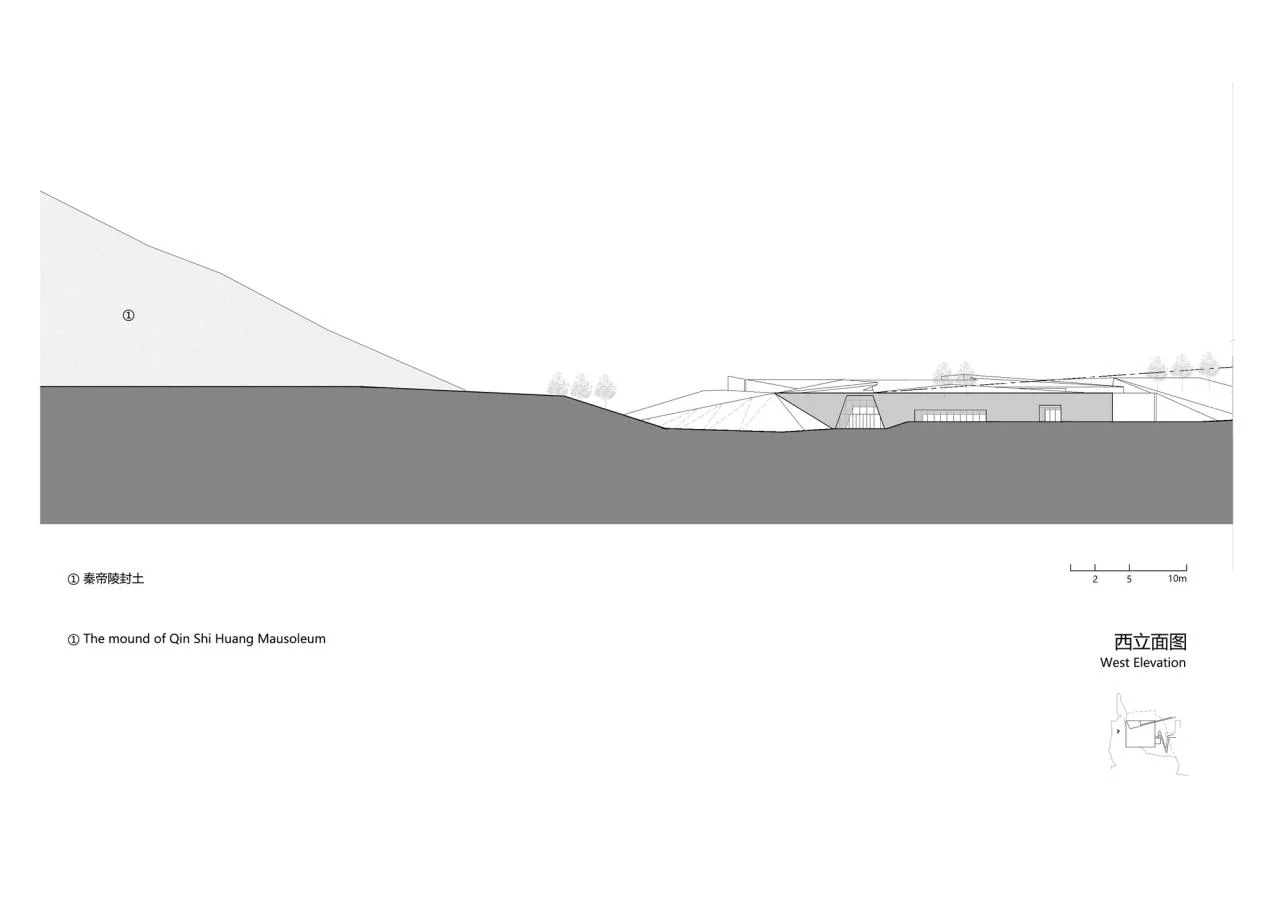
△ West Elevation View
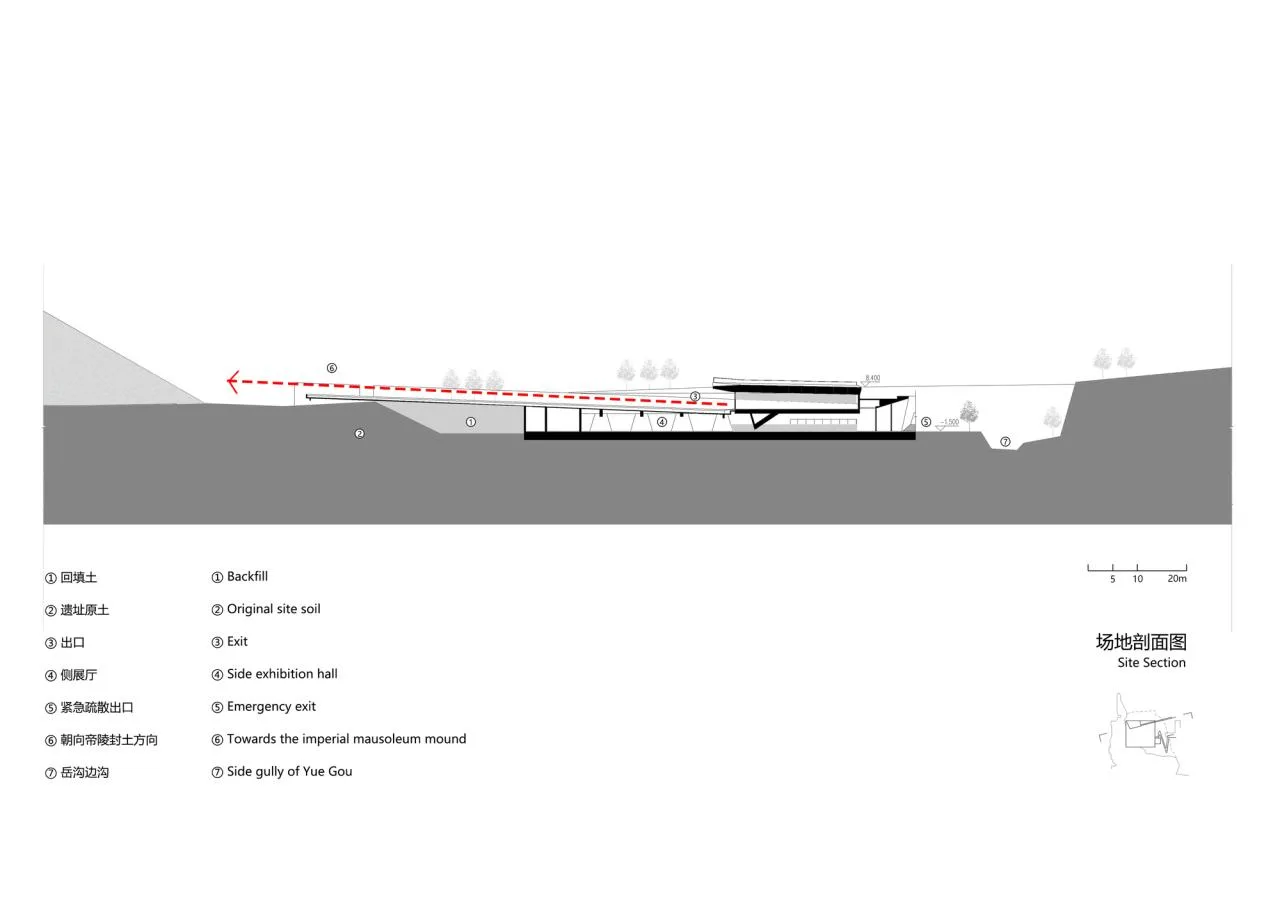
△ Site Profile Map
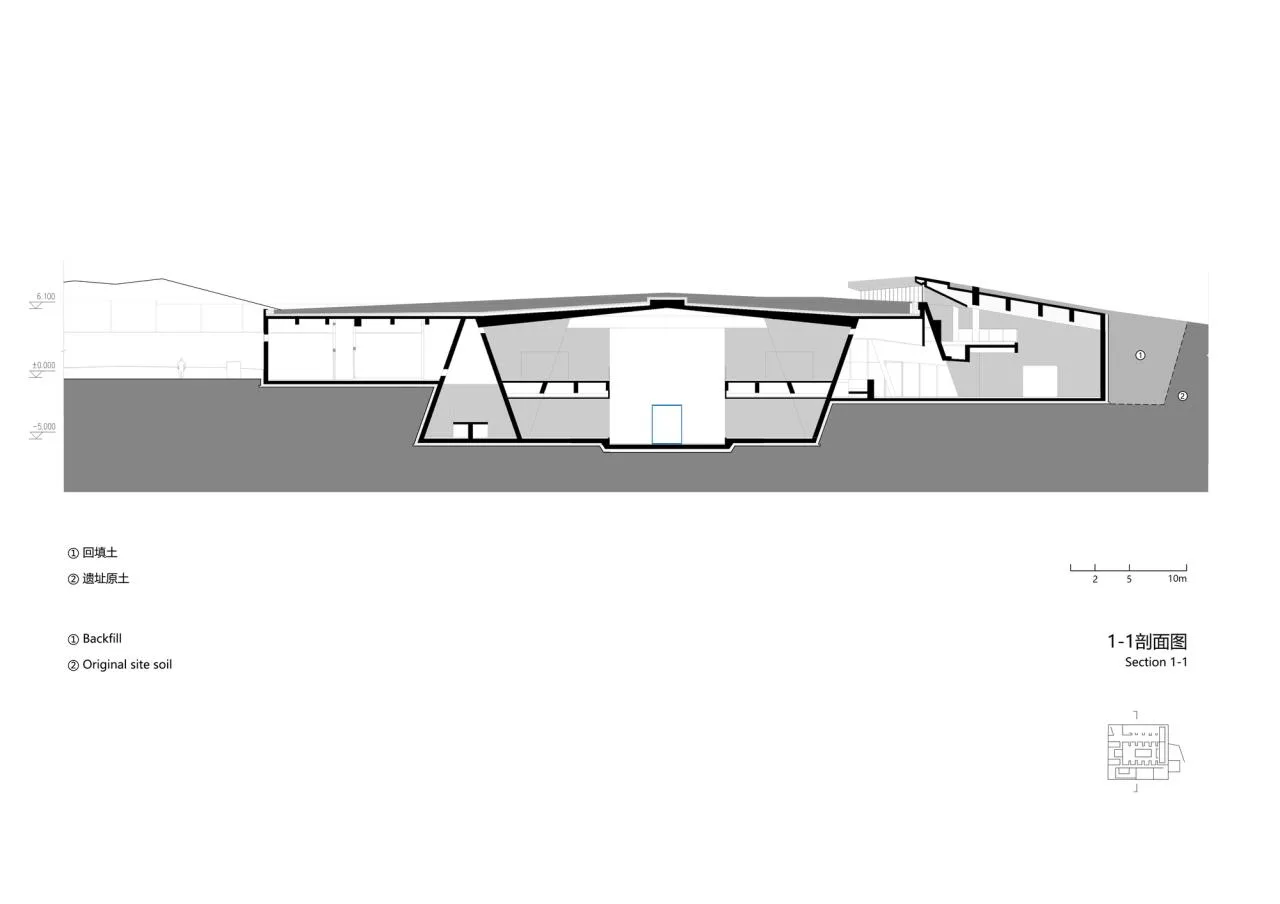
△ Section 1-1
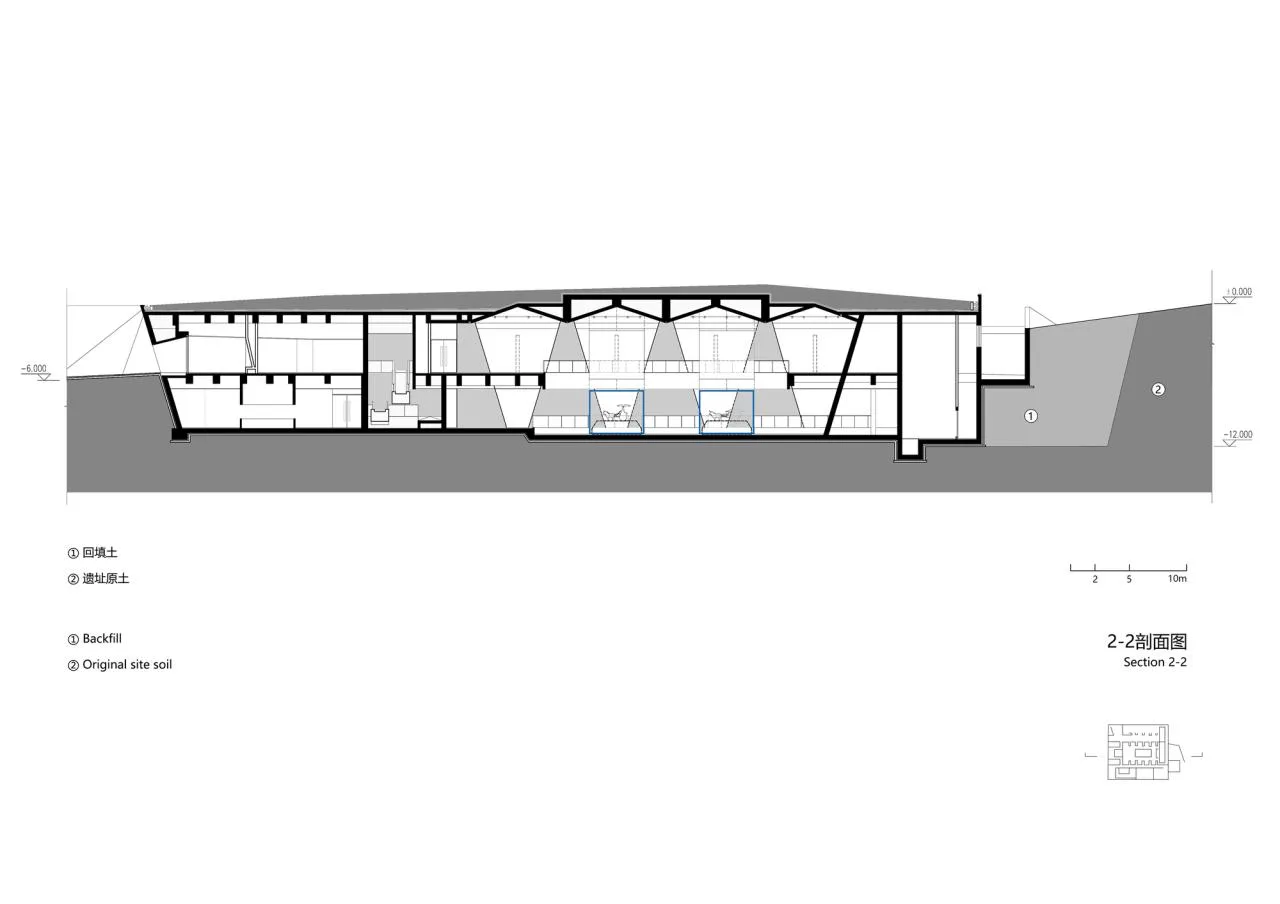
△ Section 2-2
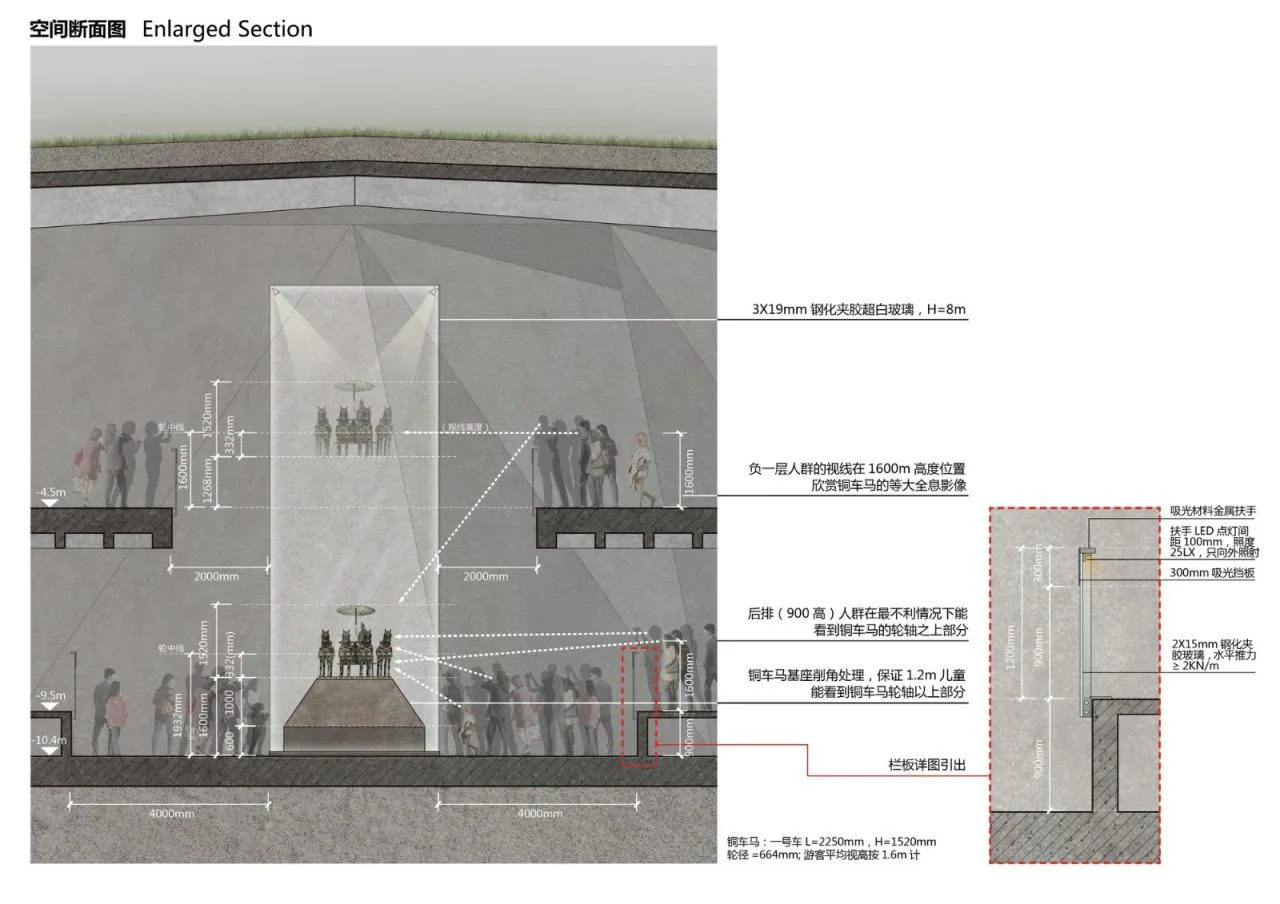
△ Spatial Section Diagram
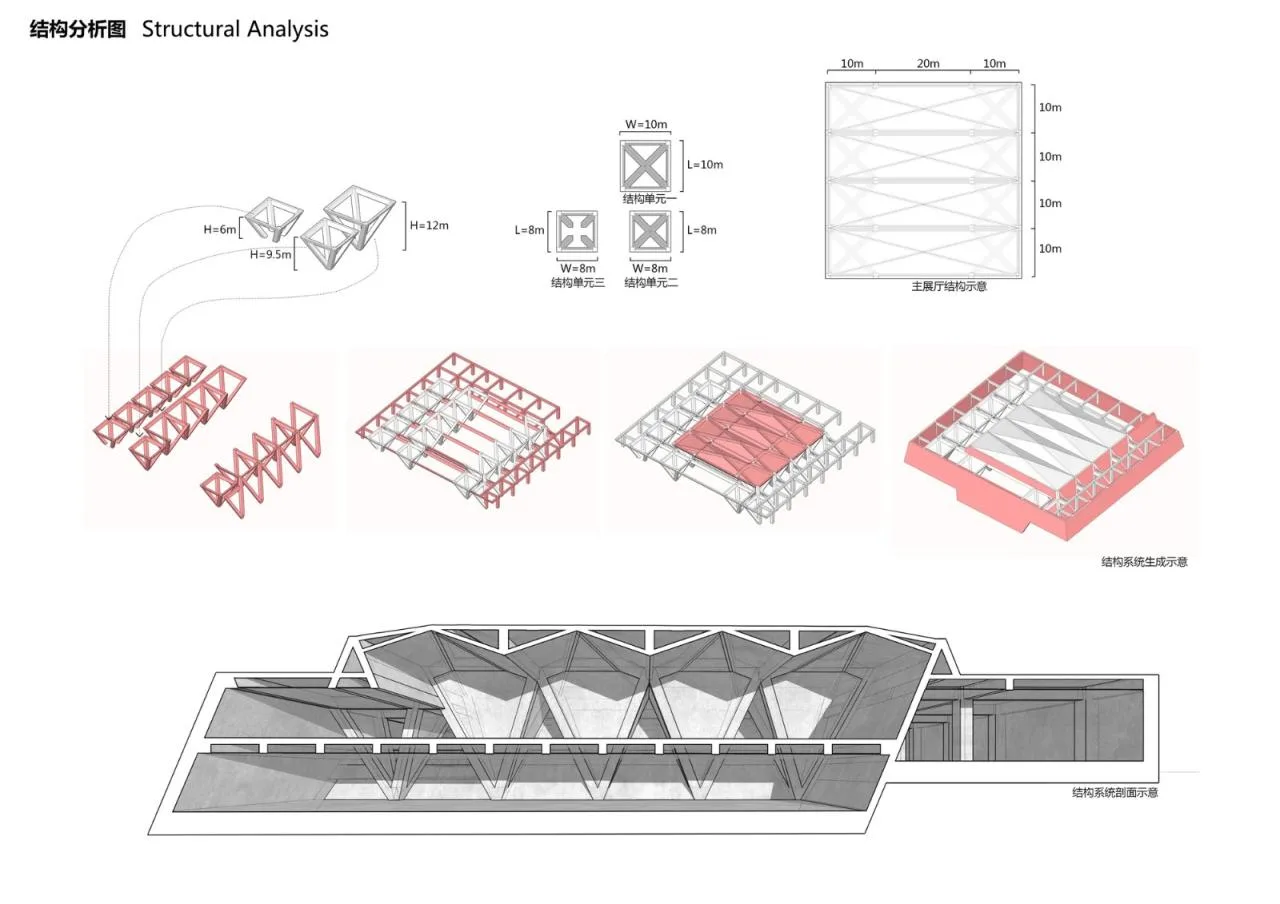
△ Structural Analysis Diagram
Project Information
Architect: Nakamori Cease Studio
Area: 8,564 m²
Project Year: 2021
Photographers: Sanshan Imaging, Chen Yang
Manufacturers: SKK, Velosit, Lijing Building Materials Factory, Qinling Street Office, Lintong District, Xi’an City
Lead Architects: Zhang Nan, Zhang Xiaoyuan
Design Consultants: Chen Tongbin, Cui Kai, Qin Ying
Design Team: Gan Lu, Xu Qian, Chen Long, Yu Yaqi, Sun Xiao, Su Yu, Zhang Jiling, Chen Ruonan, Zou Lu, Qi Lingyi (Architecture); Chang Runze, Ou Renwei, Zhang Huijie, Li Qingxiu, Wei Yaya (Landscape); Zhong Caimin, Sang Lijuan (Structure); Zhang Rubo (Water Supply and Drainage); Wang Jianwei (HVAC); Gaochun (Electrical); Wang Li, Yan Benchi (Overall Planning)
Owner: Qin Shi Huang Mausoleum Museum
Curtain Wall Design: Shanghai Yixuan Architectural Design Consulting Co., Ltd
Lighting Design: Beijing Ningzhijing Lighting Design Co., Ltd
Acoustic Design: Acoustic and Theater Special Design Institute of East China Architectural Design and Research Institute Co., Ltd
Intelligent Design: East China Urban Architecture Design and Research Institute Co., Ltd
Agent: Xi’an Qujiang Daming Palace Construction and Development Co., Ltd
Logo Design: 2×4
Location: Xi’an City















Must log in before commenting!
Sign Up