
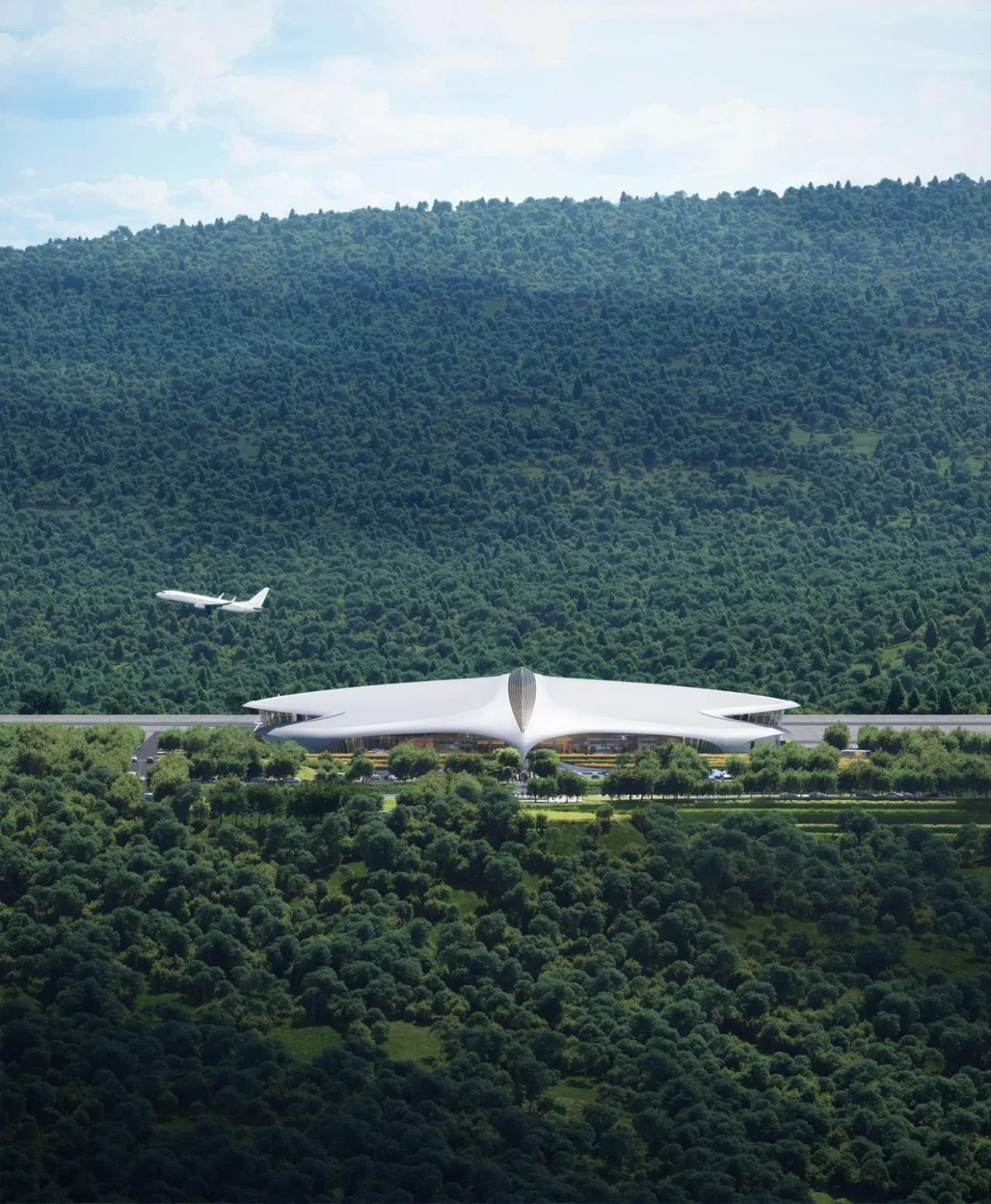
MAD Architecture has unveiled its design for the new Zhejiang Lishui Airport, set to rise amid the region’s hilly southwest terrain characterized by dramatic elevation changes.
The design of the airport terminal area balances efficient and seamless transportation needs with a deep respect for the site’s natural features. Emphasizing the unique character of a mountainous airport, MAD aims to evoke an ambiance filled with “birds, clouds, and hills.”
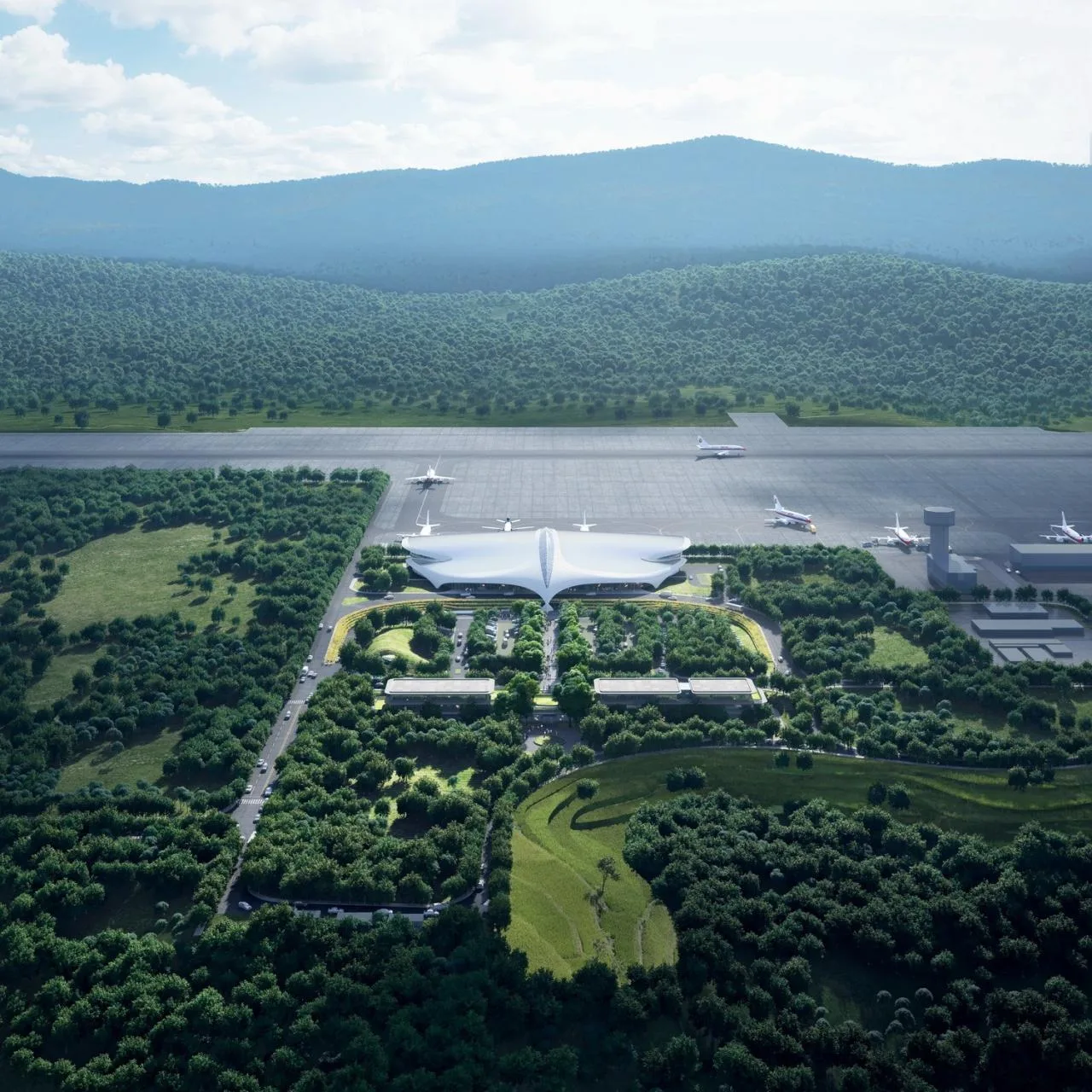
Located in southwest Zhejiang Province, Lishui is renowned as a “forest city” in China, boasting nearly 21 million mu of forested land and an impressive 81.7% forest coverage. Known as “Xiushan Lishui” and the “Zhejiang Green Valley,” the city is rich in natural beauty.
To enhance Zhejiang’s civil airport network and comprehensive transportation system, as well as to boost local economic, social, and tourism growth, the State Council and Central Military Commission approved the construction of the new Lishui Airport in December 2016. The airport is planned as a domestic regional hub, expected to handle up to one million passengers annually once operational.
Situated about 15 kilometers southwest of Lishui City in a valley of low hills and foothills, the airport site is adjacent to local terraced fields. The project covers 2,267 hectares, with a maximum fill height difference nearing 100 meters, making it a rare mountainous airport.
MAD’s design reflects the region’s distinctive hilly landscape, emphasizing harmony between the building and its surroundings. Utilizing the natural slope of the terrain, the terminal, parking lot, and office areas are arranged on three descending platforms that seamlessly integrate into the mountain backdrop.
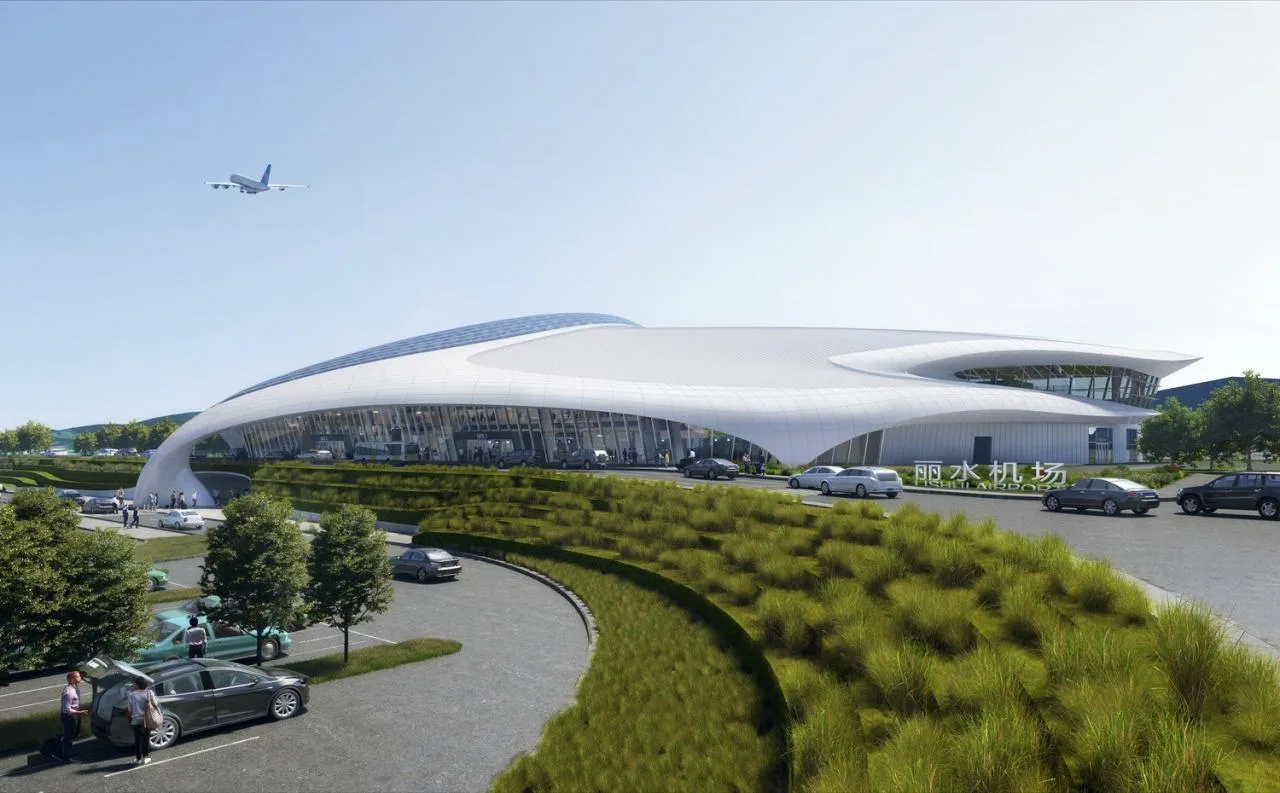
Ma Yansong explained, “Lishui is a garden city, and its airport should feel like a garden too. As a regional airport, Lishui Airport represents a different approach to transportation facilities as public urban spaces — not oversized or extravagant, but convenient, human-centered, and reflective of the city’s unique character.”
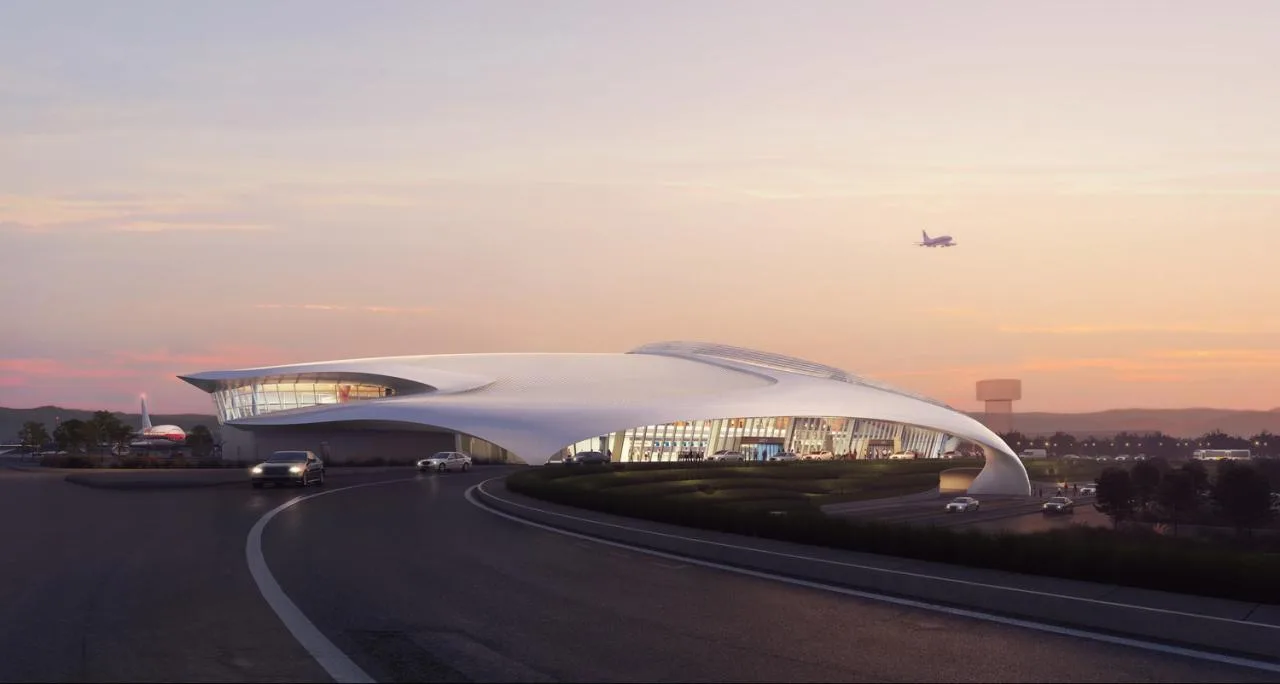
The terminal’s design draws inspiration from Lishui’s lush green mountains and waters. A large, silver-white cantilevered roof, partly clad in aluminum panels, resembles a white feathered bird perched among the mountains and forests, poised to take flight.
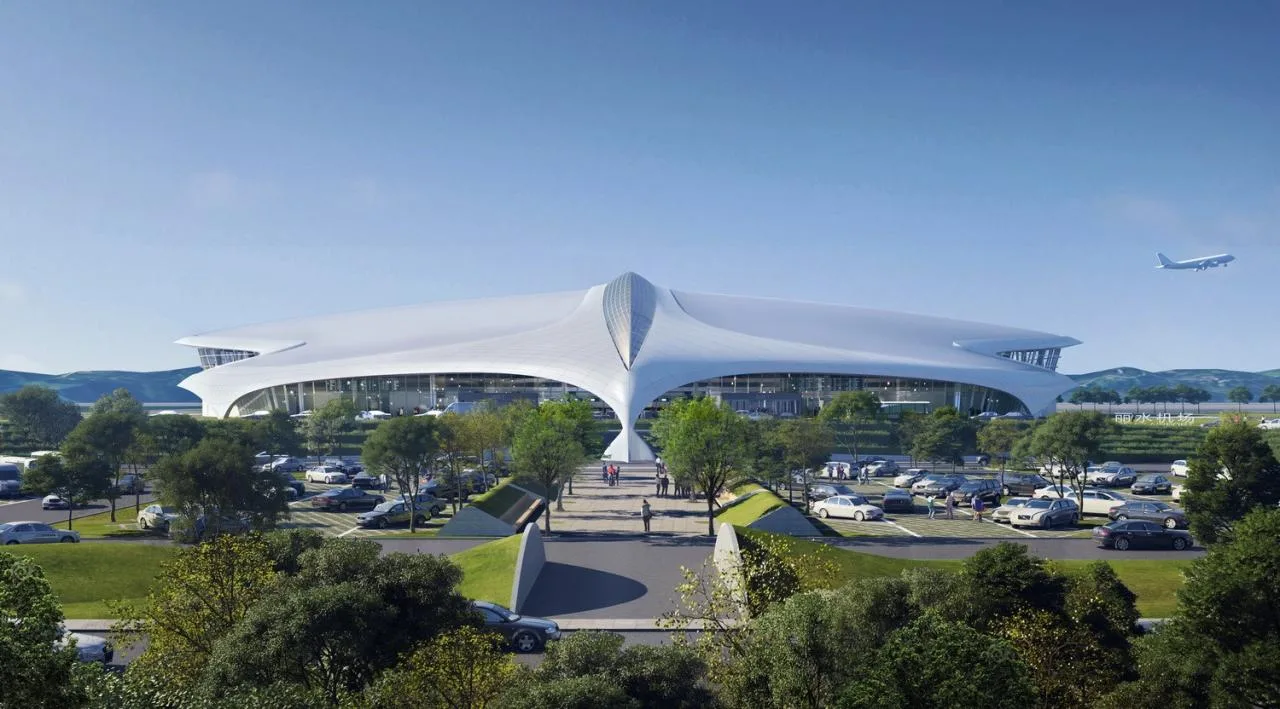
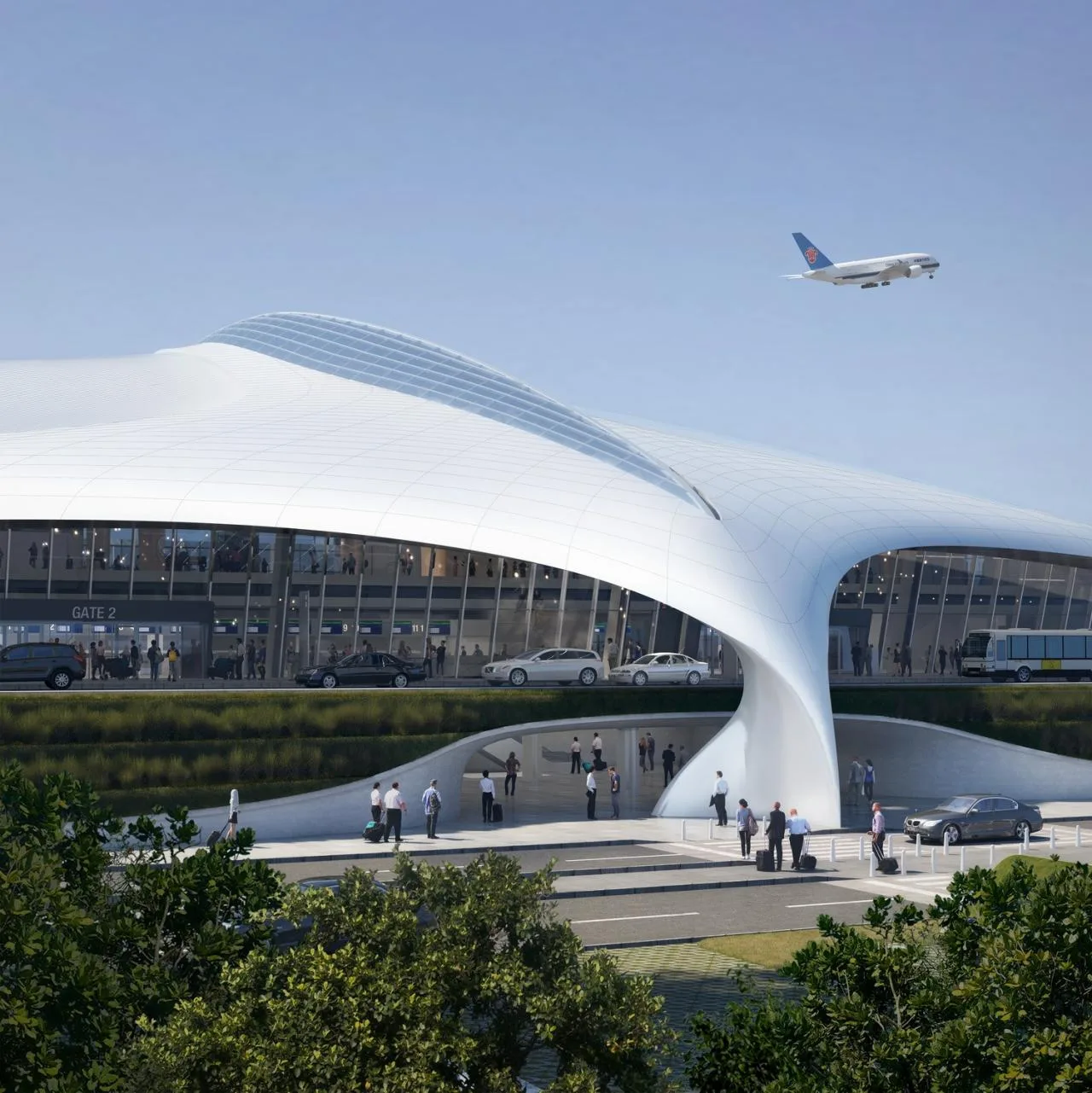
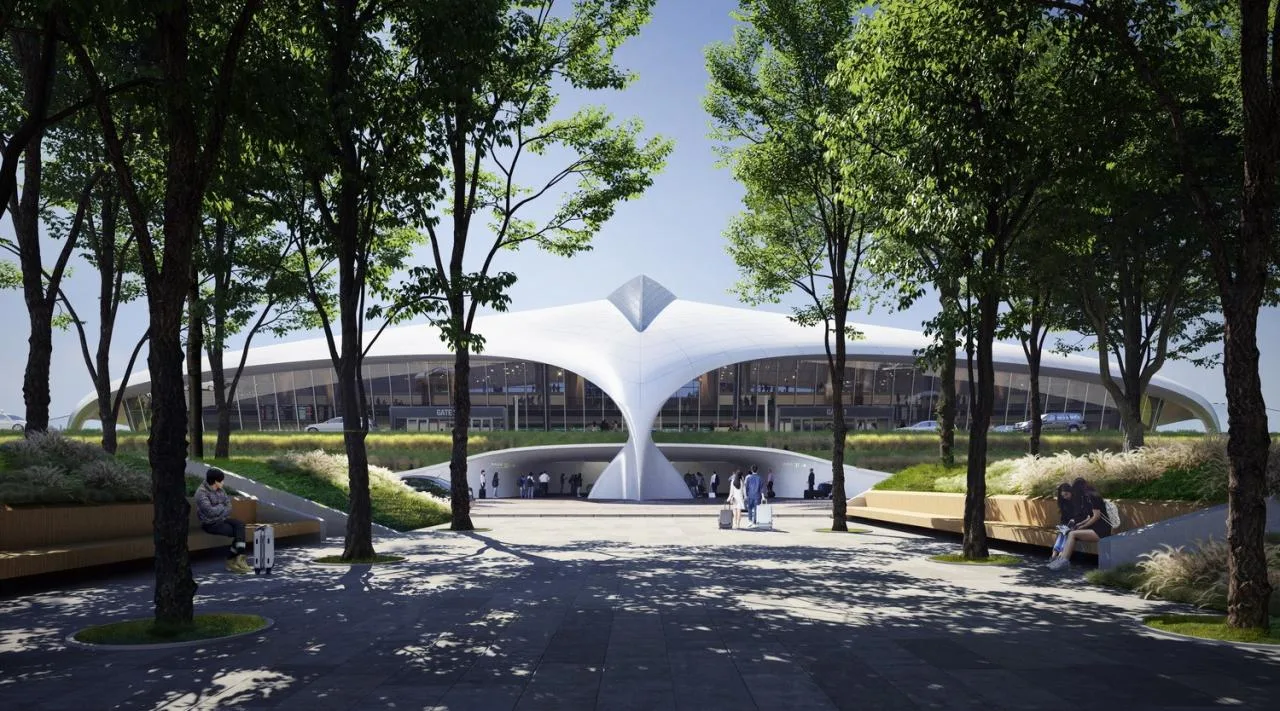
The parking area in front of the terminal follows the natural terrain by sinking into the landscape. A central landscaped trail creates the main axis of the terminal’s outdoor space. This trail extends beneath the terminal building, forming a semi-outdoor underground passage that connects the parking lot directly with the terminal entrance.
Passengers can easily access the terminal’s first-floor entrance and exit via escalators and elevators within this passage.
Inside the terminal, the warm wooden-toned lobby features dynamic, flowing forms that create a comfortable and inviting atmosphere. At the highest point, a shuttle-shaped skylight connects the first-floor lobby with the second-floor waiting hall, flooding the interior with natural light and views of the blue sky and clouds above.
The front hall’s ceiling height is intentionally kept low to foster a friendly scale and reduce energy consumption from unnecessary vertical space. Transparent glass curtain walls blend the indoor and outdoor environments, enhancing the sense of openness.
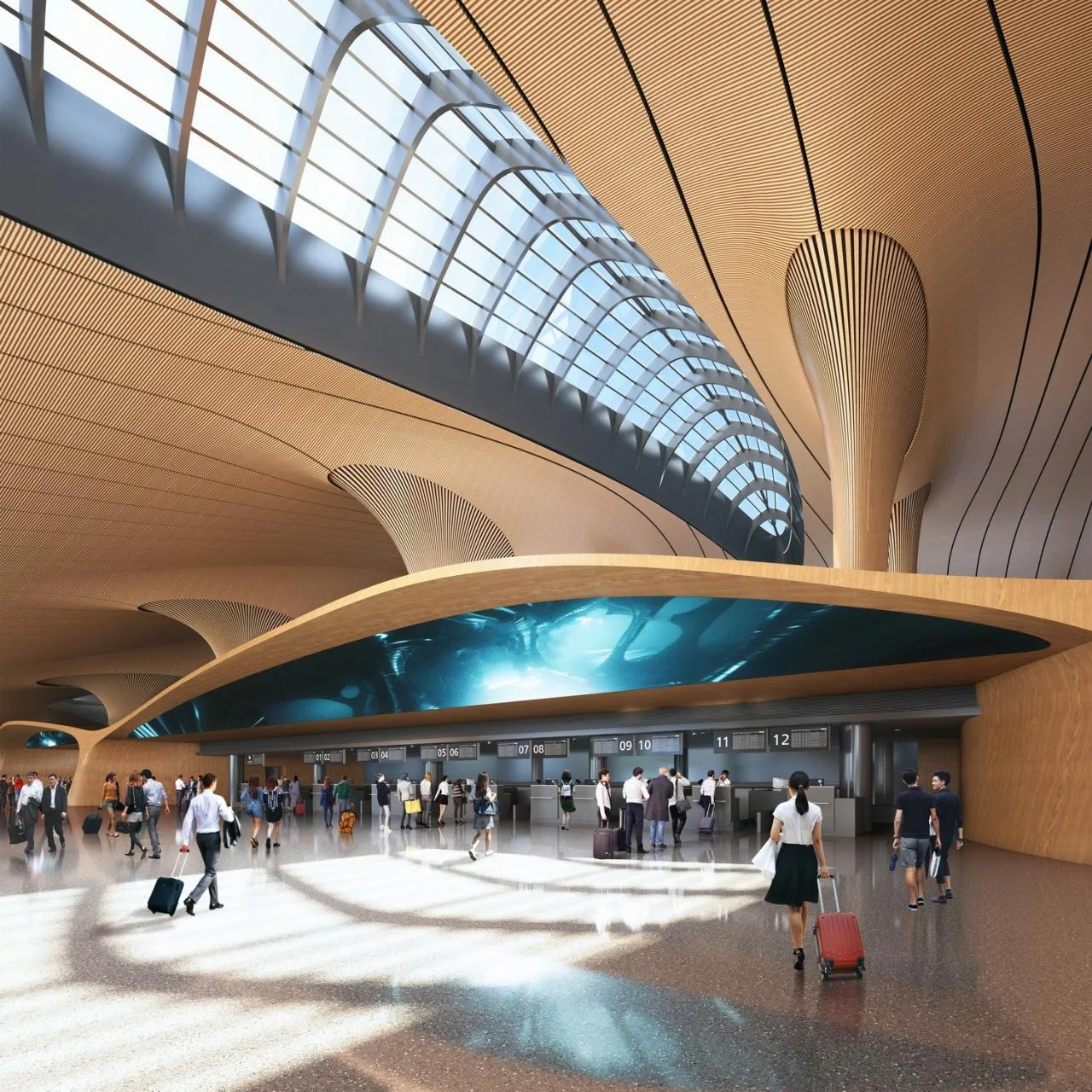
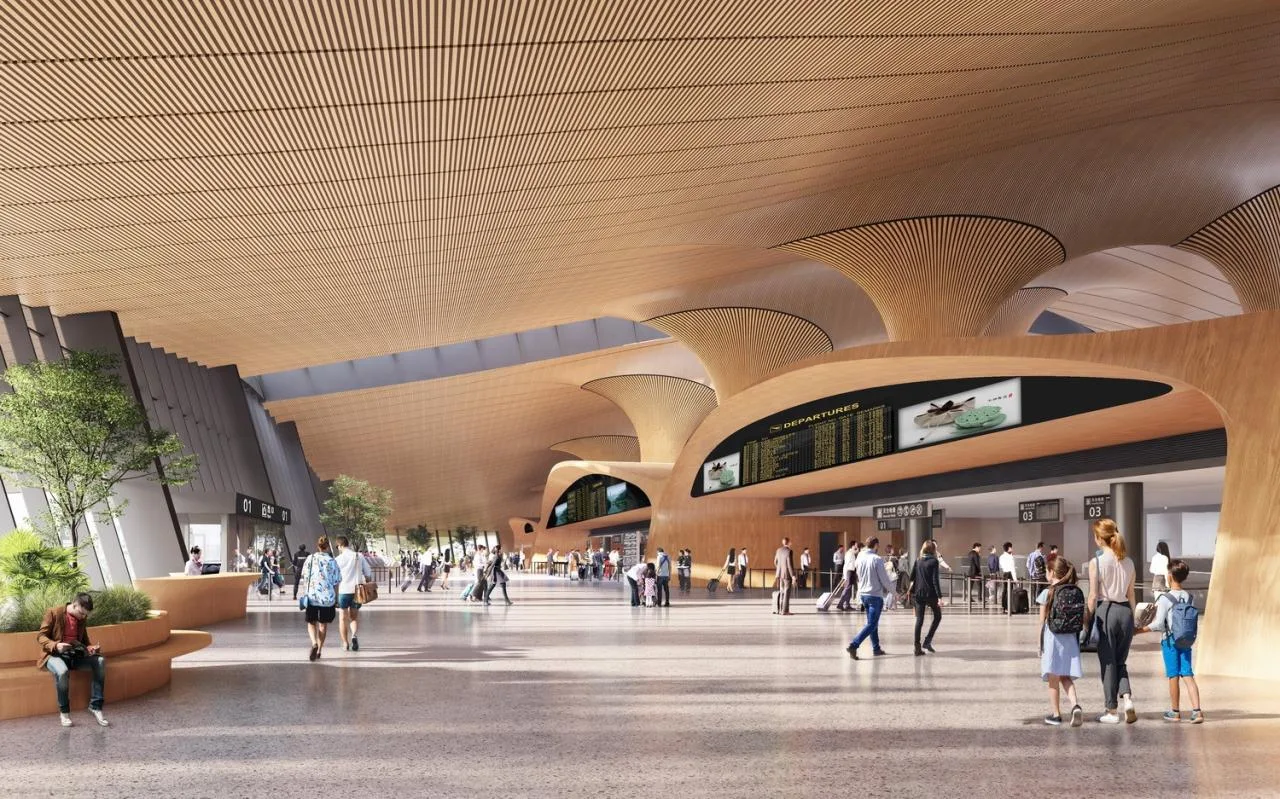
The terminal features a “one-and-a-half-story” layout. The ground floor houses the reception and drop-off lounge, check-in and security areas, remote aircraft waiting hall, baggage claim, and VIP rooms. The second floor consists mainly of the waiting hall, departure and arrival corridors, and connections to three boarding bridges.
Departing passengers check in on the first floor, then proceed upstairs to wait and board their flights. Arriving passengers disembark via the boarding bridges into the second floor, then descend to the first floor for baggage claim and exit.
MAD’s design accommodates both short- and long-term planning needs. The airport is projected to serve 1.8 million passengers by 2030 and grow to 5 million by 2050, at which point an international terminal is planned.
Construction is expected to begin by the end of this year, with completion and operation targeted for the end of 2024.
Project Drawings
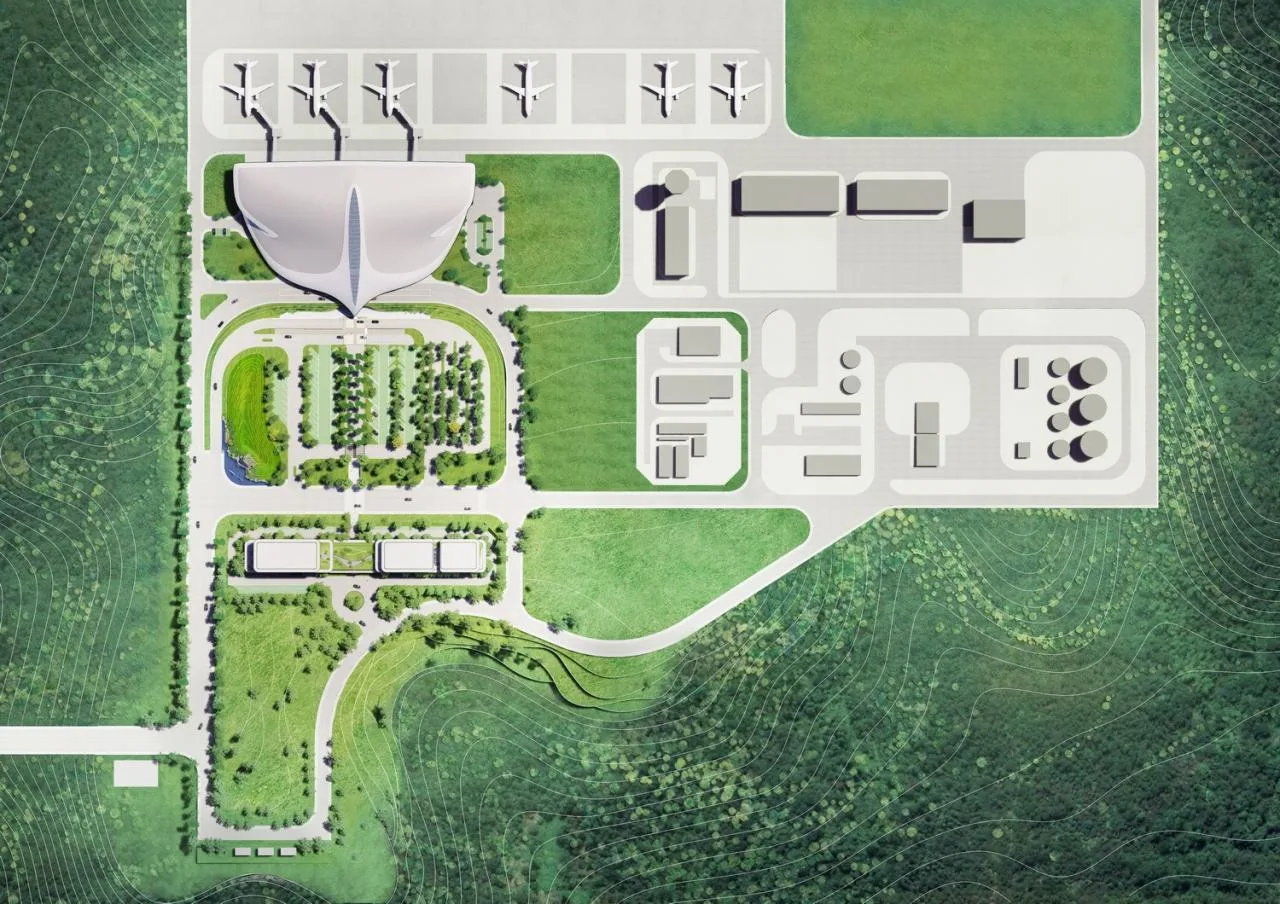
△ General Layout Plan
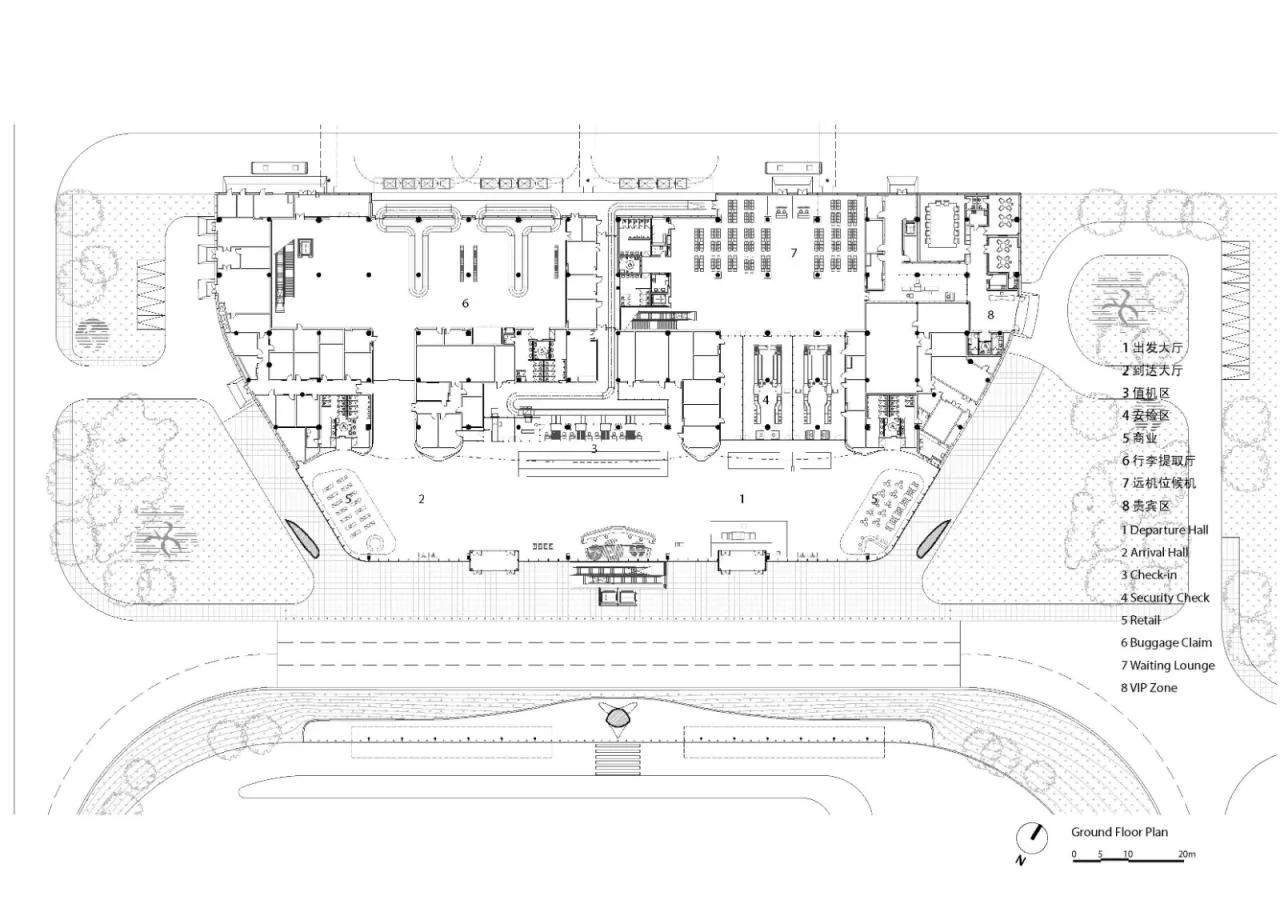
△ First Floor Plan
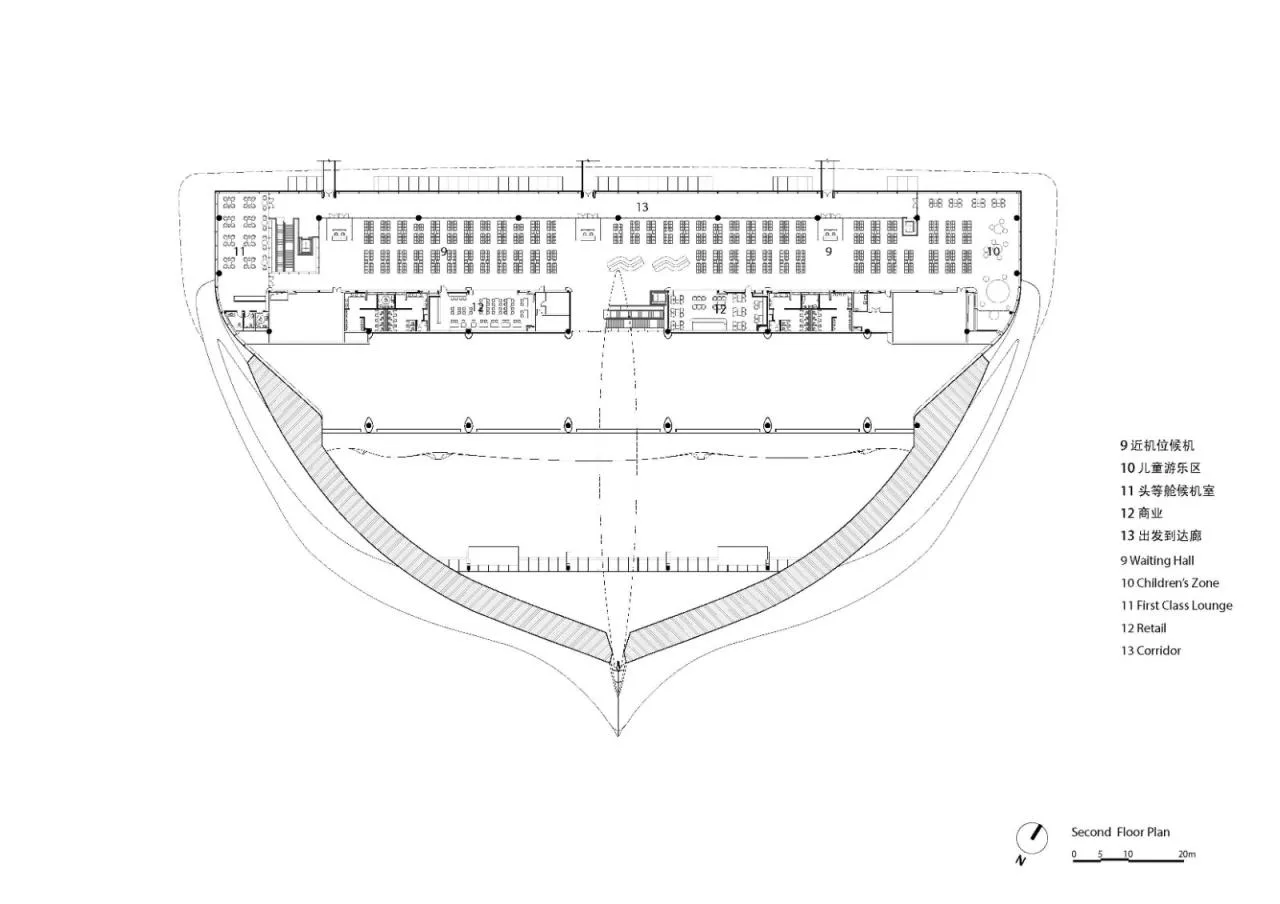
△ Second Floor Plan
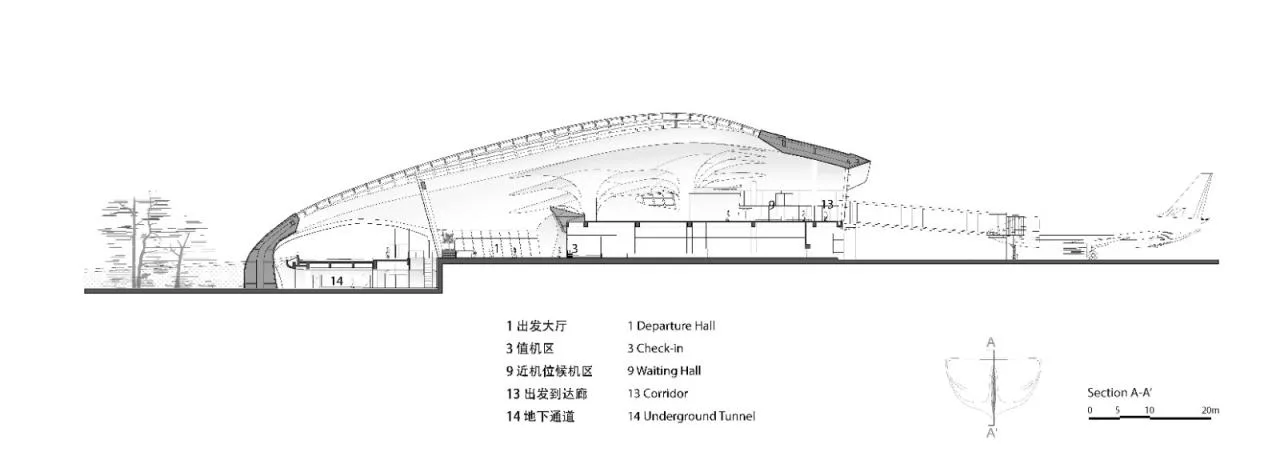
△ Section Diagram
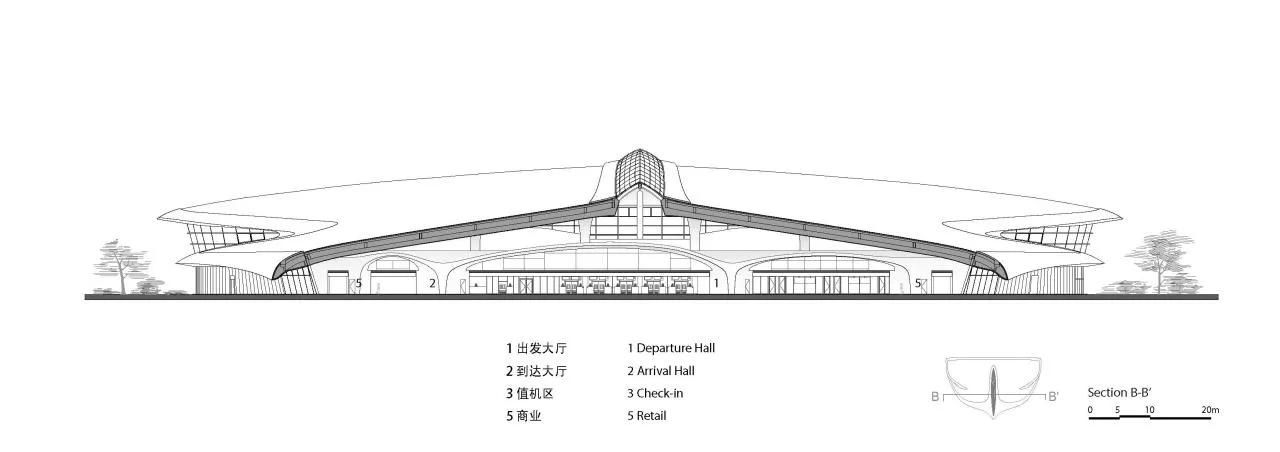
△ Section Diagram
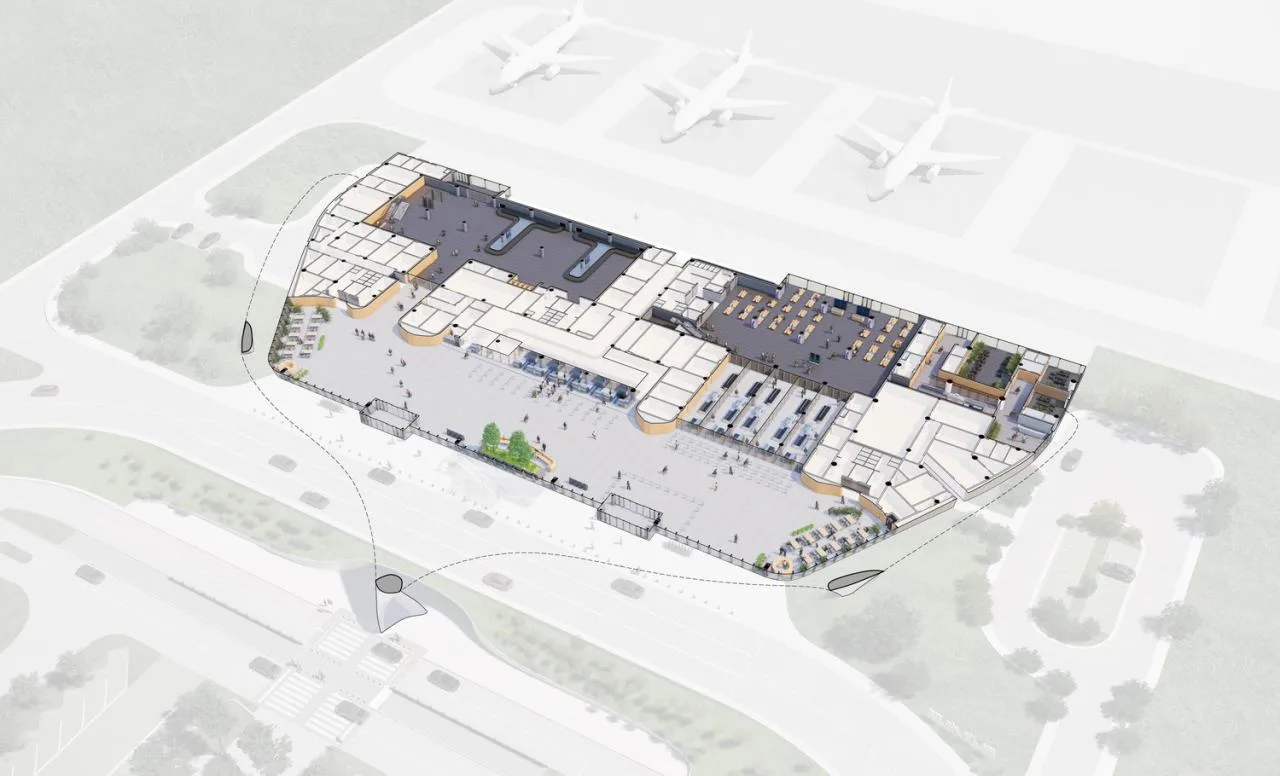
△ Schematic Diagram of the First Floor
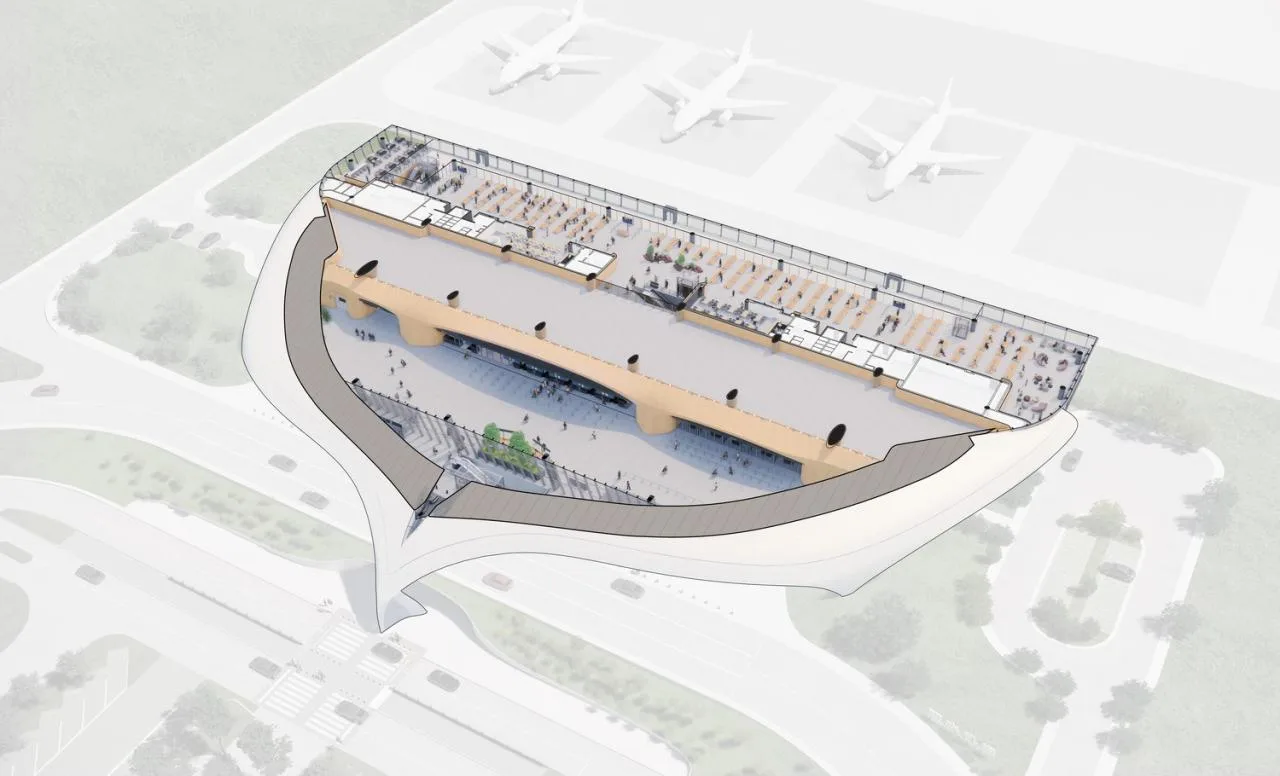
△ Schematic Diagram of the Second Floor
Project Information
Project Name: Lishui Airport
Location: Lishui, China
Airport Area: 2,267 hectares
Terminal Building Area: 12,100 square meters
Terminal Building Height: 23.95 meters
Lead Partners: Ma Yansong, Party Masses, Yokosuke Hayano
Lead Vice Partners: Liu Huiying, Li Jian
Design Team: Sun Shouquan, Zhang Xiaomei, Lei Lei, Yang Xuebing, Sun Mingze, Yin Jianfeng, Punnin Sukkasem, Zhu Yuhao, Zhang Yaohui, Alan Rodríguez Carrillo, Pittayapa Suriyapee, Wang Xinyi
Owner: Lishui Airport Engineering Construction Command Center
Grade A Design Institute: Shanghai Civil Aviation New Era Airport Design and Research Institute Co., Ltd
Curtain Wall Consultant: Alpha Architectural Design Consulting (Shanghai) Co., Ltd
Indoor/Lighting Consultant: Shanghai Modern Architectural Decoration Environment Design and Research Institute Co., Ltd
Landscape Consultant: Zhishe (Beijing) Landscape Planning and Design Co., Ltd















Must log in before commenting!
Sign Up