
Project Background
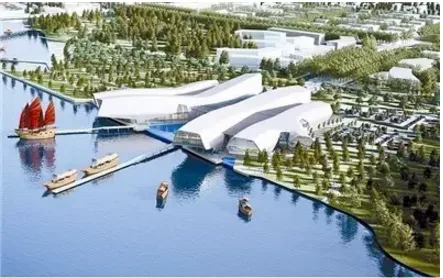
The Tianjin Ocean Museum project spans an area of 300,000 square meters, with a total construction area of 80,000 square meters. The plan includes constructing a new ocean museum consisting of 2 to 4 floors above ground. The main structure is steel, equipped with elevators and featuring fine interior decoration.
As China’s first national-level, comprehensive, and public welfare museum focused on the ocean, the National Marine Museum collects, preserves, and researches representative artifacts and natural marine environmental evidence related to human marine activities. Upon completion, the museum will showcase both the natural and cultural history of the ocean, integrating functions such as cultural relic protection, educational displays, scientific research, communication, tourism, and sightseeing.
Situated on the south bank of Nanwan in the coastal tourist area, the museum benefits from a coastal layout. Following the development concept of combining museums and parks, a unified plan was created for the Ocean Museum, Ocean Culture Park, and their supporting facilities within the designated area.
The lead architect for this project is Philip Cox, a world-renowned architect and recipient of the Royal Australian Institute of Architects Gold Award. As of early December 2015, the project was in its main construction phase, with completion expected by December 2016.
BIM Application
The BIM application for the Ocean Museum project successfully completed several key tasks using architectural parametric design:
a. Designing the interaction between nonlinear architectural forms and structural systems;
b. Integrating interior and exterior spaces within nonlinear architectural forms;
c. Parameterizing and modularizing the nonlinear building façade;
d. Integrating building equipment conduits with internal spaces.
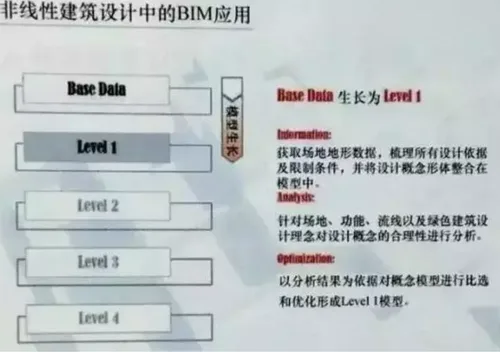
Base Data grows to Level (Figure 1)
At this stage, the BIM application enabled the creation of a three-dimensional terrain model. It gathered essential data from existing terrain maps and incorporated planning conditions, building functions, local climate information, and economic and technical indicators into the model. This data was stored digitally to assist the creative design process.
The fundamental concept for building block layout and site planning draws inspiration from the physical impression of cruise ships and docked boats on the river. Meanwhile, the building’s skin texture and form composition are inspired by the movement of swimming carp. Based on the functional requirements of different exhibition halls, curves were extracted as a matrix to inspire the initial Ocean Museum design. Using BIM technology, relevant data was extracted, integrating building and site information to develop conceptual design solutions.
Thanks to rapid advancements in computer technology, powerful computing performance has increasingly influenced architectural design. Computer-aided numerical simulation and optimization of architectural design parameters have become crucial, especially for green buildings requiring various performance assessments. With computer assistance, architects can transcend mental limitations and evaluate improved design options more effectively.
Through analyses of outdoor wind environments, sunlight exposure, and indoor functional flow, designers assessed the plan’s rationality using dynamic perception and comprehensive evaluation, identifying existing shortcomings (Figure 2).
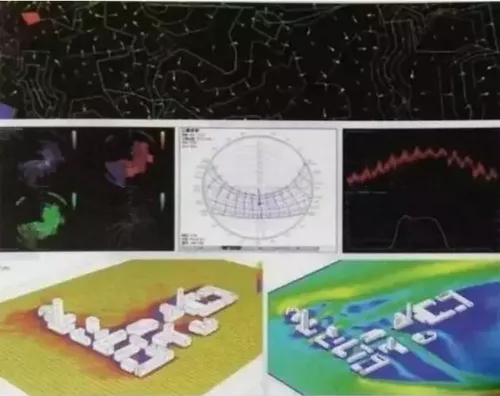
Leveraging BIM’s visualization capabilities, the owner proposed adjustments to the building scale during the design process. The architect then reviewed the plan’s deficiencies alongside the owner’s requirements and refined the design accordingly.
Based on simulation analysis, targeted optimization research addressed specific issues, verifying the retention of original advantages. The updated design meets all project requirements. New planning elements, such as starfish and palm motifs, were introduced to complement the initial ‘ships in the port’ concept. Additionally, sea anemones, fish, and white coral shell textures were incorporated into the building’s form, aligning the building entrance with the landscape axis and integrating the ocean park tour route into the overall site planning and design.
Designers not only utilize advanced numerical simulation and architectural parameter optimization technologies but also easily modify various parameter combinations to automatically generate multiple alternative design schemes. This approach uncovers new creative possibilities and is known as the “computer-generated scheme design method.” Serving as a supplement to human creativity, this method offers a practical and innovative tool during the design cycle.












Must log in before commenting!
Sign Up