
On the afternoon of the 22nd, the reporter learned from the relevant departments of the Chengdu Management Committee of Tianfu New Area that Chengdu Tianfu New Area is actively promoting the integration of Internet and BIM technology in the construction sector. This approach enhances the visualization, informatization, and real-time management of on-site quality and safety, making construction processes significantly safer.
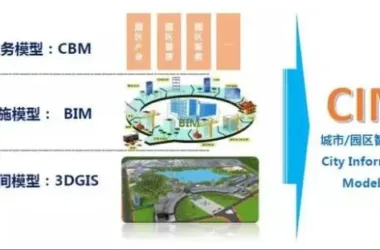
BIM, or Building Information Modeling, centers on creating multi-dimensional building information models. It uses a three-dimensional model as a platform for information sharing, reducing the loss of project data, and providing a communication hub for everyone involved in the construction process. This method improves overall project management, aiming to cut costs and boost efficiency. Notably, this online information platform was innovatively developed by the “Liu Zhengquan Model Worker Innovation Studio” at the Chengdu branch of China Construction Second Engineering Bureau Third Company, which is currently active in Chengdu Tianfu New Area.
According to Liu Zhengquan, during the preparation phase, BIM’s simulation and optimization features assist in the detailed design of high-risk and complex nodes, as well as various subproject templates onsite. This process helps identify potential problems and prioritize construction controls, leading to optimized construction plans. Visual disclosures are provided to management and operators, offering direct guidance for flawless onsite execution from the start. Project managers use mobile devices to compare the digital model with actual site conditions during inspections. Any issues found are photographed and uploaded immediately to the backend system, ensuring timely and accurate communication.
To address the complexities of mechanical and electrical systems and the stringent requirements for pipeline and equipment detailing, traditional two-dimensional design methods have been combined with BIM’s three-dimensional technology. This integration advances the detailed modeling of engineering pipelines and equipment rooms, including comprehensive layouts of mechanical and electrical pipelines throughout the basement, pipeline wells, floor pipelines, equipment rooms, and rooftop equipment. A 3D walkthrough, created using this technology, vividly illustrates the pipeline and equipment arrangements with realistic renderings. This approach effectively resolves issues like pipeline collisions and deepening challenges. Finally, detailed design meetings are held to discuss and finalize the optimal solutions. Once approved, the final BIM model is converted into CAD drawings, accompanied by sectional views and 3D models that provide clear written and onsite instructions for operators.
Mobile devices such as smartphones and iPads are utilized for visual guidance, instructions, and inspections directly on site. This eliminates the need to carry bulky drawing sets. Instead, operators can access model files and detailed component information on their devices, cross-checking everything against the actual site conditions. For any problematic areas, photos are taken and uploaded to the backend software with annotations linked to the corresponding model positions. This process enables effective information sharing, achieving enhanced visualization, informatization, and timeliness in onsite quality management.
The integration of BIM with safety management has also raised project safety standards. BIM technology is applied early in the planning stages of major projects to simulate construction sequences, providing clear insights into construction timelines, progress, methods, and potential safety hazards. This allows for targeted prevention and control measures to be put in place, ensuring safe handling of major risk elements. Additionally, in daily safety management, BIM models are used to precisely locate and verify the size of openings and edges on site, ensuring no safety measures are overlooked. Moreover, based on the construction schedule within the BIM system, the installation of protective equipment is coordinated to guarantee timely and effective safety protections.
At the BIM technology application achievement observation meeting held that day, over 300 participants attended, including representatives from construction departments, supervisory agencies, and several construction, supervision, and construction units under the Chengdu Municipal Government. Representatives from 14 branches of China State Construction Corporation in the southwest region were also present at the event.














Must log in before commenting!
Sign Up