
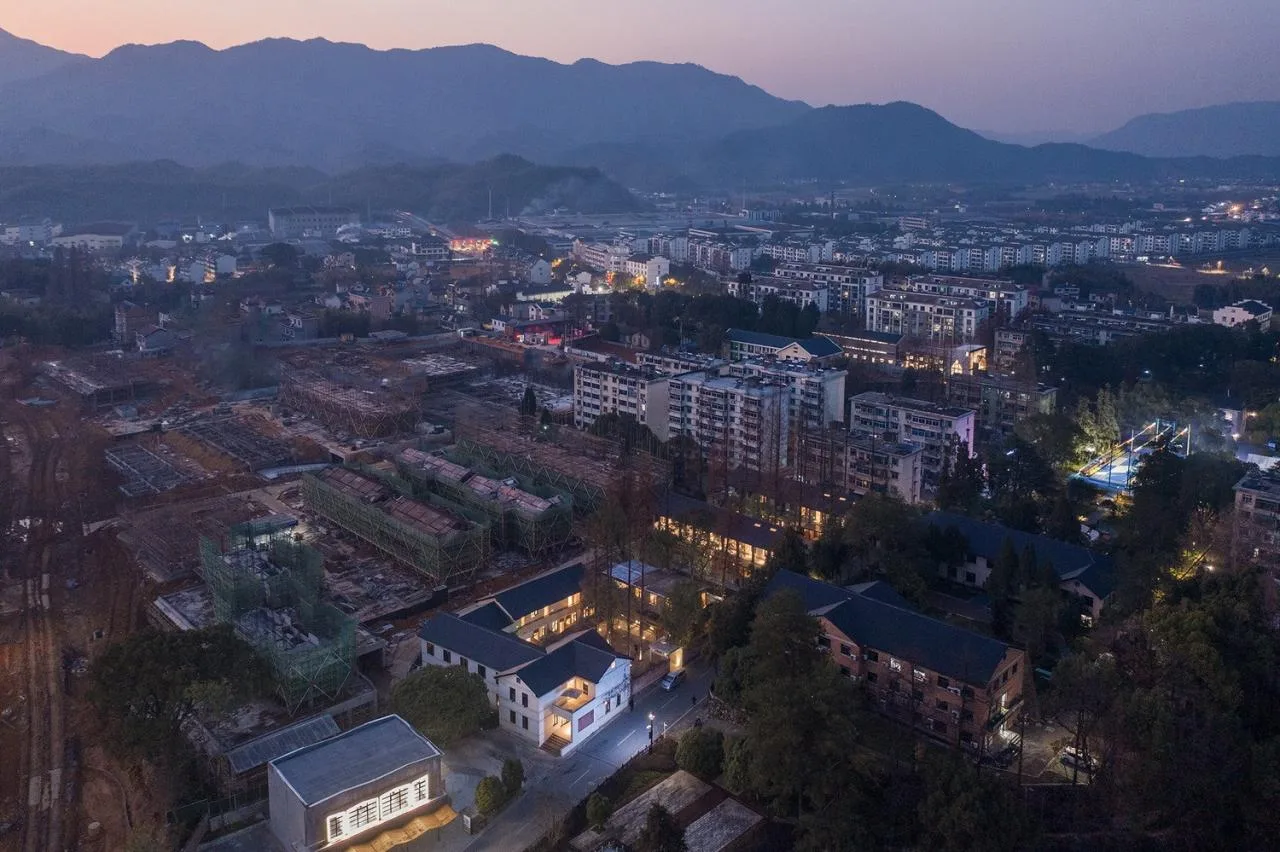
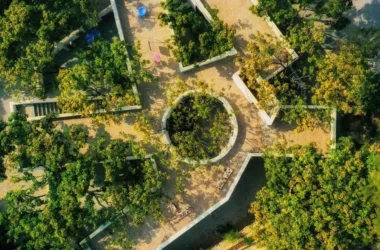
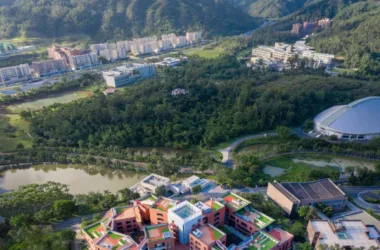
△ Aerial view of the project © Architecture Photography
After conducting an on-site investigation and analysis, the architect focused on three main design challenges.
First, how to integrate new design elements while preserving the original memory and character of the site?
Before renovation, years of neglect had left the building’s walls, roofs, and courtyards in a dilapidated state. Despite this, the traces of time from the 1960s and 1970s were still evident. The overall design strategy respects the site’s historical and cultural context, employing a “micro-renovation and refined improvement” approach. This method preserves the original texture and spatial memories of the buildings, revitalizing them through thoughtful design and operation. The transformation turns these once-idle old structures into functional spaces that maintain their nostalgic significance while meeting the living and usage needs of today’s community.
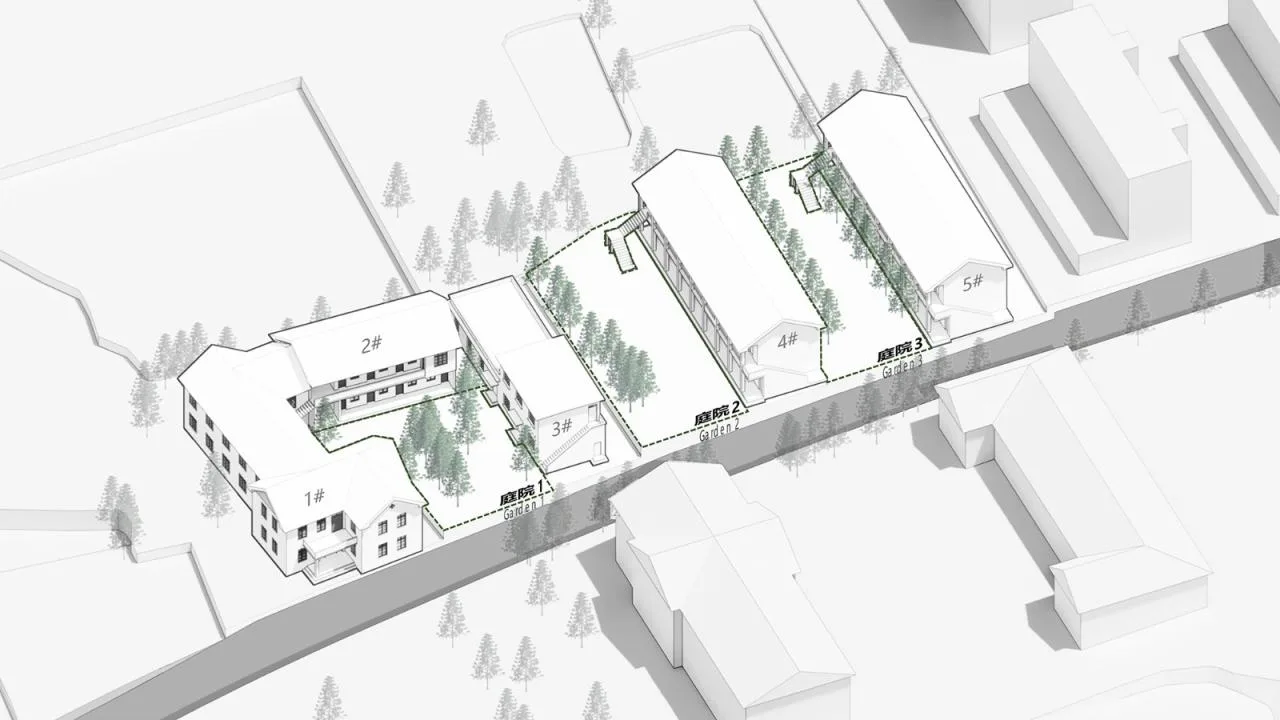
△ Current Site Analysis Diagram © y.ad studio
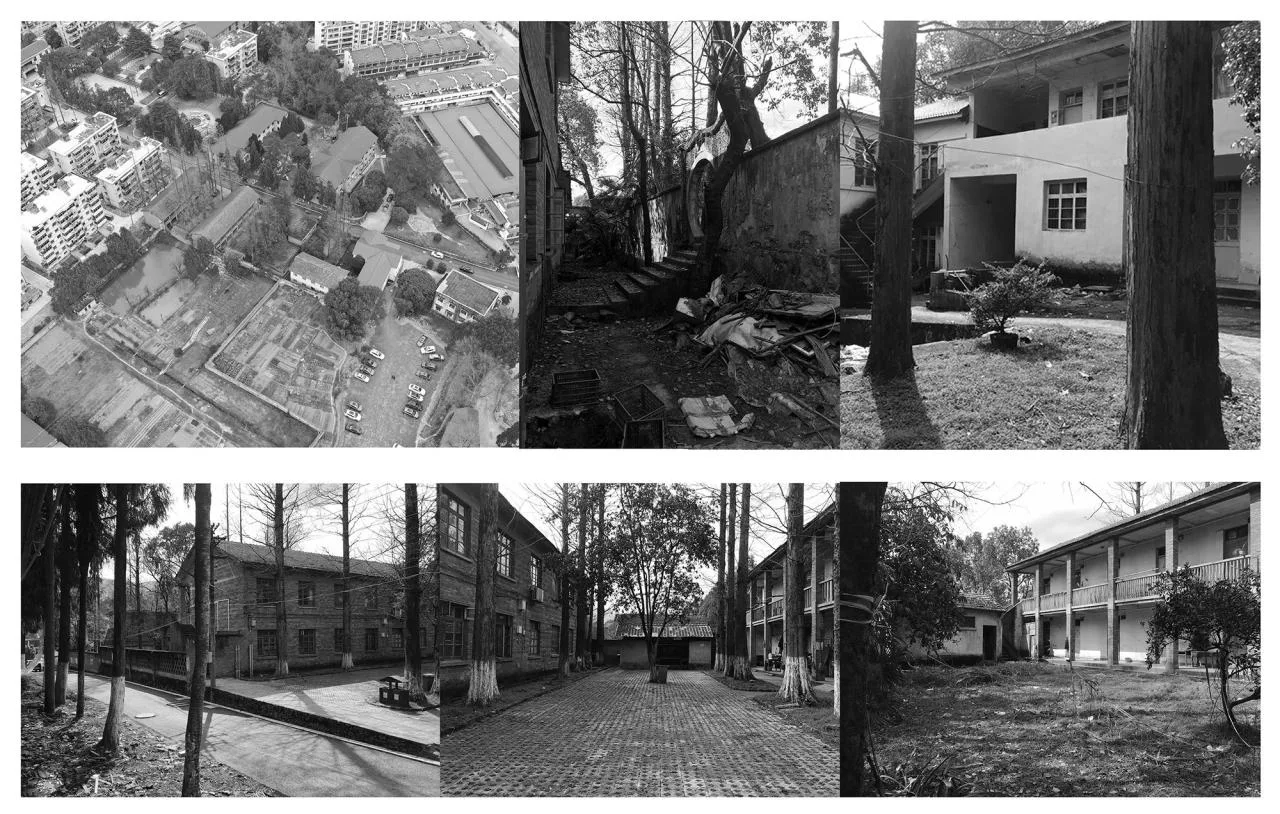
△ Current site and building facade © y.ad studio
The architects prioritized enhancing the interior environment, while the exterior facades were carefully renovated, repaired, and structurally reinforced. This restrained design approach ensures that the new elements blend seamlessly with the original architecture. The original architectural form and style were preserved as much as possible, while all interior functions were redesigned and modernized to meet the operational requirements of the homestay and align with contemporary lifestyles. To evoke a sense of nostalgia, industrial and mining materials from the era were incorporated into the interior design.
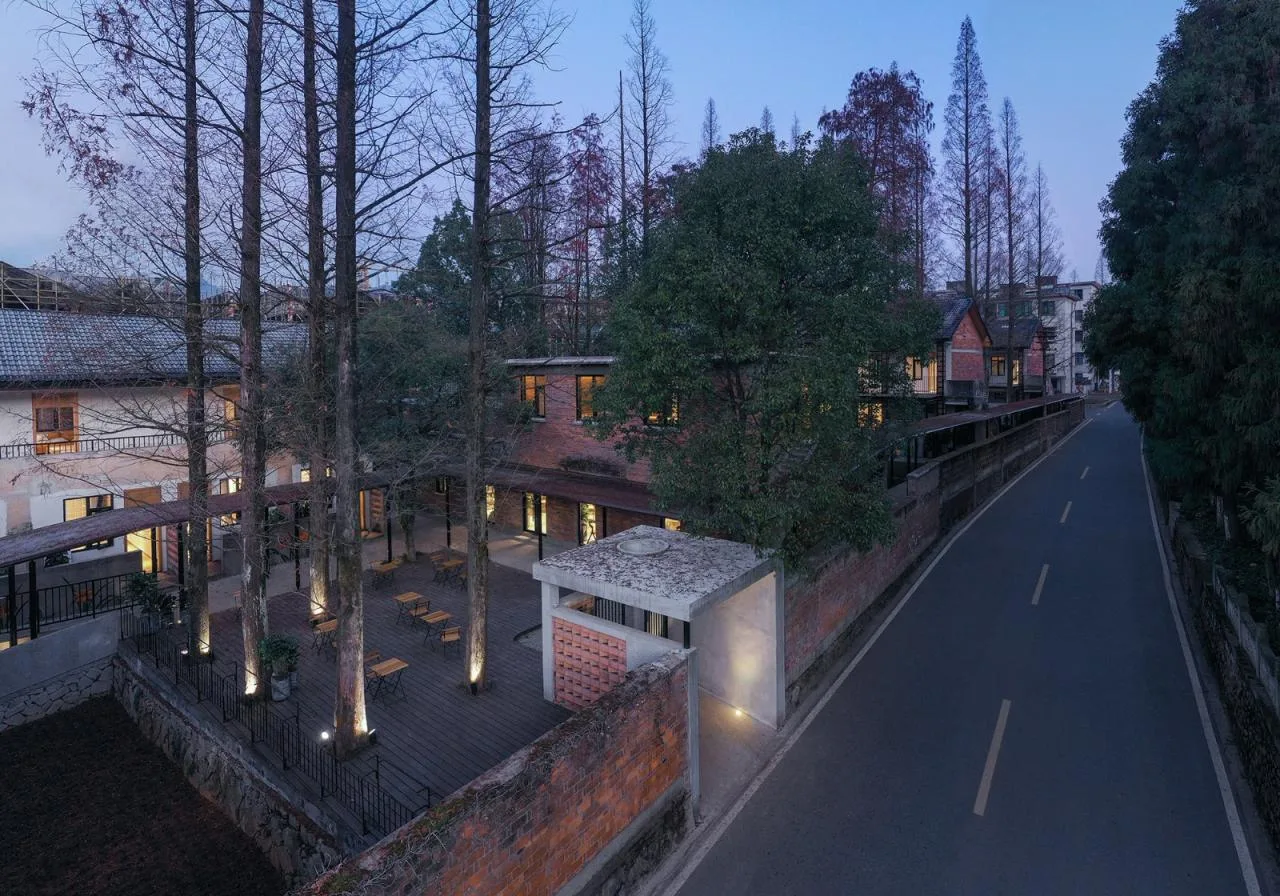
Half bird’s-eye view of the project © Architecture Photography
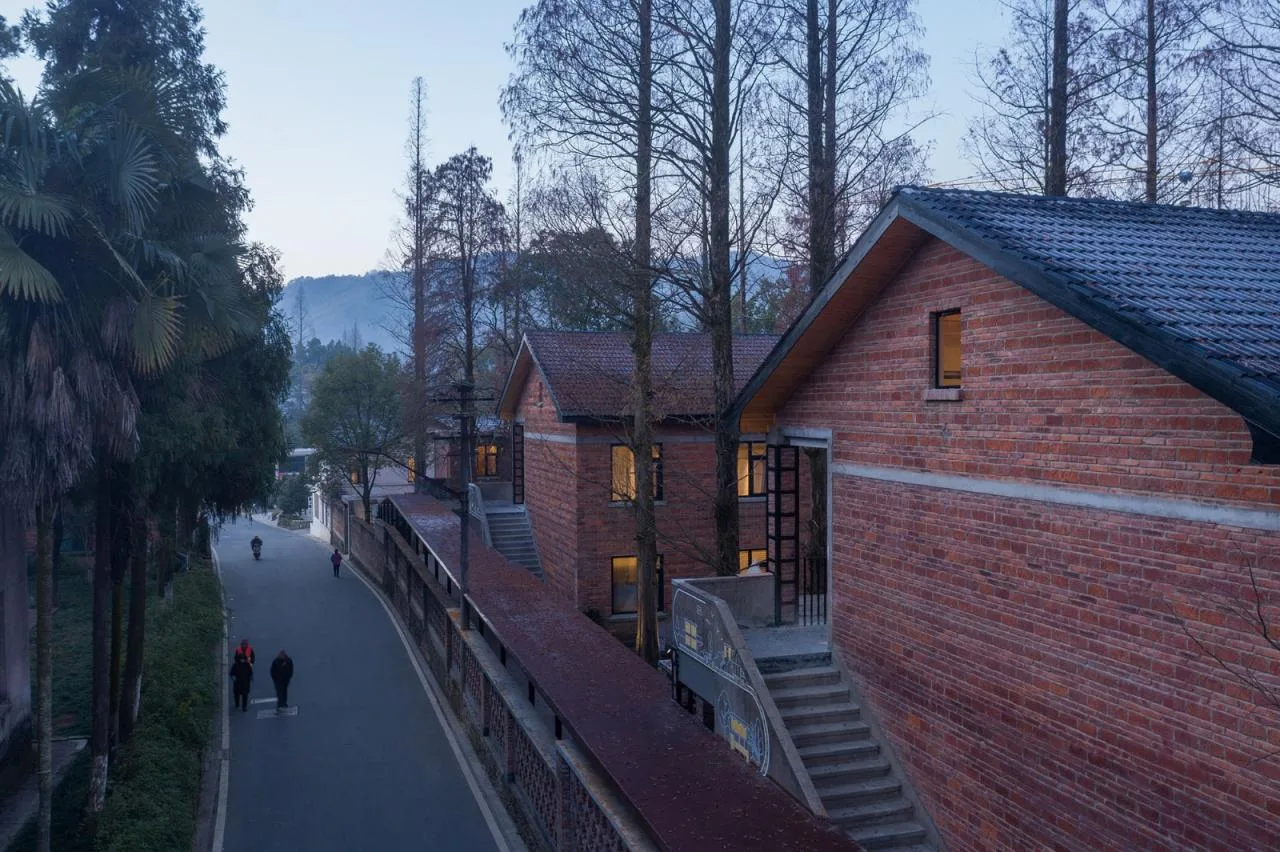
Half bird’s-eye view of the project © Architecture Photography
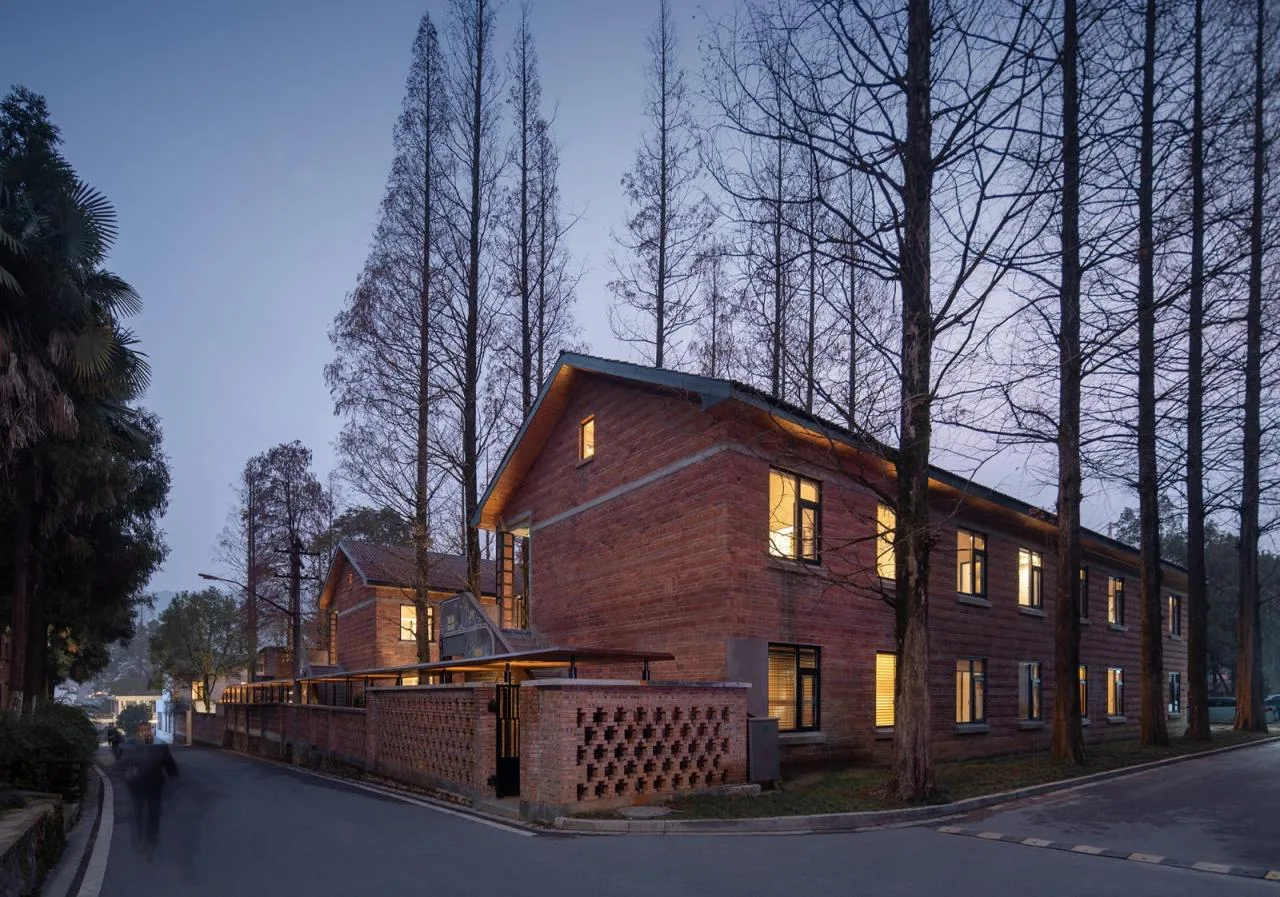
△ Renovated exterior facade of the nursery © Architecture Photography
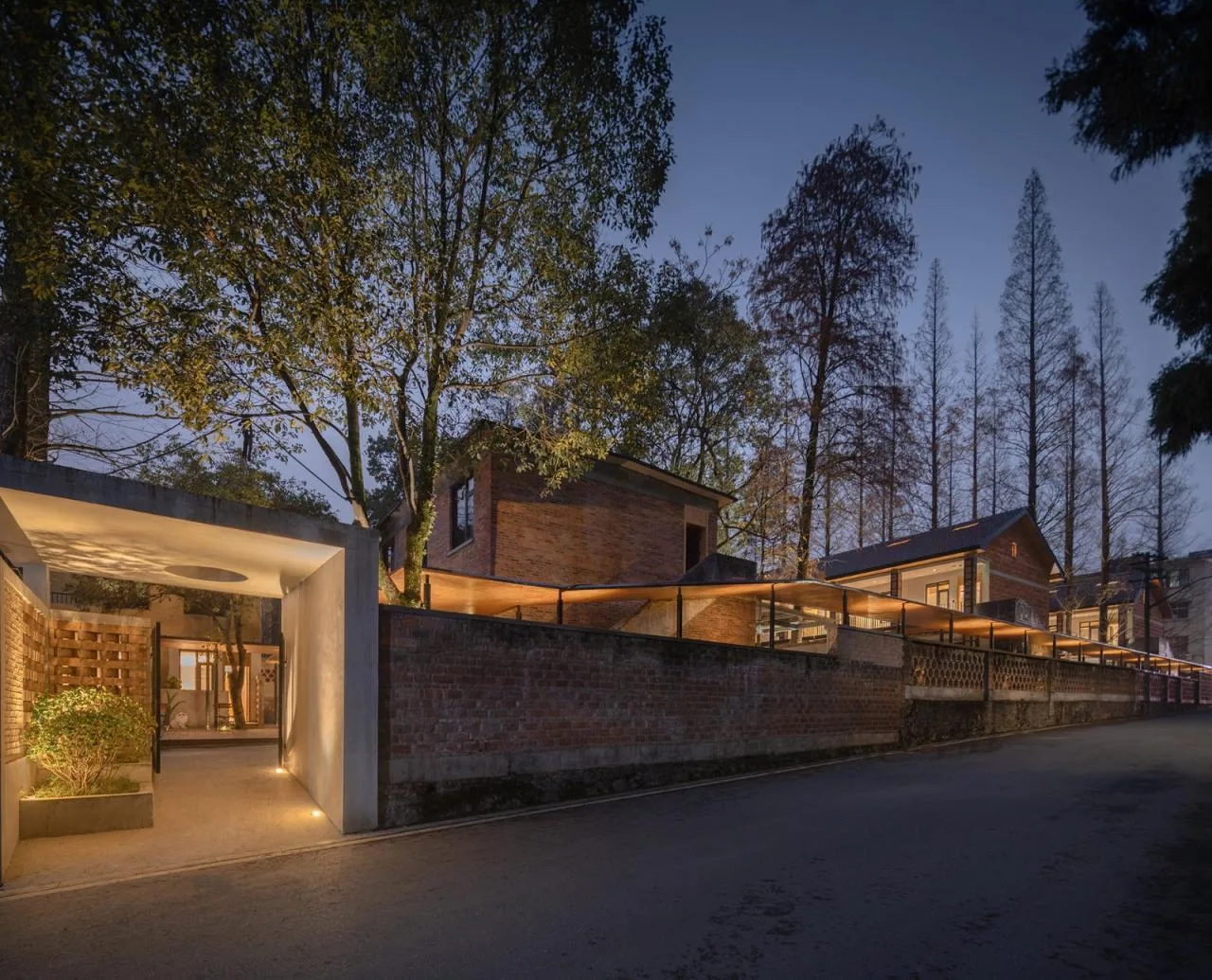
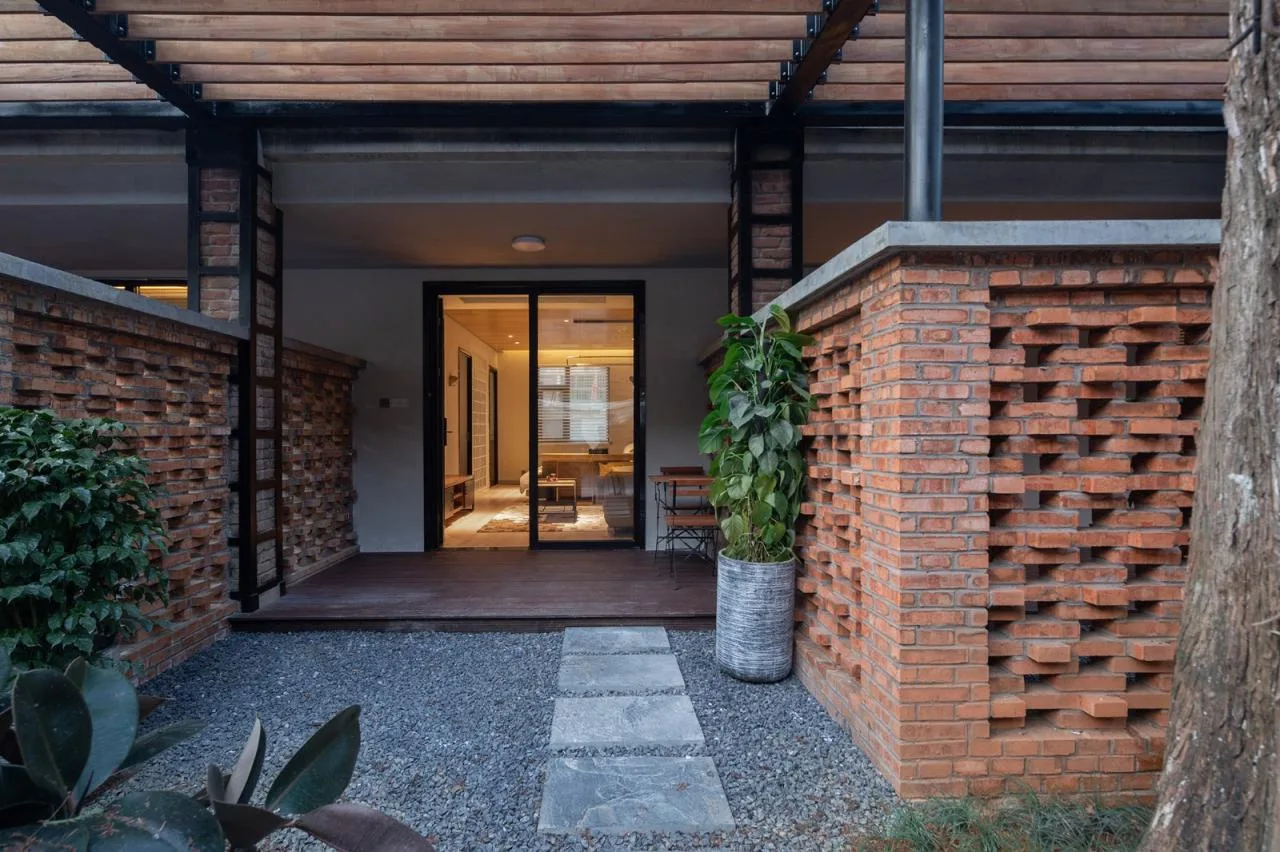
△ Renovated courtyard entrance © Architecture Photography
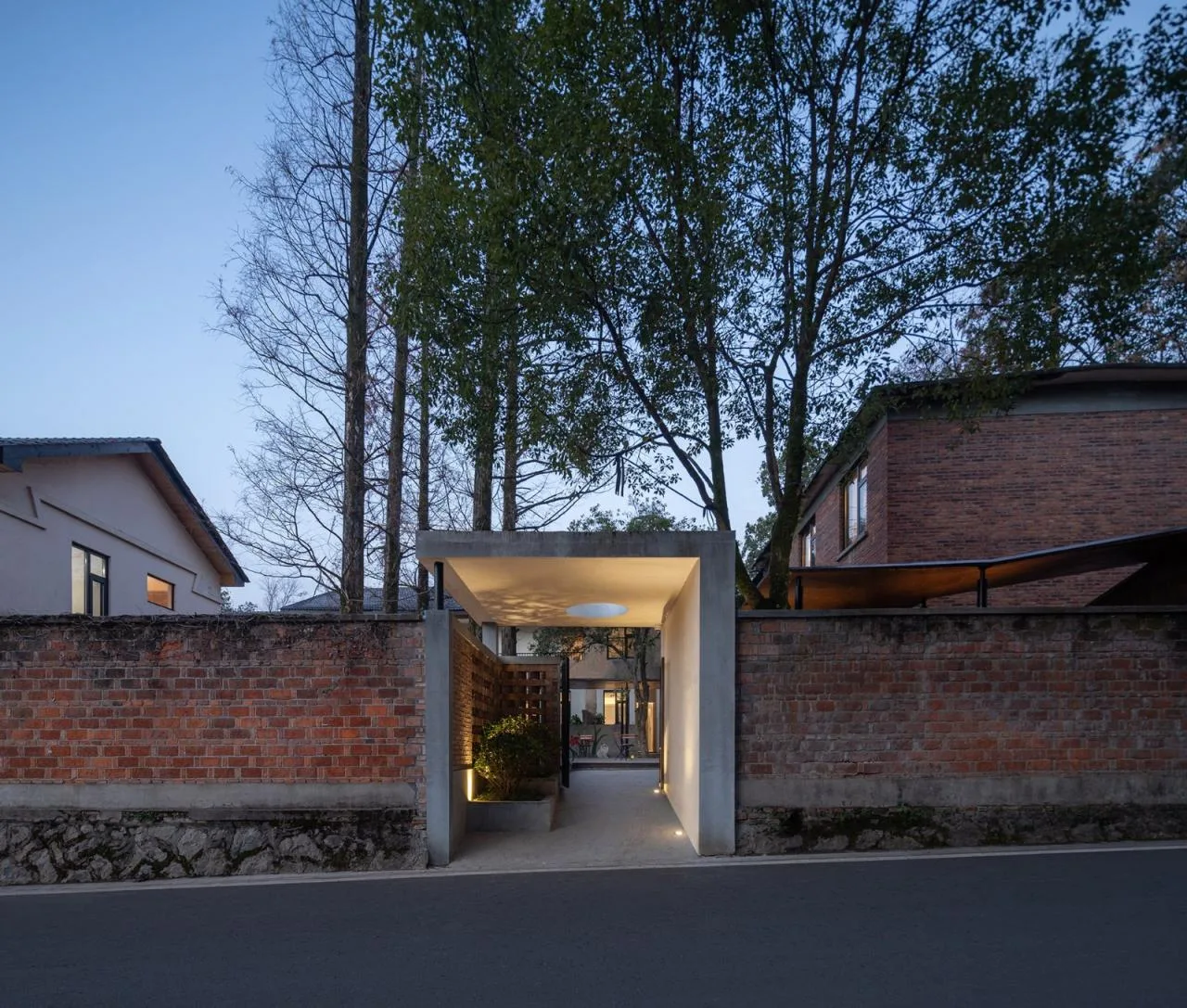
△ Renovated courtyard entrance © Architecture Photography
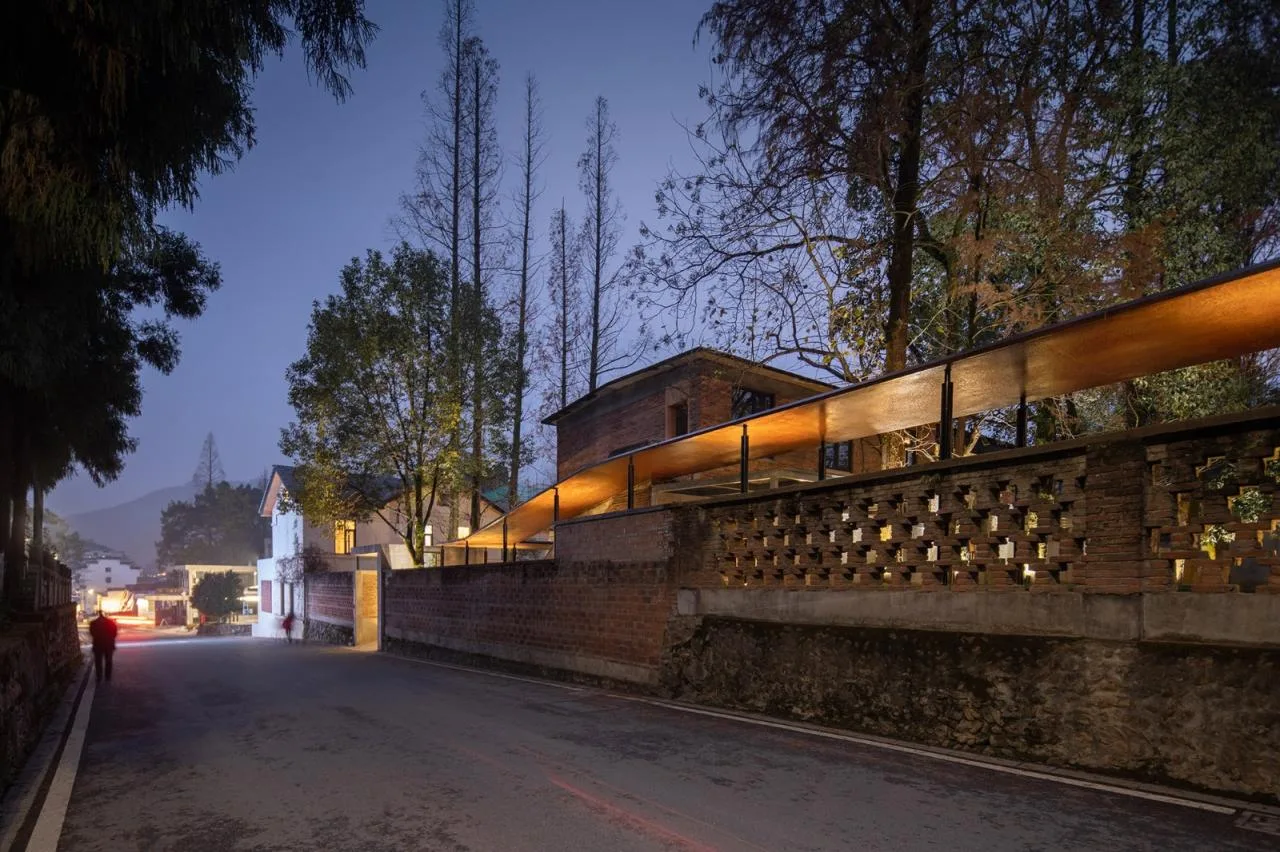
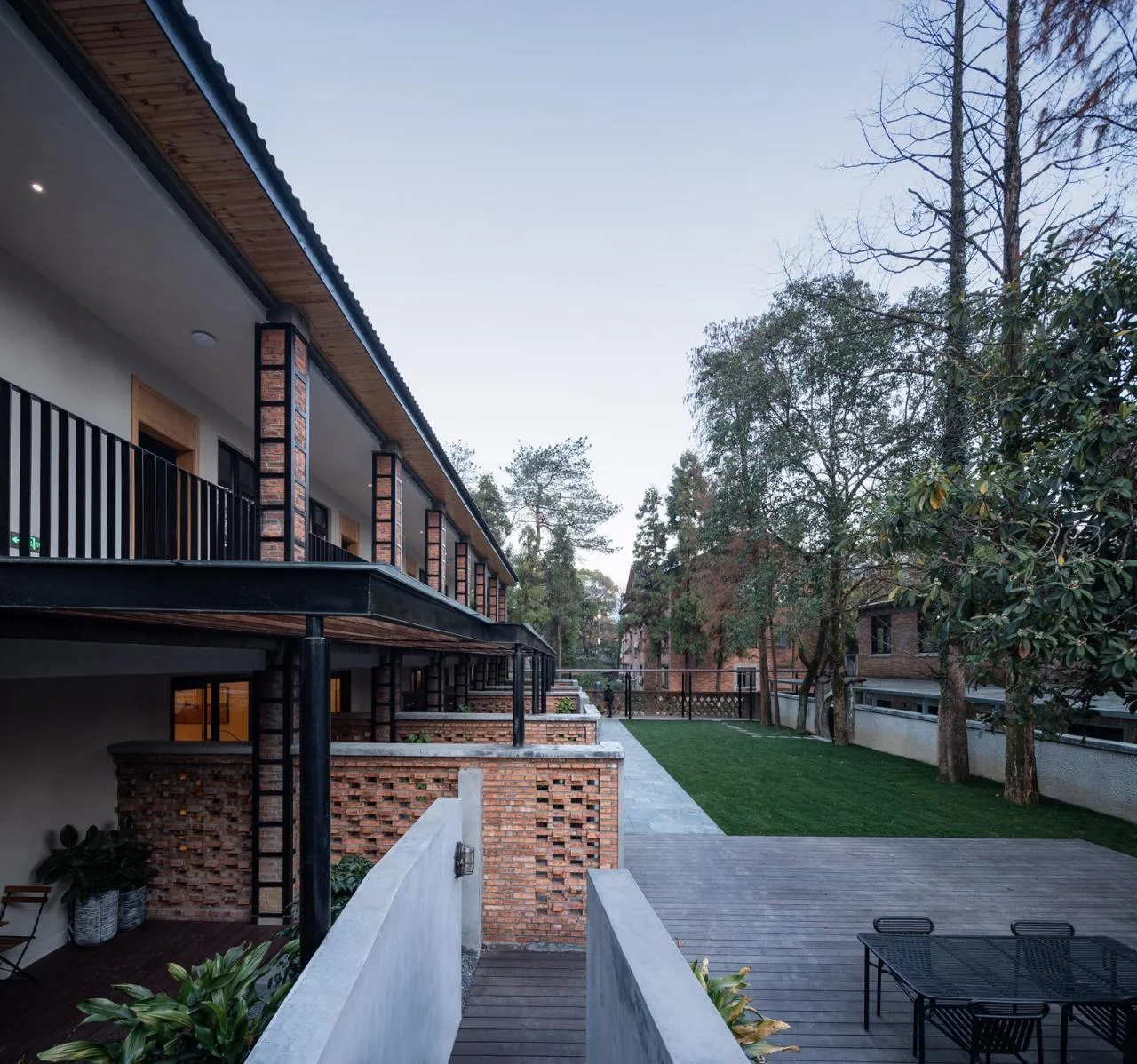
△ Renovated external walls and corridors © Architecture Photography
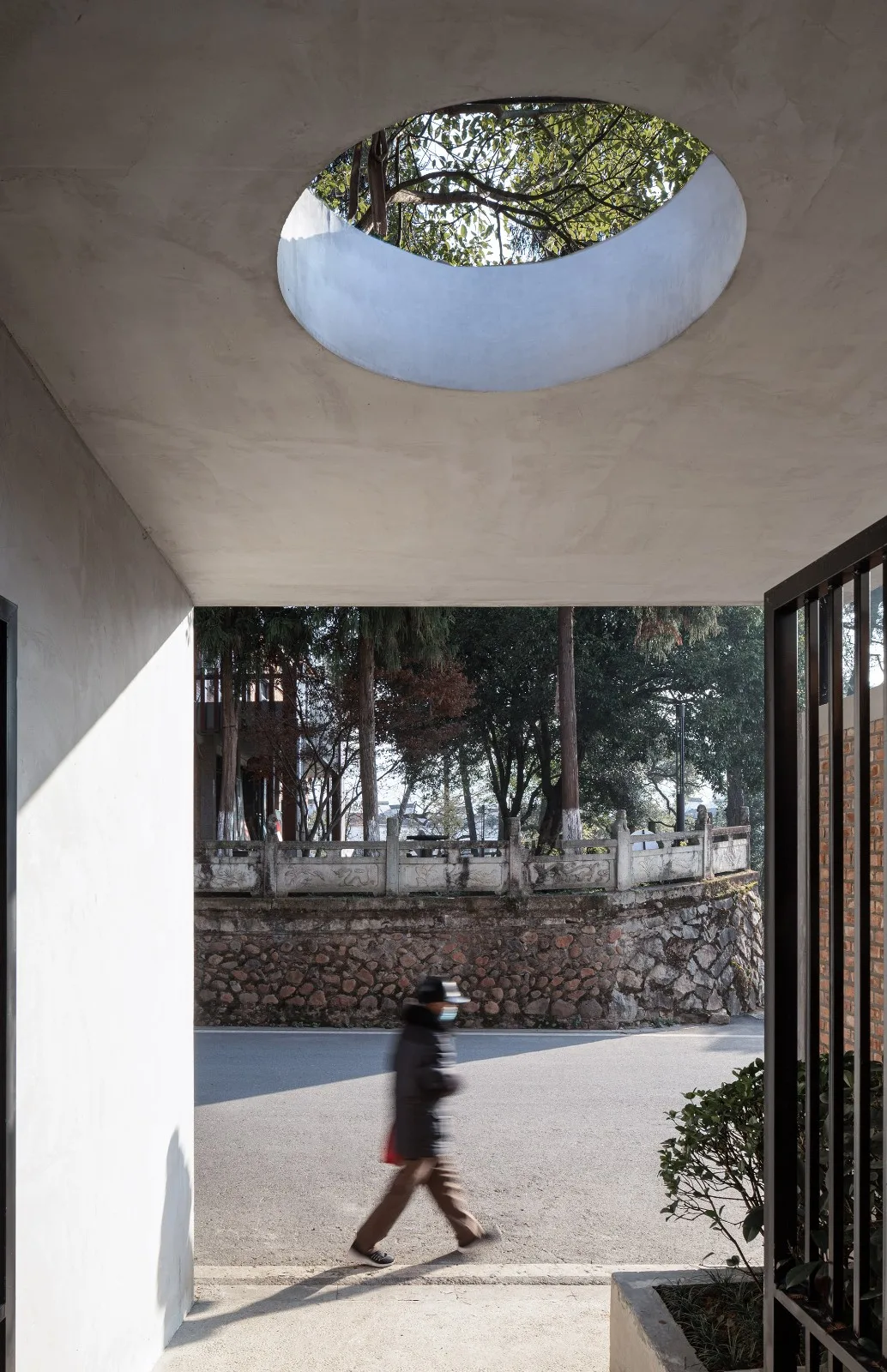
△ Renovated courtyard entrance © Architecture Photography
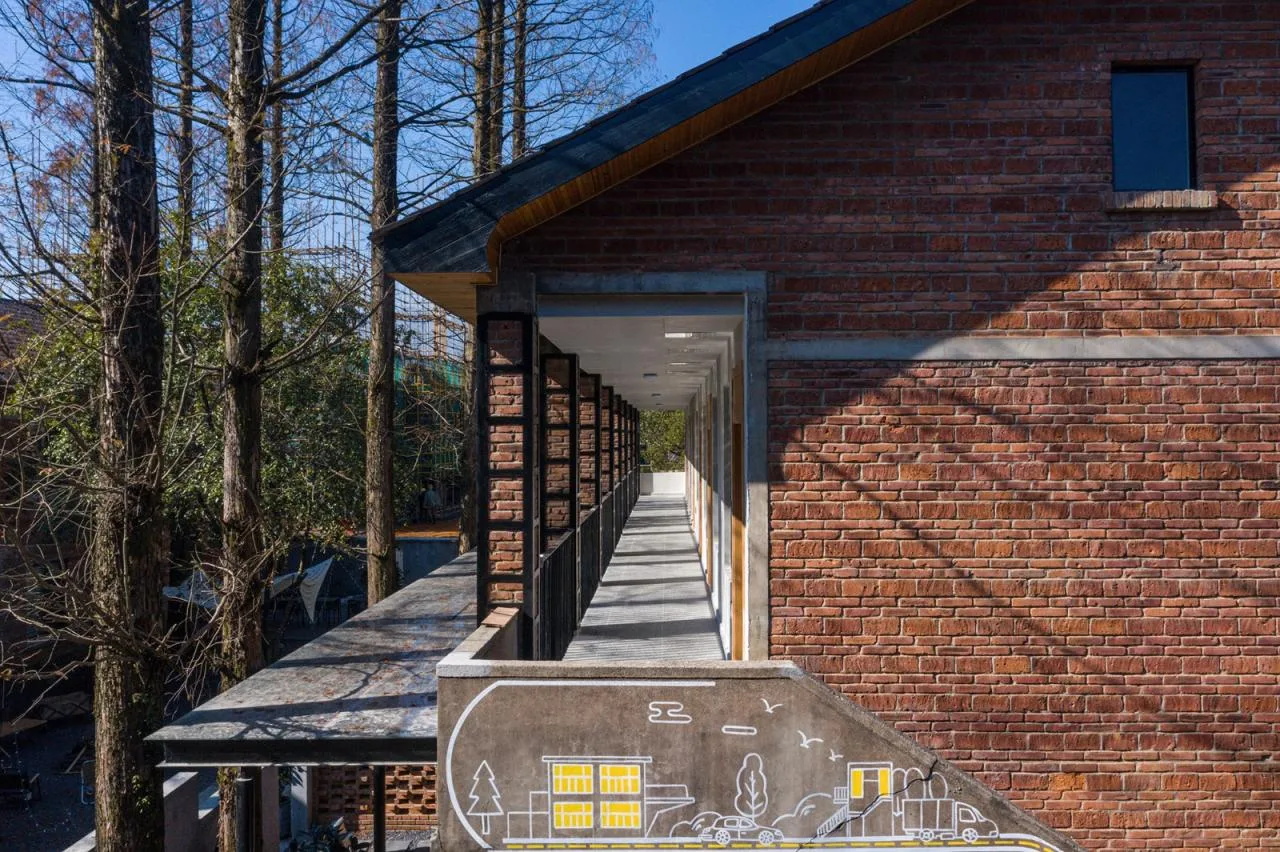
△ Second-floor corridor © Architecture Photography
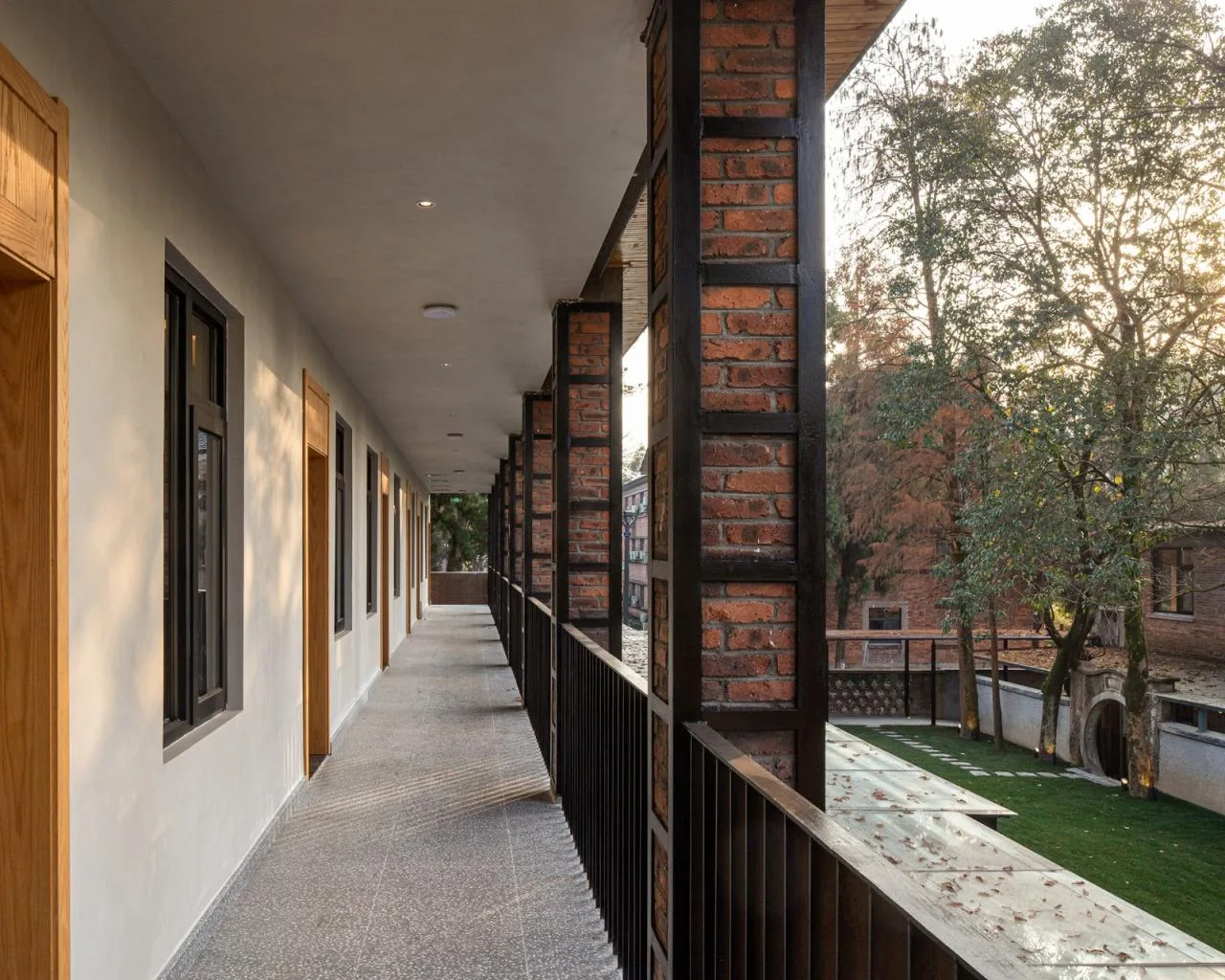
△ Second-floor corridor © Architecture Photography
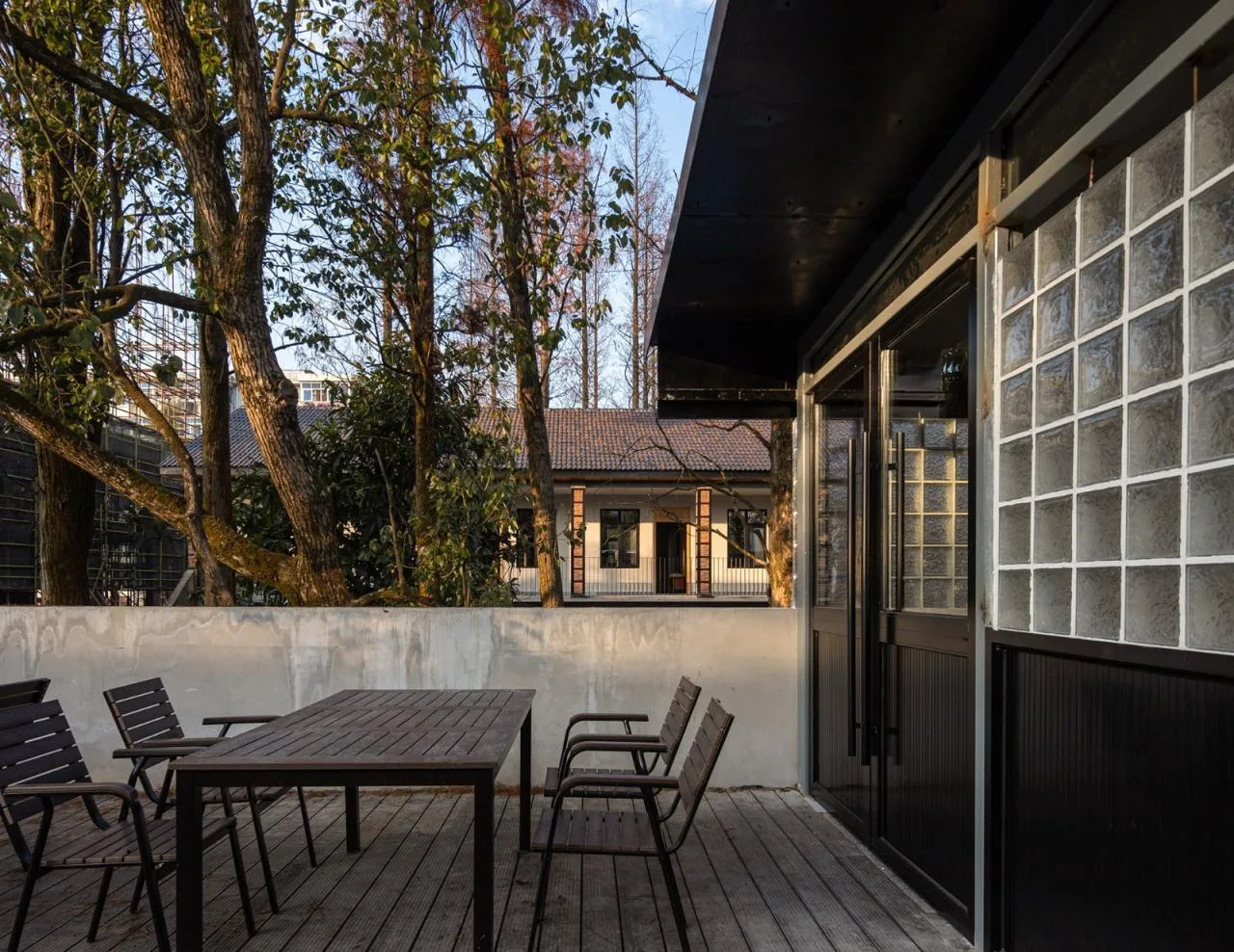
△ Terrace leisure space on building 3 © Architecture Photography
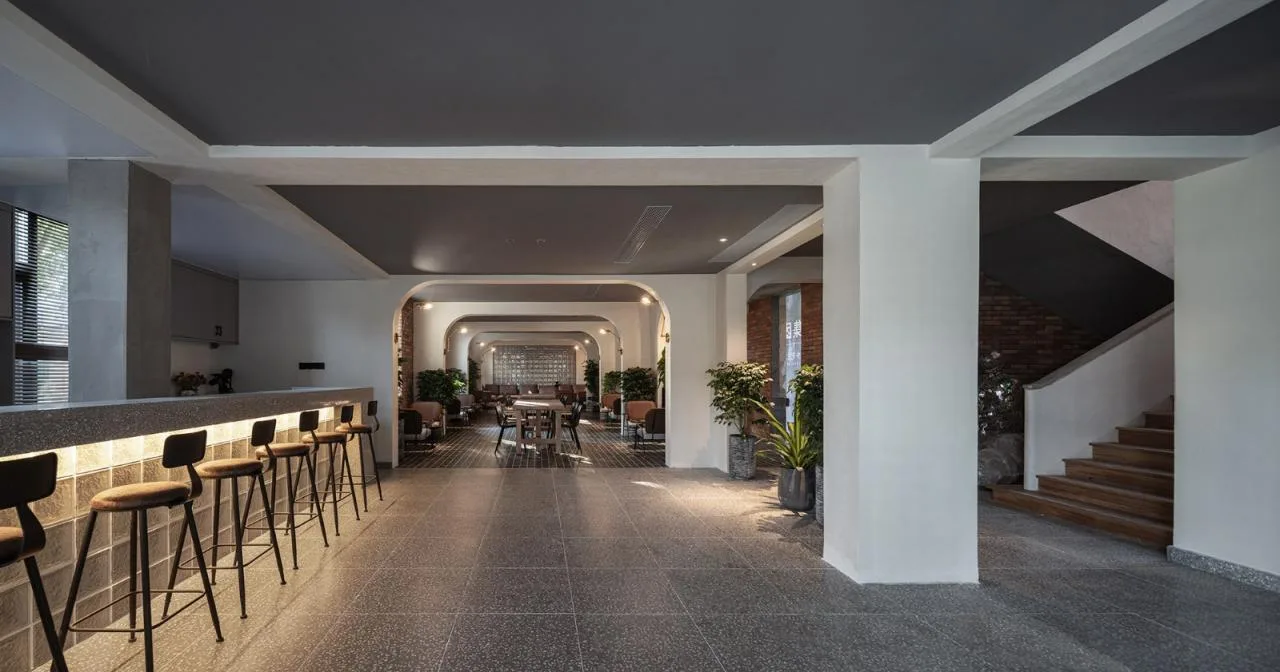
△ Reception hall and bar space in the nursery © Architecture Photography
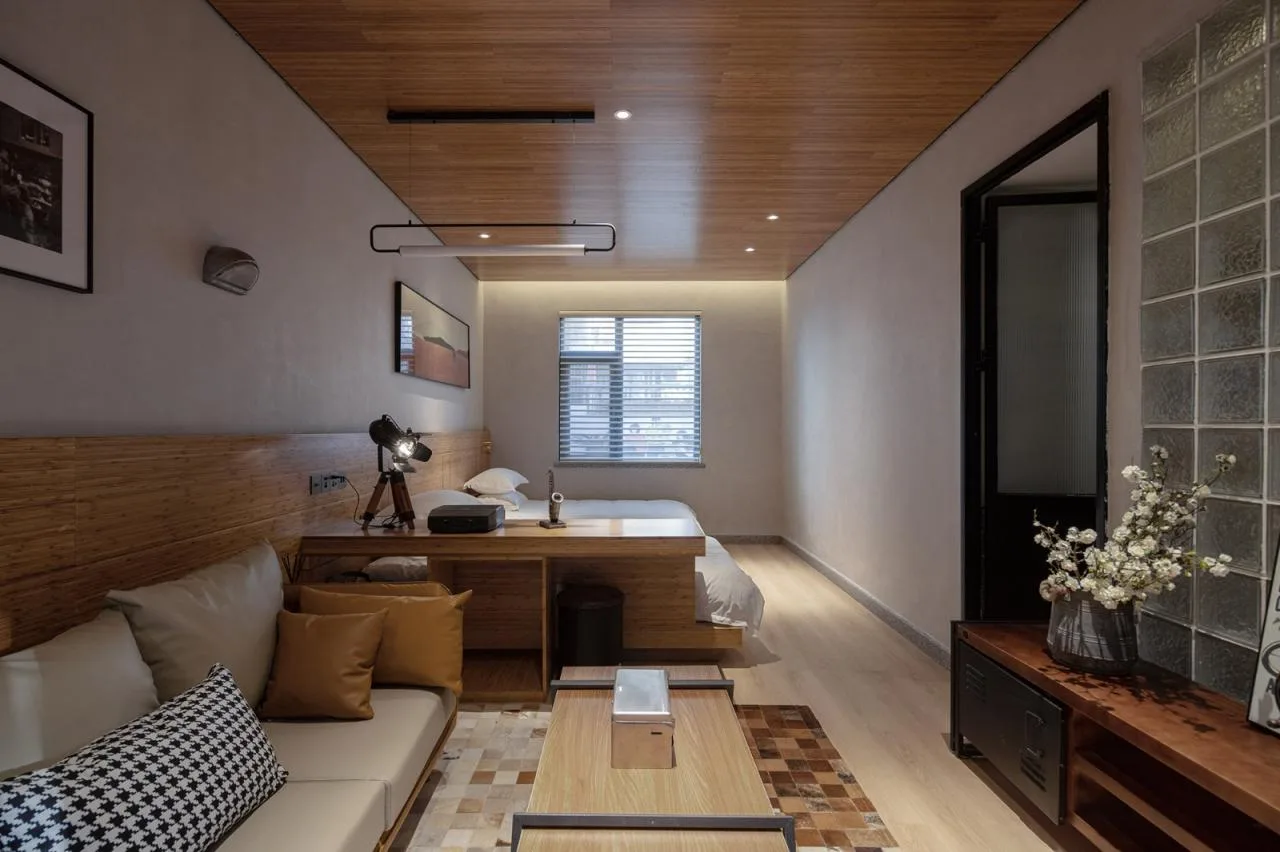
△ Pu She guest room space © Architecture Photography
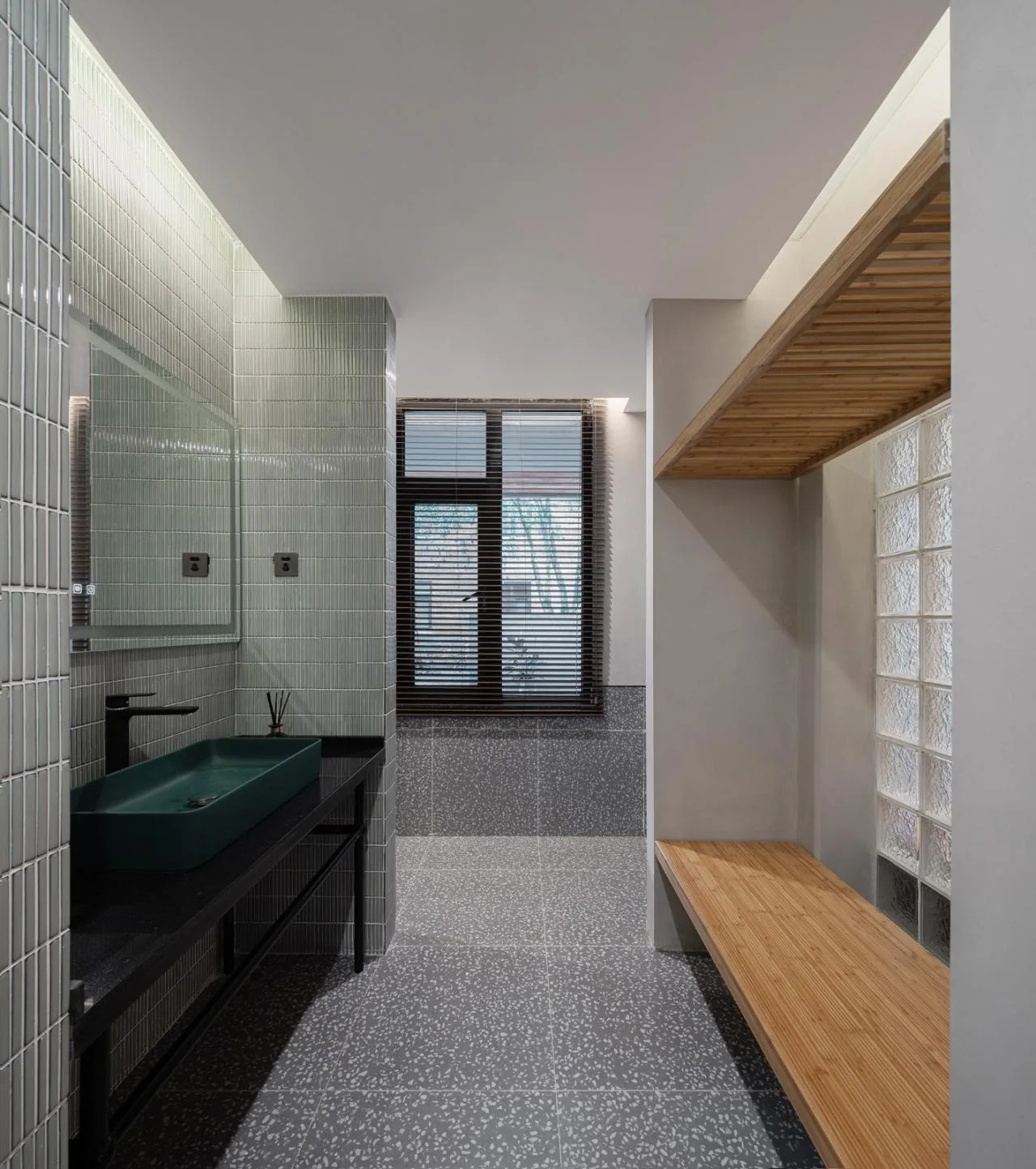
△ Pu She guest room bathroom © Architecture Photography
Next, how to connect the parallel buildings to support the daily operations of the shared homestay?
The original architectural layout was fragmented and isolated, unsuitable for homestay functions. The architect reallocated spatial functions: the first floor of Building 1 serves as a public area and bar, with guest rooms on the second floor. Building 3’s first floor functions as a restaurant, while the second floor hosts team-building and meeting spaces. The remaining buildings are dedicated entirely to guest rooms.
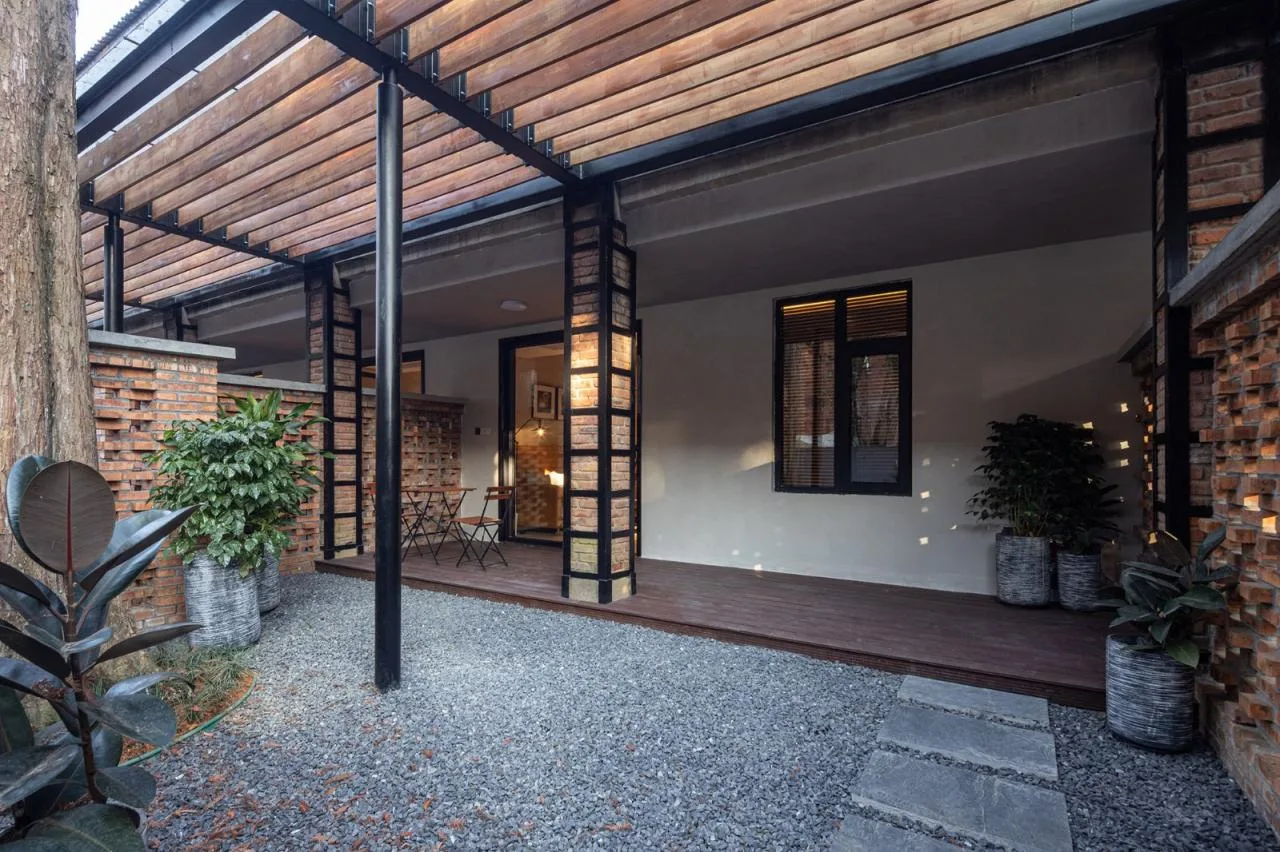
To ensure privacy and independence, the architect repaired and enclosed the damaged wall between the original park road and dormitories. A covered corridor was added to connect the front and rear buildings, improving spatial flow and hierarchy. This corridor not only provides shelter from wind and rain but also creates an engaging journey through various functional spaces and courtyards, offering diverse visual perspectives and experiences.
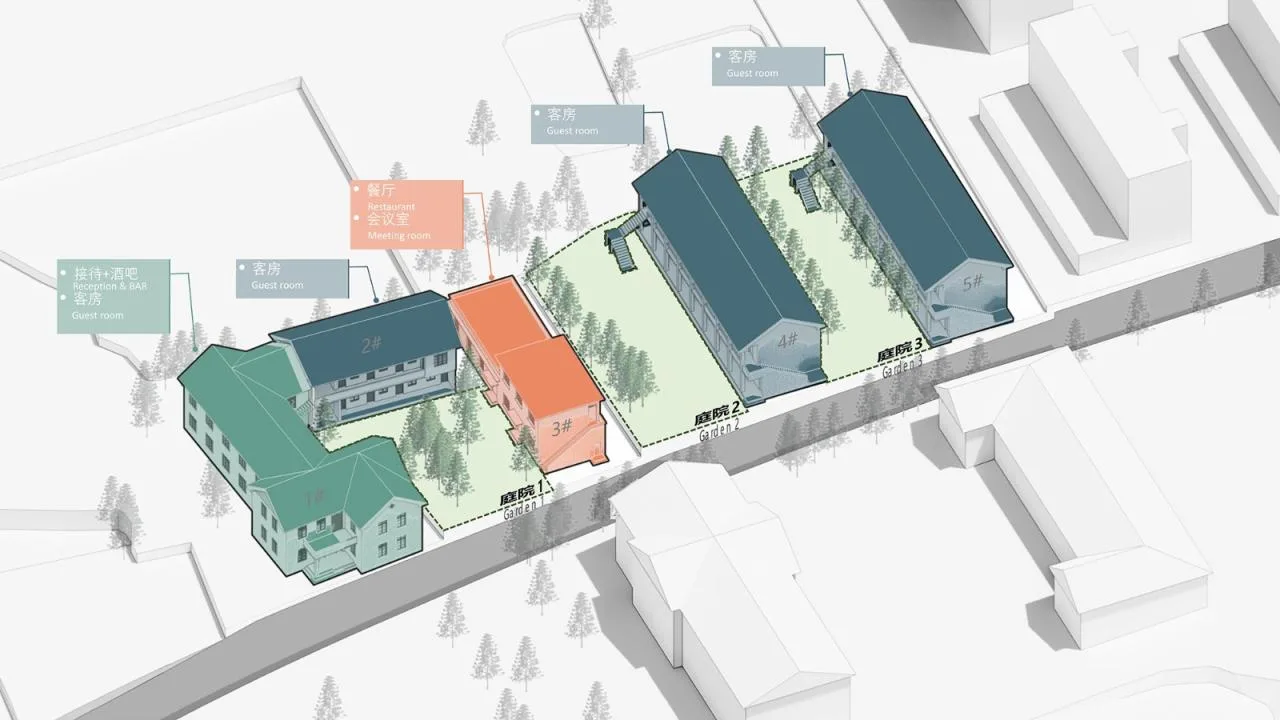
△ Function distribution diagram © y.ad studio
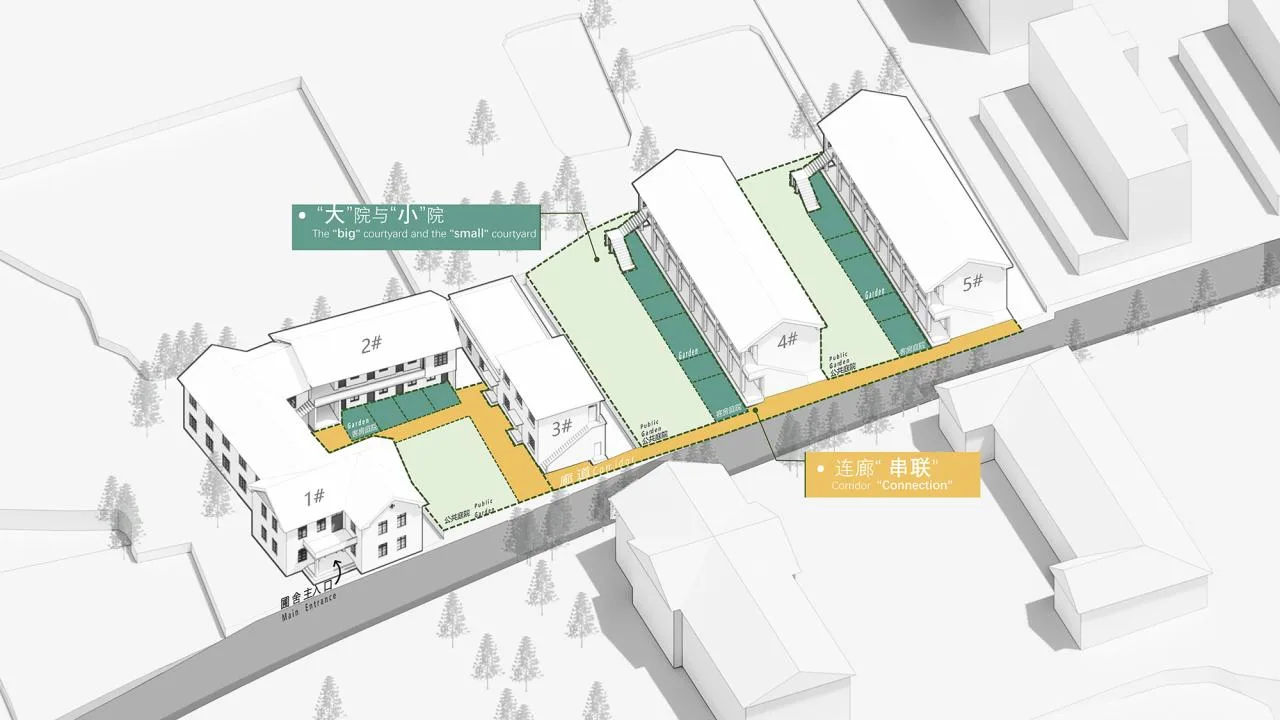
△ Transformation strategy analysis diagram © y.ad studio
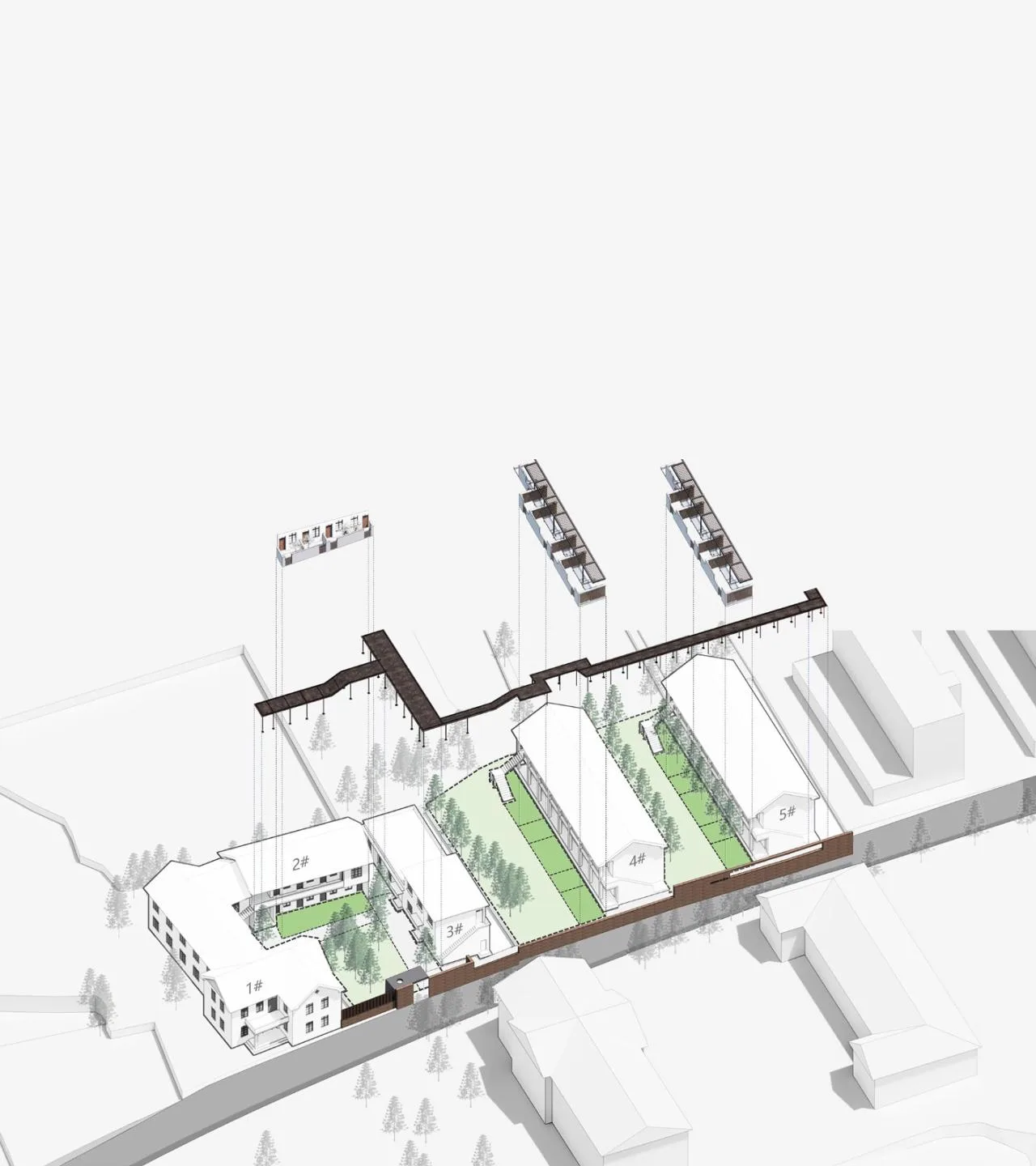
△ Exploded axonometric diagram © y.ad studio
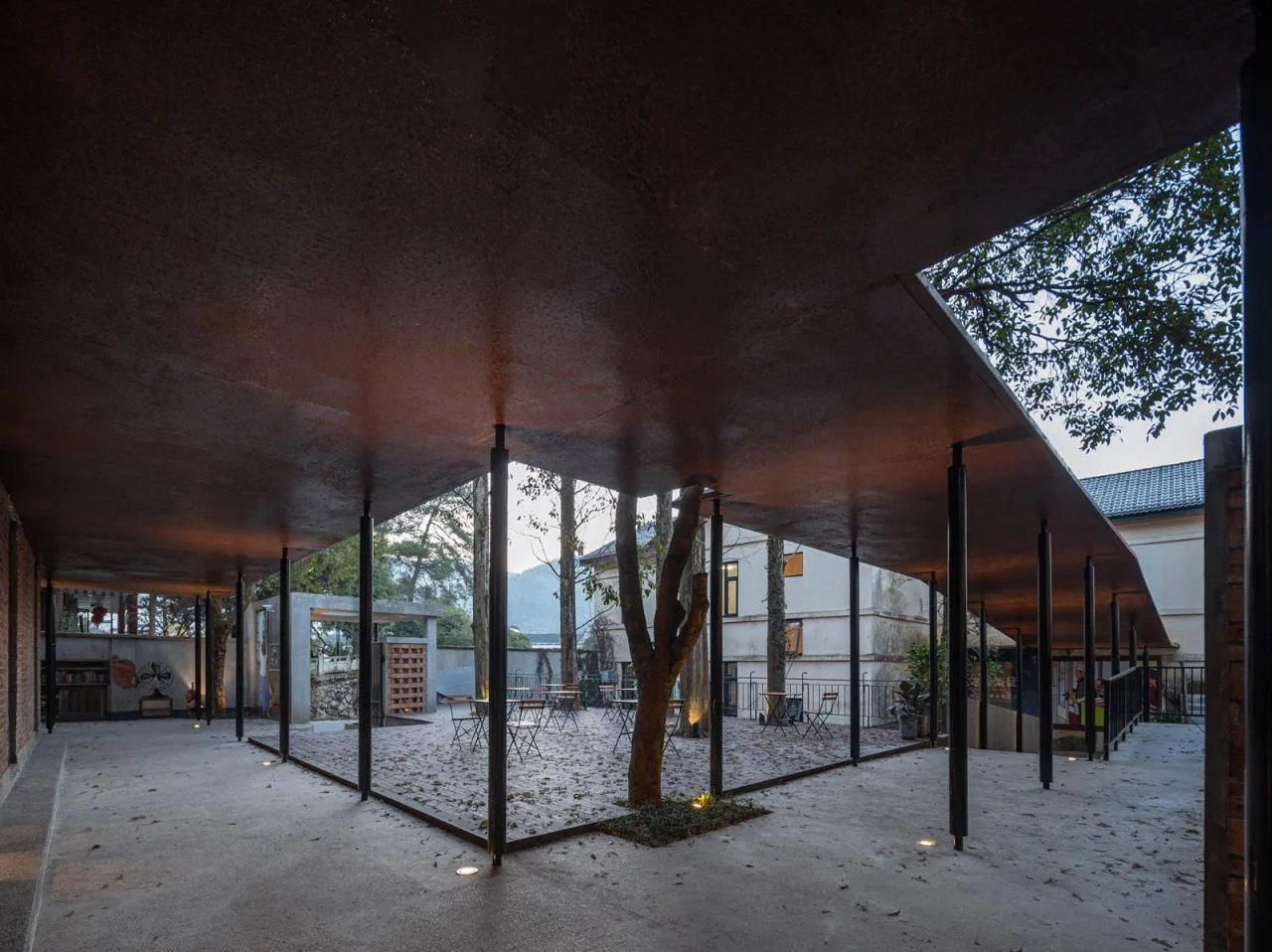
Courtyard 1 and corridor space © Architecture Photography
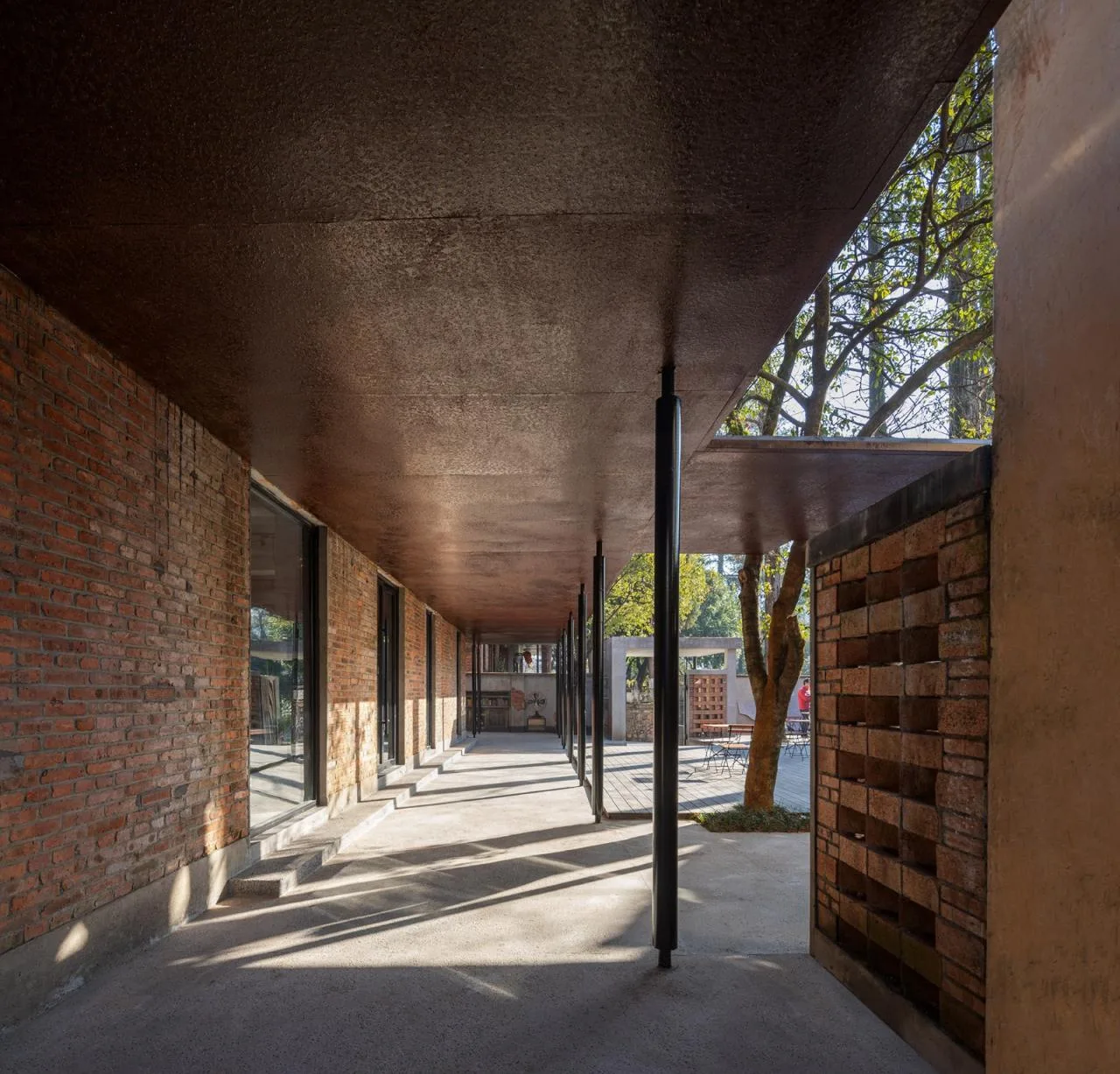
Courtyard 1 and corridor space © Architecture Photography
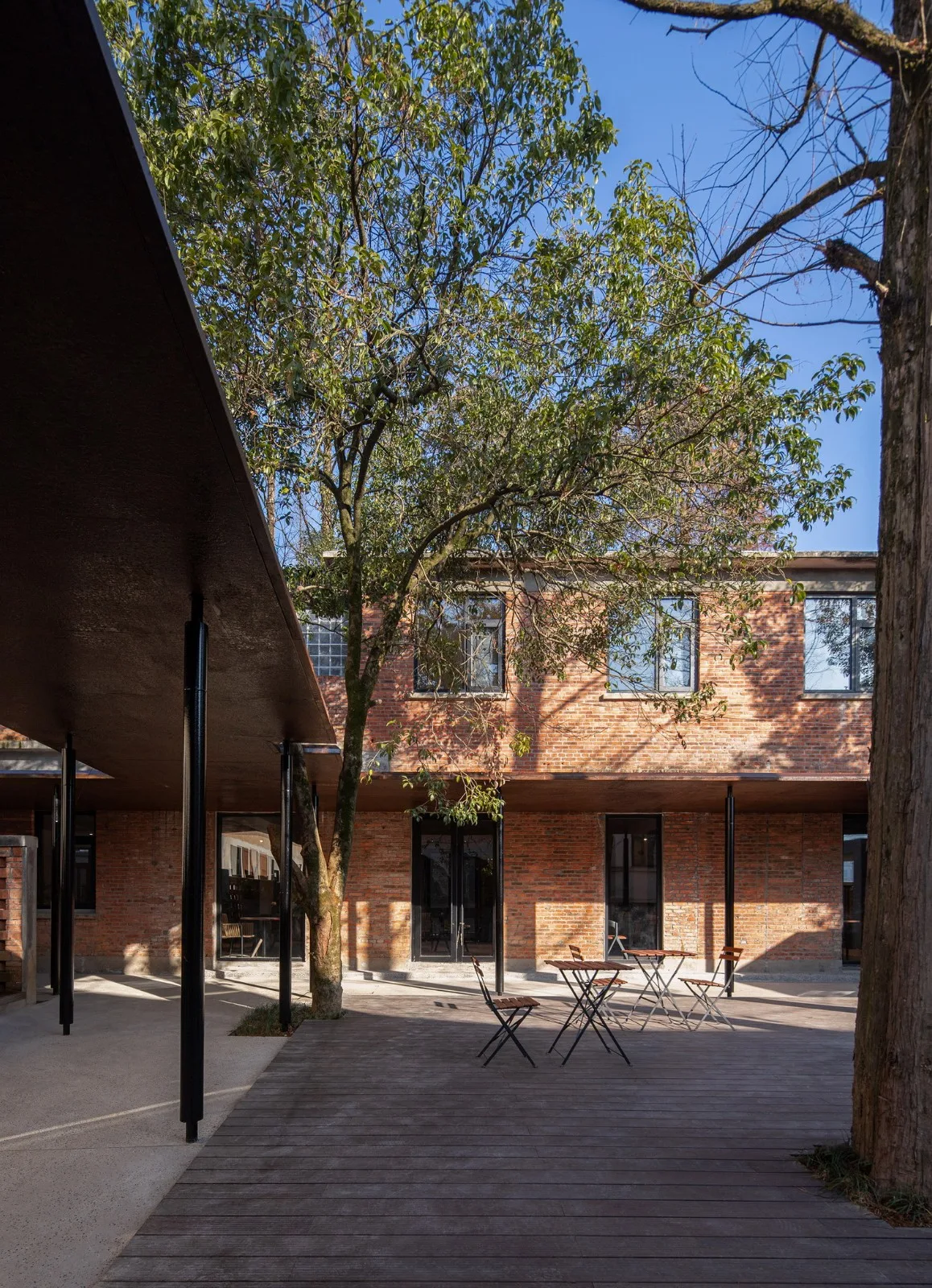
Courtyard 1 and corridor space © Architecture Photography
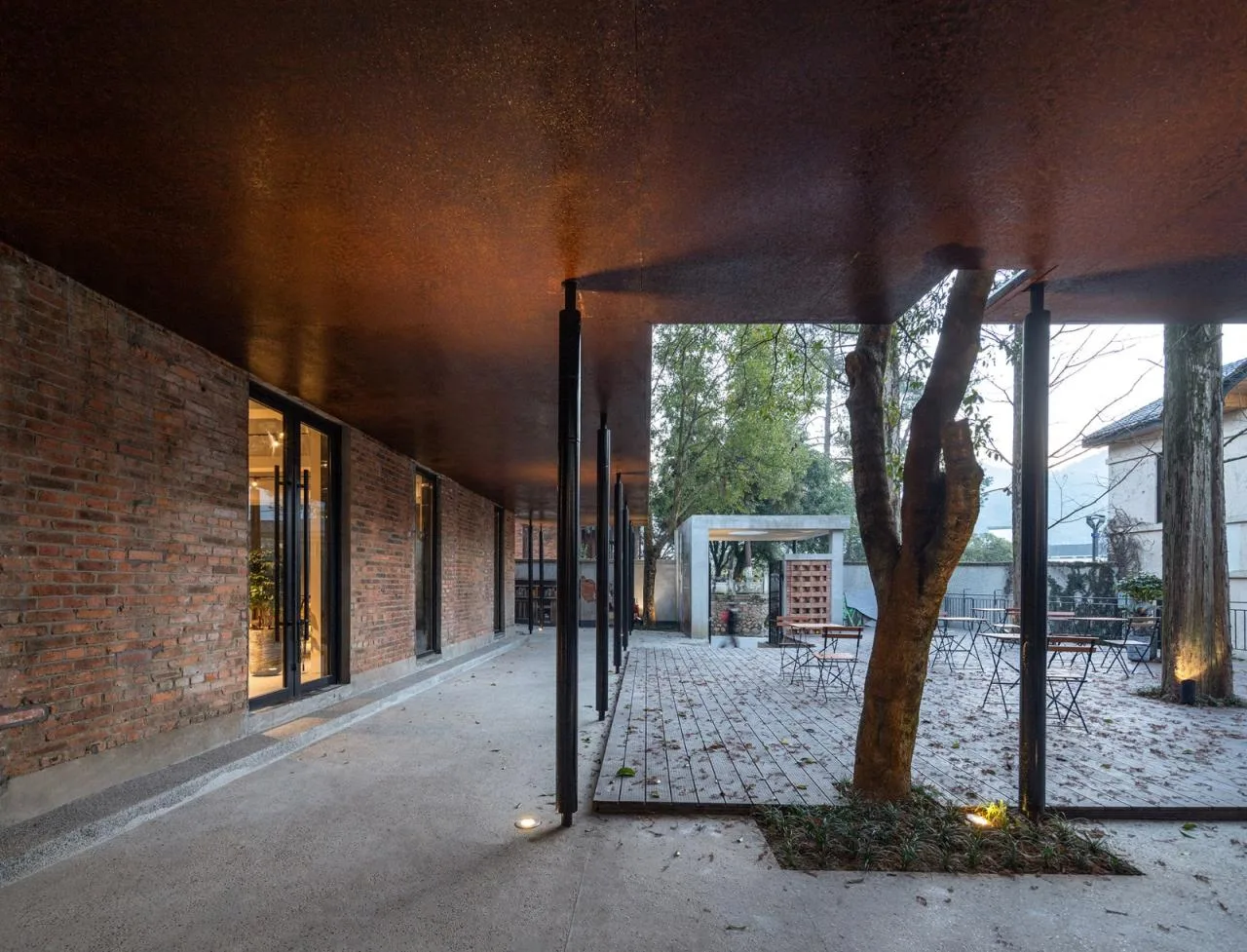
Courtyard 1 and corridor space © Architecture Photography
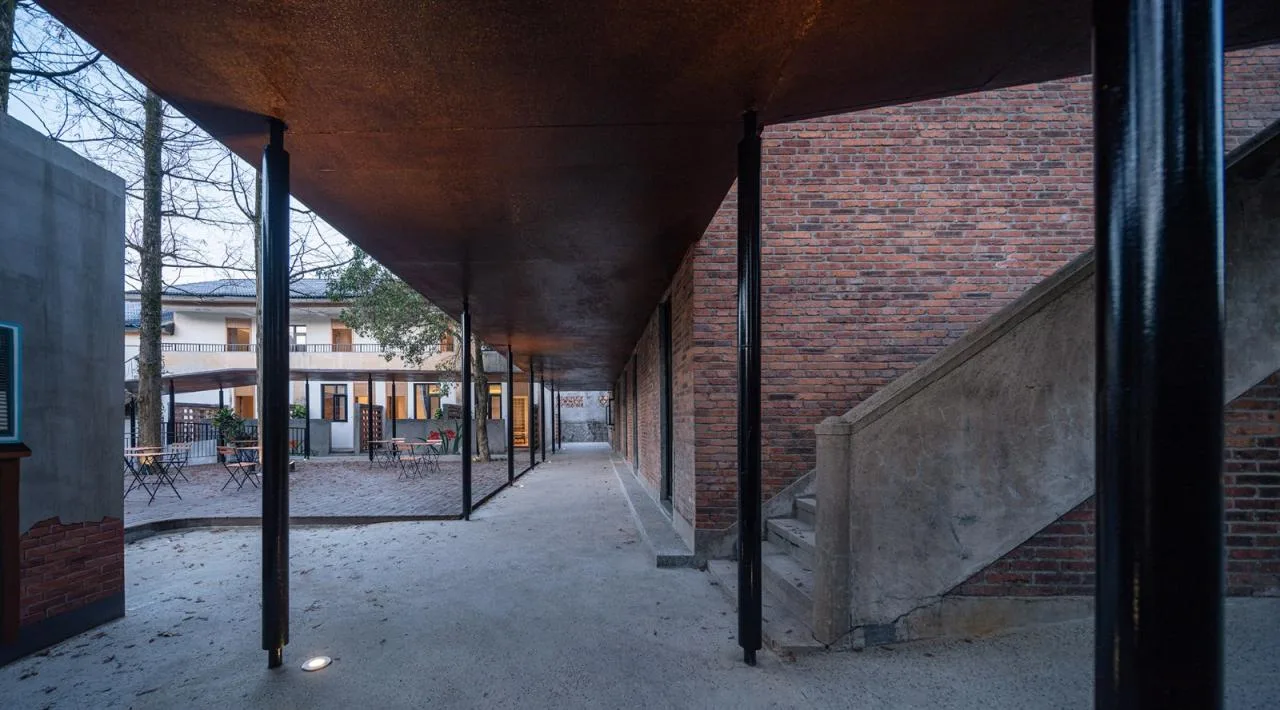
Courtyard 1 and corridor space © Architecture Photography
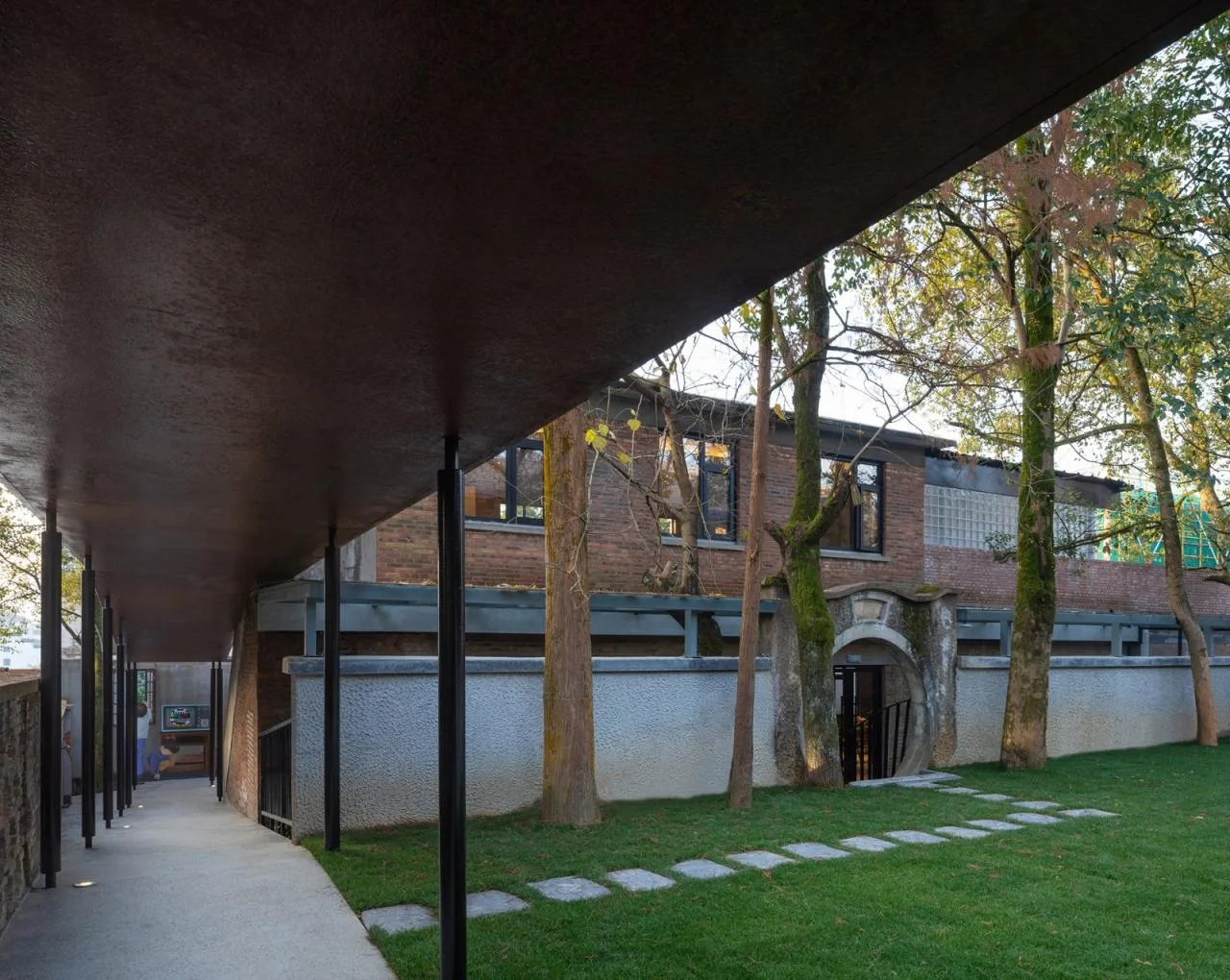
Courtyard 2 and corridor © Architecture Photography
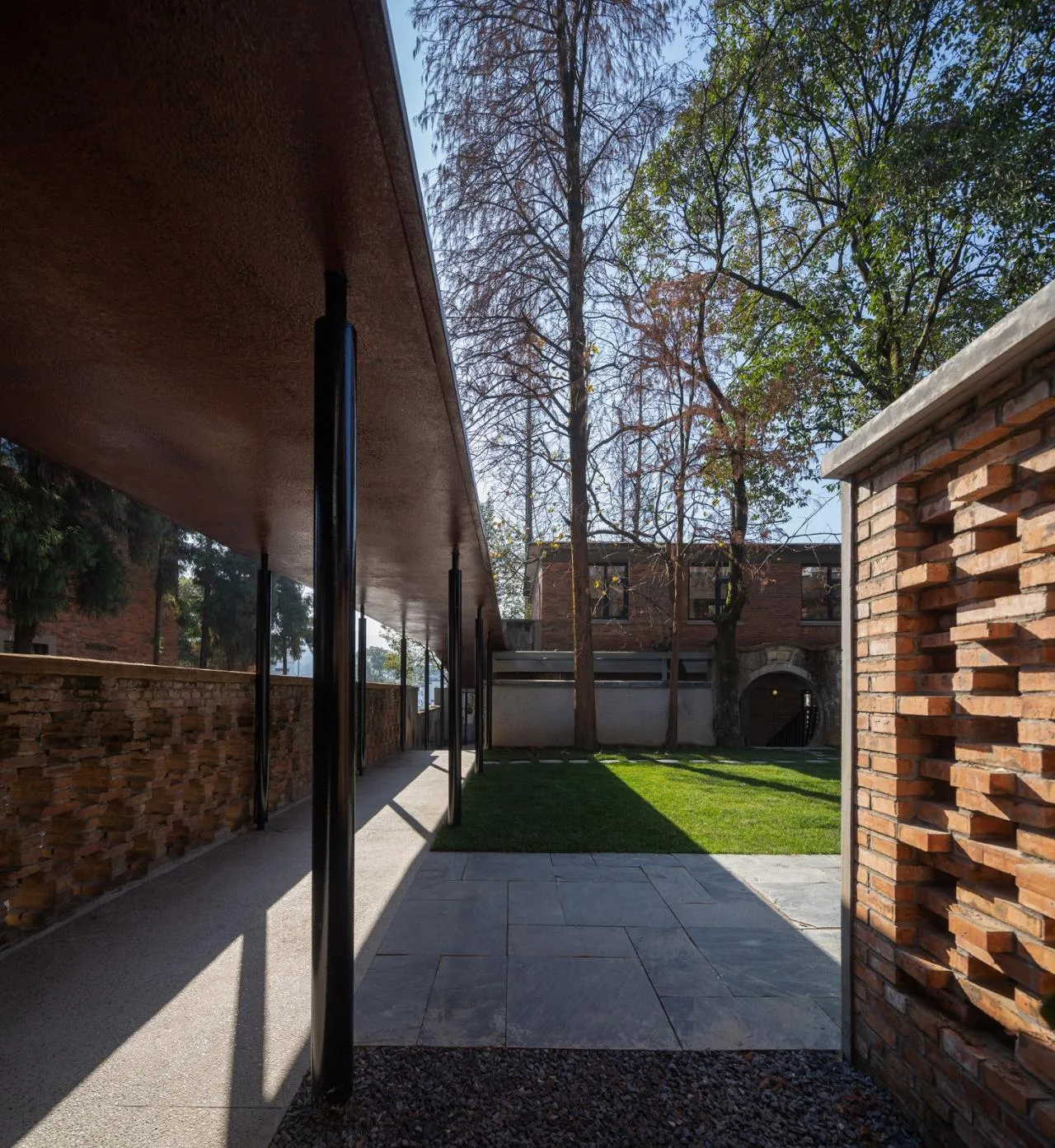
Courtyard 2 and corridor © Architecture Photography
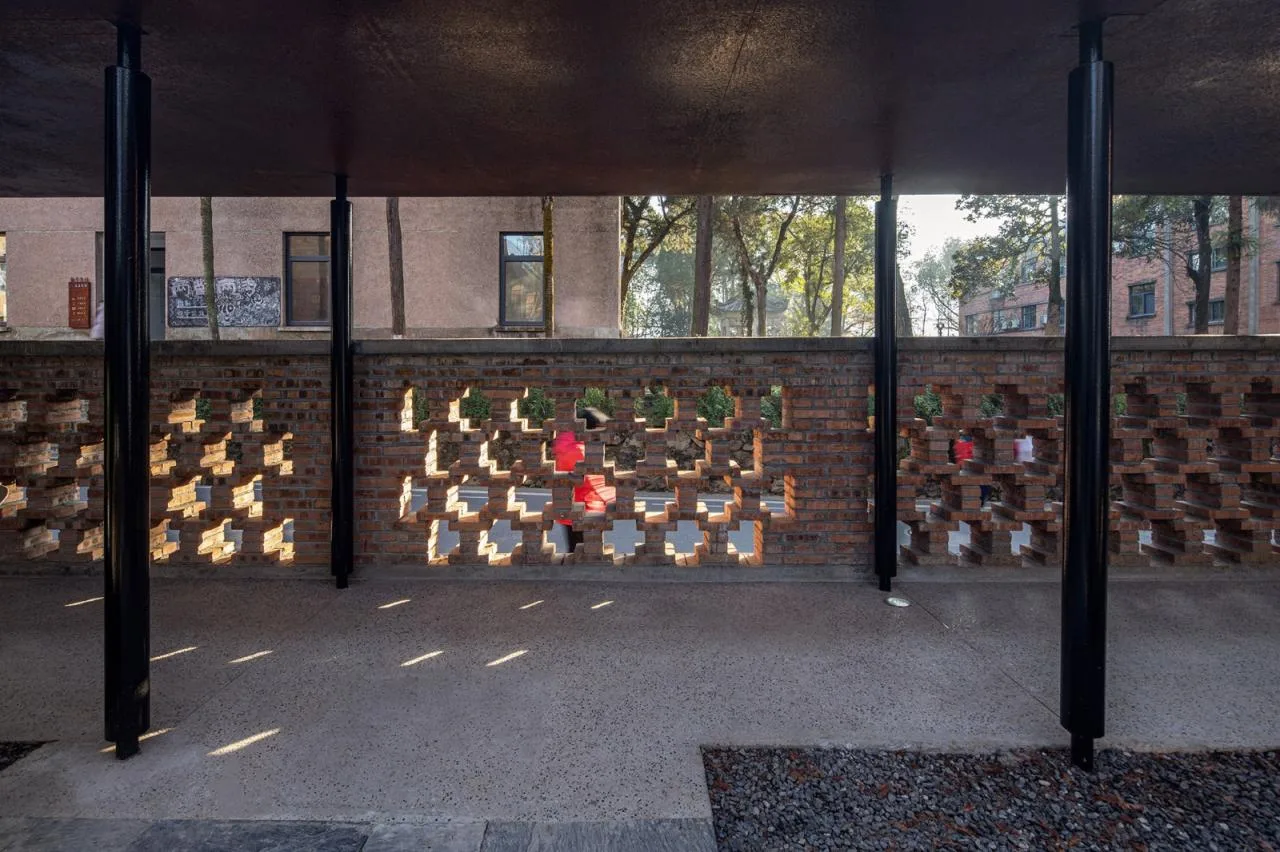
△ Restored flower brick wall and corridor frame © Architecture Photography
Lastly, how to maximize the use of the existing courtyard filled with Metasequoia trees?
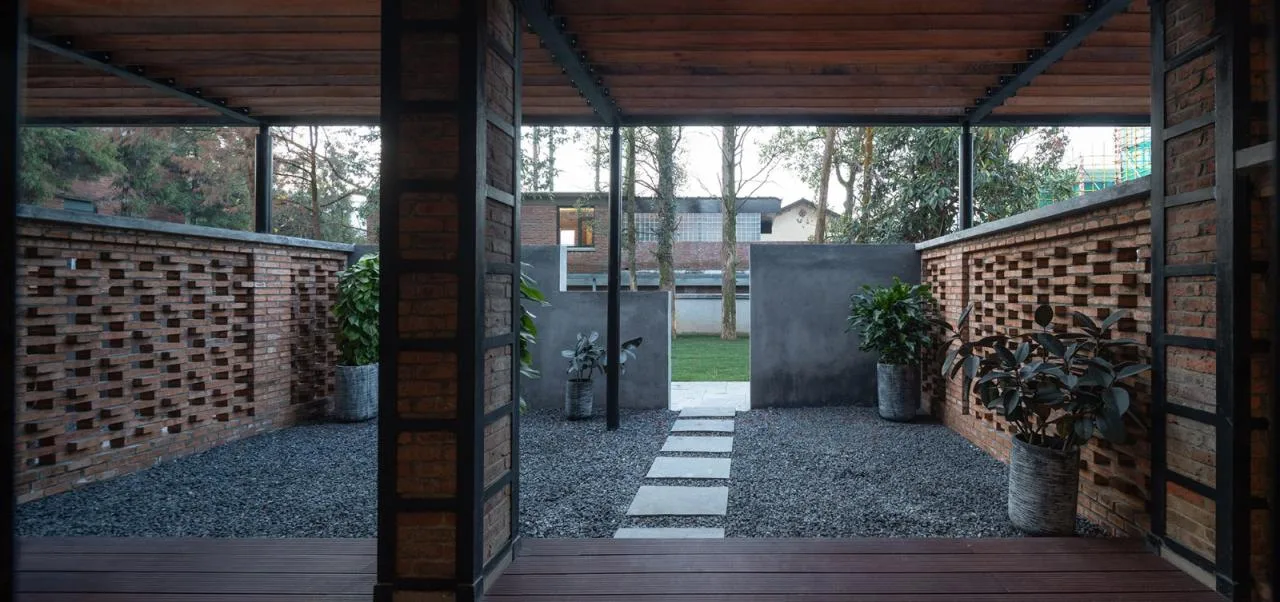
The mature dawn redwood trees in the courtyard between the buildings add unique charm but the original courtyard space was underutilized. Converting the original segmented dormitory layout into guest rooms posed spatial challenges. After thorough analysis, the architect redistributed the courtyards: Courtyard 1 was opened up as an extension of the restaurant, creating a public leisure and dining area. Courtyards 2 and 3 were divided into a large courtyard for public activities and a smaller one reserved for guest rooms. This approach enhances both public and private uses of the space, allowing the dawn redwoods and courtyards to harmoniously coexist.
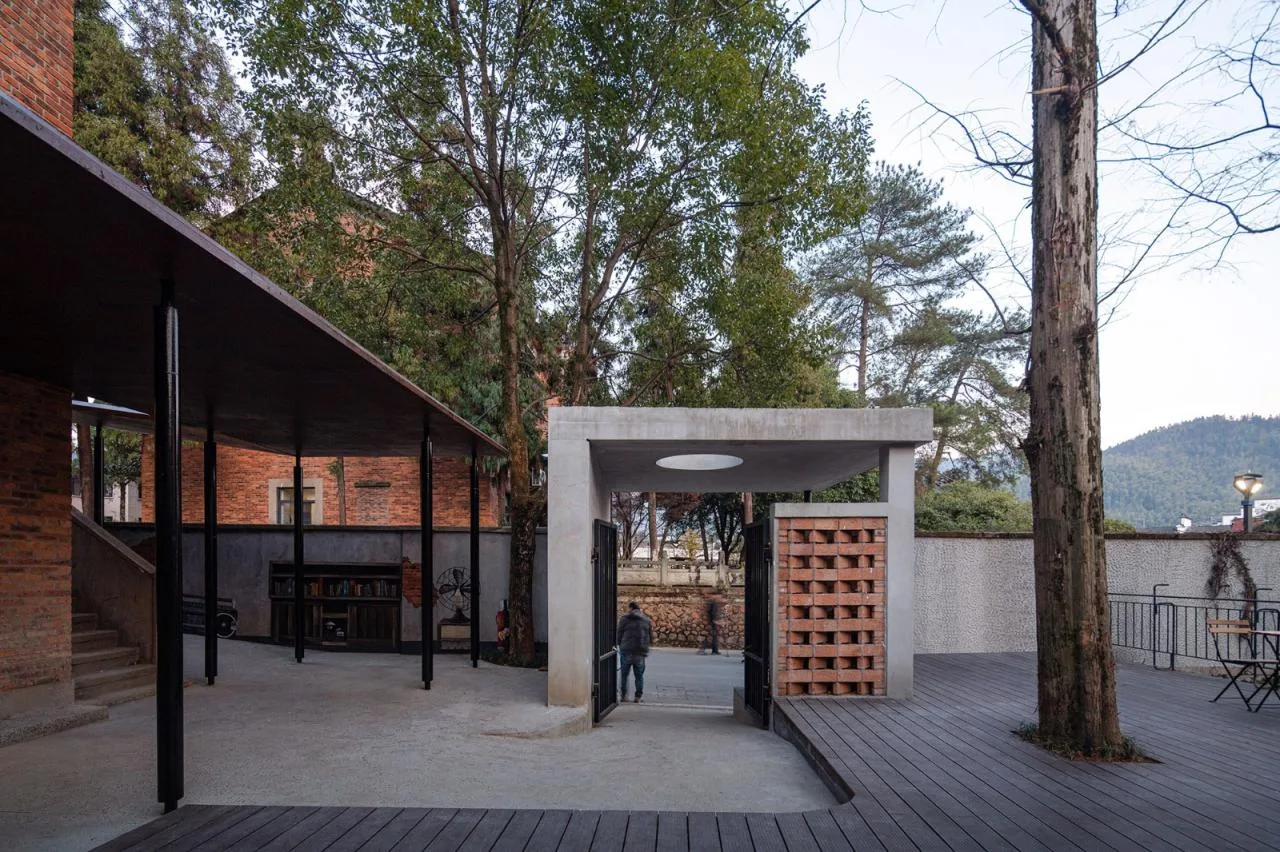
Courtyard 1 and dawn redwood tree © Architecture Photography
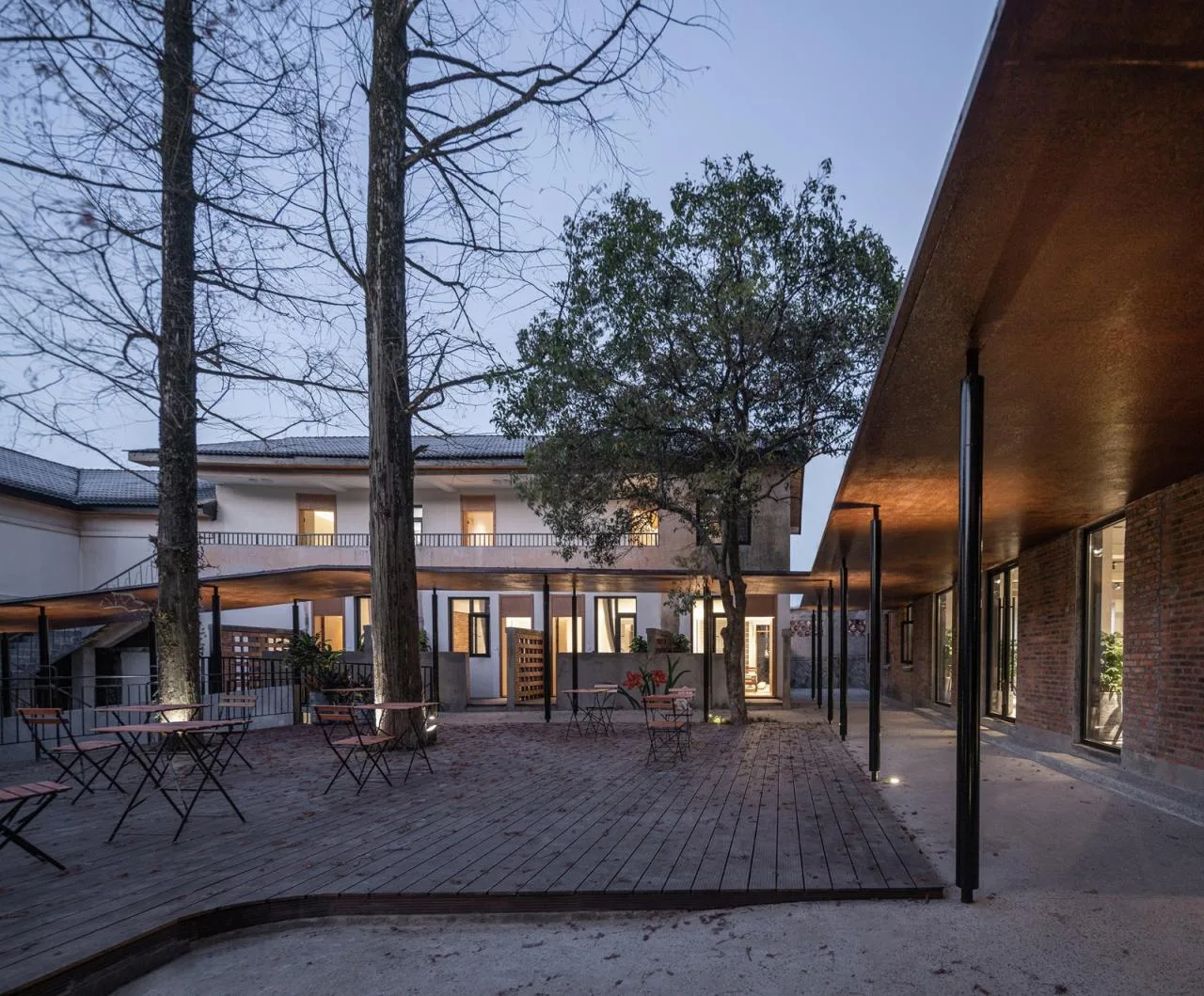
Courtyard 1 and dawn redwood tree © Architecture Photography
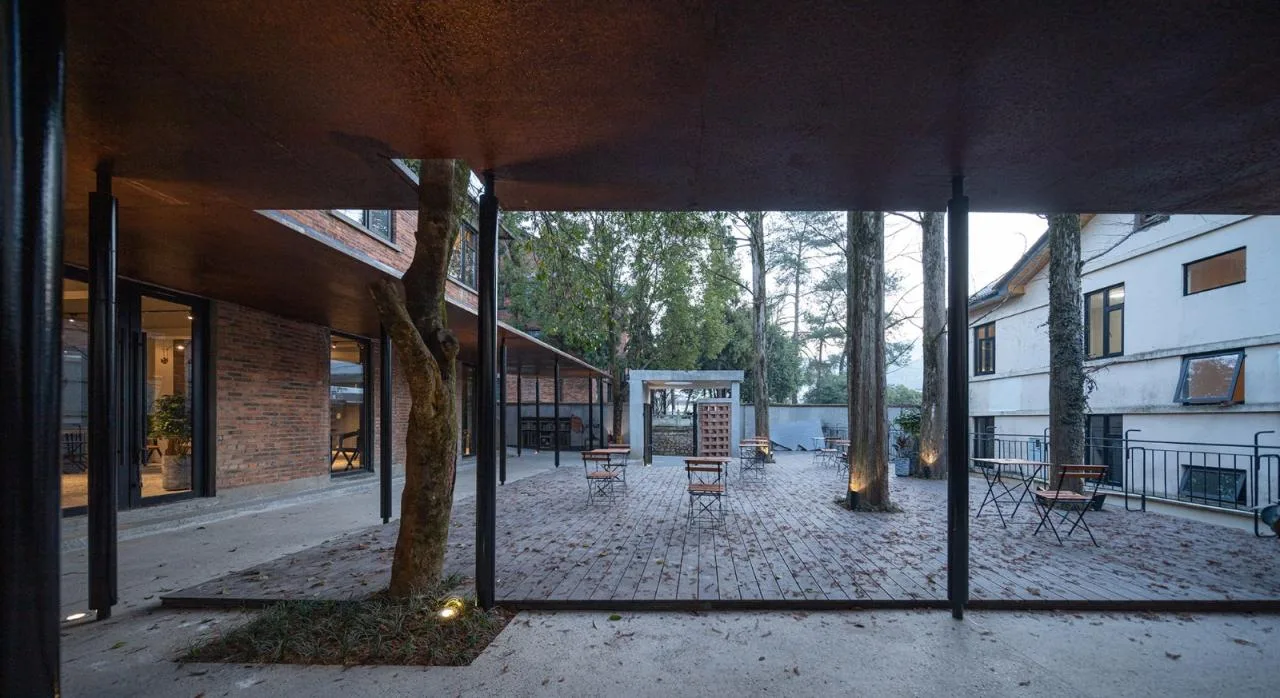
△ Courtyard 1 public leisure space © Architecture Photography
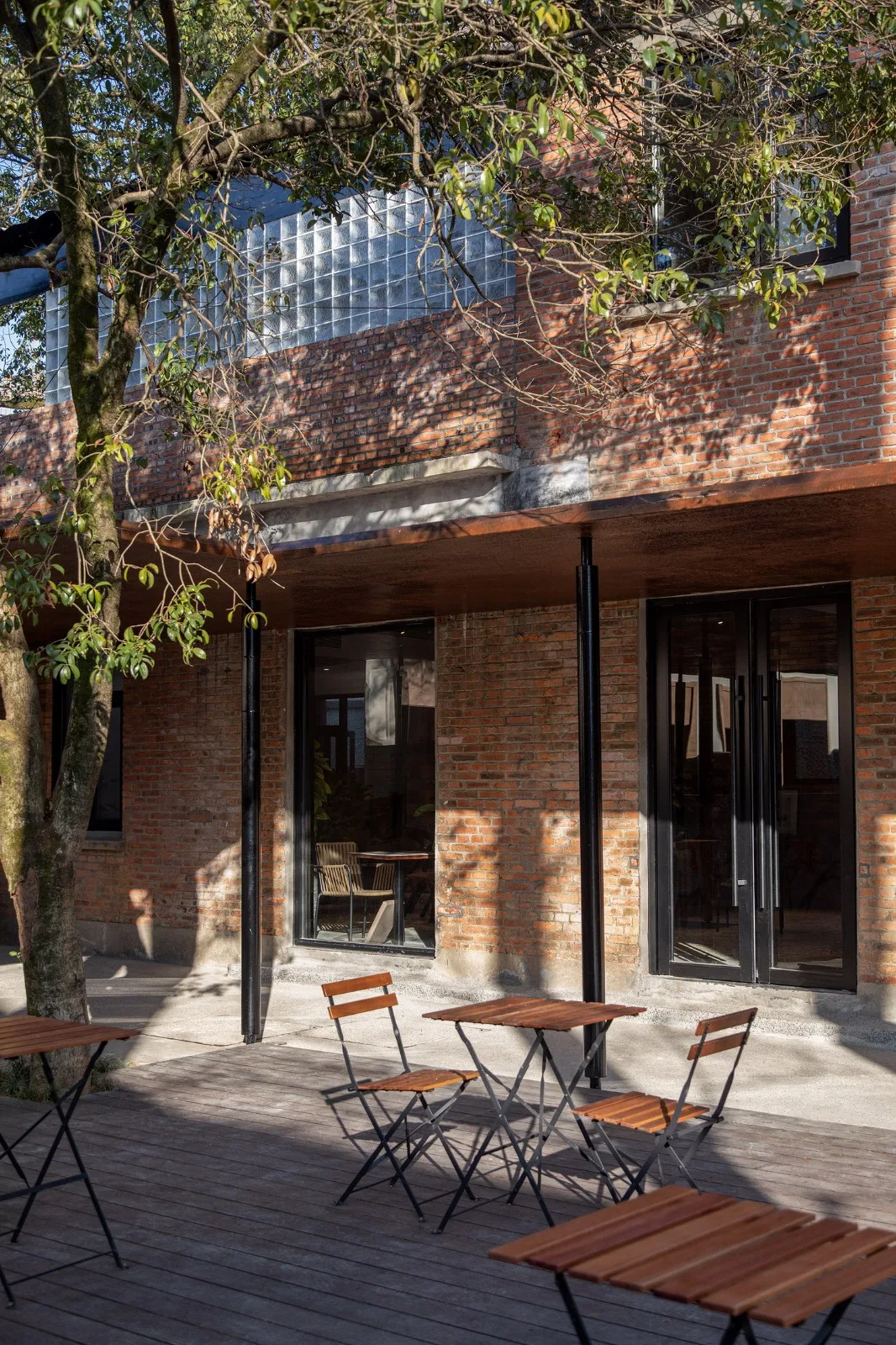
△ Courtyard 1 public leisure space © Architecture Photography
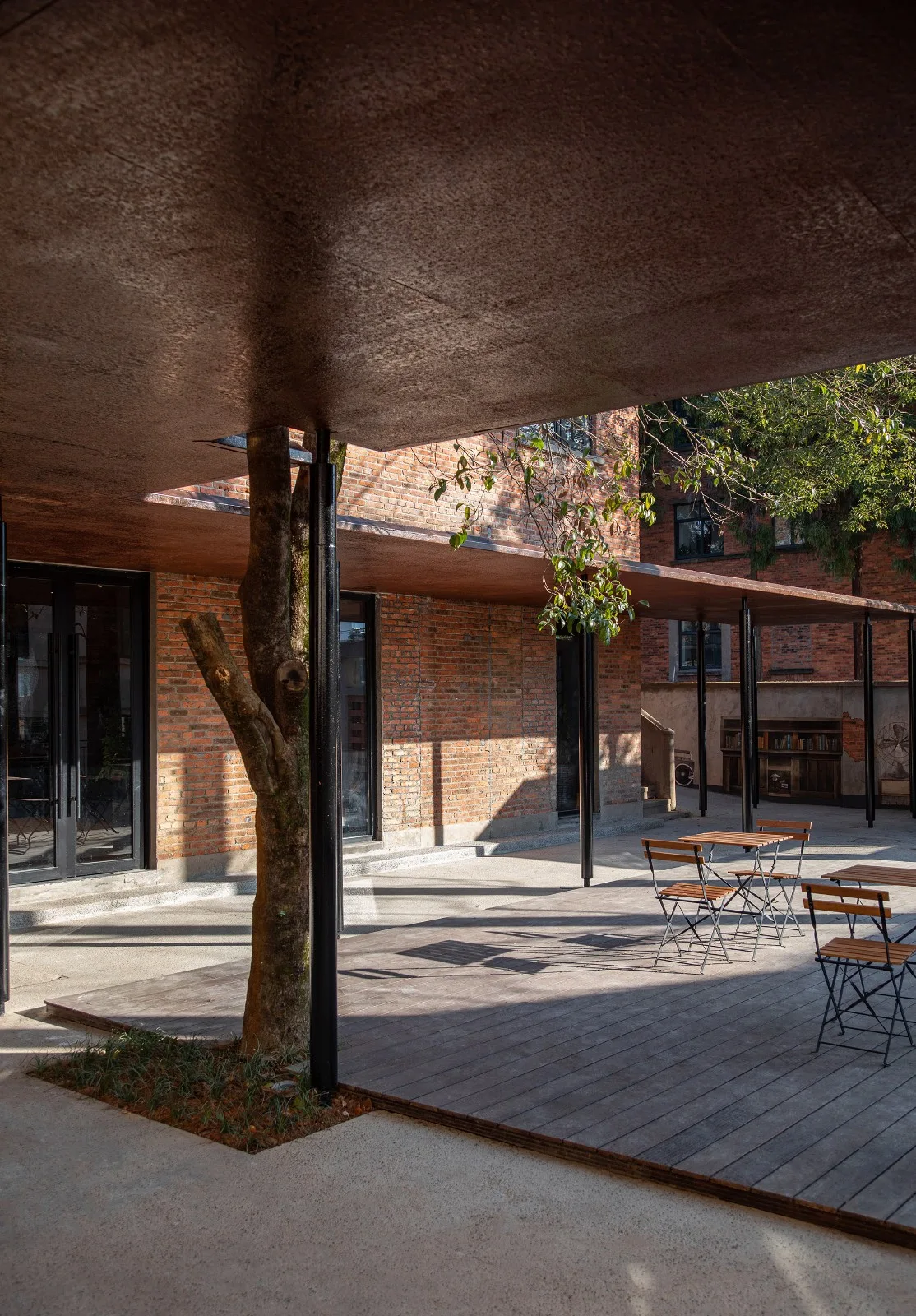
△ Courtyard 1 public leisure space © Architecture Photography
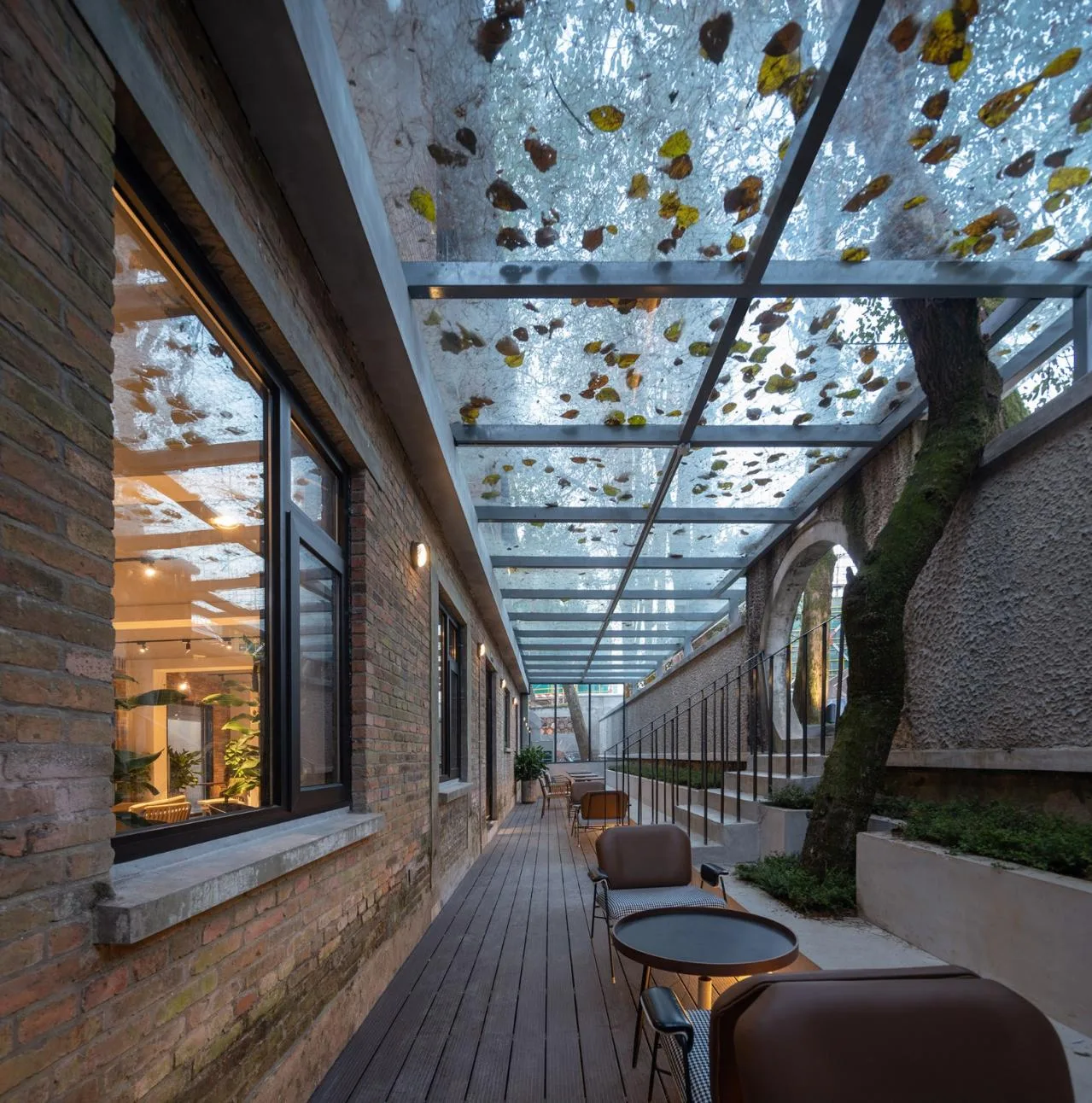
△ Outdoor dining area in the sunken courtyard © Architecture Photography
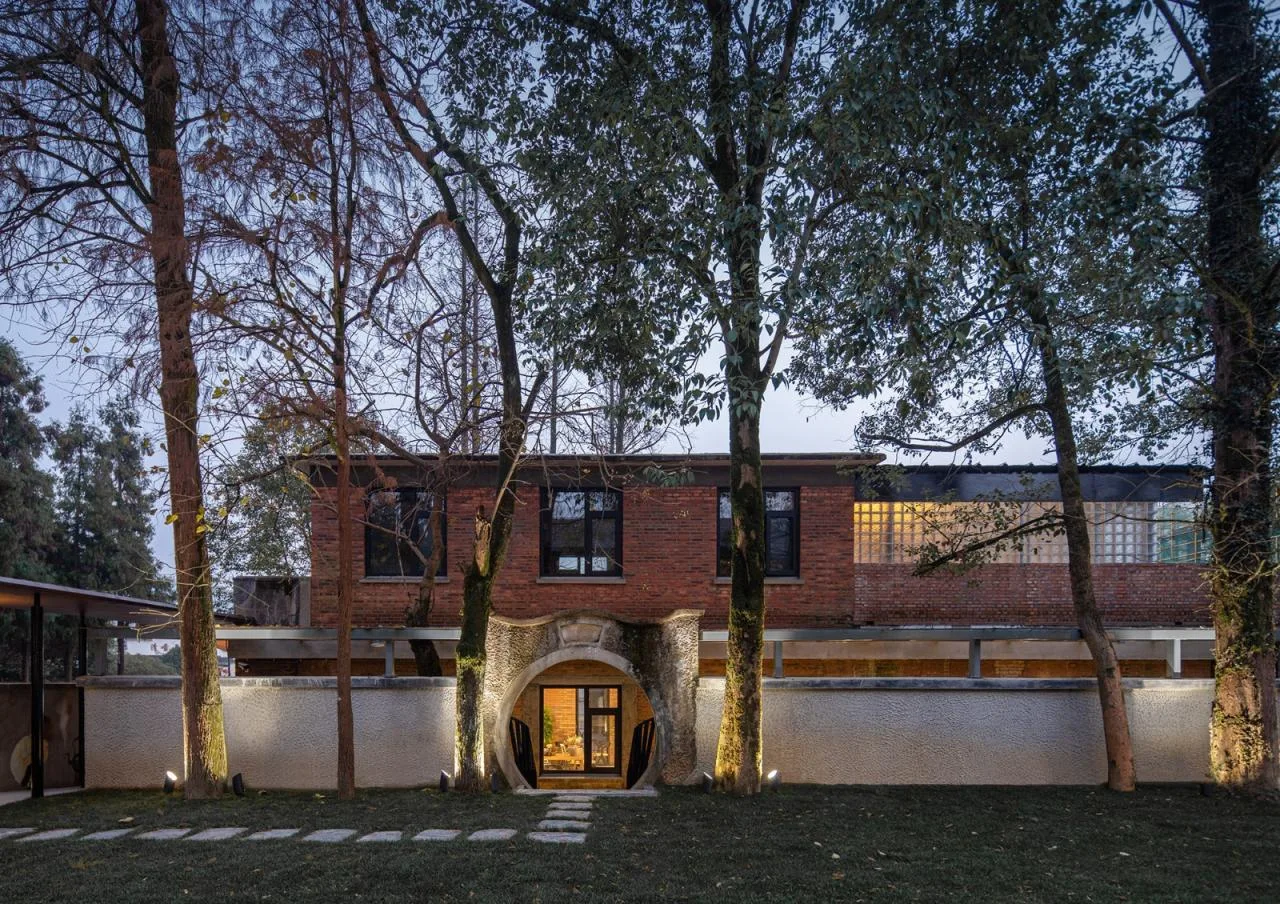
Preserved old doorway in Courtyard 2 © Architecture Photography
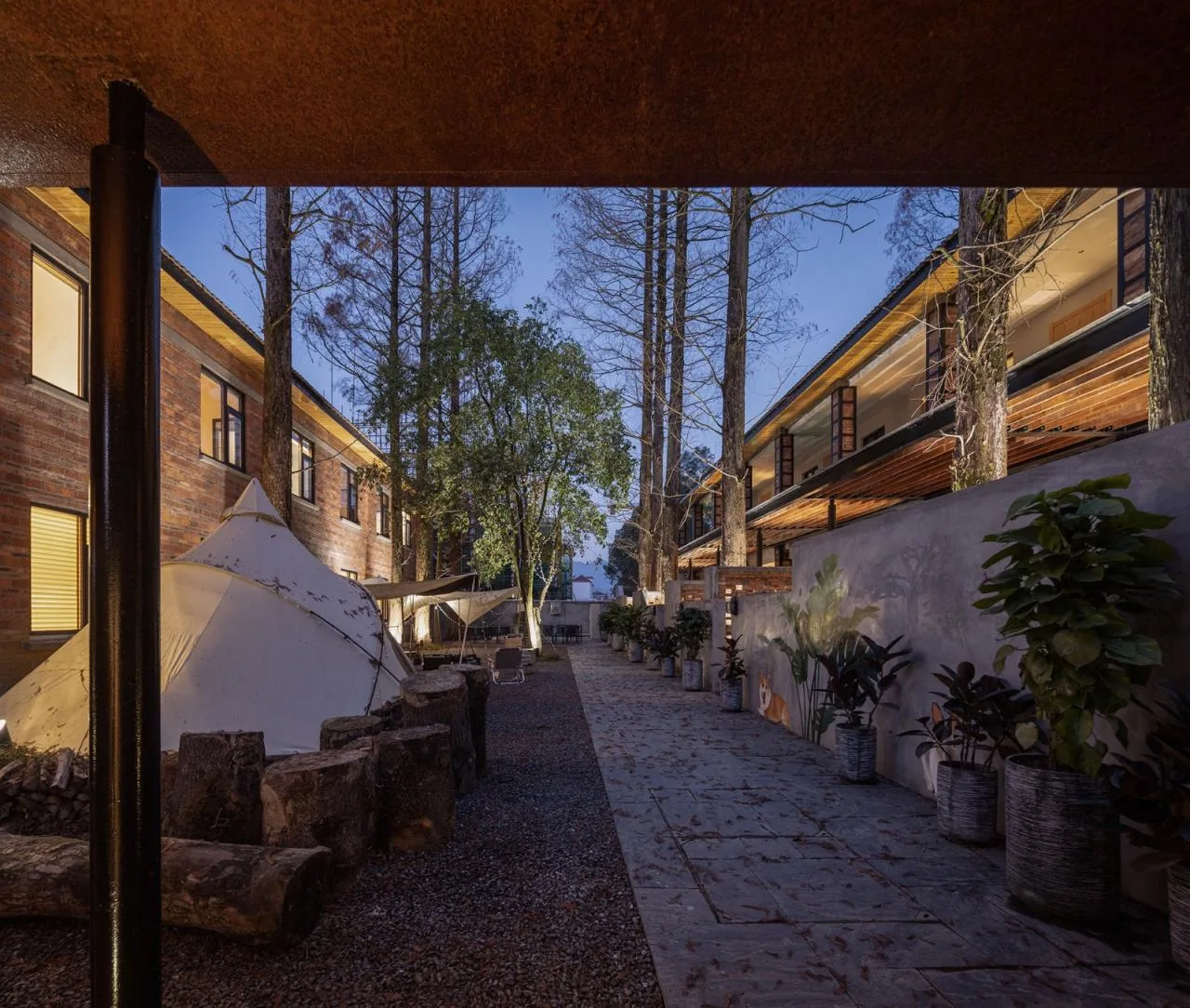
△ Courtyard 3 outdoor activity area © Architecture Photography
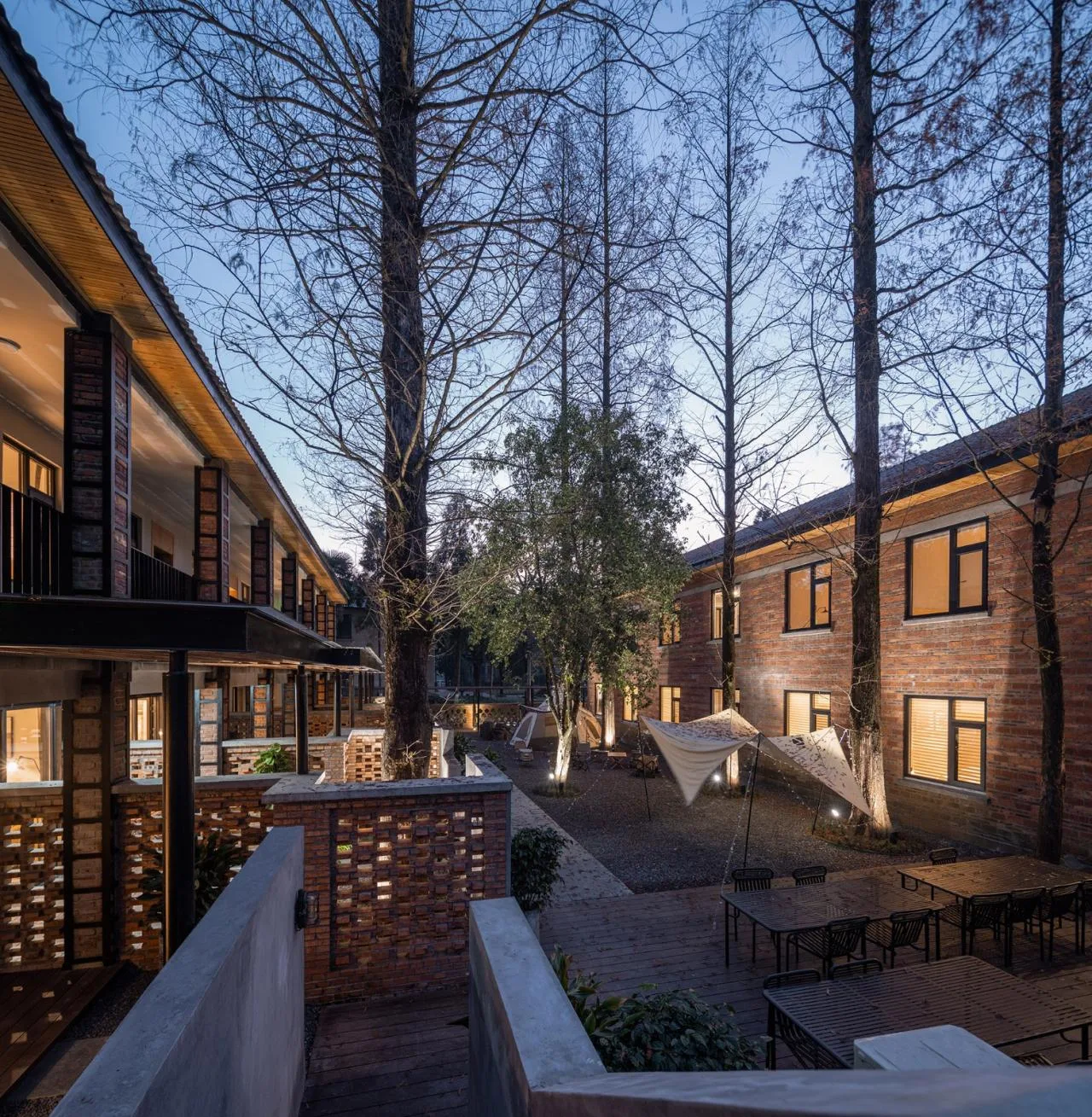
△ Courtyard 3 outdoor activity area © Architecture Photography
△ Large and small courtyards © Architecture Photography
△ Garden within the nursery guest rooms © Architecture Photography
△ Garden within the nursery guest rooms © Architecture Photography
△ Garden within the nursery guest rooms © Architecture Photography
Project Drawings
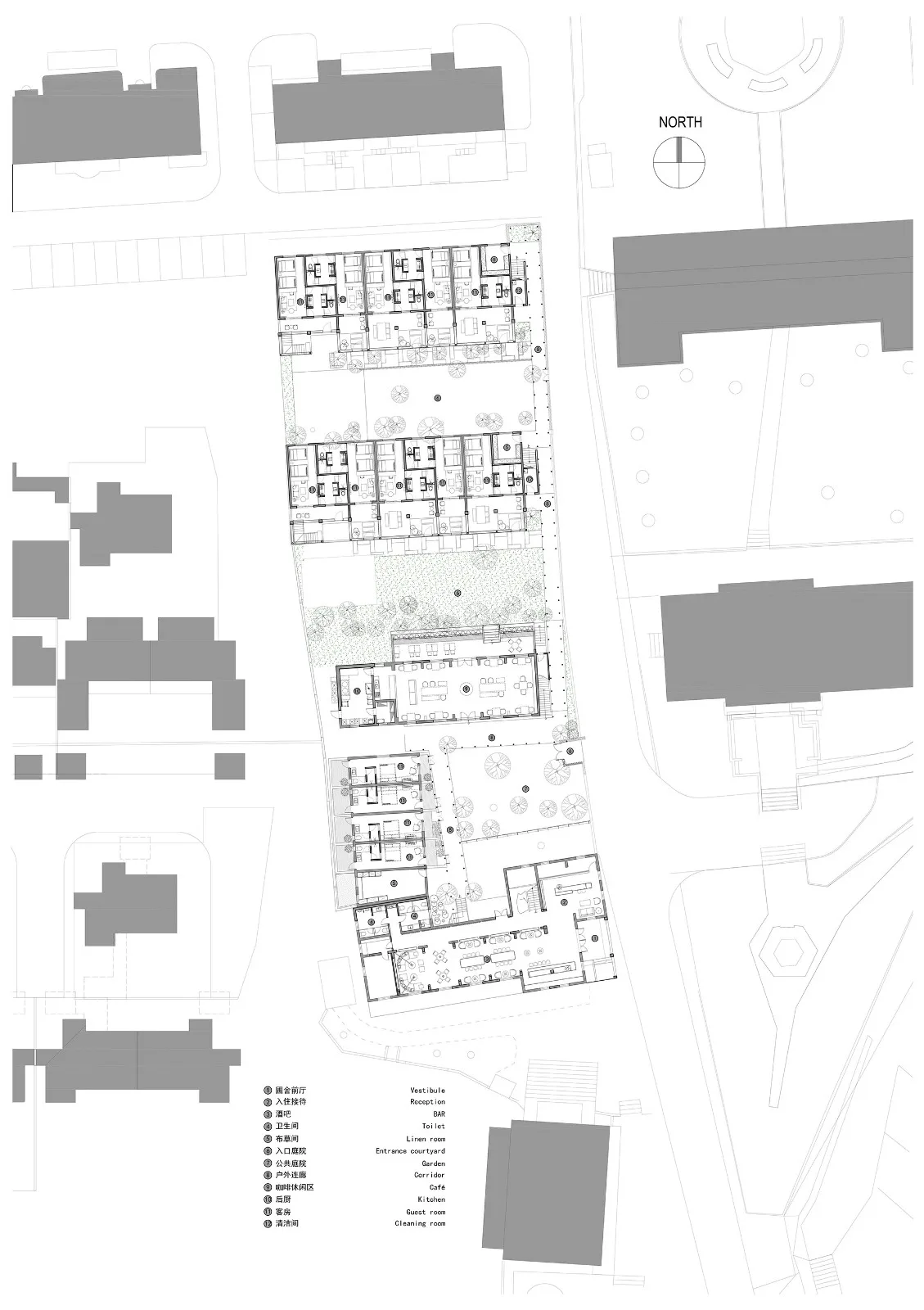
△ First-floor general plan © y.ad studio
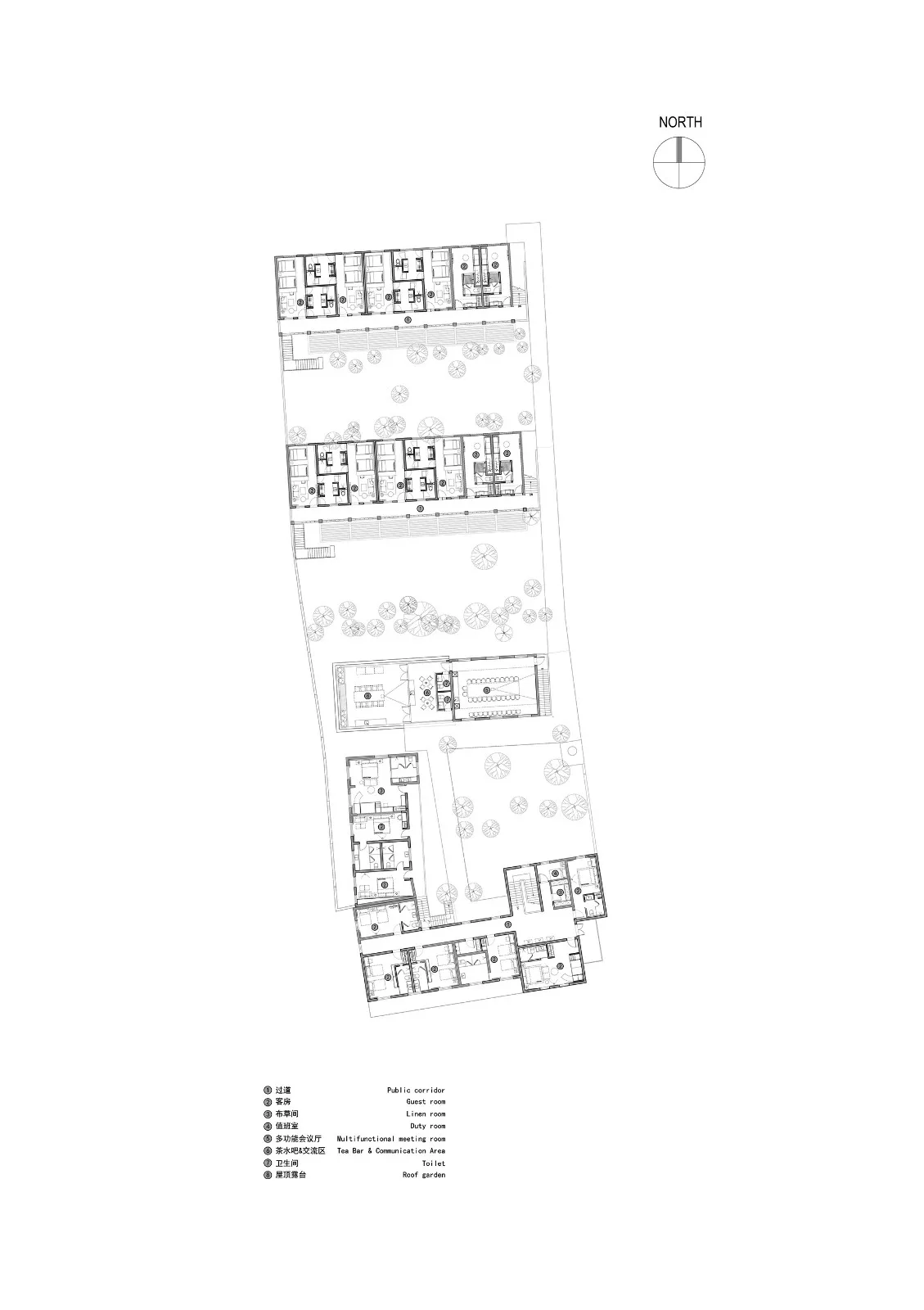
△ Second-floor general plan © y.ad studio
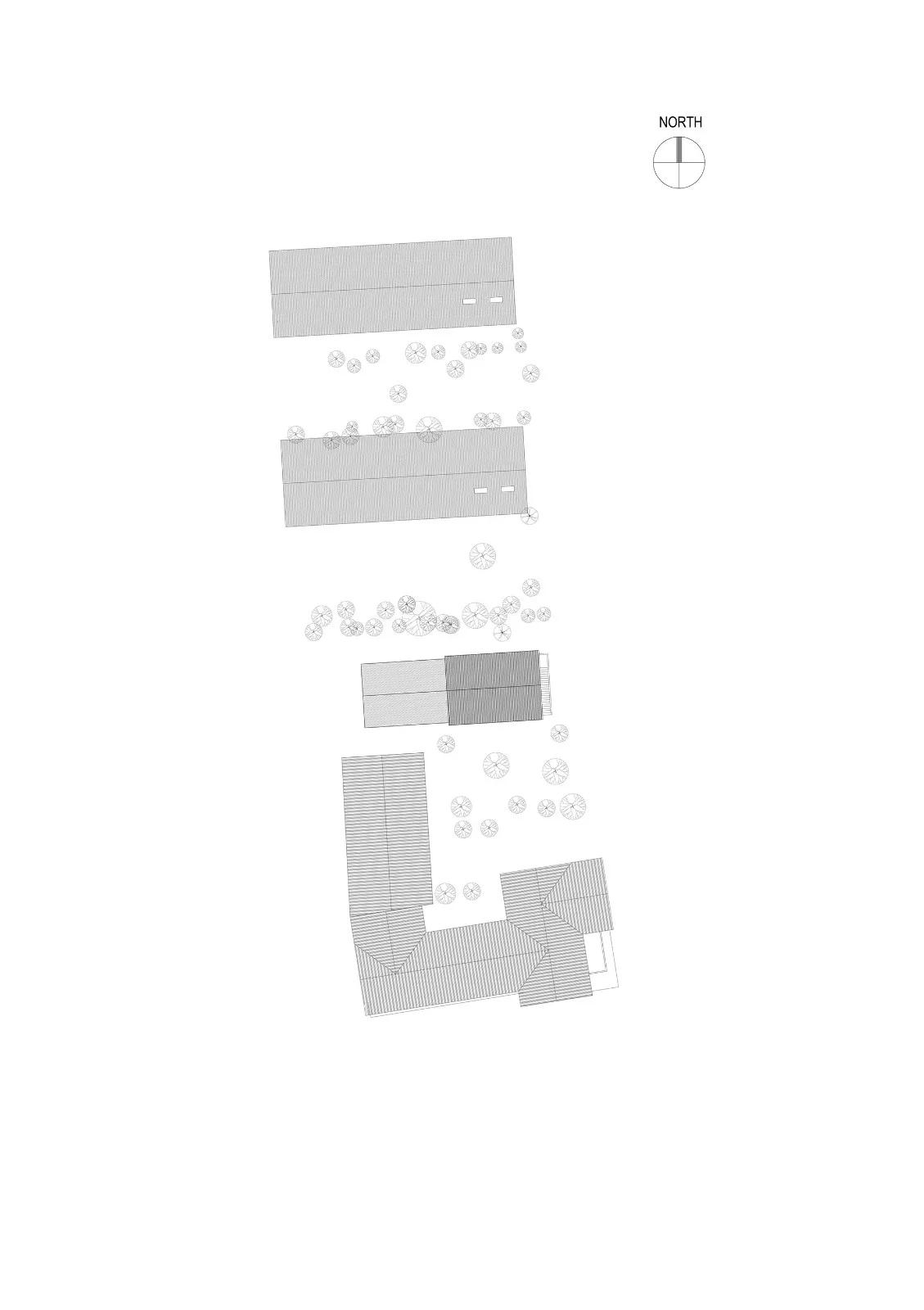
△ Overall roof plan © y.ad studio
Project Information
Project Name: Longyou Xikou Town Rural Future Community Pu She · Xikou Shared Homestay
Project Location: Xikou Town, Longyou County, Quzhou City, Zhejiang Province
Construction Unit: People’s Government of Xikou Town, Longyou County
Design Commission: Xiangban Culture and Tourism Group
Design Team: y.ad studio | Shanghai Yan Yang Architectural Design Studio
Company Website: www.sh-yad.com
Lead Architect: Yan Yang
Project Designer: Wu Kejia
Architectural Design Institute: Shanghai Times Architectural Design Institute
Construction Drawing: Hangzhou Zhongya Architectural Design Co., Ltd
Project Design and Construction Management: Zhu Zhen, Gao Chengkai, Jia Yidong
Building Area: 2,336 square meters
Main Materials: Red brick, glass brick, weather-resistant steel, aluminum panels, coatings, bamboo-steel panels
Design Period: March 2020 – June 2020
Construction Period: March 2021 – December 2021
Photography Credit: Ziran Architecture Photography













Must log in before commenting!
Sign Up