
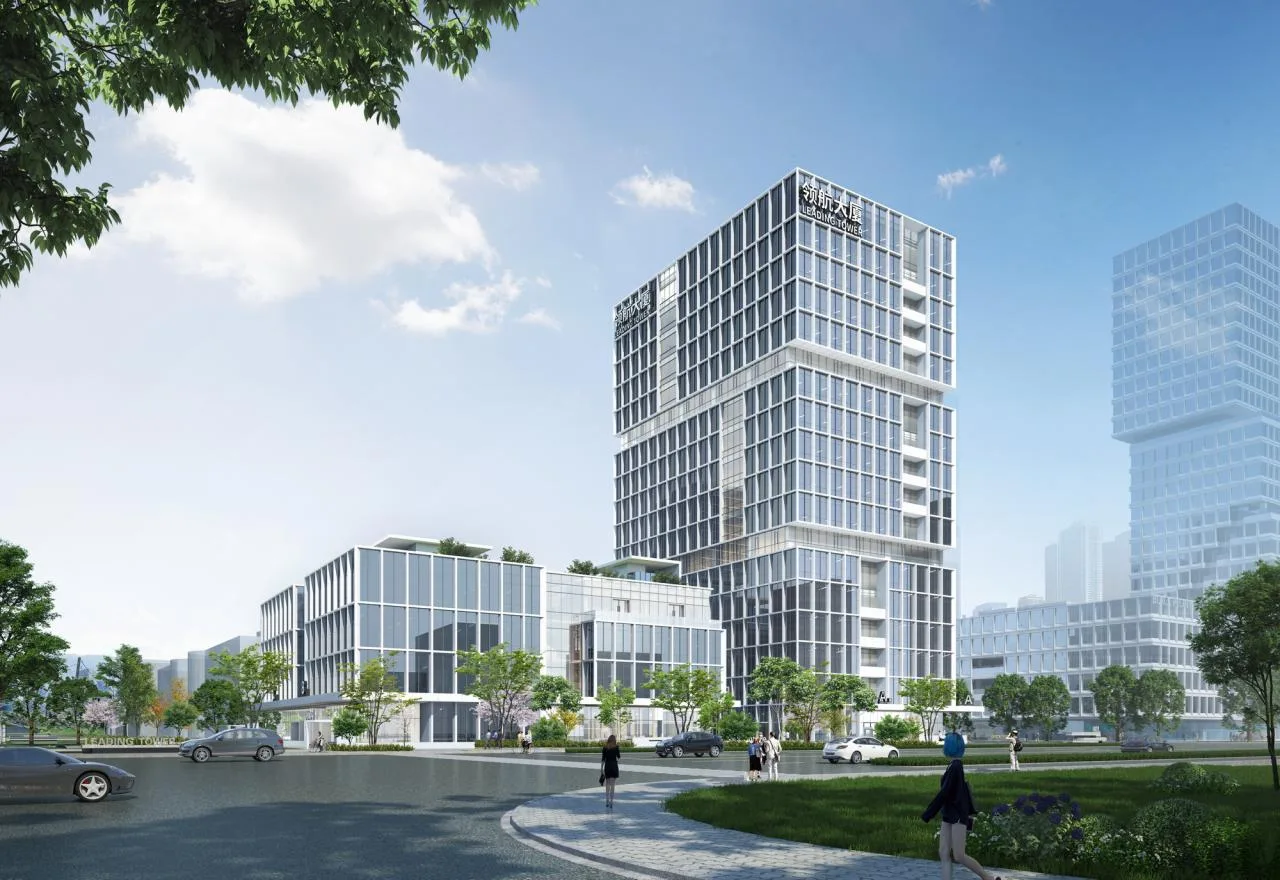
“A hundred boats compete with a thousand sails; now is the time to ride the wind and break the waves.”
01 Project Background
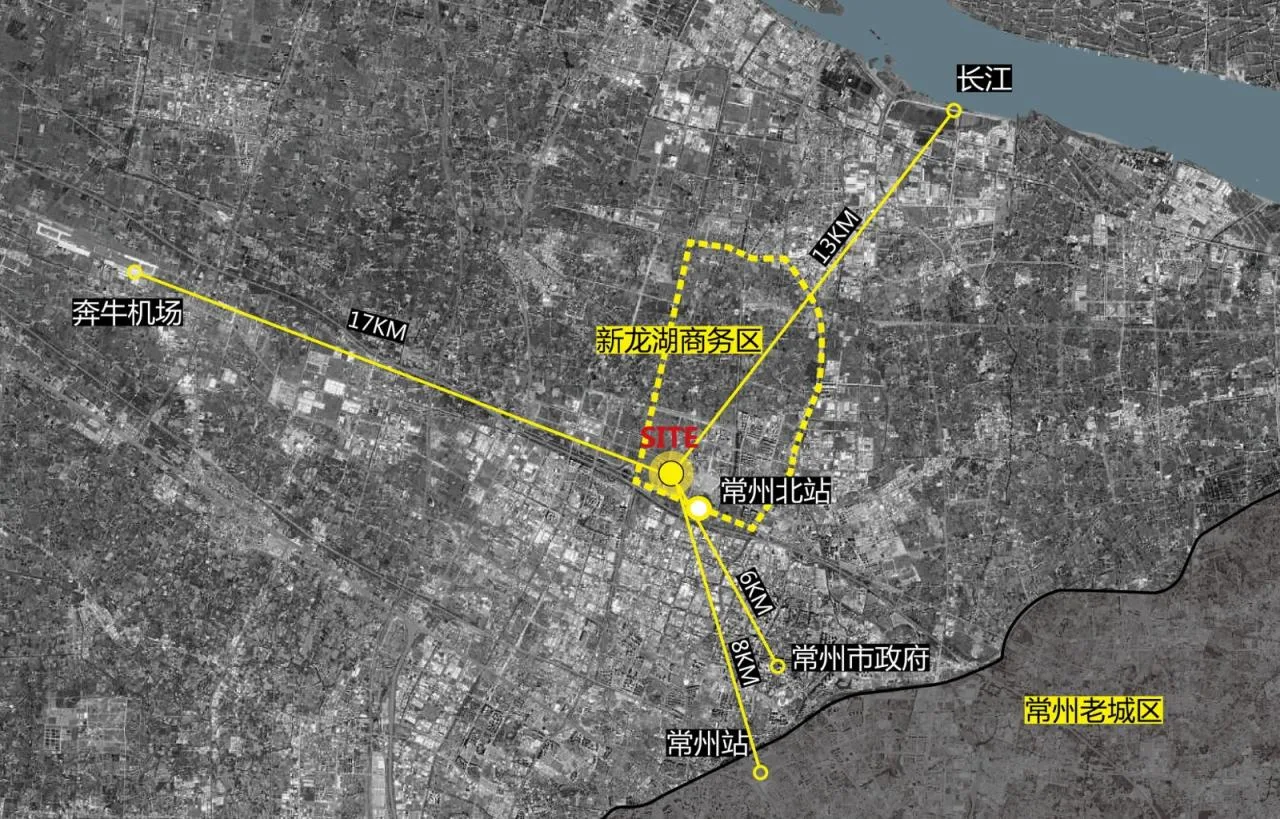
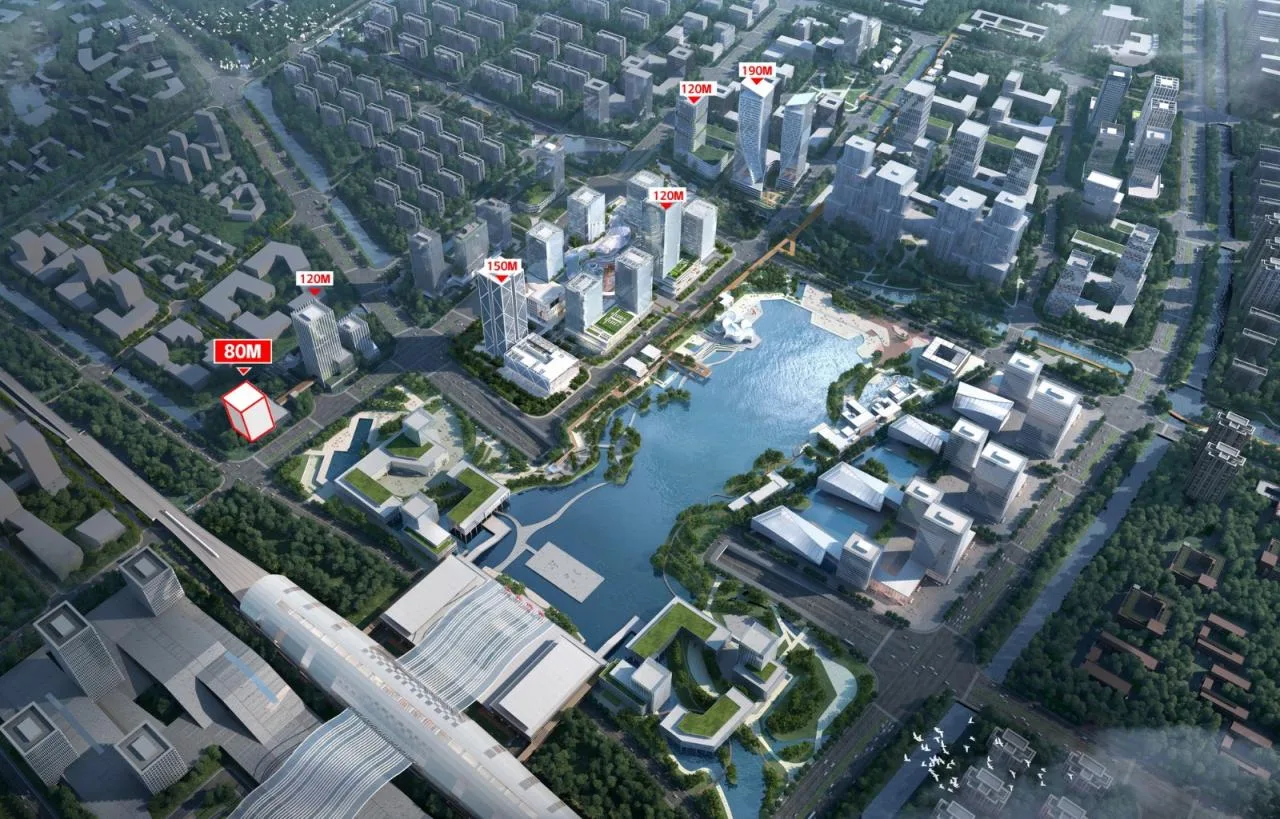
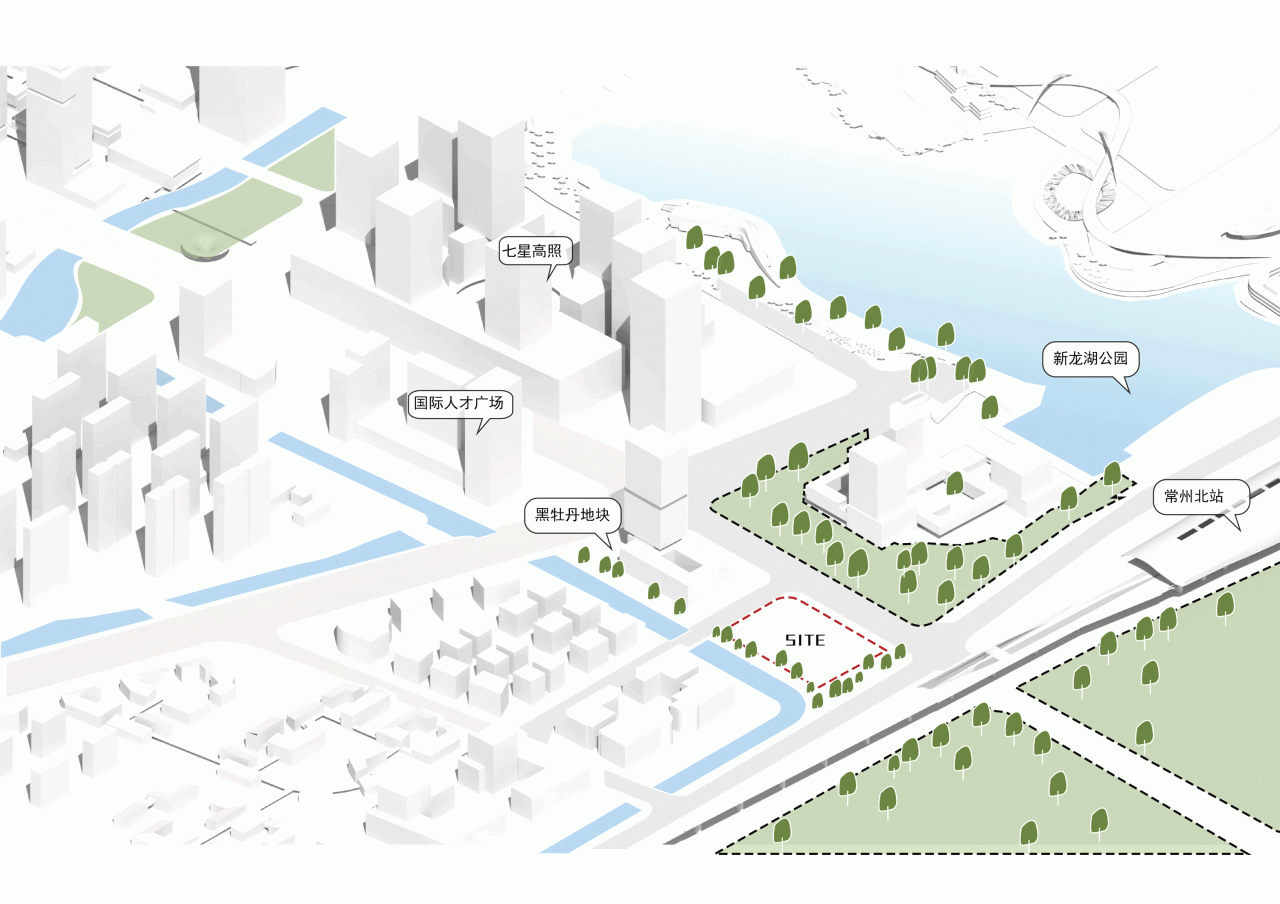
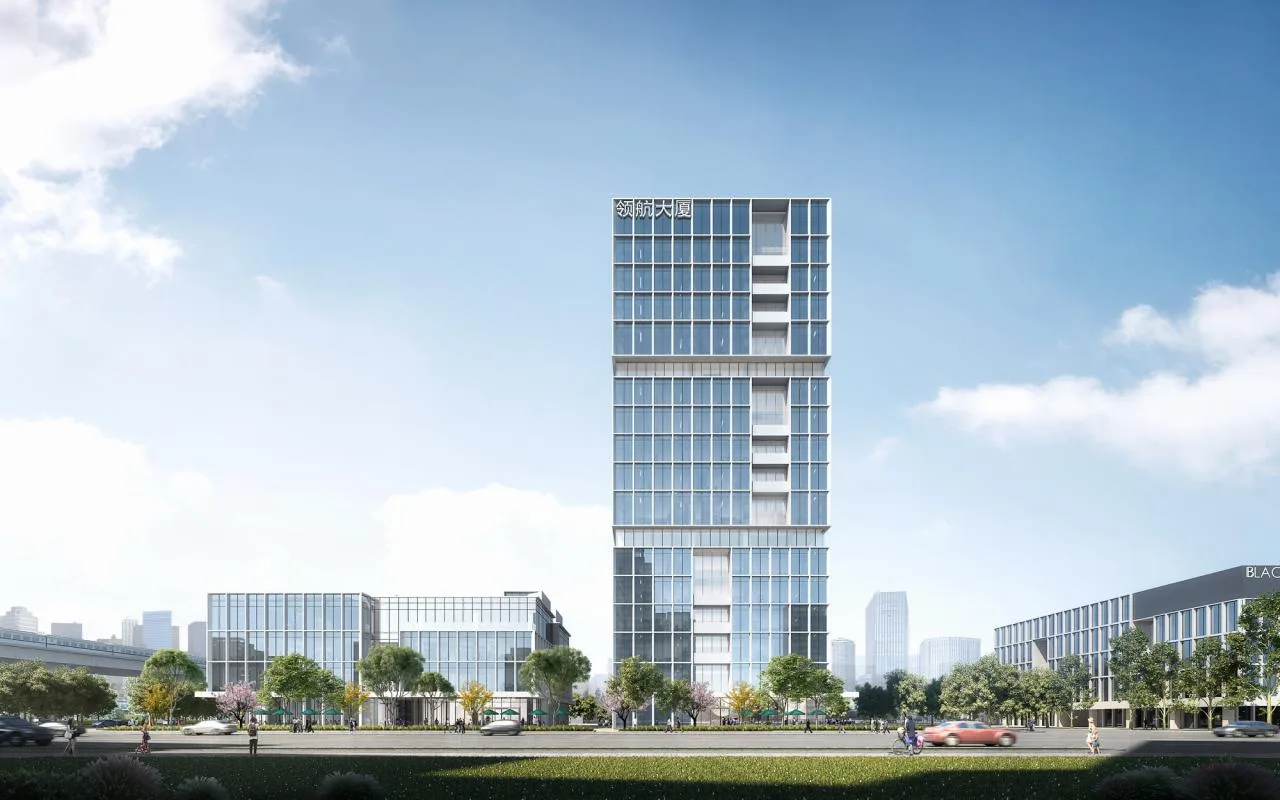
The Navigation Building is situated in the Xinbei District High-Speed Rail New City of Changzhou. Positioned at the northwest corner of the high-speed railway station, it marks the starting point of the skyline for the square in front of the North High-Speed Railway Station. As the first building visible to passengers entering and exiting the station, its prominence is undeniable.
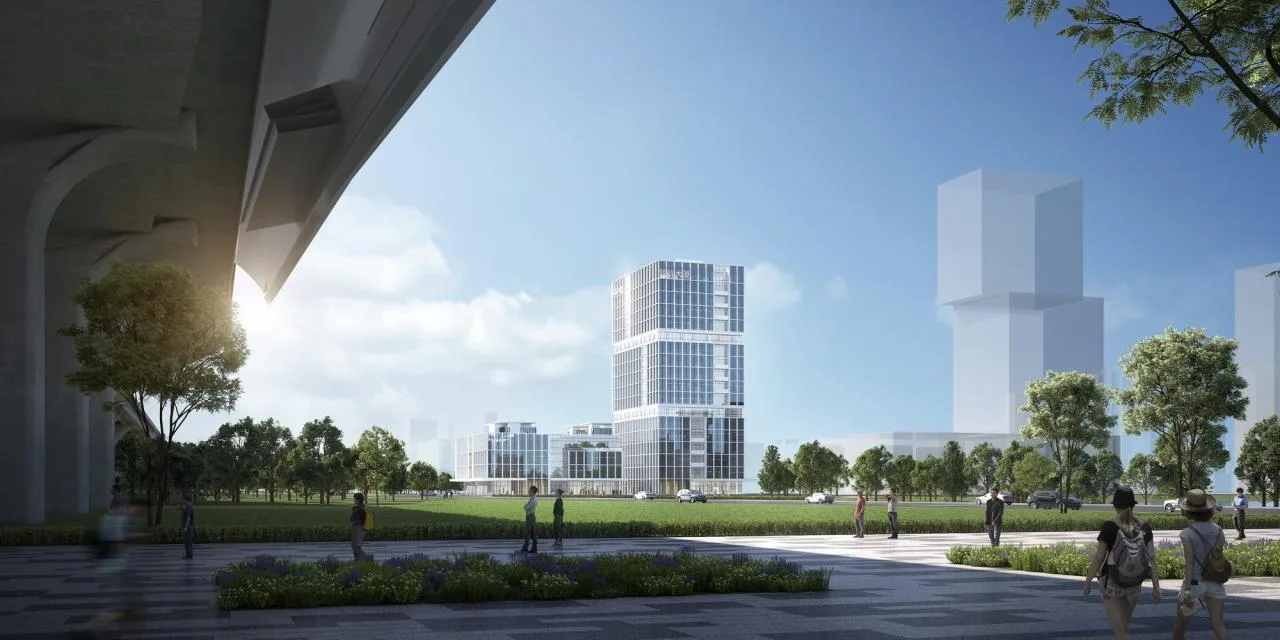
The term “Navigation” conveys ideas of leadership and setting sail, reflecting both the building’s unique location and the owner’s aspirations. The goal is to establish a 5O headquarters office: Oxygen (fresh air), Office park, Open space, Own exclusive, and Opportunity.
02 Project Challenges
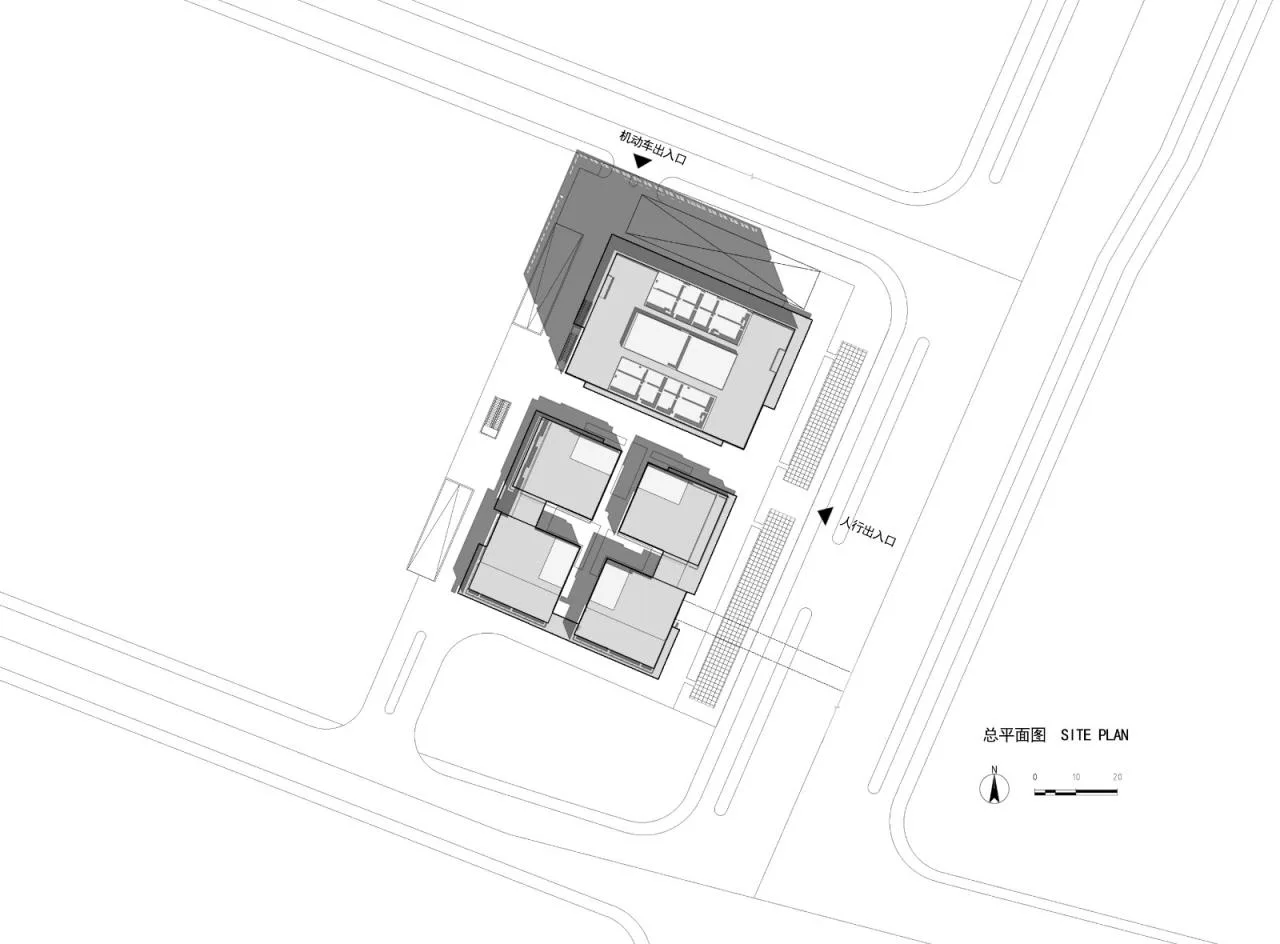
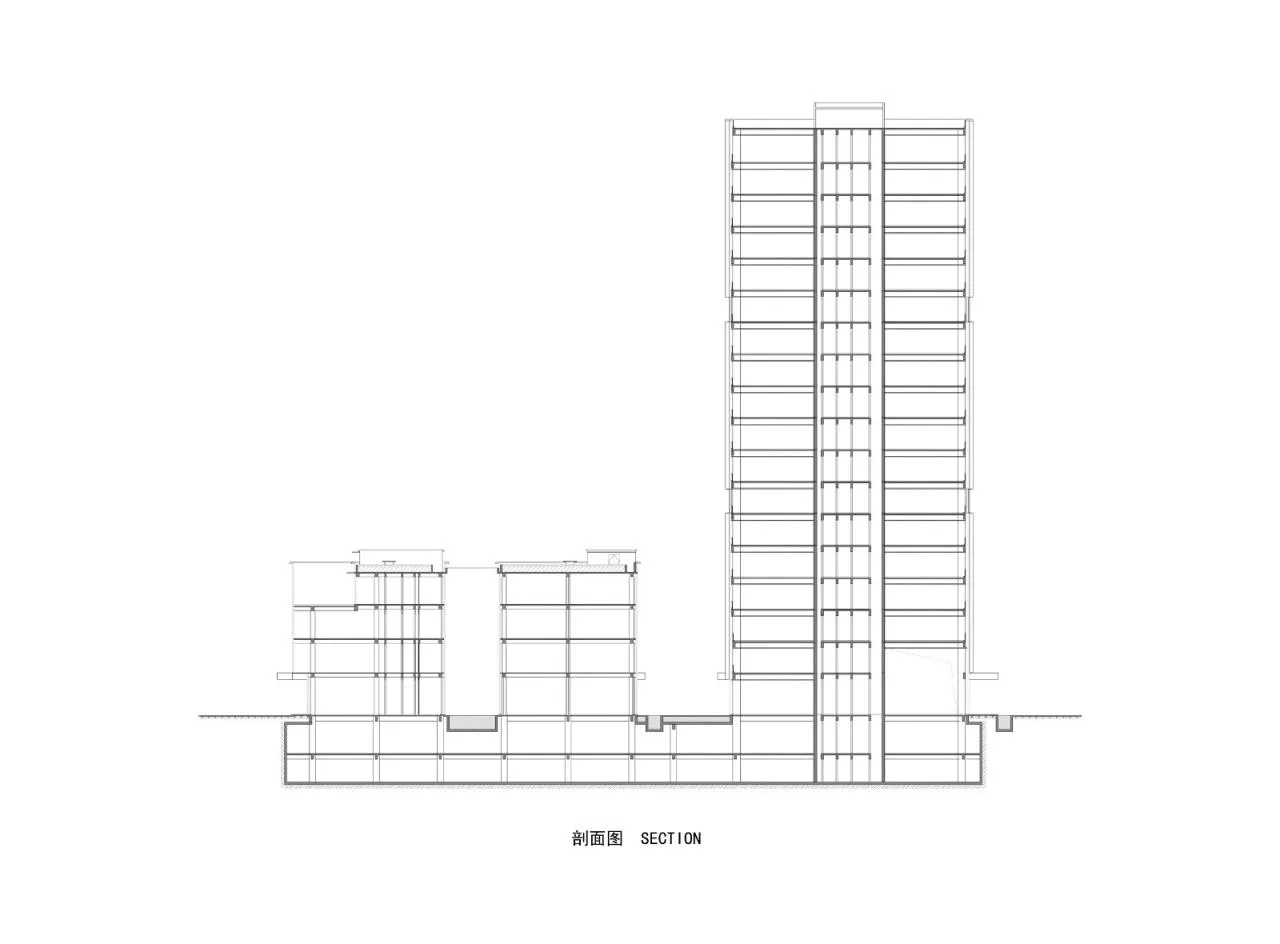
The project is limited to a height of 80 meters, with a plot ratio of 3.5, and occupies a slightly constrained site of just over 8,700 square meters. Traditionally, this might lead to designing a tower with multiple podium levels or twin towers of varying heights. However, the brief called for a high-rise corporate headquarters alongside four commercial villas, each requiring independence while maintaining adequate spacing.
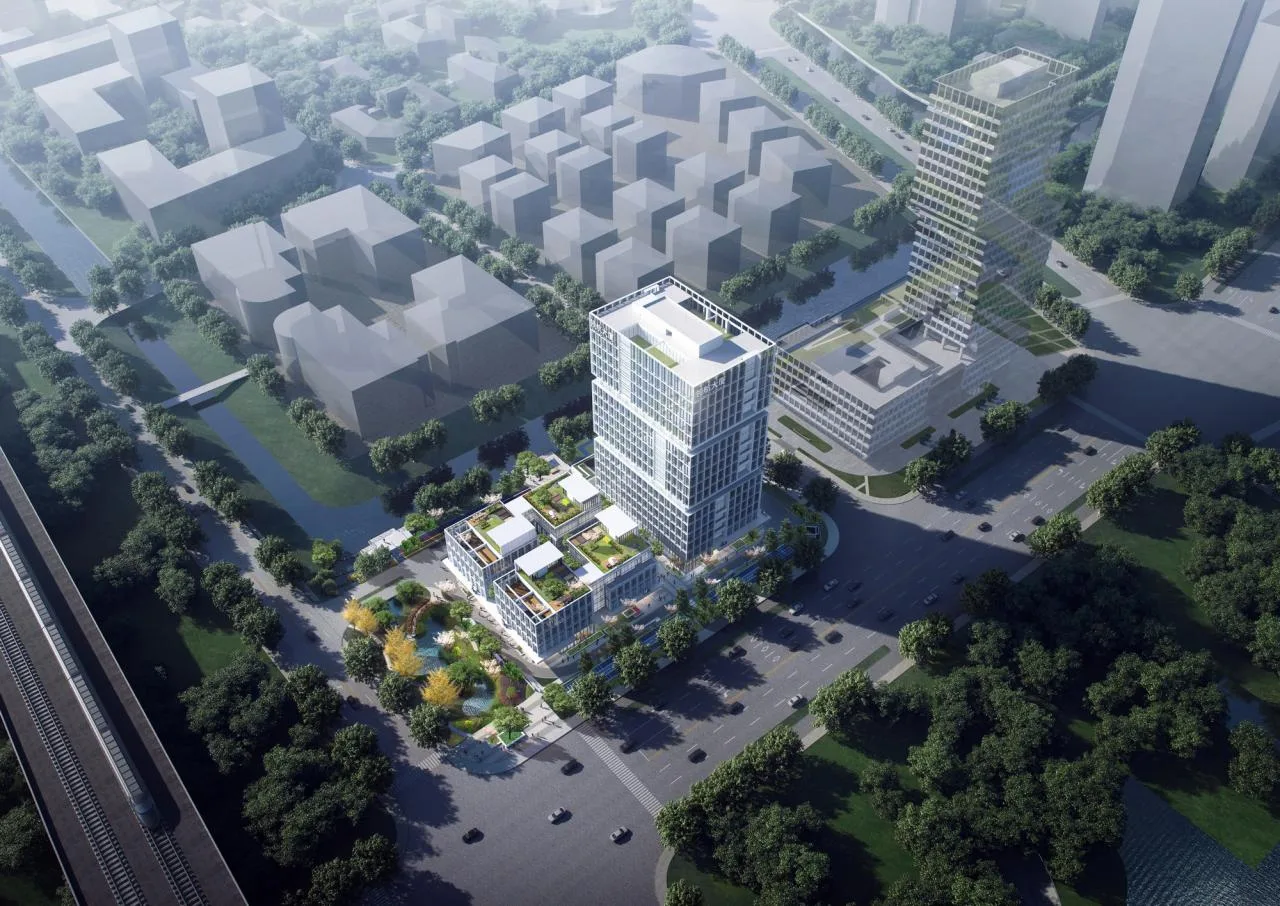
Key issues included creating a comfortable office environment within a dense space, maximizing landscape resource use, mitigating noise from the nearby high-speed rail, and transforming a “short and stout” office tower into a landmark building with distinctive features.
03 Tower Design
The design team began by analyzing the site’s physical environment and simulating noise direction and intensity. It was found that the tower would be more affected by noise compared to the lower commercial villas. To address this, the tower was placed as far from the rail tracks as possible and equipped with triple-glass and double-cavity soundproof glazing on the noise-facing sides to minimize disturbance.
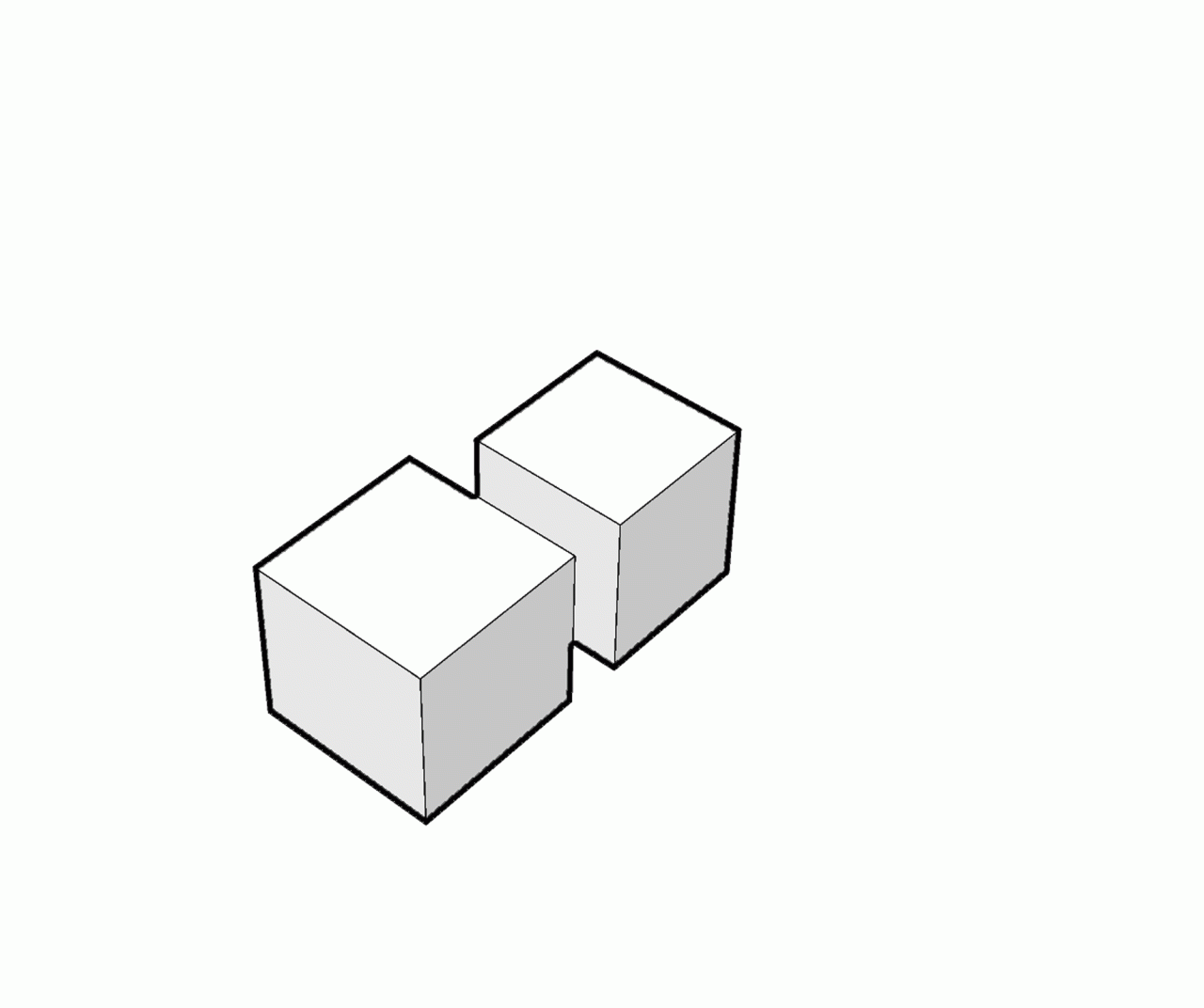
Three tower shapes were considered: a square-point style, a flat-point style oriented east-west, and a flat-point style oriented north-south. Due to the site shape and the requirement for four independent commercial villas, only the north-south oriented flat-point tower met all criteria, including business function, circulation, and acoustic needs.
04 Podium Design
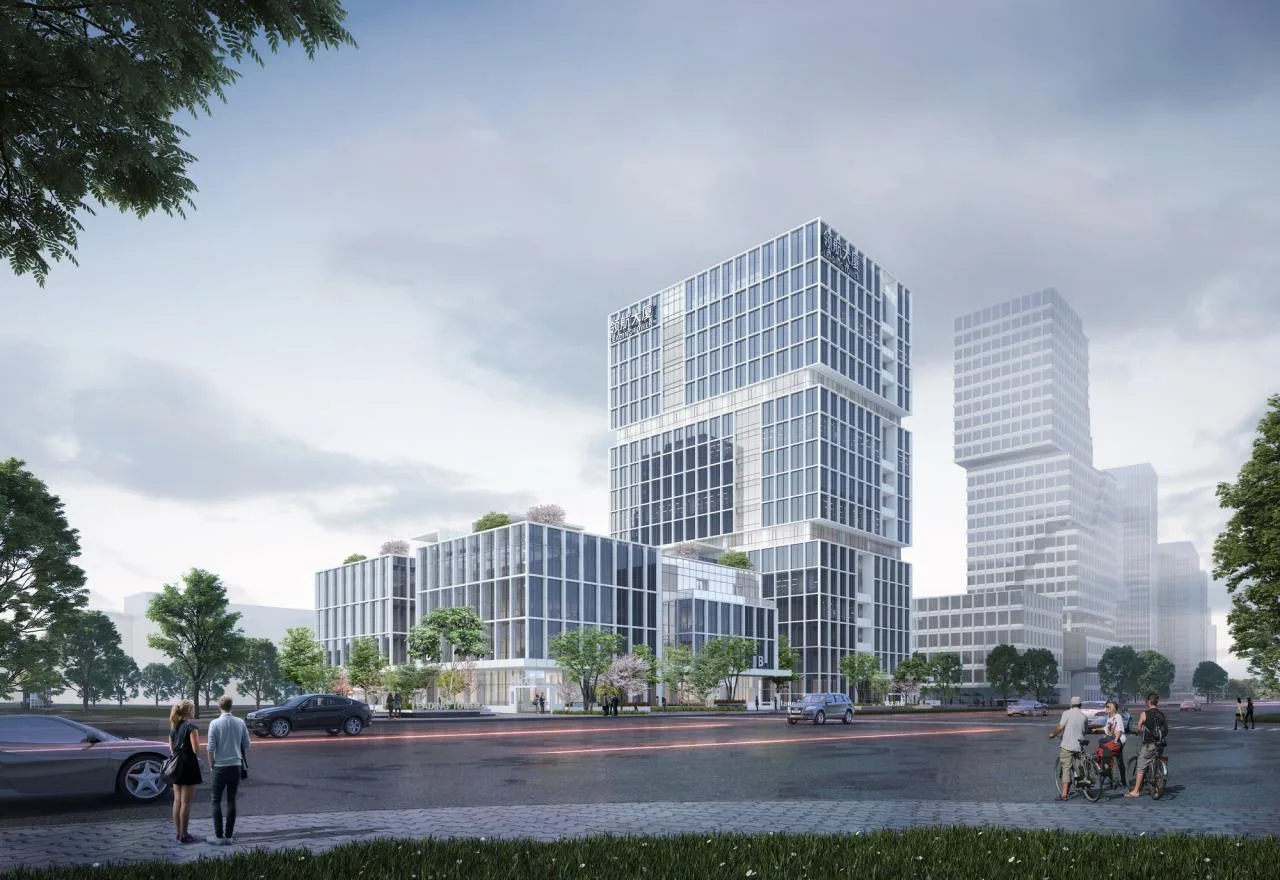
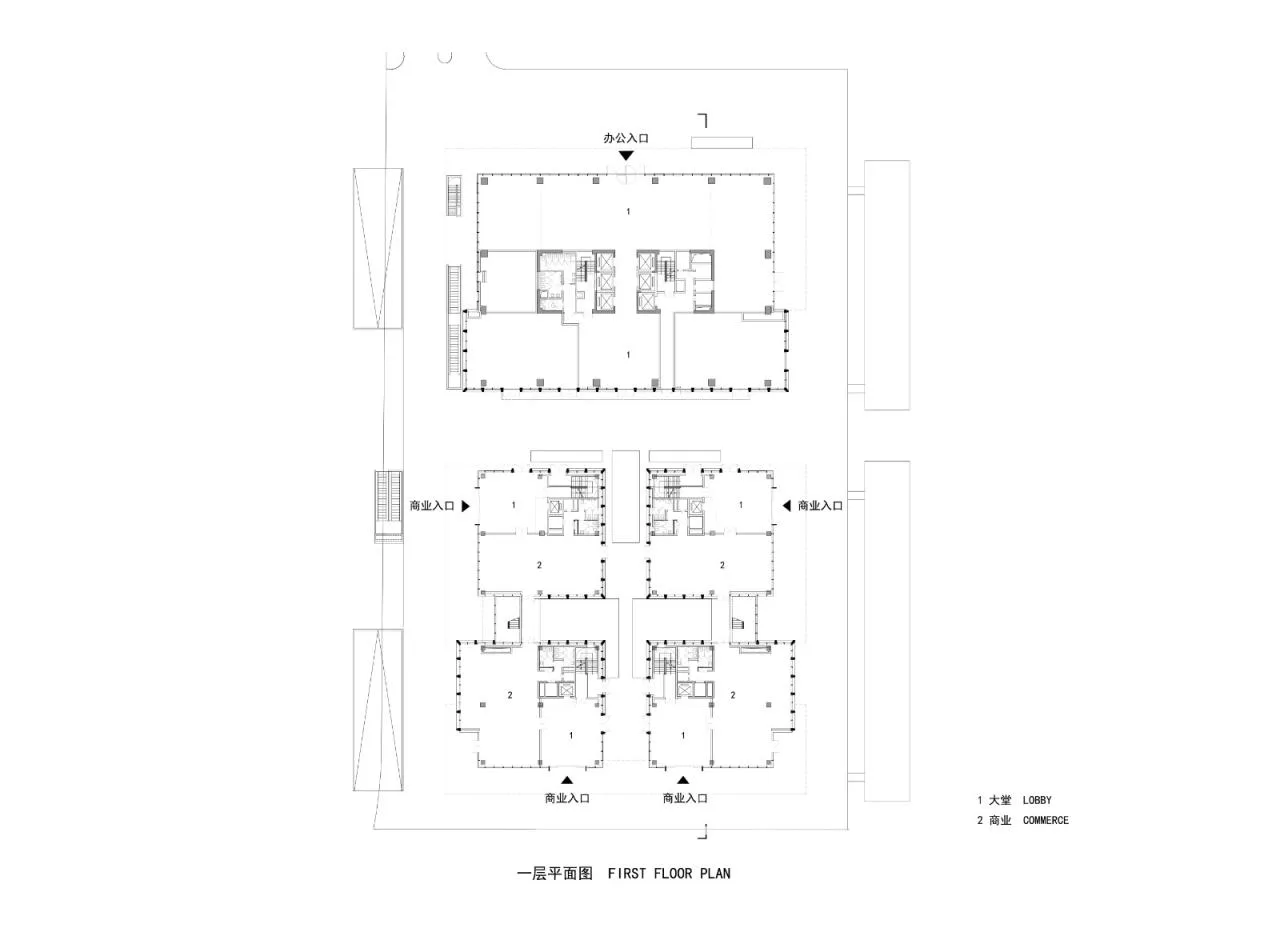
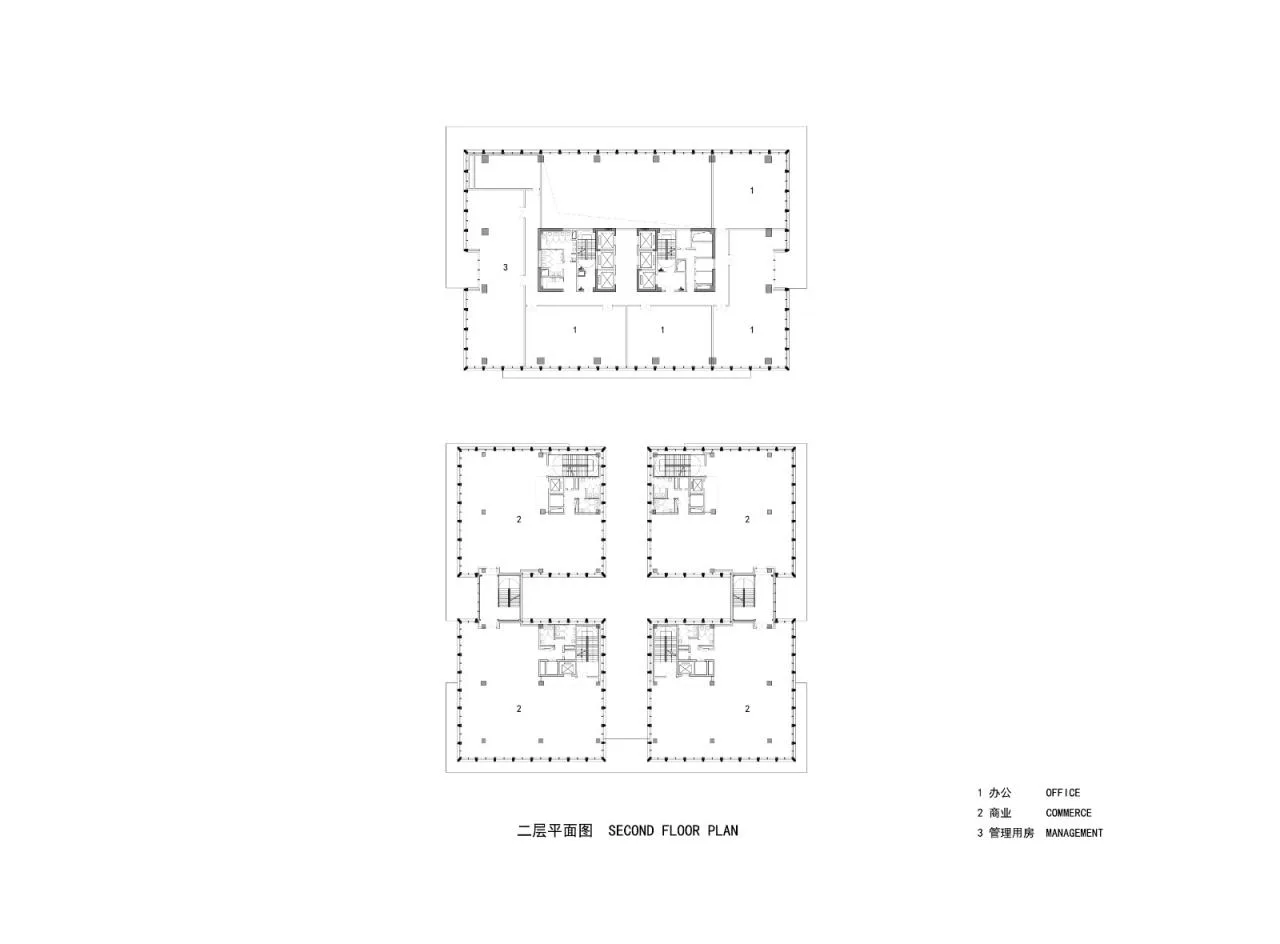
The four commercial villas are arranged in pairs with shared evacuation stairs centrally located to reduce the number of core staircases. Architecturally, each villa’s slender form initially lacked dialogue with the tower’s volume. By connecting the facades, the street frontage becomes more cohesive and the overall form gains dynamic variation.
05 Site Transportation
Vehicular access to the site is provided via north-south branch roads, allowing traffic to quickly disperse upon entering. Most vehicles enter the basement, minimizing pedestrian disruption at ground level, with only a small number of passengers disembarking above ground.
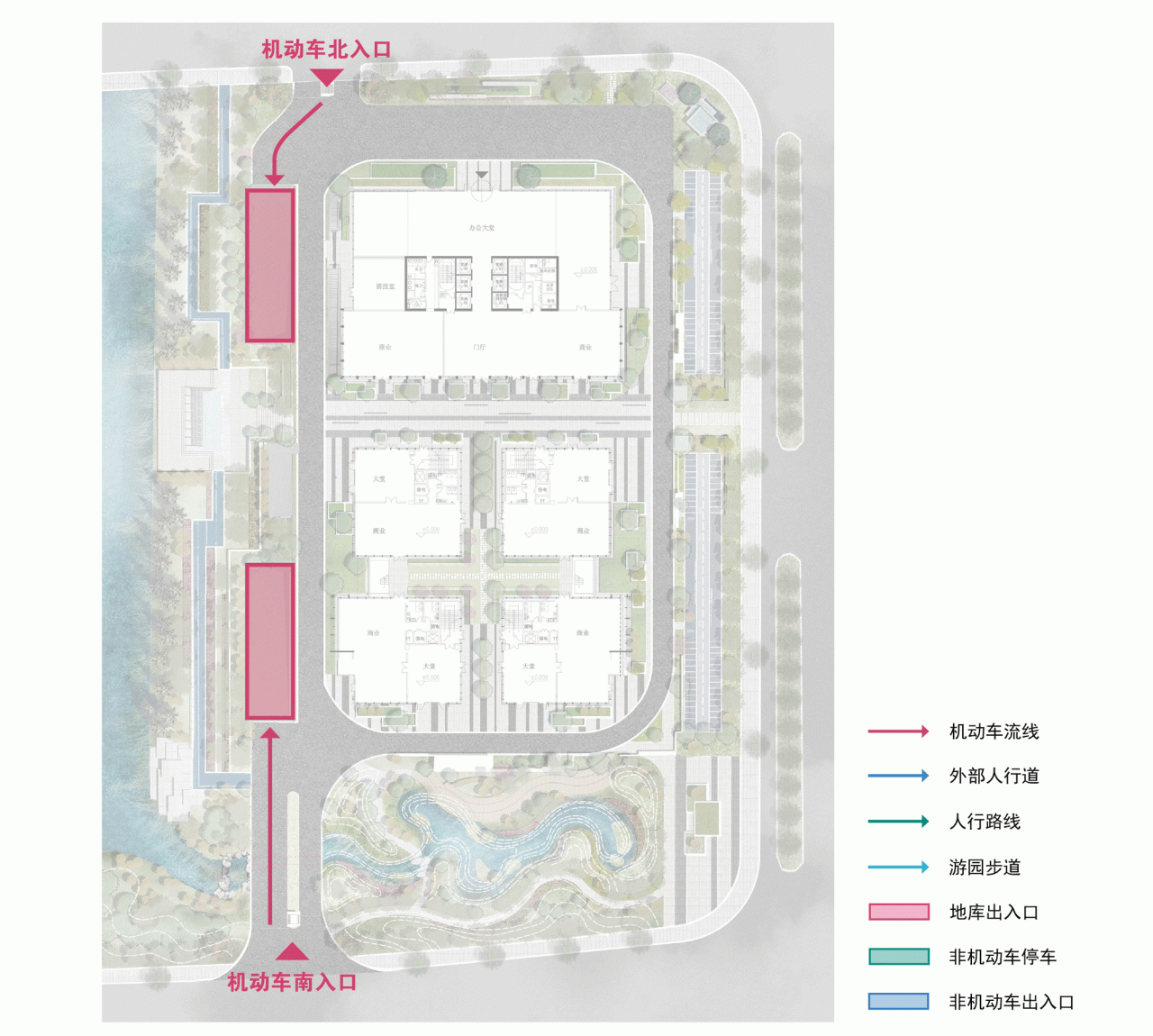
The tower’s main entrance and exit are located on the north side, while the four commercial villas each have independent nearby entrances. A ground-level circular driveway creates a minimal transport system, preserving ample space for pedestrian pathways and landscaping.
06 Tower and Courtyard
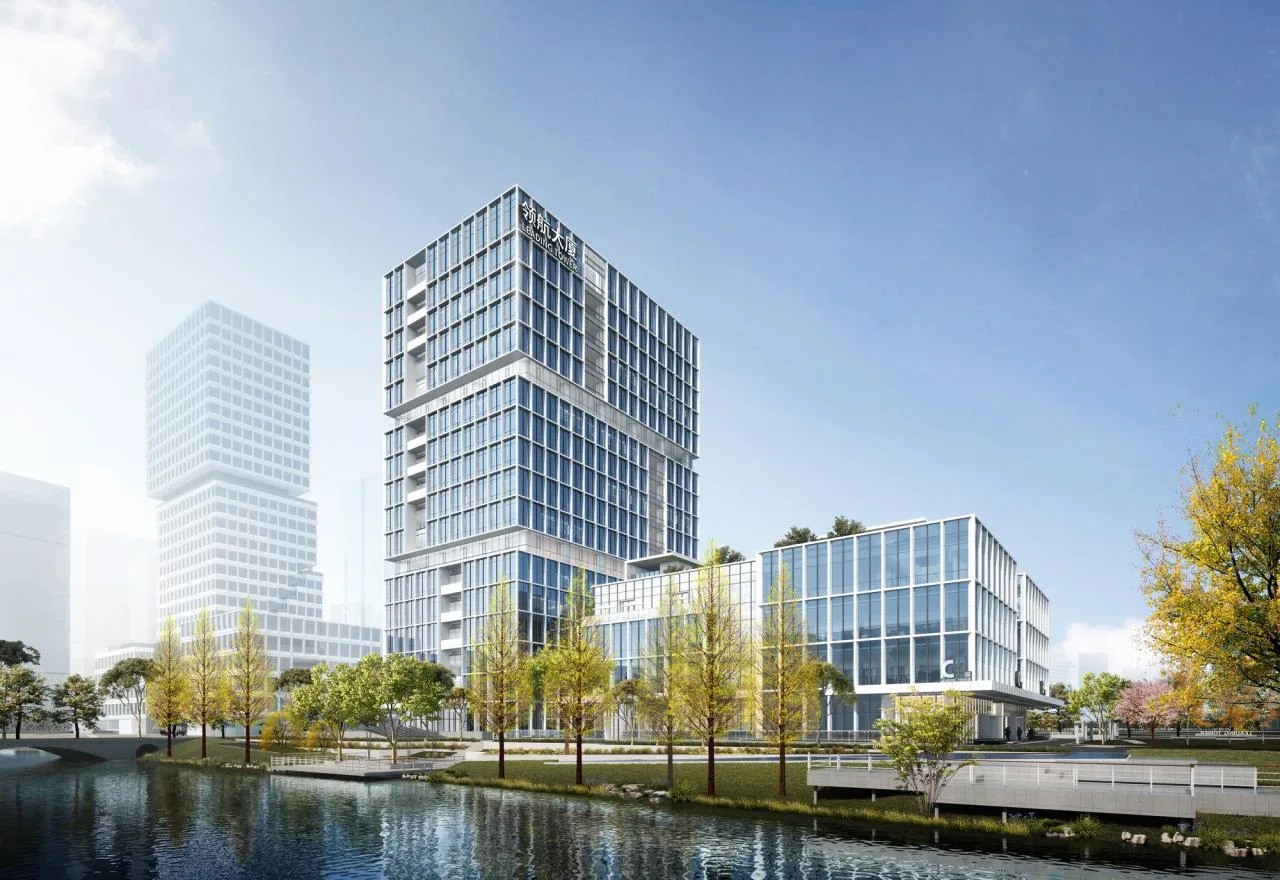
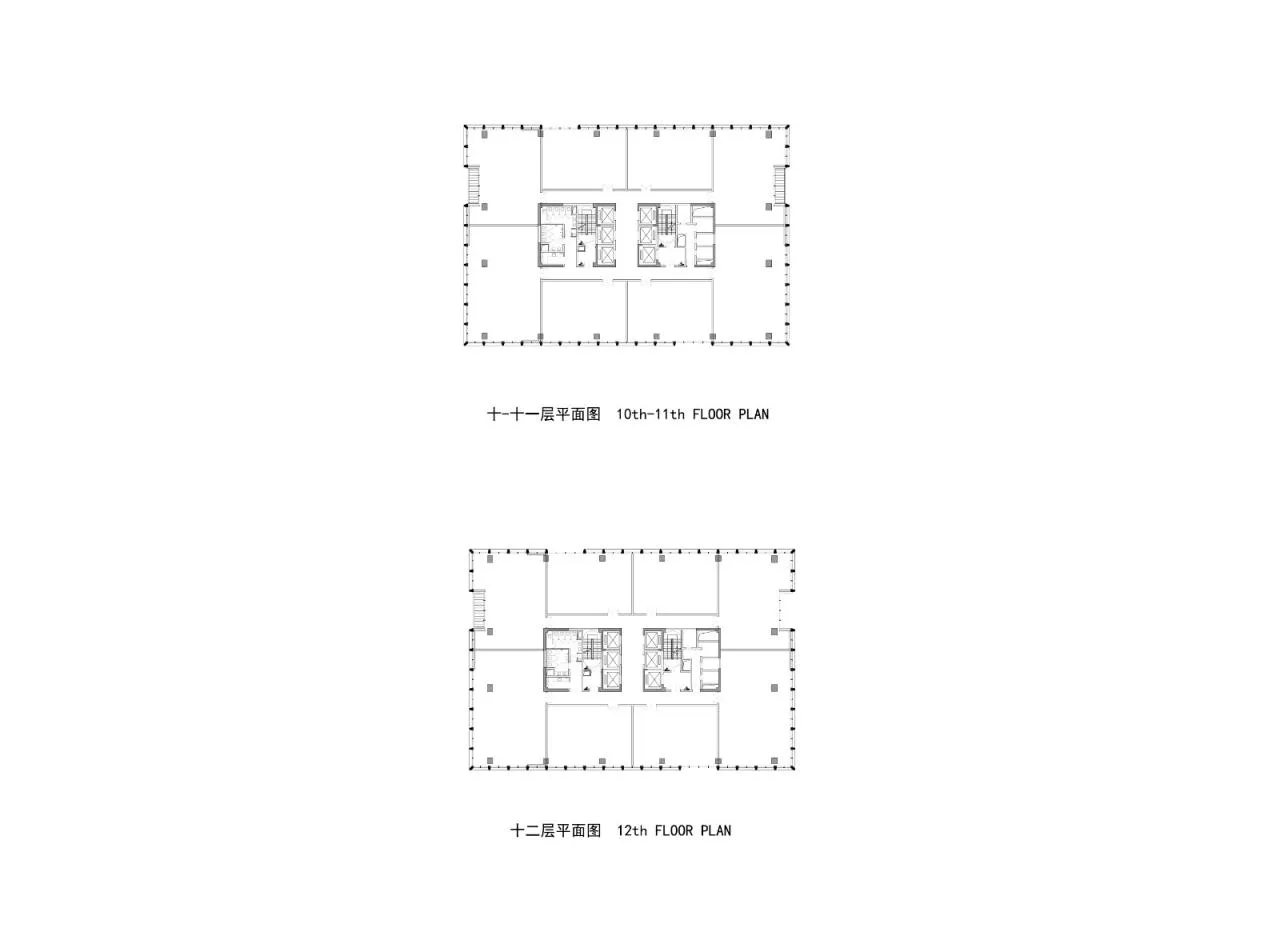
The tower, limited to 80 meters in height with a typical floor area of approximately 1,500 square meters, has a compact “short and stout” proportion. This makes it challenging to stand out among surrounding high-rise buildings in the new high-speed rail city. Additionally, the tight site and multiple individual buildings place constraints on building form modifications to maintain required spacing.
Forming a cohesive architectural identity and integrating the tower with the urban fabric proved difficult. The lack of distinctive “anchor points” and focusing solely on local blocks risked formalism and hindered objective evaluation. The solution was to adopt a broader perspective, recognizing that this site, as part of the Xinlong Lake west bank skyline, forms a cluster with the adjacent super high-rise area to the north. Therefore, the facade language of both plots needed to share similarities, leading to the adoption of a grid-based facade design.
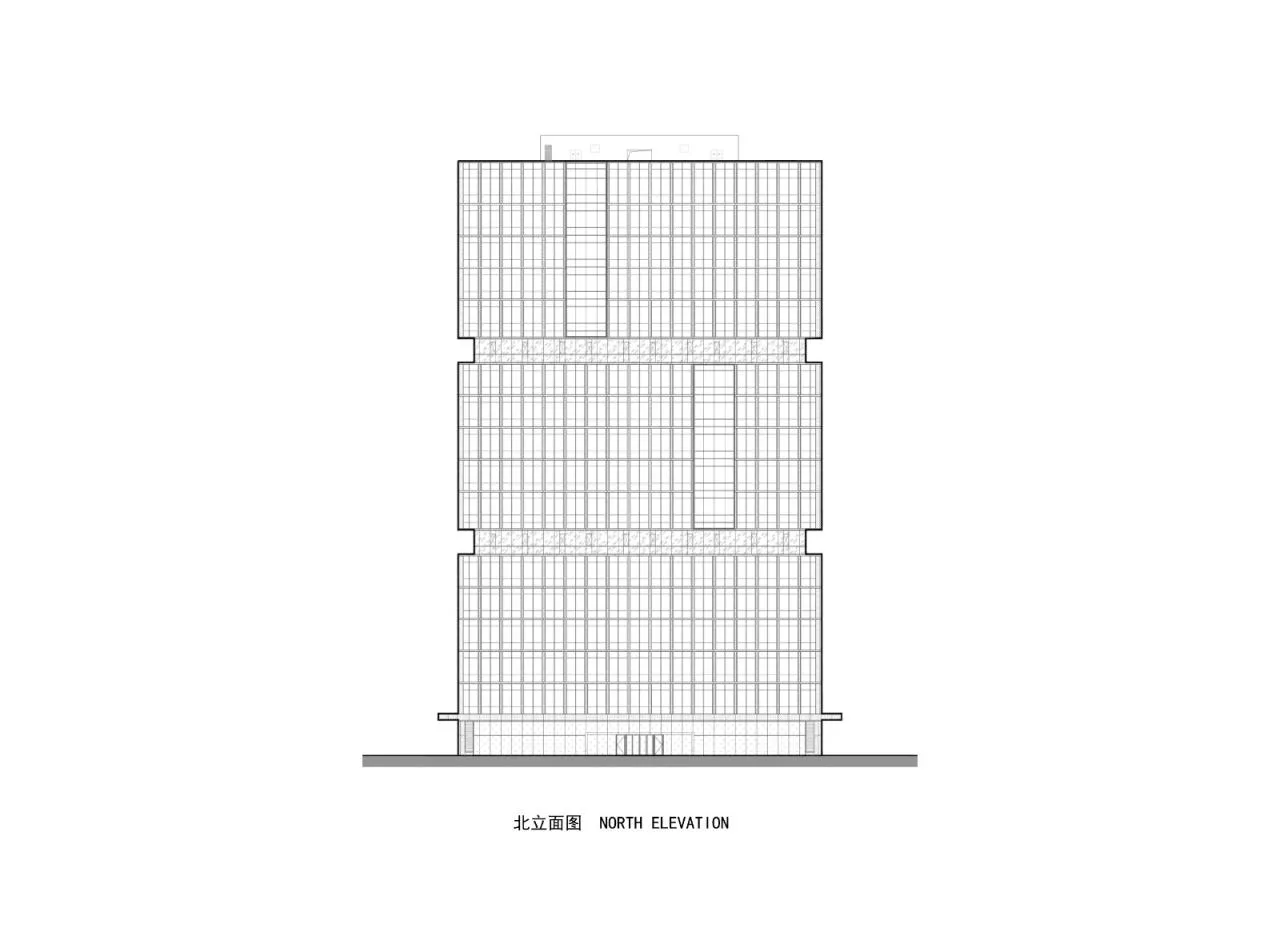
Inspired by the concept of “navigation,” the design team drew parallels to container stacking and overlapping. The tower’s facade is divided into three sections, each composed of two assembled “blocks.” This deconstruction of volume creates a “box” comparable in scale to the podium facade, ensuring linguistic consistency. The concave courtyard and rooftop garden offer a rich spatial experience.
07 Grid and Modularity
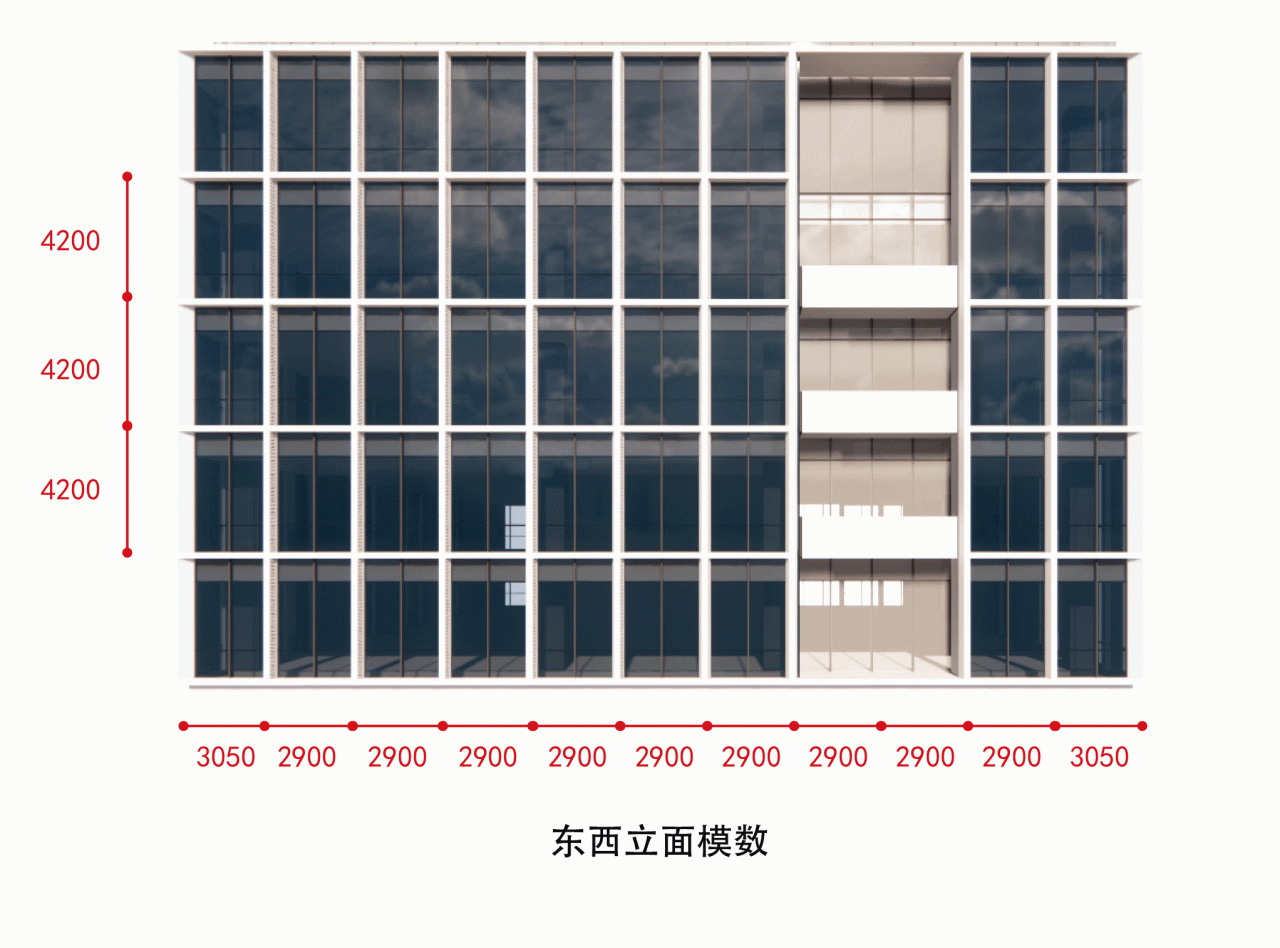
The tower’s spans vary by direction, as do the spans between the tower and podium. Facades featuring typical horizontal or vertical lines reveal subtle differences in module size that are easily perceptible.
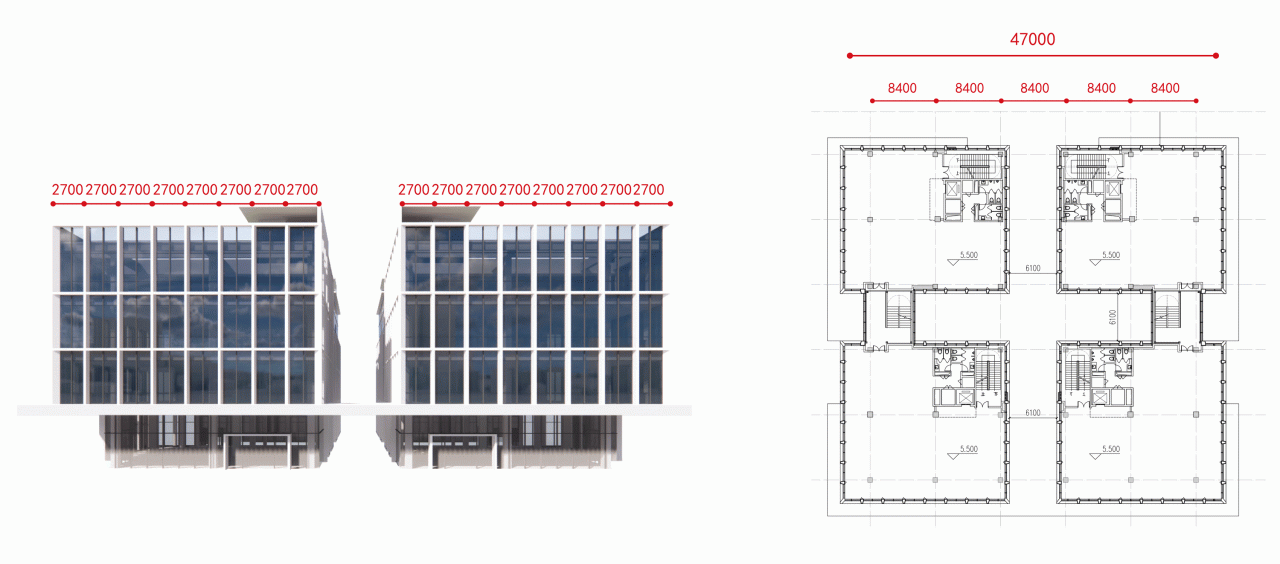
The grid system features high redundancy, making subtle variations in window pane sizes less noticeable. By adjusting grid modules at corners and podium areas, and slightly scaling the grid up or down, decorative patterning and stitching effects become achievable.
08 Detailed Design
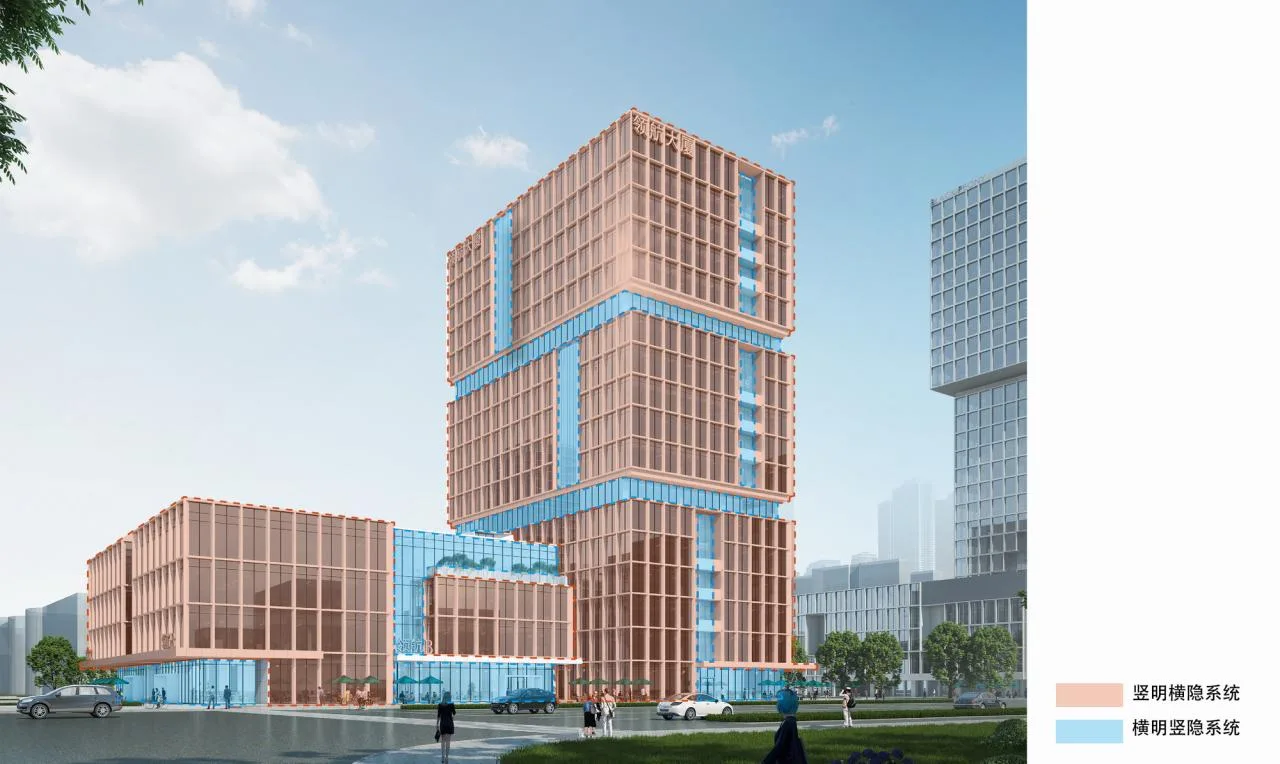
The building primarily employs a large-scale glass curtain wall system with vertically exposed and horizontally concealed elements, alongside grooved horizontal exposed and vertical concealed curtain walls. Most operable windows are discreetly hidden behind vertical trapezoidal aluminum panels, preserving glass continuity. The cantilevered canopy panel serves as a clean and simple suspended endpoint for the tower’s curtain wall.
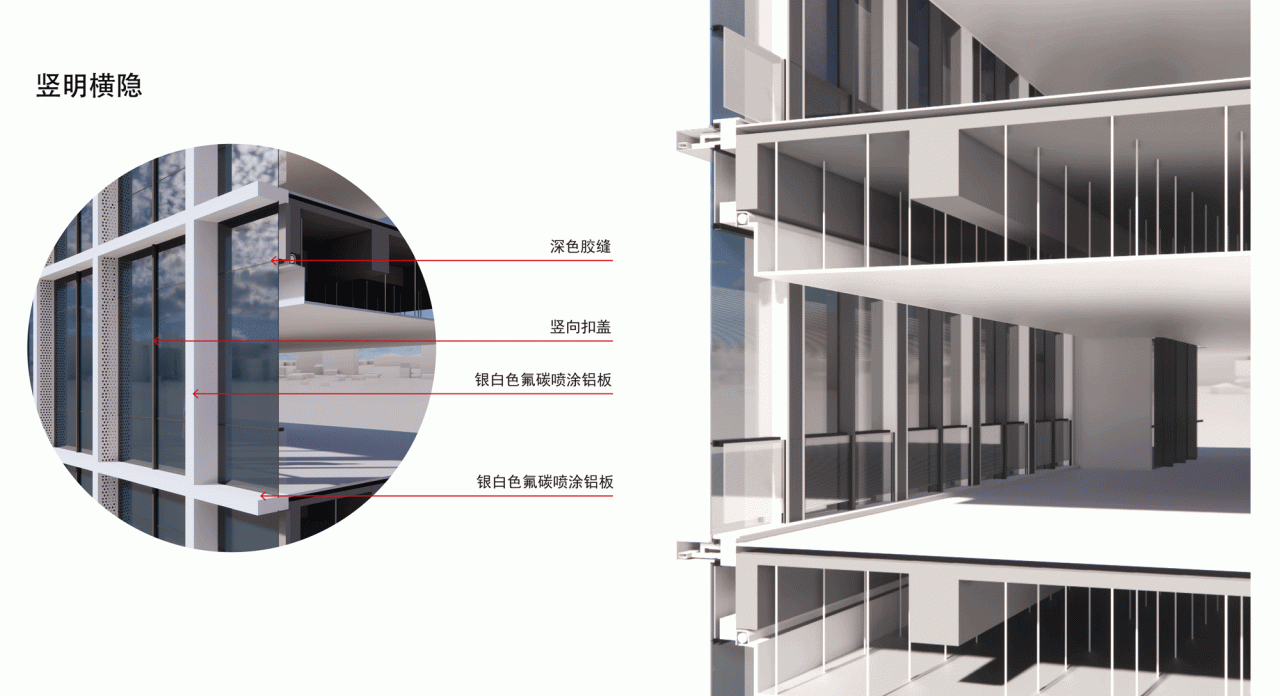
Most doors are recessed to minimize unnecessary rain shelters. Notably, doors on the east and west balconies are designed as “hidden doors” integrated into side aluminum panels, reducing disruption to the glass facade divisions.
09 Landscape Design
The landscaping is divided into three main zones: a central landscape area, rooftop gardens, and peripheral green spaces. A north-south landscape axis runs between the main building and podium, imparting order. Additionally, an invisible fire lane on the south side of the main building is utilized to establish an east-west landscape axis, extending from the entrance to the waterfront and culminating in a scenic waterfront viewing platform.
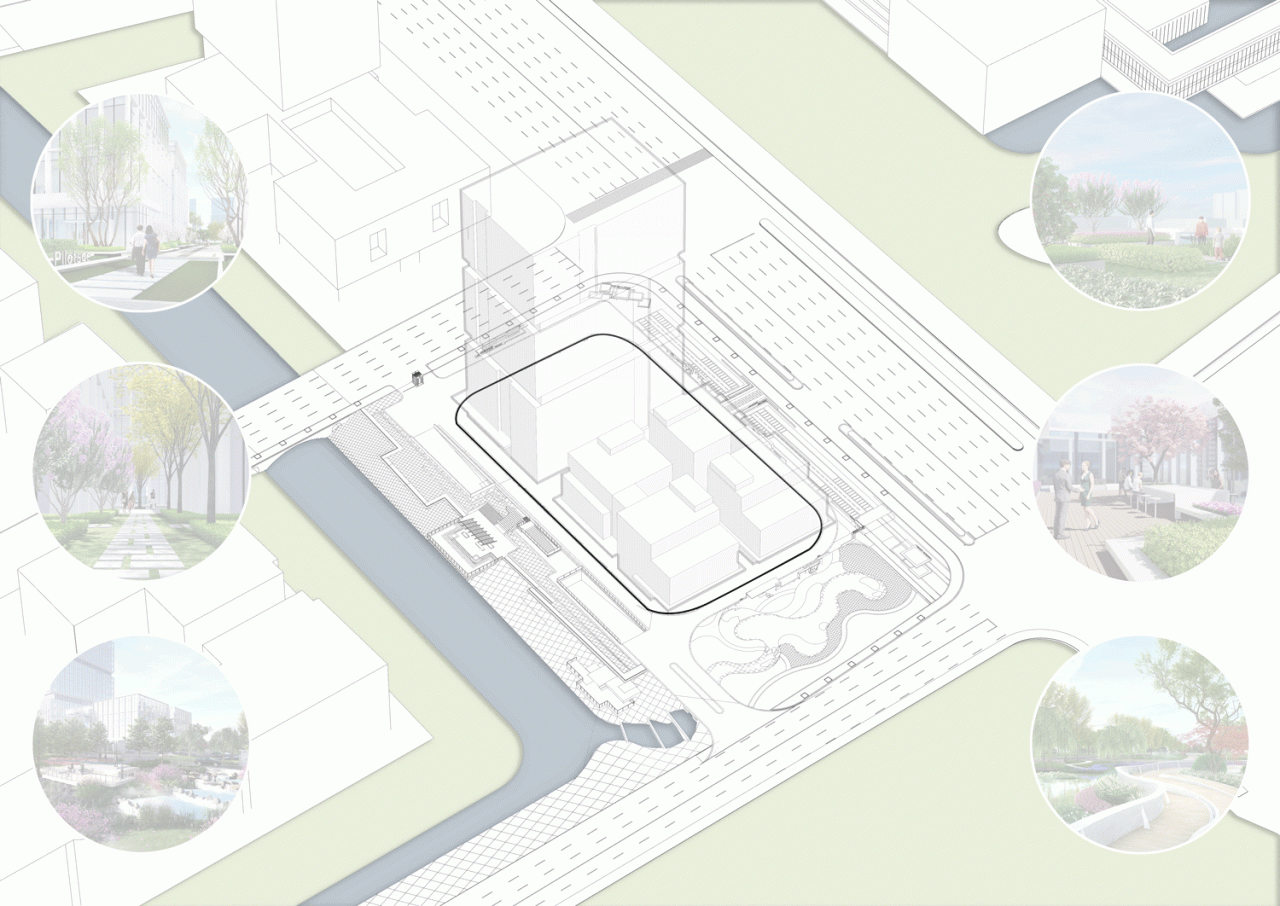
Urban green belts surround the plot’s east, west, and south sides, providing abundant landscaping but lacking a clear sense of boundary. Here, a landscape wall functions both as a visual partition and practical element, blending traditional garden poetry with modern design language to create an open yet intimate spatial experience.
10 Floodlighting Design
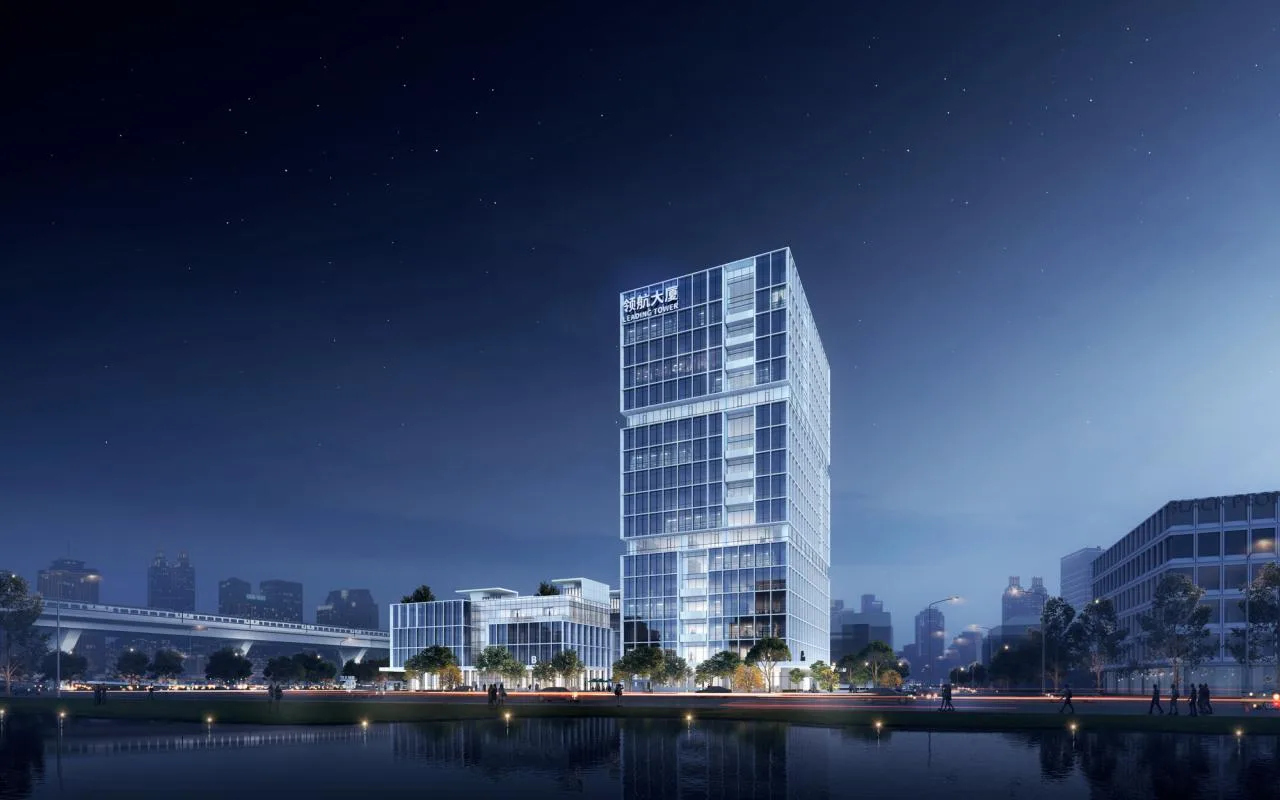
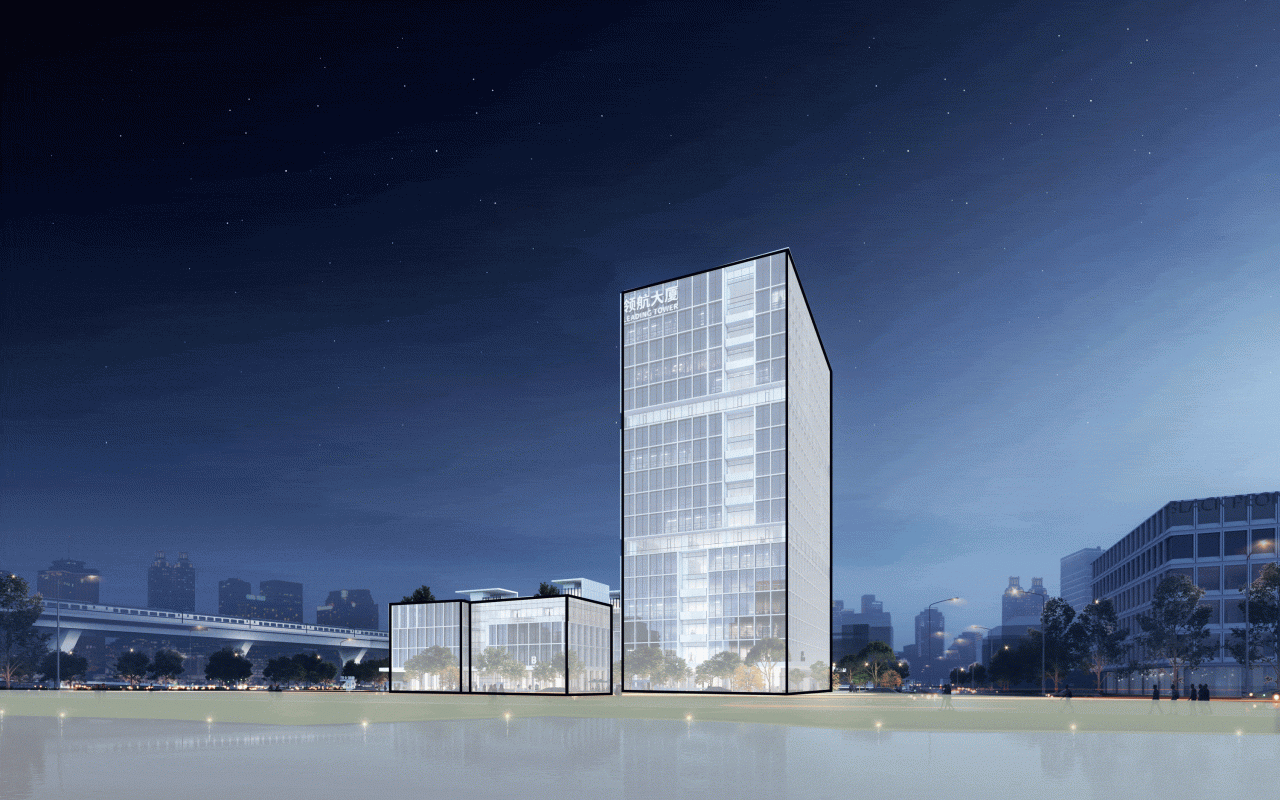
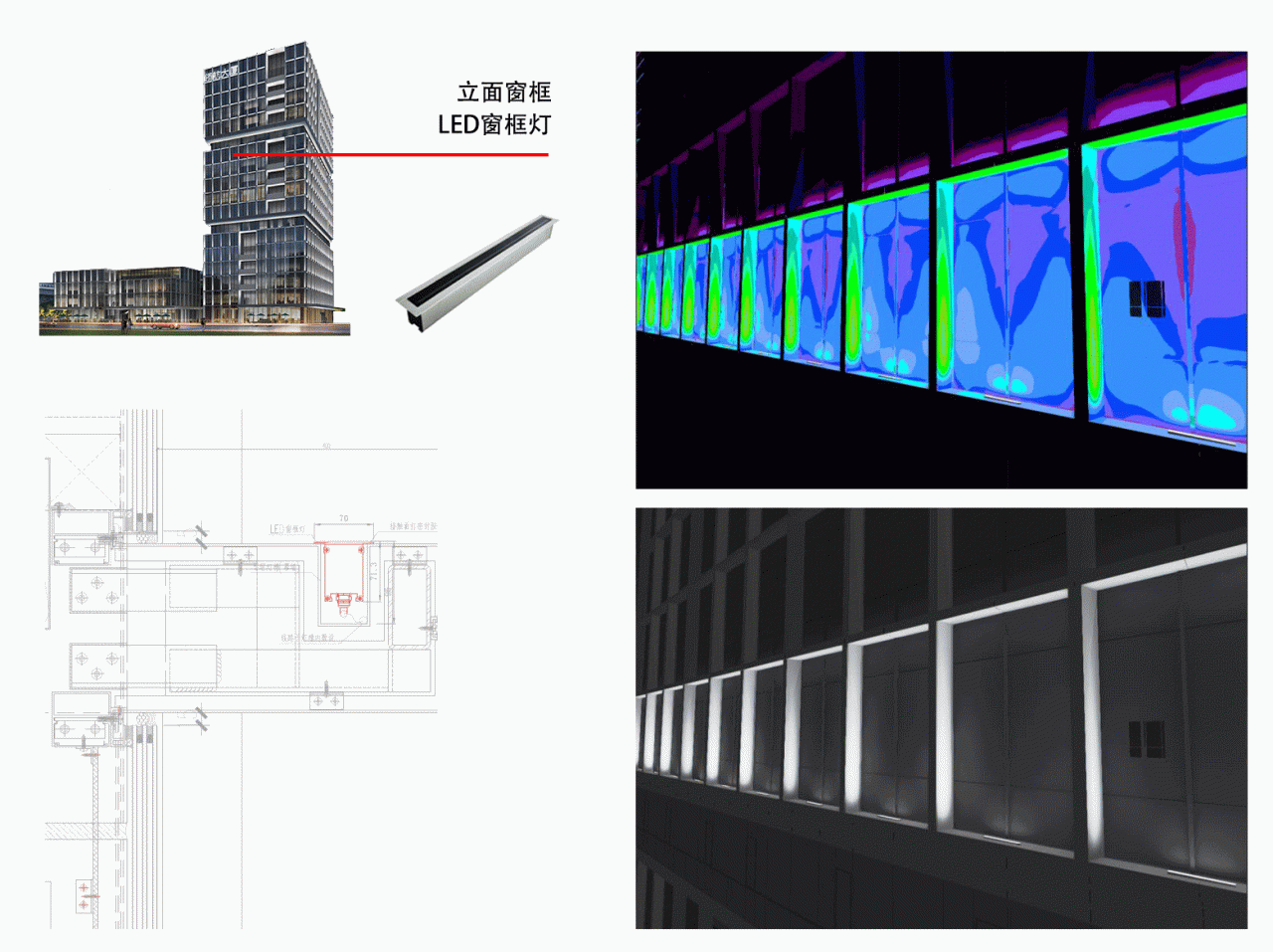
The floodlighting emphasizes the building’s massing through two levels of expression: framing and interior transparency. Concealed window frame lights highlight the window contours, while projection lighting combined with interior transparency at grooves accentuates the building’s concave and convex surfaces.
11 Interior Spaces
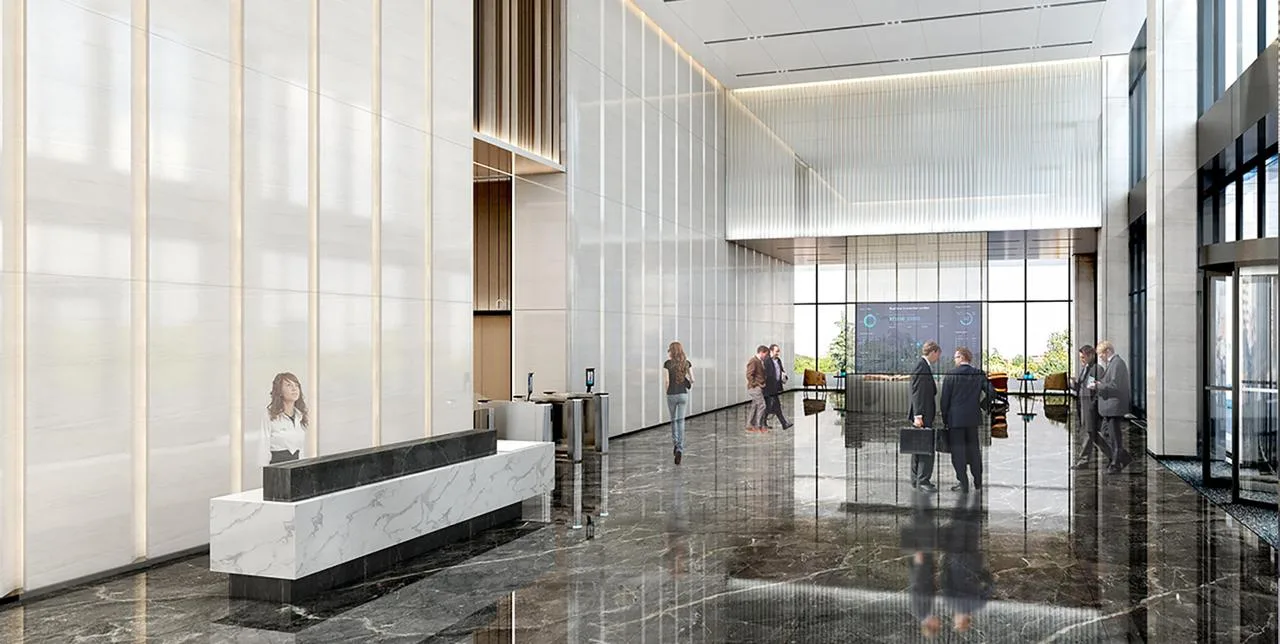
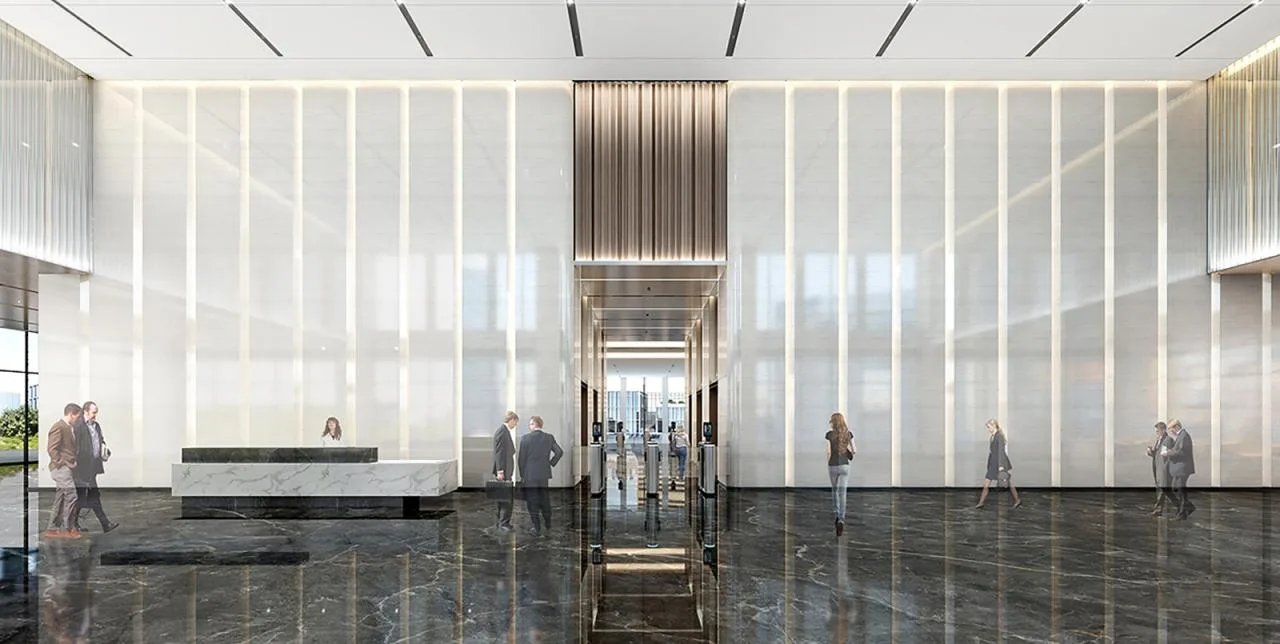
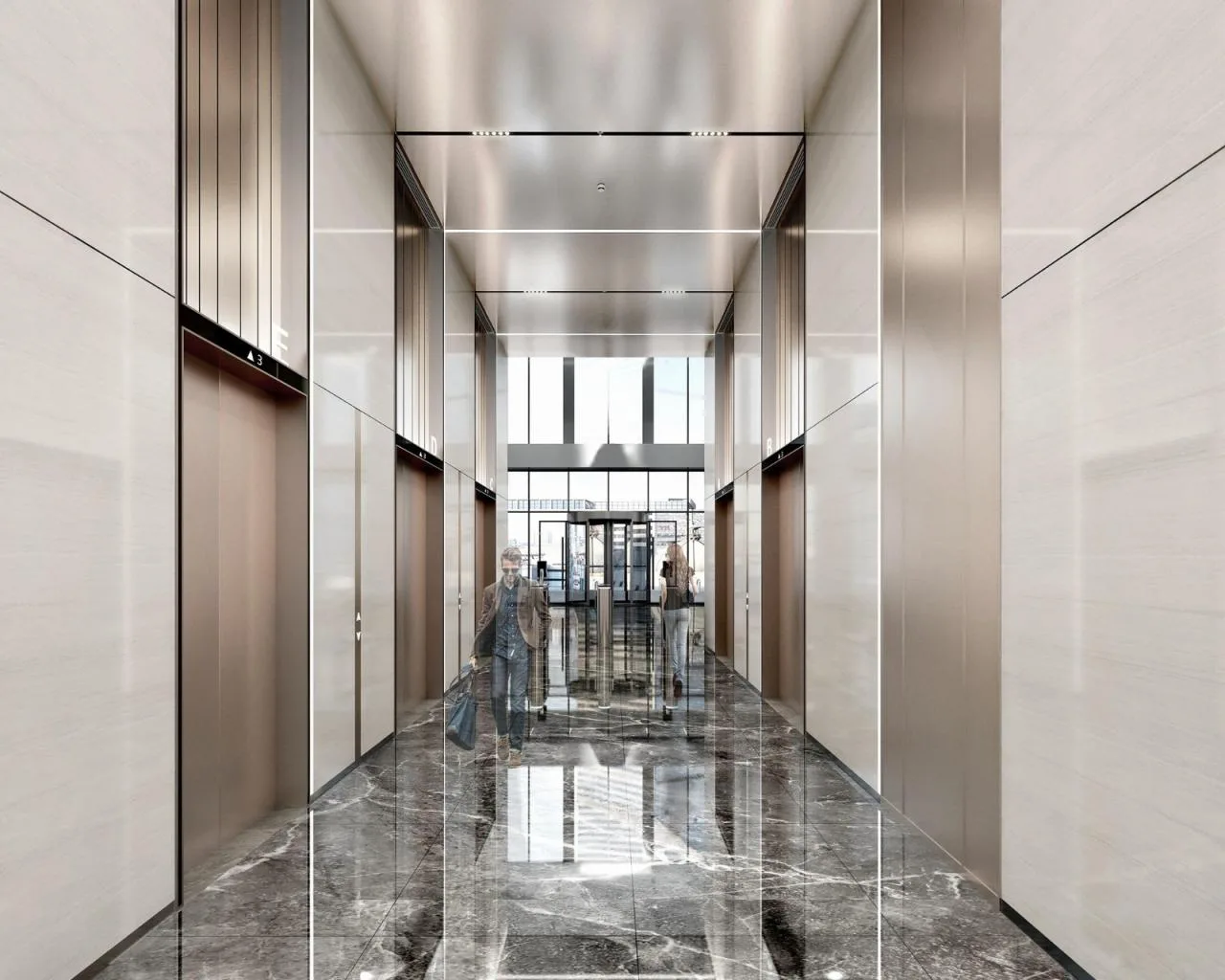
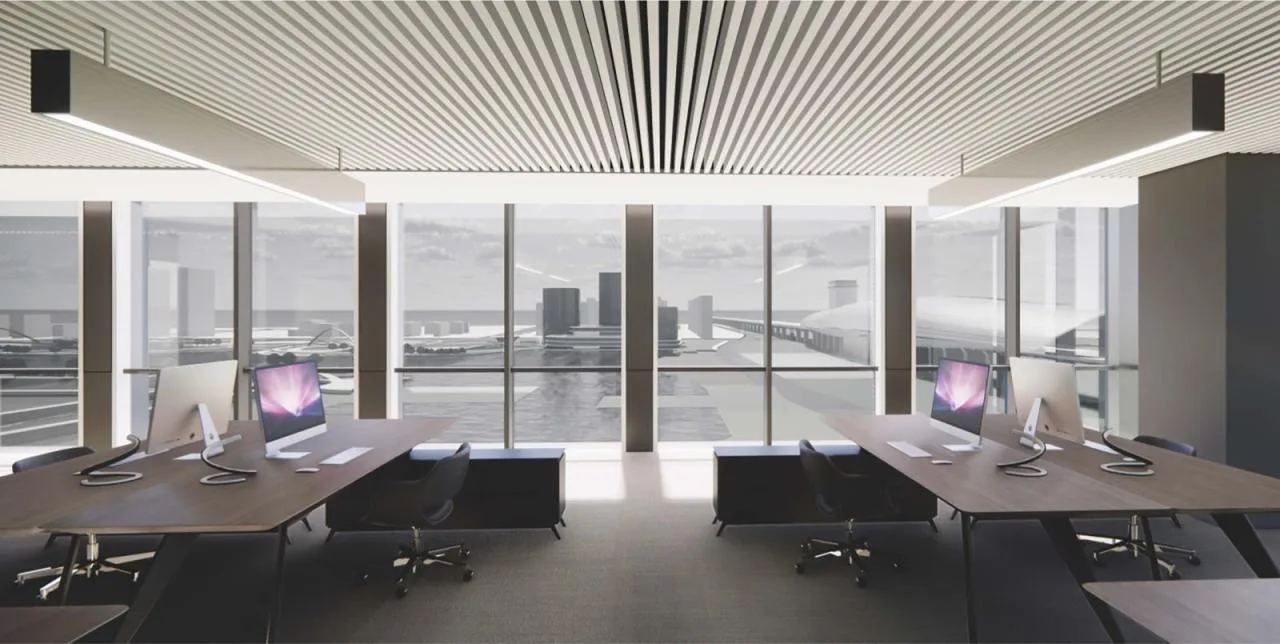
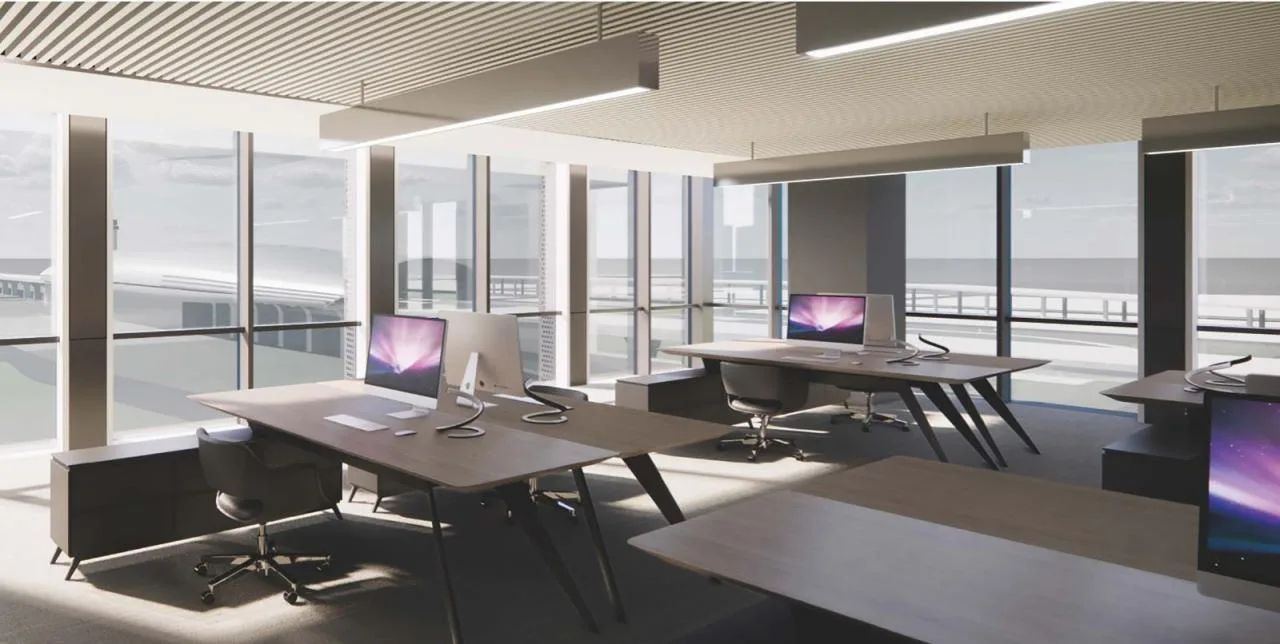
The interior design balances order with humanization, adhering to architectural logic rooted in simplicity and block composition. Ceiling heights are carefully varied by area: 2.9 meters in elevator lobbies, 2.7 meters in office zones, and up to 3.2 meters in select spaces. Expanses of white aluminum panels, warm-toned marble, and champagne-gold stainless steel combine to craft a comfortable, luxurious, and intelligent environment.
12 Underground Spaces
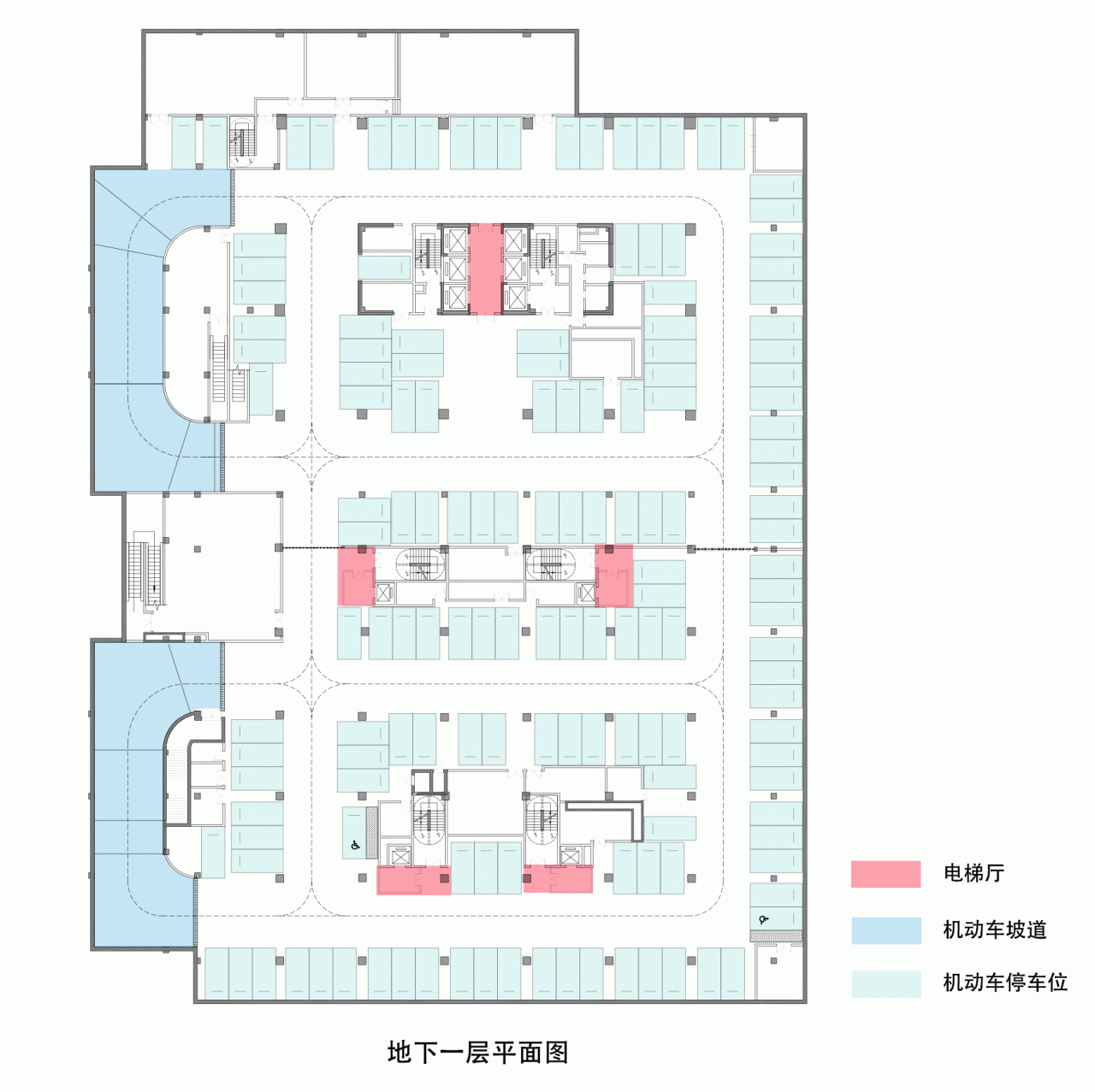
For efficient land use, the underground planning prioritizes both economic feasibility and smooth functionality. Where possible, ramps are located outside the land’s red line on the plot’s west side but within the basement boundary, minimizing their impact on basement lanes.
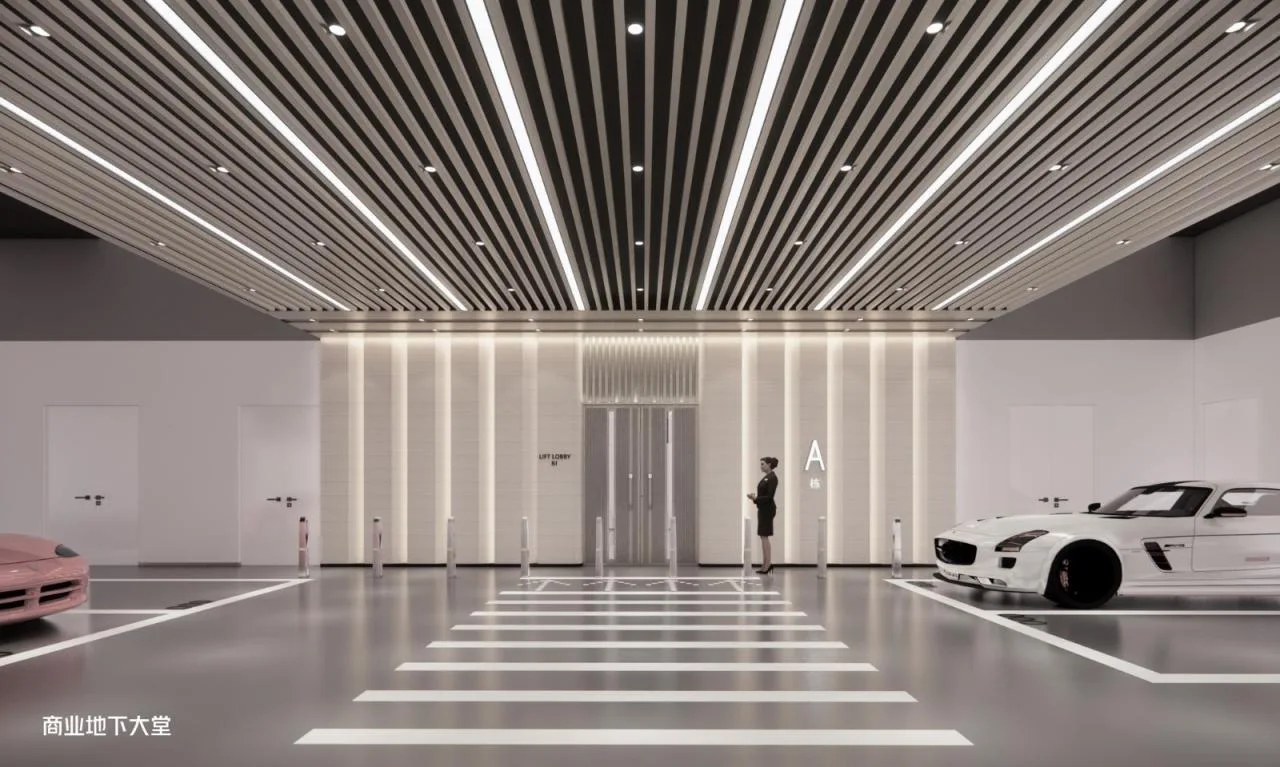
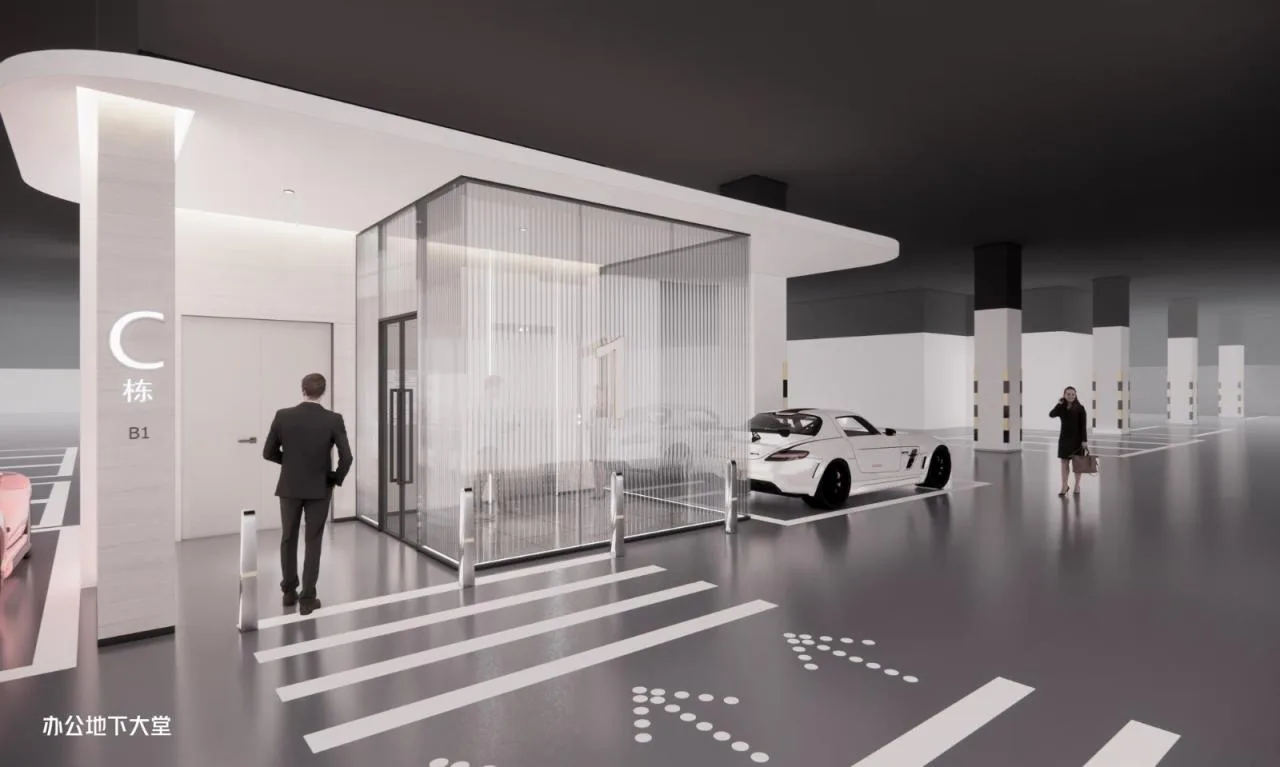
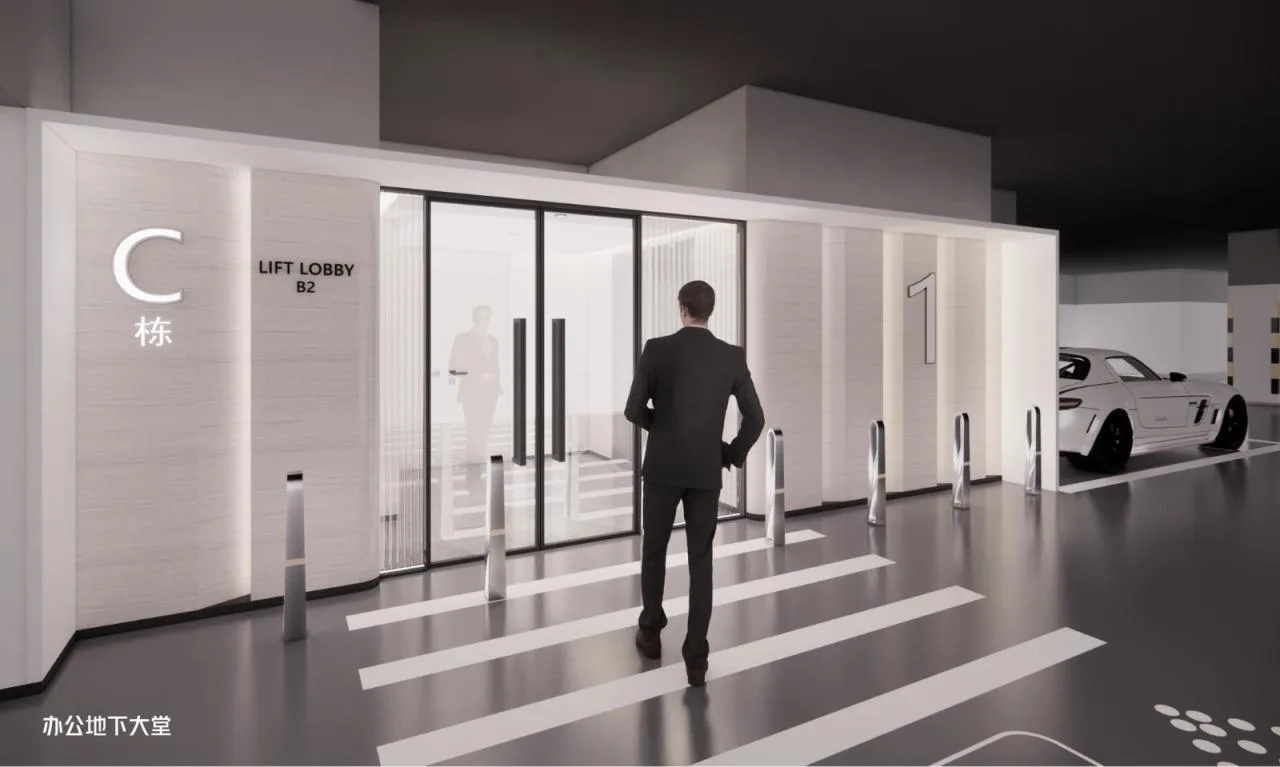
The Japanese-inspired main lanes establish a clear spatial organization. Entrance halls are provided in the basements of each building to offer visitors a welcoming, homelike experience.
Project Drawings
Project Information
- Project Name: Changzhou High Speed Rail New City Navigation Building
- Owner: Changzhou High Speed Rail New City Investment and Construction Development Co., Ltd
- Design Firm: GEN Jianhe Studio
- Building Area: 46,500 square meters
- Design Team: Zou Danni, Chen Ming, Sheng Jieye, Li Yue
- Construction Drawing Team: Zhou Min, Cao Yuan, Di Wen, Sheng Yueze, Wan Xudong, Chen Xun
- Landscape Design: Suzhou Puzhu Landscape Design Co., Ltd
- Curtain Wall Design: Jiangsu General Decoration Engineering Co., Ltd
- Interior Design: Shanghai Paiwo Architectural Decoration Design Engineering Co., Ltd
- Lighting Design: Beijing Zhongke Guangyi Technology Co., Ltd












Must log in before commenting!
Sign Up