
The most famous legend at the mouth of the Guanhe River in Dahe Xiaocheng is believed to be the site of the battle between Erlang Shen and the Monkey King, as depicted in Wu Cheng’en’s novel. The Guanhe River, located in the northern Yangtze River Delta, is a natural tidal river flowing into the sea over an alluvial plain formed by ancient bays and lagoons. It connects with the Yanhe River, stretching from Lianyungang in the north to Huaiyin in the southwest, and links to the Beijing-Hangzhou Grand Canal.
Although only 174.5 kilometers long, the Guanhe River nourishes the vast fields on both sides of the strait and supports the vibrant life of the local people. Compared to countless small towns in the Yangtze River Delta, the county town of Xiangshui is no different, with the roaring waters of the Guanhe River flowing through its landscape for miles. Despite a period of accelerated development—from salt production and fishing to port industry—the atmosphere of small-town life remains peaceful and comfortable, a haven for lifelong tranquility.
Since the start of the 21st century, China’s urbanization rate has surged from 36% to 56.1%, with a permanent urban population of 770 million. Although Xiangshui County, under Yancheng’s jurisdiction, experienced a delayed urban development, it finally saw a concentrated wave of public building construction in 2015 after accumulating over a decade of construction quotas.
This wave of development had two main objectives: first, to stimulate the land value of the Eastern New City by erecting large public facilities such as government service centers, five-star hotels, and national sports centers, thereby closing the urbanization capital loop through land-based investments. Second, to address the severe shortage of amenities in the old city, by consolidating multiple cultural departments’ venues into a unified construction and management system. The Xiangshui Cultural and Art Center was entrusted with the mission to enrich the cultural life of the urban core amid these changes.
Looking back to early 2016, ATAH Jiejing Architectural Firm won the design contract for the Xiangshui Cultural and Art Center through a competitive bidding process. For me—who had lived in Nanjing since childhood—this project felt distant and abstract. Memories of brief conversations with my grandfather blurred over time, yet I recall annual family trips to visit graves and friends in northern Jiangsu. Though travel was complicated without high-speed rail, the familiar Jianghuai dialect whispered reminders of a distant, yet intimate homeland.
Despite the rapid urbanization shaping the town with industrial growth and commercial and residential developments, the pace of life remains steady. At night, city streets glow under municipal lights, men gather in intimate dining spots to share drinks, and wives plan trips to the Yancheng Golden Eagle mall for luxury goods. Meanwhile, hardworking county youth, busy with studies and careers, dream of future lives in provincial capitals rather than local nighttime socializing. This snapshot captures a small town in transition, grounded in longstanding community bonds.
The initial construction plan focused on the new city, with the cultural and art center as the sole major project in the bustling old town. Urbanization brought convenient transport and sufficient population density, but the imagined historic context had long faded.
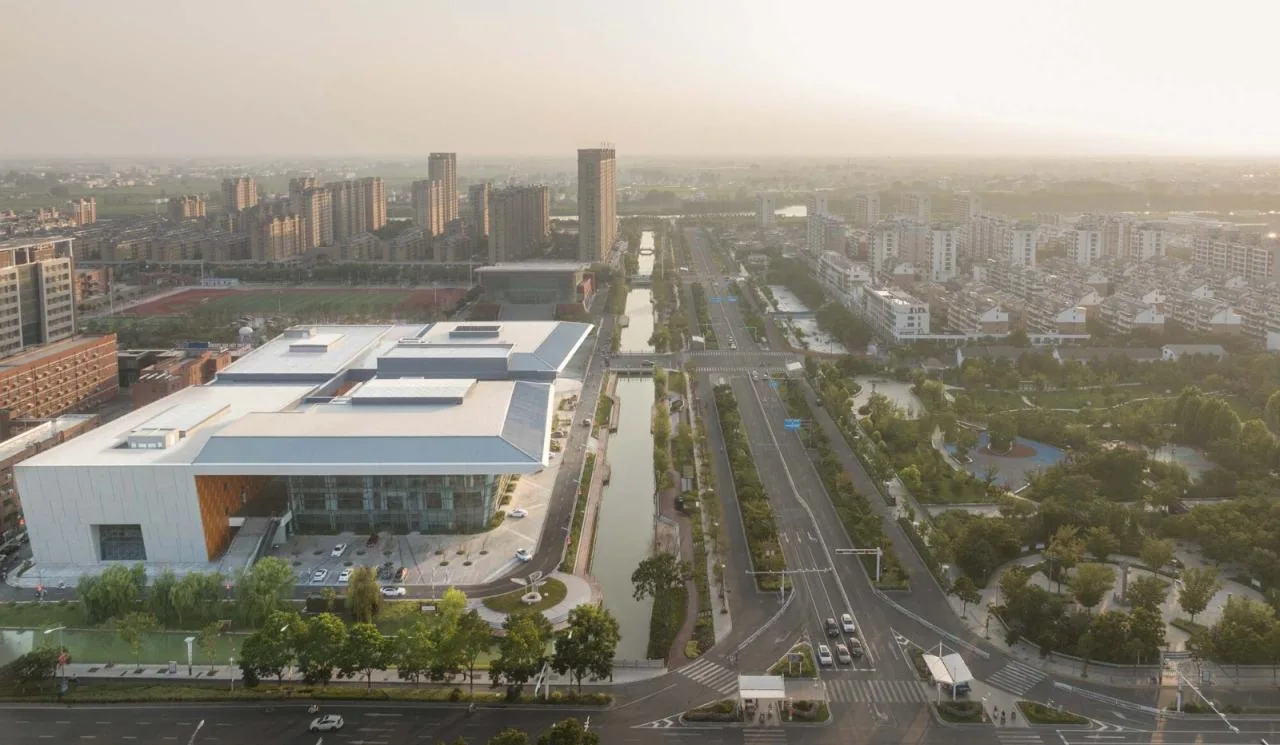
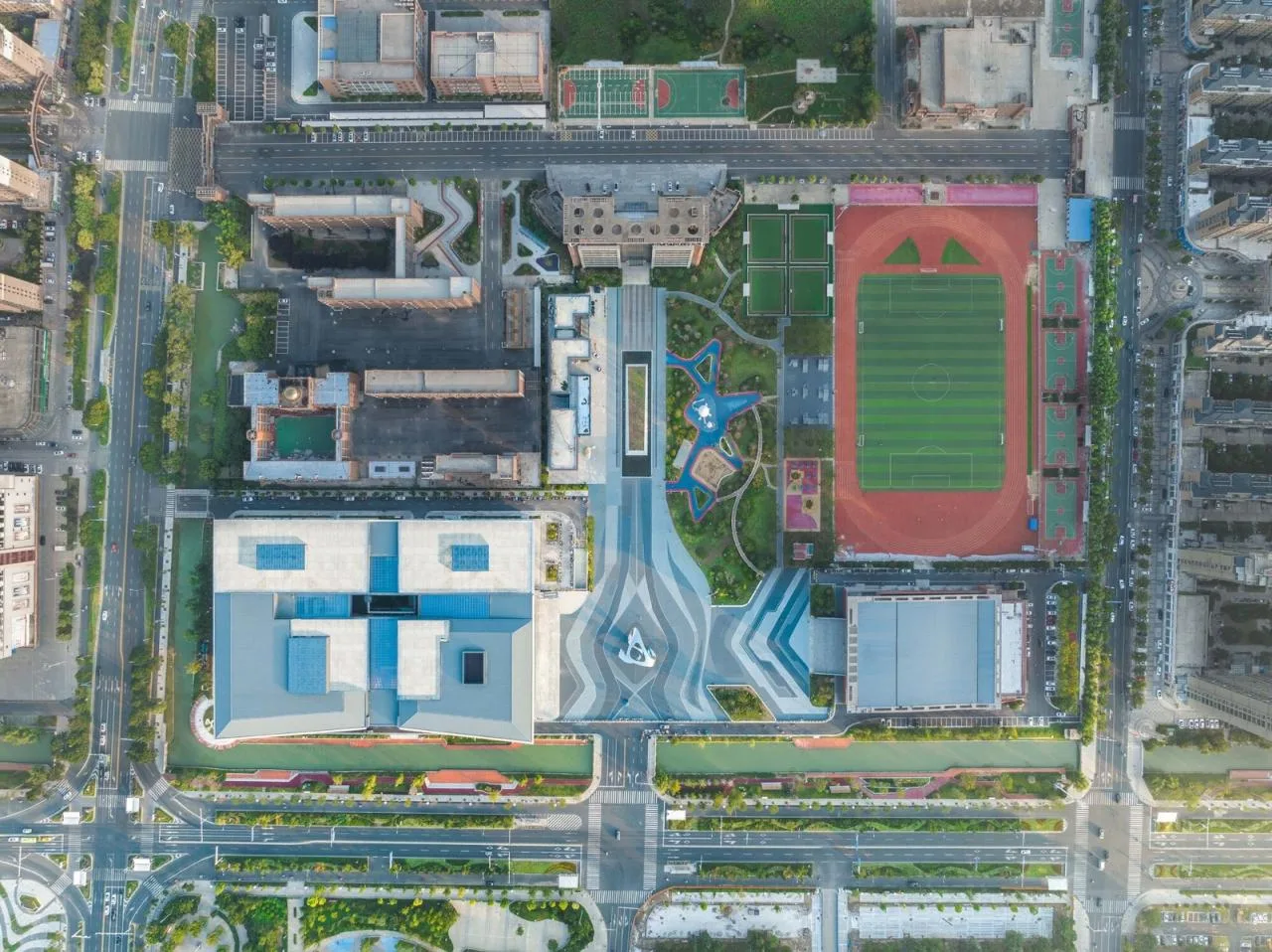
The core design challenge was how to avoid creating just another stereotypical government building in this large-scale public project. Instead, it aimed to provide an authentic spatial experience suited to the small town, fostering unique and diverse place memories for its users. The design responded to several urban conditions:
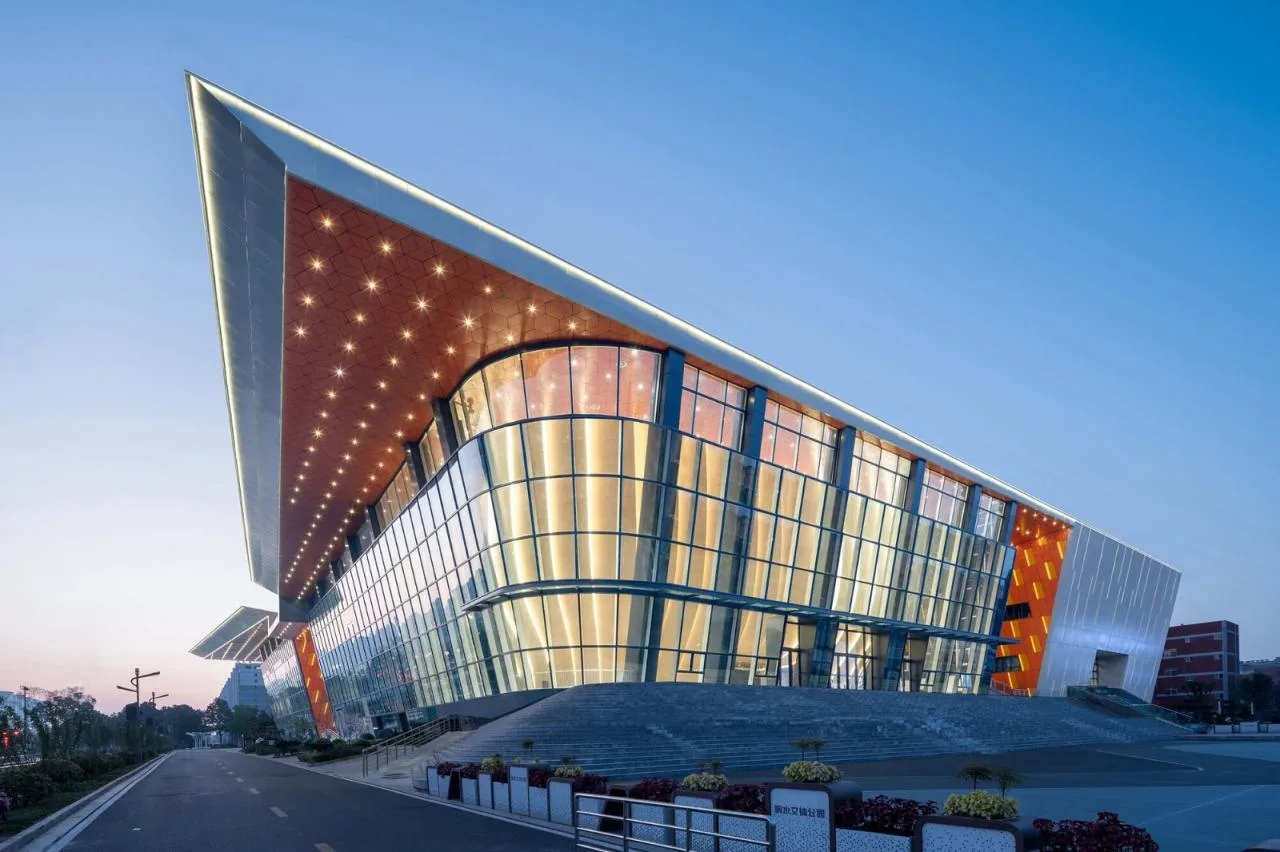
- The elongated main roof was designed to open views toward the Martyrs Memorial Park to the north.
- The theater, with the highest foot traffic, was placed on the west side facing the existing sports arena, helping define the city square near the Education Bureau’s main building.
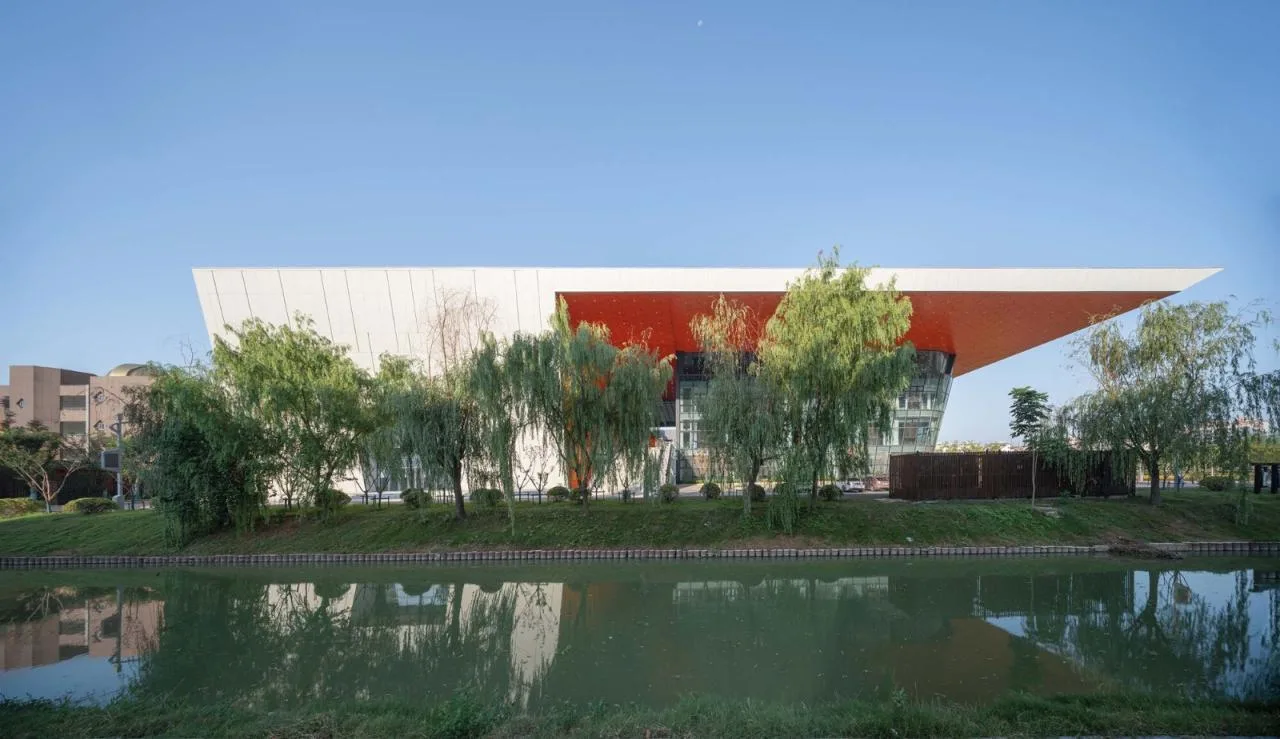
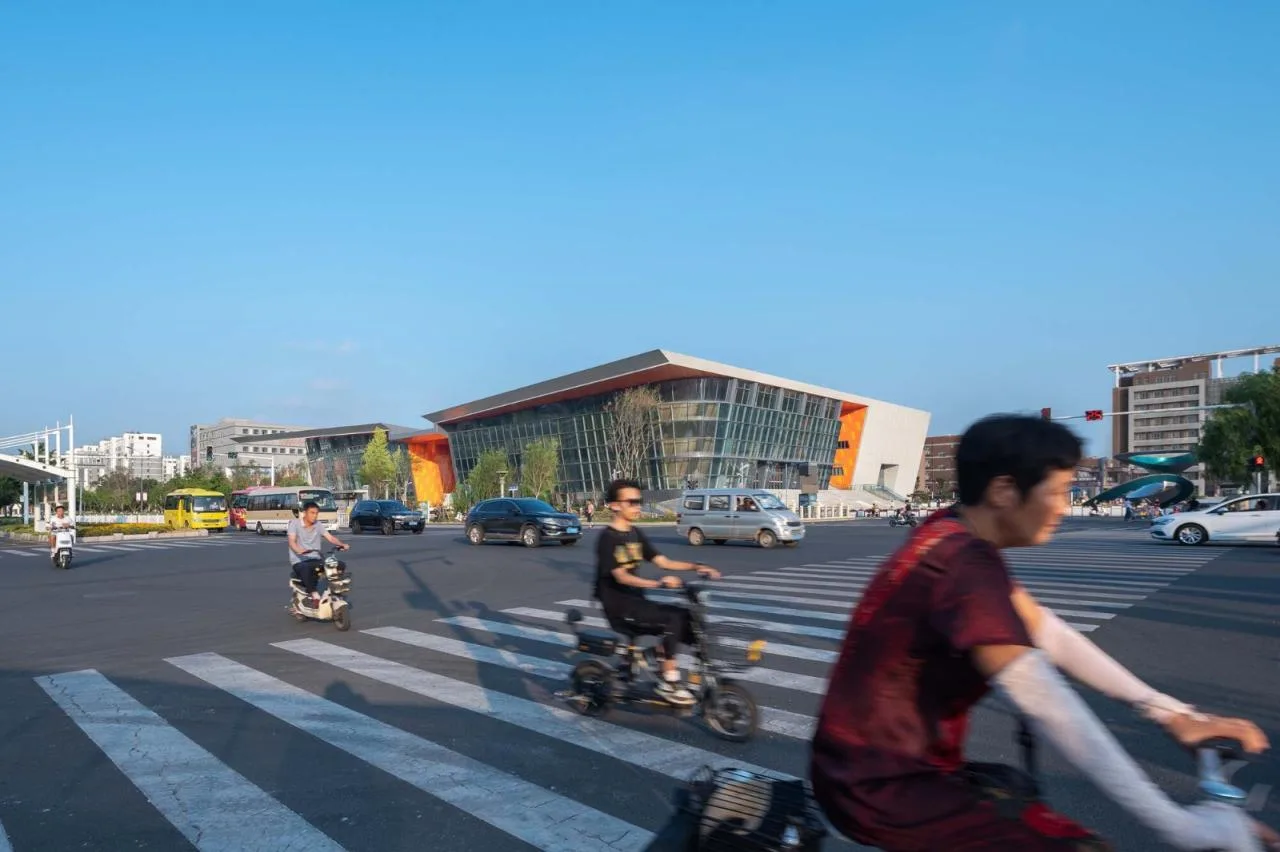
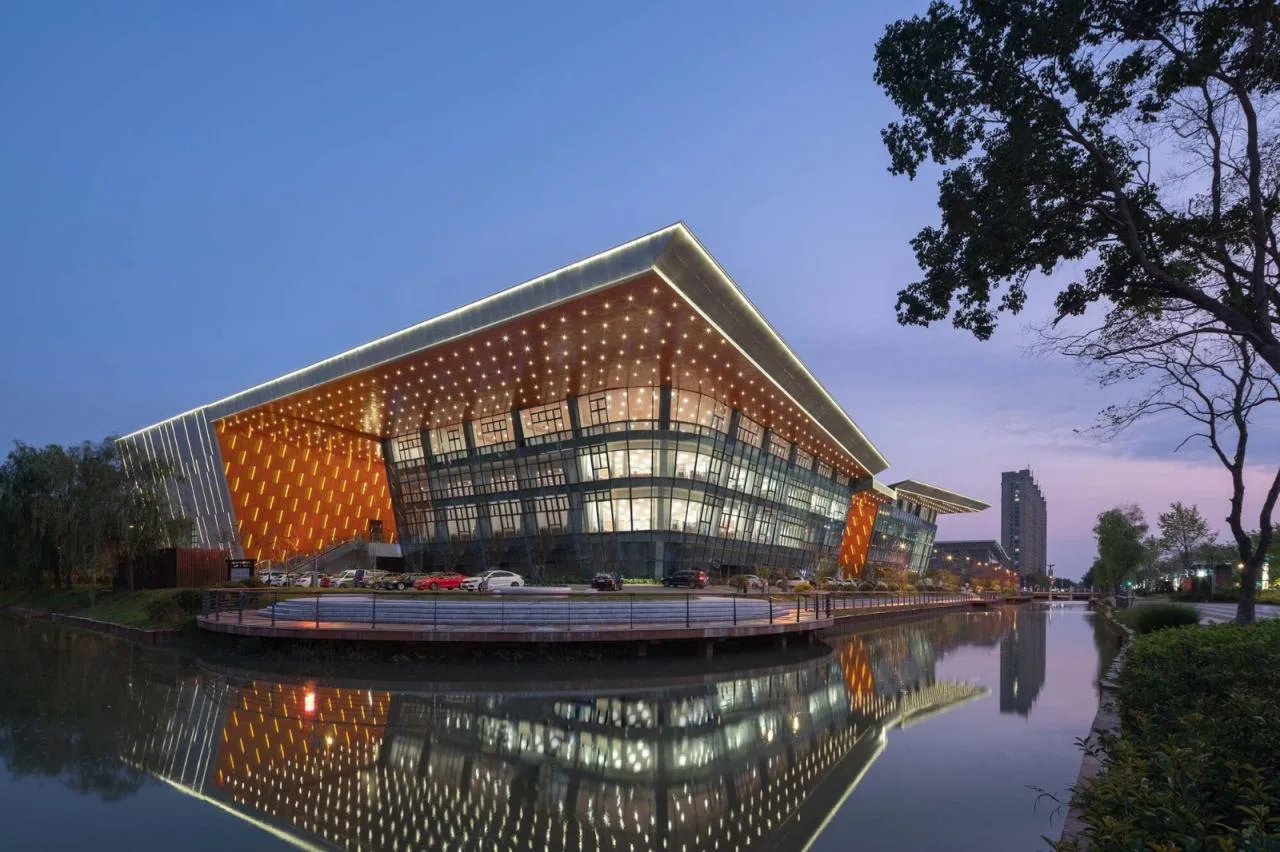
- A significant setback at the intersection was introduced to allow 180-degree river views and integrate waterfront activities.
- As part of the “Four Halls and Three Centers” project, the design accommodated multiple user units, providing an organized layout, communication platform, and complementary functions while supporting independent identities and efficient operations.
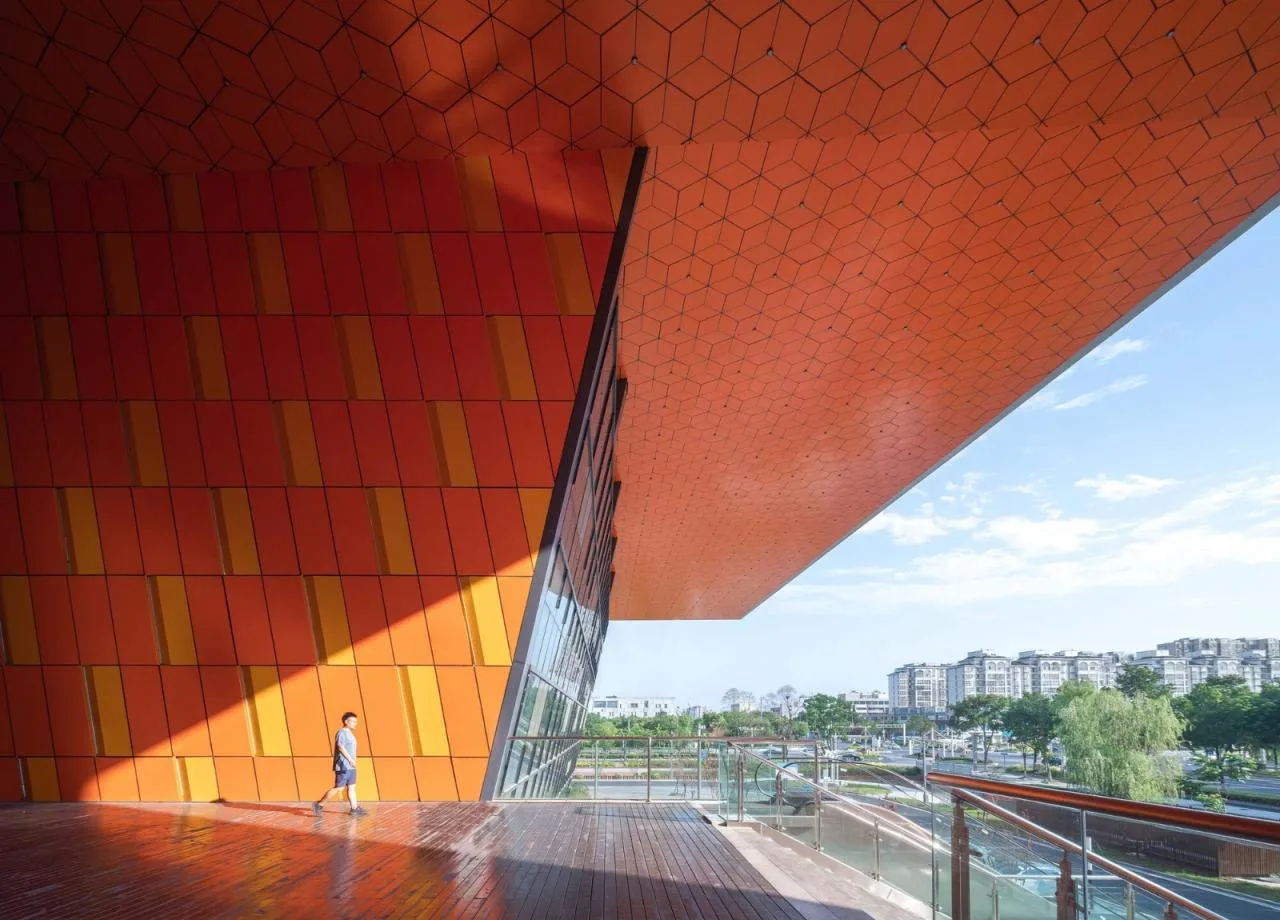
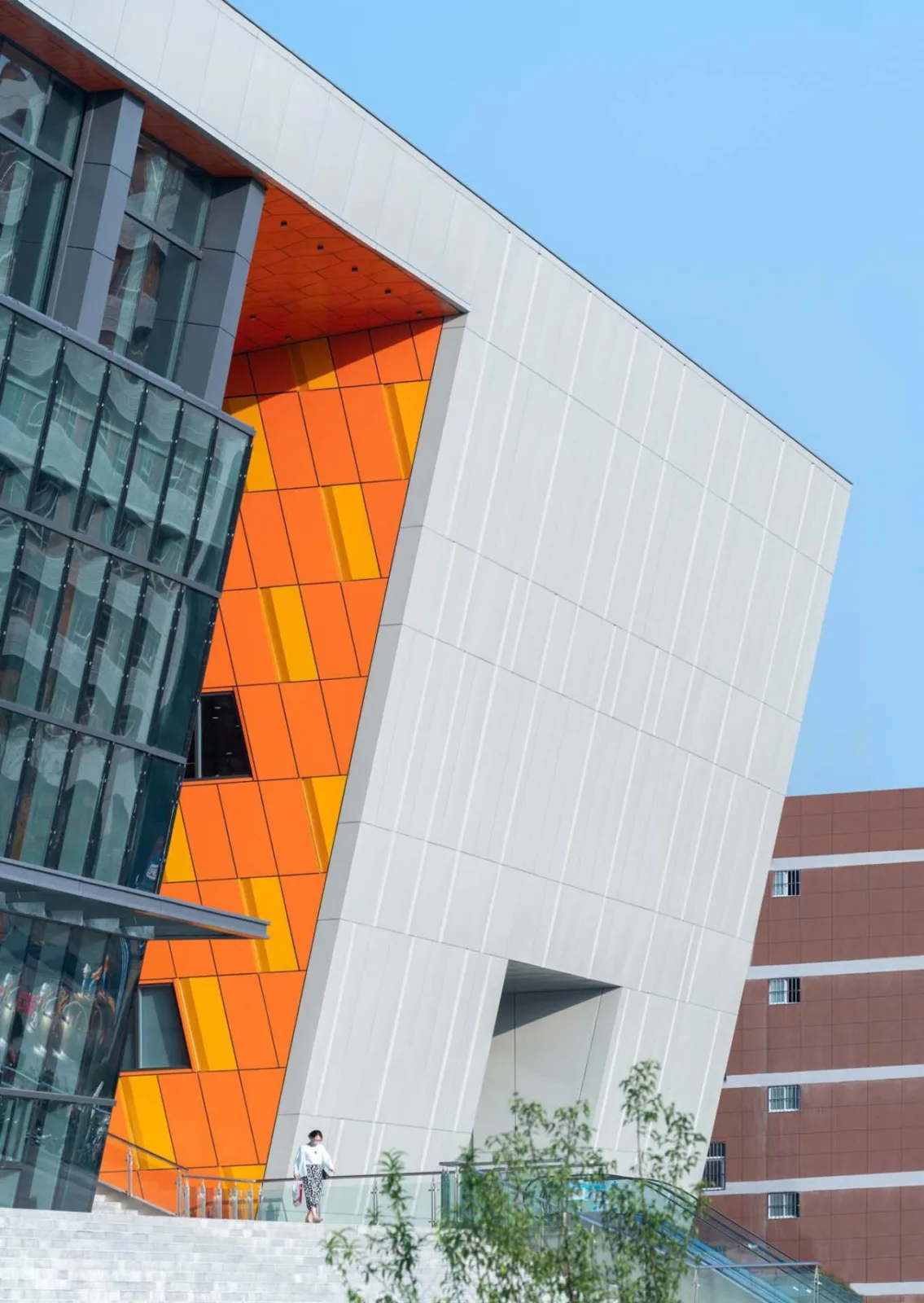
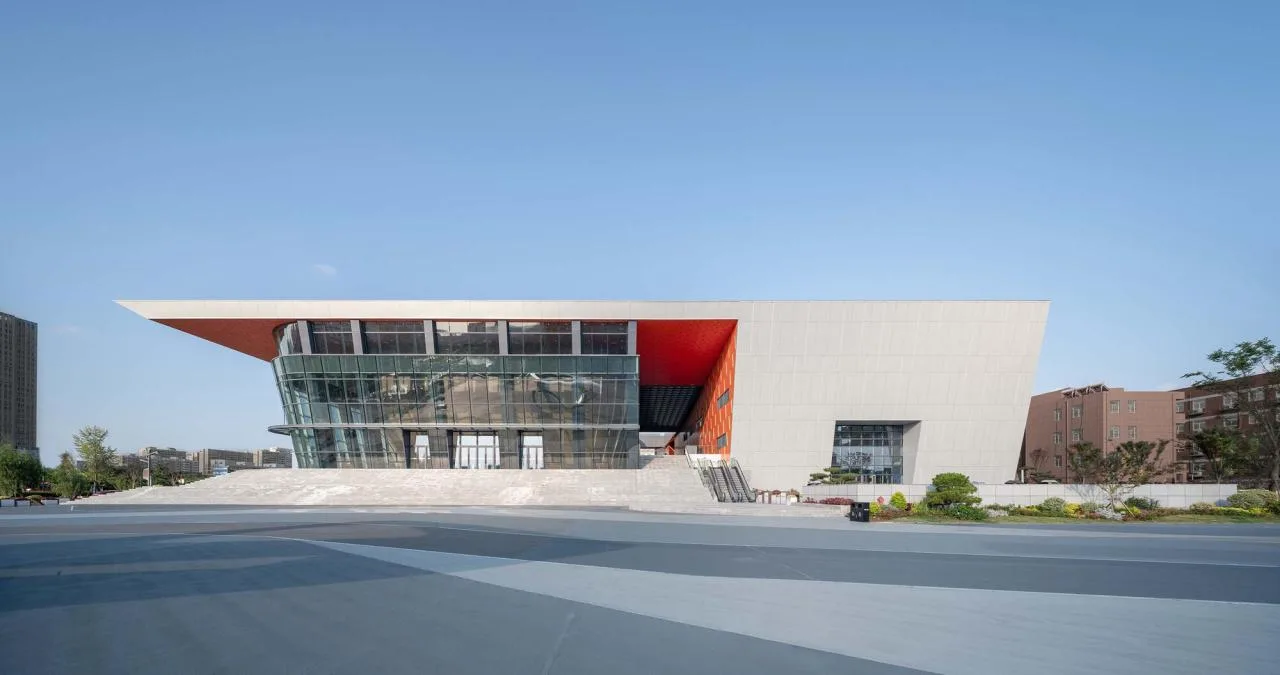
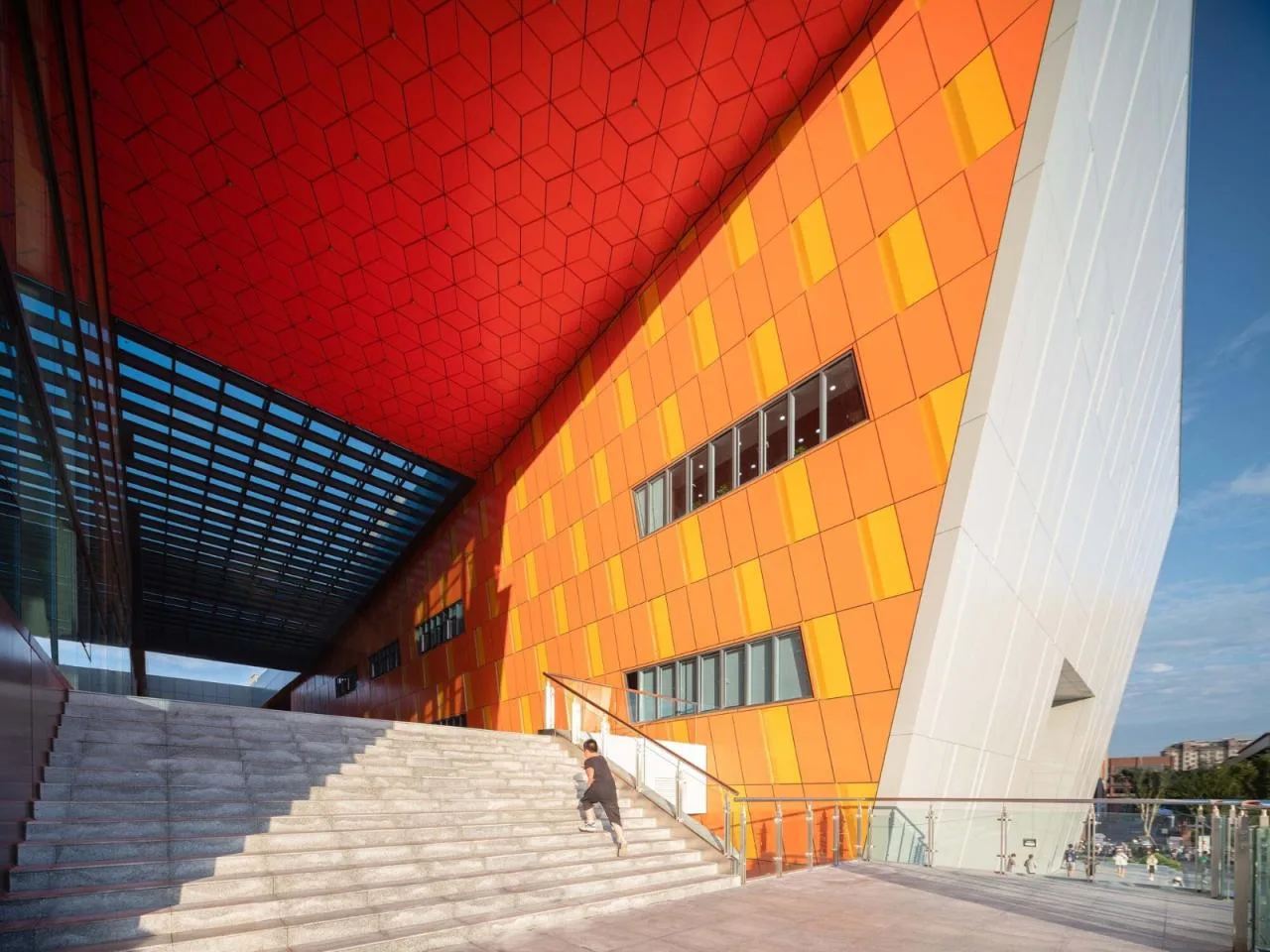
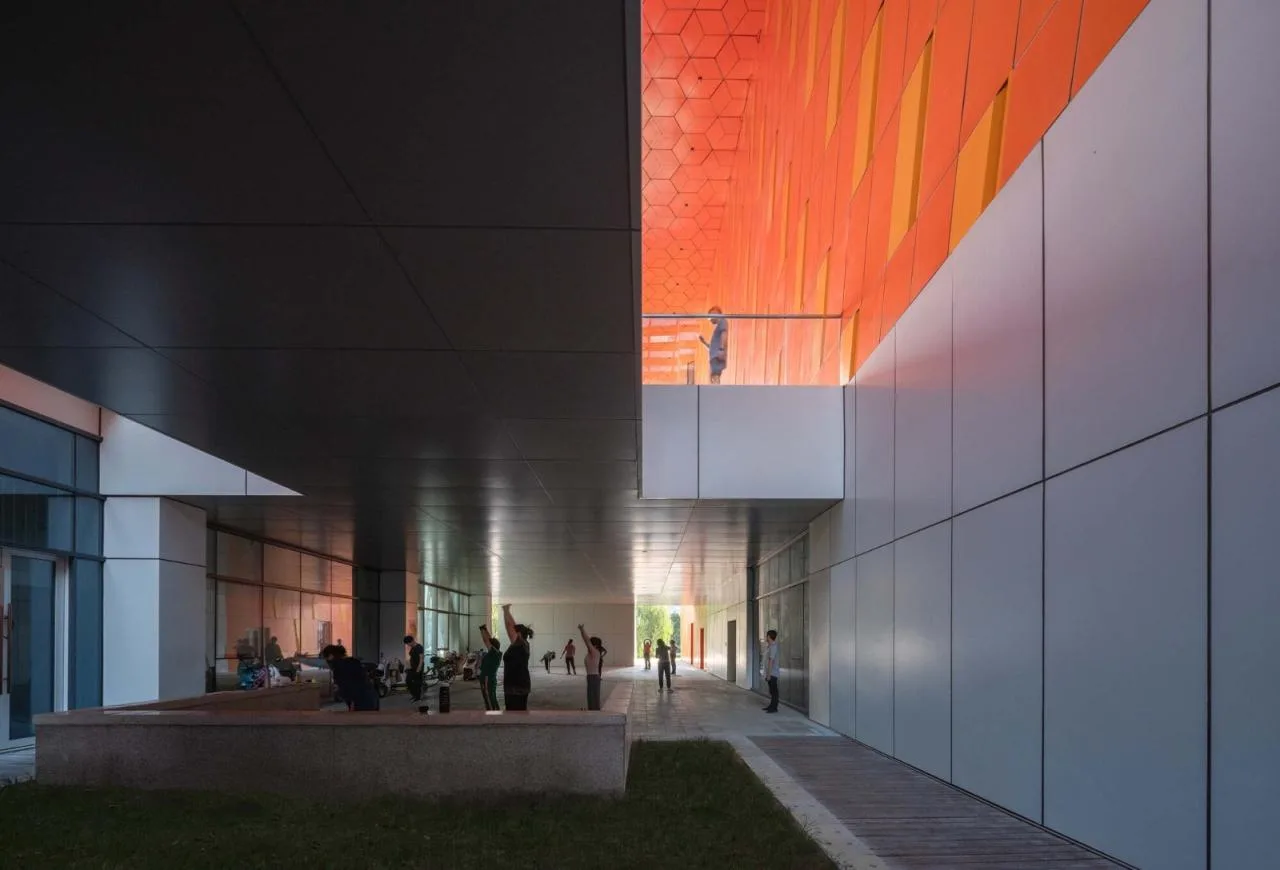
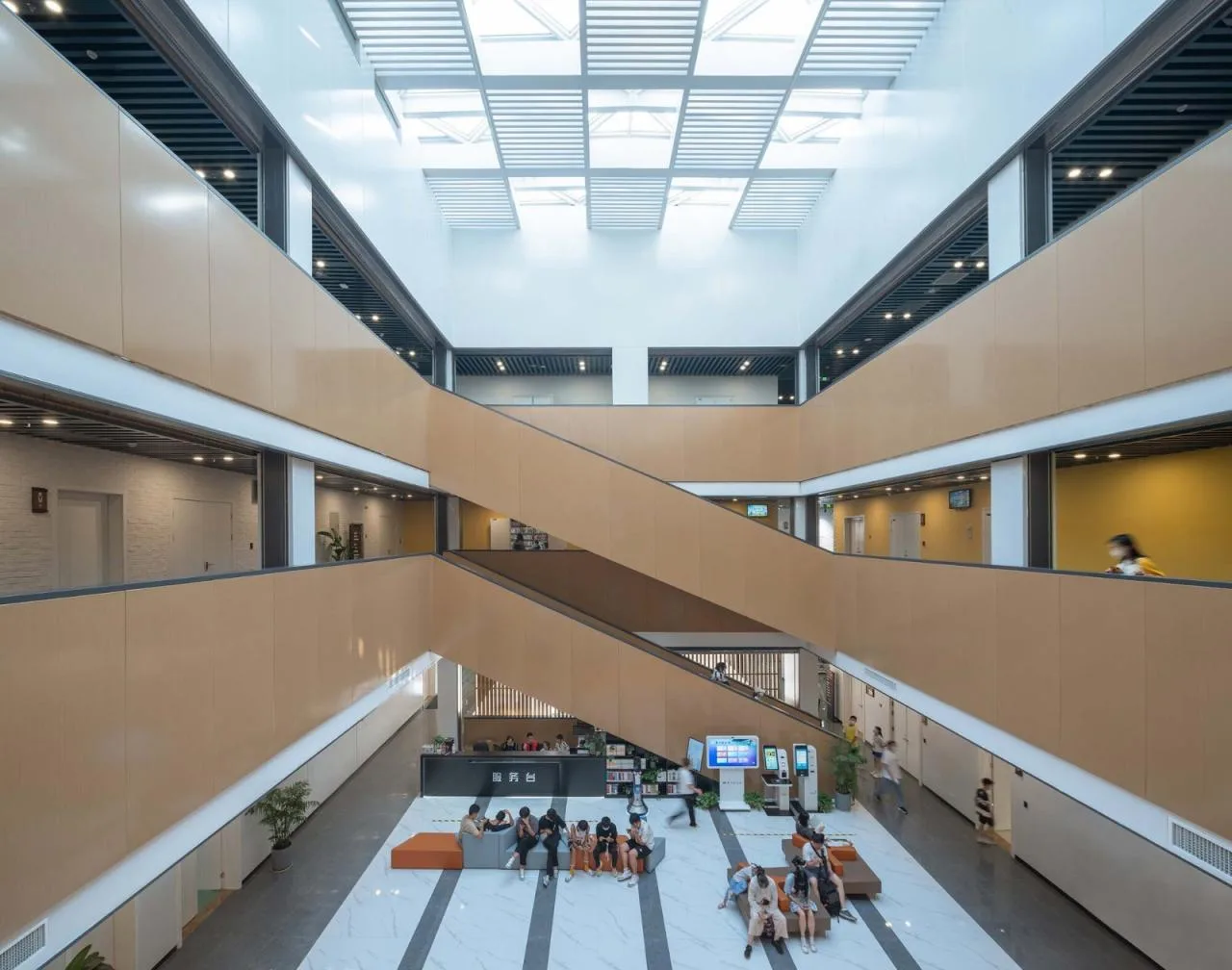
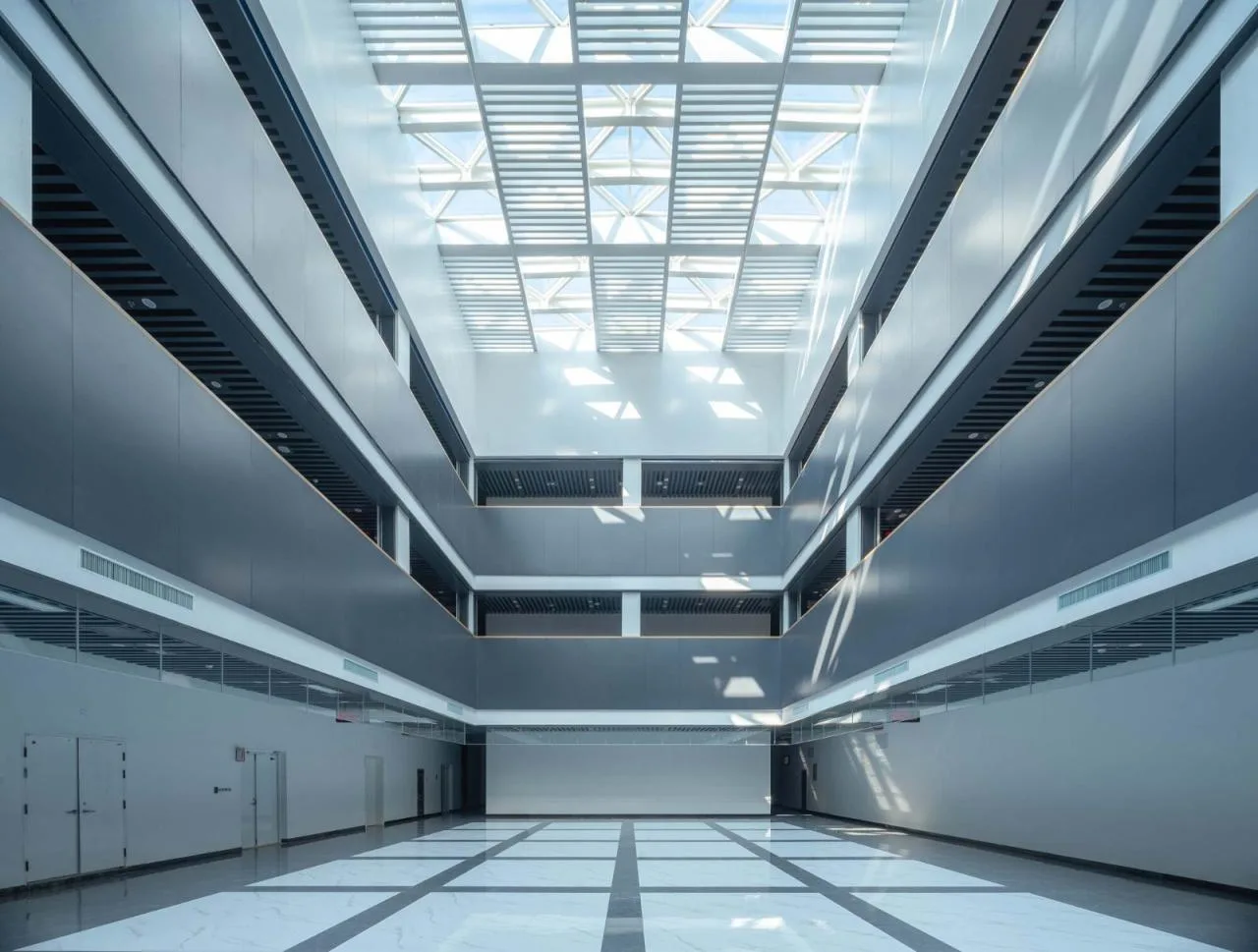
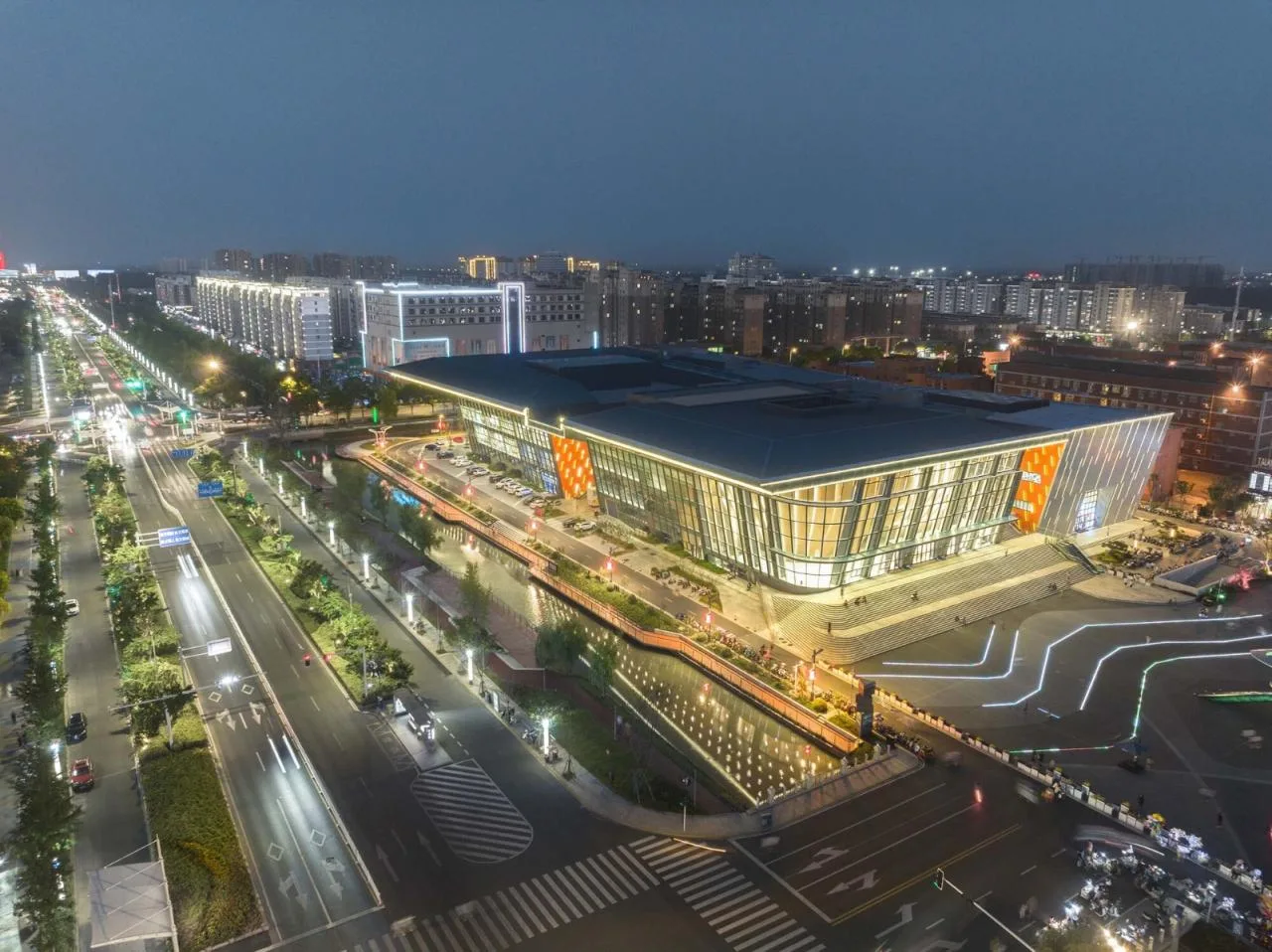
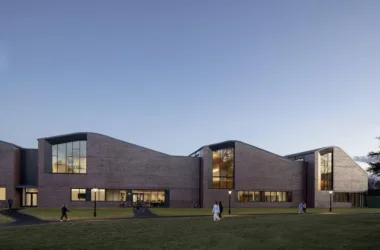
The building’s overall layout is divided into four main venues, each covered by unified, stretched roofs arranged in four quadrants based on their active and passive functions. Public space is emphasized through clear volume separation in gray tones. The design incorporates a two-story outdoor public street, circular corridors, sunken landscape courtyards, and enclosed courtyards, internalizing the vibrant urban street experience within the building’s core.
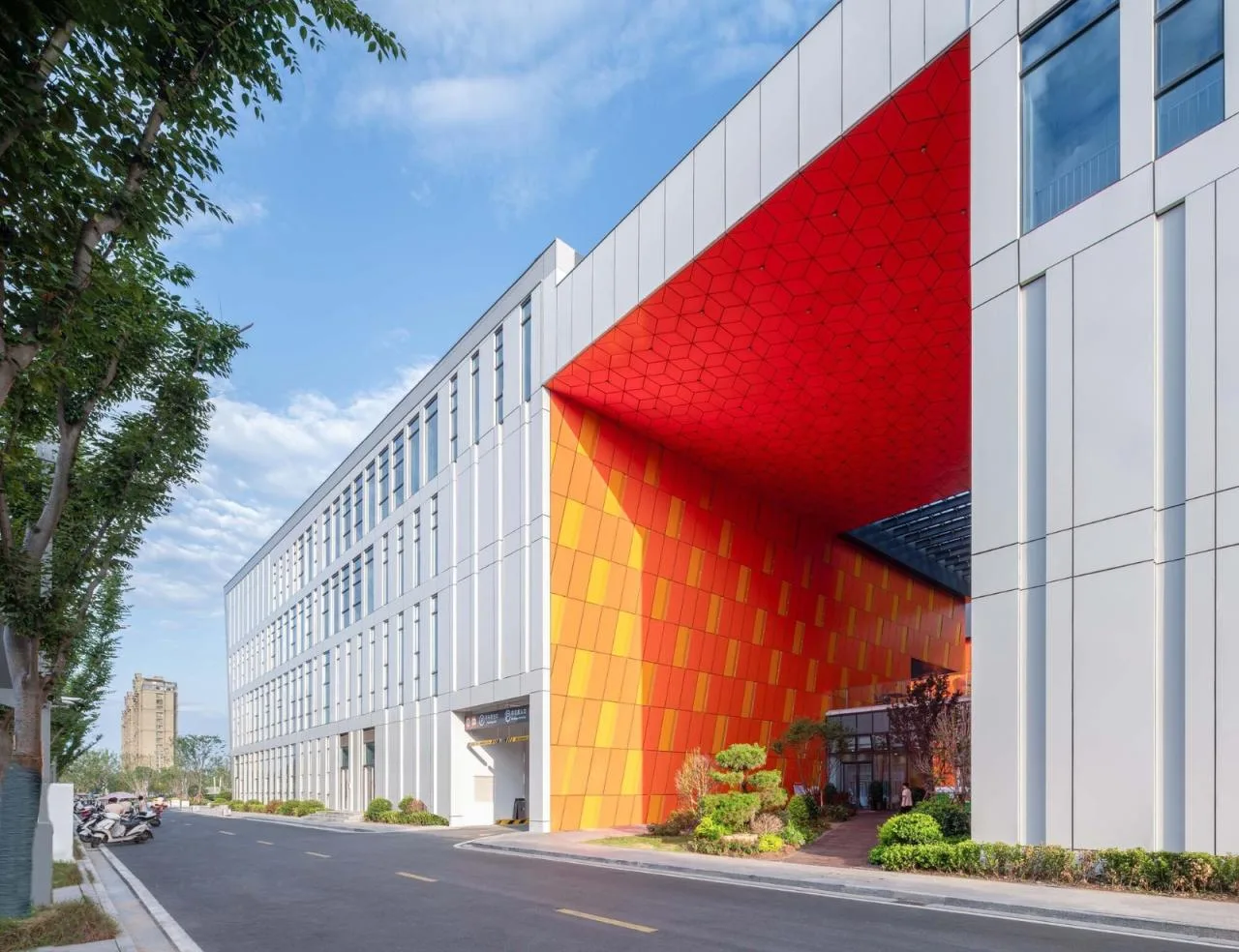
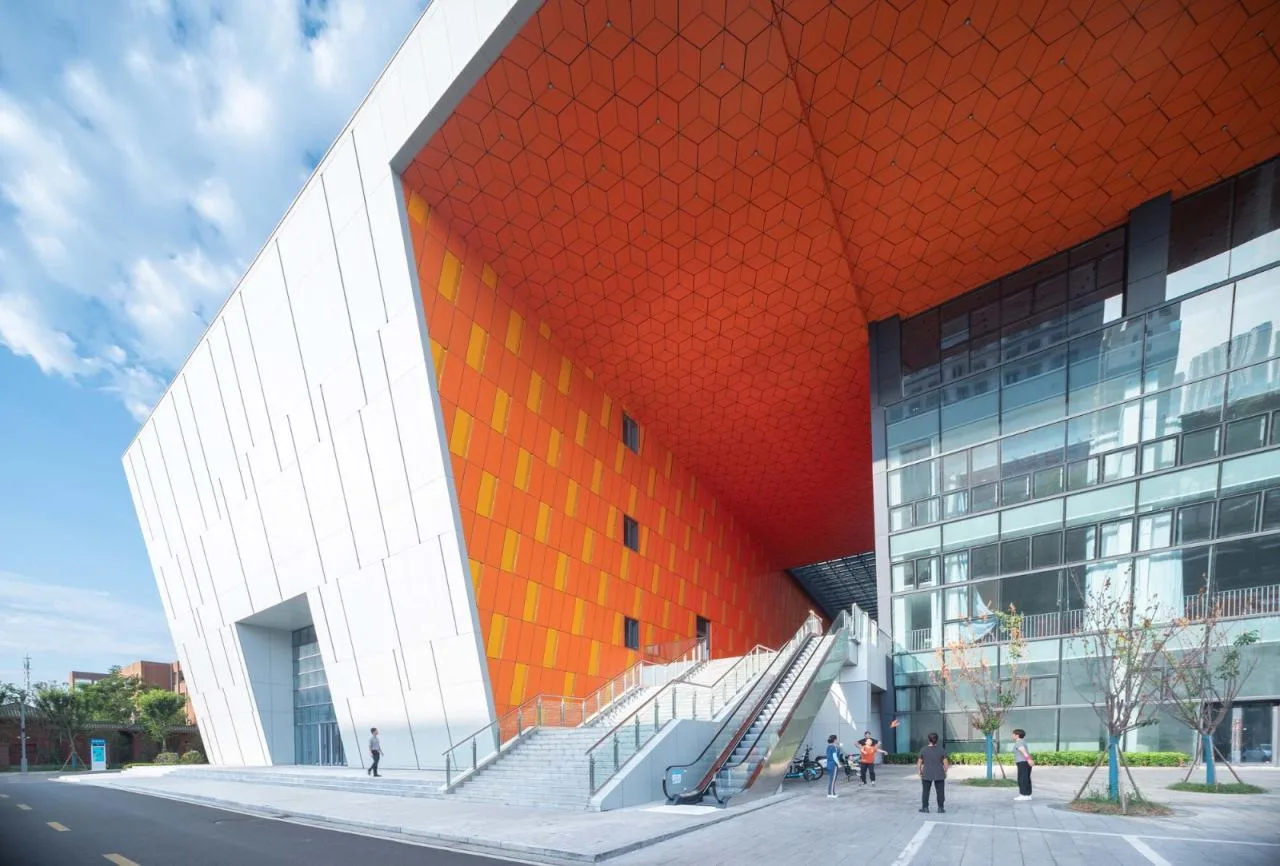
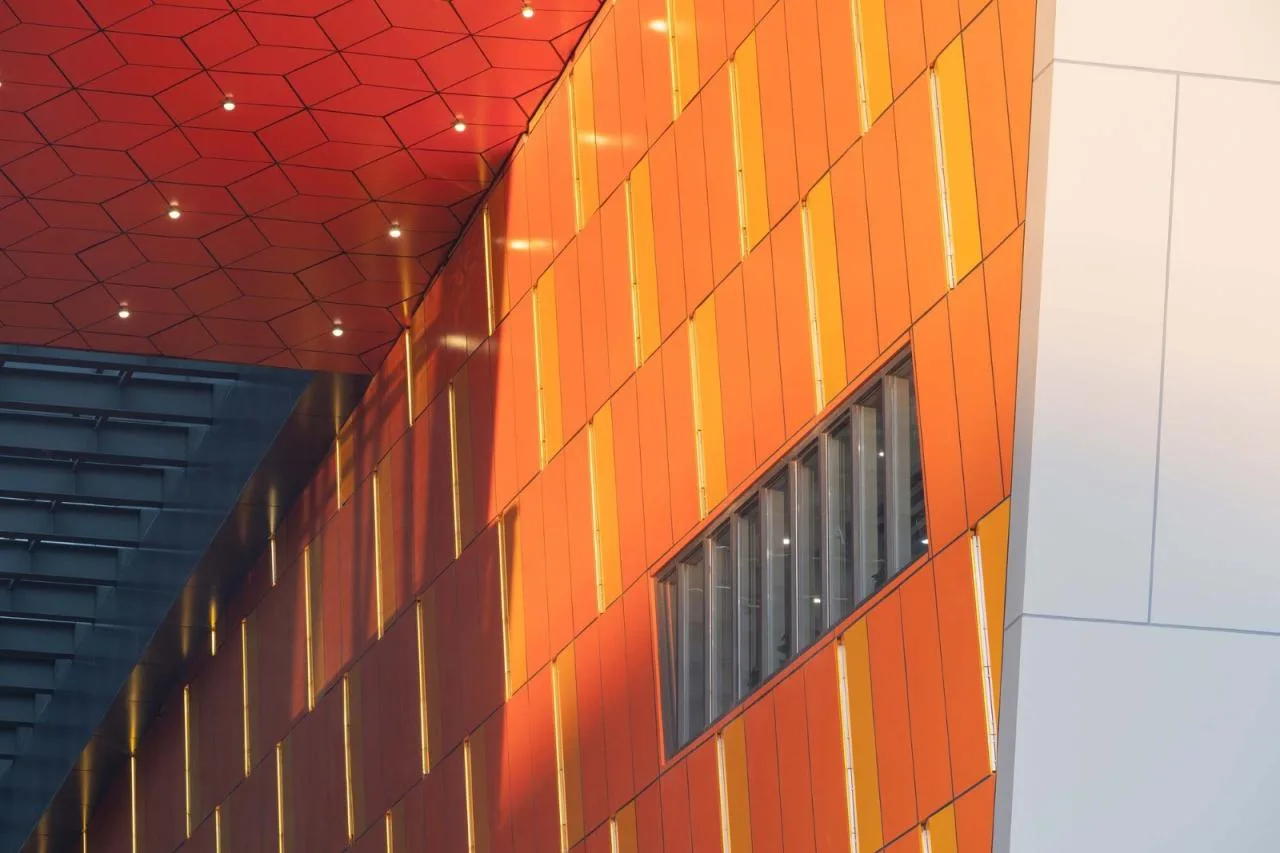
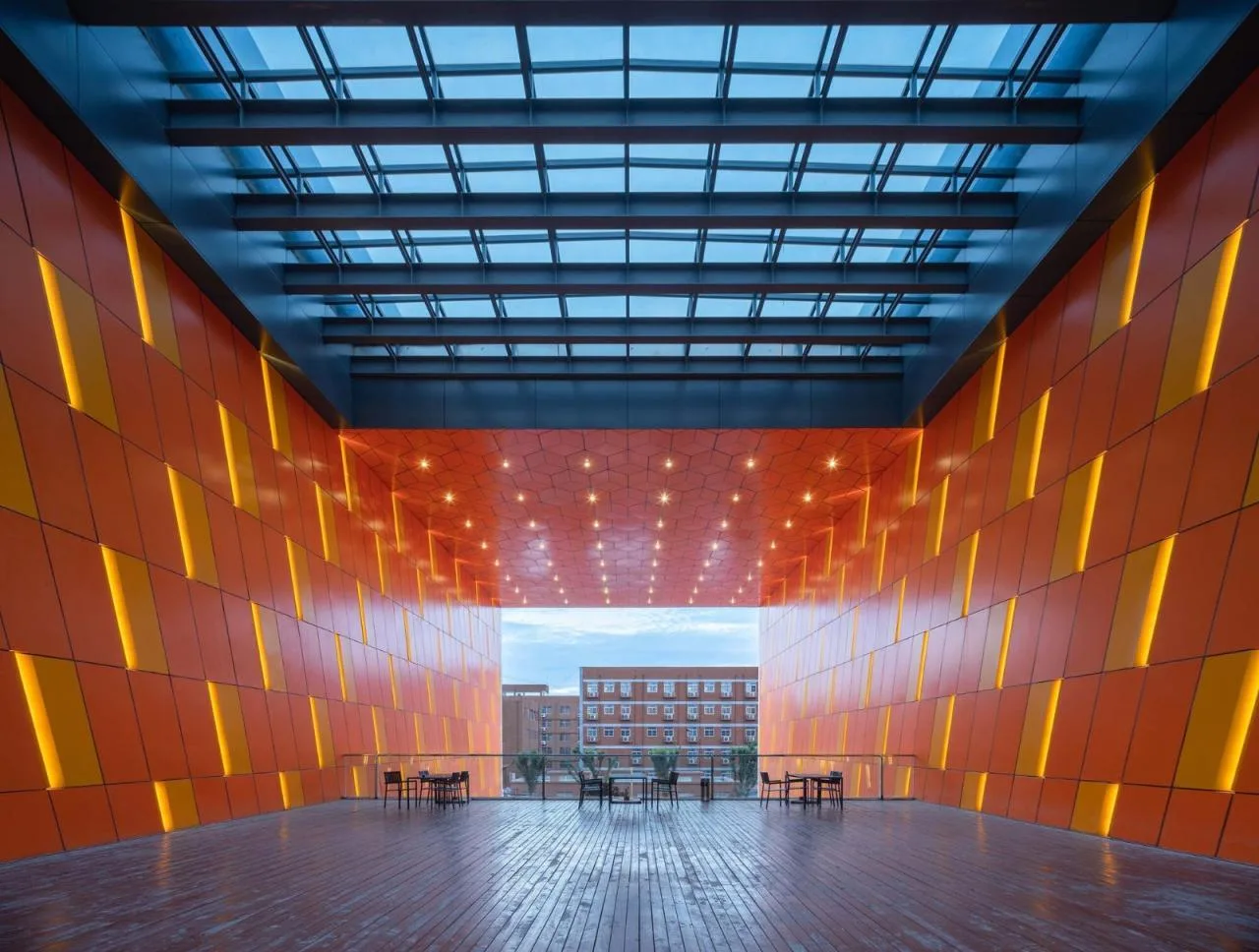
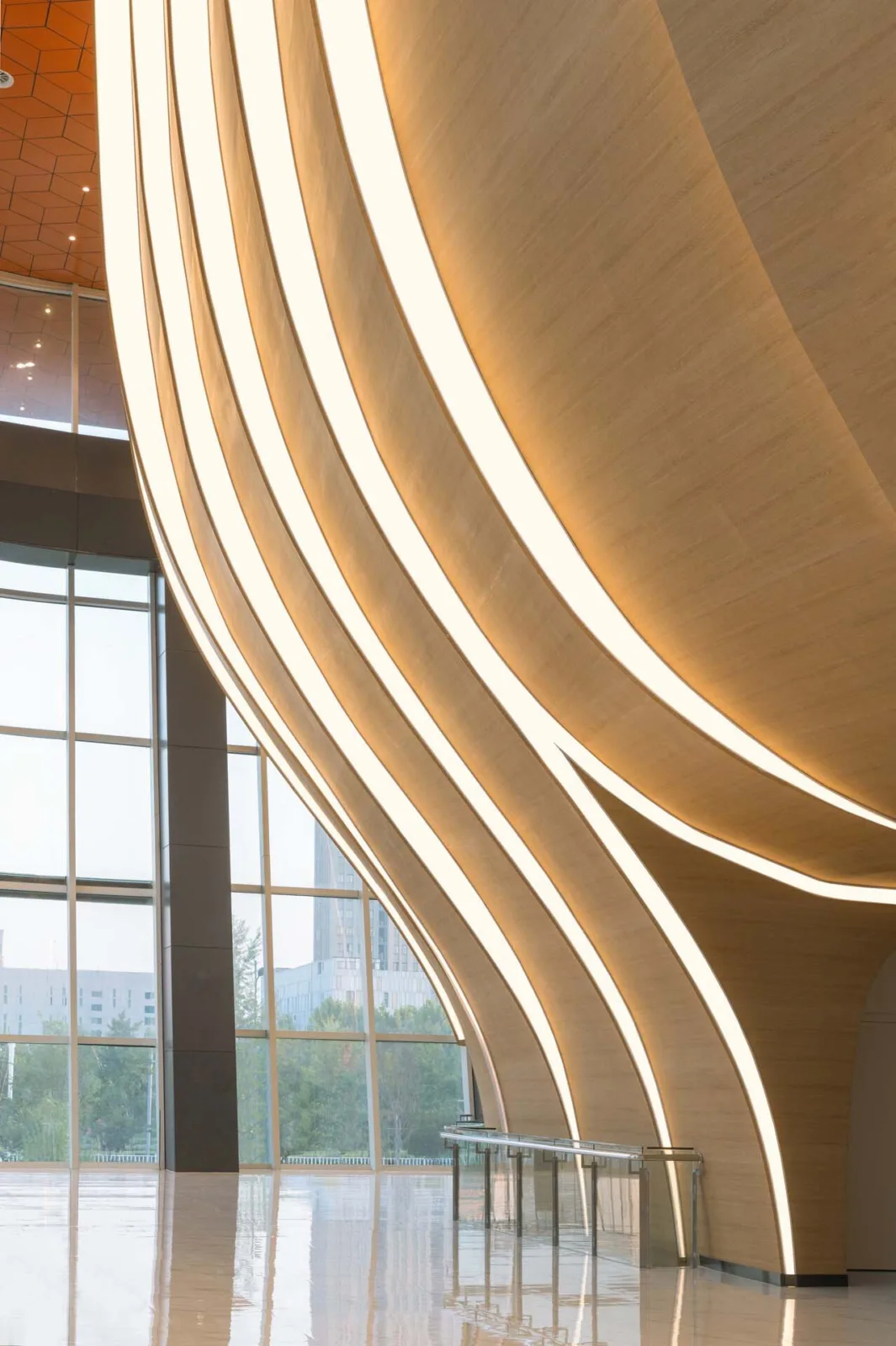
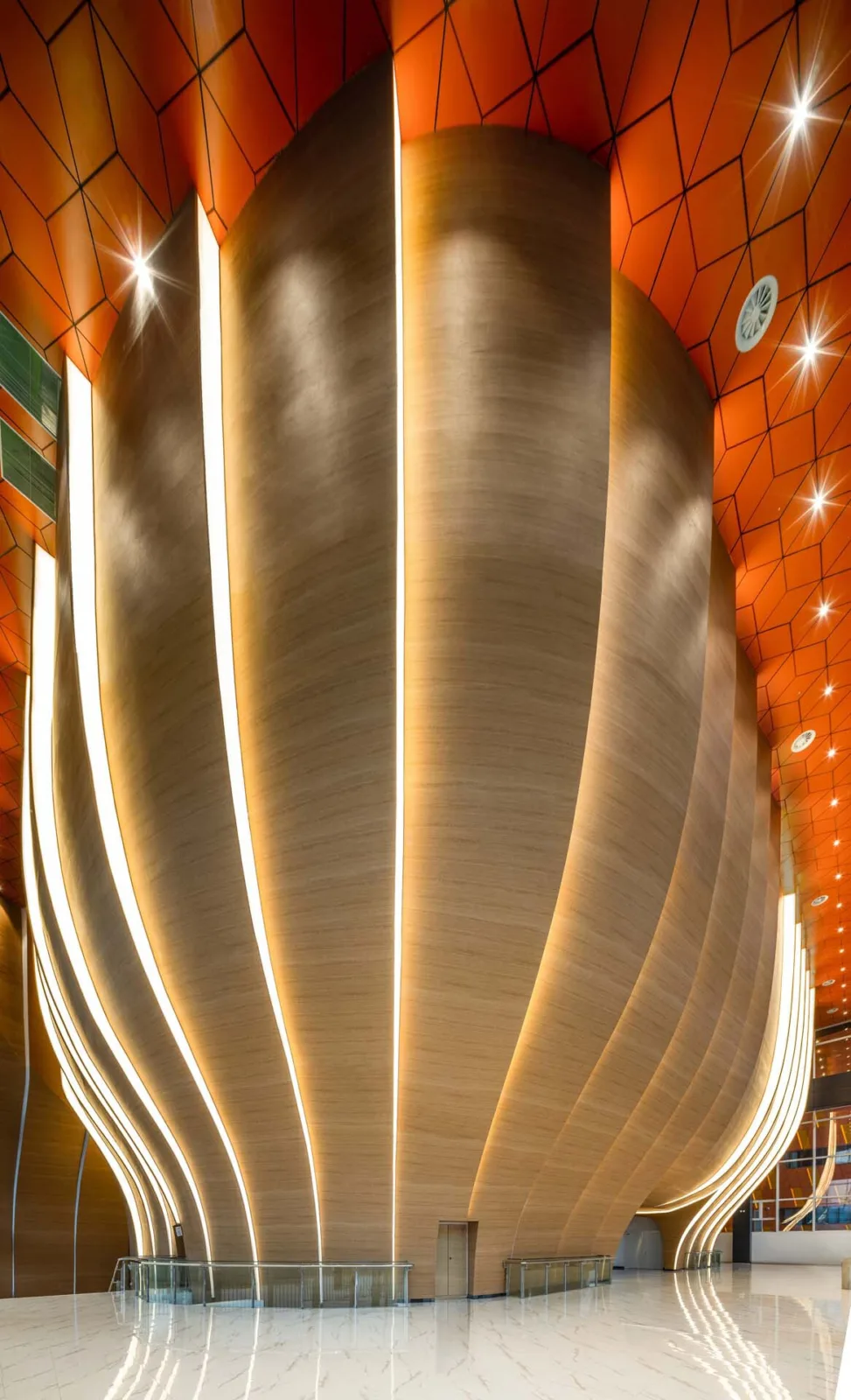
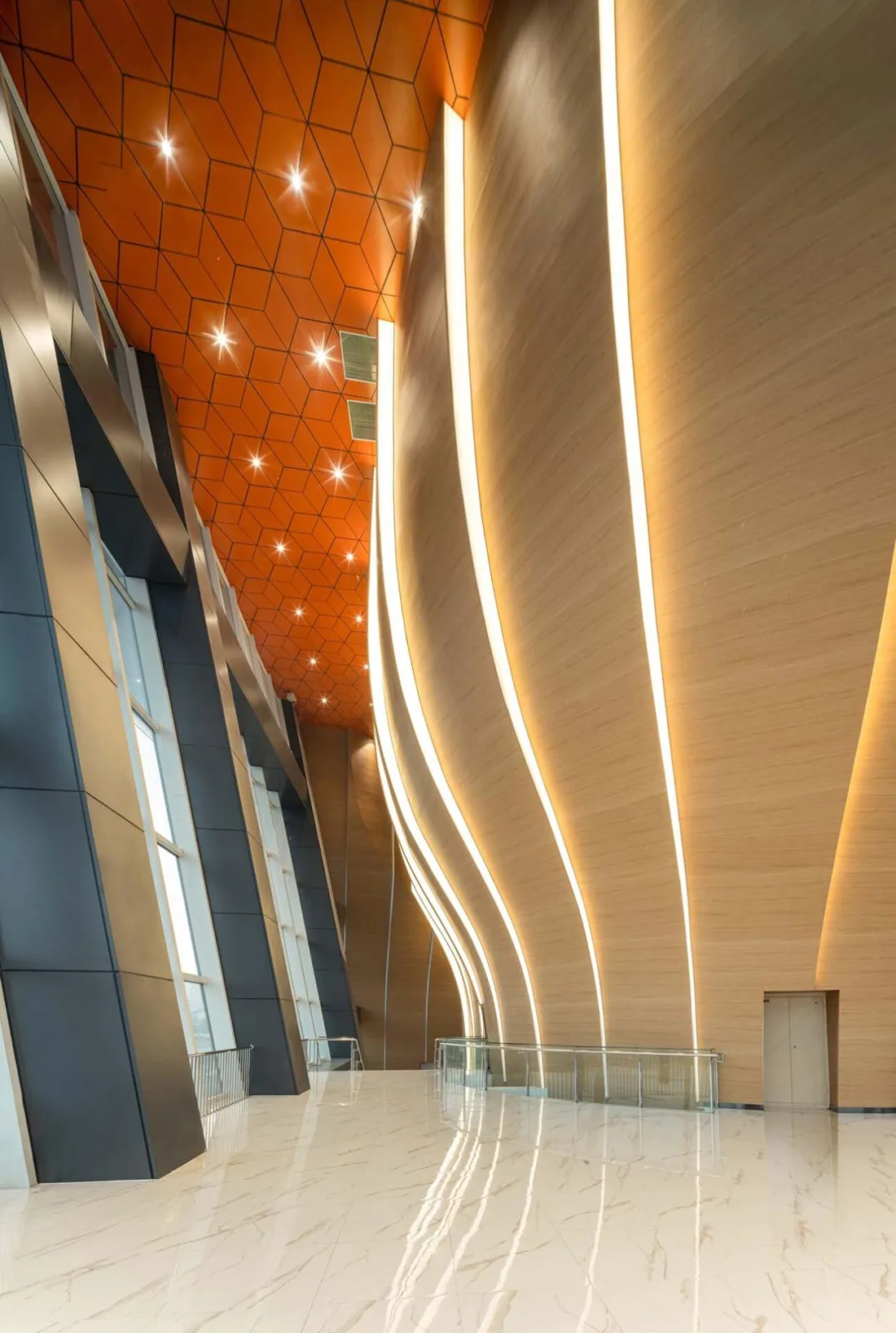
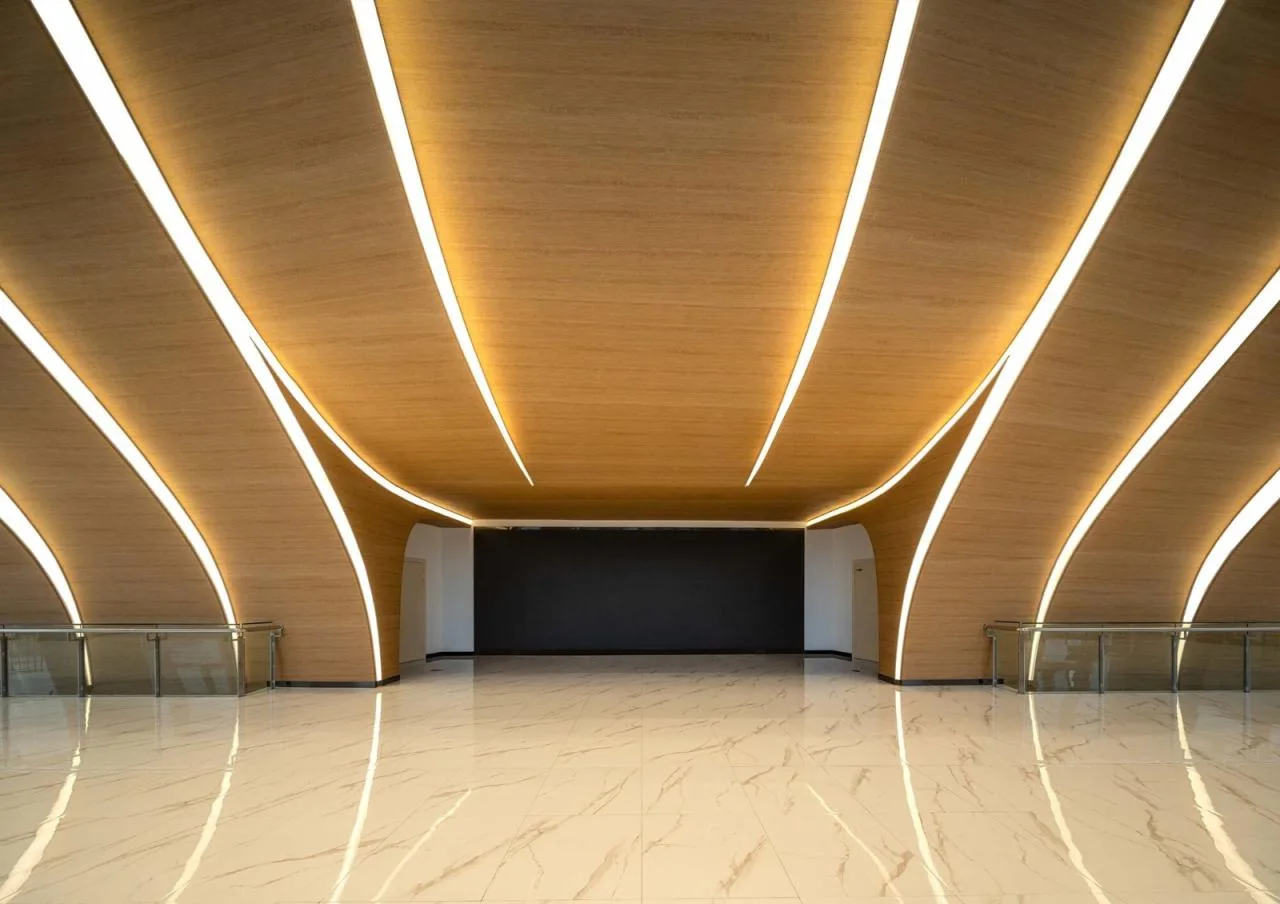
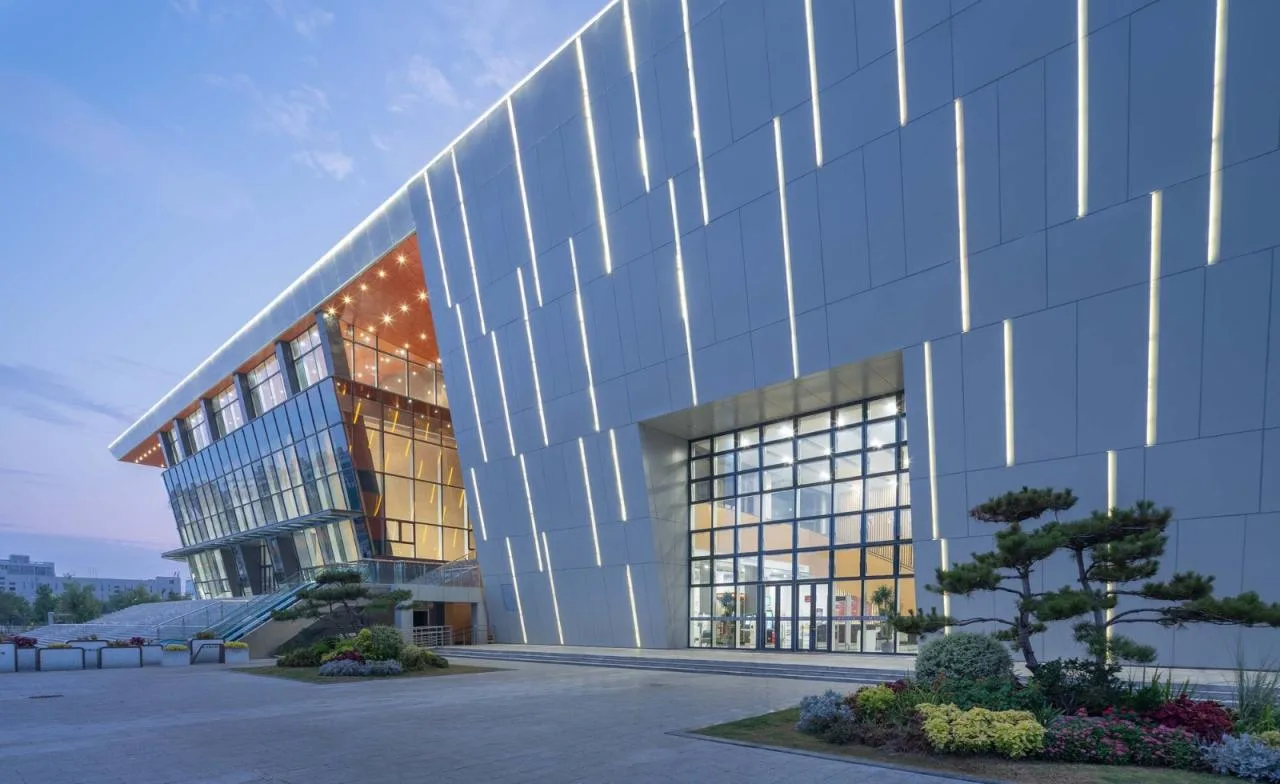
The interior walls, revealed through a cut canyon design, feature integrated lighting that creates two distinct atmospheres for day and night, unified by an inward-tilting form. A protected central corridor guides users through the volume, encouraging connection and exploration. Although the external landscaping and soft decoration are planned, partial demolition and renovation have delayed their full realization.
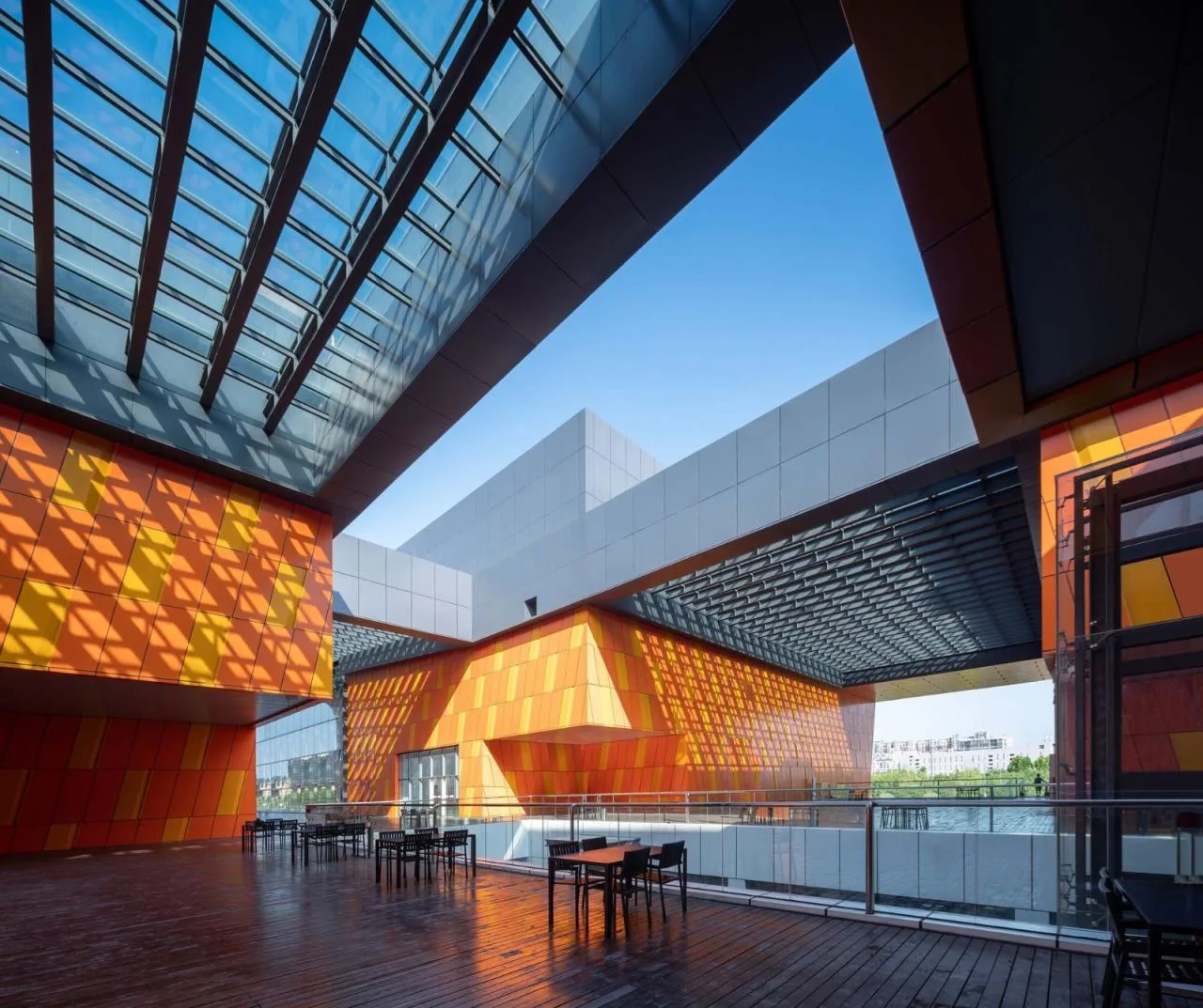
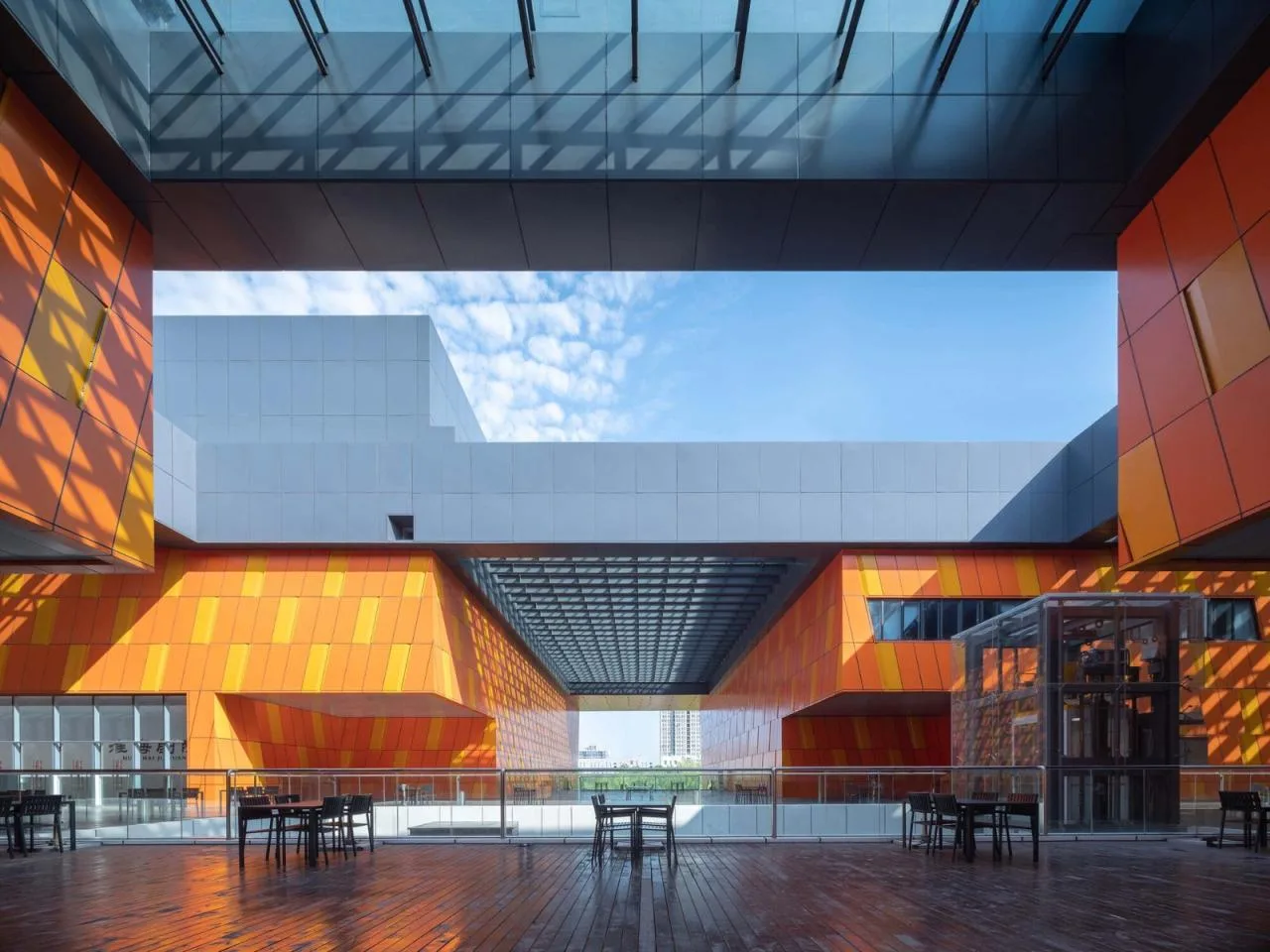
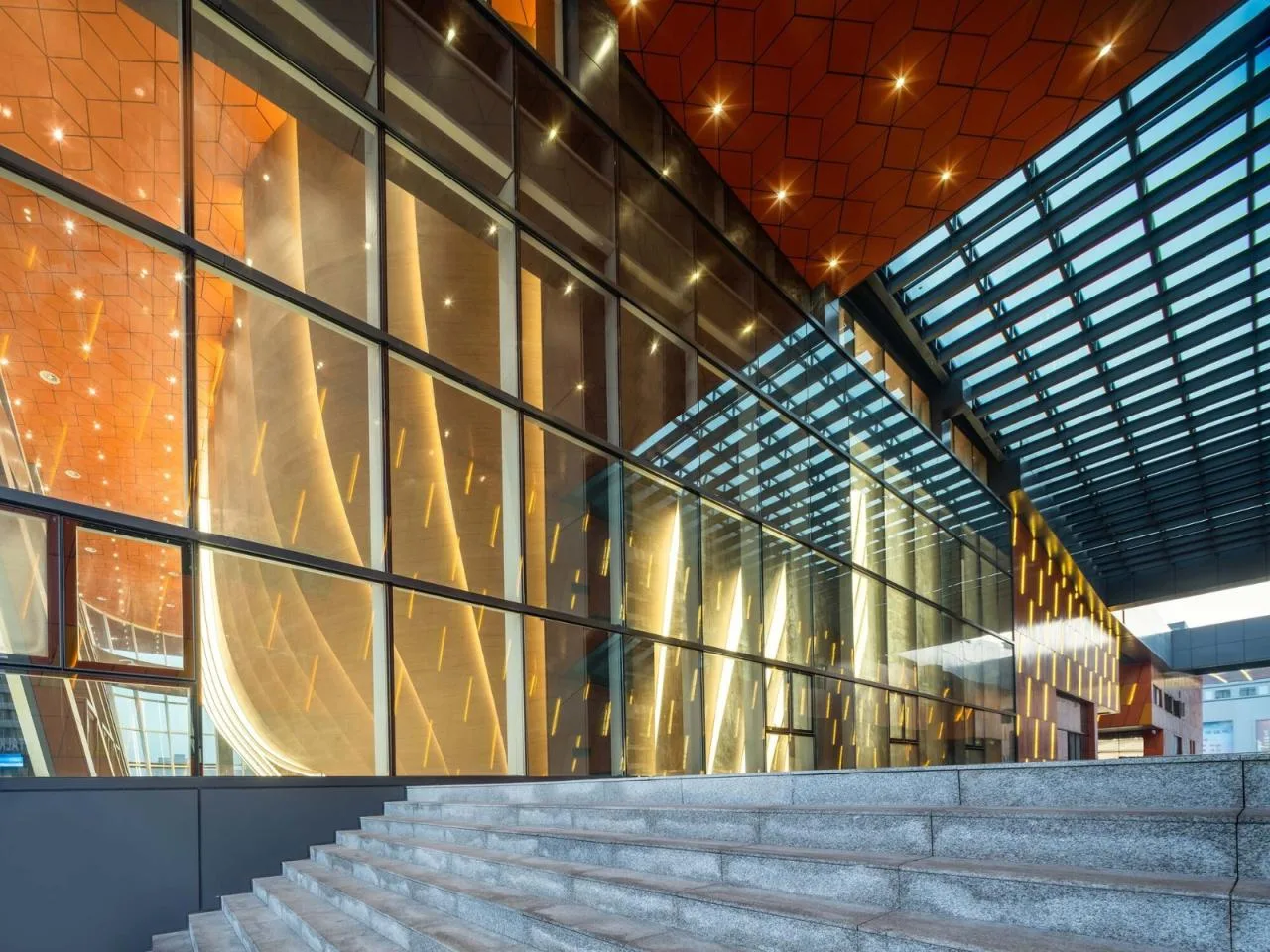
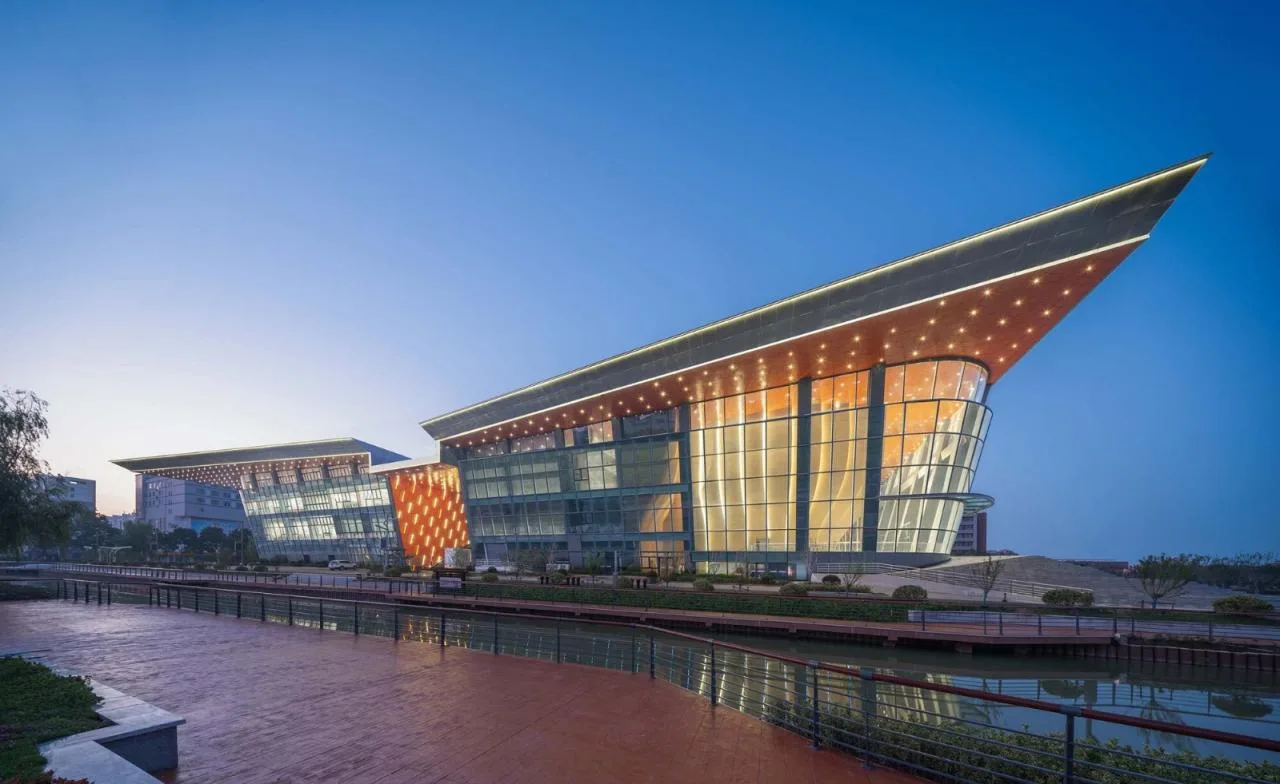
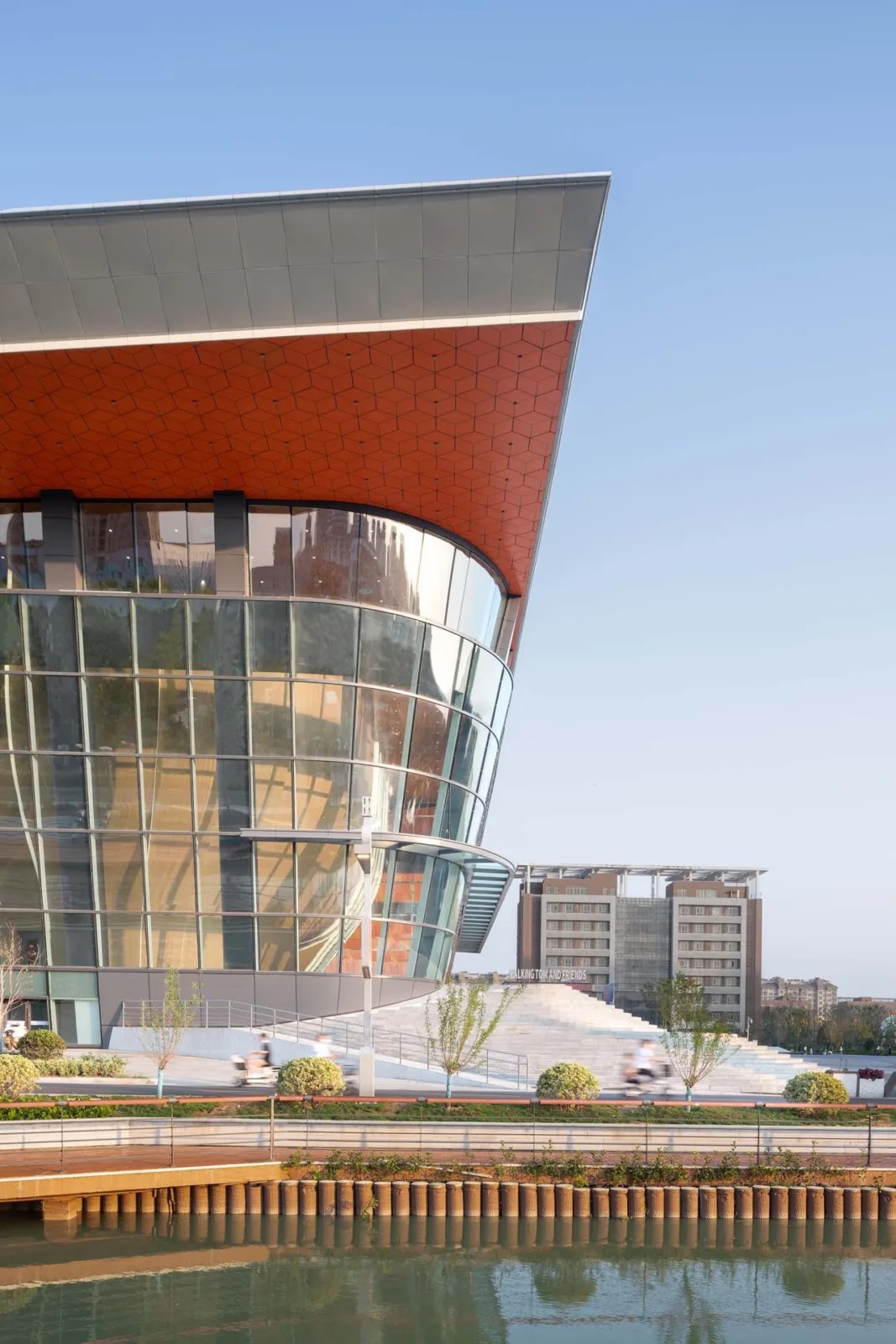
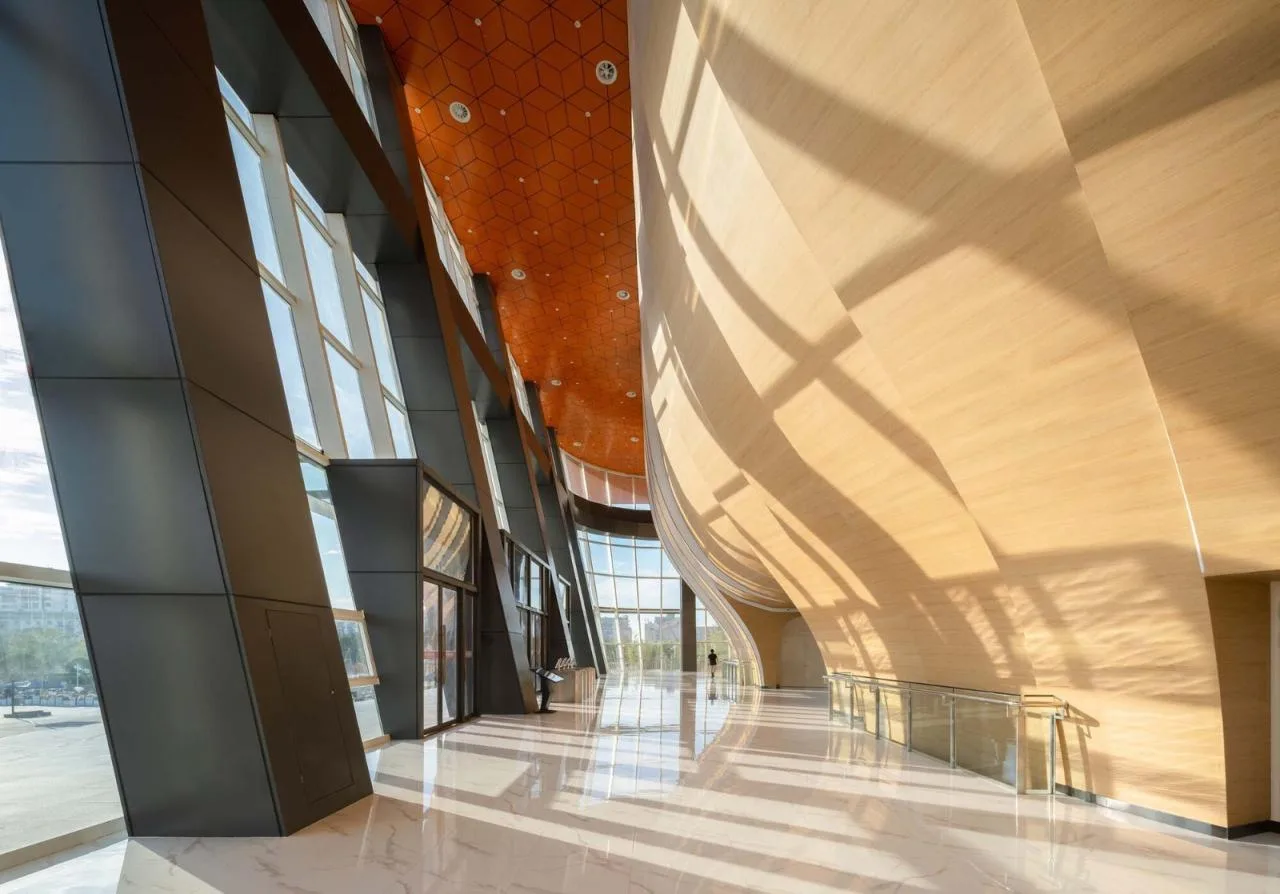
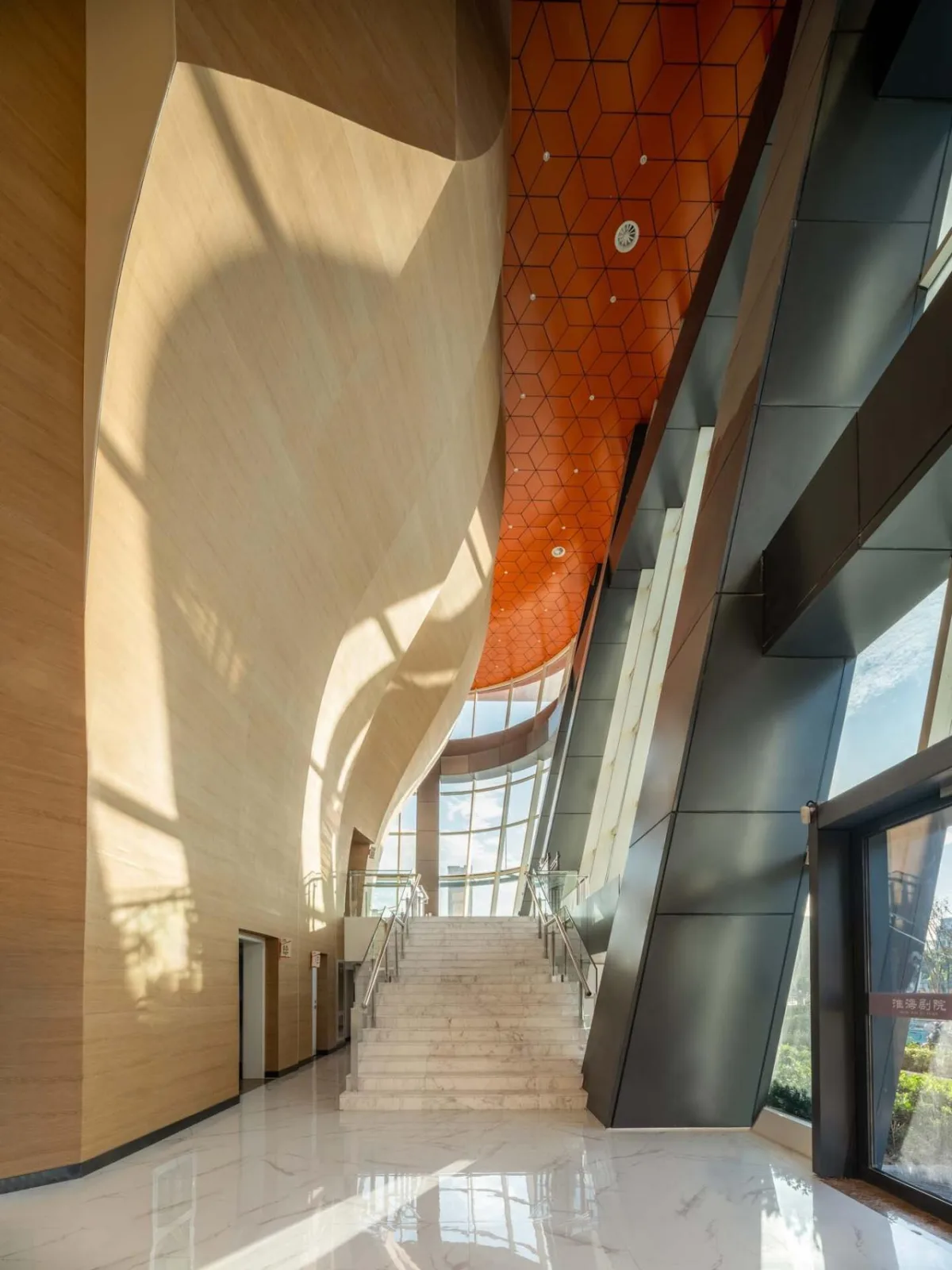
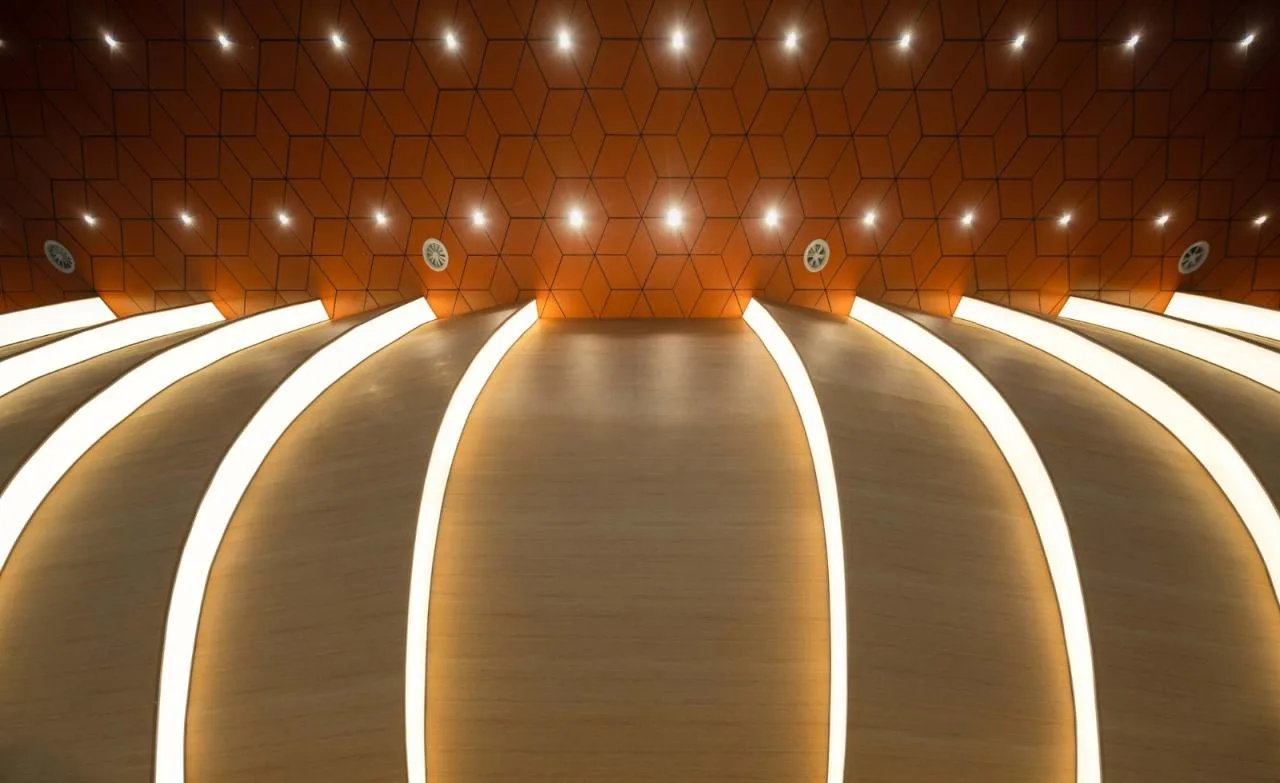
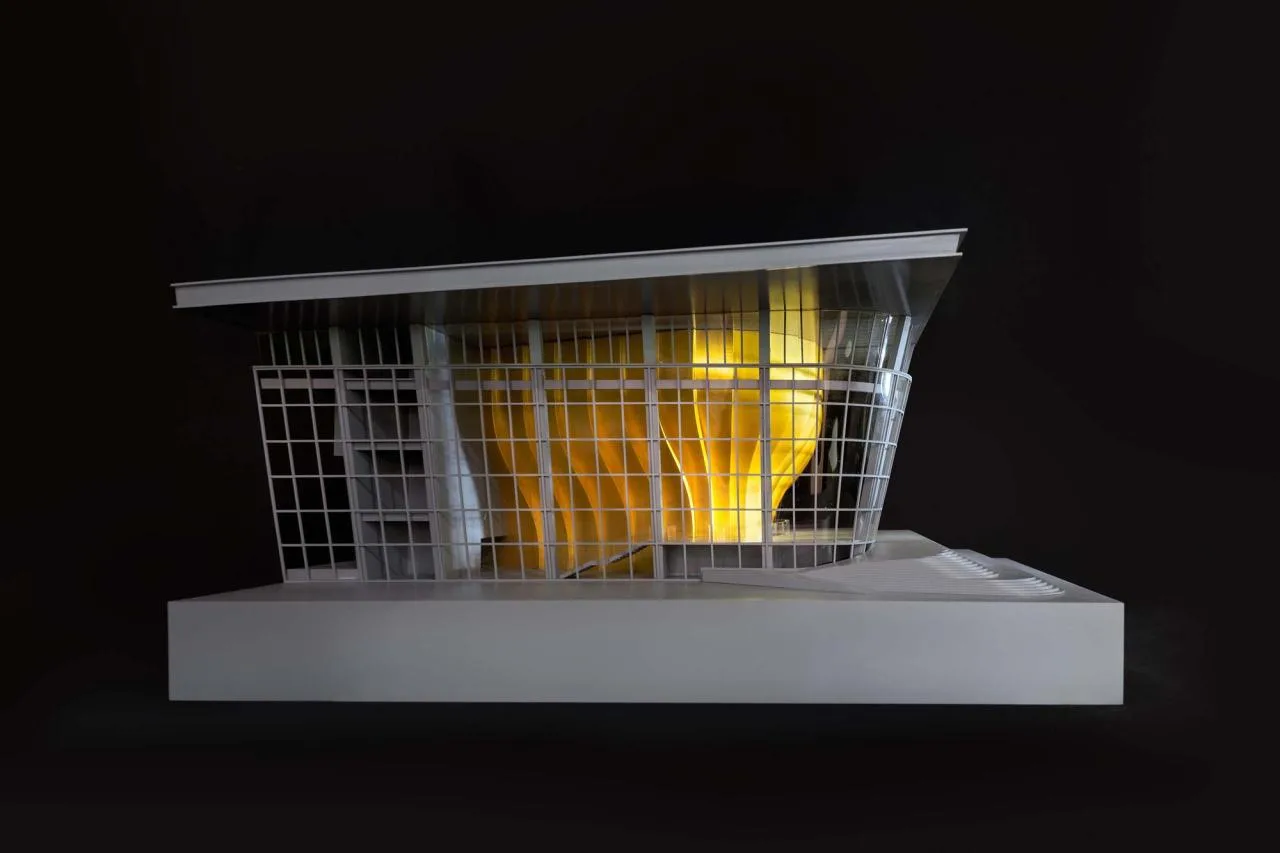
The northeast corner of the cultural and art center draws inspiration from the profound experience of overlooking Lake Lucerne from the Lucerne Museum of Contemporary Art’s eaves. This effect is recreated both inside and outside through a large-span roof structure, accompanied by a suspended ceiling and lighting that transition seamlessly from exterior to interior.
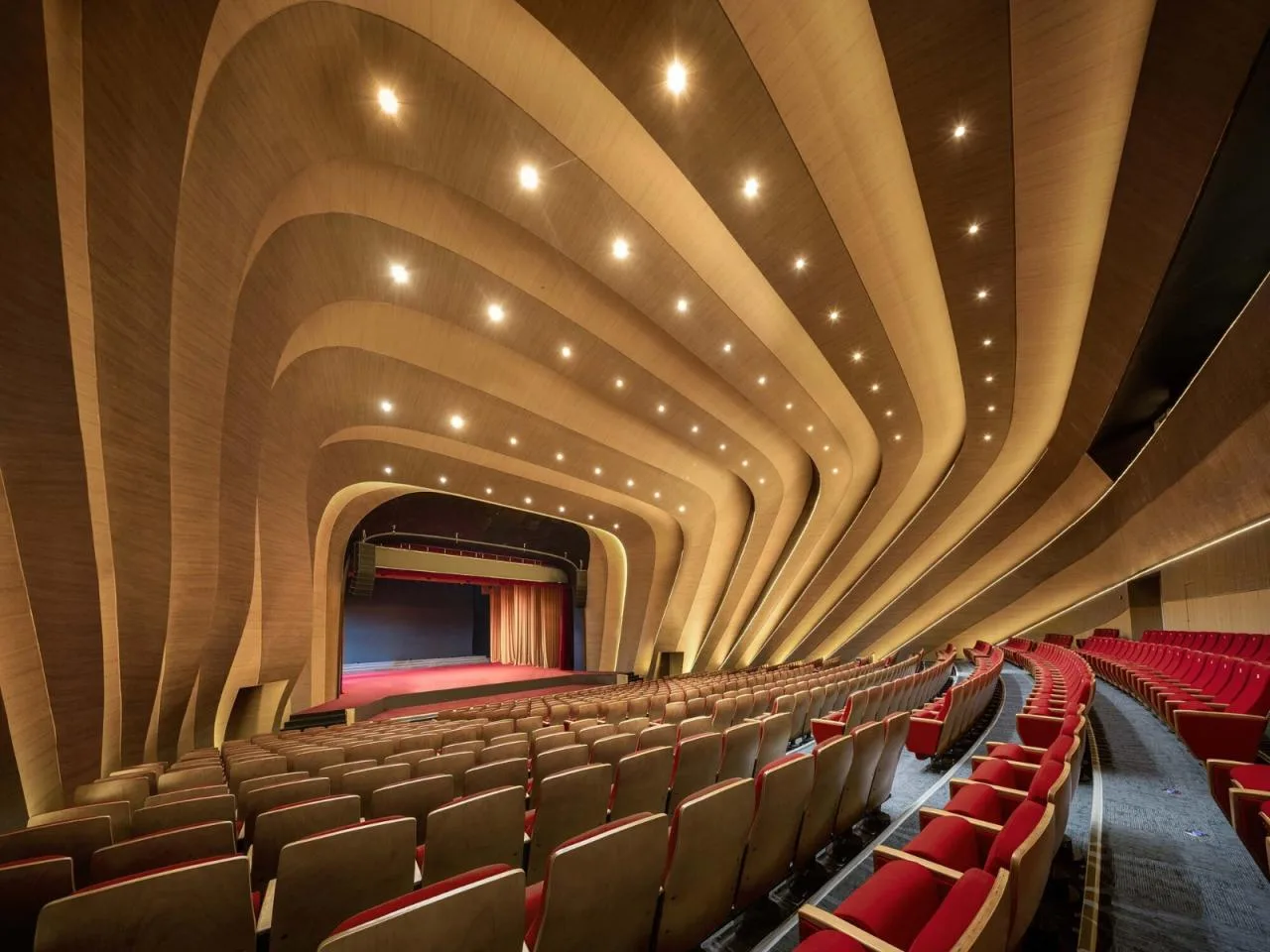
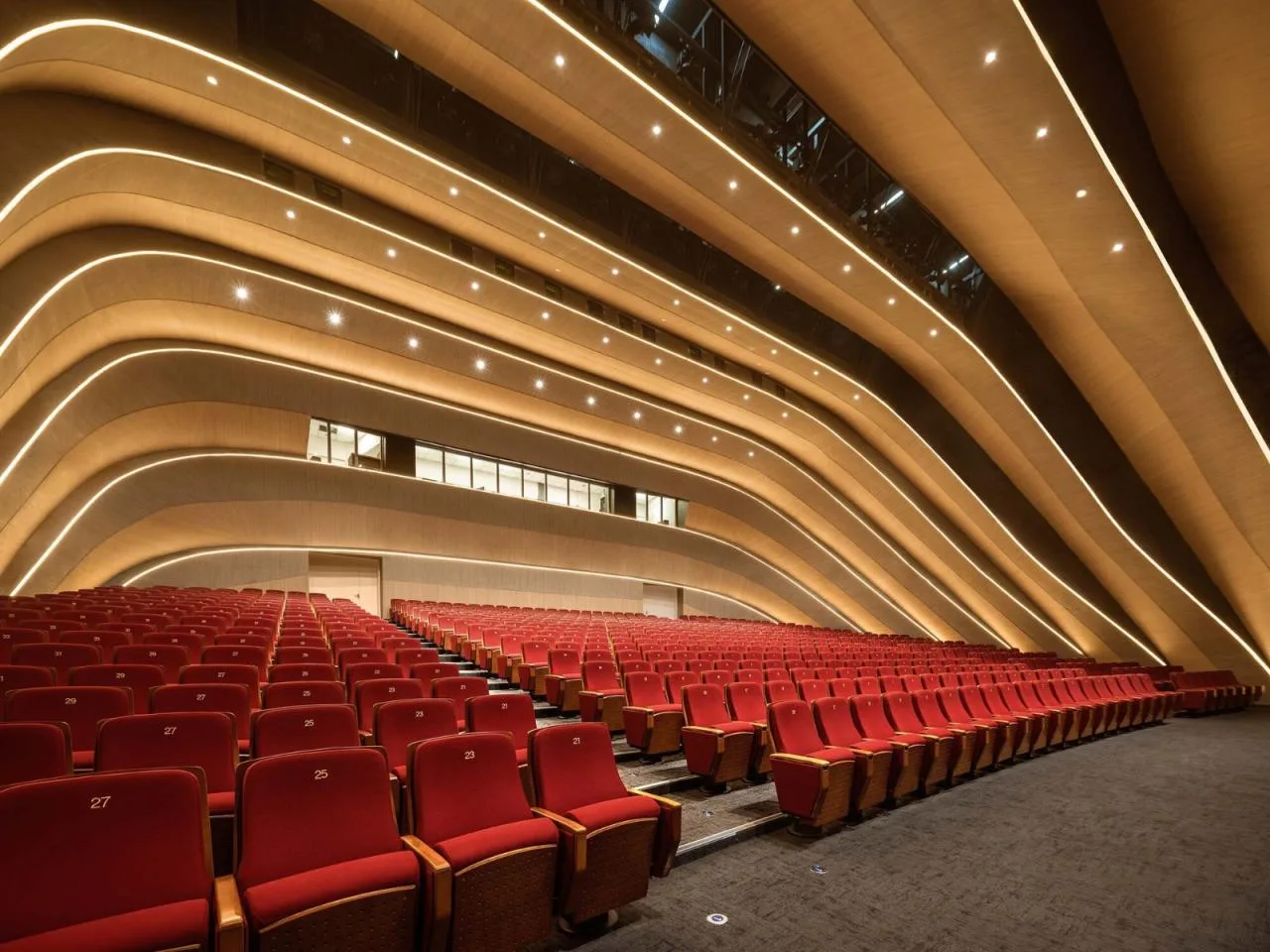
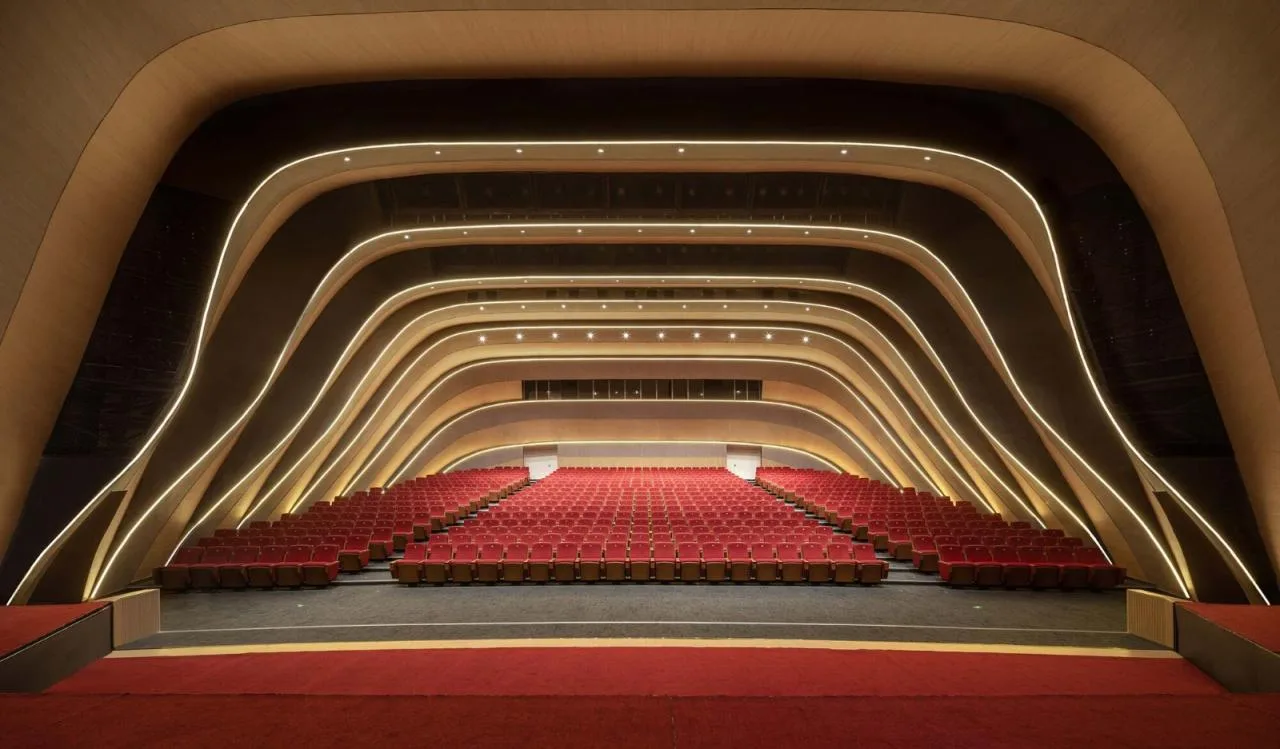
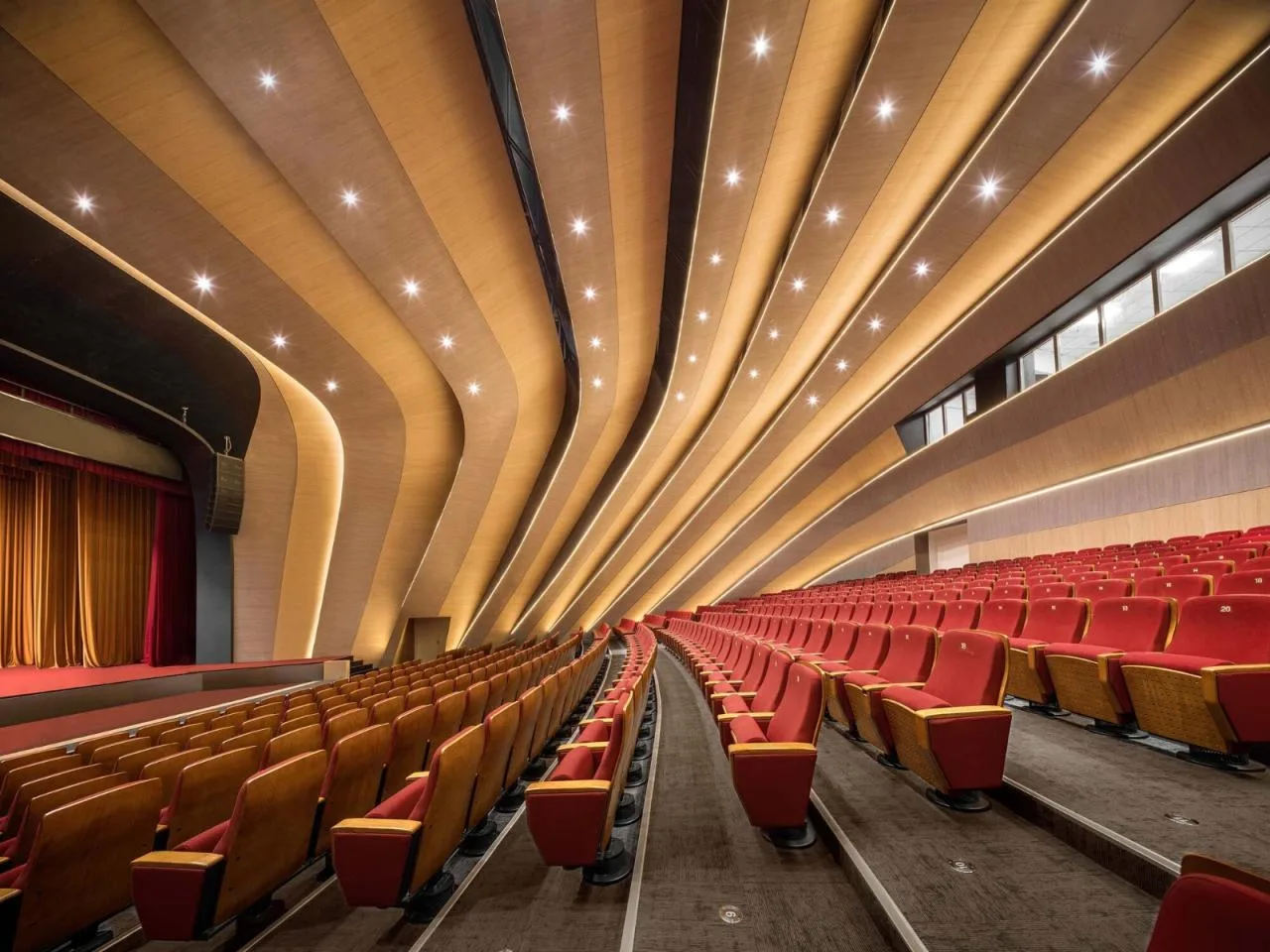
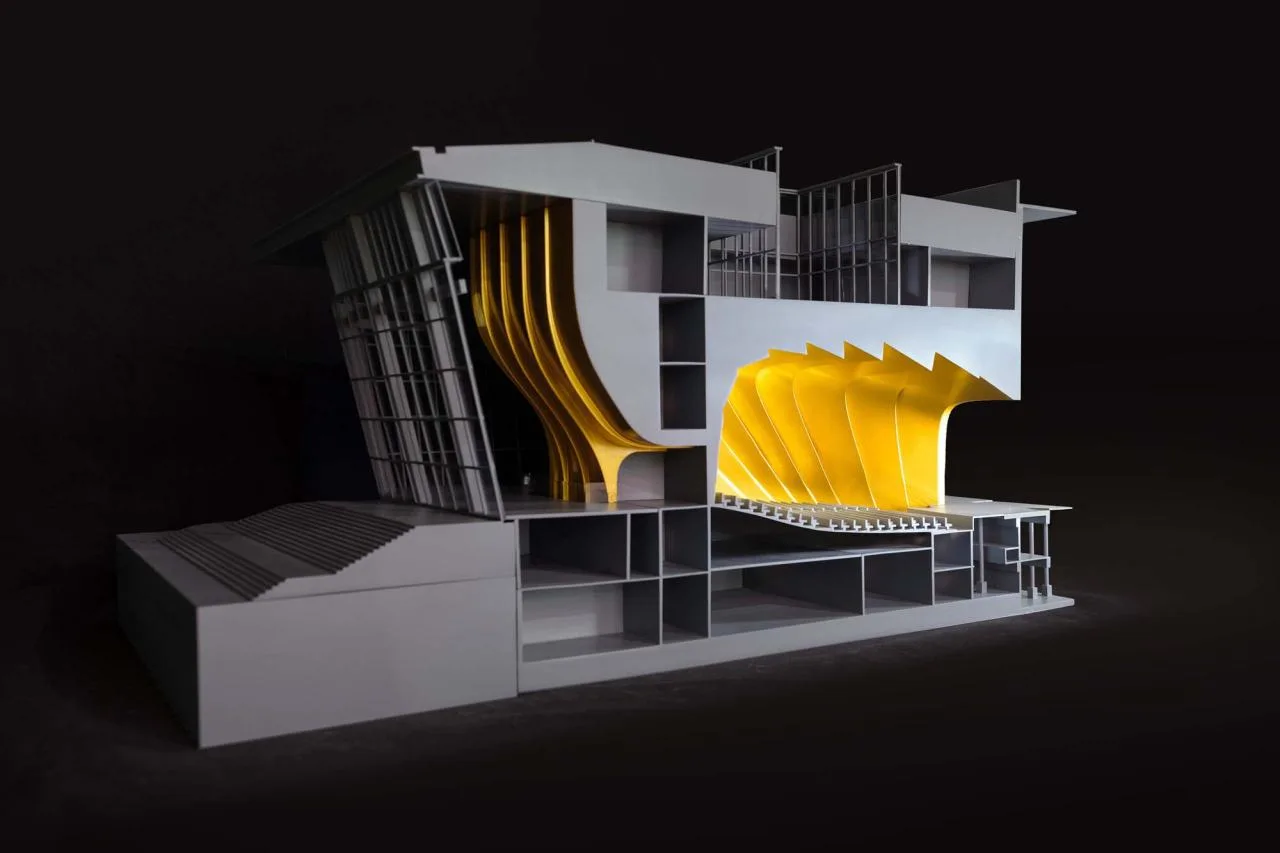
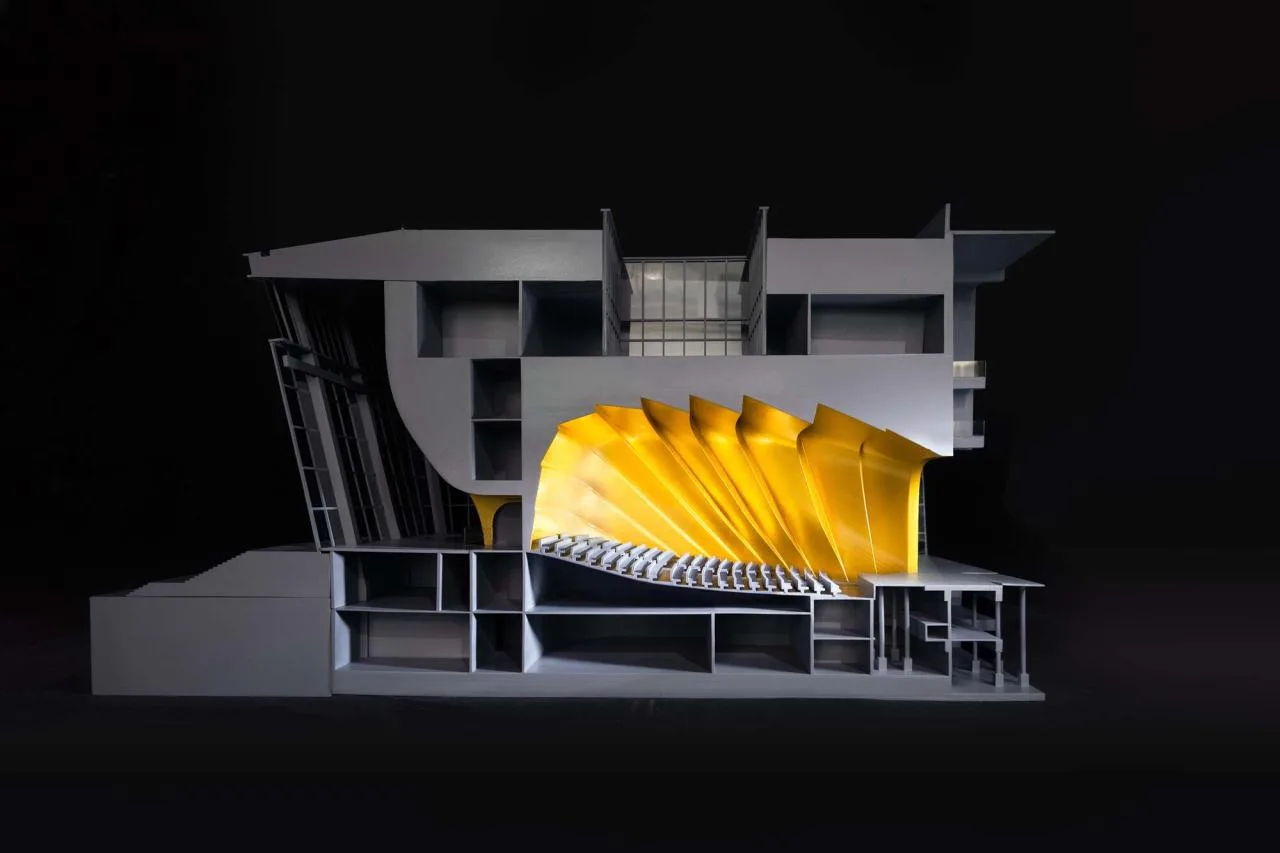
The suspended ceiling, featuring a crystalline structure, along with diamond-shaped interior facade panels, enhances the connection between inside and outside through a dense, highly abstracted pattern. The centerpiece of the design is the county’s only 800-seat multifunctional theater. As the birthplace of Chinese opera, Xiangshui aims to showcase local cultural masterpieces on a global stage, while also welcoming high-quality performances from elsewhere into the town’s cultural life.
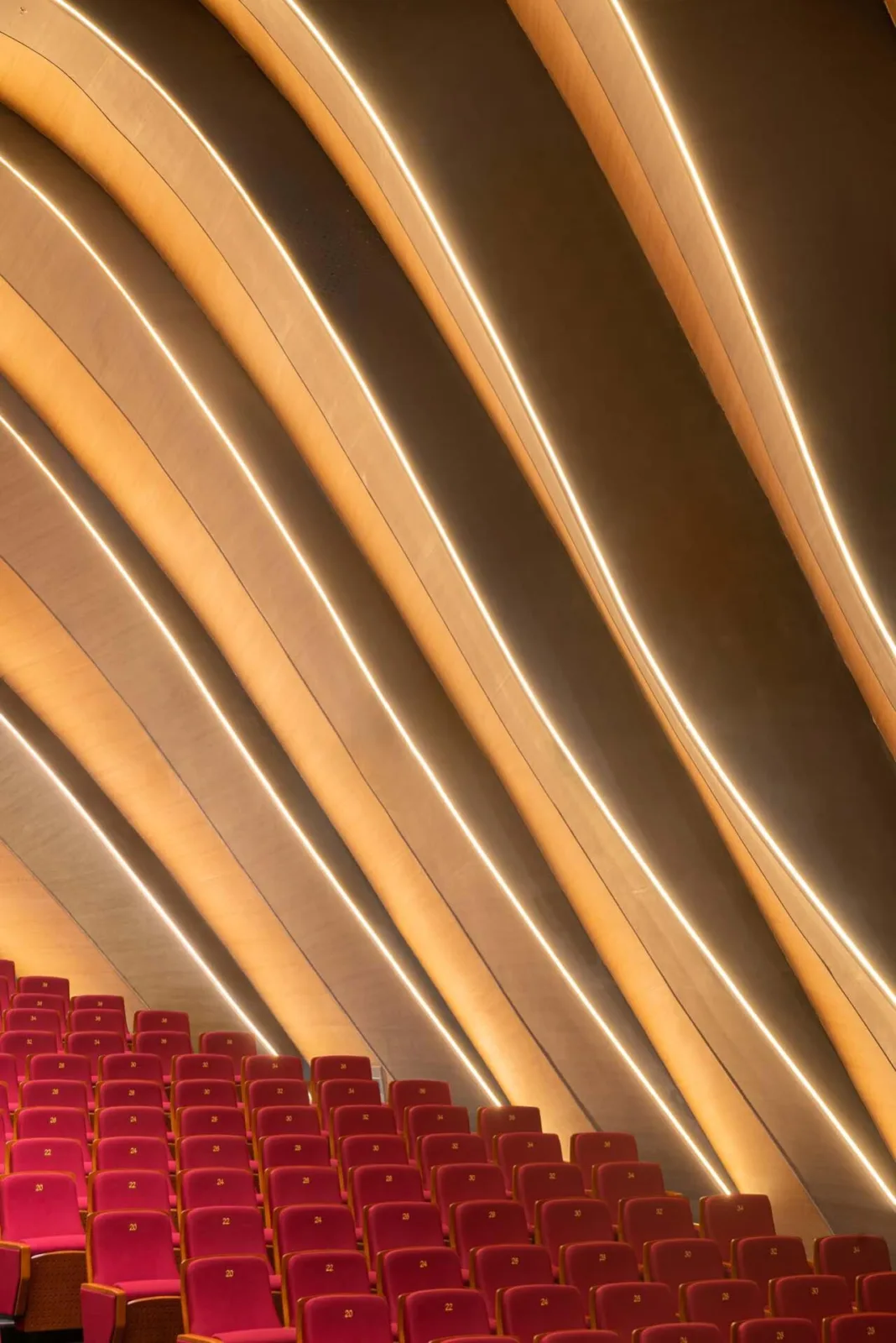
Water serves as a symbolic medium here, with architectural forms, stage lighting, and acoustics harmonized to mimic the rhythm of rippling waves. Since opening, dozens of cultural performances have become cherished memories for viewers. A recent visit during a record-breaking summer highlighted the community’s enthusiasm, with electric bikes and bicycles crowding the library and women’s and children’s activity center. Property managers, while overseeing non-motorized vehicle parking, casually discussed their excitement for an upcoming weekend performance.
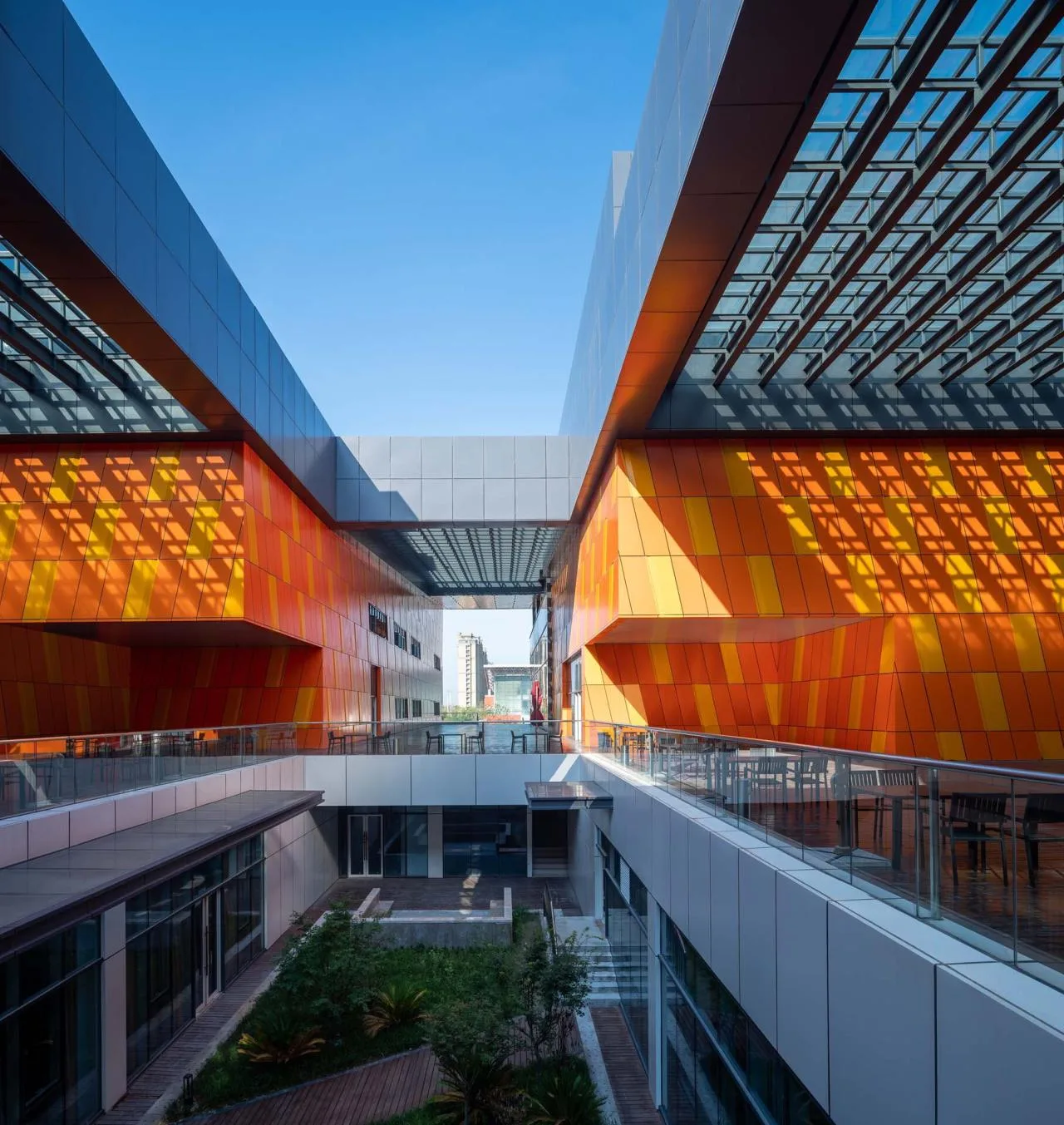
The Xiangshui Culture and Art Center is one of four key county projects aimed at elevating the cultural and living standards of the small town. Despite ambitious government support, the project faced numerous setbacks and intermittent progress. Architects continuously balanced compromise and persistence to make timely, adaptive decisions amid an era of uncertainty.
Through ongoing negotiations with supervisors and stakeholders, and iterative adjustments during construction and operation, our approach evolved fundamentally. Reflecting on the journey while riding the high-speed train home, it became clear that while the small town has changed, it has also changed us.
We hope this building embodies the possibility of deconstructing official norms. Its inclusive spirit and romantic, open architectural character resemble a river bend, offering a habitat where memories and imagination coexist—nurturing the dreams of the town’s youth.
Project drawings
△ Model diagram
△ Model diagram
△ Model diagram
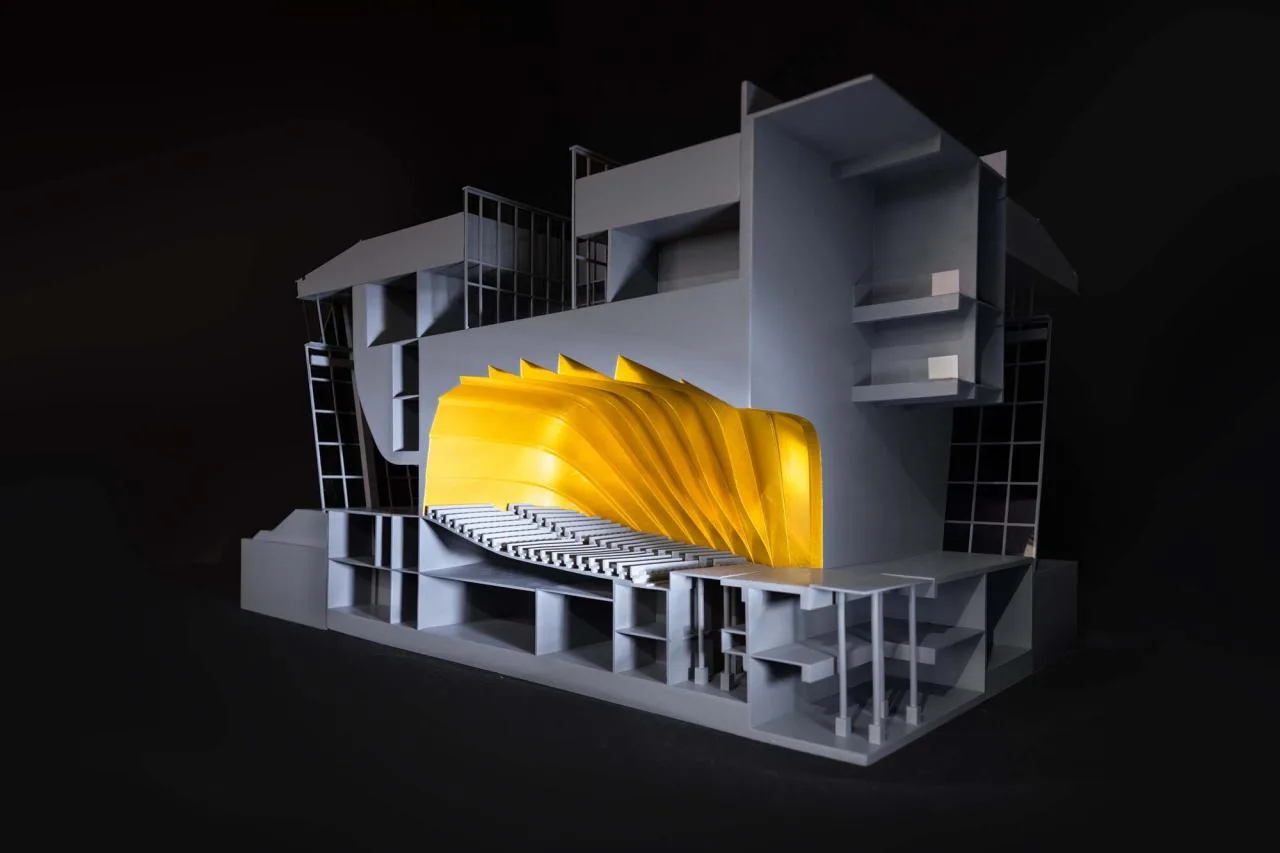
△ Model diagram
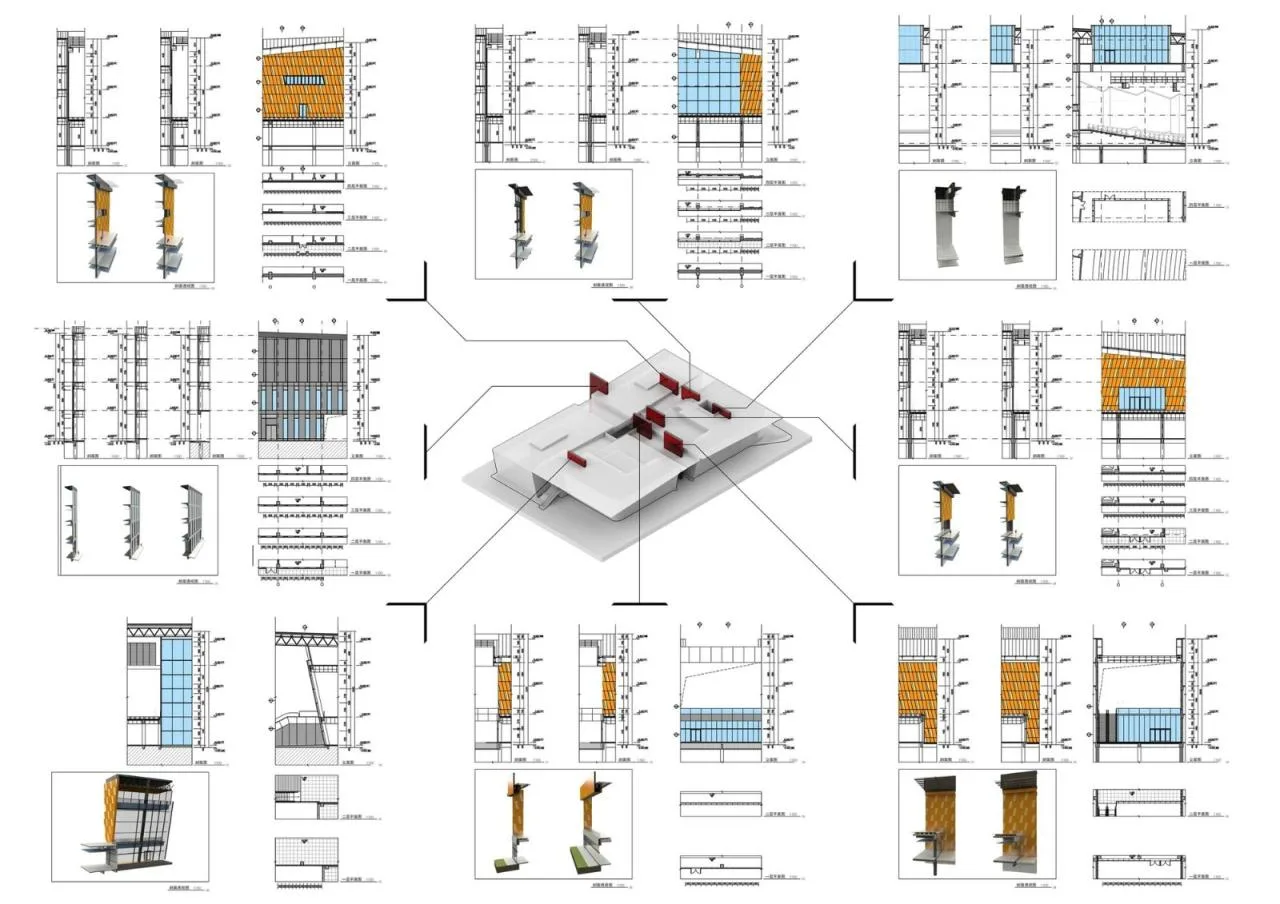
△ Analysis chart
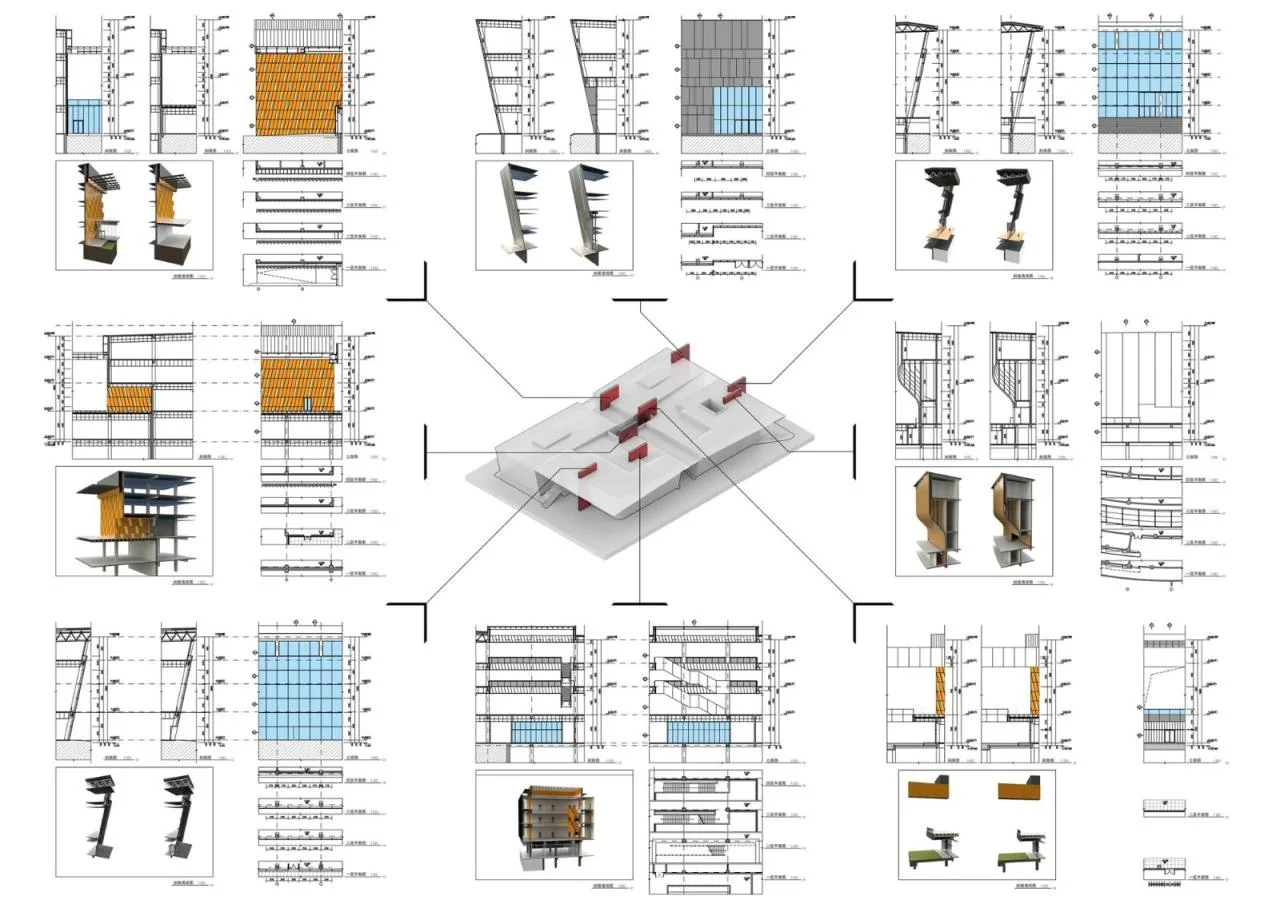
△ Analysis chart
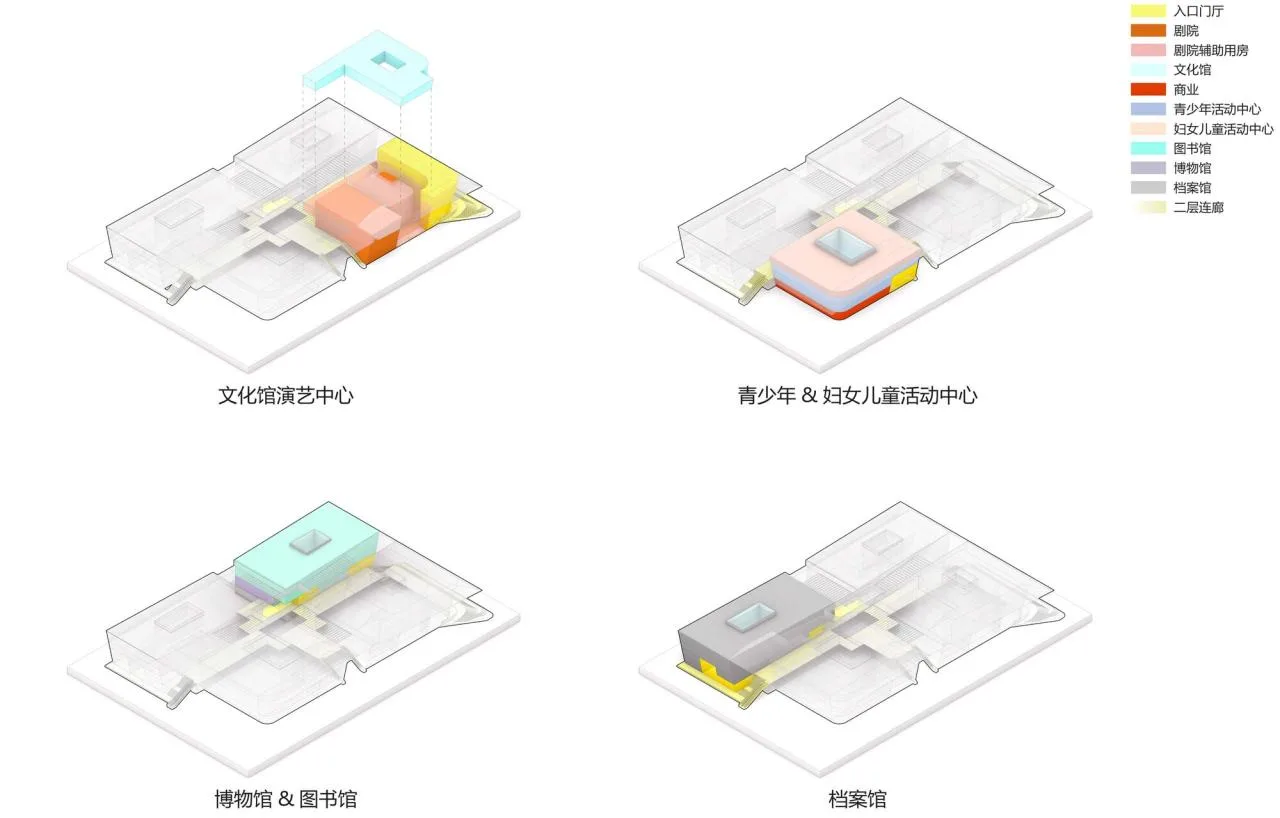
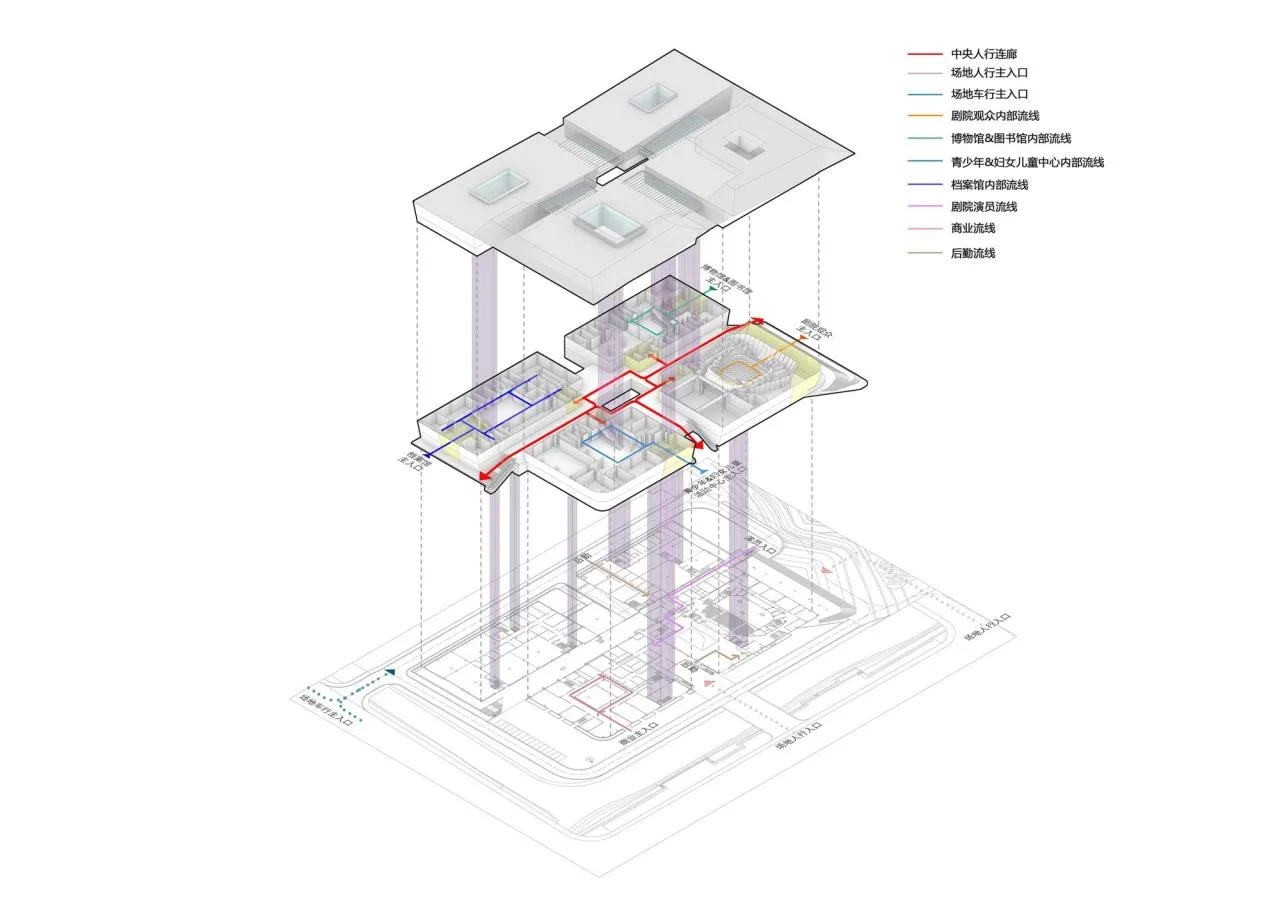
△ Functional zoning diagram
△ Population analysis chart
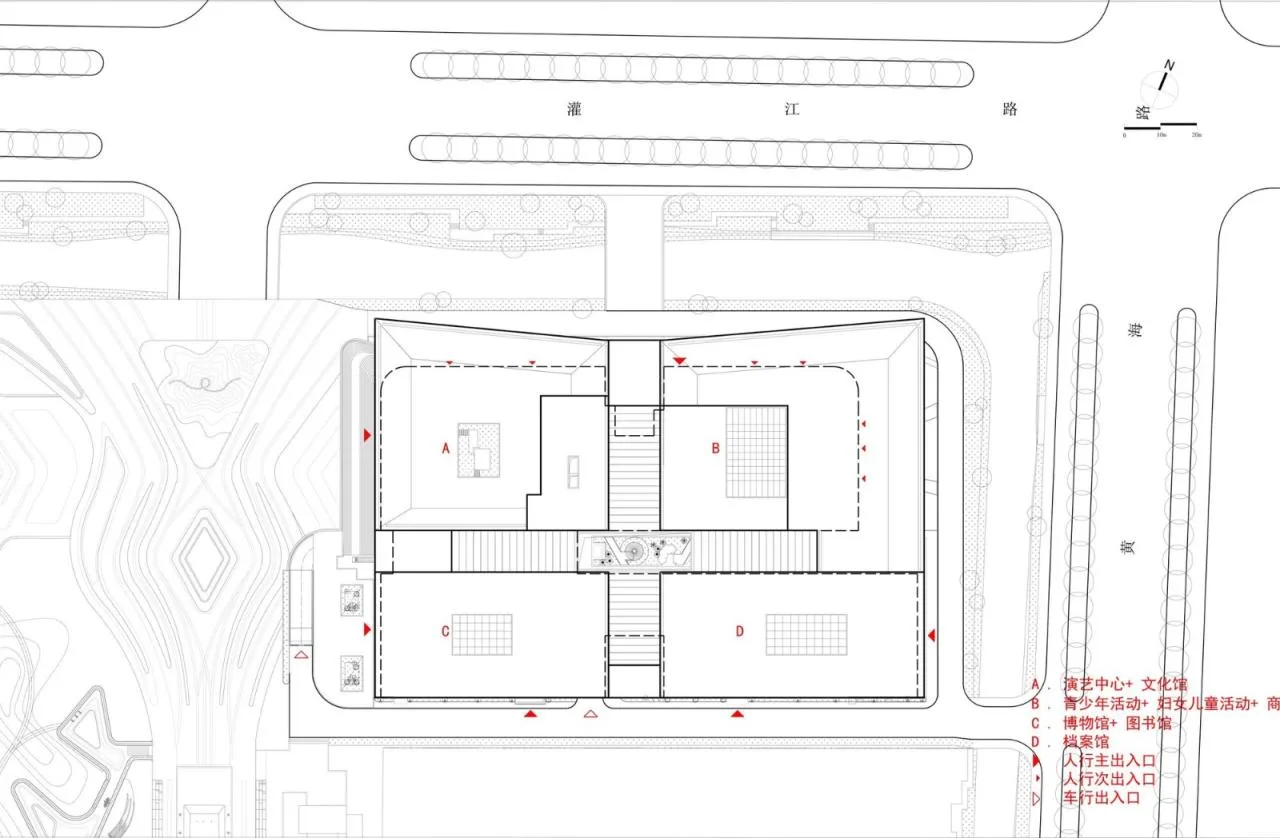
△ General layout plan
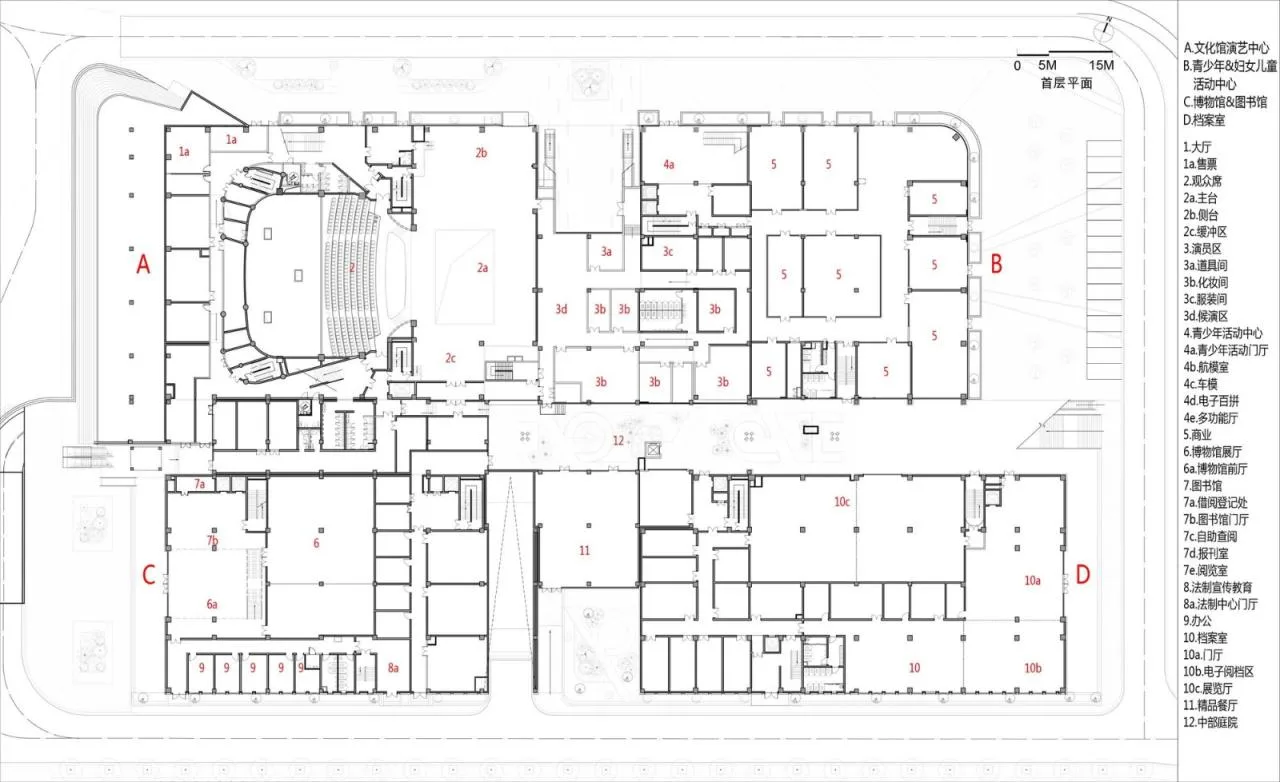
△ First floor plan
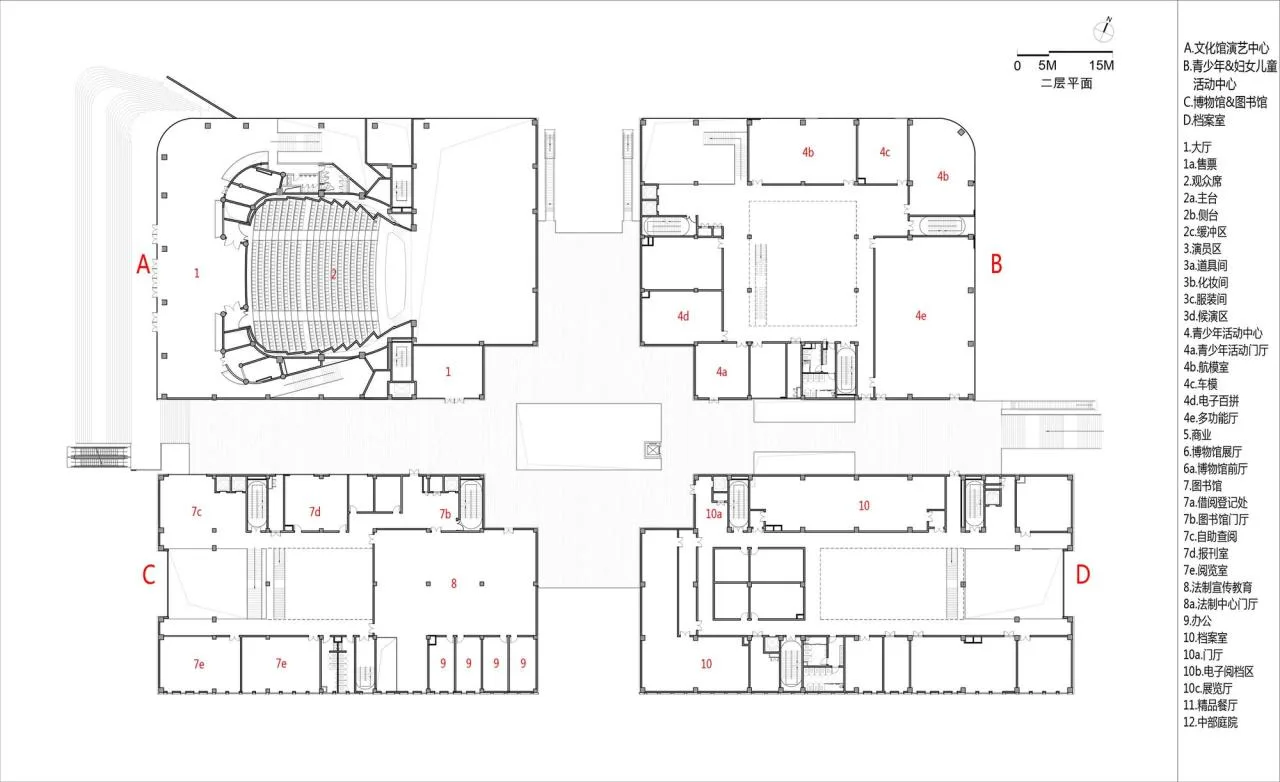
△ Second floor plan
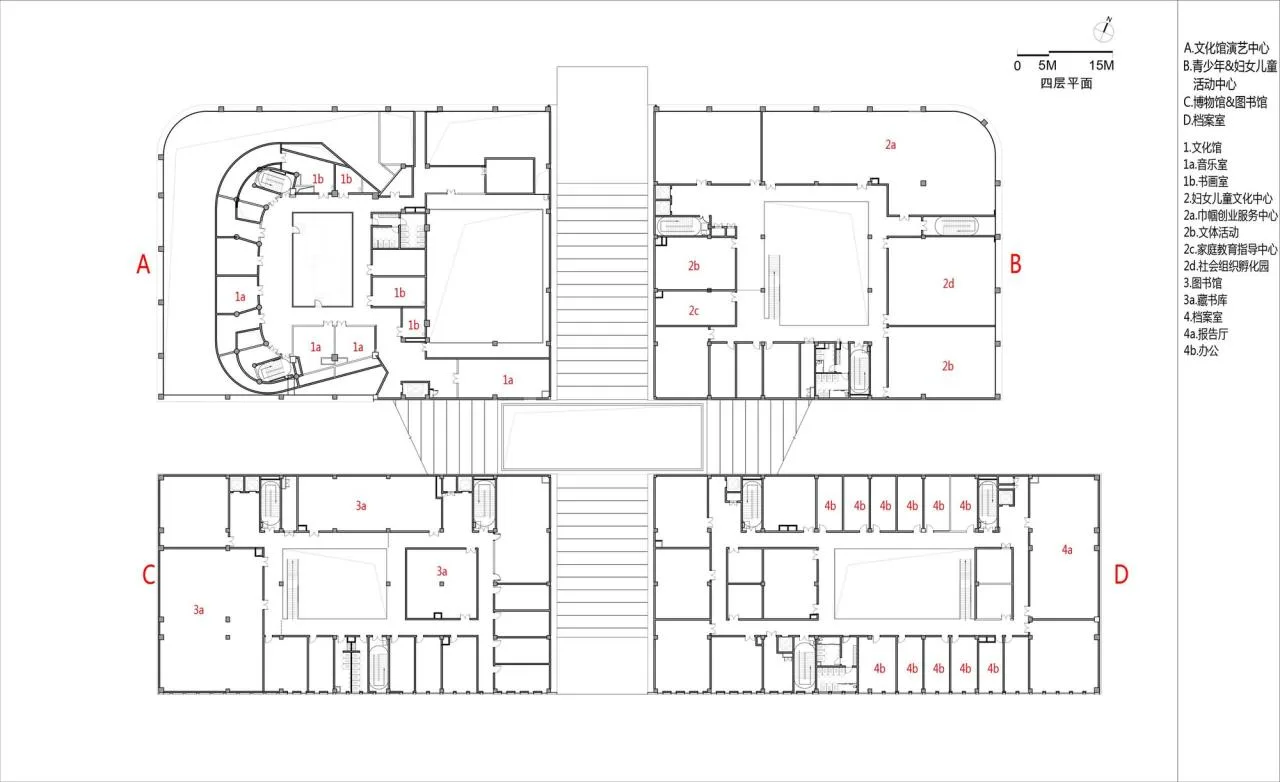
△ Fourth floor plan
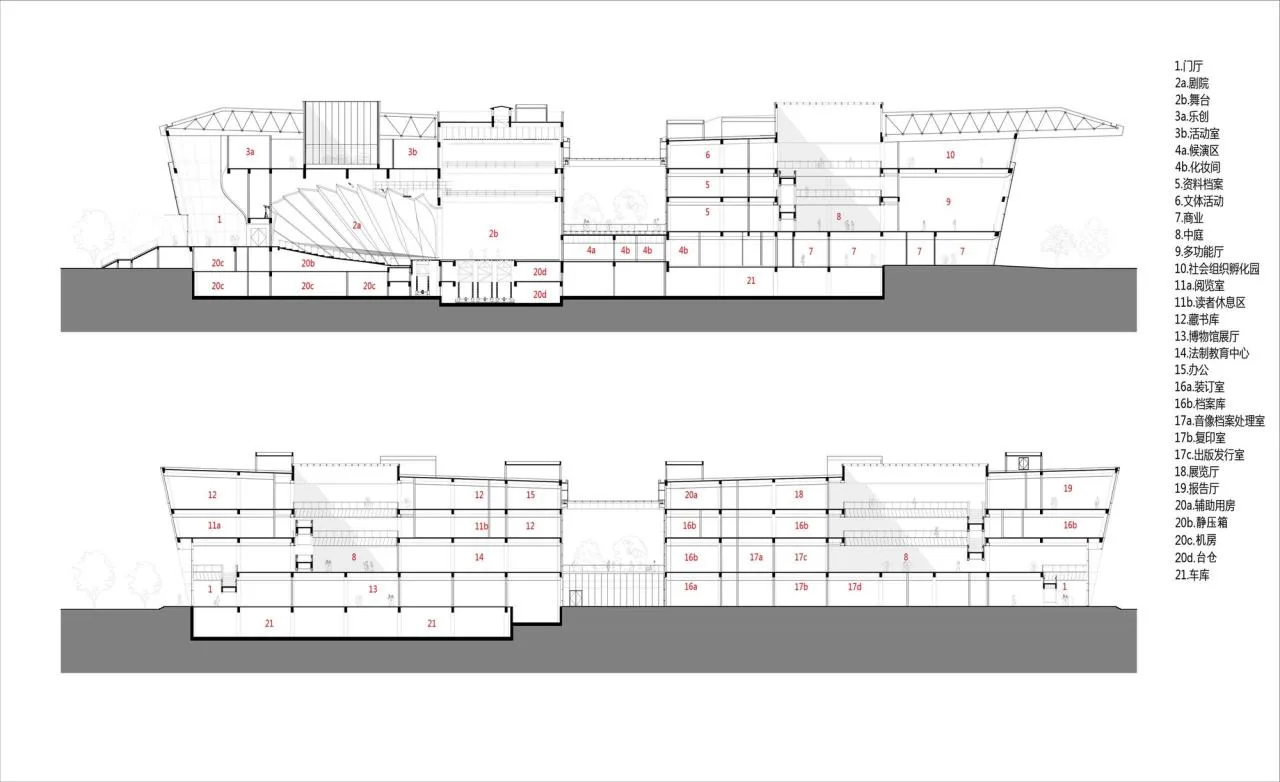
△ Section diagram
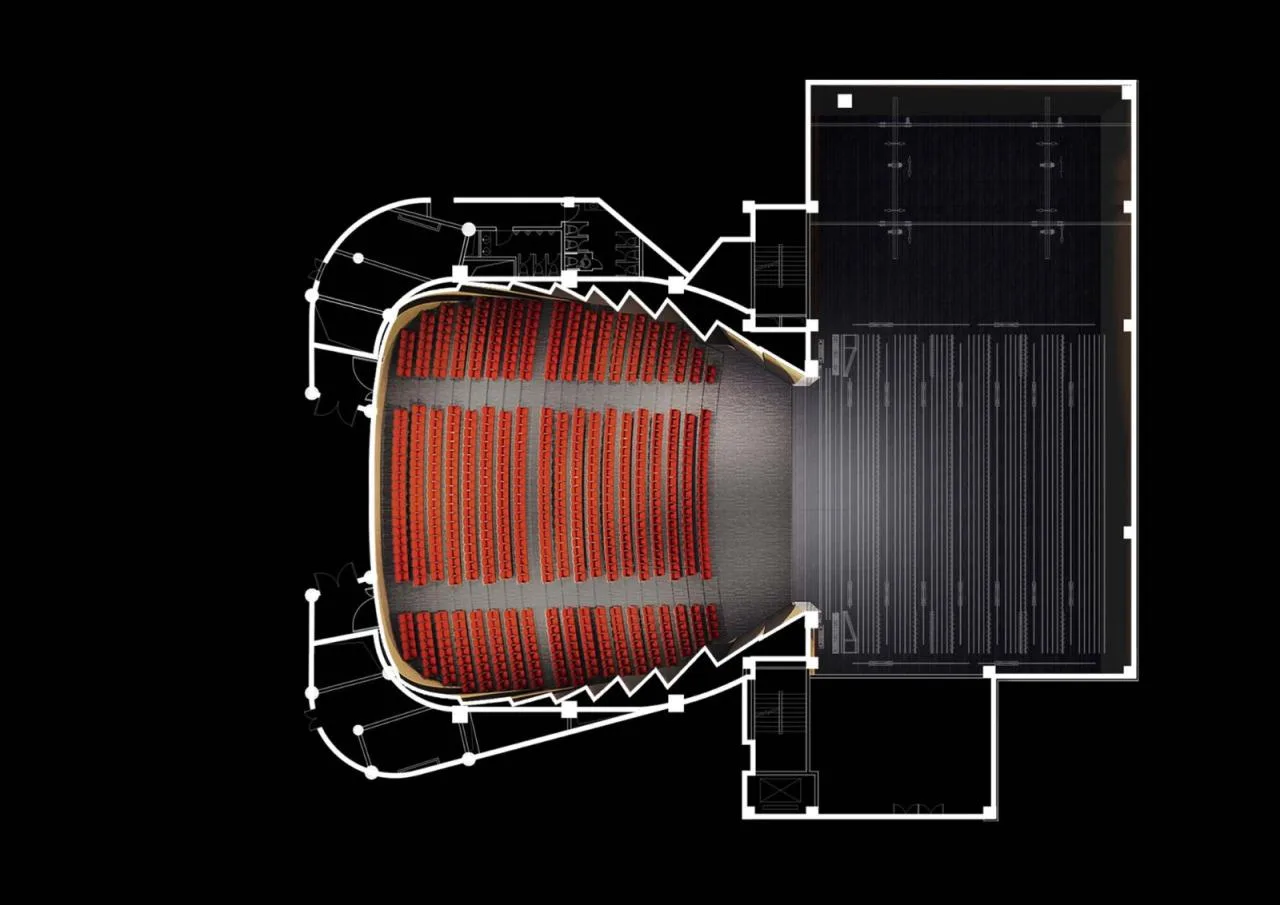
△ Theater floor plan
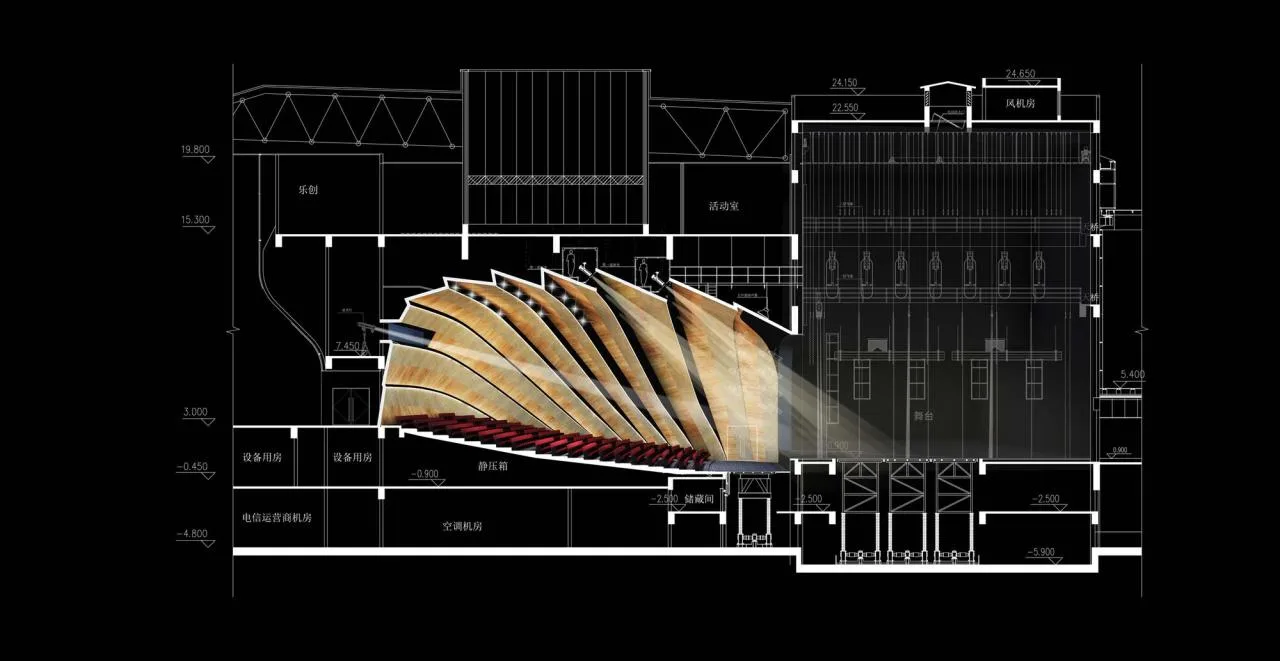
△ Theater sectional view
Project Information
Architect: ATAH Jiejing Architecture
Area: 39,164 m²
Project Year: 2022
Photographer: Zhao Yilong
Manufacturers: Toto, Nanjing Huabu Electromechanical Engineering Co., Ltd., Jiangsu Huadong Yaopi Glass Co., Ltd.
Project Leaders: He Fan, Cheng Ying
Competition Stage Design: Duan Jun, Yang Zhenqin, Man Tie Muer, He Zhen
Design Team: He Fan, Yang Zhenqin, Man Tie Muer, Cheng Ying, He Zhen, Su Chen Amanda Ai, Chen Jin, Zhao Fazhong, Shen Youhang (intern), Miao Liuyang (intern)
Principal Architects: Guang Xu, Dandan Wang
Owner: Xiangshui Urban Investment Holding Group
Construction Drawing Team: Yancheng Architectural Design and Research Institute Co., Ltd.
Structural Consultant: Shanghai Taida Construction Technology Co., Ltd.
Acoustic Design Consultant: Institute of Acoustics, Tongji University
Location: Yancheng City, Jiangsu Province















Must log in before commenting!
Sign Up