
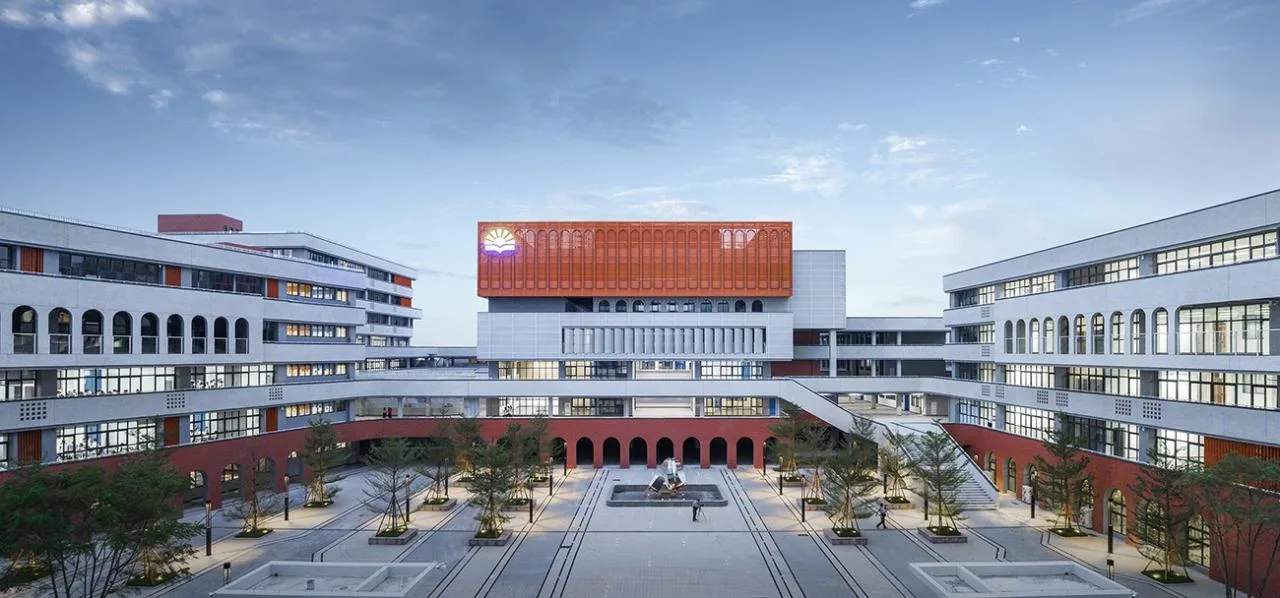
Taishan City, located in Jiangmen, Guangdong Province, is renowned as the “First Overseas Chinese Hometown.” Naturally, the term “Overseas Chinese Hometown Characteristics” became a key theme throughout the campus design process. From an outsider’s perspective, the unique spatial pattern of these overseas Chinese settlements reveals itself in two ways: internally and externally.
Internally, the continuous Lingnan hills and subtropical climate have fostered a distinctive and complex social environment. This gave rise to a settlement model where ancestors engaged with the broader landscape and social context through small-scale, defensive settlement units.
Externally, interaction with foreign cultures introduced rich “modern” elements from specific historical periods, resulting in a diverse architectural style in overseas Chinese hometowns. This style reflects our ancestors’ ambition to view the world with open eyes. The defining “characteristics” lie in their adaptability to geography, climate, and social environment, alongside a pursuit of “novelty” and “modernity.”
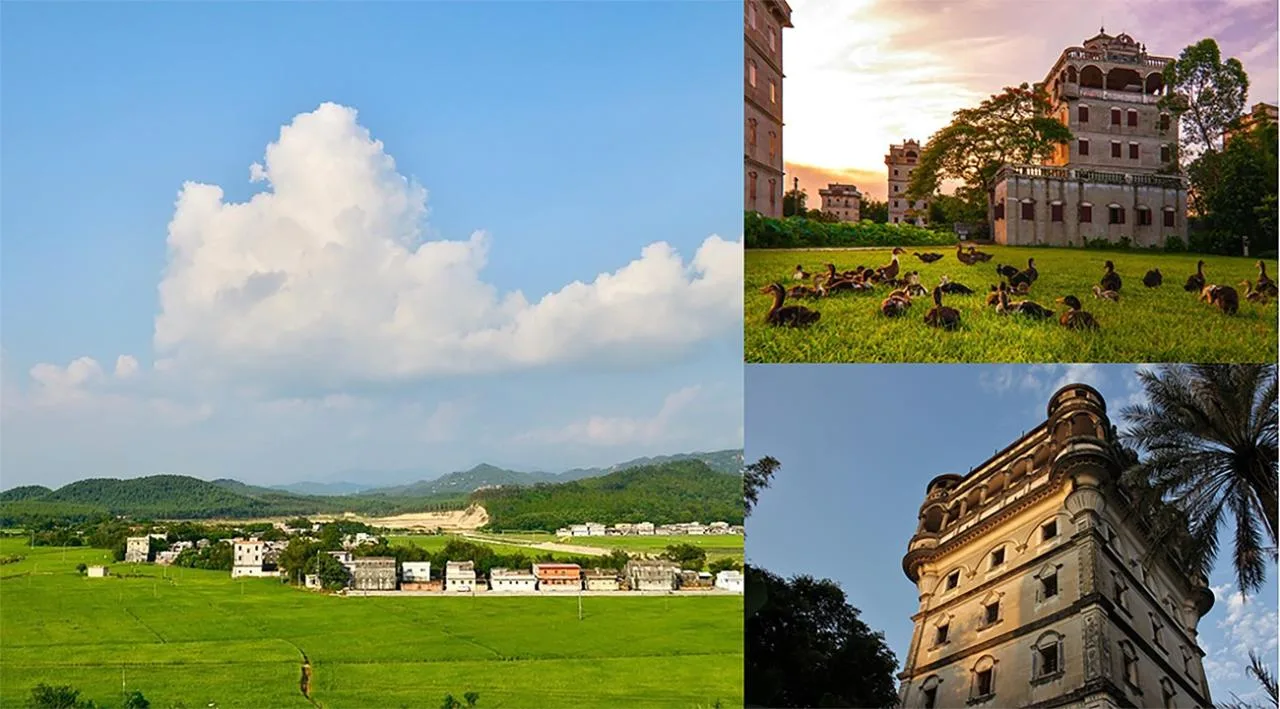
△ Characteristics of Overseas Chinese Settlement and Watchtower Buildings
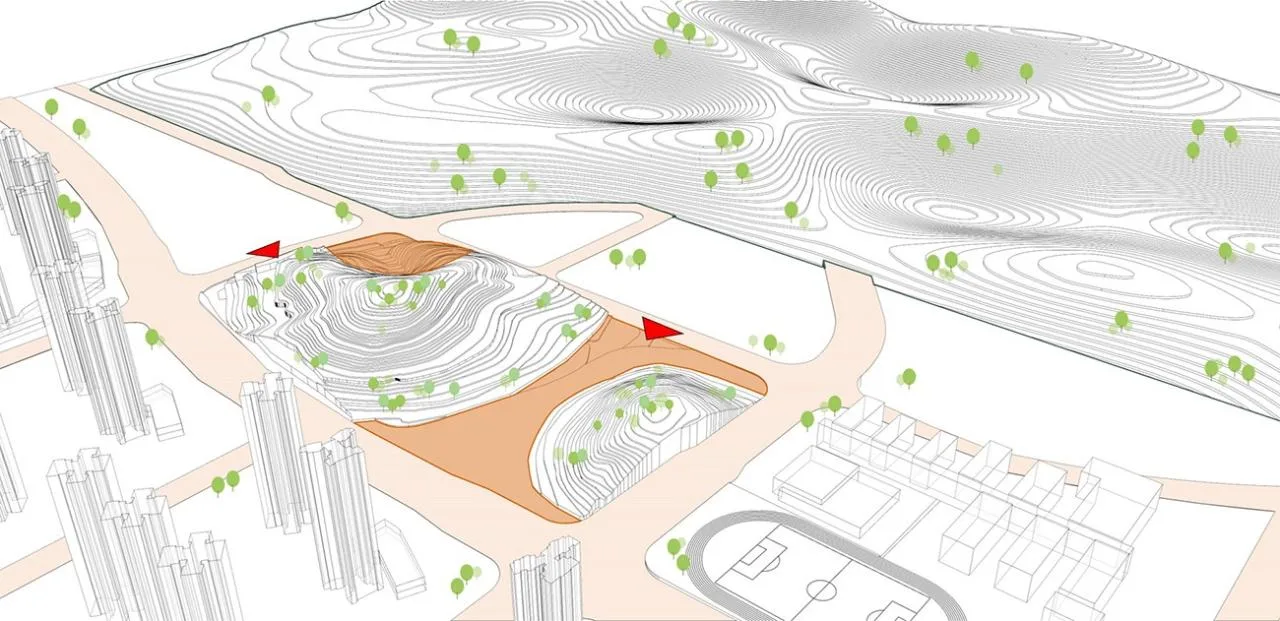
△ Original appearance of the site
The campus is situated on the edge of Nanxin District in Taishan City. To the west, a large modern urban grid stretches across a new development area, while to the east lies a natural hilly landscape beyond the urban boundary. Within the site, two small hills to the south and north occupy 86% of the campus area, with an elevation difference of approximately 63 meters.
The cliff slope between the southern hill and the flat urban road rises nearly 20 meters, showcasing the ambitious urban development and strong environmental transformation capabilities. Yet, it also evokes a sense of loss: after many changes over time, if new generations cannot experience or even witness the environmental matrix that our ancestors cultivated—the so-called “cultural inheritance”—then inevitably, a sense of weakness and disconnect will emerge.
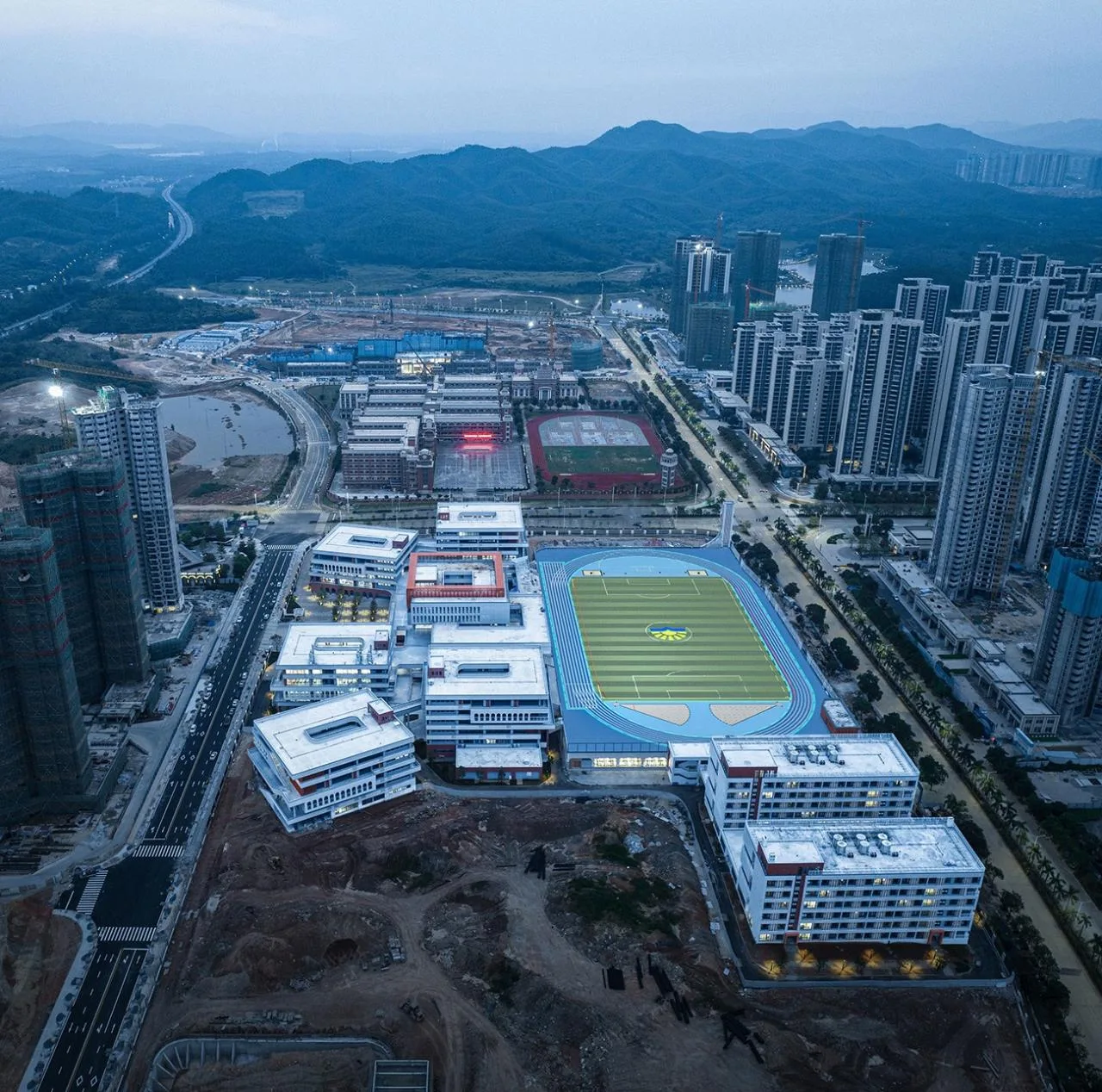
△ Aerial view of the middle school section
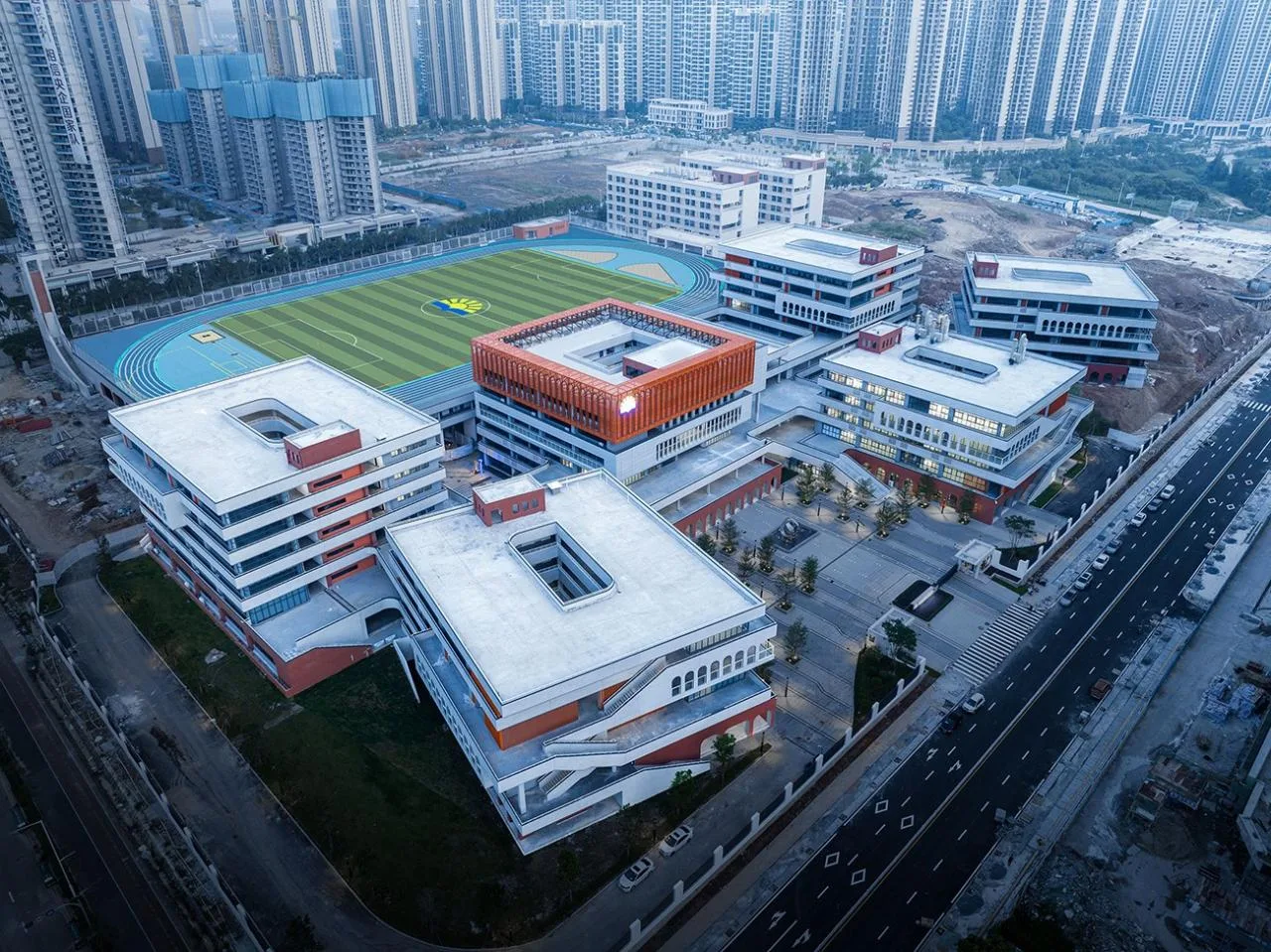
△ Campus under construction
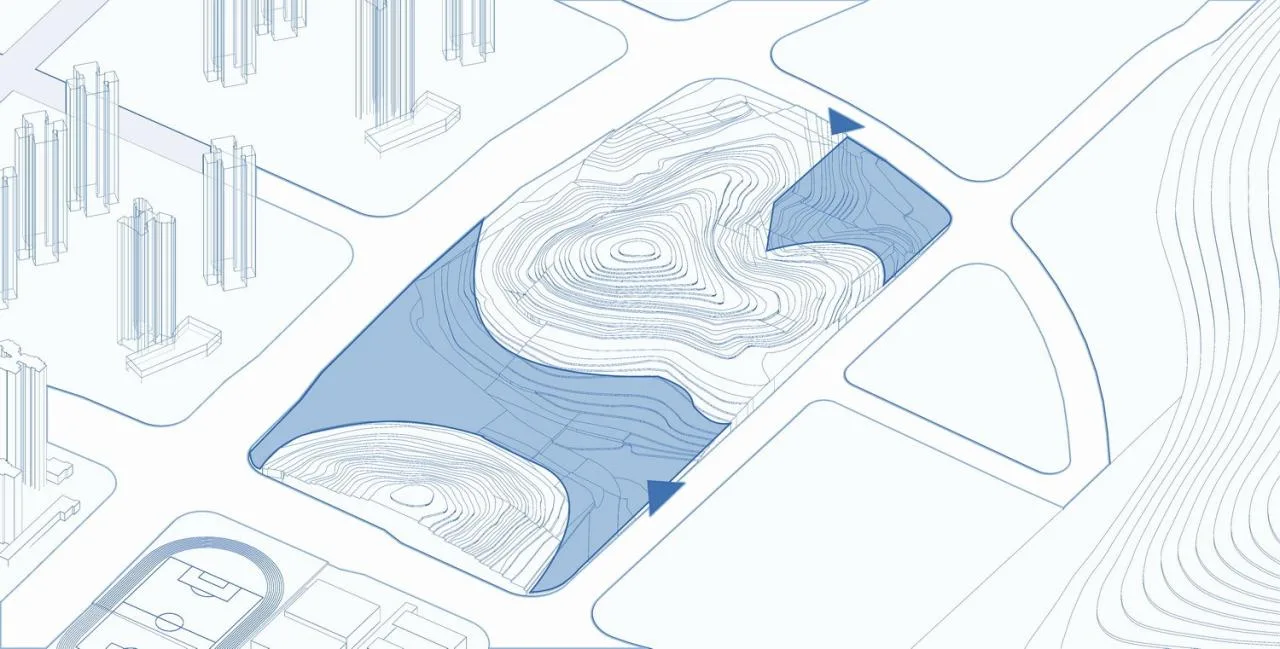
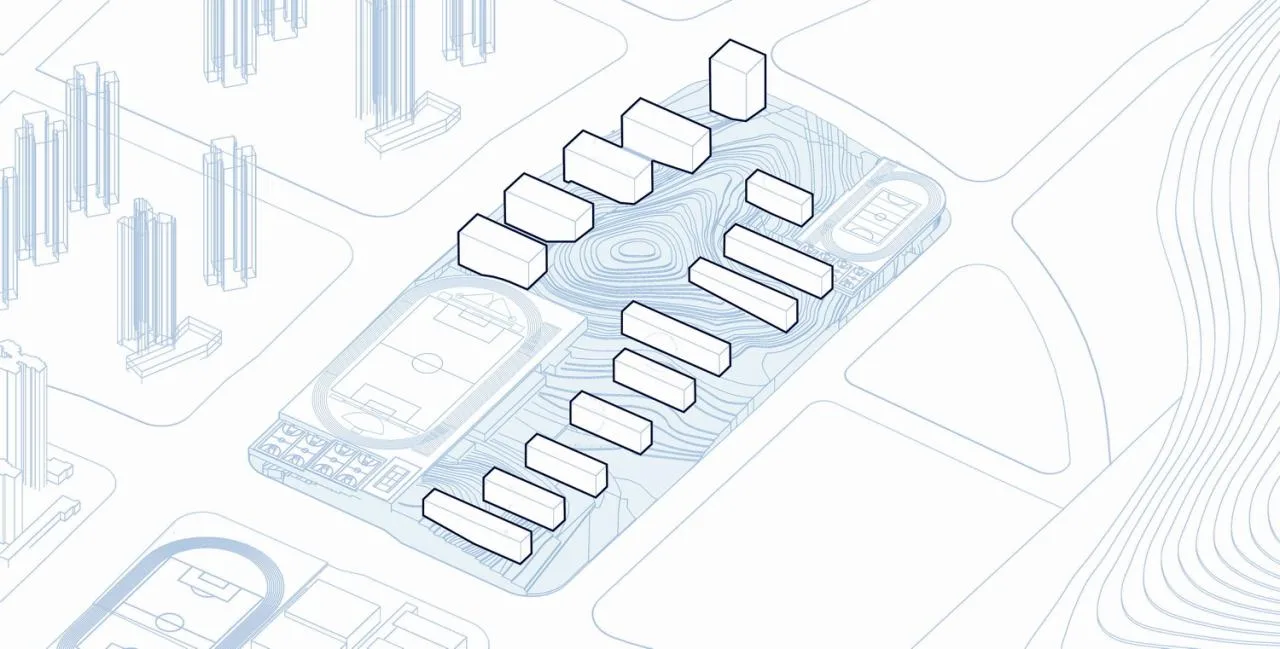
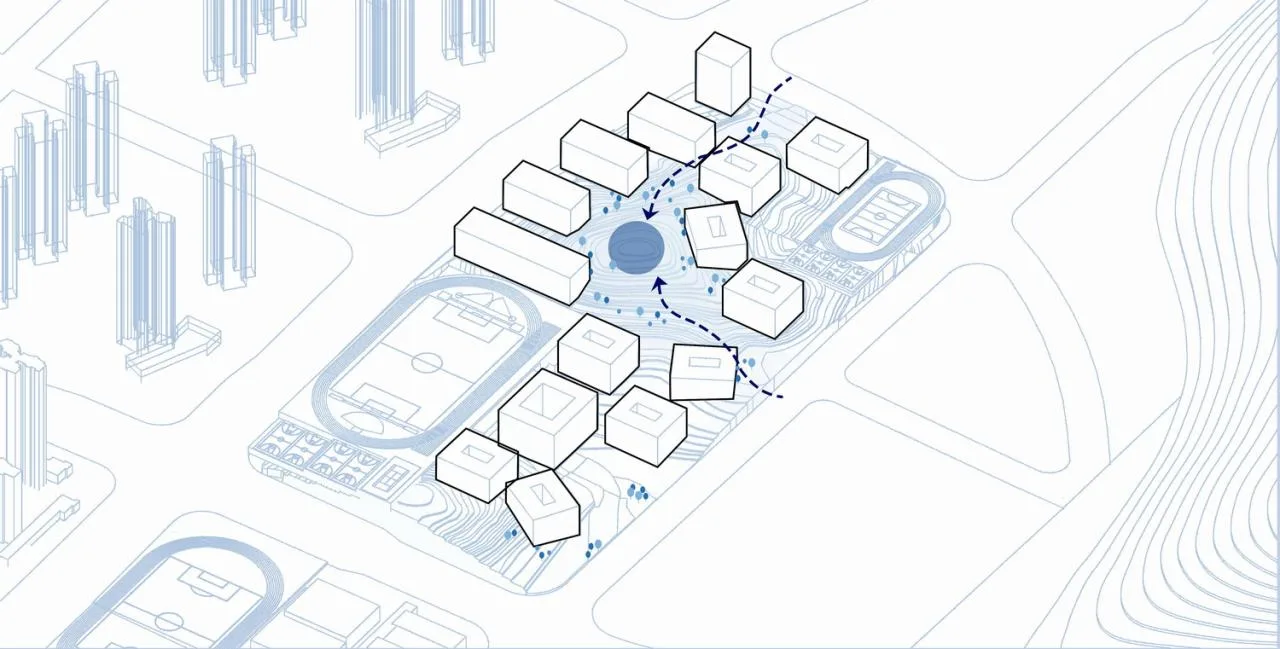
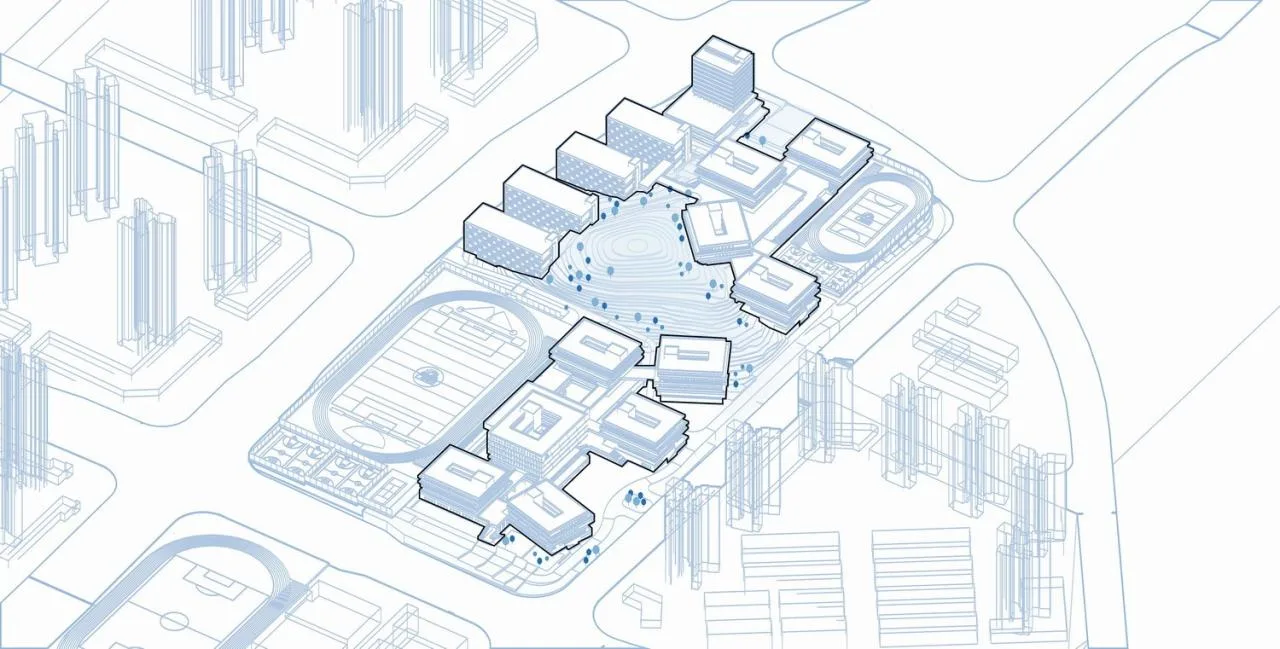
△ Campus Space Development
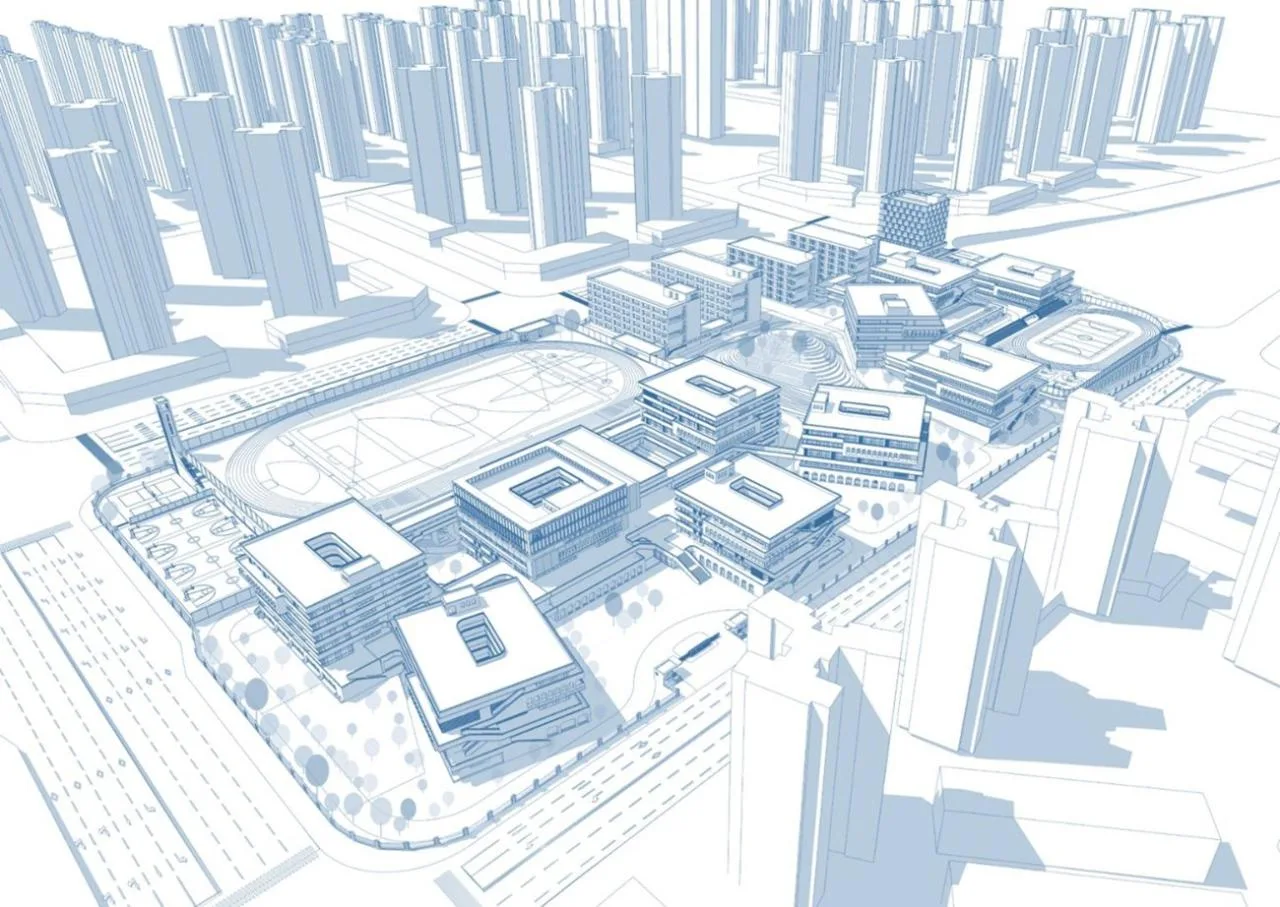
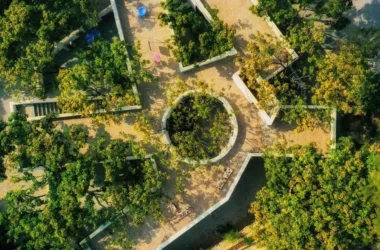
△ Aerial view of the campus
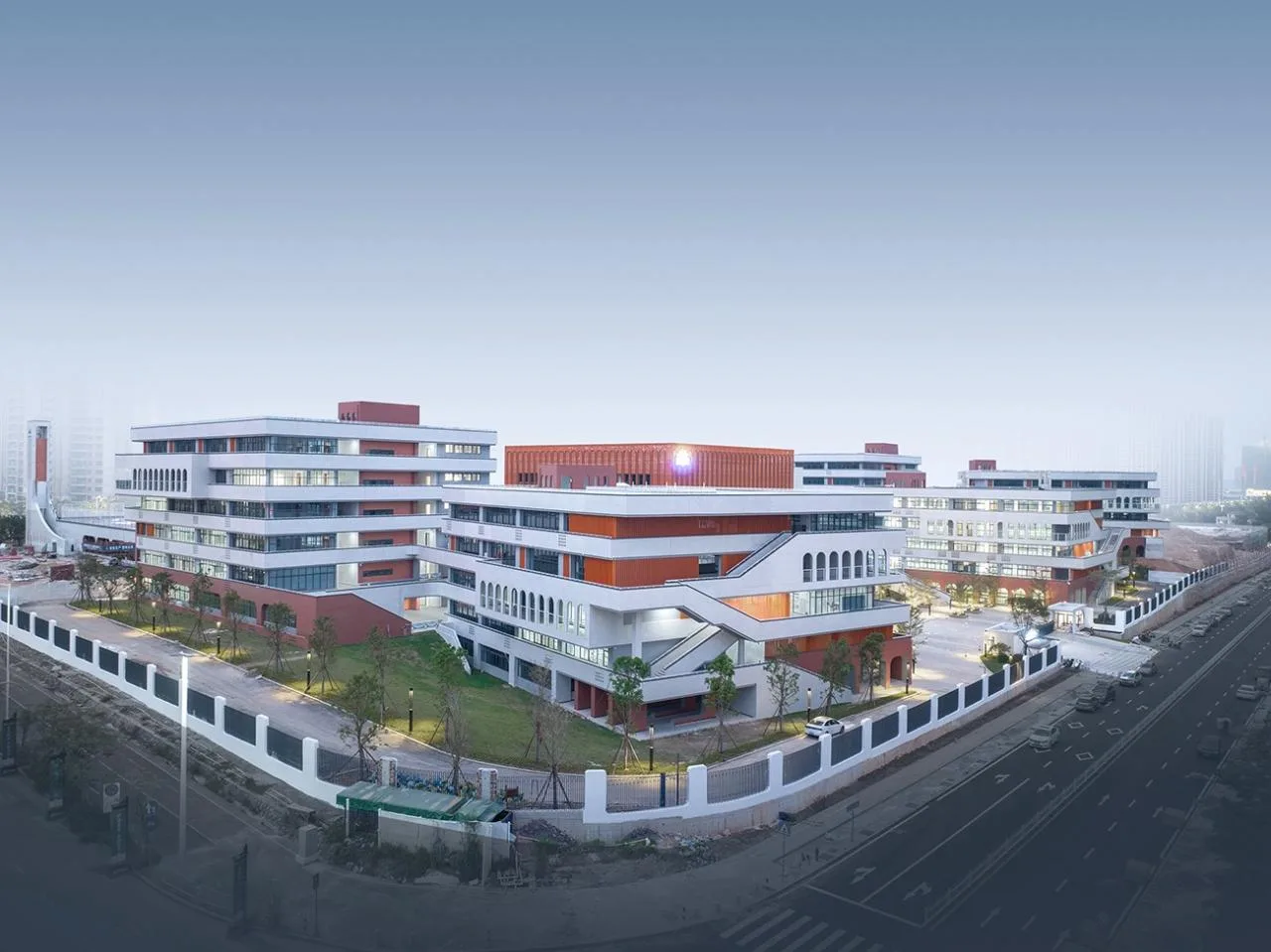
△ Night view of the campus
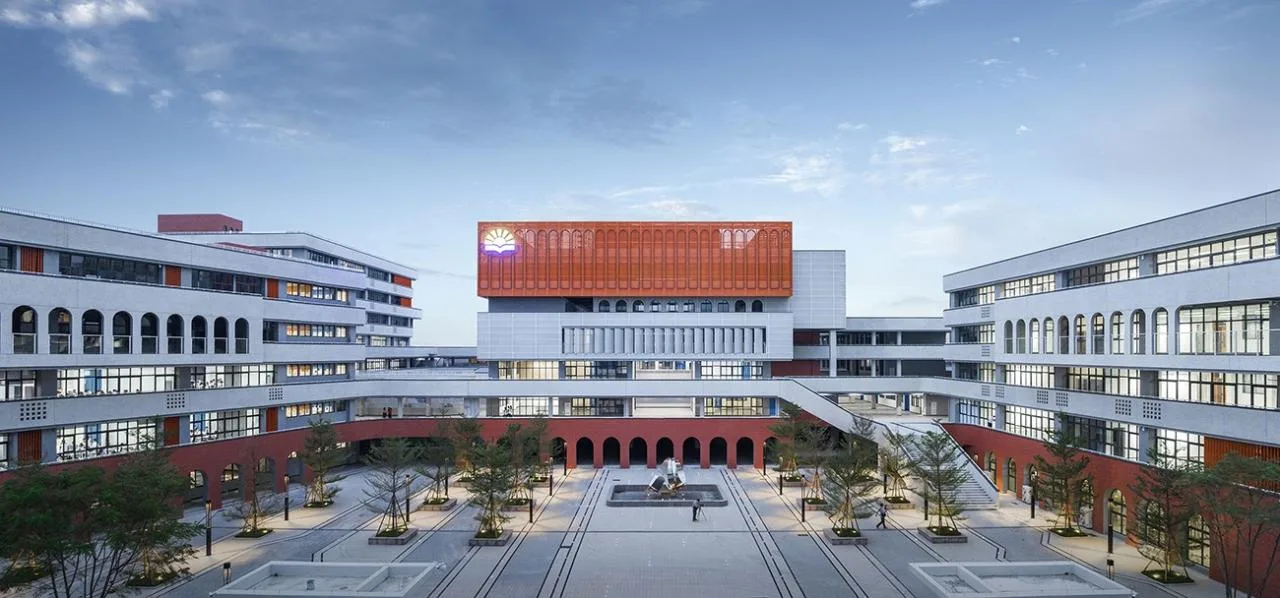
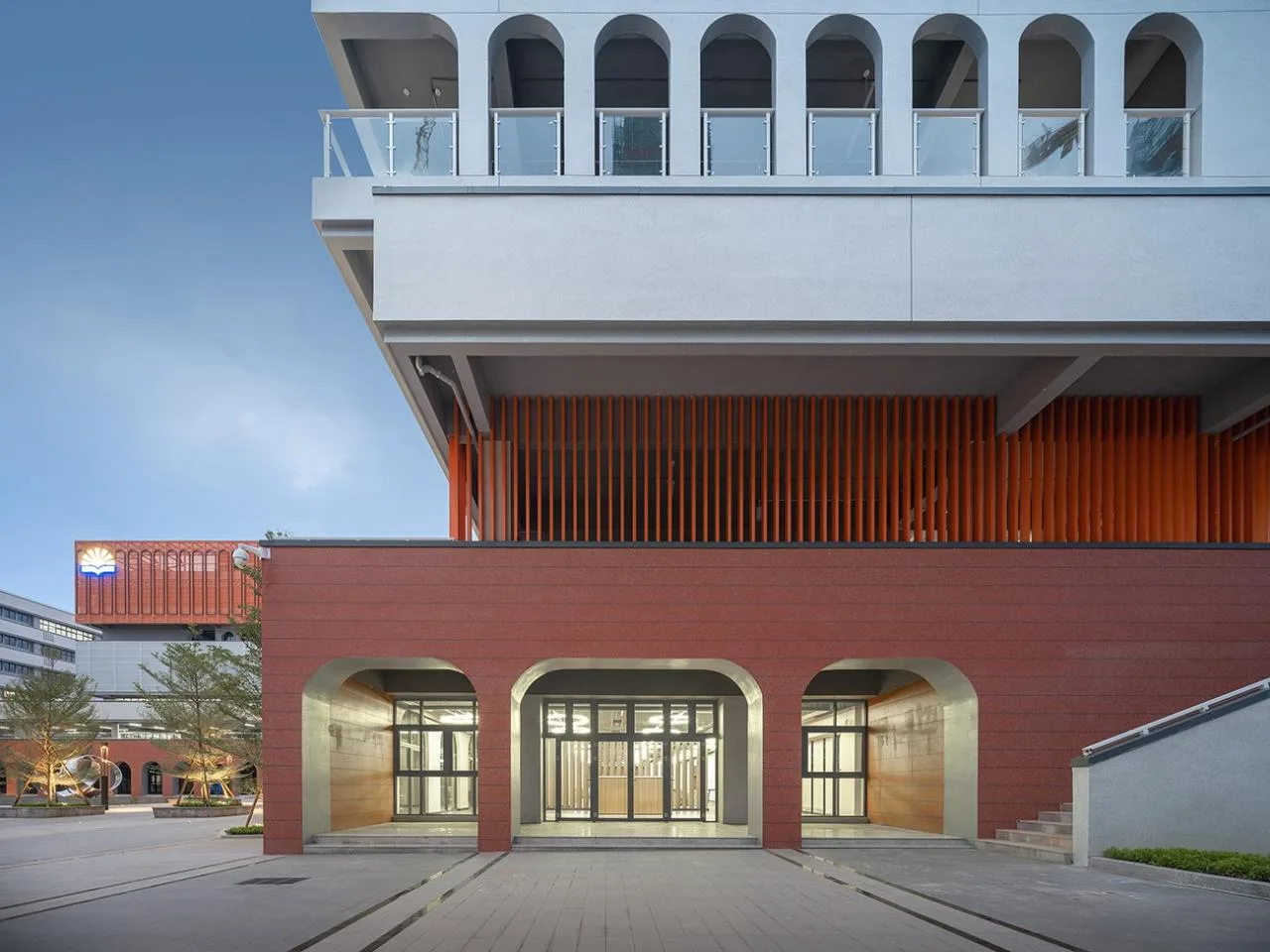
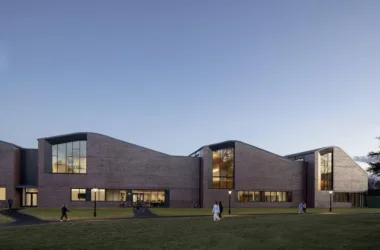
△ Main entrance of the middle school section
The northern mountain on campus remains largely intact, forming the core spatial system. It acts as a natural transition between the two departments—grades 1-6 and 7-12—maintaining a connection that is both separated yet unified.
A winding path was designed to traverse the mountain, linking the living areas and teaching spaces through the lush vegetation. At the mountain’s summit, which is the site’s highest point, a small academy has been established. Surrounded by distant shadows and the sounds of autumn, children can explore the world and gaze upon faraway mountains and valleys in this serene corner.
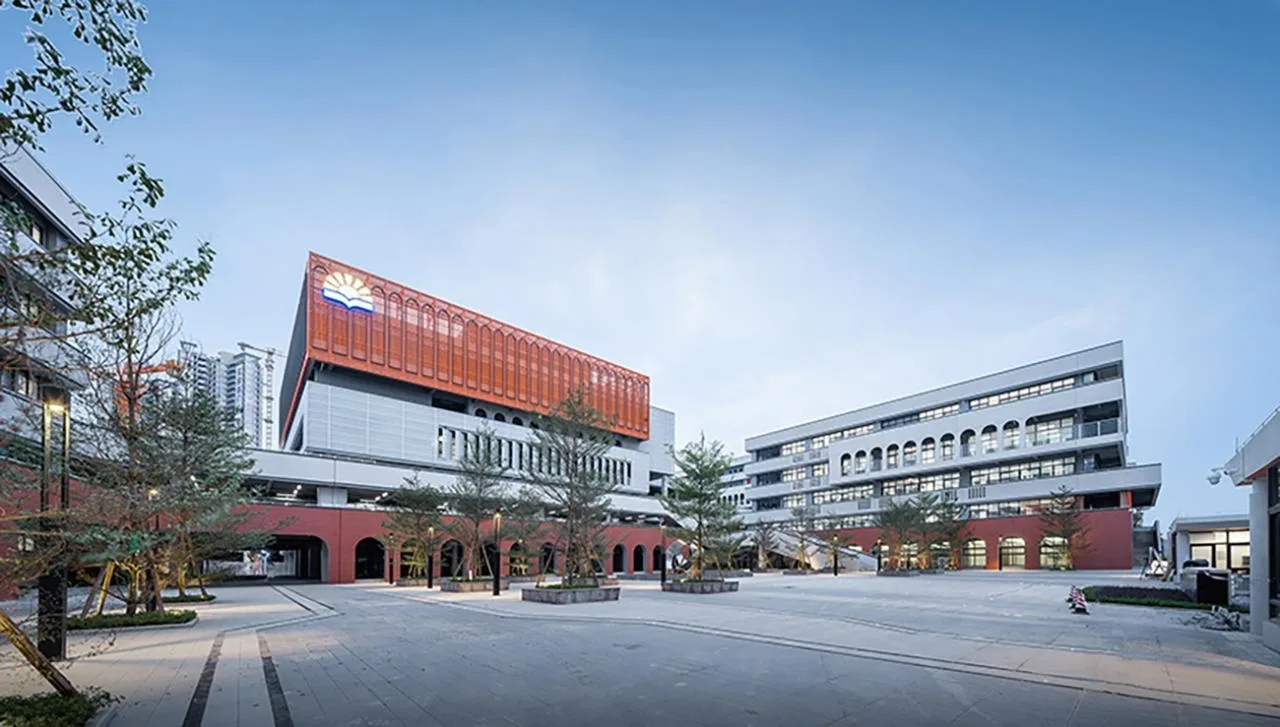
△ Middle school teaching area
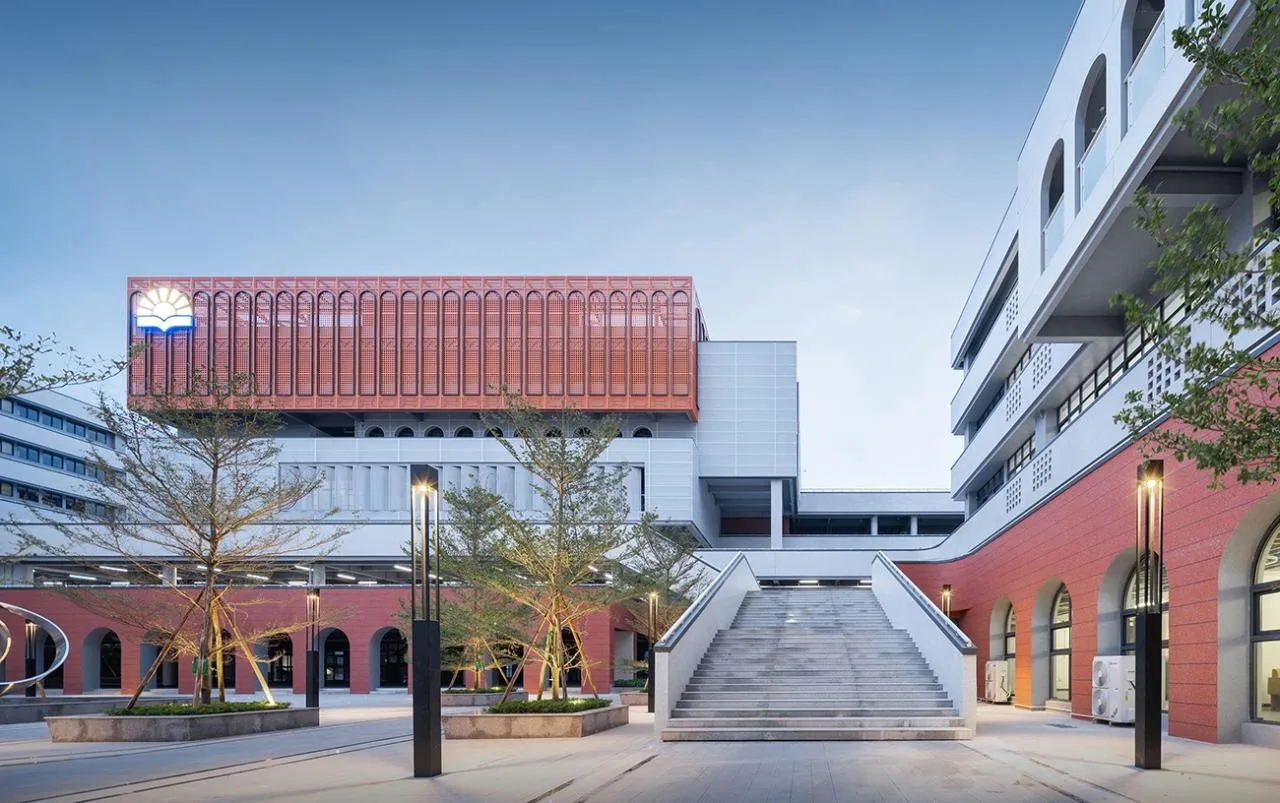
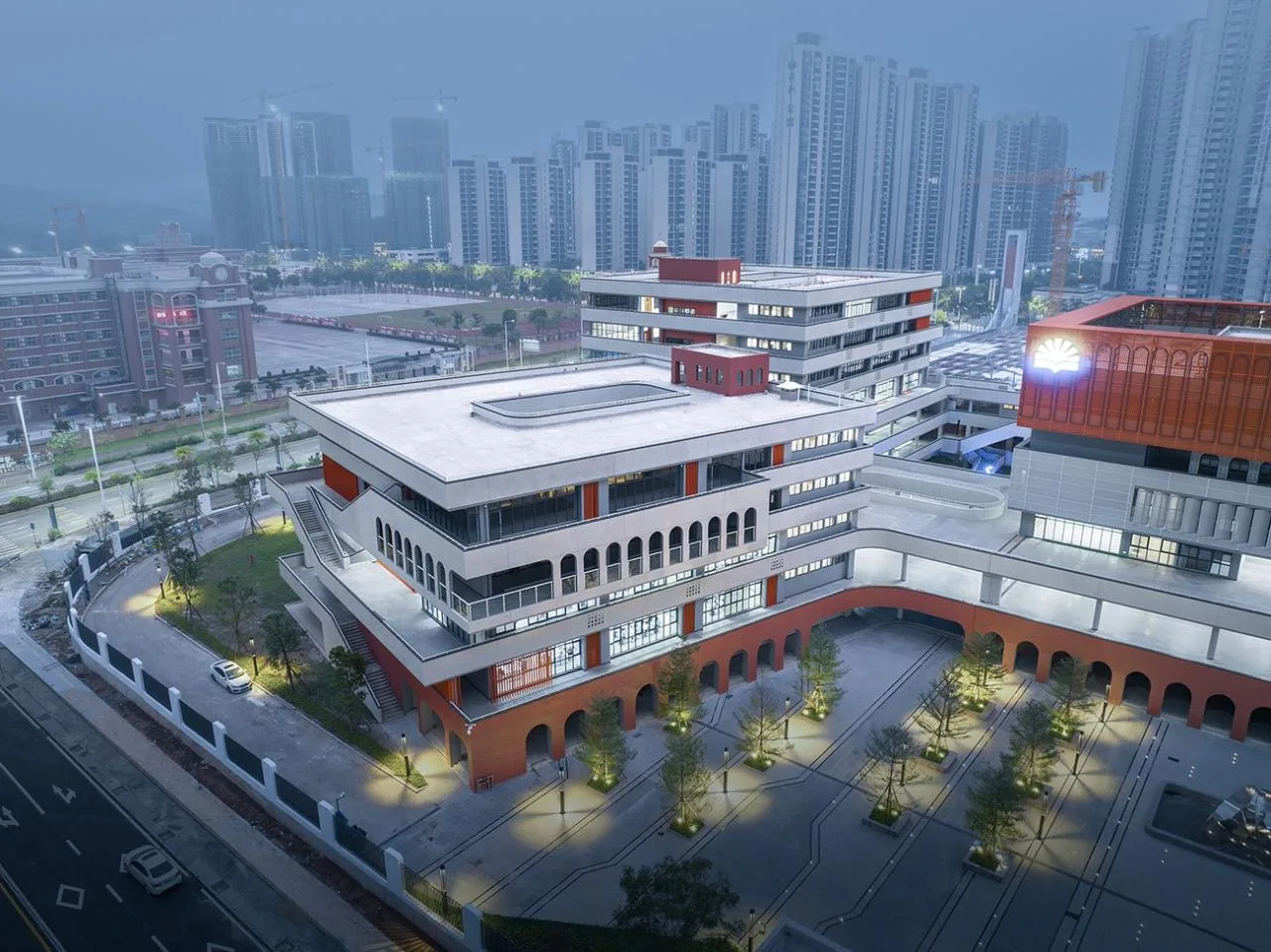
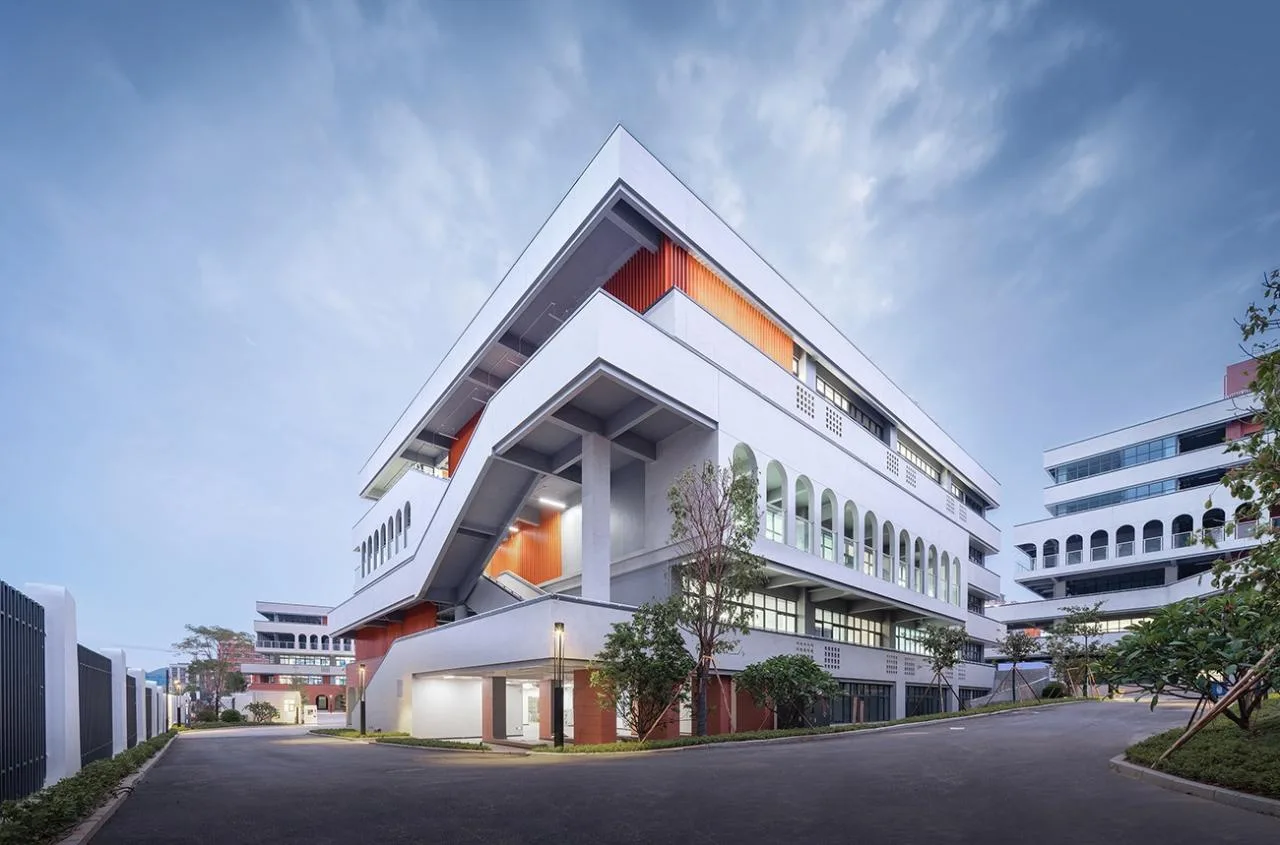
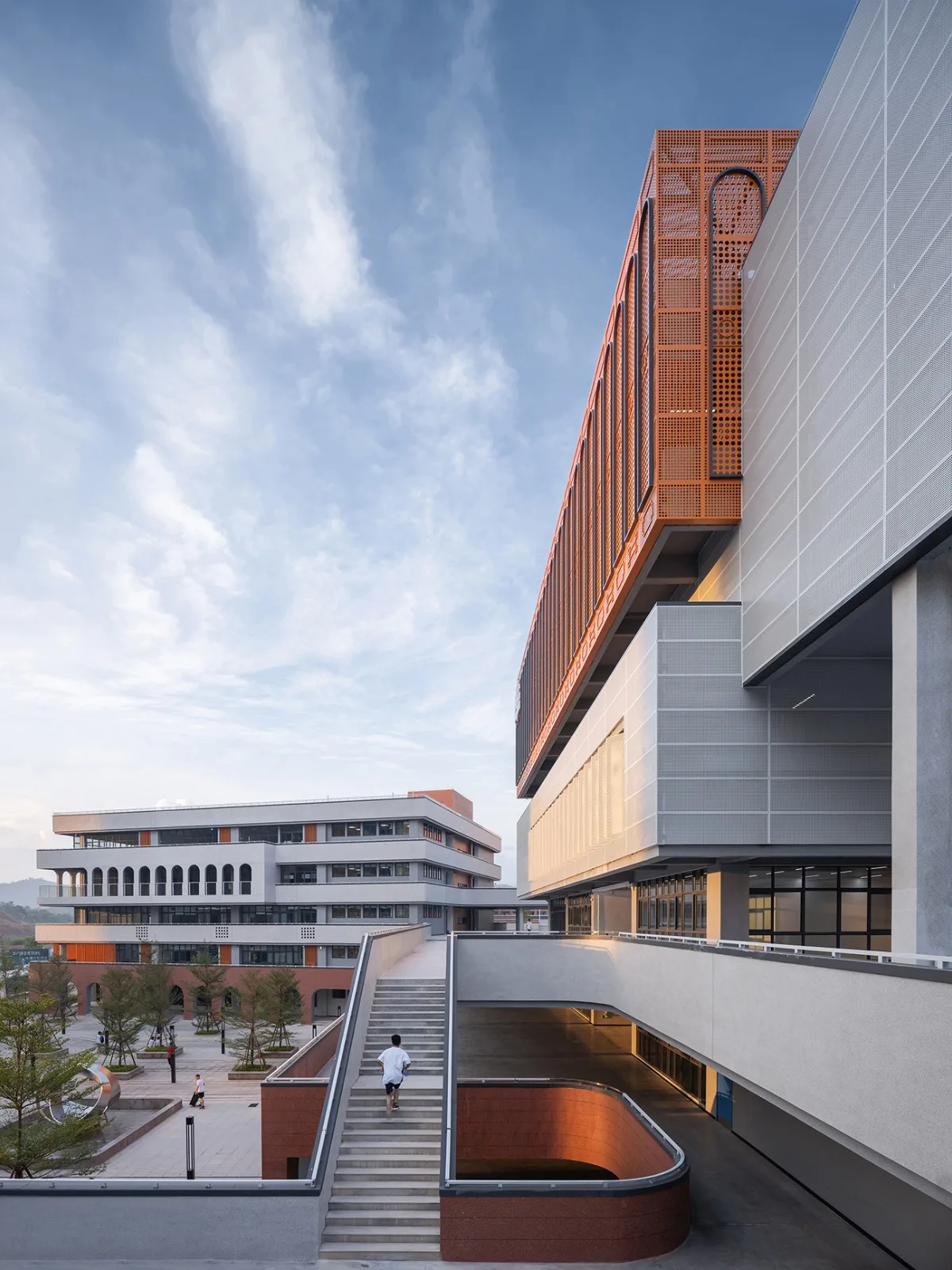
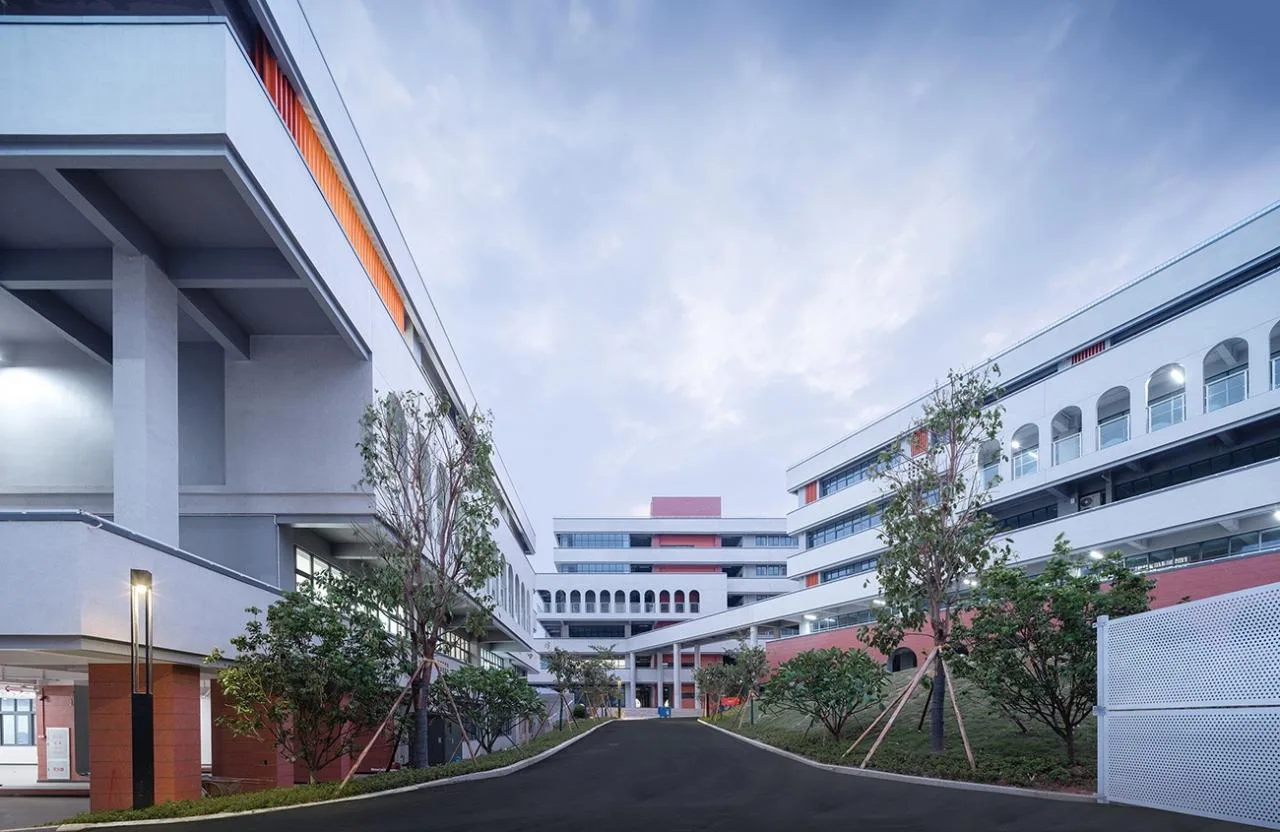
Small-scale modular building units, interconnected through multi-level informal learning spaces and pathways, create clusters for teaching and living. These adapt to the complex terrain and elevation of the site, mirroring the symbiotic relationship between traditional overseas Chinese settlements and the mountains. This design also aligns closely with the school’s teaching and management models.
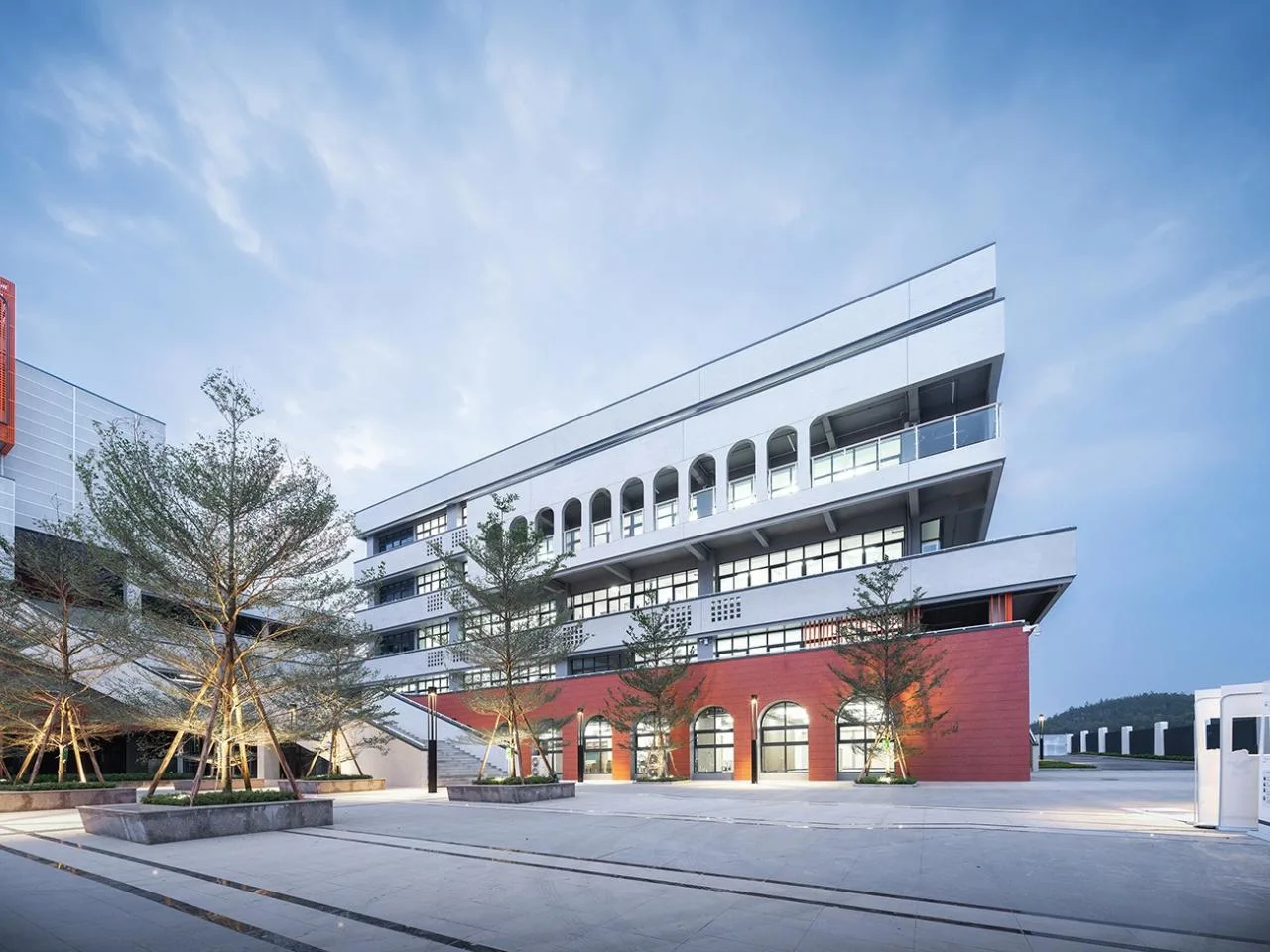
Unit-based teaching space
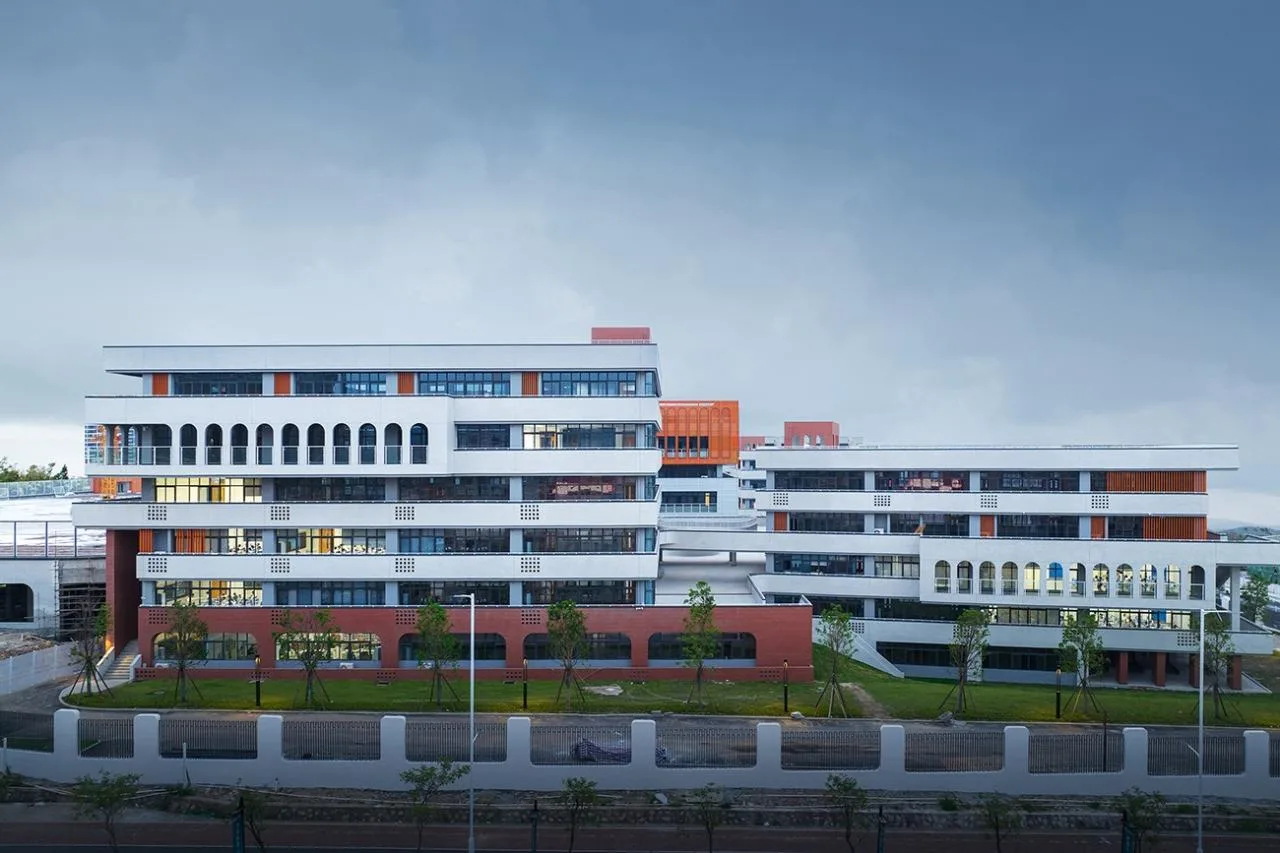
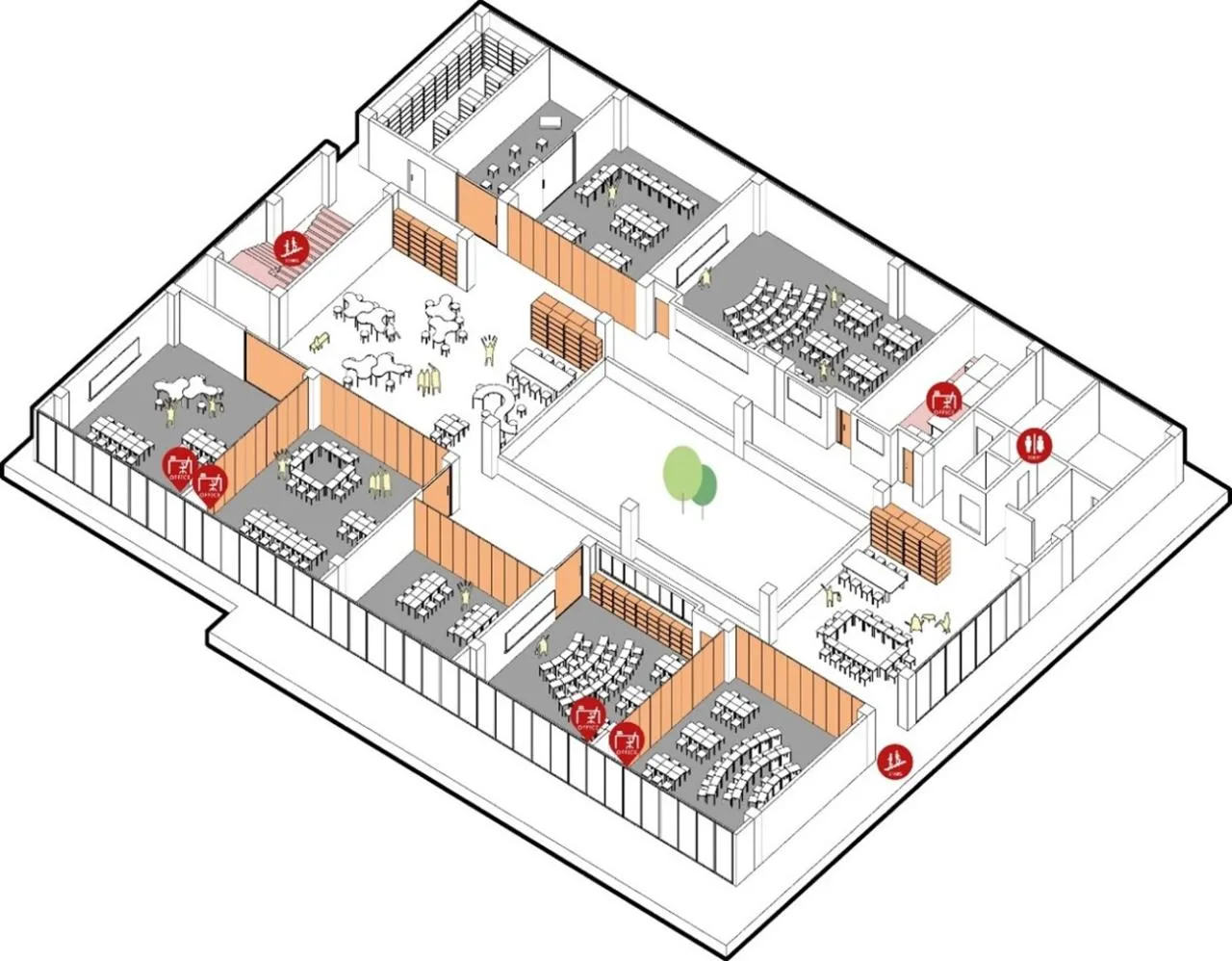
△ Standard teaching unit space composition
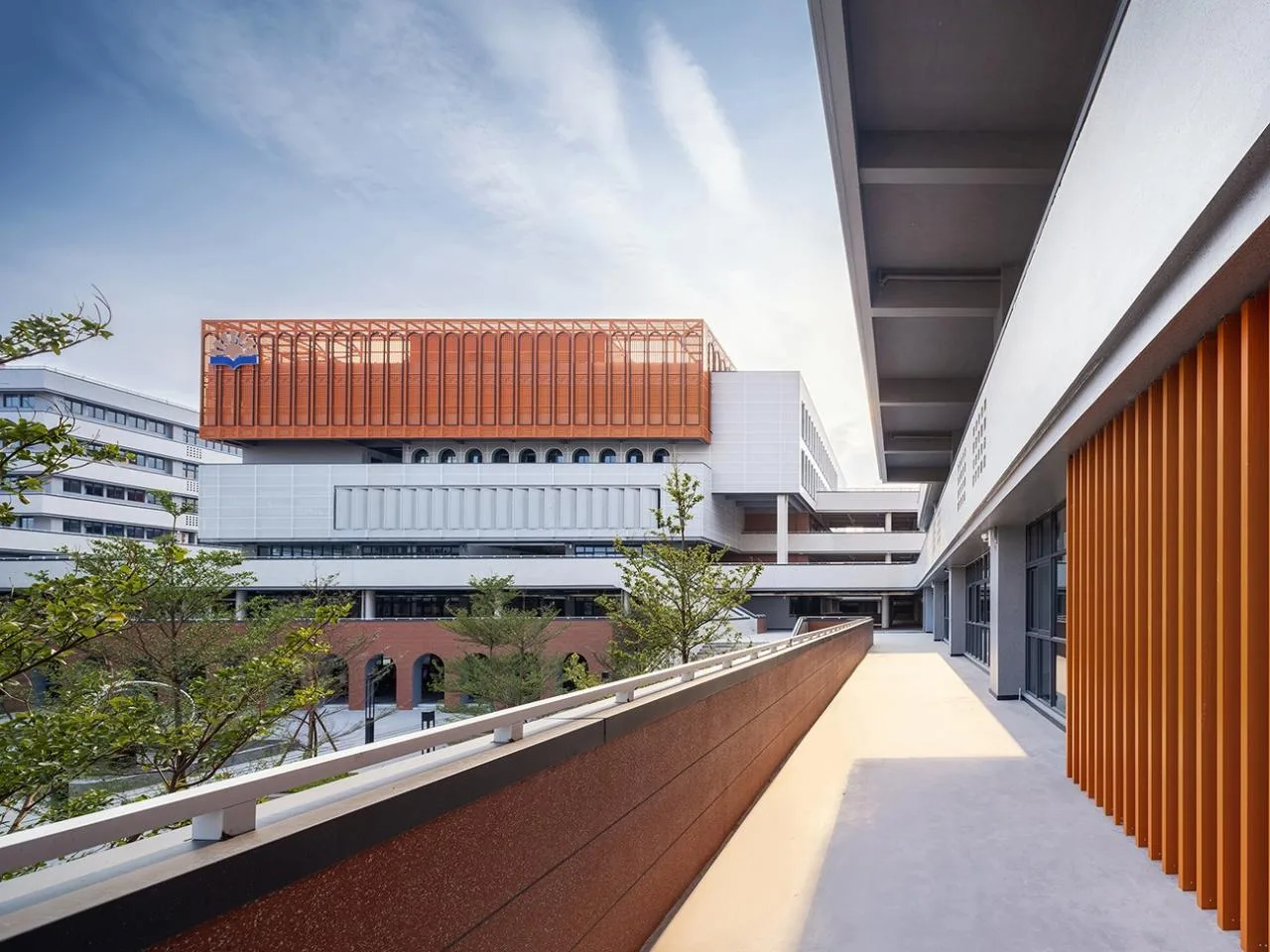
△ Resource Center
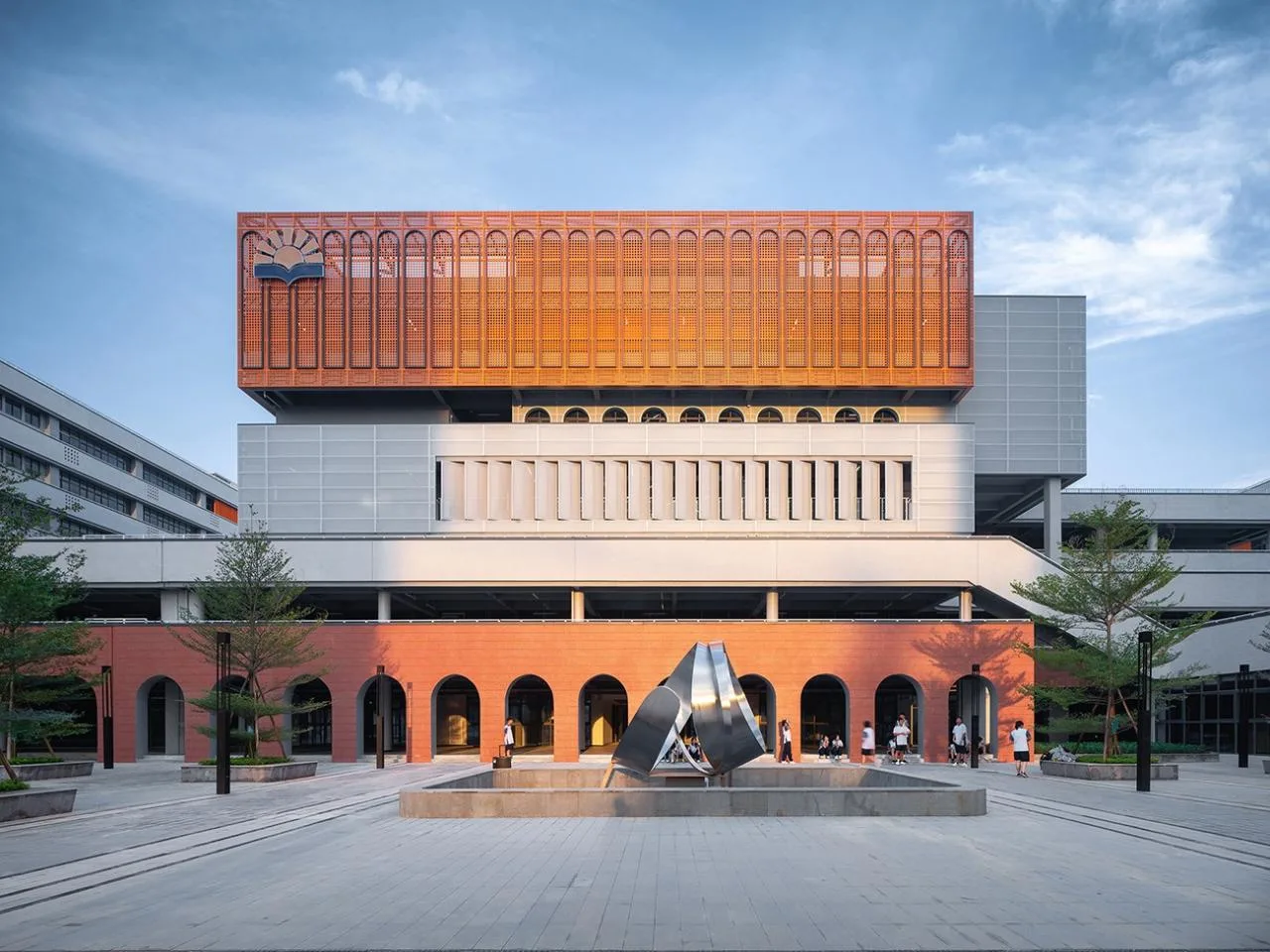
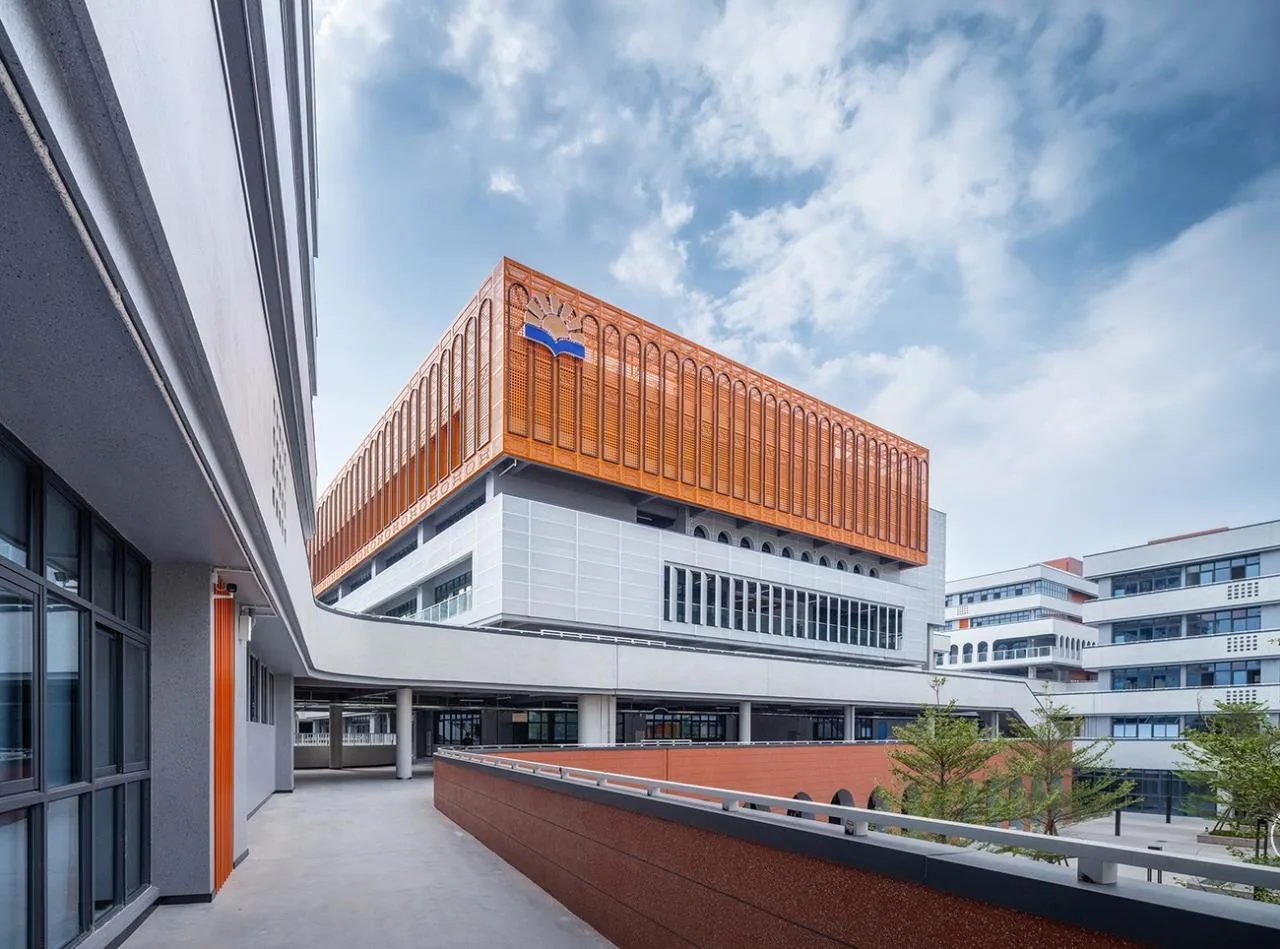
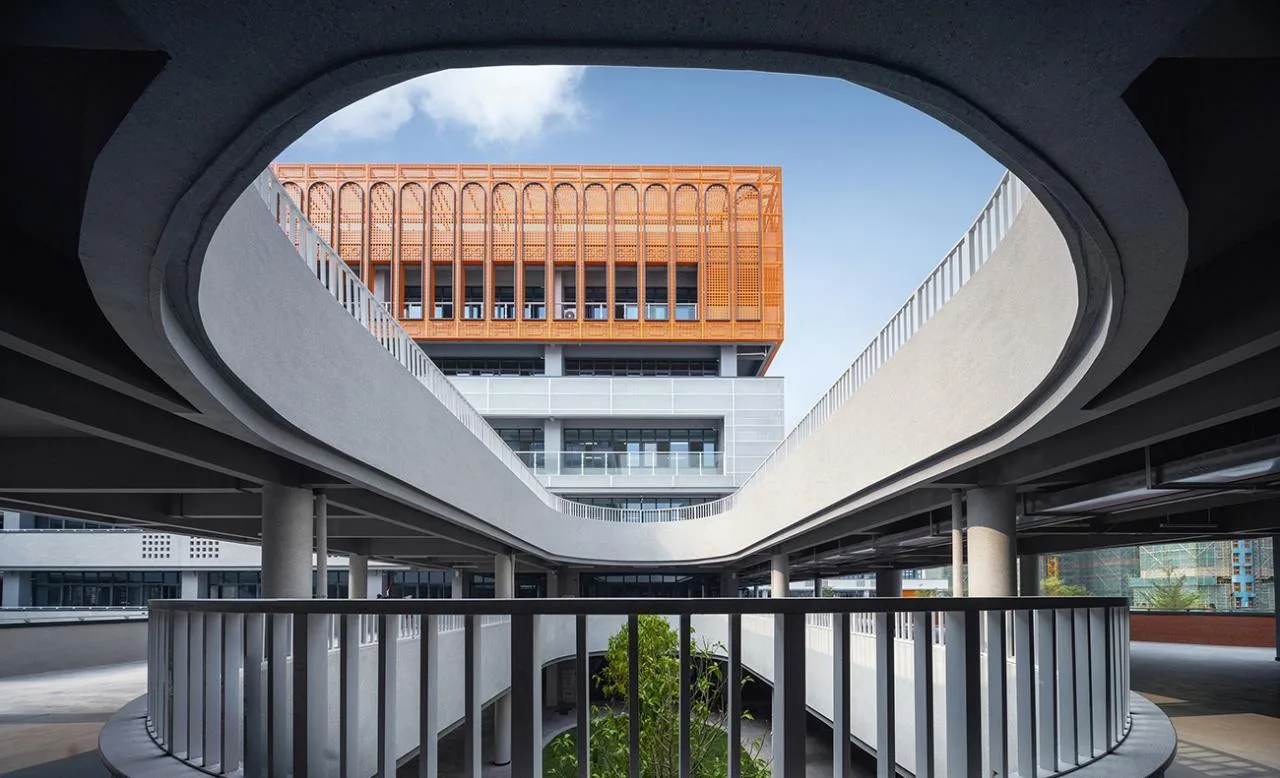
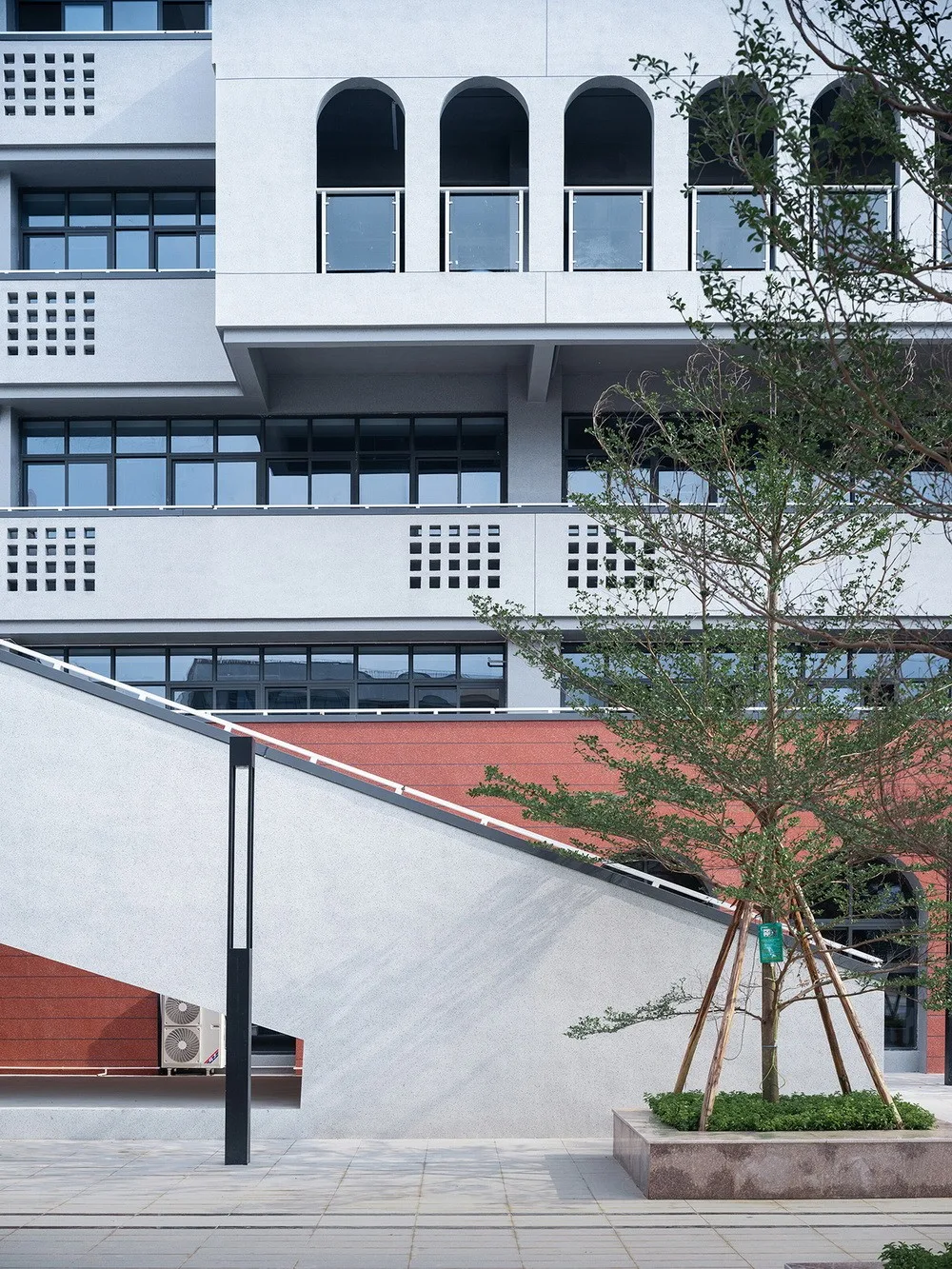
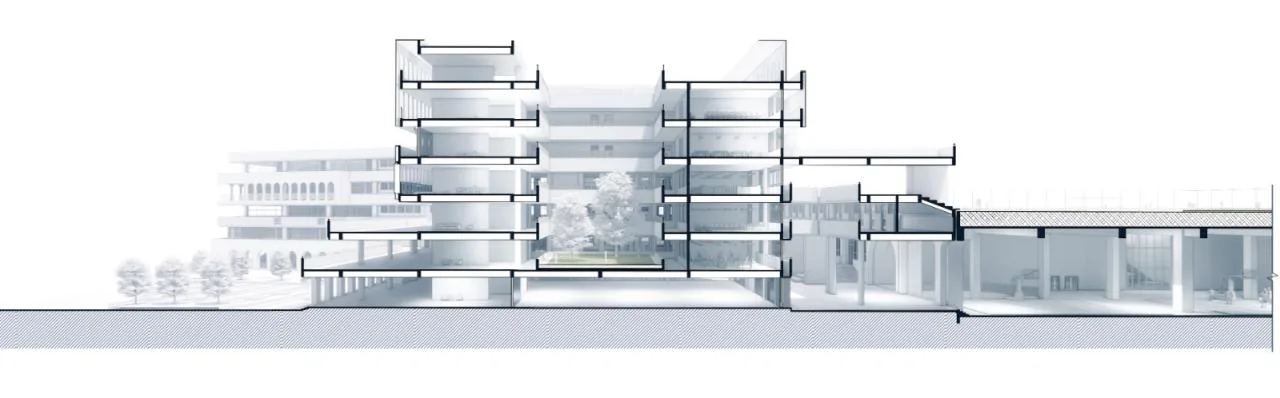
△ Resource Center perspective analysis
The 400-meter sports field is located in a rare flat valley between two small hills to the north and south. To maximize the use of this valley, the sports field’s elevation was raised. Below this elevated area, spaces are dedicated to cultural and sports activities, dining, parking, and shuttle stations.
Consequently, the campus’s daily activities are raised to a reasonable level, avoiding the inconveniences that come with extremely uneven terrain. Similarly, a relatively flat area in the northeast corner accommodates a 200-meter sports field for primary school students, alongside spaces for activities and vehicle circulation.
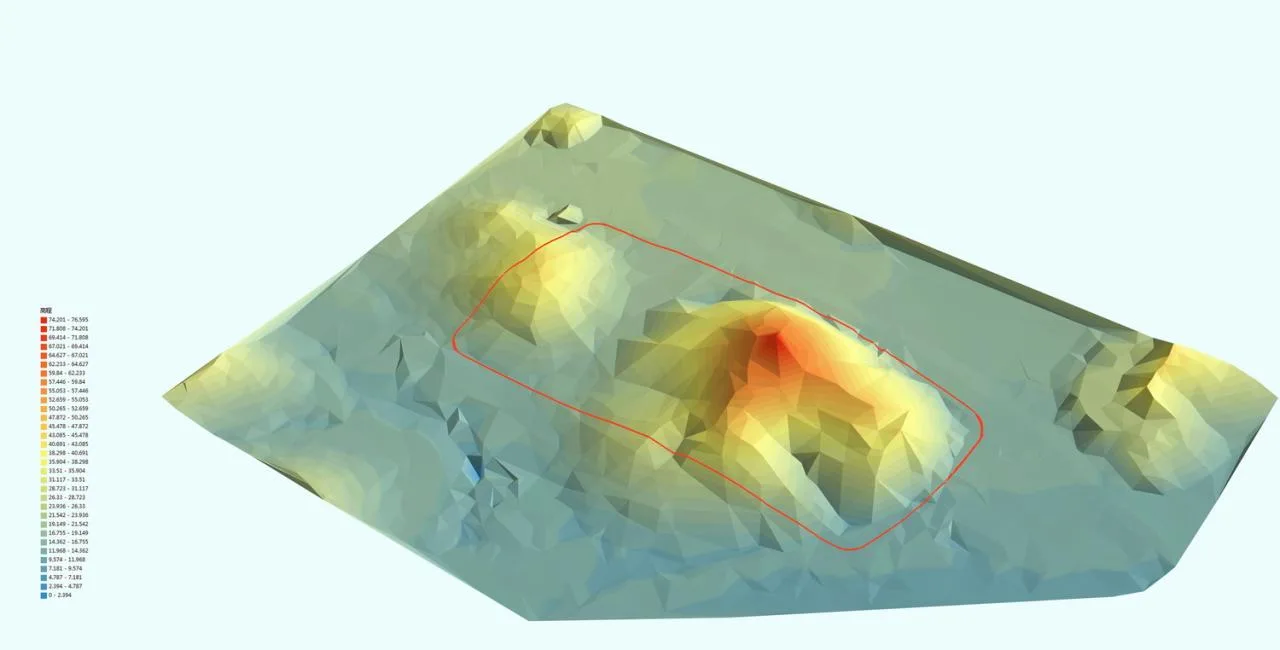
Analysis and calculation of earthwork engineering
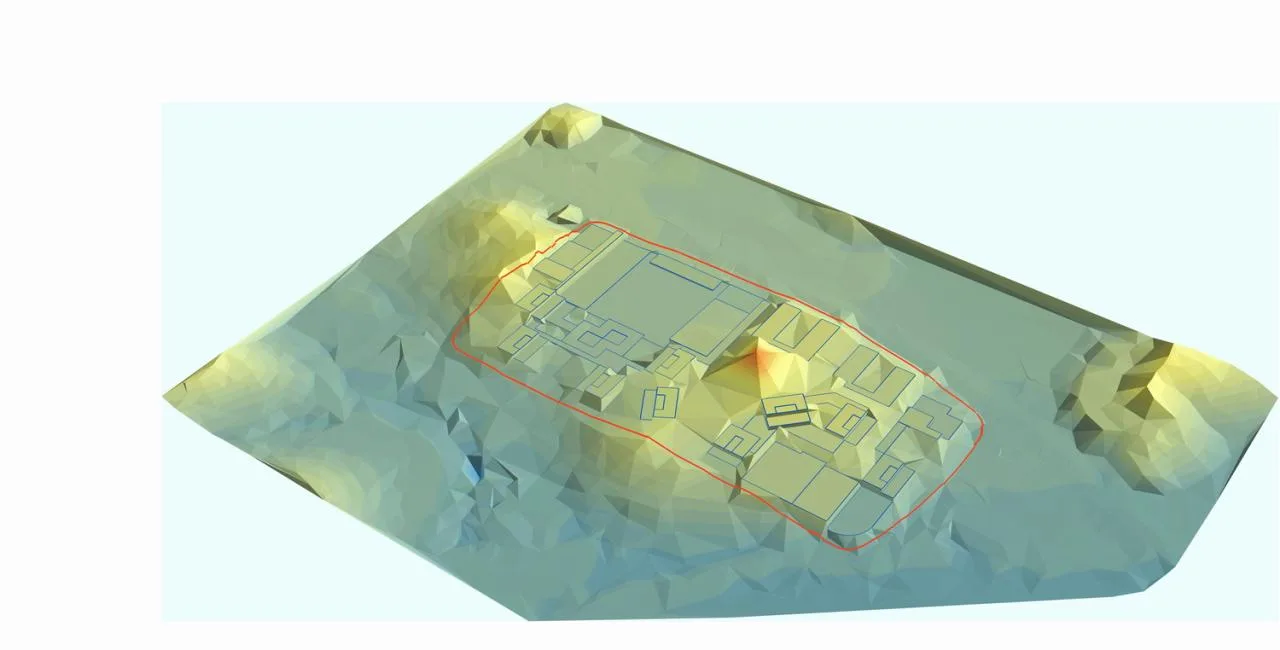
Analysis and calculation of earthwork engineering
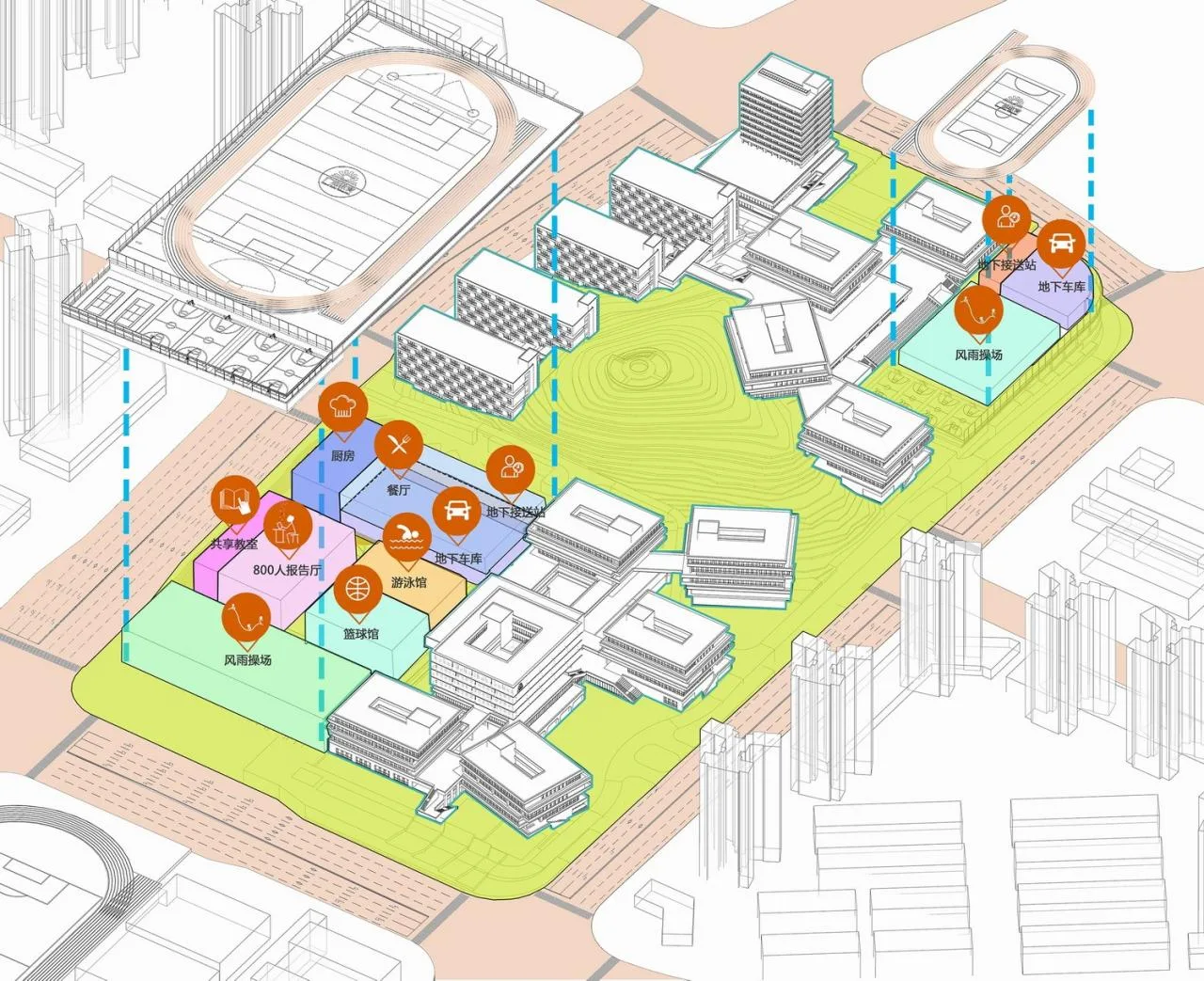
△ Space utilization beneath the sports field
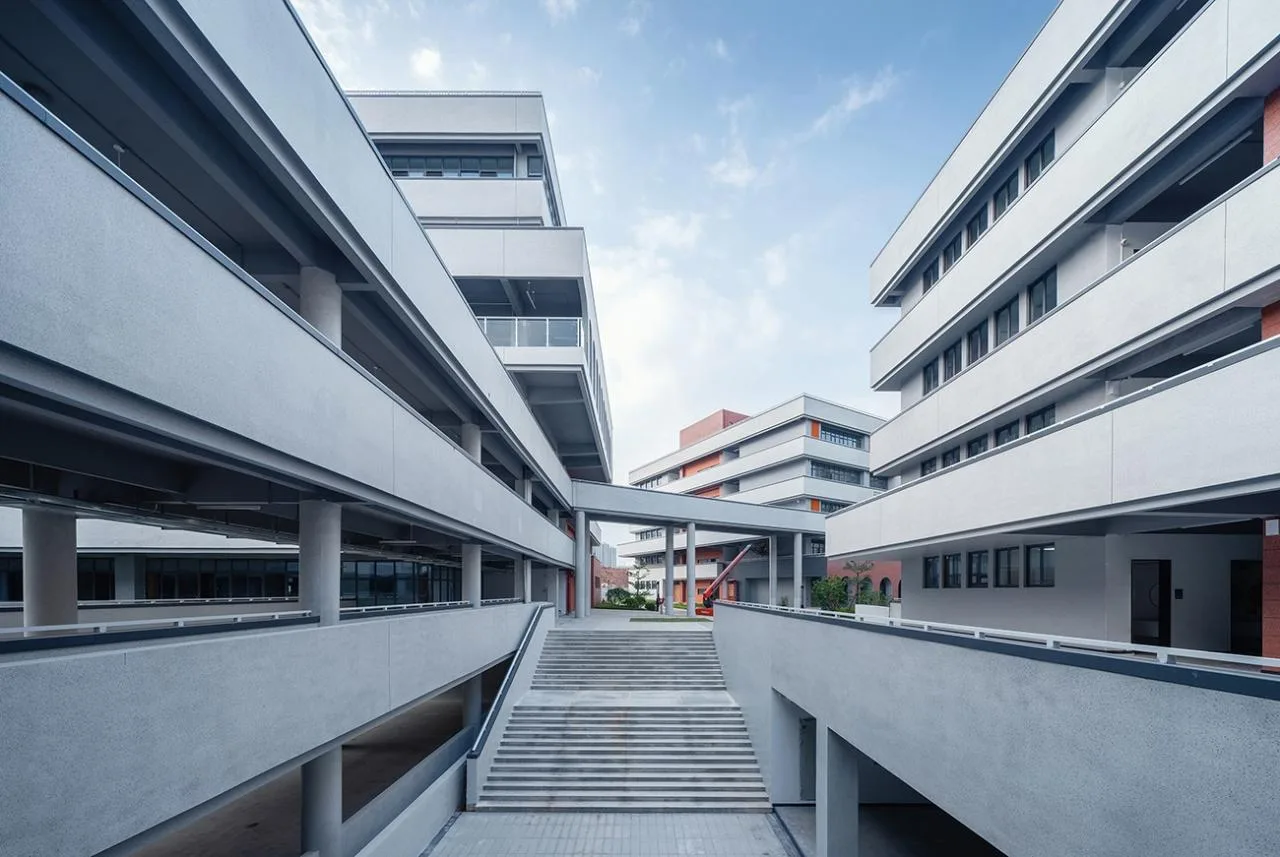
△ Creation of richly layered outdoor activity spaces that respond to terrain changes
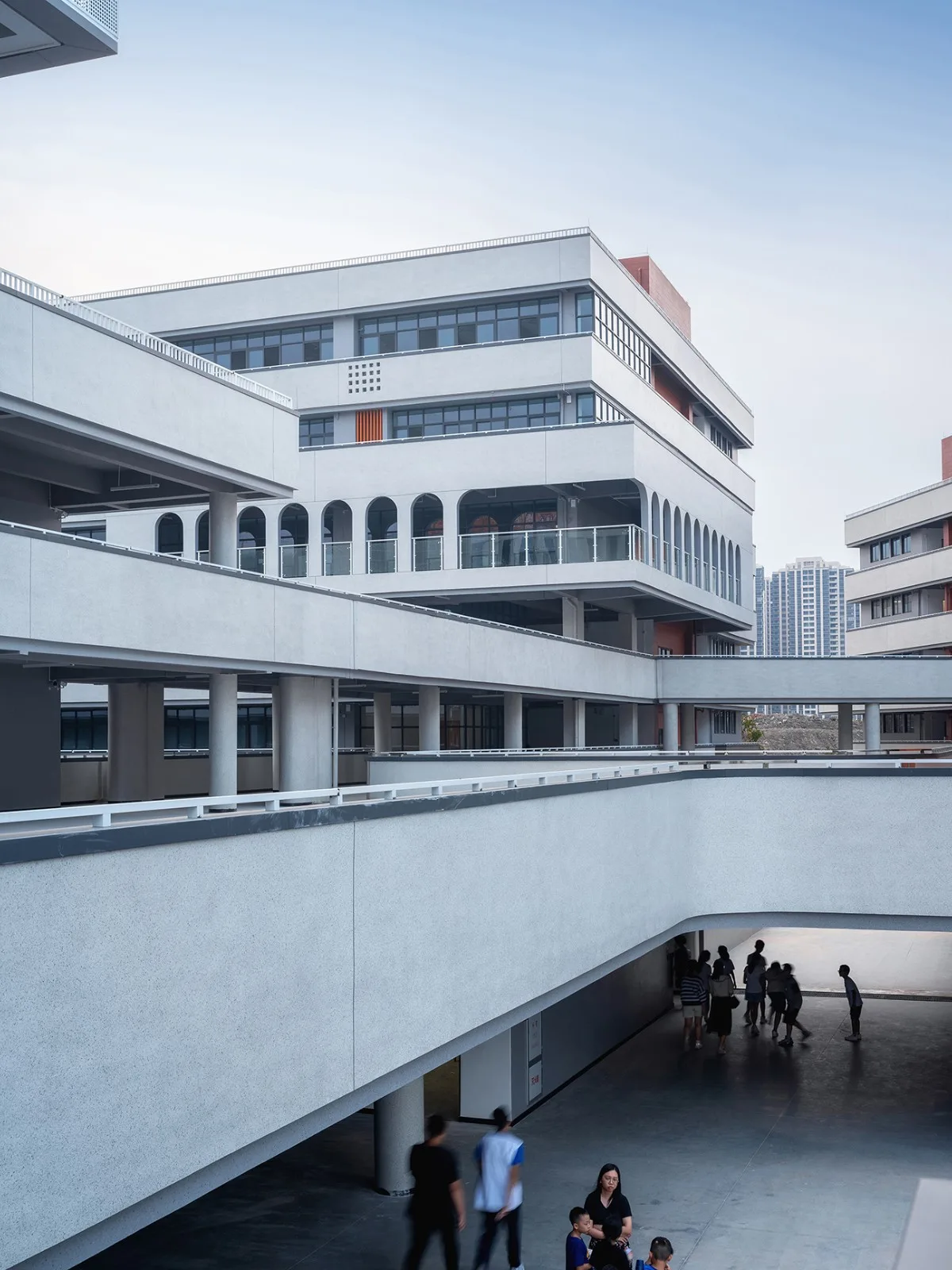
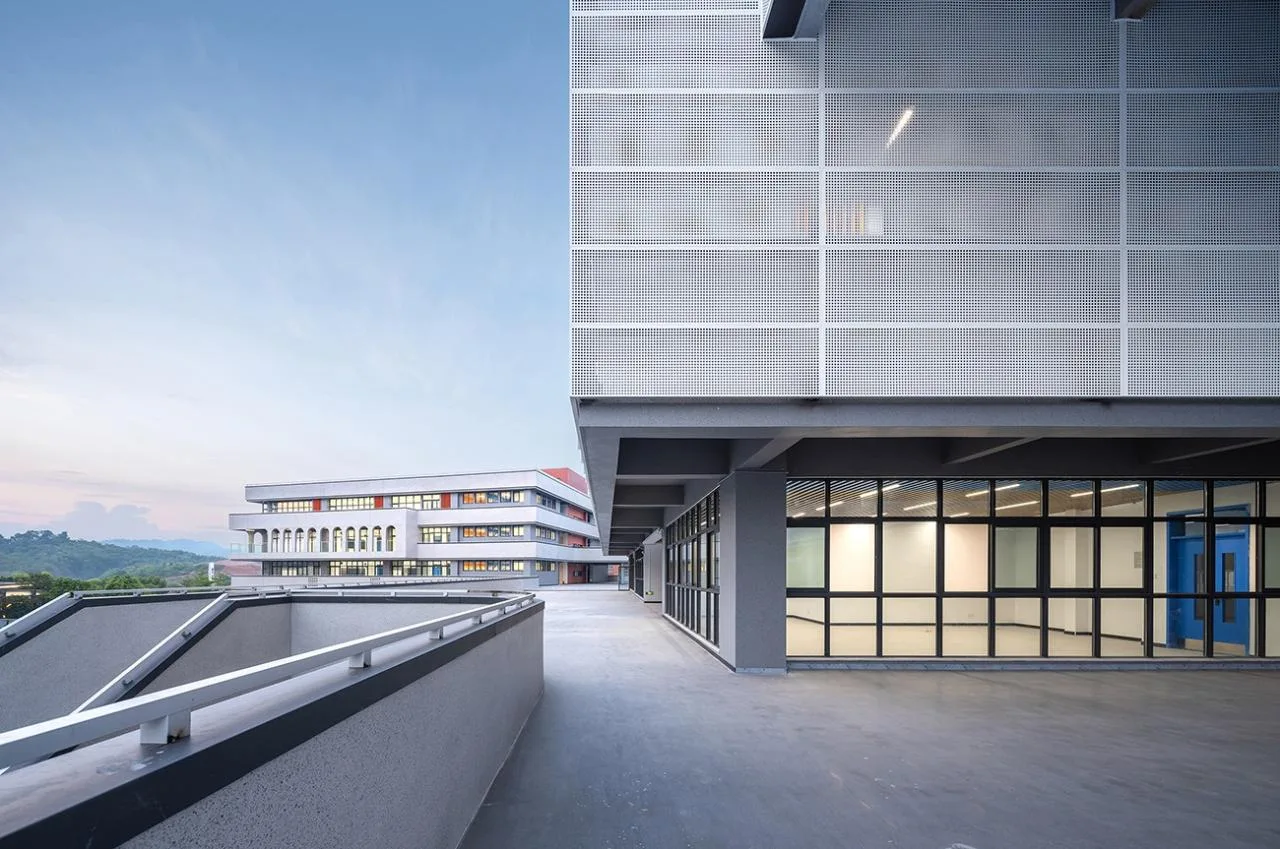
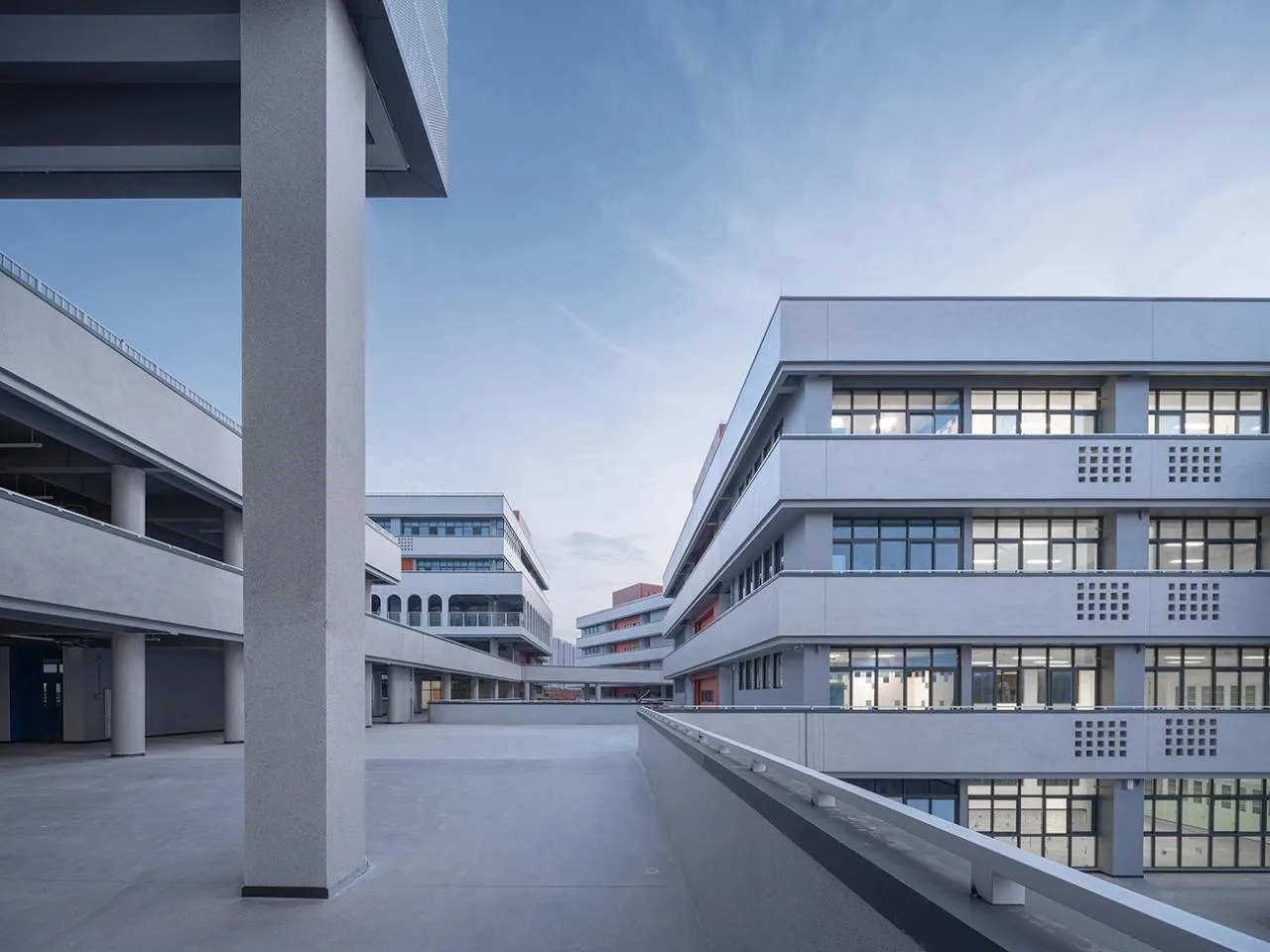
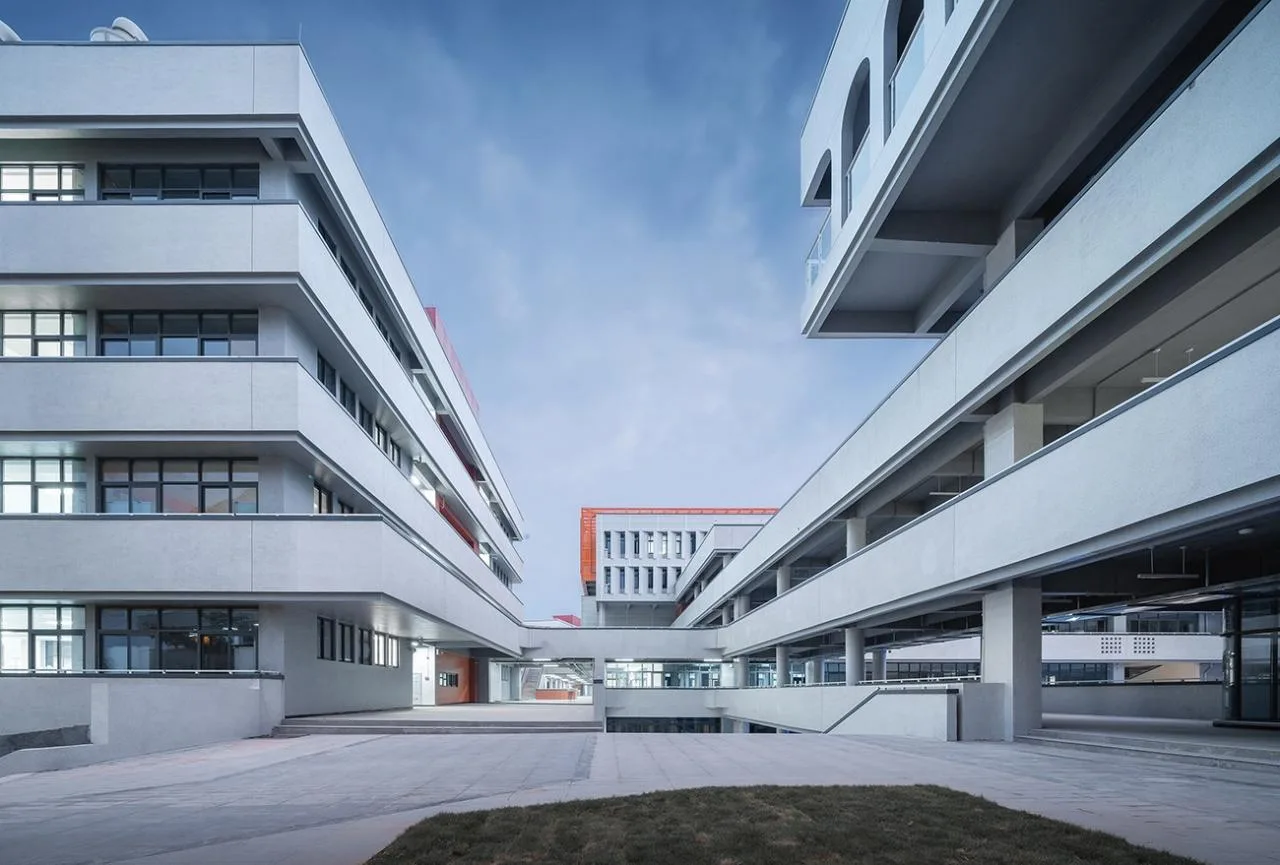
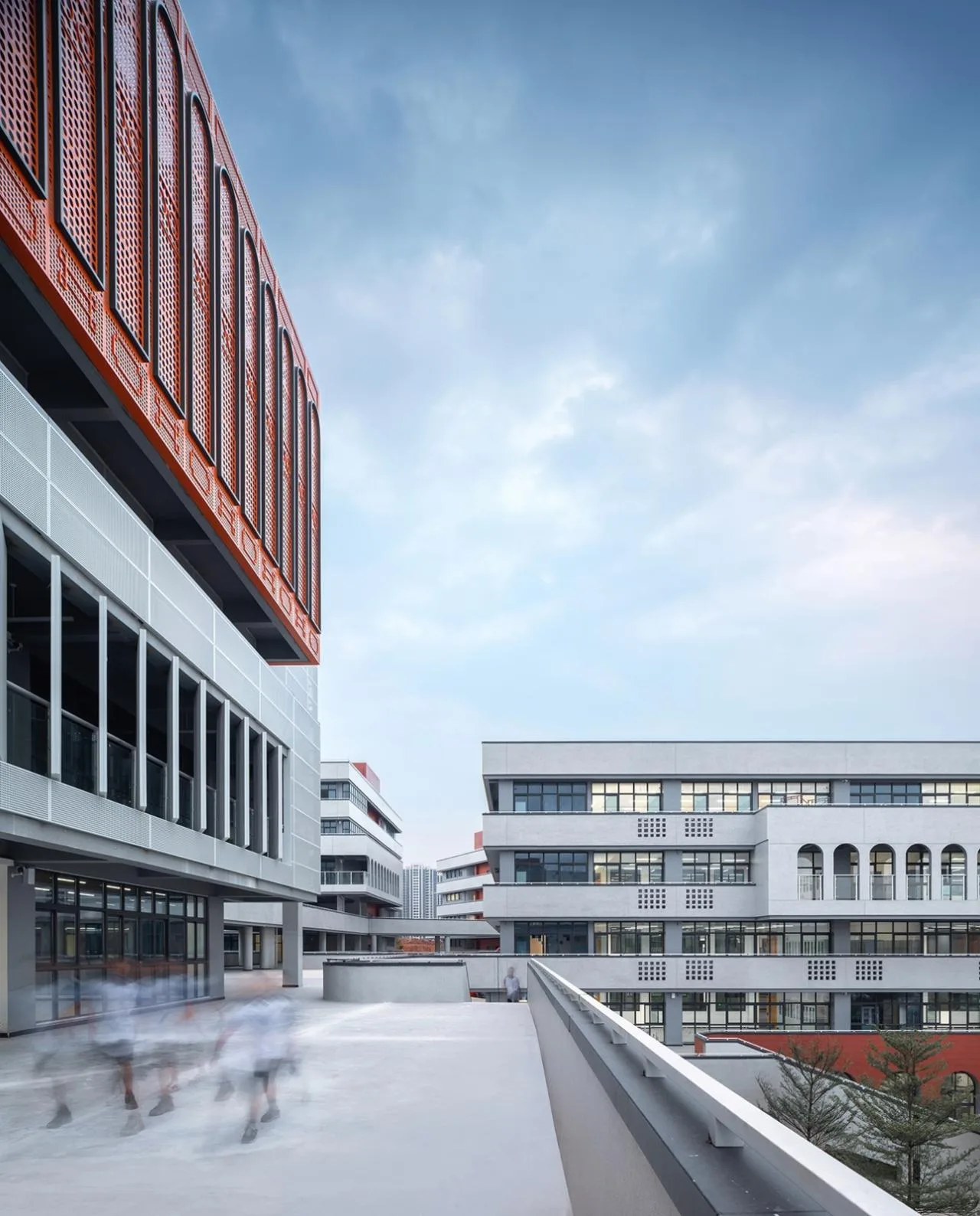
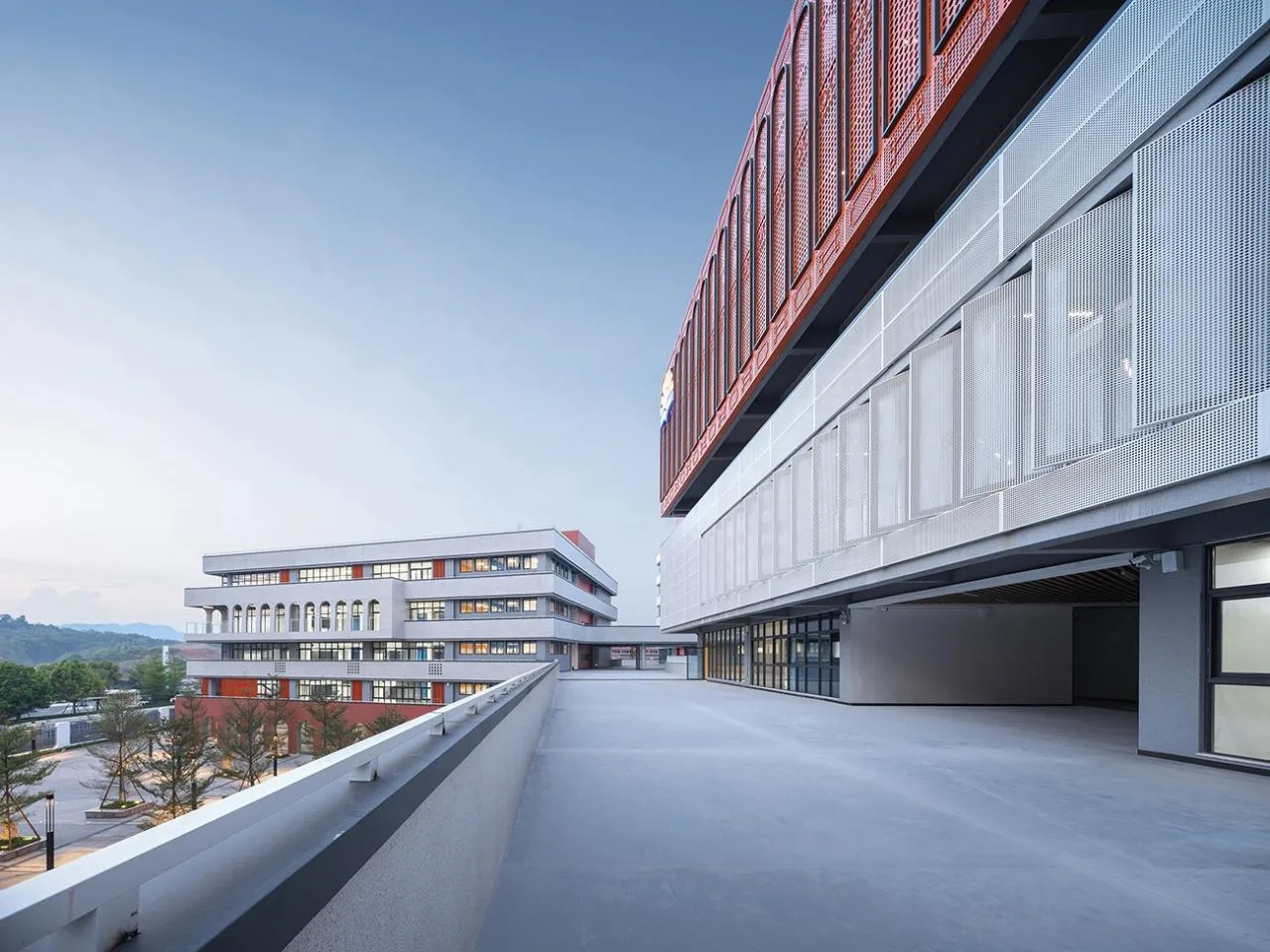
The natural mountain framework has been preserved to a great extent, guiding the arrangement of each building. Architectural forms twist, grow, and cascade along the contours of the mountain. Every courtyard offers a private space blending with the sky and earth, and every window frames the colors of the surrounding mountains.
Whether walking through these spaces, quietly studying in classrooms, playing with friends in courtyard corridors, or standing hand-in-hand on rooftop platforms dreaming of distant places and poetry, the environment fosters a deep connection with nature and culture.
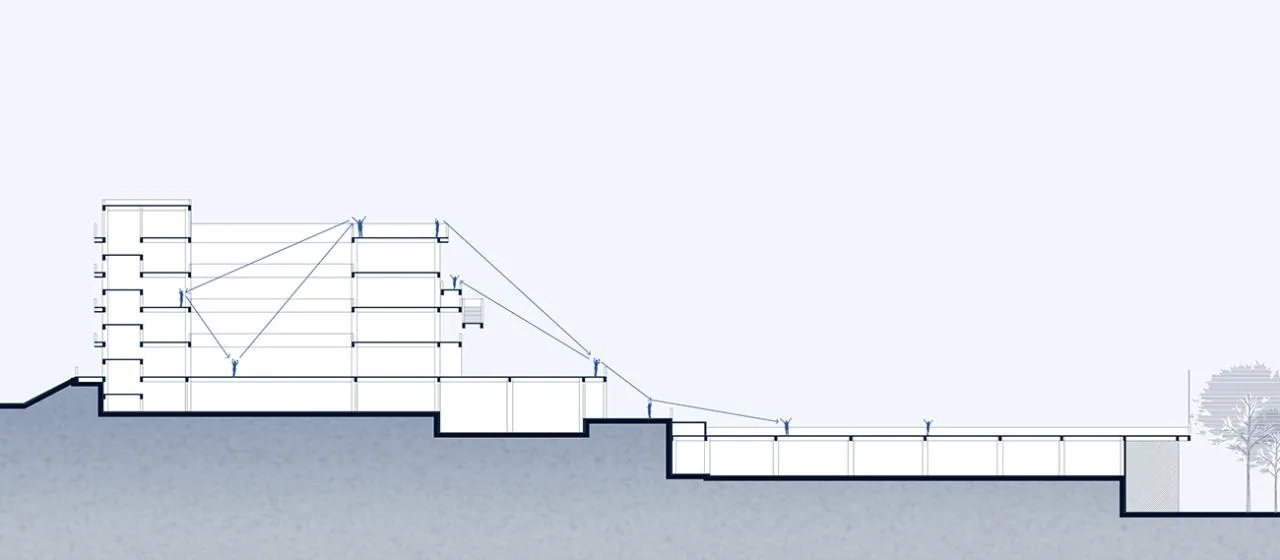
△ Sightline analysis
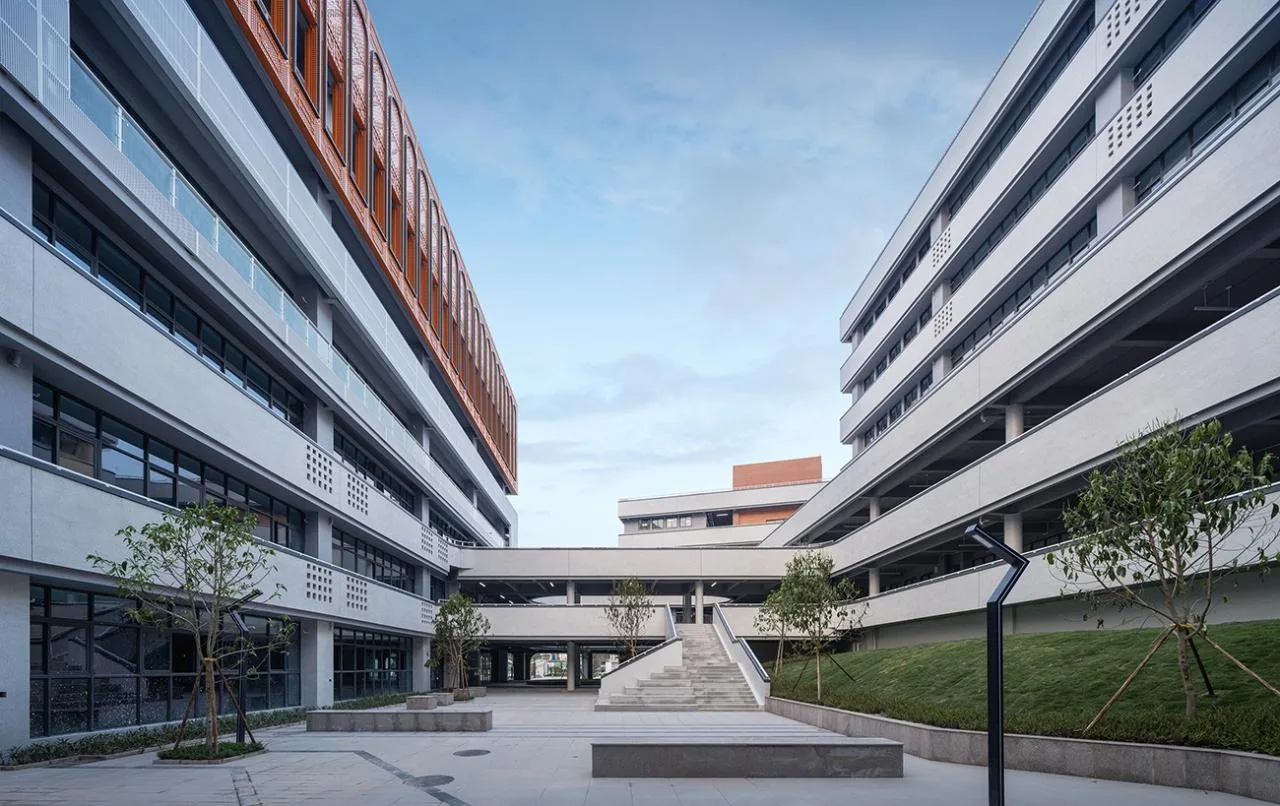
△ Courtyard in the teaching area
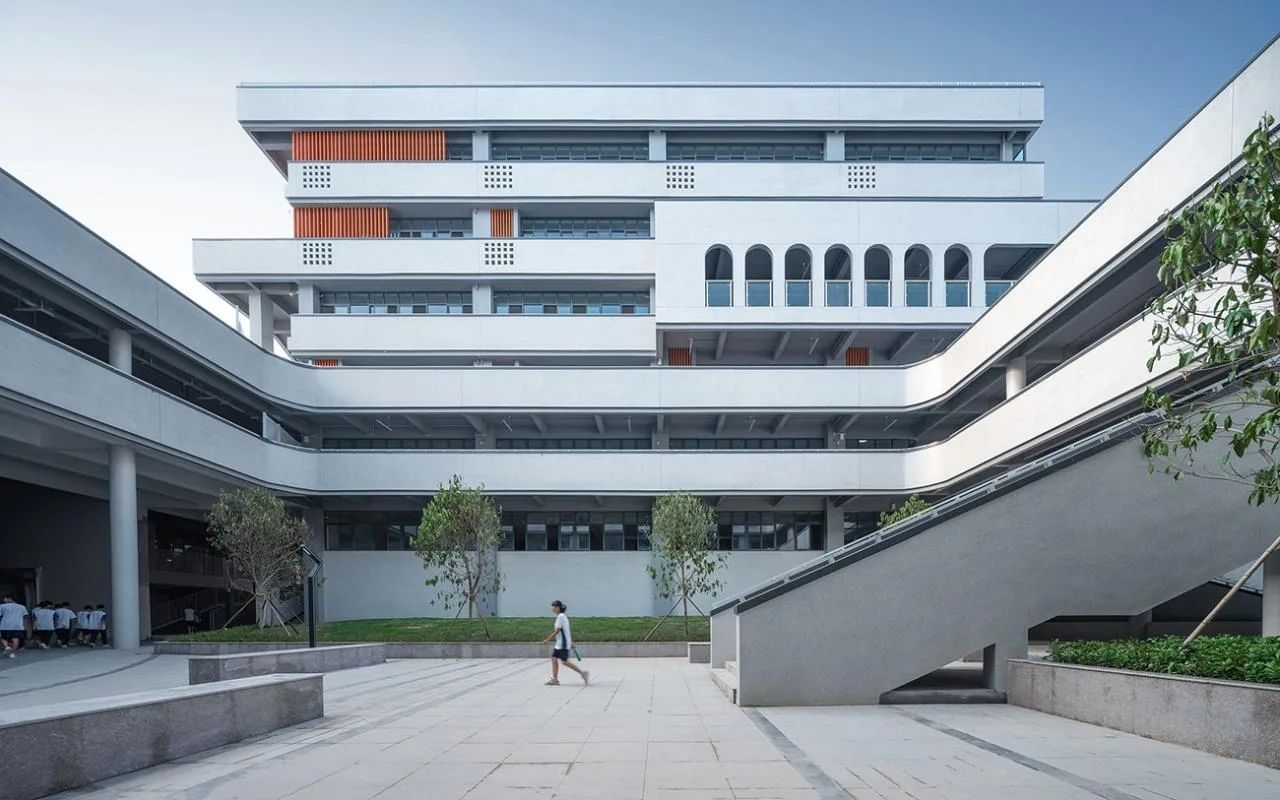
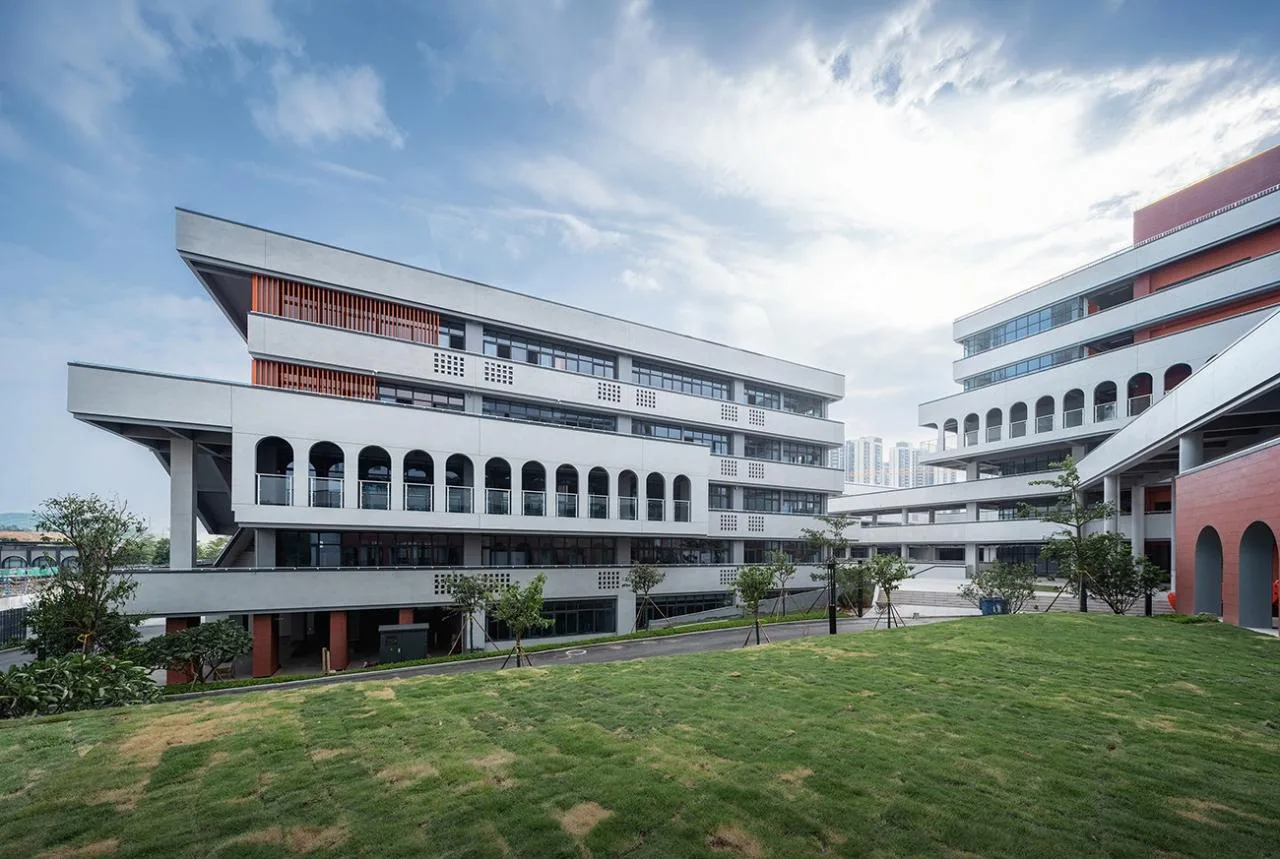
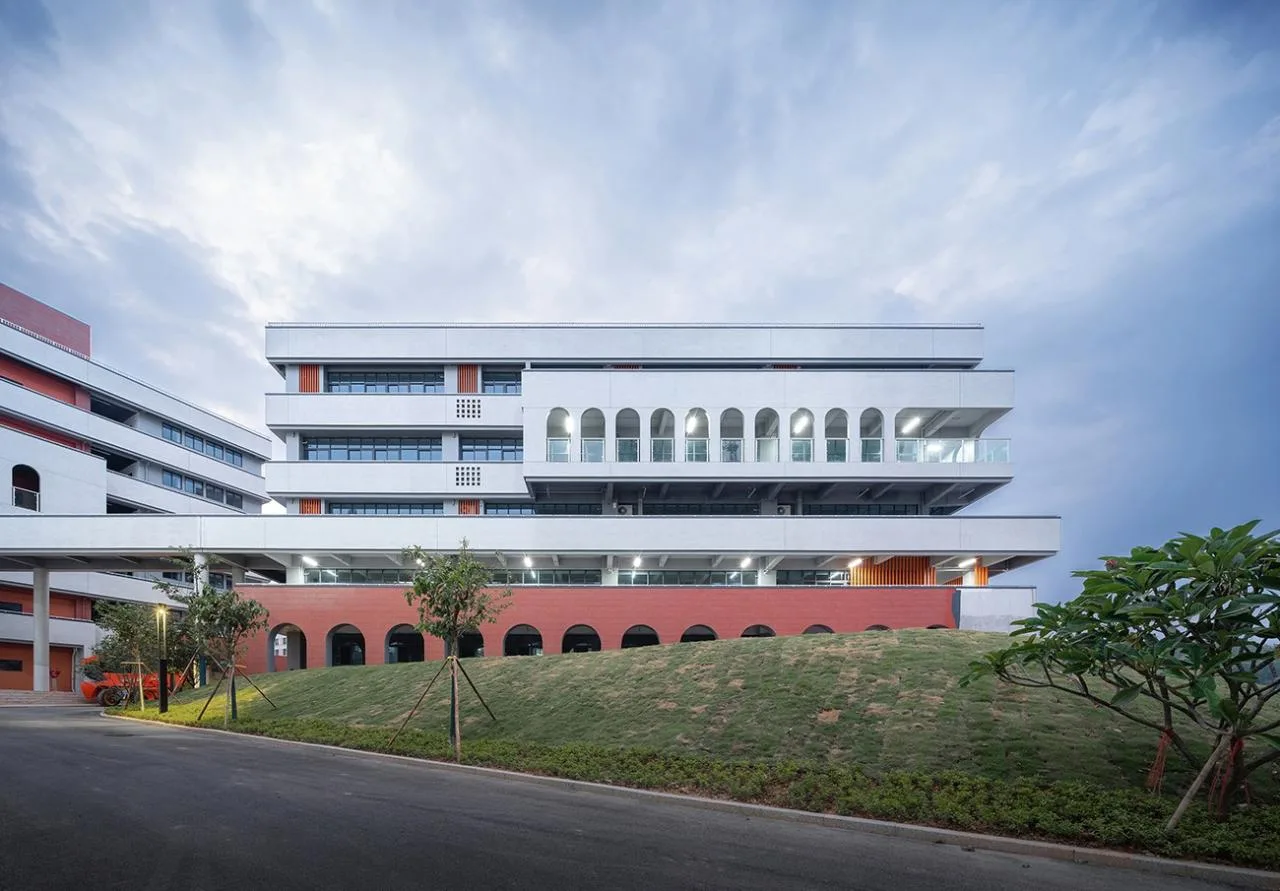
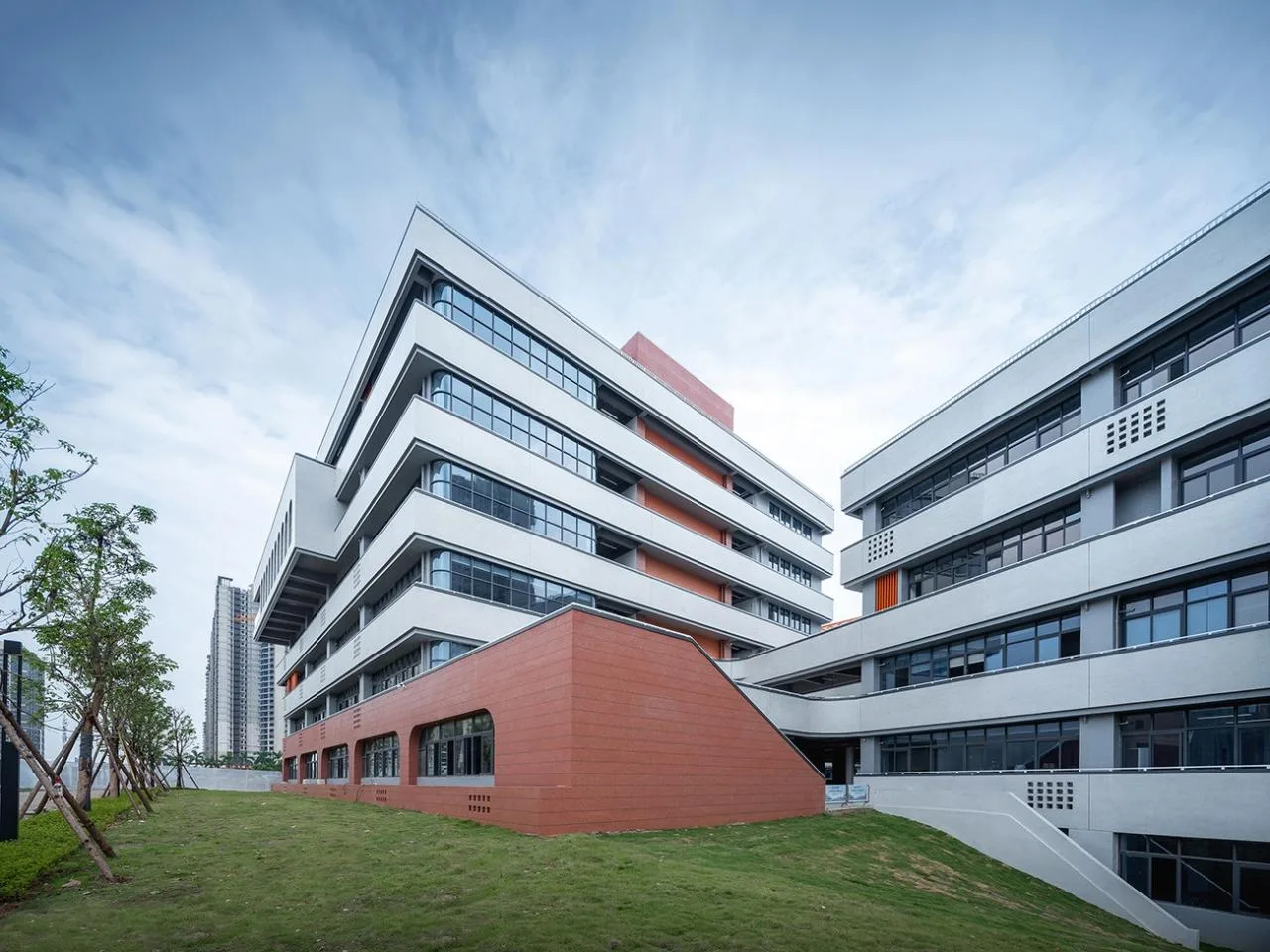
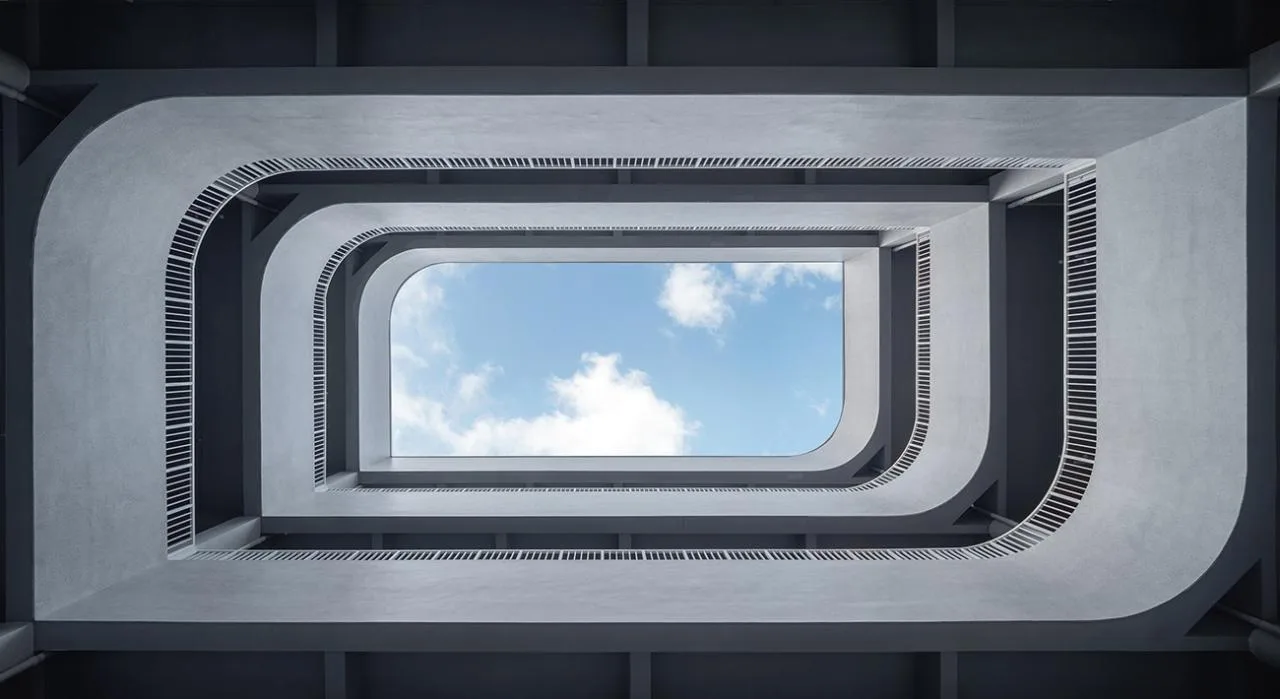
△ Courtyard of a standard teaching unit
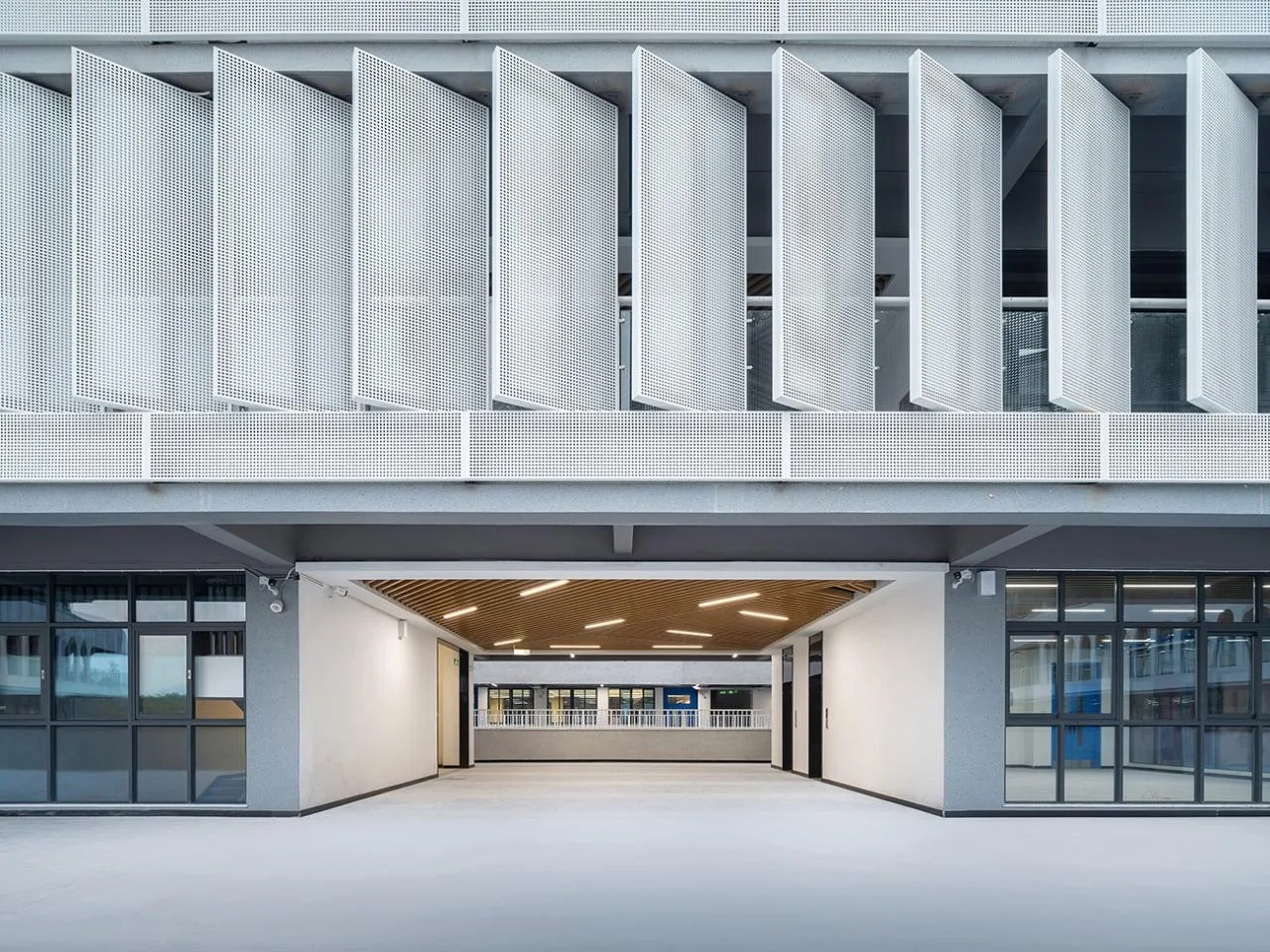
△ Facade details
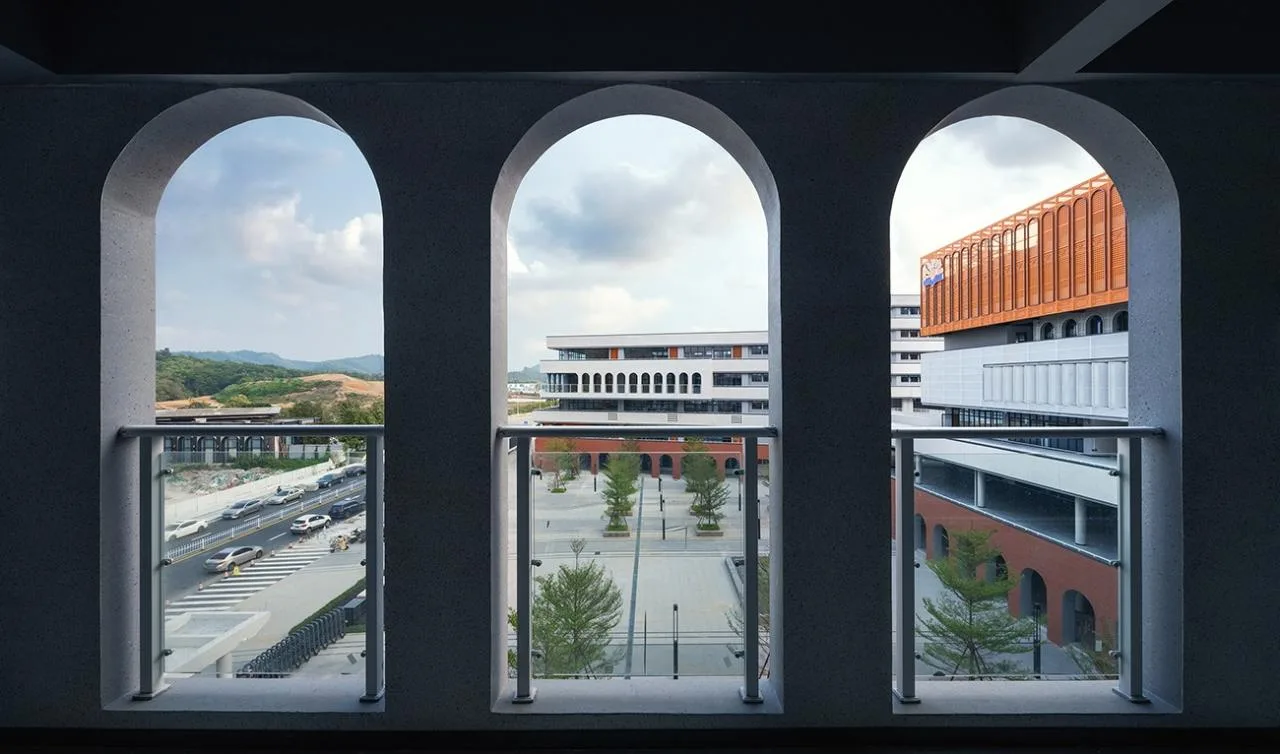
The budget initially allocated for extensive mountain excavation and site leveling has been redirected to enhance children’s experience, creating an accessible and enriched environment. This approach is more ideal and acceptable for all stakeholders involved in construction.
During my early studies in typology, my teacher often cautioned, “There are laws but no fixed forms,” encouraging me to explore the underlying “elements.” As Gu Yanwu once said, “A fisherman does not need a person, and an apricot orchard does not require its own land.” Regional characteristics and cultural traditions inherently possess external “elements,” and there is no need to impose symbols foreign to the local context to claim legitimacy or metaphysical “inheritance” detached from environmental support.
Project Drawings
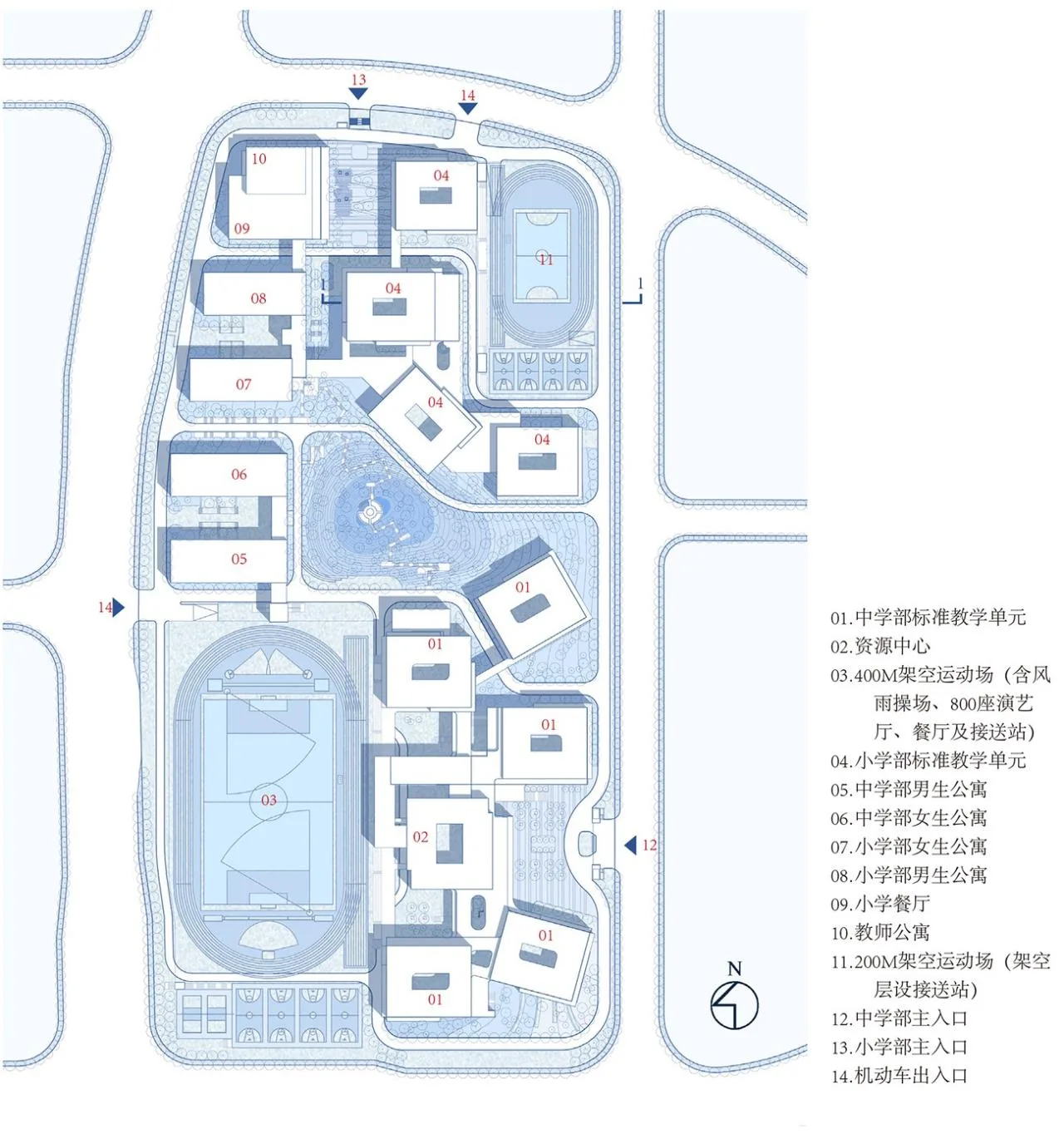
△ General layout plan
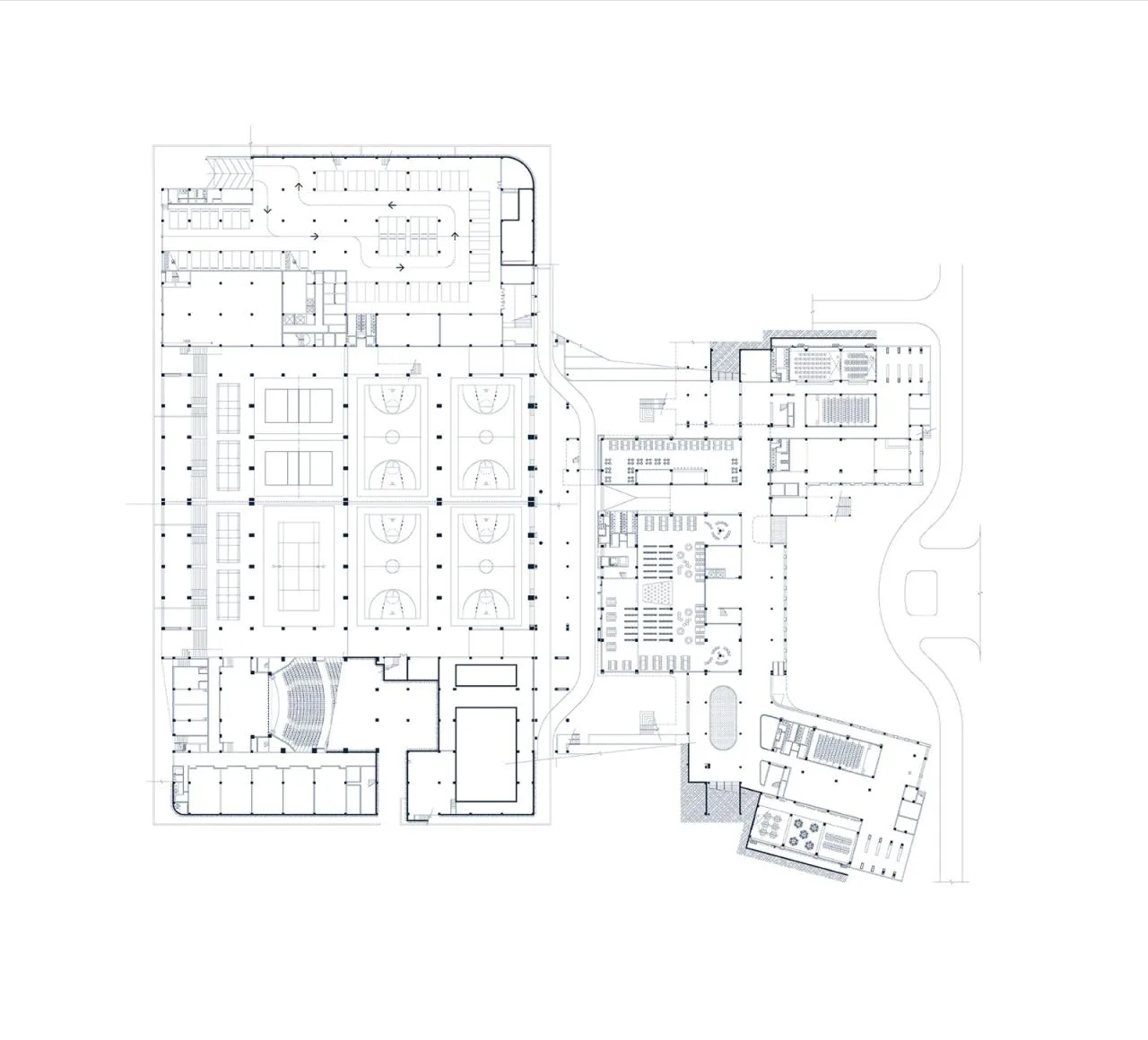
△ First floor plan of the middle school department
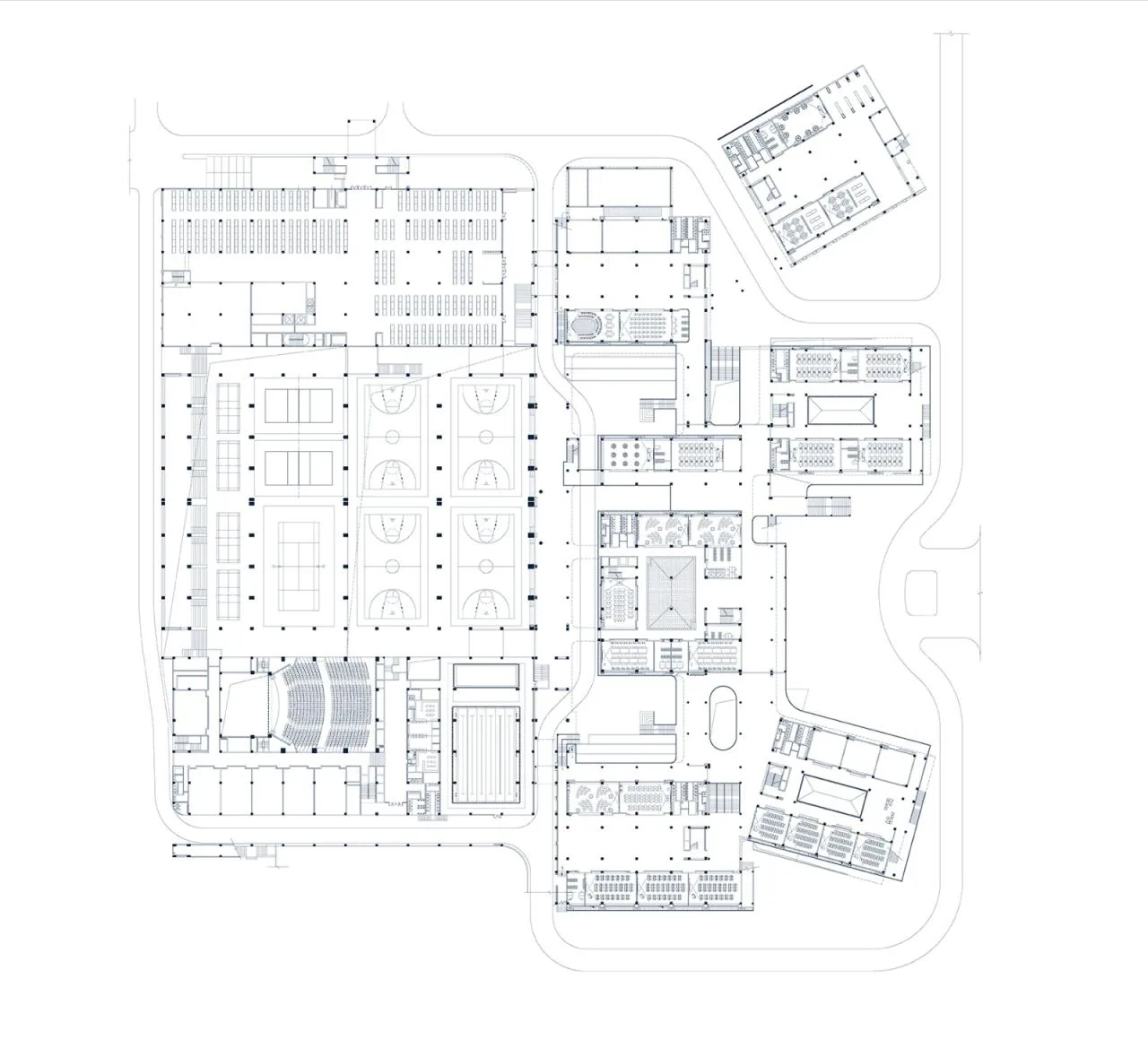
△ Second floor plan of the middle school
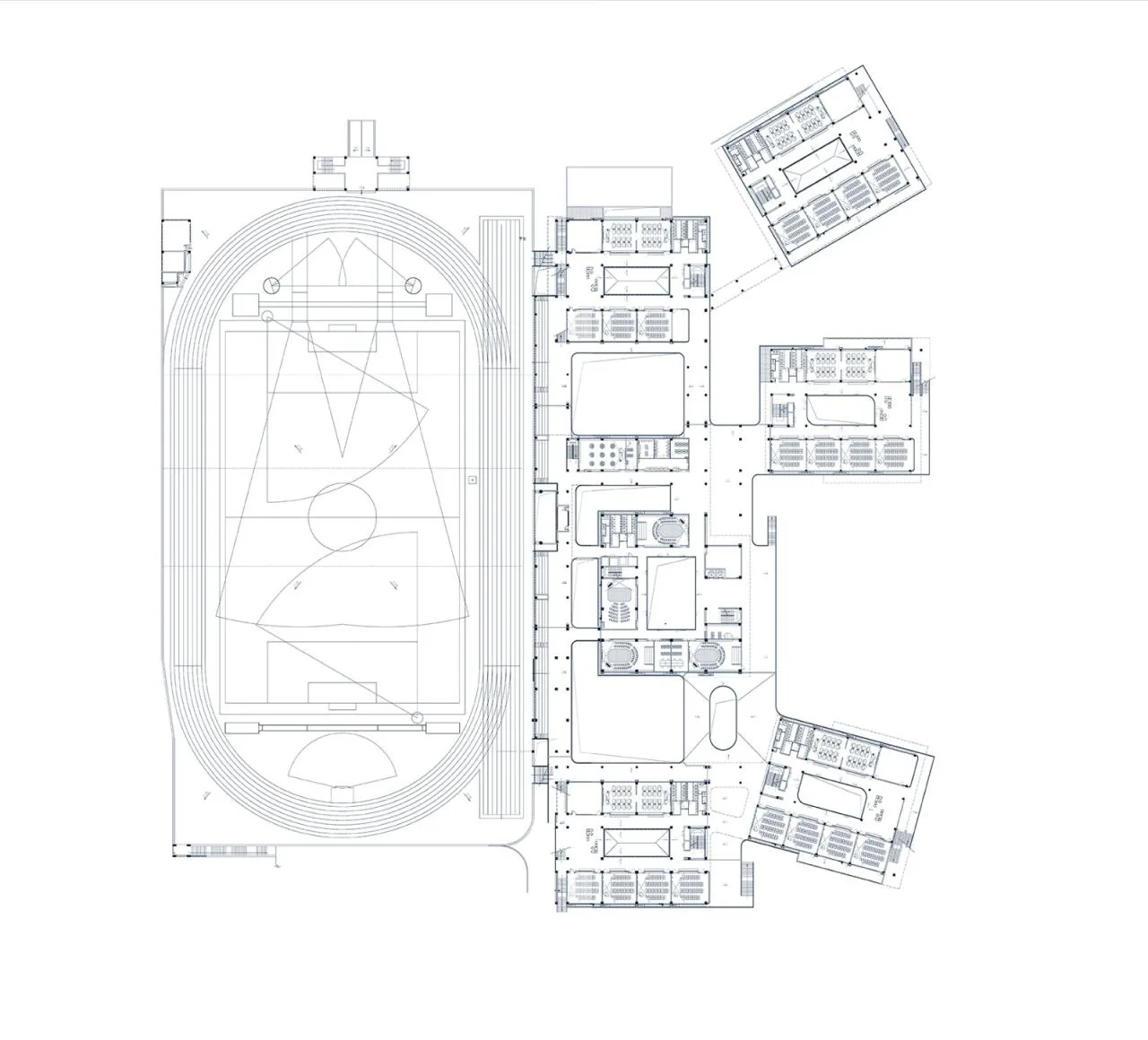
△ Third floor plan of the middle school

△ Elevation view of the high school section
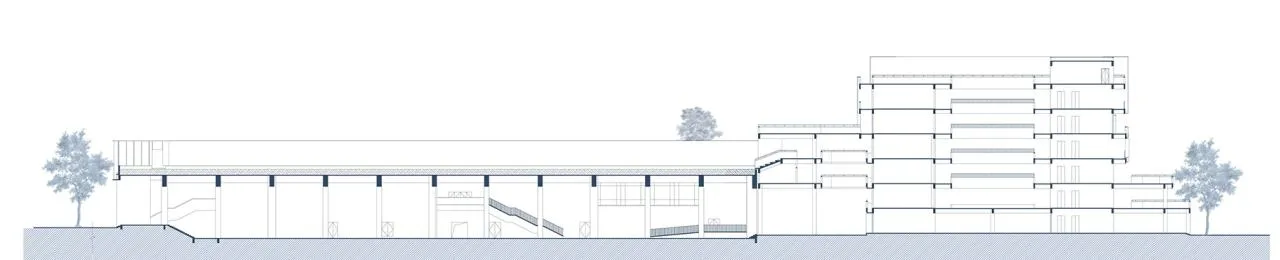
△ Profile of the Resource Center
Project Information
Project Name: Taishan Guangxu Experimental School (GSS, Taishan)
Developer: Taishan Guangxu Education Development Co., Ltd
Location: Nanxin District, Taishan City, Jiangmen City, Guangdong Province
Design Period: September 2020 – December 2021
Completion Date: August 2022 (Phase I)
Education Scale: 96 classes in a 12-year integrated school, including 36 primary school classes, 30 junior high classes, and 30 high school classes
Land Area: 10.27 hectares
Building Area: 133,300 square meters total / 84,100 square meters (Phase I)
Design Firm: Xiangwai Construction Studio, School of Architecture and Urban Planning, Shandong Jianzhu University
Lead Architect: Liu Weibo
Project Architects: Zhang Zengwu, Yu Wenyuan
Design Team: Jiao Ertong, Si Daoqiang, Zhang Hongchuan, Wang Hongqiang, Ma Yunru, Wang Shuai, Wang Shuqi, Li Chengcheng, Wang Jiaxi, Zhang Enwei, Liu Yuanjian, Wang Yashu, Wang Zihan, Luo Fengwei, Li Haixu, Zhang Hanming
Construction Drawing Team: Guangdong Jinhuihua Group Co., Ltd
Landscape Design: Liangshu Xilin Landscape Studio
Architectural Photography: Cui Xufeng, Time Difference Imaging














Must log in before commenting!
Sign Up