
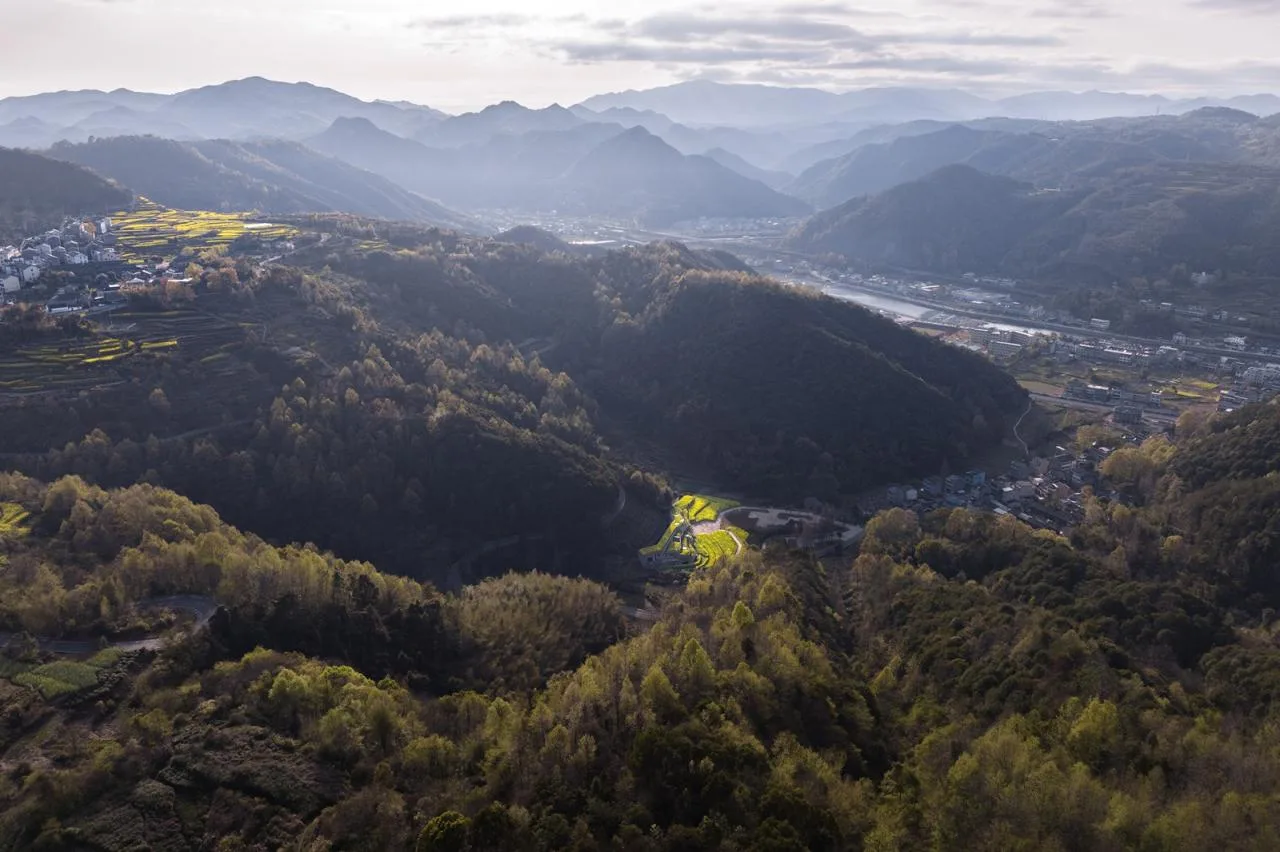
△ Cultural and Historical Museum and Surrounding Forests © Ding Junhao
Background
The Qingxi Cultural and Historical Museum is situated on Nanshan Hill in Sangzhou Town, Ninghai, Zhejiang Province. This project serves as a compact cultural tourism hub, integrating cultural and historical exhibitions, a tourist reception center, and a cultural experience center for the local community.
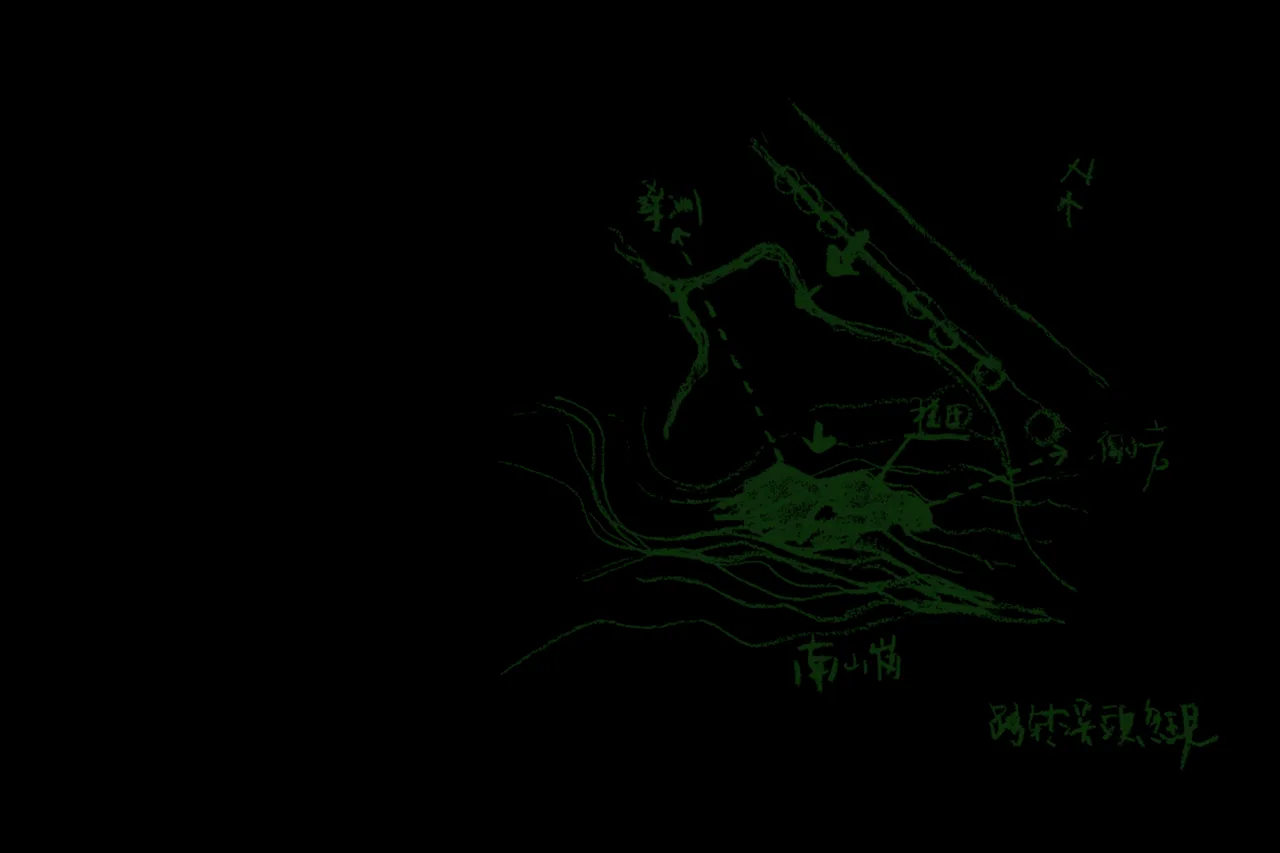
△ Sketch © UAD
The site is remote from urban hustle, connected only by a rural road that links several villages. Occasionally, local villagers can be seen working in the fields. The terrain features a clear elevation difference, forming a plateau that slopes upward from north to south, offering expansive views to the north. Beyond, the mountains extend endlessly, flanked by terraced fields on both sides.
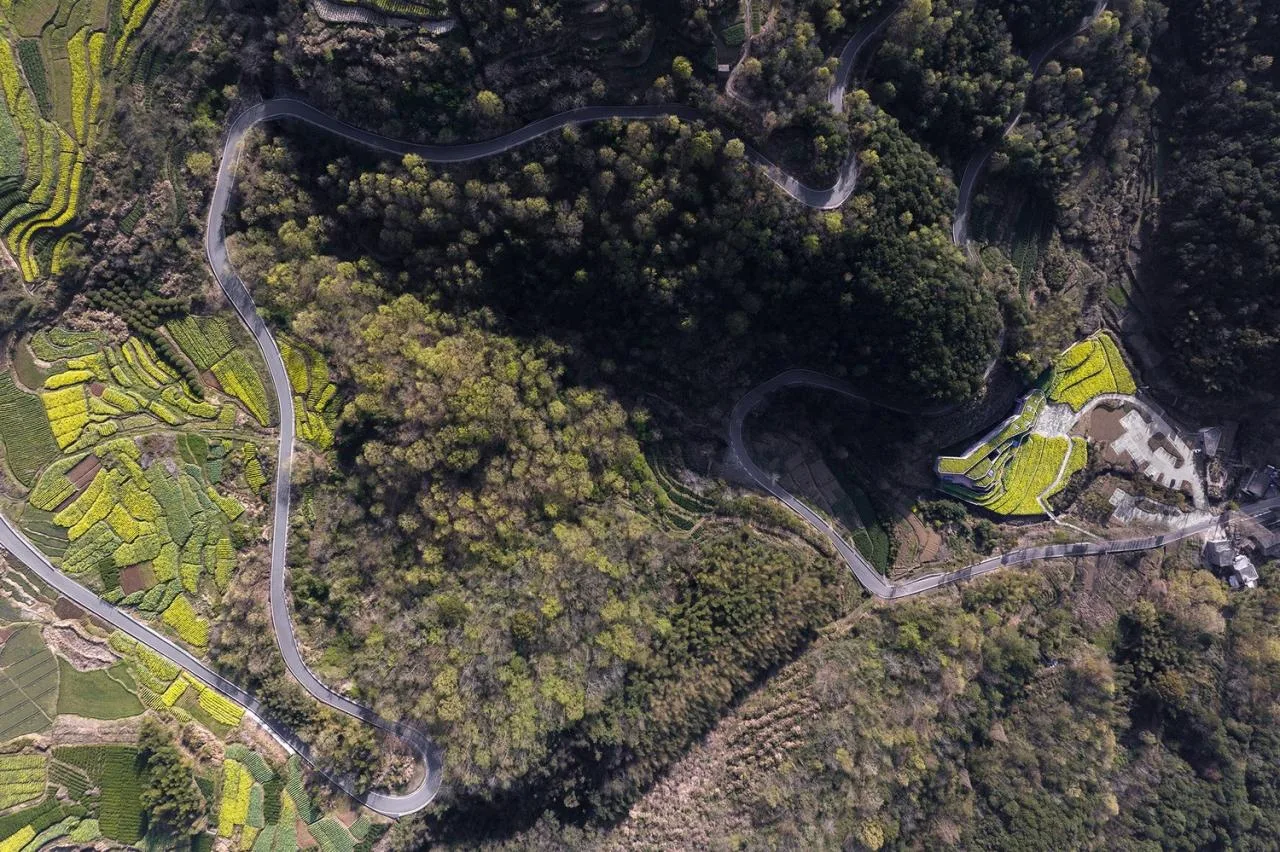
△ East side bird’s-eye view © Ding Junhao
Nature
Respecting nature and focusing on the environment are the core intentions driving the design.
Set within picturesque terraced fields, facing mountains and water, the museum’s outdoor spaces adapt seamlessly to the natural terrain and local conditions. The design integrates the building with its surroundings by connecting contours with the existing landforms, extending the natural lines of the terraced fields. The roof is envisioned to blend with the surrounding terraces, covered with crops to maintain harmony with the landscape.
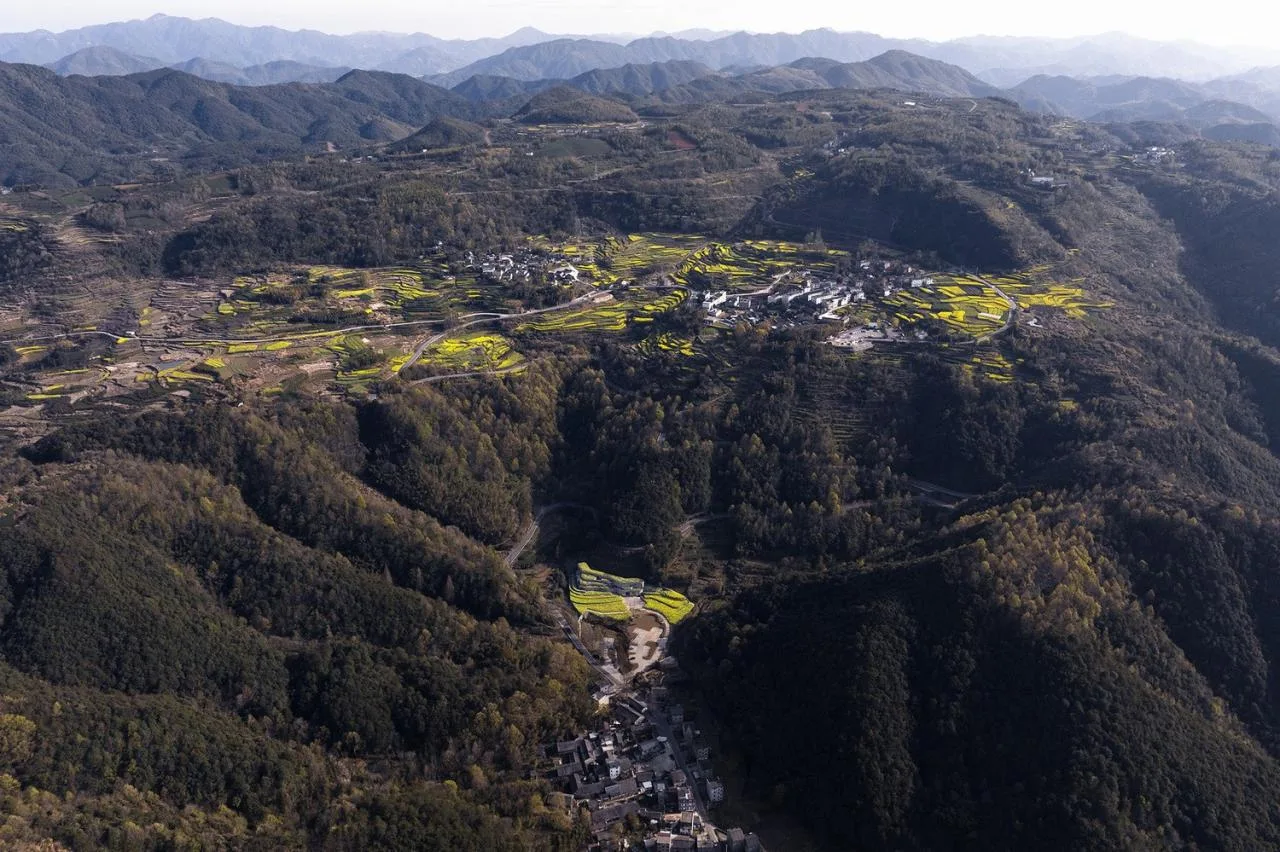
△ Cultural and Historical Museum in the Jiangnan Hills © Ding Junhao
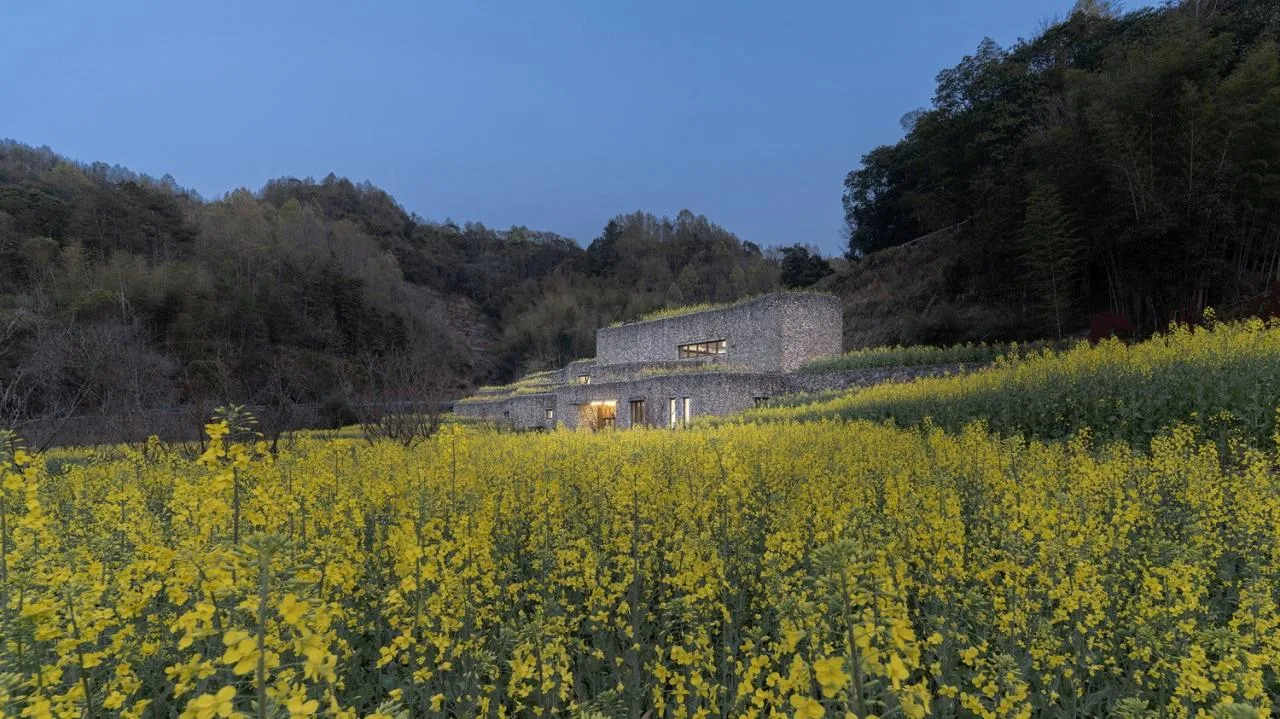
△ Rapeseed Flower Fields © Ding Junhao
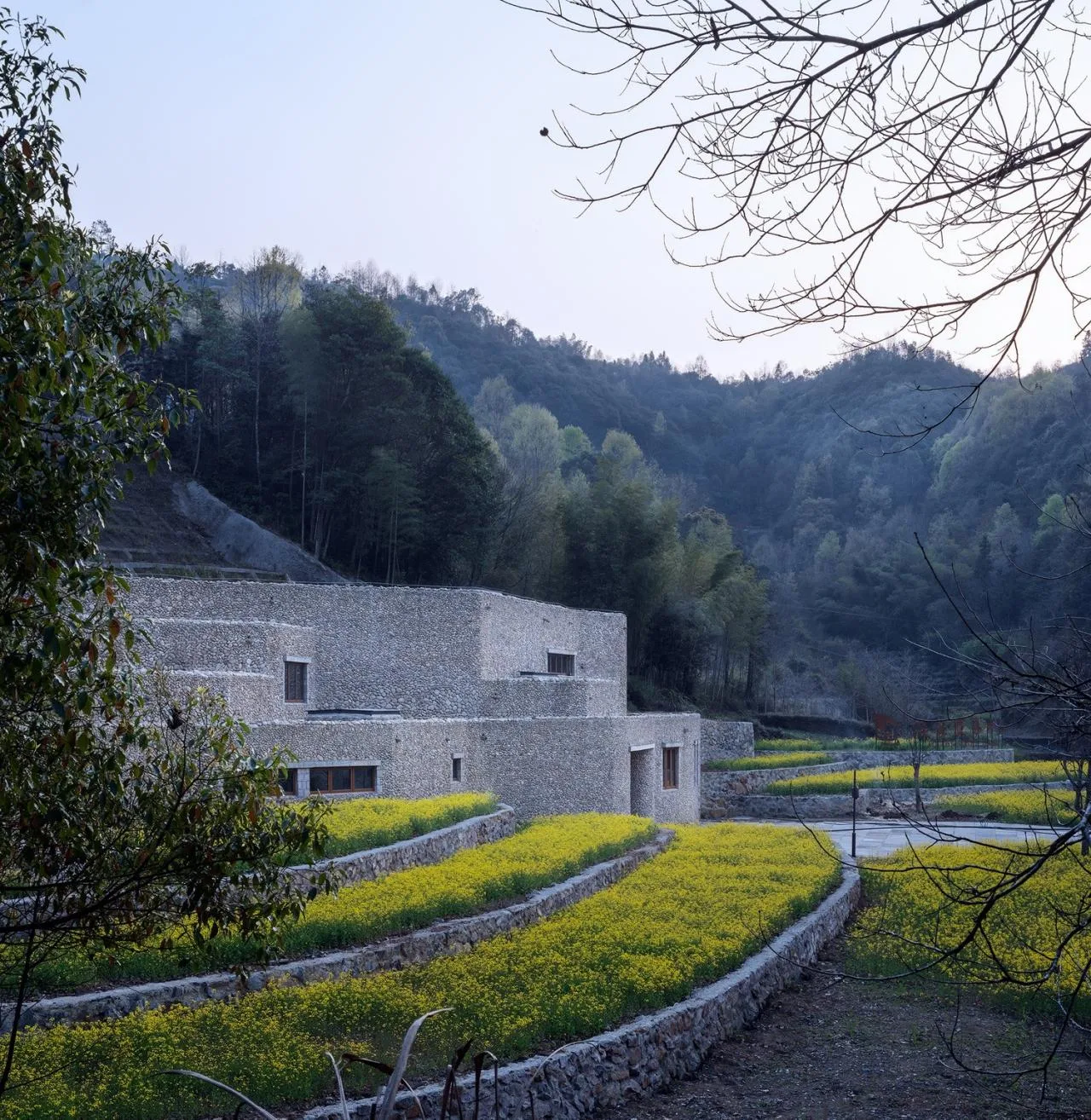
△ Scattered Roofs © Octopus Sees Architecture
The interior space mirrors the exterior form, featuring irregular walls and staggered roofs that create varied, dynamic spaces reminiscent of winding rural paths with changing widths and patterns. Natural light streams through high windows and skylights, casting diverse patterns on walls and floors, enriching the internal atmosphere.
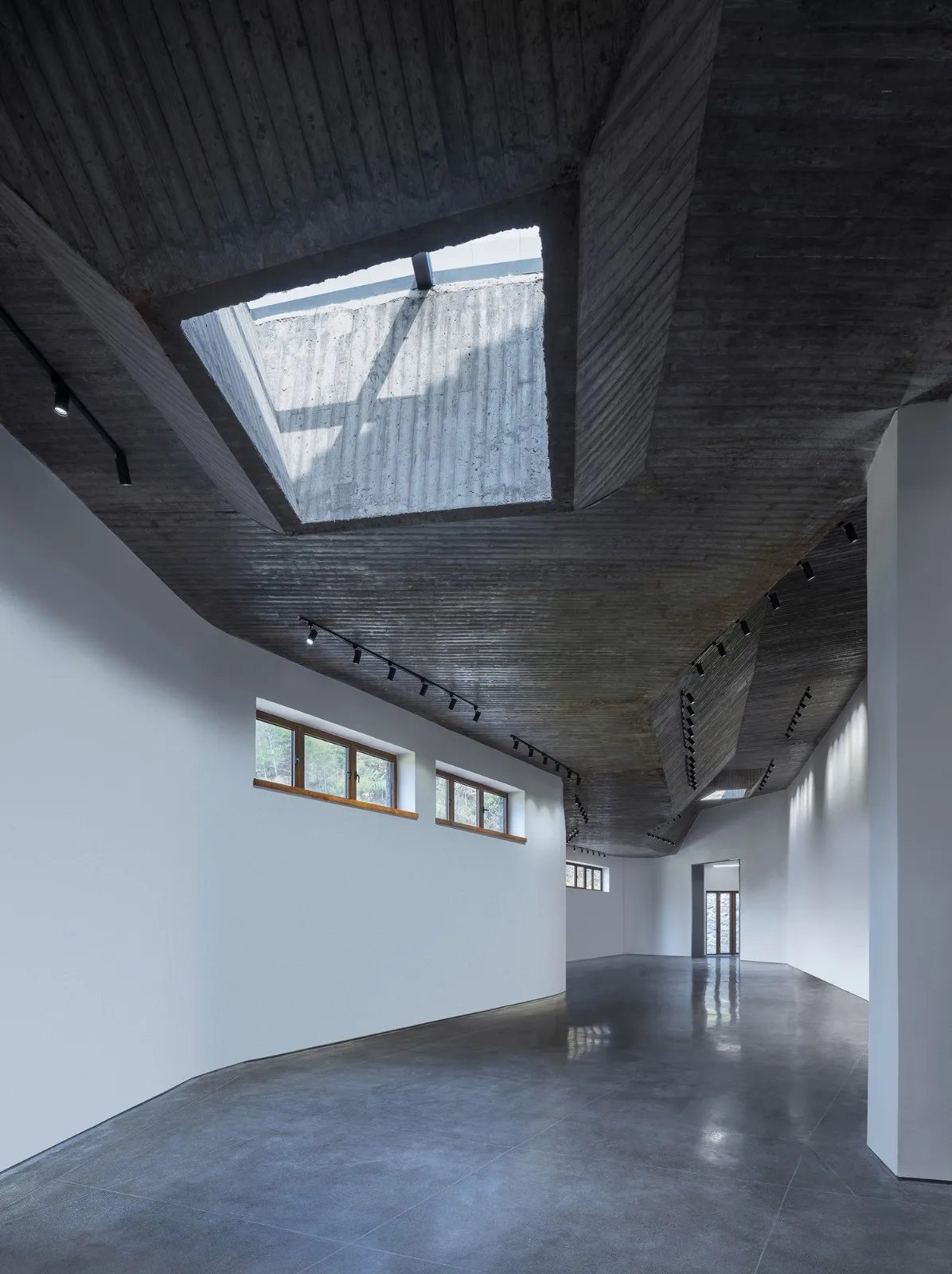
△ First Floor Exhibition Hall © Octopus Sees Architecture
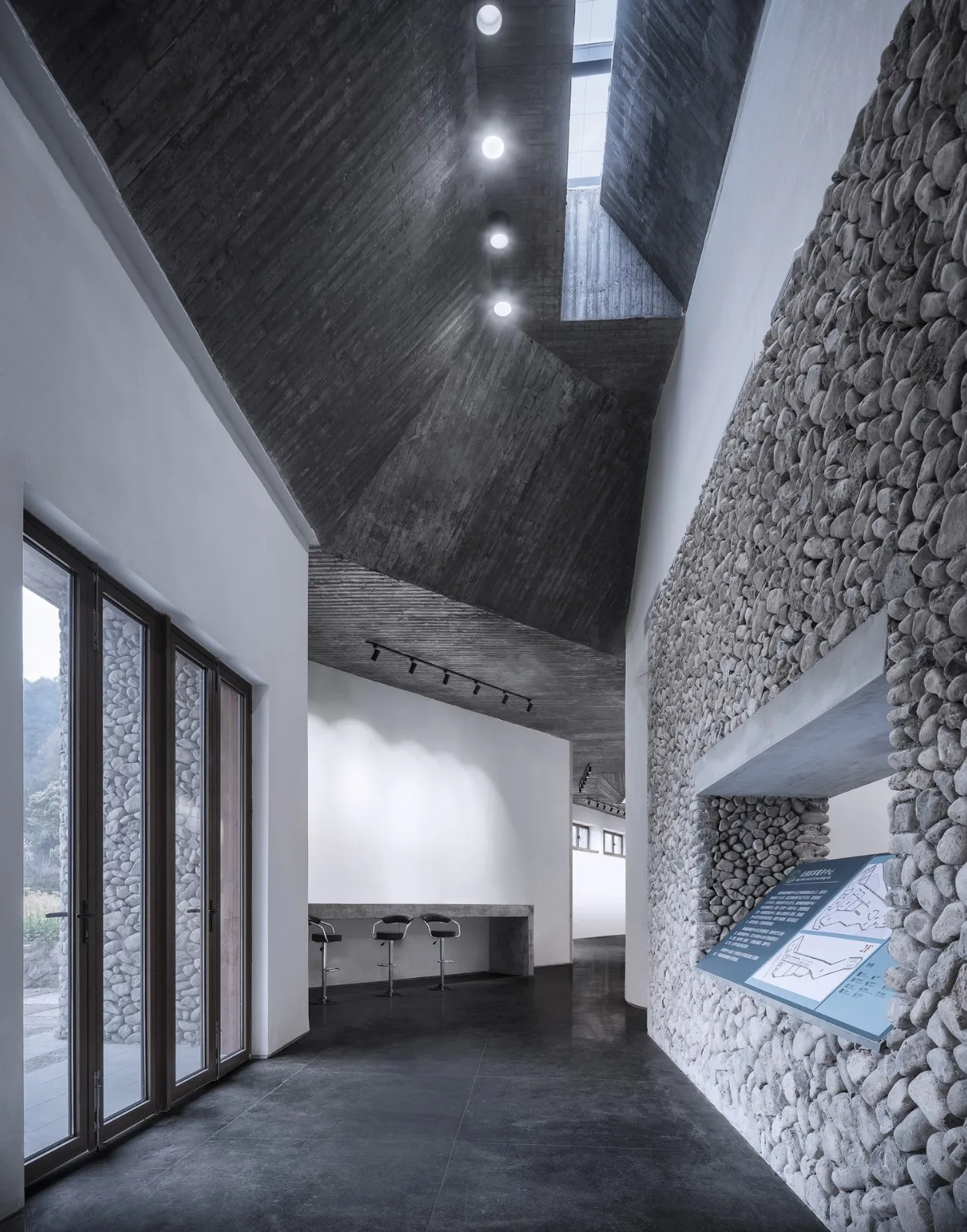
△ Entrance Space © Octopus Sees Architecture
Construction
The construction process emphasizes the use of local materials, leveraging their unique characteristics and the craftsmanship of local artisans. Skilled stonemasons from Sangzhou were engaged to work with natural stones sourced from the area, preserving the authentic and raw appearance of the terraced fields.
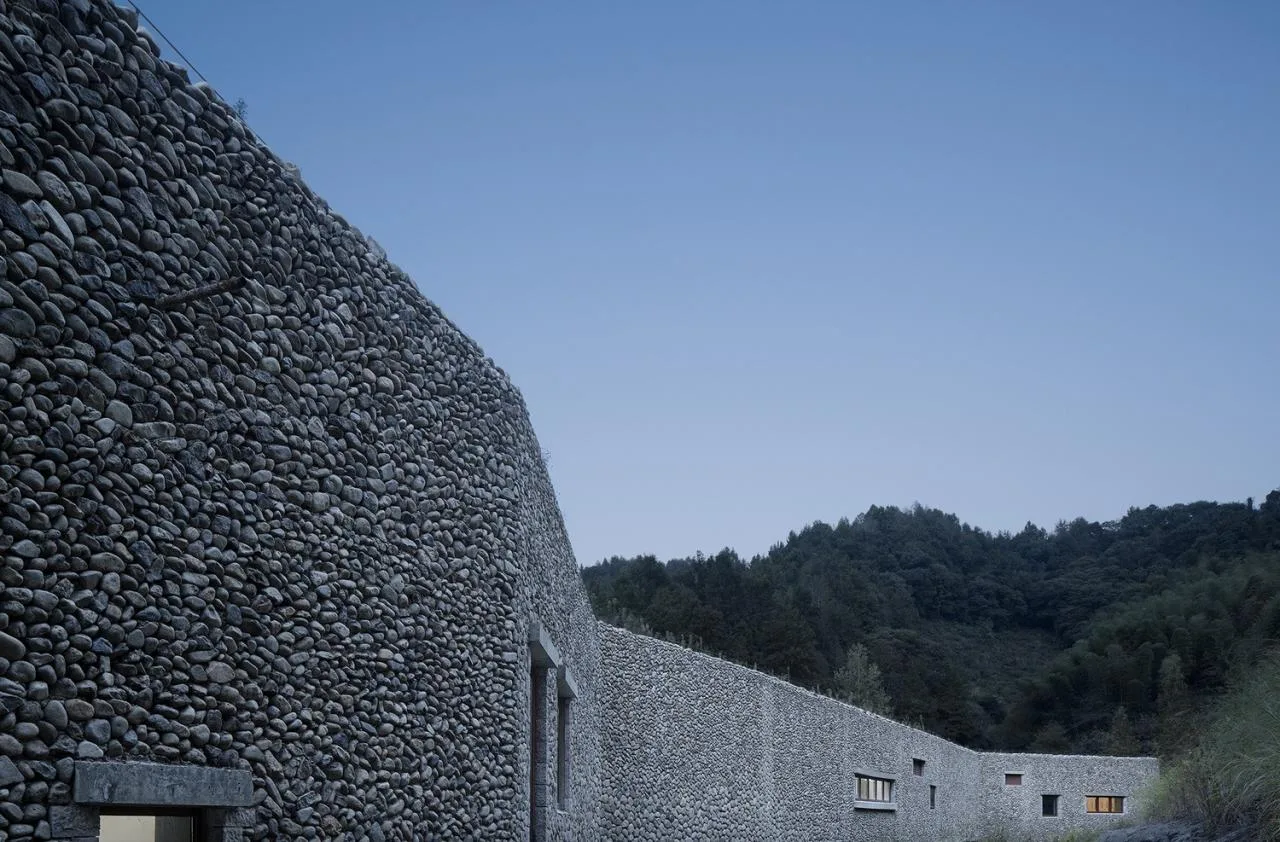
△ Pebble Exterior Wall © Zhao Qiang
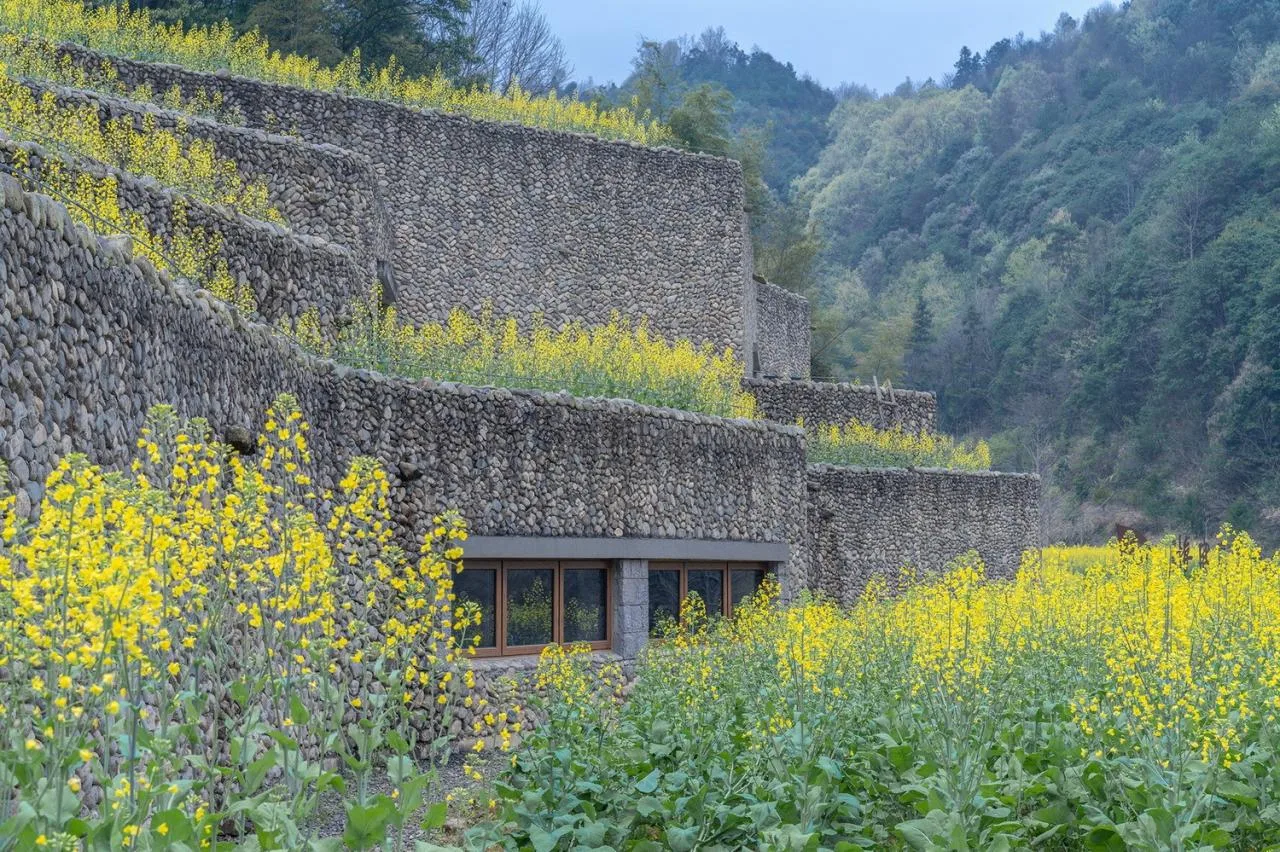
△ Roof Covered with Soil Planting © Ding Junhao
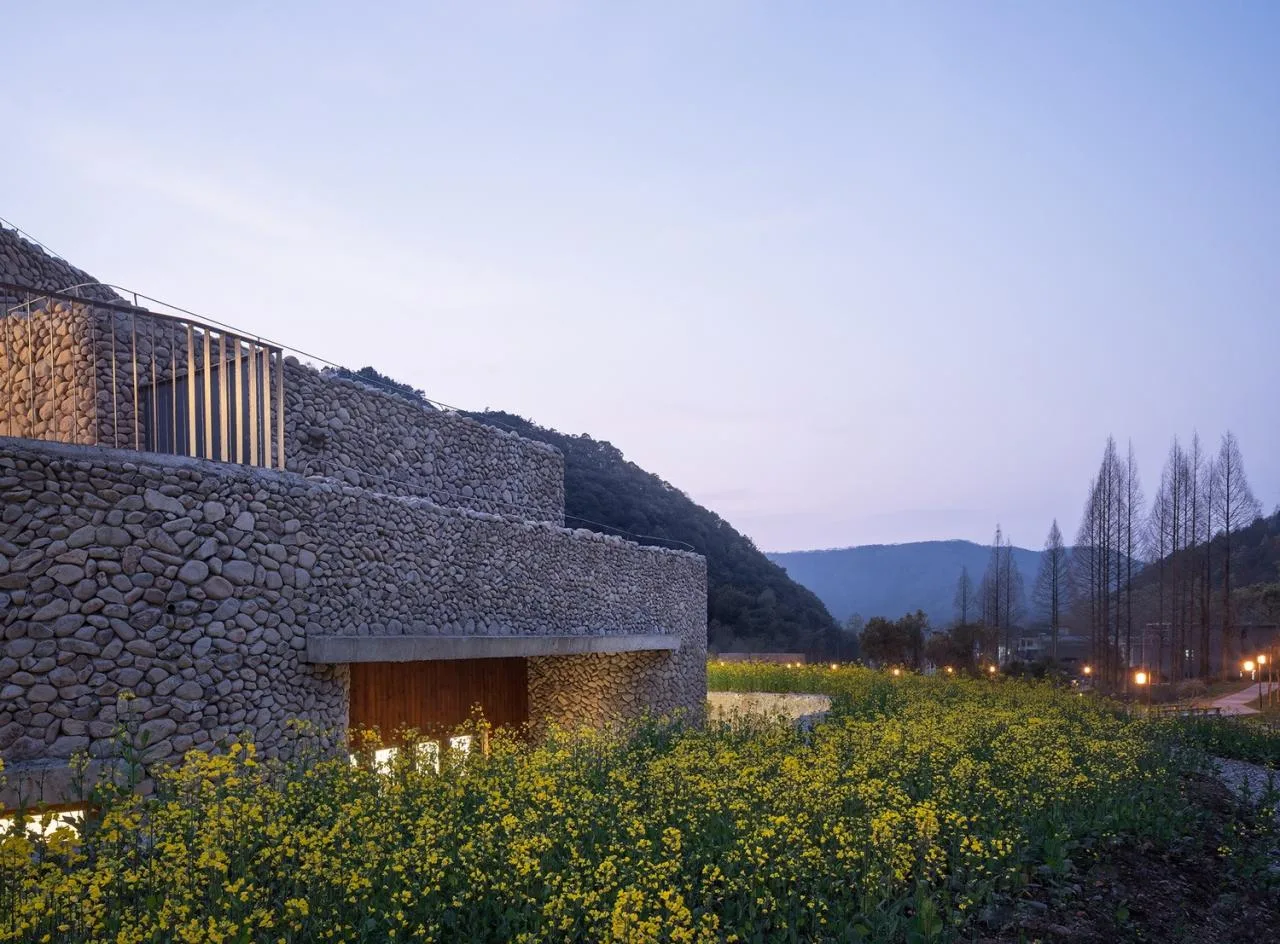
△ Roofs and Terraced Fields © Octopus Sees Architecture
Through simple techniques, the building’s appearance and texture closely resemble the natural terraced fields and hills. Details such as stone window frames and drip edges are carefully crafted in a traditional style.
Inside, materials were chosen to emphasize authenticity: plain concrete ceilings, white textured diatomaceous earth walls, and wooden doors and windows evoke the original rustic charm of rural architecture.
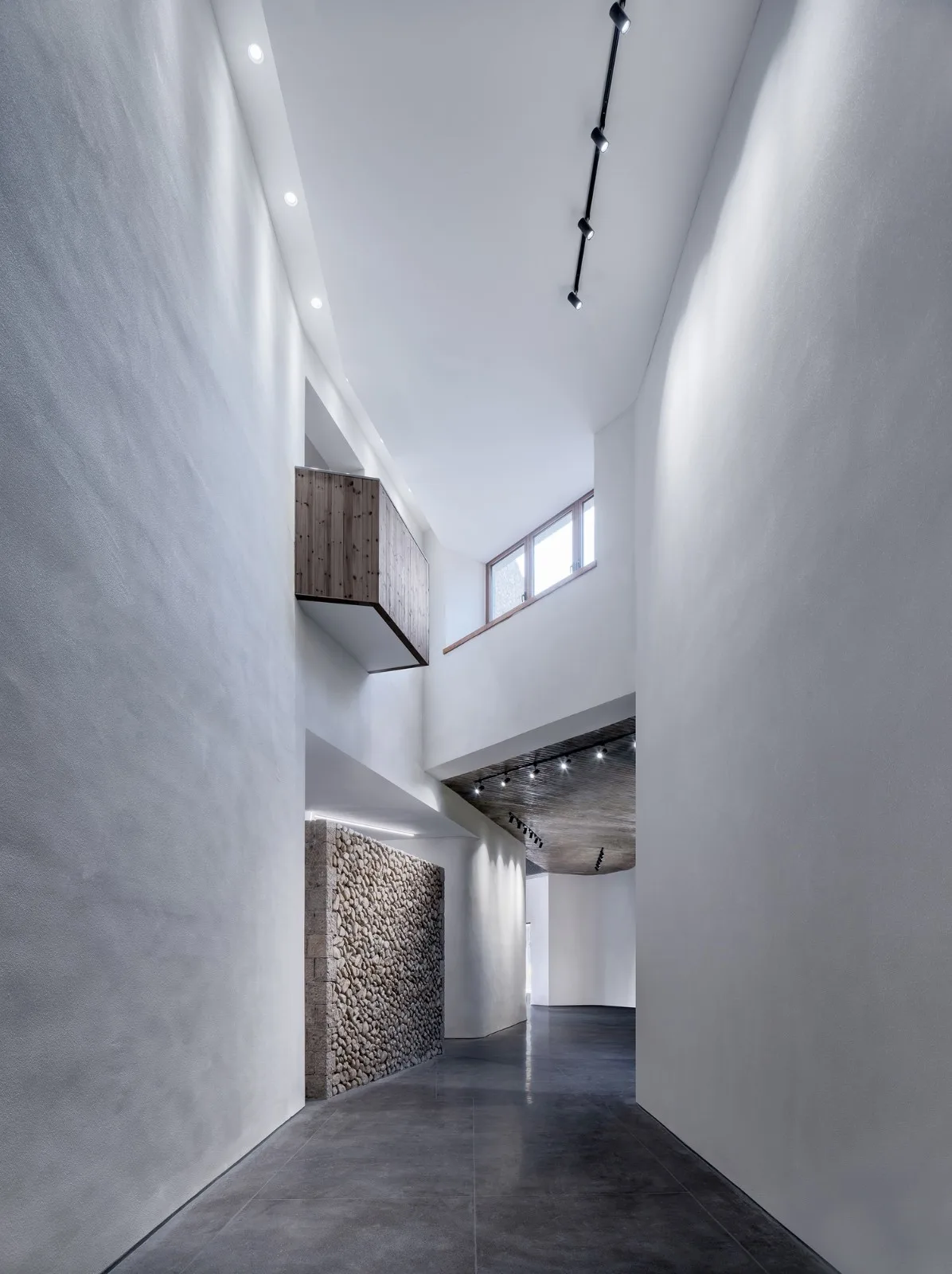
△ Tonggao Exhibition Hall © Octopus Sees Architecture
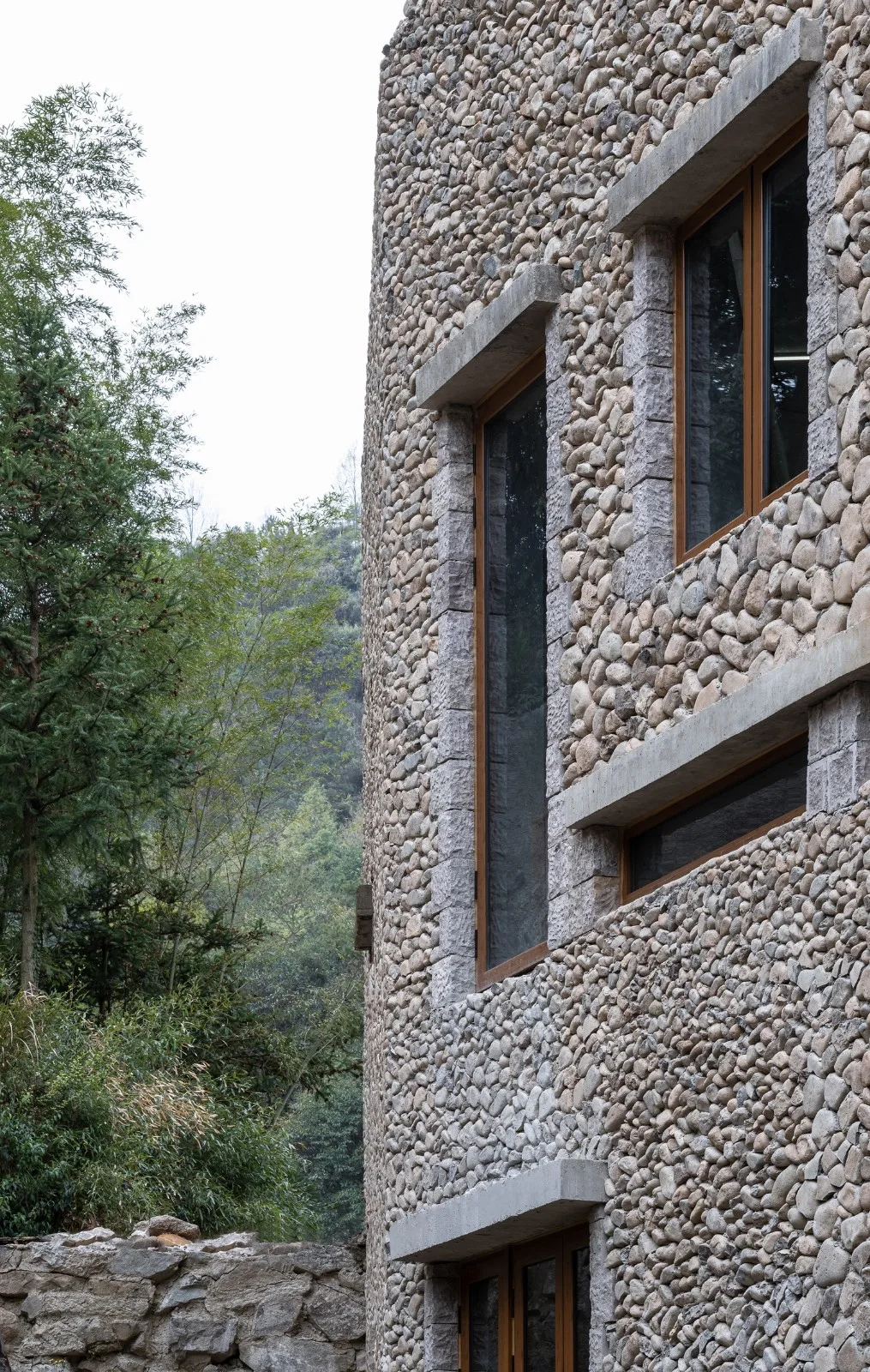
△ Mountain Scenery and Exterior Windows © Octopus Sees Architecture
Local Identity
Nestled in a quiet mountain valley, terraced fields and simple buildings blend naturally with the surrounding mountains and waters, as if they have been part of this landscape for centuries.
The environment here is a complex whole, shaped by various natural and human-made elements. The Cultural and Historical Museum does not just stand as a building; it is a tangible expression of the inherited environmental system—reflecting society, technology, and culture. It represents a deep respect for nature and local traditions.
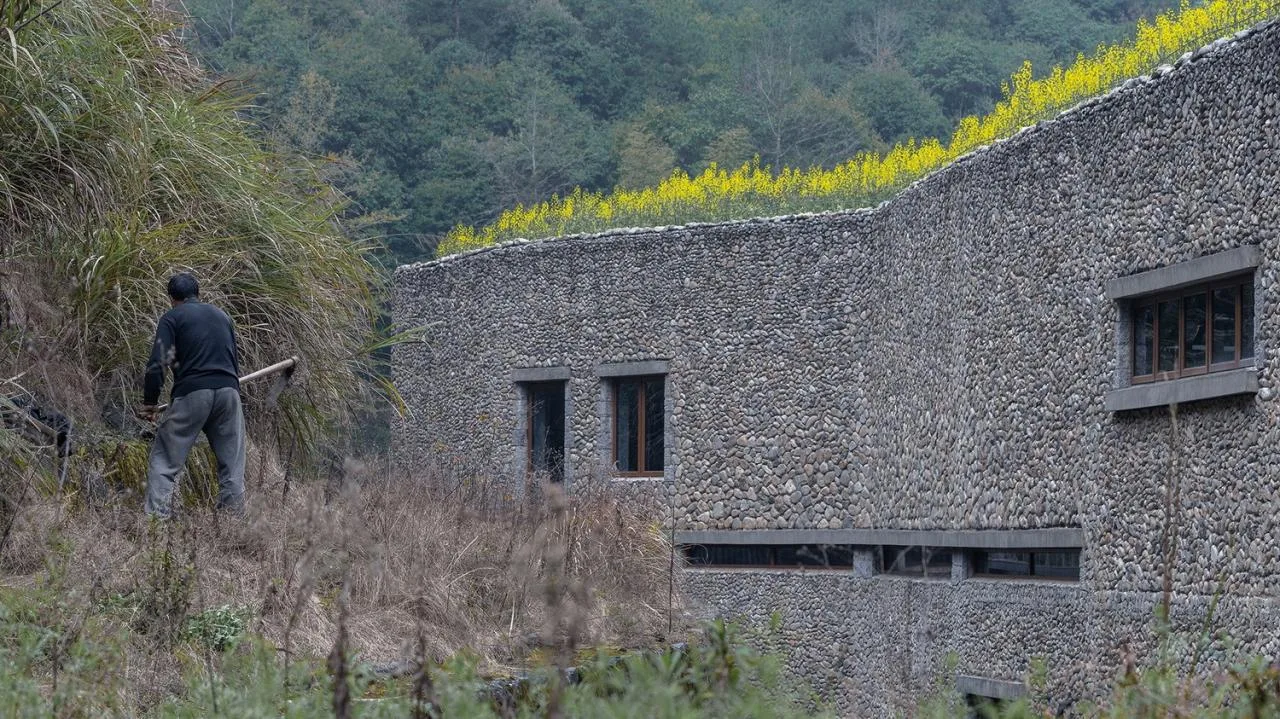
Farmers and Architecture © Ding Junhao
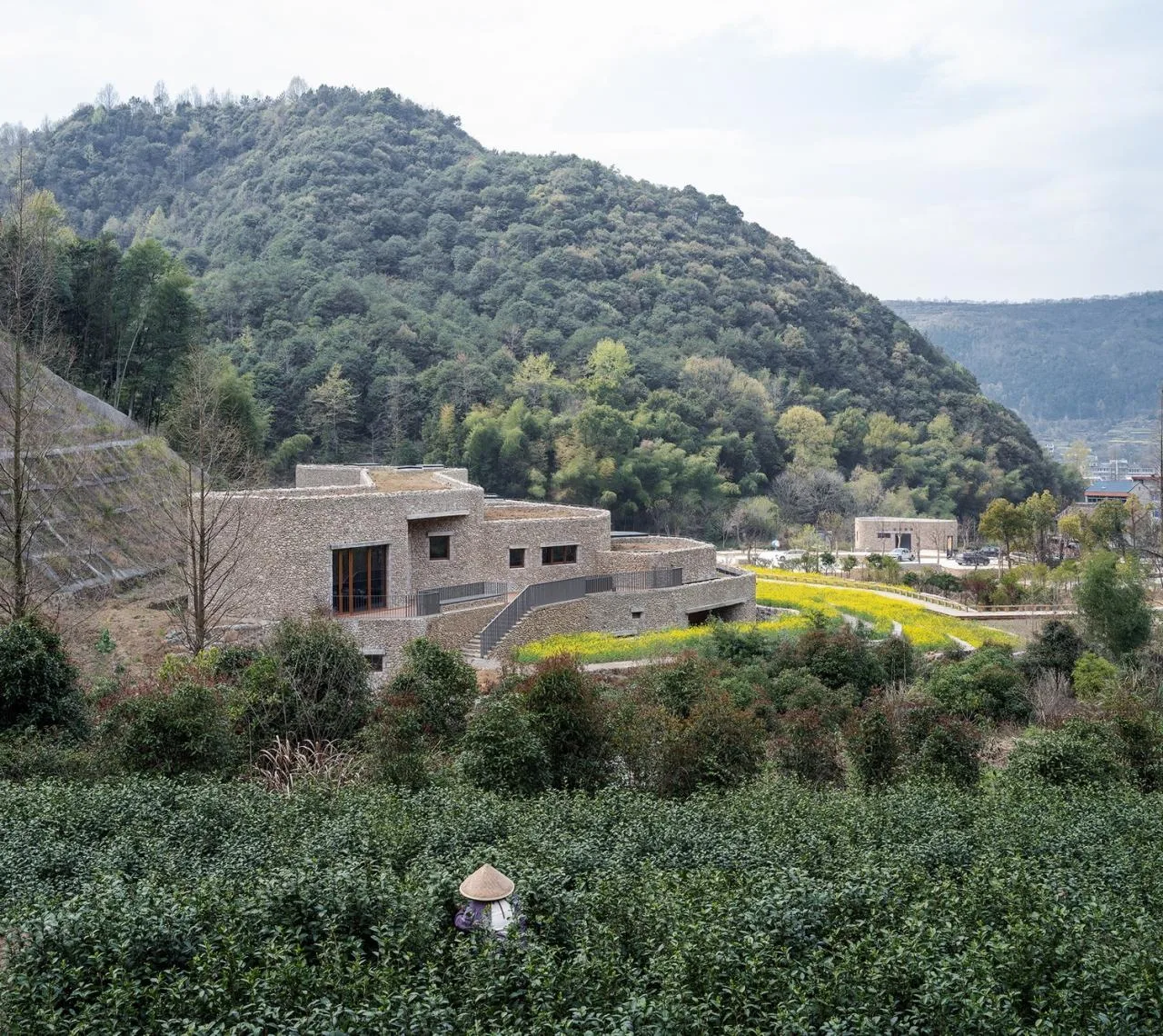
△ Architecture and Rural Women © Octopus Sees Architecture
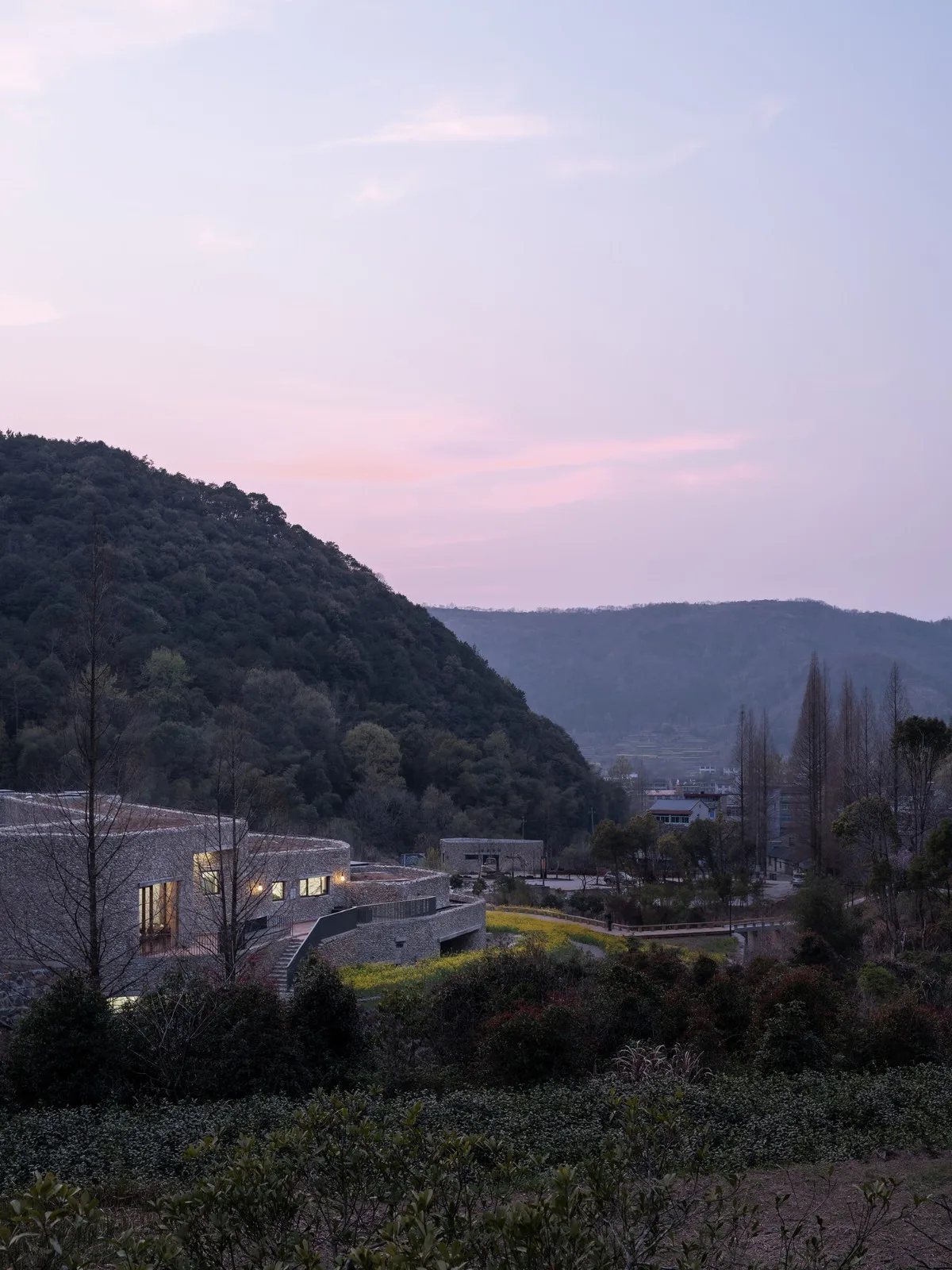
△ Evening Mountain Valley © Octopus Sees Architecture
Conclusion
The modest form, skilled craftsmanship, and well-considered spatial arrangement of the museum respond thoughtfully to the rhythm of the surrounding landscape. Elements like the original terraced fields, streams, small bridges, and winding paths are echoed in the building’s staggered layout along the terrain. At times, small bridges span creeks; elsewhere, buildings nestle against the mountains. They appear timeless and familiar, yet reveal a fresh and unique character upon closer look.
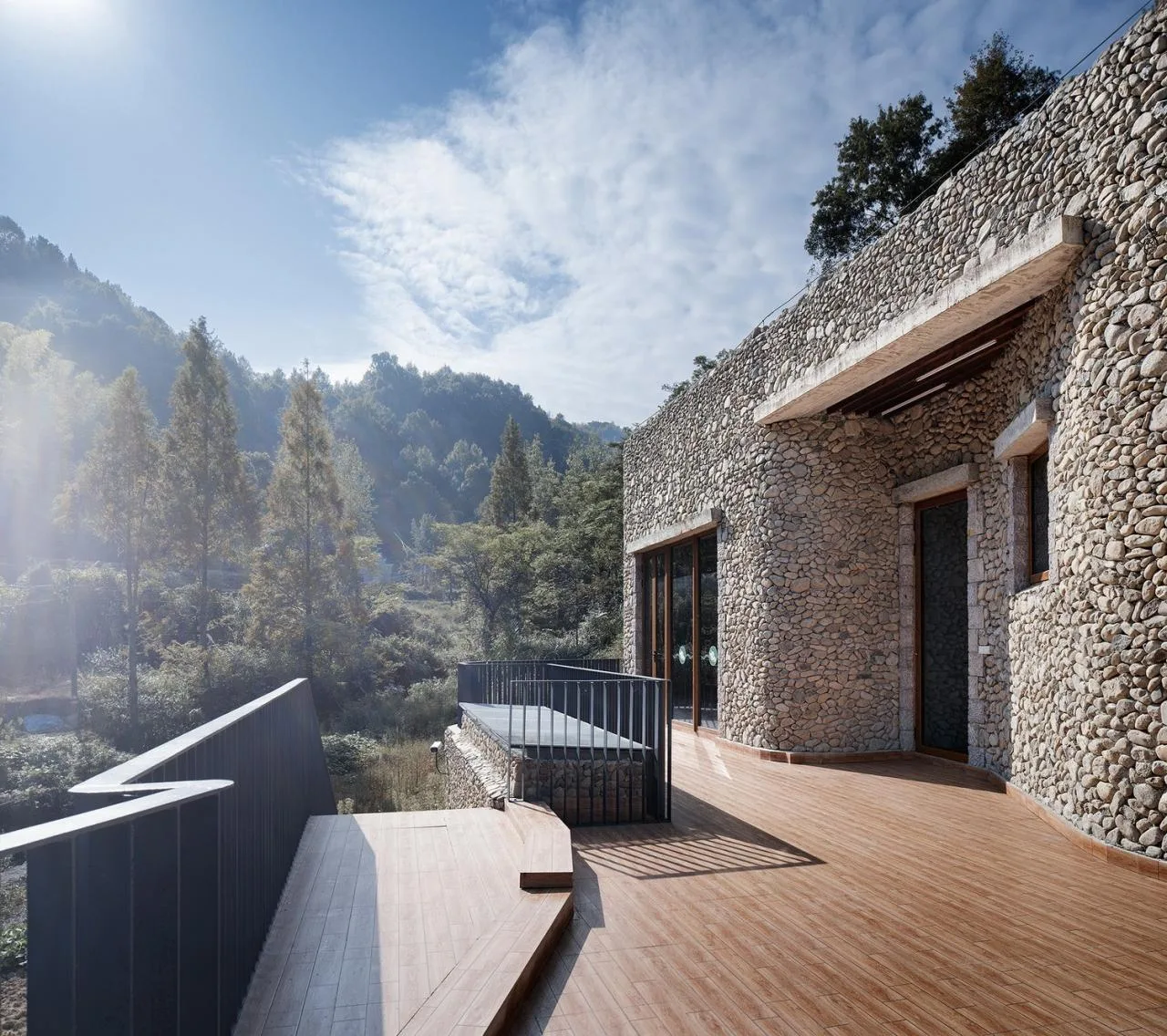
△ Viewing Terrace © Zhao Qiang
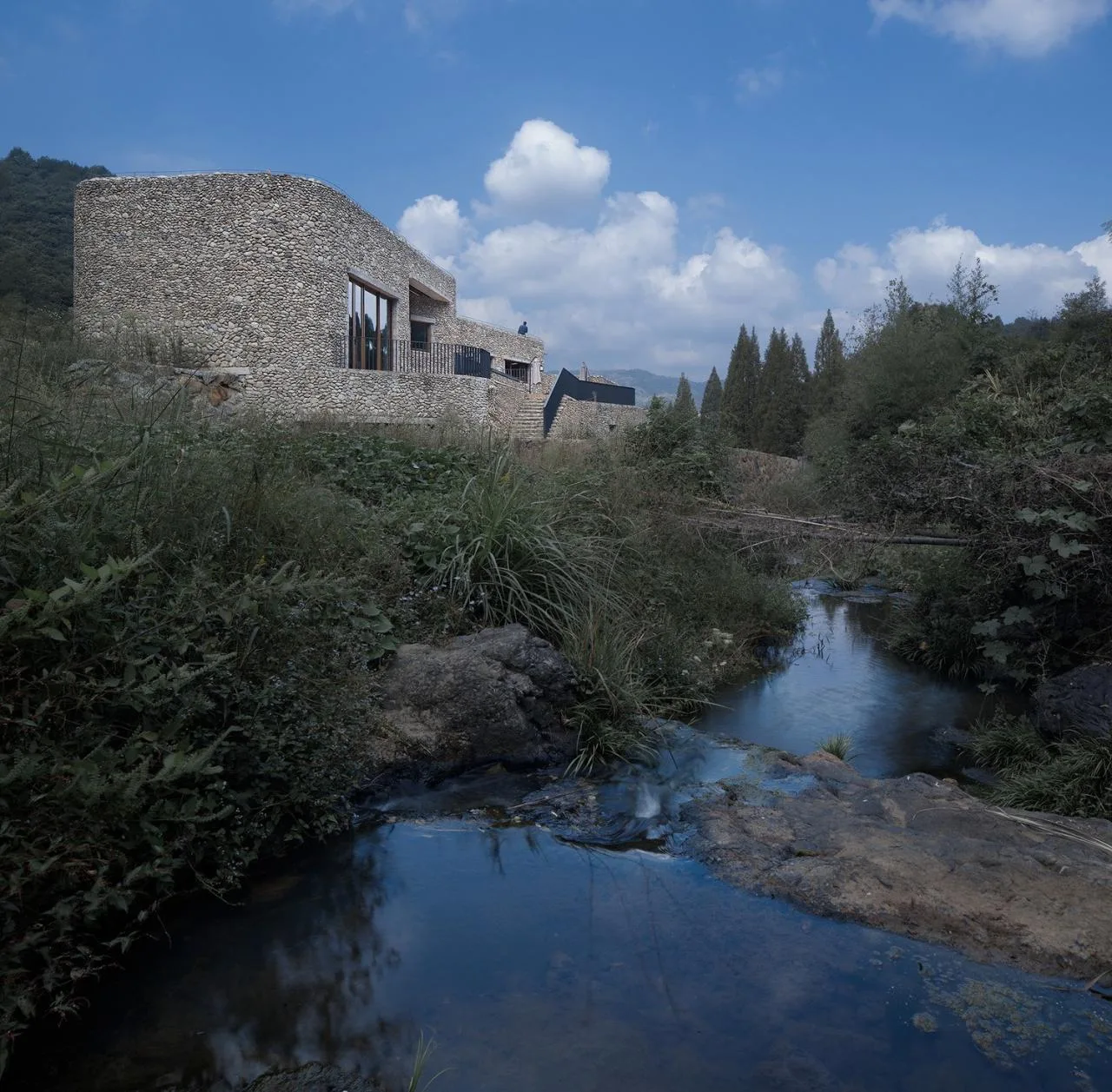
△ Architecture and Creek © Zhao Qiang
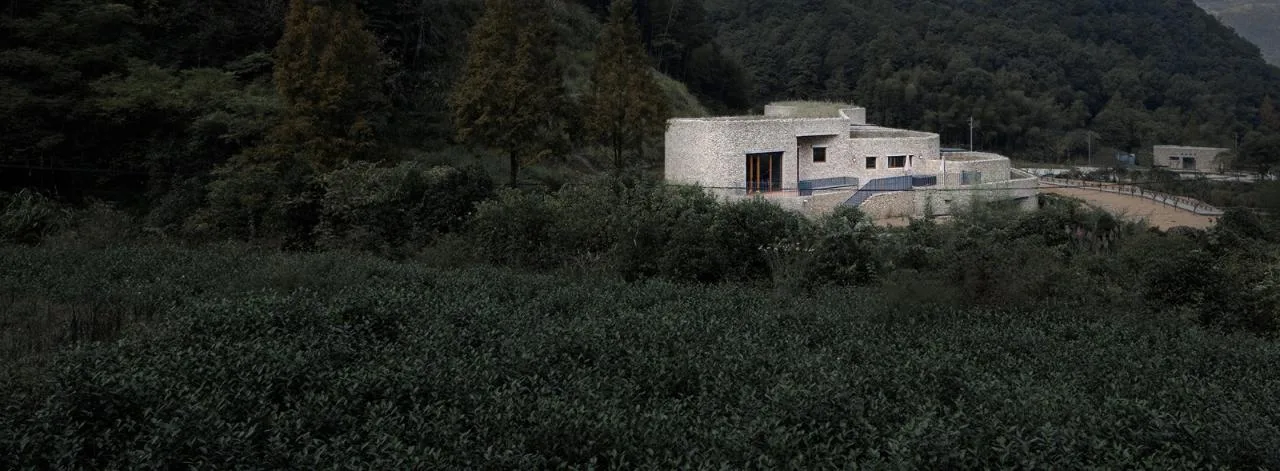
△ Architecture and Forests © Zhao Qiang
This design aims to create a modest cultural building that reflects local character and identity through subtle integration of design techniques and the selection of regionally appropriate architectural forms.
Gazing at mountains or water, the building invites visitors to connect deeply with its environment.
Project Drawings
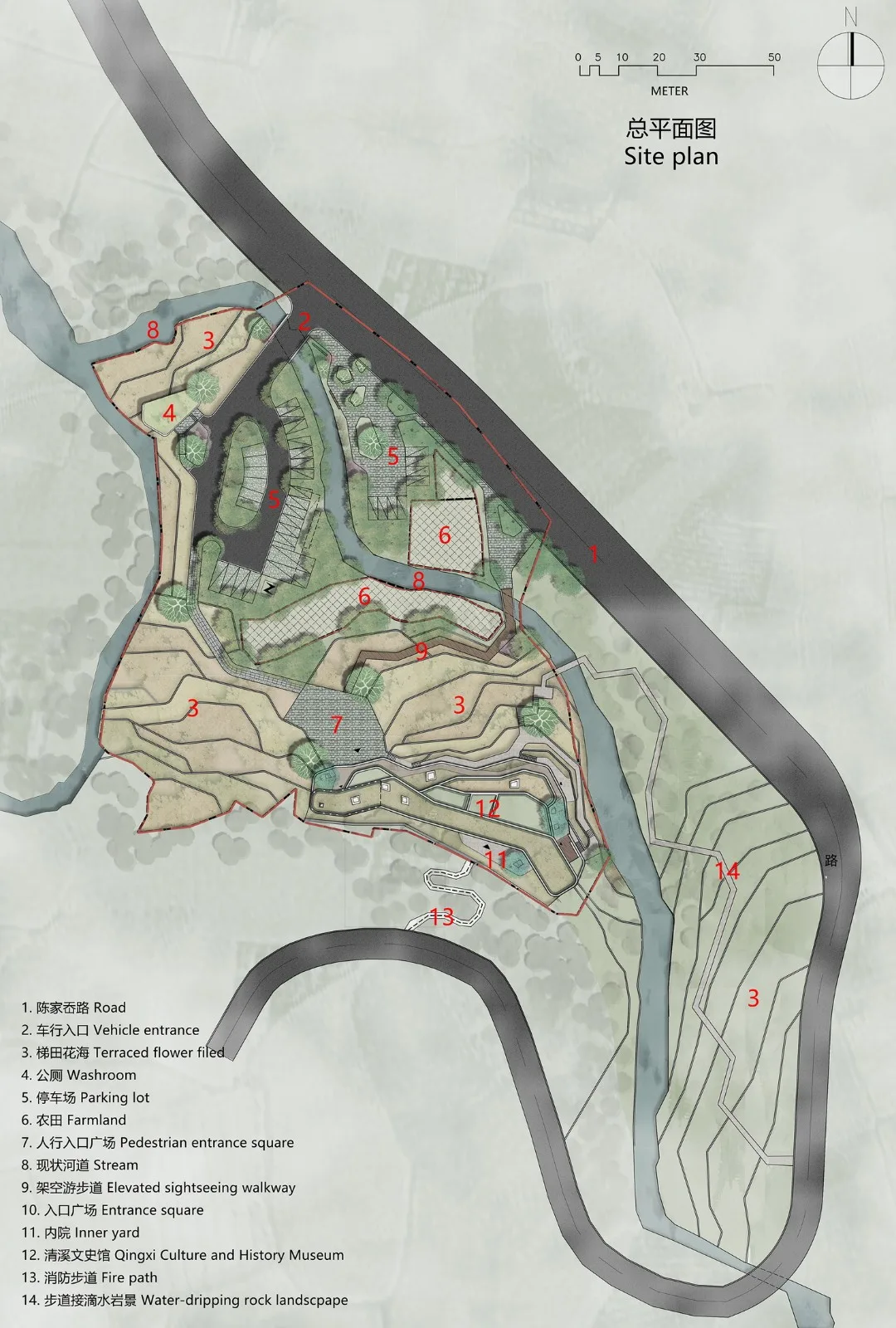
△ General Layout Plan © UAD
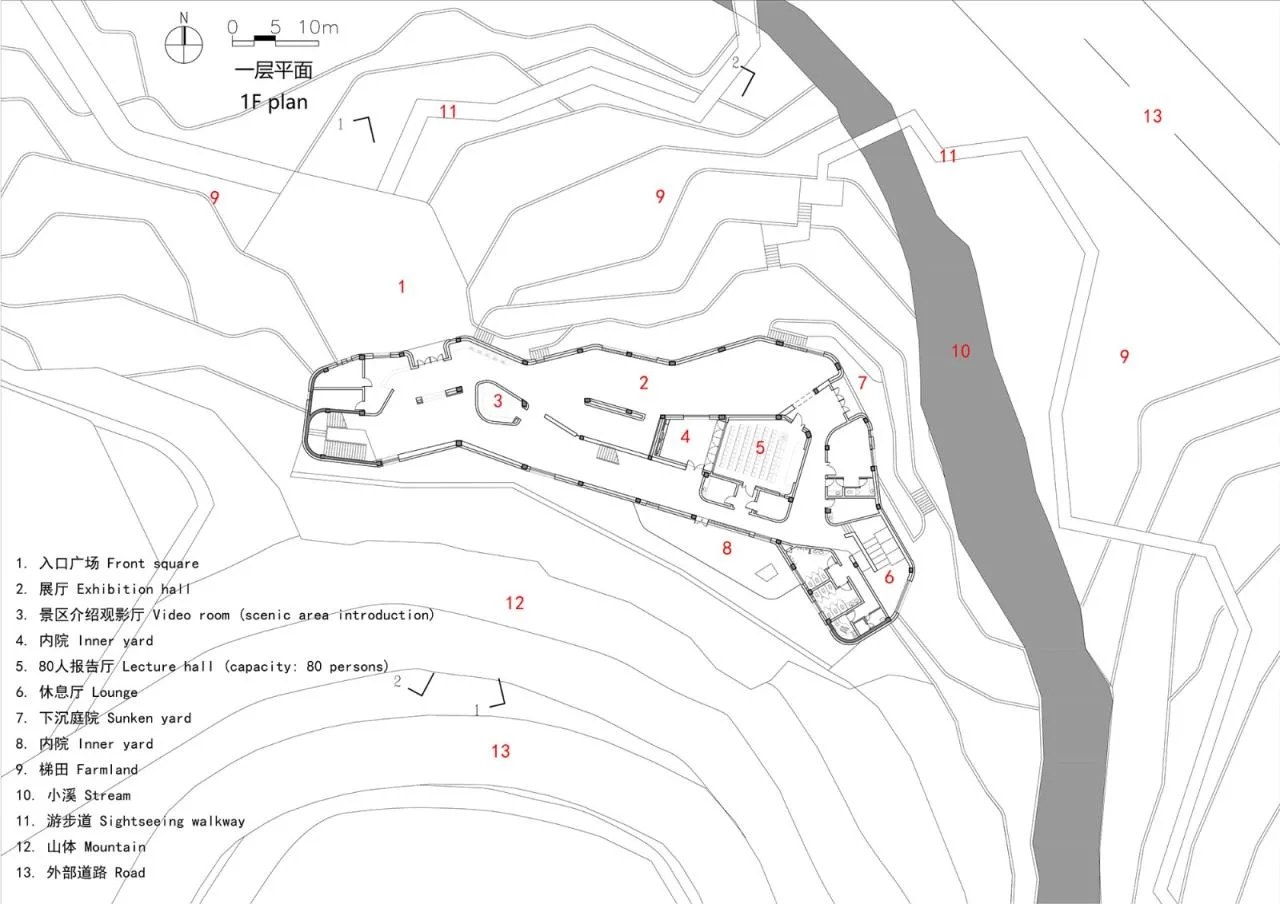
△ First Floor Plan © UAD
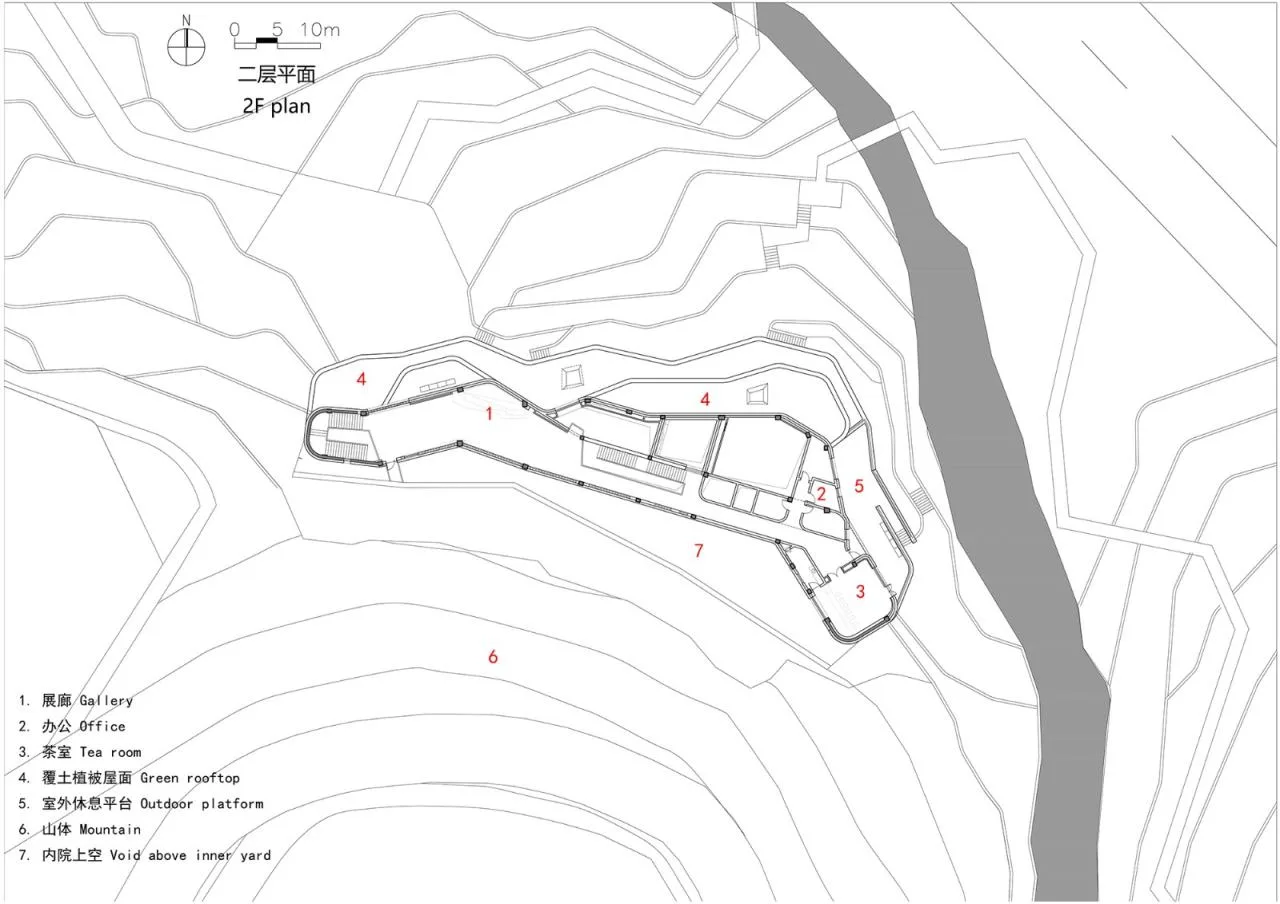
△ Second Floor Plan © UAD
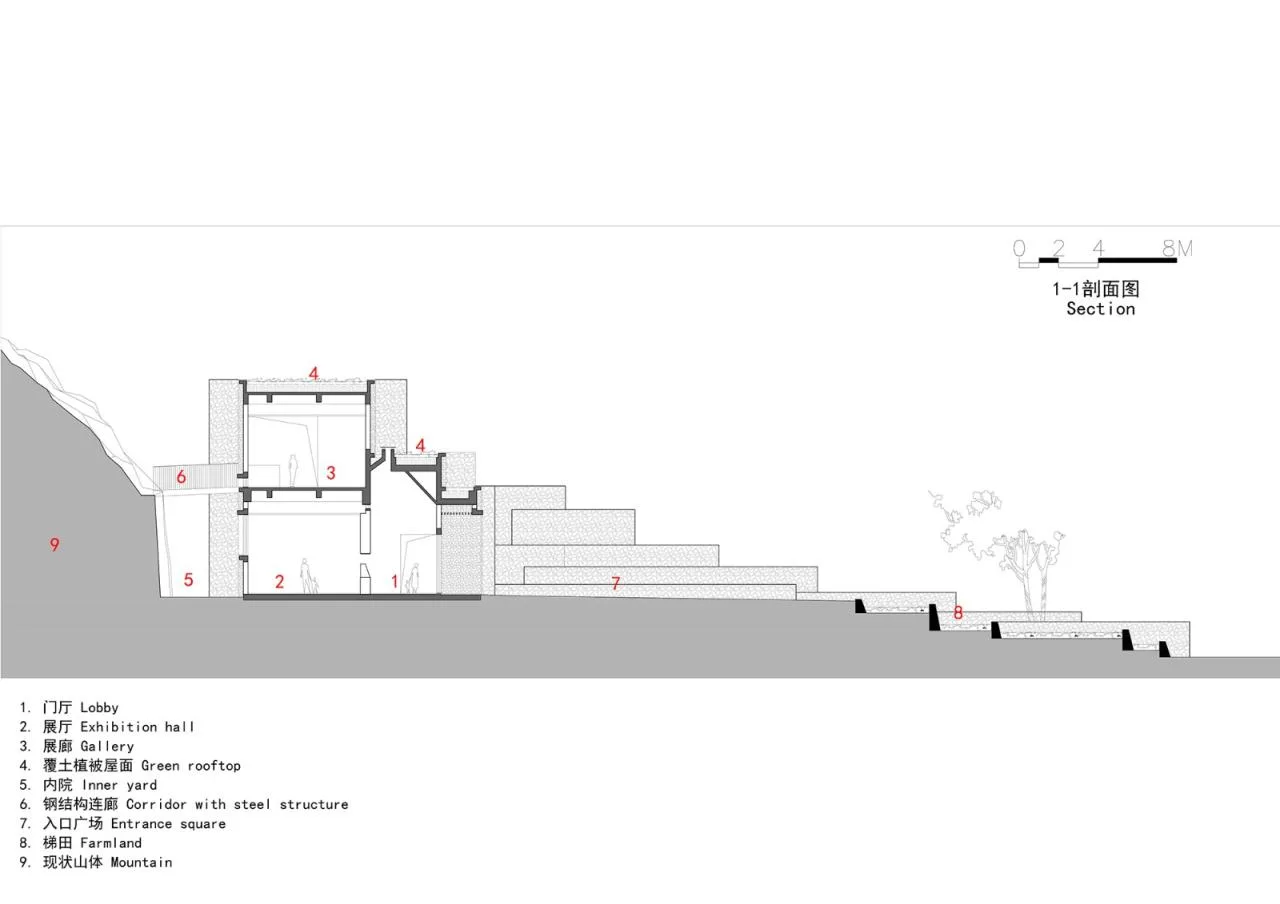
△ Section 1-1 © UAD
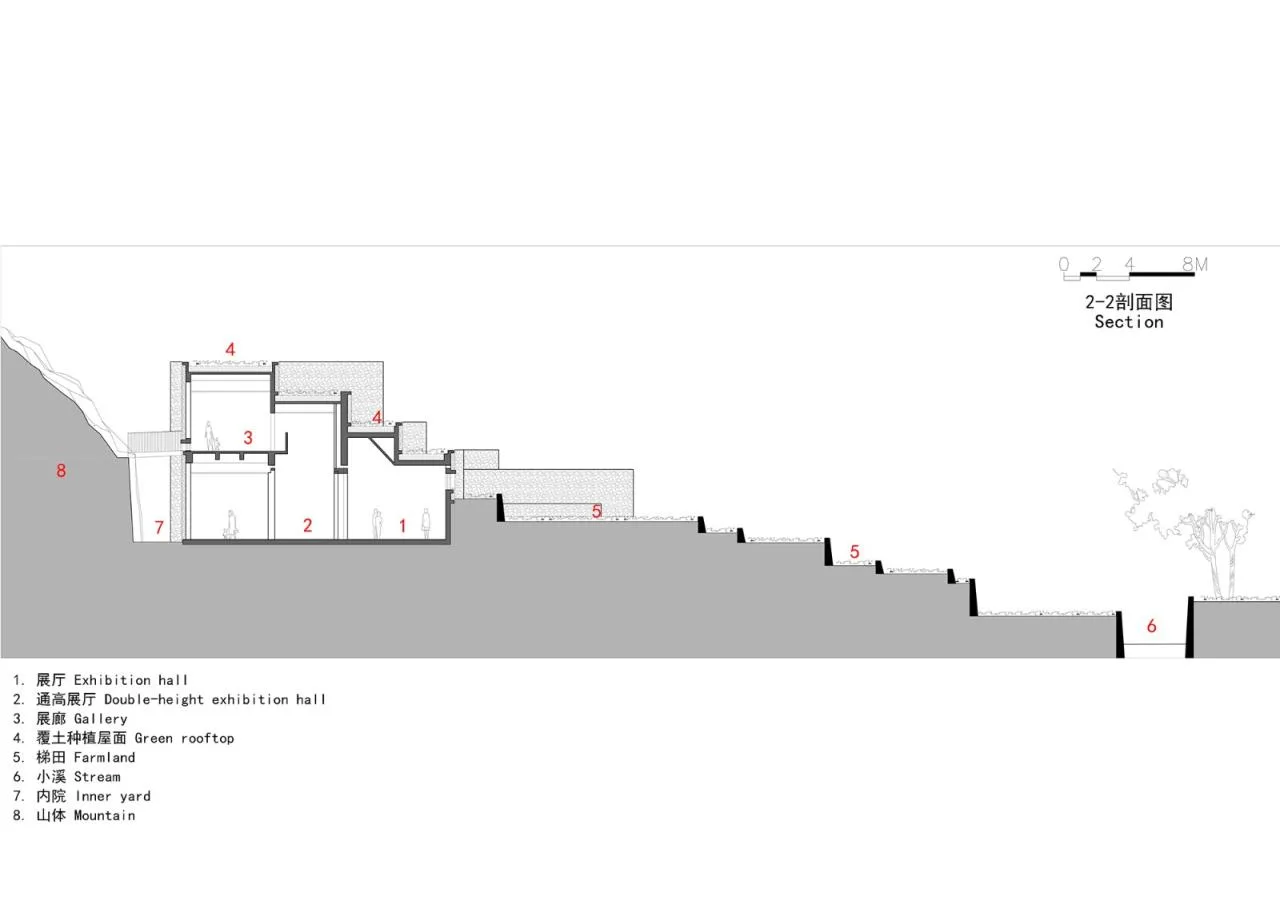
△ Section 2-2 © UAD
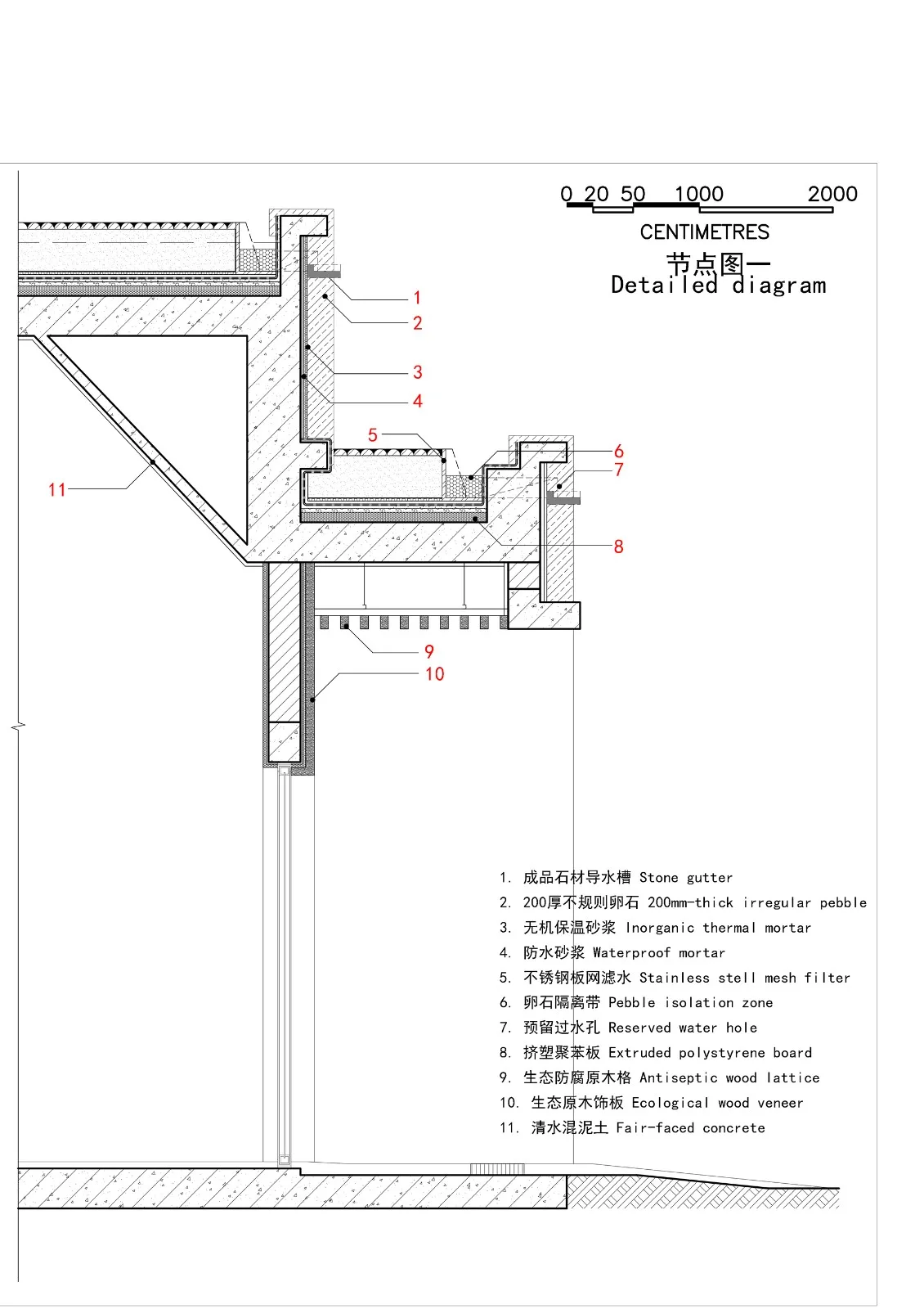
△ Node Diagram 1 © UAD
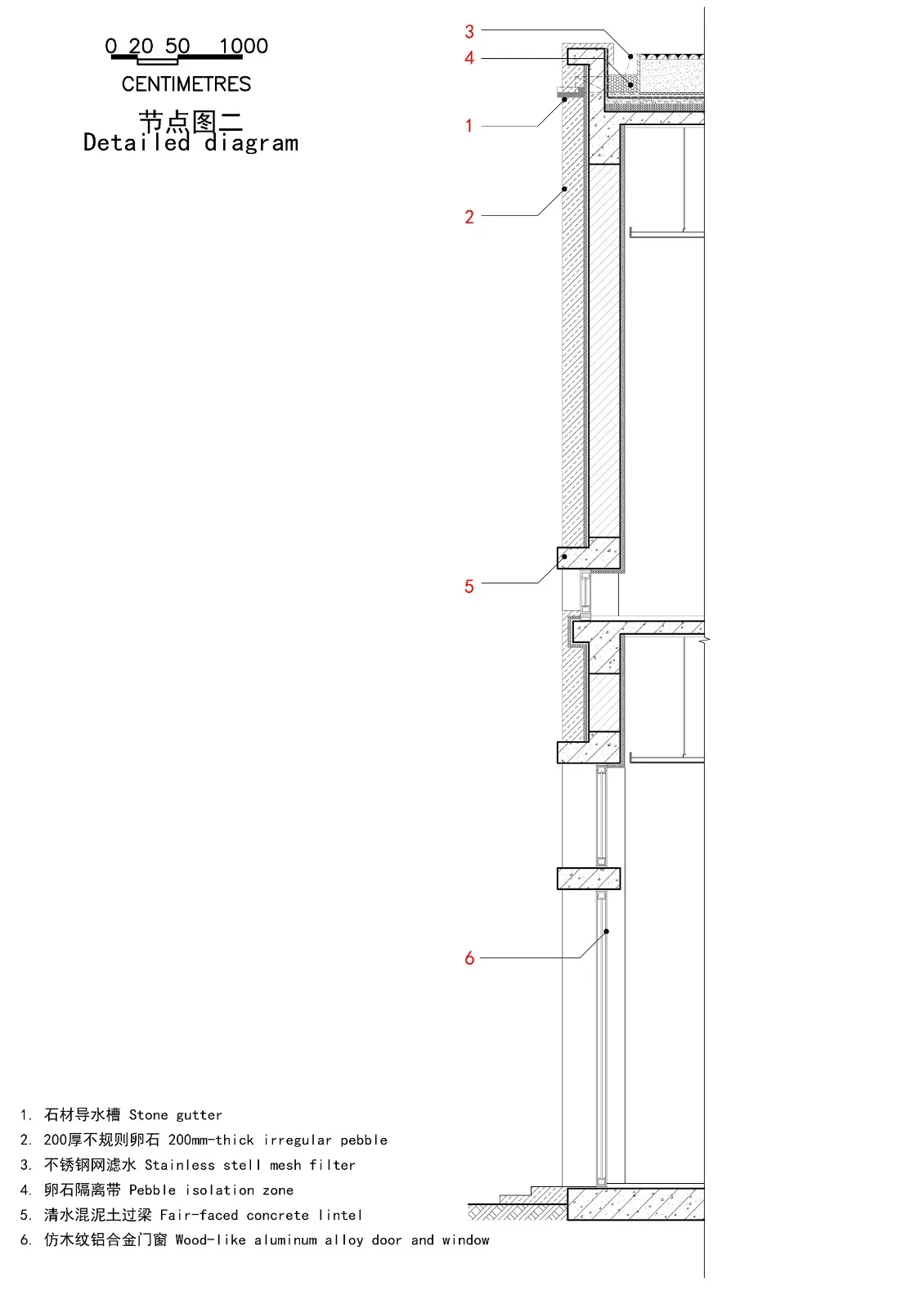
△ Node Diagram 2 © UAD
Project Information
Project Name: Sangzhou Qingxi Cultural and Historical Museum
Project Owner: Ninghai County Cultural Tourism Group Co., Ltd
Project Address: 422 Township Road, Sangzhou Town, Ninghai County, Ningbo City, Zhejiang Province
Project Area: 1,691 square meters
Design Unit: Zhejiang University Architectural Design and Research Institute
Architectural Design: Wu Zhenling, Zhang Jiachen, Li Ning, Wang Yingni, Chen Yu
Structural Design: Jin Xingxin, Shen Jin, Ni Wenhao
Water Supply and Drainage Design: Chen Ji, Chen Fei
Electrical Design: Zheng Guoxing, Ding Li
HVAC Design: Guo Yinan, Ren Xiaodong
Intelligent Design: Jiangbing
Interior Design: Li Jingyuan, Fang Yu
Landscape Design: Wu Weiling, Xu Conghua, Zhu Jing
Construction Economy: Chu Qianbo
Architectural Photography: Octopus Jian Zhu, Zhao Qiang, Ding Junhao
Awards: First Prize for Excellent Survey and Design by the Ministry of Education, Gold Award at WAN Awards















Must log in before commenting!
Sign Up