
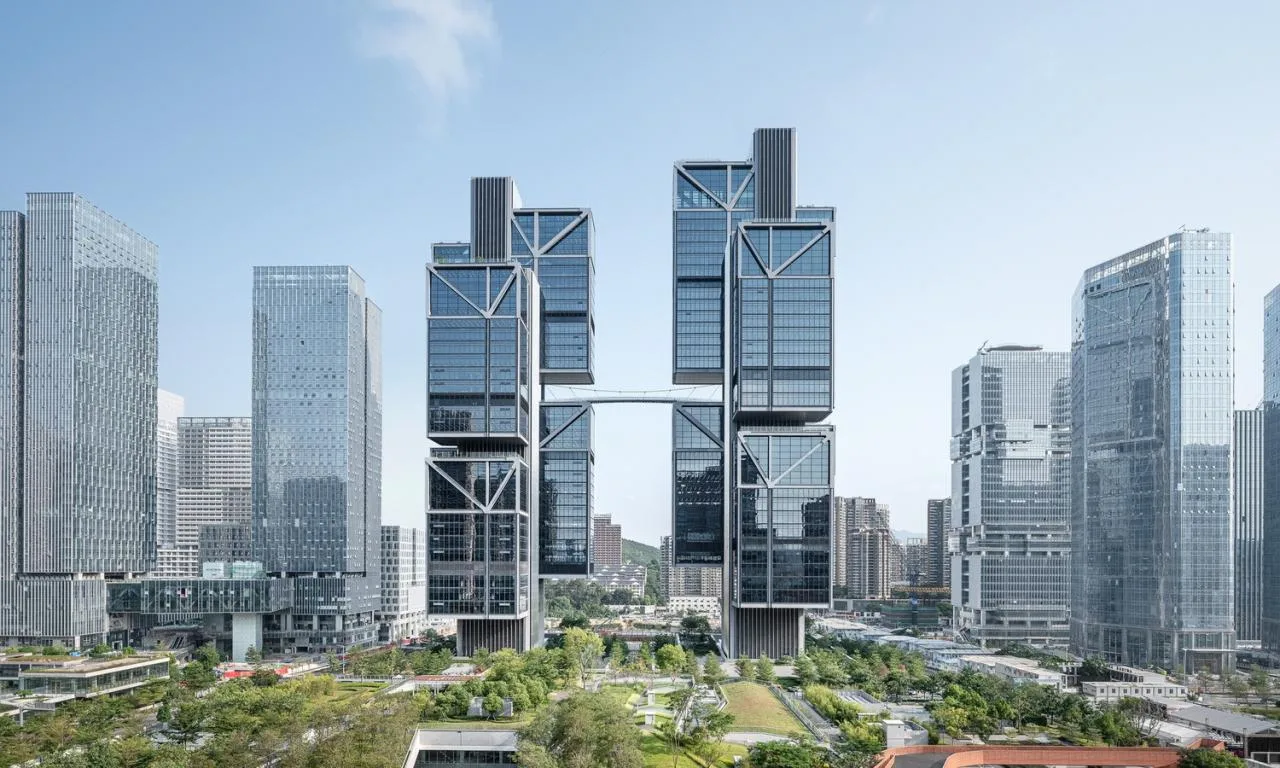
The DJI Headquarters, a global leader in innovative imaging technology, was designed collaboratively by Foster+Partners and DJI, and is known as DJI Sky City. Located in Liuxian Cave, Nanshan District, Shenzhen, this landmark project took six years to complete and officially opened in September 2022, adding a prominent new feature to Shenzhen’s skyline—a city recognized as a hub of innovation in China.
Drone technology represents the forefront of innovation, transforming how we engage with the world. I have always admired DJI’s products and am thrilled to have collaborated with them to create their new Shenzhen headquarters. I am confident that this space will inspire even greater creativity in the future. — Lord Norman Foster, Founder and Executive Chairman of Foster+Partners
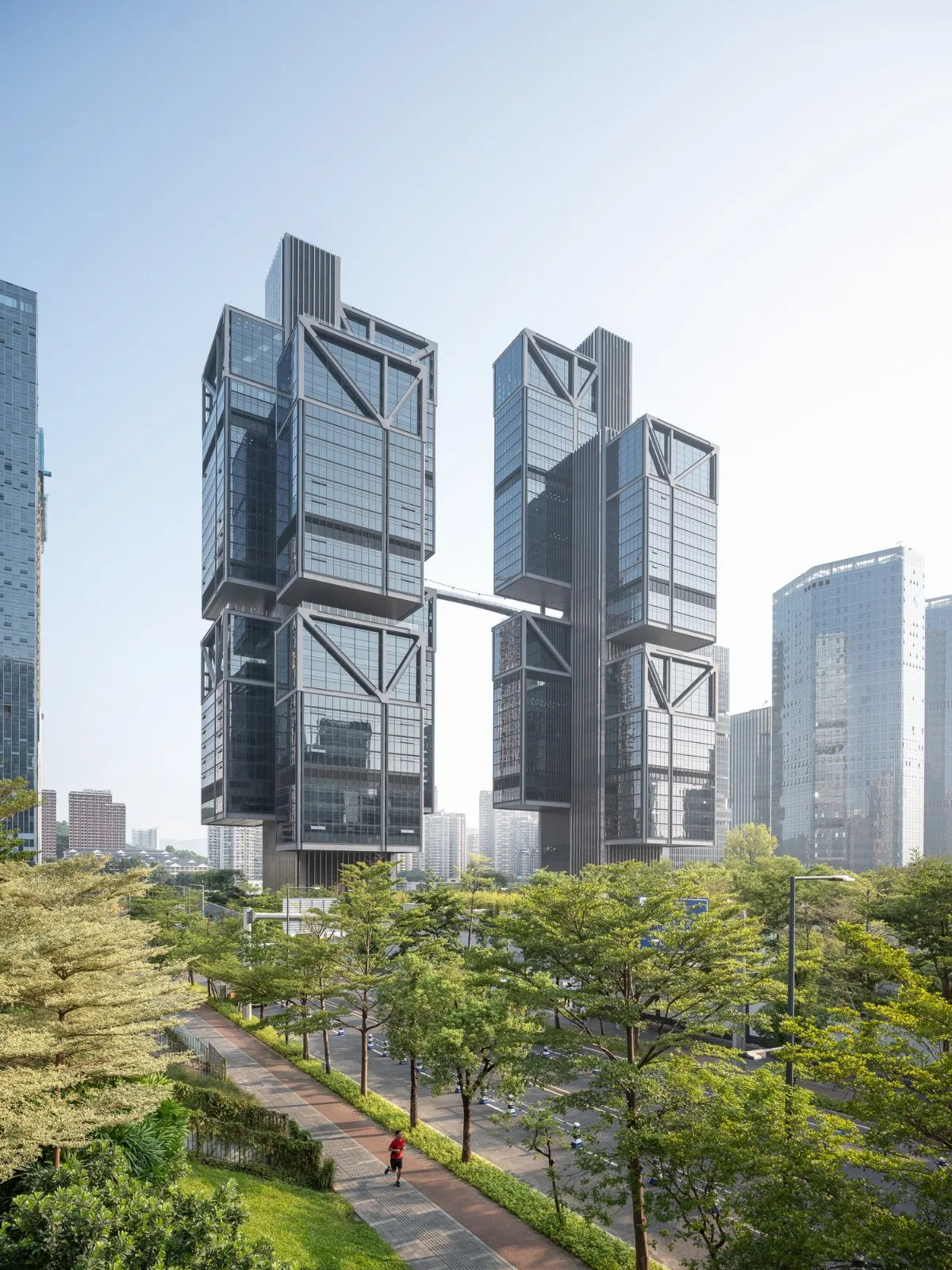
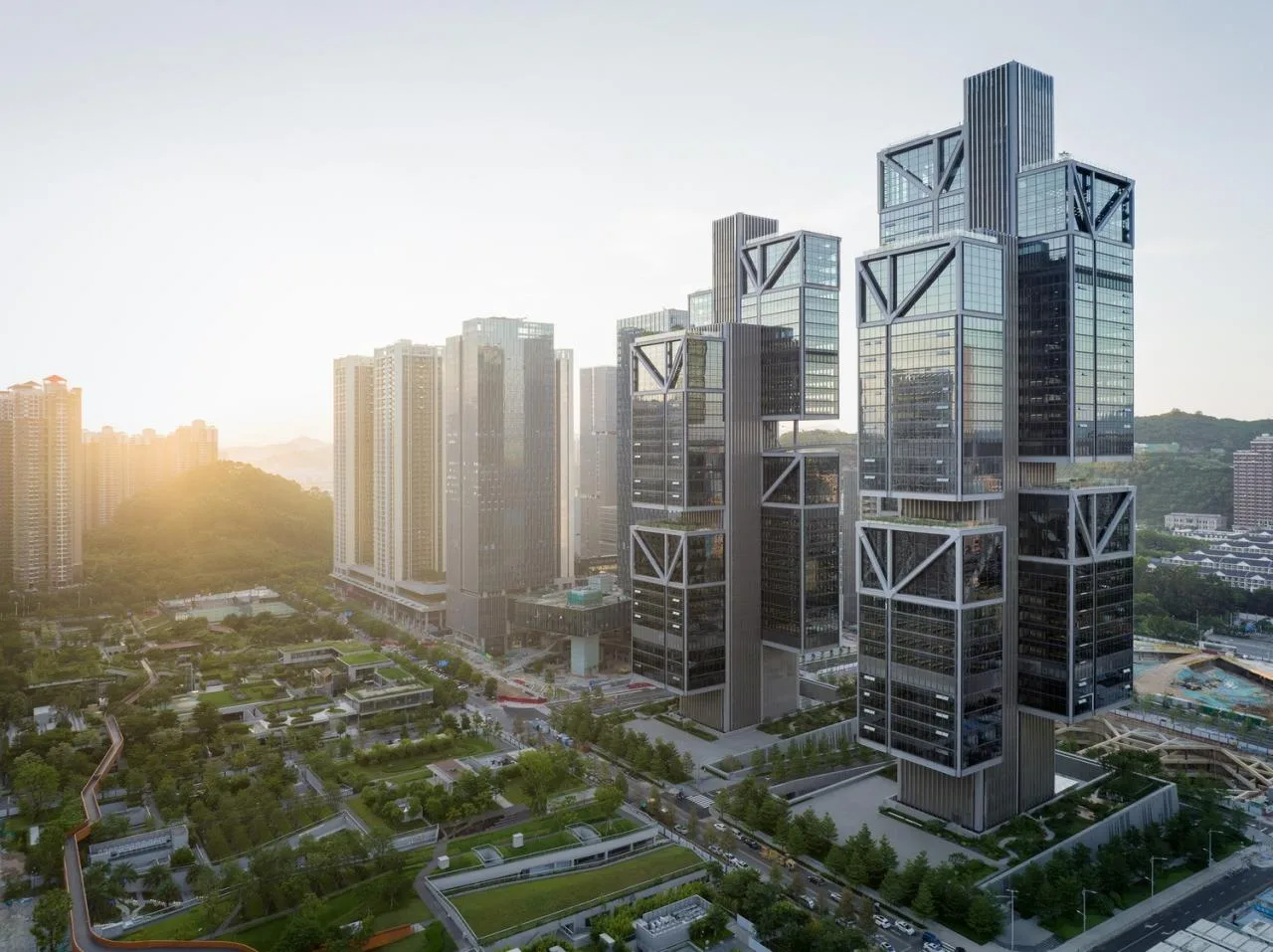
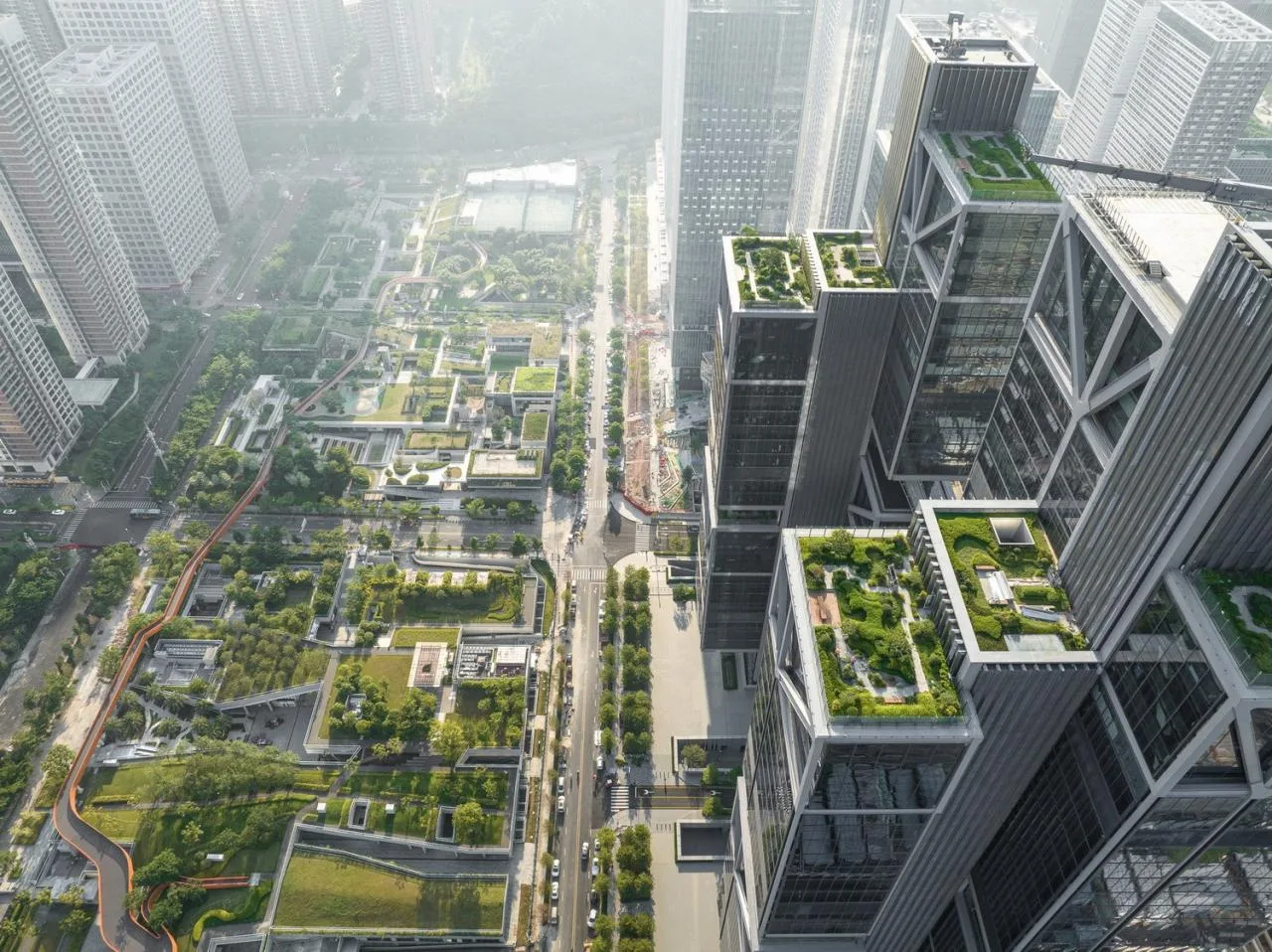
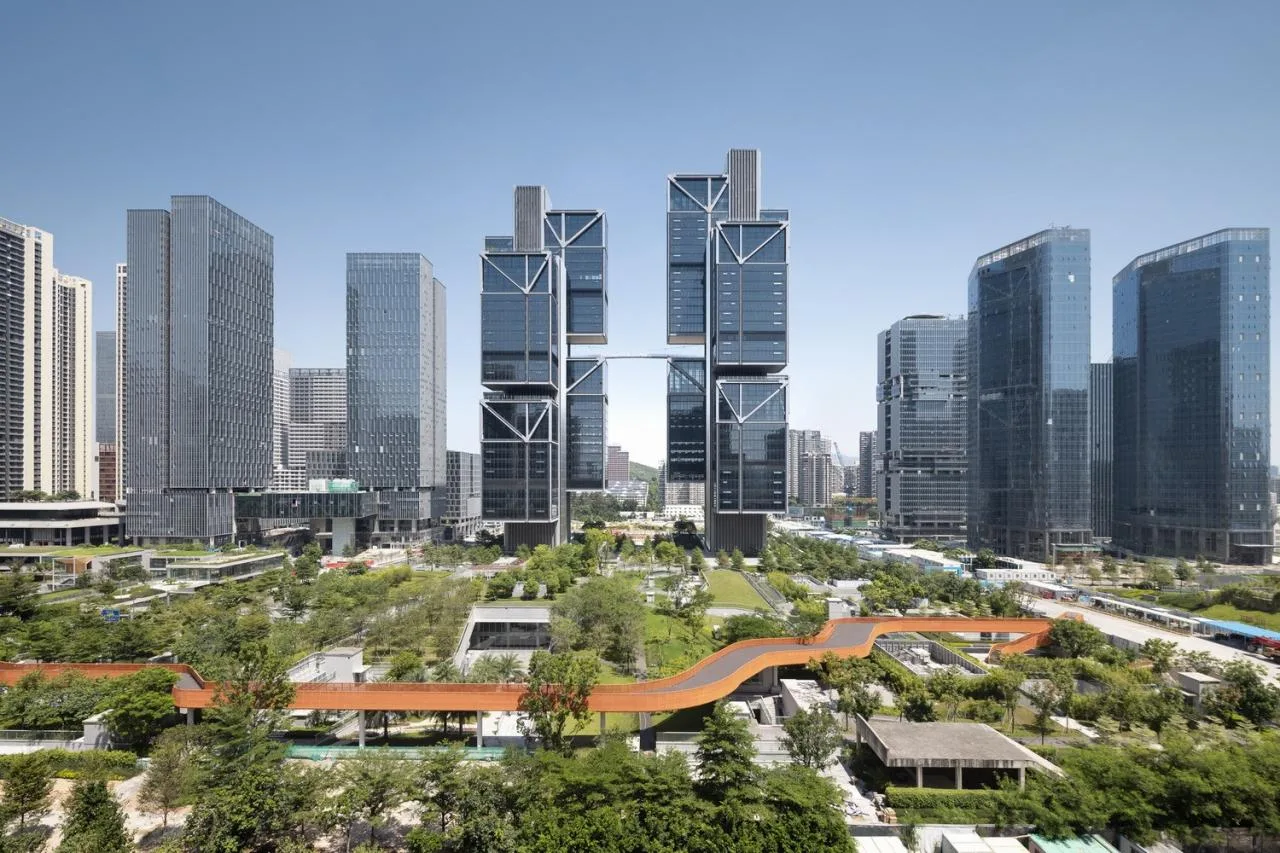
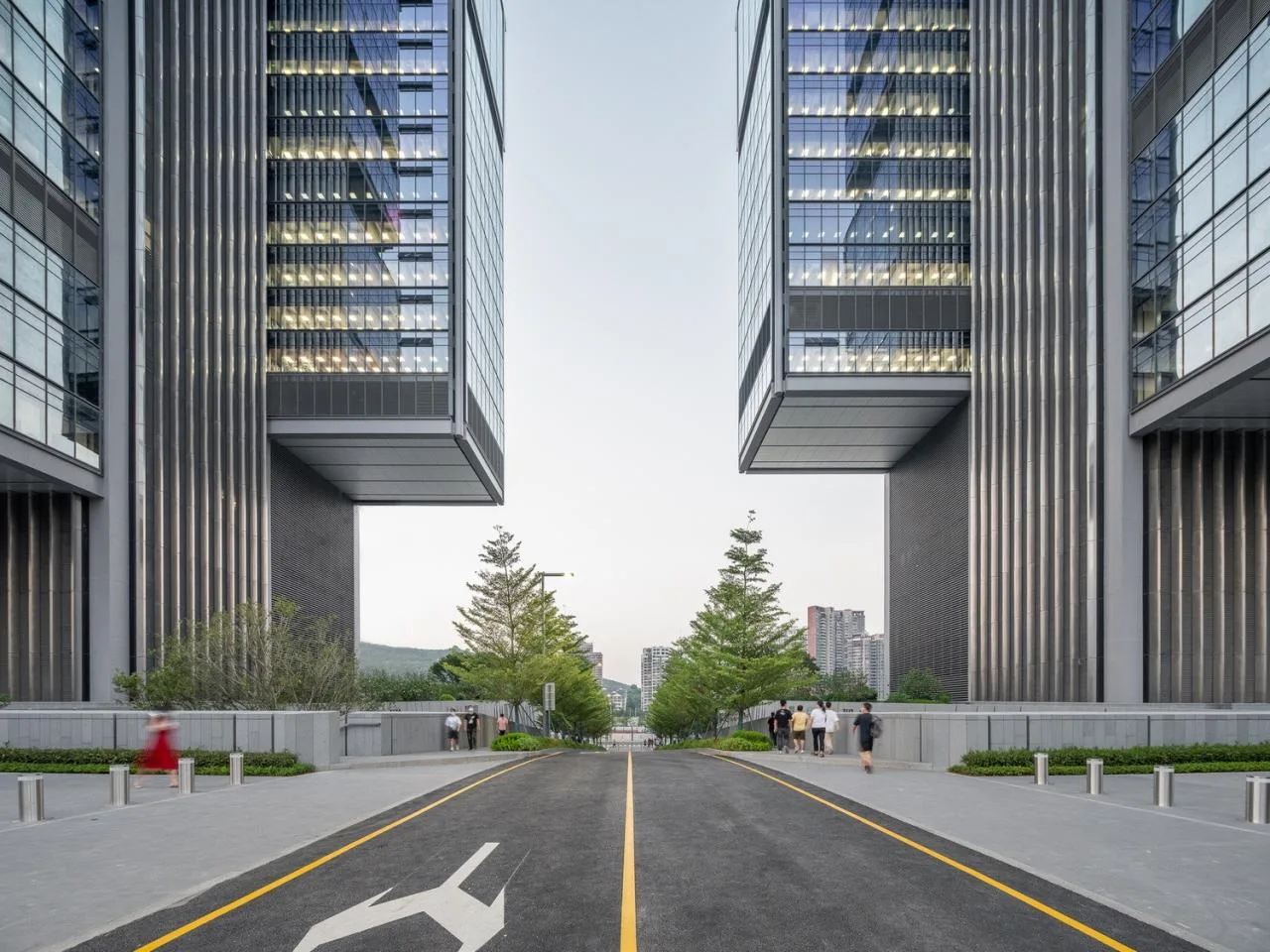
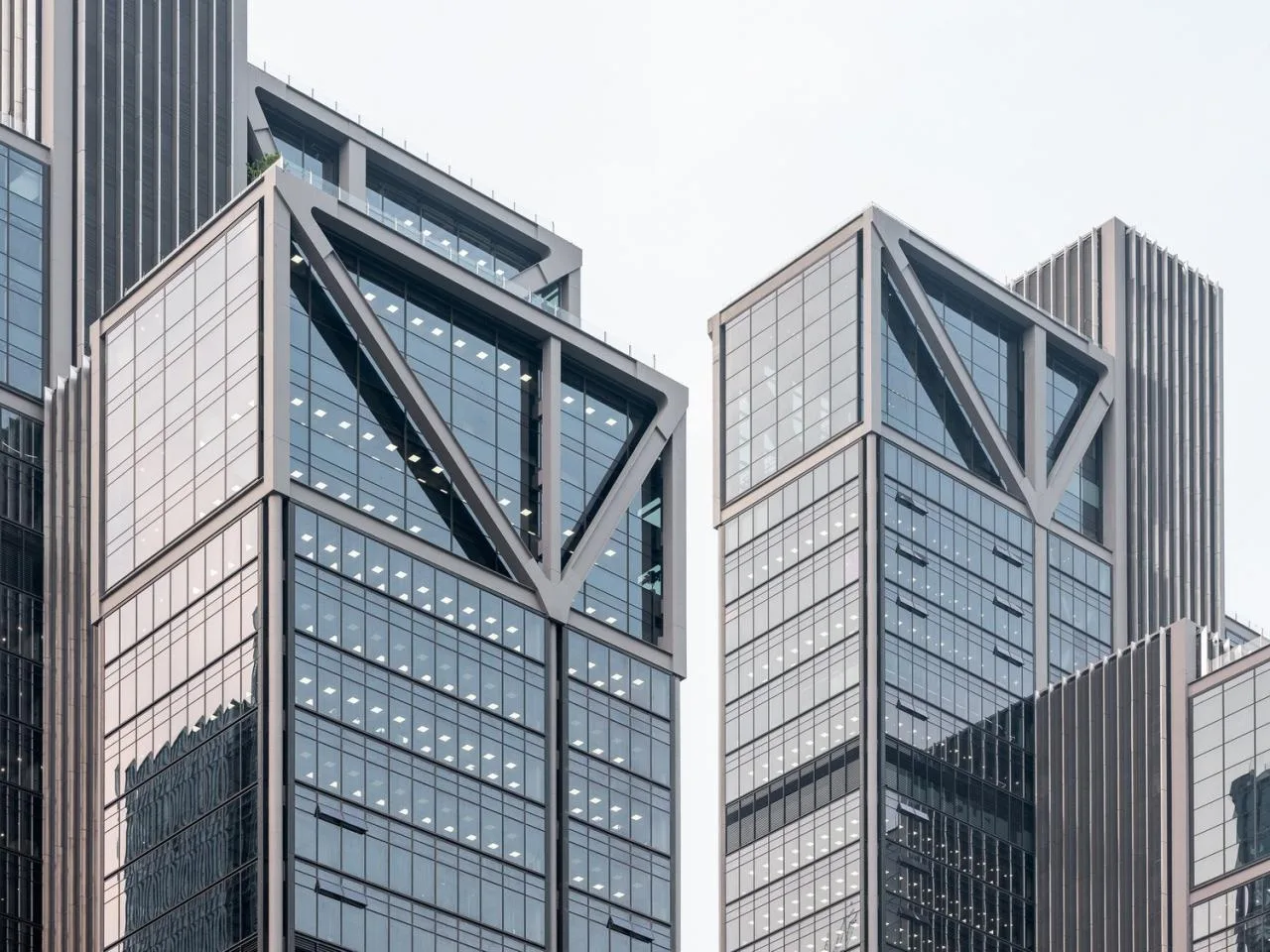
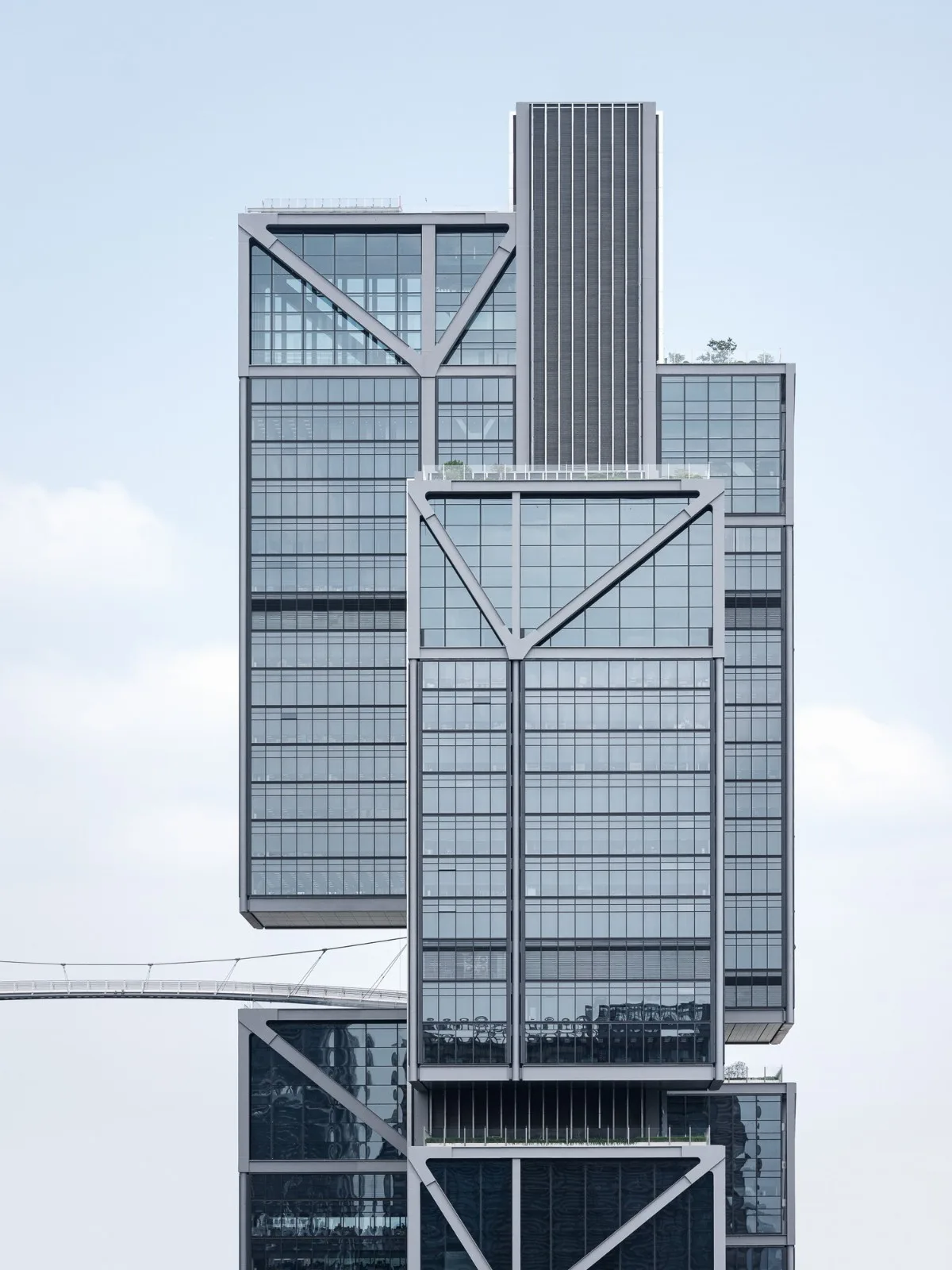
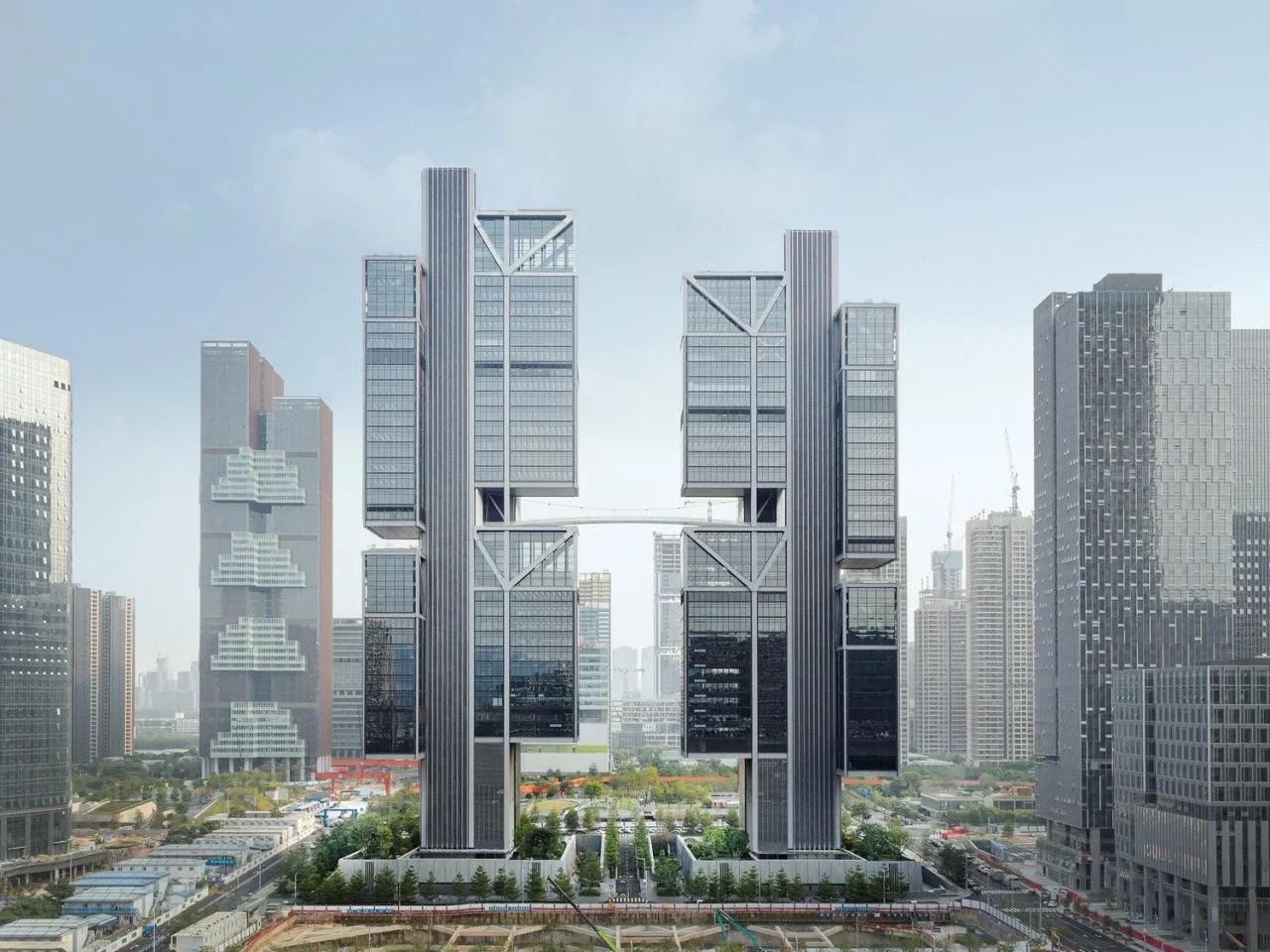
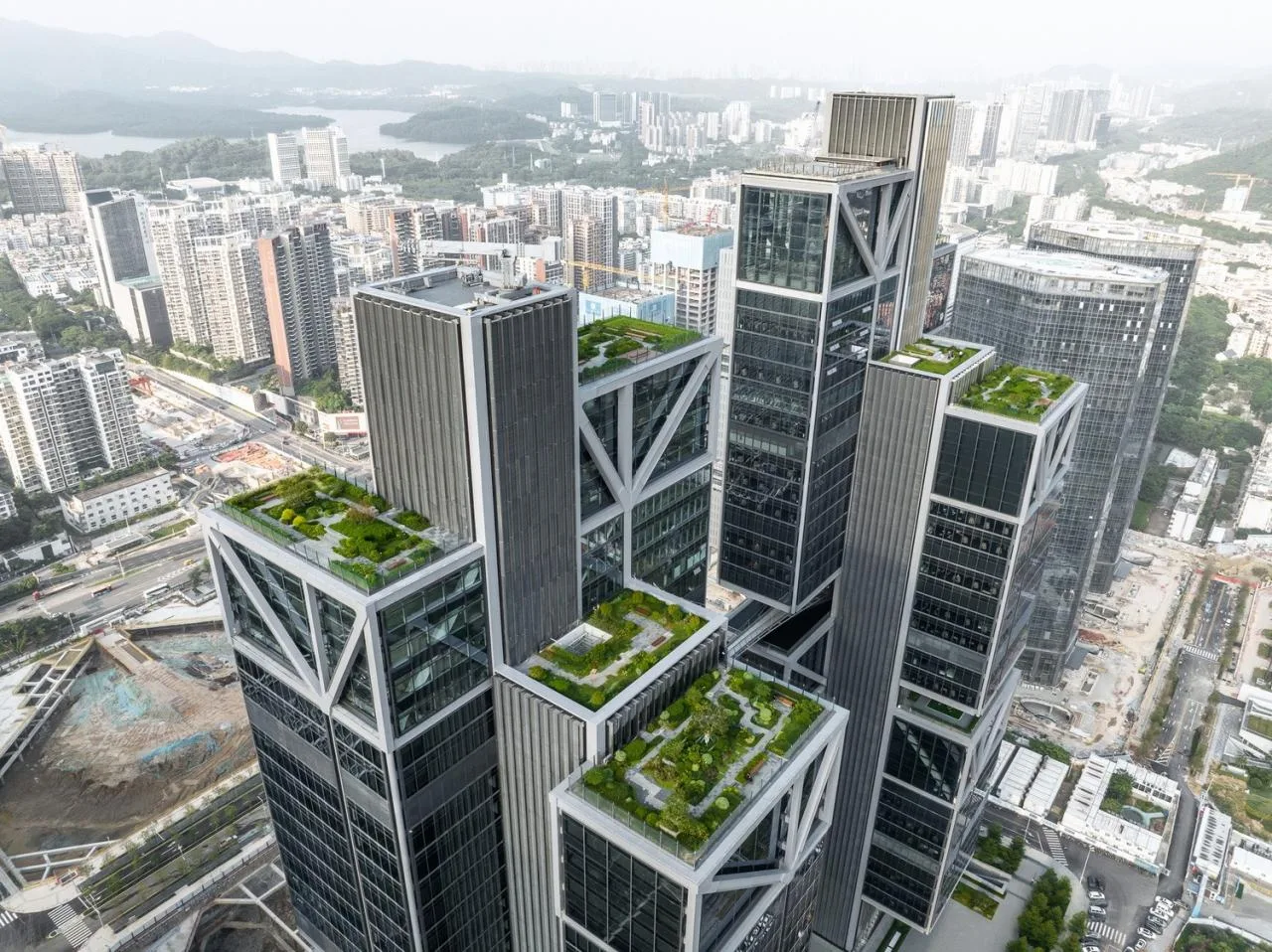
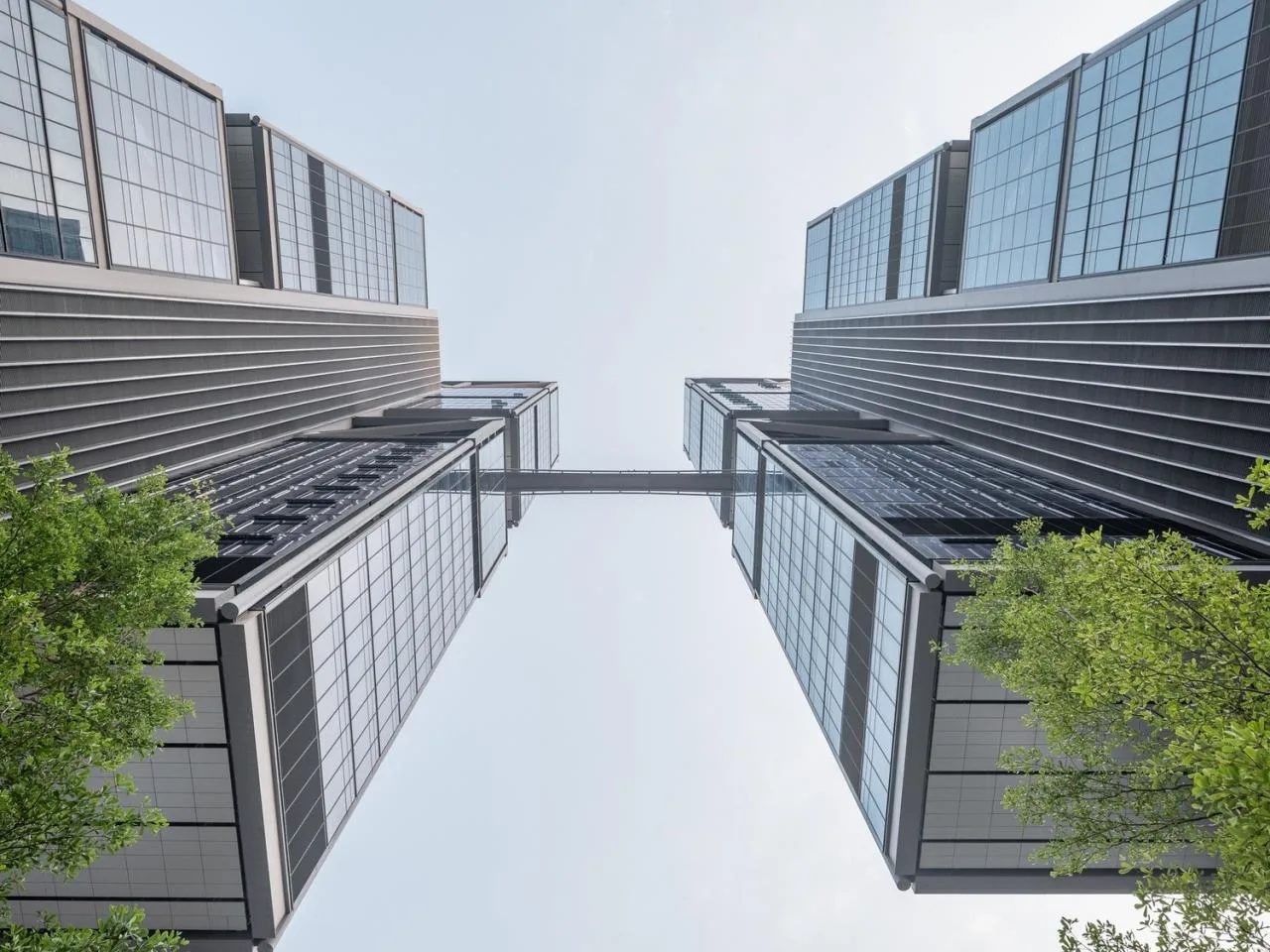
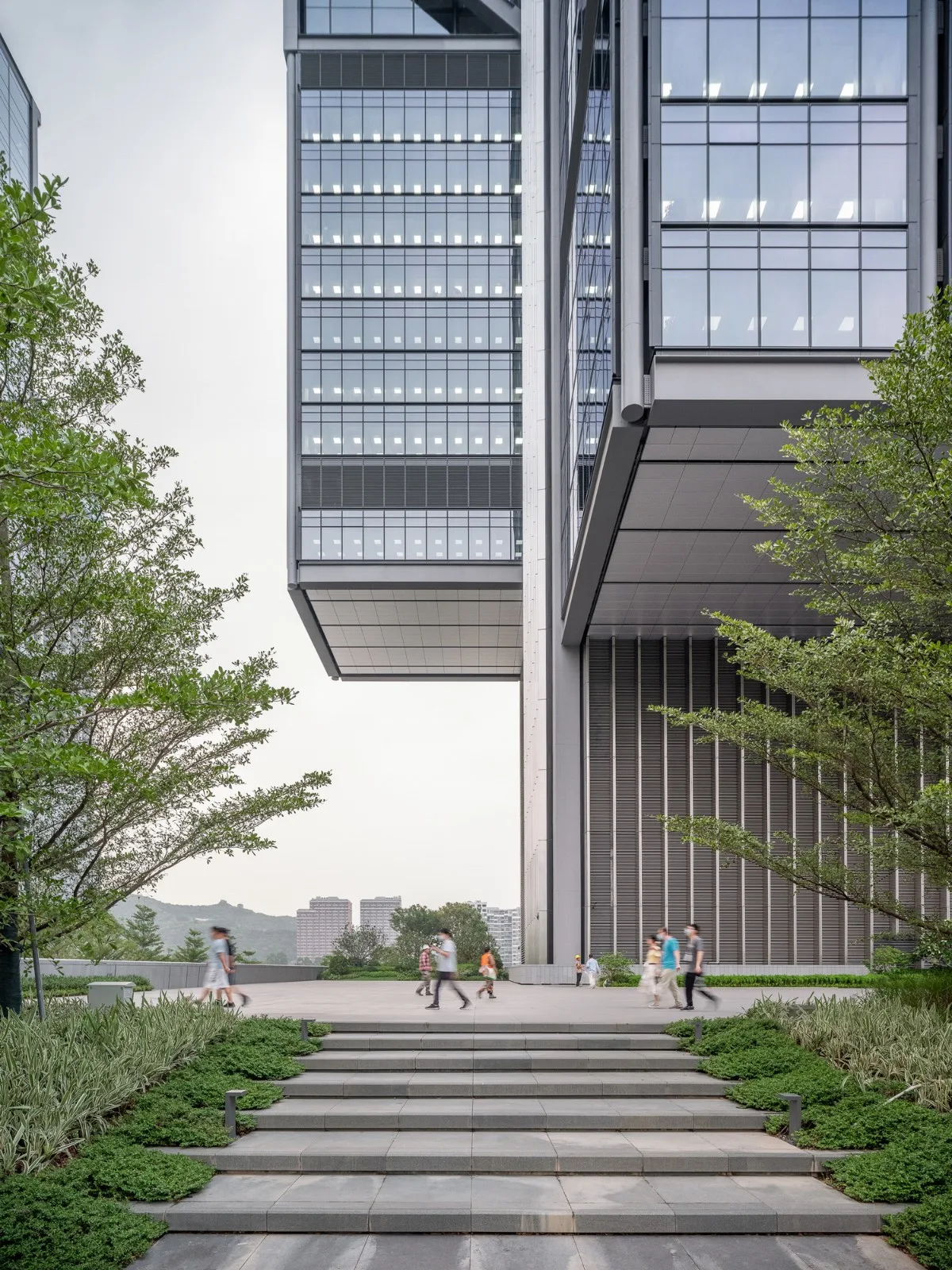
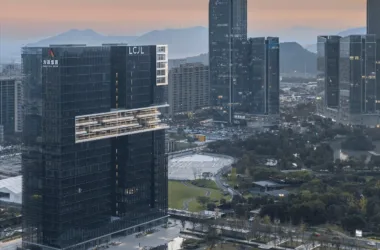
DJI’s Sky City underwent hundreds of simulations to refine its design, ultimately embracing asymmetric large overhangs. The architectural form appears to float above the ground, with staggered facades and a series of orderly “glass blocks” suspended mid-air. Its clean, industrial structure evokes a sense of lightness and suspension, showcasing Foster+Partners’ signature high-tech aesthetic. The complex comprises two super-high-rise towers on the east and west sides, connected by a “sky bridge.” The west tower rises 195 meters with 40 floors, while the east tower reaches 213 meters with 44 floors. Covering 242,000 square meters, the building includes office spaces, R&D centers, drone testing areas, and urban public facilities, accommodating up to 8,000 employees.
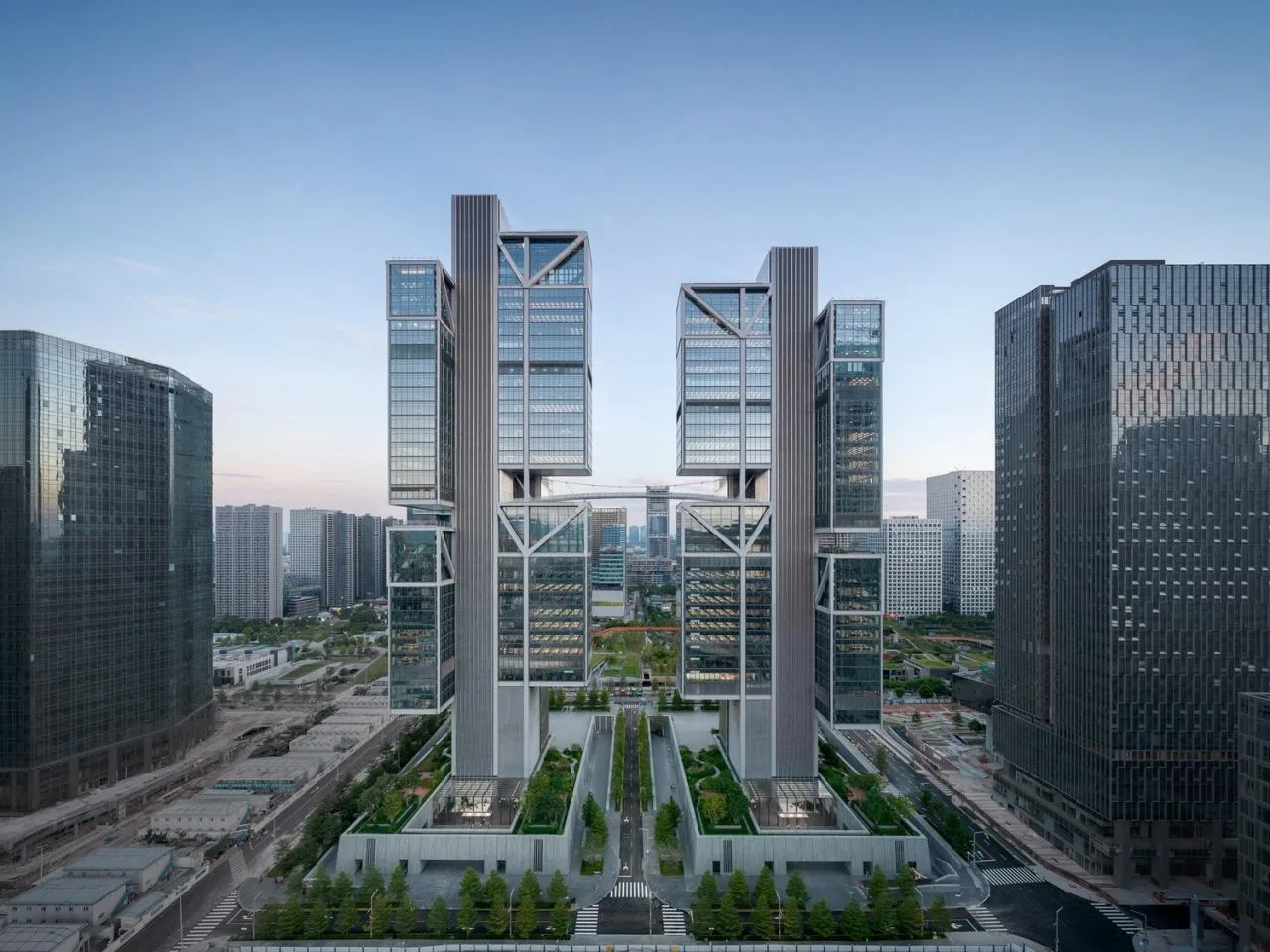
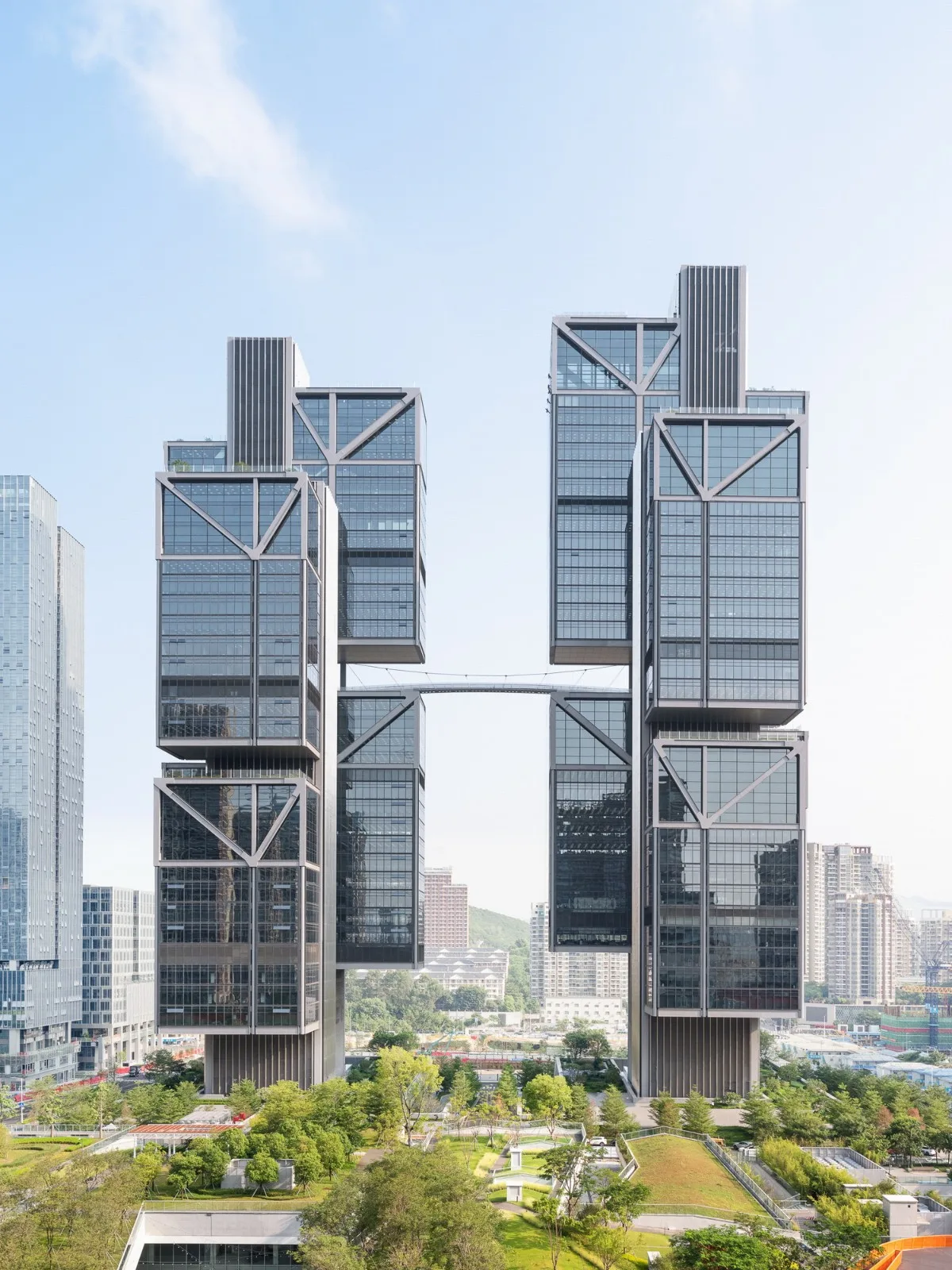
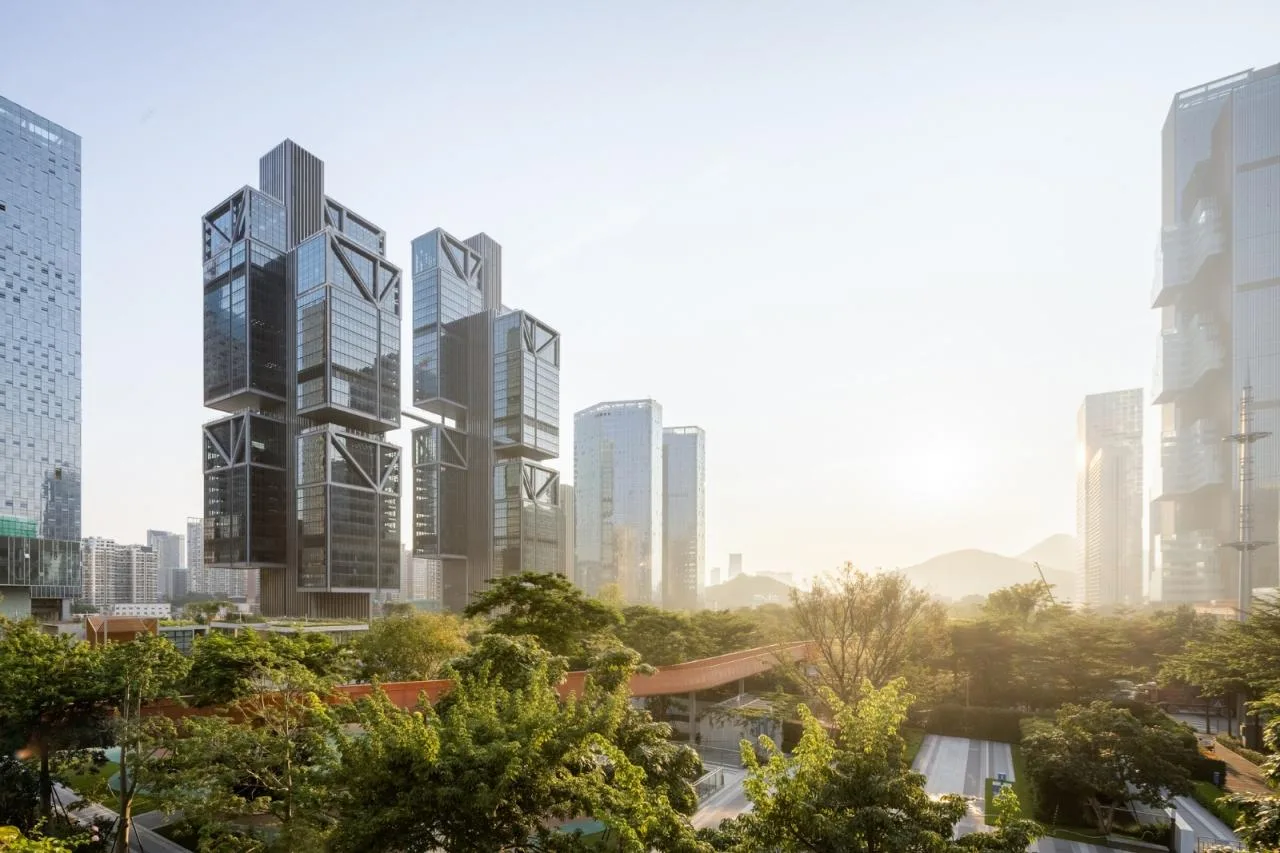
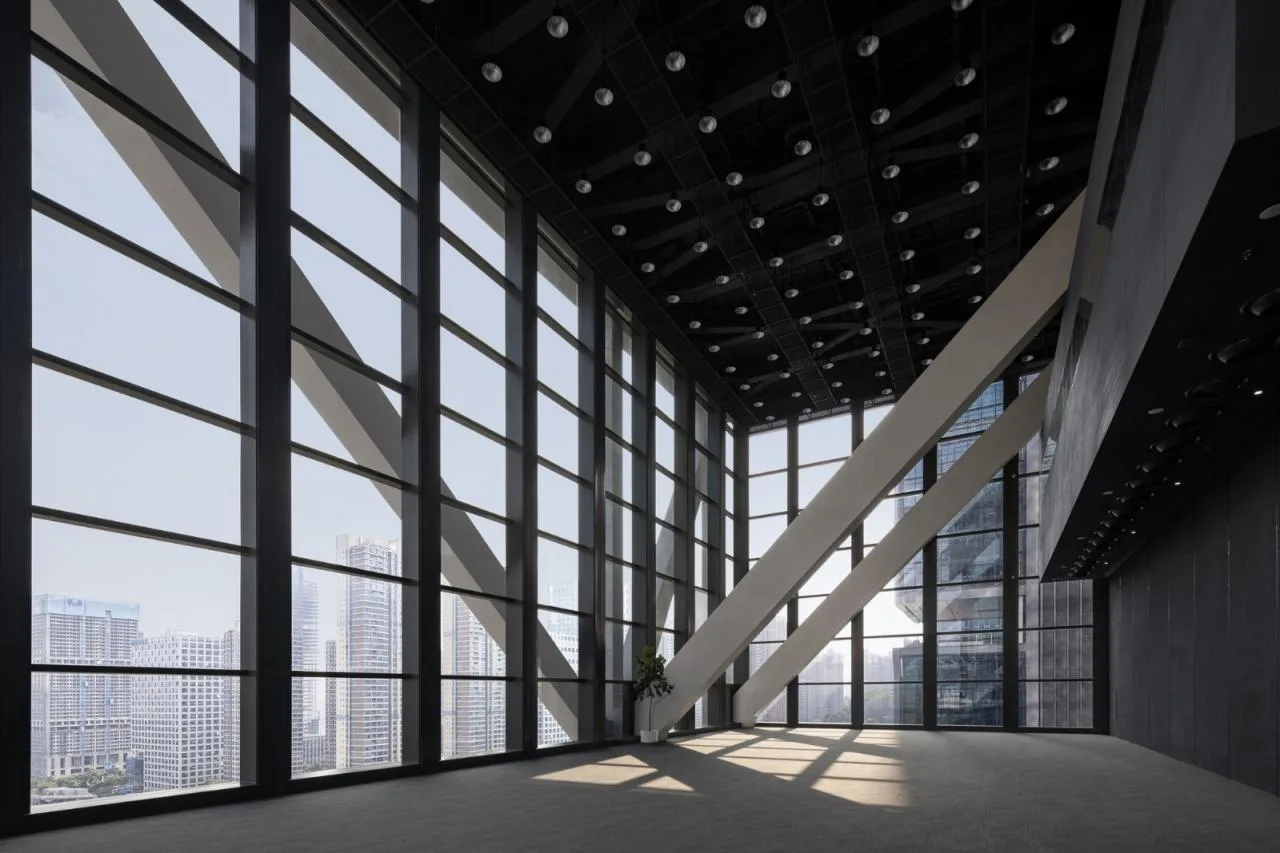
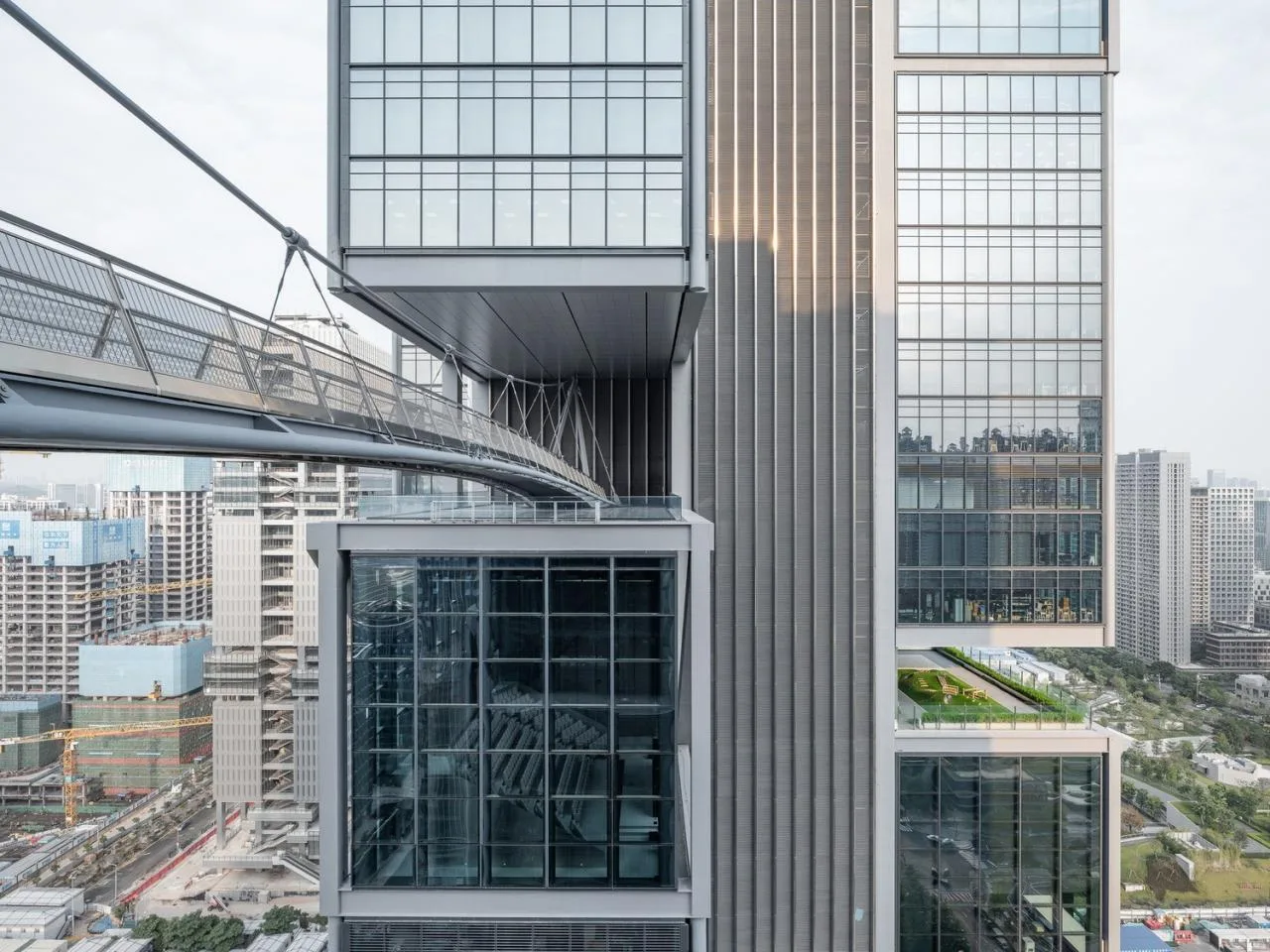
The two towers are anchored by a core tube resembling two upright trees, from which other volumes emerge. Six “glass blocks” hang asymmetrically around three sides of the core tubes in both towers. These suspended blocks are supported by a massive truss box and steel suspension pipes with circular cross-sections, with a maximum overhang of 21.5 meters. This structural system not only supports the load but also serves as an exposed aesthetic element. The complex construction exemplifies a harmonious integration of space, structure, and form.
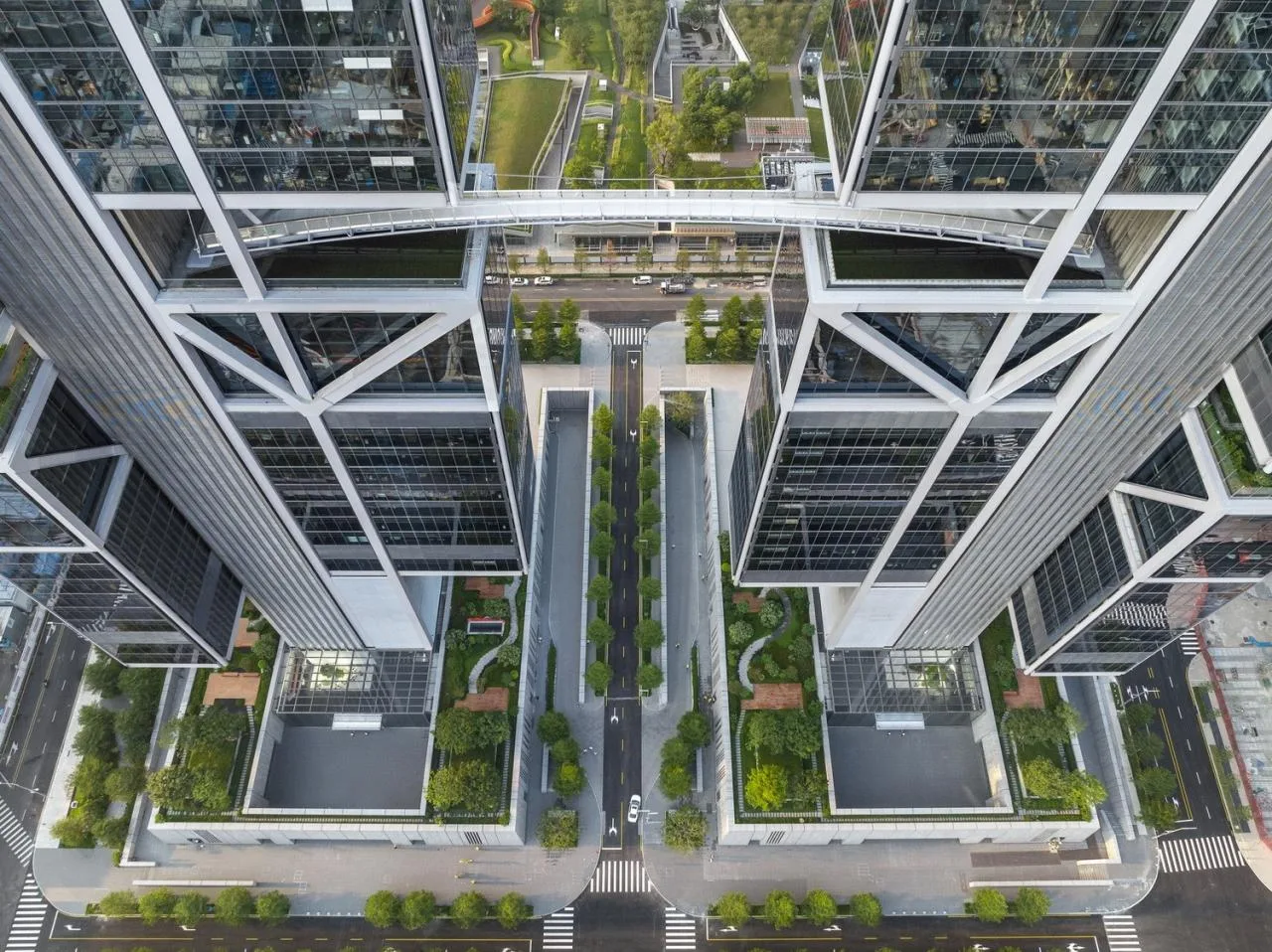
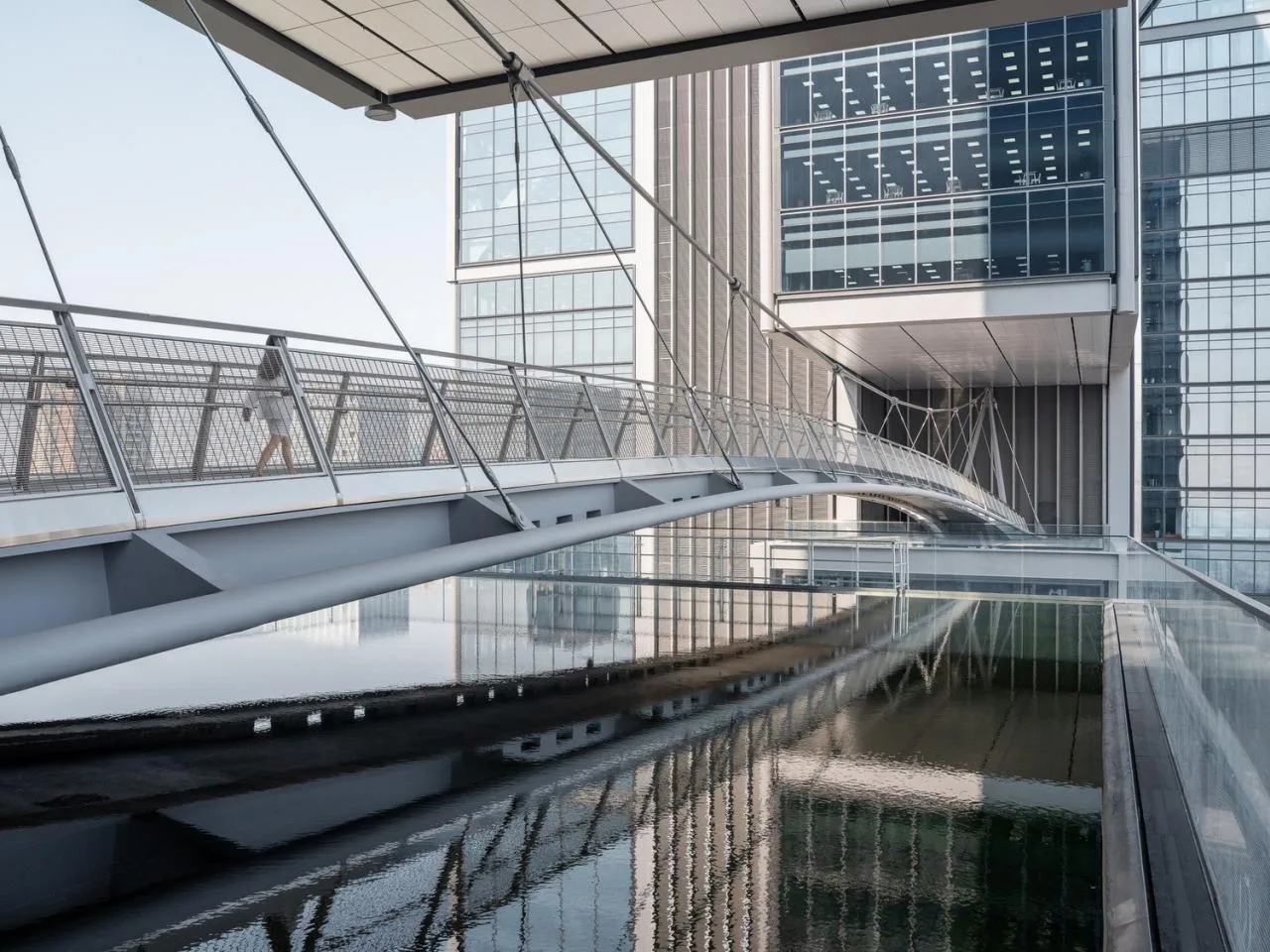
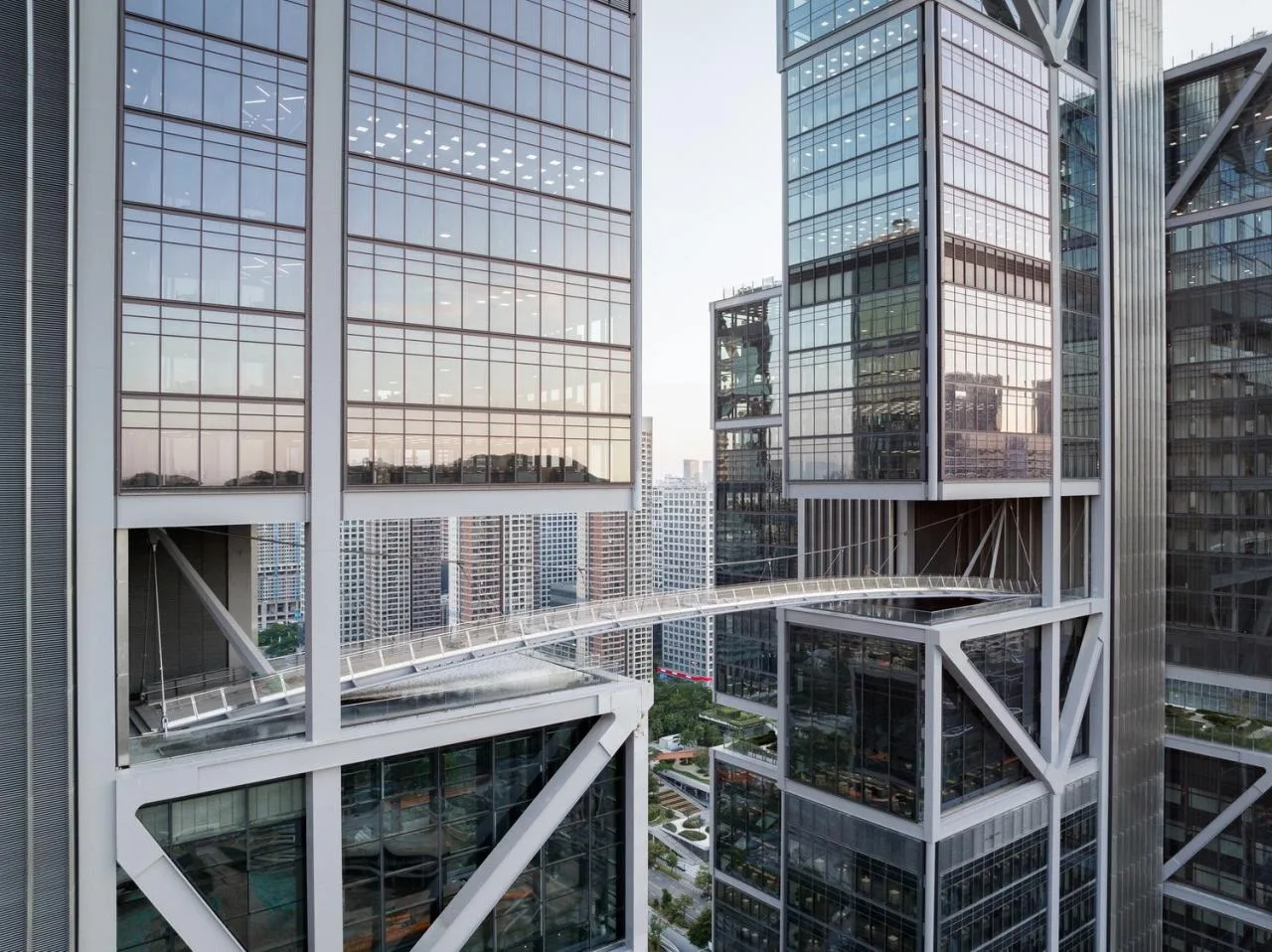
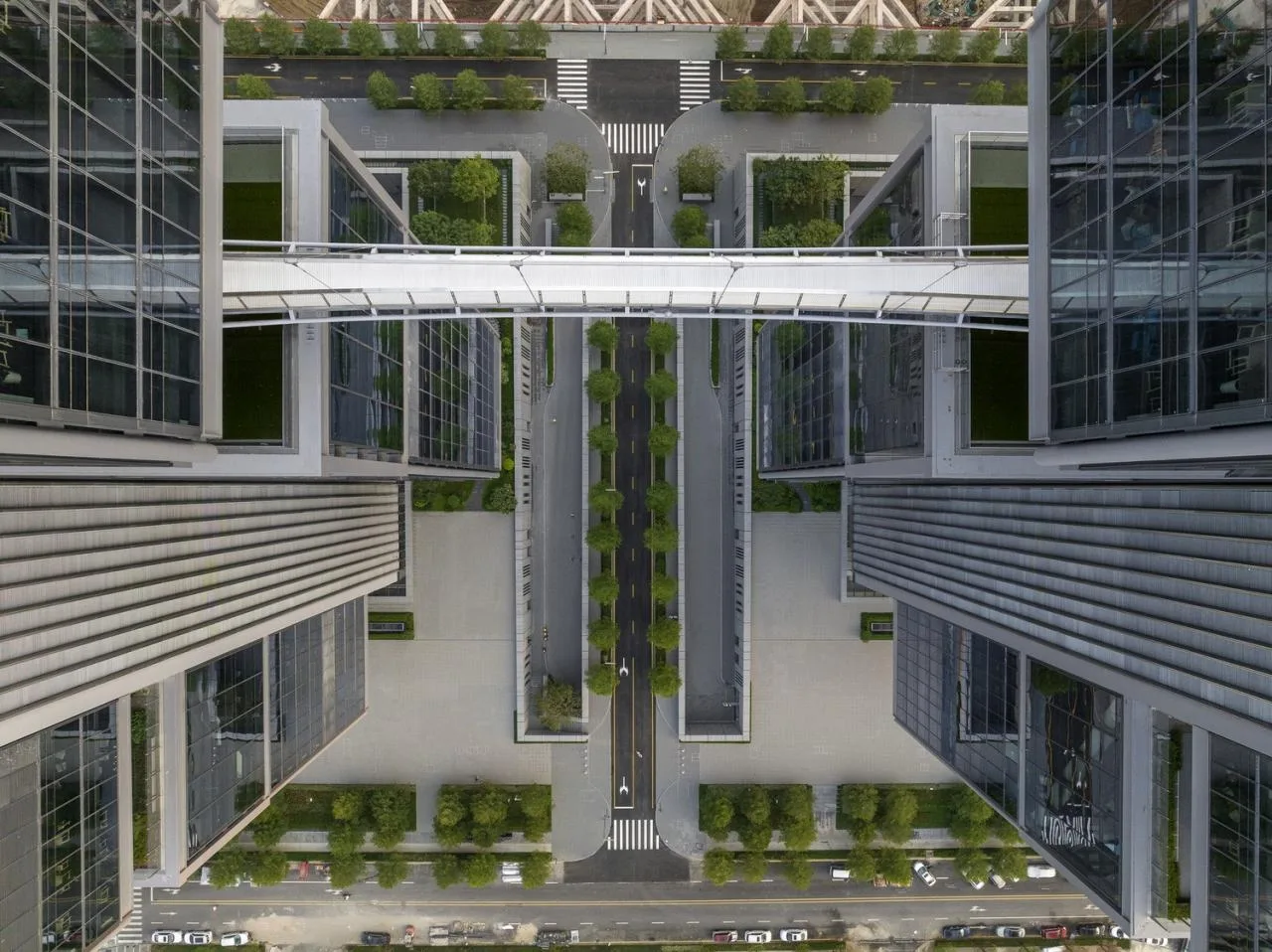
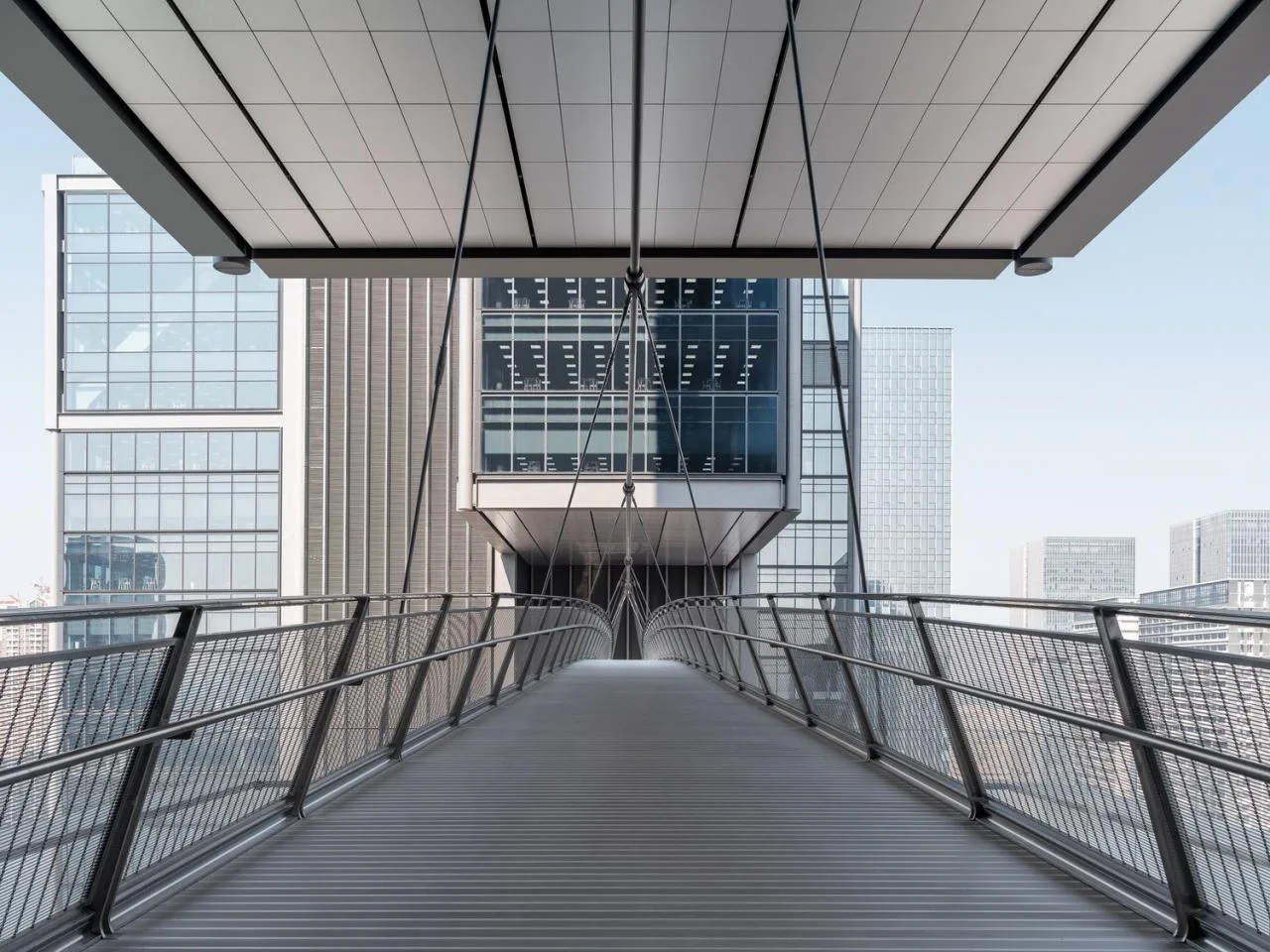
A highly tensioned suspension bridge connects the two towers on the 24th floor, 105 meters above ground. Supported by the building’s cantilevered box in a flexible connection, the bridge spans 76 meters between supports, with a total length of 90 meters. Its feather-light design contrasts with the towers’ robust structure, embodying the agility of Sky City. Project Chief Architect Young Chiu explains, “Sky City is honest about its external form and structure, expressing richness from the inside out. It embraces simplicity and elegance without coldness, standing quiet, upright, and unadorned.”
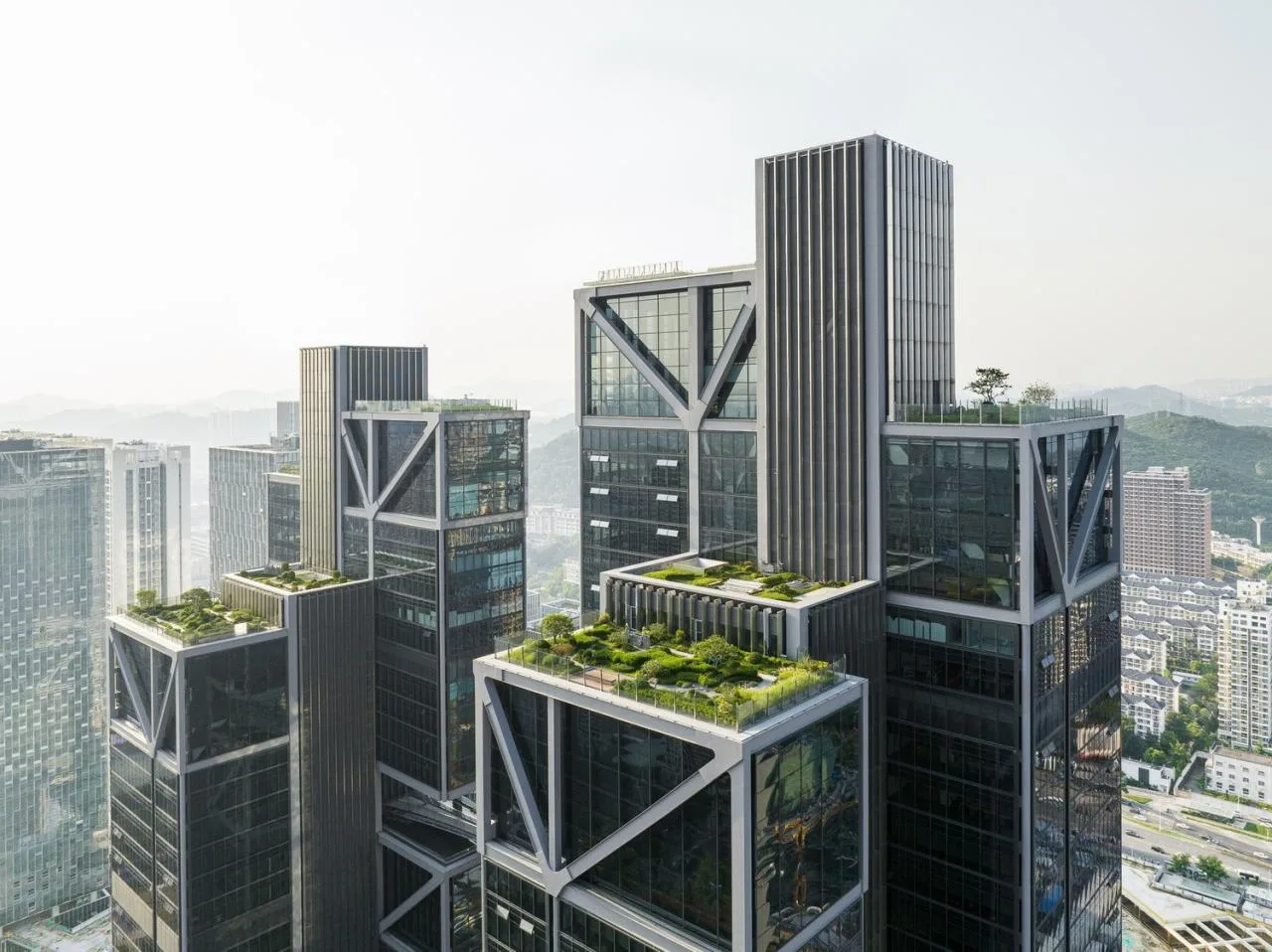
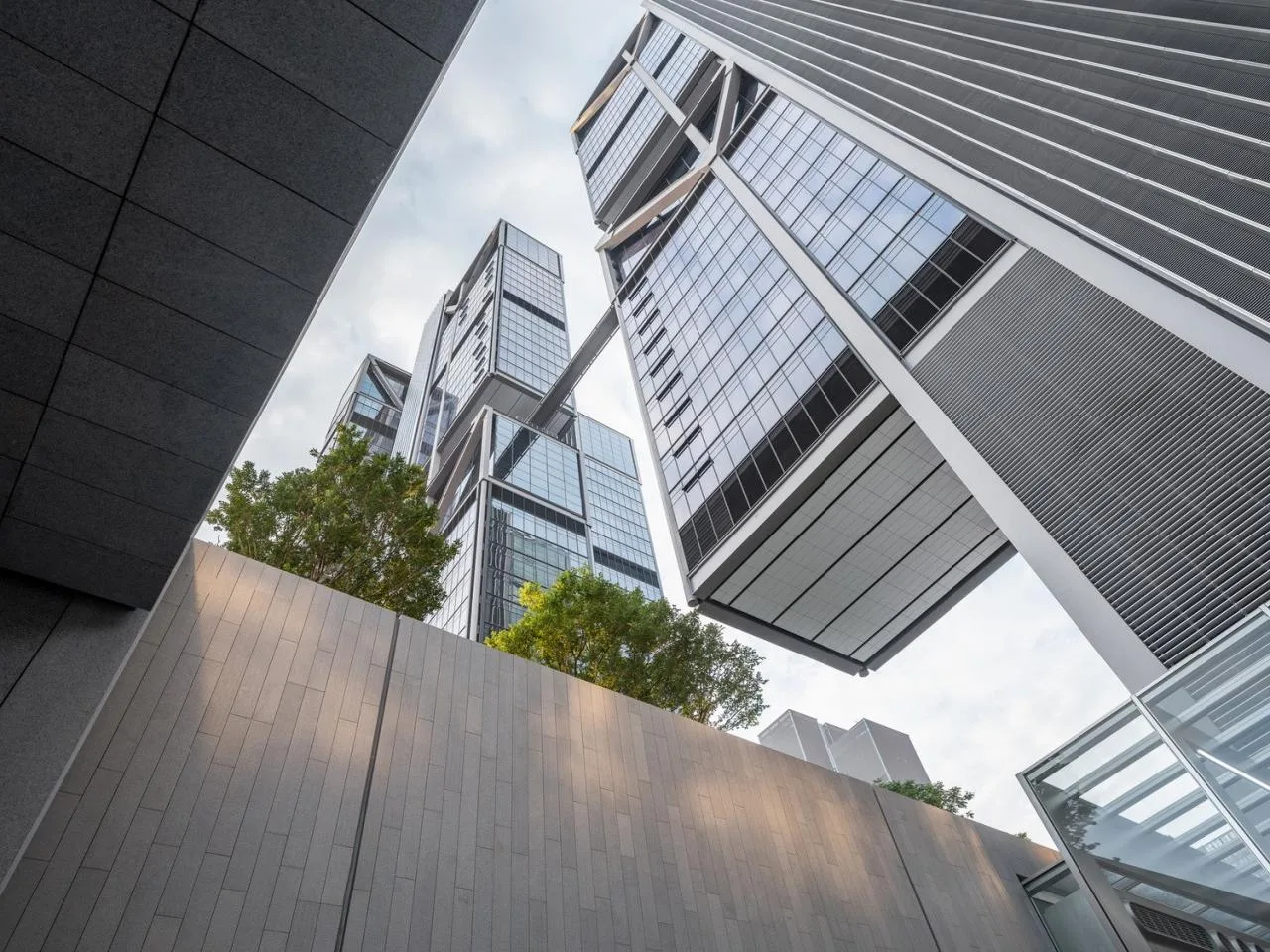
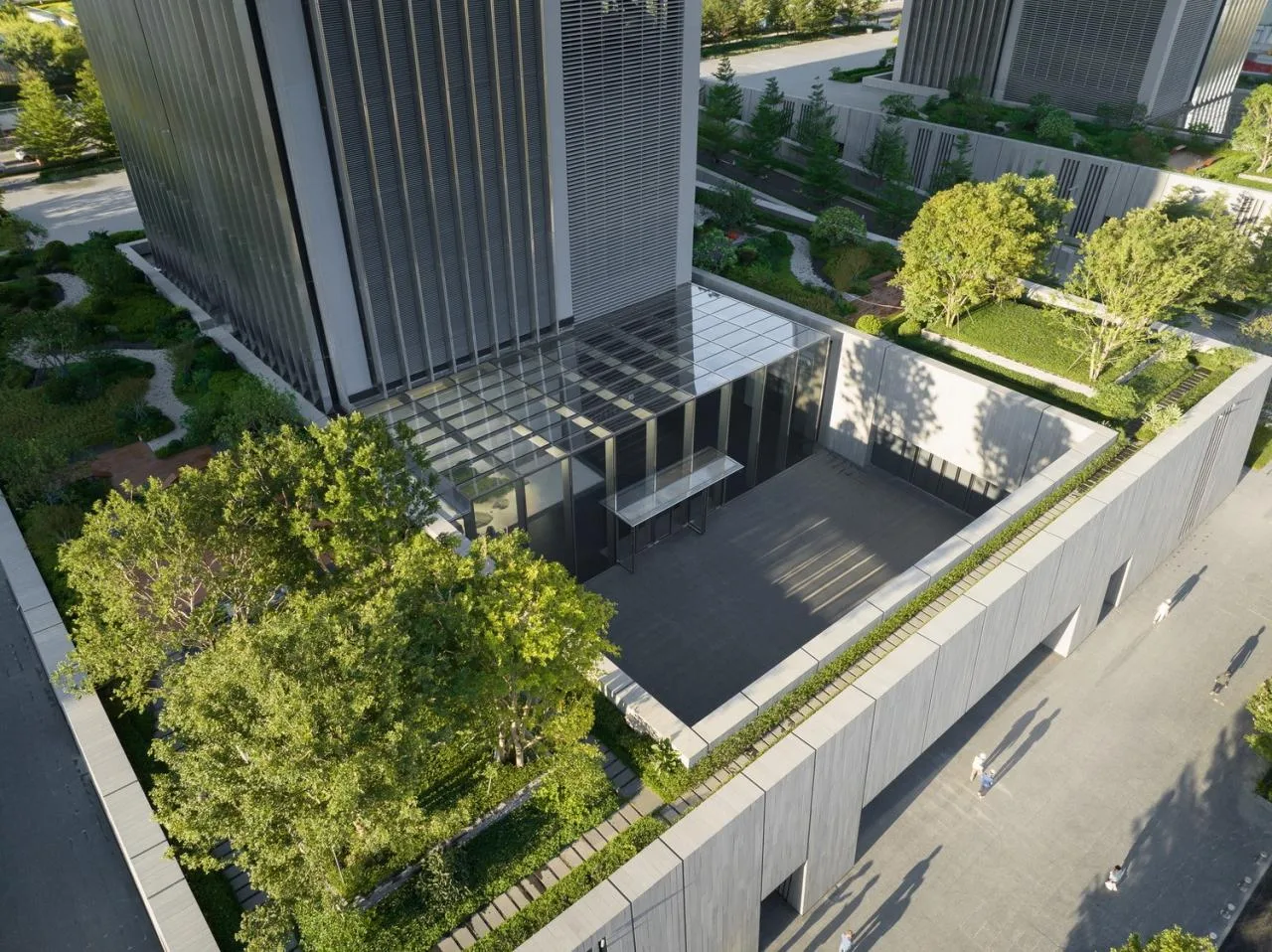
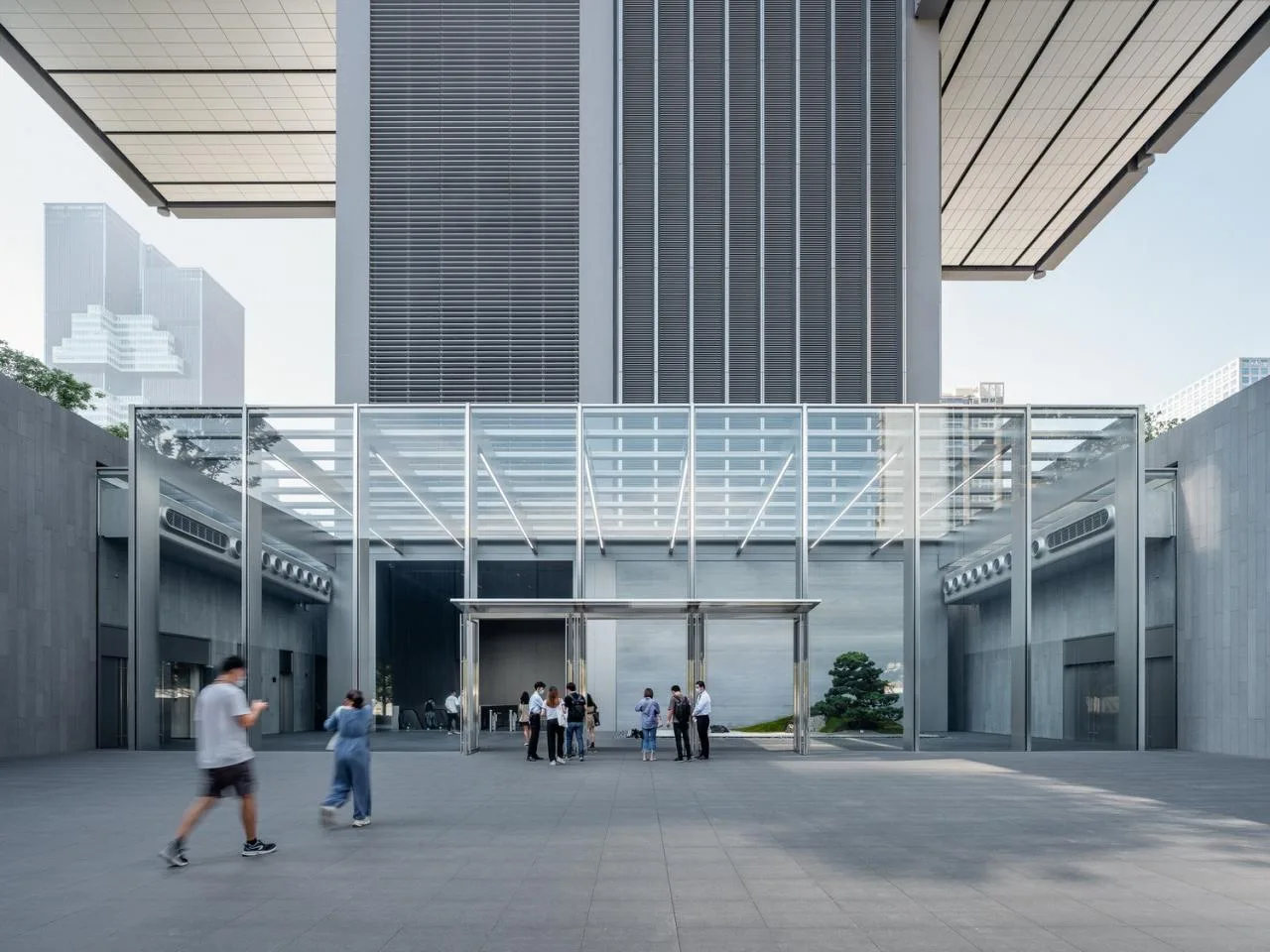
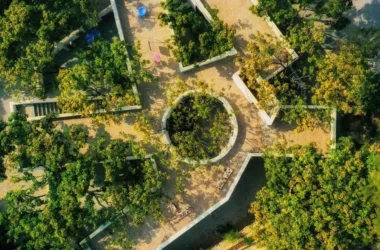
The building features a single core tube extending to the ground, with upward-lifting blocks creating a welcoming posture that reflects a balance between technology and nature. Nearly 80% of the ground-level site is open space. The greenery on the building’s south side extends seamlessly to rooftop gardens atop the podium surrounding the base of the towers. This suspended gray space fosters inclusiveness and comfort. The steel structure appears to grow naturally from this green foundation, complemented by elevated sky gardens and rooftop terraces, infusing vitality and harmoniously blending with nature. This design reduces the imposing sensation often associated with massive supertall buildings.
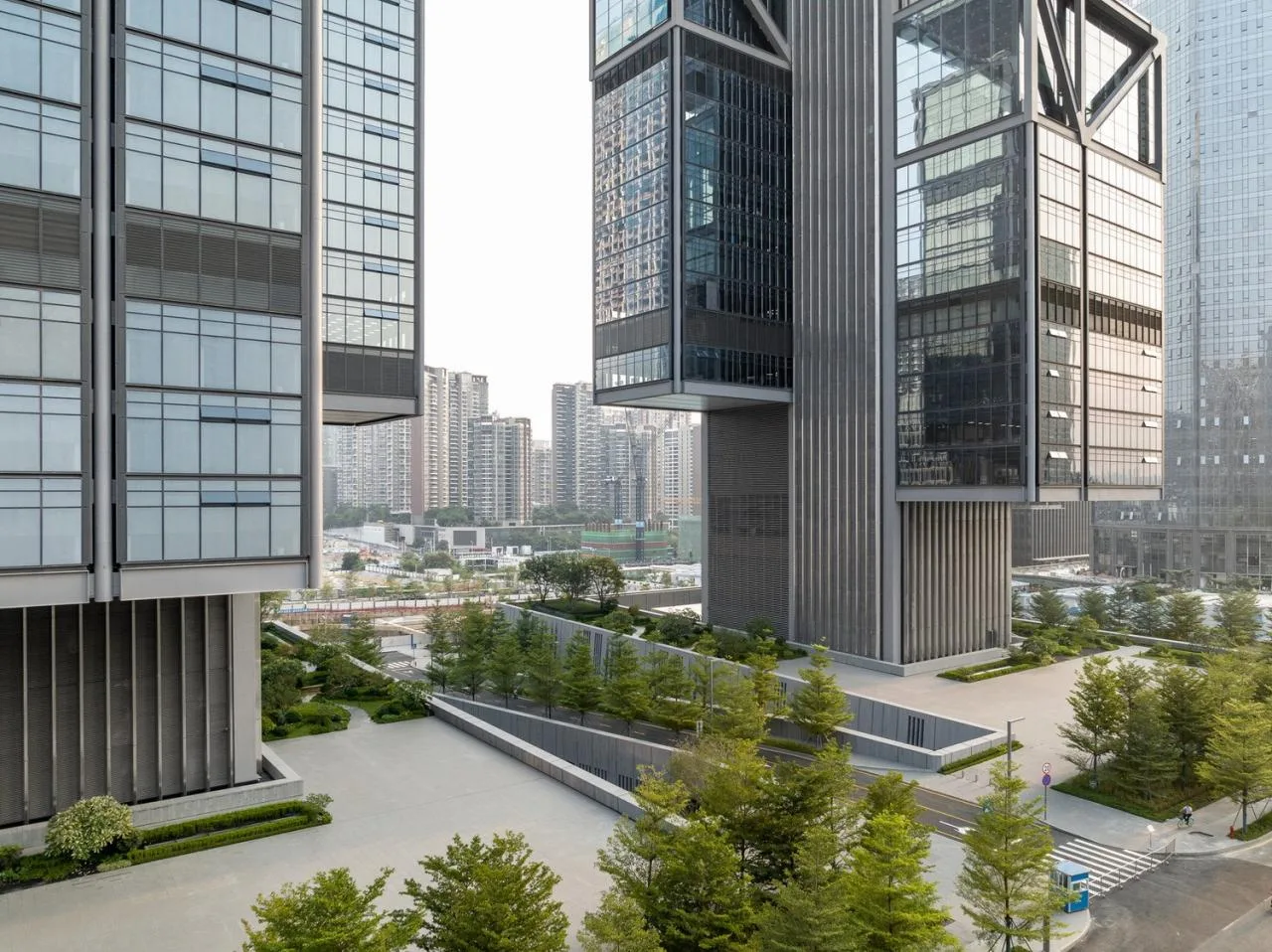
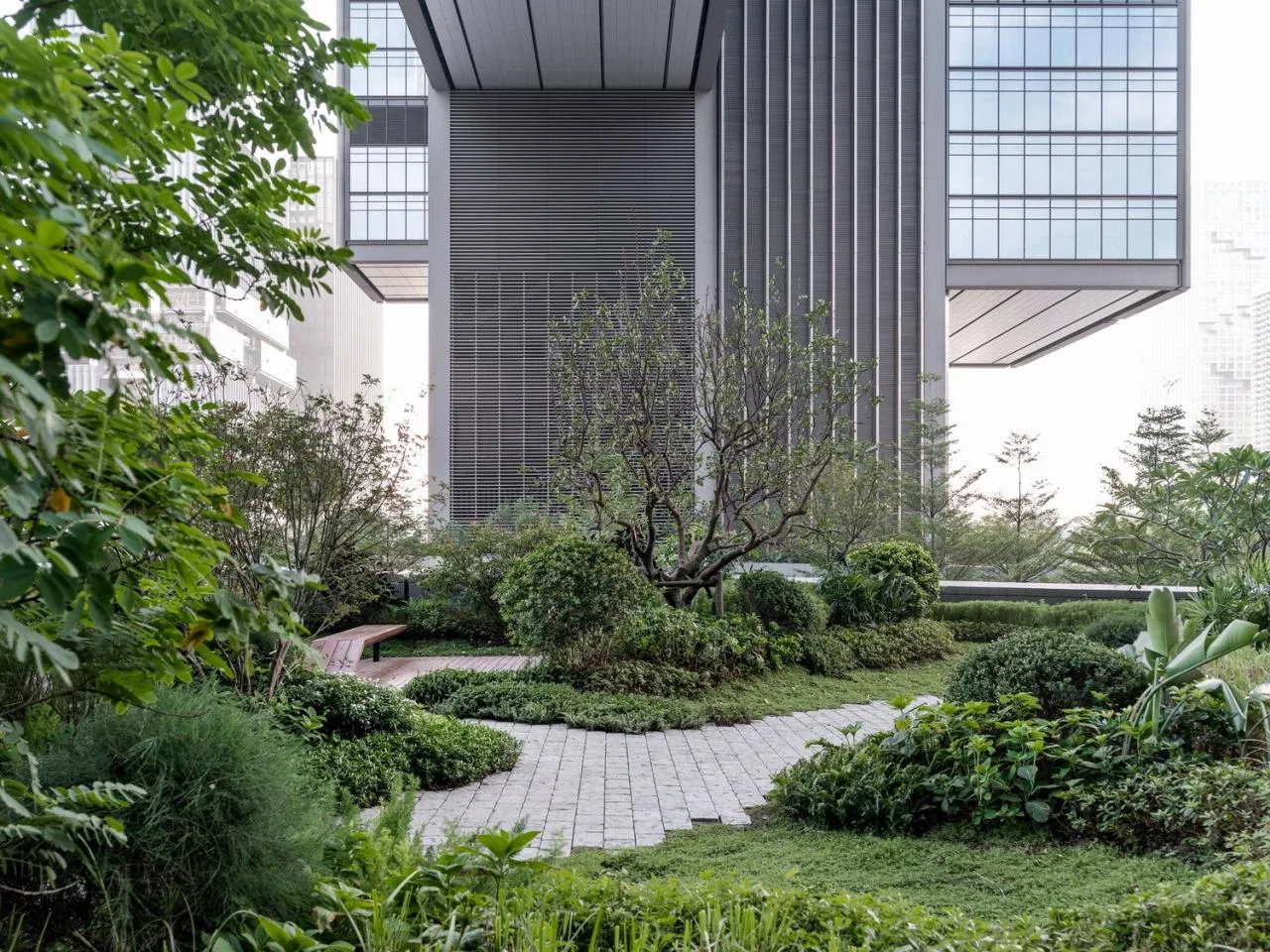
The site slopes approximately half a floor between its two bordering roads. The architects capitalized on this by incorporating a podium, whose top connects to the southern ground at a gentle 2-degree incline. Walking north along this sloping road reveals the gradually emerging “sunken” podium. From the exterior, the podium is clad in natural stone panels, resembling a fortress base.
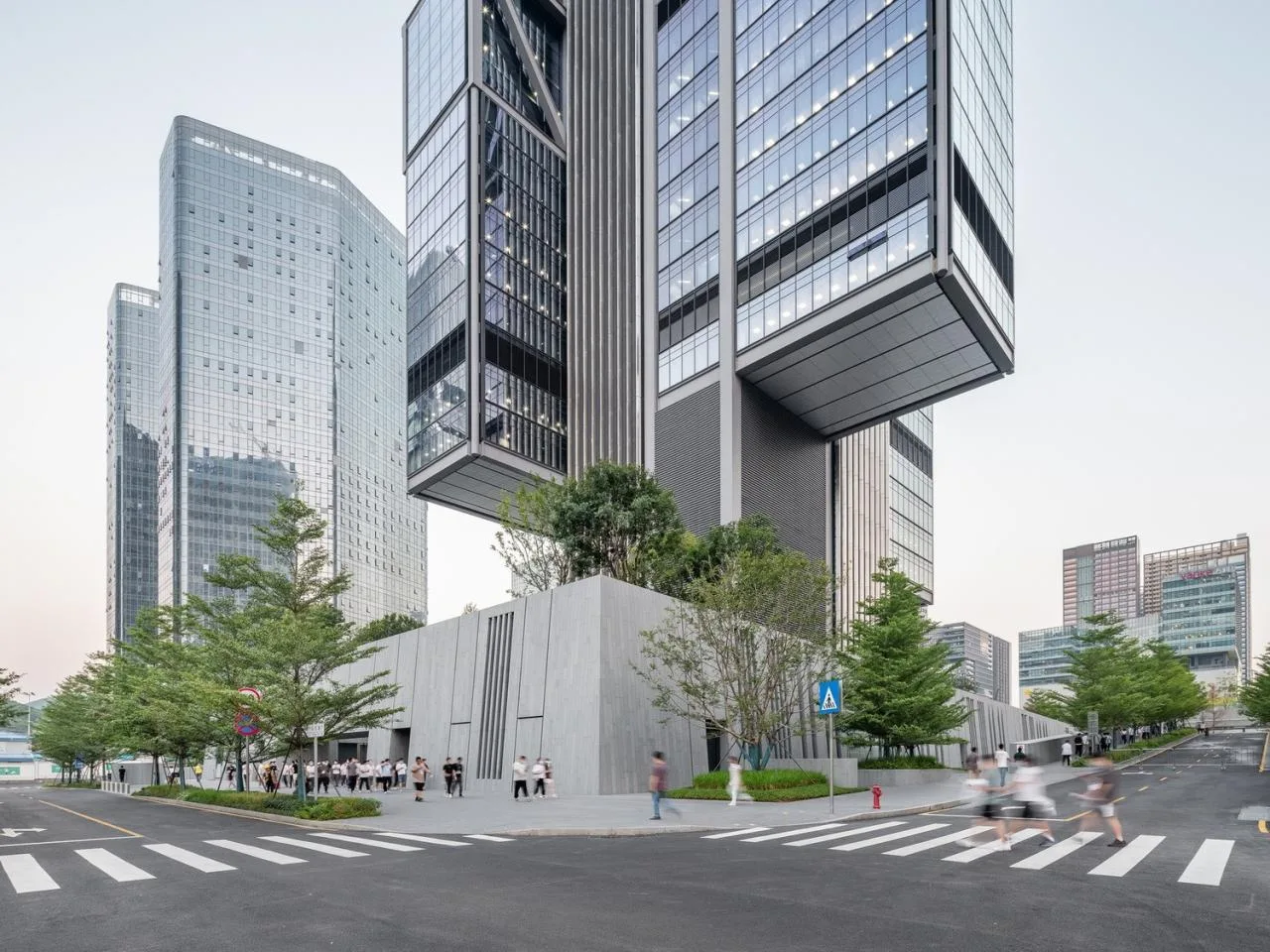
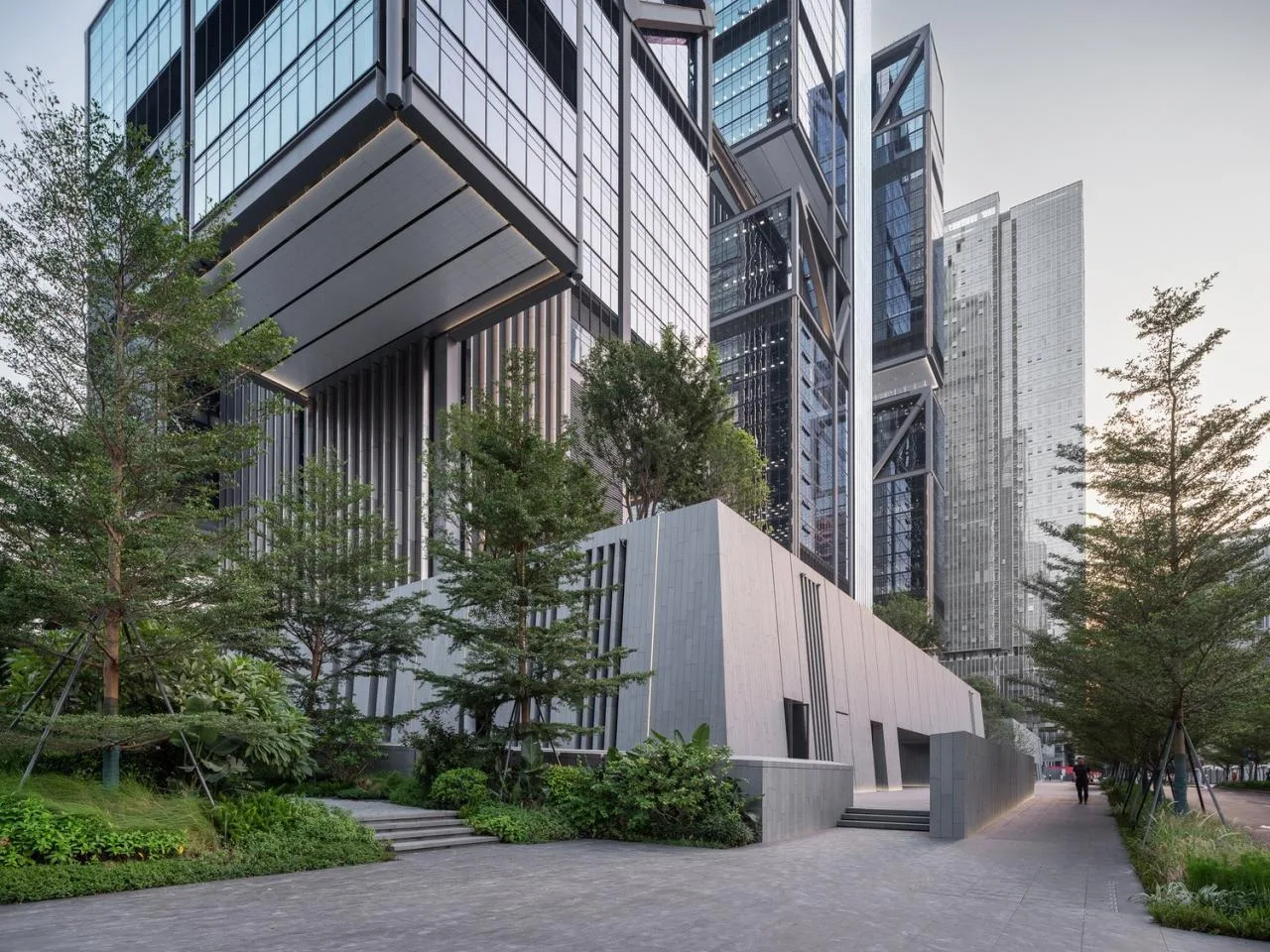
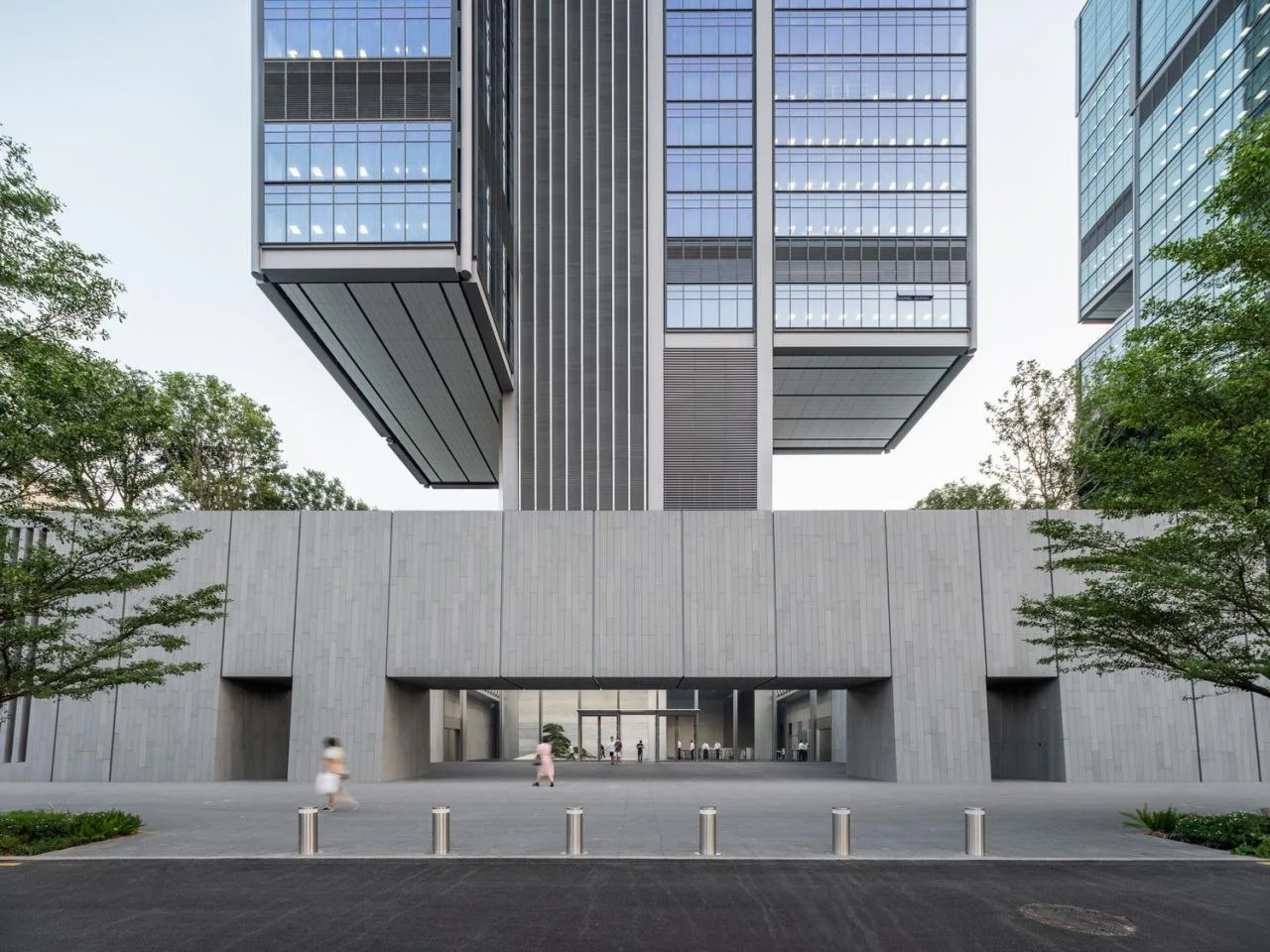
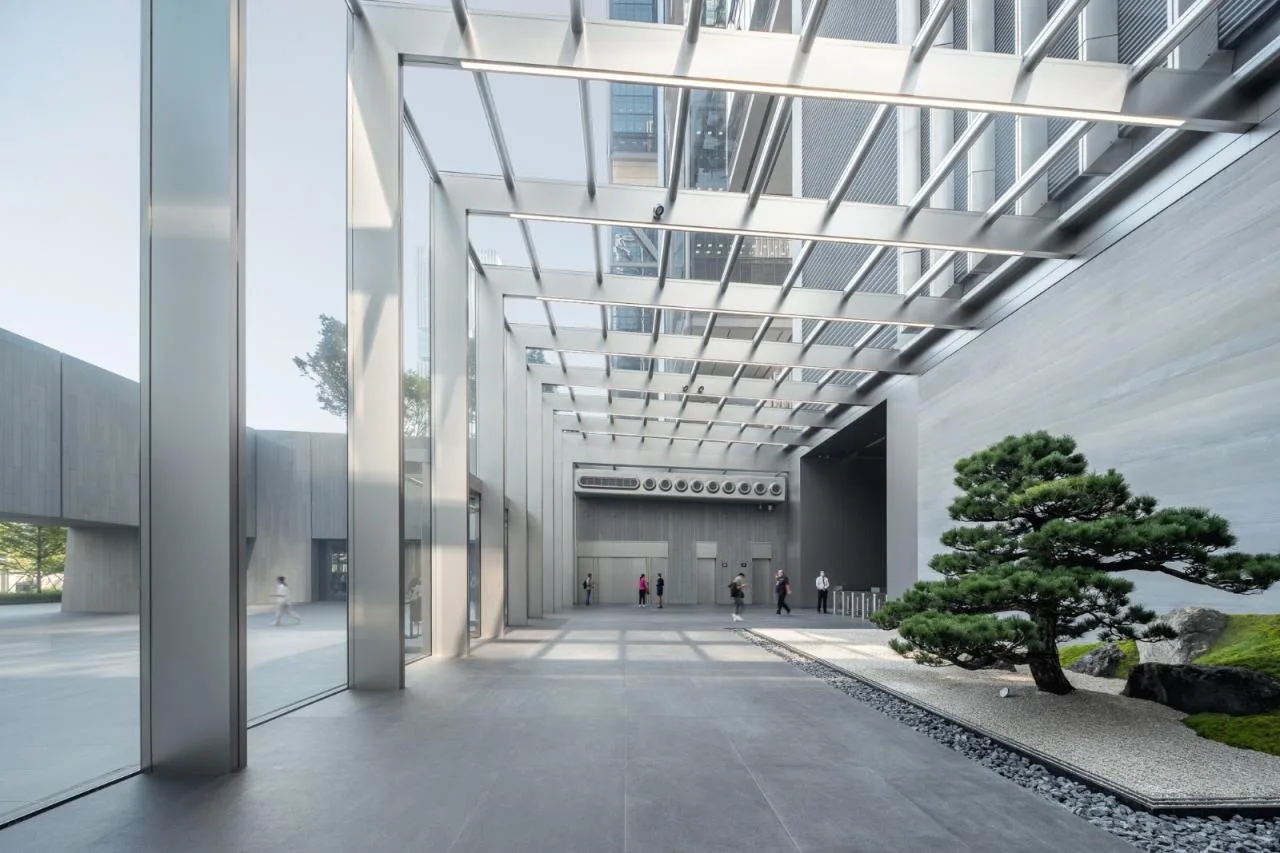
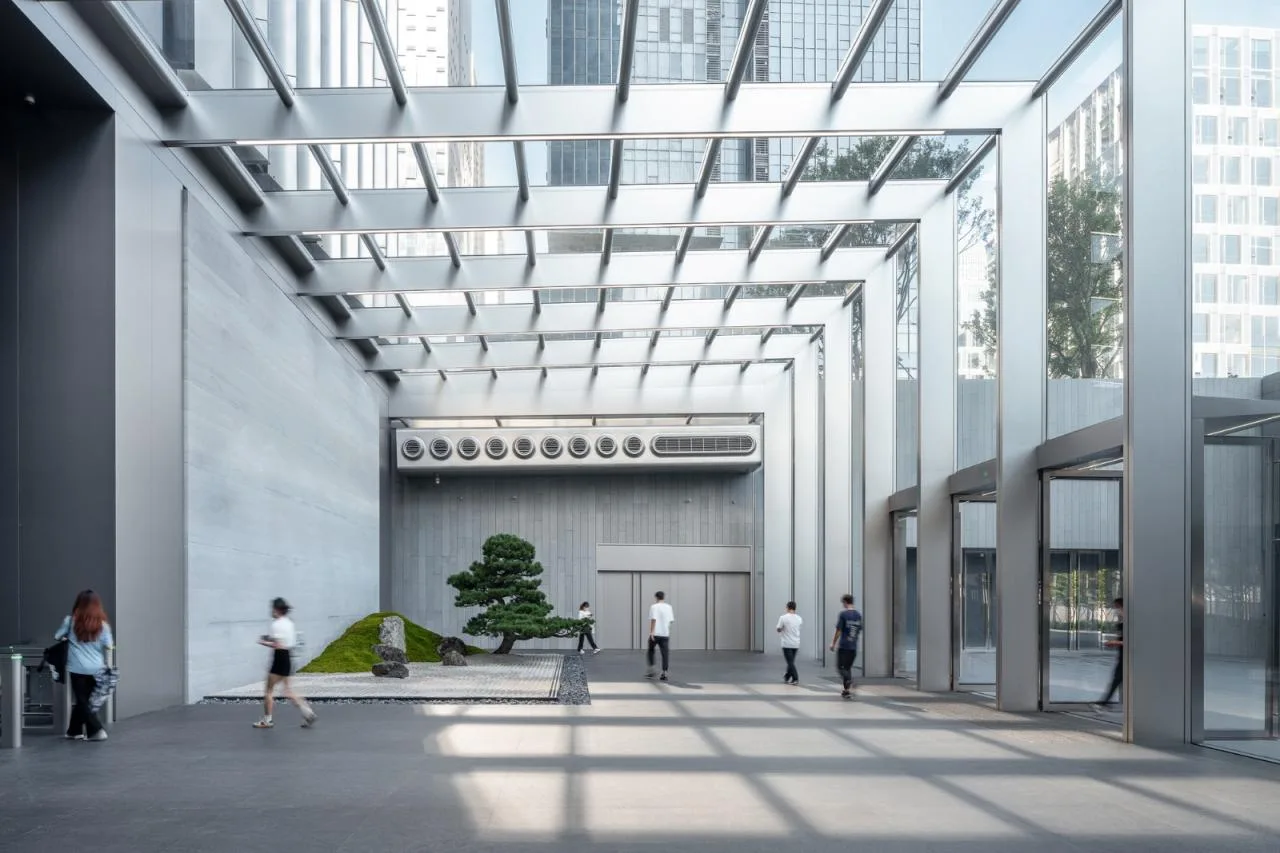
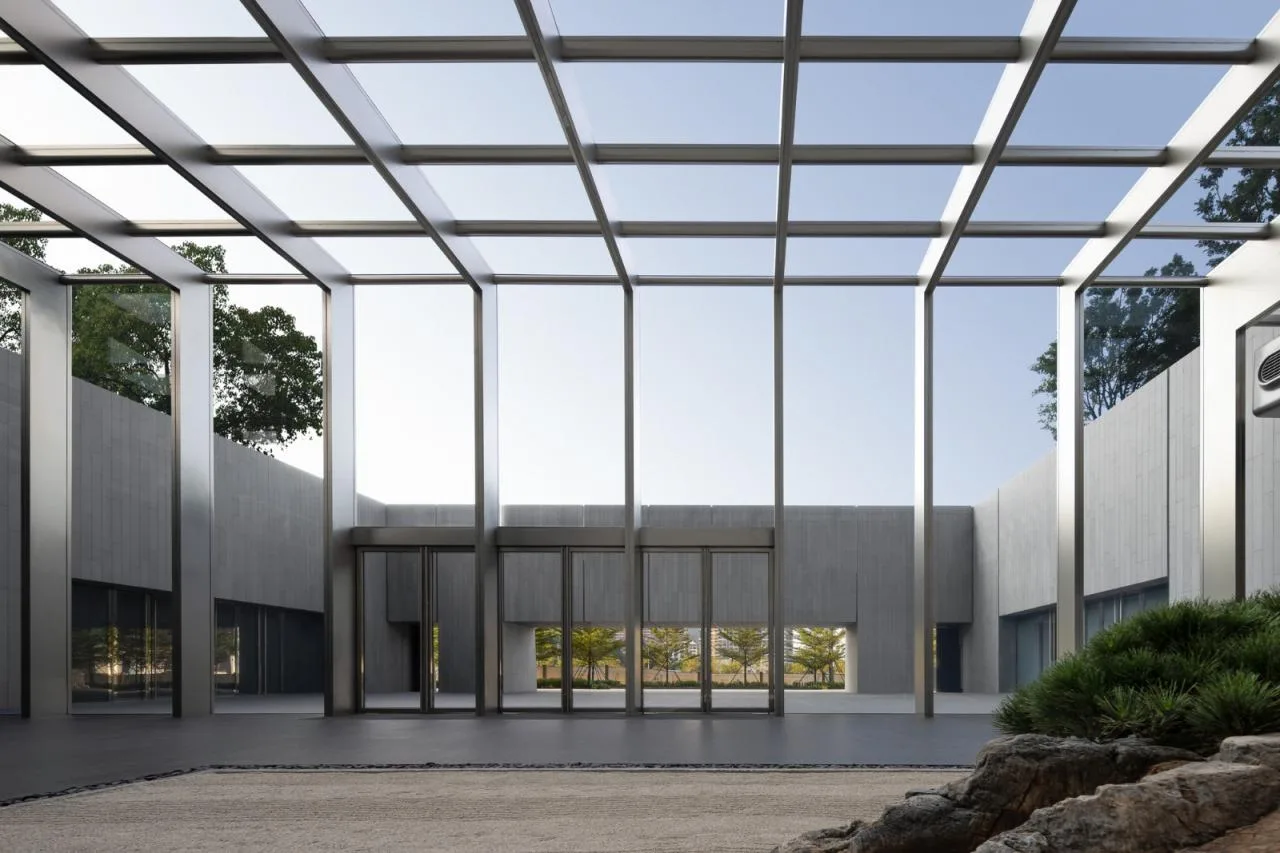
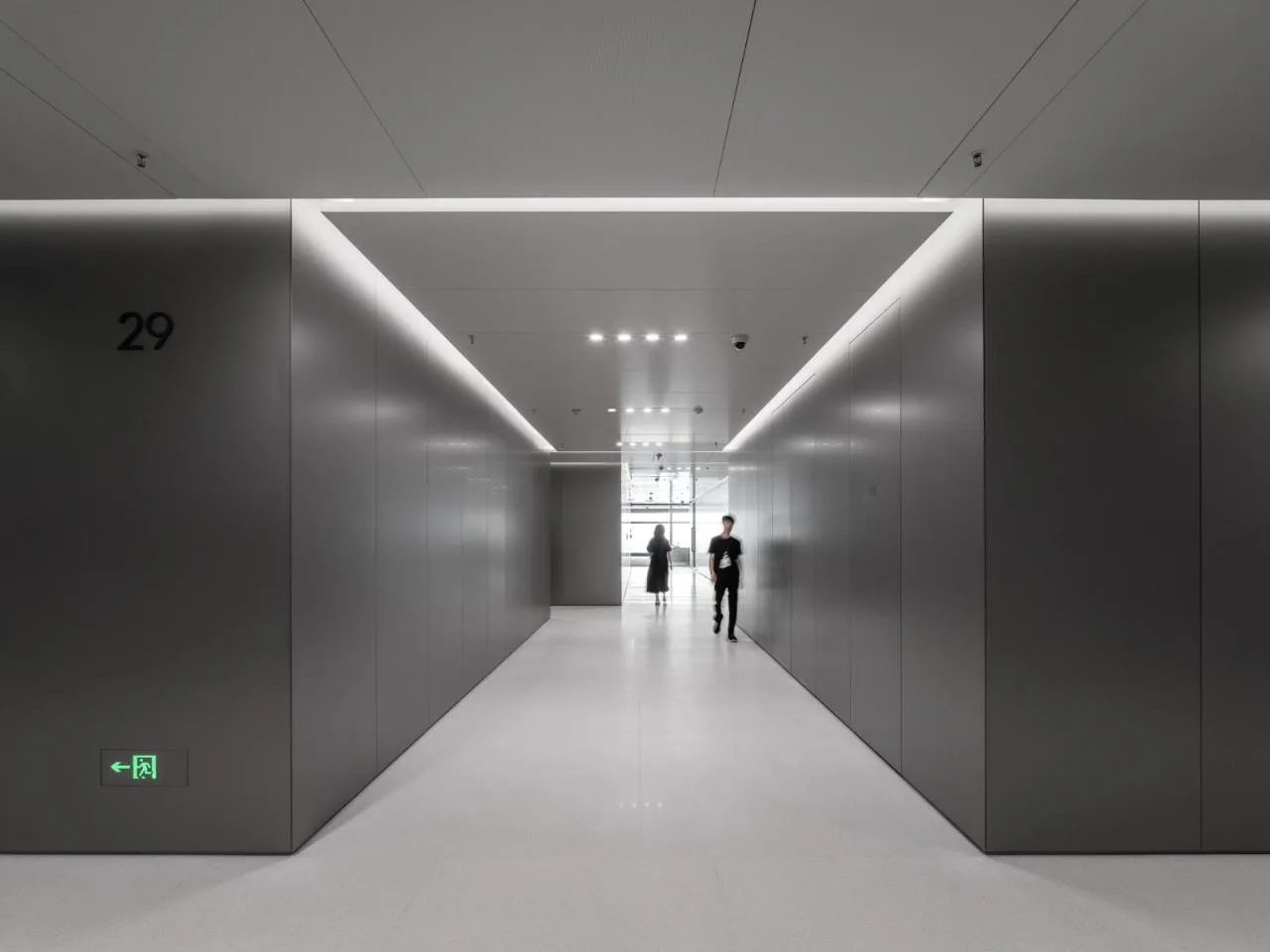
The building entrance is located on the north side of the podium, level with the adjacent northern road. East and west lobbies are situated within the “courtyard” formed by the tower fortress. The stainless steel frames are enclosed by transparent glass boxes, resembling crystal gems nestled in the base of the castle. Inside the lobby, a simple black pine tree stands alongside minimalistic dry landscape design and textured rammed earth walls. This seamless blend of natural serenity and technology creates a calm, pure atmosphere.
The office spaces redefine traditional concepts, tailored specifically to meet DJI’s research and development needs. The three blocks attached to the core tube can operate as independent or collaborative office zones, supporting DJI’s modular teamwork approach. The East Tower’s glass body block features a four-story steel truss box at its top, designed as a test flight area. This expansive volume showcases the massive truss structure as the sole ornament, creating a grand and atmospheric space. The panoramic views beyond the windows give the impression of breaking through the sky, with clouds seemingly within reach.
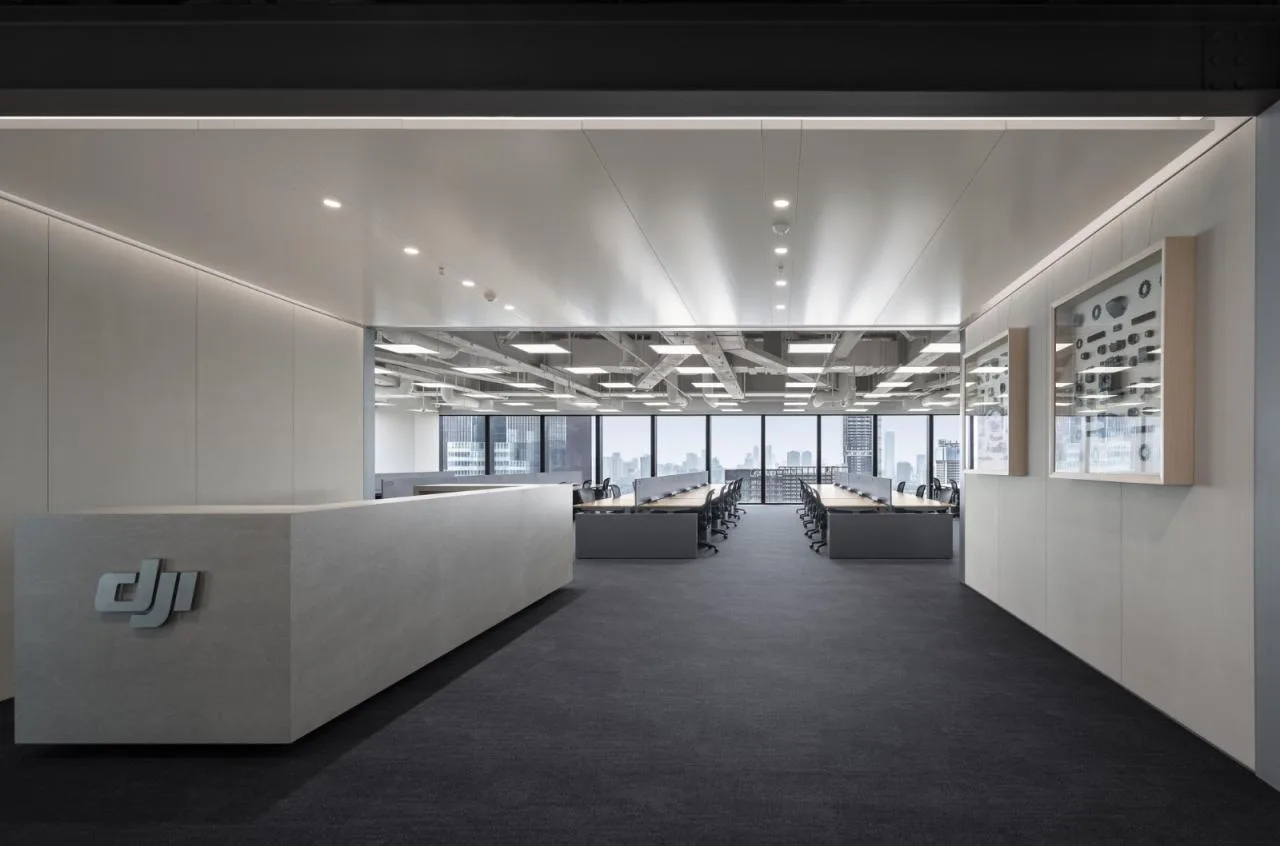
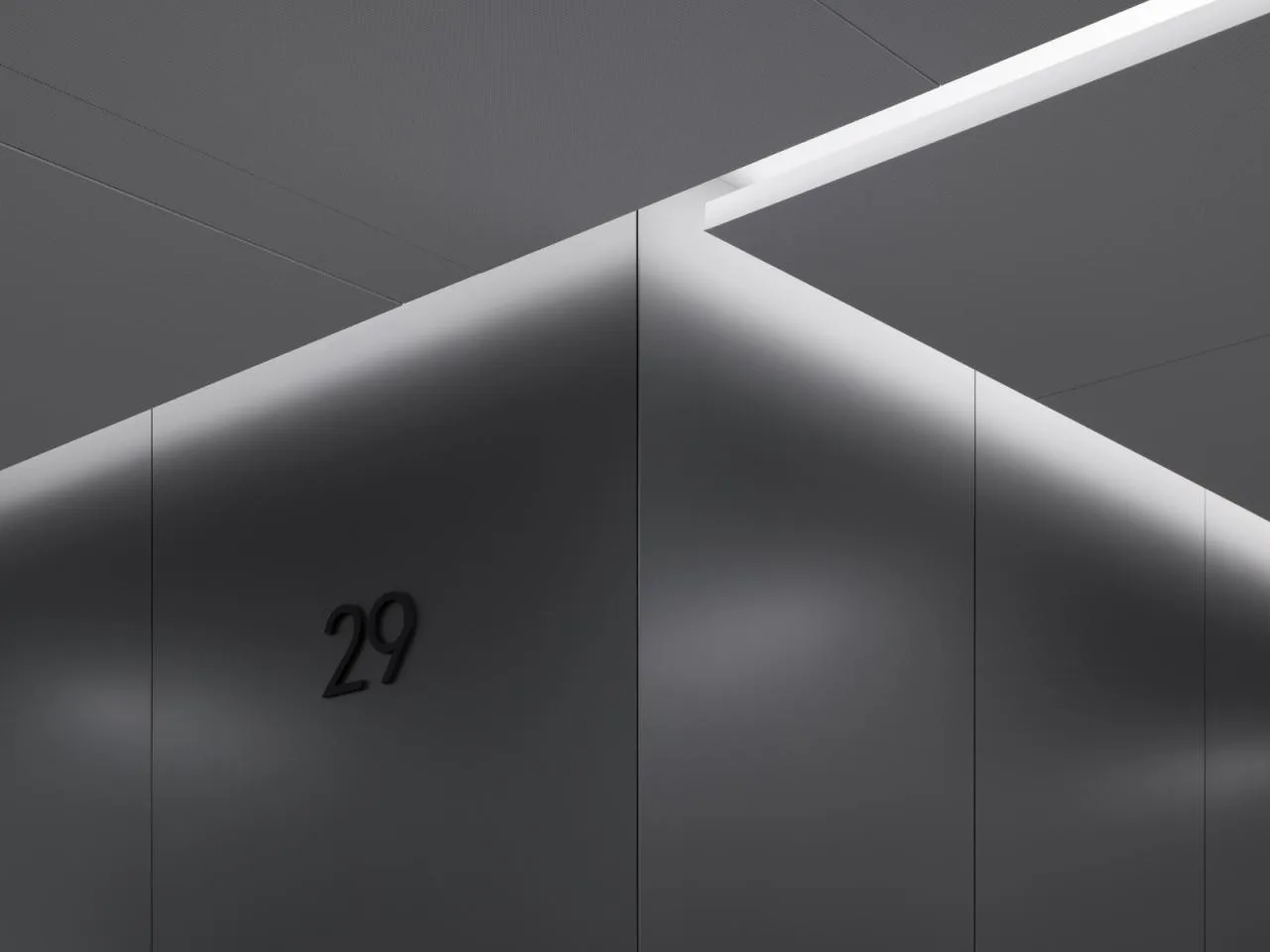
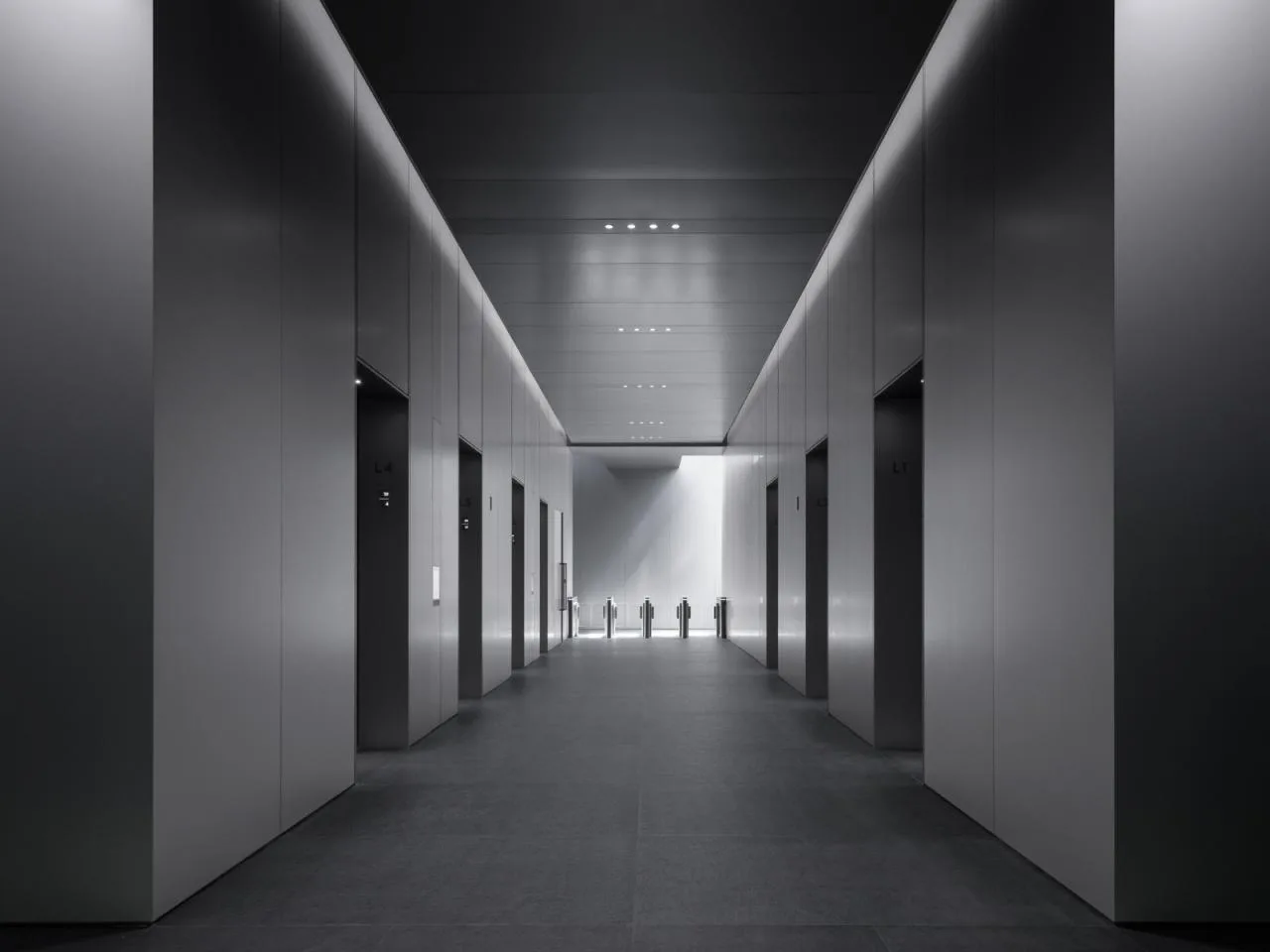
Architectural details also reflect DJI’s active participation in the design process. From material selection to logo design, DJI collaborated closely with Foster+Partners, refining many industrial research and development aspects. The building primarily features industrial materials, with frosted and matte dark metals as the dominant tones, complemented by transparent, low-reflective glass. This palette reflects the texture of industrial products and aligns with DJI’s brand identity.
“We dedicated six years to carefully building Sky City, a testament to the wisdom and hard work of DJI and its partners. I am proud to offer my colleagues a cooler, more humane, and higher-quality working environment with the inauguration of our new headquarters. Beyond upgrading the workplace, we are elevating our aspirations and dreams. The story of Sky City has just begun, and its future will be shaped by every passionate individual at DJI—what we hold dear, pursue, create, and the spirit with which we face our future. I hope Sky City becomes a spiritual home for DJI’s people, witnessing everyone’s growth.” — Wang Tao, Founder and CEO of DJI
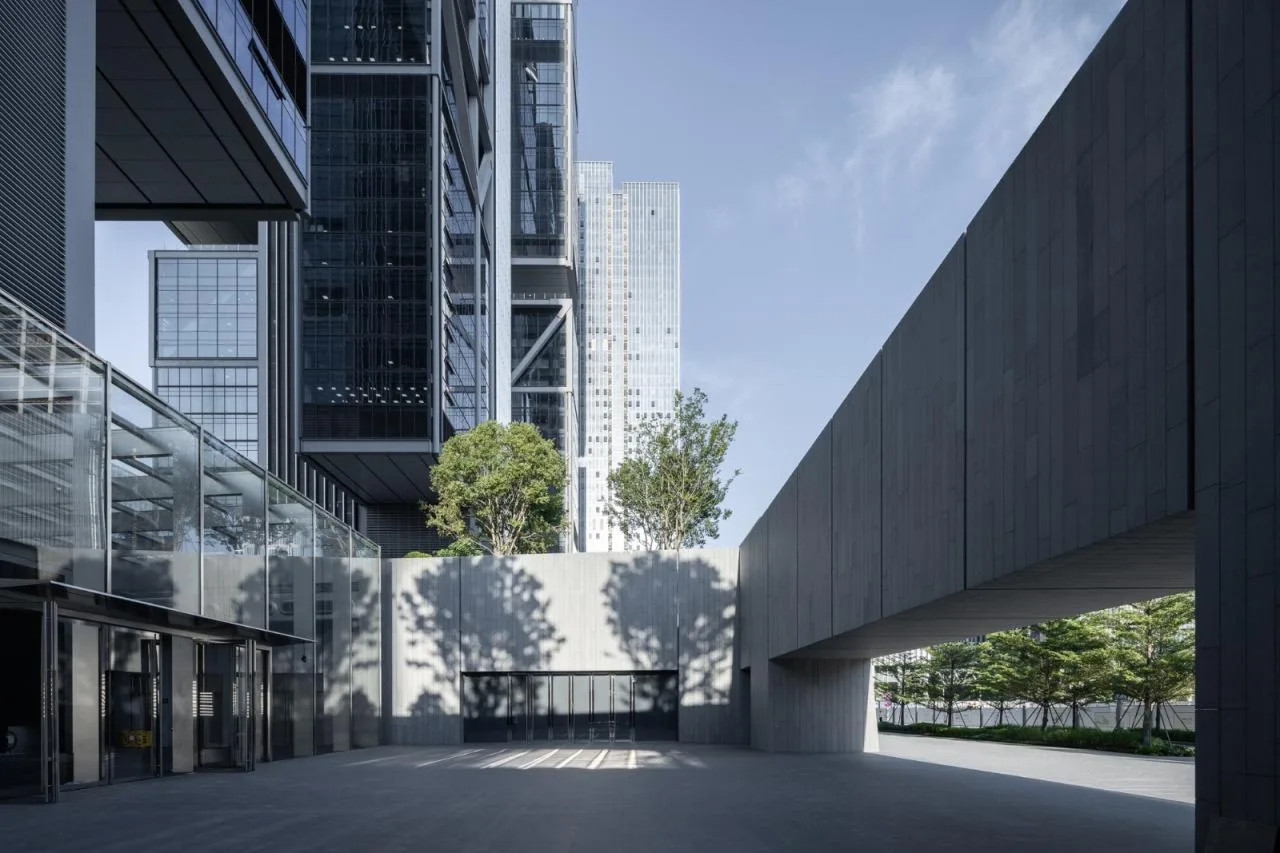
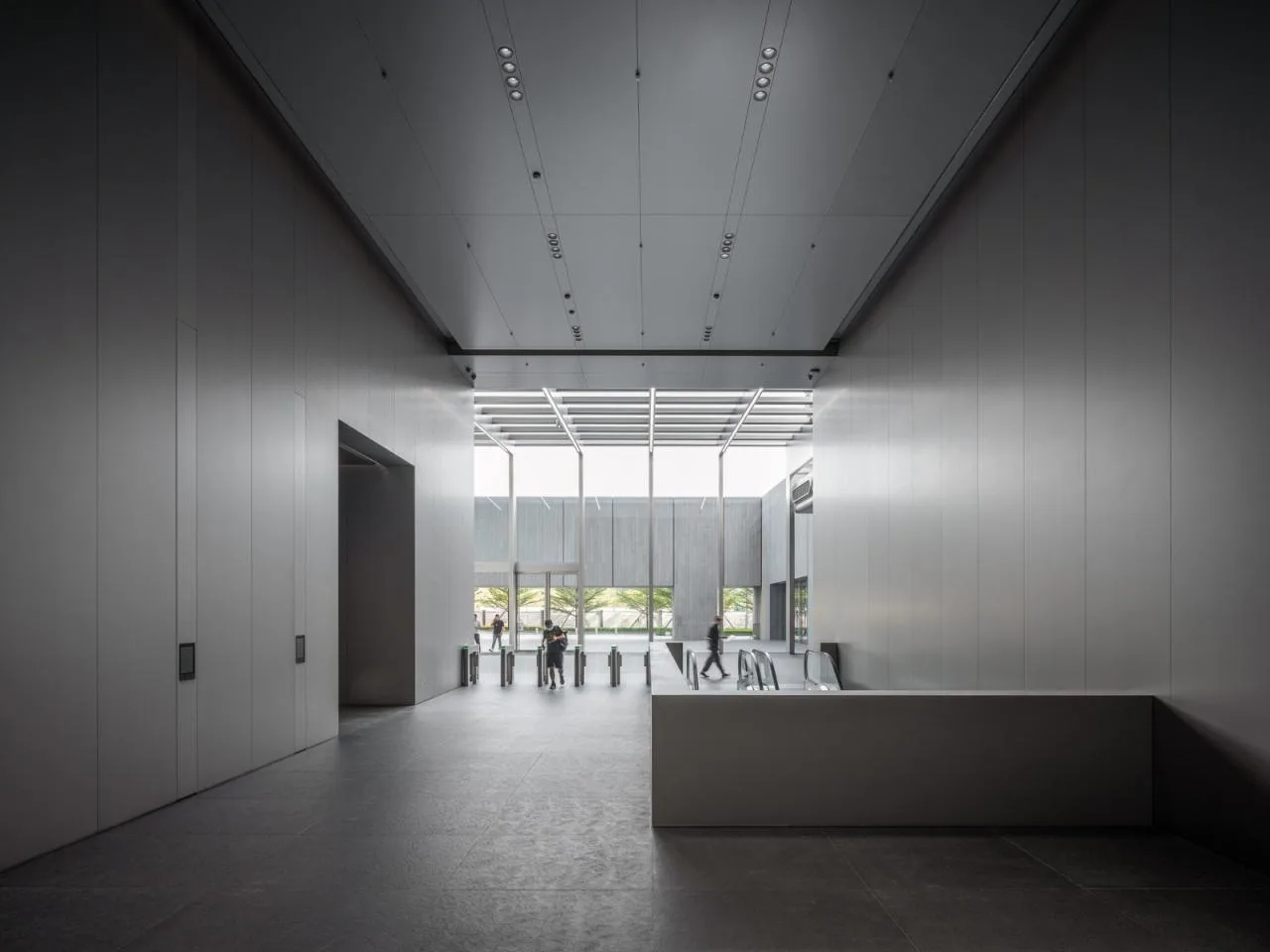
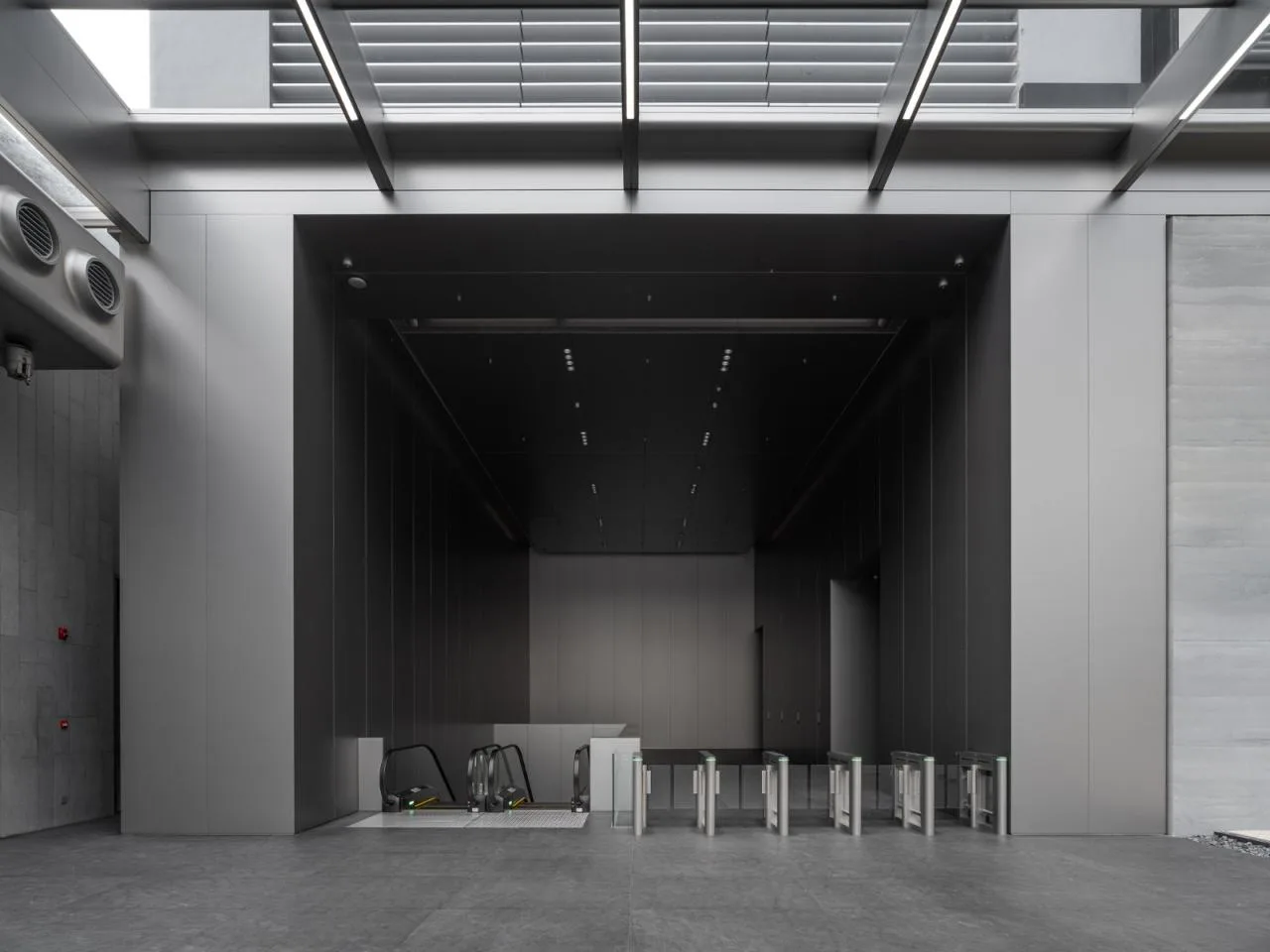
DJI Sky City is the world’s first asymmetric suspended steel structure super high-rise building exceeding 200 meters. The entire building showcases an exposed steel structure without decorative cladding, confidently using large steel frames, metal, and glass to highlight both the structural complexity and inherent beauty. Its industrial style is rational, thorough, and pure, harmoniously integrating advanced technology and nature—directly reflecting DJI’s corporate identity. For Foster+Partners, Sky City represents a poetic blend of architectural aesthetics, technological innovation, and corporate character, marking another milestone in their pursuit of excellence.
Project Drawings
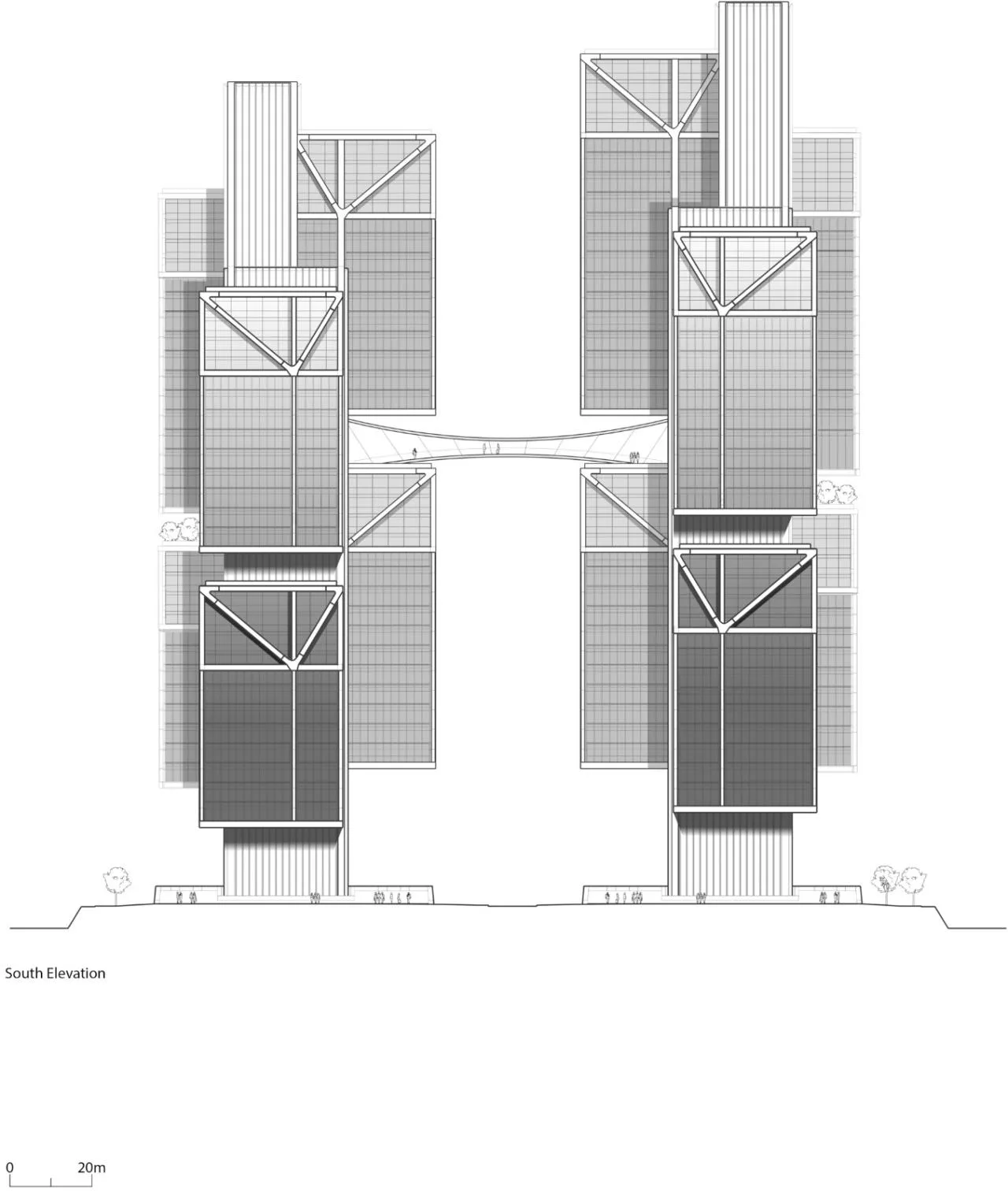
△ Elevation Drawing
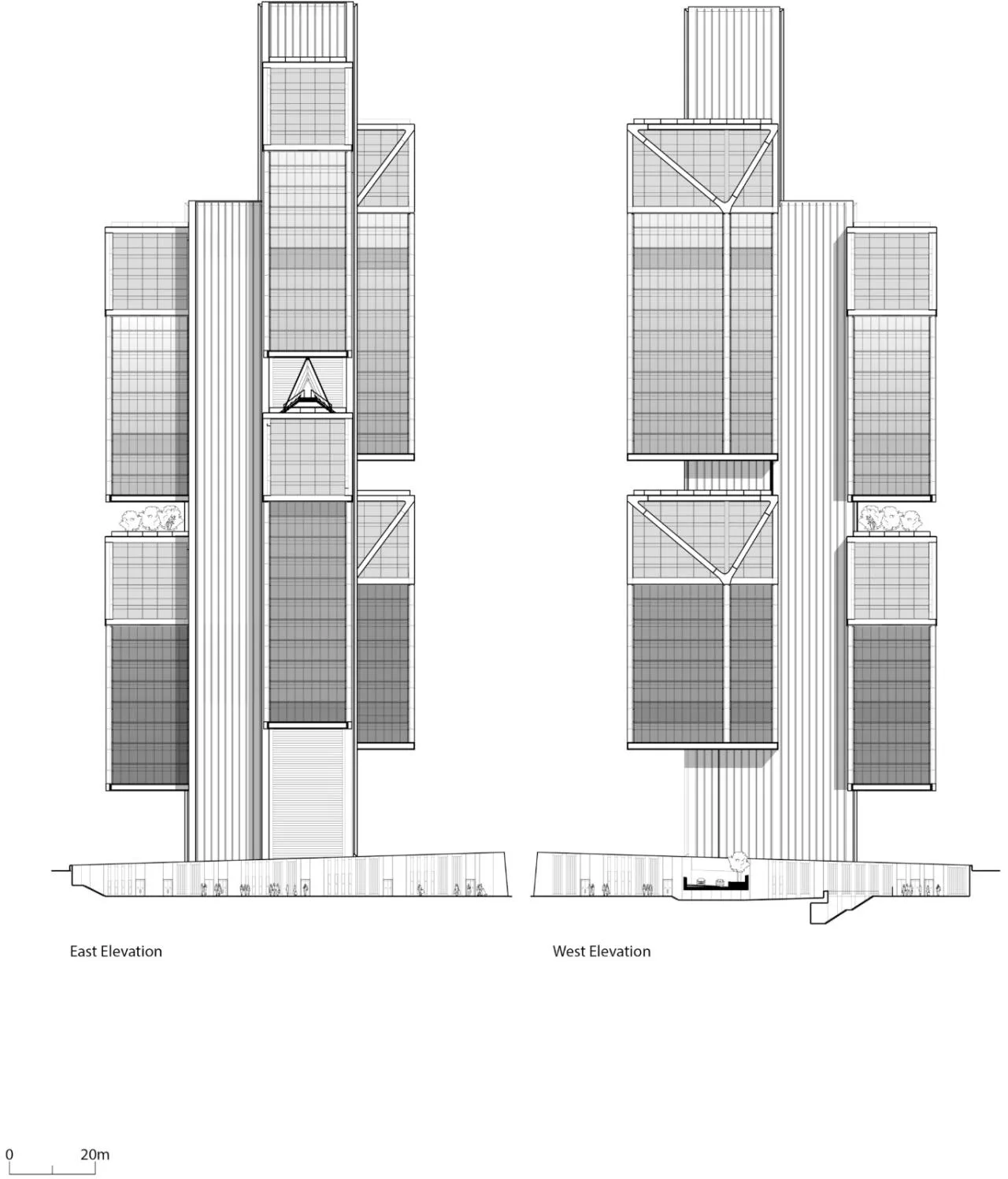
△ Elevation Drawing
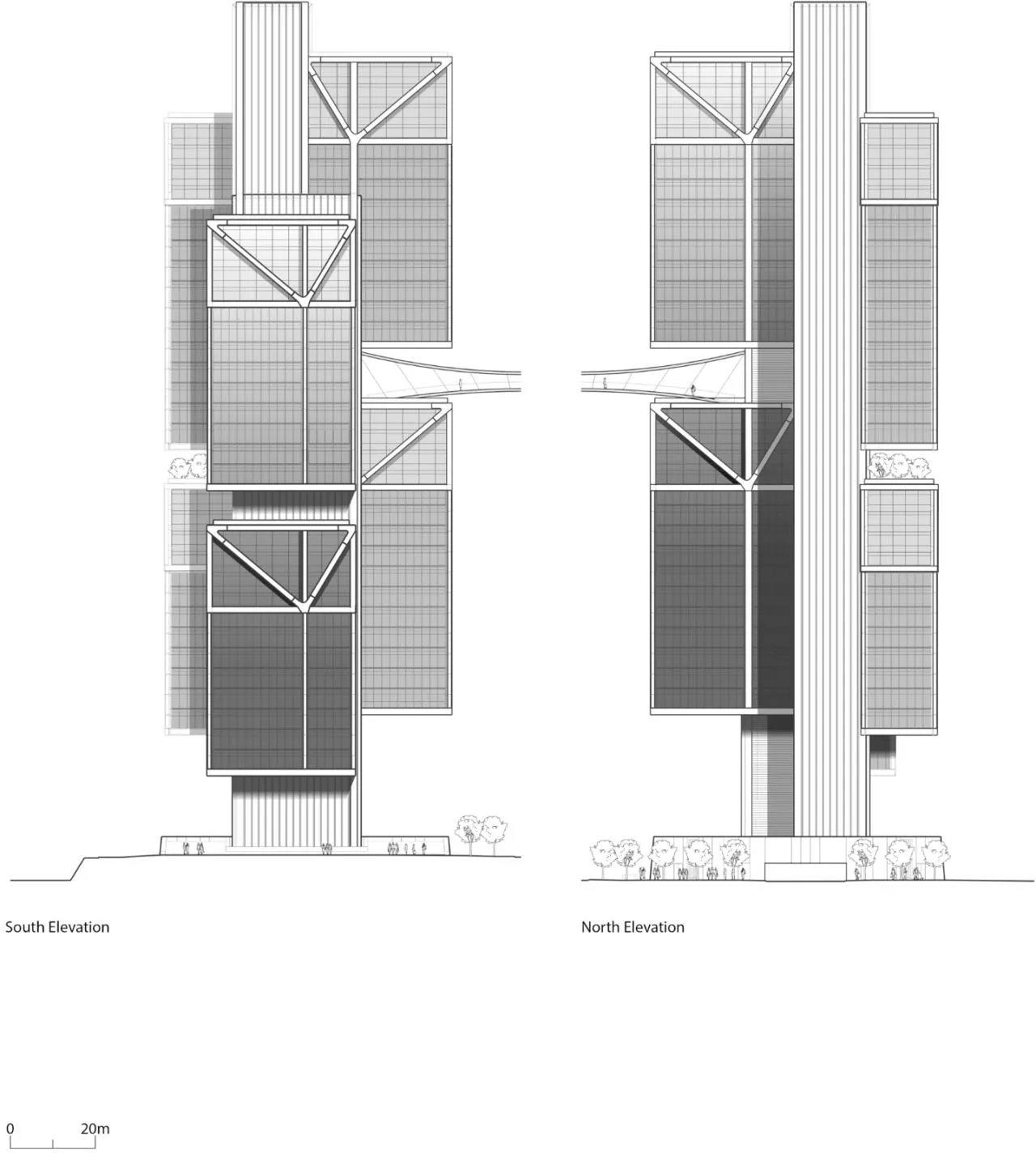
△ Elevation Drawing
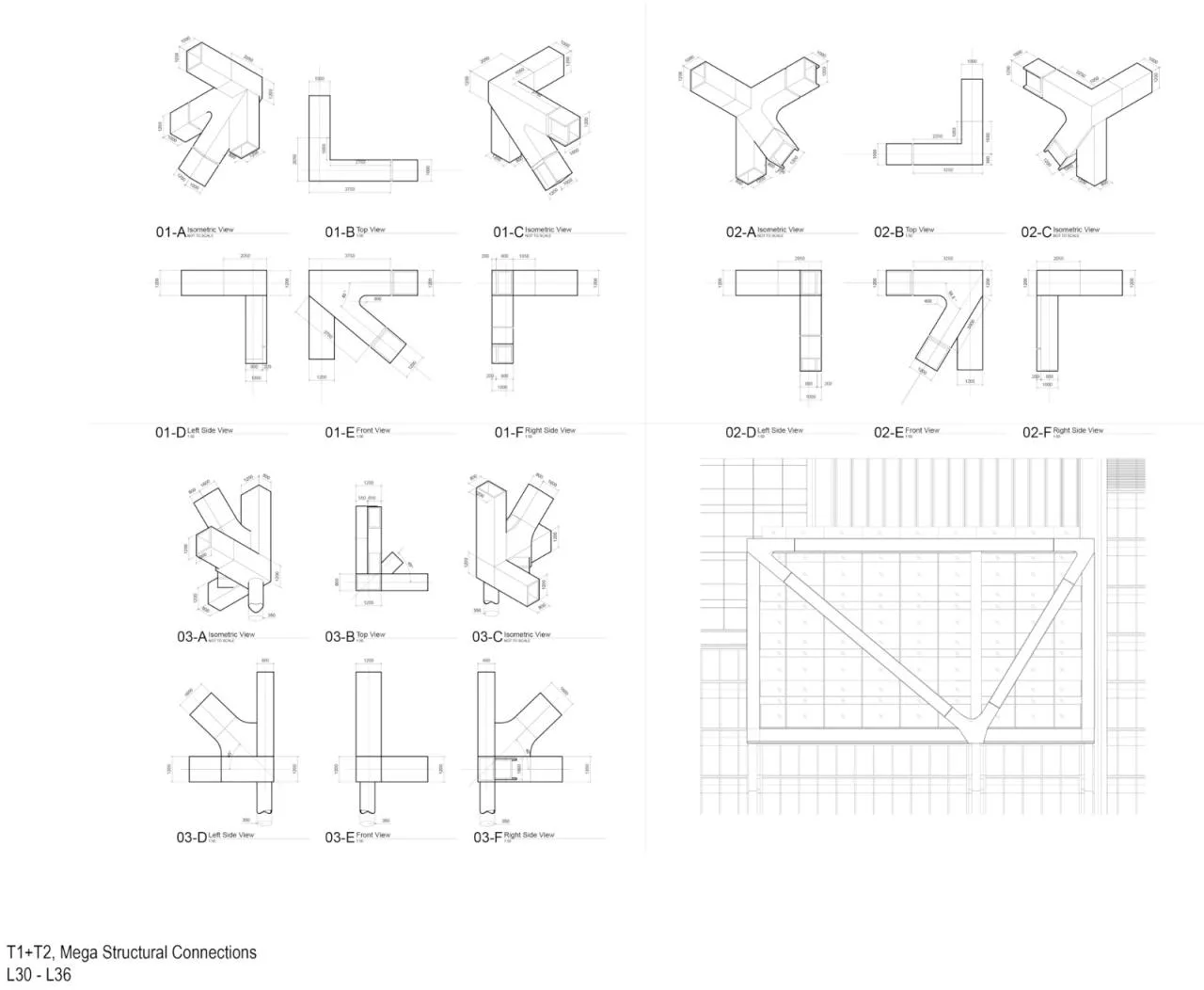
△ Analysis Chart
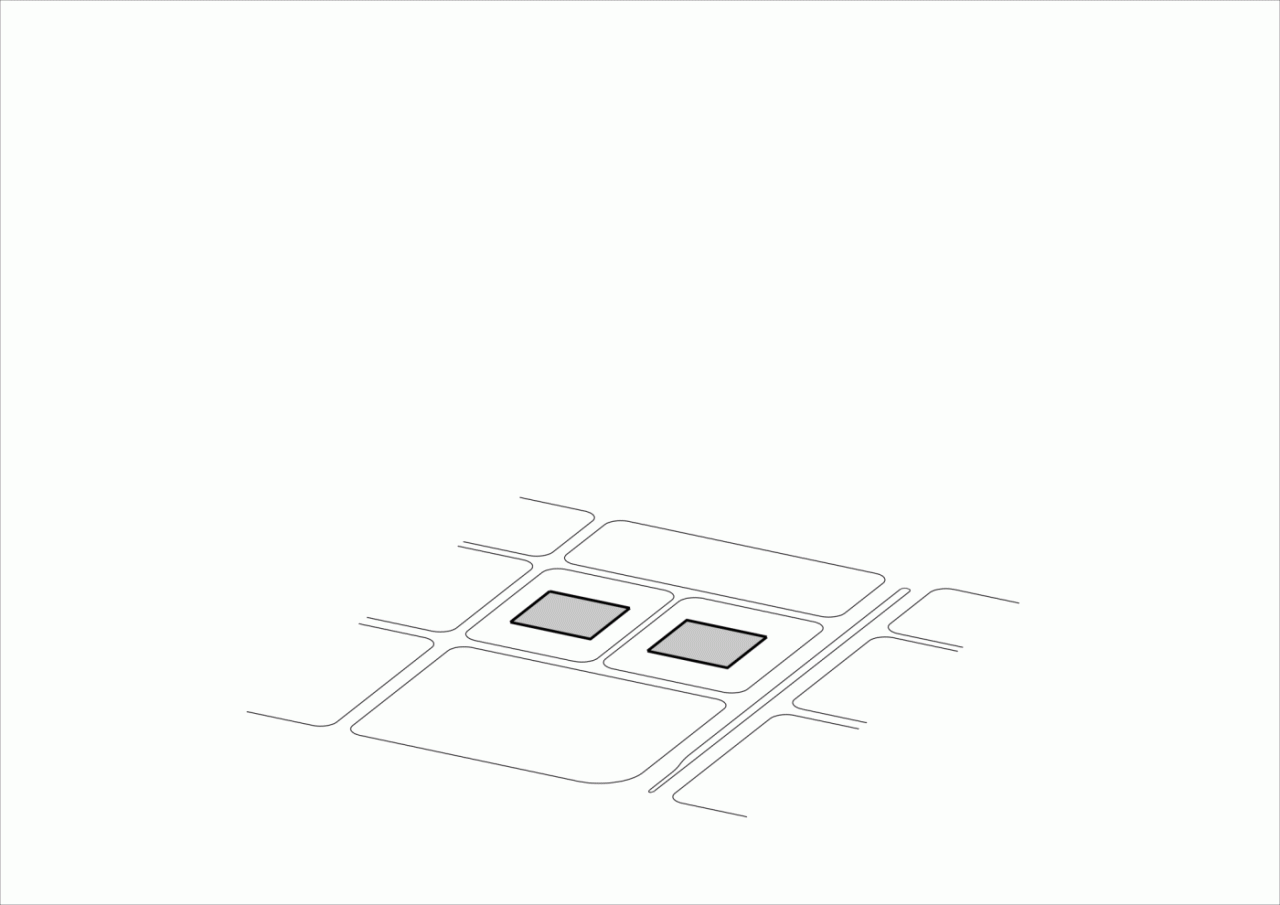
△ Generation Graph
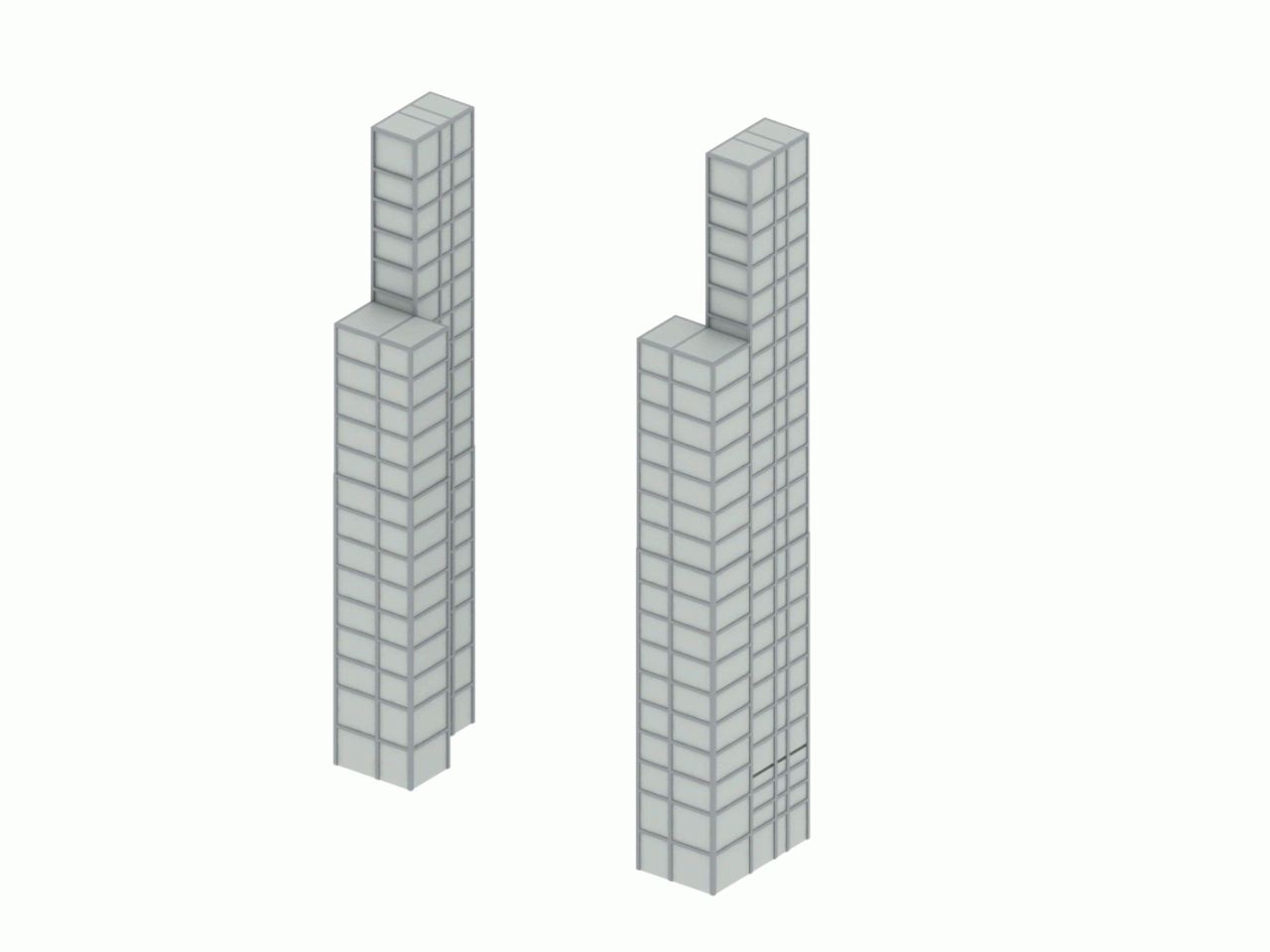
△ Analysis Chart
Project Information
Architect: Foster+Partners
Area: 242,000 m²
Project Year: 2022
Photographer: Tian Fangfang, SFAP
Design Team: Grant Brooker, Young Wei-Yang Chiu, Takuji Hasegawa, Jolanda Oud, Edin Gicevic, Yunfu Yi, Andres Harris, Aquilino Fernandez Lopez, Pavan Birdi, Saman Ziaie, Ben Mowat, Julio Alberto Garcia Pizarro, Theodora Maria Moudatsou, Nina Haylock, Lindsay Duncan, Matt Morris, Alejandra Gavira Fernandez, Wolfgang Muller, Tulin Kori Candela, Carlo Pedata, Maude Pinet
Owner: DJI
Architectural Construction Drawing Design: Huayang International Design Group
General Contractor: China Construction Fourth Engineering Bureau Co., Ltd.
Structural Consultant: Oyana
Lighting Engineer: Foster+Partners Limited, Shenzhen Handu Lighting Design Consulting Co., Ltd.
Landscape Deepening Design: Shanghai Wubei Landscape Design Co., Ltd.
Courtyard Landscape Design: Uemi Kato Garden Co., Ltd.
Green Building Consultant: Shenzhen Junye Construction Technology Co., Ltd.
Acoustic Consultant: Shen Milsom Wilke HK
Interior Design: Shenzhen Hongtao Group Co., Ltd.
Location: Shenzhen












Must log in before commenting!
Sign Up