
Recently, the site selection for the Ningbo Cixi suburban railway project was announced. The Ningbo Natural Resources and Planning Bureau has approved the preliminary site selection for this railway engineering plan. The project covers Jiangbei District, Zhenhai District, and Cixi City, and will be developed by Ningbo Rail Transit Group Co., Ltd.
In August, the Chengdu Meizhou Chengdu Railway S11, Chengdu Meizhou S5, and Chengdu Zijiang S3 lines were included as key construction projects in the “Three Year Implementation Plan for Chengdu Meizhou Zijiang Integration and Chengdu Metropolitan Area Transportation Infrastructure Interconnection (2020-2022).” These serve as the urban railway infrastructure framework for the Chengdu metropolitan area. Currently, the Chengdu metropolitan area is coordinating a multi-level, multi-standard rail transit network centered on Chengdu. This network promotes integration among trunk railways, intercity railways, suburban railways, and urban rail transit, with the goal of creating a one-hour commuting circle for rail transit.
Since 2021, six national-level metropolitan areas have been successively approved. Following the approval of their plans, priority has been given to building transportation infrastructure aimed at establishing a “one-hour commuting circle.” With the advancement of urban agglomeration construction, multiple urban railway projects have either begun construction or received approval.
What is Urban (Suburban) Railway?
Urban (suburban) railways, also known as commuter railways, are passenger rail transit systems operating within metropolitan areas. They connect urban centers with suburban zones and surrounding urban clusters. These systems employ flexible train formations, high-frequency scheduling, and public transportation organization to meet the demand for fast, accessible travel within a one-hour commuting radius. Alongside mainline railways, intercity railways, and urban rail transit, they form a transportation system with a clear network hierarchy, well-defined functional roles, and efficient connectivity.
In 2019, the National Development and Reform Commission issued the “Guiding Opinions on Cultivating and Developing Modern Urban Agglomerations,” encouraging the vigorous development of urban (suburban) railways. The policy prioritizes using existing resources, such as upgrading current railways, reconstructing and expanding local lines, and renovating station platforms to operate urban (suburban) trains. It also advocates for the orderly construction of new urban (suburban) railways and integrating these services into the broader urban public transportation system.
As part of the “Multi-level Rail Transit Plan for the Yangtze River Delta Region,” approved by the National Development and Reform Commission, the Ningbo Cixi Urban (Suburban) Railway Project is a key initiative planned and constructed during Ningbo’s 14th Five-Year Plan period. This project will serve as the northern backbone line of Ningbo’s urban (suburban) railway network, connecting Ningbo’s main city with its northern sub-city. It supports the city’s northward expansion and facilitates medium- to long-distance travel from Ningbo’s central city to its northern sub-city, as well as intra-town commuting along the line. It is a vital transportation corridor for Ningbo’s goal of high-quality development and building a leading city for common prosperity.
Upon completion, this project will help boost the northern Ningbo area, promote comprehensive land and space improvement, stimulate development along the railway corridor, upgrade industries such as transportation and ecology, and offer new opportunities for integrated regional development, coordinated growth, and shared progress.
Urban (Suburban) Railways: A Key Focus in Rail Transit Development
Urban (suburban) railways primarily operate in the central cities of economically developed and densely populated metropolitan areas. They connect urban centers with suburban areas and nearby urban clusters. Employing flexible train configurations, high frequency, and public transit organization, these railways cater to the rapid travel needs within a one-hour commuting radius. They form a transportation system with a defined network hierarchy, appropriate functional roles, and seamless connections to trunk railways, intercity railways, and urban transit.
Urban (suburban) railways emphasize supporting and guiding the main functional zones of metropolitan areas. Routes should connect urban clusters with populations of 50,000 or more, important industrial parks, tourist attractions, and other significant locations, with stations designed to maximize passenger flow.
Cost is also a key factor in urban railway construction. Professor Peng Qiyuan of the School of Transportation and Logistics at Southwest Jiaotong University stated that subway construction costs typically range from 700 million to 800 million yuan per kilometer, sometimes exceeding 1 billion yuan. In contrast, urban railways are significantly more cost-effective while still offering high-capacity, high-frequency public transportation.
The Sichuan Urban (Suburban) Railway Project represents an important initiative by the Provincial Party Committee and Government to implement the Central Committee of the Communist Party of China’s major decision on building the Chengdu-Chongqing Economic Circle. Its aim is to accelerate infrastructure interconnectivity between Chengdu, Meizhou, and Guizhou, enhance the modern comprehensive three-dimensional transportation system of the Chengdu metropolitan area, and support the full integration of these cities into the metropolitan region.
Regional Intercity and Suburban Railway Planning and Development Forum
During the 14th Five-Year Plan period, China will emphasize projects such as strategic backbone corridors, intercity railways in the three major regions, and urban railways. By 2035, the goal is to establish an efficient modern high-speed railway network alongside a broadly covered conventional railway network. Priority will be given to building intercity railway networks in urban agglomerations including Beijing-Tianjin-Hebei, the Yangtze River Delta, Guangdong-Hong Kong-Macao Greater Bay Area, and Chengdu-Chongqing. Efforts will also accelerate urban railway construction in metropolitan areas, promoting integration among trunk railways, intercity railways, suburban railways, and urban rail transit networks.
Against this backdrop, the “Regional Intercity and Urban (Suburban) Railway Planning and Development Forum,” organized by the Urban Transportation Network and hosted by the Urban Public Transport Branch of the Chinese Society of Civil Engineering, will take place in Nanjing from November 23 to 24, 2022. The forum is jointly organized by the Shandong Rail Transit Society, the Railway Branch of the Jiangsu Comprehensive Transportation Society, Shengge Exhibition (Shanghai) Co., Ltd., and others.
This event will invite experts and leaders from urban rail transit, intercity, and suburban railway sectors nationwide to explore development prospects and promote innovation in regional intercity and suburban railways.
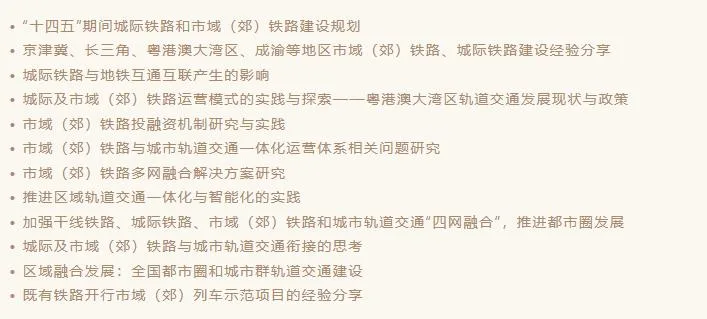
Hot topics:
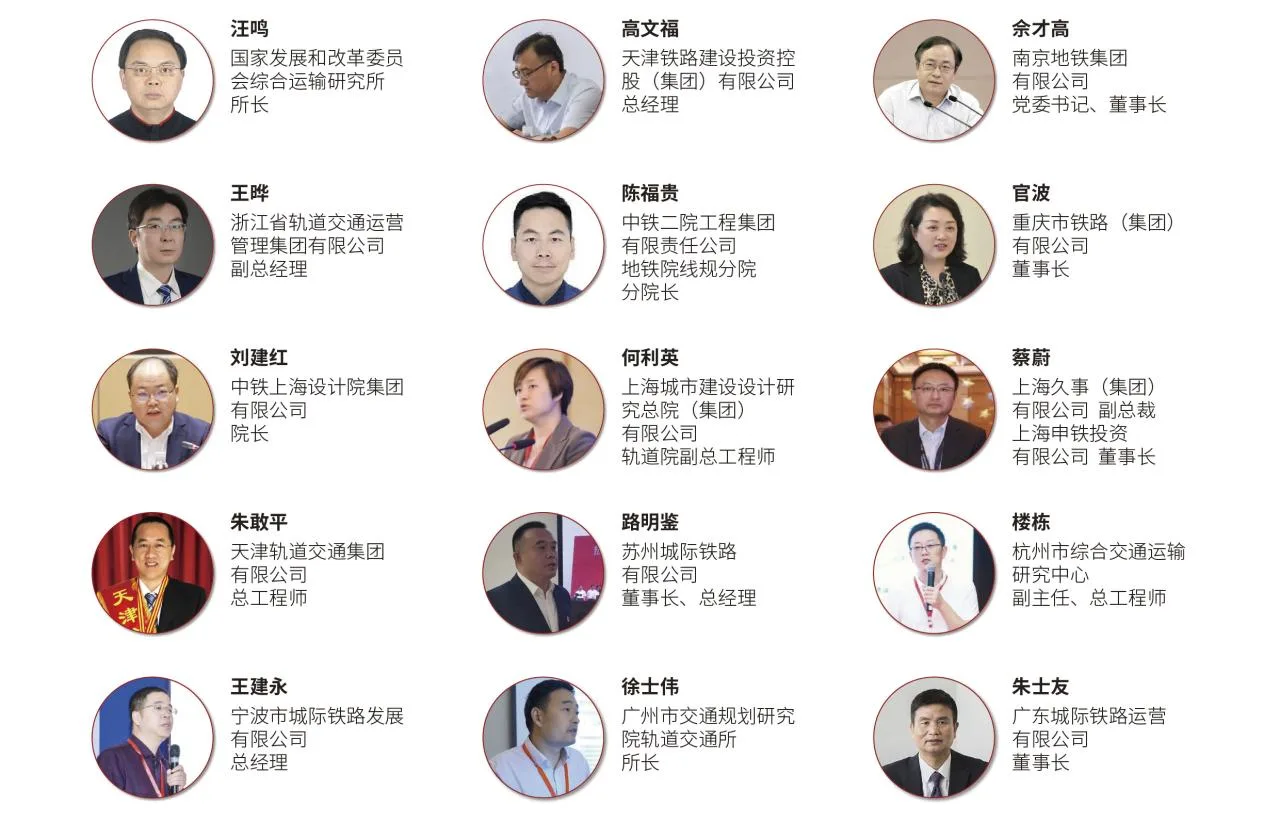
Invited Guests:
Simultaneously with the forum, the 2022 ARTS International Advanced Rail Transit Technology Exhibition will be held. Exhibits will cover vehicles and components, rail transit vehicle interiors, rail security technologies and equipment, power supply and new energy solutions, vehicle application materials, smart rail transit and communication signals, tunnels and underground engineering, and maintenance engineering. This exhibition offers an outstanding platform for domestic and international rail transit industry companies to showcase and exchange products and technologies.
During the exhibition, dozens of specialized themed events and summit forums will take place, featuring hundreds of industry experts who will explore and analyze market trends. Nearly a thousand upstream and downstream customers will gather to showcase the latest products, cutting-edge technologies, and innovative solutions in railway and urban rail transit.
As a leading and authoritative exhibition brand, the International Rail Transit Exhibition has limited exhibition space and quotas. Secure your business opportunities now!

Booth reservation: 021-3114 8748
Visit/Media Contact: 13601815988
QQ: 2463282767
Email: artsexpo@sgexpo.cn













Must log in before commenting!
Sign Up