
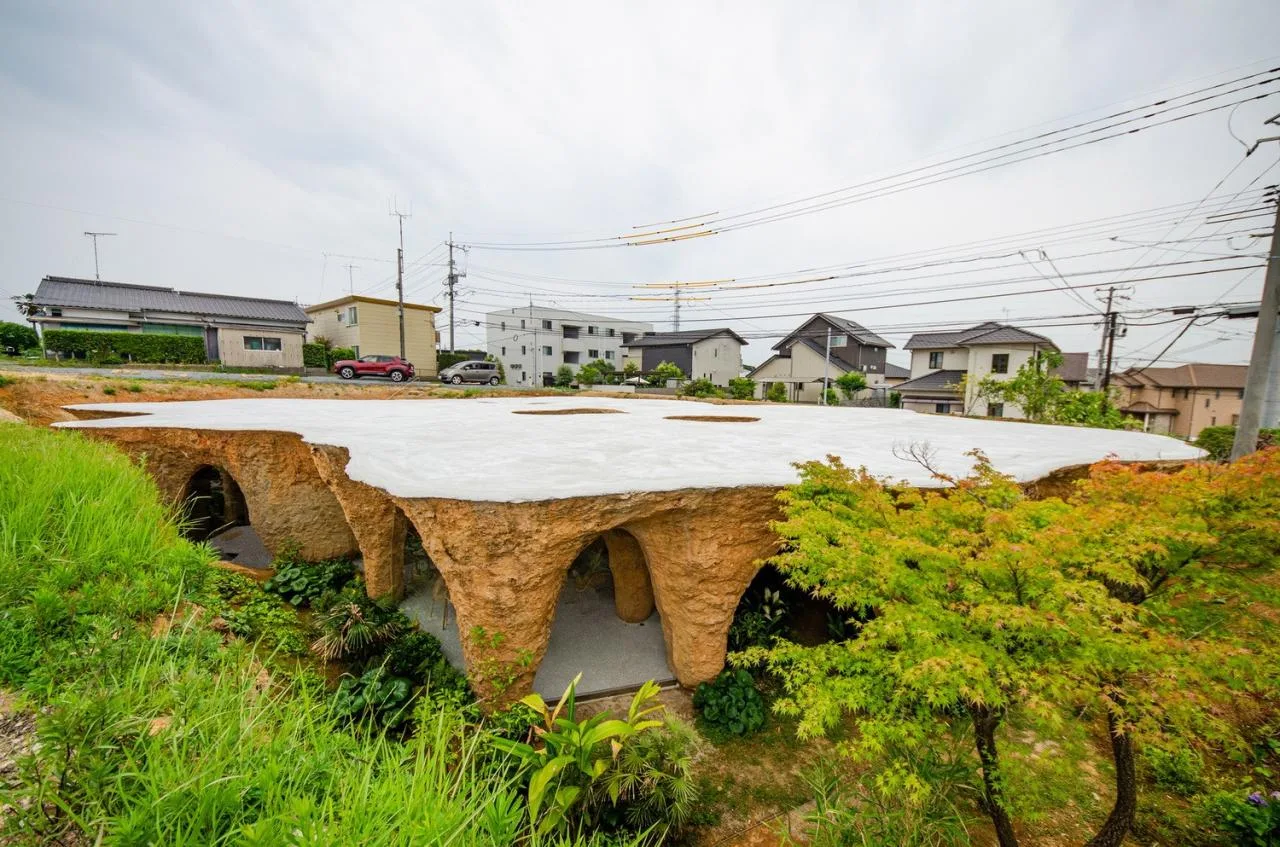
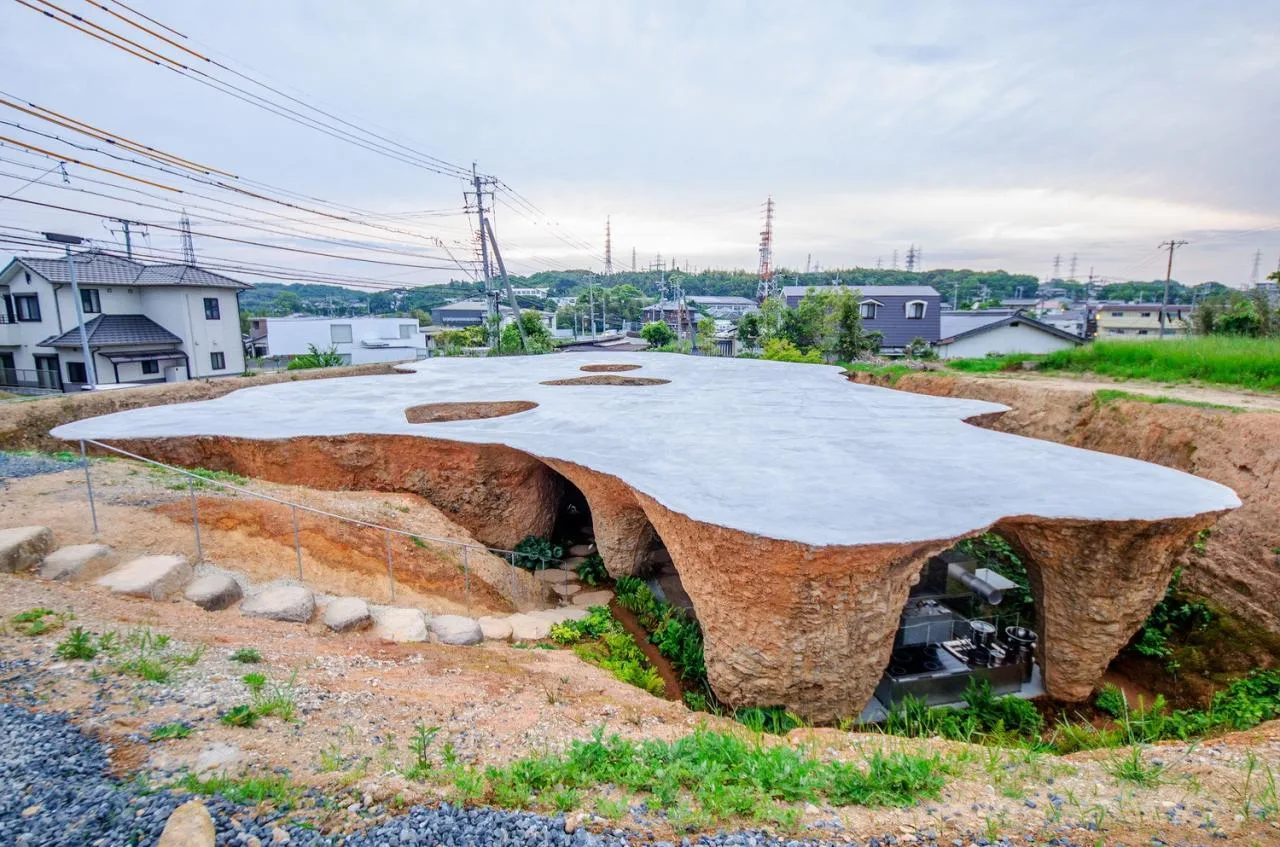
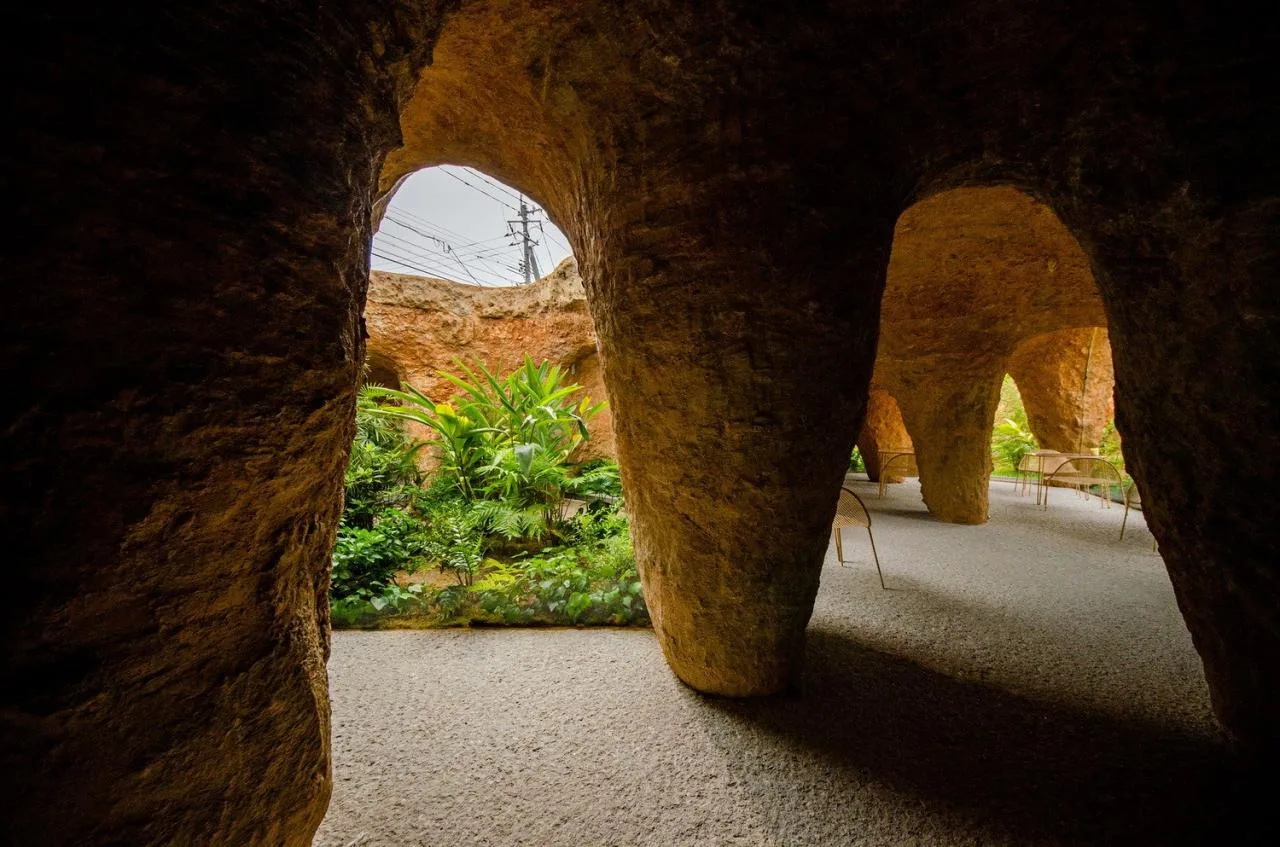
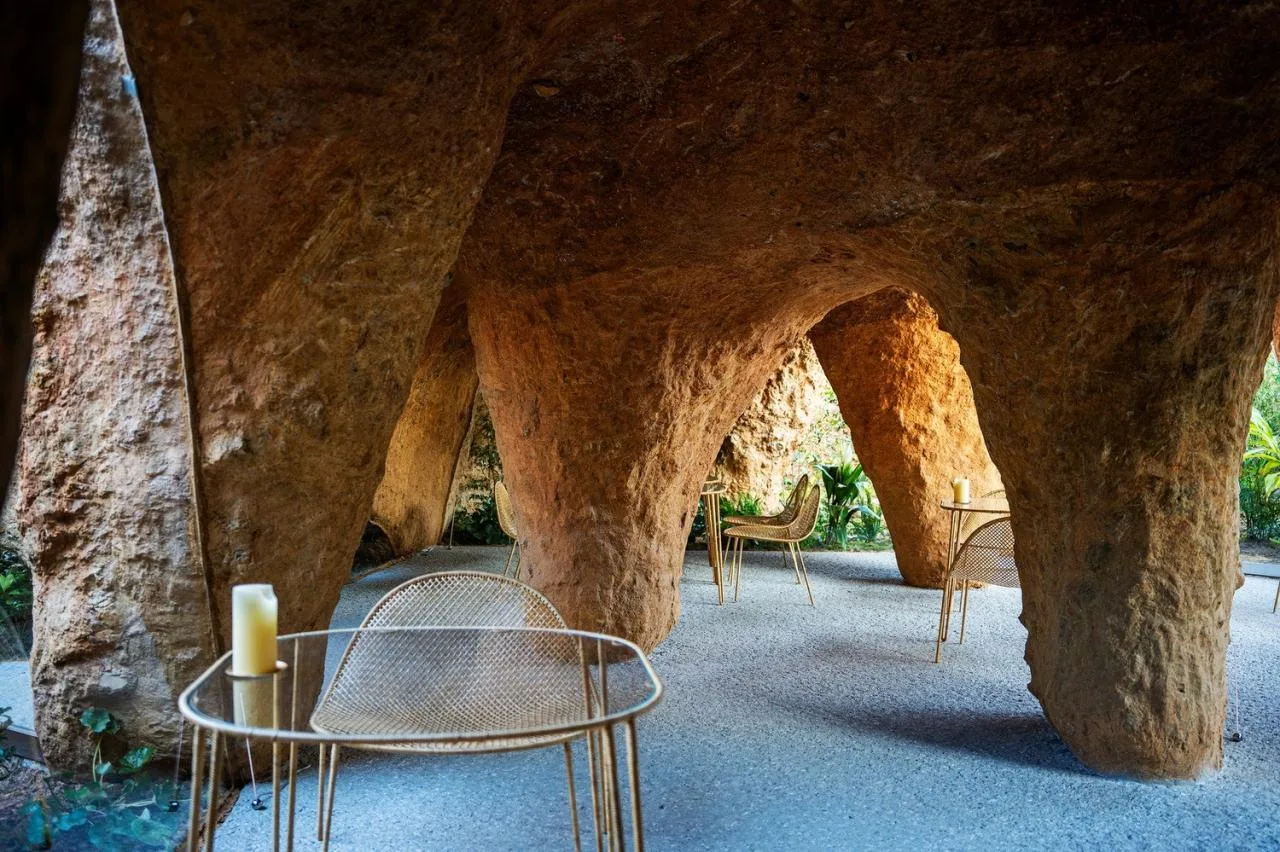
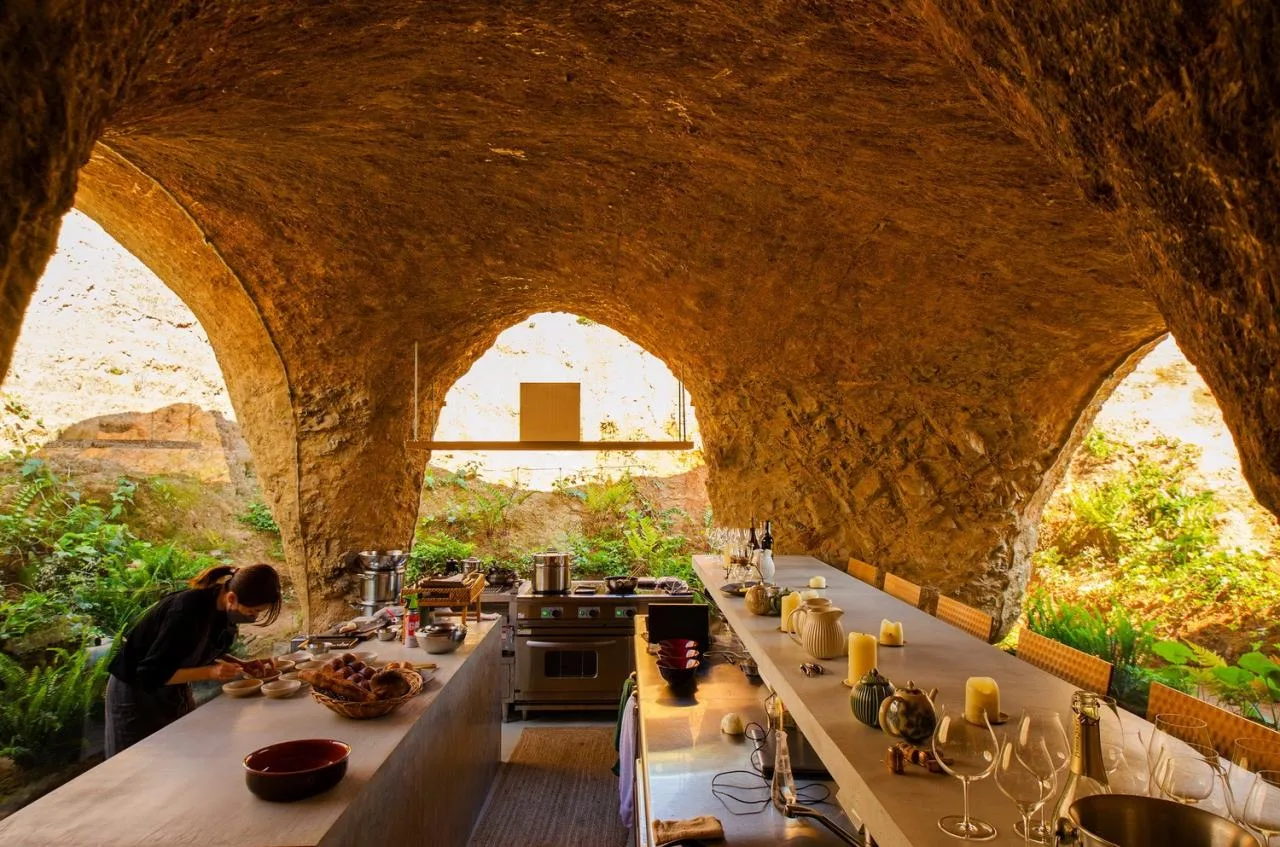
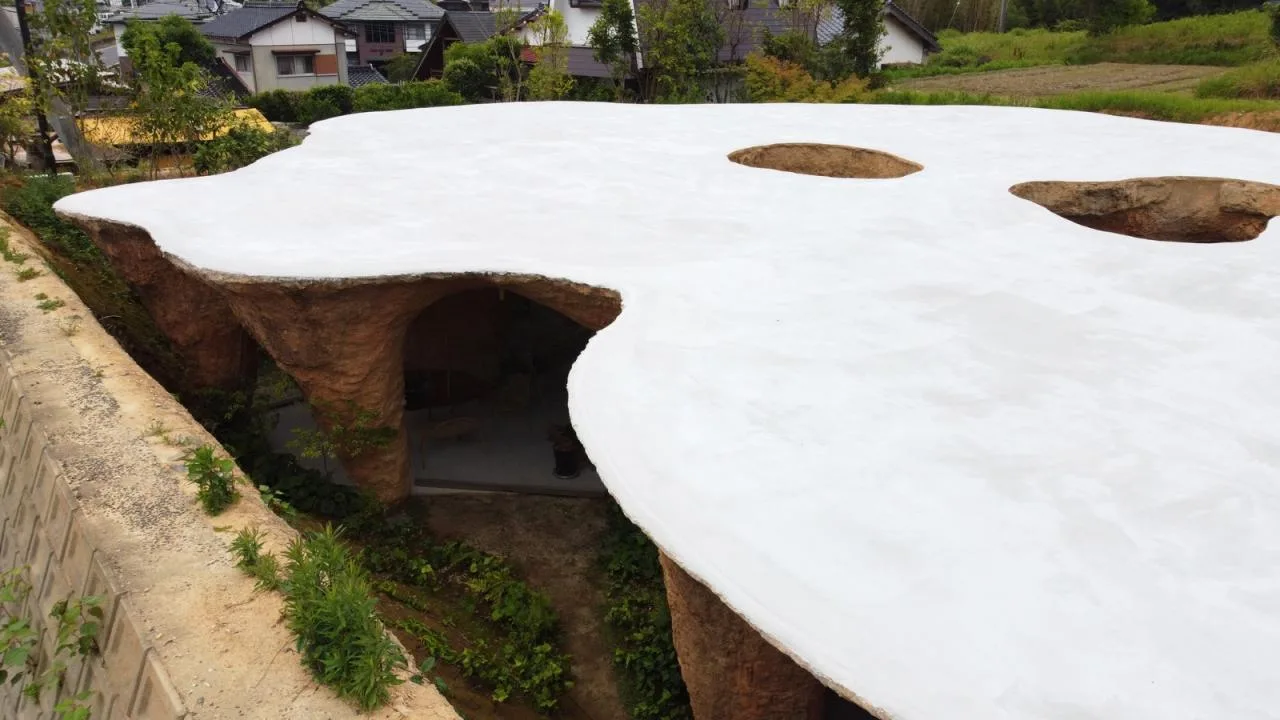
Maison Owl is a unique building that serves both as a French restaurant and a private residence. The owner, a longtime friend and the client for my first project “The Tables for a Restaurant,” envisioned a structure that would grow “heavier” with time. He desired a building without artificially polished smooth surfaces, but rather one with a raw, natural texture. As he put it, “Authentic cuisine deserves a setting that feels timeless, a place that has existed for a long time and will continue to exist eternally.”
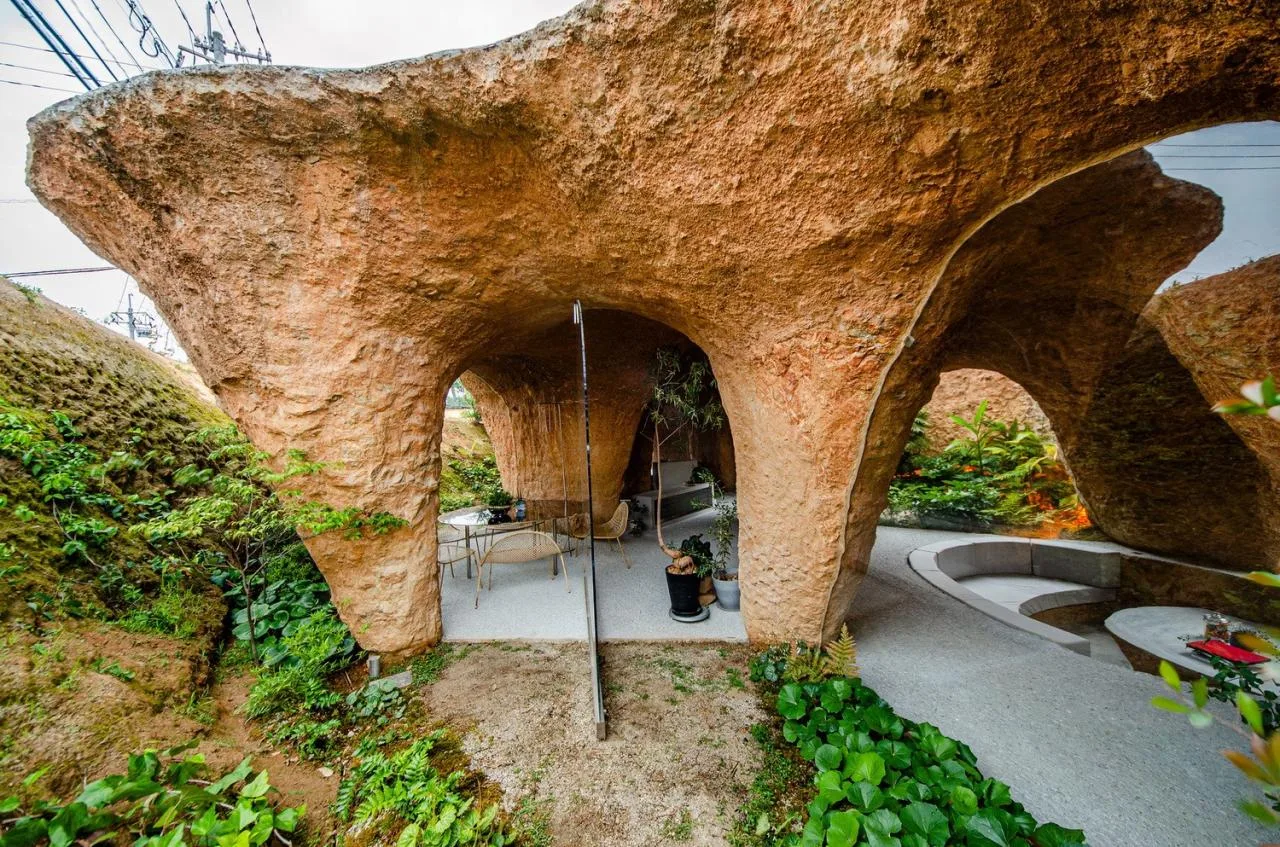
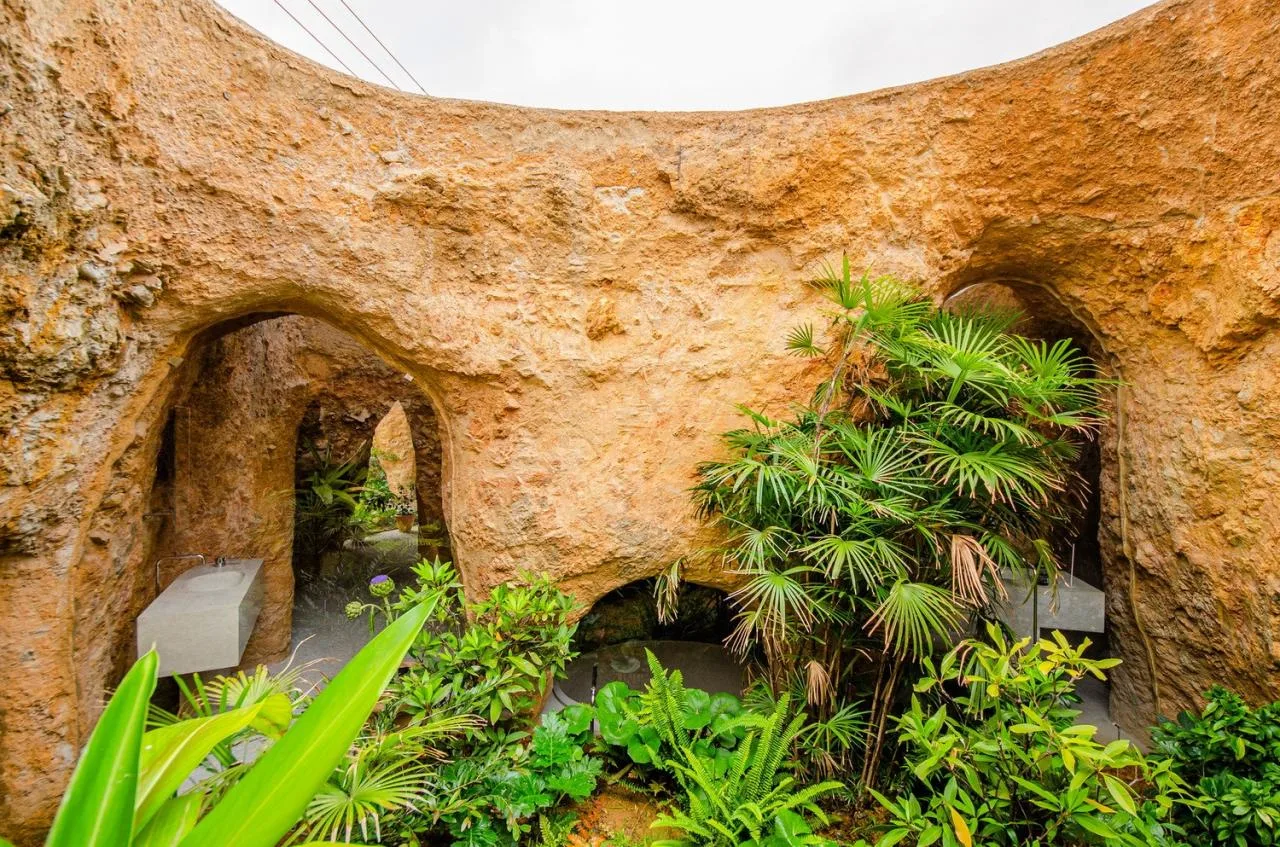
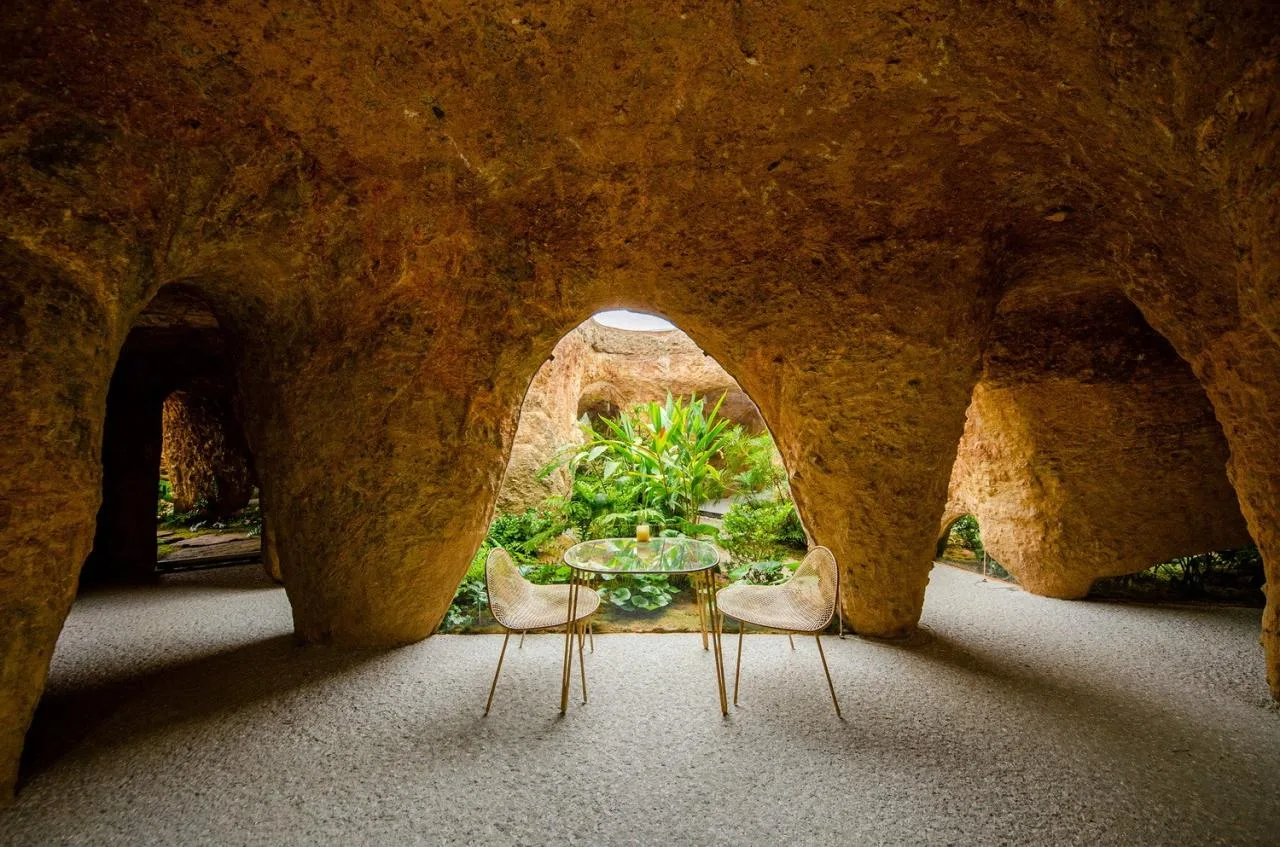
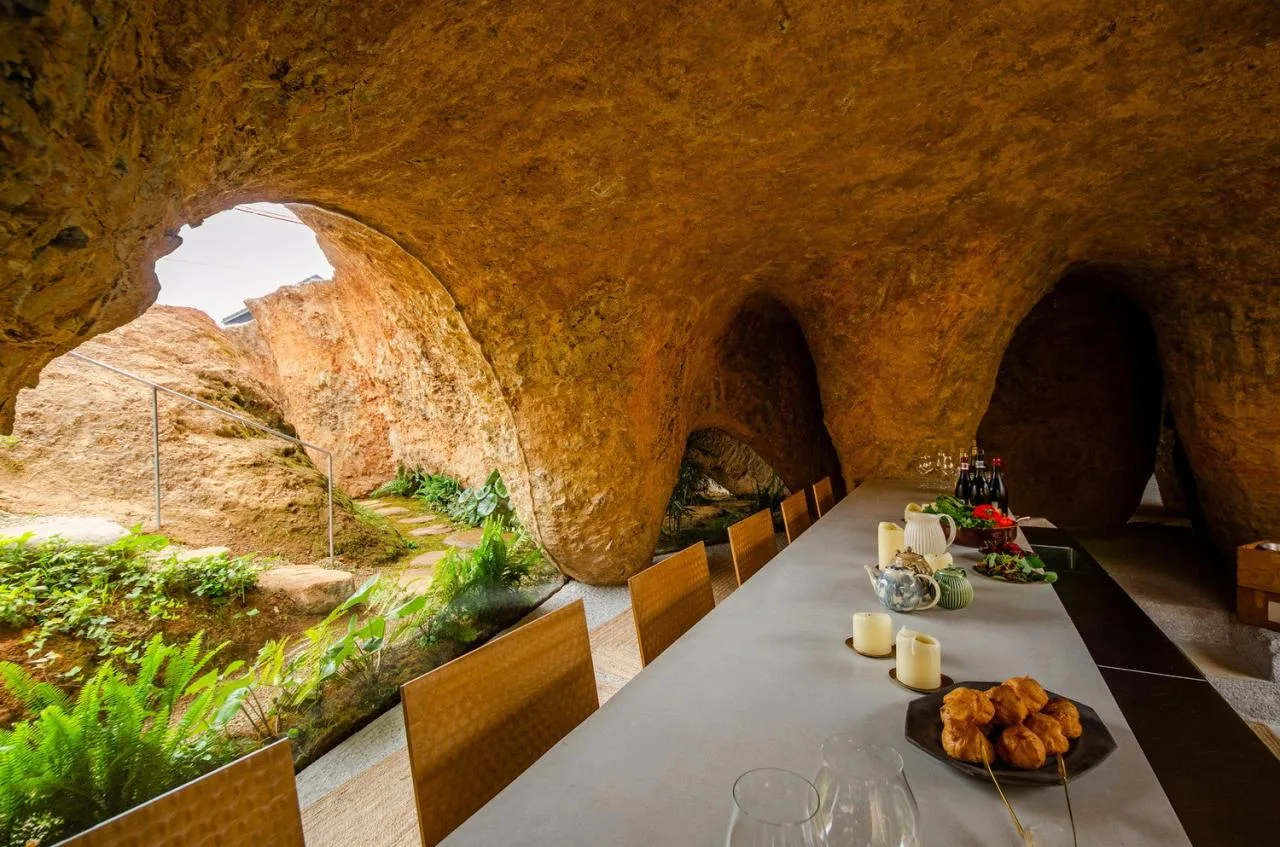
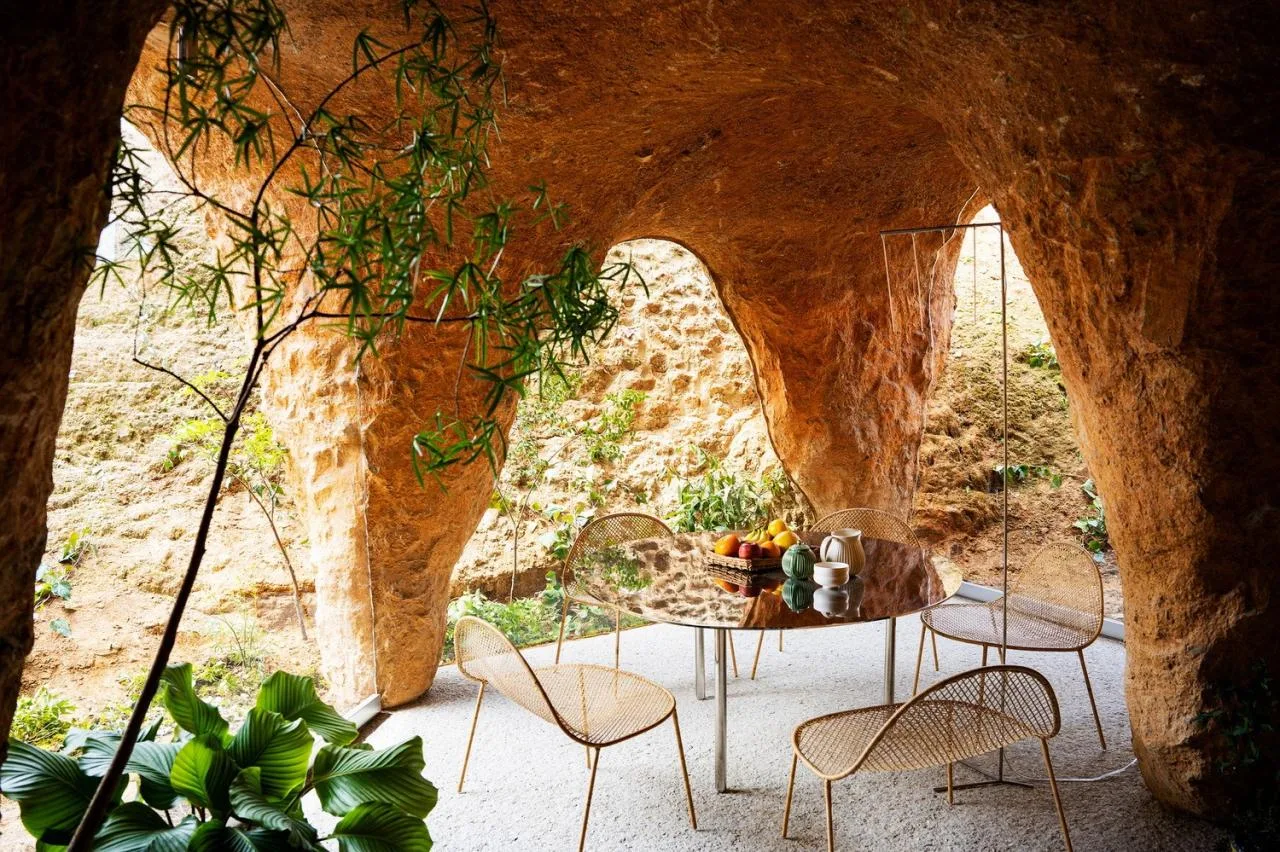
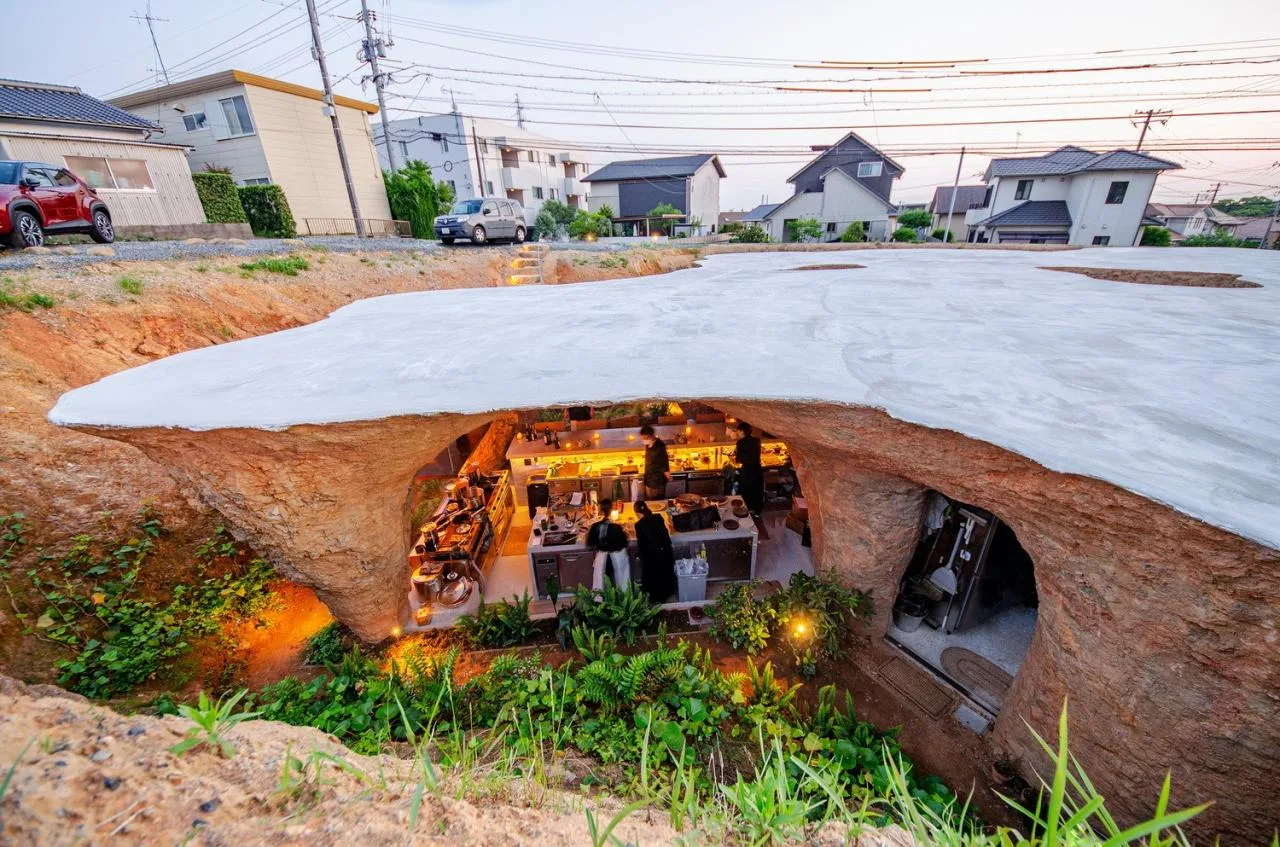
His goal was to create a “brand new” yet “classic” restaurant that functions as both a home and a dining establishment, designed to be passed down through generations. Guests arriving at the restaurant should feel like visiting family and friends, with select patrons even able to stay overnight. When the restaurant closes, the lobby transforms into a space for family gatherings or a study area for children. The layout places the restaurant on the northern side and the residence to the south, separated by three courtyards that allow free movement between the two zones.
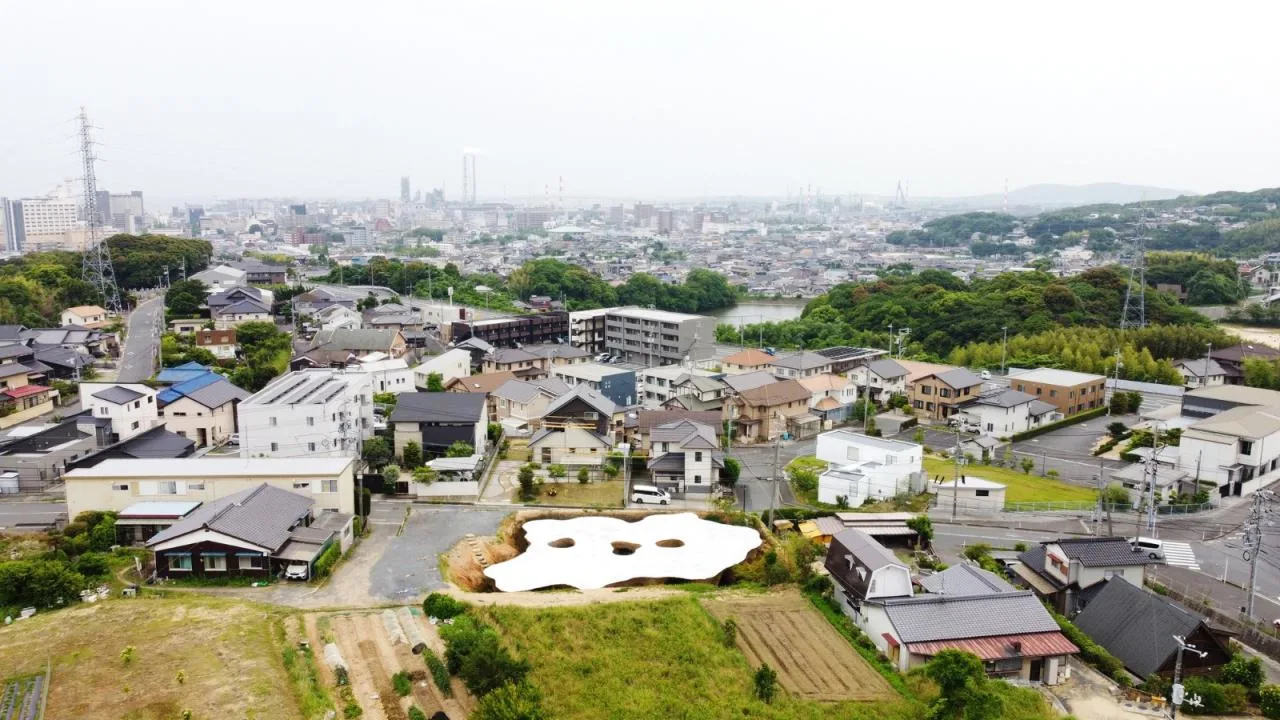
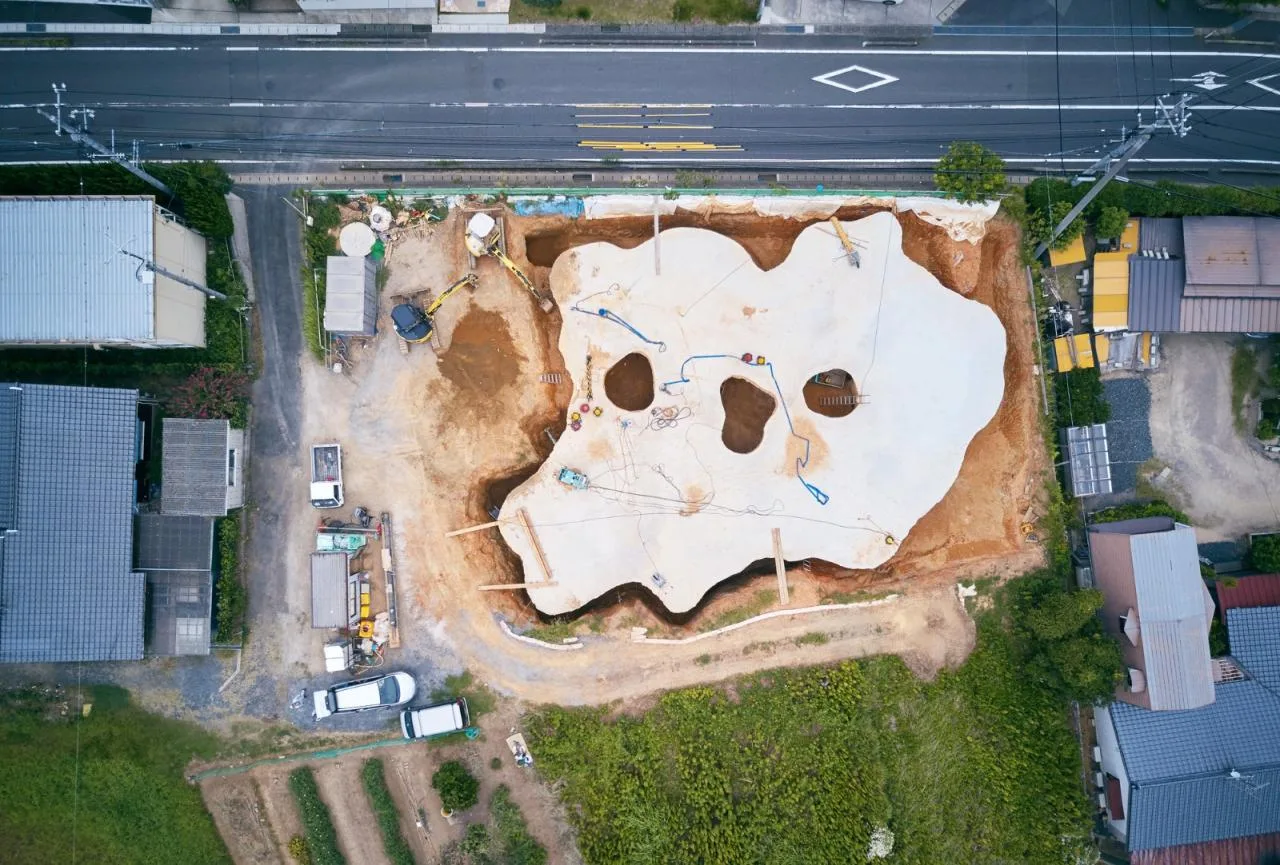
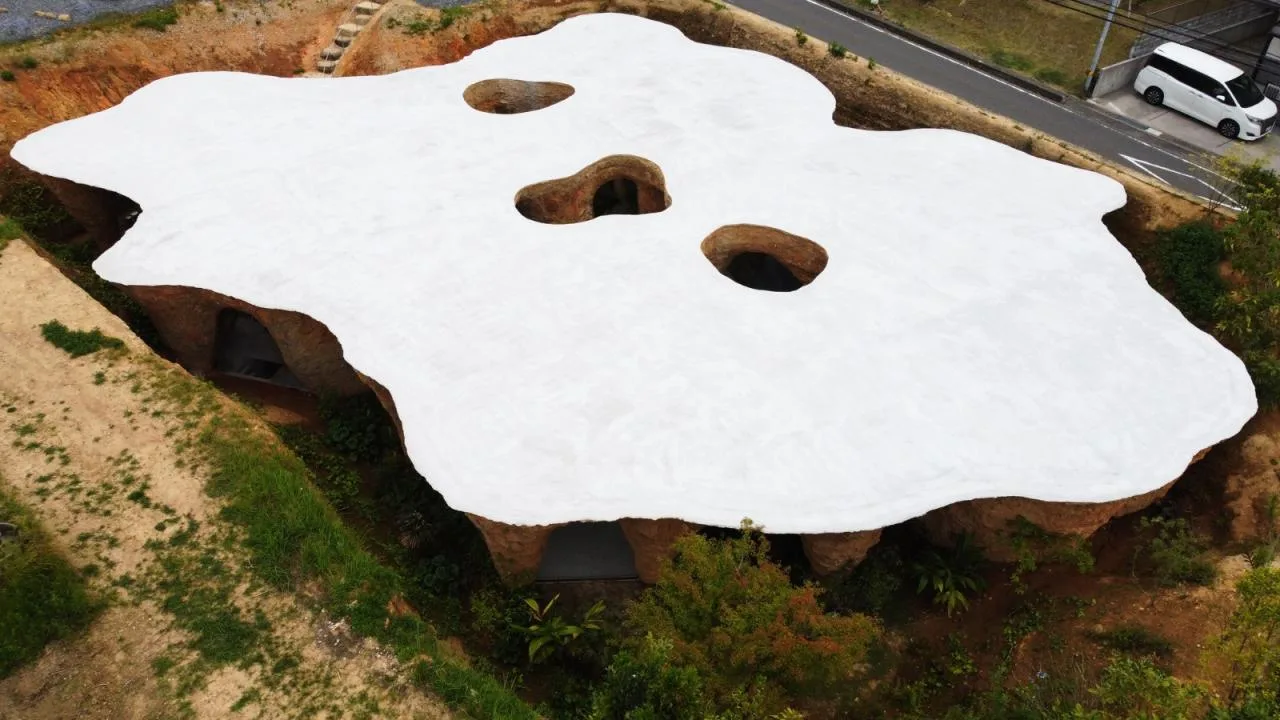
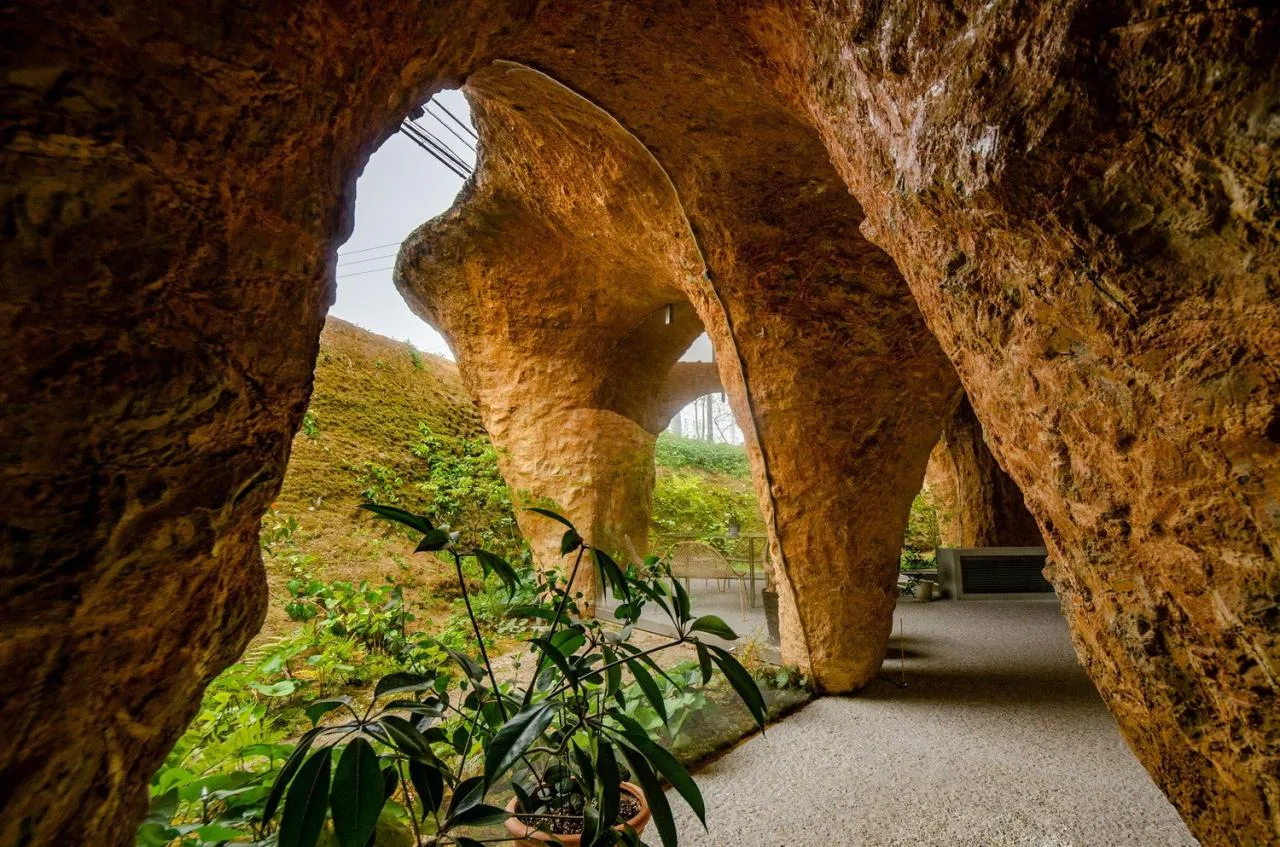
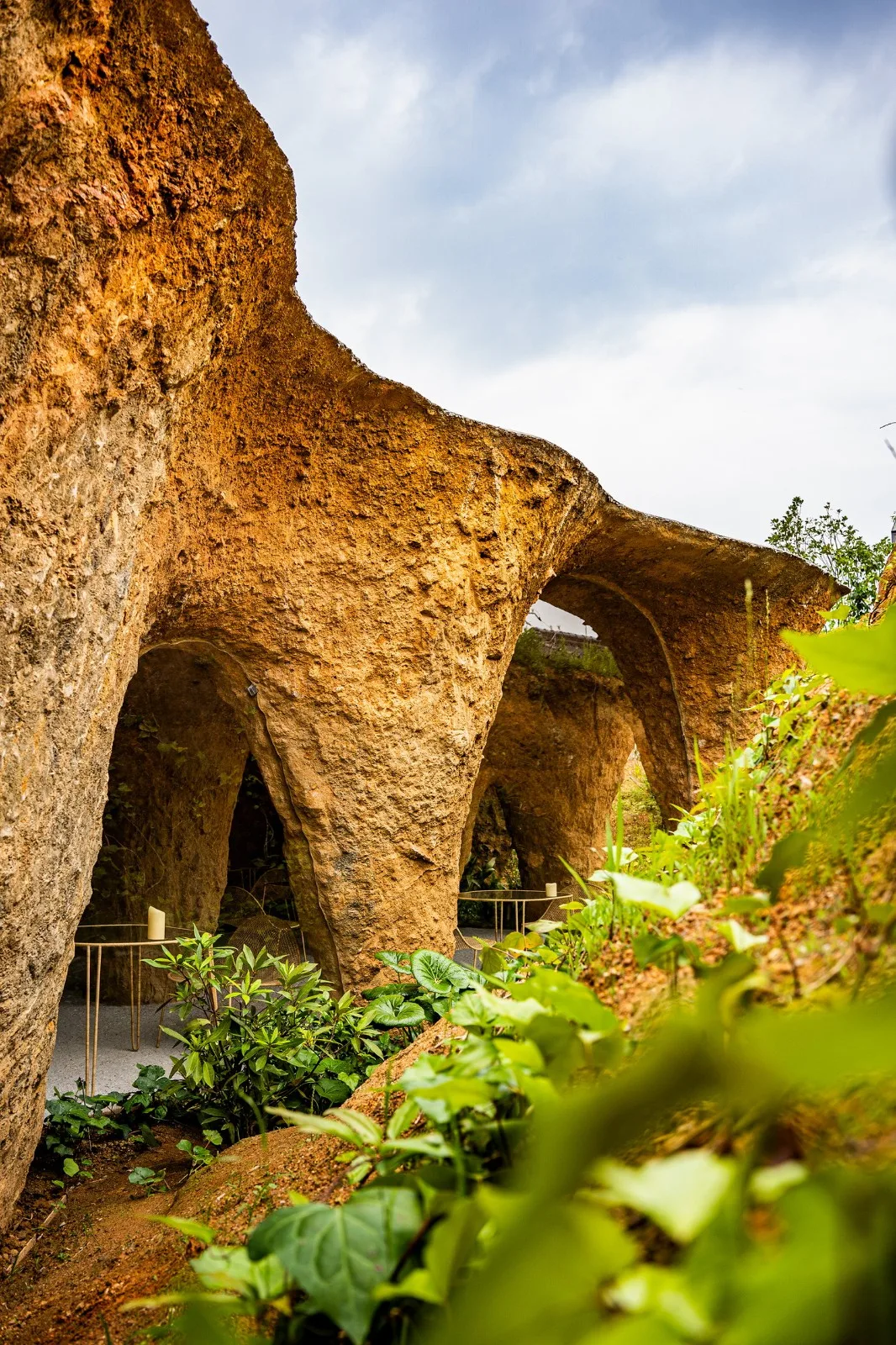
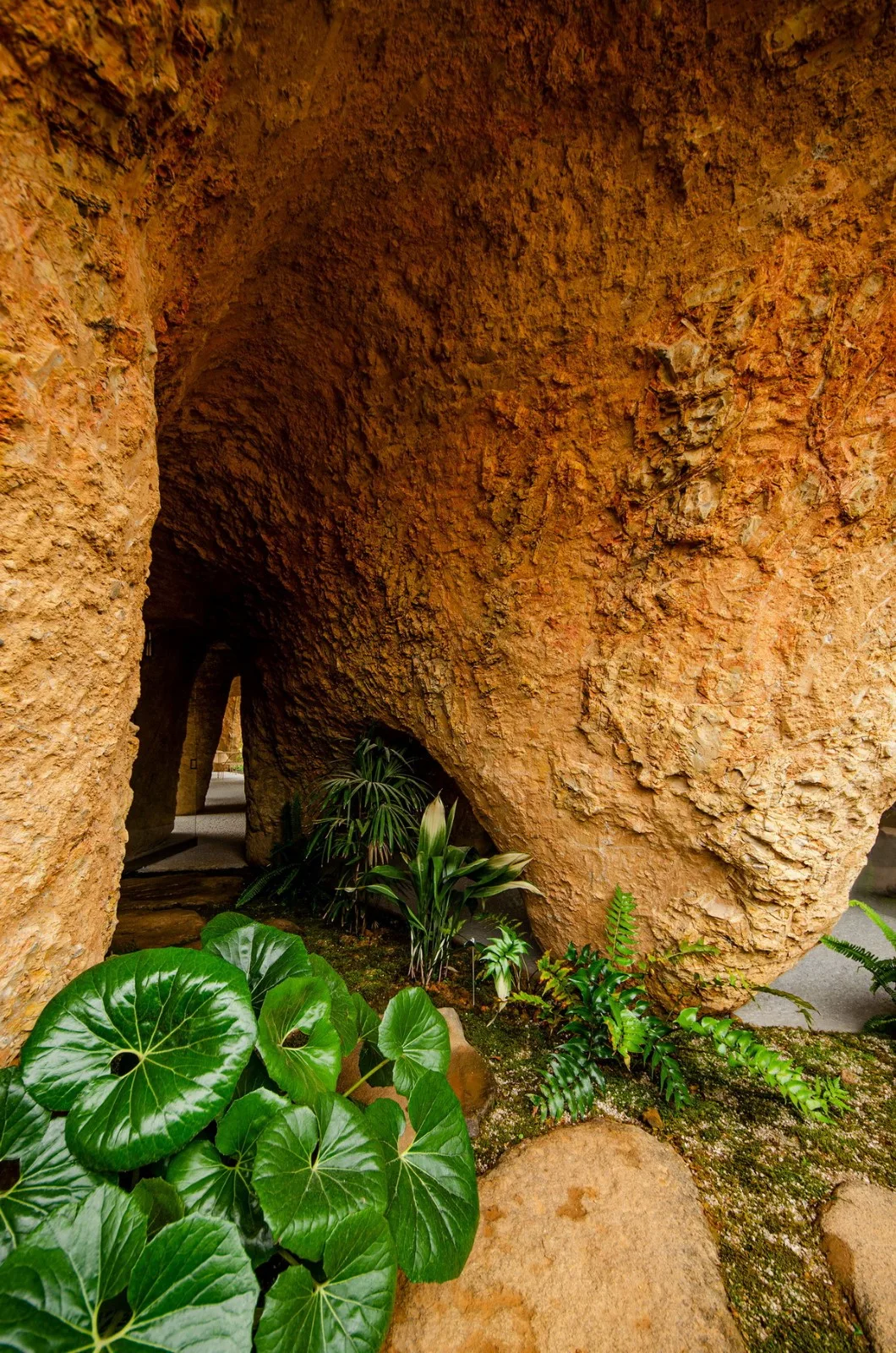
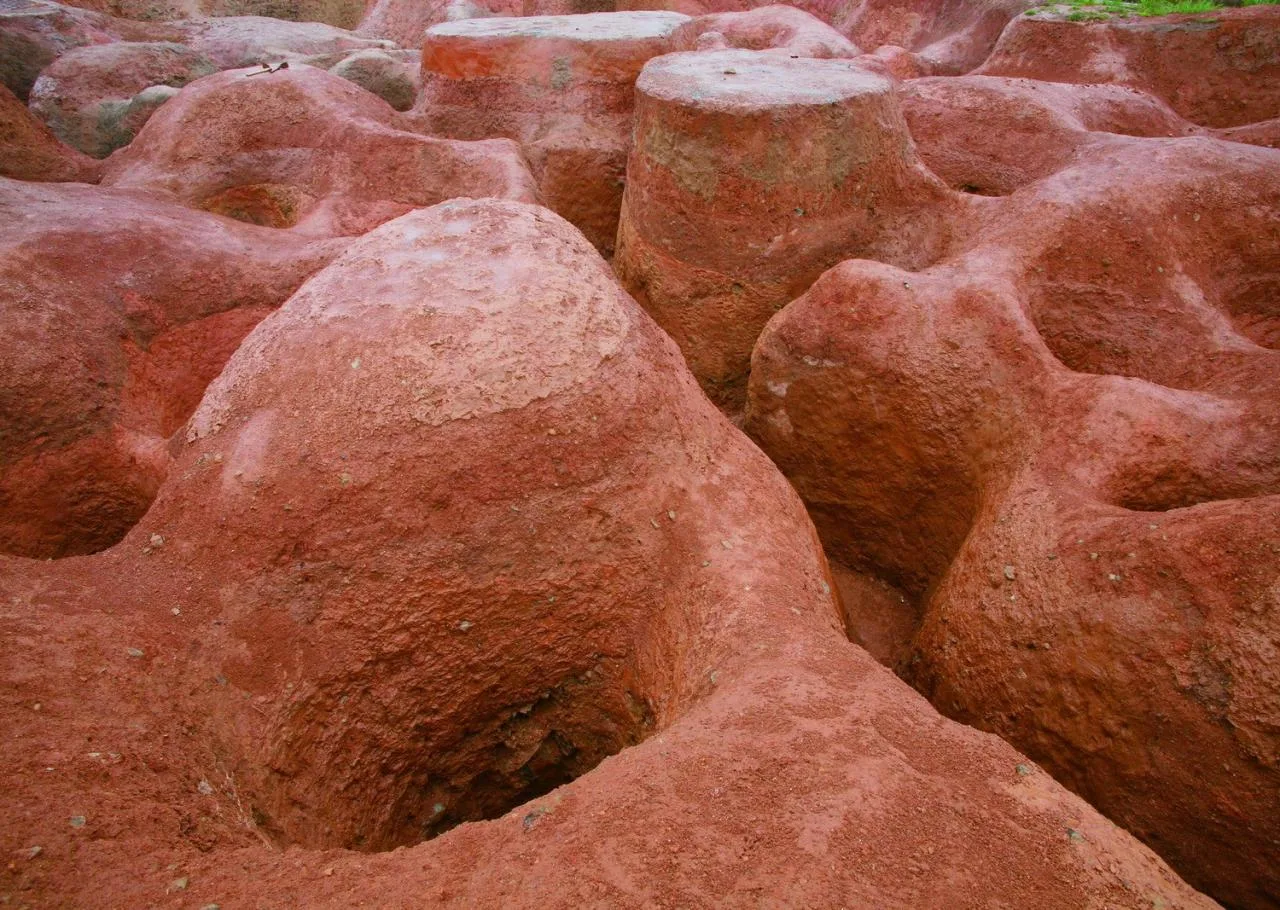
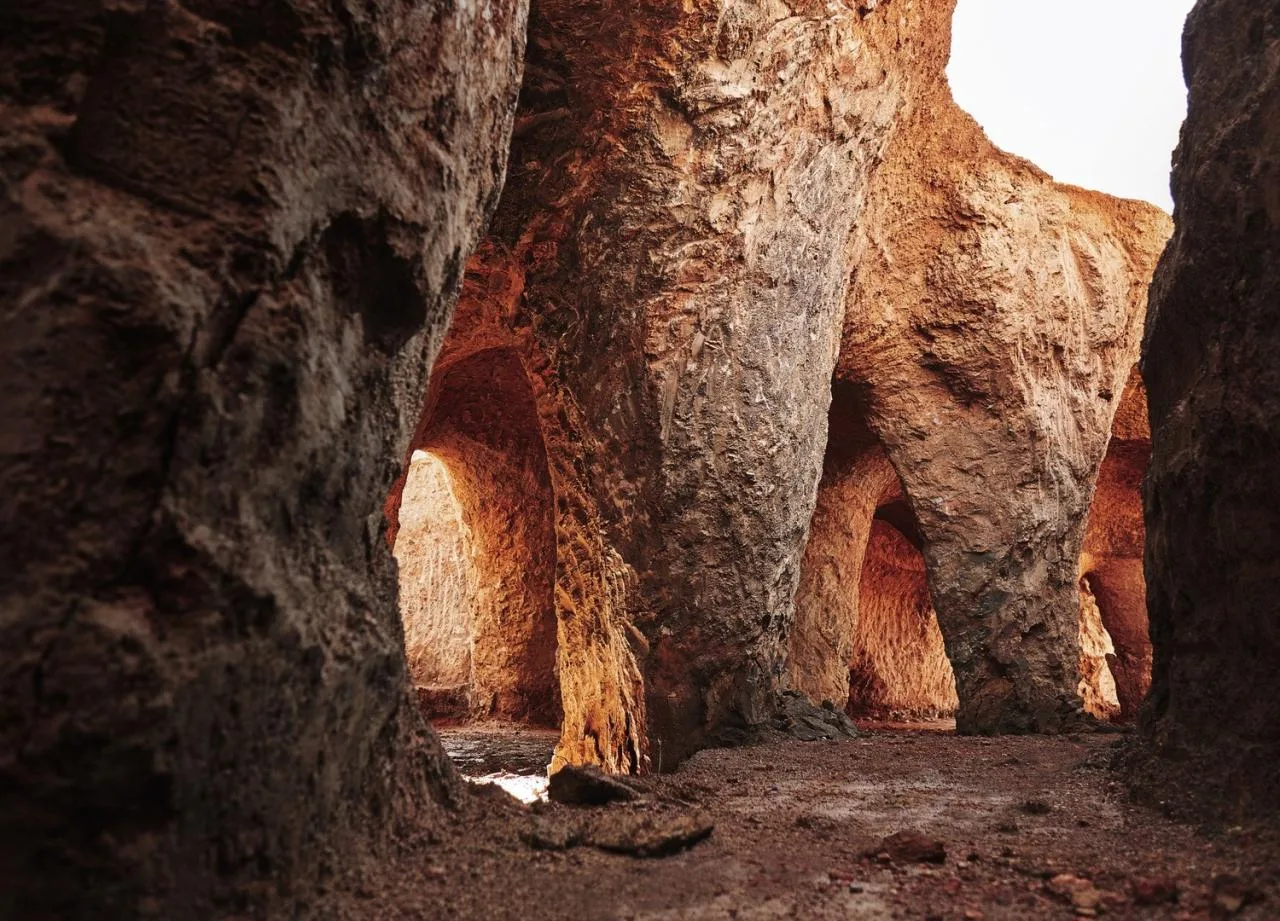
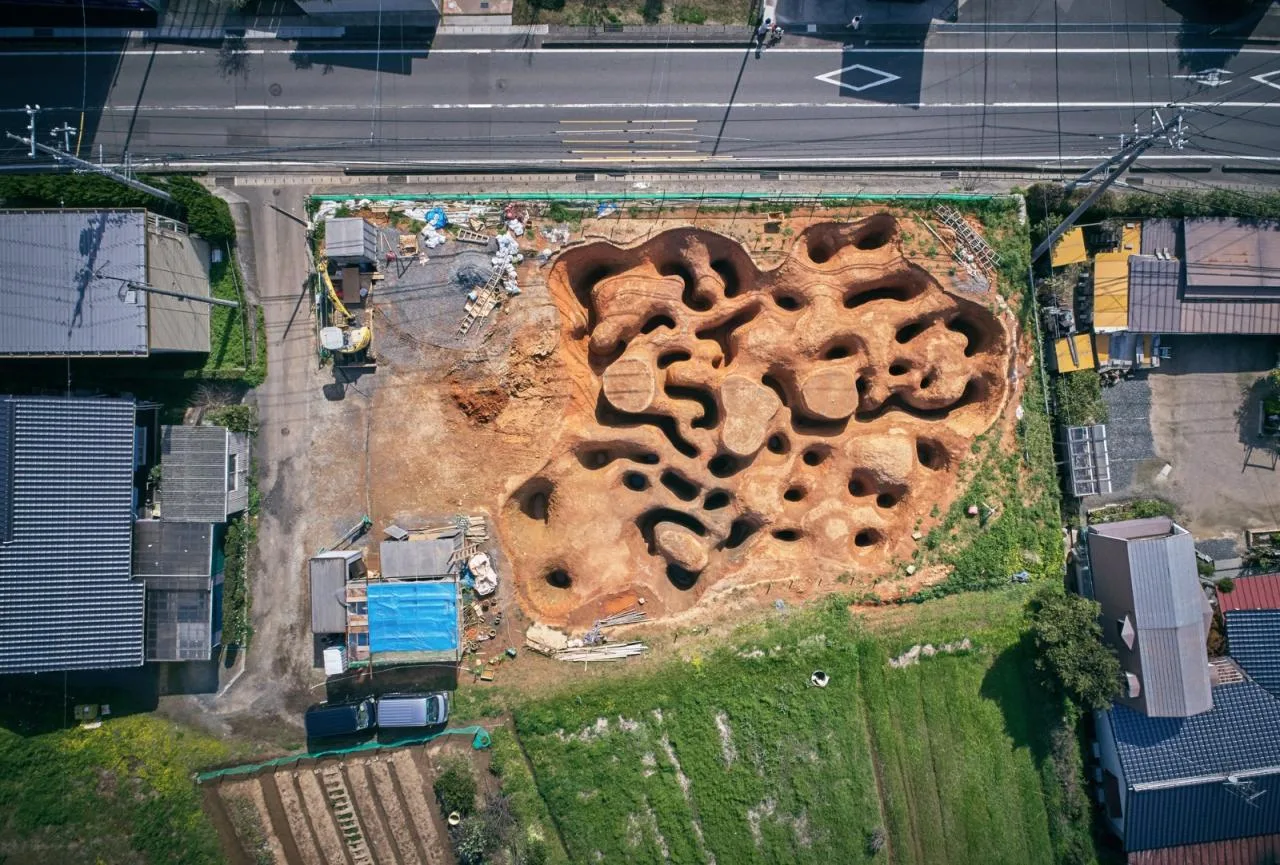
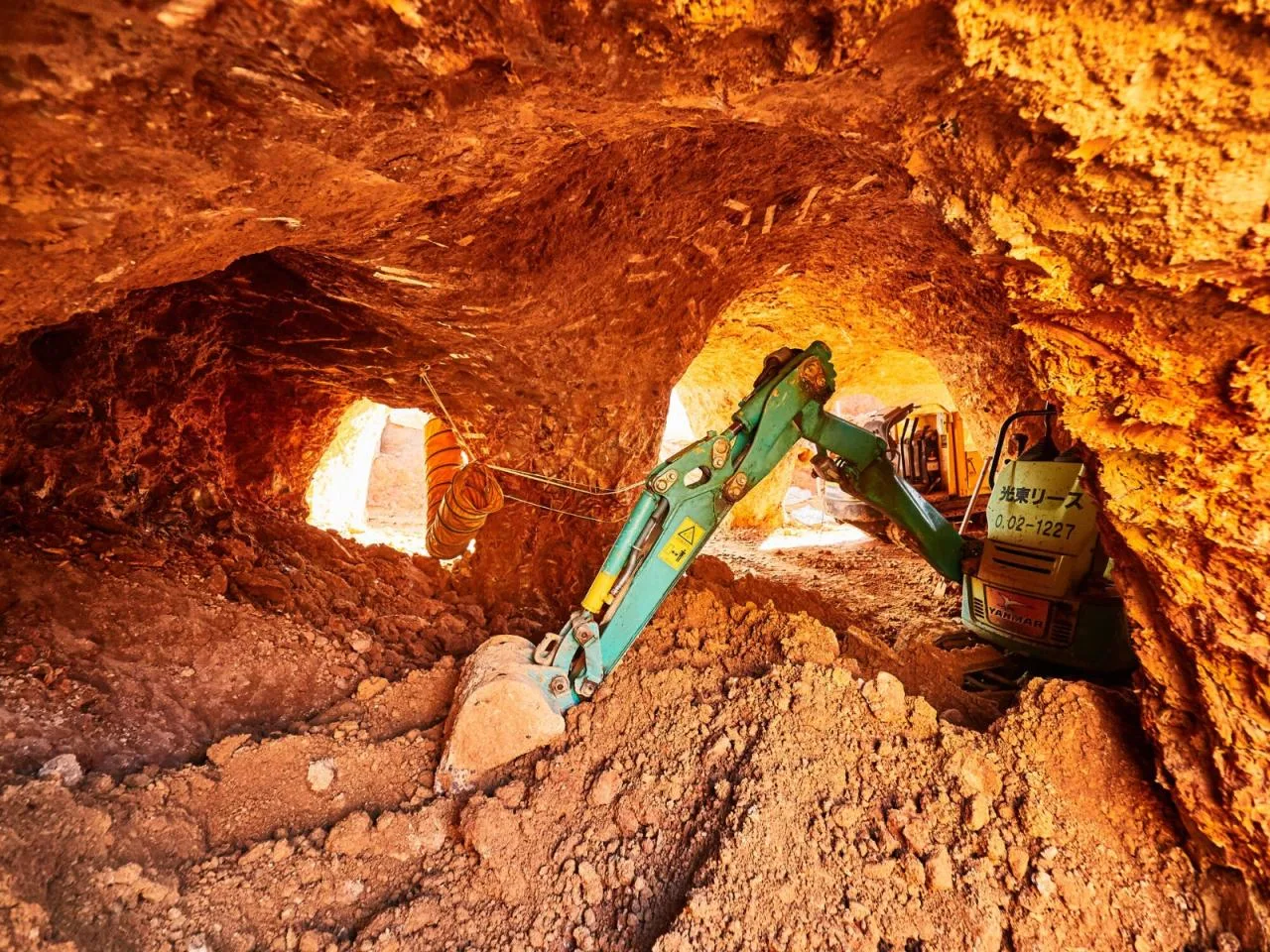
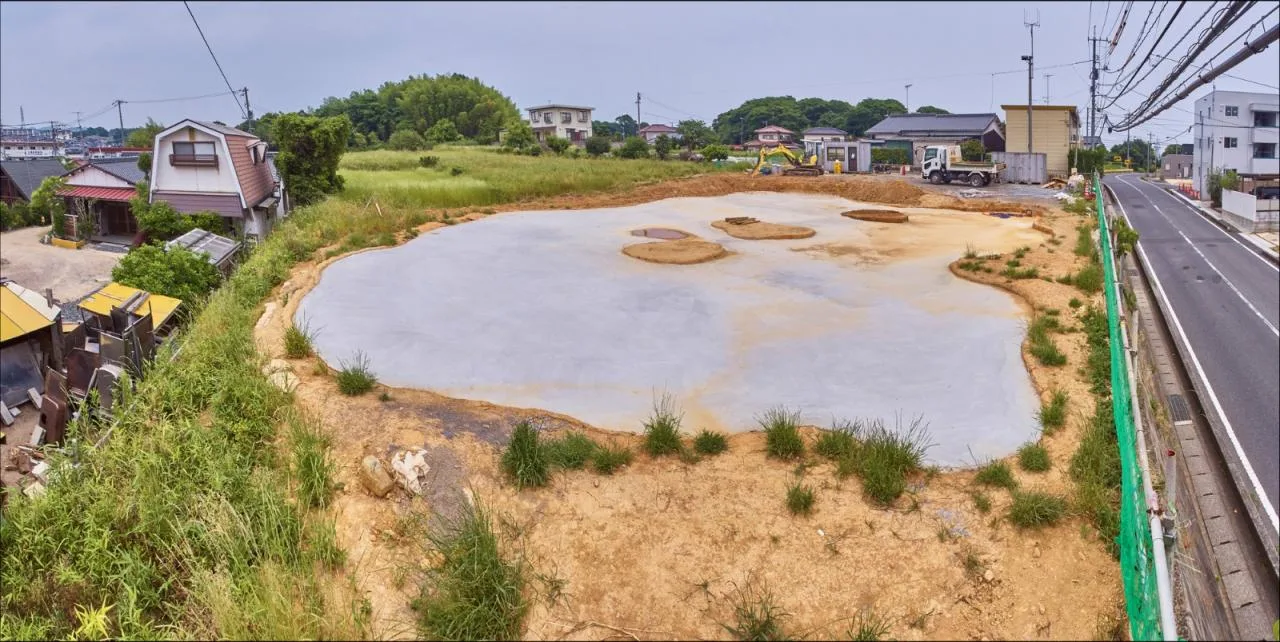
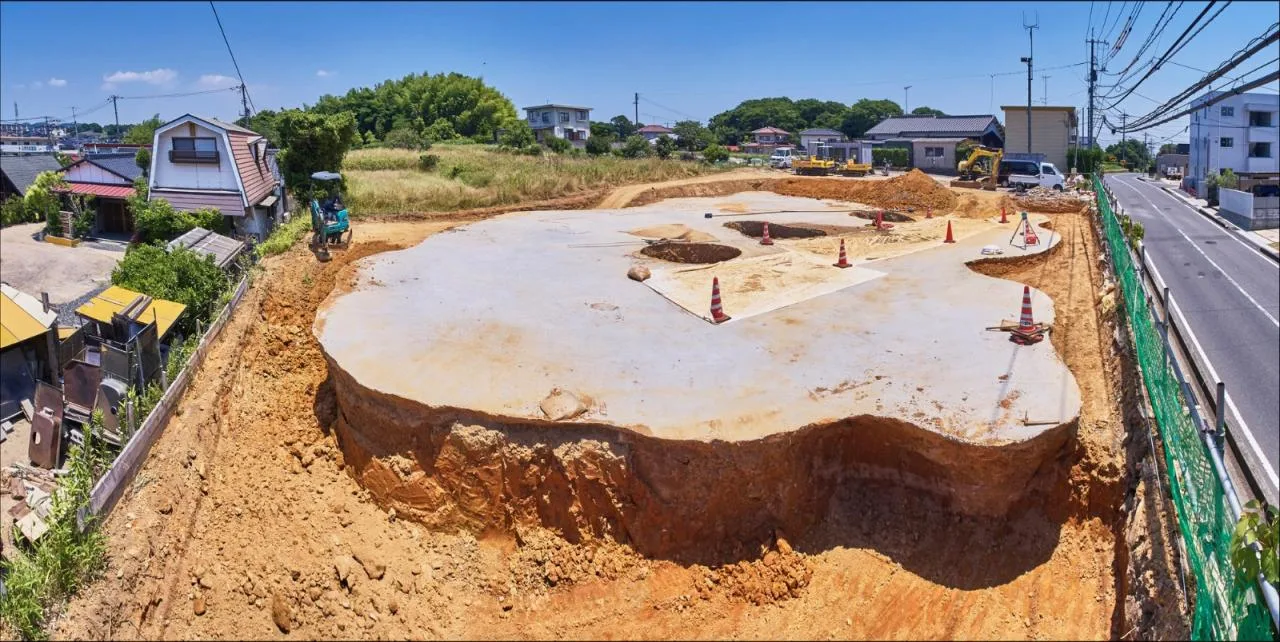
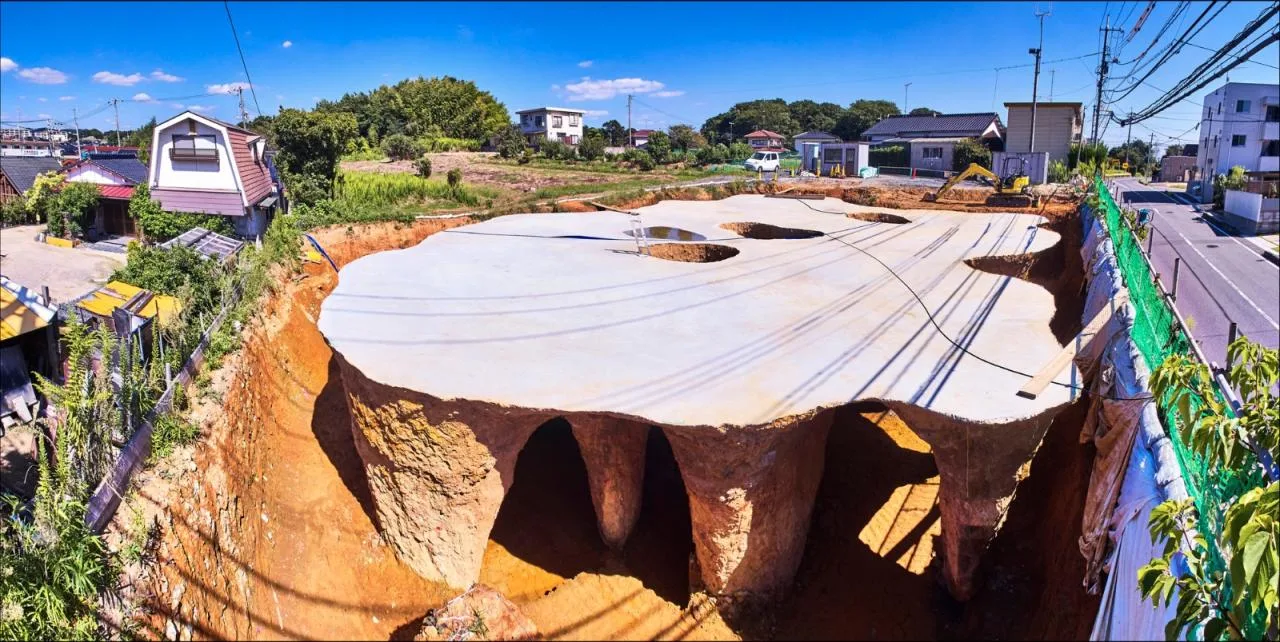
During construction, we embraced the site’s “imperfections” and “unexpected occurrences,” aiming to create a building that internalizes nature’s distortions and uncertainties. The process involved excavating trenches and caves, then pouring concrete into these forms. Once hardened, the concrete formed volumes onto which glass panels were installed, creating the interior spaces.
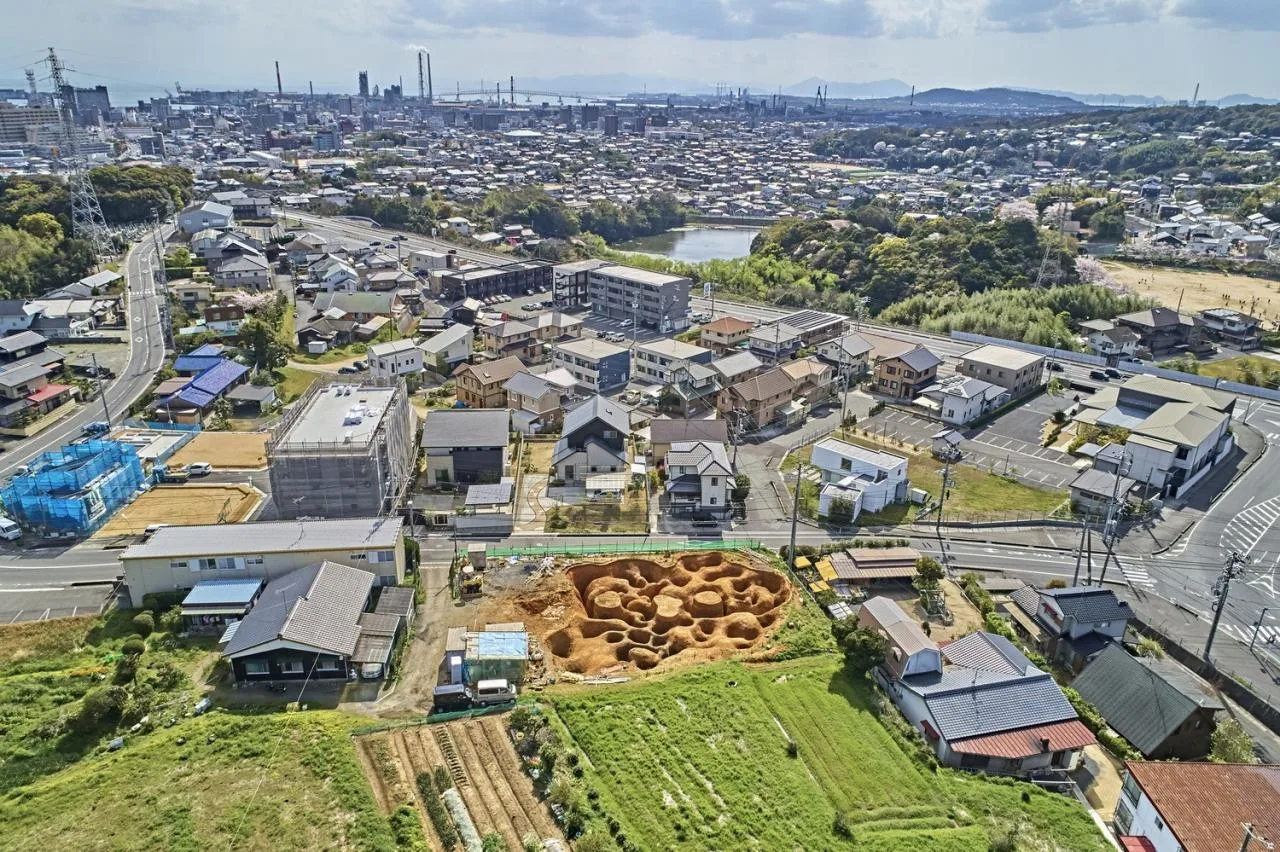
At the start, numerous revisions were made to convert the block model into 3D data, which was then loaded into a total station (TS) for precise positioning of pile-driving points. Meanwhile, construction workers manually excavated caves, constantly verifying their location and shape with iPads to maintain accuracy. We intentionally preserved as many natural irregularities as possible, such as weed growth and soil subsidence, embracing these “errors” as part of the building’s character.
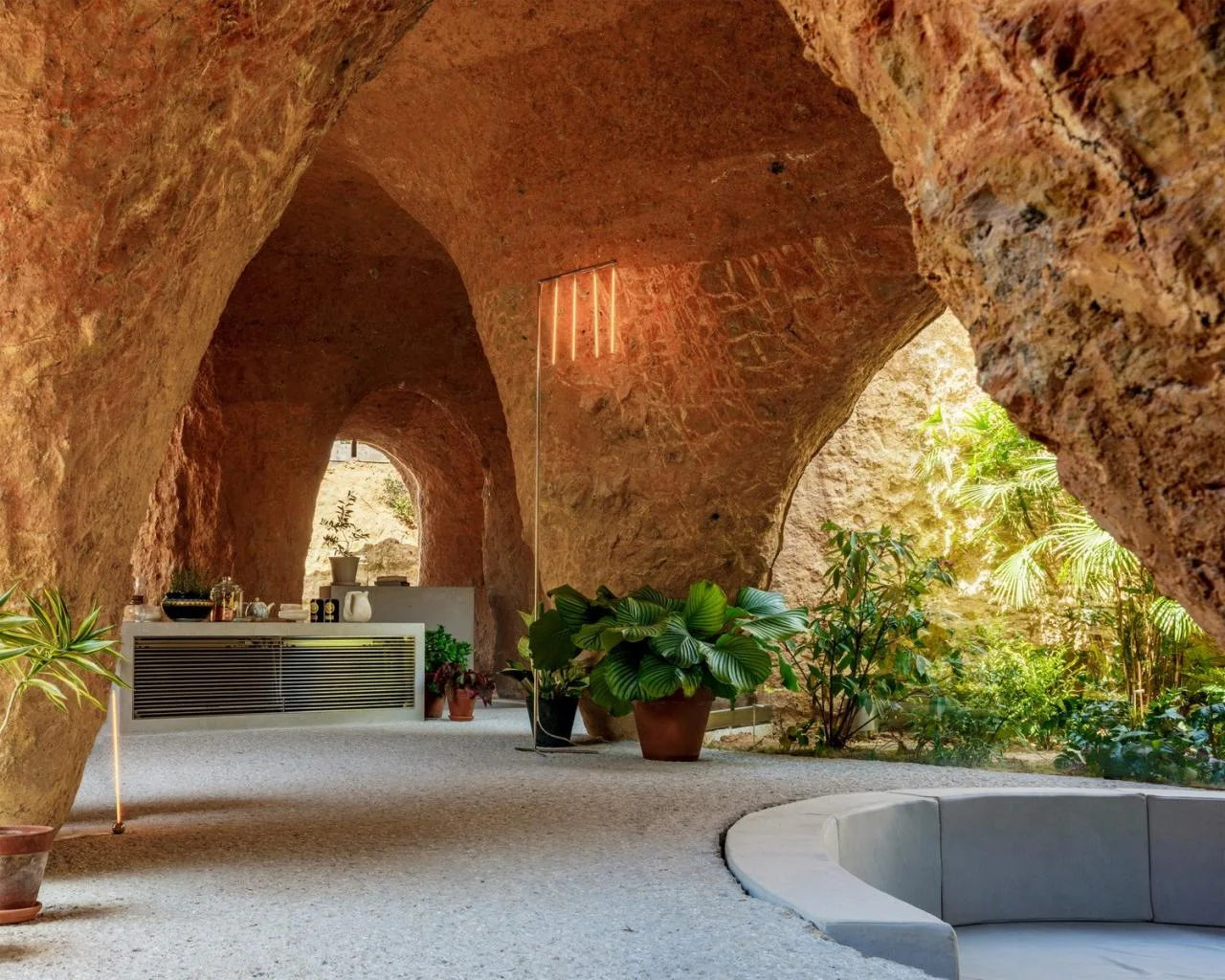
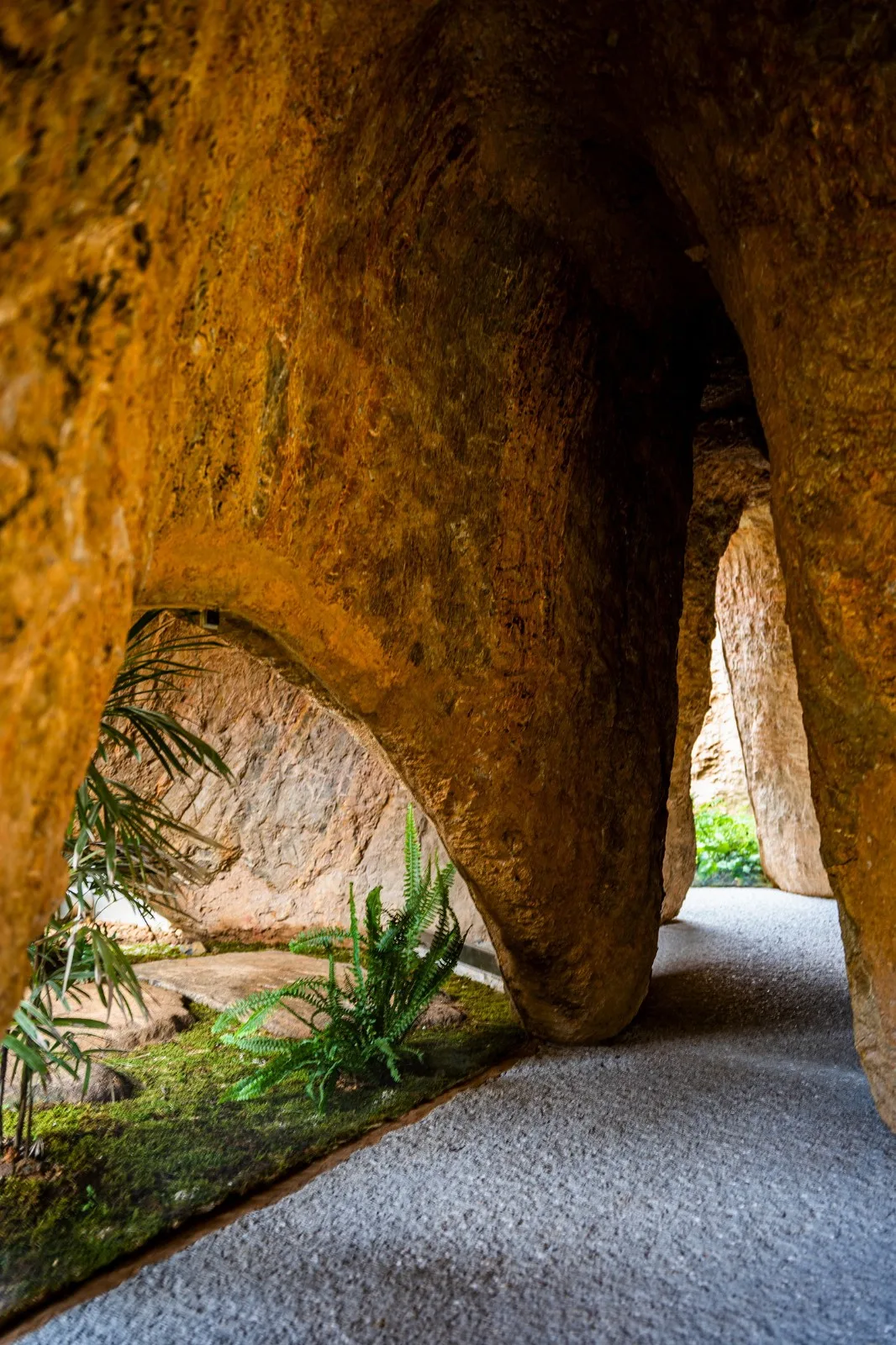
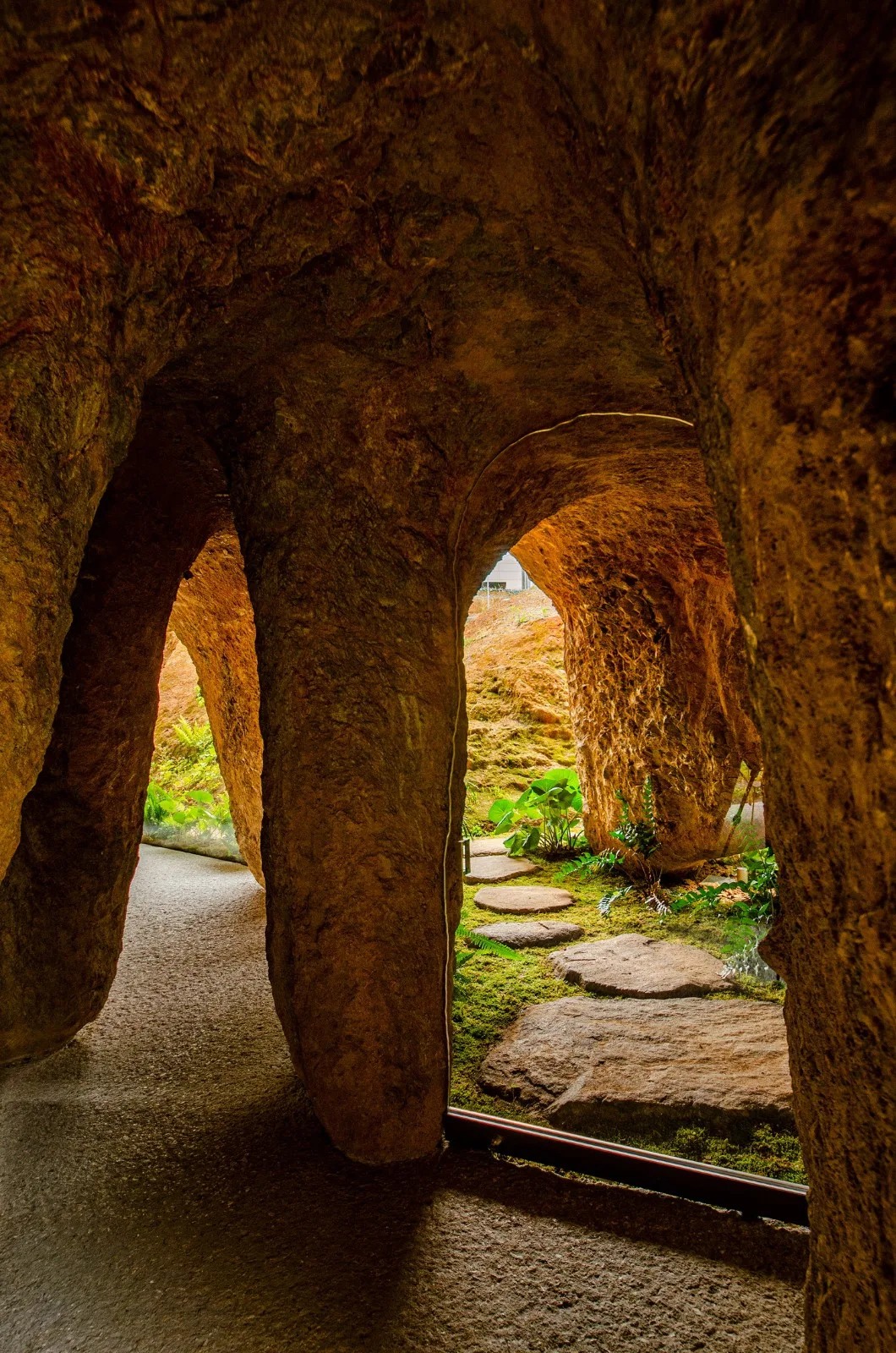
After excavation, the organic soil served as a mold for the concrete. Once the concrete set, the original earthwork formwork was removed, and the entire site was covered with soil again. Due to geological variations, soil properties and appearances change across the site. Initially, we planned to wash away the soil to reveal gray concrete surfaces, but the raw “soil” aesthetic impressed us deeply, leading to a decision to preserve it. This moment revealed the cave-like atmosphere of the building and inspired a redesign with this new identity.
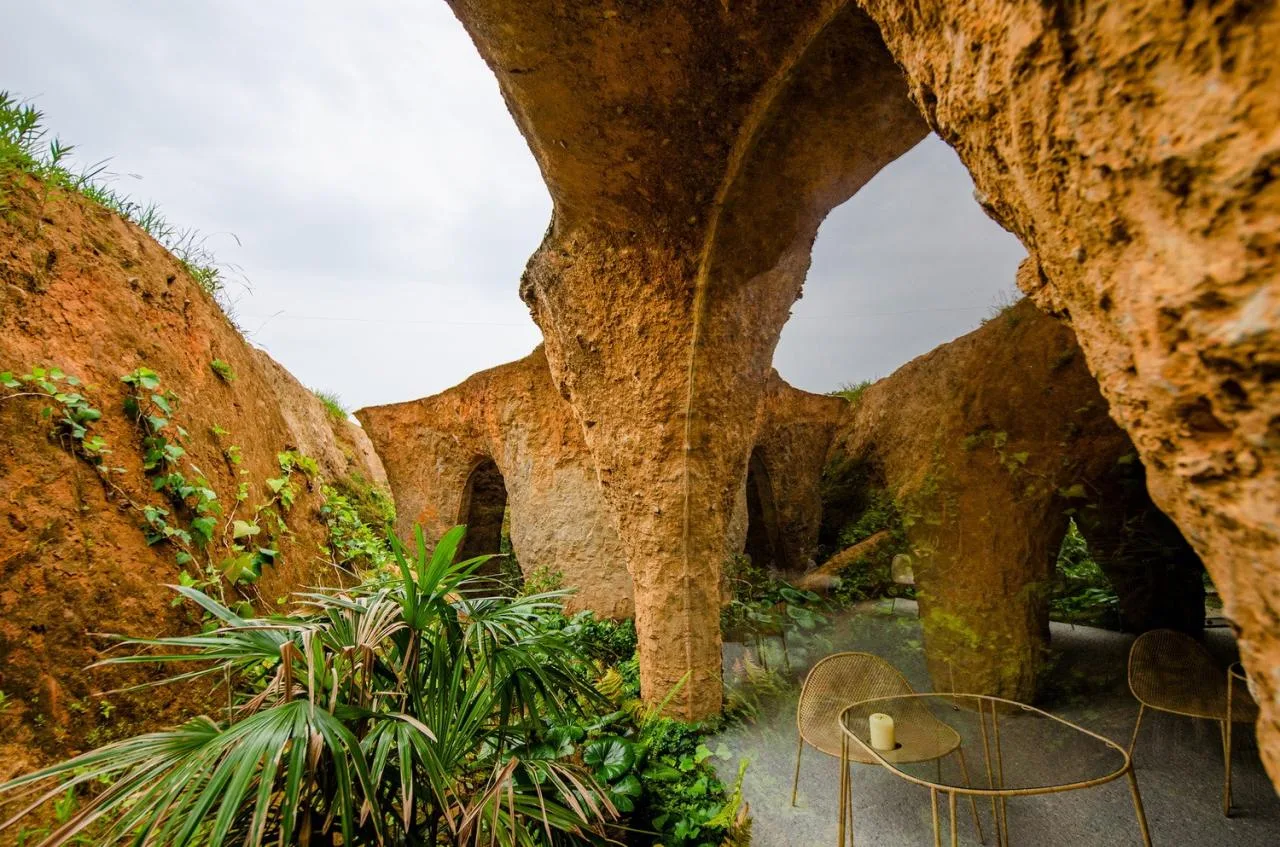
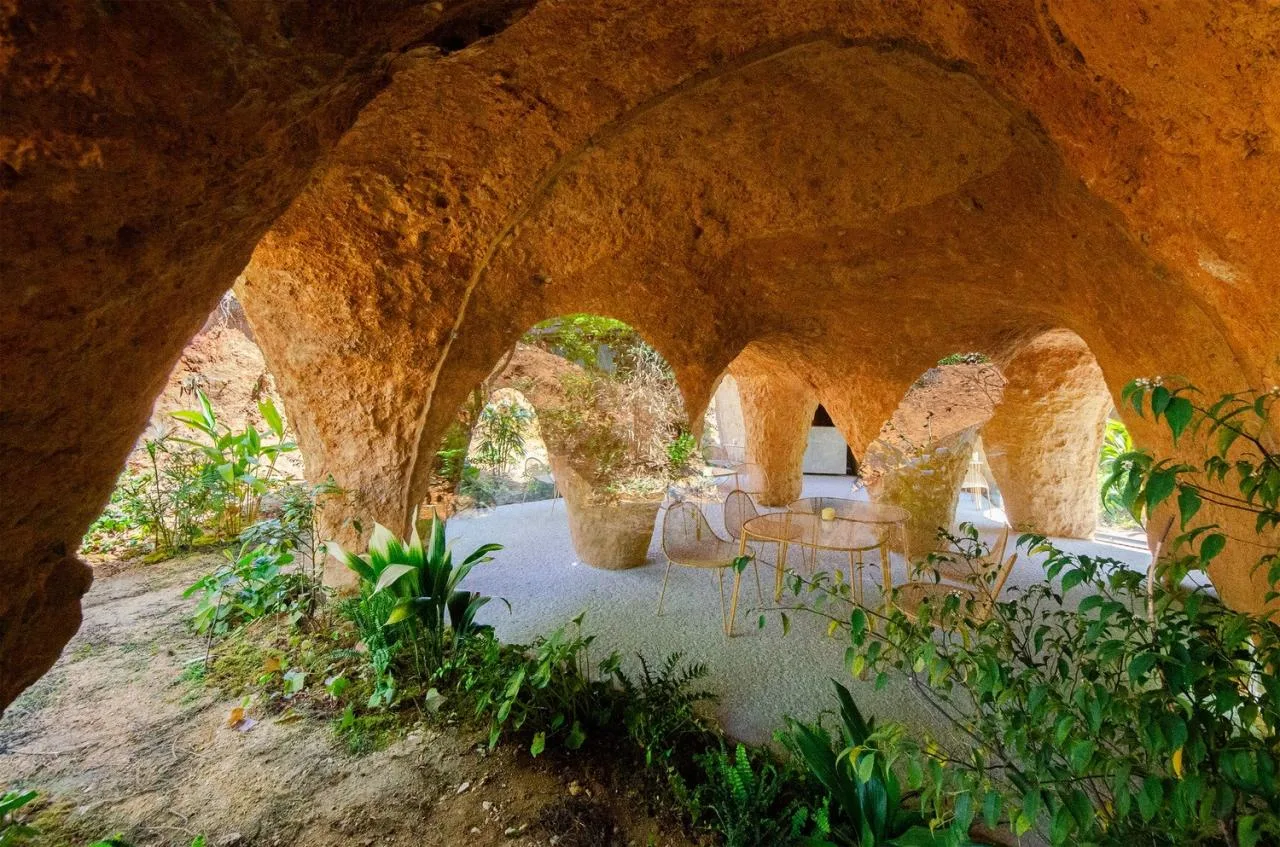
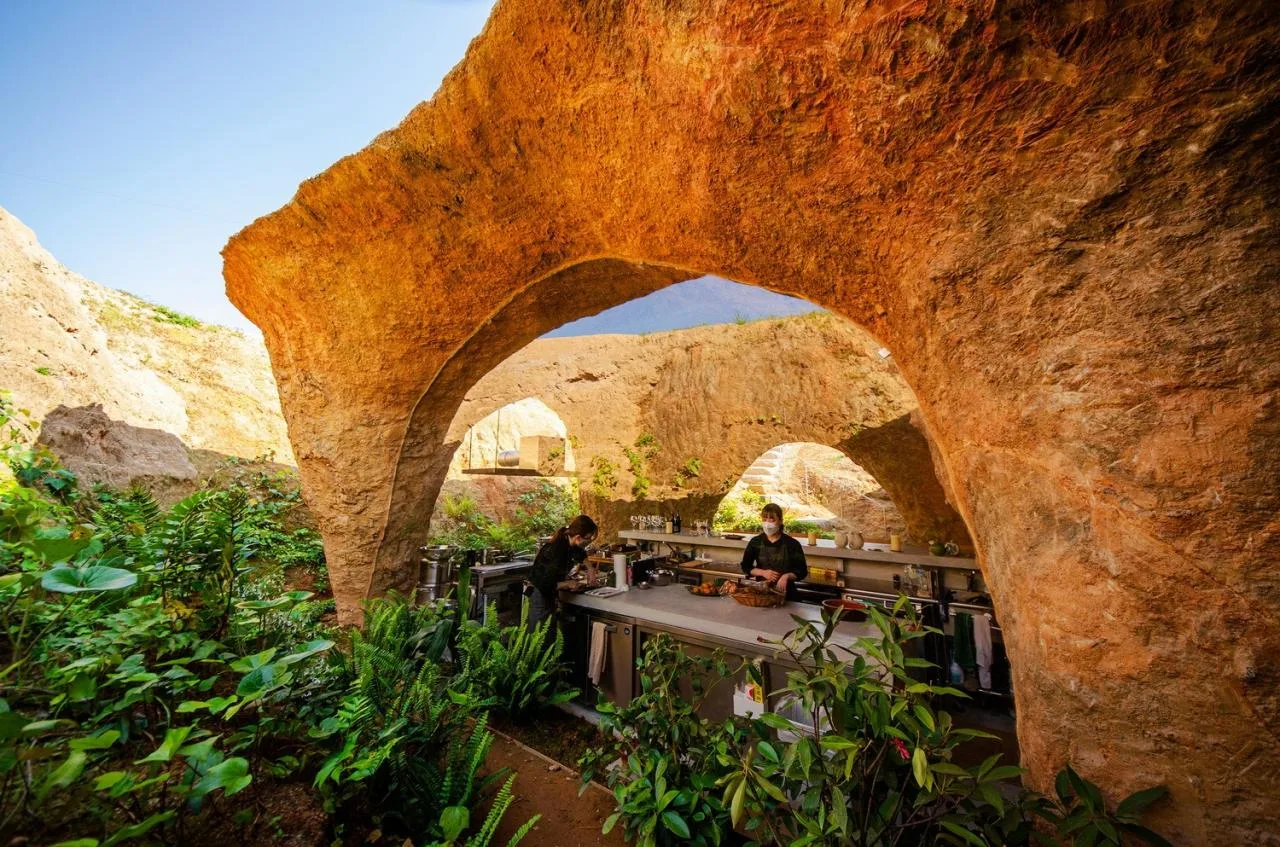
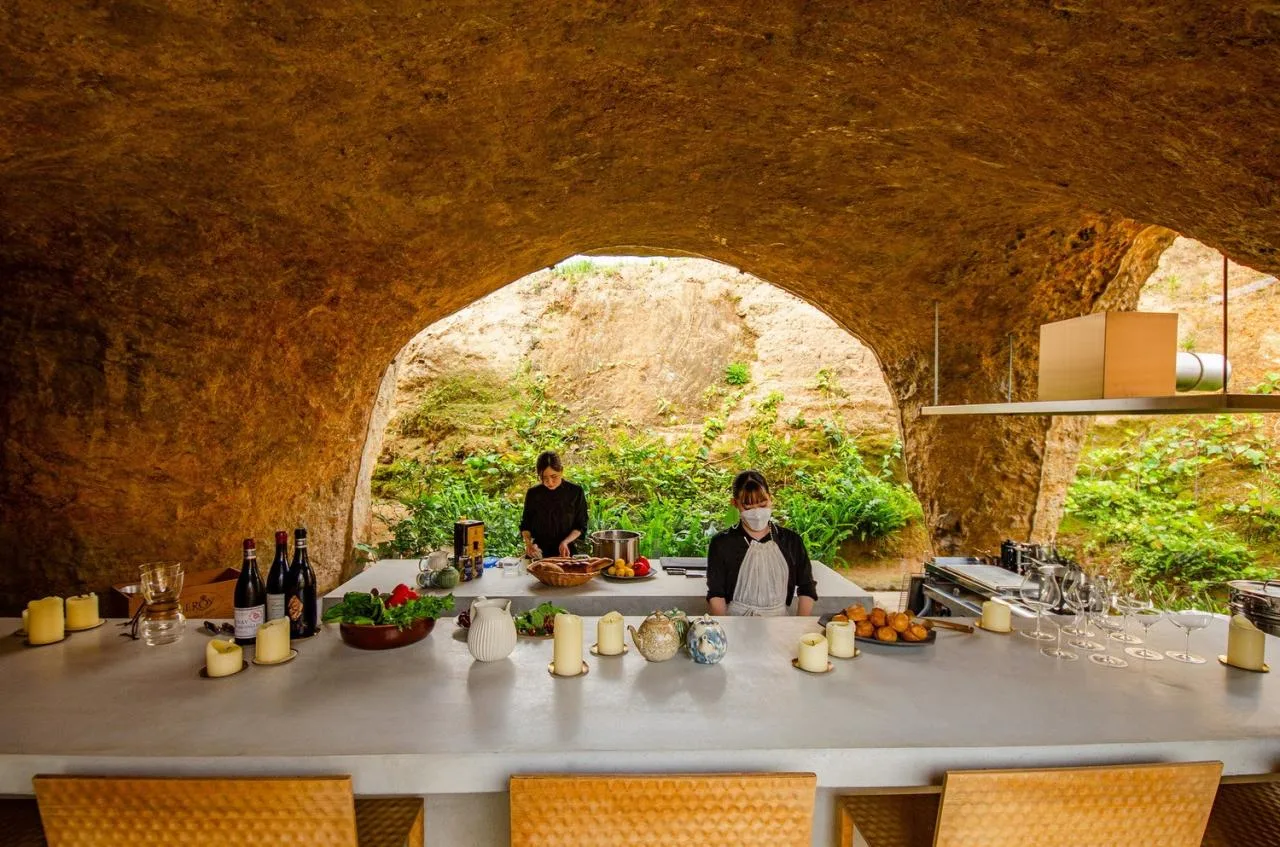
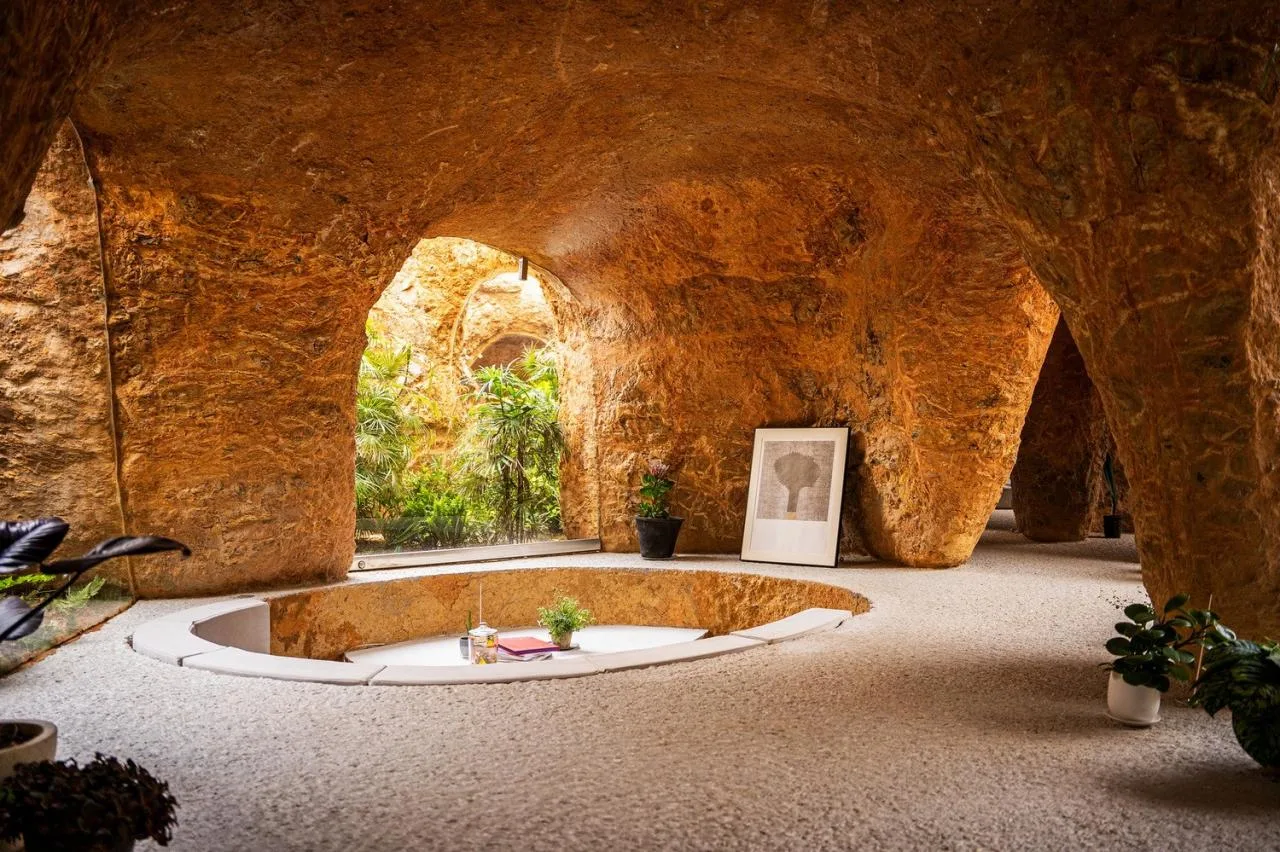
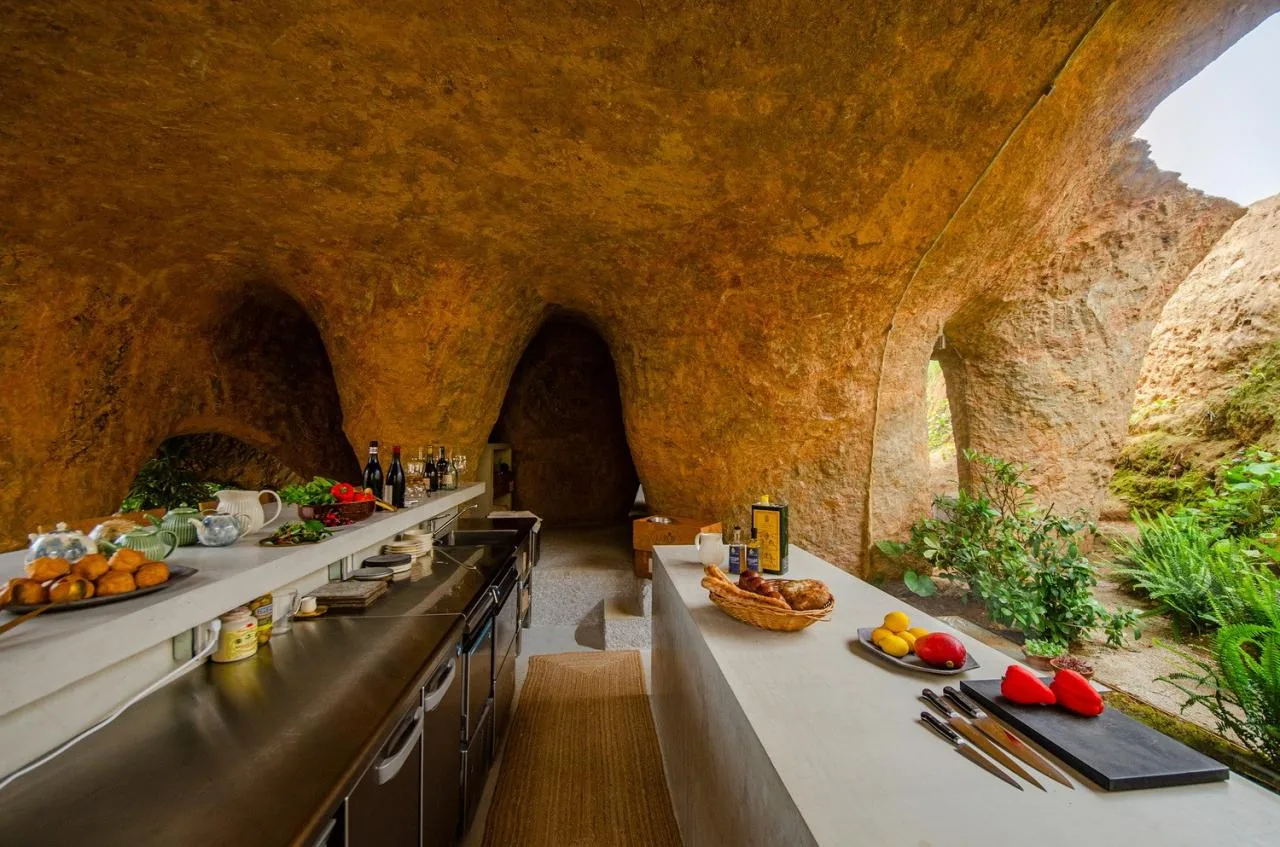
For the interior design, we utilized 3D imaging to compare the construction drawings with the actual coordinates of the excavated structure. Overlaying these differences revealed unexpected new spaces, which we incorporated into the design to better fit the building’s realities.
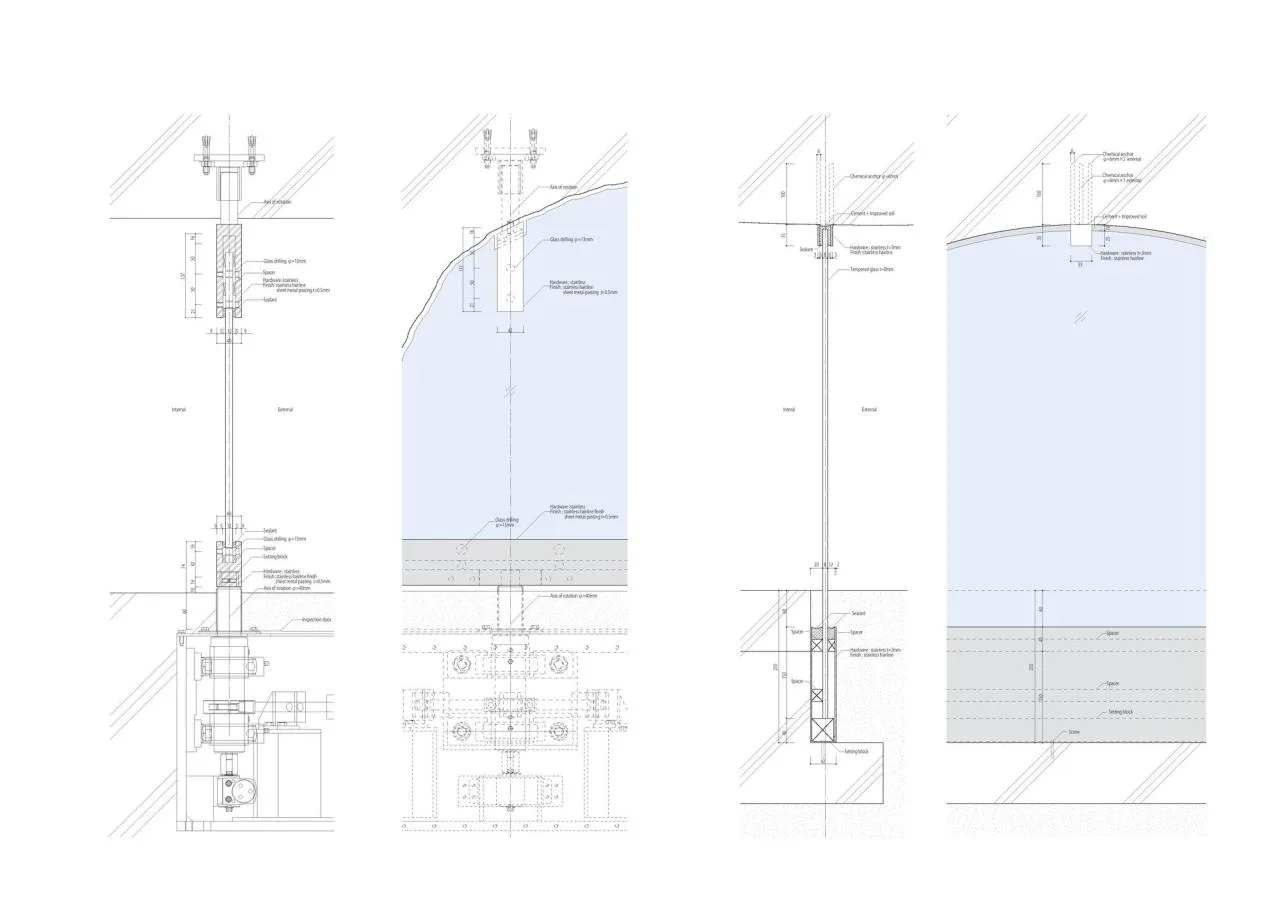
This approach reversed the traditional architectural process by using the building’s actual “new” data to finalize elements such as glass placement, furniture layout and sizing, and the positioning of mechanical and electrical systems. For instance, glass fixtures were adjusted based on on-site measurements, and 3D scanning technology ensured that the glass would not break due to contact with the structure during use or movement. Hinges were also repositioned accordingly.
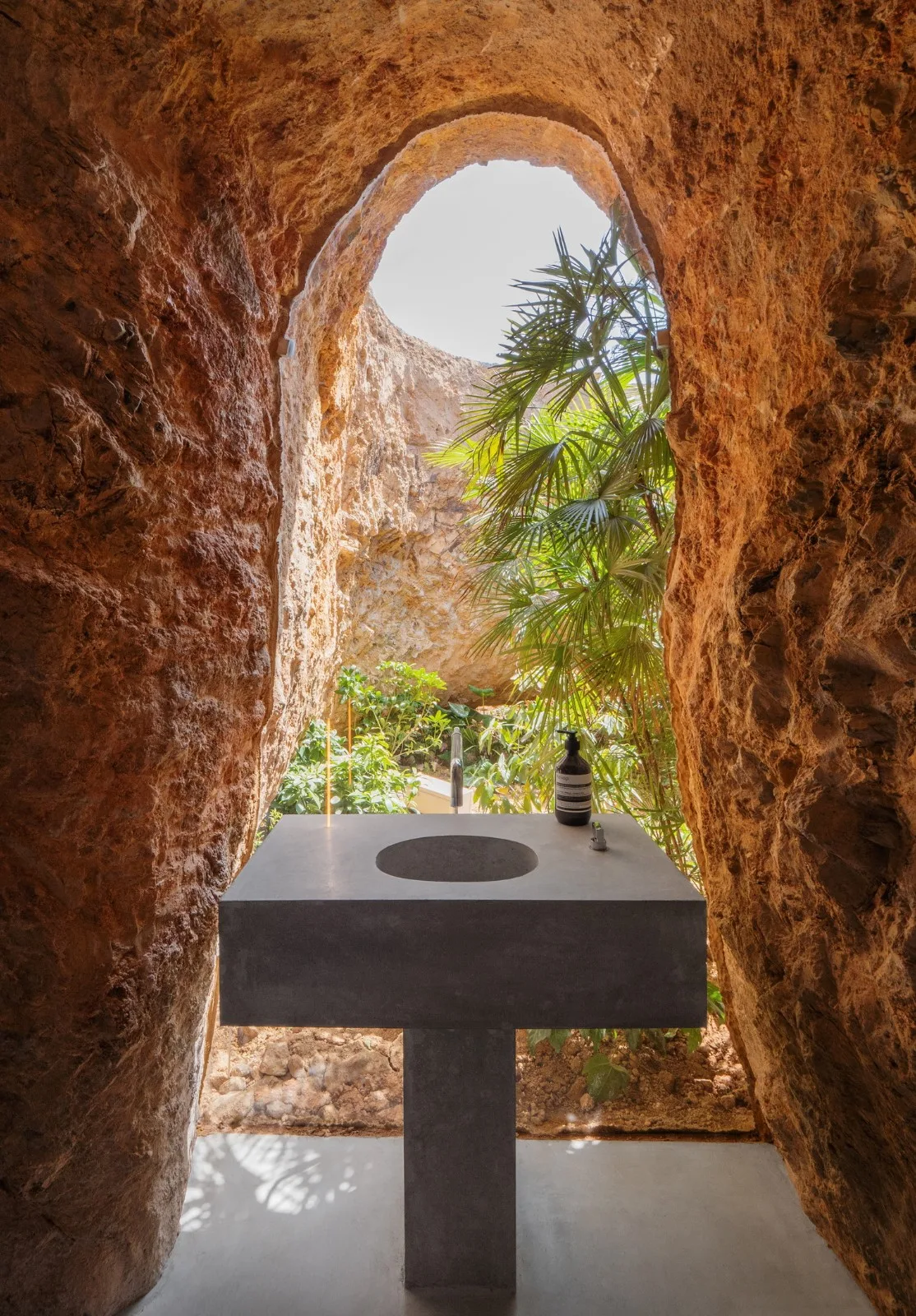
To simplify plumbing, the drainage and water supply lines run straight through the three courtyards. Faucets, drainage pipes, and ventilation ducts connect directly to interior rooms through glass panels, emphasizing the seamless integration of infrastructure within the design.
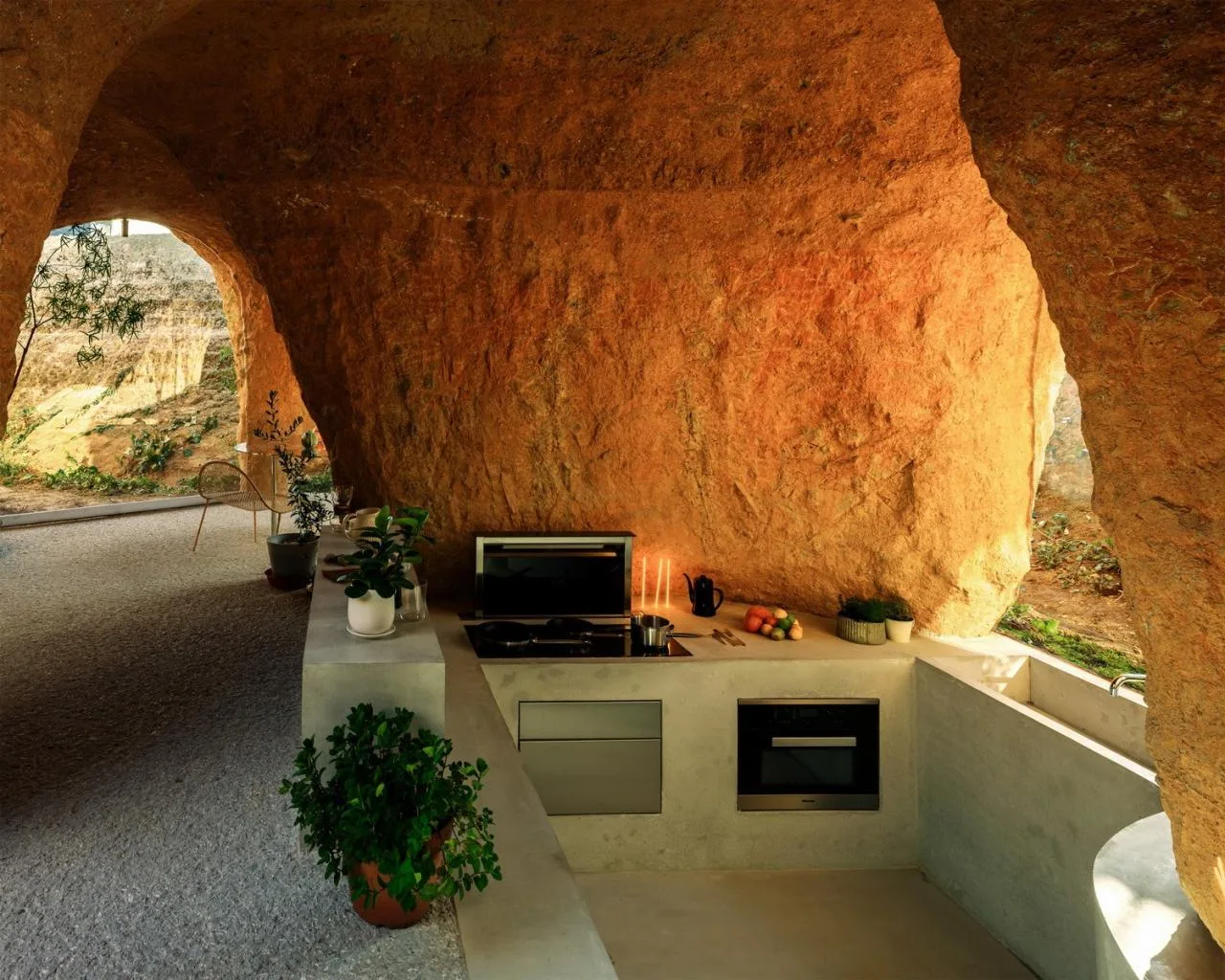
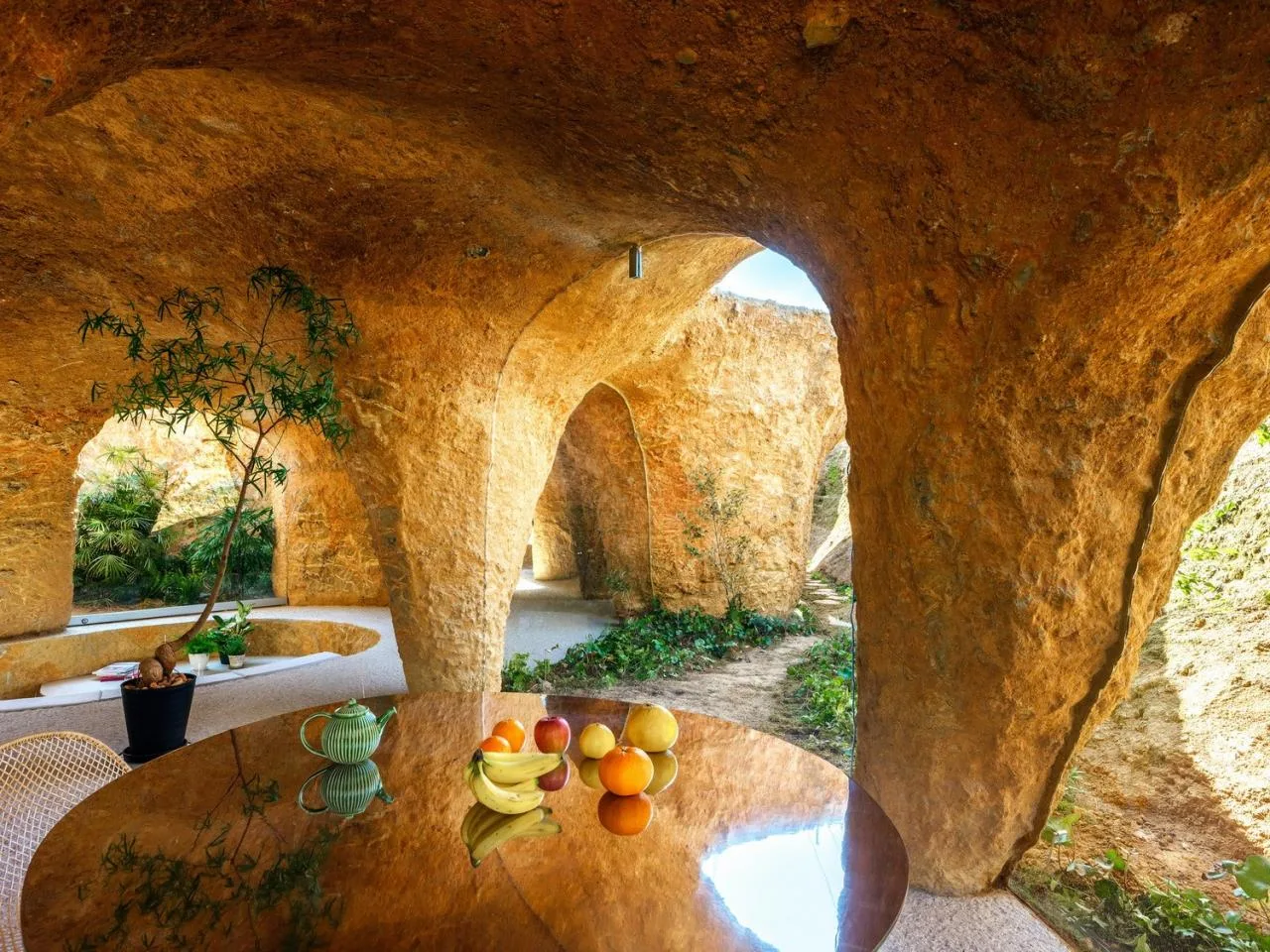
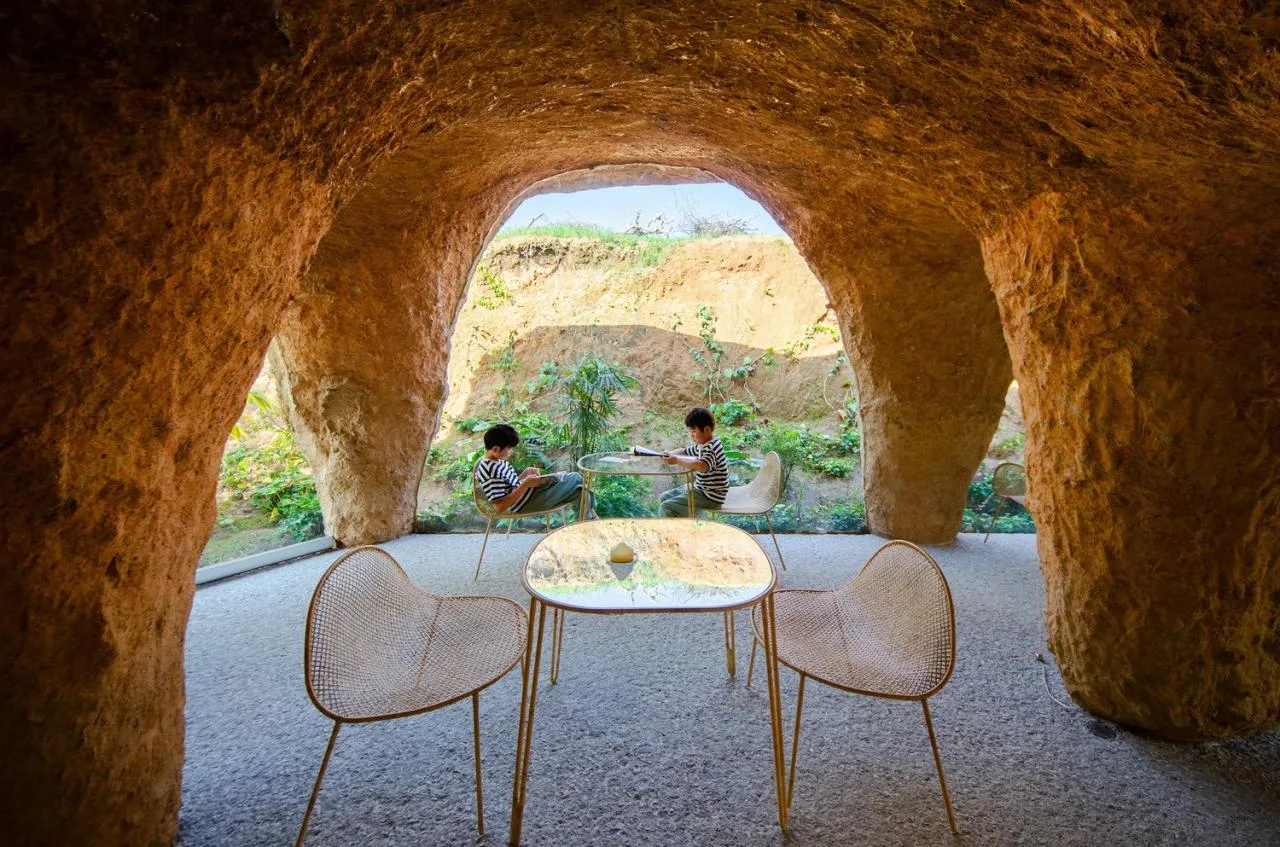
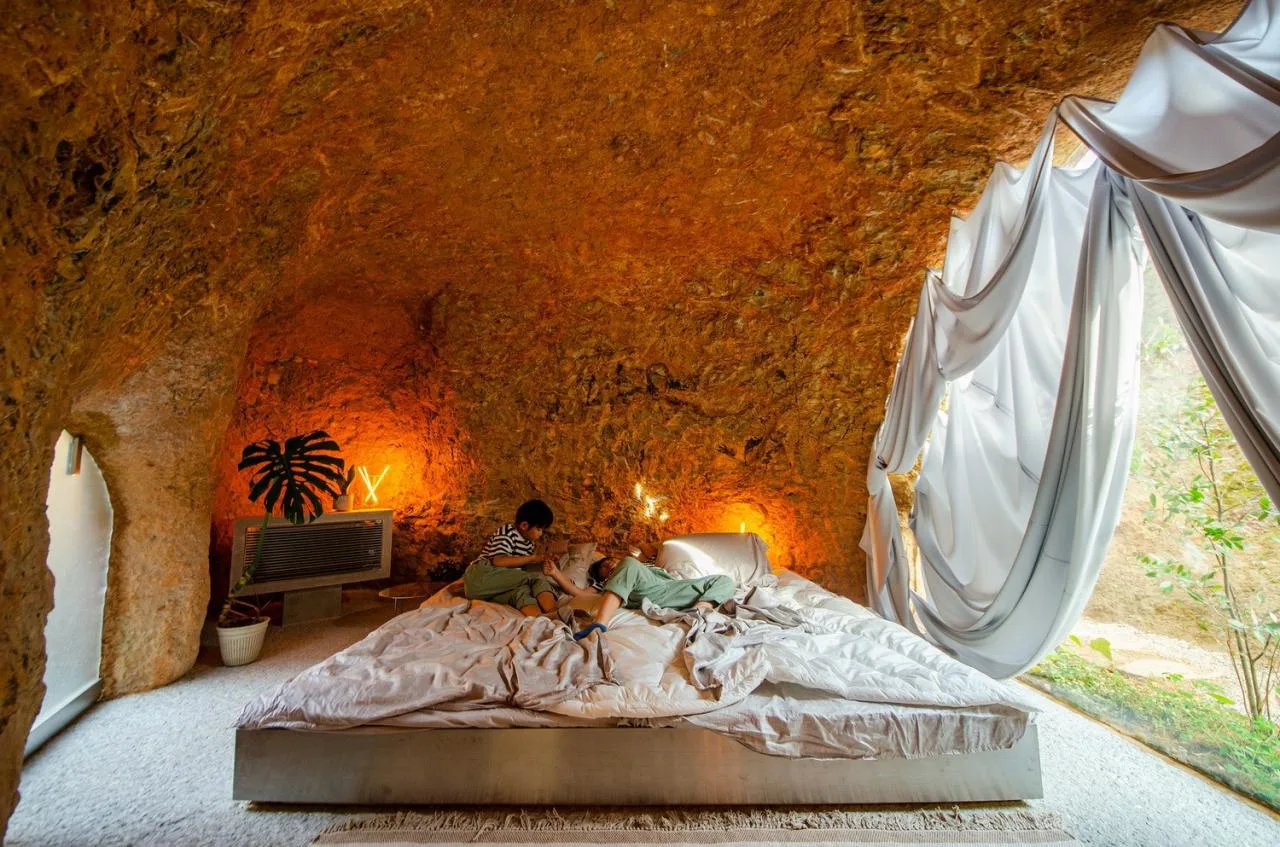
Maison Owl embraces uncertainty, transforming concrete blocks into a living building. My friend and owner is beginning a new chapter here, operating the restaurant while continuously evolving the space.
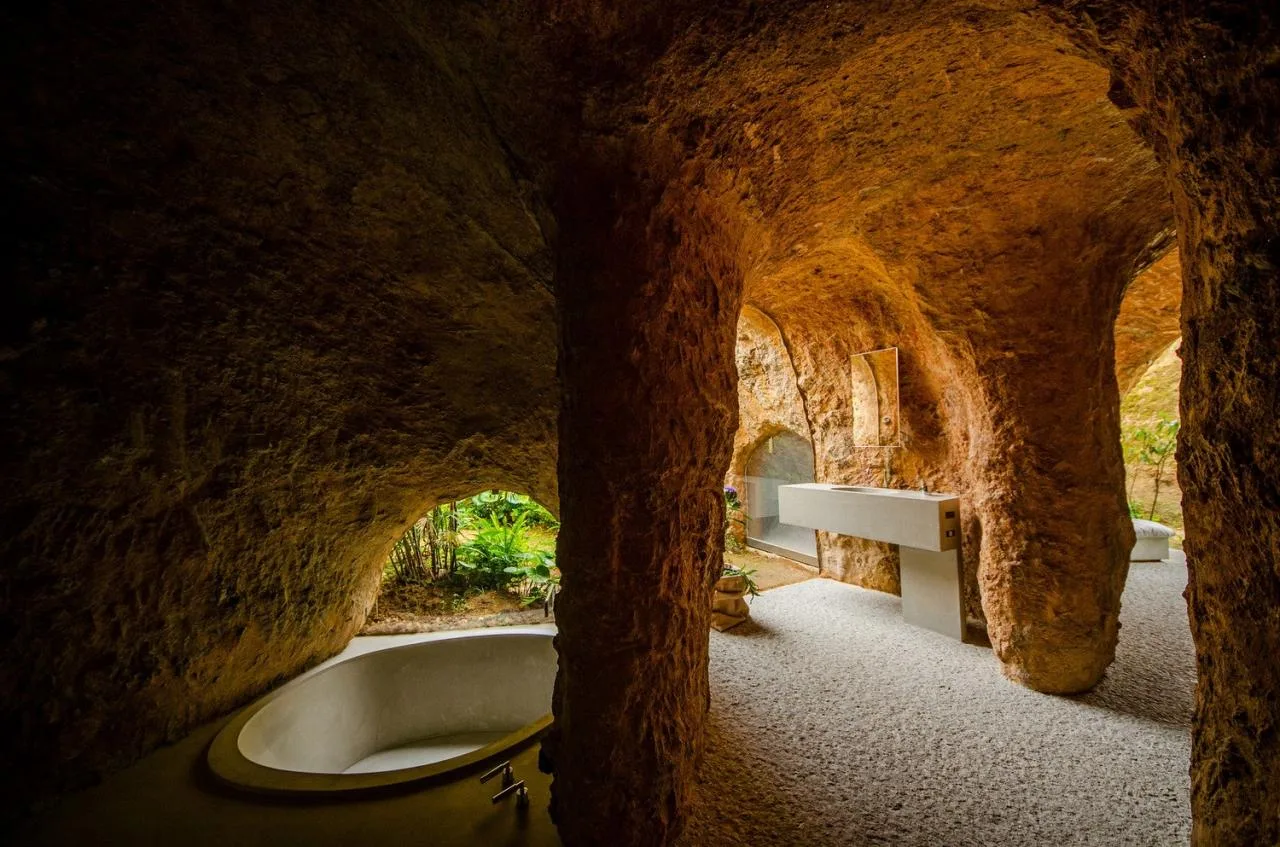
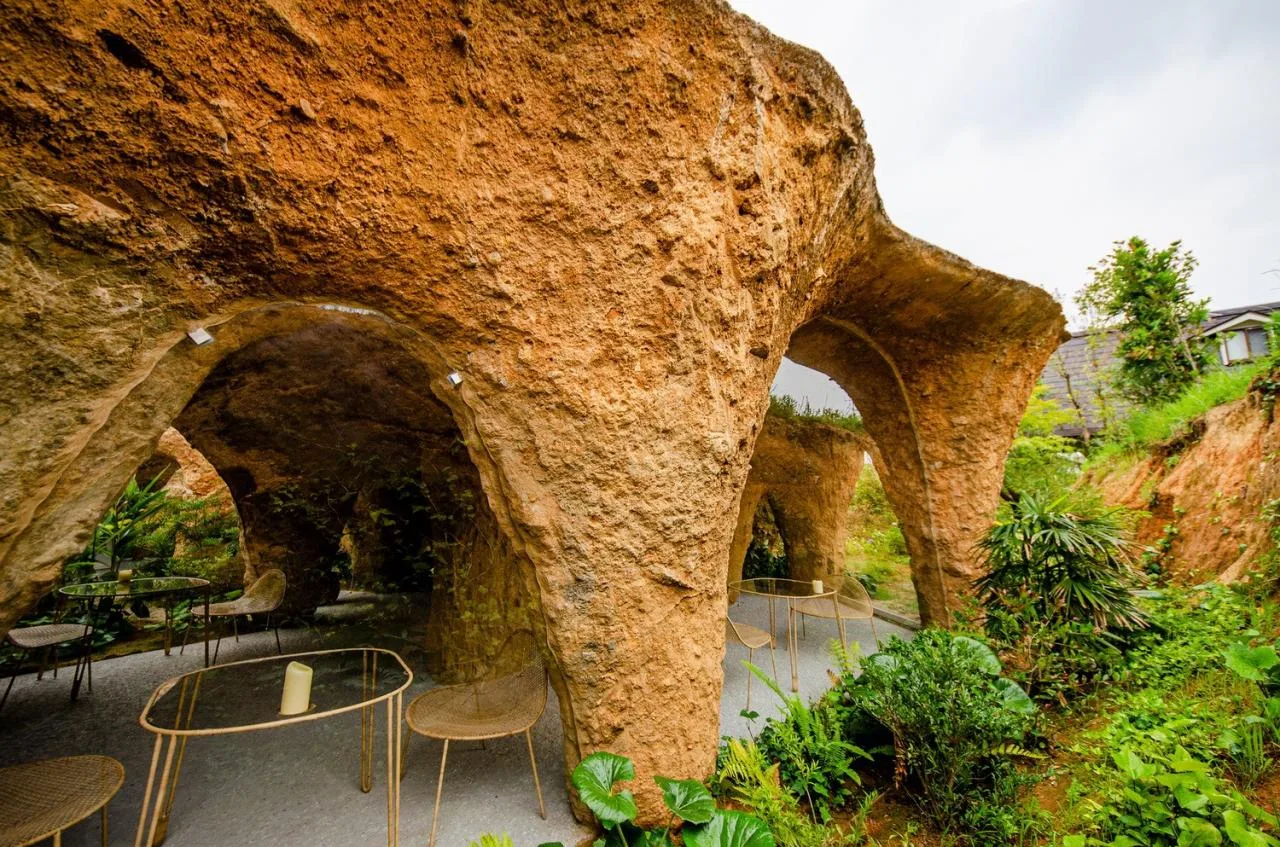
Project Drawings
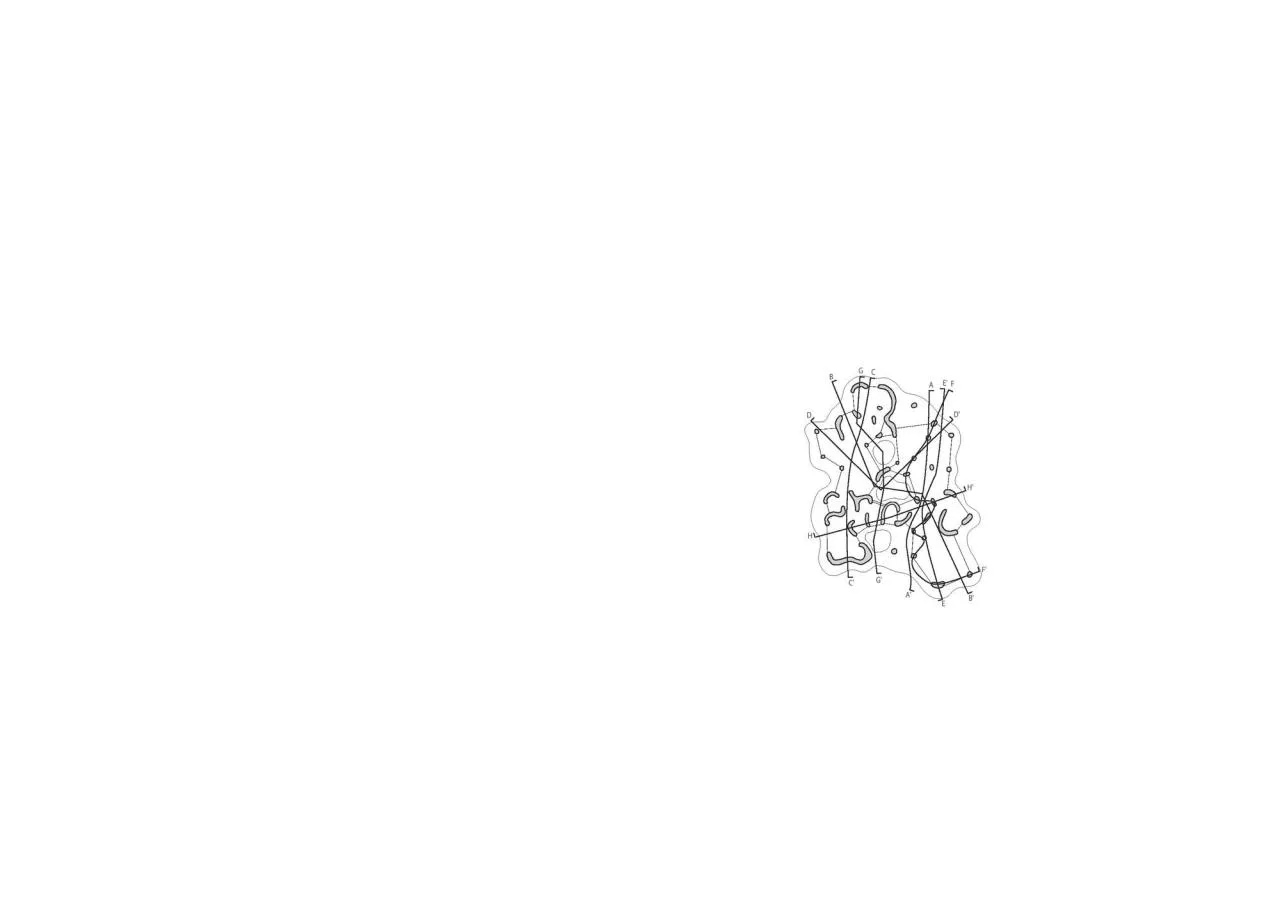
△ Concept Diagram
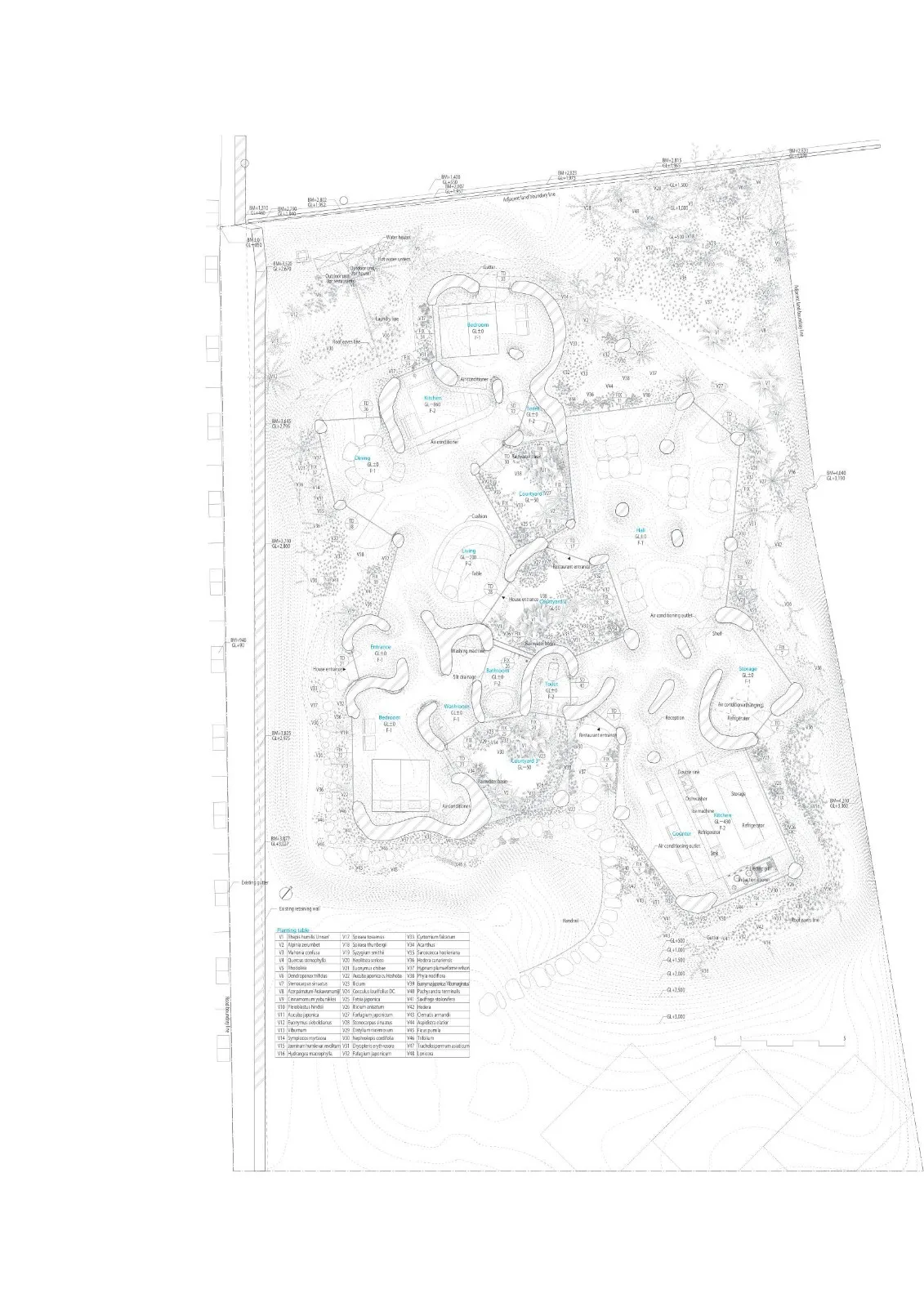
△ Plan View
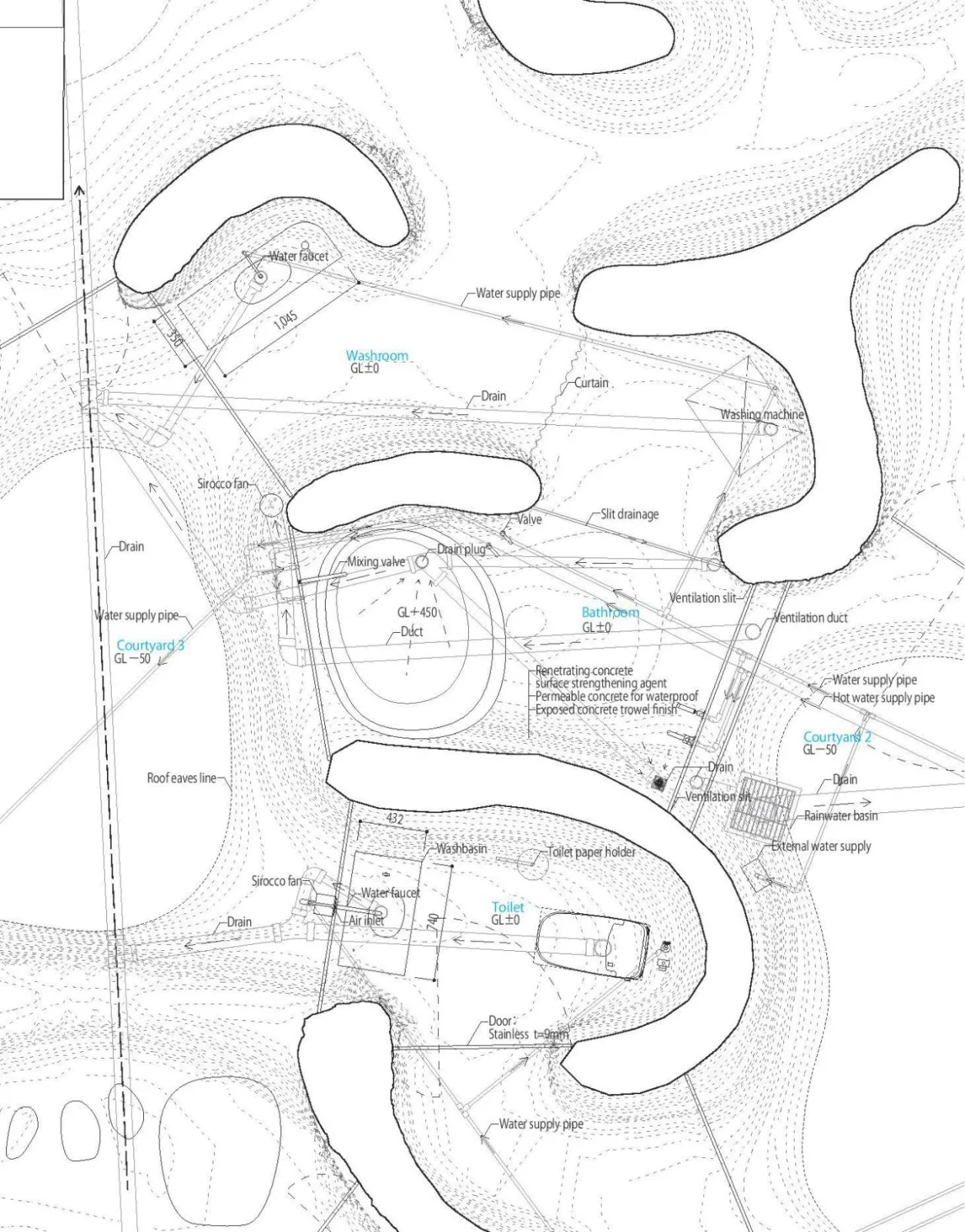
△ Plan View
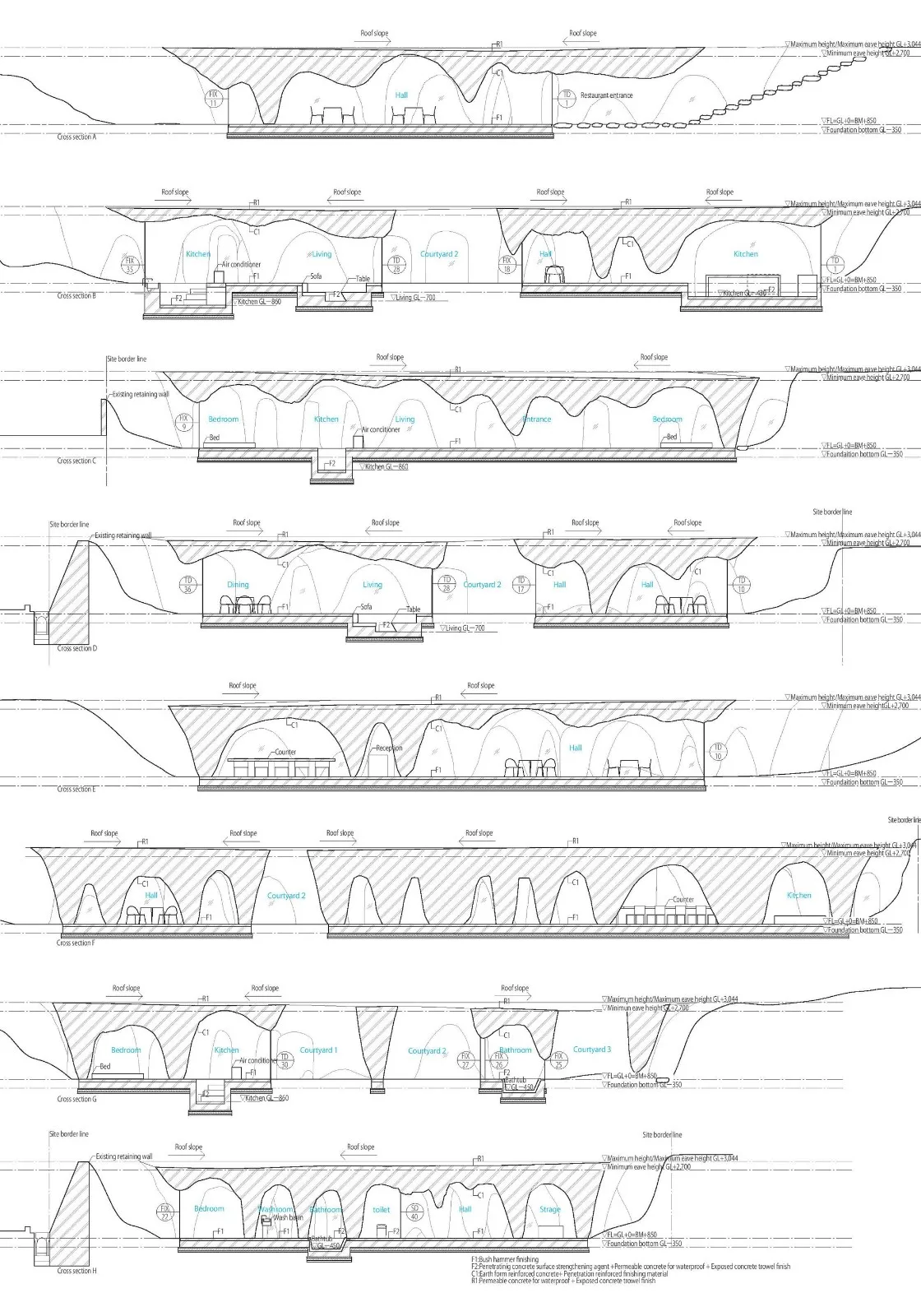
△ Section Diagram
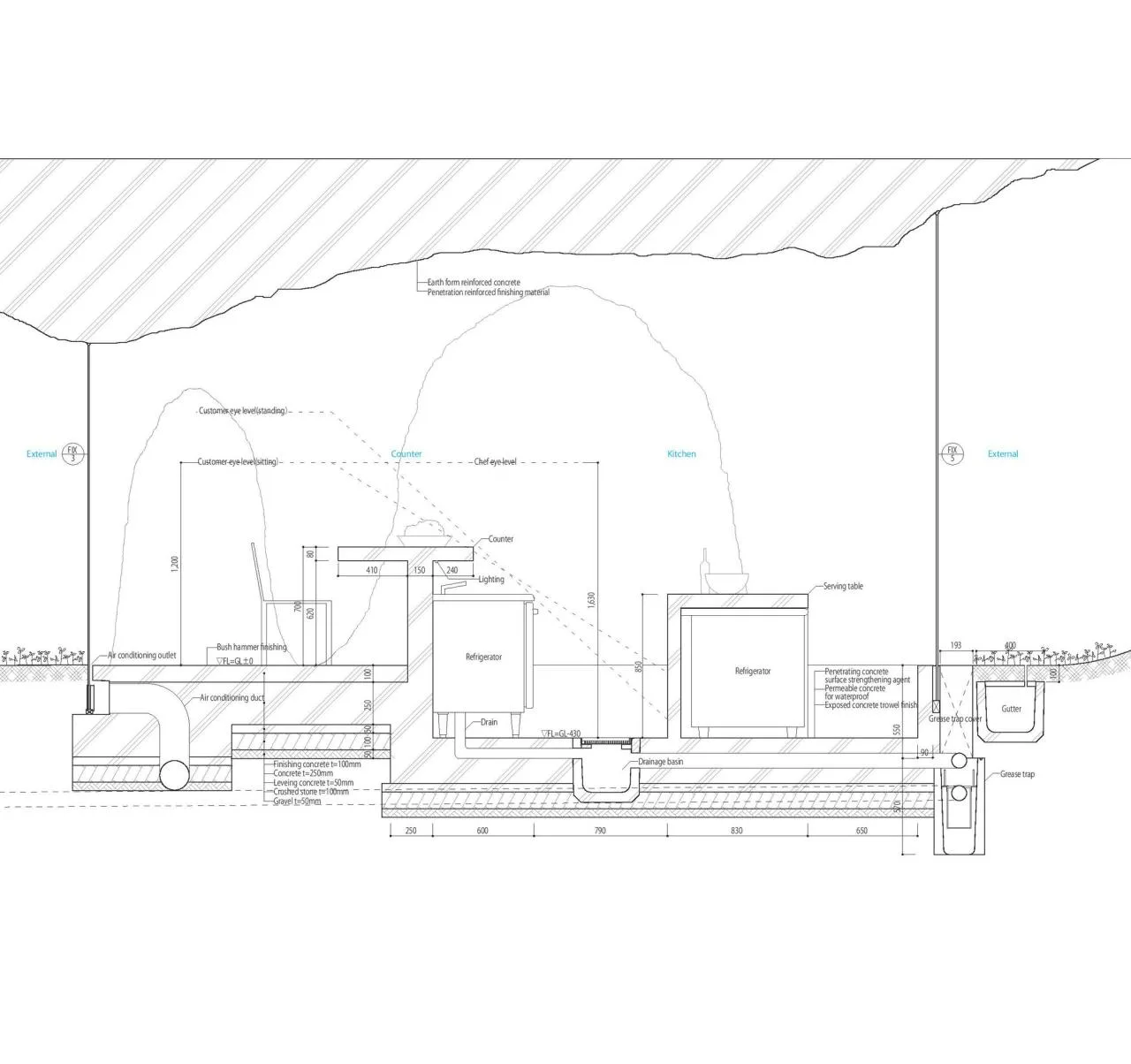
△ Partial Sectional View
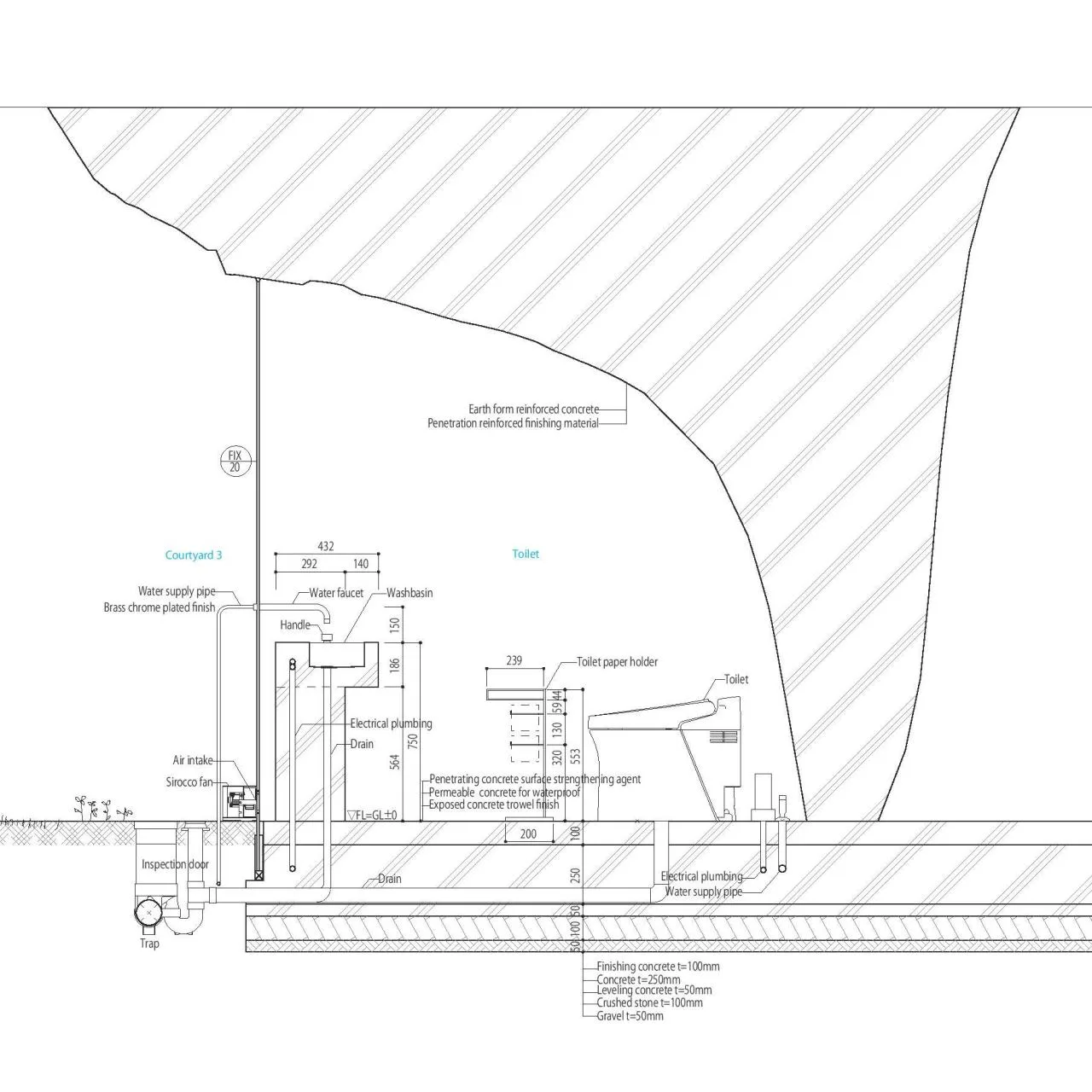
△ Partial Sectional View
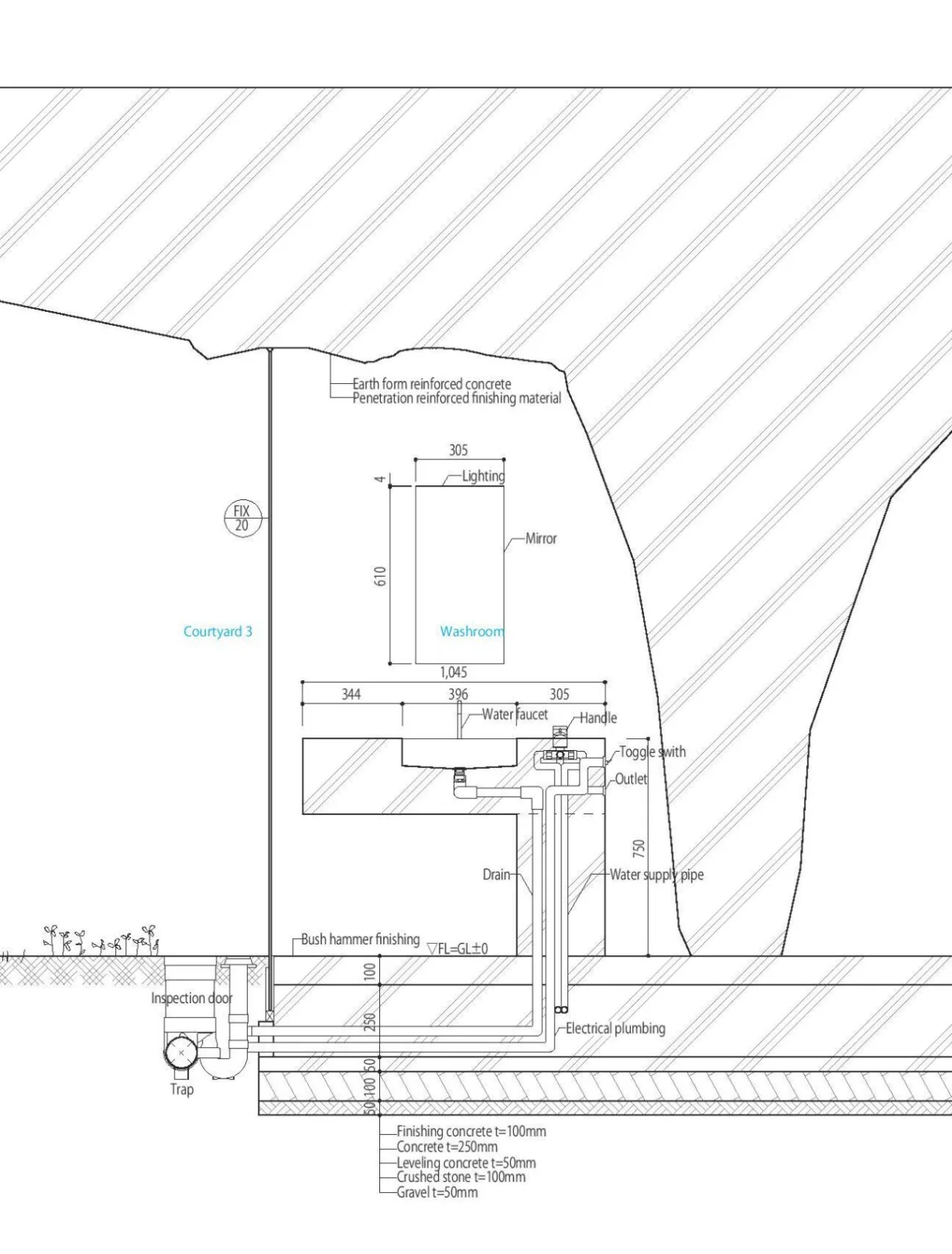
△ Partial Sectional View
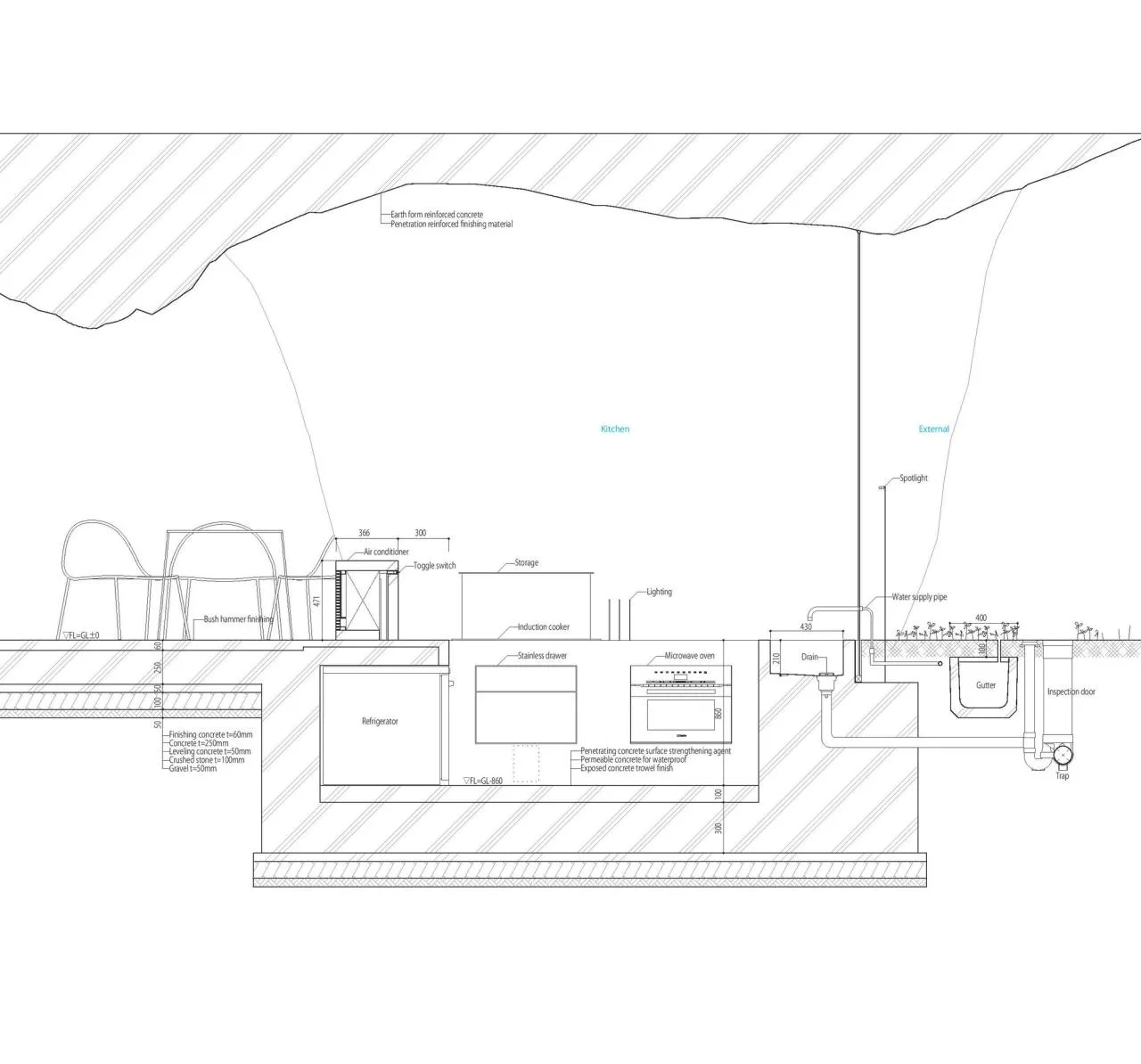
△ Partial Sectional View
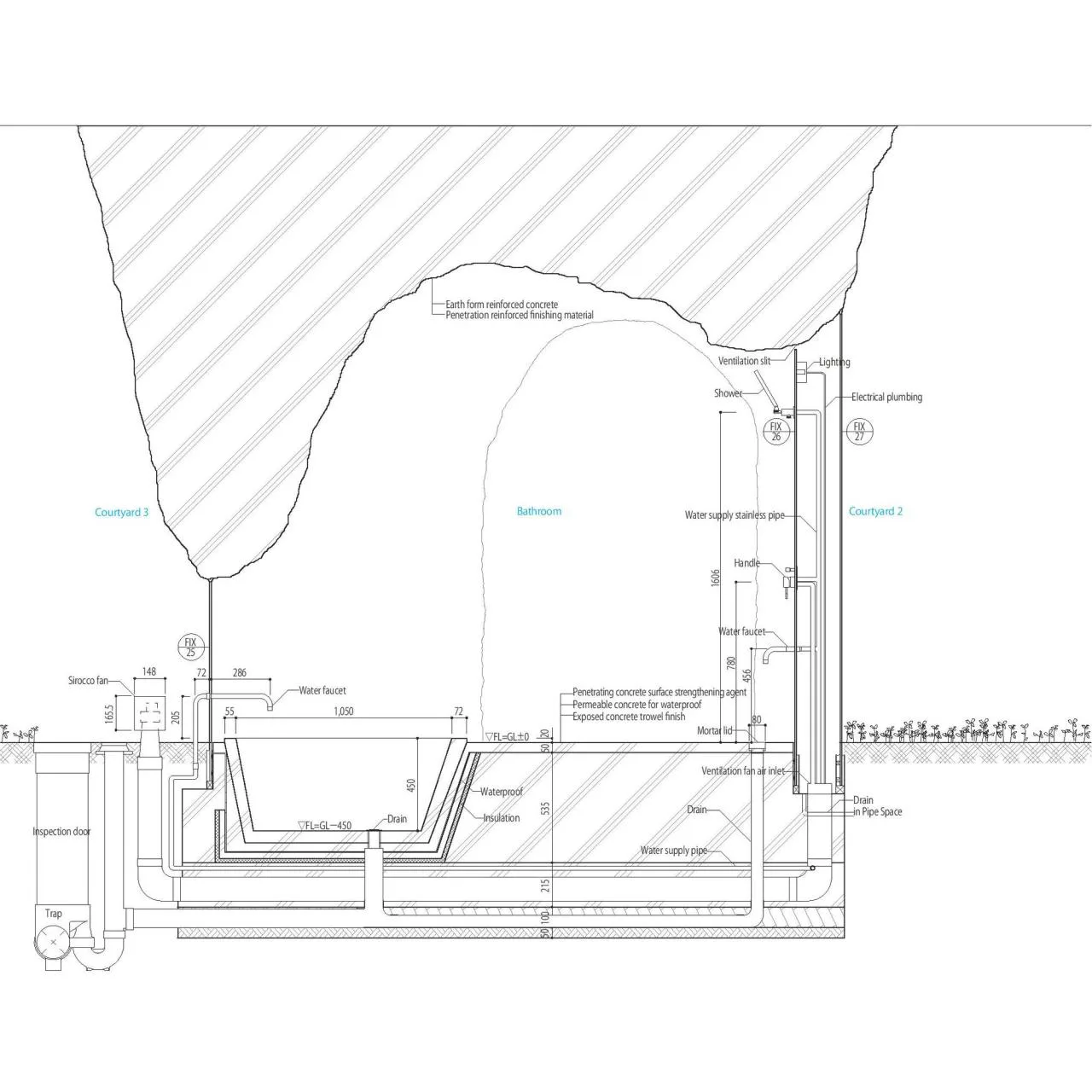
△ Partial Sectional View
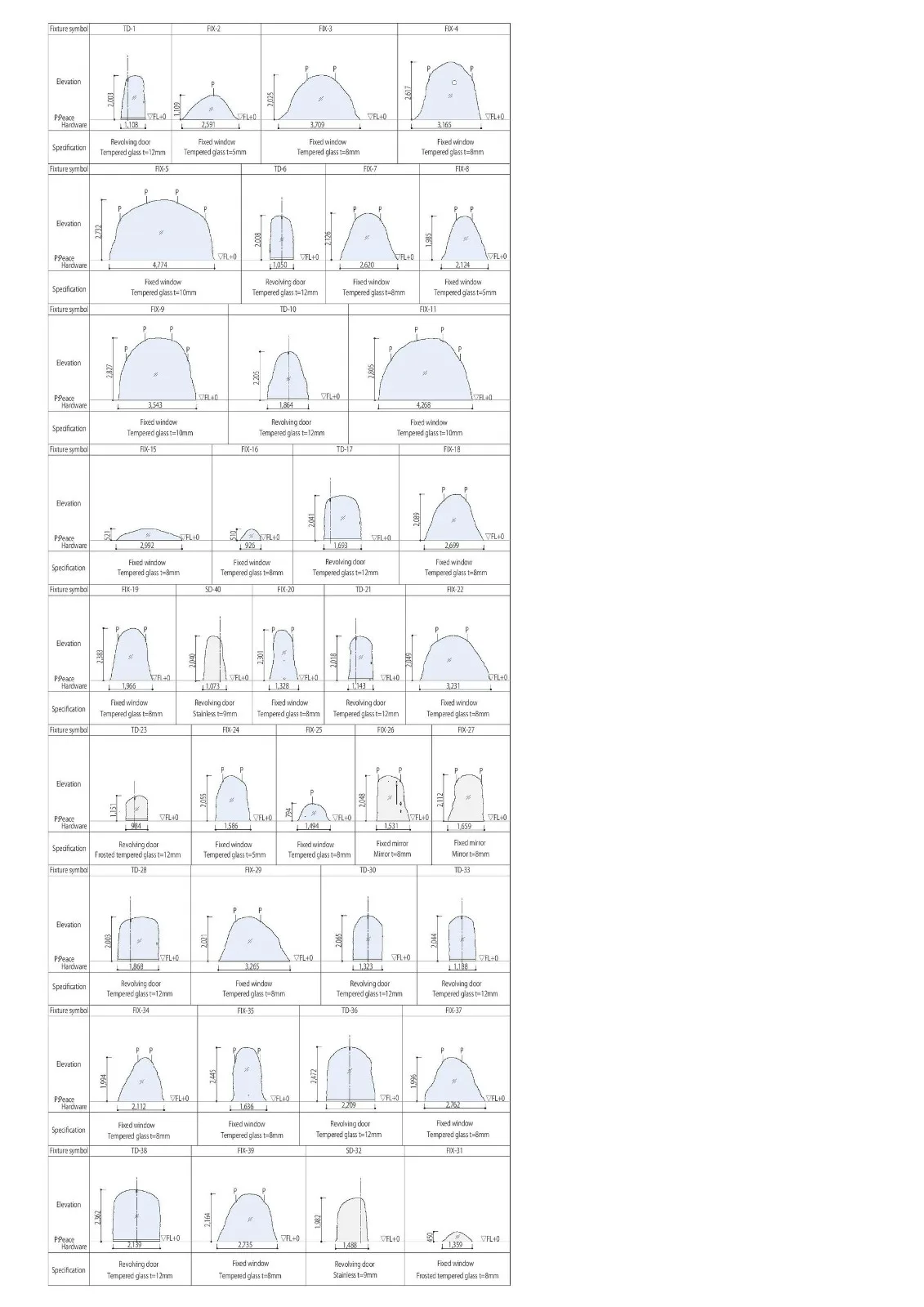
△ Analysis Chart
△ Analysis Chart
Project Information
Architect: Junya Ishigami + Associates
Area: 270 square meters
Year of Completion: 2022
Photographers: YASHIRO PHOTO OFFICE, Ikko Dobashi
Construction Company: Akita Kensetsu Co., Ltd.
Lead Architects: Junya Ishigami, Taeko Abe, Jaehyub Ko, Takuya Nakayama
Structural Engineers: Jun Sato, Yoshihiro Fukushima
Lighting Design: Junya Ishigami + Associates, Junya Ishigami, Takuya Nakayama
Interior Design: Junya Ishigami, Takuya Nakayama
Lighting Consultant: Izumi Okayasu Lighting Design, Izumi Okayasu
Curtain Wall Design: Yoko Ando Design, Yoko Ando
Main Contractor: Akita Kensetsu Co., Ltd., Masato Akita, Gaku Matsumoto, Takaki Fukuda, Takuya Nakayama, Akane Enda, Yuki Inoue
MEP Contractor: Koichi Tashiro
Landscape Contractor: SOLSO, Kazuya Kiryu
Glass Contractor: Meiji Glass Company Limited, Kensuke Kashihara
Device Manager: Yoshio Yanagiya
Furniture Managers: Shigeki Miyamoto, Ai Mizuta
RC Furniture Manager: Hayato Takehashi
Principal: Motonori Hirata
Location: Ube City, Japan













Must log in before commenting!
Sign Up