
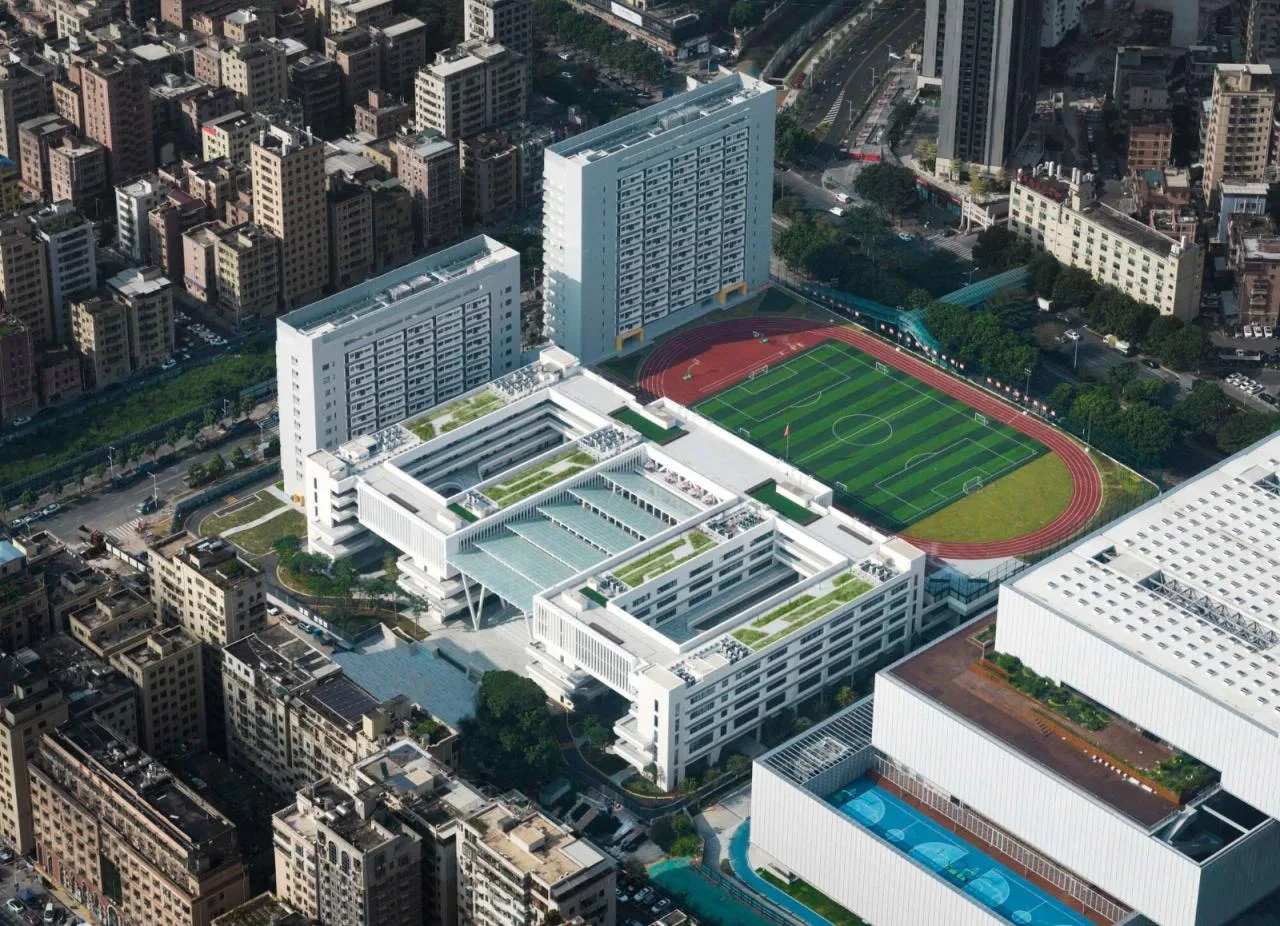
In today’s densely populated urban environments, what should the future campus look like beyond efficient teaching spaces? Shenzhen Hongshan Middle School focuses on connectivity, social interaction, and regional identity as core design principles. Through creative and dynamic design, the school creates a series of vibrant spaces that encourage students to explore and grow, helping them become the best versions of themselves.
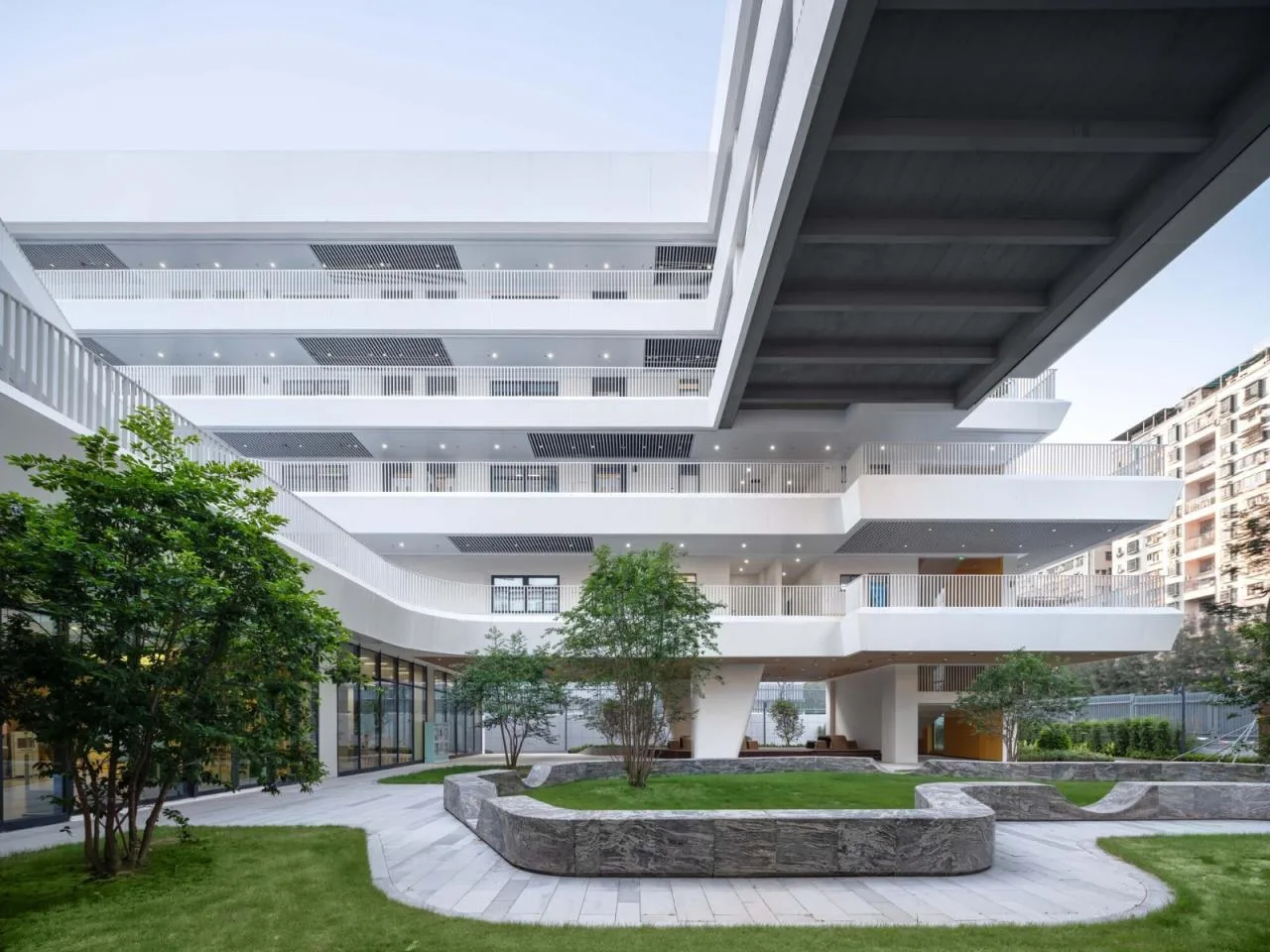
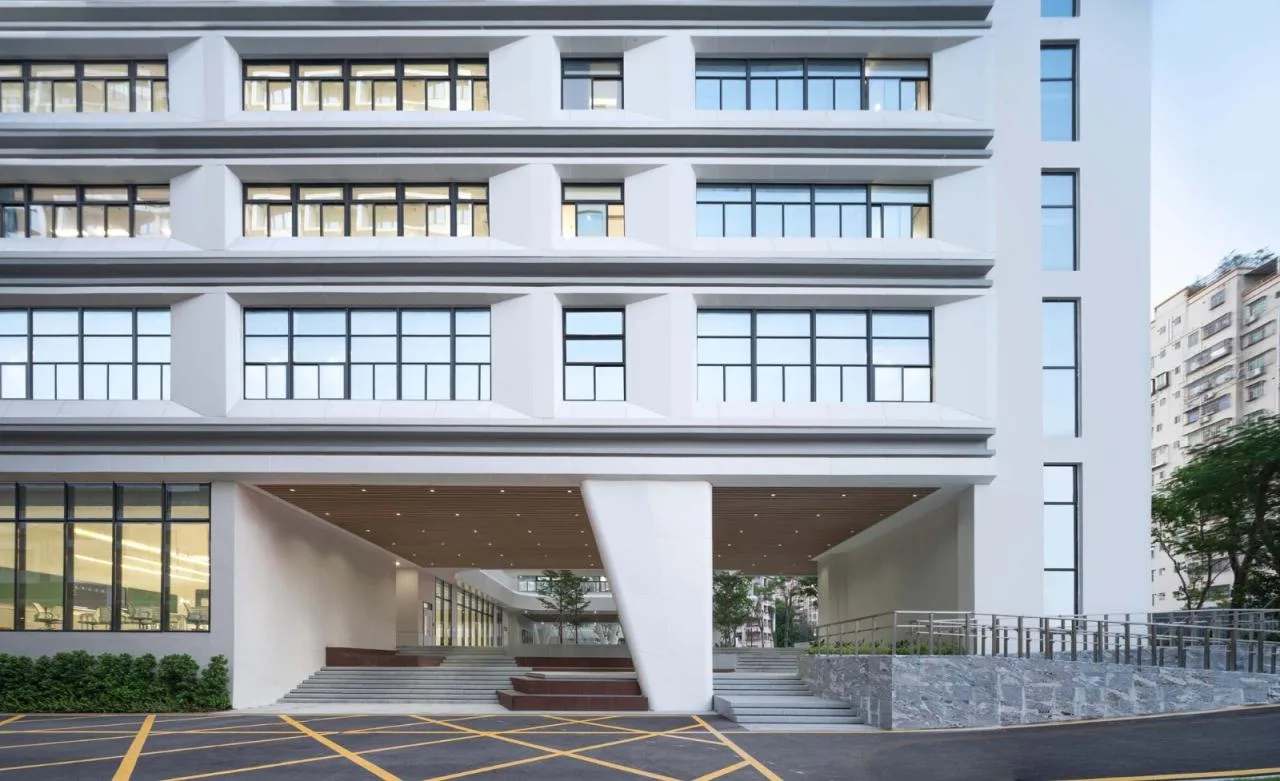
This vertical campus project in Longhua, Shenzhen, introduces multiple ground levels to maximize land use in a highly dense area. The design starts by emphasizing inspiring spatial characteristics that respond to the site’s unique context.
The campus’s white color palette stands in contrast to the surrounding area, which is undergoing urban renewal. To the west and south, dense urban villages with aged, gray-toned buildings dominate. By choosing white as the primary color, Hongshan Middle School adds brightness and purity to the neighborhood’s atmosphere.
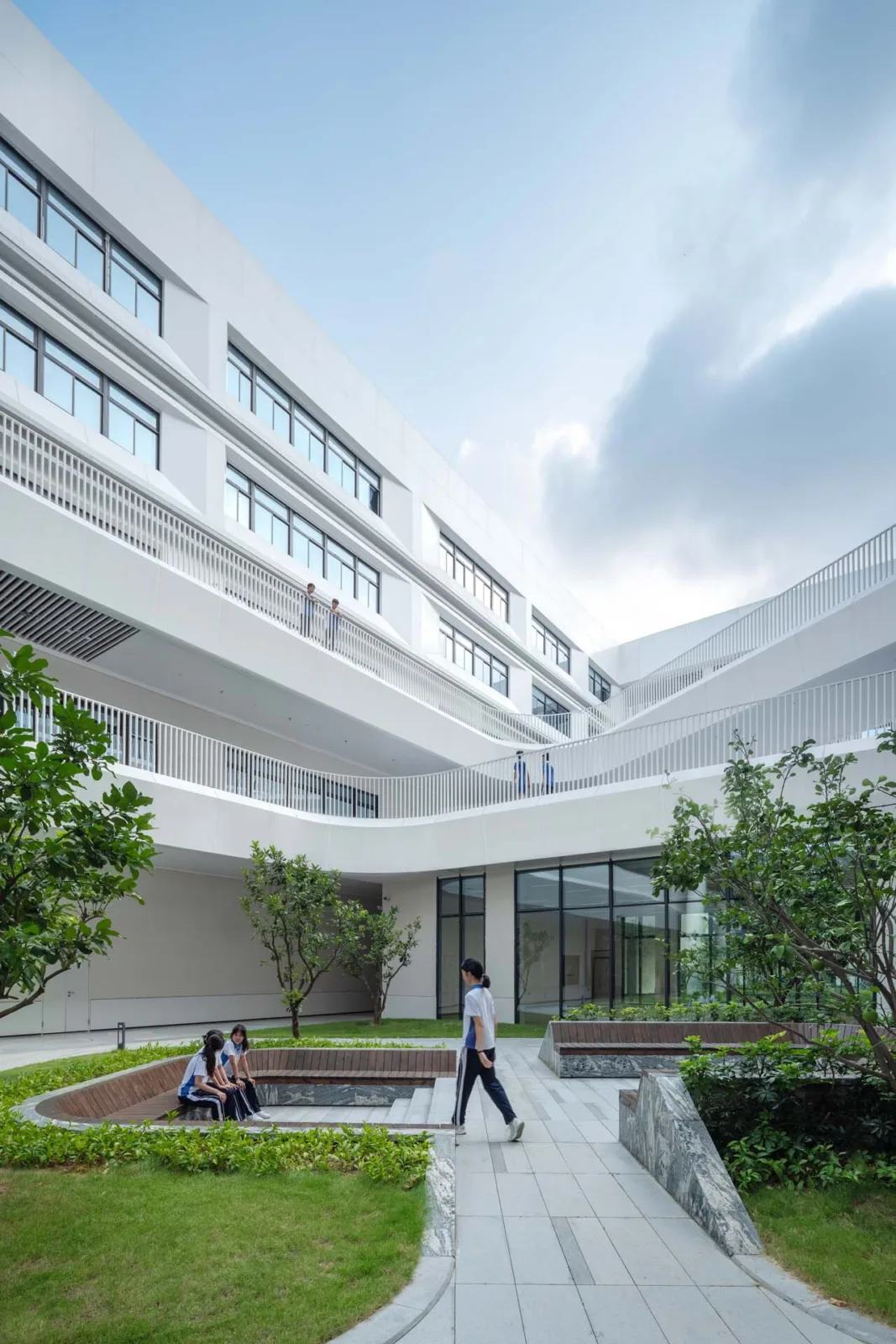
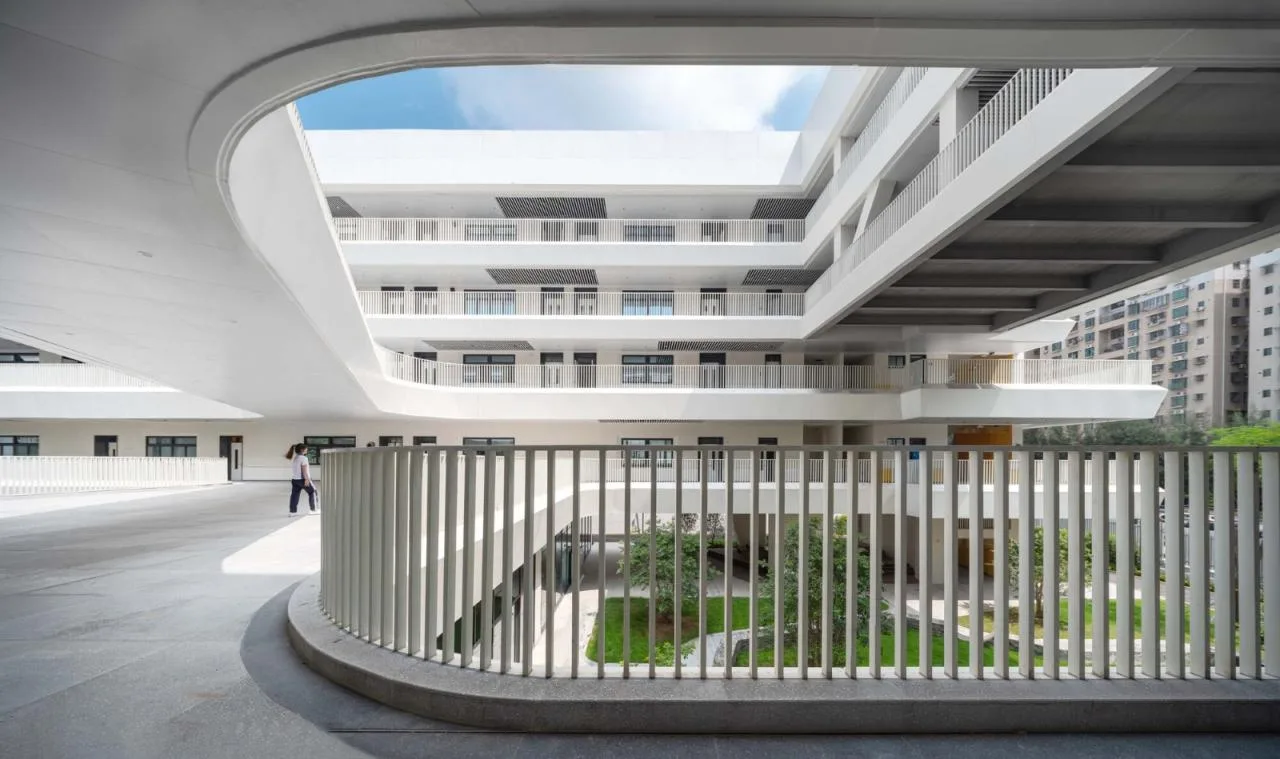
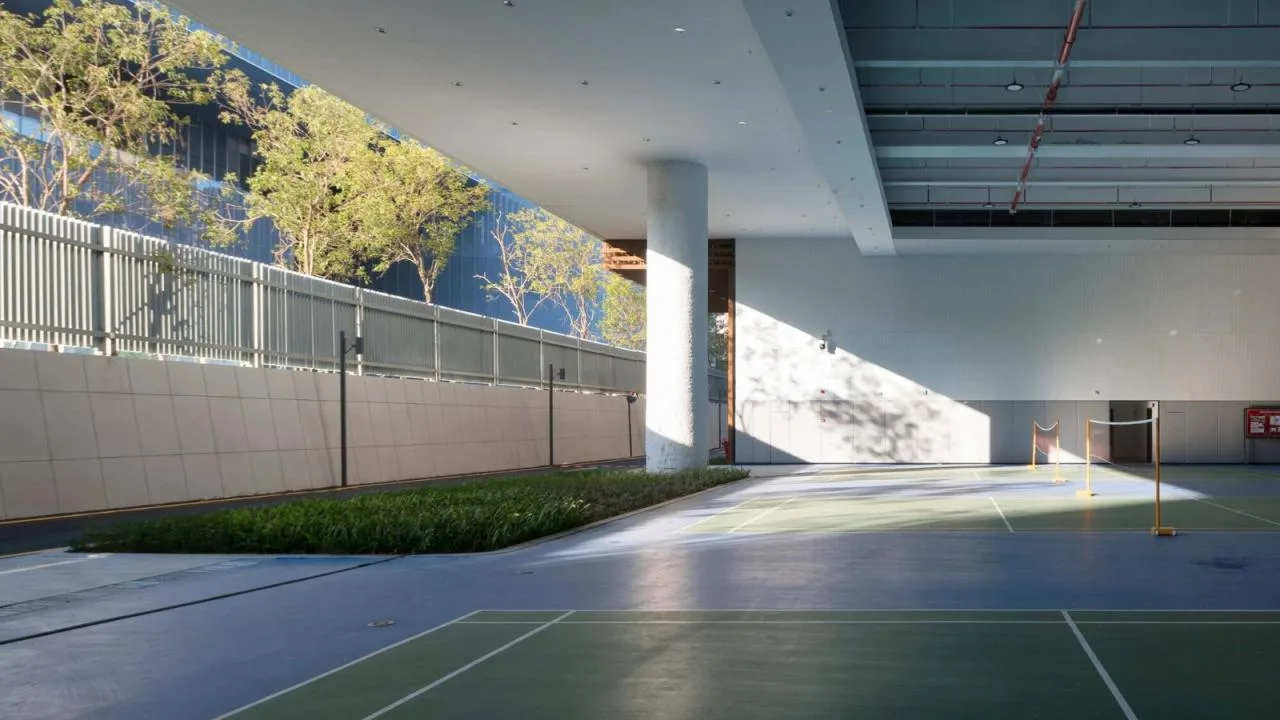
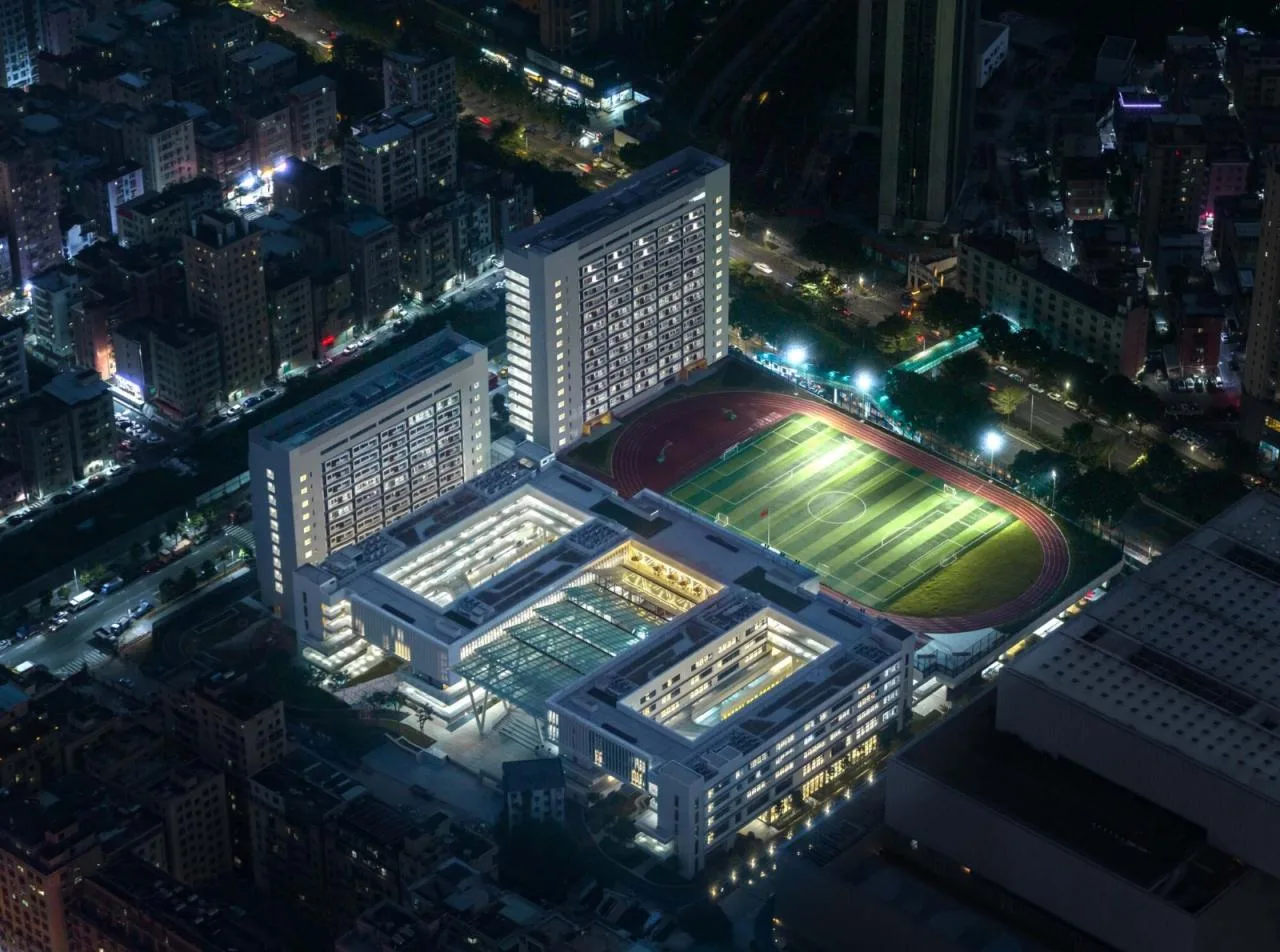
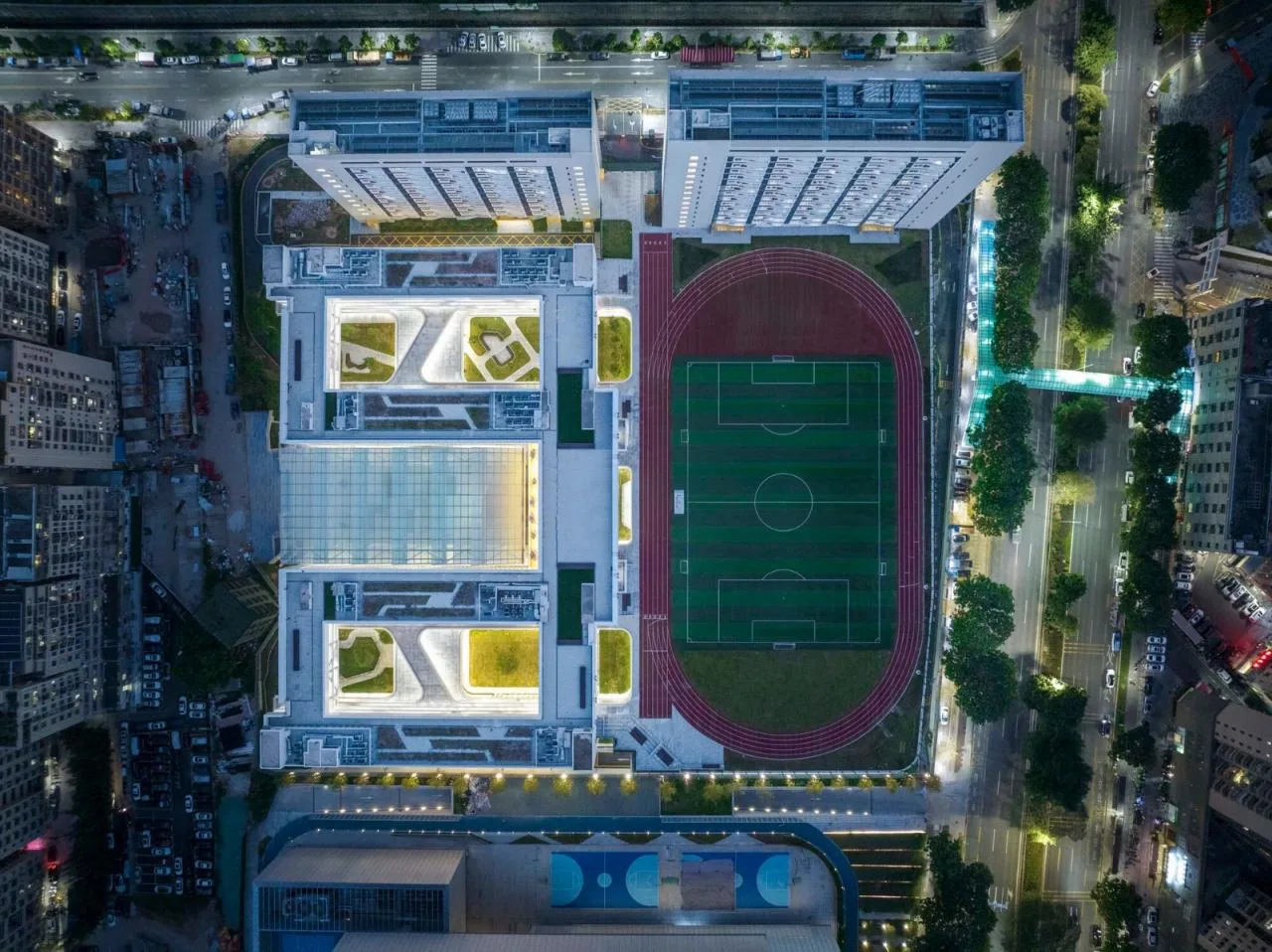
The sports field is elevated approximately ten meters along New District Avenue, a major city road, effectively separating dynamic and quiet zones. Beneath the elevated playground are the student cafeteria and sports facilities, including basketball and badminton courts. This vertical stacking not only reduces noise but also efficiently arranges large-scale functions within a high-density campus, creating a positive urban frontage.
Vertical Integration and Intensive Functionality
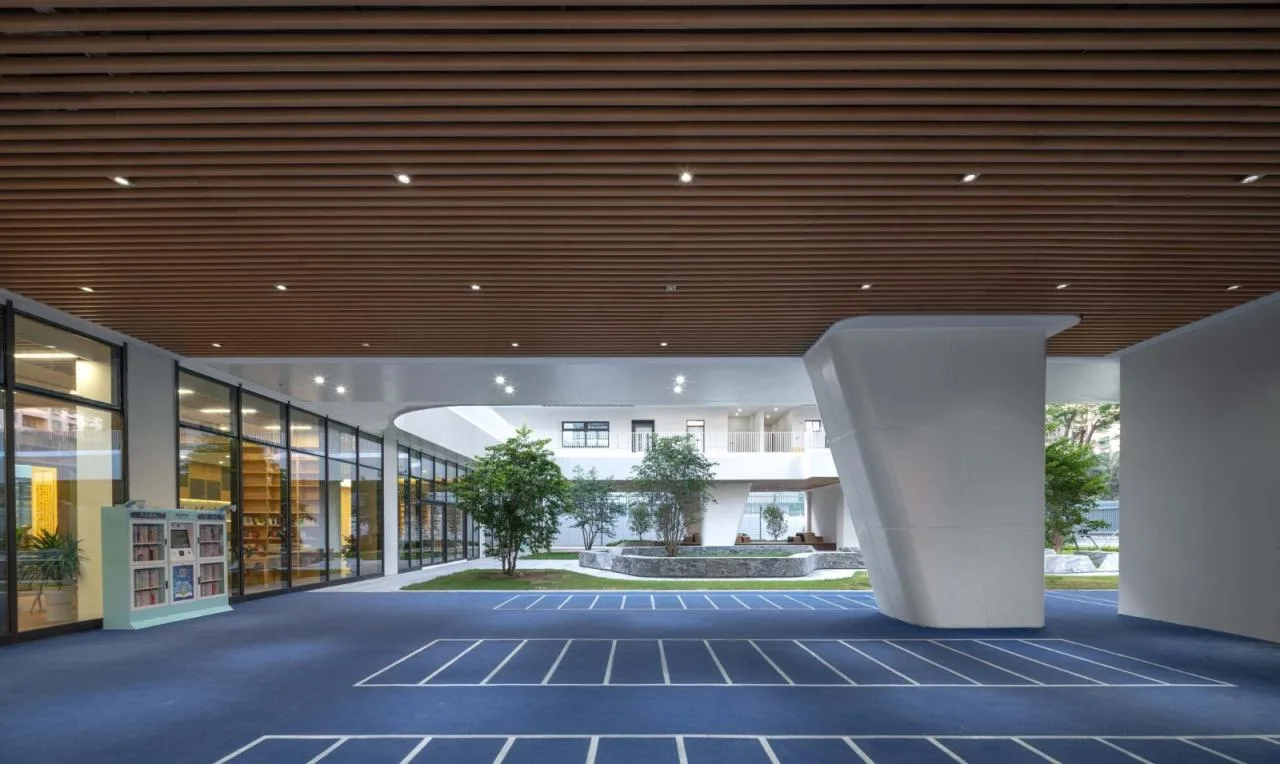
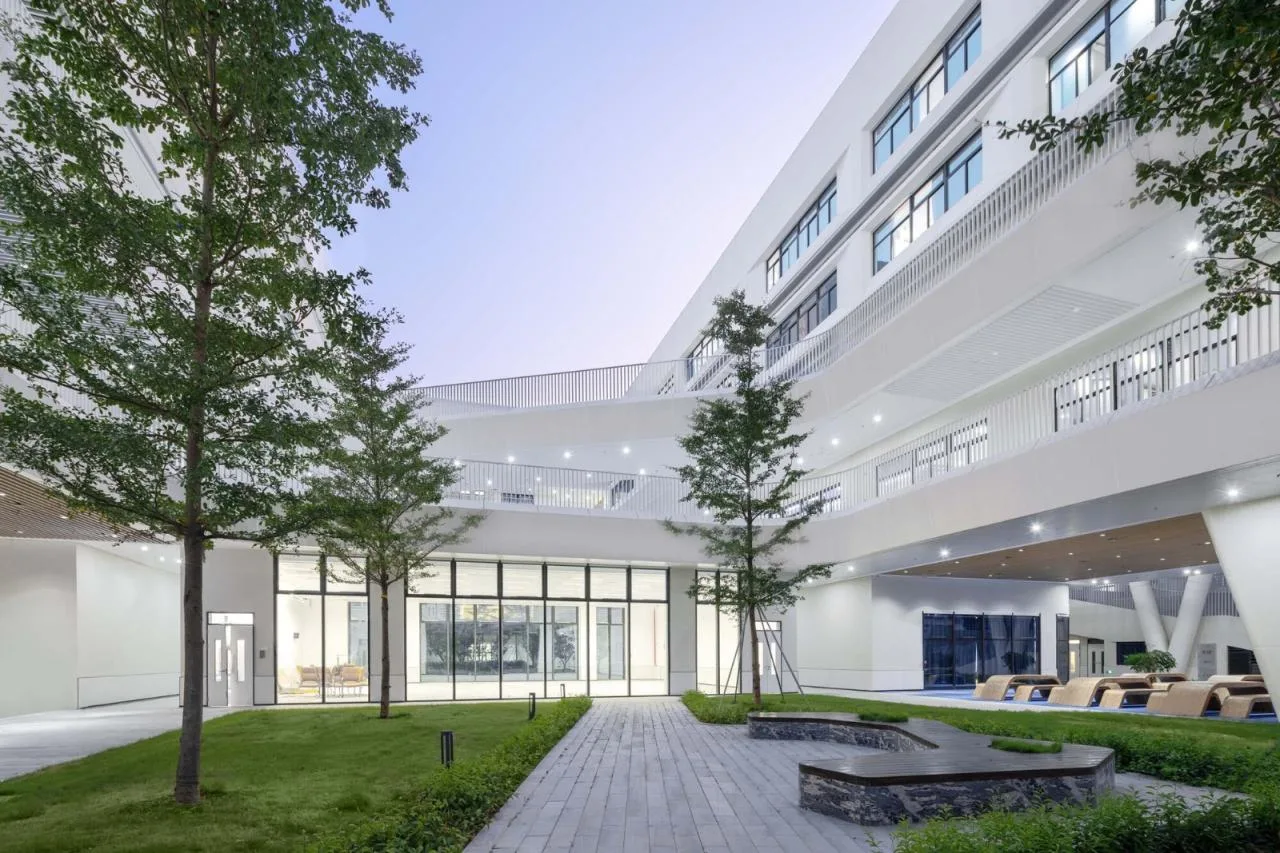
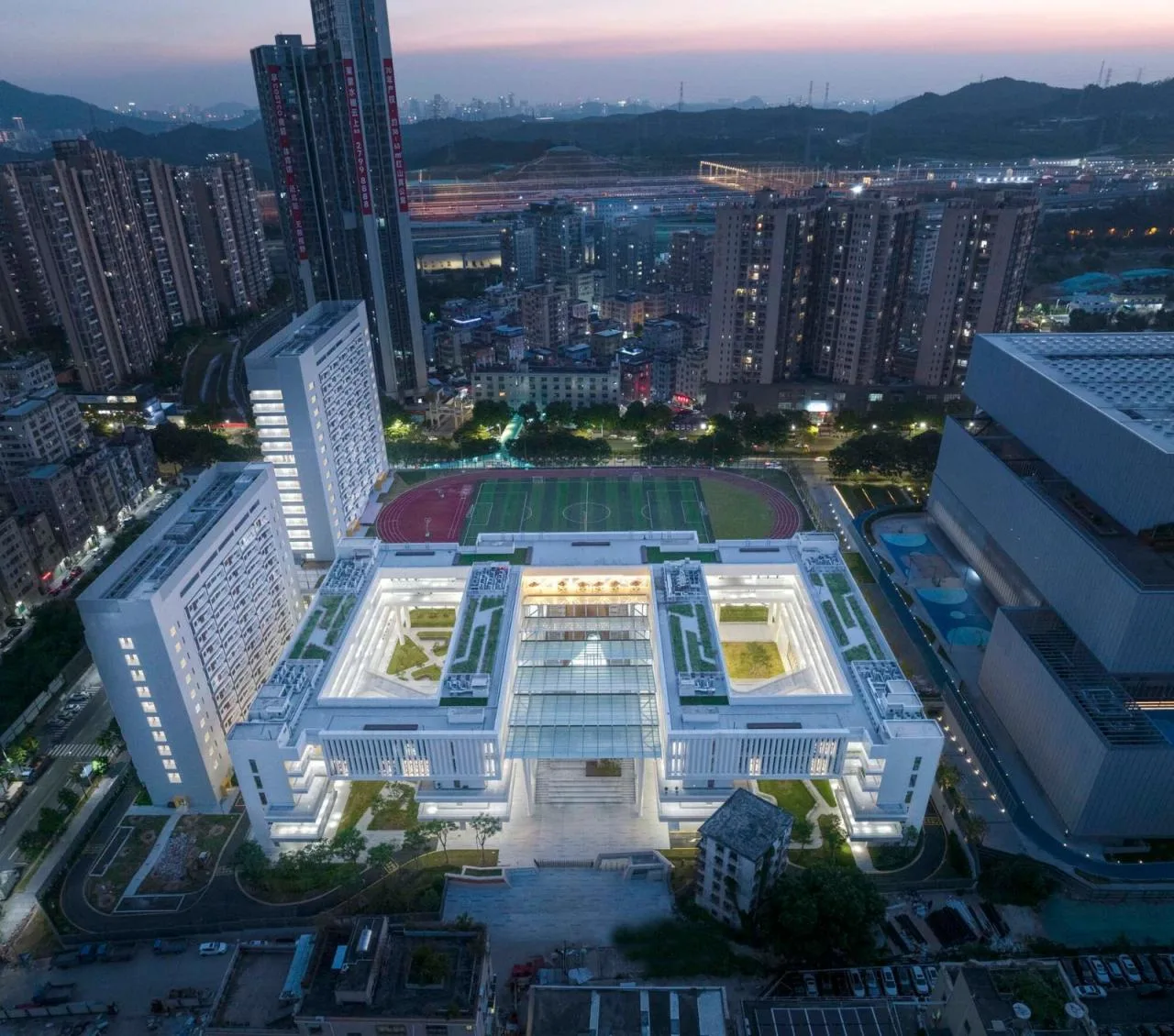
To maximize land utilization, the campus buildings are designed with upper and lower levels, creating new ground areas vertically. The upper levels are dedicated to teaching spaces, while the lower levels house large auxiliary rooms. Central courtyards disperse and connect these spaces, fostering an atmosphere of communication and learning.
The roof platform serves as an additional sports field, functionally linked to the sports complex on the north side. This open rooftop acts as a second ground level for the campus, while balconies on the teaching and dormitory buildings offer viewing areas.
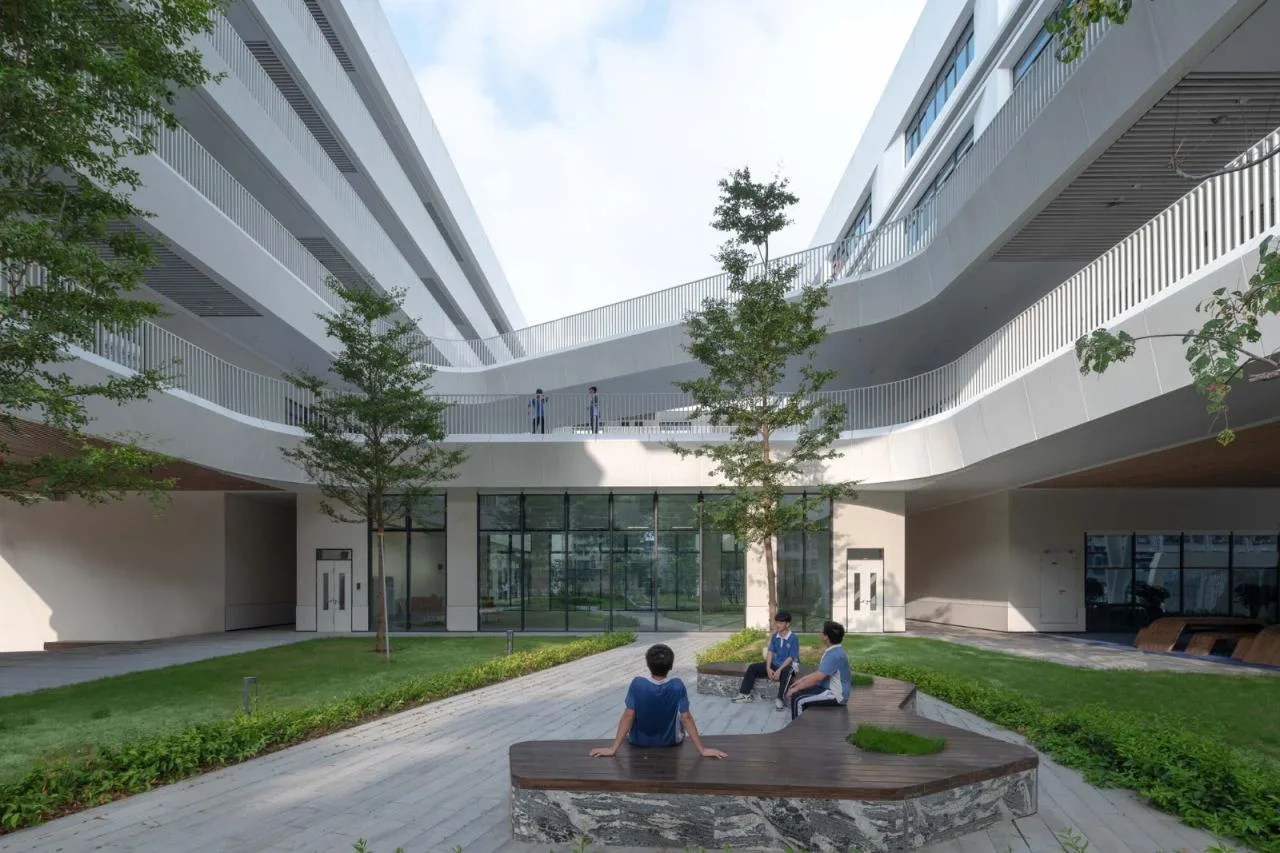
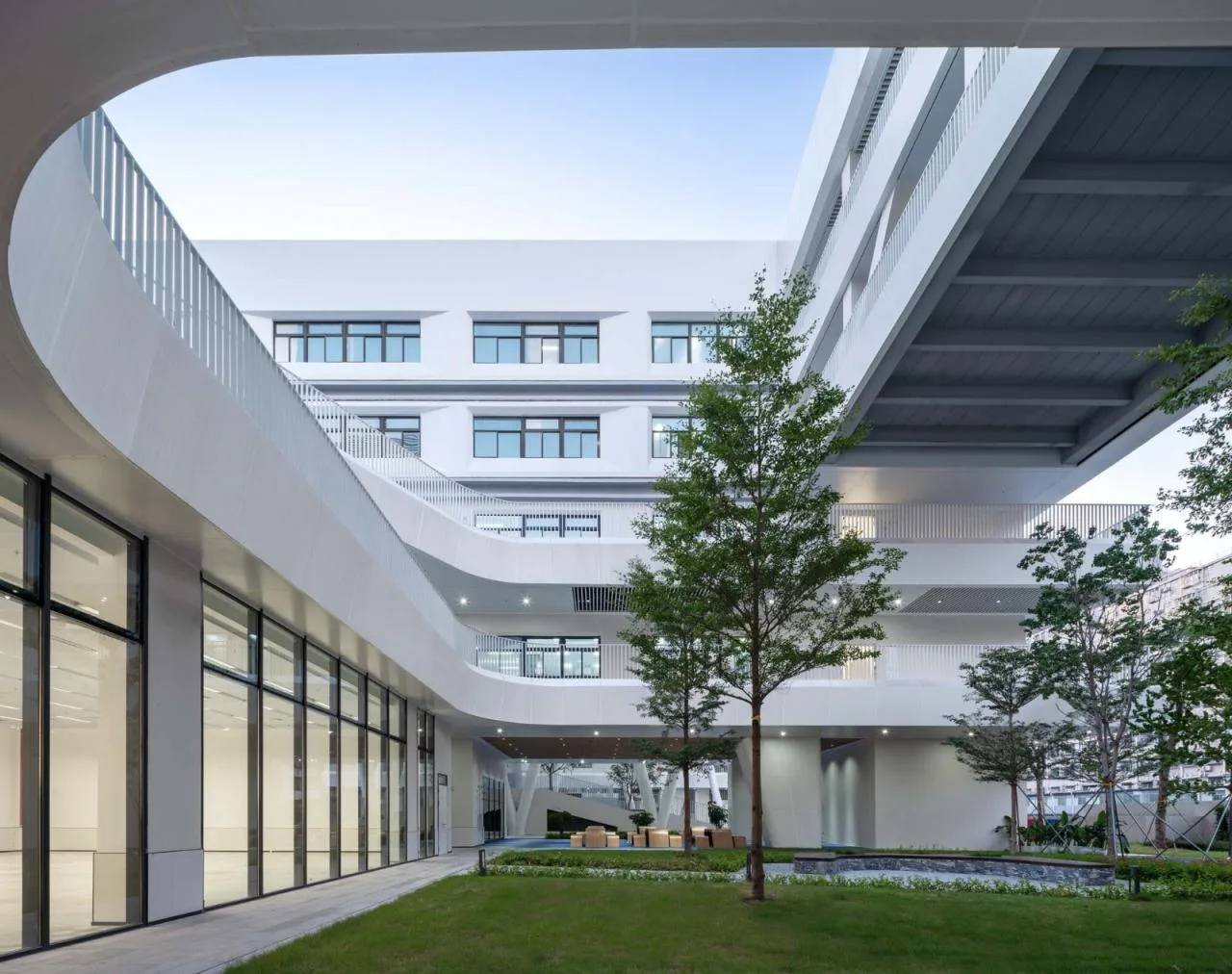
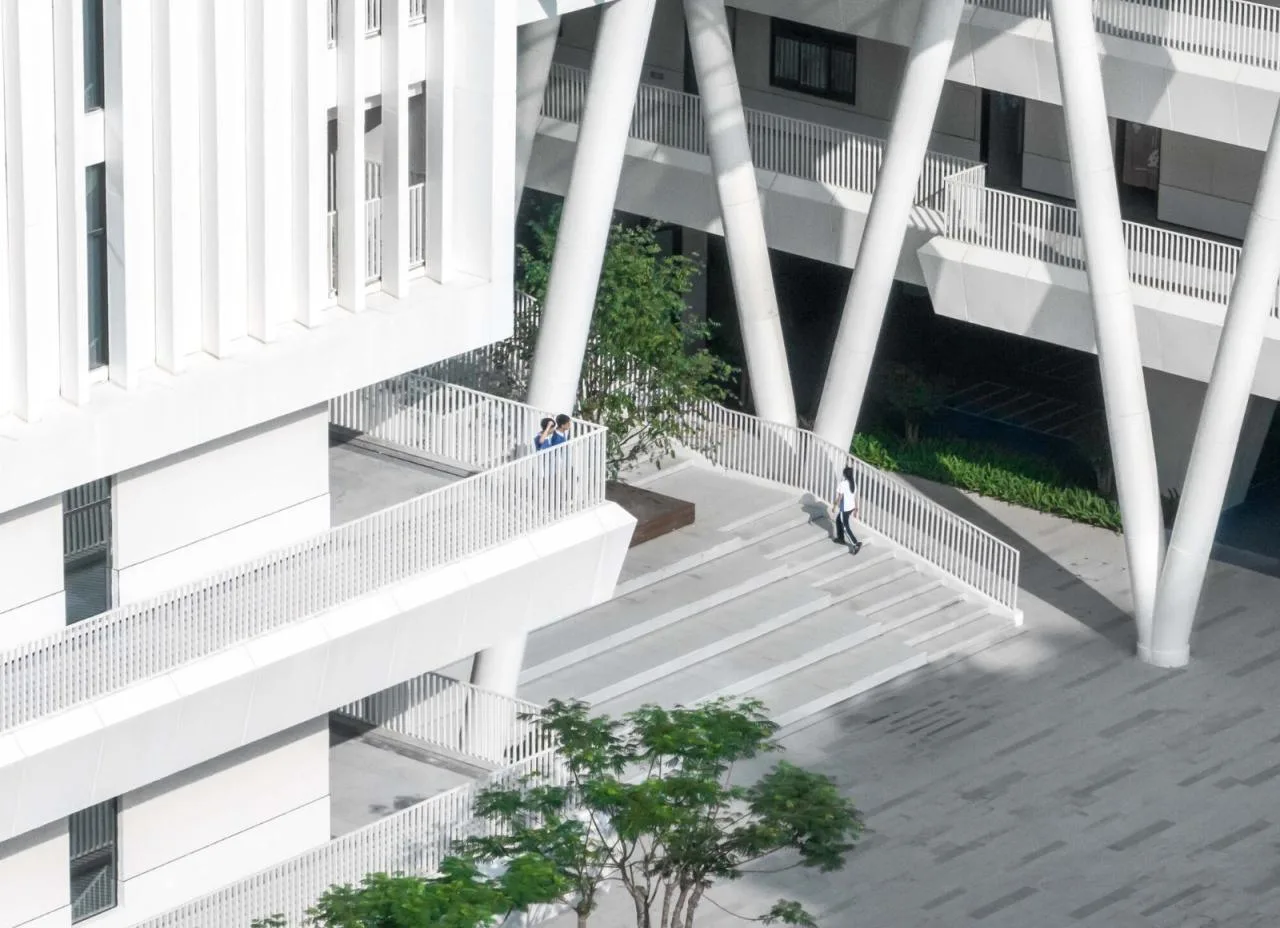
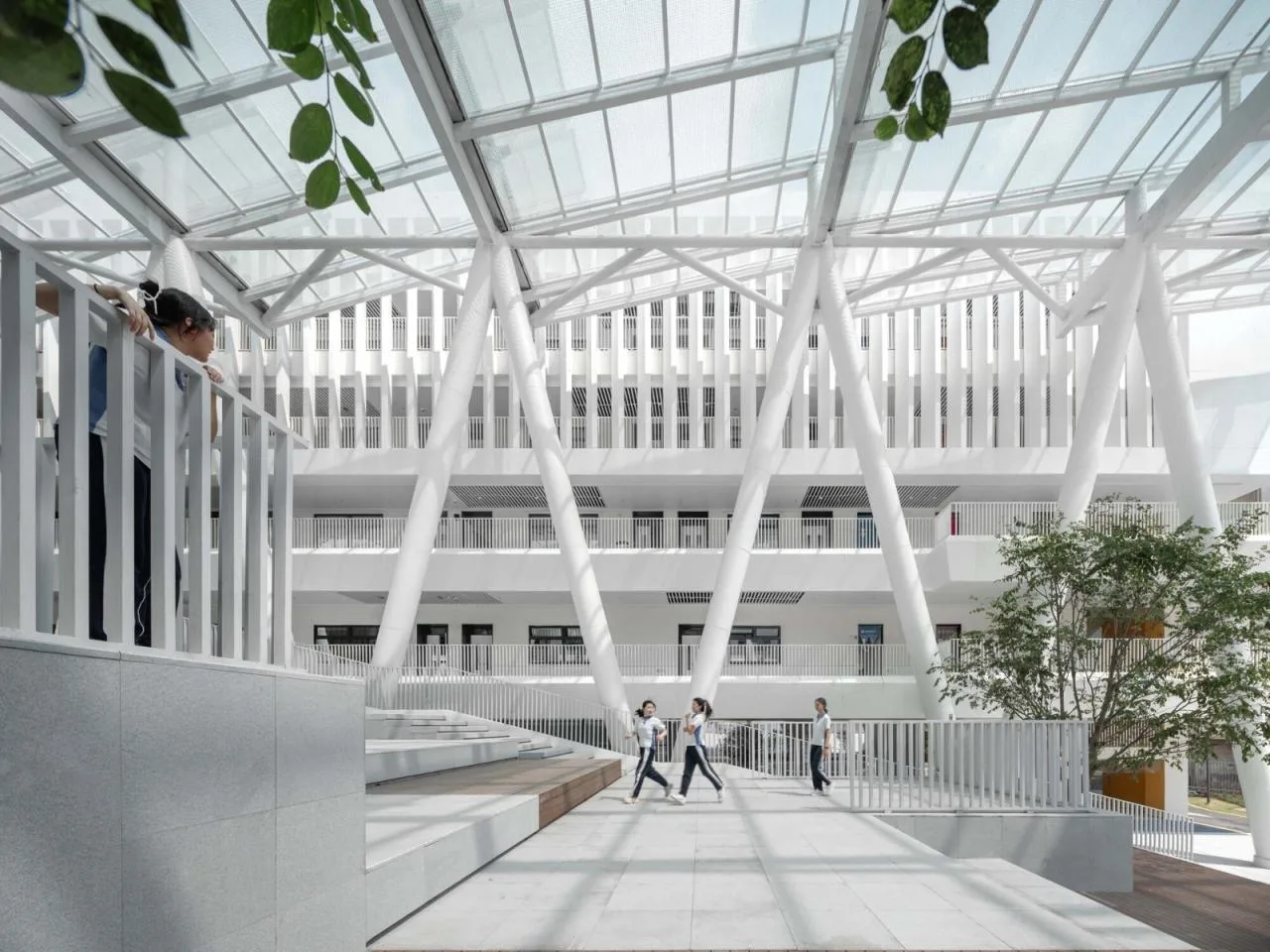
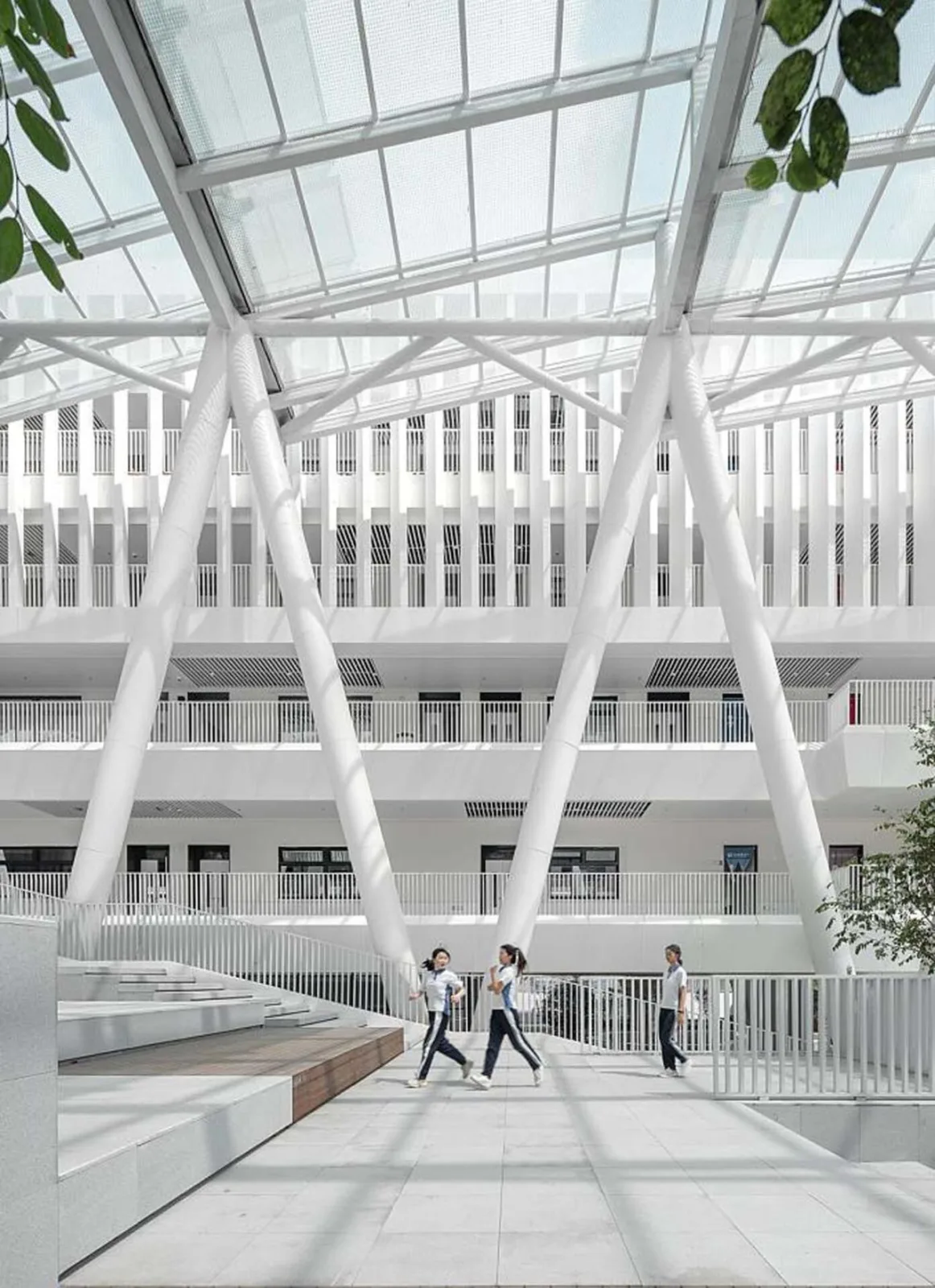
When designing future campuses, the architects focused on creating opportunities for connection, sparking interest in communication and learning at every moment, and integrating nature’s vitality. The inner and outer courtyards are structured with branching corridors to efficiently connect teaching modules. Four to five levels of east-west corridors form three enclosed courtyards, dividing the interior and exterior spaces while maintaining openness and transparency along the east-west axis.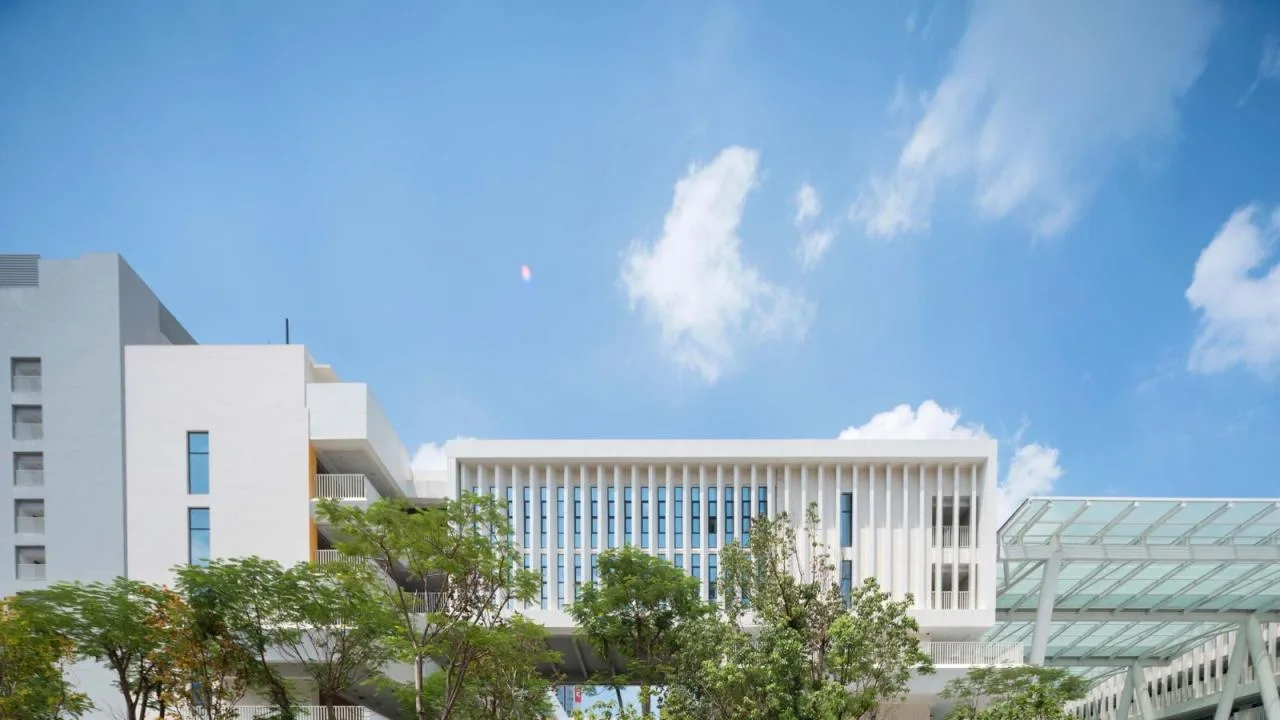
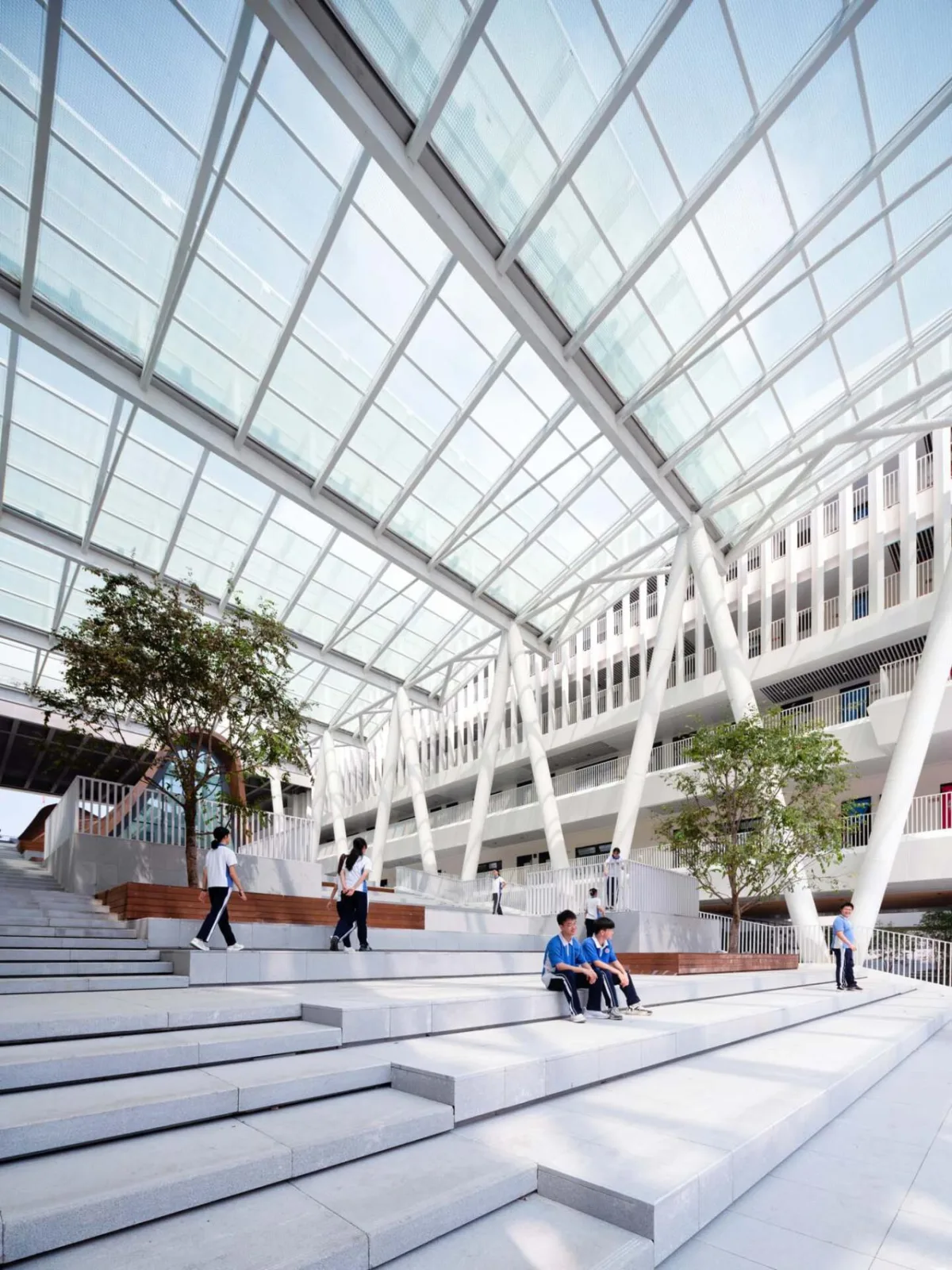
The multi-level spatial design connects various public outdoor areas and teaching zones, allowing students to move freely within 10 minutes between classes. The first floor features exhibition and activity spaces created through elevated areas and shared halls, supporting diverse learning experiences. Accessed via large steps, the second floor offers flexible gathering spaces. The rooftop sports field on the third floor connects upper and lower levels through the sports facilities. Students can reach it within two levels of vertical circulation.
The courtyard’s sloping corridor links four teaching buildings across three floors, shortening circulation paths and reducing the need for students and teachers to wander between buildings during breaks. The five-story circular space enhances classroom connectivity, encouraging natural communication, sharing, and collaboration.
Multidimensional Social Interaction
Sociality is a central concept that permeates every space, driving spatial interaction and shared experiences. From integrated public areas to shared halls, the design continually fosters opportunities for connection.
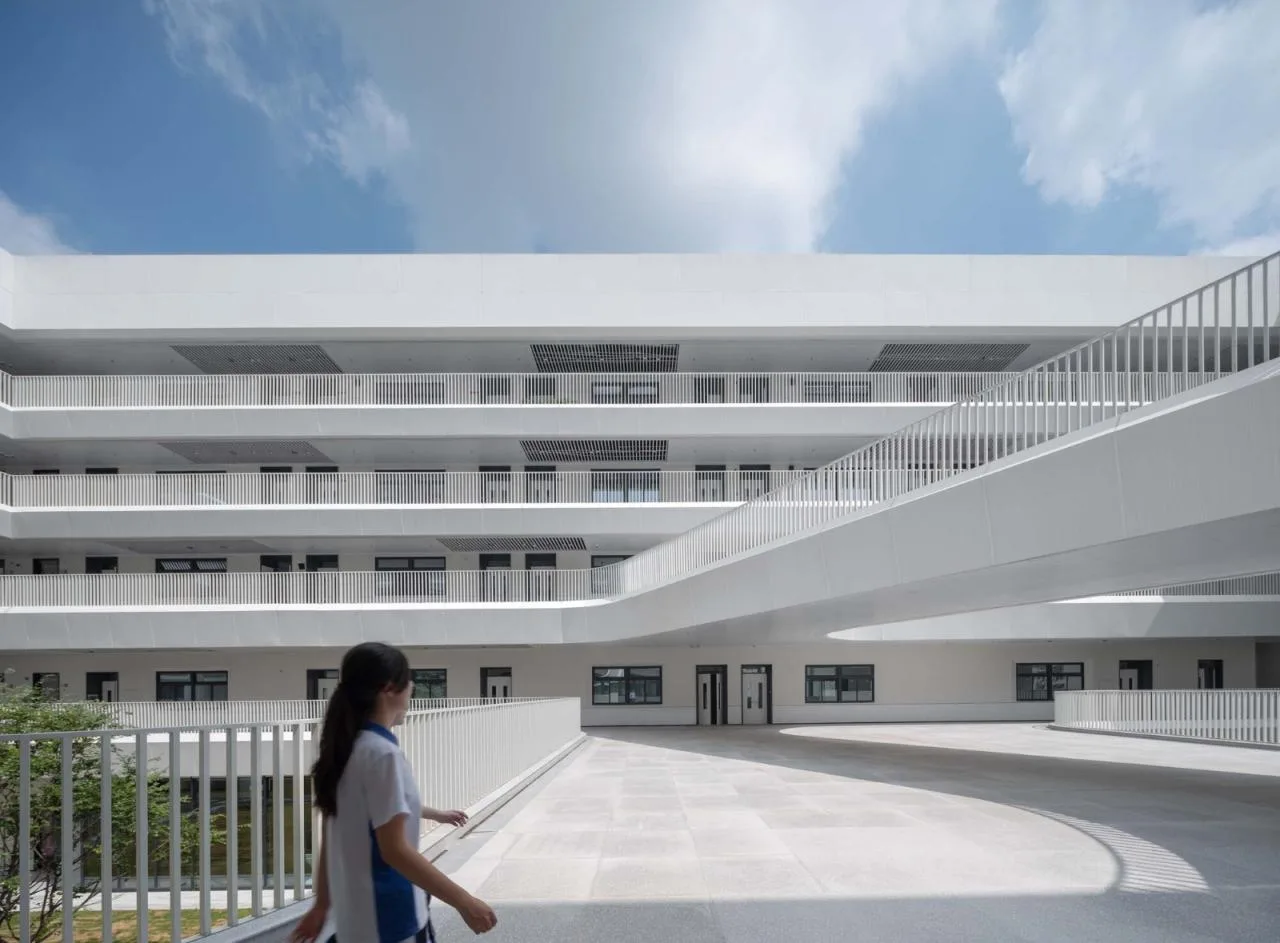
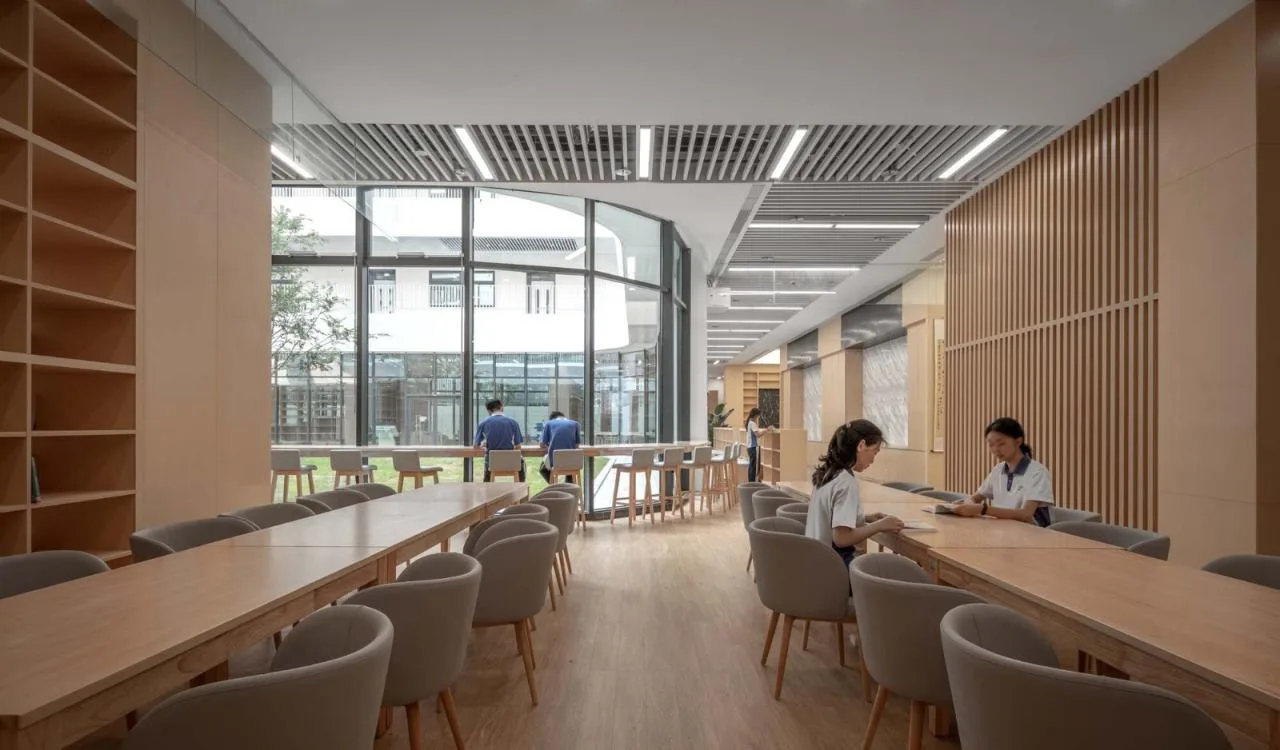
At the “small” public space level, corridor ends in the teaching buildings are widened, transforming otherwise linear passageways into areas where three to five students can stop to chat or discuss.
At the “medium” level, corridors, elevated floors, and shared halls between teaching buildings span nearly 20 meters without structural columns, creating open, transparent spaces. The first-floor elevated landscape courtyard, with varied terrain and rich leisure features, serves as a natural spot for discussion, learning, and sports activities.
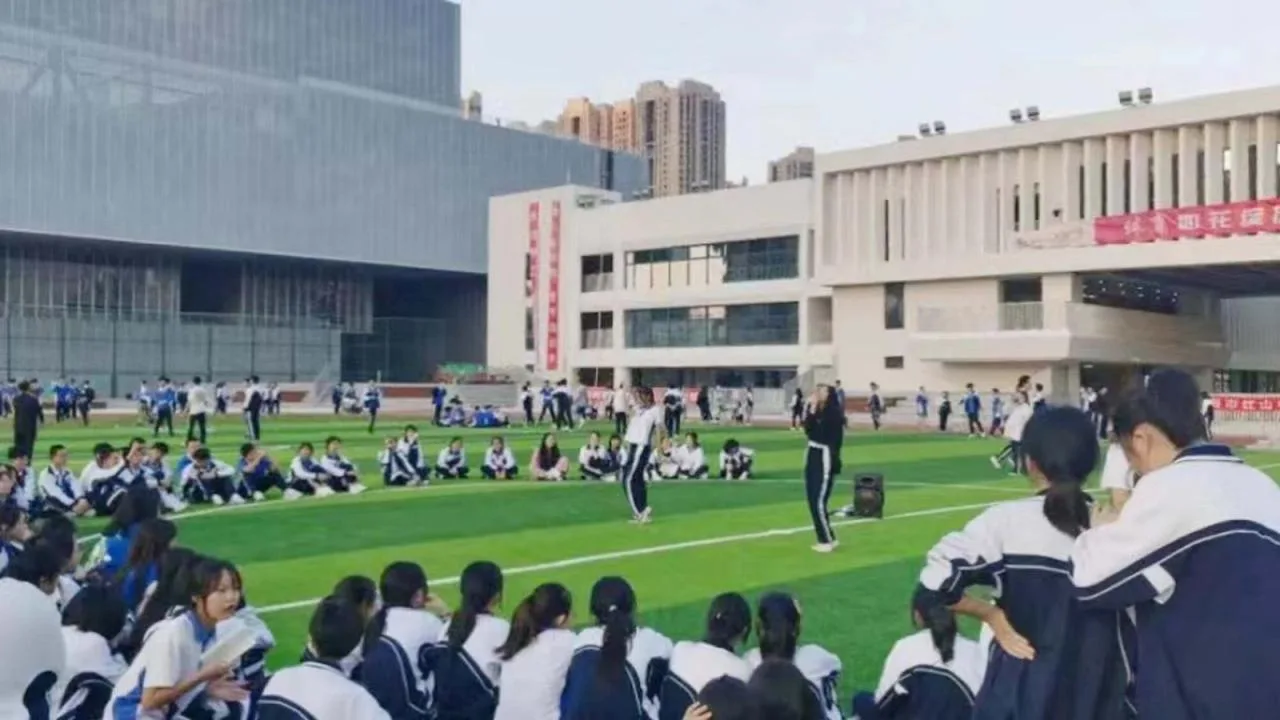
At the “large” level, the sports field hosts various outdoor activities and connects closely with the other public space levels, forming a cohesive social and activity network.
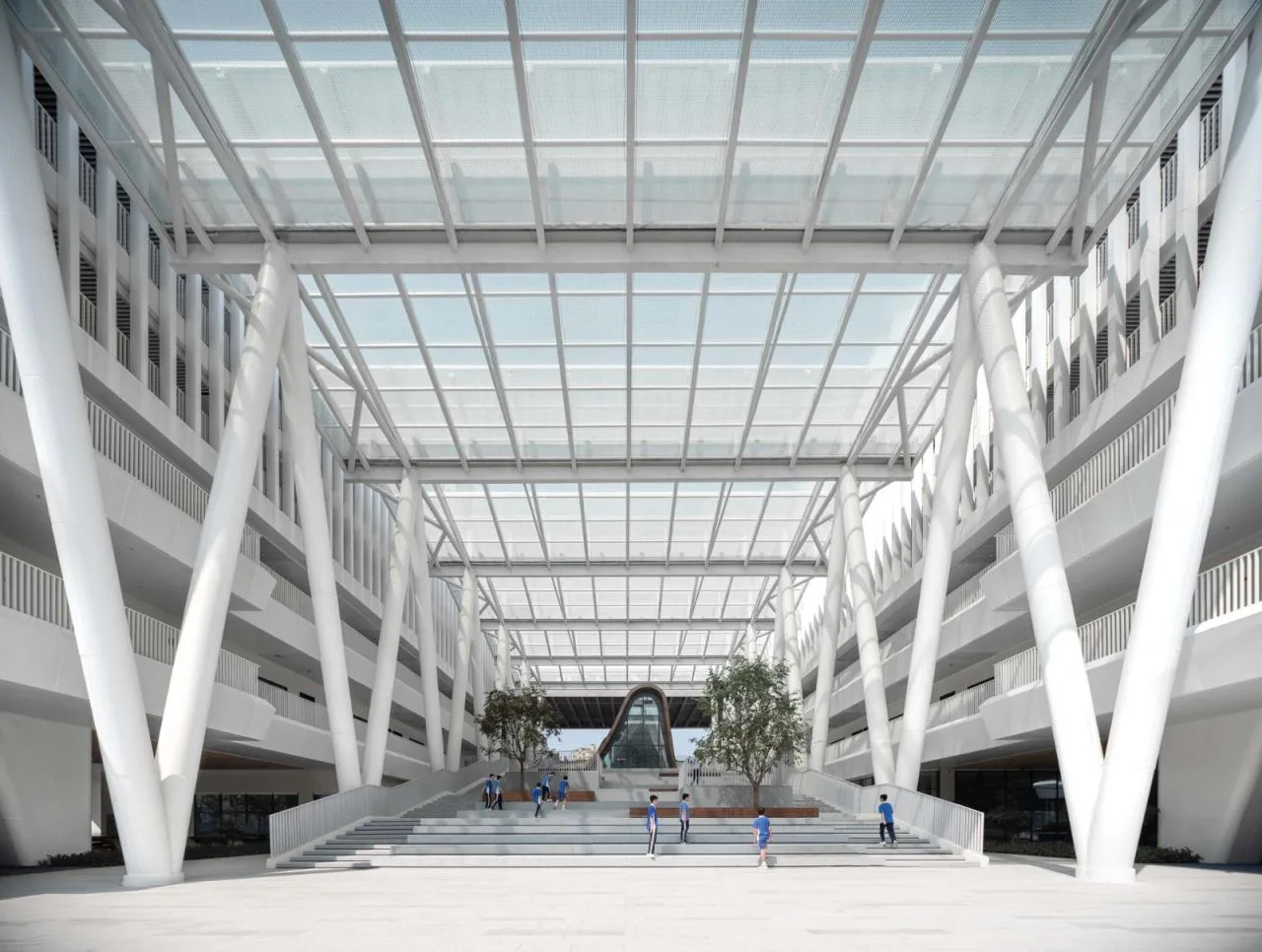
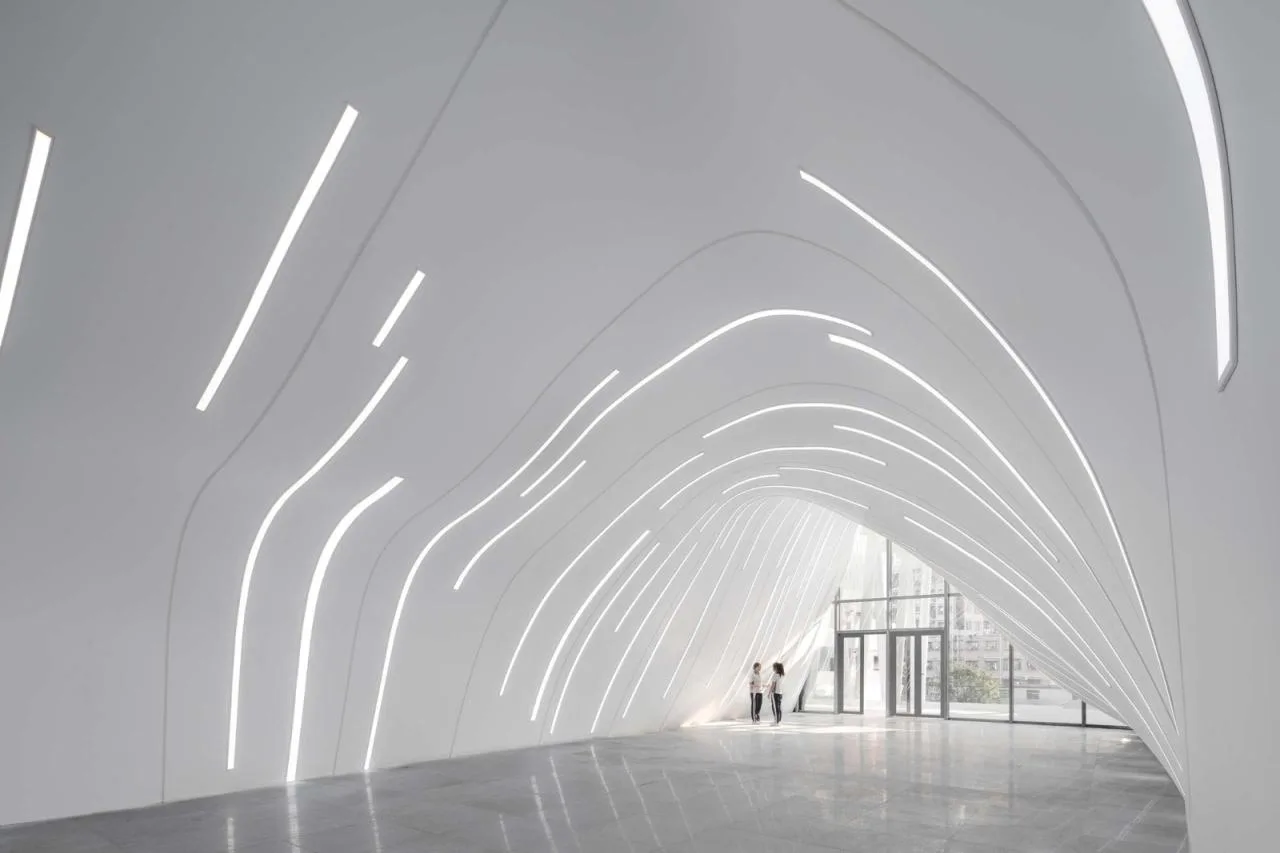
The shared hall faces the main campus entrance and features large steps connecting the first through third floors, maximizing student flow to various functional areas. The STEAM Center on the second floor incorporates the “Red Mountain” design motif, establishing a cultural identity and creating a unique spiritual space.
Indoor lighting in the STEAM Center utilizes strip lights, and air conditioning vents echo this design language, remaining discreet within a unified architectural form.
The architectural style is inspired by regional facade aesthetics. To address Shenzhen’s hot and rainy subtropical climate, the design emphasizes light and shadow effects characteristic of the Lingnan region.
The shared hall’s ceiling at the entrance is not fully enclosed but composed of repeated basic units arranged diagonally with gaps. Each unit overlaps with hollow trusses above and below, facilitating ventilation, smoke exhaust, and rain protection, recreating the “wind-pulling” effect typical of traditional Lingnan courtyards.
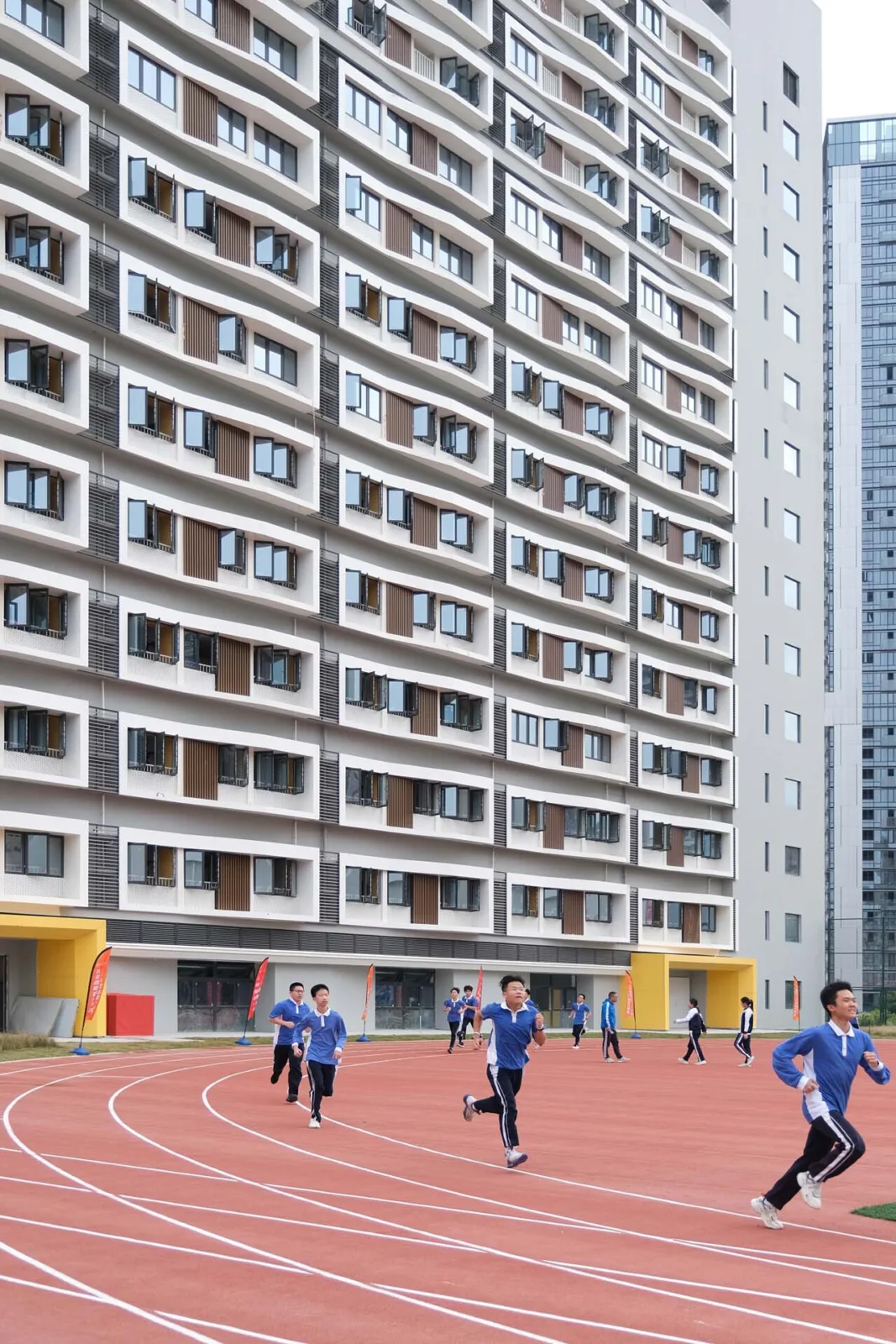
The classroom shading system employs a double-corridor layout, utilizing natural shading from corridors on both sides. The teaching area’s facade incorporates large grilles that allow natural light while reducing intense sunlight exposure.
The shared hall canopy’s glazed glass roof blocks some sunlight and ultraviolet rays, while the dormitory balconies feature protruding aluminum panels with wave-like rhythms that provide shade and add a dynamic facade effect.
With Shenzhen’s pioneering educational reforms, balancing rapid construction with building quality is a key challenge. Huayang International, as the design general contractor, undertook renovation and expansion projects of three schools in Longhua district — Hongshan Middle School, Gezhi Middle School, and Guanlan Middle School — under a design-led EPC model. Despite pandemic challenges, the projects were completed within just 18 months from design to delivery, bringing the vision of future campuses to life.
Project Drawings
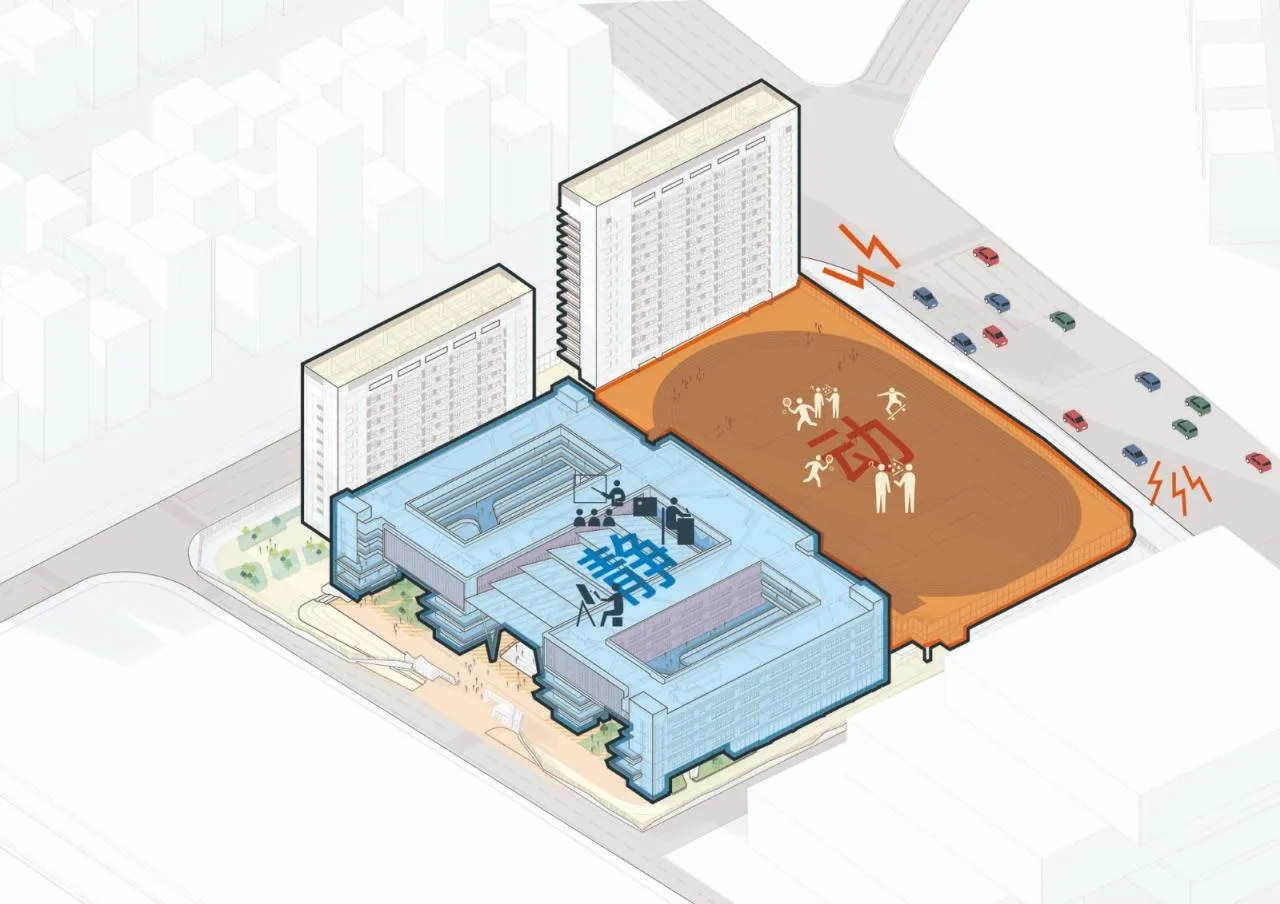
△ Dynamic and Static Analysis Diagram
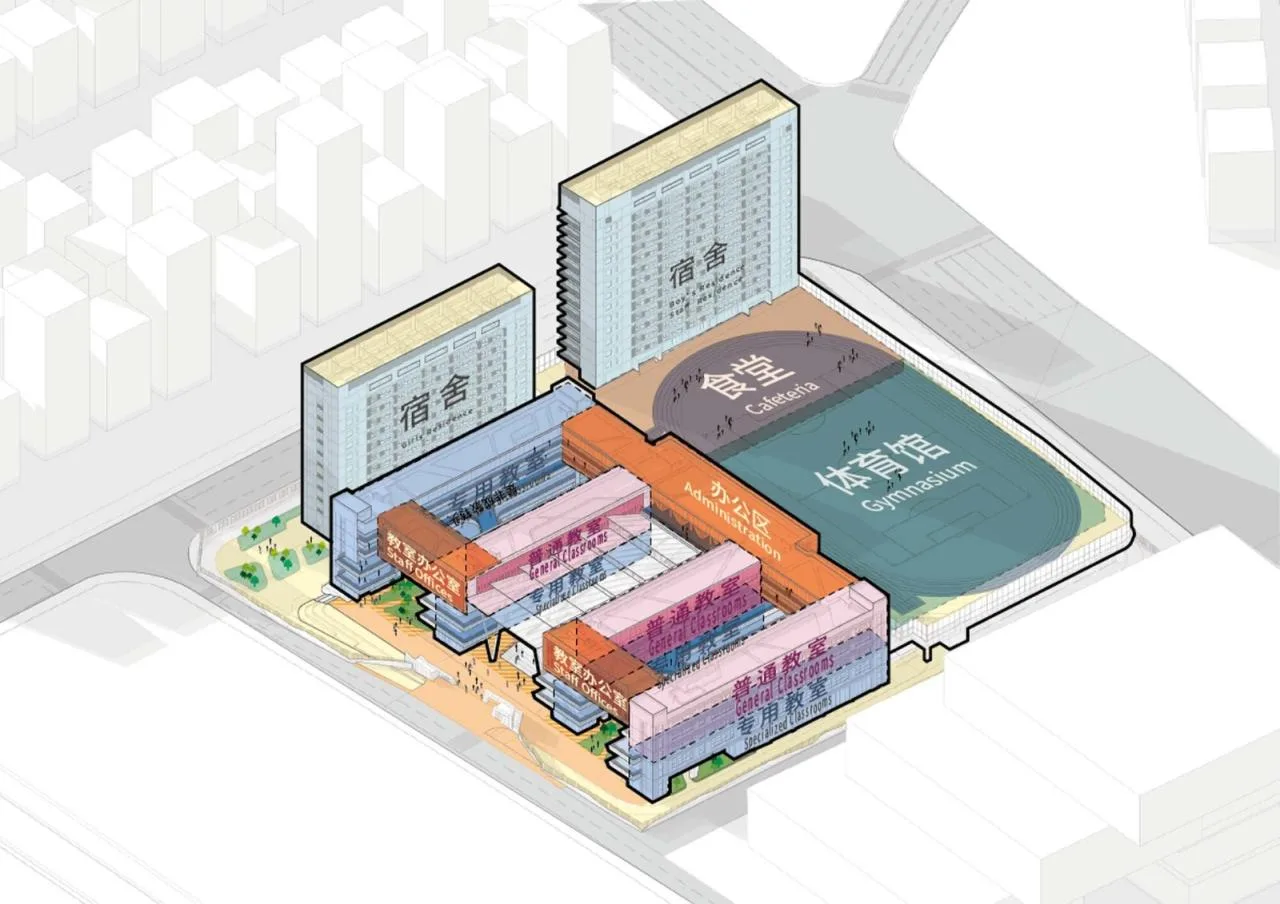
△ Function Diagram
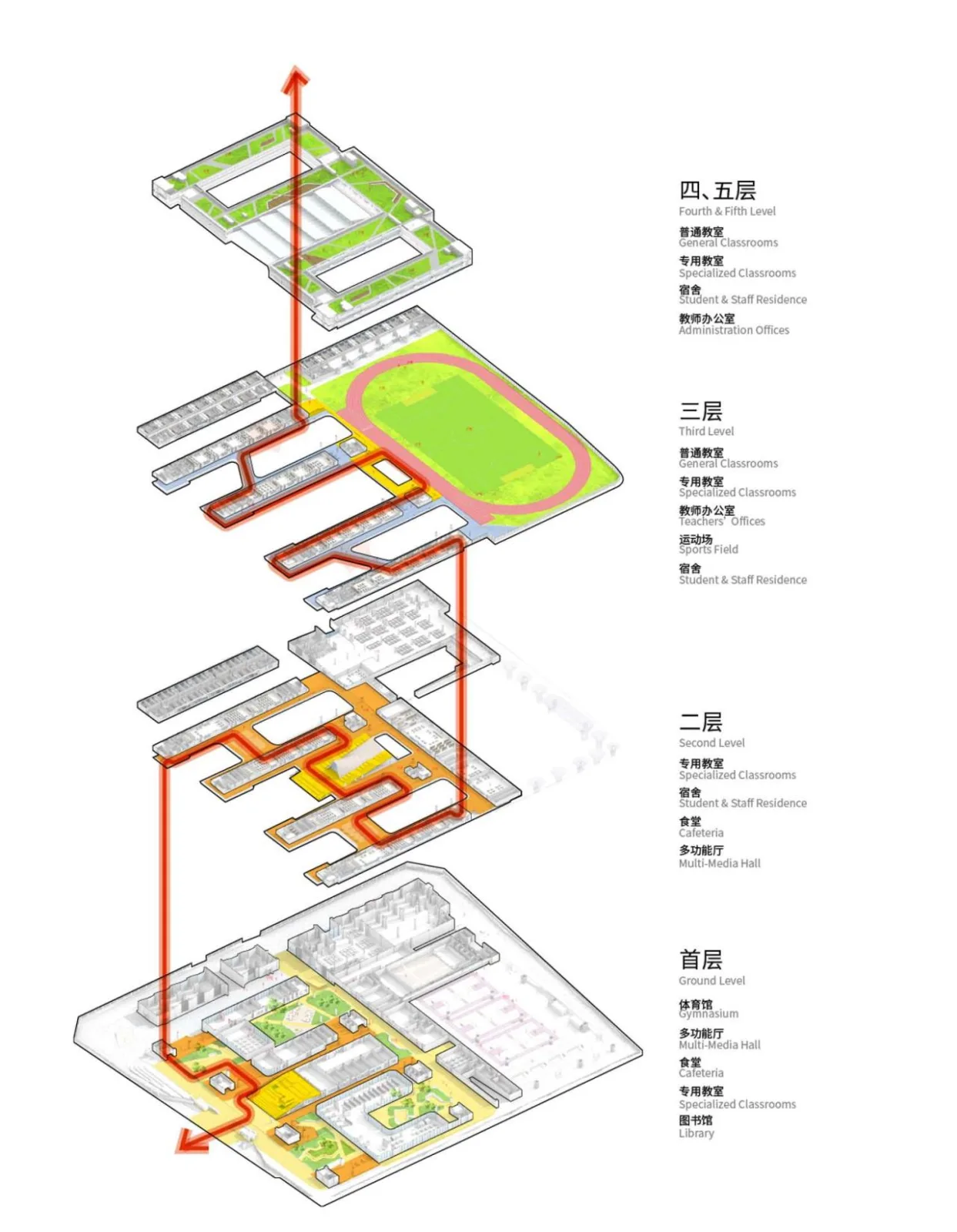
△ Streamline Analysis Diagram
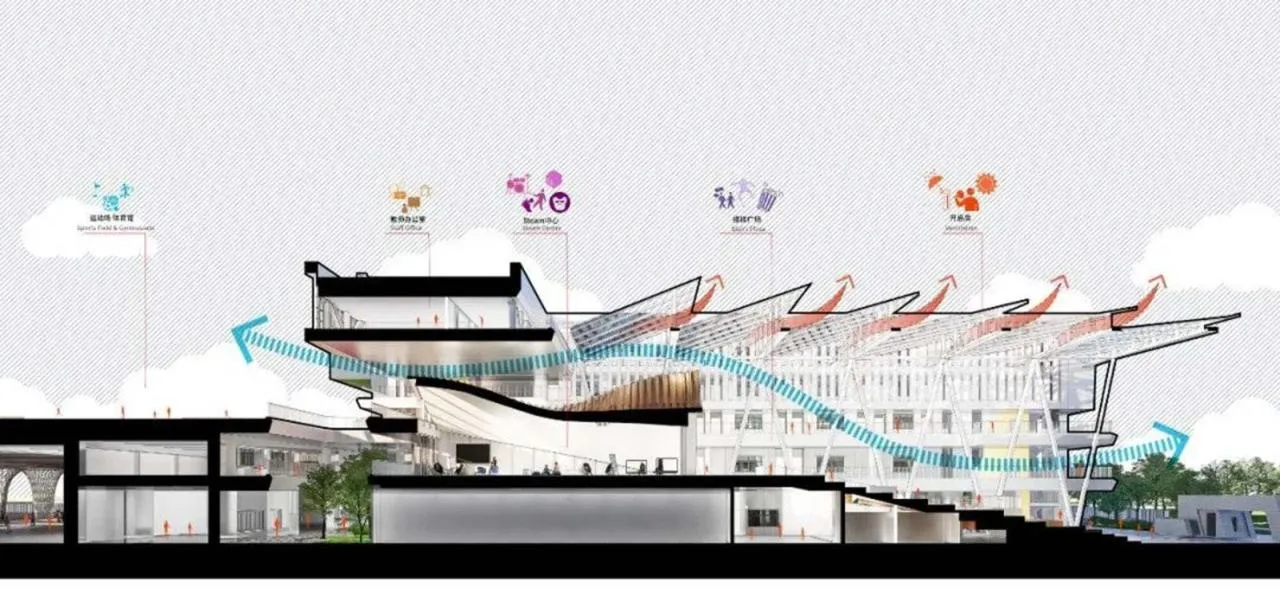
△ Microclimate Diagram
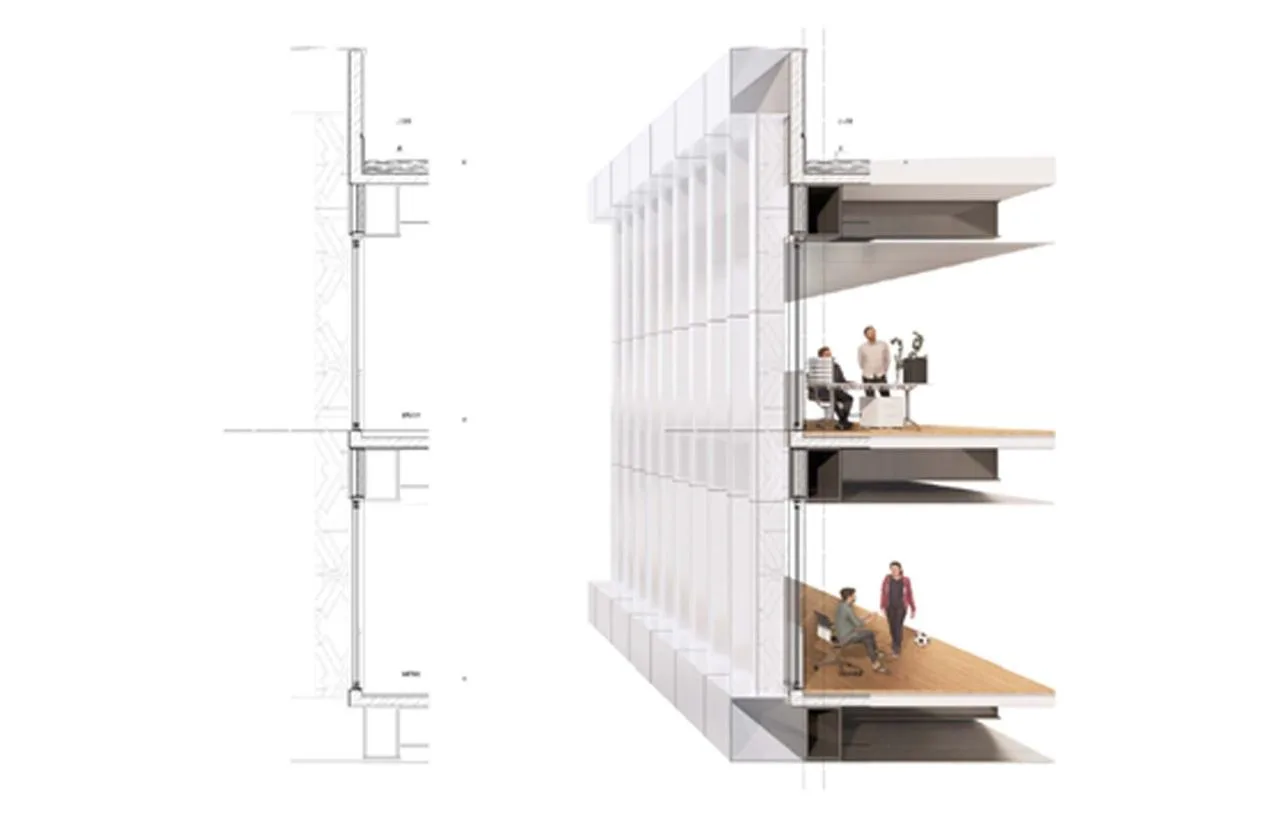
△ Structural Detail Drawing
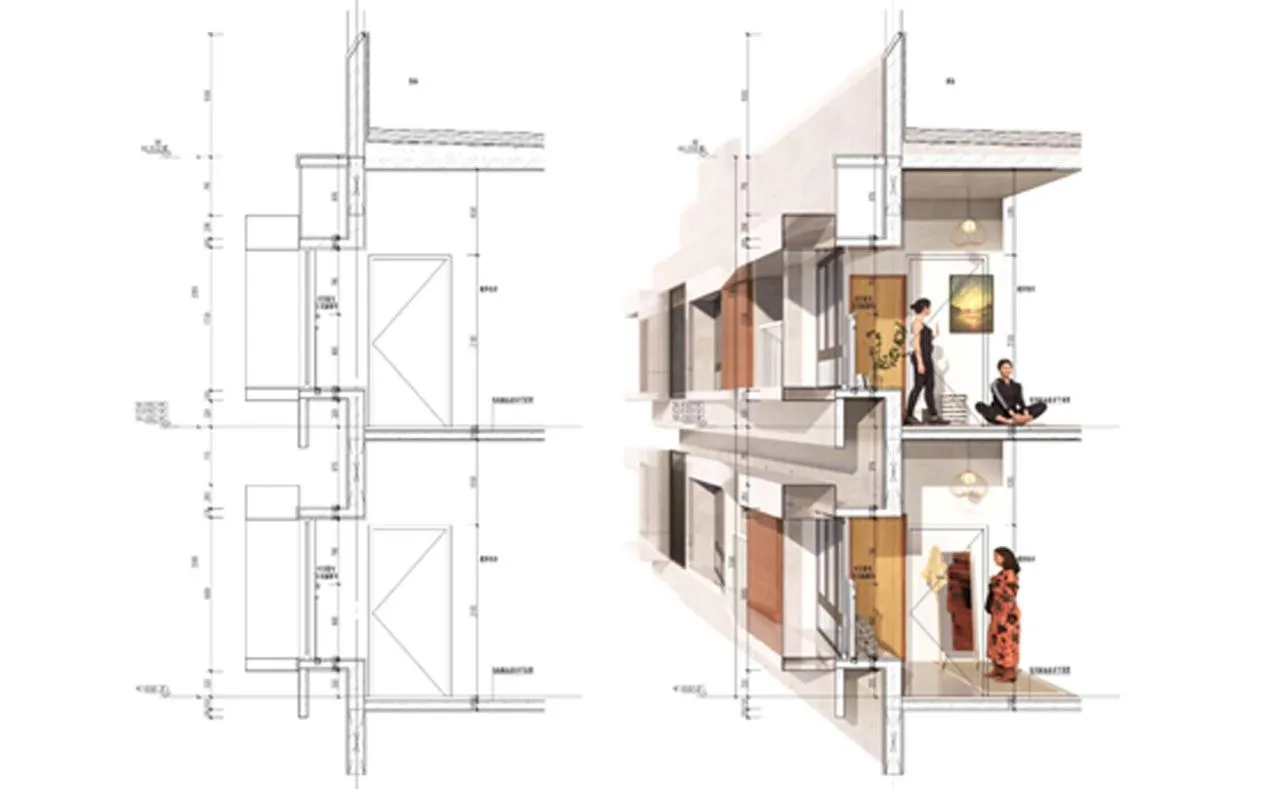
△ Structural Detail Drawing
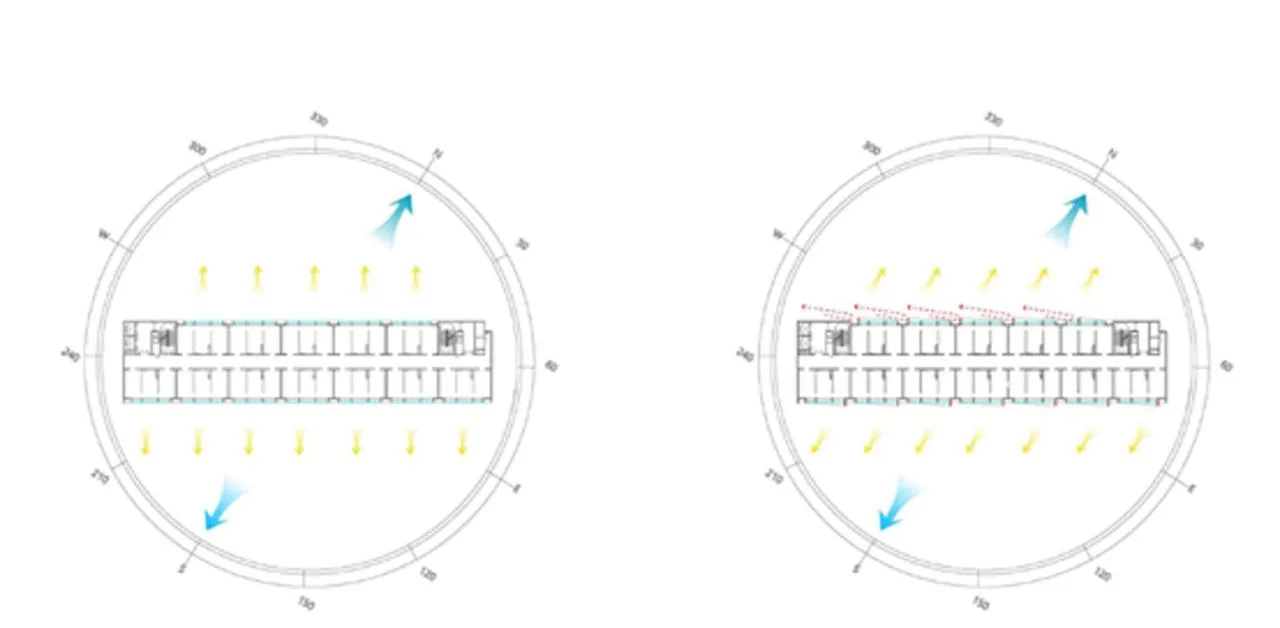
△ Analysis Chart
Project Information
Architect: Huayang International Design Group
Area: 72,269 m²
Project Year: 2022
Photographer: Xingzhi Imaging
Client: Education Bureau of Longhua District, Shenzhen
Construction Unit: Longhua District Construction and Engineering Bureau, Shenzhen
Location: Shenzhen, China















Must log in before commenting!
Sign Up