
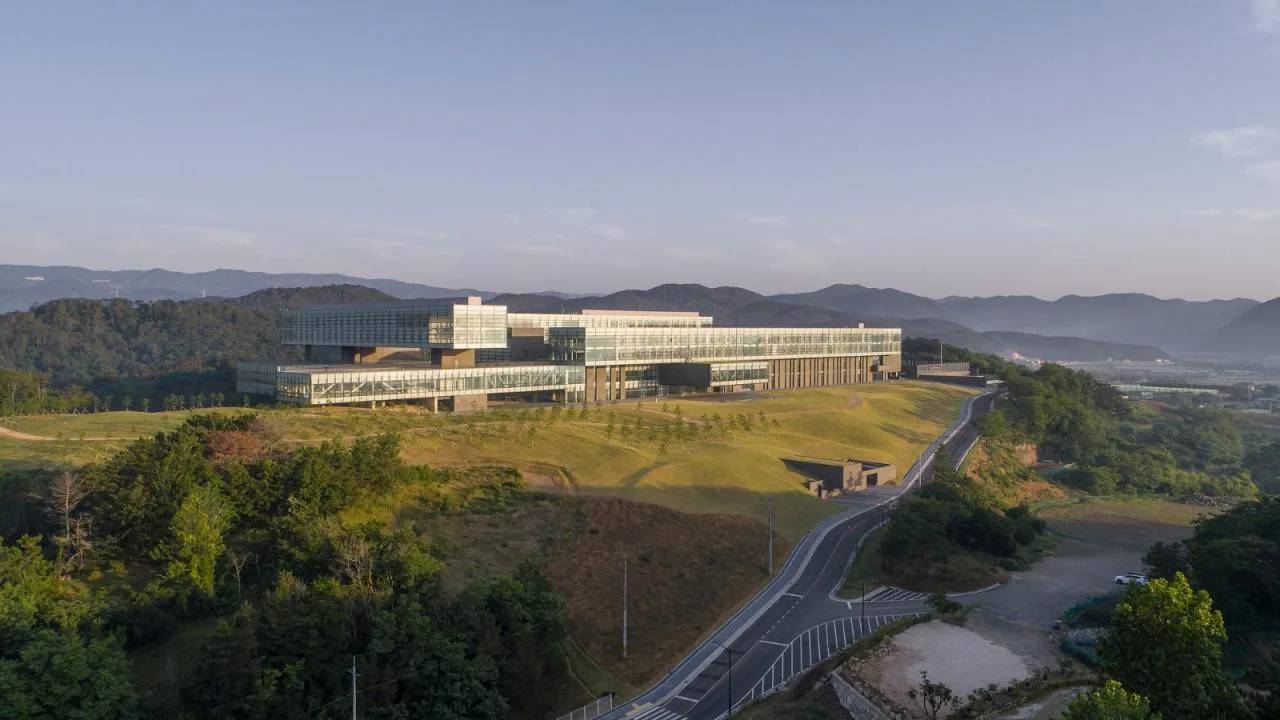
The Global Partner Center of Hyundai Motor Group, along with the campus area of Gyeongju University, is situated on the slopes of Haseo-ri and Suryeom-ri in the southern part of Yangnan, Gyeongju City, South Korea, at an elevation of 30 meters.
The project’s east and south sides offer spectacular views of the sea and coastline, while the north and west sides seamlessly connect with the mountain range extending towards the lower end of the Taebaek Mountain Range. This park serves as the campus area for Gyeongju University and houses Hyundai’s Ulsan factory alongside its global cooperation center for business partners.
Cloud observers often begin exploring such projects by asking: “What differentiates a corporate training center from a resort hotel?”
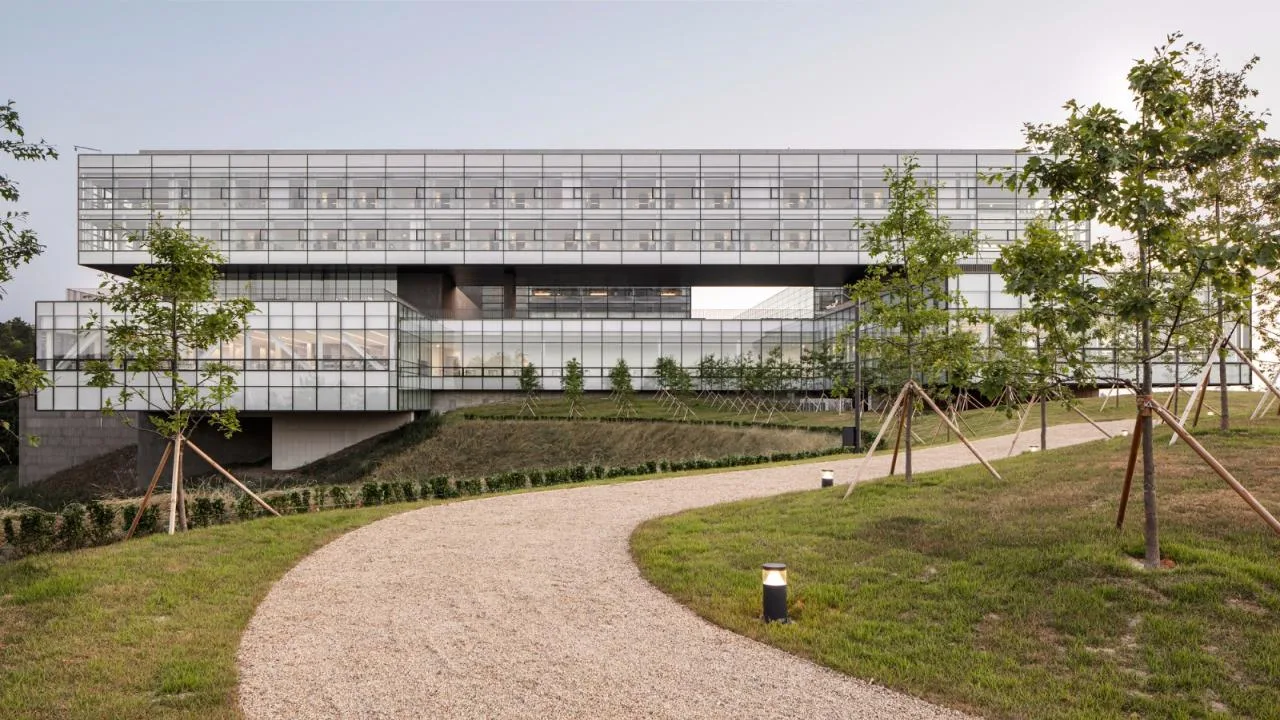
While resorts and hotels are typically designed for rest and relaxation, this project strives to balance both dynamic energy and a tranquil atmosphere. To achieve this, the architect drew inspiration from traditional and functional buildings, such as monasteries.
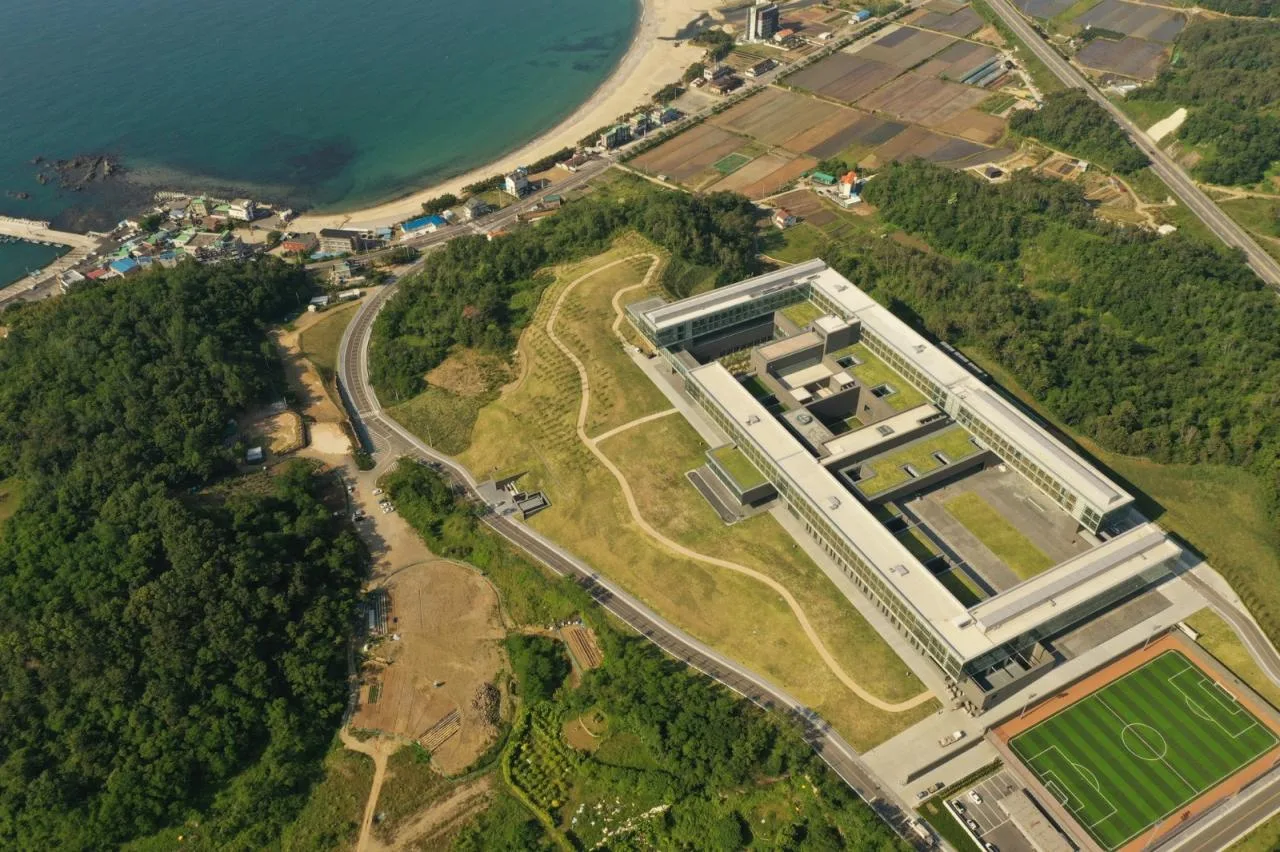
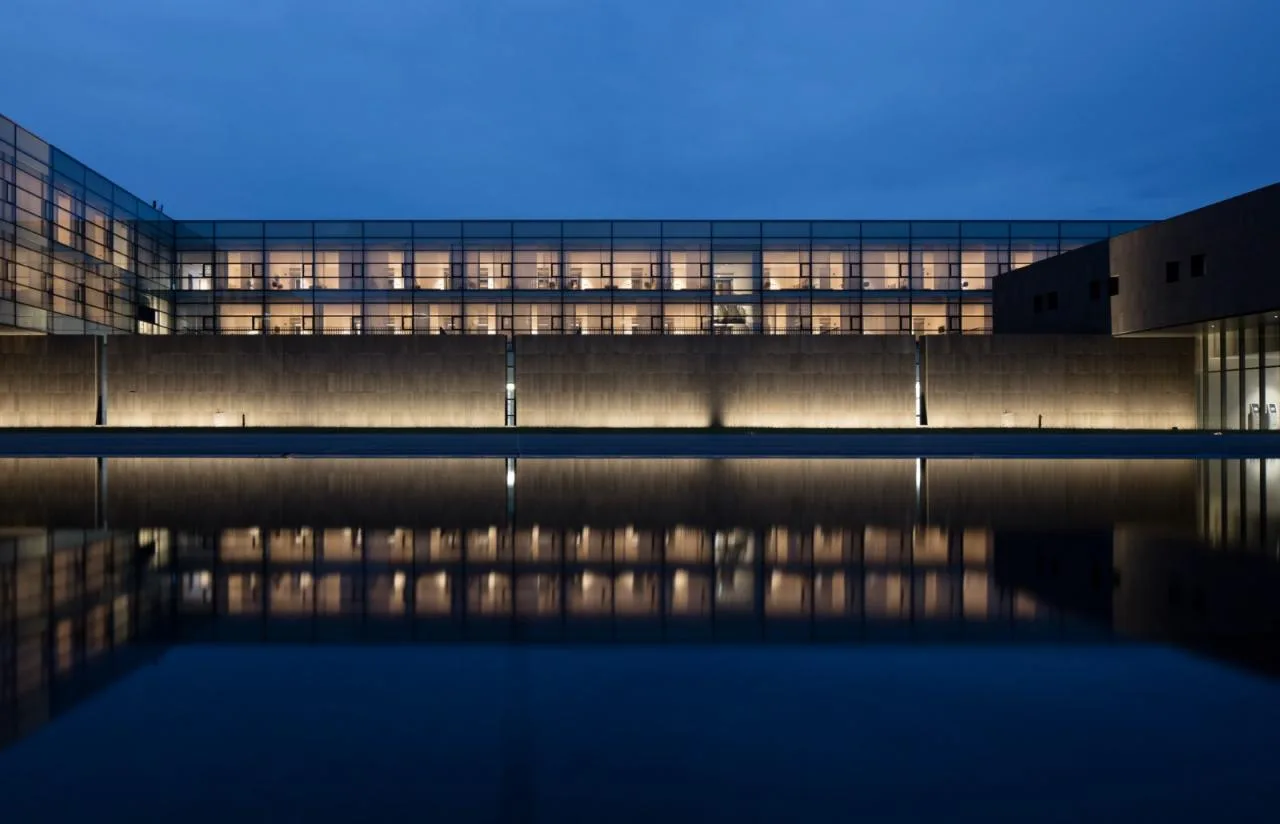
The design features two independent training centers on the site, each shaped like the Korean letters ㄱ and ㄴ, which together form a ㅁ-shaped architectural complex. This layout creates a shared public space in the central enclosed area.
The buildings are composed of simple blocks that embody minimalist design principles, enriching their environment while harmonizing with the site’s subjective and objective conditions.
The campus area of Gyeongju University and the Global Partner Center are arranged across two spatial levels. The interaction between the architecture, terrain, and surrounding landscape adds variety to the internal spatial layout.
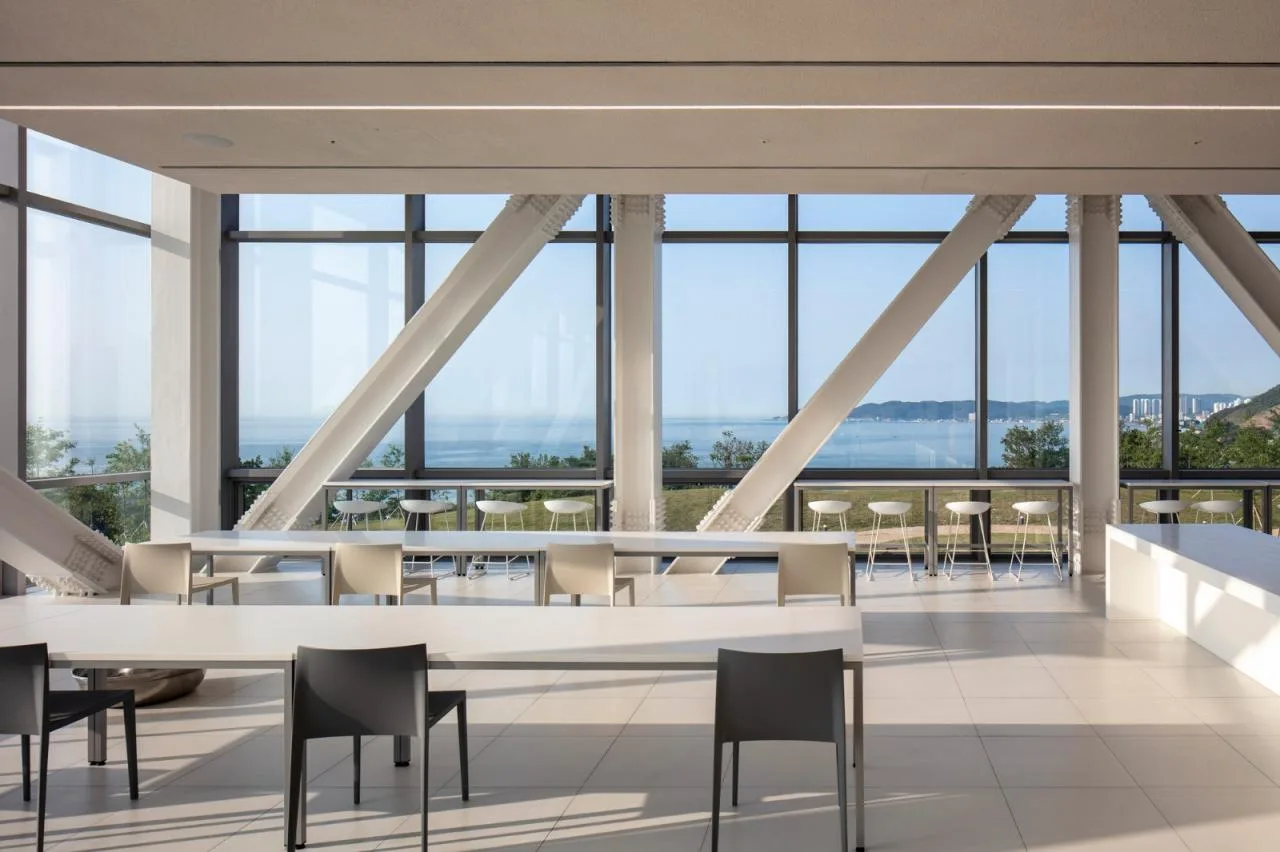
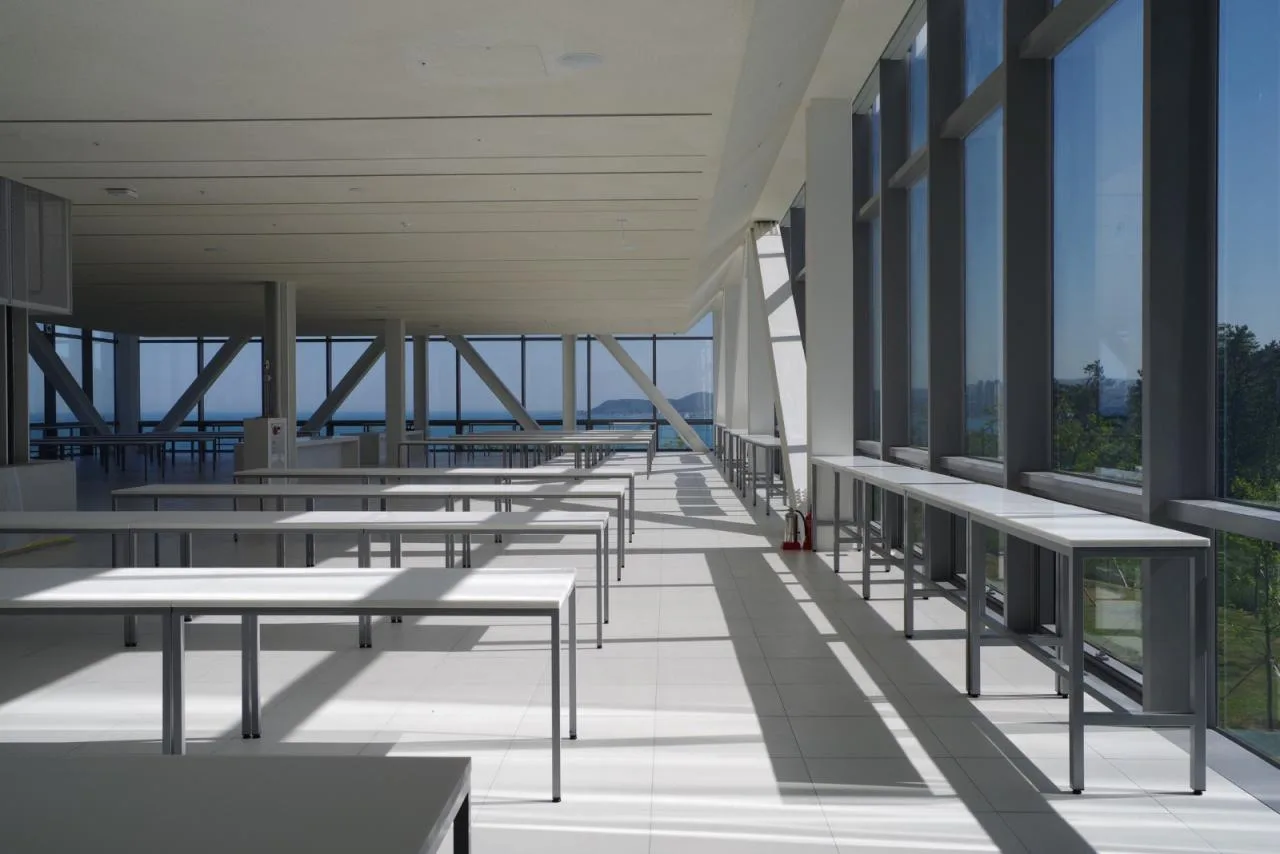
To accommodate large open spaces with a straightforward structure, the buildings utilize giant trusses to support wide spans.
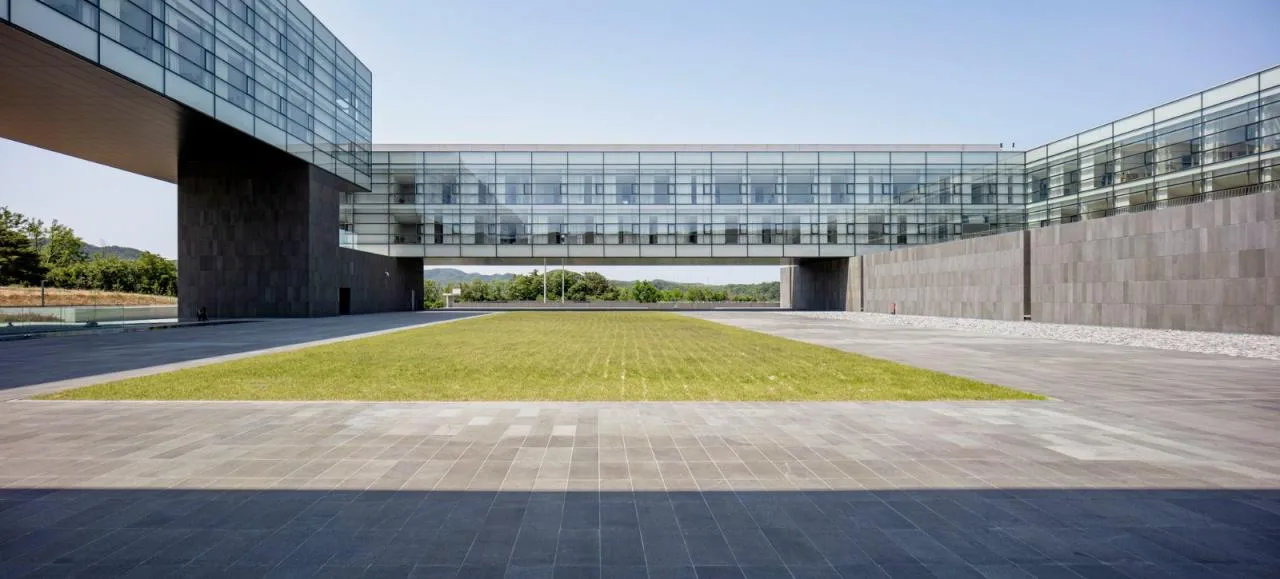
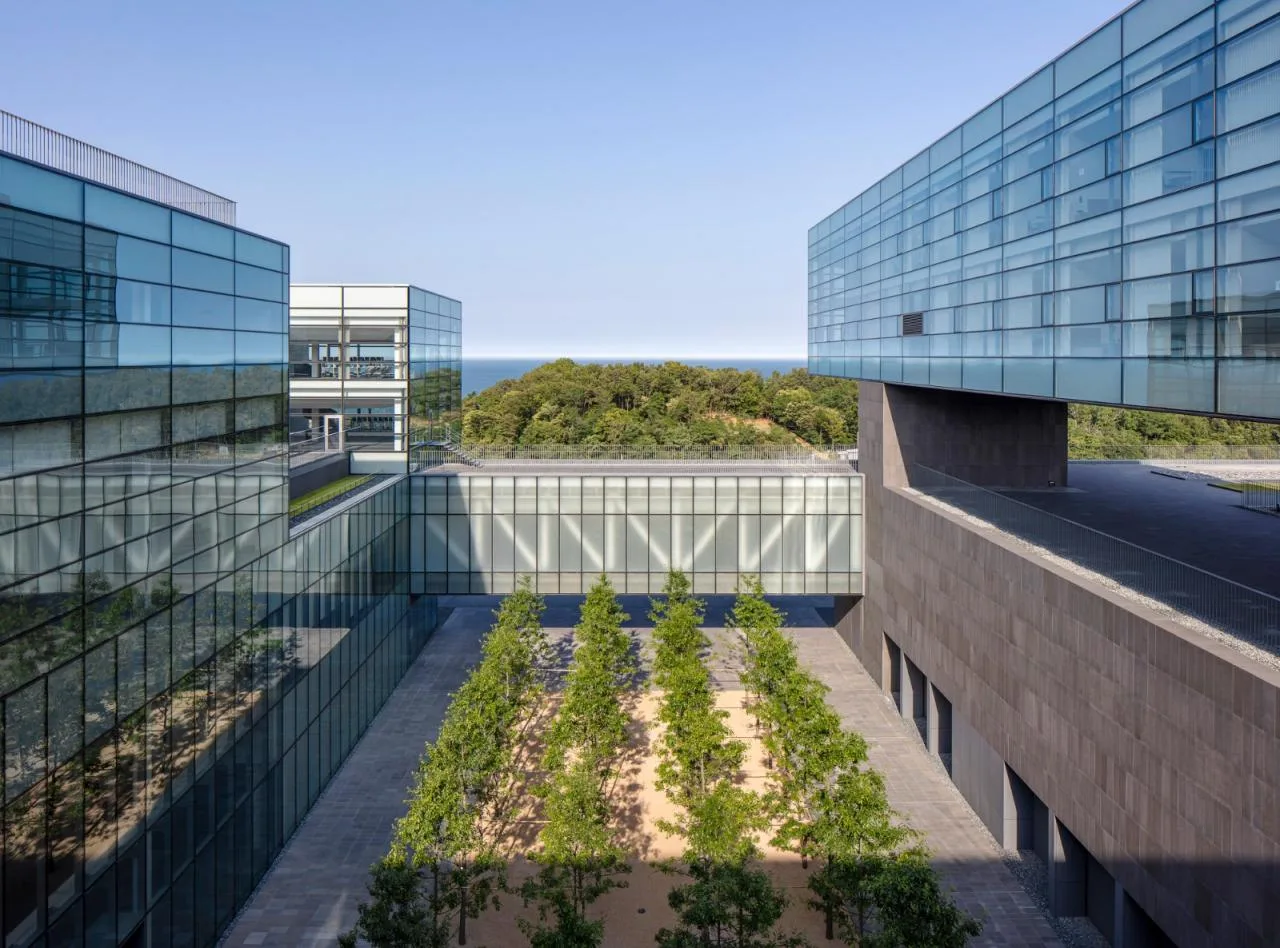
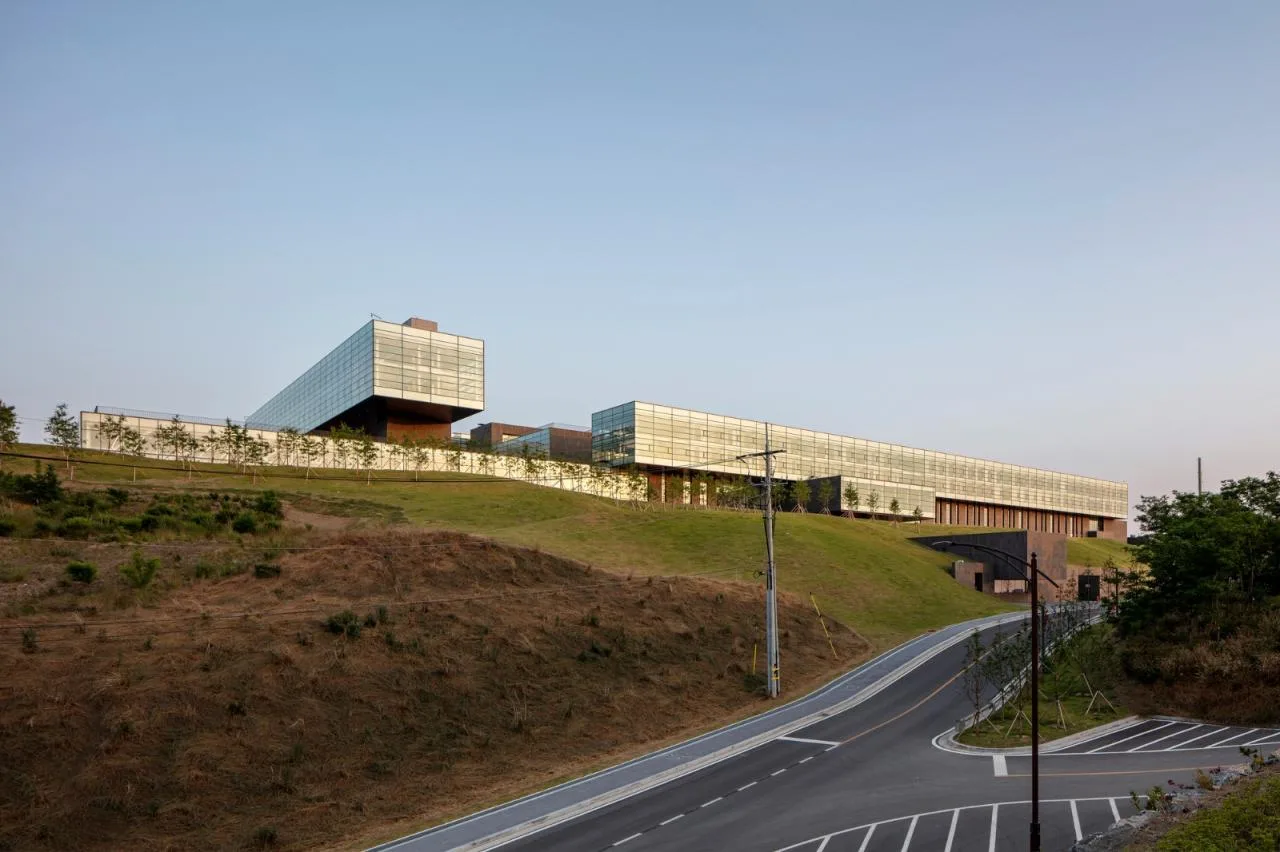
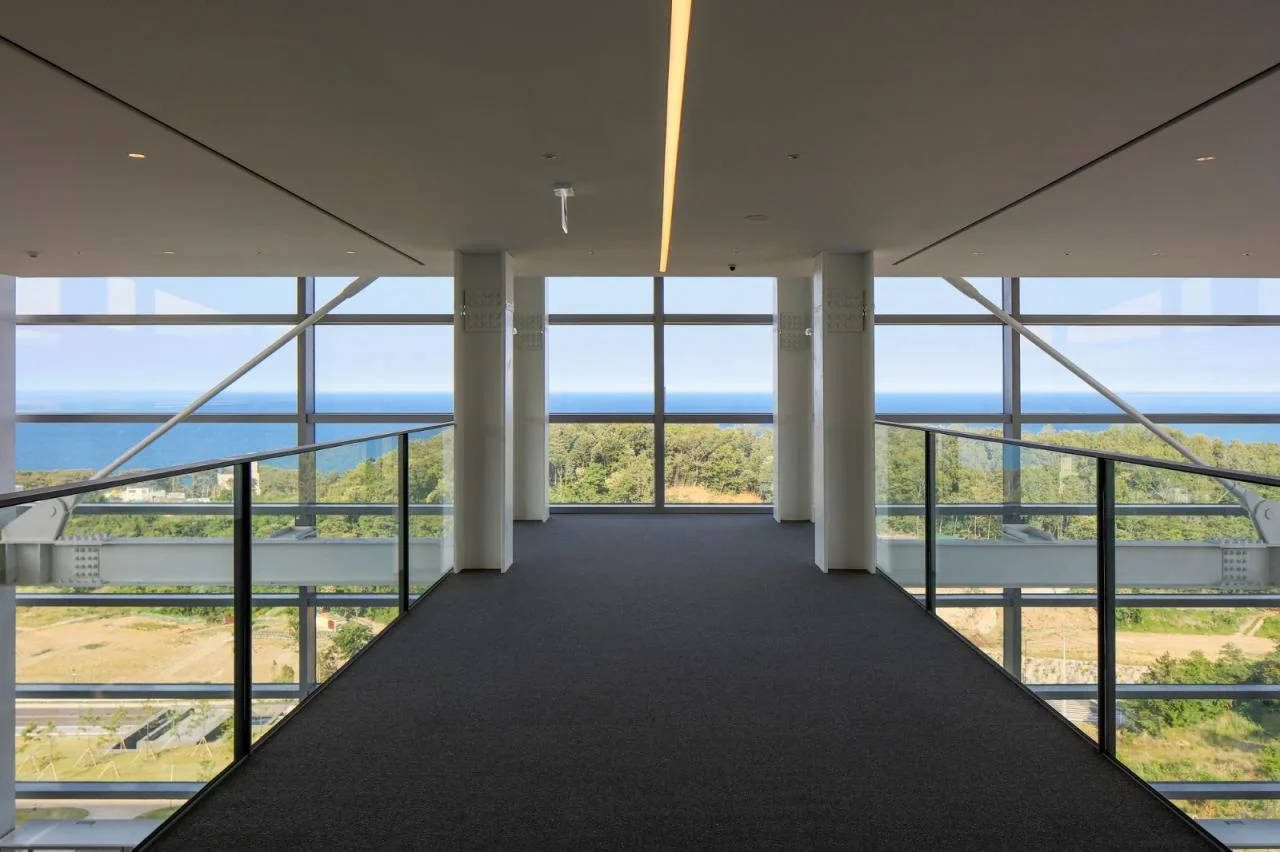
Embodying the pioneering spirit of a modern construction enterprise, the architect designed a column-free overhead space spanning 50 meters. This space connects two main core tubes like a bridge.
On the north side, the suspended space overlooks the continuous mountains of Gyeongju, while the south side opens directly to the Ulsan coastline.
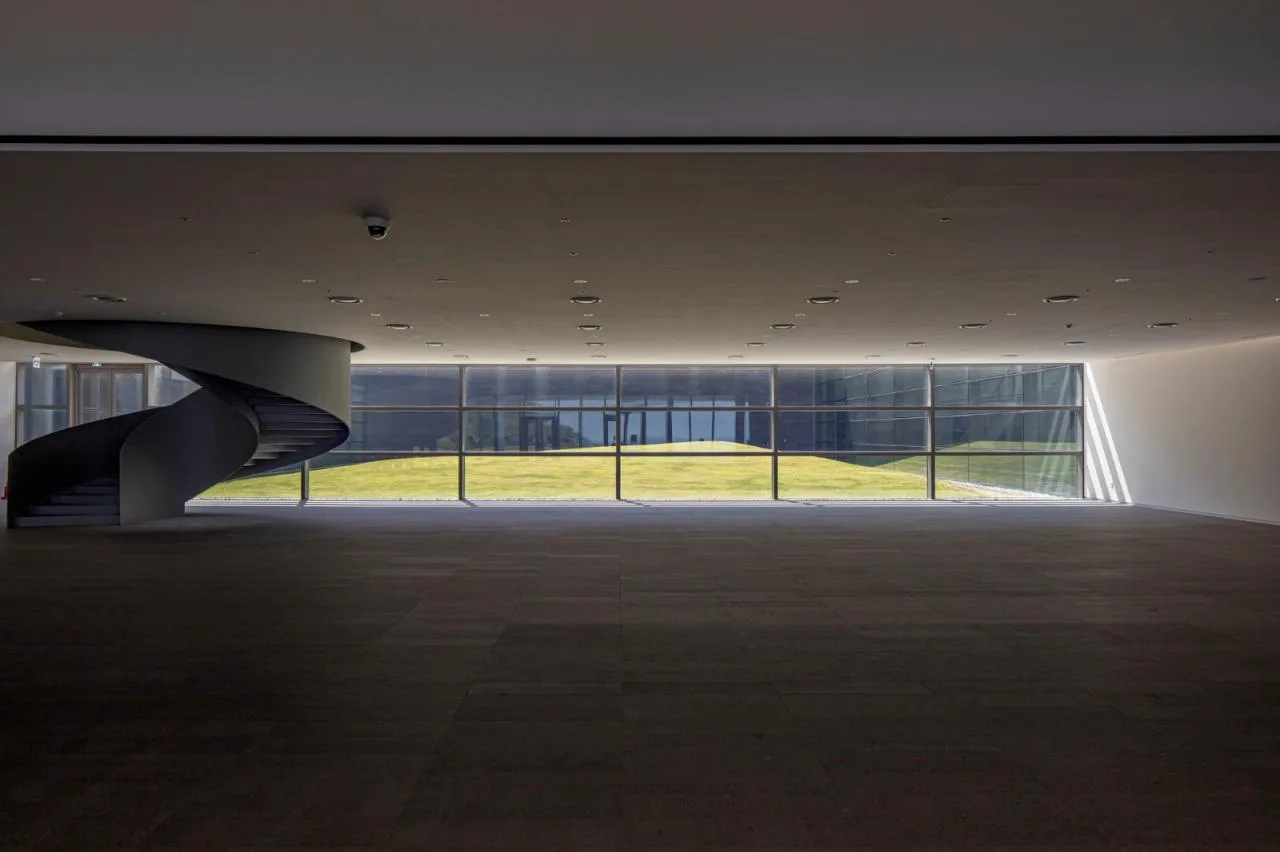
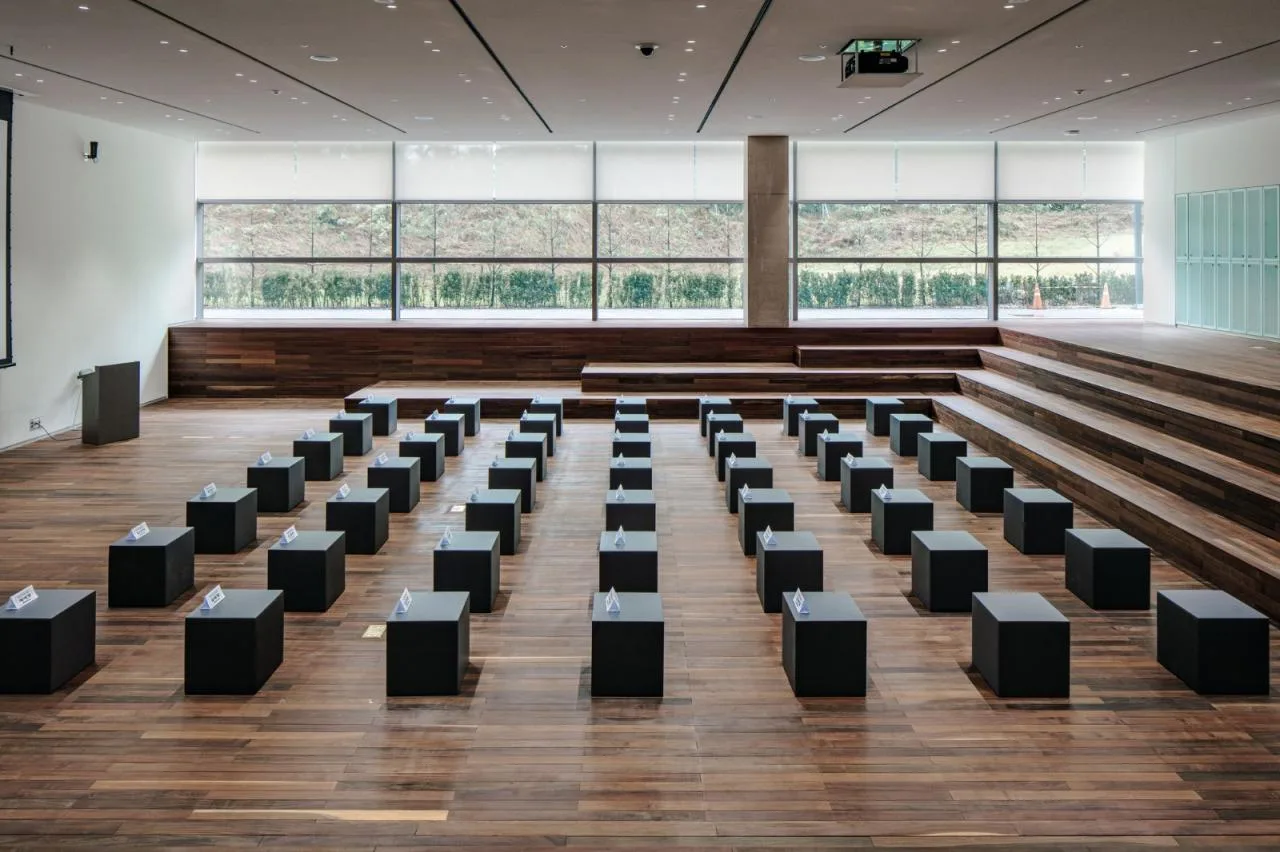
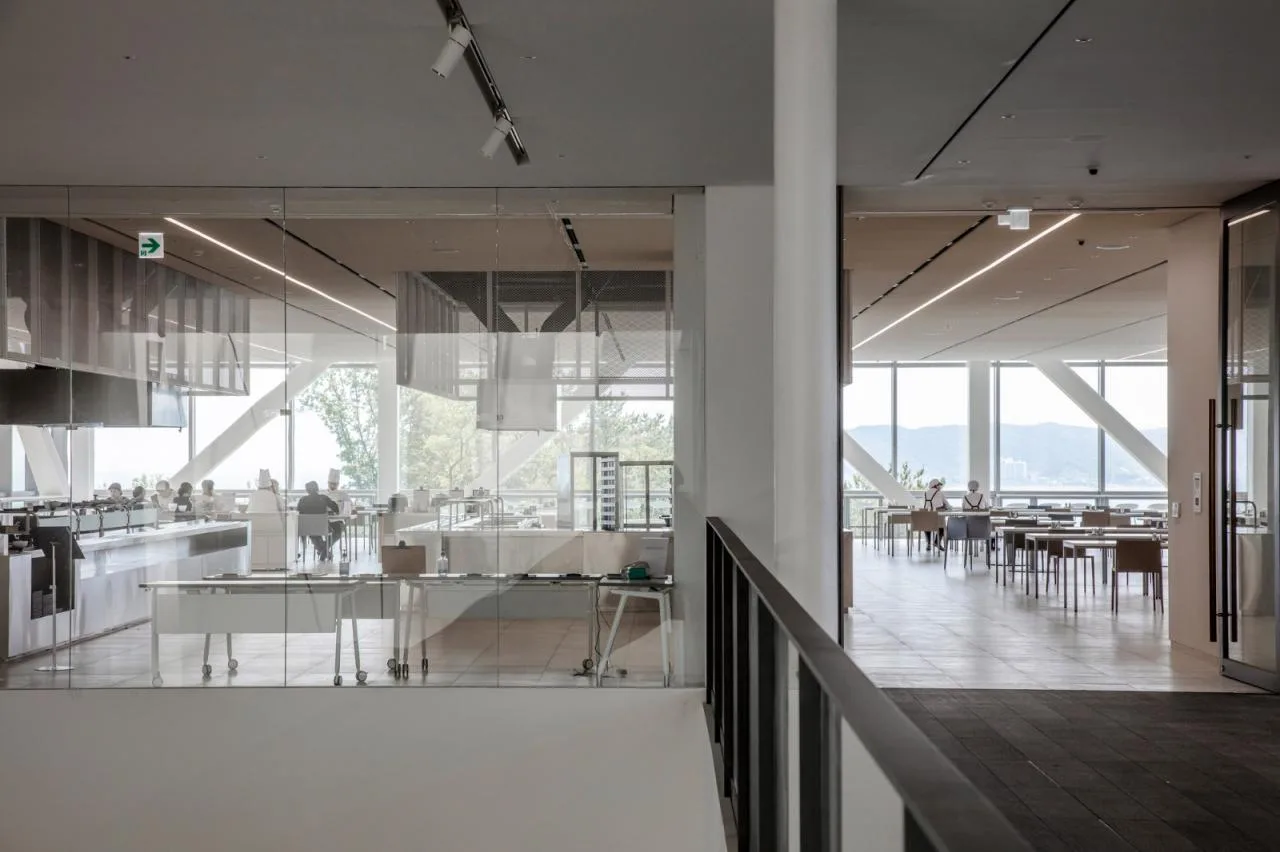
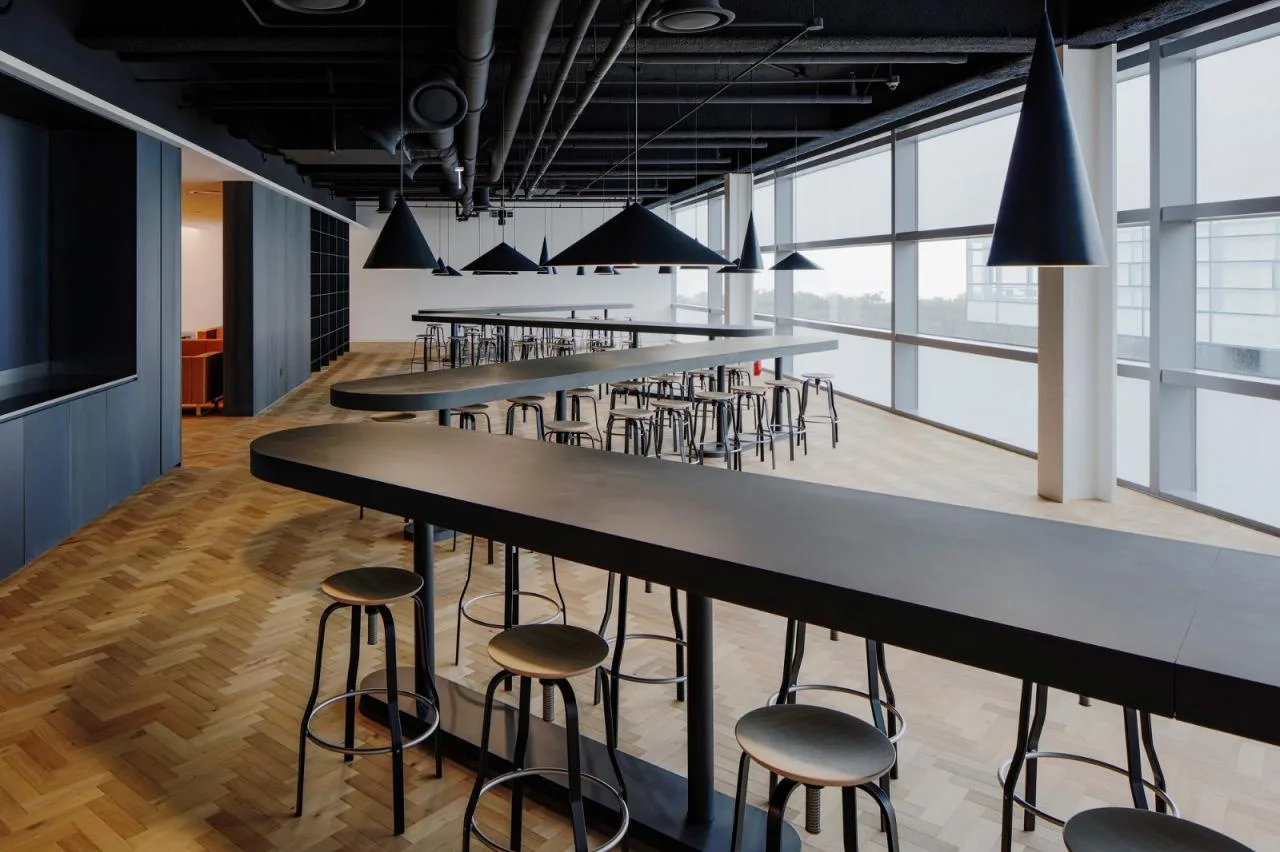
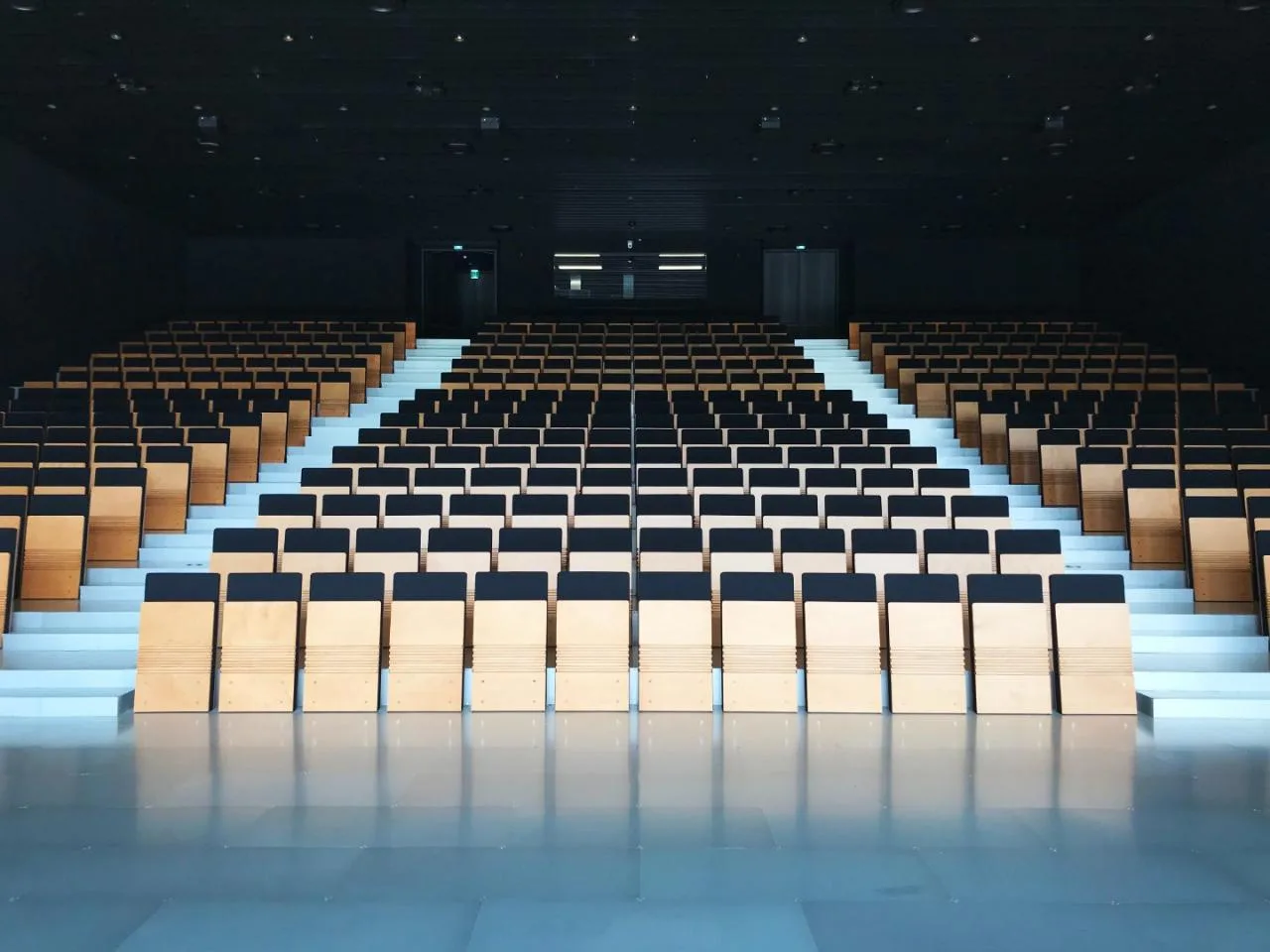
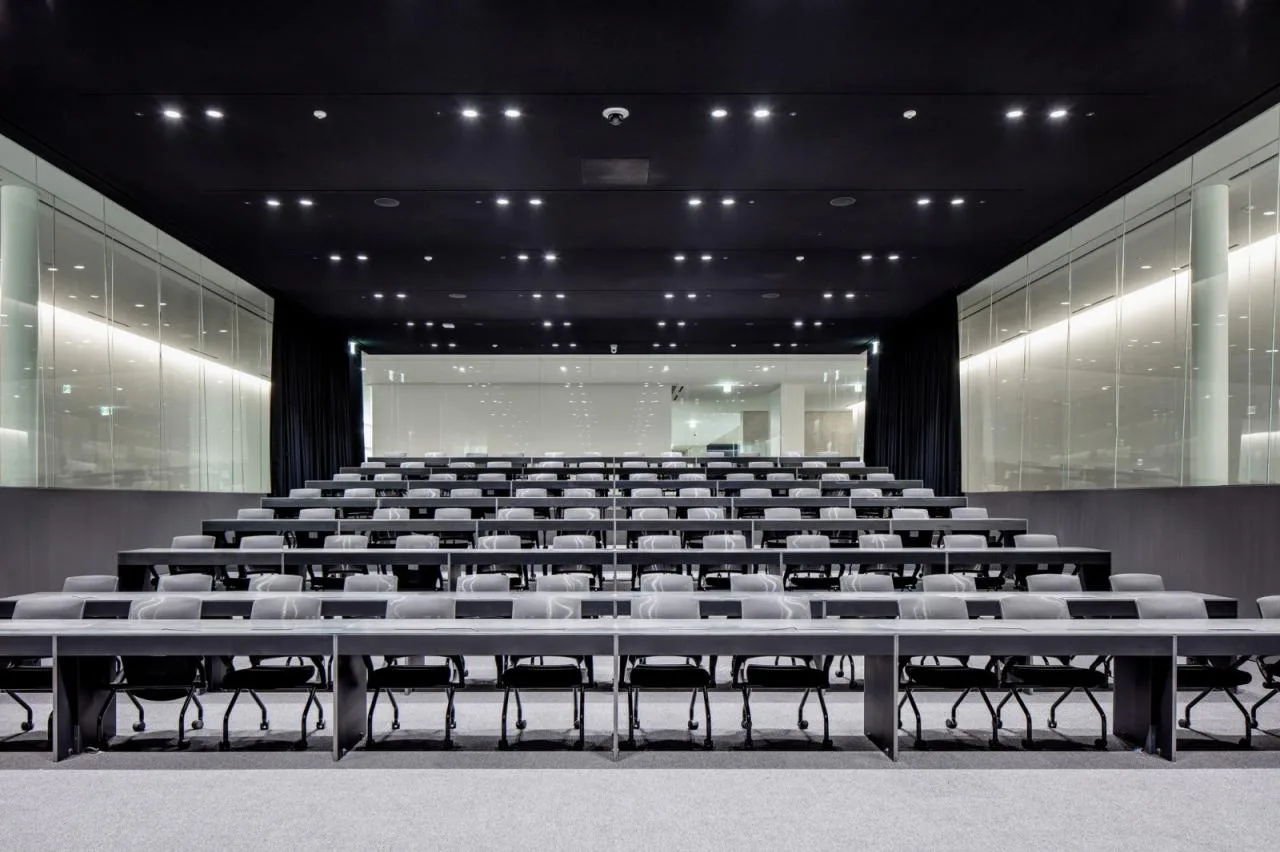
The interior design mirrors the exterior’s approach, with an urban color palette and lighting that adjusts naturally from morning to night. Small and medium-sized training rooms serve as general educational spaces, while larger or tiered training rooms are custom-built for this campus.
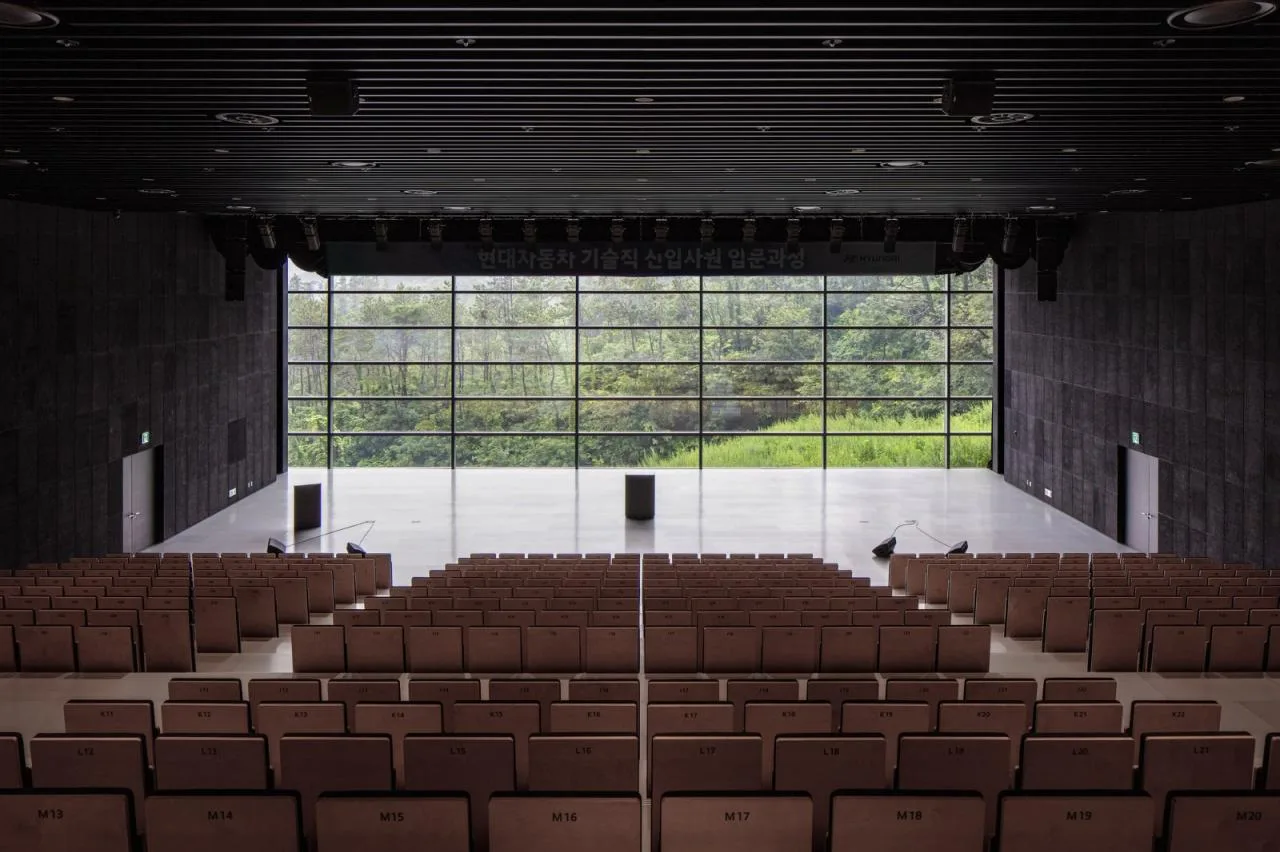
The building also features classrooms defined by trusses and curtain walls, an open auditorium resembling a circular theater nestled in the mountains, a stepped classroom that echoes a park trail, a “black box” training room, glass “boxes,” and white “cube” spaces.
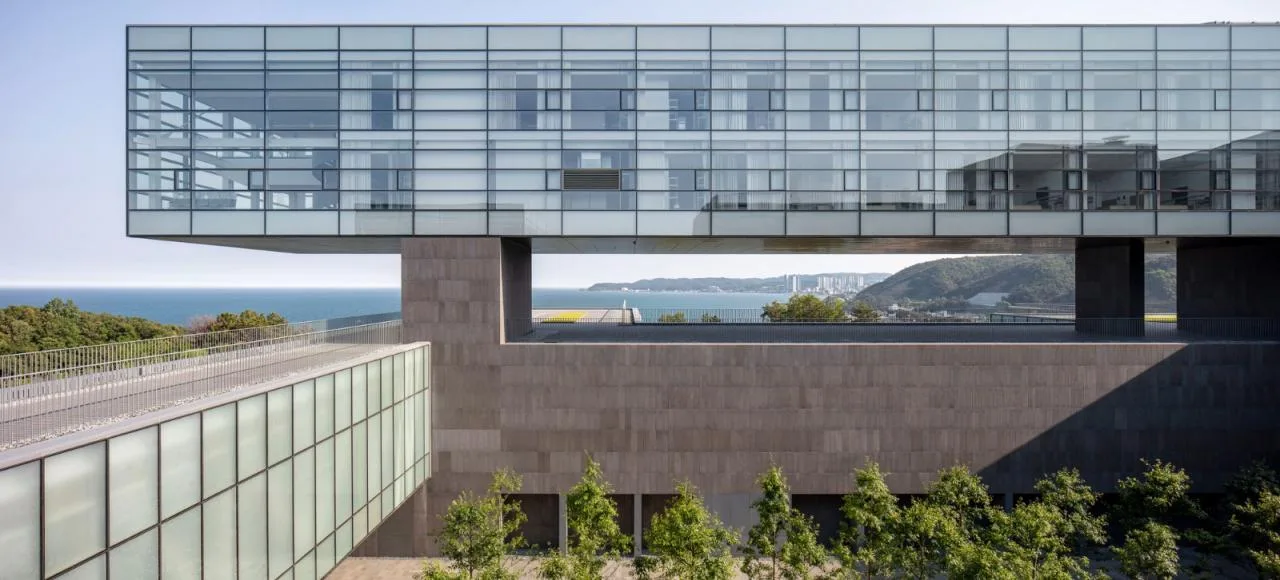
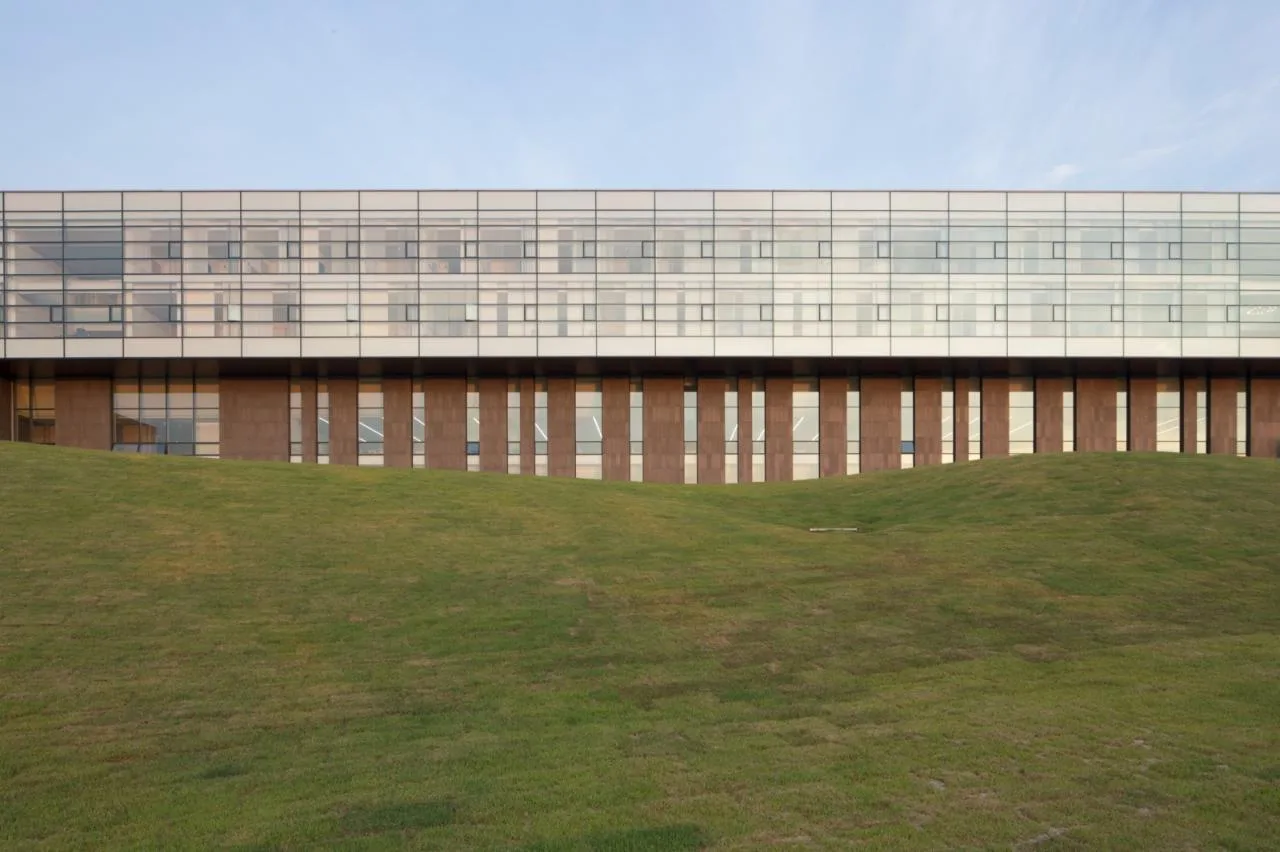
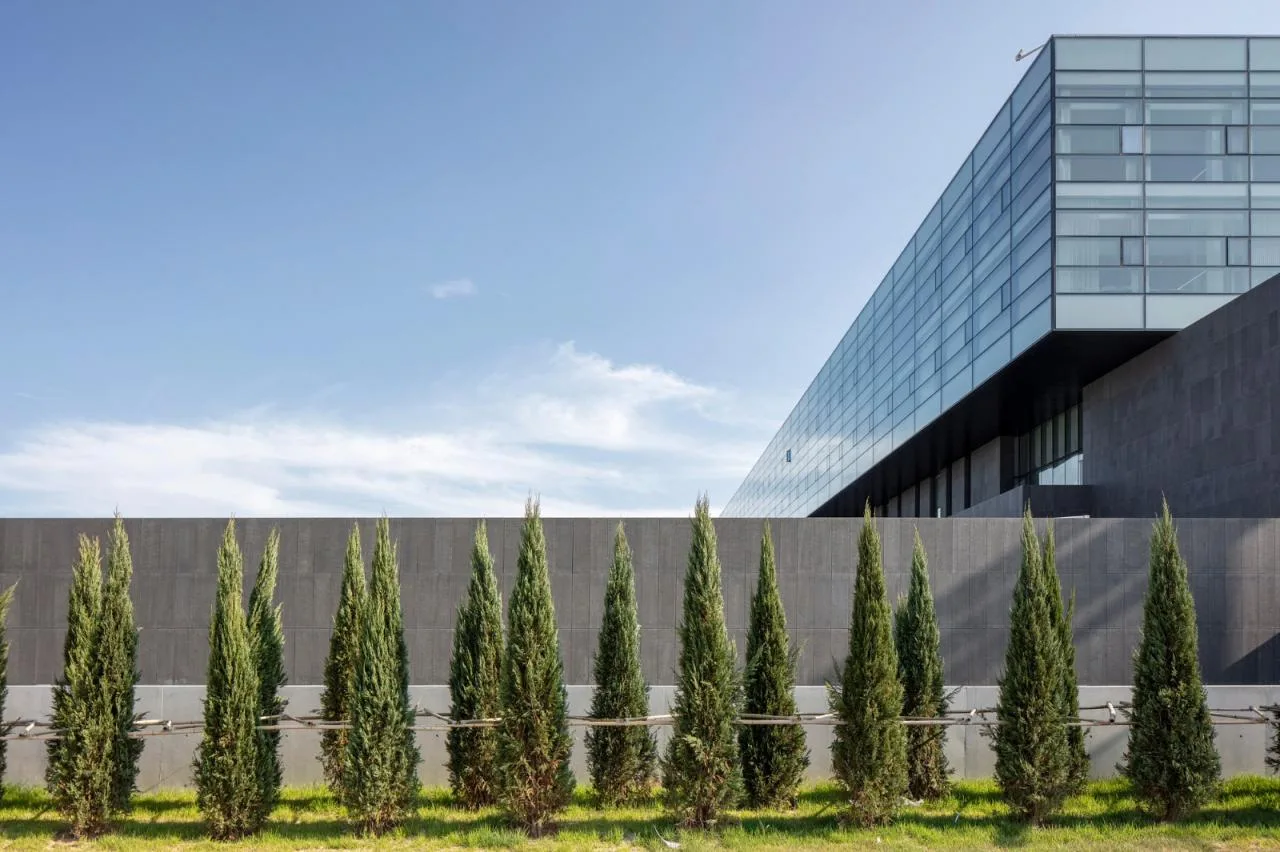
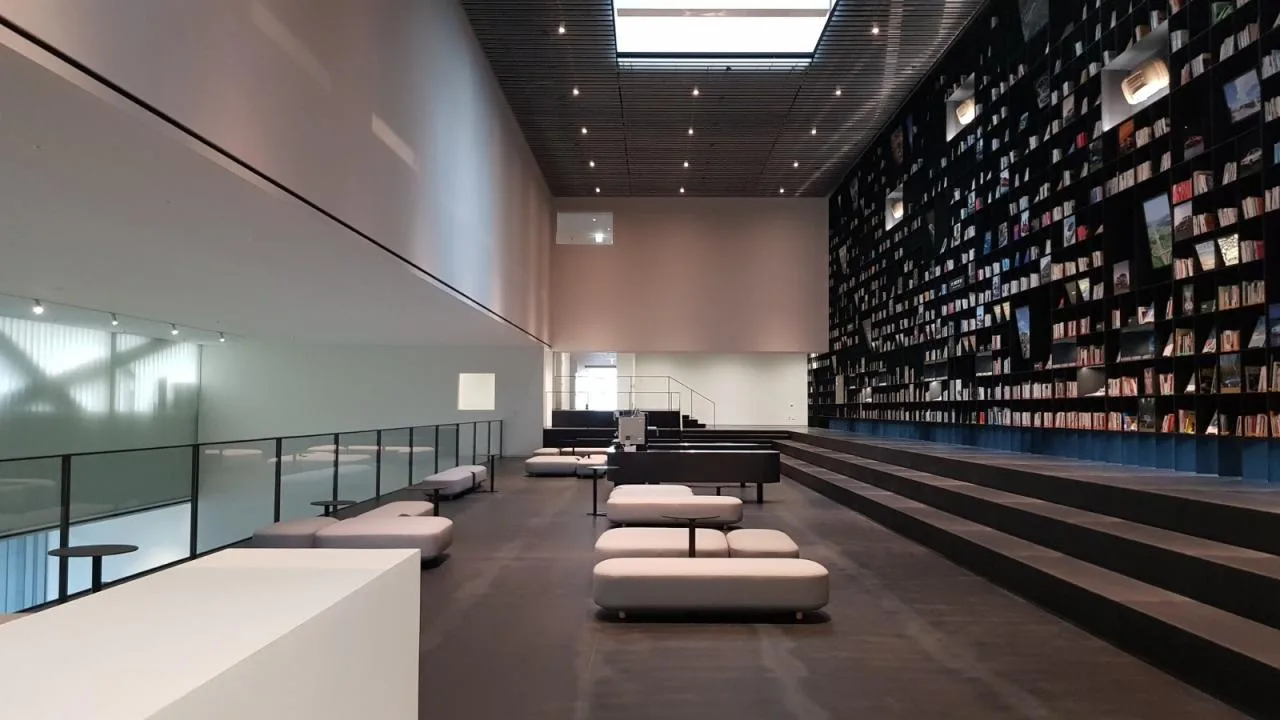
Gyeongju Hall and Partnership Hall serve as typical educational and exhibition spaces. The architect transformed the Gyeongju Pavilion into an archive area and the Partner Hall into a shared activity space for commercial partners.
The meeting point between the two training center buildings, located in the project’s northwest corner, symbolizes the enterprise’s beginning.
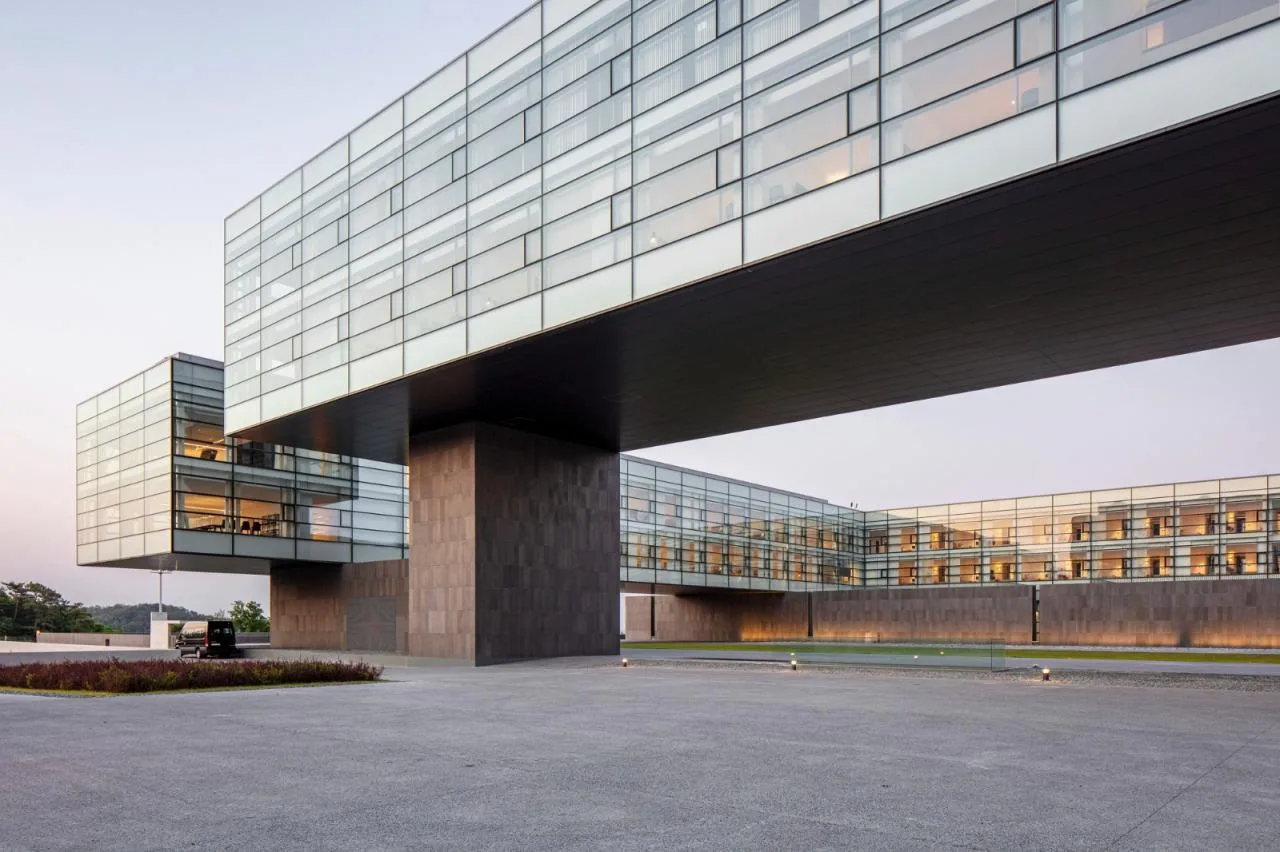
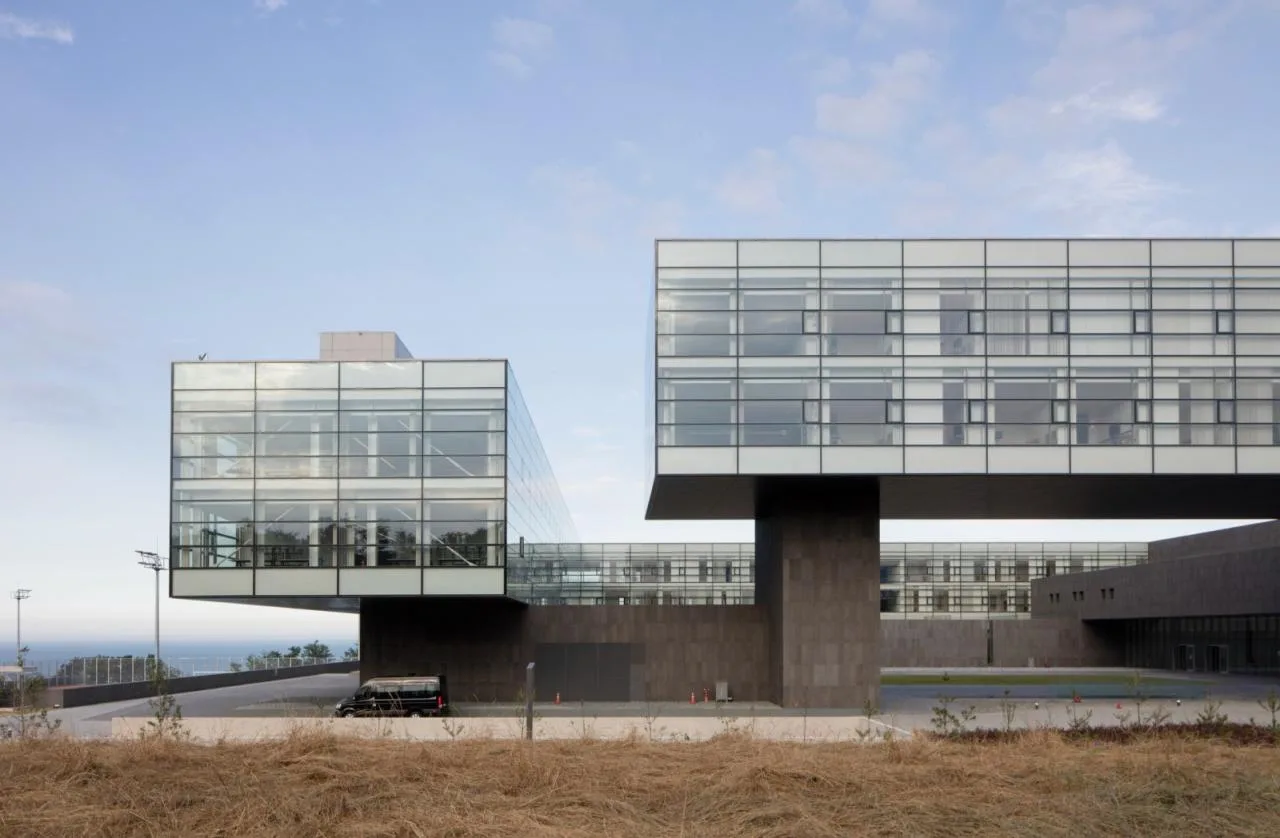
The buildings located at the southeast corner feature cantilever architecture, extending towards the sea and reflecting the company’s vision for an infinite future.
In response, the architect created a space designed to evoke a “dual response”: trainees feel pride in the company’s potential while enjoying the warmth of the sea and blooming flowers surrounding them.
Currently, the campus area of Gyeongju University also functions as a daily COVID-19 protection center for Daegu, while Hyundai Group’s Global Cooperation Center acts as a training hub focused on developing talents who enhance the relationships between the enterprise group and its business partners, drawing national attention in South Korea.
Project Drawings
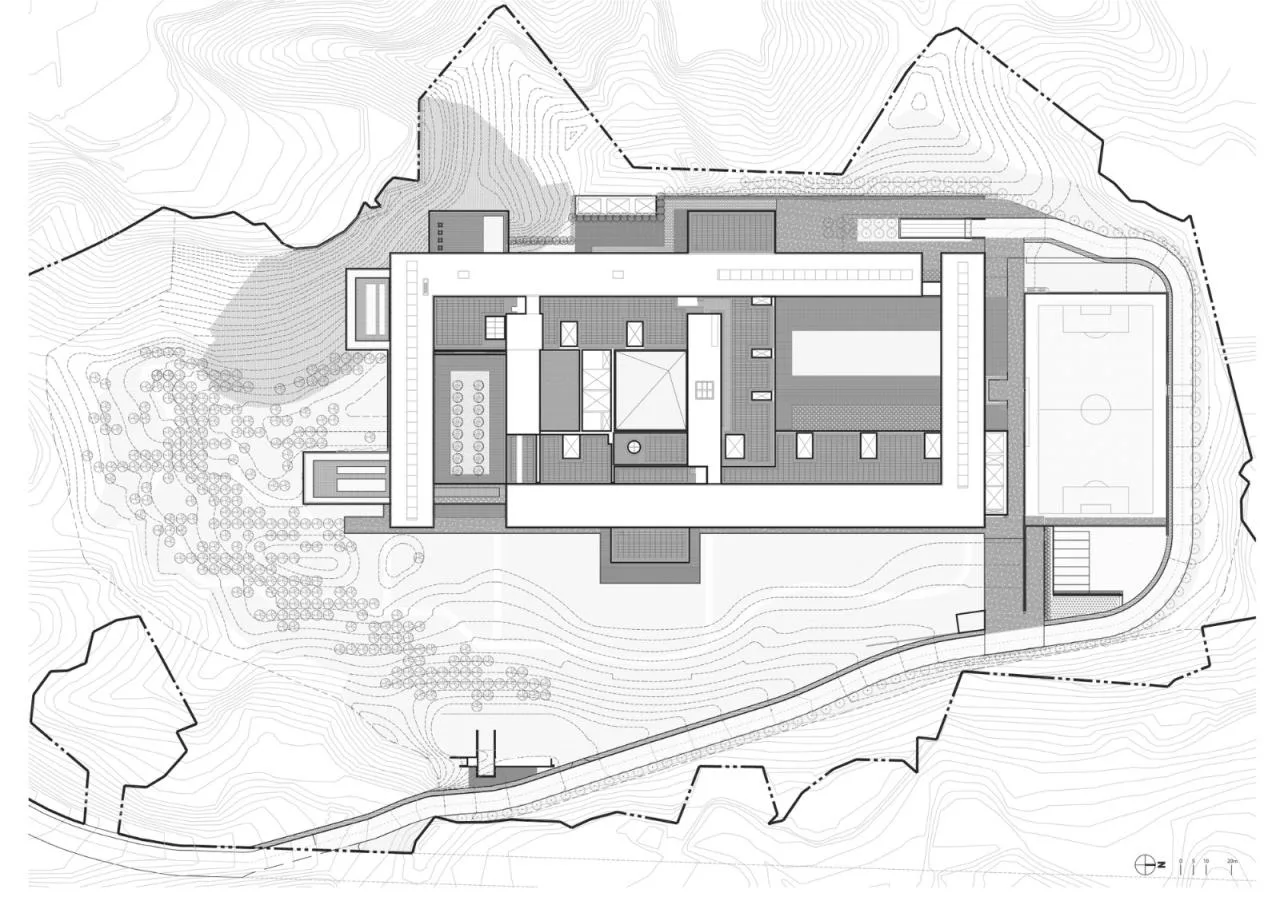
△ General Layout Plan
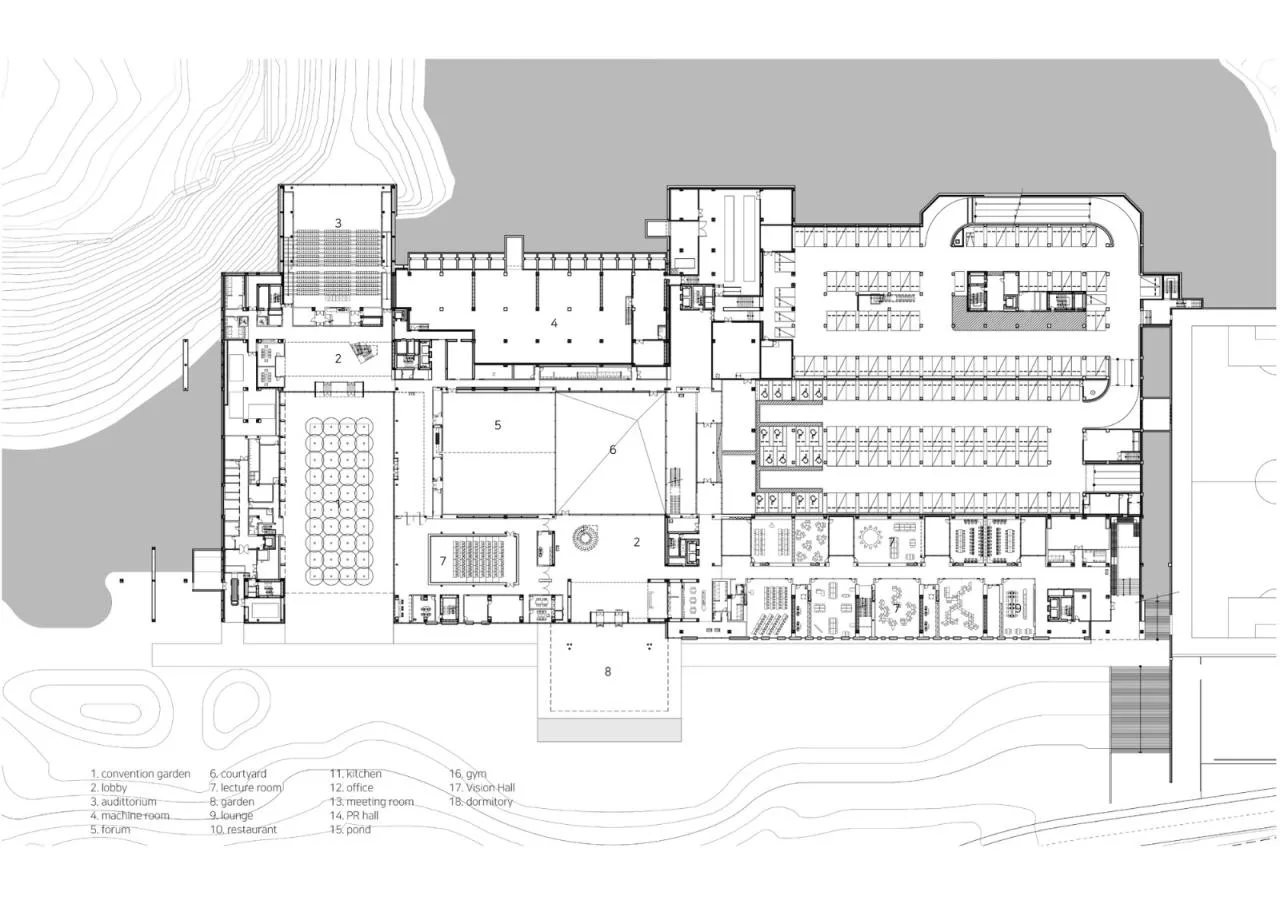
△ Negative Floor Plan
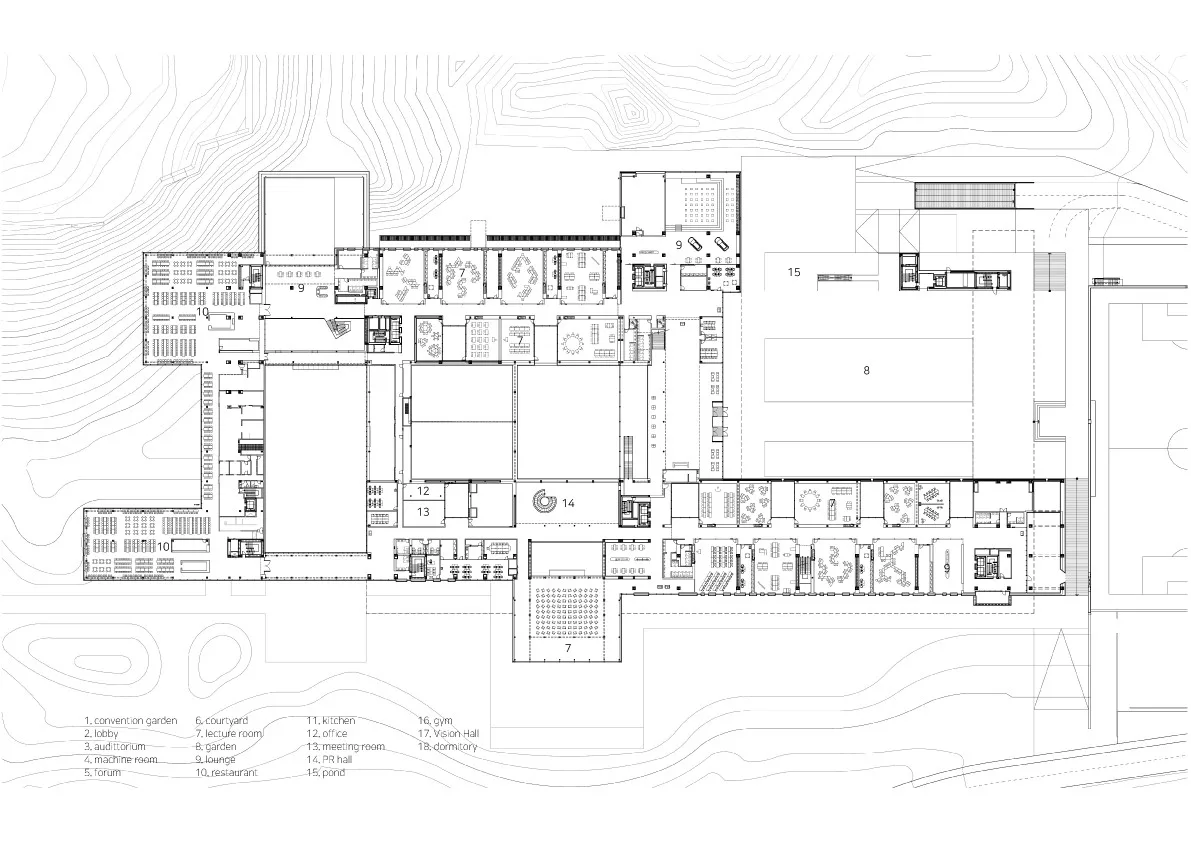
△ First Floor Plan
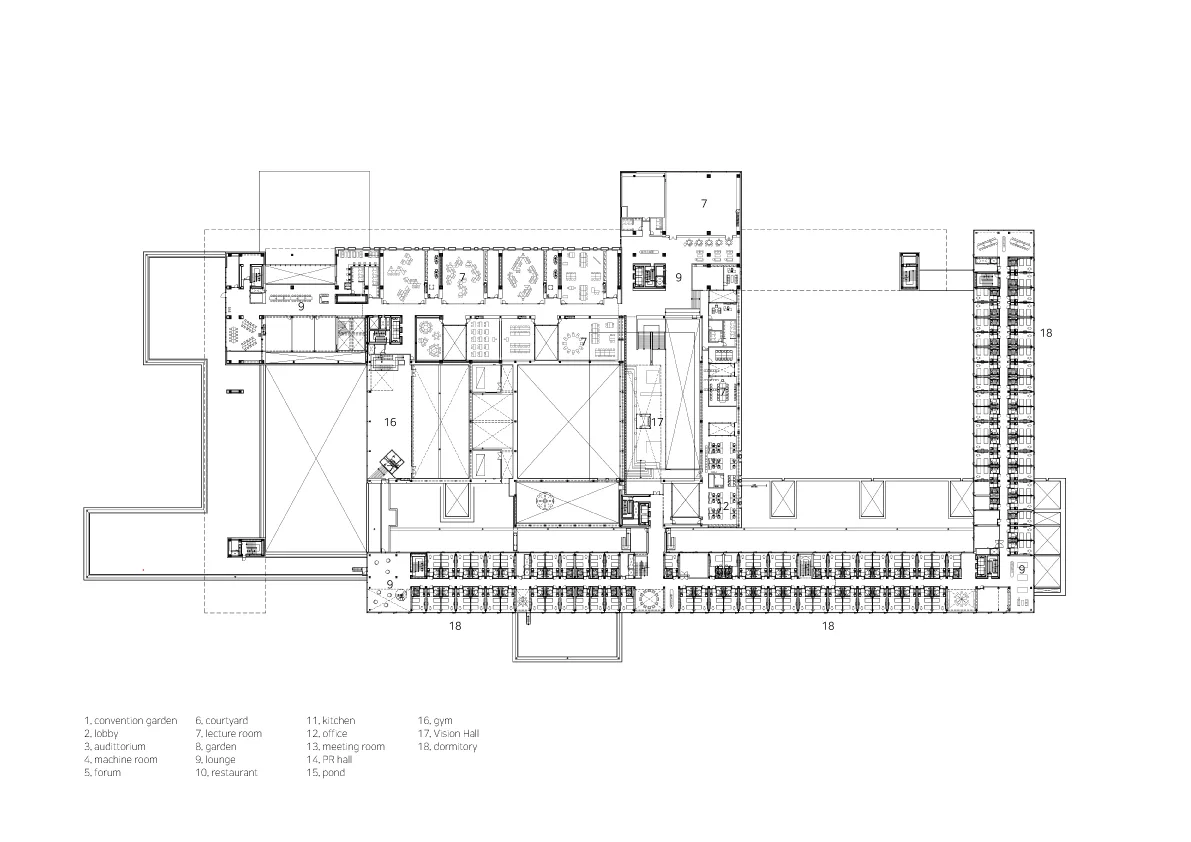
△ Second Floor Plan
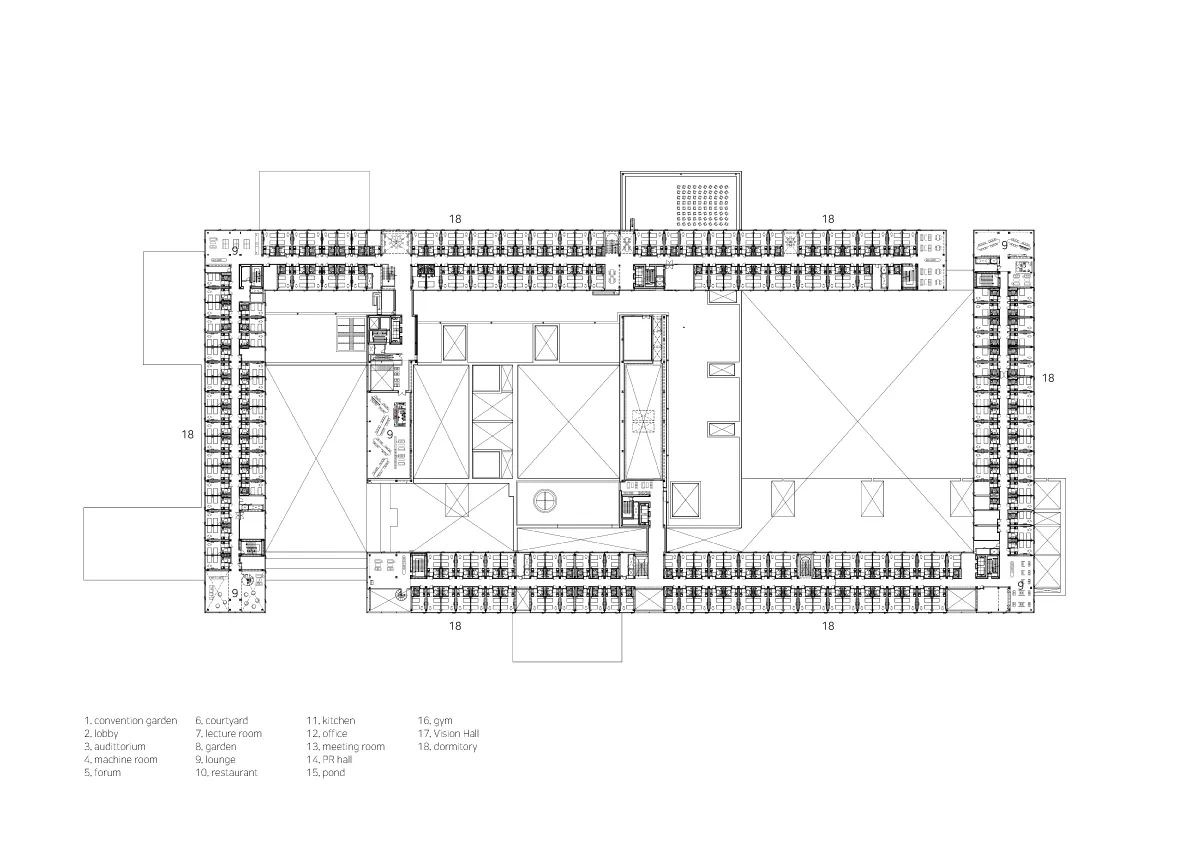
△ Third Floor Plan
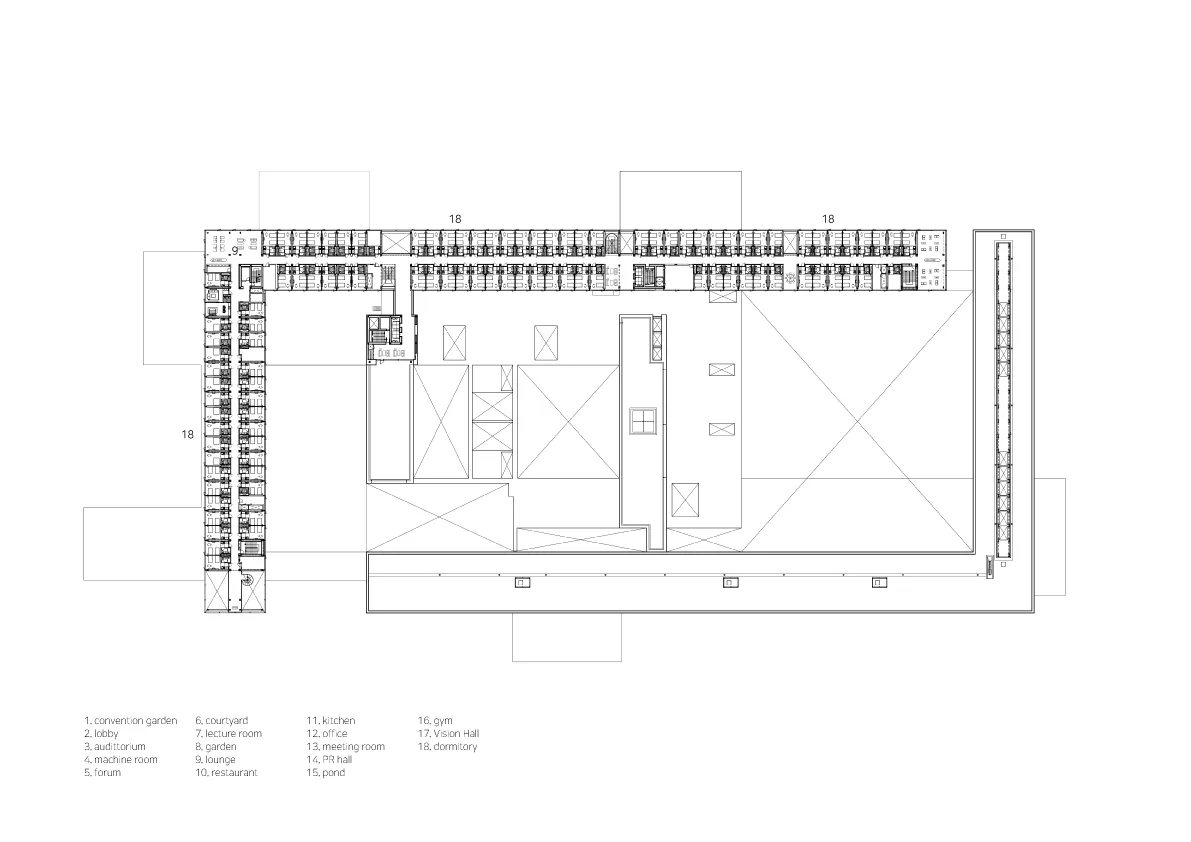
△ Fourth Floor Plan
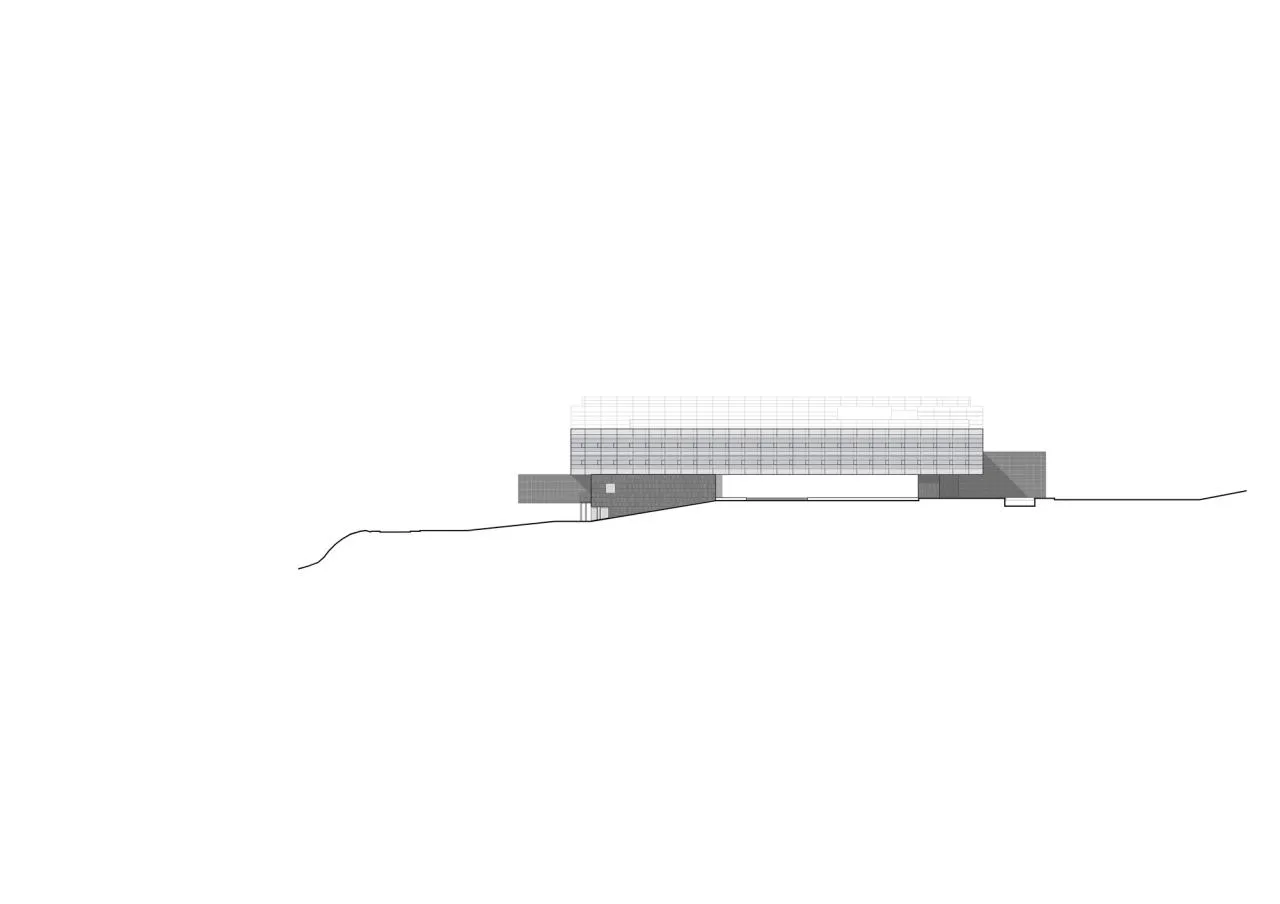
△ Elevation Drawing
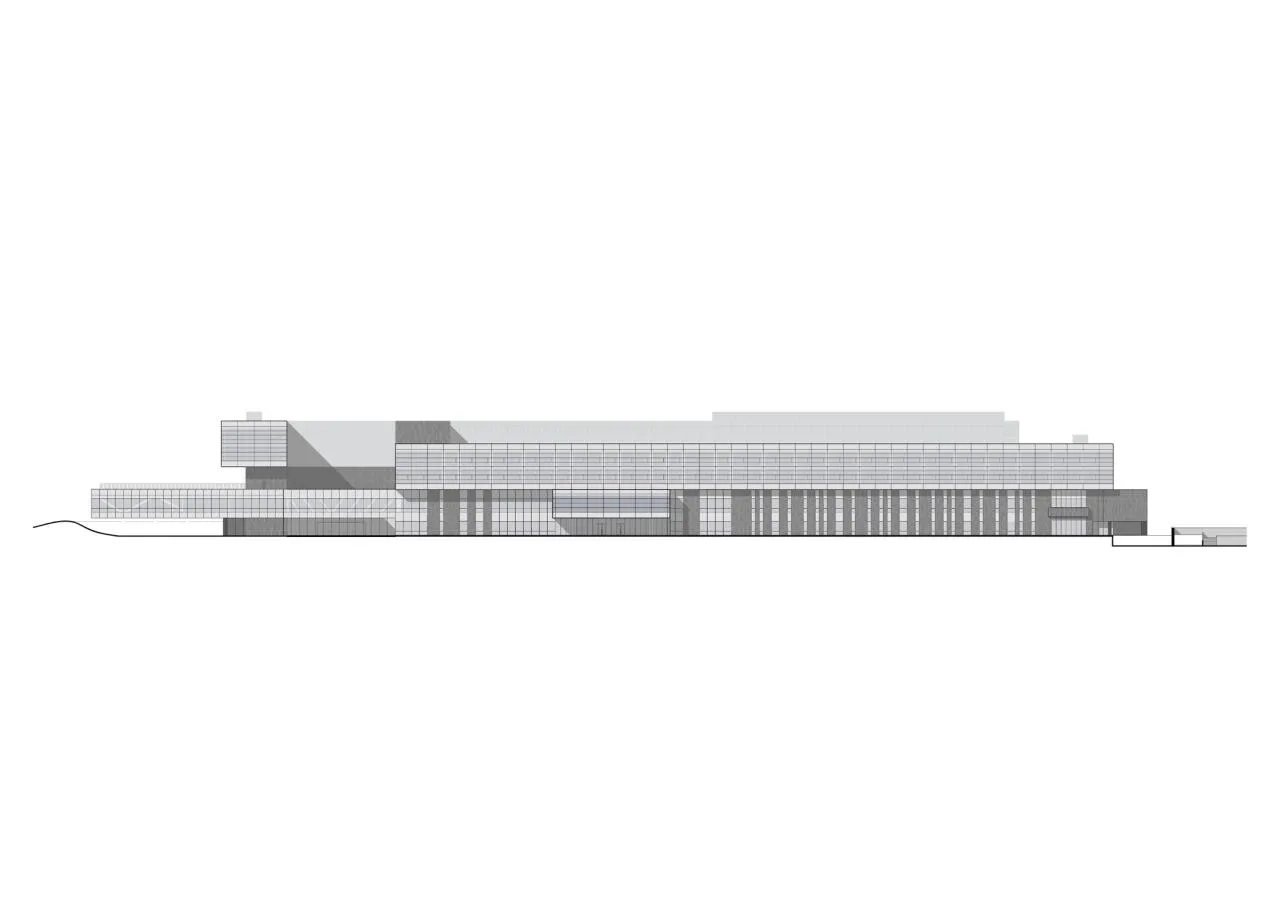
△ Elevation Drawing
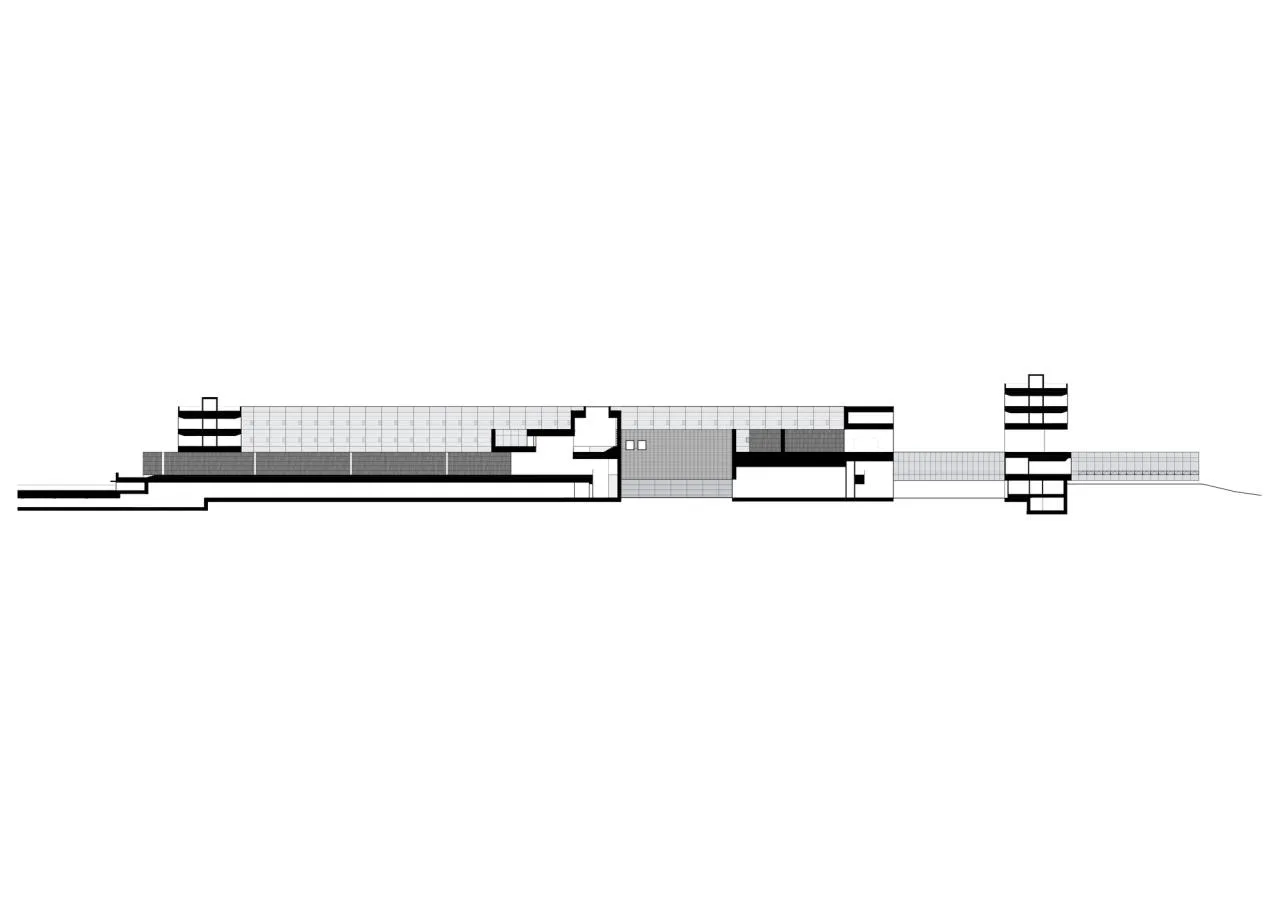
△ Section Diagram
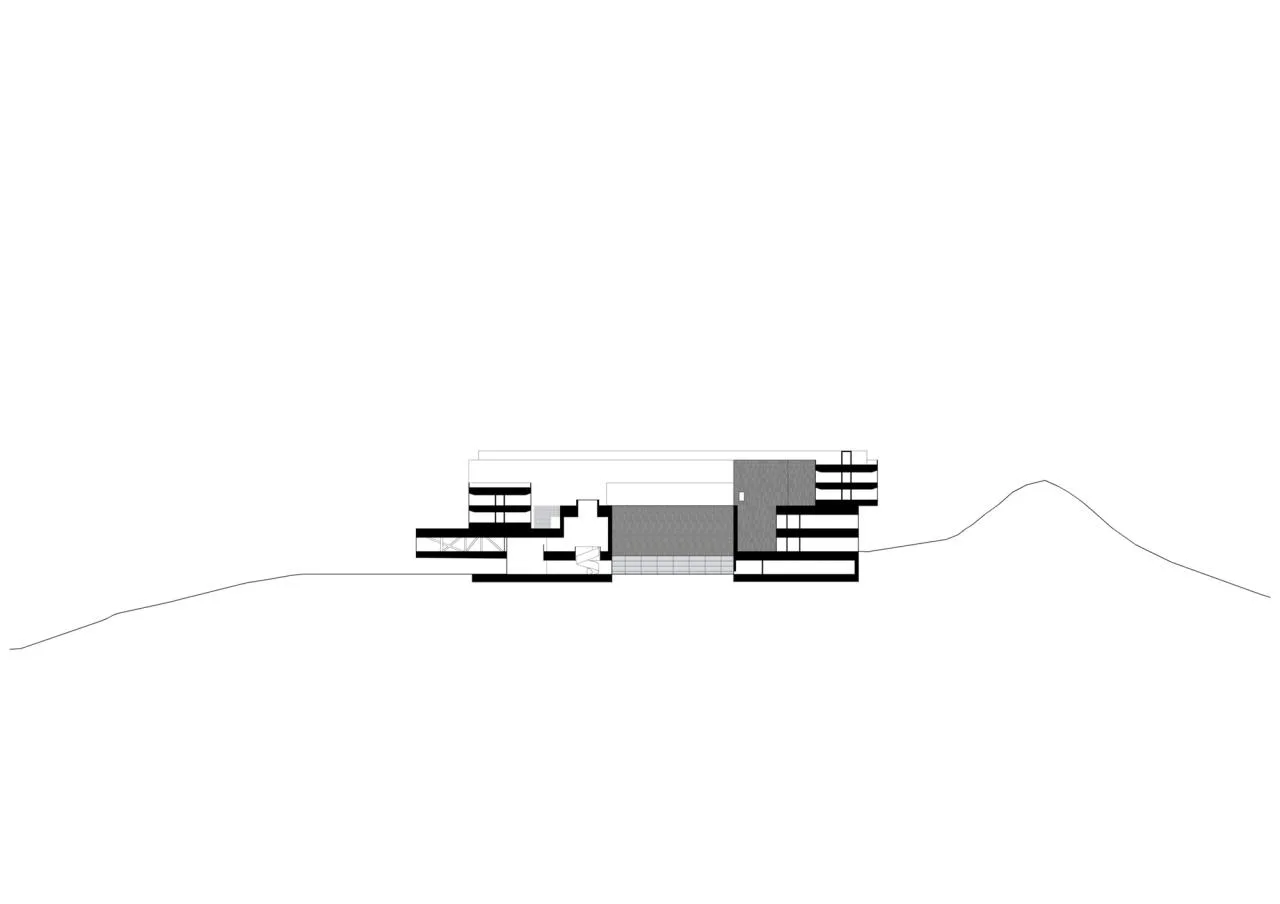
△ Section Diagram
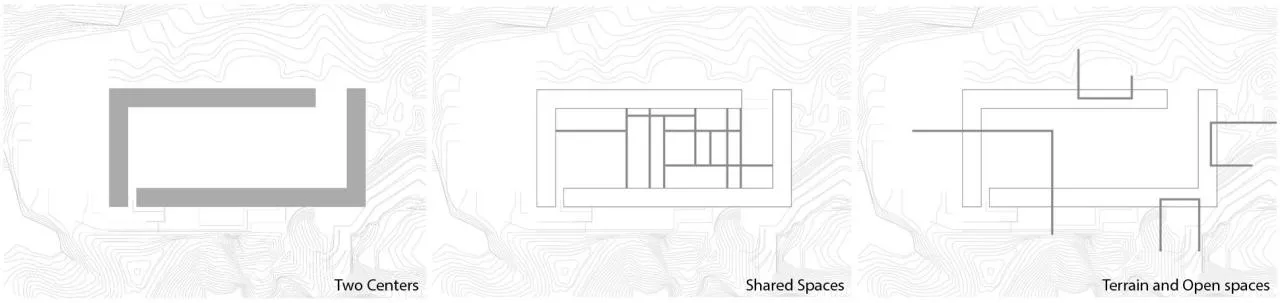
△ Analysis Chart
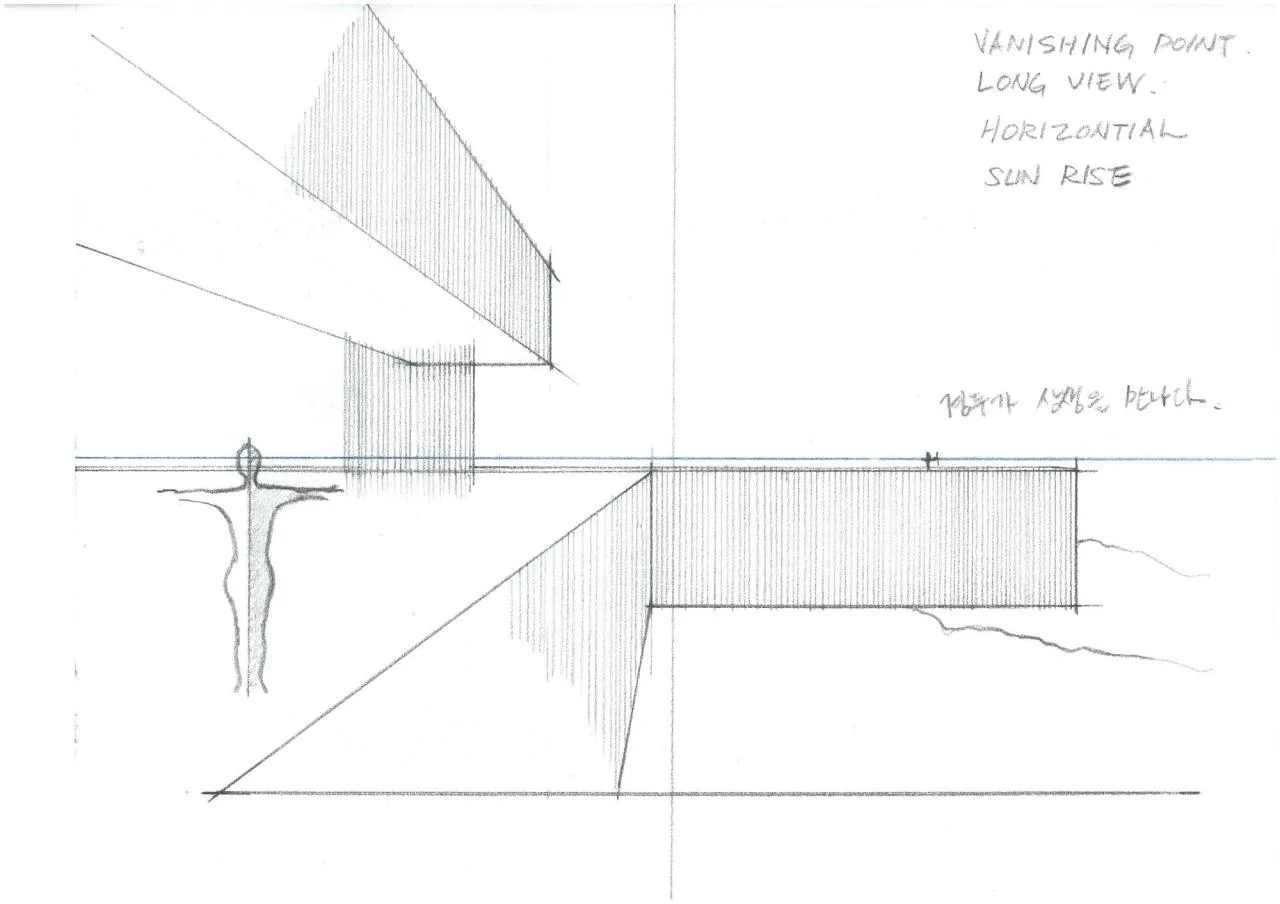
△ Analysis Chart
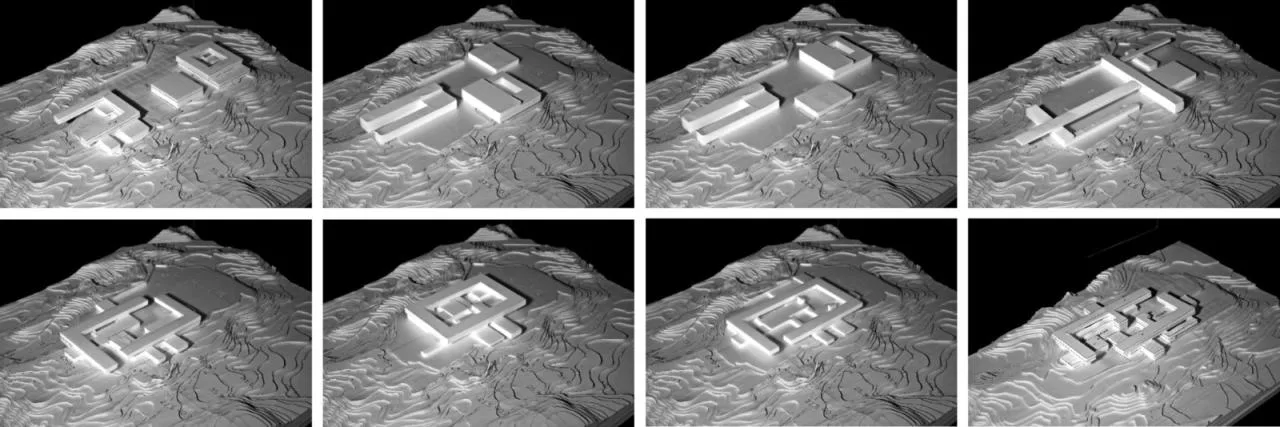
△ Block Generation Diagram
Project Information
Architect: Hyunjun Mihn, MP Art Architects
Area: 21,180 m²
Project Year: 2020
Photographer: Jong Oh Kim
Architect: Hyunjun Mihn, mp’art architects
Structural Engineering: YOON Structural Engineers
Construction: Hyundai Engineering
Mechanical Engineering: JungIn MEC
Electrical Engineering: DAEGYEONG Electric Planning Office
Landscape Design: Office PARKKIM
Location: Gyeongju City, South Korea












Must log in before commenting!
Sign Up