
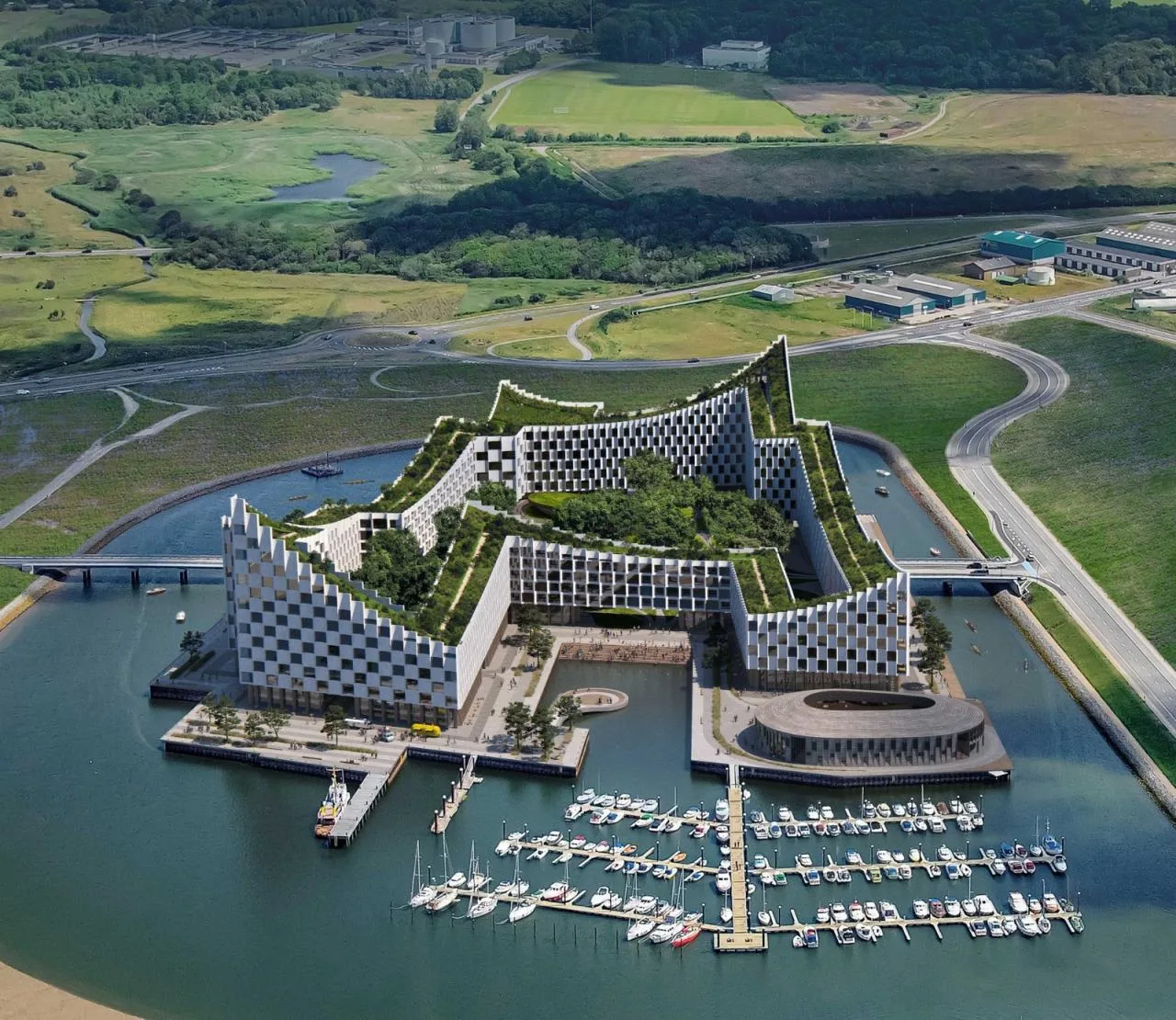
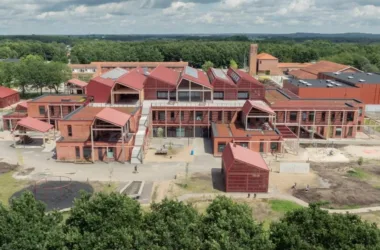
BIG has recently unveiled their master plan for an island in Esbjerg, aiming to create a new framework for educational campuses. This initiative envisions a transformative educational platform, reimagining Denmark’s traditional education system. BIG’s concept proposes reconstructing the entire city within a single building, where education and development form the foundation of a vibrant campus community. The island’s design integrates various functional zones, fostering a sustainable and human-centered ecosystem shared by the island and its structures.
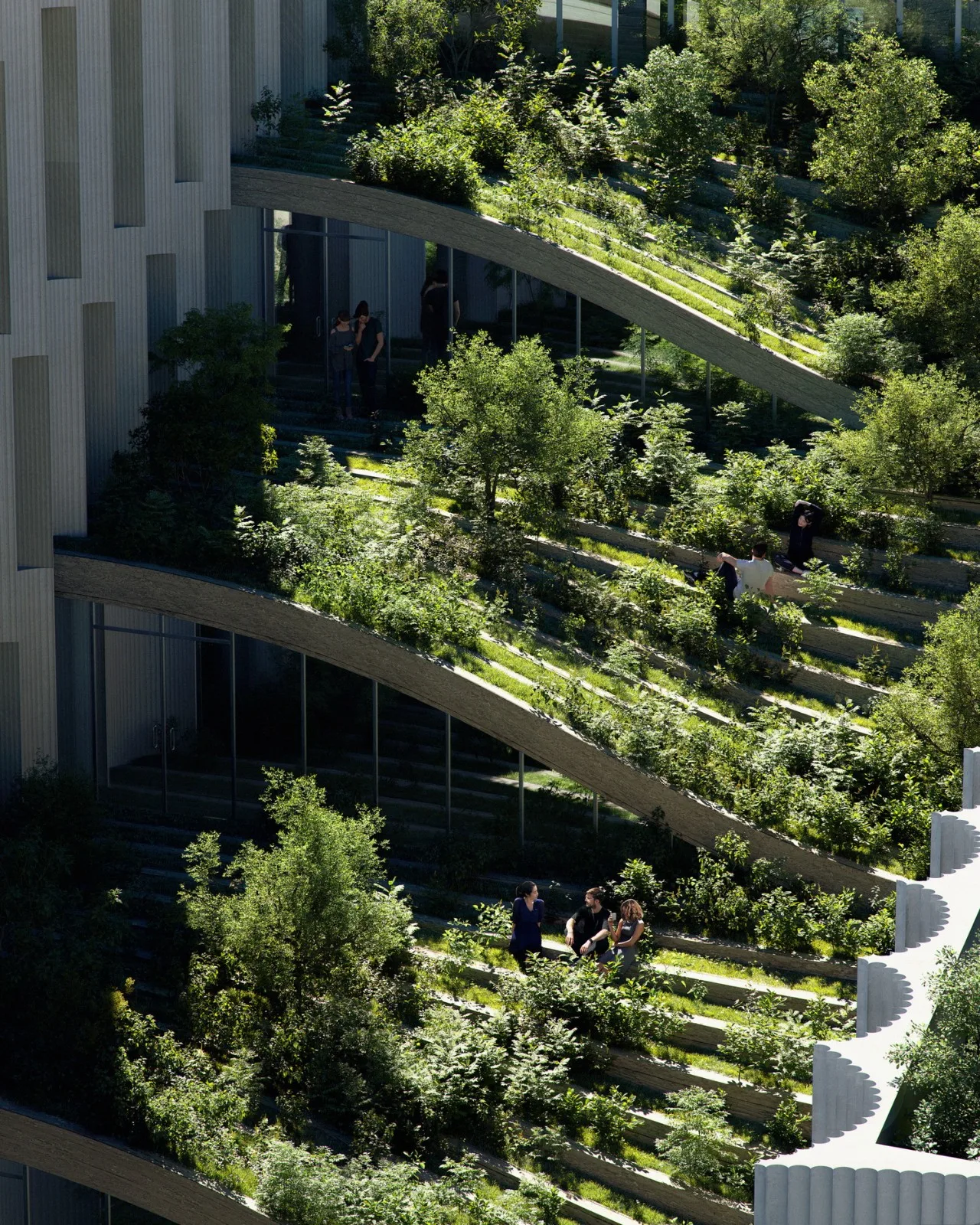
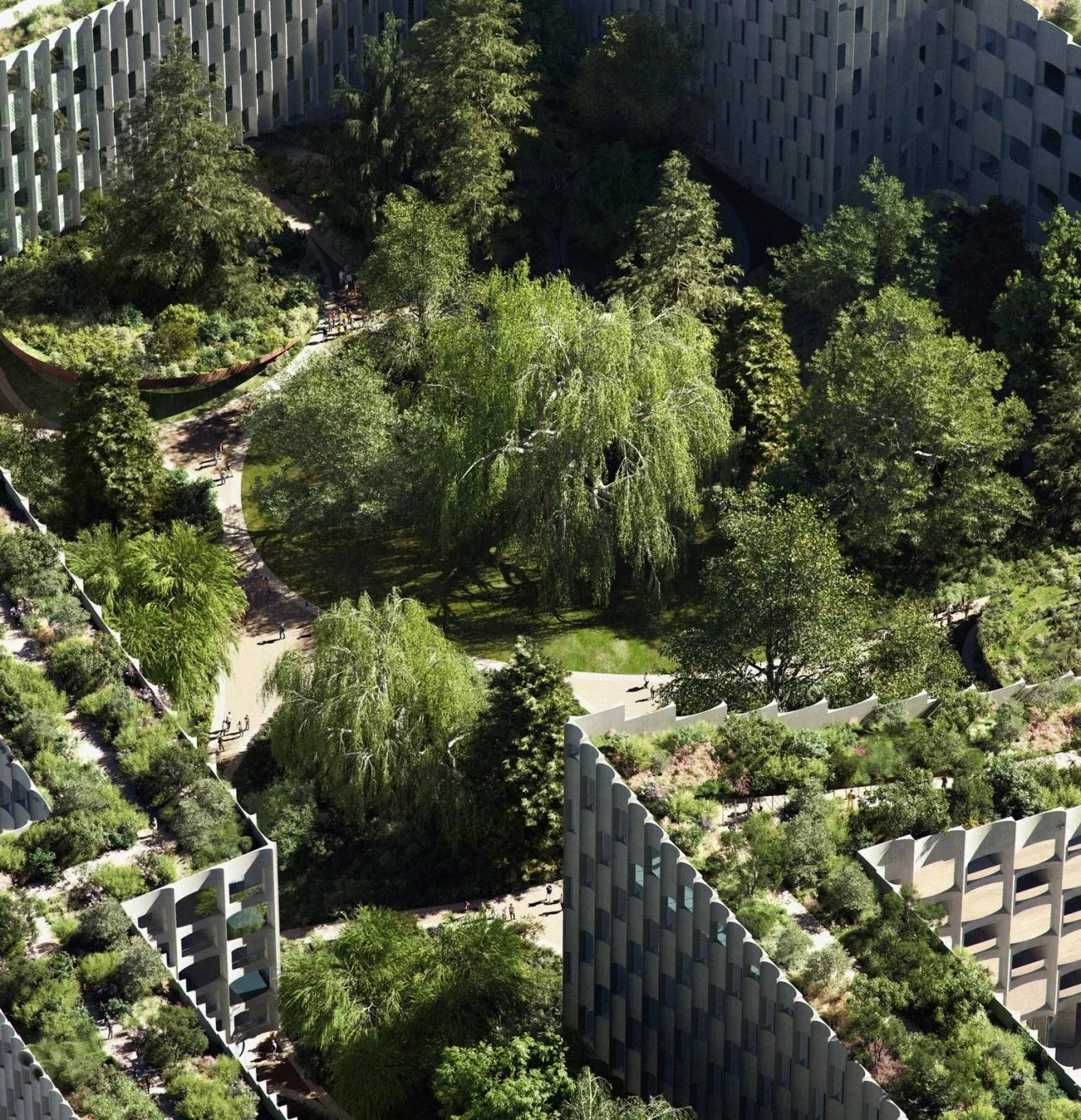
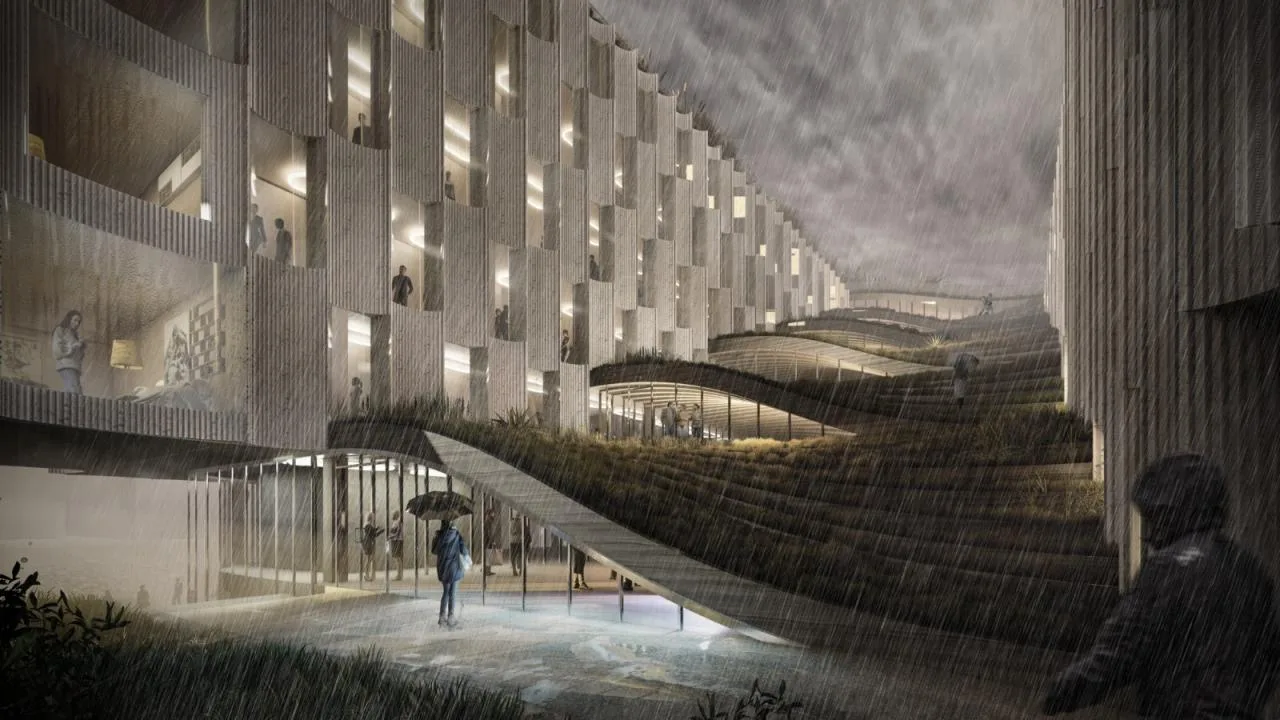
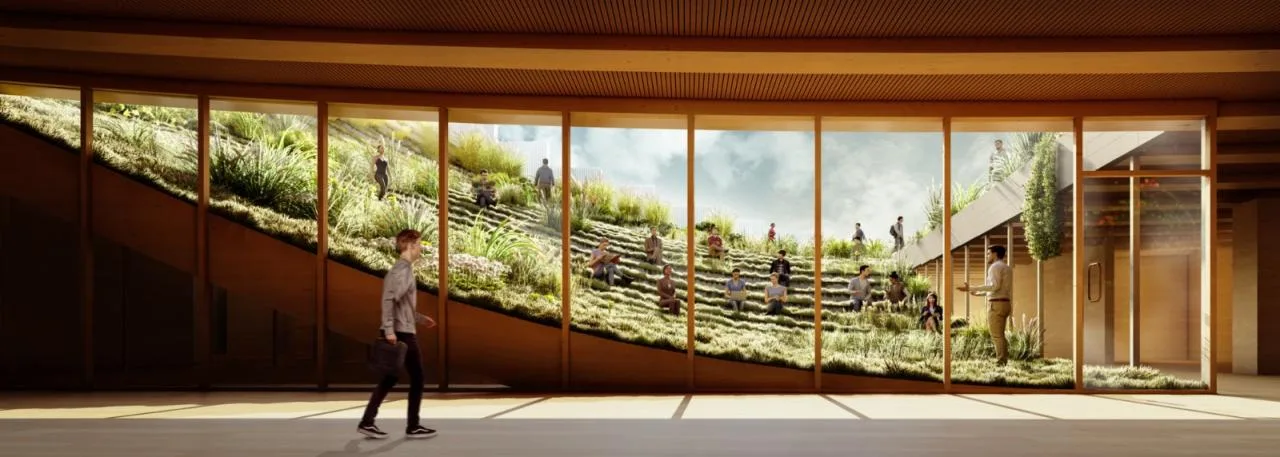
The initial design followed a standardized approach, but the buildings failed to adapt to the island’s coastal environment. Therefore, BIG revised the plan for this 15,000-square-meter park. The new design reduces the built area to 13,700 square meters and positions the structures along the island’s edge, creating a central space sheltered from wind and noise. This arrangement forms a spacious, tranquil park. Lush greenery defines the park’s inner courtyards, offering a serene atmosphere that contrasts with the adjacent industrial dock. Additionally, visitors can enjoy water features including the harbor, dock, and lagoon surrounding the park.
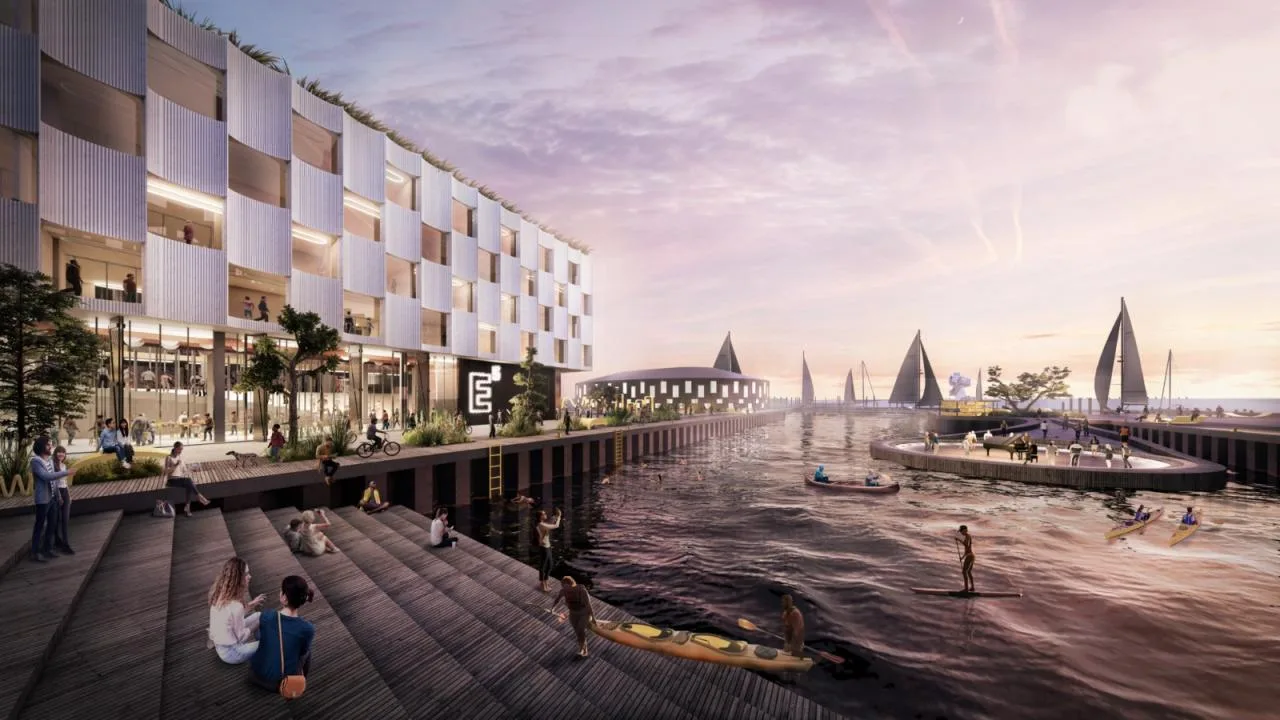
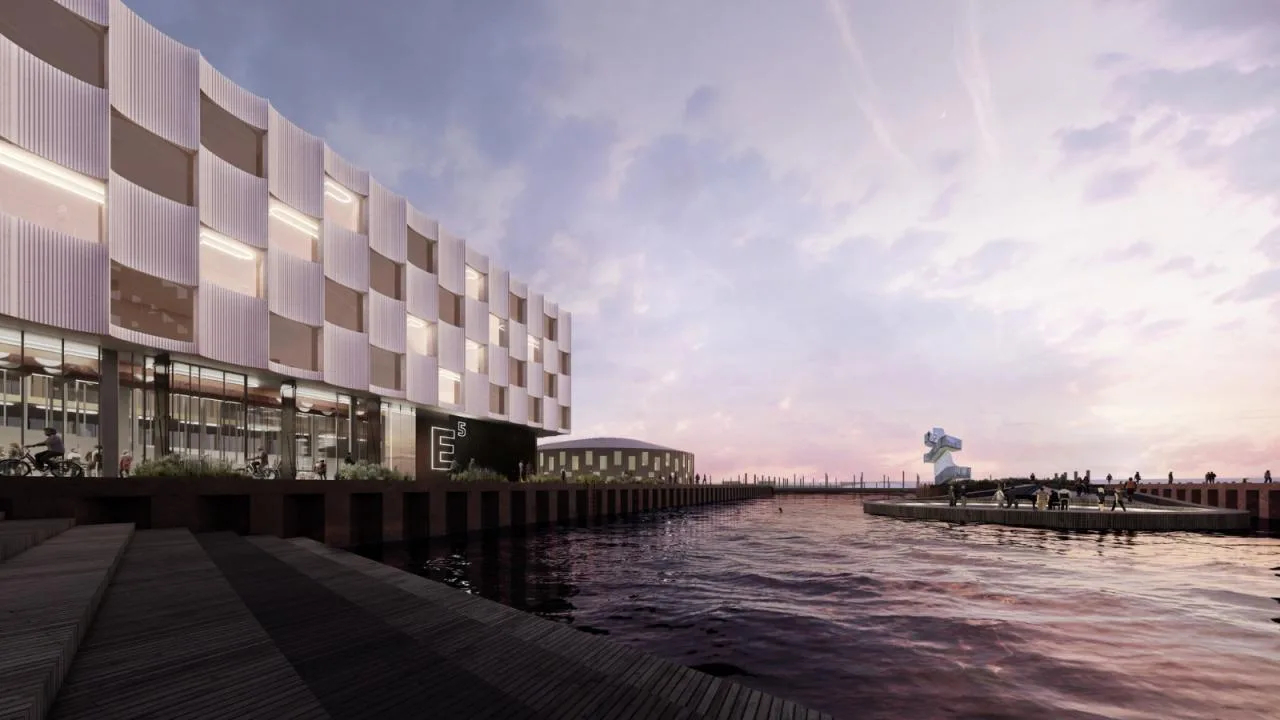
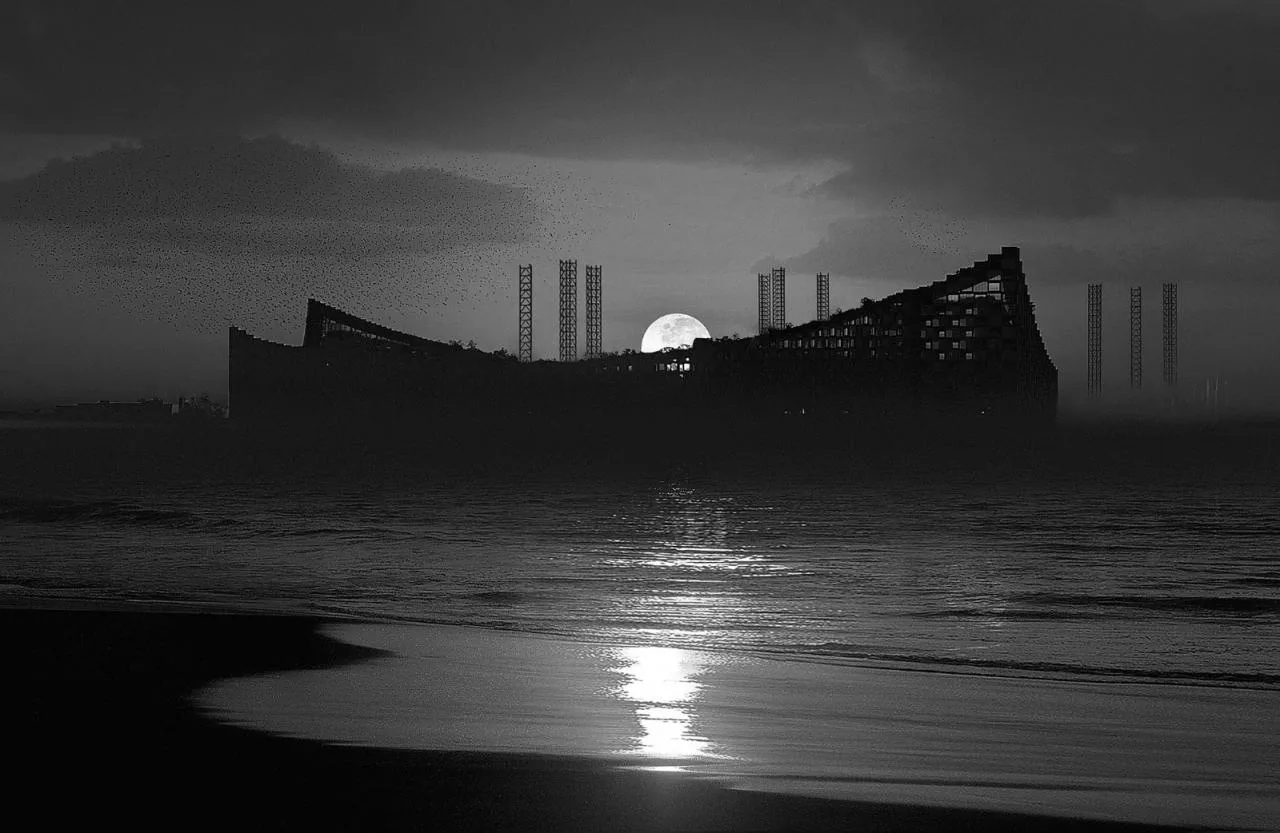
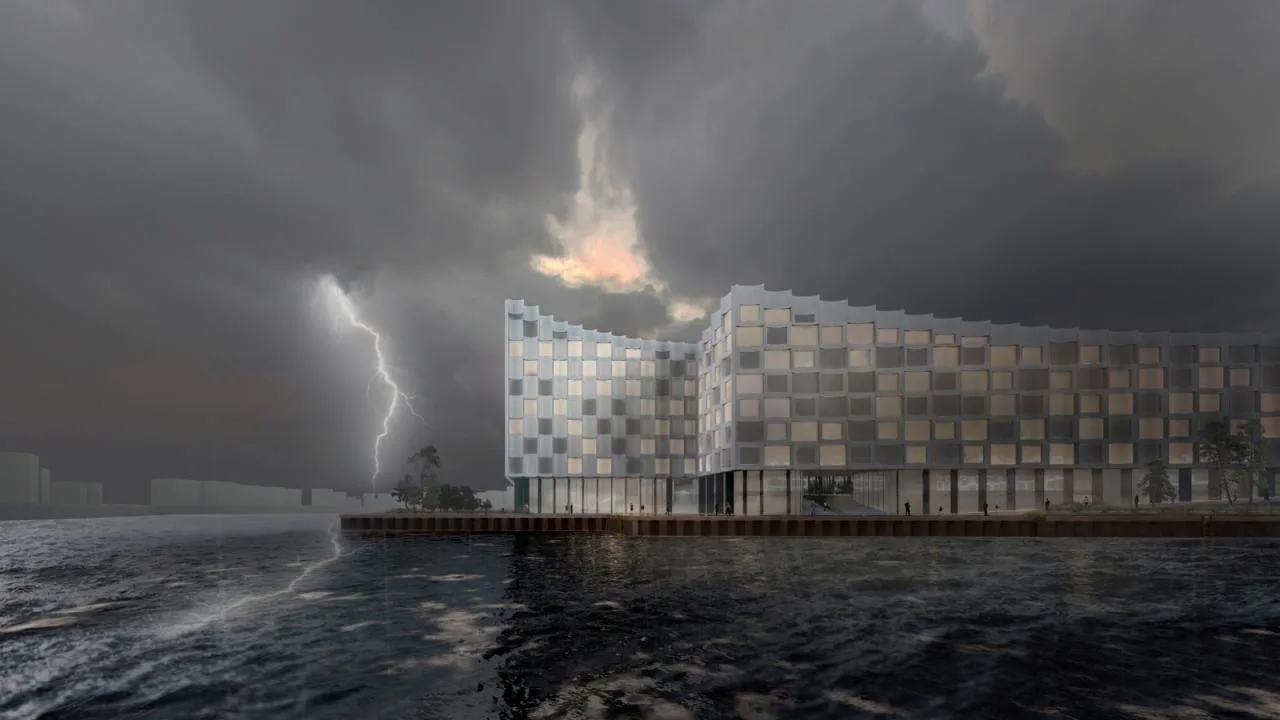
The original island plan featured a seven-story building along the coastline. The updated design adjusts the building’s height and shape to reduce noise from nearby ports, improve wind conditions both at ground level and on the roof, maximize sunlight exposure, and optimize panoramic views. Whether by the sea or within the park, the building’s continuous volume offers stunning scenery. Atop the structure, a continuous rooftop garden stretches one kilometer along an undulating path that follows the roof’s geometric and landscaped terrain, enhancing the campus’s cohesion. To protect against flooding, the building’s foundation has been elevated by seven meters.
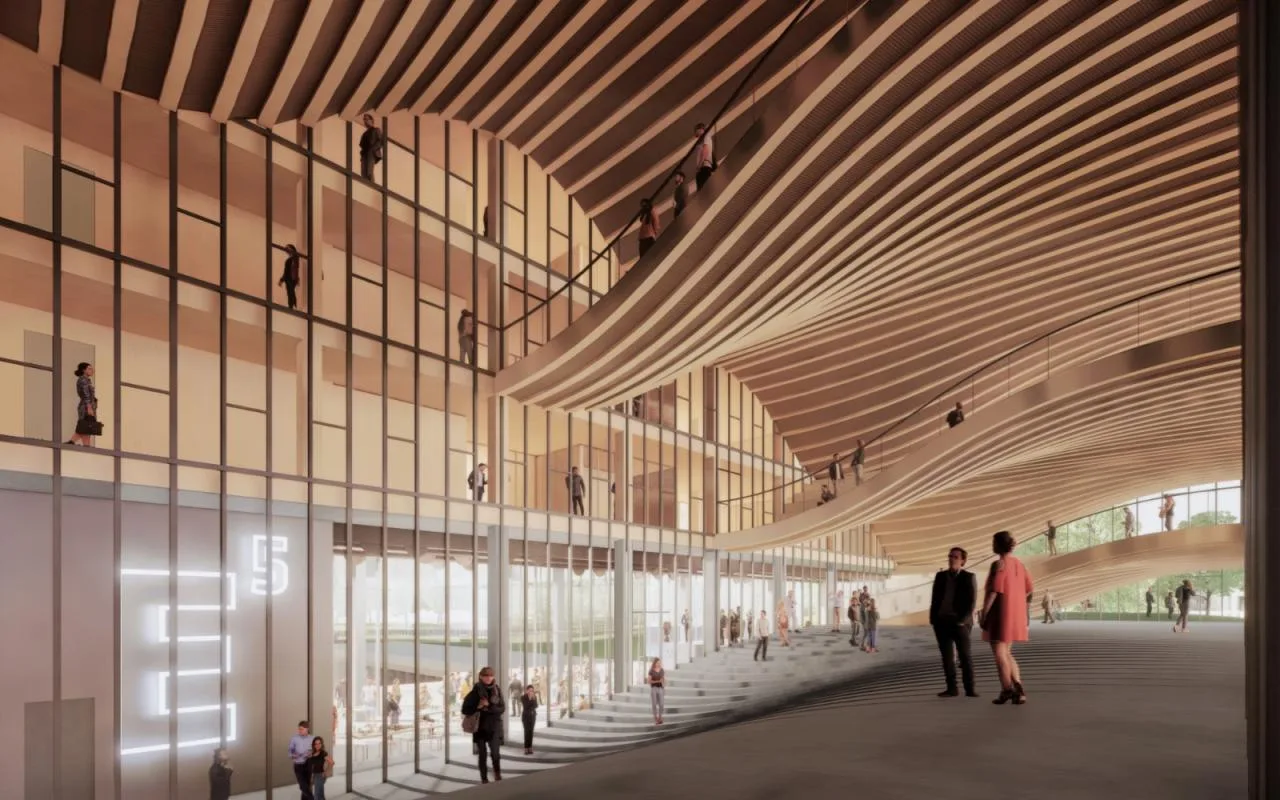
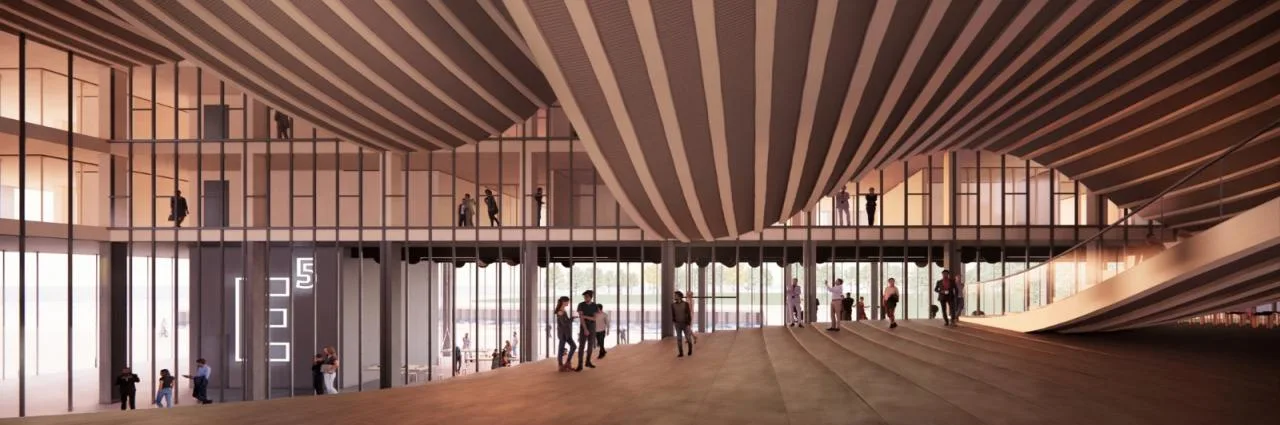
This project is grounded in sustainable building principles and targets 11 of the 17 United Nations Sustainable Development Goals. These include enhancing education quality, providing affordable clean energy, reducing inequality, ensuring clean water and sanitation, and fostering sustainable cities and communities. The park will utilize sustainable energy sources for on-site power generation, significantly lowering carbon dioxide emissions. Furthermore, it aims to boost the island’s biodiversity while preserving habitats for local wildlife.












Must log in before commenting!
Sign Up