
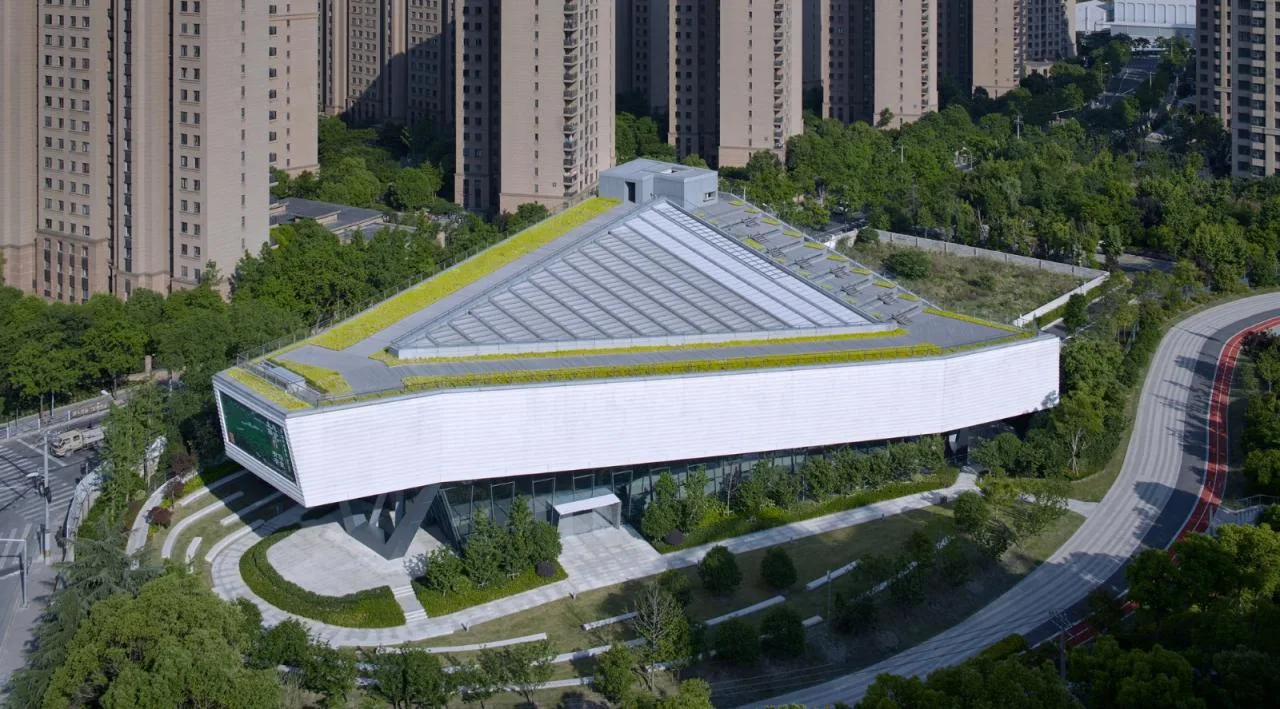
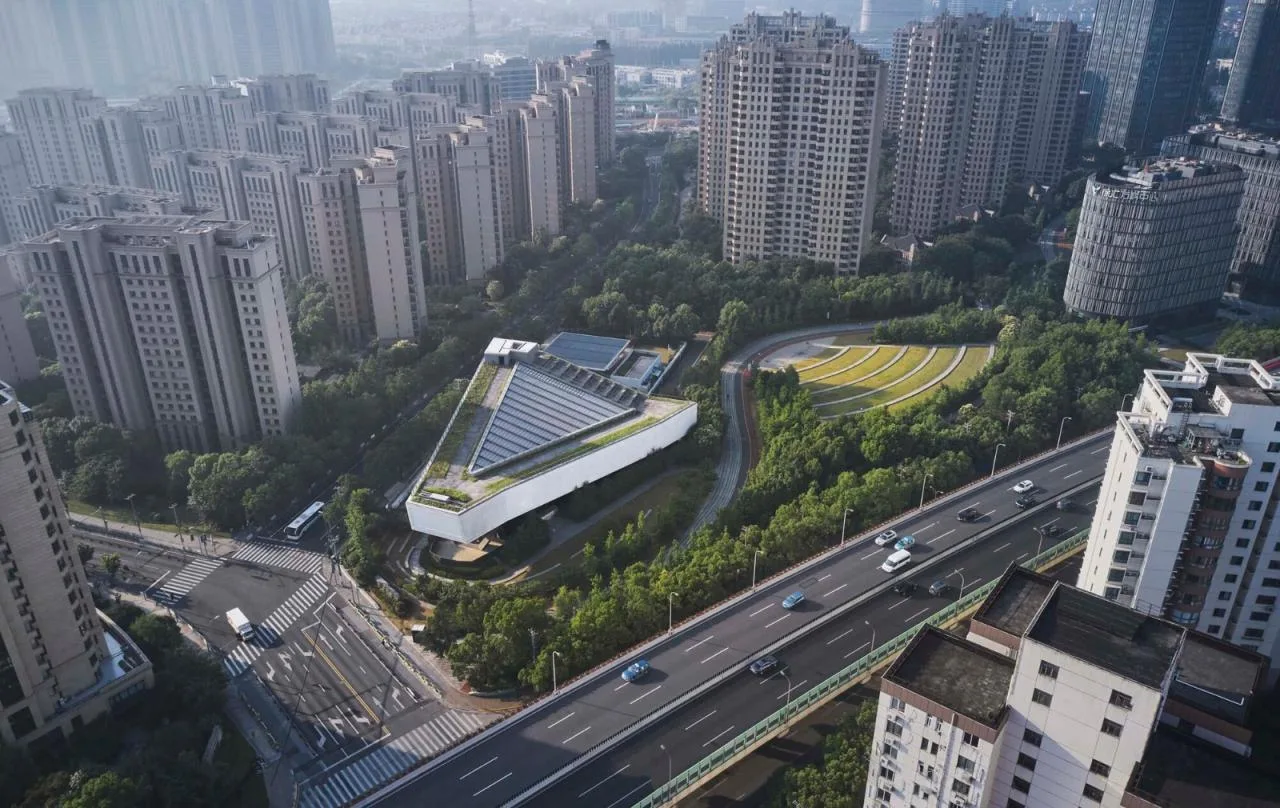
The Green Valley Art Center is situated at the northeast edge of Xuhui CBD Central Park, on the east side of Shanghai South Station. Its design aims to create a diverse, interactive environment for public art events. This truss-like landmark offers a continuous, transparent elevated space that seamlessly connects indoor and outdoor areas of the park floor. The upper ramp exhibition hall bridges functional zones at varying heights, encouraging autonomous participation and dynamic interaction during events.
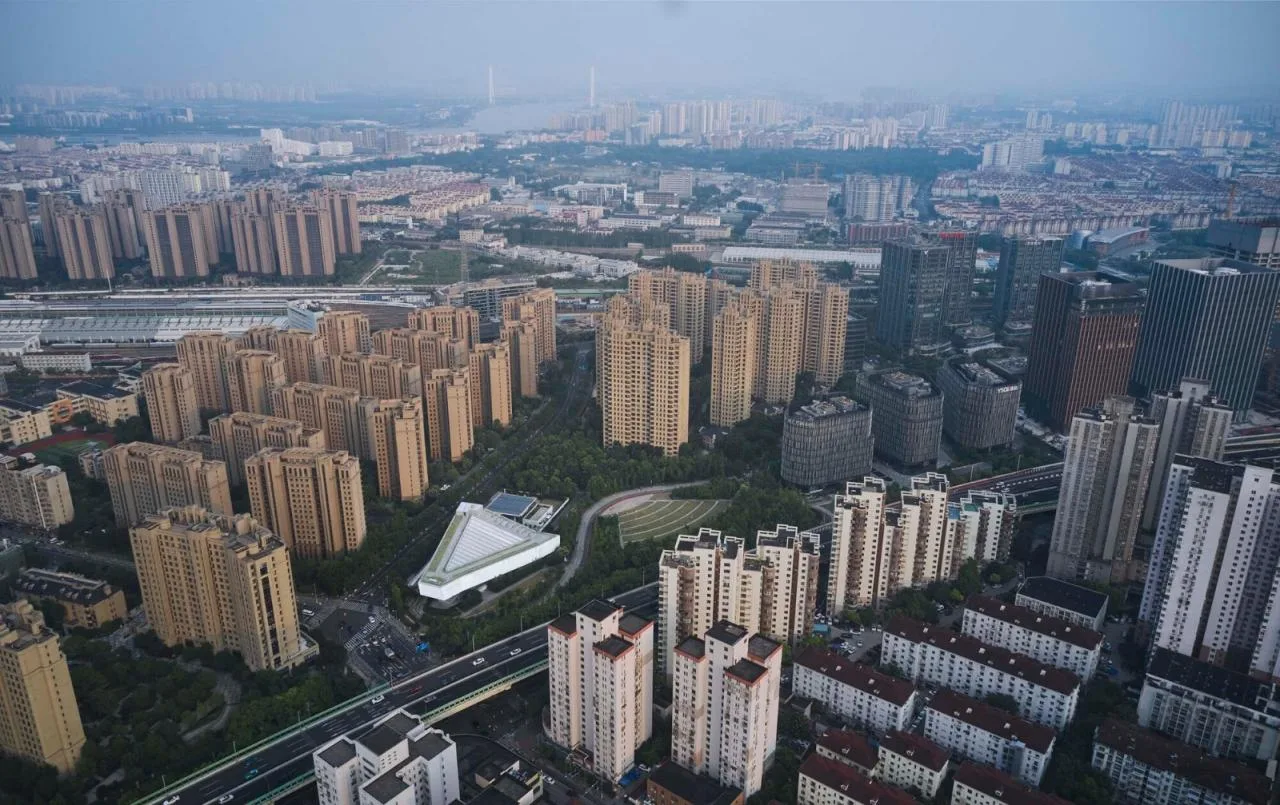
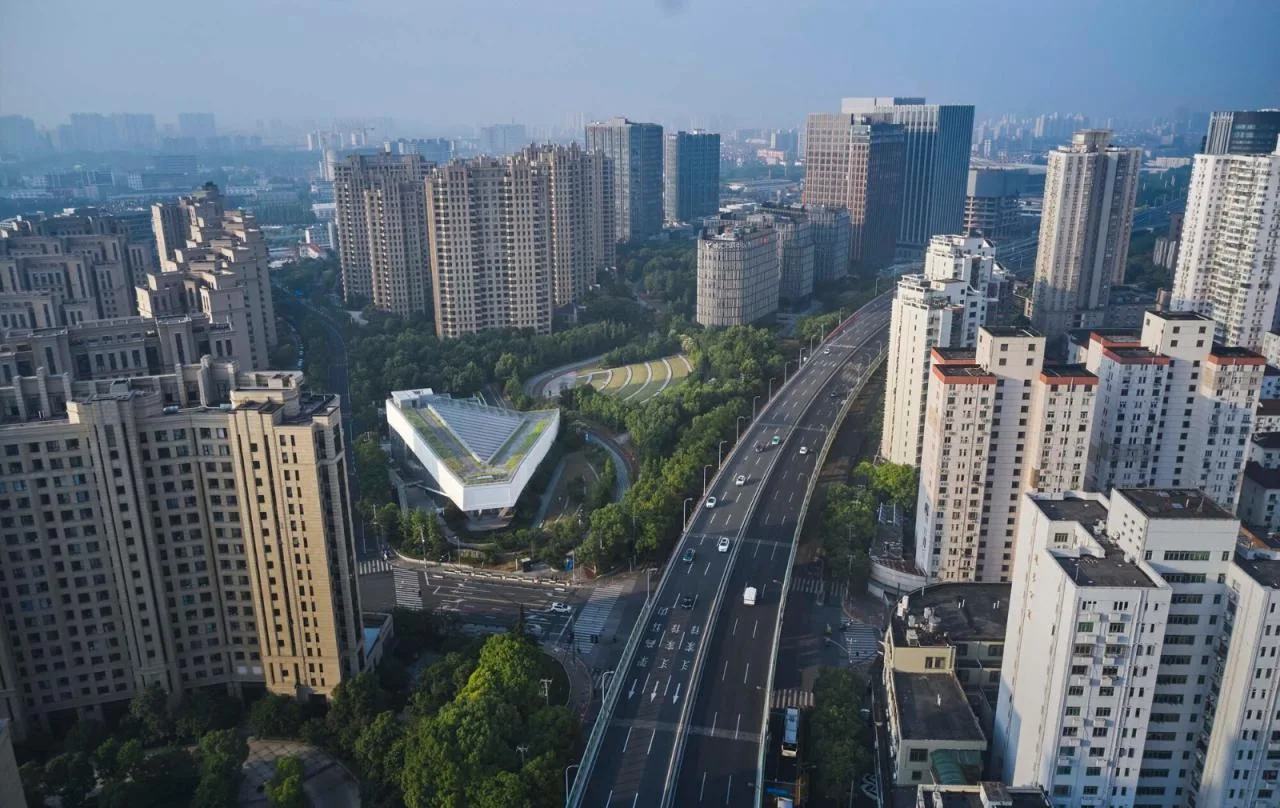
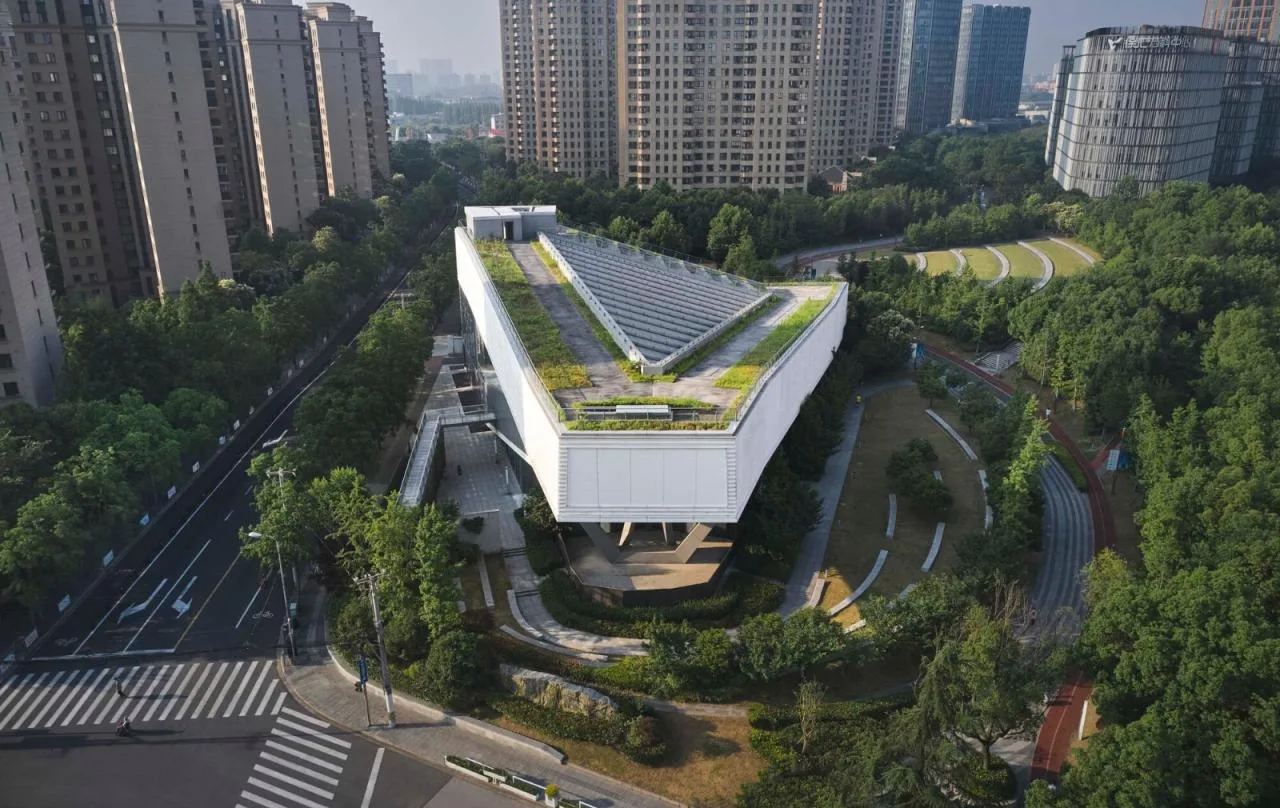
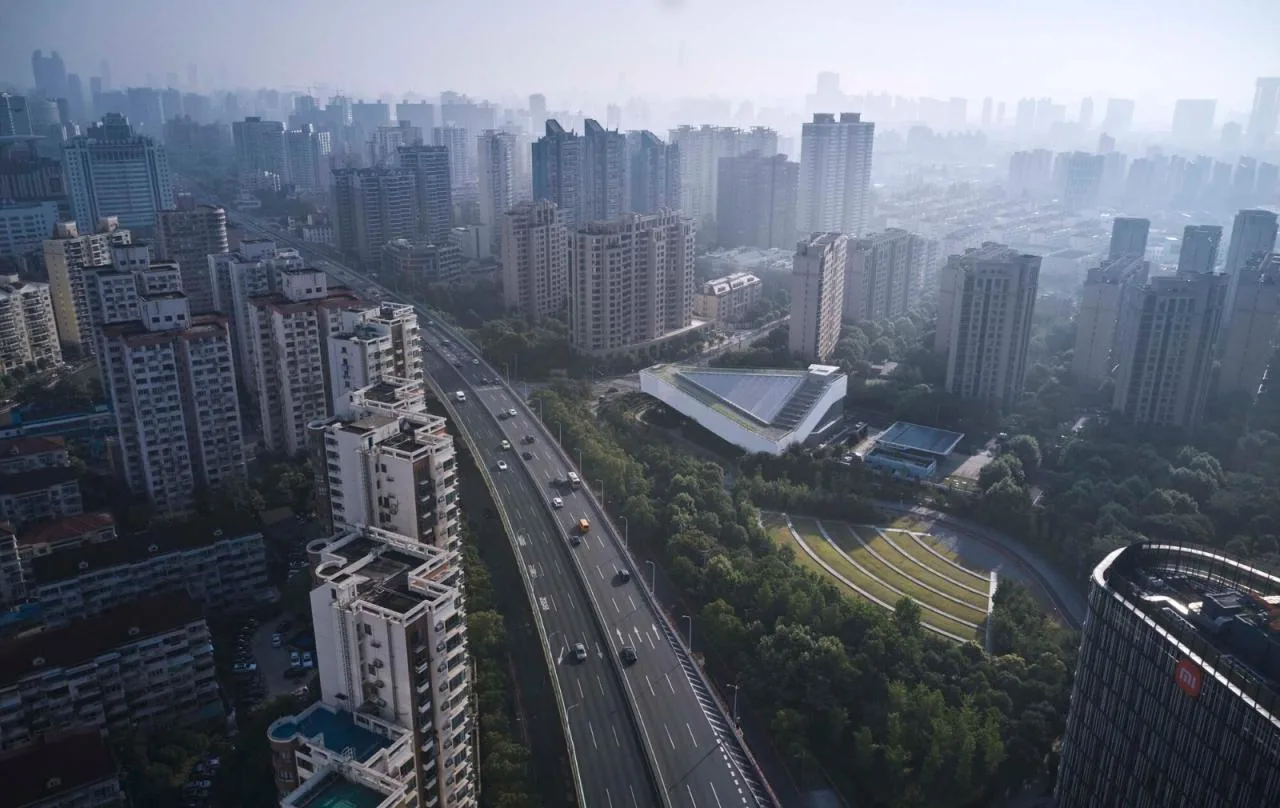
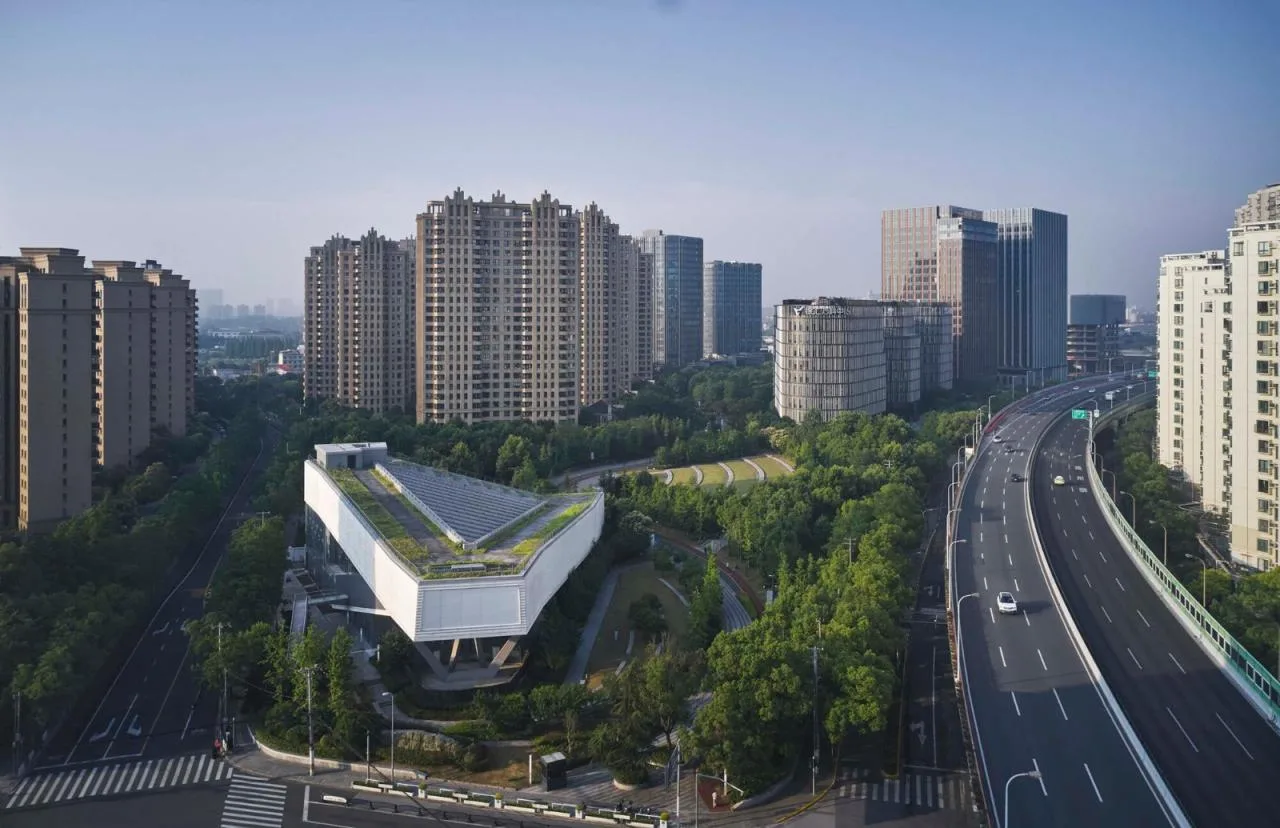
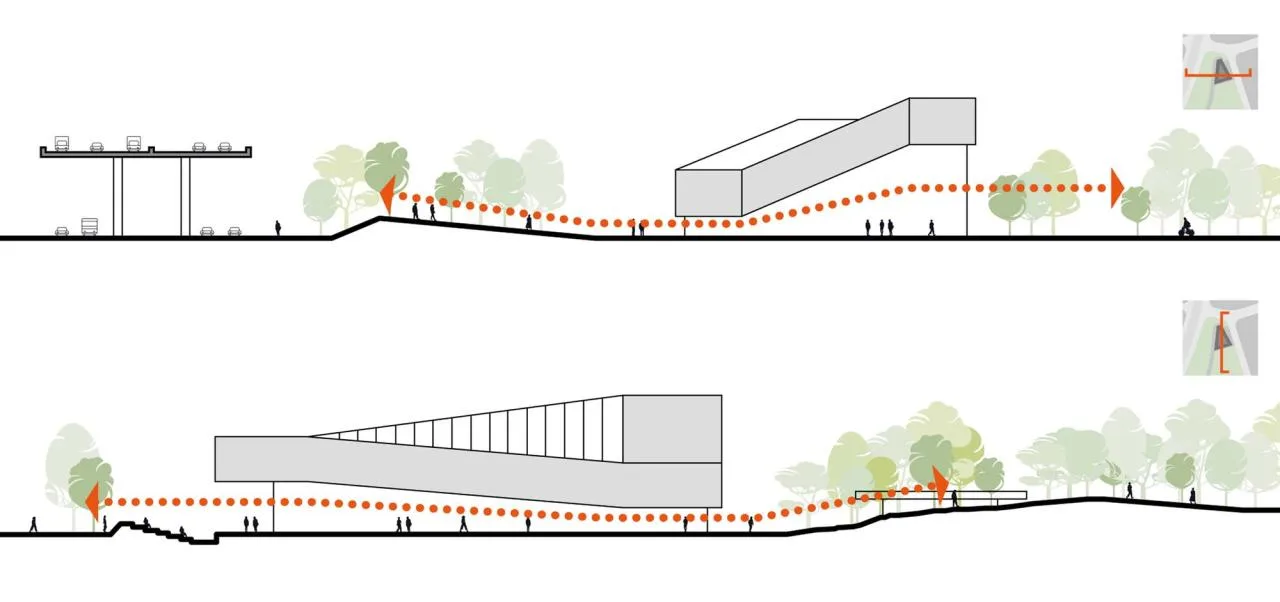
Construction is concentrated on the eastern side of the site, deliberately avoiding the land above Shanghai Minhang Elevated Road and Metro Line 1. This approach reduces engineering complexity and minimizes foundation settlement risks associated with adjacent subway and elevated structures. Simultaneously, it preserves the green continuity on the western side, allowing the art center to be embraced by lush landscaping. The Landscape Avenue, which winds from the Shanghai South Station Business District (with Metro Line 1 beneath), serves as the park’s main artery. From this axis, a three-dimensional walking path extends through both the interior and exterior of the building, integrating landscape, structural space, and architectural form.
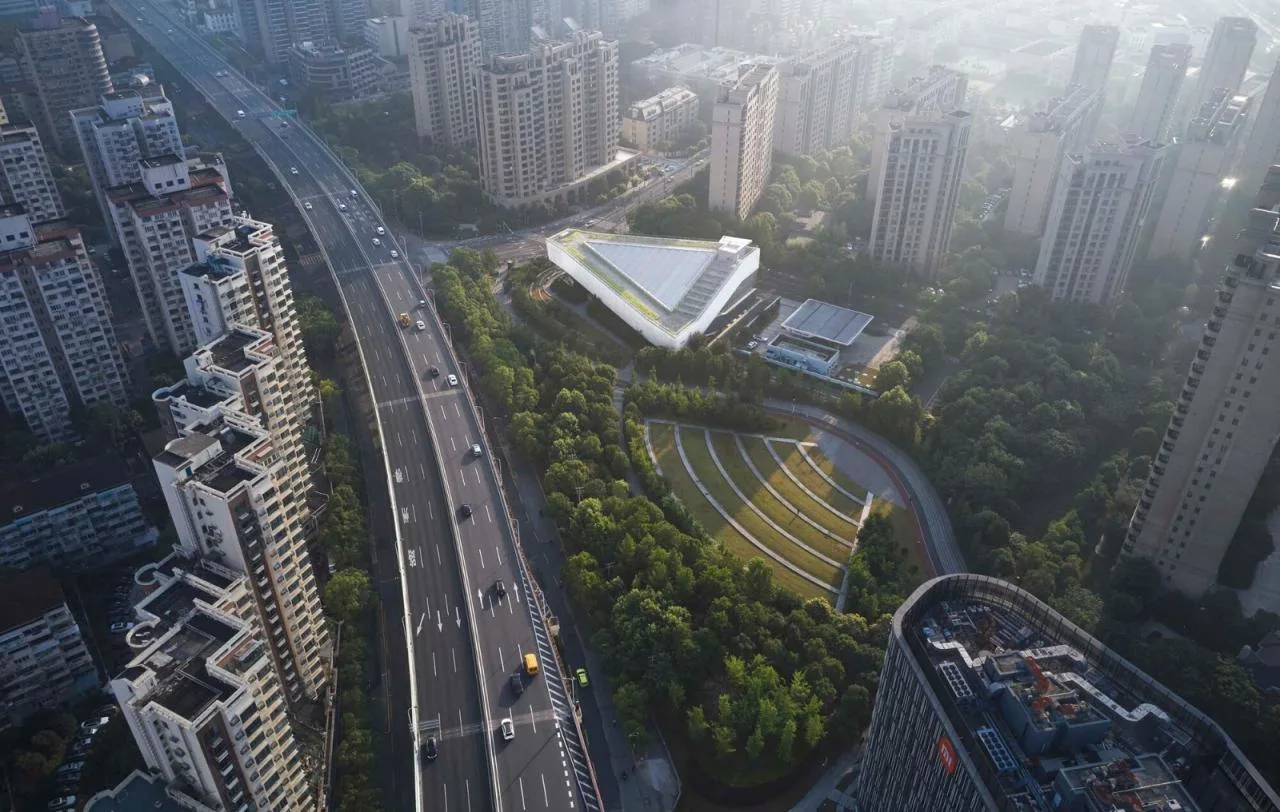
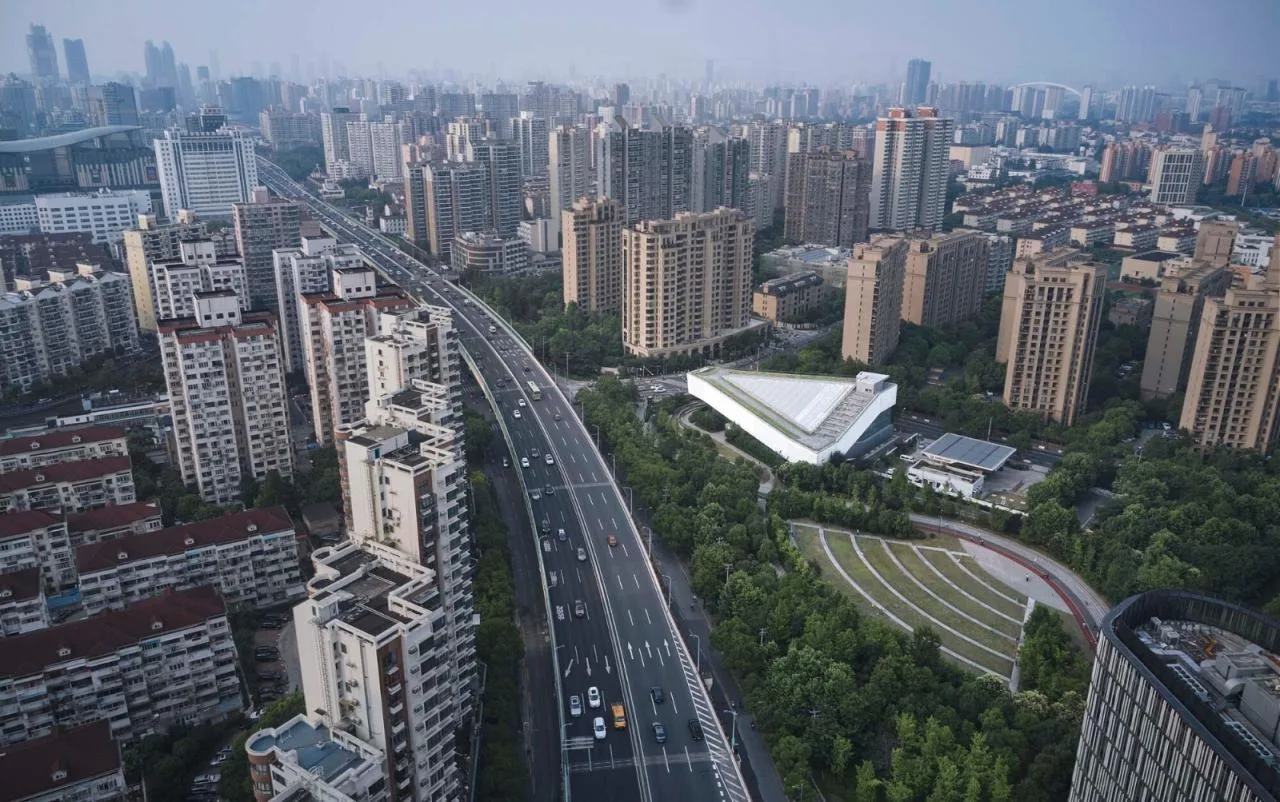
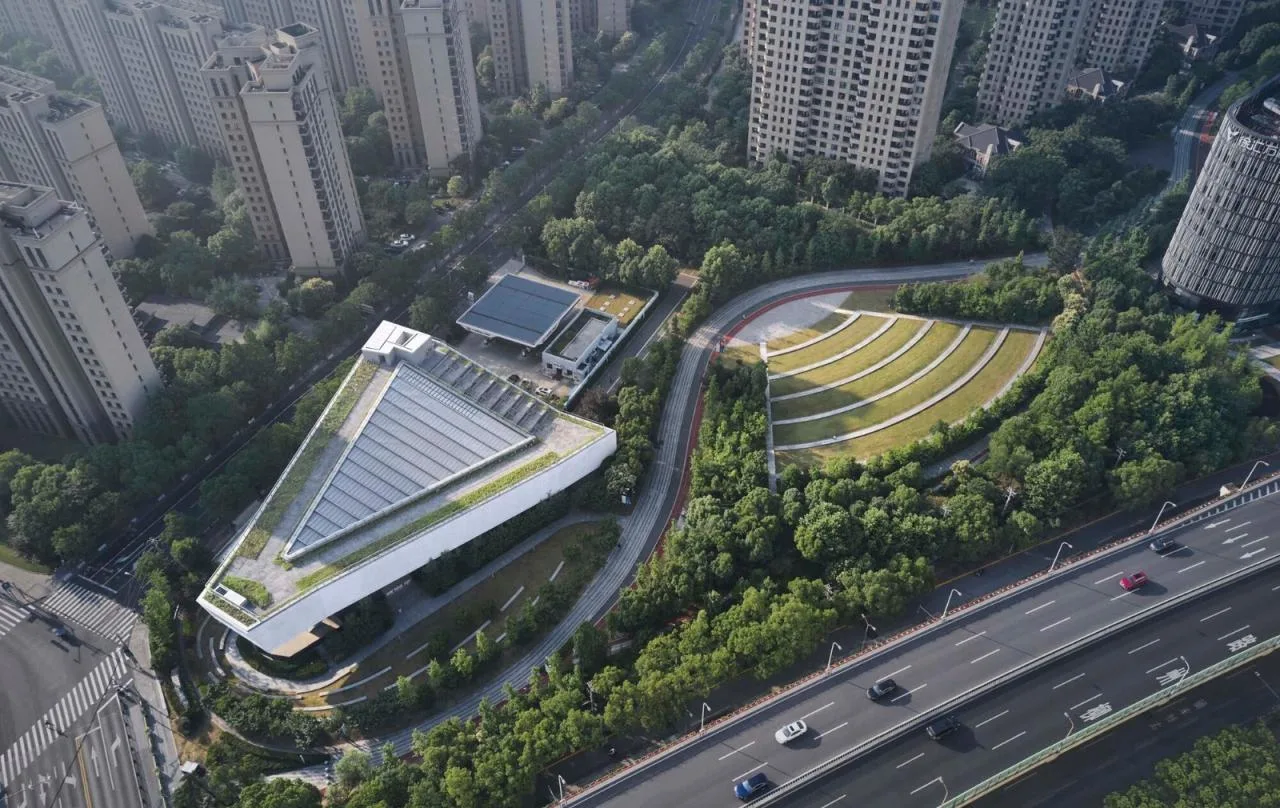
The park’s main landscape features a continuous grassy slope dotted with a variety of tree species. The Landscape Avenue meanders through a gentle sloped forest and culminates at an open-air theater, framed by buildings and landscaping at the park’s northeast end. Serving as a pedestrian hub connecting Shanghai South Station and Xujiahui, this theater embodies the public spirit of the art center. It acts as the starting point for the scenic avenue, welcoming visitors from all directions to freely watch or engage in outdoor performances. The theater’s lobby behind the stage provides access to the building’s interior.
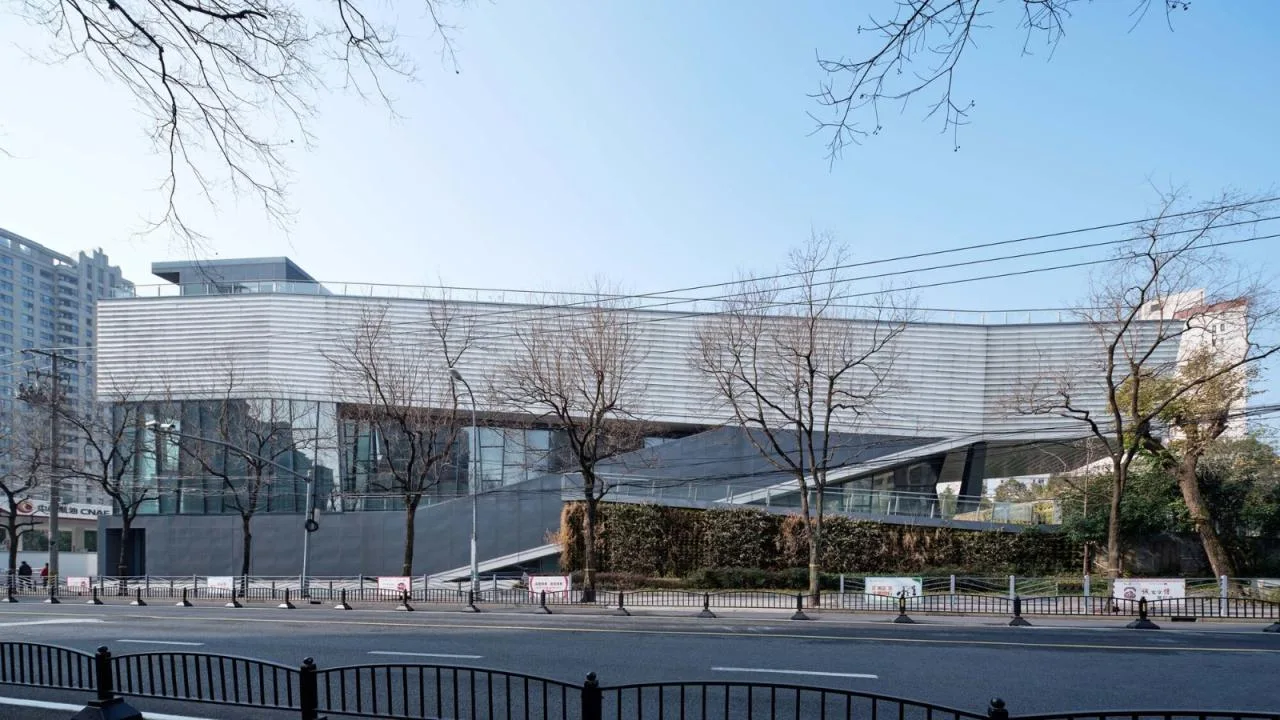
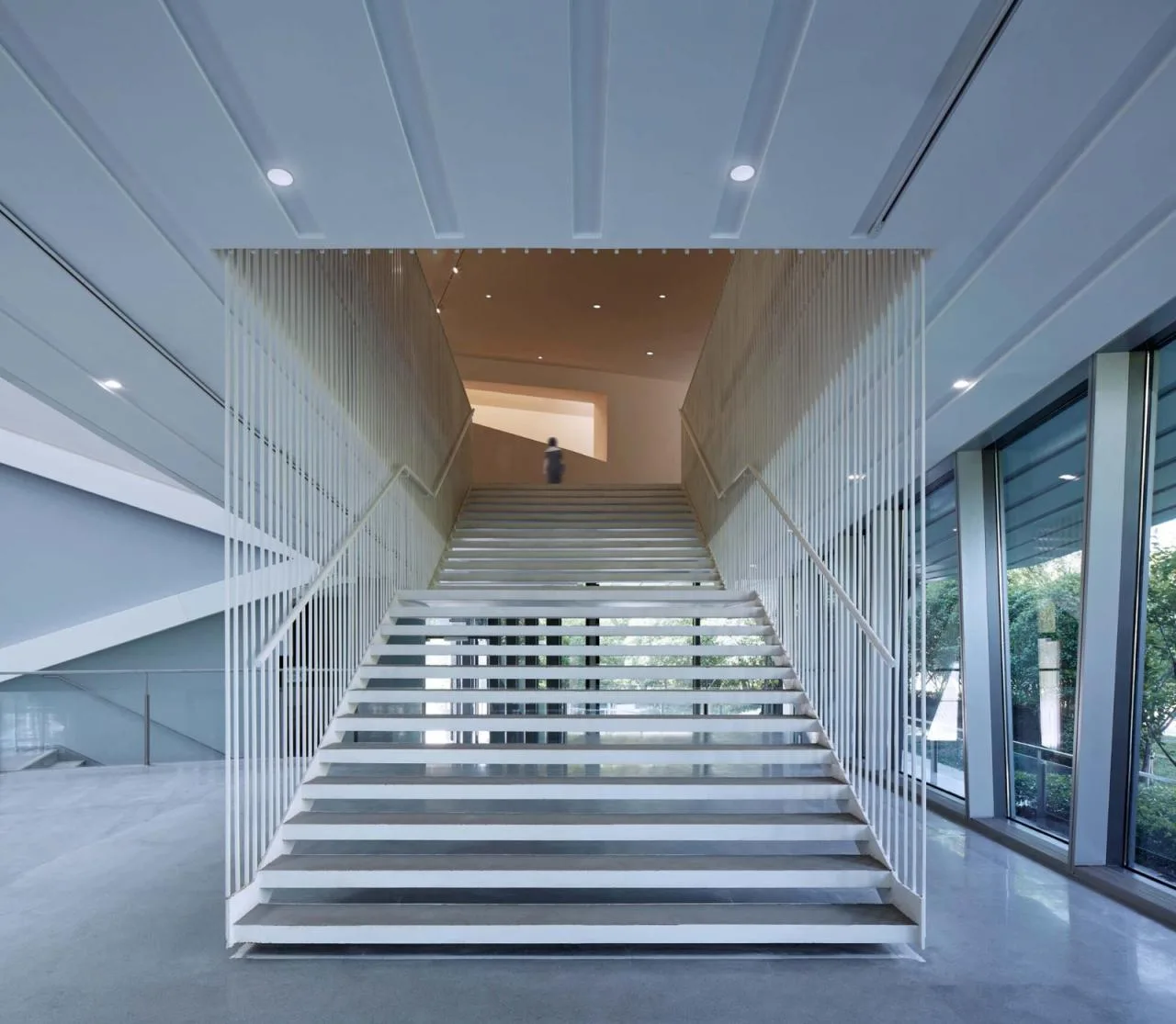
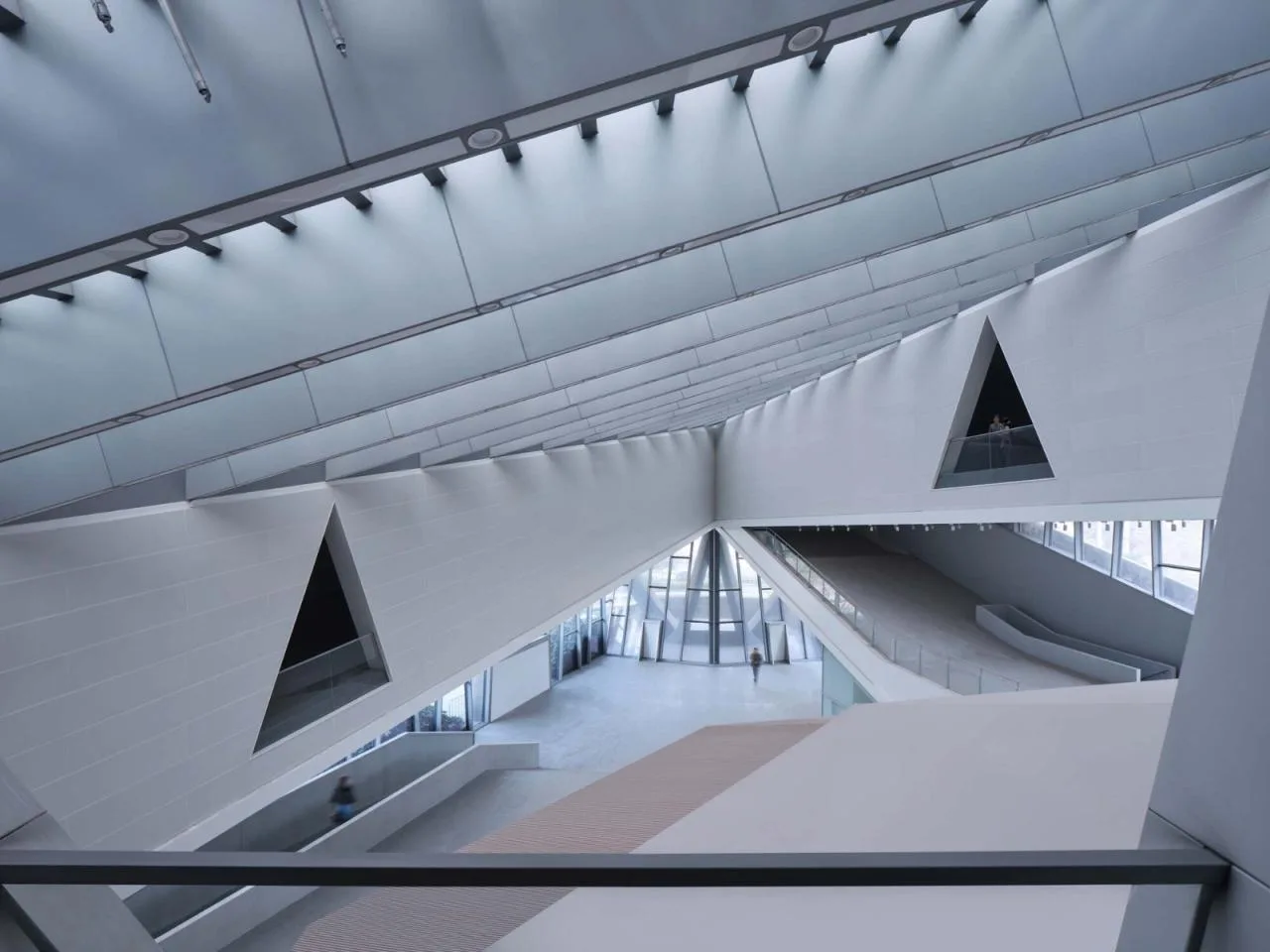
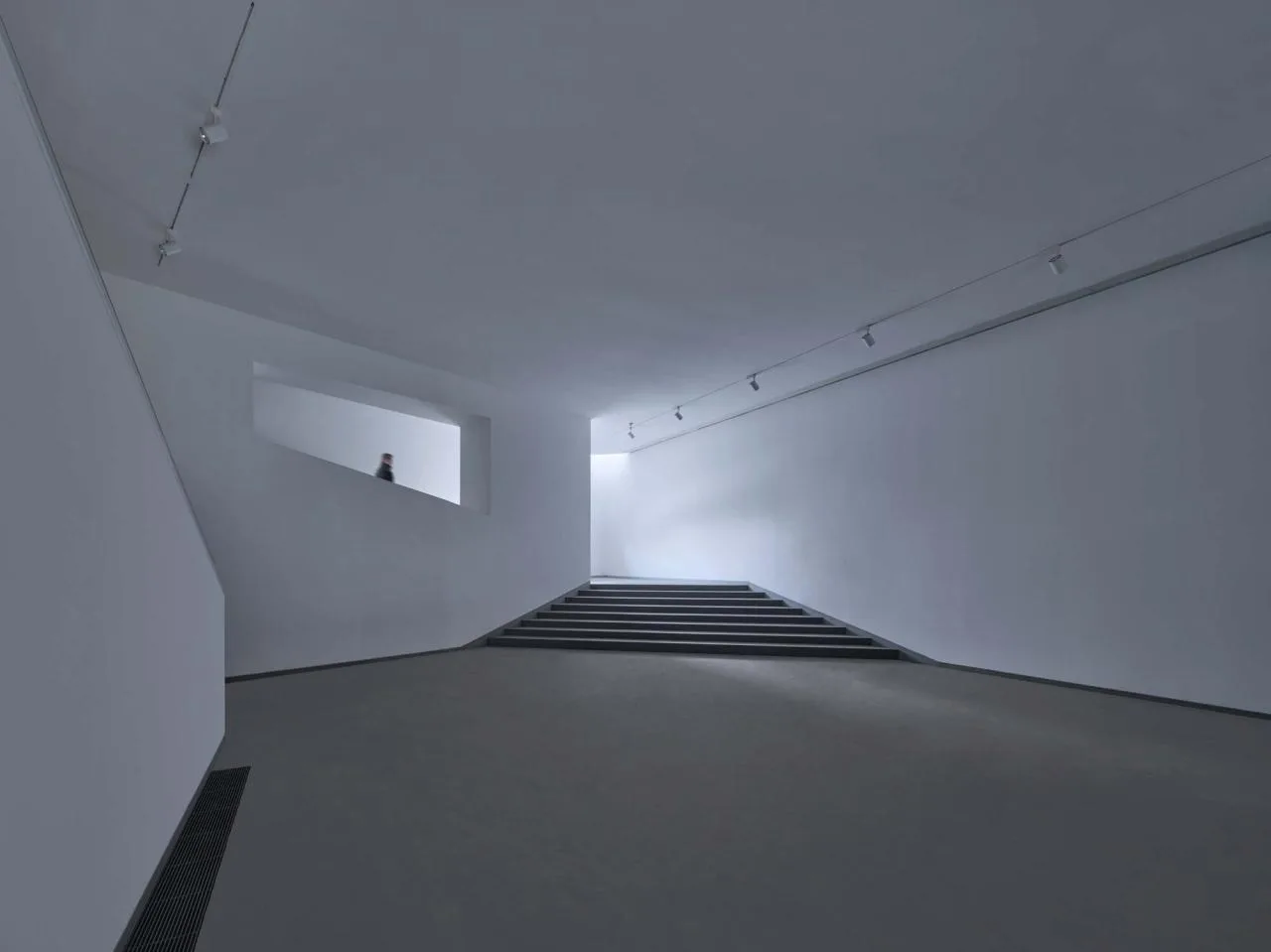
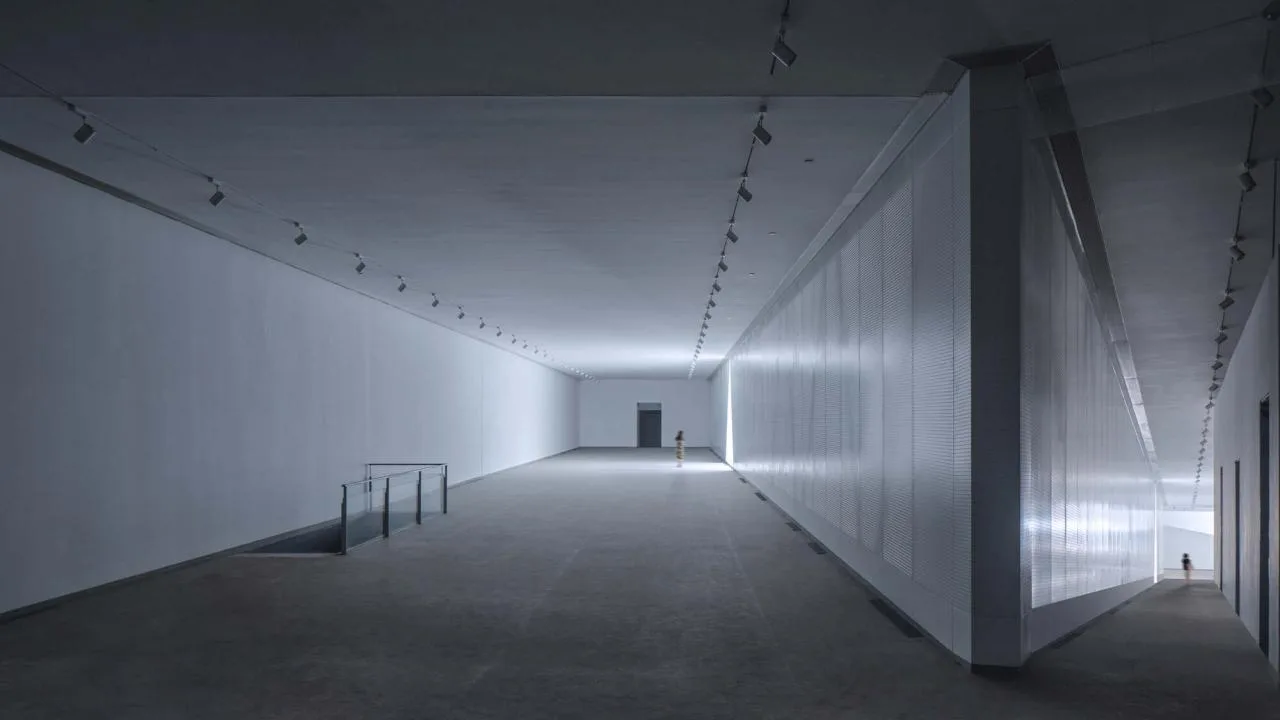
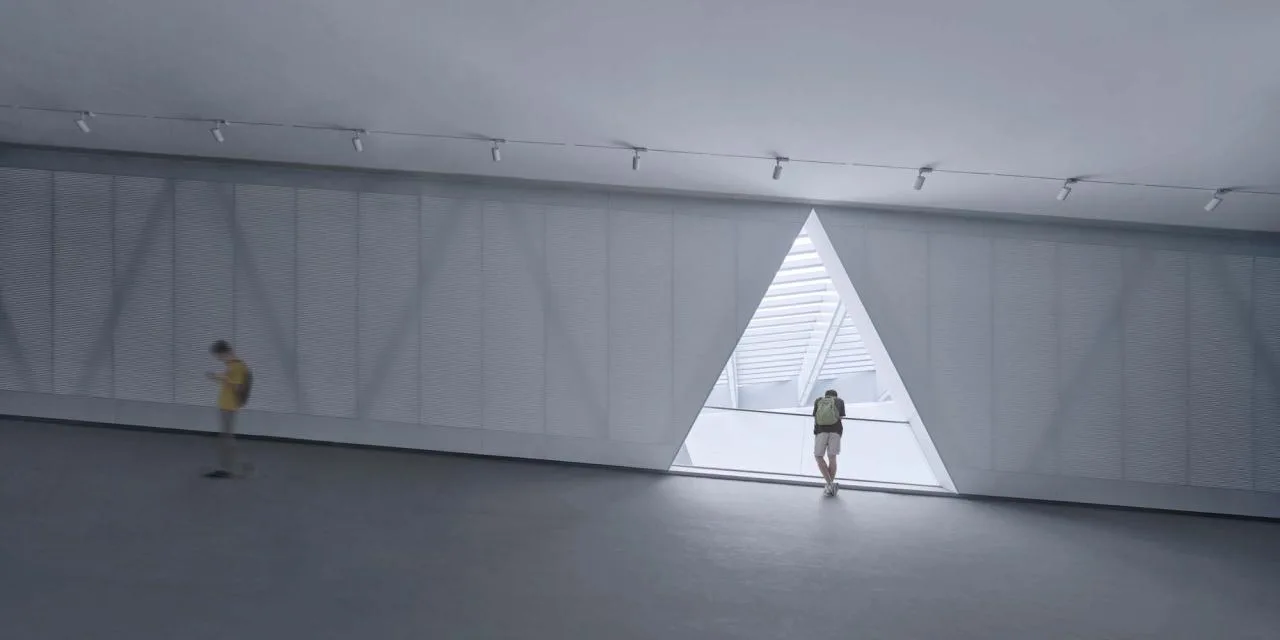
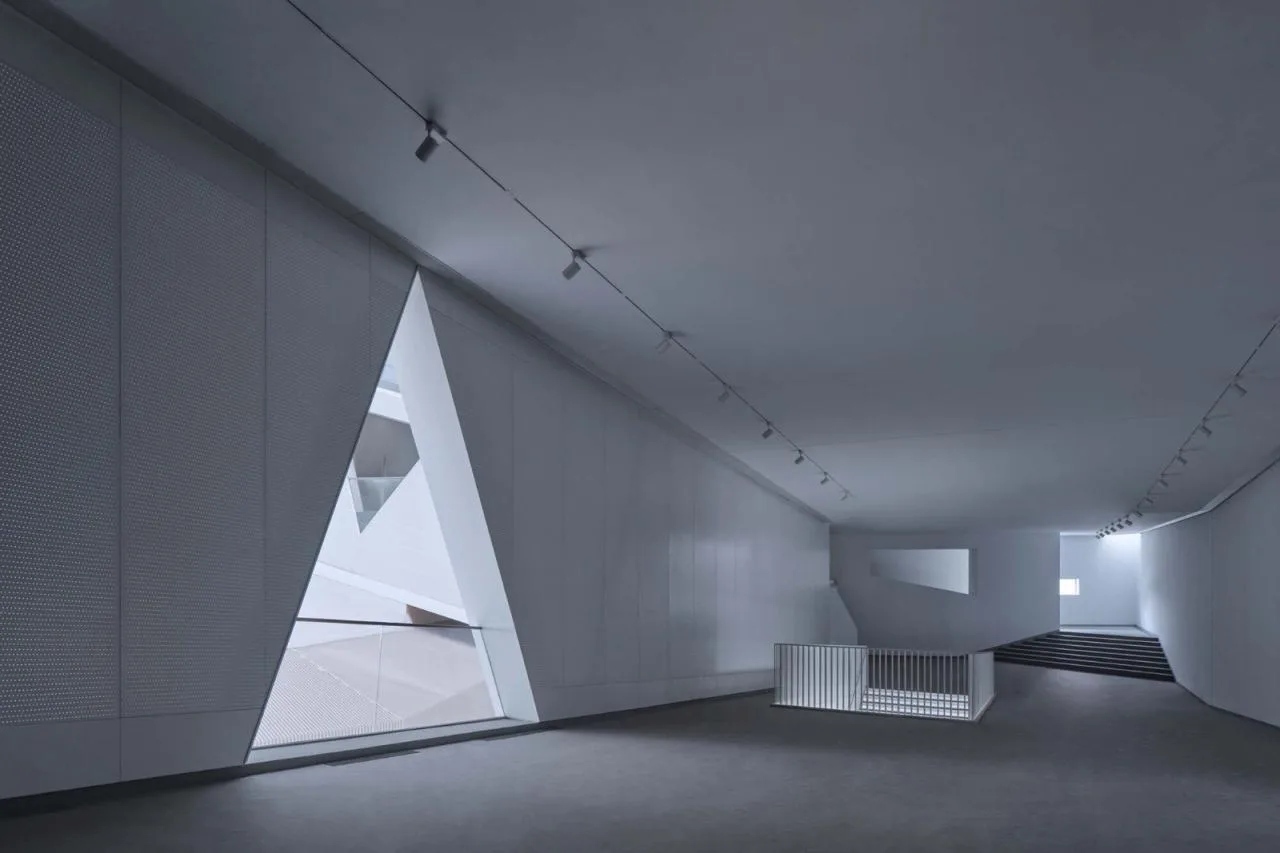
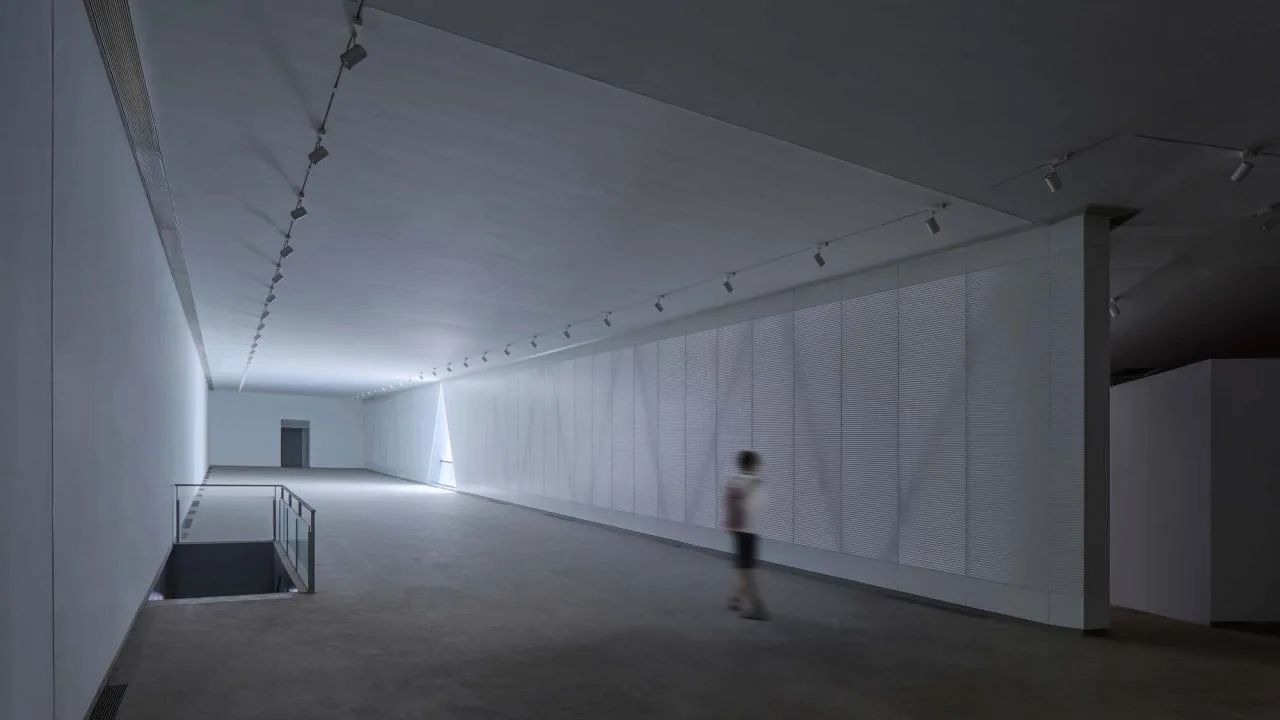
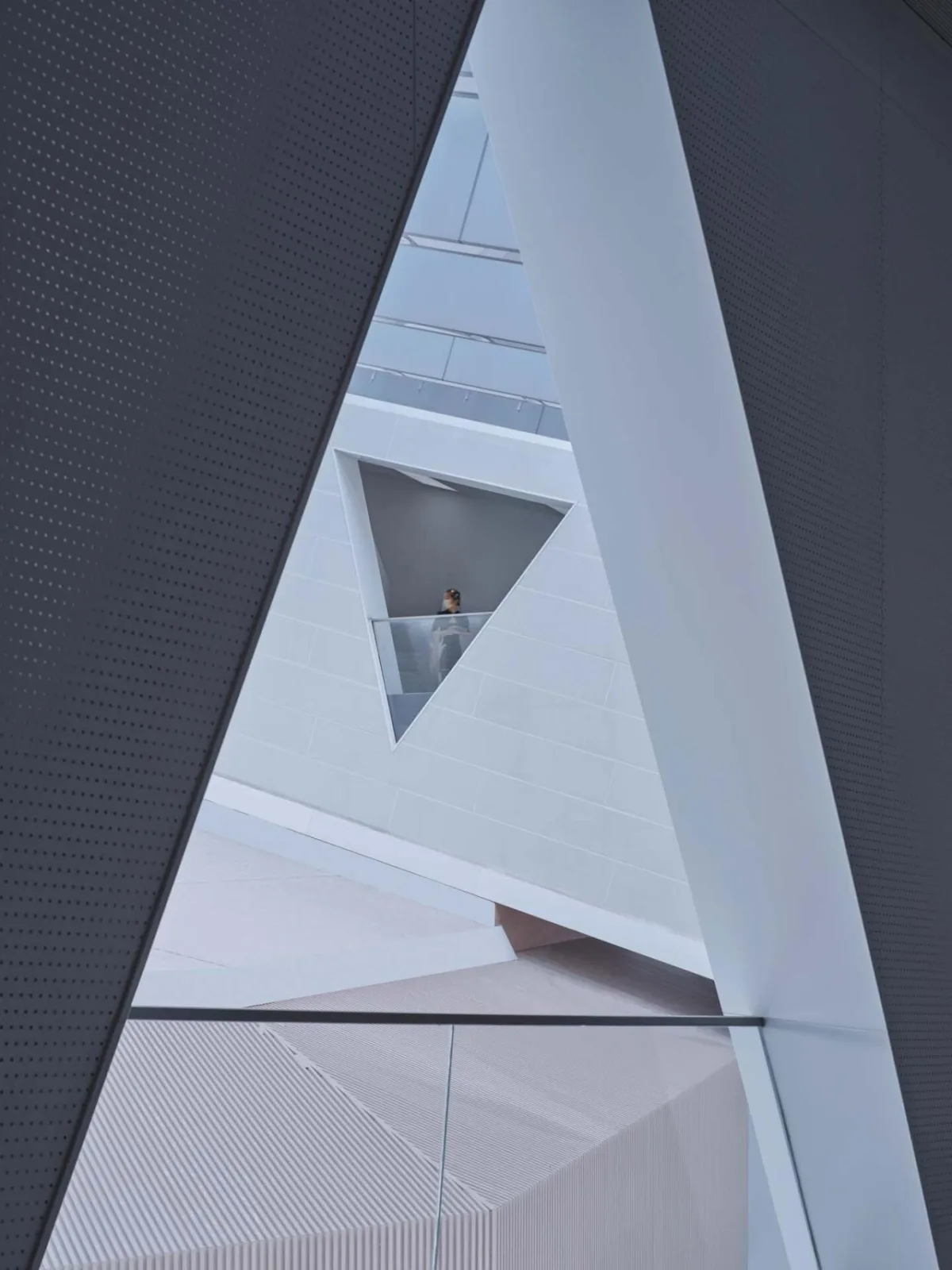
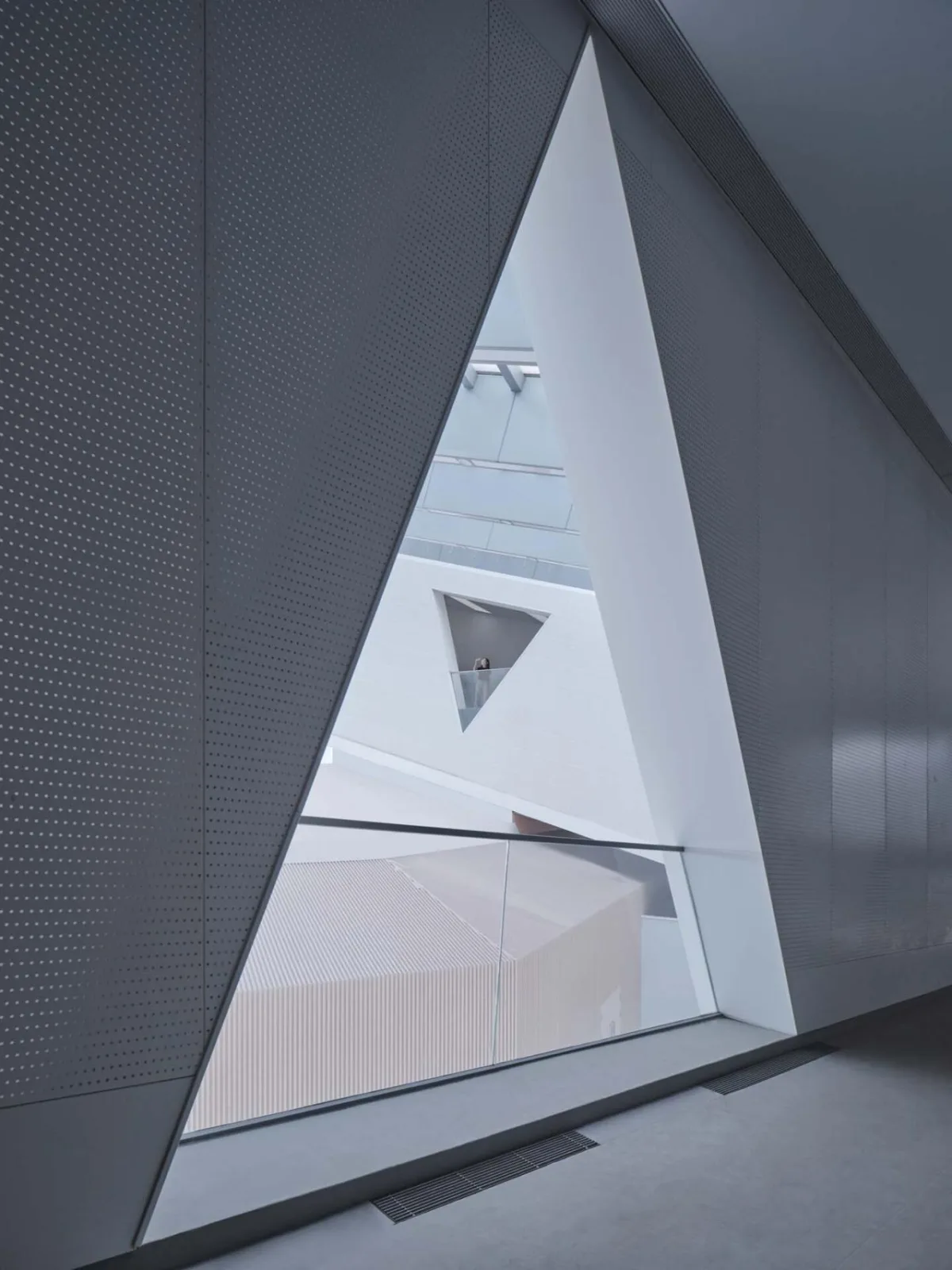
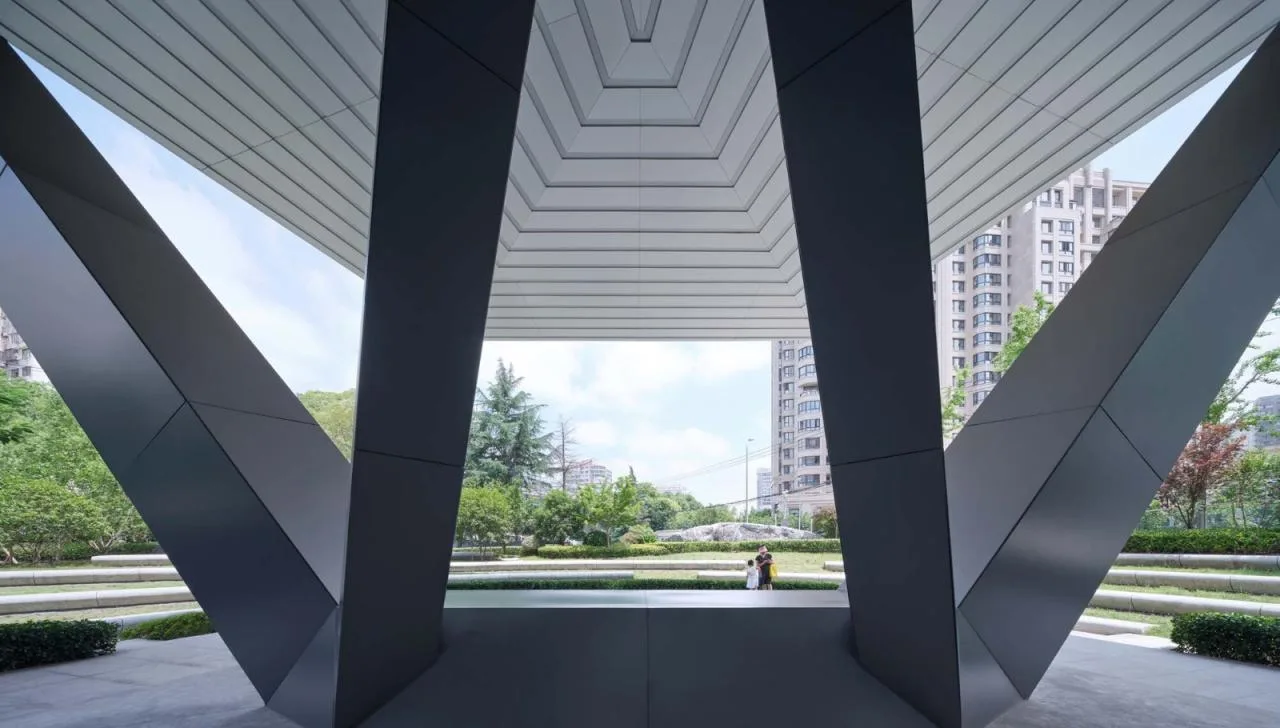
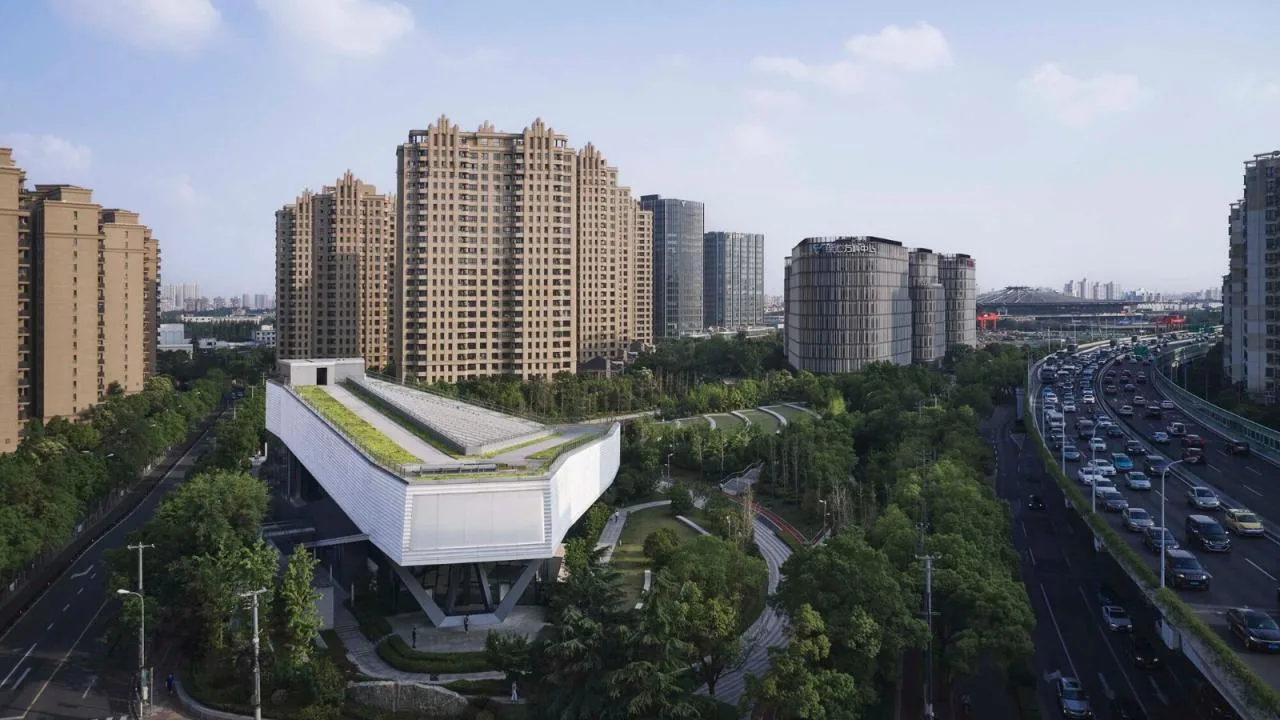
The building’s main structure is a triangular truss ring that rises and falls, supported only at three points: V-shaped steel columns at the southwest and northeast corners, and the traffic core at the southeast corner. The trusses spanning east and west reach 50 to 60 meters, creating a transparent two-way lobby beneath and maintaining seamless indoor-outdoor continuity. The internal circulation begins at the lobby and extends throughout the building, with an exhibition space featuring a gentle 1:12 slope running continuously upwards along the truss ring. This design offers artists a highly dynamic display area and new creative possibilities. Visitors can experience the space by touring top-down or in reverse, enjoying unique spatial perspectives and scenery.
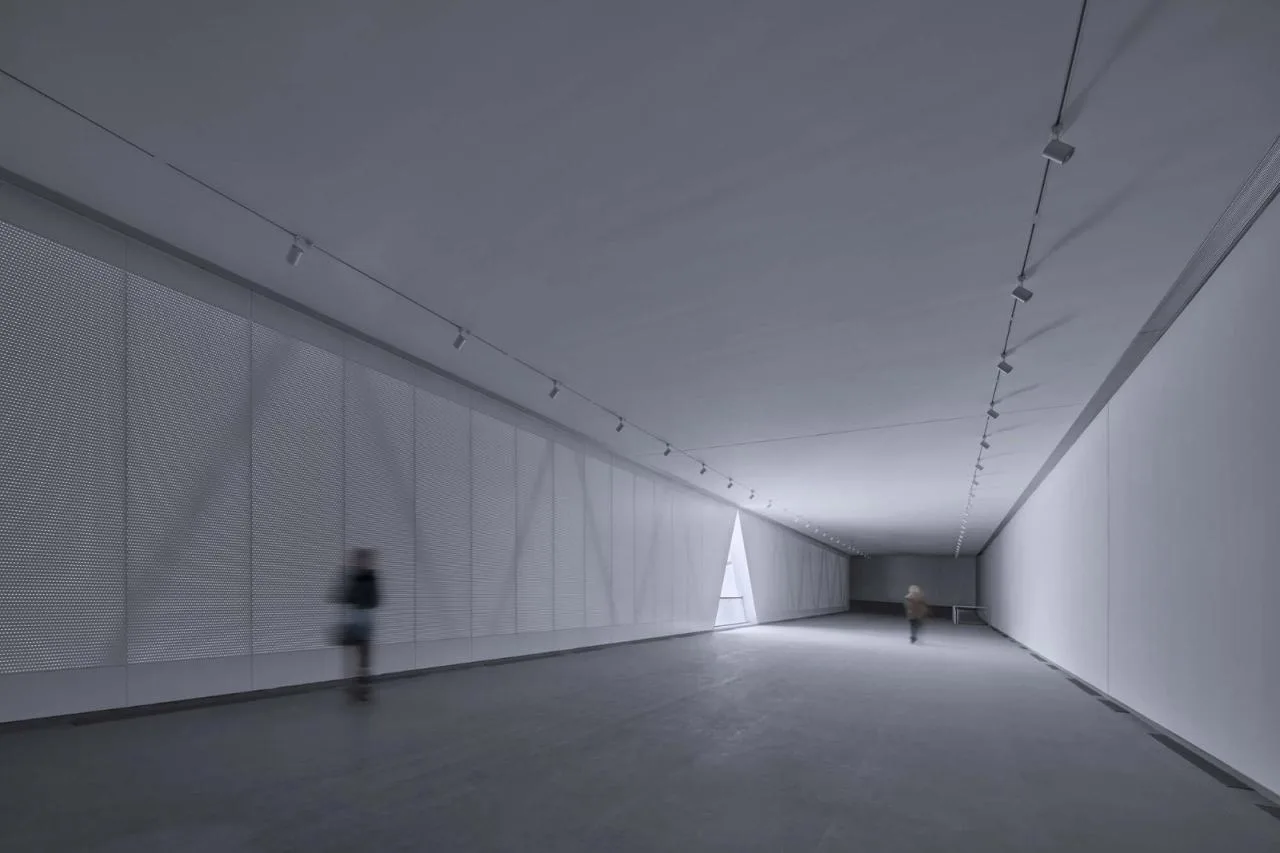
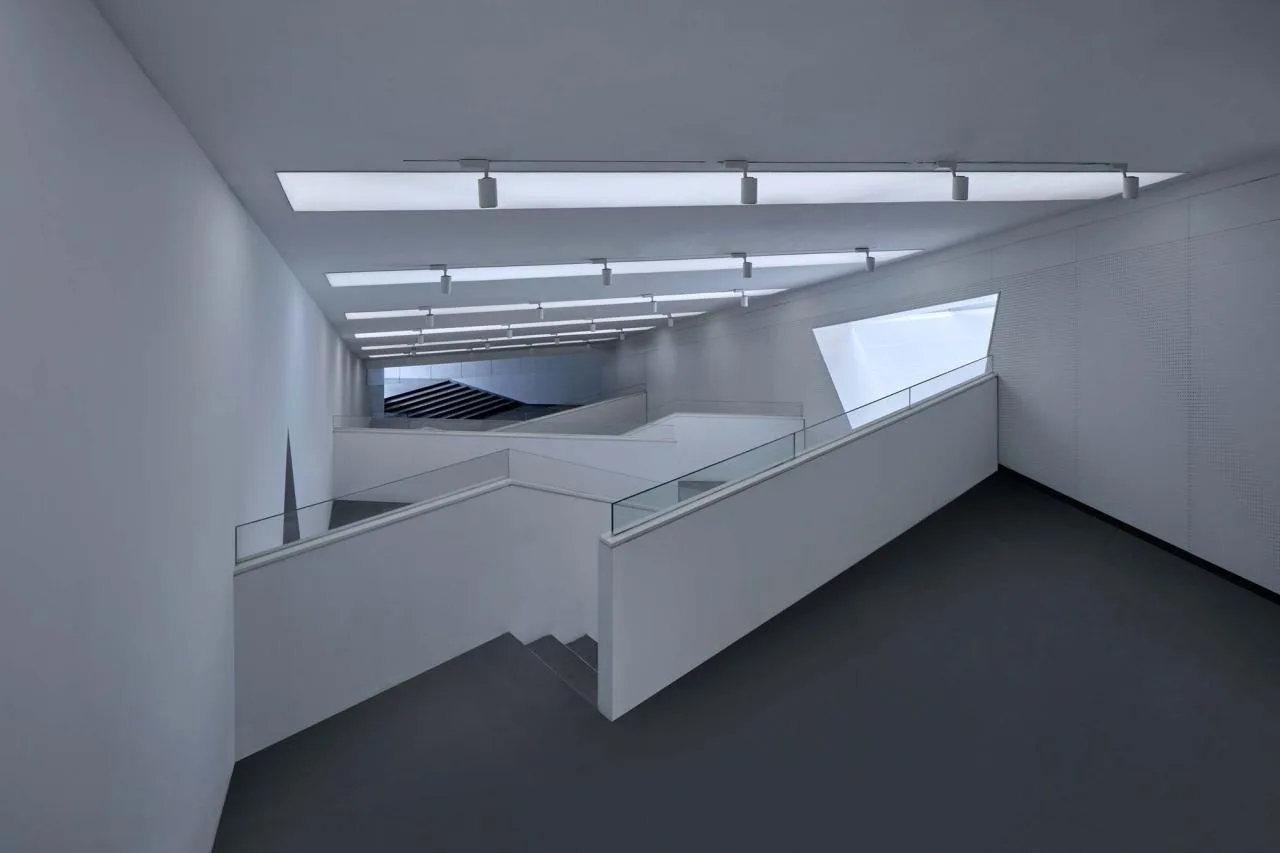
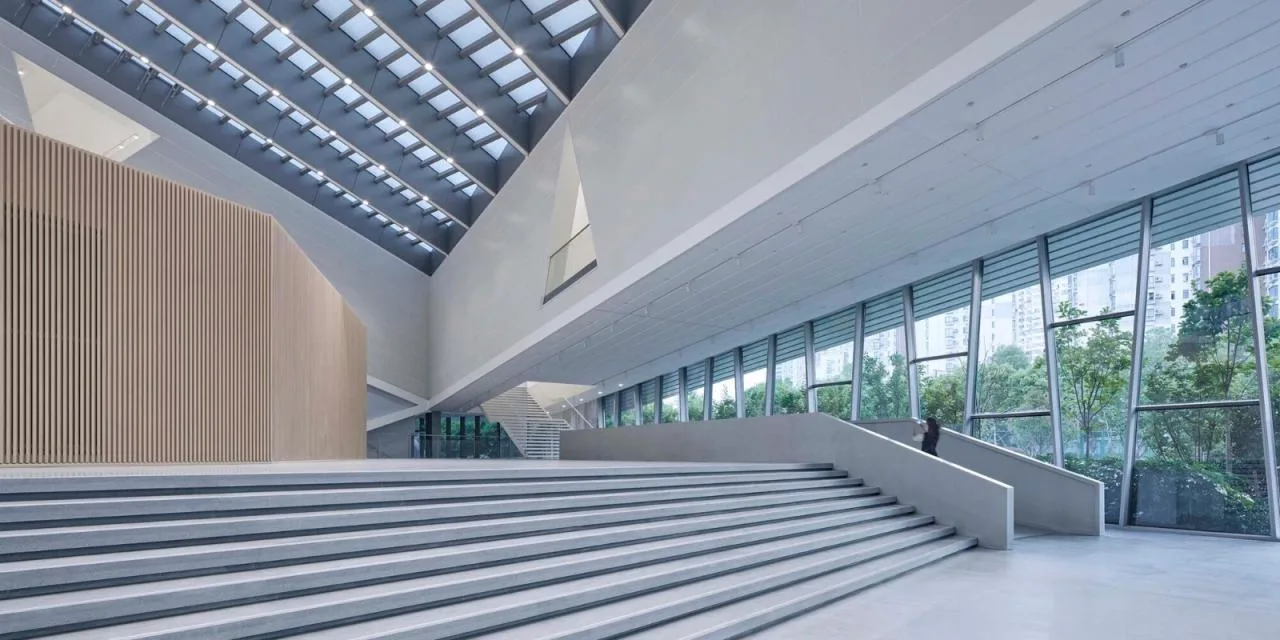
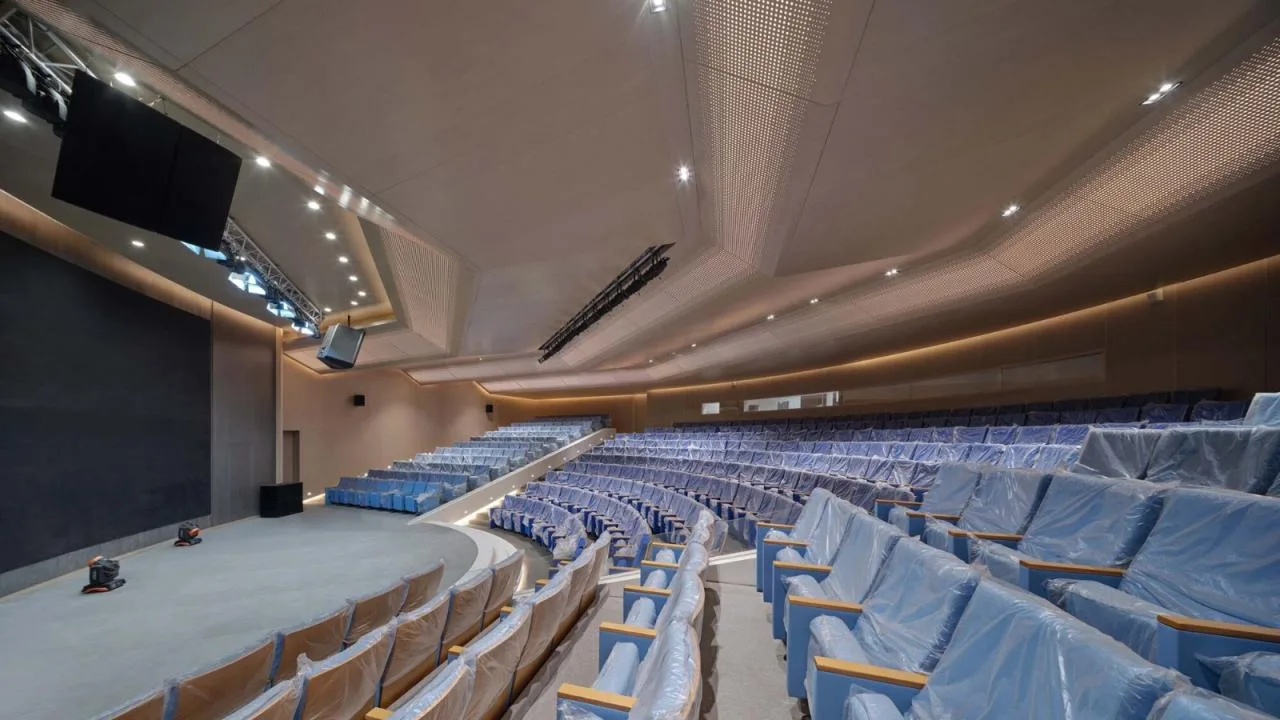
Encircling the ramp exhibition hall are a 500-seat lecture hall with an upper-level restaurant, as well as a multifunctional lobby and café on the ground floor. The lecture hall’s sloping floor is supported by four anti-buckling braces that slope into the ground along the east and south sides towards the southeast corner, providing lateral stability while forming a distinctive V-shaped seating arrangement. The lobby hosts press conferences, the ramp exhibition hall supports art events, and the lecture hall accommodates TED talks and small performances. Together with the dining areas, these spaces foster mutual interaction and social engagement within this expansive environment.
This interactivity extends to the undulating rooftop garden atop the exhibition hall. Visitors can access the roof via the gangway at the northeast end or the elevator at the southeast corner. Walking or hosting events on this curved terrace allows immersion in the open cityscape and panoramic views of the South Station business district’s new skyline. A continuous walkway links these diverse activities, creating a dynamic and engaging spatial experience.
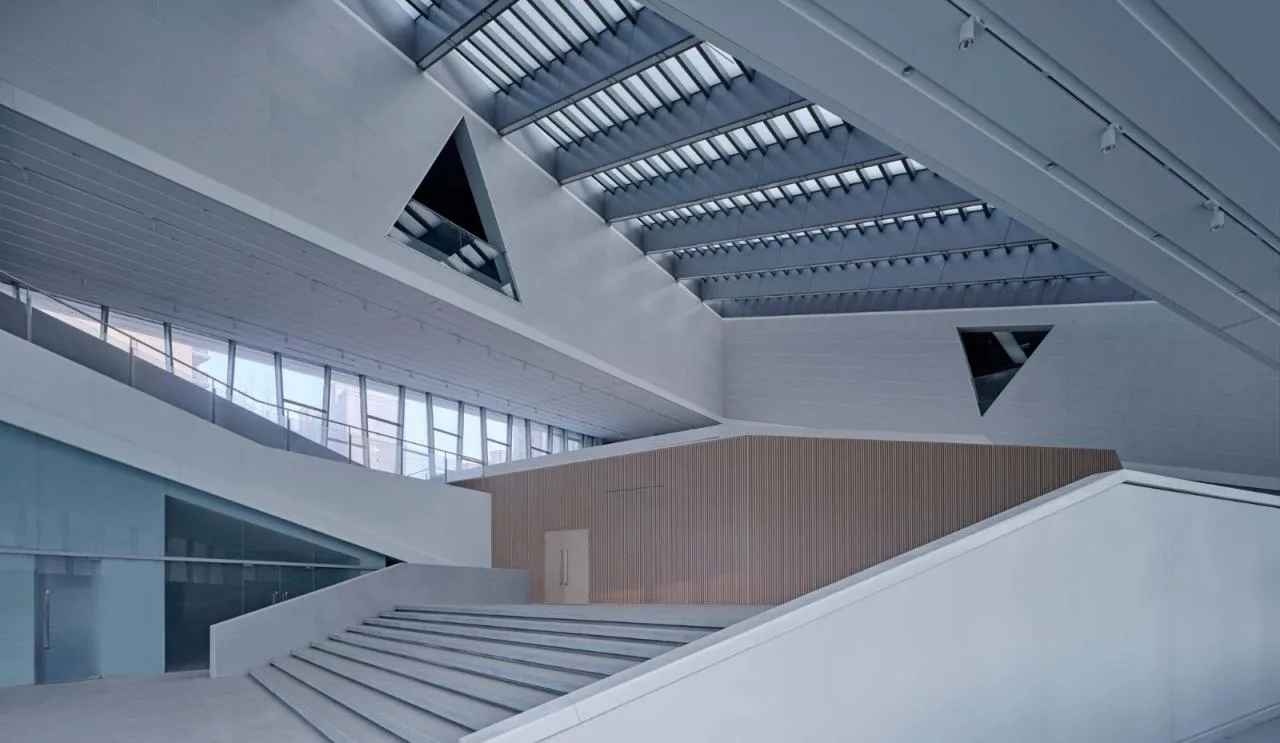
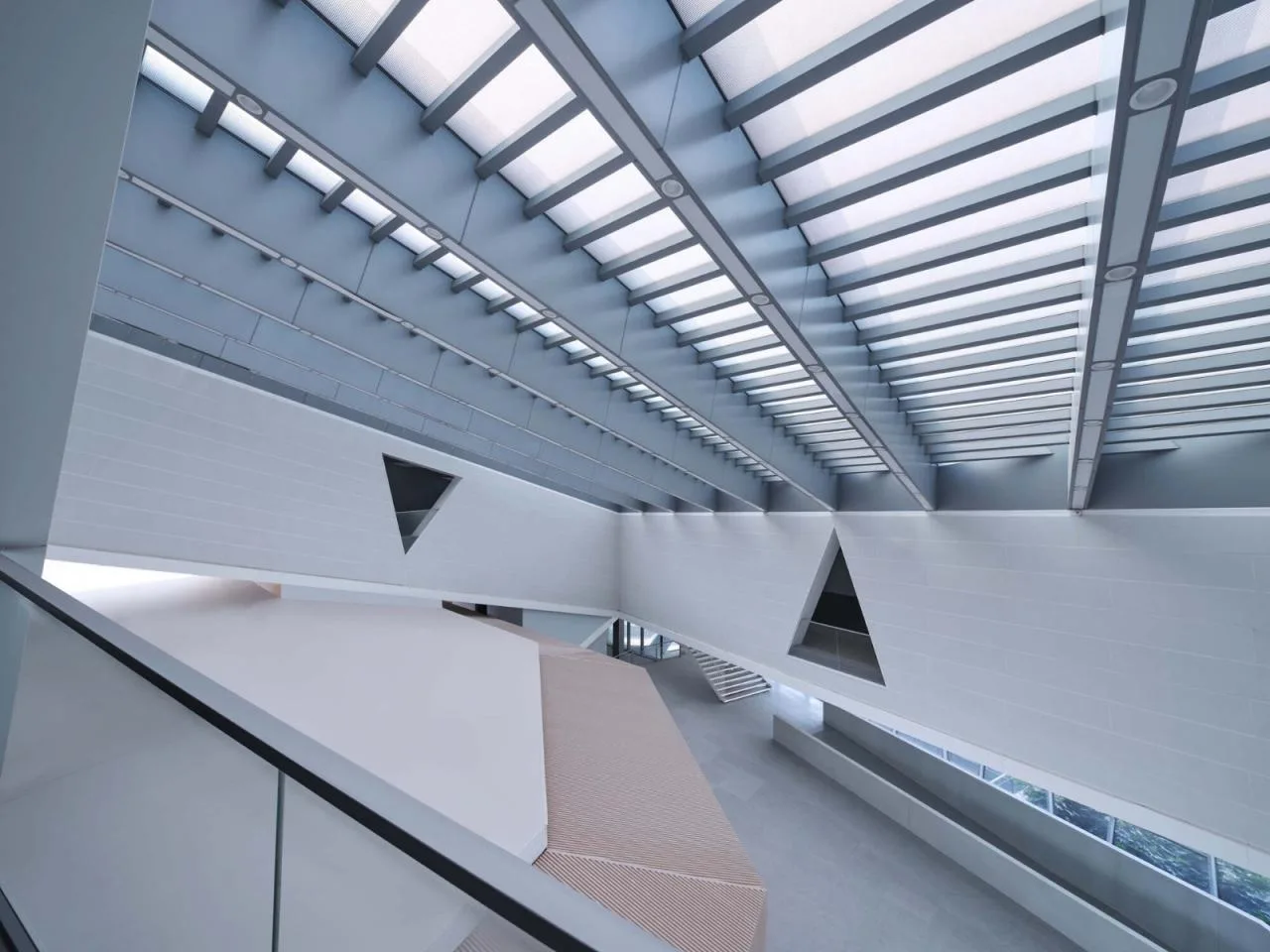
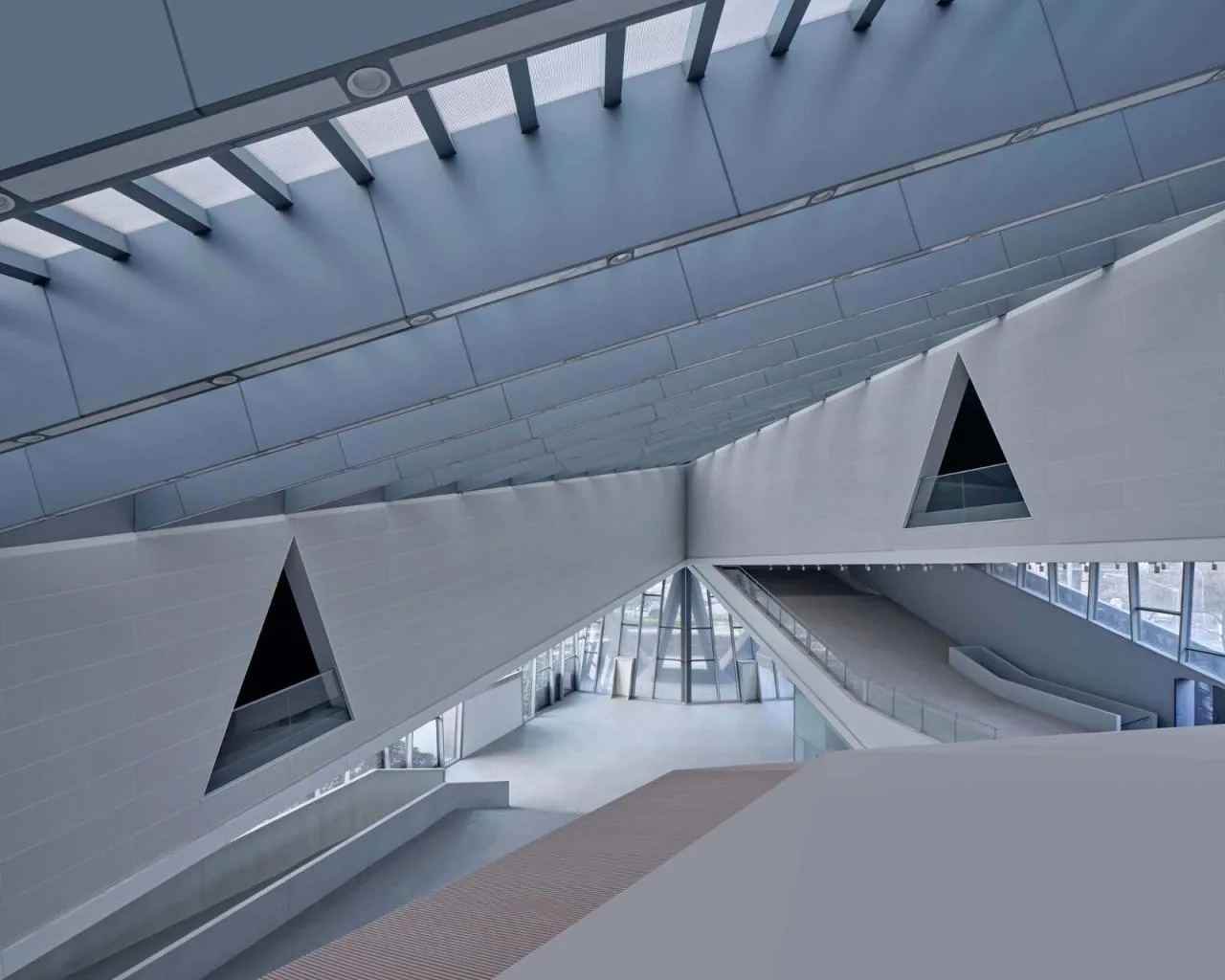
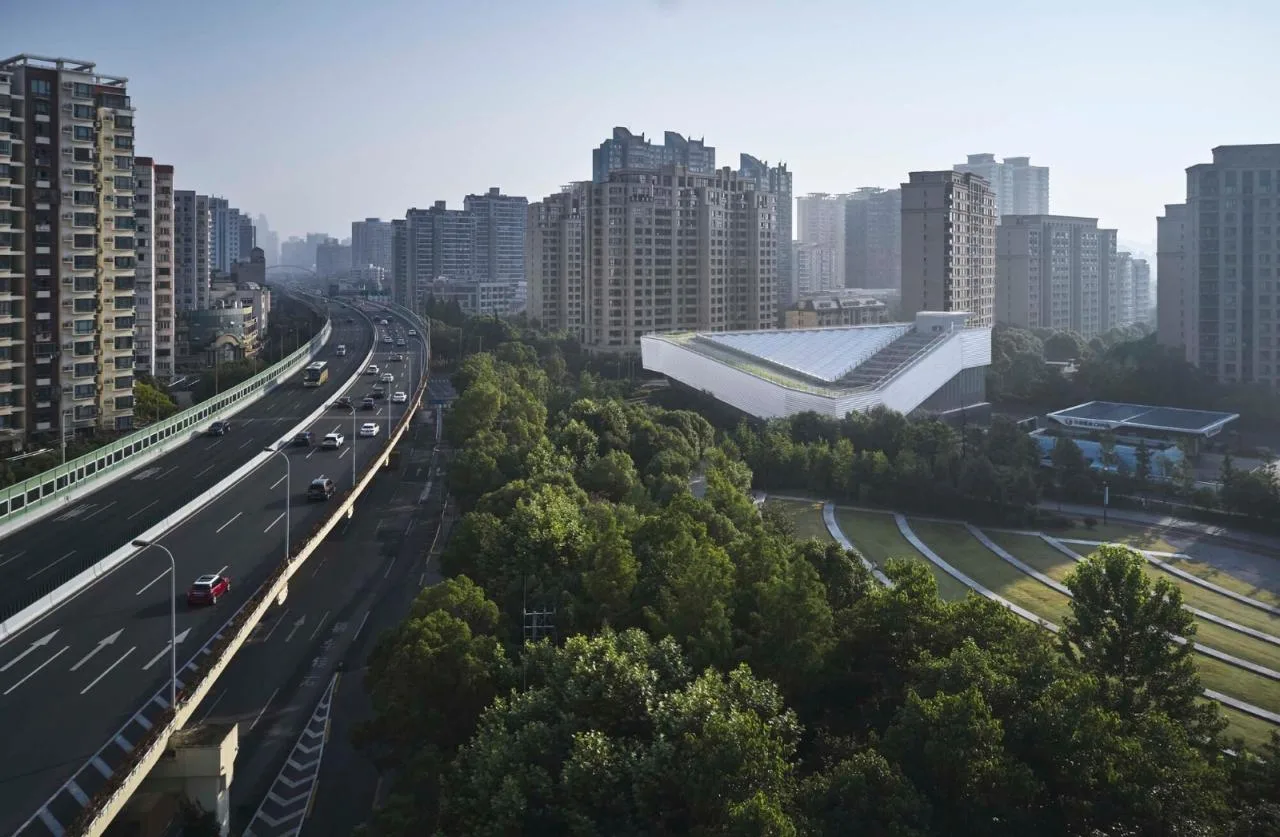
Architecture is a synthesis of space, structure, and form. The truss framework defines the main and auxiliary circulation spaces, while the transparent atrium between them reflects the internal experience and shapes the distinctive appearance of the art center. The triangular ring rises along the slope in the southeast, following the Shanghai Minhang Expressway towards Xujiahui, resembling an “artistic compass.” This design aims not only to serve as a visual landmark for the Shanghai South Station area but also to invigorate cultural exchange through dynamic spatial experiences, embodying the spirit of a public art center.
Project Information
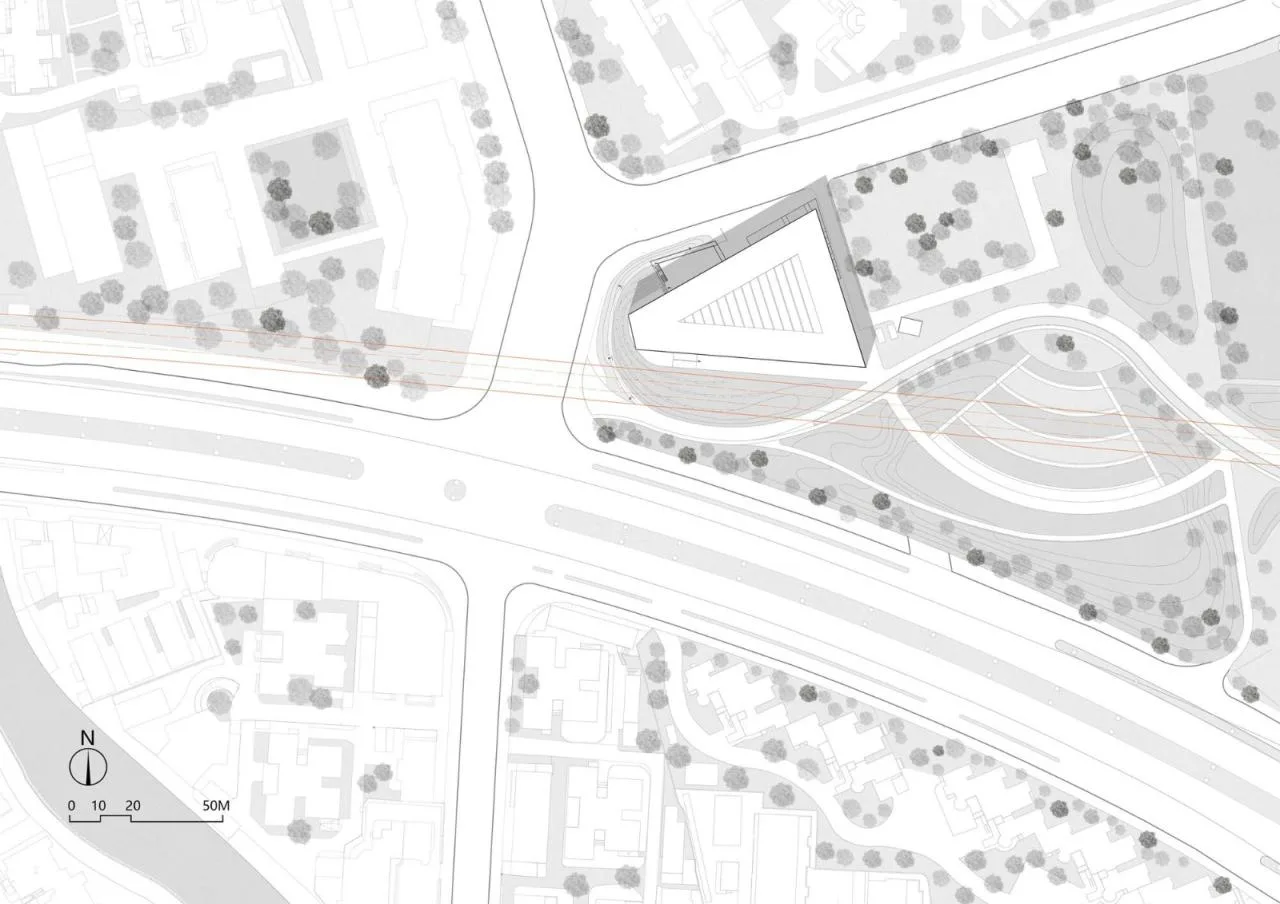
△ General layout plan
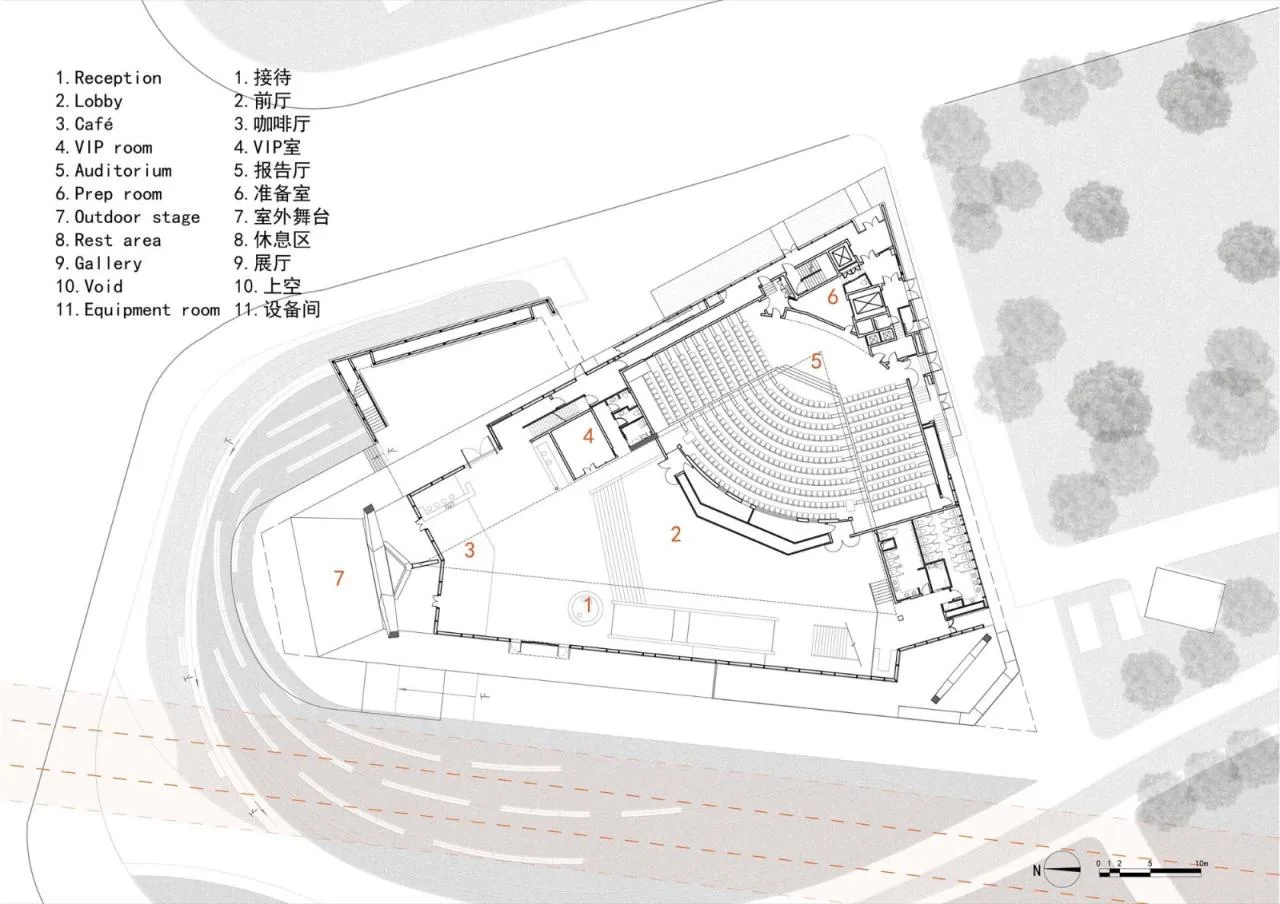
△ First floor plan
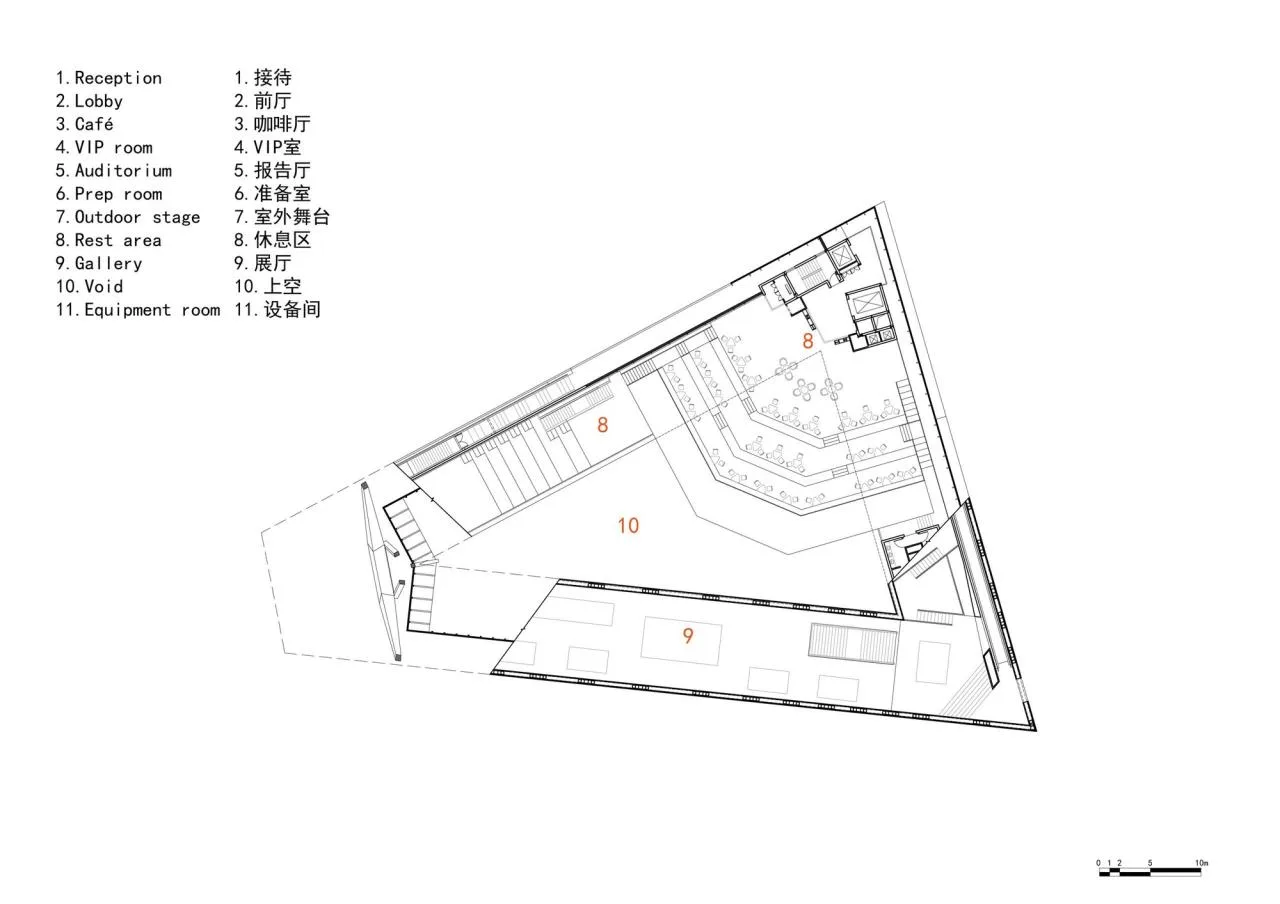
△ Second floor plan
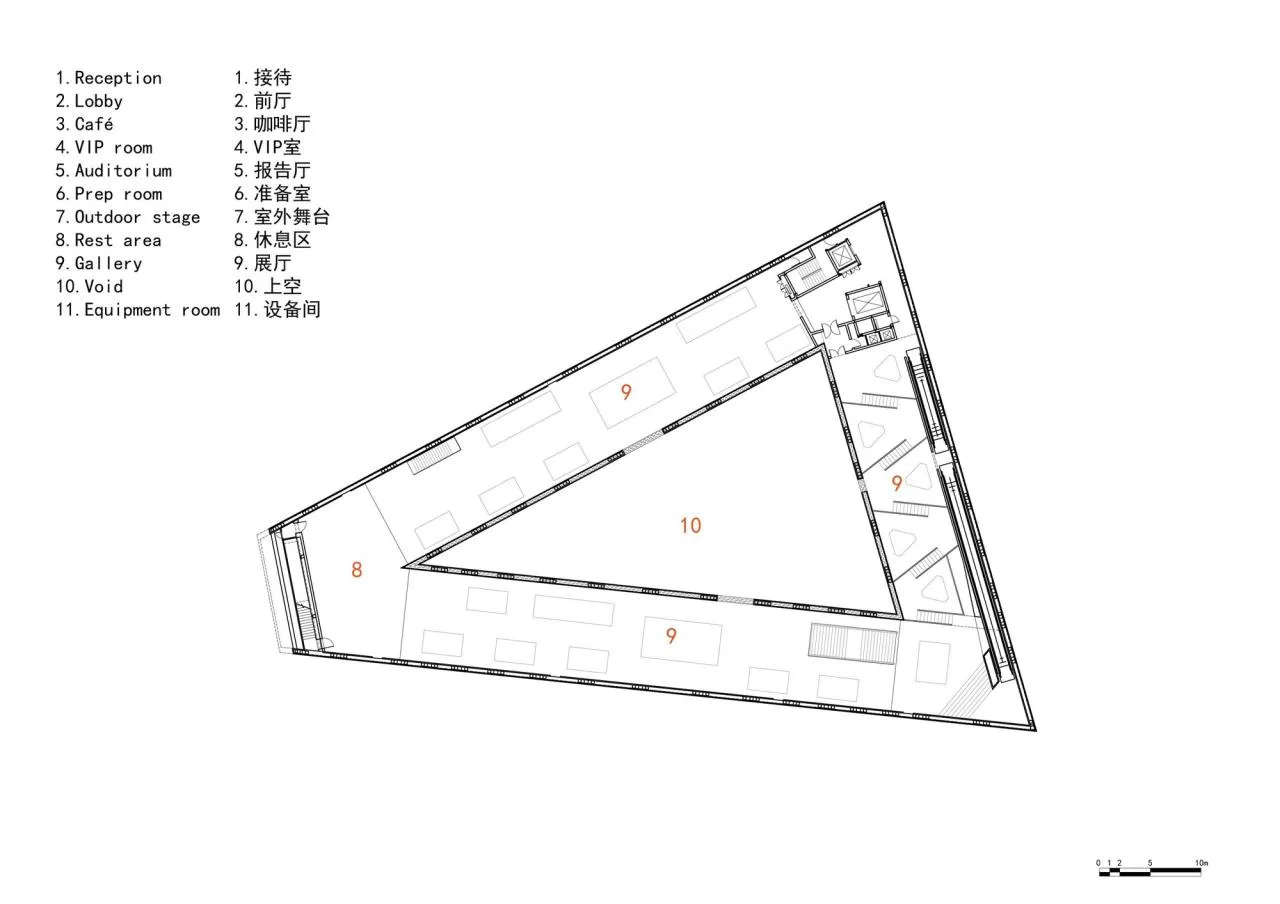
△ Third floor plan
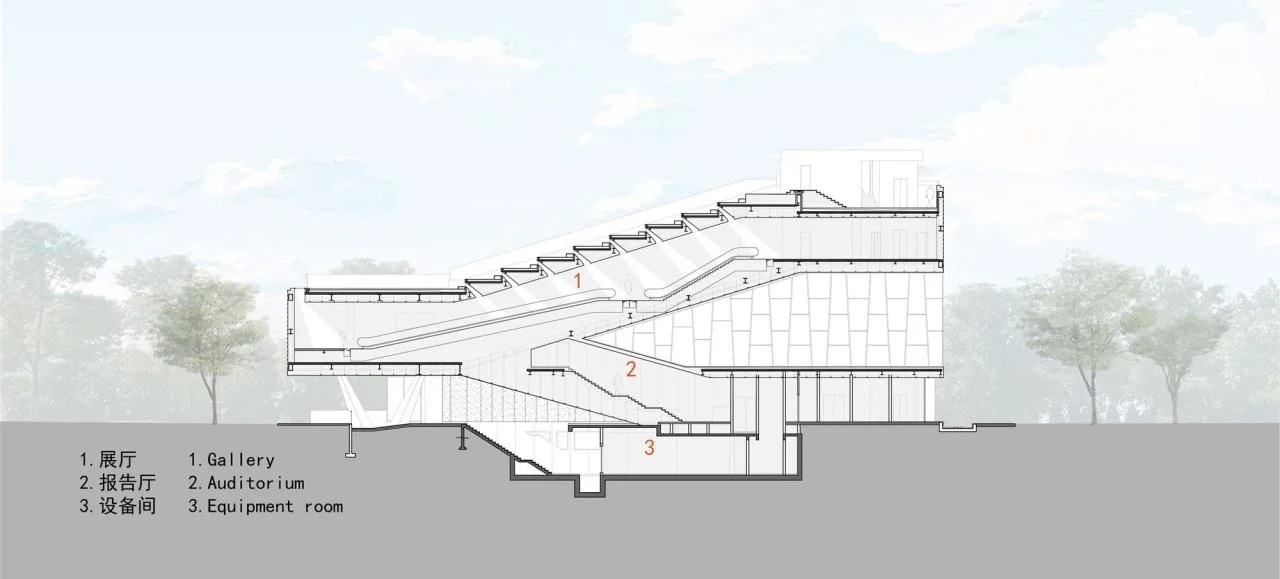
△ Section diagram
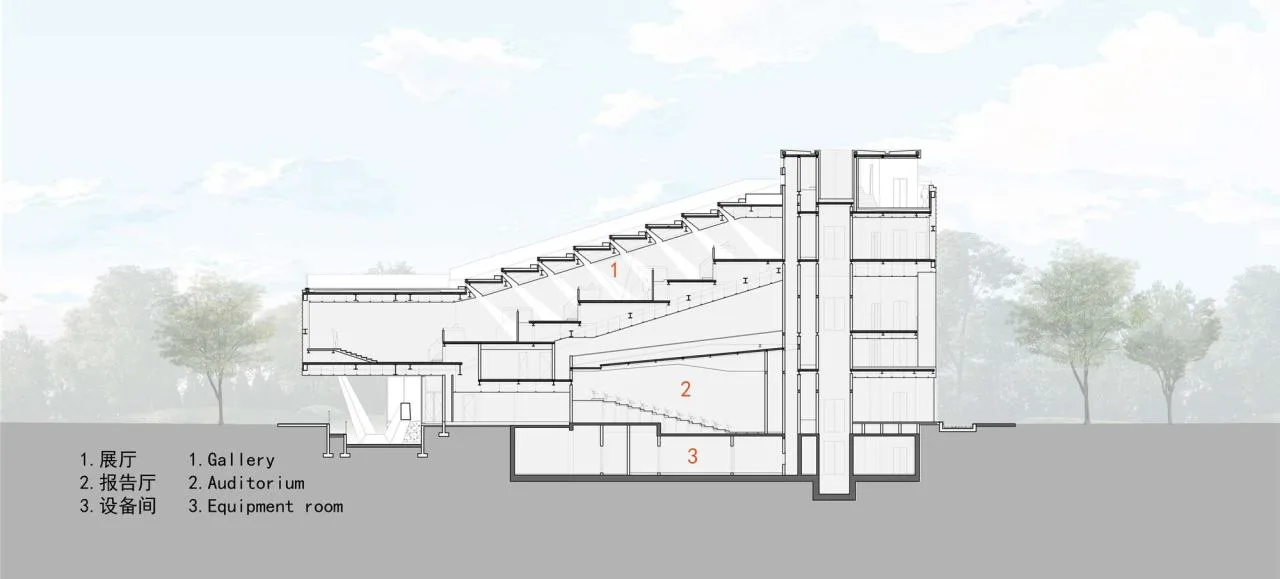
△ Section diagram
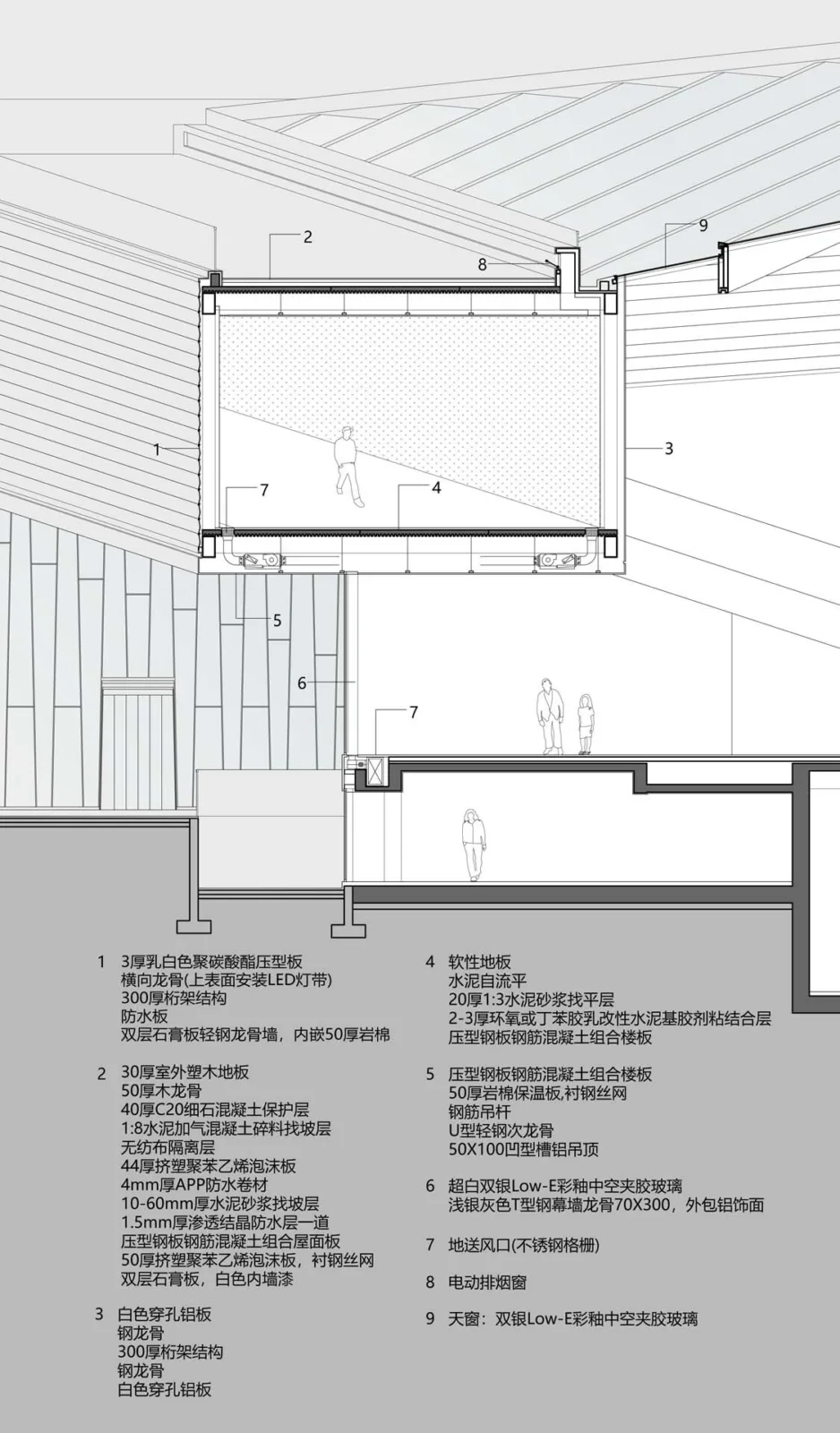
△ Structural Detail Drawing
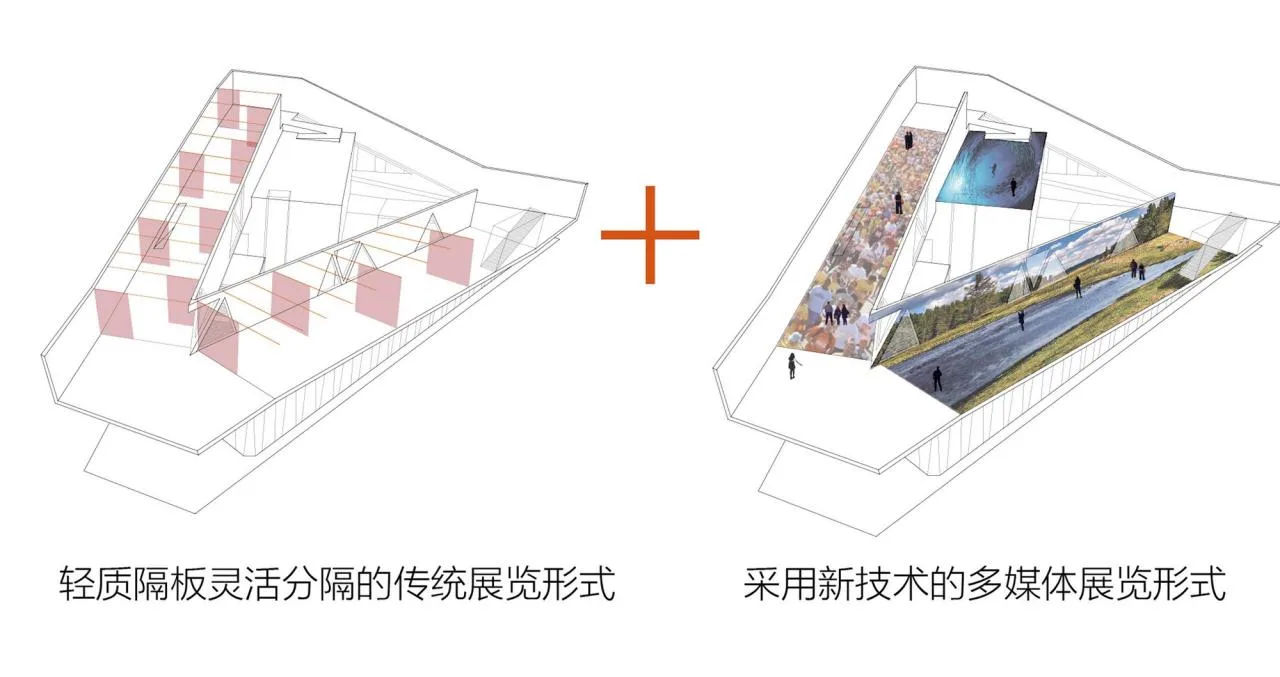
△ Analysis chart
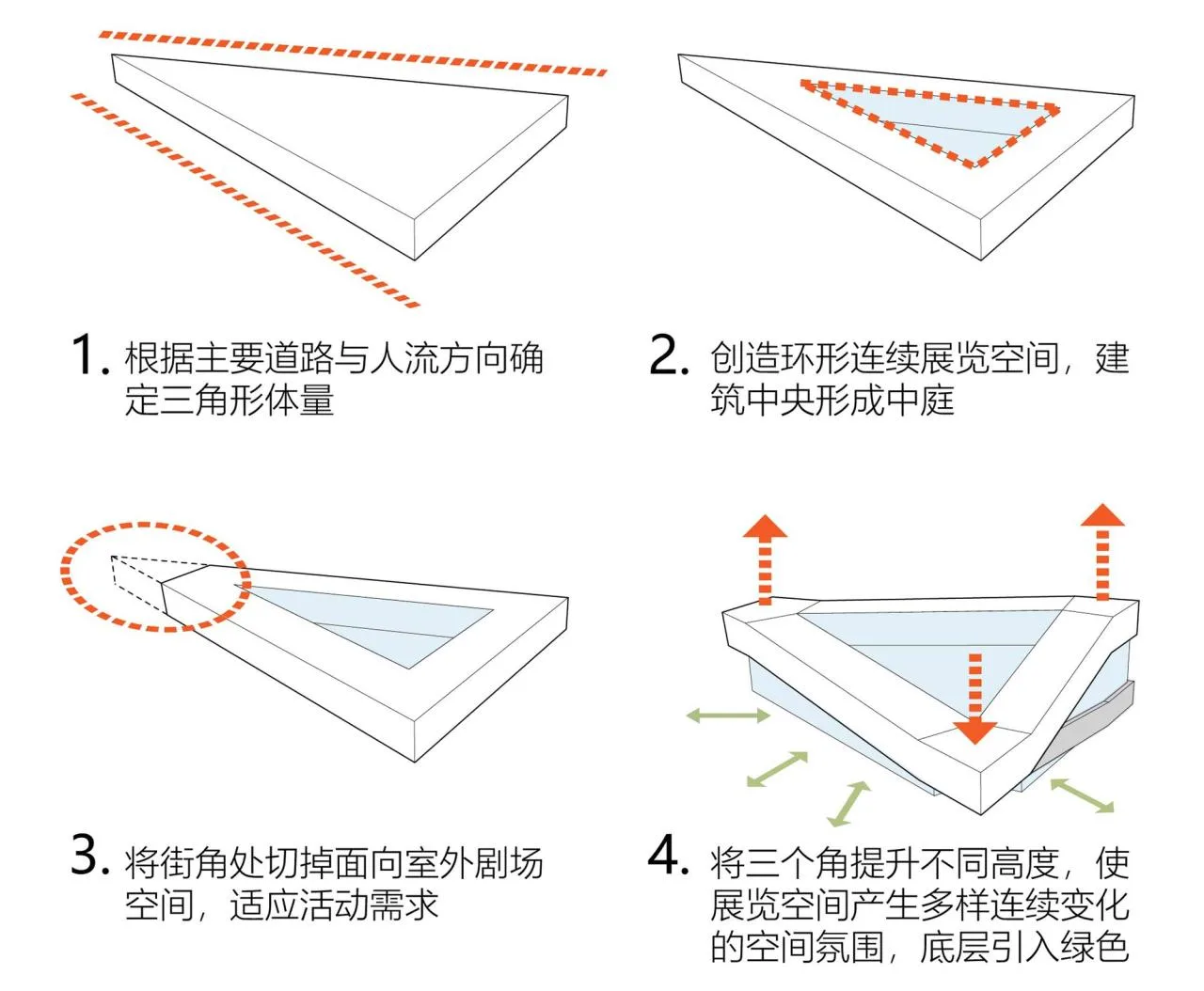
△ Analysis chart
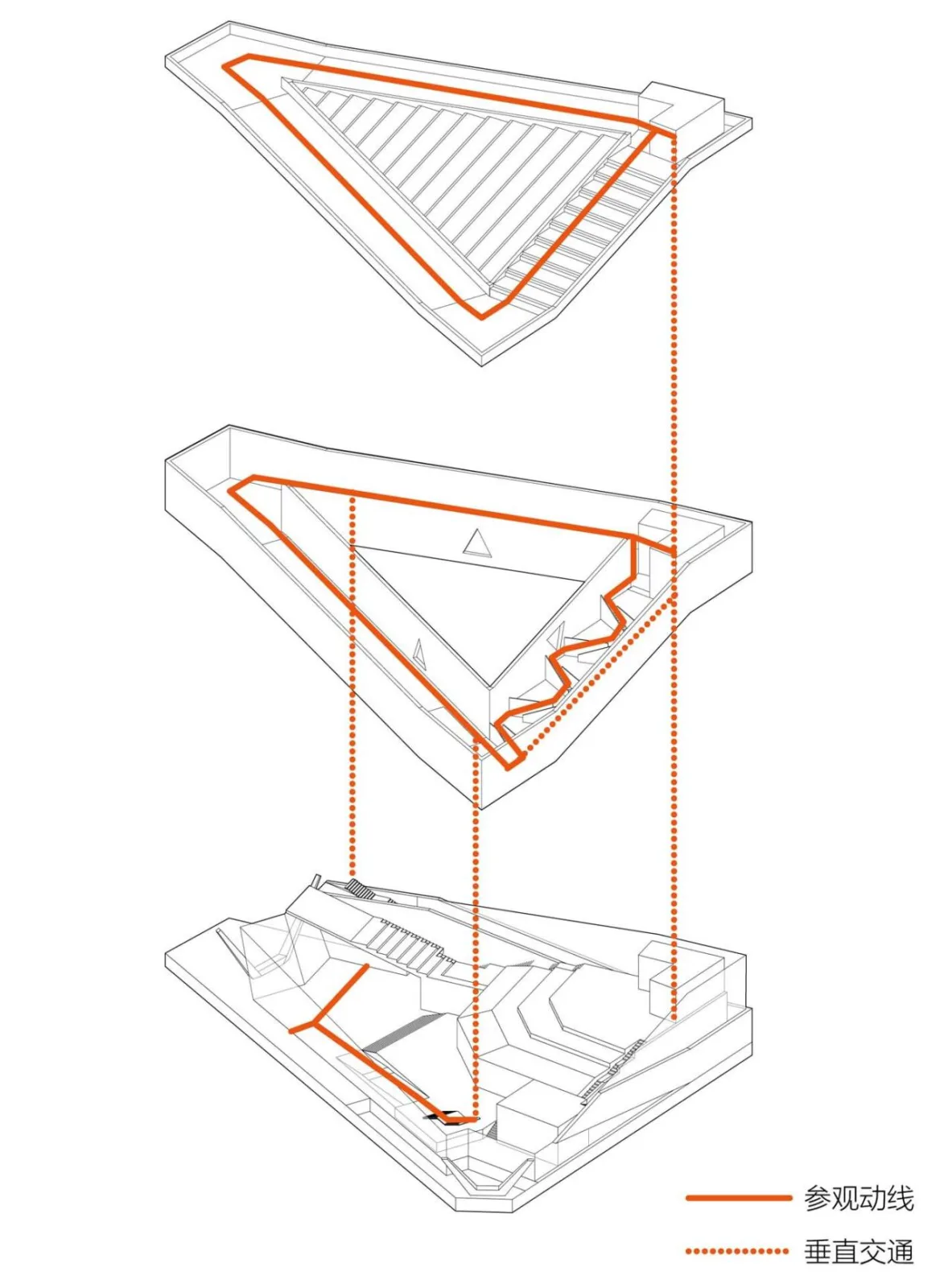
△ Streamline Diagram
△ Analysis chart
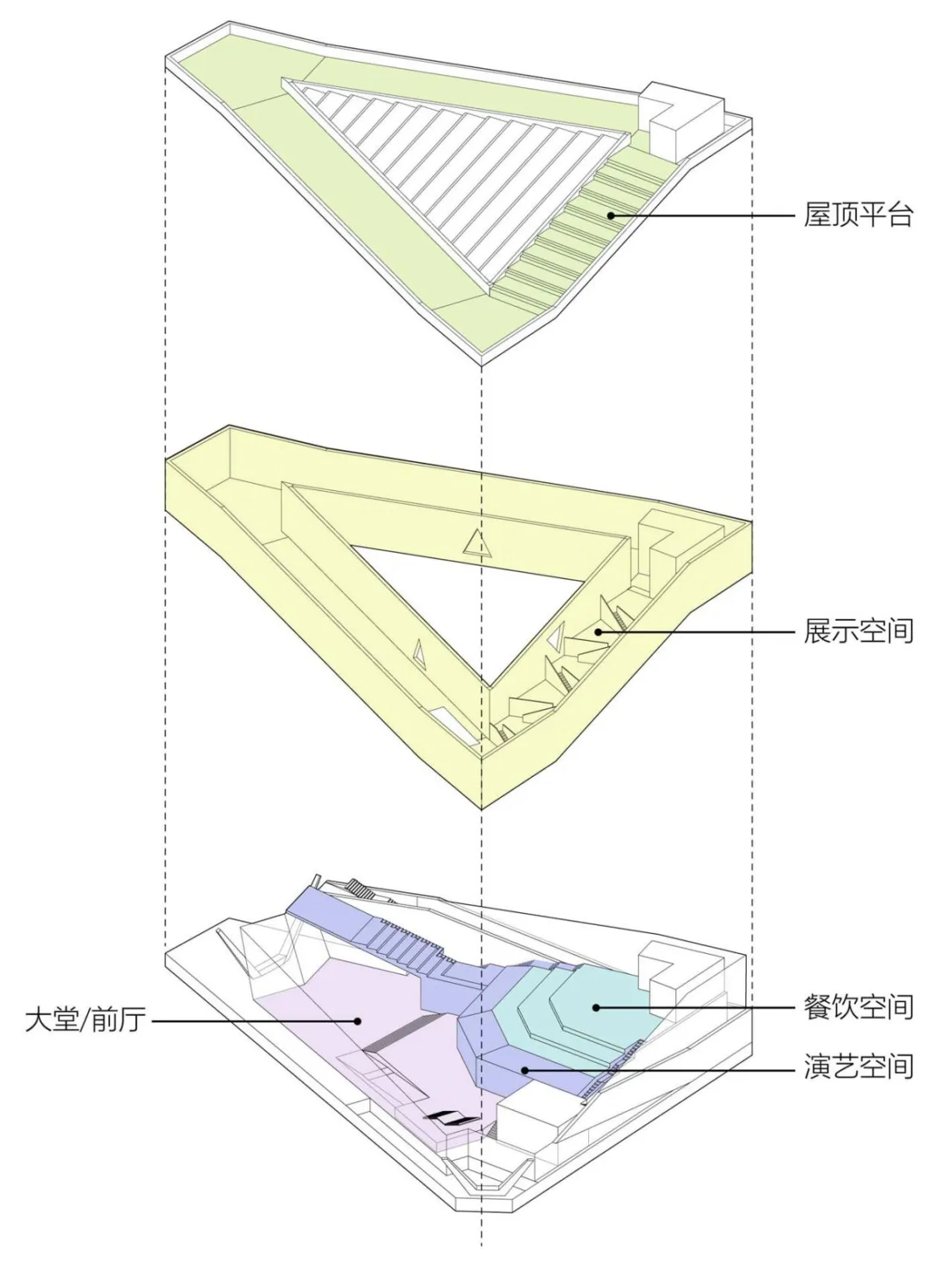
△ Analysis chart
Project Information
Architect: Shanshui Xiu Architectural Firm
Area: 4562 m²
Project Year: 2021
Photographer: ZY Architectural Photography
Design Team: Zhu Xiaofeng, Zhuang Xinjia, Pablo Gonzalez Riera, Shi Qi, Shi Yan’an, Du Shigang, Du Jie, Yang Taohui
Owner: Shanghai Vanke
Structure and MEP Design: Tongji University Architectural Design and Research Institute (Group) Co., Ltd.
Landscape Design: Yiya Jingyuan Landscape Design
Location: Shanghai, China















Must log in before commenting!
Sign Up