
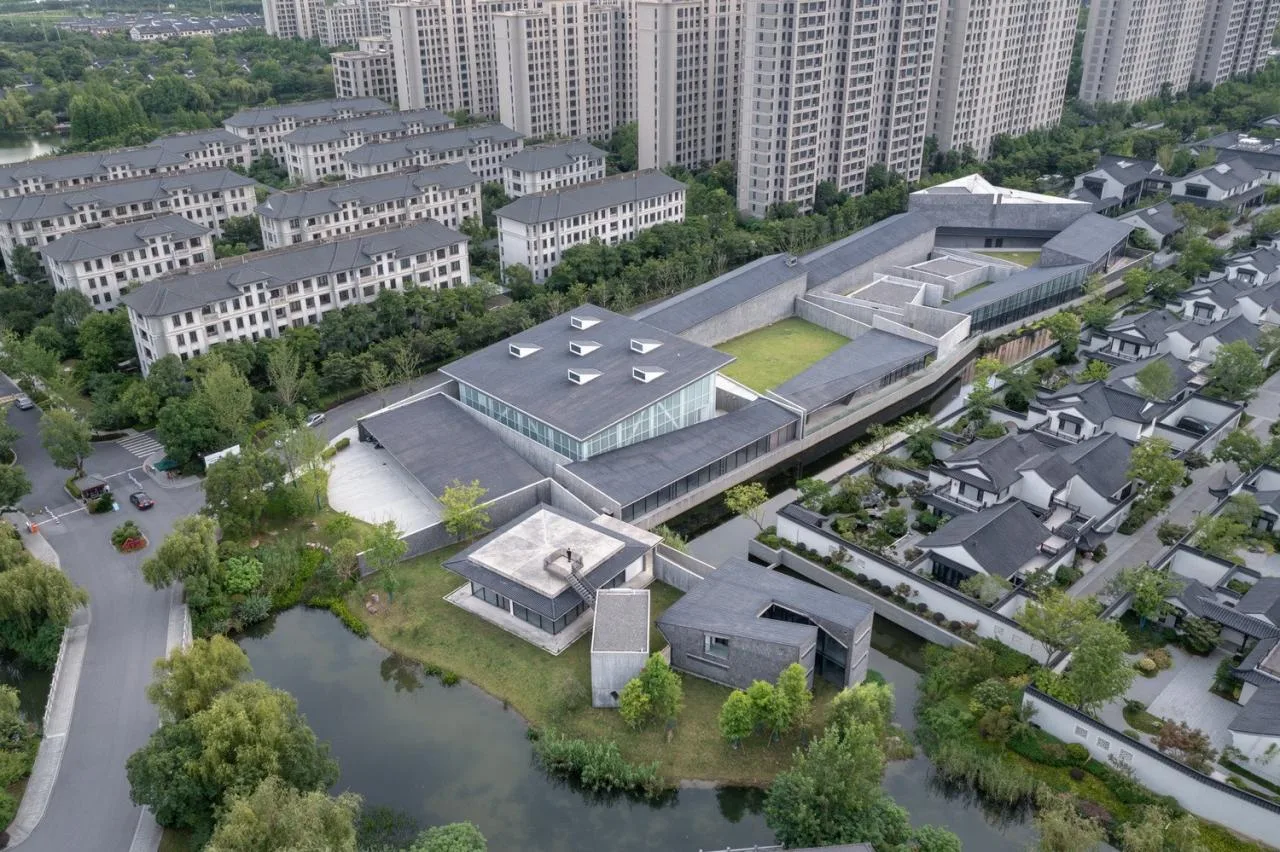
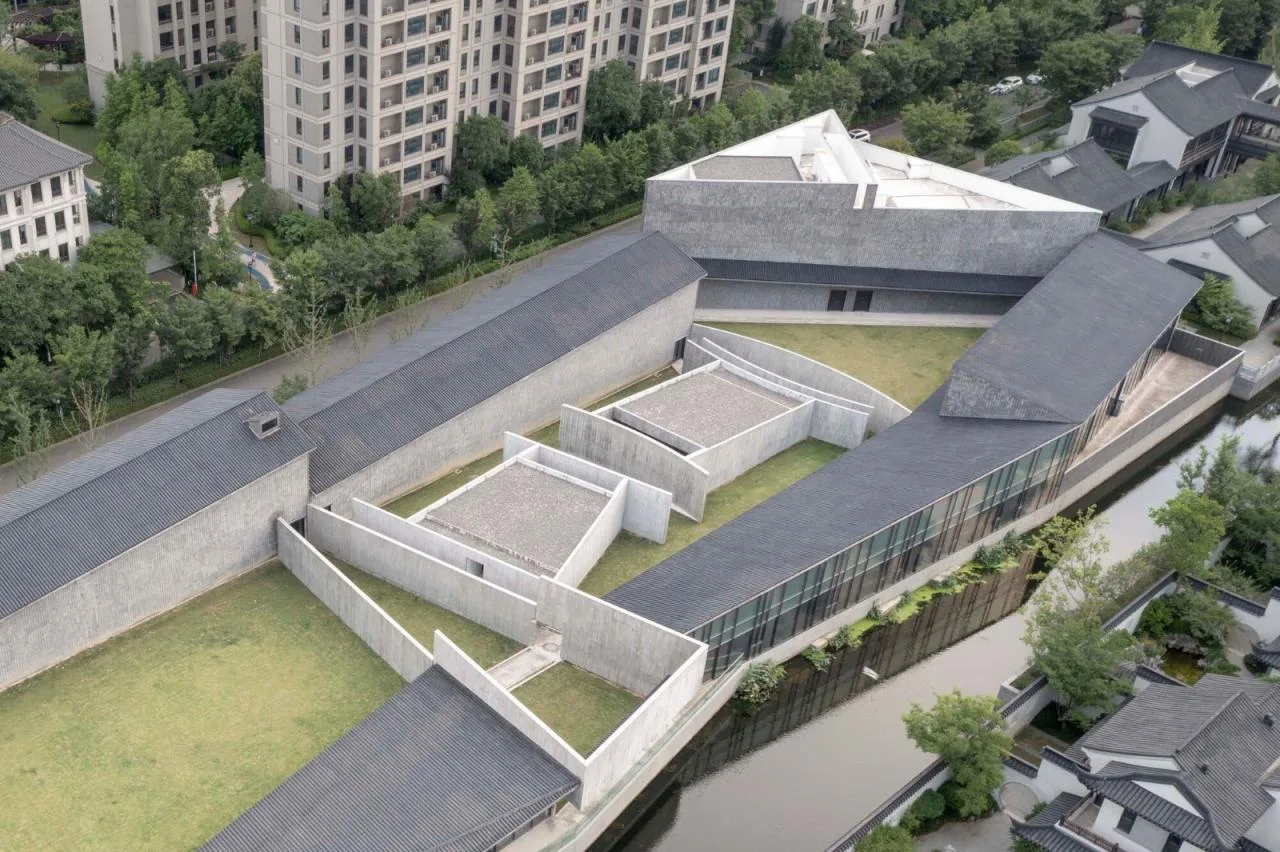
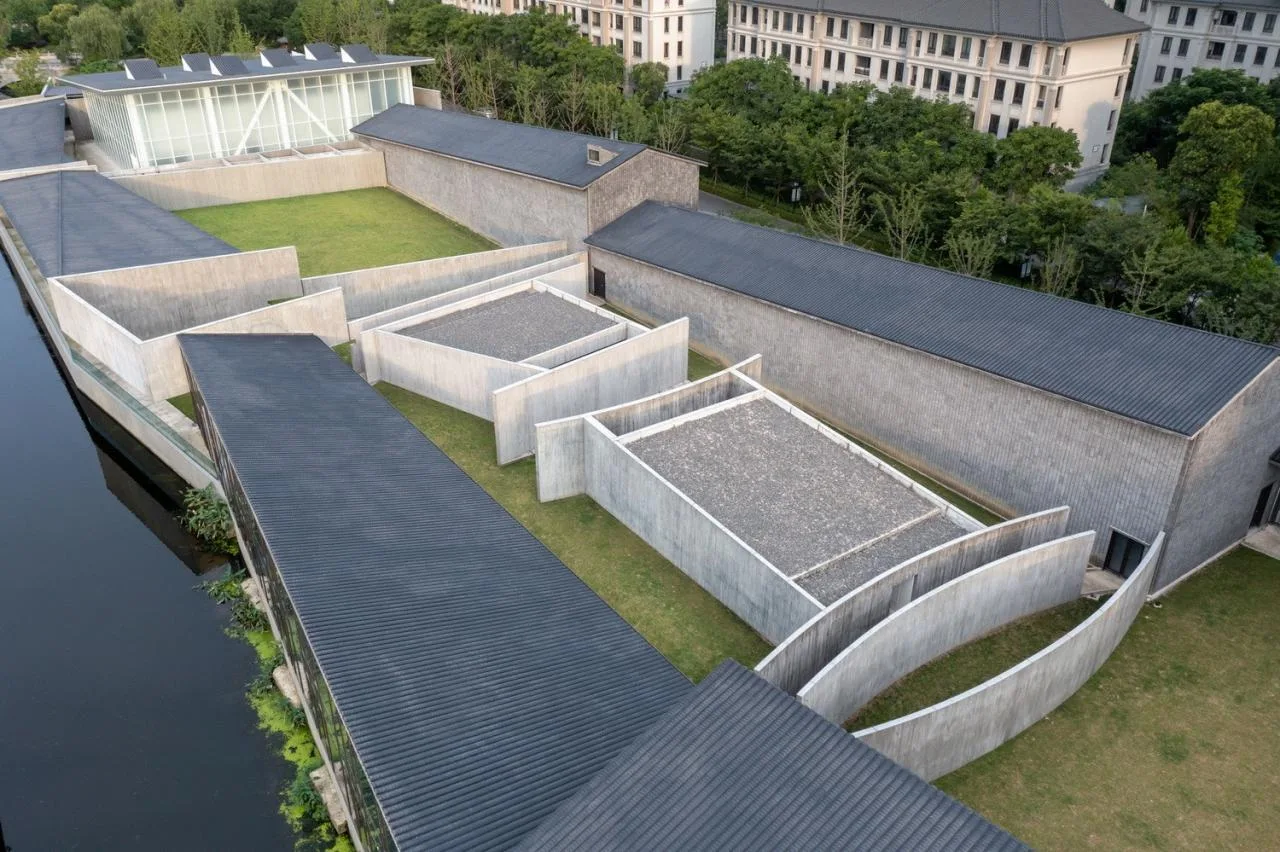
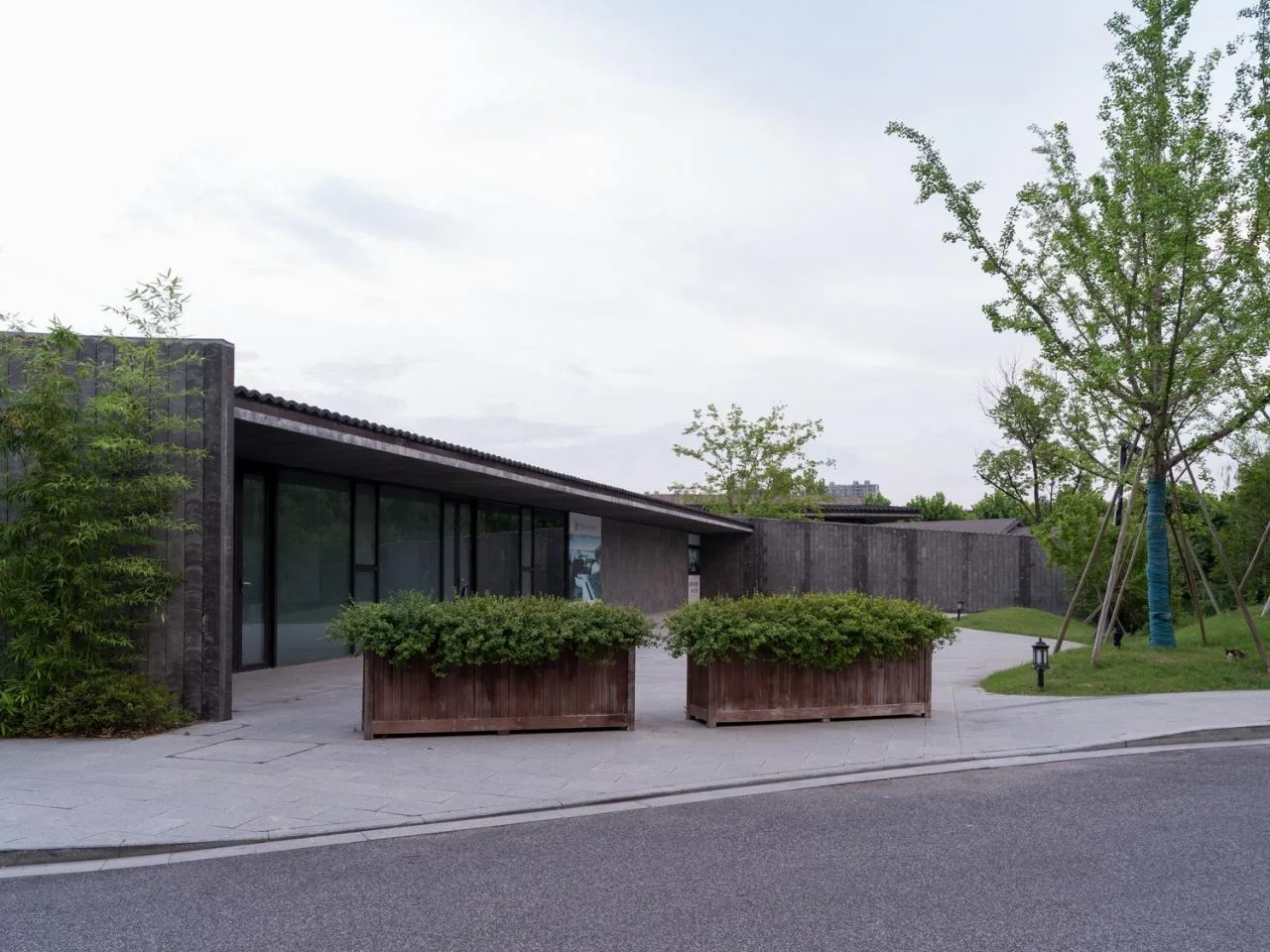
The museum, previously known as the Wu Dayu Art Museum, no longer exclusively exhibits Wu Dayu’s works and is currently unnamed. Nonetheless, Wu Dayu’s artistic vision heavily inspired the building’s design.
About Wu Dayu
Wu Dayu (1903–1988) was a pioneering Chinese painter, art educator, and poet who founded Chinese abstract painting. Born in Yixing, Jiangsu Province, he went to France in 1922 to study oil painting and sculpture. Upon returning to China, he co-founded the National Academy of Art (now the China Academy of Art) in Hangzhou alongside Lin Fengmian and others, serving as head of the Western Painting Department.
In the early 1950s, Wu lost his teaching position and spent the rest of his life painting in a modest ten-square-meter attic in his Shanghai home.
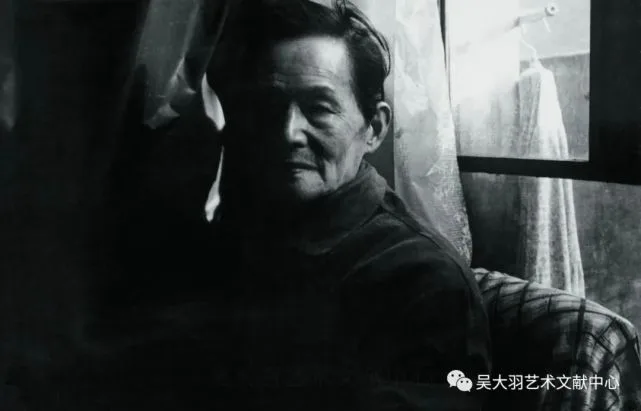
Wu Dayu at his Shanghai home during the 1980s © Network
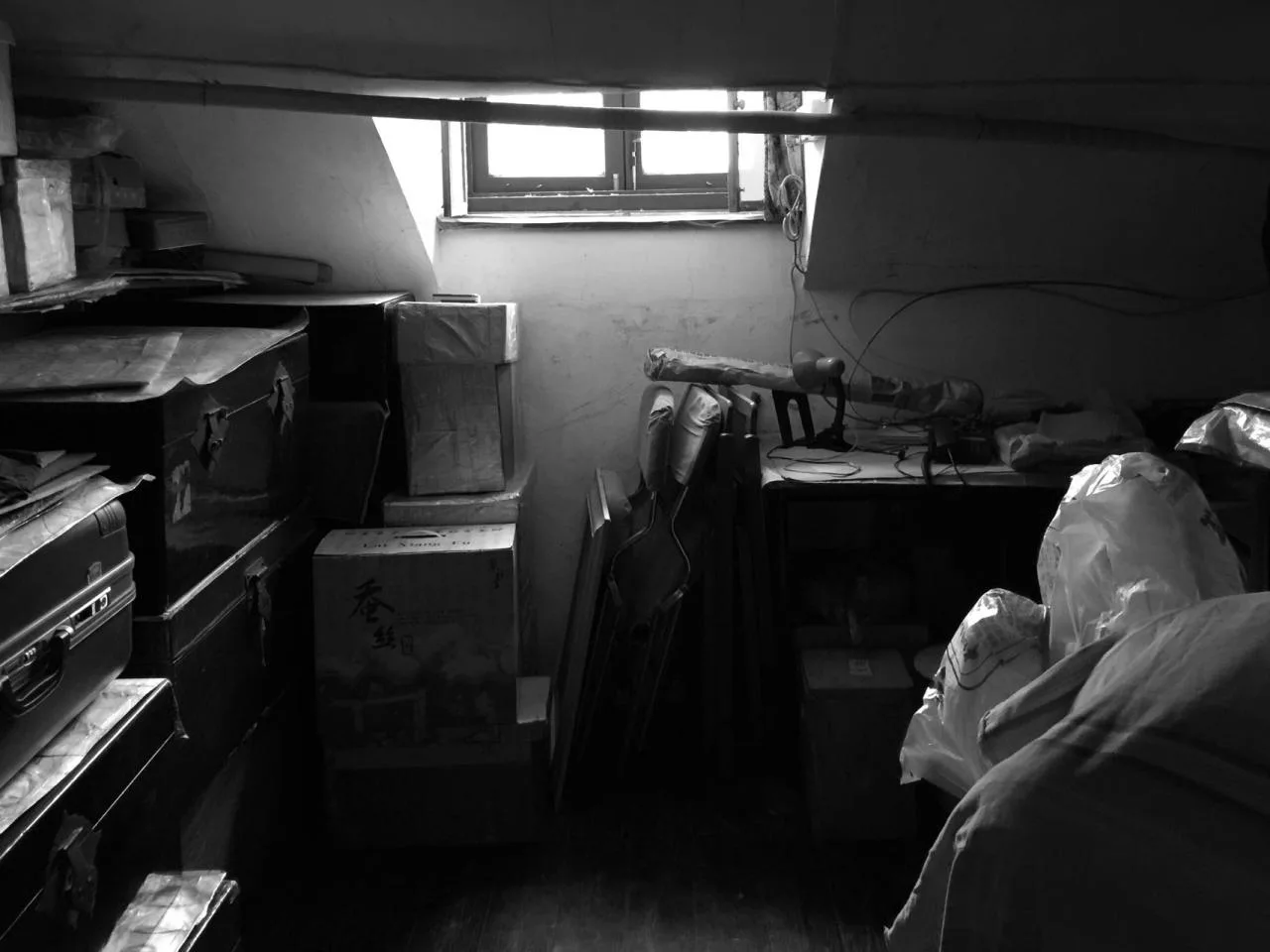
△ Wu Dayu’s Studio © Zhang Yonghe
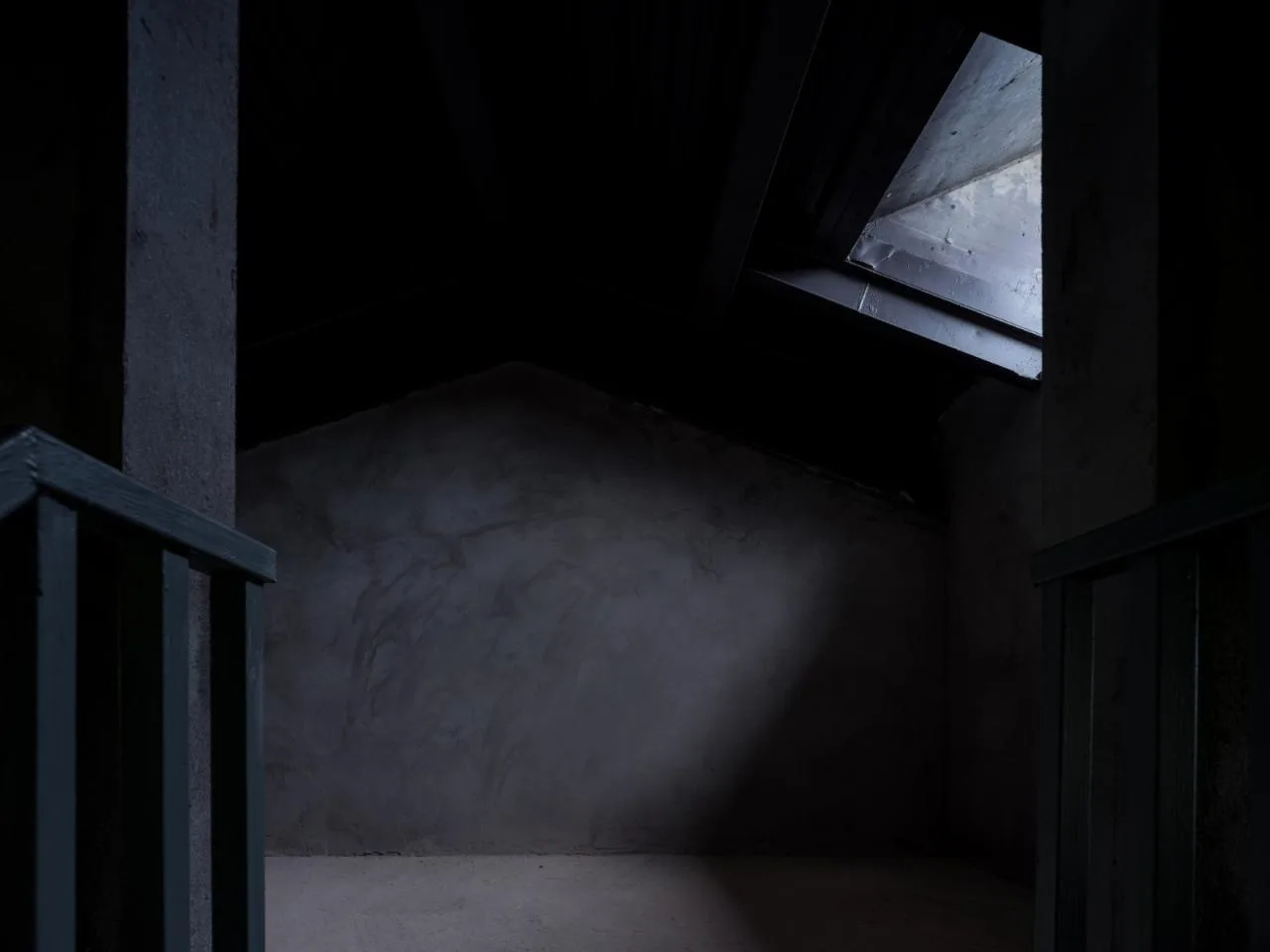
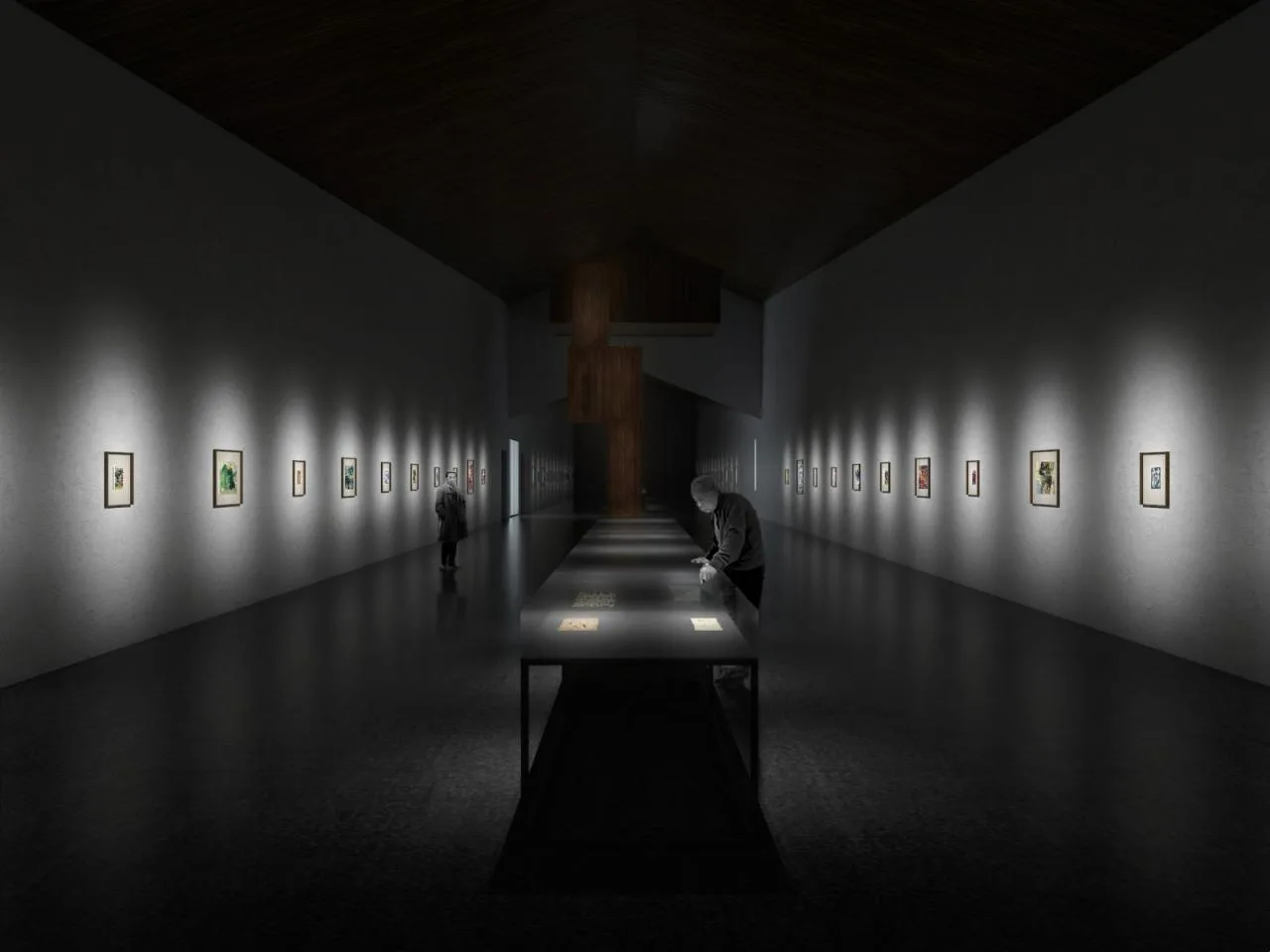
The ten-square-meter attic exhibition space at the Nameless Art Museum © Tian Fangfang
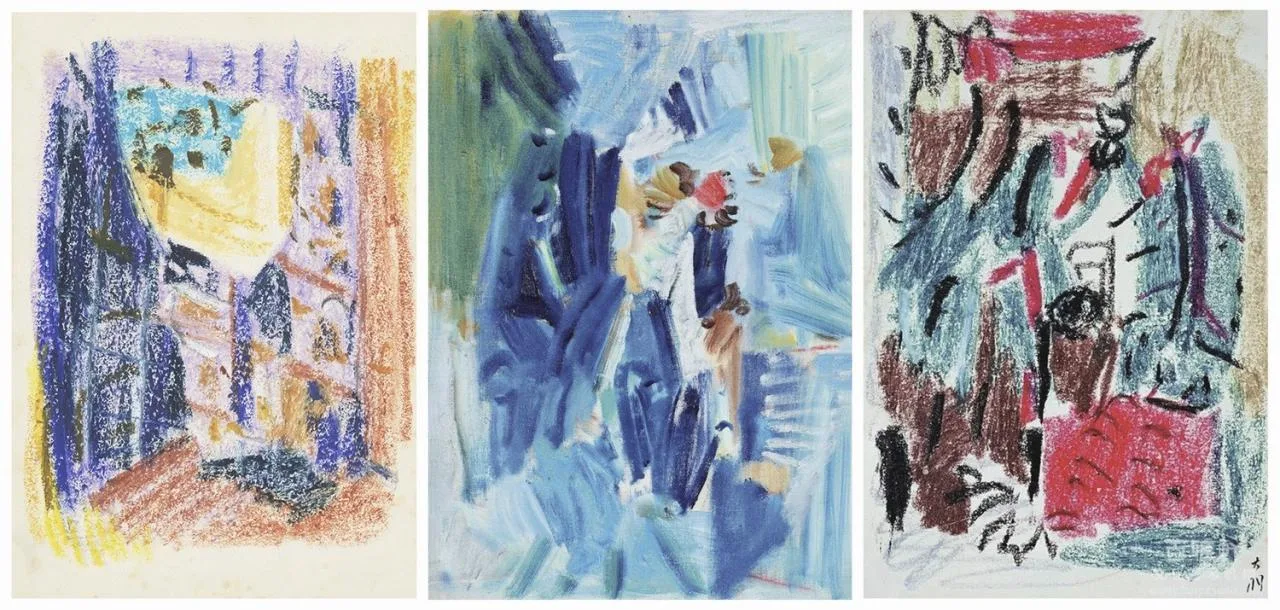
Works by Wu Dayu © Image source: Network
Design Inspiration and Philosophy
Our architectural design draws inspiration from Wu Dayu’s art, where he expresses “strength” and “tranquility” on postcard-sized canvases. This delicate balance encouraged us to deeply consider the scale of architectural spaces.
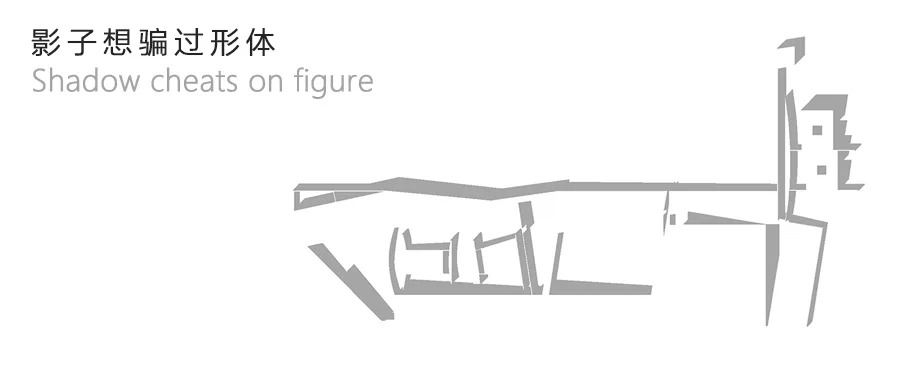
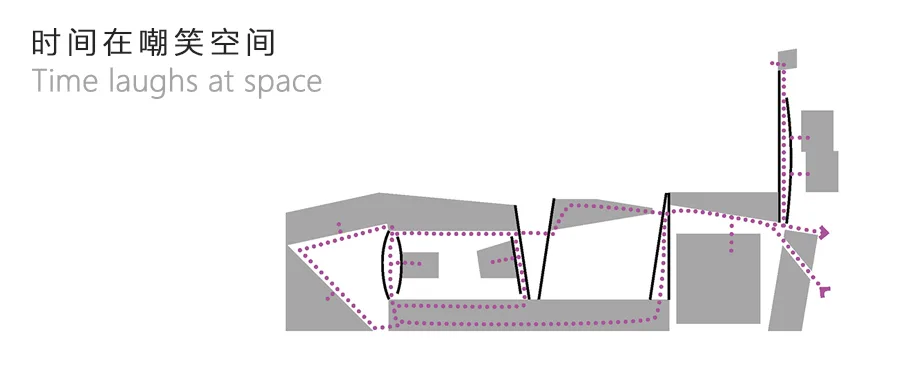
Wu Dayu’s poem “King Kong” vividly captures the dynamic and ever-changing nature of architecture:
Shadow wants to deceive form
Time is mocking space
I’m silent and nowhere to be seen
Entering and exiting the darkness of time
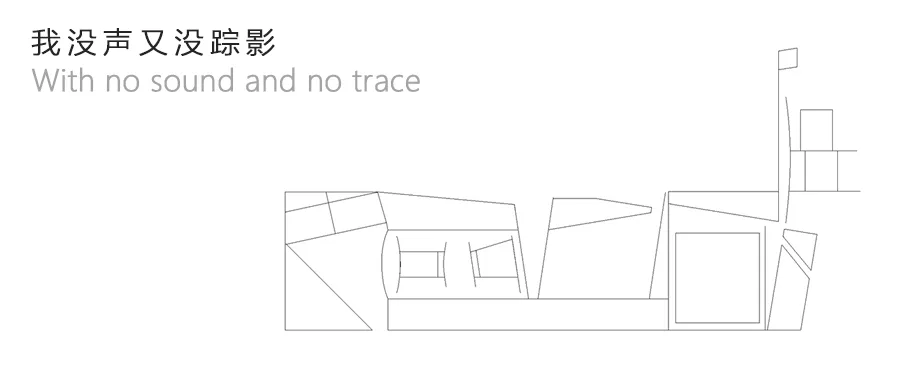
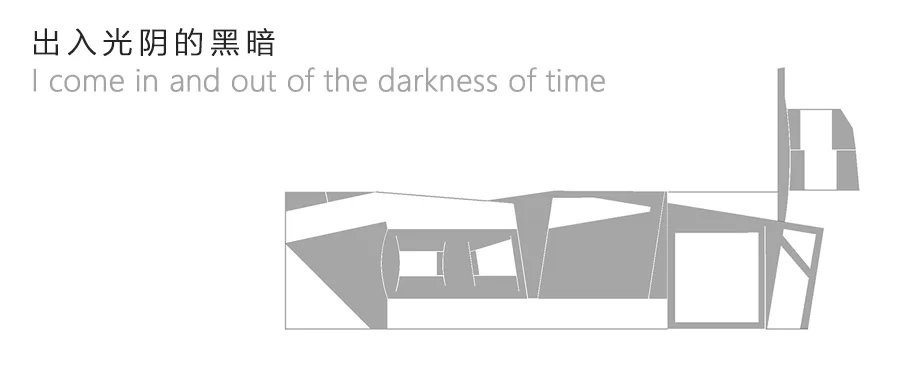
Time
Wu Dayu’s poetry inspired our exploration of time as a design element in architecture.
Is it possible to design time?
Guided by French philosopher François Jullien’s book On Time, we contrasted Chinese and Western concepts of time:
- Western classical time: The observer stands outside time; time and space are separated; time is homogeneous, divisible, linear, with a definite beginning and end; the present is difficult to define; this is objective time.
- Traditional Chinese time: The observer exists within time; time and space are integrated; time is continuous and ever-changing, with no beginning or end; it is always present; this is subjective time.
This flexible understanding of time in Chinese tradition opens up new design possibilities.
Take the Nine-Curve Bridge as an example: crossing water directly requires 3 steps; folding the path nine times extends it to possibly 27 steps, prolonging the journey by nine times and expanding spatial perception.
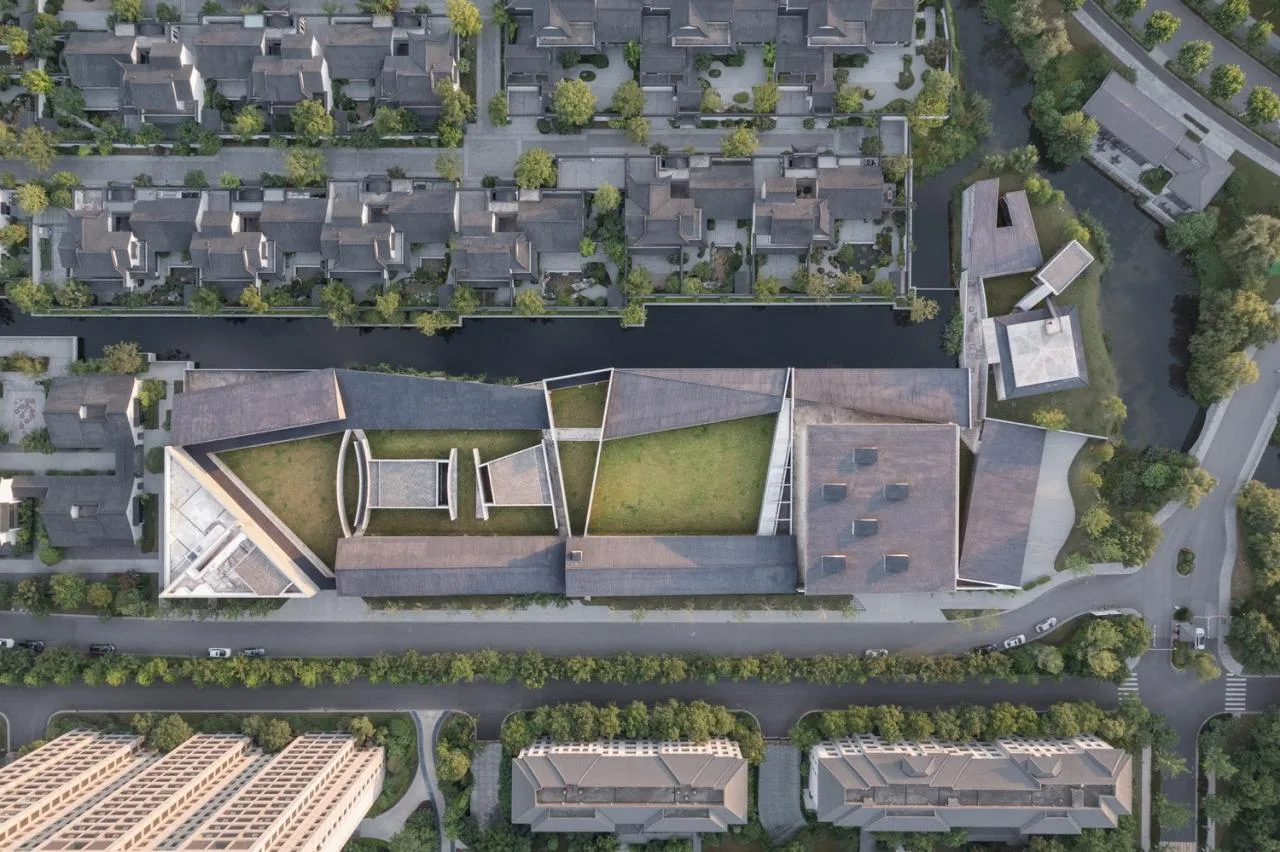
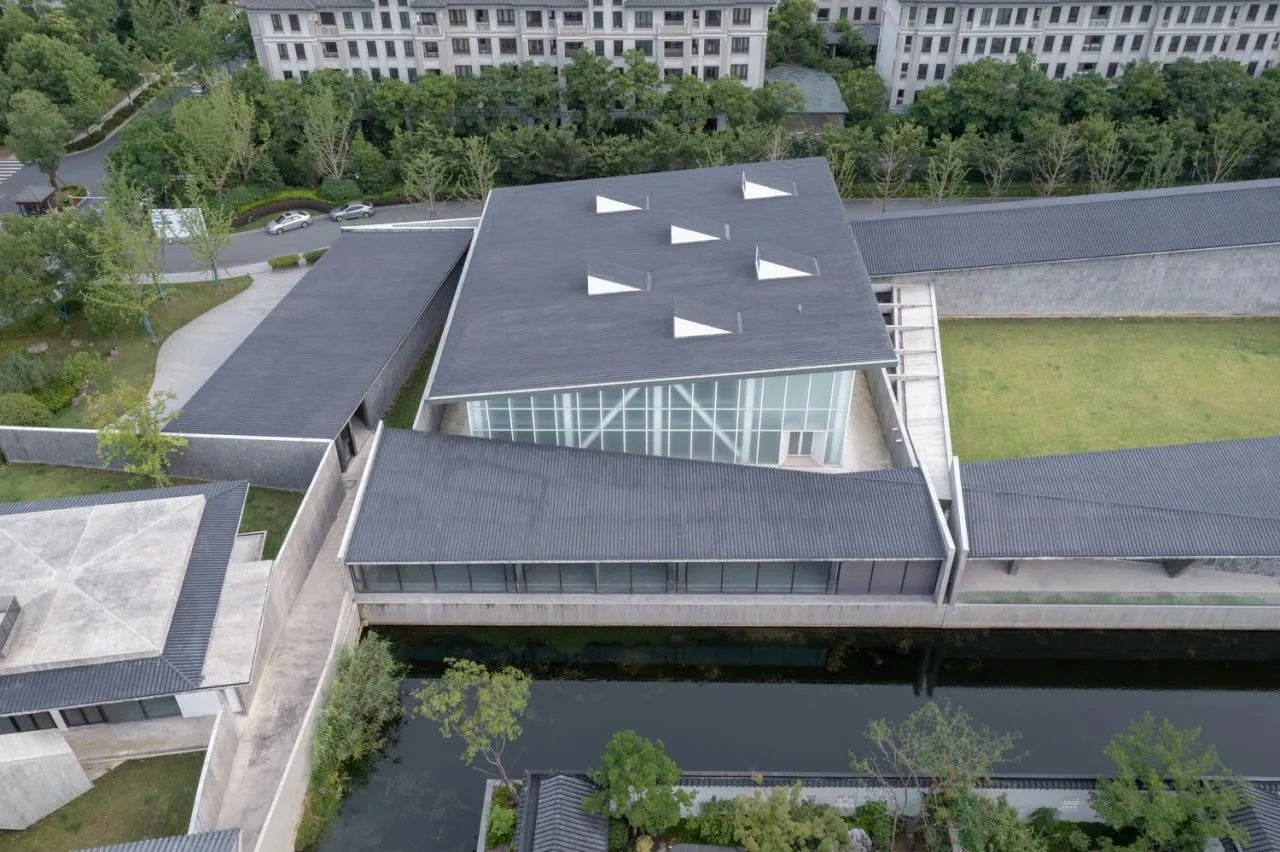
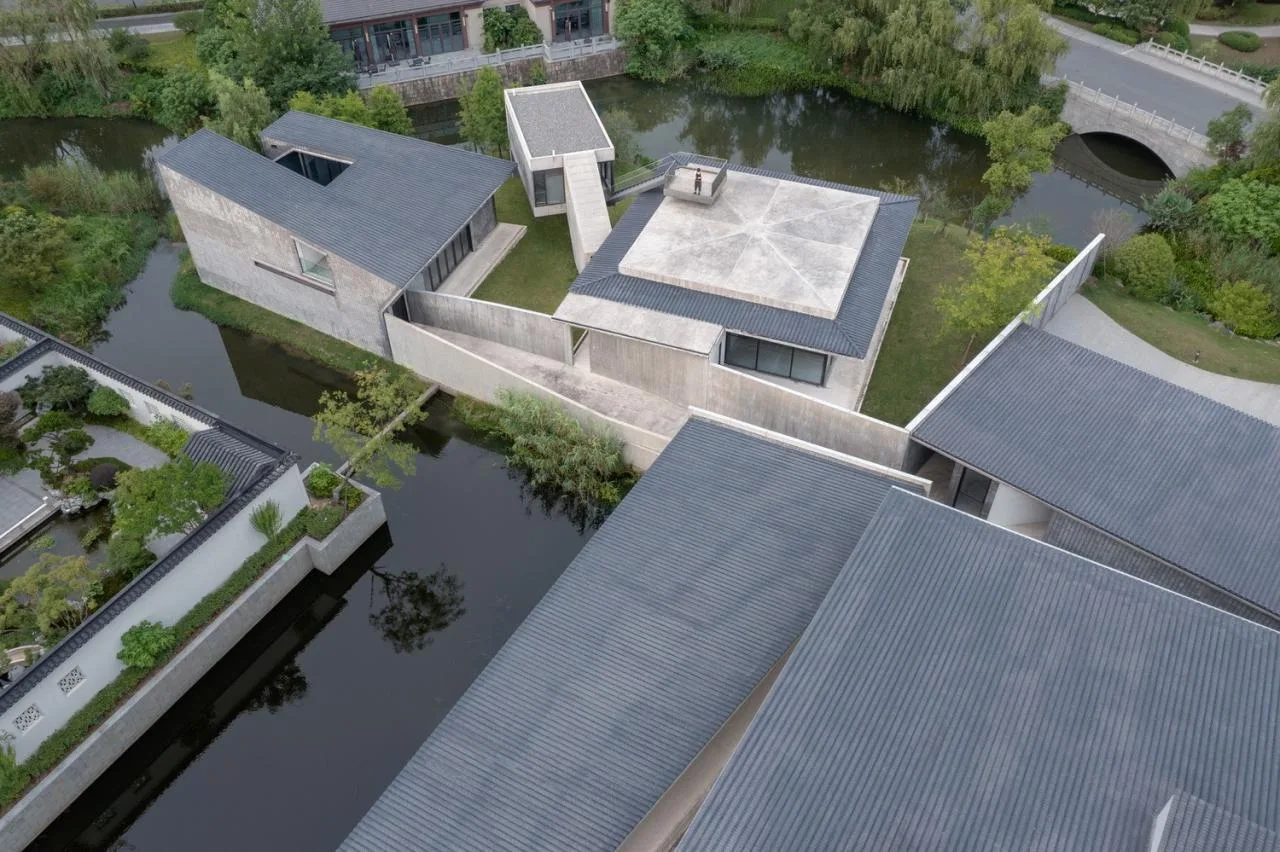
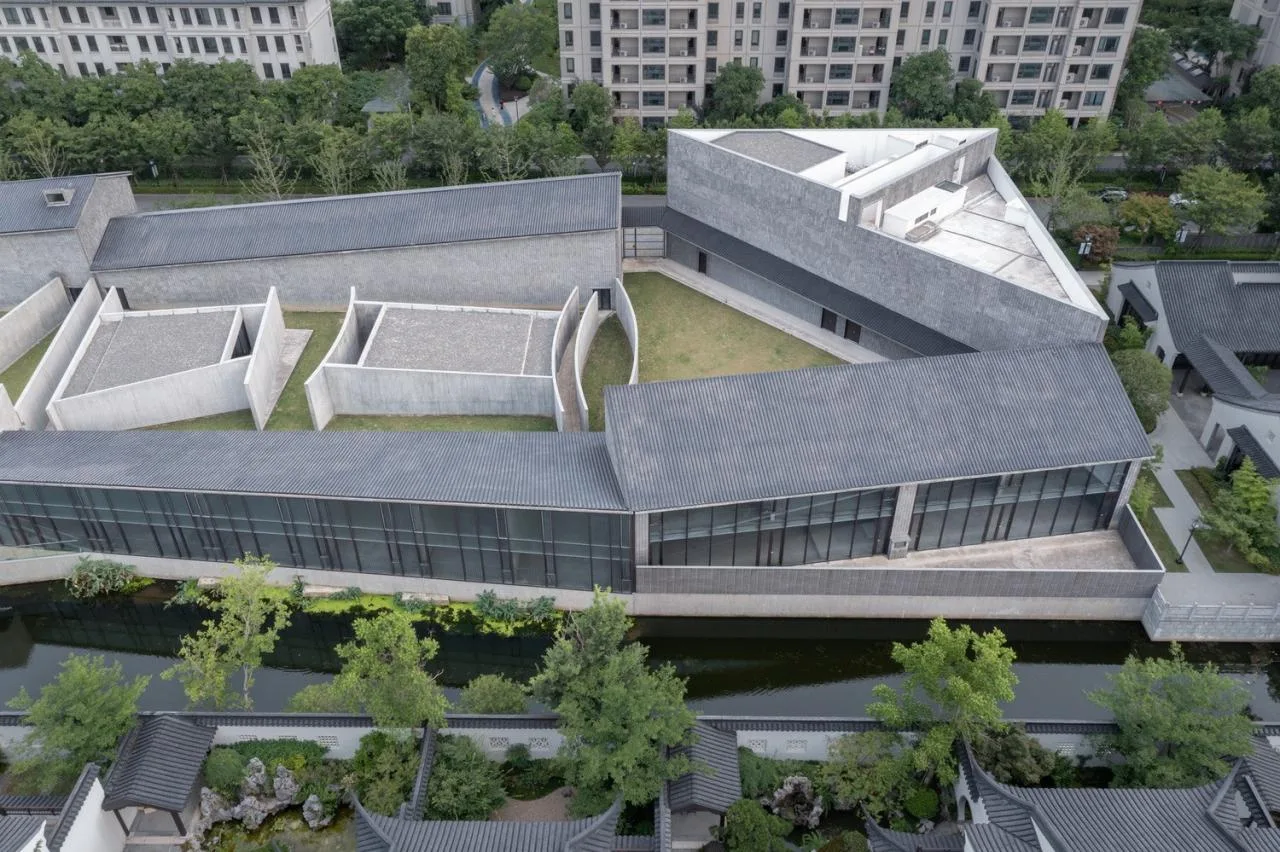
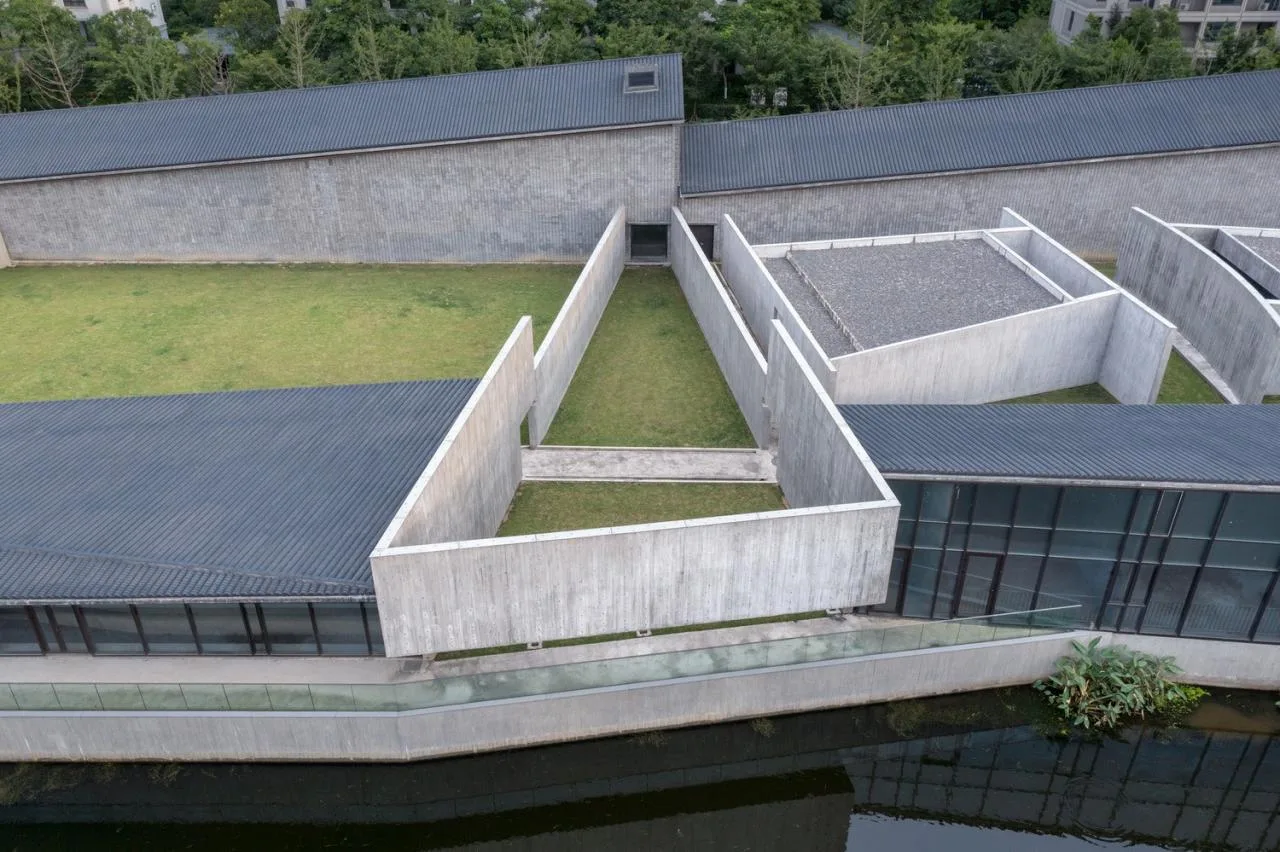
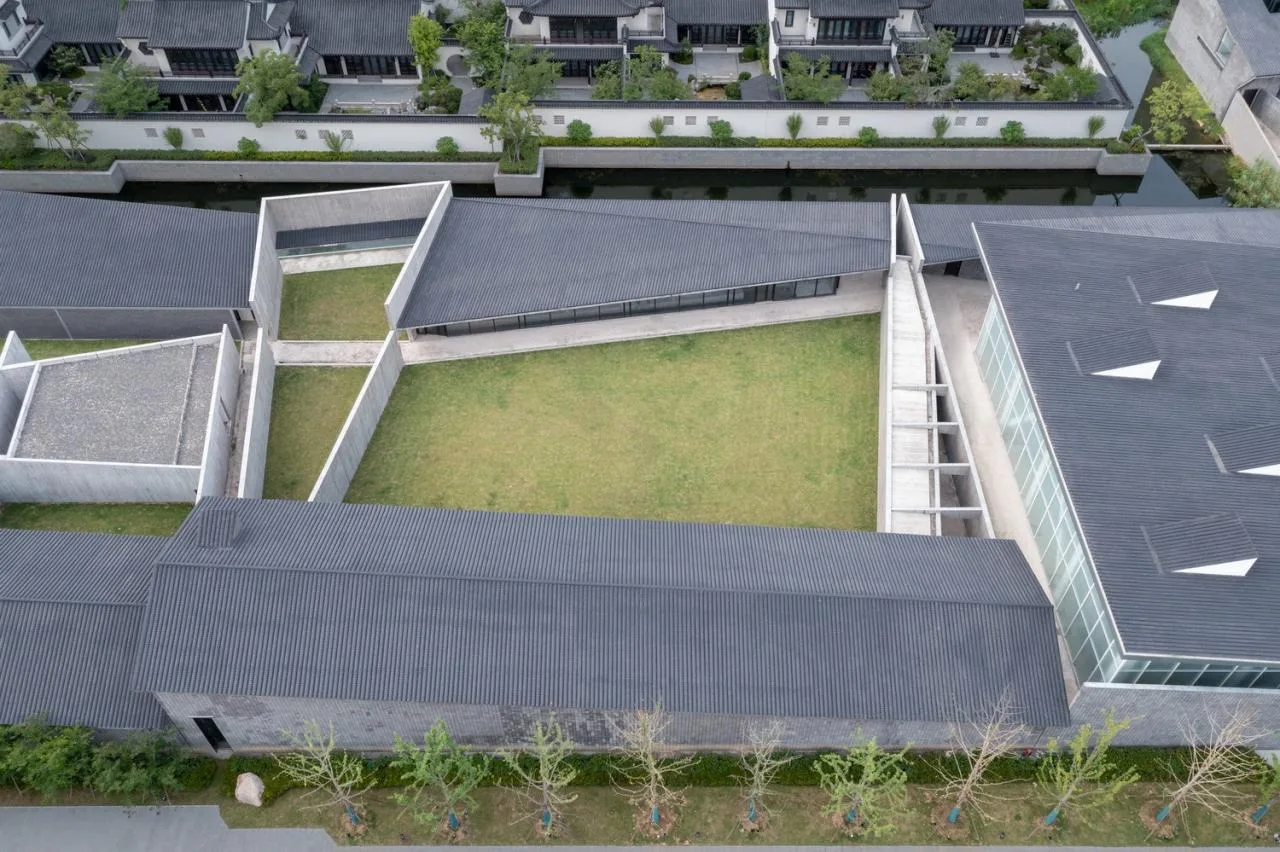
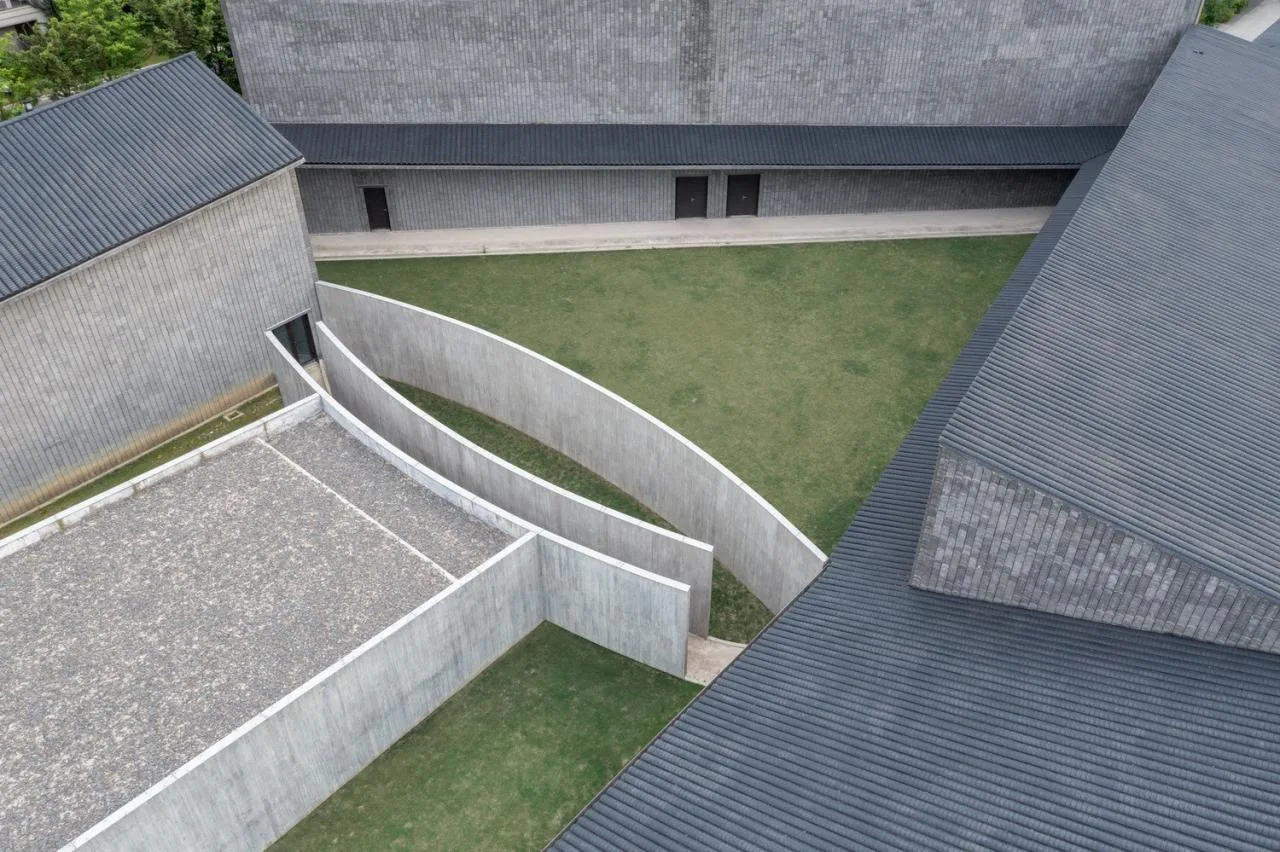
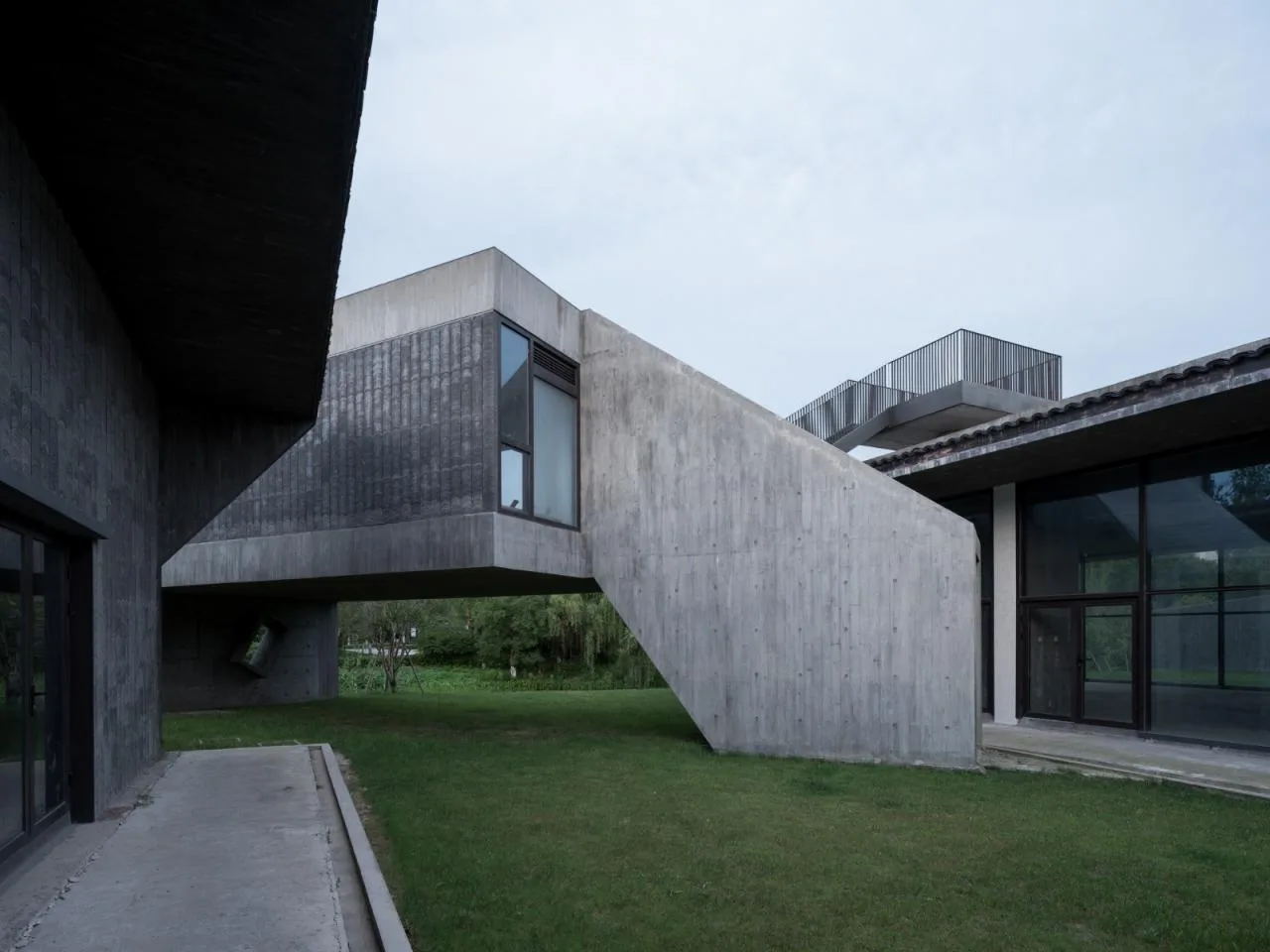
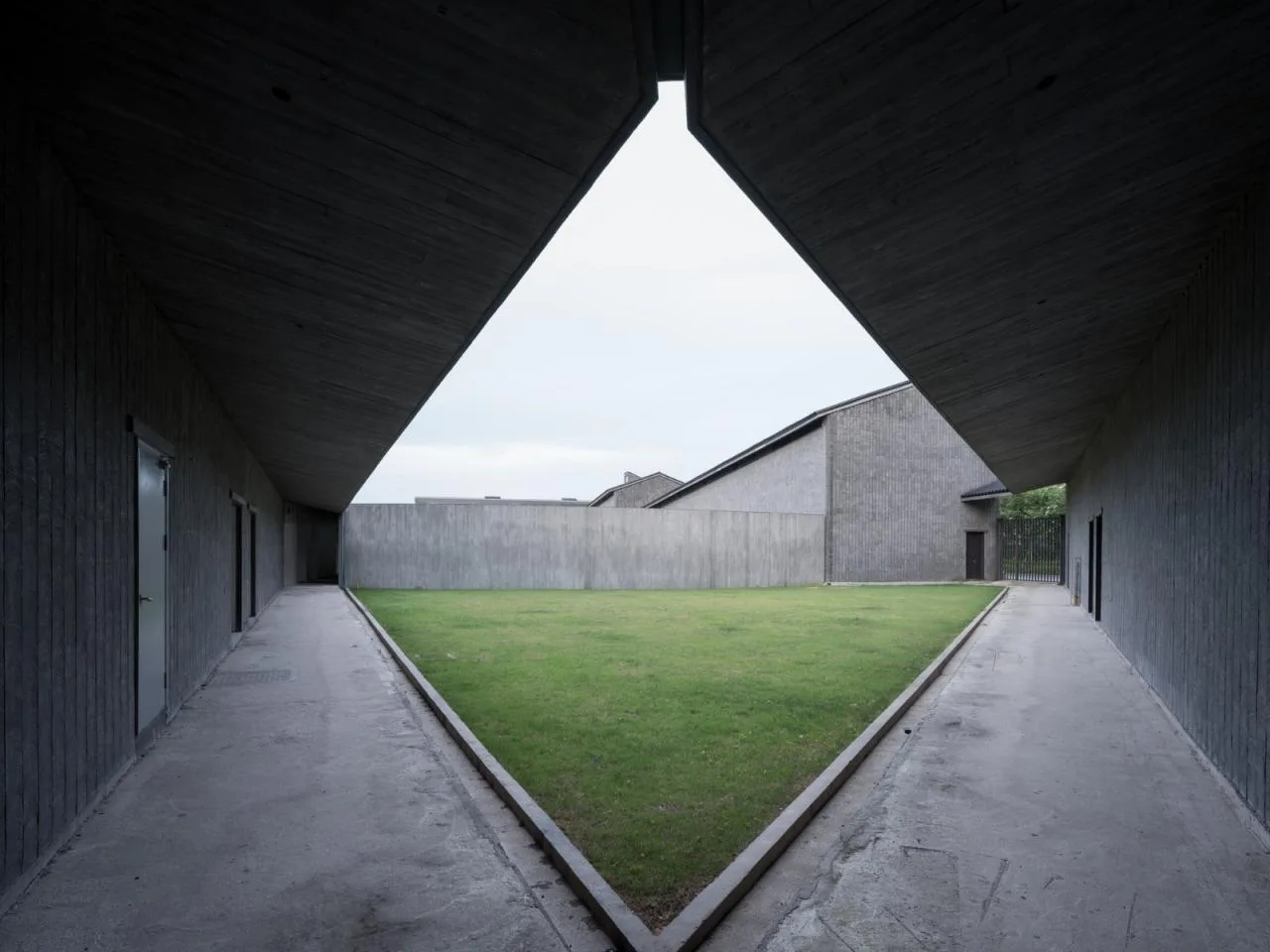
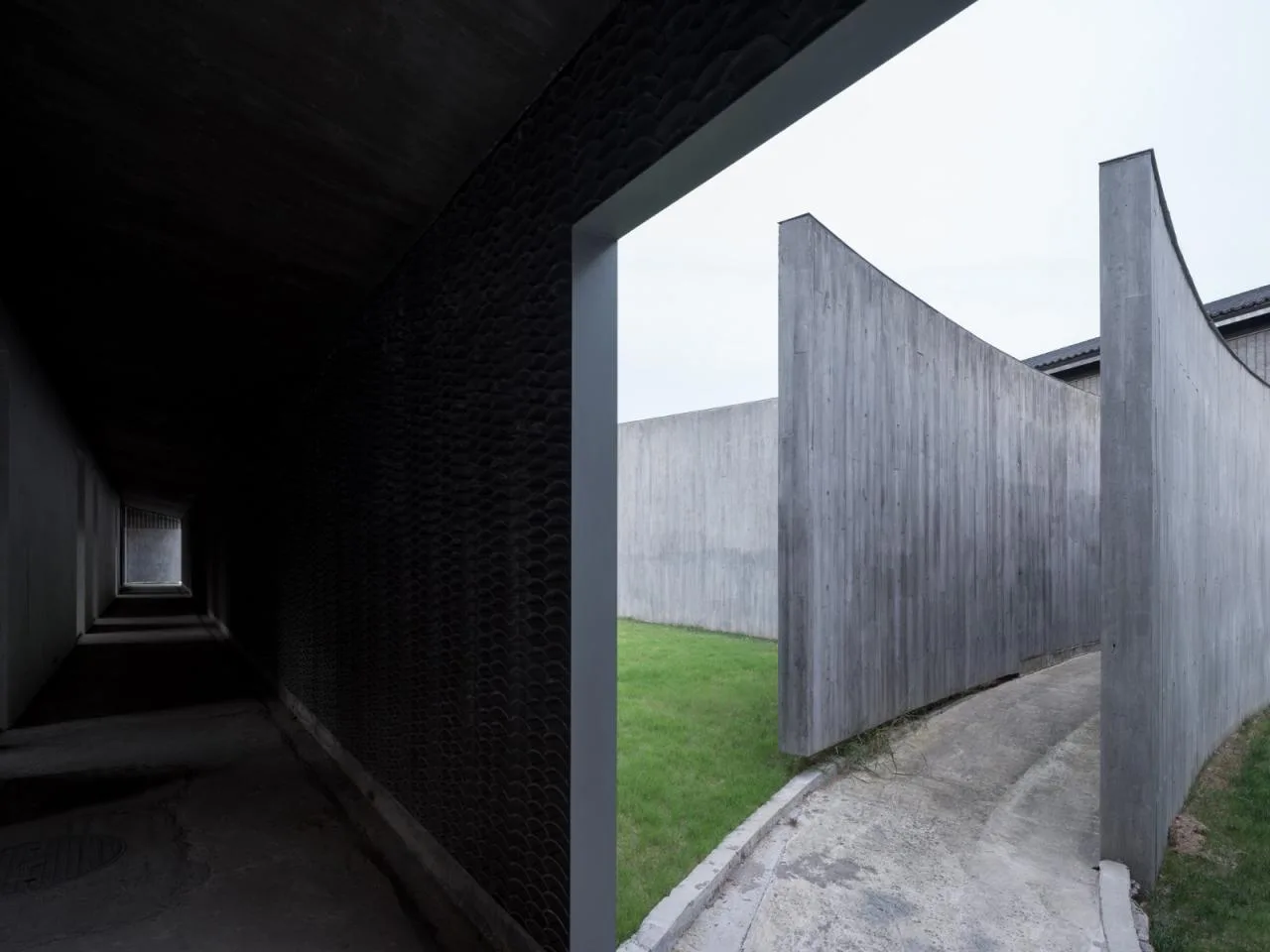
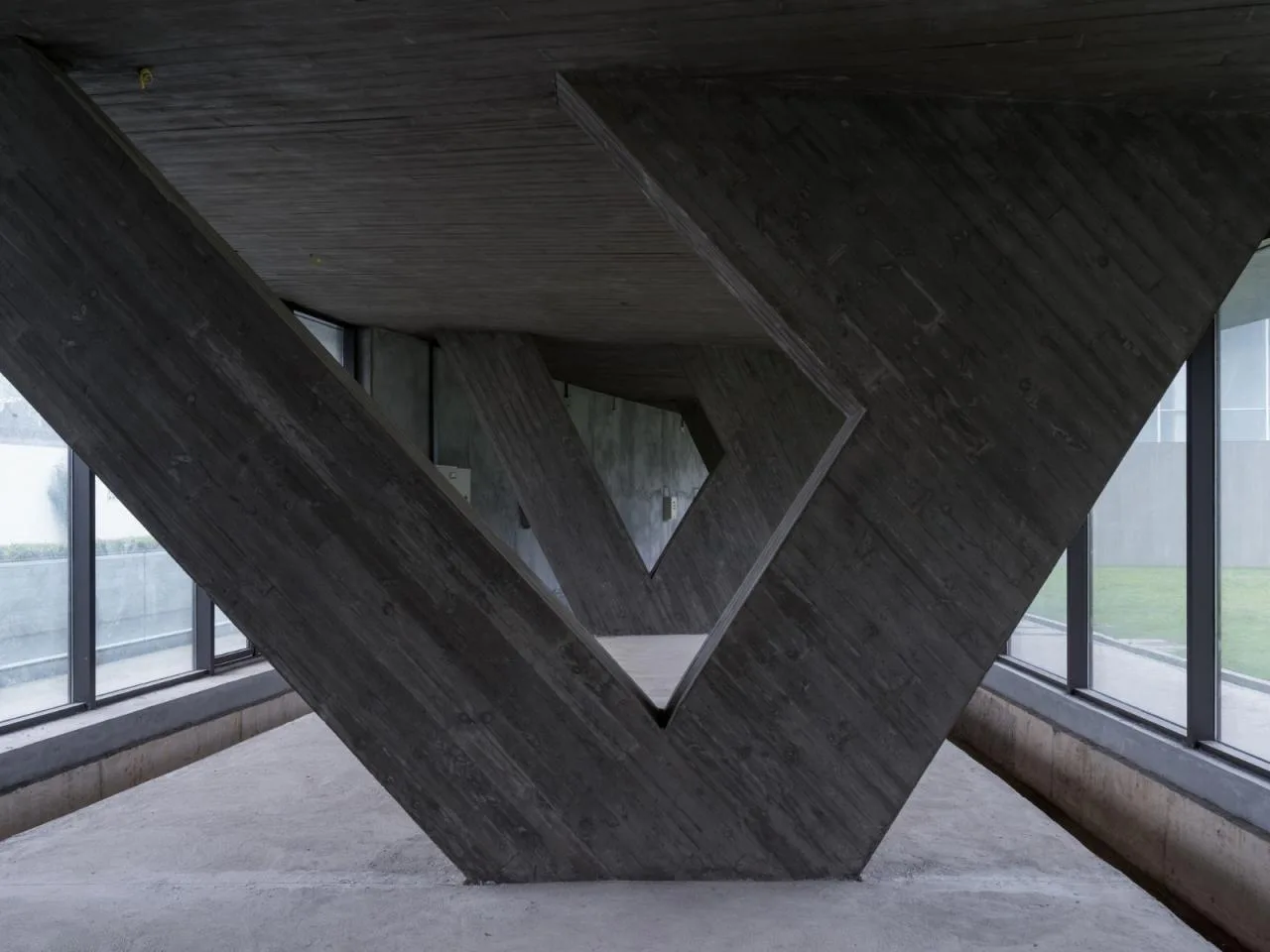
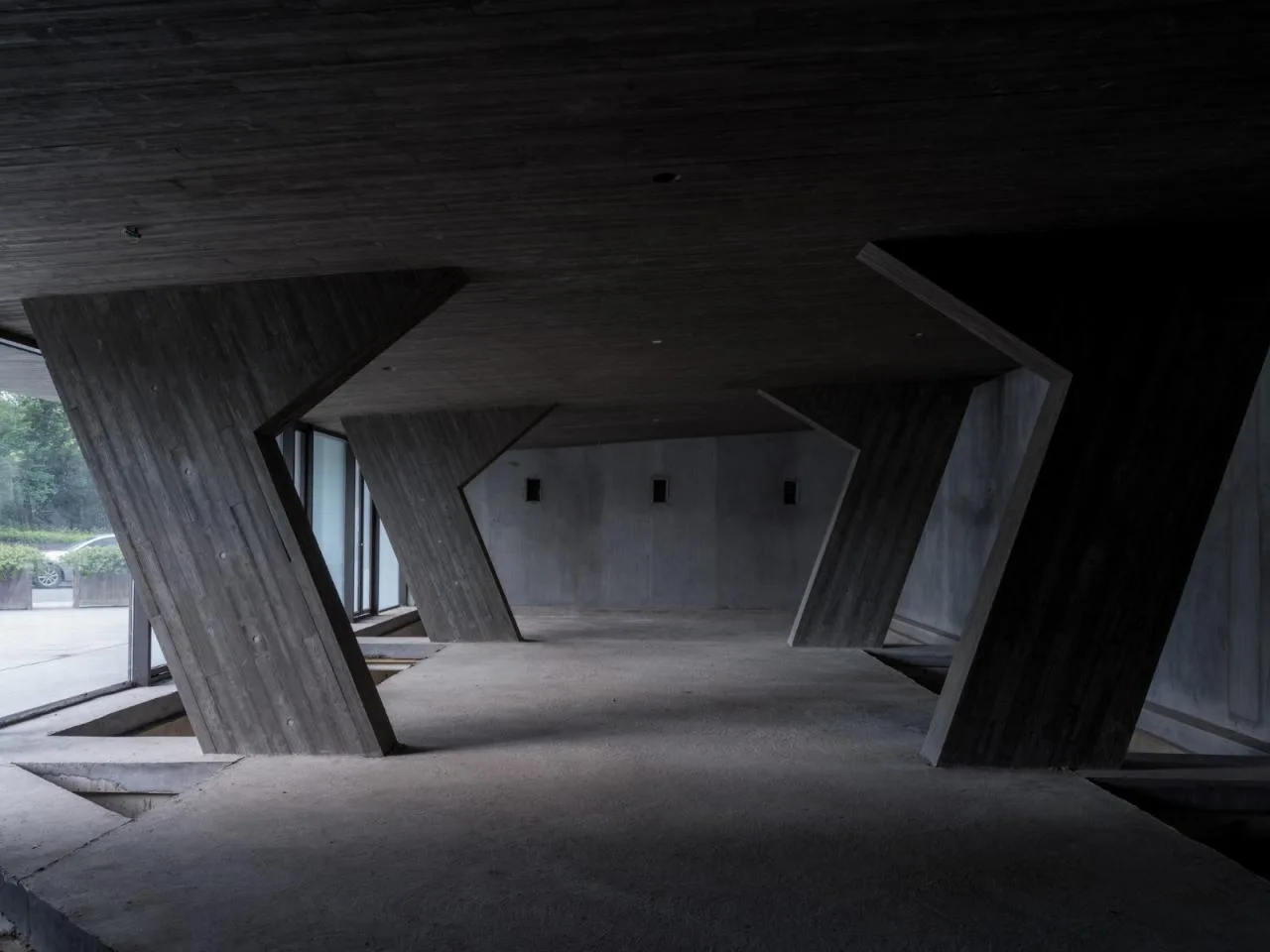
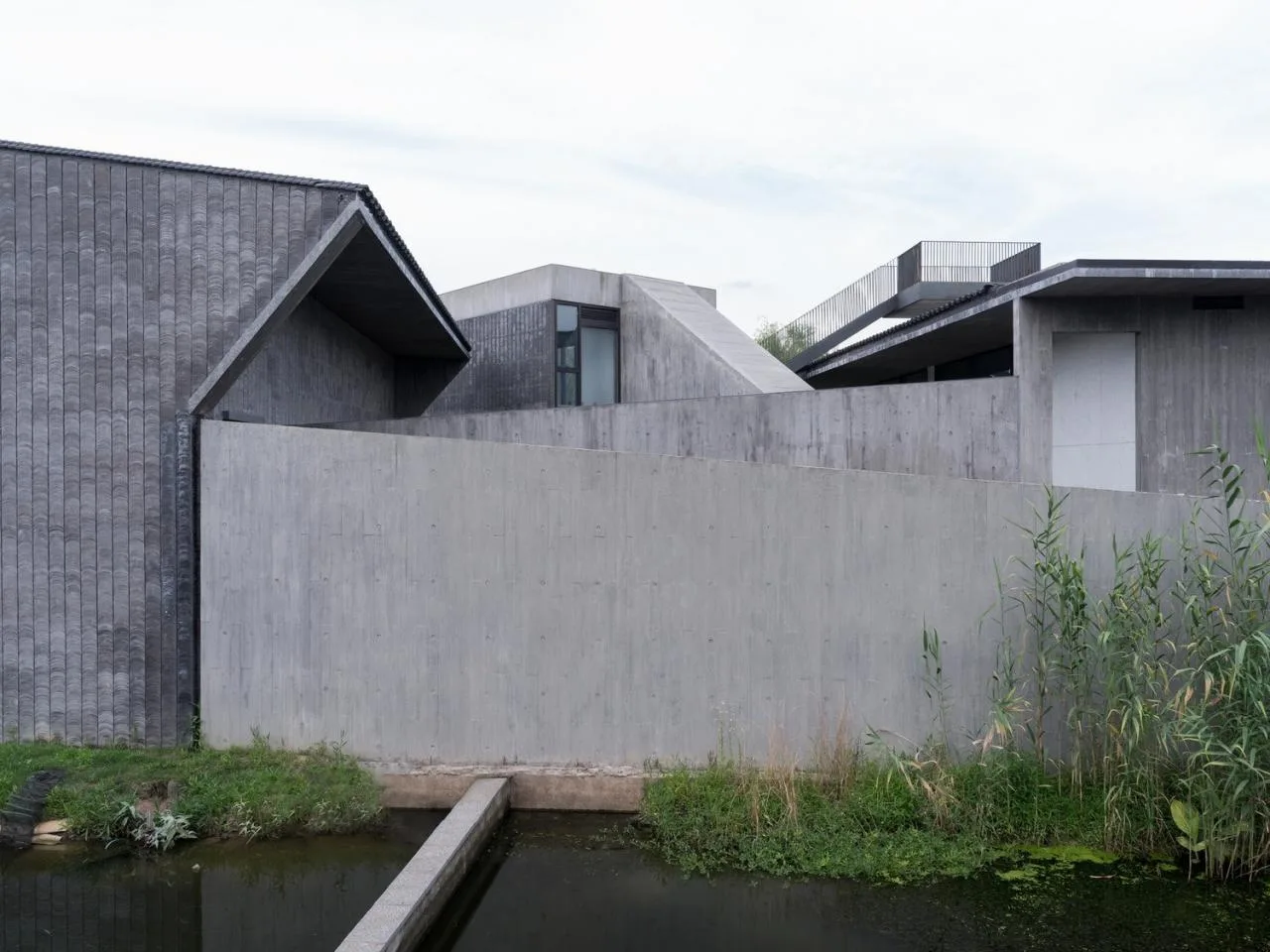
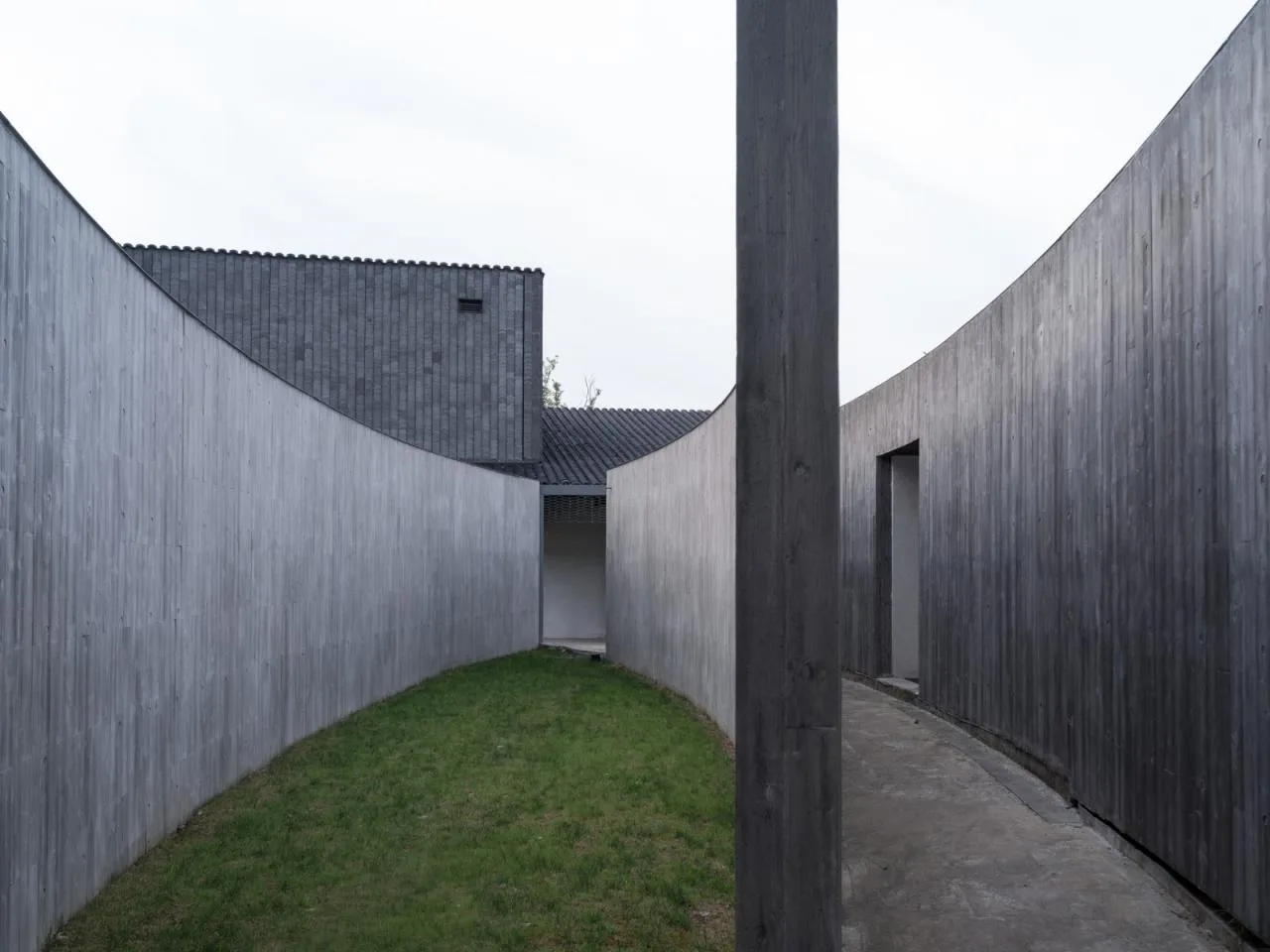
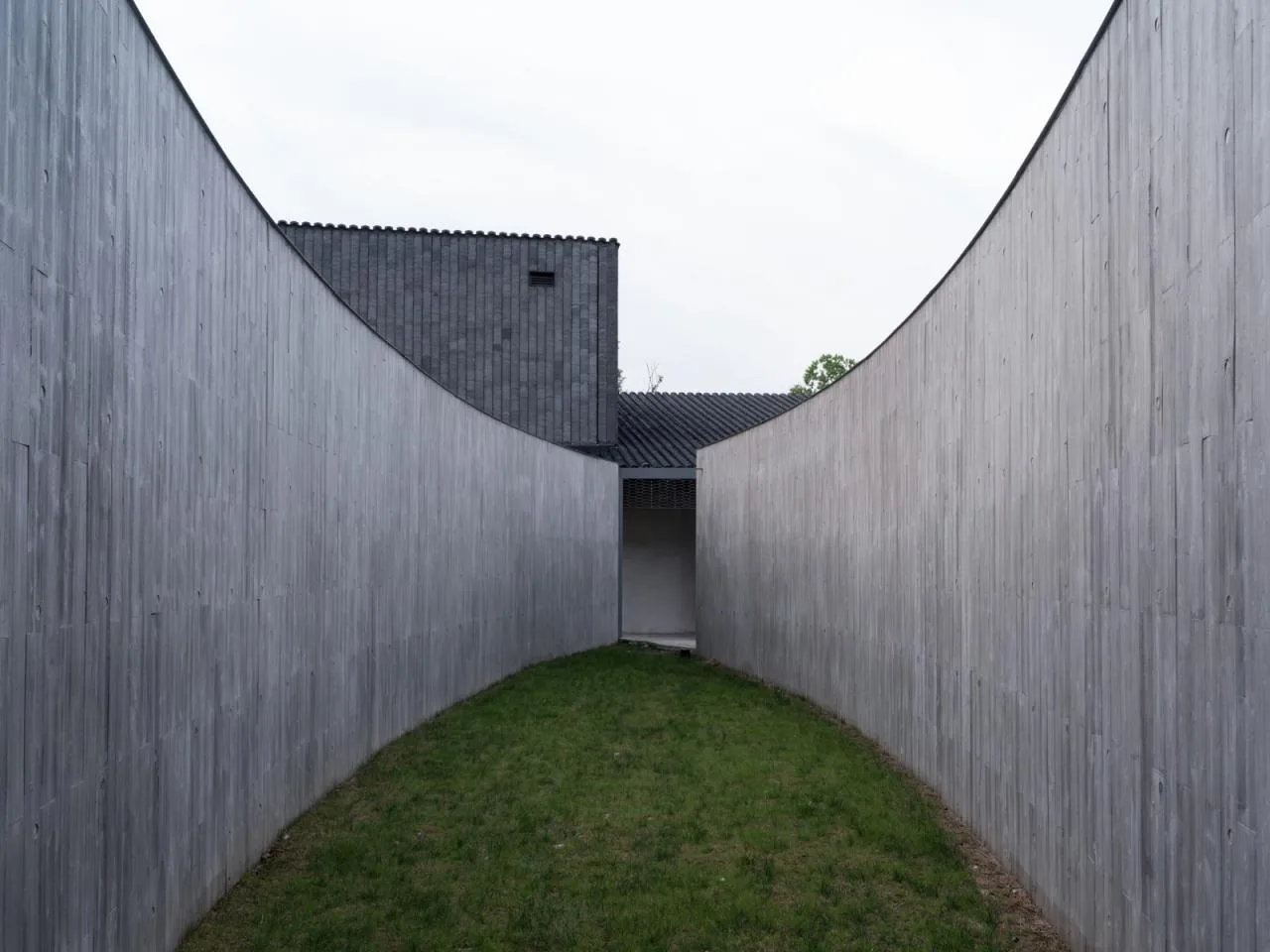
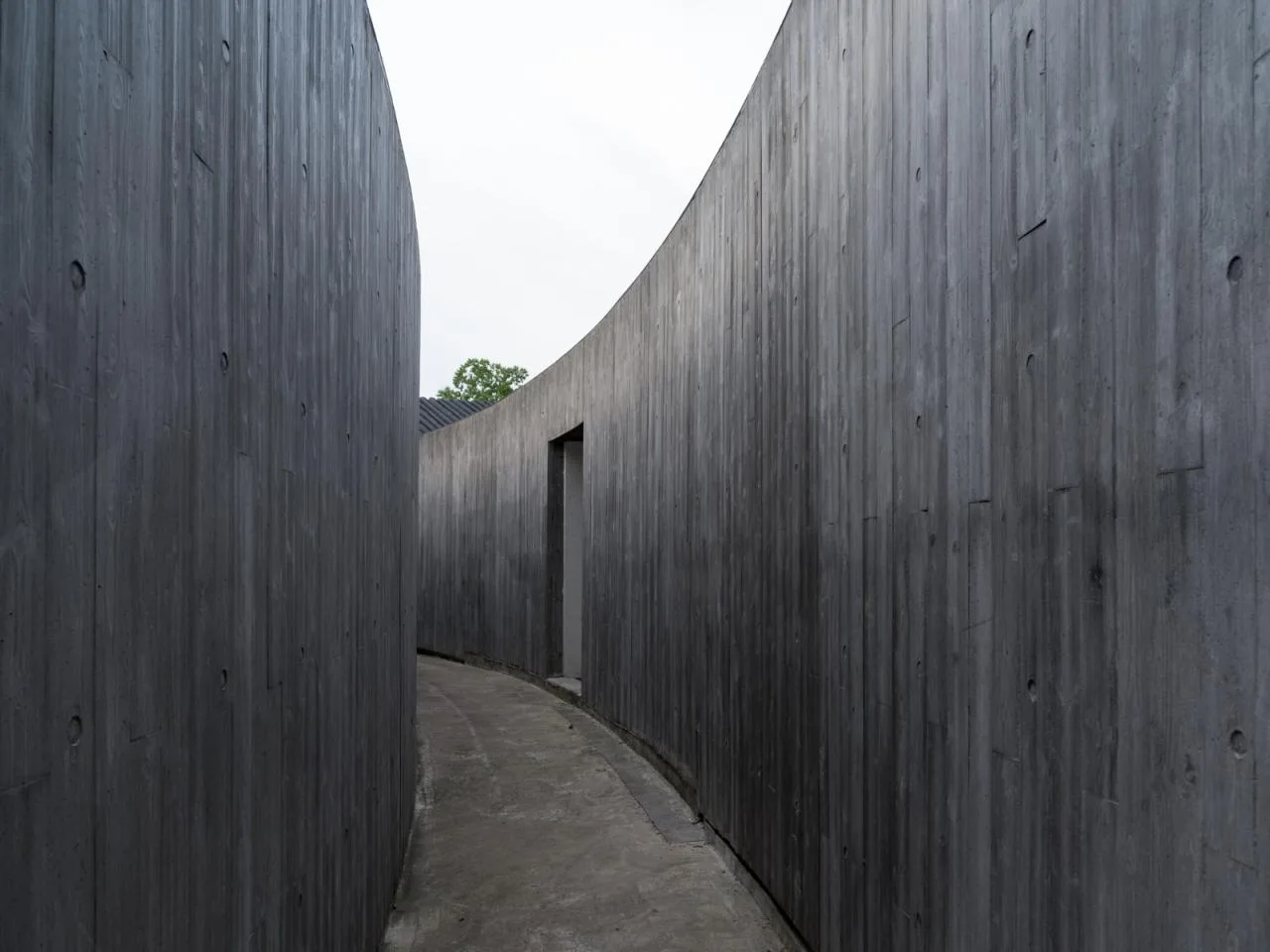
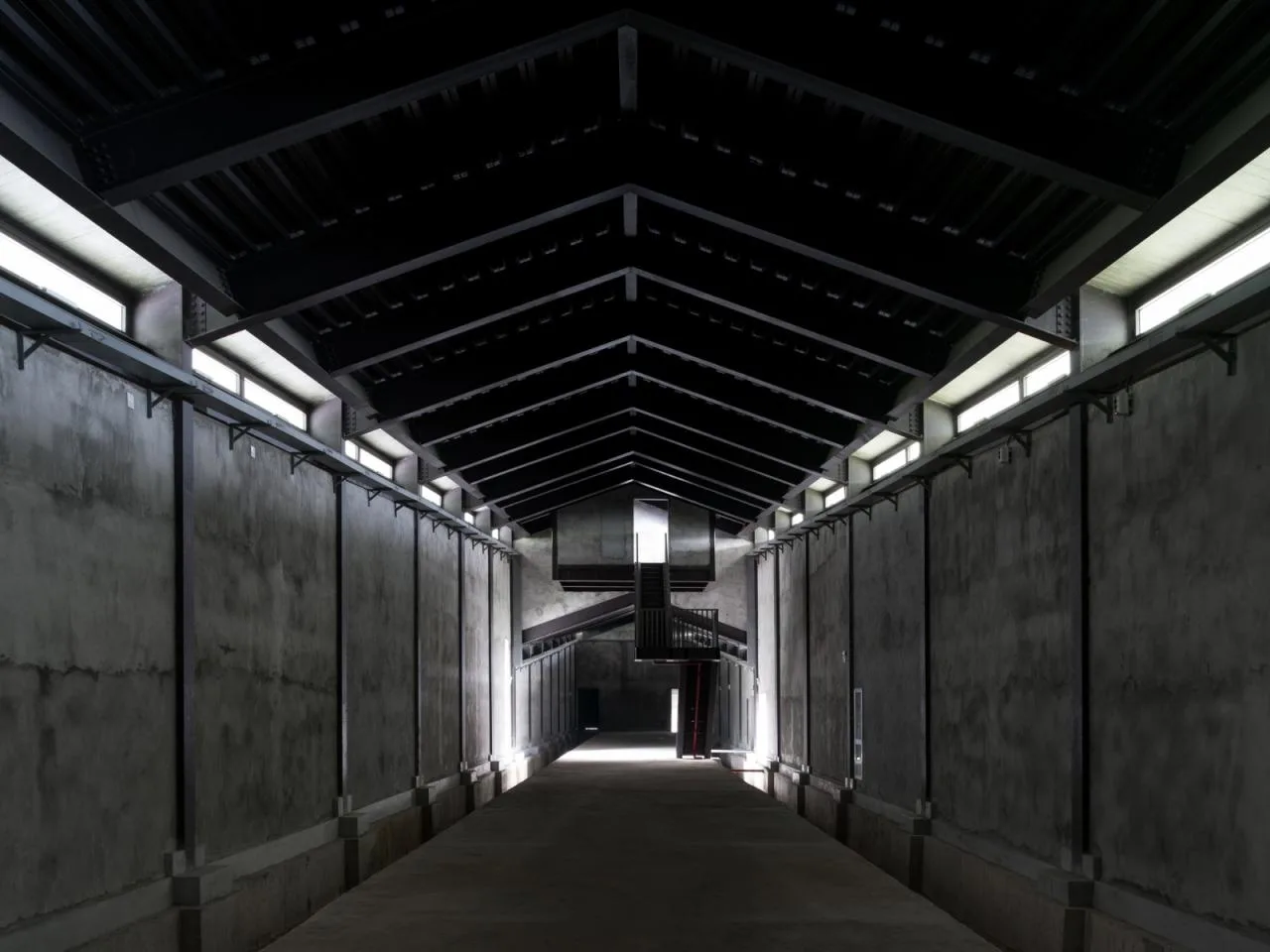
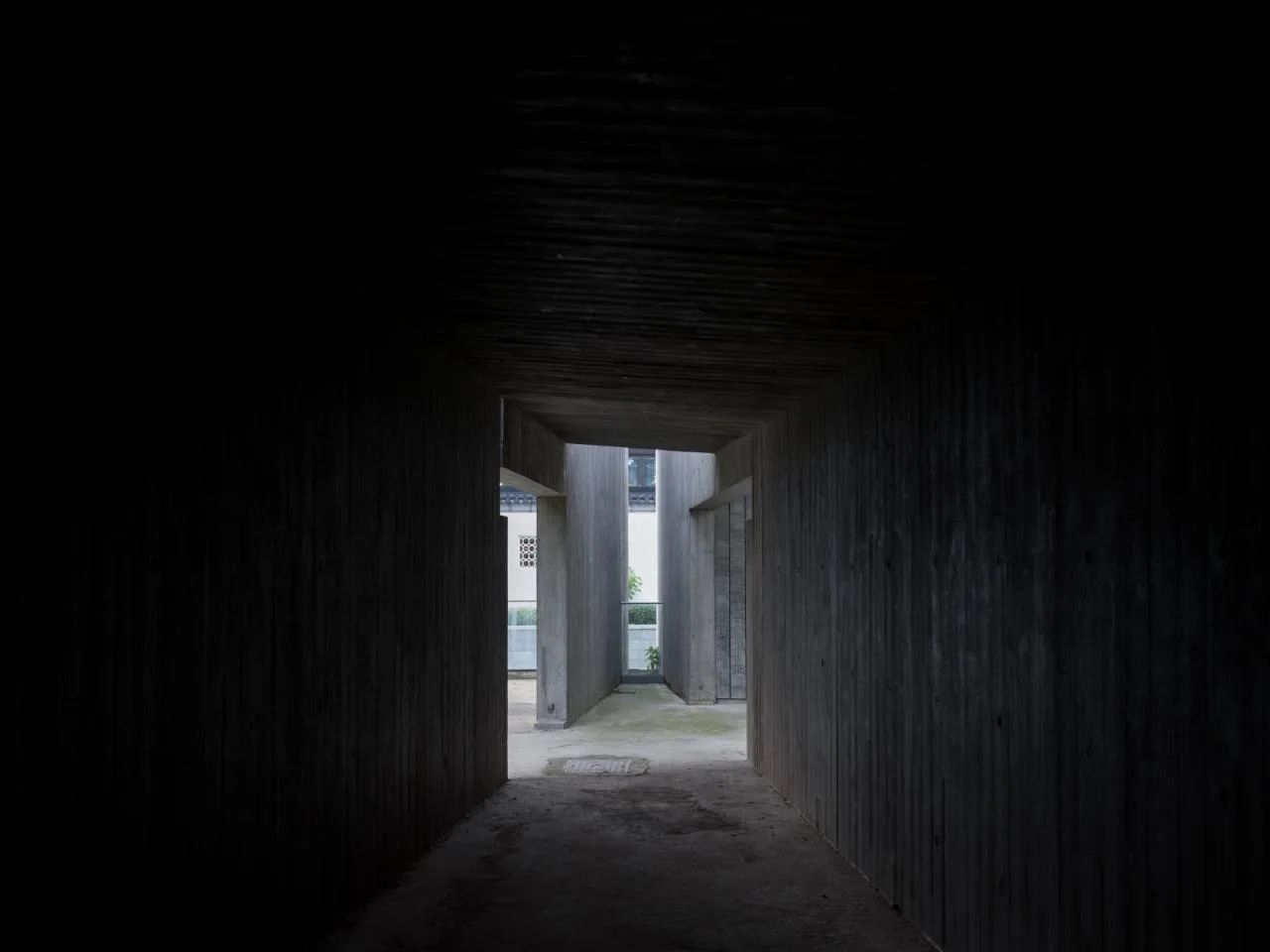
We combined these perspectives to create a series of wedge-shaped spaces—both functional and purely architectural—that exaggerate space in one direction and compress it in another. This dynamic manipulation alters visitors’ perception of time and space continuously, revealing their immeasurable nature and enriching the experience. Visitors become immersed in a journey through shifting time and space.
The Wu Dayu Art Museum thus becomes a playground for time and space.
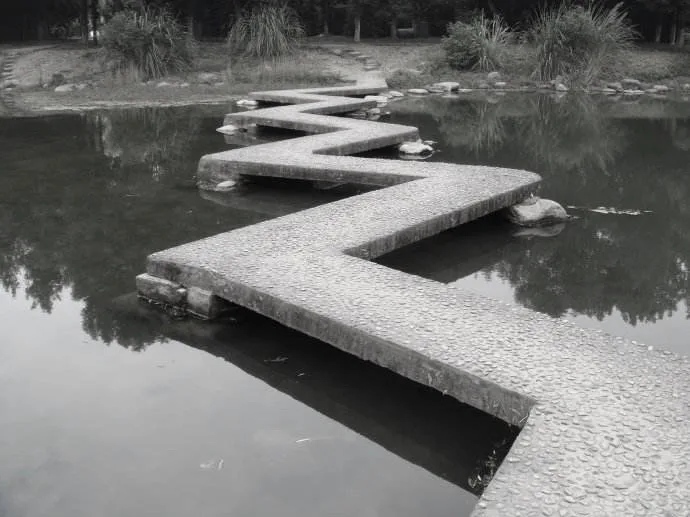
△ Jiuqu Bridge © Online image
Space
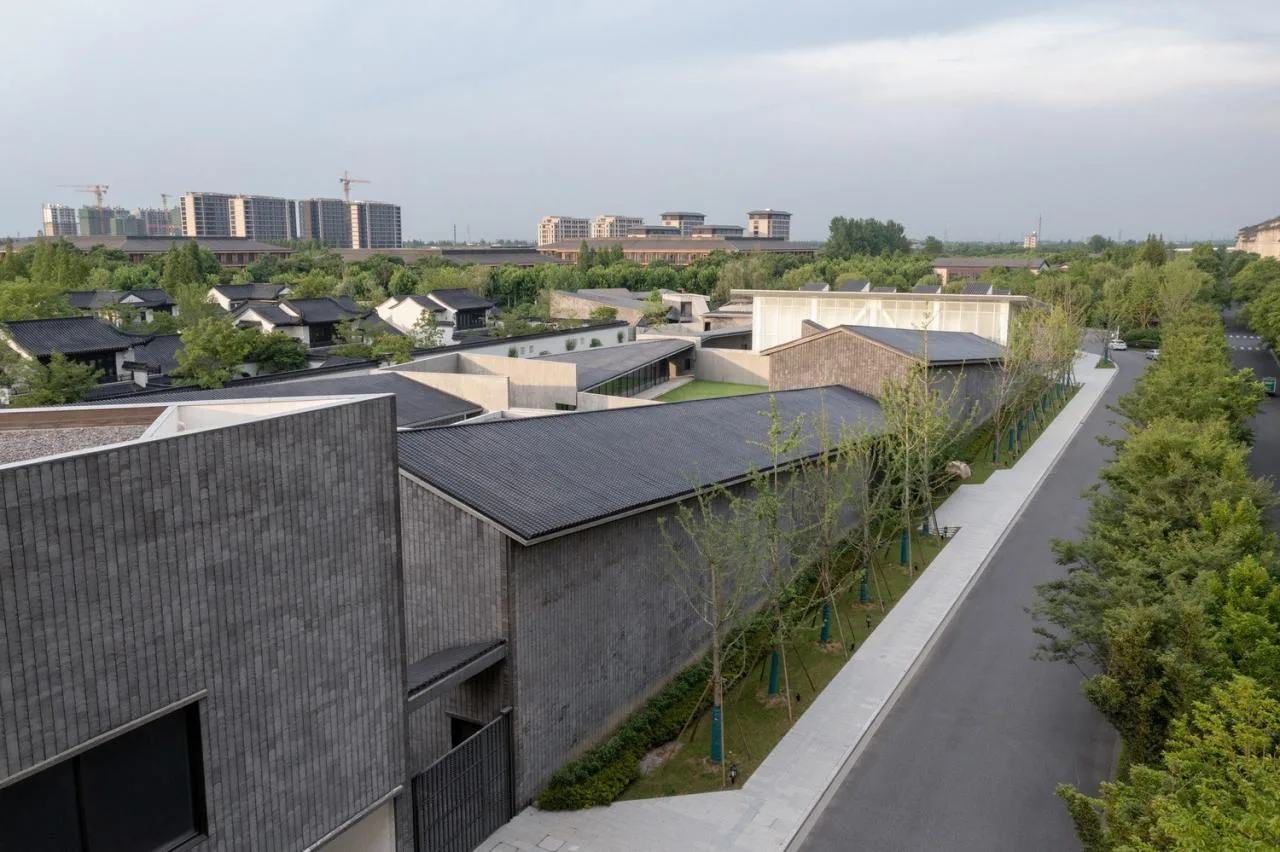
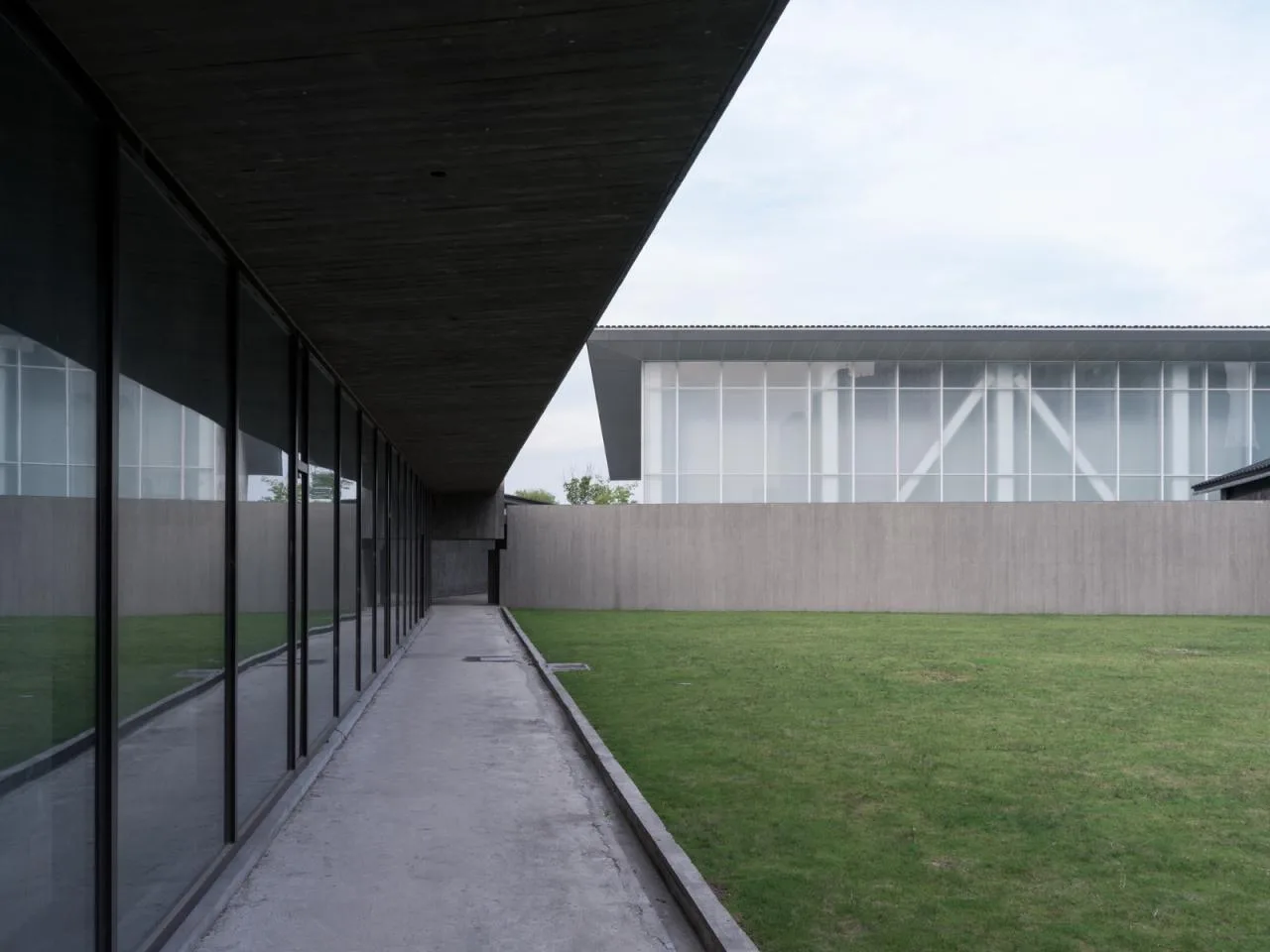
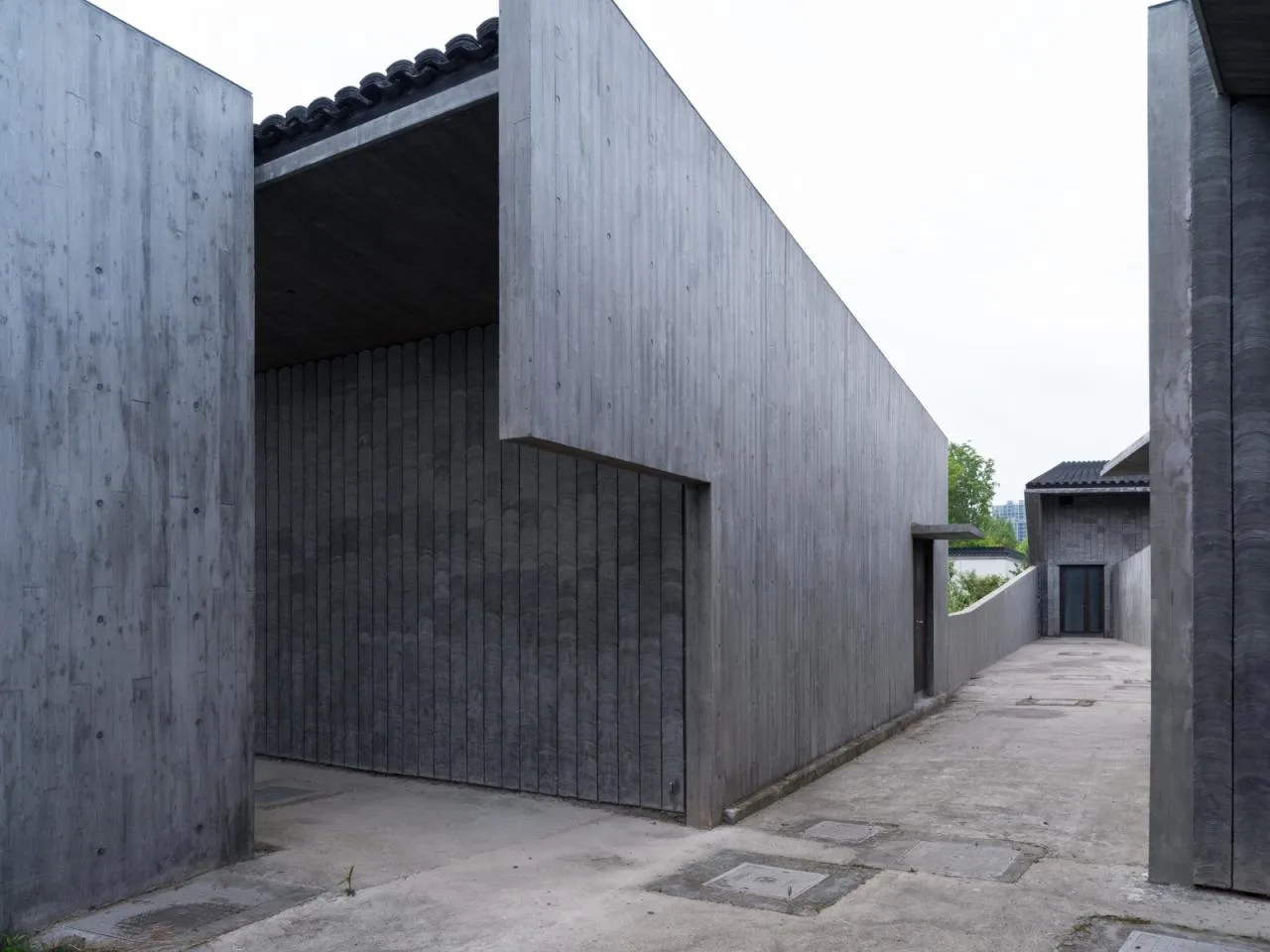
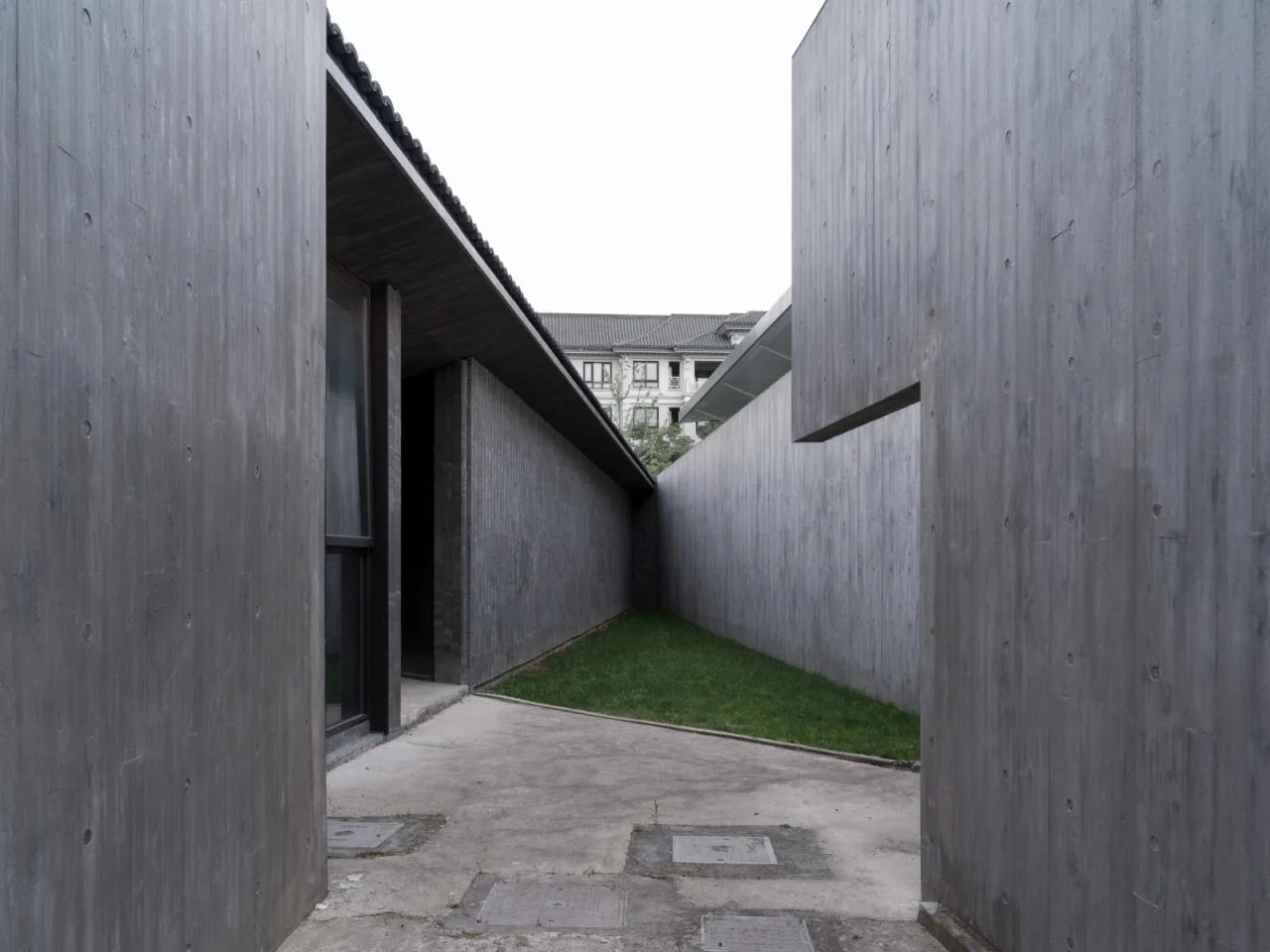
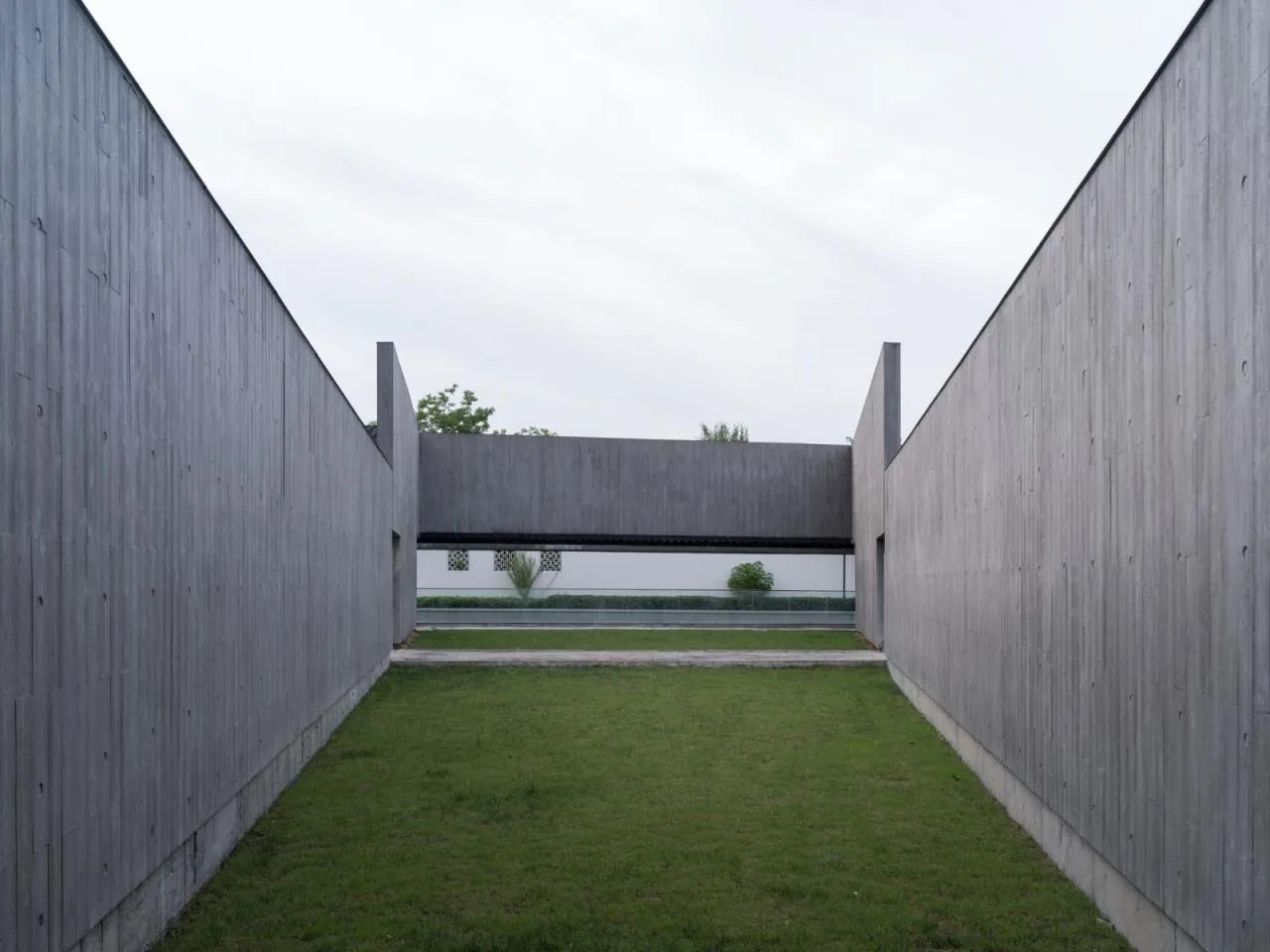
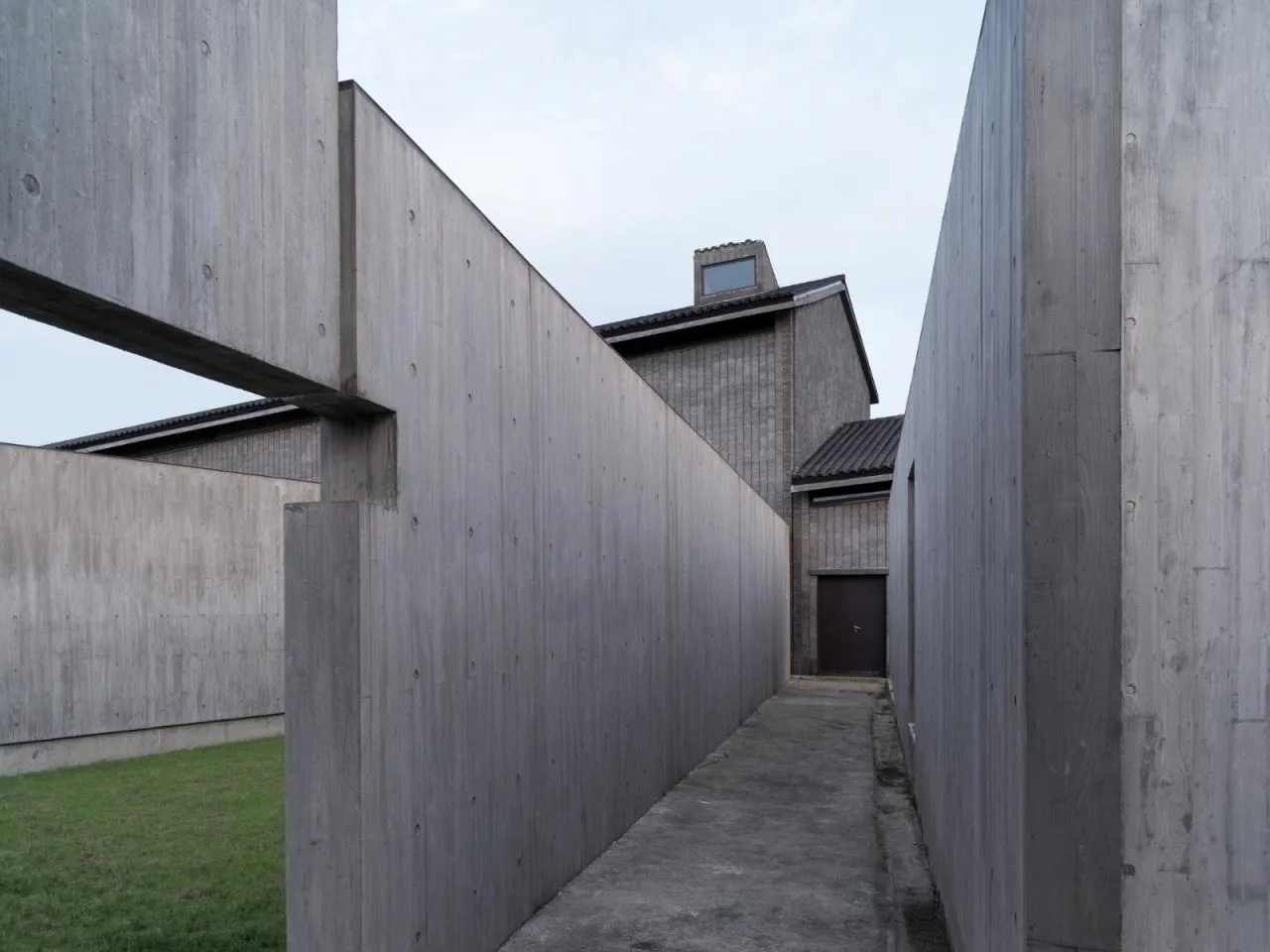
The essence of museum architecture lies in creating a “touring” experience, making spatial design and relationships critical. Beyond perspective manipulation, we introduced the concept of “pure architectural space”—a series of outdoor or semi-outdoor transitional spaces with dramatic shapes that intensify the visitor’s journey.
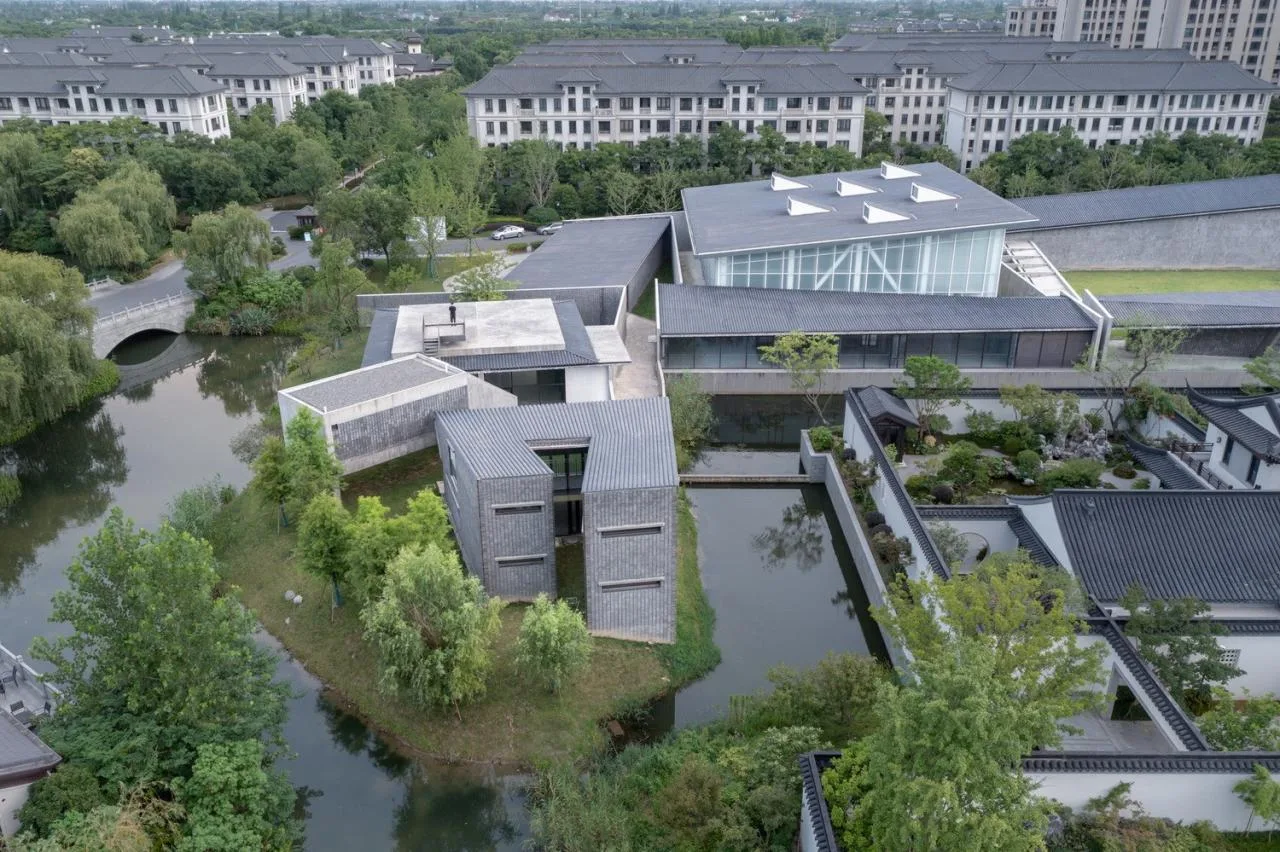
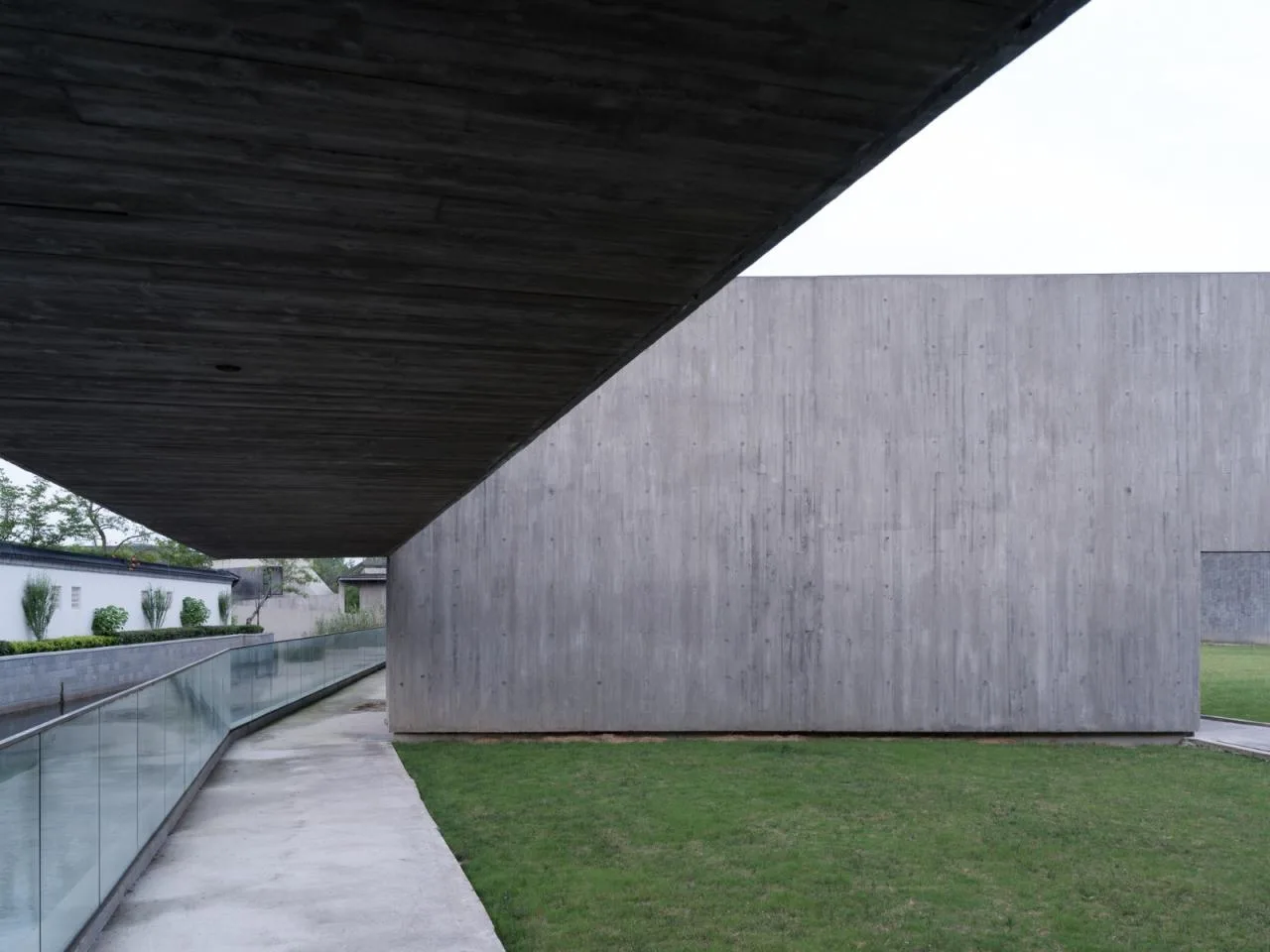
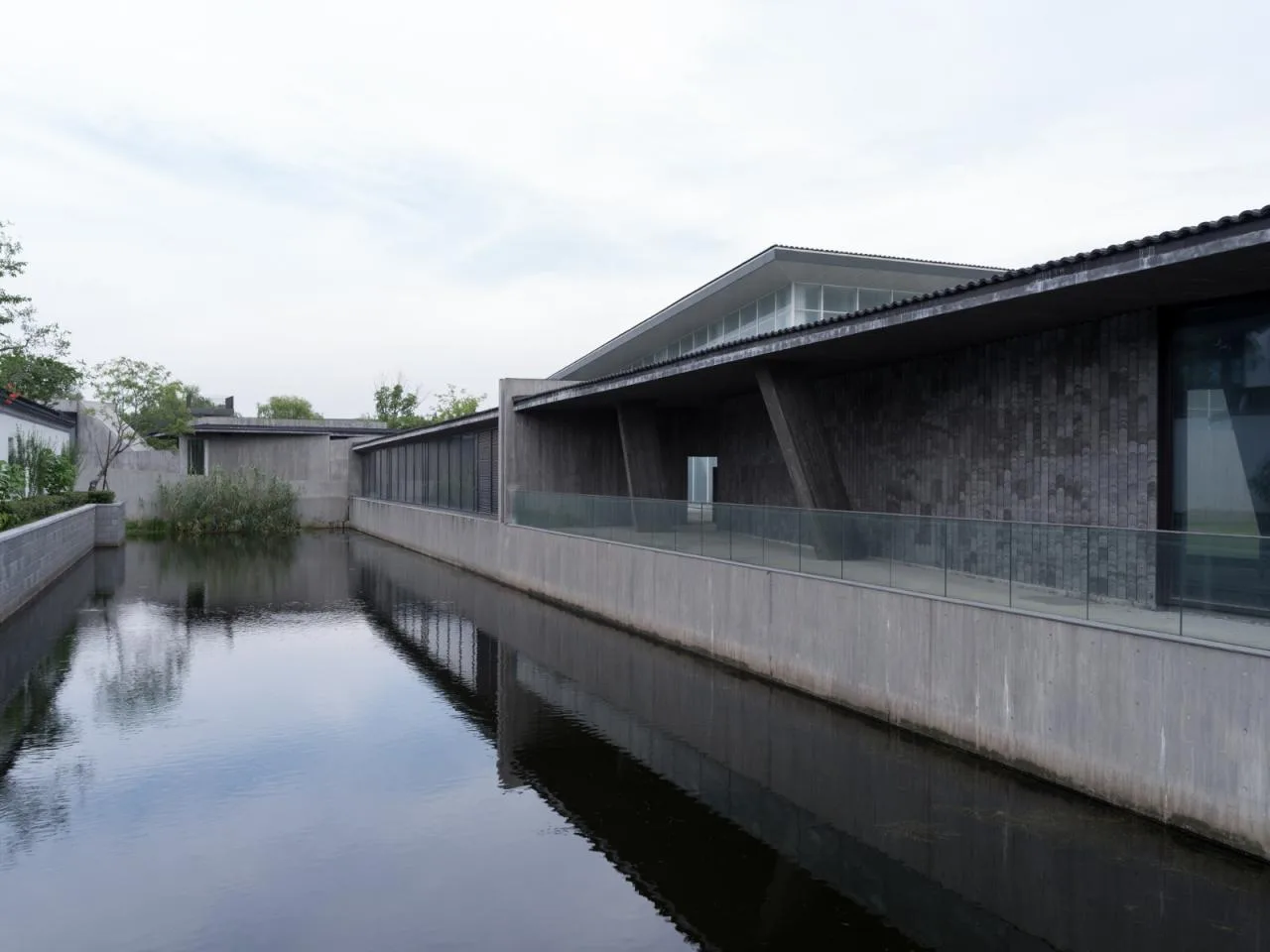
The overall layout uses courtyards and entrances to engage with traditional architectural elements, adding a new layer of experiential depth beyond the play of perspective.
Form
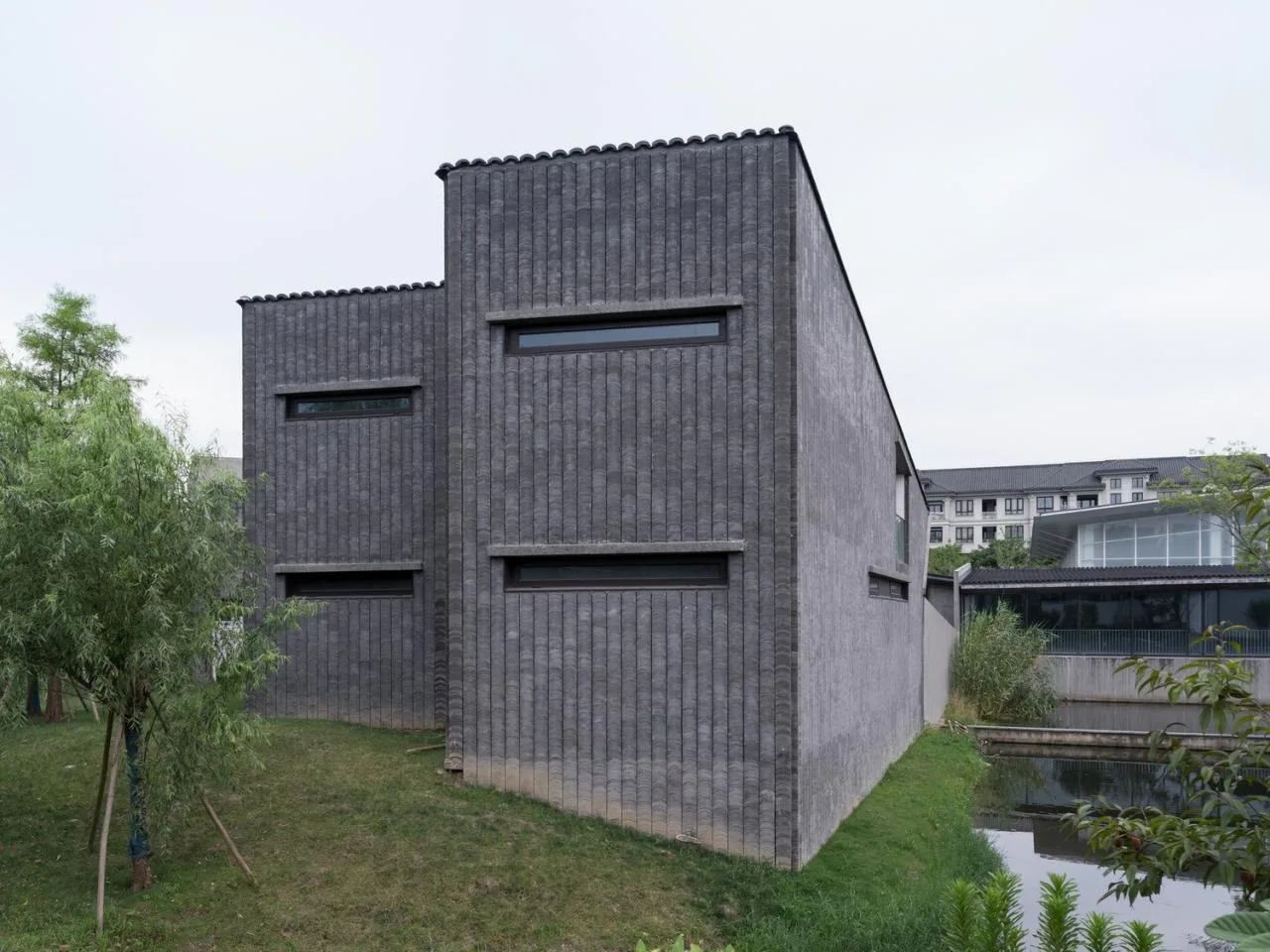
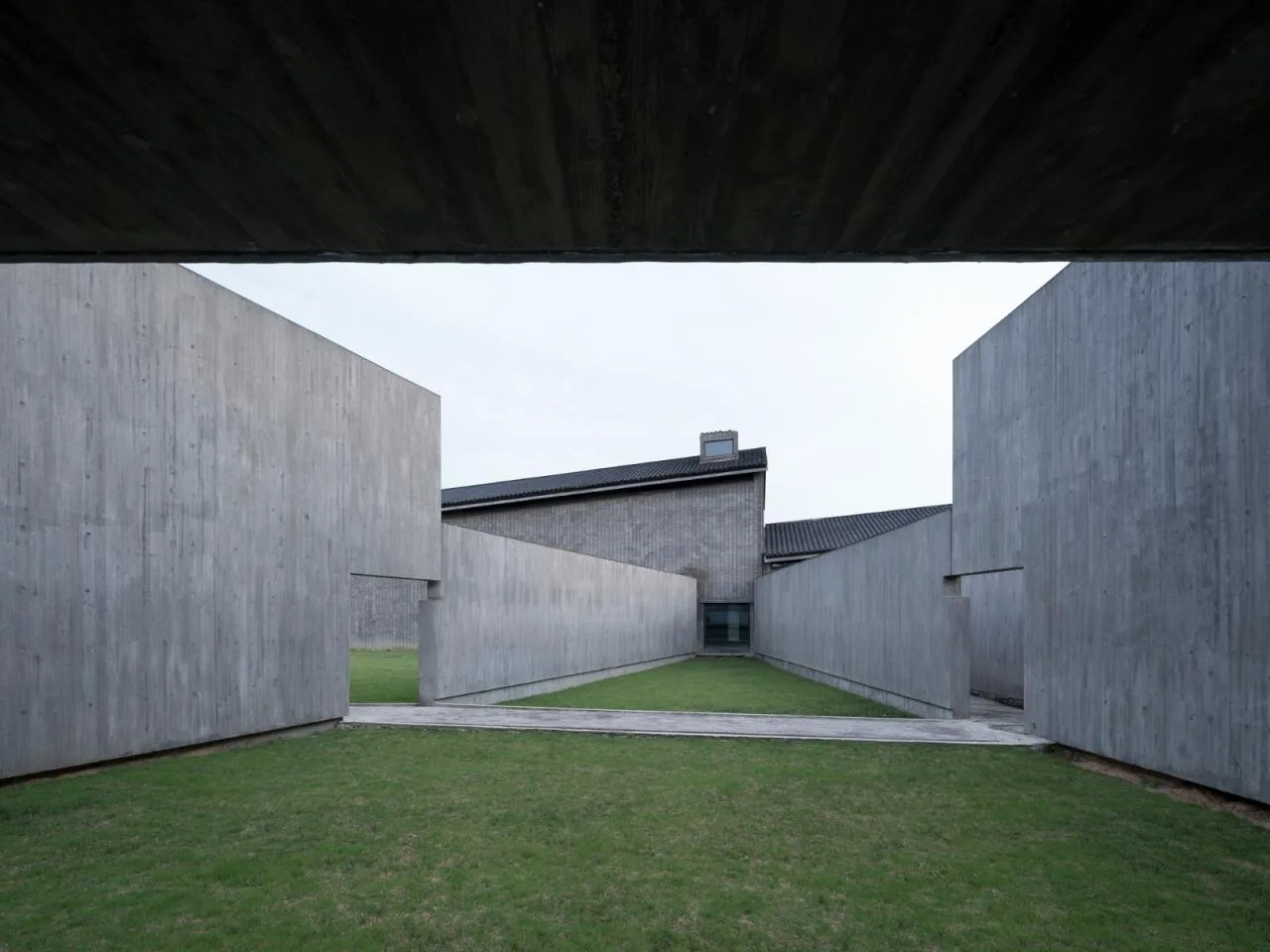
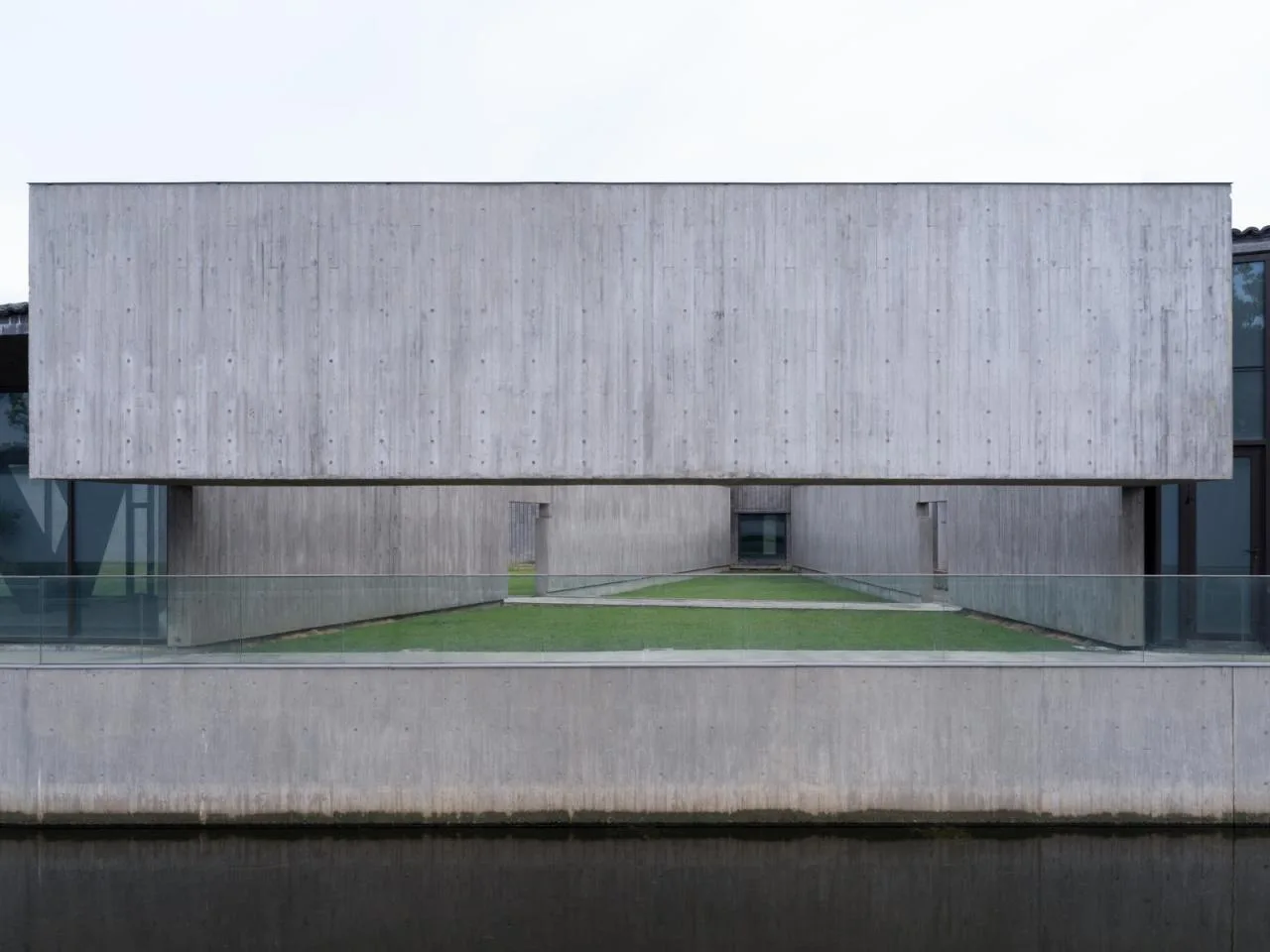
Our focus on time, space, and experience liberates us from static composition, including the formal relationships between building volumes and facade elements.
The work of Swedish architect Sigurd Lewerentz has been a significant influence in this regard.
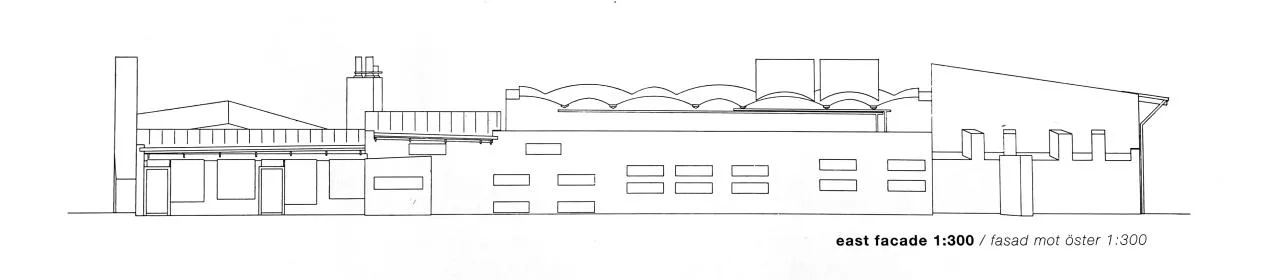
Lewerentz, east facade of St. Peter’s Church

△ South facade of Weiming Art Museum © FCJZ
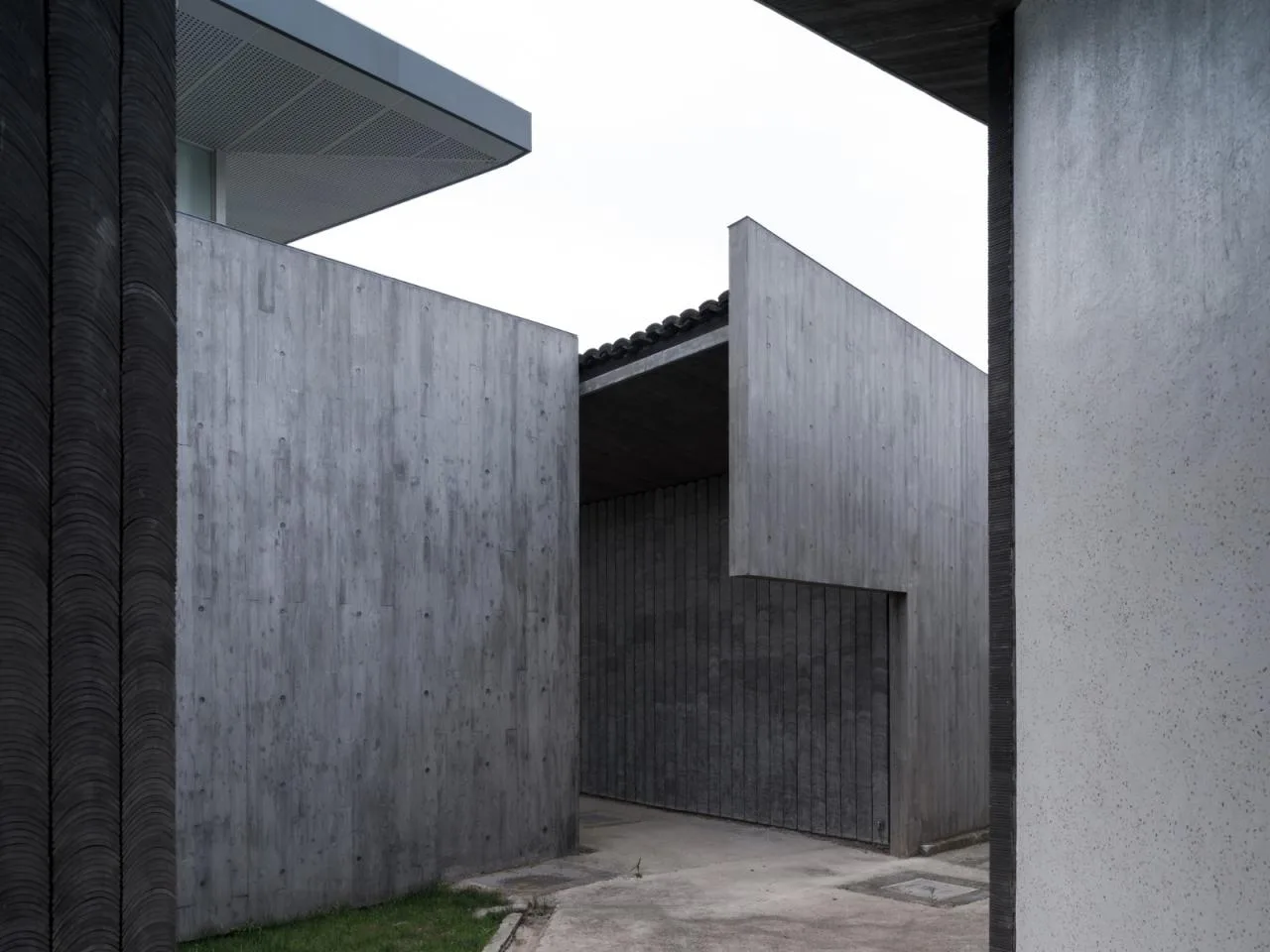
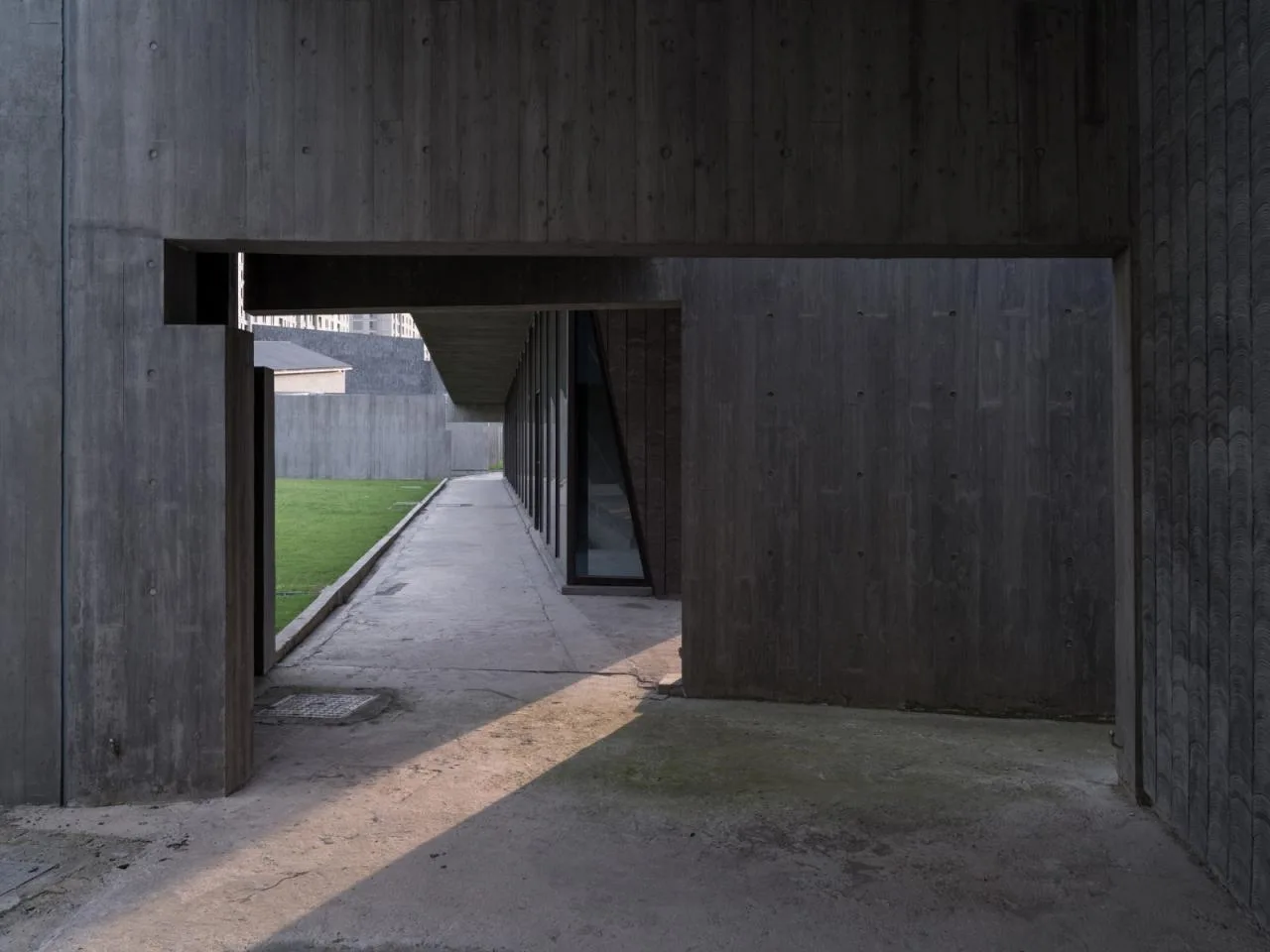
Structure
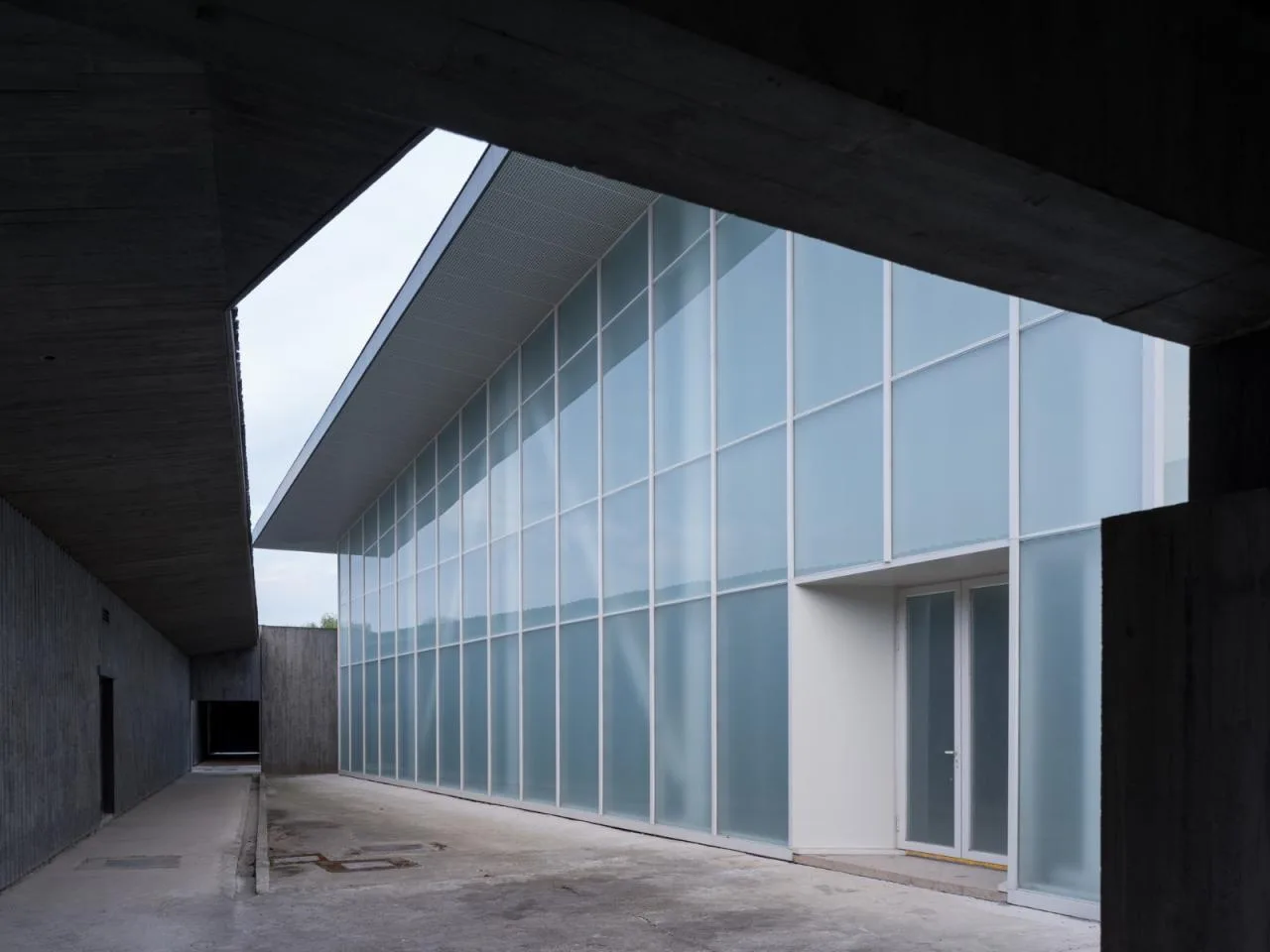
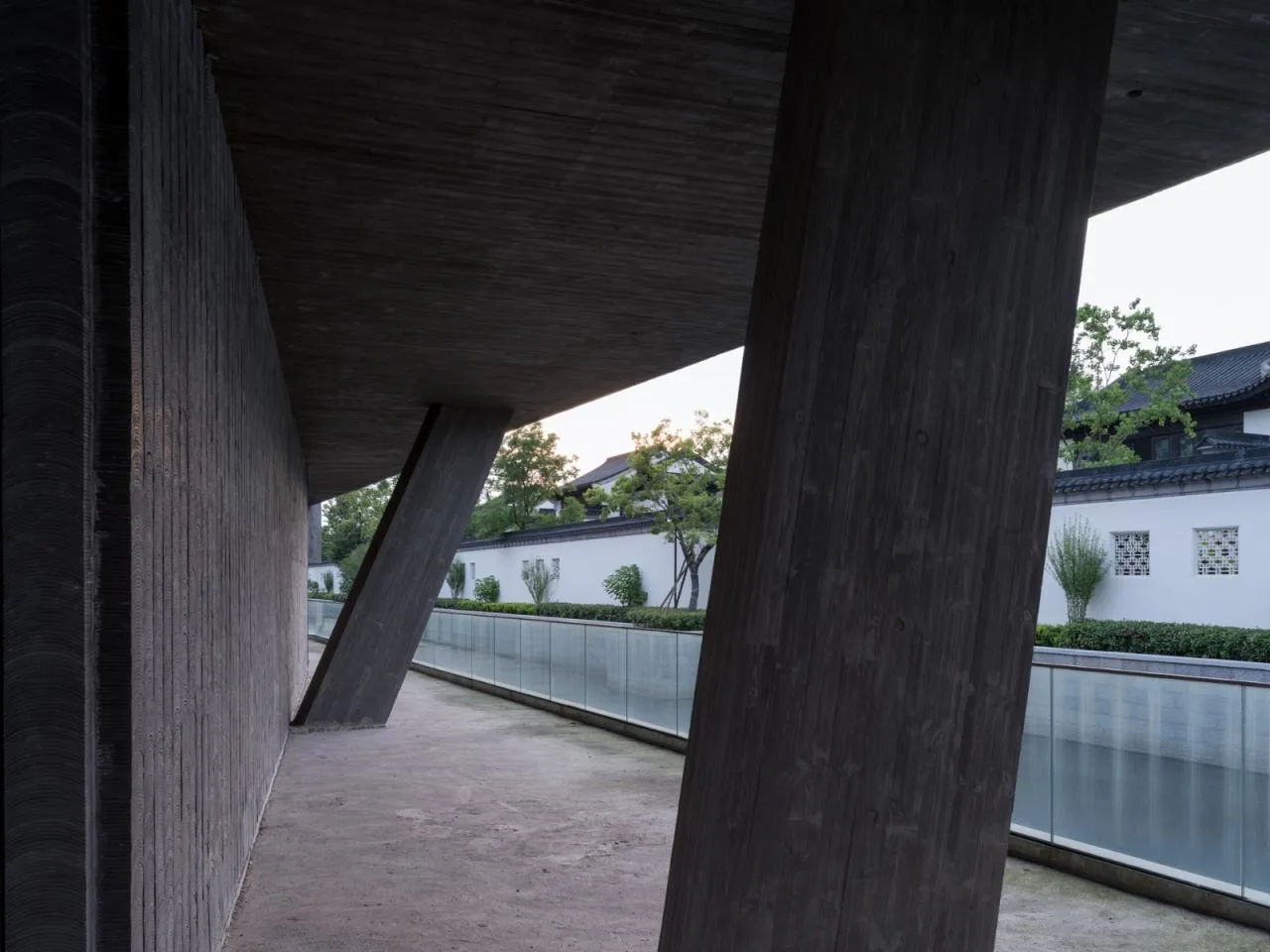
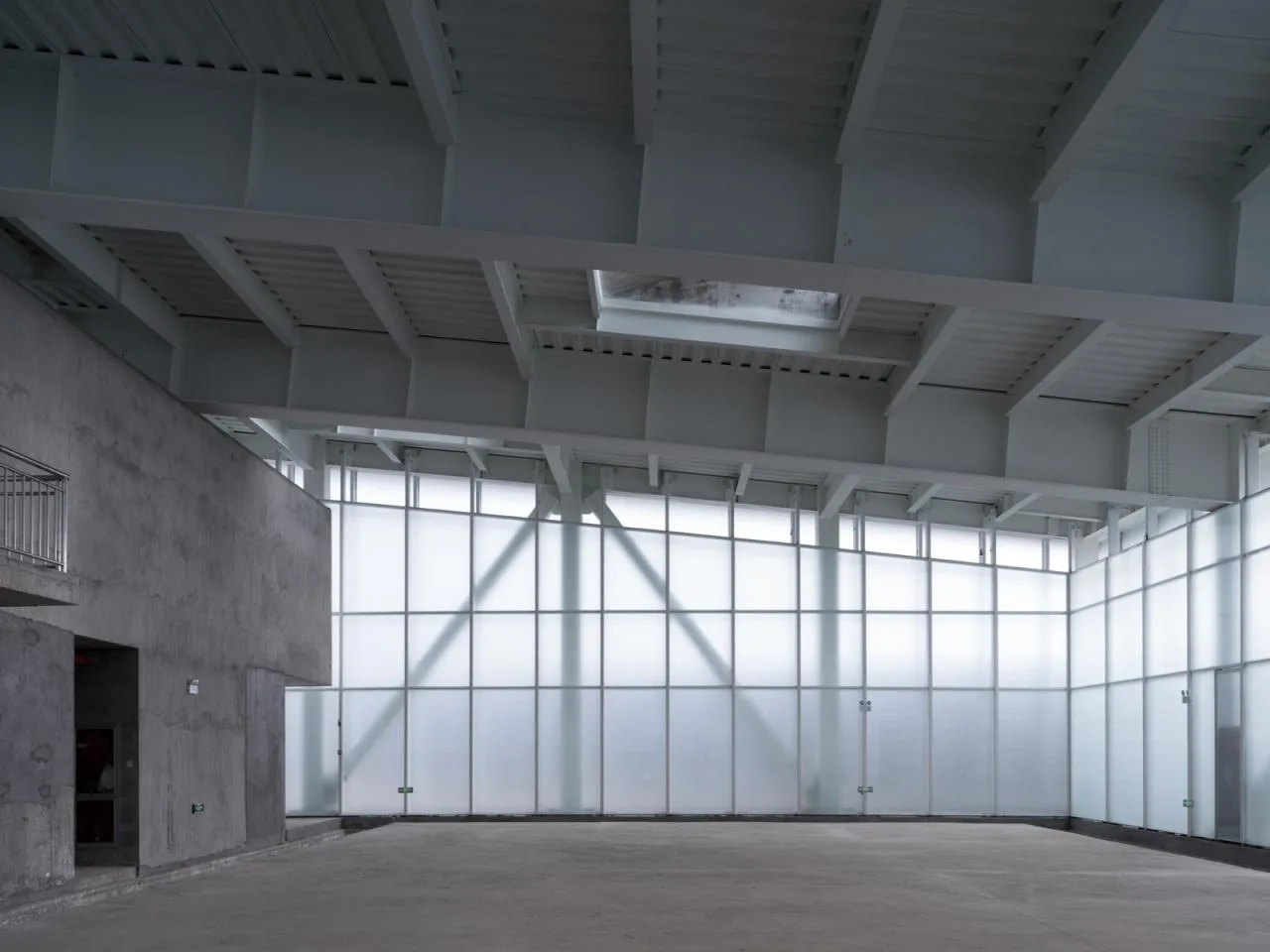
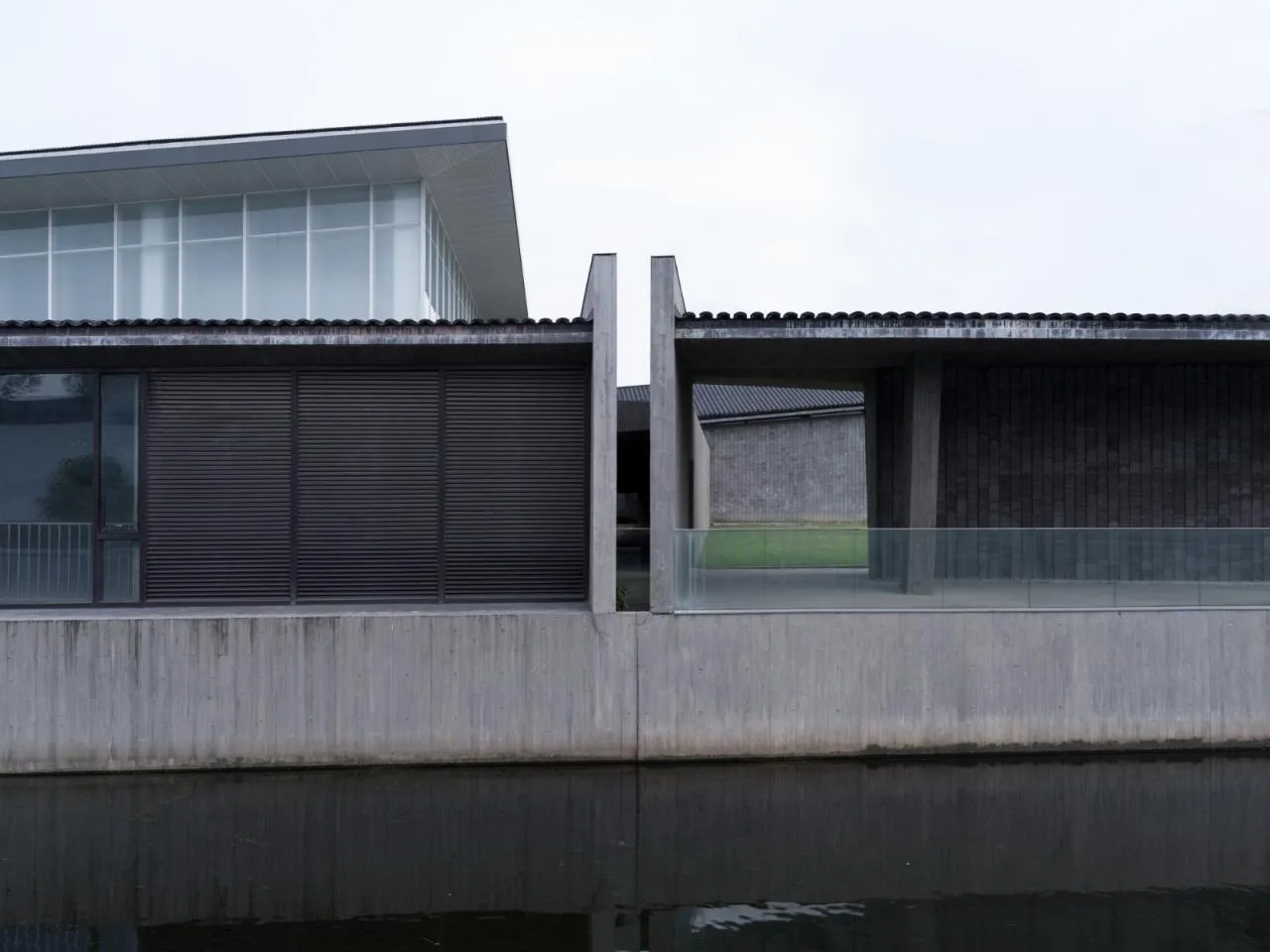
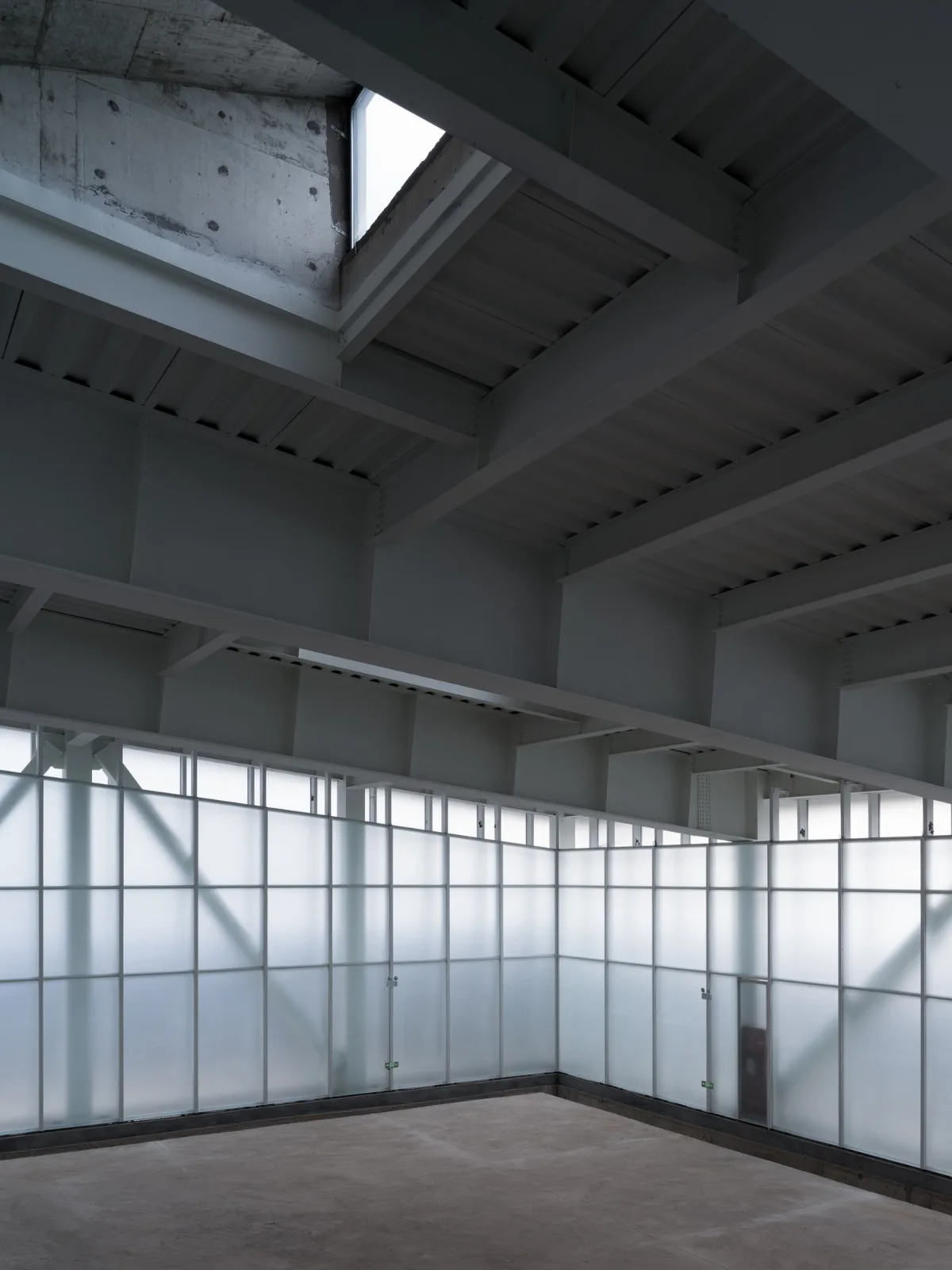
The project employs a beamless concrete slab and column structural system combined with steel framing.
Regional Context and Materials
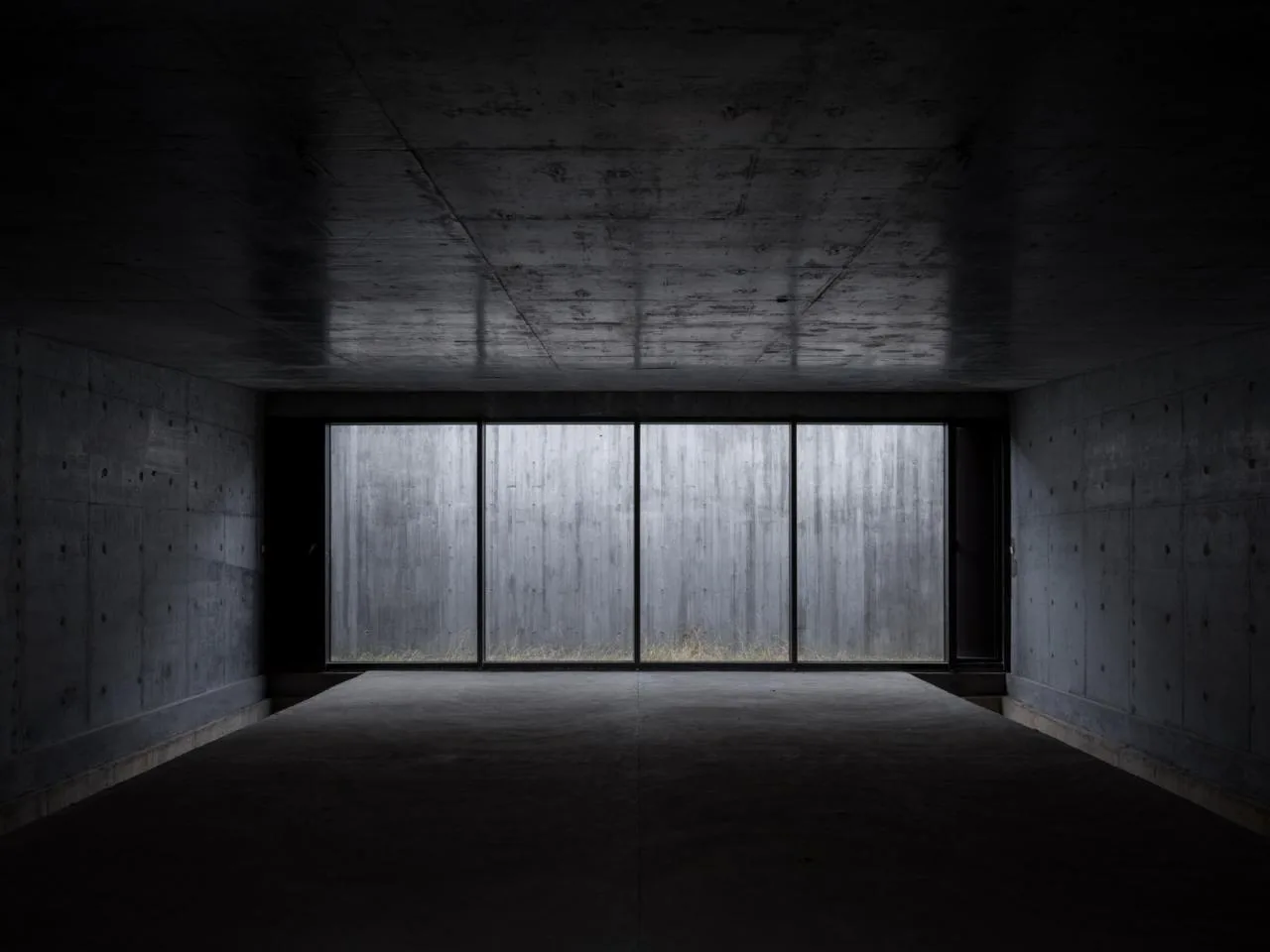
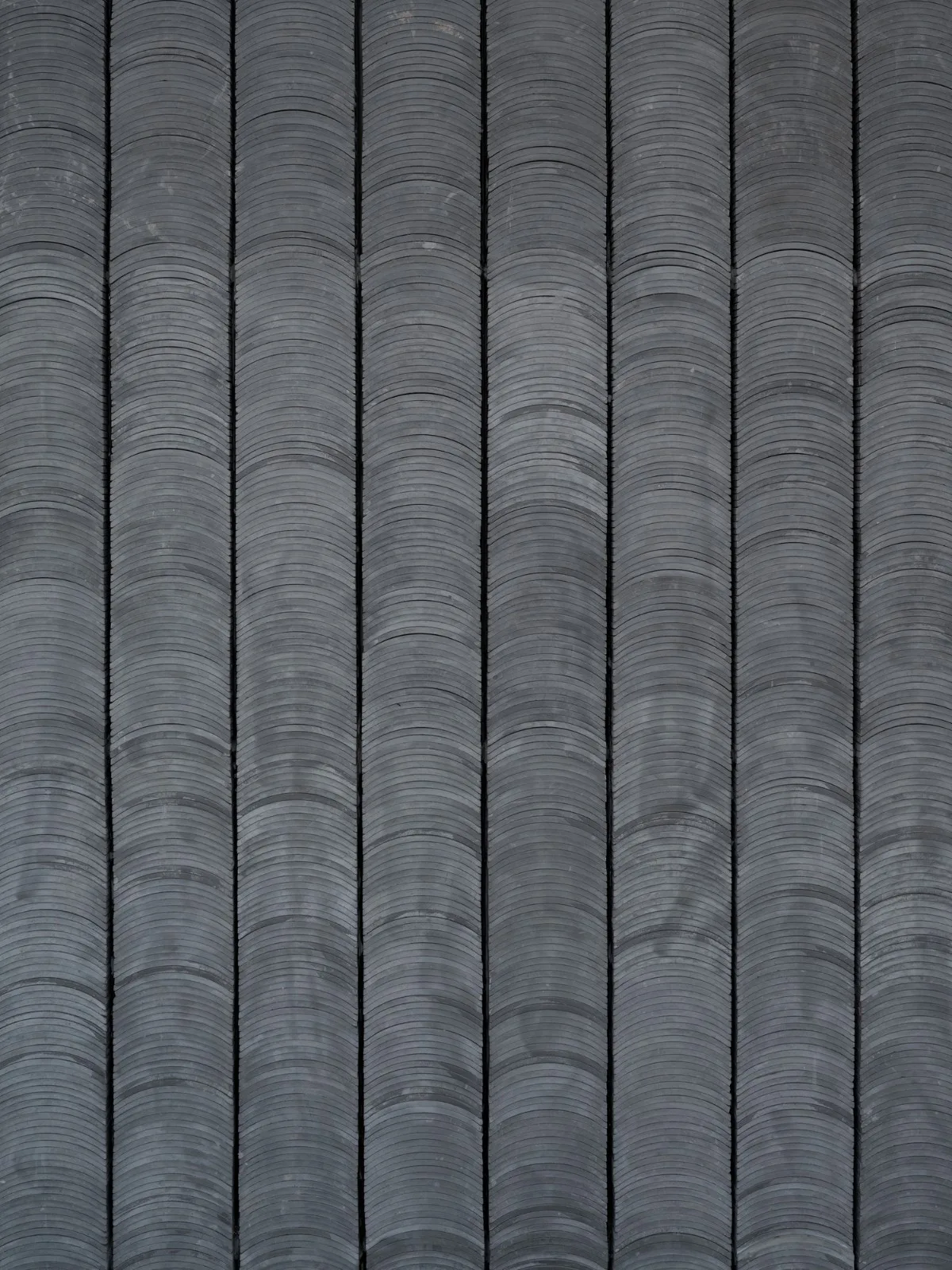
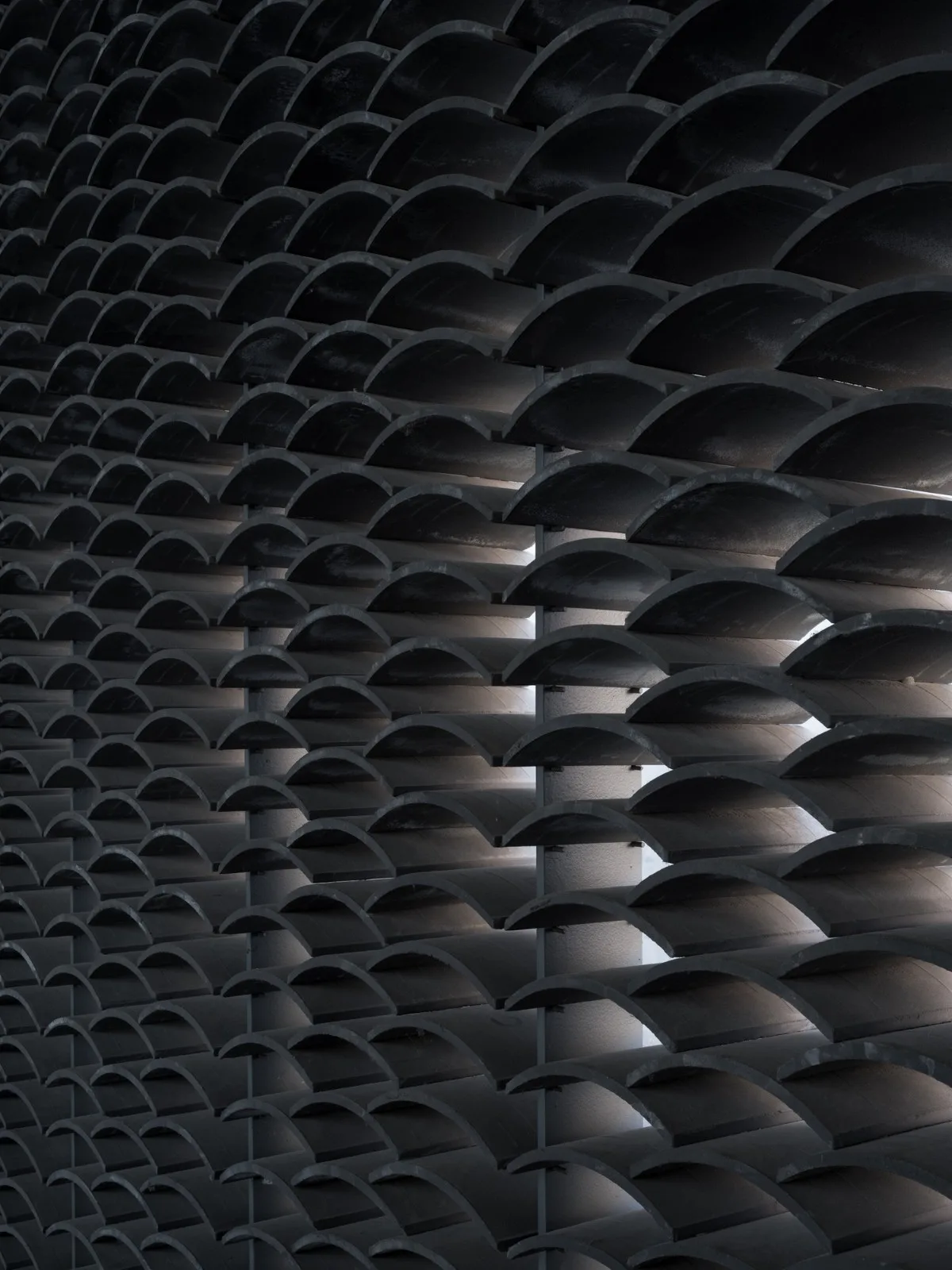
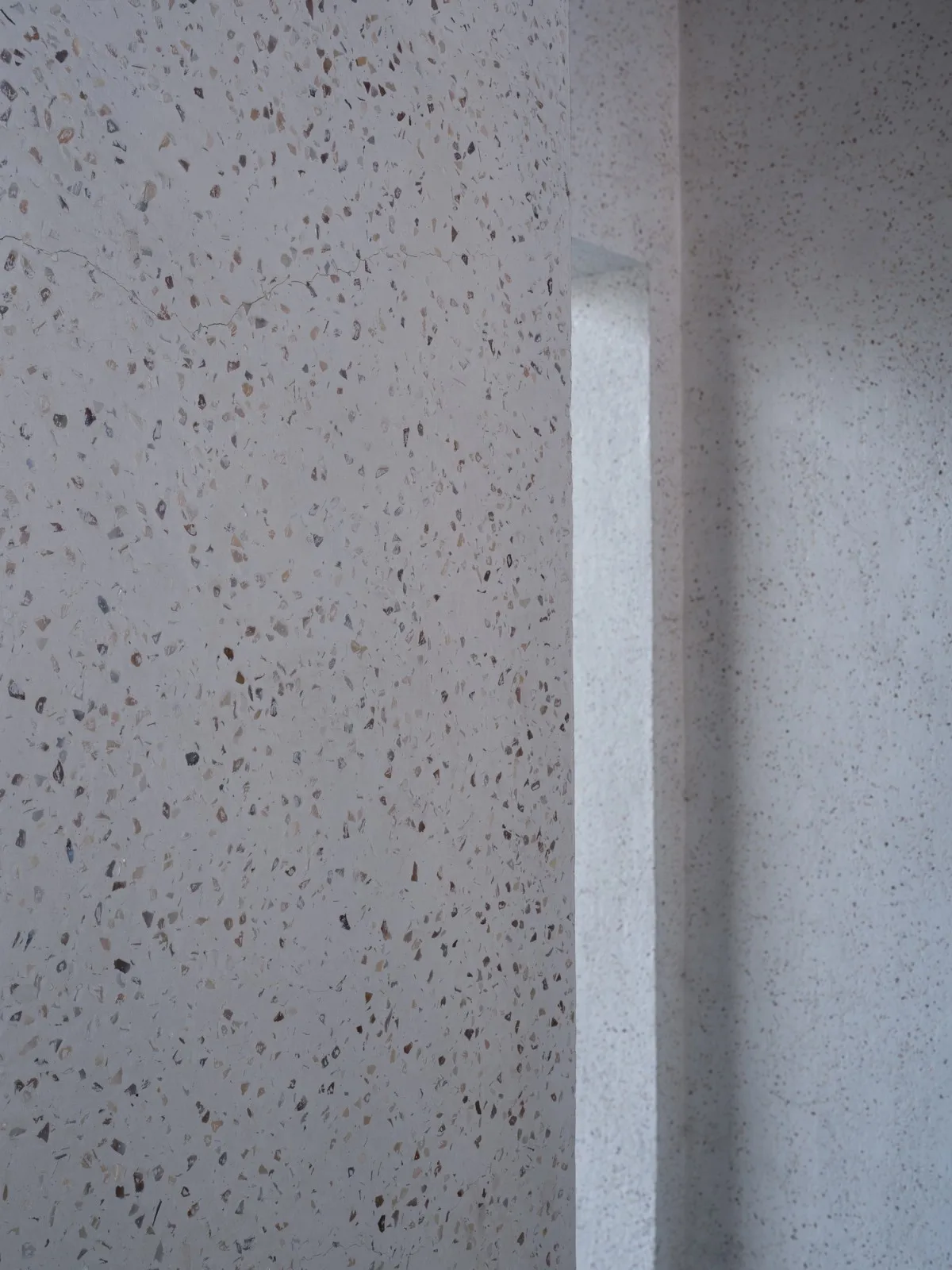
Respecting the cultural heritage of Wuzhen and the Jiangnan region, the building materials and colors were carefully selected. Cement tile roofs and walls, along with plain concrete surfaces, create a subtle palette of black, white, and gray.
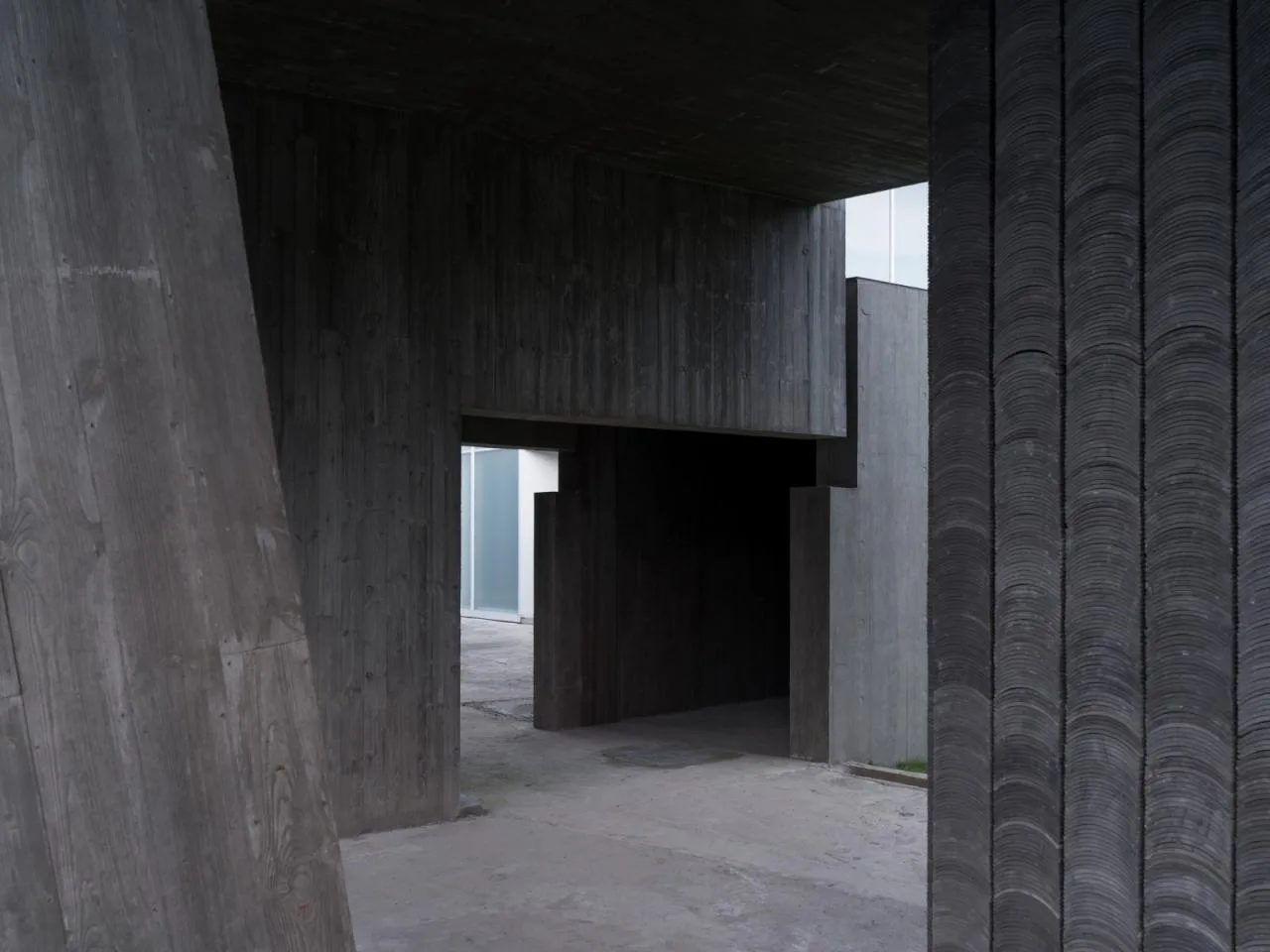
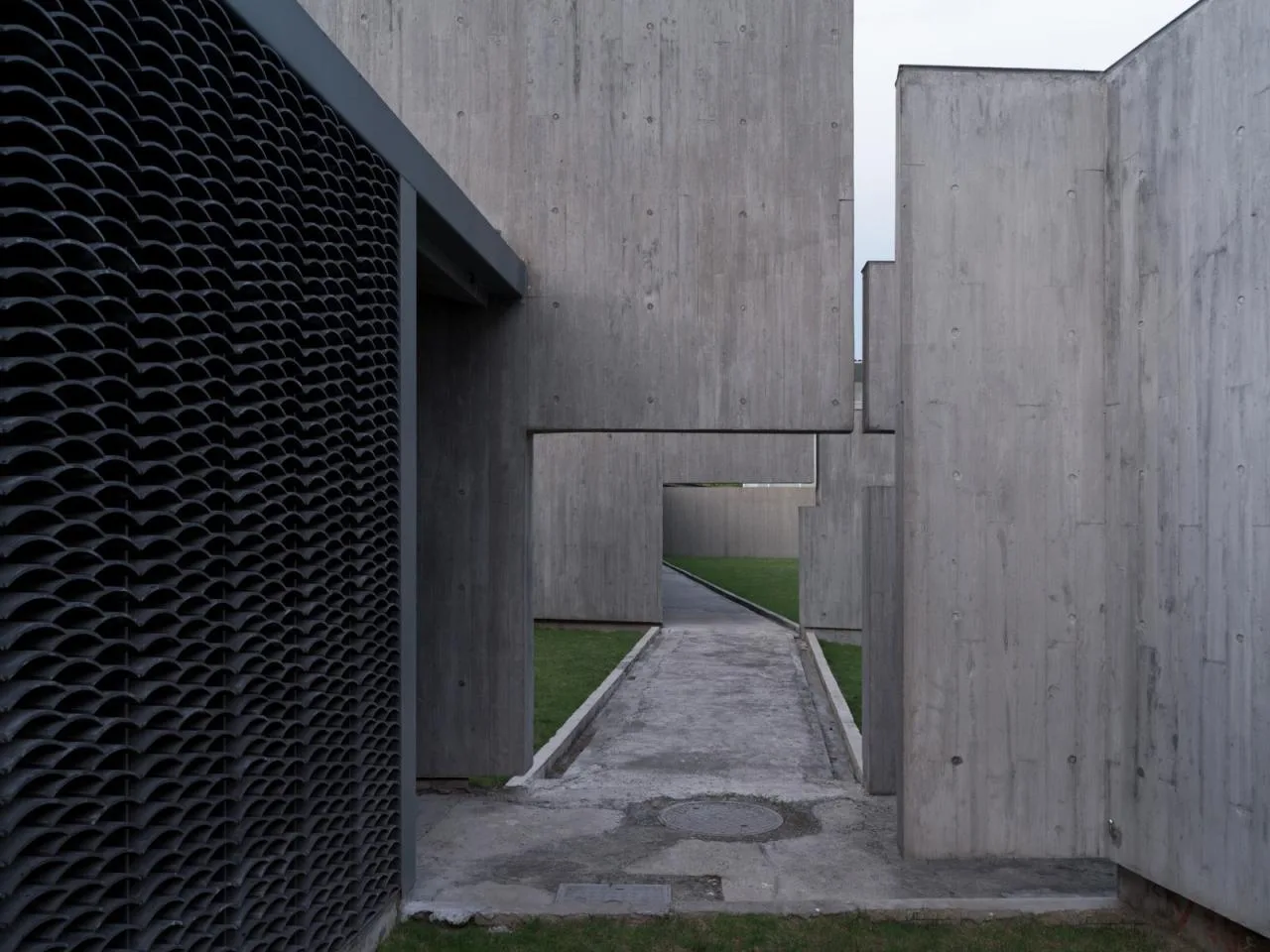
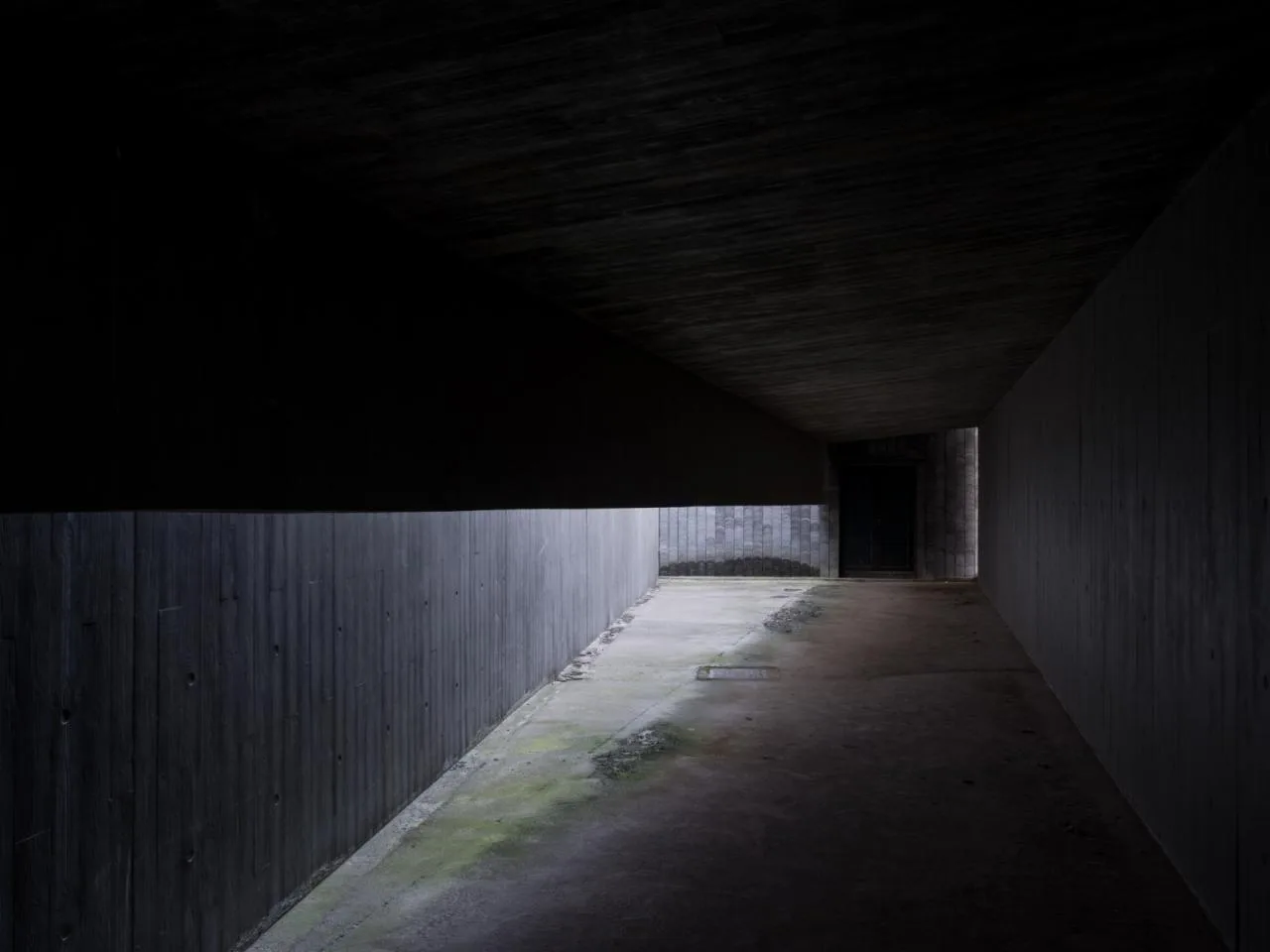
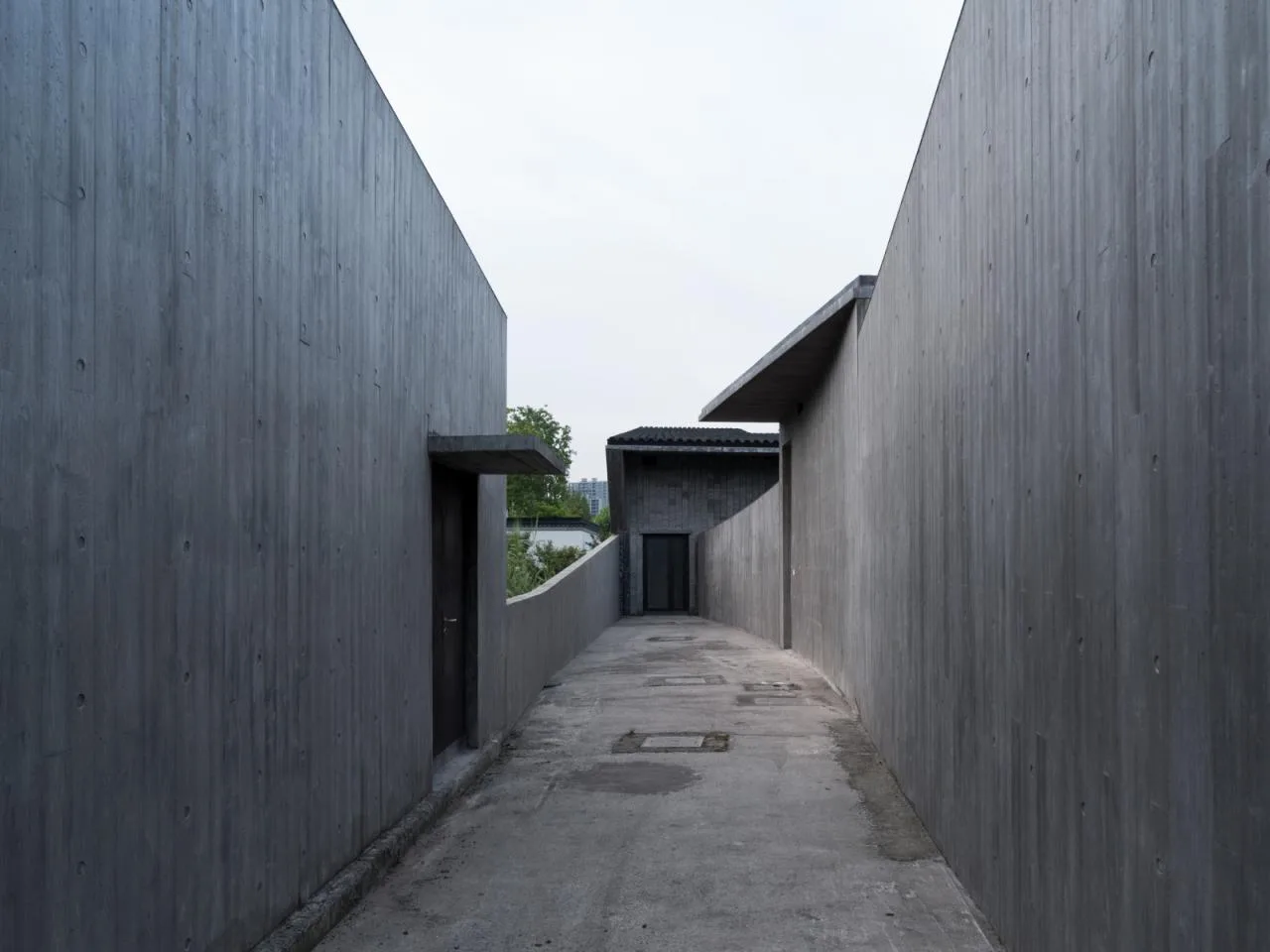
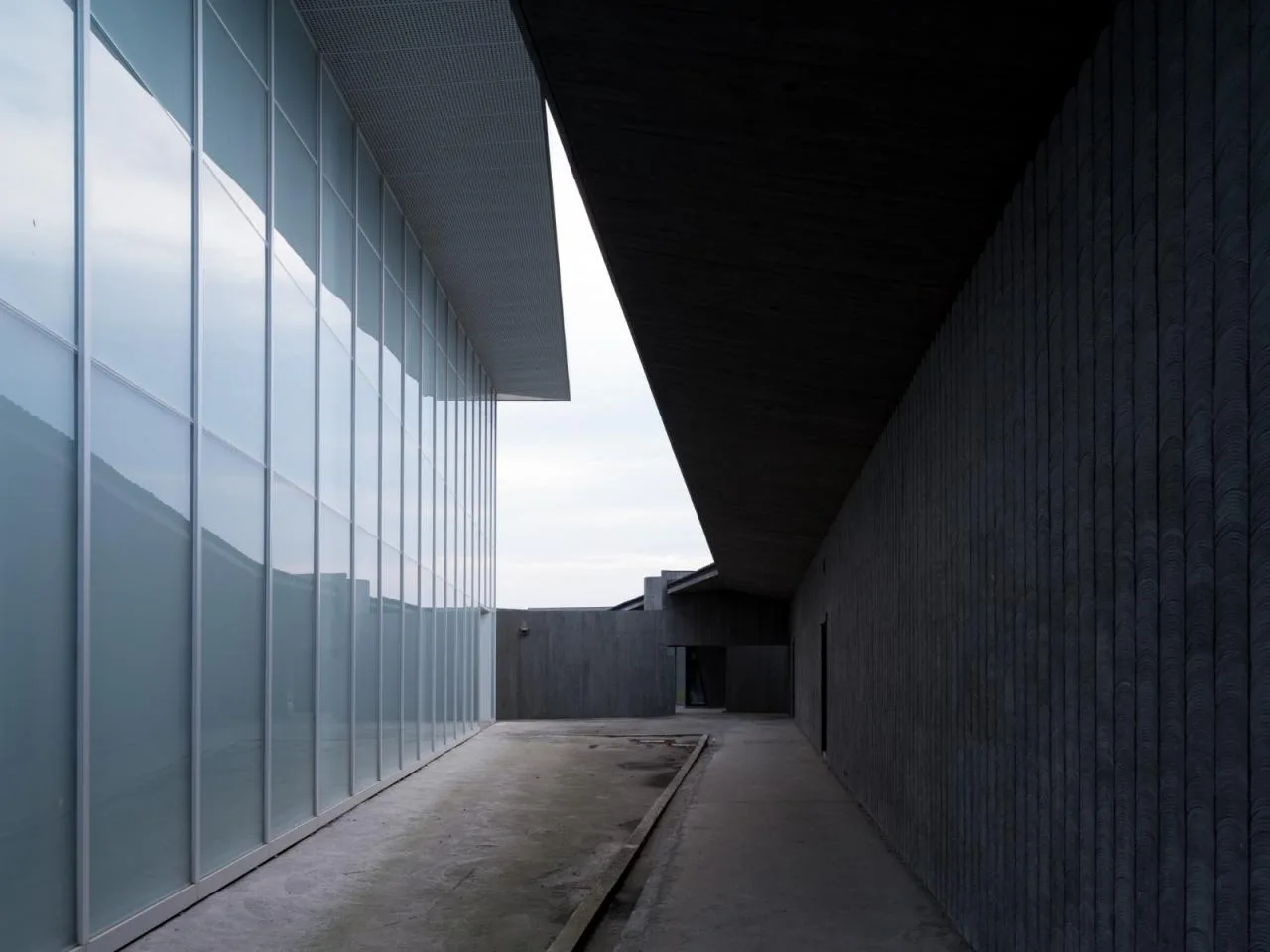
The interior and landscaping of the building remain unfinished.
Project Drawings
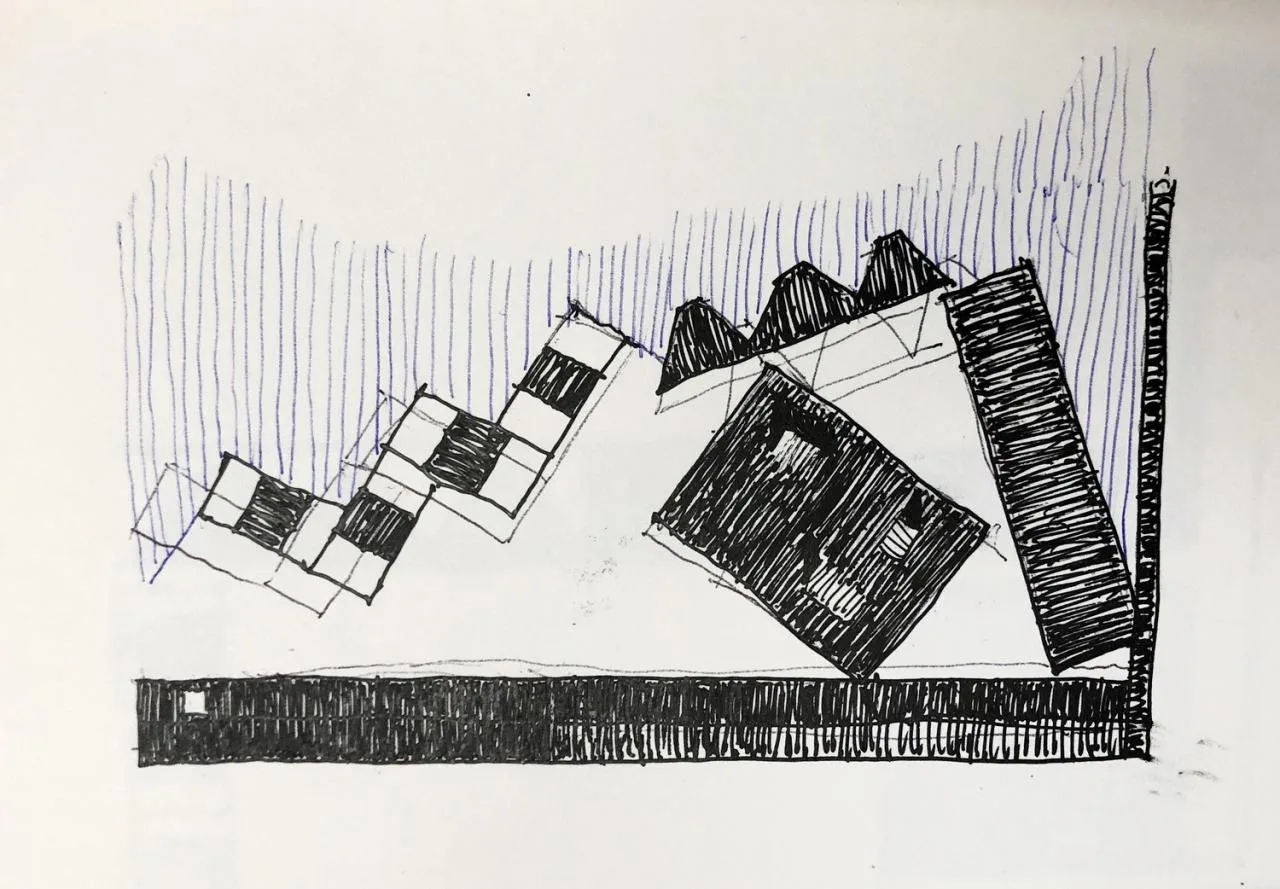
Concept Sketch 1 © Zhang Yonghe
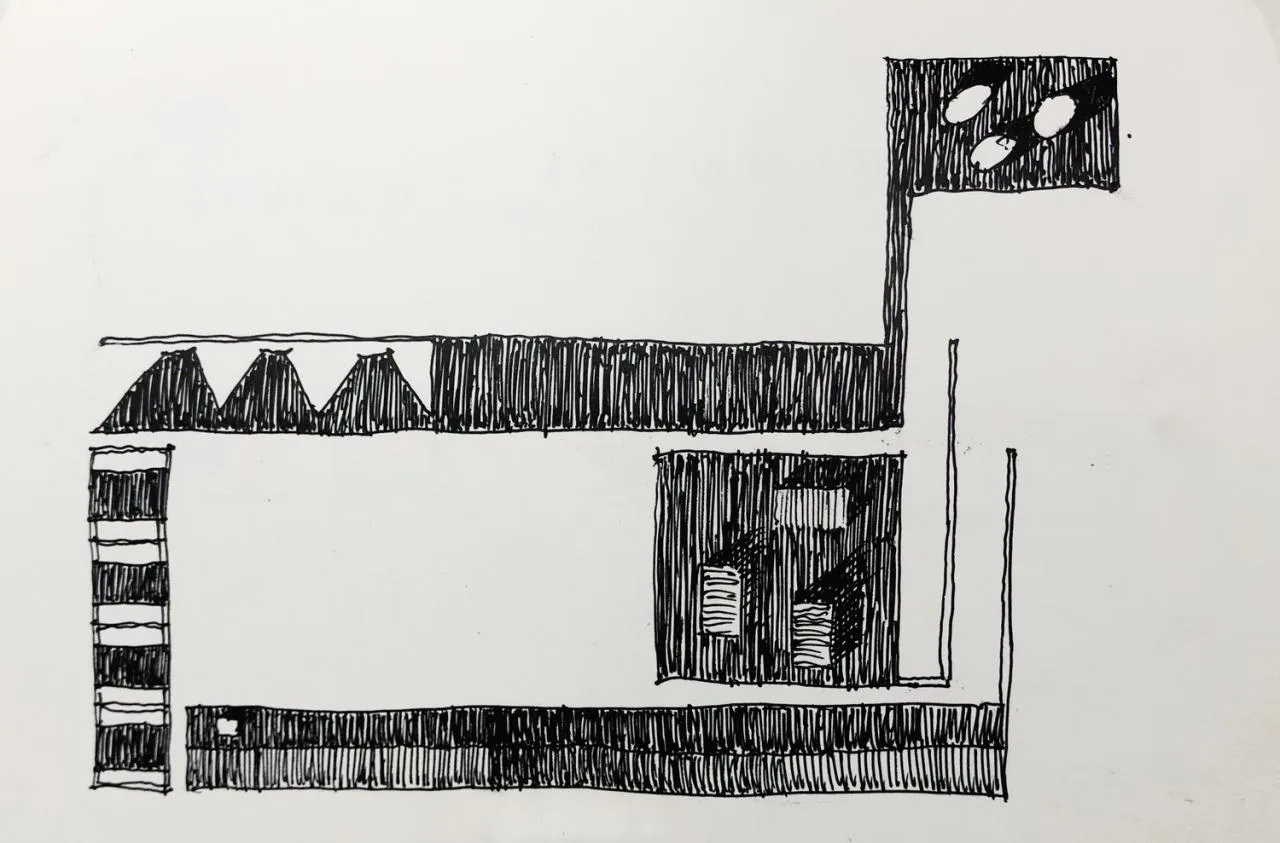
Concept Sketch 2 © Zhang Yonghe
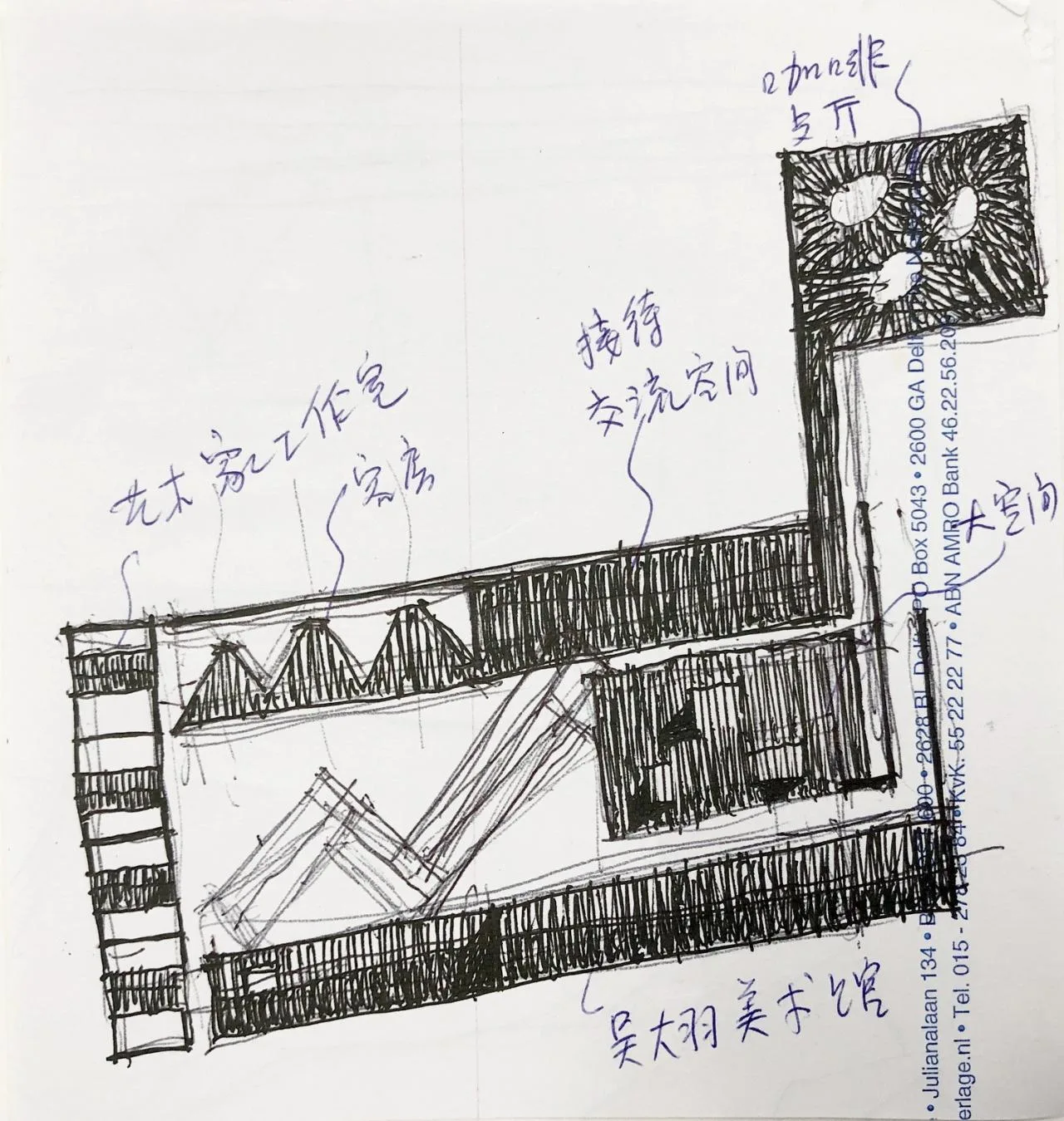
△ Sketch of Spatial Functional Relationships © Zhang Yonghe
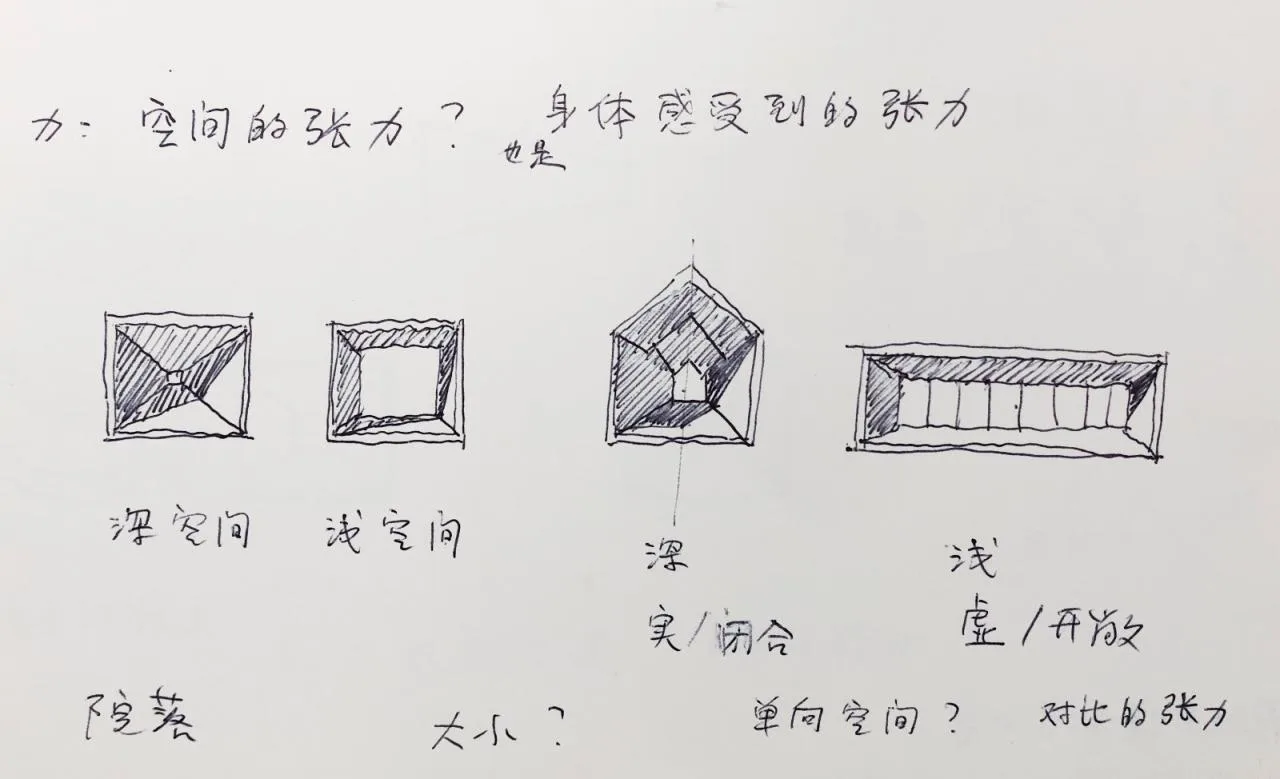
△ Comparison of Spatial Tension © Zhang Yonghe
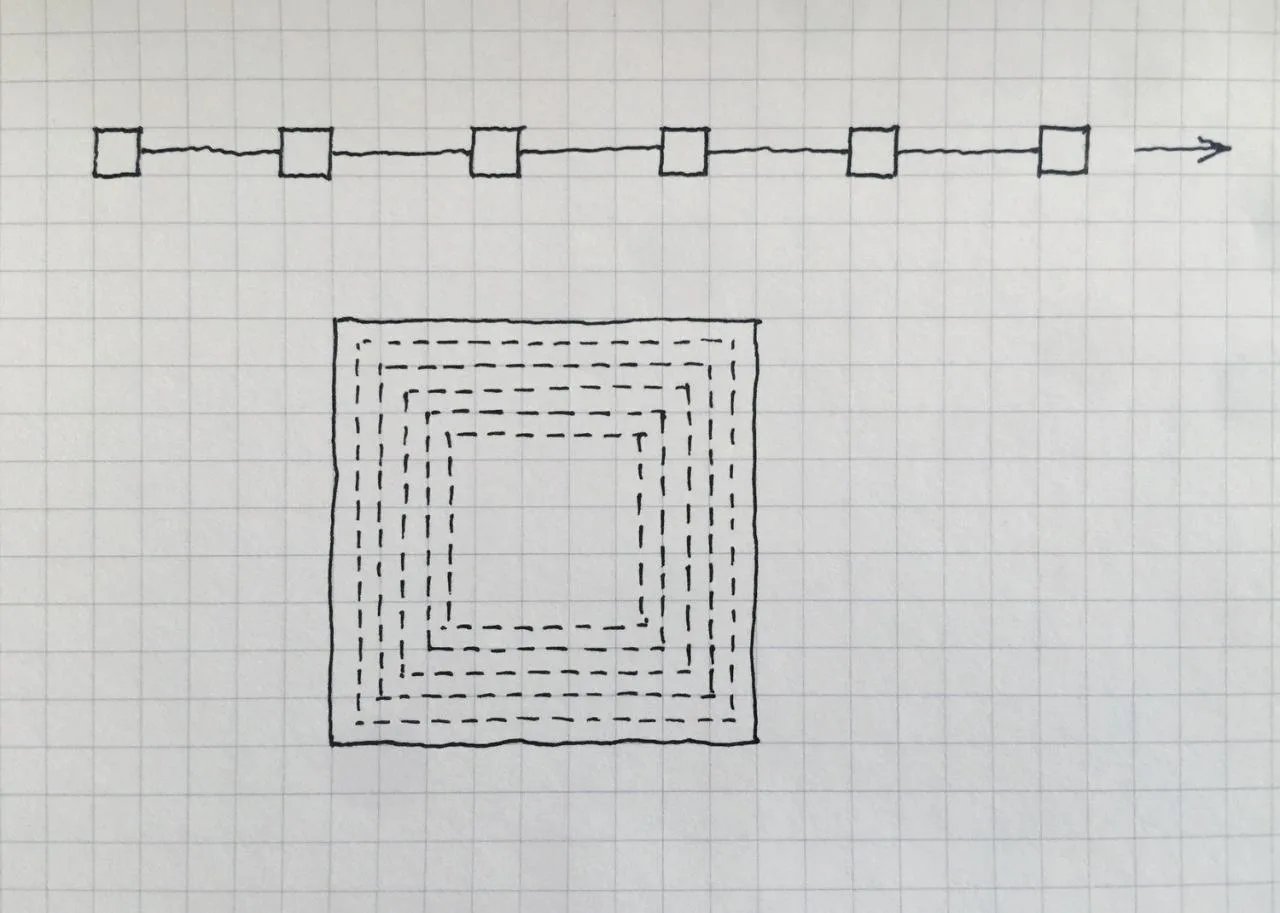
Comparison of Eastern and Western Concepts of Time: Upper, Lower, Middle, and Western © Zhang Yonghe
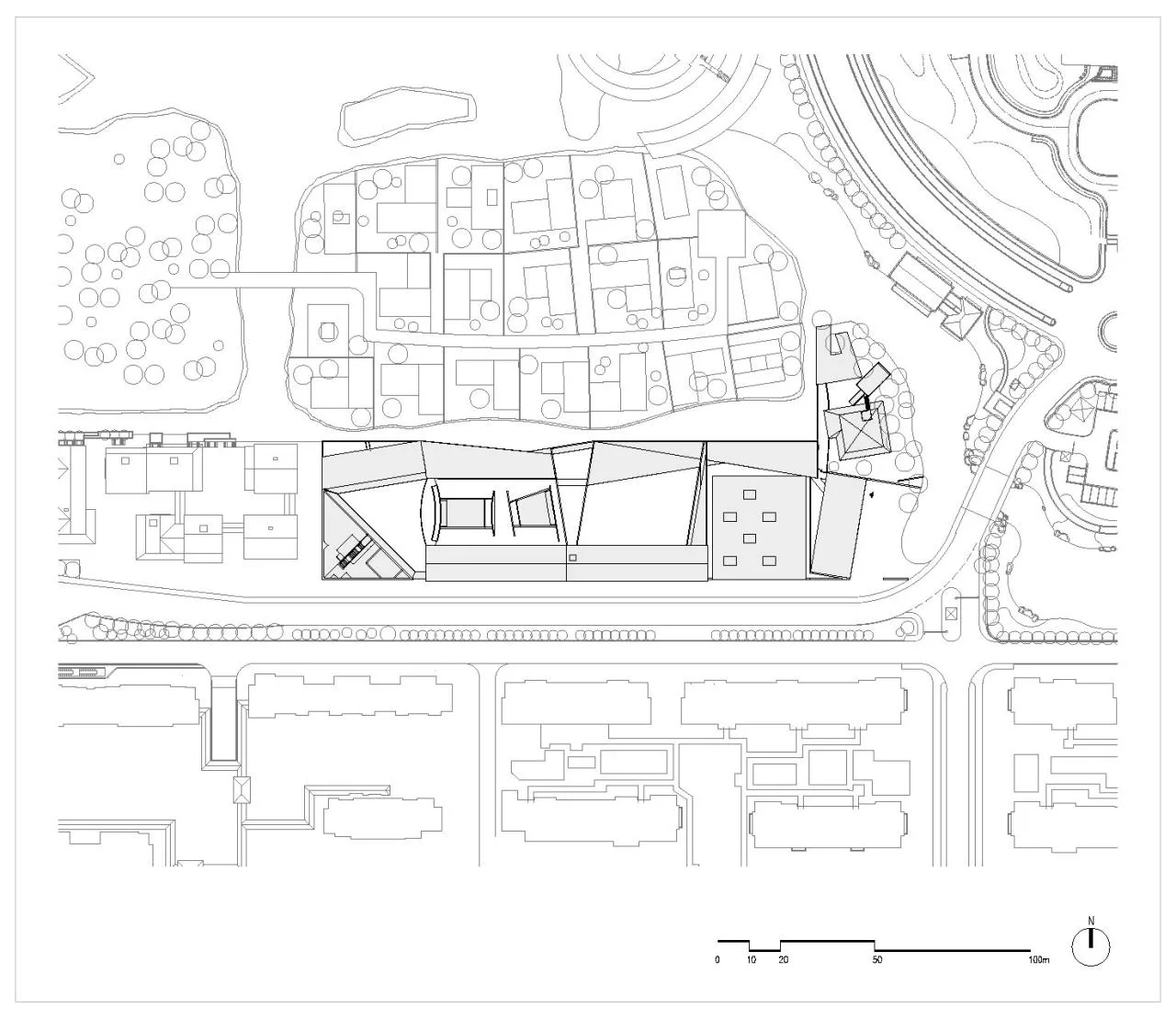
△ General Layout Plan
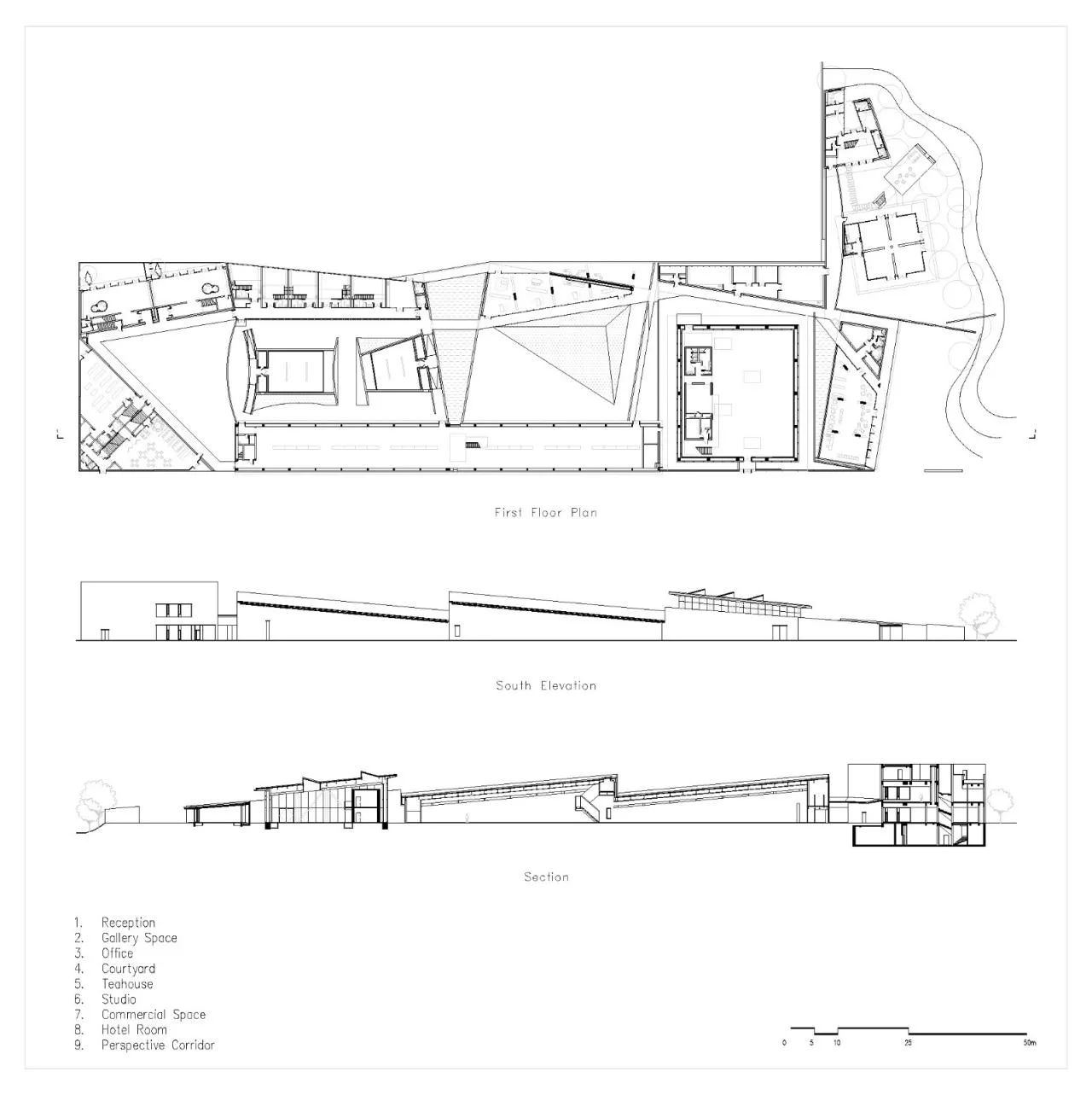
△ Vertical and Horizontal Sections
Project Information
Client: Zhejiang Yada International Health Industry Park
Location: Wuzhen, Tongxiang City, Zhejiang Province
Lead Designer: Zhang Yonghe
Project Team: Li Qiyou, Wang Yue, Cheng Yishi, Li Xiangting, Wu Xia, Liu Yang, Chen Youyou, Hou Jiali
Construction Supervision and Technical Cooperation: Hu Youbin
Structure and Mechatronics: Tongji University Architectural Design and Research Institute, Dujing Architectural Design Institute
Structural Materials: Concrete shear wall structure, steel structure
Building Area: 6,159.59 m²
Site Area: 124,244.34 m²
Total Floor Area: 9,152.7 m²
Building Height: 4.3 m – 12.3 m
Design Year: 2016
Completion Year: 2021
Photography by Tian Fangfang















Must log in before commenting!
Sign Up