
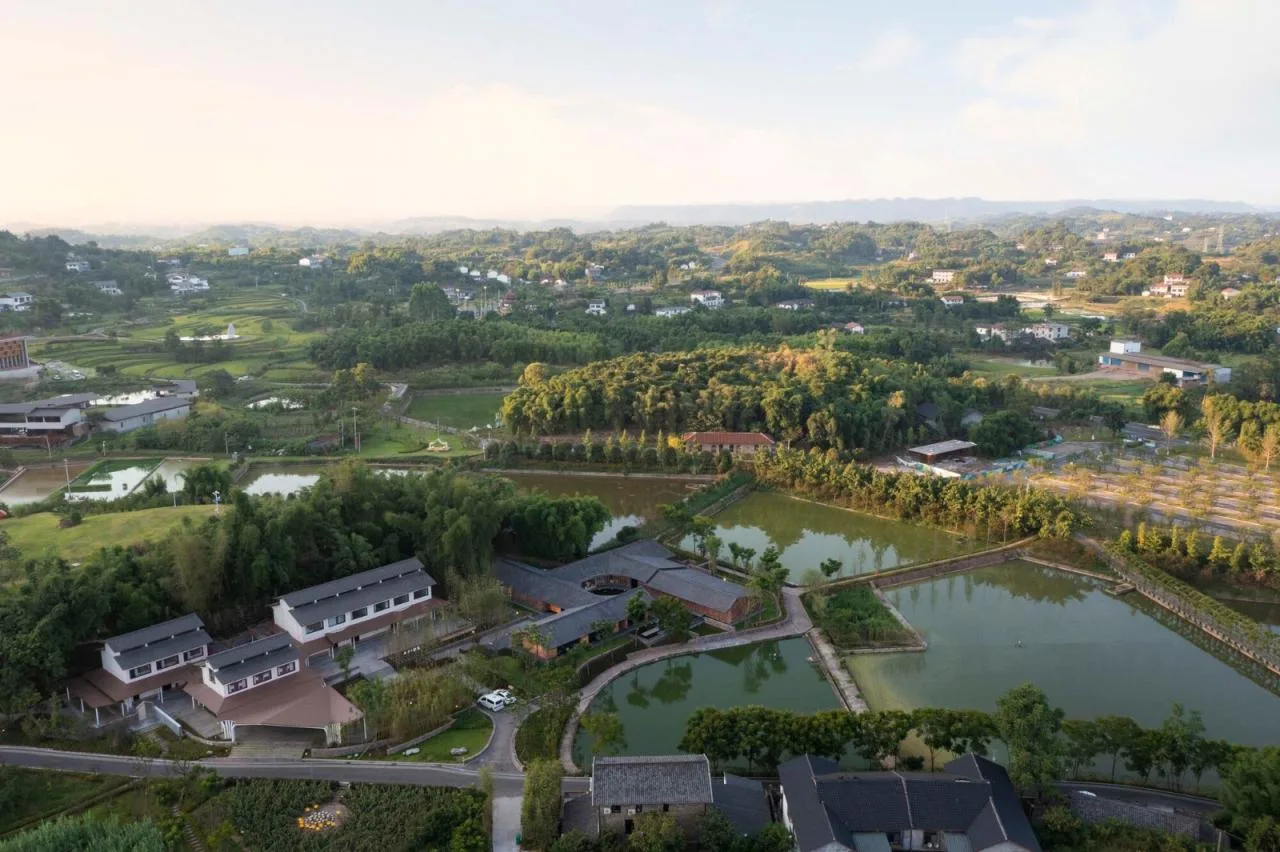
Anshi Village, located in Yibin, Sichuan, is a typical western Sichuan forest village nestled against Nianpan Mountain. The village is connected by winding pathways, surrounded by scattered fields, ponds, and a mix of houses and trees. Shanshui Chaiyuan is situated between a bamboo forest and a pond in the village, offering a secluded setting with a transparent landscape. Drawing inspiration from traditional Sichuan residential architecture, the design thoughtfully integrates space, materials, context, and user experience.
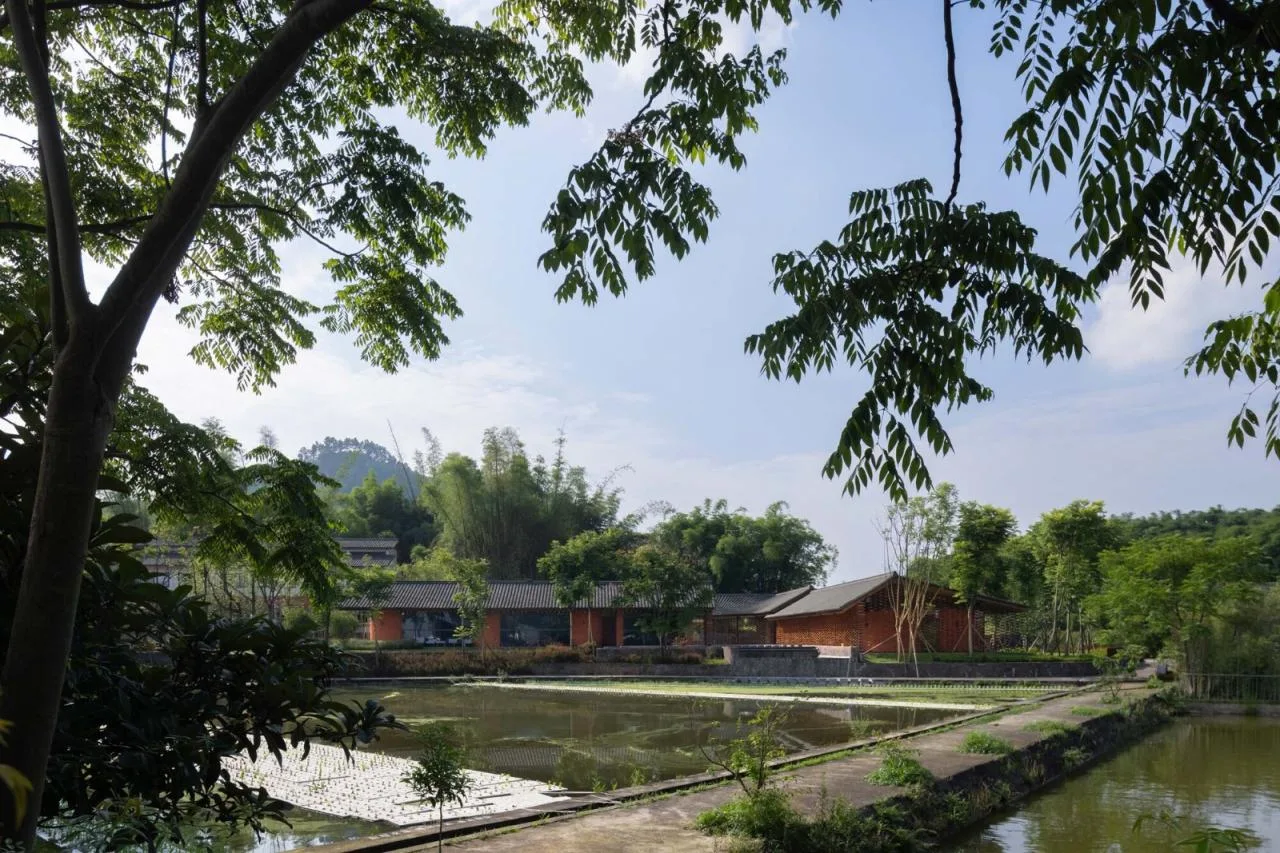
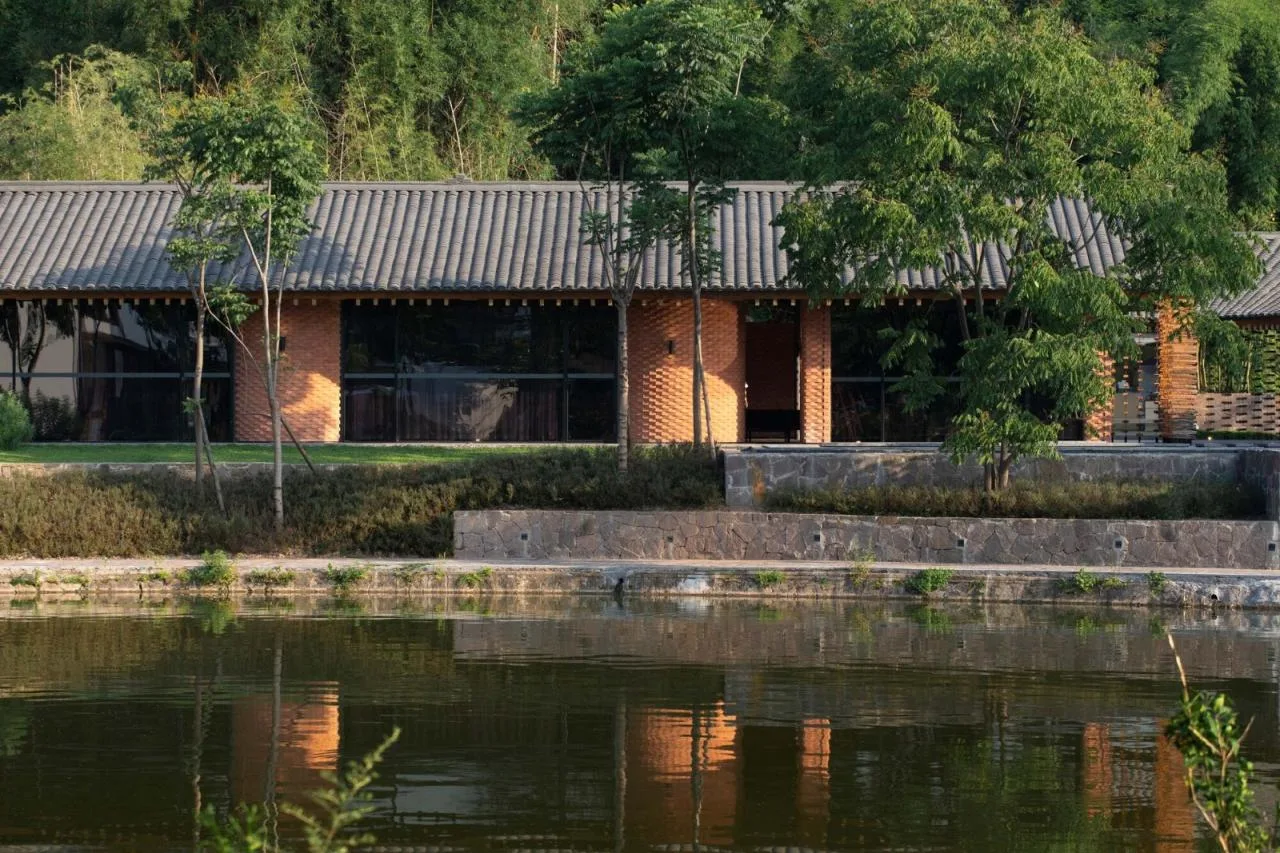
Sichuan residential buildings traditionally feature perforated wooden structures that are lightweight, flexible, and elegantly simple. The roofs extend with low, deep eaves providing ample space for ventilation while sheltering from wind and rain. This natural adaptation to local conditions creates a unique architectural form. Exterior walls are made from locally sourced materials, often combining bamboo weaving with mud walls and white plaster. The lower sections typically consist of red sandstone blocks resting on a brick and stone foundation, protected by the deep eaves for durability. Another defining characteristic is the courtyard space, which serves as the heart of outdoor living. Positioned in front of the house, the courtyard reflects residents’ aspirations for sunlight, fresh air, and the nurturing elements of rain and dew.
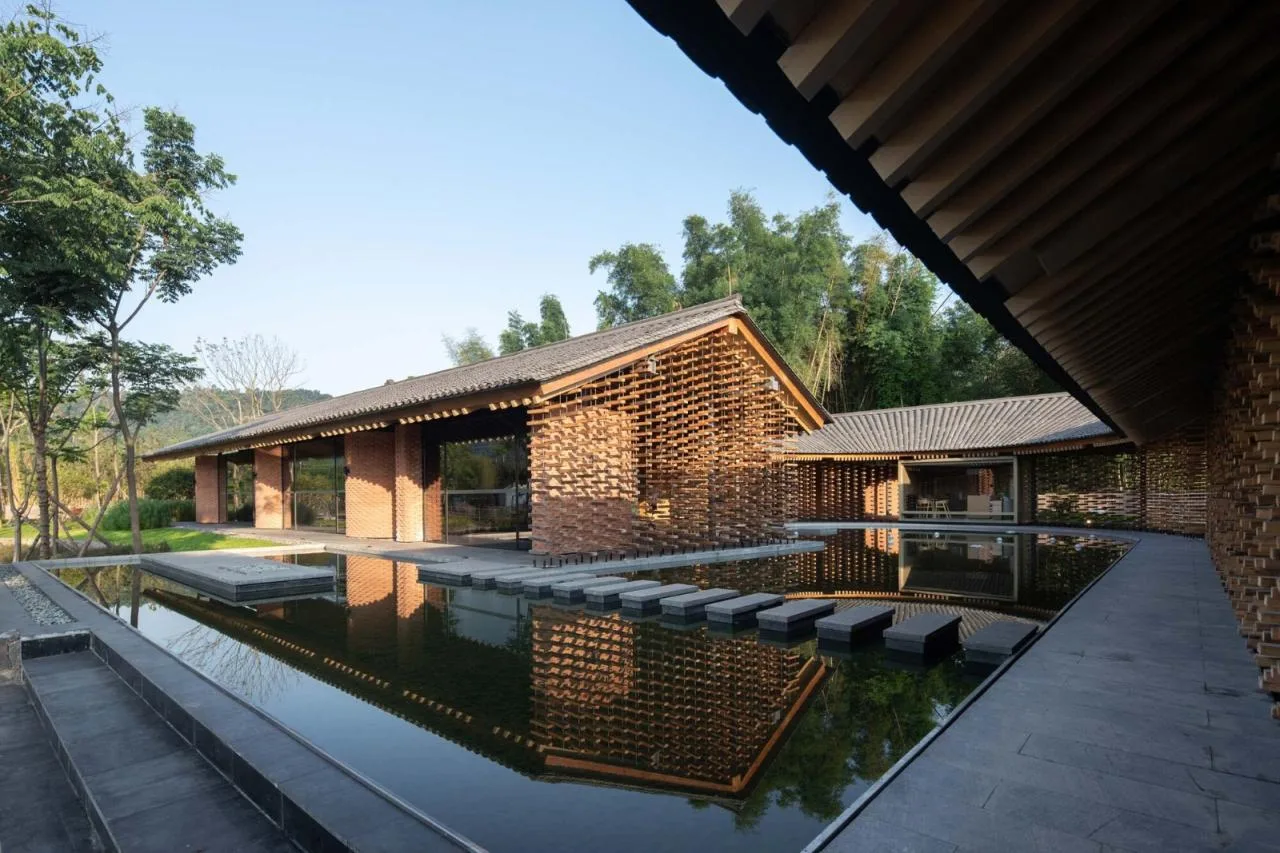
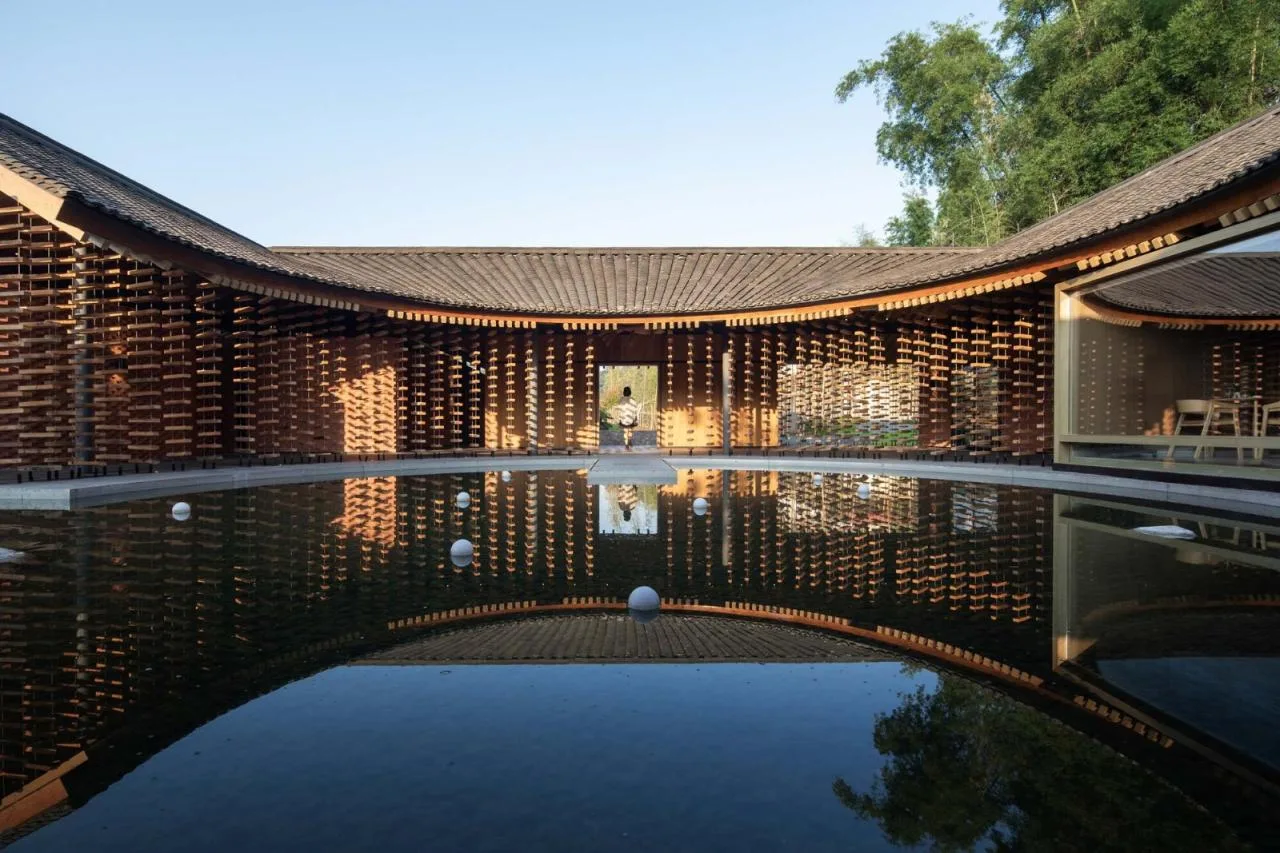
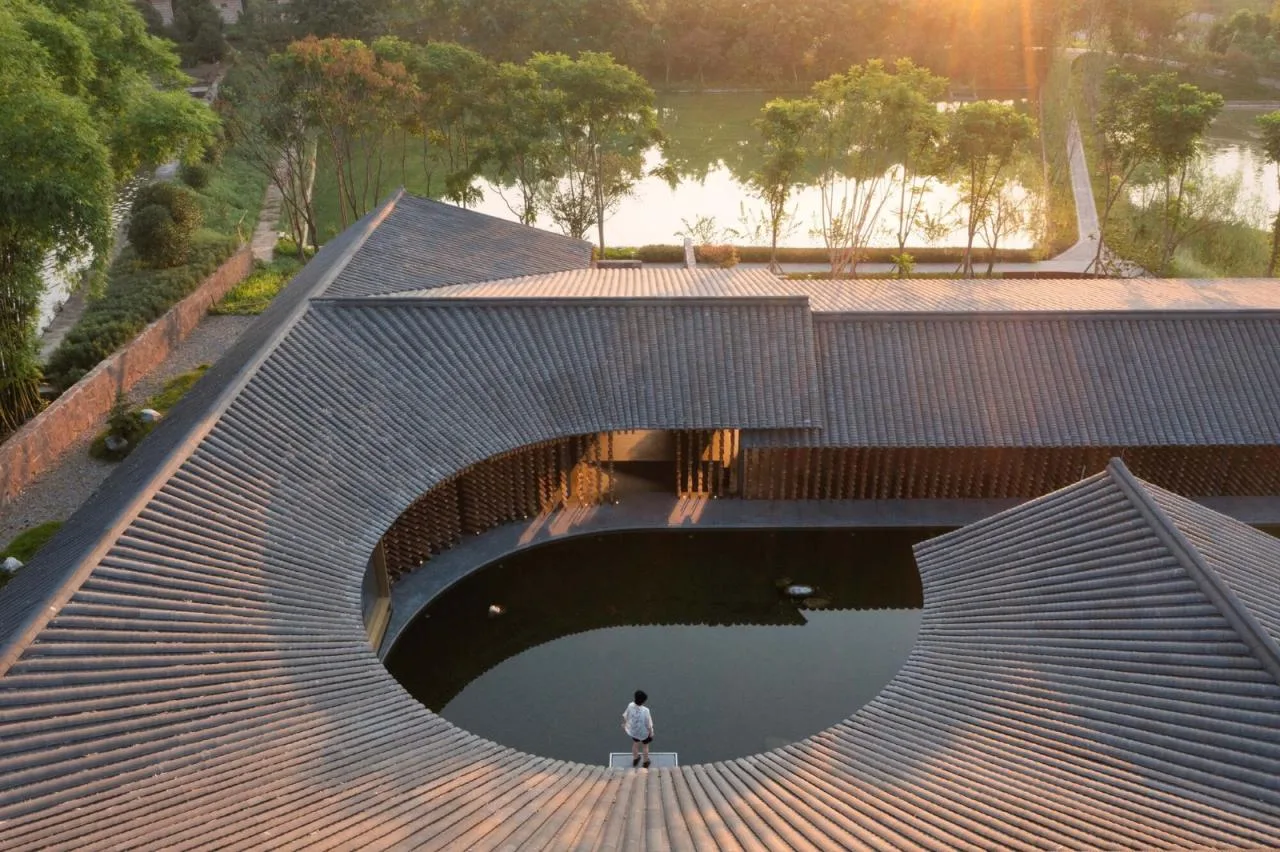
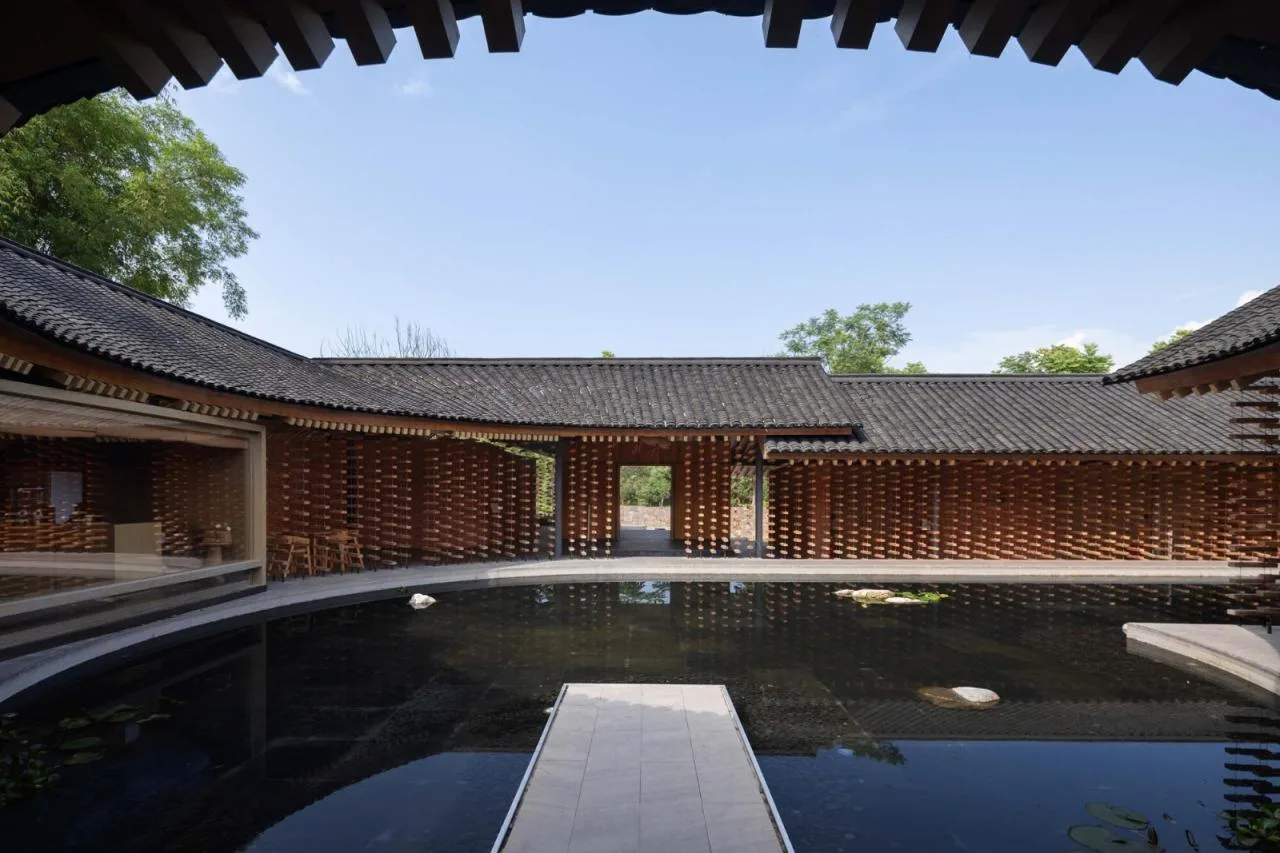
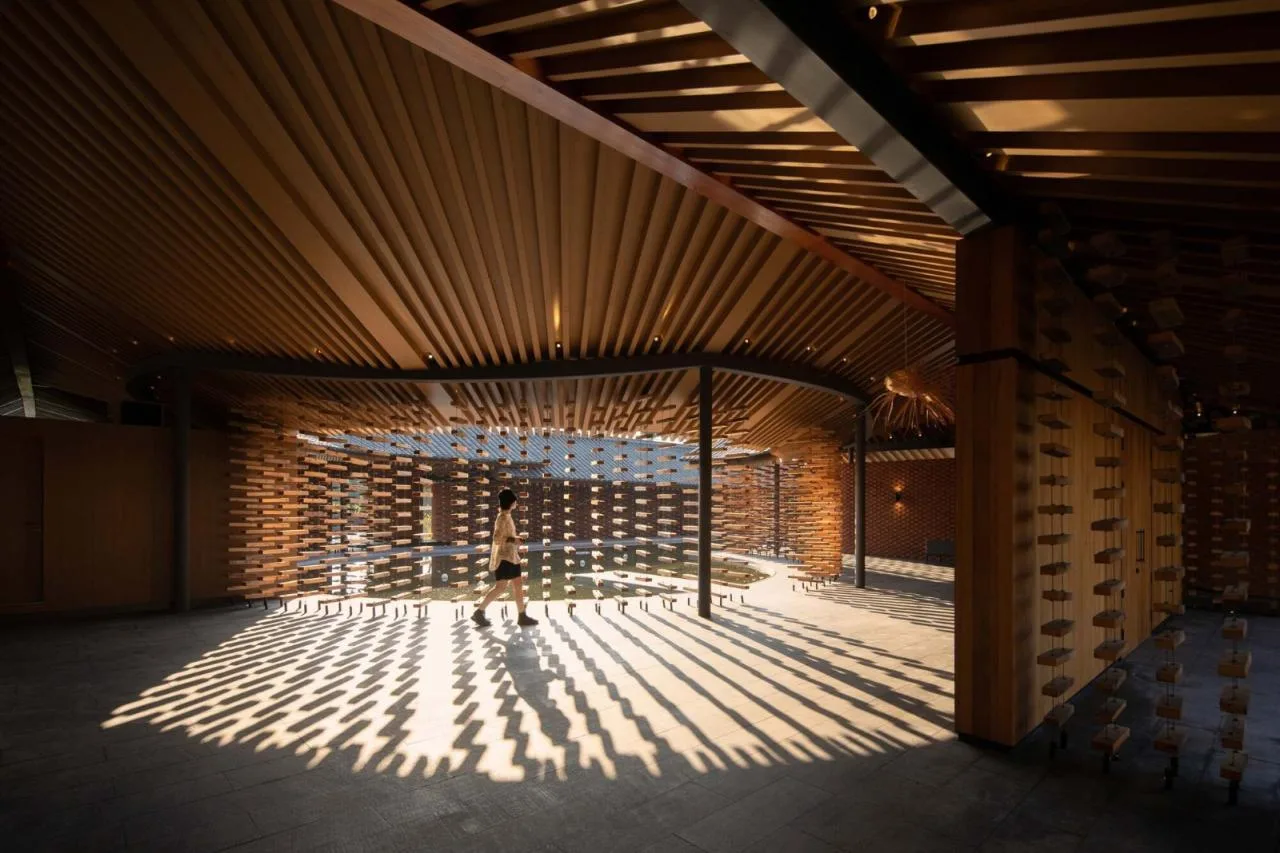
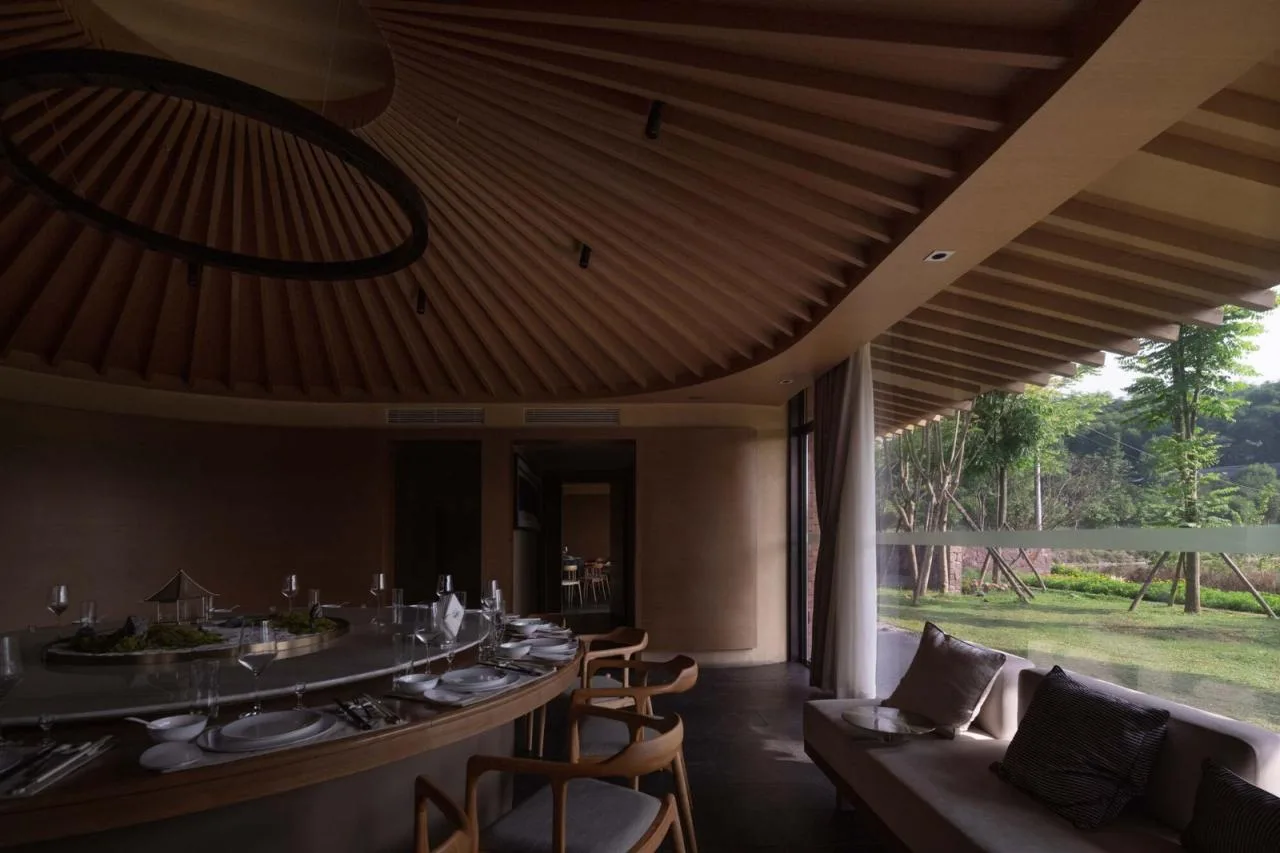
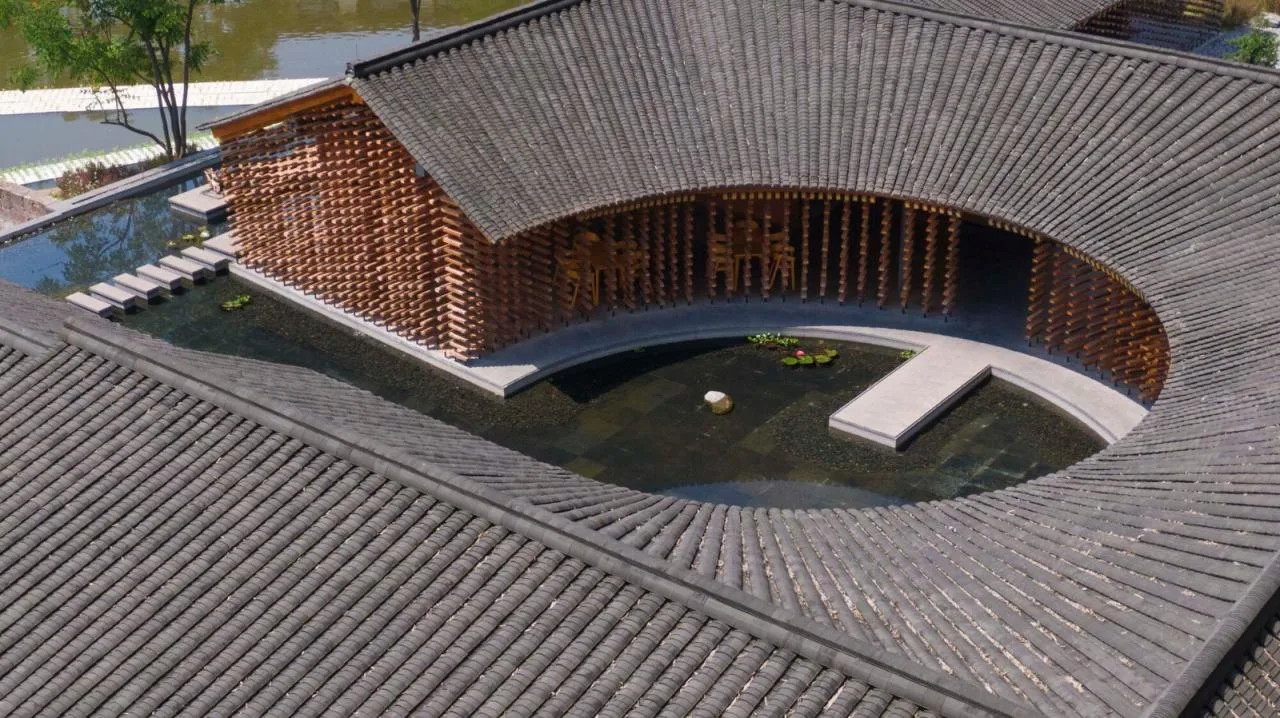
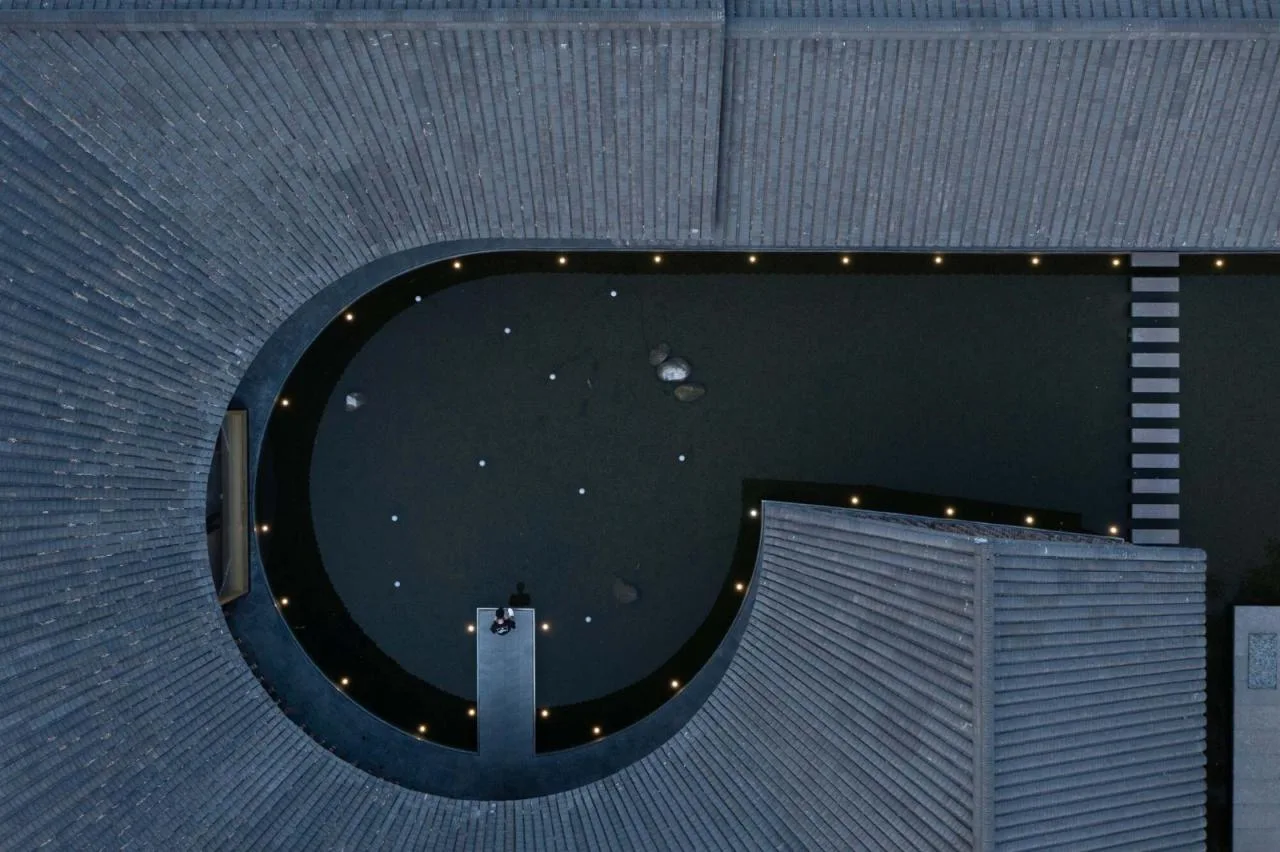
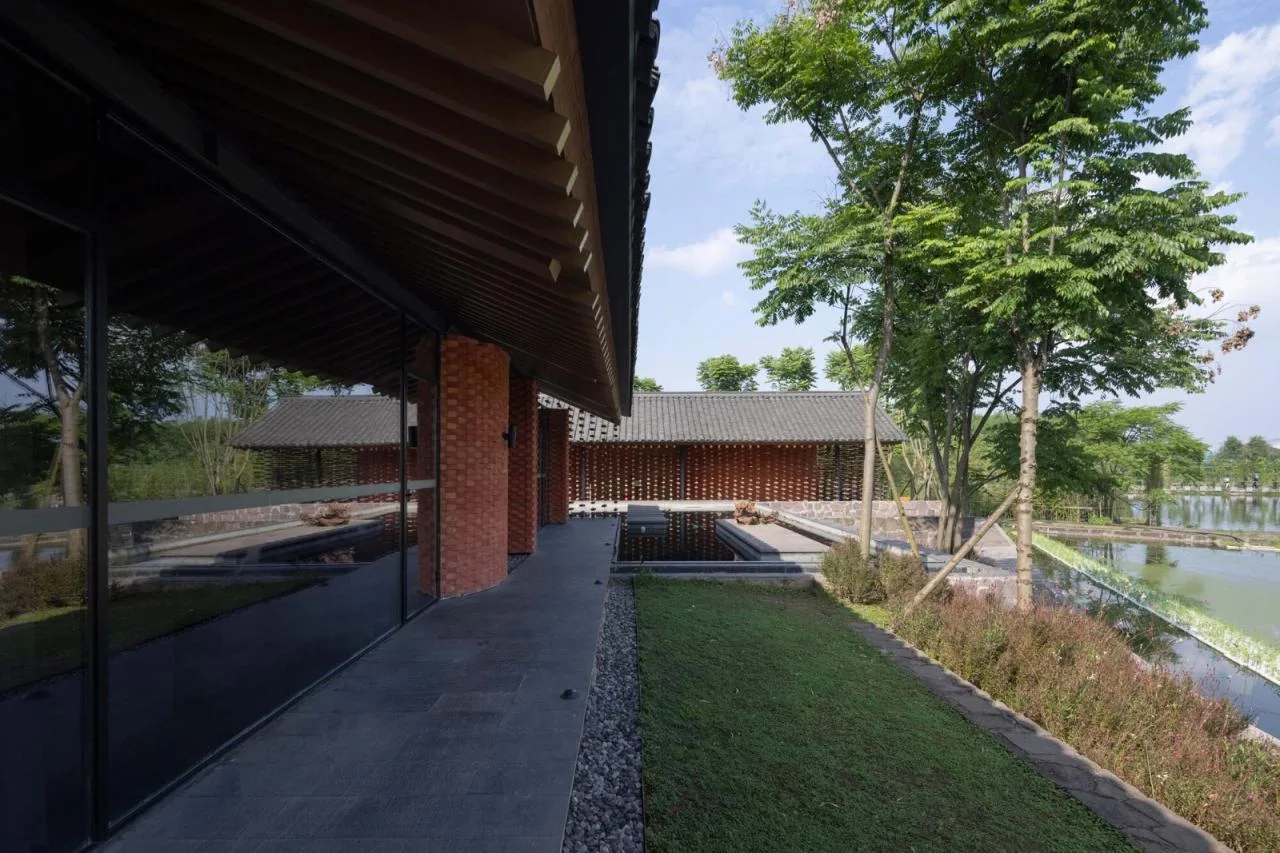
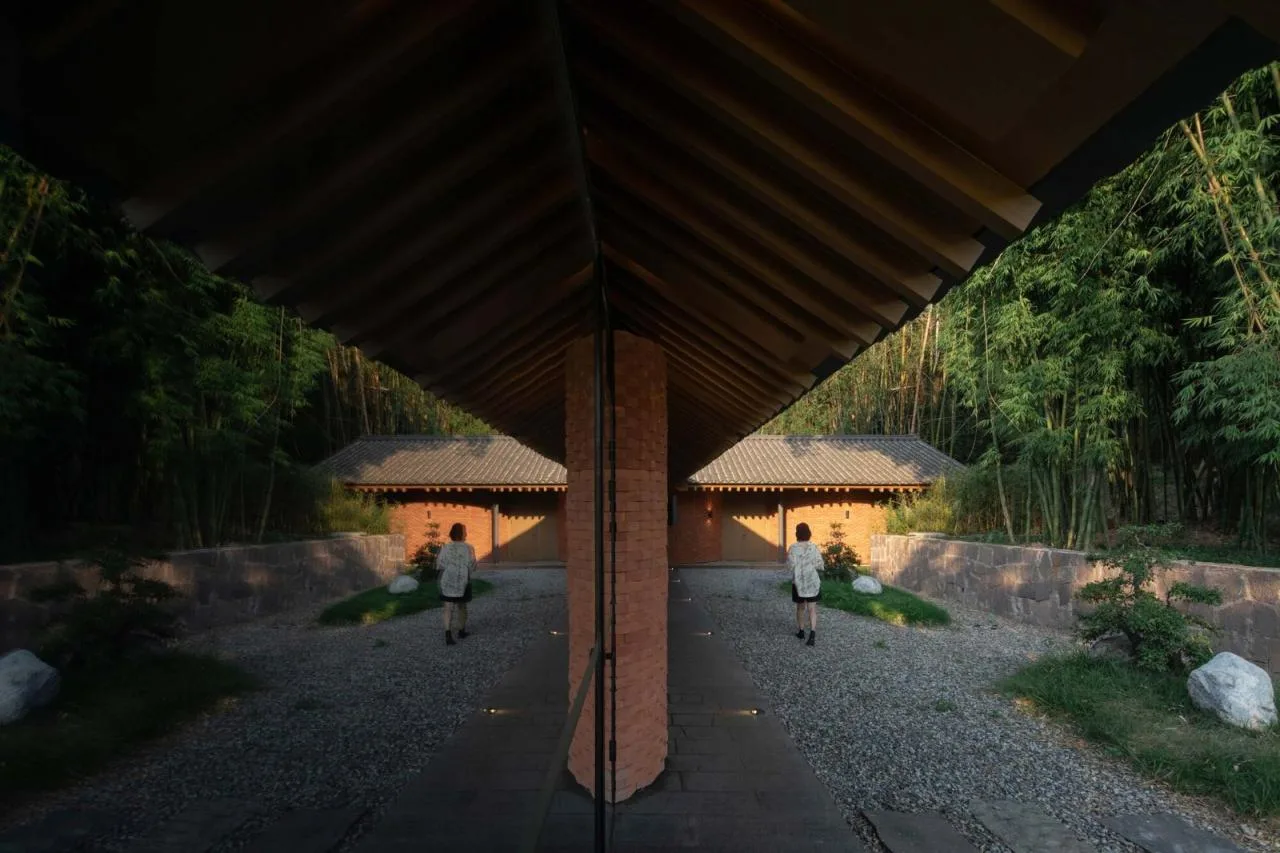
Inspired by the structure and spatial organization of traditional Sichuan homes, the architecture adopts a cross-shaped windmill layout. This design extends gradually, seamlessly integrating into the surrounding natural landscape. Large eaves stretch around the adjacent ponds, framing expansive panoramic views. The curved inner courtyard resembles the rotating blades of a windmill, featuring smooth curves that evoke tranquility and a harmony between yin and yang, where water and sky blend into one seamless color. The continuous curved walls echo the flowing form of the courtyard, simultaneously dividing service areas—such as private rooms, tea rooms, book bars, and logistics spaces—from the main living spaces, each oriented to different natural landscapes.
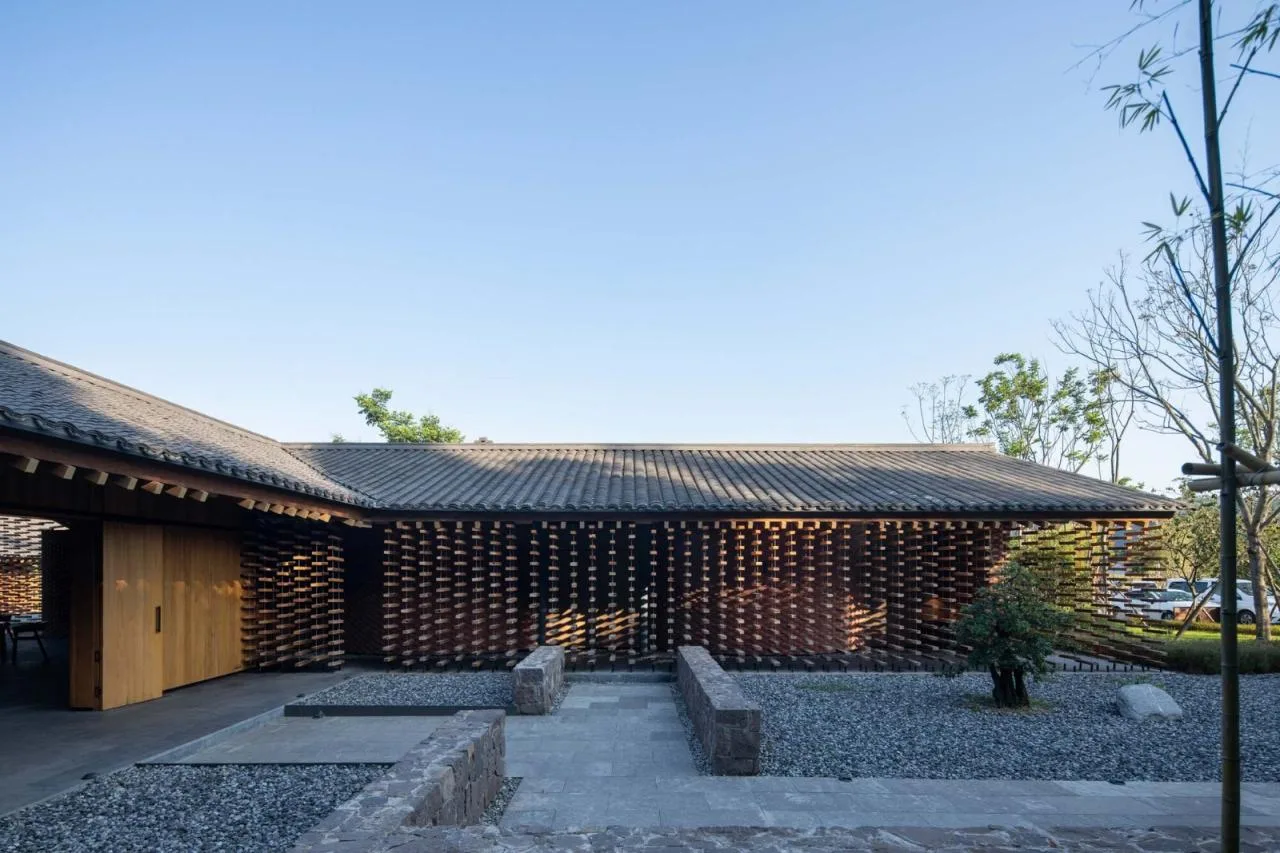
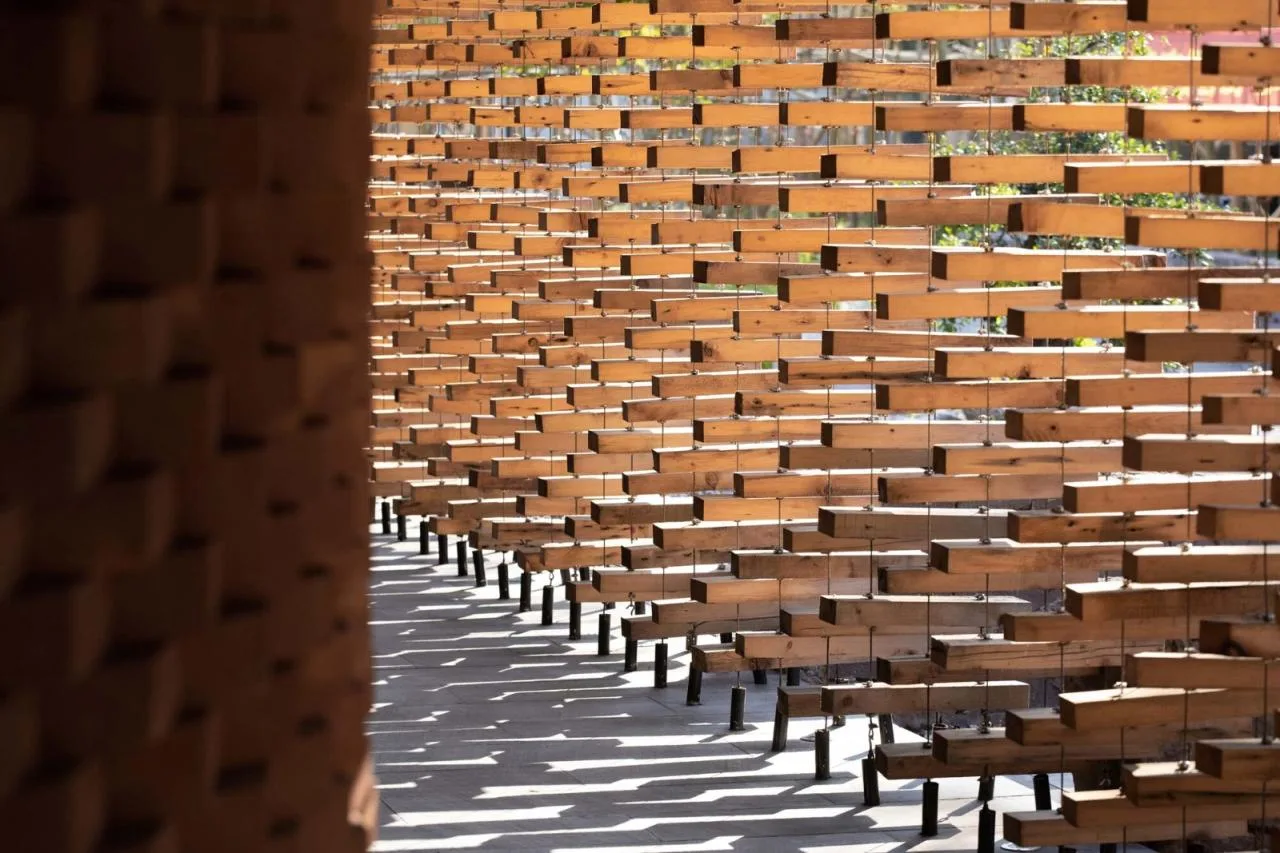
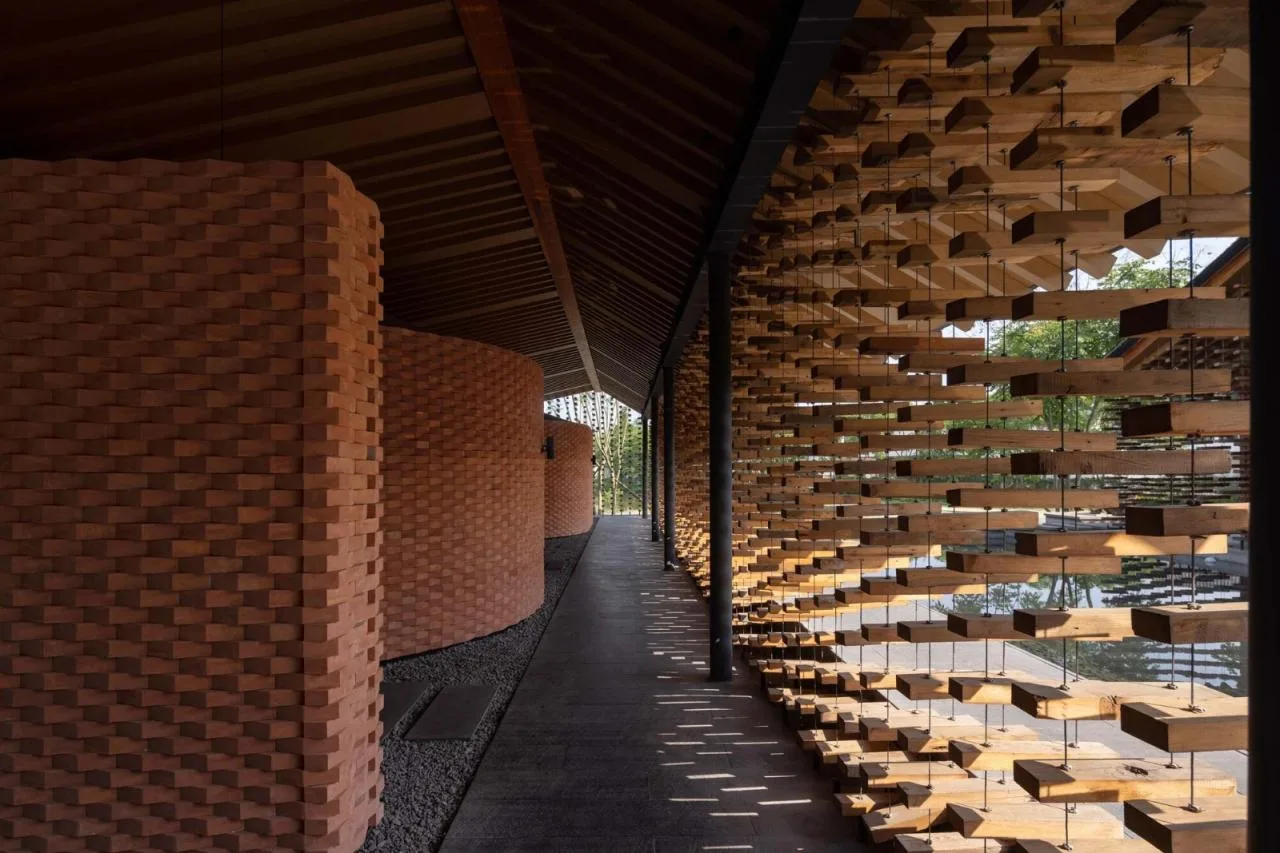
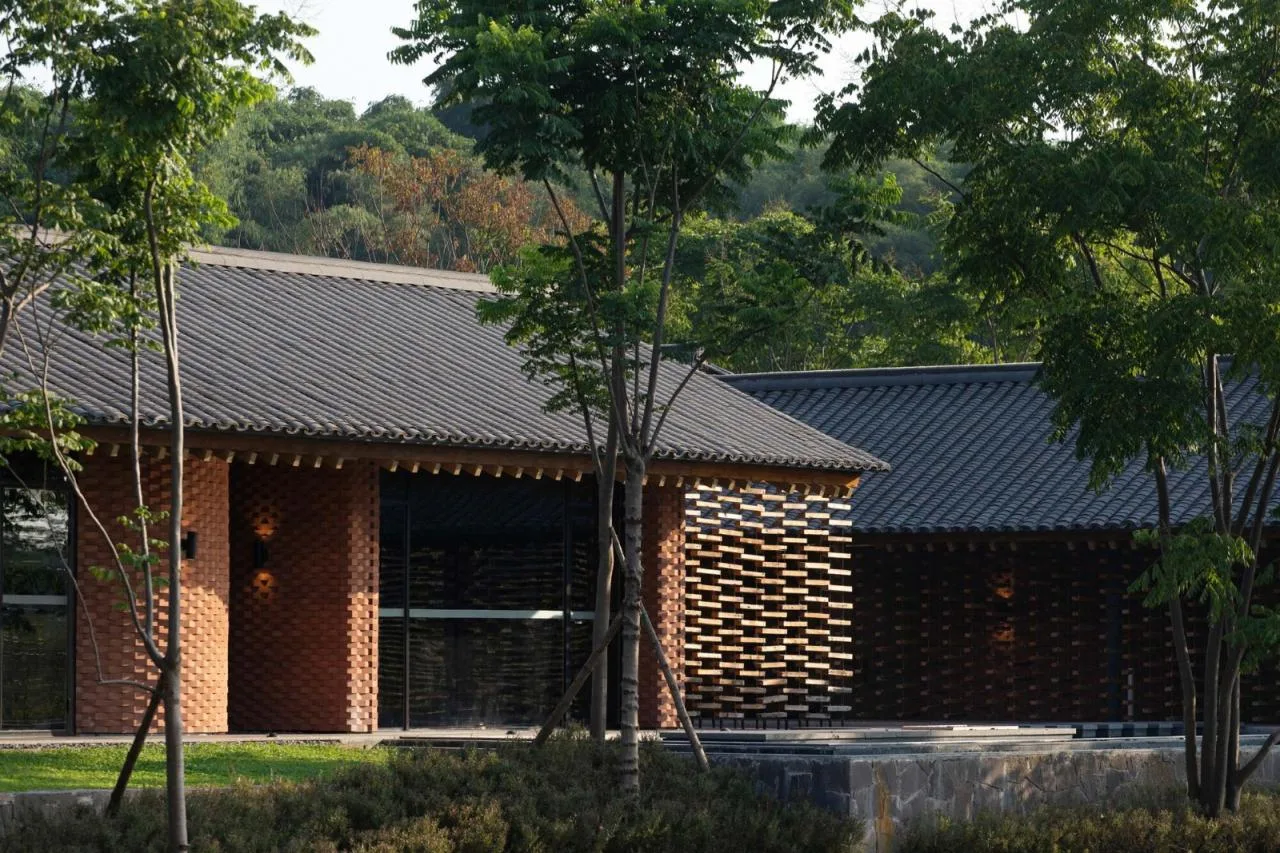
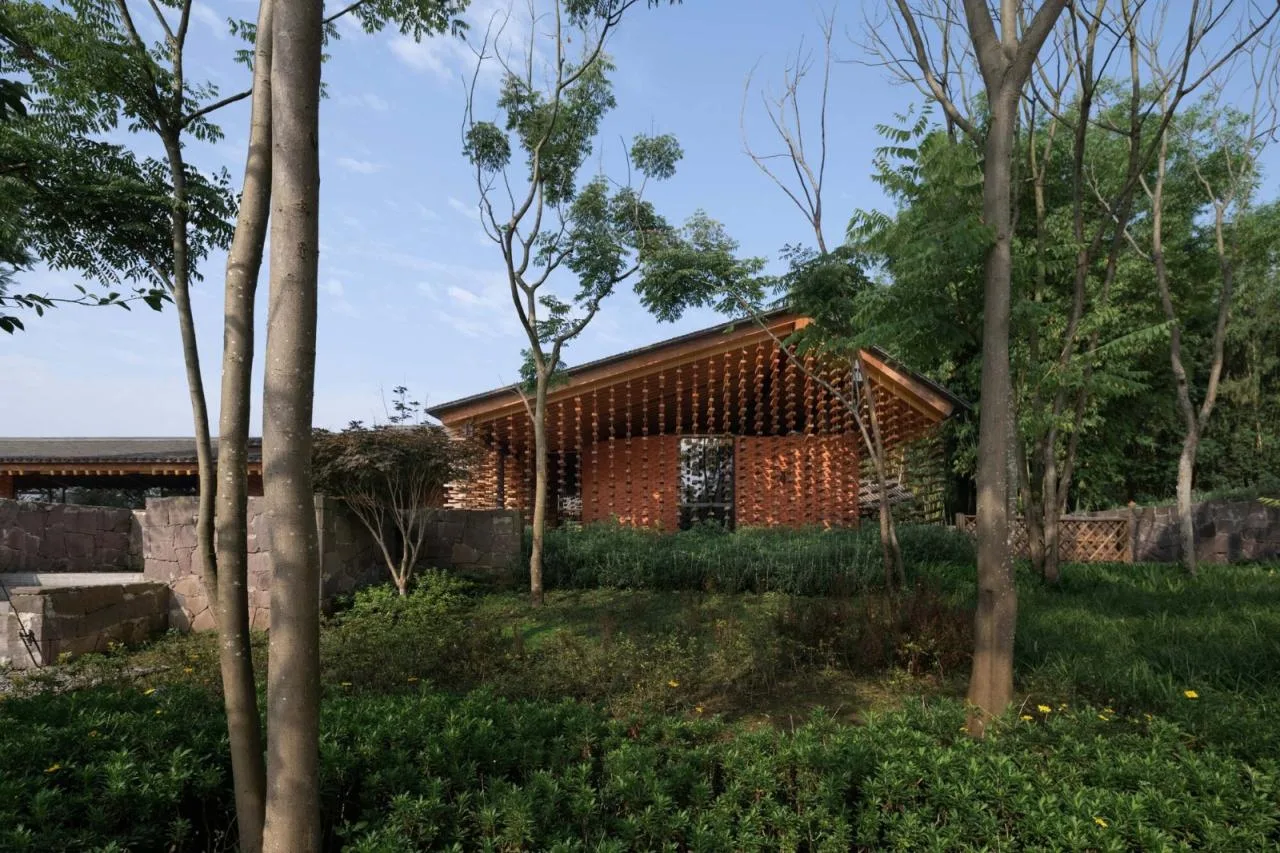
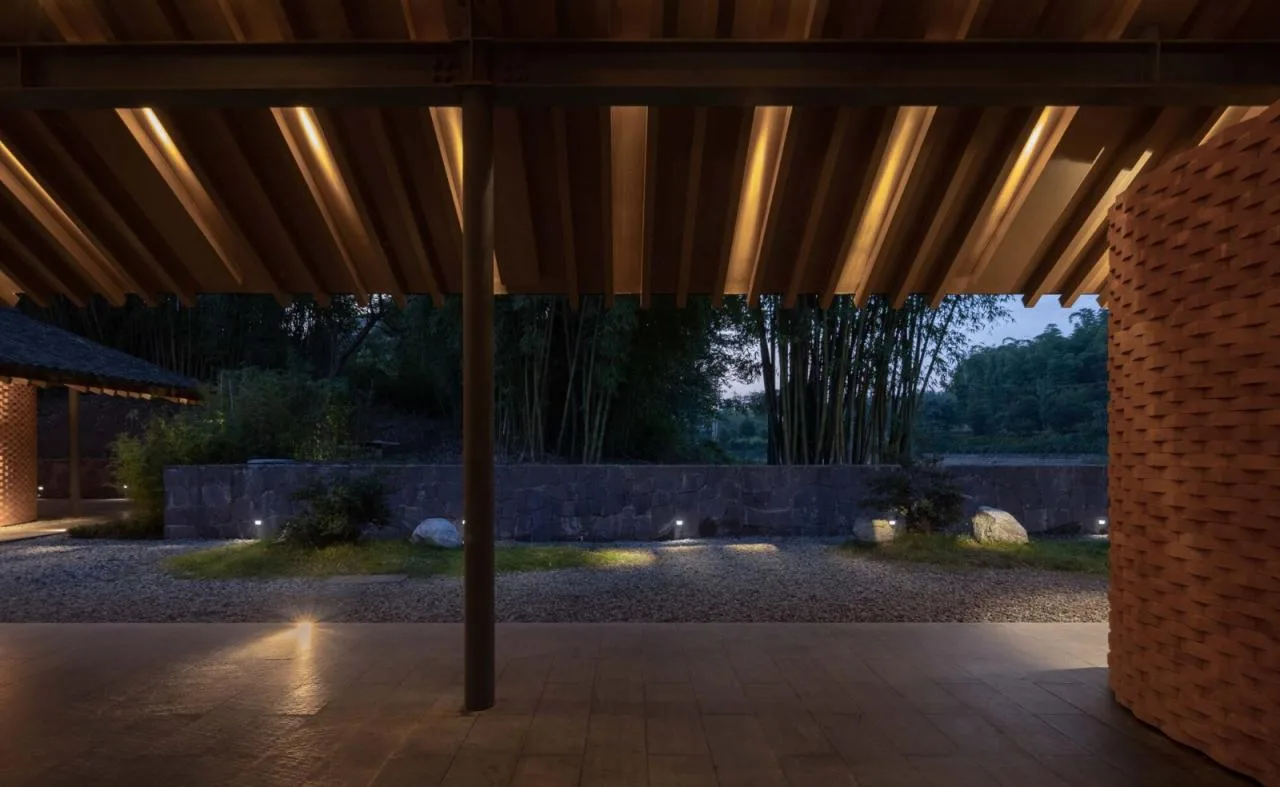
Tea, a vital element of agricultural culture, is omnipresent in Anshi Village and deeply intertwined with rural life. The village’s mottled wooden and mud walls, aged with peeling soil, create a dance of light and shadow. The buildings combine wood of varying sizes with mud walls, creating a transparent yet enclosed effect that resembles a textured interplay of light and shadow. Red sandstone, sourced from the Sichuan mountains, is widely used in architecture, sculpture, and daily items. The building incorporates machine-cut red sandstone blocks arranged in a fish scale pattern, adding rich texture that complements the wood. The small blue tile roofs echo the scale and color of the wood and stone elements. These three materials—wood, stone, and tile—differ yet harmonize like fish scales and feathers, both familiar and novel. They originate from the rural environment, are used within it, and blend naturally into the surroundings.
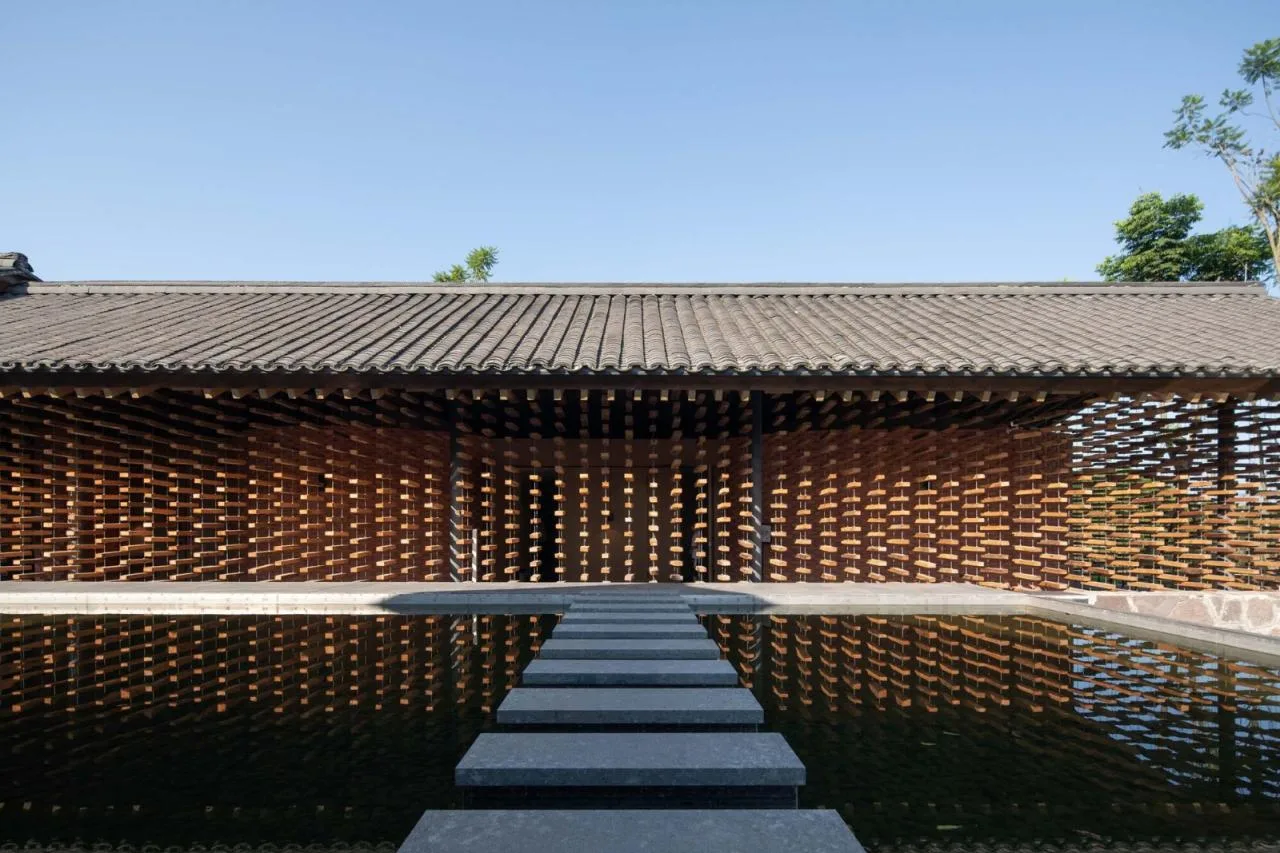
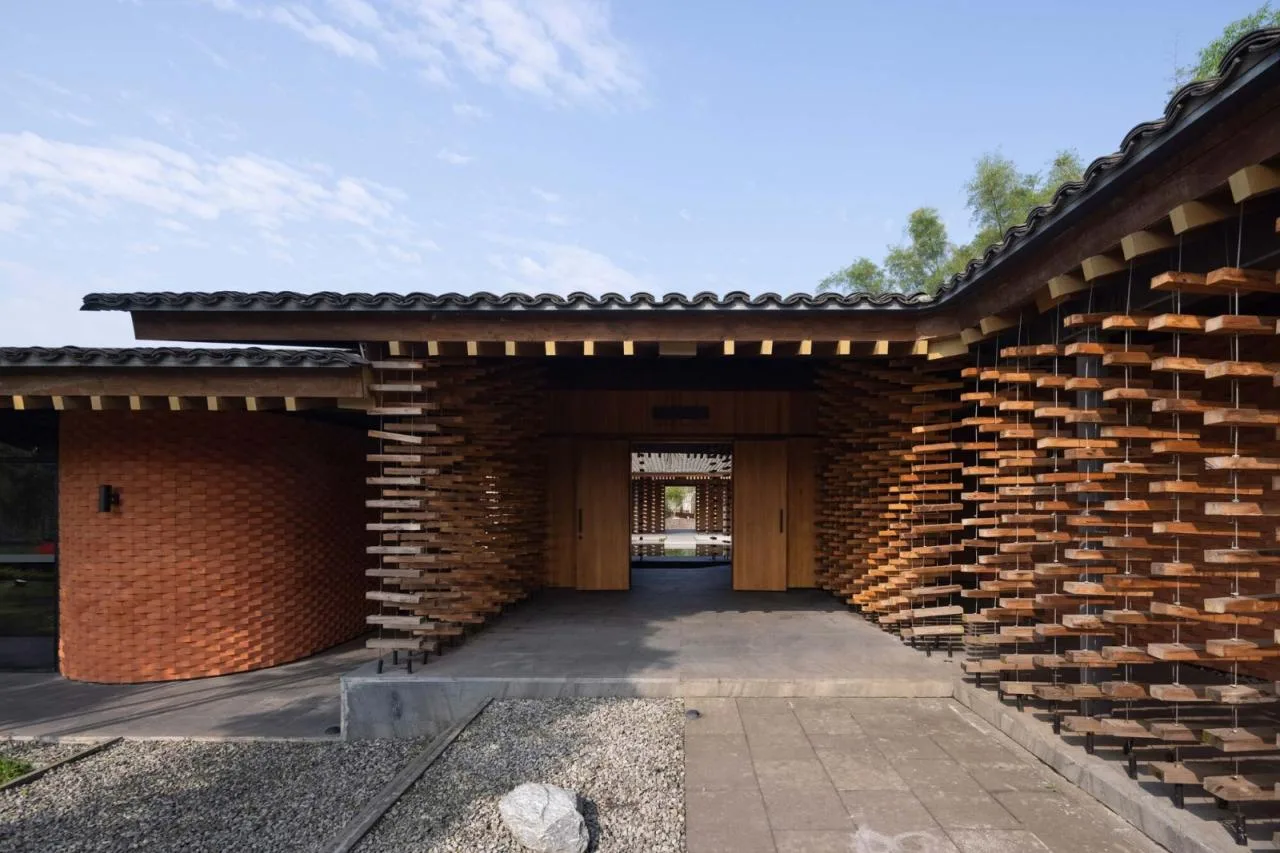
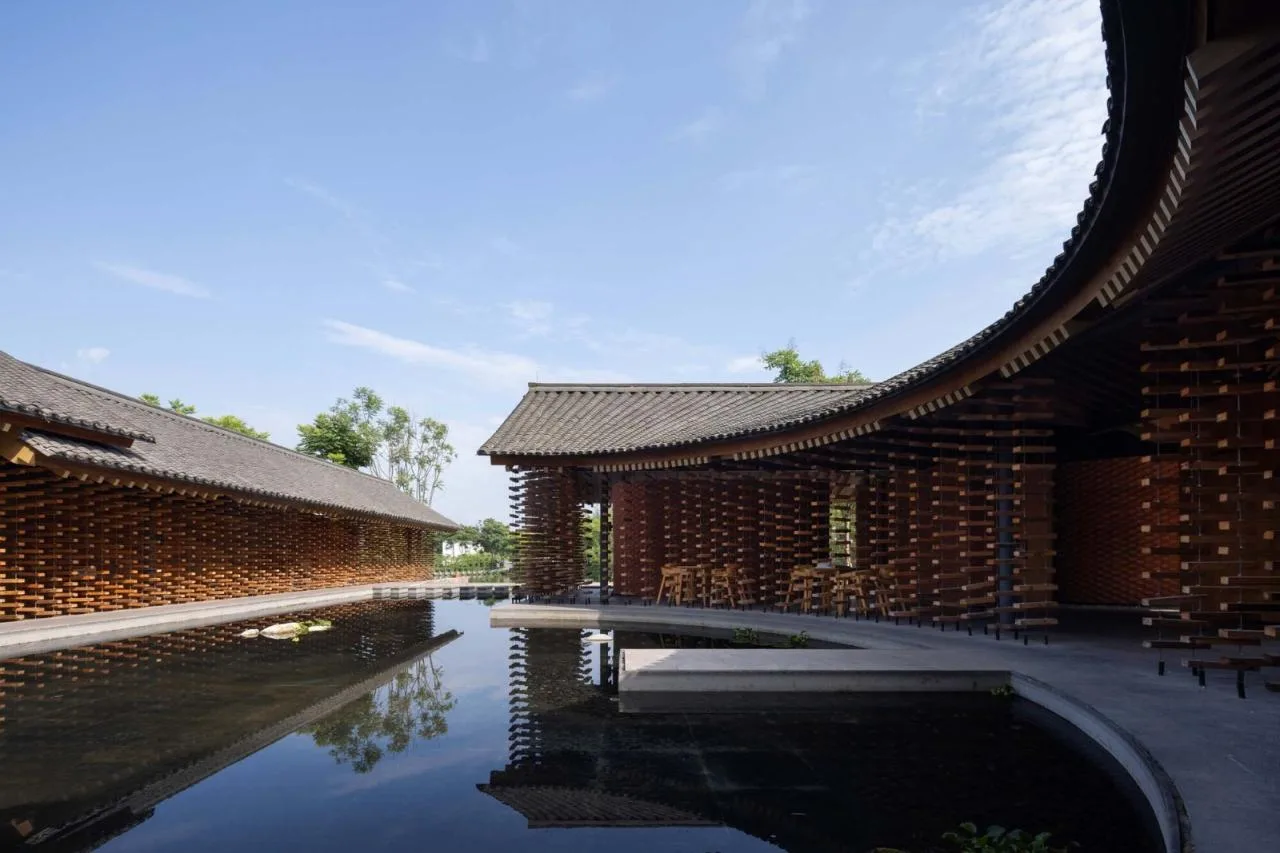
By combining traditional craftsmanship with modern construction techniques, the architecture achieves a balance between simplicity and refinement, creating a serene yet dynamic spatial atmosphere. Visitors walk along wooden walls sheltered by wide eaves, where flowing arcs converge in the inner courtyard. The calm circular water surface reflects wood, red sandstone, black tiles, and soft sky blue hues. The layering and displacement of materials create a sundial-like trace of time within the architectural space. As light moves, the interplay of light and shadow becomes unpredictable, crafting a unique and enchanting ambiance. Through the thoughtful use of materials, the design bridges locality, spatiality, and temporality, seamlessly weaving them into the architectural experience.
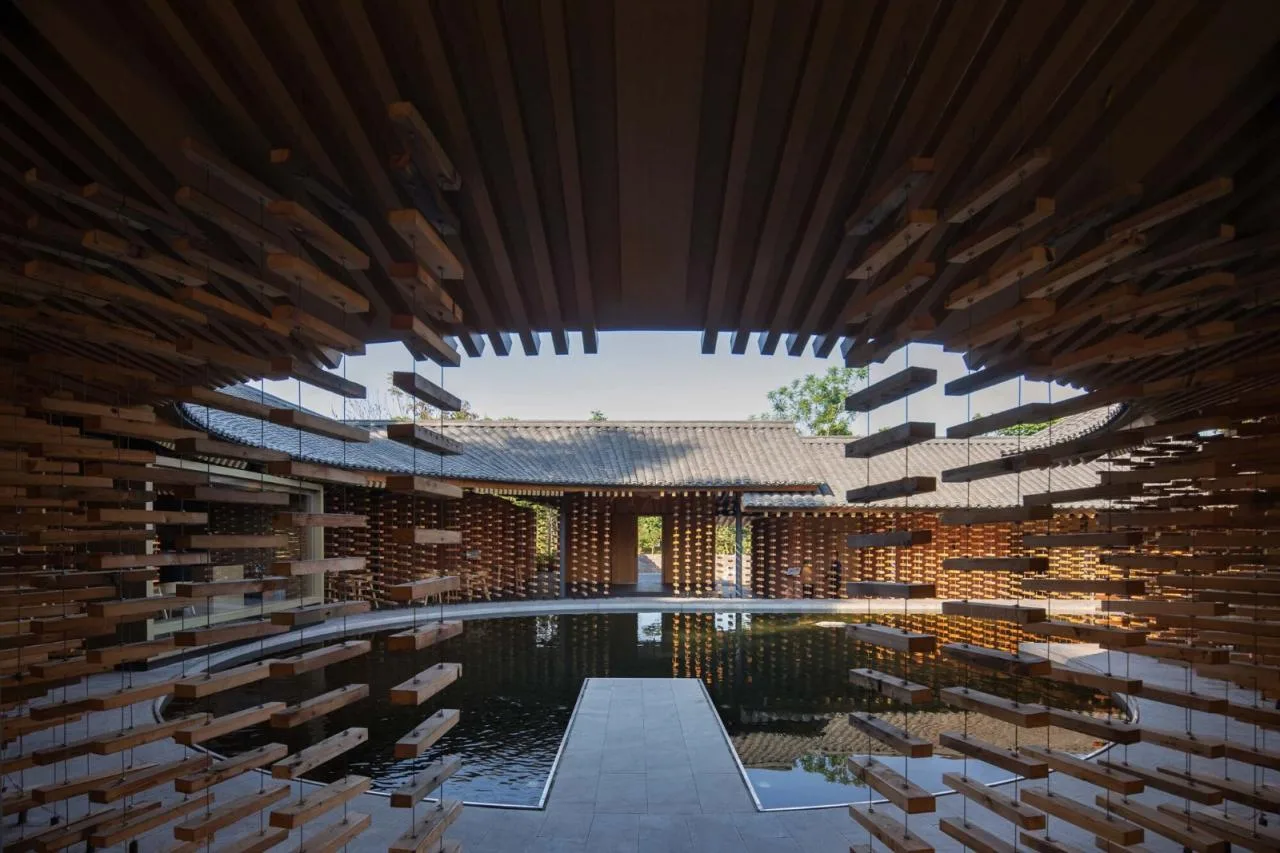
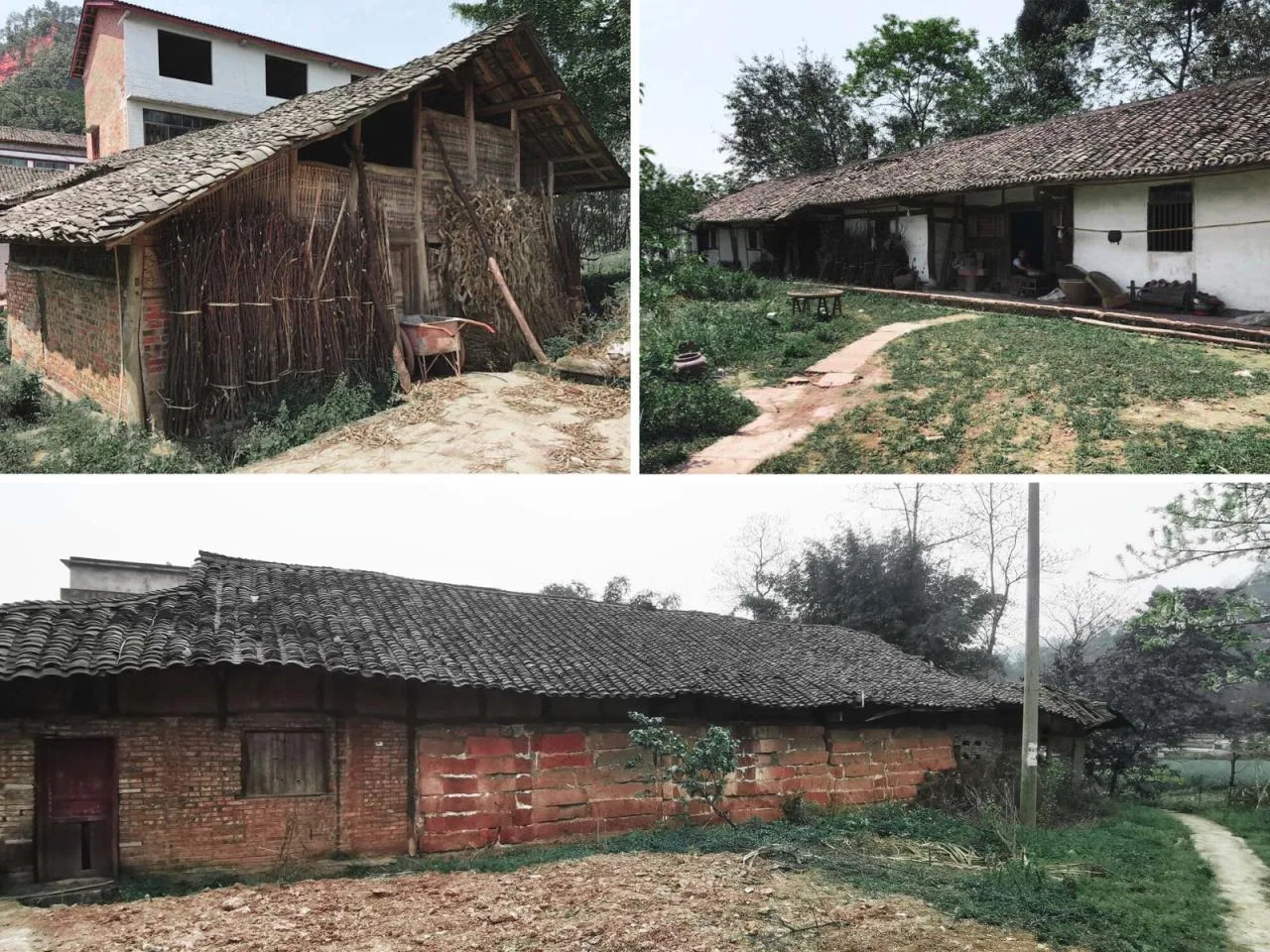
△ Original architecture
Project Drawings
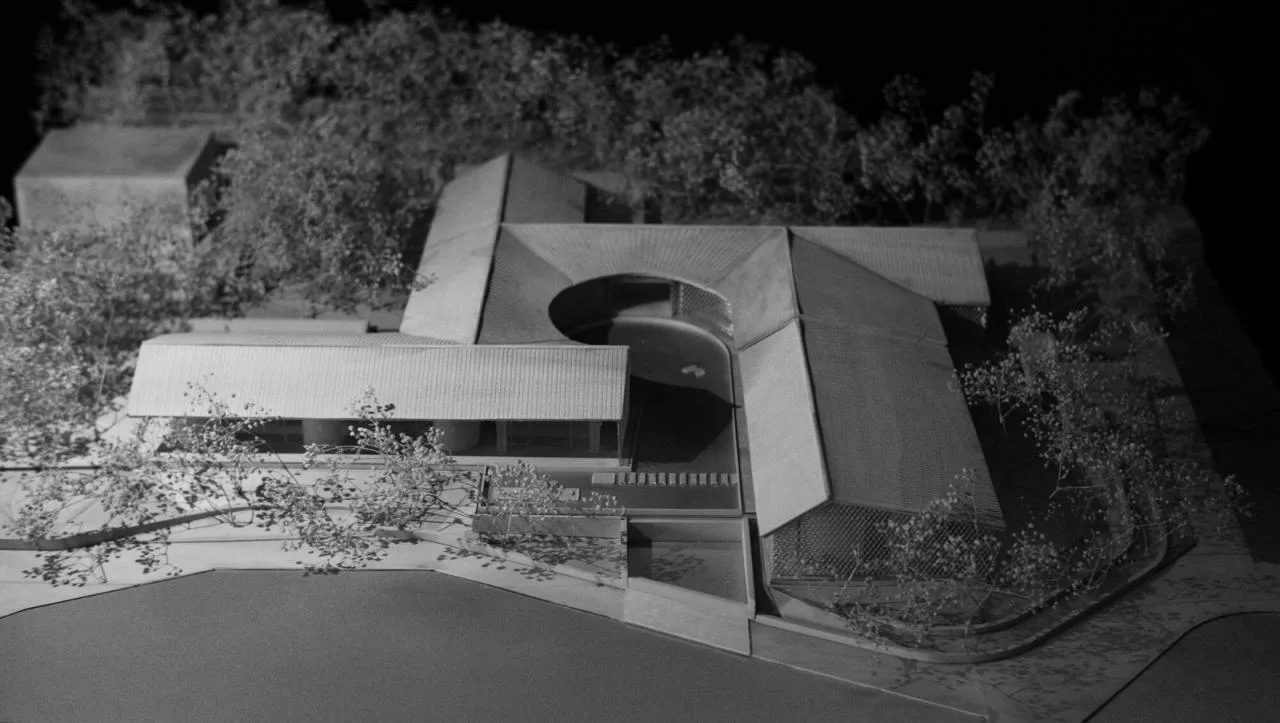
△ Model Diagram
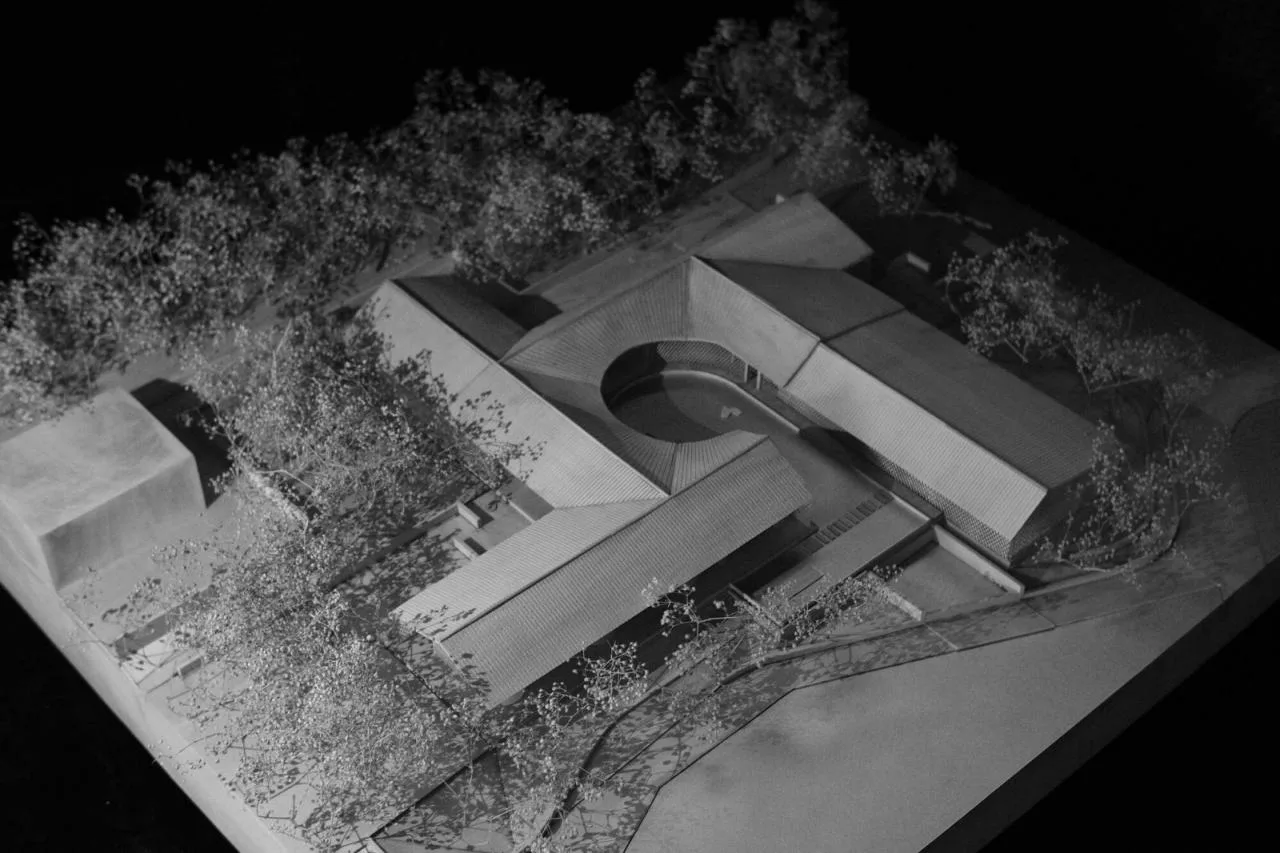
△ Model Diagram
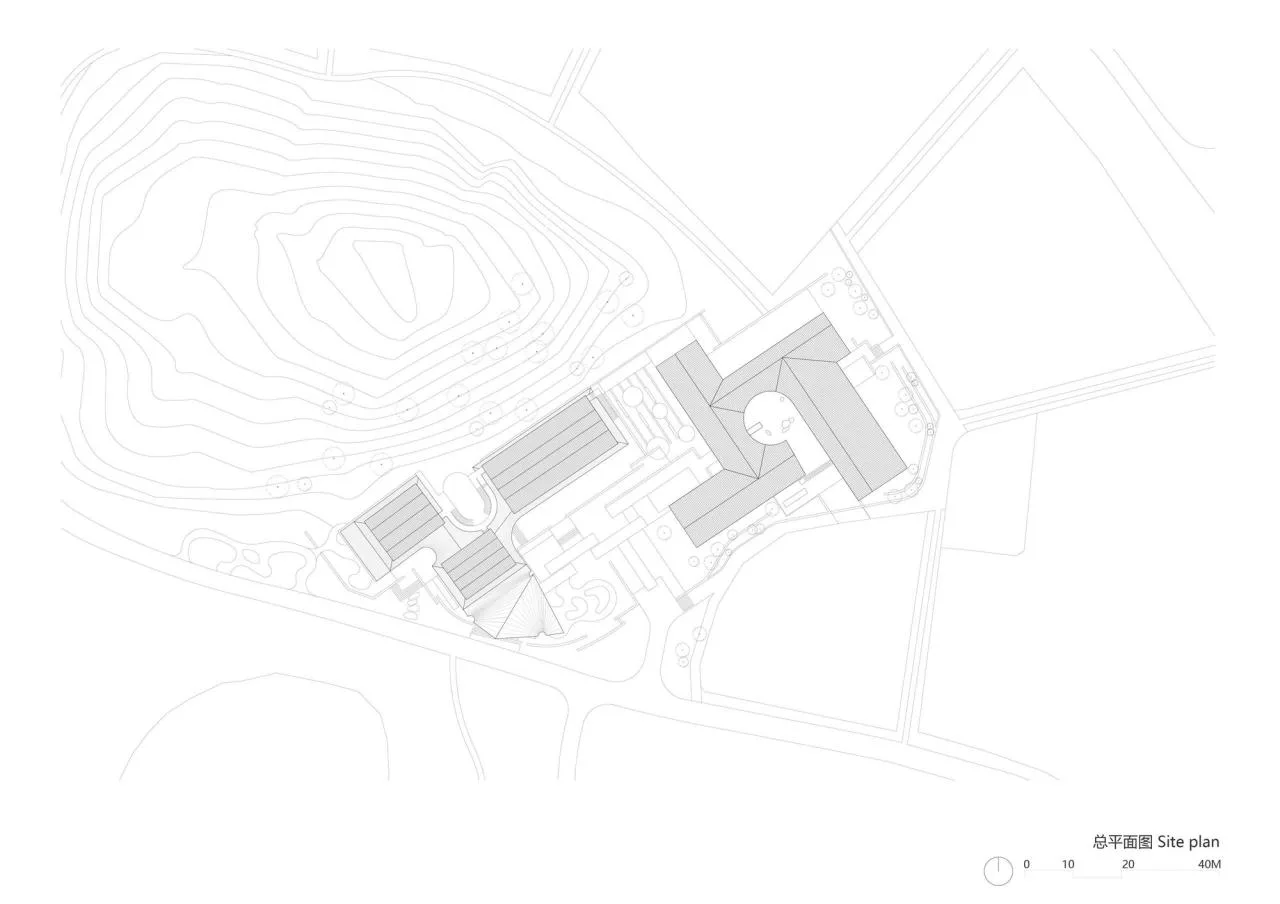
△ General Layout Plan
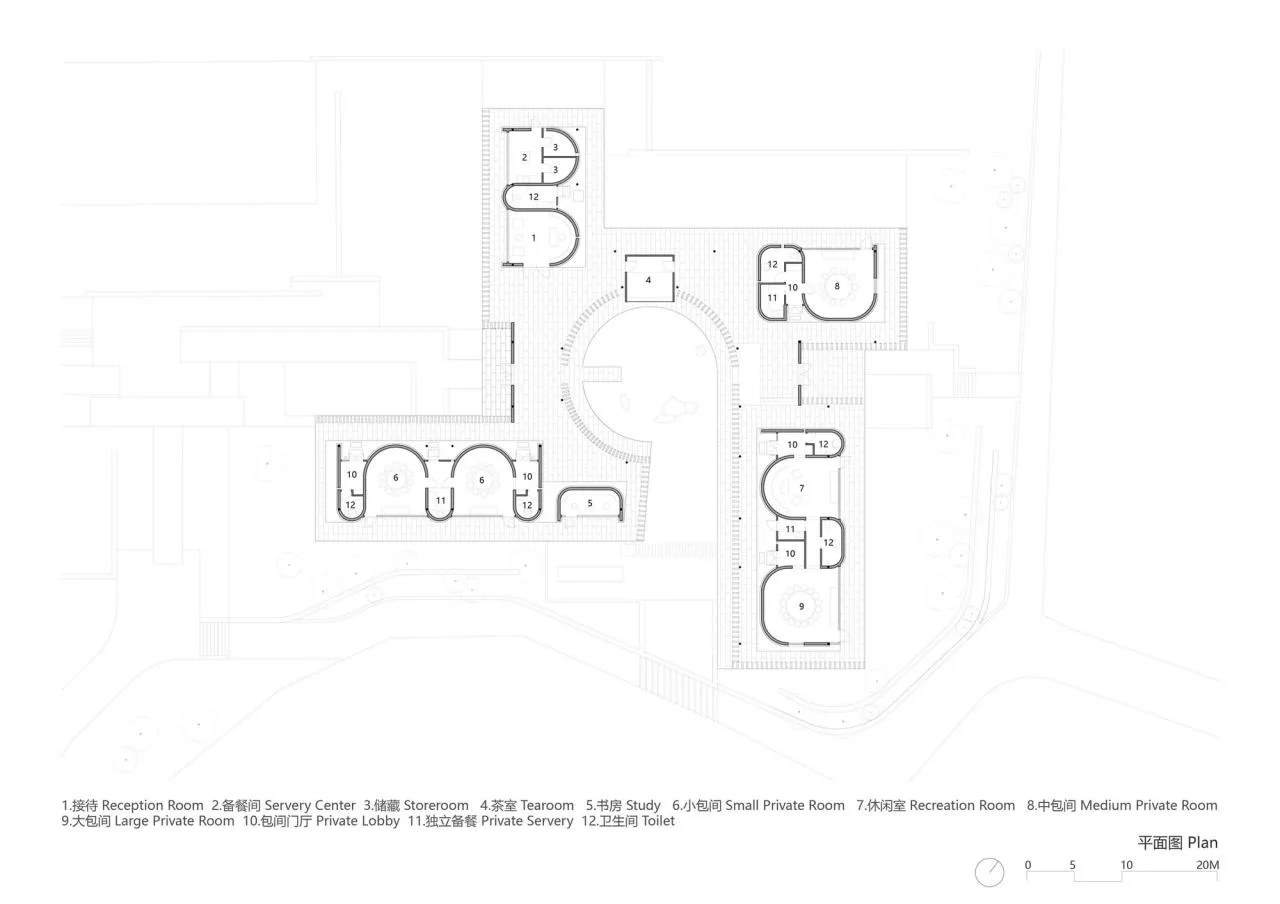
△ Plan View
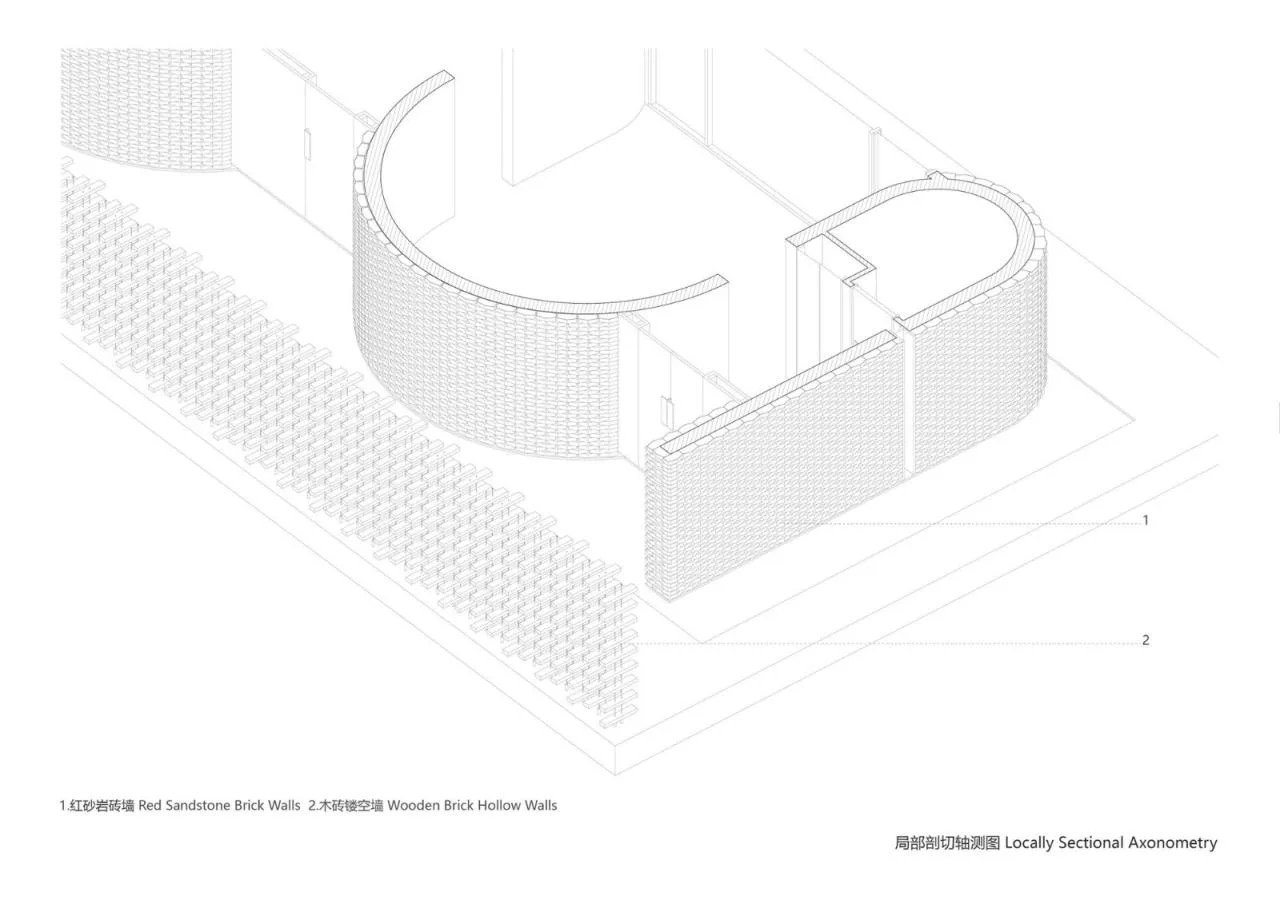
△ Local Section Axonometric Diagram
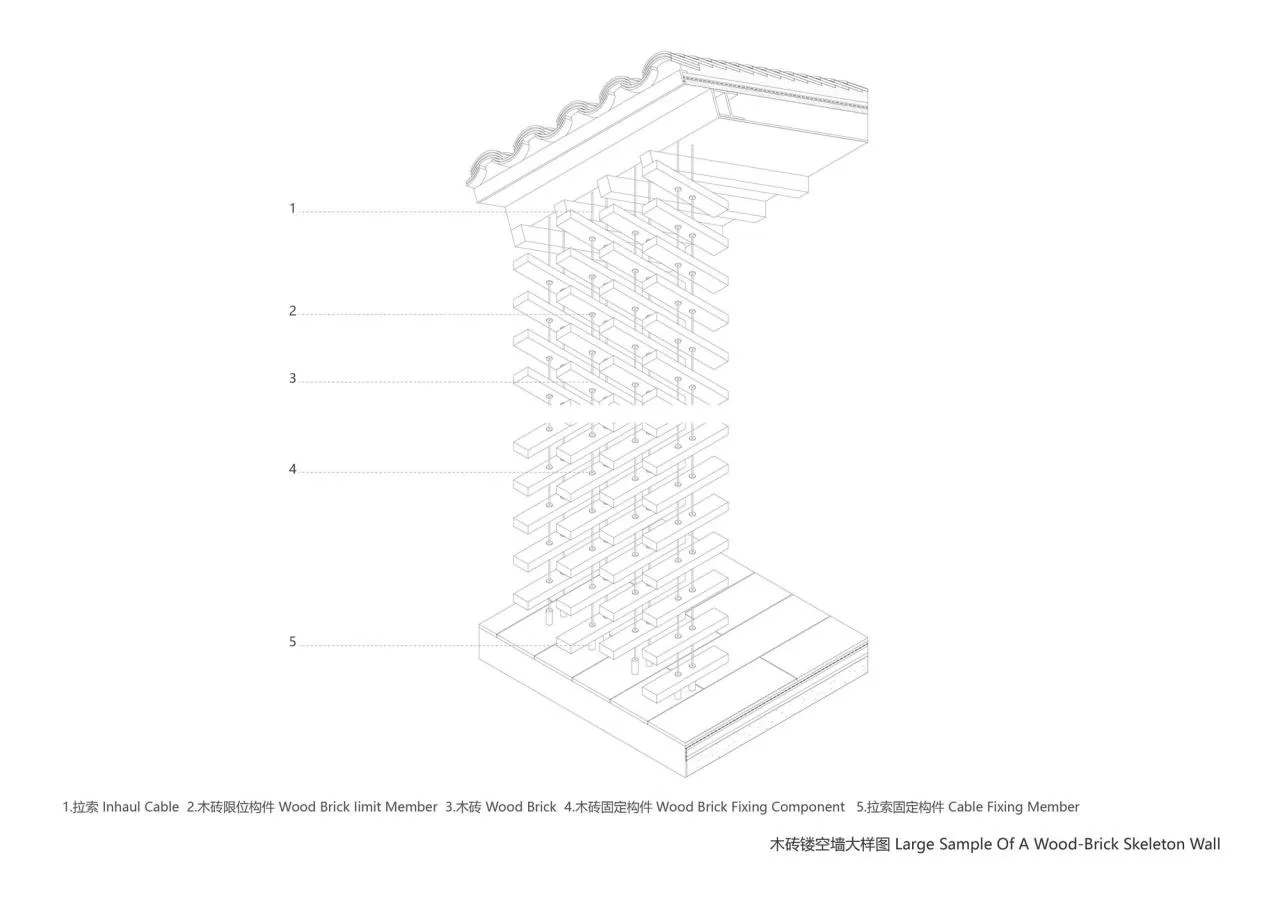
△ Detailed Drawing of Hollow Wooden Brick Wall
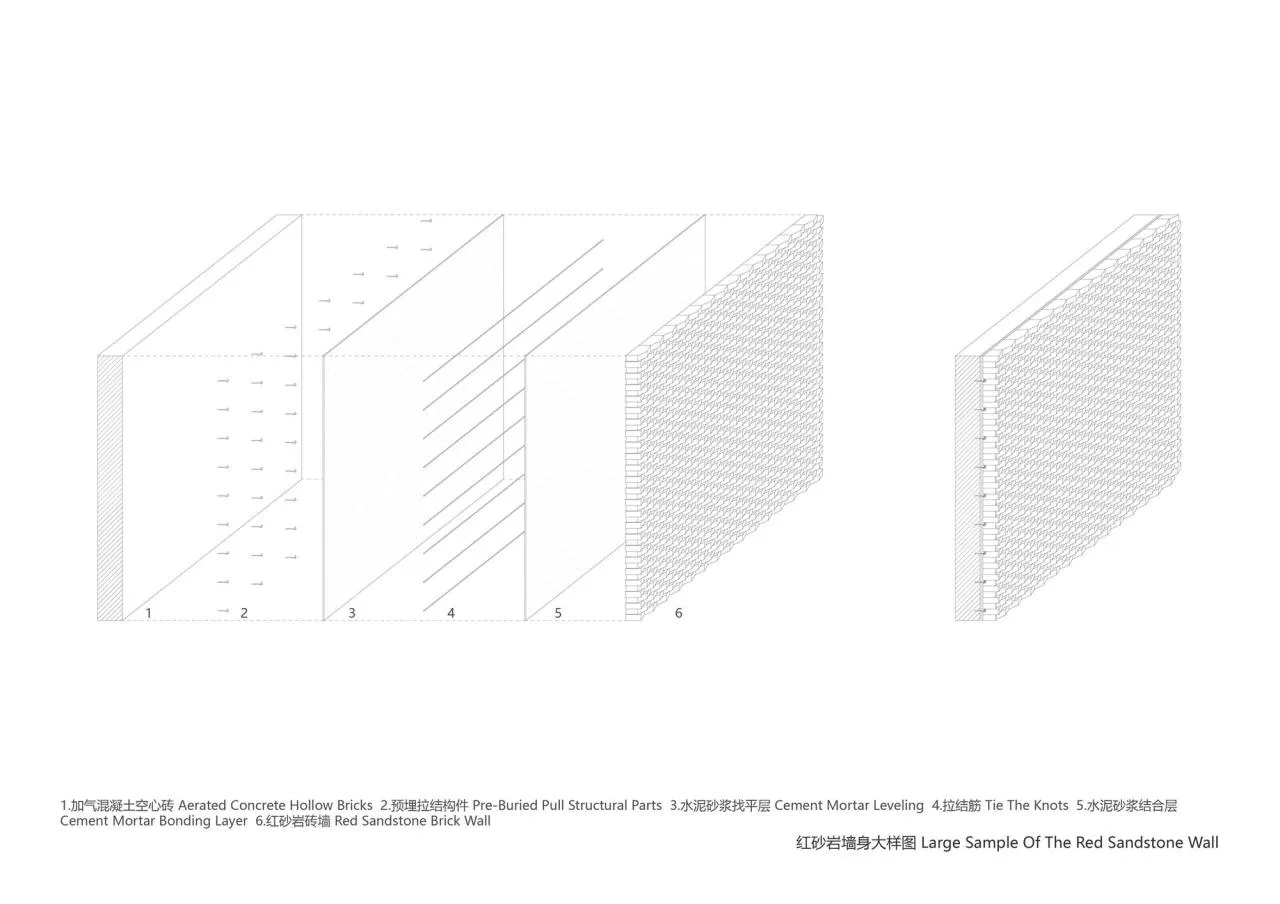
△ Detailed Drawing of Red Sandstone Wall
Project Information
Architect: Misi Architecture
Area: 1100 m²
Project Year: 2021
Photographer: Existence of Architecture
Design Team: Zhou Suning, Yang Ke, Shi Qian, Wu Ziye, Tang Tao, Lin Libin
Construction Consultant: Wen Qinhao
Client: Chengdu Jinda Jiajin Cultural Tourism Co., Ltd
Structural Design: Shanghai Yuangui Architectural Structural Design Firm
Mechanical and Electrical Design: Ruiwen Engineering Design (Shanghai) Firm
Lighting Consultation: Lumi Lighting
Construction Design: ZHI CHENG ARCH-TECH
Location: Yibin City, China














Must log in before commenting!
Sign Up