
Venue Conditions: A Blend of Advantages and Challenges
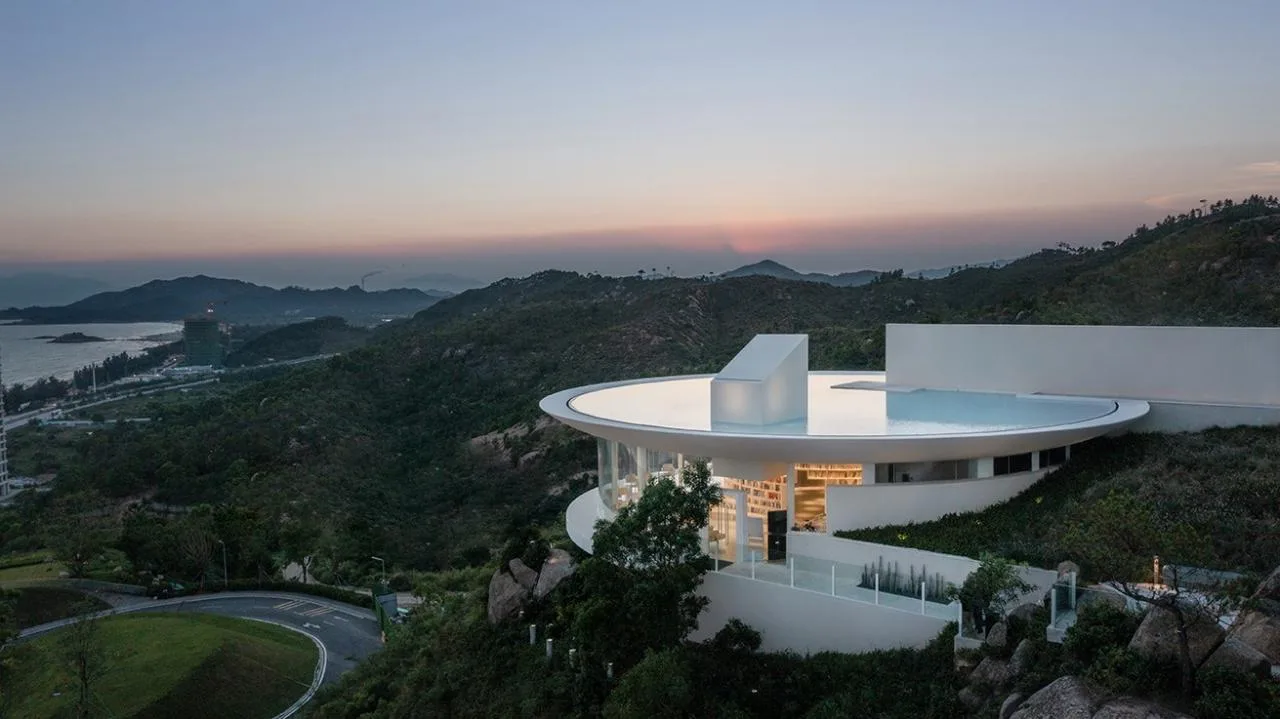
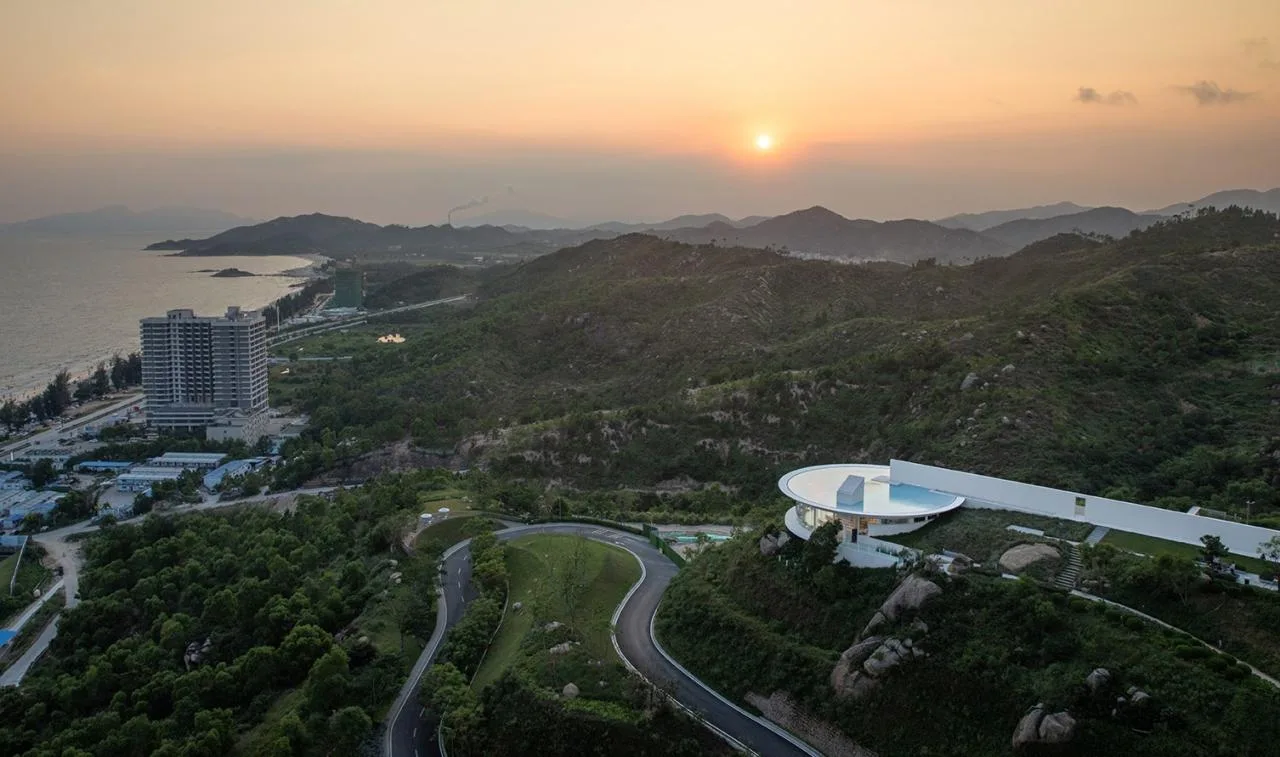
The building is situated in Shuangyue Bay Central Park, Pinghai Town, Huizhou City, Guangdong Province. Nestled between Pinghai Ancient Town and the sea, it is close to the renowned Shuangyue Bay Turtle Reserve. The park’s terrain slopes from north to south, featuring hills and valleys to the north and the sea to the south.
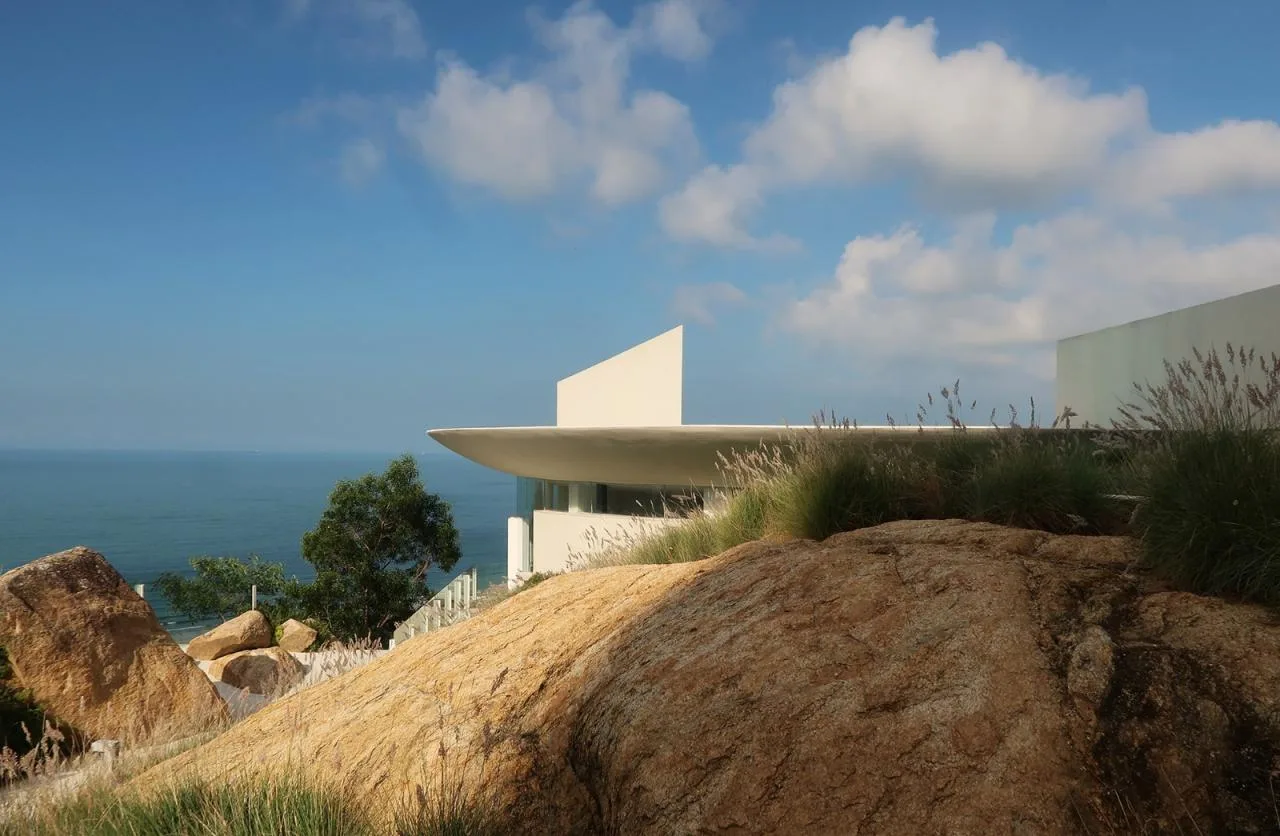
The project site occupies a distinct “peninsula-shaped” hill near the park’s center. The hill runs from northeast to southwest, offering northern views dominated by hills and valleys, and to the south, an expansive 270-degree sea vista with outstanding visibility. While the hills have gentle contours rather than imposing grandeur, several large boulders provide essential elements for shaping the landscape.
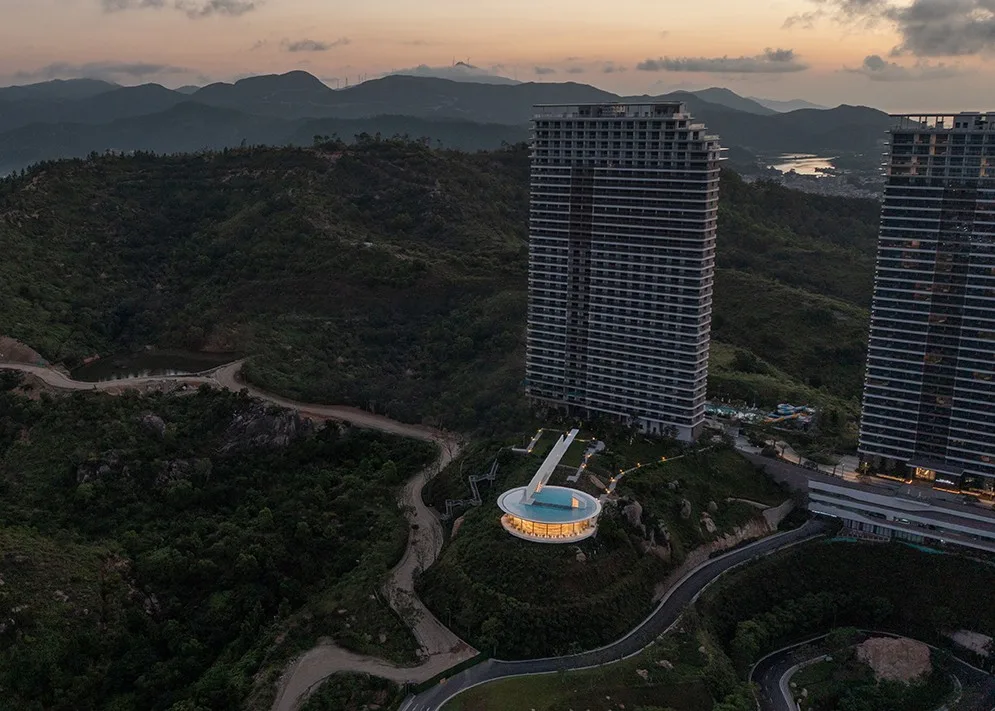
However, the site does face challenges. Residential buildings to the east and southeast partially obstruct views due to their height. Additionally, the library’s height is strictly regulated to preserve the sea views of low-rise residents to the north. A multi-story building southwest of the park has an unappealing appearance, negatively affecting the library’s sea outlook.
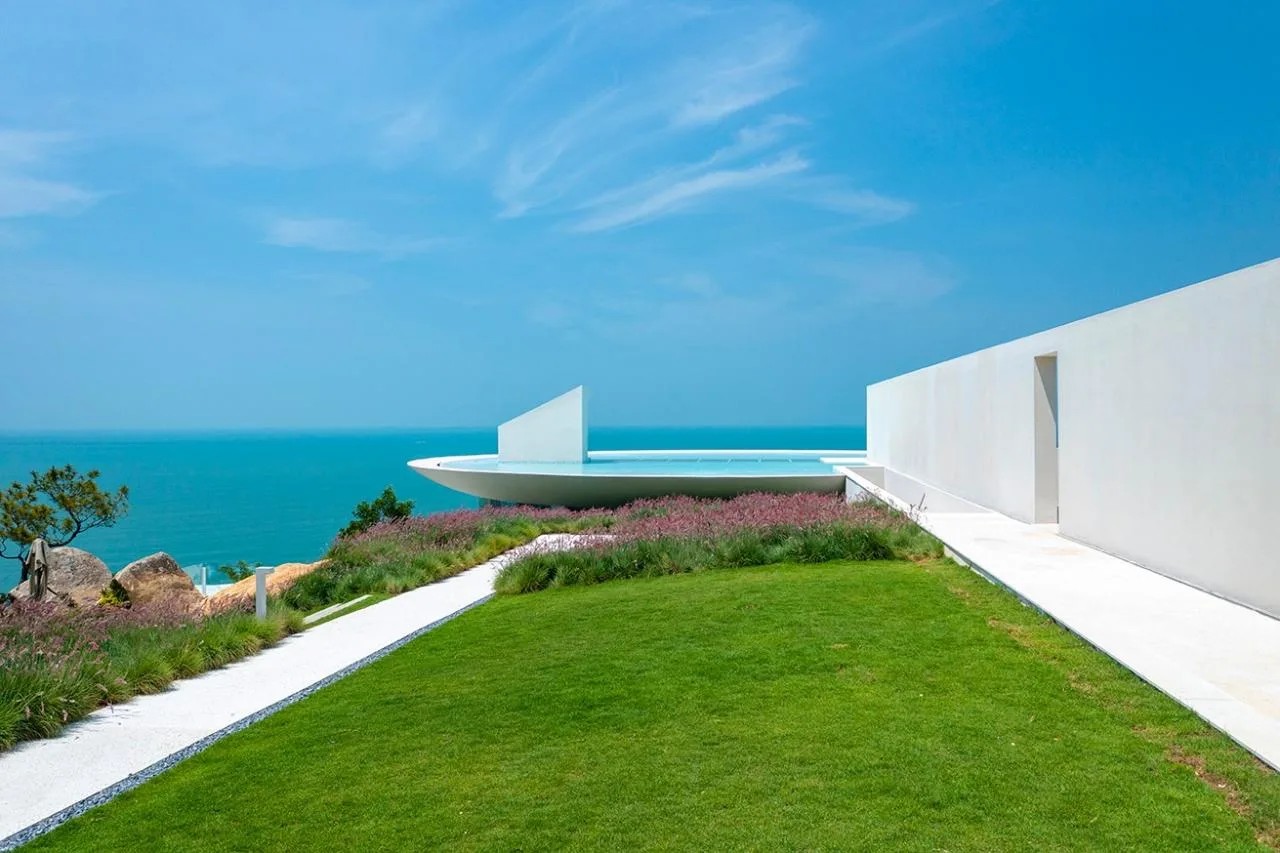
Location and Design: A White Library Beneath the Pool
The design harmoniously integrates the cultural essence of the library, the unique site environment, and the public nature of modern society.
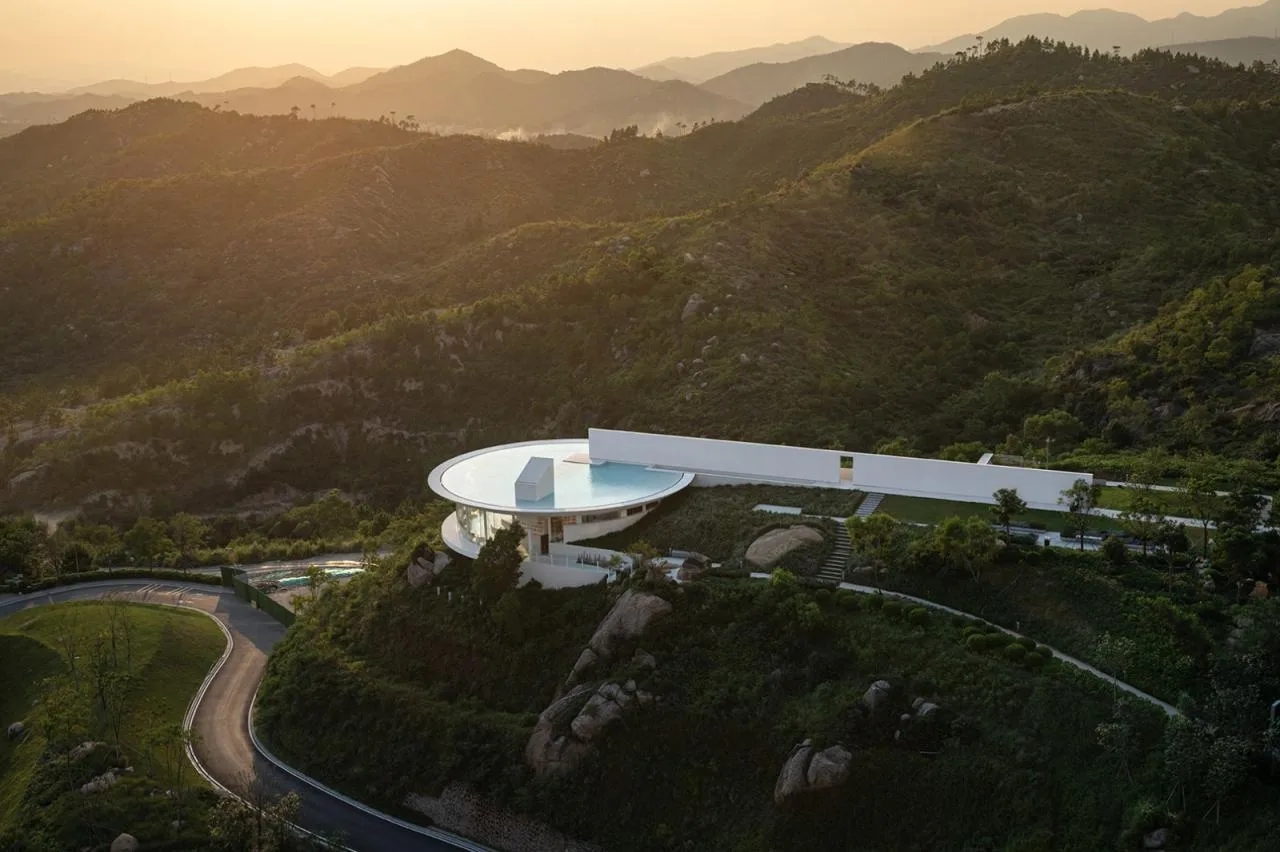
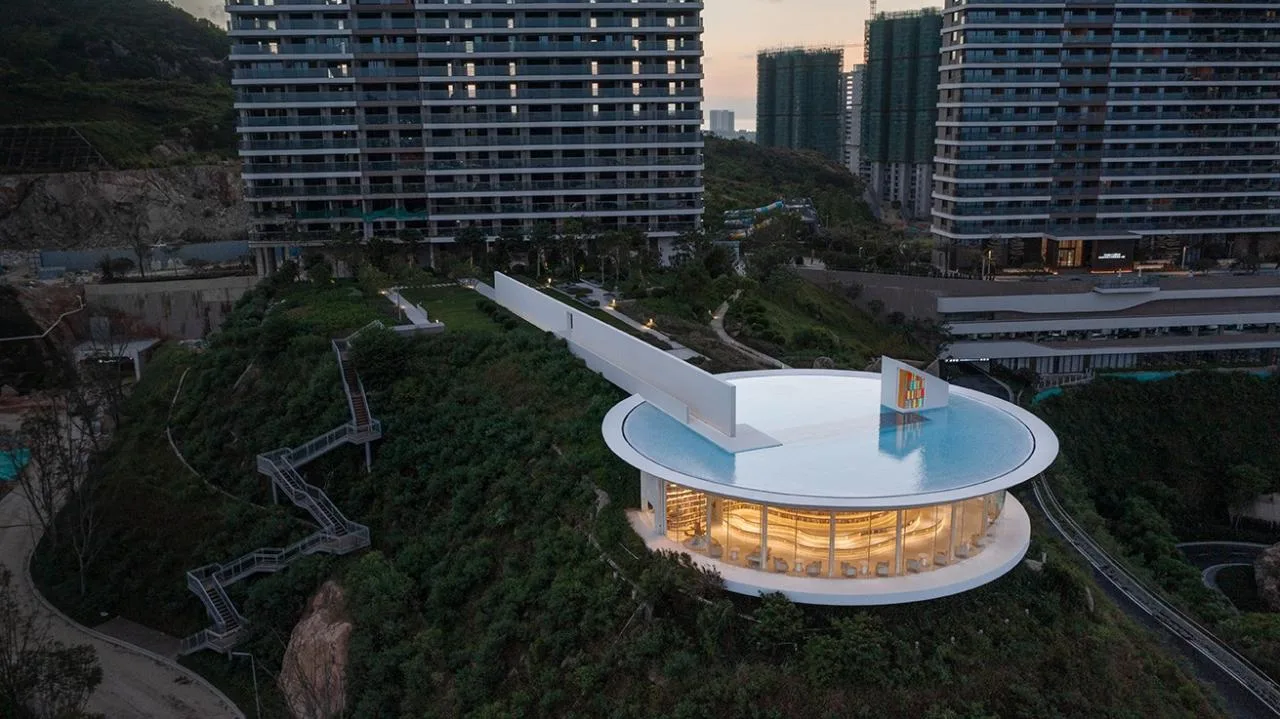
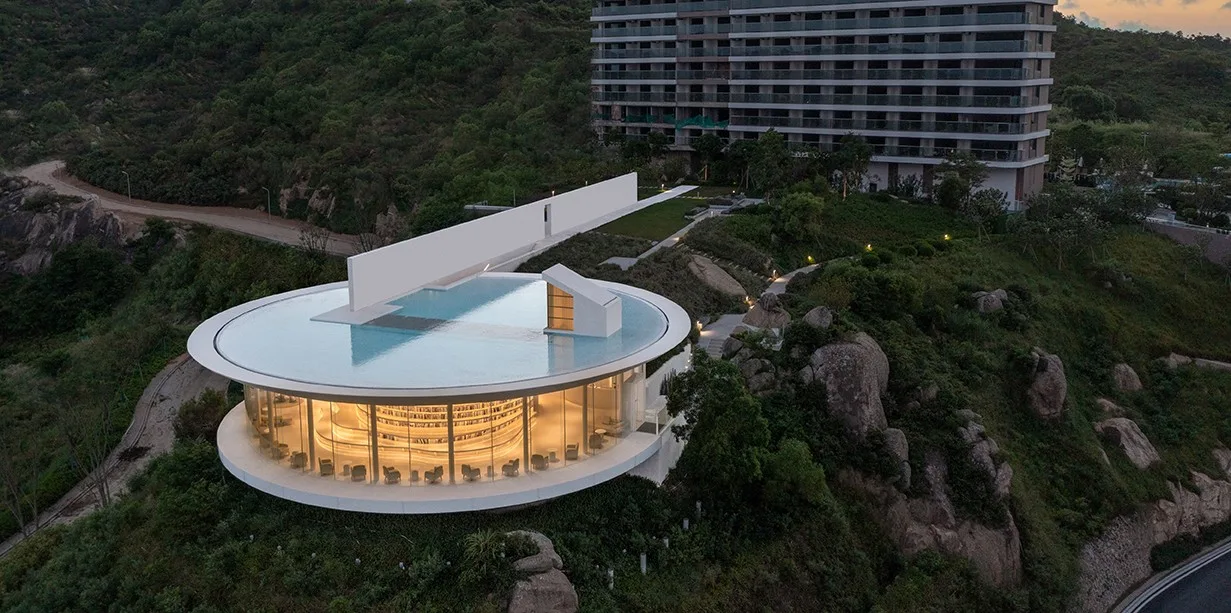
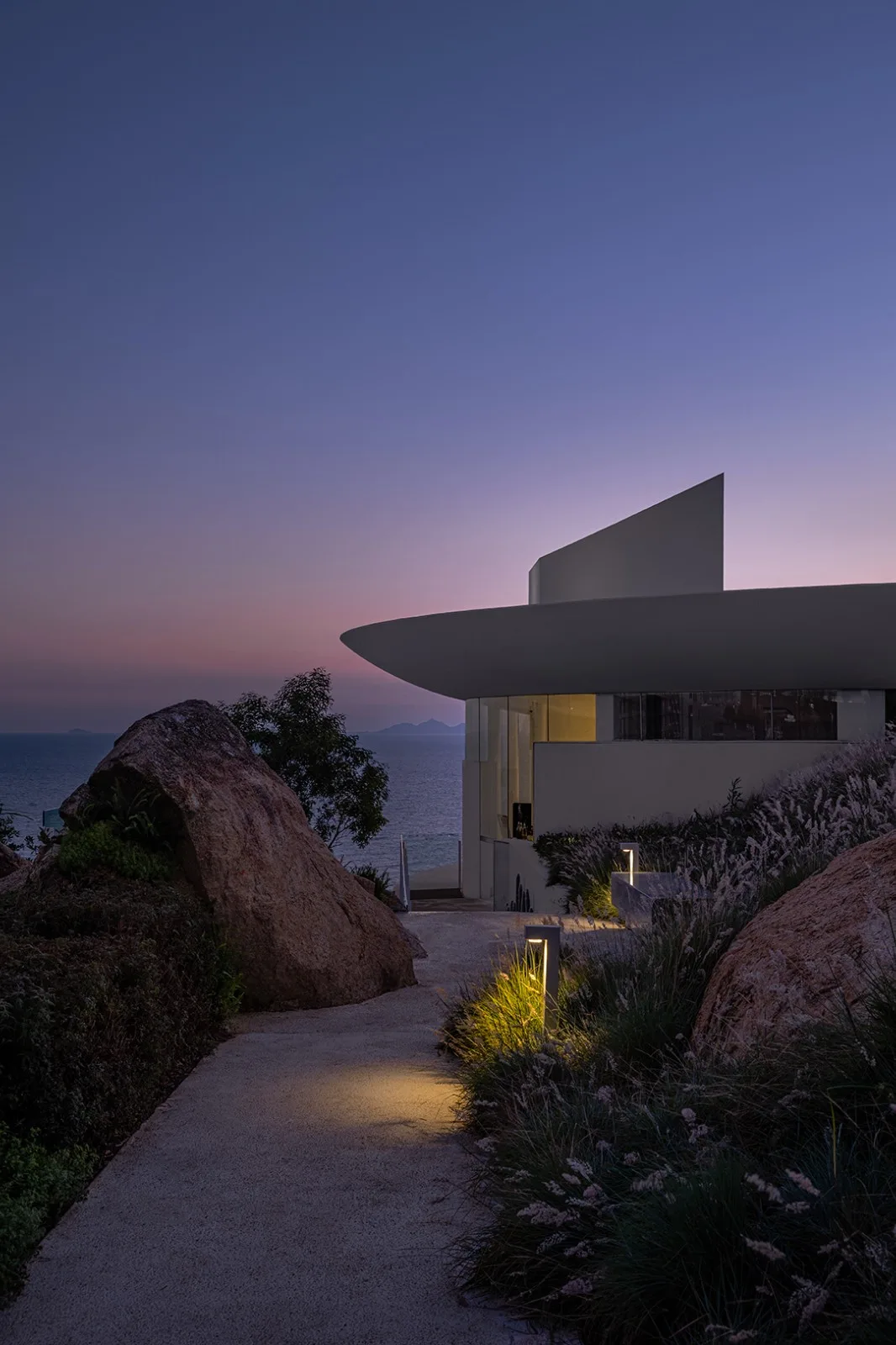
The building is strategically placed atop the hill, positioned at the cliff’s edge to align with the terrain’s height variation. It seamlessly blends with the mountain, becoming an integral part of the landscape. This placement maximizes the library’s viewing surfaces, controls building height, minimizes earthworks, and preserves sea views for surrounding residents.
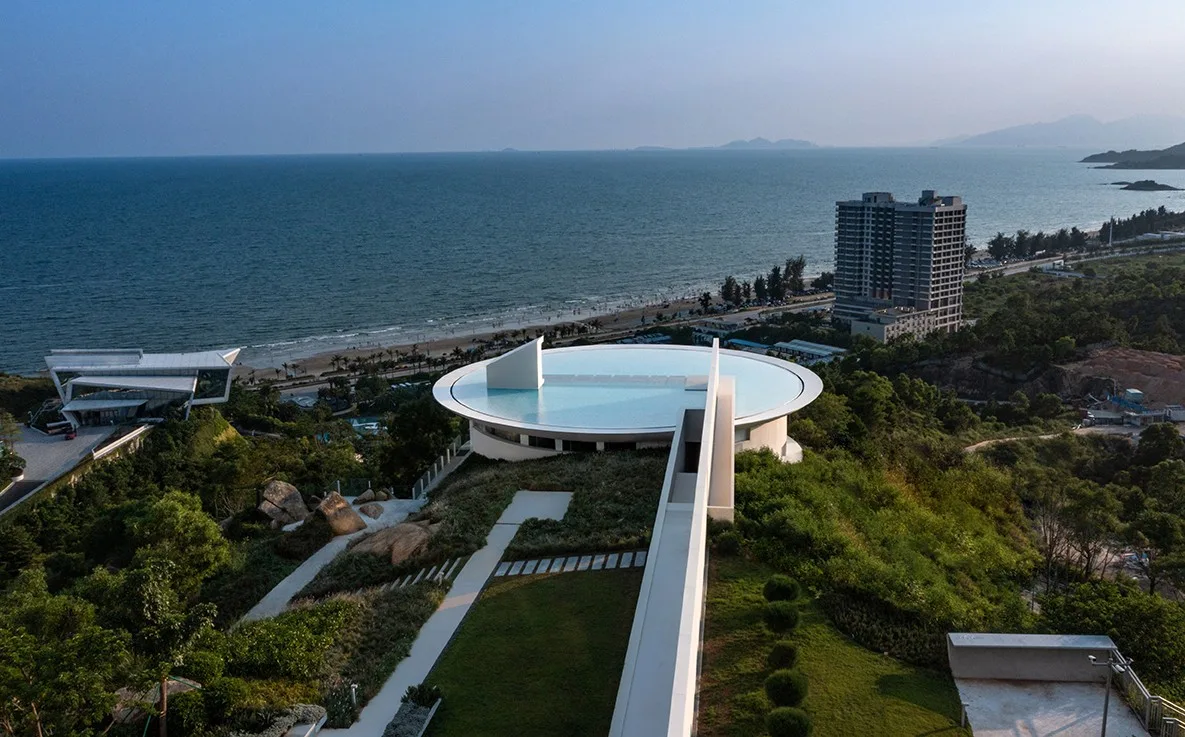
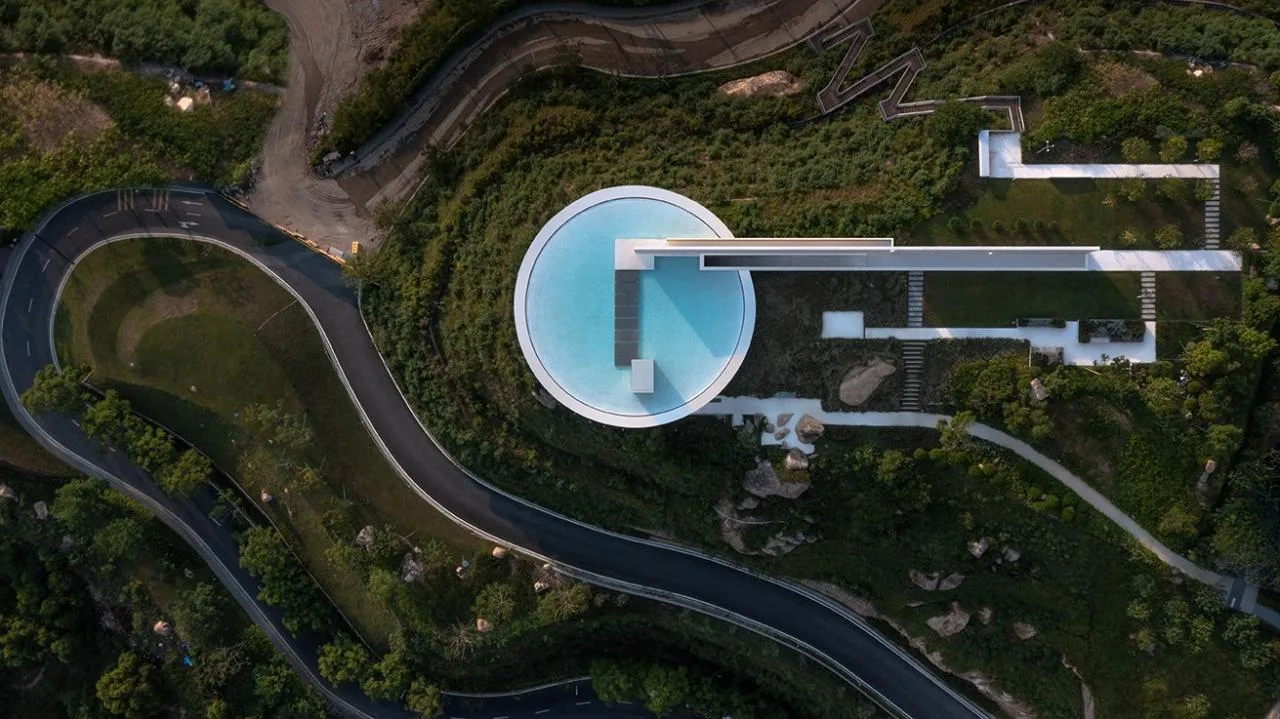
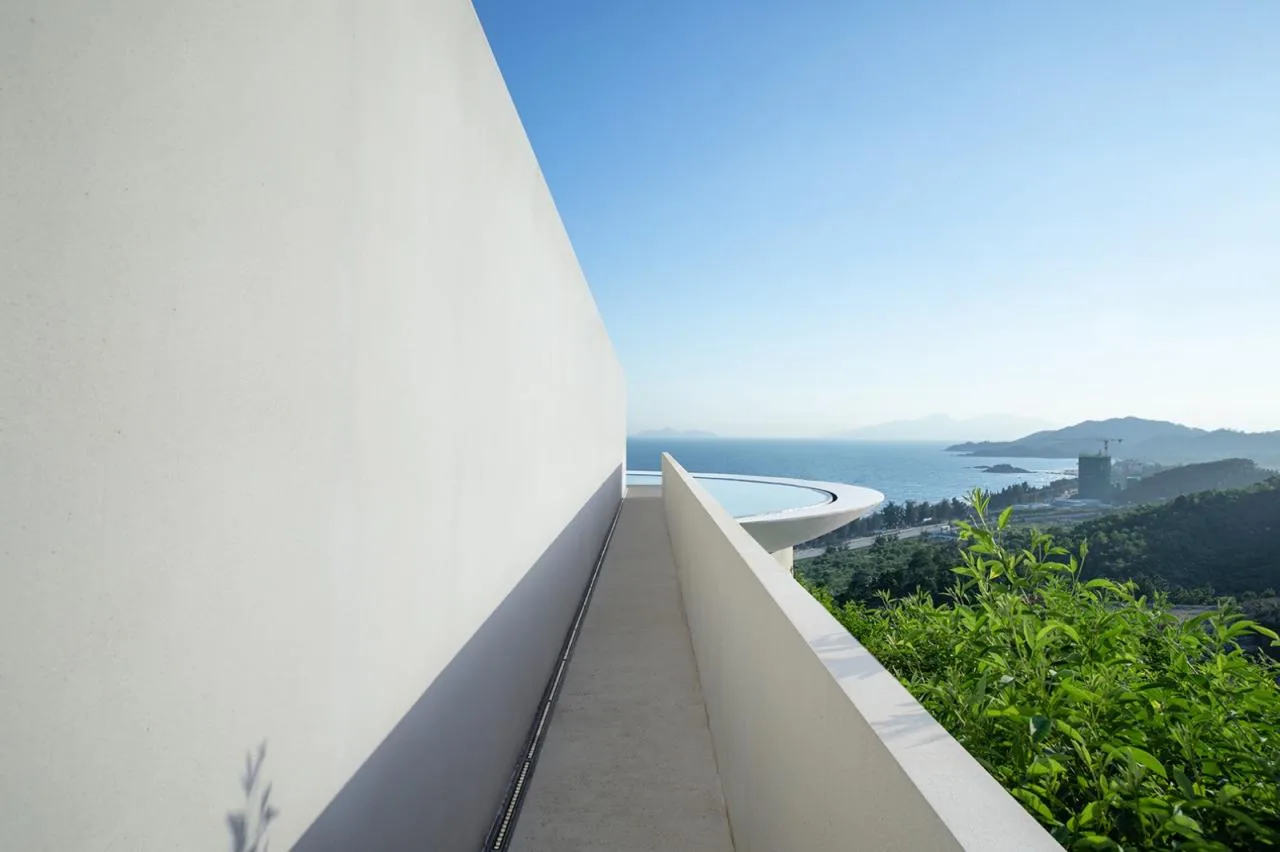
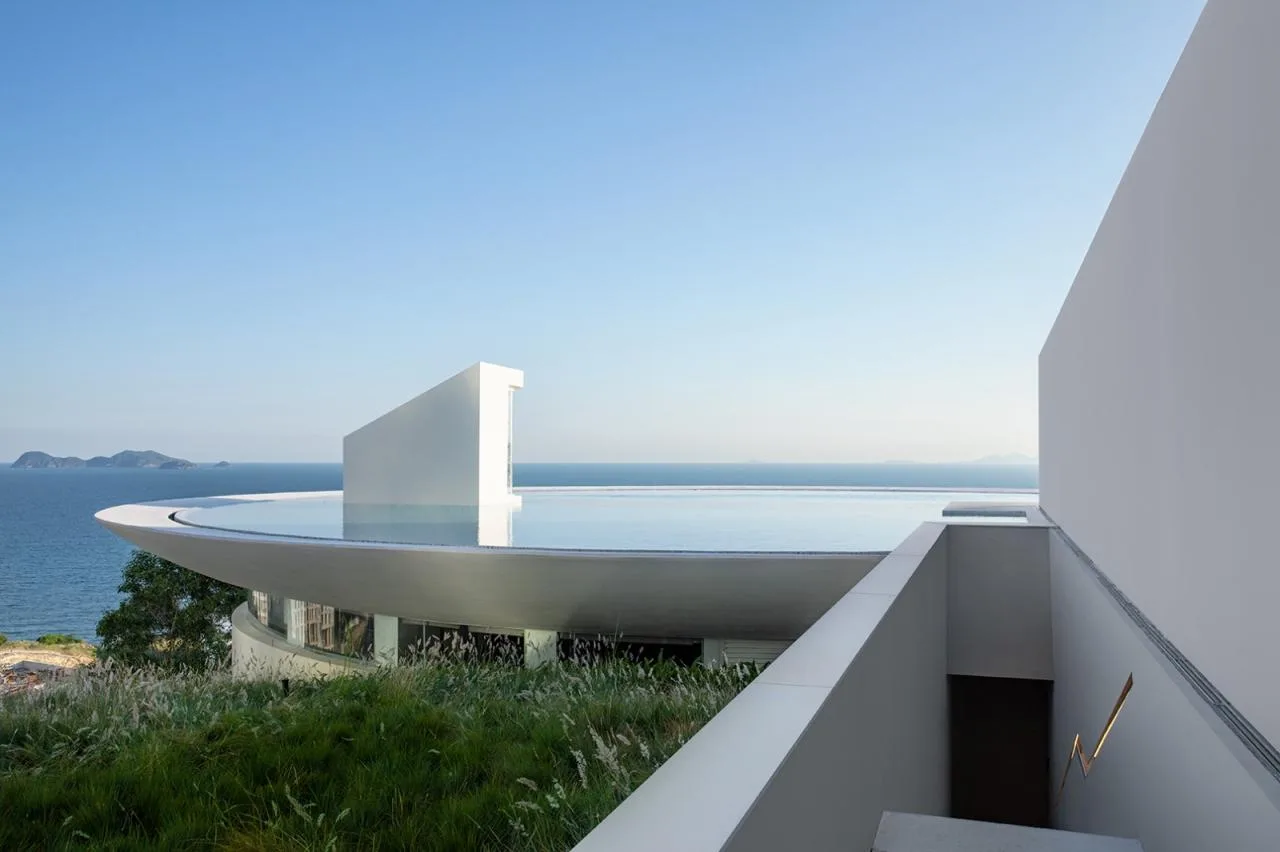
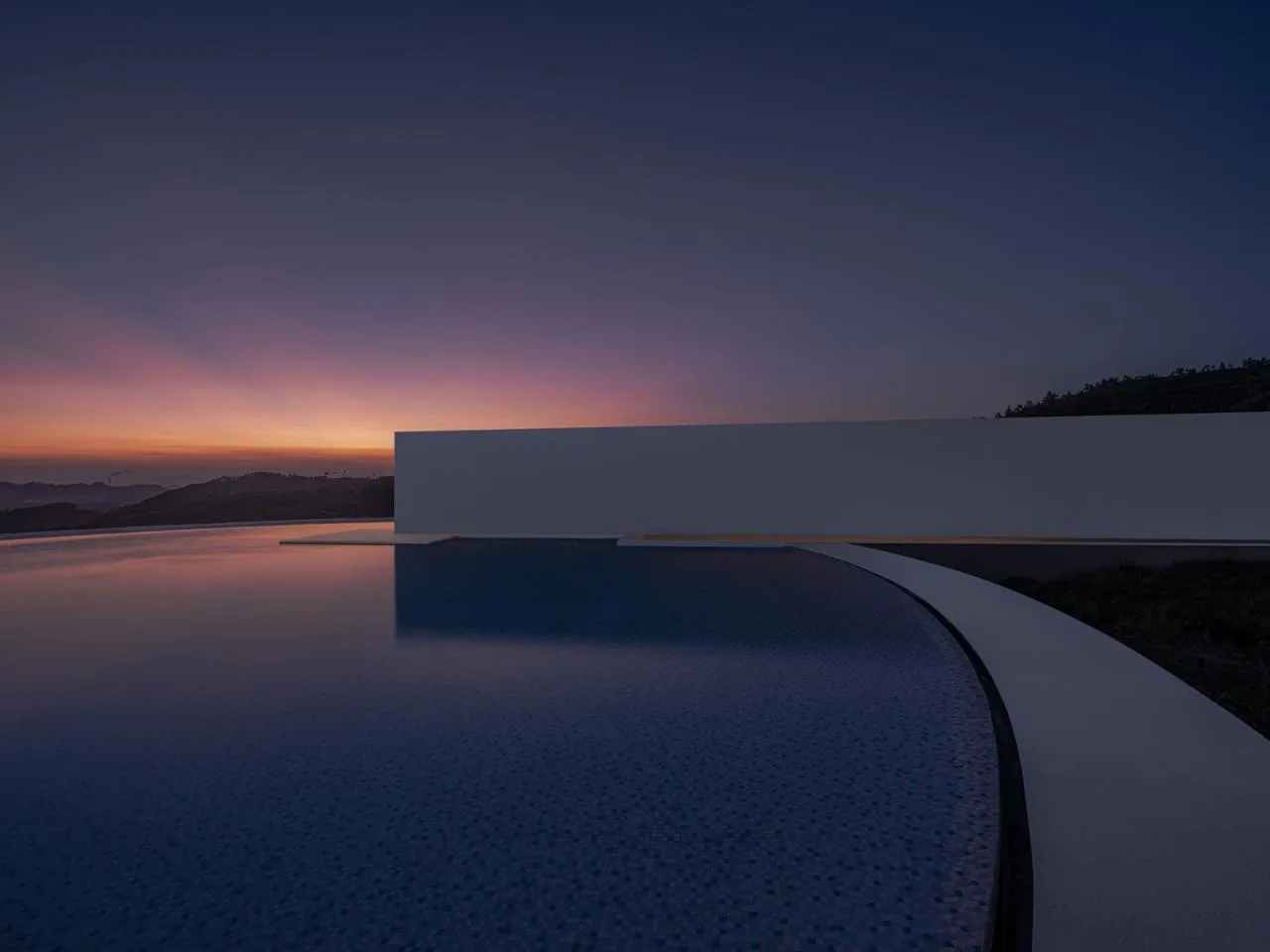
The design aims for poetic tension: from above, the building appears as a geometric composition combining a perfect circle and a straight line. The main structure features a circular floor plan, while straight outdoor corridors and long walls guide visitors from the mountaintop into the building. The library’s exterior is predominantly white, with the edges of corridors, walls, and the roof emphasizing the geometric forms.
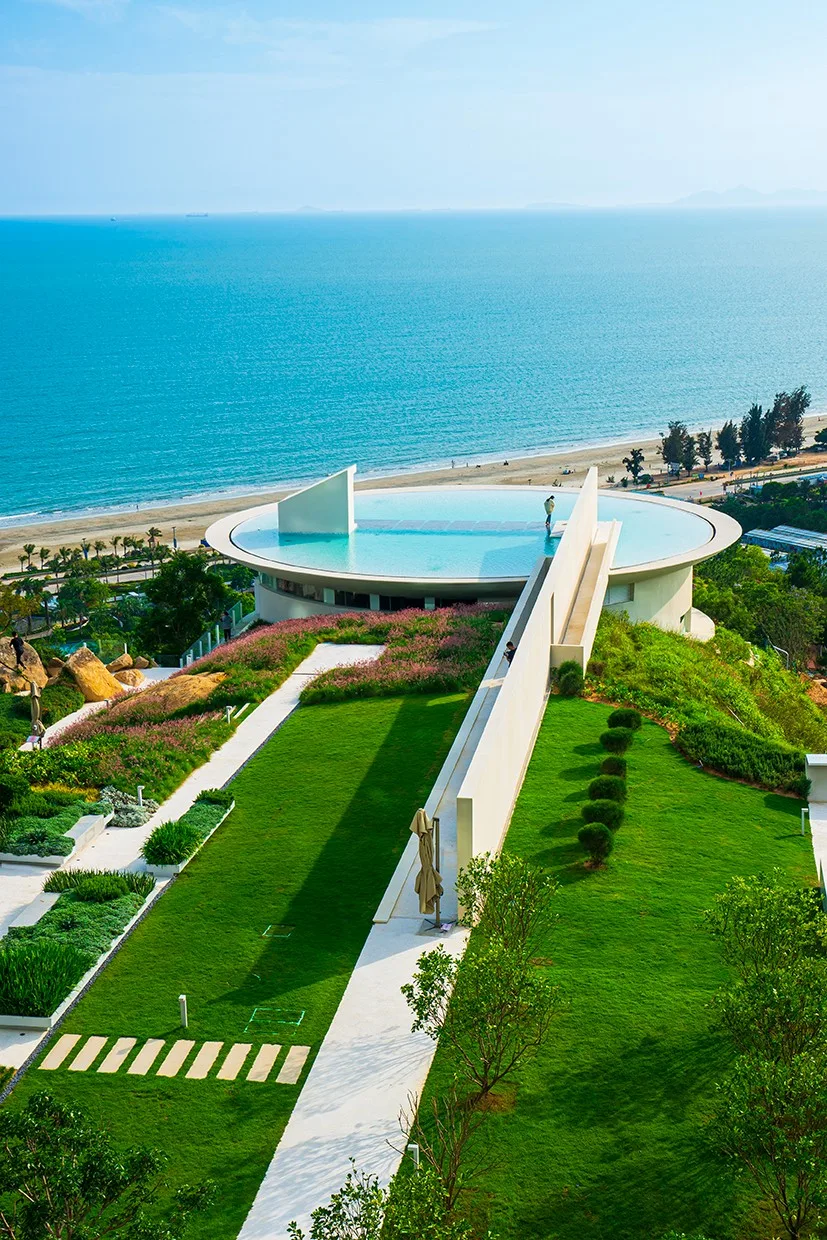
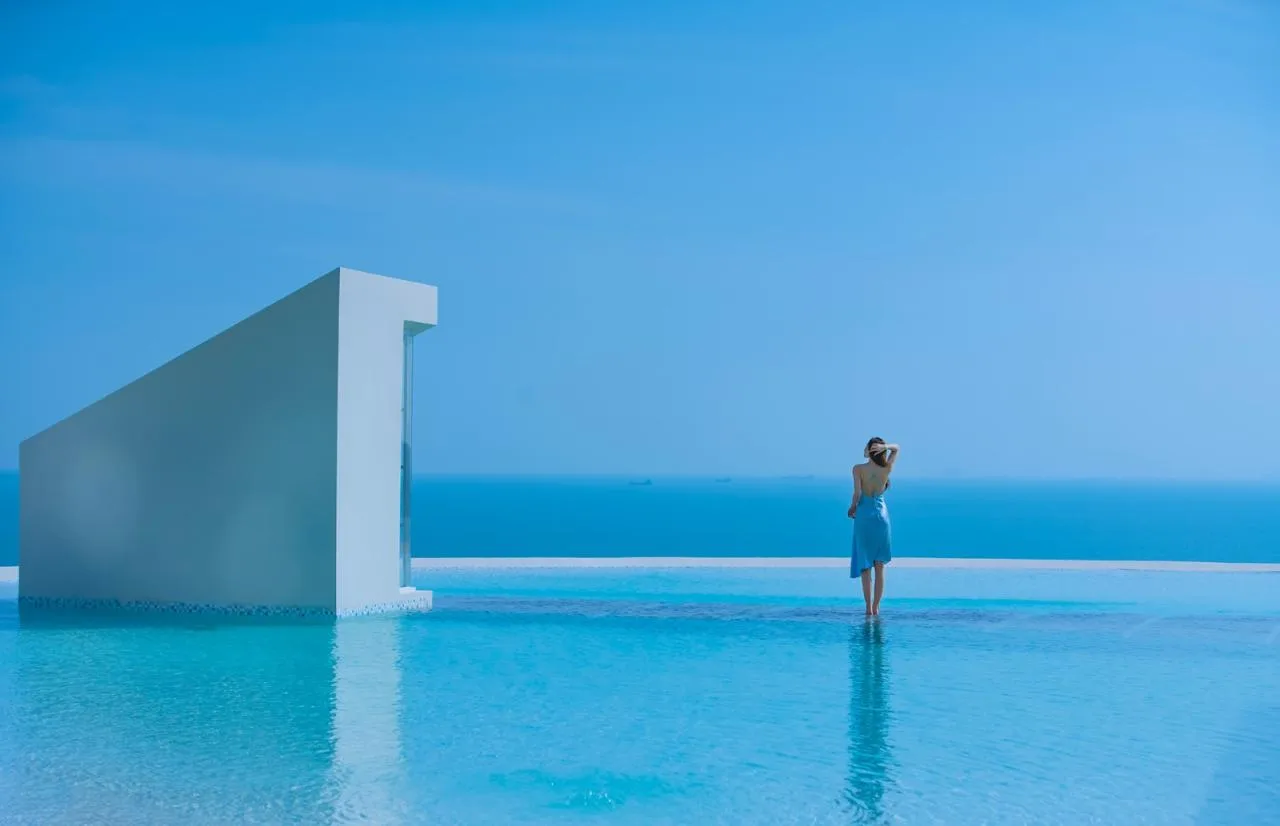
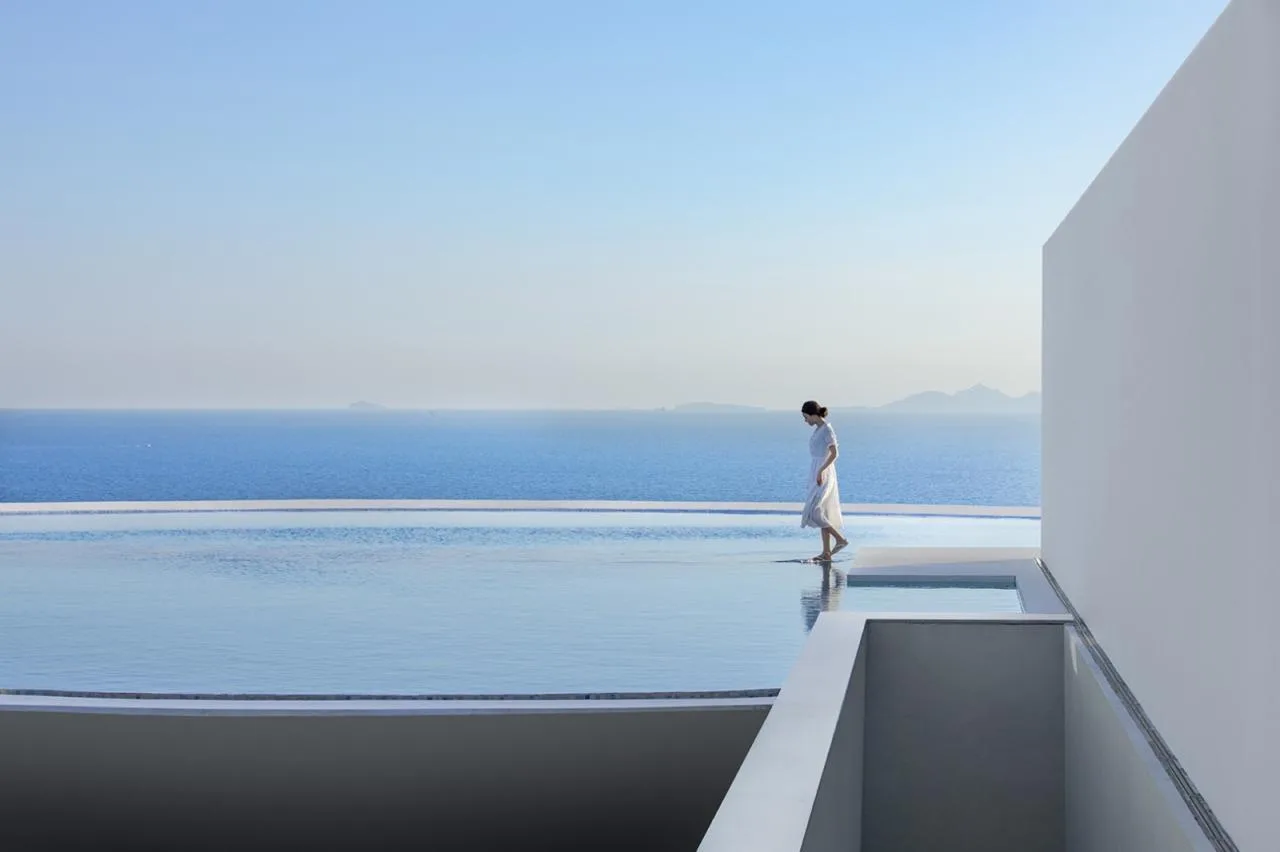
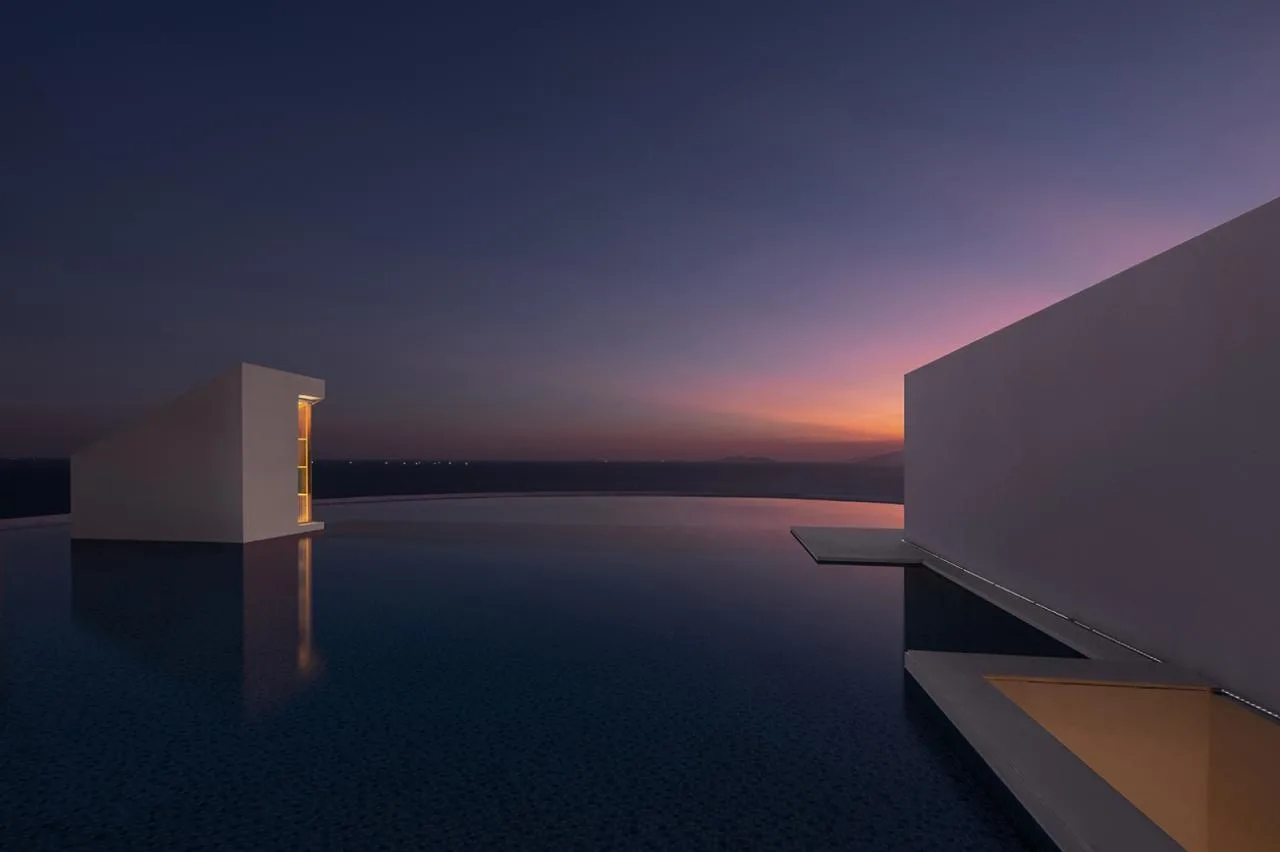
The roof is bowl-shaped, with transparent glass in the reading area creating a floating effect. Inside the bowl-shaped roof lies a pool, giving the impression of a library submerged underwater.
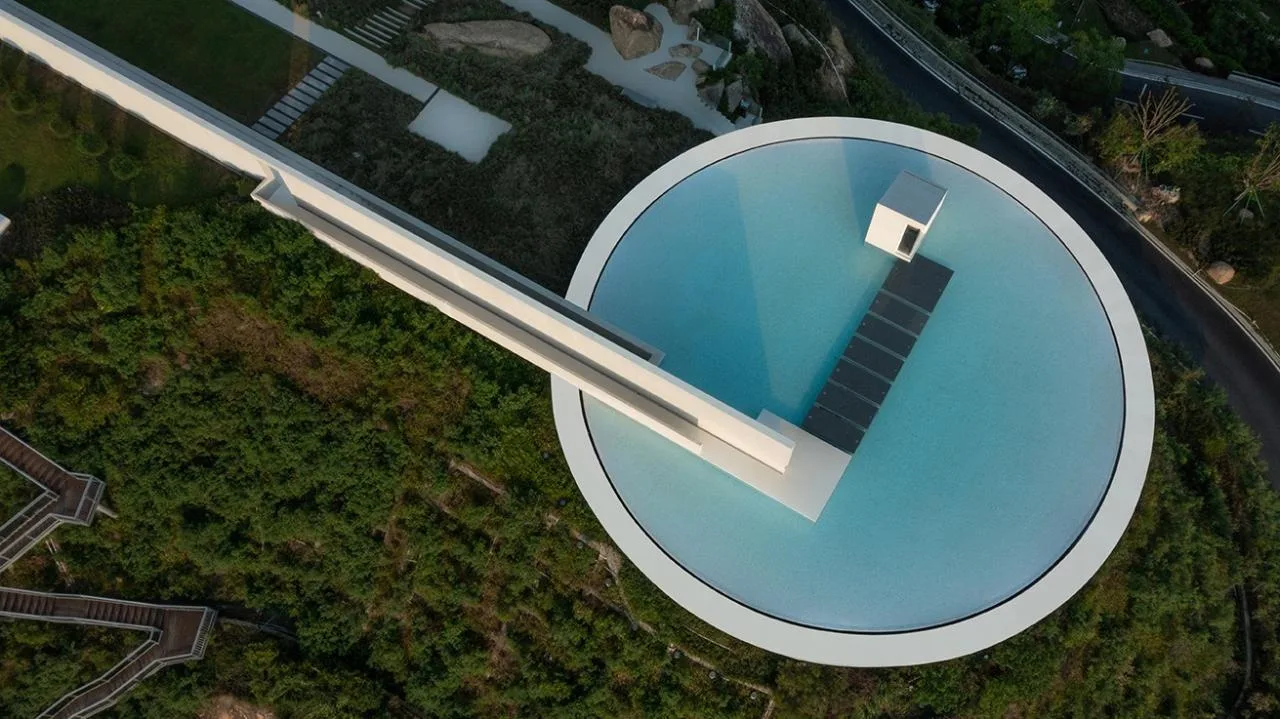
The long wall not only shields less desirable views to the southwest but also directs visitors’ attention toward the pool and sea, guiding them along a specific path into the building. At sunset, the sun’s rays cast long shadows along the walls and corridors before setting into the sea, adding a romantic ambiance to the architecture.
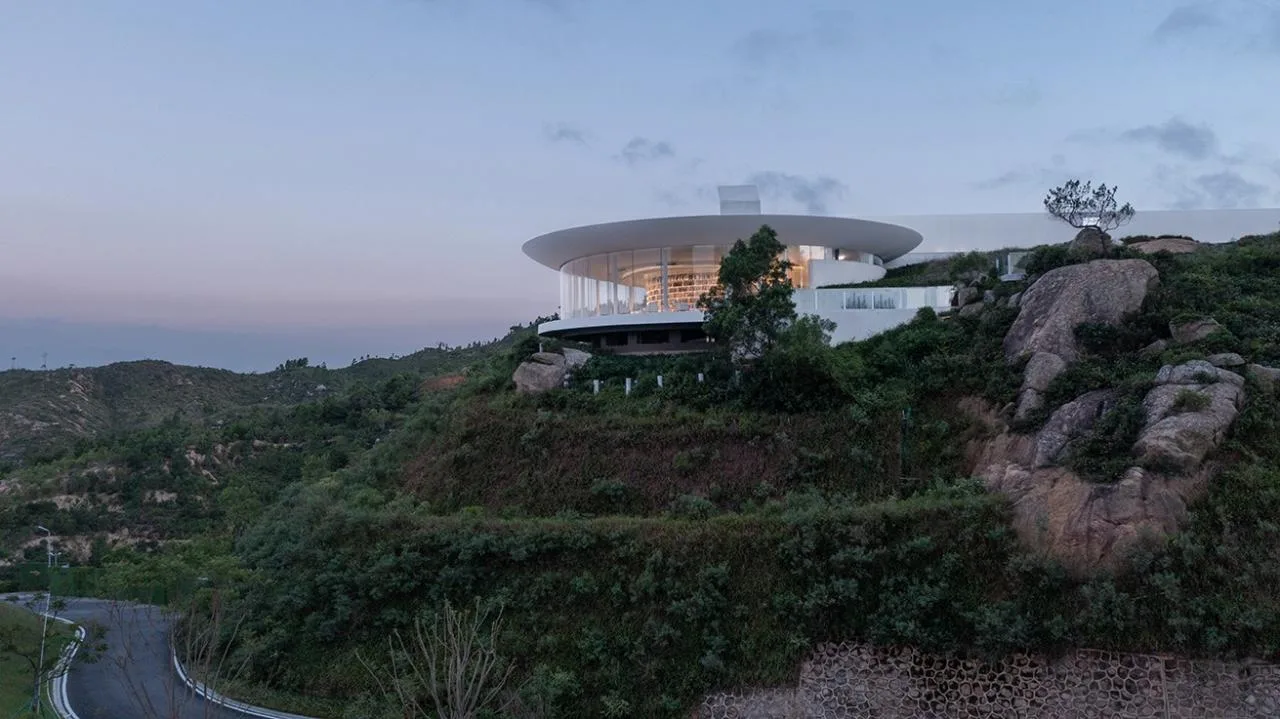
Spatial Sequence: The Interplay of Light, Shadow, Openness, and Curves
Entering the library is a deliberate experience. Due to its location on a small hill, a winding path was designed along the northern slope. Visitors ascend stairs, experiencing a slight physical effort symbolizing the challenges of learning — hence the path is known as “the mountain of books.”
At the summit, straight corridors and long walls appear, guiding visitors with a determined attitude toward the sea and the building. Visitors follow this arrangement, leading them into the underwater library.
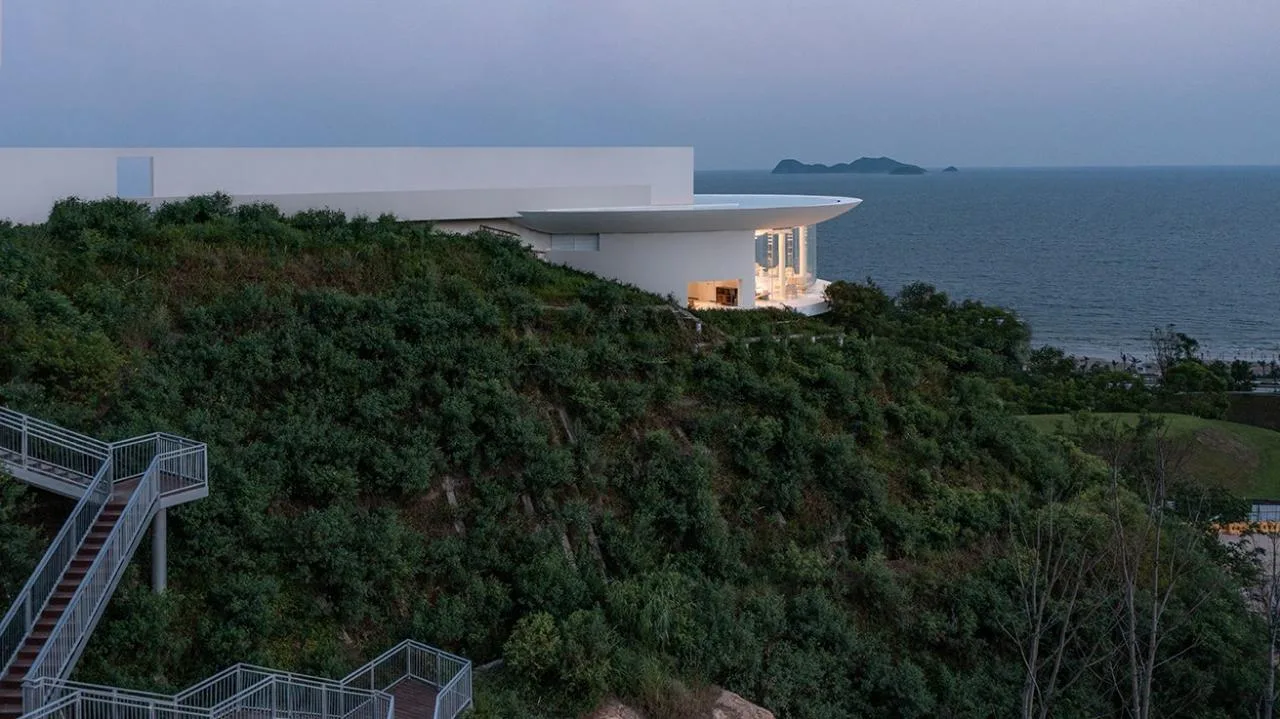
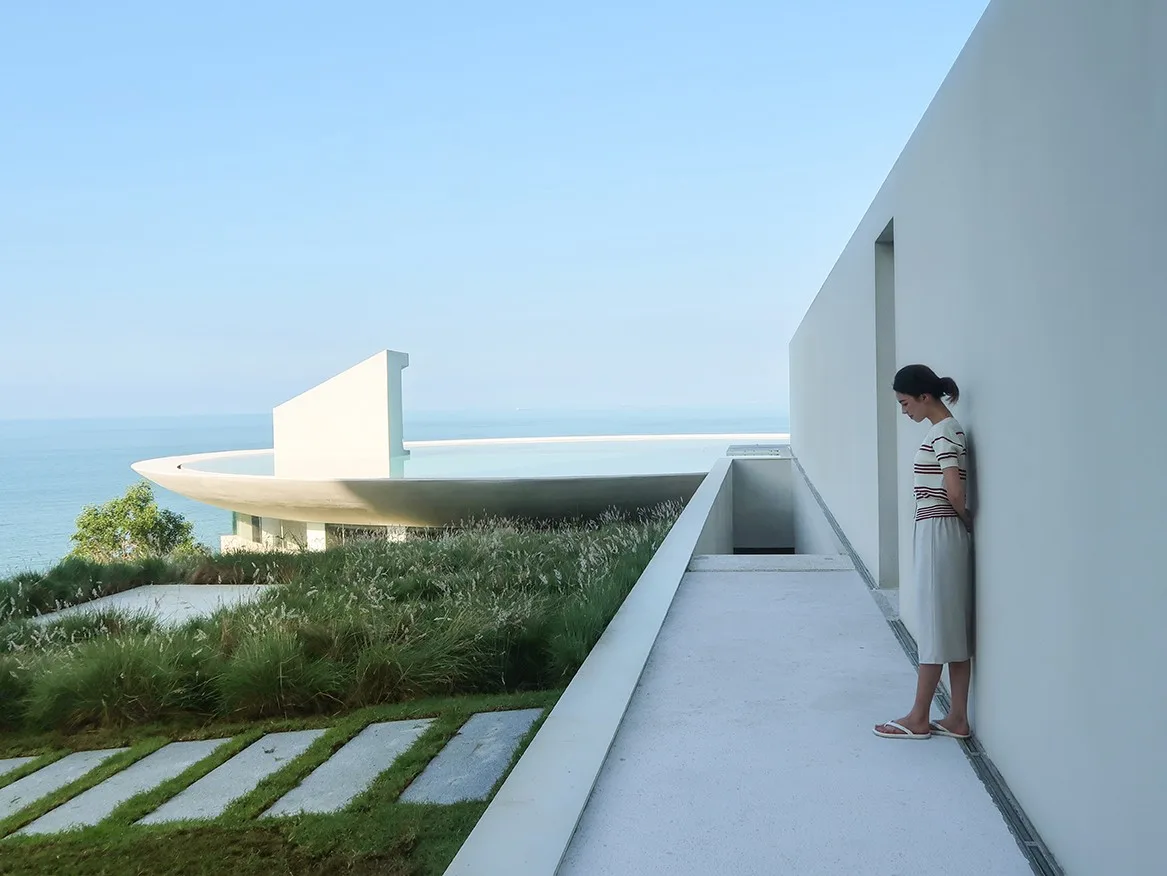
The main interior spaces lie beneath the pool, making entry a journey of rediscovering nature and oneself. Visitors descend along the outdoor corridor and “dive” beneath the pool.
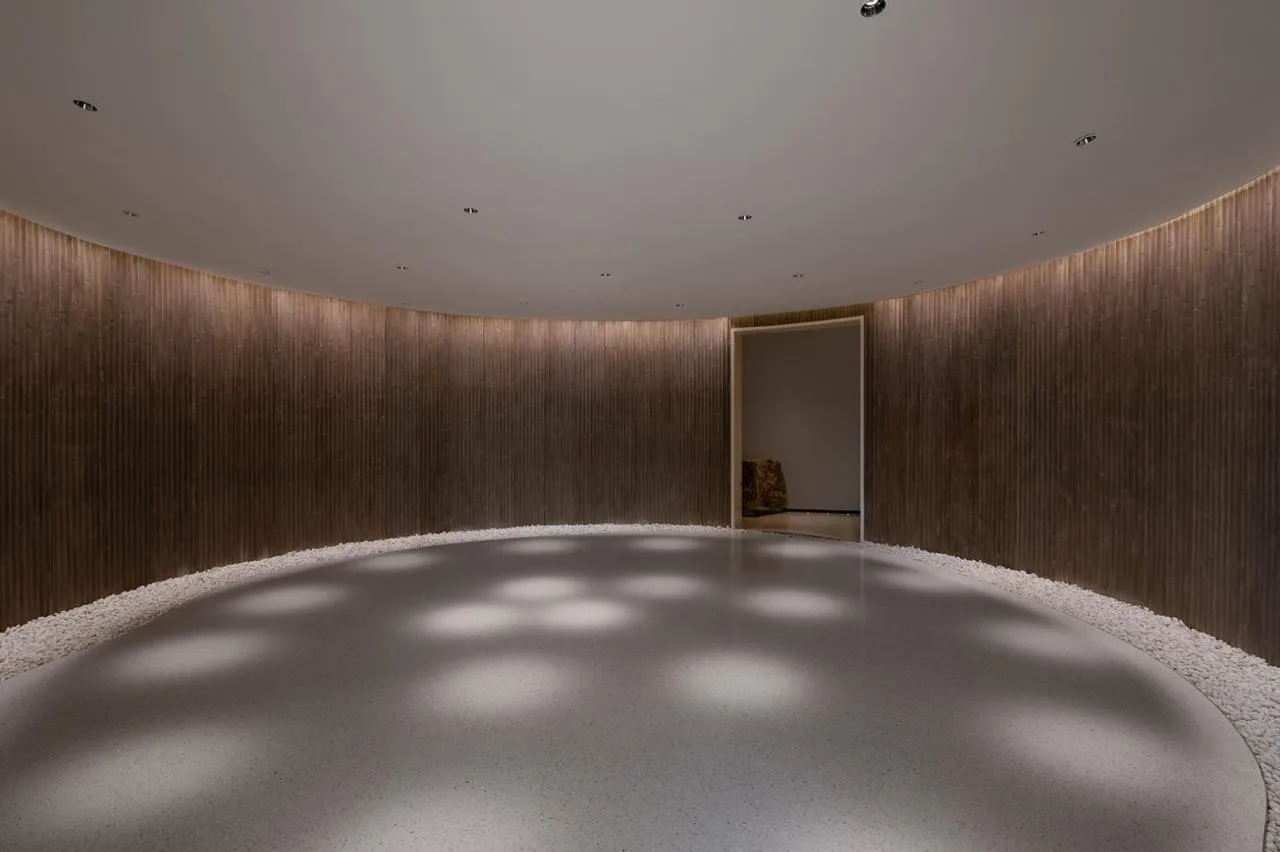
The architect designed a dramatic interior space rich in sequence, where light and shadow, openness and enclosure, overlap and interact. The first interior scene is the foyer at the end of the outdoor corridor — a narrow transitional space. Turning left leads to the central circular room, which features a simple, Zen-like atmosphere. This mysterious, dimly lit space serves as a prelude to the reading area and can host small exhibits or gatherings.
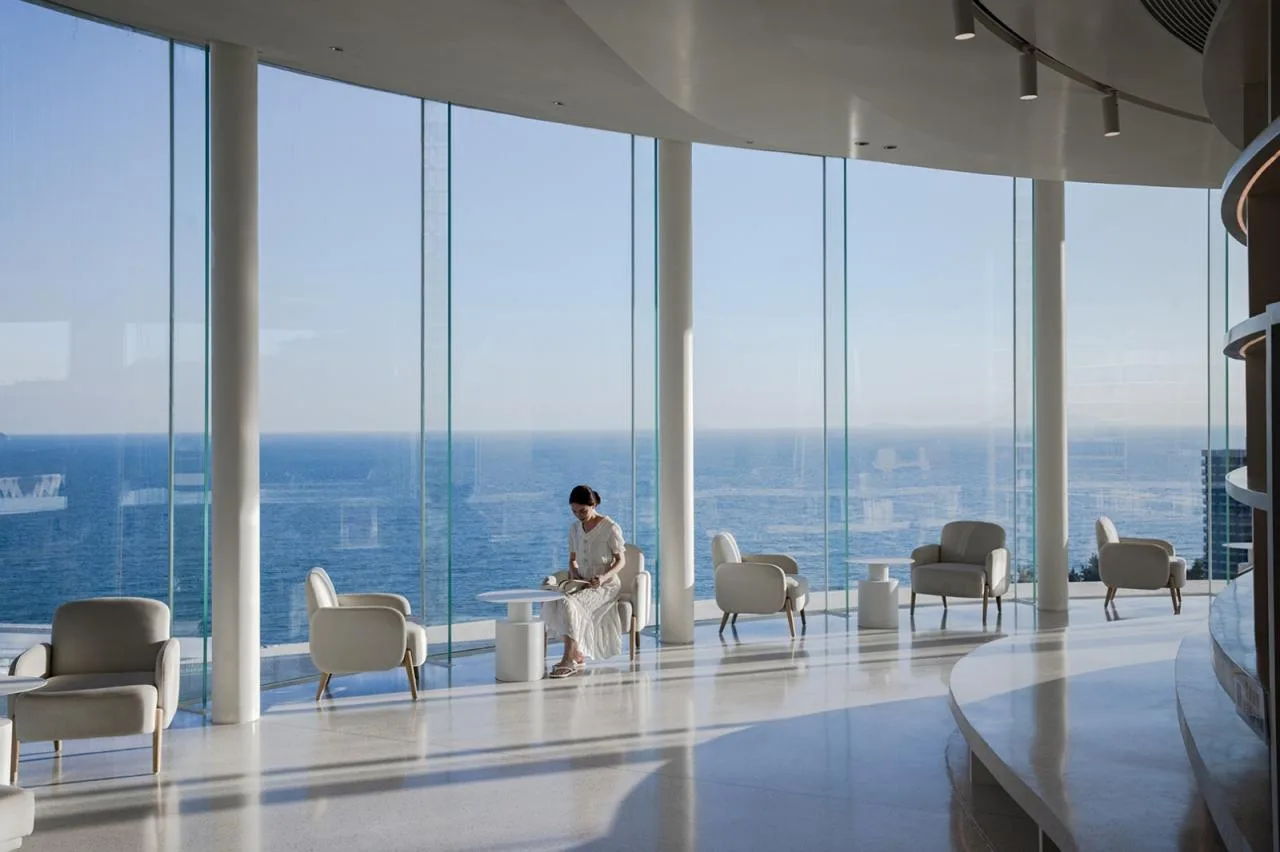
This dark space connects to the bright reading area through an “opening” on the building’s outer ring. The reading area is a semi-circular space with nearly 270-degree floor-to-ceiling glass, transparent and open, offering sweeping views of the blue sky and sea.
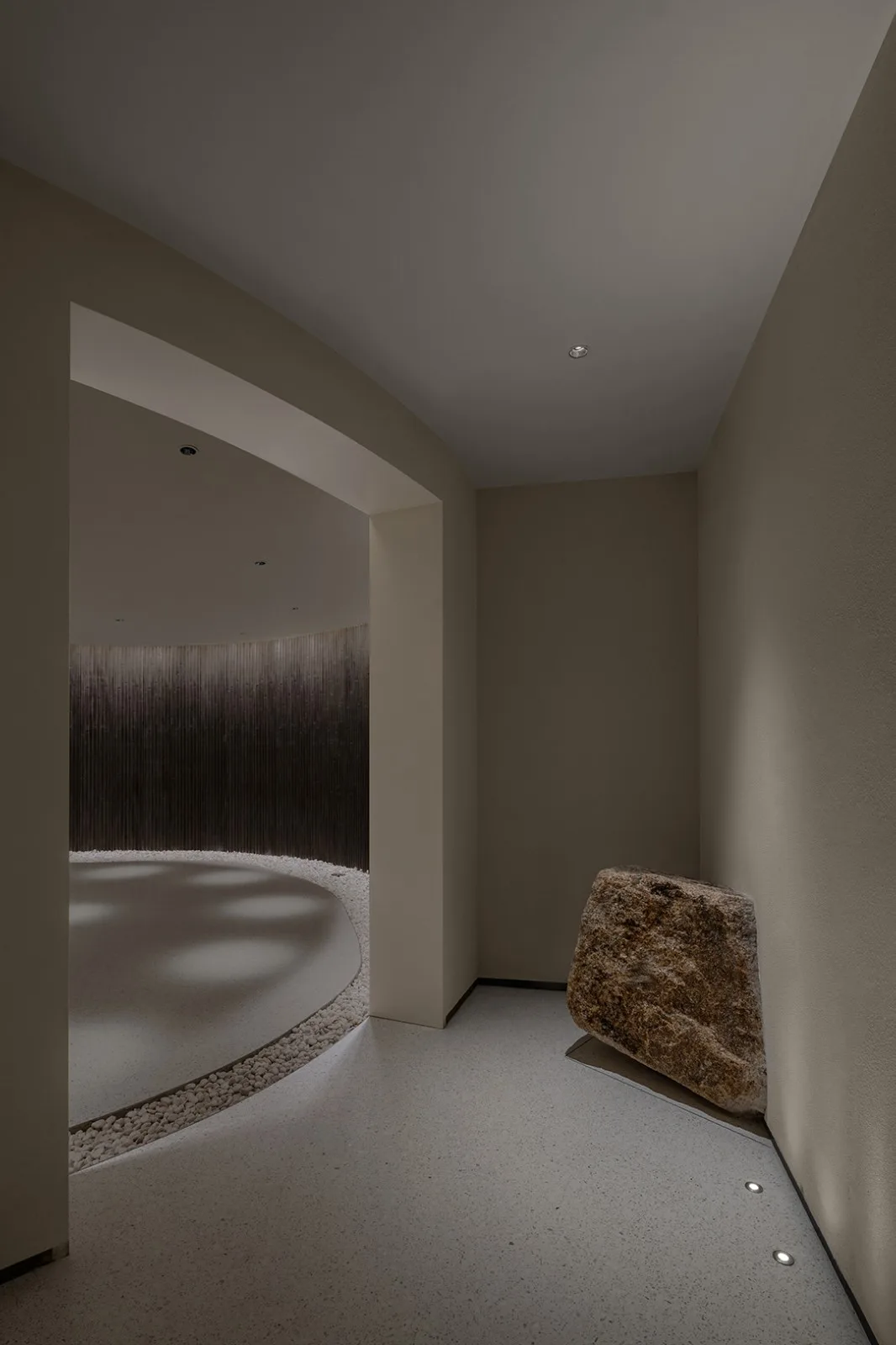
The secondary entrance and exit is on the southeast side, where visitors leave the library and follow a winding path around the site, passing a massive rock before returning to the summit.
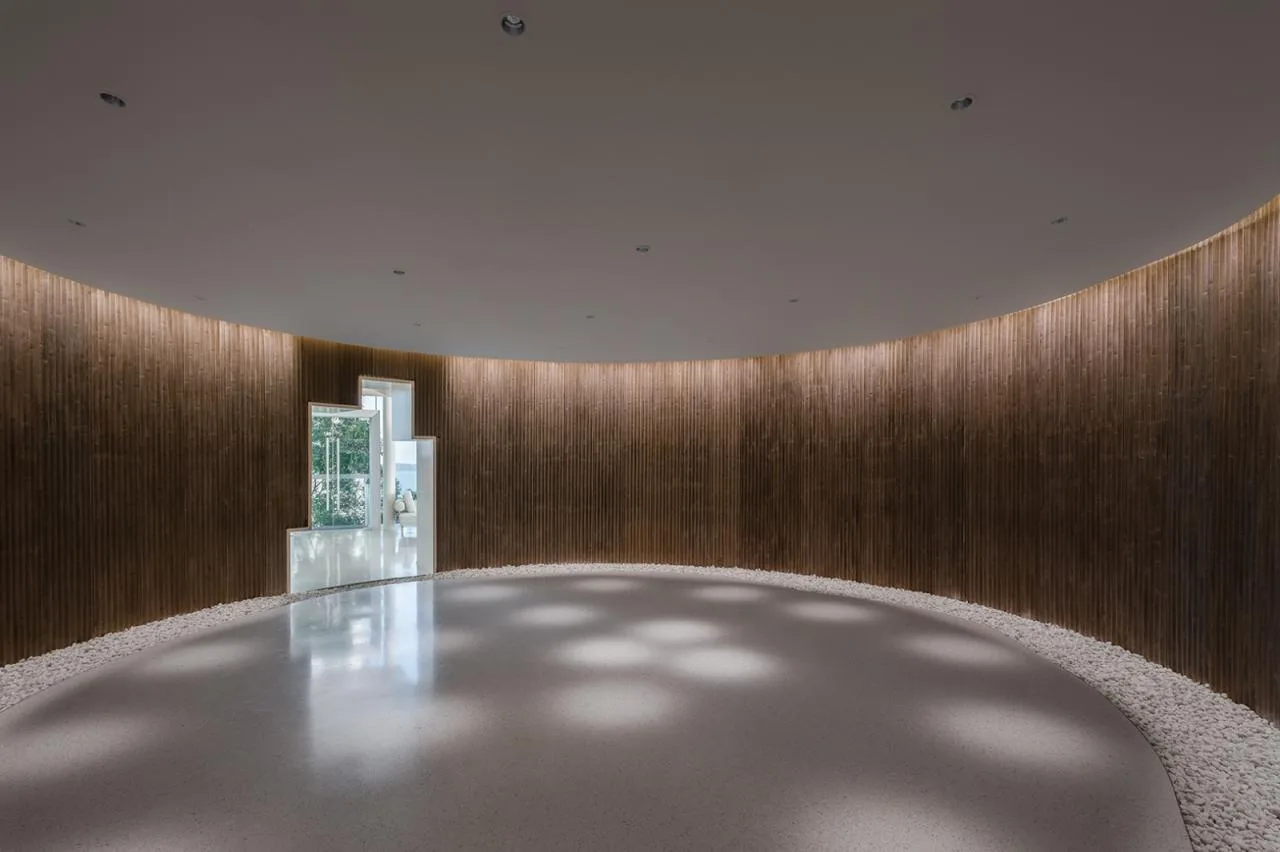
Indoor Atmosphere: Light, Color, and Materials Define the Space
The reading area’s interior features bright tones, predominantly white and light gray, with curved forms that create a relaxed, modern atmosphere. Seating and small tables line the outer glass curtain wall, allowing readers to enjoy quiet moments while taking in distant views.
Bookshelves follow a circular pattern along the inner wall, extending into ceiling and floor areas to form a cloud-like shape. At ground level, this design creates a casual reading area where visitors can lean or recline comfortably while enjoying their books.
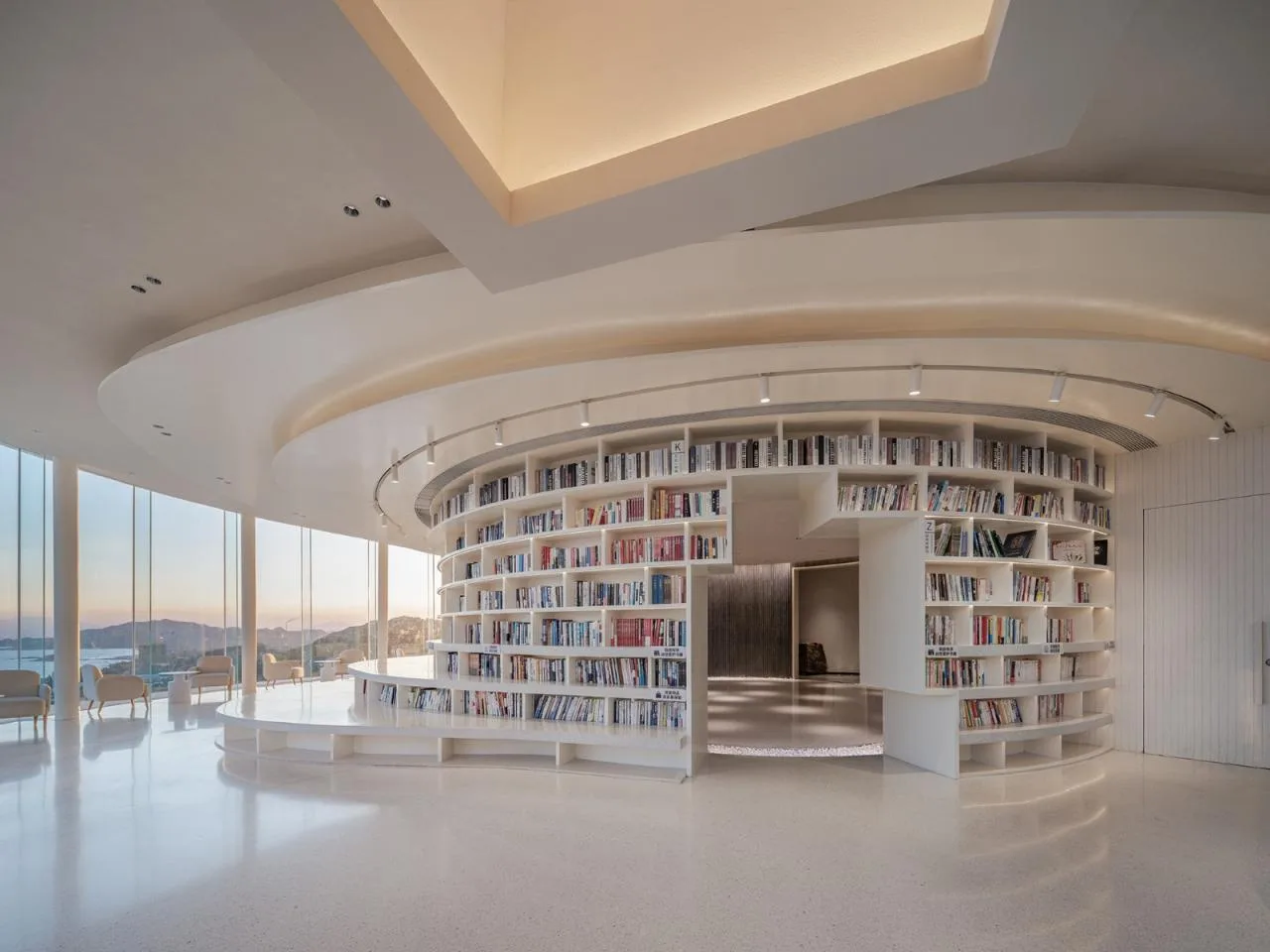
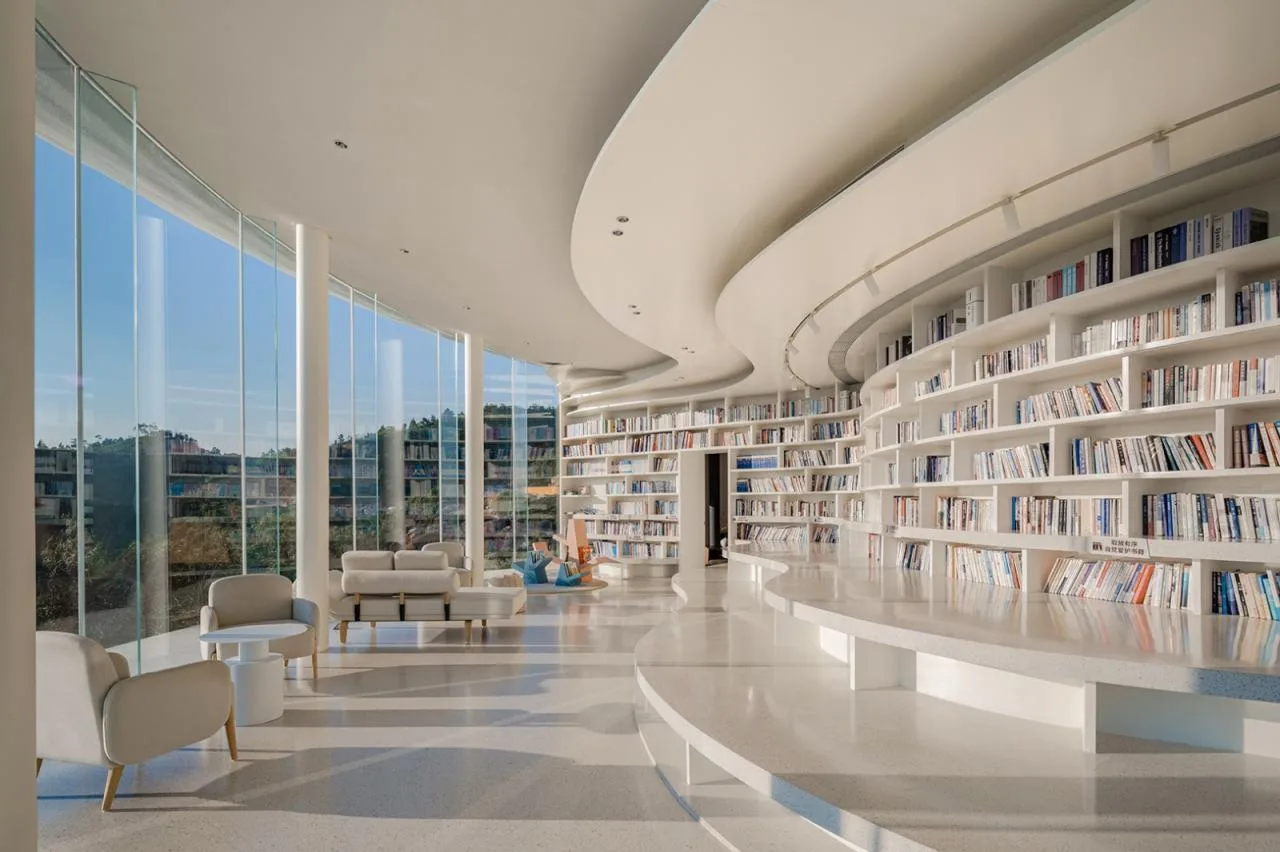
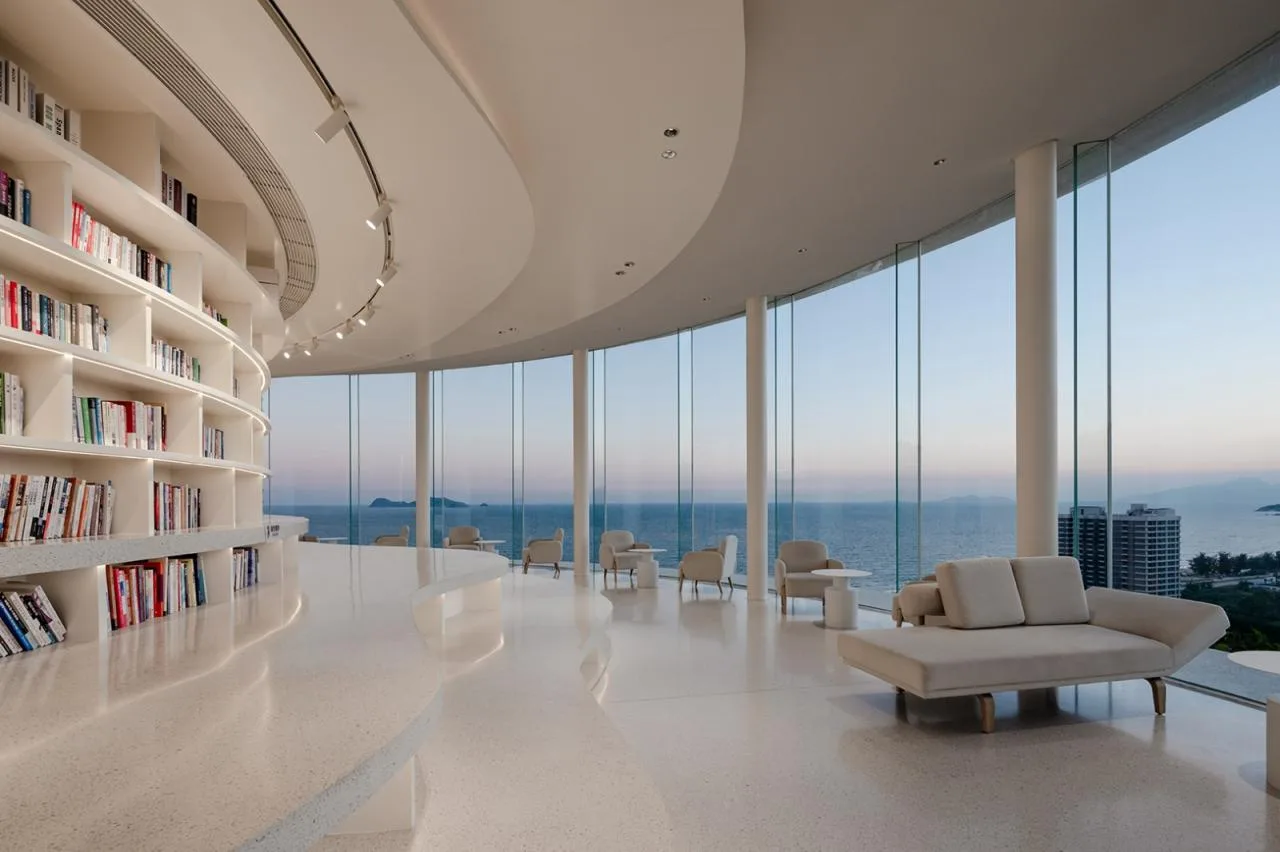
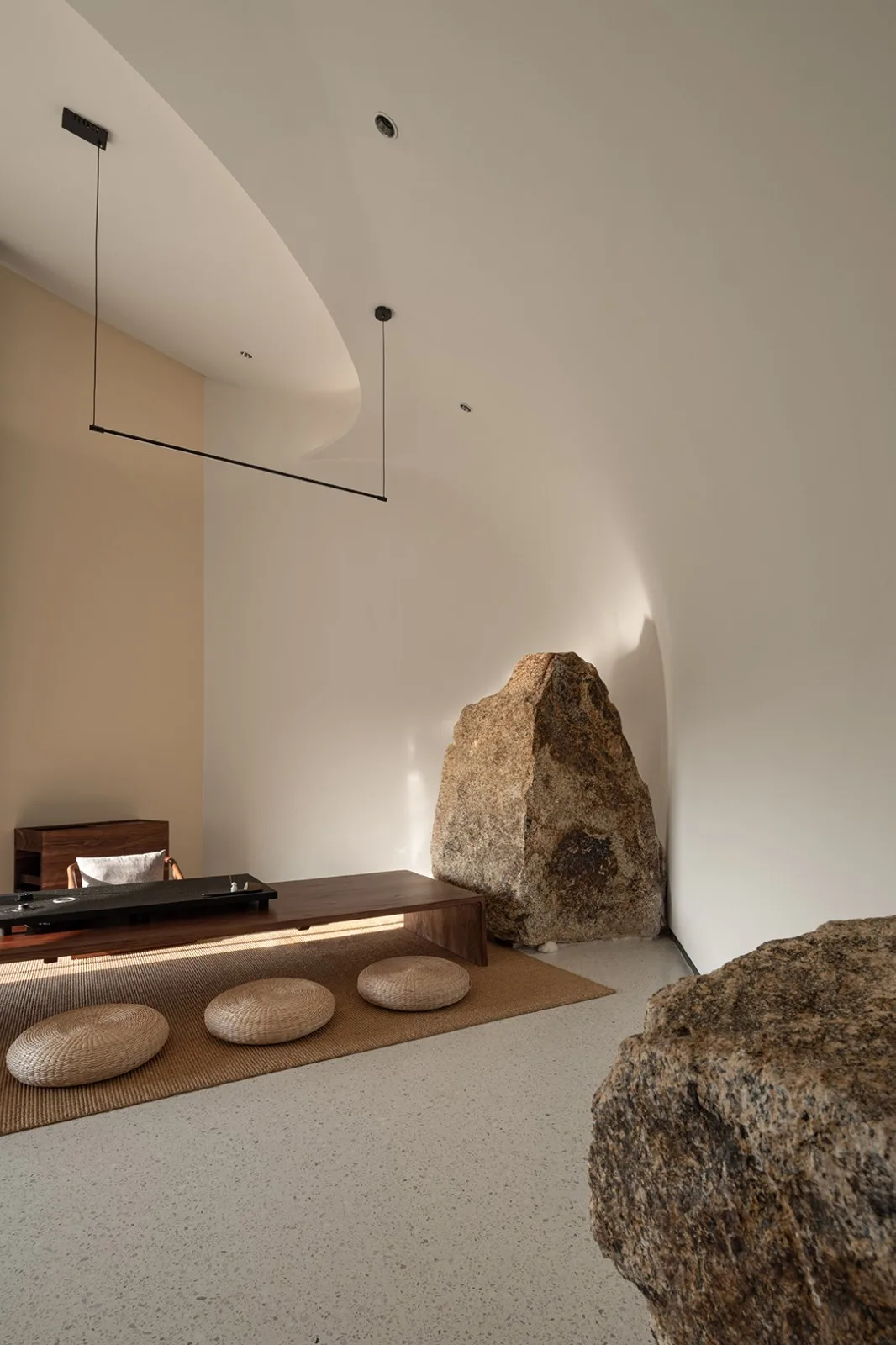
On either side of the reading area are two private spaces: a VIP tea room and a bathroom. The VIP tea room offers an introspective atmosphere, continuing the simple design style and furnished with a tea table and chairs for solitude or small meetings. A raw stone is intentionally placed in the room, allowing occupants to sit and enjoy the natural beauty of the rocks up close while reading and drinking tea.
The bathroom creates a dramatic effect through contrasting colors and fiber optic lighting, enhancing the spatial experience.
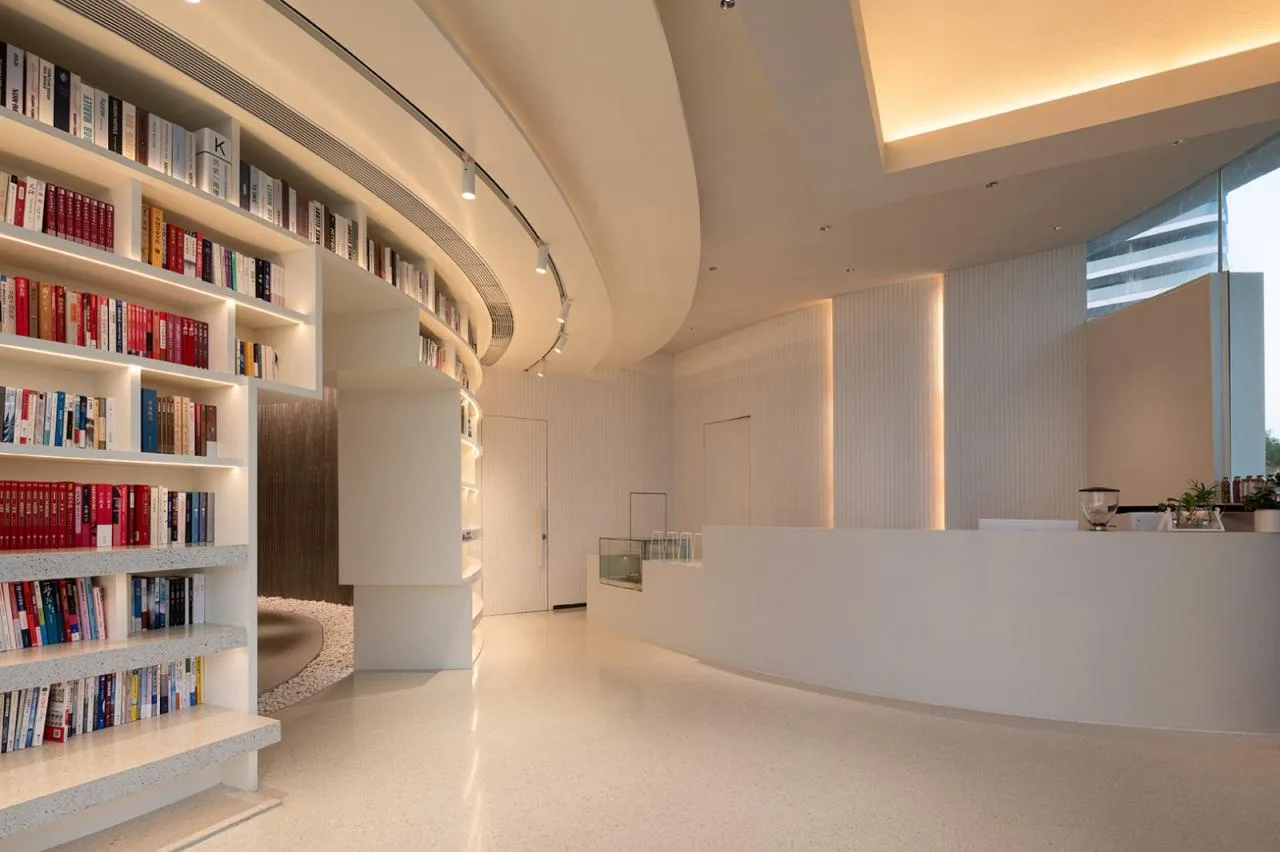
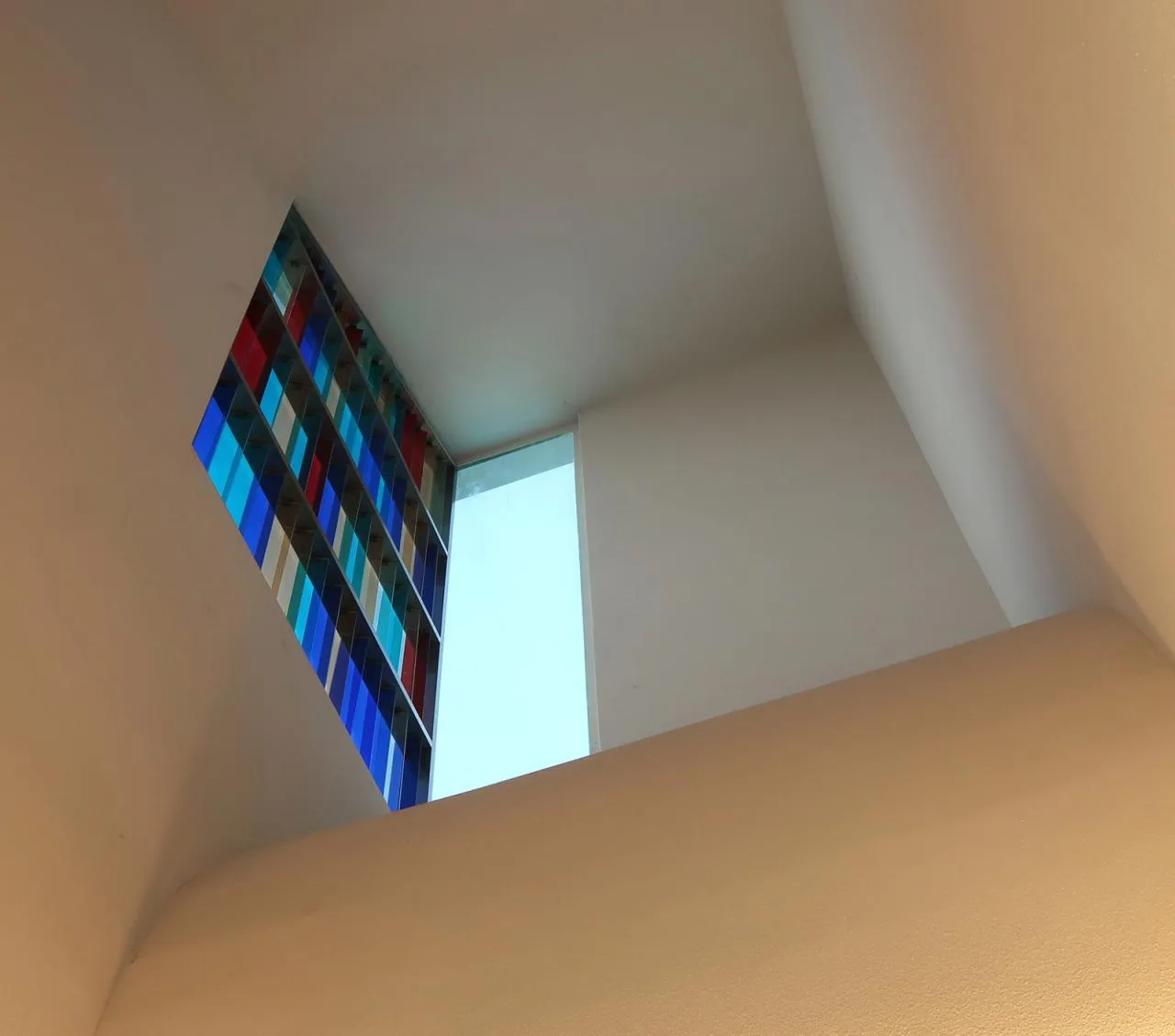
Between the bathroom and reading area is a water bar counter, which separates active and quiet zones while serving as a transitional space. The ceiling of the bar area features a light well leading up to the rooftop pool. The architect designed a colorful facade on the south-facing skylight, allowing sunlight to filter through in vibrant hues, softly scattering light throughout the space and adding charm to the building.
Pool and Landscape: A Dialogue Between People, the Sea, and the Azure Sky
The landscape design emphasizes purity. The mountaintop vegetation consists mainly of low grass and greenery, highlighting the building’s clean form. Several large boulders on the site were carefully preserved and integrated with the pathways, serving as a visual foreground for the architecture.
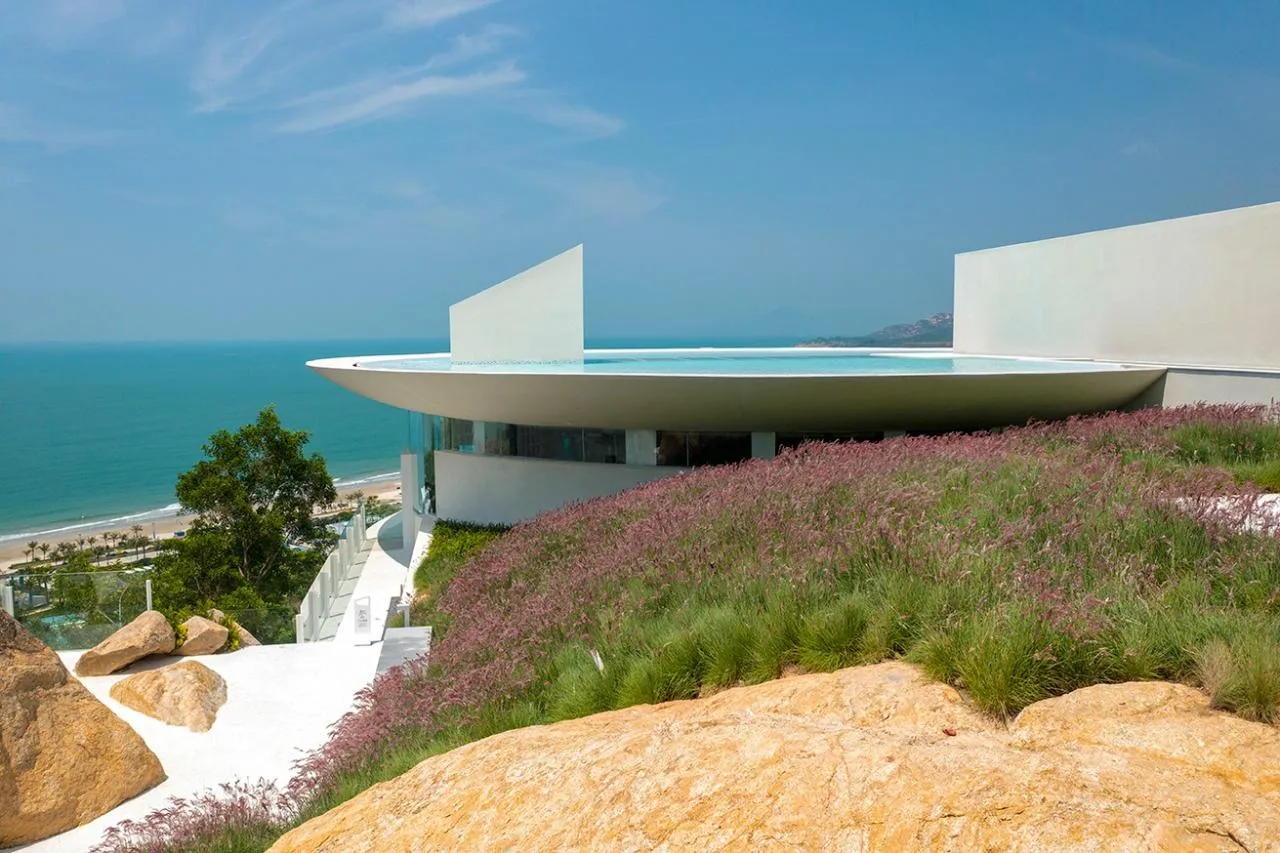
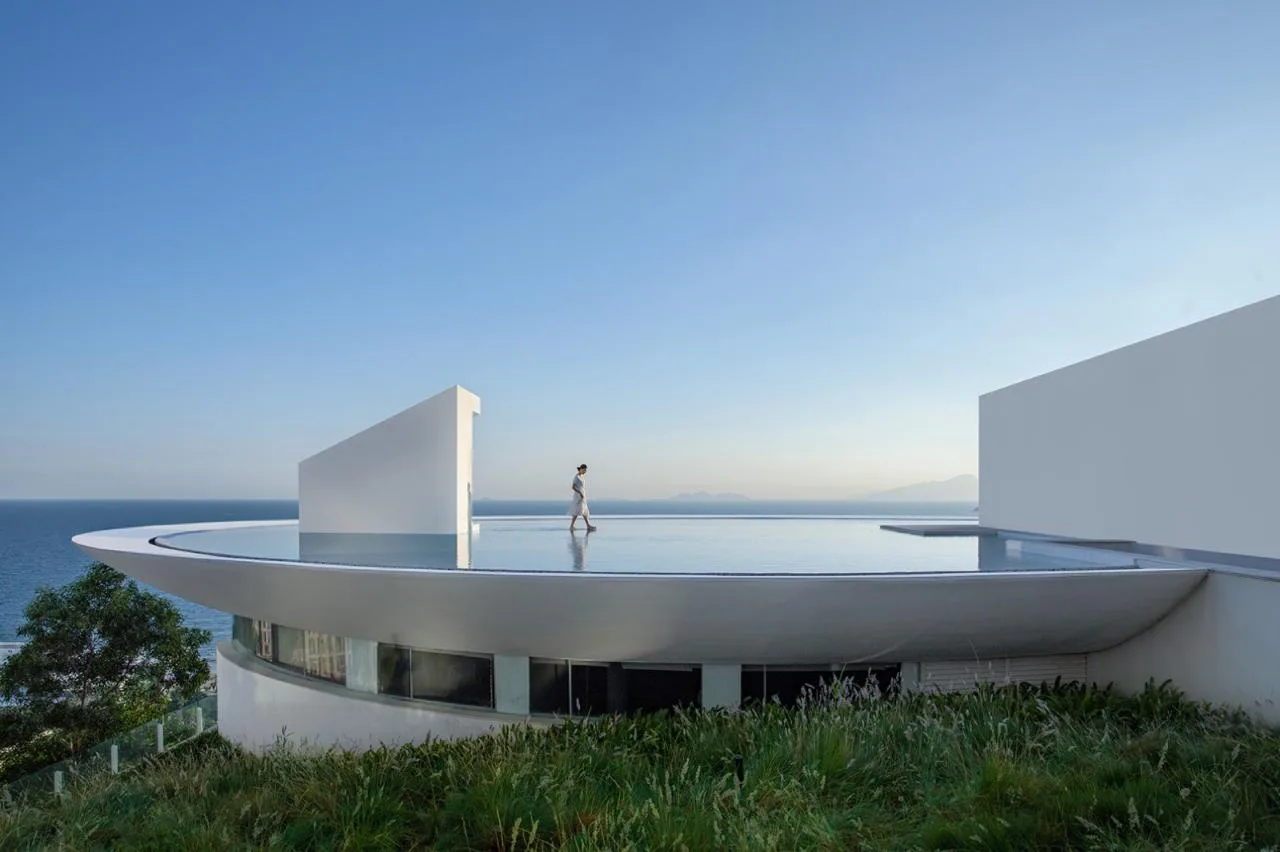
At the summit, white corridors and long walls stand out as artificial elements within the natural landscape. Their pure geometric shapes attract users’ attention and lead them toward the rooftop pool and the sea.
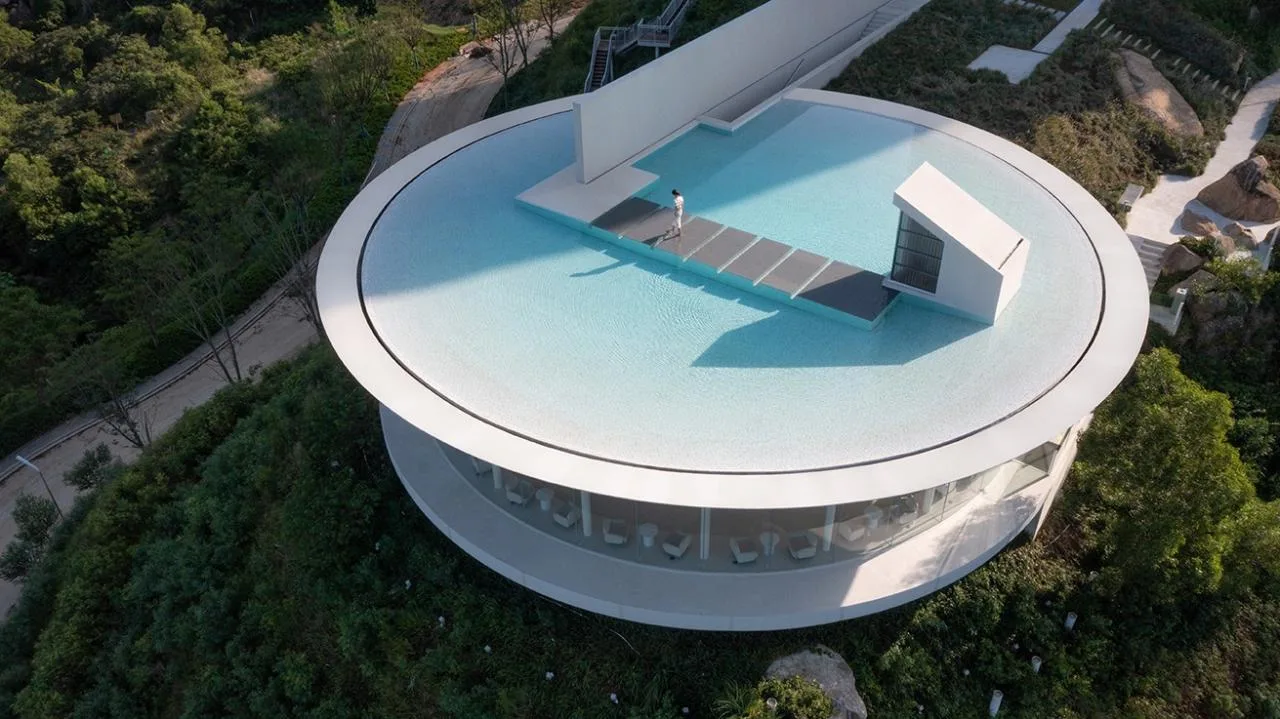
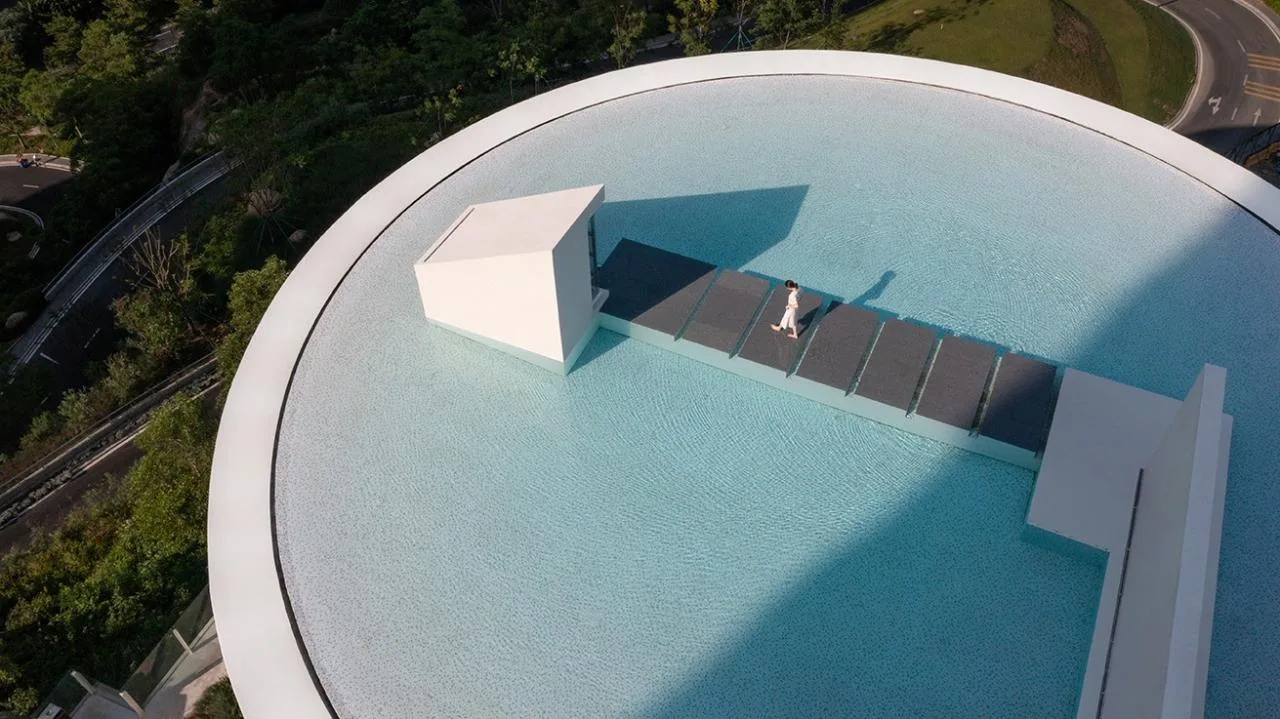
The rooftop pool embodies utopian qualities. Both architects and owners intended to surprise users and even this small southern city. Visitors can follow a hidden path along the north side of the long wall to reach a small platform within the pool, then walk across the water to the skylight and central platform.
The pool’s edge lacks fencing to maintain the building’s purity and integrity, but the water depth around the platform restricts access to ensure safety. From select viewpoints on the mountaintop, the sightline skims the water surface and extends to the distant sea horizon, merging water, sky, and sea into one seamless scene.
Conclusion: Architecture Merging Physical Experience with Visual Communication
This library design continues the philosophy of Three Literature Architecture, emphasizing landscape architecture. It begins with the site, embedding the building appropriately while ensuring it remains a visible, connecting point between people and nature.
The architecture does not mimic natural forms but uses concise geometric shapes to express artificial abstraction while respecting the environment. The design is rich in drama and narrative, intentionally embracing visual presence and communication.
The architects aim for the building to excel both as a tangible experience and a visual landmark.
Project Drawings
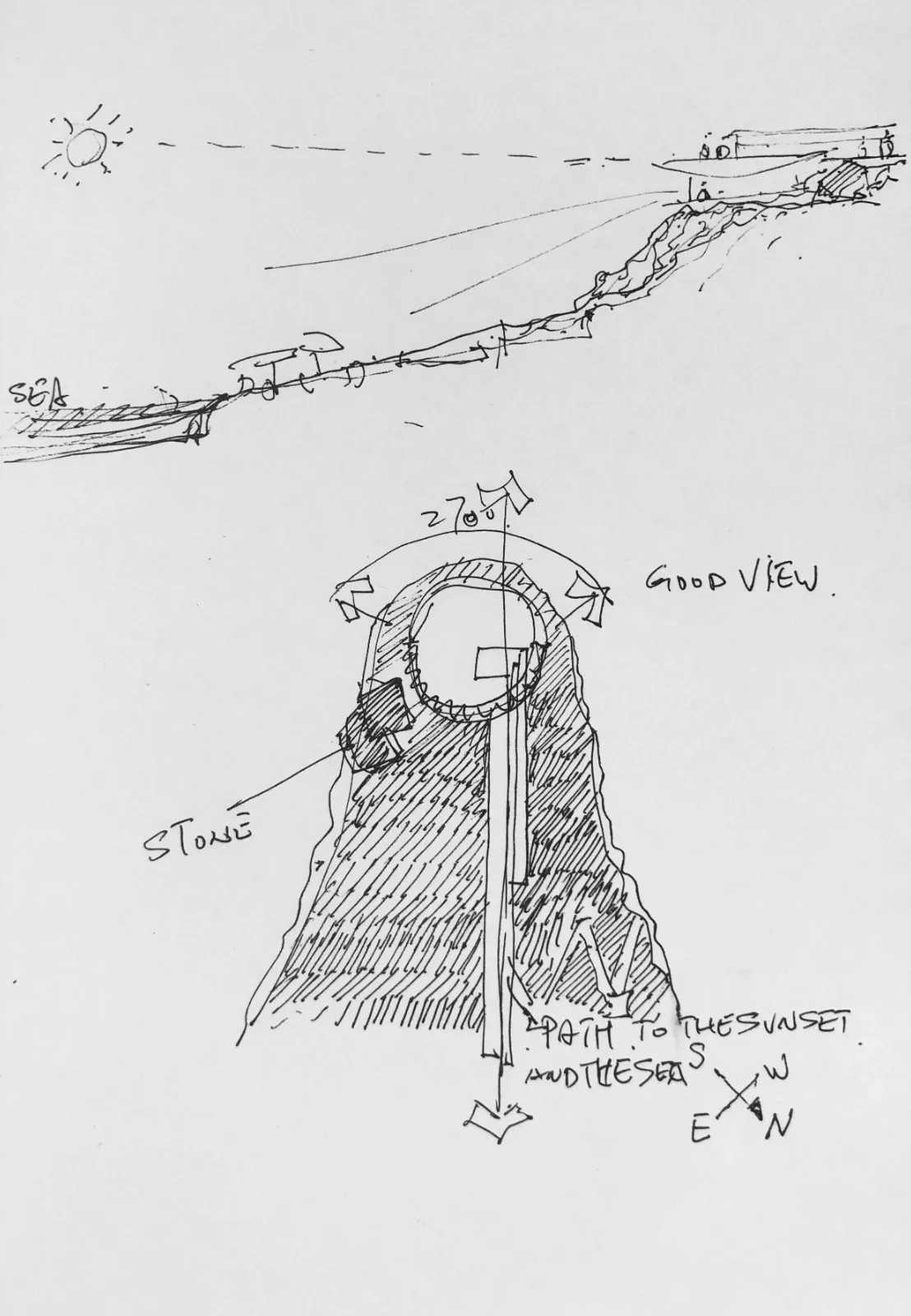
△ Project Sketch
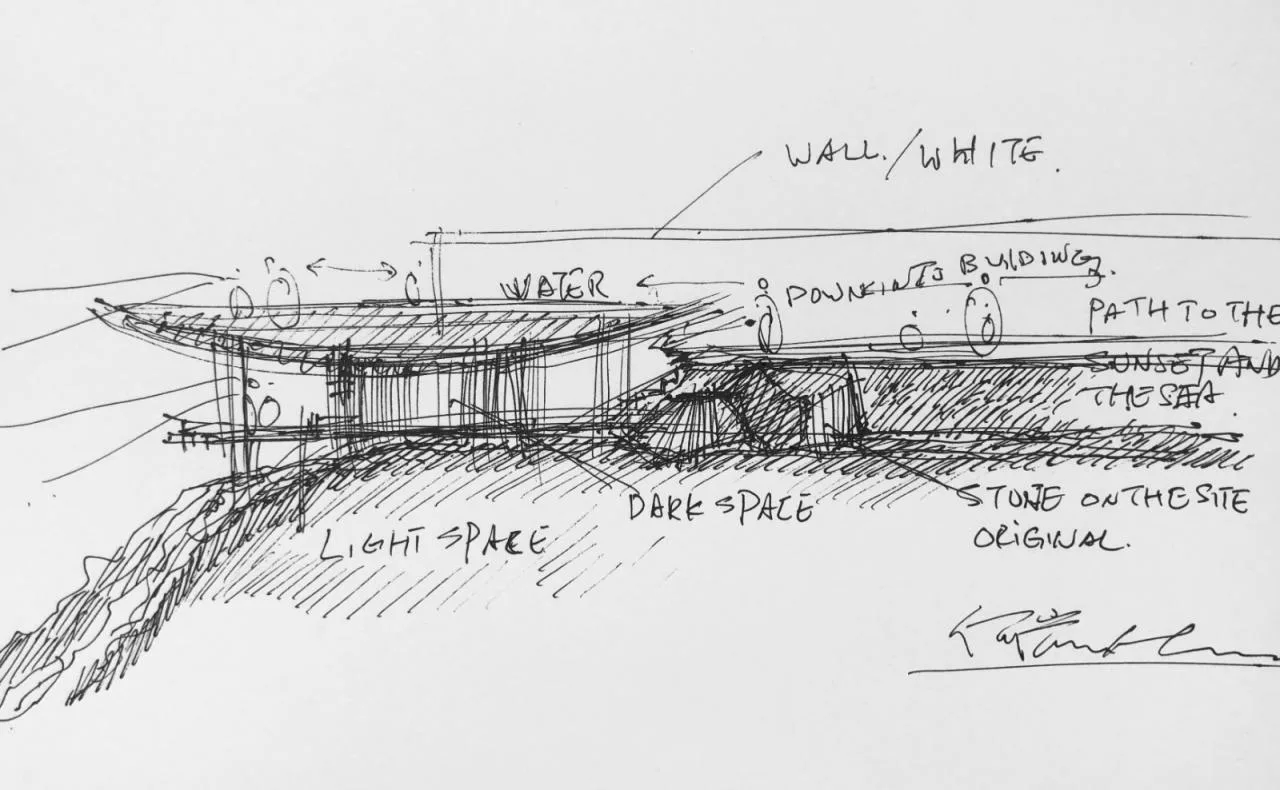
△ Project Sketch
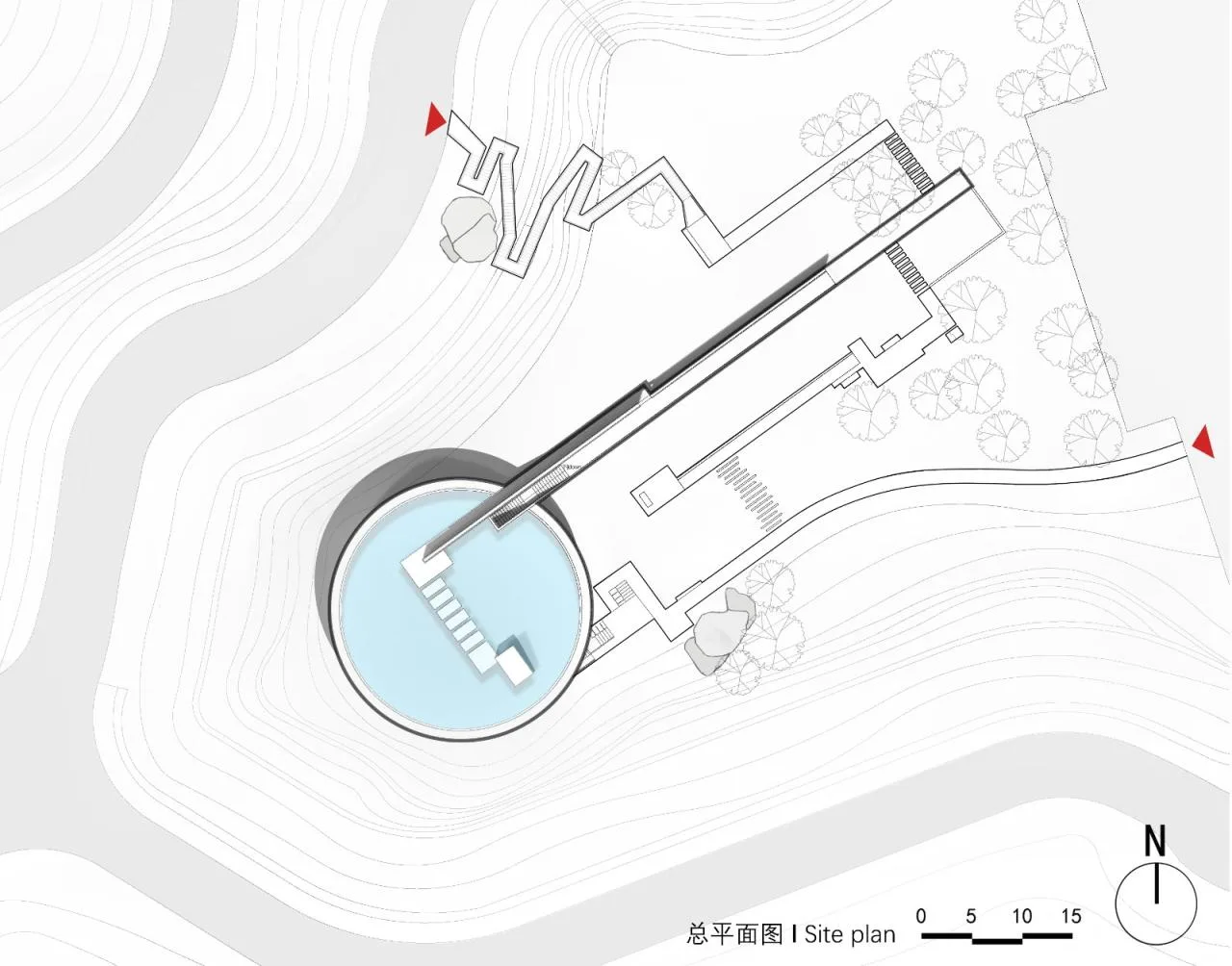
△ General Layout Plan
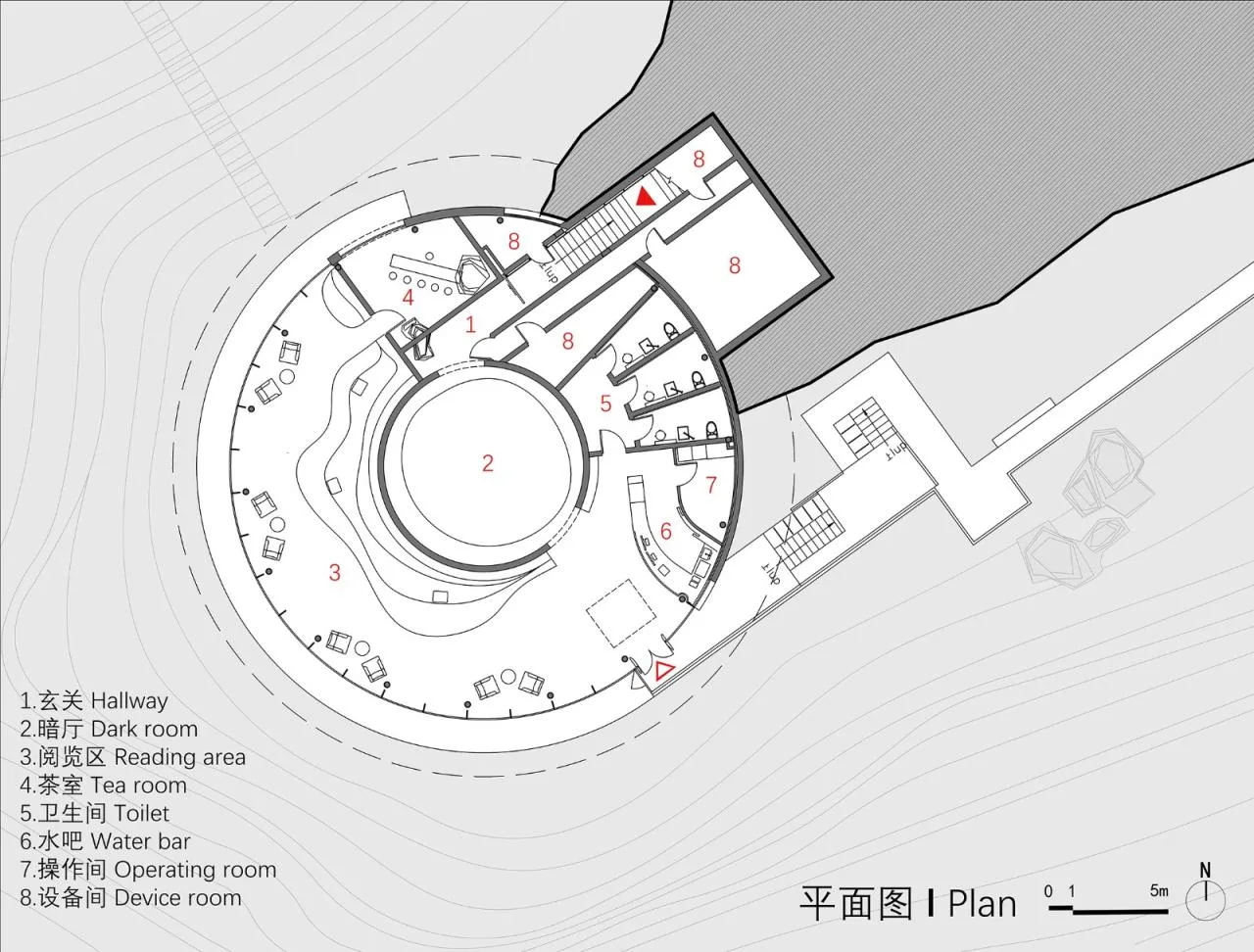
△ First Floor Plan
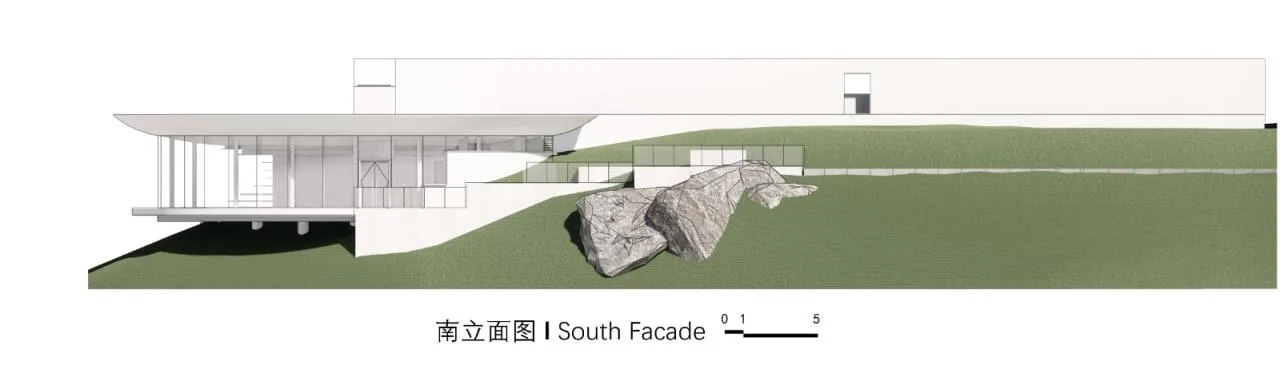
△ Elevation Drawing
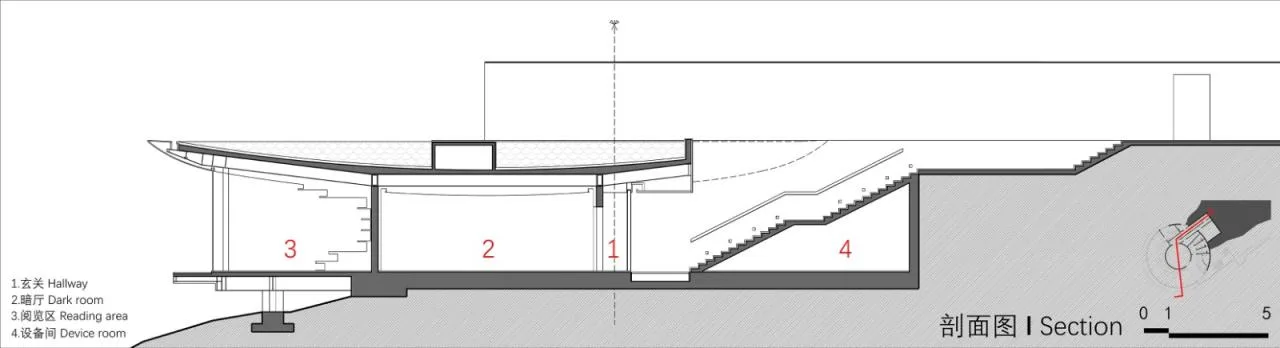
△ Section Diagram
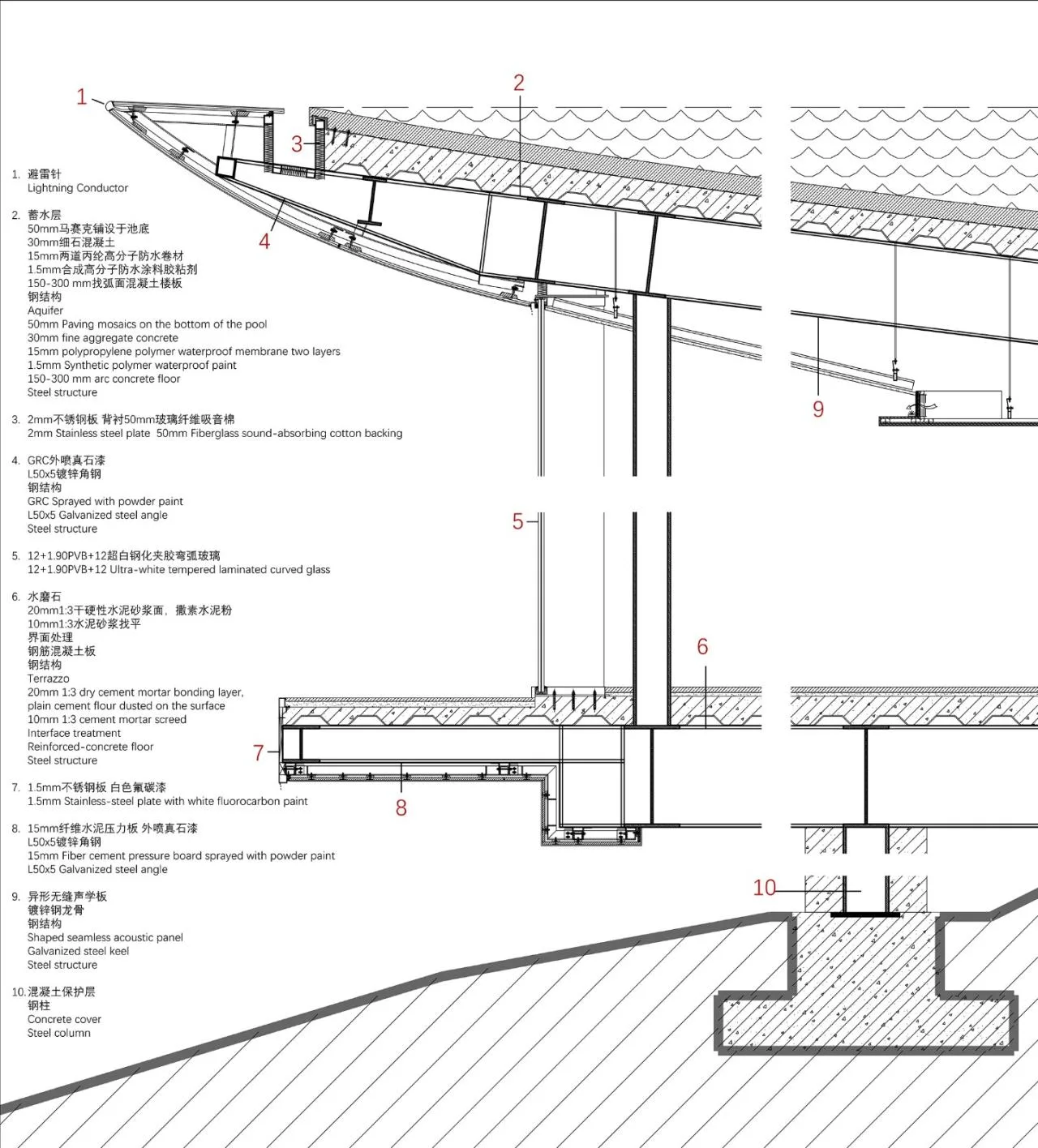
△ Structural Detail Drawing
Project Information
Project Name: One Drop of Water Library
Location: Shuangyue Bay, Pinghai Town, Huizhou City, Guangdong Province
Owner: Huizhou Shuangyue Bay Real Estate Investment and Development Co., Ltd
Architecture and Interior Design: Three Literature Architecture
Lead Architects: He Wei, Chen Long
Project Architects: Wang Ziyi (Architecture), Meng Xiangting (Interior)
Design Team: Zhou Junjie, Wan Yuexiao, Liu Song, Sang Wanchen, Liu Yong, Zhu Yanming, Yan Ziming (Intern)
Structural Consultant: Pan Congjian
Landscape Design: TOPOS Landscape Architect Firm
Lighting Design: Guangzhu International Lighting Design (Beijing) Co., Ltd
Owner Design Management Team: Luo Shaochuan, Liu Shaowen, Yu Yanfei, Li Guohao
Owner Engineering Management Team: Liu Zhifei, Lin Yonghua
Building Area: 450 square meters
Site Area: 3,500 square meters
Design Period: August 2020 – April 2021
Construction Start: April 2022
Photography: Jin Weiqi, He Wei, Huizhou Shuangyue Bay Real Estate Investment and Development Co., Ltd













Must log in before commenting!
Sign Up