
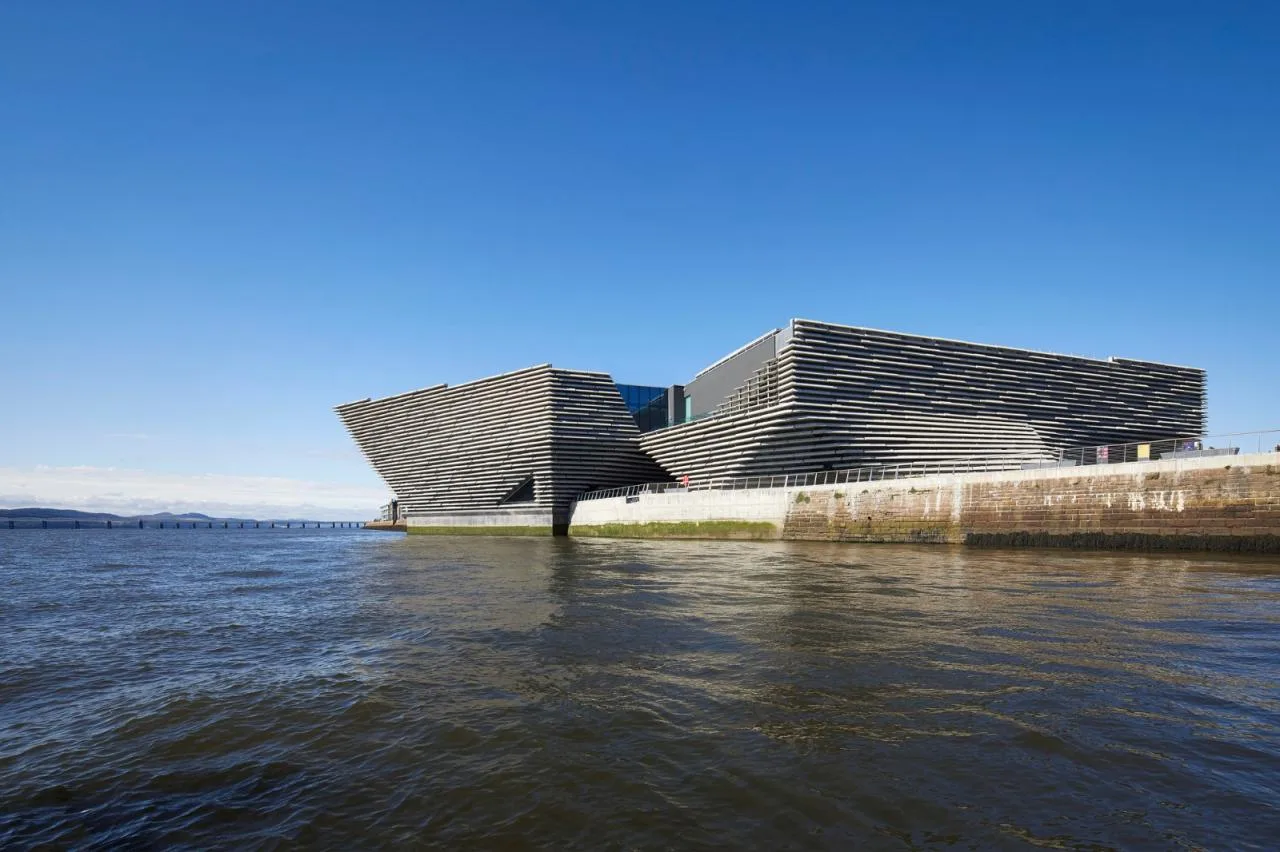
Dundee, situated on the northern shore of the Firth of Tay, holds a rich history as Scotland’s main gateway for shipping from Northern Europe. The recently completed Dundee V&A Museum stands as a crown jewel and forms the centerpiece of the extensive 30-year, £1 billion waterfront redevelopment project initiated in 2001. This waterfront stretches 8 kilometers along the Tay River and its estuary, covering approximately 240 hectares.
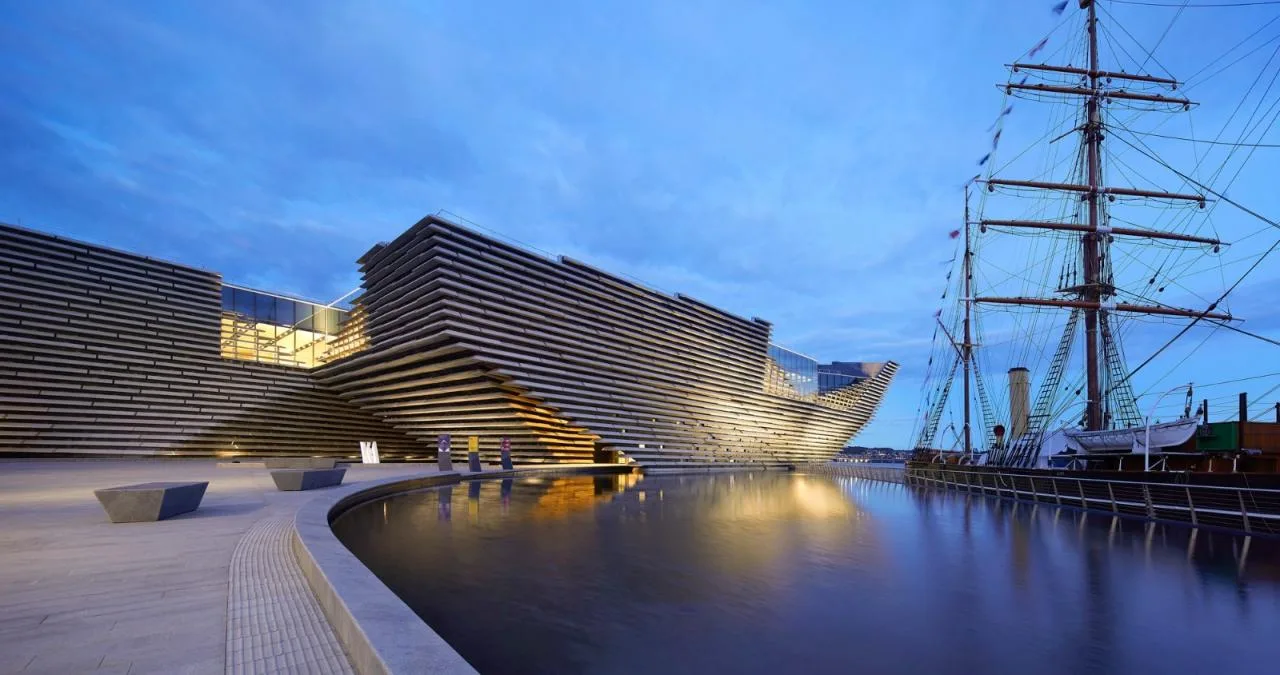
The museum occupies the heart of the area where Dundee’s bustling maritime infrastructure once thrived, built on the former site of the demolished Earl Grey Pier. Its striking form reconnects the city center with the Tay River, paying homage to the city’s shipbuilding and textile trade heritage, which were once vital economic lifelines. Adjacent to the museum is Slessor Gardens, a new public park that hosts live music and events, alongside the historic RRS Discovery—an exploration ship constructed in Dundee and famously captained by Scott and Shackleton during their Antarctic expedition from 1901 to 1904.
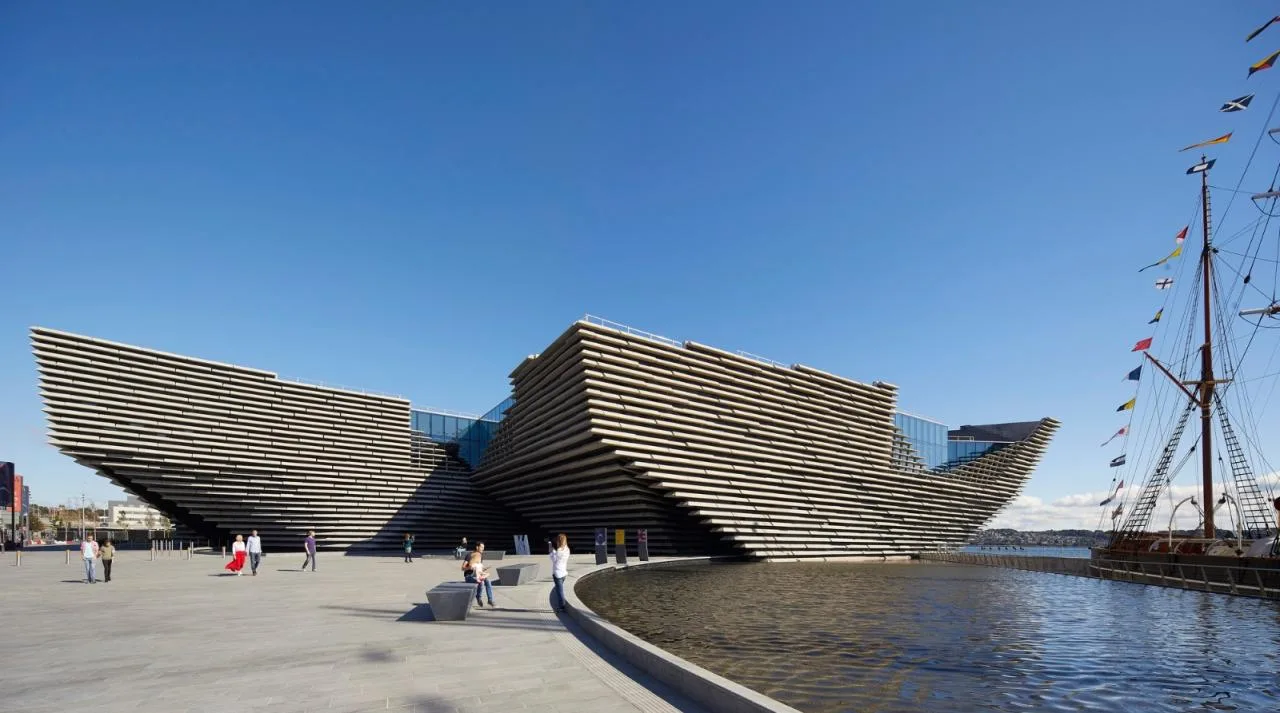
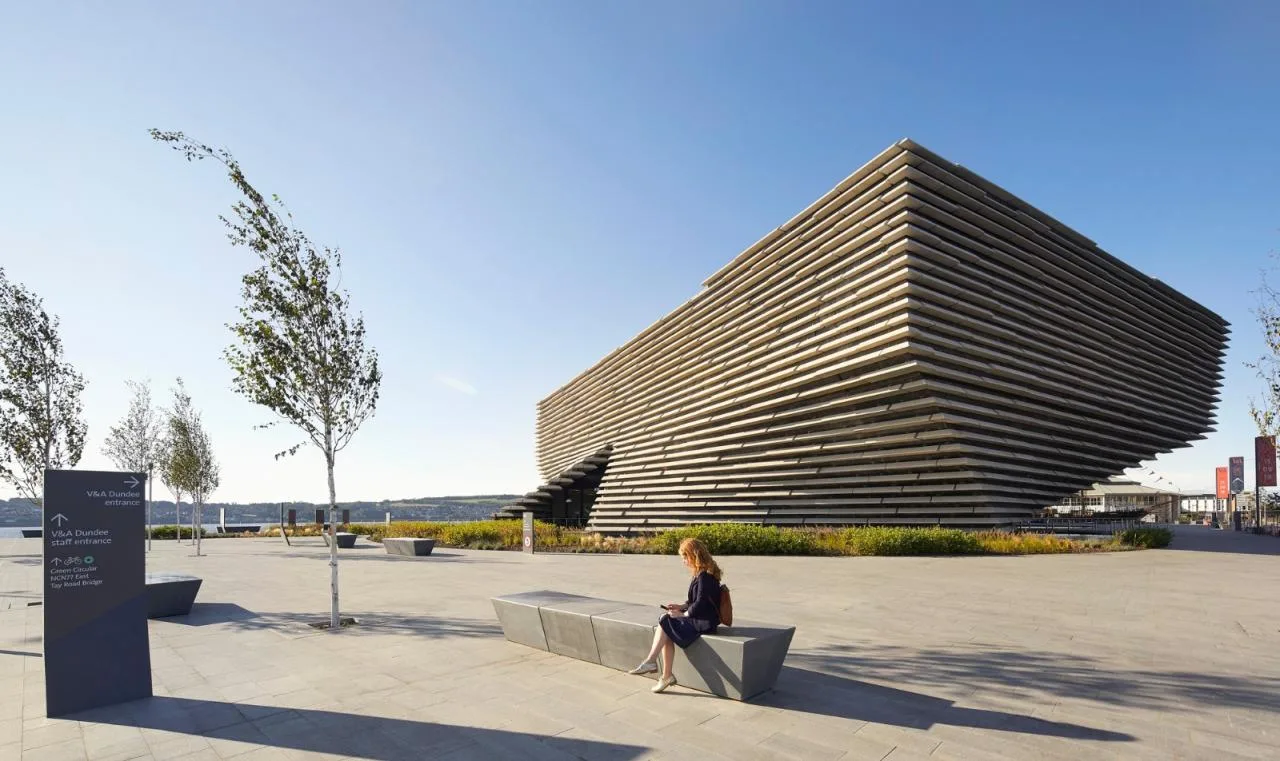
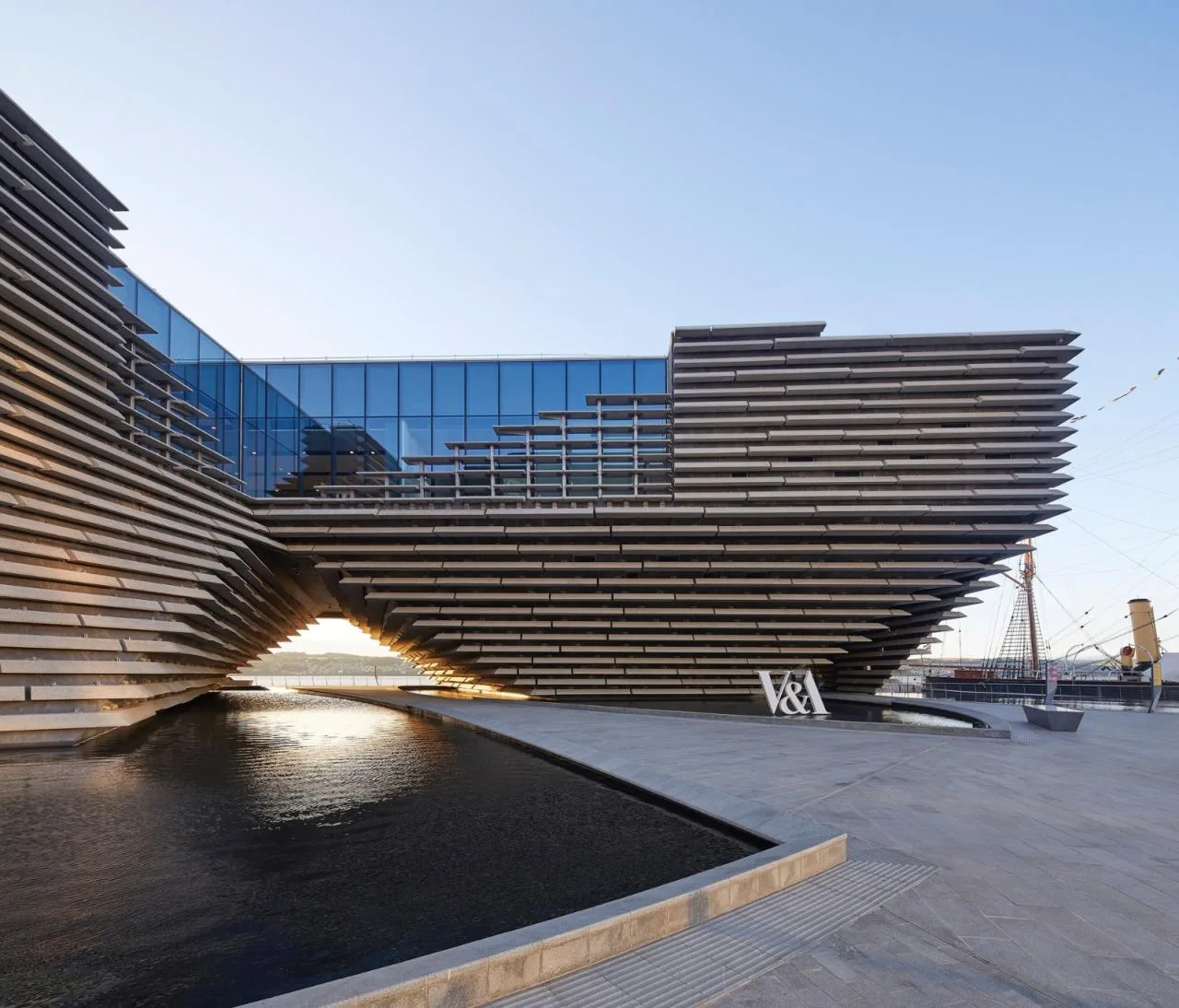
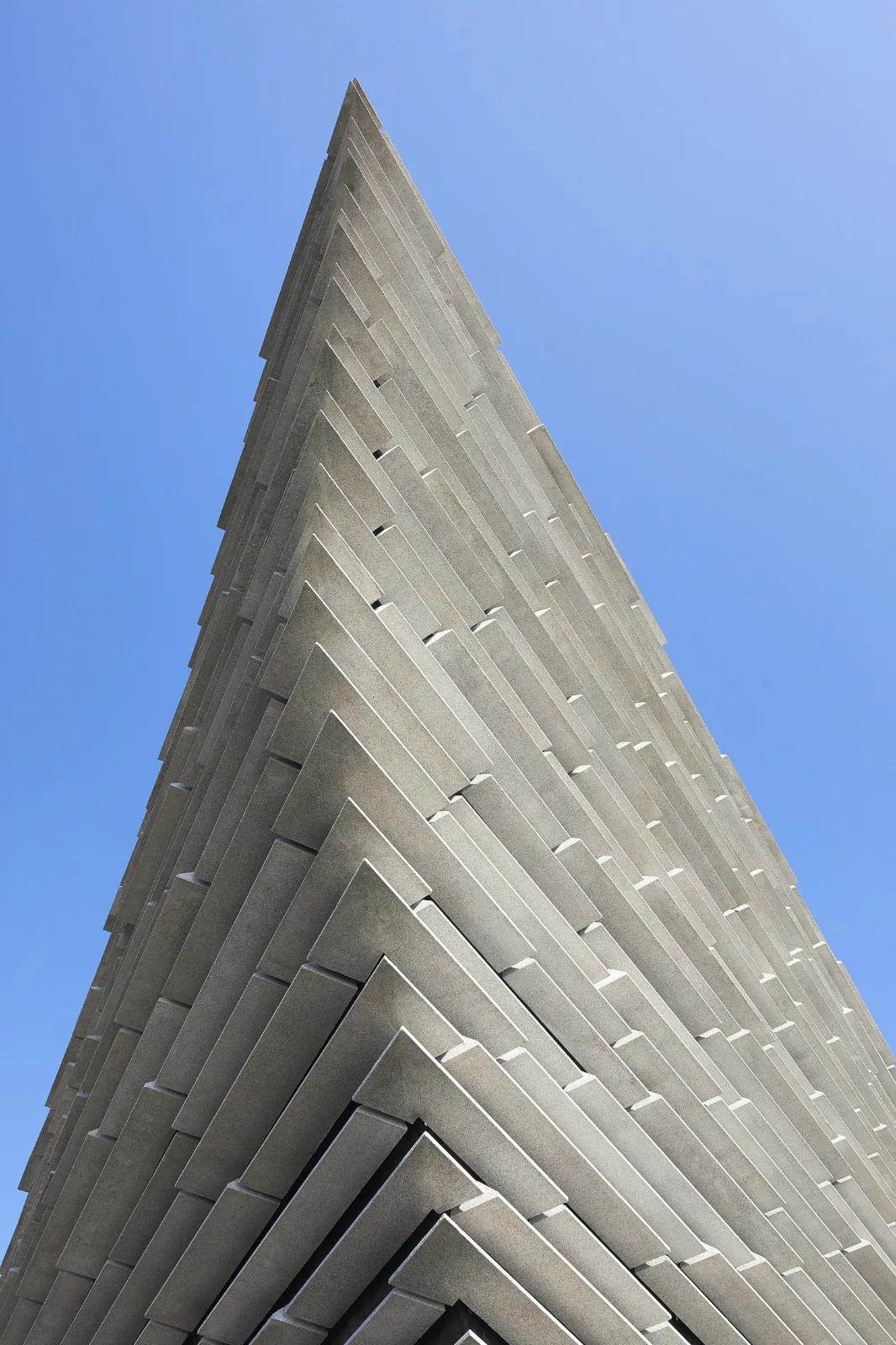
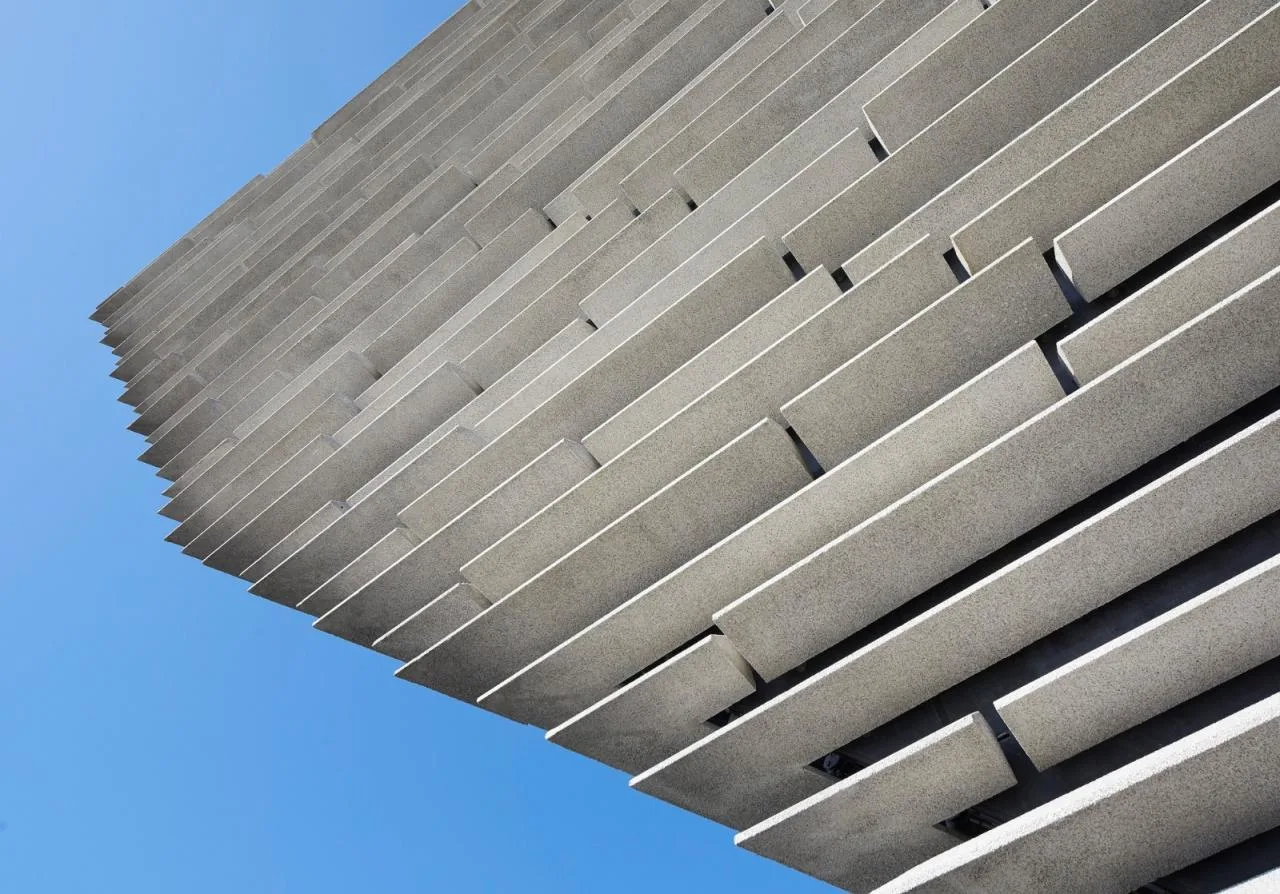
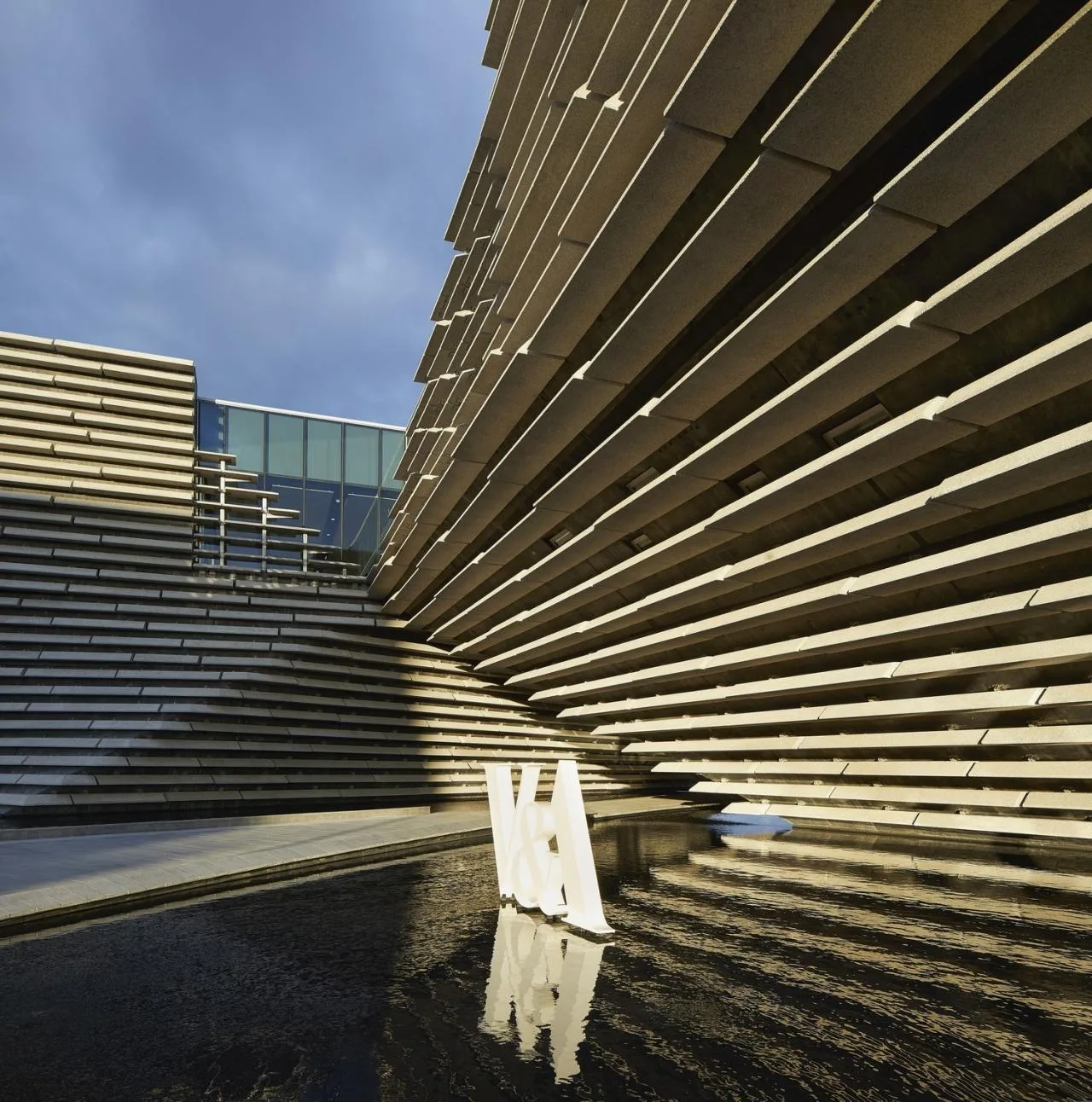
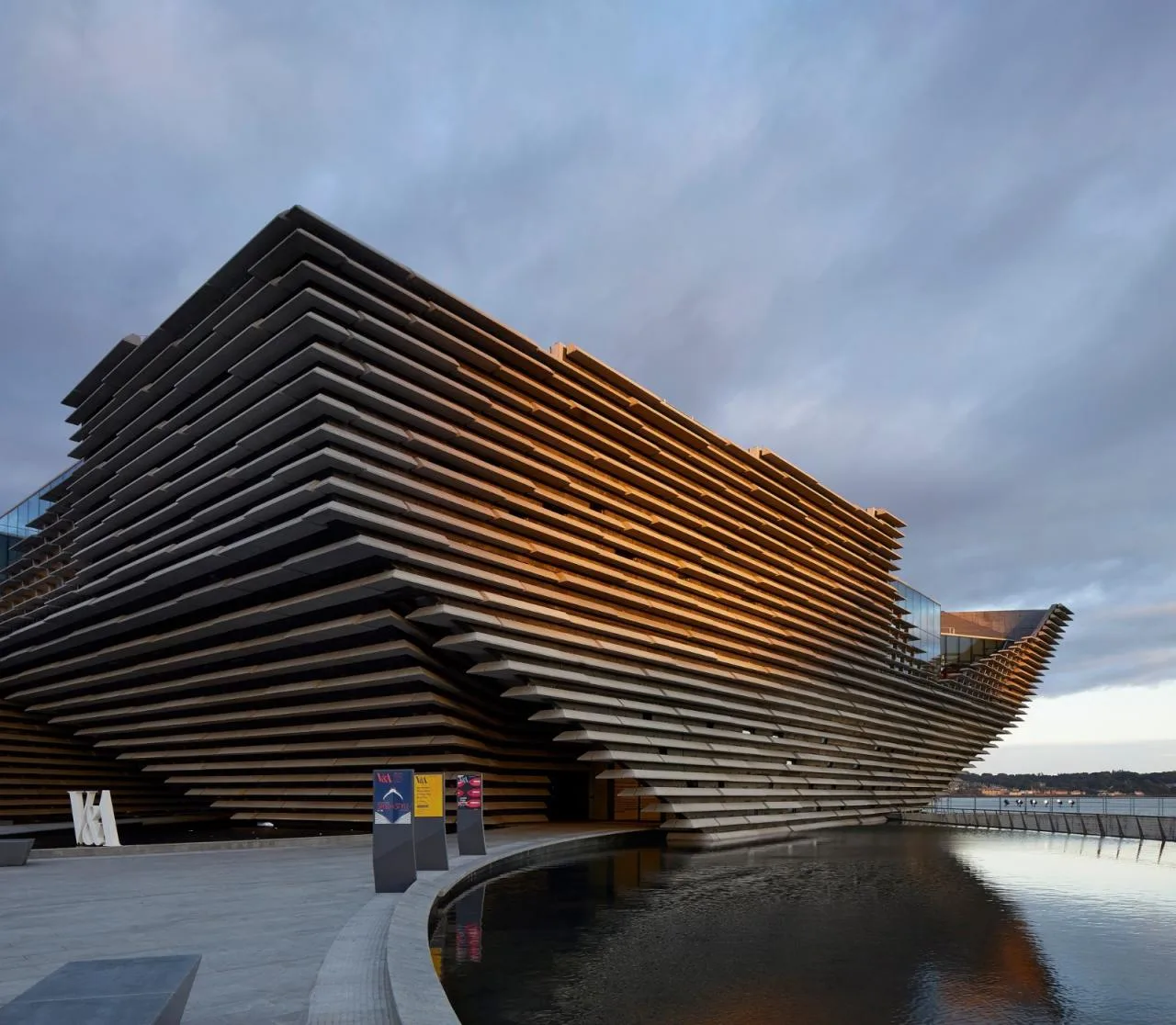
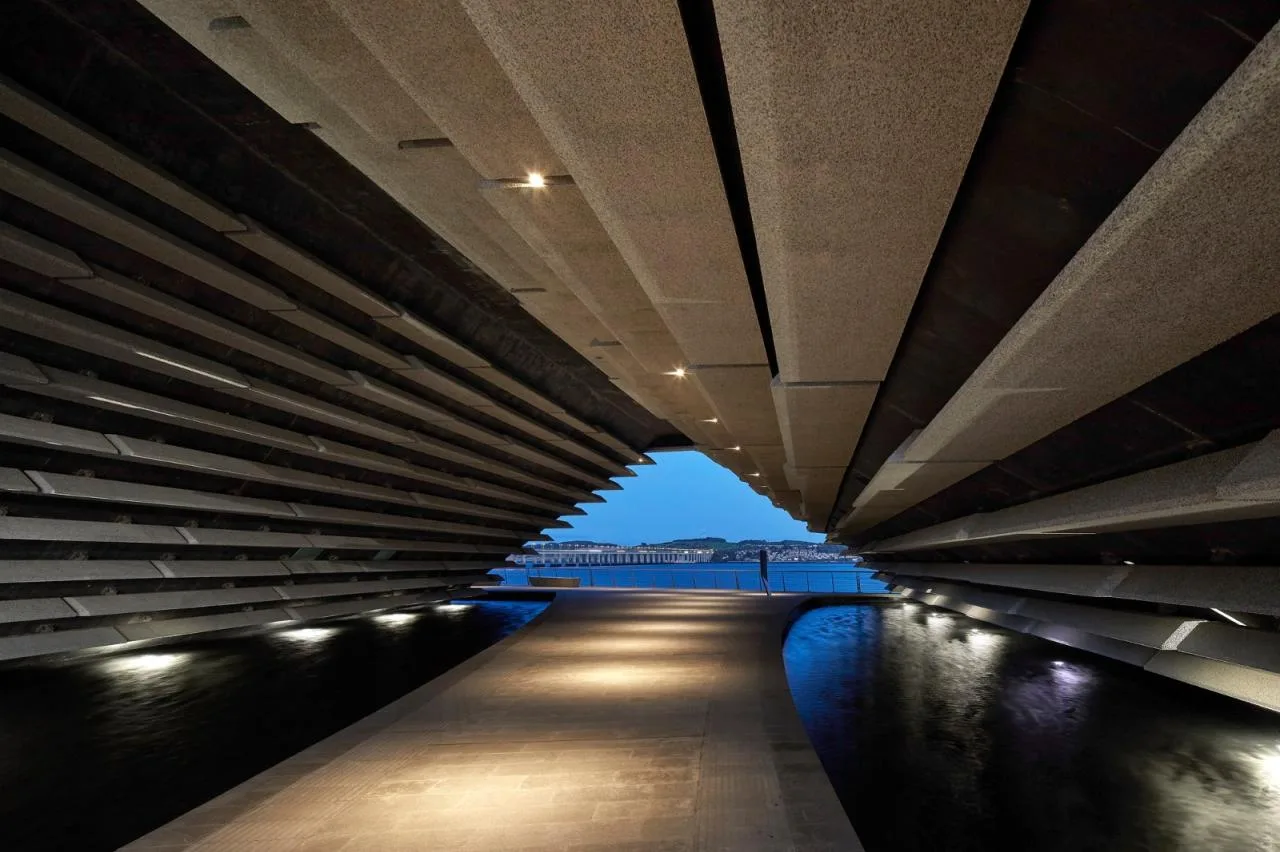
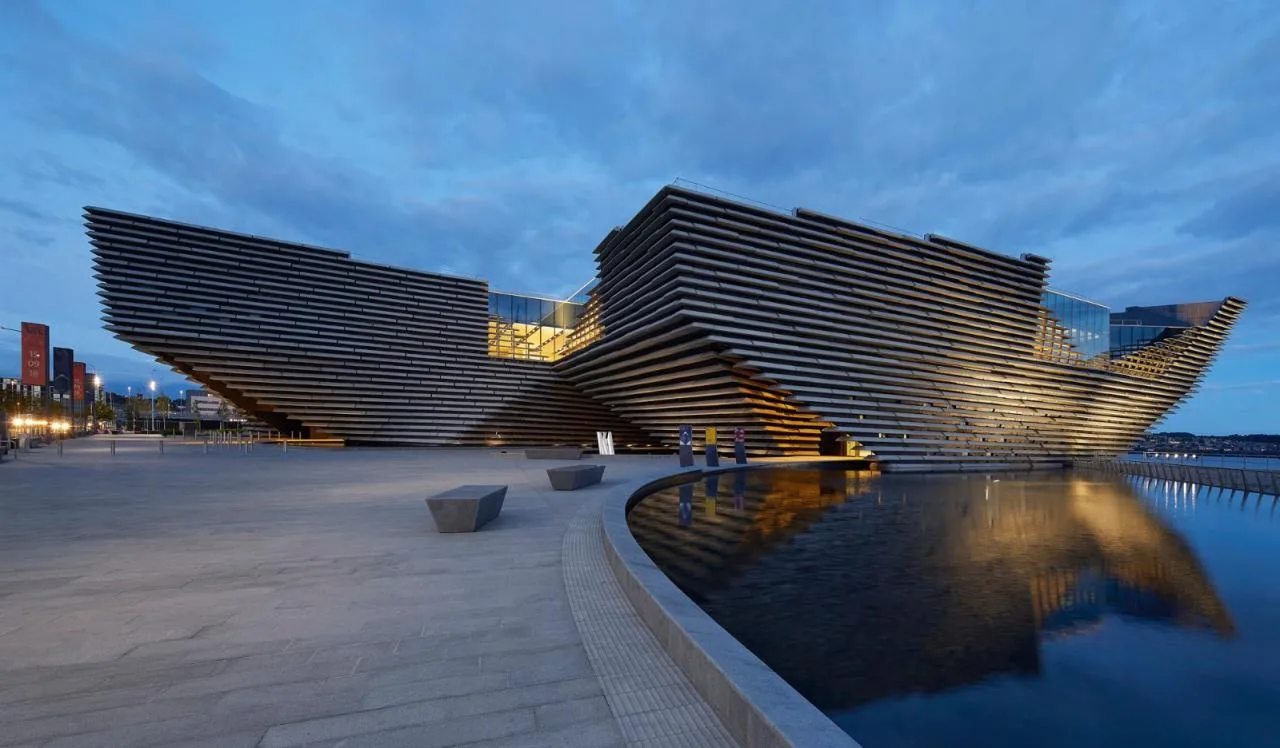
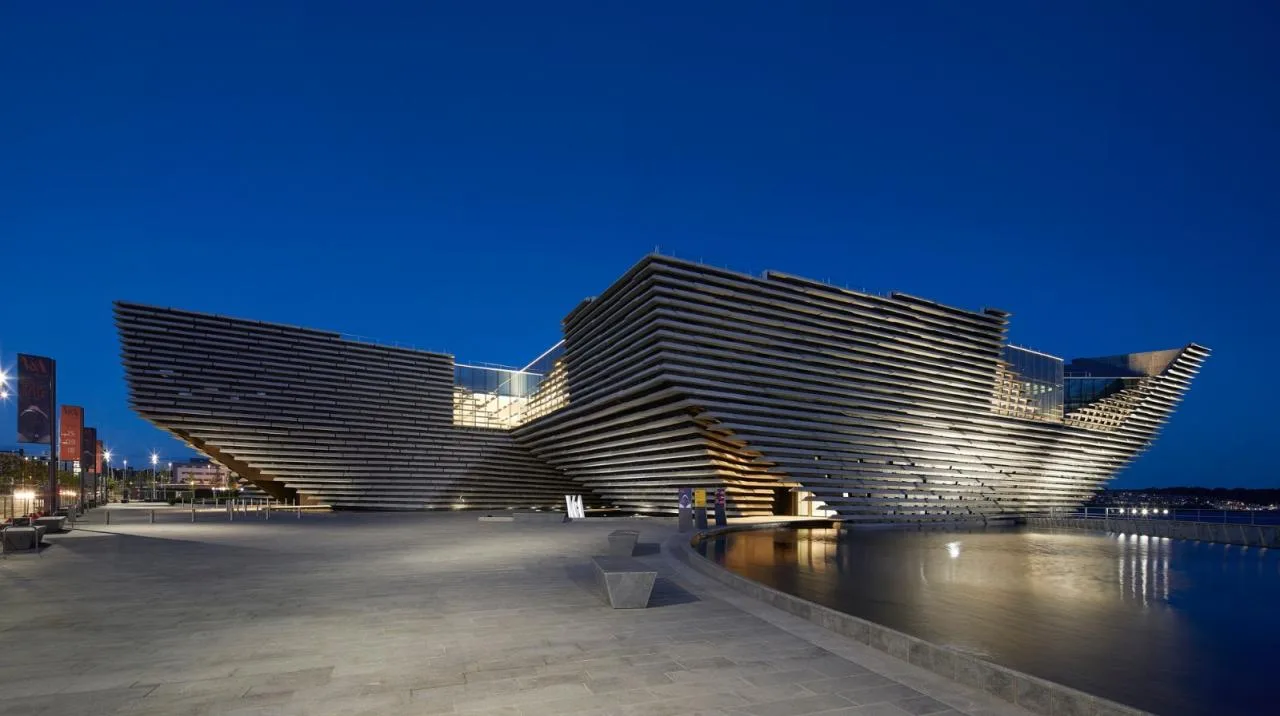
The museum’s architectural design draws inspiration from the cliffs along Scotland’s northeast coast. Architect Kengo Kuma employed dramatic horizontal precast concrete elements wrapped around curved concrete walls, creating dynamic shadow patterns that change with the weather and time of day. The building itself consists of two inverted pyramids, separated at the base and joined by a twisting gallery at the top. This configuration forms an open archway through the museum’s center, reestablishing a connection between the city and the Tay River. Kuma also drew inspiration from the nearby commemorative royal arch that once welcomed Queen Victoria and Prince Albert in 1844.
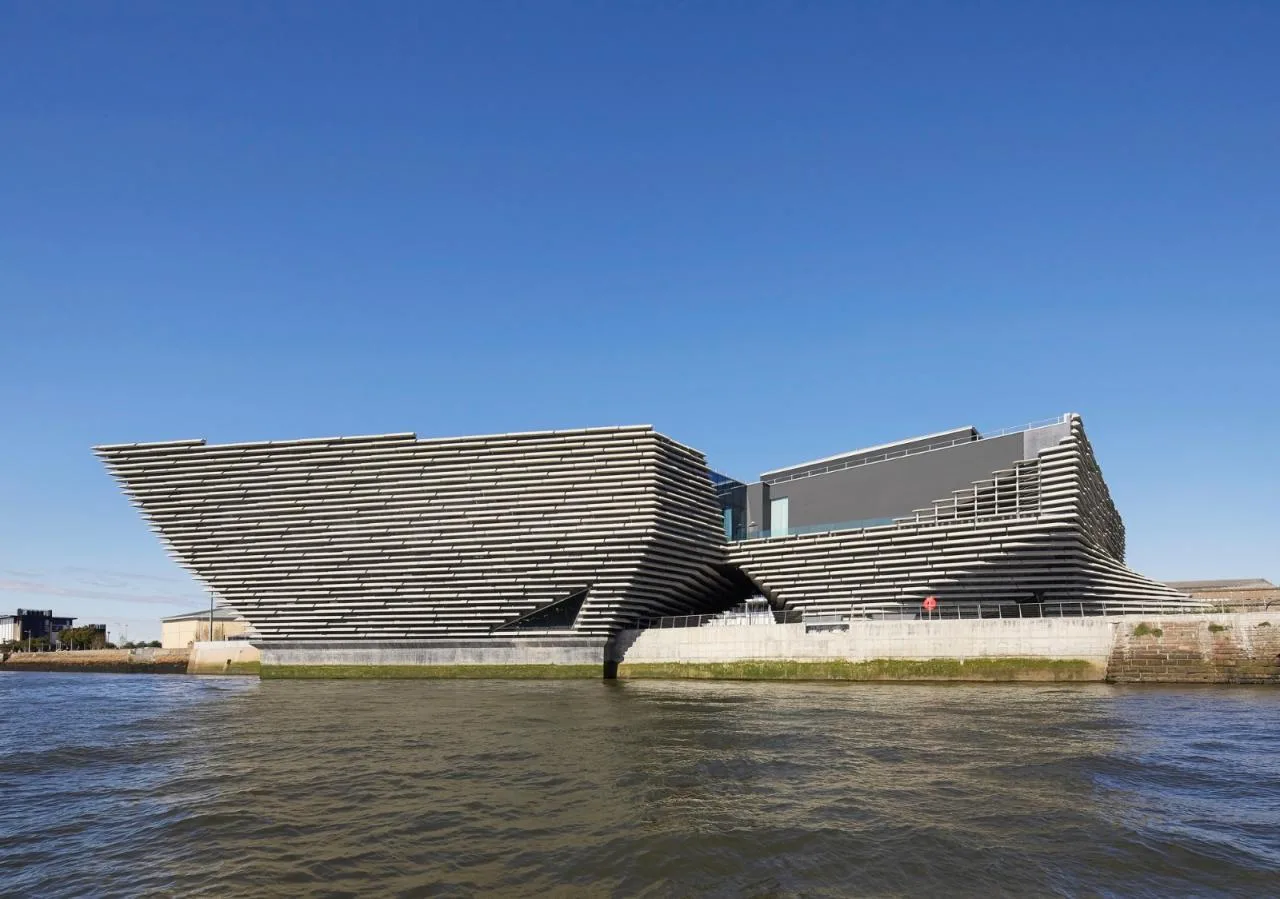
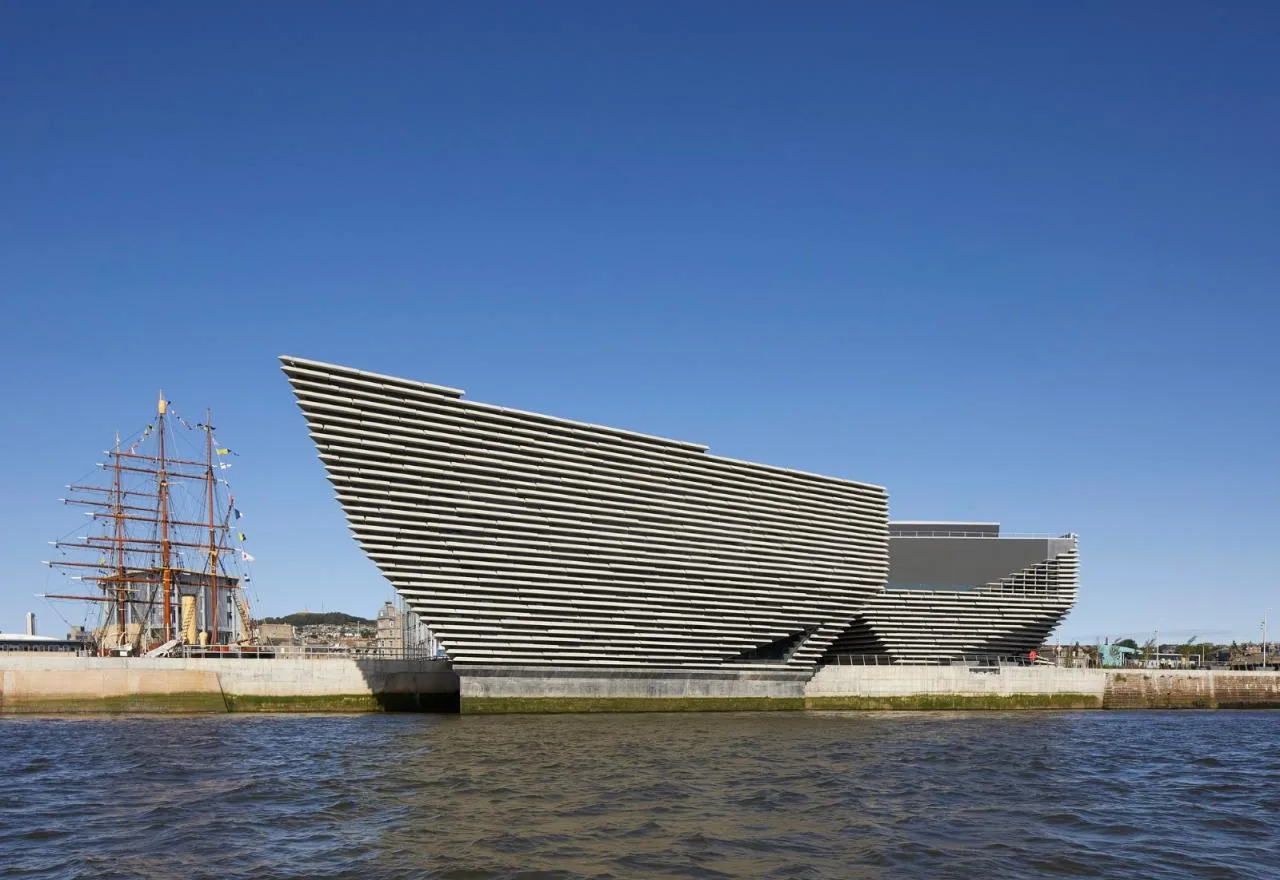
After the city’s docks were filled in, the original Royal Arches were demolished to make way for the construction of the Tay Road Bridge, completed in 1966. The Dundee V&A Museum posed a design challenge: how to reconnect the city center with the river. Kuma met this by surrounding the museum with a reflecting pool and situating the building directly on the Tay River. A bow-like structure leans over the water, evoking the city’s shipbuilding legacy.
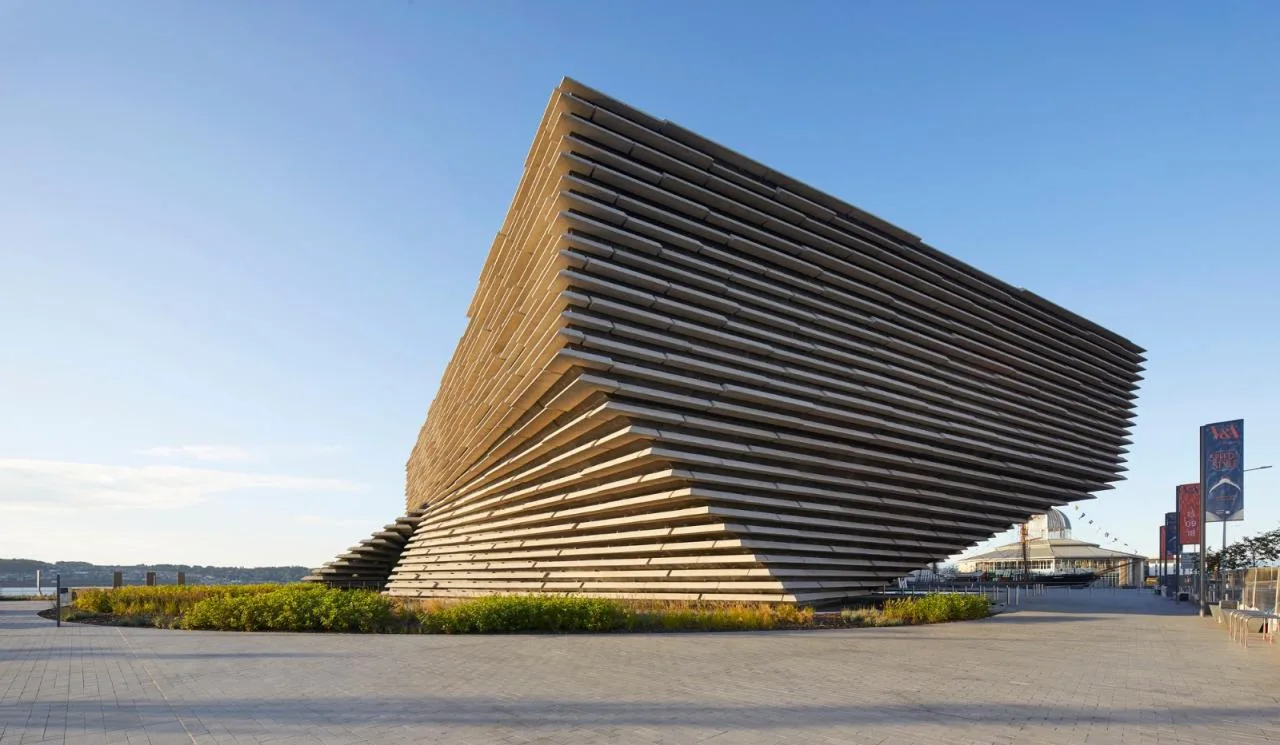
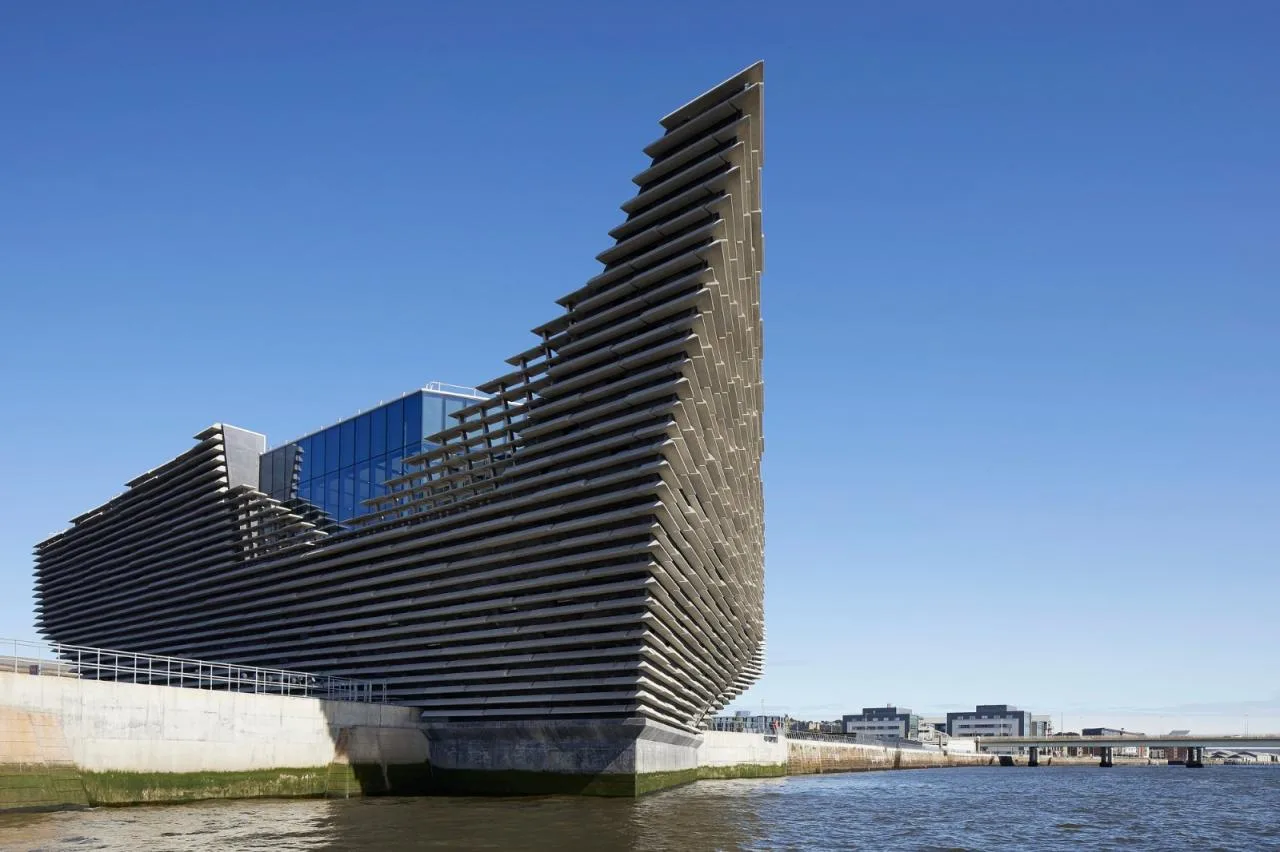
Kengo Kuma’s ambitious design presented significant challenges for engineers and builders alike. The building features a complex structure with exterior walls that twist both horizontally and vertically, forming shapes reminiscent of waves or ship hulls. From the competition phase onward, engineering firm Arup worked closely with BAM Construct UK as the builder and Turner & Townsend as project managers to bring Kuma’s vision to life. Initially, engineers planned walls embedded with massive steel sheets up to 60 centimeters thick. However, through extensive 3D modeling and analysis, the team optimized the design by halving the wall thickness and replacing the internal steel skeleton with thinner steel bars.
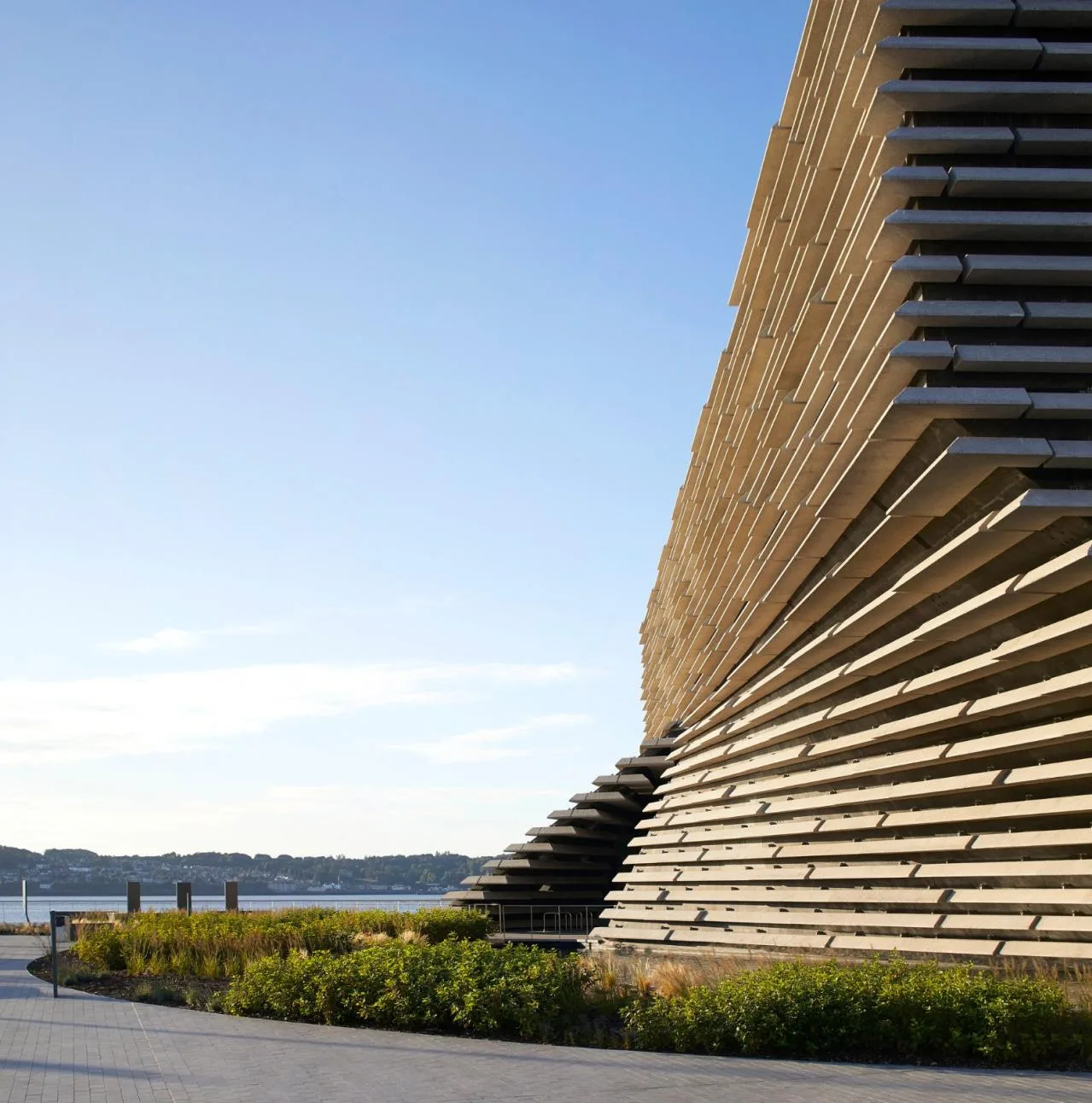
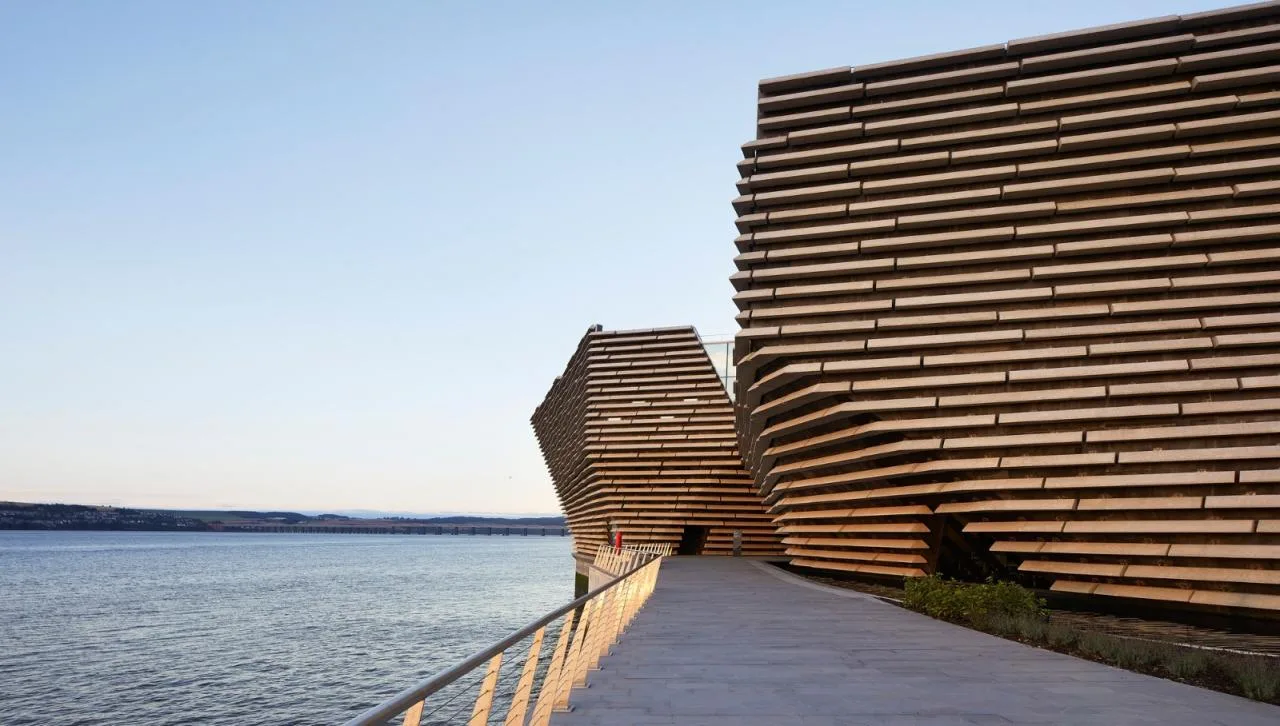
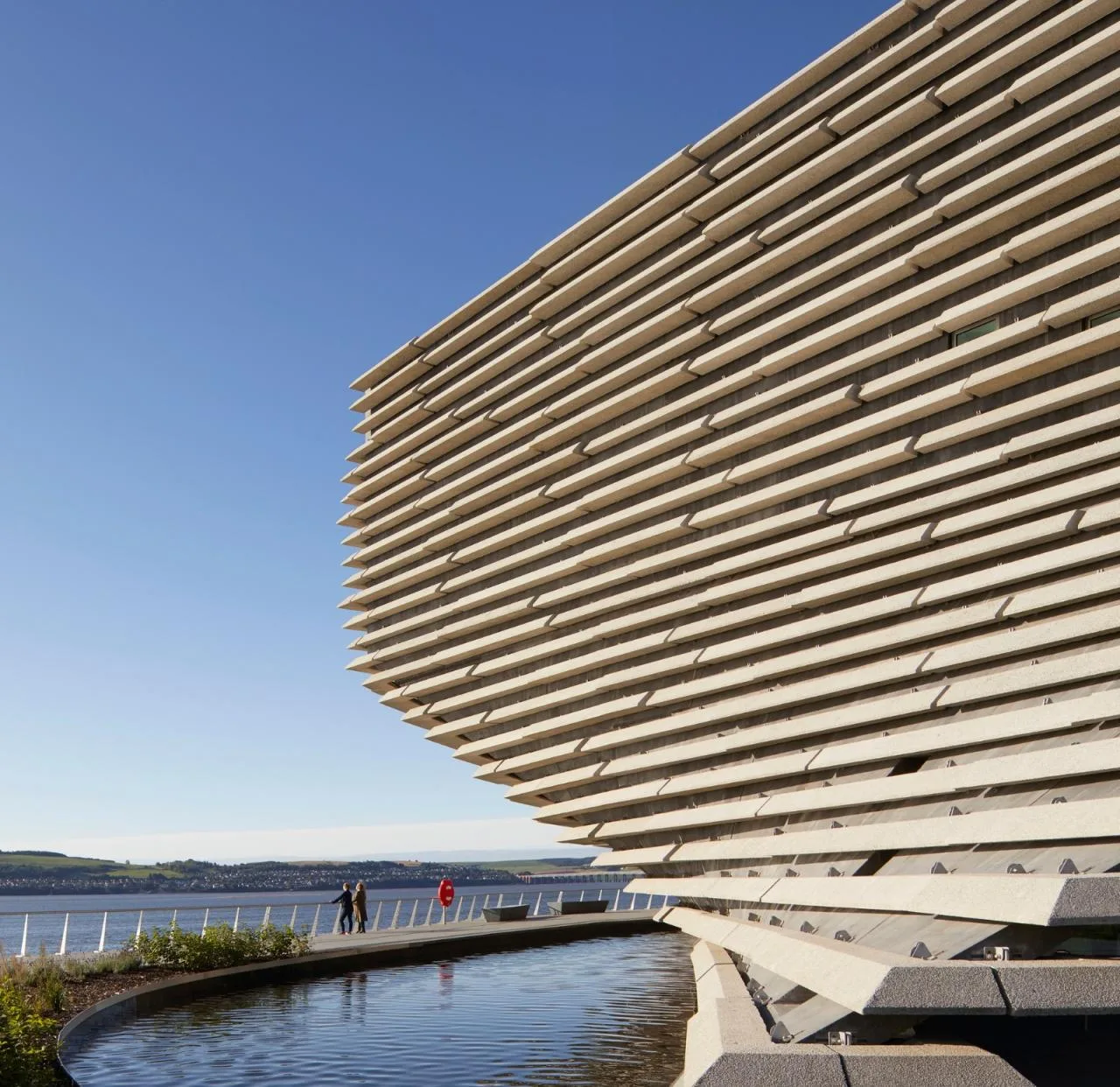
The building’s structure acts like a continuous outer shell, integrating roof, walls, and floor to ensure stability. While the twisting and folding walls might seem challenging, engineers view these features as strengths, similar to origami’s folded forms that enhance rigidity. To fully understand these complexities, detailed 3D and analytical models were essential. The integrated digital model served as a coordination tool, allowing architects, engineers, and contractors to collaborate effectively and visualize the project before construction.
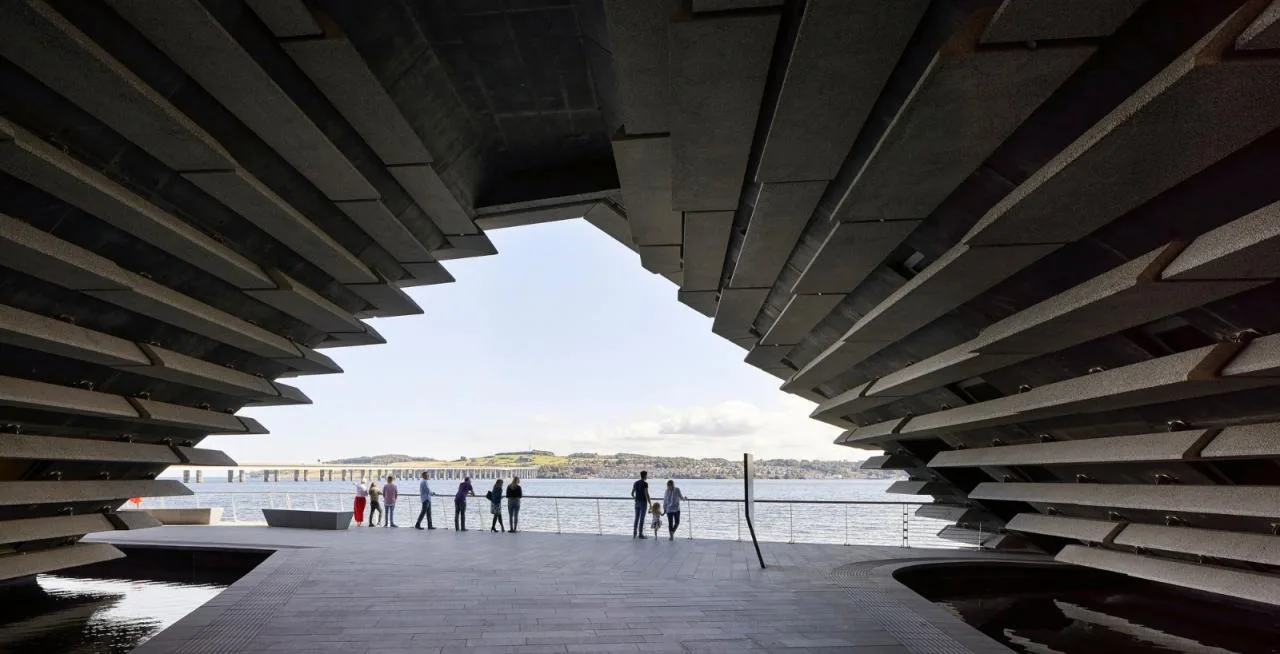
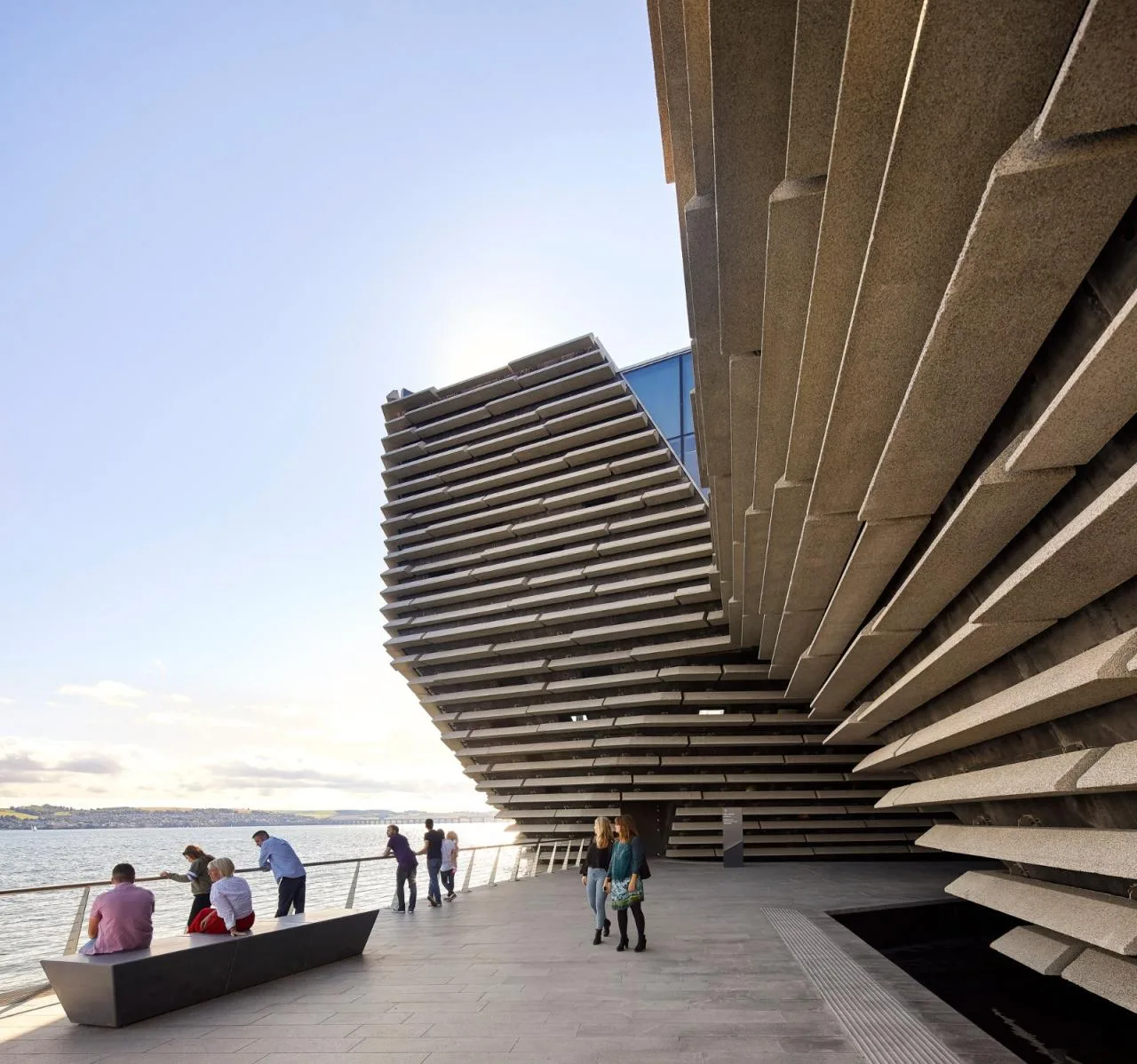
The final building remains faithful to the original competition-winning design. Its largest cantilevered roof spans an impressive 19.8 meters, even extending beyond the museum’s footprint. The structure comprises two separate volumes connected at the top by massive steel beams anchored to two core blocks. These beams can withstand loads equivalent to roughly 40 double-decker buses.
The lower section of the museum is divided into two parts, separating public spaces from delivery, preparation, and staff areas. Meanwhile, the upper two floors offer vast uninterrupted gallery spaces. This division also creates an open pedestrian passage through the building’s center—a symbolic arch linking the river to the city.
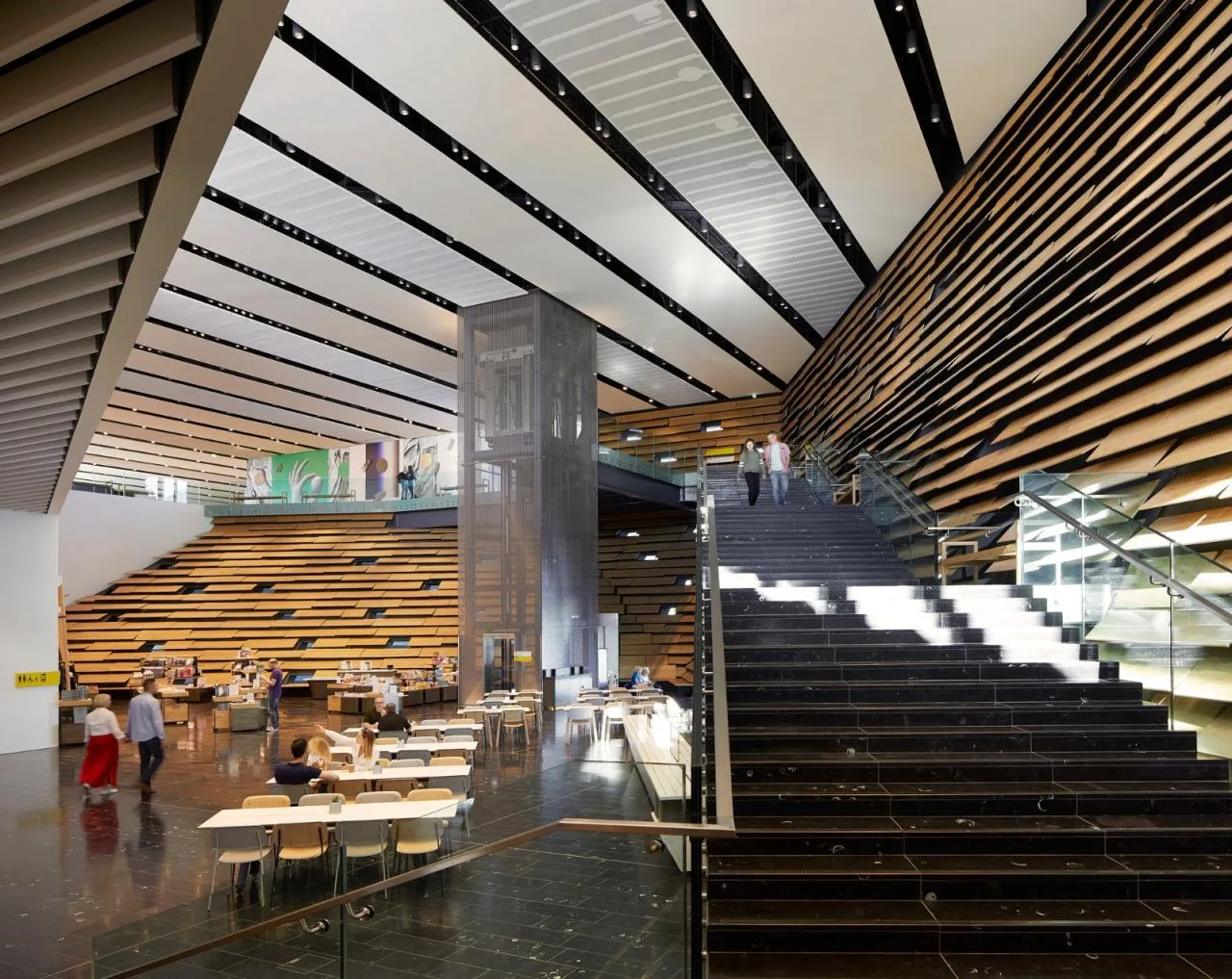
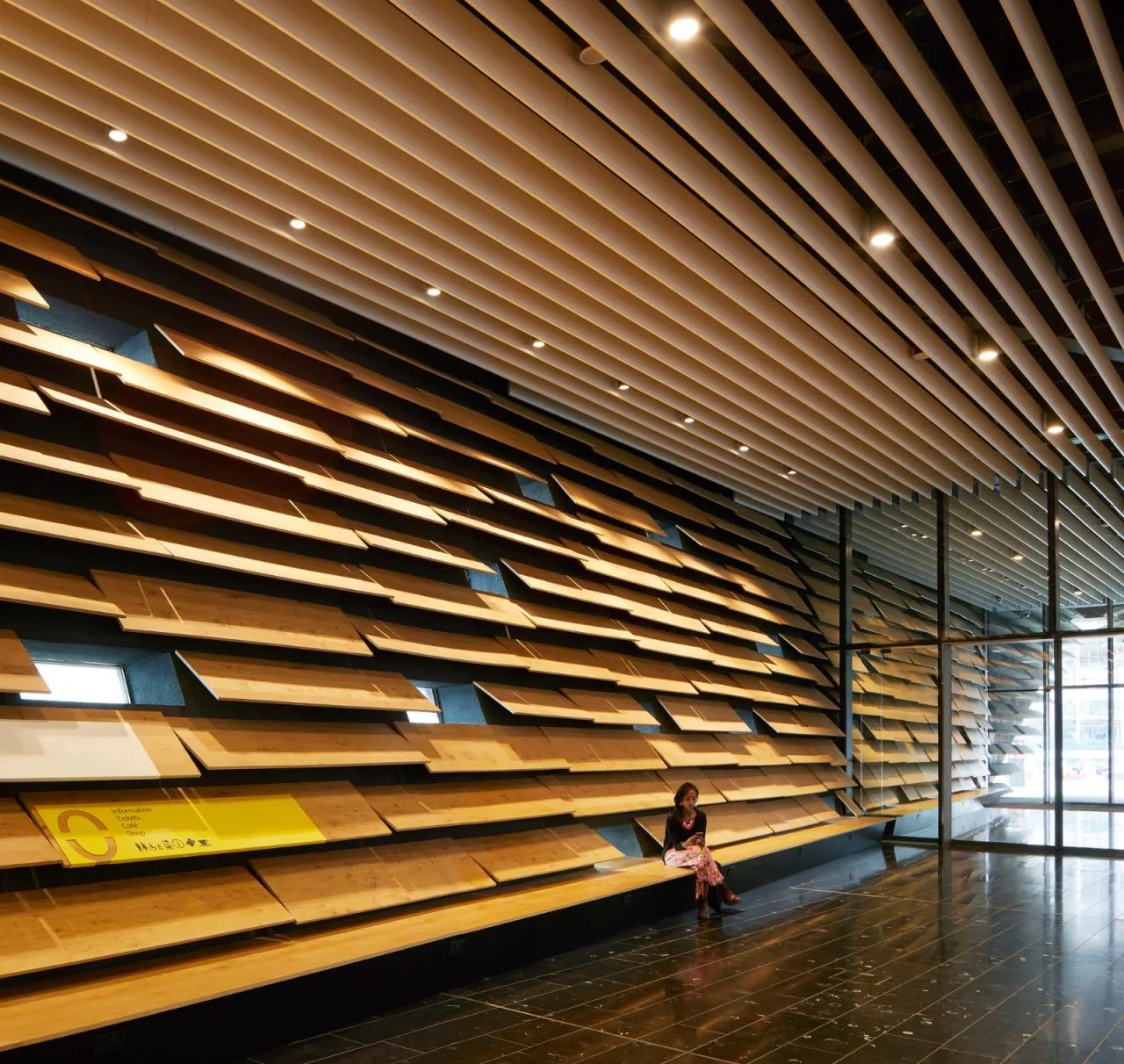
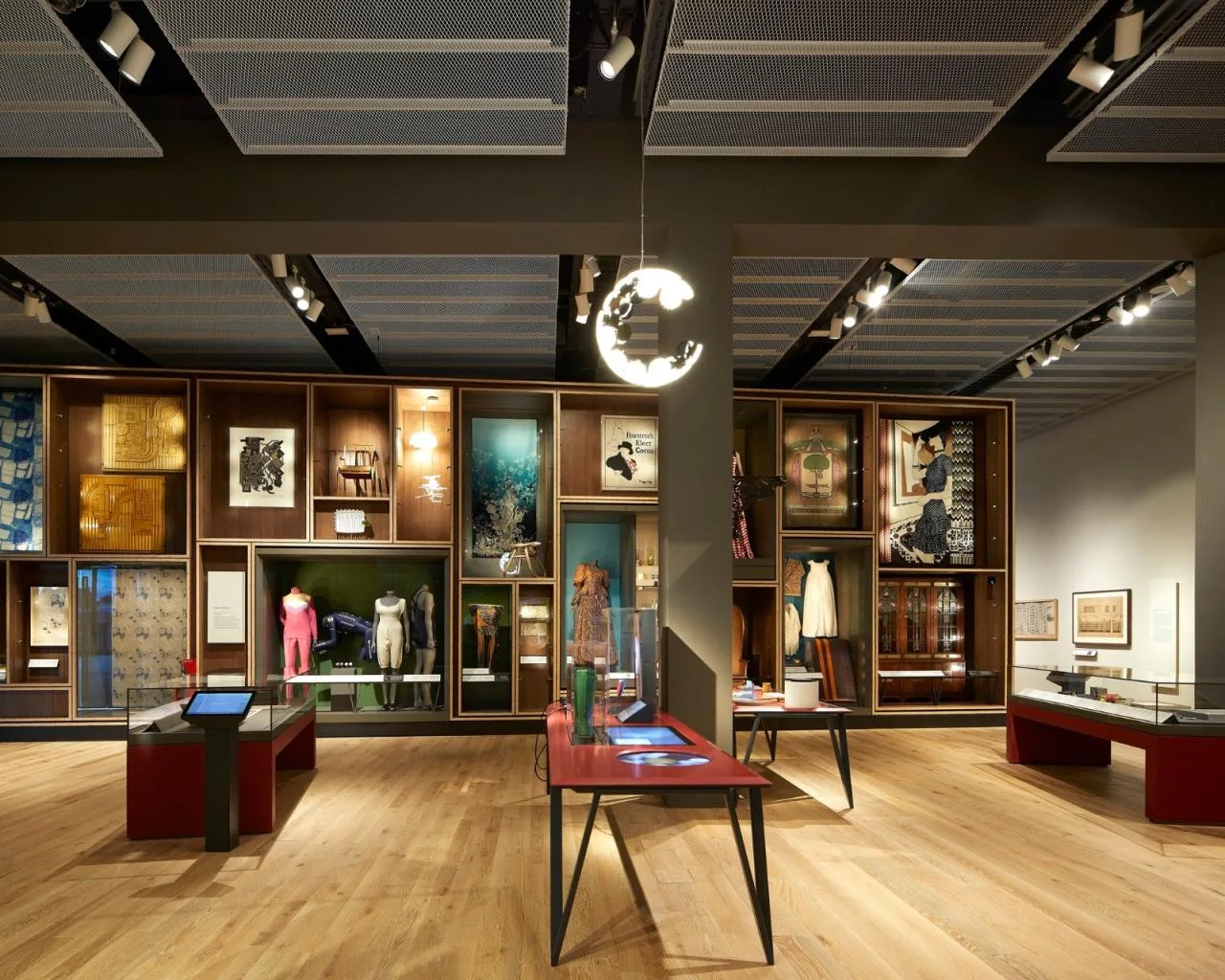
The Dundee V&A Museum covers 8,445 square meters, housing a main hall, learning center, auditorium, exhibition spaces, and a permanent Scottish Design Gallery. The lower levels consist of two separate buildings connected on the upper floors. Visitors enter through a spacious, beautifully lit main hall designed to evoke a welcoming atmosphere. This vibrant space includes cafés, shops, and other amenities that cater to social interaction.
The interior features stepped walls lined with oak veneer panels that extend along the full height of the trough windows, creating a warm and dynamic lighting effect. These windows also offer striking views of the river.
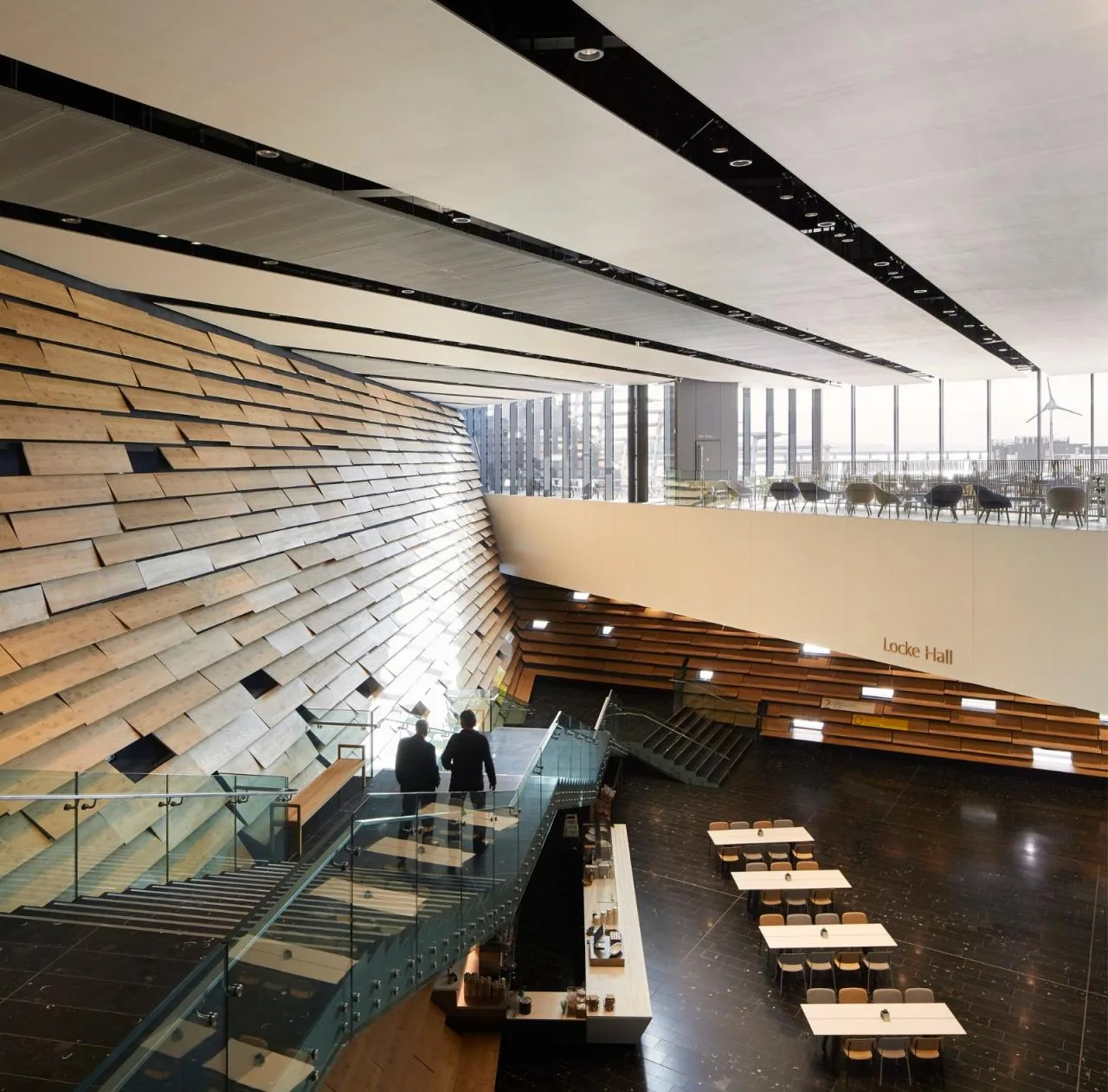
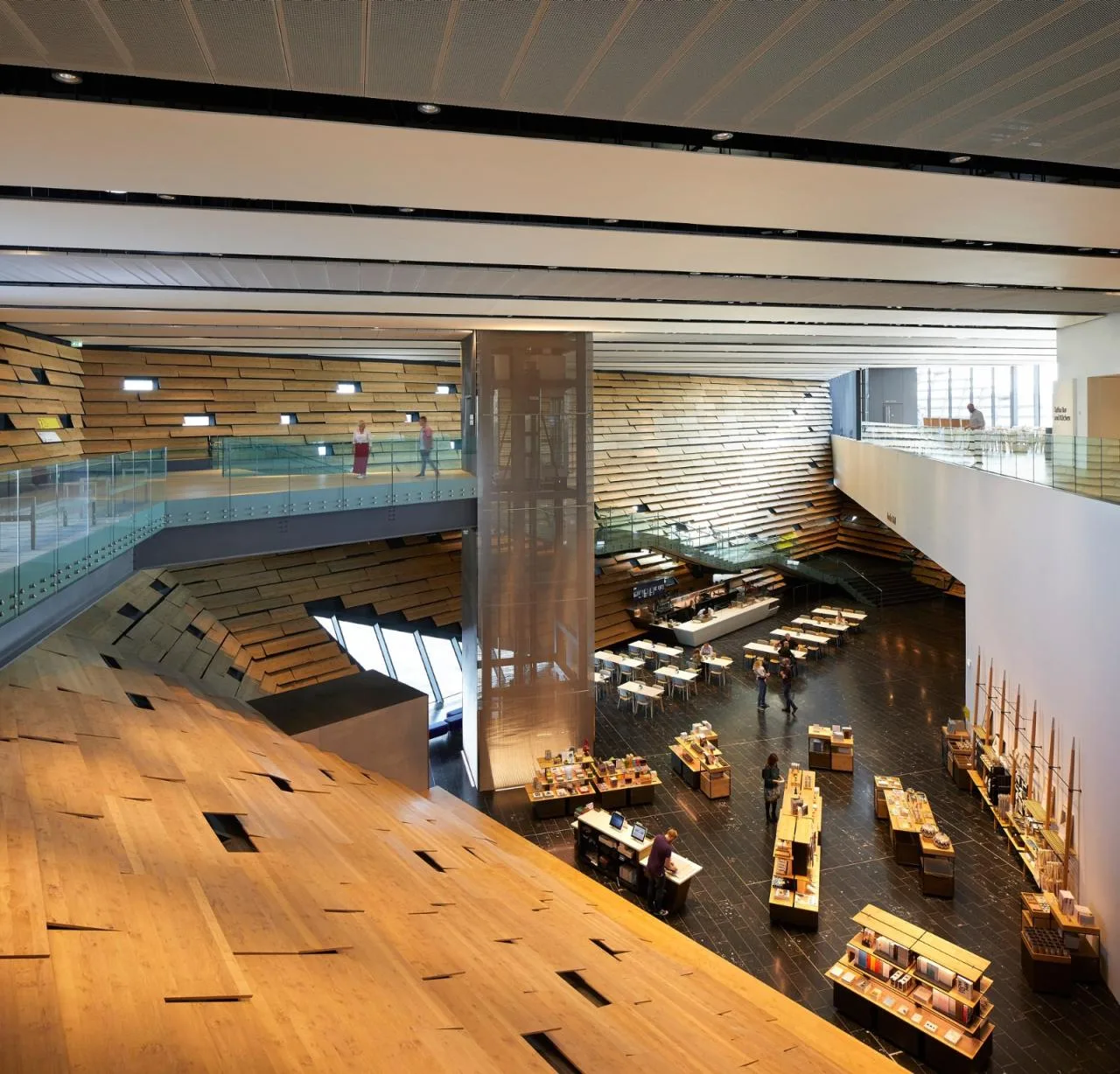
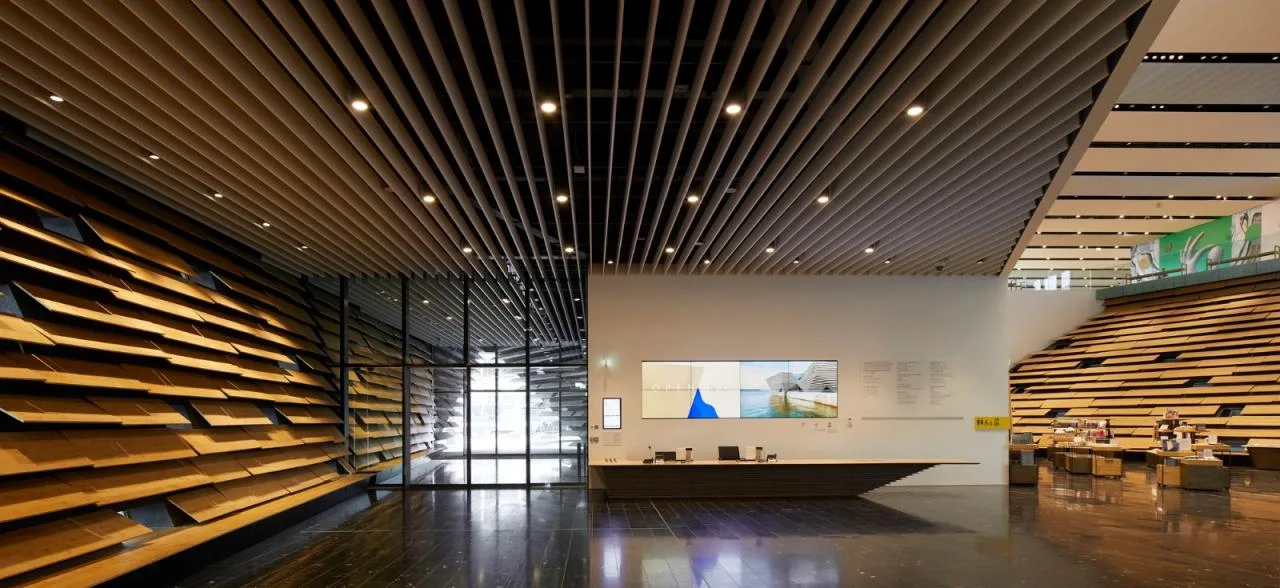
The floors and stairs in the main hall are paved with Carlo Irish blue limestone, which contains marine fossils dating back millions of years. Kuma chose dark stone with fossil inclusions throughout the building to maintain a connection with the ocean and nature. Visitors ascending to the top floors can enjoy panoramic views via a glass elevator.
Cafés, restaurants, and store counters incorporate white concrete embedded with freshwater pearl clam shells sourced sustainably from the Tay River’s local food industry and coastal areas in the UK. This material pays tribute to the endangered freshwater pearl oysters of the region. The clam shells, mixed into the concrete, display various shades of white, black, gray, and blue through custom casting and polishing.
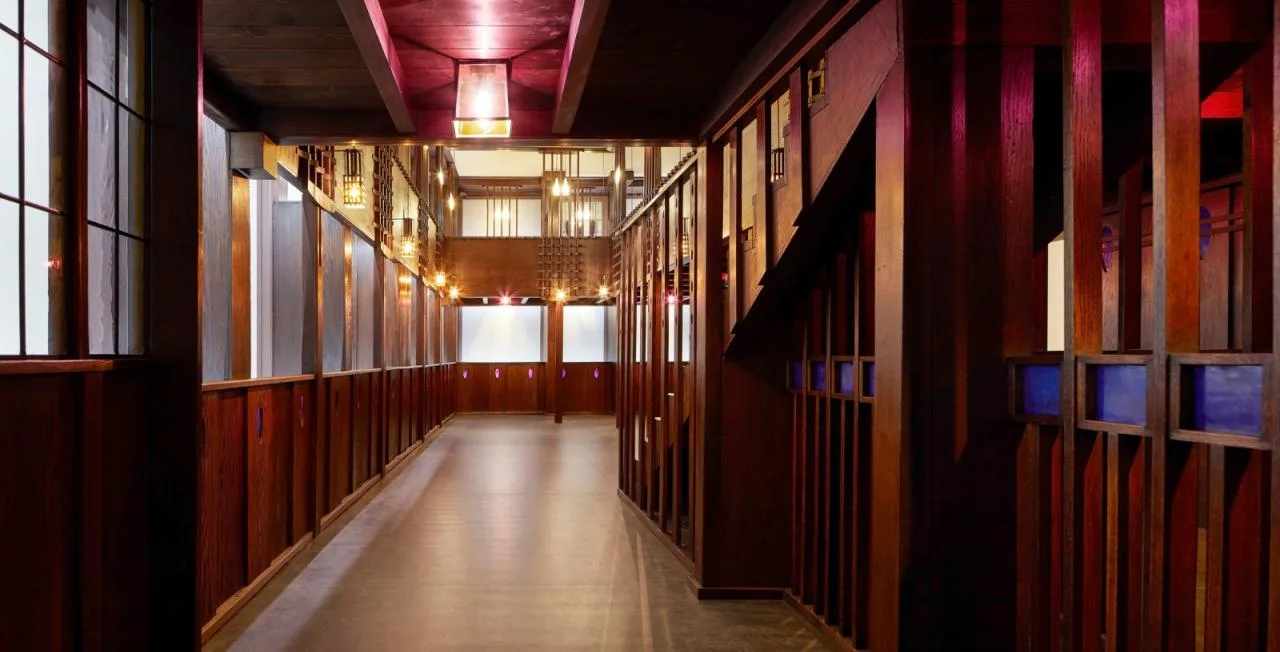
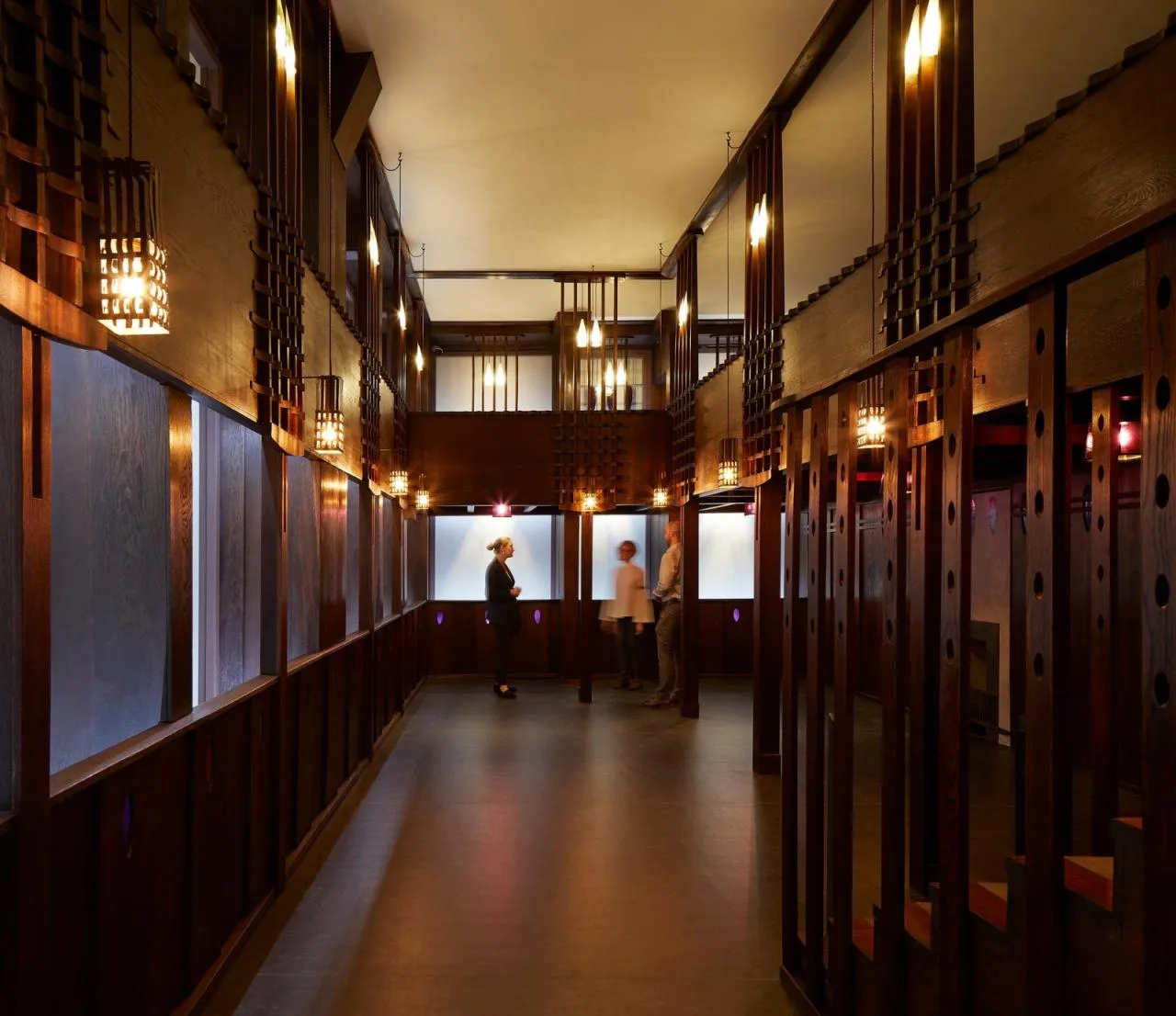
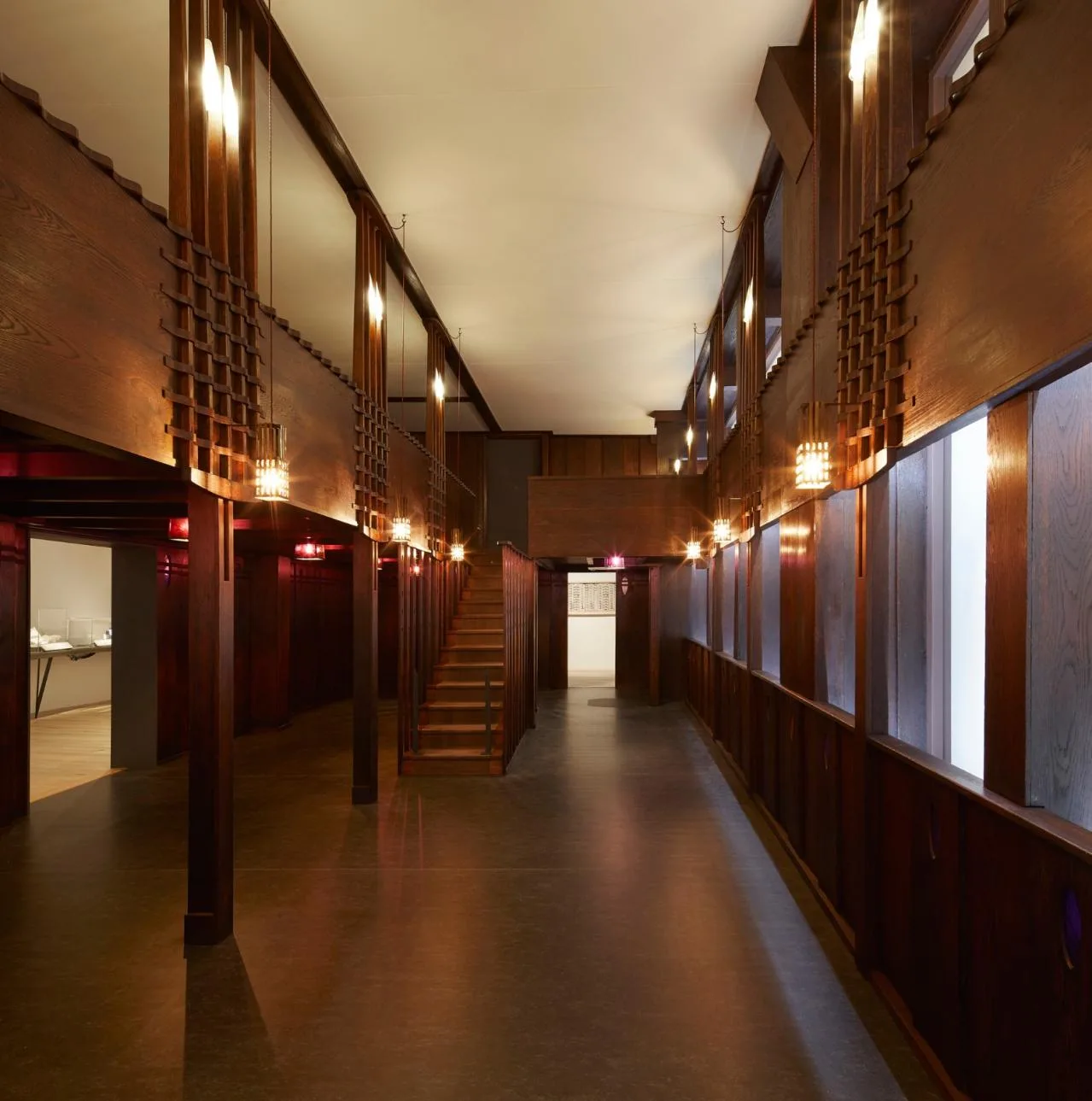
The mezzanine’s first floor includes changing rooms and a picnic room available for school bookings during weekdays and free for family use on weekends. From the upper floors, visitors enjoy views of the restaurant and the Tay River through the main hall. The open foyer provides access to the Michelin Design Gallery, Thomson Learning Centre, multiple exhibition spaces, and the permanent Scottish Design Gallery.
The upper floors and gallery areas feature European oak flooring, while the restaurant and picnic room are finished with bamboo, enhancing a natural, sustainable ambiance.
Dundee V&A Museum boasts Scotland’s largest museum-standard temporary exhibition space, spanning 1,100 square meters, in addition to a 550 square meter Scottish Design Gallery. The upper levels also house a variety of learning spaces designed to engage visitors in creative design processes.
Next to these is a design studio where designers share ongoing projects with visitors. The museum includes a multifunctional auditorium for meetings, design exchanges, and community events, as well as a restaurant with floor-to-ceiling French windows overlooking the Tay River.
The restaurant’s outdoor terrace, positioned above the river and adjacent to the RRS Discovery, offers stunning views of the Tay River.
Project Drawings
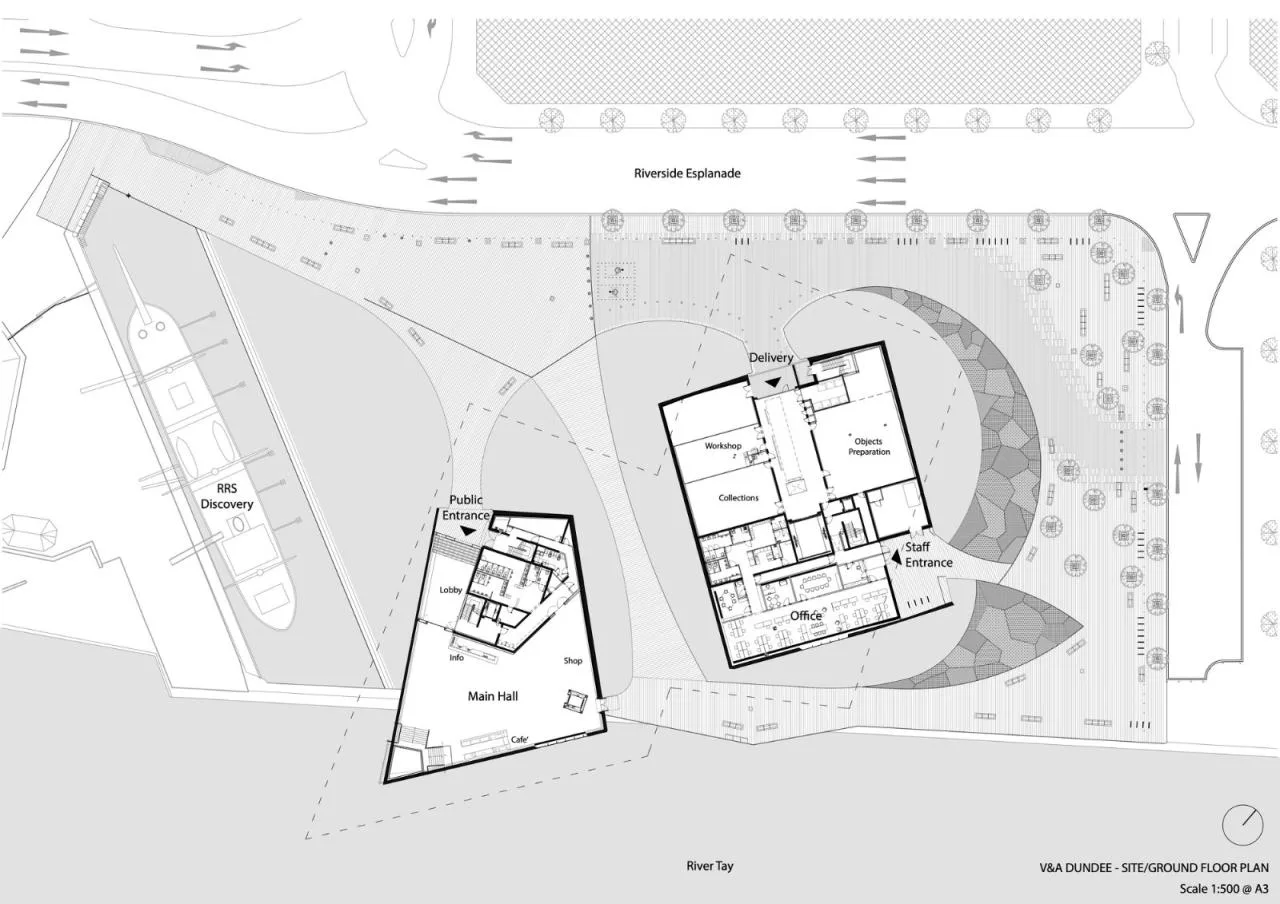
△ First Floor Plan
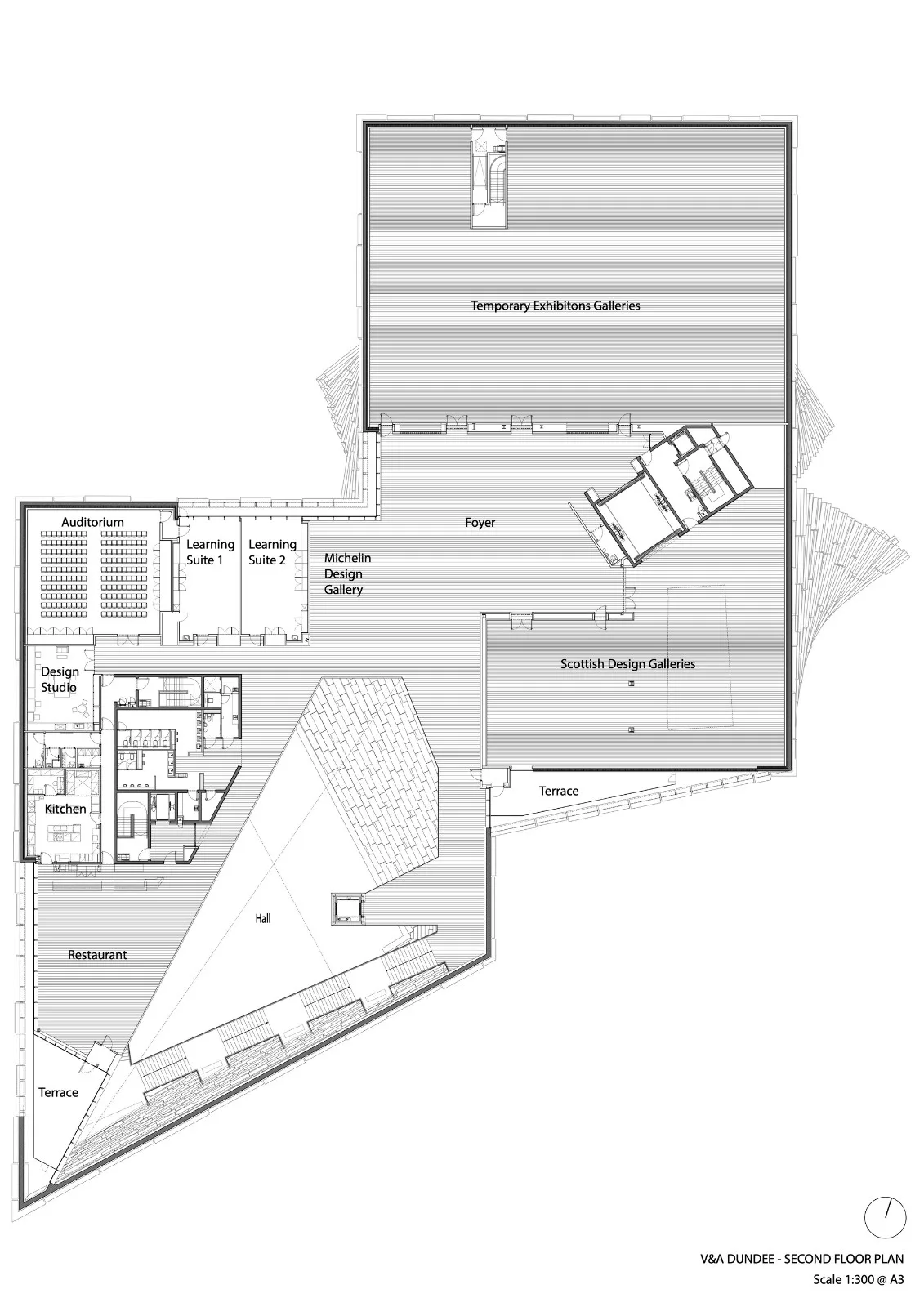
△ Second Floor Plan
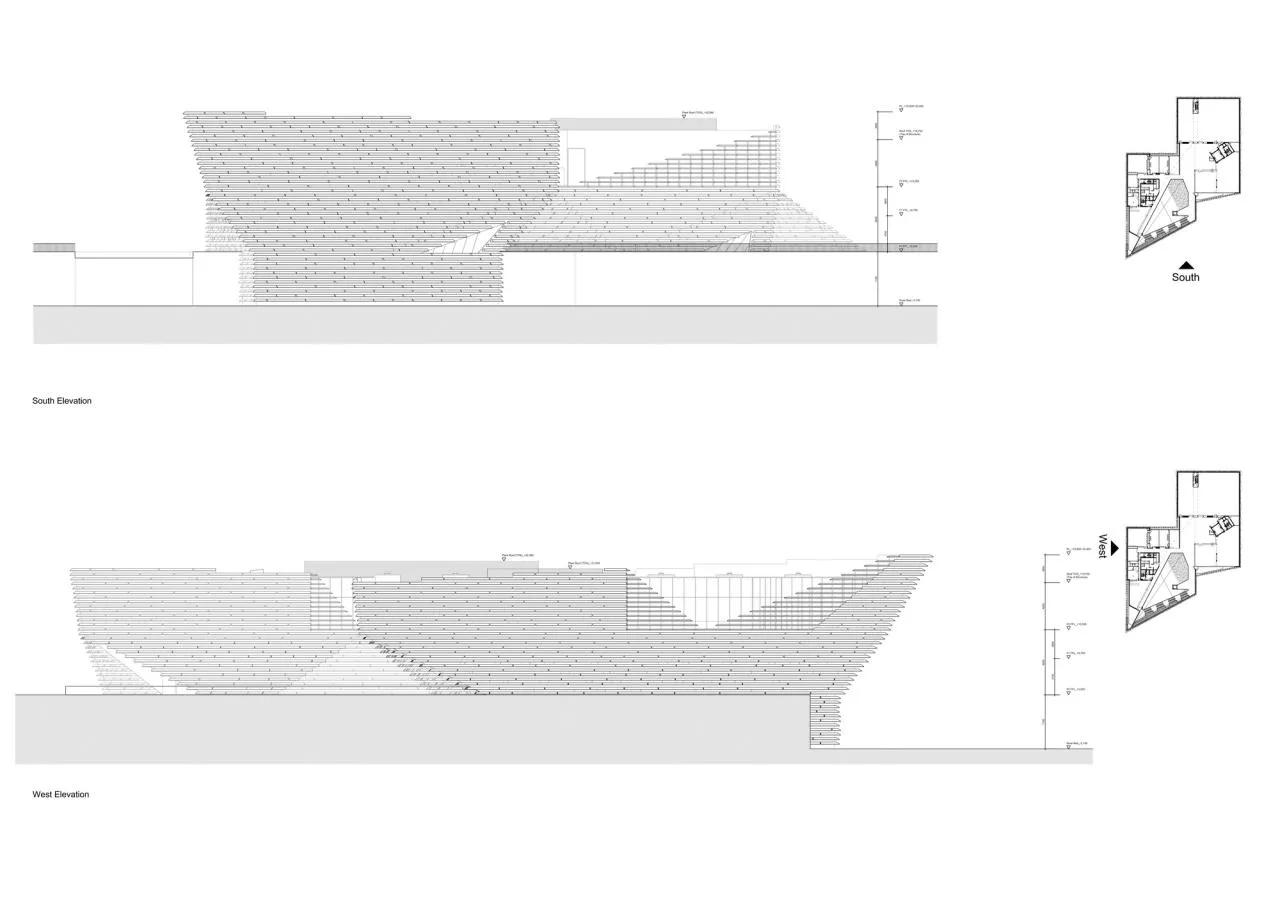
△ Elevation Drawing
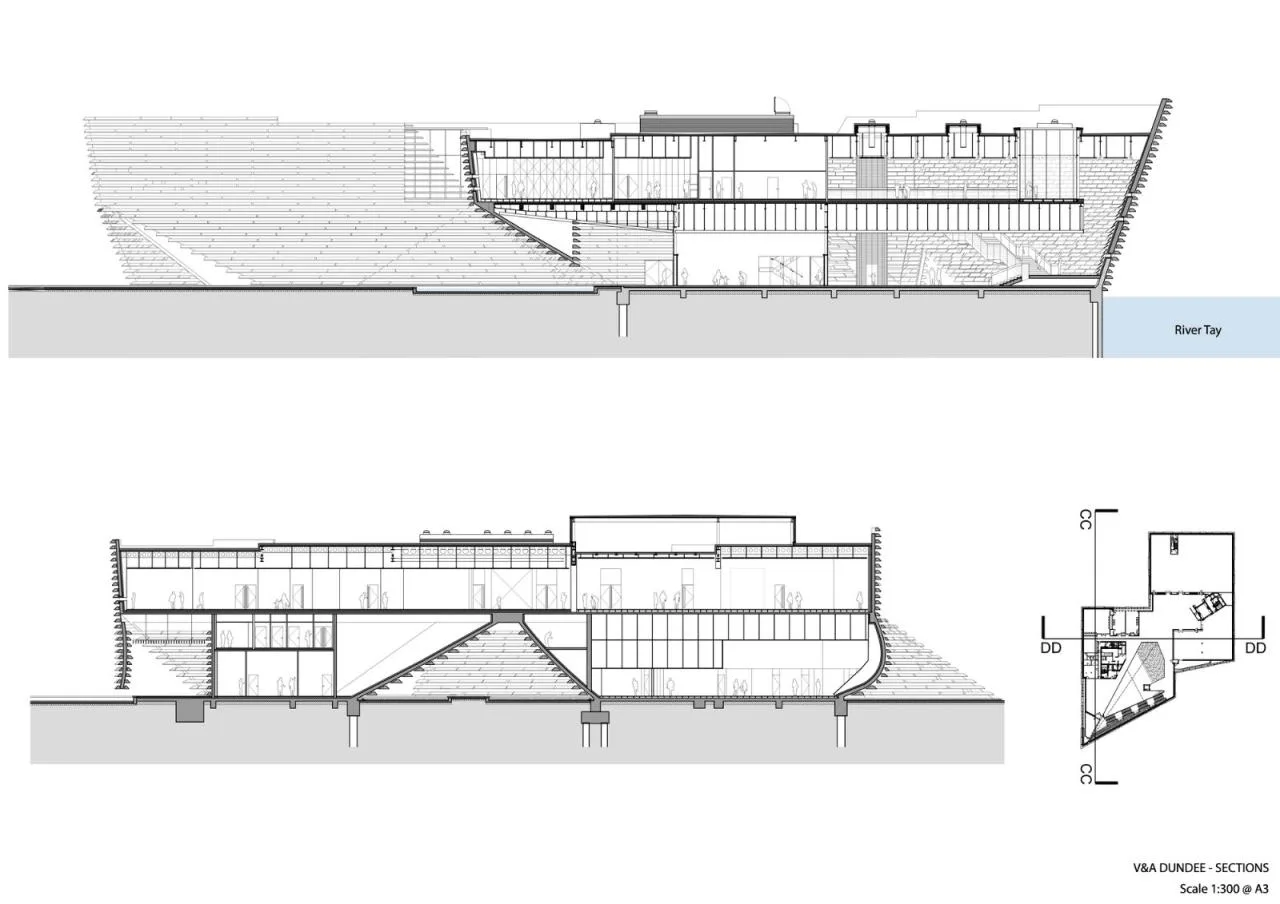
△ Section Diagram
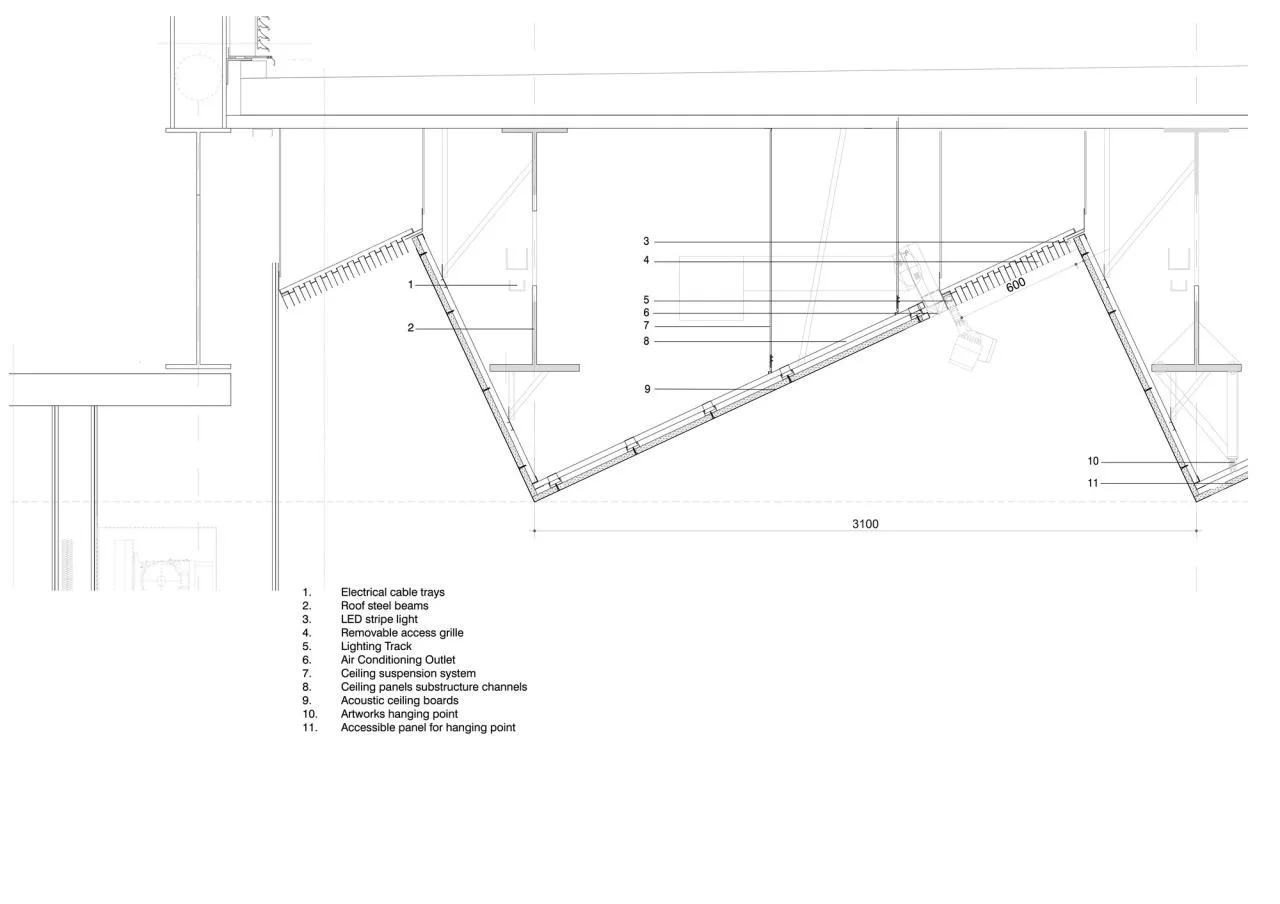
△ Structural Detail Drawing
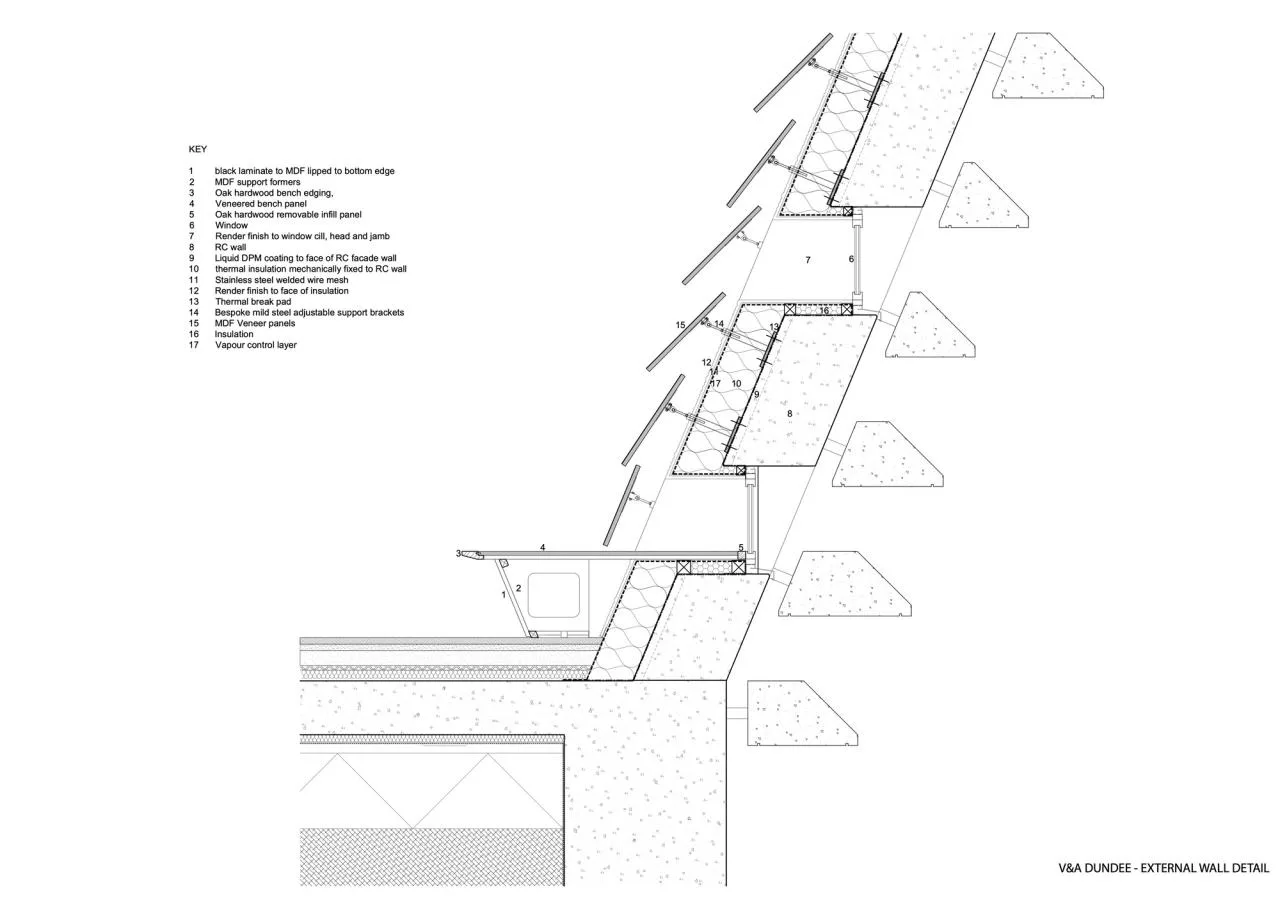
△ Structural Detail Drawing
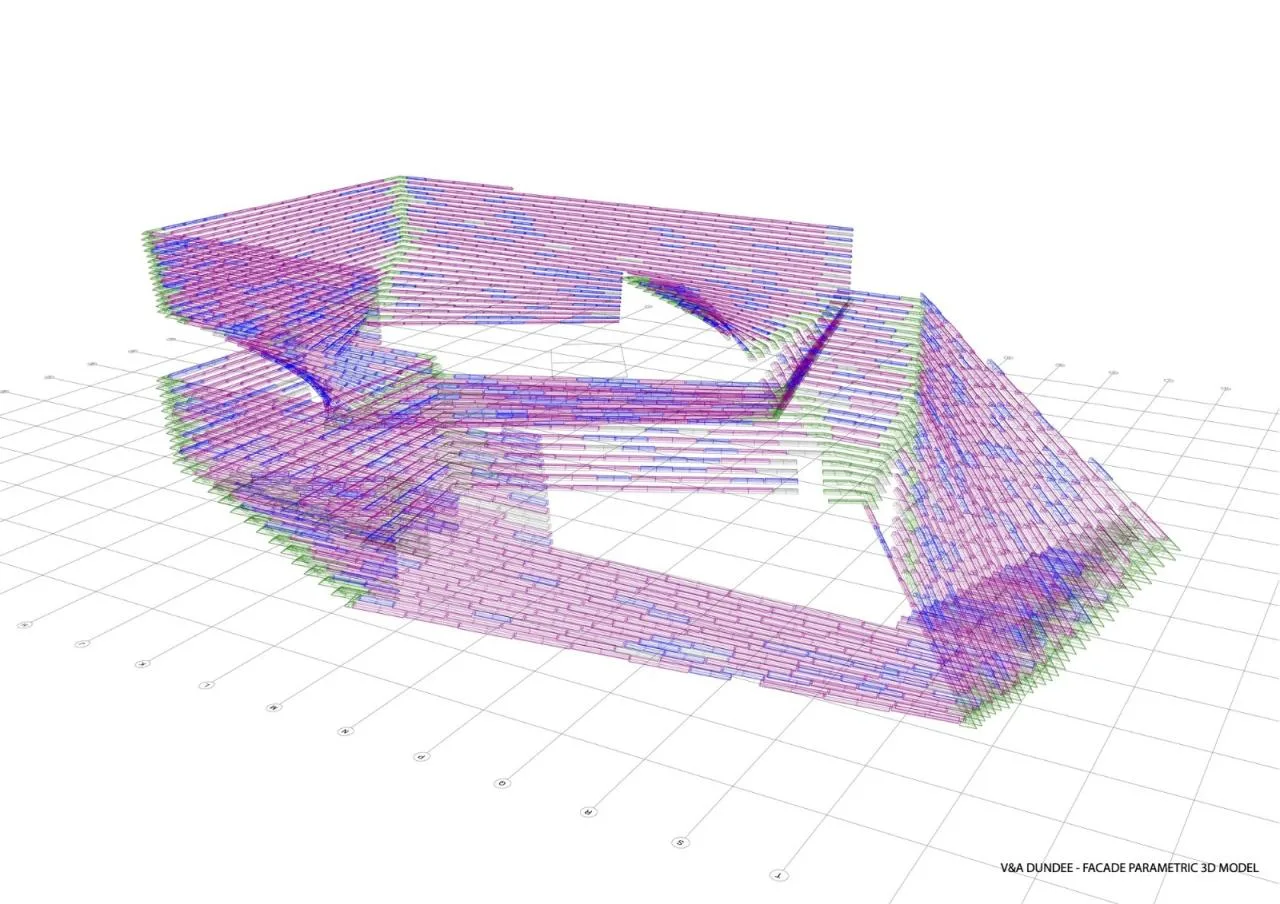
△ Skin 3D Model
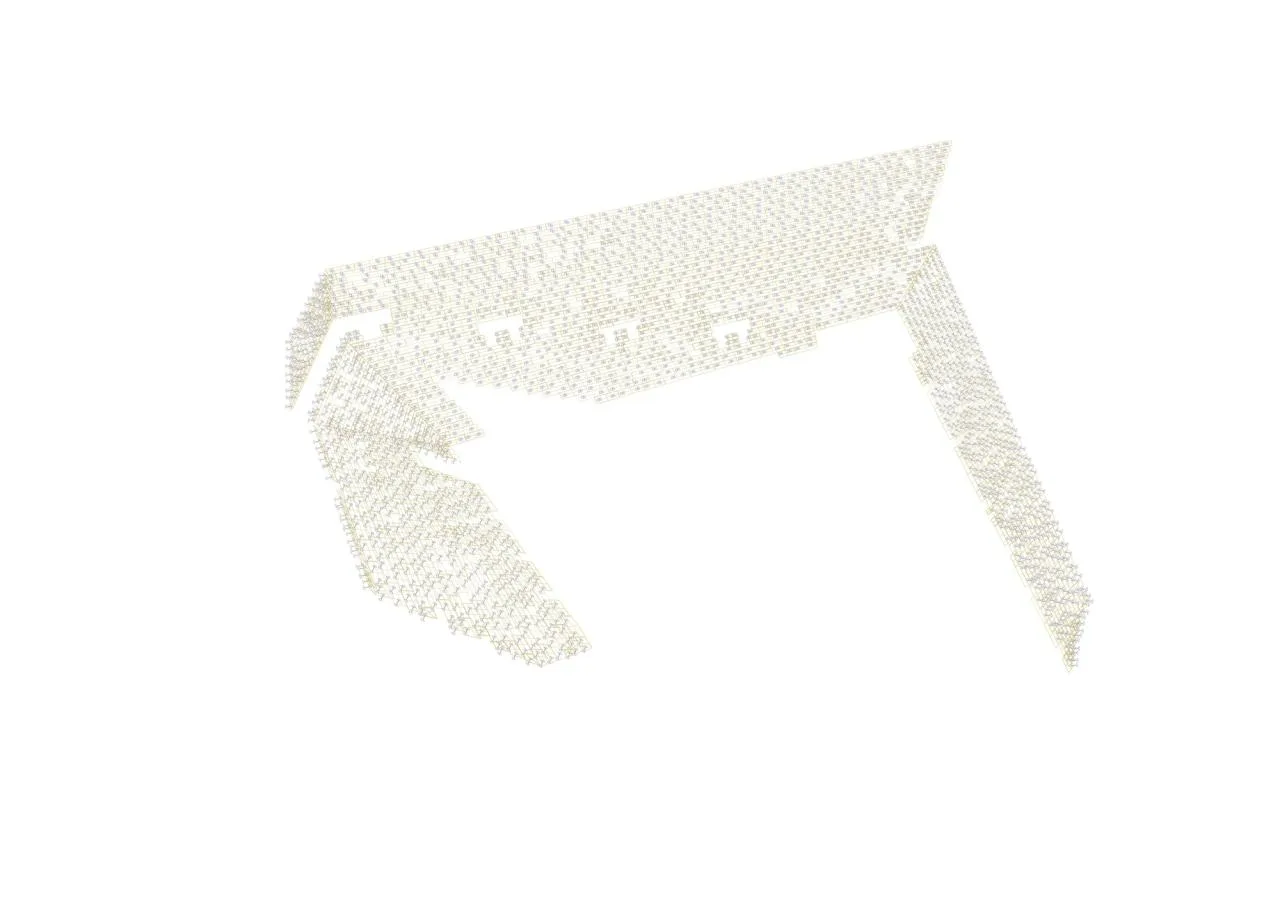
△ Schematic Diagram of the Facade
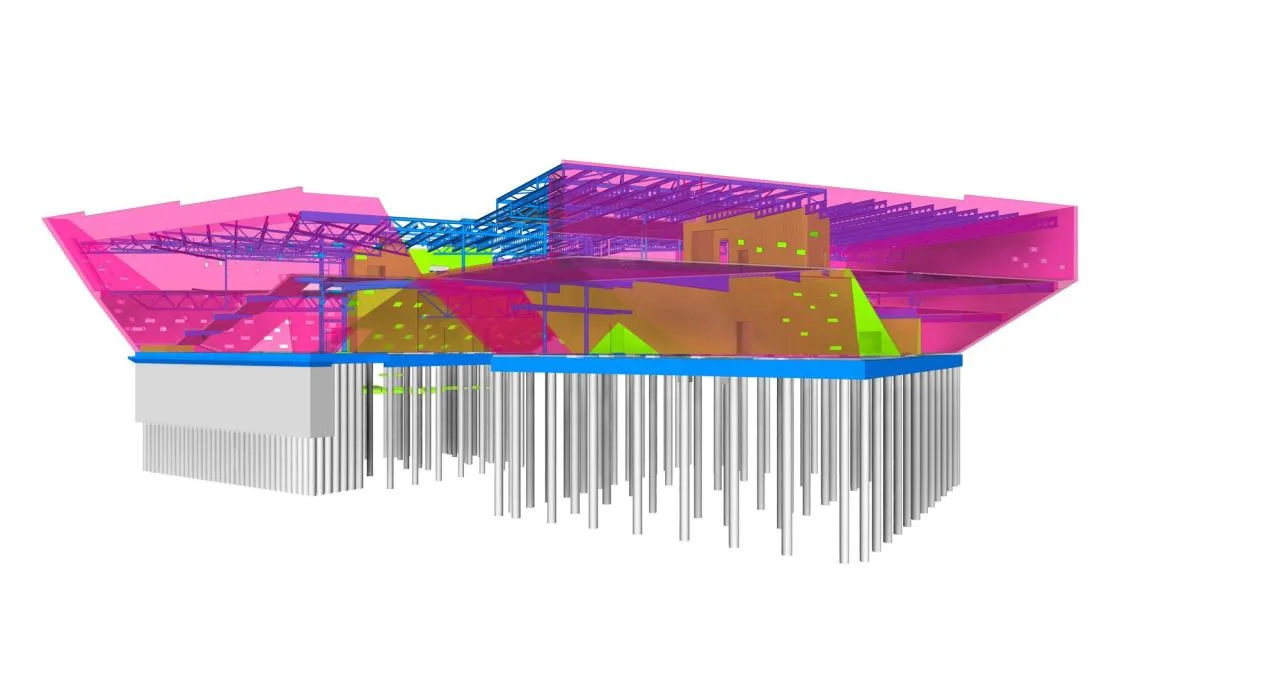
△ Structural Schematic Diagram
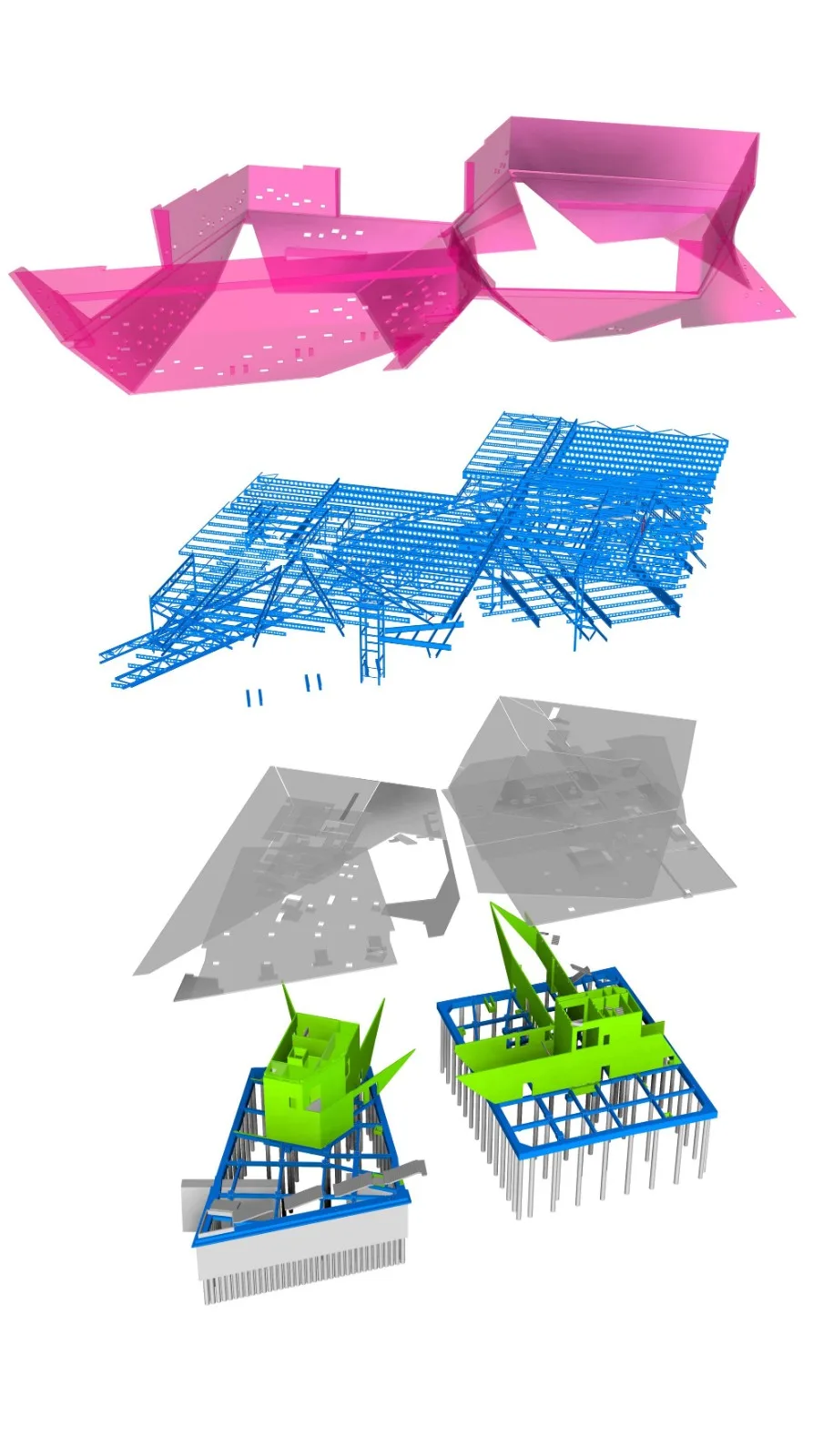
△ Analysis Chart
Project Information
Architect: Kengo Kuma Architecture Urban Design Firm
Area: 8,445 square meters
Project Year: 2022
Photographer: Hufton + Crow
Manufacturers: HAVER & BOECKER, Sika
Responsible Partners: Kengo Kuma, Yuki Ikeguchi, Teppei Fujiwara
Project Architect: Maurizio Mucciola
Project Management: John Tavendale, Turner & Townsend
Scottish Graphic Design: Kirsten Ambrogi
Inkar Trust Resource Center Design: PiM.studio Architects
Gallery Lobby Pop-up Store Design: PiM.studio Architects
Lead Architect: Kengo Kuma Architecture Urban Design Firm
Delivery Architect: PiM.studio Architects
Executive Architect: James F Stephen Architects
Structural Engineer: Oyana
Landscape Architect: Optimized Environments (OPEN)
Cost Engineer: CBA
Signage and Logo Design: Cartridge Levene
Water Landscape Design: Fountains Direct
Retail Design: Lumsden Design
Location: Dundee, UK













Must log in before commenting!
Sign Up