
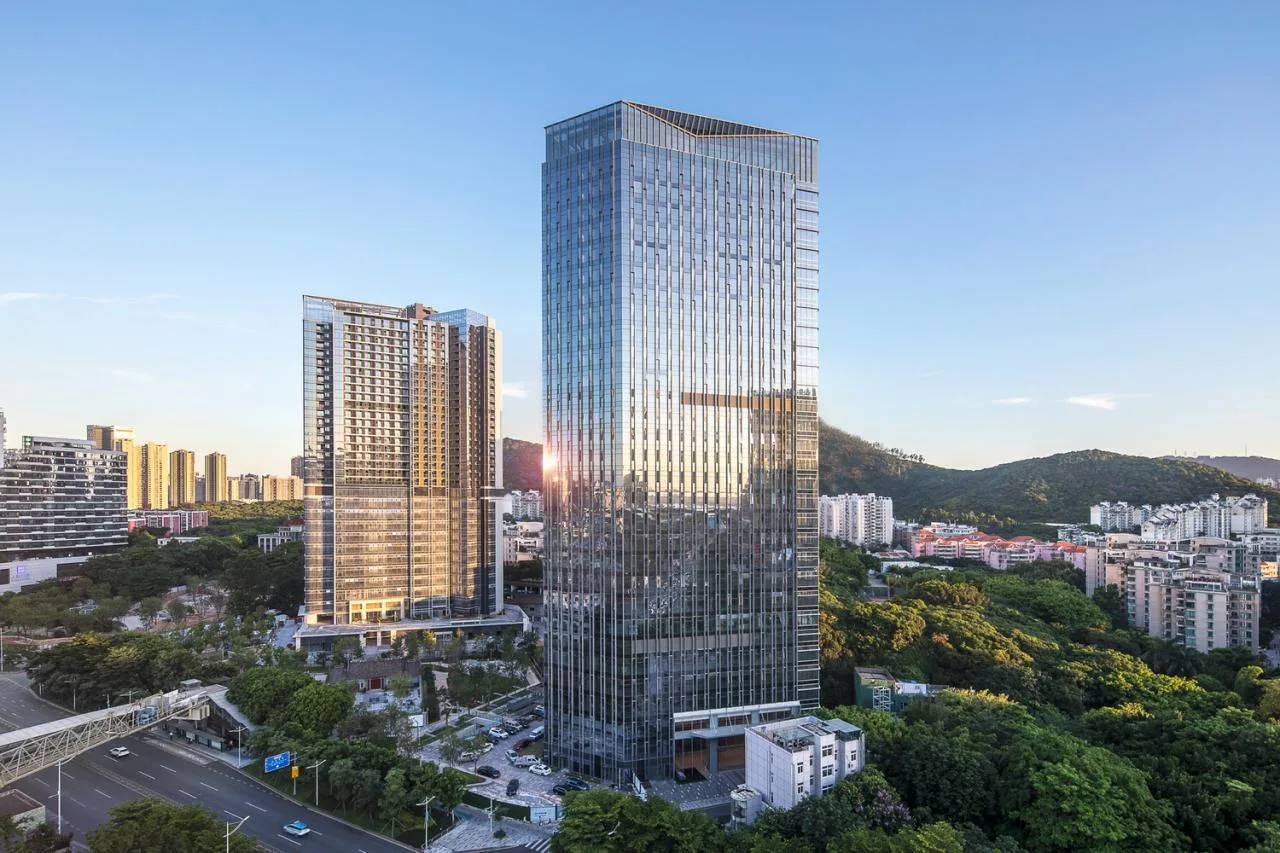
Location Analysis
The project is situated at the southeast corner of the intersection between Dongbin Road and Qianhai Road in Shenzhen’s Nanshan District, just 700 meters from the Qianhai Free Trade Zone. This area benefits from a well-developed subway network, with Line 9 running directly beneath the site, ensuring convenient transportation access. Originally named the “Urban Renewal of Nanshan Longchuantang Area,” the project encompasses two plots featuring the district-level cultural relic, Chunniutang, along with the public space that lies between them.
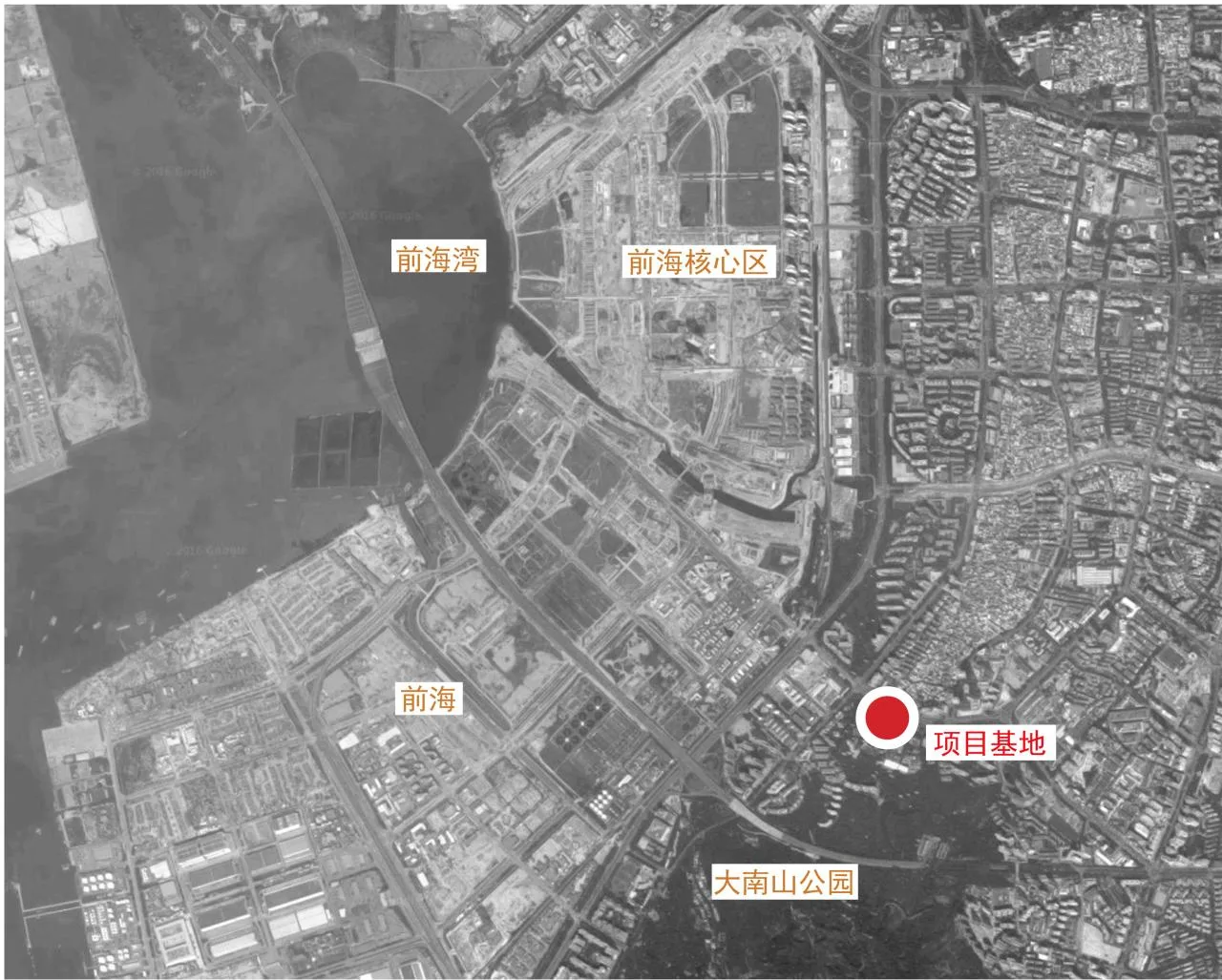
△ Project location
The close proximity of the project to the city’s major transportation hubs supports the development of high-end products on site. However, it also introduces challenges typical of urban renewal projects: beneath the site, there is a Line 9 subway culvert and plans for the future Shenzhen-Hong Kong Western Rapid Transit. Additionally, there is a significant height difference across the site and surrounding areas, with a maximum building height restricted to 120 meters. Strict regulations prohibit any construction within 20 meters of Chunniutang, and buildings between 20 and 50 meters must remain below 18 meters in height, complicating the design process.
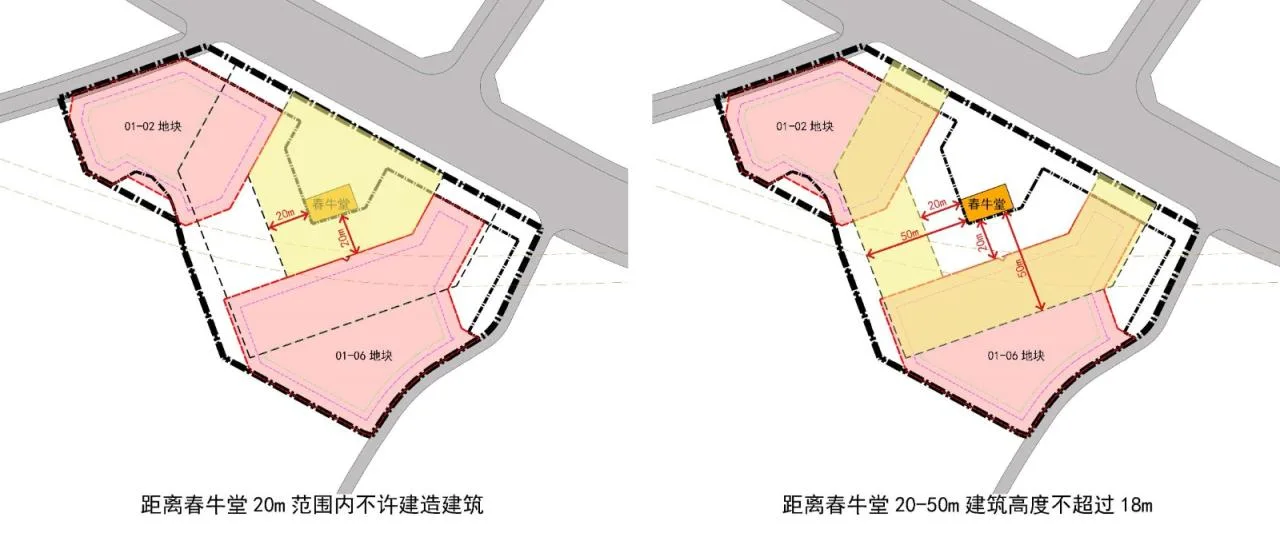
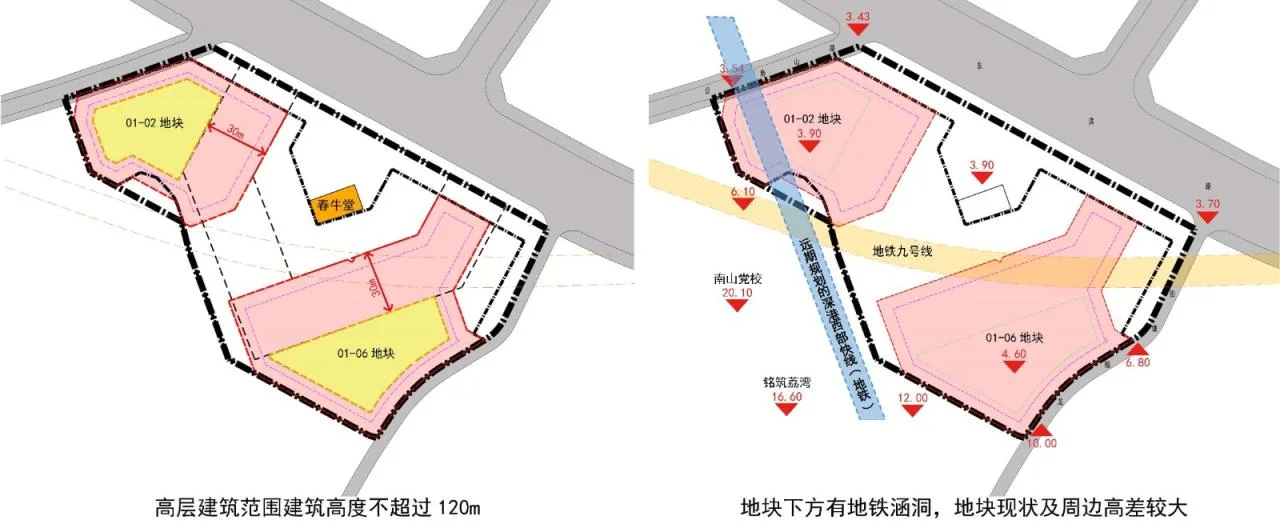
△ Land parcel restrictions
Design Strategy
As a rapidly growing city, Shenzhen has relatively few historical and cultural relics. Chunniutang stands as a precious historical site, preserving Shenzhen’s Niugeng culture amidst a landscape dominated by modern high-rises. Our goal is to protect this historical memory and revitalize traditional culture through urban renewal design.
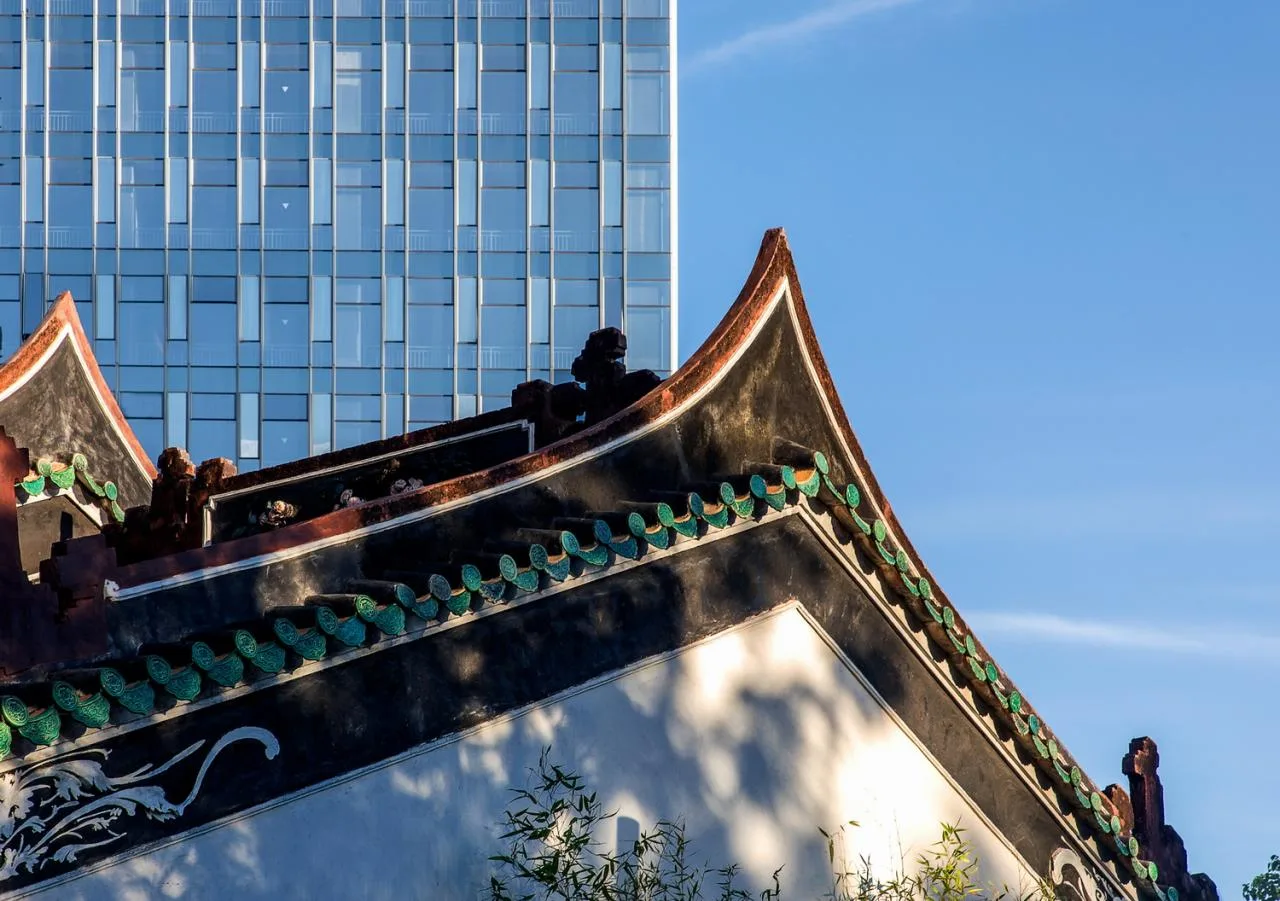
In the master plan, Chunniutang forms the central focus, surrounded on three sides by two towers reaching 120 meters. The landscape design extends the axis of Chunniutang and integrates with Chunniutang Square to create a multi-level public space—forming a tranquil memorial park. Taking advantage of the site’s elevation changes, sunken landscape plazas are incorporated to provide natural light to the underground commercial areas, stimulate pedestrian movement, and enhance the spatial experience.
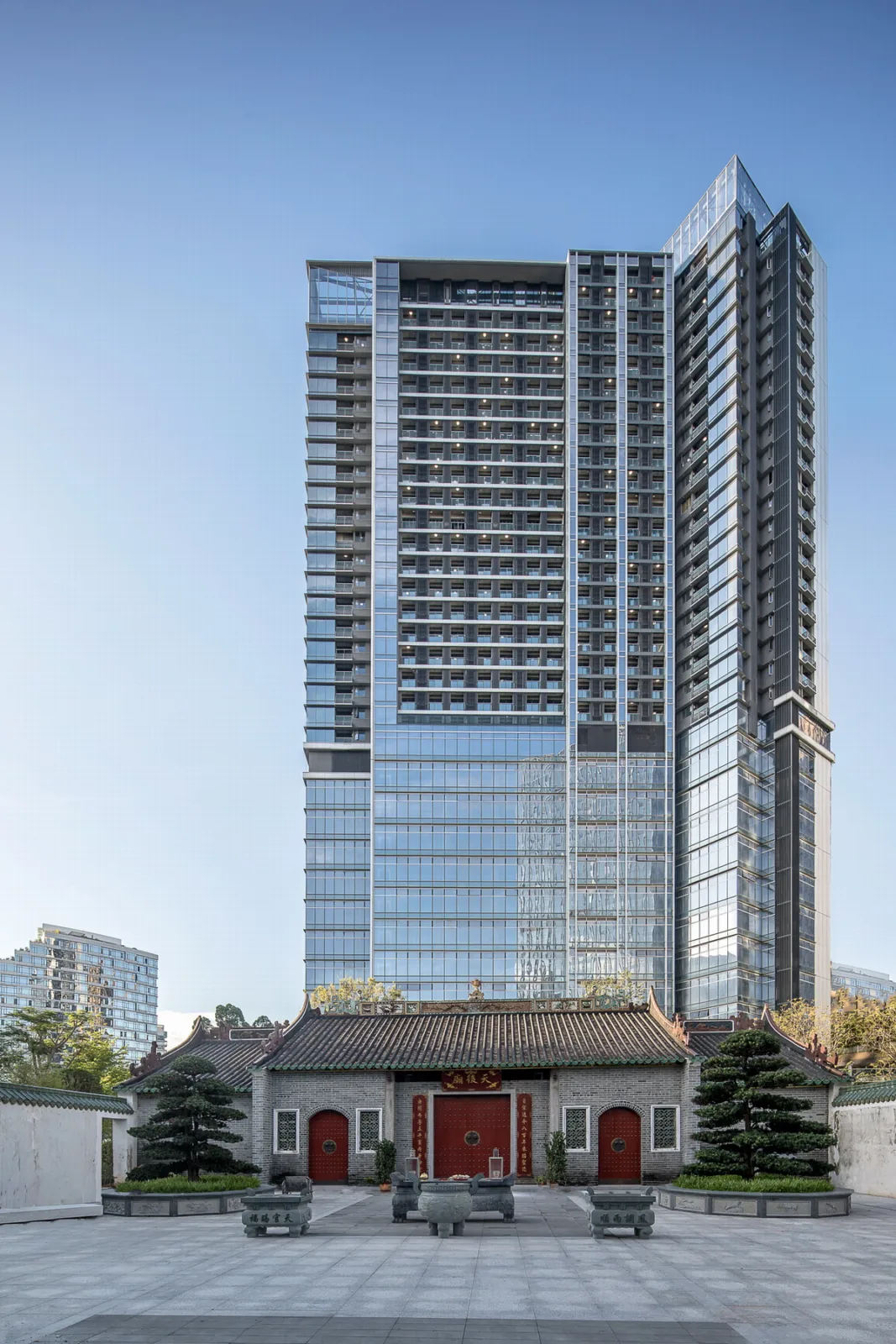
We have designed a variety of public spaces tailored to the site’s characteristics, addressing multiple levels of activity for residents and visitors alike. Each space highlights unique identities, fostering distinctive environments and human-centric living experiences.
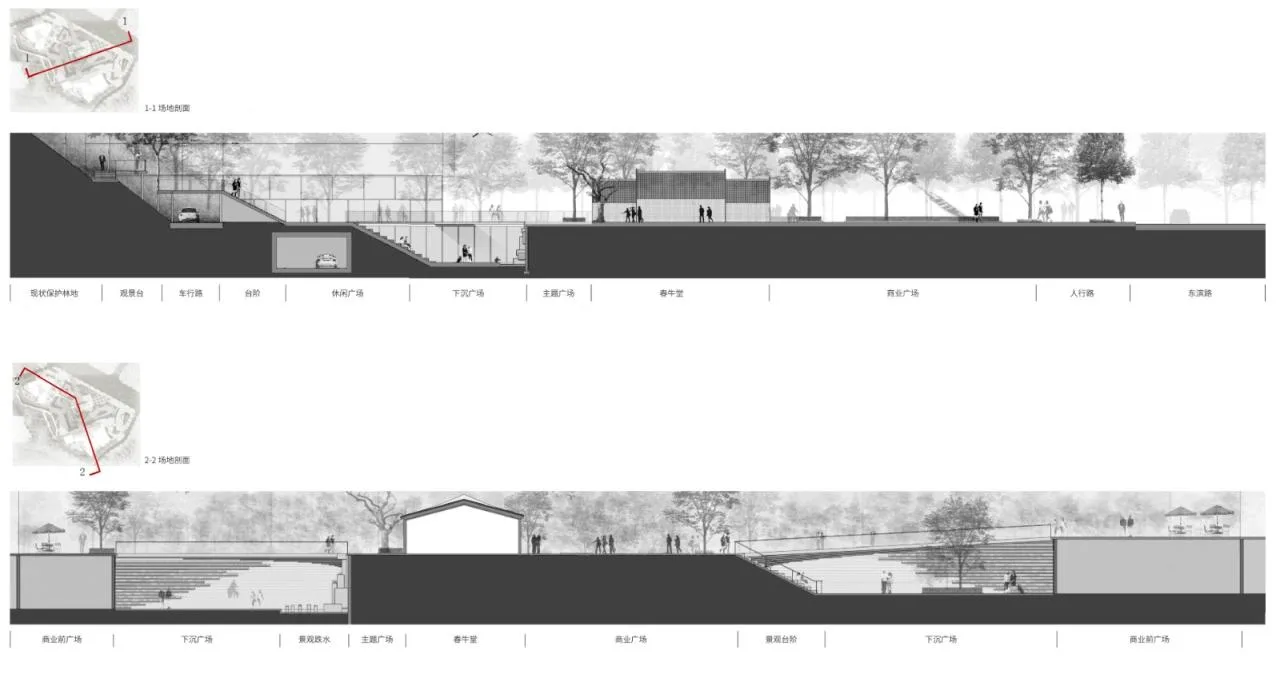
△ Site profile map
The design approach balances social efficiency, economic benefits, and environmental sustainability. It aims to foster a positive social environment while maximizing land use through space development and efficient land utilization.
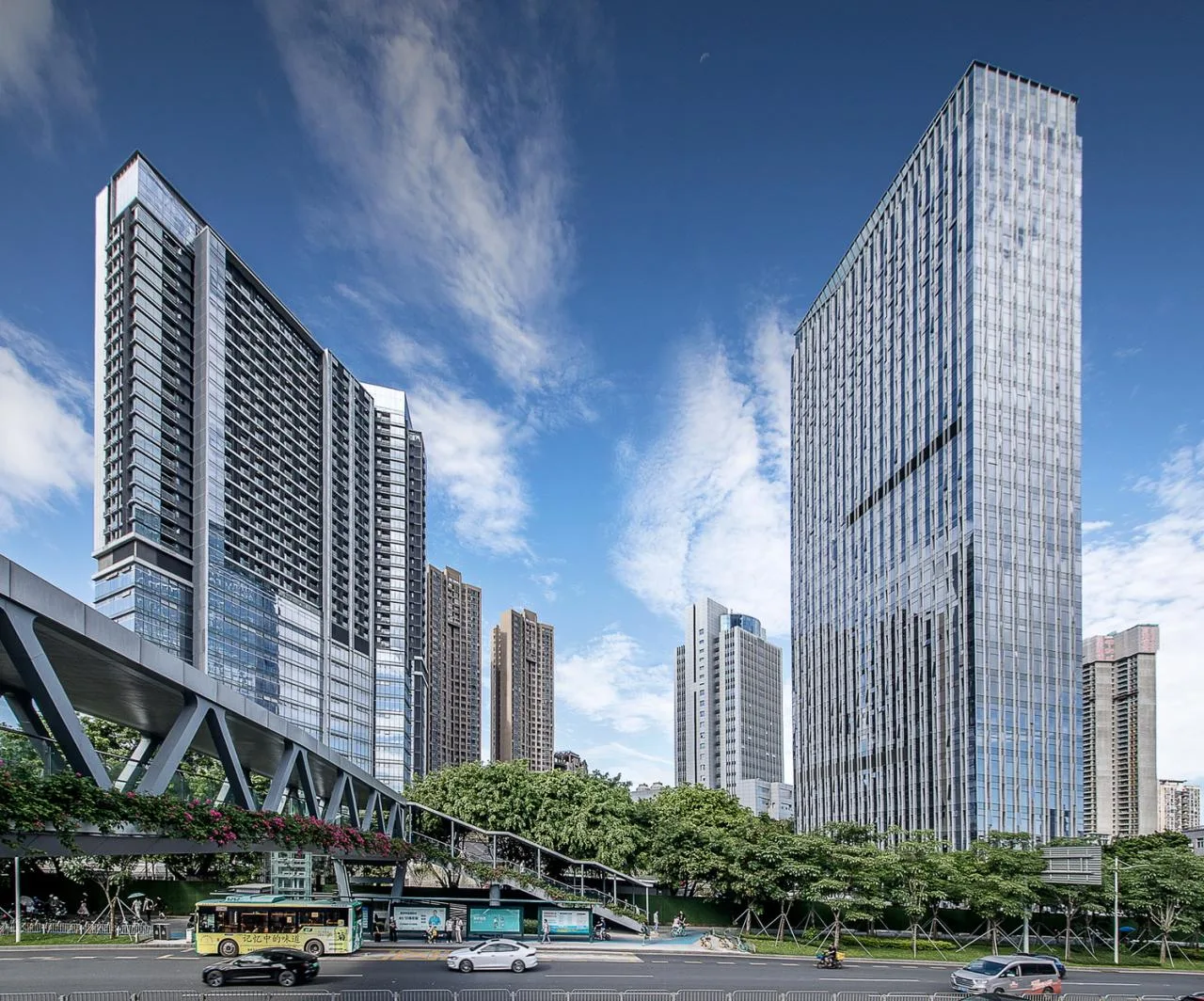
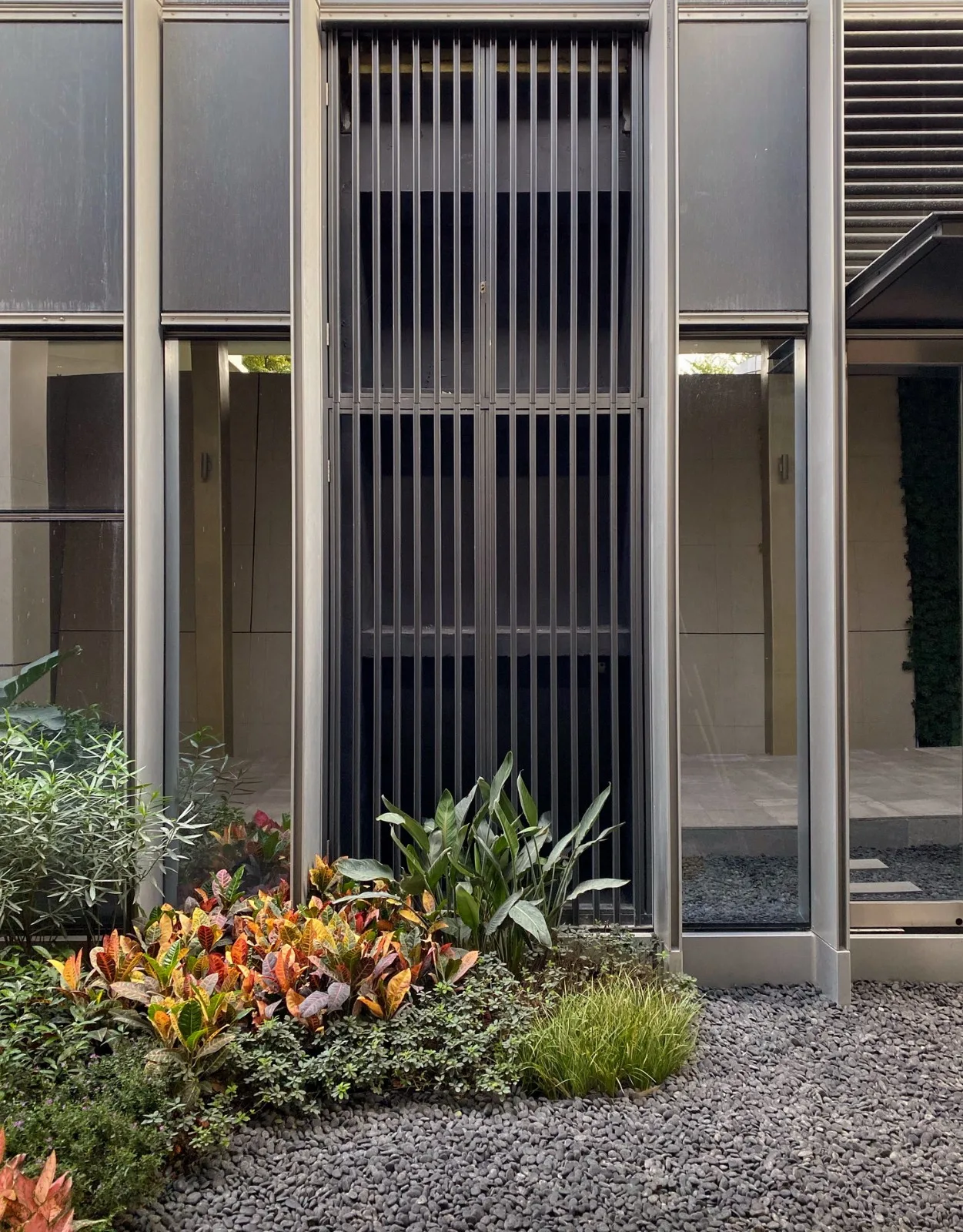
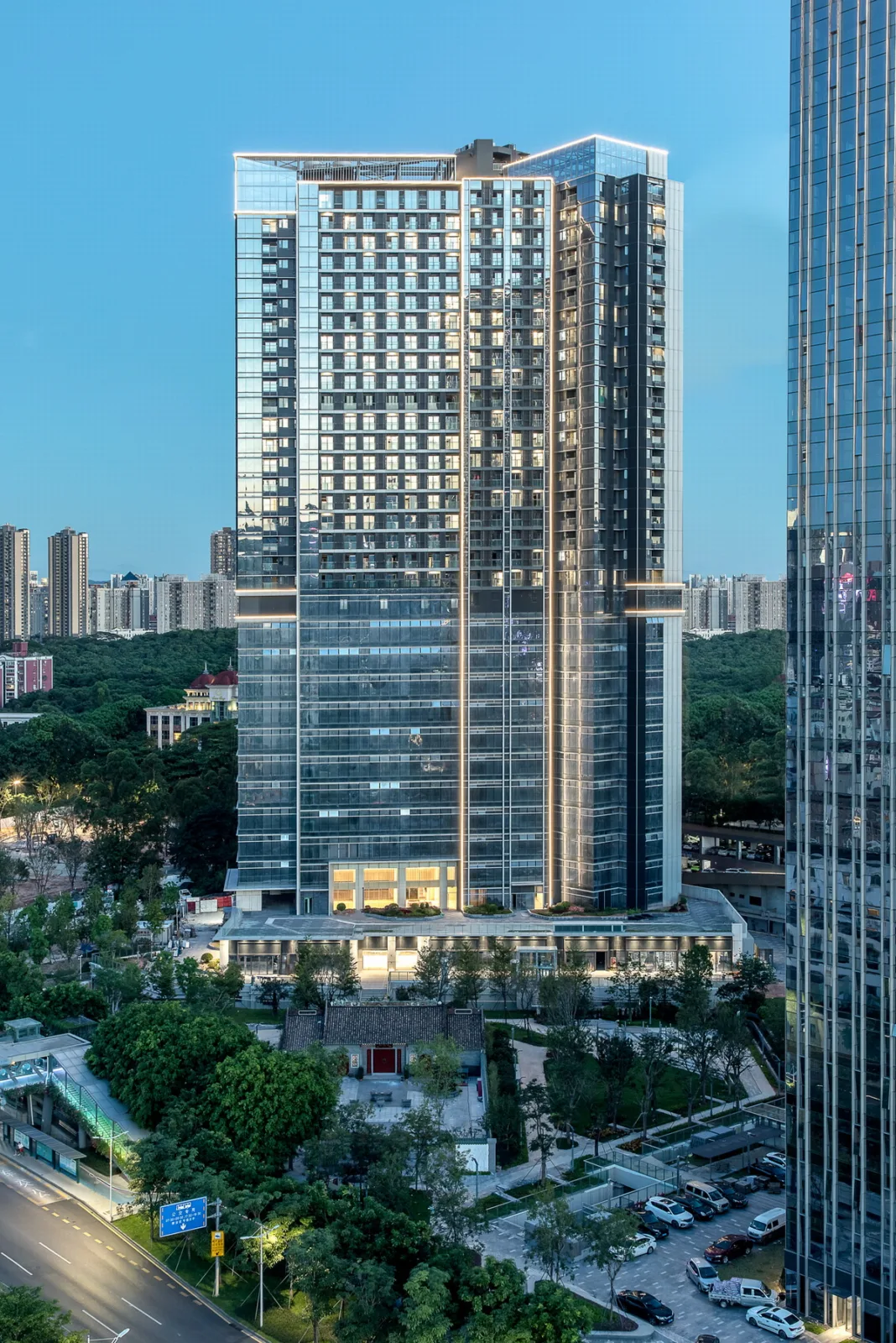
The facade design integrates functional zoning with a holistic and coherent approach, blending virtual and real elements. Through meticulous detailing, engaging spatial arrangements, simple textures, and sculptural forms, the building presents an elegant and unique urban image within a limited footprint. Its subtle, balanced, and harmonious form complements and resonates with the surrounding architecture.
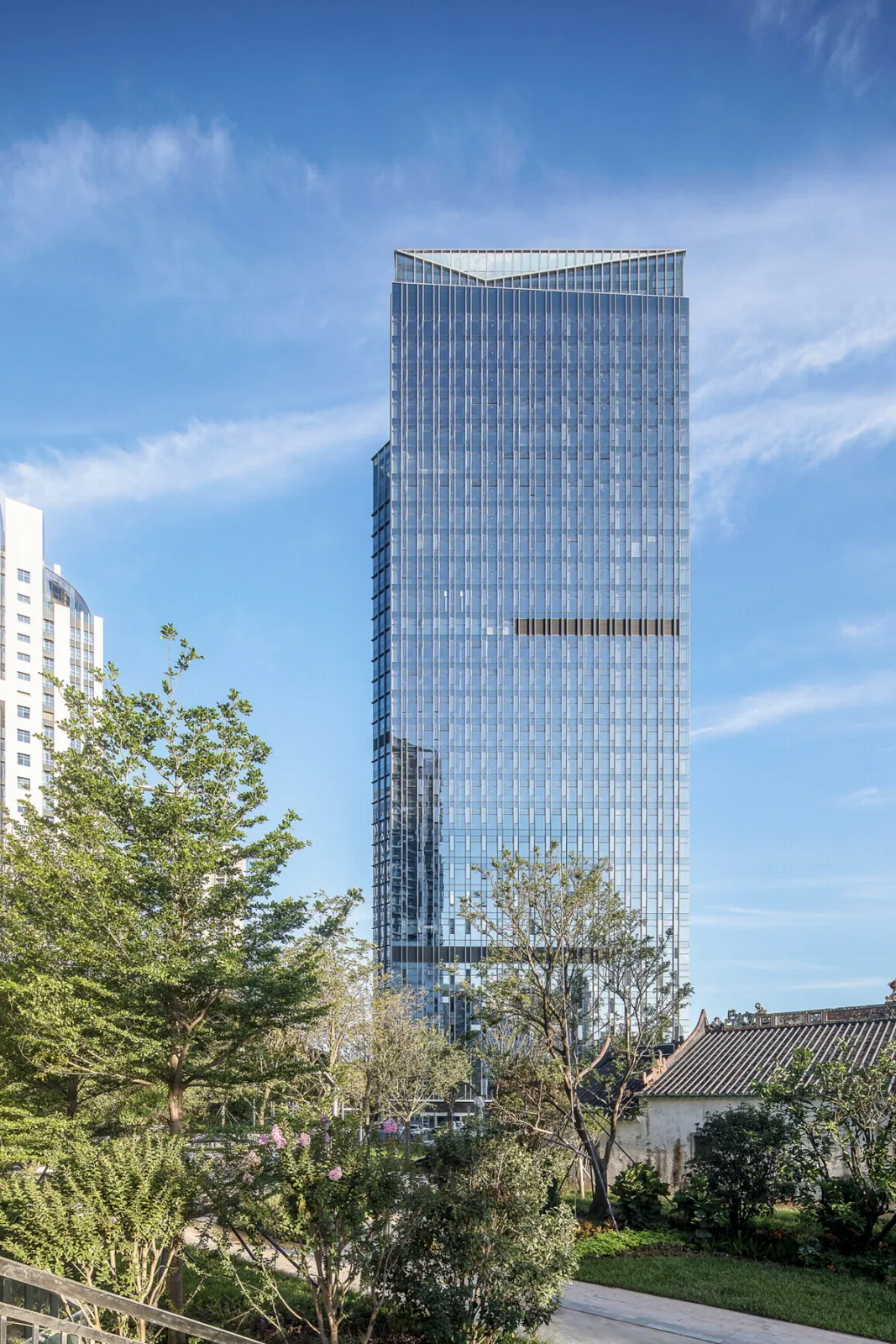
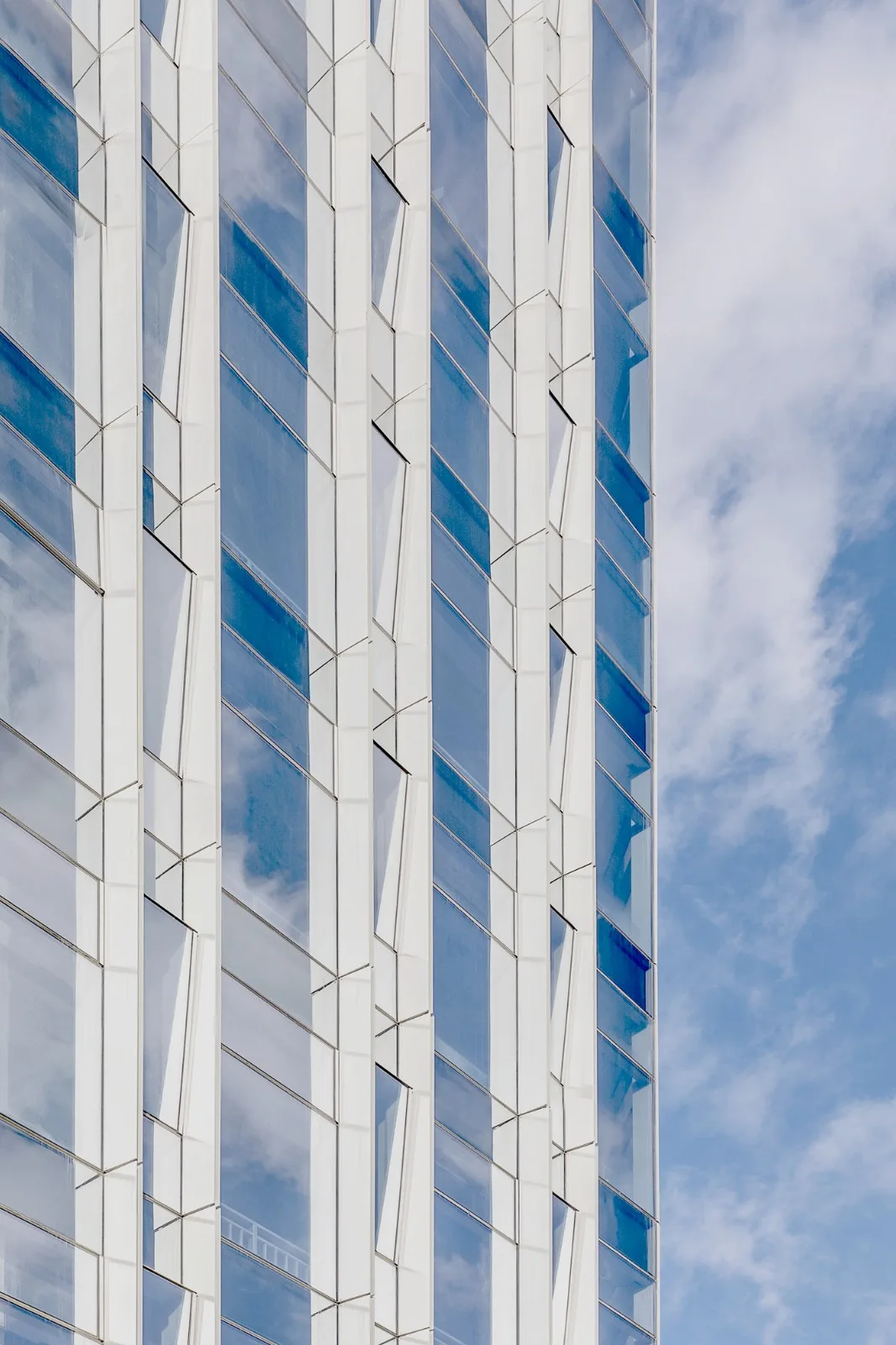
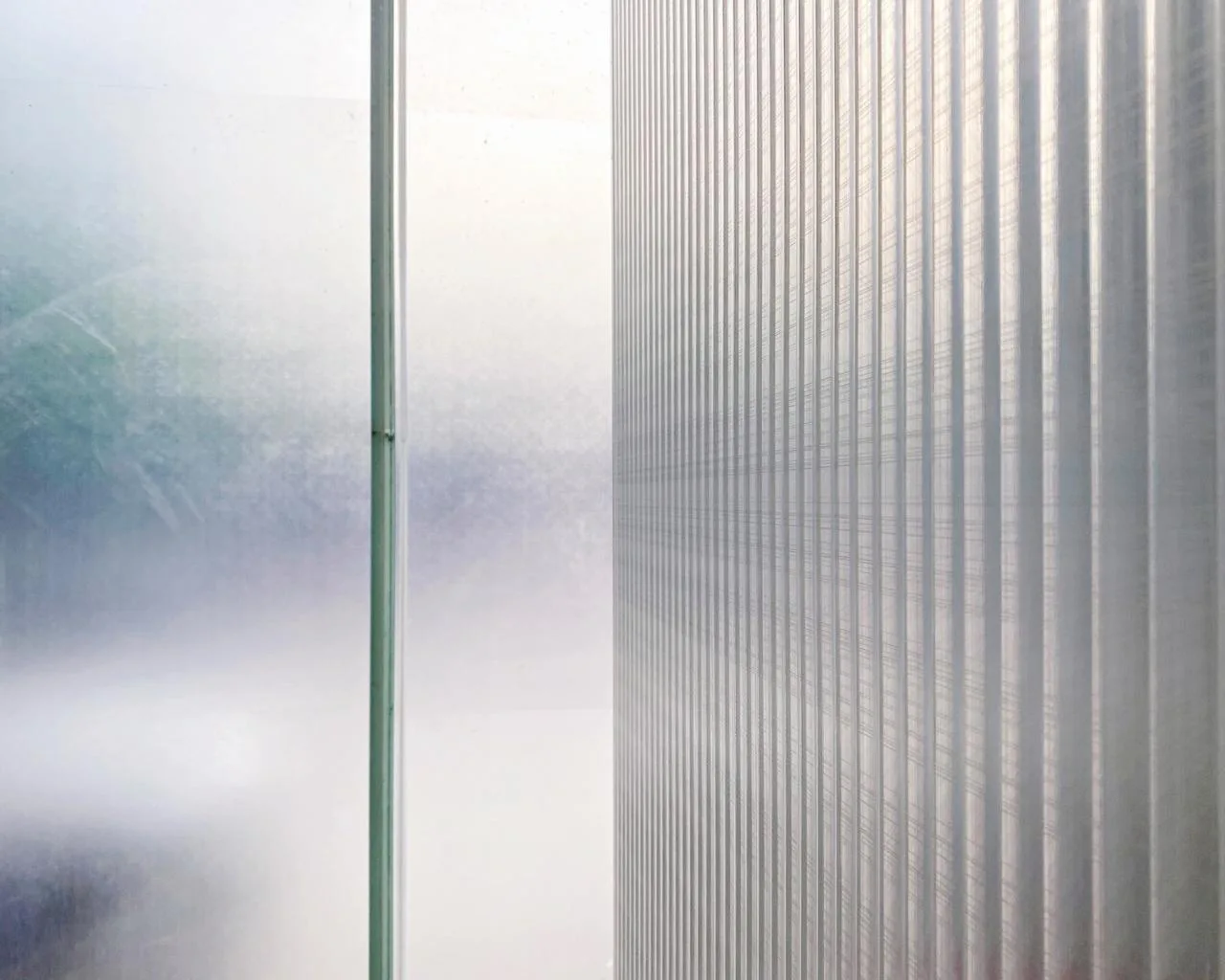
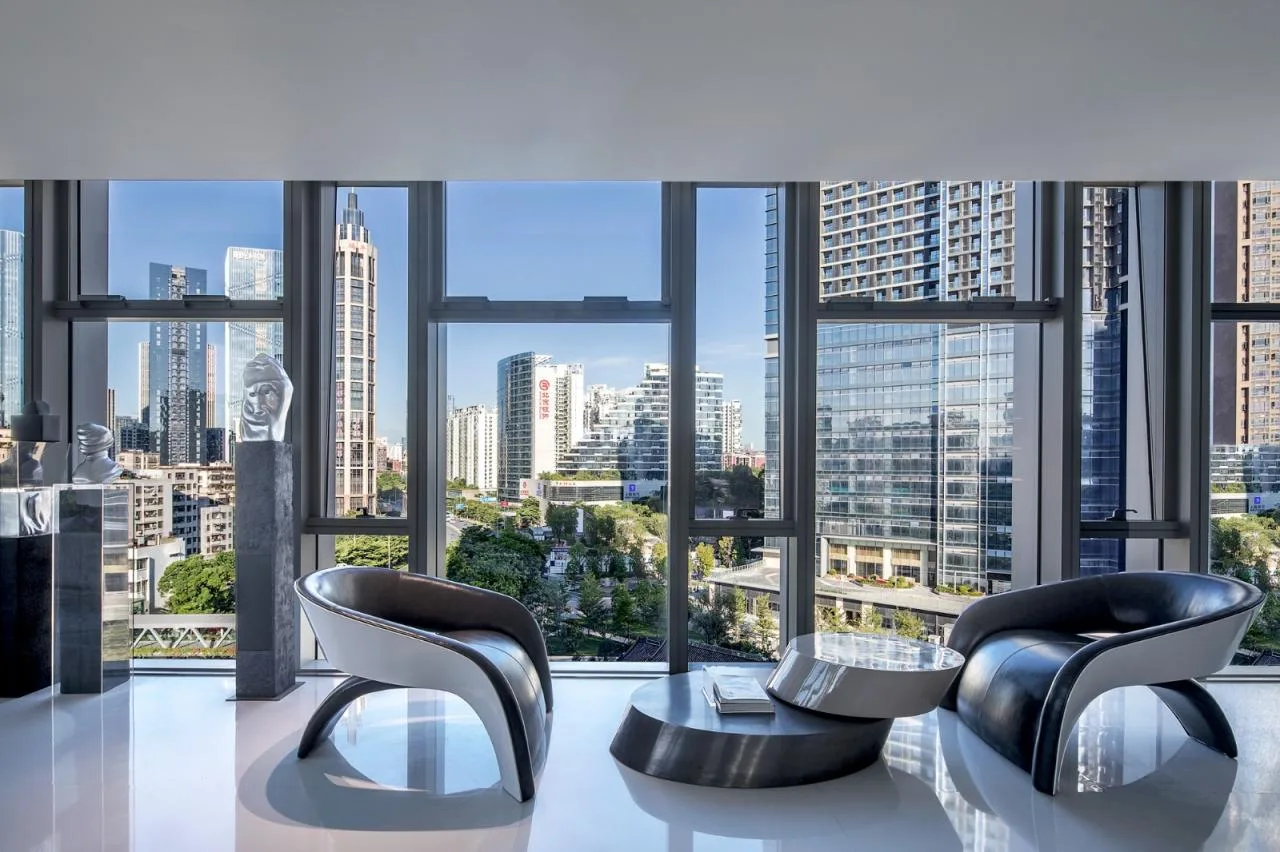
The building features a high-glass facade, which lightens the visual mass and adds a modern, fashionable feel. The expansive glass offers unobstructed views of the southern mountains, creating a pleasant and comfortable working environment. The architectural design employs vertical and horizontal hidden curtain wall techniques and extensively uses pure double-layer hollow ultra-white tempered double silver LOW-E glass. This combination outlines a transparent, minimalist landmark that serves as a gateway icon for the Nanshan Qianhai Free Trade Zone.
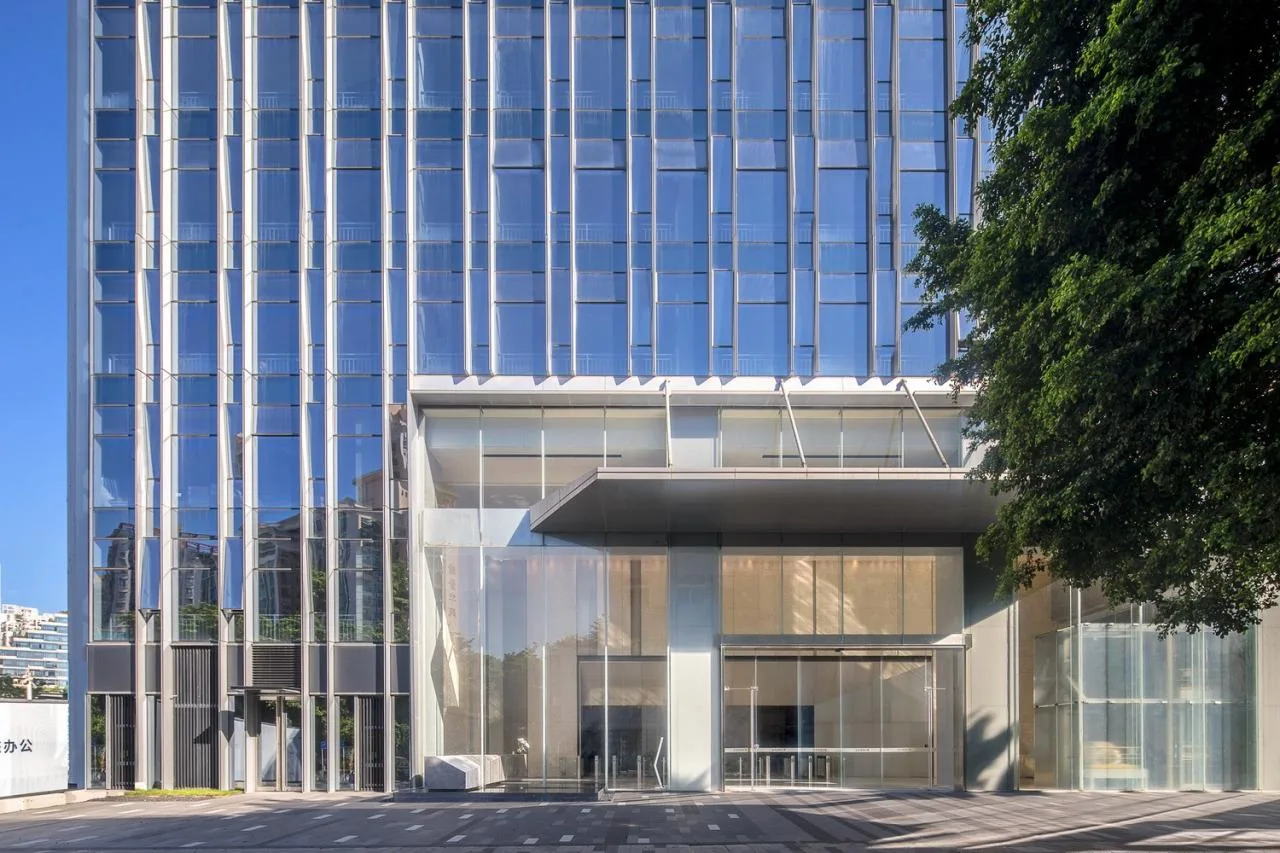
The office lobby reception area maintains a consistent design language with the building’s exterior. Each space is distinct yet complementary, fostering an inclusive atmosphere and offering expansive views.
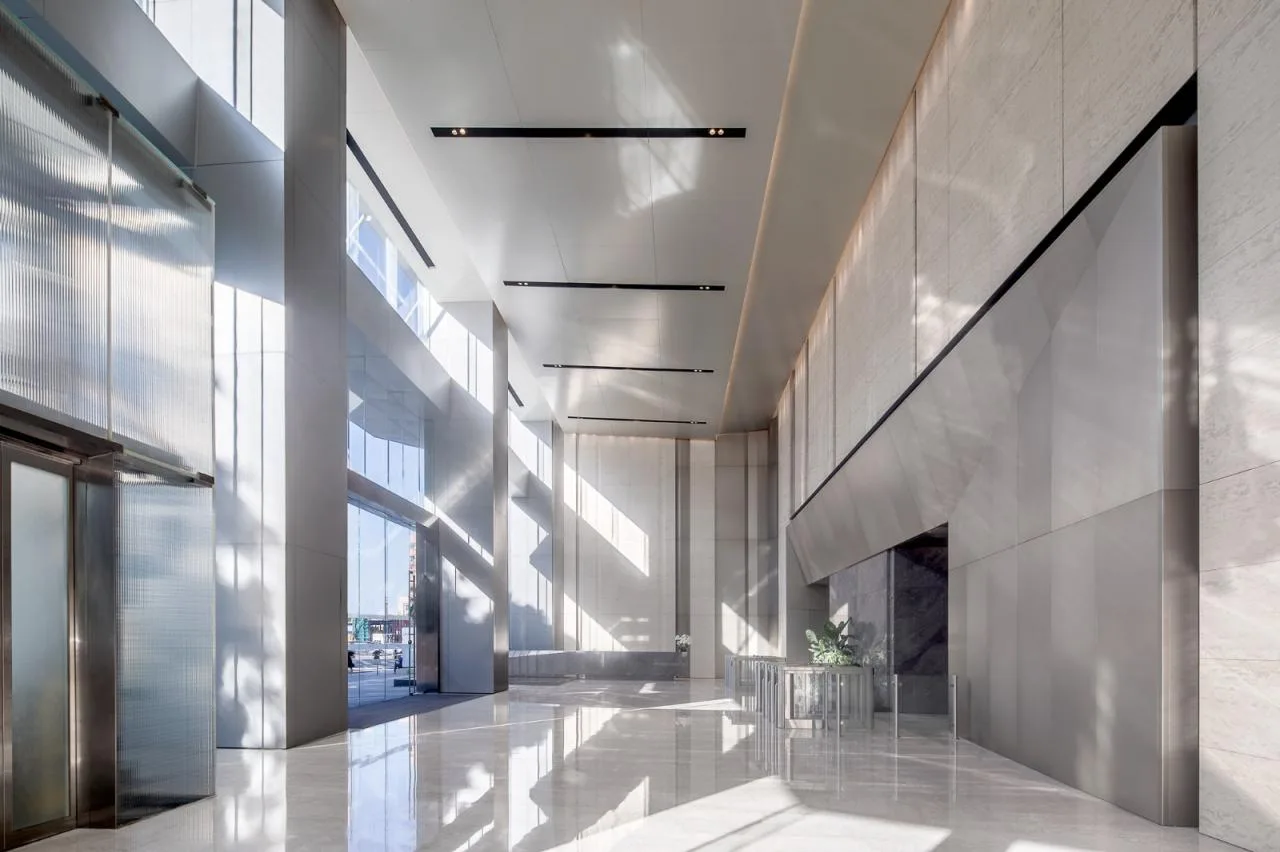
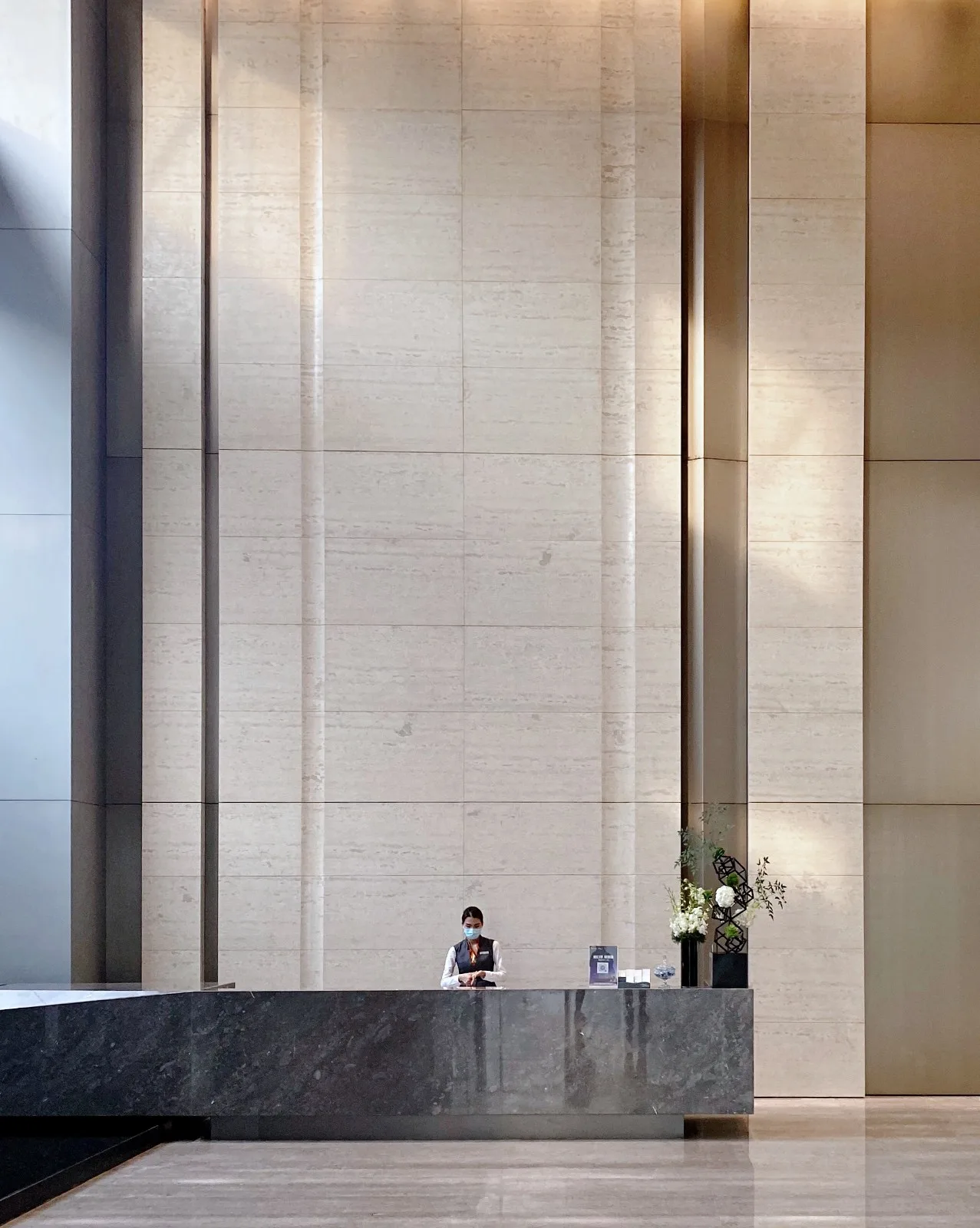
Public openness blends with restrained cohesion; lightness and ease meet dynamic richness; an ethereal, cool aesthetic is warmed by moderation. This city office building integrates seamlessly with daily life, aiming to transform introverted, aloof cultural spaces into vibrant places through the interplay of tradition, geography, foresight, and imagination.
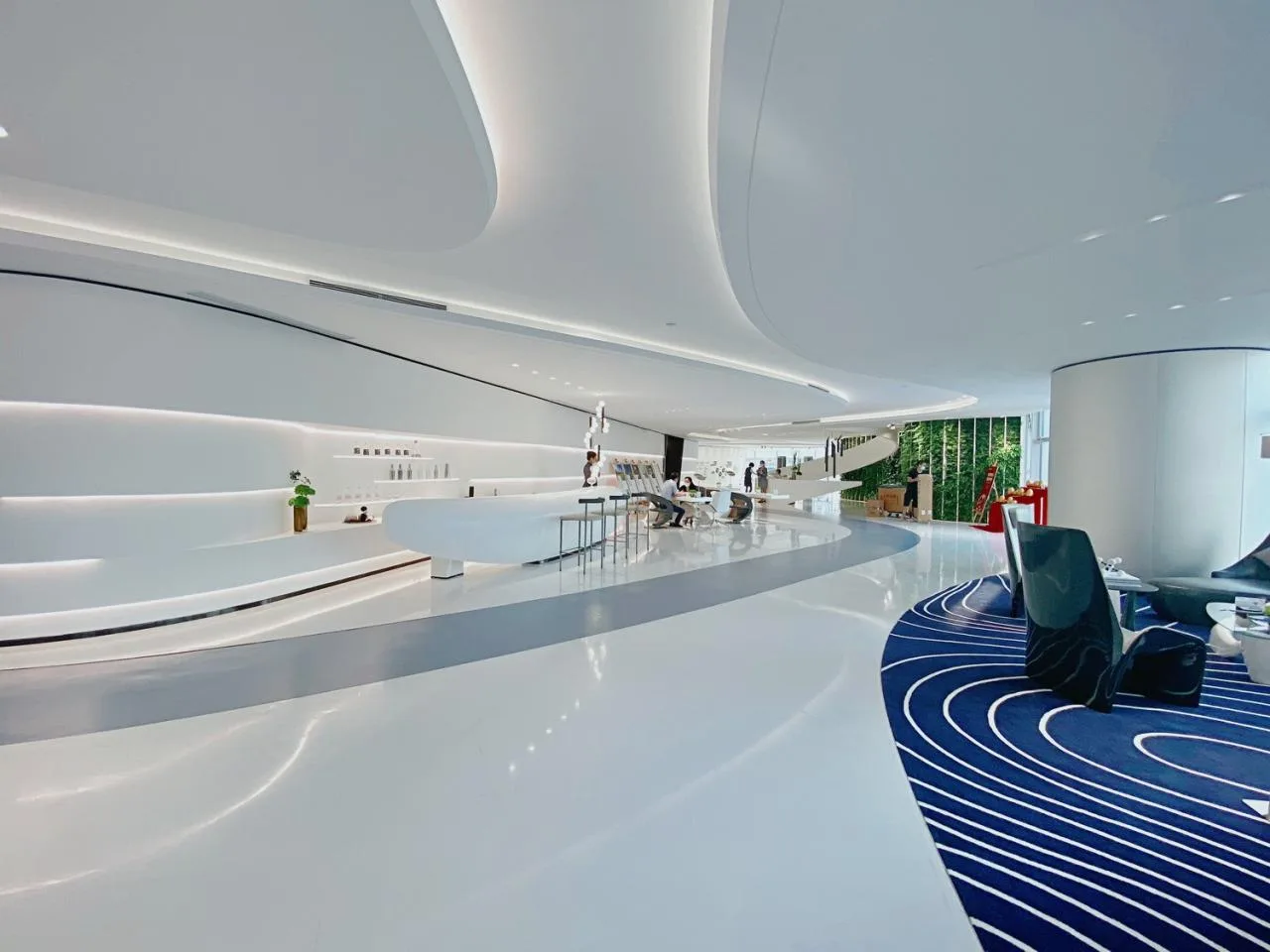
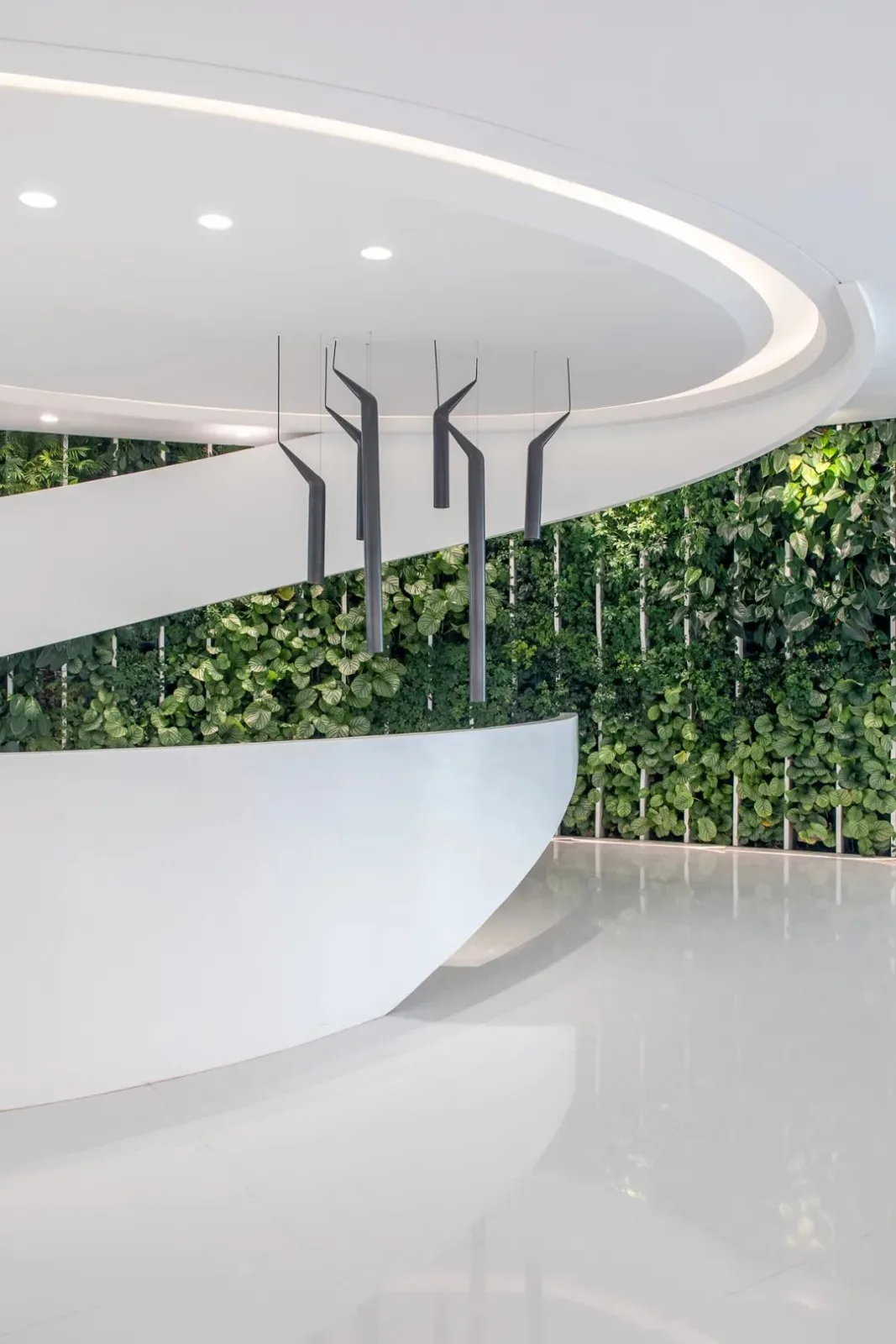
Healthy architecture is a complex, diverse ecosystem. Buildings serve as comprehensive spatial solutions designed for people. Cultivating a healthy lifestyle requires holistic design that subtly promotes a healthy environment. From the outset, the Ocean · Binhai Building embraced a “people-oriented” design philosophy, committed to creating a healthy and ecological office environment.
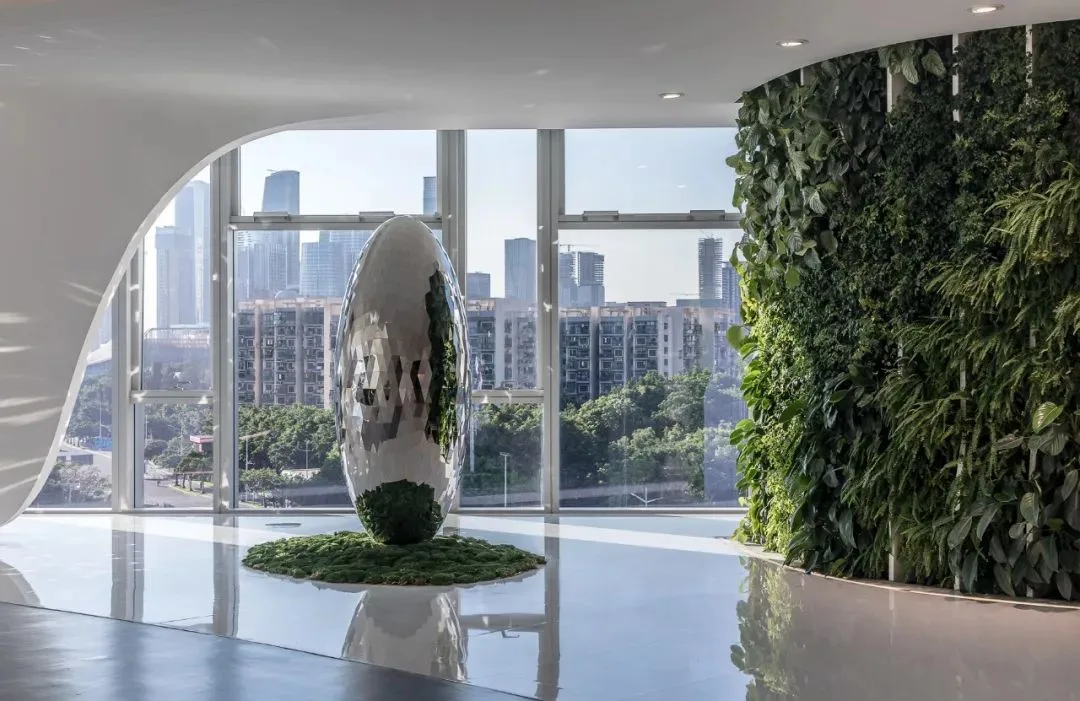
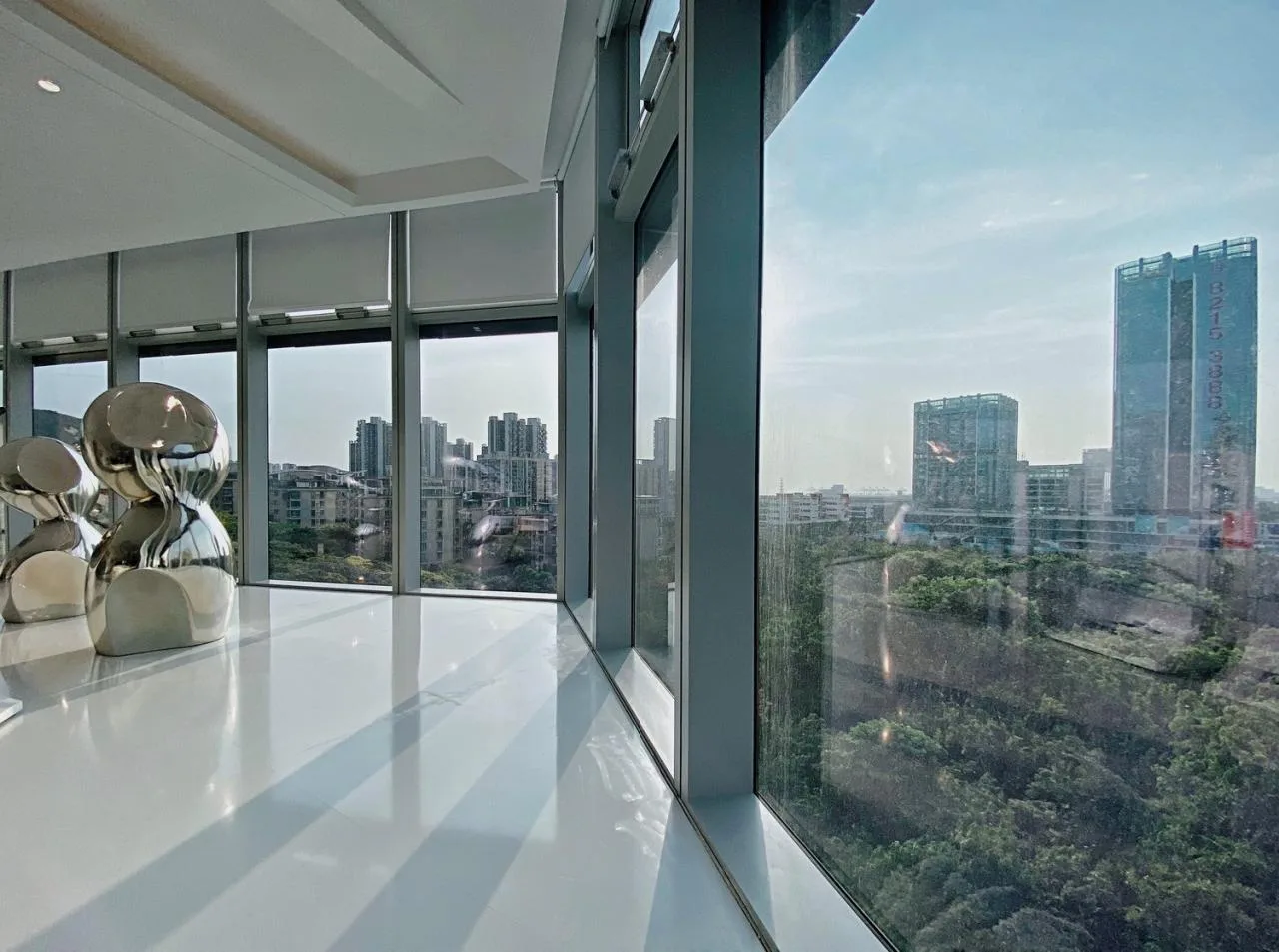
Environmentally, the Ocean · Binhai Building sits at the heart of an ecological network featuring two bays, one mountain, and three parks. It offers nearby access to Qianhai District’s green corridor and distant views of Shenzhen’s city center and Hong Kong. Architecturally, the project embodies health-focused principles, incorporating 21 features promoting healthy office environments and utilizing 28 types of healthy materials to create a bright, green, and vibrant business atmosphere. Interior design prioritizes energy efficiency, noise reduction, ventilation, and temperature control to foster a comfortable and healthy workspace. This reflects Oceanwide’s commitment to a healthy office environment from the inside out.
Project Drawings
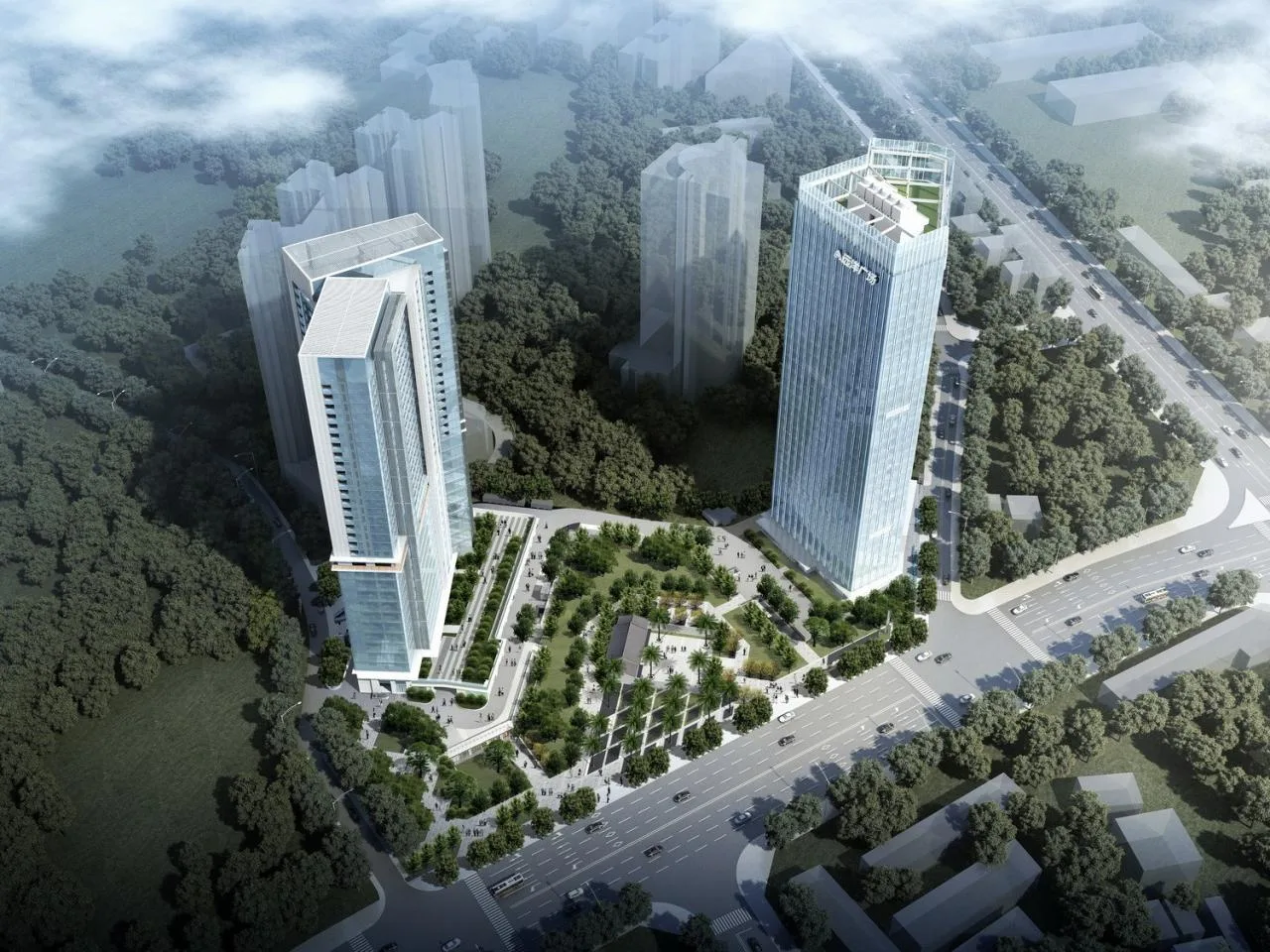
△ Rendering
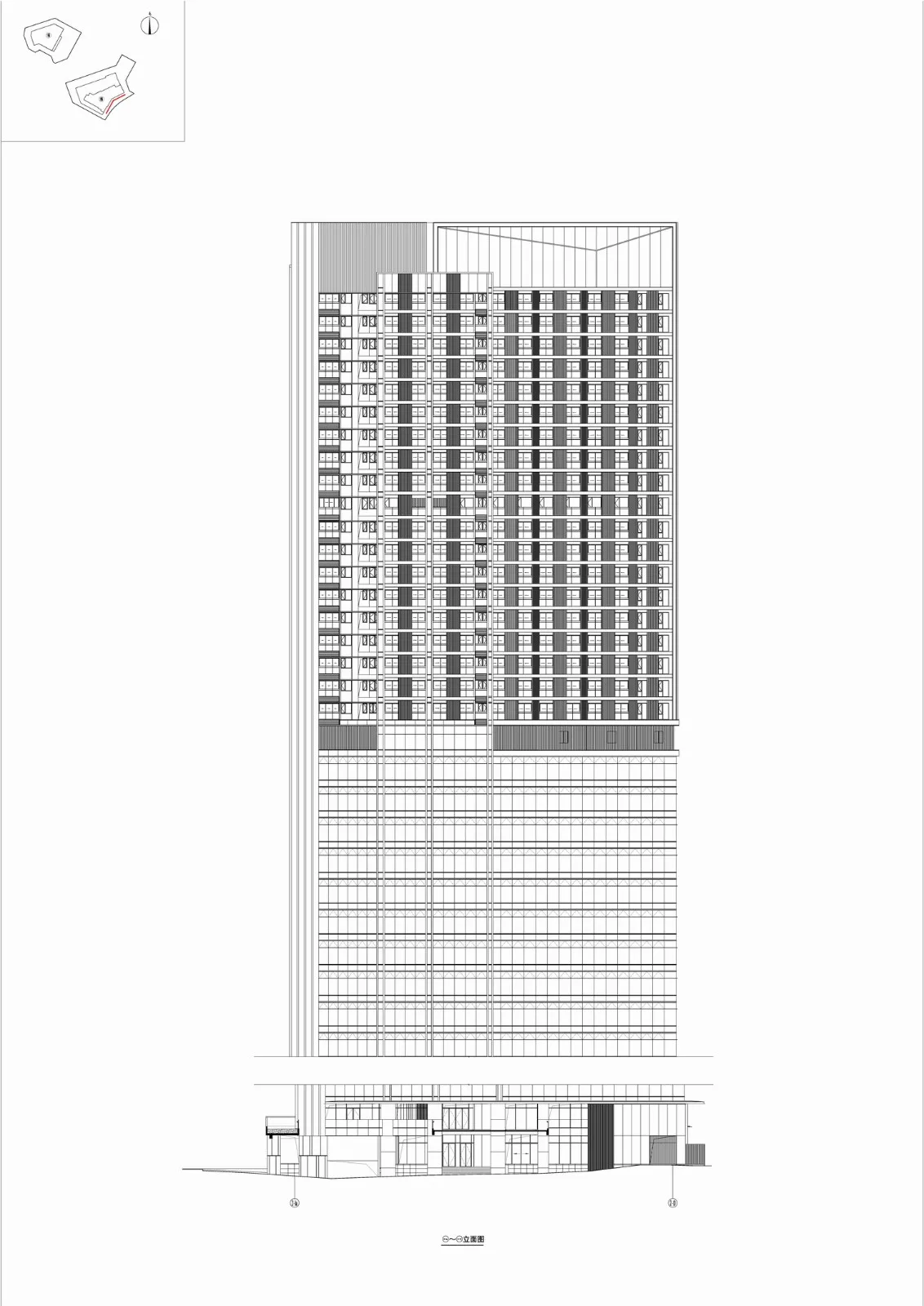
△ Elevation drawing
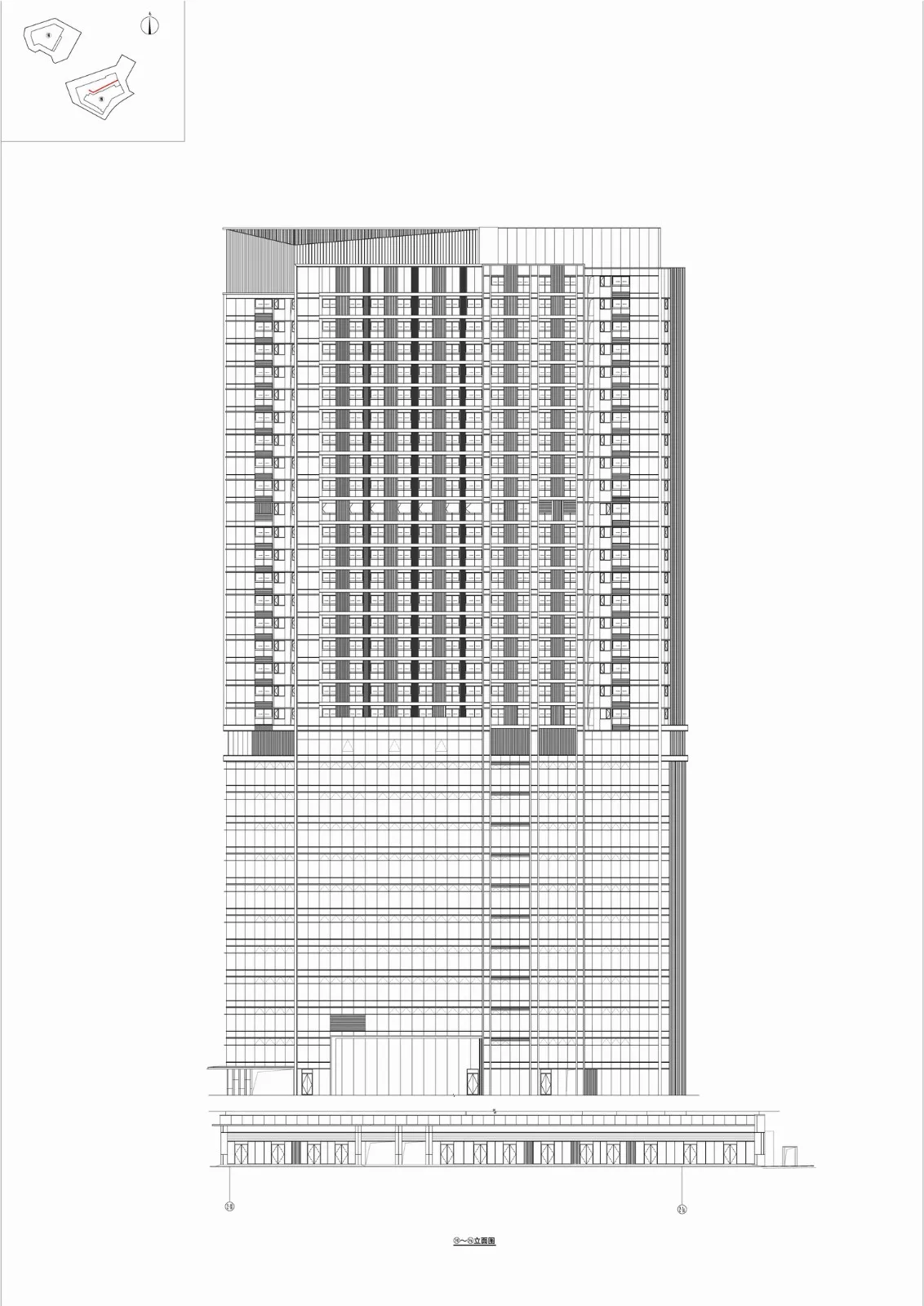
△ Elevation drawing
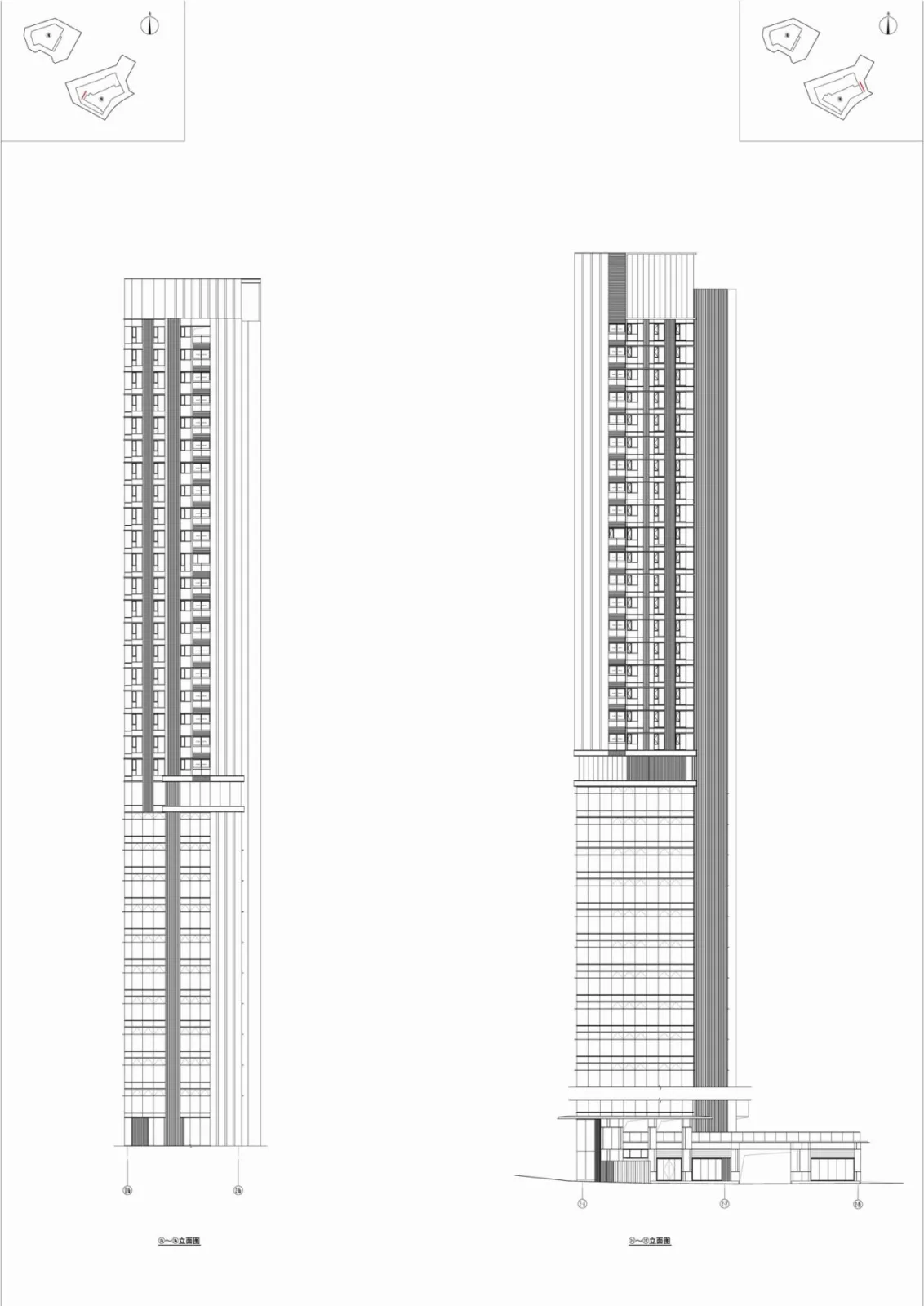
△ Elevation drawing
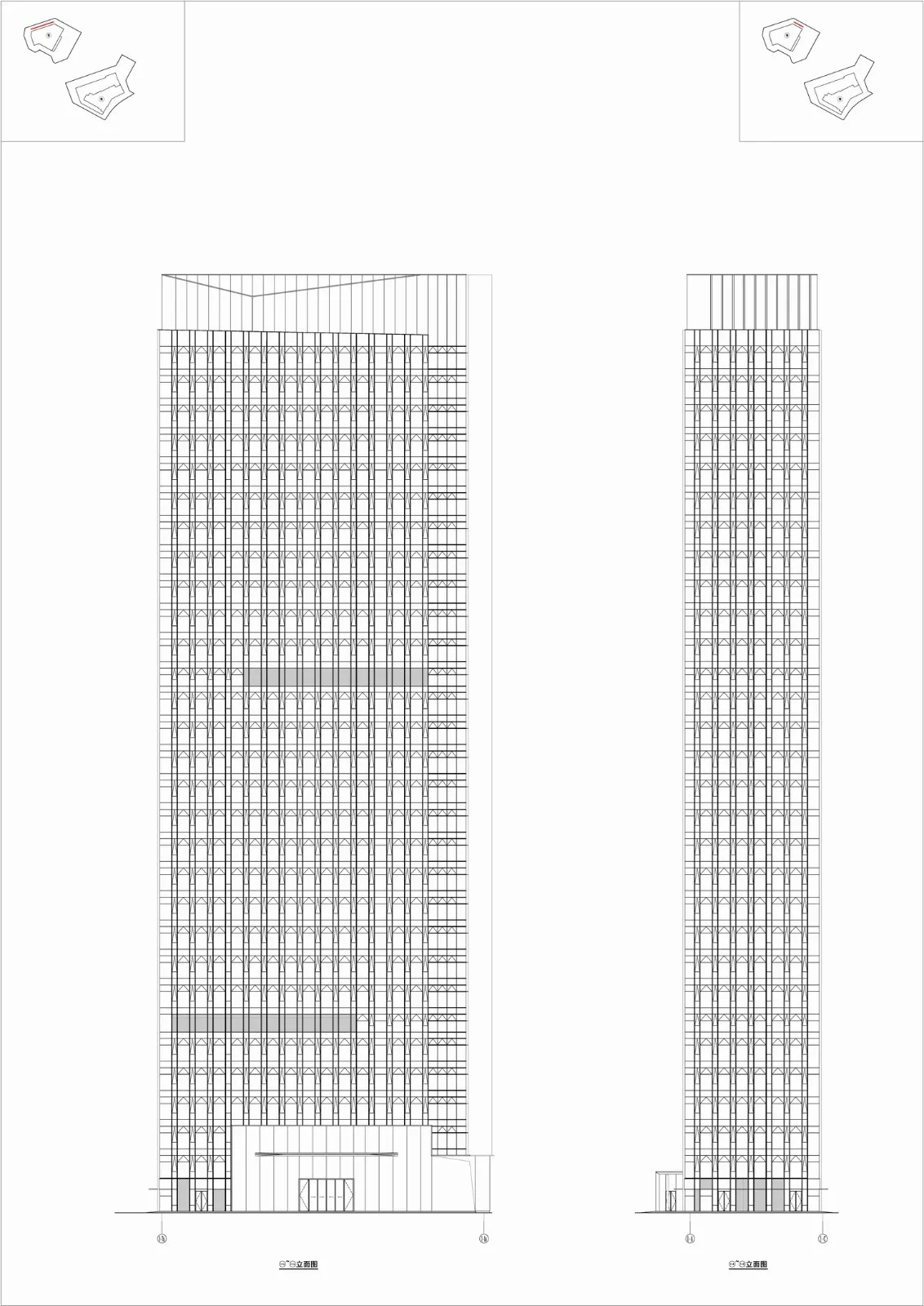
△ Elevation drawing
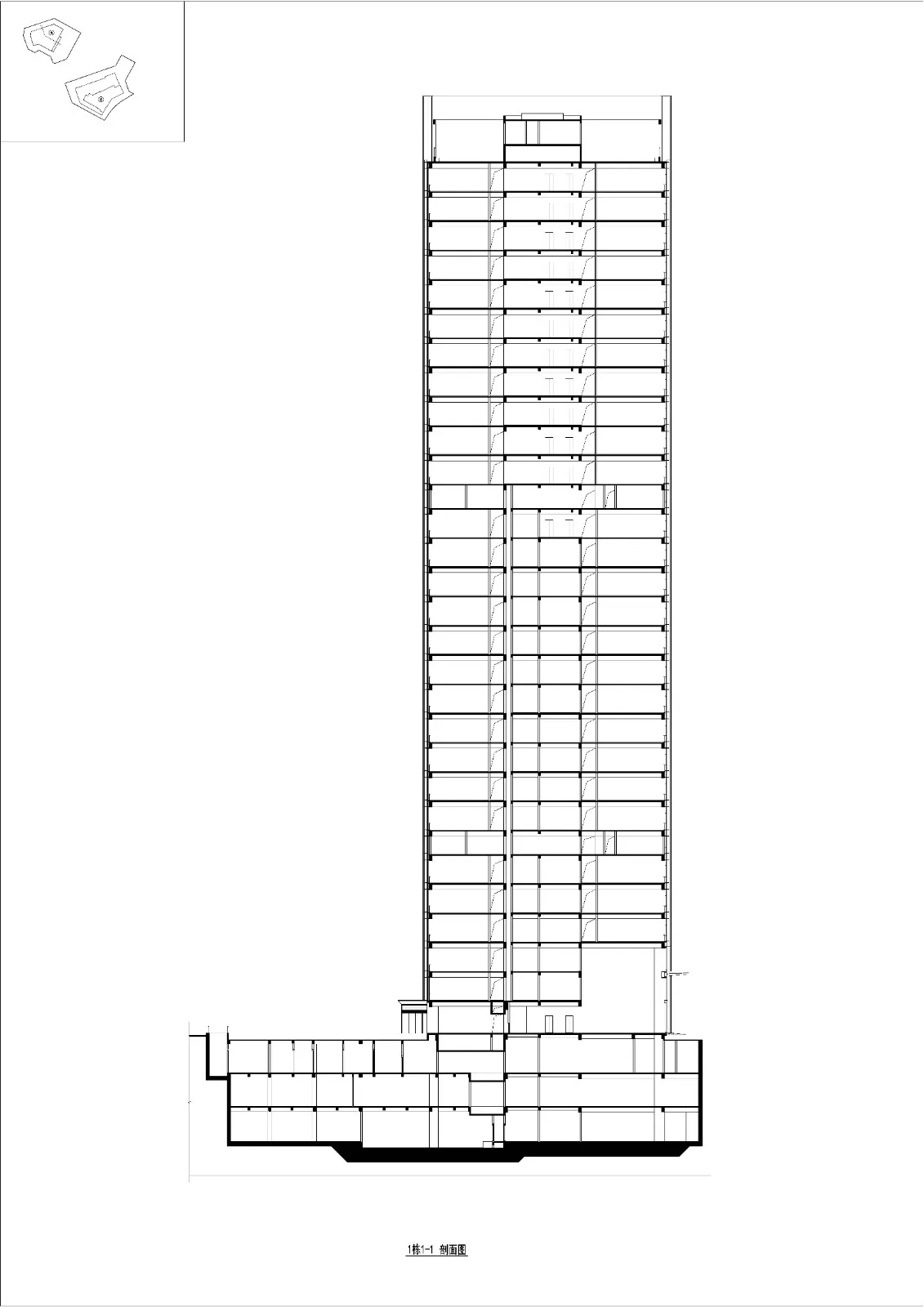
△ Section diagram
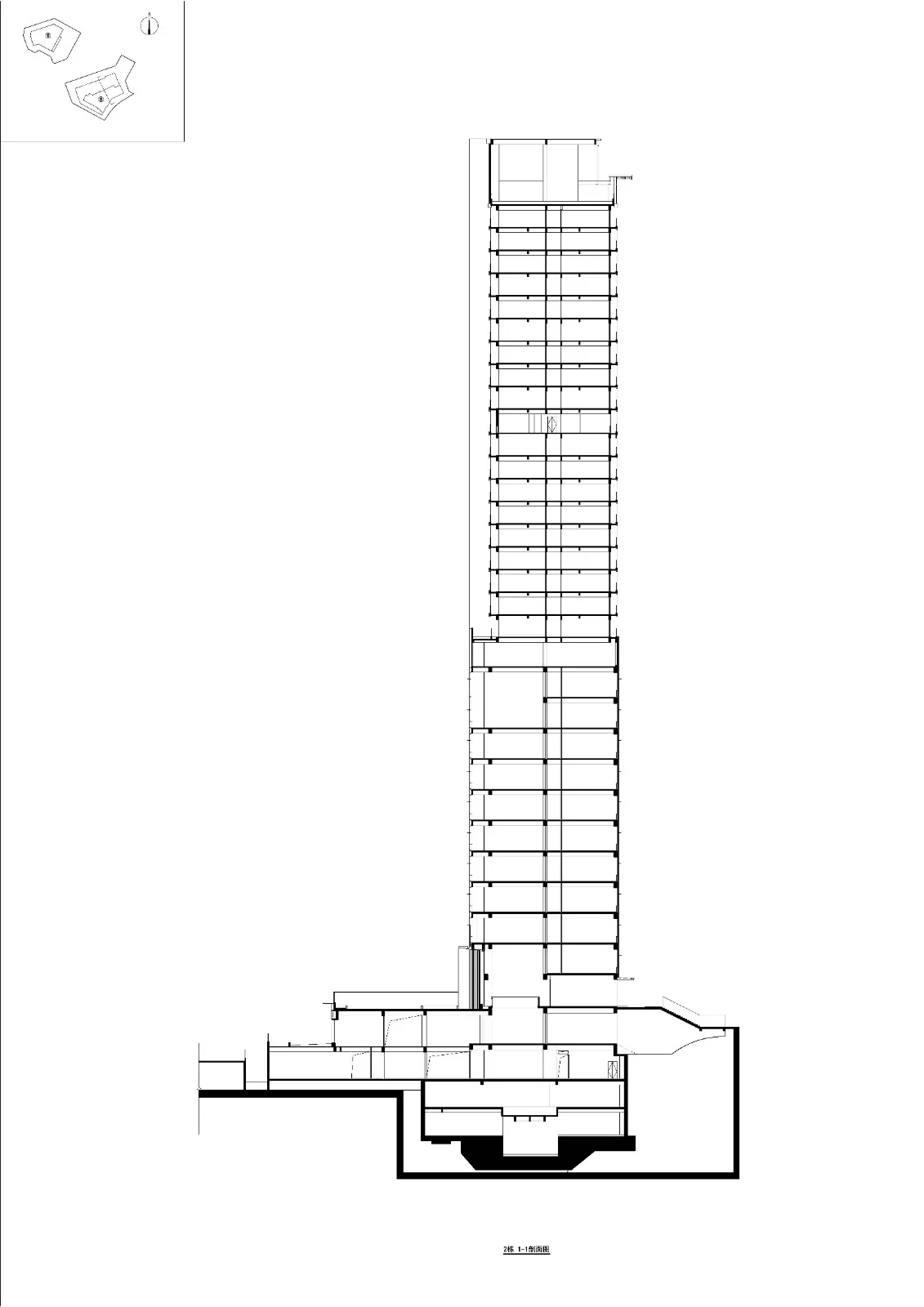
△ Section diagram
Project Information
Location: Nanshan District, Shenzhen, Guangdong Province
Project Size: 88,000 square meters
Owner: Ocean Shipping Group
Full Process Design: Senlei International
Indoor and Outdoor Demonstration Area Design: CCD Hong Kong Zheng Zhong Design
Lead Architect: Wu Wei
Architectural Team: Zhuang Hansen, Lu Wenjian, Liang Zhiwei, Qiu Hu, Dai Wu, Li Mai, Li Zhenhai, Jiang Xiaoming
Construction Drawings Team: Zhu Yinpu, Jin Jianping, Du Jian, Wang Yuanping, Liu Chengxing, Yan Haiqing, Li Qi, Ai Yanyan, Chen Yi, Peng Nuoxi, Wen Wei, Chen Shizhong, Huang Changrong, Yin Zitong, Zhang Hongwei, Yao Weidong
Structural Engineers: Qi Jianzhu, Li Ziqian, Li Haoting, Hu Guohua, Wang Qi
HVAC Team: Li Wenna, Wu Qian, Liu Xinhua, Li Bo, Zhou Wentao, Feng Mengnan
Water Supply and Drainage Team: Hu Lingzhong, Lan Zeng, Qiu Runhua, Chen Yuxiang, Zeng Qian, Li Huijuan, Hu Liu, Wang Lingli
Electrical Team: Deng Qiyu, Wang Hongshuang, Luo Yanhua, You Jianfeng, Yang Jing, Ma Shaoguang, Dong Yida
Photographers: Huan Changlei, Arhat Studio















Must log in before commenting!
Sign Up