
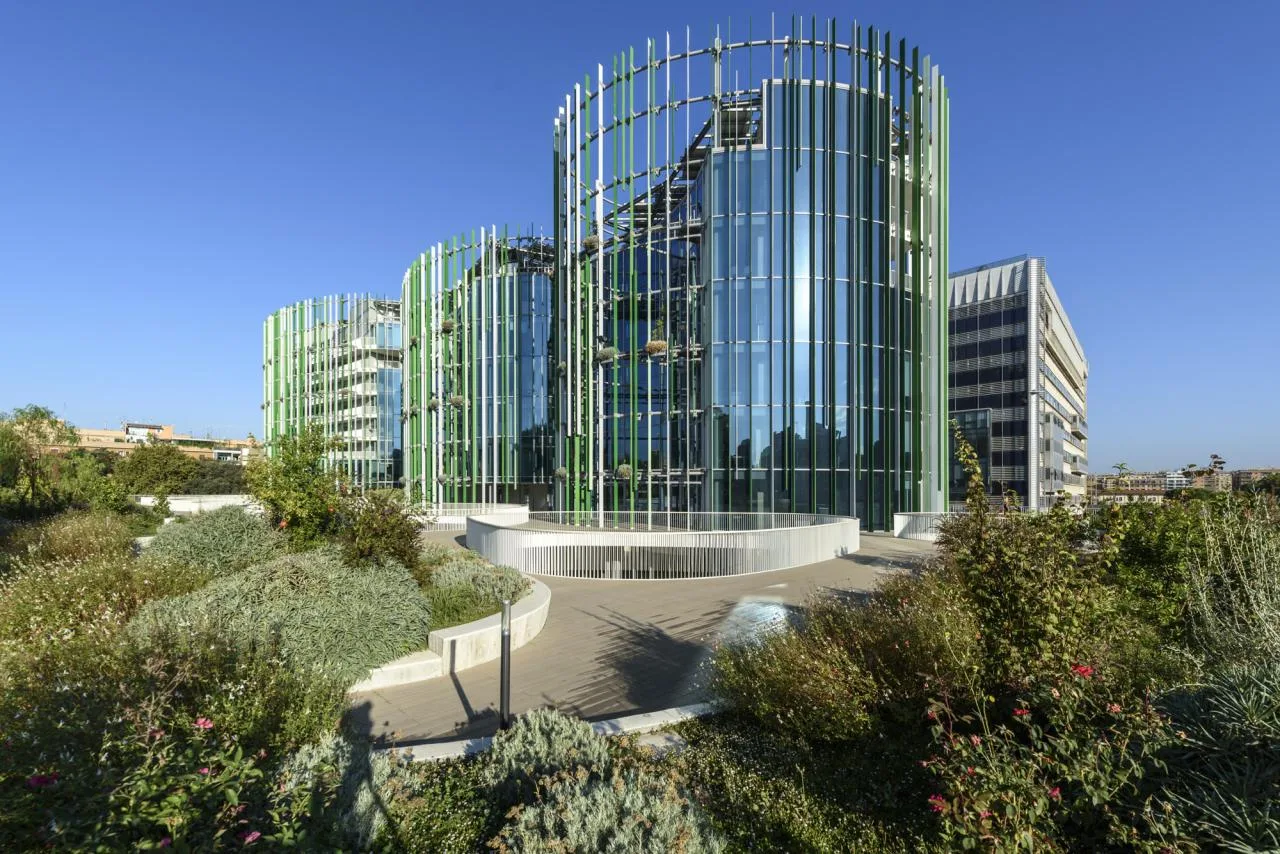
The new headquarters of the Third University of Rome seamlessly blend urban and campus life through an integrated design approach. The lower level features a public square and a sky garden platform, accessible in a hierarchical manner. This design fosters interaction between the university and the wider community while maintaining the order of academic activities.
Inspired by the principle of “organic dispersion” found in nature, the architecture emphasizes flexibility and spatial fluidity, offering a fresh vision for future campuses. This innovative approach earned the project the 2022 French DNA Paris Design Awards in the Education and Sports Architecture category.
Project Background
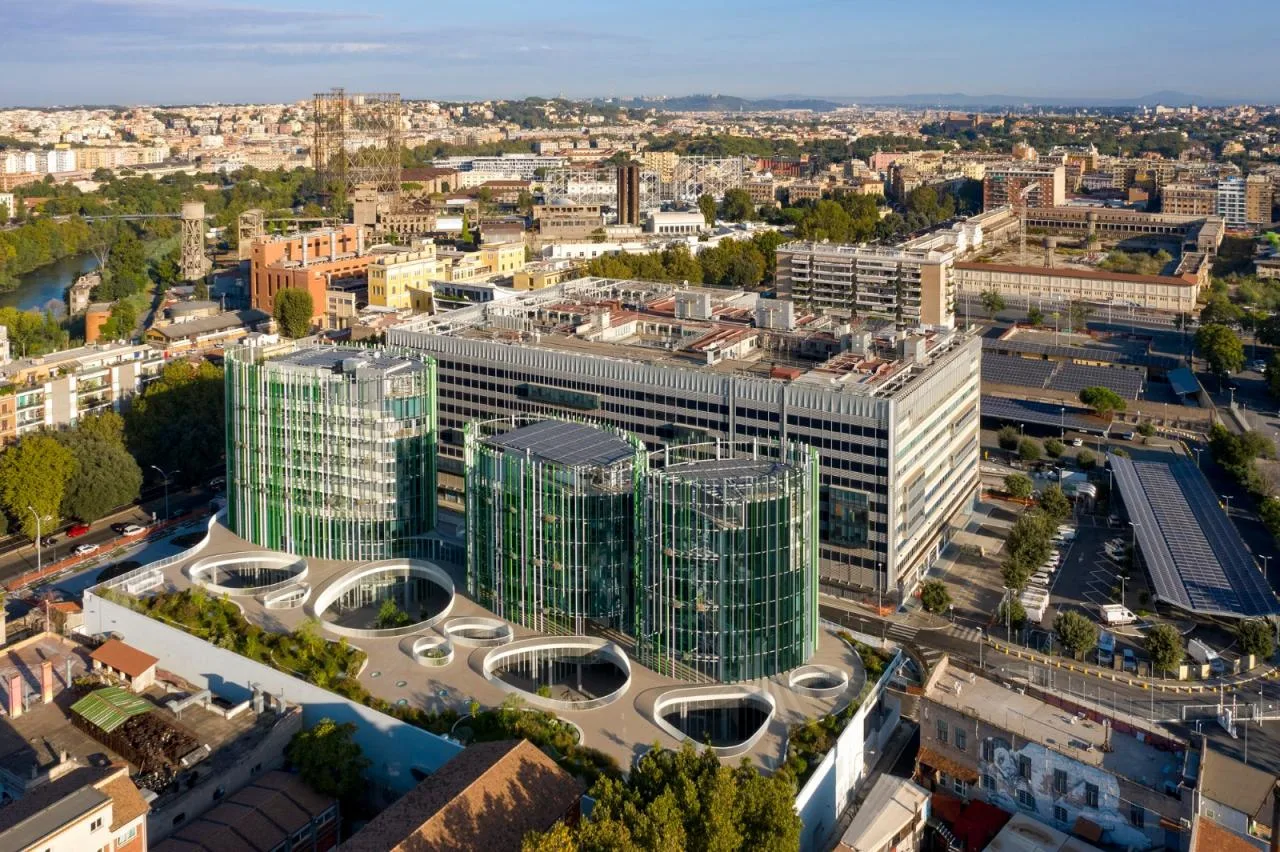
Ostiense, a district in southern Rome, is historically known as an industrial area connected by the main street, Ostia, linking Rome to the coast. One of its most notable industrial relics is the Gazometro di Roma, a large metal gas holder that was once the largest in Europe and remains a landmark today.
Since 2003, Ostiense has been undergoing gradual urban renewal. Founded in 1992, the Third University of Rome plays a crucial role in this transformation, with its renovation and expansion forming a key part of the district’s revitalization.
Design Philosophy
Industrial zones often evoke images of pollution, overgrown weeds, abandoned steel structures, and factories. This project aims to transform the area by providing high-quality campus buildings alongside inviting public spaces for leisure and social interaction.
Featuring an open square courtyard surrounded by lawns and trees, the design leverages the catalytic impact of public buildings on urban development. This fosters social cohesion and transforms the former industrial district into a vibrant hub.
The core principles guiding the project are openness, flexibility, hybridity, and sustainability.
- Openness: Blurring boundaries between campus and city, creating a seamless dialogue between campus landscapes and urban blocks.
- Flexibility: Inspired by natural “organic dispersion,” the campus structure is optimized with independently functional yet interconnected spaces.
- Hybridity: Mixing office, teaching, and public display functions to maximize building utilization and vitality.
- Sustainability: Emphasizing passive design and environmental responsibility to enhance public space quality and local living standards.
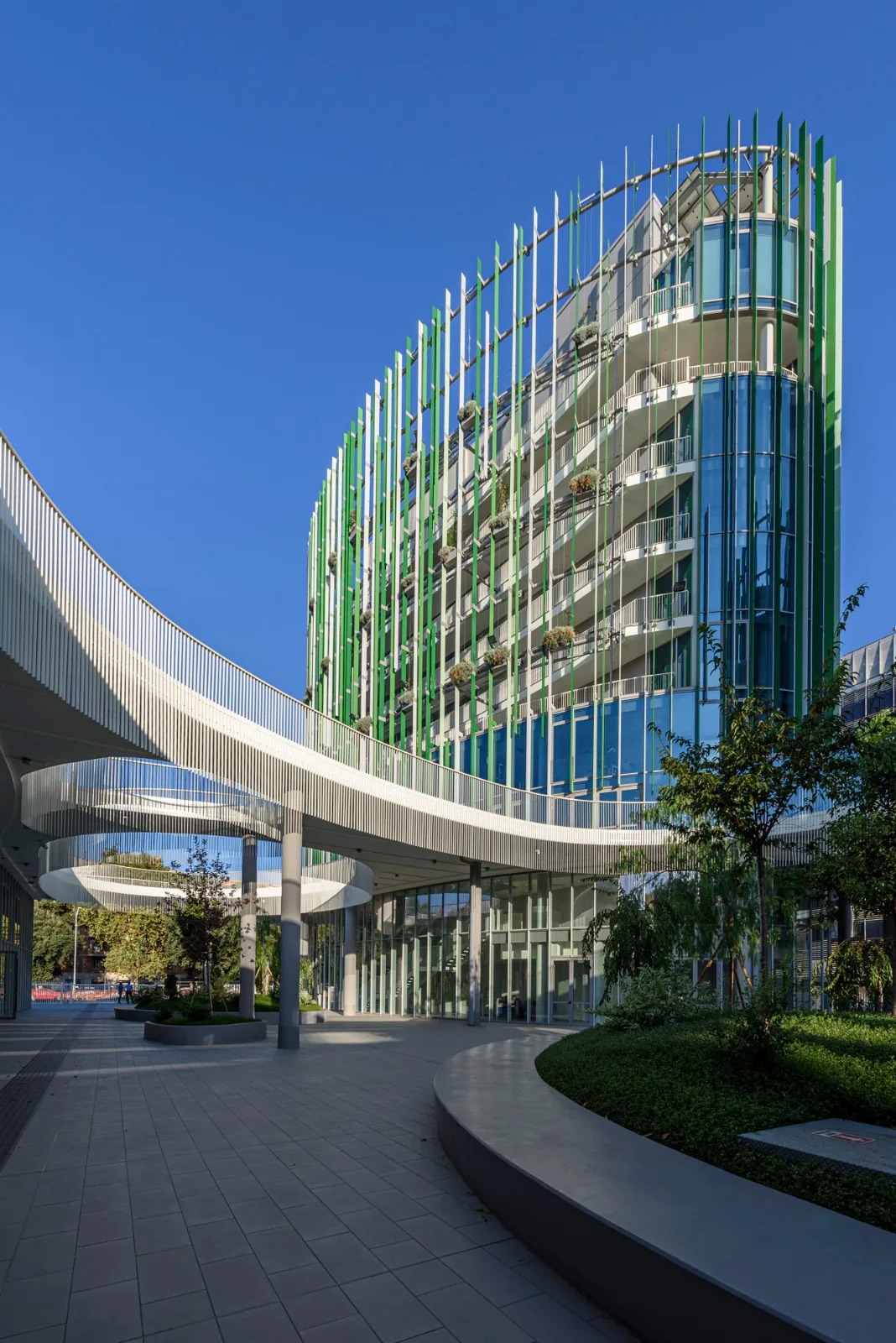
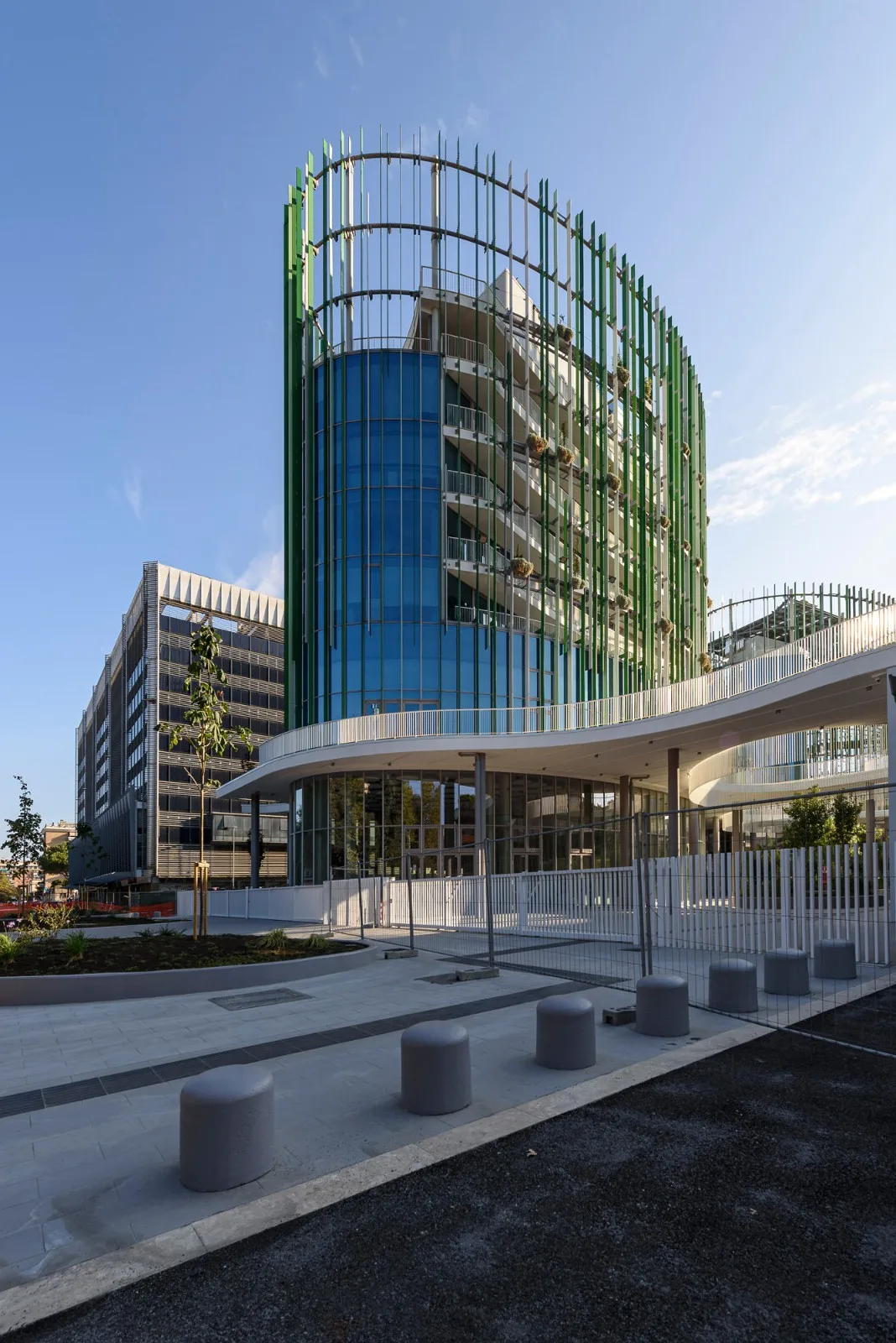
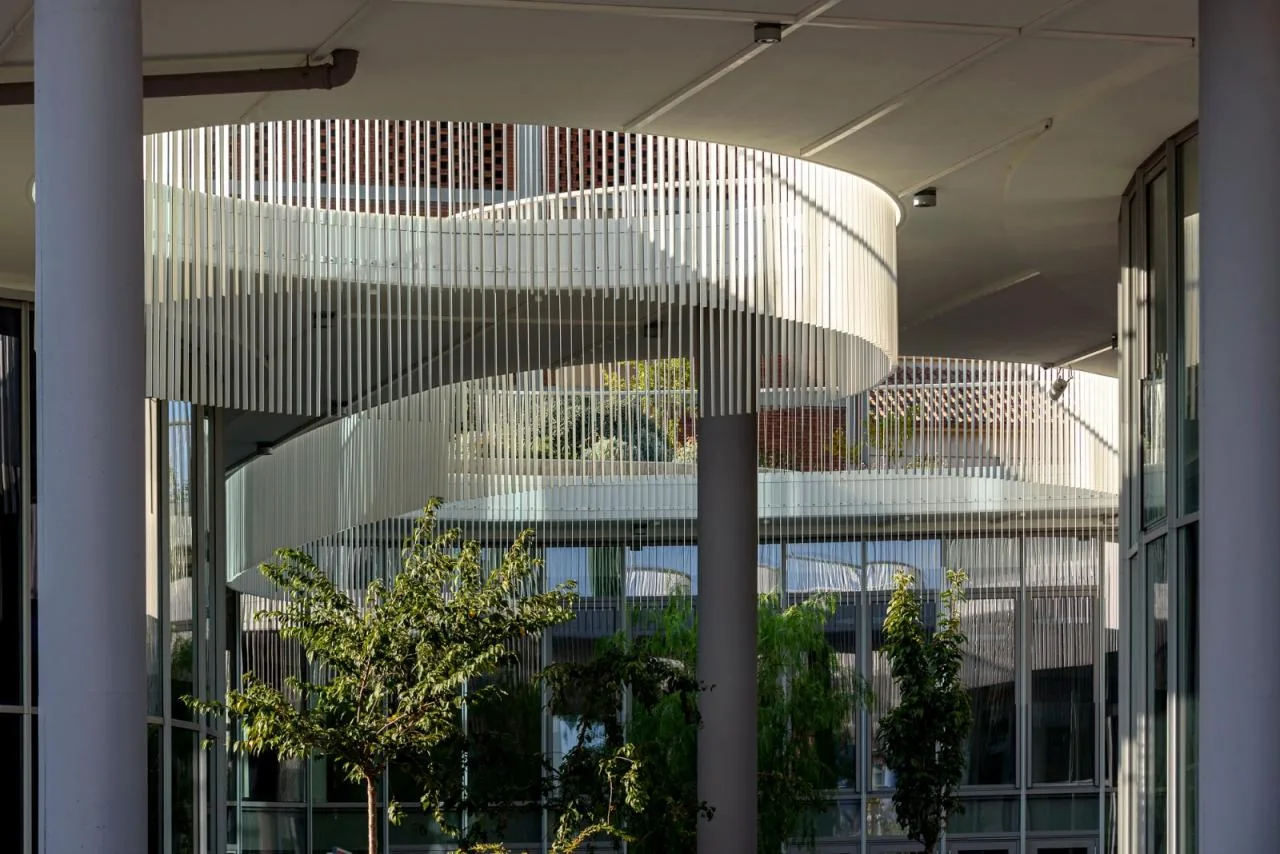
Open Campus
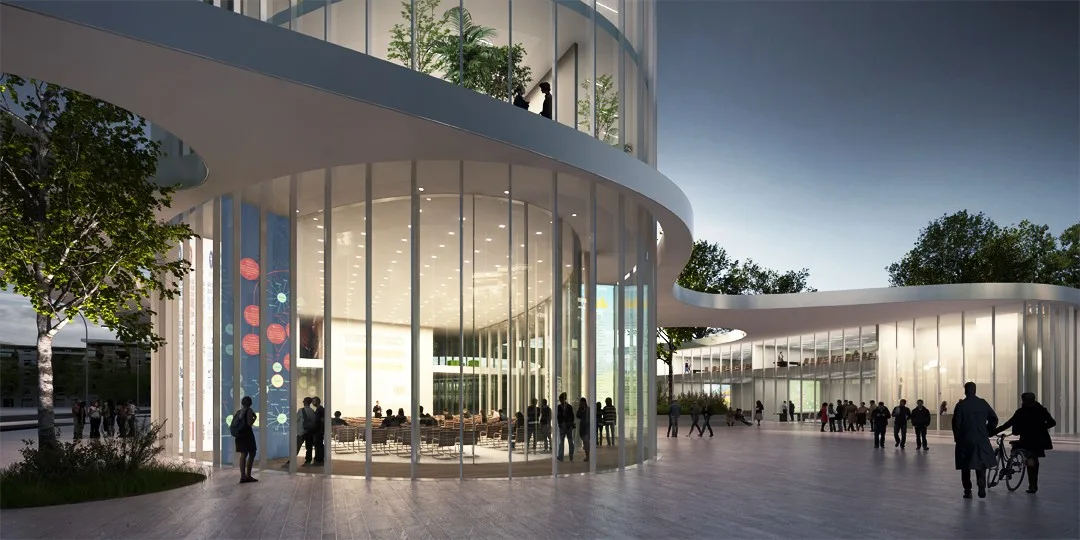
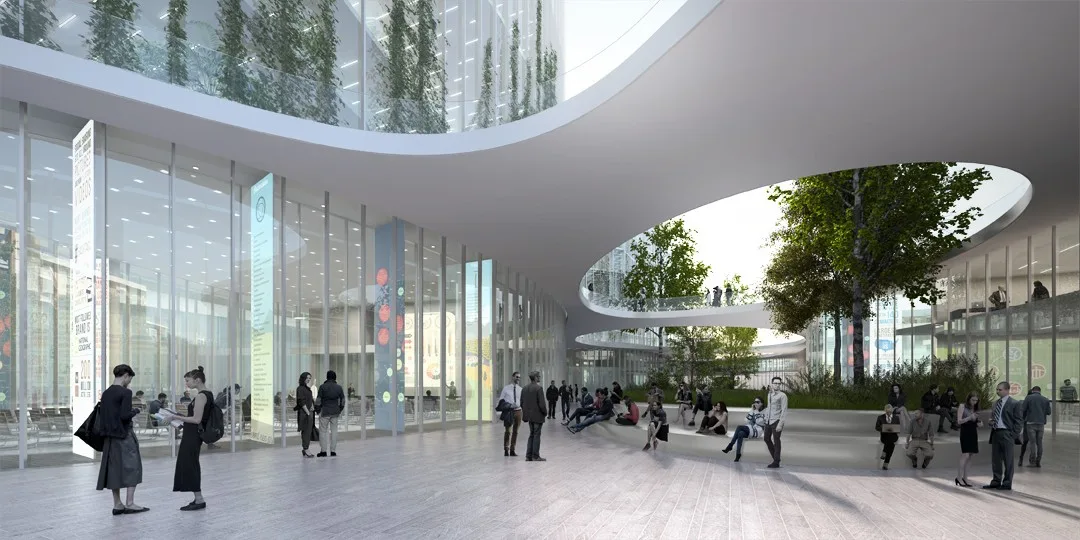
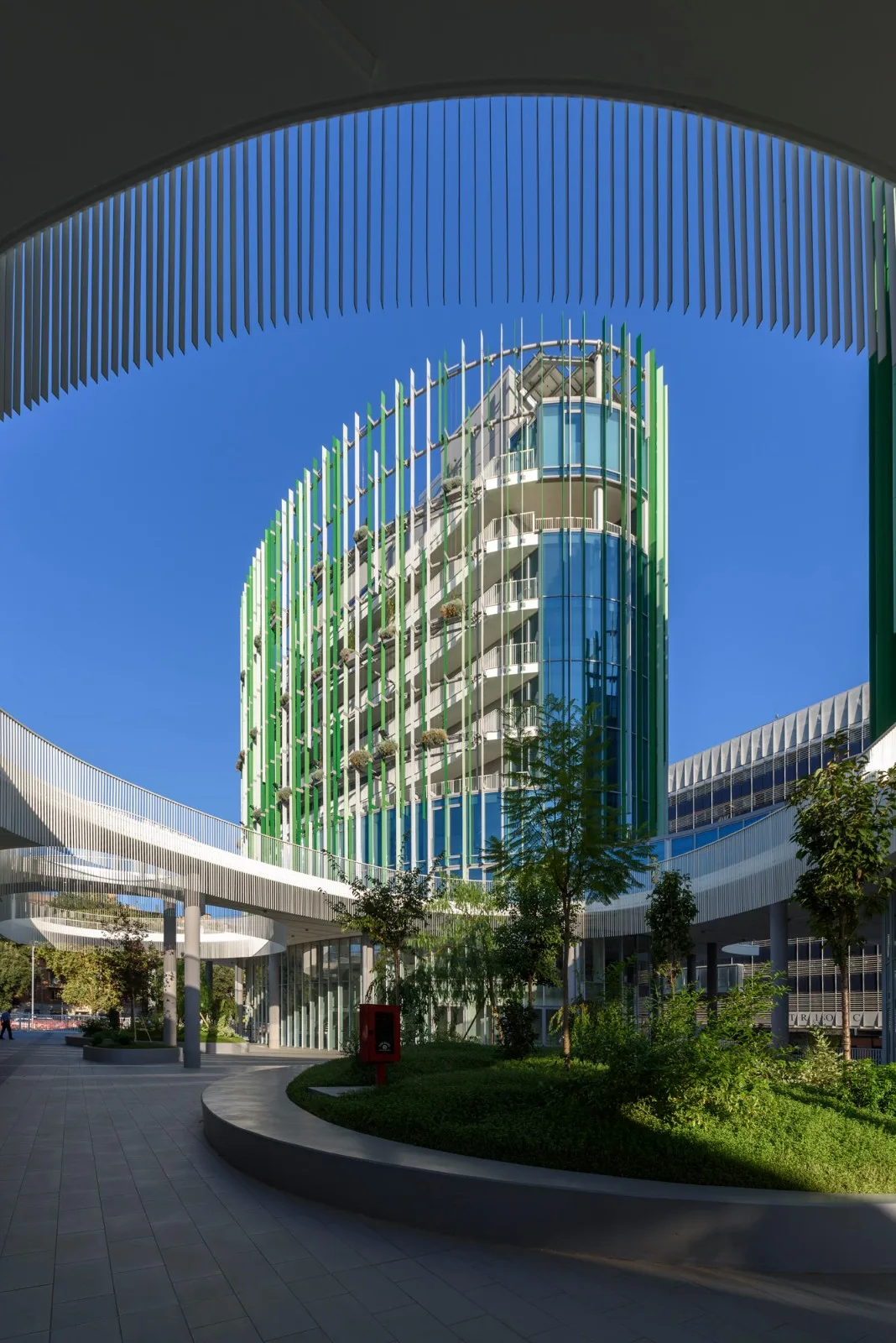
The architecture adopts an open approach, fostering coexistence with the city and spatial integration between the university and its surroundings. The public square acts as a gathering space, providing shelter and attracting visitors, thus enhancing the neighborhood’s vibrancy and pedestrian experience.
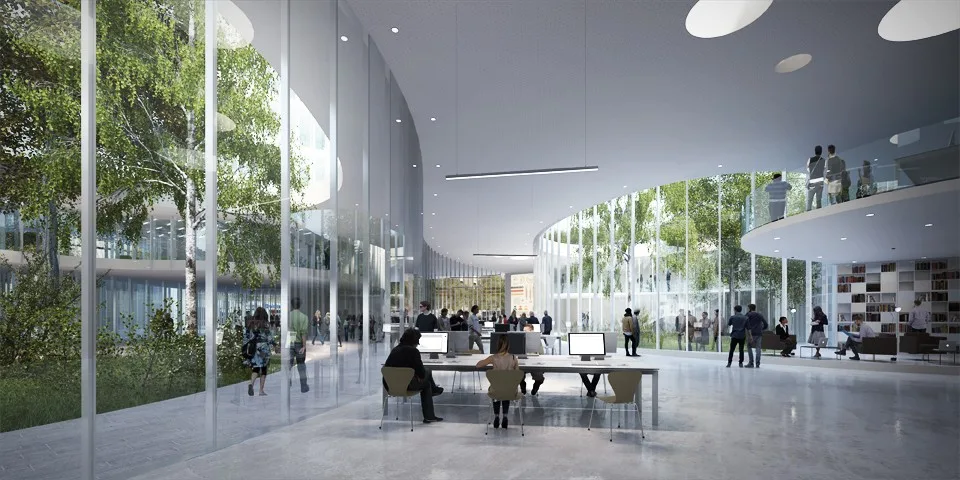
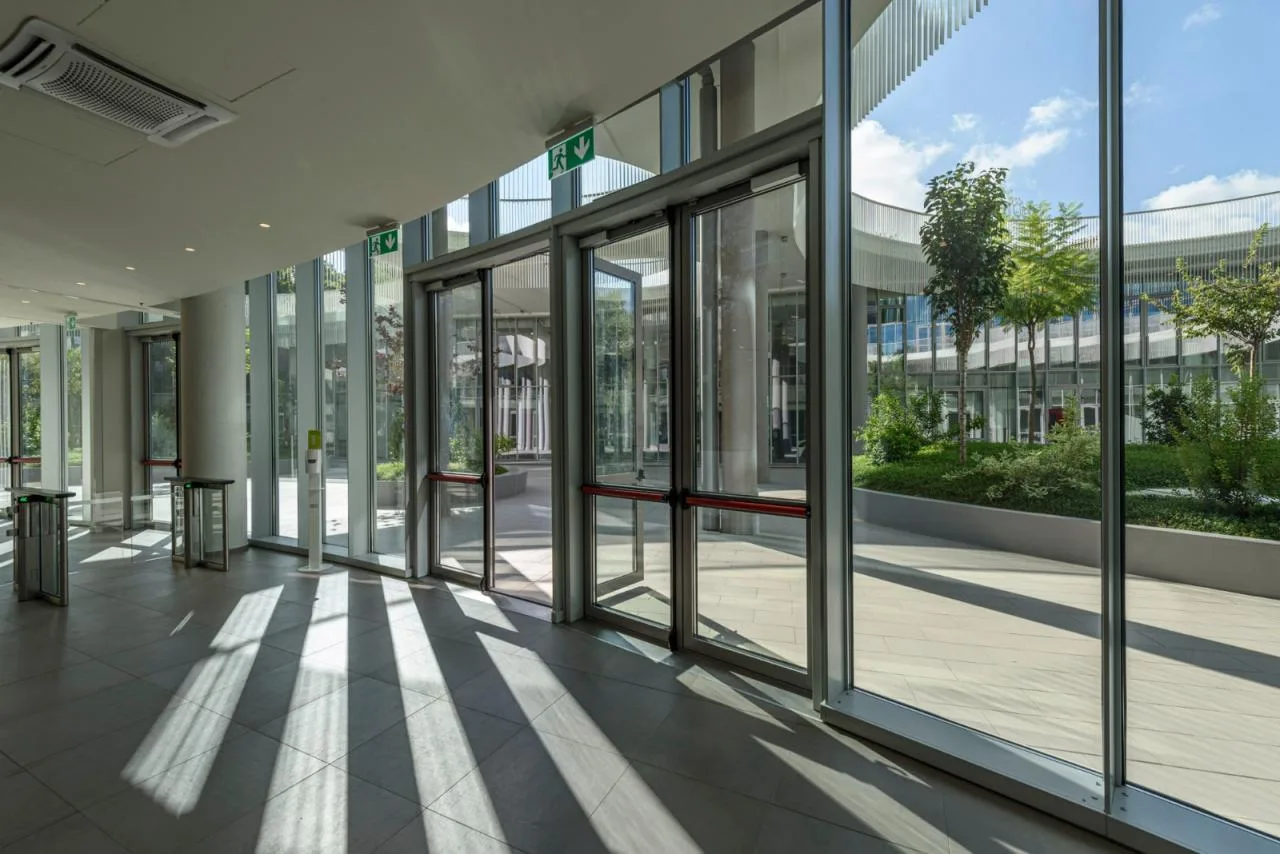
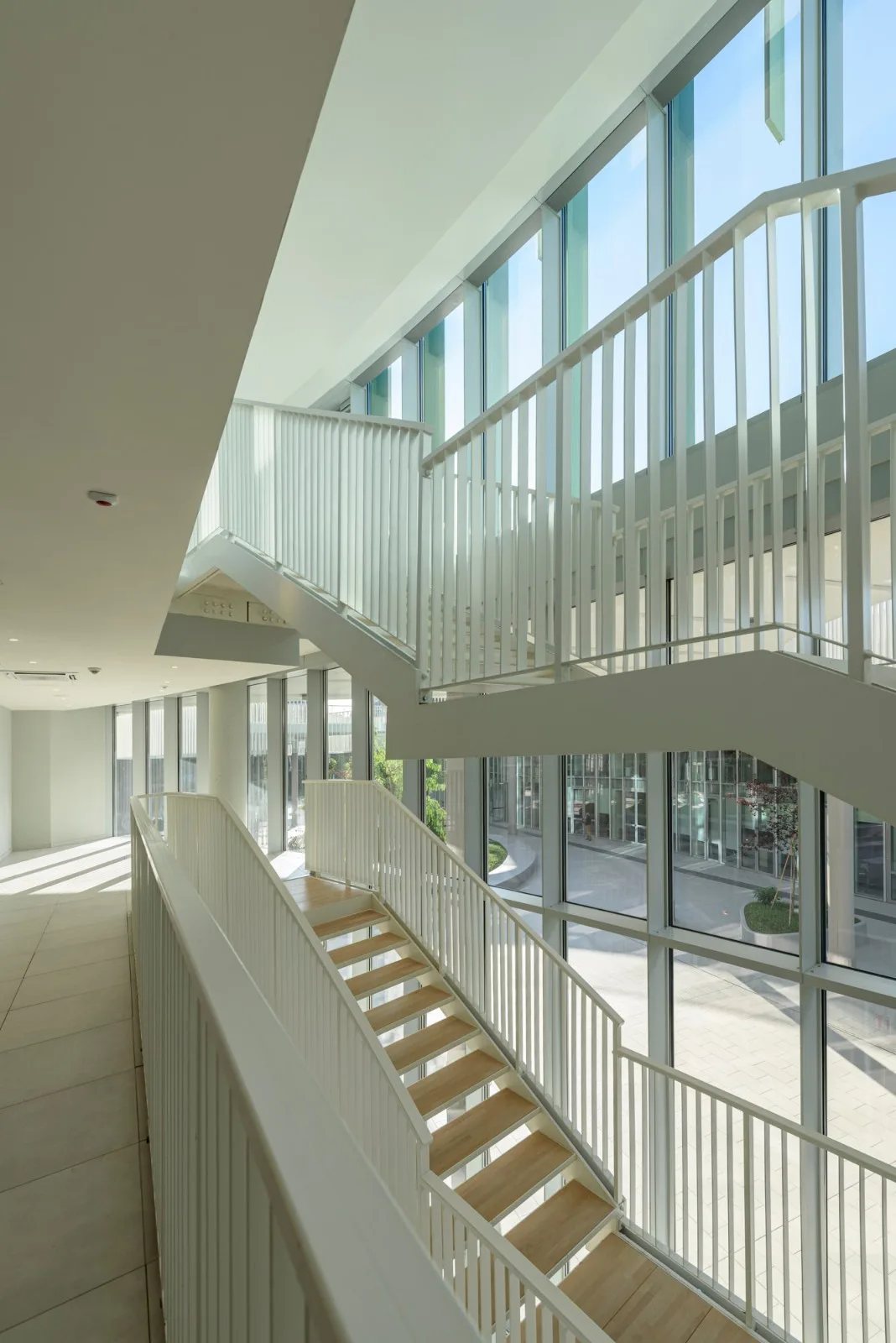
Connecting directly to Ostia Street, the ground floor square features vegetation that extends into the interior, blurring the line between indoors and outdoors. Lush greenery, corridors, and steps create informal gathering and working spaces for students, faculty, and visitors, encouraging social interaction amidst nature.
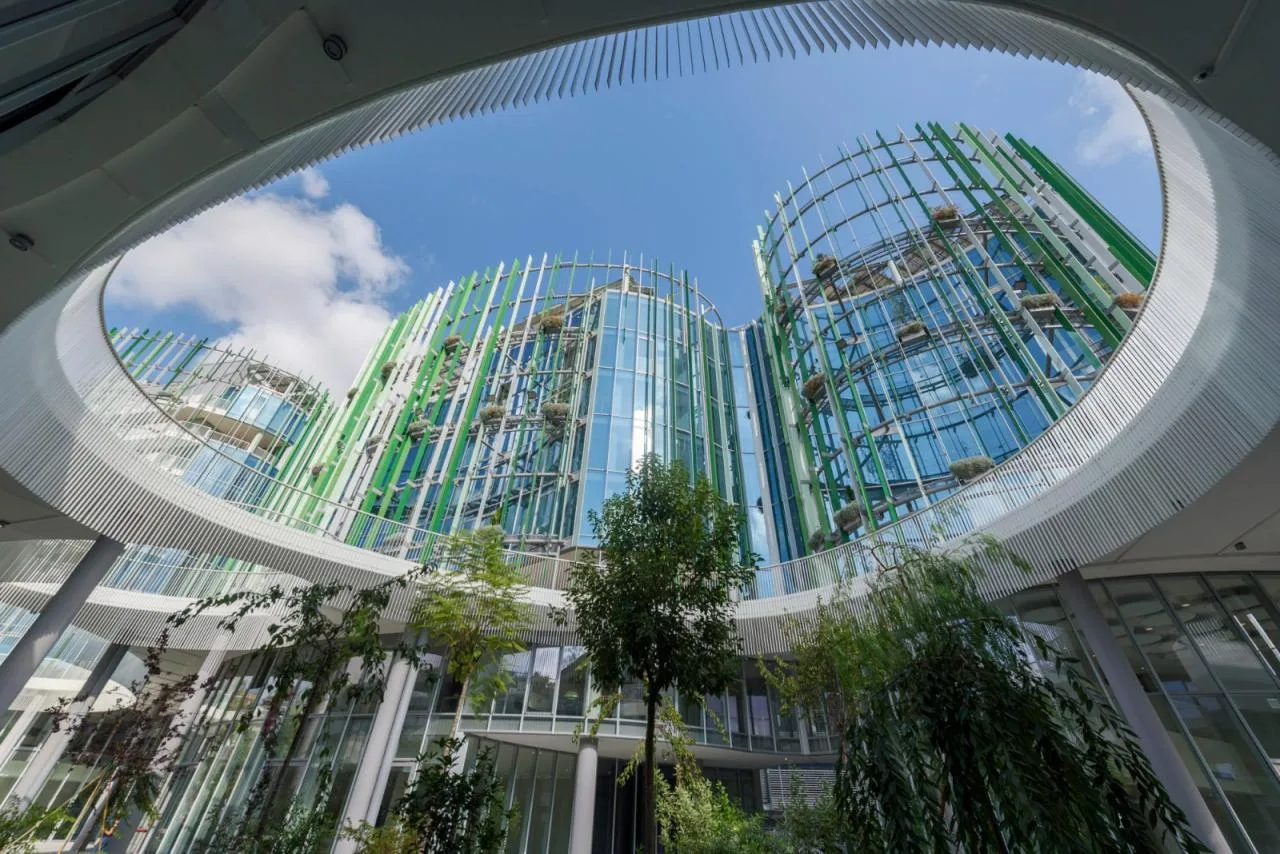
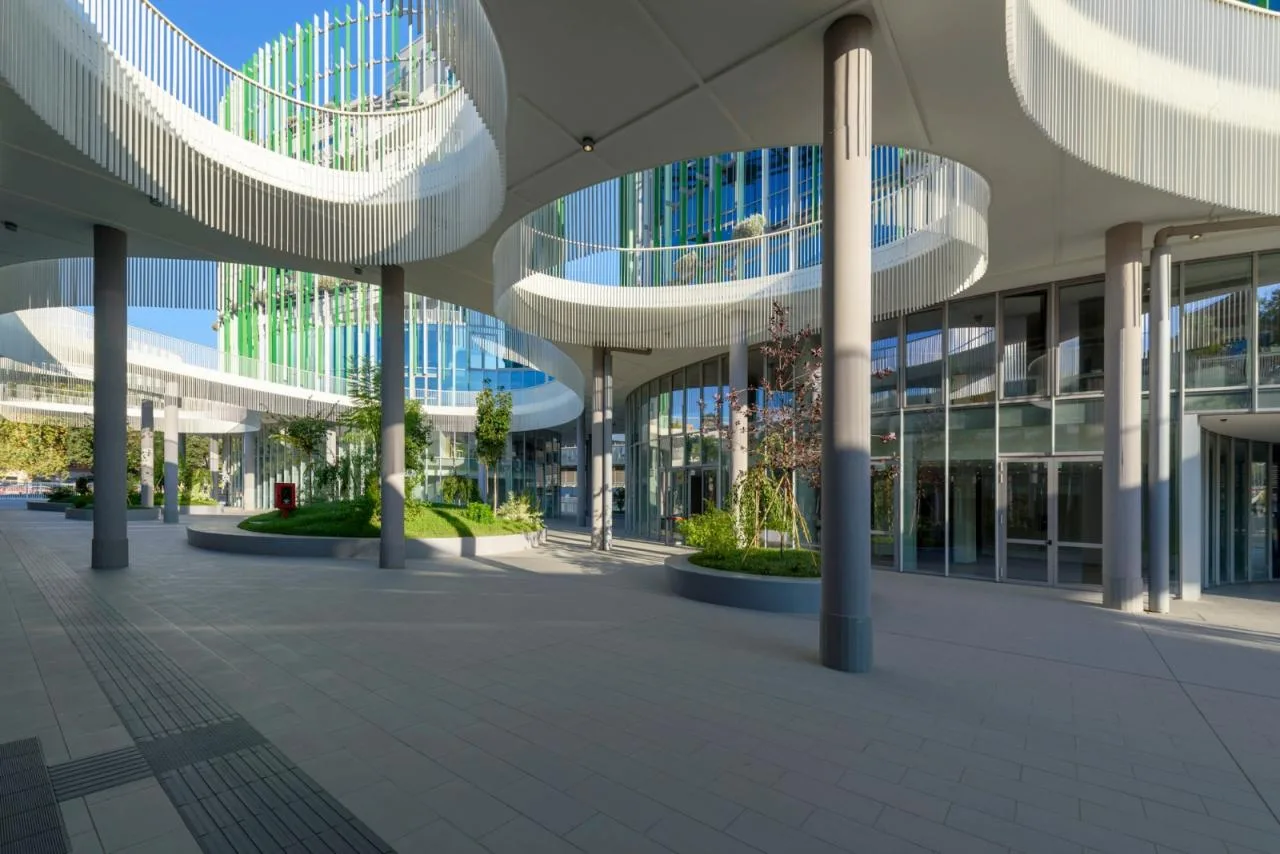
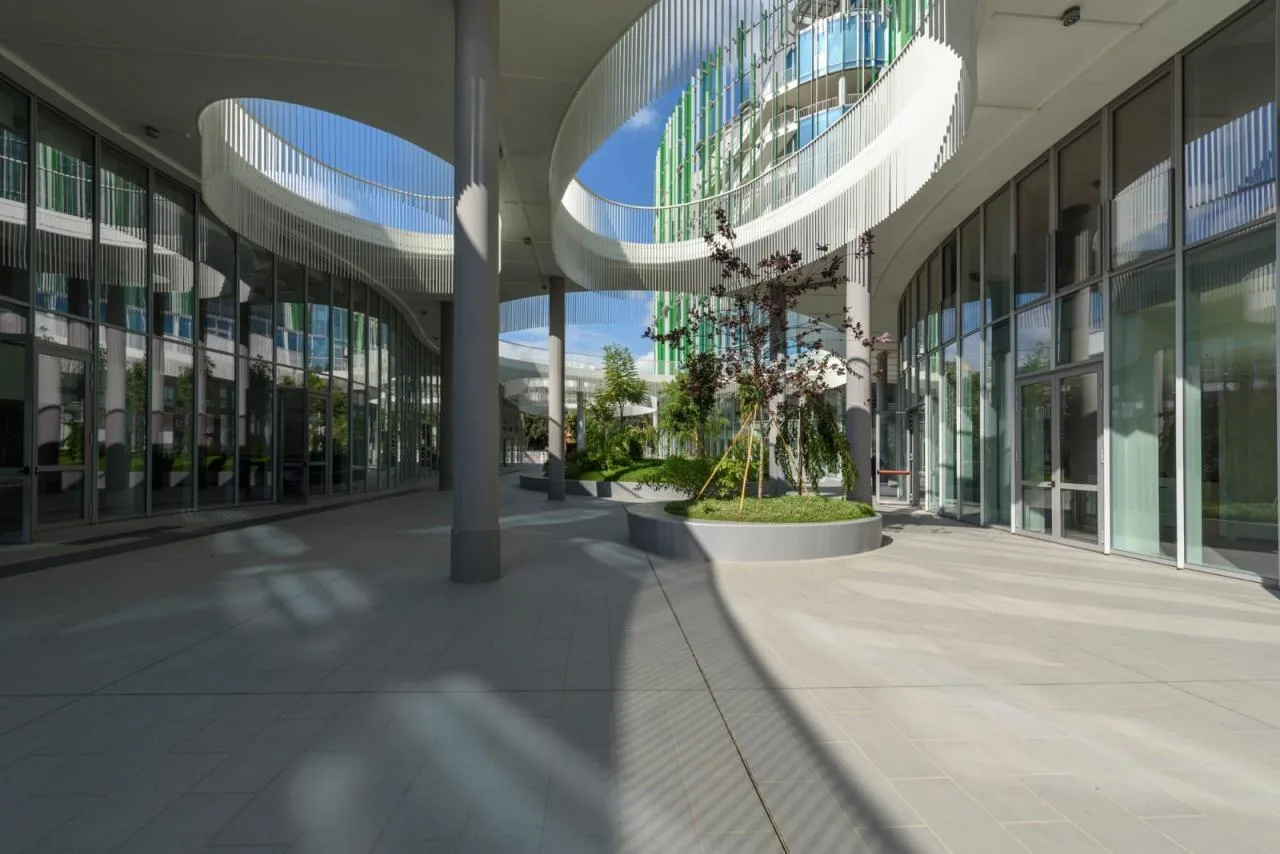
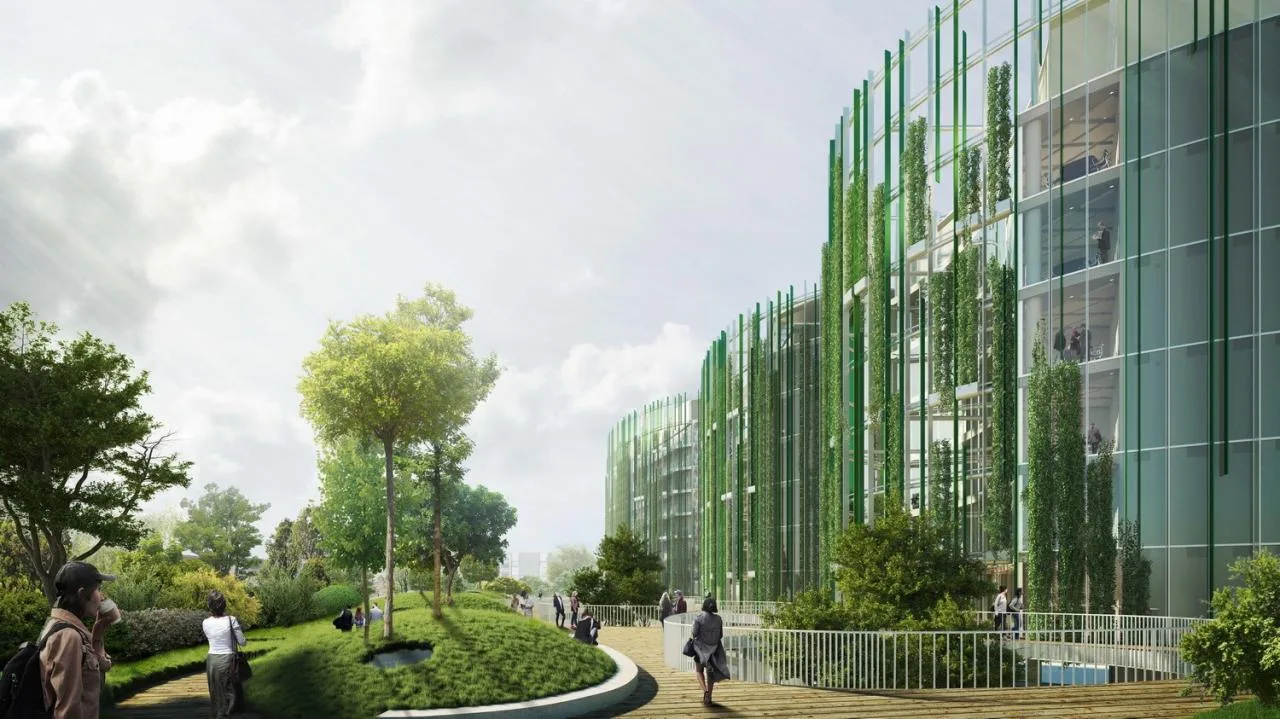
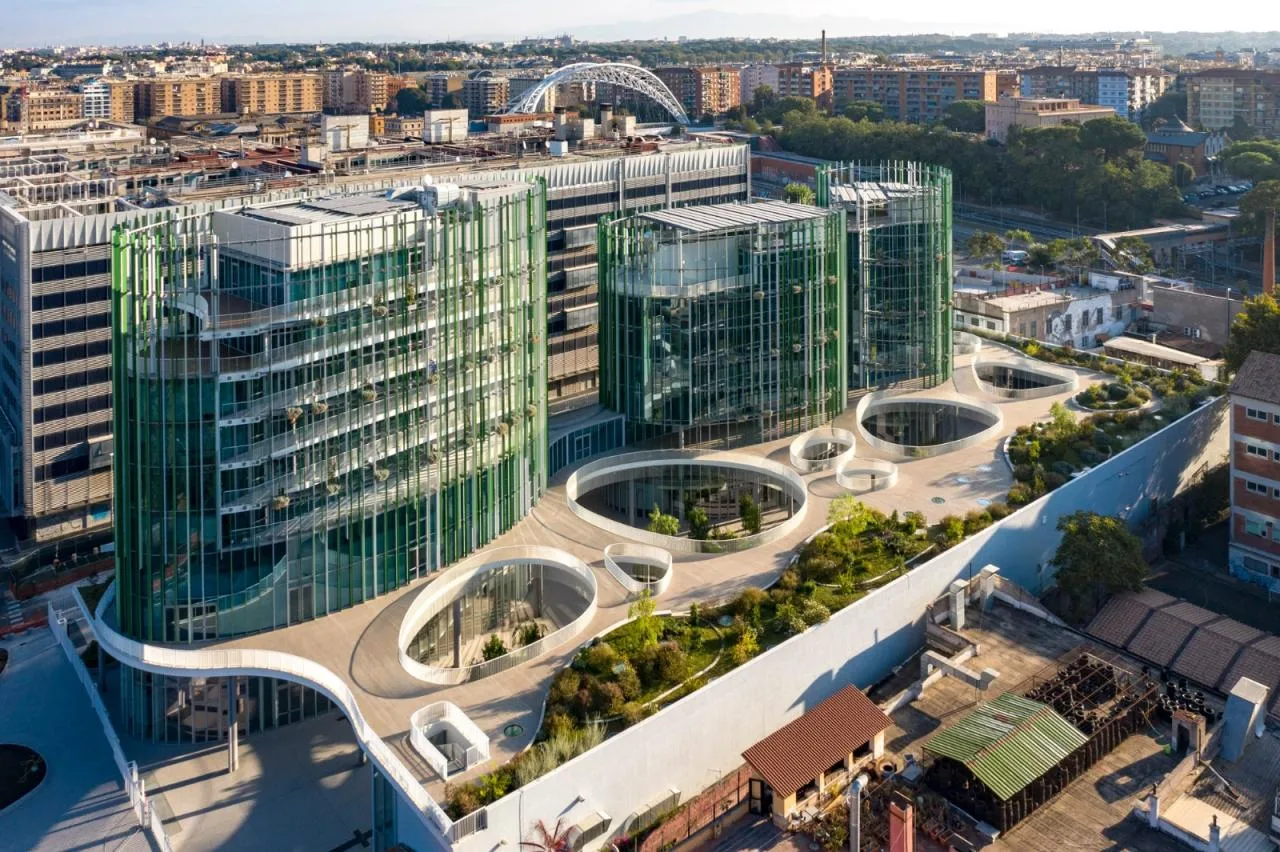
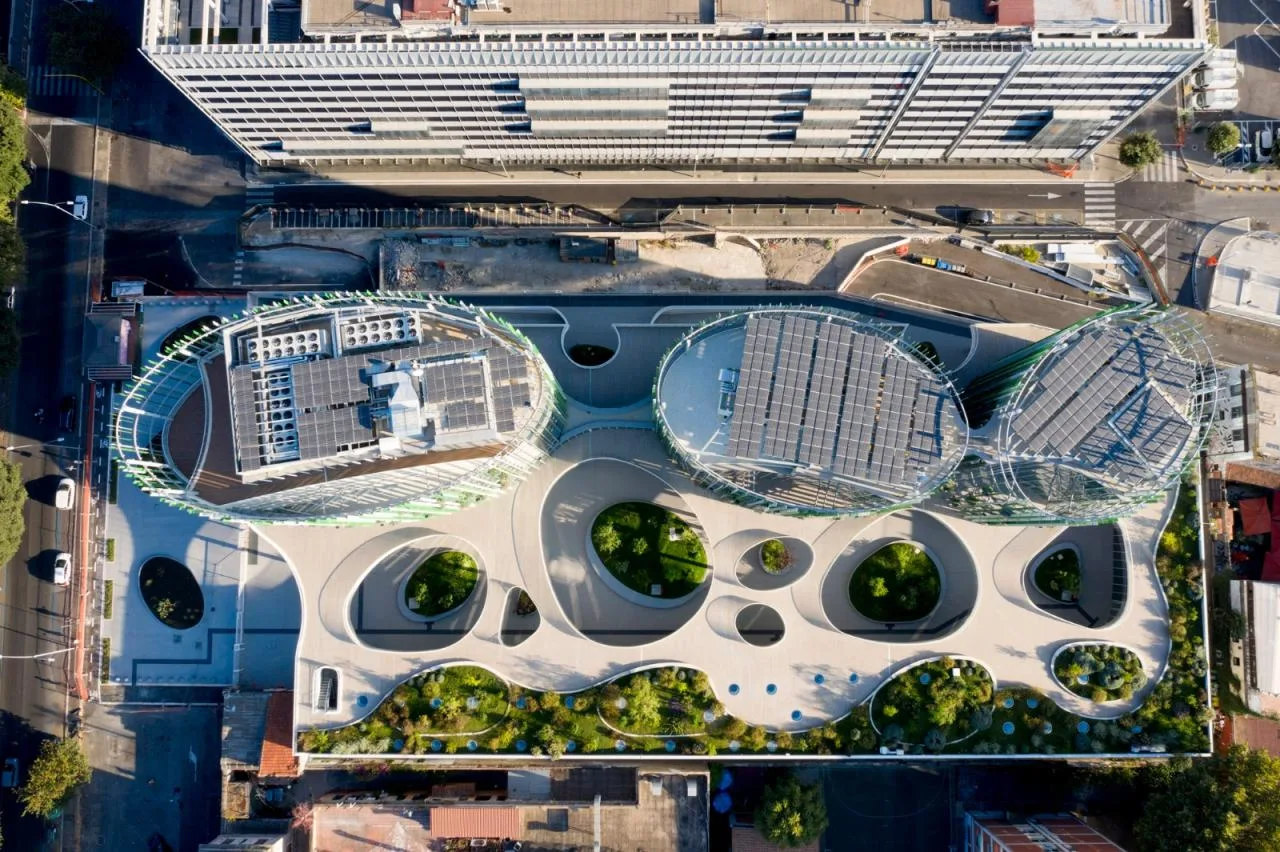
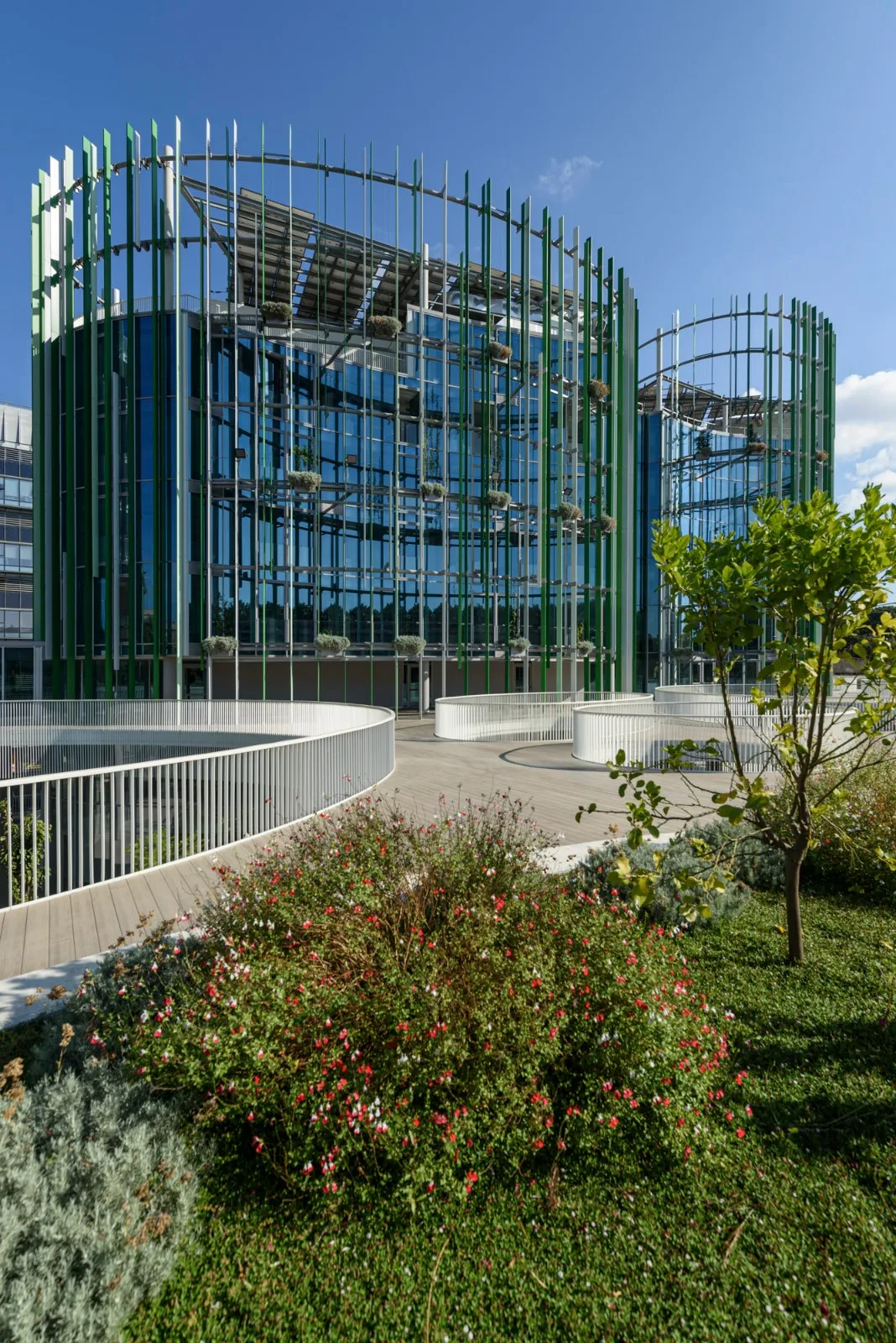
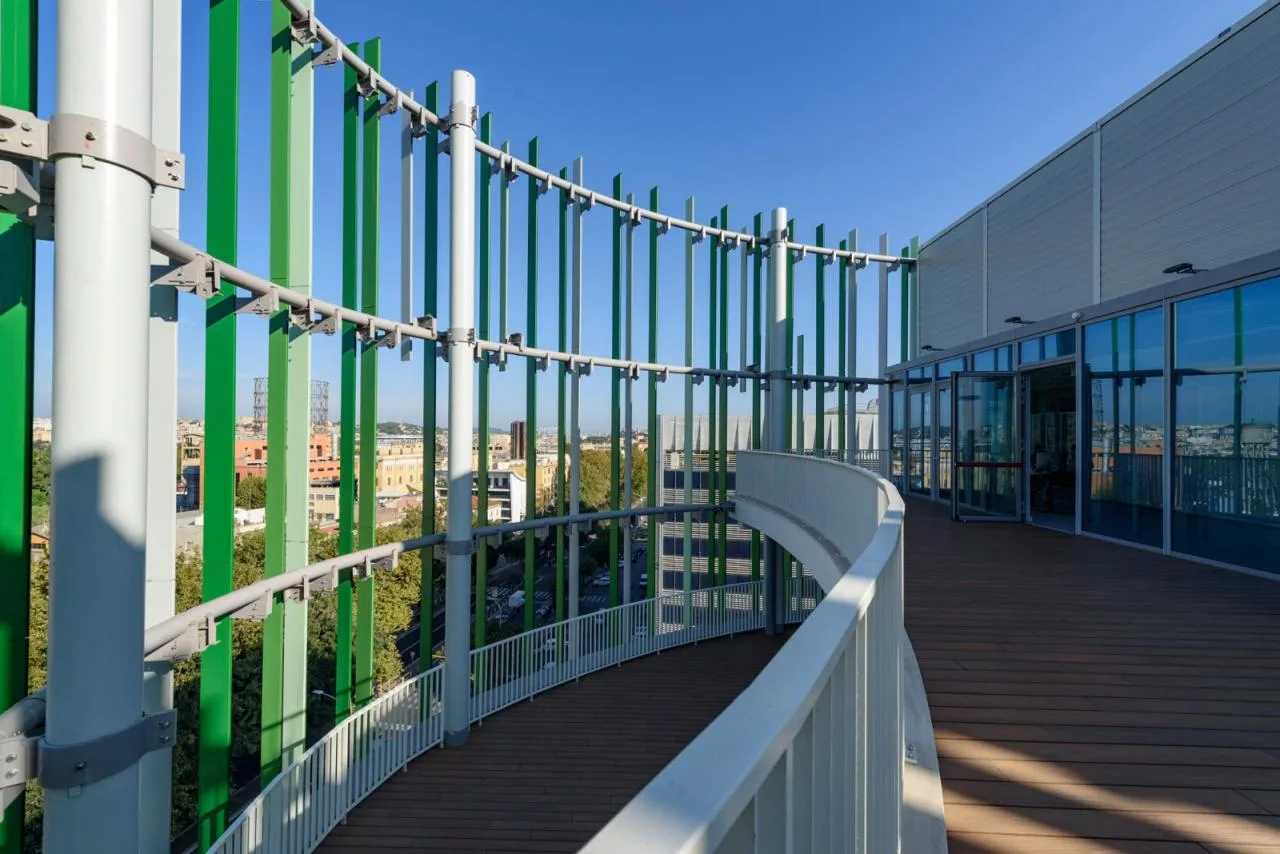
The semi-open sky garden on the third floor separates public zones accessible to the city from the university’s private areas. Featuring diverse vegetation, decorative landscaping, and durable wooden flooring, the elevated garden offers stunning views and a lush environment.
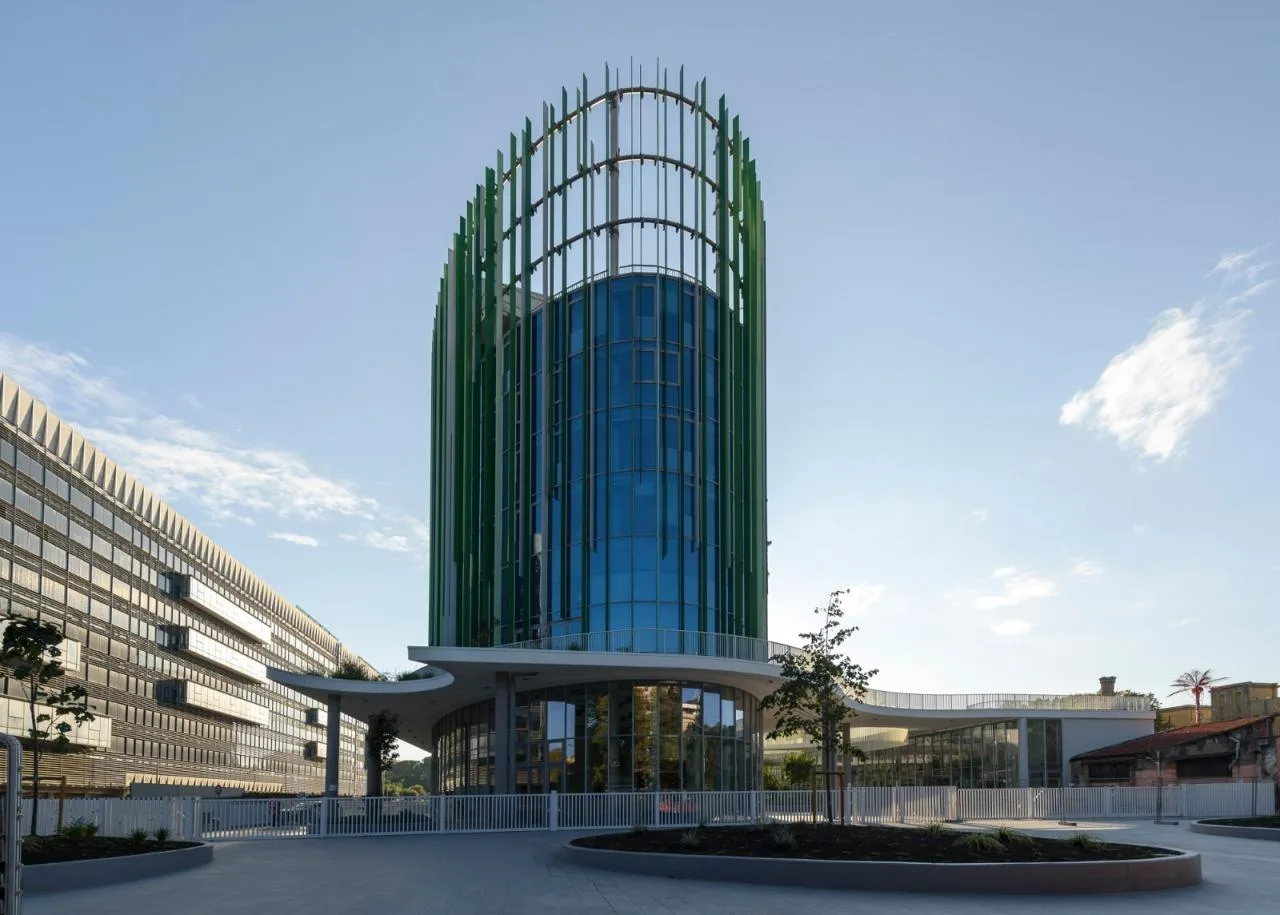
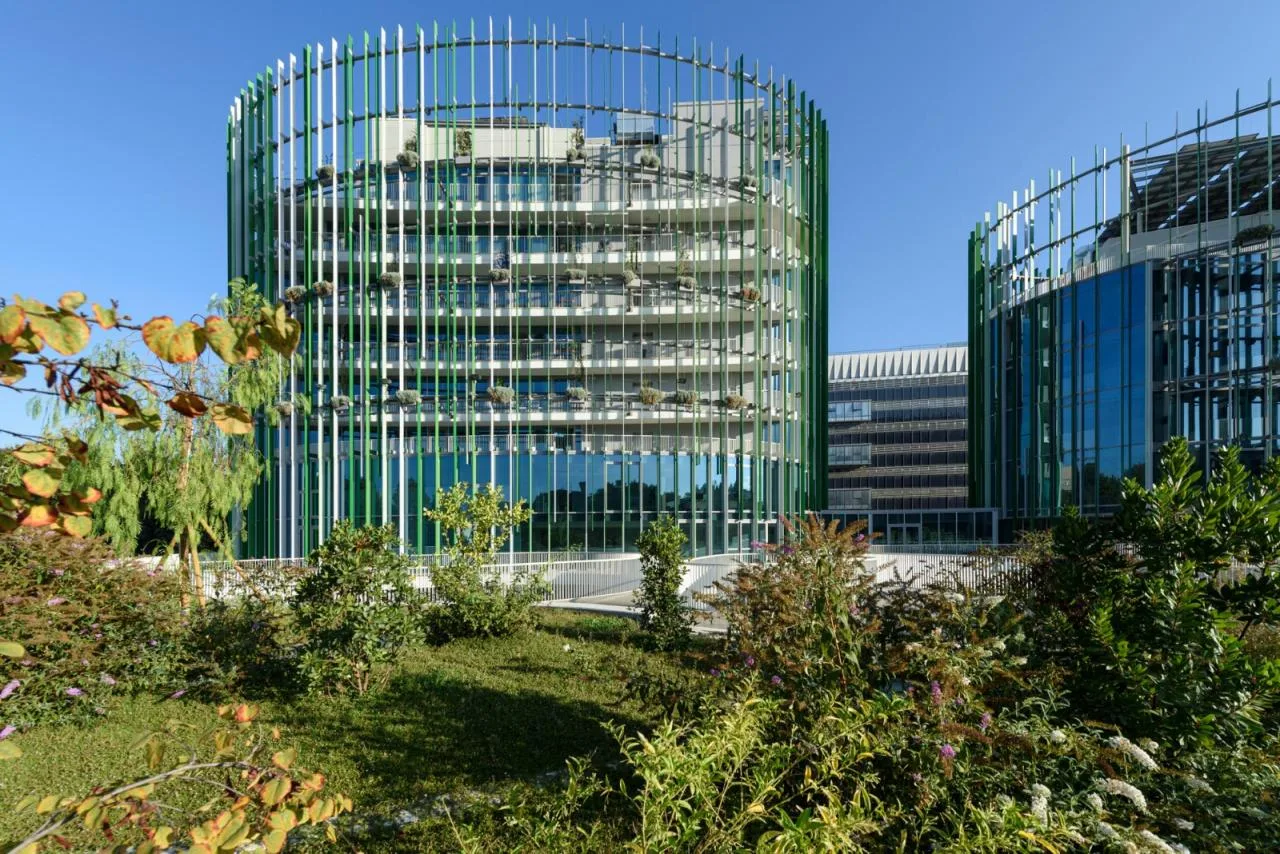
This sky garden reduces traffic noise in teaching areas and serves as a green corridor connecting the three oval-shaped glass curtain wall buildings. While the ground floor plaza and sky garden operate independently, they maintain a visual connection through the central atrium, enabling interaction across levels.
This design encourages people to linger, meet, and enjoy unique spaces bathed in soft natural light and ever-changing scenic views.
Functional Layout
The three new buildings are horizontally connected via a ground-level square and an aerial garden, while vertical circulation within ensures organic connectivity—spaces are both independent and integrated.
The first and second floors primarily serve as reception and public areas, effectively managing visitor flow. These spaces also host cultural events and exhibitions, fostering community engagement.
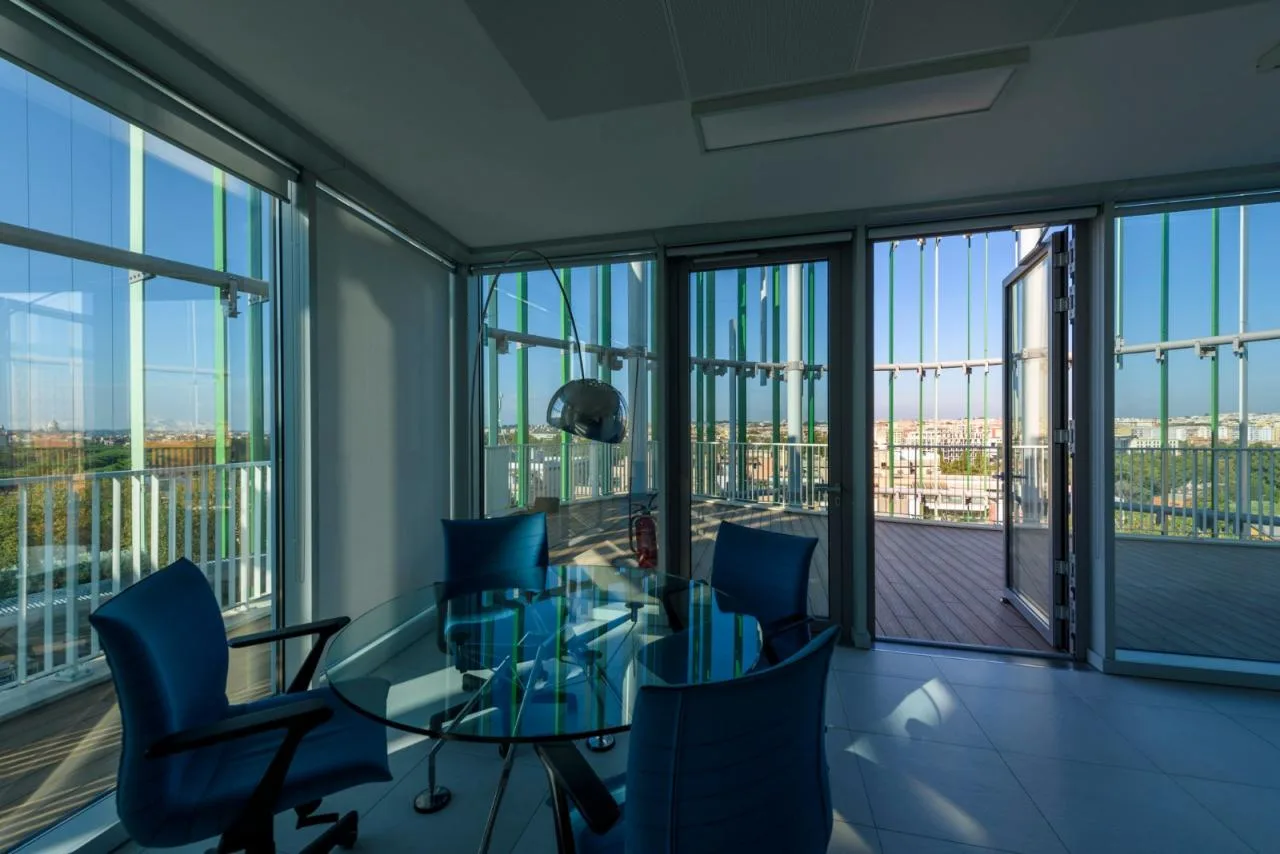
The upper floors above the third have high privacy and house key university functions such as the DAMS institution, offices, and classrooms. Offices and conference rooms are positioned along the perimeter to ensure natural ventilation day and night.
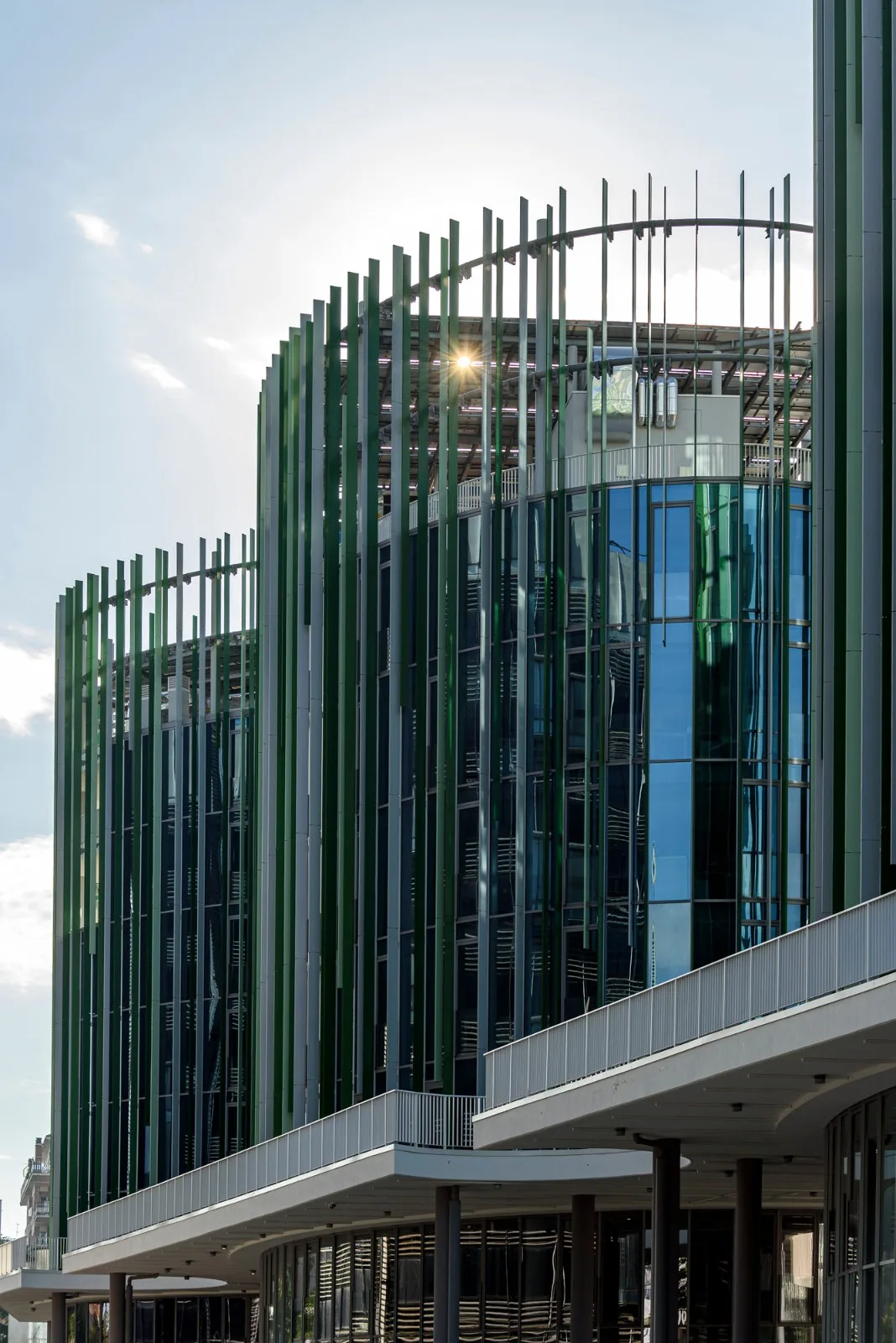
Full glass curtain walls allow abundant natural light, reducing reliance on artificial lighting during daytime. Interior spaces overlook the third-floor sky garden, providing visual relief and inspiring views.
Sustainability
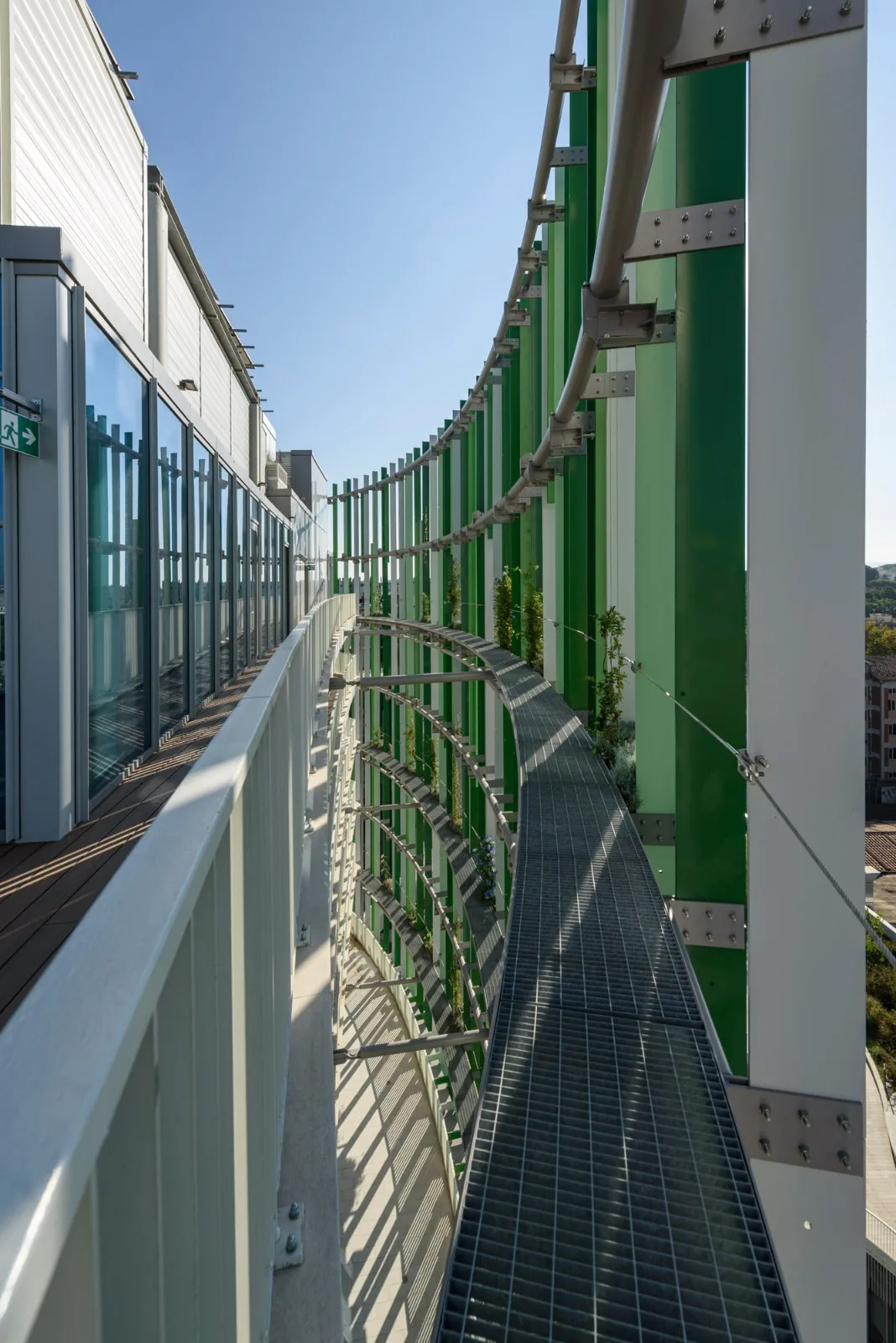
Grounded in passive design and environmental sustainability, the project minimizes energy use while maximizing indoor and outdoor comfort. The building’s elliptical shape, tapering on the east and west sides, reduces solar exposure and prevents overheating and glare during summer.
Terrace gardens placed at various heights create vertical green spaces that enhance the façade and harness bioclimatic features to improve interior comfort.
Project Drawings
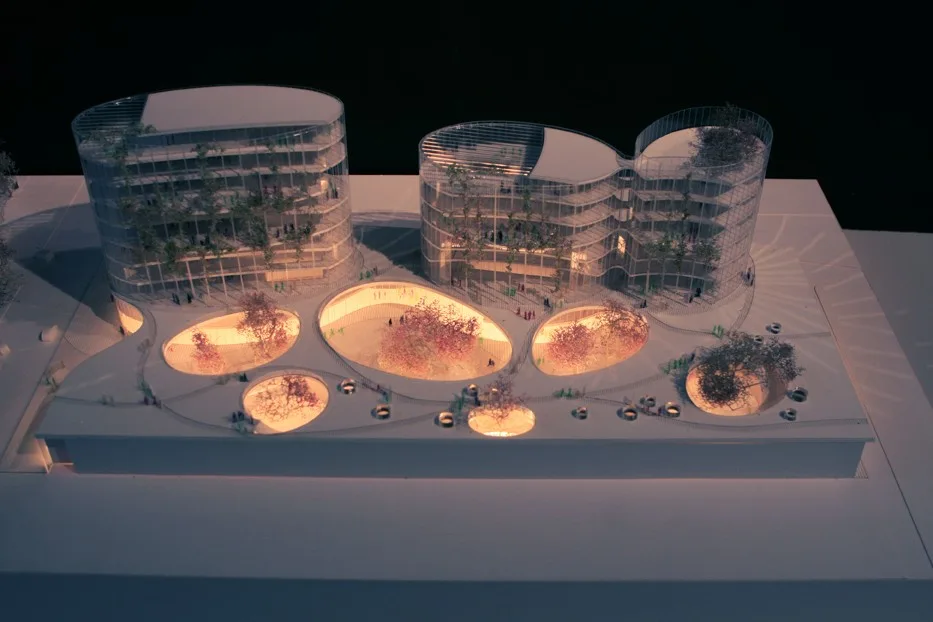
△ Model Diagram
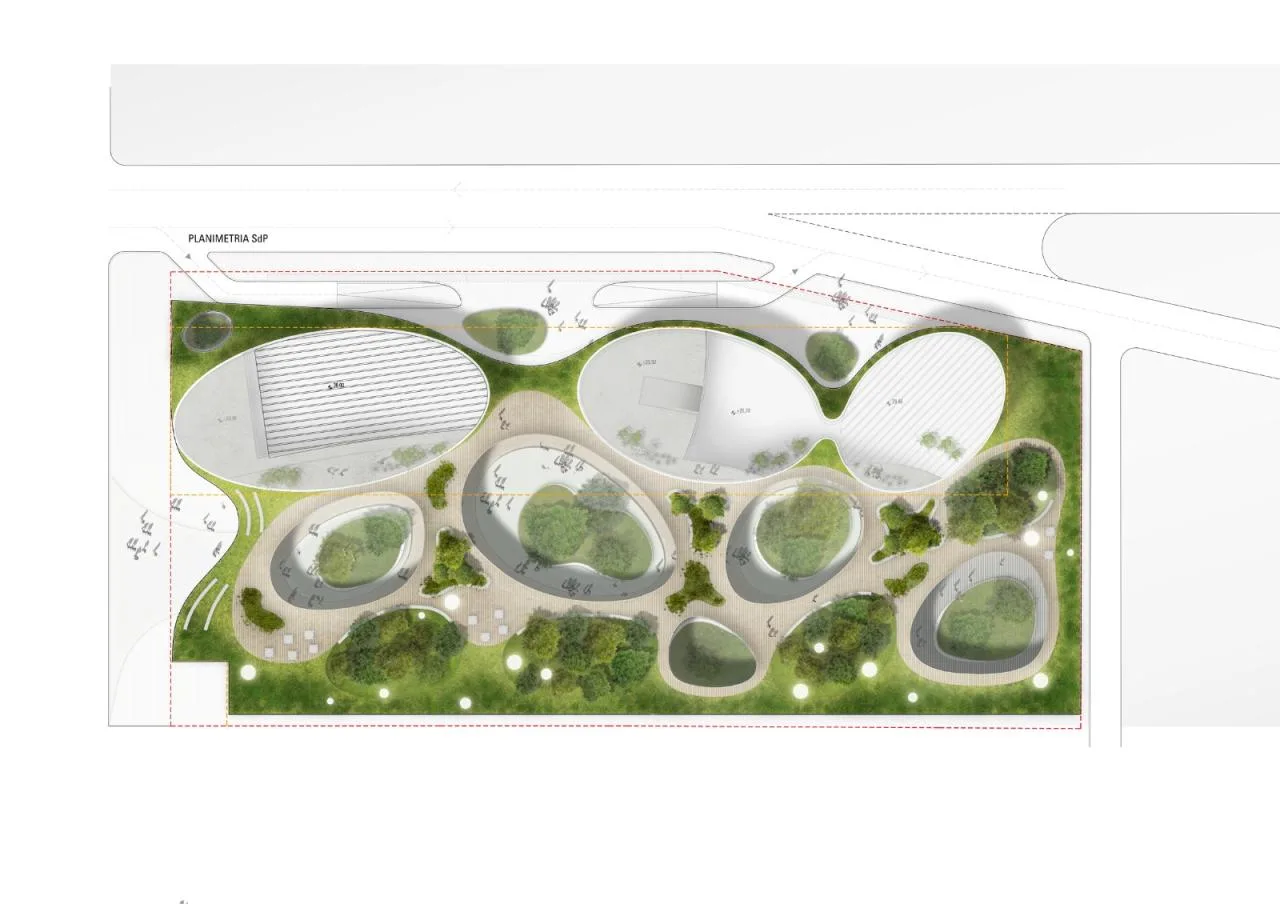
△ General Layout Plan
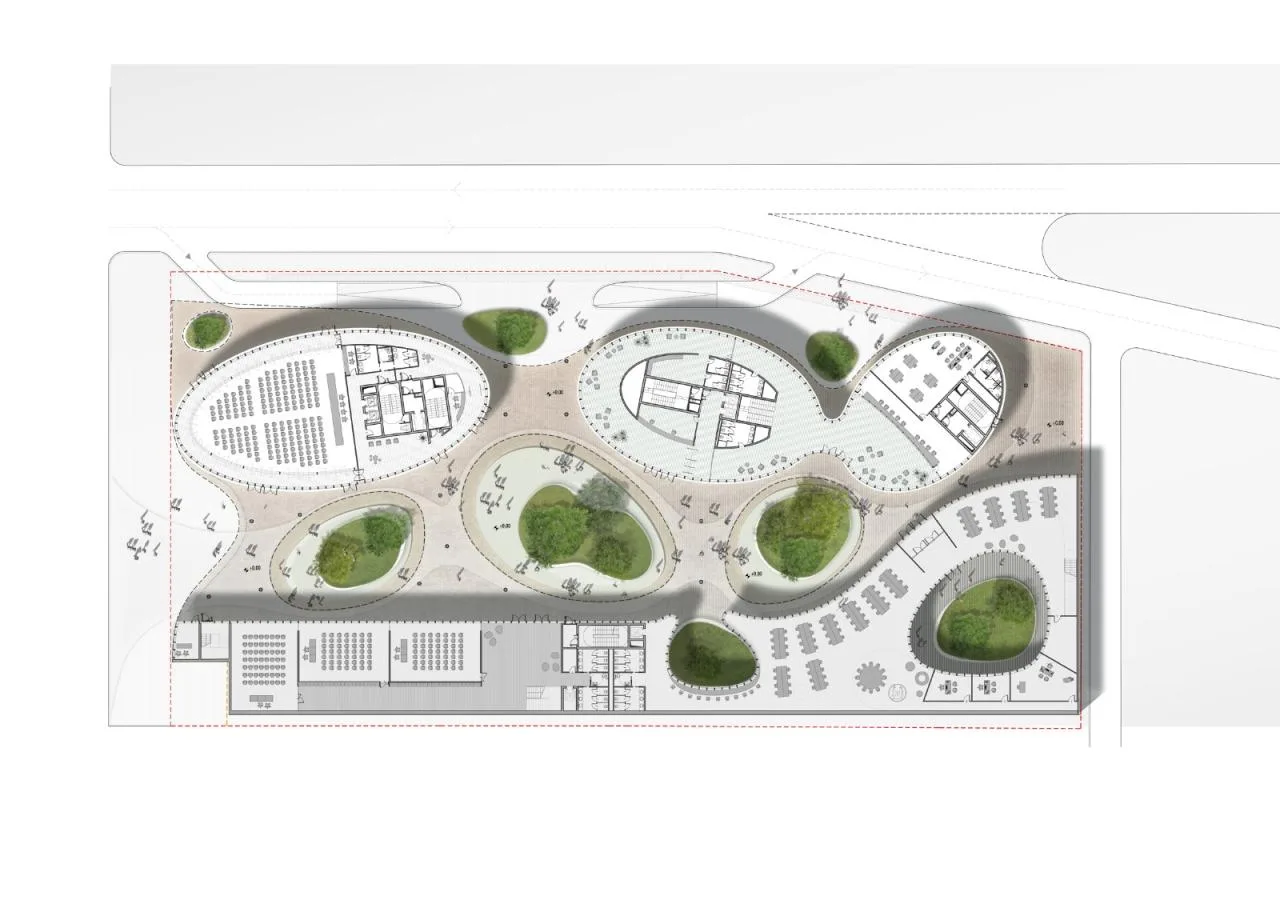
△ First Floor Plan
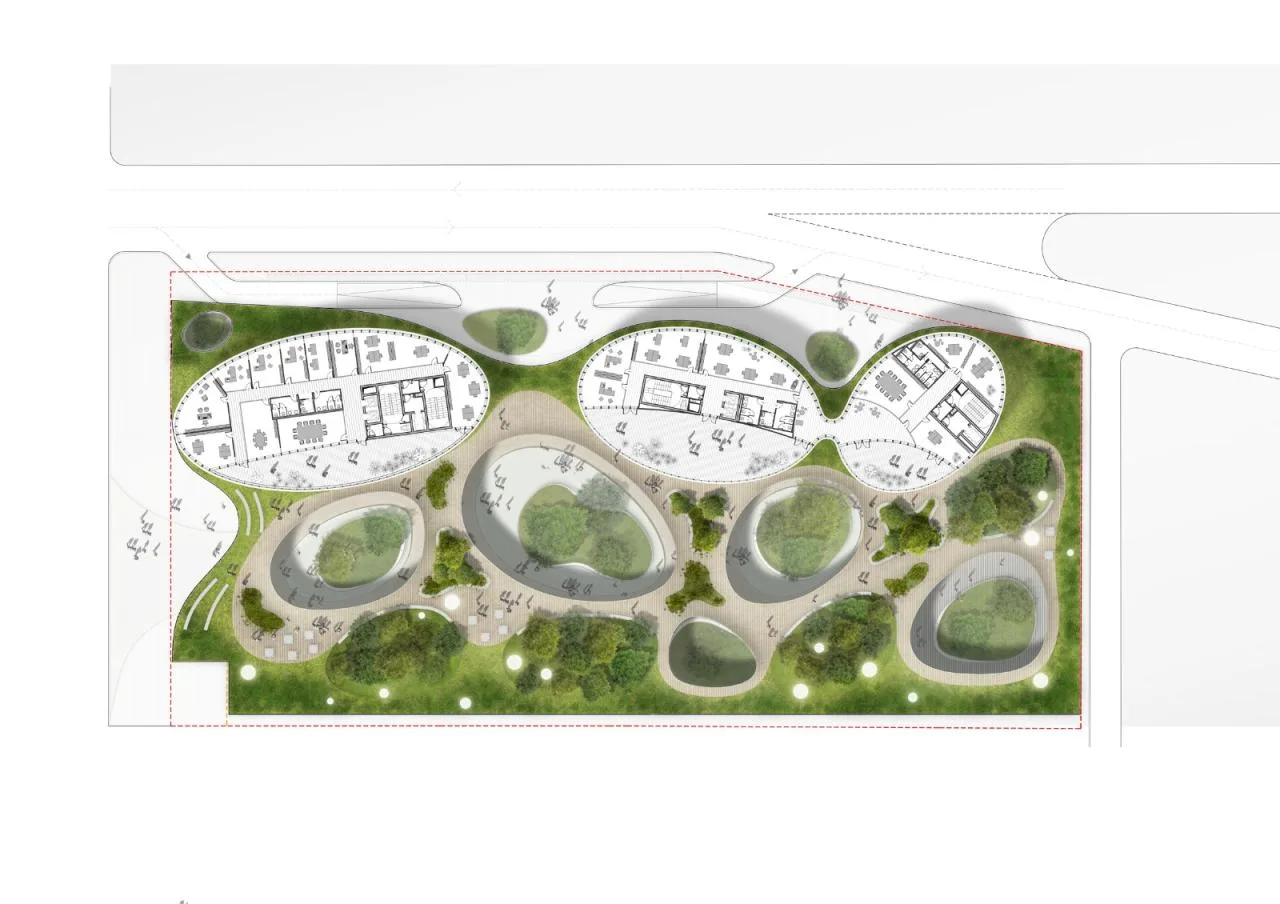
△ Third Floor Plan
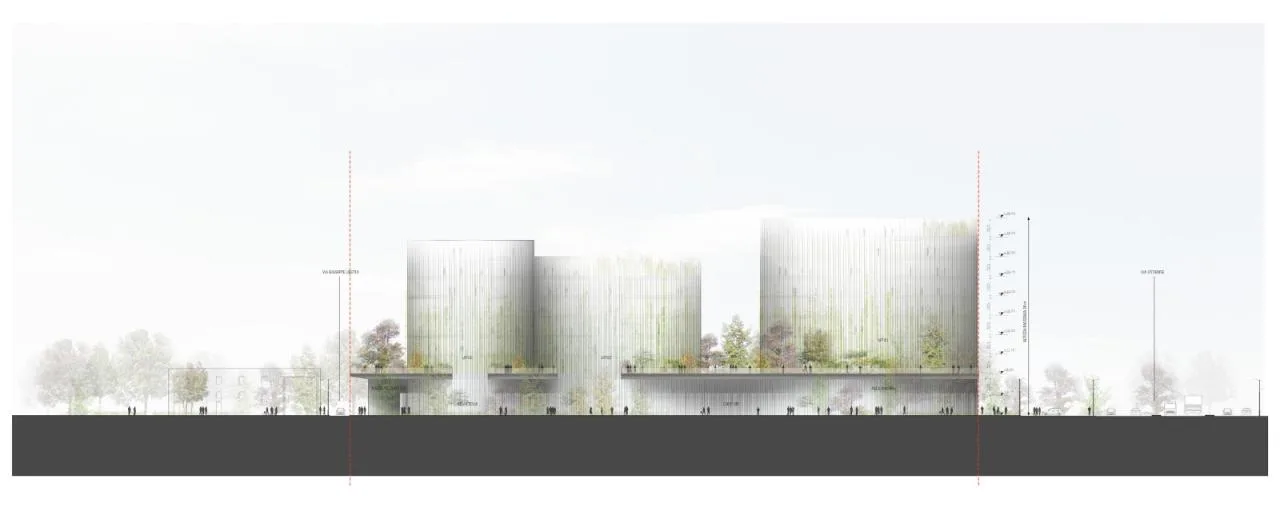
△ Elevation Drawing
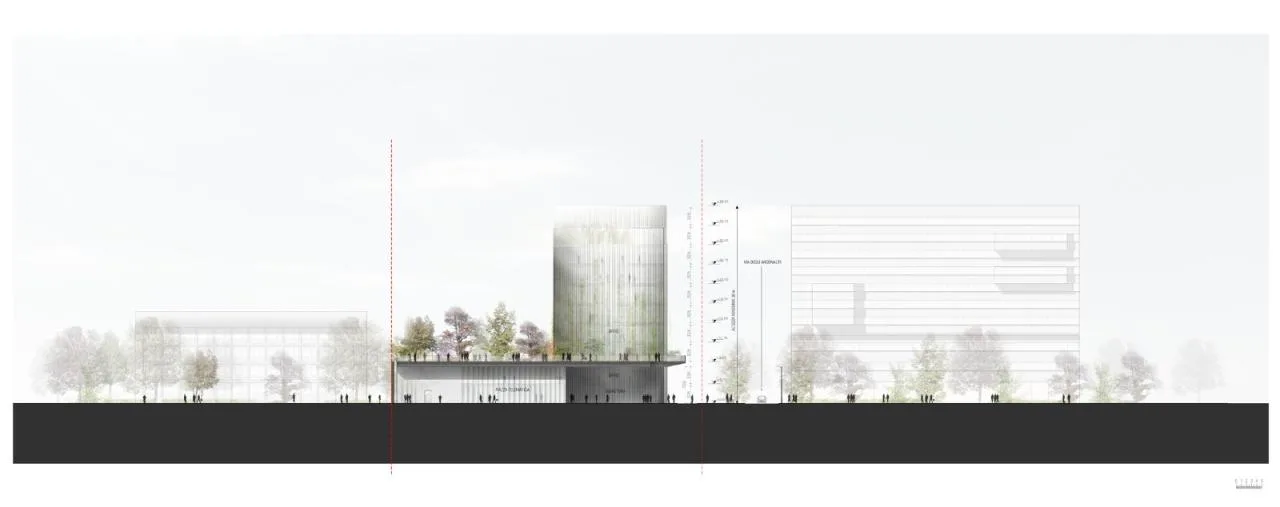
△ Elevation Drawing
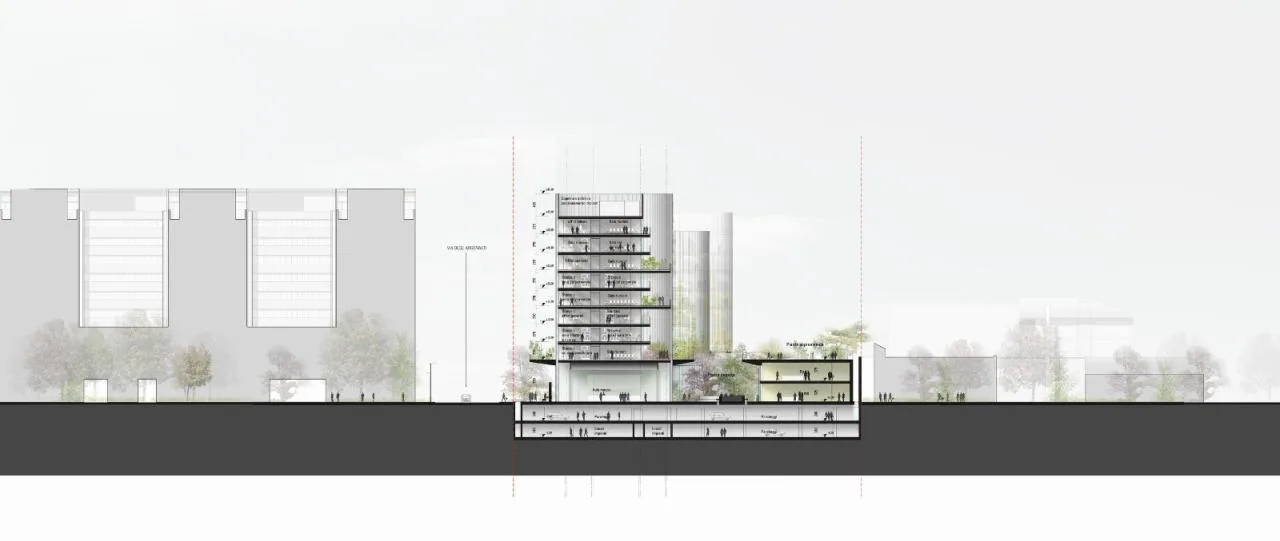
△ Section Diagram
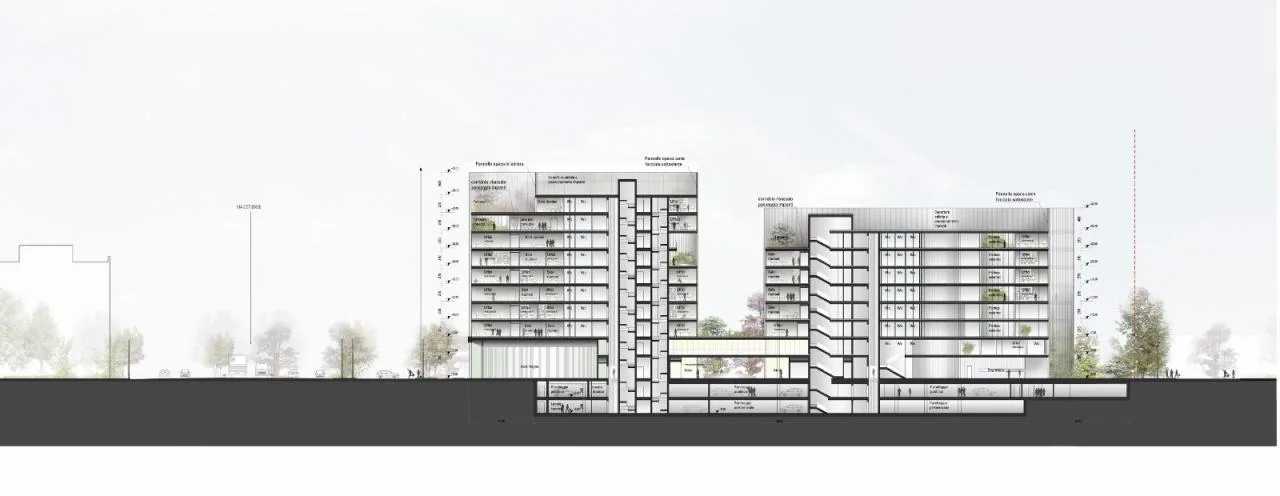
△ Section Diagram
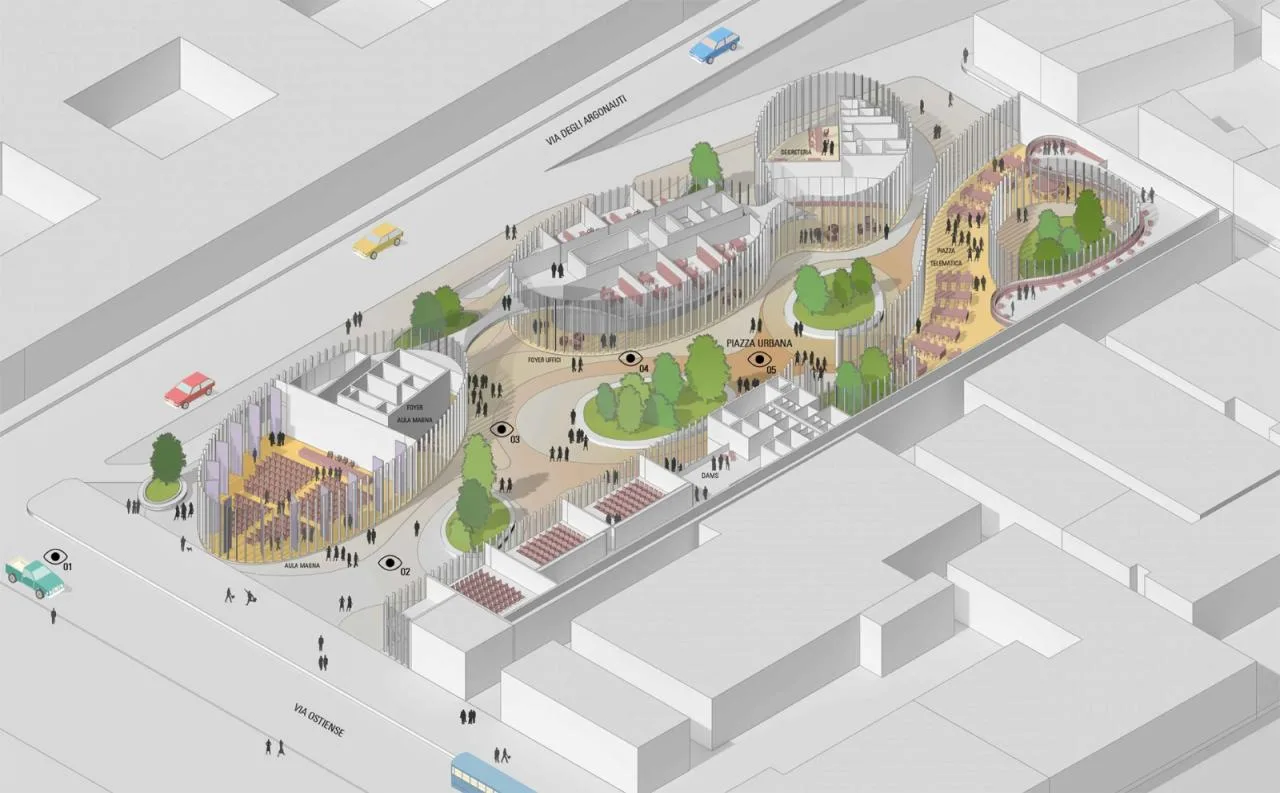
△ Streamline Axonometric Diagram
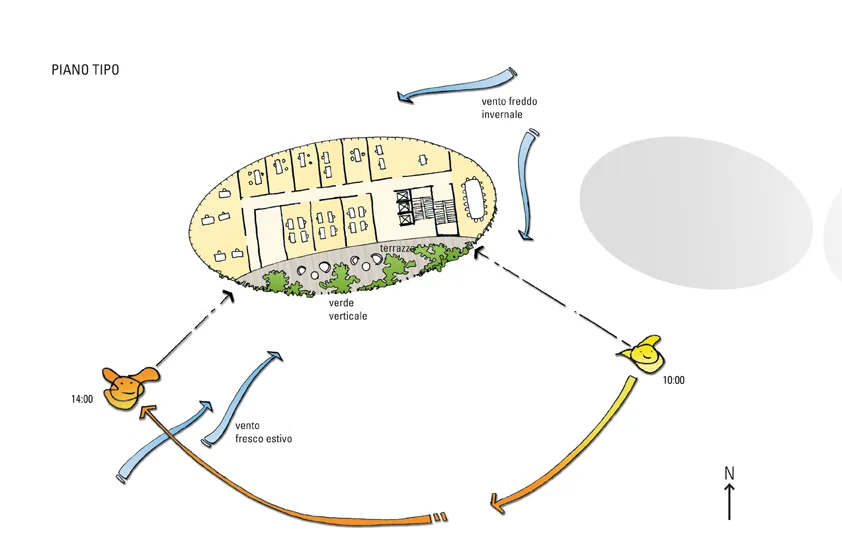
△ Bioclimate Map
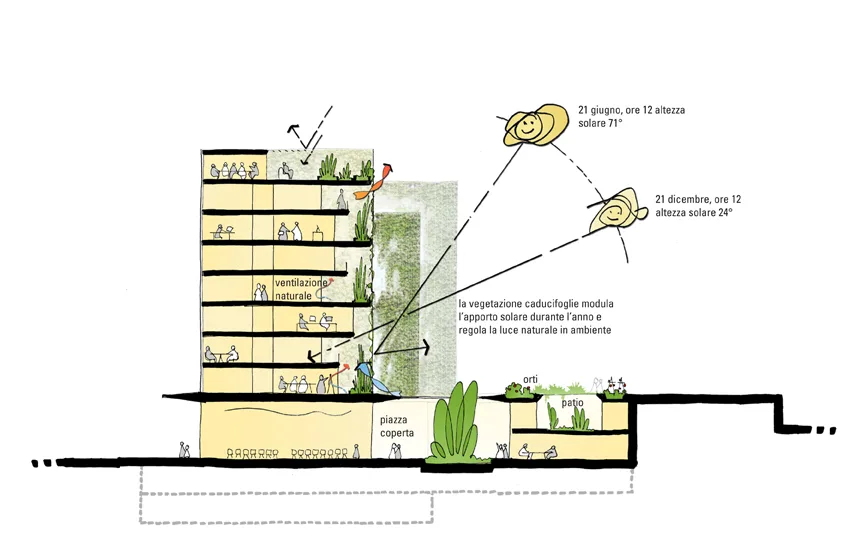
△ Bioclimate Elevation Diagram
Project Information
Location: Rome, Italy
Completion Year: 2021
Client: CAMAR TRE
Design Team: Mario Cucinella, Fabrizio Bonatti, Giulio Desiderio, Alessandro Miele, Michele Roveri, Daniele Morelli, Paolo Greco, Luca Vernocchi, Lucrezia Redace, Antonio Nardozzi, Ksenya Shkroban, Teresa Zanaria, Gabriele Chiaretti, Antonino Cucinella, Julissa Gutarra, Alberto Bruno, Serena Carrisi, Emanuele Dionigi, Giovanni Sanna, Pietro Marziali, Giuseppe Perrone, Yuri Costantini (model)
Visual Effects: Engram Studio; Paris Render, Alessia Monacelli, Sebastian Beldean
Photography: Moreno Maggi
Architectural Landscape: LAND
Structural Engineering: Milan Ingegneria
Construction Services Engineering: Manens Tifs
Security Coordination: Giuseppe Omodeo
Art Direction: MCA, Paolo Greco












Must log in before commenting!
Sign Up