
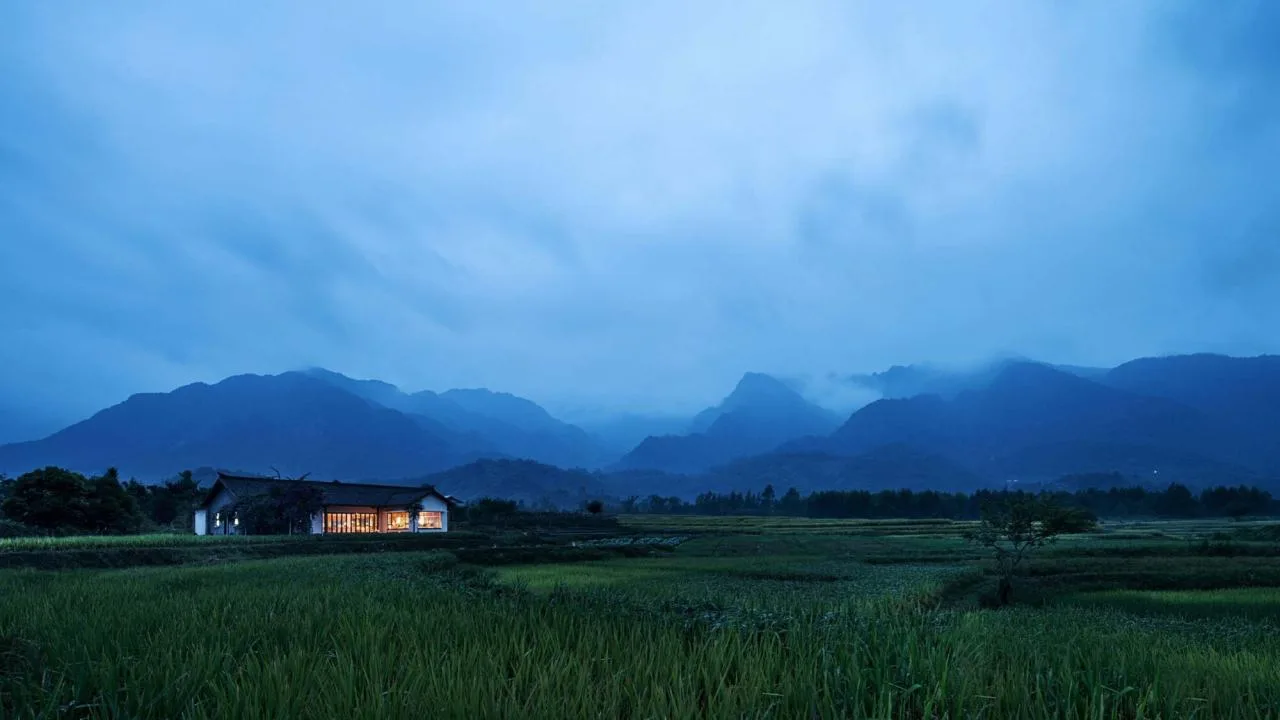
Returning to the Countryside is nestled in Gaoqiao Village, located in the western region of the Emei Mountain Scenic Area, just a 40-minute drive from the city center. This village, known for its generations of farming, benefits from abundant mountain spring water and fertile soil, making it famous for its rice and crops.
With the city’s expansion and tourism development, new life has been breathed into this tranquil countryside. Respecting the natural beauty, houses have begun to emerge among the rice paddies, following the terrain and mountain paths to create a unique, year-round experience. Three buildings quietly blend into the landscape, surrounded by verdant fields and close to the village, rice paddies, and mountain springs. These are the “living center” at the mountain’s base, the “field canteen” in the countryside, and the “coffee shop” on the terraced fields.
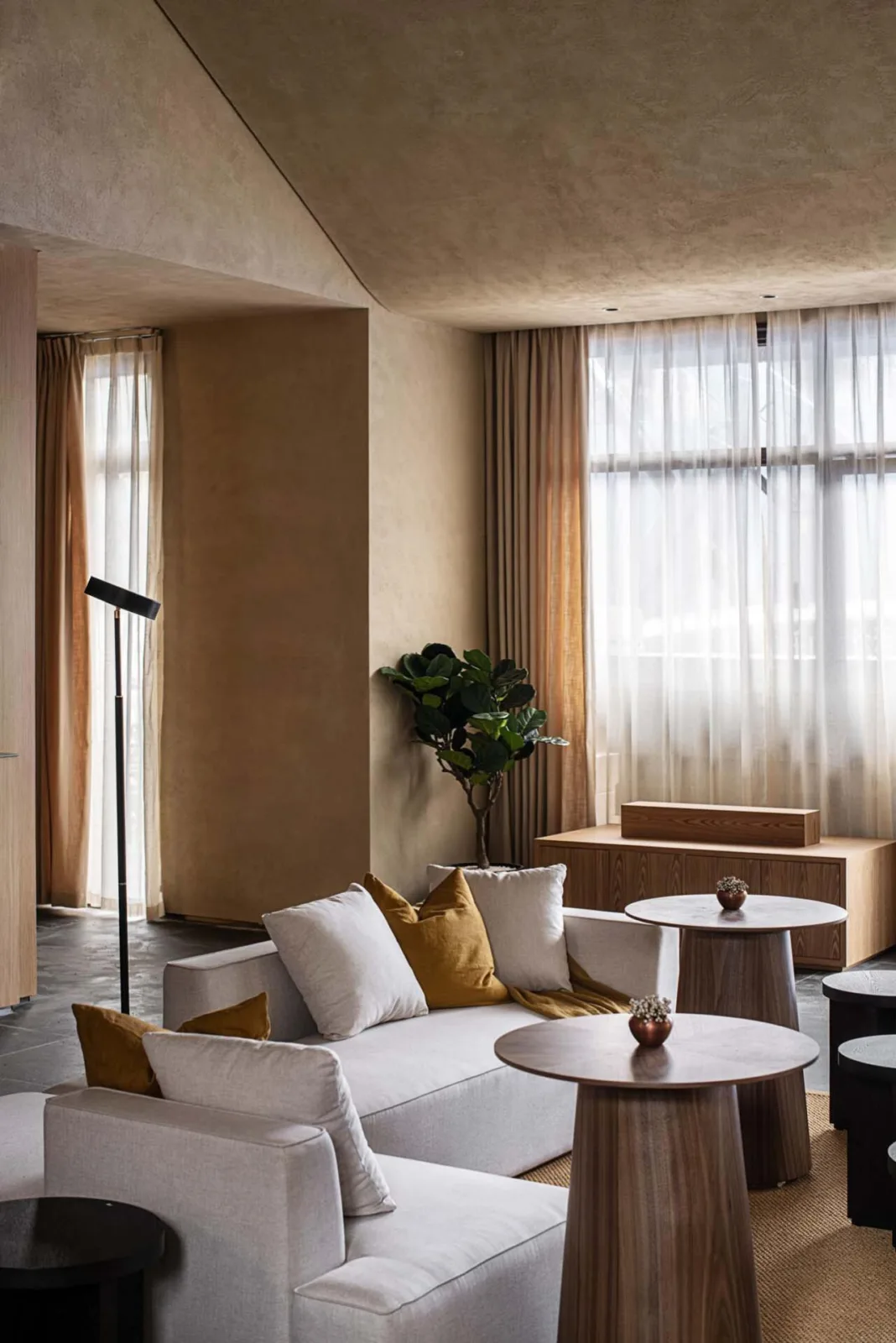
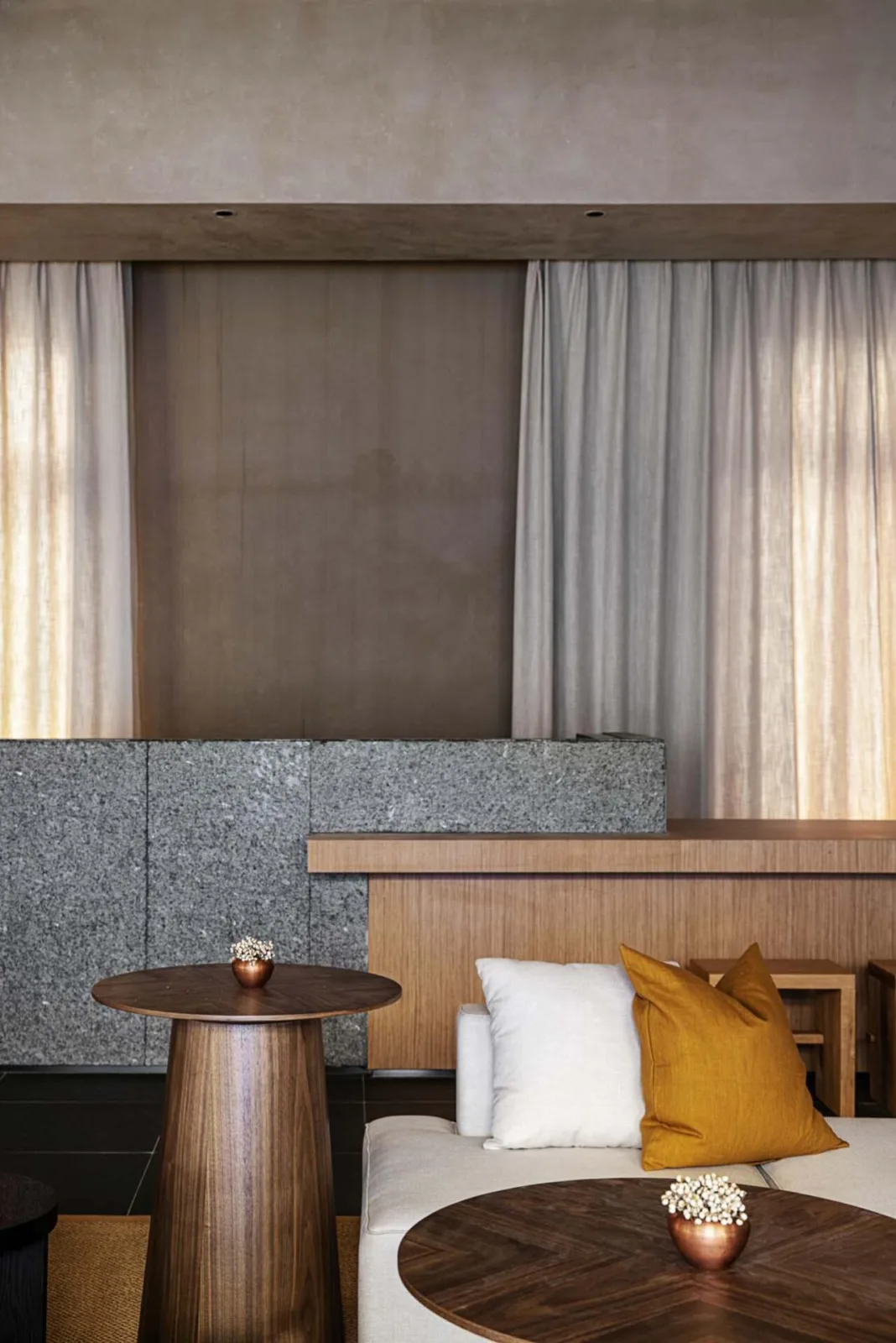
Visiting in summer feels like stepping into a “rural living room” as you enter the living center, warmly welcoming guests. The space uses materials and furniture in earthy tones, reflecting simplicity and authenticity. The calming atmosphere soothes the hectic minds of urban visitors, washing away travel fatigue and inviting relaxation. This is where the journey begins.
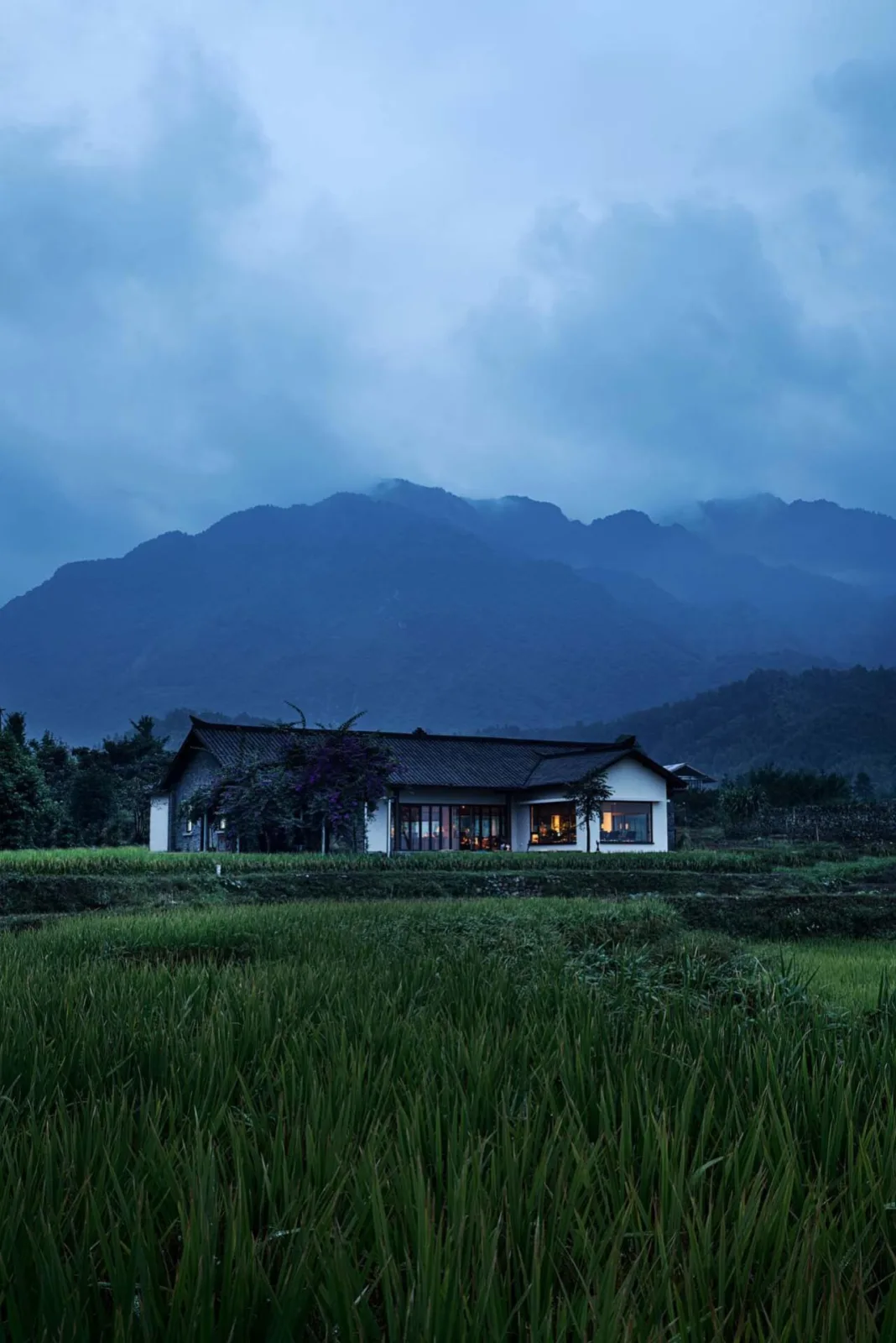
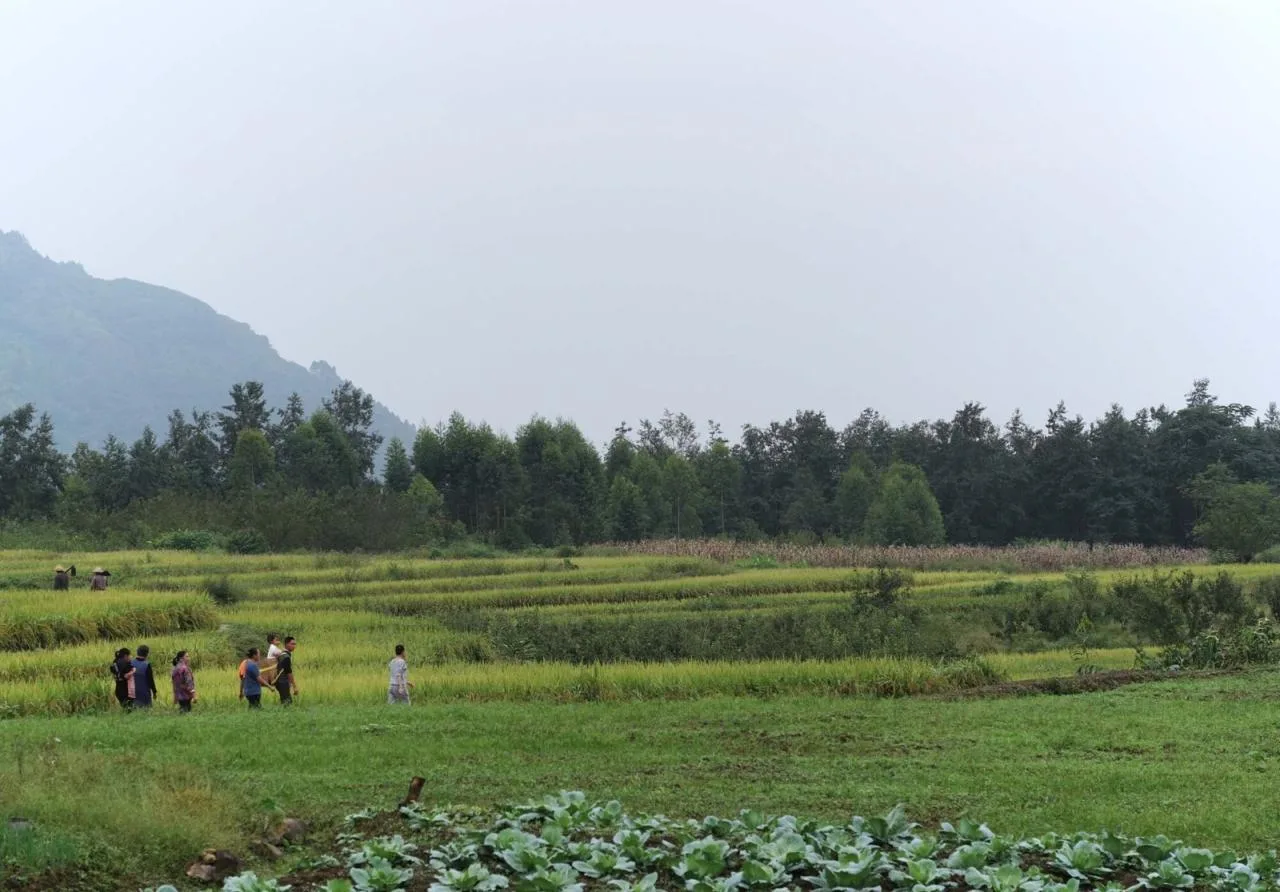
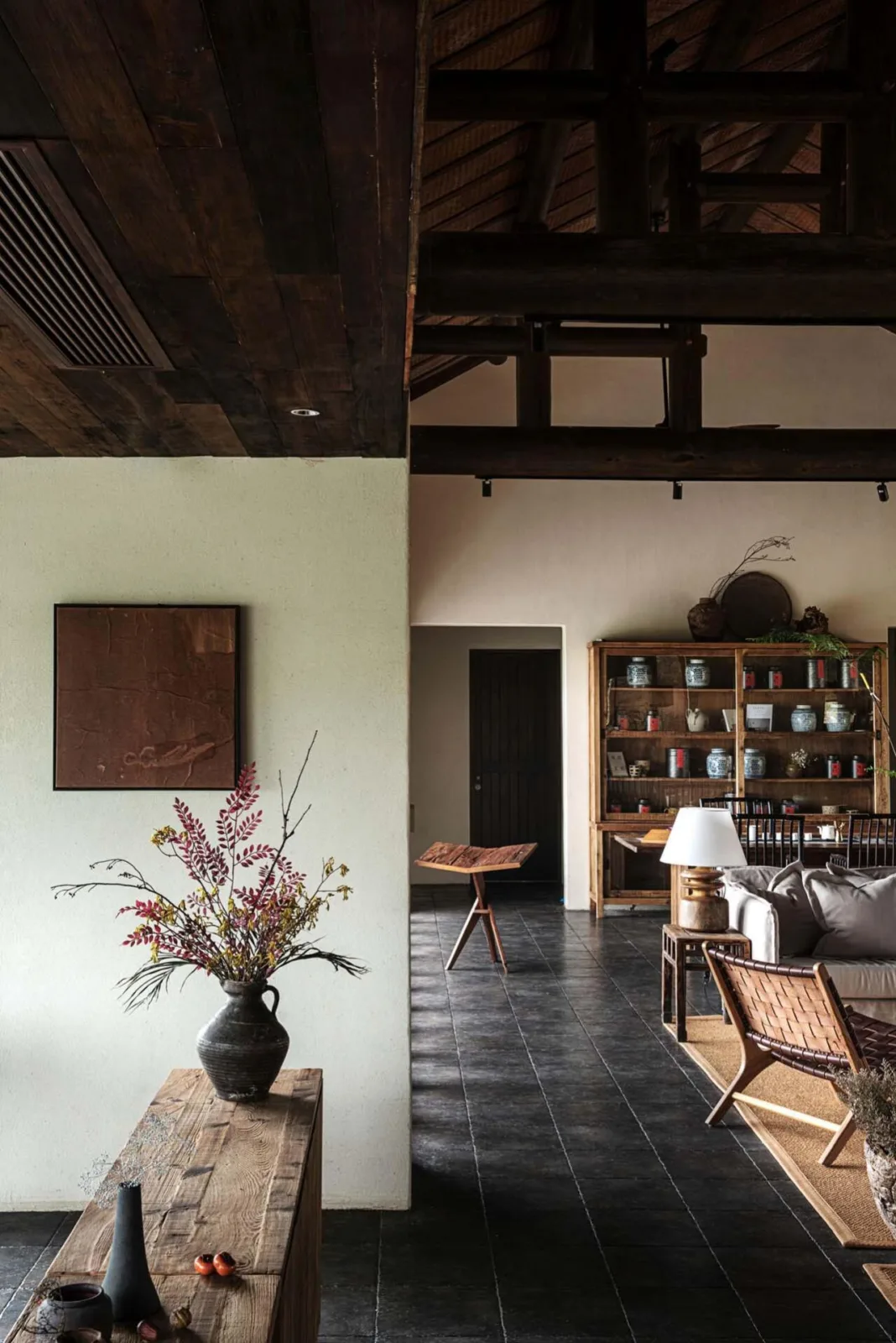
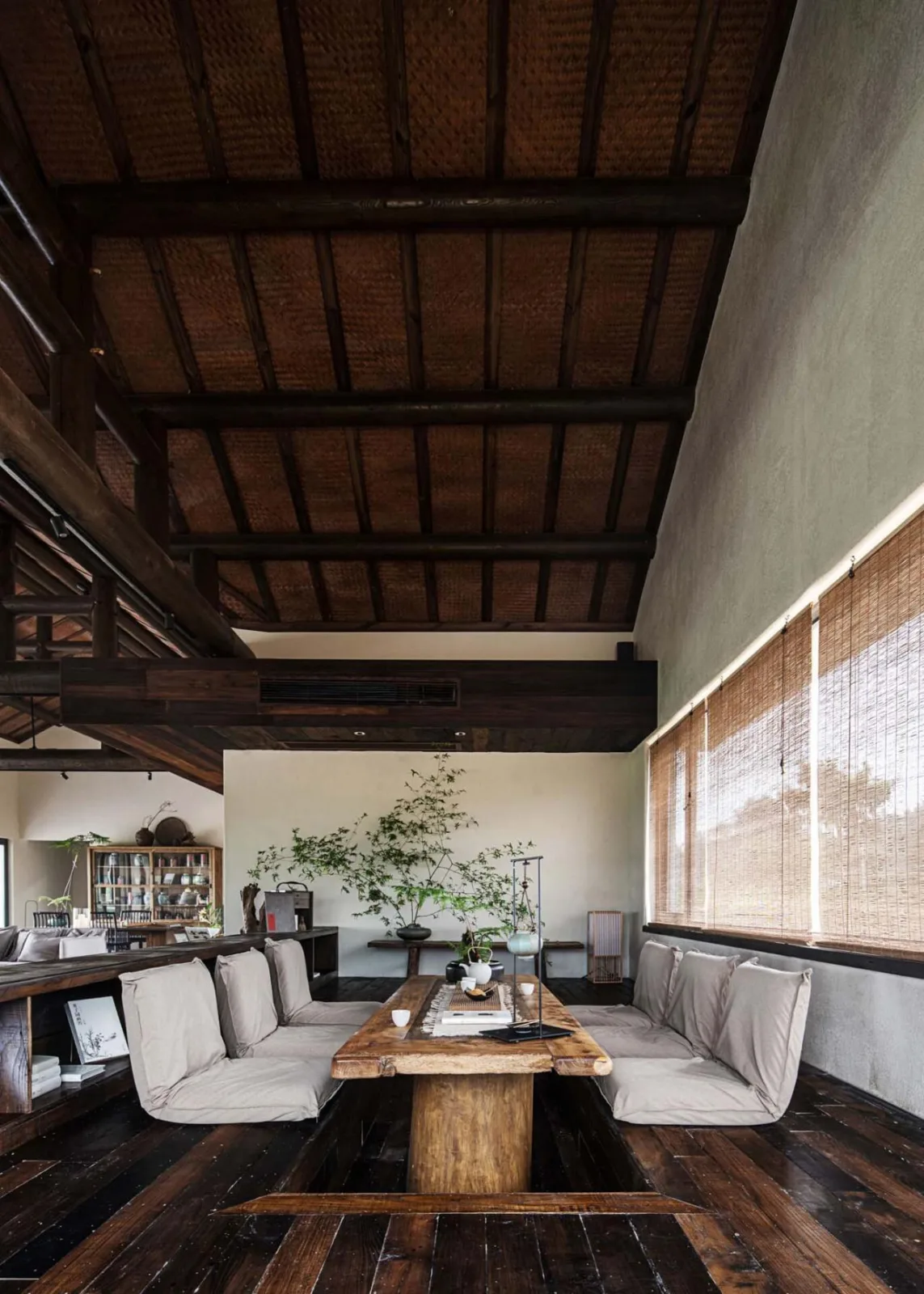
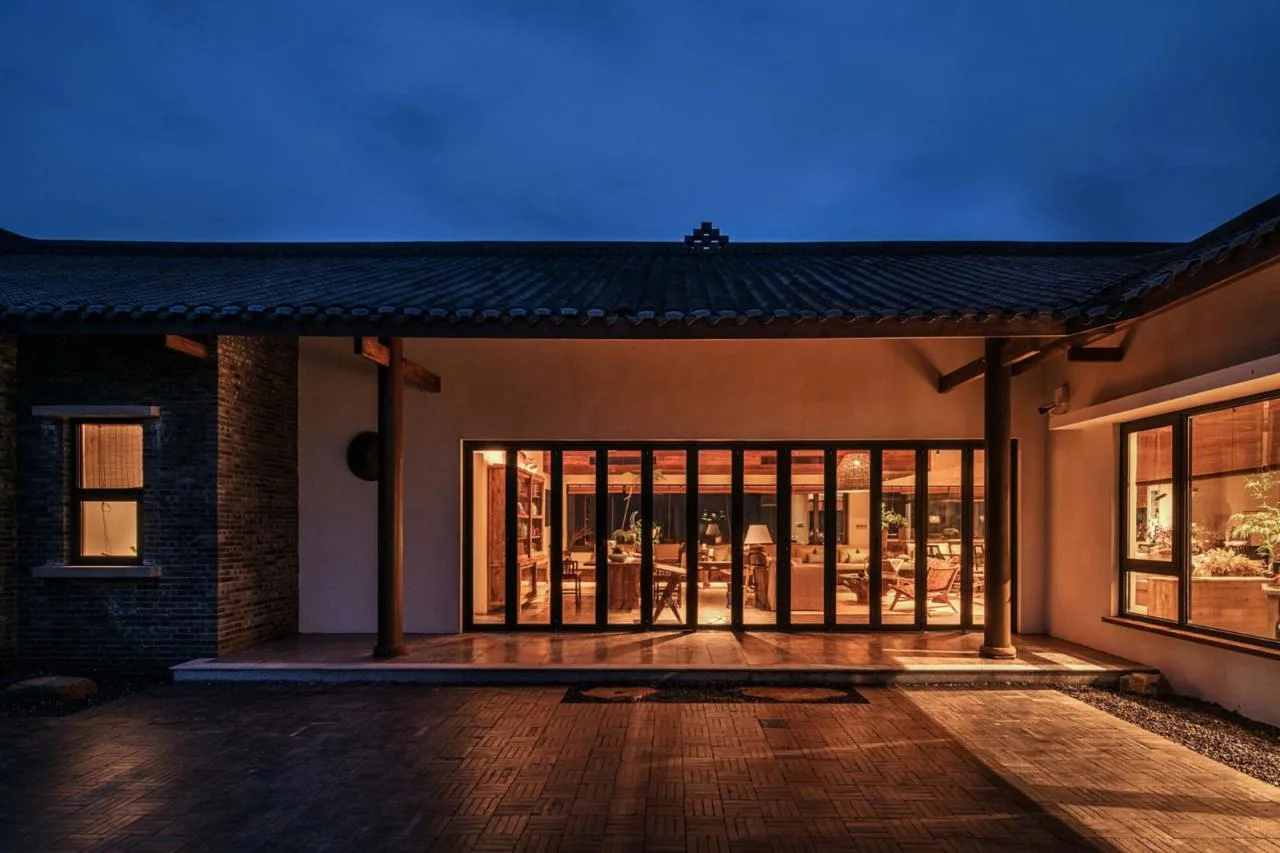
Heading northwest along the path for about ten minutes, you’ll reach the vineyard near the “Field Canteen.” The gentle rain on the country road enhances the vibrant green of the rice fields and sharpens the clarity of the roof tiles, creating a refreshing and invigorating scene. Passing fish ponds, wooden bridges, terraced fields, fruit orchards, and simple houses, you arrive at the canteen built atop an existing residential foundation.
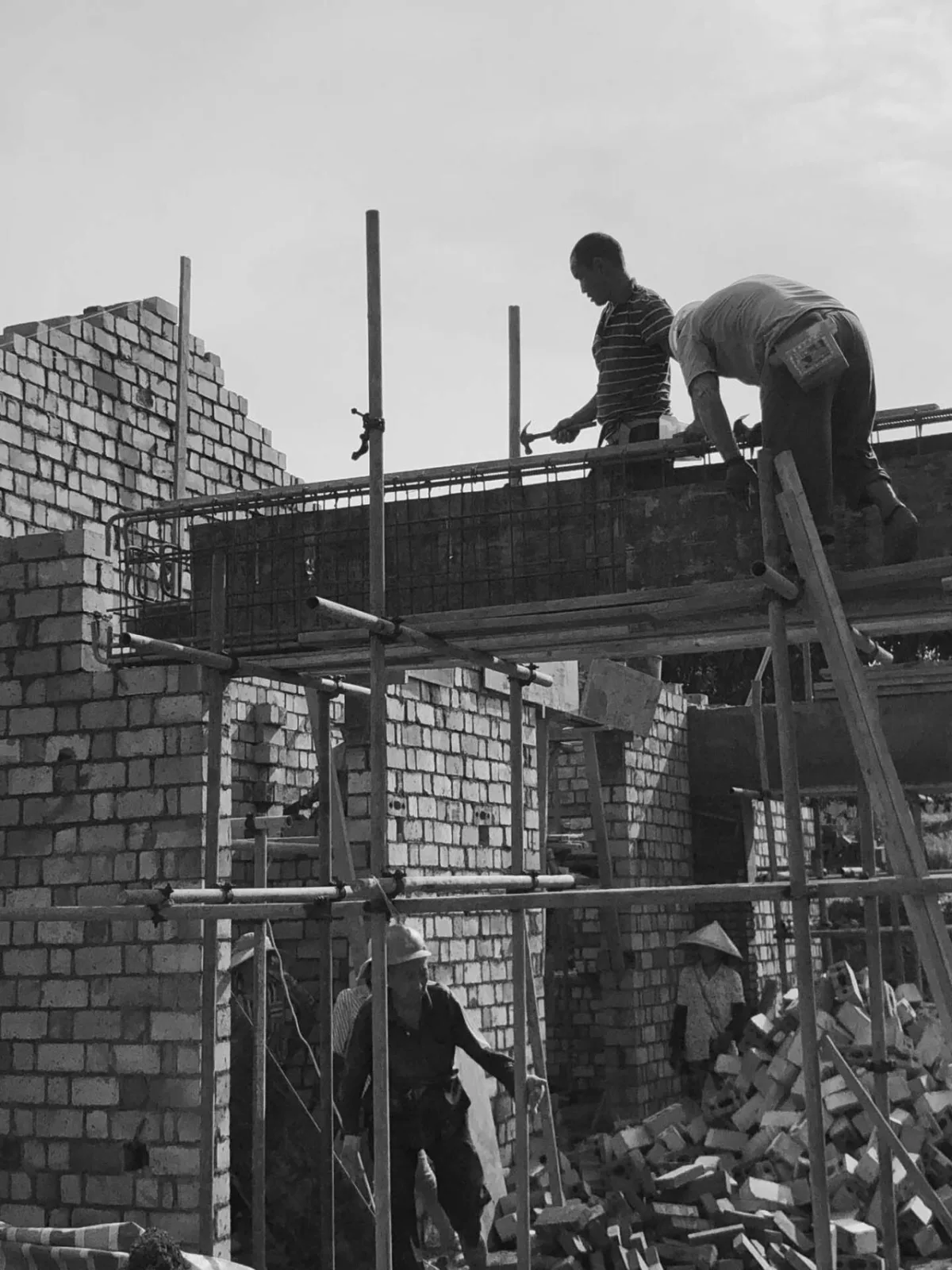
The canteen’s construction was swift, aiming to “restore the old to its original state,” which posed a unique challenge to the design. The selection of materials and the use of local woodworking techniques were vital to achieving the intended ambiance.
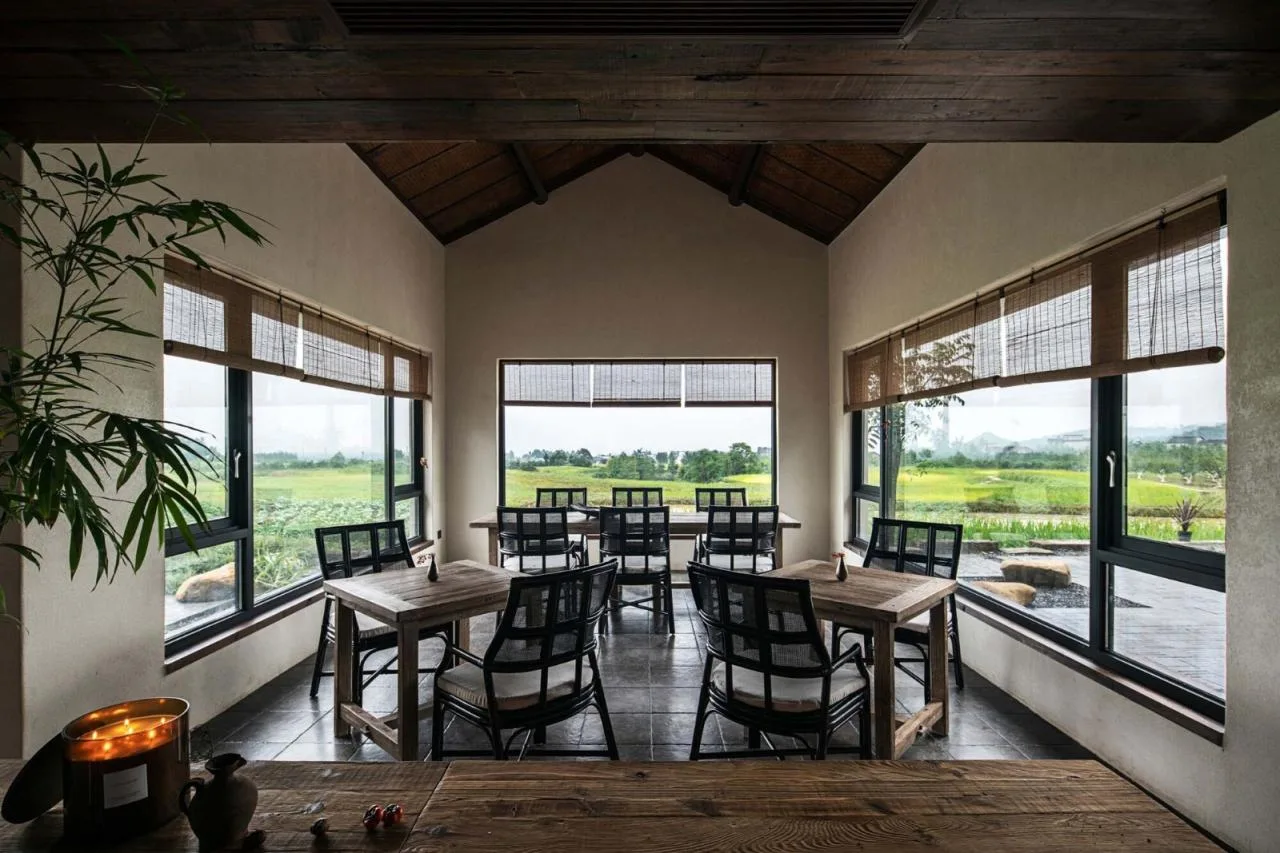
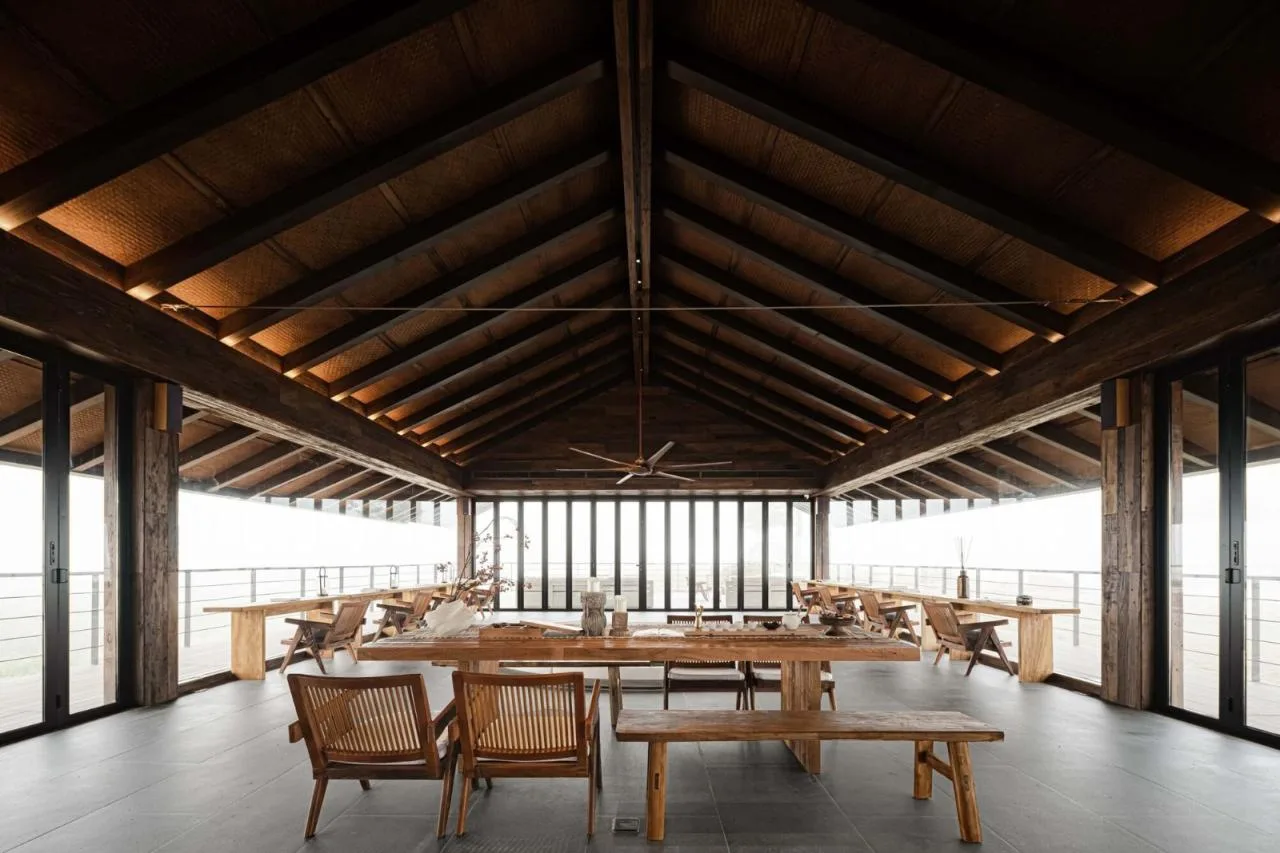
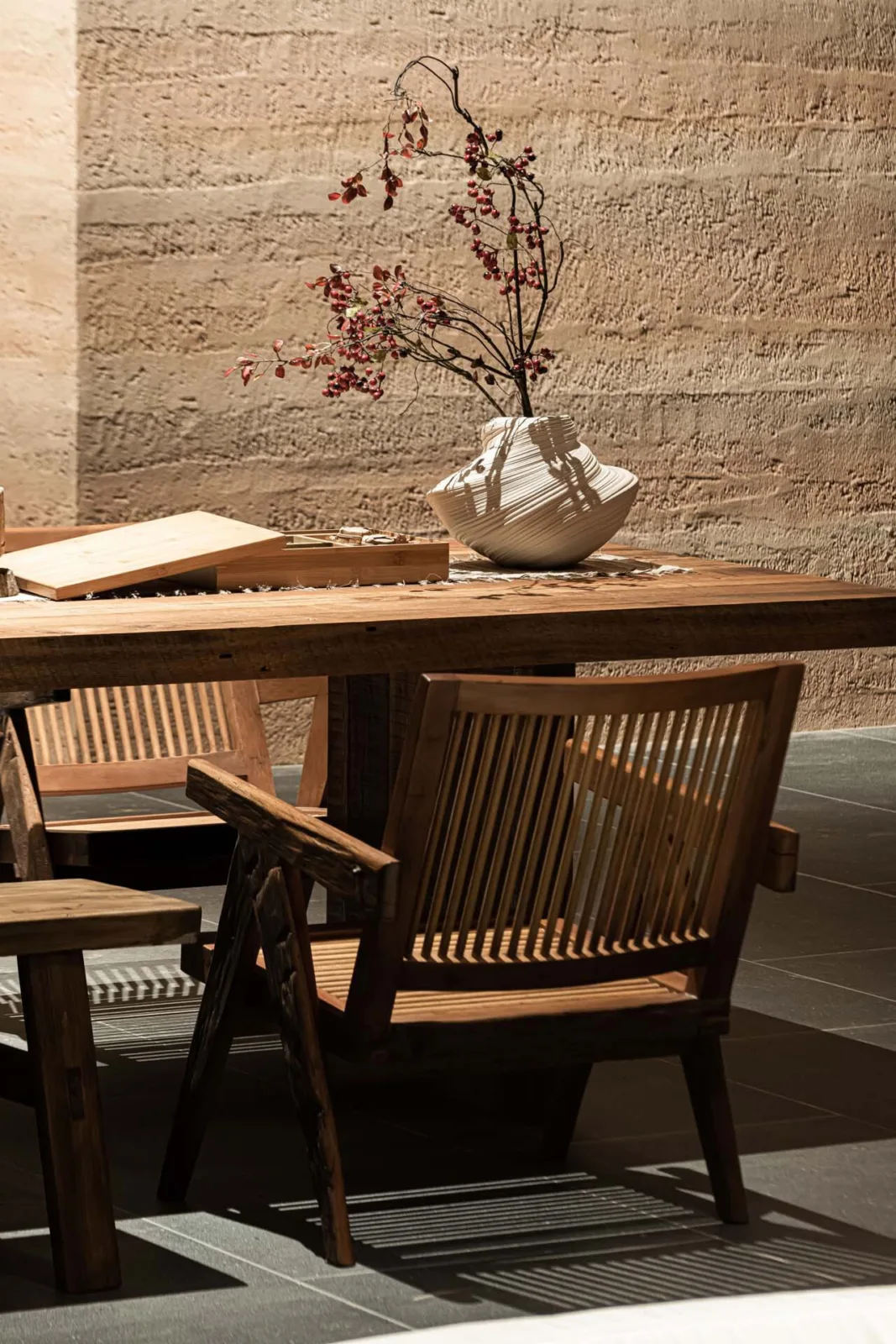
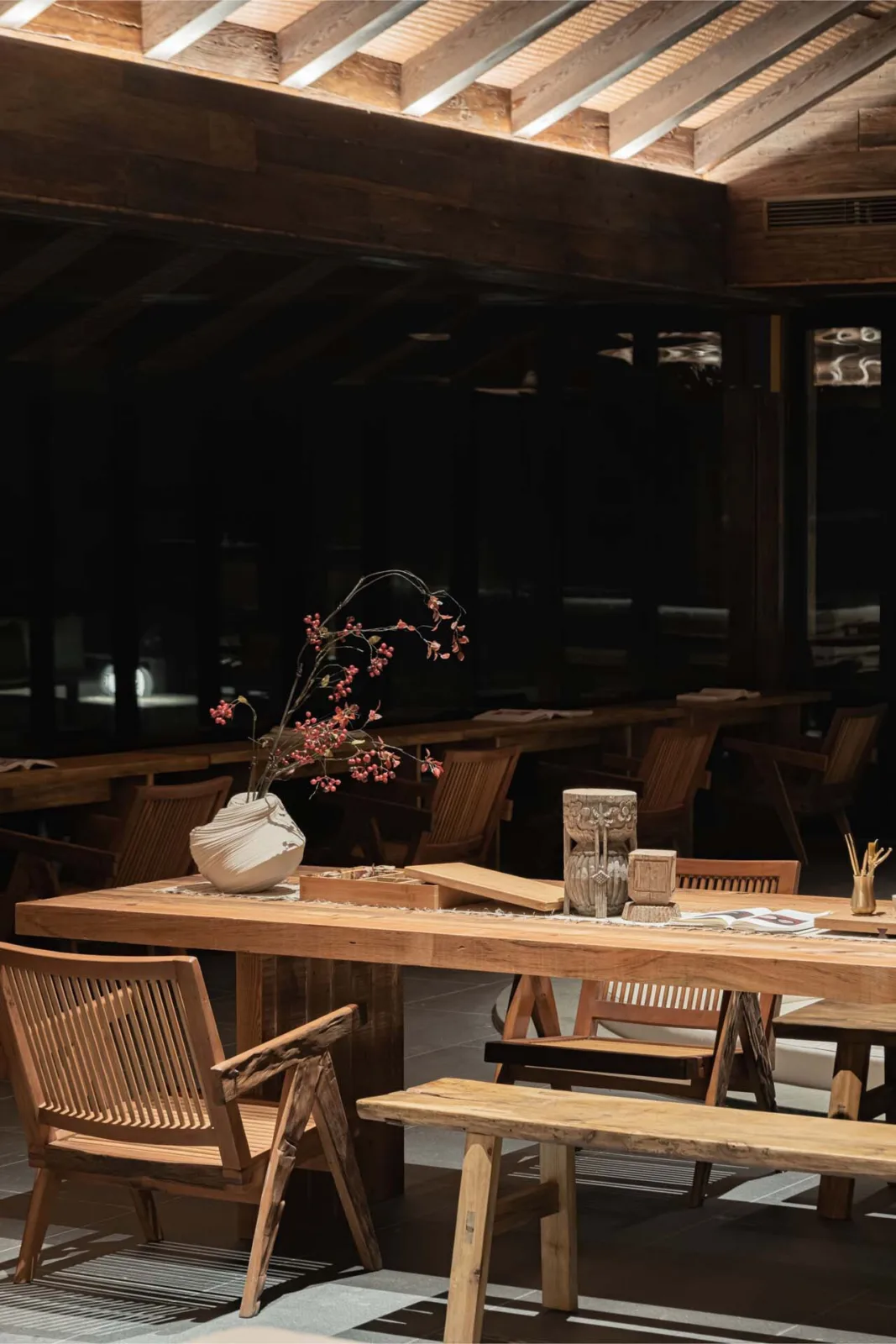
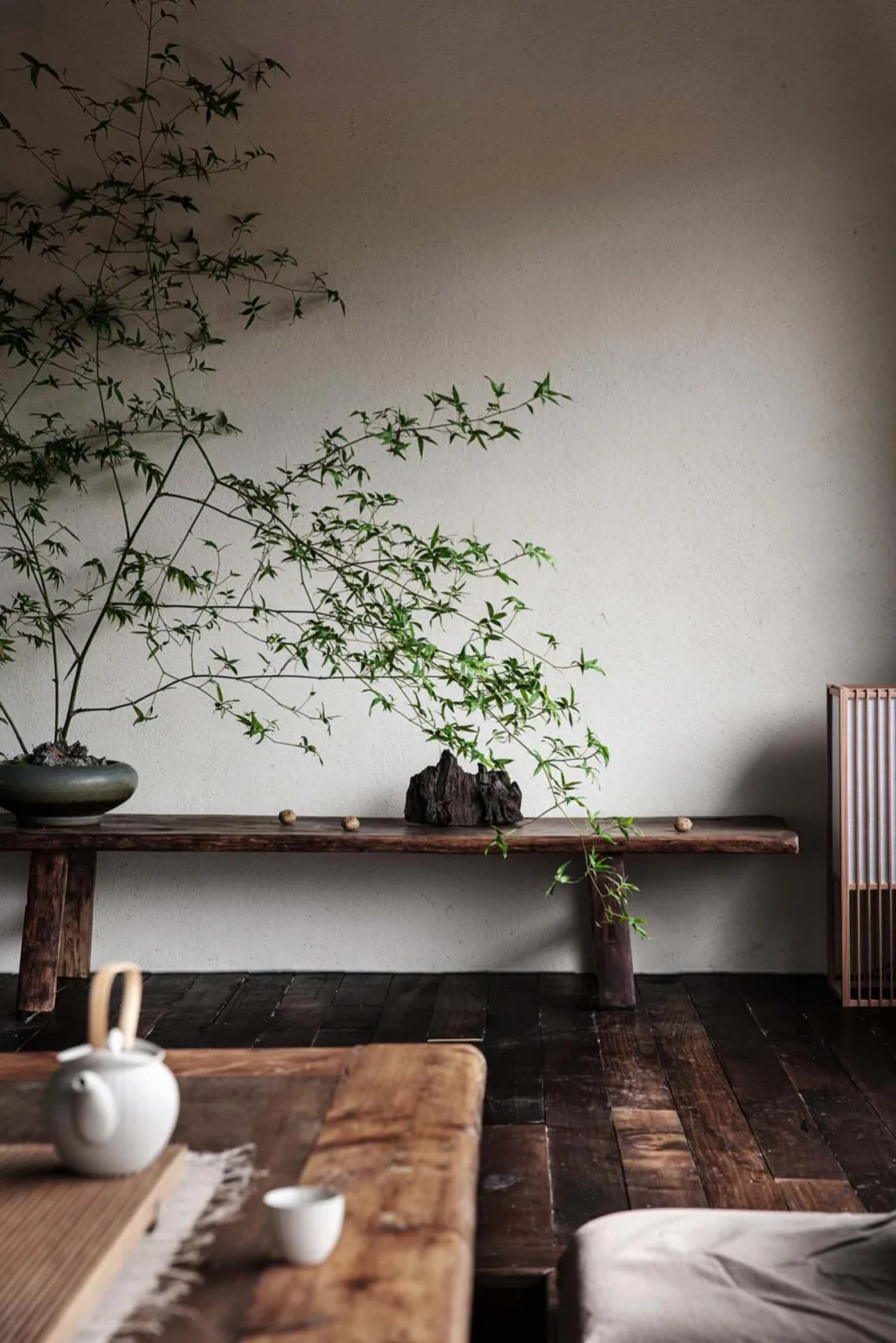
The design embraces the concepts of “combining old and new” and “appropriate construction methods.” Early project visits revealed many renovated or demolished wooden residential buildings nearby. By sourcing reclaimed wood originally destined for firewood from local timber markets, the team preserved materials rich with history and character. These aged woods, with their natural patina, were carefully polished and repurposed as boards and furniture, lending authentic texture to the spaces.
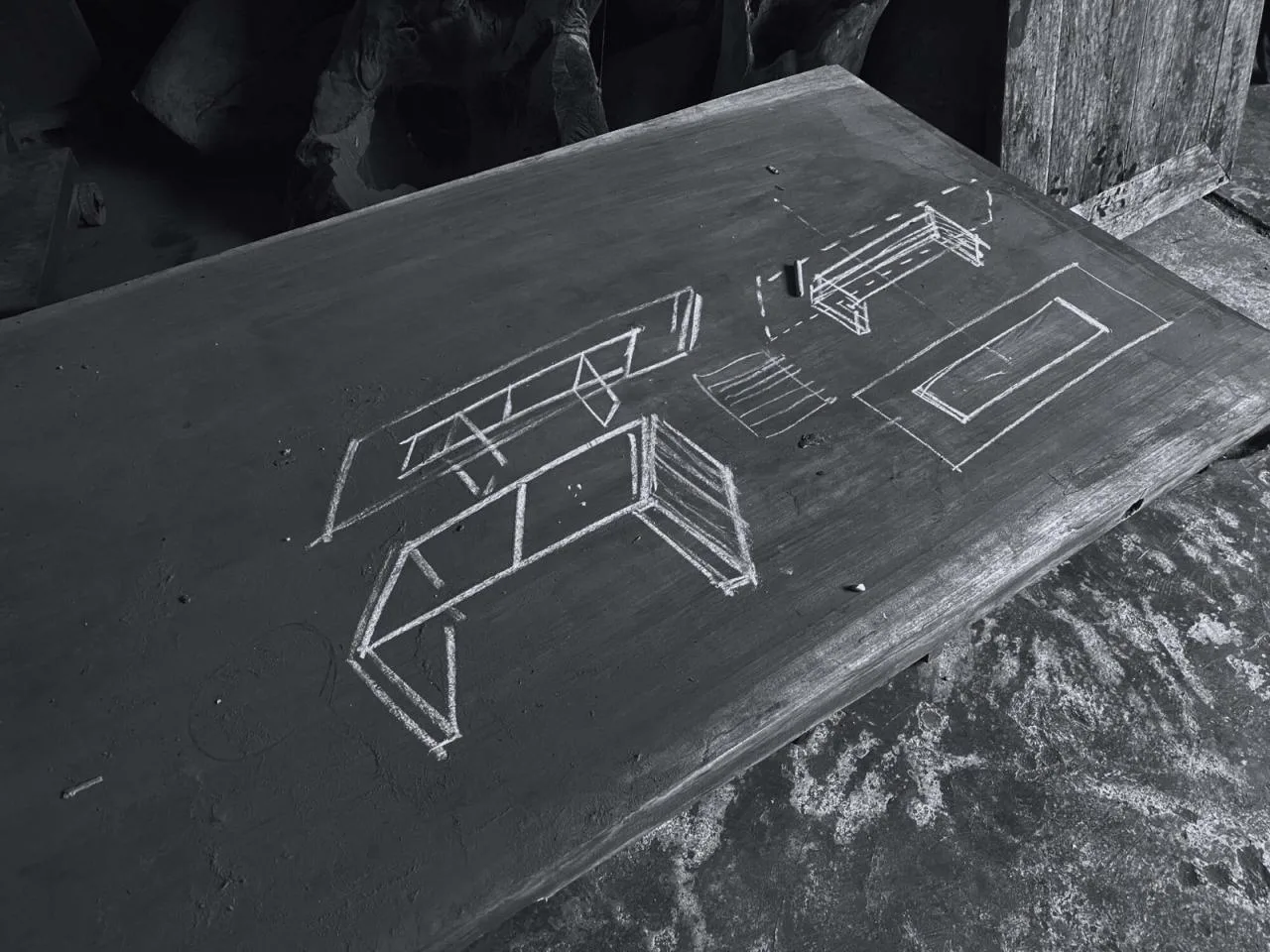
Effective communication with local carpenters was essential. Traditional design drawings fell short, so on-site discussions, often in dialect and accompanied by sketches directly on wood boards, ensured furniture was crafted exactly as envisioned.
Returning to Wushi Creek in winter reveals a different landscape. The rice has been harvested, and the dried stalks are spread over the fields to decompose, enriching the soil organically. The land and crops transform with the seasons, offering ever-changing scenery.
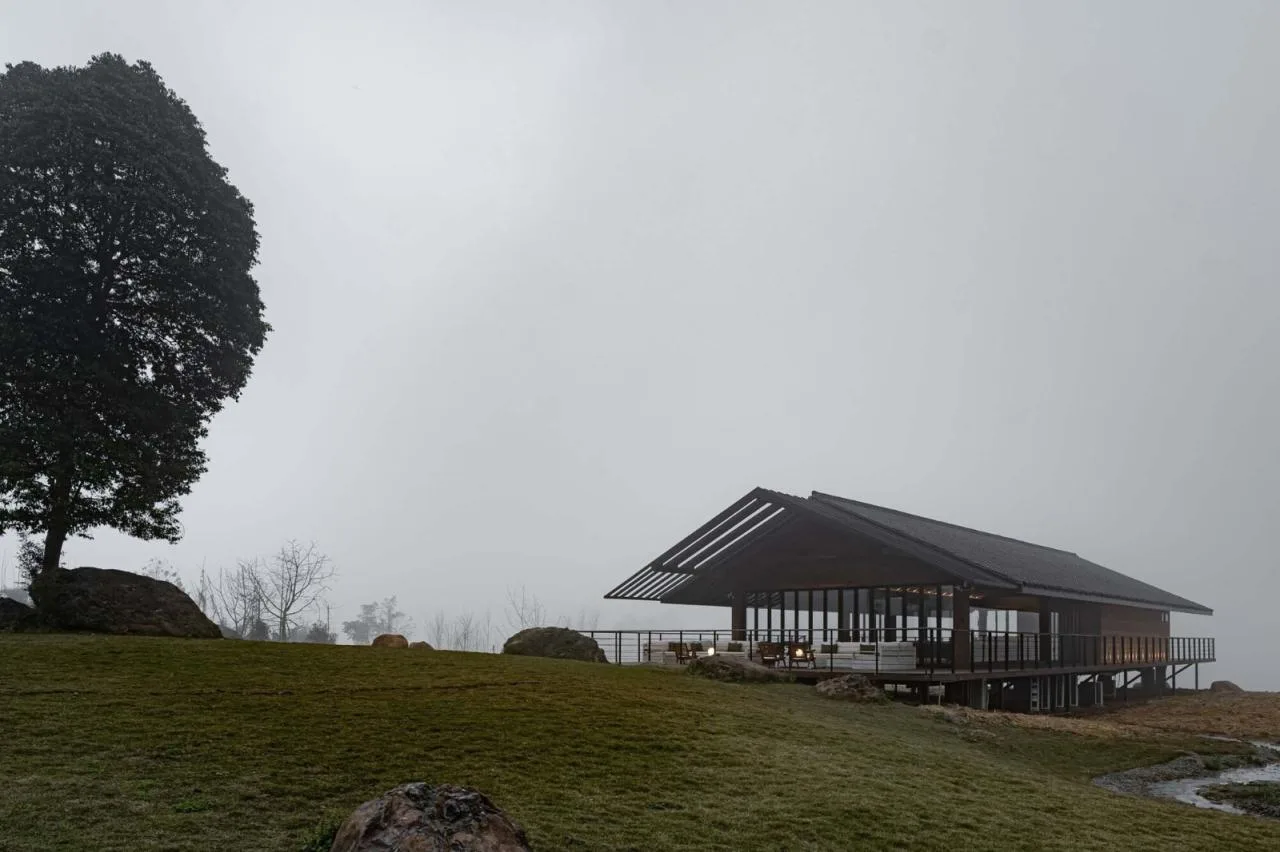
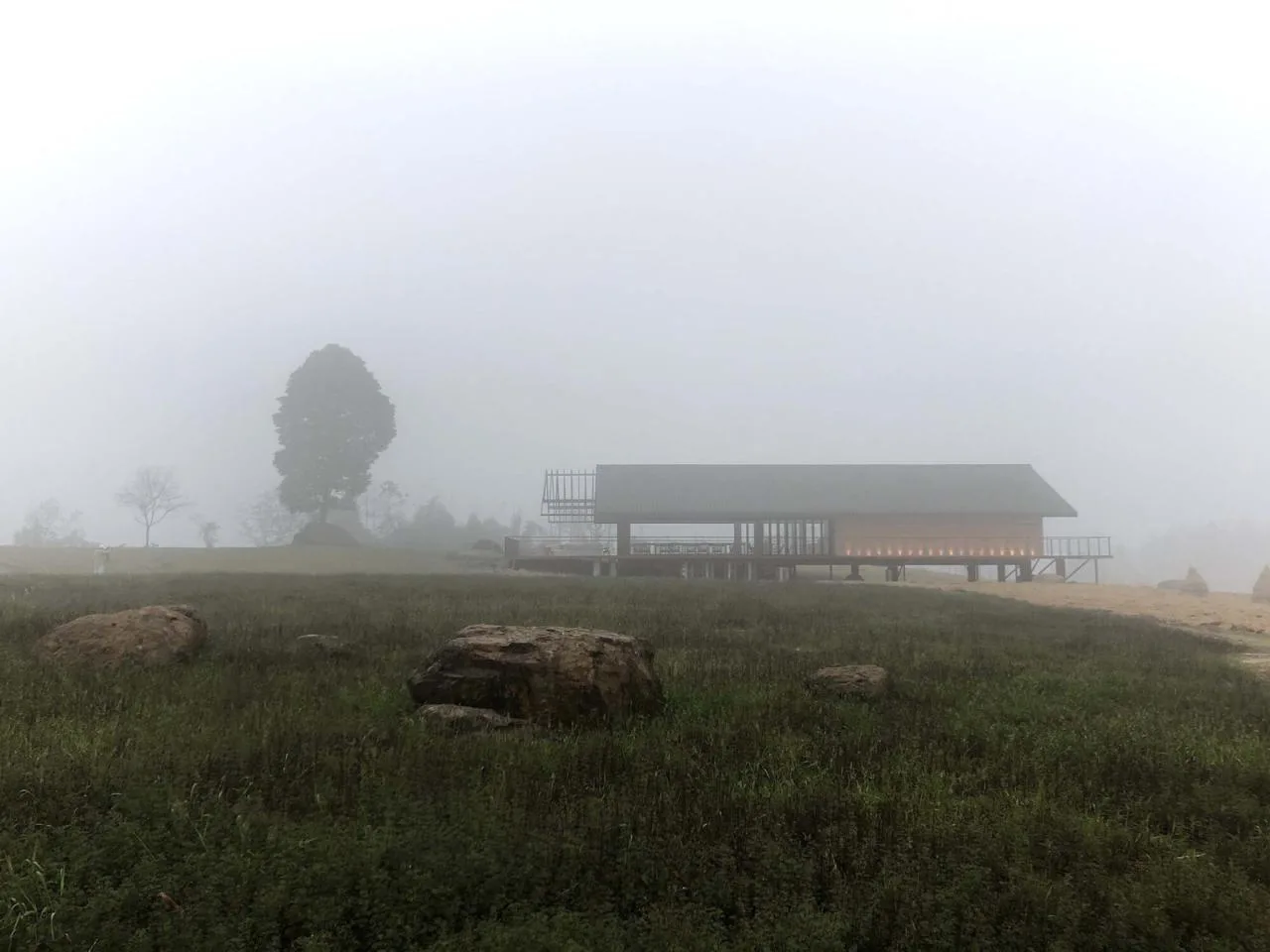
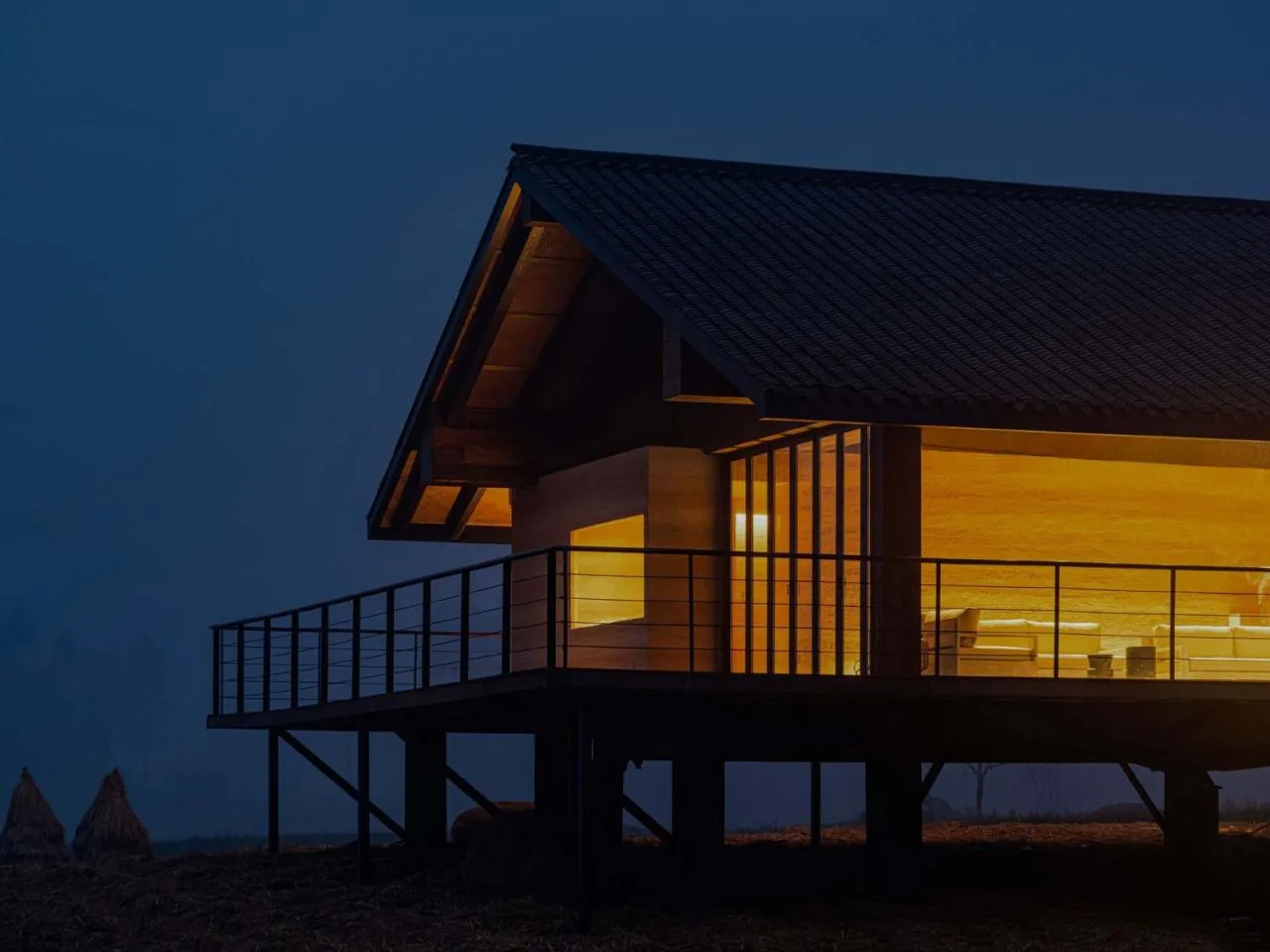
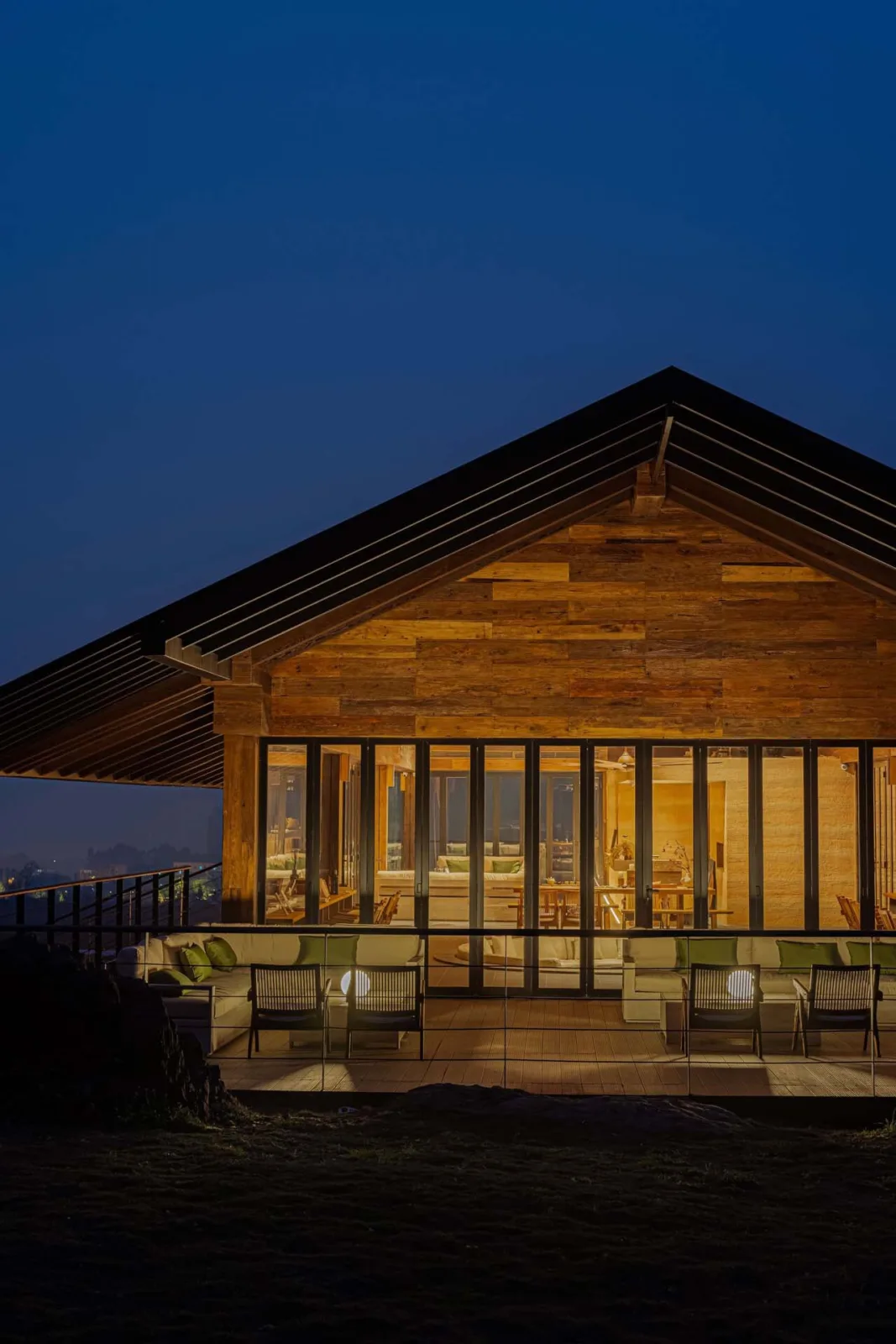
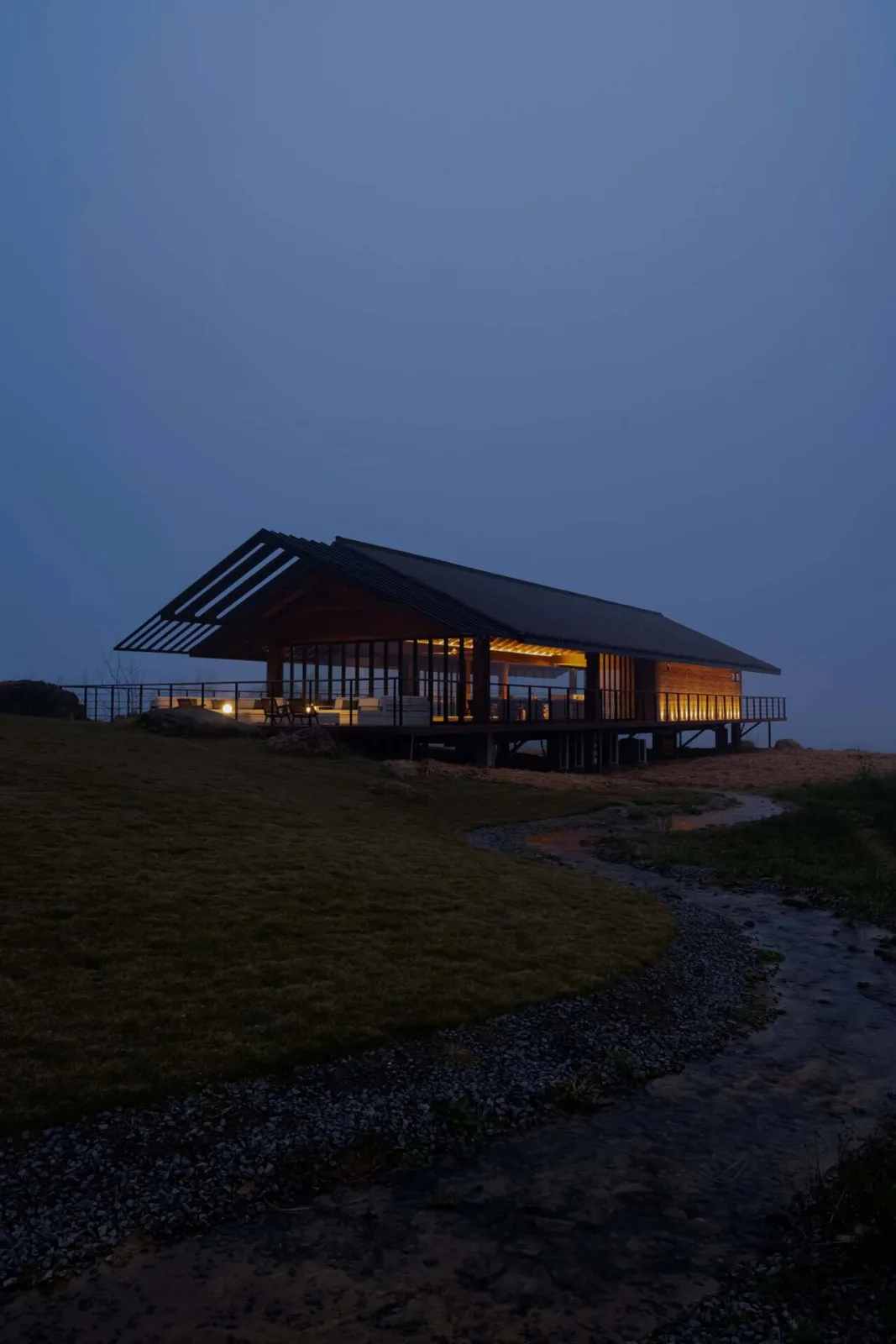
The “Coffee Shop” is perched on a slope dotted with stones of various sizes. Its design harmonizes with the natural terrain, elevated at a carefully selected spot. A mountain stream flows beneath, while ancient camphor trees and existing houses surround the building, preserving the original terrain, vegetation, and cultivated land stones without alteration.
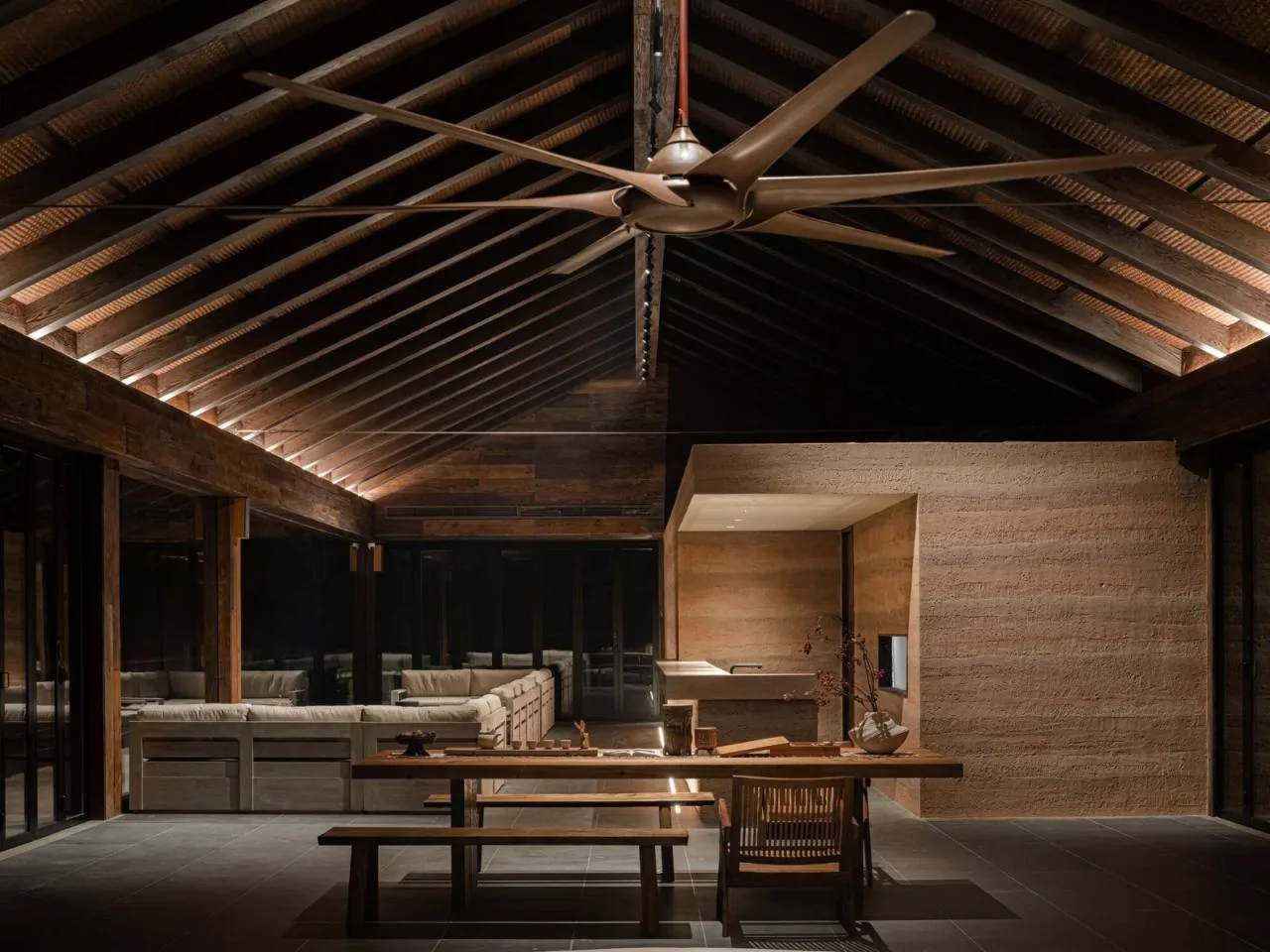
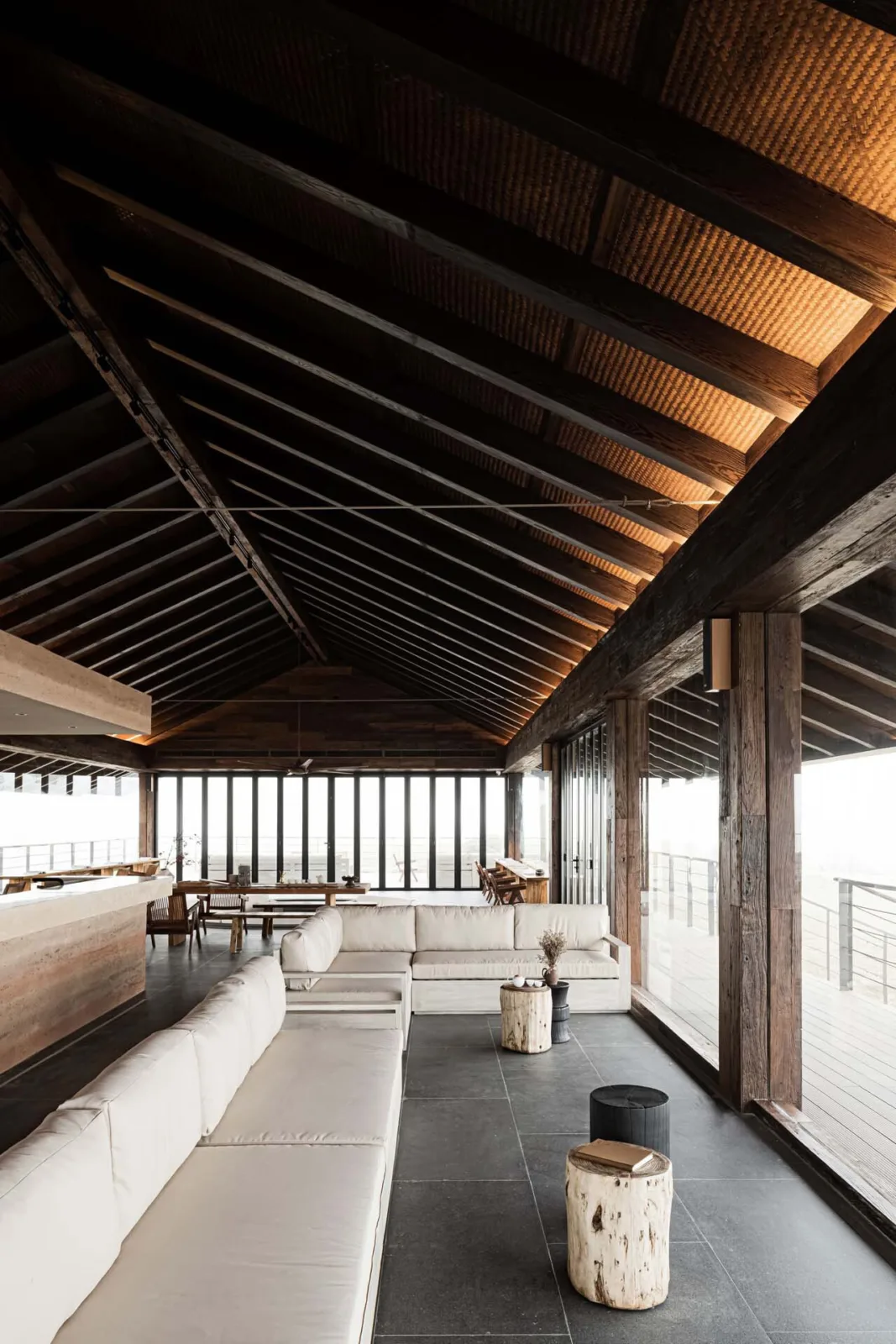
Besides serving as a café, the building functions as an observation deck. Facing west, visitors can admire Mount Emei; to the east, they enjoy panoramic views of the surrounding fields. The landscape’s natural beauty is so striking that the design remains intentionally simple.
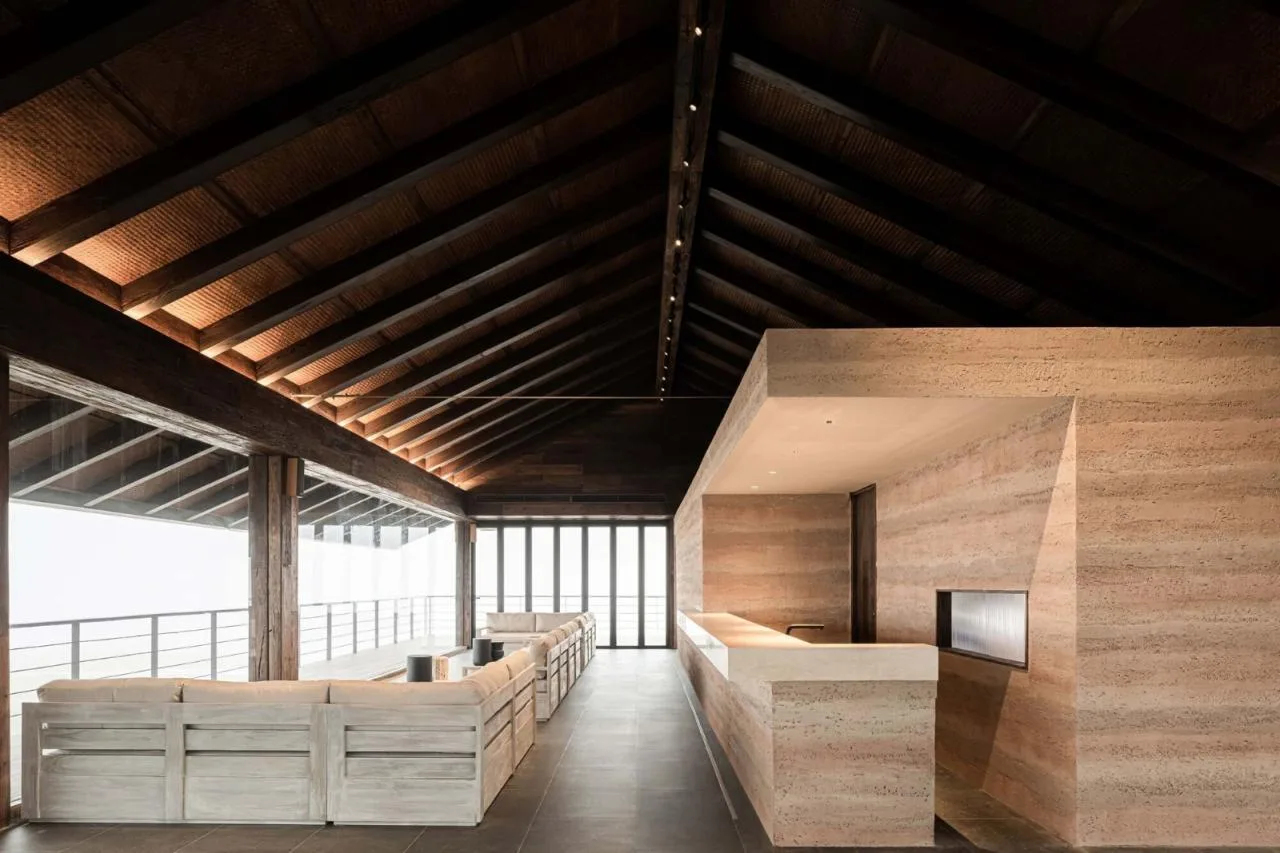
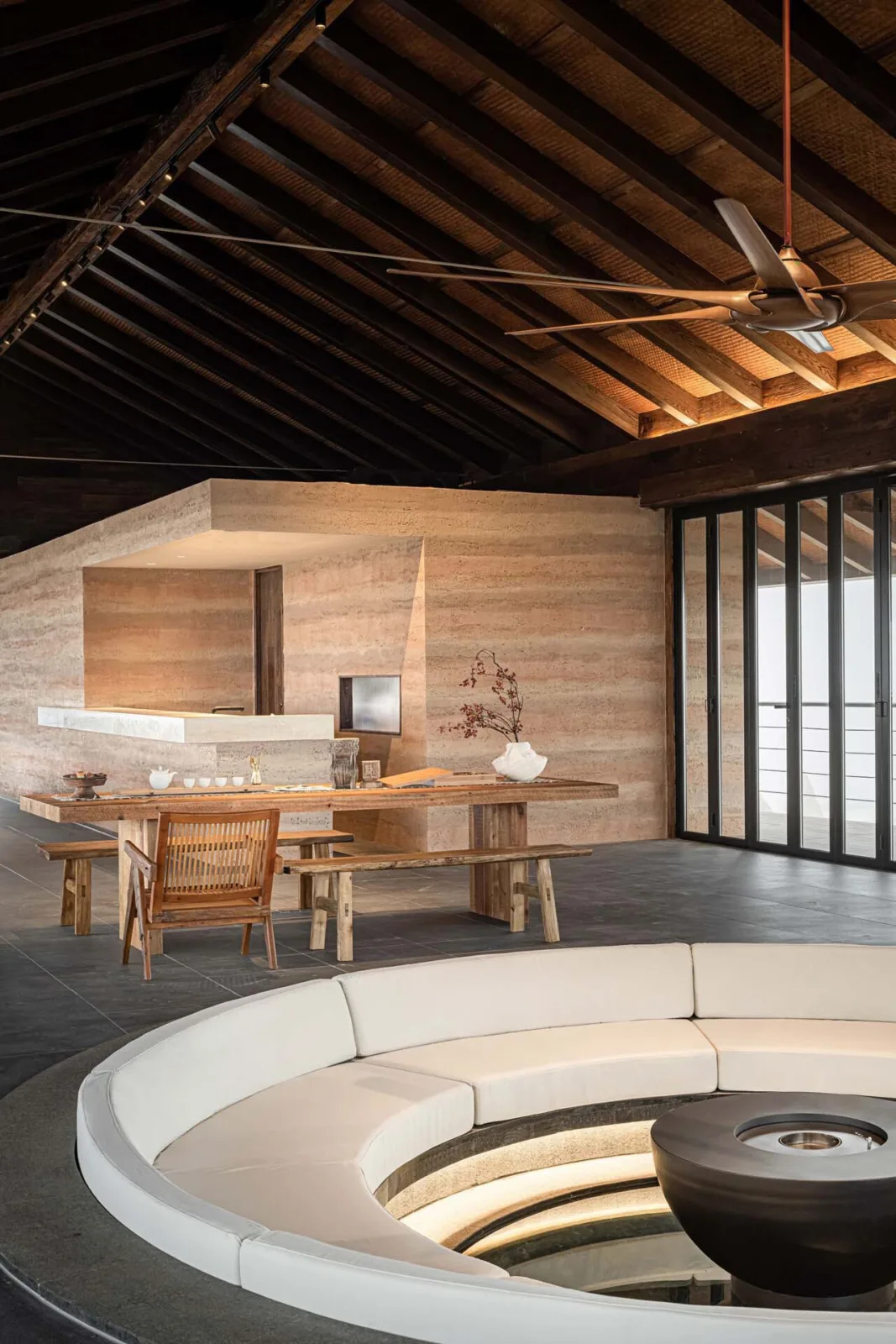
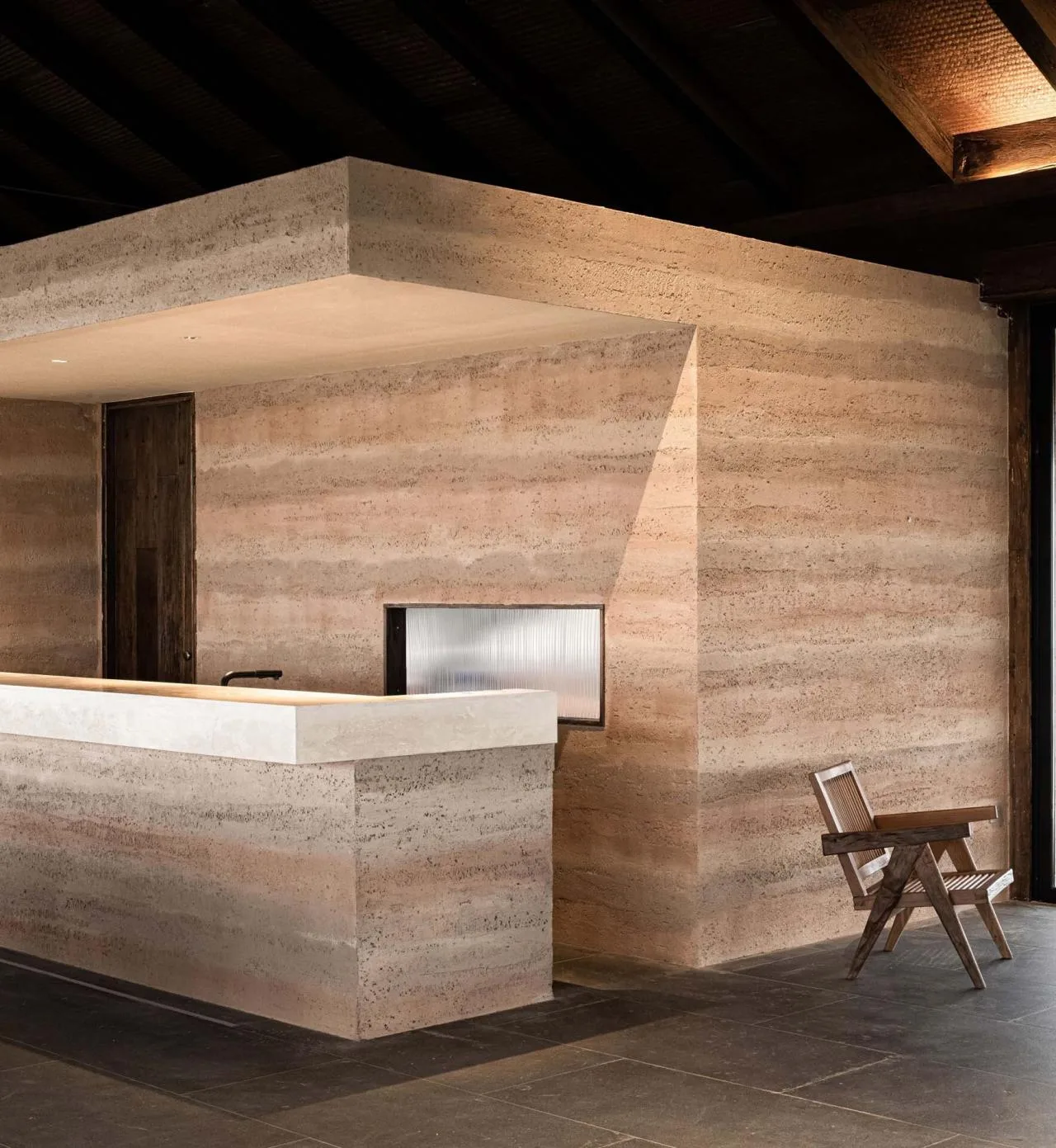
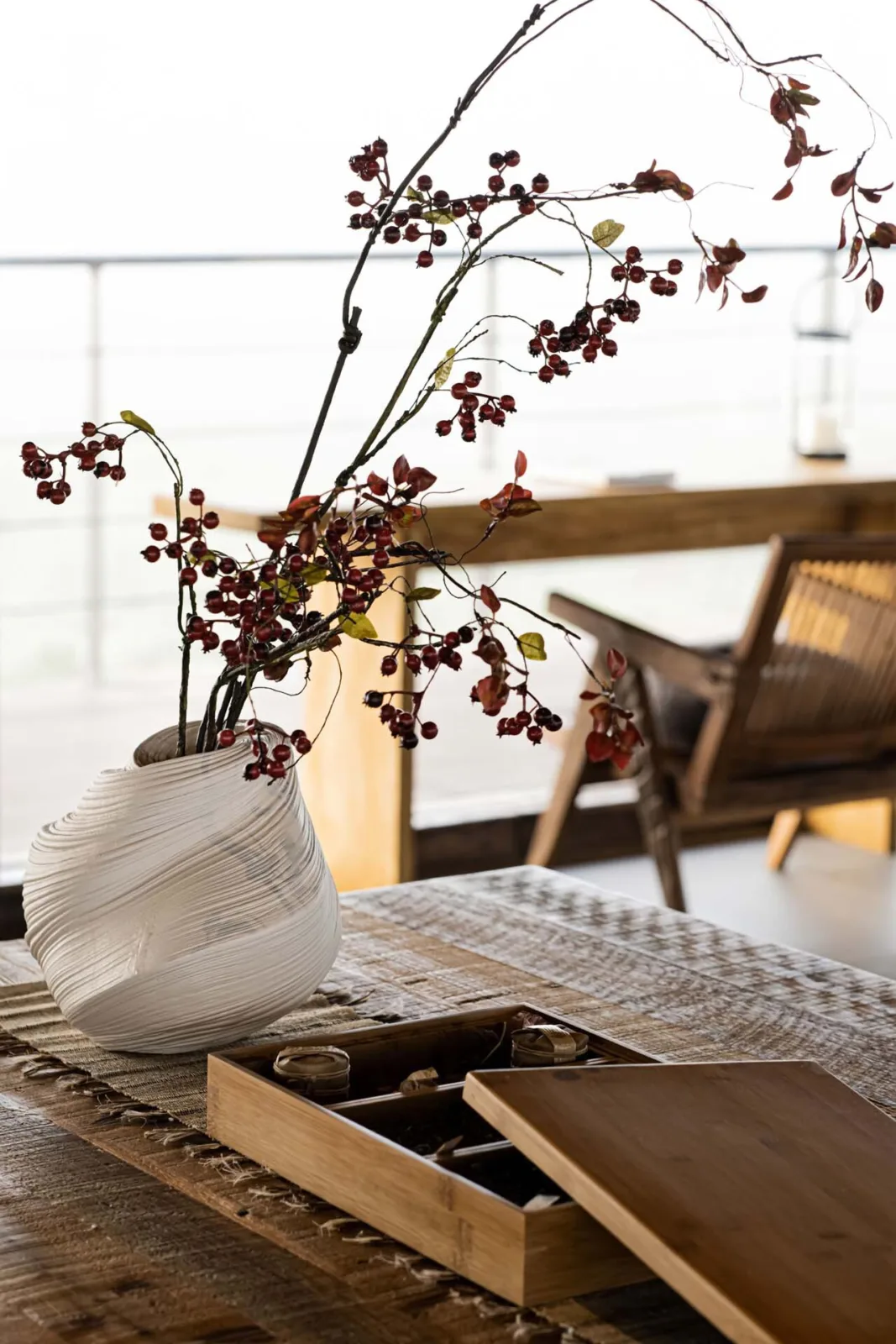
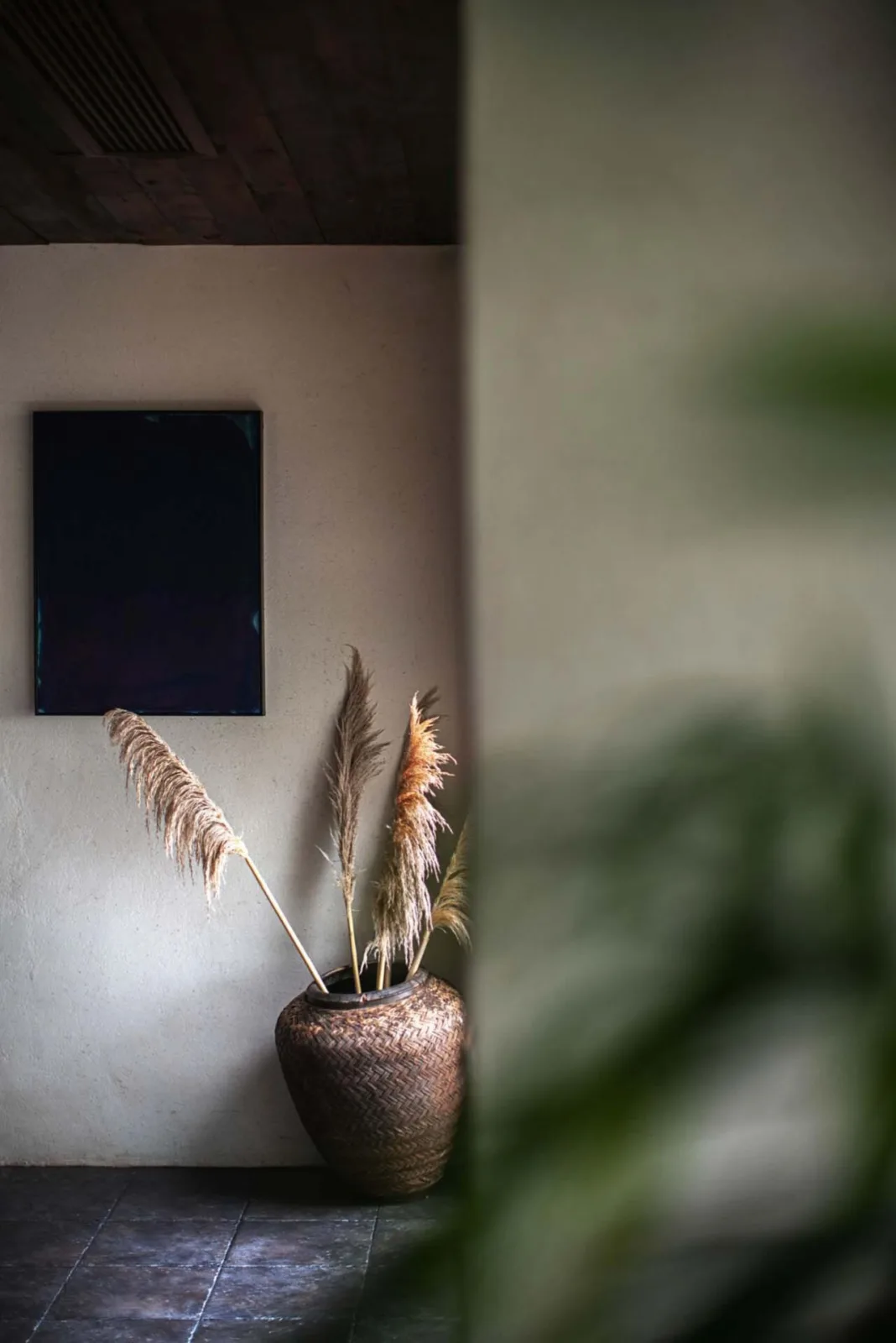
Materials used inside the café match those of the observation deck: reclaimed old wood, rammed earth walls, and bamboo-woven ceilings. Apart from necessary logistical spaces, the exterior walls are fully open, blurring the boundaries between indoors and outdoors.
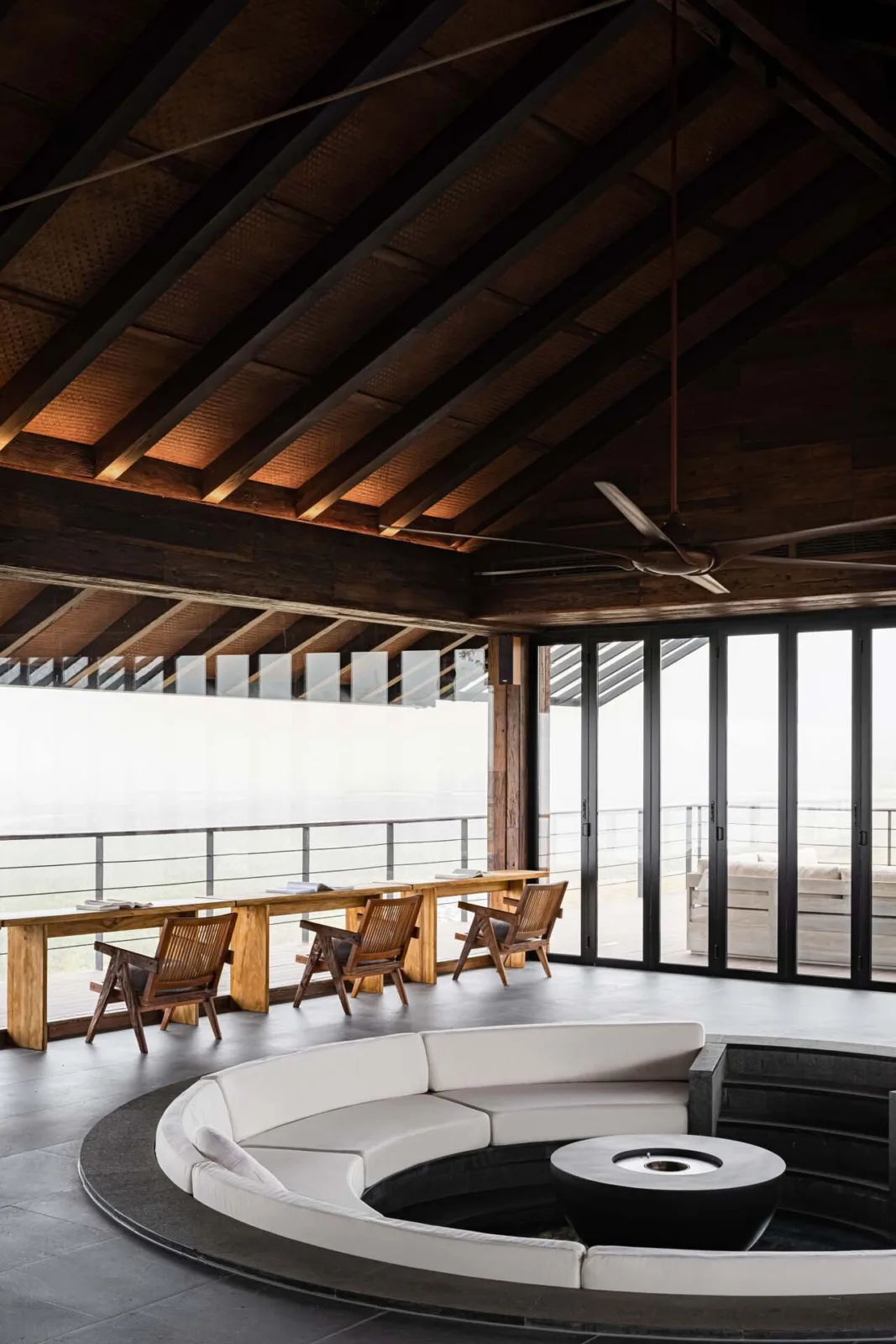
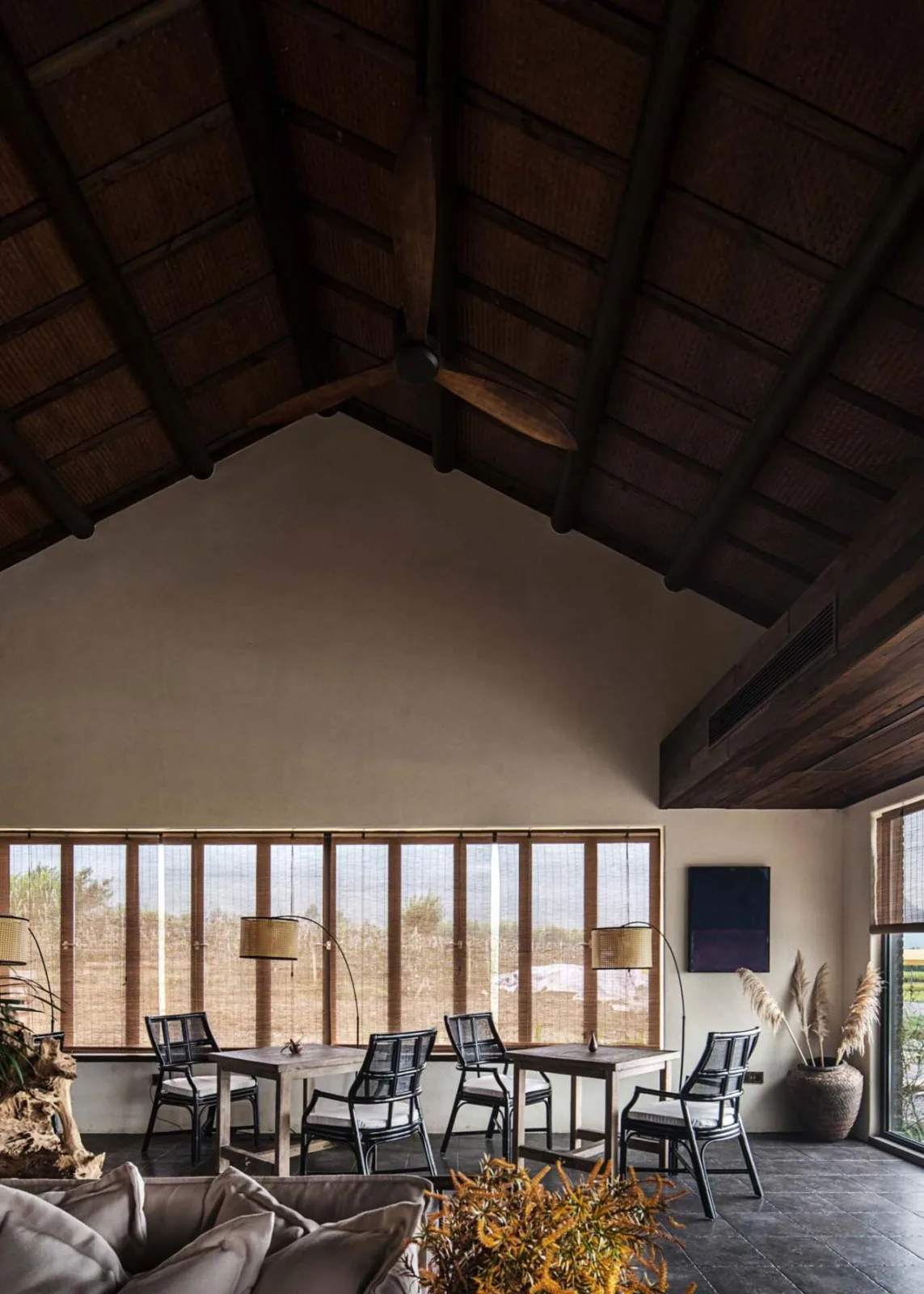
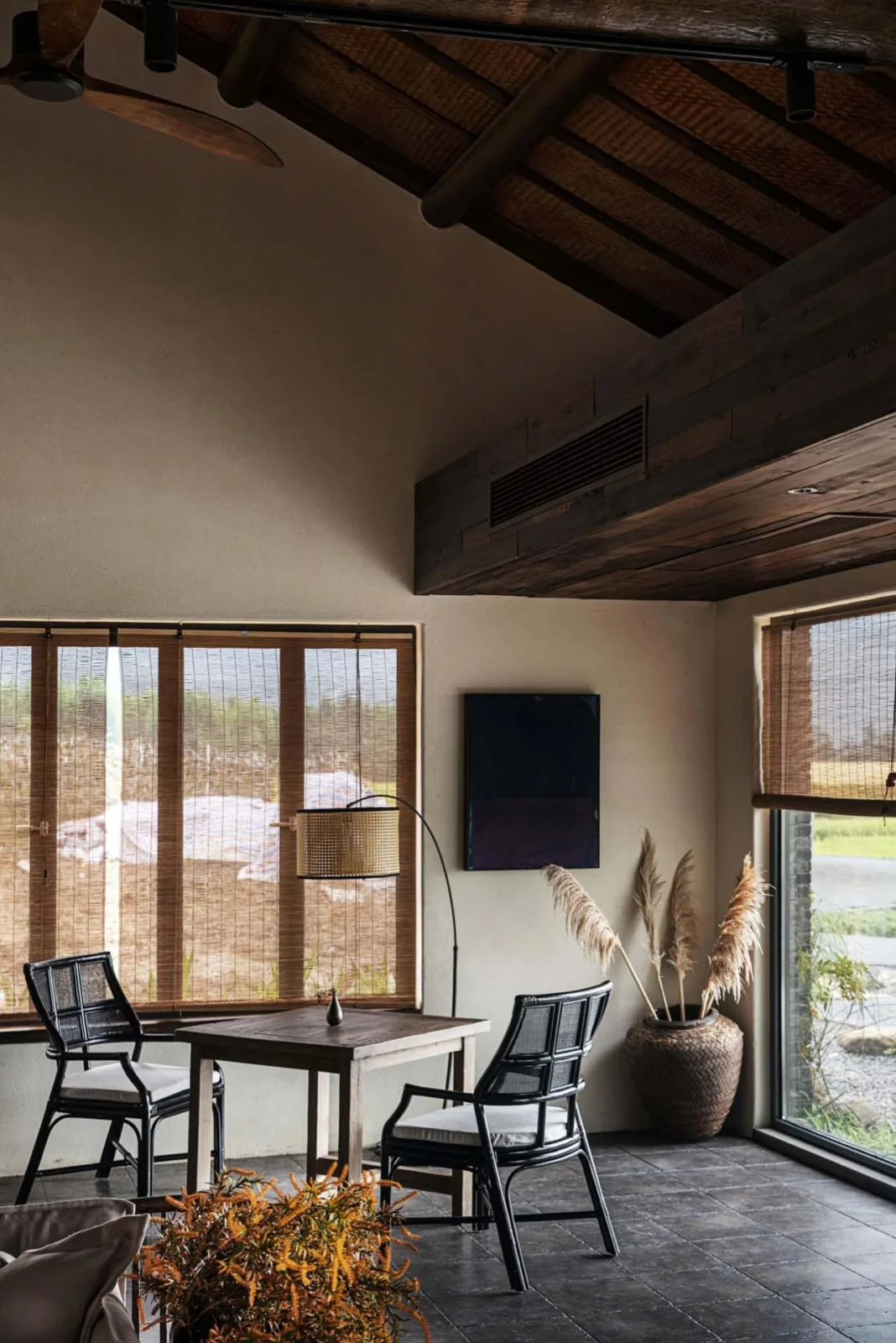
The building is elevated, allowing the ground beneath to become the “fifth façade” of the interior space. The sunken sofa area features a transparent floor, mirroring the openness of the exterior walls. Below the glass floor, a stream gently flows. At noon, the mountain fog lingered, shrouding the surroundings in a soft white mist. Despite waiting patiently, the fog remained as the sky gradually darkened.
Project Drawings
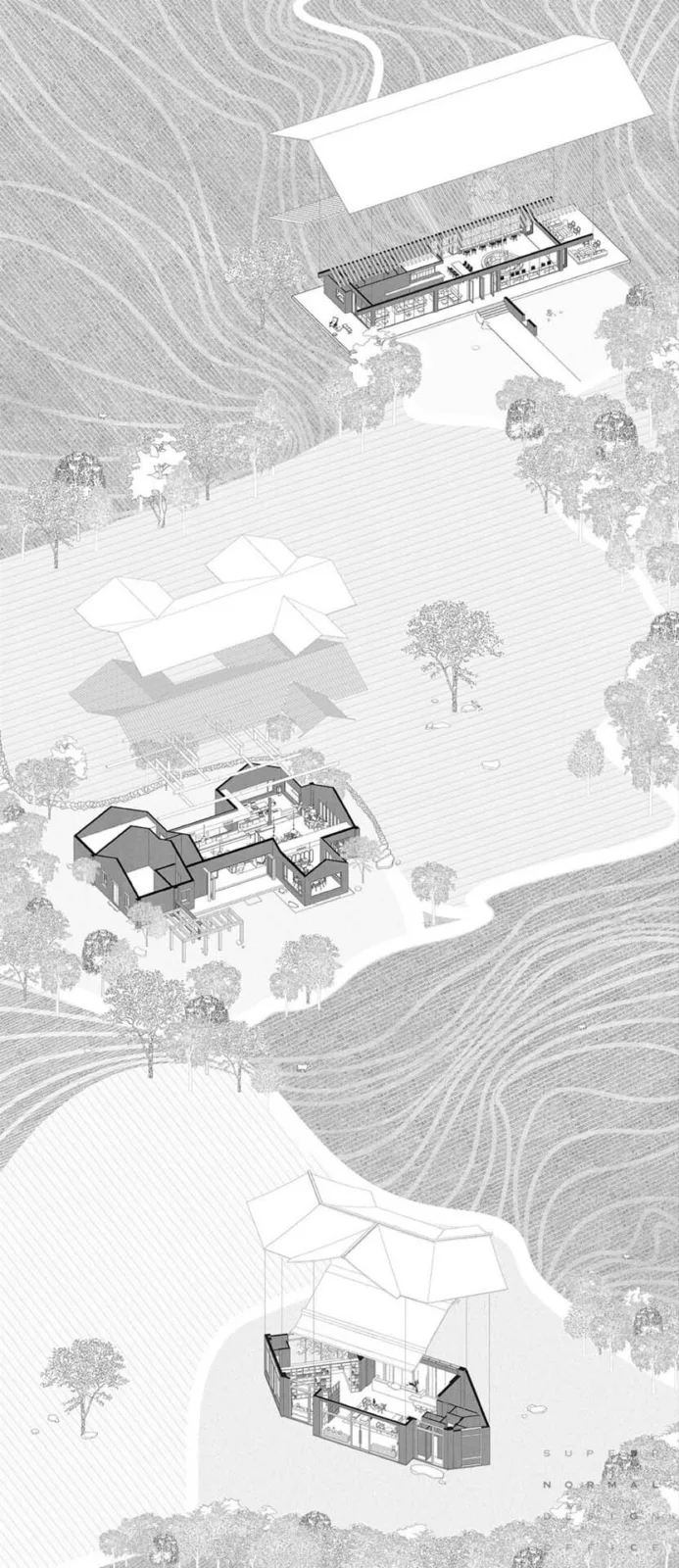
△ Overall Axonometric Diagram
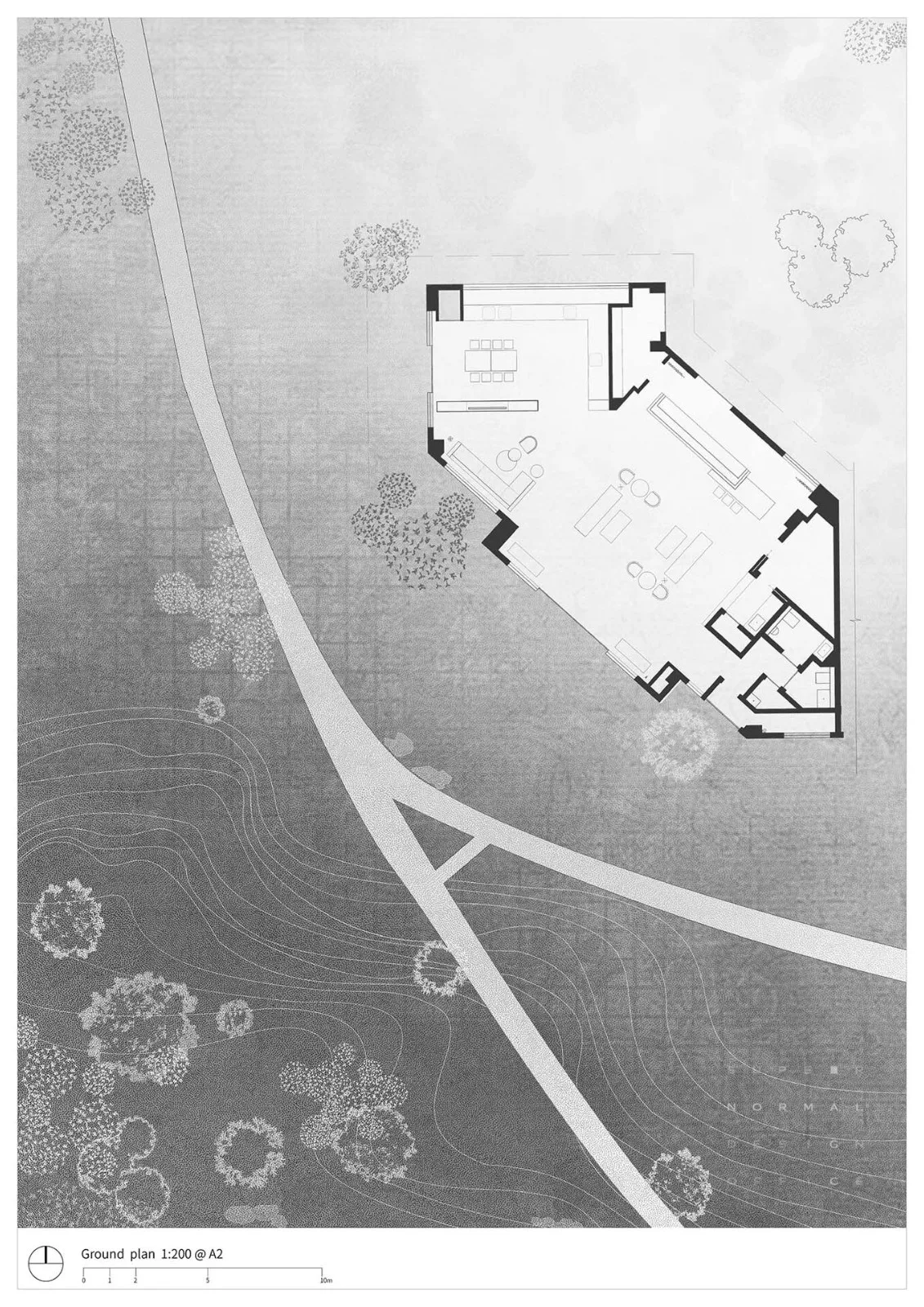
△ Plan View
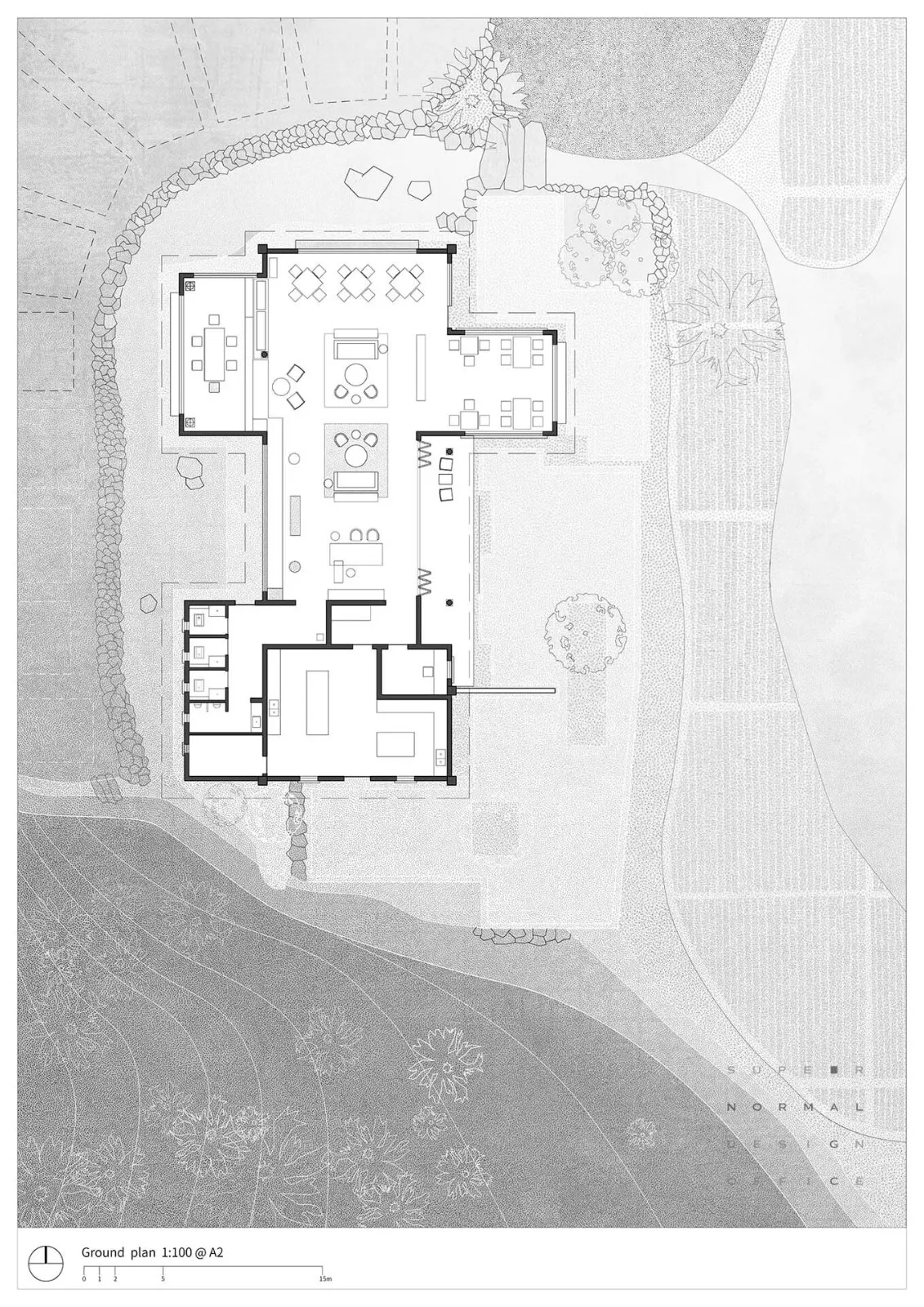
△ Restaurant Floor Plan
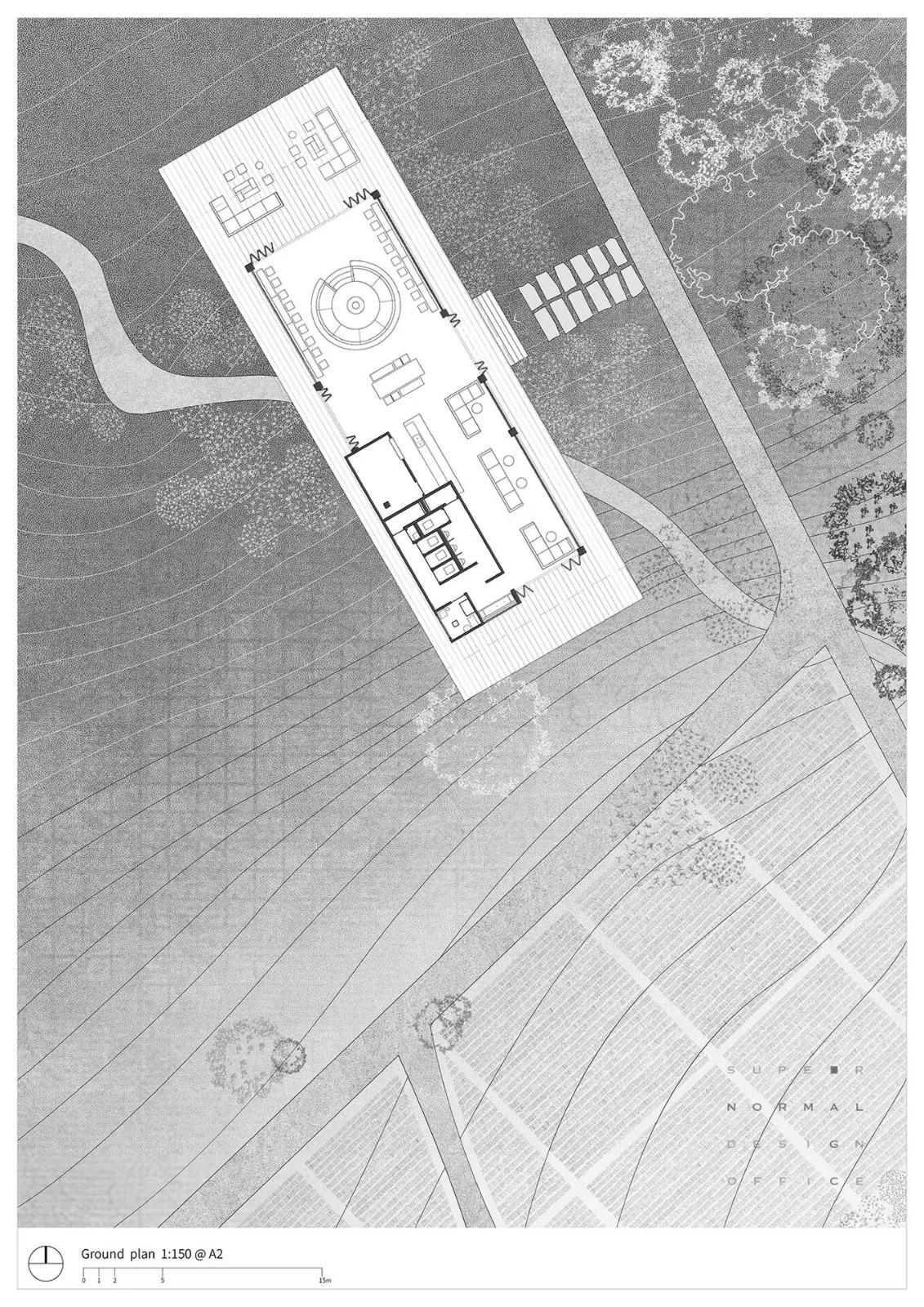
△ Plan View
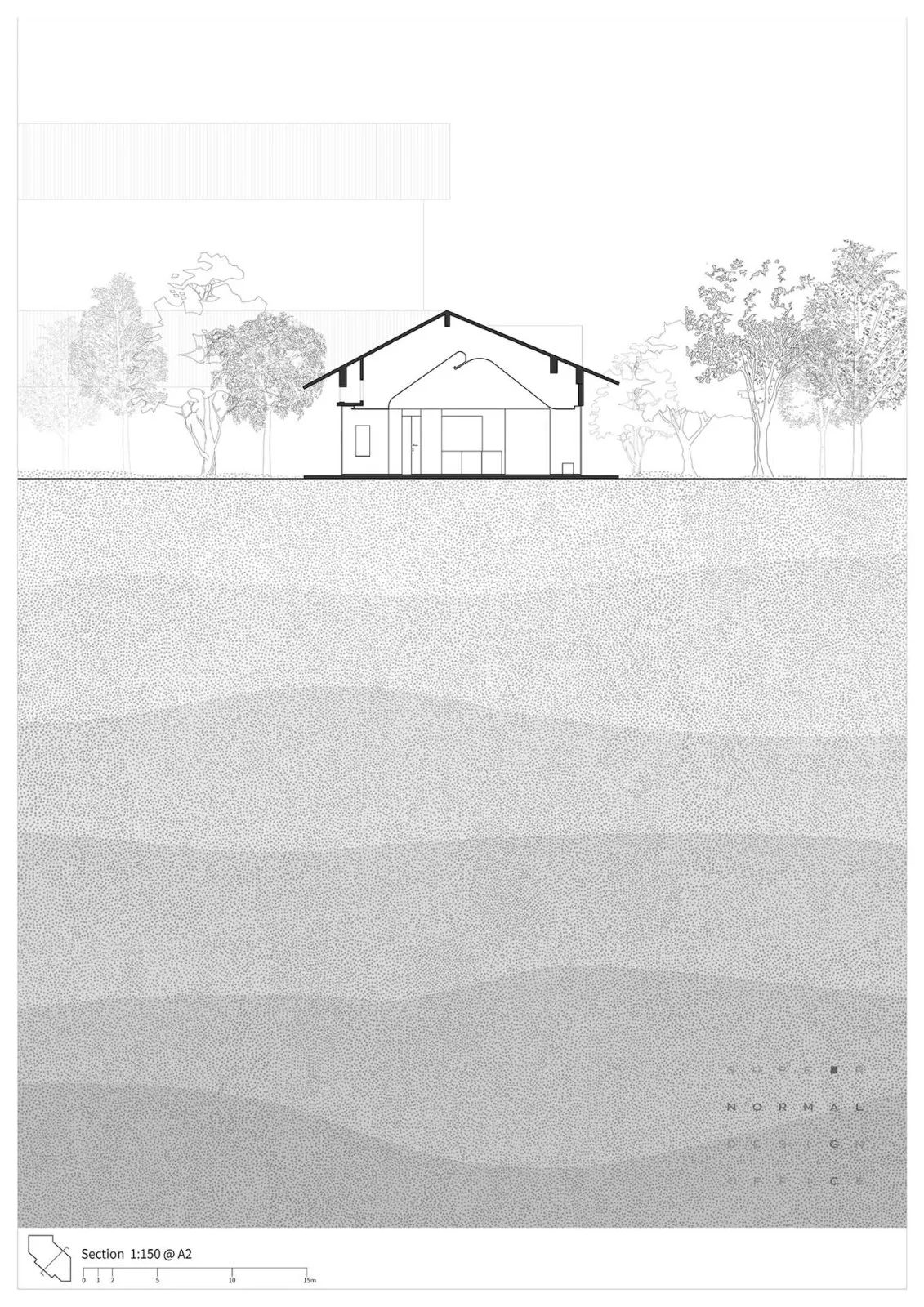
△ Section Diagram
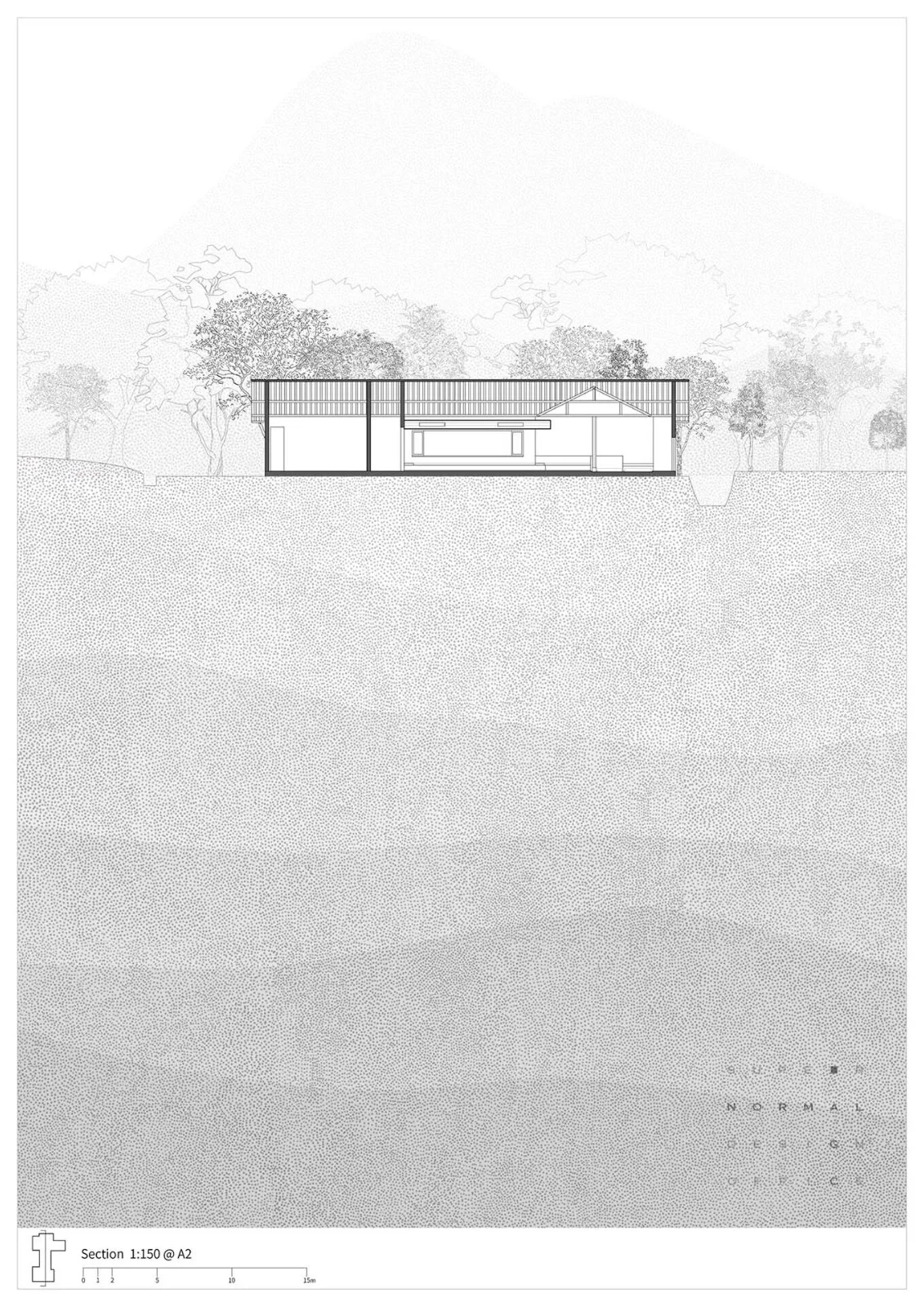
△ Section Diagram
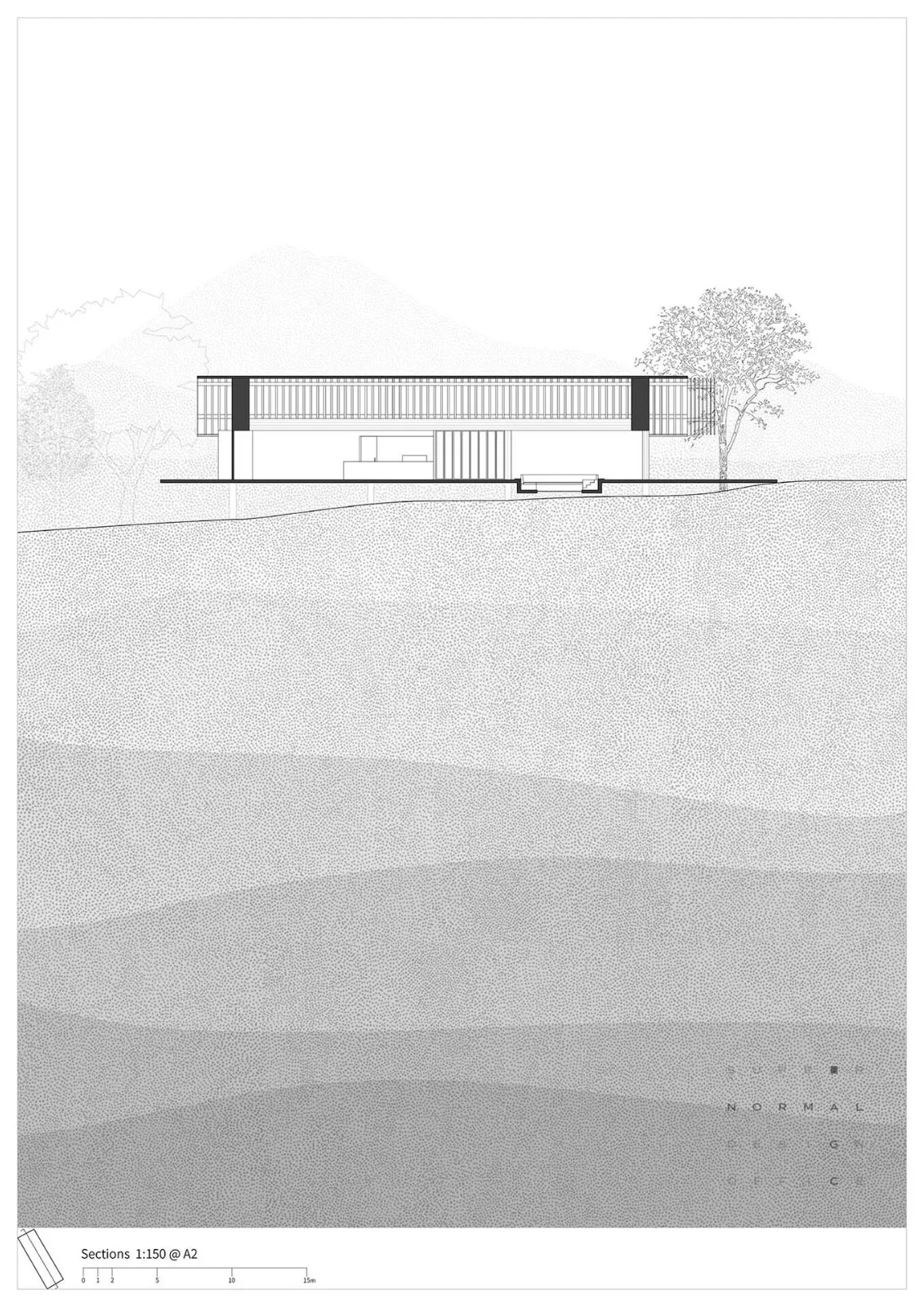
△ Section Diagram
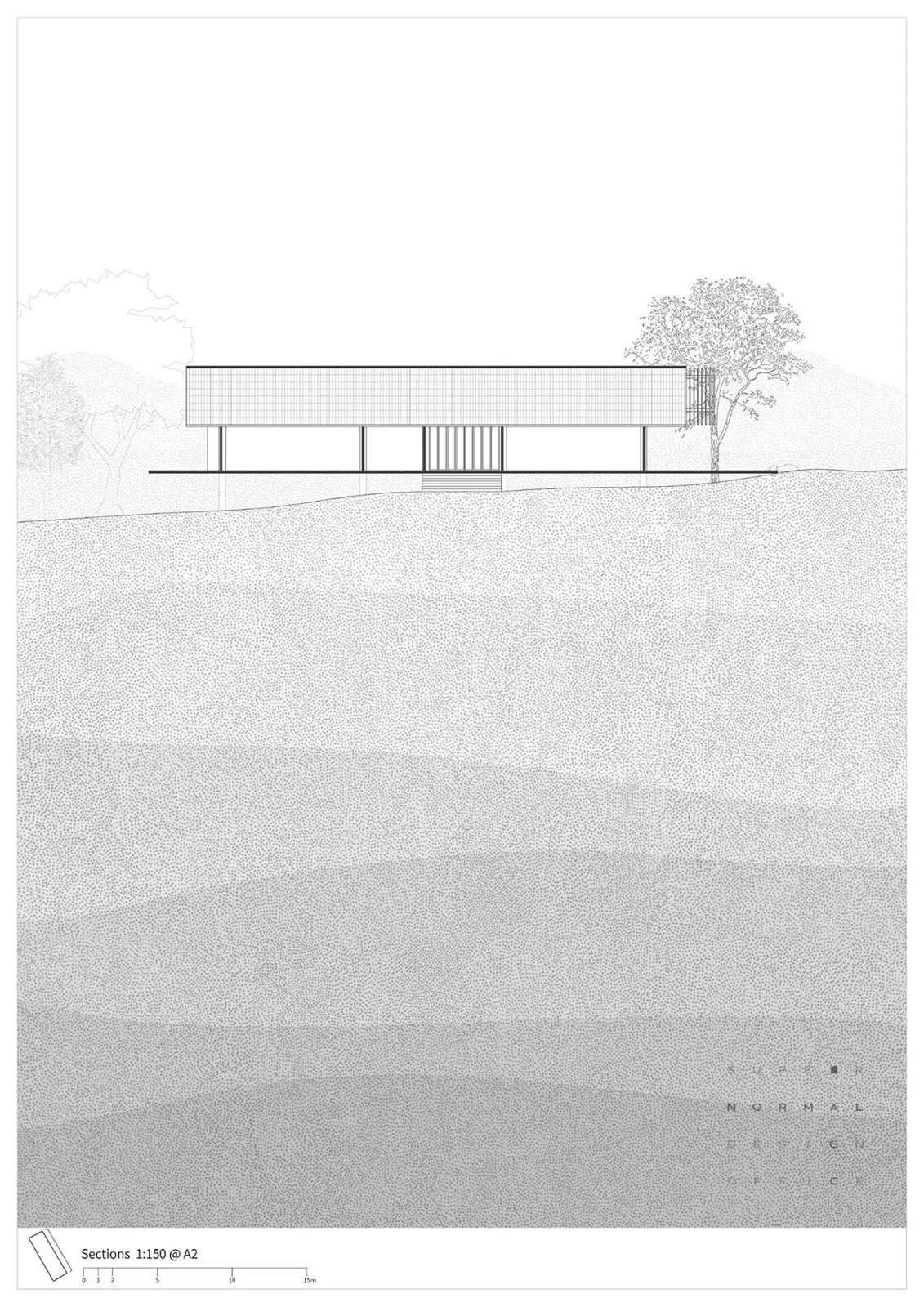
△ Section Diagram
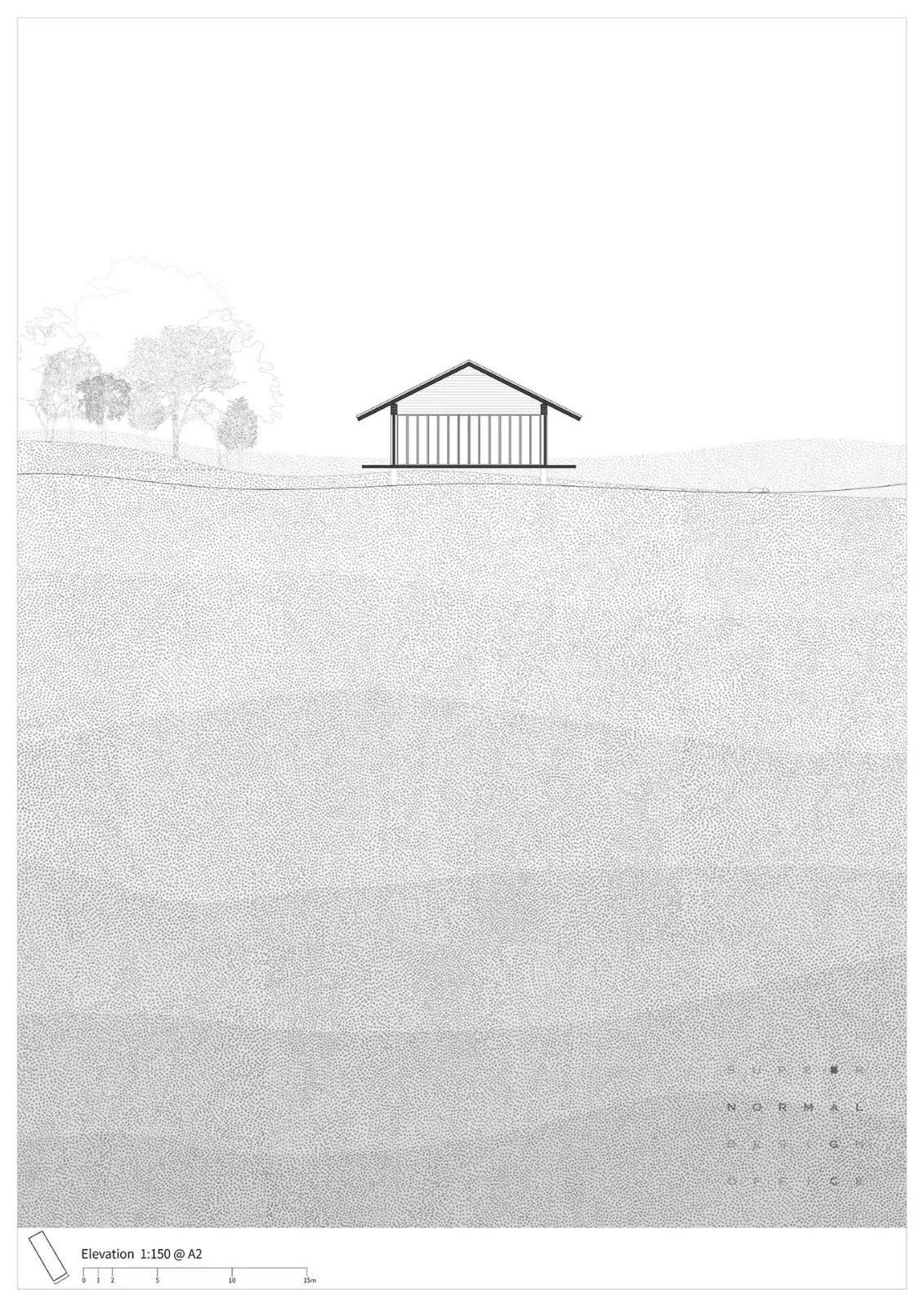
△ Elevation Drawing
Project Information
Architect: Super Ordinary Space Design
Area: 820 m²
Project Year: 2020
Photographers: YOUYU PHOTO – PUYOU, PIANFANG PHOTO
Design Director: Wu Minwen
Technical Director: Yang Jianxun
Project Manager: Zhong Mingmei
Design Creator: Yang Xiang
Design Team: Li Min, Chen Chong, Xin Siying, Wu Liuchun
Soft Decoration Team: Li Ziyu, Lin Ruiyu, Liu Xiaolu
Principal: Hengbang Shuanglin Group
Location: Mount Emei, China















Must log in before commenting!
Sign Up