
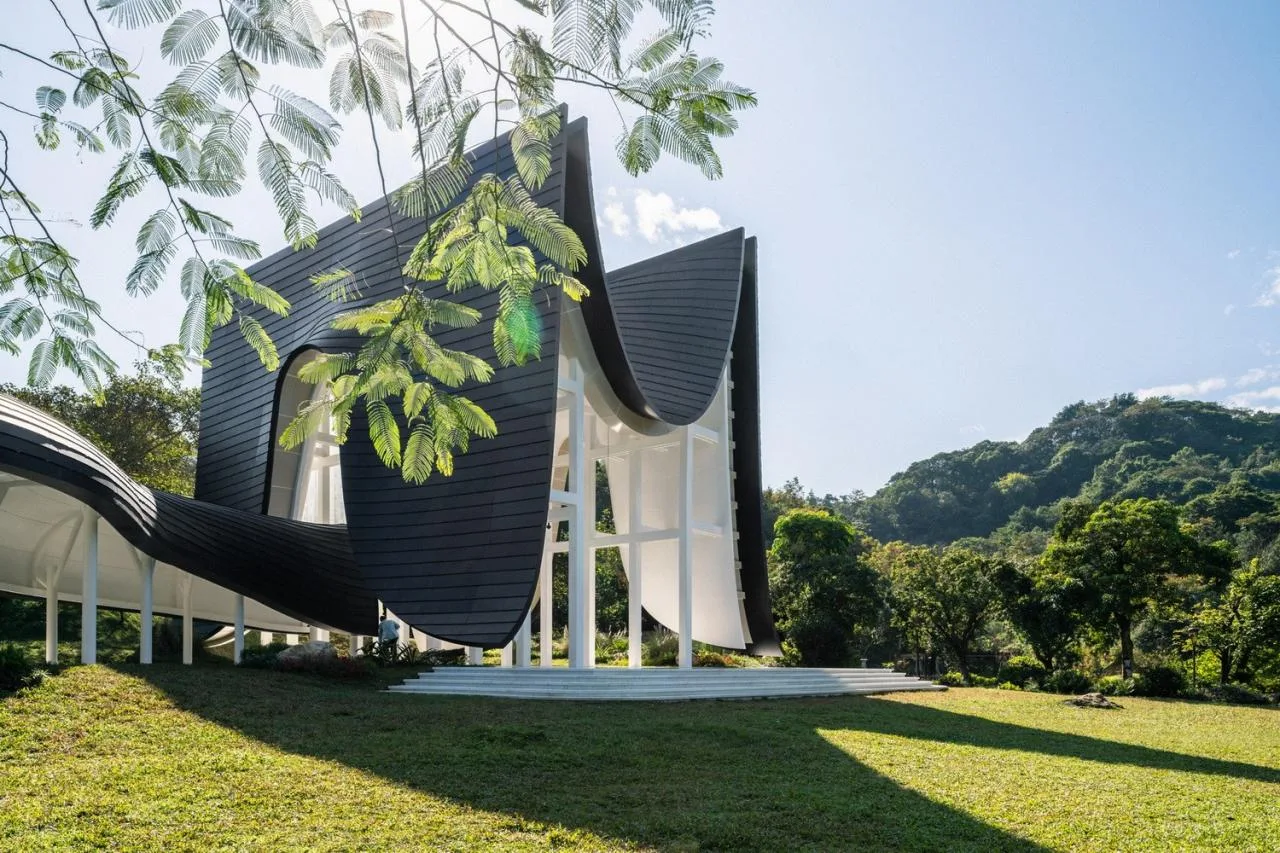
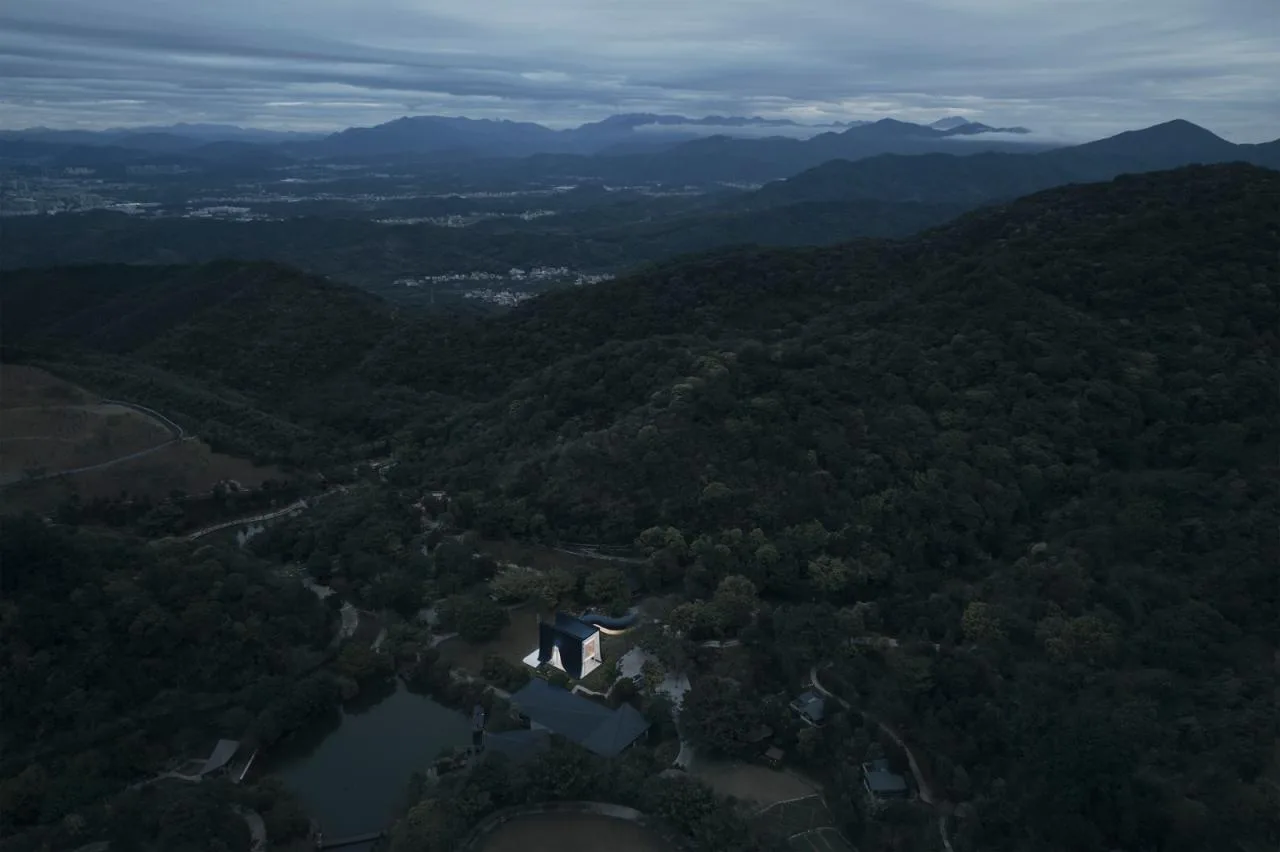
The Xitang Hall, located within the Ketianxia International Tourism Resort in Conghua, Guangzhou, stands as an iconic landmark in Qianzhong. It serves as a versatile venue, primarily hosting weddings and public events for couples. In Guangzhou, wedding celebrations often begin as early as 7 a.m., with the ceremony itself typically taking place around 6 p.m. Throughout the day, the hall accommodates various activities such as dining, photography, and guest reception, before transforming into a sacred ceremony space in the evening.
When not hosting weddings, the hall functions as a central observation deck and gathering spot within the scenic area. It also occasionally serves as a venue for communal events and activities.
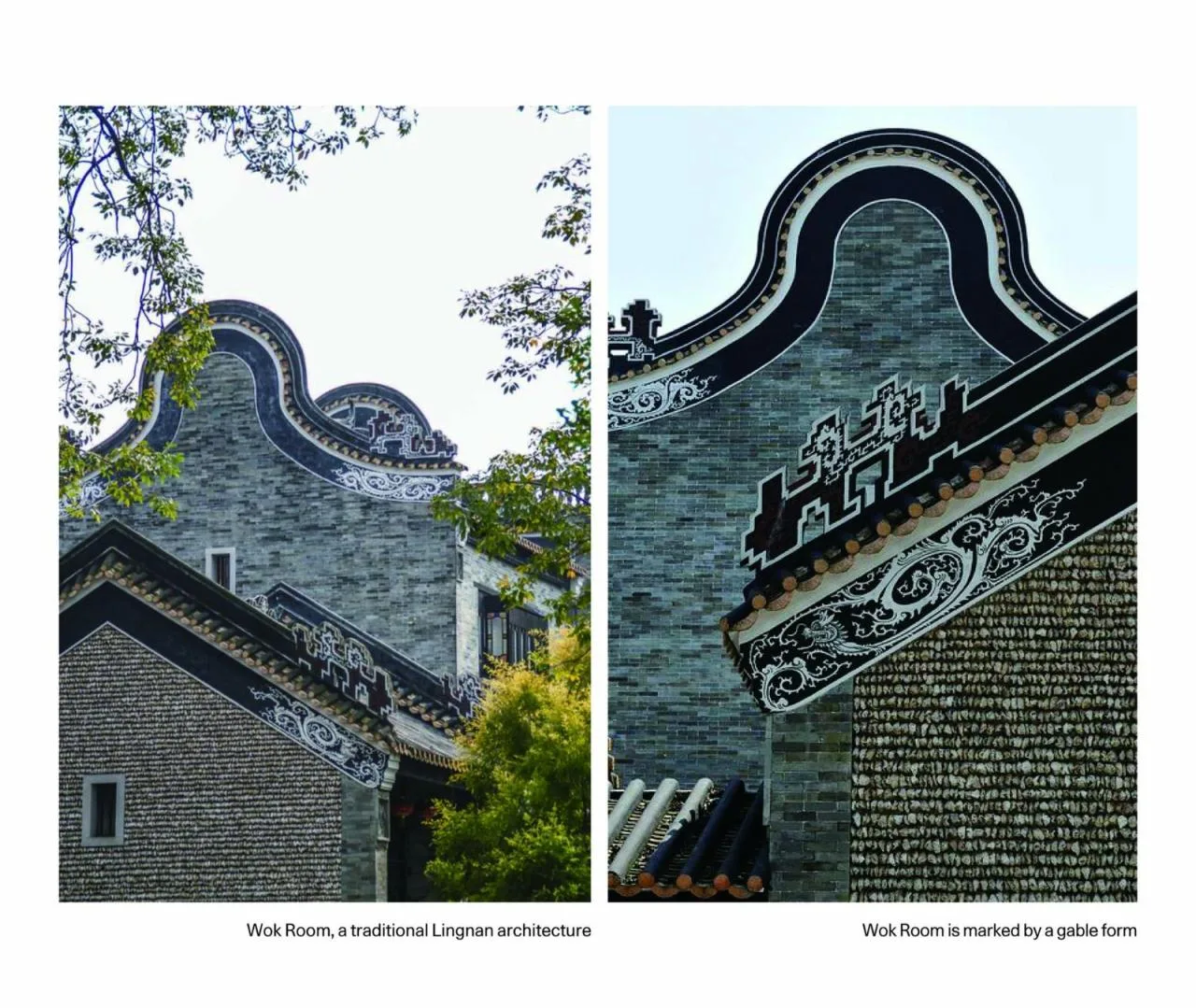
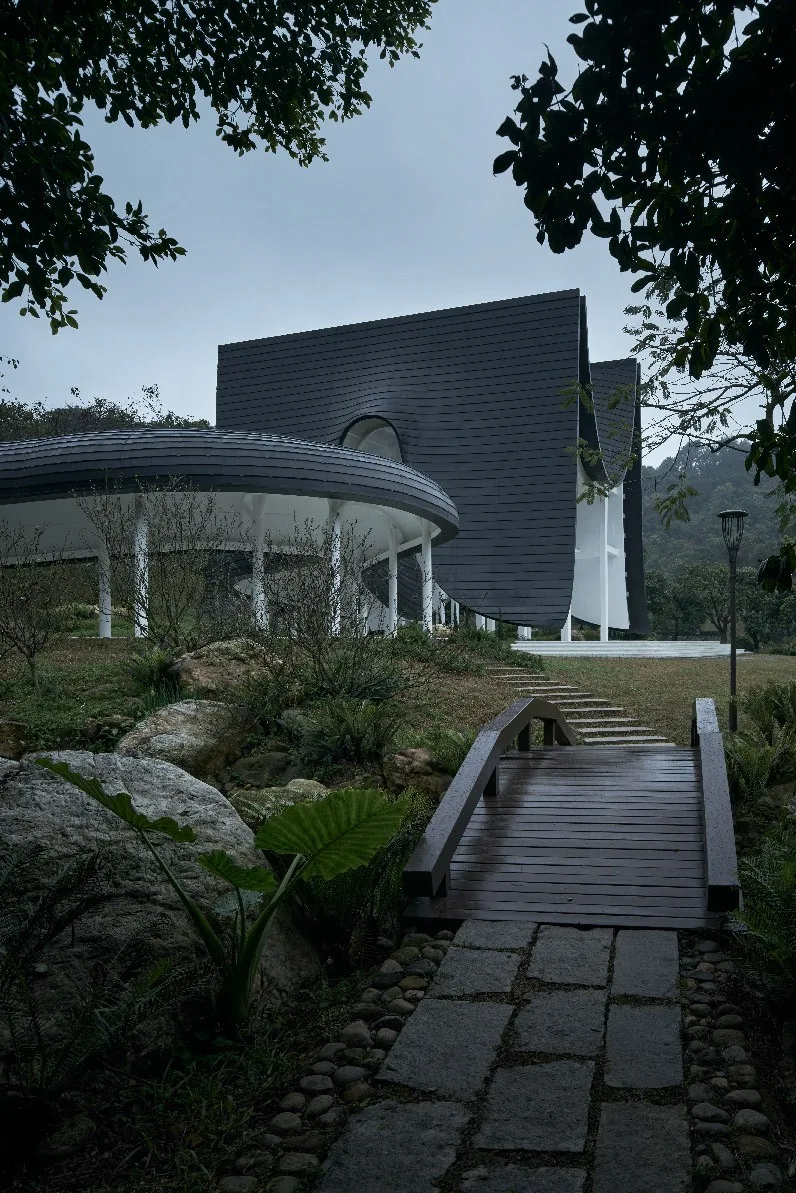
The design draws inspiration from the distinctive streamlined form of the Wo’er houses typical of traditional Lingnan architecture. The “Guo’er House,” characterized by its prominent wall, is a representative example of these traditional dwellings. The term “Wok” refers to an ancient iron pot, and the central protrusion of the wall resembles the pot’s ear, hence the name “Wo’er Wall.” This wall rises in the center and slopes down on both sides, mimicking the convex shape of a wok’s ear.
Traditionally, this wall serves both as a fire barrier and the primary load-bearing structure of the building.
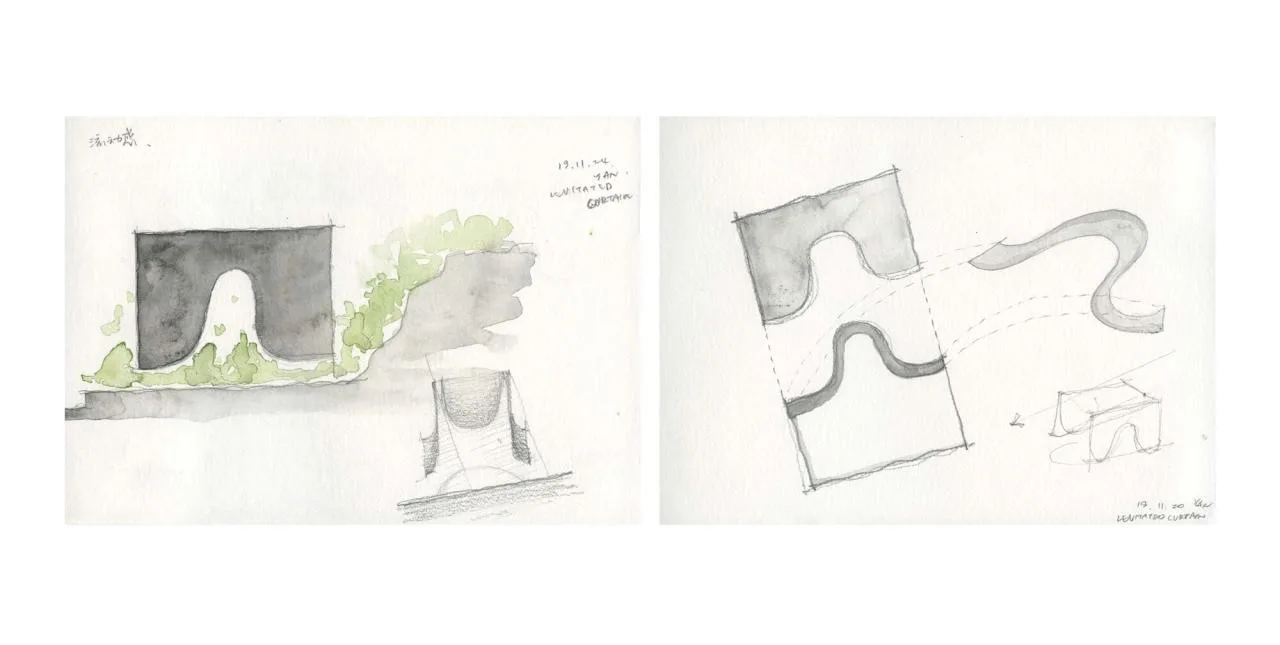
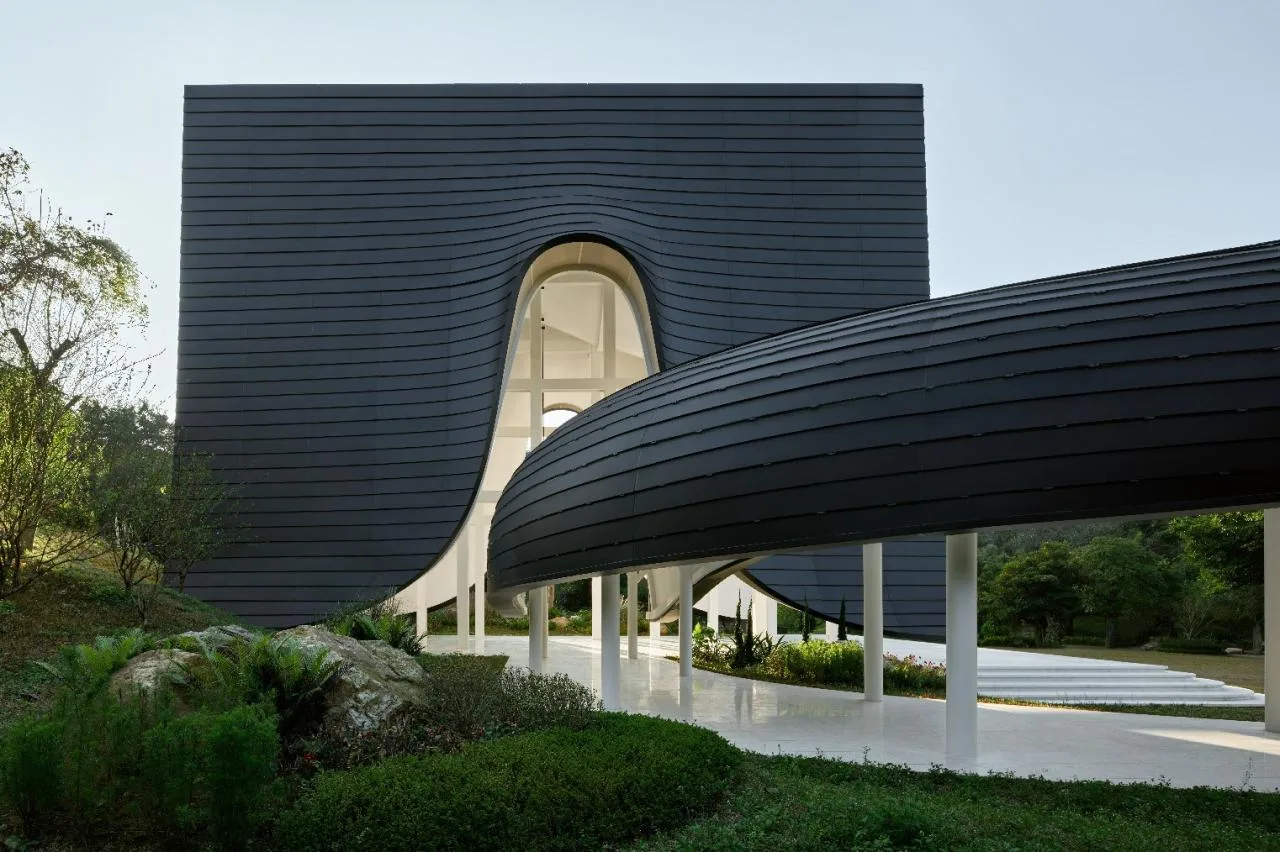
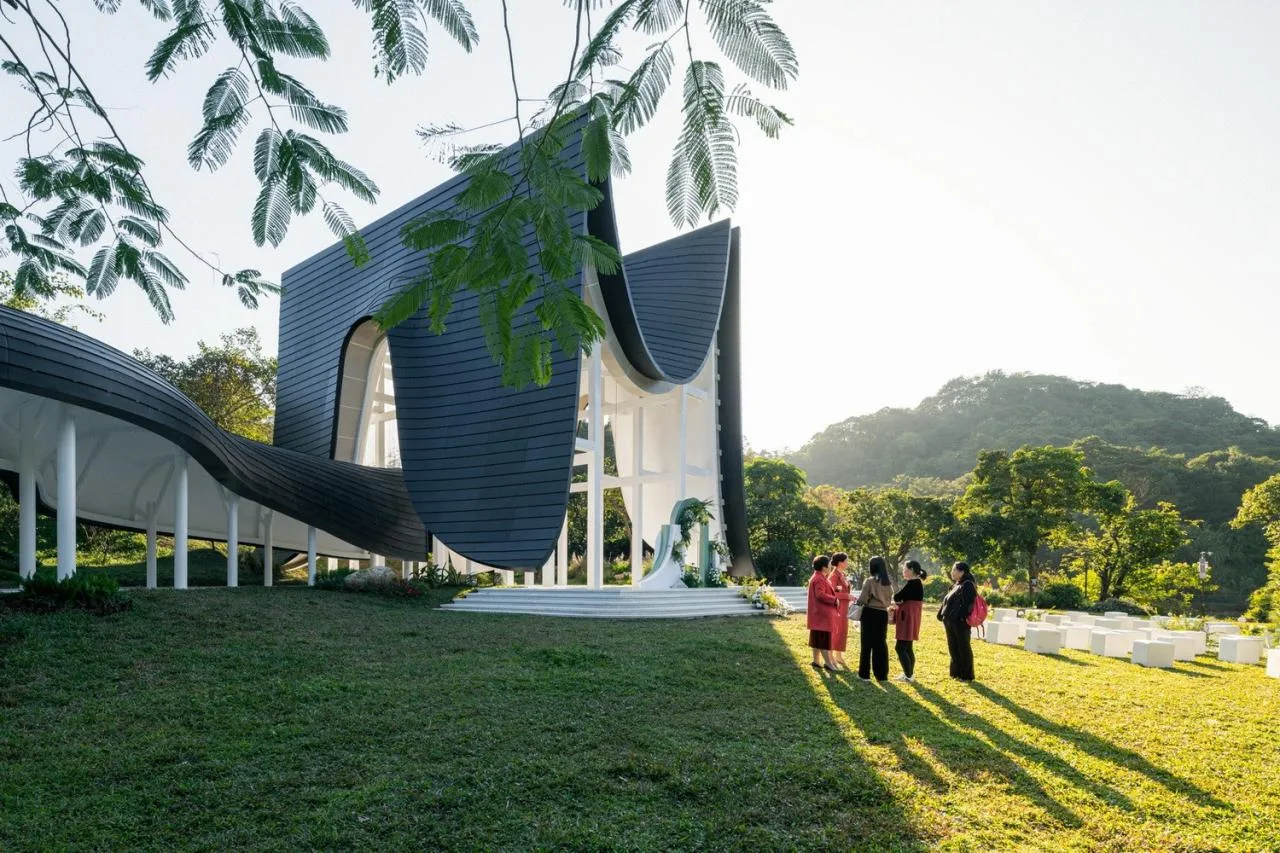
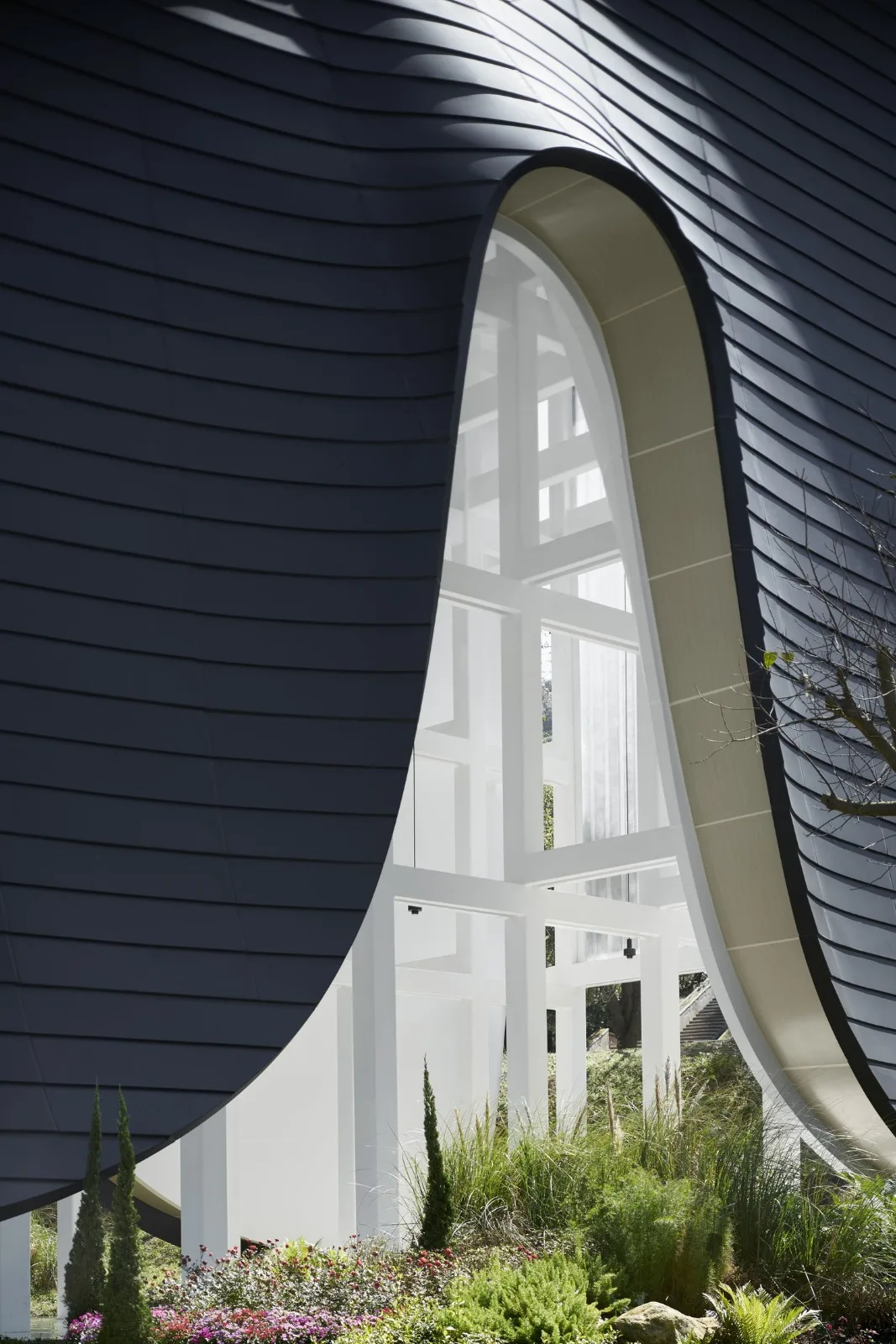
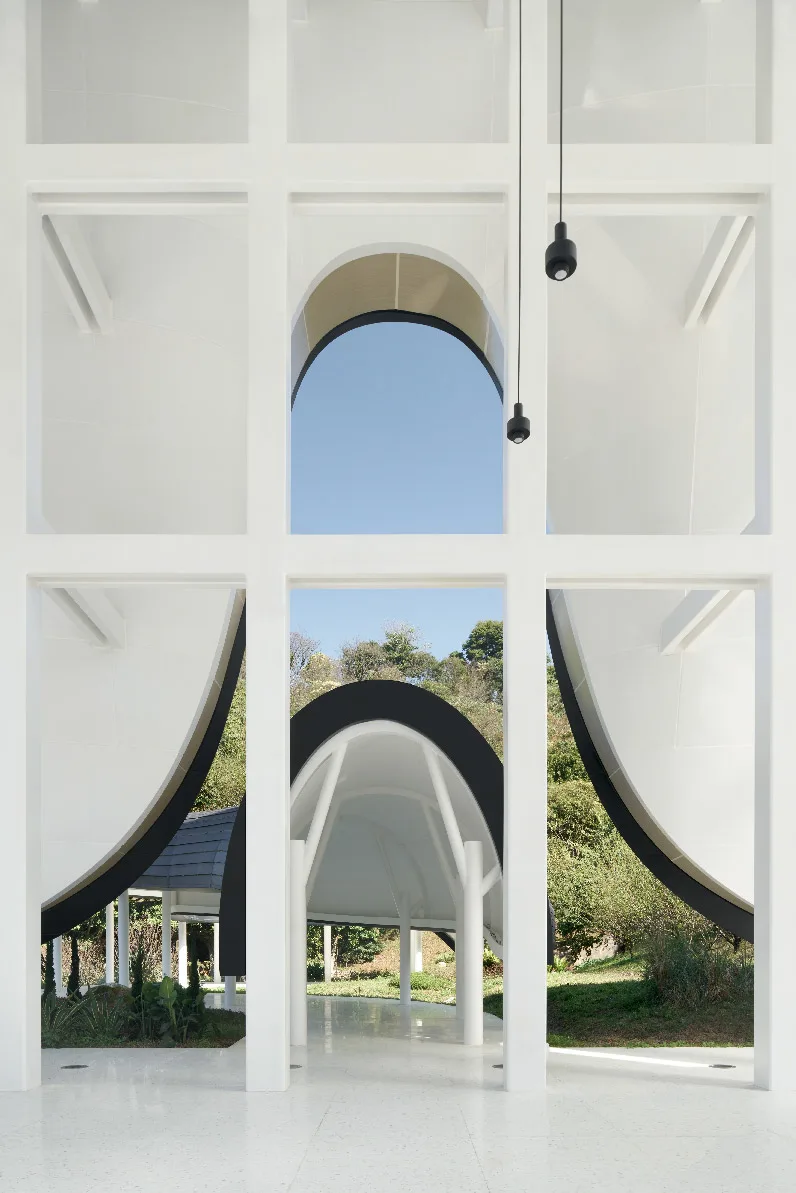
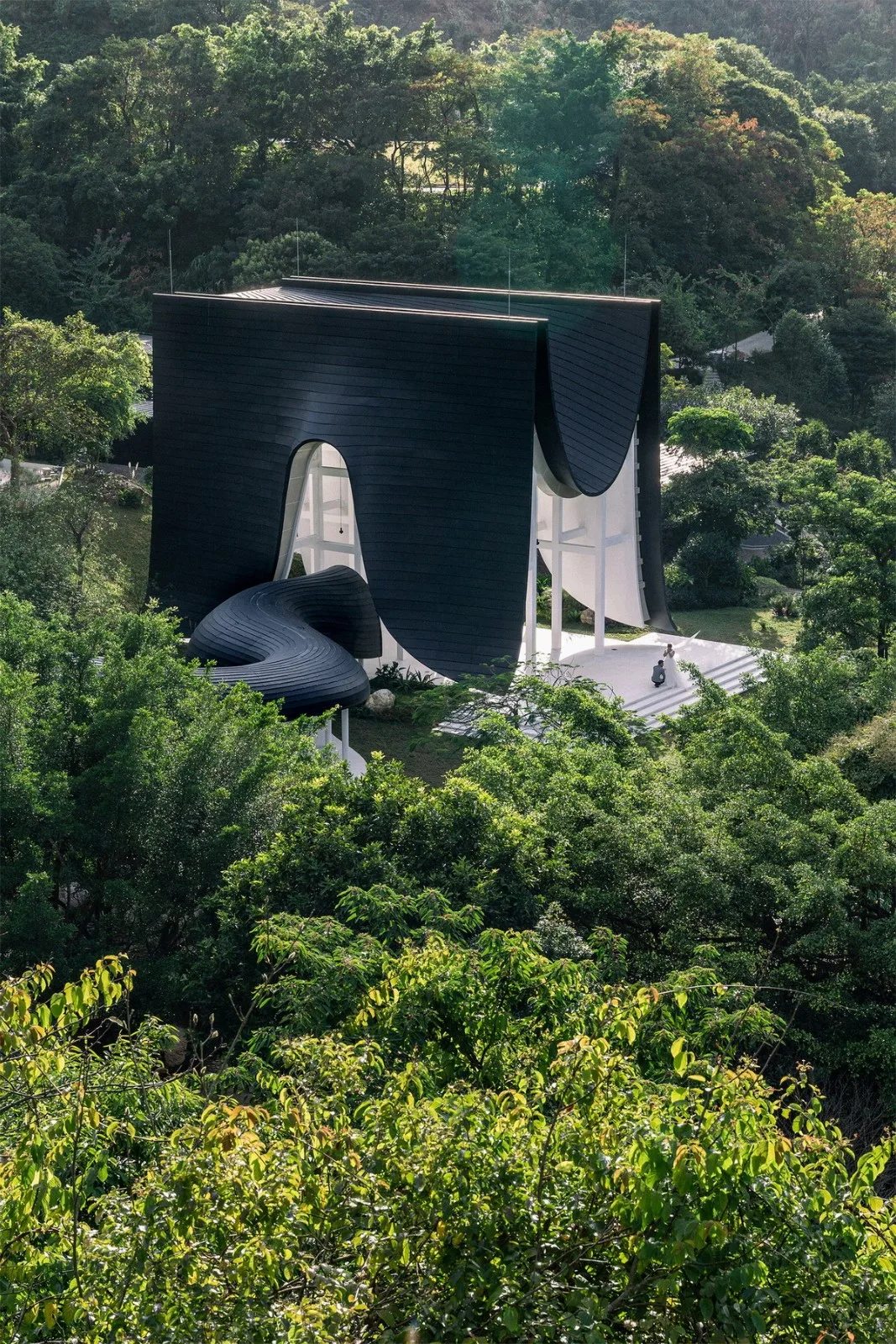
The architect abstracted the wok ear wall and incorporated it into the vertical façades on both sides of the building’s east wing. Using a negative form, the design “opens” the traditional pot-shaped wall, creating a seamless connection between the outdoor landscape and the indoor space.
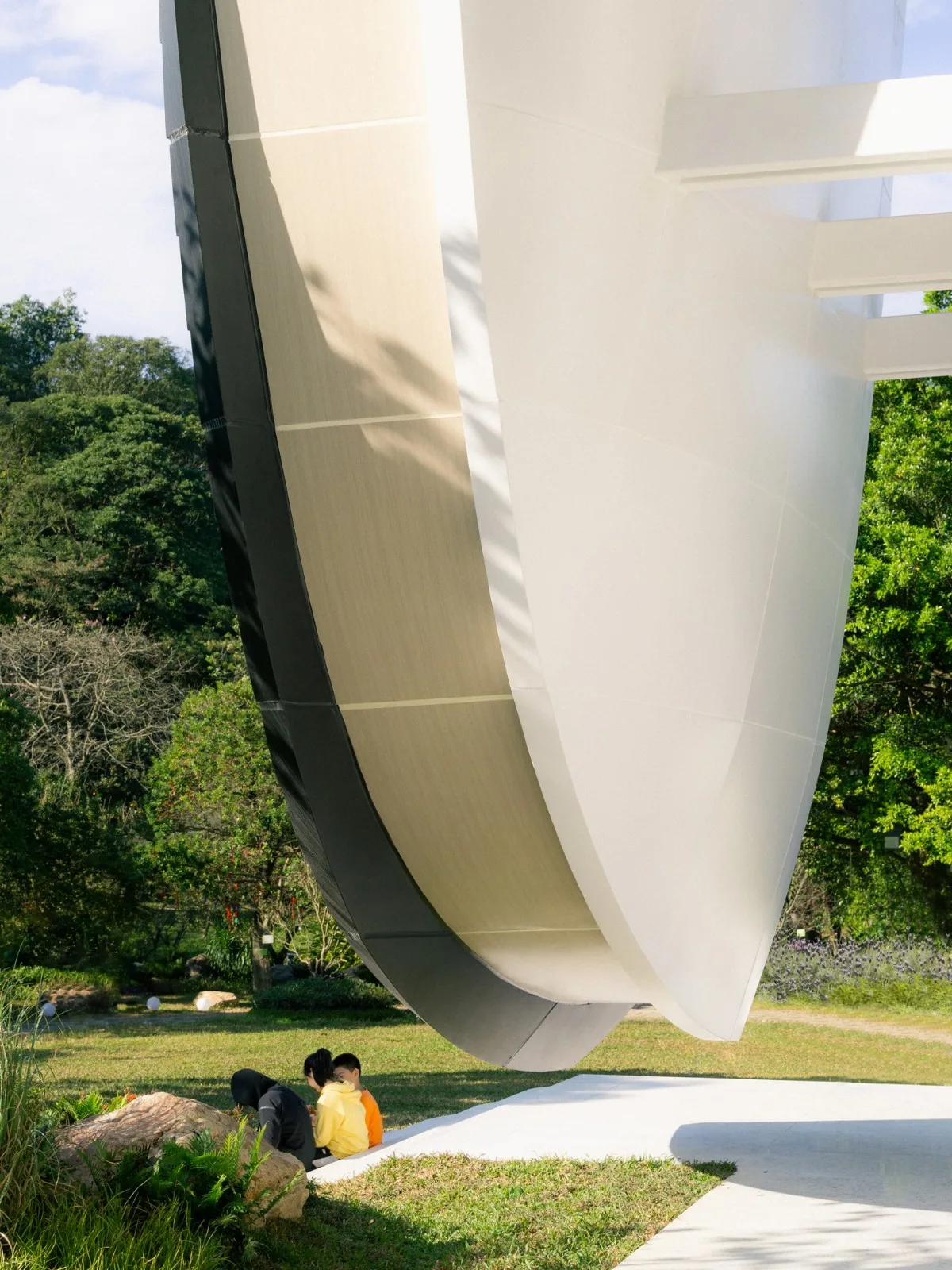
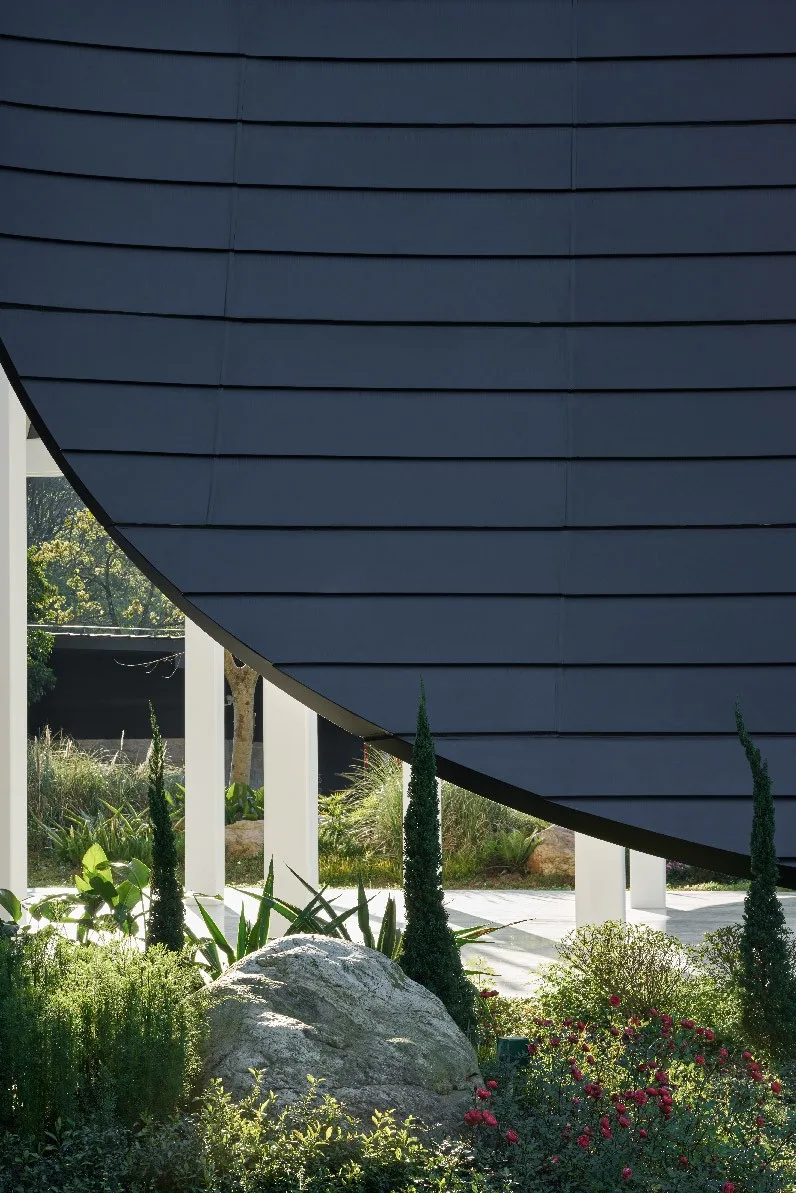
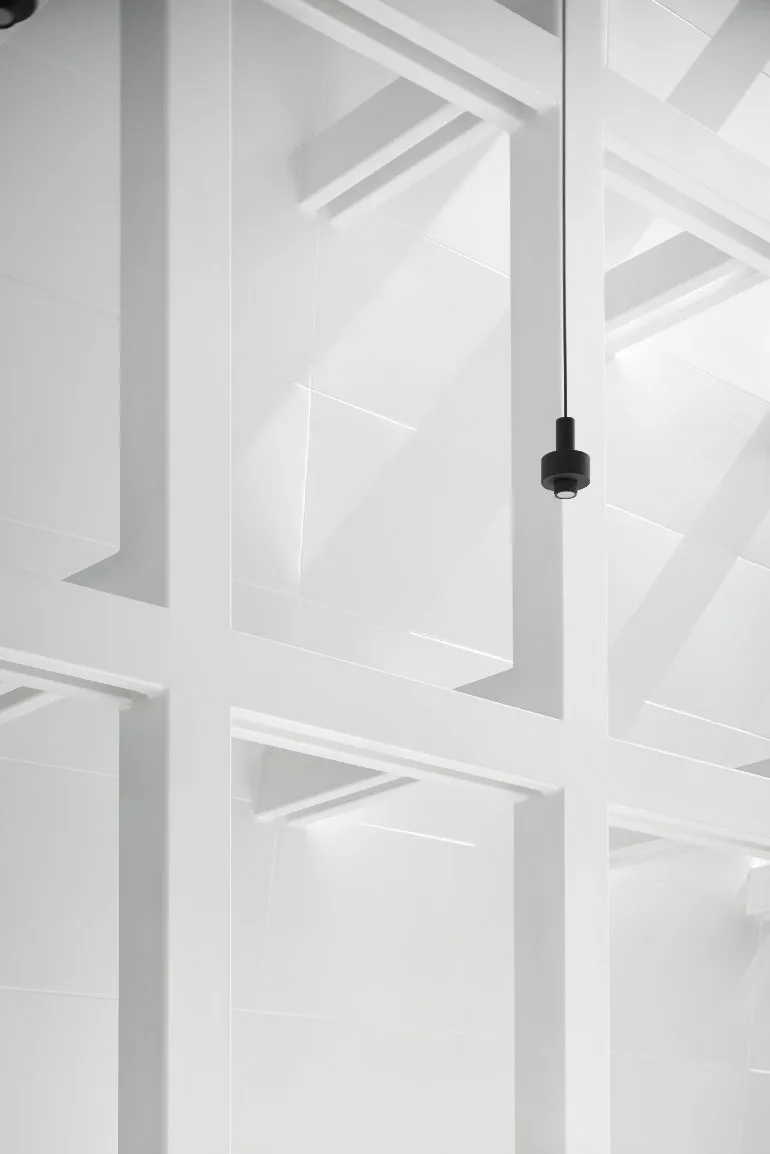
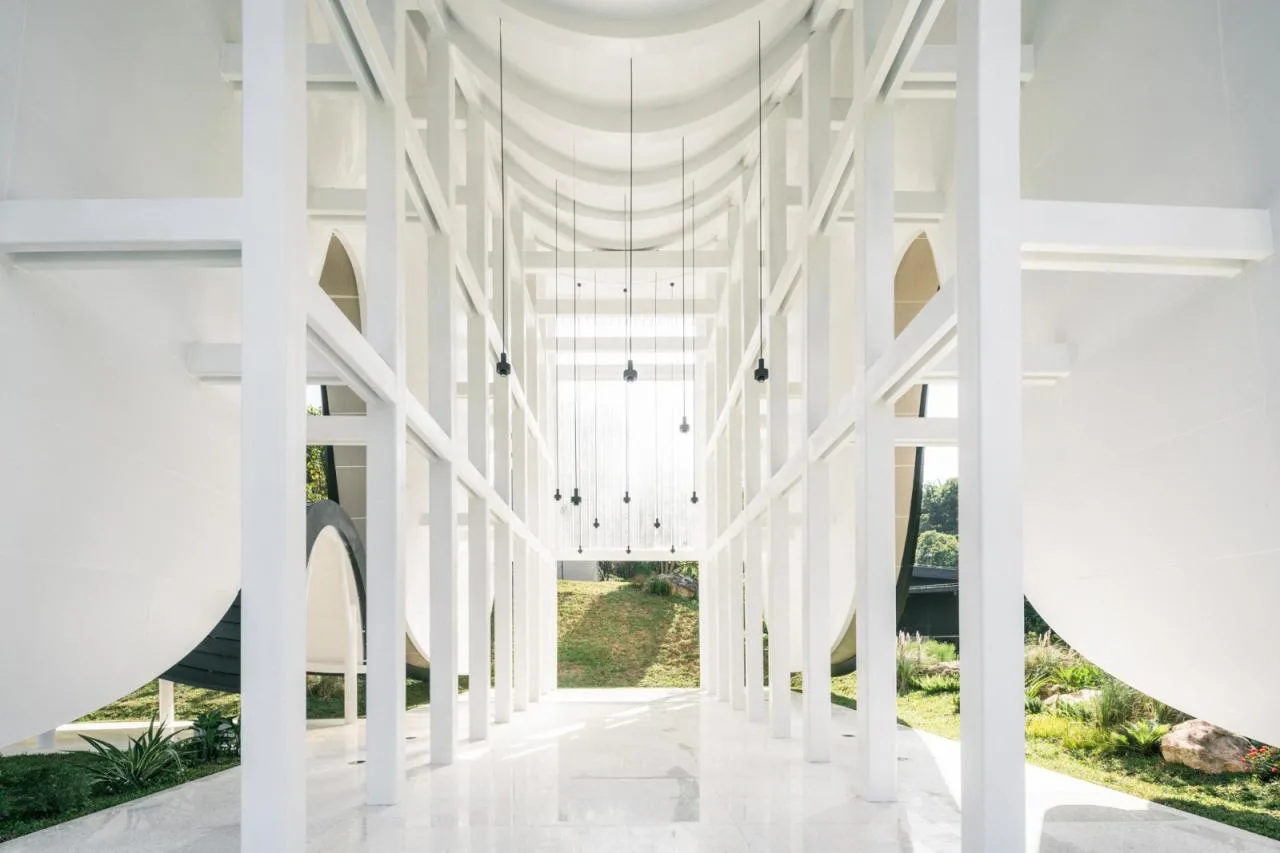
Between the two wok ear walls, a curved roof spans, formed by a hyperbolic surface that slopes gently from south to north, imparting an elegant, sagging aesthetic.
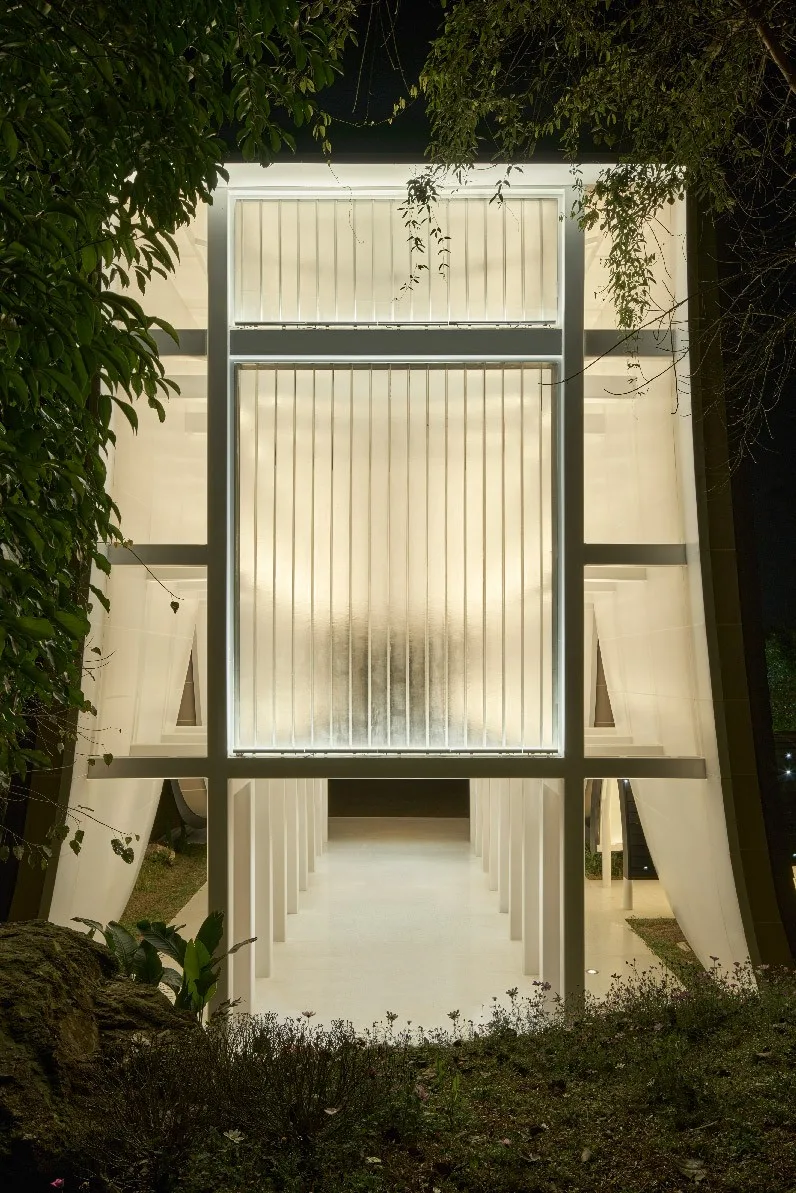
Through the window shaped like a wok ear wall, a floating curtain comes into view, while the deeply curved roof above appears to dance in the air like three suspended draperies. The supporting structure beneath the roof is painted black, rendering it nearly invisible when viewed from the east side, enhancing the roof’s ethereal quality.
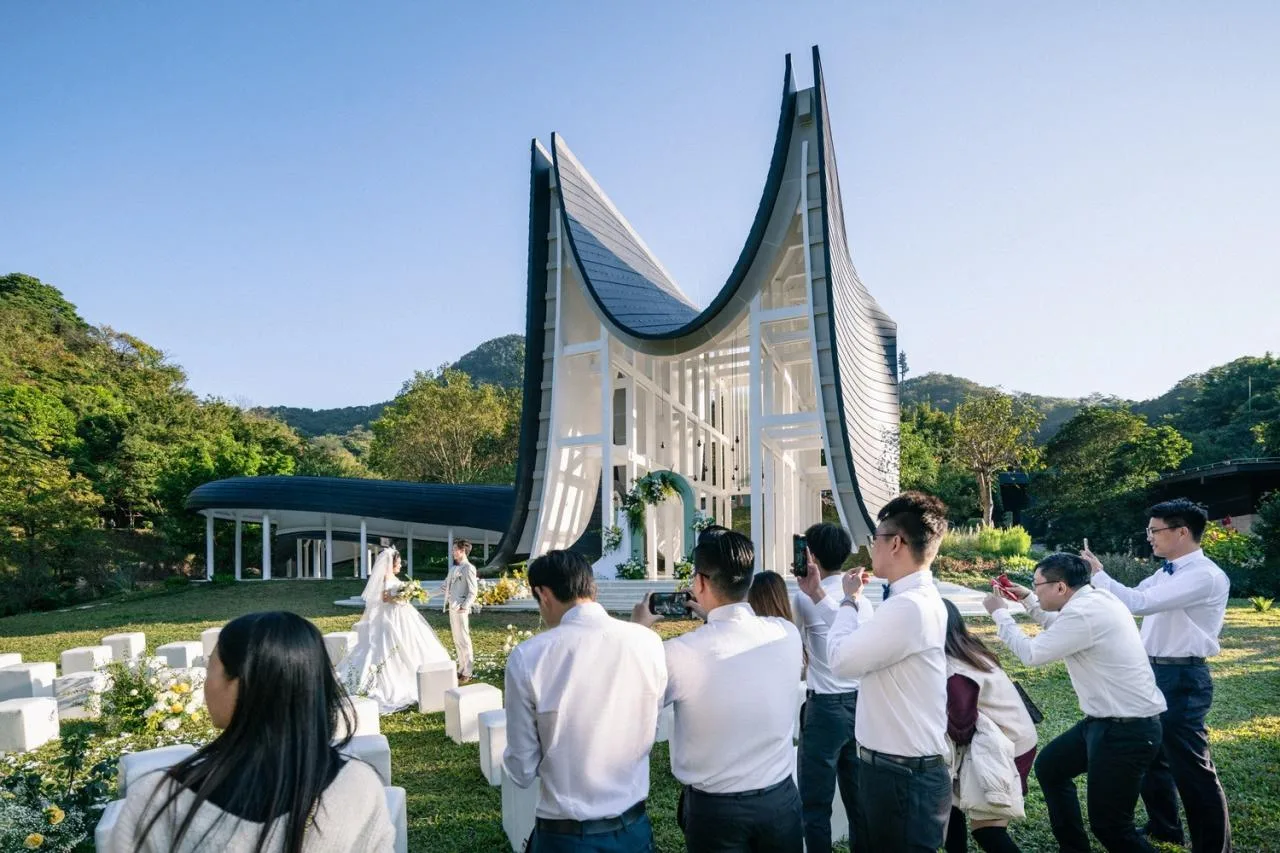
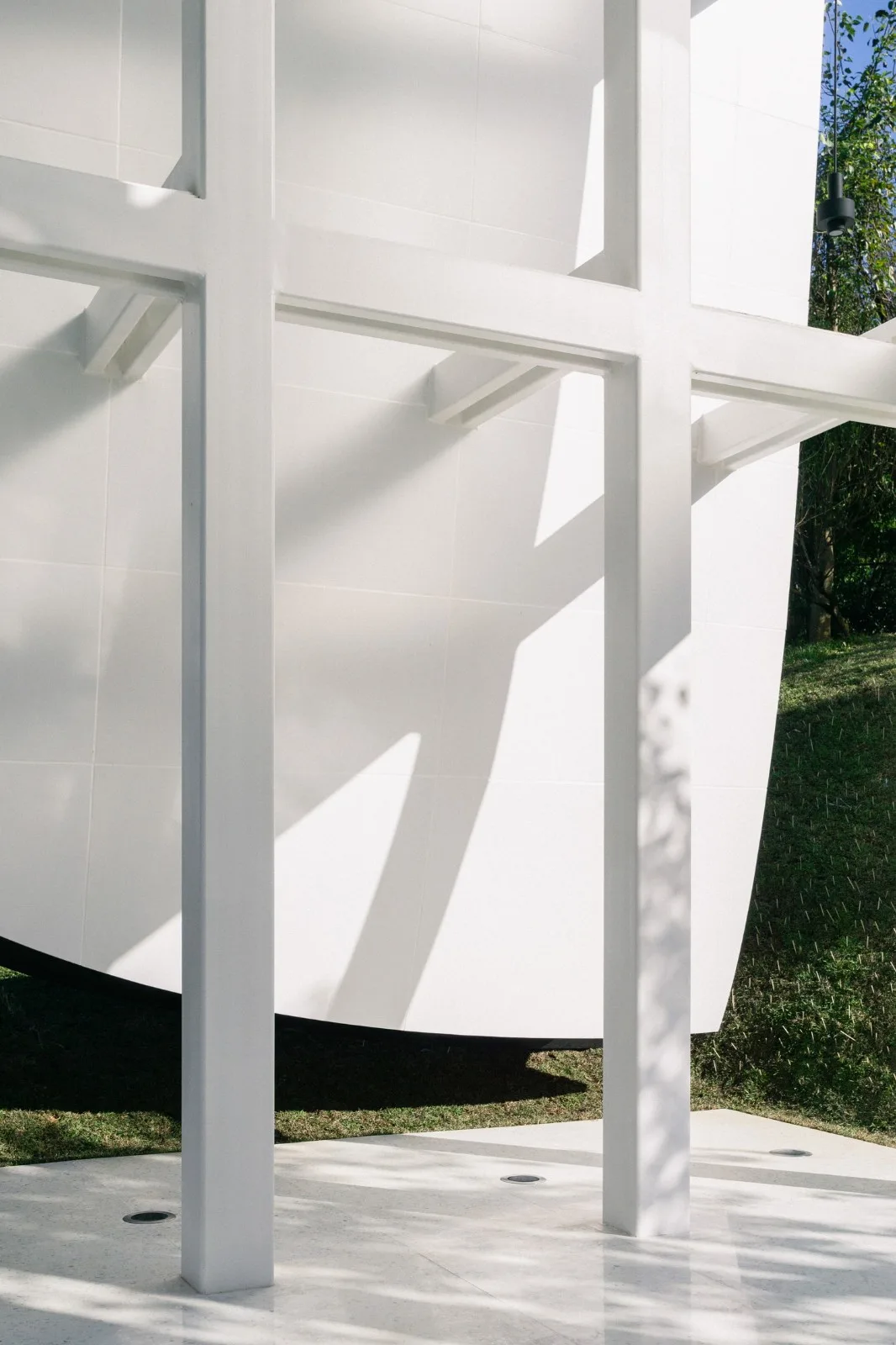
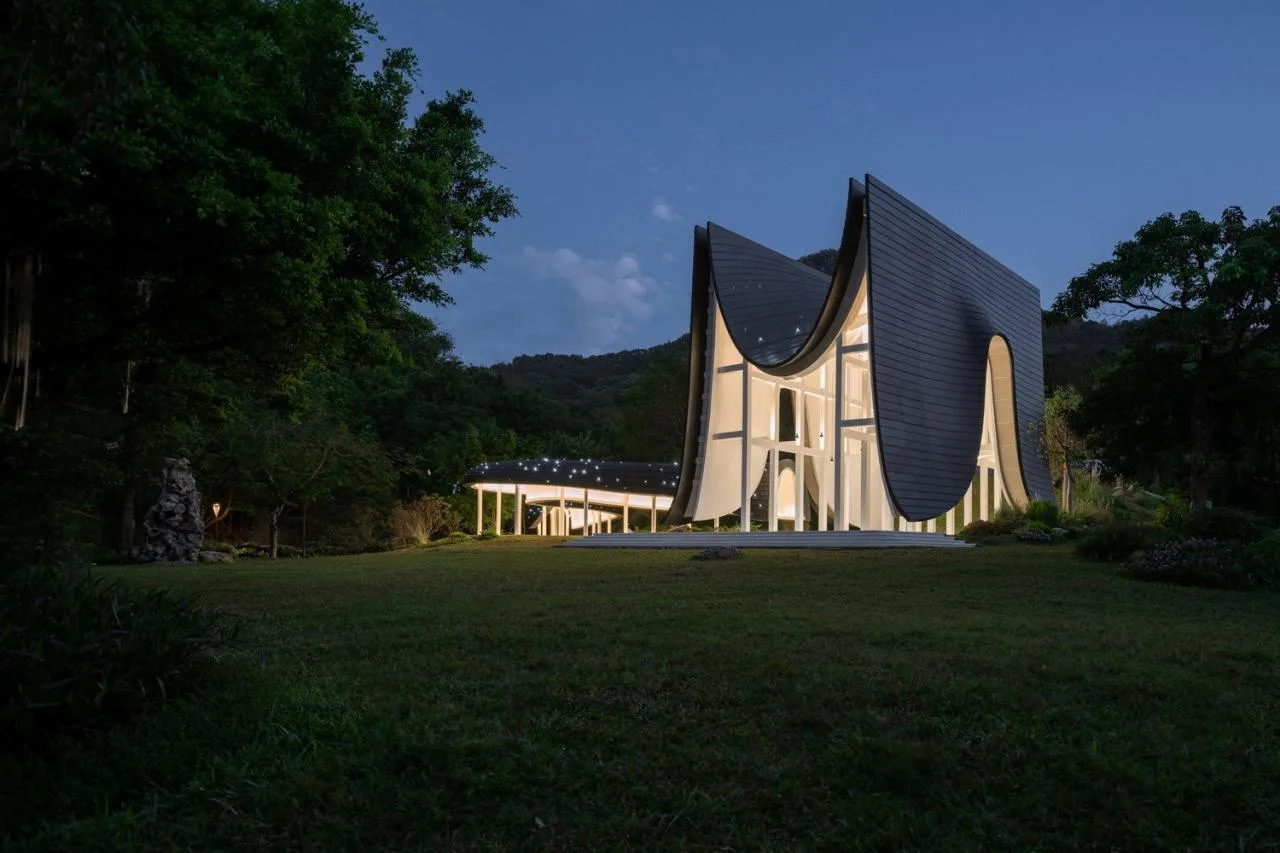
Natural light filters through the U-shaped glass curtain wall on the building’s southern side, entering the auditorium and creating a floating visual effect with the roof. As night falls, the wedding hall blends into the darkness. At this moment, interior lights illuminate the space, making the building’s form appear full and vibrant.
From afar, the entire structure resembles a Kongming lantern ready to ascend, symbolizing prayers for harmony between nature and humanity in the tranquil night. The streamlined, curtain-like roof seemingly embraces the surrounding veins of forests and rivers, crafting a space where spirit and nature converge. This openness allows fresh air and natural light to flood the interior, evoking a sense of serene buoyancy.
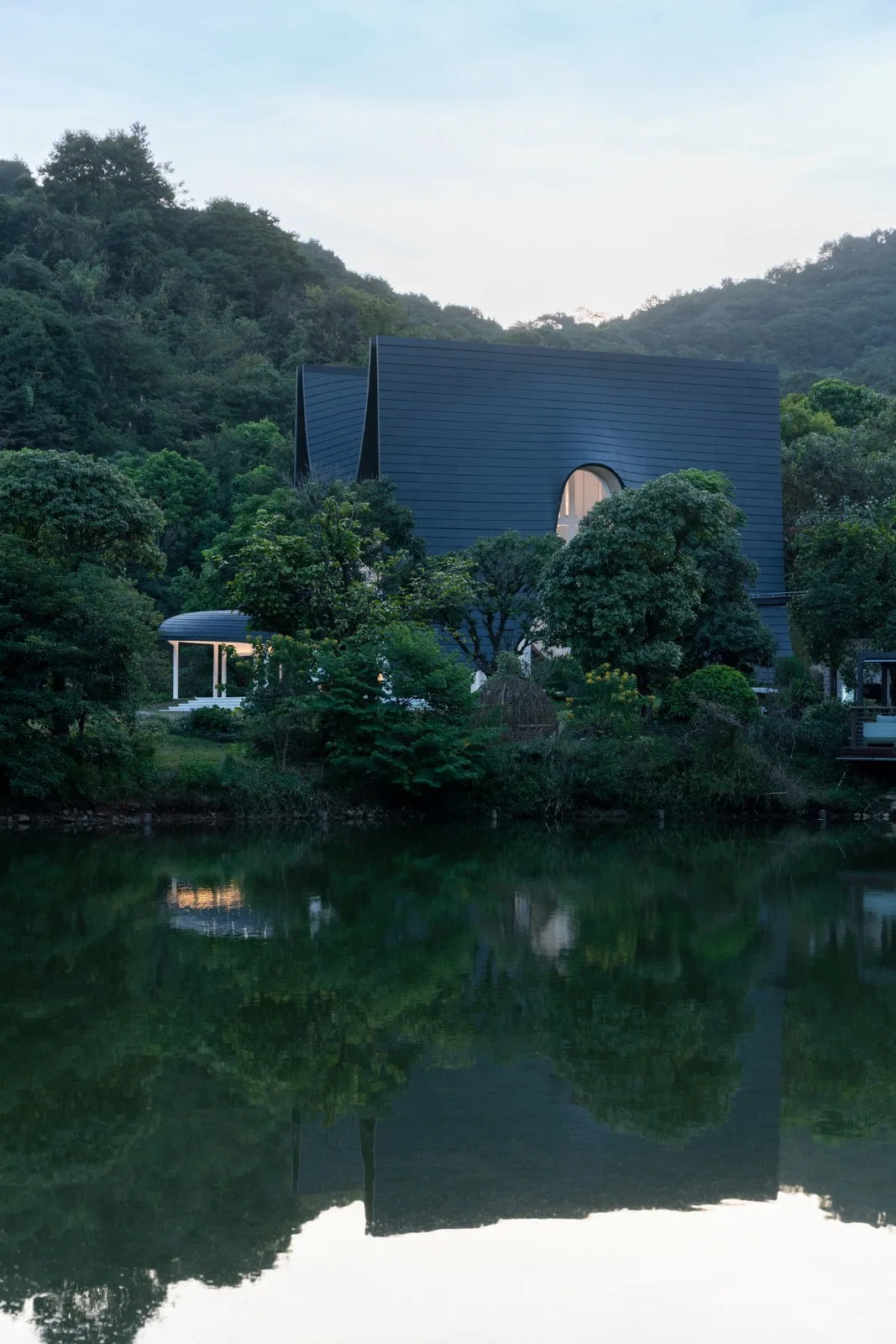
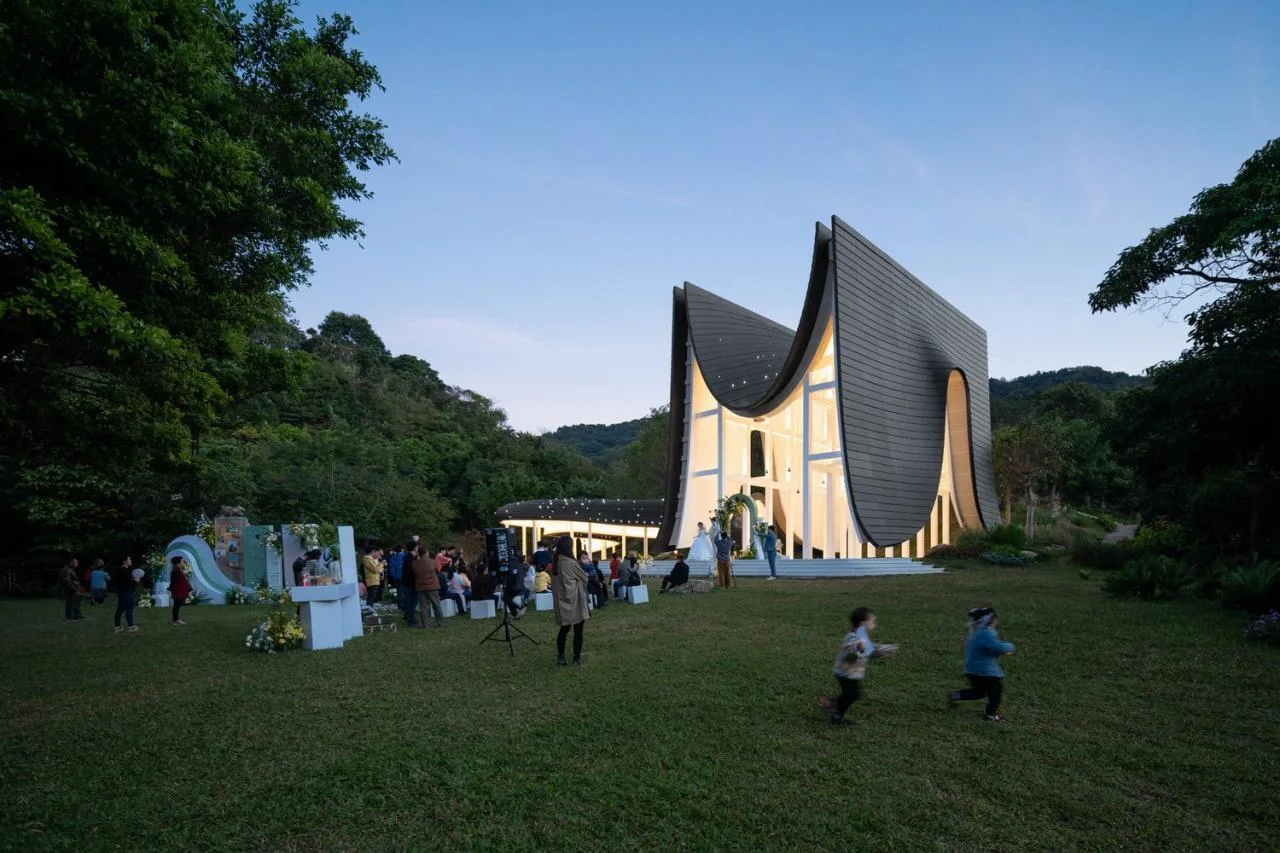
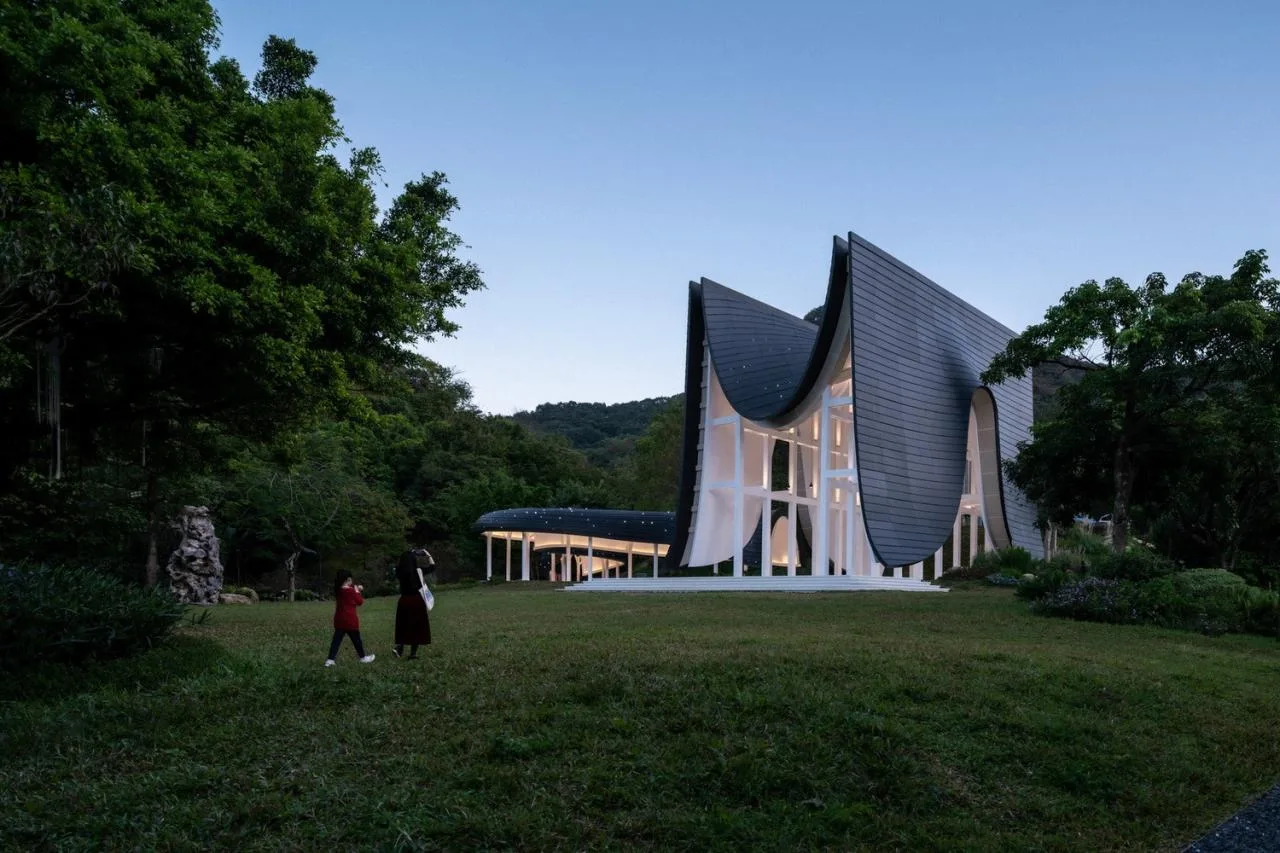
Designed as an open and connected space for gathering and celebration, the wedding hall offers flexible spatial attributes. It fluidly links indoor settings with the stunning outdoor scenery, creating a romantic atmosphere that harmonizes with the spiritually rich natural surroundings.
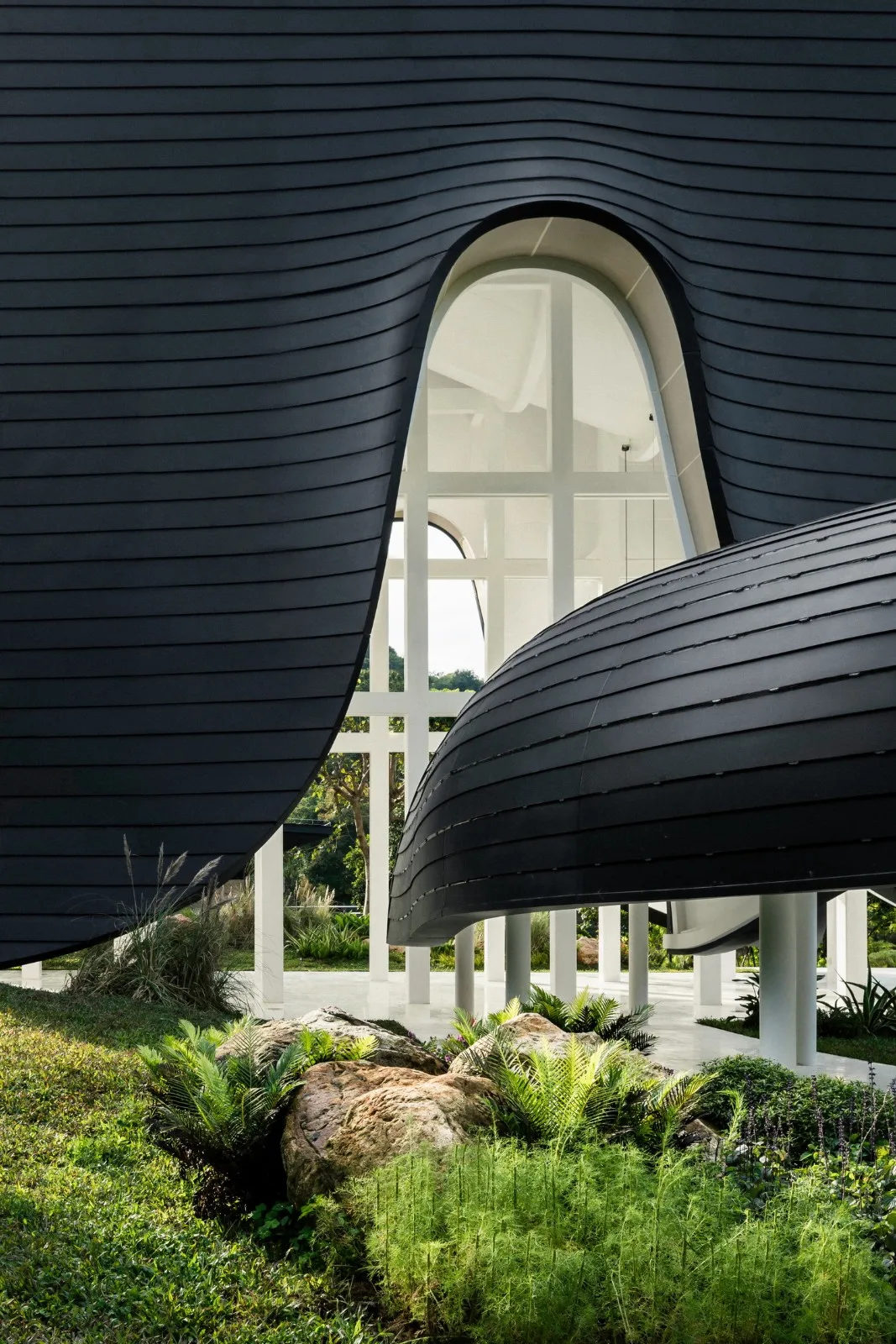
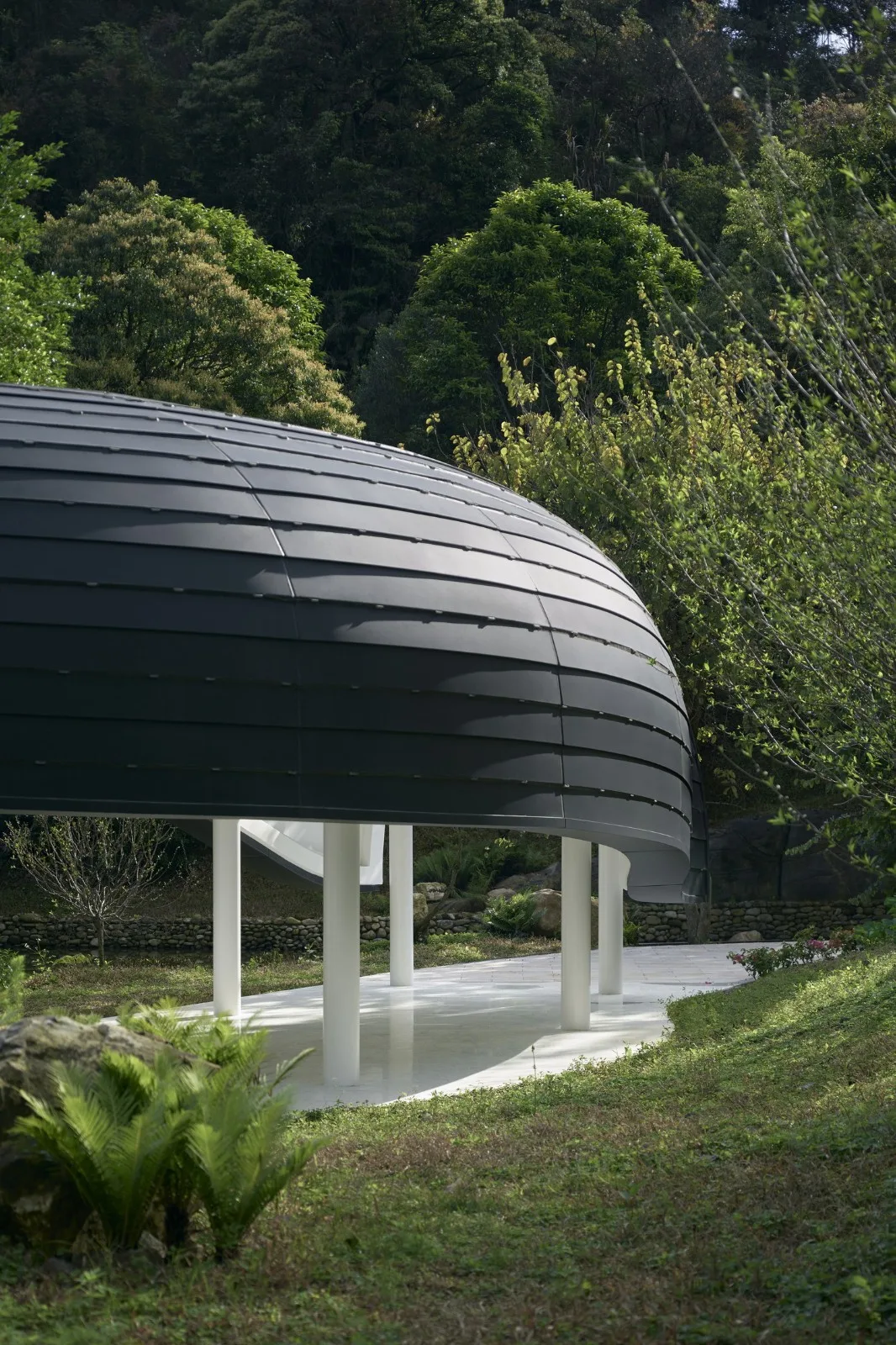
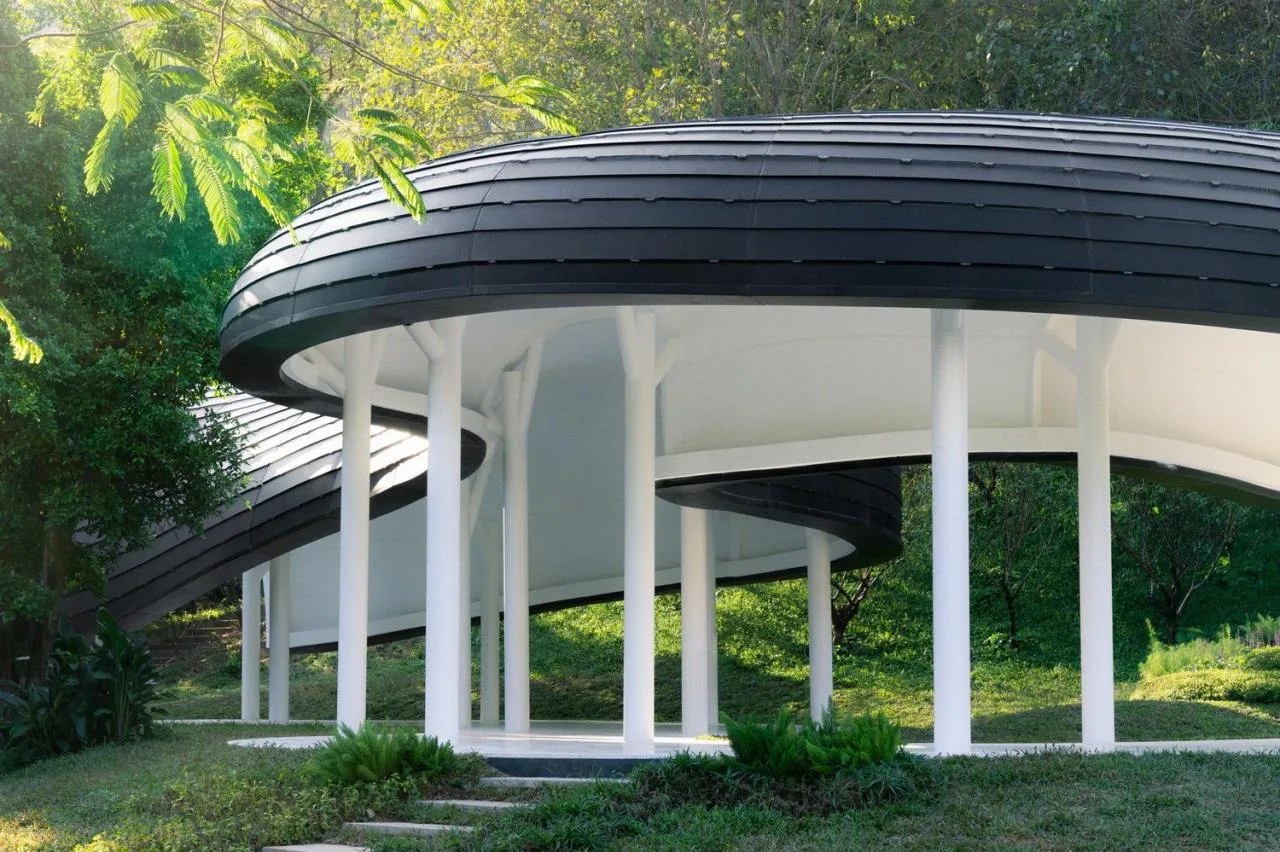
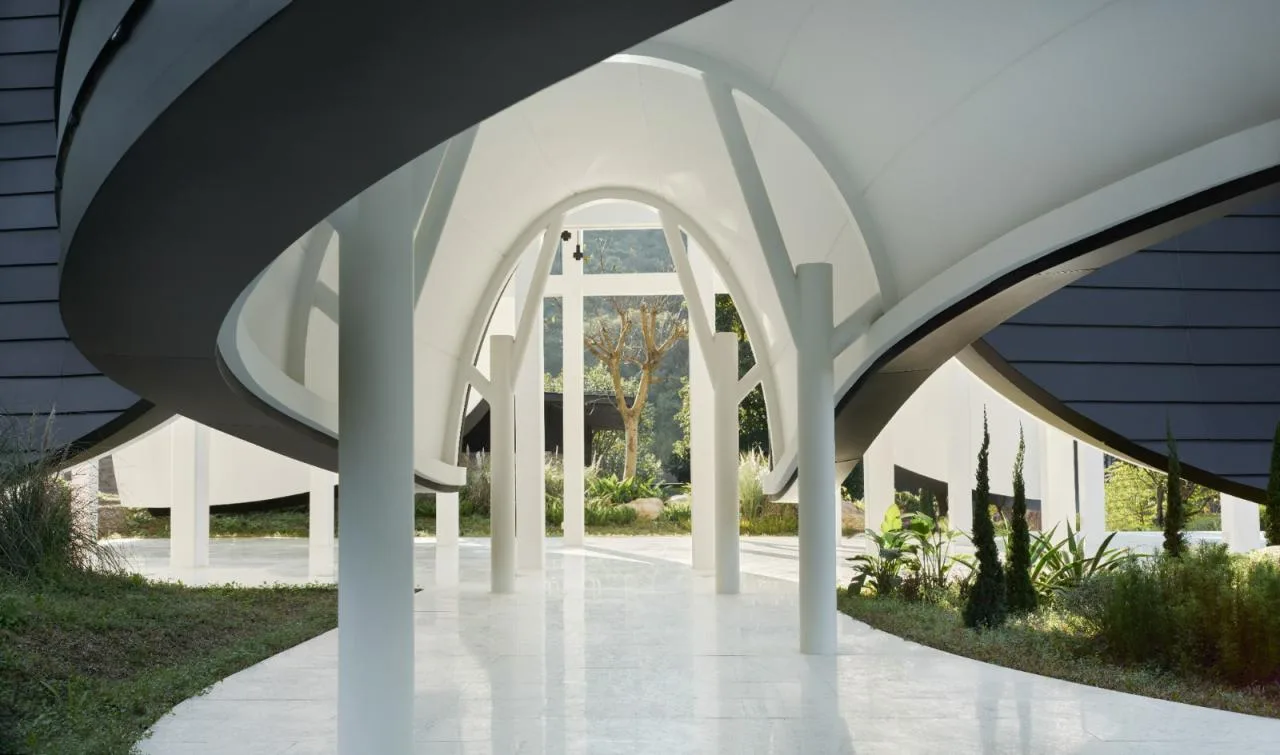
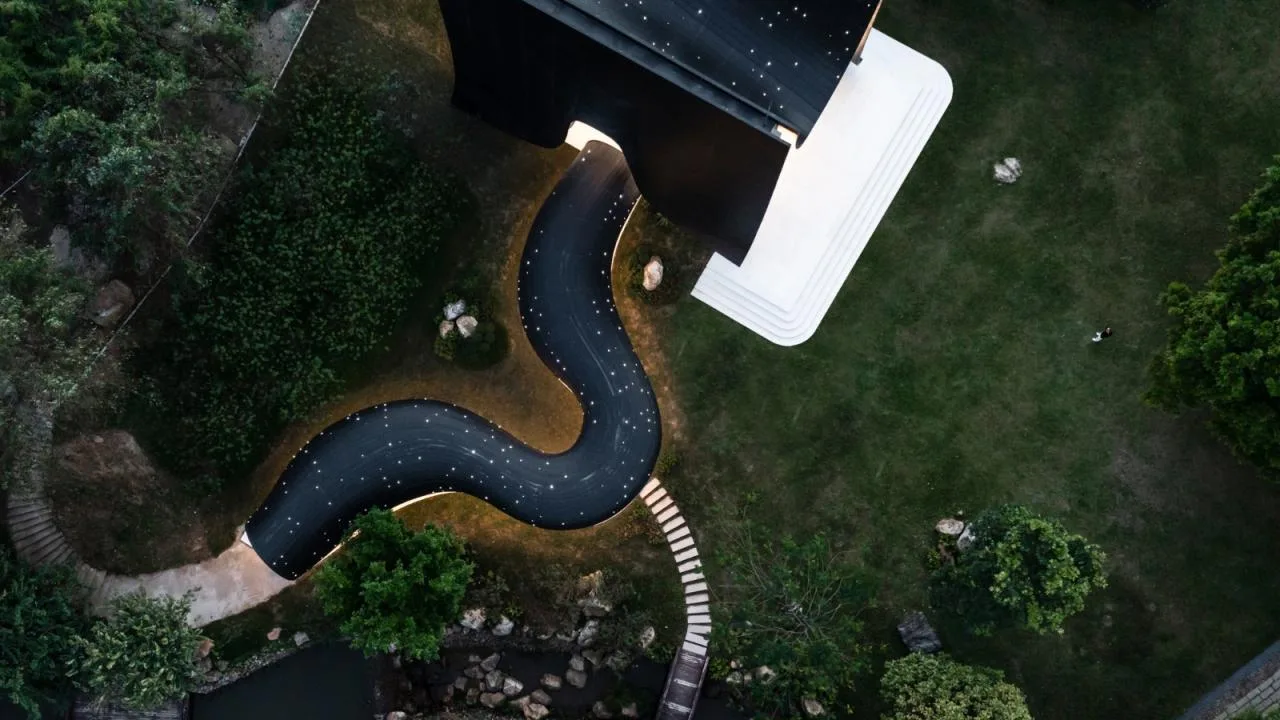
On the east side, a connecting corridor forms an approximate Ω shape in both plan and section, echoing the wok ear walls flanking the hall. This corridor links the wedding hall to the surrounding landscape and marks the significant moment when the bride approaches the groom during the ceremony.
In the evening, the setting sun’s rays stream through the wok-shaped window, bathing the newlyweds in gentle light and filling the hall with warmth. This transparent structure also expands the hall’s functionality, allowing it to host various outdoor activities when no weddings are scheduled. Guests can enjoy dining, speeches, gatherings, or relaxation within this versatile space.
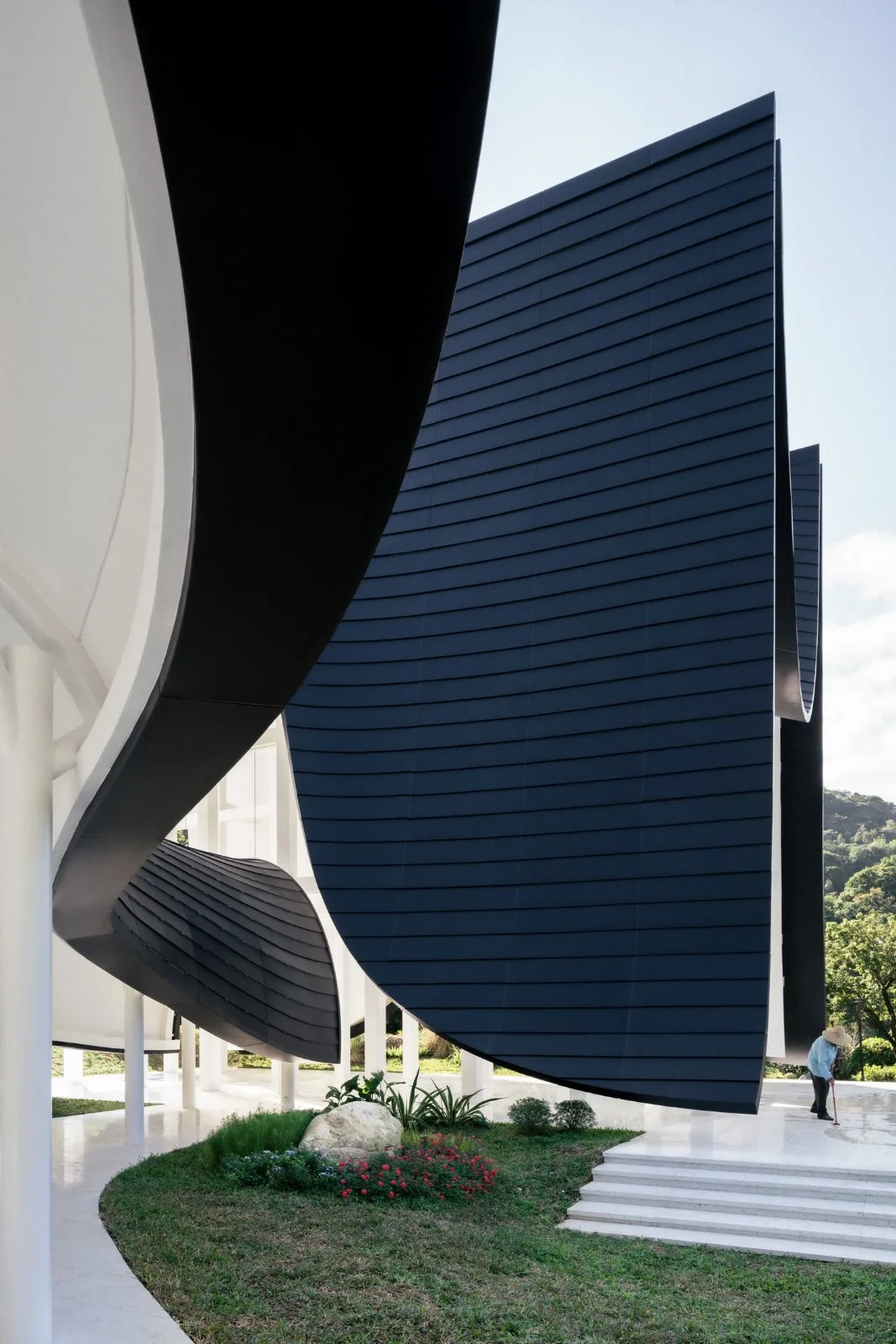
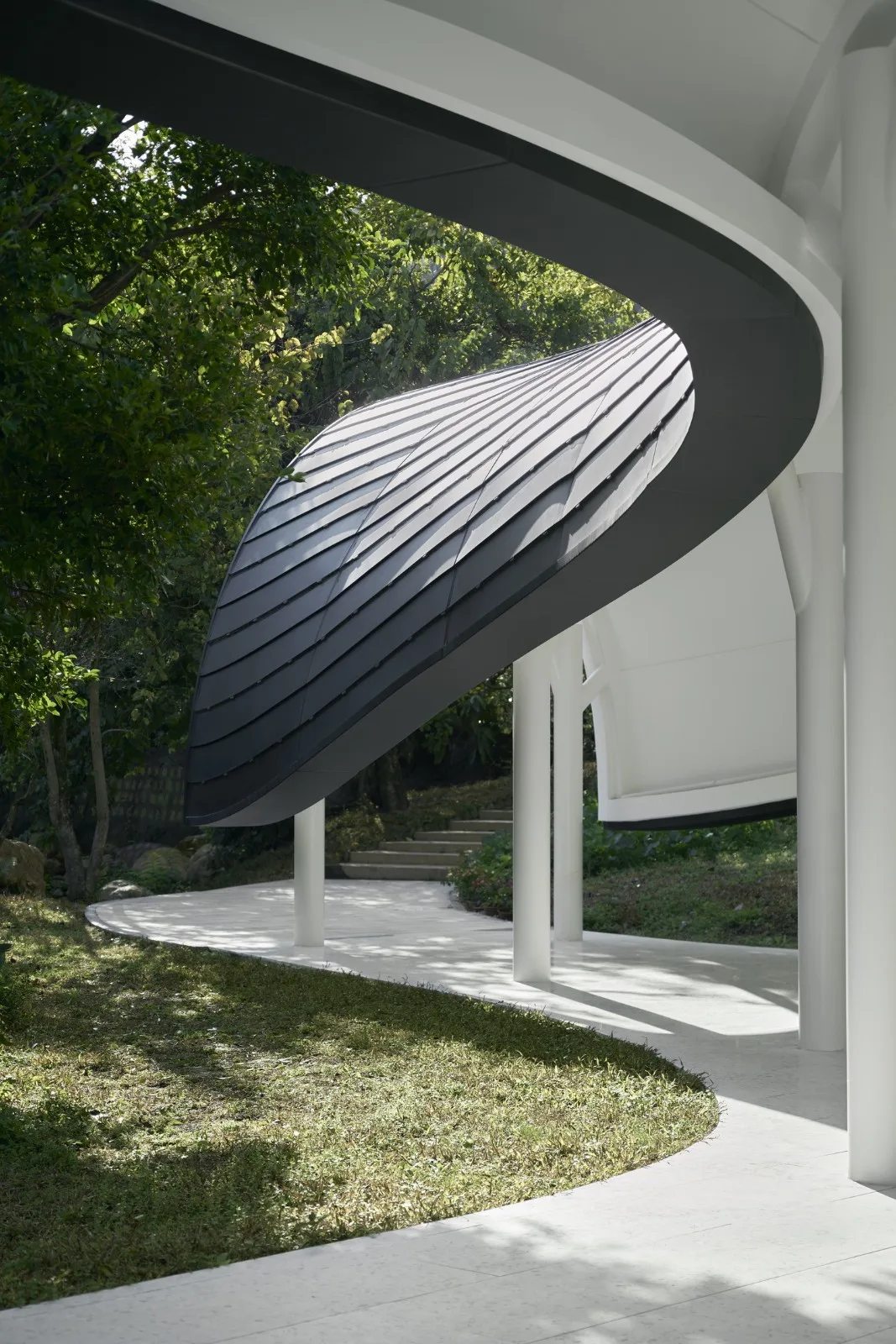
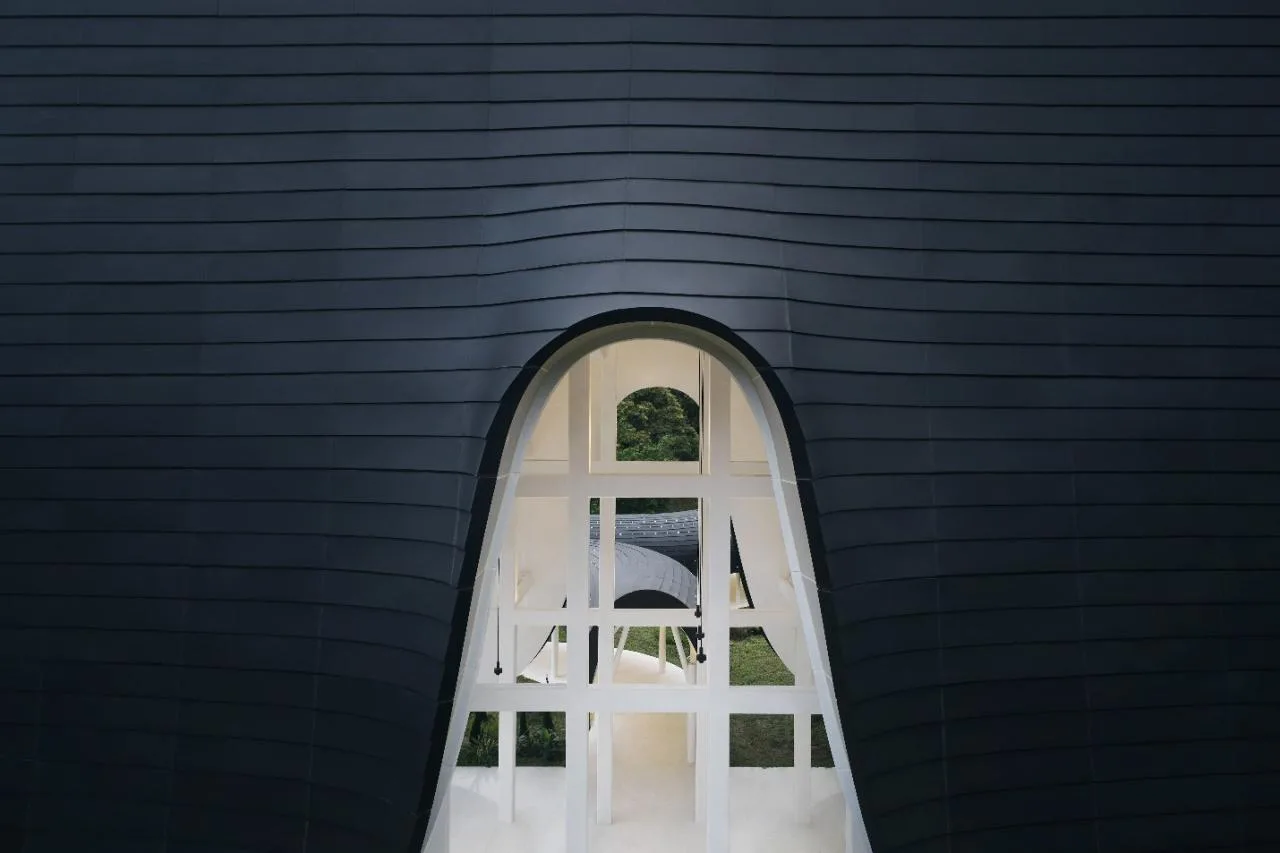
The scenic area surrounding the hall is densely forested, enveloping visitors in a serene woodland atmosphere from the moment they arrive. Upon reaching the lawn north of the wedding hall, guests encounter a bright and peaceful spiritual sanctuary. A bride who once celebrated her wedding here described it as “a space that makes people want to walk barefoot.”
Project Drawings
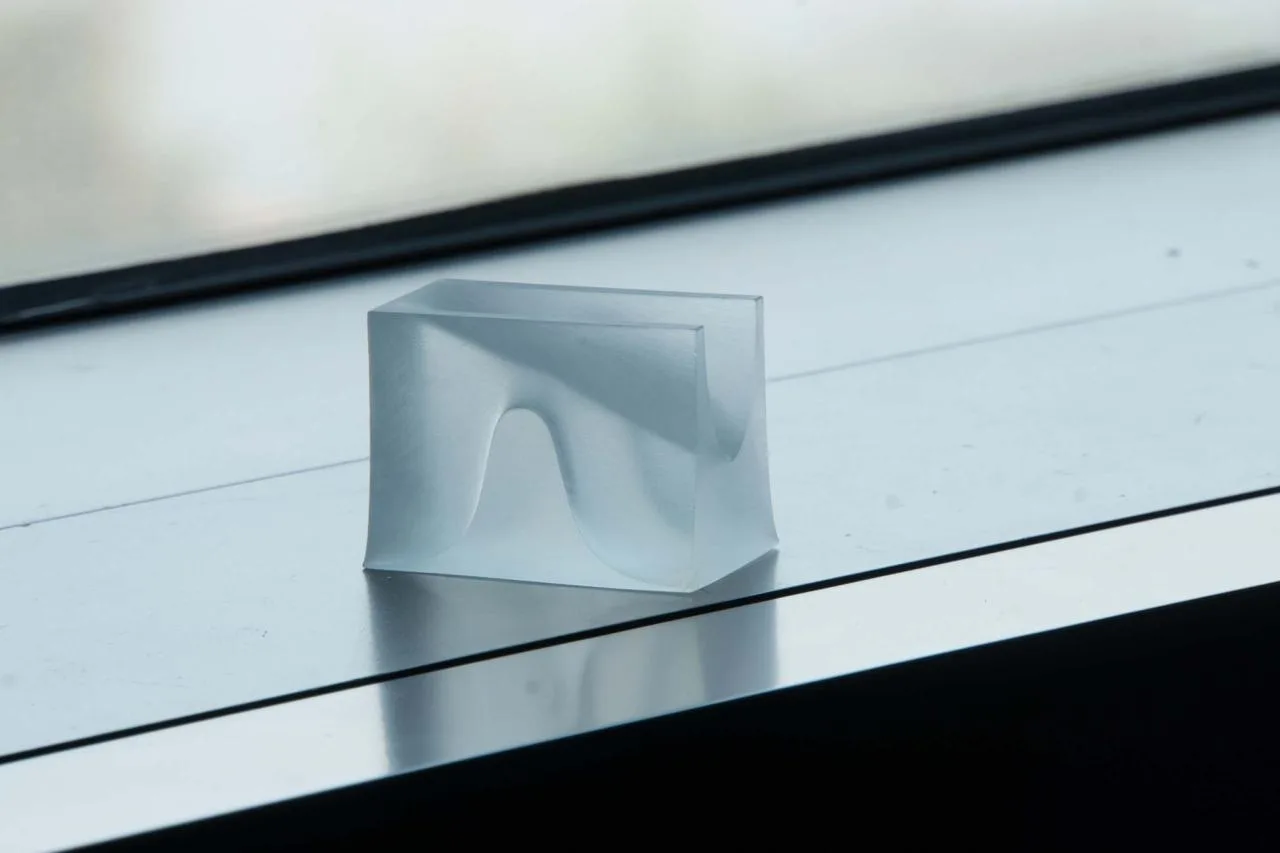
△ Project Model

△ Project Model

△ Project Model
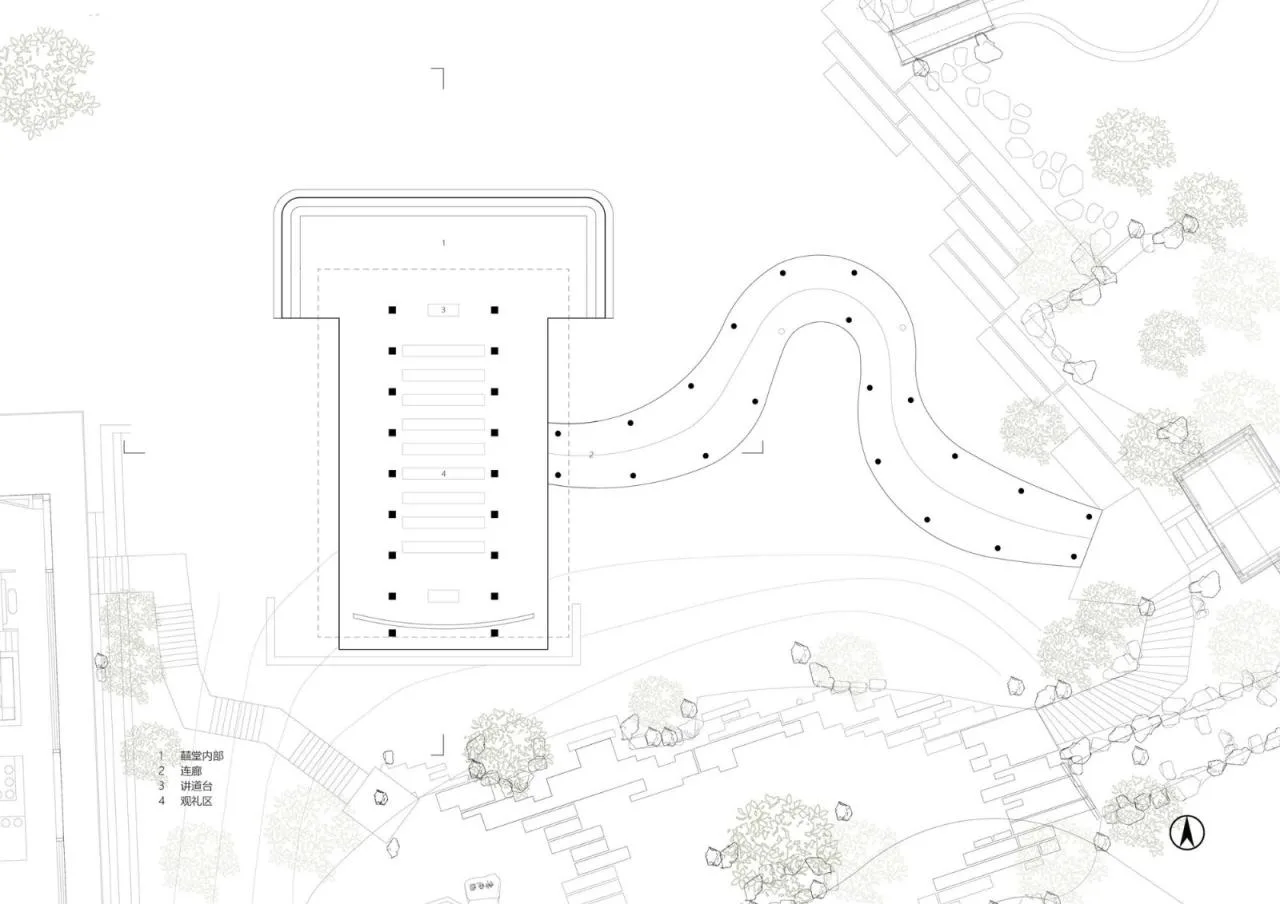
△ Plan View
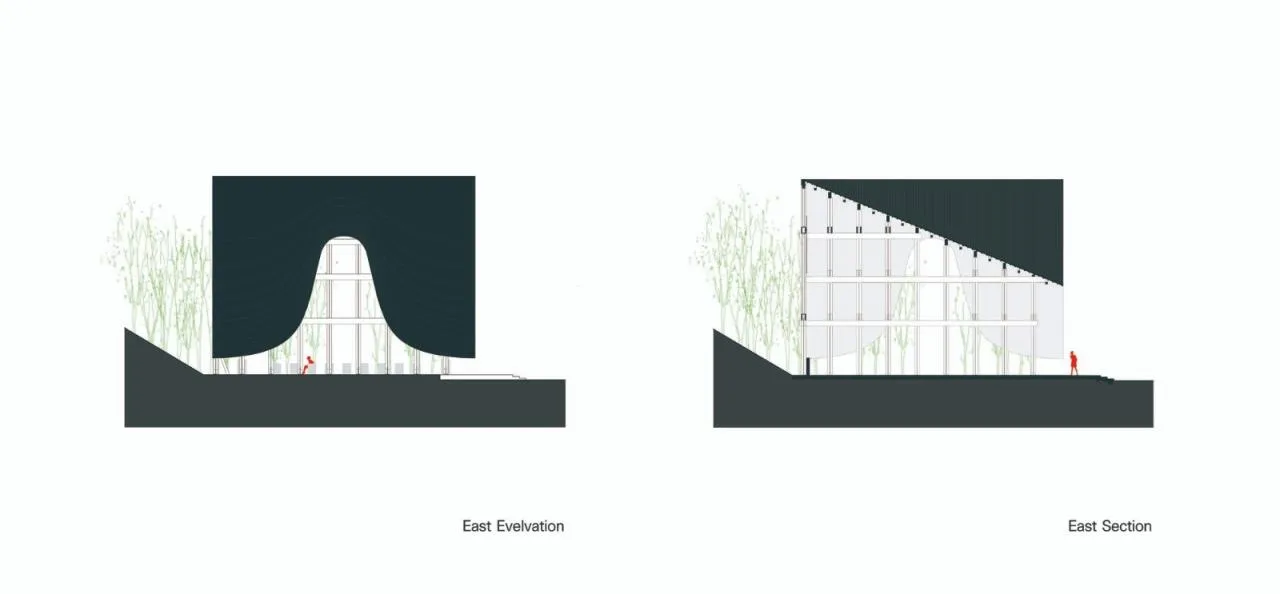
△ Elevation and Section Views
Project Information
Architect: Say Architects
Area: 370 m²
Year of Completion: 2021
Photographers: Breezeimage, Junning Yang
Lead Designers: Zhang Yan, Shan Jianan
Design Team: Fan Yawen (Project Manager), Hang Sheng, He Siyun (Model), Ye Jin (Model), Zhu Jiaming (Analysis Diagram), Yang Rui (Analysis Diagram), Su Jingting (Construction Diagram)
Location: Guangzhou, China
















Must log in before commenting!
Sign Up