
The perfect retreat for solitude in a vacation paradise
The Unwavering Mountain Wind—
One breath
Thirteen States Willow Green
– Xie Wu Village
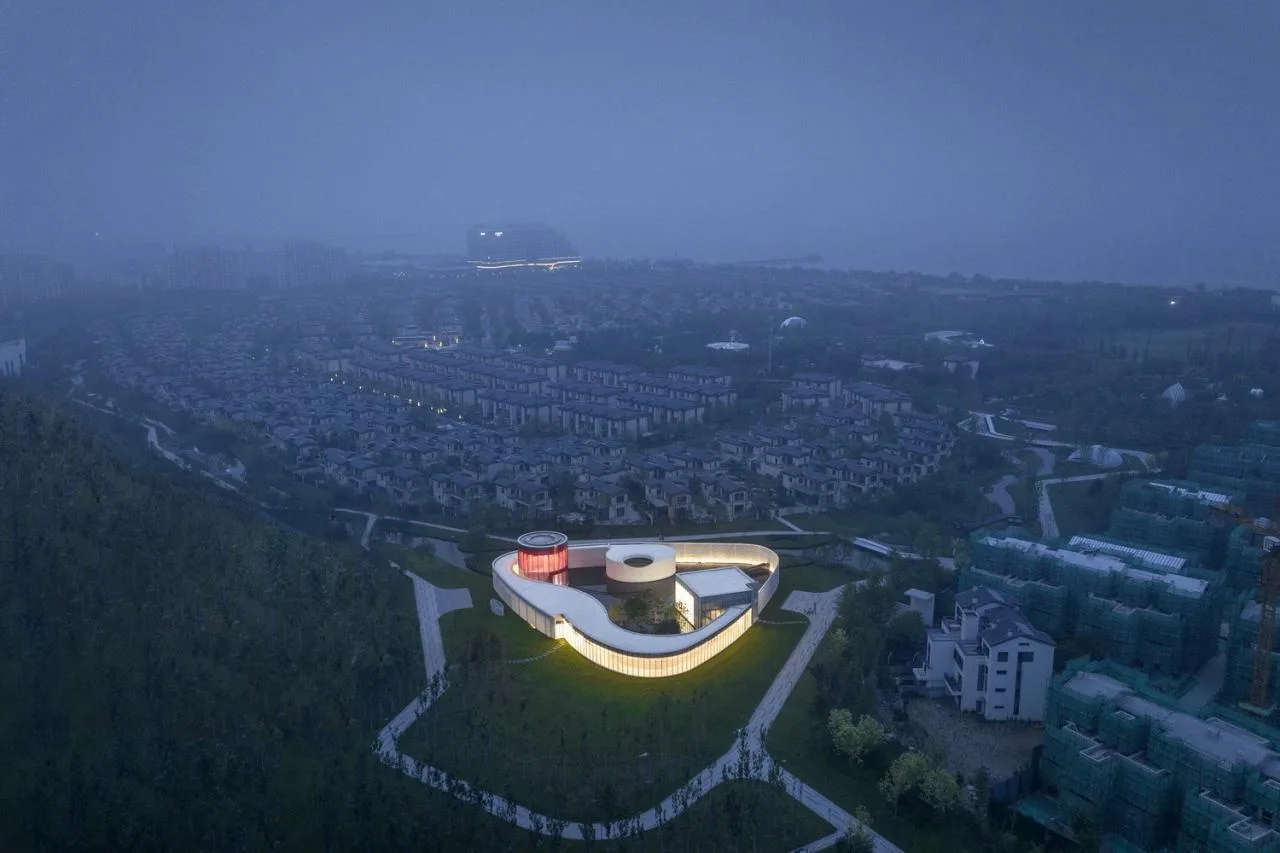
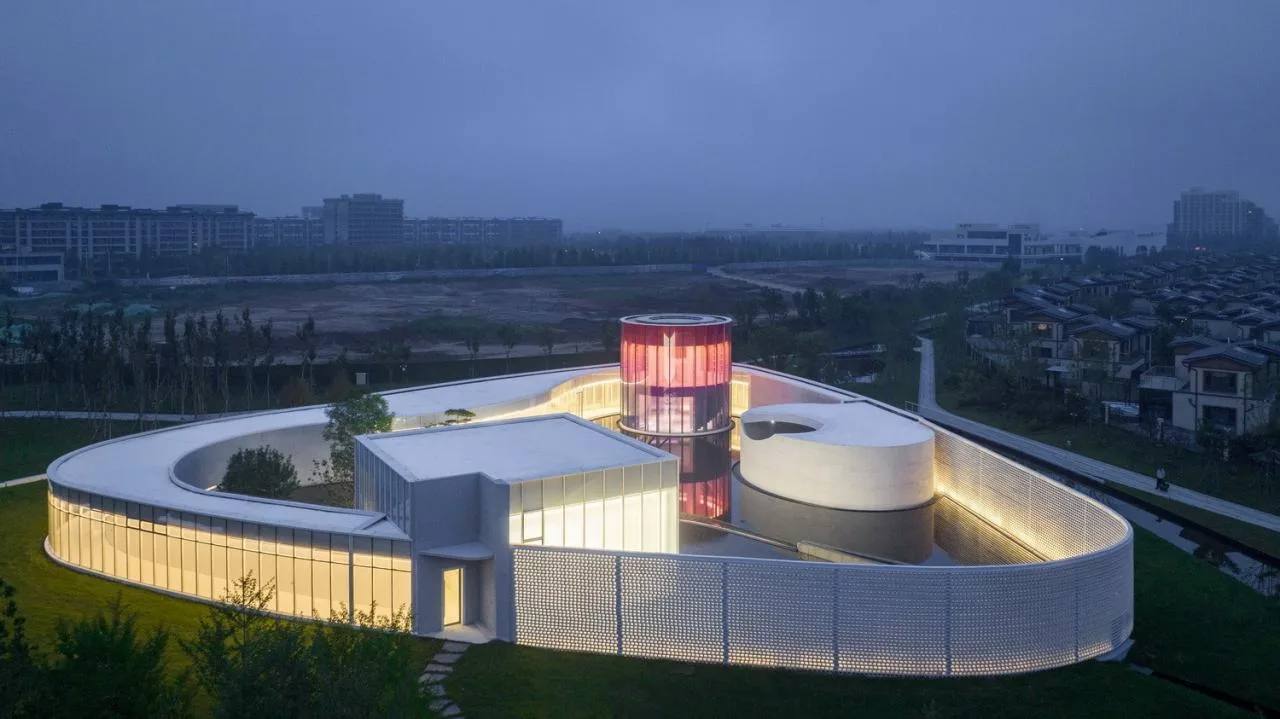
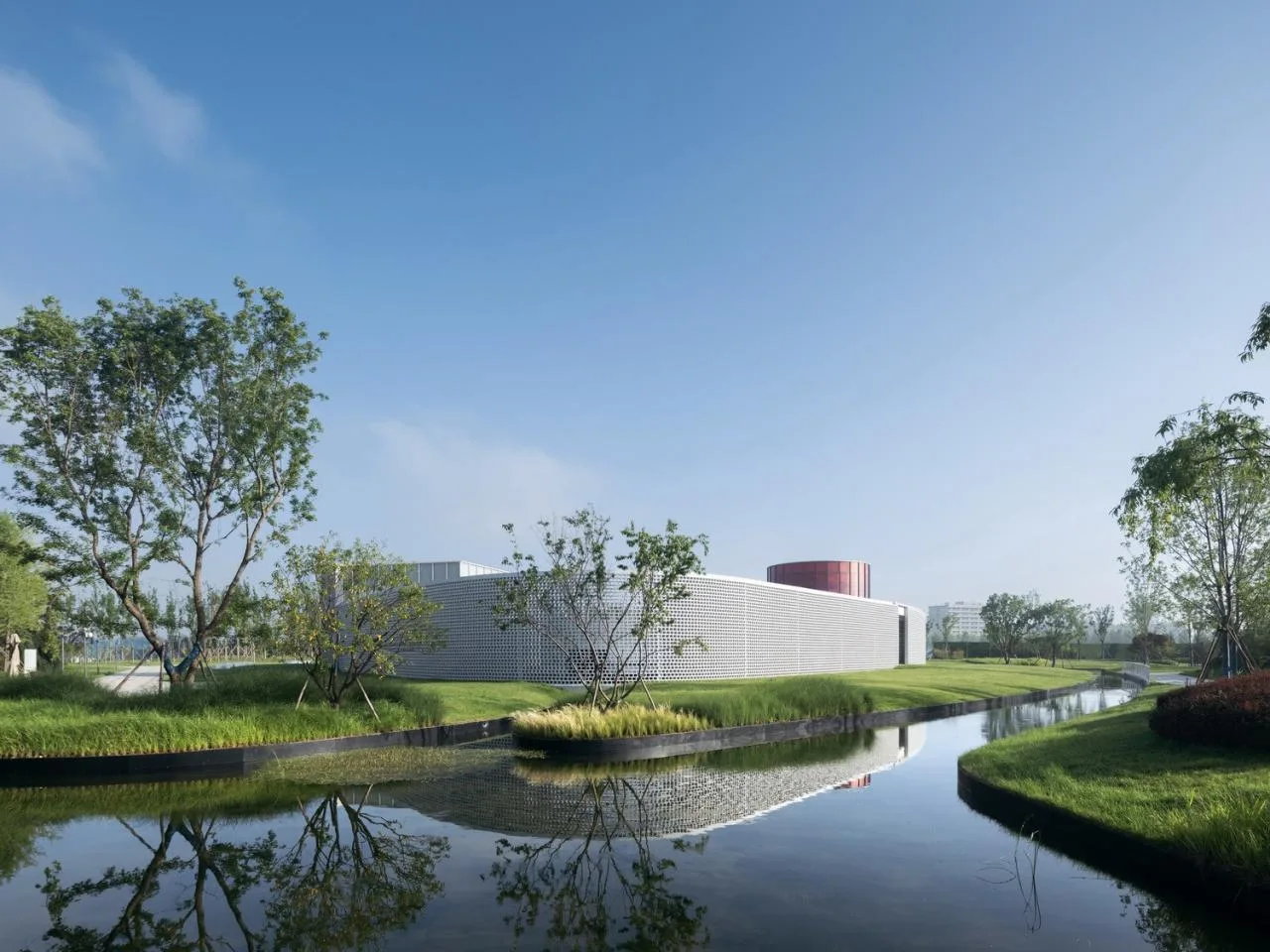
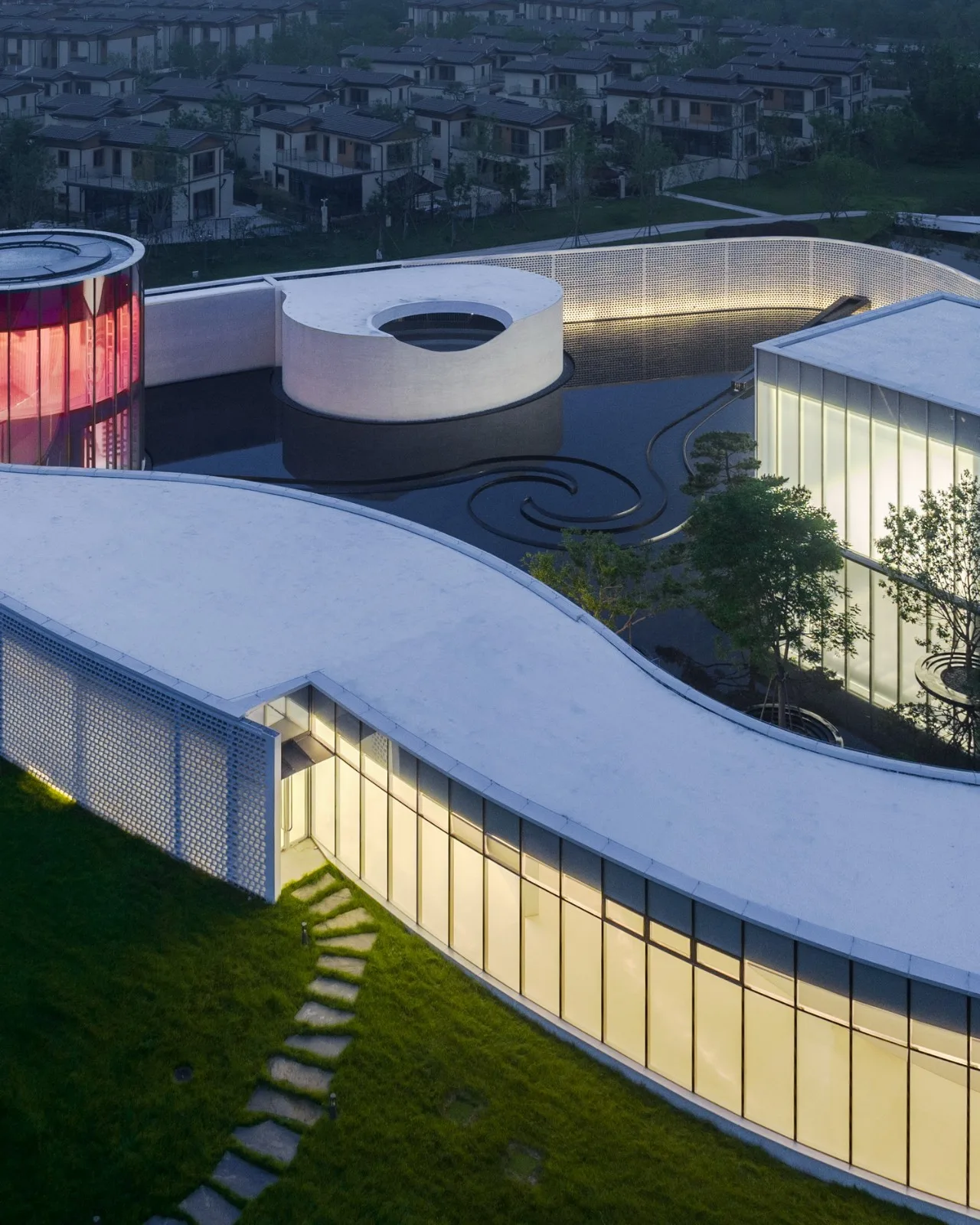
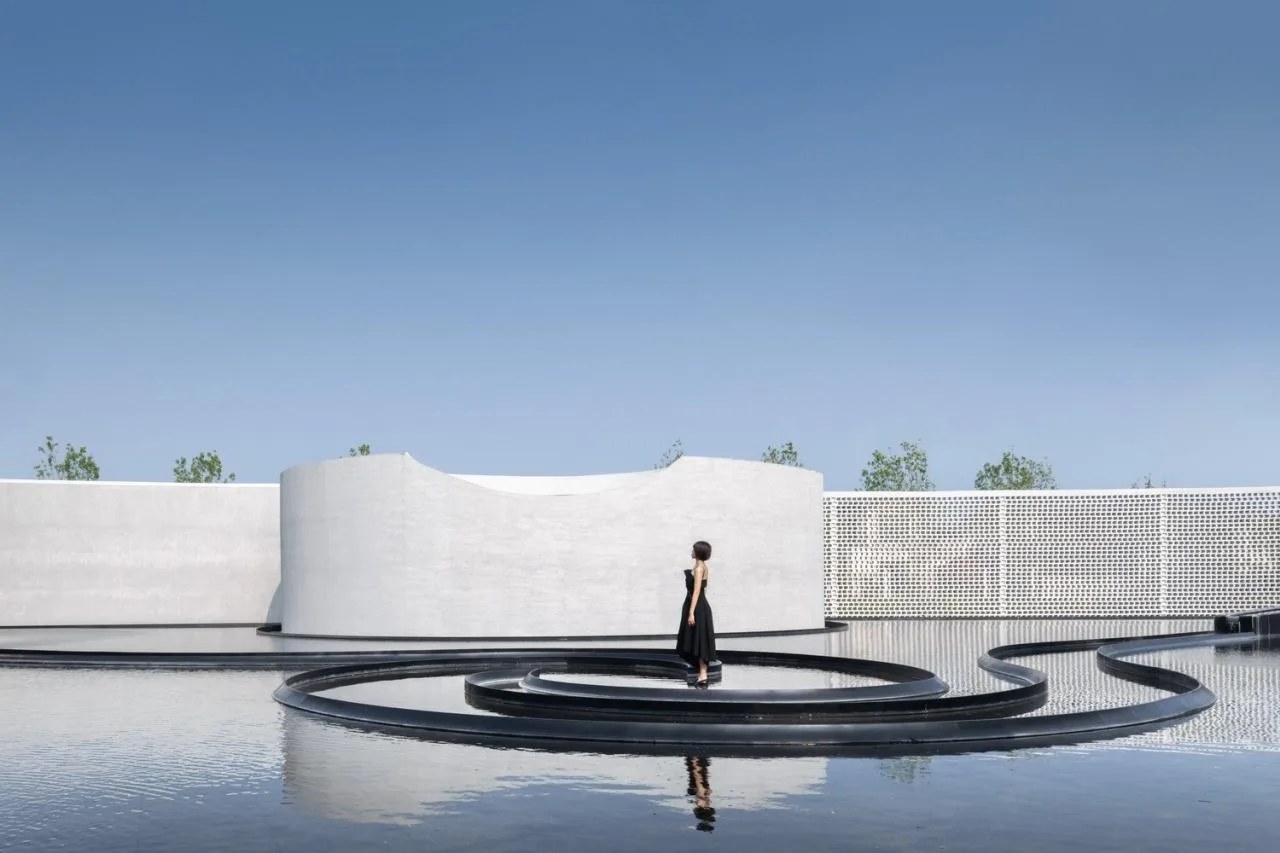
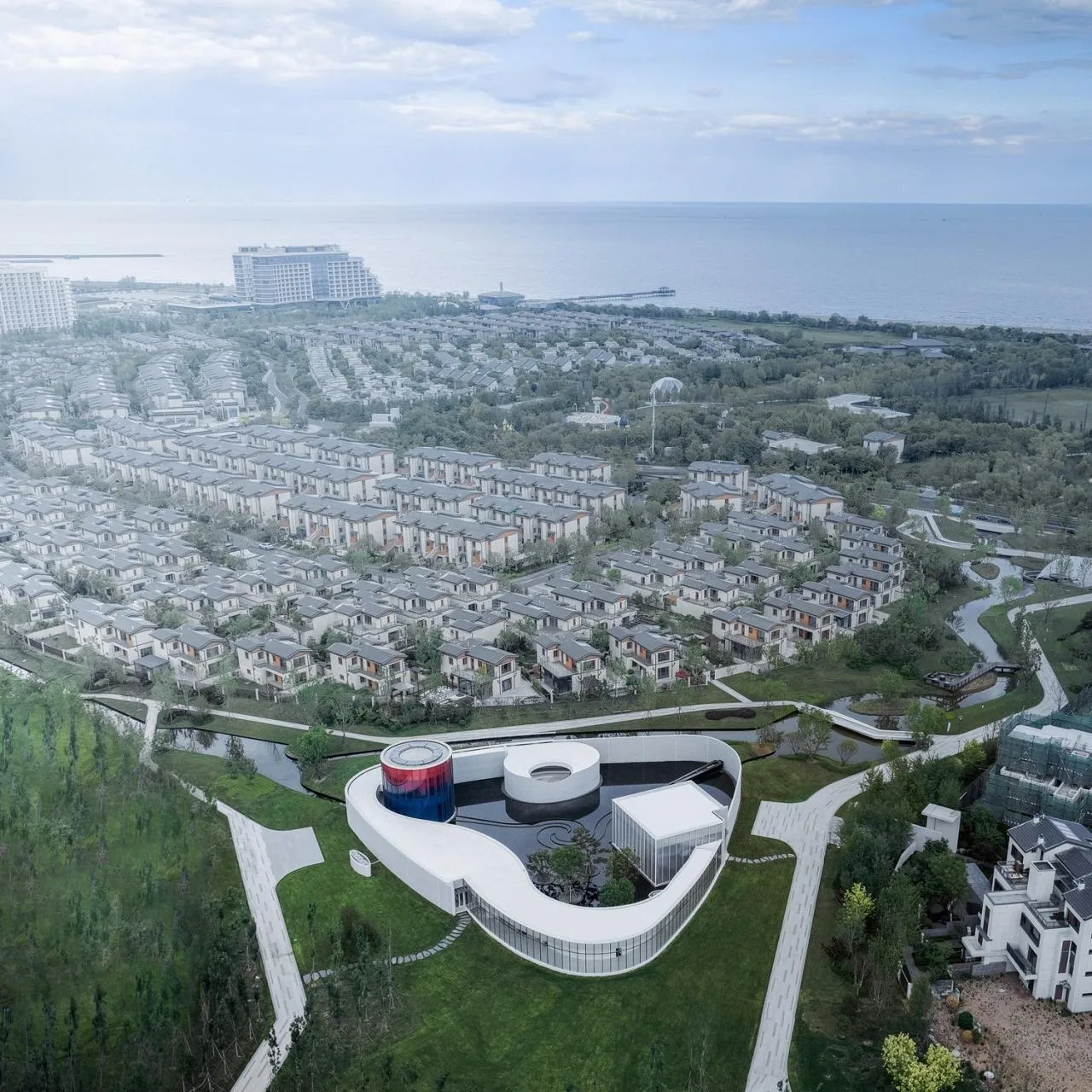
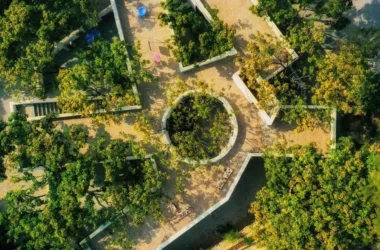
Wutopia Lab, commissioned by Oceanwide Group and Blue Coast, designed the Monologues Art Museum, a unique space dedicated to solitude within SEATOPIA’s park green area in Beidaihe, Qinhuangdao. The museum was completed and opened in July 2022.
Monologue
Queen Dido famously cut a piece of cowhide into thin strips, encircling a piece of land to establish the great city of Carthage. Inspired by this, the Monologues Art Museum breaks down a building of approximately 1,300 square meters into distinct single structures and interwoven walls within an open green space at the intersection of three residential clusters in Blue Coast Park. The resulting 3,600 square meter, zongzi-shaped museum—with corridors and grey spaces—creates a unique spatial experience.
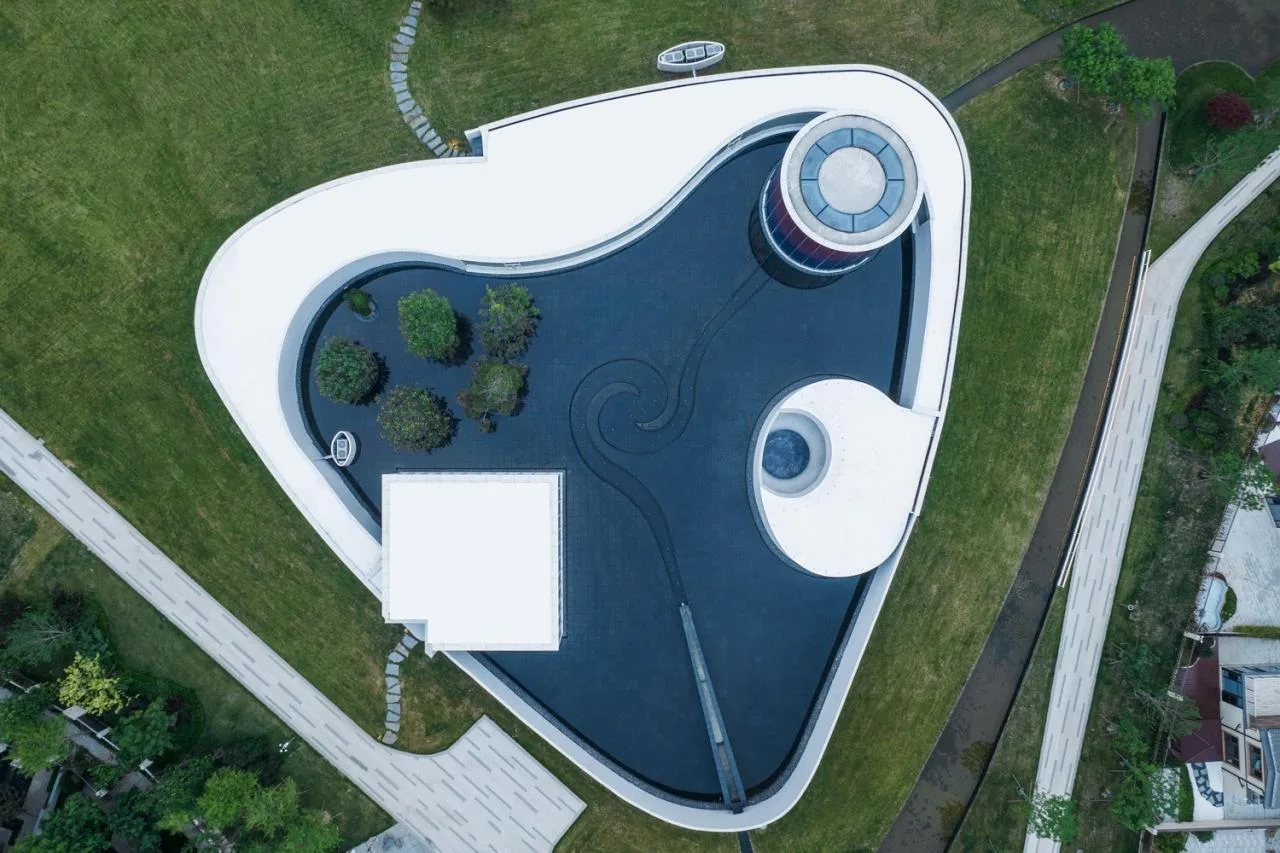
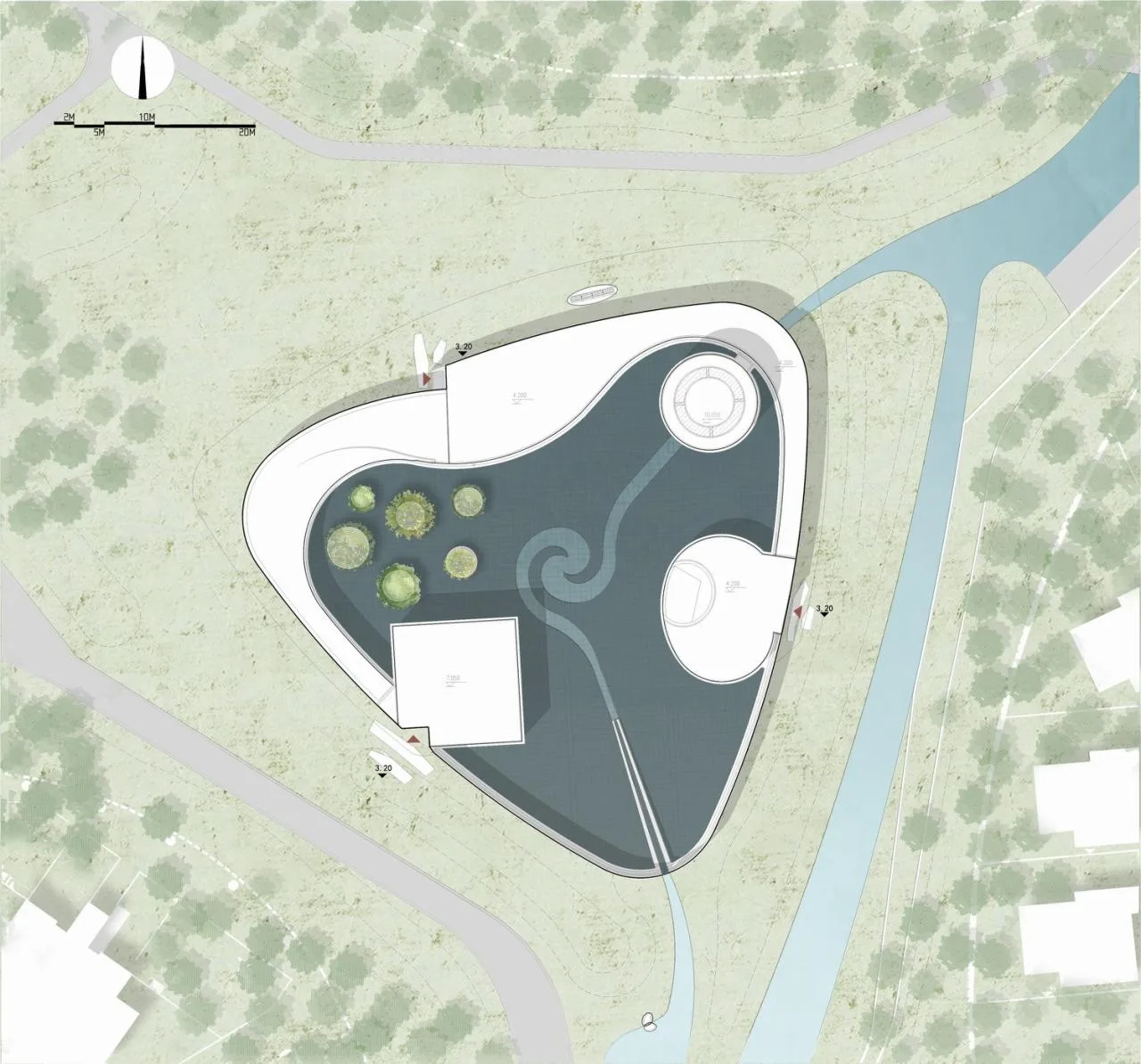
△ General layout plan
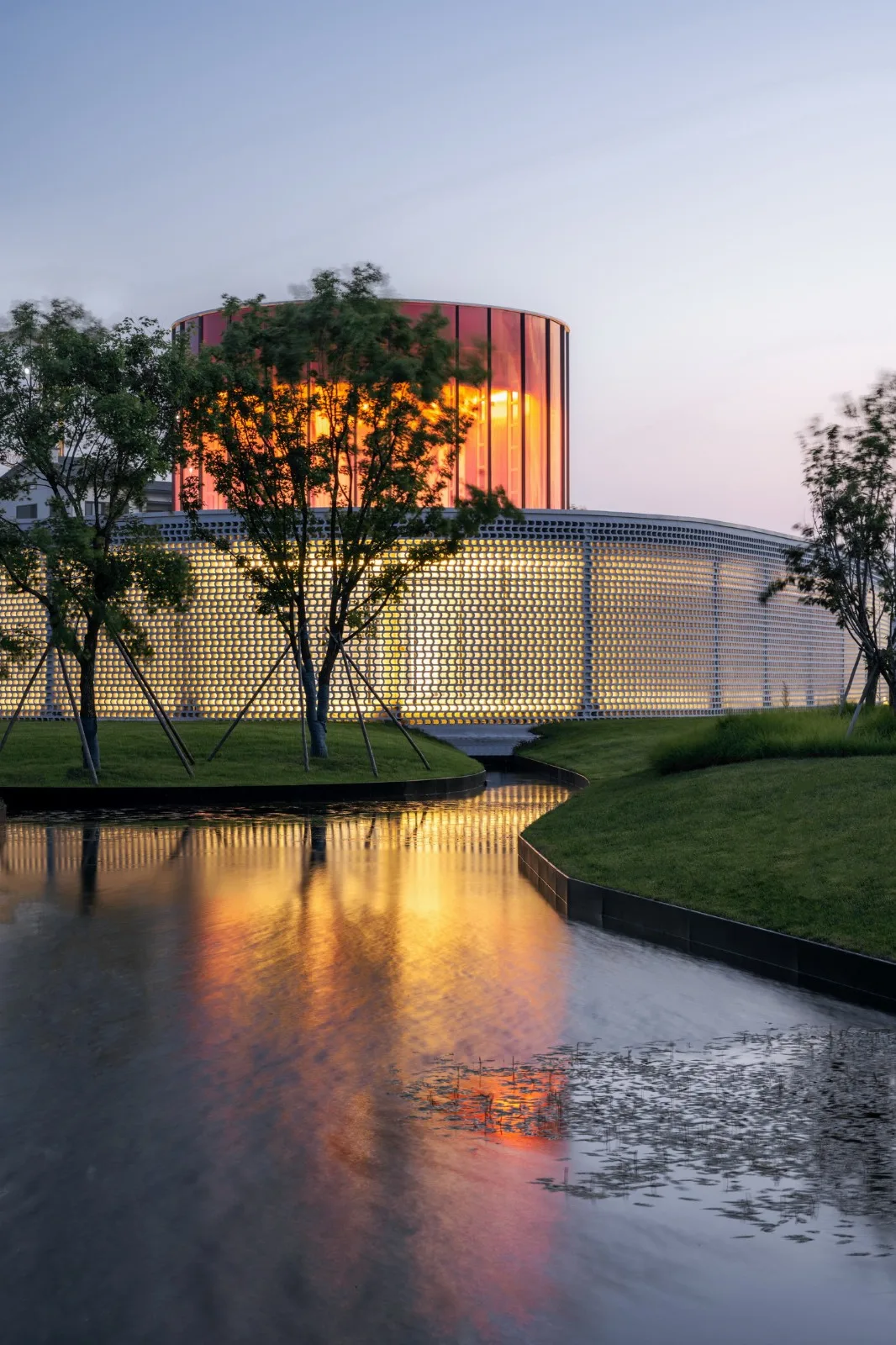
One strand, many charms
A Side
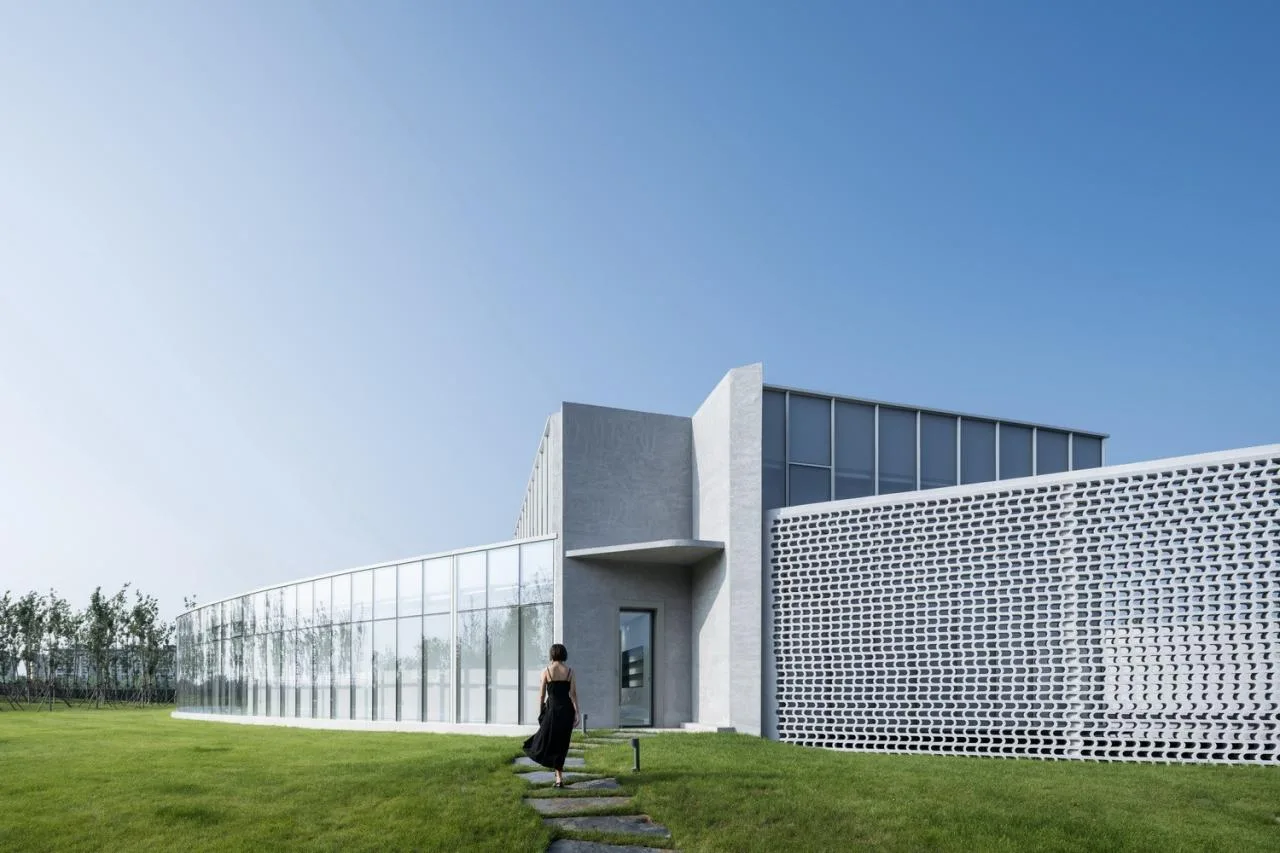
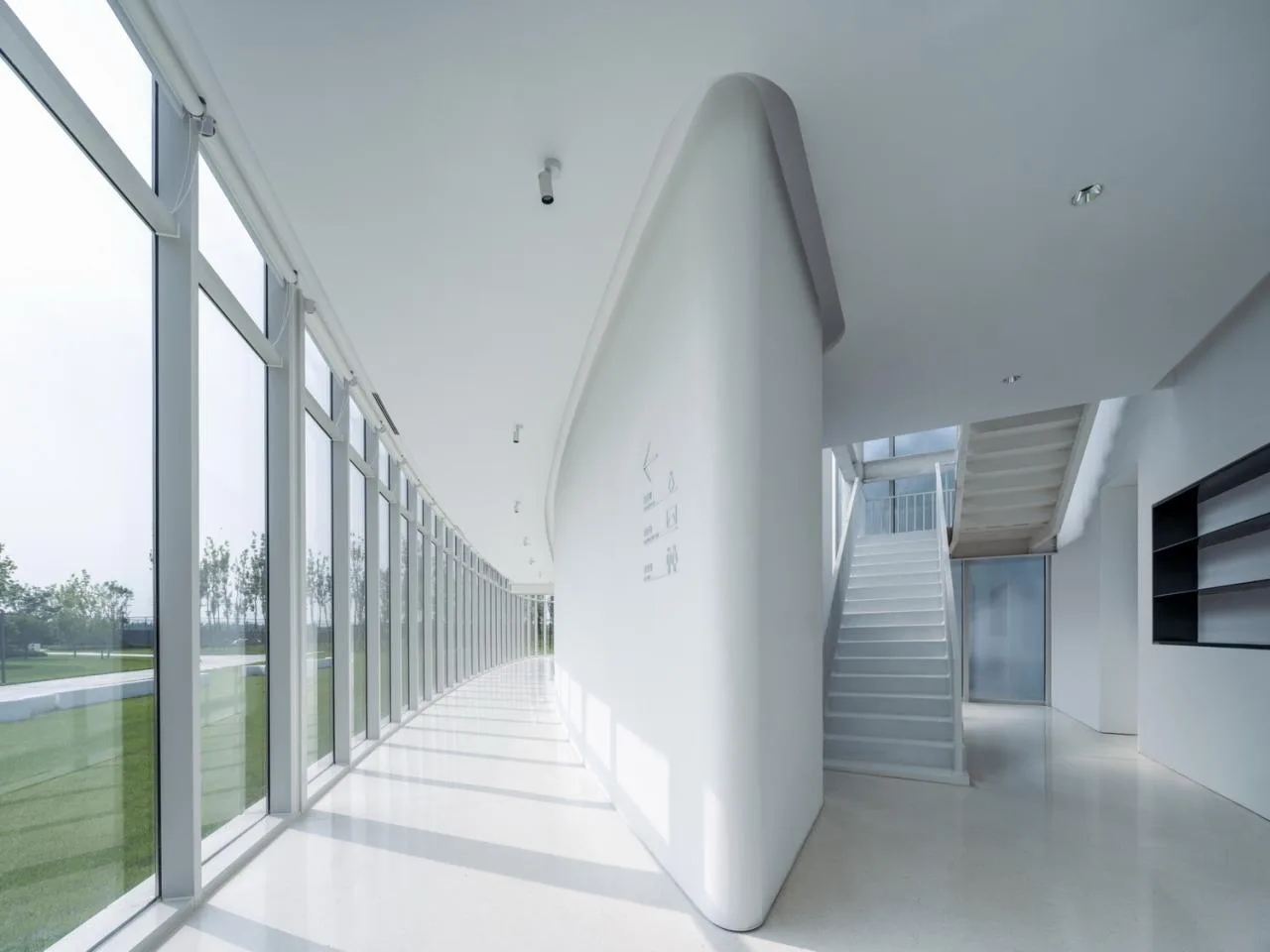
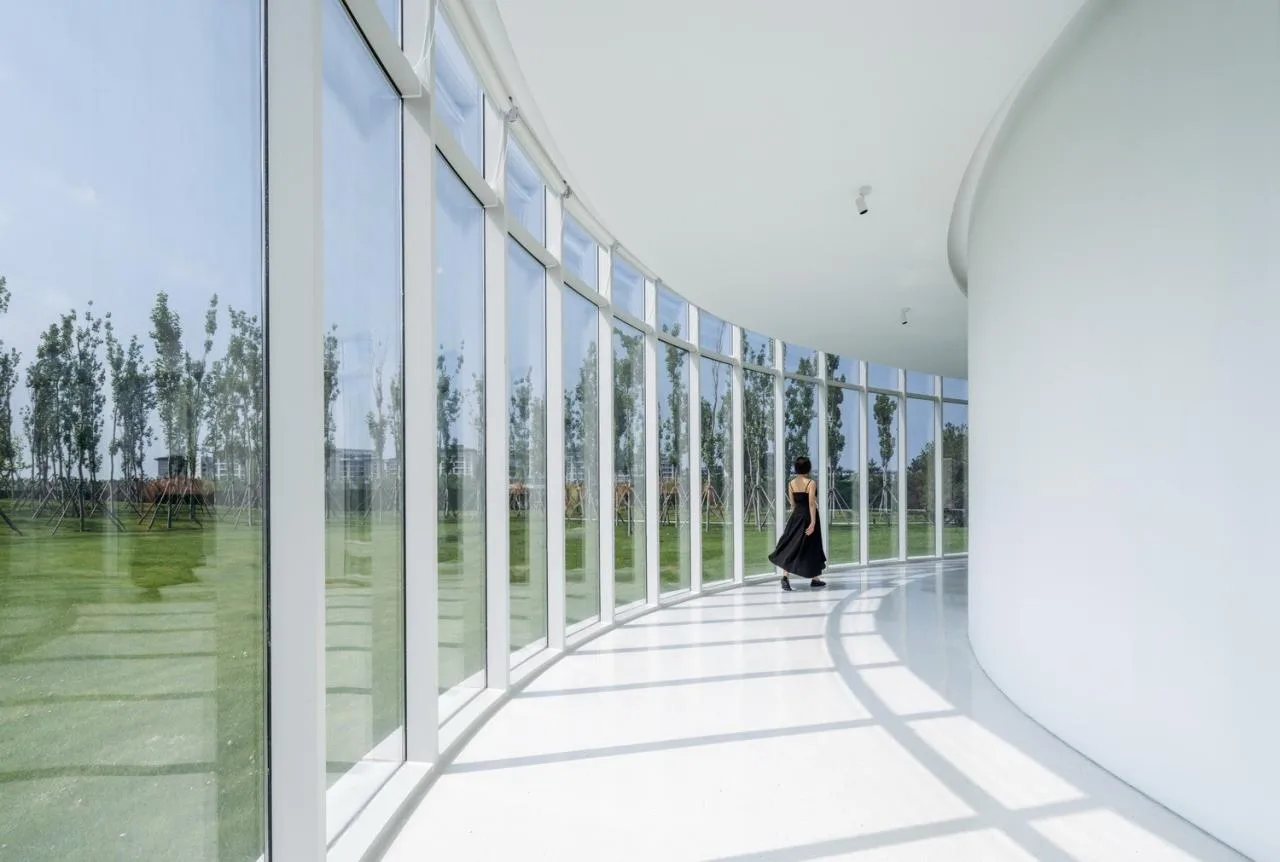
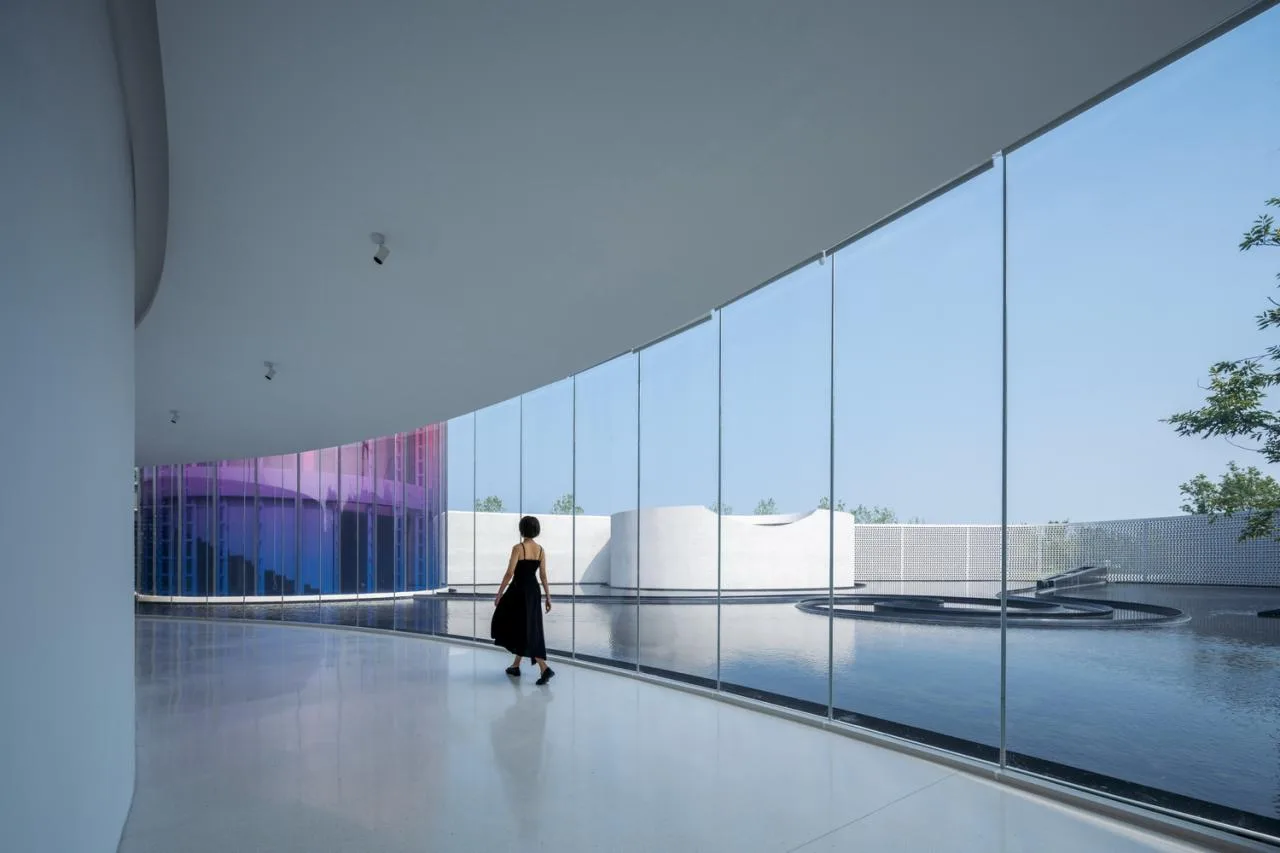
The Monologues Art Museum unfolds like a slowly unrolling scroll. Beginning at the entrance of the small theater, where light filters through the corners, visitors pass through the art gallery, a tranquil water courtyard, and a flickering open corridor. Beyond, the colorful yoga studio rises, leading to the bright, elegant, and spacious art museum space (combining exhibition and studio). The path then narrows and dims, almost concealing a tea room tucked behind a wall. At the end, a dance studio floats amidst clouds and mist. Exiting the building, one strolls along a flower wall, crossing water shimmering with mottled shadows. A hidden stream runs gently through the center, flowing past the building as if heading toward the sea. Returning to the small theater, six water trees sway softly in the breeze, whispering quietly. The entire scene—scenery, sounds, and thoughts—slowly unfurls like a painting.
B Side
The Monologues Art Museum functions as a multifunctional venue, allowing different individuals to experience solitude simultaneously in separate spaces, all in an artistic setting. The complex and irregular floor plan presents challenges for seismic design. However, when subdividing the museum, aside from the curved strip-shaped art gallery, the rectangular dance studio, circular yoga studio, and elliptical small theater are symmetrically arranged to optimize seismic performance. Three seismic joints divide the structure into four independent units, relieving expansion stresses and preventing cracks caused by temperature fluctuations. The design carefully conceals these joints on the roof, facade, and interior, maintaining visual continuity as if the structure were a single uninterrupted painting.
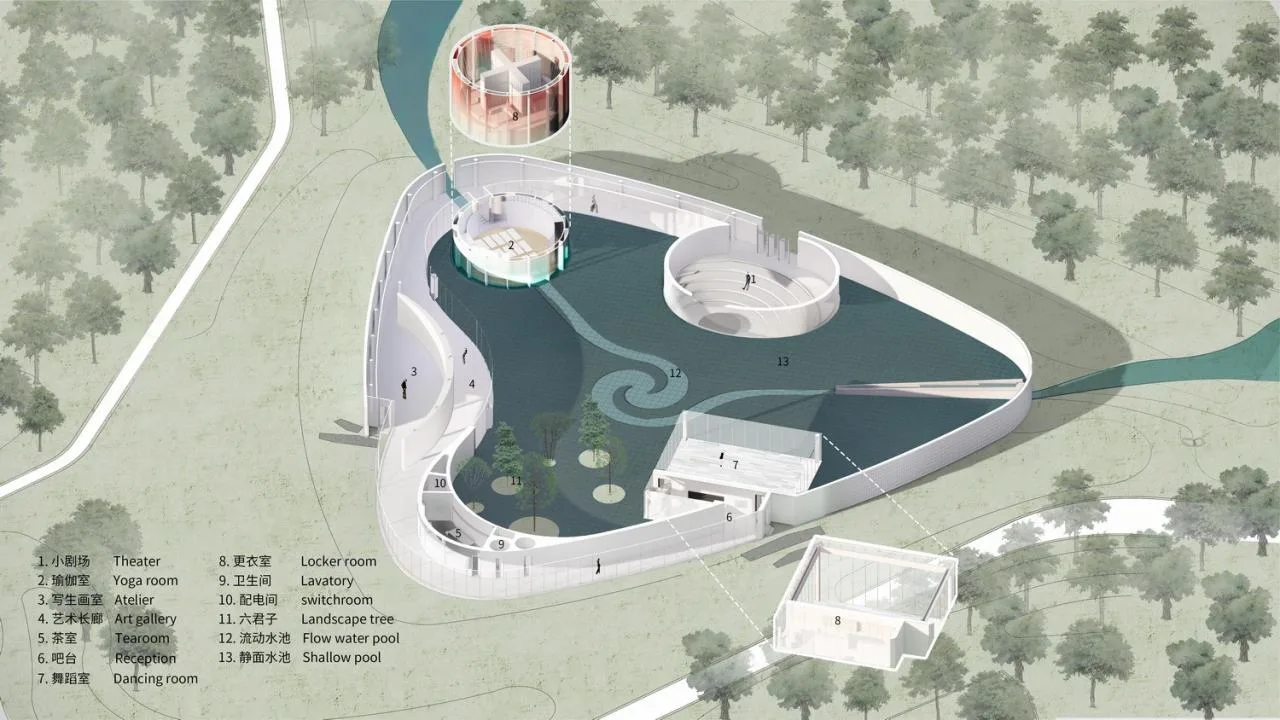
△ Exploded axonometric diagram
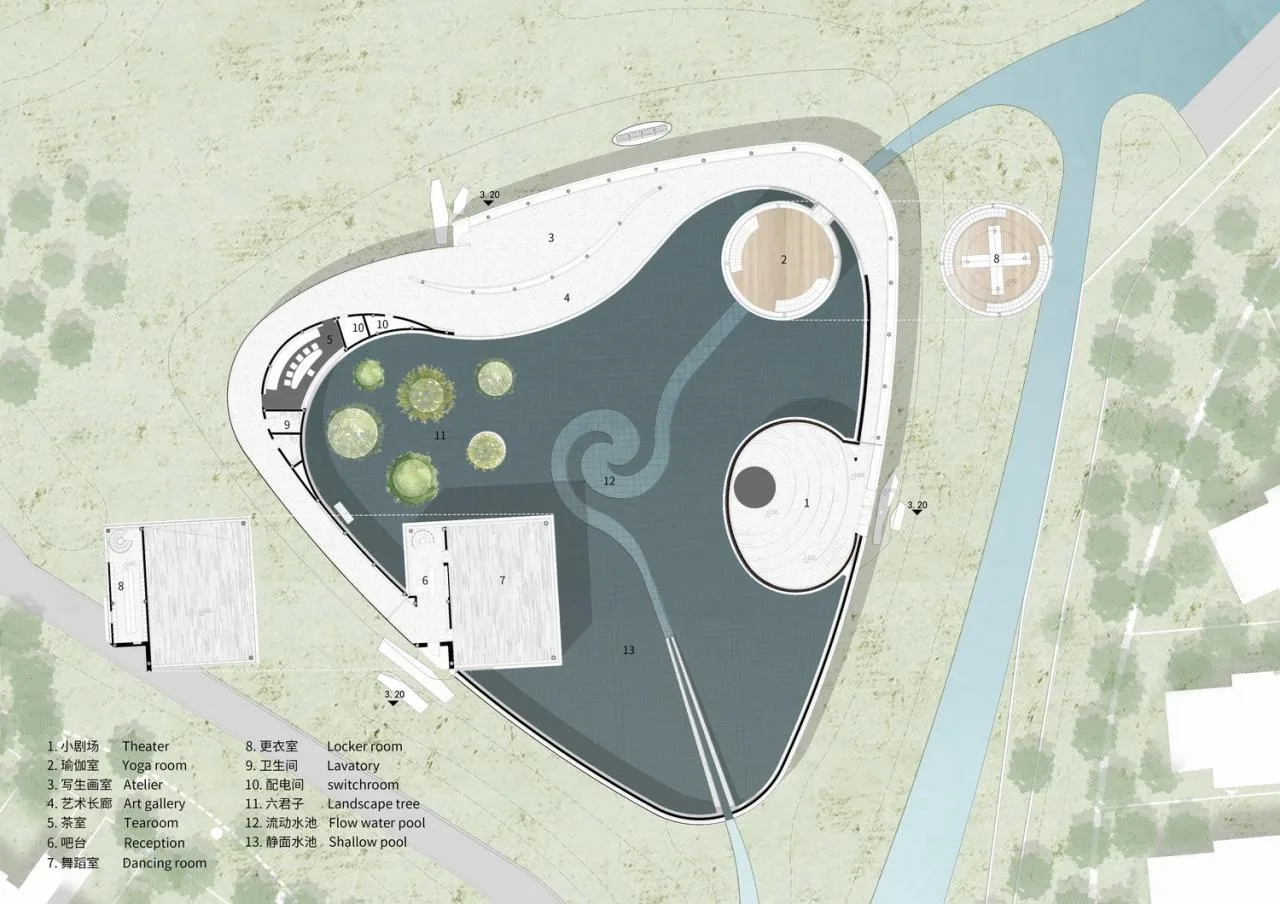
△ Plan view
Moonlight or youth’s moonlight
A Side
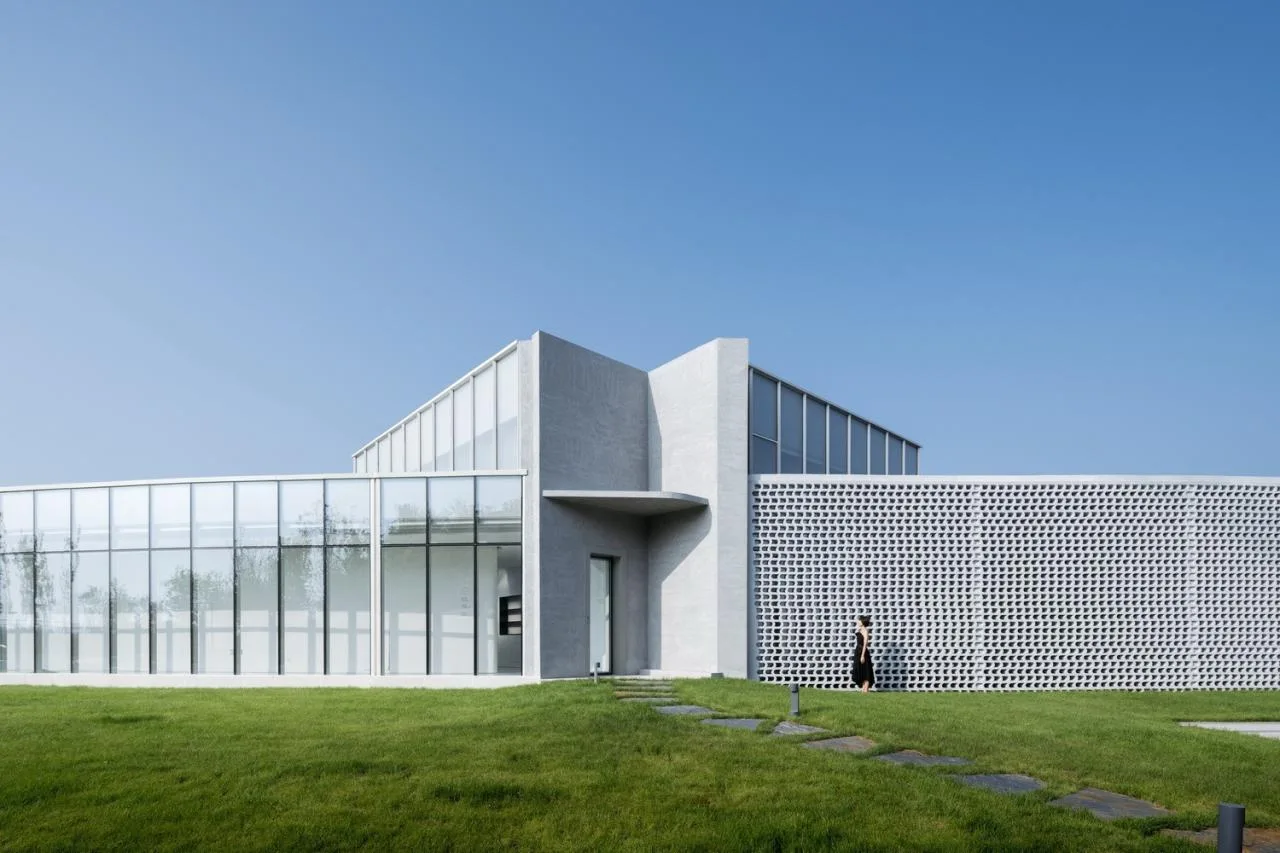
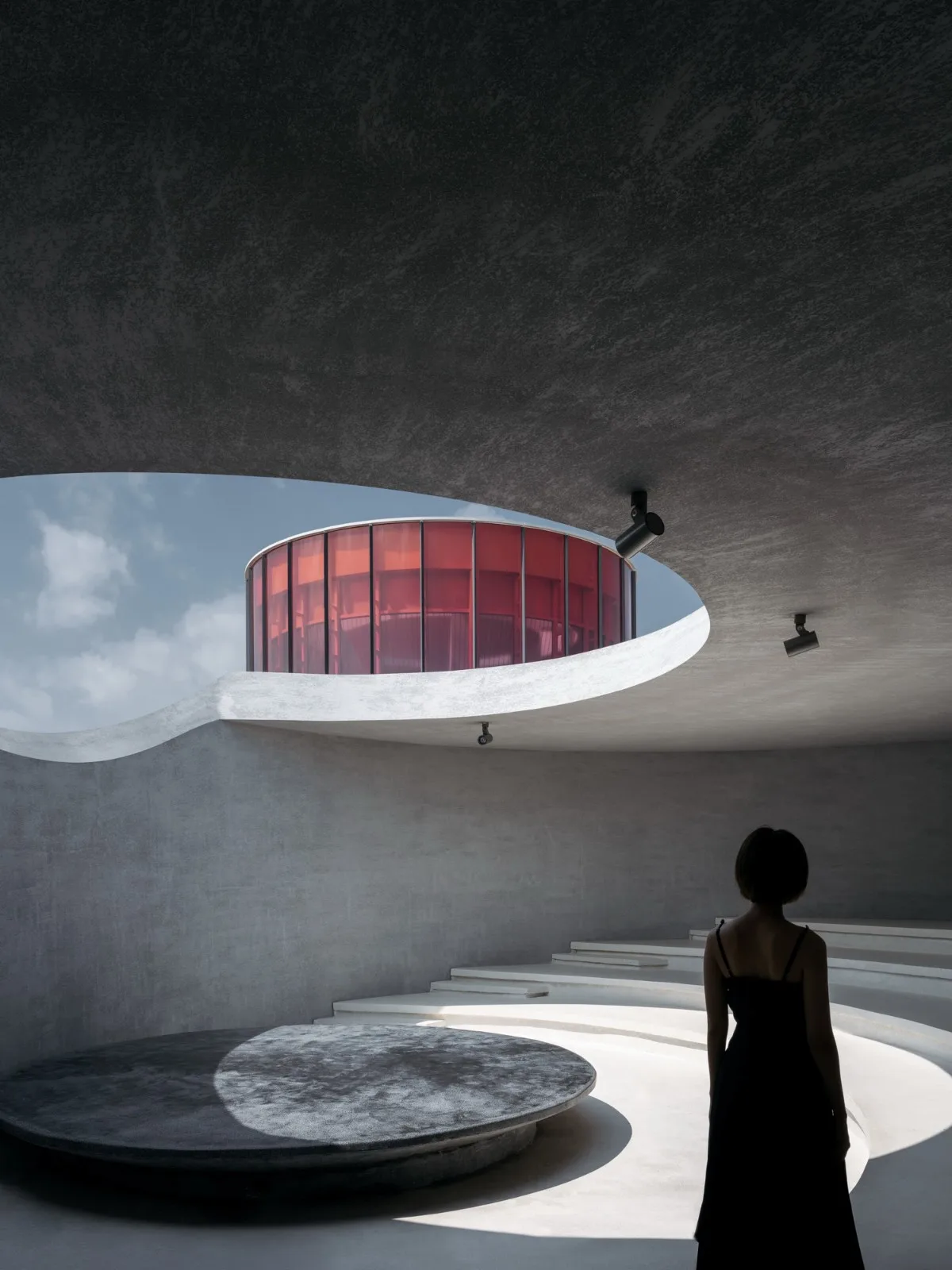
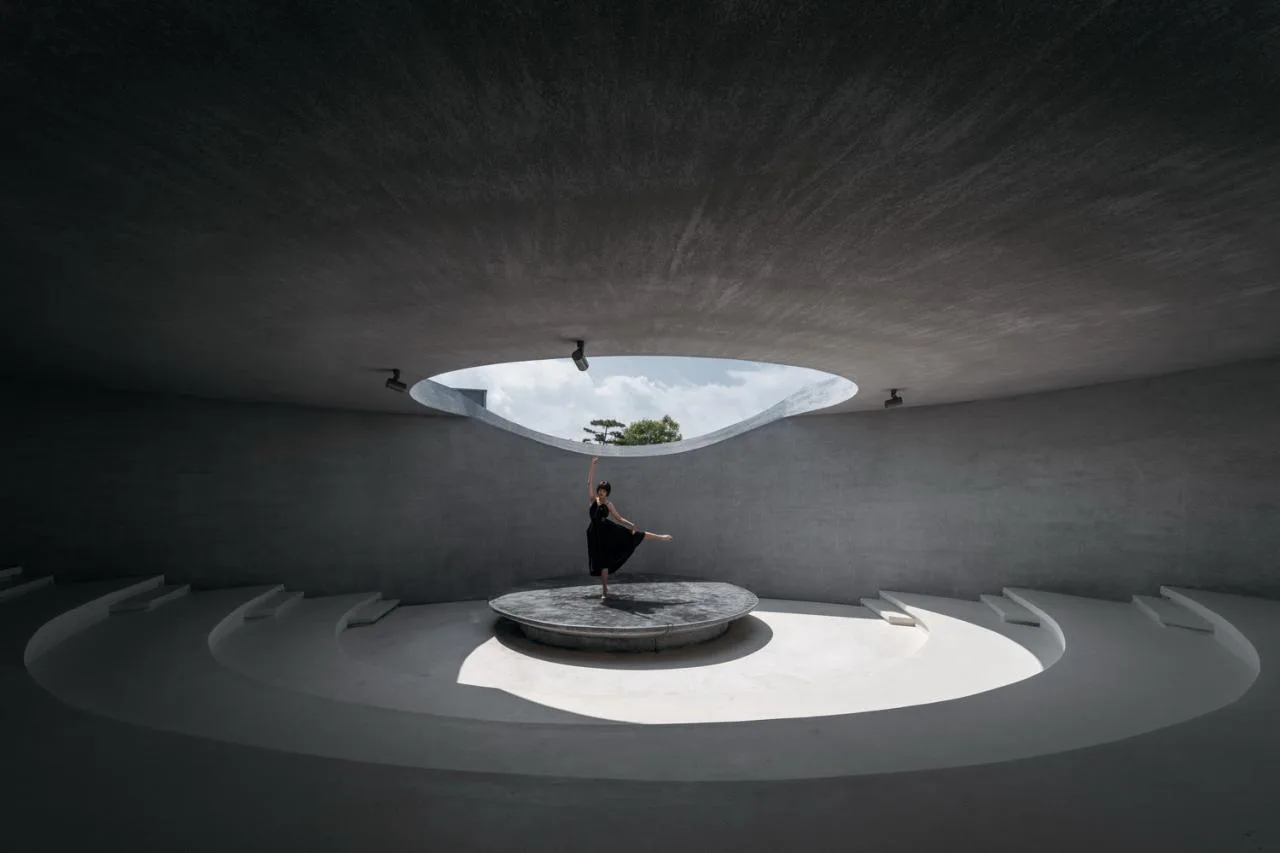
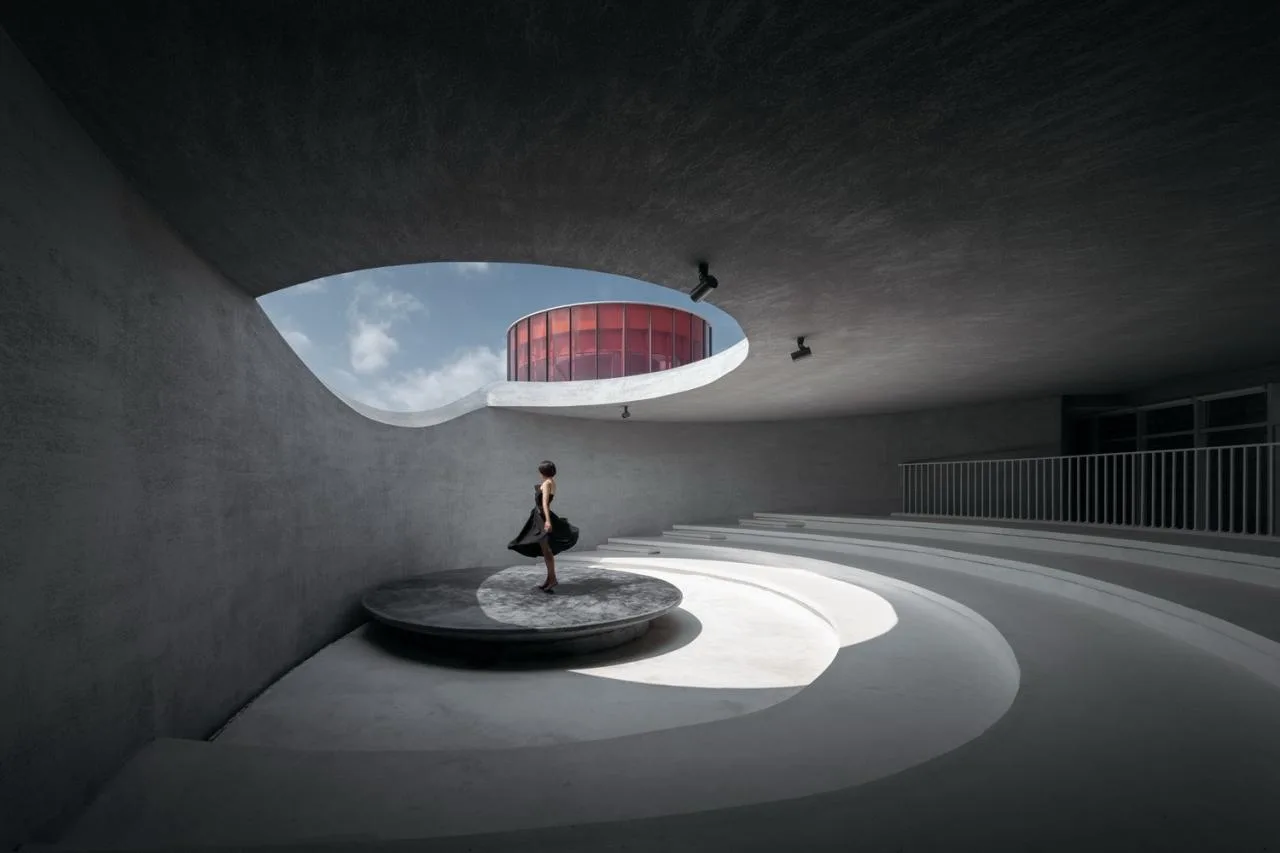
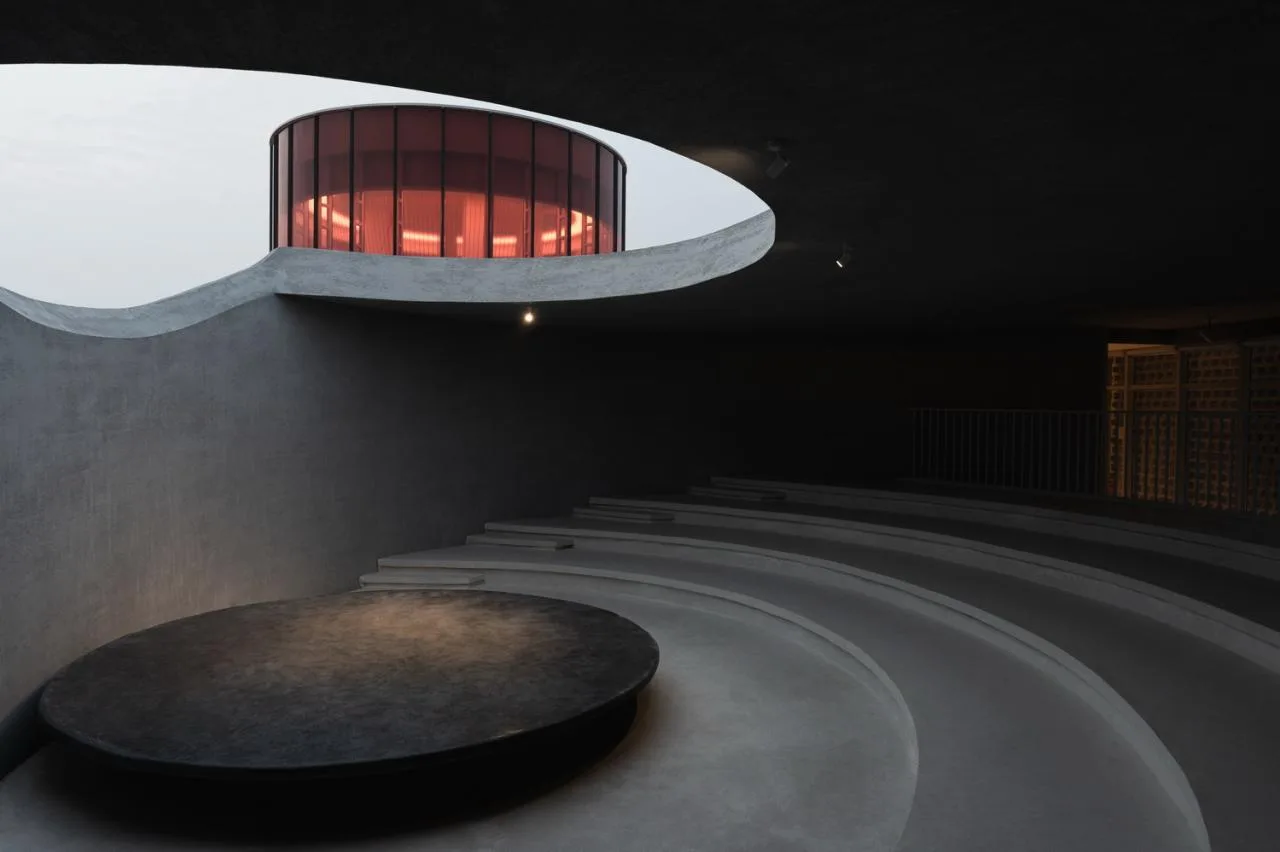
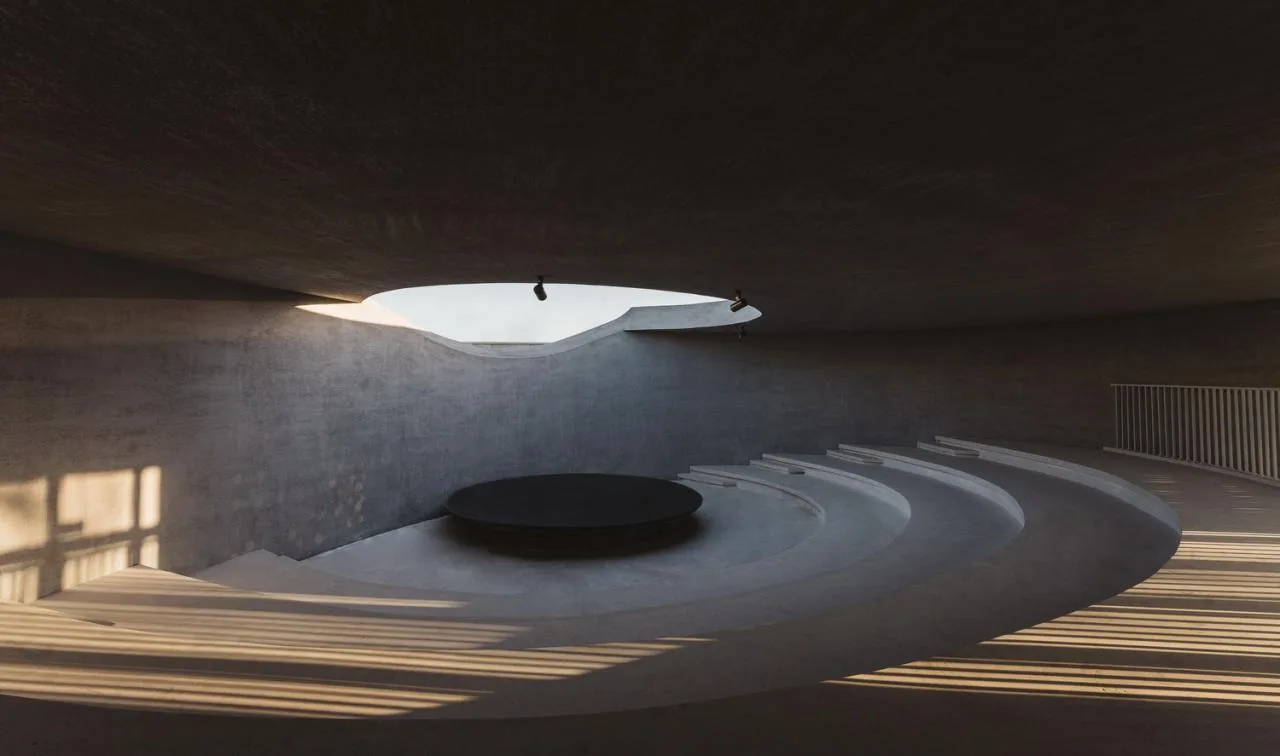
The small theater serves as the entrance hall of the Monologues Art Museum. To minimize the building area counted for plot ratio and focus attention on the performances while preserving the central water feature, it is designed as a grey space and enclosed. A curved skylight above and behind the stage allows sunlight or moonlight to cascade like a waterfall, reflecting the sentiment that “everything has cracks, that’s where the light shines through.”
B Side
The small theater, separated from the main steel structure, is enclosed by a continuous, fully cast-in-place reinforced concrete wall panel structure. This elliptical column stands on the pool, creating a quiet interior and silence outside.
Kyushu Unicolor
A Side
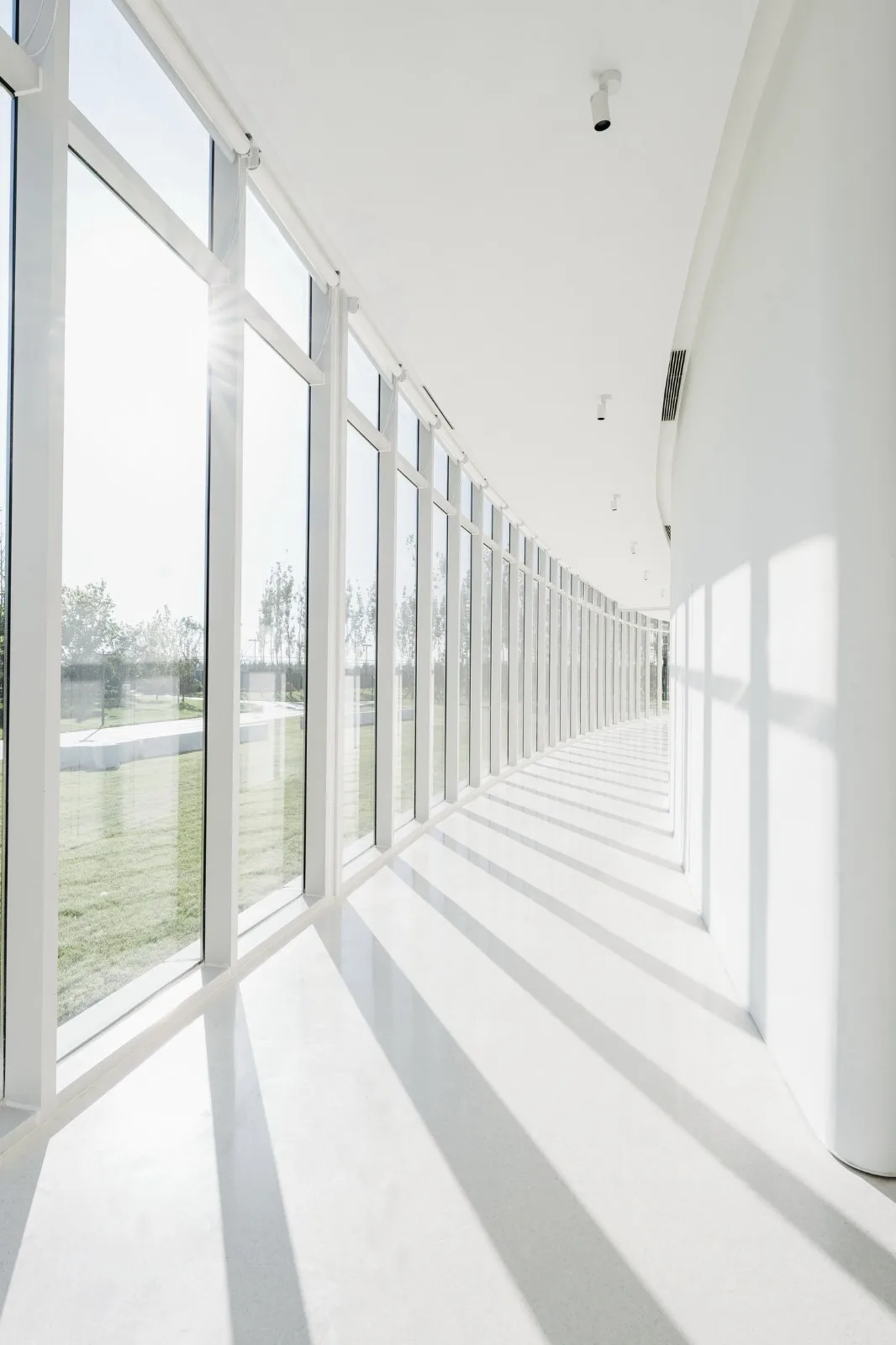
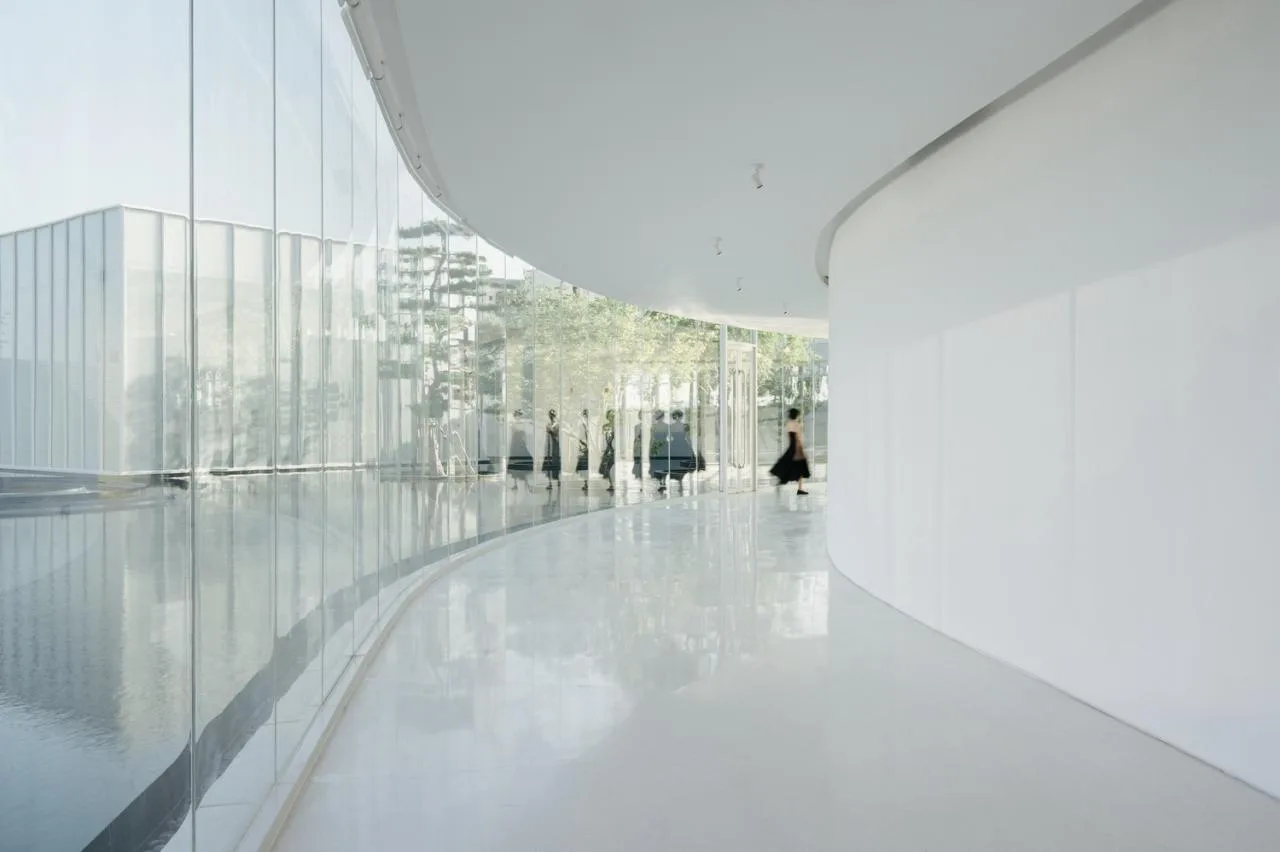
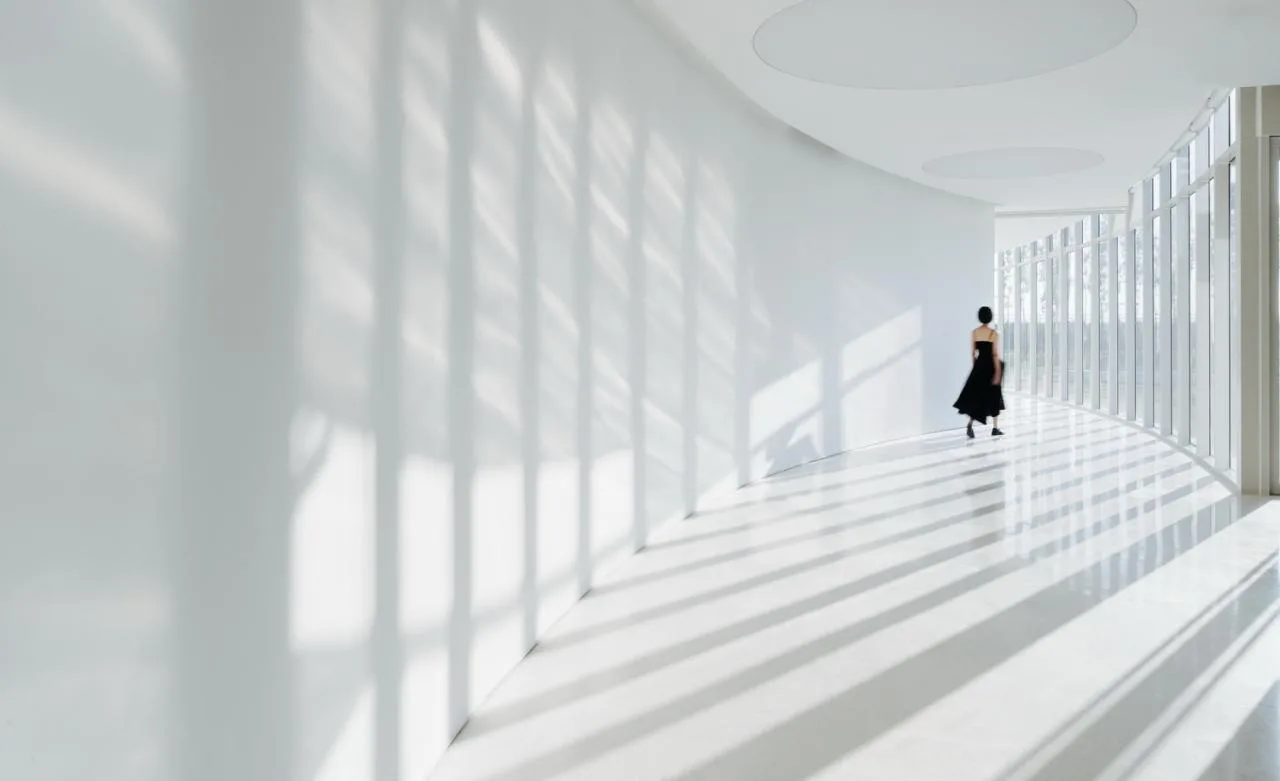
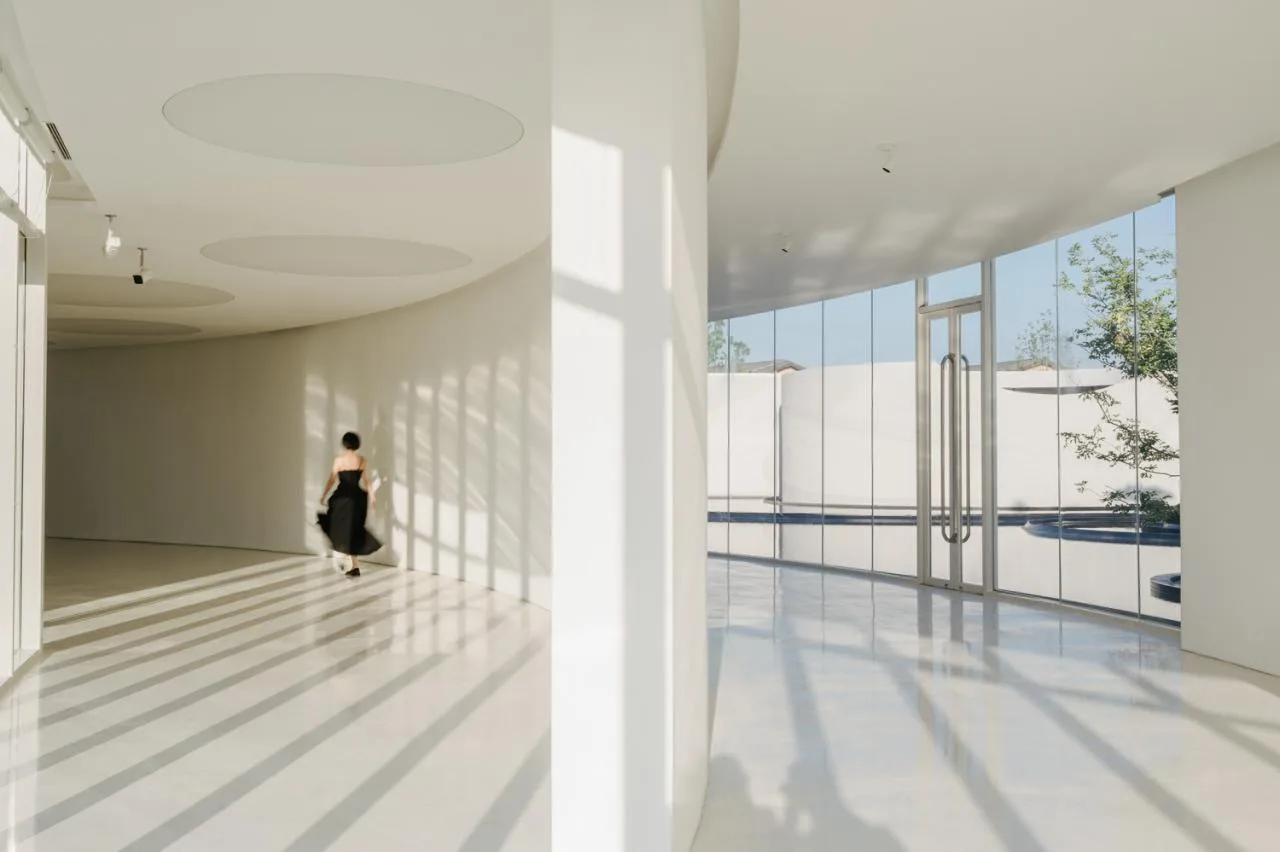
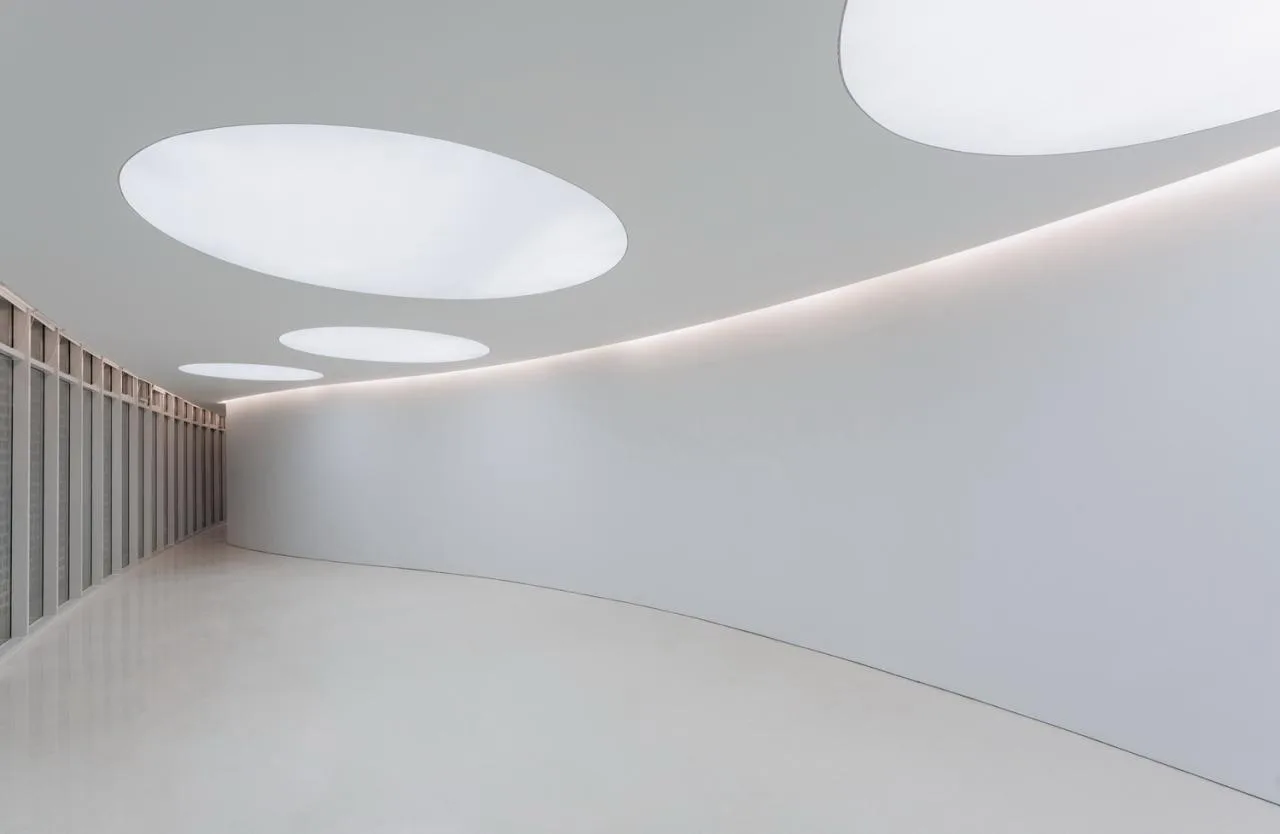
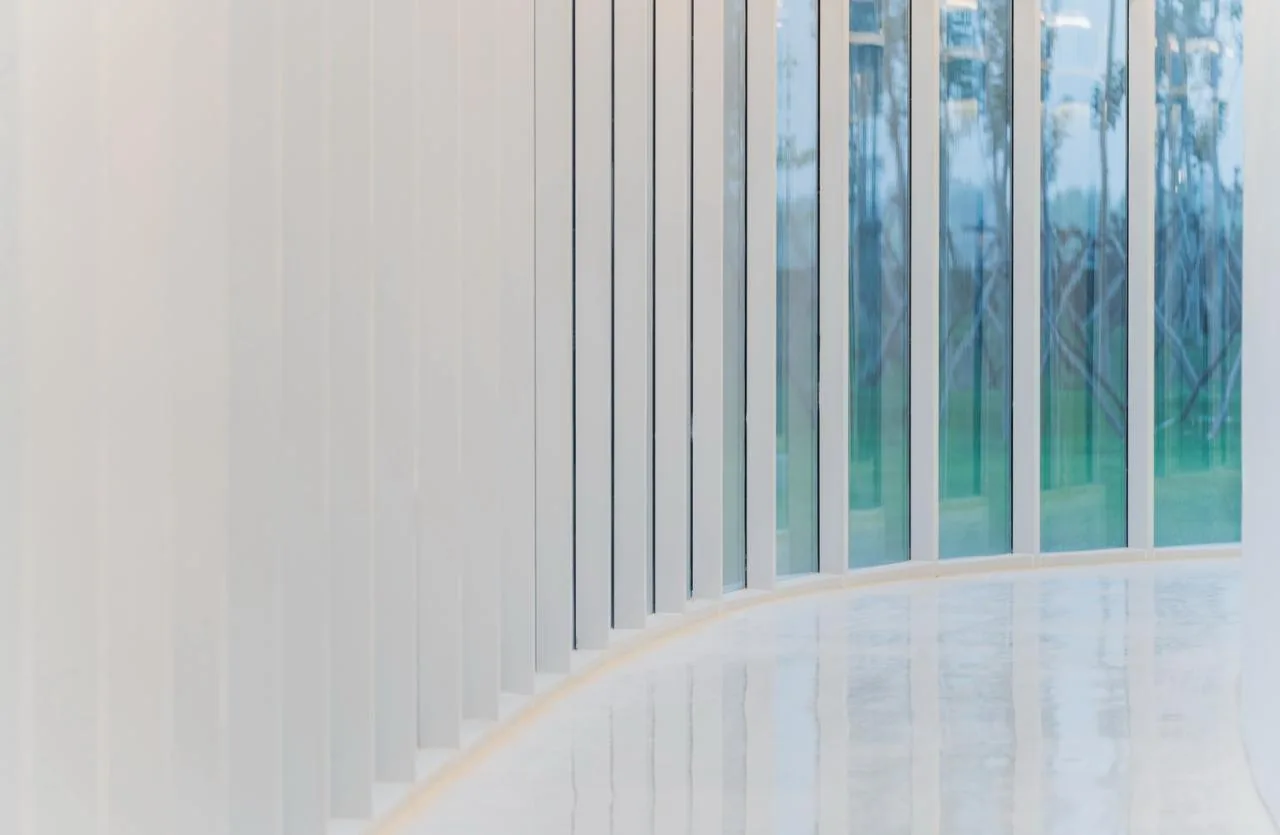
One of the most artistic features of Chinese painting is its use of lines. Different brush parts create lines that are firm, elastic, soft, or loose, with varying dryness, wetness, and thickness, conveying both space and movement. The boundary of the Monologues Art Museum is envisioned as a dynamic ink line, but in white rather than black. It begins with an oval-shaped small theater, moves to the yoga studio as a point, with the flower wall representing a withered pen. The art gallery acts as the connecting stroke, the corridor represents a thin, fast line, and the expanded art gallery forms a slow, thick line, finally tapering back to the pen tip at the dance studio. Initially, the corridor and art museum faced inward to the water courtyard, but later, the interior closes off and the exterior opens to the larger landscape—forming a stroke painting effect.
B Side
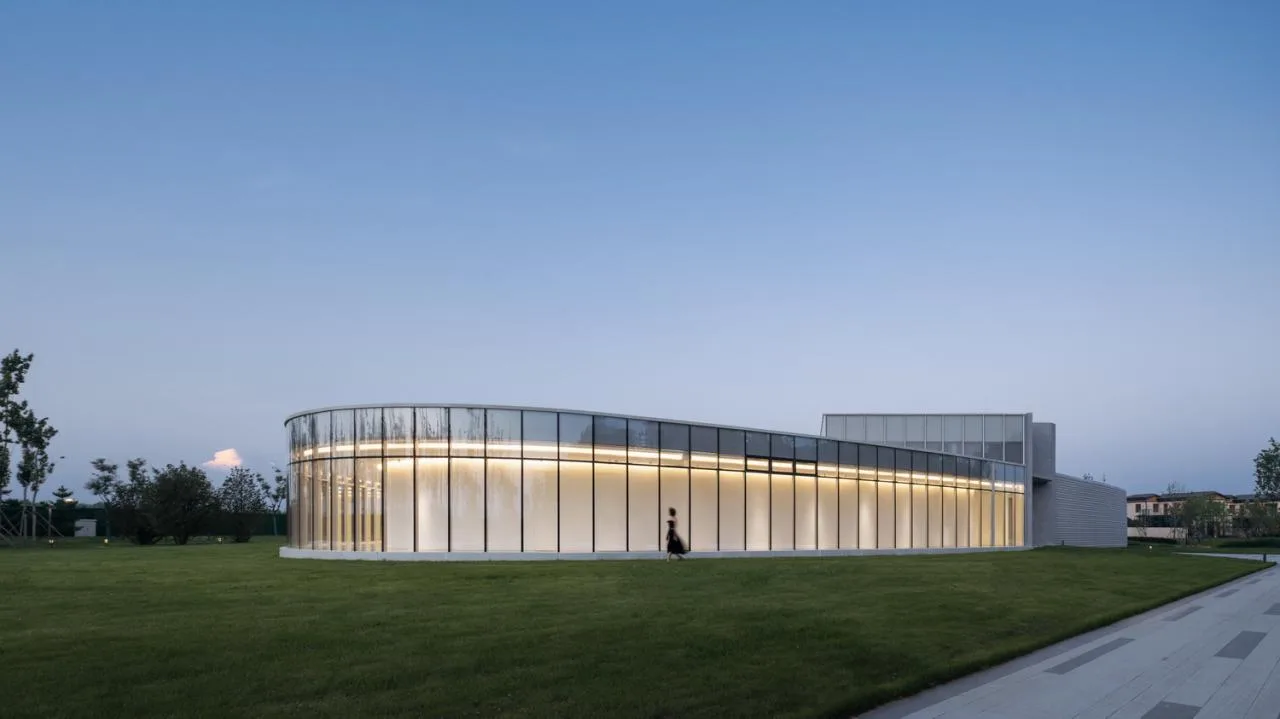
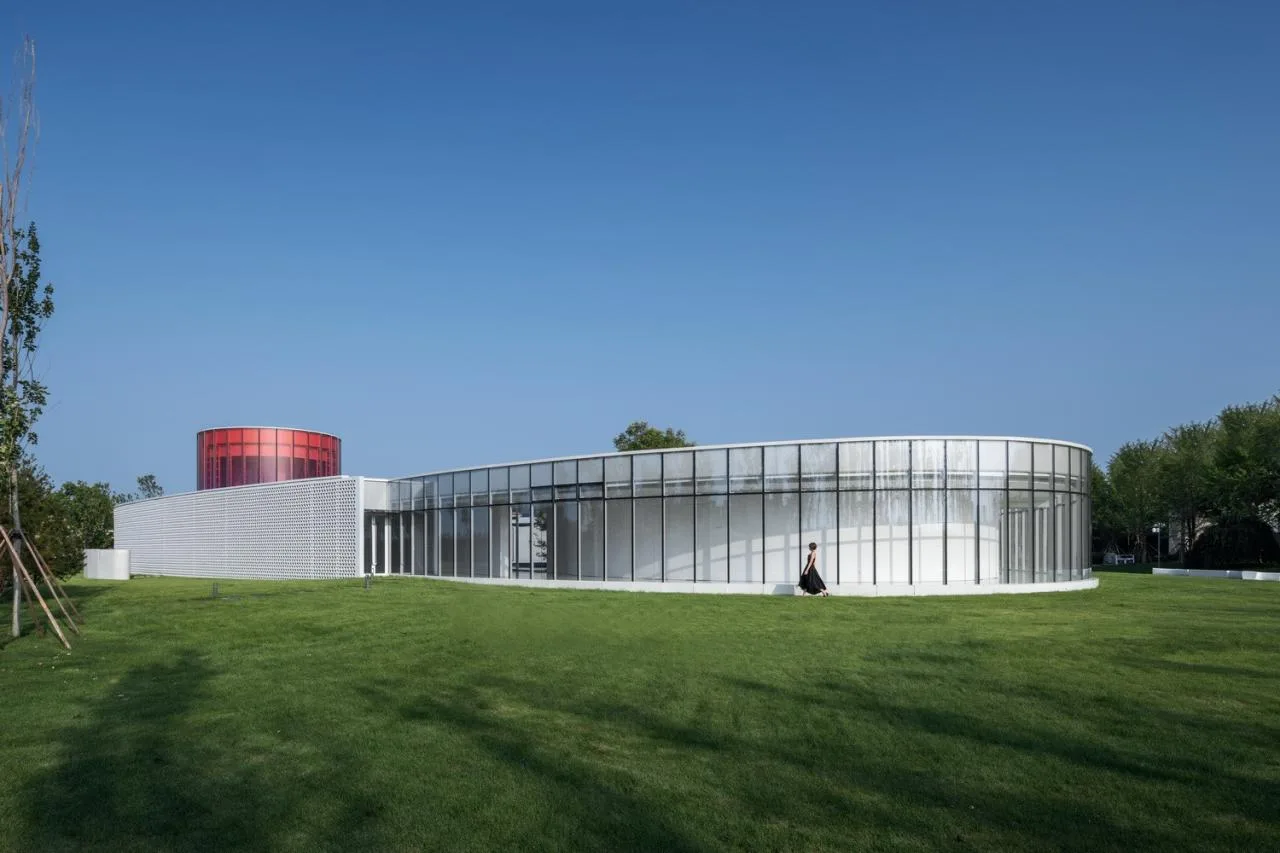
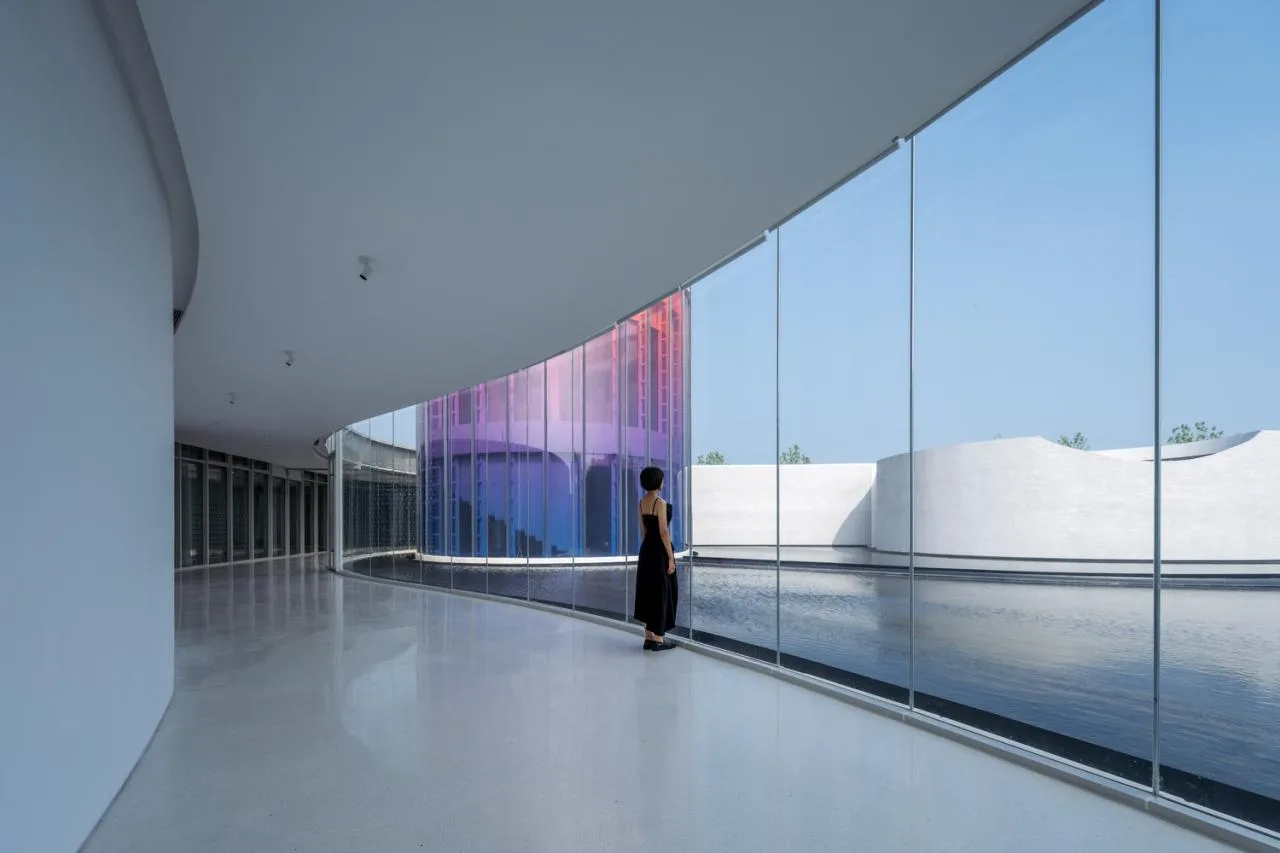
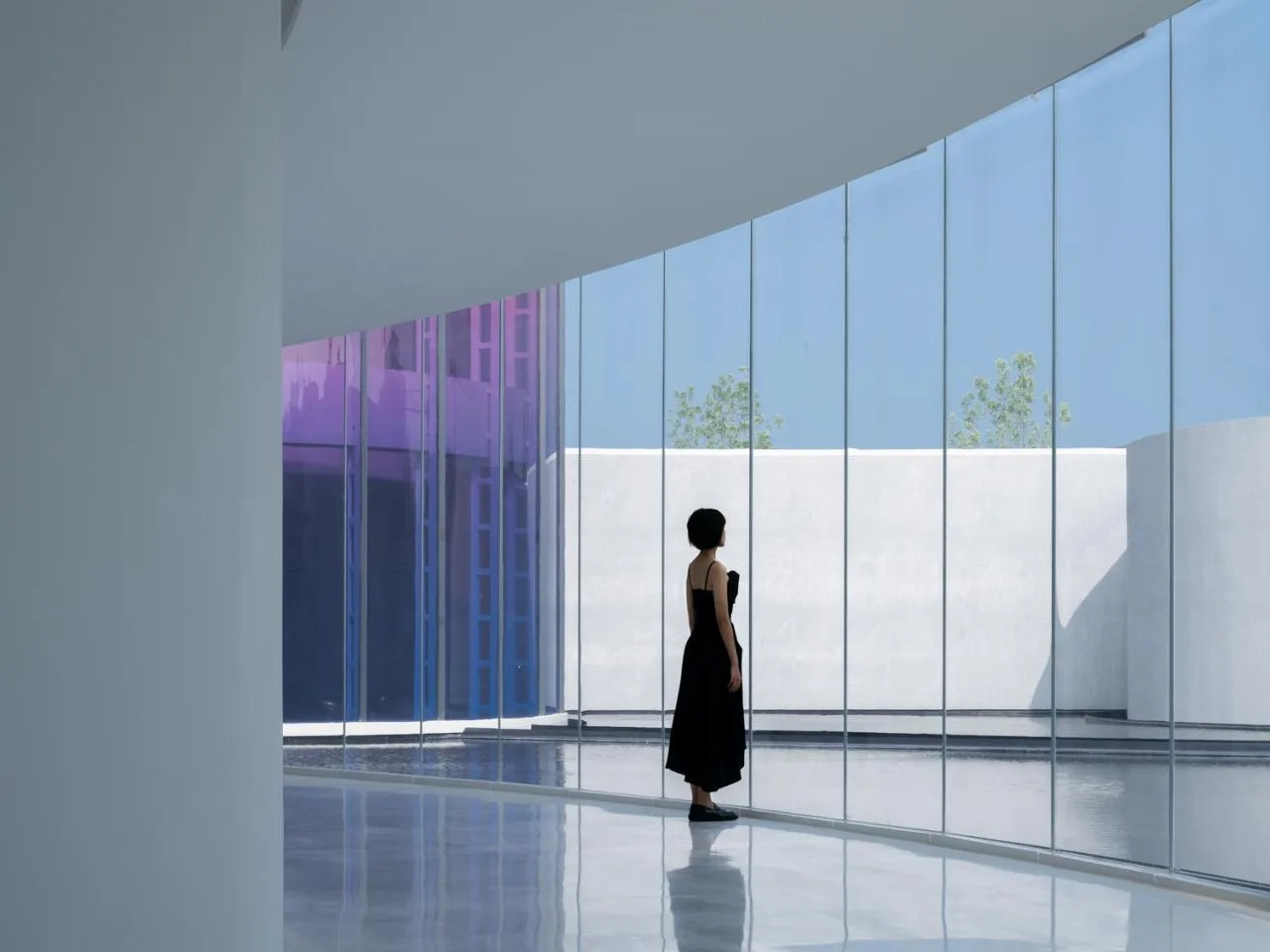
To maintain uninterrupted views on the glass facade facing the landscape outside the water institute and art museum, structural components were minimized. The roof features ribbed steel plates topped with a 40mm fine aggregate concrete layer for thermal insulation and waterproofing. Independent column-cantilevered steel structural units were installed in the narrow corridor, with columns concealed within walls. In the expanded art museum, single-span frame cantilever beam steel units allow a maximum overhang of 4.6 meters. This design achieves a fully transparent facade with no vertical obstructions overlooking the water institute.
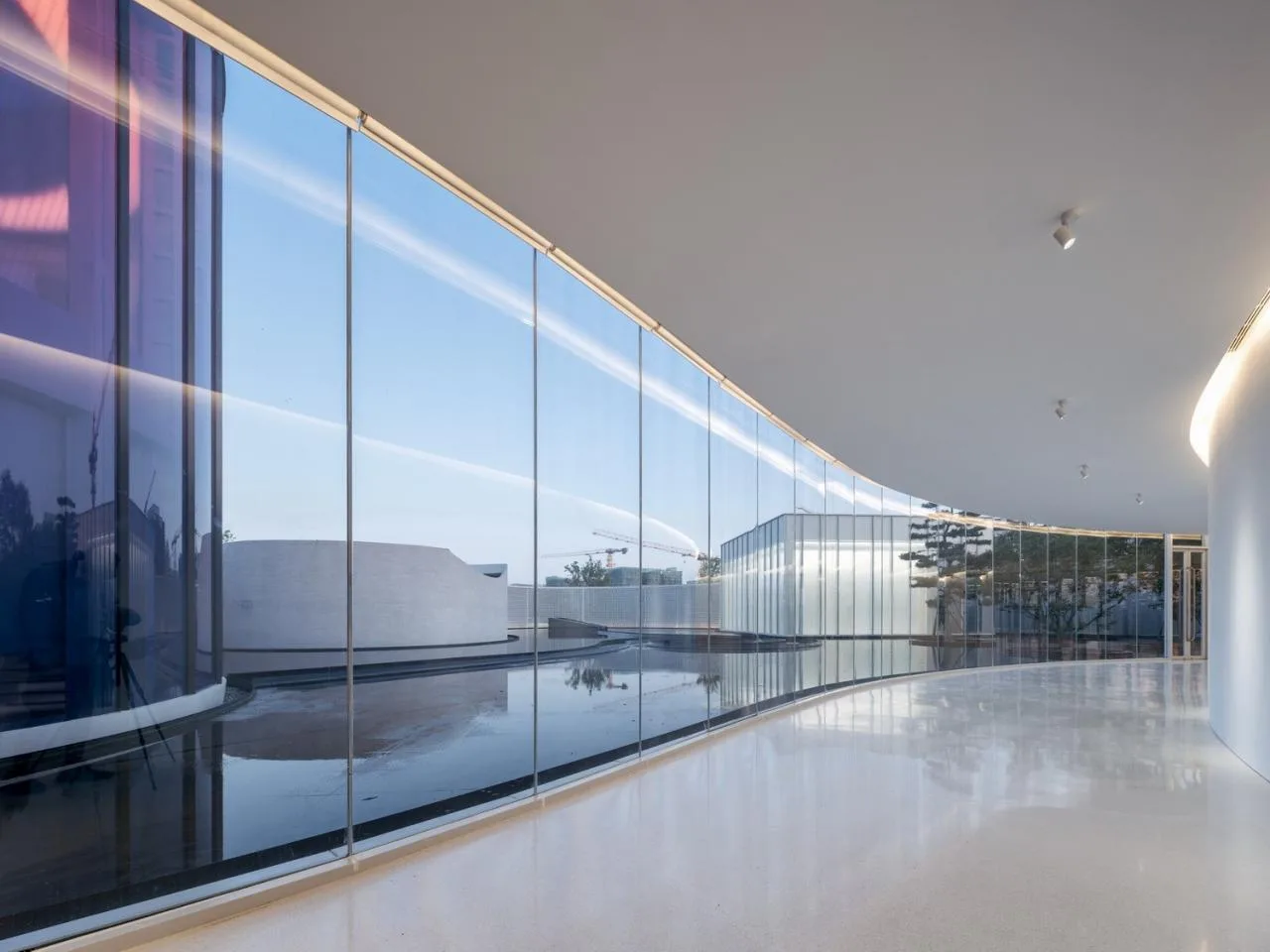
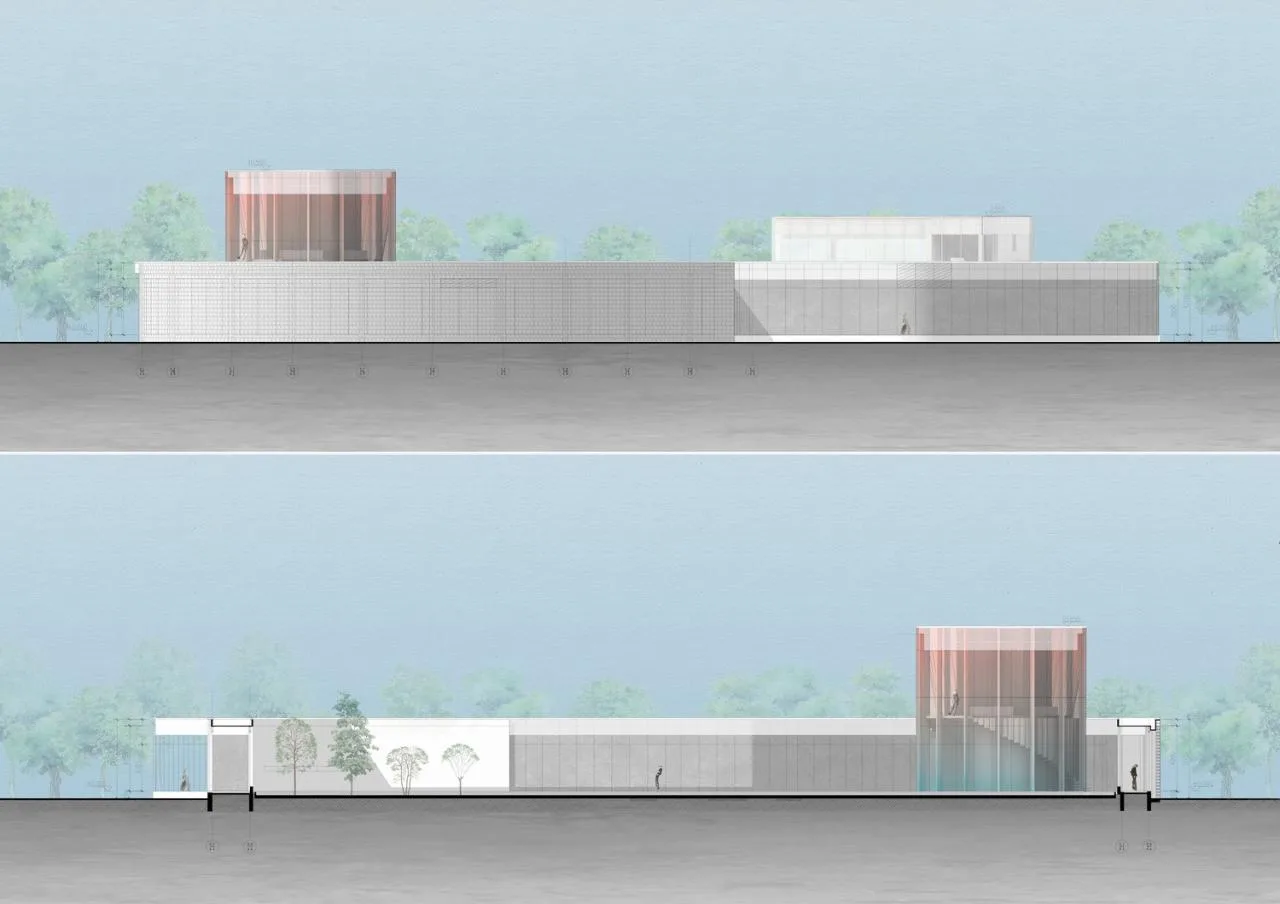
△ Monologues Art Museum Facade
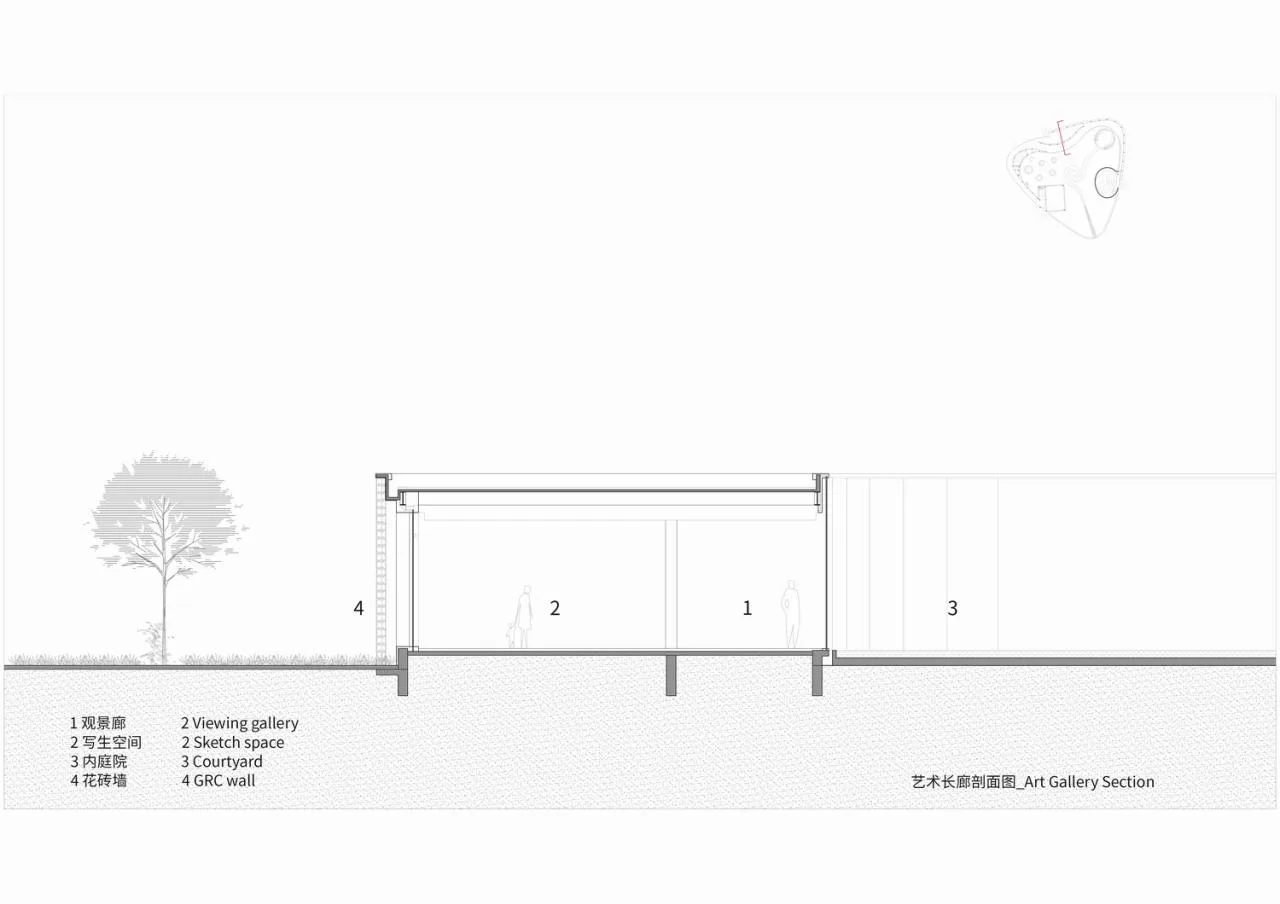
△ Section of Art Gallery
Heaven and Earth
A Side
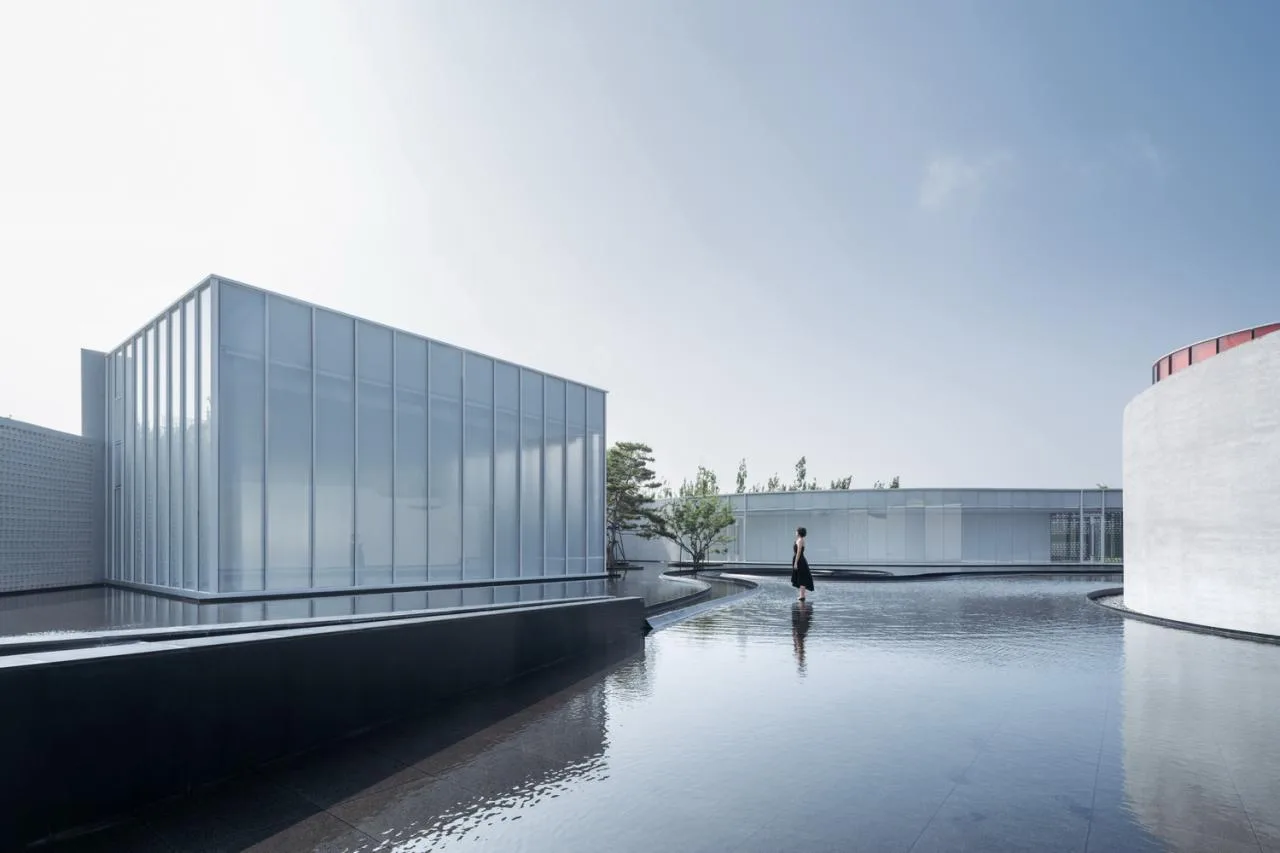
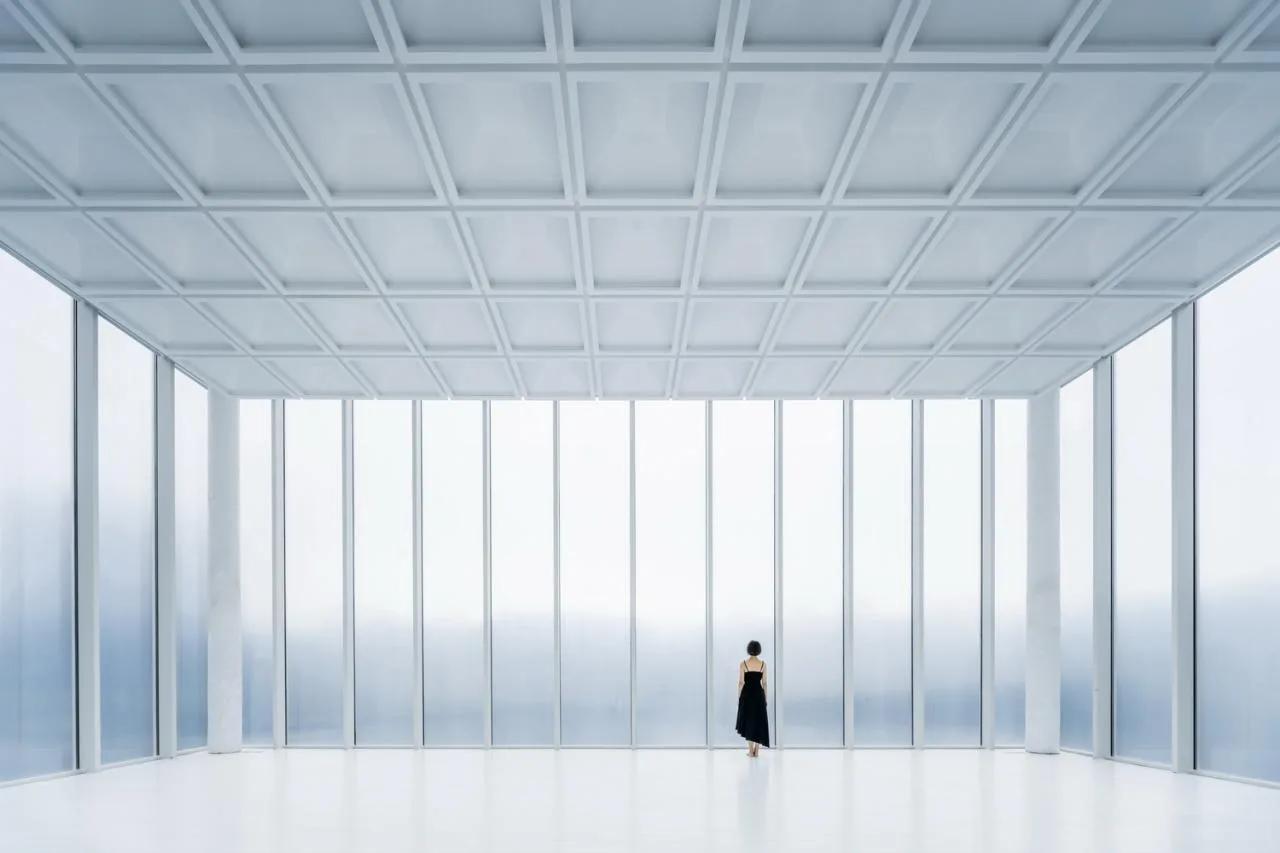
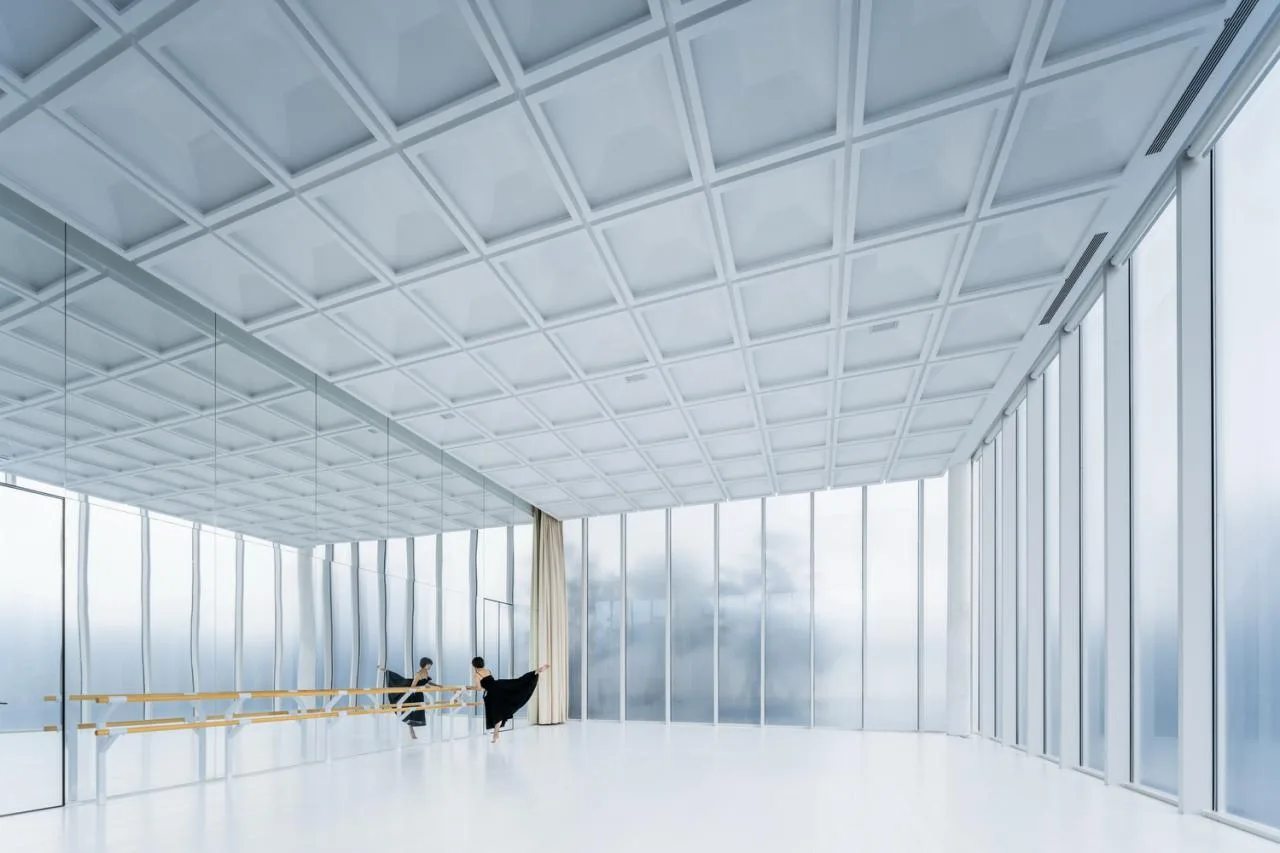
In 2009, I visited a dance school designed by Herzog in London. The director explained that dancers need ample lighting during training, while colorful facades and scenic views can distract from their inner focus. Inspired by this, the dance studio at the Monologues Art Museum is designed as a semi-transparent glass box, providing sufficient light while filtering out external scenery. Behind the mirrored classroom wall lies the entrance hall and mezzanine changing rooms. This design offers performers a space to express themselves suspended between heaven and earth.
B Side
The dance classroom features a mezzanine occupying only a small portion on one side of the rectangular floor plan. To avoid negative impacts on seismic resistance due to local stiffness changes, hinged connections are used between mezzanine beams and columns, maintaining a consistent single-story steel frame structure.
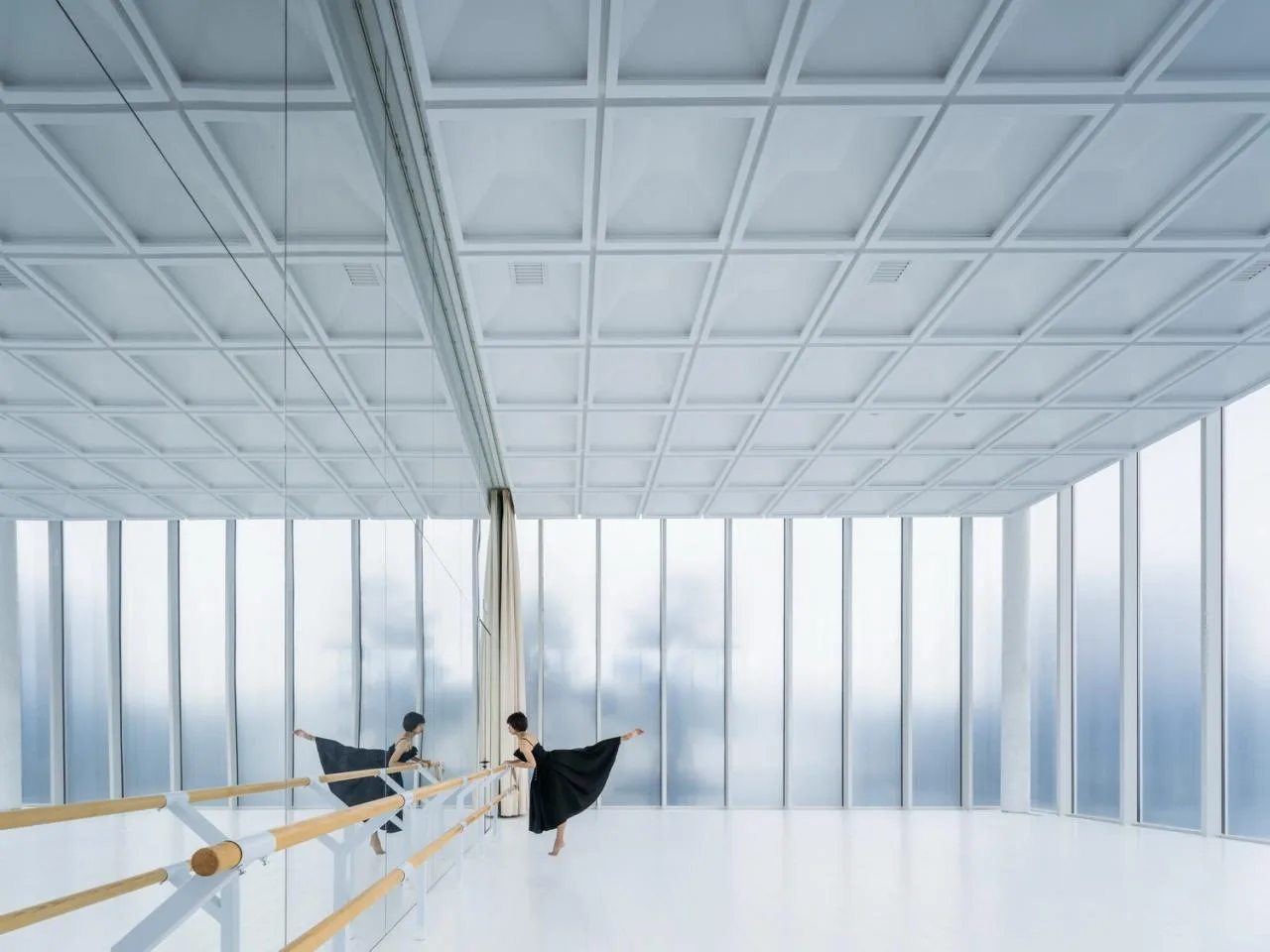
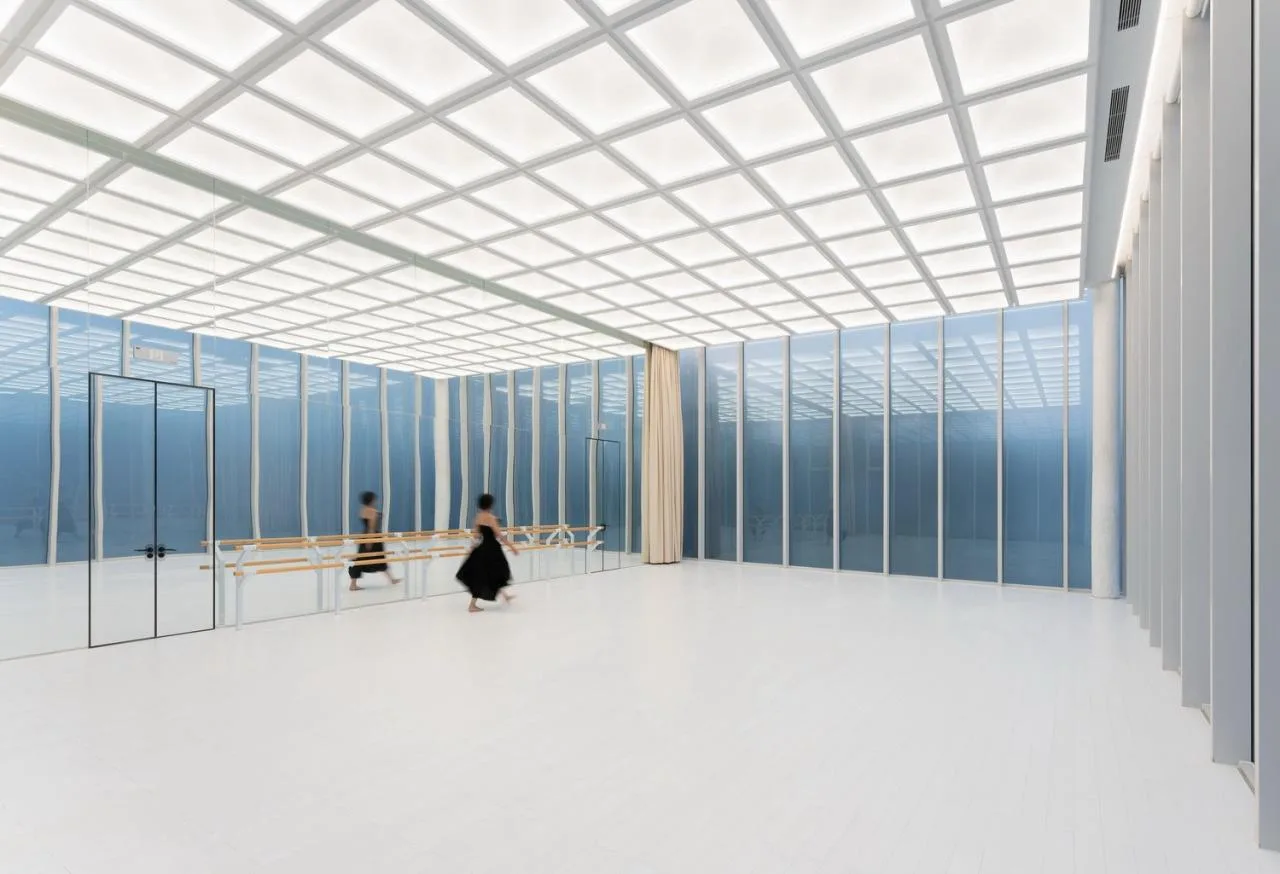
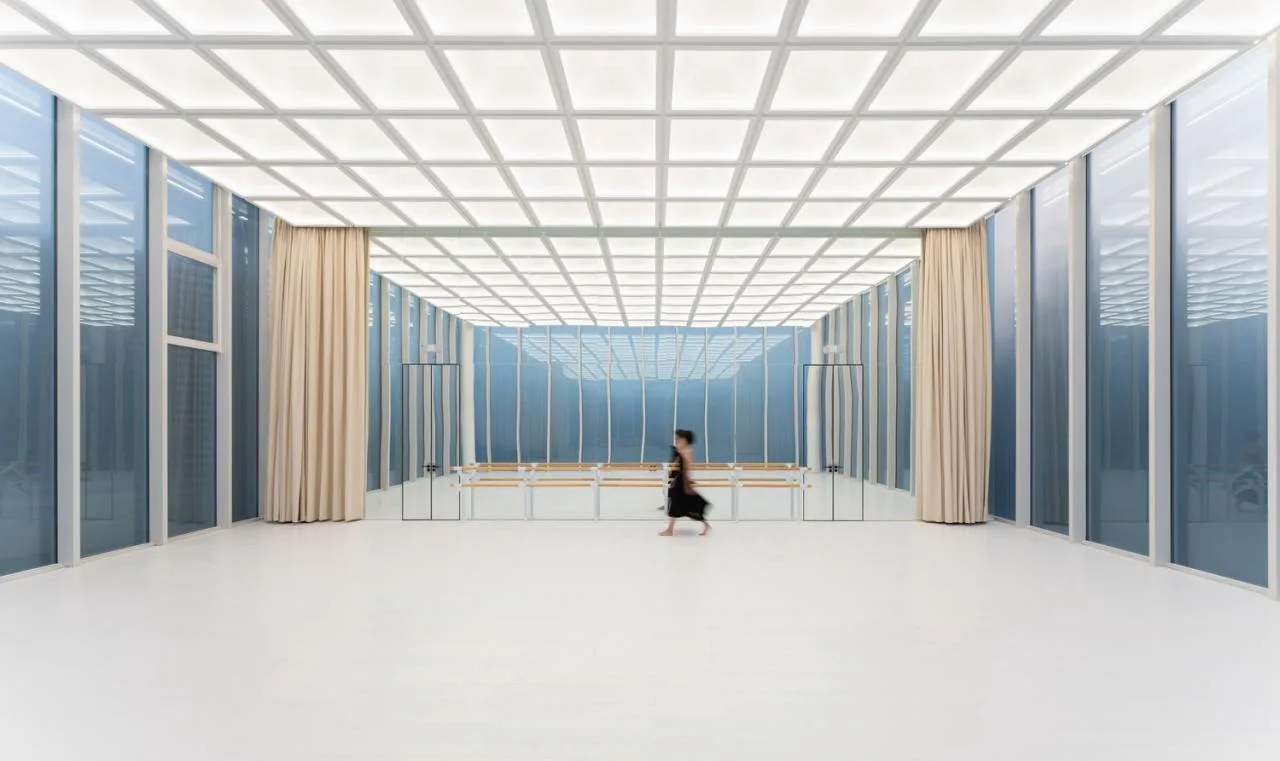
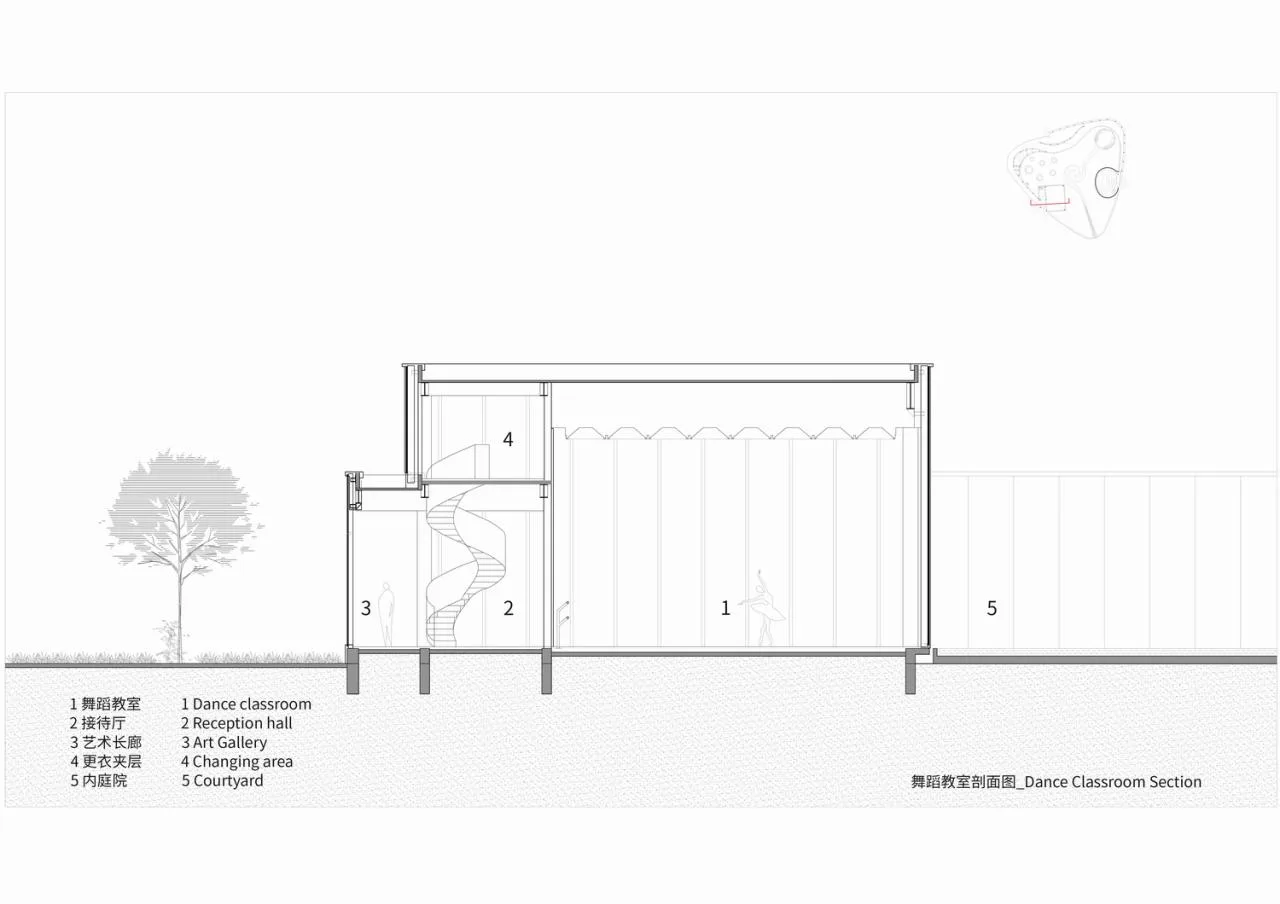
△ Section of Dance Studio
Evergreen since ancient times
A Side
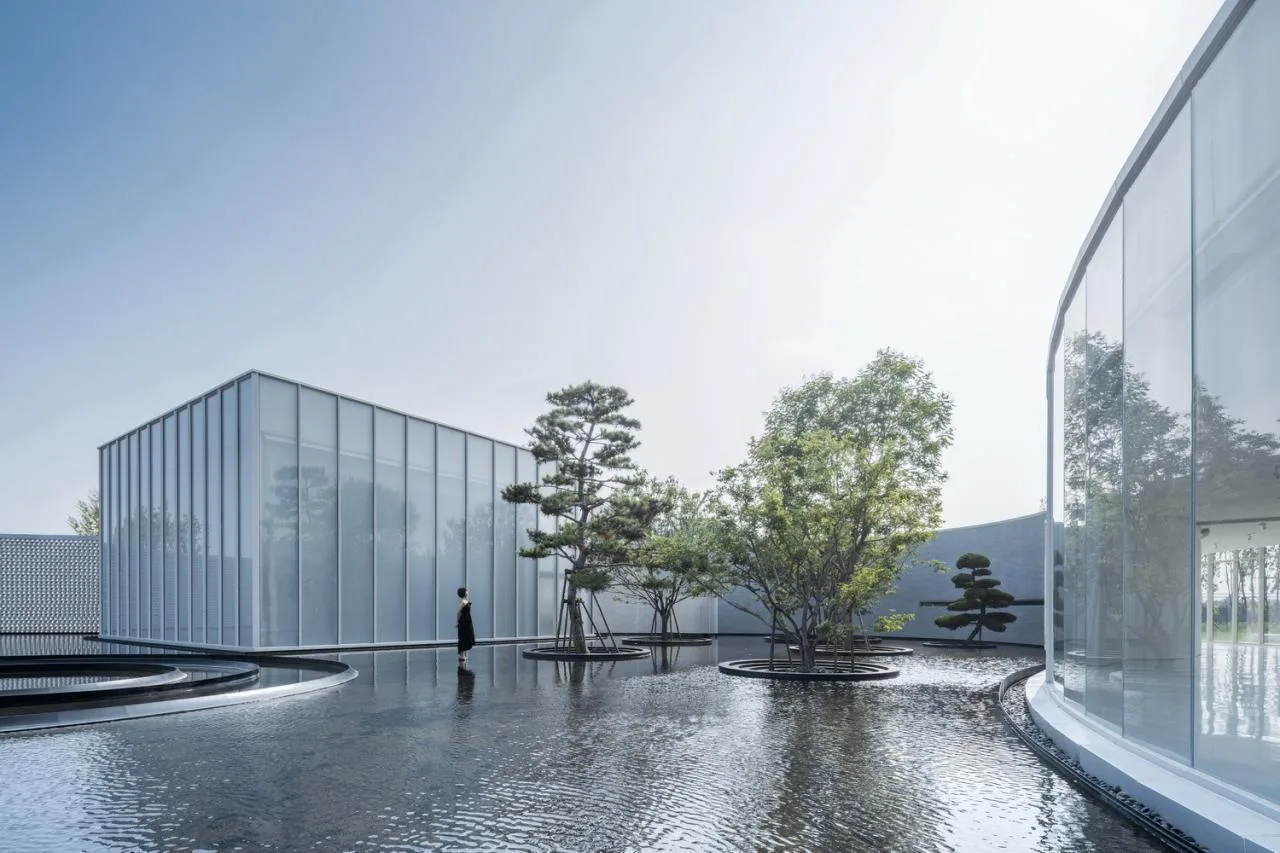
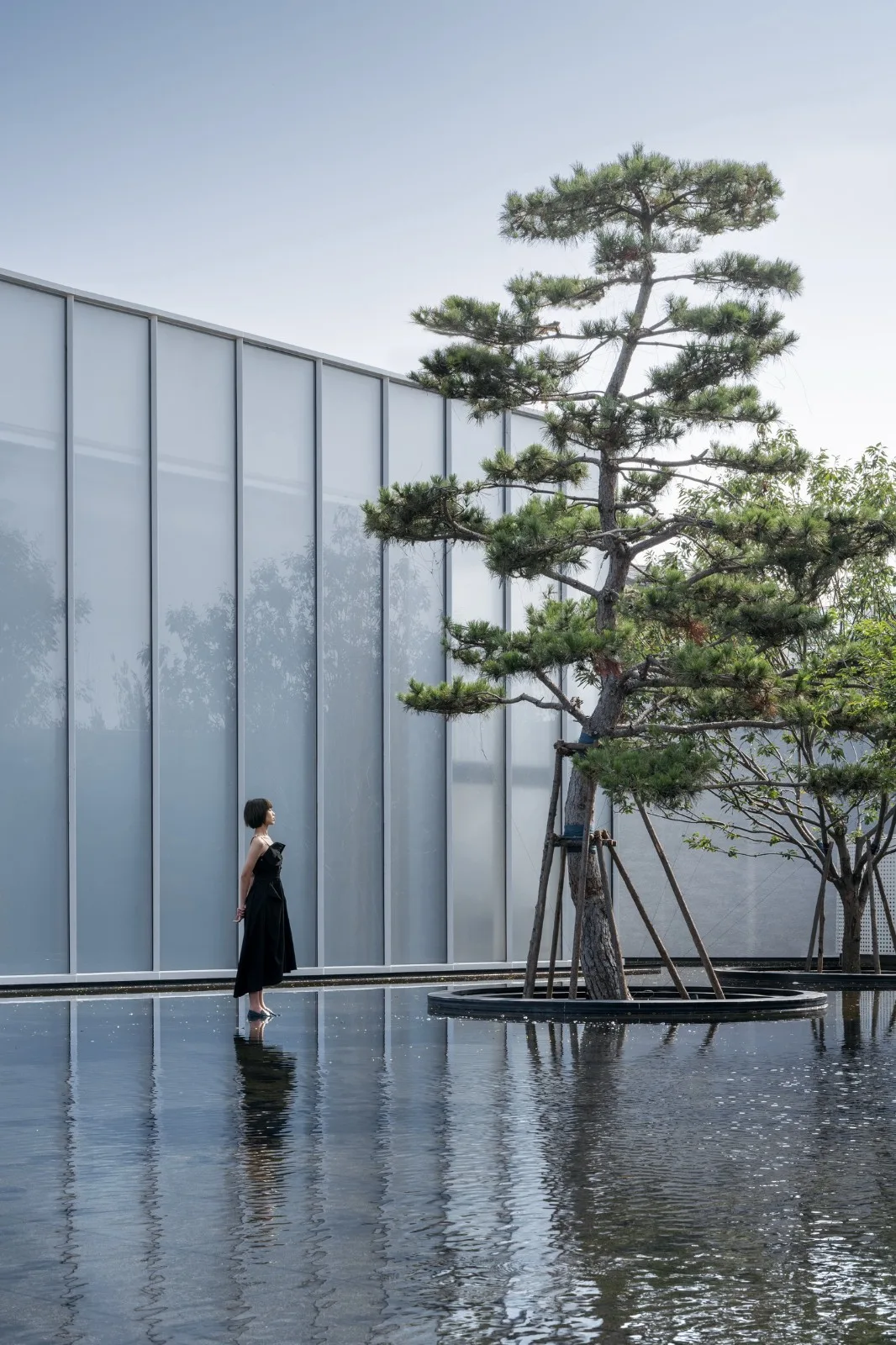
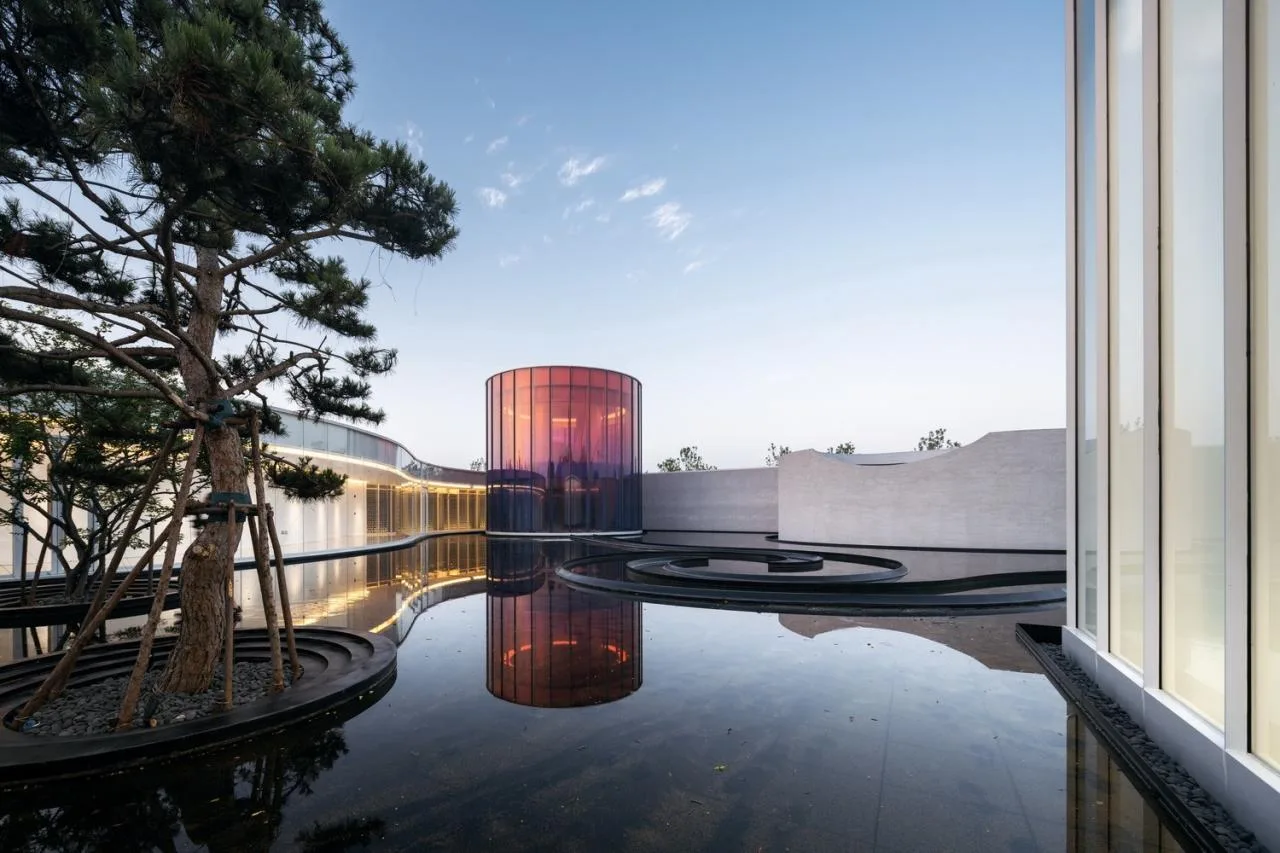
After copying Ni Zan’s “Six Gentlemen” painting in my second year of junior high school, I realized I could never surpass him and gave up my dream of landscape painting. Yet, those six trees became a lifelong obsession. Many of my later works incorporate tree elements inspired by this. For this project, due to climatic and sourcing limitations, I replaced the original Jiangnan-region Six Gentlemen in the Water Garden with northern species: pine, elm, cypress, maple, oak, and plain trees. This fulfilled my long-held desire to blend cloud forest painting into architectural design.
B Side
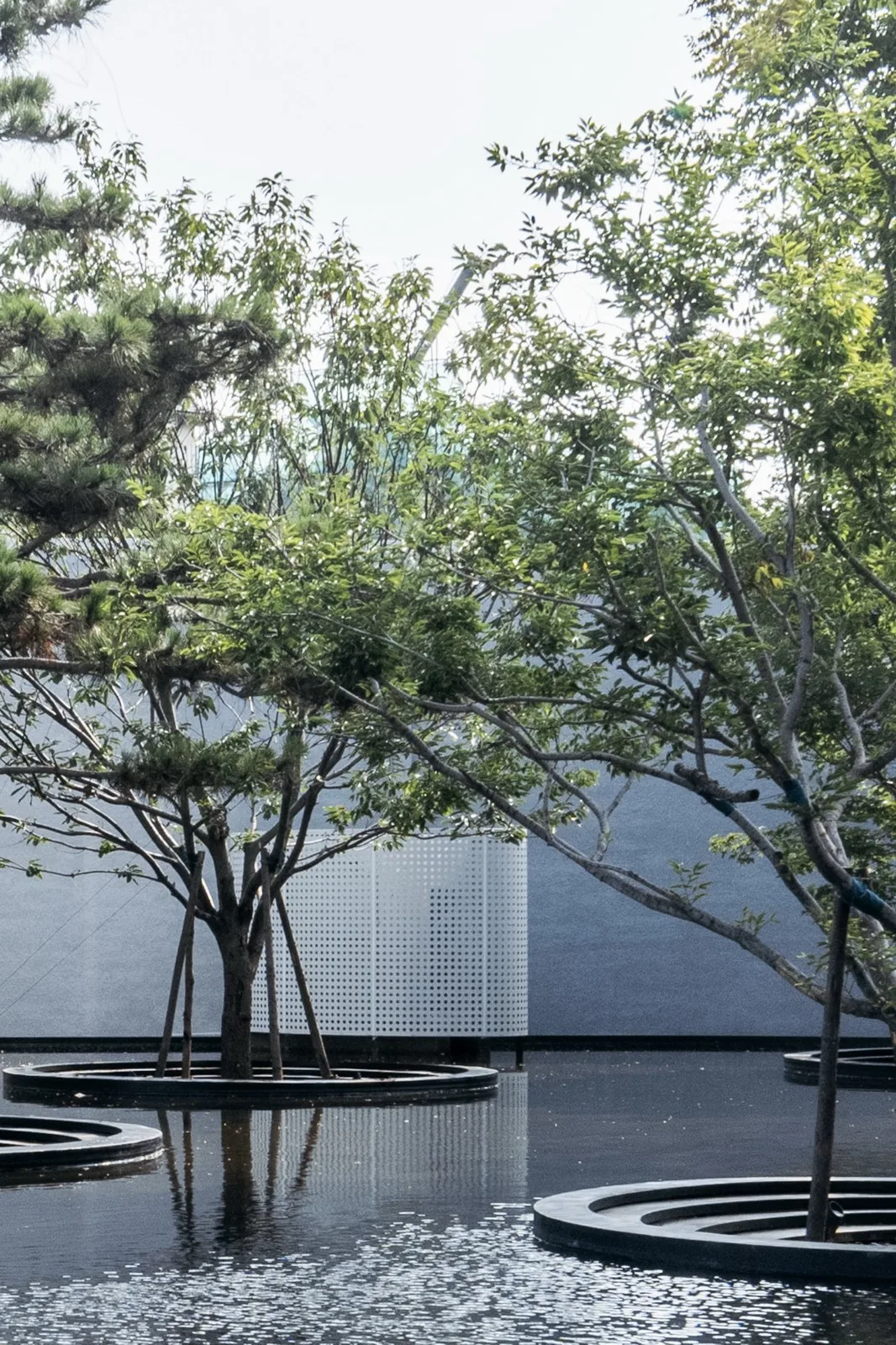
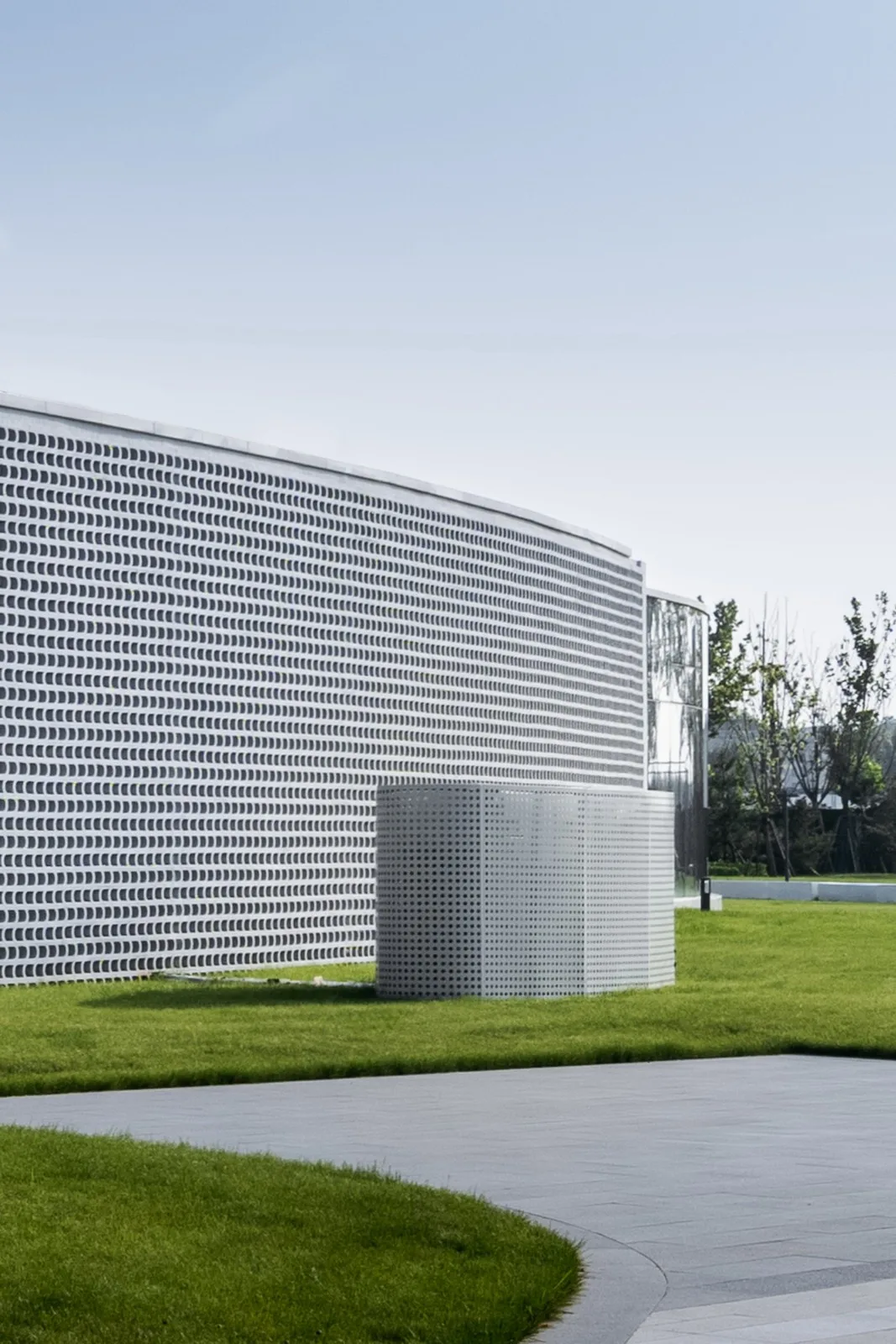
The owner proposed converting the equipment room into a tea room, requiring outdoor placement of equipment in two groups—one in the courtyard, one in the green space outside the museum. To conceal the equipment, I designed perforated aluminum panels shaped like leaves, transforming the devices into art installations that complement the Monologues Art Museum.
Monologues against the all-black surroundings
A Side
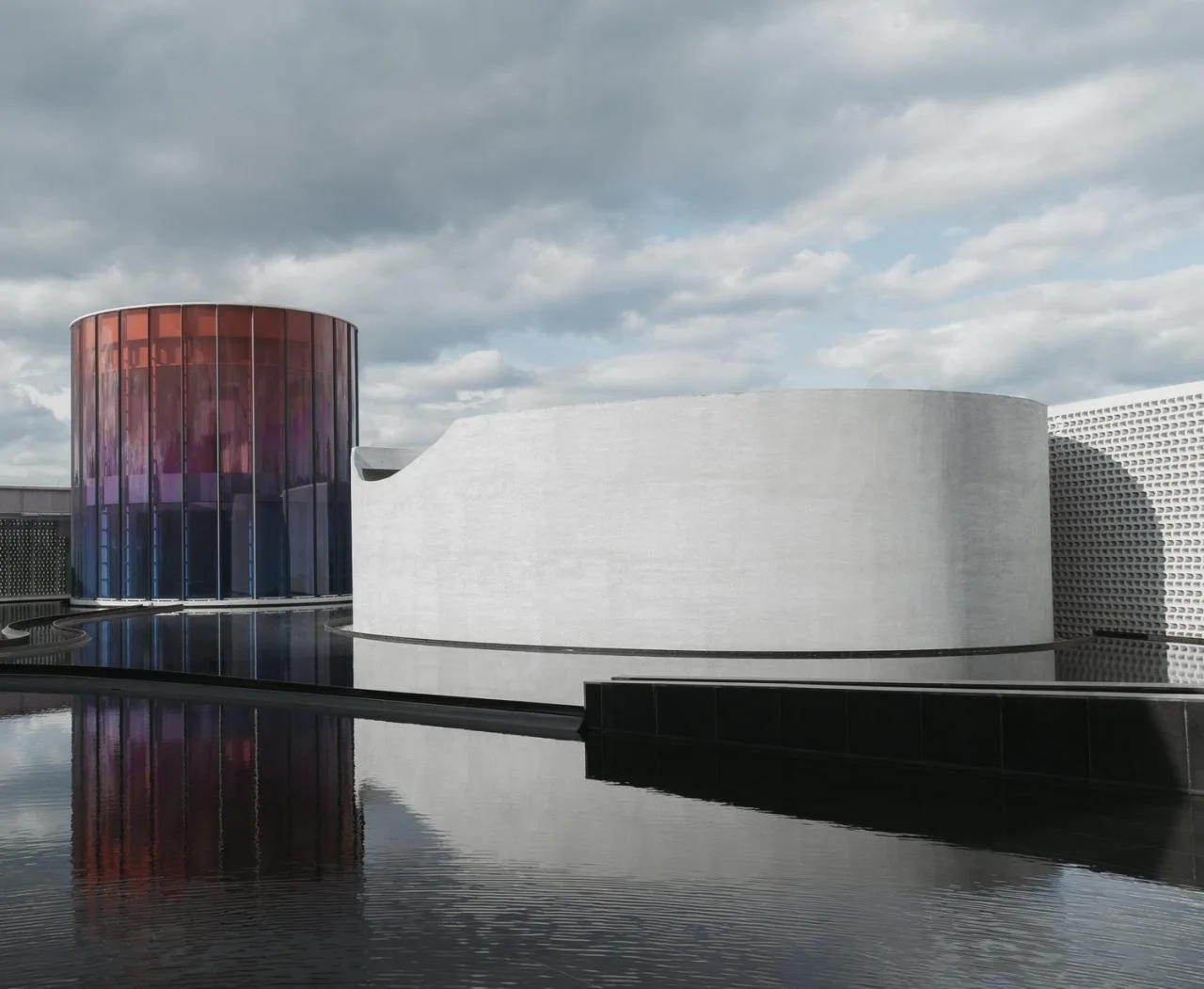
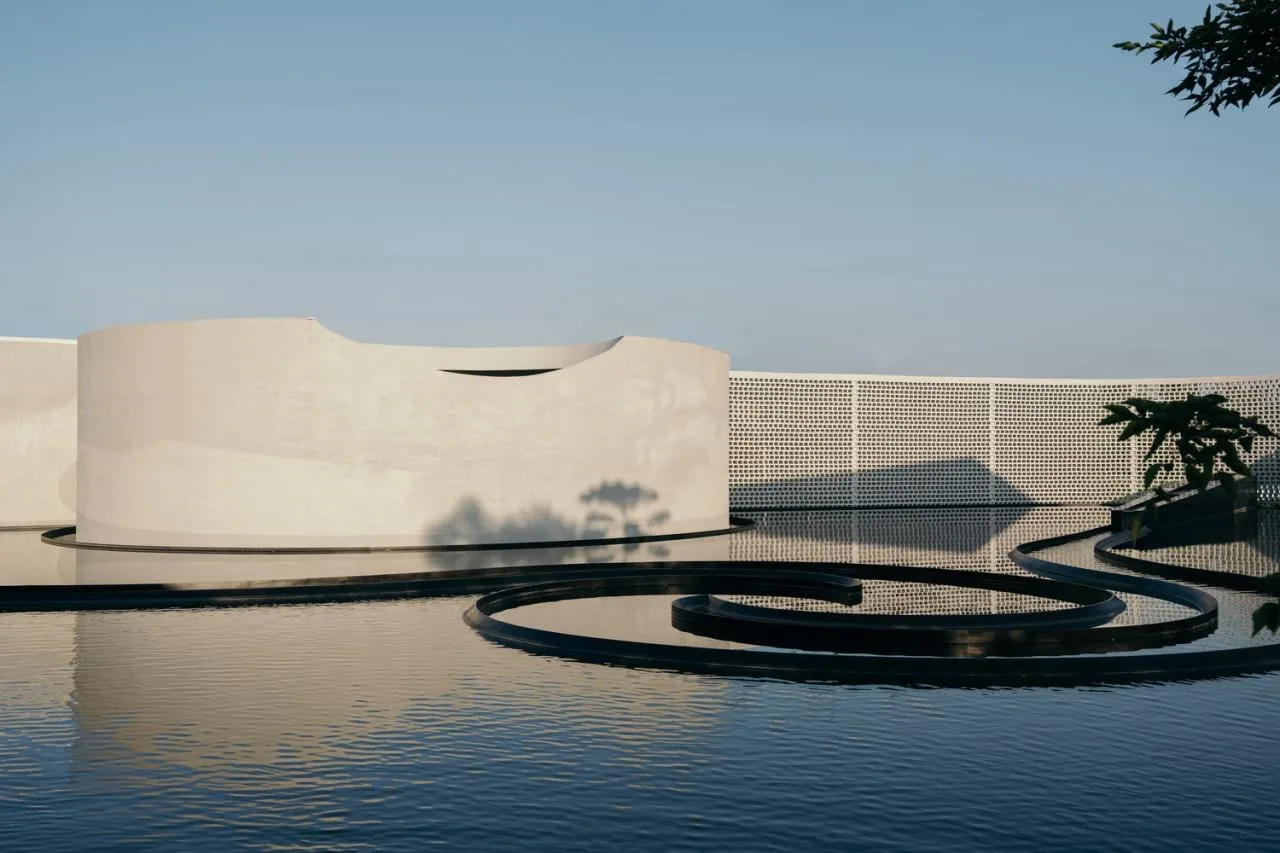
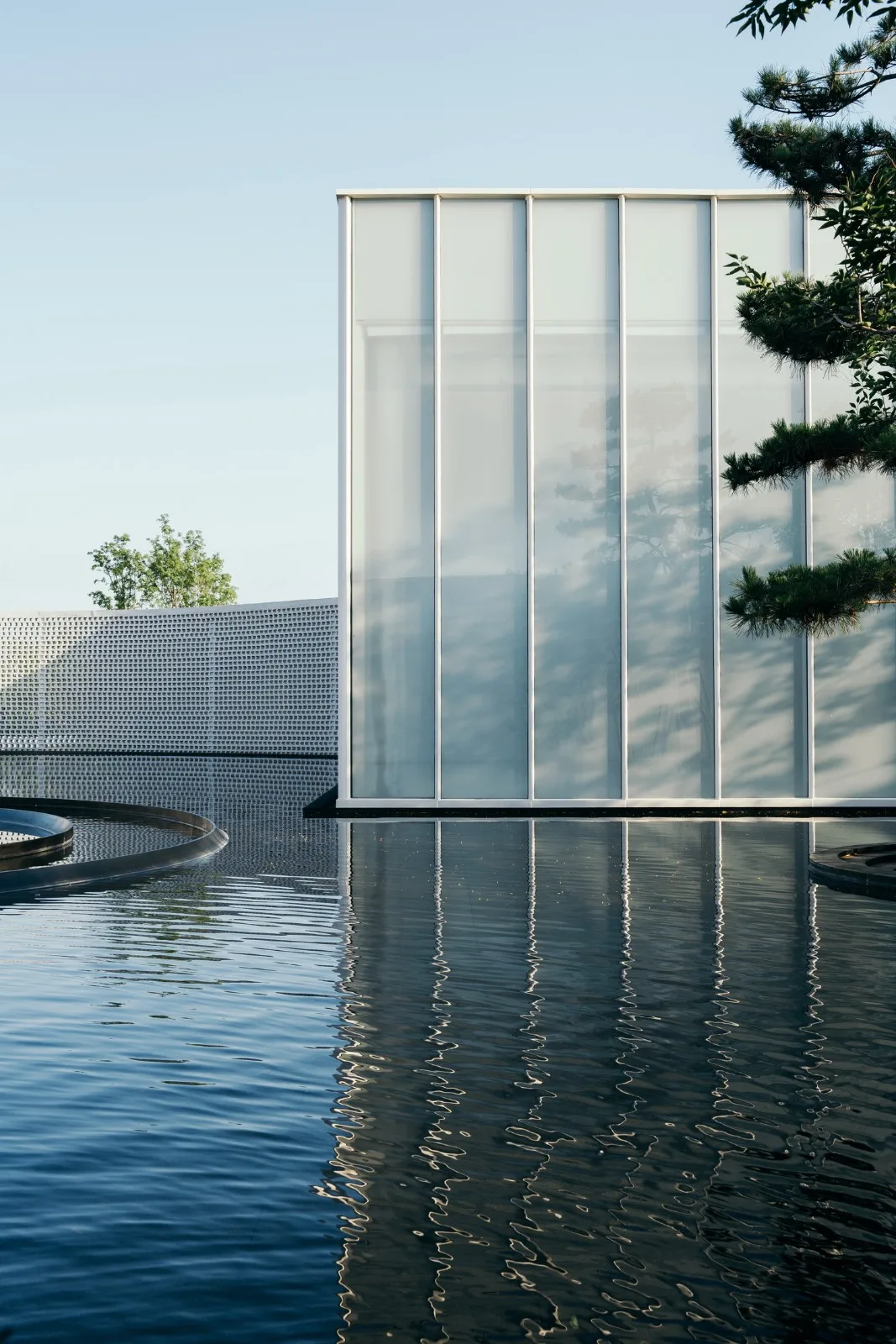
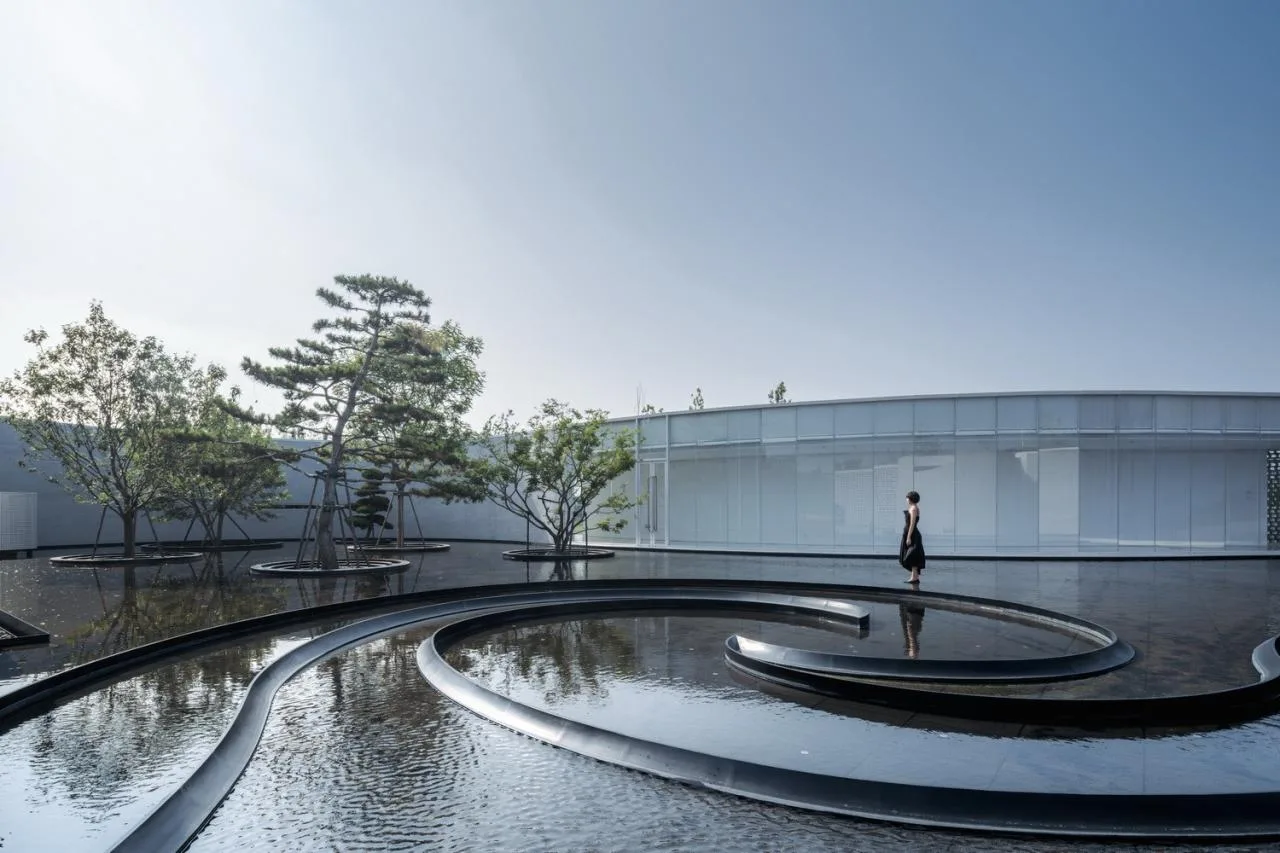
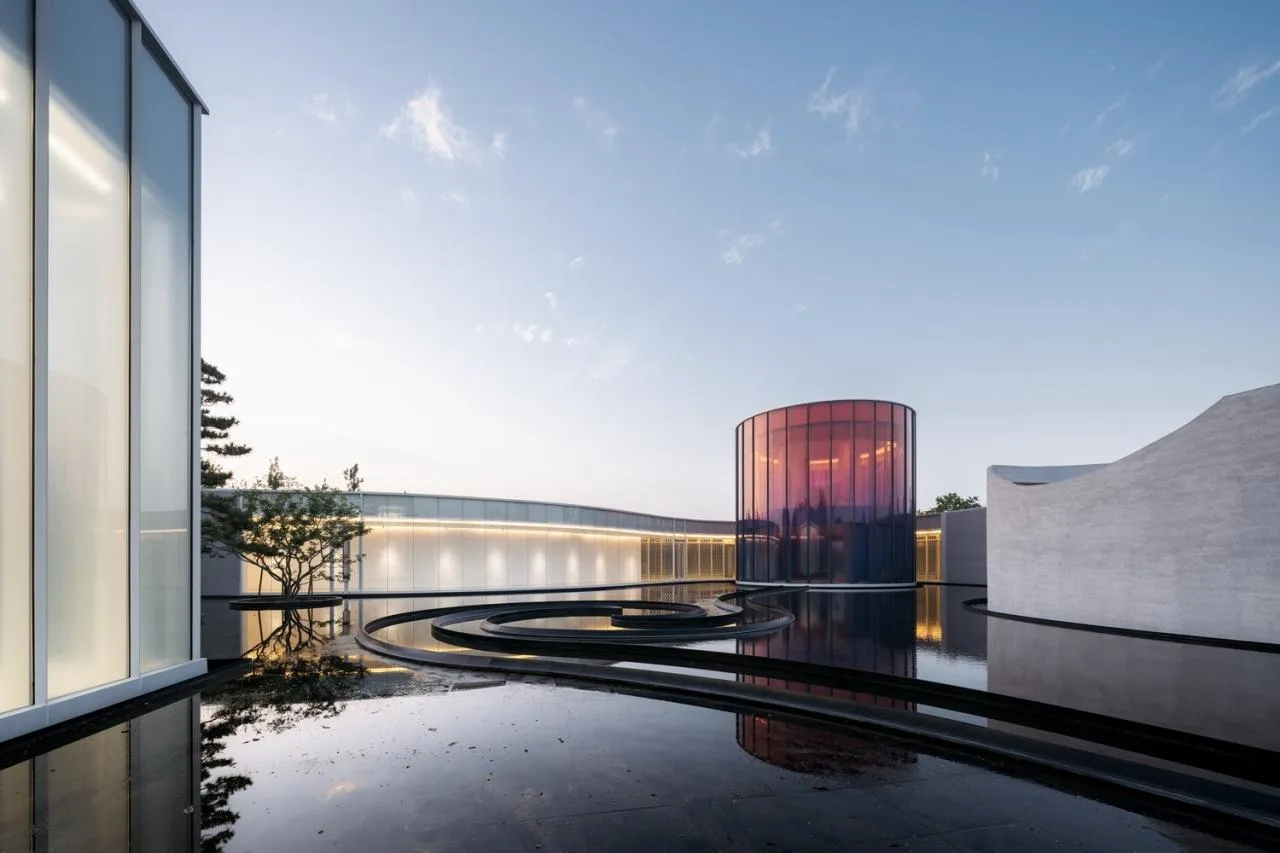
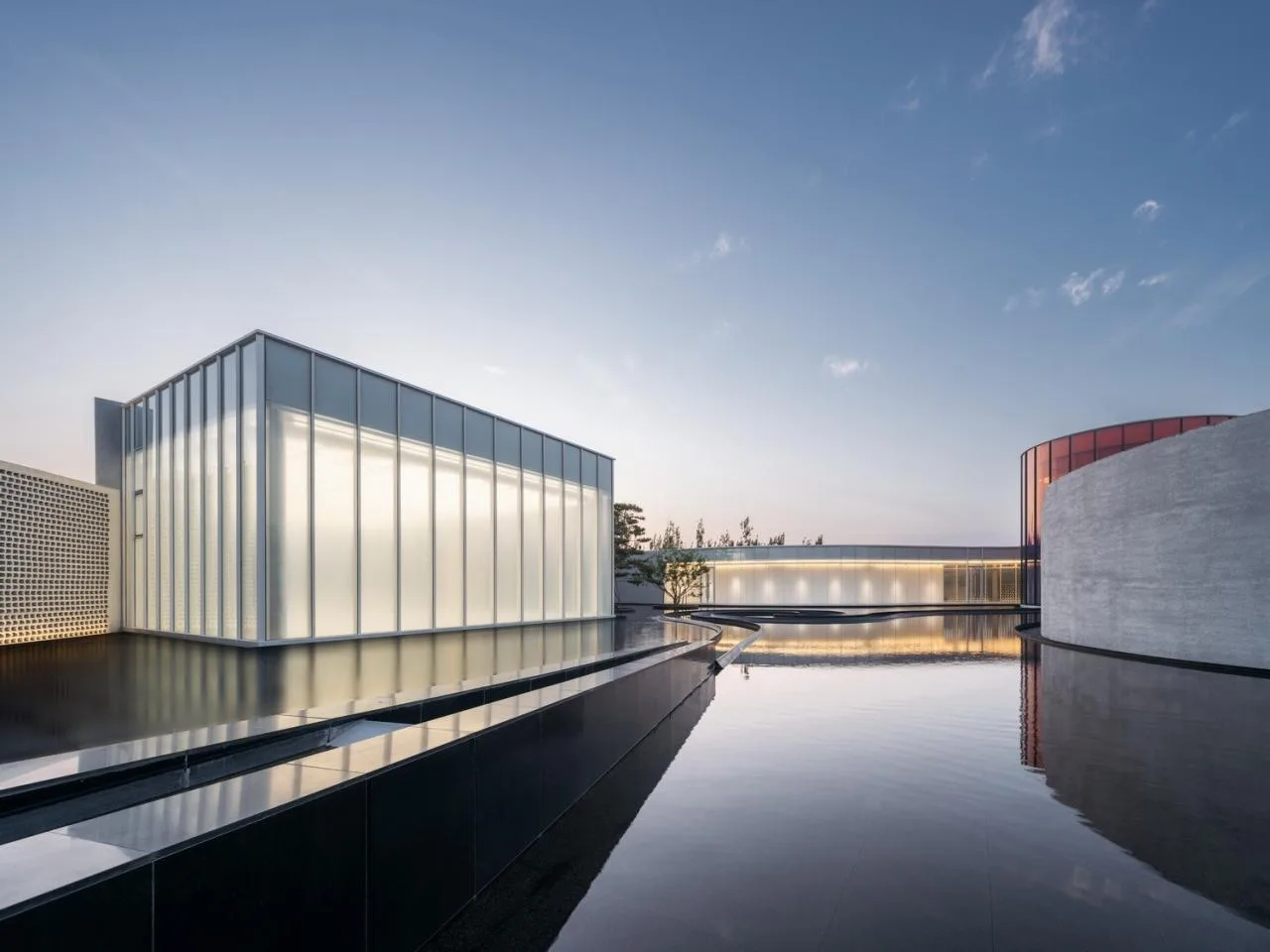
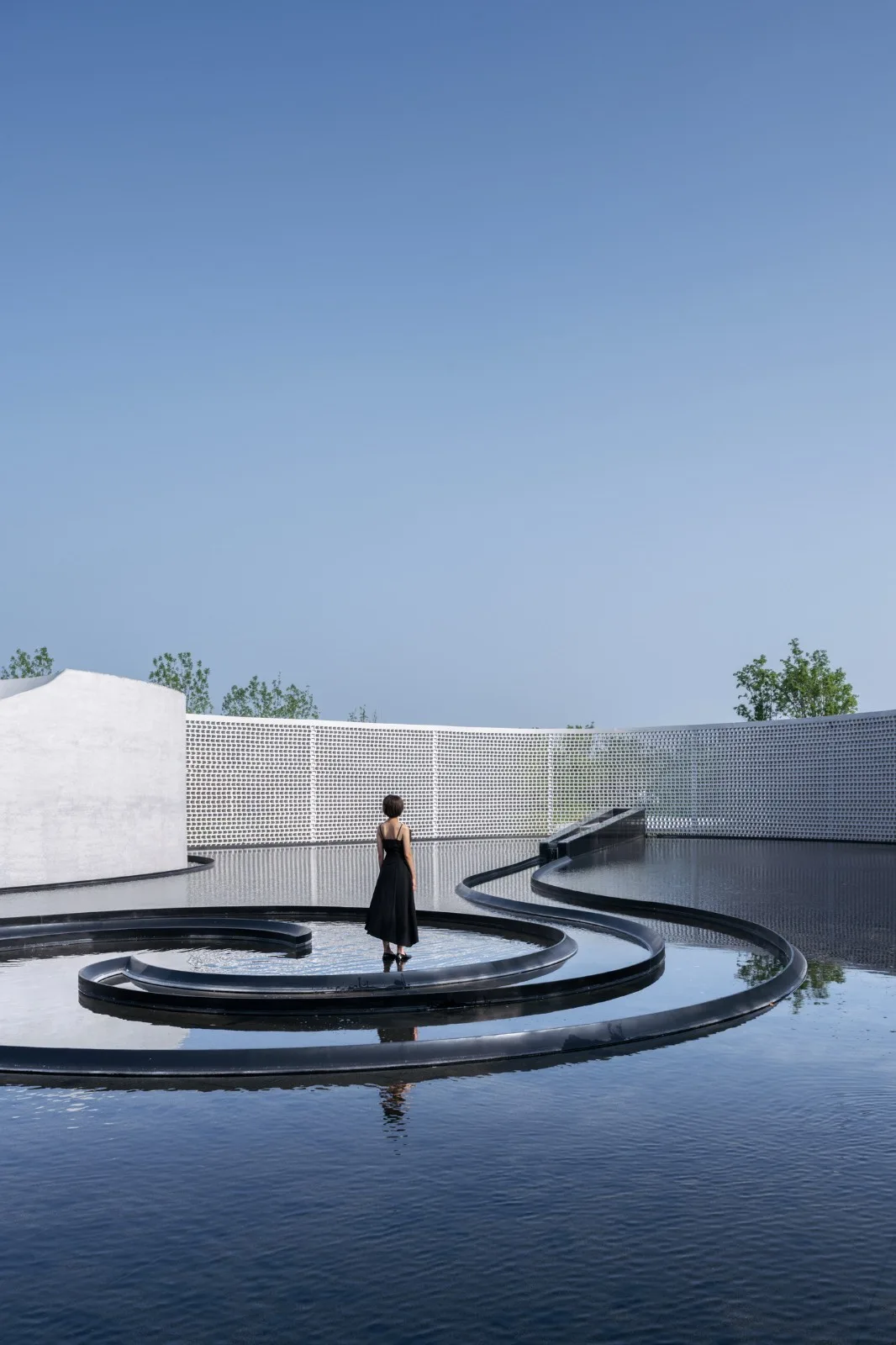
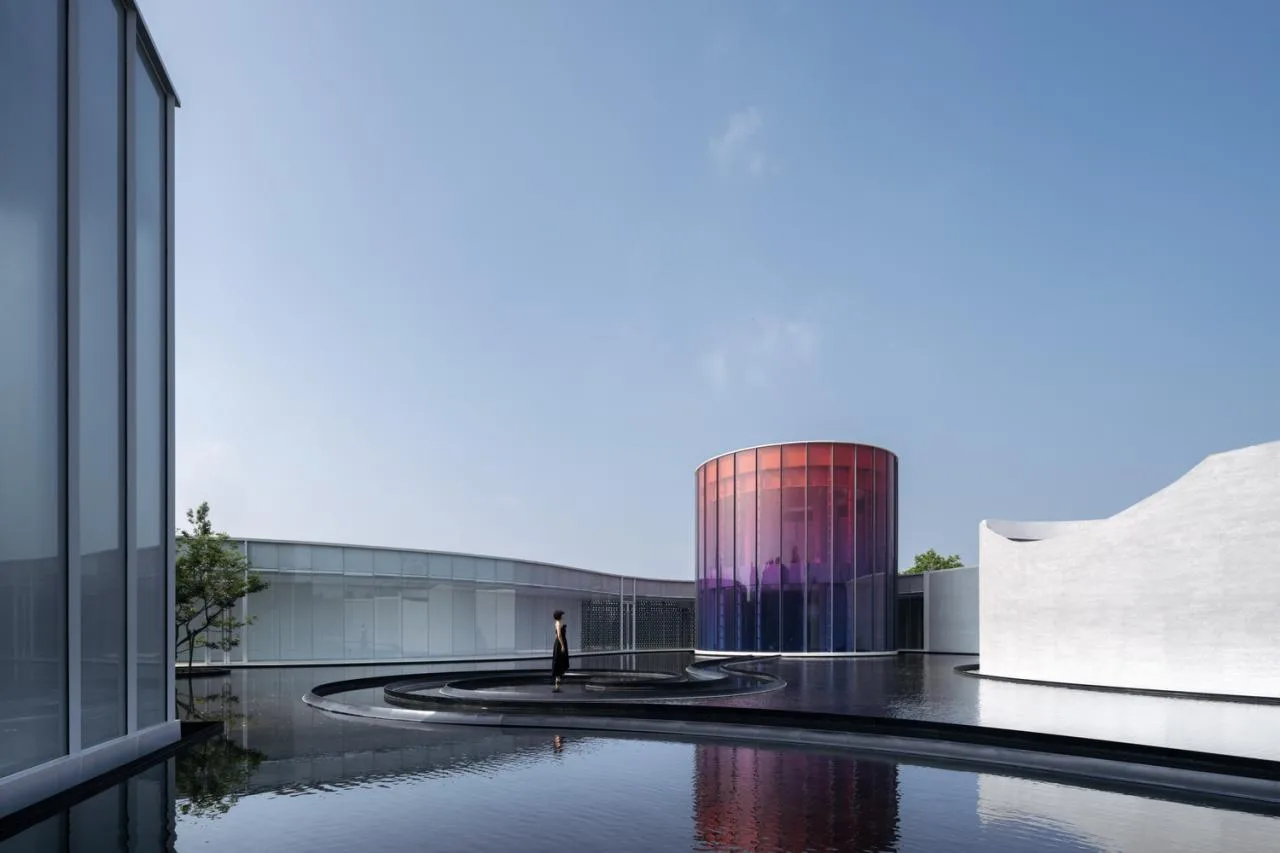
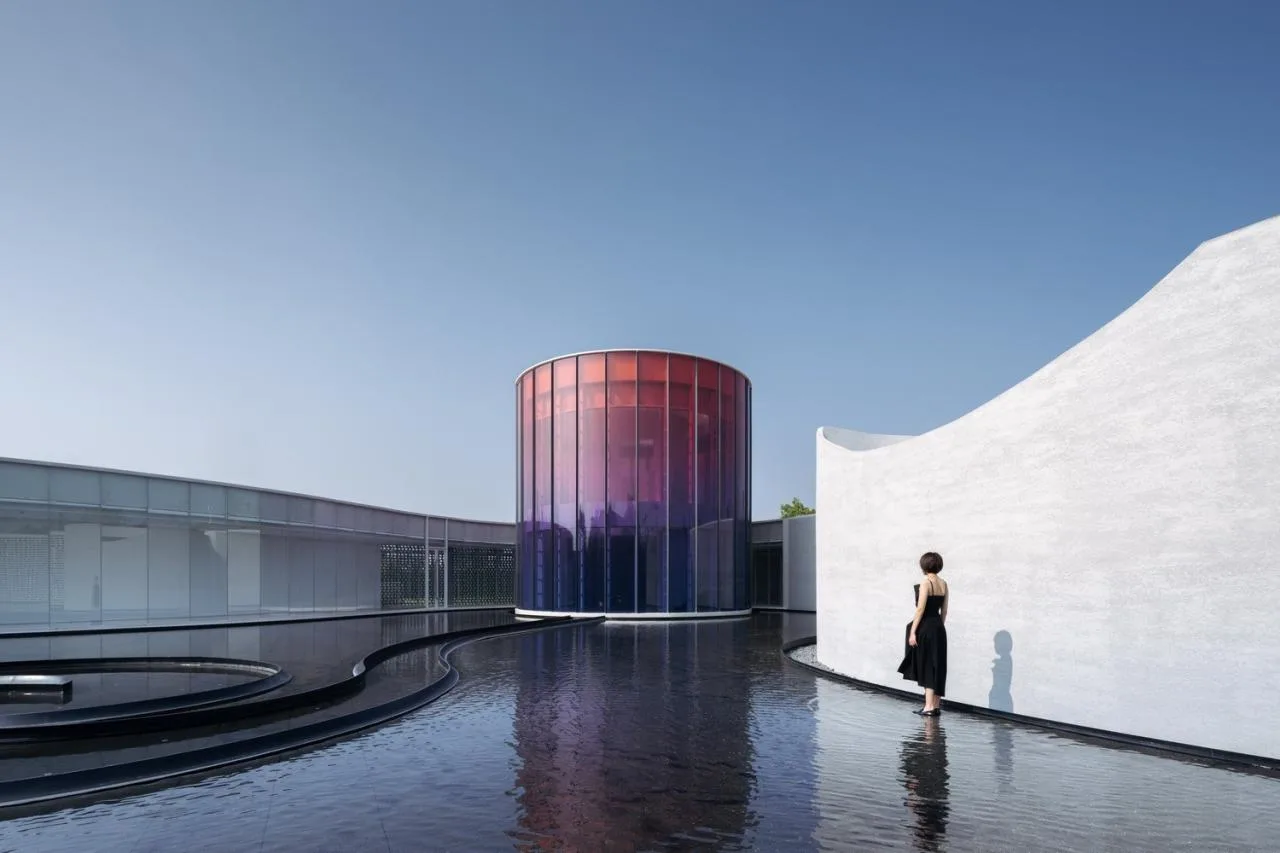
The courtyard was initially planned with a white dry-sticky stone floor to create a floating sensation throughout the building, as I experimented with in the Daytime Wonderland project. However, reflecting on the “Six Gentlemen” painting, I chose to evoke a more melancholic mood. The painting uses large blank spaces to represent a vast water surface, creating a distant, calm atmosphere unrestricted by size. Inspired by this, I transformed the white square into a visible black pool, introducing visual depth. The white building now encloses a deep pool of silence—when you gaze into it, it gazes back. The surrounding structures fall silent, with only the gentle rustle of wind through the Six Gentlemen trees.
B Side
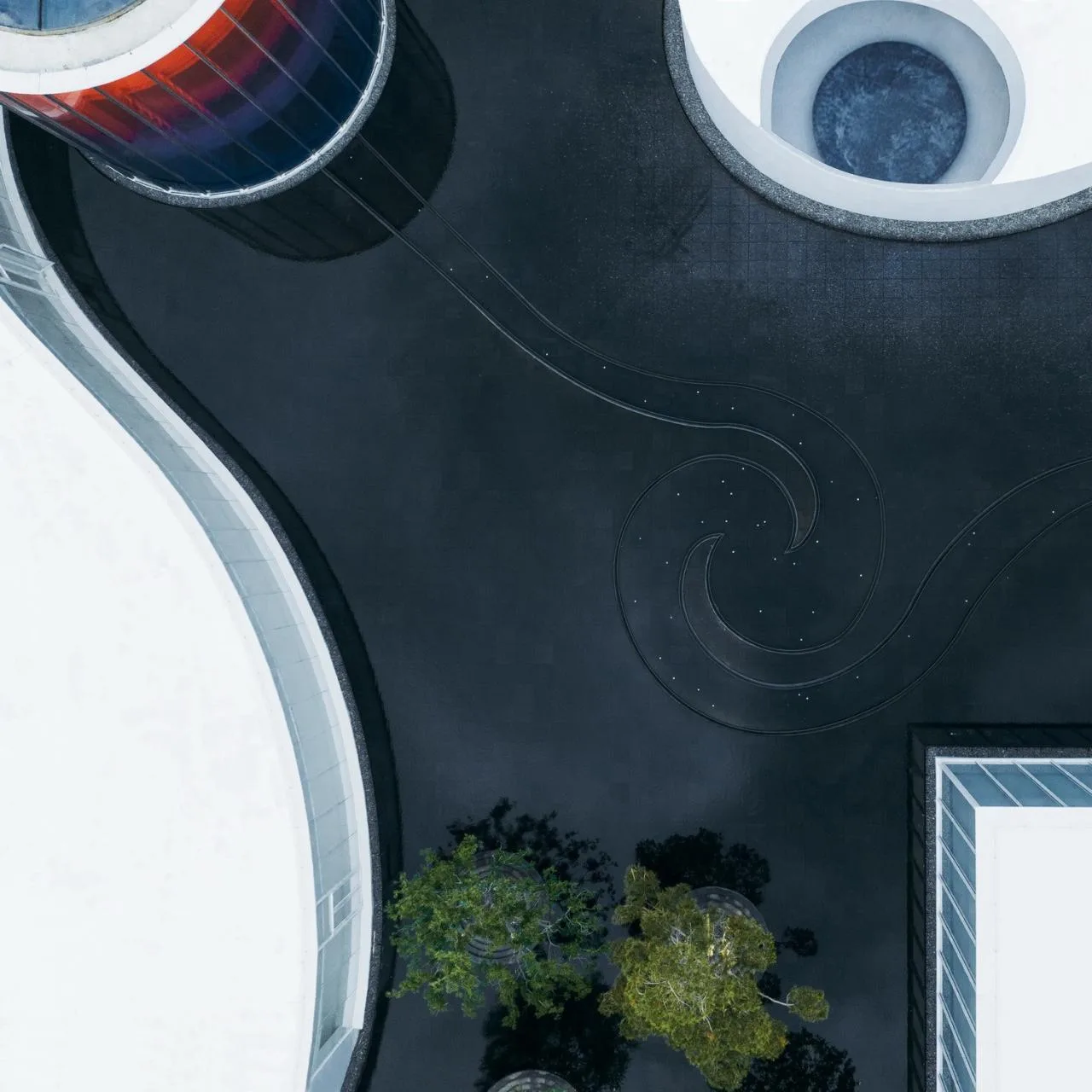
Despite this transformation, the original courtyard’s water landscape system—fed by the Yiqu River—remains intact. The flowing water acts as a subtle undercurrent beneath the calm water courtyard, creating a “water within water” design. The water spirals from the water drop feature towards the courtyard center, curls around, and flows toward the yoga studio. It connects to an external water system beneath the building’s foundation, ultimately merging quietly into the sea. This design links the self-contained Monologues Art Museum with the vastness of the Huanghai sea.
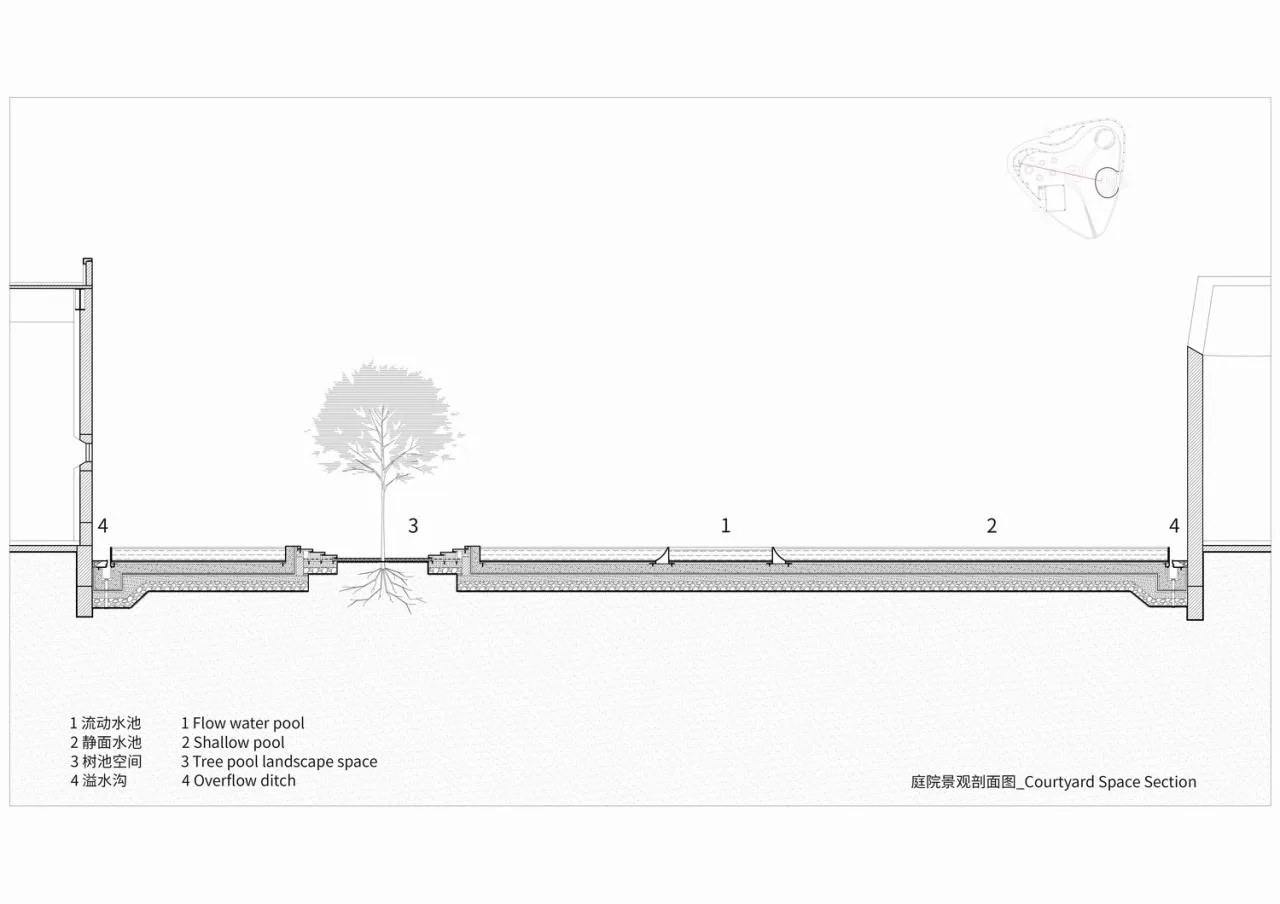
△ Courtyard Landscape Section
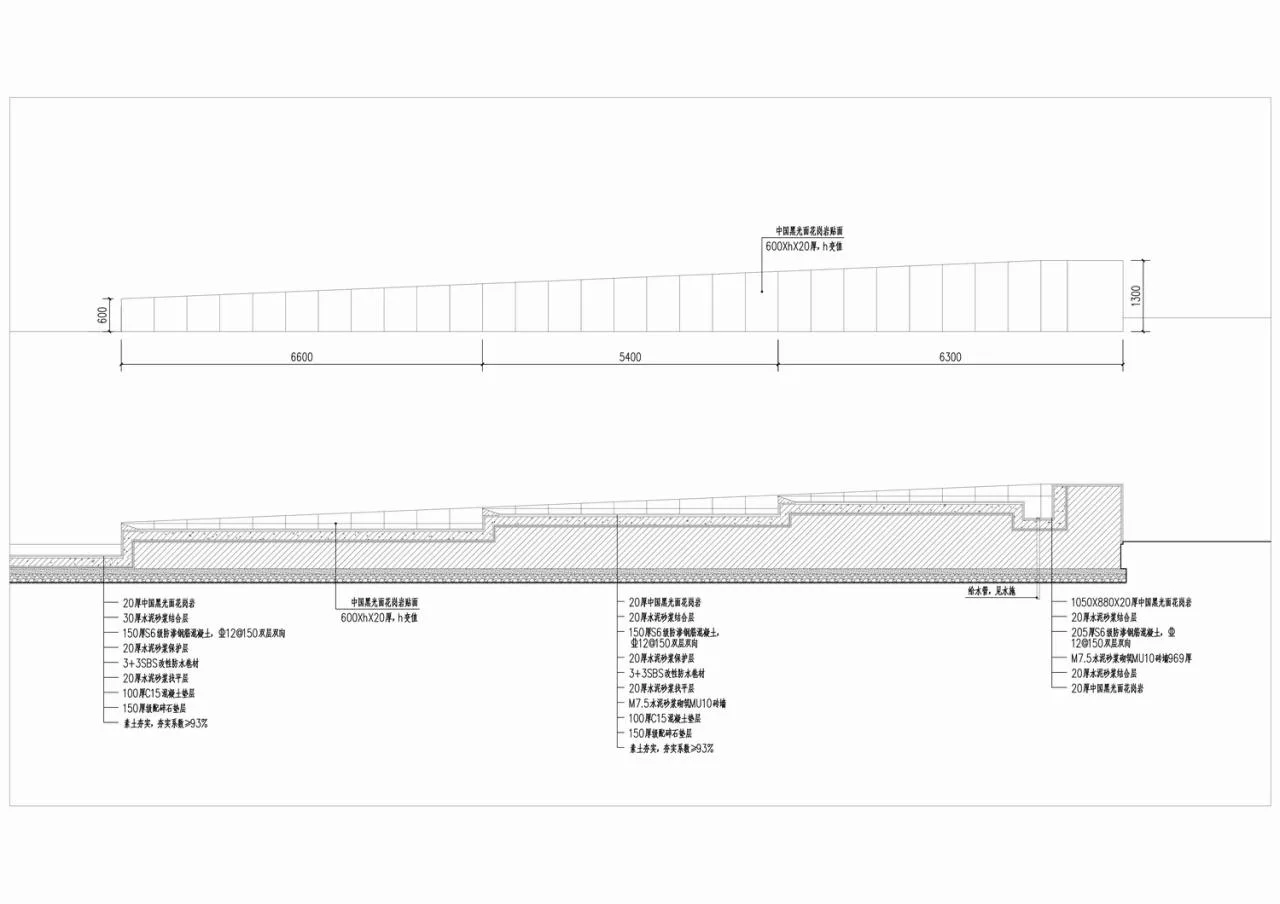
Water drop device node diagram
Not sharing the same dark color as the night
A Side
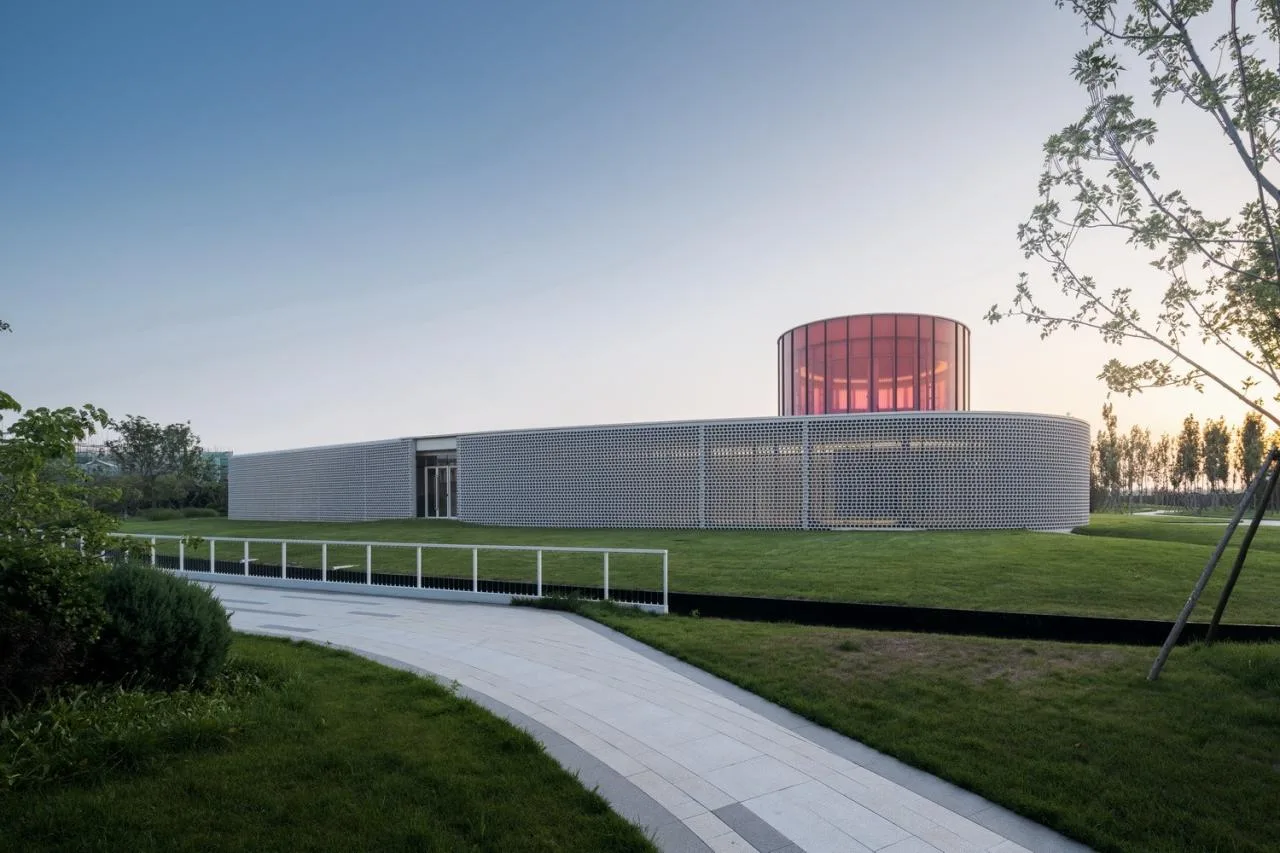
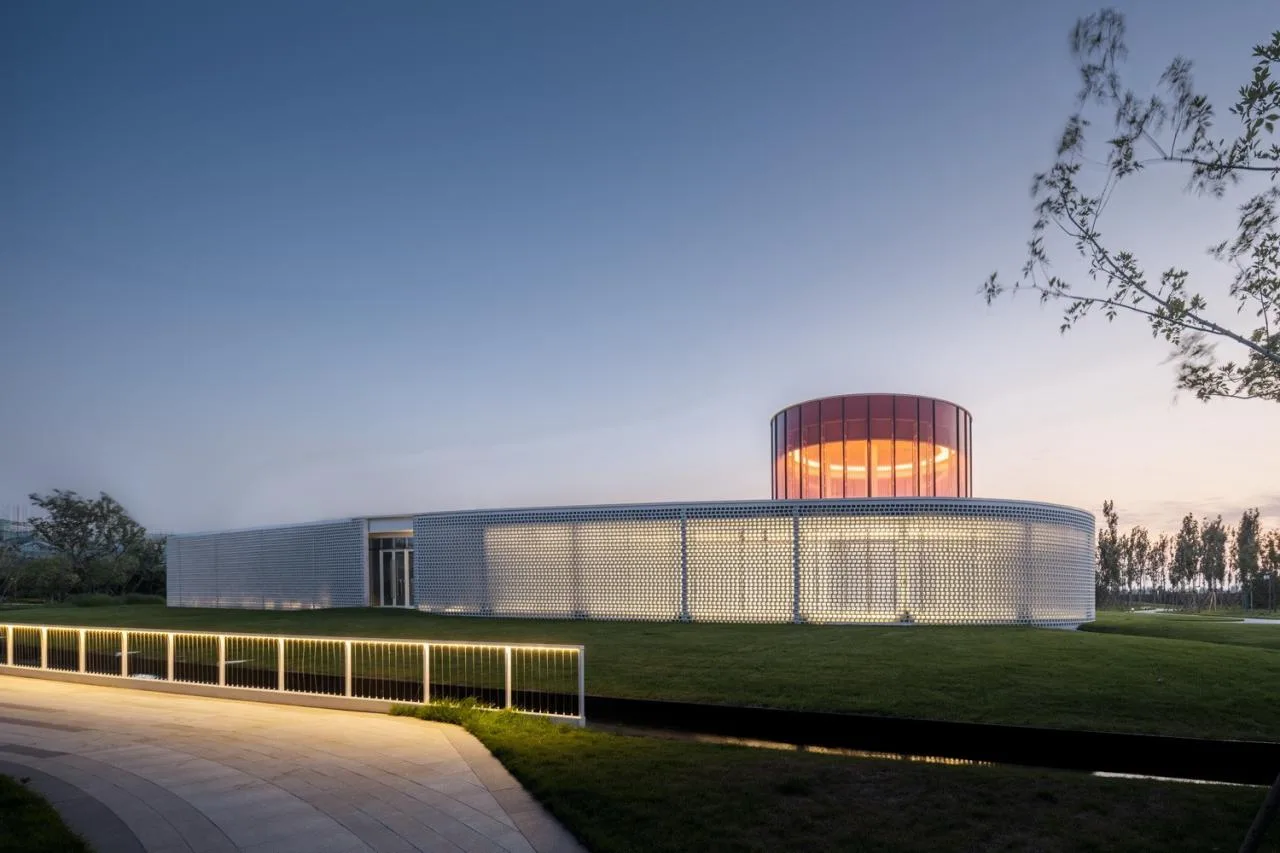
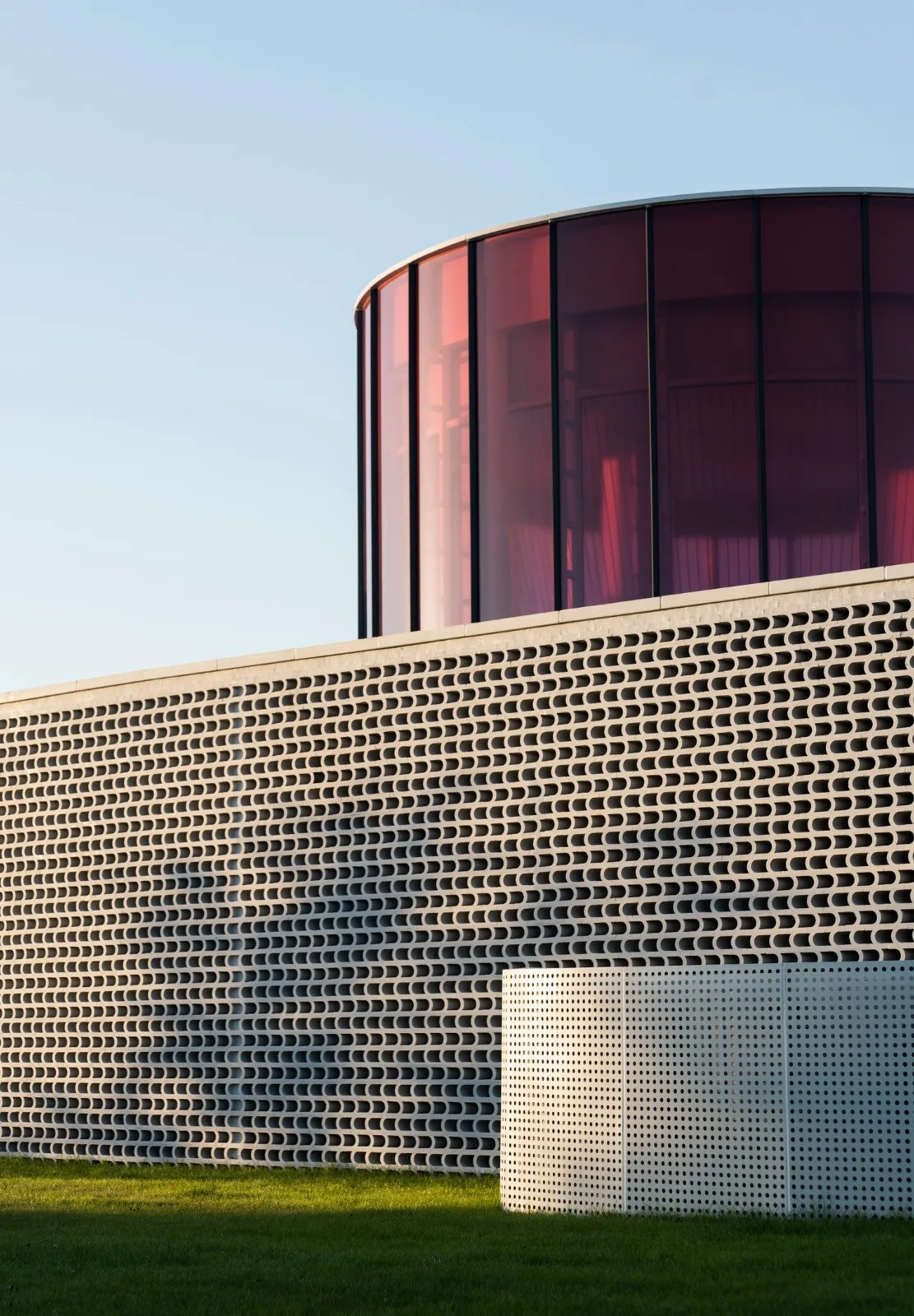
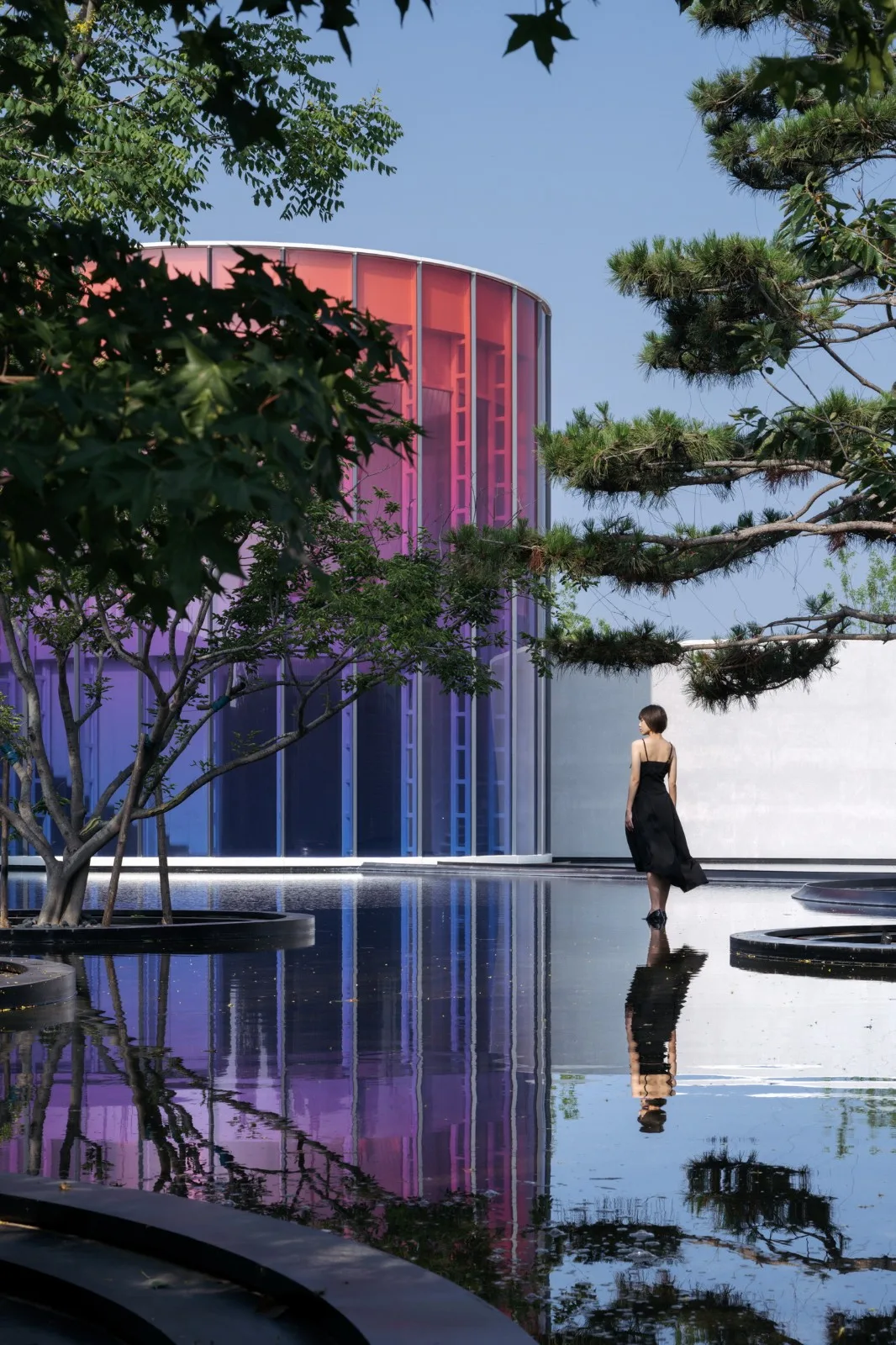
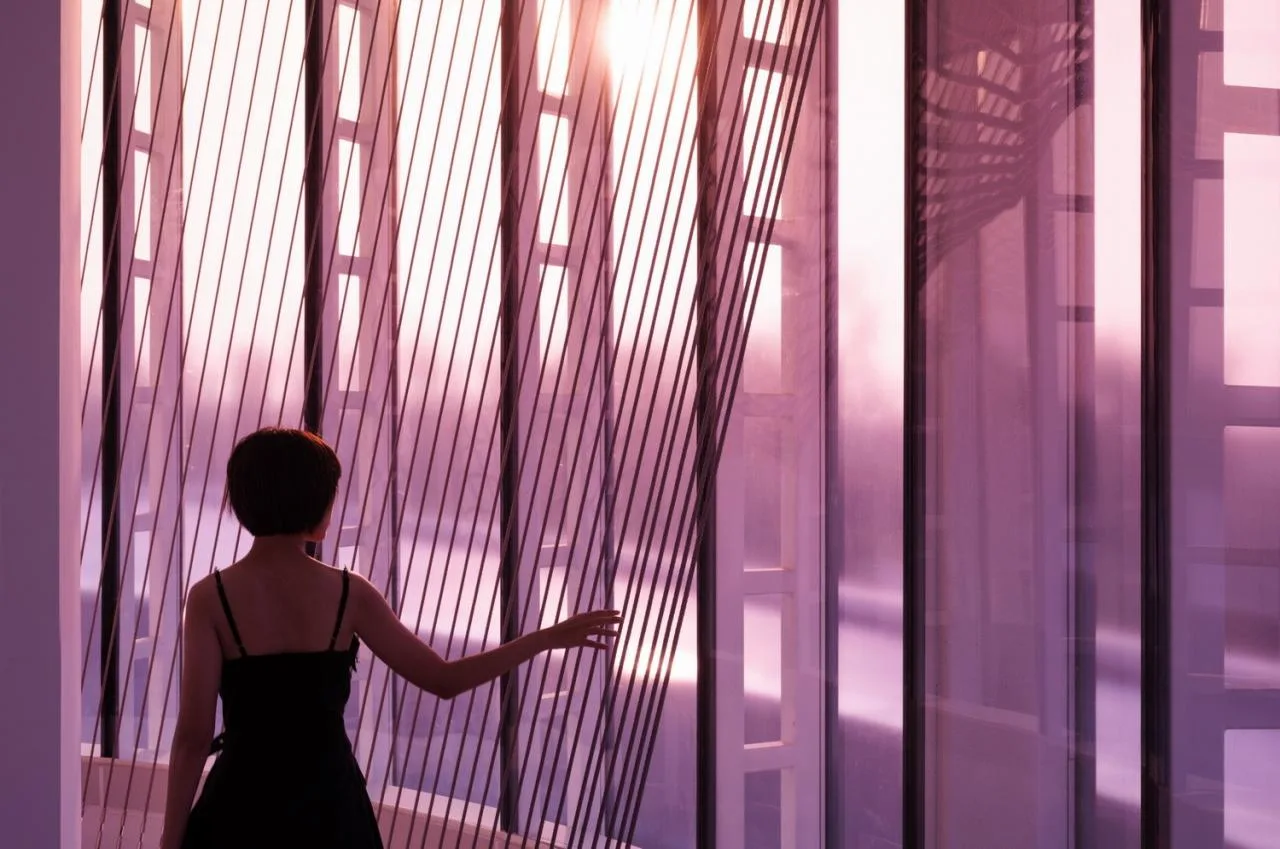
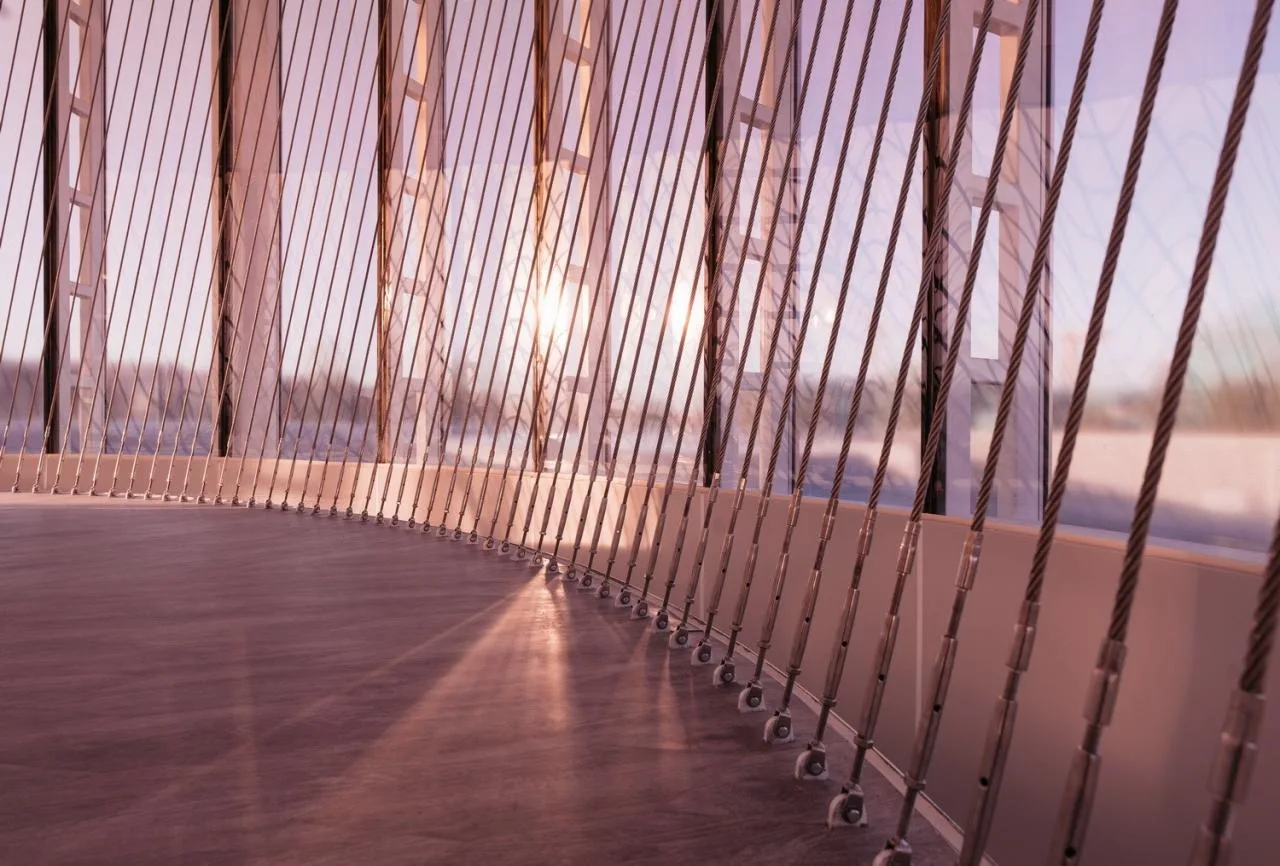
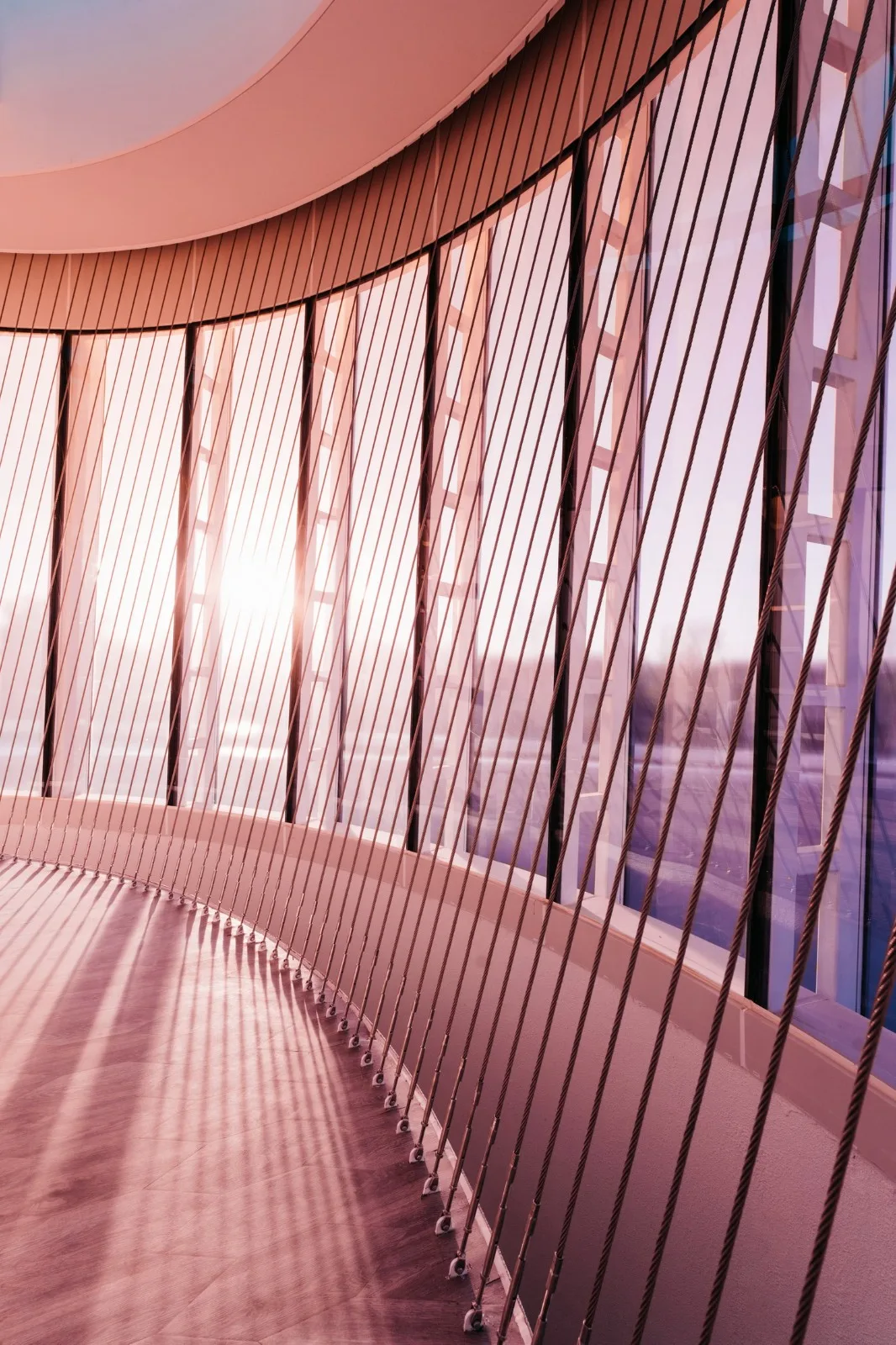
After the courtyard quieted, I observed the white building with its glass curtain wall facade standing beside the black pool in the renderings. The atmosphere felt familiar but clichéd. To add uniqueness, I collaborated with Yu Tinghua to turn the tallest circular yoga studio’s outdoor facade into gradient-colored glass. Against the deep ink-like backdrop, it shines like a glass fortress.
B Side
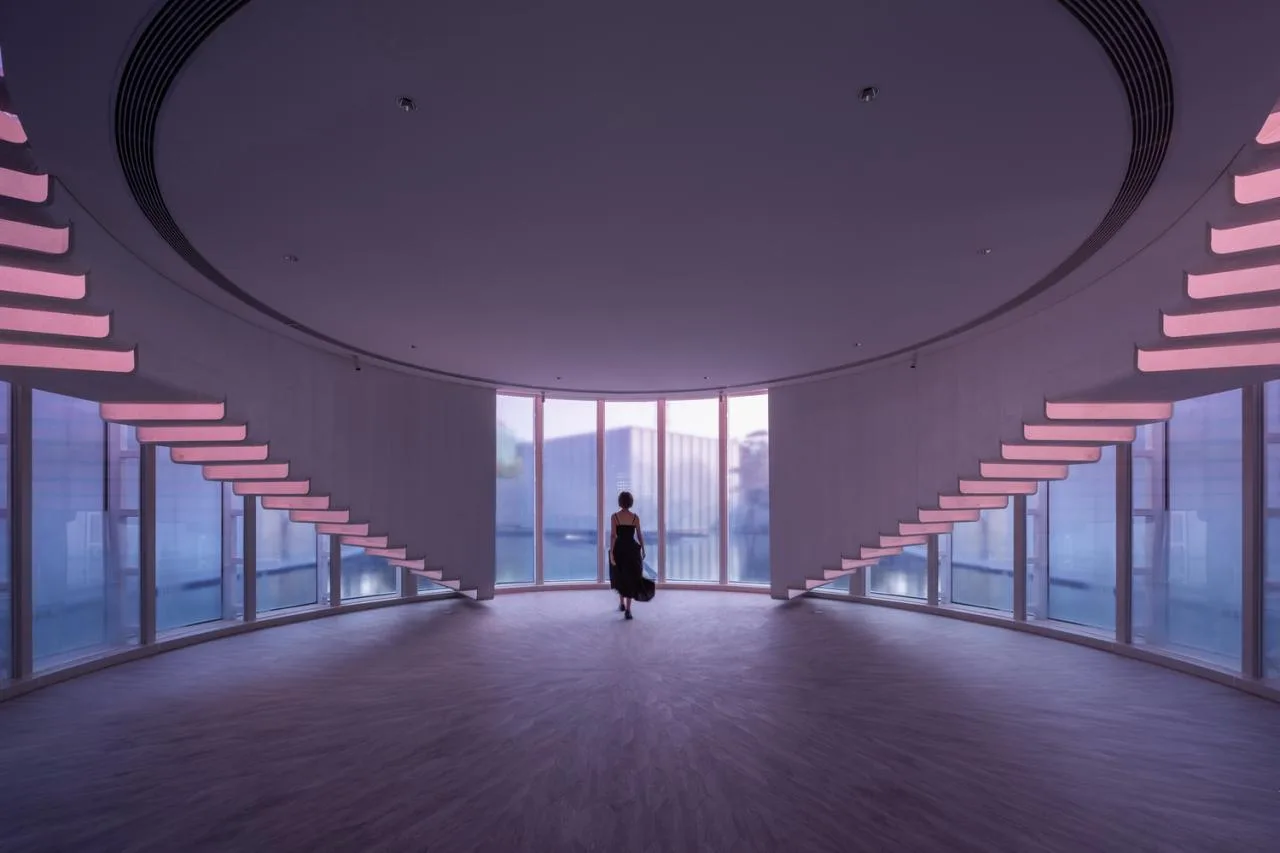
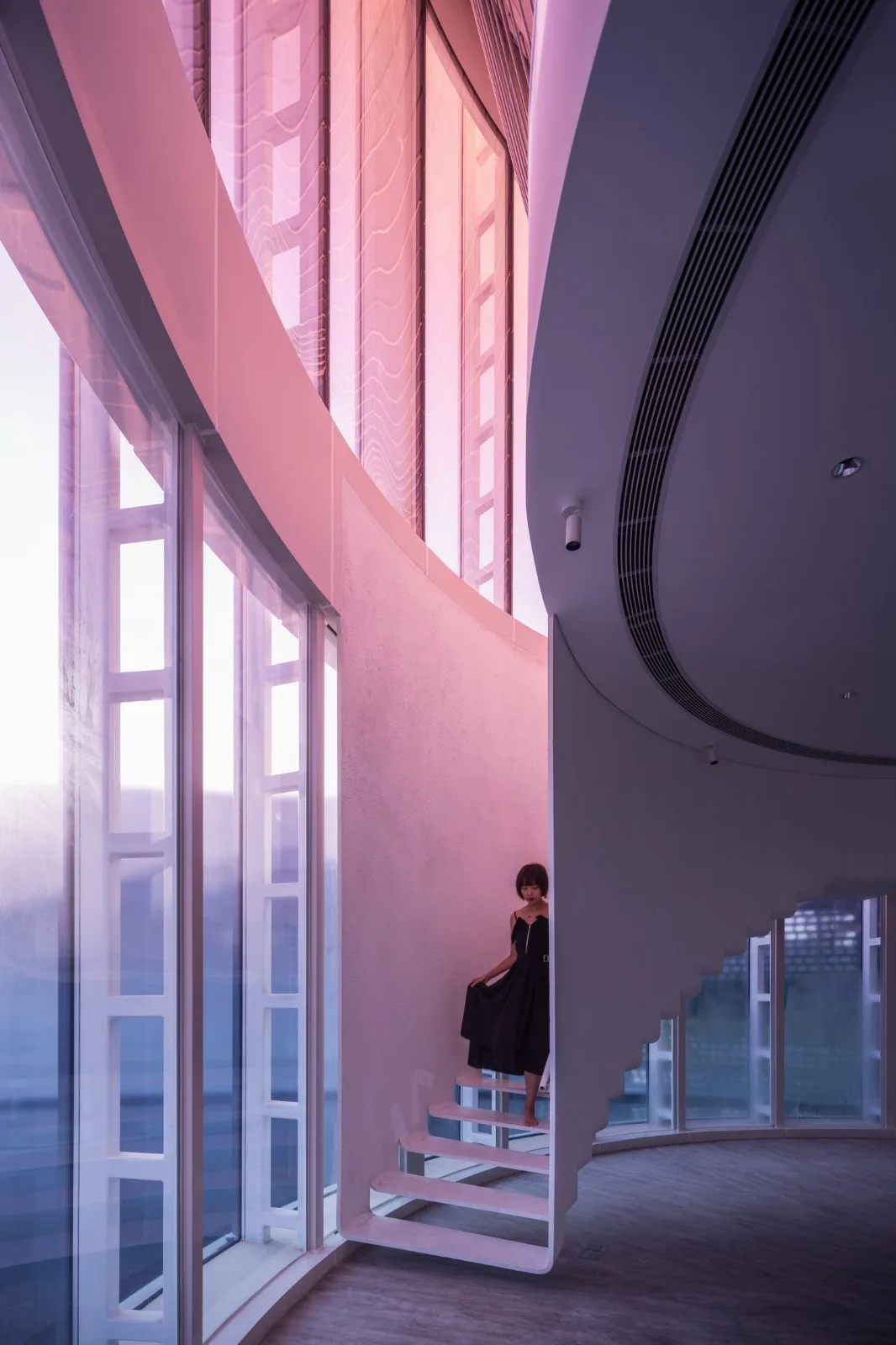
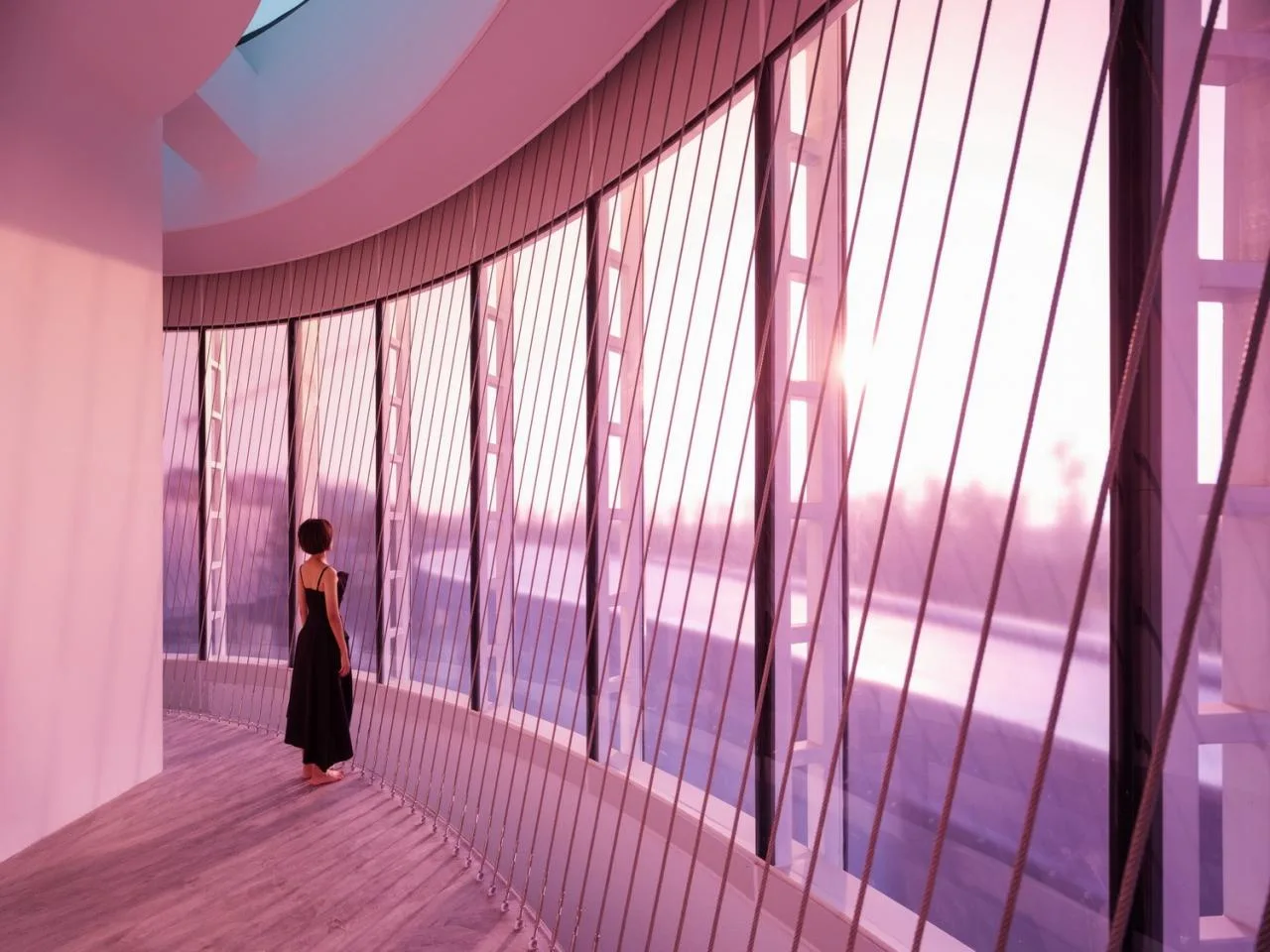
Originally, the glass fortress had only one floor, but the operator insisted on adding changing rooms, resulting in a two-story structure. To keep the first floor visually open, the dressing rooms were placed upstairs. The exterior glass was designed for vertical continuity, with the second-floor floor slab separated from the glass facade. Lao Hu arranged a cross-shaped frame on the roof to provide horizontal stiffness, combined with surrounding circular beams to form a torsion-resistant frame system. Four suspension columns hang from the main beams, concealed within wardrobes to support the second-floor slab. Even the stairs are suspended, creating a light and open first floor filled with natural light.
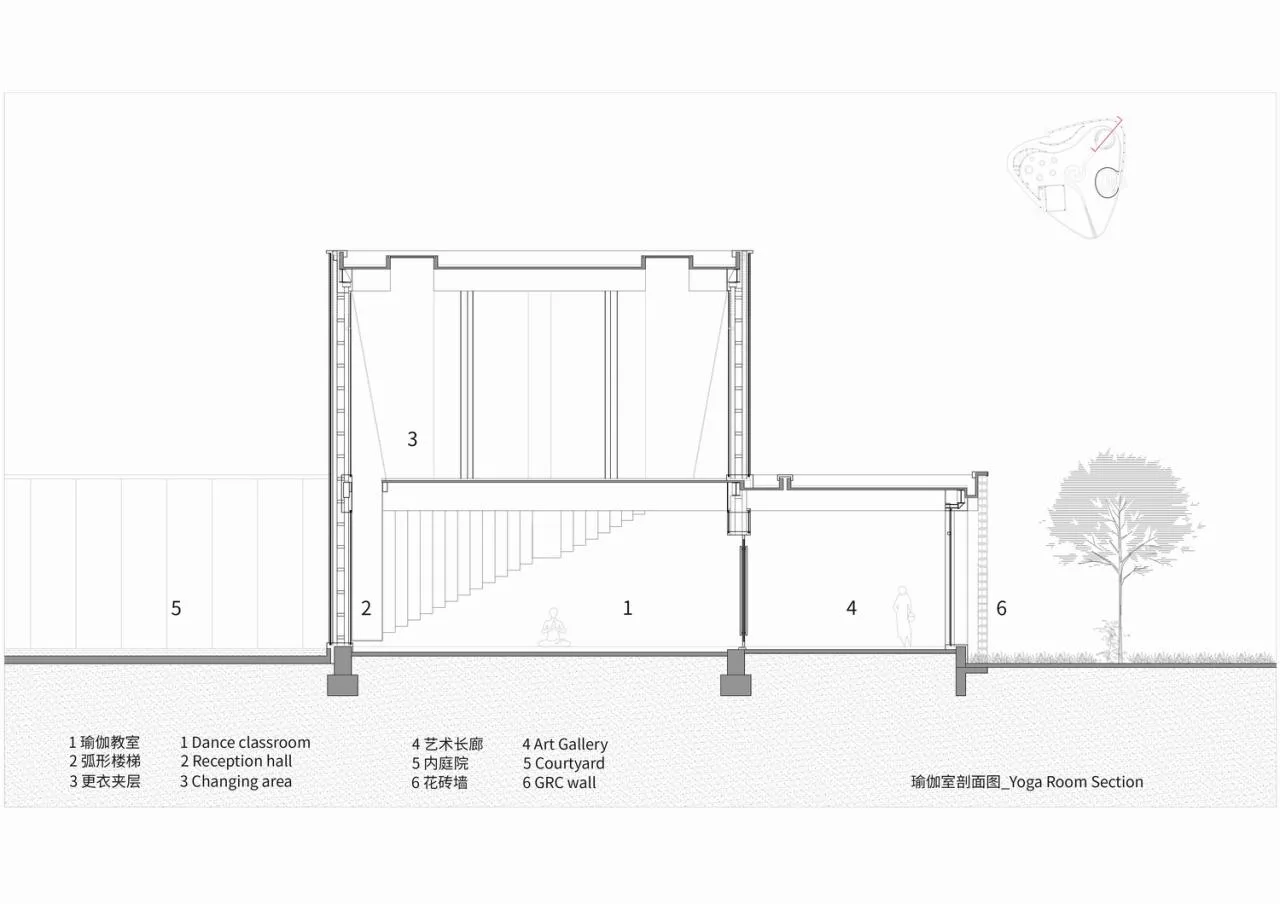
△ Yoga studio section
The boundary is only a few stars
A Side
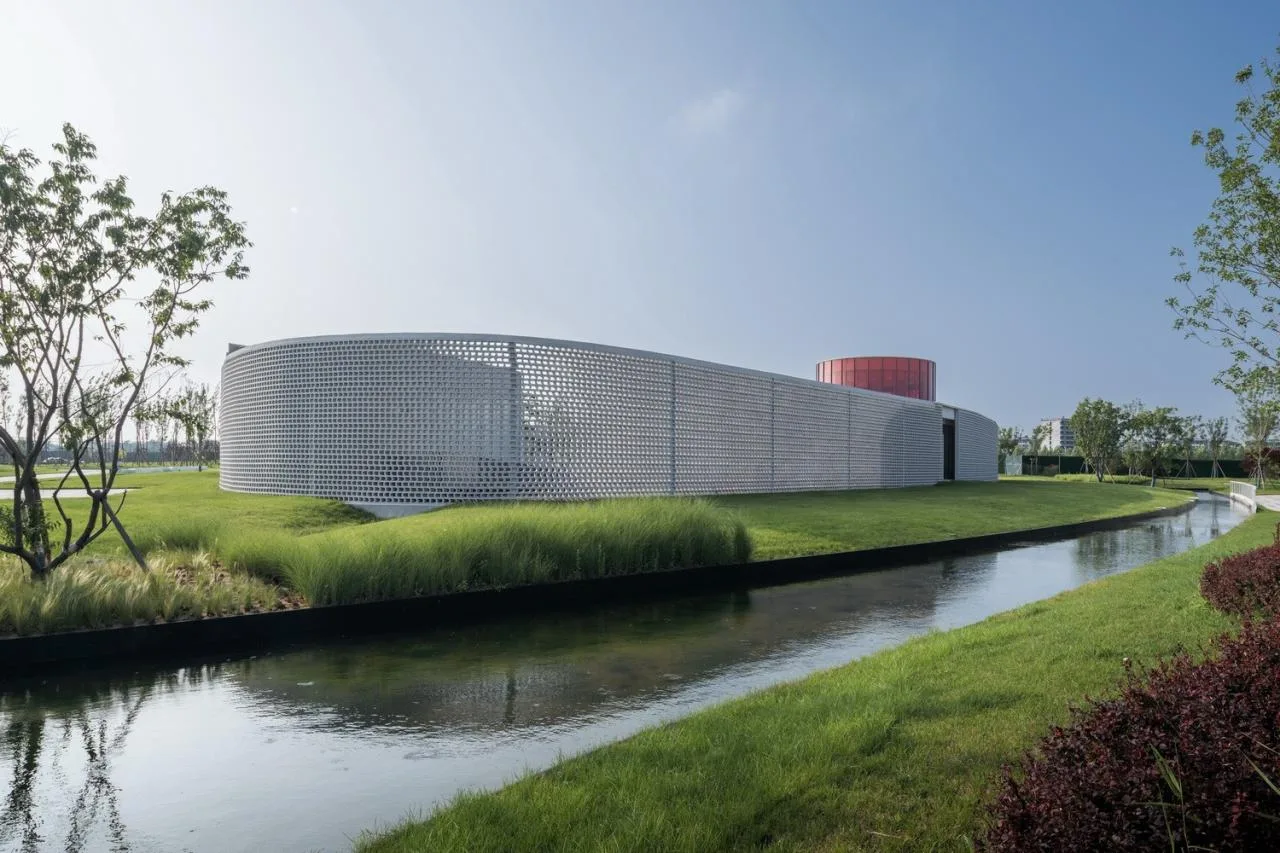
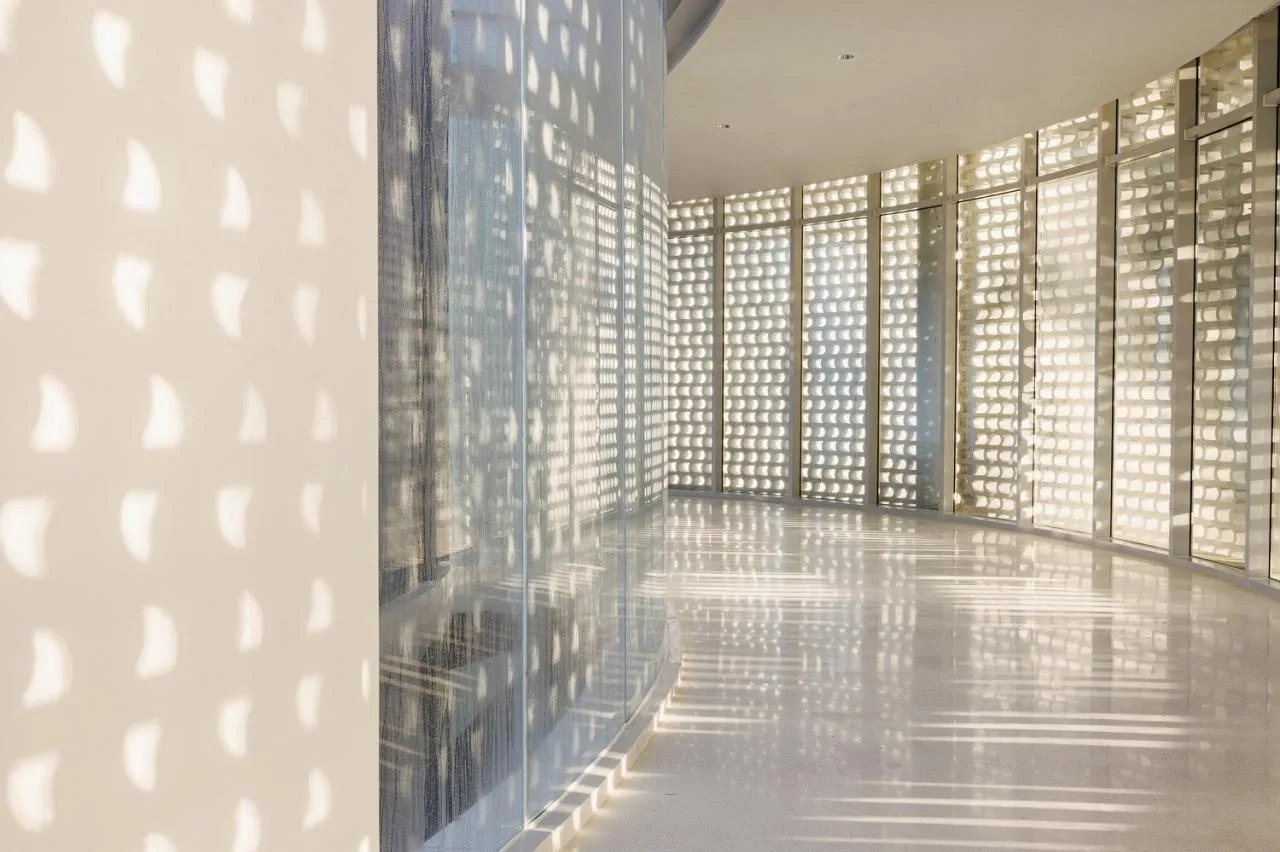
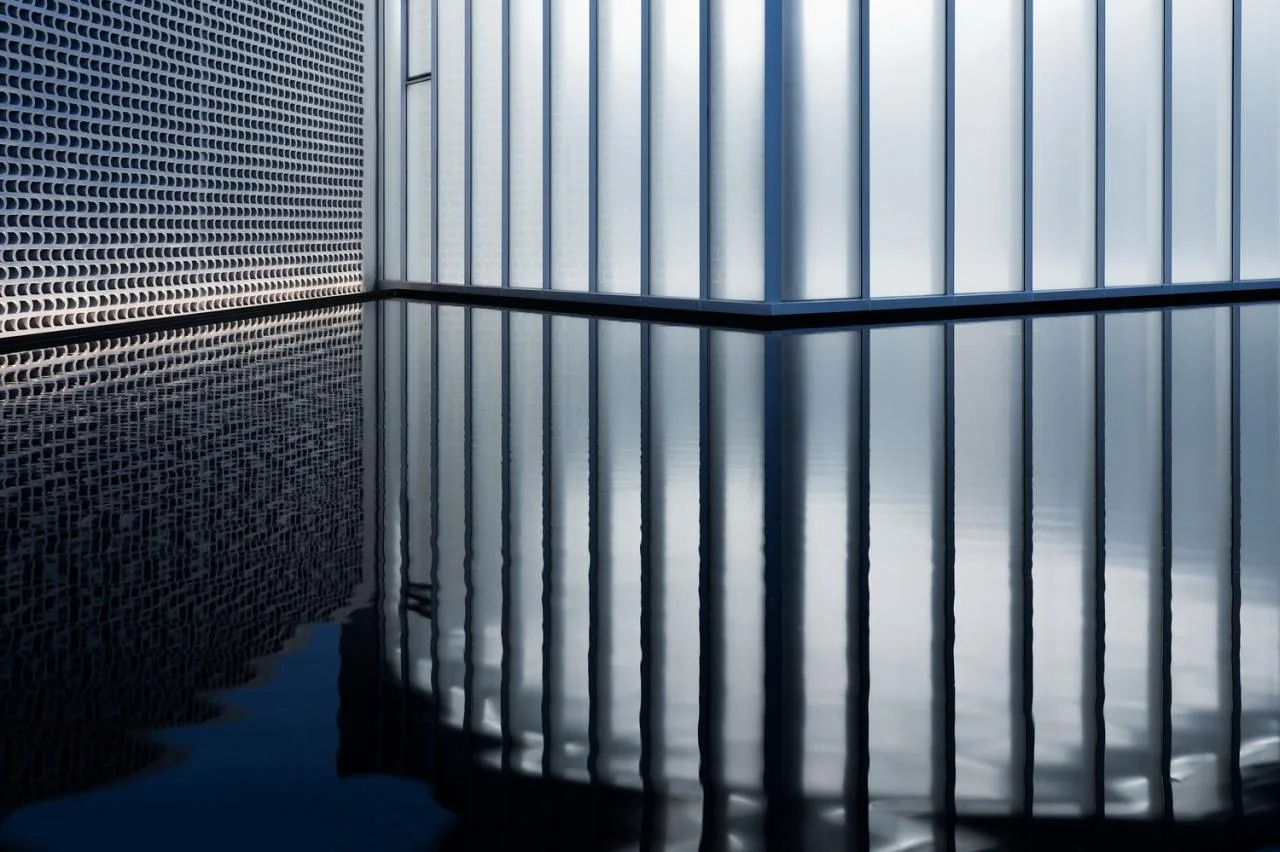
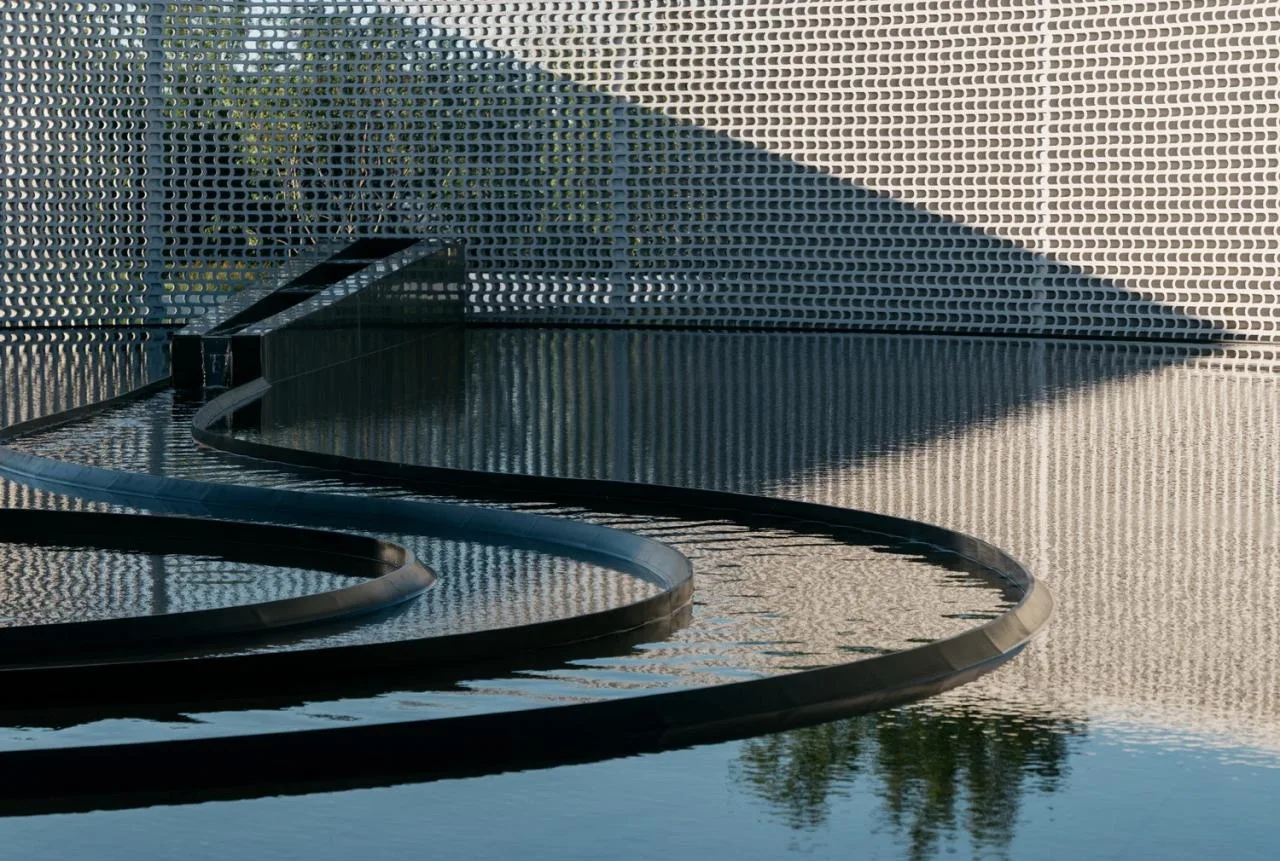
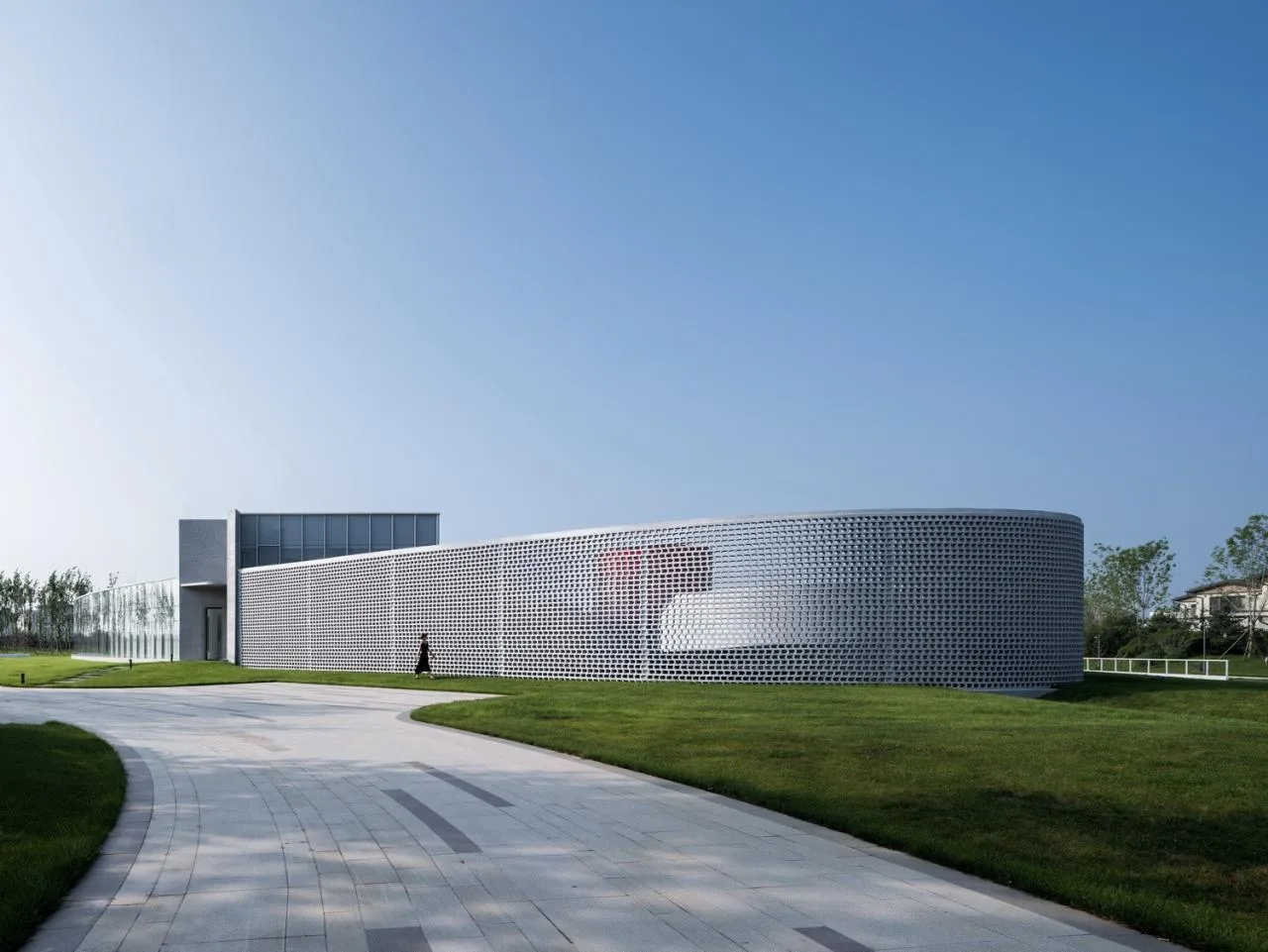
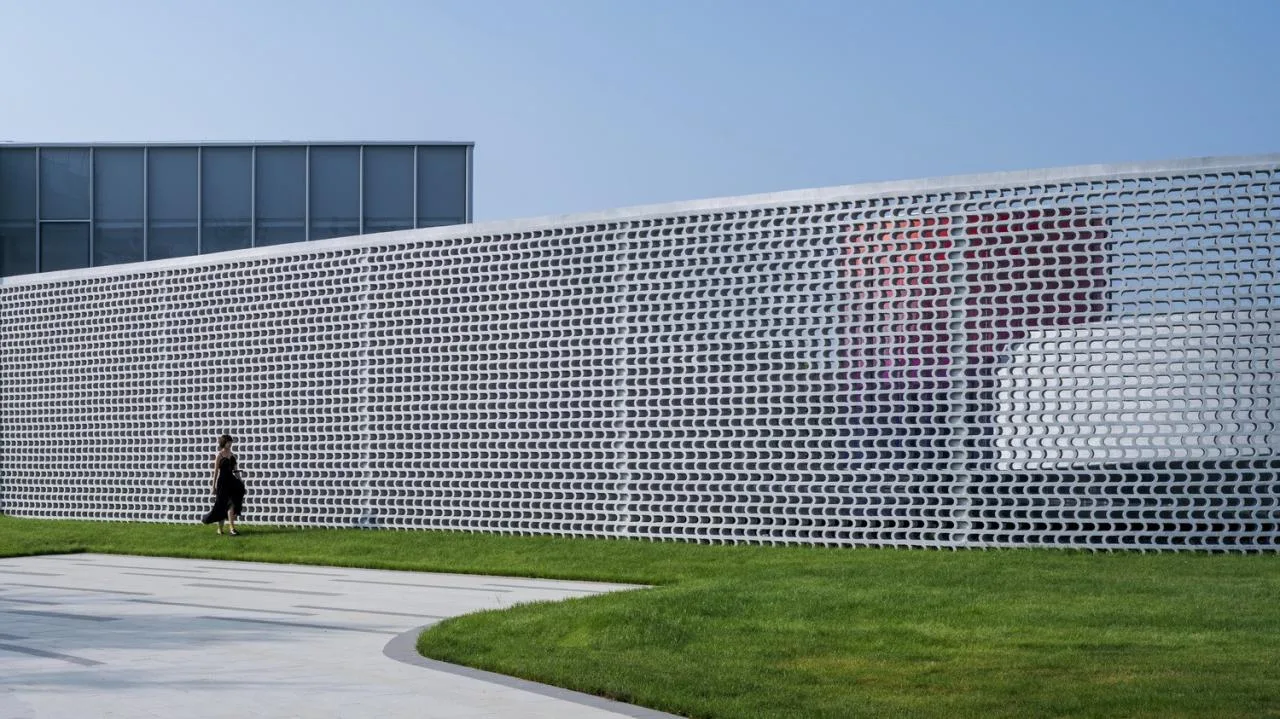
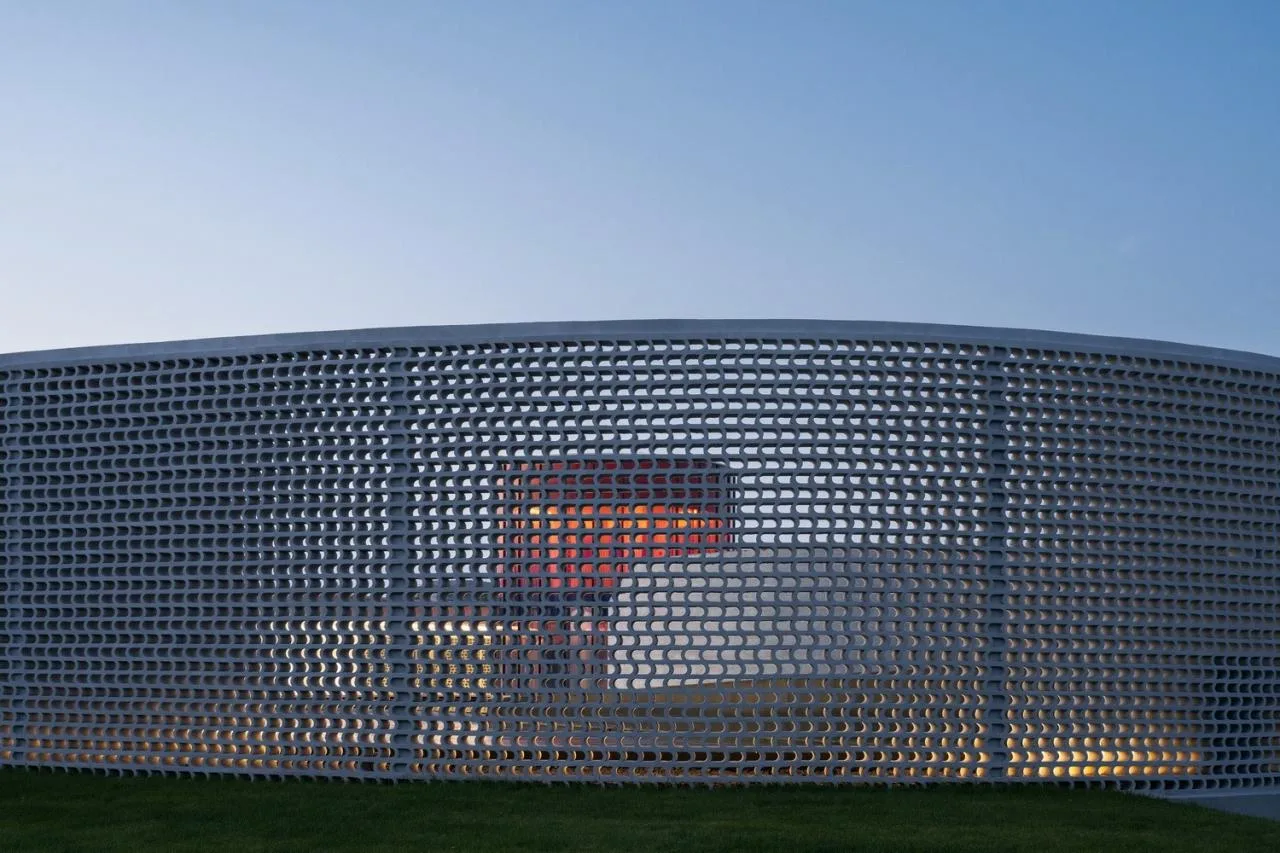
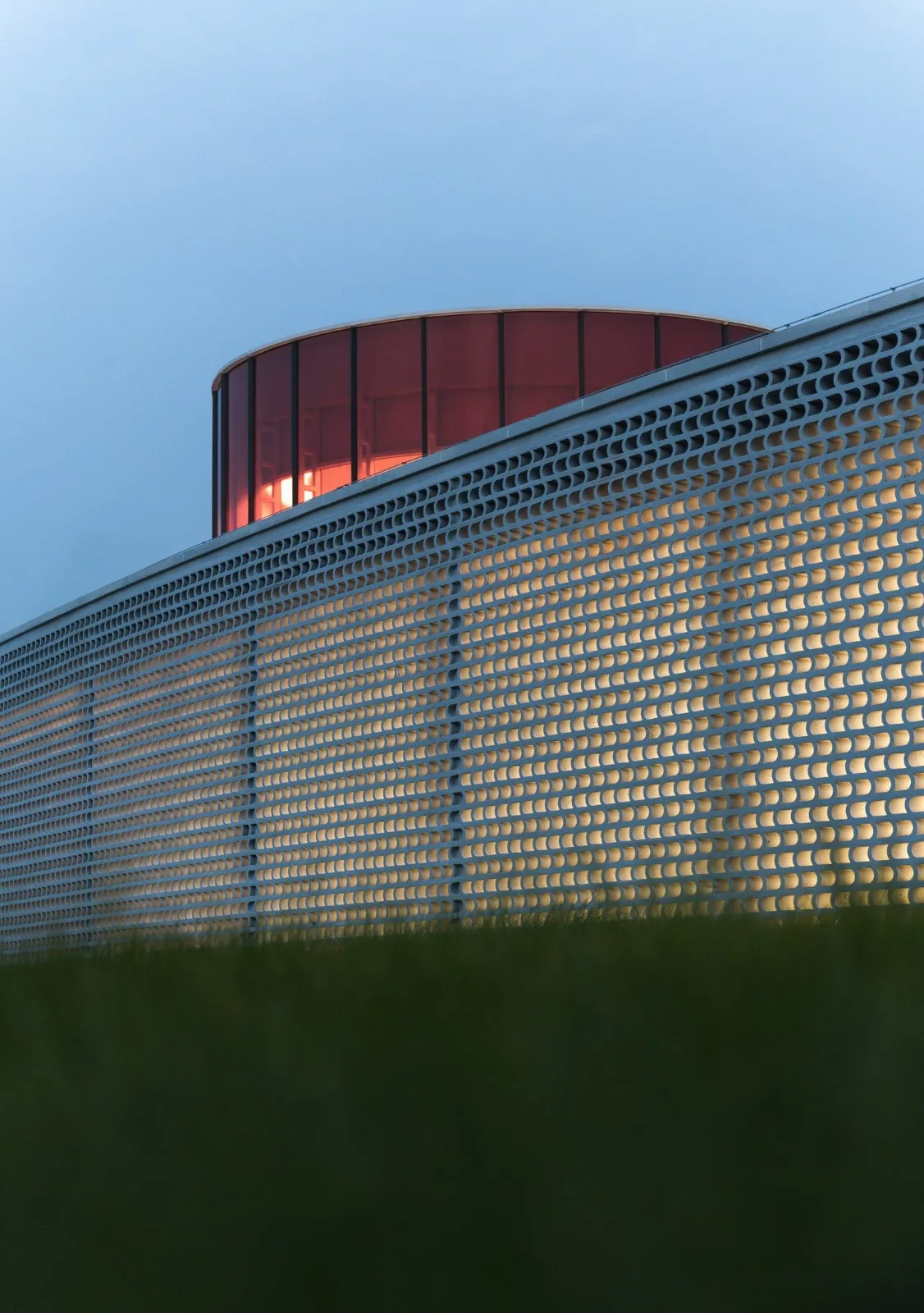
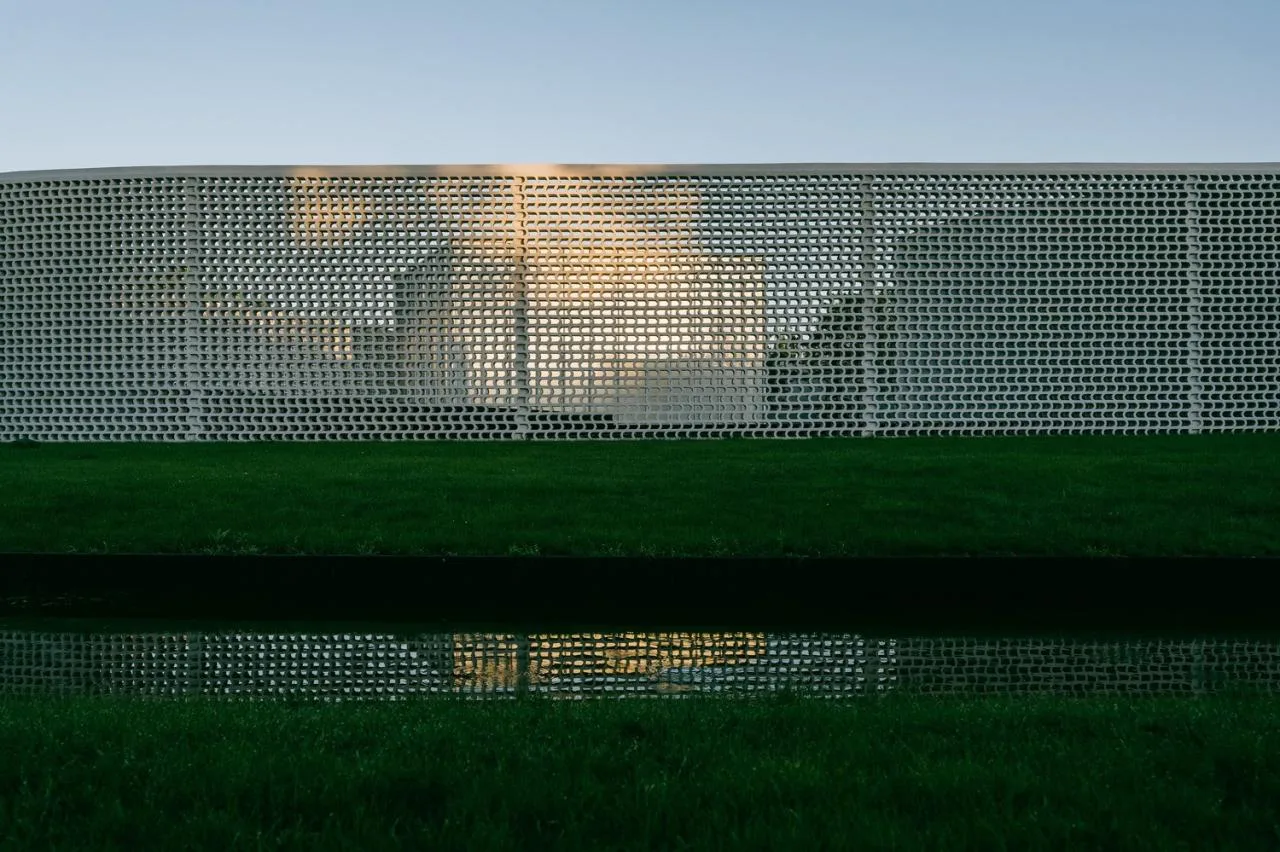
The Monologues Art Museum’s interior and exterior walls are comprised of glass, solid walls, and flower walls. These elements combine to form flickering, continuous ink lines defining the museum’s boundaries. The flower walls resemble withered pens.
B Side
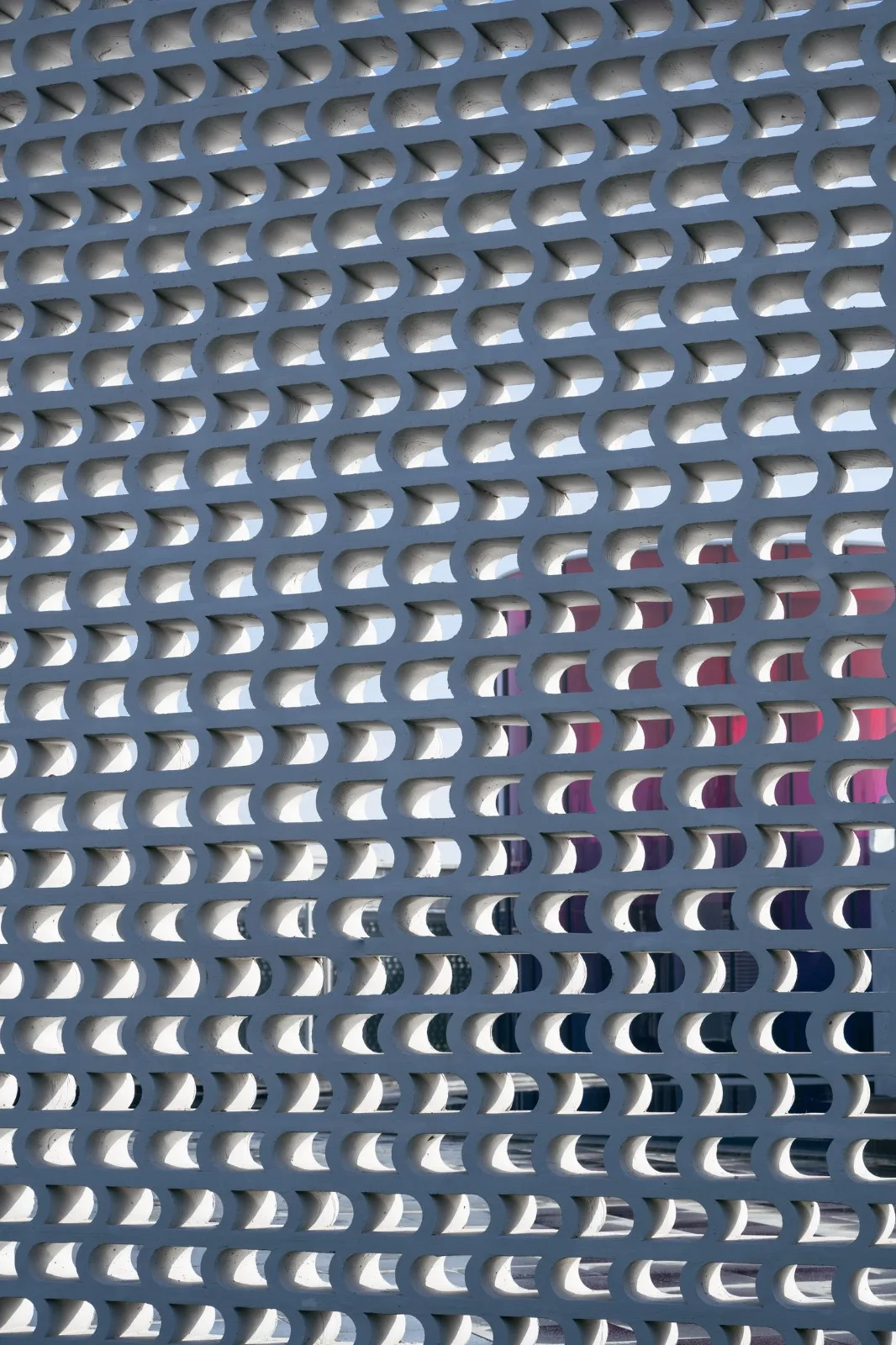
To ensure the continuous 5-meter-high flower wall remains safe, structural columns were installed every 3.8 meters behind it. The overhanging roof panel acts as top pressure for the brick wall. The flower bricks are GRC-made hollow bricks, produced with a 3% steel fiber content using a premixed method. Two brick models combine to create the facade pattern. These flower brick walls serve as independent courtyard walls or combine with glass and solid walls to form a continuous 150-meter interface of shifting light and shadows, enveloping the Monologues Art Museum.
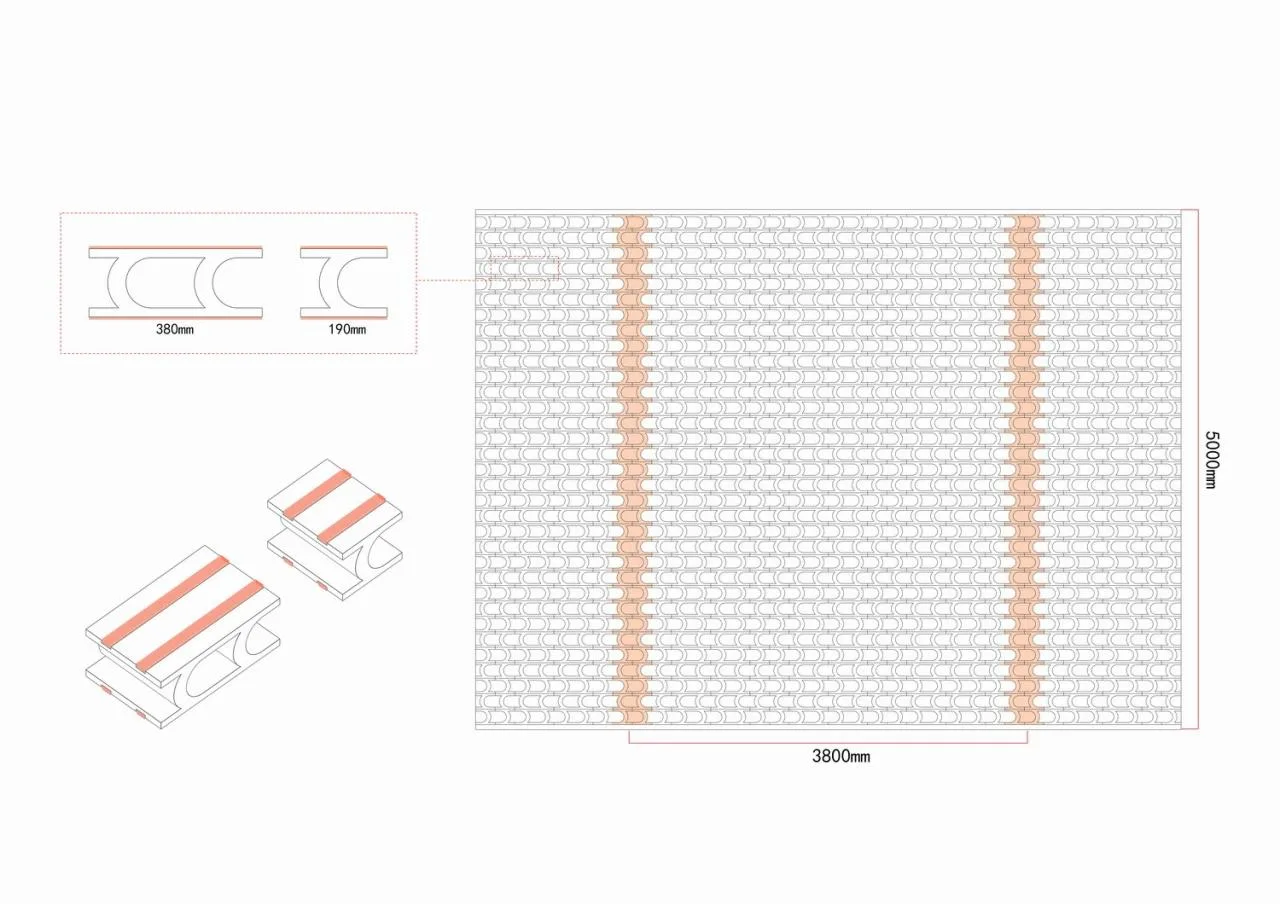
△ Flower brick wall analysis diagram
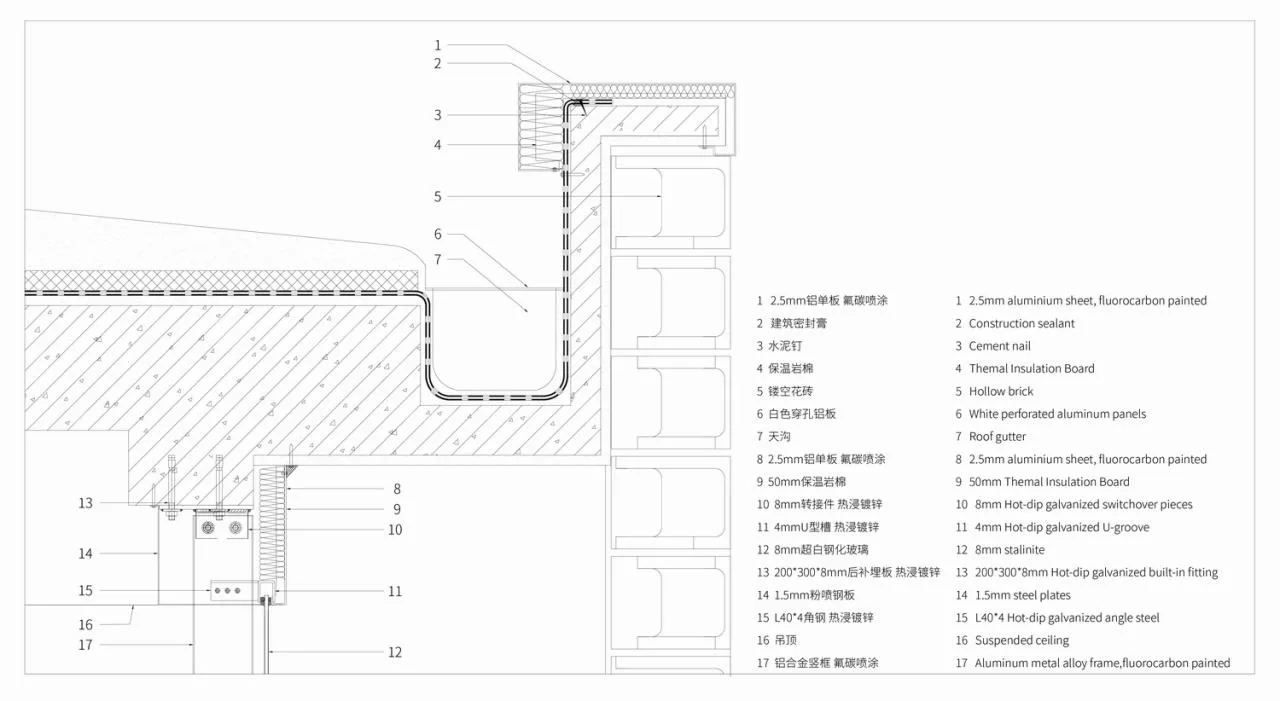
△ Flower brick wall roof node
A Sleepless Person
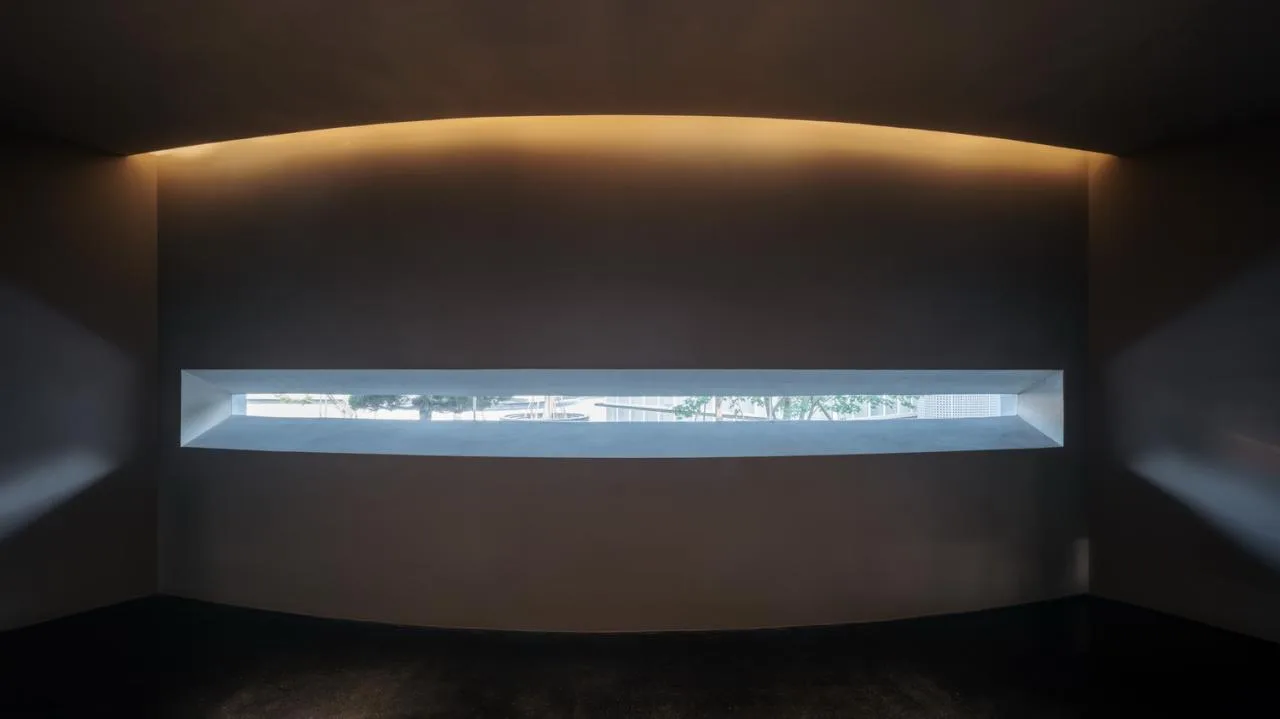
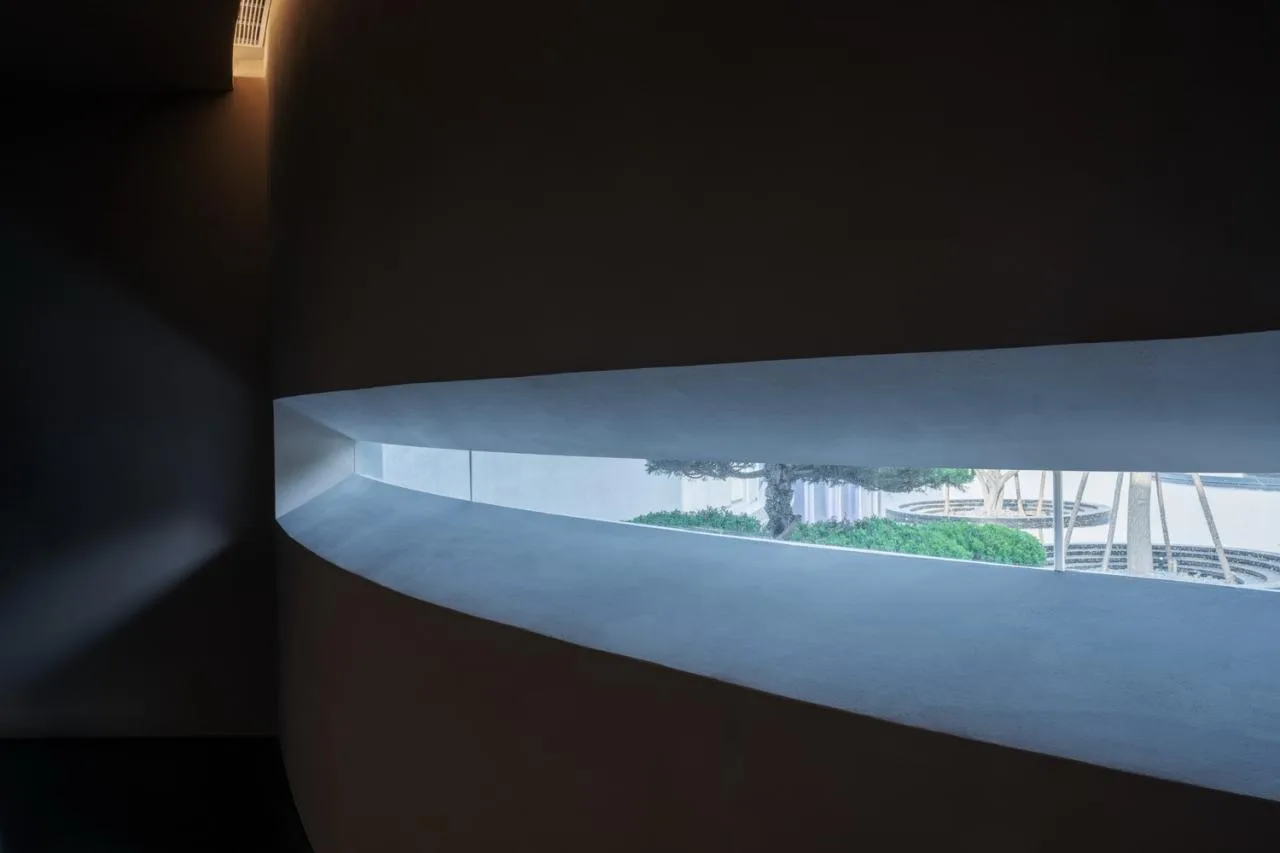
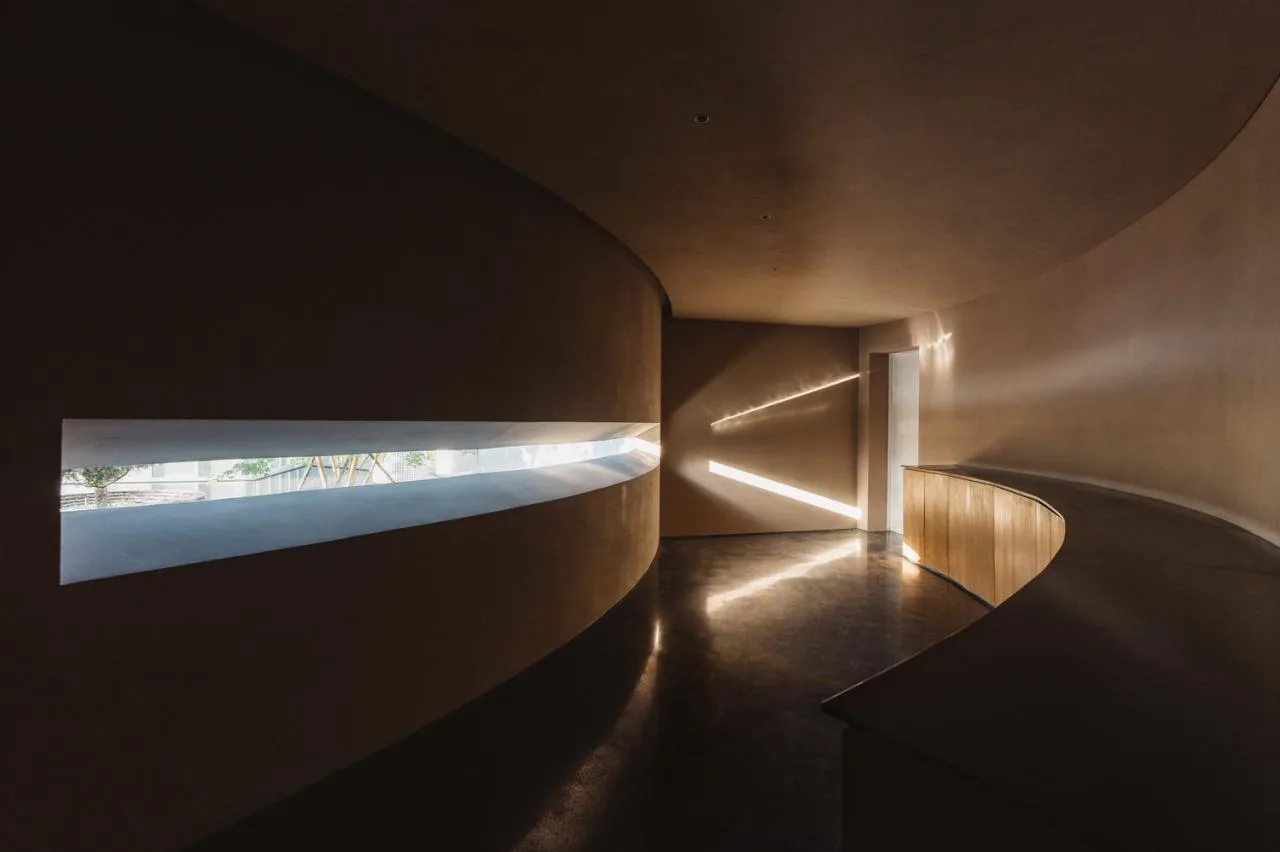
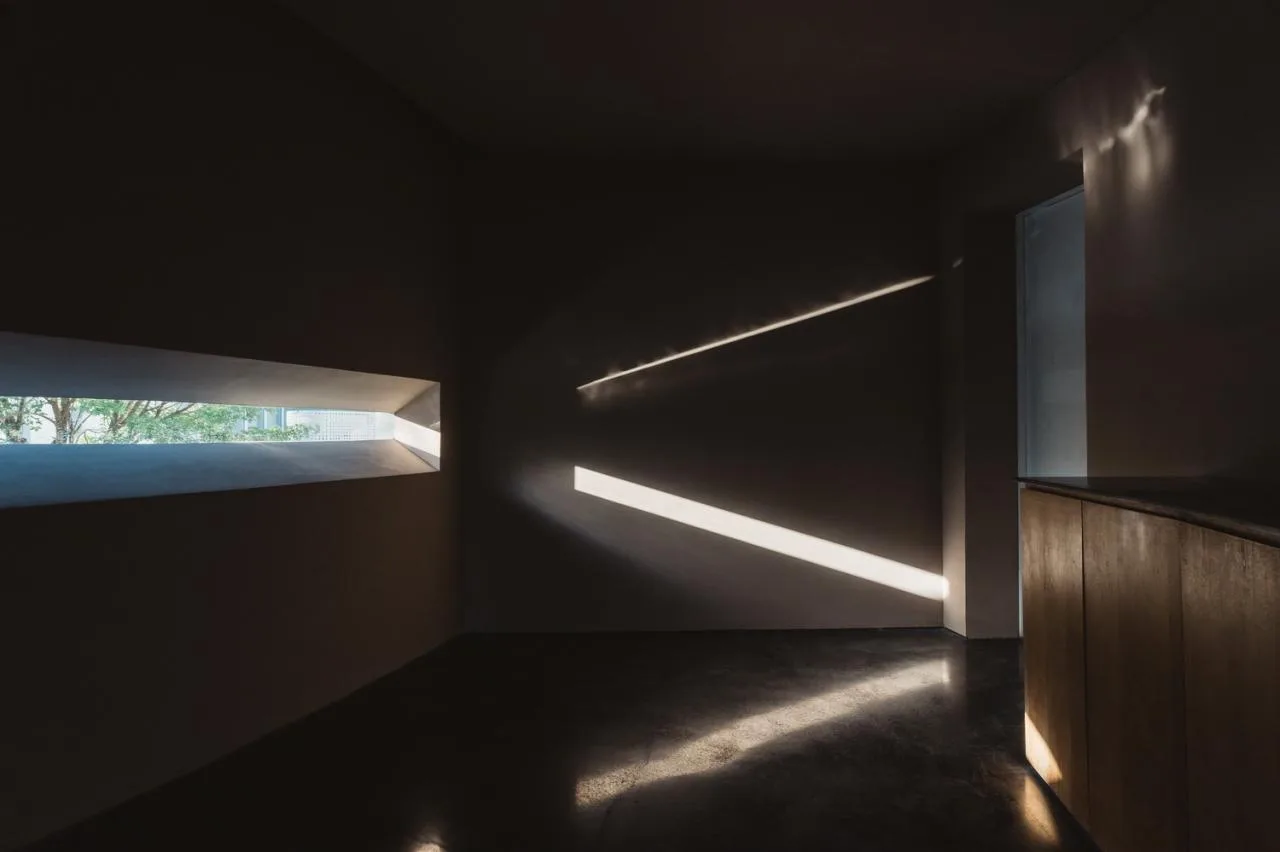
I incorporated the flying white style into the ink line by dividing a single wall into two, creating a tea room hidden behind a background wall in the corridor. This private, tranquil corner invites quiet reflection. A long window opens along the line of sight, allowing the Six Gentlemen trees to slowly unfold like a scroll. They gaze at one another in silence, as if forgetting the urgency of the moment.
Solitude
Vacation spots often buzz with noisy, joyful energy, sometimes overwhelming in their liveliness. Amid this, quiet is essential. Zhang Xiaoyan named the museum “Monologues” to represent a small island in a bustling ocean—a place where one can be alone and engage in personal reflection. It is a paradise for individuals seeking solitude—and the sea is never far.
The Sea of Spring—
Leisurely all day long
Ups and downs
– Xie Wu Village
Project Information
Project Name: Monologues Art Museum
Design Firm: Wutopia Lab (Architecture, Interior, Landscape)
Lead Architect: Yu Ting
Project Manager: Li Hao
Project Architect: Li Hao
Design Team: Xu Nan, Wang Zhizheng, Li Ziheng, Jiang Xinping (Intern)
Prototype Research: Dai Xinyang, Ge Jun, Xia Murong, Miao Binhai (Structure)
Lighting Consultants: Zhang Chenlu, Wei Shiyu, Liu Xueyi
Material Consultant: Sun Jing
Detailing Company: Shanghai Sanyi Architectural Design Co., Ltd
Architecture Specialist: Zhu Yumei
Structural Specialist: Hu Wenxiao
MEP Specialists: Shi Jiaying, Mao Yun, Mao Yaqian, Zou Yuheng
Interior Detailing: Yu Bing, Shen Rui, Zhou Licong, Zhang Fang
Construction Drawing Design: Tianjin Tianzi Tuowei Architectural Design Co., Ltd
Landscape Construction Drawing: Beijing Oceanwide Landscape Planning and Design Institute Co., Ltd
Curtain Wall Detailing: Shanghai Beigengyi Curtain Wall Technology Co., Ltd
Construction Unit: Ocean Group · Azure Coast
Owner Team: Zhang Xiaoyan, Jin Yuemin, Zhao Dongfang, Li Junhao, Yang Yue, Shi Yu, Zhao Dongyang, Wang Jiyao, Dou Hai, Yu Jiang, Zhang Zhining, Suning, Liu Xingwang, Jiao Yishen
General Contractor: Zhongtian Construction Group Co., Ltd
Fine Decoration Contractor: Ocean Decoration Engineering Co., Ltd
Curtain Wall Contractor: Tianjin Dongfang Haichuan Doors, Windows and Curtain Wall Co., Ltd.
Landscape Contractor: Beijing Shengyuan Ecological Landscape Co., Ltd.
Flower Brick Contractor: Tangshan Yuchuan Building Decoration Engineering Co., Ltd
Photography: CreatAR Images, Seven W
Video: CreatAR Images, HeydenLau
On Camera: Su Nayu
Project Location: Beidaihe, Qinhuangdao, China
Design Period: April 2021 to June 2021
Completion Date: July 2022
Building Area: 1,272 square meters












Must log in before commenting!
Sign Up