
This article is from the WeChat official account: Xiao Jiang said BIM.
Air ducts in subway stations are typically made from galvanized steel plates, although requirements can vary depending on the region. Besides steel plates, composite air ducts are also sometimes used. How many steel plates are needed to fabricate air ducts for an entire station? How many square meters of composite air ducts are required? Compared to traditional manual calculations, extracting material quantities using the BIM model after pipeline optimization is undoubtedly more efficient.
In this article, we will use a ventilation and air conditioning model of a subway station to demonstrate how to calculate the material area of air ducts.
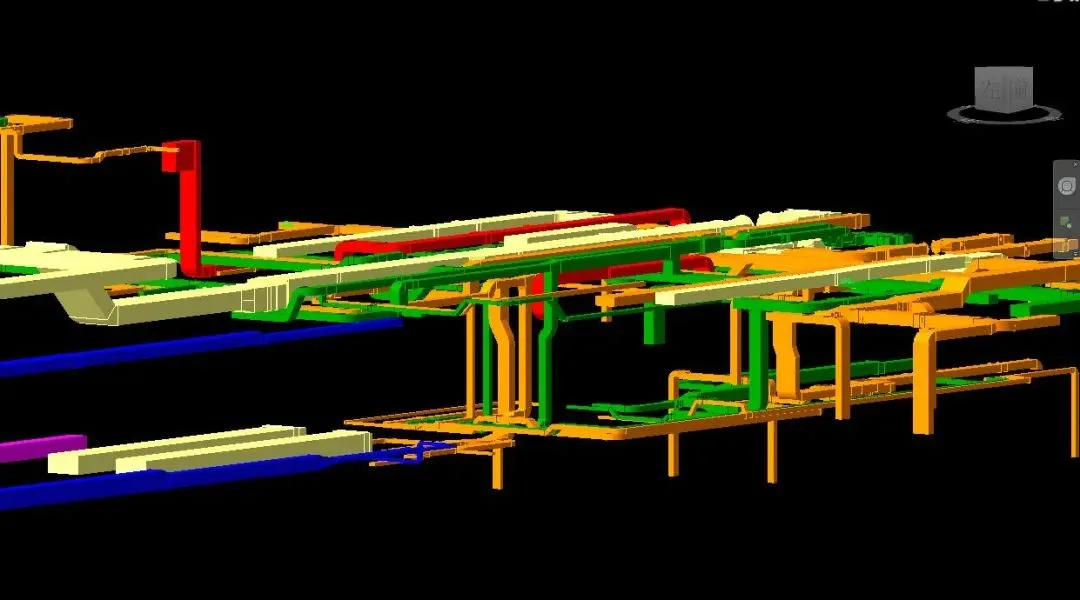
Generally, the air ducts in a station are divided by function into return and exhaust ducts. They are further categorized into large and small systems based on the functional areas. The large system serves public areas, while the small system serves equipment rooms.
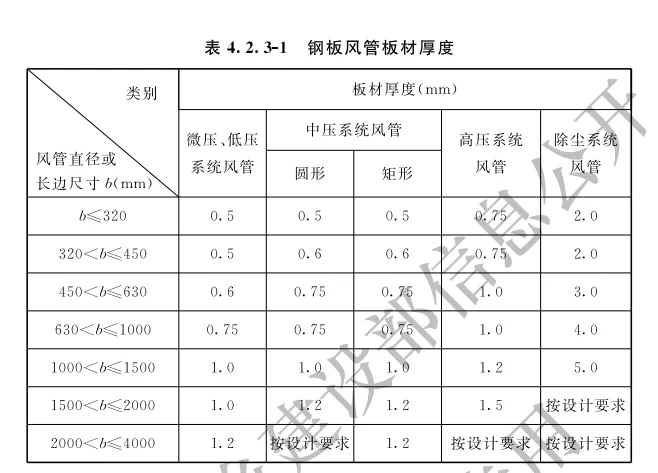
From a material perspective, the large system air supply ducts and the small system multi-link fresh air ducts in this project use composite air ducts. All other ducts are made from galvanized steel plates. Due to differences in pressure levels, the thickness of the steel sheets varies accordingly. This site features a high-pressure system for smoke exhaust and pressurization, and a medium-pressure system for fresh air supply. Different pipe diameters and steel plate thicknesses are specified as follows:
This model includes a comprehensive wind, water, and electrical system for the entire site, with detailed management and refinement completed. Each air duct in the model is classified based on its size system and whether it belongs to the supply air, return air, or smoke exhaust category, according to the design drawings.
The process for extracting air duct material quantities is as follows: use the Revit detailed schedule to export information on system type, cross-sectional dimensions, area, and other parameters of all straight air ducts. Then filter by high and low-pressure systems and duct dimensions to calculate the total surface area of steel plates with different thicknesses.
Next, export all straight duct sections from Revit using a detailed schedule. The image below shows a small segment of the full schedule, with filters applied to separate steel plate ducts and composite ducts by system type, and steel plate thickness by duct cross-section dimensions.
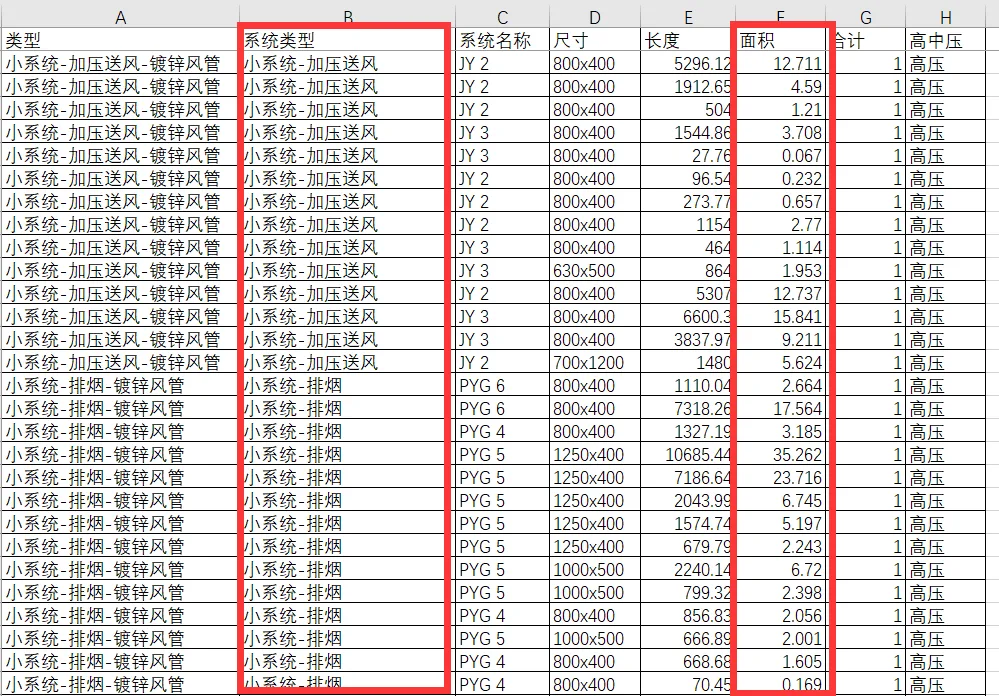
First, sum the total area of the small system (multi-connected fresh air) and the large system air supply ducts, which equals 1769.438 square meters — this is the composite duct area.
Then, calculate the areas of various steel plates based on the thickness specifications:
1. Medium and low pressure, 0.6mm thickness: 546.861 square meters
2. Medium and low pressure, 0.75mm thickness: 1246.357 square meters
3. Medium and low pressure, 1.0mm thickness: 86.653 square meters; High pressure, 1.0mm thickness: 619.228 square meters; total: 705.881 square meters
4. Medium and low pressure, 1.2mm thickness: 118.902 square meters; High pressure, 1.2mm thickness: 654.333 square meters; total: 773.235 square meters
5. High pressure, 1.5mm thickness: 1125.706 square meters
6. High pressure, 2.0mm thickness: 351.749 square meters
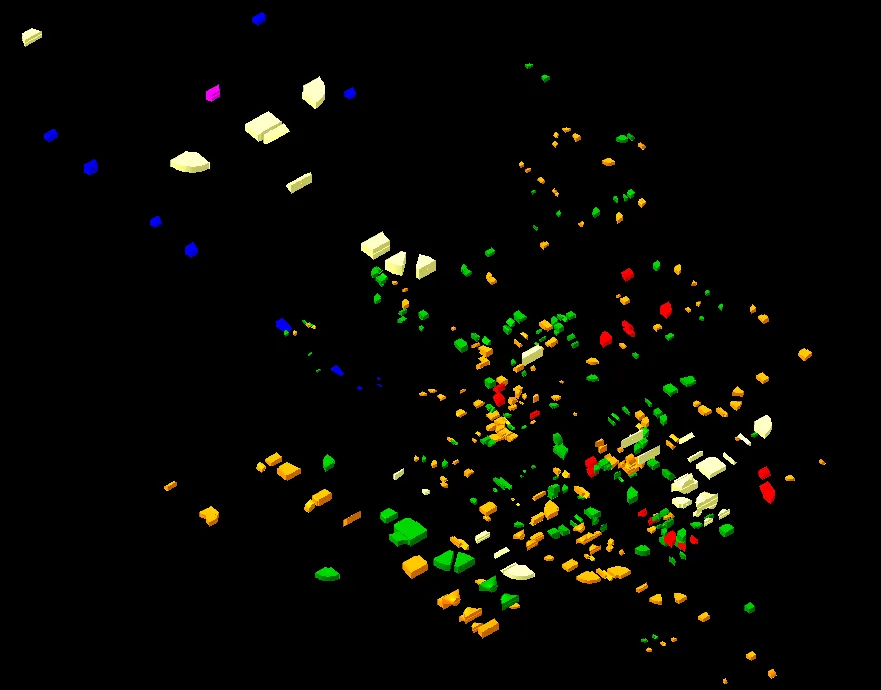
Next, consider the air duct elbows. The images below show screenshots of the air duct elbow model and a partial list of curved elbows. The steel plate area for elbows is calculated to be 397.776 square meters.
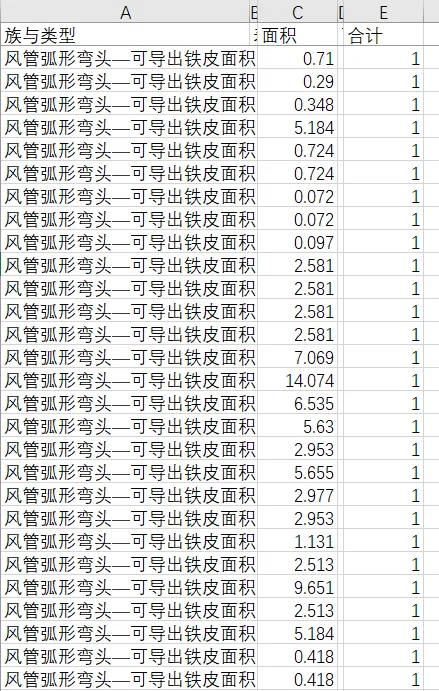
In summary, by using the ventilation system model along with detailed schedules from Revit, it is possible to accurately quantify the material requirements for air ducts. This approach is highly beneficial for procurement and preparing material submission plans.













Must log in before commenting!
Sign Up