
Outdoor Magazine and the Maribor City Government have announced the winners of the international competition, “Floating Pavilion on the Delaware River.” The competition sought innovative designs for a floating pavilion fulfilling two main functions: serving as a venue for small events during Lent and providing a peaceful contemplative space by the river. The Maribor City Government plans to invite the award-winning designers to participate in the pavilion’s implementation.
By the May 31, 2022 deadline, the jury received a total of 150 design submissions. The judging panel, composed of Outdoor Magazine and Matevž Granda, included architects such as Gregor Reichenberg (Deputy Mayor of Architecture and Spatial Planning in Maribor), Arjoša Dekleva (Dekleva Gregorič arhitekti), Jure Grohar (Vidic Grohar arhitekti), Nika van Berkel (De Zwarte Hond), and Eva Gusel. From these entries, the panel selected the top three winners as well as three honorary awards.
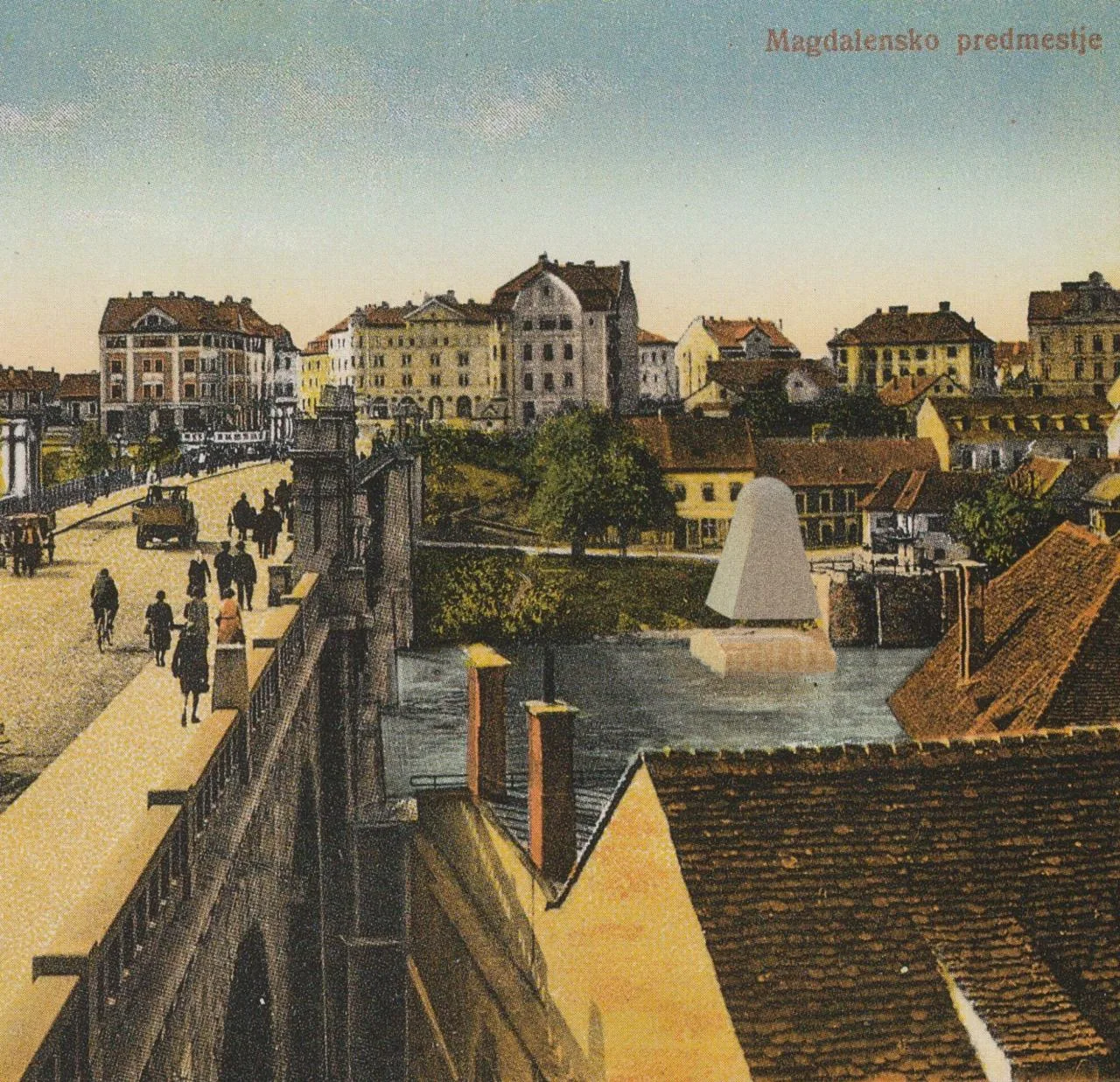
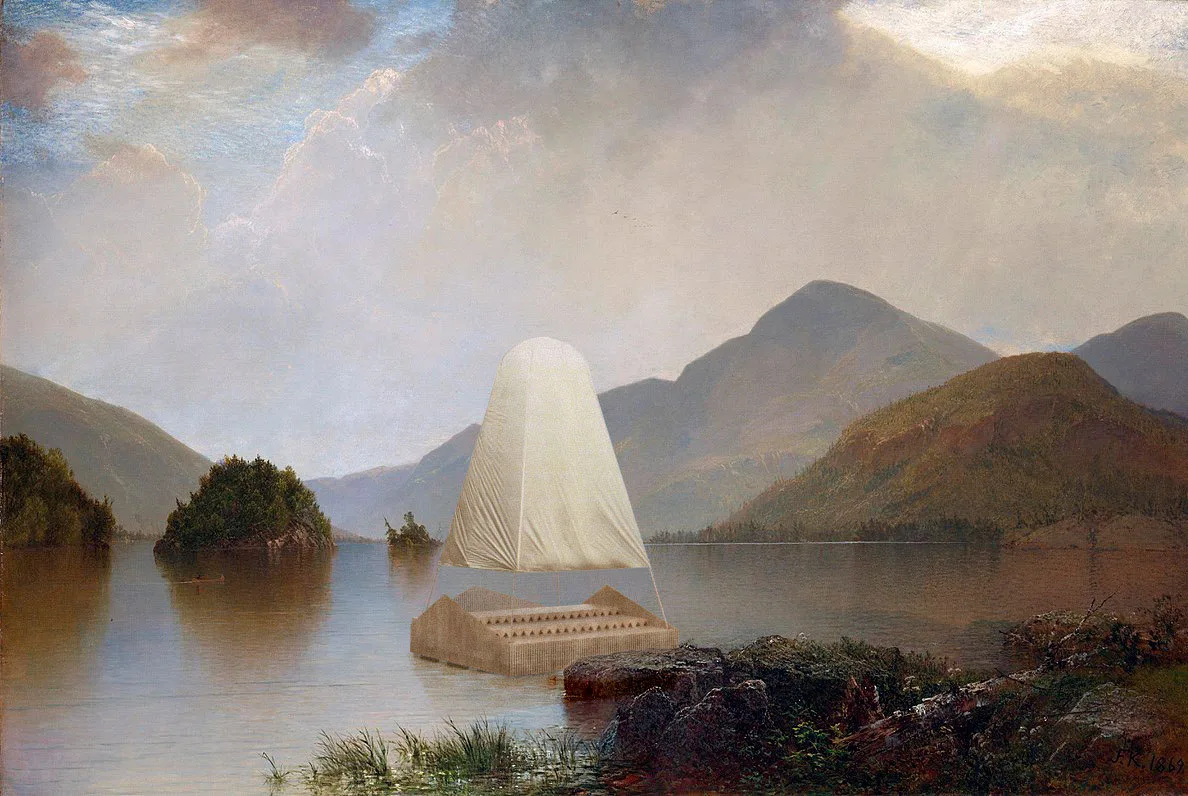
Federico Fiorino’s winning proposal was praised for its clever and original response to the competition’s brief. The design features a floating wooden platform paired with a suspended canvas roof supported by helium balloons. This unique roofing solution stands out as both innovative and visually striking. The structural interplay between the helium balloons and canvas creates a poetic tension, which the jury highly valued. The platform itself forms a varied terrain by adjusting the height of smaller platforms, achieving maximum stability through simple construction methods.
Although the helium balloons cause the pavilion to exceed the 4-meter height limit, they do not restrict its movement on the river, effectively bypassing the height restriction without violating any rules. The jury appreciated the comprehensive and thoughtful design approach behind this project.
Read on to explore the shortlisted proposals and the judging panel’s evaluations:
Second Place – Walter Alejandro Casola, Falvino Martín Ferreyra, Marcos Esquiel Toranzos Astorga
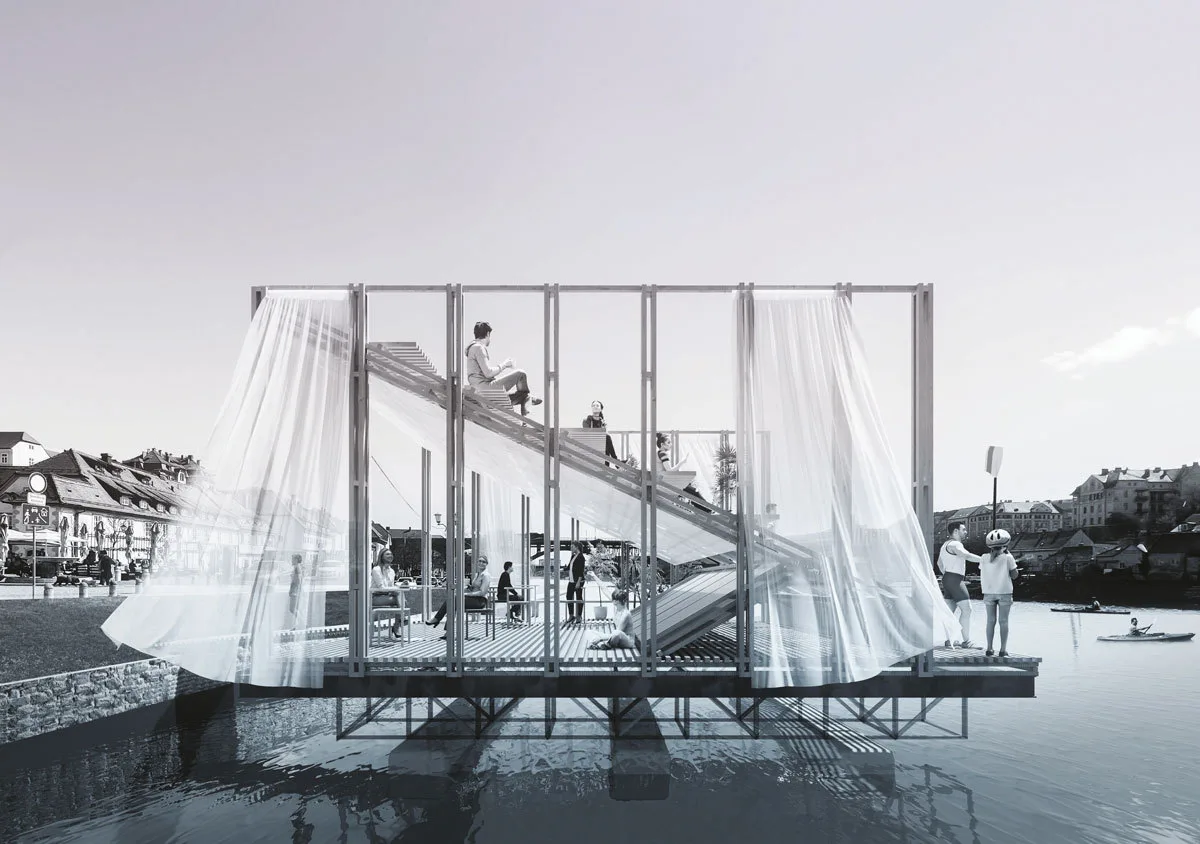
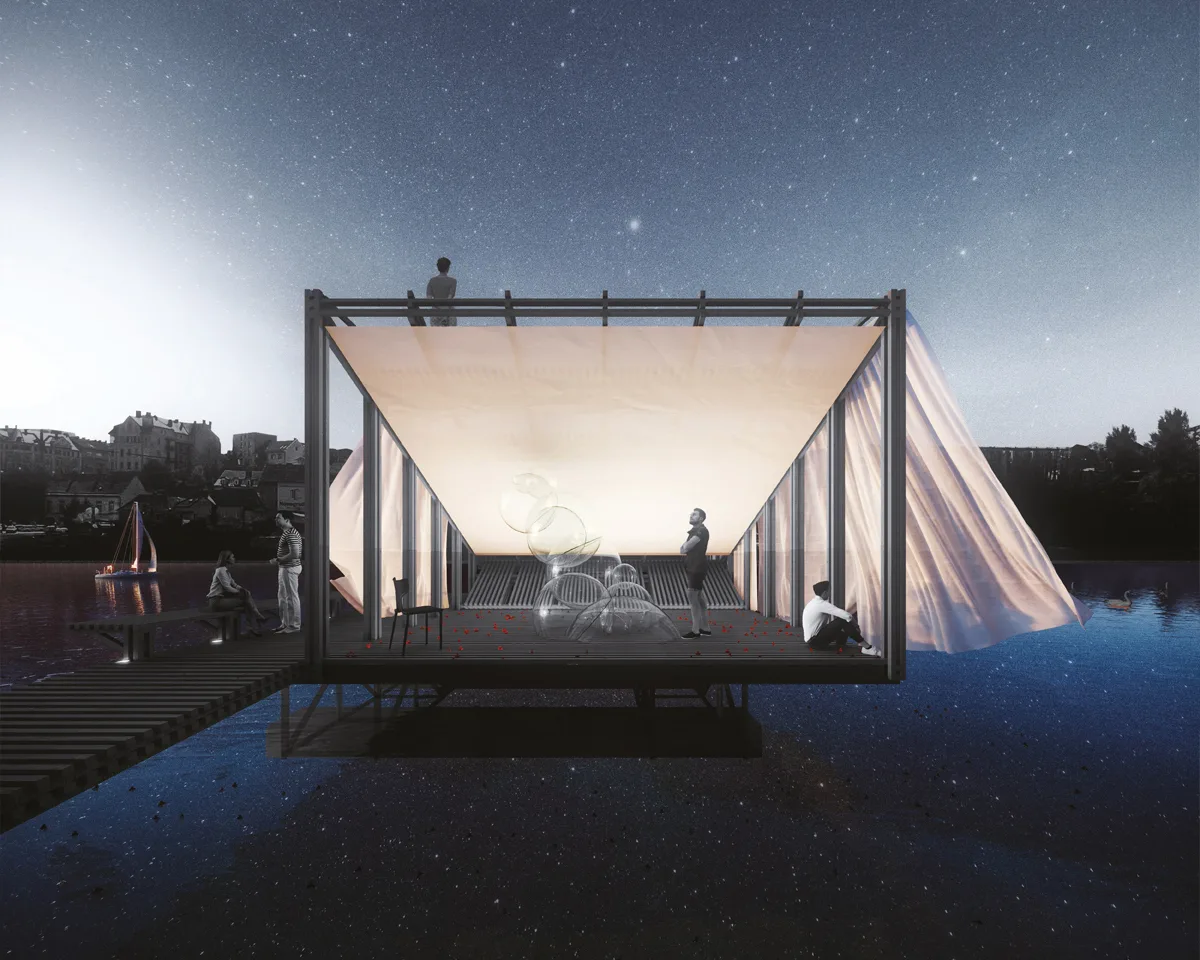
The second-place design offers dual functionality. When facing the city, it features a covered stage oriented towards the embankment, with the roof doubling as a staircase facing the river. The pavilion can be flipped to reverse its use: the covered area faces the river while the grandstand faces the embankment, effectively turning the structure into either a stage or a seating area.
The grandstand’s structure is straightforward but carries a clear architectural identity. However, the pavilion’s height poses a limitation, as the pedestrian bridge’s 4-meter clearance restricts its movement along the Delaware River.
Third Place – Roberto Zanini, Lara Bombolić
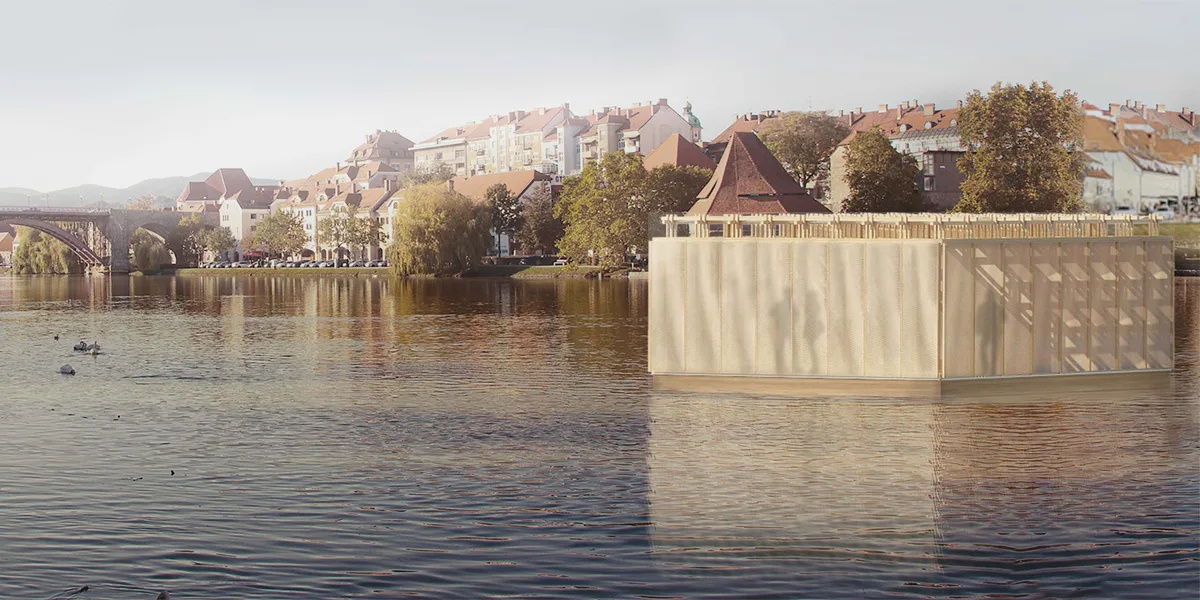
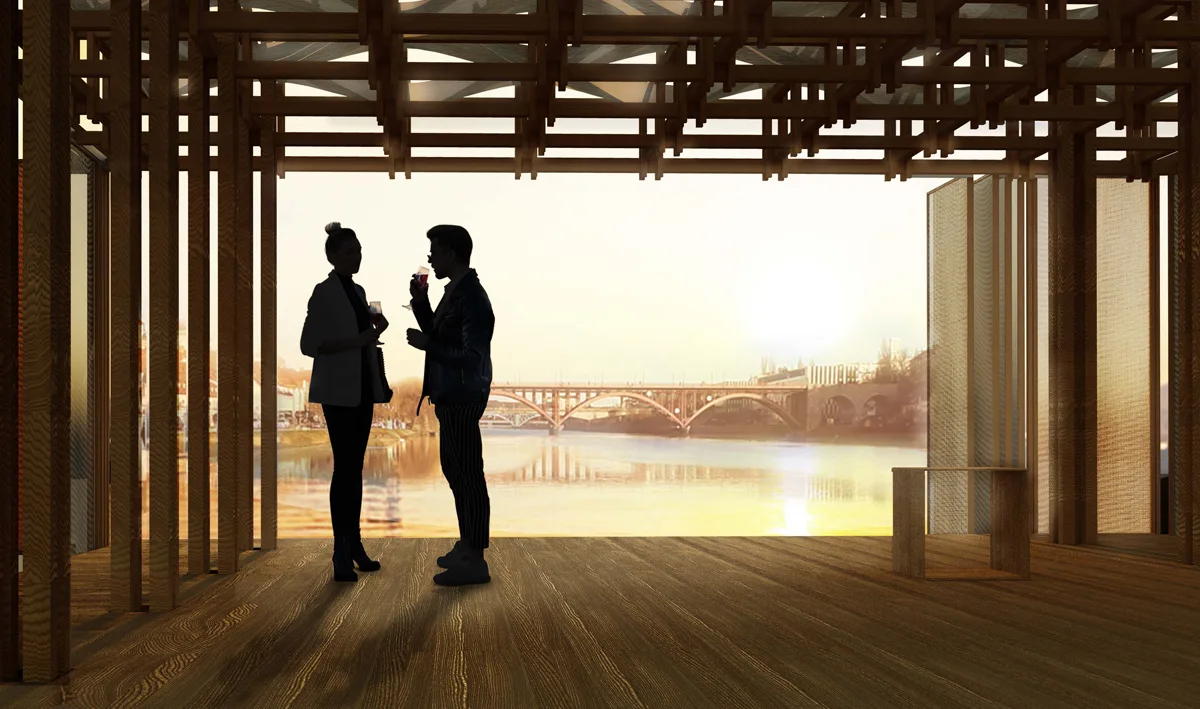
This proposal presents a simple wooden grandstand suitable for various uses. Among the many entries, the most common design typology was a pavilion with a semi-transparent roof supported by pillars. The jury found this plan to be the most successful within that category. The building’s lightness and simplicity were praised as its greatest strengths.
However, the jury also expressed concern that the pavilion’s simplicity limits its potential to serve as a symbolic spatial landmark.
Honorary Award – Luftschloss Collective: Bojana Papić, Yann Junod
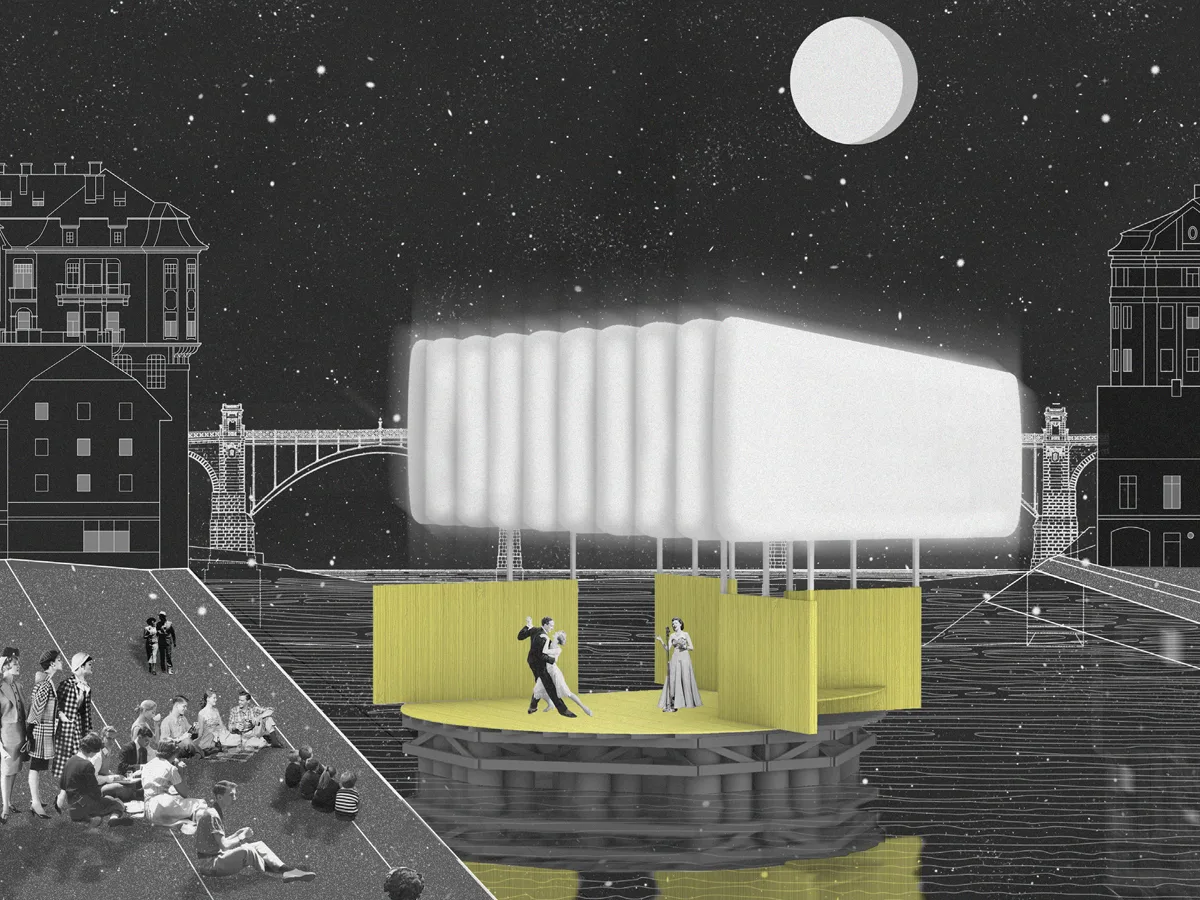
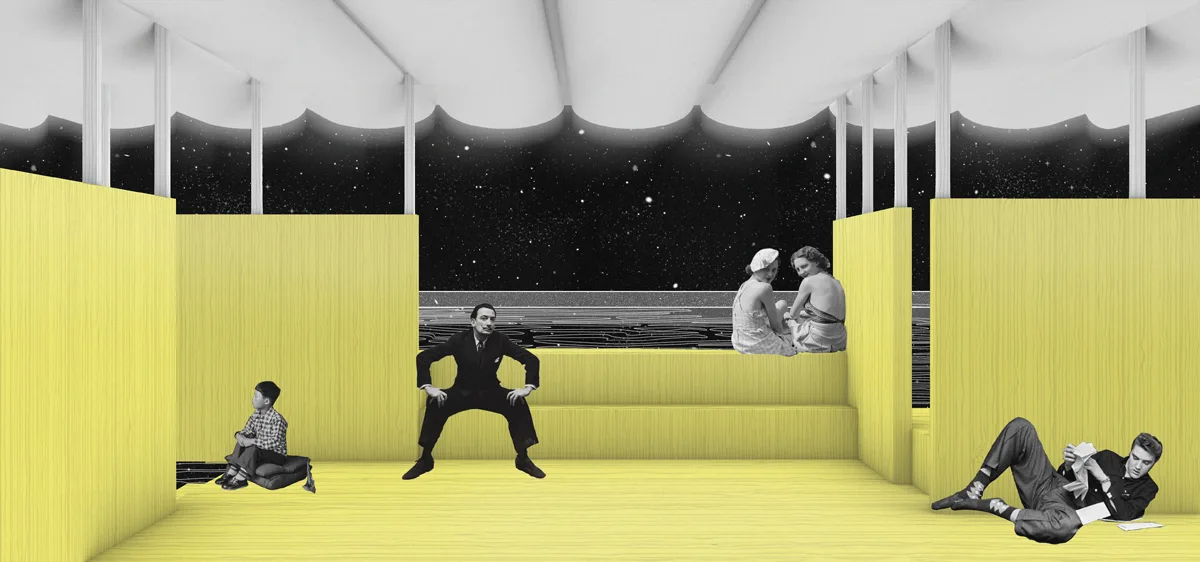
This pavilion features a circular flat platform. Its walls divide the space into semi-open areas oriented in different directions. During events, an inflatable canvas roof adds versatility, allowing the pavilion to function as both an open platform with walls and a covered structure. It acts as a luminous object and an eye-catching spatial landmark.
While the circular platform and walls suggest diverse orientations, the fixed walls pose challenges. They block views of the pavilion’s interior activities from the embankment and significantly obstruct river views.
Honorary Award – Sore: Dana Roxana Hosu, Victor Dussap
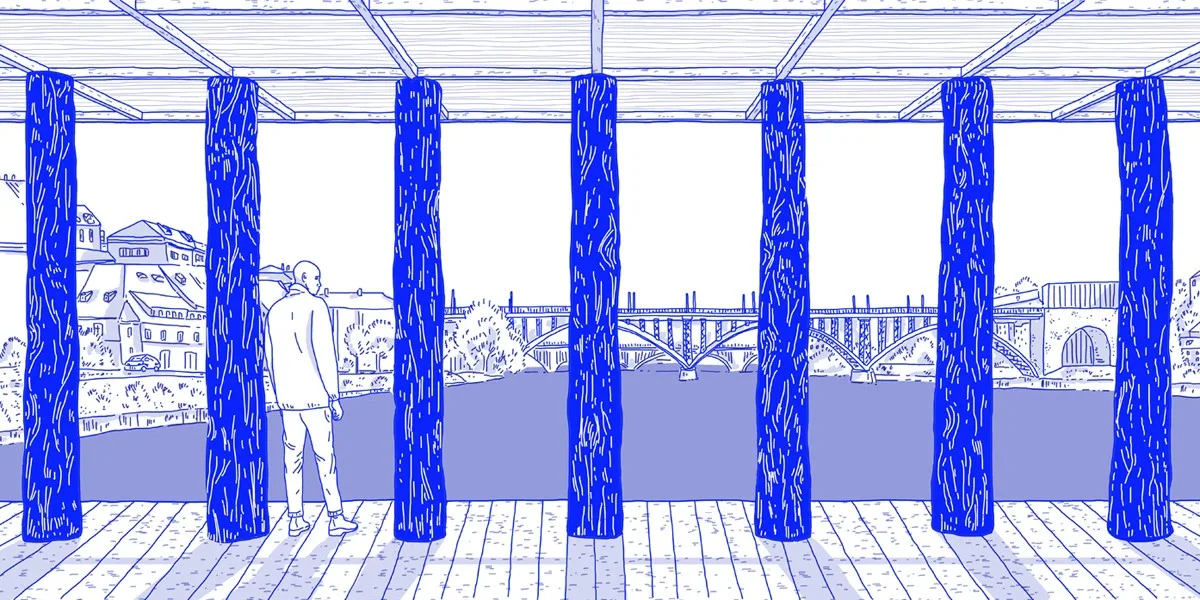
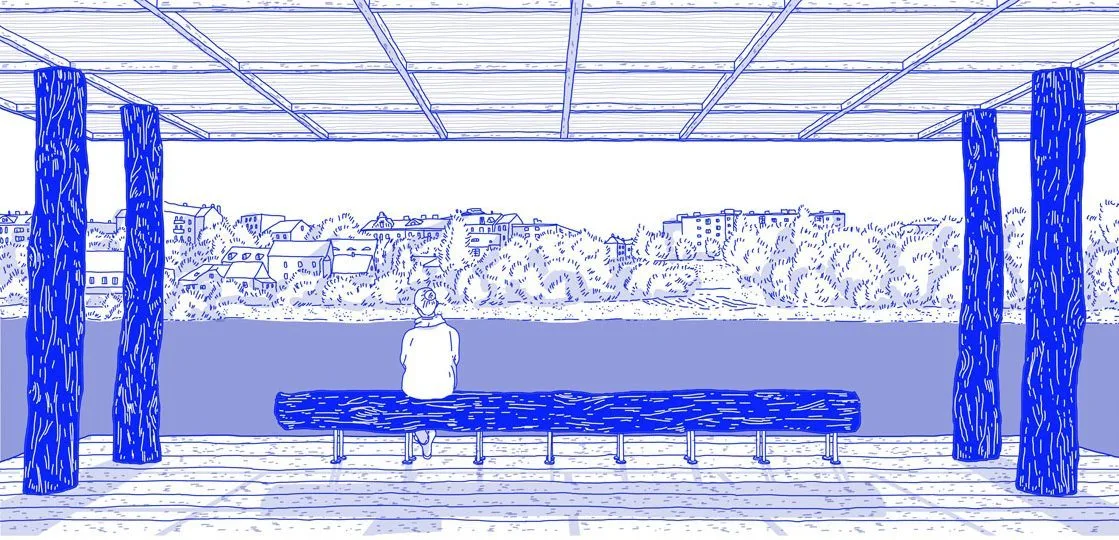
This design offers a poetic reflection on the history of wood drifting along the Delaware River. The pavilion is composed of three architectural elements: a base, a colonnade, and a roof. The log pillars pay homage to traditional wood drifting, while also referencing architectural origins and Laugier’s concept of the primitive hut.
The natural wood intuitively defines the pavilion’s boundaries without the need for fences. Despite this thoughtful approach, some question whether such a primitive and simple design can add value or enhance urban space. Nonetheless, the project stands out for its heuristic thinking and reinterpretation of nature.
Honorary Award – 211S: Sasiwimon Paosanmuang
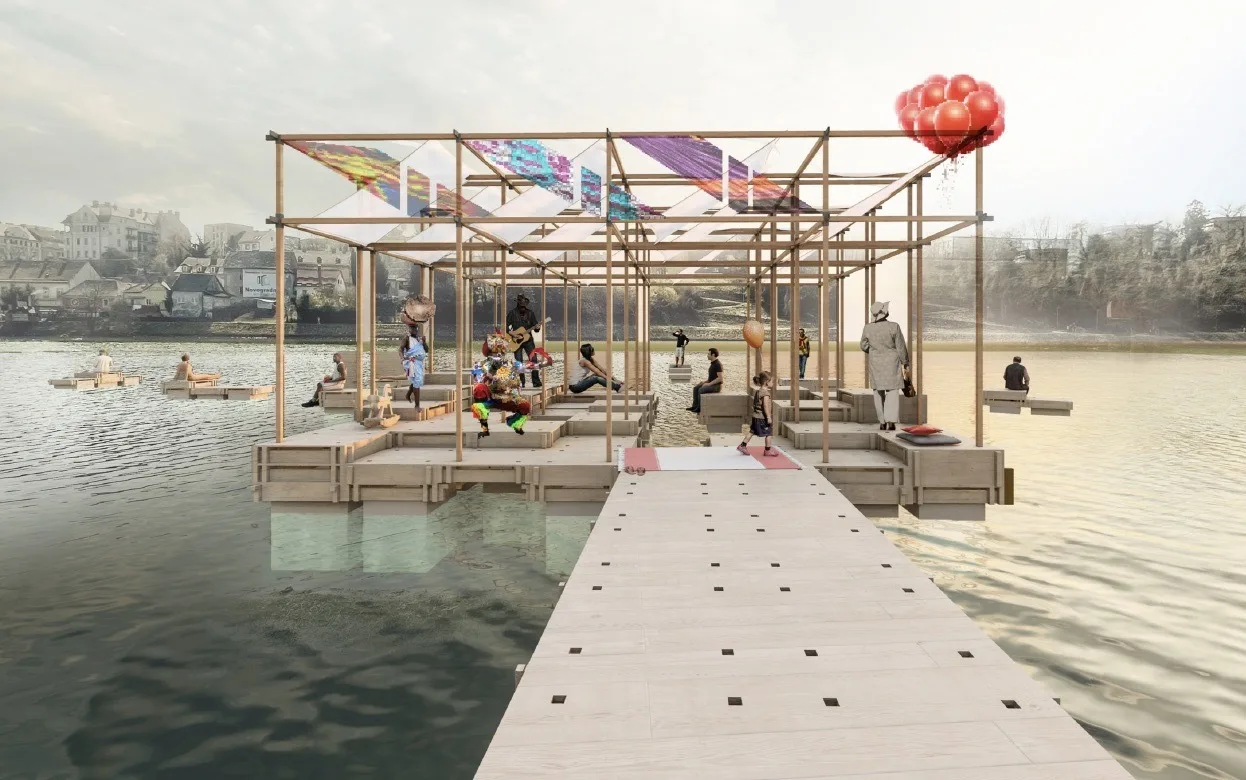
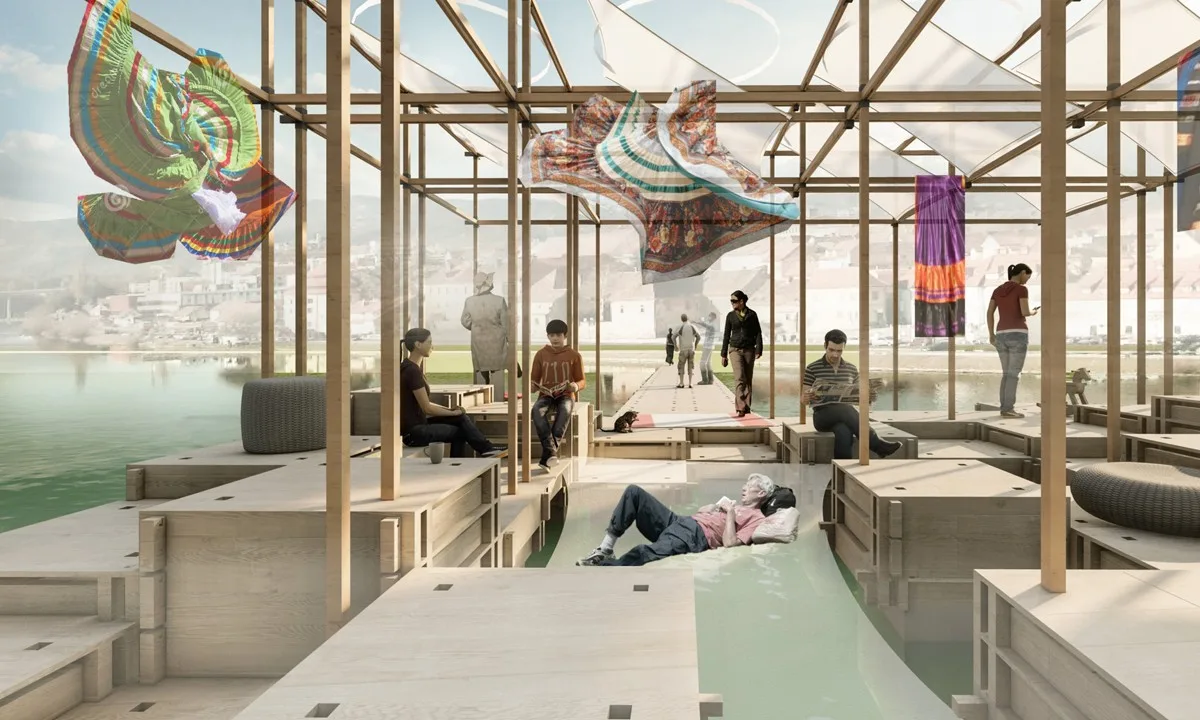
This pavilion consists of smaller, foldable platforms that can be combined and disassembled in various ways, creating a complex matrix with numerous configurations. This flexibility allows the pavilion to adapt to different needs, such as flat terrain for dance performances or stepped seating for concerts.
All structural components are crafted from wood, while the roof is made of lightweight canvas supported by thin wooden columns spaced at regular intervals. Although the roof’s support structure is not ideal for stage performances, as it partially obstructs the performance area, the jury appreciated the innovative use of modular platforms and the pavilion’s mobility, ultimately awarding it an honorary prize.













Must log in before commenting!
Sign Up