
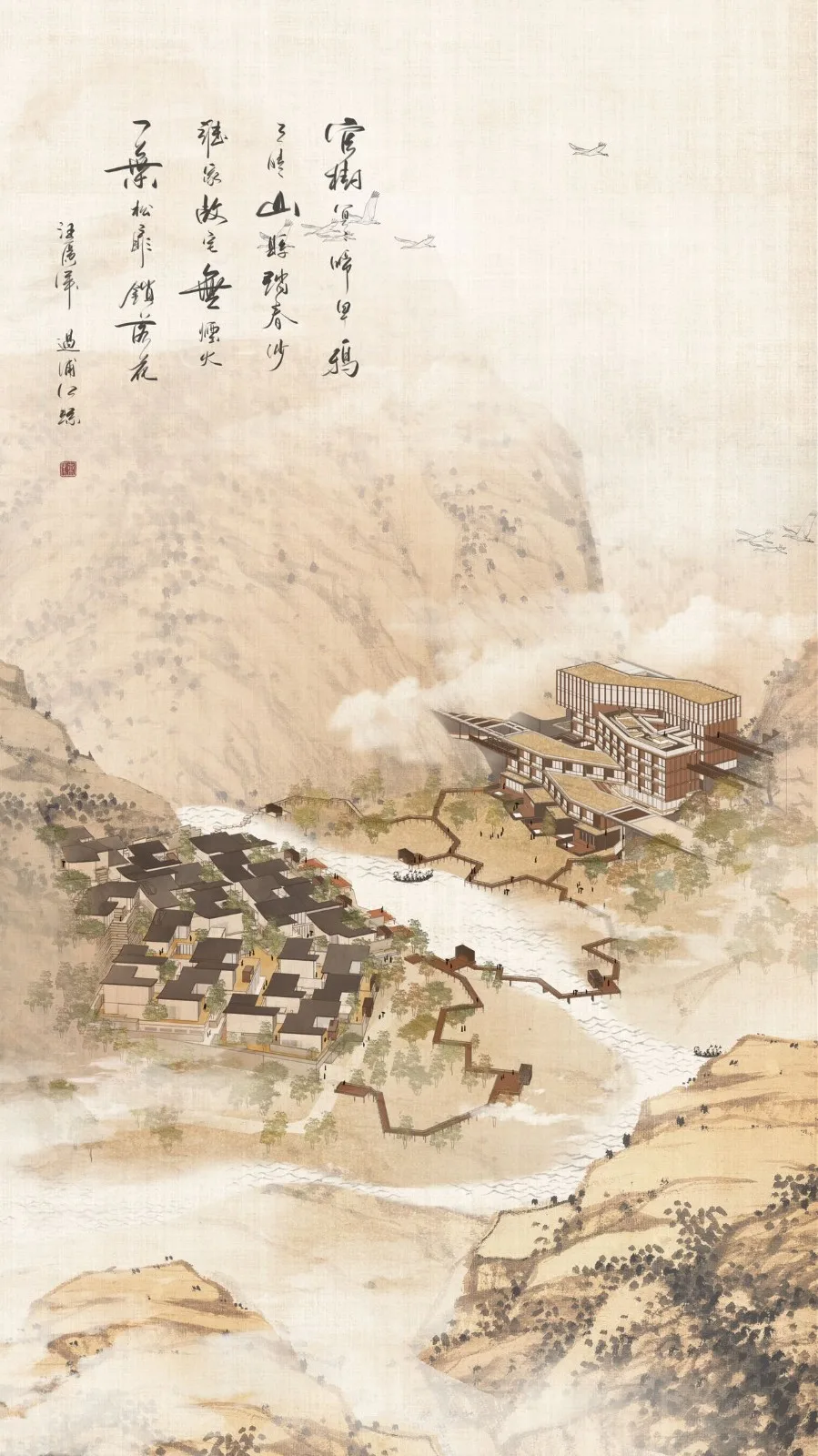
△ Artwork by Wang Xinyu
The new luxury brand of Haihua Hotel, Pujiang Yuexili Resort Hotel, designed by the team led by Meng Fanhao, co-founder and chief architect of Line+, has recently been unveiled.
Haihua is the first star-rated brand in Hangzhou to adopt an international hotel management model. Over the past 25 years, it has operated two historic hotels on the north bank of West Lake, just steps away from this UNESCO World Heritage site.
As the hospitality industry shifts towards personalized experiences and destination exploration, Haihua, traditionally focused on the old city, has chosen to expand into the mountains. Seeking partners among top design teams, they aim to create a comprehensive vacation model distinct from urban travel—one that combines active participation, regional authenticity, and meaningful memories. With his extensive experience in cultural vacations and innovative vision, Mr. Meng Fanhao leads this “Out of the City Memoirs” initiative as its inaugural operator.
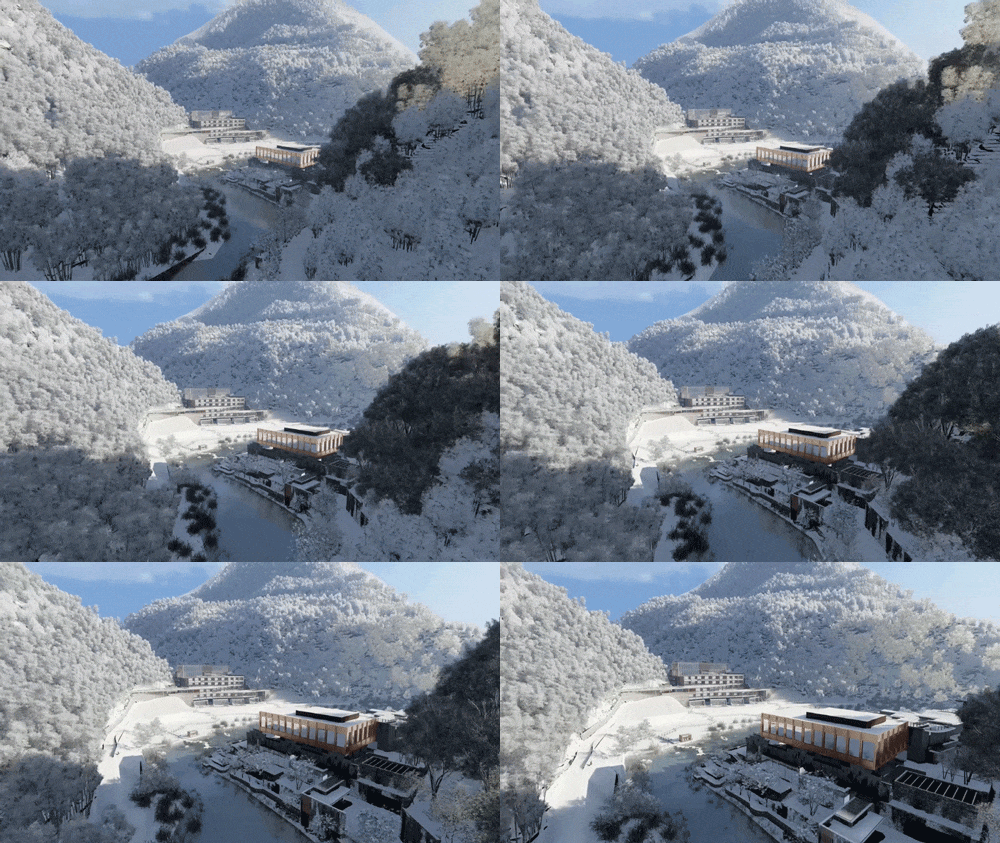
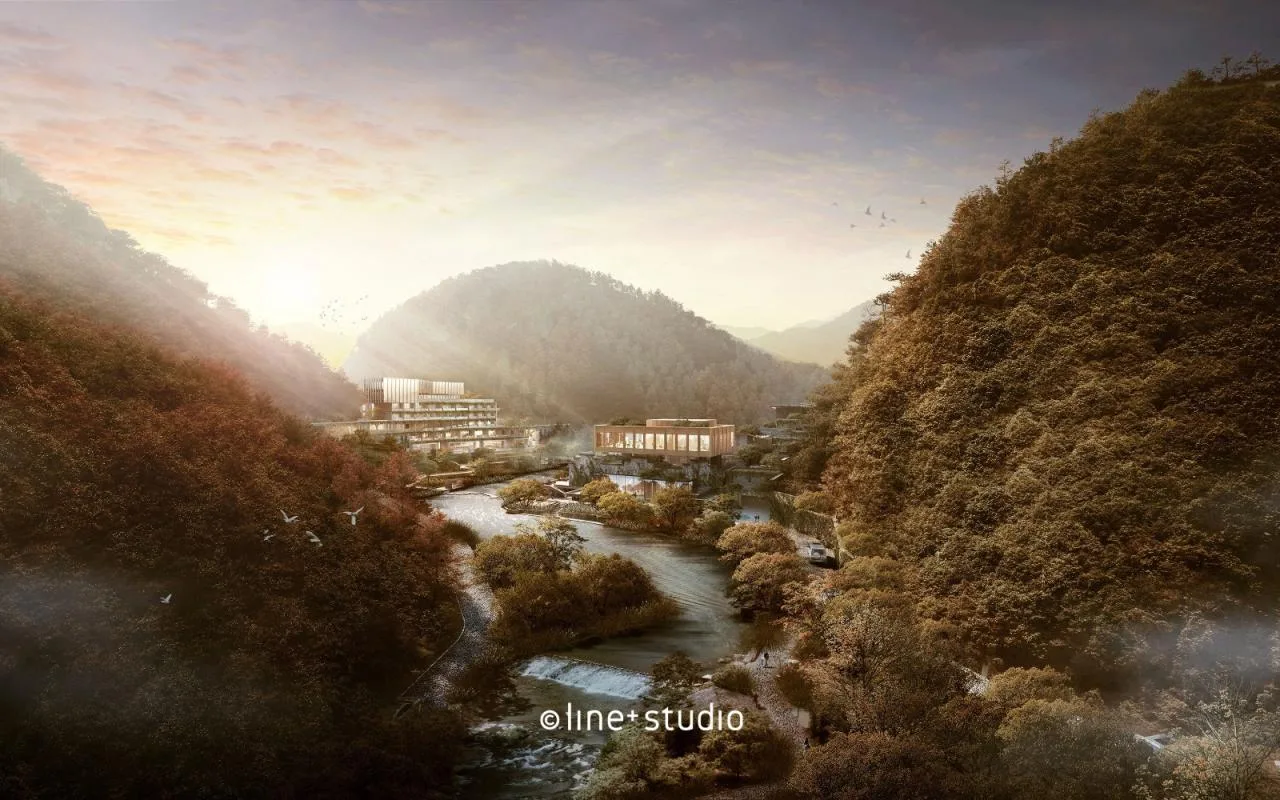
Leaving the city behind and entering the forest, the resort nestles between the sea and the Yuexi River, surrounded by mountains and woodlands.
1. Leaving the City for the Forest: Twin Brand Living and Vacationing
The flat landscapes fade away, replaced by mountains layered in depth. How can potential risks be managed in this terrain?
Haihua’s first out-of-city project is located on the banks of the Qianxi River in Pujiang County, about 100 kilometers from Hangzhou. Here, mist and clouds hover over bamboo forests stretching from the valley into the mountains. This site continues Haihua’s tradition of being close to natural scenery and key transportation routes, yet it is uniquely set in deep mountains, unlike the flat urban areas. The steep terrain poses both challenges and opportunities, becoming the central element in Haihua’s transformation beyond the city. The key question is how to engage with this landscape and turn potential dangers into safety.
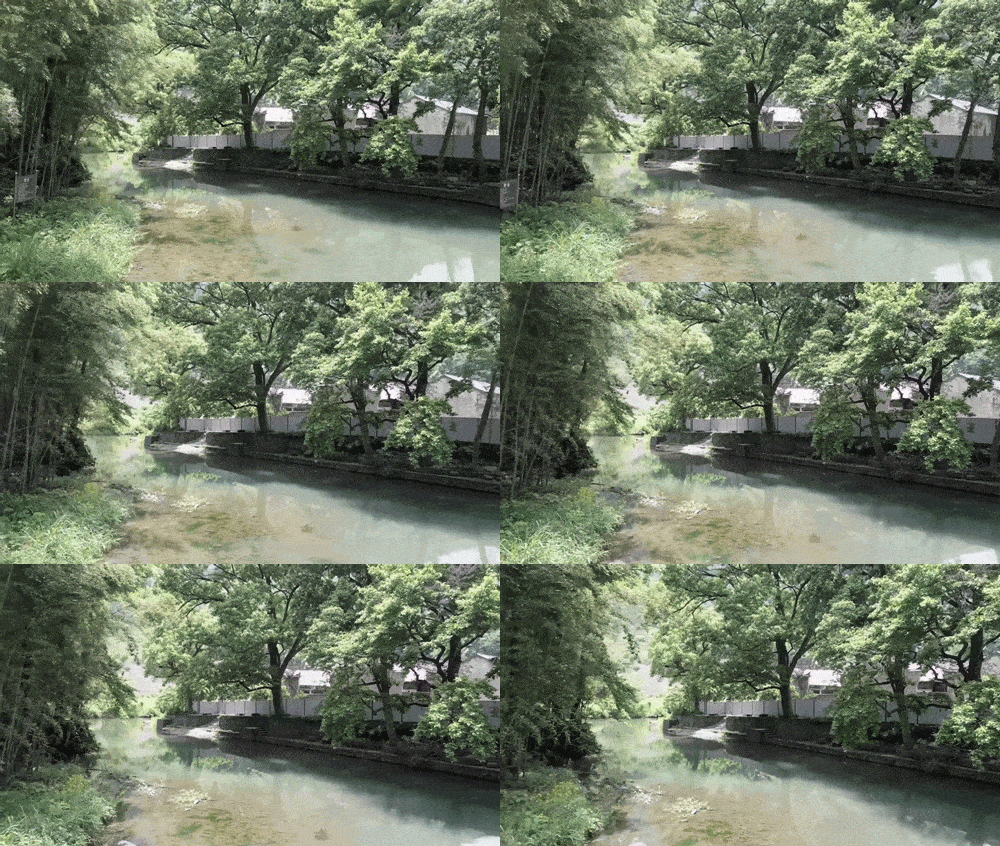
△ Native environment of the site at Qianxi Bank, Pujiang County
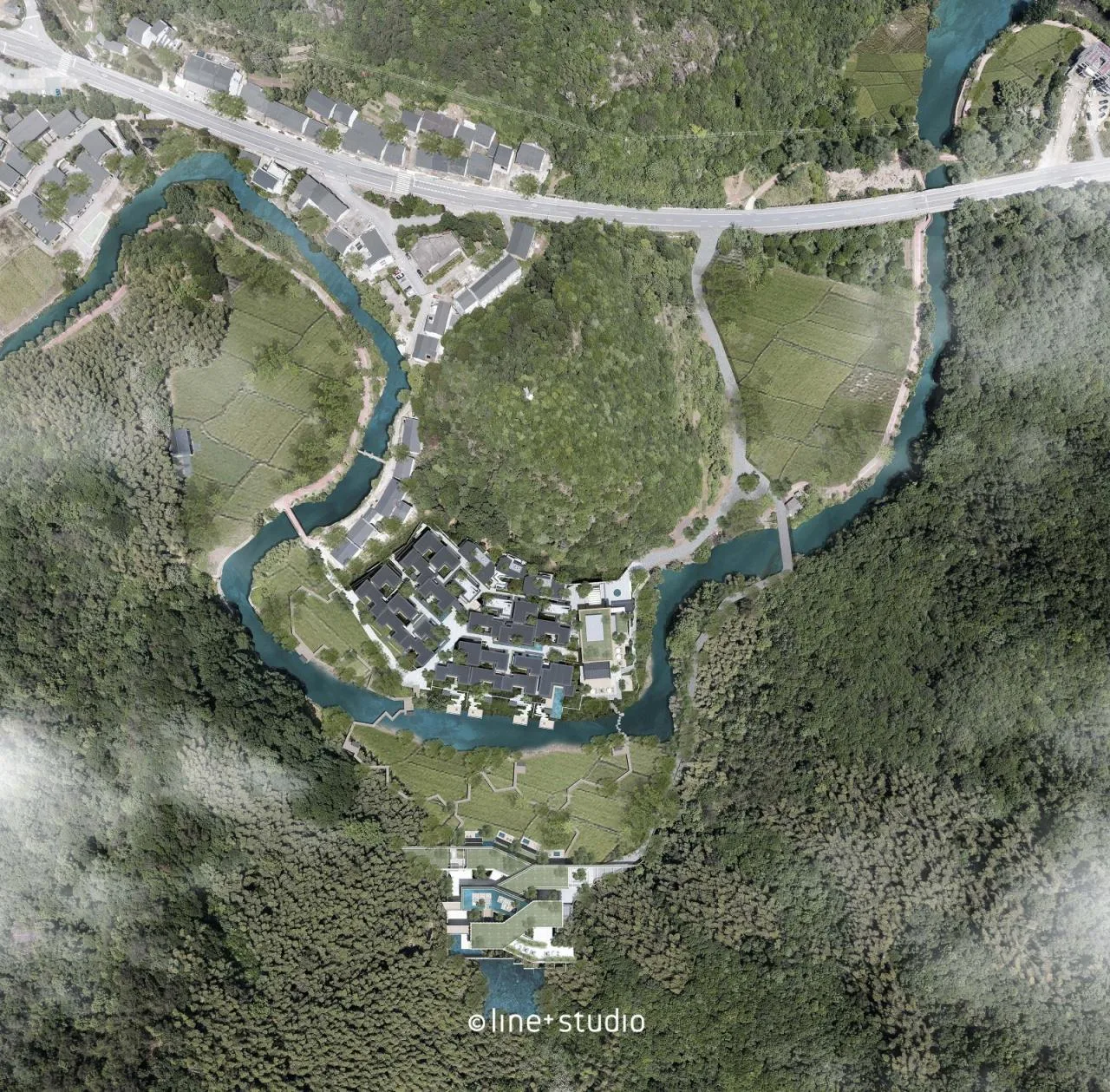
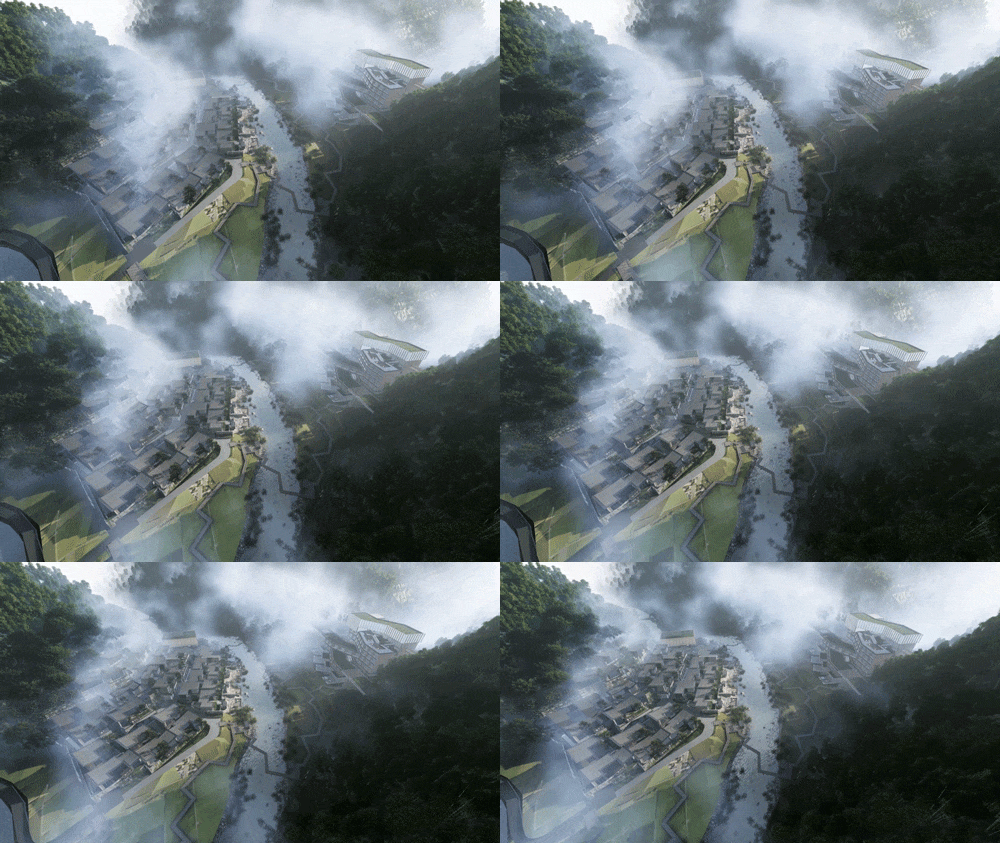
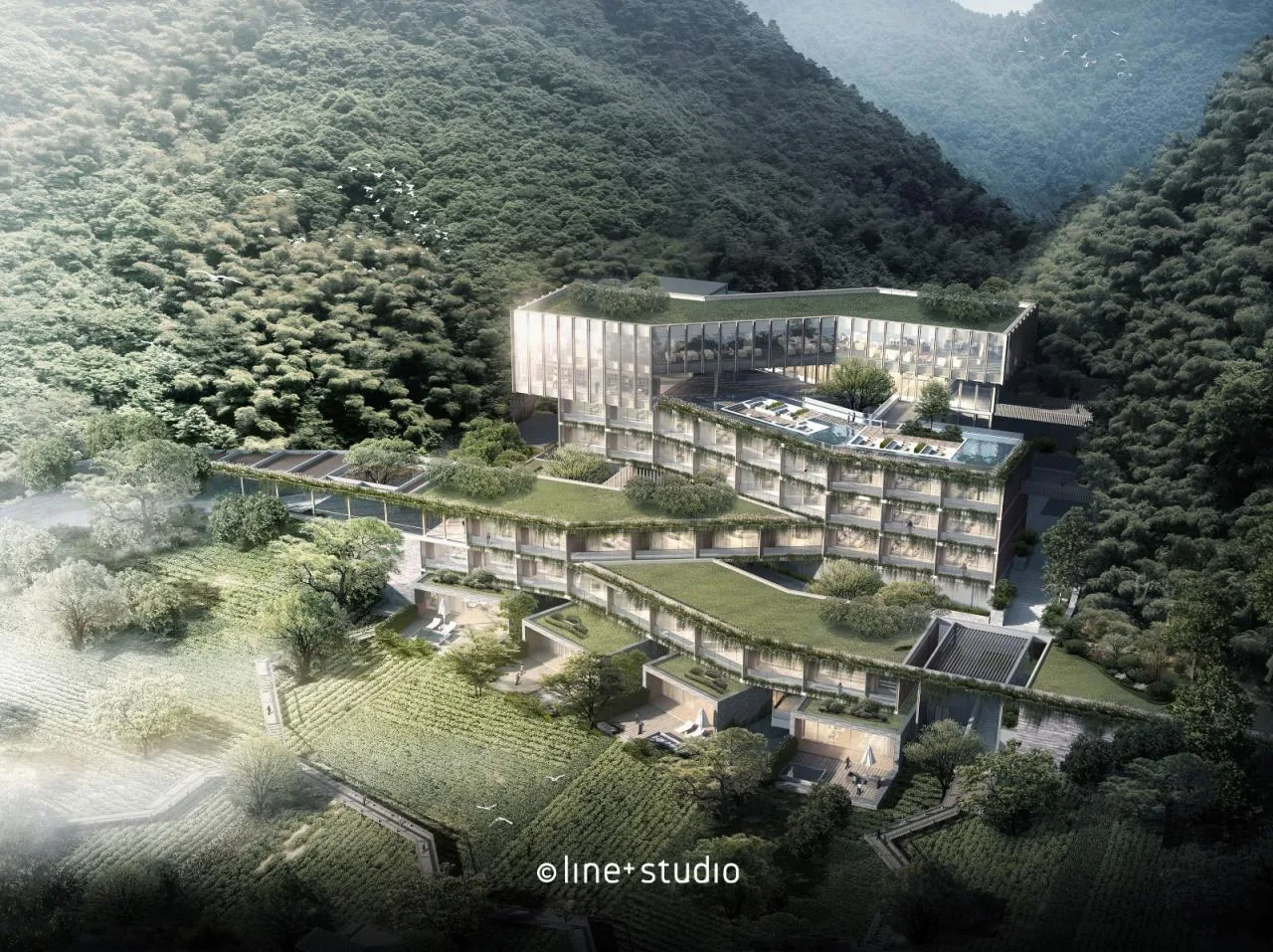
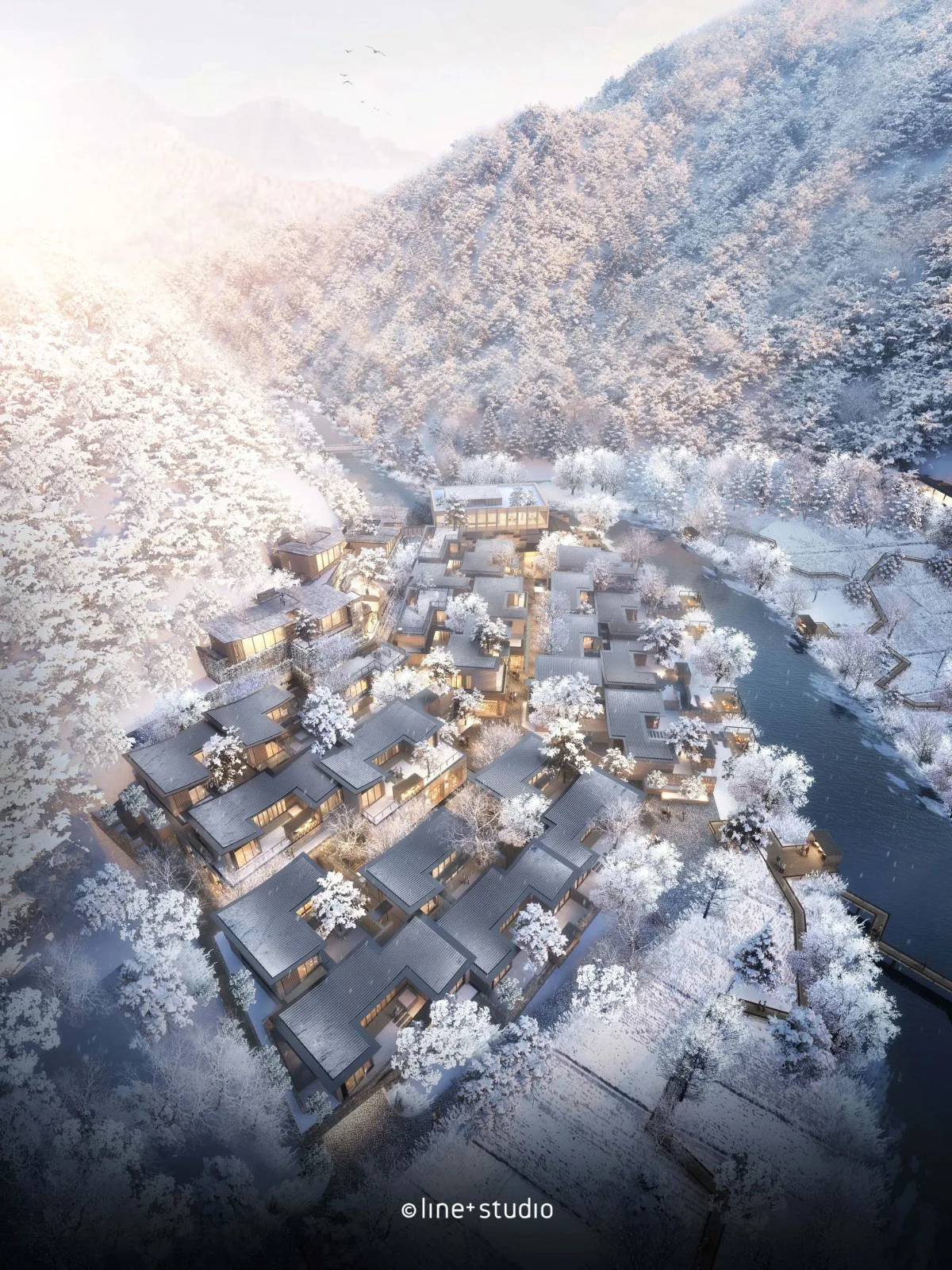
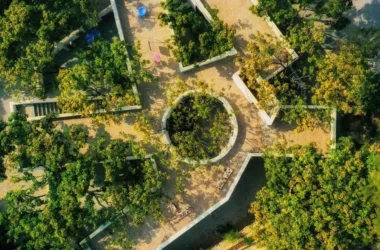
Bird’s-eye view of the entire project
The Qianxi River divides the site into two zones: north and south. To accommodate different age groups and vacation preferences, two twin brands have been developed: “Qingluan Residence” for concentrated, youthful living, and “Qinglan Bay” for single-courtyard vacation homes.
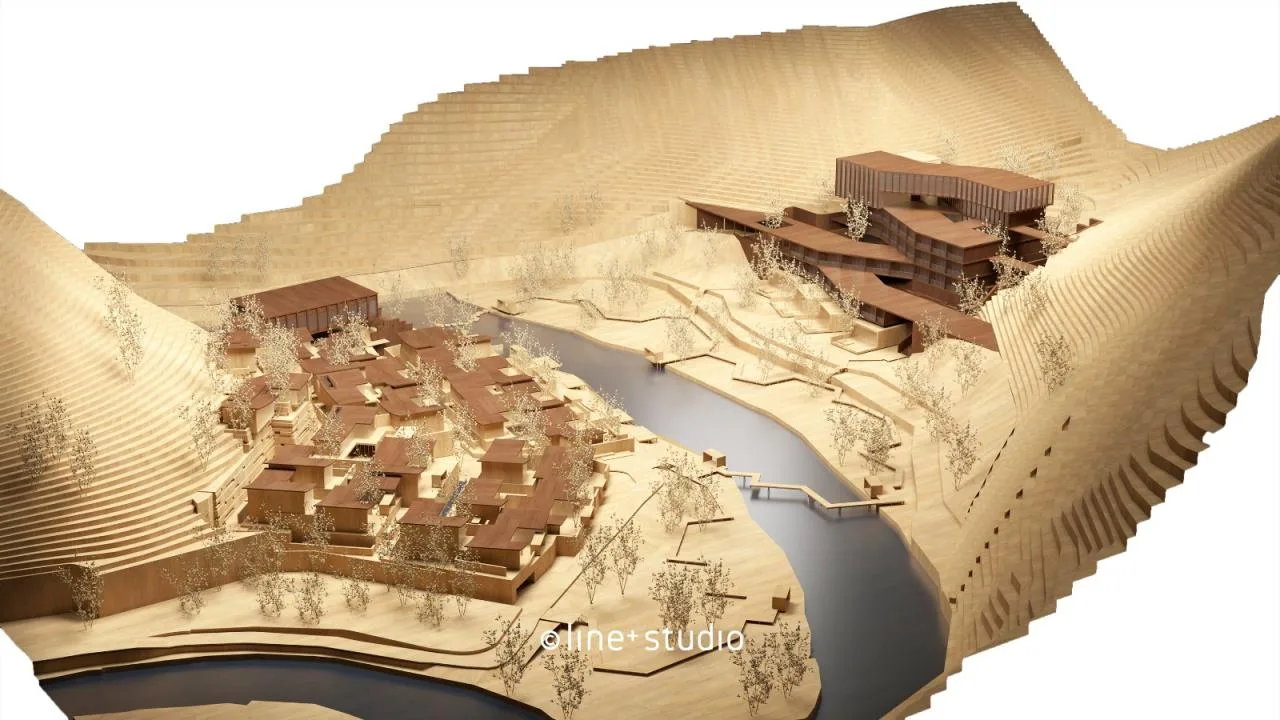
The “2” symbol represents the twin brands gradually expanding outward.
South Shore Brand: Qingluan Residence – Concentrated Living for Youth
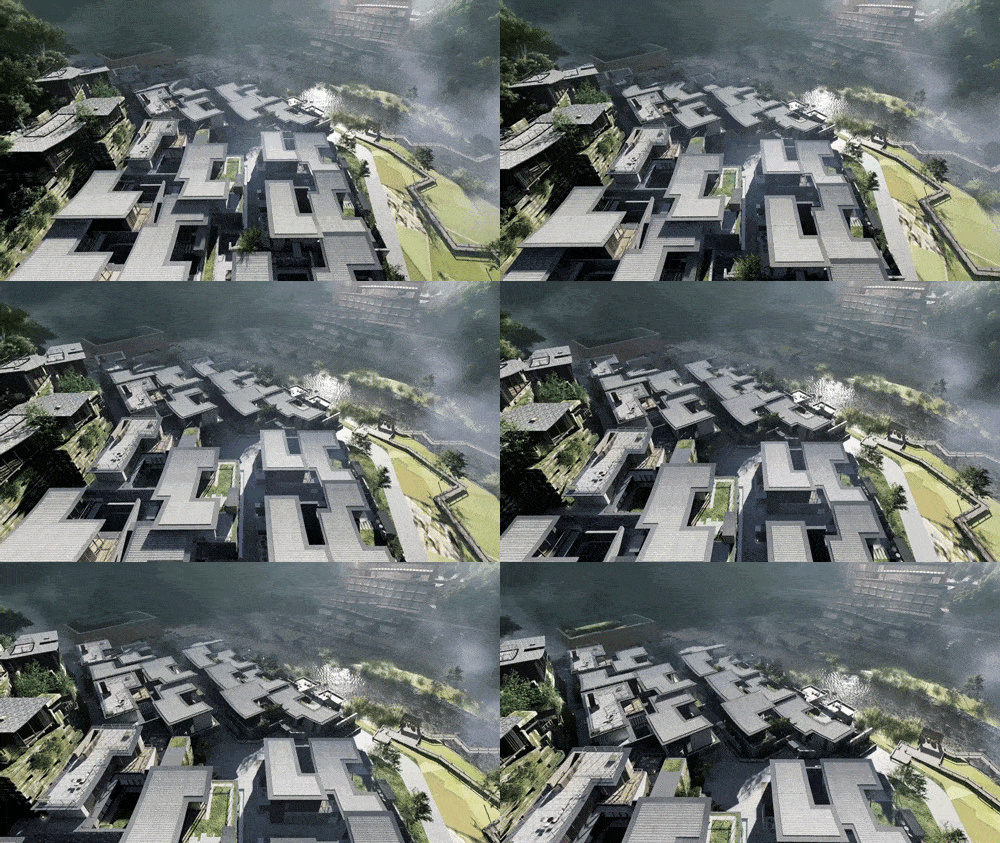
Qingluan Residence is nestled deep in the mountain valleys, retreating from the flat riverbank. The buildable space between two slopes is steep and narrow. A straightforward layout focusing on the best views would severely limit the number of guest rooms.
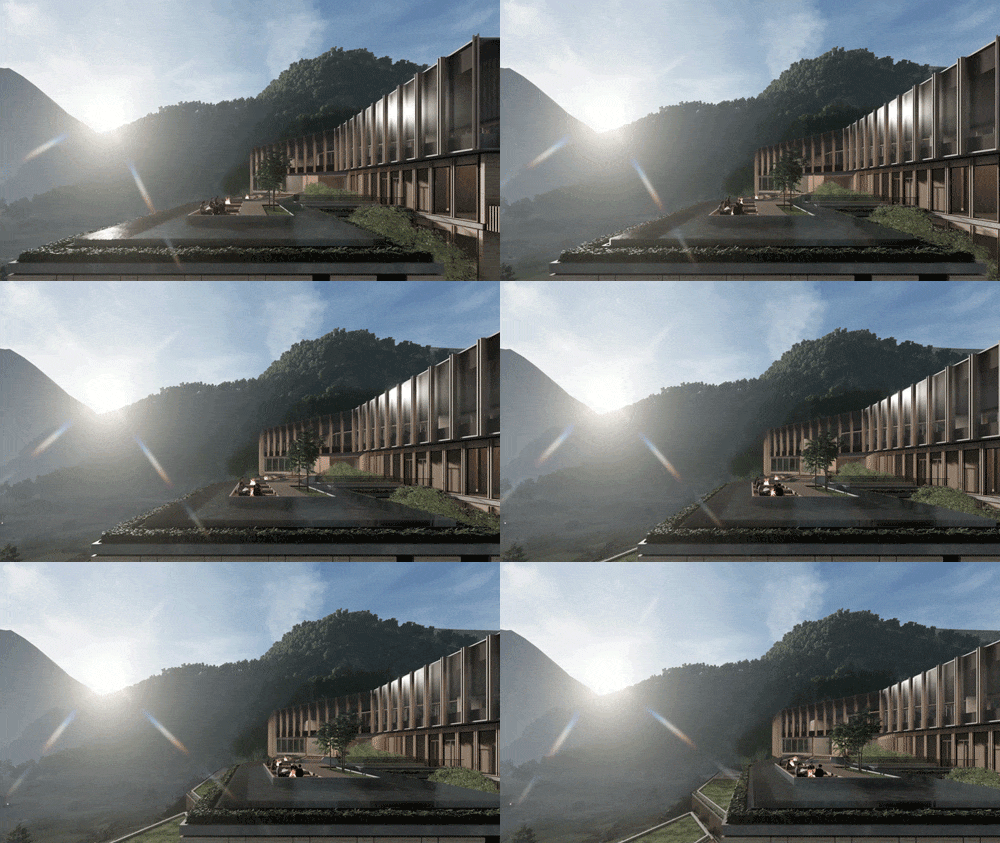
The design cleverly utilizes the mountain valley’s three-dimensional nature. Y-shaped guest rooms overlap at the ends, climbing the mountainsides to provide varied quality levels: secluded courtyard guest houses near the shore, scenic guest rooms with panoramic views on the middle floors, and transparent, open public cultural experience areas on the top floors. Even the typically dark lower mountain floor benefits from staggered gaps, allowing natural light comparable to flat terrain.
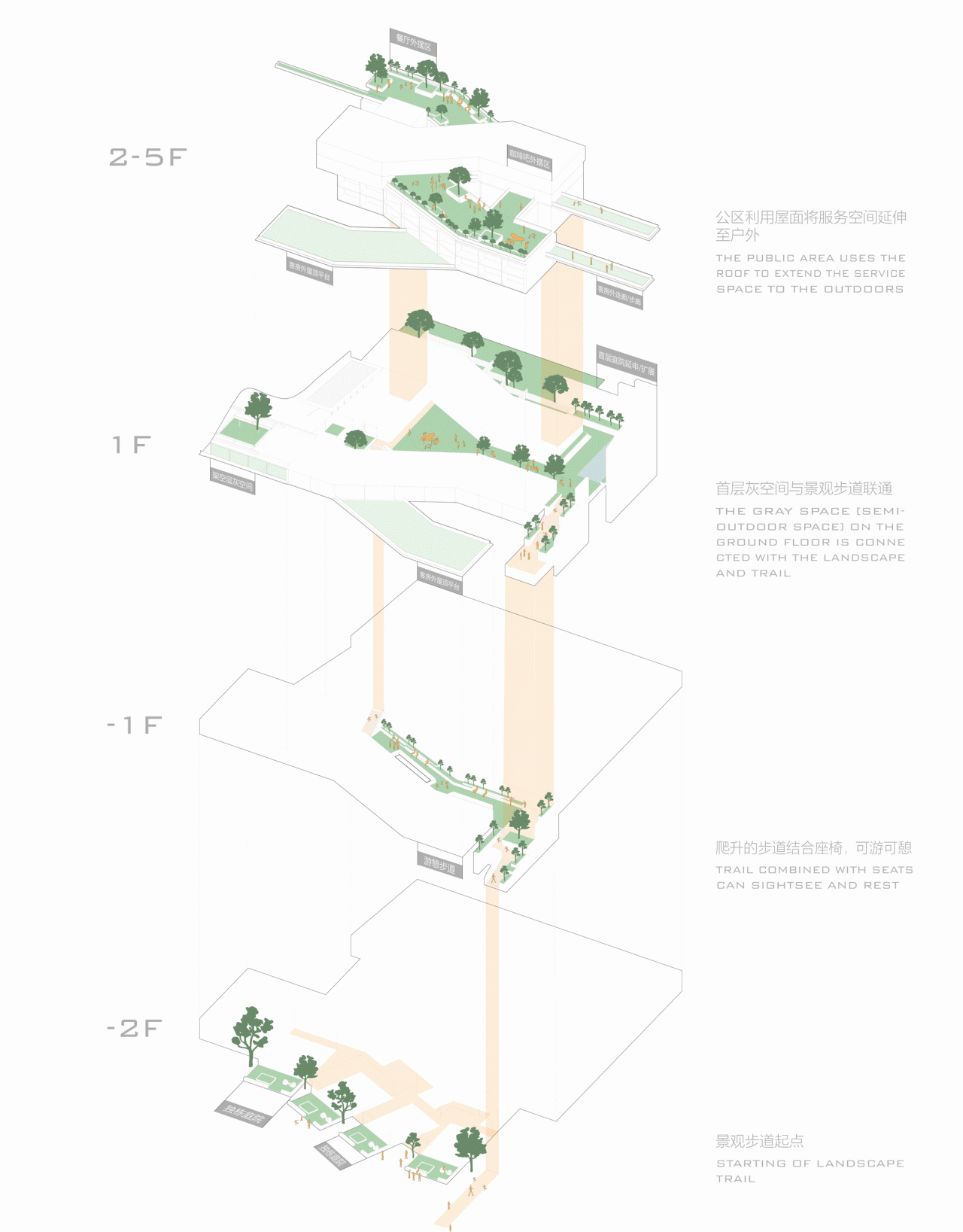
△ Outdoor streamline analysis
The flowing movement of visitors creates a three-dimensional landscape platform that seamlessly connects with bamboo forest paths, forming an open pedestrian corridor. This allows residents of Qingluan Residence to stroll through mountains and forests while enjoying panoramic views of wetlands and riverside forests. Descending the outdoor steps on the west side leads to farmland by the riverbank, offering an immersive mountain experience away from the city’s bustle.
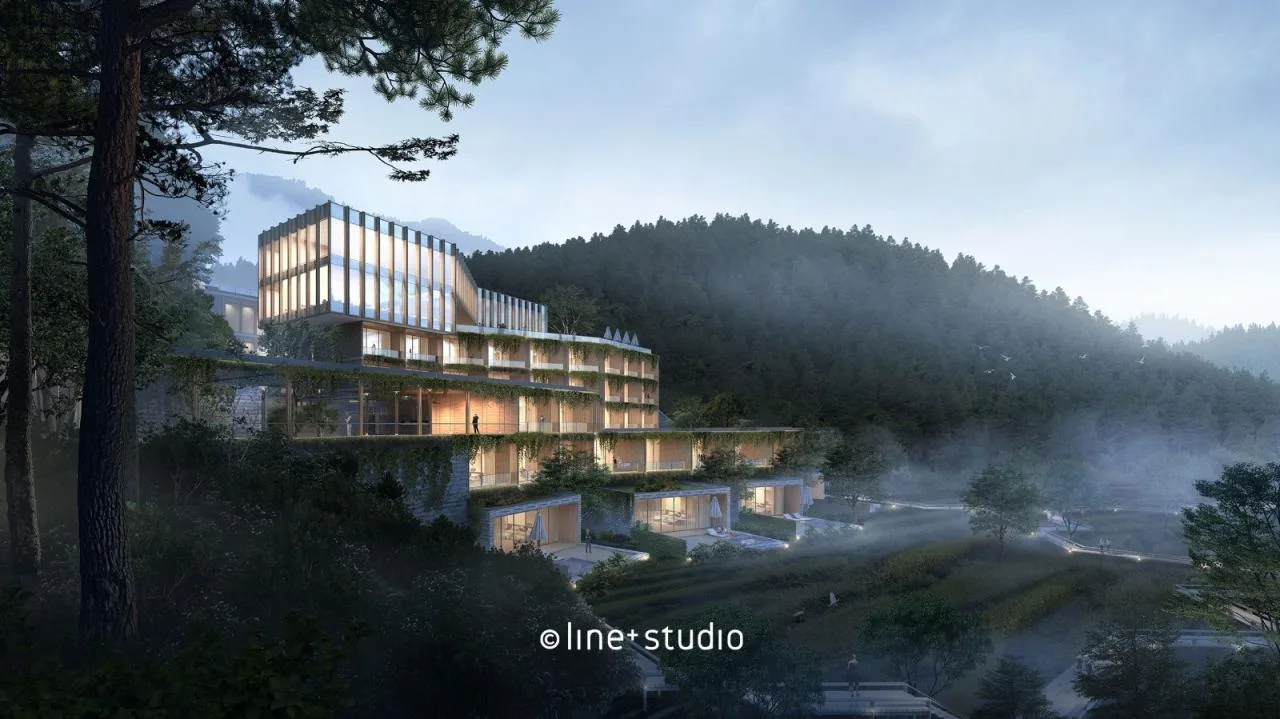
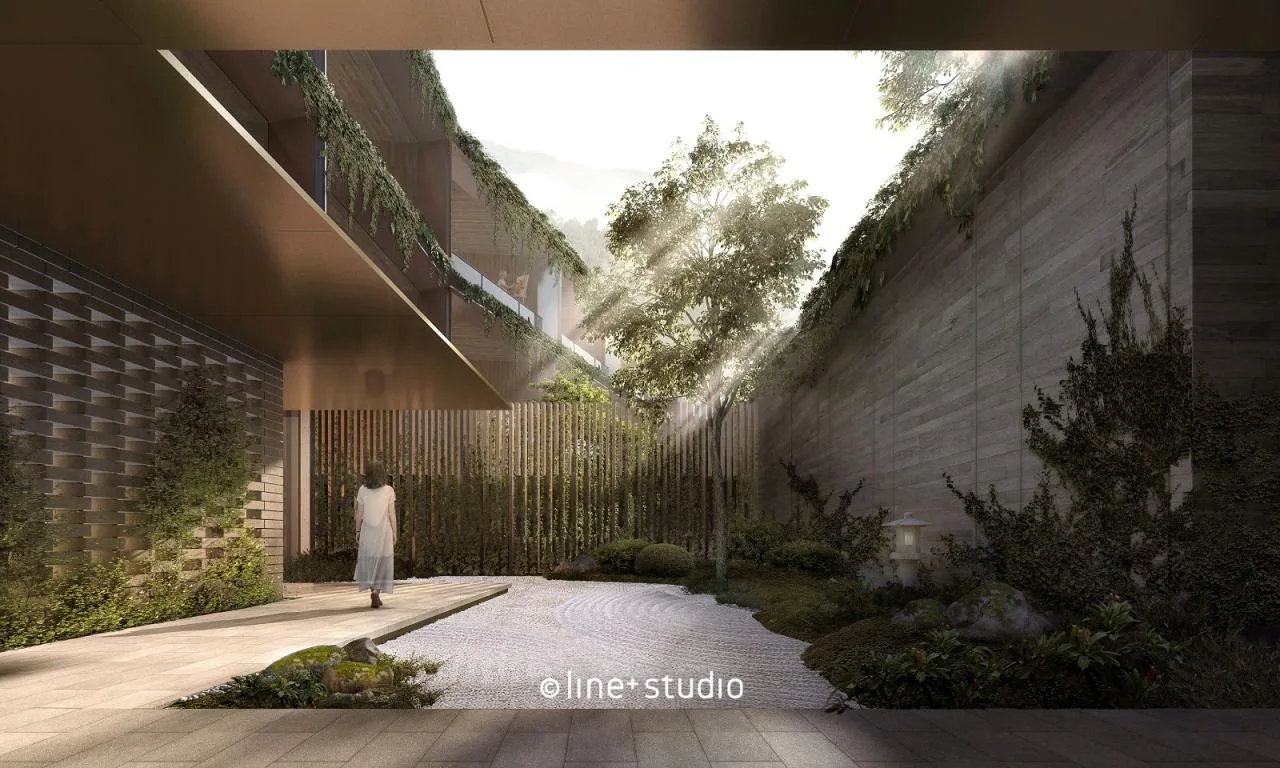
Qingluan Residence ultimately offers 52 guest rooms, inviting guests to leisurely explore the mountain valleys. This design allows people to naturally navigate the challenging terrain, unlocking the vitality and energy of a unique wilderness living experience.
3. Qianmo Streets and Alleys, Riverside Homes
North Shore Brand: Qinglan Bay – Single Courtyard Vacation Homes
To the northwest of the creek bank, original rural households line the creek, with an ancestral hall still standing on the east bank. The steep slope is dotted with ancient trees. Responding to the village texture to the west and facing the Qianxi River, Qinglan Bay features a cluster of independent courtyard settlements that follow the mountain terrain.
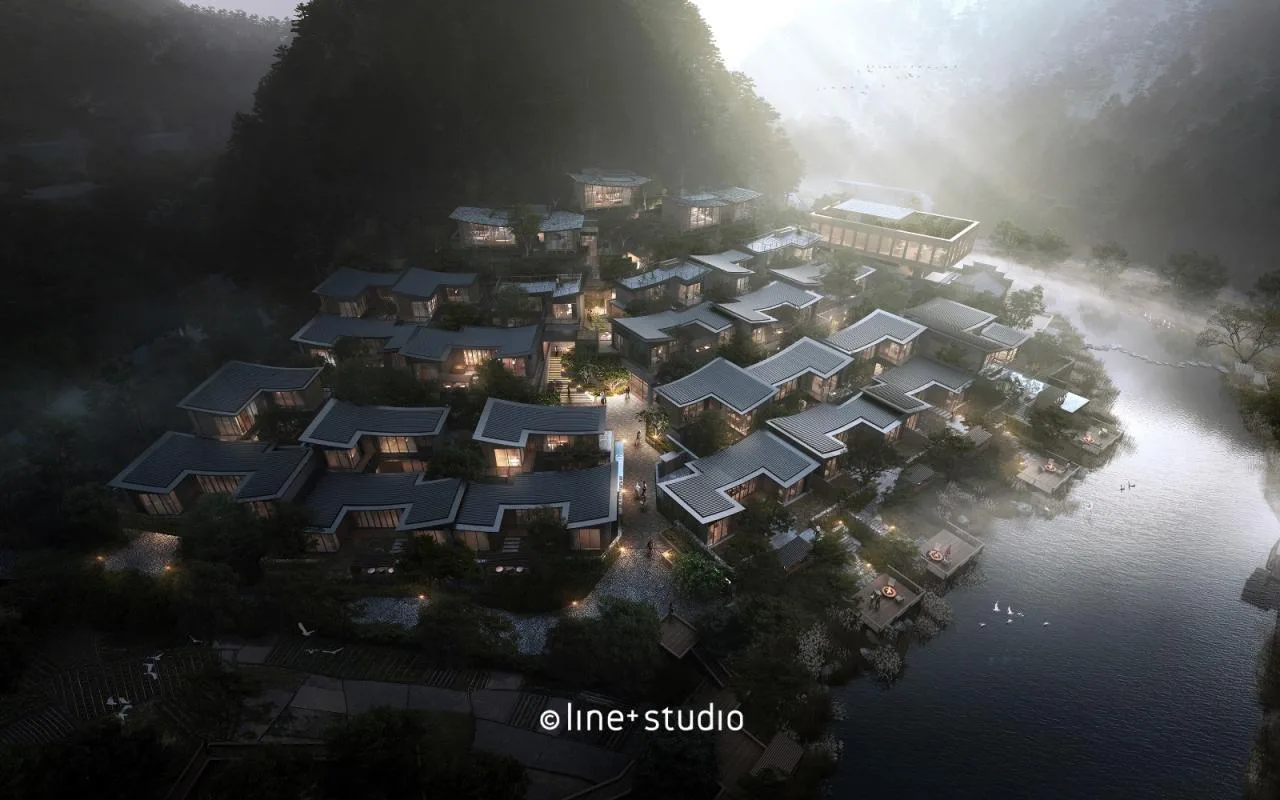
Only three courtyard sets sit among the ancient trees on the mountaintop—a rare and luxurious setting enjoying high mountain views amidst mist and clouds, overlooking the riverside village streets.
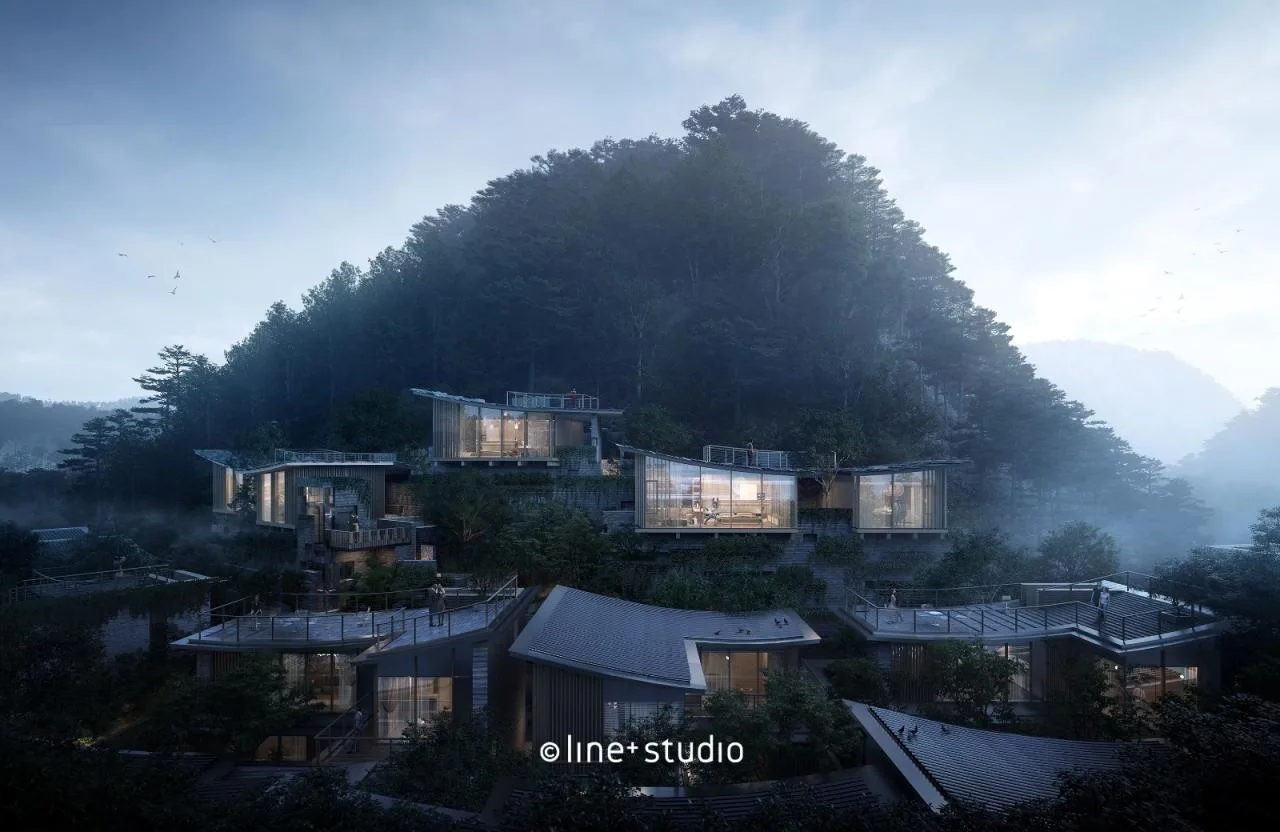
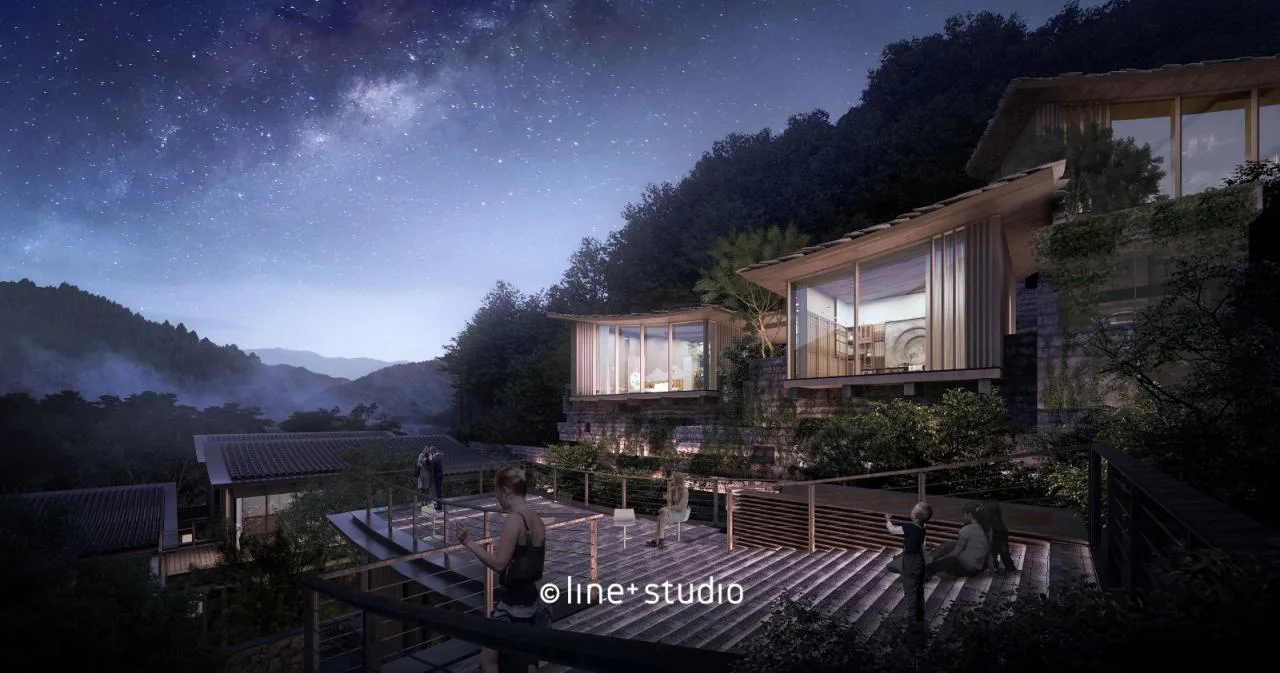
The old ancestral hall on the east bank has been repurposed as a public experience space. One fairly intact courtyard, preserved in its original wooden structure, now serves as the main public interface.
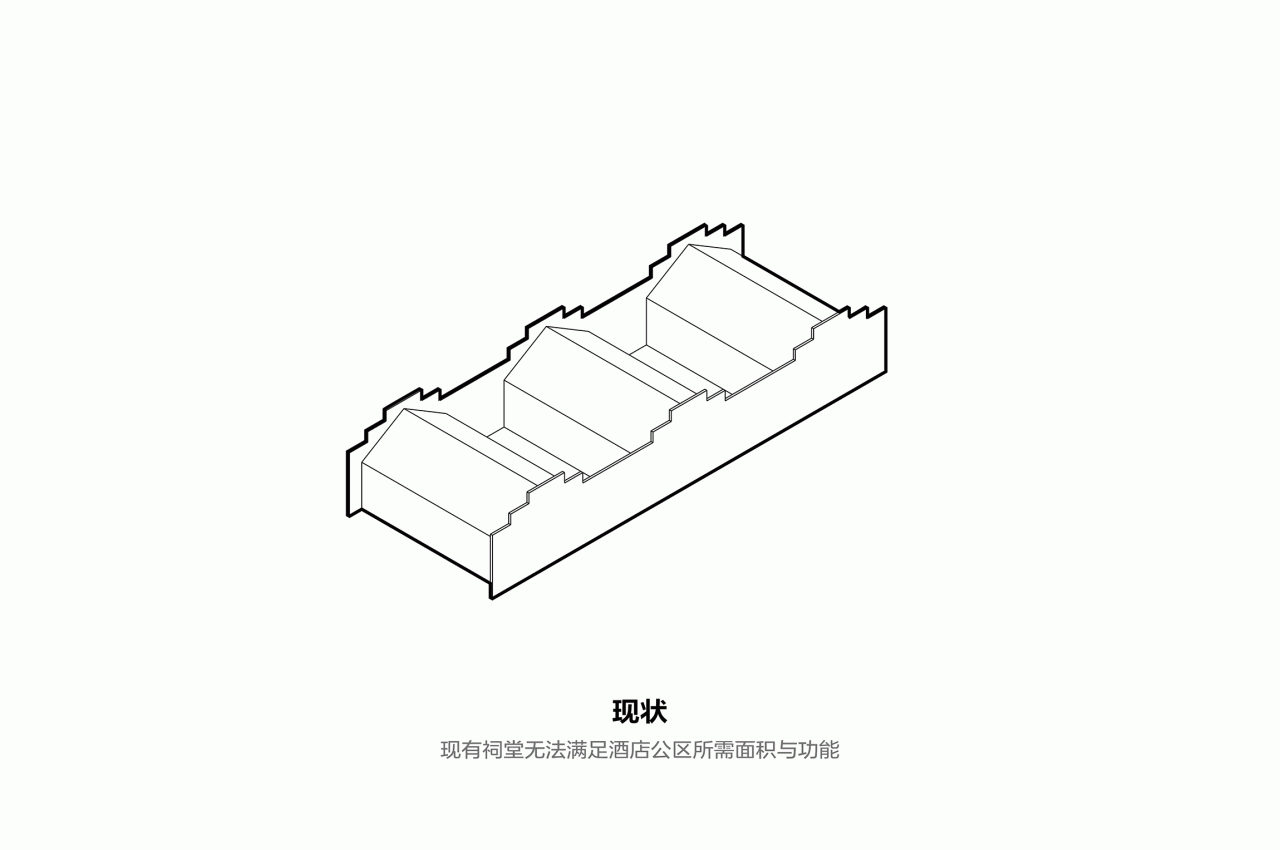
△ Diagram of the hotel public area generation
The reconstructed horse head wall, crafted from reclaimed blue bricks from the village, has become an unintentional yet distinctive symbol of the public space.
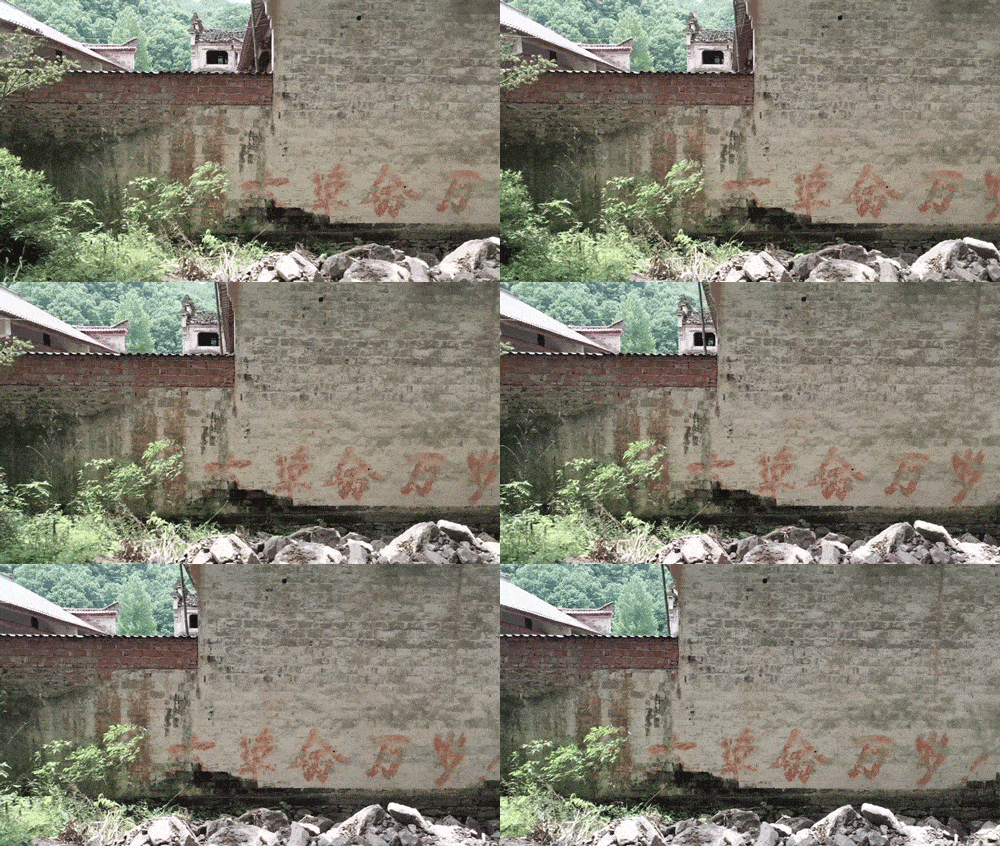
The original appearance of the old ancestral hall in the village
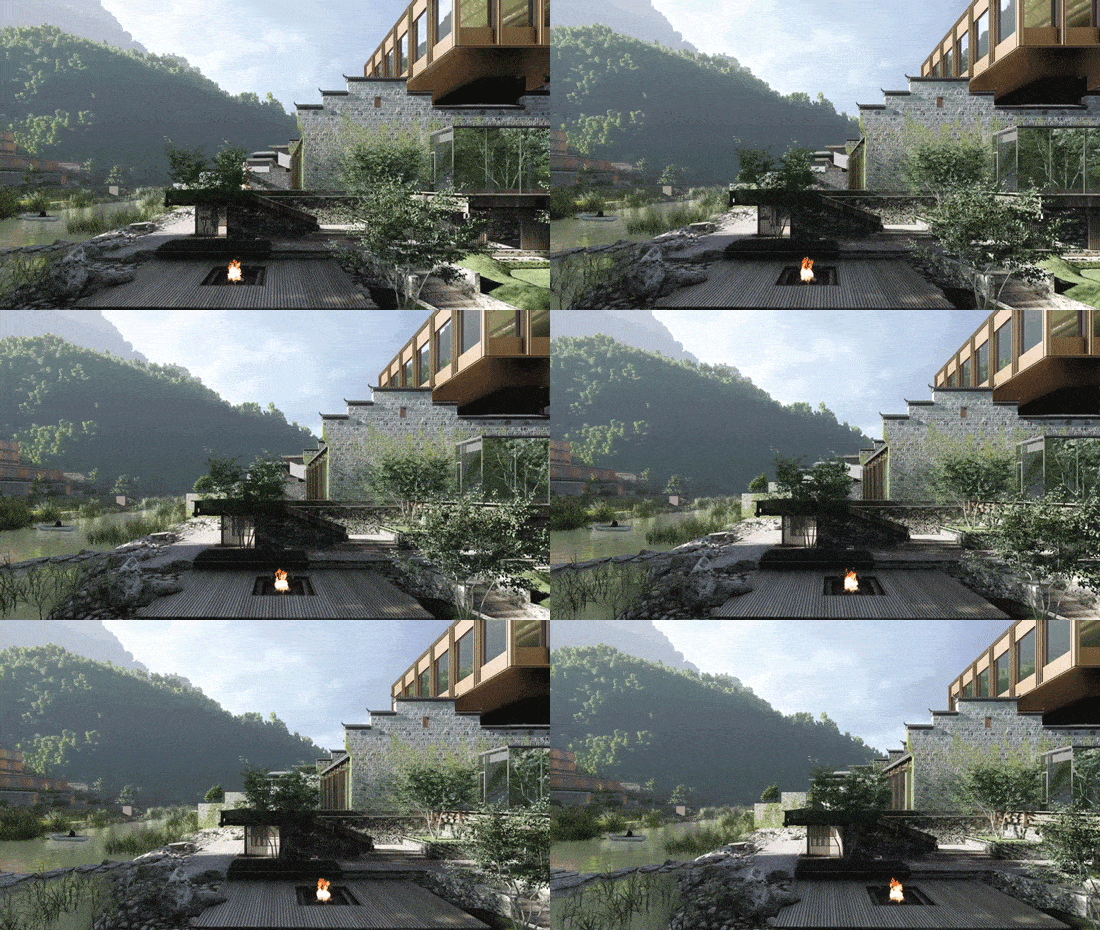
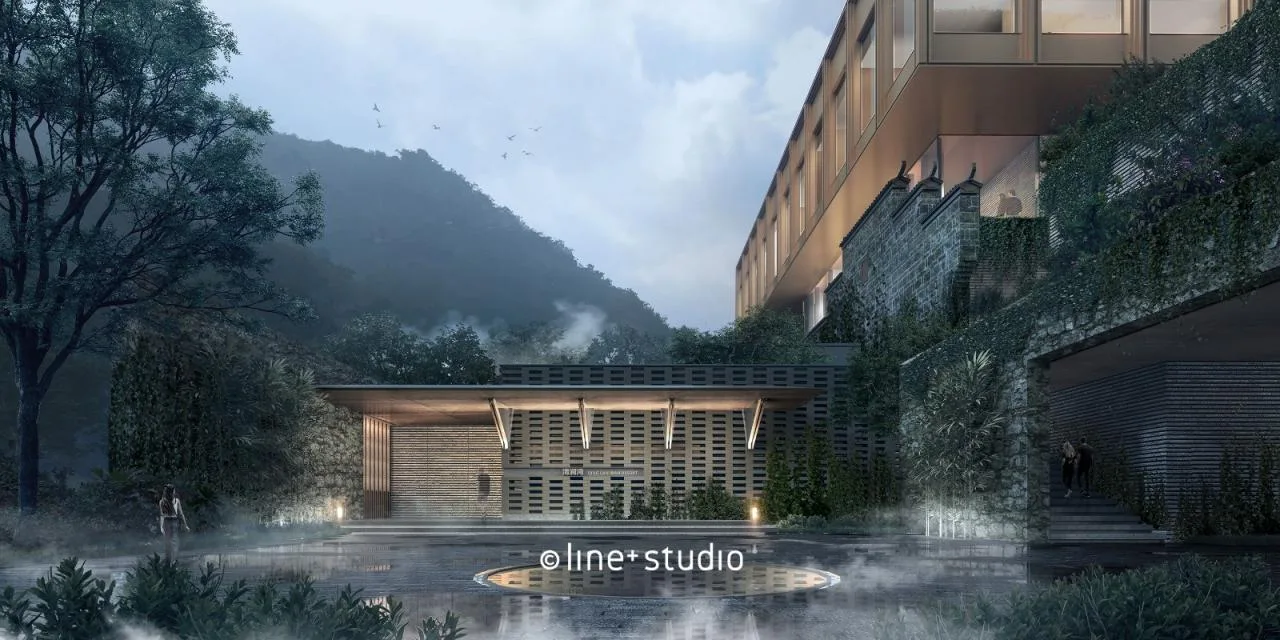
△ The horse head wall reconstructed and integrated into the new public space
The top-tier wild luxury restaurant is a fully transparent box structure, perched atop the double-slope roof of the ancestral hall. Here, visitors can step into the mountains and clouds. Despite the contrast between old and new materials and spaces, the design embraces simplicity and a relaxed atmosphere, encouraging deep, overlapping conversations along the riverbank.
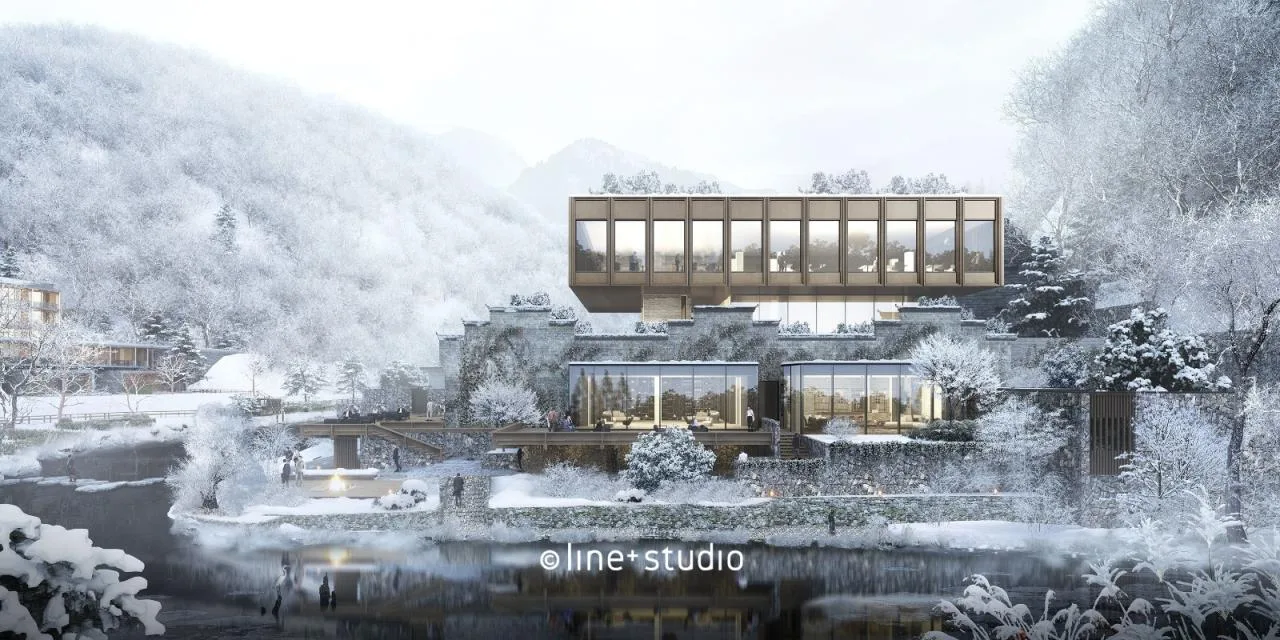
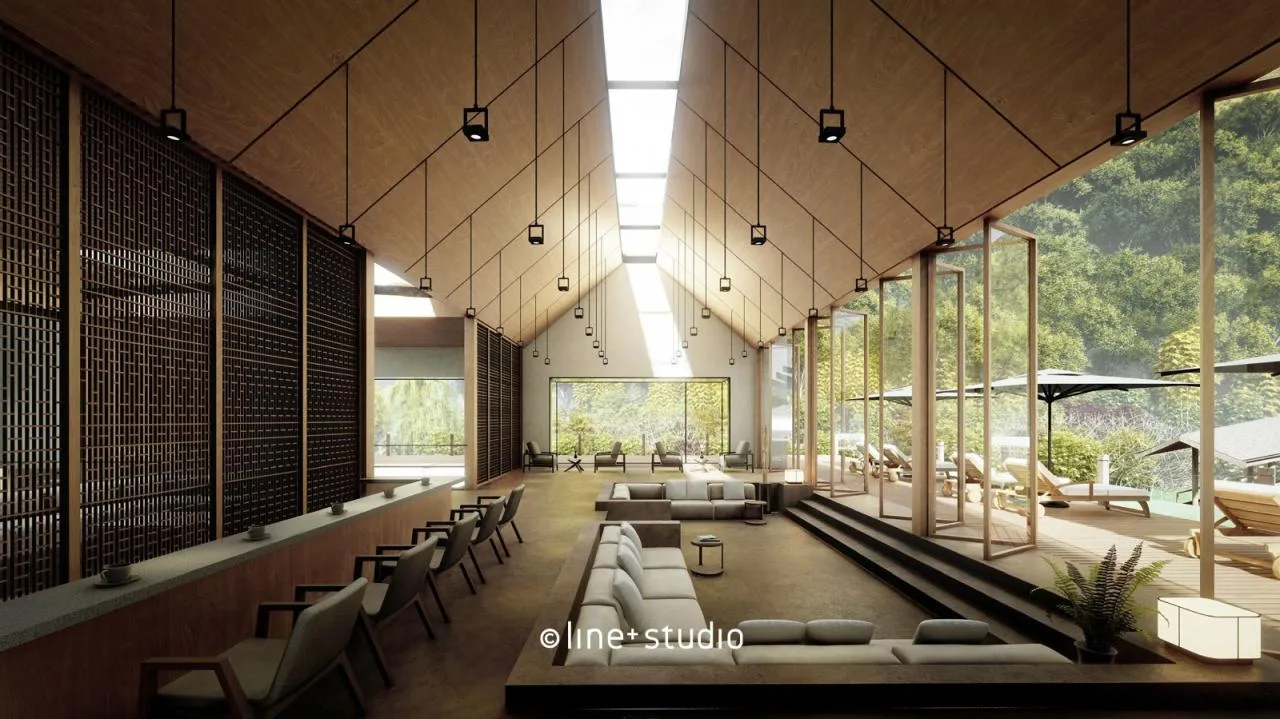
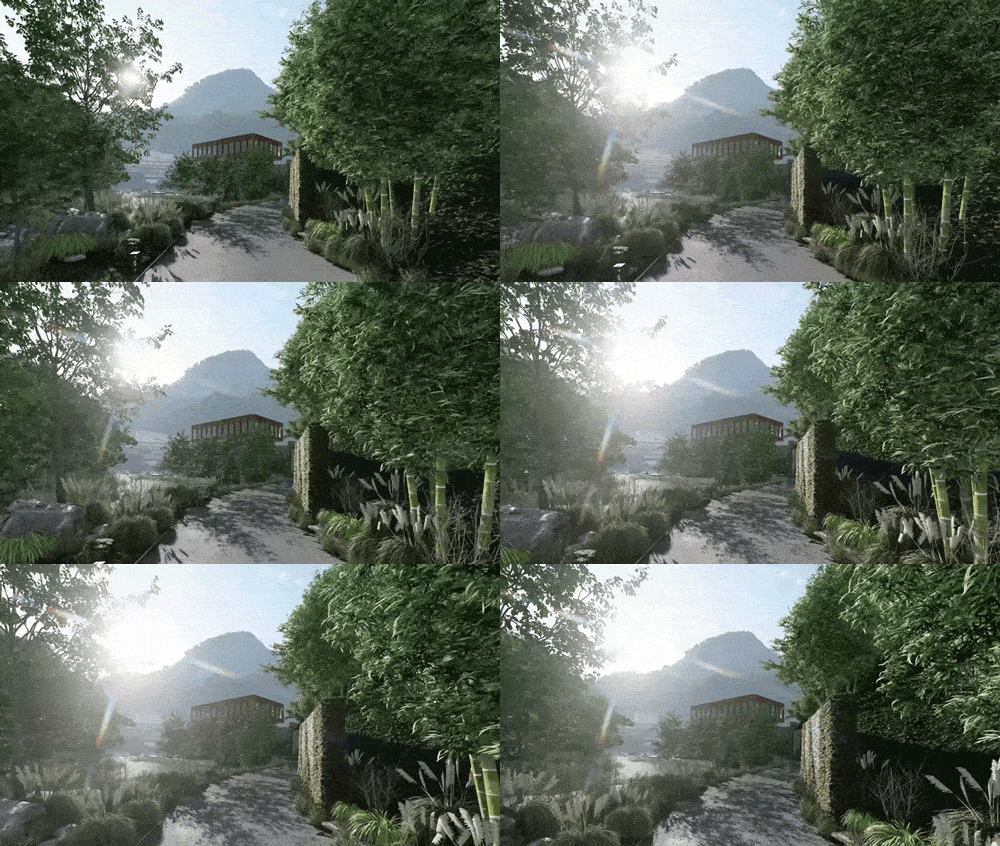
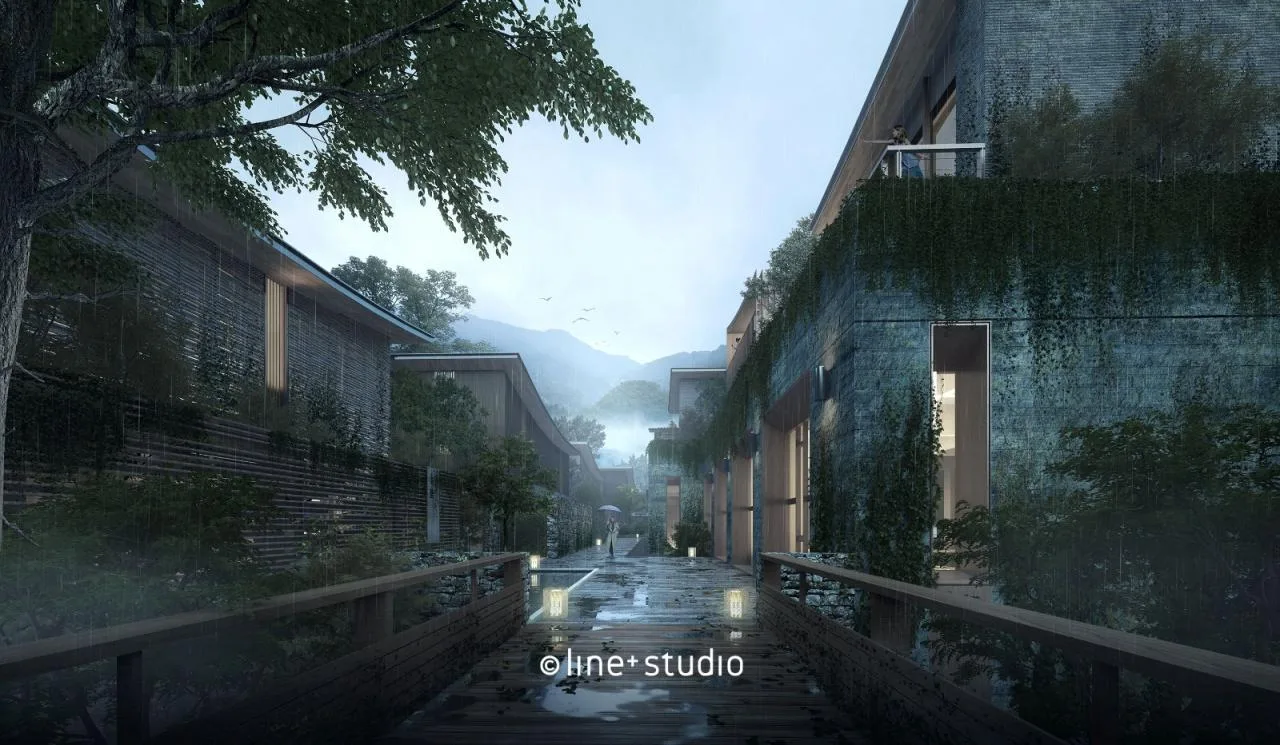
The winding alleys and scattered courtyards inside Qinglan Bay allow residents to enjoy the simple, leisurely life of mountain communities. This area revives a modern settlement infused with rural memories.
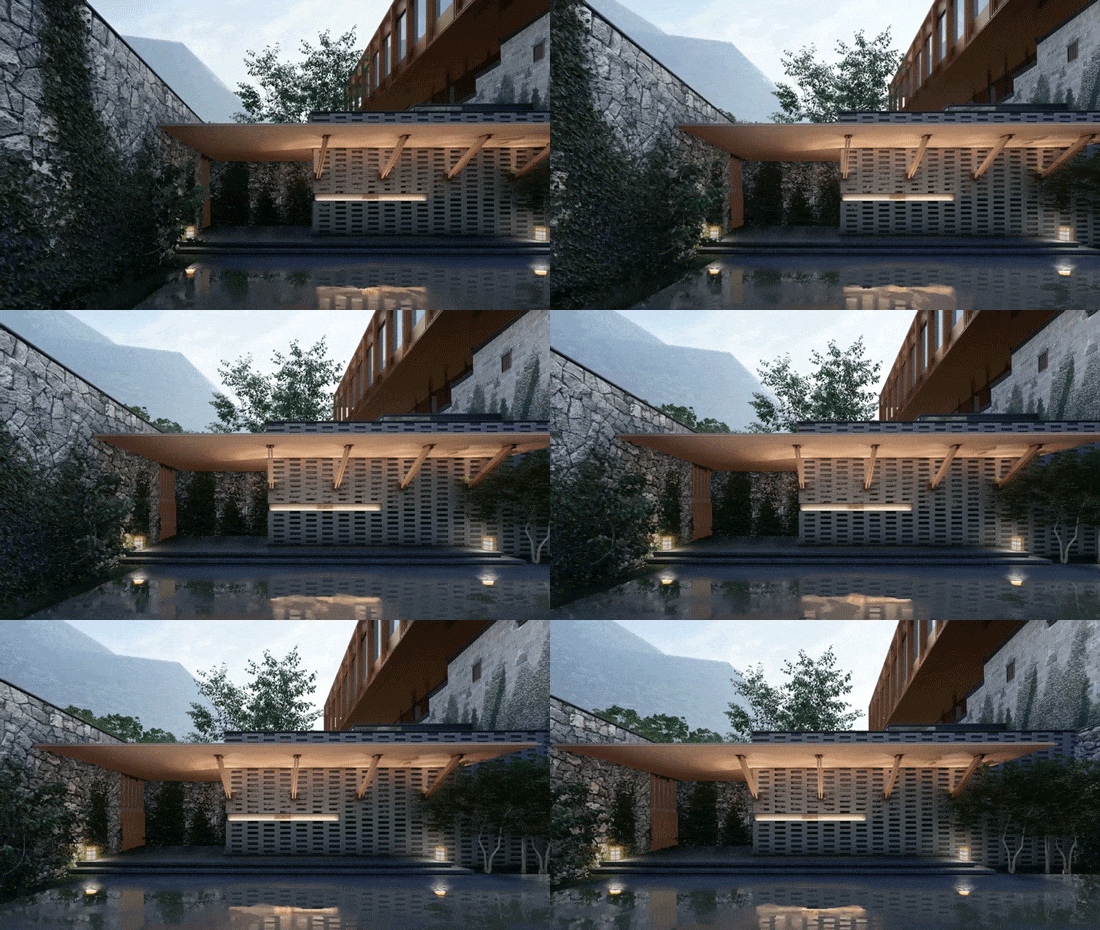
4. Mountains and Wilderness: Creating a Value-Layered Experience
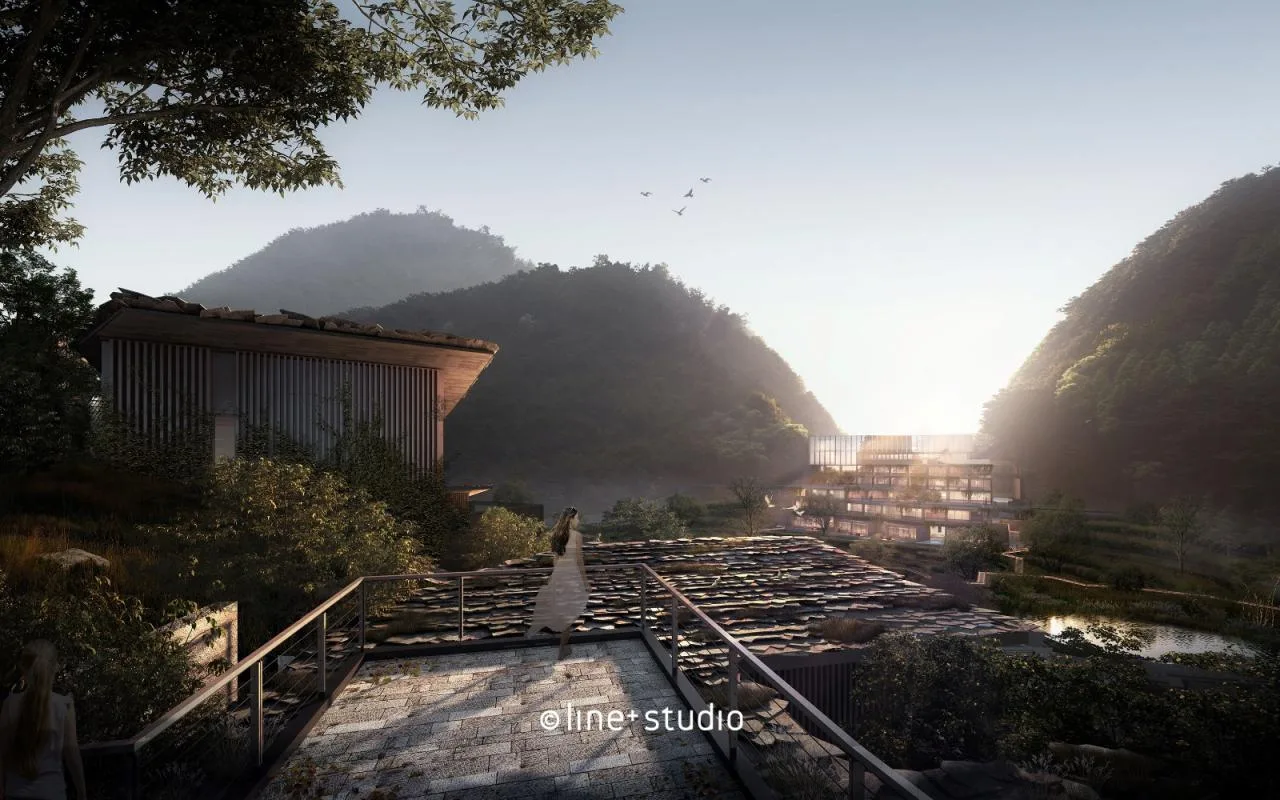
From Yunshan Luxury Hotel in Jiunvfeng, Andaz Hotel in Xixi Wetland, Yingdi Ge Hotel in Luofu Mountain, and Anjian Natala Hotel, to the Thousand Mile Cycling Trail at Mogan Creek Valley, Feiyiji Songyang Chenjiapu, and Guizhou Longtang Mountain House, Line+ specializes in destination travel that explores the original cultural context of each site. They extract and transform the natural mountain and wilderness values, building layered and three-dimensional media points that unlock the unique exploration potential of each destination, offering an immersive sensory experience with nature.
Construction of Haihua Pujiang Yuexi Village is already underway, with Line+ continuing to explore new and exciting mountain wilderness projects.
Project Information
Project Name: Haihua Yuexili Resort Hotel
Location: Jinhua, Zhejiang
Design Firm: Line+ Architectural Firm
Lead Architect & Project Creator: Meng Fanhao
Conceptual Design Phase Leader: Li Xinguang
Conceptual Design Team: Zhu Xiaojing, Yuan Dong, Su Kelun
Implementation Plan Phase Leader: Su Kelun
Implementation Design Team: Zhu Xiaojing, Zhang Hanqi, Huang Yukun, Yang Xuejian, Chen Zexin, Shen Rui, Li Changhao, Li Jing
Owner: Zhejiang Haihua Group Co., Ltd.
Building Area: 24,398 square meters
Design Period: May 2021 – Present














Must log in before commenting!
Sign Up