
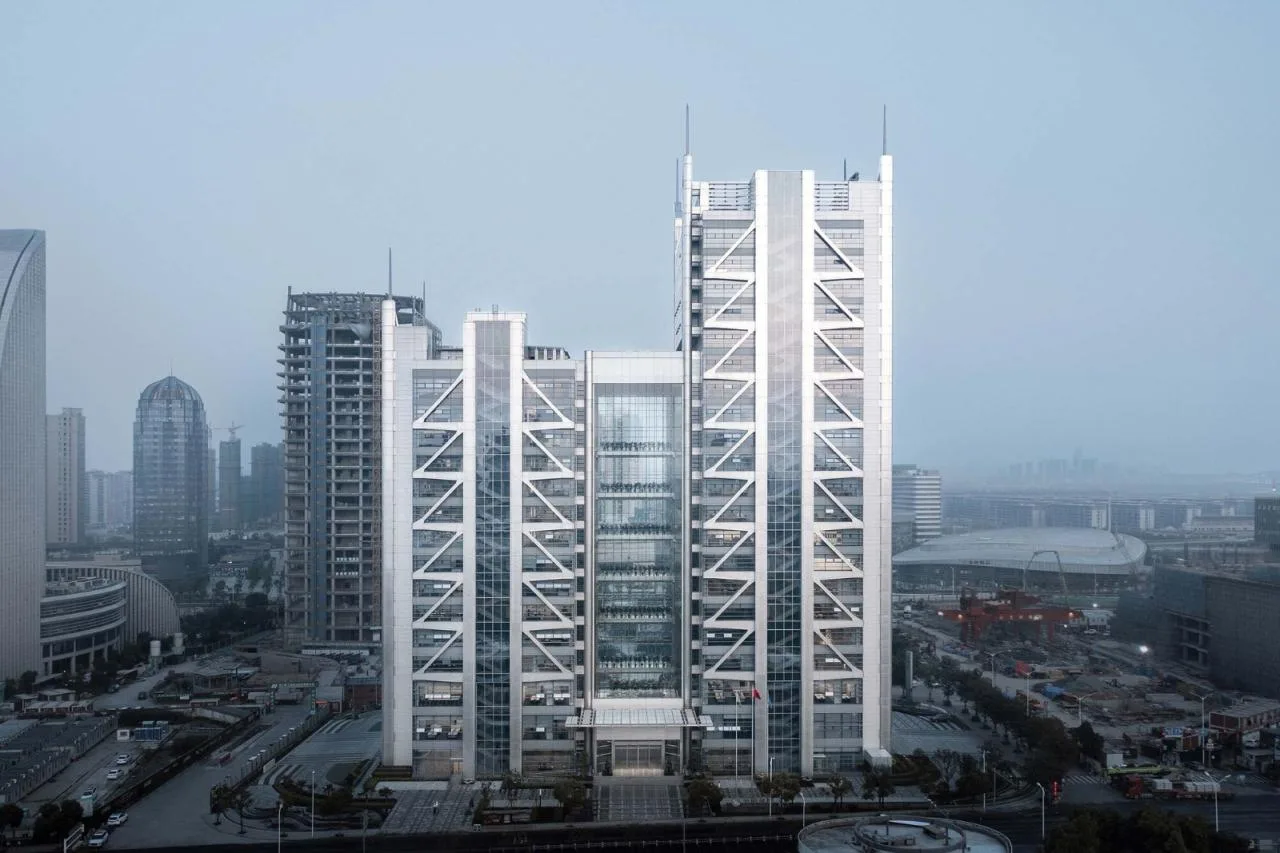
Contemporary architecture faces greater functional uncertainties than in the past. Constant changes in building use have become the norm throughout a building’s lifecycle. To address this, the Shuangqing Building employs a systematic design approach that integrates space, structure, façade, and equipment. This creates a forward-looking and versatile spatial organization, ensuring the building’s flexibility and adaptability.
— Li Yongzheng, Co-founder and Chief Architect of UUA
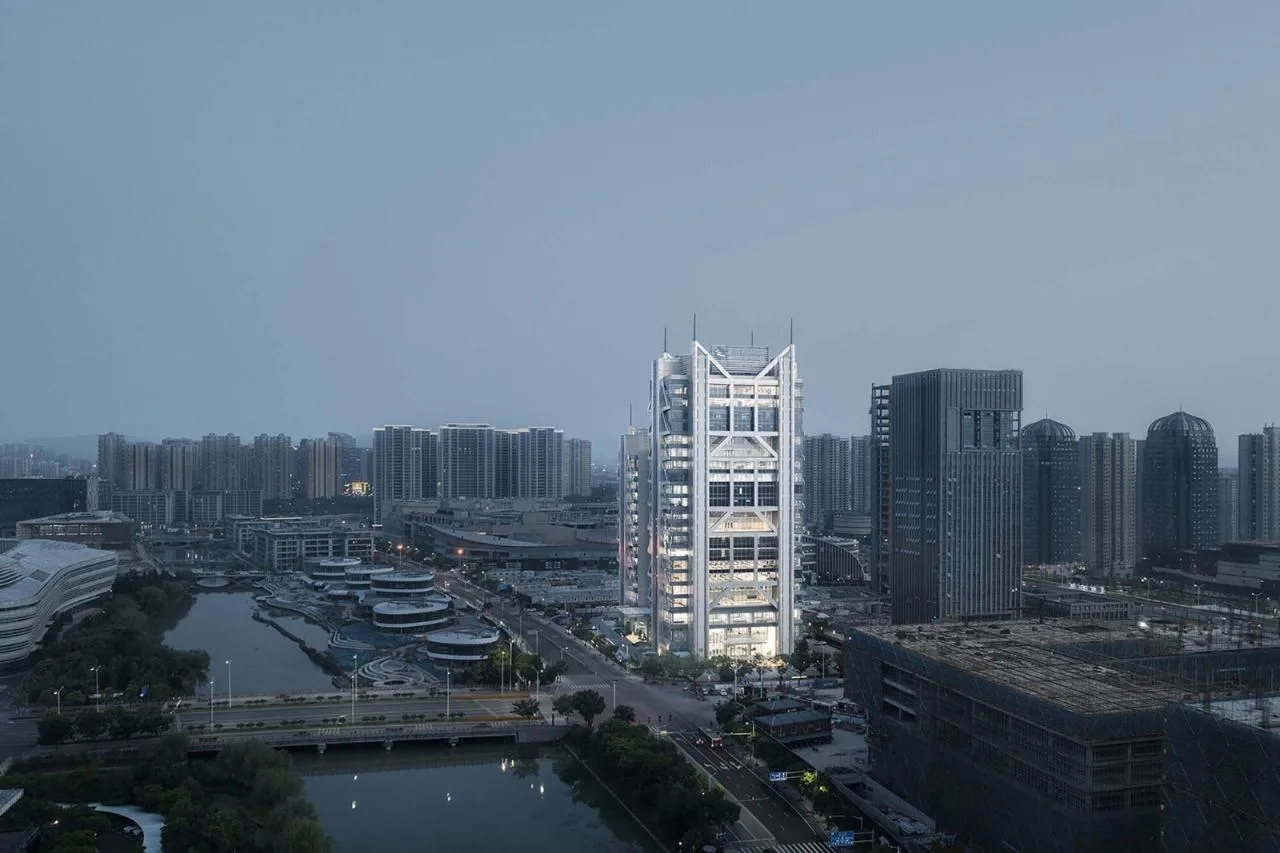
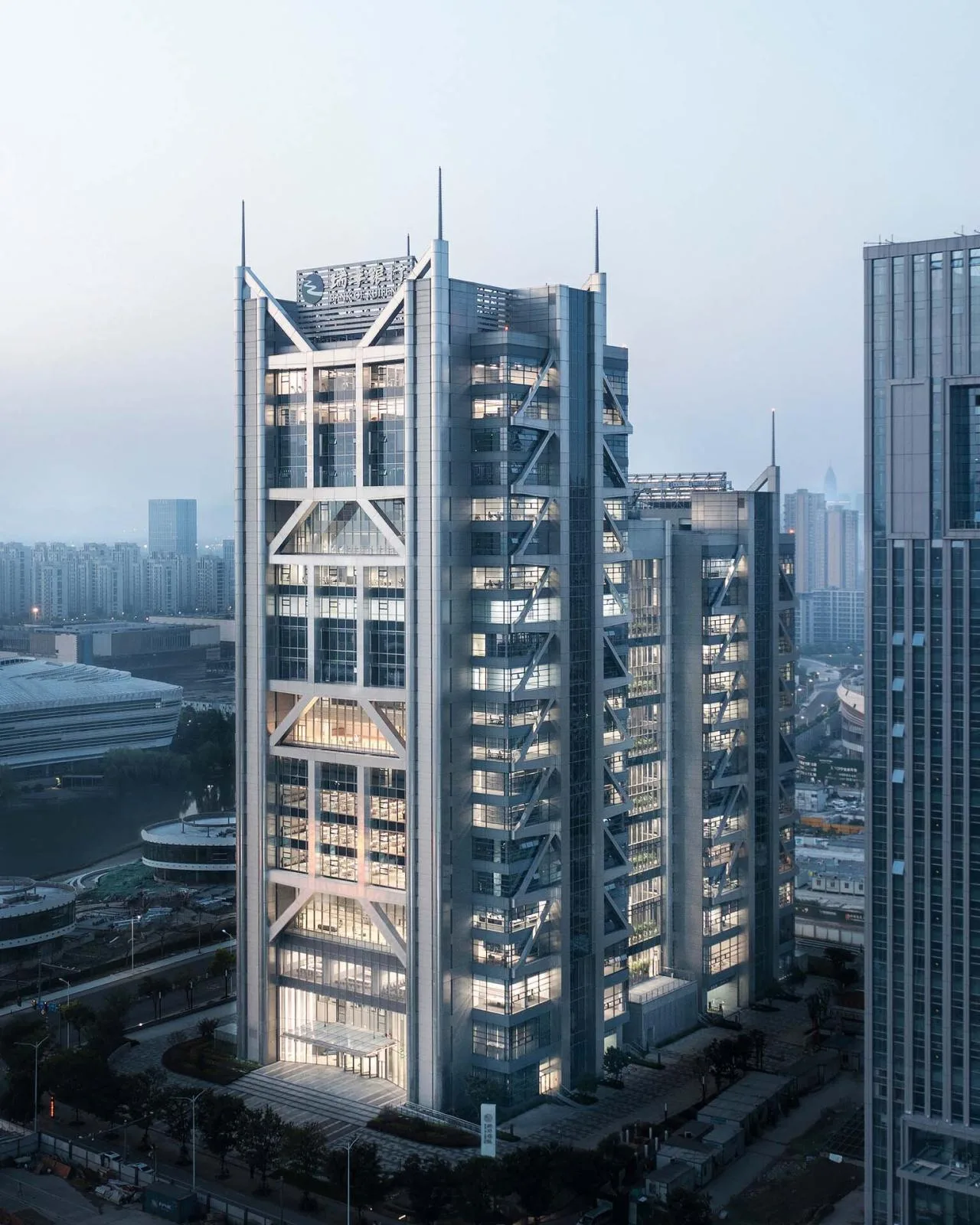
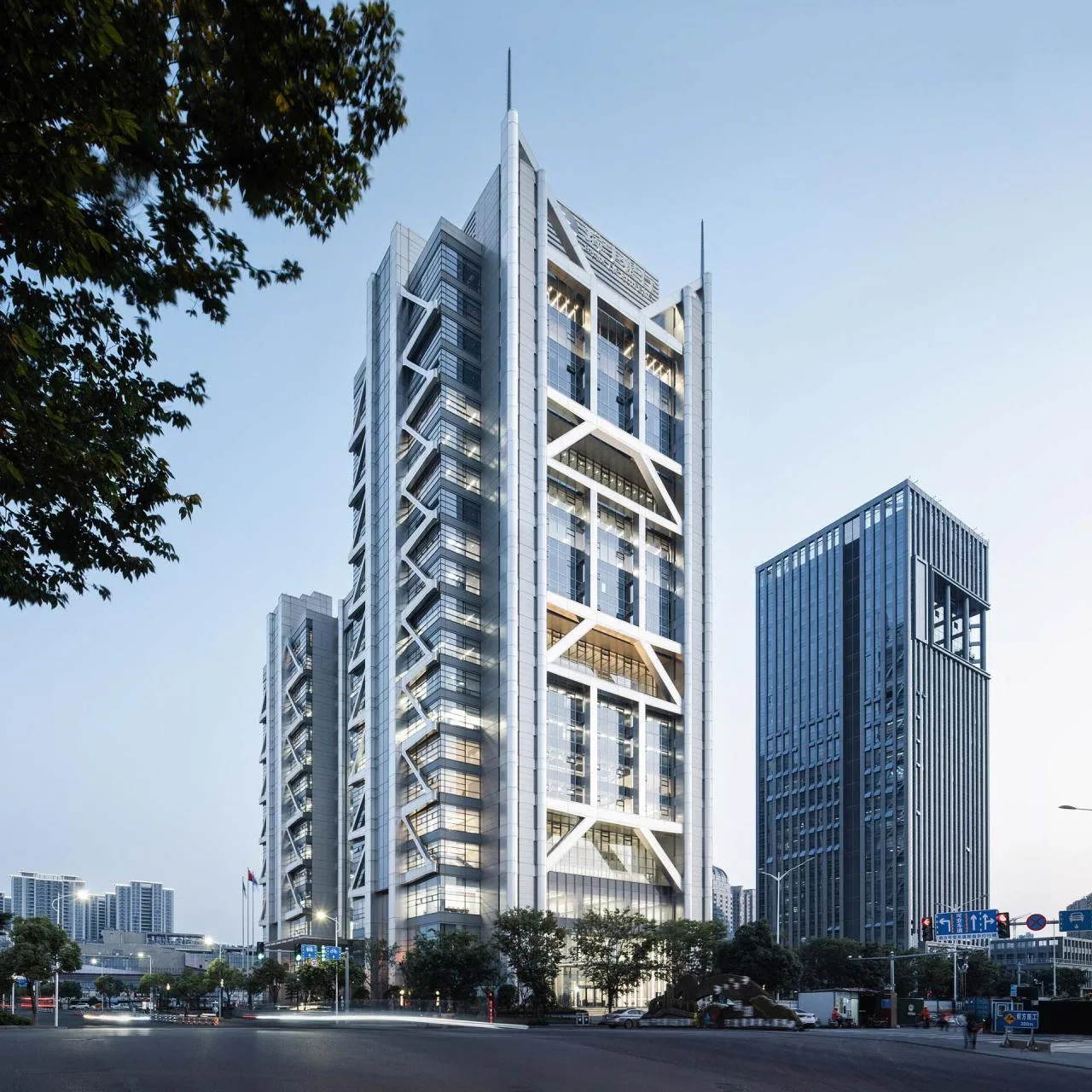
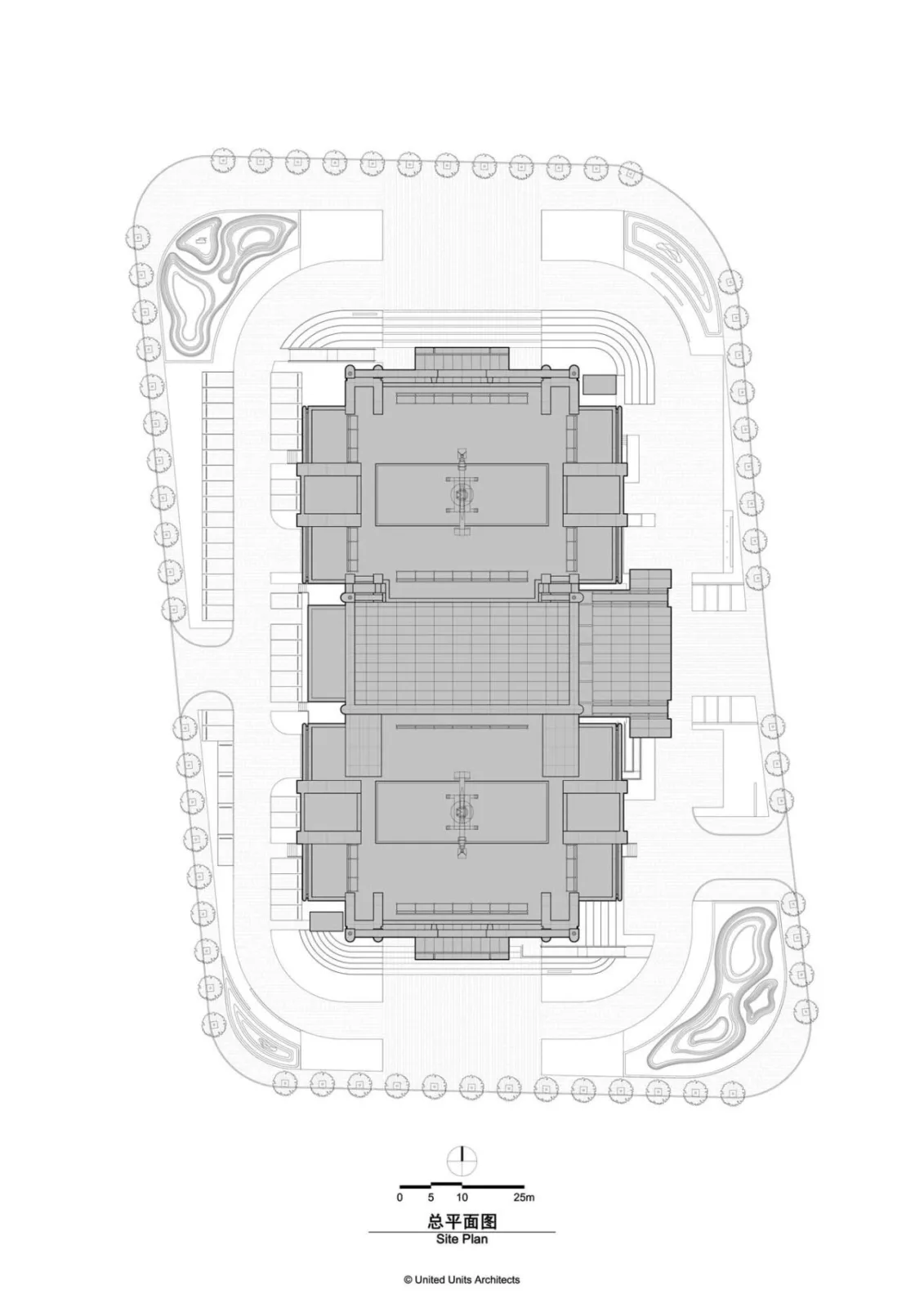
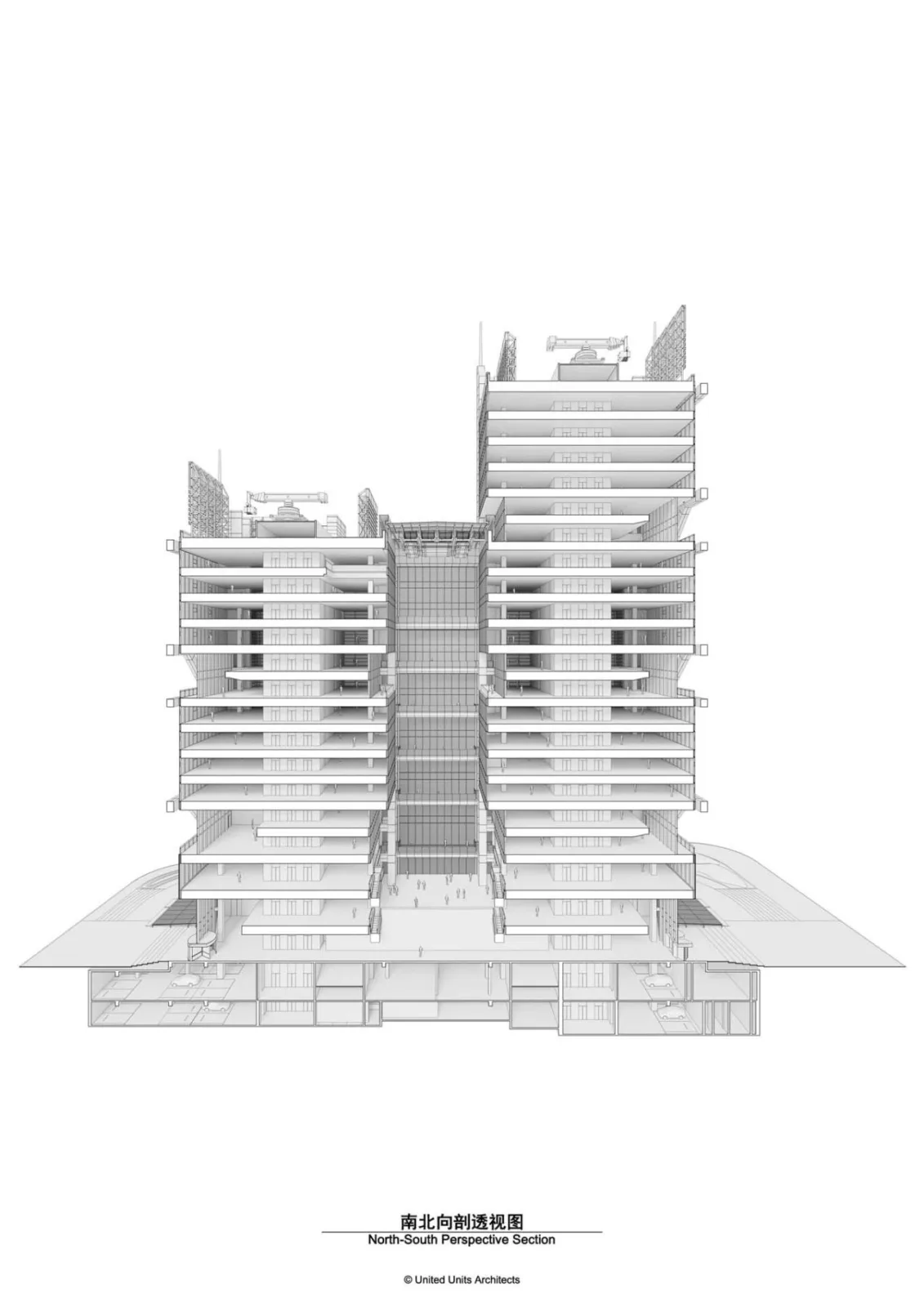
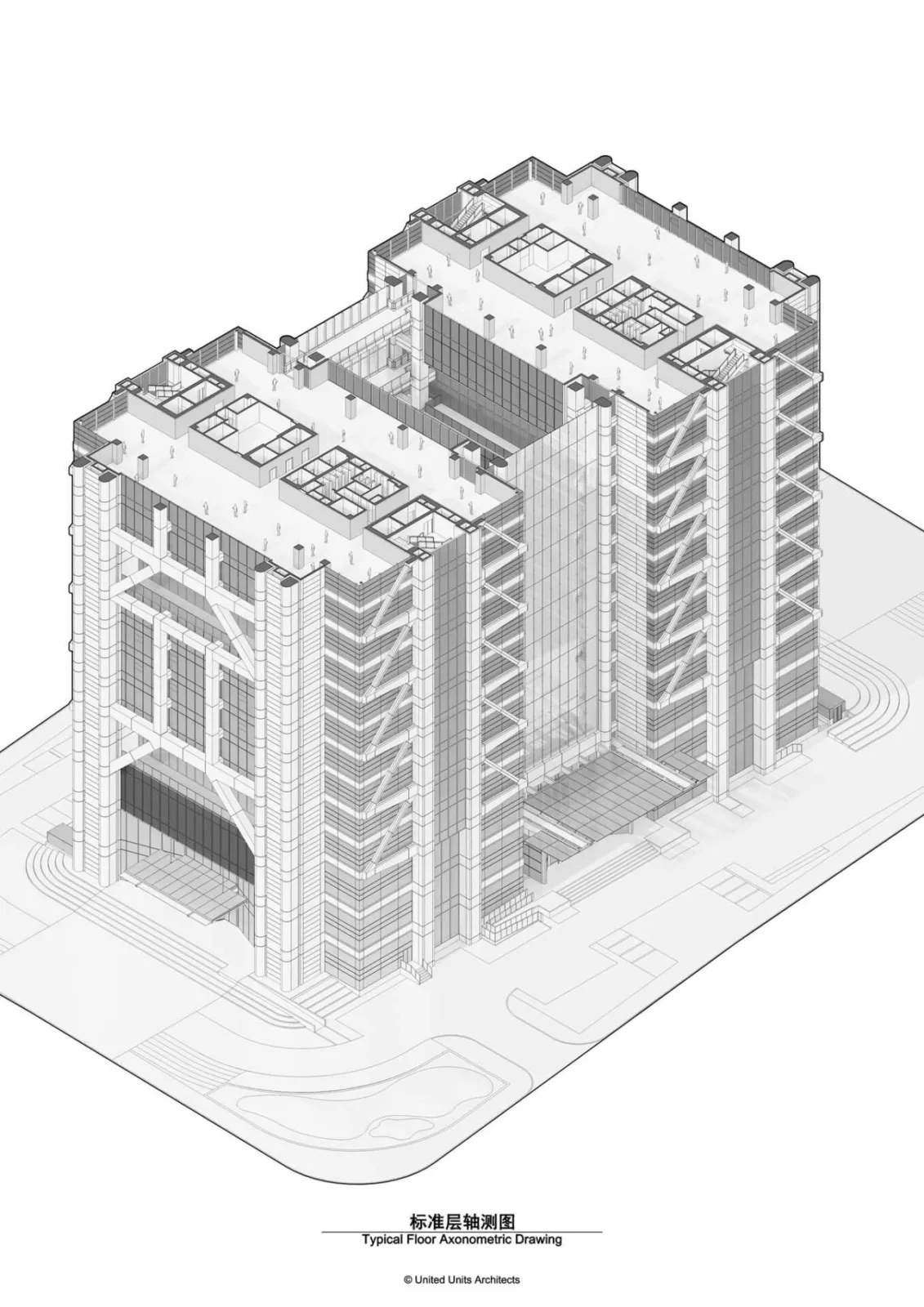
Project Background: Located in the heart of Jinghu New District, Shaoxing, Zhejiang, the Shuangqing Building comprises two towers—15 and 21 floors tall—connected by a 70-meter-high glass atrium.
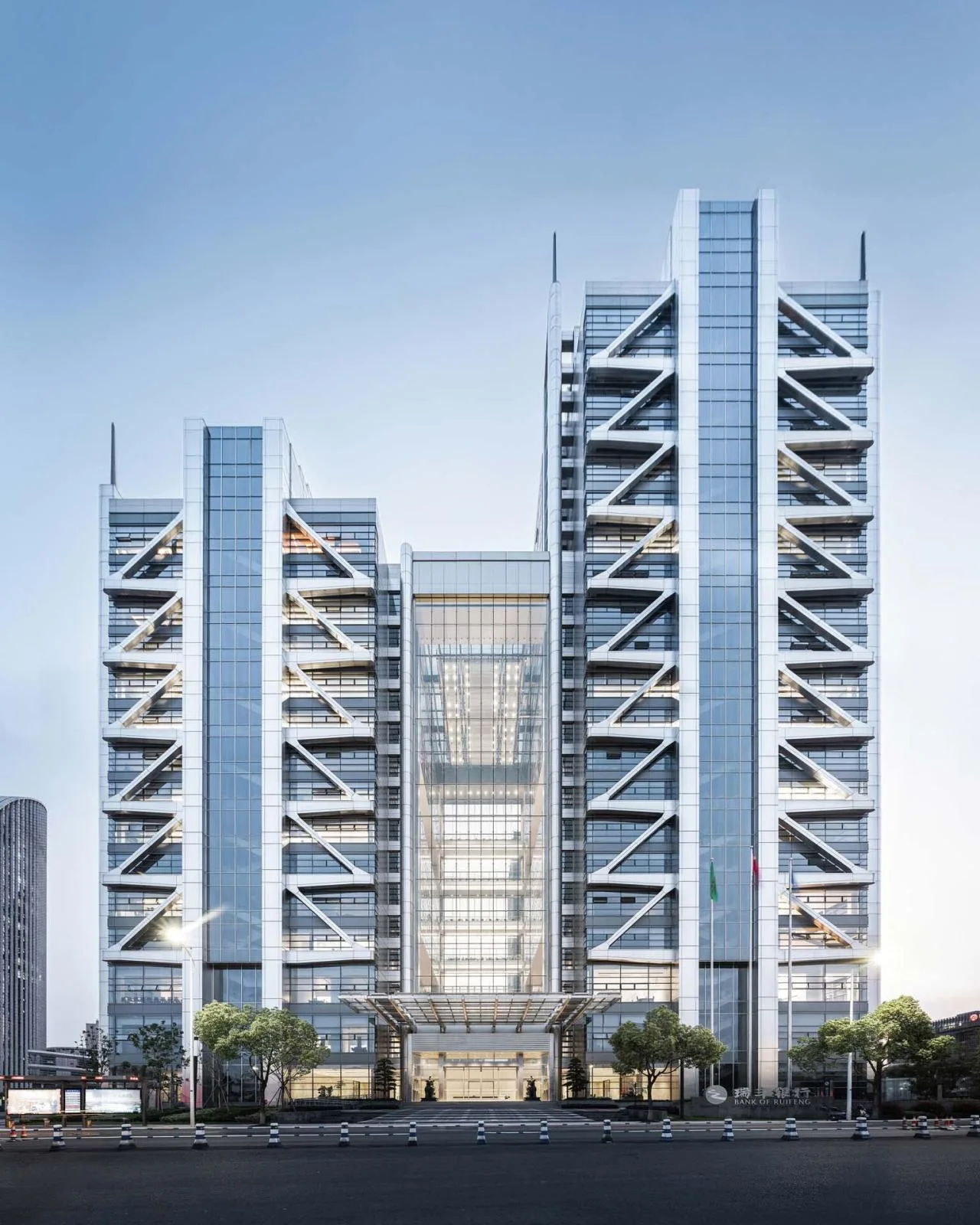
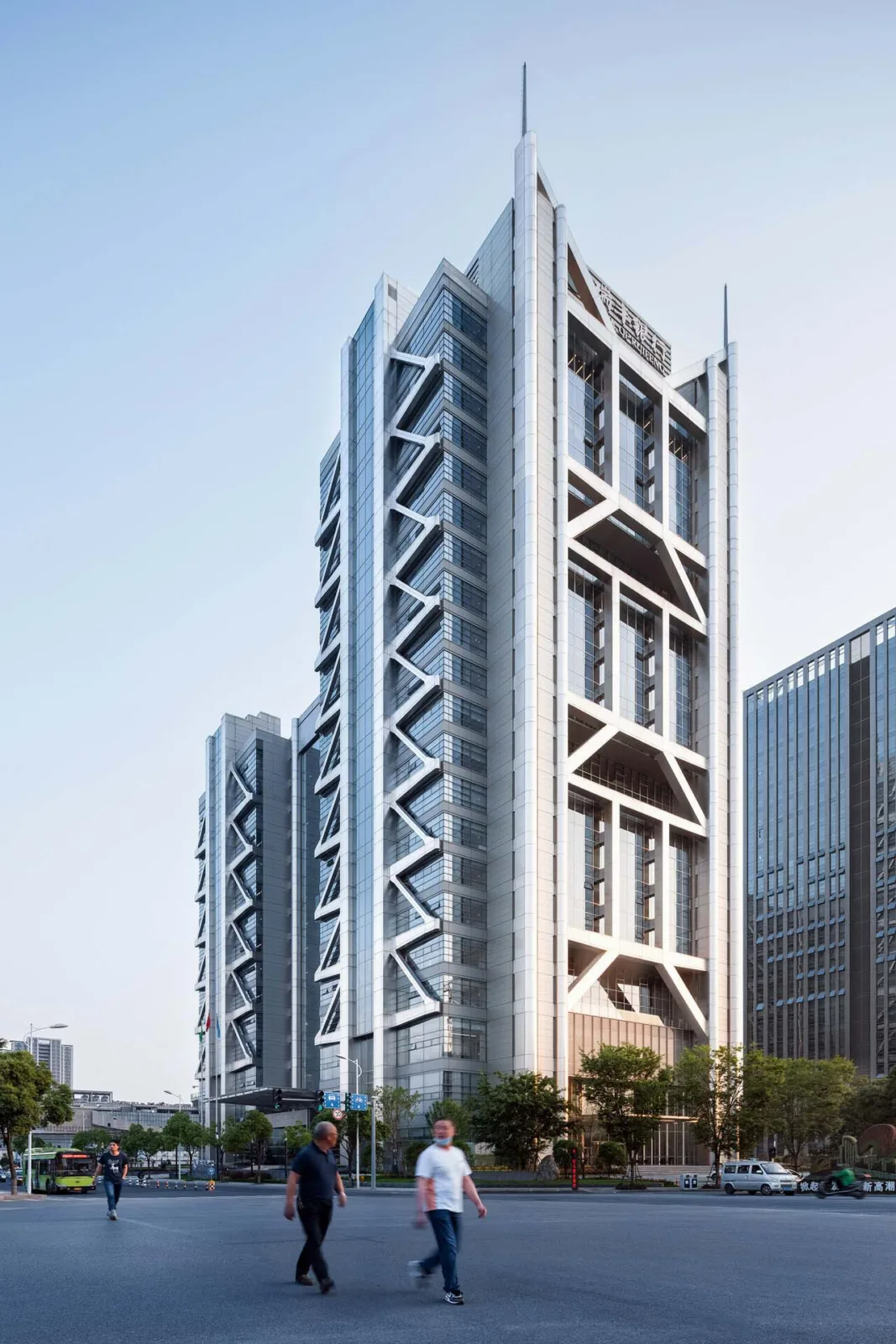
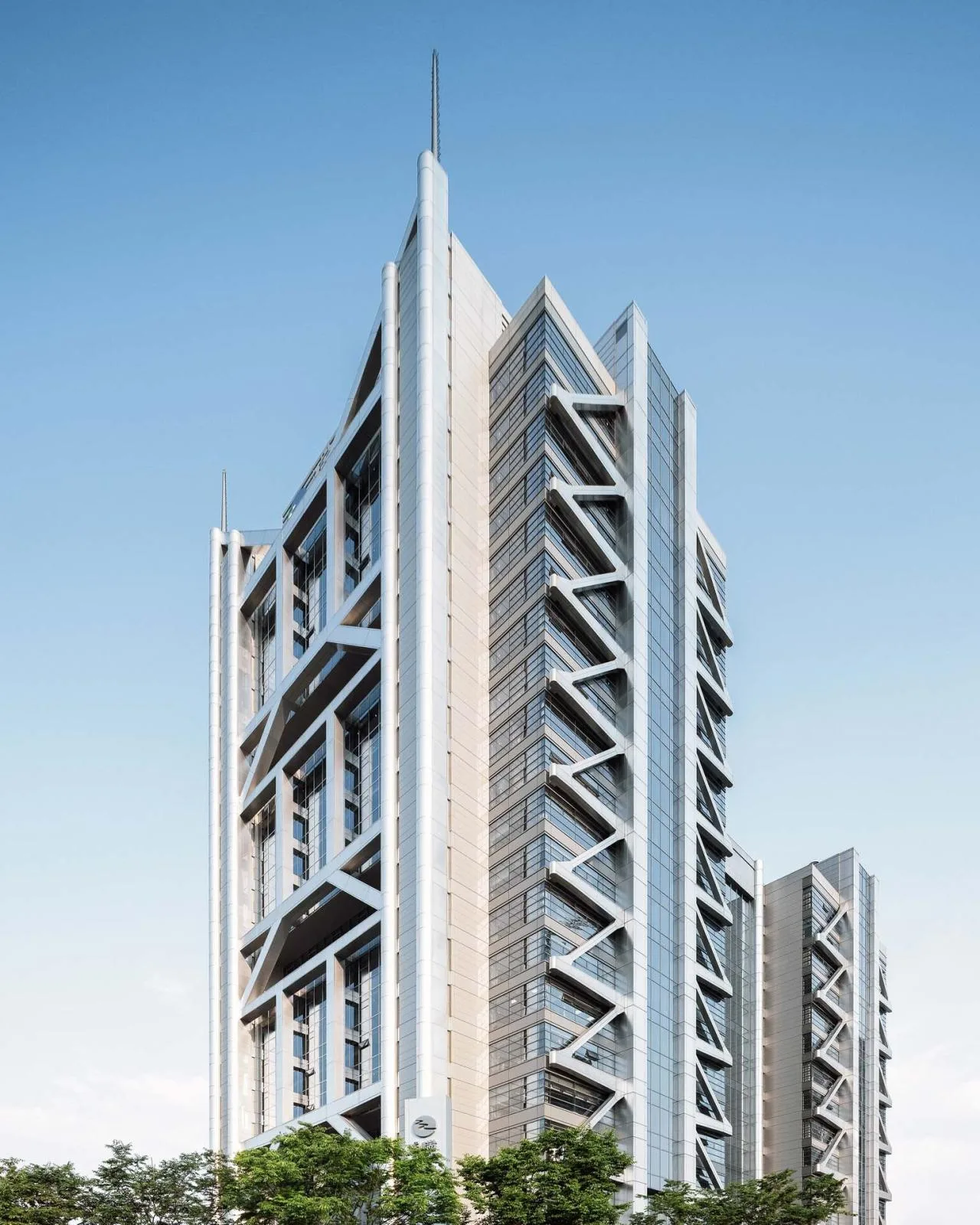
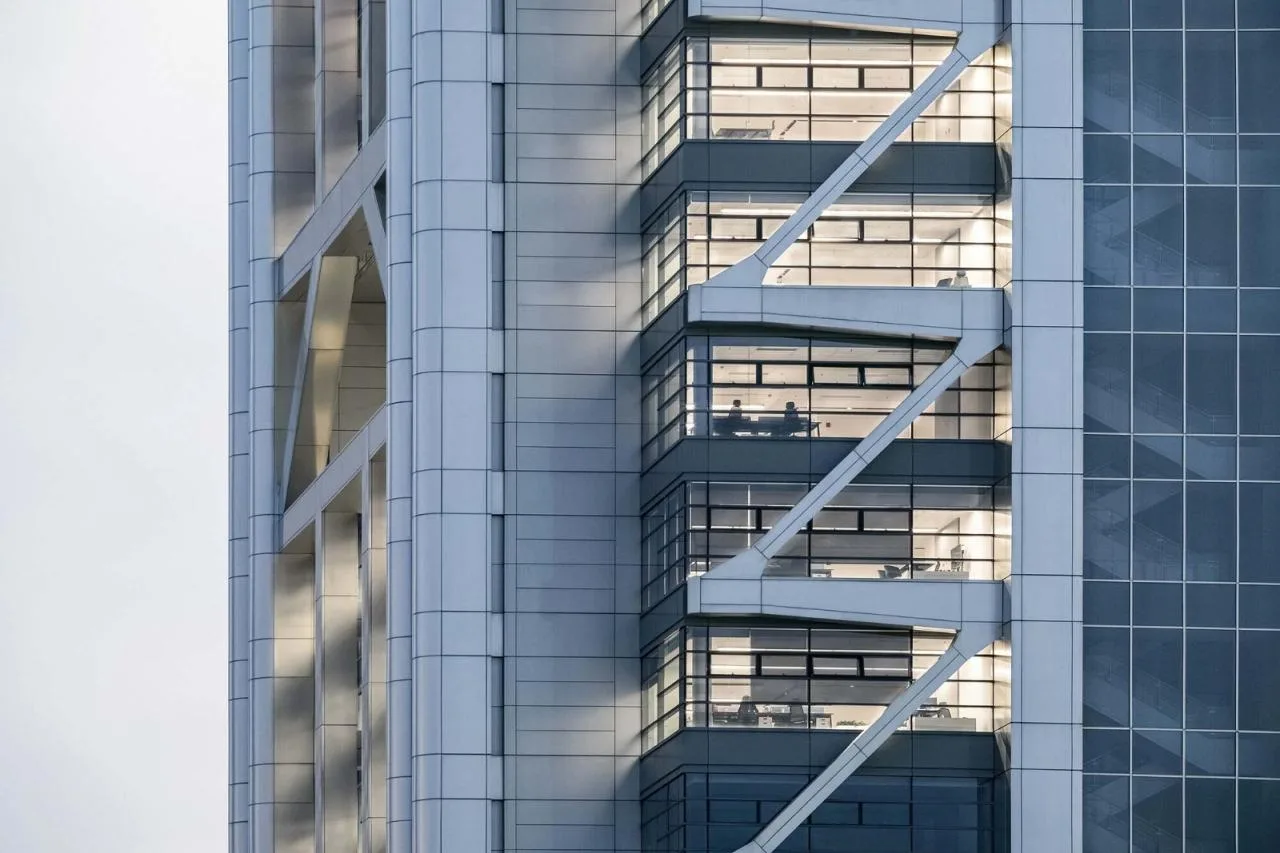
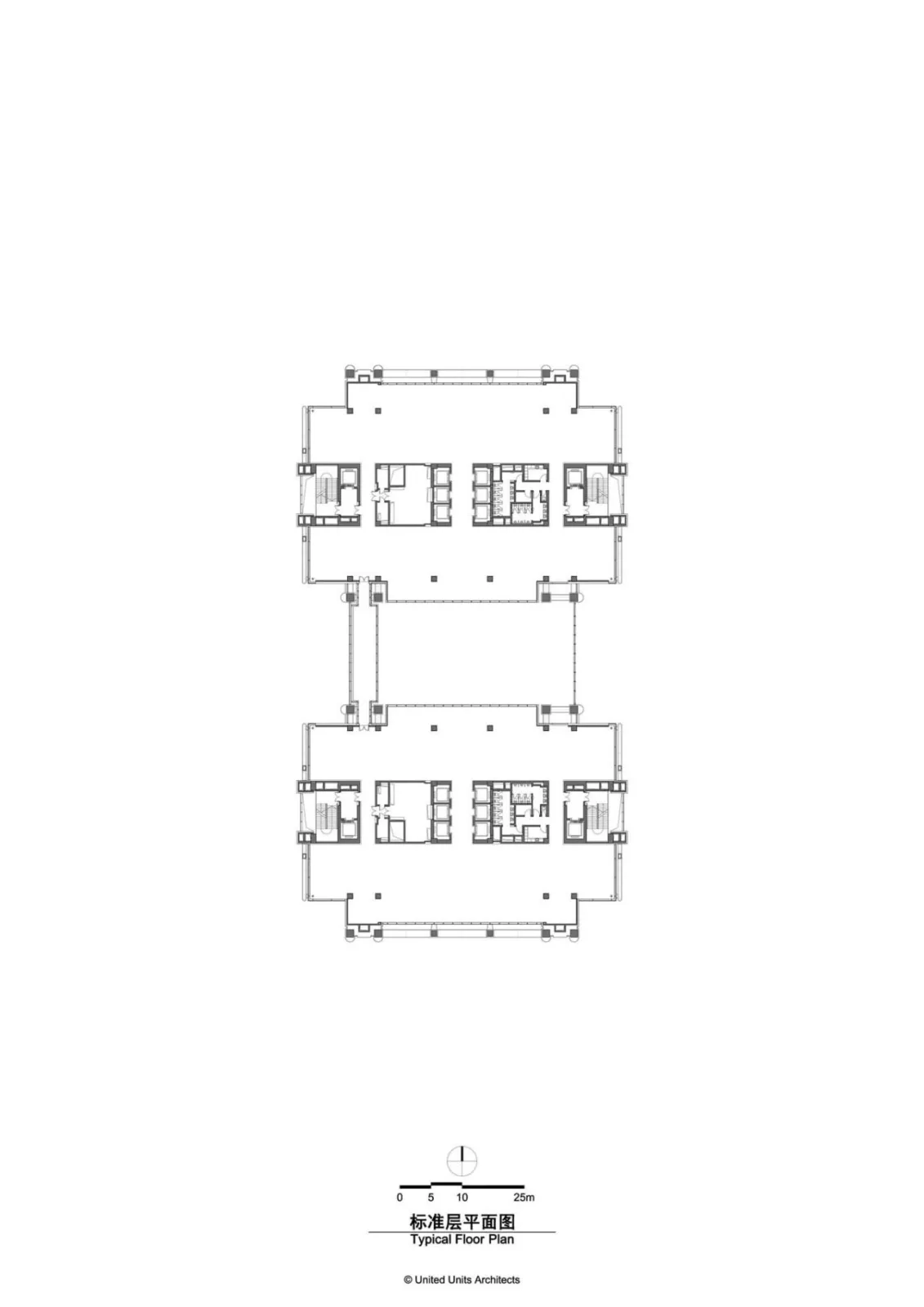
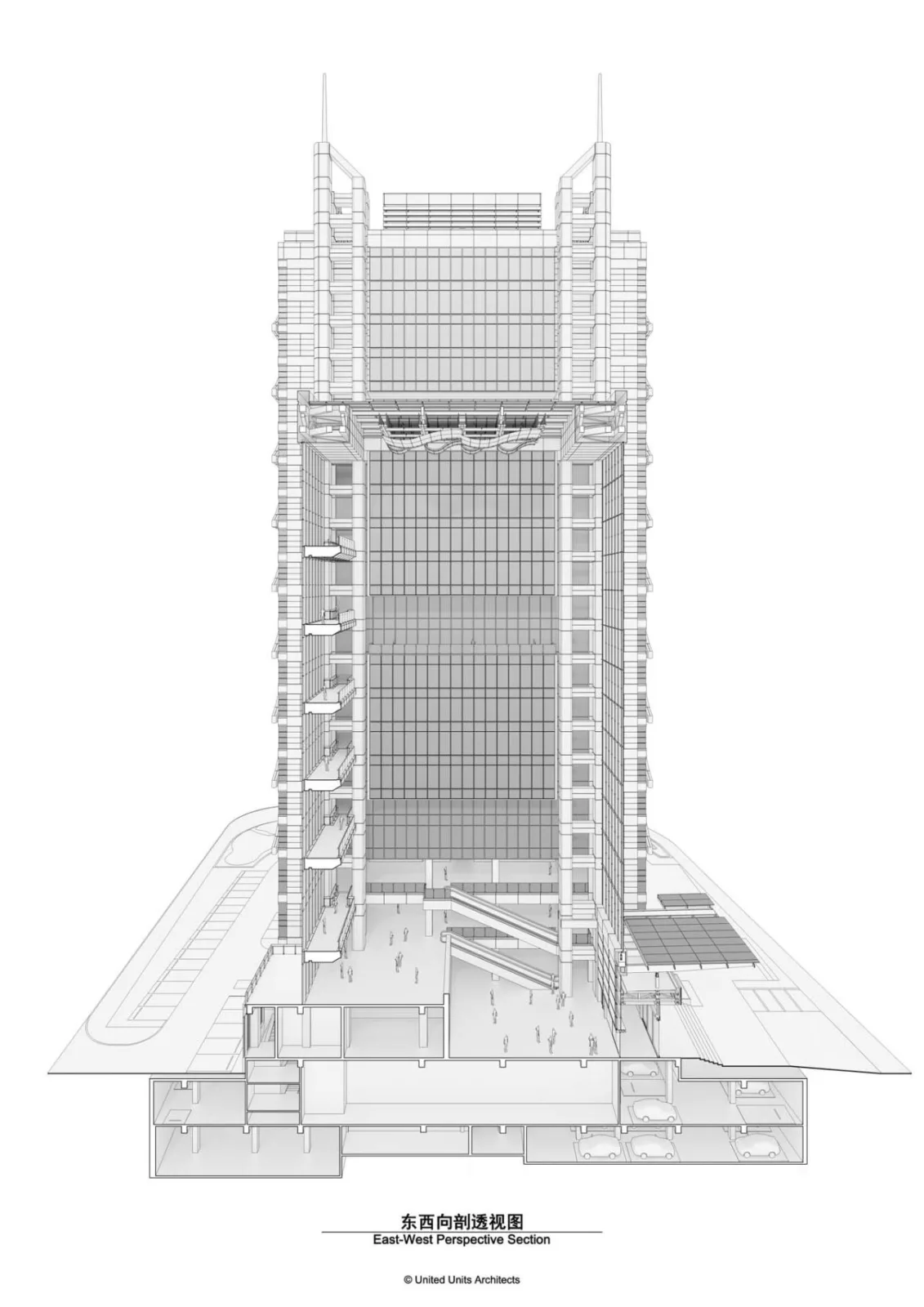
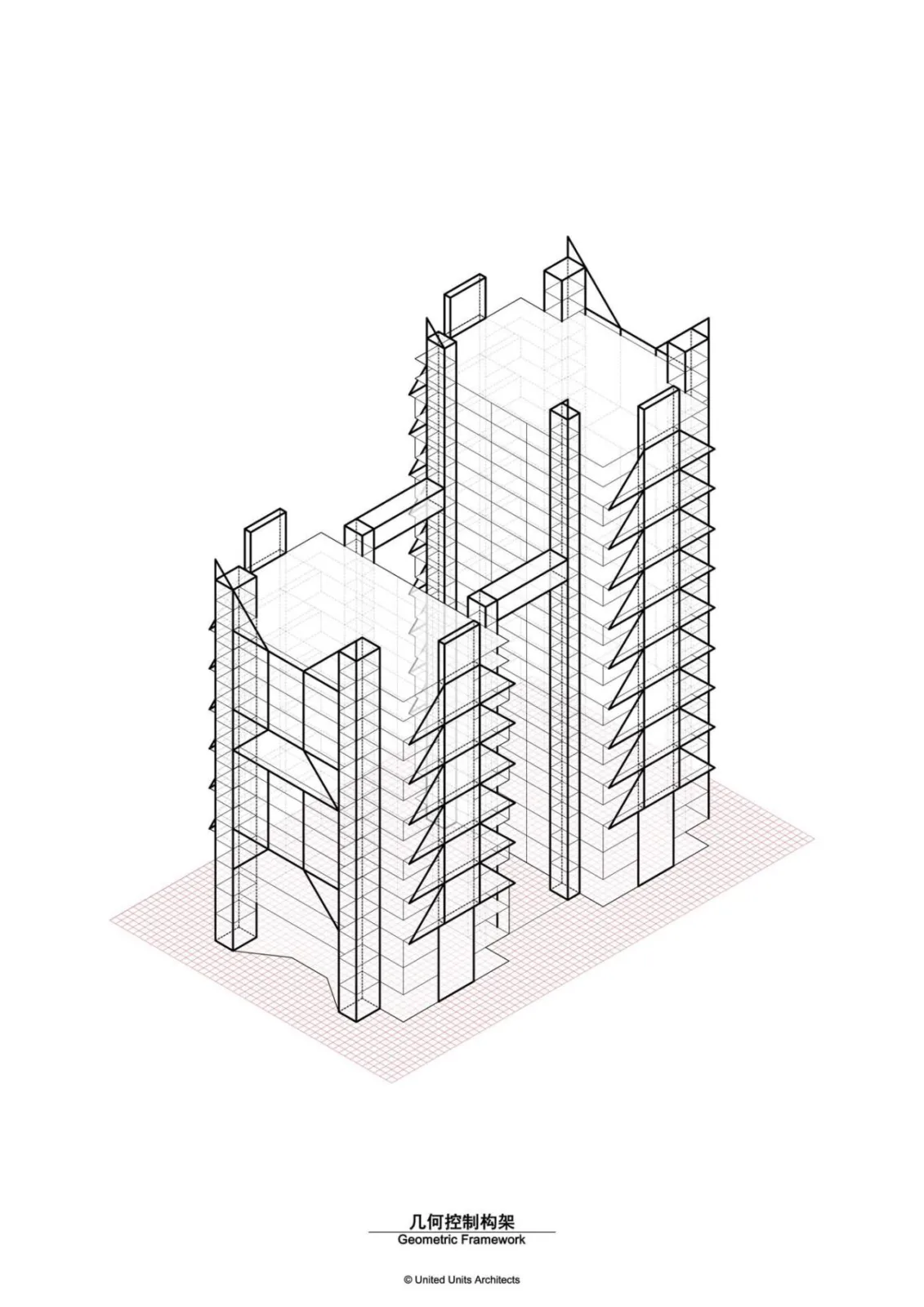
The building features an external structural design that significantly reduces the number of columns on typical floors, creating expansive open office spaces ideal for flexible future use. The external structure not only supports the building mechanically but also defines its spatial order, resulting in a distinctive artistic expression for the Shuangqing Building.
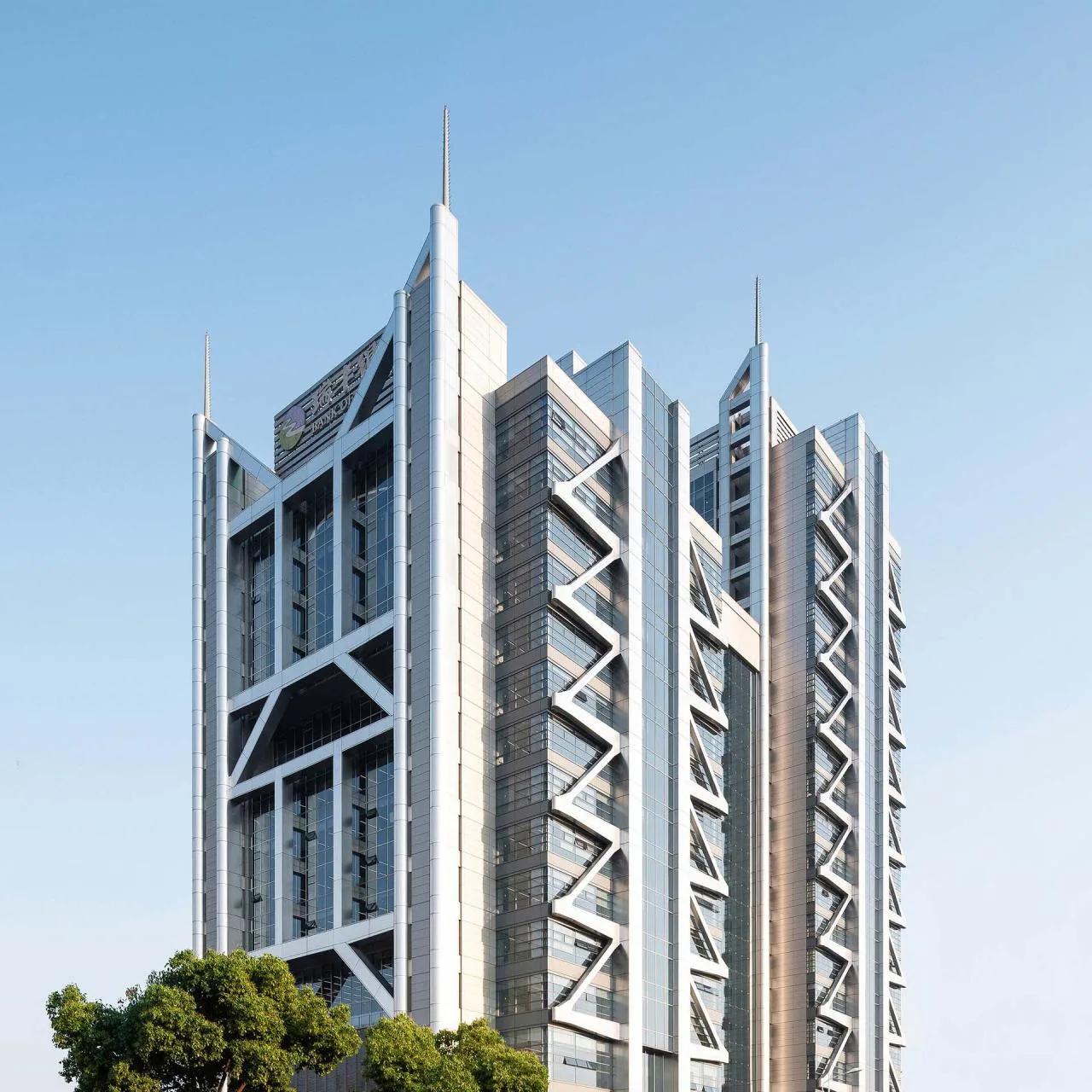
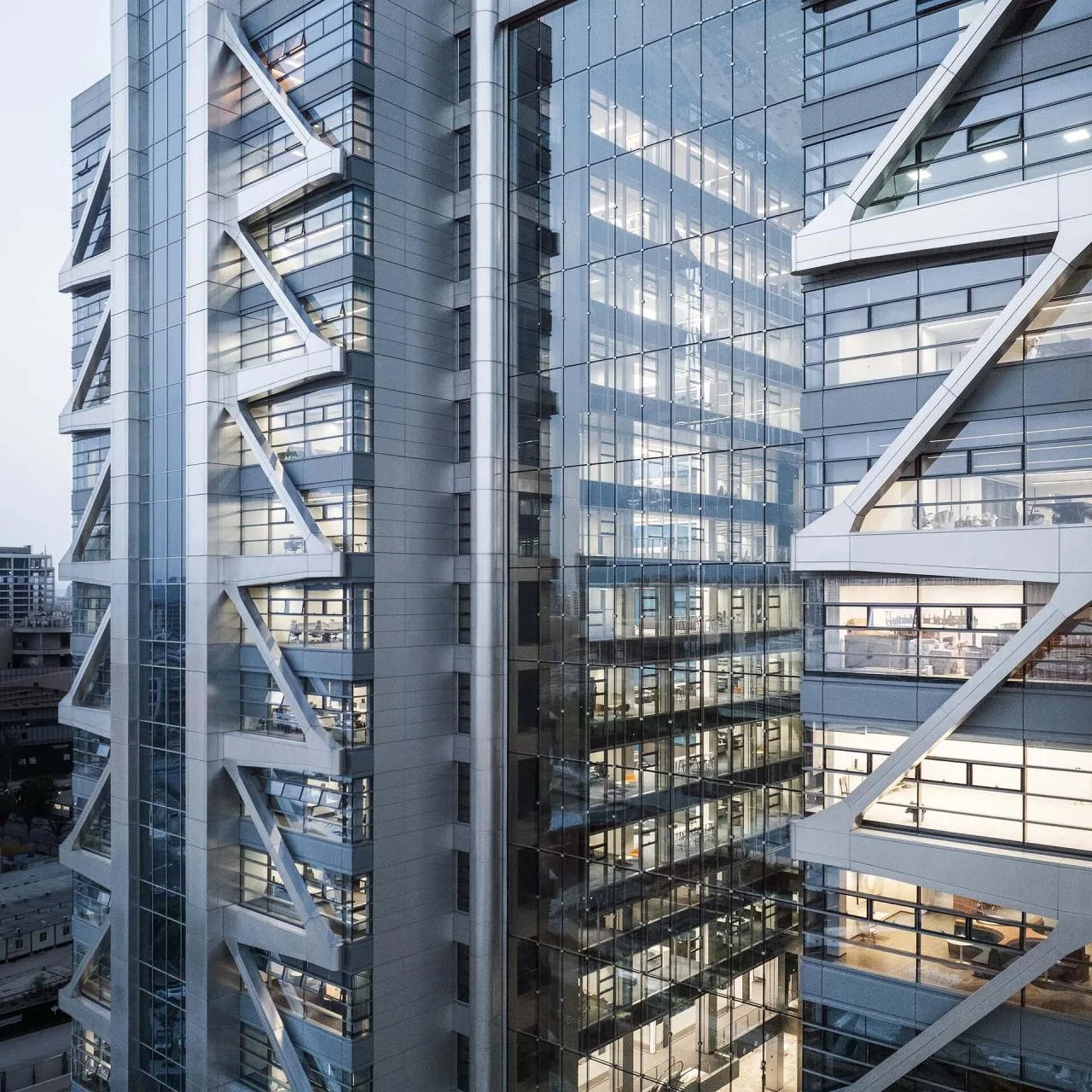
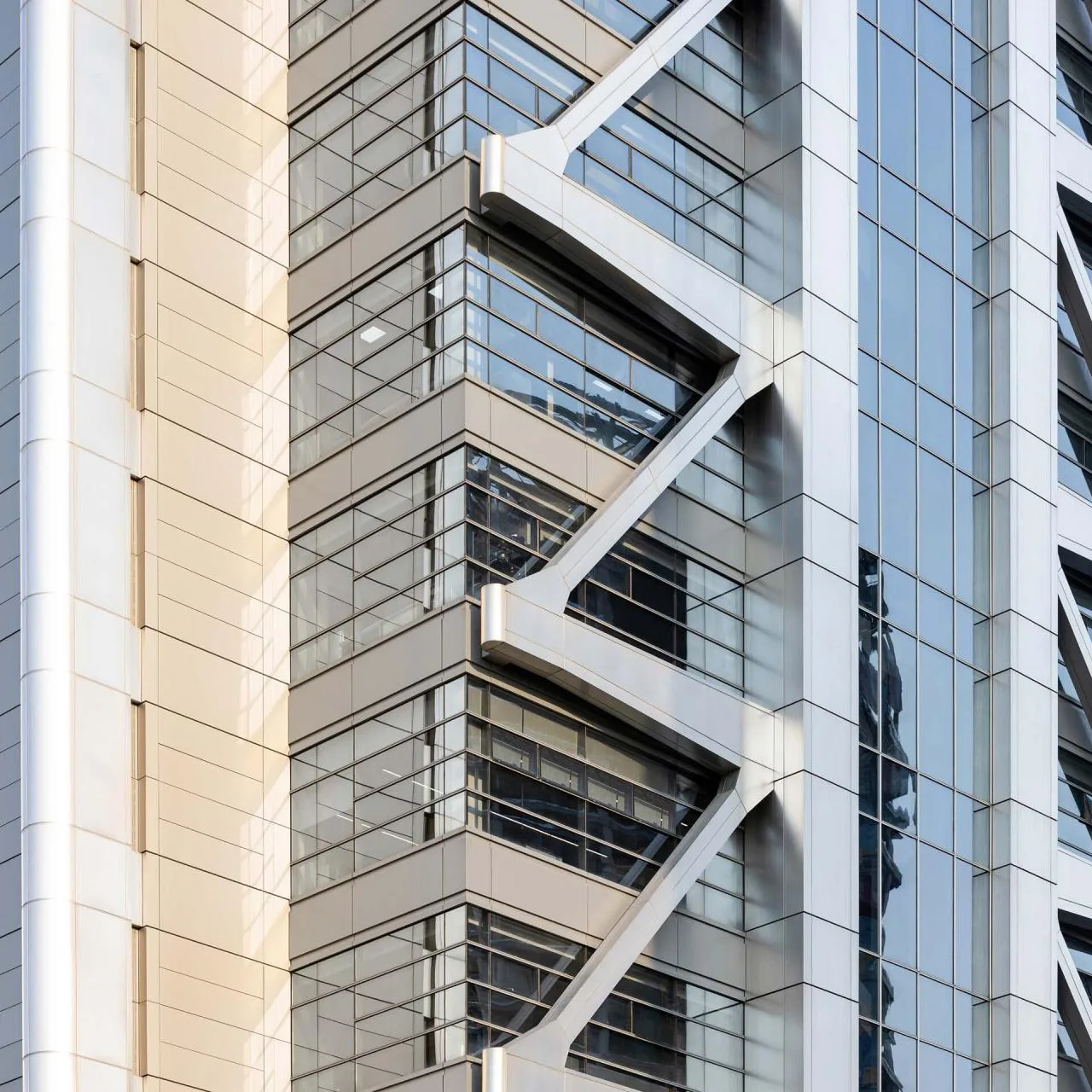
The Shuangqing Building’s integrated architectural design is based on a modular 1.5m x 1.5m grid system. This system defines and segments the four interdependent building systems—space, structure, skin, and equipment—facilitating clear collaboration and division of labor among design teams.
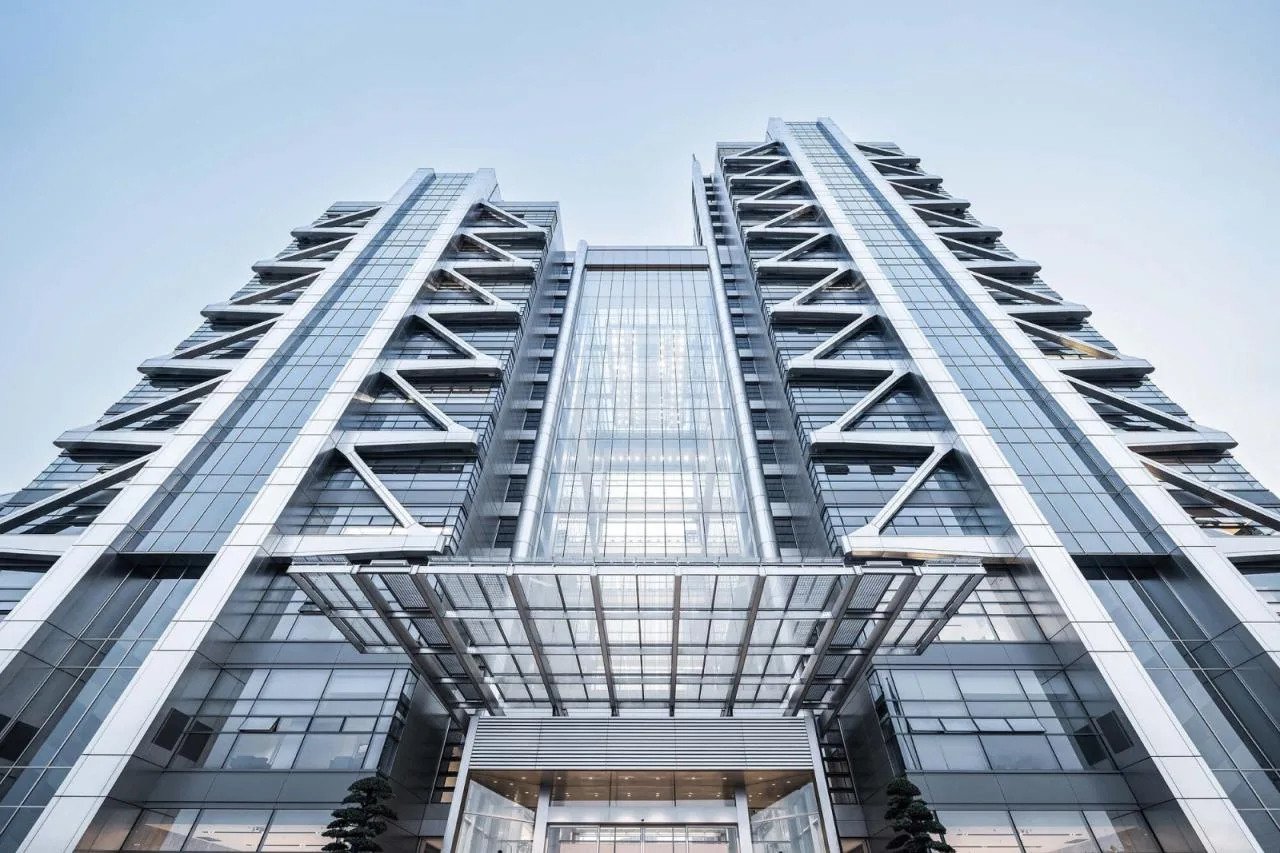
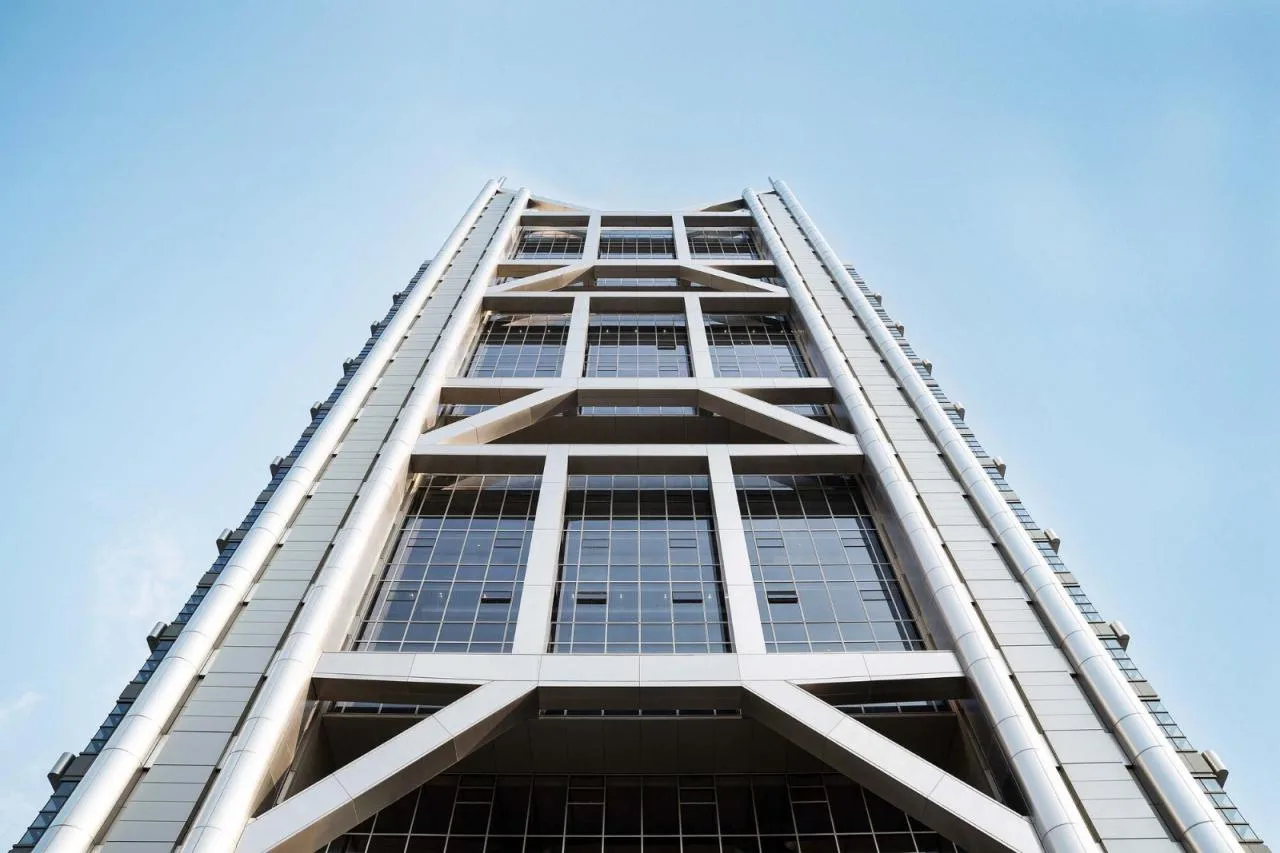
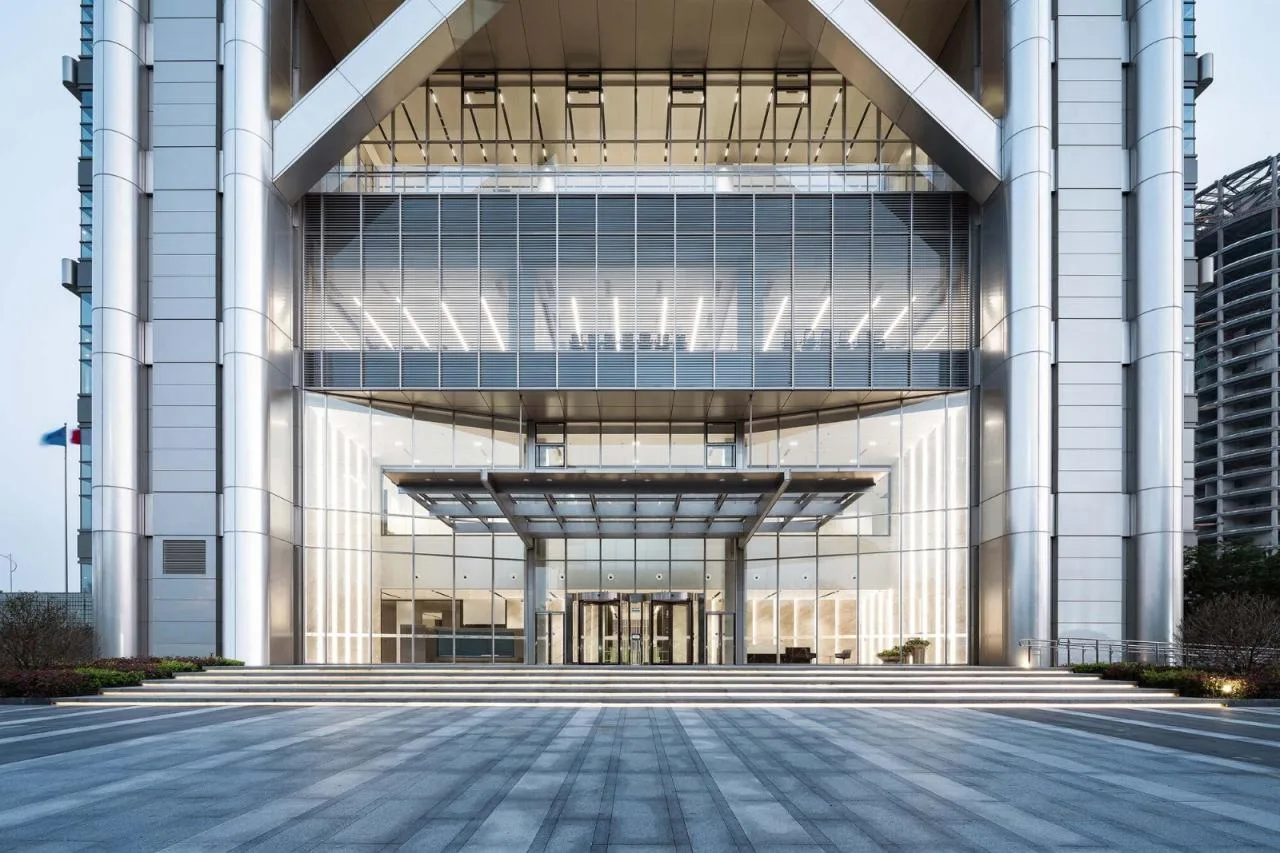
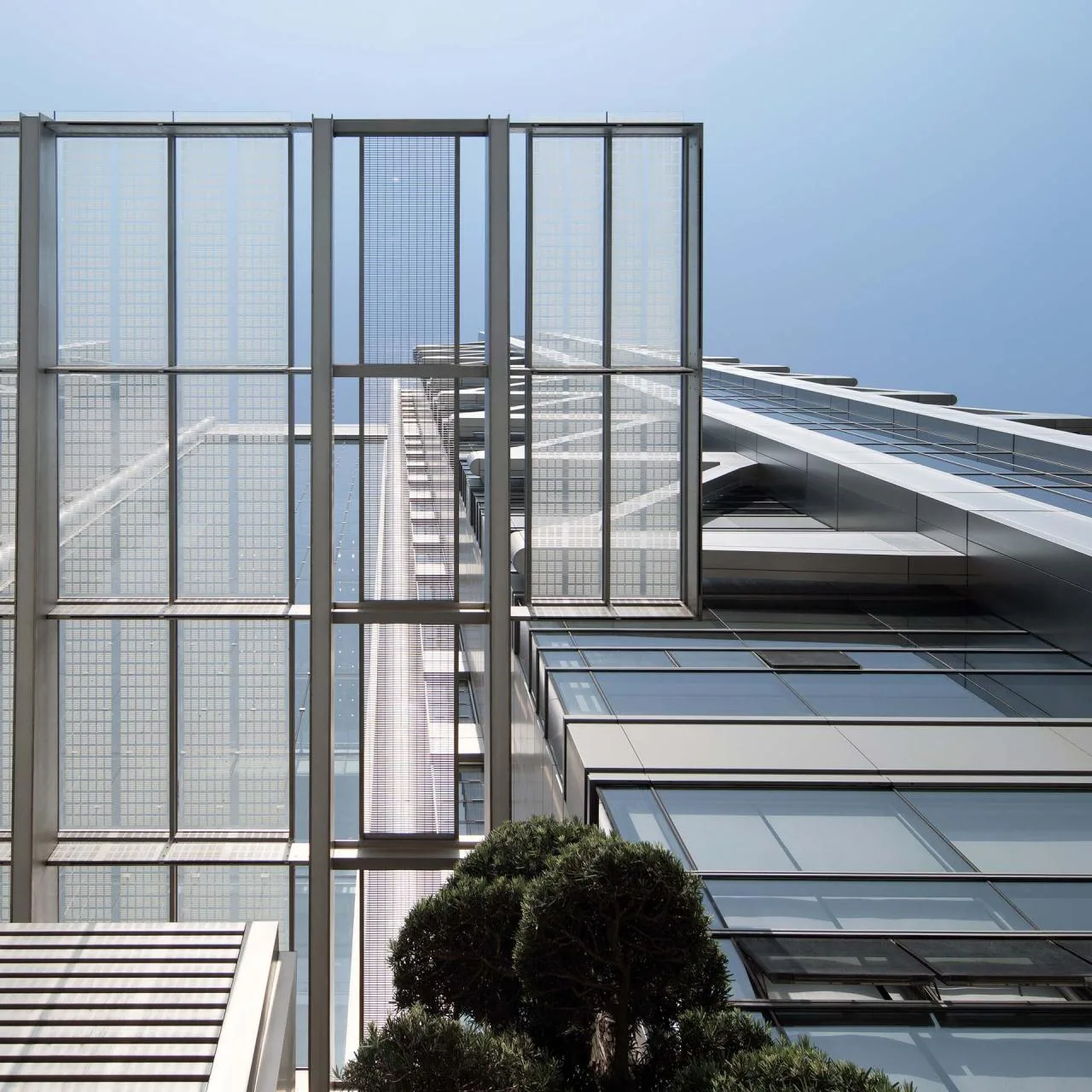
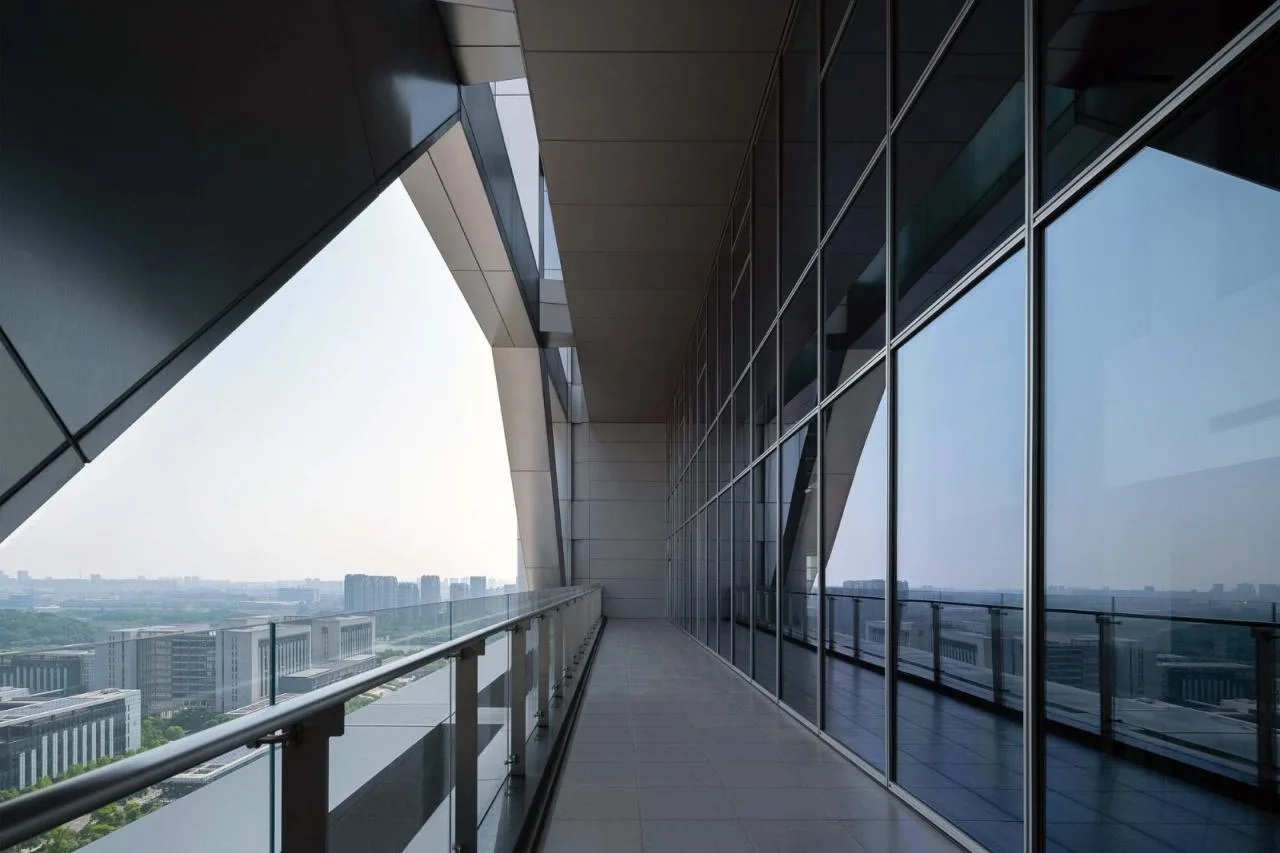
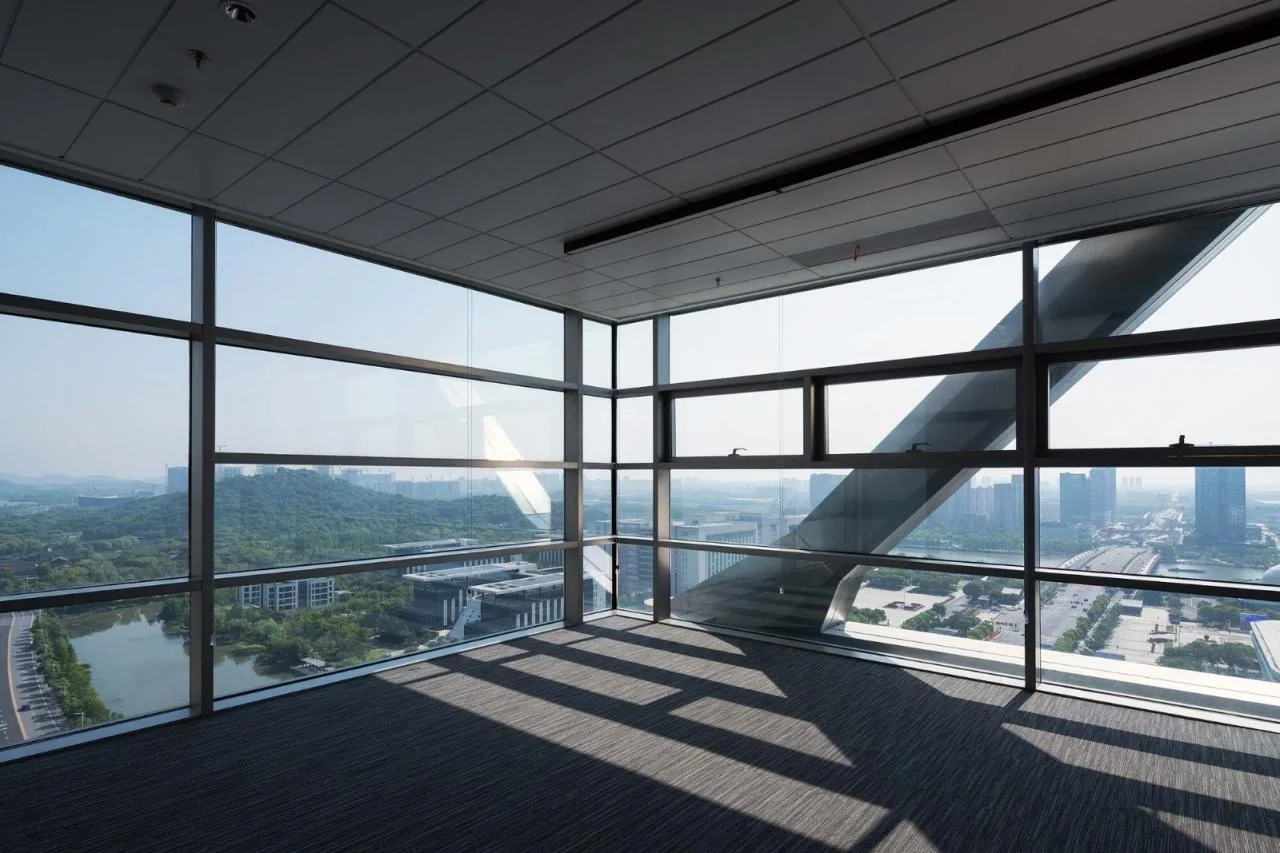
The twin towers combine steel and concrete in a hybrid structural system. A concrete core tube occupies the center, while an external steel frame provides support. Starting from the 4th floor, the South Tower and North Tower consist of 2 and 3 repeated structural and spatial modules respectively, each module covering 6 floors. The south and north façades feature a 4+2 pattern: pairs of four-story columns support standard floors, with loads transferred through double-layer high slant supports to giant columns at the base. These slant supports frame shared spaces and outdoor terraces. On the east and west façades, a 2+2+2 pattern uses symmetrical triangular diagonal braces and suspension rods to provide panoramic office views without corner columns obstructing sightlines.
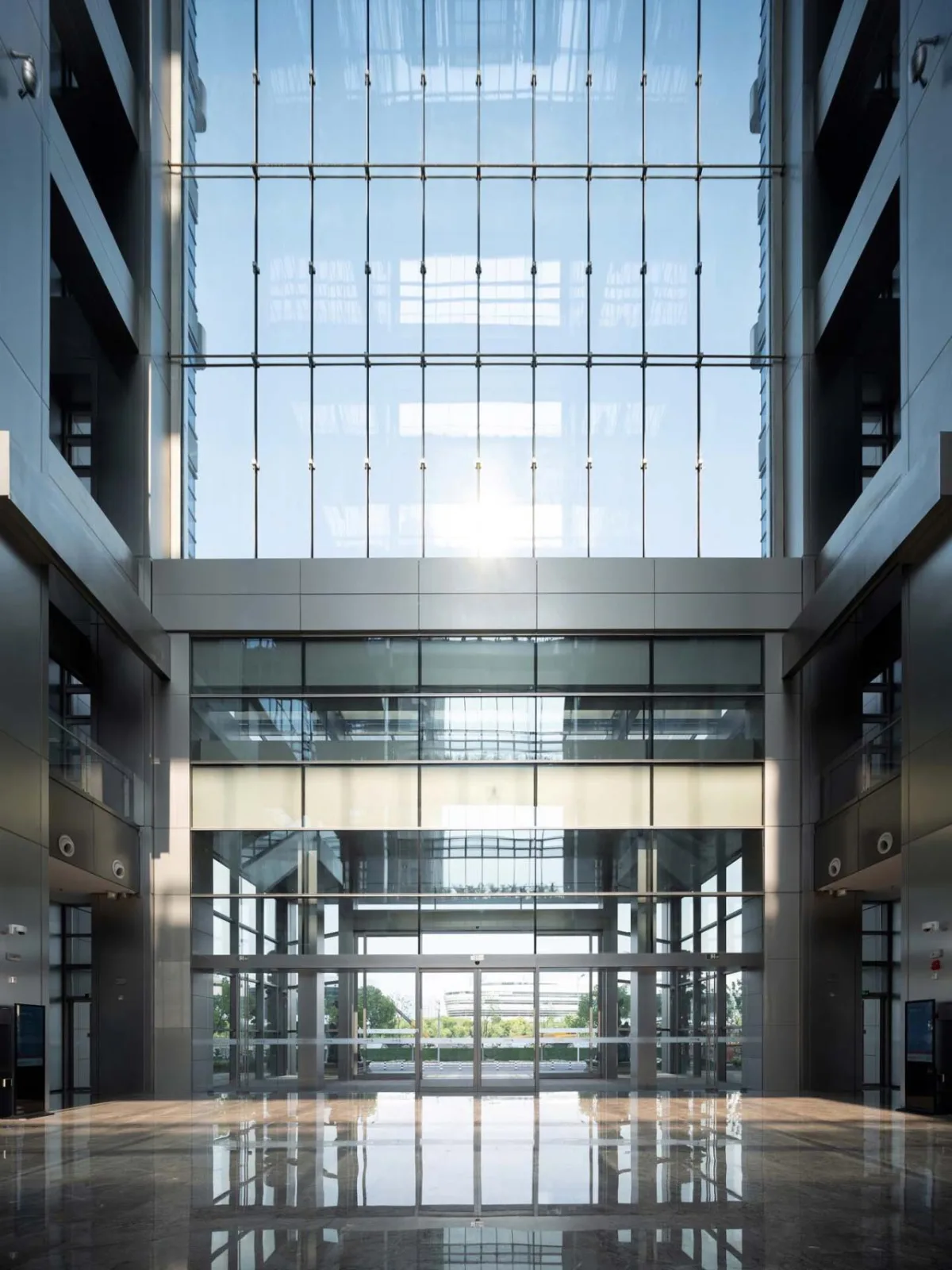
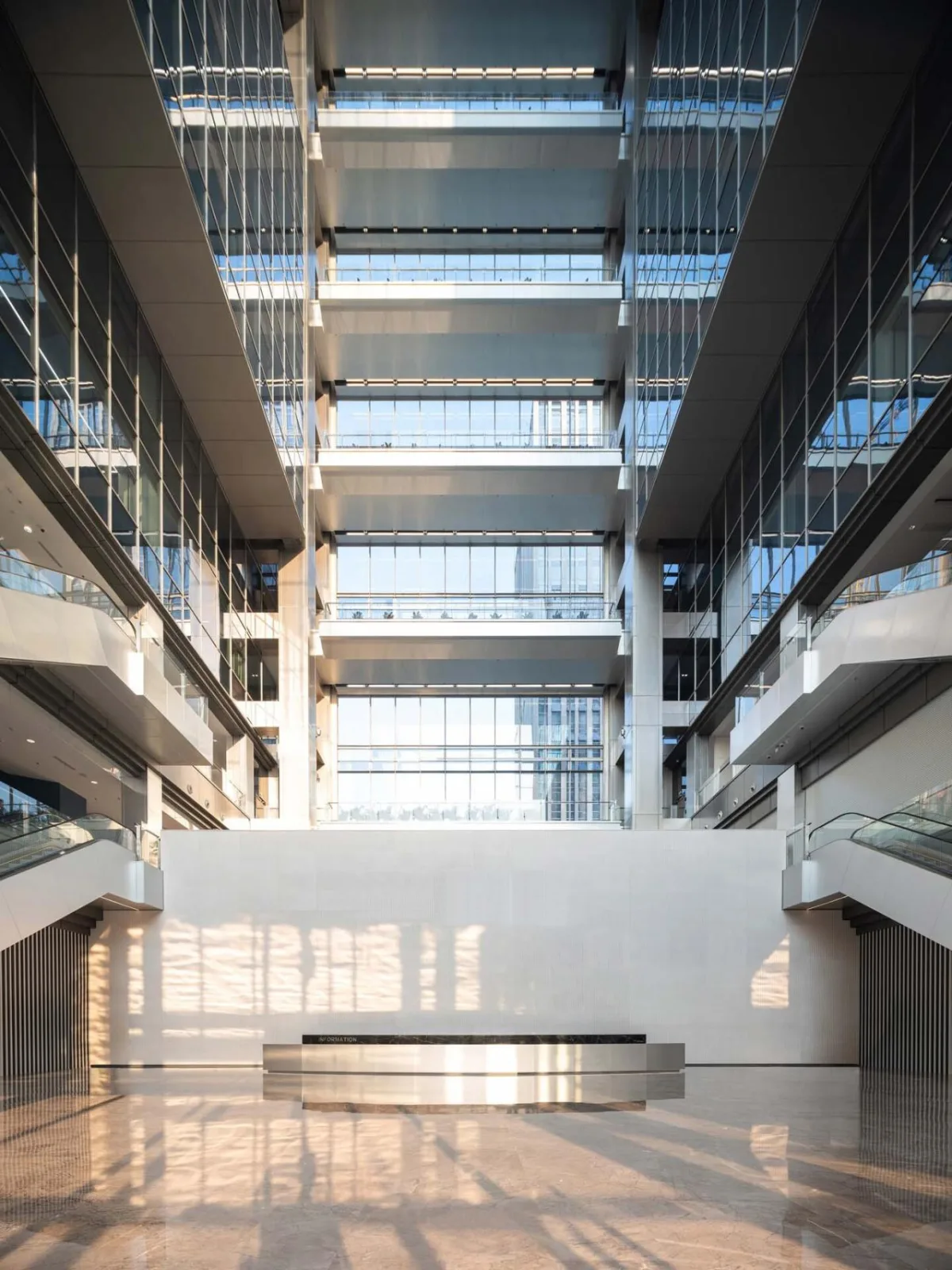
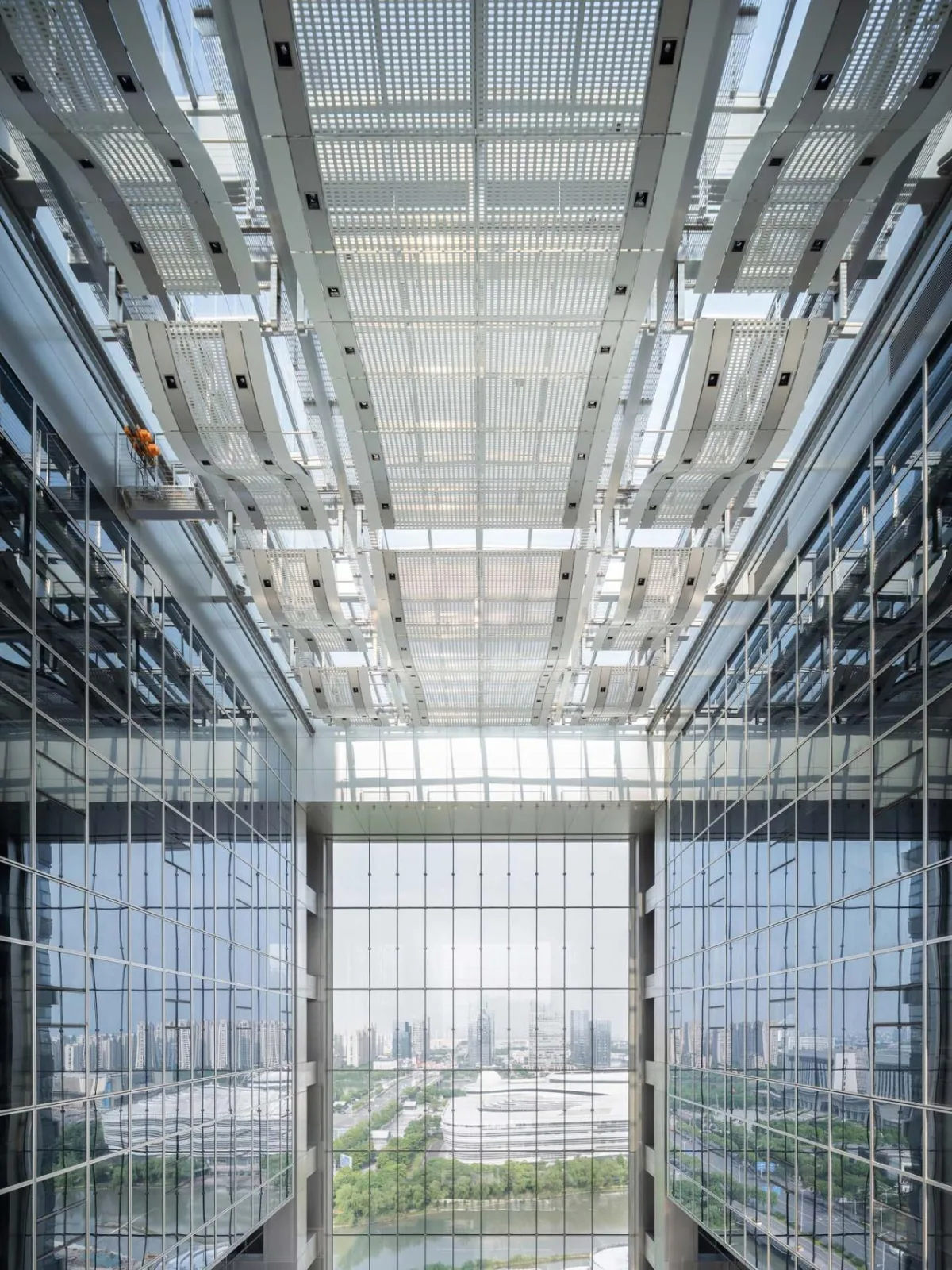
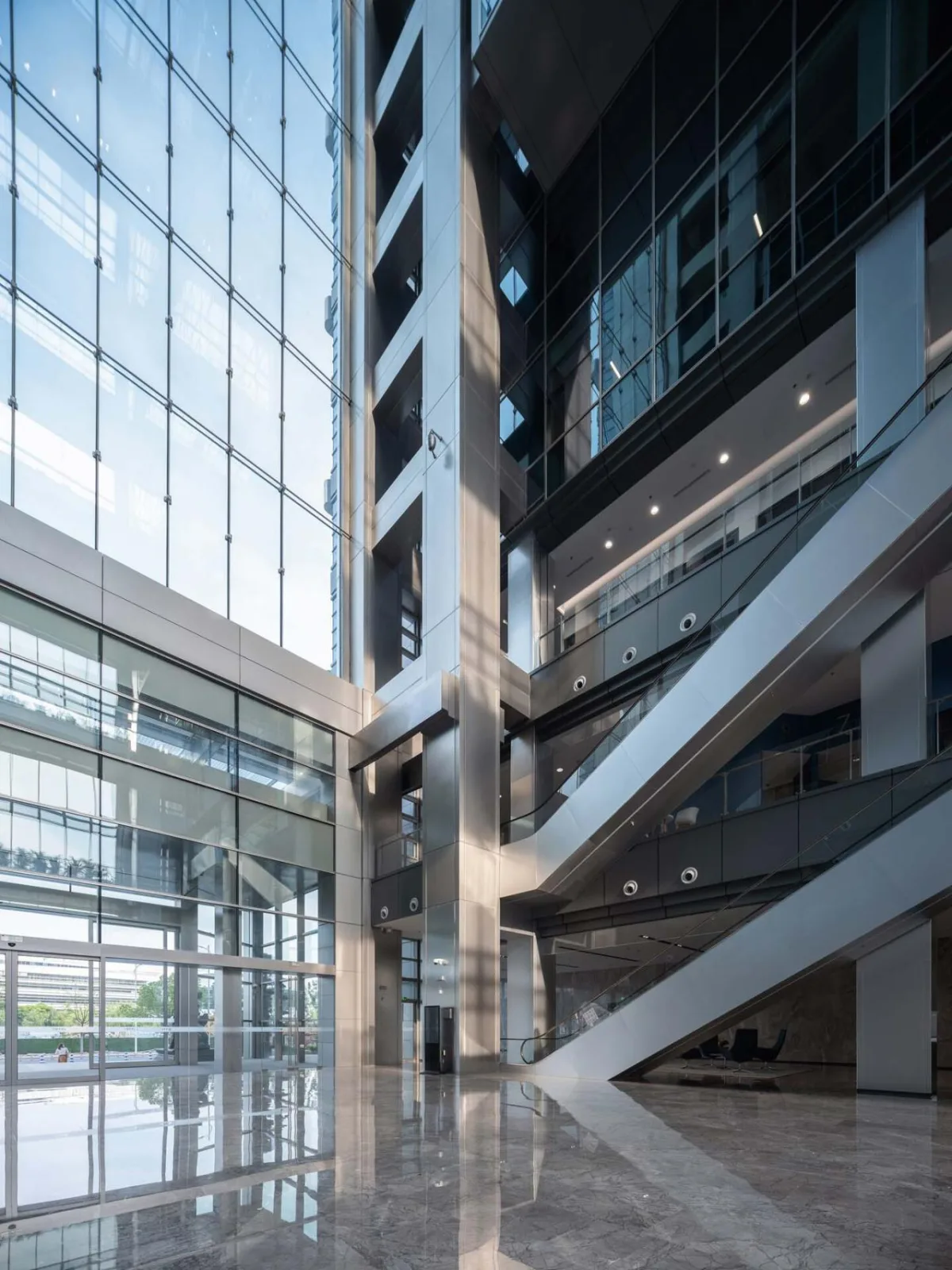
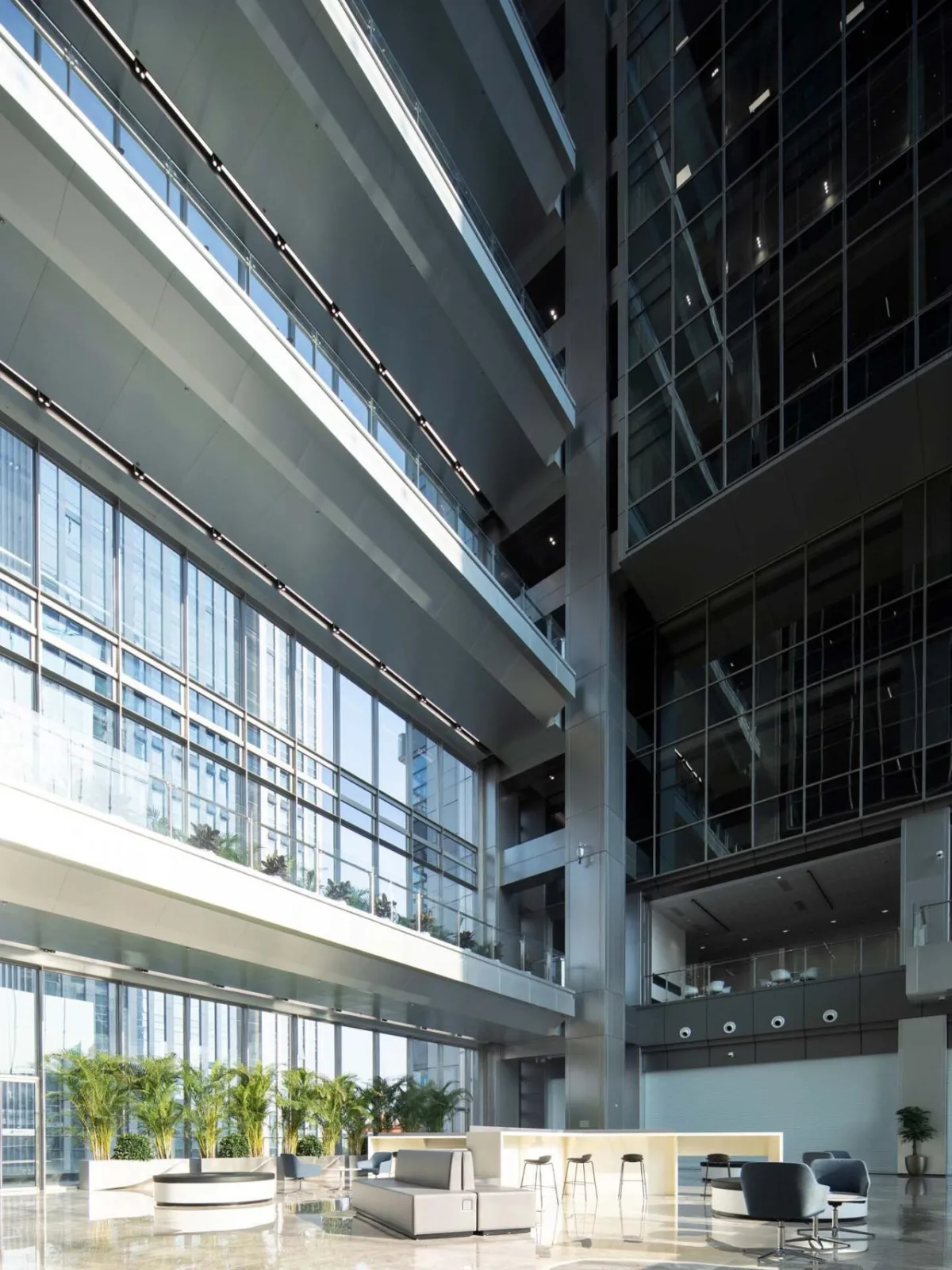
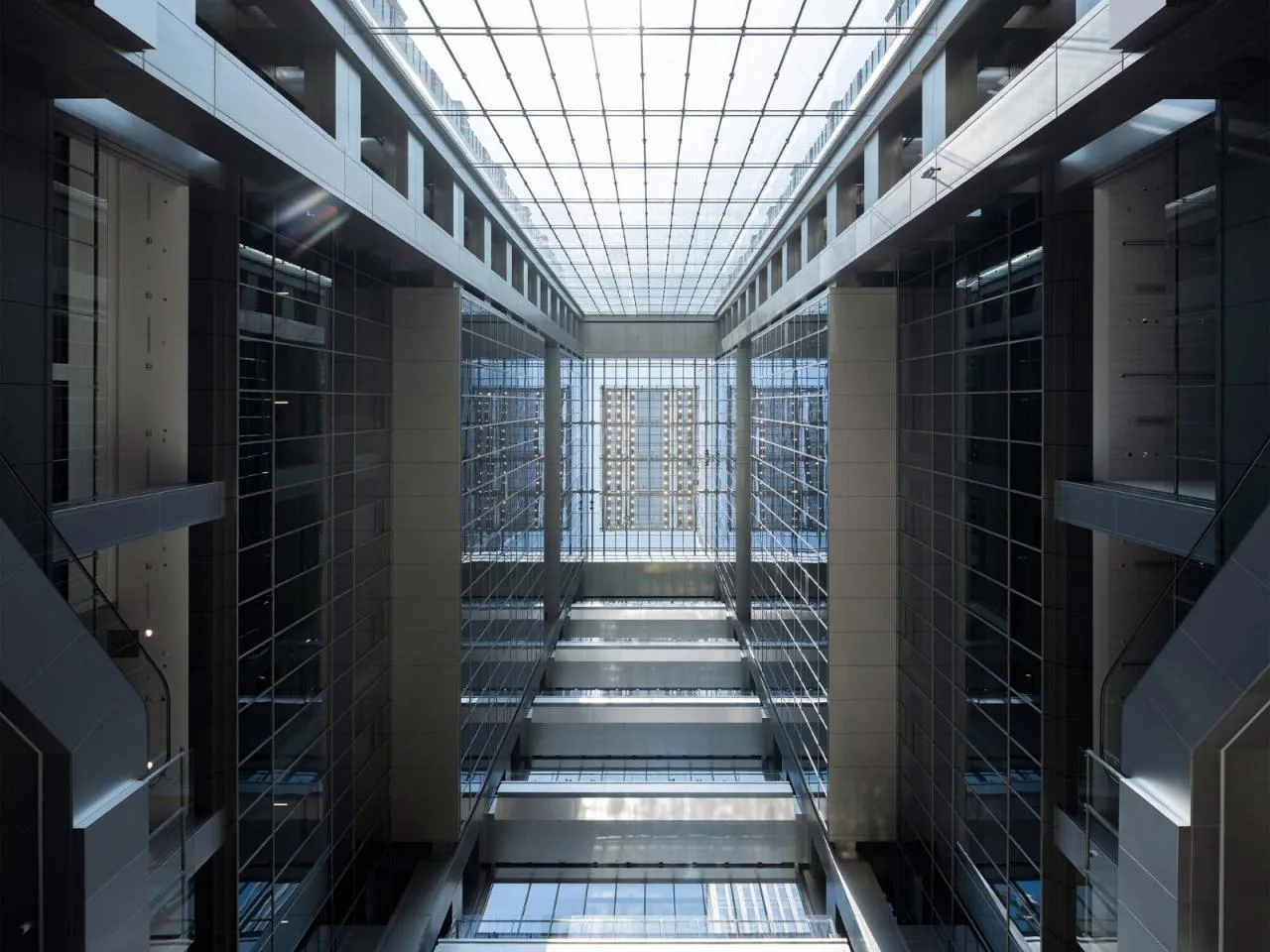
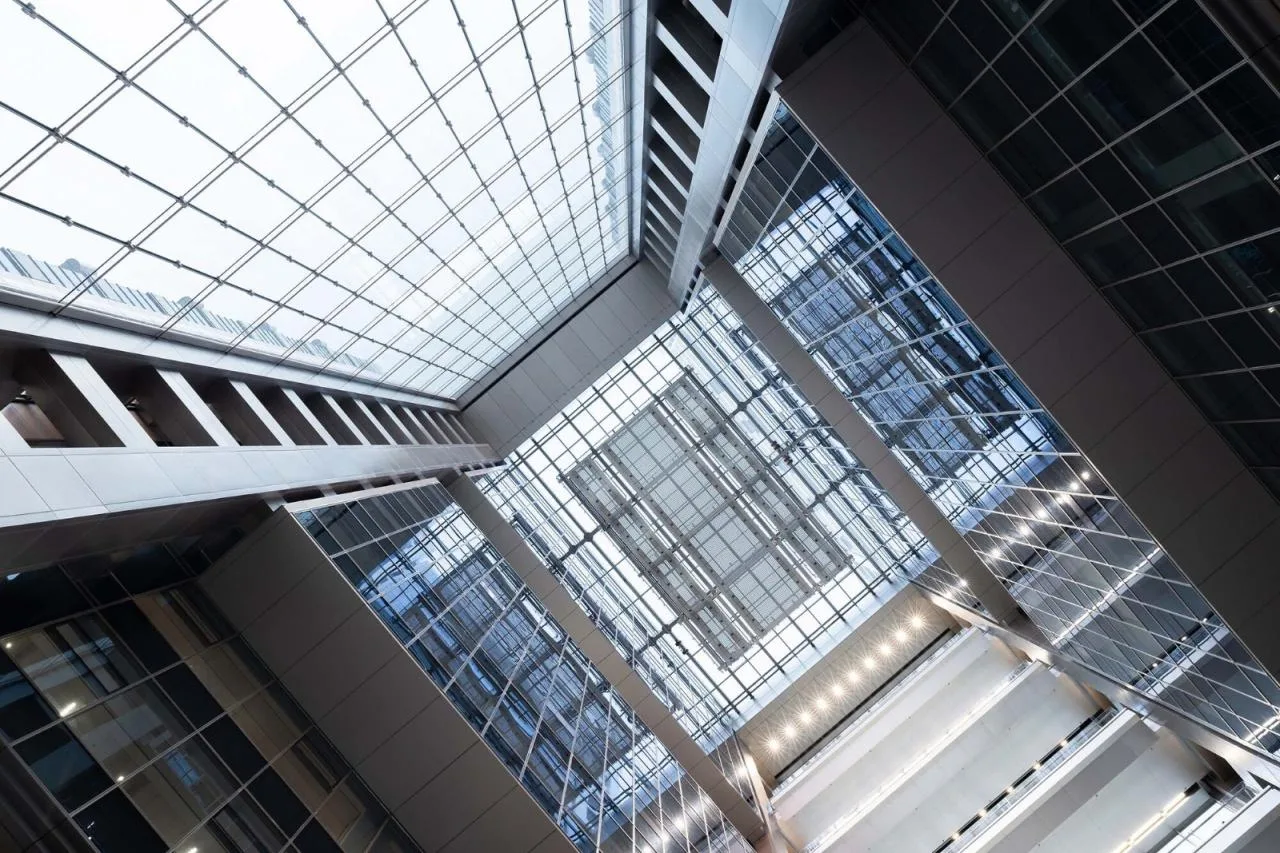
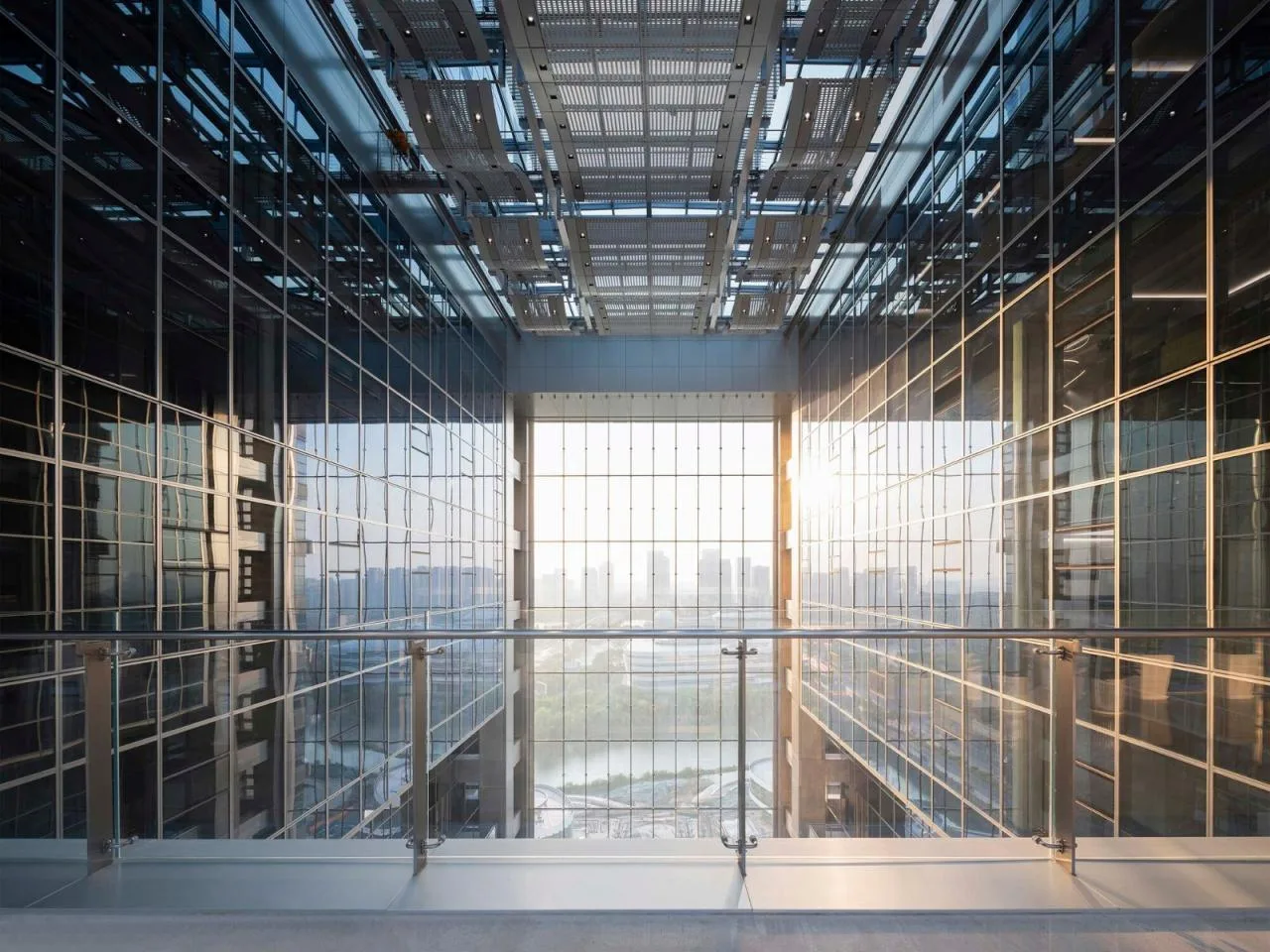
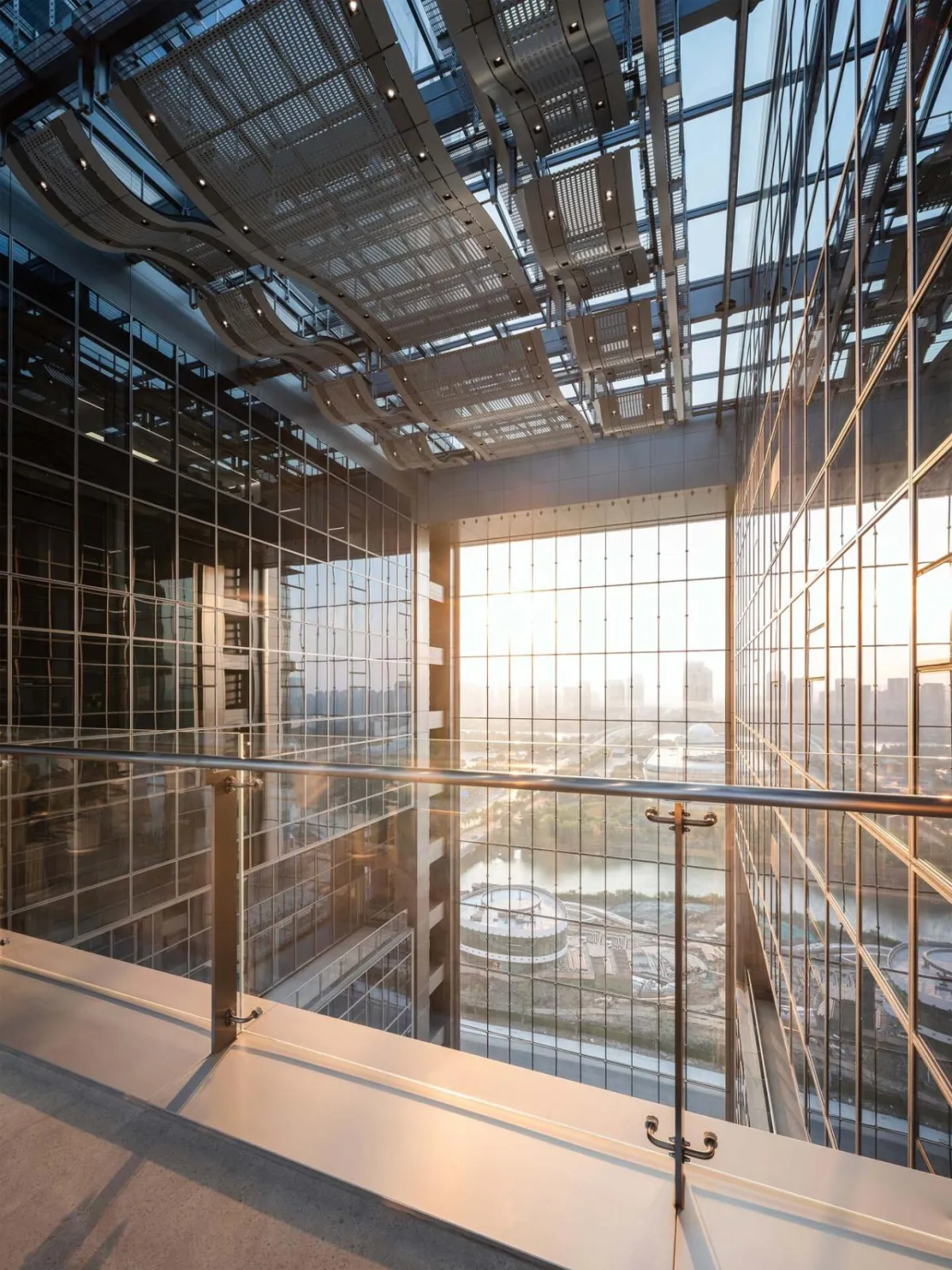
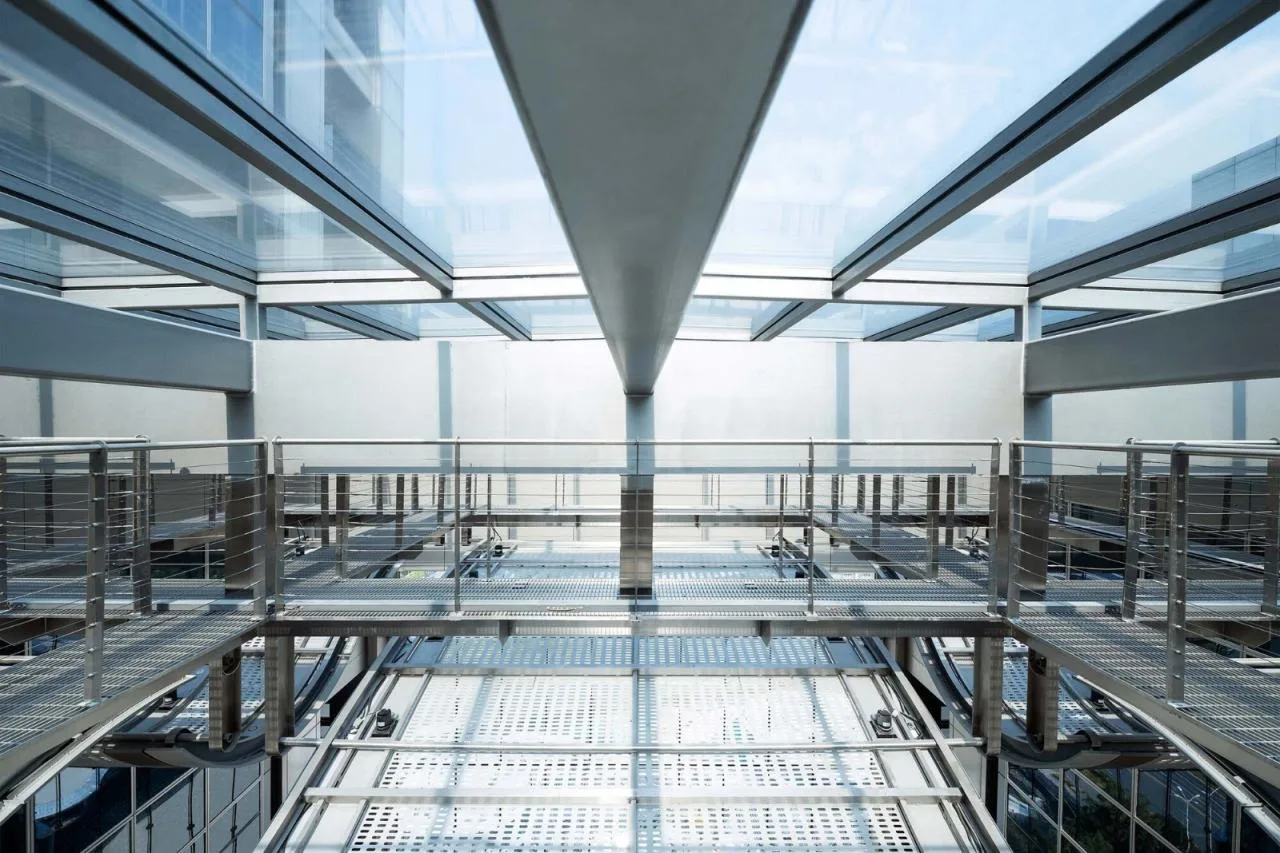
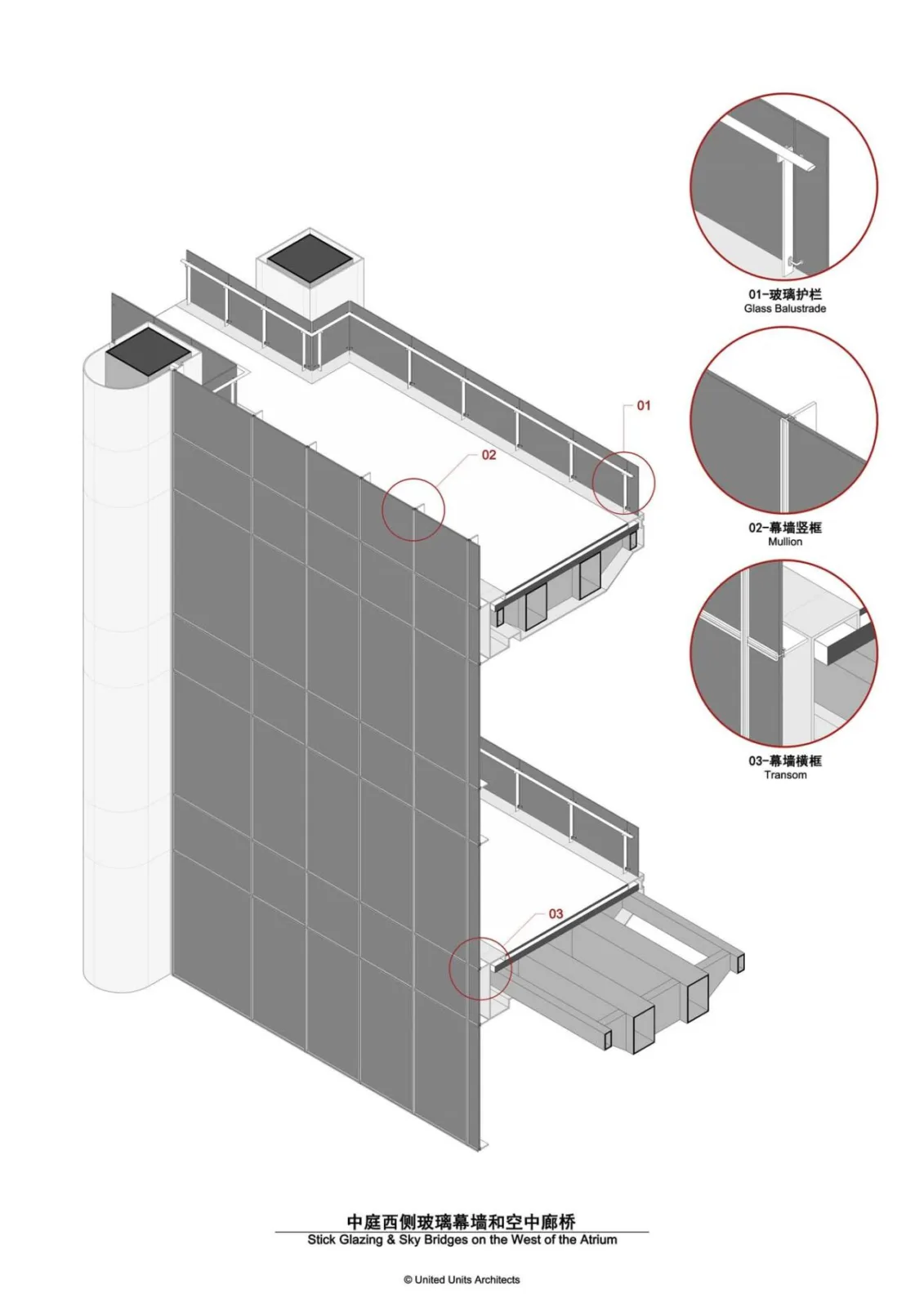
Between the two towers, a 70-meter-high glass atrium serves as the spatial heart of the building. Six aerial bridges on the west side connect the towers, breaking the atrium into inviting spatial segments.
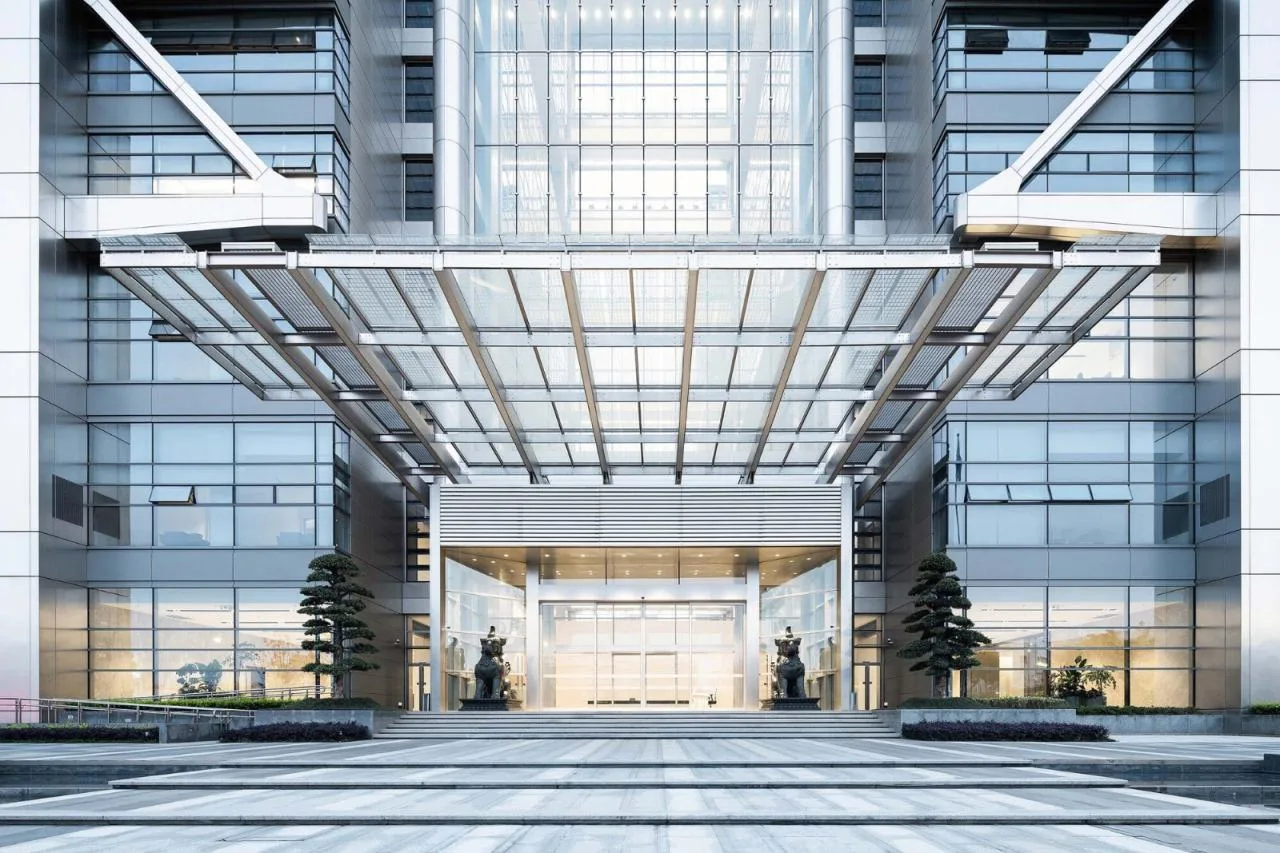
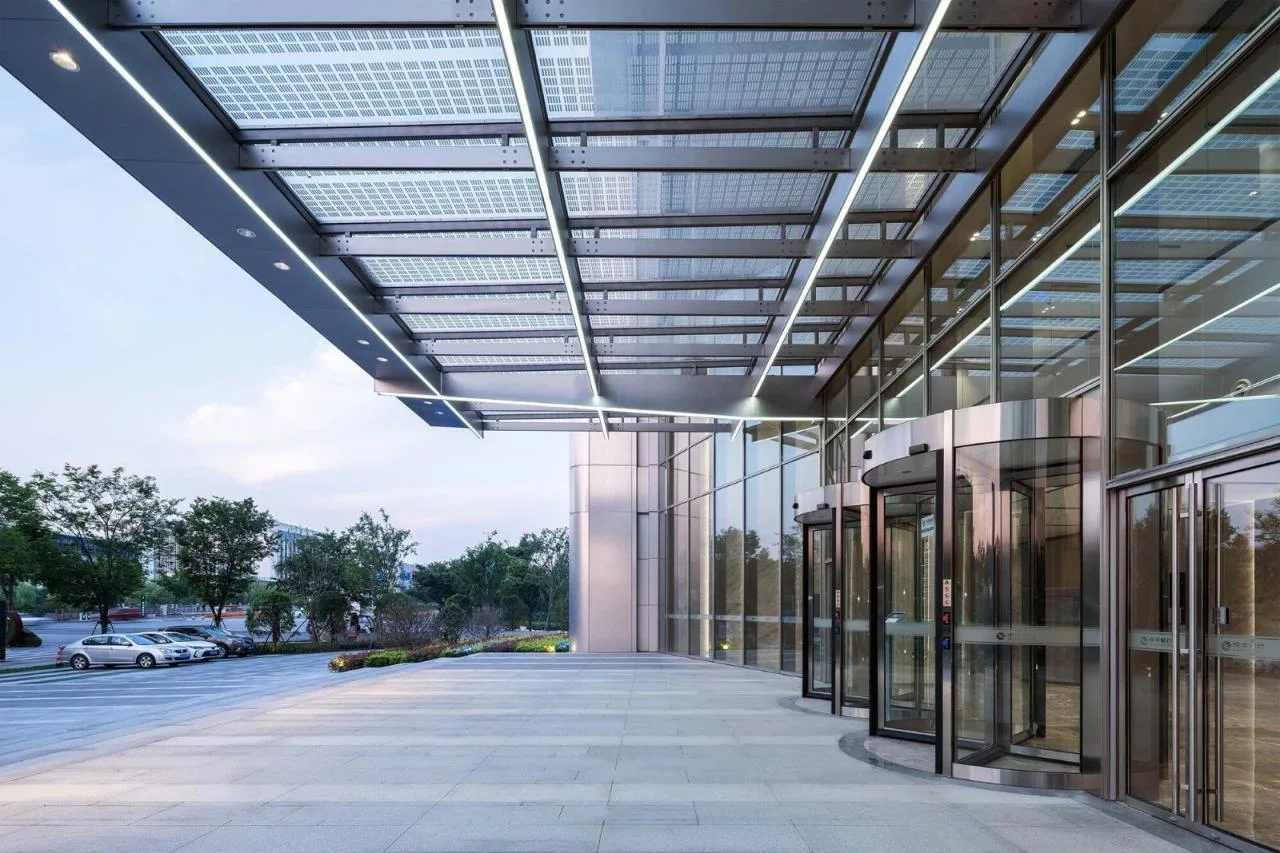
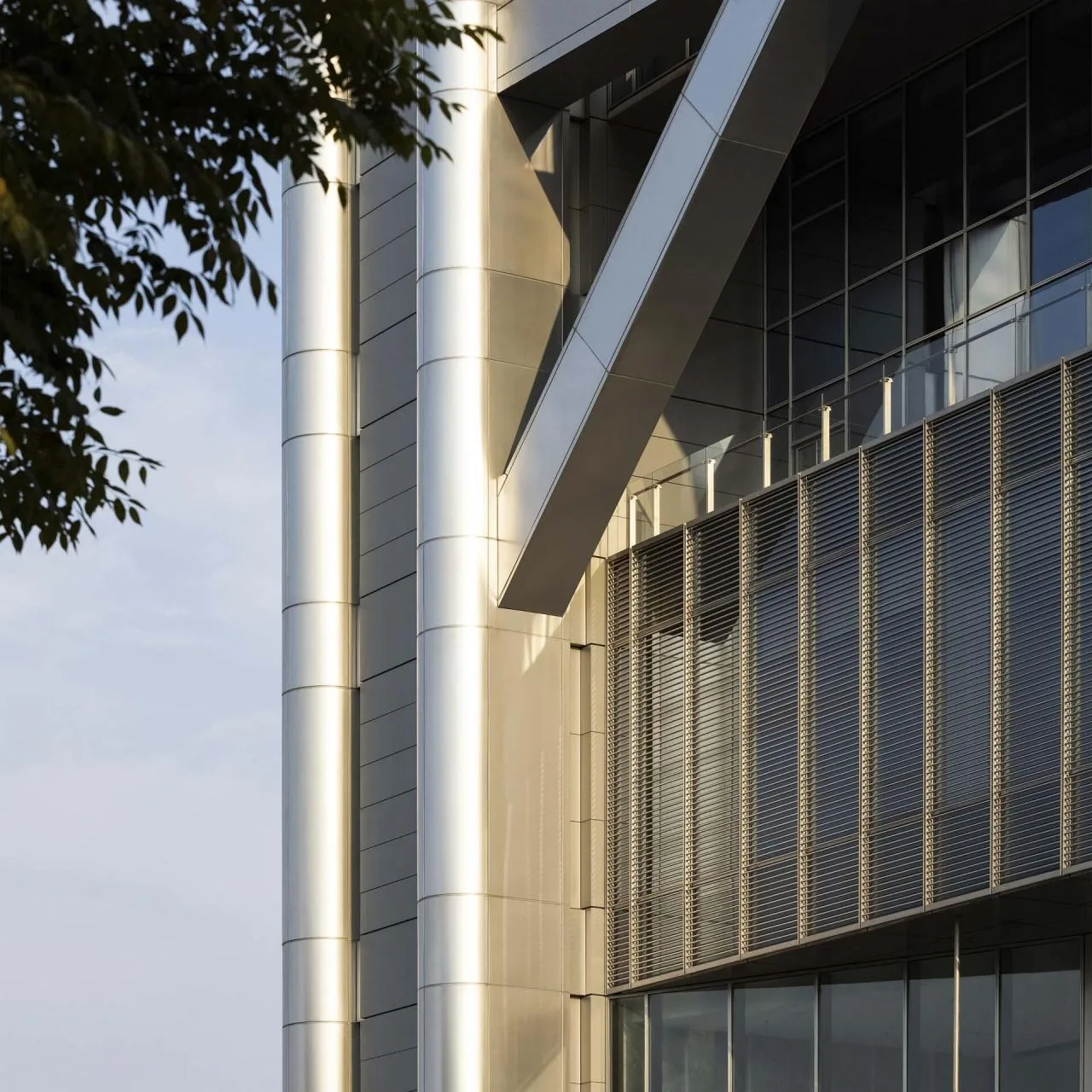
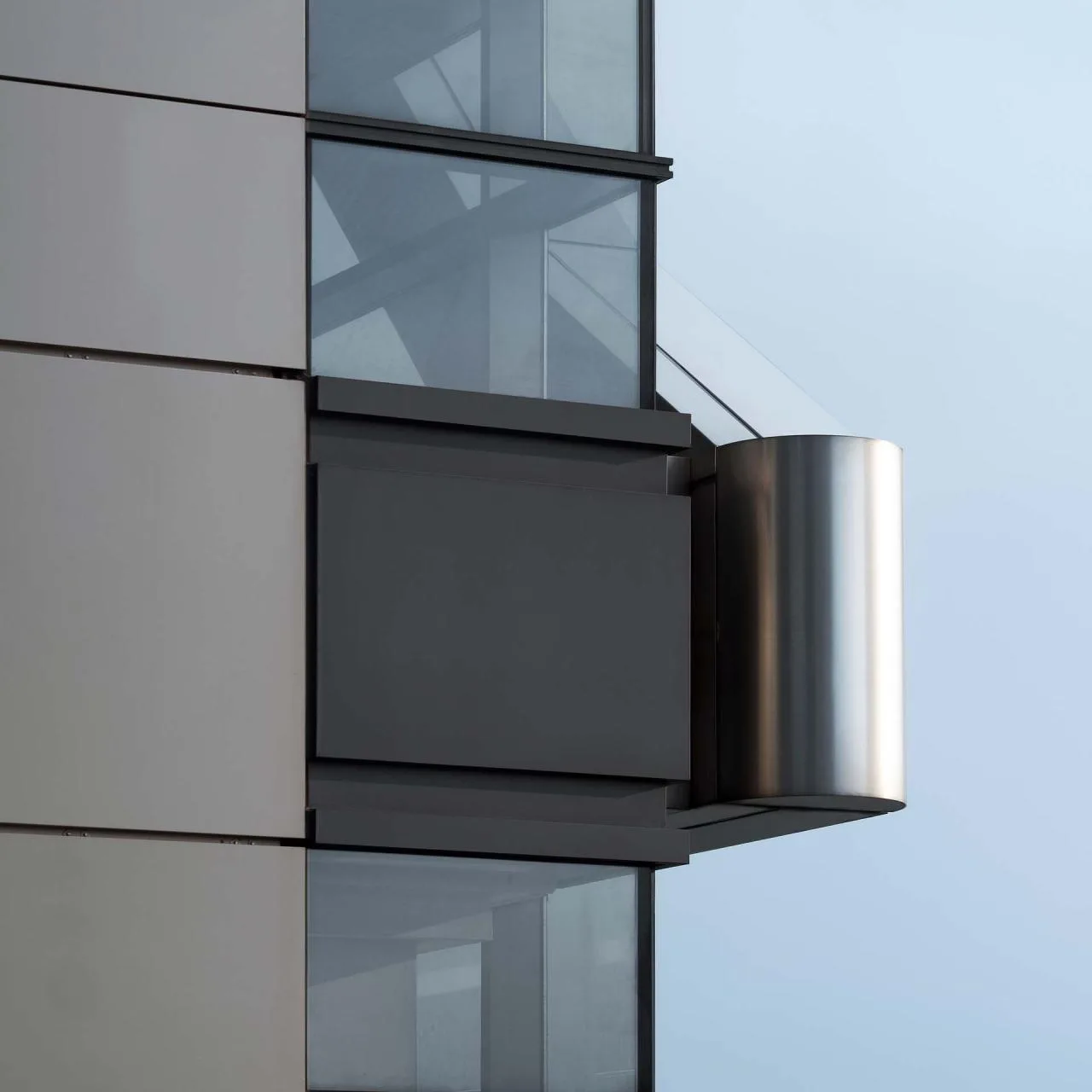
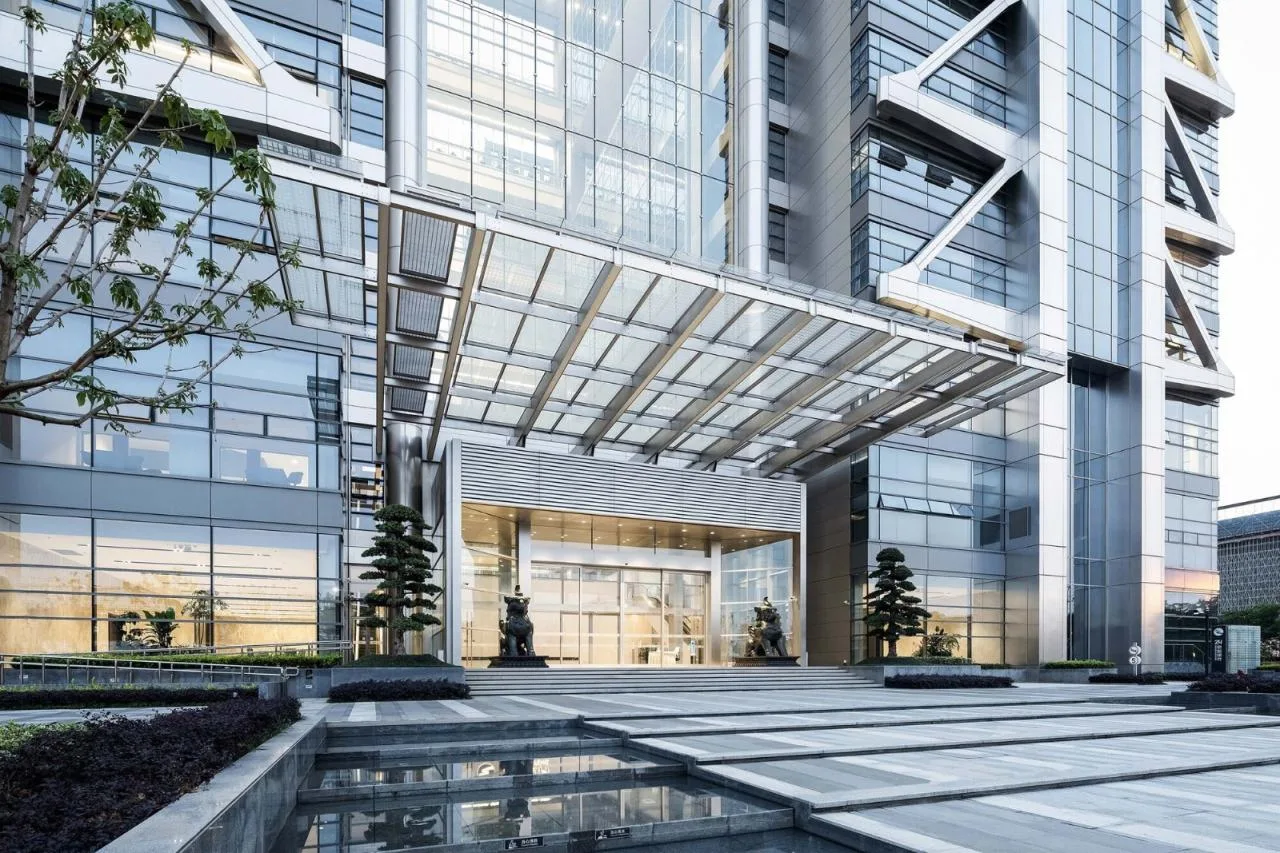
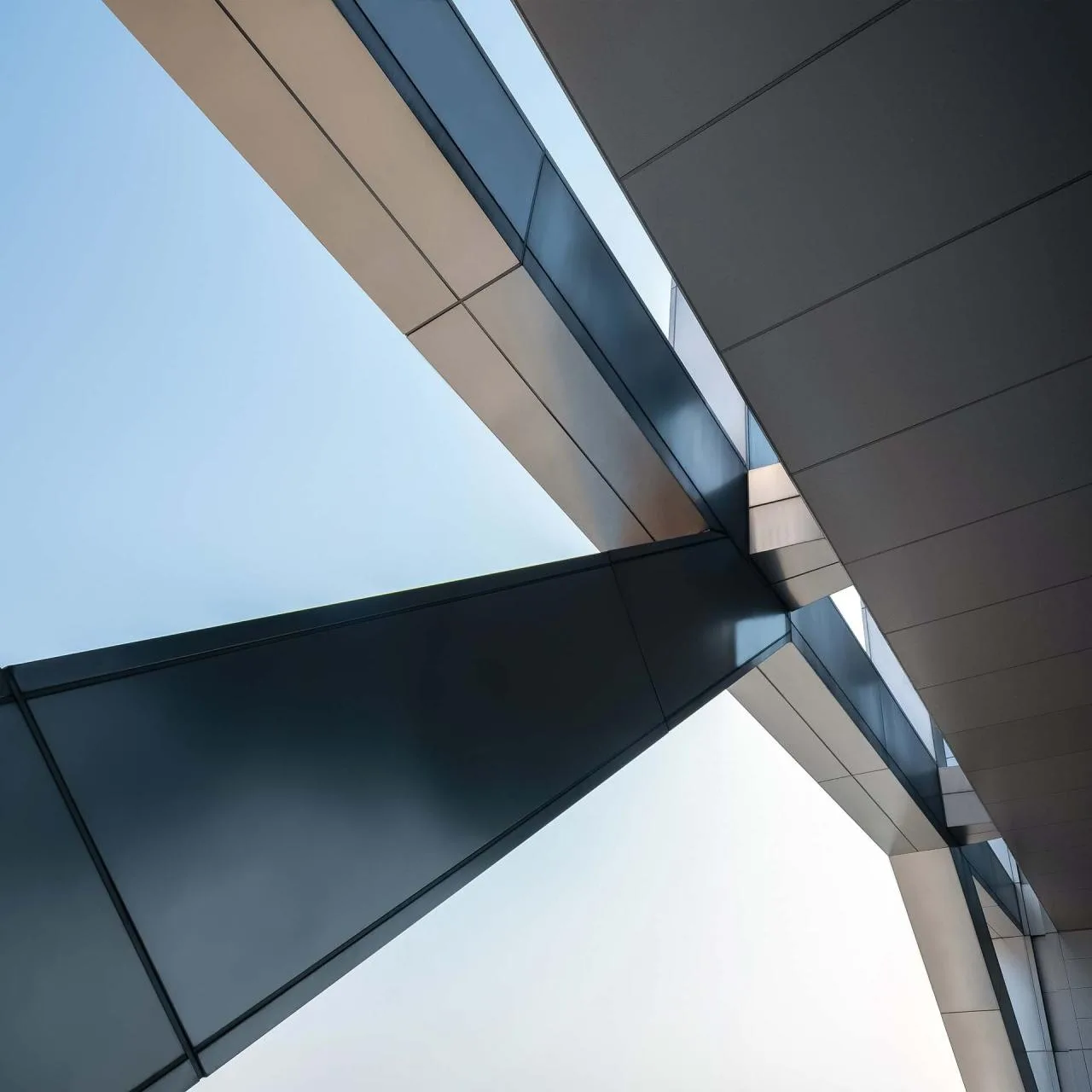
The quality and detailing of the exterior and equipment largely depend on the harmonious integration of these two systems into a cohesive order. The building’s signature external structure is clad in linen-textured stainless steel panels, which softly reflect the surrounding environment and respond to changing daylight.
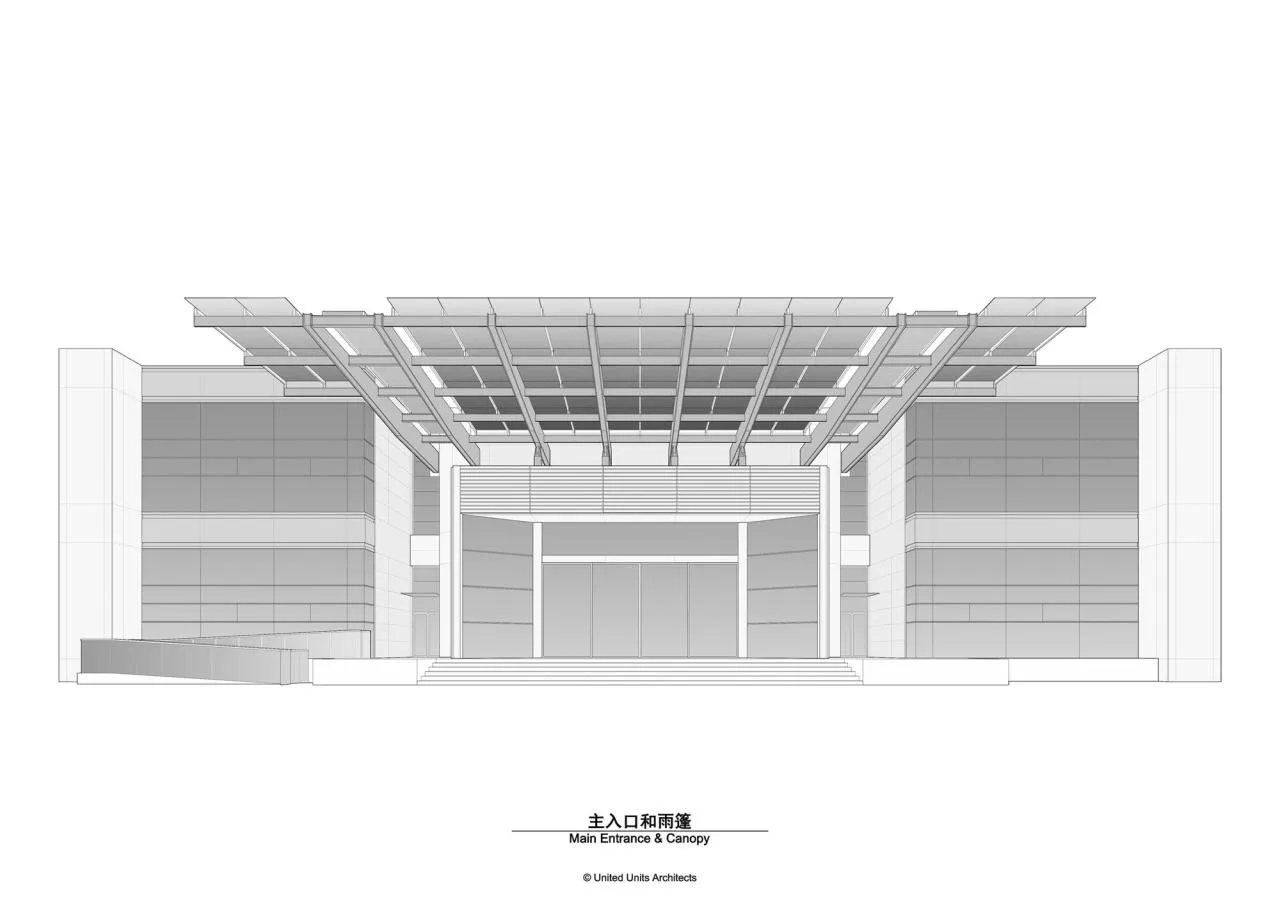
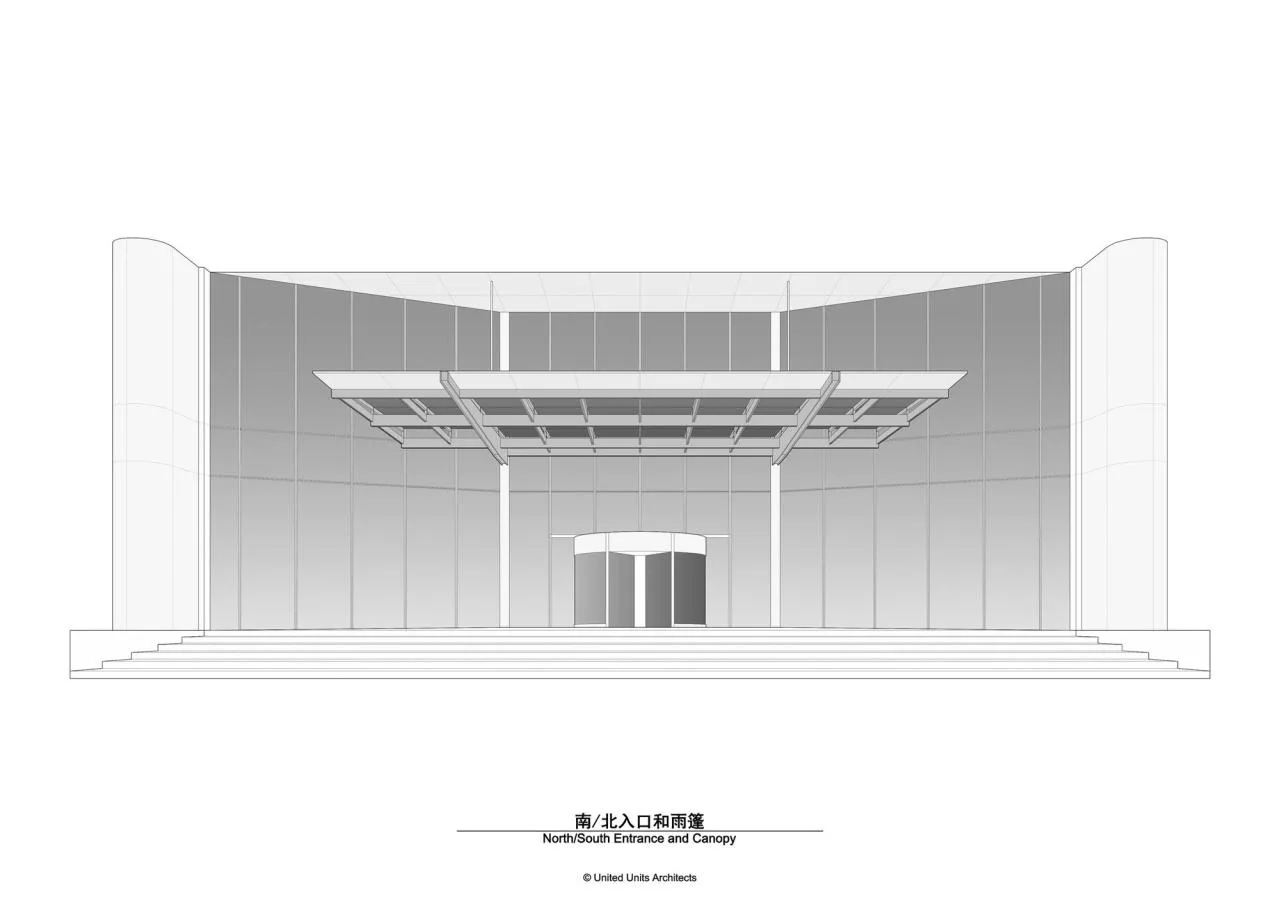
The main east entrance canopy, situated between the two towers, spans 27 meters wide and extends 15 meters outward, creating a dramatic entry experience leading visitors to the soaring 70-meter-high atrium. The south and north entrances feature double-layered, inward-sloping glass curtain walls that define welcoming entry spaces.
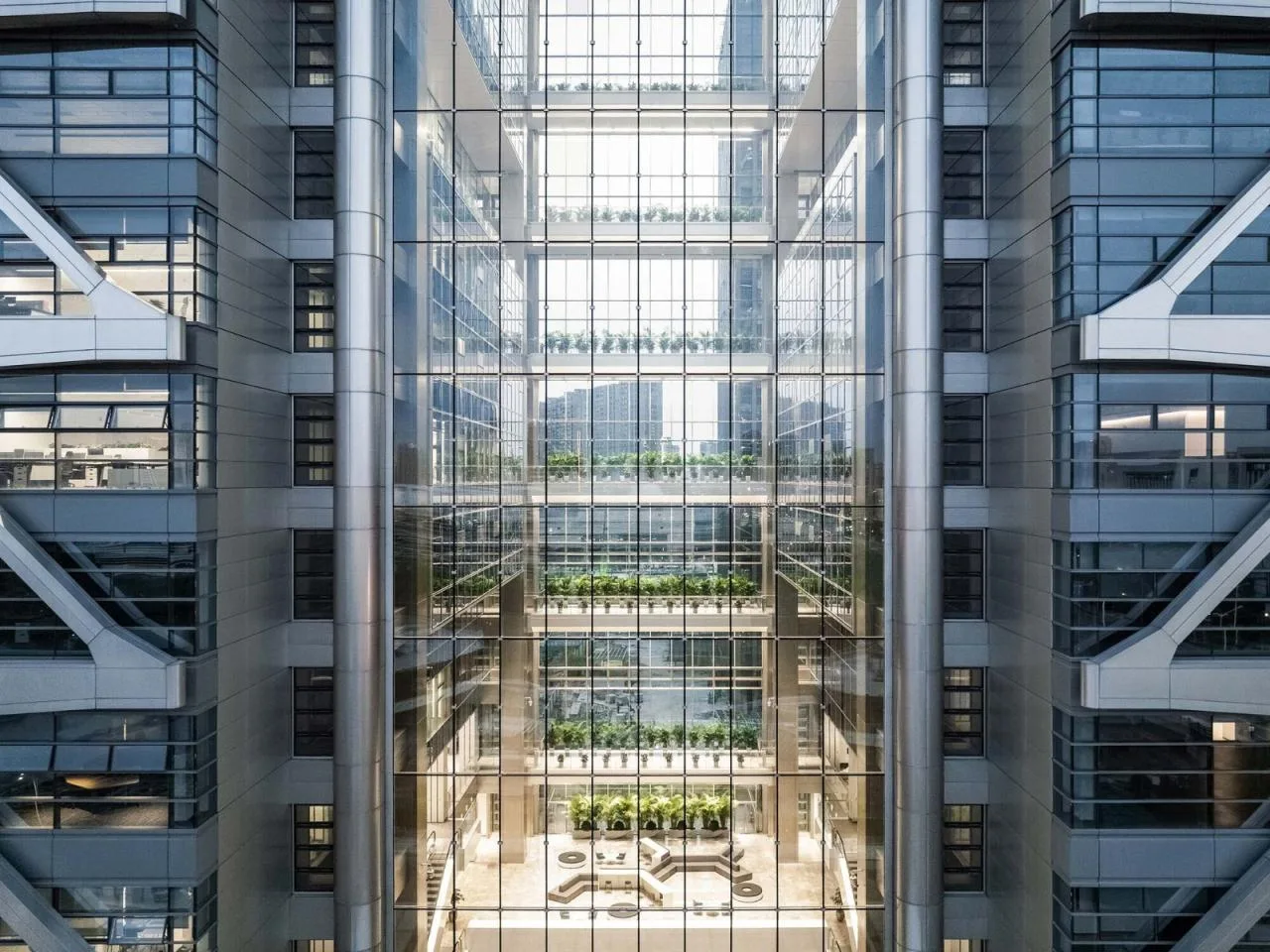
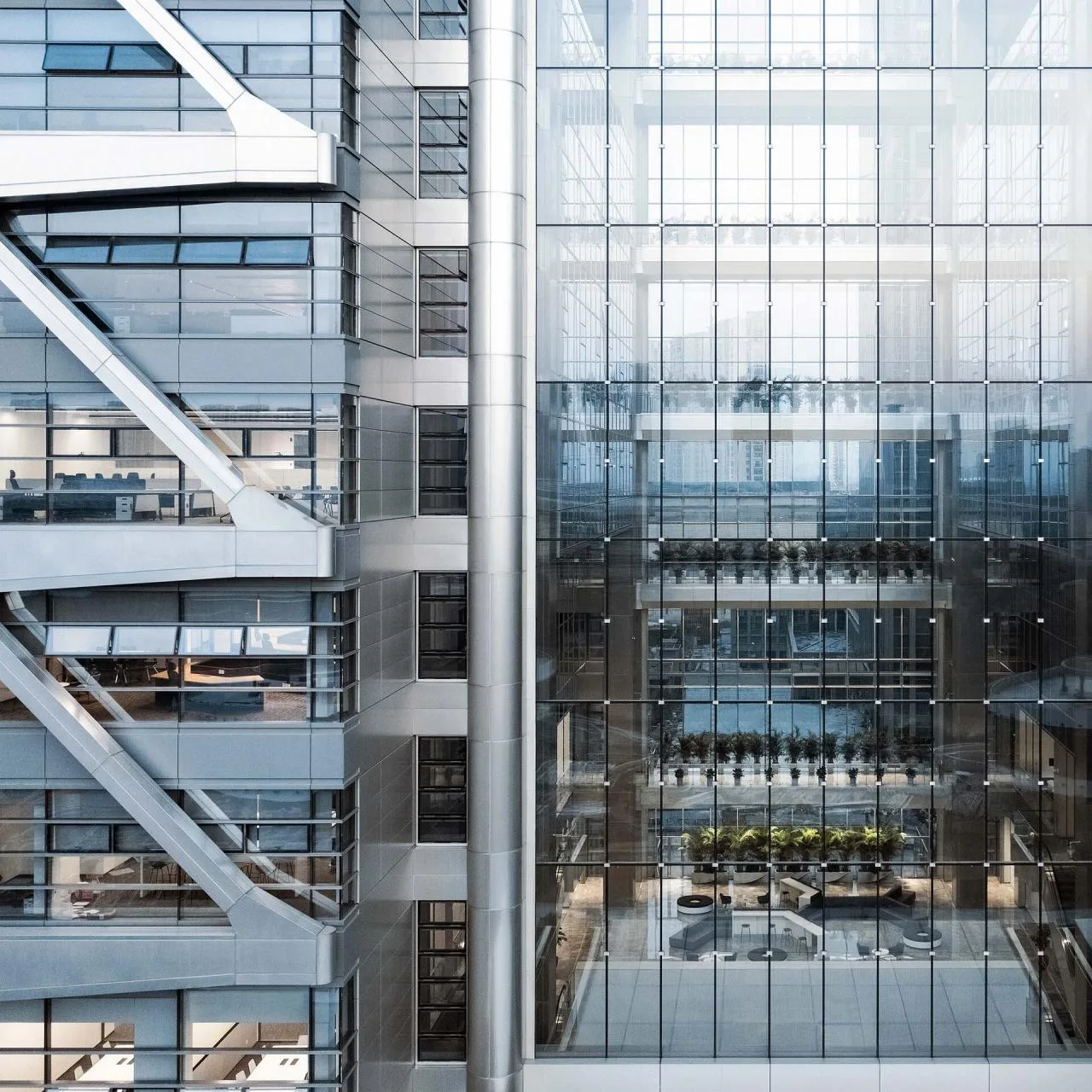
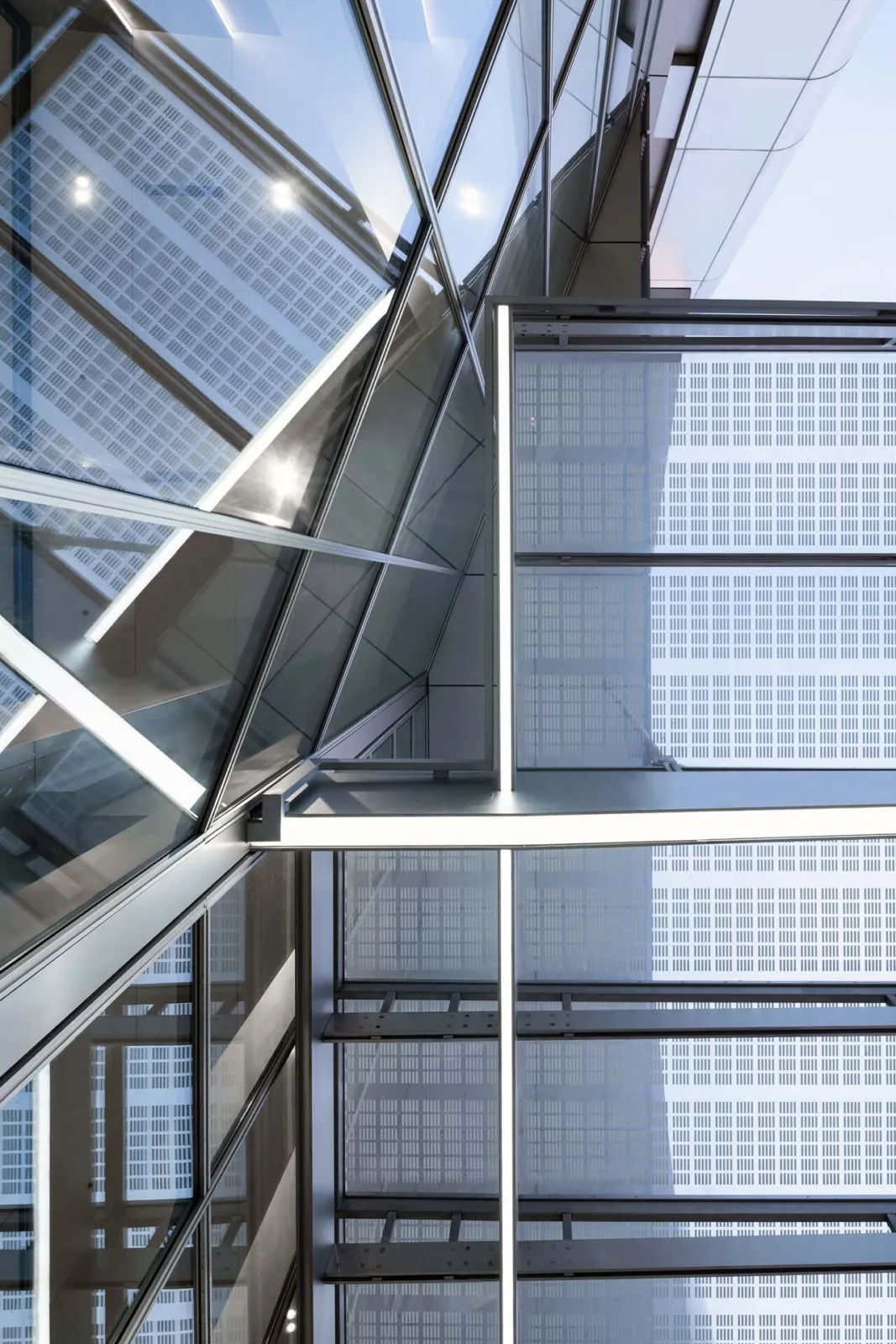
The east side of the atrium is enclosed by a cable net glass curtain wall, with anchorages and prestressing devices cleverly concealed at the vertical and horizontal cable ends, creating exceptional transparency and simplicity. Six aerial bridges on the west side structurally support the glass curtain wall.
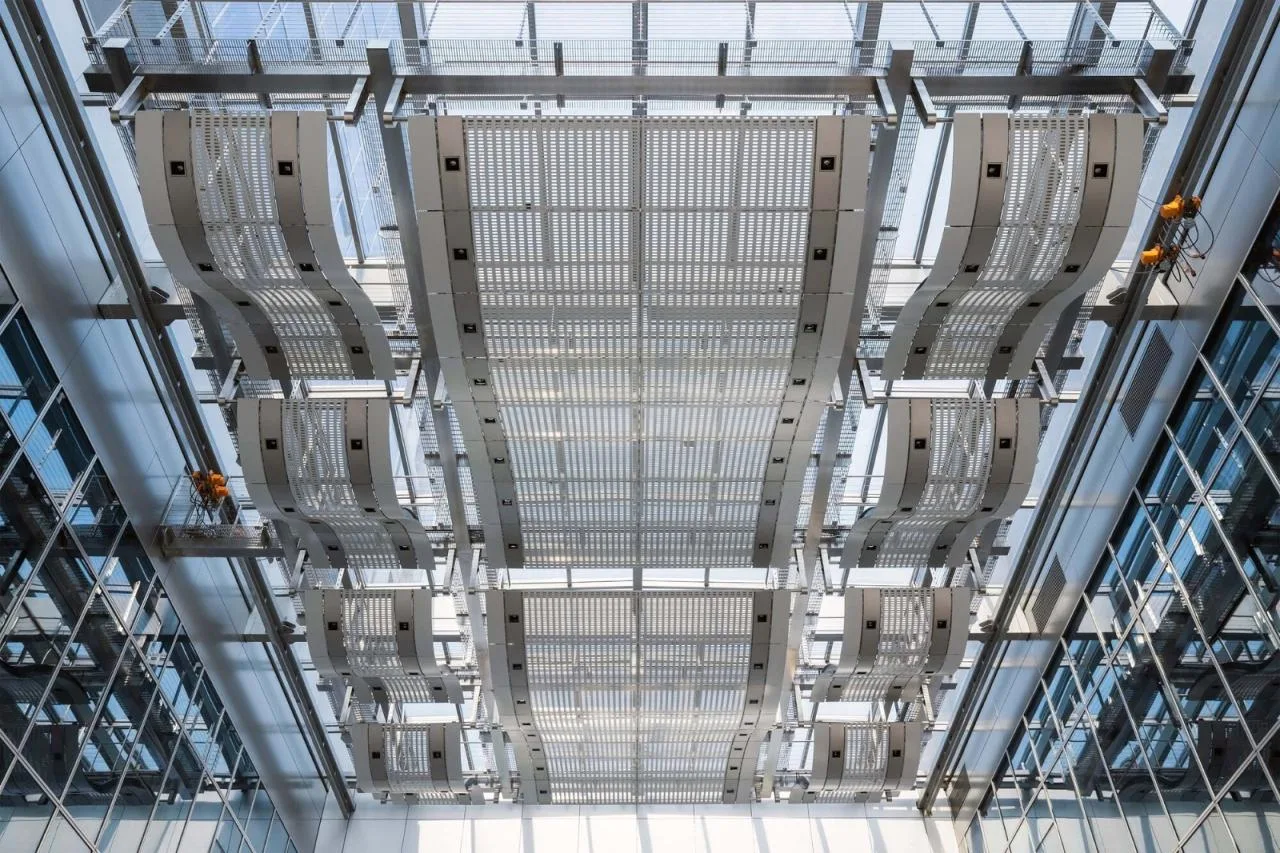
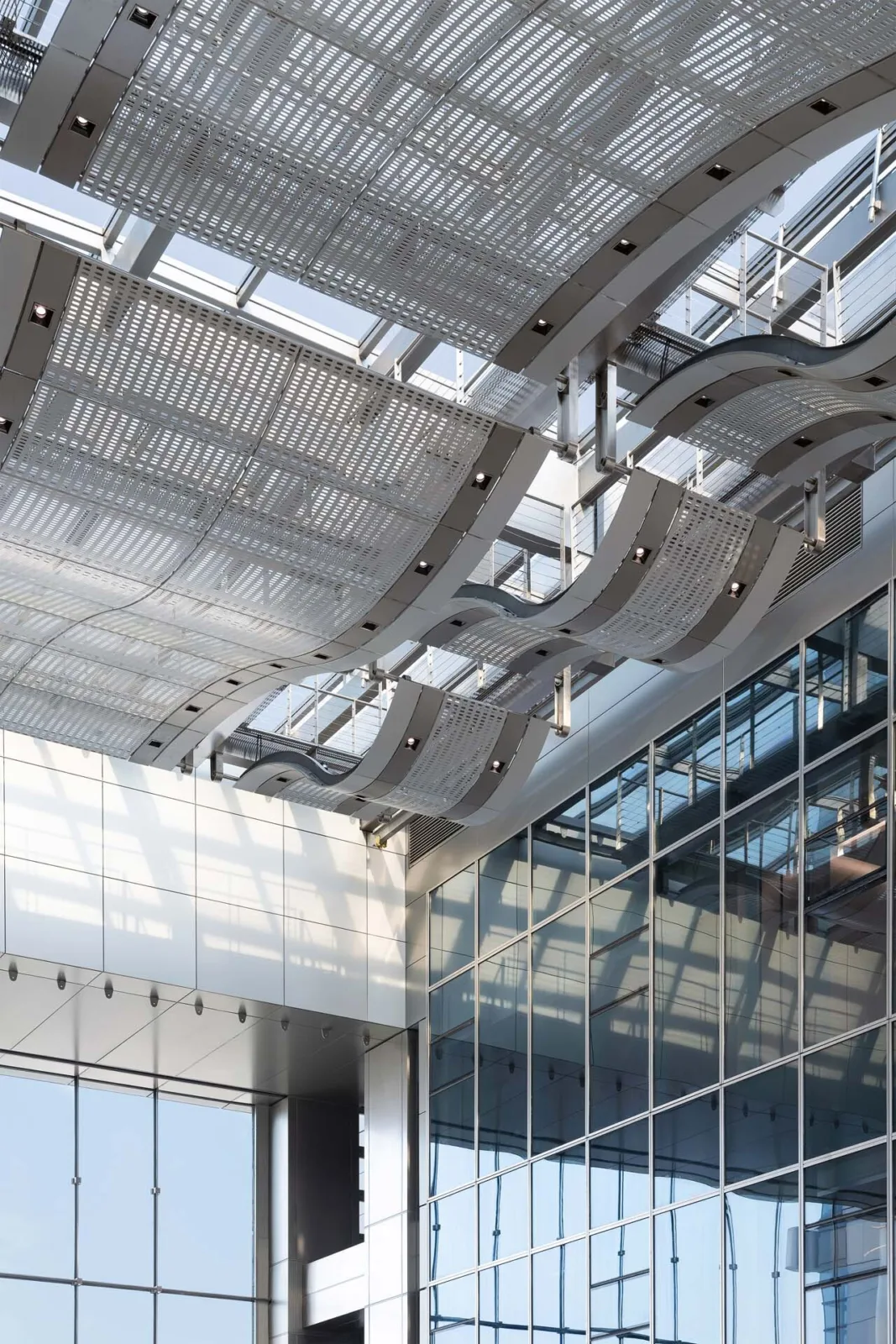
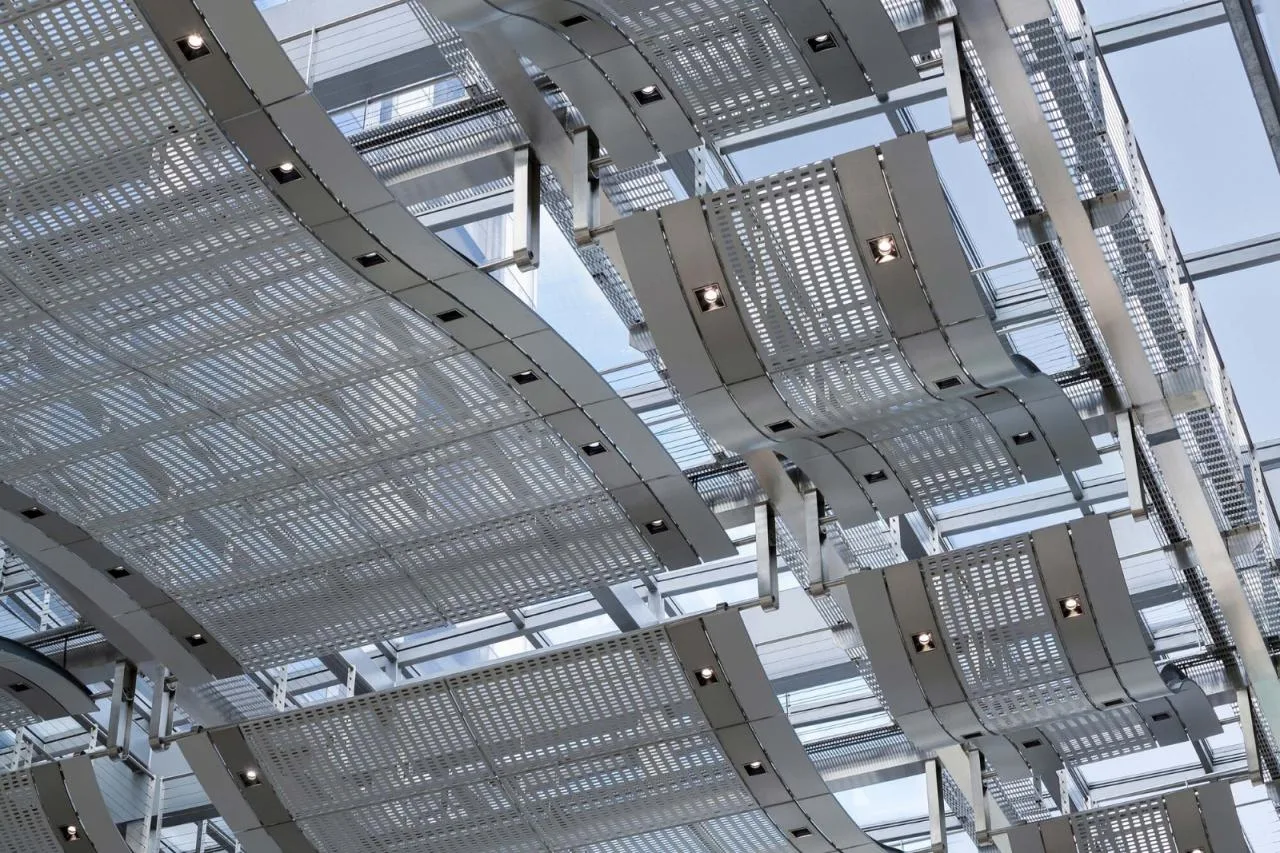
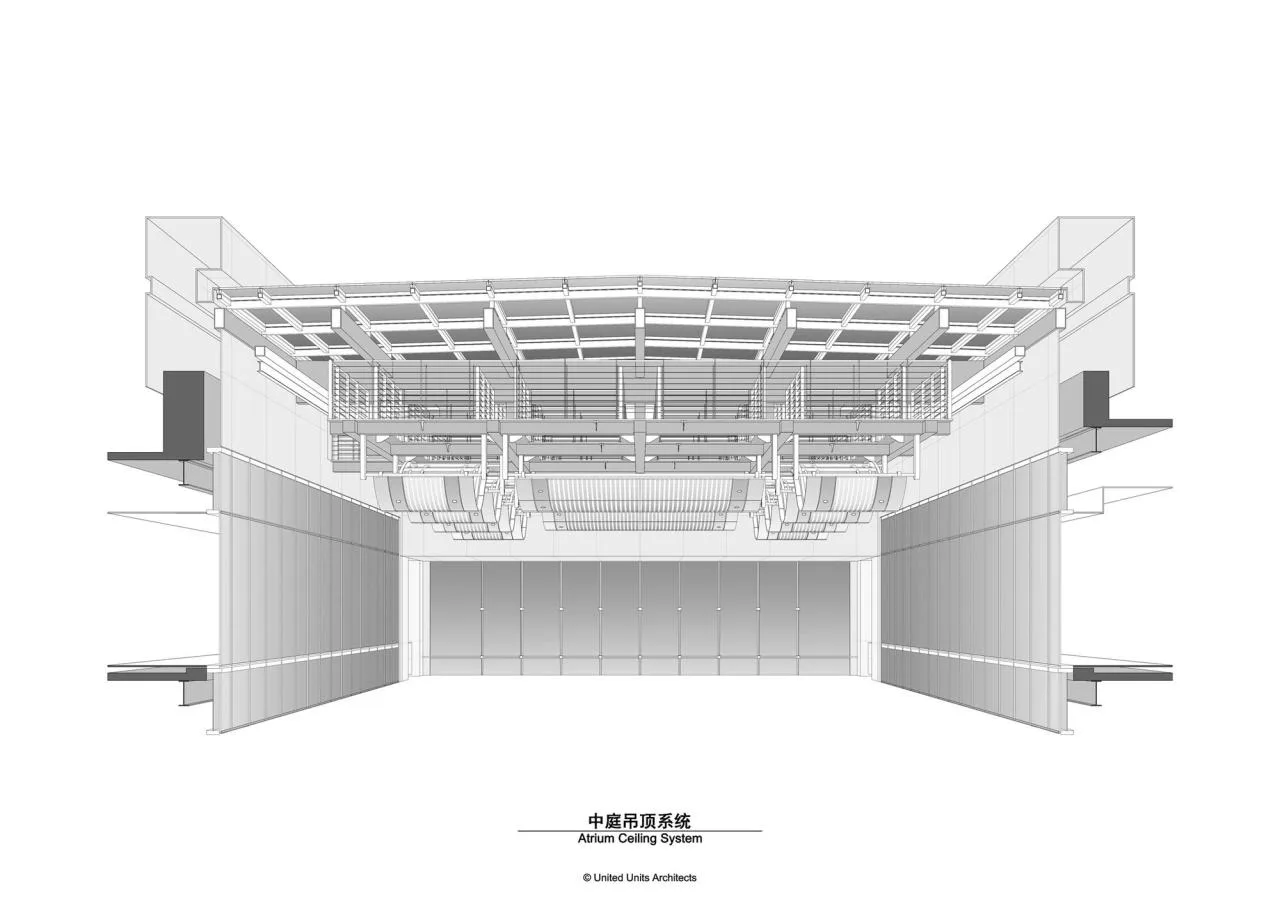
A suspended ceiling system tops the atrium, featuring cloud-shaped panels made of perforated aluminum. These panels filter sunlight during the day and integrate lighting for the evening. Above the ceiling panels, a maintenance platform allows workers to clean the glass roof or safely replace lighting fixtures below.
Project Drawings
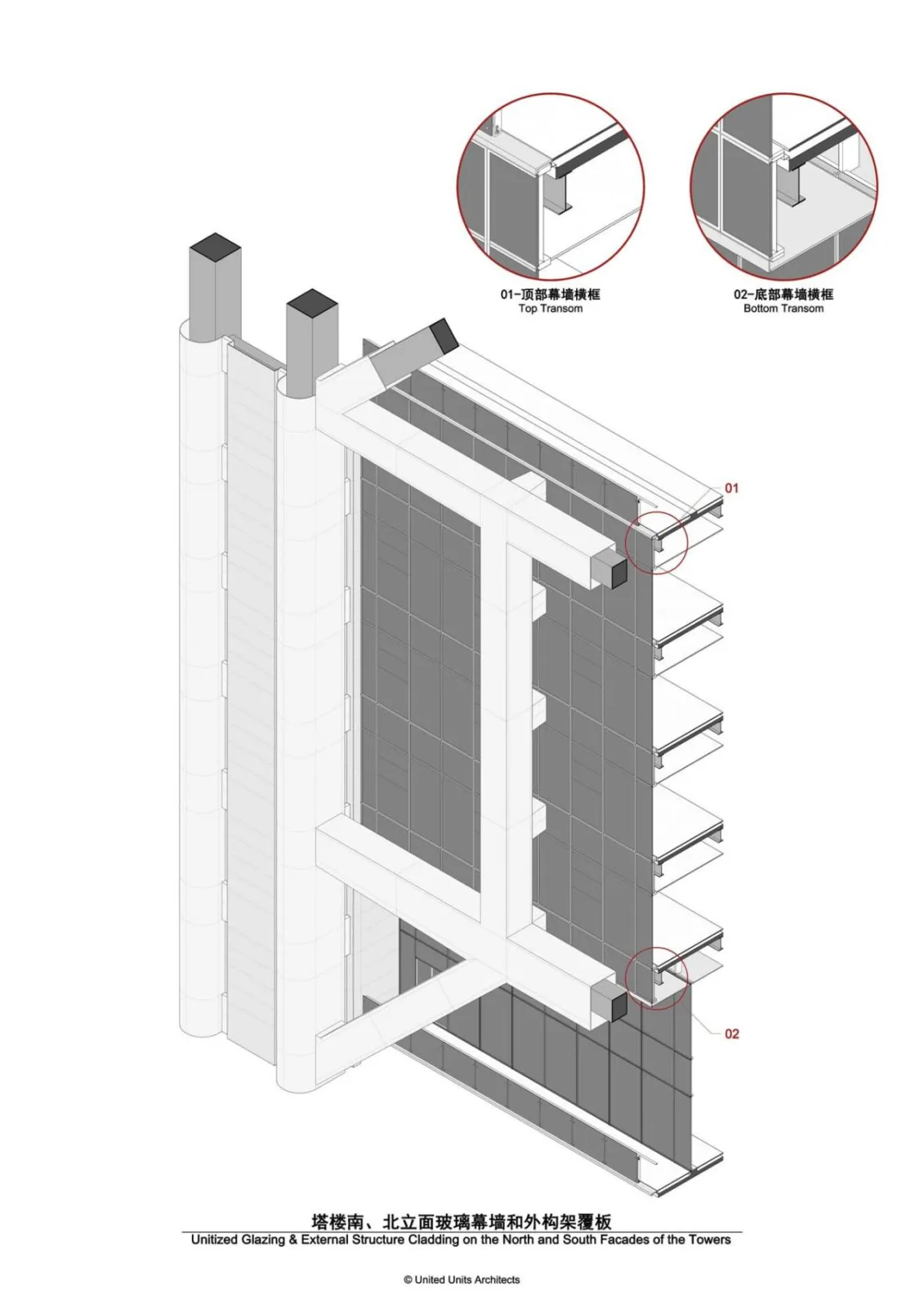
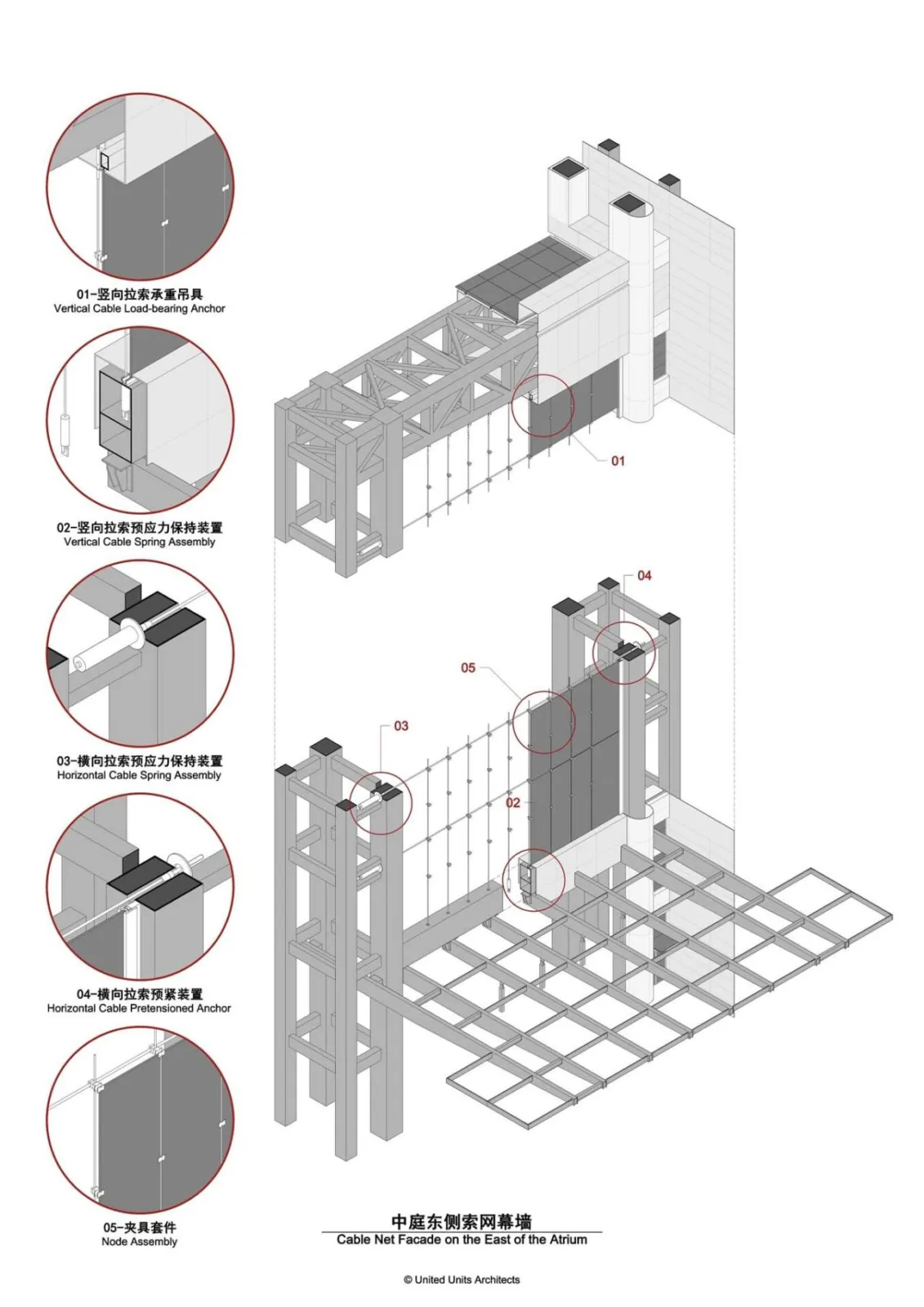
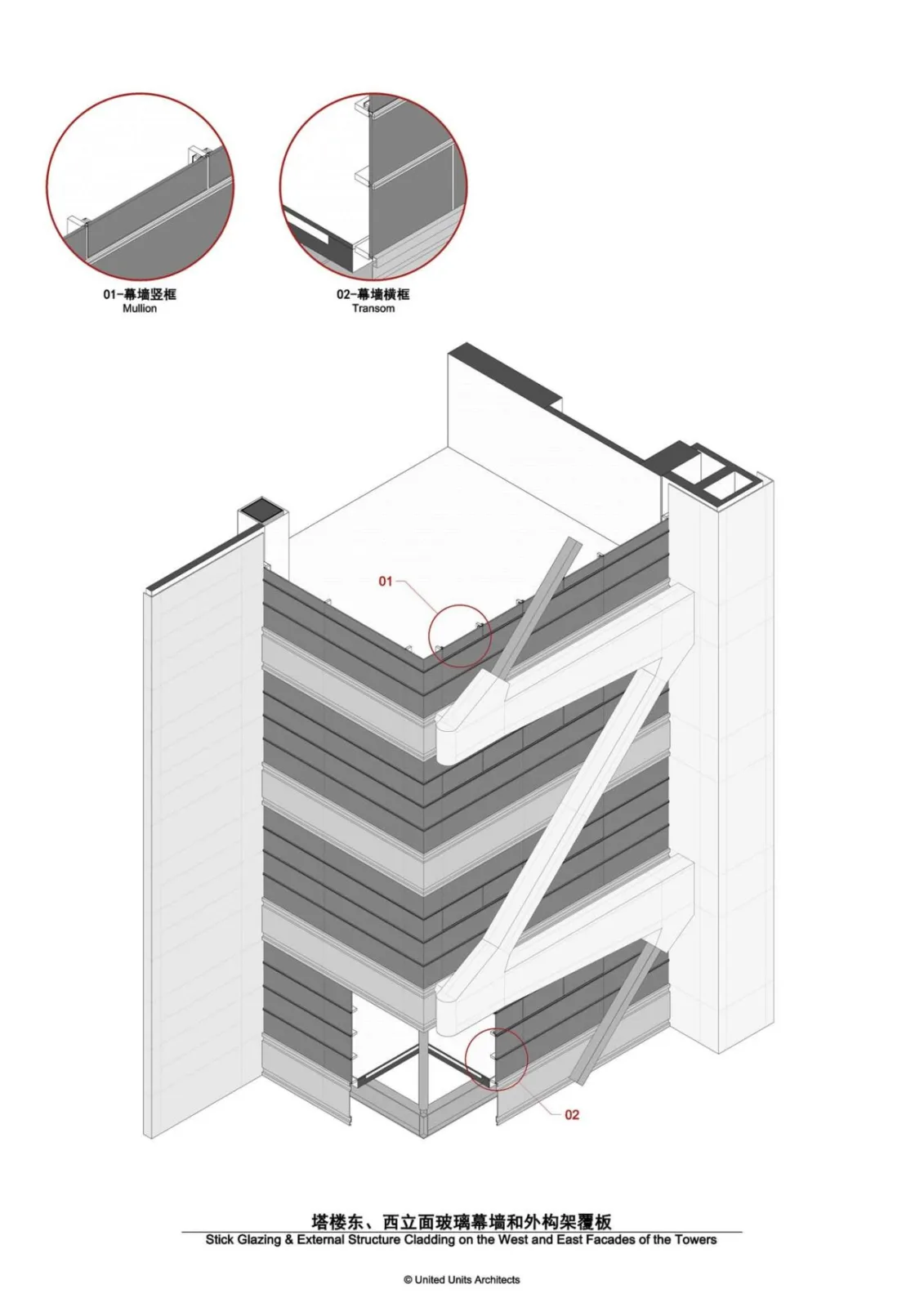
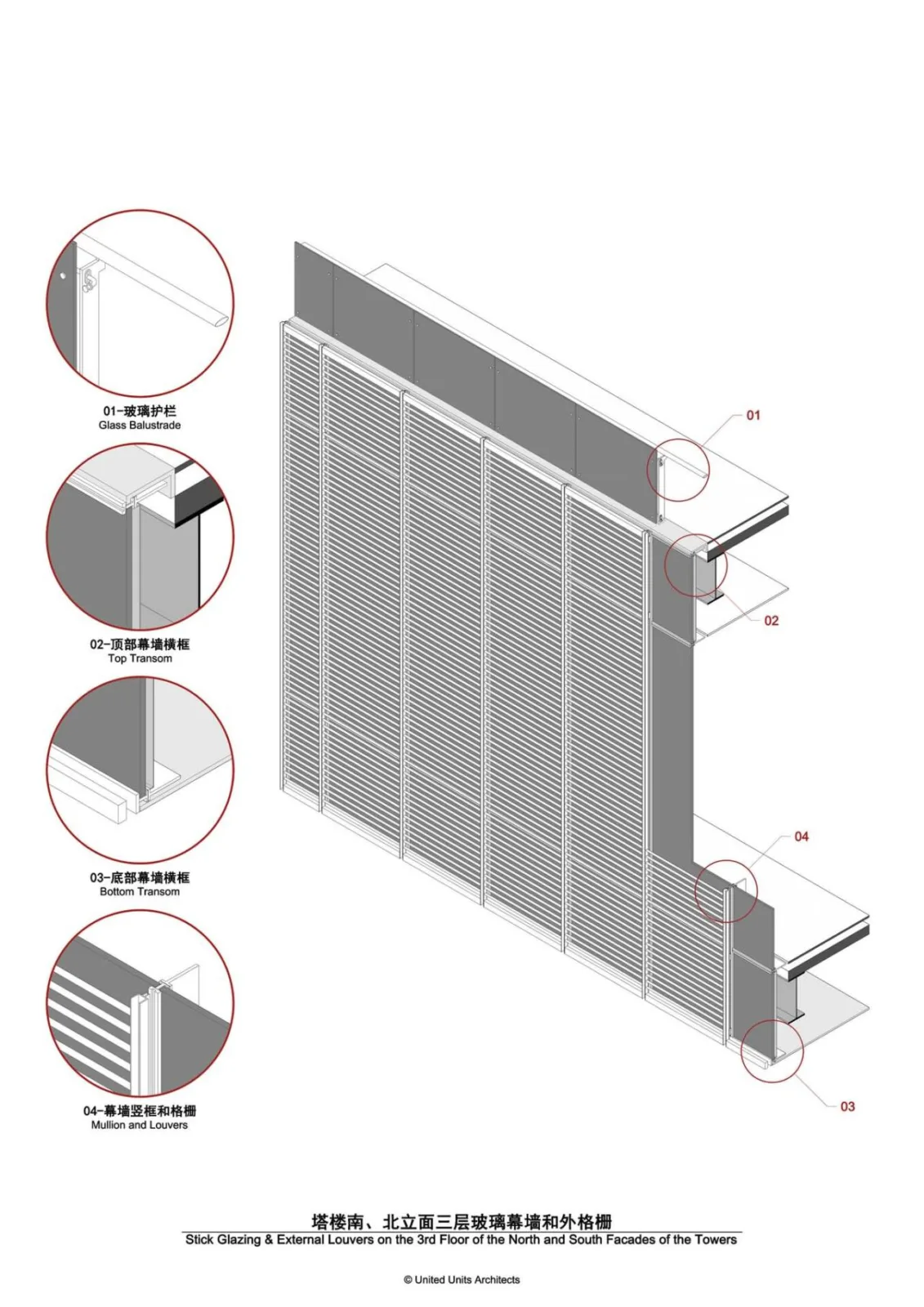
Project Information
Project Name: Shuangqing Building: Ruifeng Digital Financial Center | UUA
Project Type: Architecture
Location: Shaoxing, Zhejiang
Design Firm: UUA Architects
Collaborative Design Institute: Zhejiang Provincial Institute of Architectural Design and Research
Lead Architect: Li Yongzheng
Lead Partners: Li Yongzheng, Li Qizhi, Tim Mason
UUA Design Team: Lv Yanfeng, Jiang Teng, Xu Liang, Tianyuan, Lu Qian, Jessie Millar
Owner: Ruifeng Bank
Status: Completed
Design Period: April 2013 – March 2014
Construction Period: September 2016 – June 2021
Land Area: 12,000 m²
Building Area: 74,000 m²
Curtain Wall Consultant: Zhejiang Architectural Design and Research Institute Curtain Wall Branch
Interior & Landscape Design: CallisonRTKL
Lighting Design: Dongliang International Lighting Design Center
Green Building Consultant: China Academy of Building Research
Logo Design: Zhengbang
General Contractor: Zhejiang Baoye Construction Group
Curtain Wall Subcontractor: Jianghe Curtain Wall
Fine Decoration Subcontractor: Chengda Group
Photography: Literal translation of architectural photography
Video Copyright: Literal translation of architectural photography















Must log in before commenting!
Sign Up