
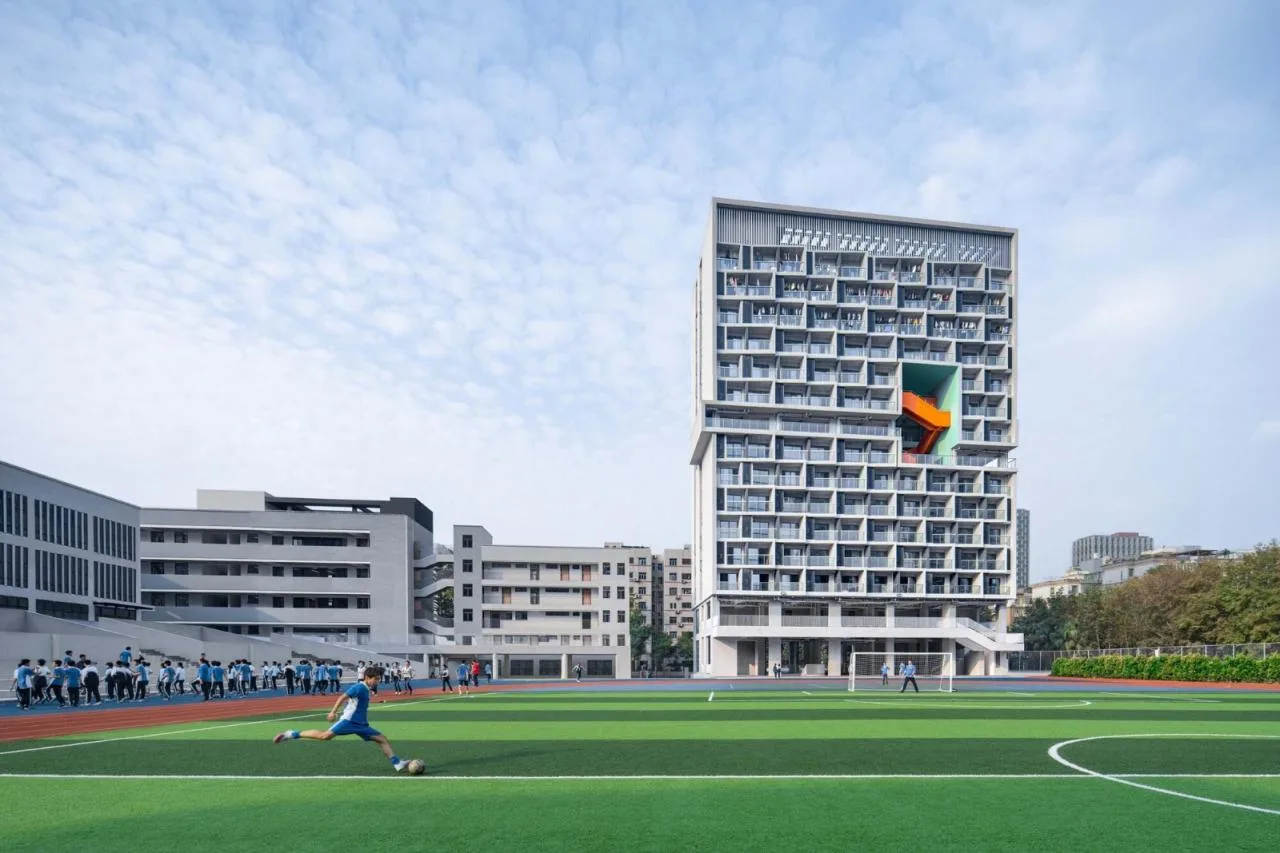
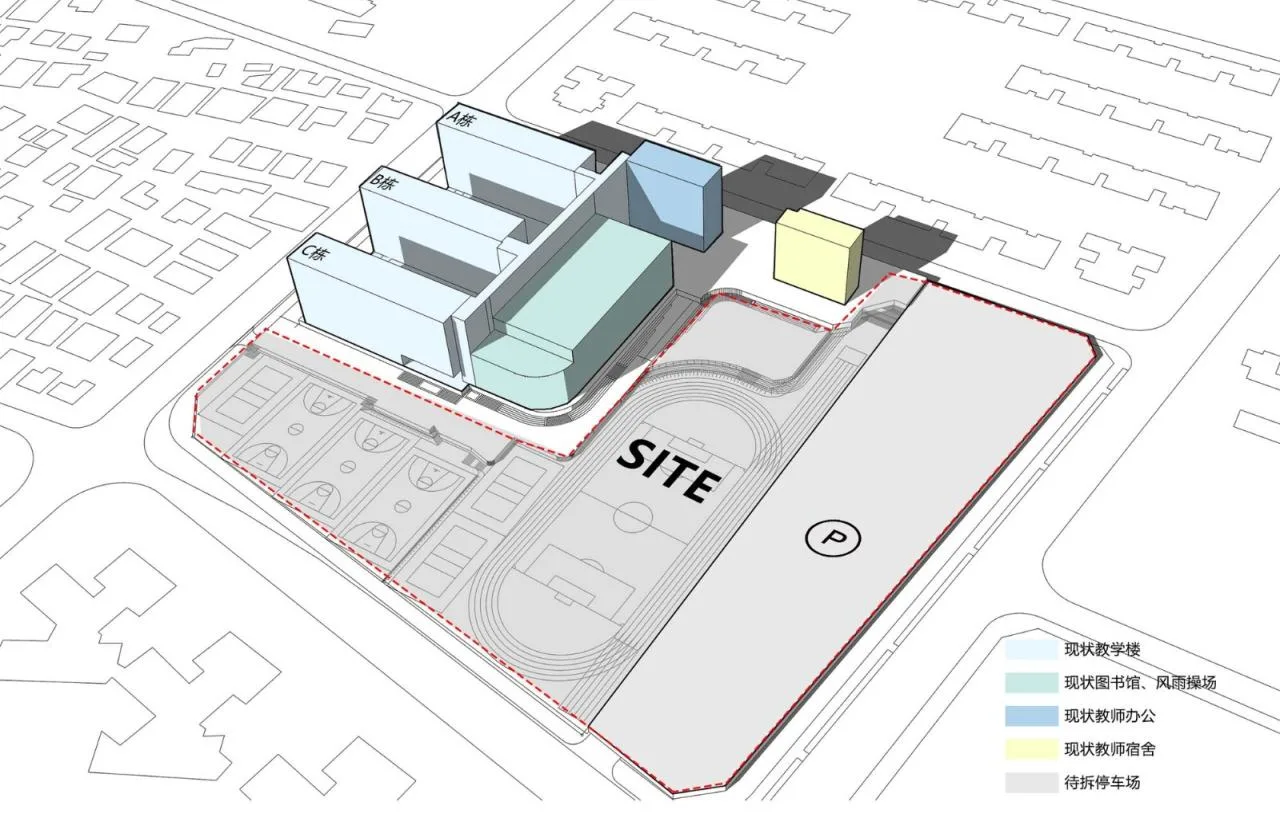
Located on the west side of Yiyuan Road and the north side of Zhengyun Road in Shenzhen’s Nanshan District, Shenzhen Nanshan Experimental Education Group Qilin Middle School is surrounded by high-rise residential buildings and densely populated urban villages. The campus currently spans 20,083 square meters. To accommodate future growth, a 7,000 square meter public parking lot on the east side will be integrated into the campus. This expansion increases the total campus area to 27,083 square meters, allowing the number of classes to grow from 36 to 48.
The renovation includes the construction of a comprehensive teaching building, administrative offices, a cafeteria, a lecture hall, sports facilities, and teacher dormitories. Following expansion, the total built-up area will reach 64,125 square meters with a floor area ratio of 1.40. To maintain campus cohesion, the existing teaching building’s facade and interior spaces will be systematically upgraded and renovated.
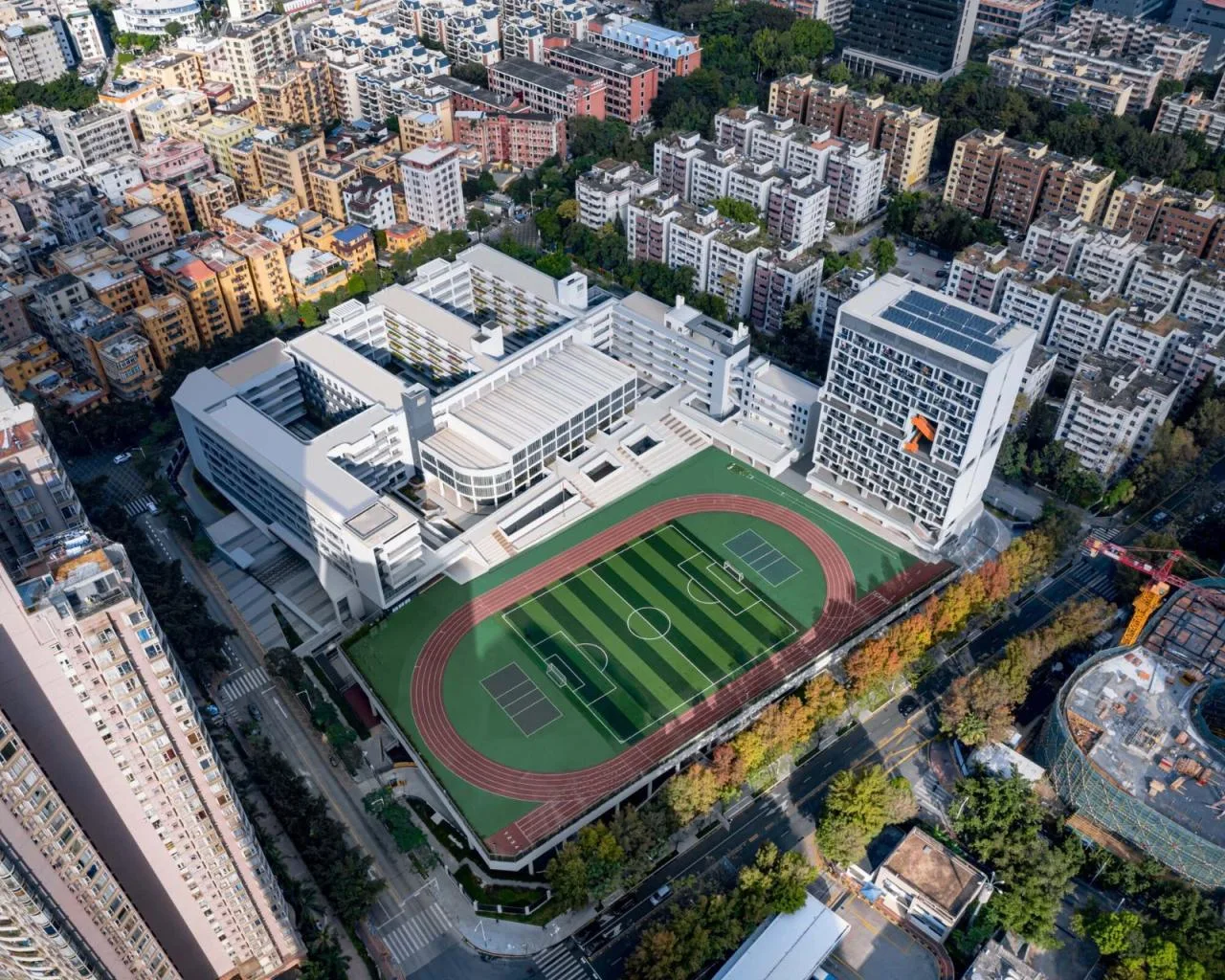
The existing teaching building features a typical “Japanese”-shaped layout with well-integrated functions and clear zoning. On the west side are three standard classroom buildings labeled A, B, and C. The east side houses the library, a sheltered outdoor playground, and shared classrooms. Teacher offices and dormitories are located on the north side. The main campus entrance is also on the north.
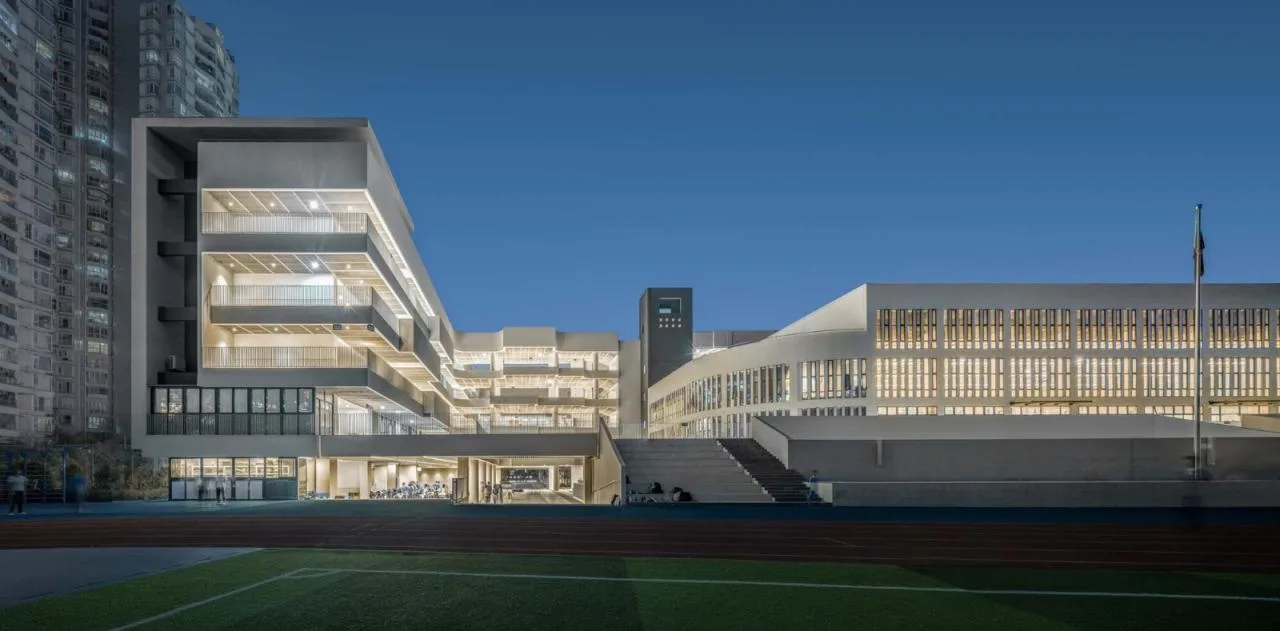
To optimize spatial logic and mitigate shading from adjacent tall residential buildings on the south, a new six-story professional teaching building (Building D) has been added on the south side. This building includes specialized classrooms, multifunctional rooms, and teacher offices. The campus’s north-south axis links the four teaching buildings, creating three enclosed teaching courtyards.
Additionally, to address the need for more administrative space, the teacher’s office building (Building G) on the north side will be expanded eastward to connect with the original office building. Together, Buildings D and G, along with the original ABC buildings, form a complete teaching zone.
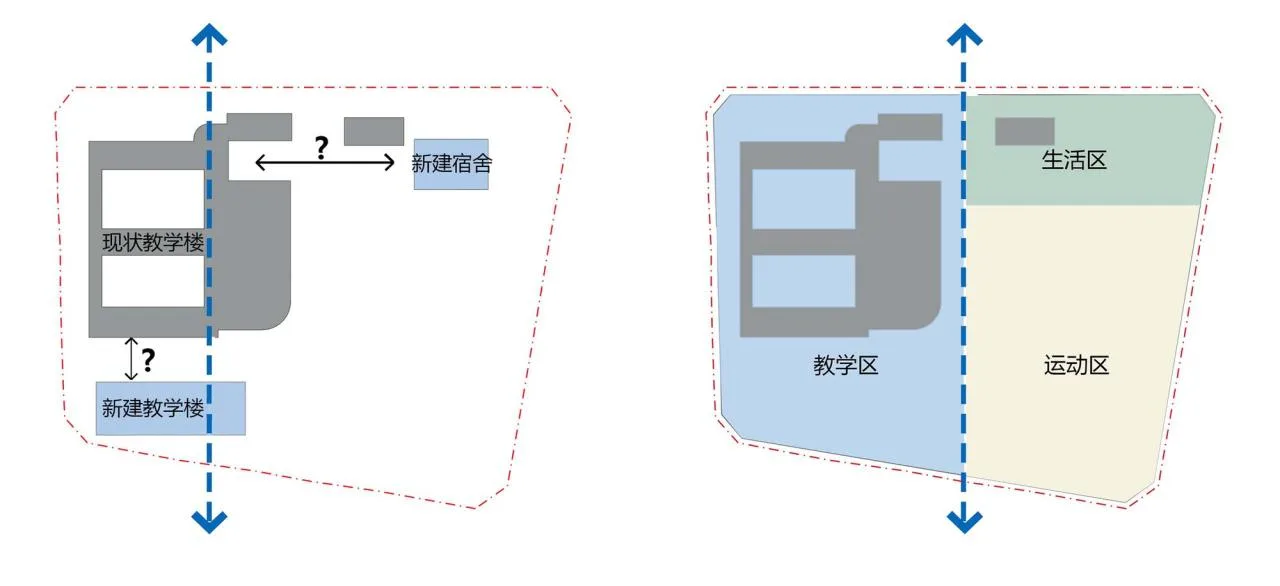
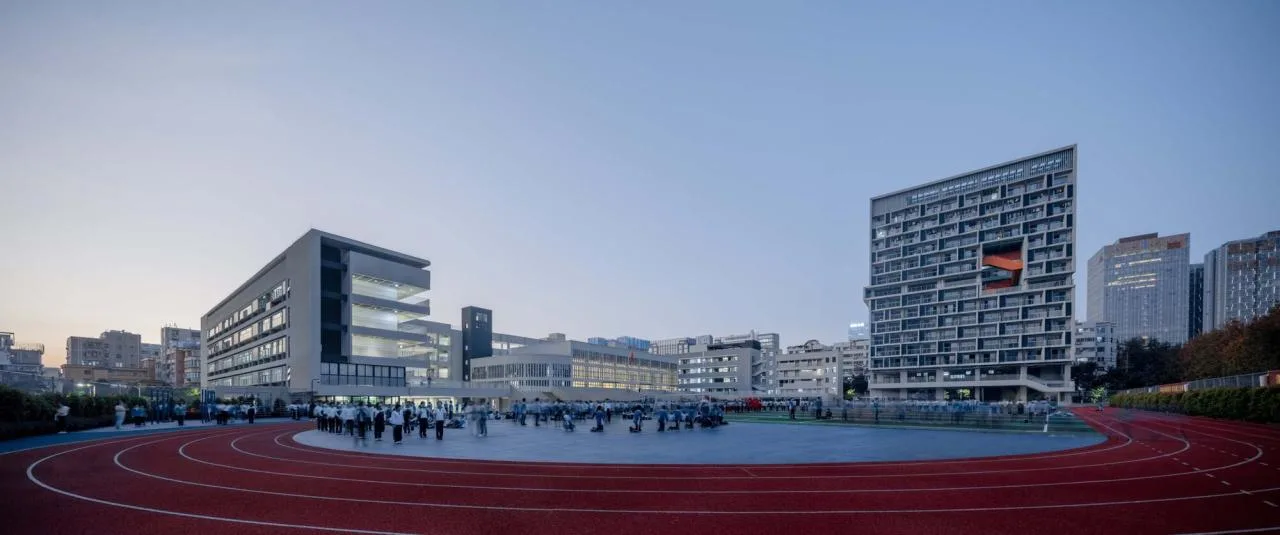
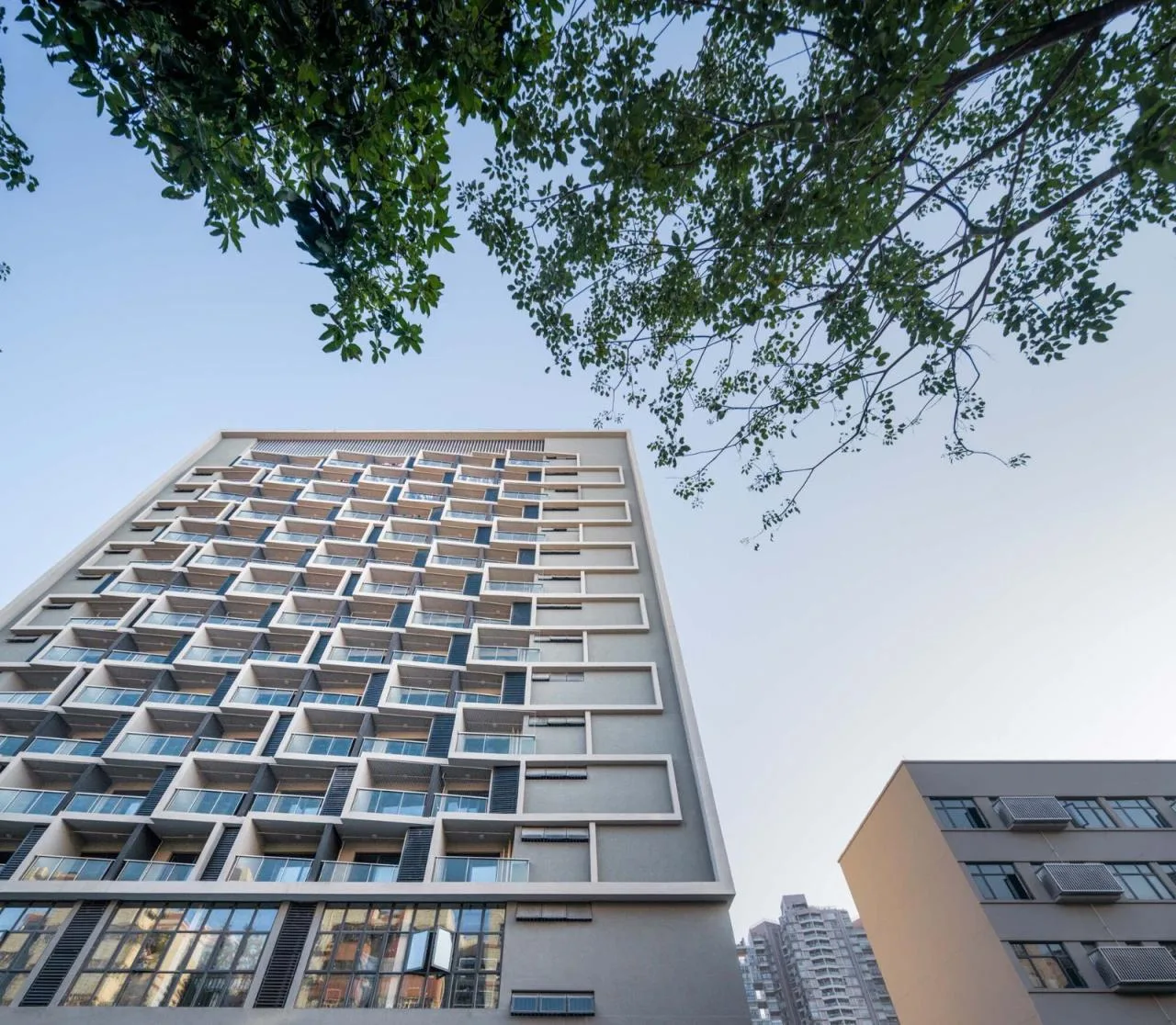
The existing 200-meter running track will be extended to 250 meters and relocated to the campus’s east side. A new 15-story teacher dormitory (Building H) will be constructed on the north side, featuring a cafeteria and support facilities on the ground floor, creating a comprehensive residential and sports area.
Post-renovation, the campus layout will be organized along a central axis: the west side dedicated to teaching courtyards organized by grade, and the east side designed as a sports and living zone, effectively separating active and quiet areas.
Moreover, with the inclusion of the former public parking lot into campus grounds, underground parking will be expanded on the building’s second basement level, featuring separate entrances and exits to facilitate community sharing.
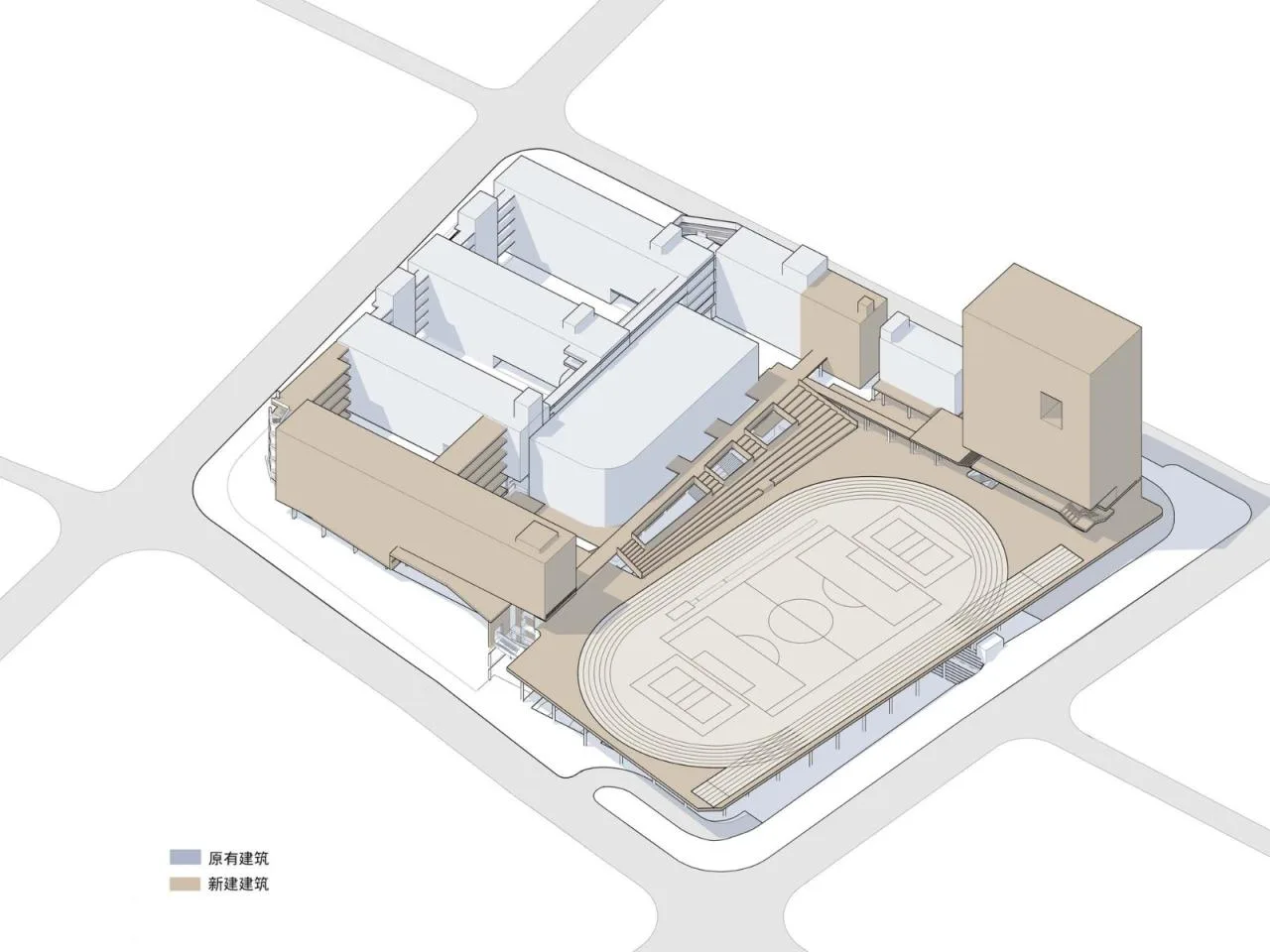
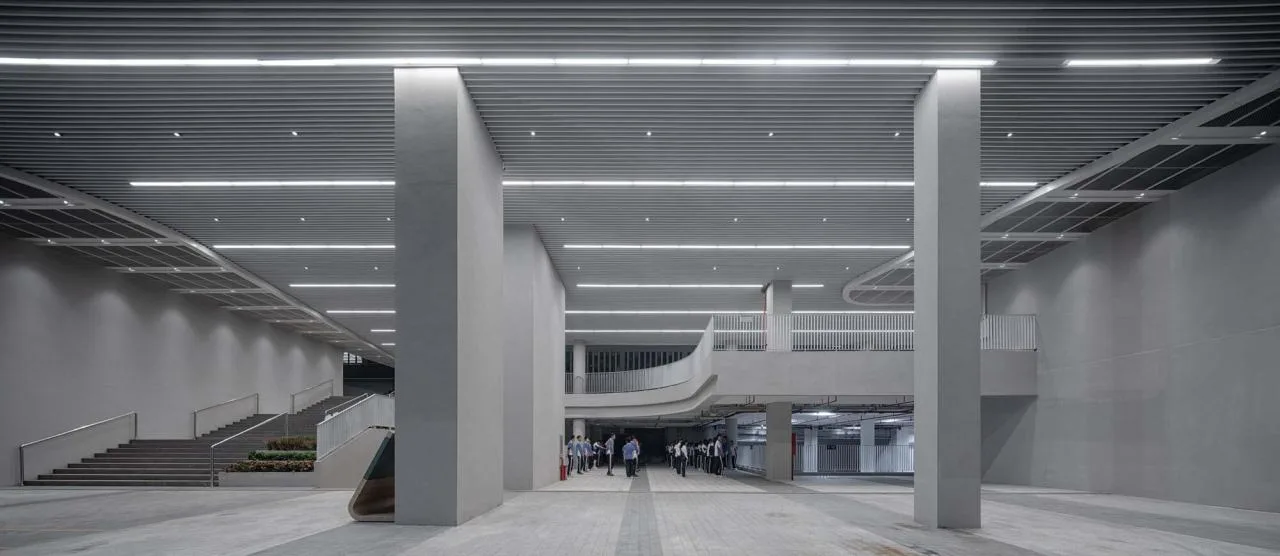
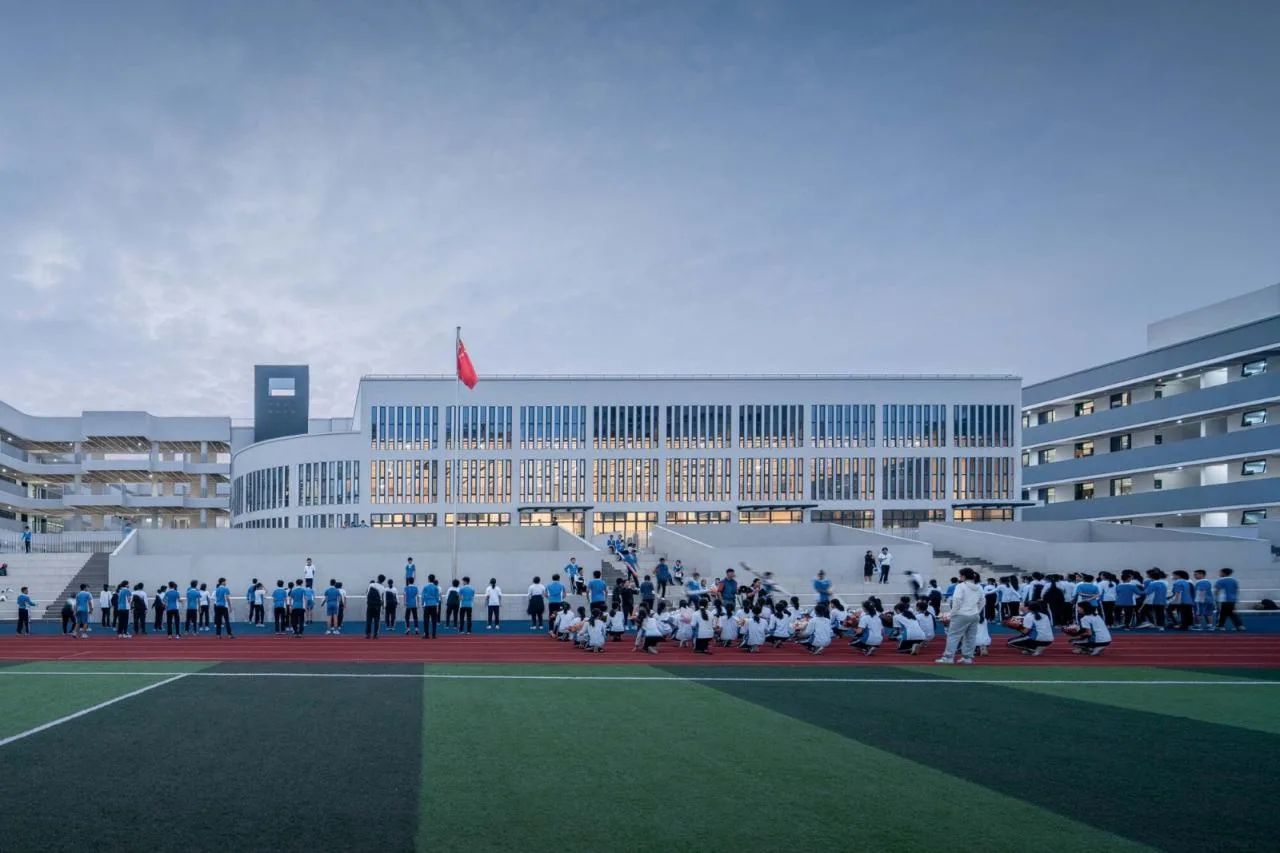
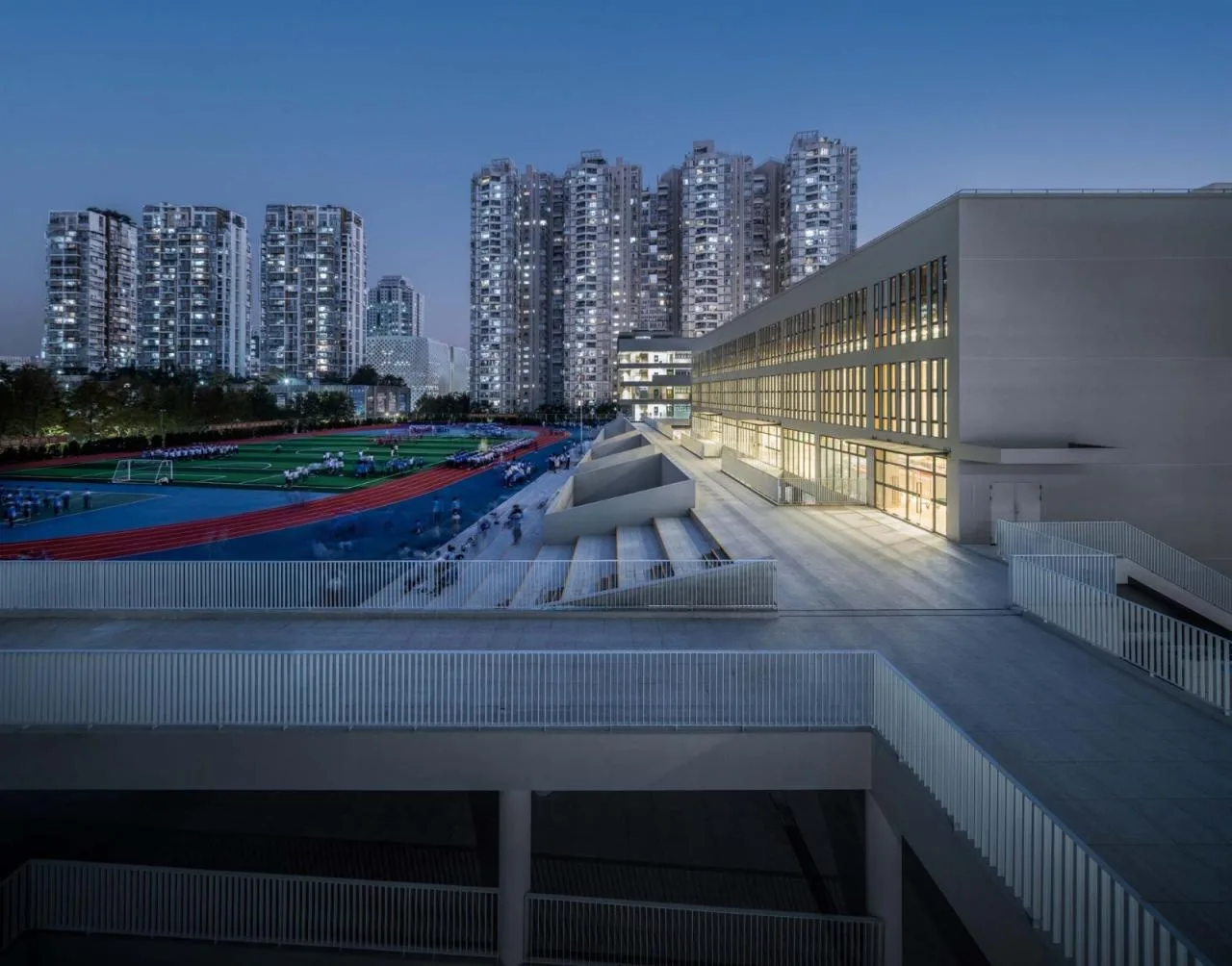
The design capitalizes on the 2-4 meter terrain elevation difference on the campus’s east side, running from north to south. A 250-meter sports field slab has been constructed above multiple facilities including a cafeteria, sheltered playground, elevated sports area, and a transportation center beneath it.
Additionally, an 800-seat lecture hall is located beneath the newly added third inner teaching courtyard. The lecture hall’s roof serves as a student activity platform, aligned with the first floor of existing buildings.
This design places large-scale functions underground or semi-underground, maximizing open surface activity space. The interconnected lower spaces form an all-weather shared public area. Natural ventilation and lighting are enhanced by the road elevation differences on the southeast side and the presence of sunken courtyards between old and new buildings.
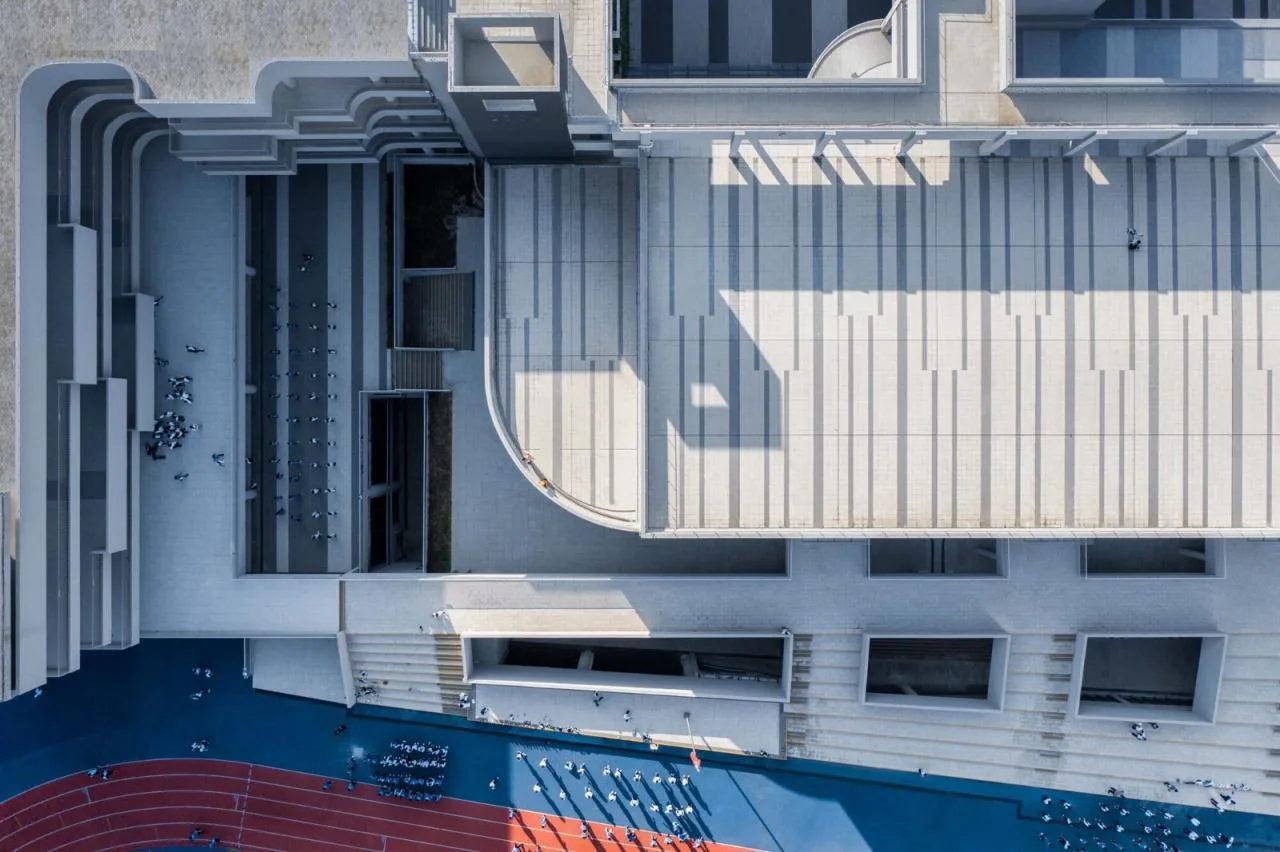
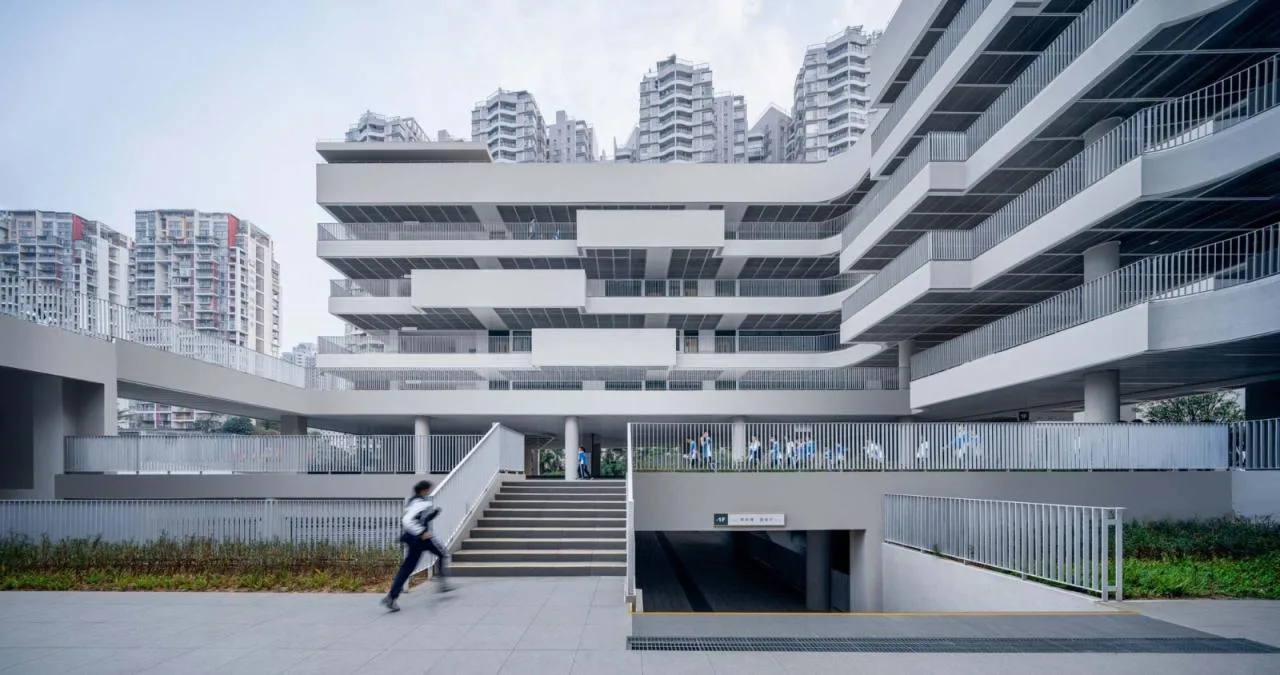
The campus layout combines new and old buildings scattered across the site, requiring a robust public open space system to organically link the various teaching units into a cohesive whole.
The first-floor area beneath the large slab emphasizes seamless connection among the three western teaching courtyards and the elevated activity and semi-underground spaces on the east.
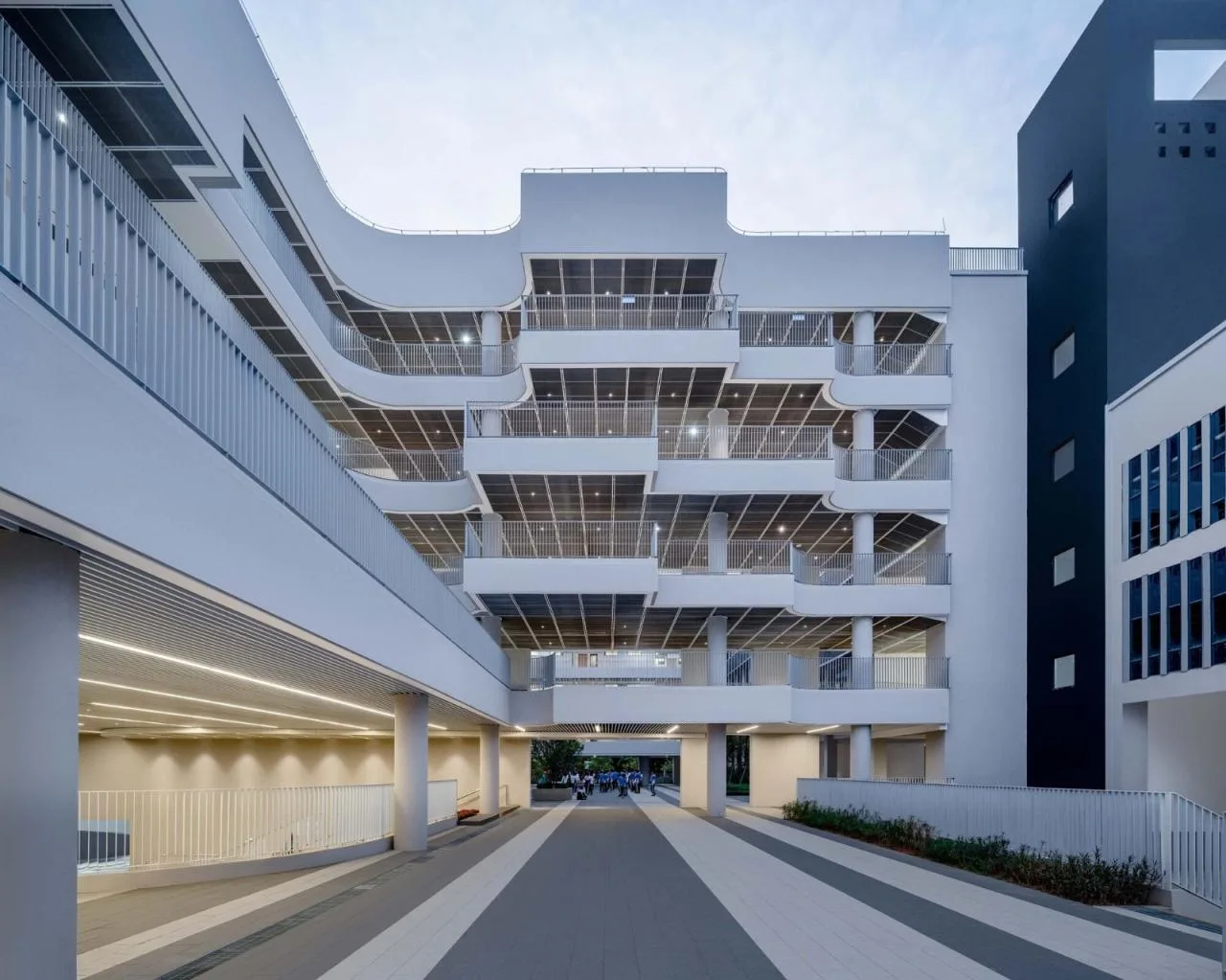
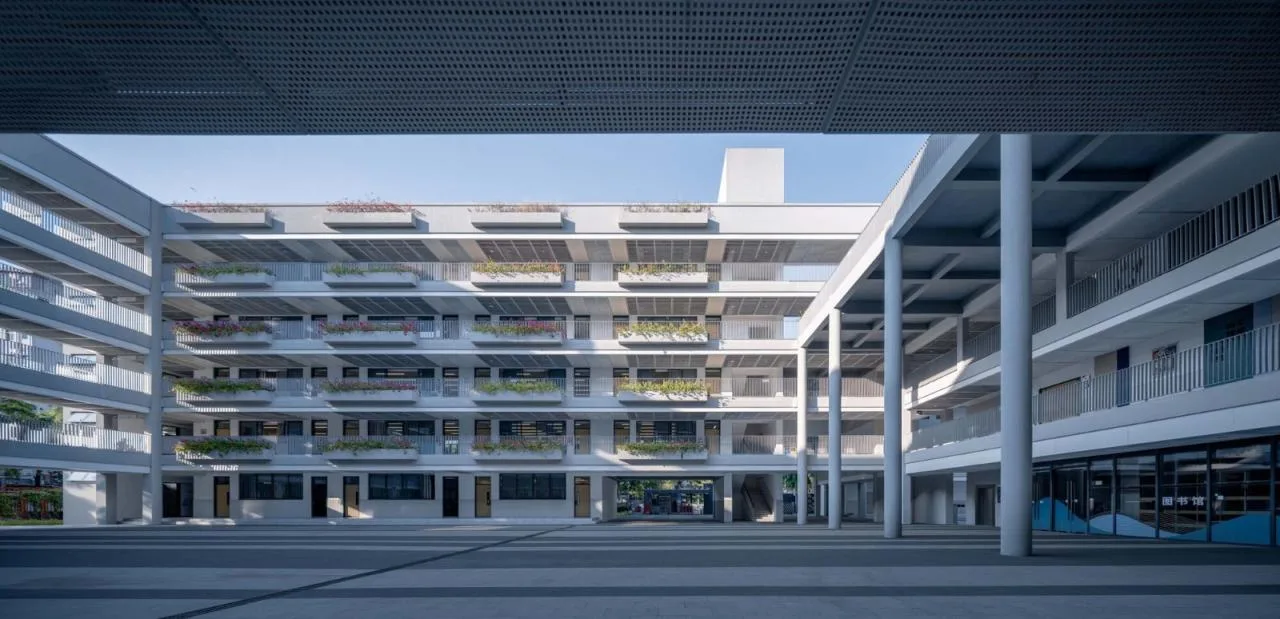
The transportation routes and central axis connecting the new and old teaching buildings form a closed loop. A second-floor corridor bridge and platform link the open spaces and sports stands on the east side.
The previously closed east facade of the sheltered playground on the second floor has been transformed into a transparent grille, enhancing visual and physical connections between teaching spaces and the sports area. This design ensures students can access the sports fields within a ten-minute break.
The integration of corridors, teaching courtyards, sports stands, and landscaped steps creates a continuous, flowing public open space system. This network connects buildings with varied functions—teaching, administrative, residential, and sports—making the campus more cohesive and lively.
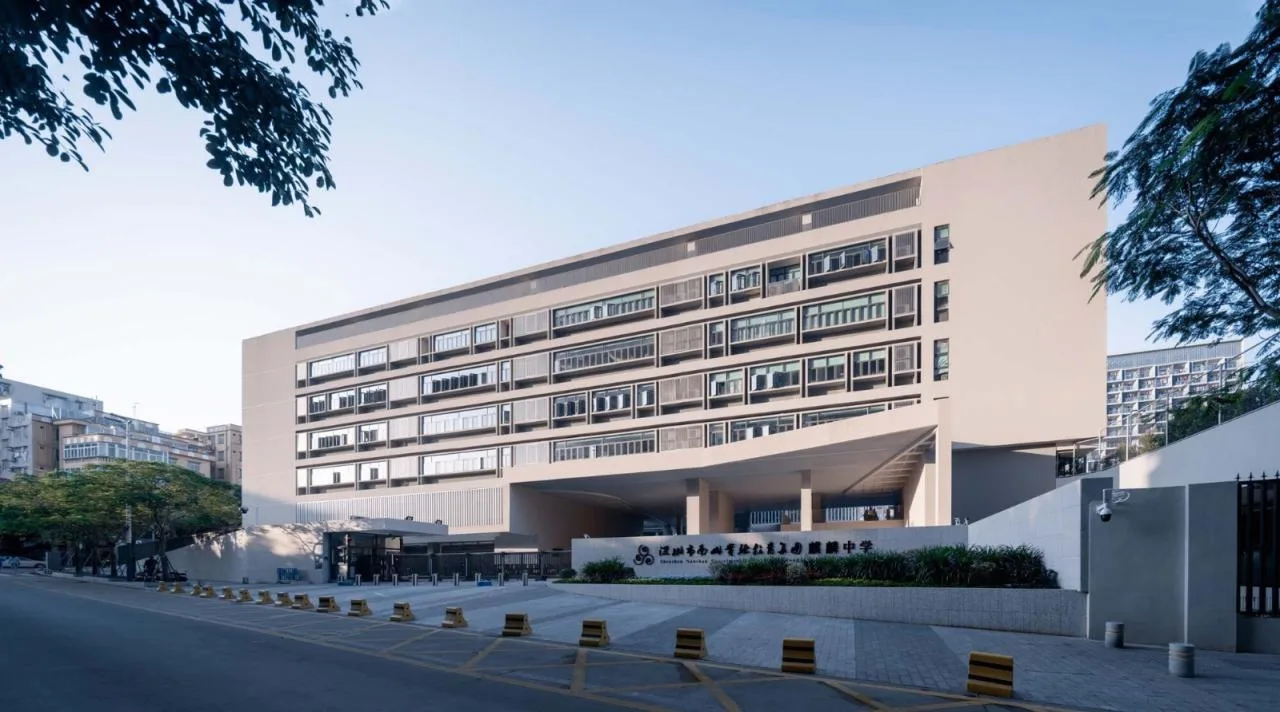
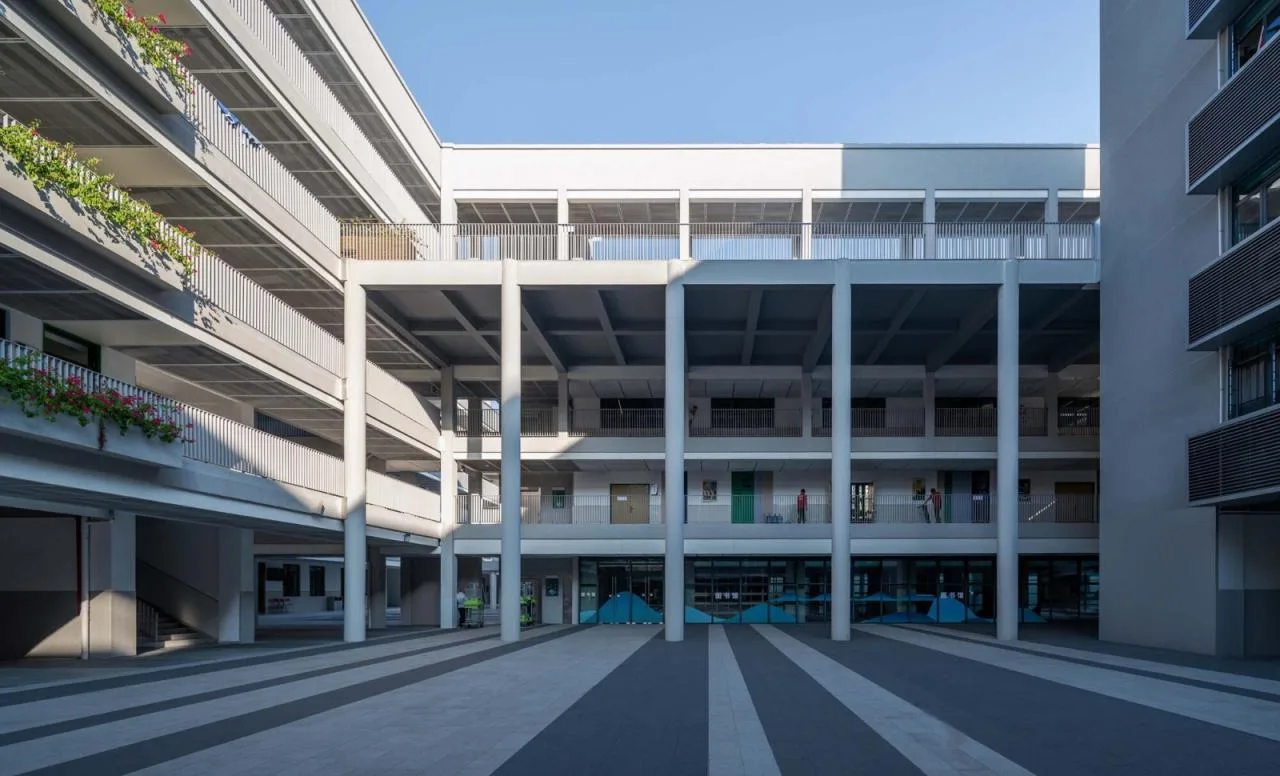
The campus’s central axis, connecting the west teaching courtyard with the east library, sheltered playground, and stepped classrooms, currently features uniform courtyard spaces that lack distinctiveness. Closed and solid facades on either side of the central corridor result in a dull and lifeless campus atmosphere.
The redesign transforms this central spine into a vibrant, transparent corridor by enlarging the library’s first-floor functional space and incorporating exhibition and reading areas within the partially elevated teaching building. This creates an open, public, and active central corridor that revitalizes the campus heart.
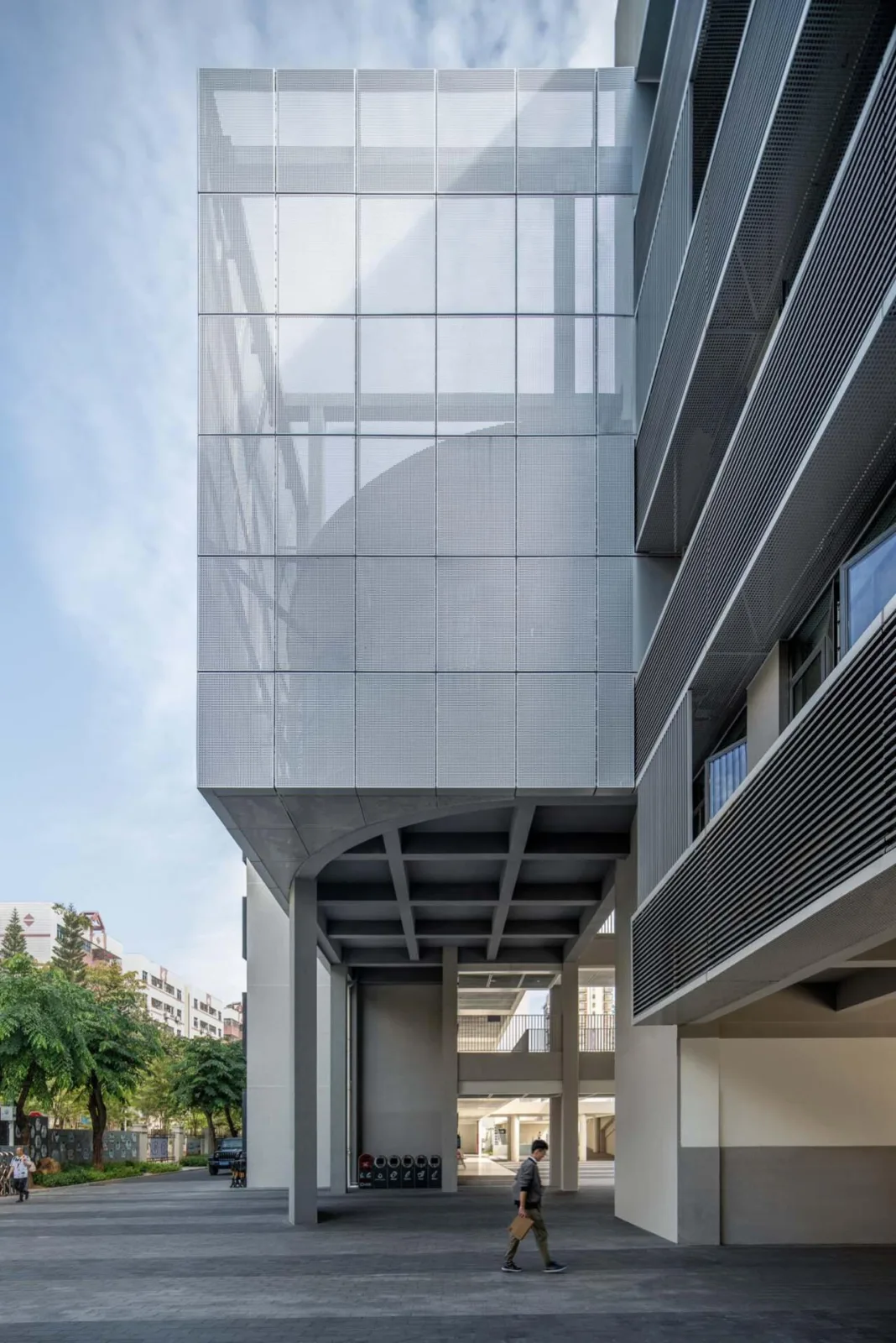
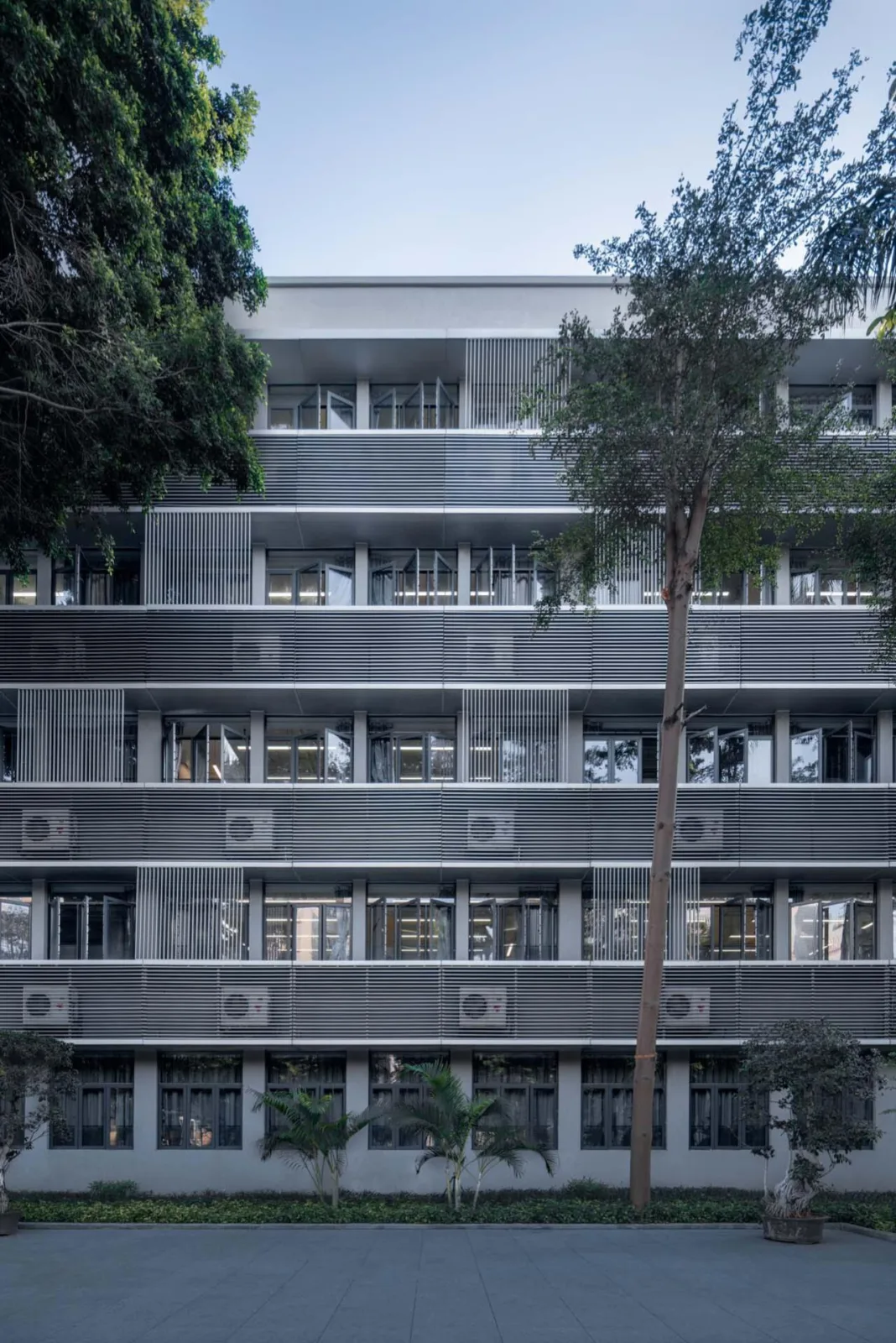
To ease peak traffic pressures caused by campus expansion, a new main entrance has been designed on the campus’s south side. The ground floor of the new building is partially elevated to create a pedestrian entrance buffer plaza, functioning as a “campus living room” and extending the campus axis.
The elevated three-story central corridor, designed to suit Shenzhen’s climate, creates distinct spatial nodes with both the southern living room and the northern entrance plaza, enriching the campus’s main axis and fostering a strong sense of place.
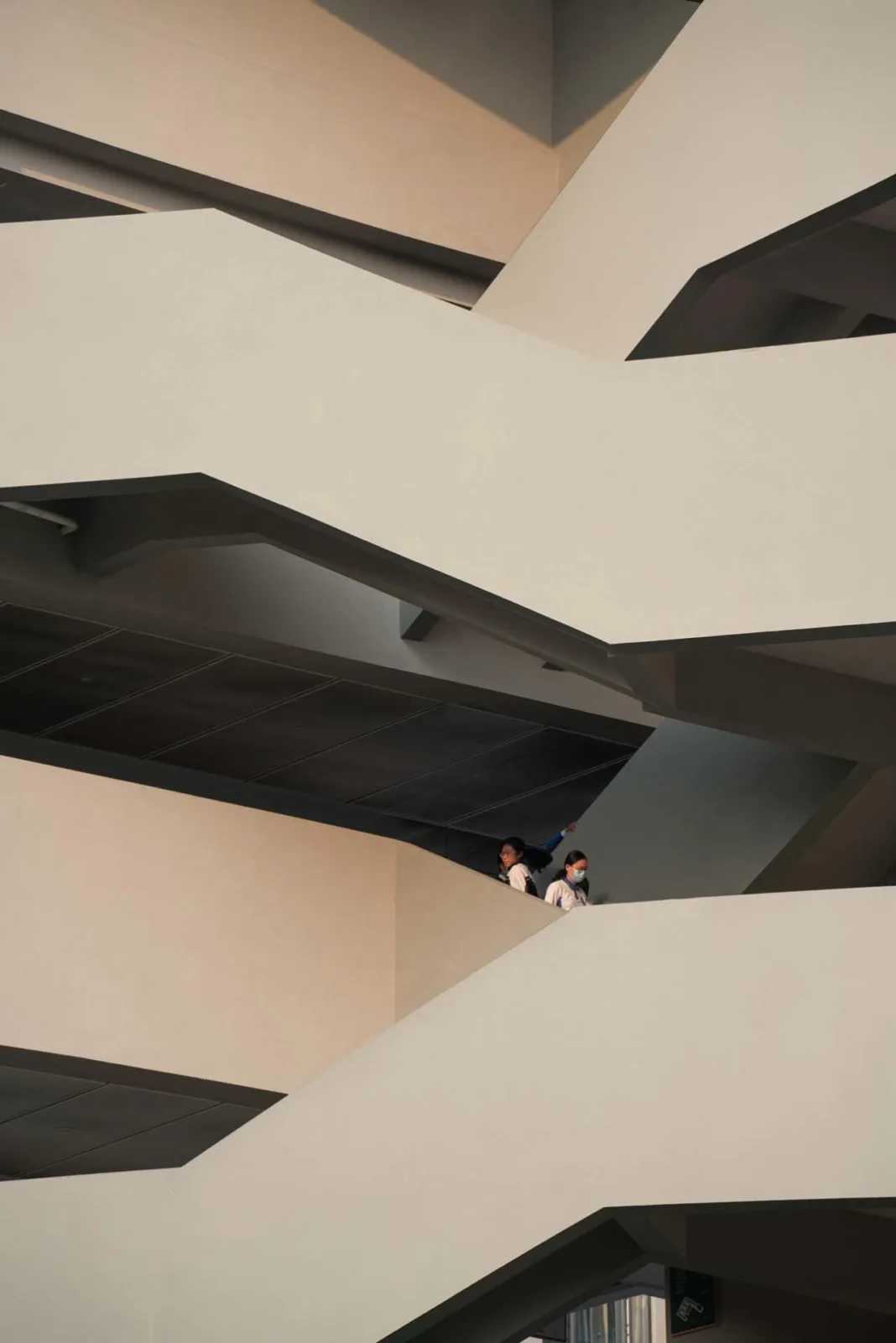
Furthermore, to overcome the monotony and closed nature of internal teaching courtyard interfaces, physical walls have been replaced with railings combined with informal spatial nodes. This approach produces a more dynamic, transparent, and multi-dimensional interface, offering diverse visual perspectives and spatial experiences.
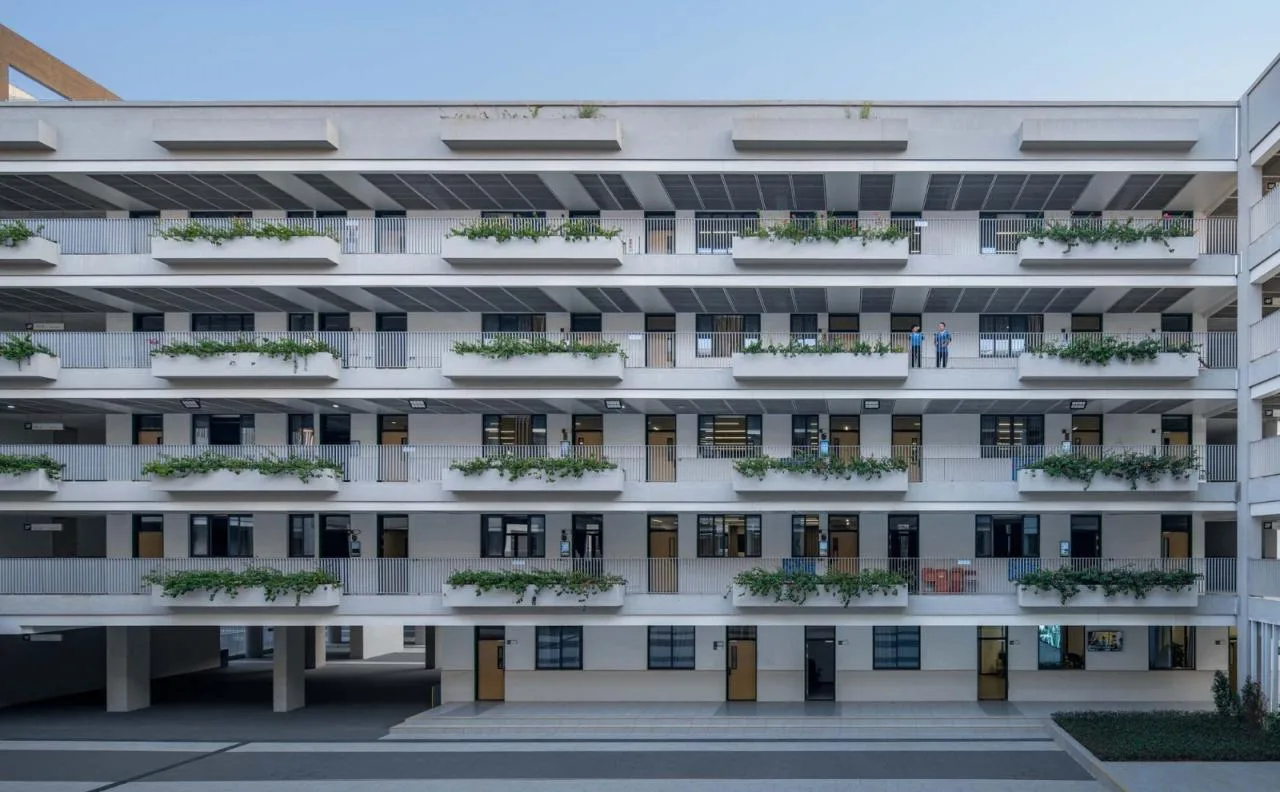
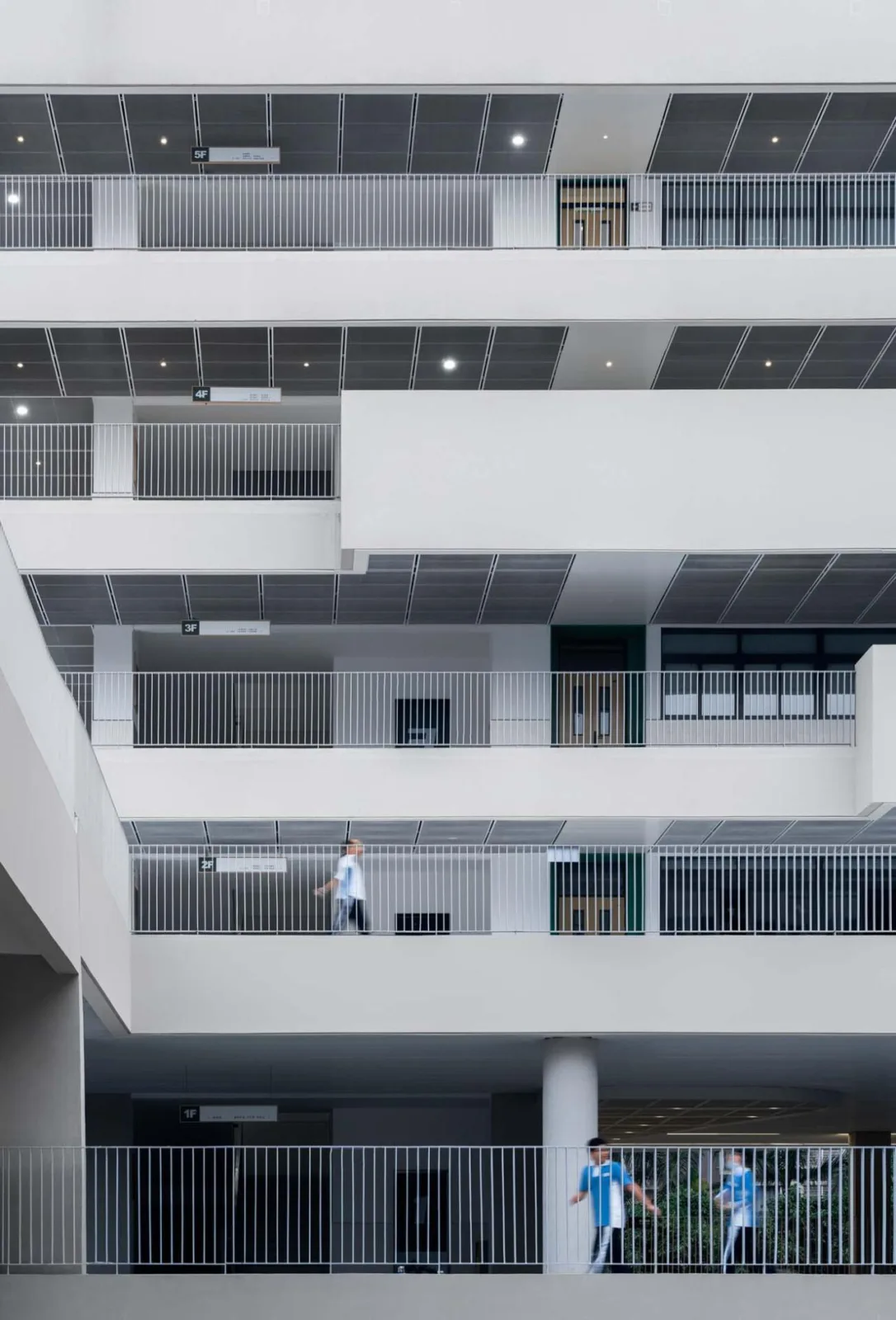
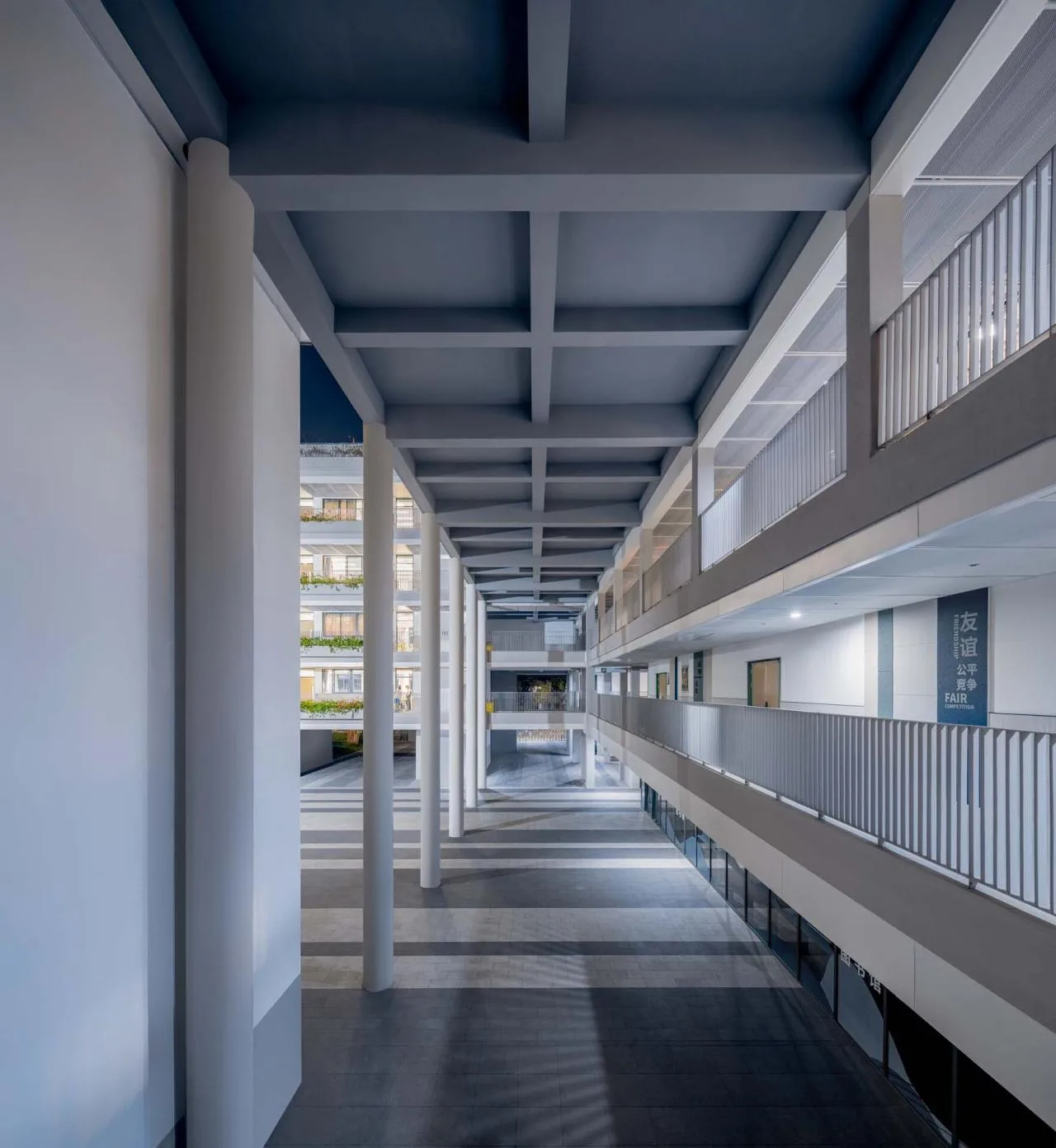
This renovation project involves the complex integration of multiple layered systems between existing and new structures. The design respects the original campus layout, employing dense, restrained interventions to organically link and integrate old and new buildings within budget constraints.
By reshaping the public space system, the design revitalizes campus life, giving the campus a fresh and renewed appearance.
Project Drawings
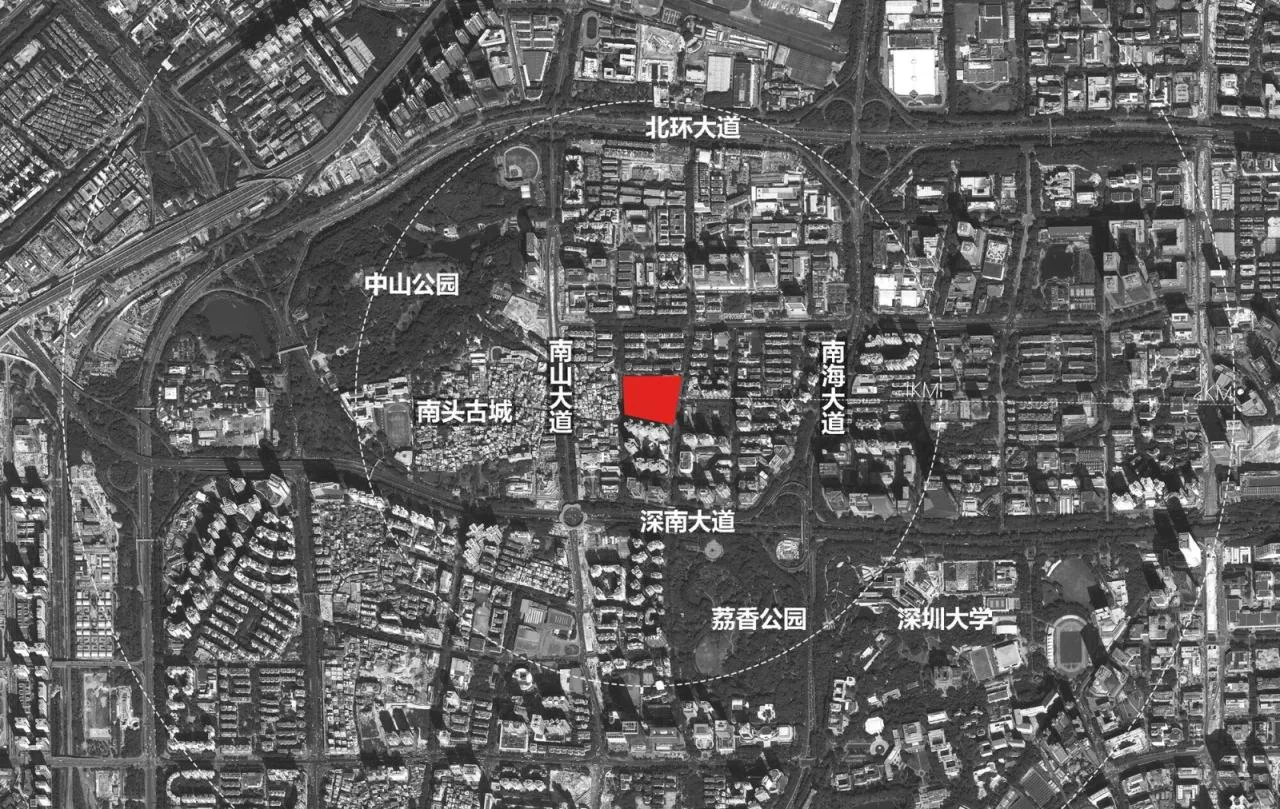
△ Location Diagram
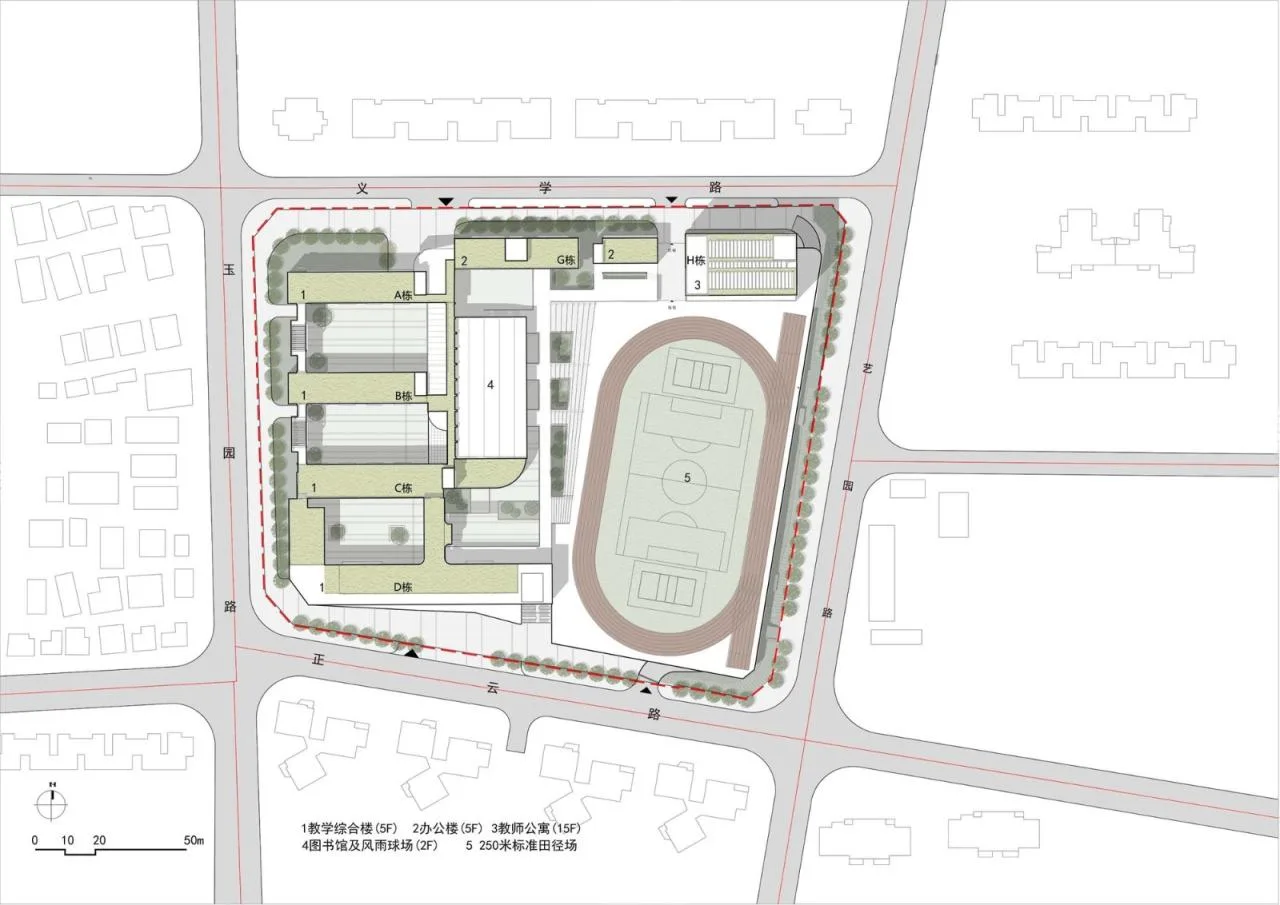
△ General Layout Plan
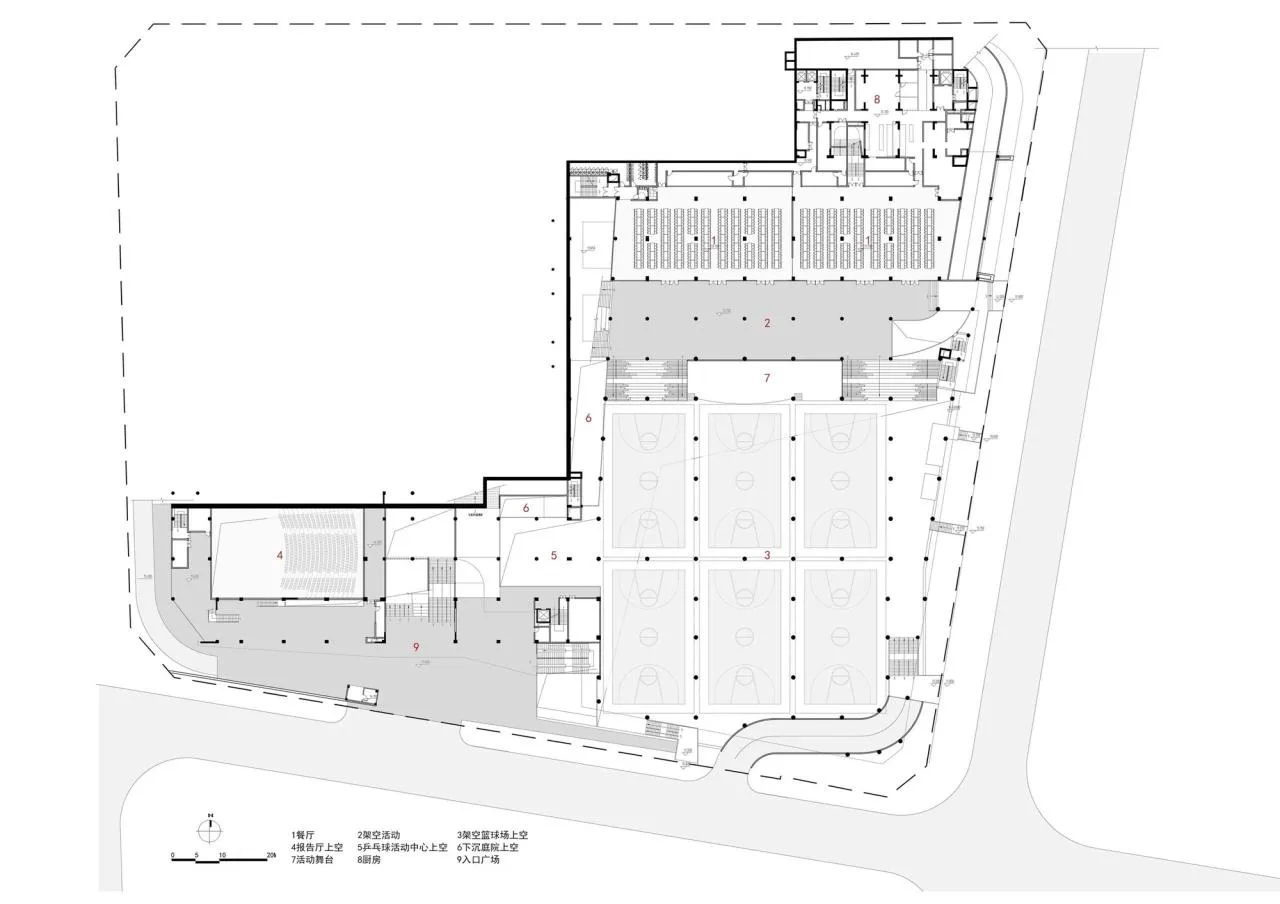
△ Basement Floor Plan
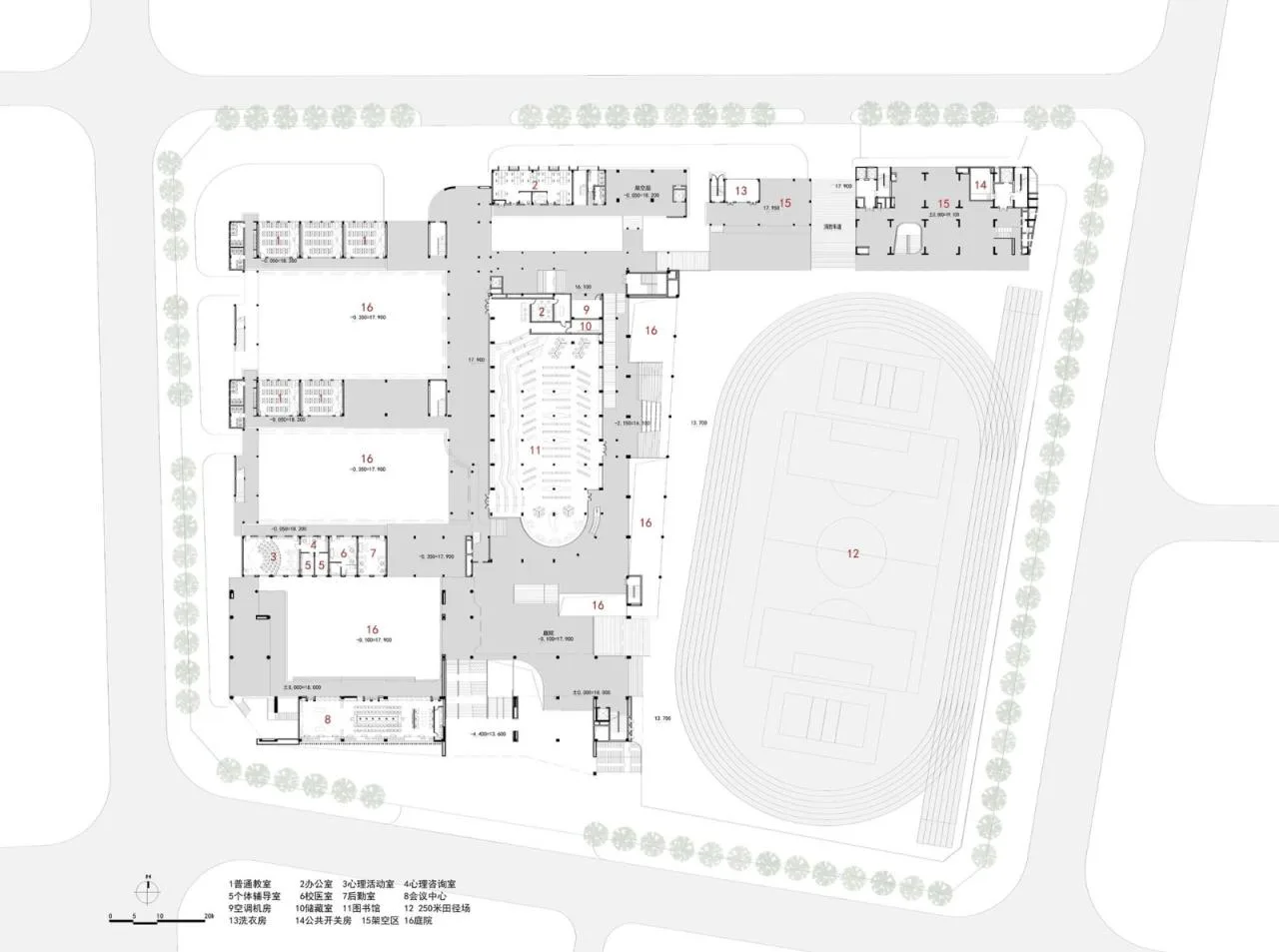
△ First Floor Plan
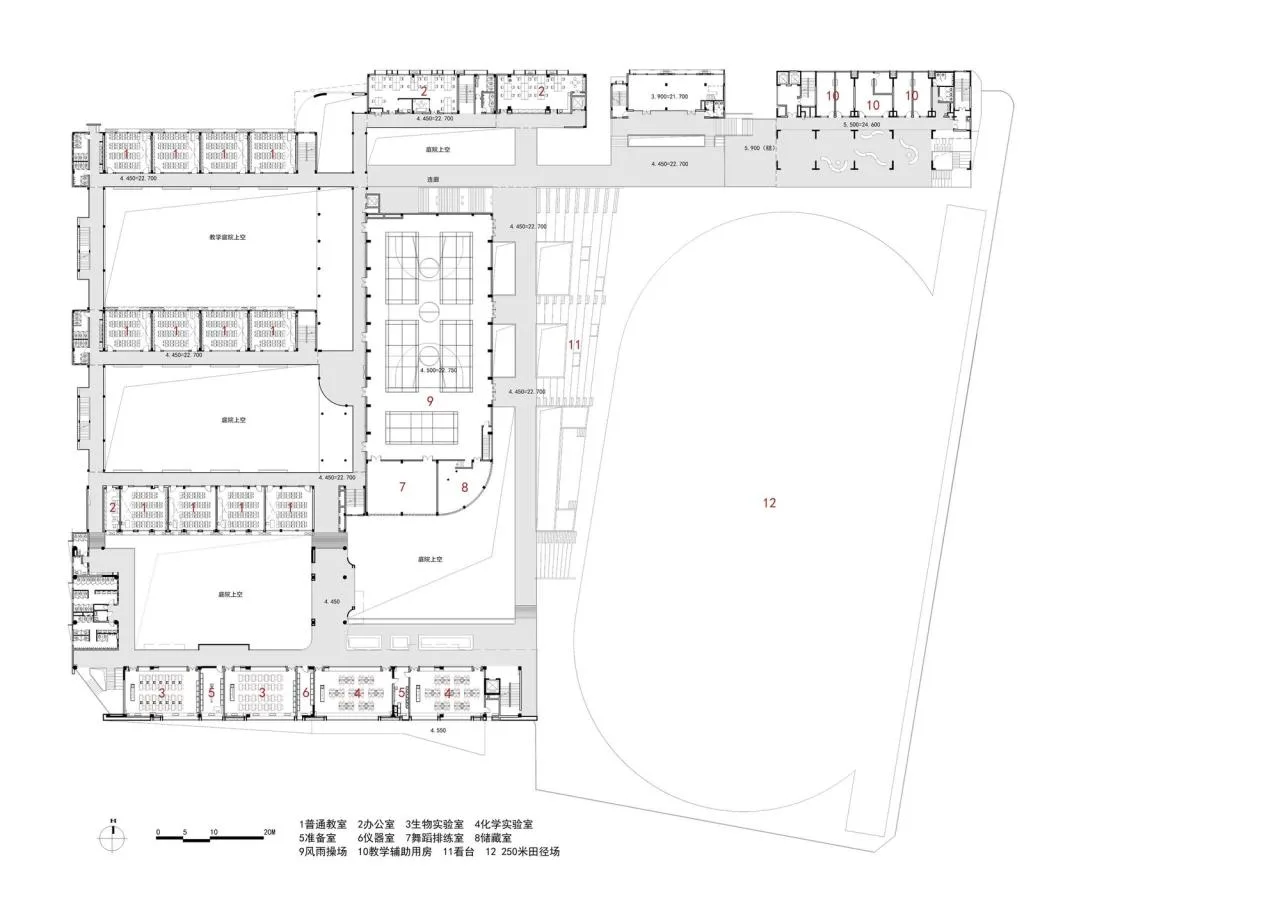
△ Third Floor Plan
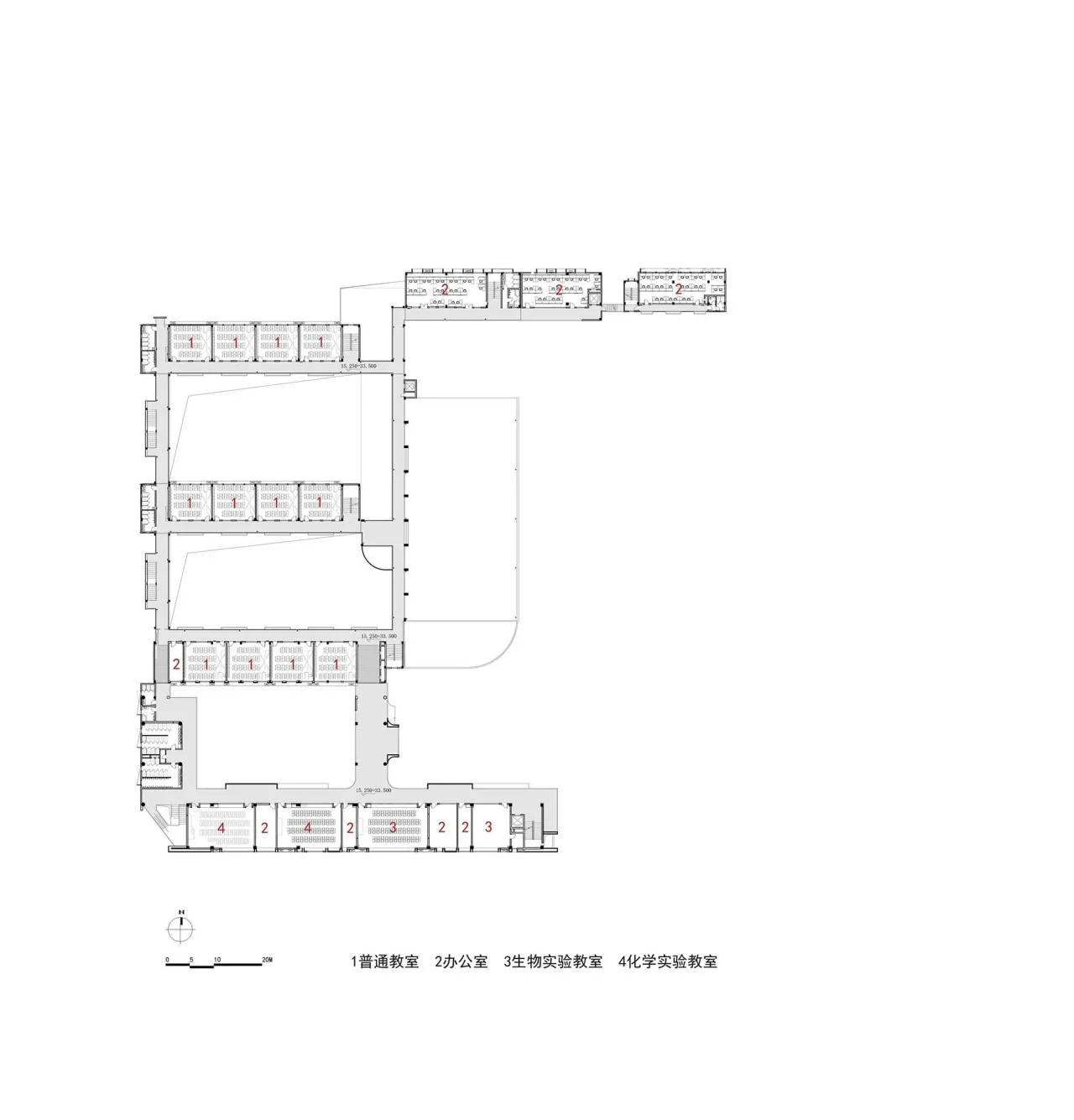
△ Fifth Floor Plan
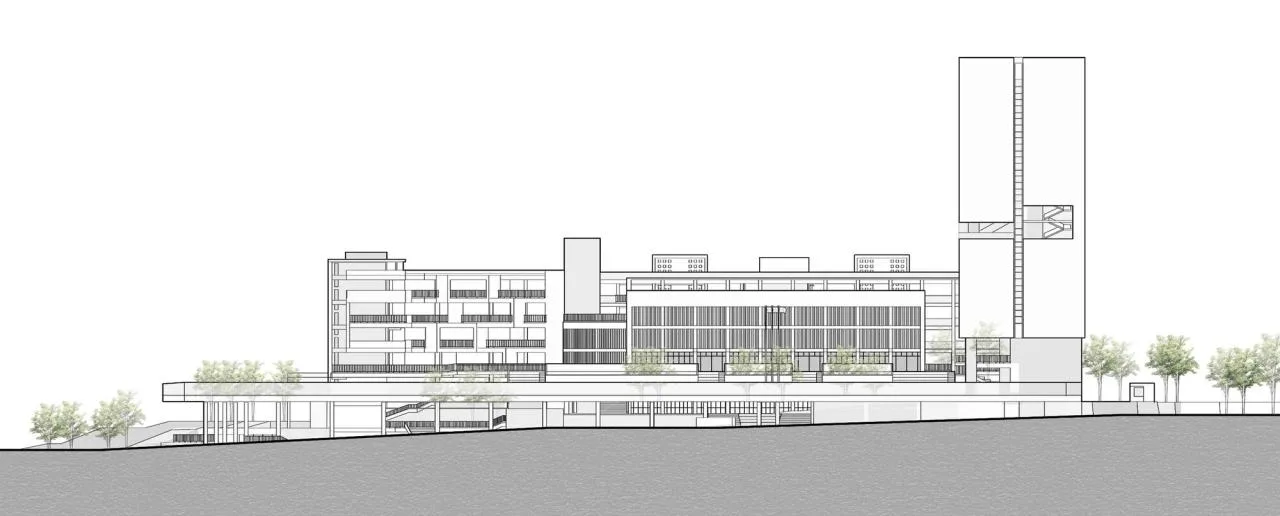
△ Elevation Drawing
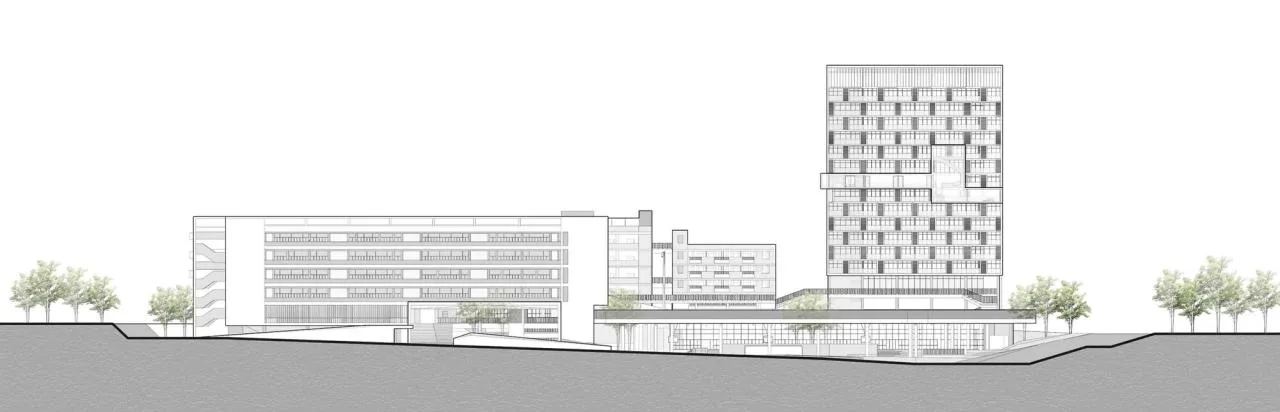
△ Elevation Drawing
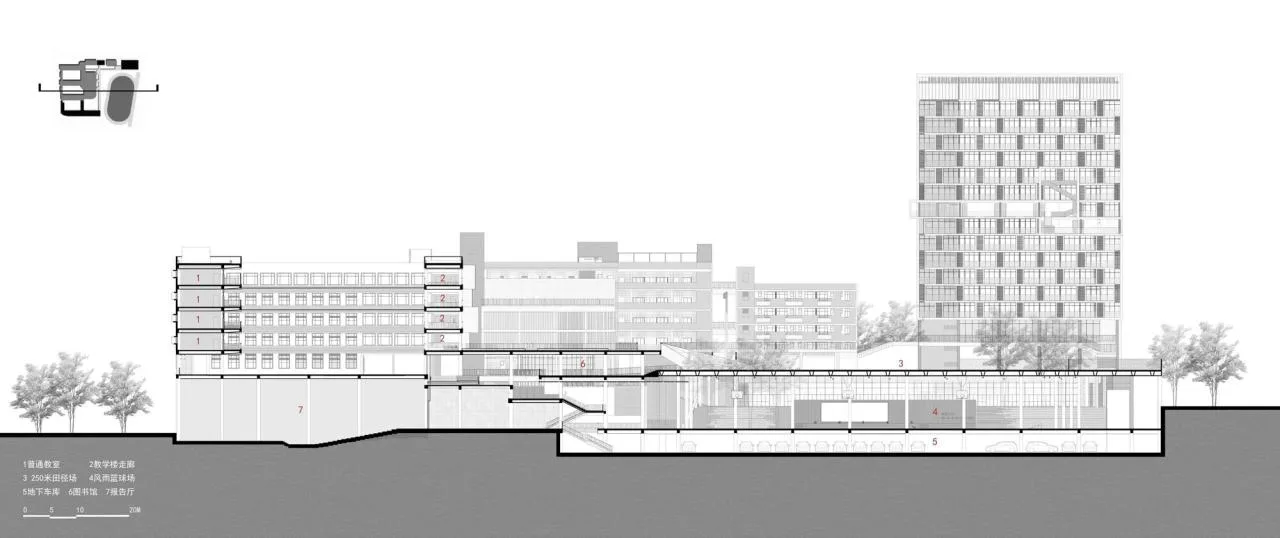
△ Section Diagram
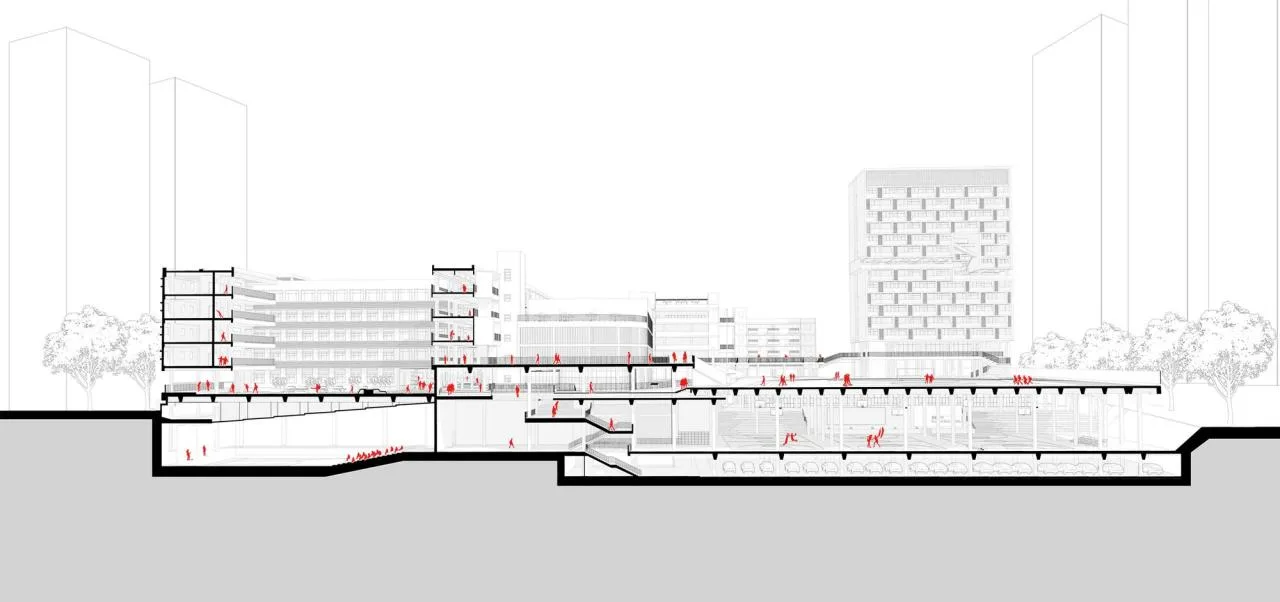
△ Profile Analysis Diagram
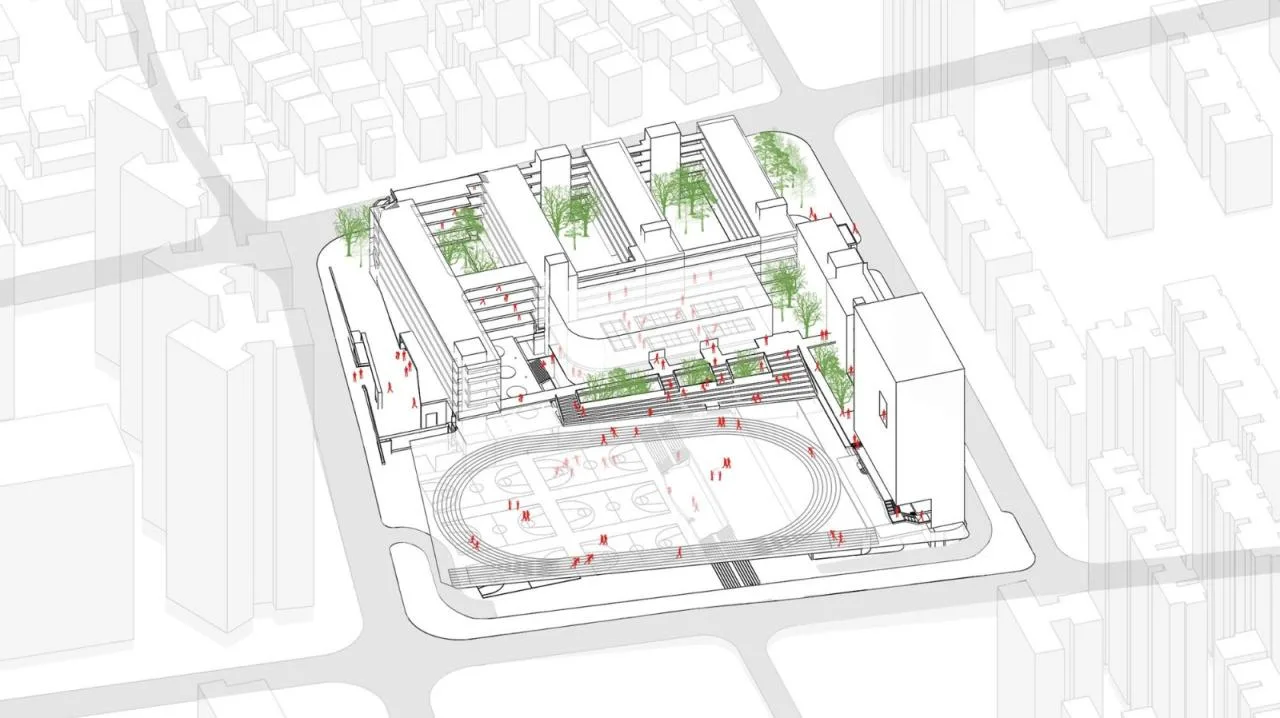
△ Axonometric Diagram
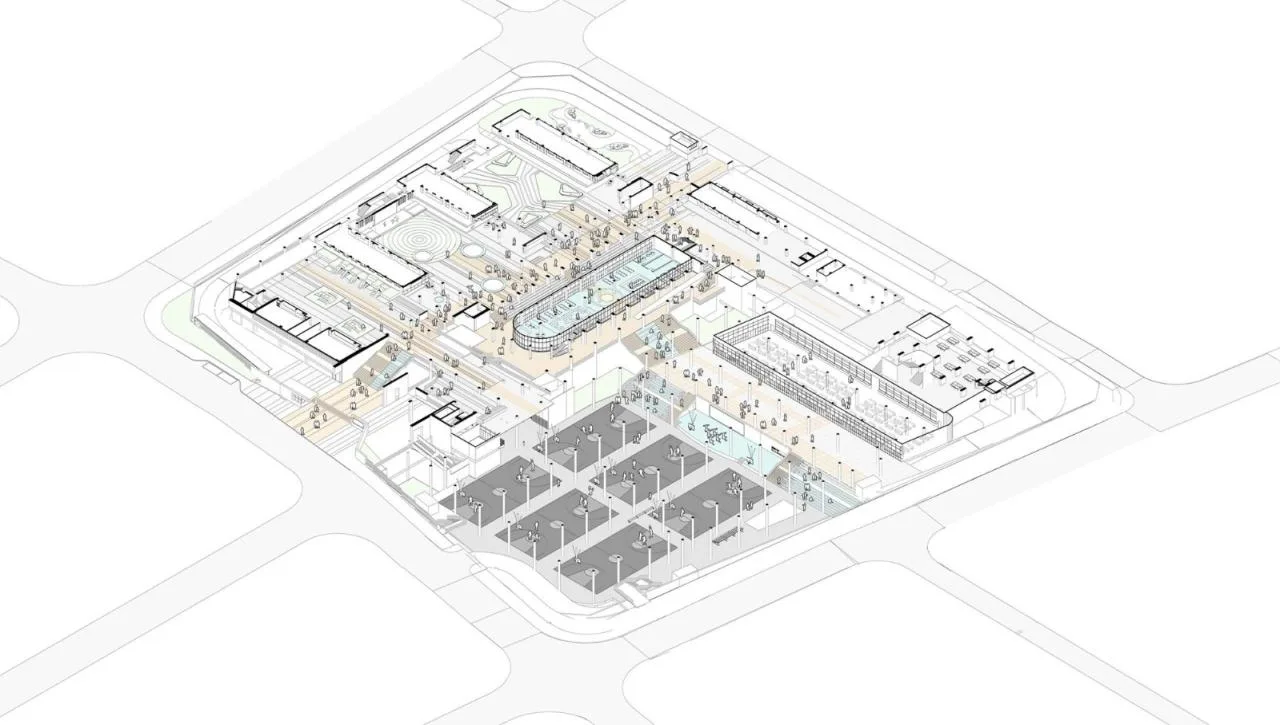
△ Perspective View
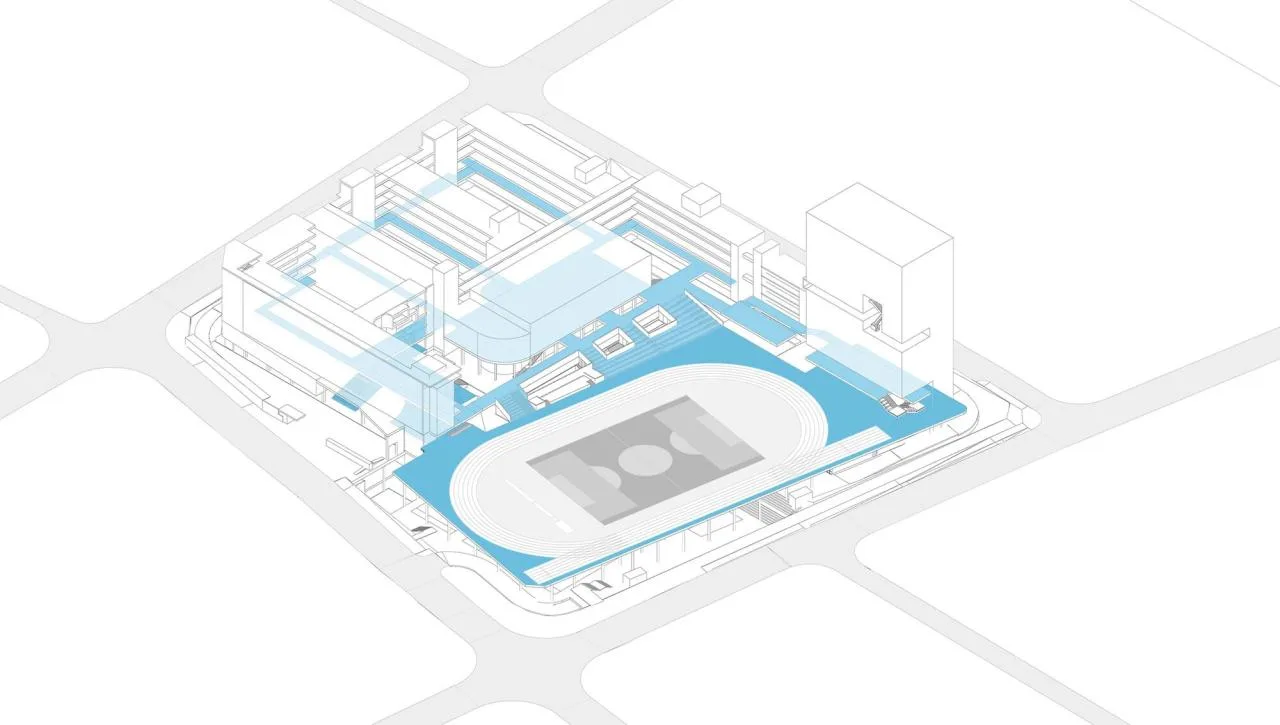
△ Analysis Chart
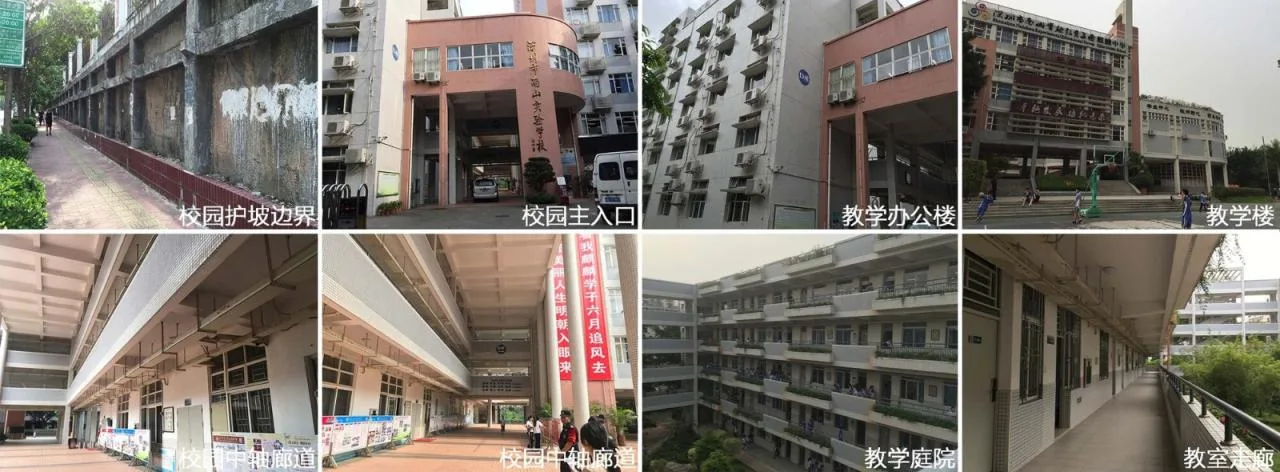
△ Original Architectural Drawing
Project Information
Architect: Yuanben Studio
Area: 64,125 m²
Project Year: 2021
Photographer: Qingshan Wu
Manufacturer: Nippon Paint
Principal Architect: Cai Ruiding
Design Team: Cai Ruiding, Huang Runtong, Chen Hengsheng, Fu Wei, He Weiyong, Zhou Xuemei, Chen Jingwen, Qiu Hongxia, Mao Wenli, Zheng Shuqi (Intern)
Construction Drawing Team: Ma Yue, Yao Yuan, Meng Meili, Wei Xianqiong, Chen Jinglian, Zhan Zhenping, Liu Zhongping, Wang Weifang, Xie Rong, Lai Meirong, Wang Hongyue, Guo Hao, Tang Jin
Location: Shenzhen, China















Must log in before commenting!
Sign Up