
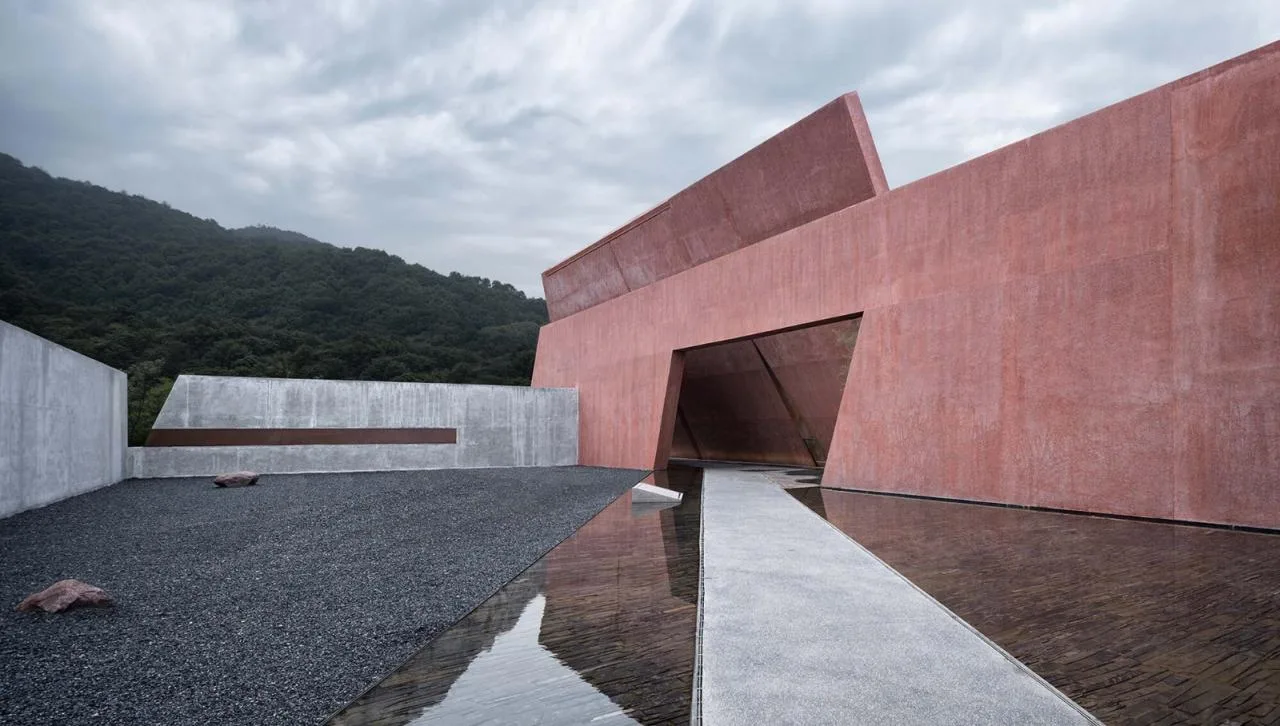
“No matter how far you go, you can’t forget the road of the past.” At this pivotal historical moment as the Communist Party of China (CPC) advances into a new century, the “One Big” Red Education Base in Zhuji County—jointly developed by Zhejiang University Architectural Design and Research Institute Co., Ltd., the Organization Department of the CPC Zhuji Municipal Committee, Zhuji Jiyang Subdistrict Office, Zhuji Urban and Rural Investment Group Co., Ltd., Zhejiang Zhancheng Construction Group Co., Ltd., Fengya Songyang Culture Communication Group, and other partners—was successfully completed on June 28, 2022. This project pays deep respect and heartfelt tribute to the 101st anniversary of the Party.
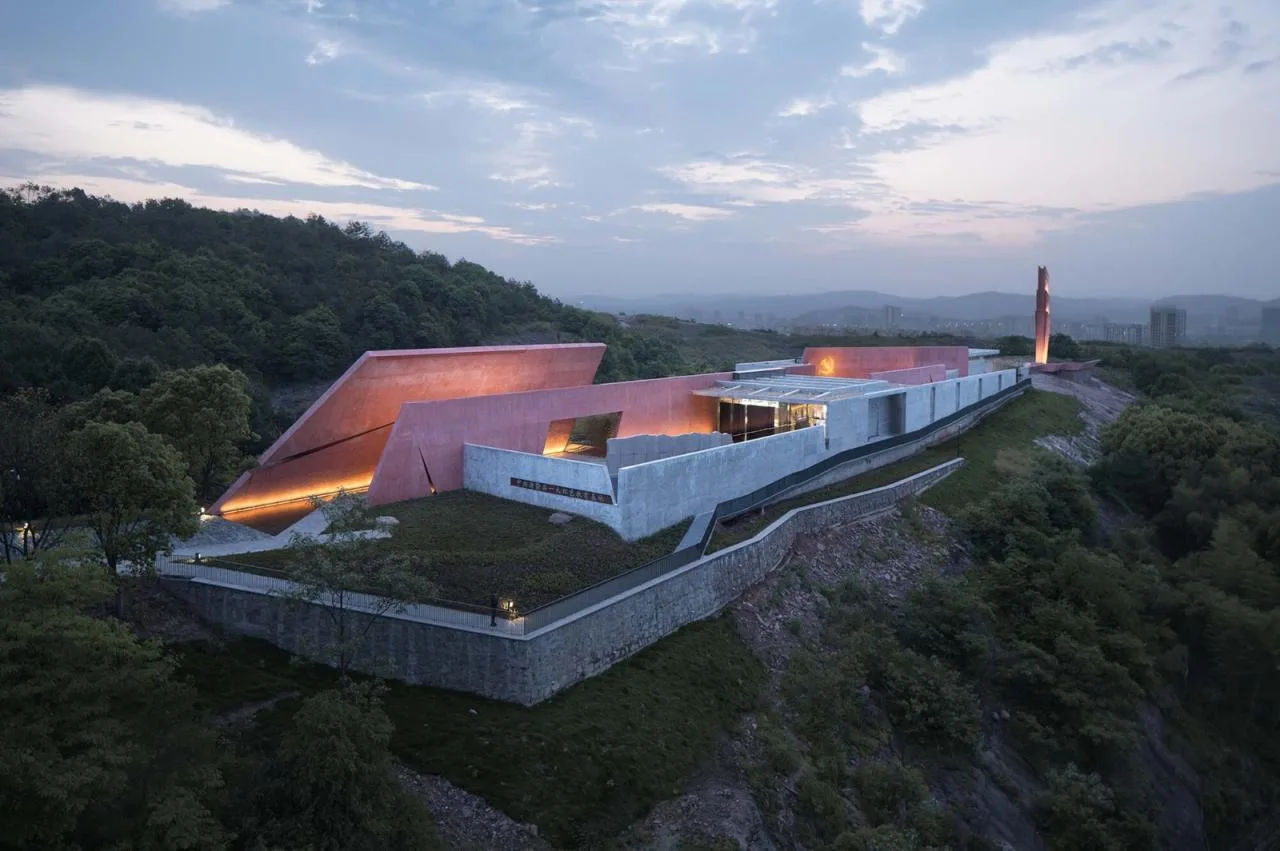
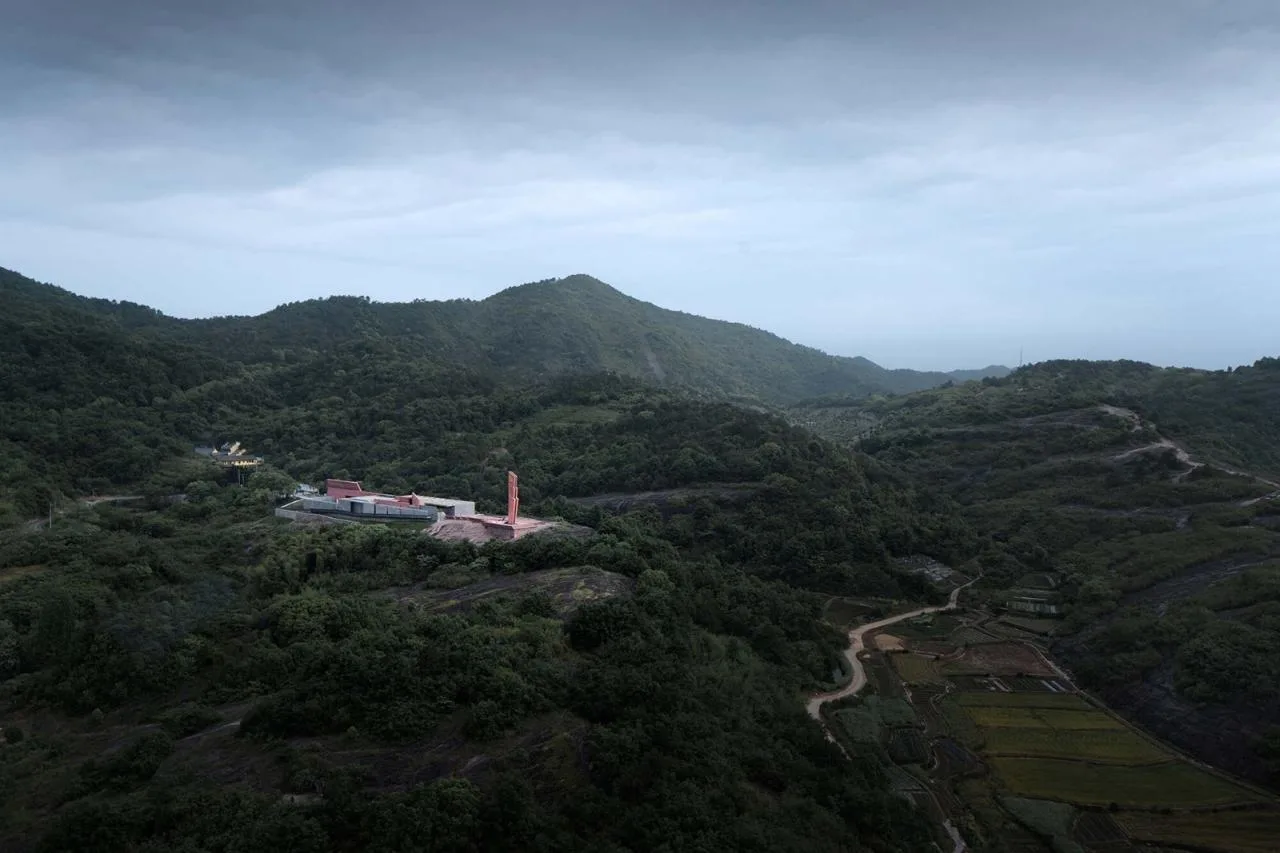
The creation of vivid, emotional memories within a tangible “context” dates back to the Tianyou period of the late Tang Dynasty (904–907 AD). The Dishui Zen Temple, situated in a mountain valley south of Zhuji City, derives its name from a cliff wall that drips water year-round. Notably, the site of the first representative conference of the Communist Party of China in Zhuji County, held in September 1927, was located in an old house on the east side of this cliff. To commemorate the 100th anniversary of the CPC’s founding, a new memorial building has been designed to mark this historic milestone. Here, red memories are reimagined through the integration of environment, architecture, and people—reviving the immortal revolutionary spirit within contemporary urban life.
How are memories conveyed within memorial sites? How can spatial narratives engage visitors’ perceptions and emotions? Memory often emerges from a collection of fragmented images that collectively evoke a shared impression. Drawing inspiration from the dripping cliffs, narrow red cliffs, majestic mountains, and scattered yellow flowers of the original site, we extracted these non-linear yet iconic memory fragments. Using red-washed stone walls as guiding elements, we organized distinct spatial contexts within the confined area. Through this narrative design, we crafted a literary and emotional memory space.
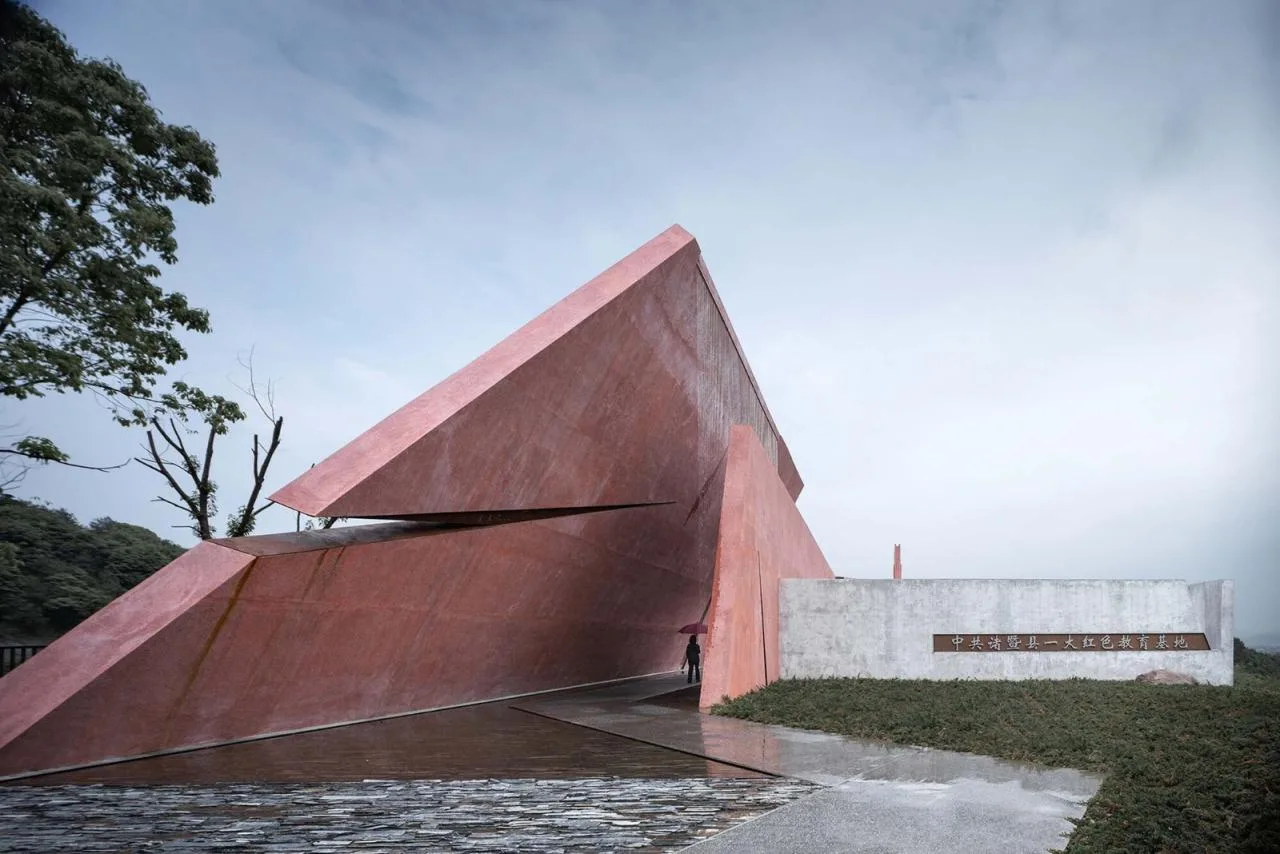
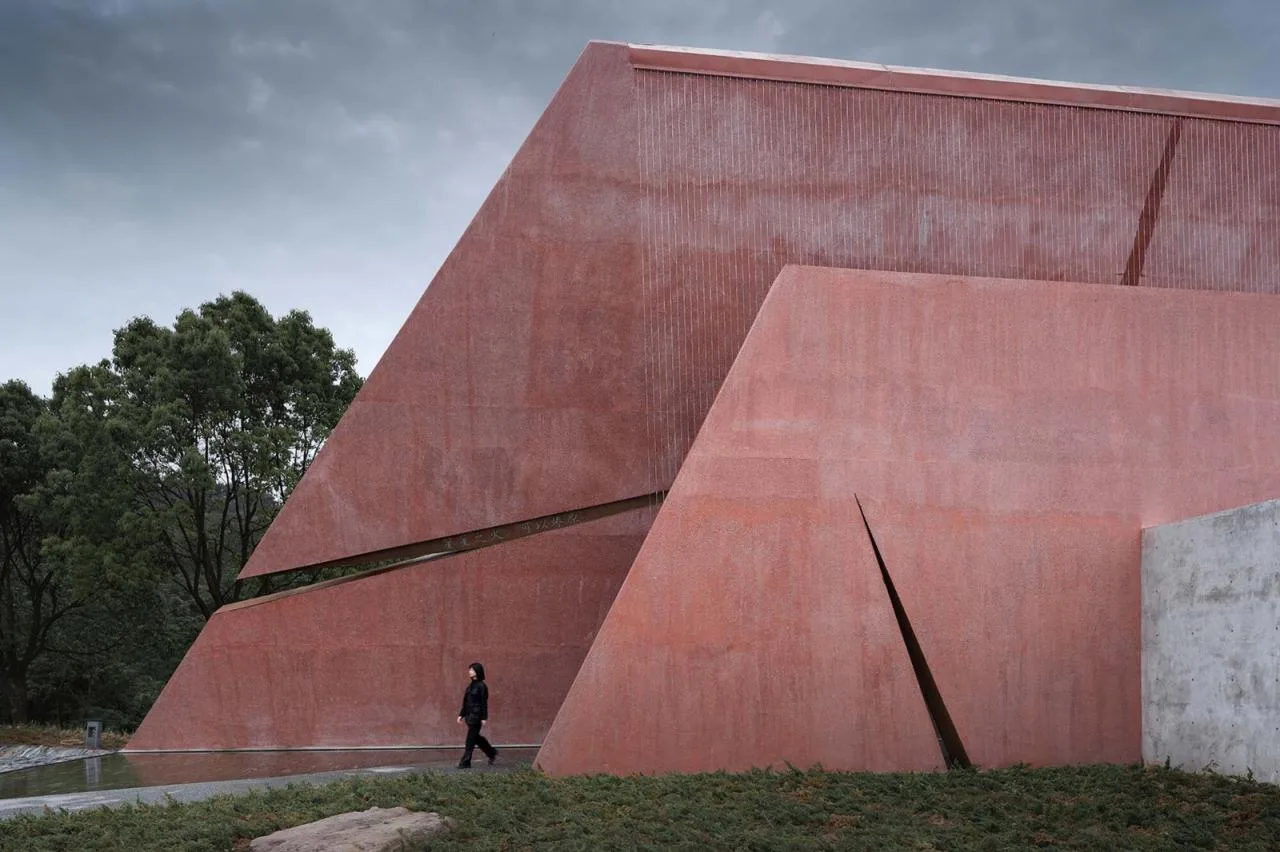
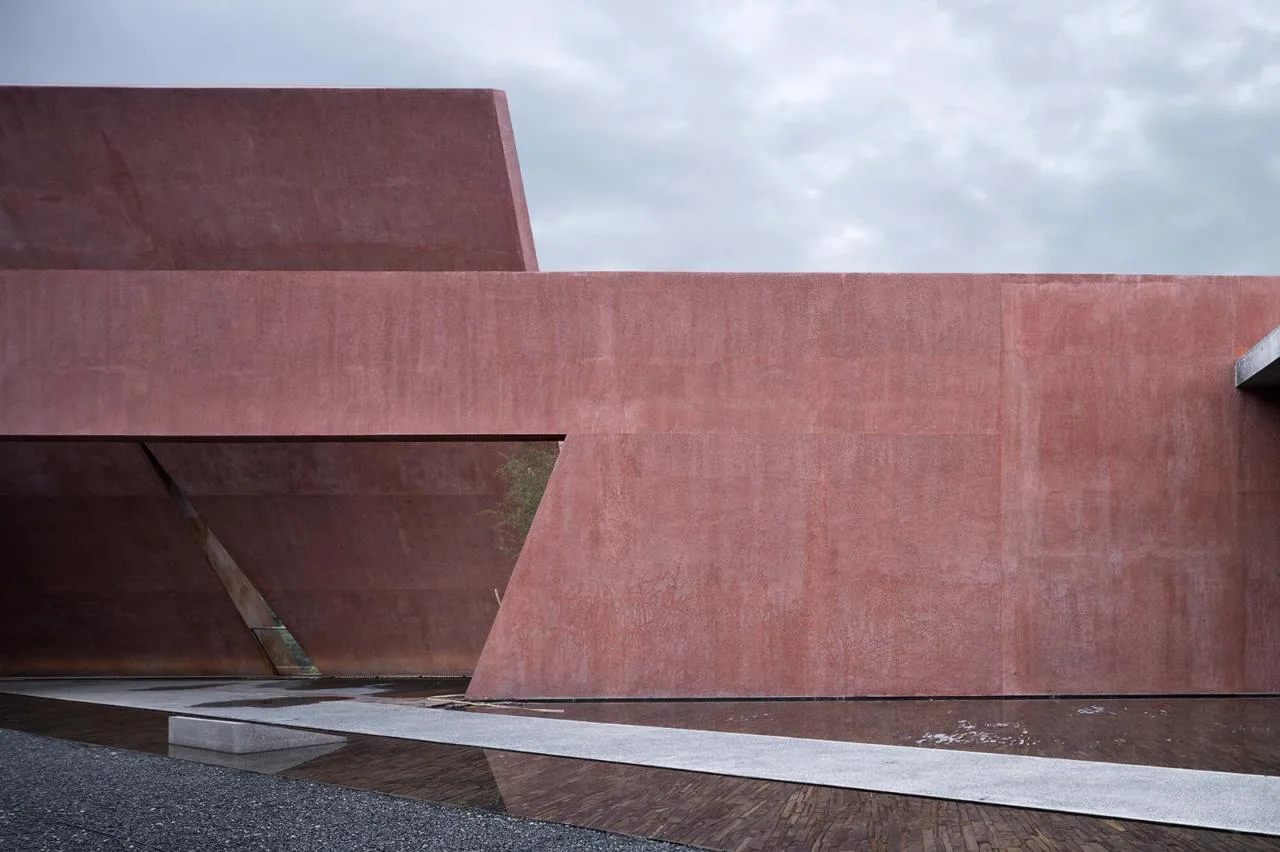
The first act reinterprets the grandeur of the original site’s “Dripping Cliff Wall.” Approaching the entrance, visitors follow a winding path adorned with vegetation such as schist and grasses, setting a revolutionary ambiance. The main entrance features a sloped red-washed stone wall accompanied by a water curtain. This curtain is connected to embedded elements in shallow water by 150 steel cables (3mm diameter), ensuring the water flows smoothly without splashing or excessive noise, maintaining a continuous vertical surface. This abstract representation draws from the natural dripping cliff of the original Dishui Zen Temple site, symbolizing the historical memory of the Communist Party of China’s “First National Congress” in Zhuji County. The impressive spatial scale paired with the sound of falling water immerses visitors in the revolutionary spirit and innovation of that historic gathering, pulling the narrative into the vortex of memory.
The second act presents a serene and simple front courtyard, serving as a prologue. This space uses architectural storytelling and spatial cues to convey its message. The front courtyard acts as a buffer to the interior of the building and establishes the overall tone of the space. Visitors walk along the water curtain path into a courtyard featuring gravel, landscape stones, sculptures, and reflective water surfaces, then enter the exhibition hall’s entrance via a floating walkway. This spatial sequence incorporates regional landscape elements and culturally significant symbols, evoking a specific time and place and fostering emotional resonance. Notably, some fan-shaped red rocks from the original site excavation are preserved here. The open water courtyard and extended walls reveal the exhibition hall’s main entrance. Unlike the dynamic water curtain entrance, this area creates a tranquil and understated atmosphere, guiding visitors toward a calm spatial experience.
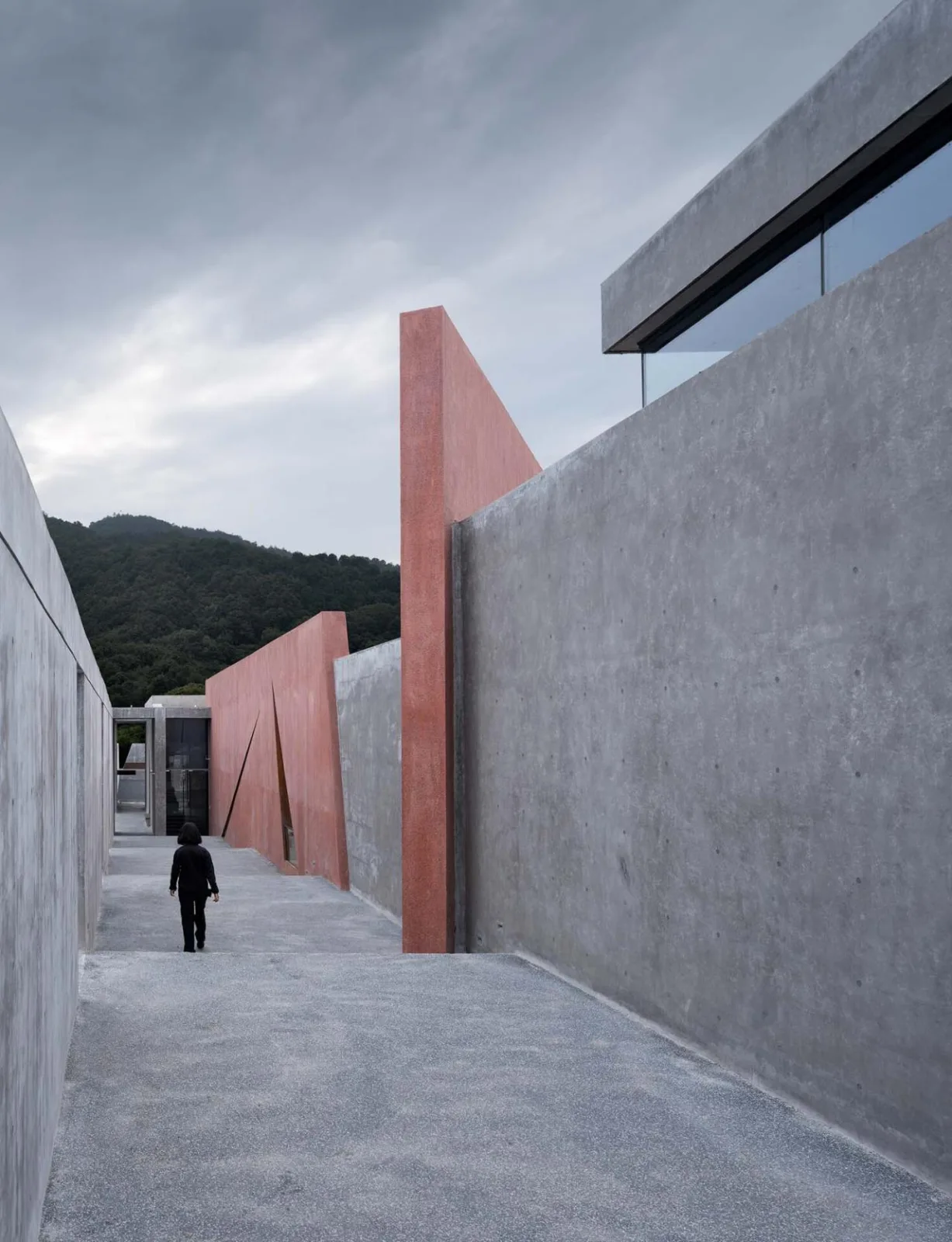
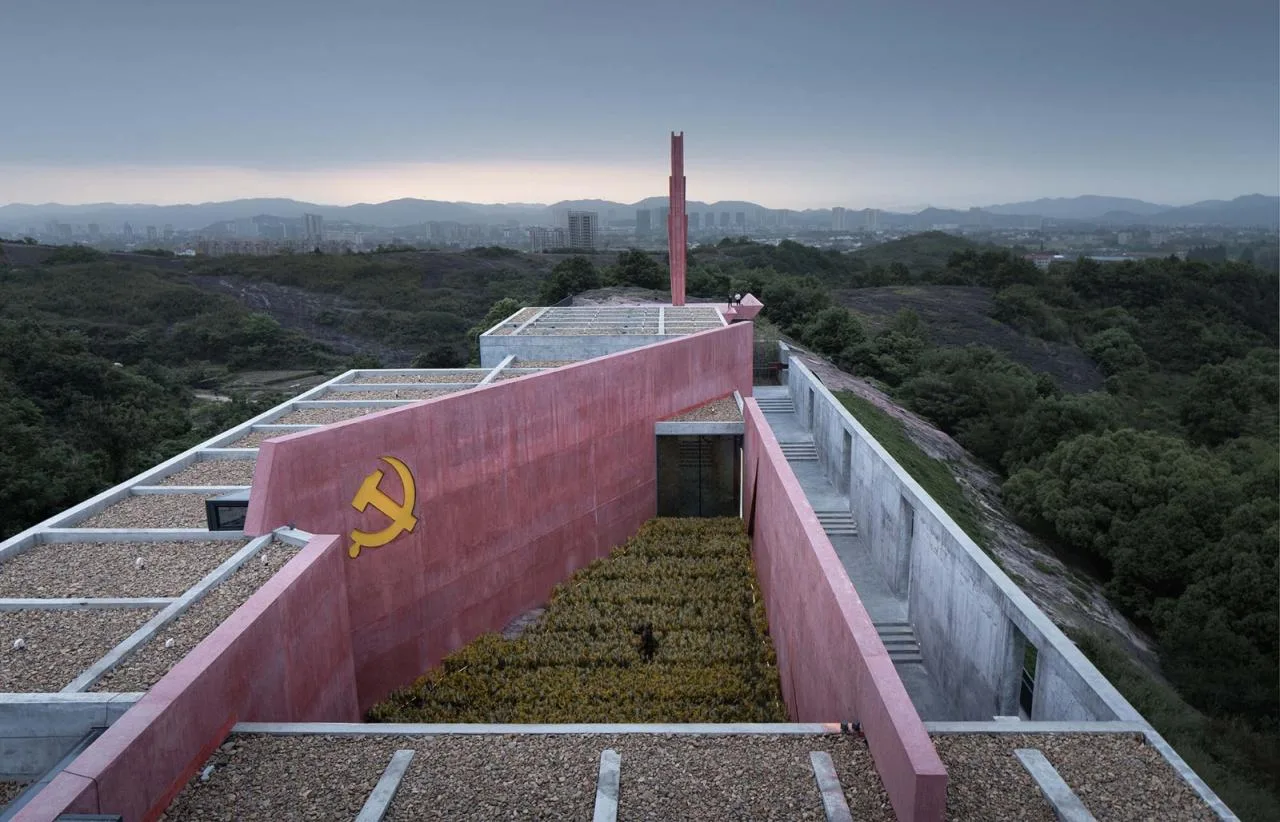
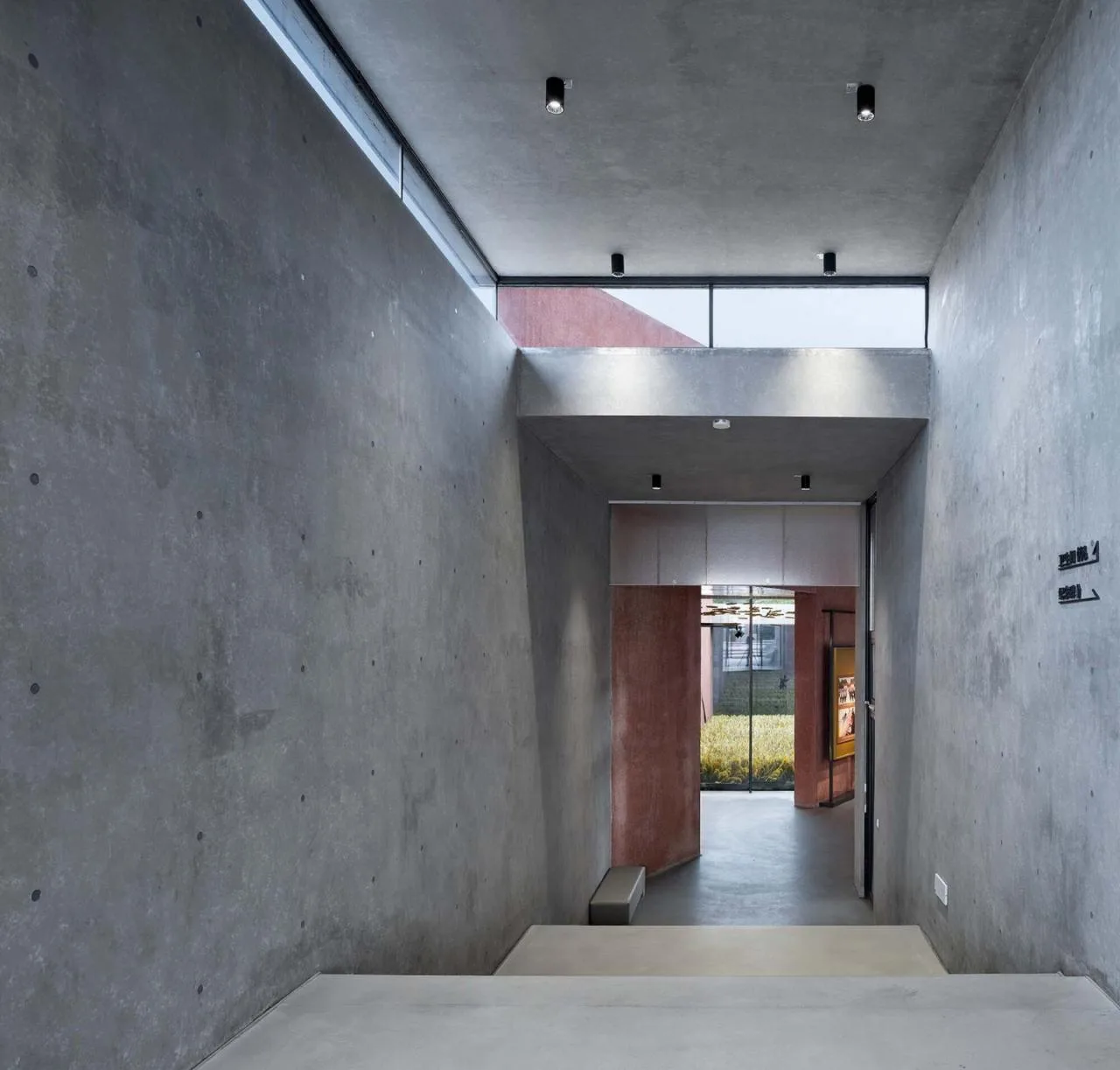
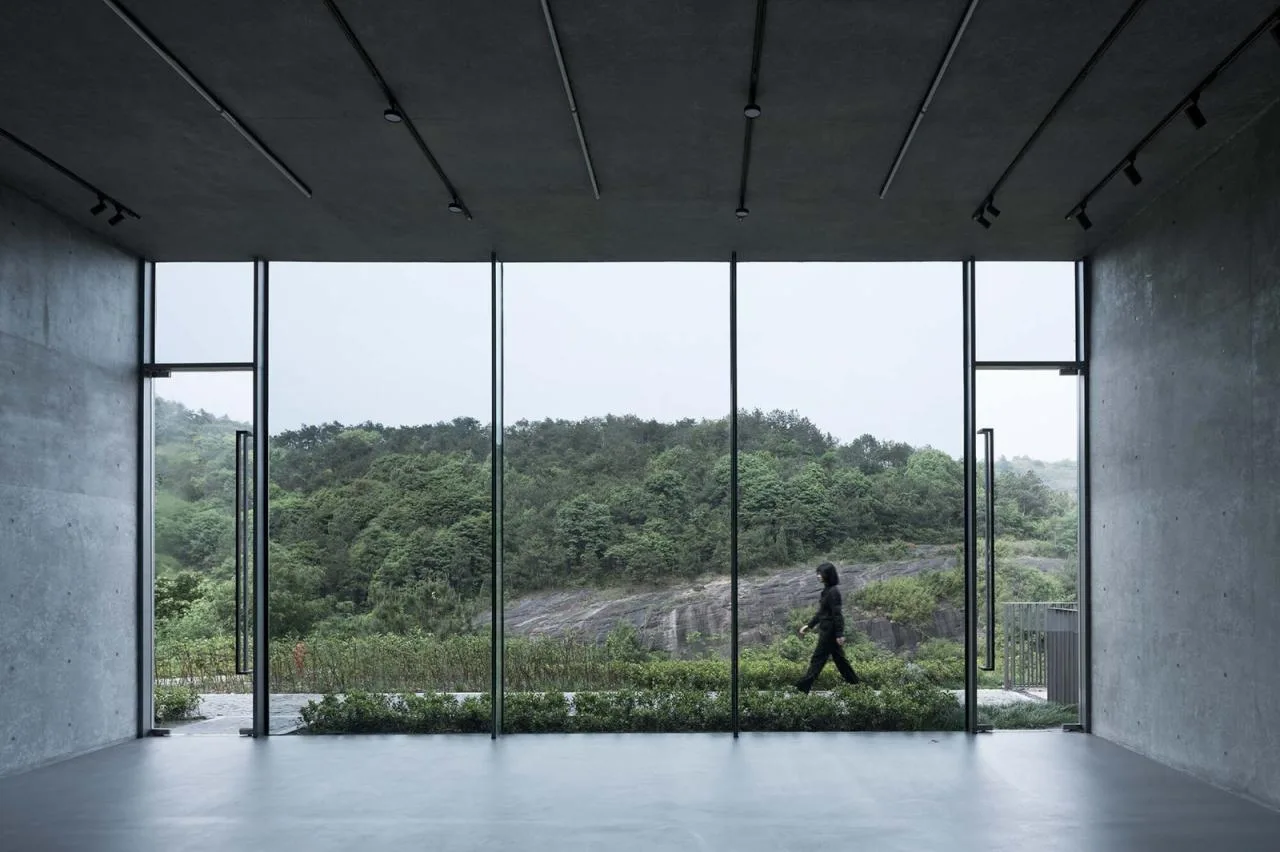
The exhibition area is divided into three parts: the prologue, the gallery, and the main exhibition hall. Visitors enter through the front courtyard, follow the red exhibition wall into a narrow ramp gallery, where their vision narrows, leading to the main exhibition hall. Between these spaces lies a terrace viewing platform, offering a contrasting experience in lighting and openness. The enclosed courtyard adjoining the exhibition hall serves as a key turning point in the narrative, blending indoor and outdoor scenes for visual continuity. This design cleverly uses space and light to create a rich and dynamic experience, where moving forward or glancing back connects visitors with intertwined red memories.
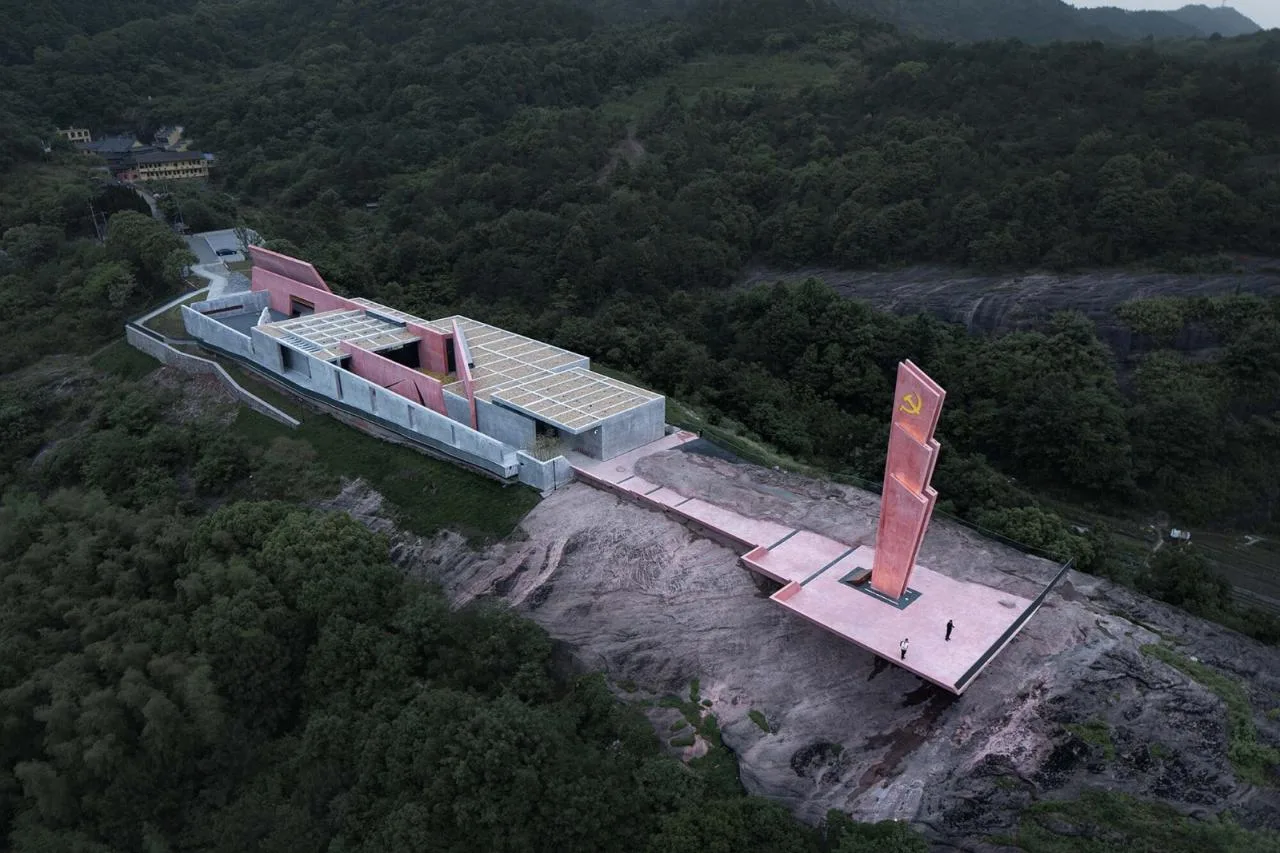
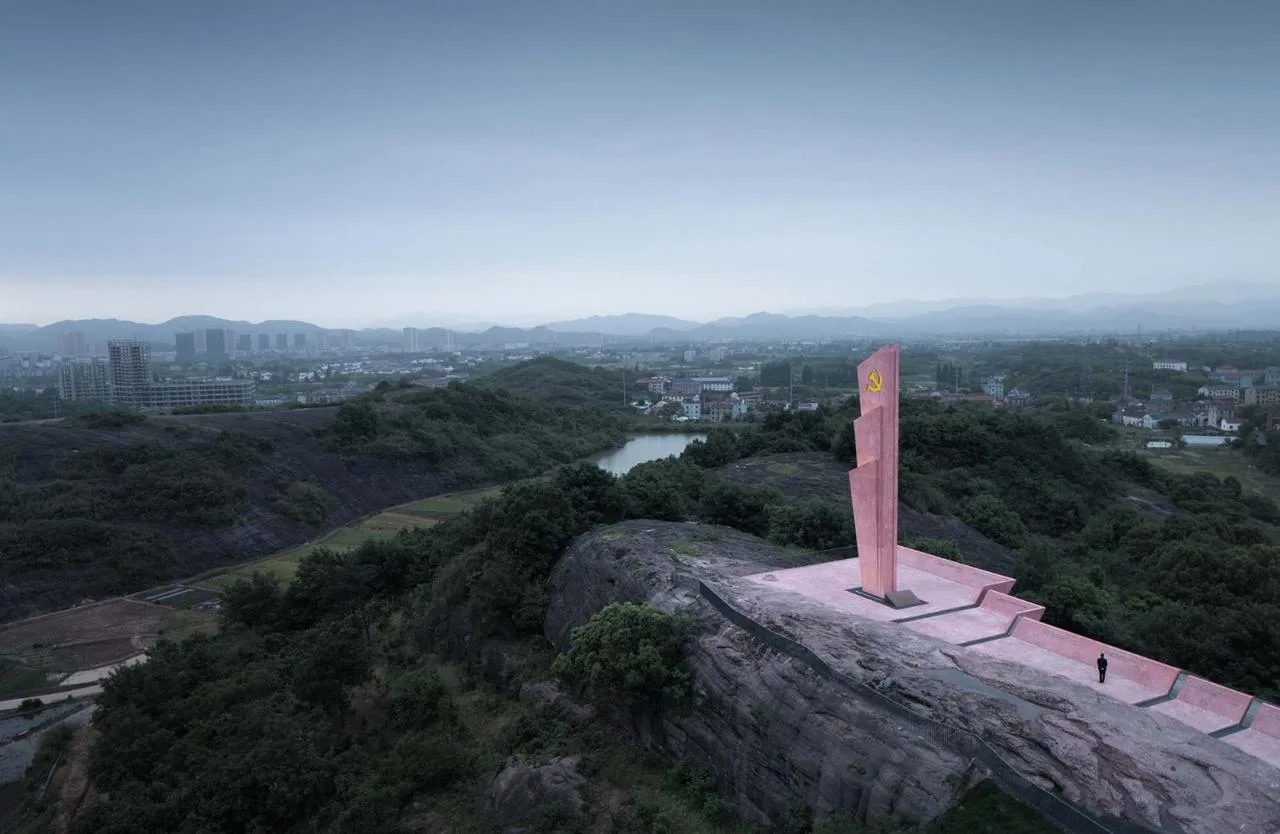
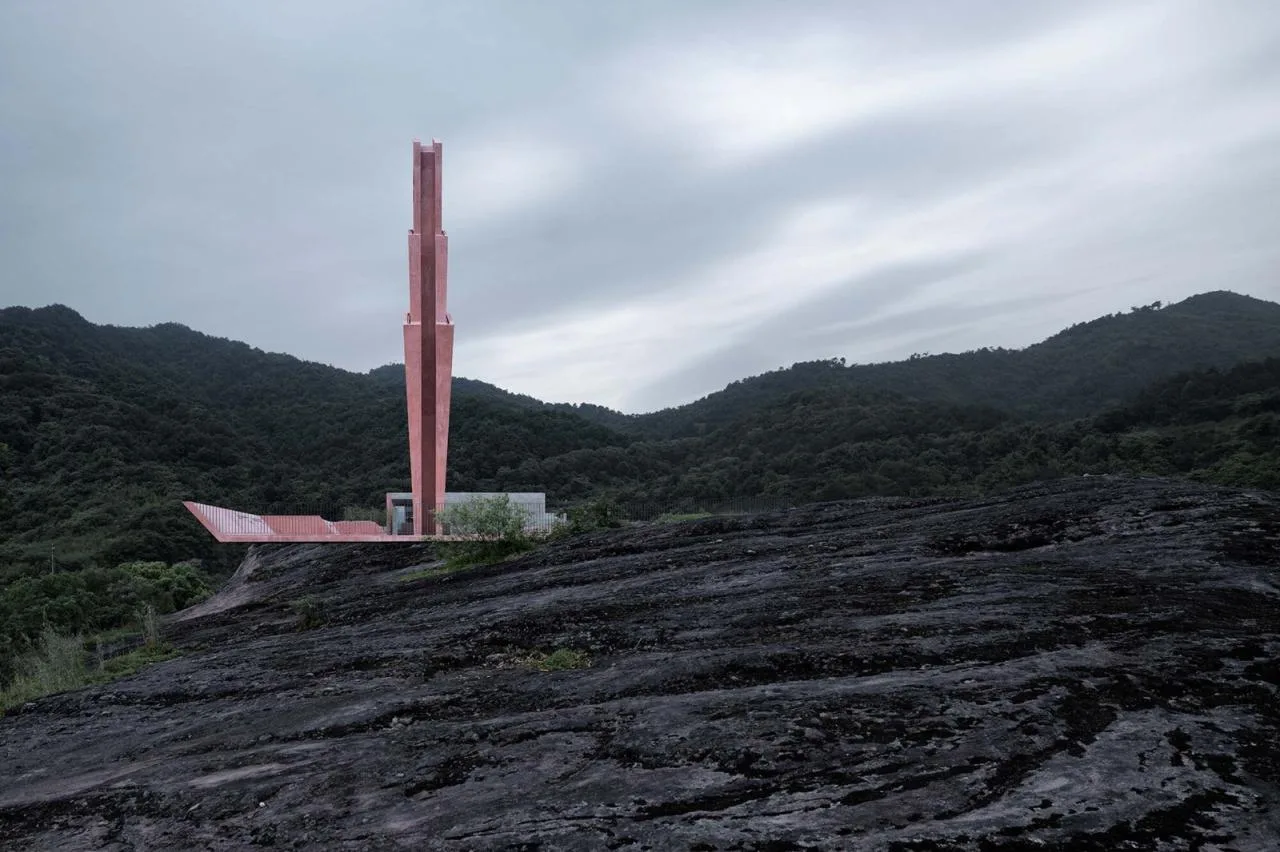
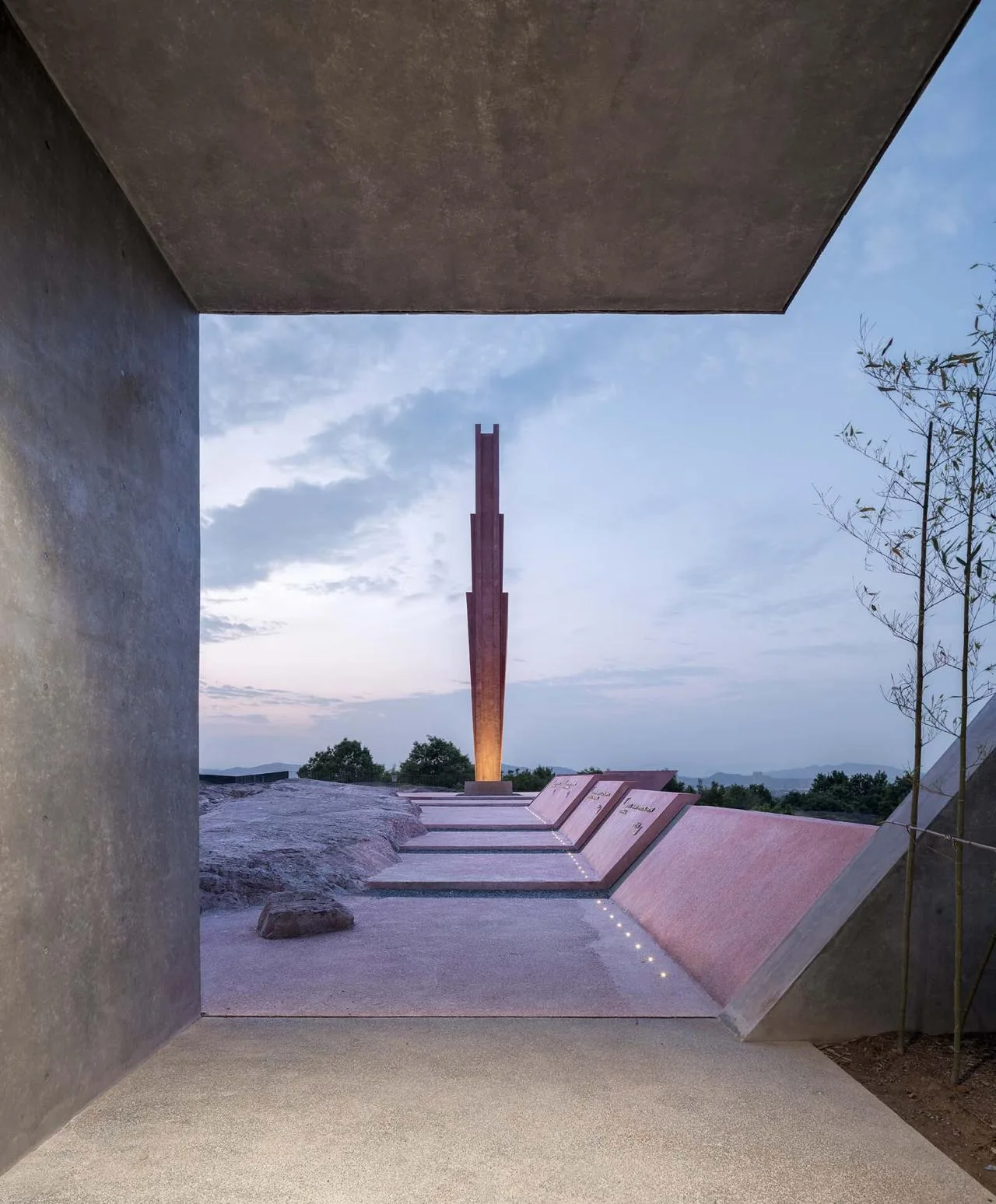
In the fourth act, a monument was erected on the red rocks leading to the mountaintop. Due to the original monument’s hidden location and its impact on mountain traffic flow, a new 19.27-meter-tall monument was constructed on the project’s southwest side. Shaped like three red flags ascending in steps, the monument appears to grow naturally from the exposed red rocks, symbolizing the revolutionary spirit and vibrant vitality for the future. Built primarily from red water-brushed stone—the same material as the main building—it conveys a sense of weight and complements the overall aesthetic. The path to the monument is embedded in the original red rock, with sidewalls engraved with famous quotes from martyrs, creating an open space for public commemoration and oath-taking ceremonies.
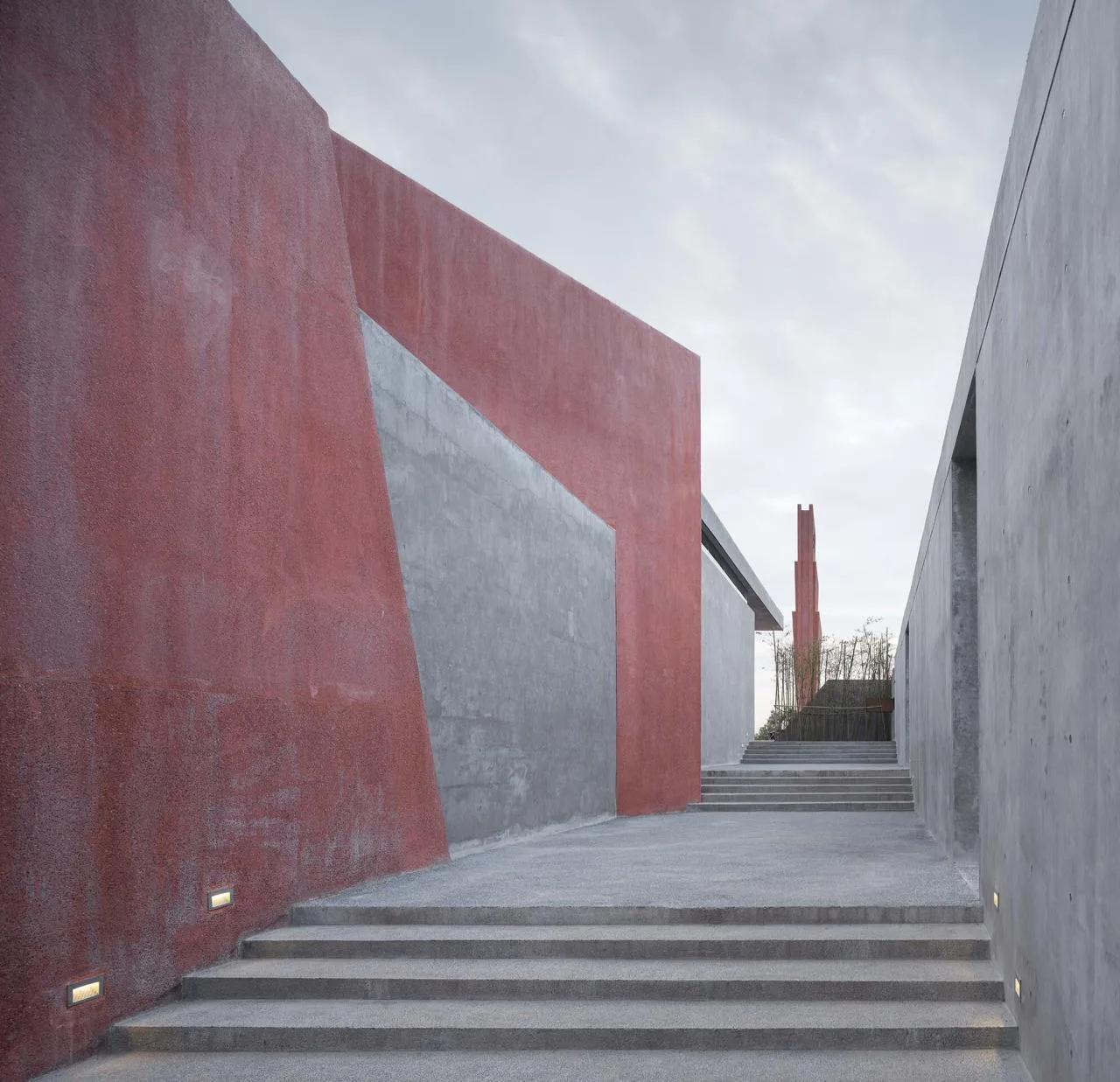
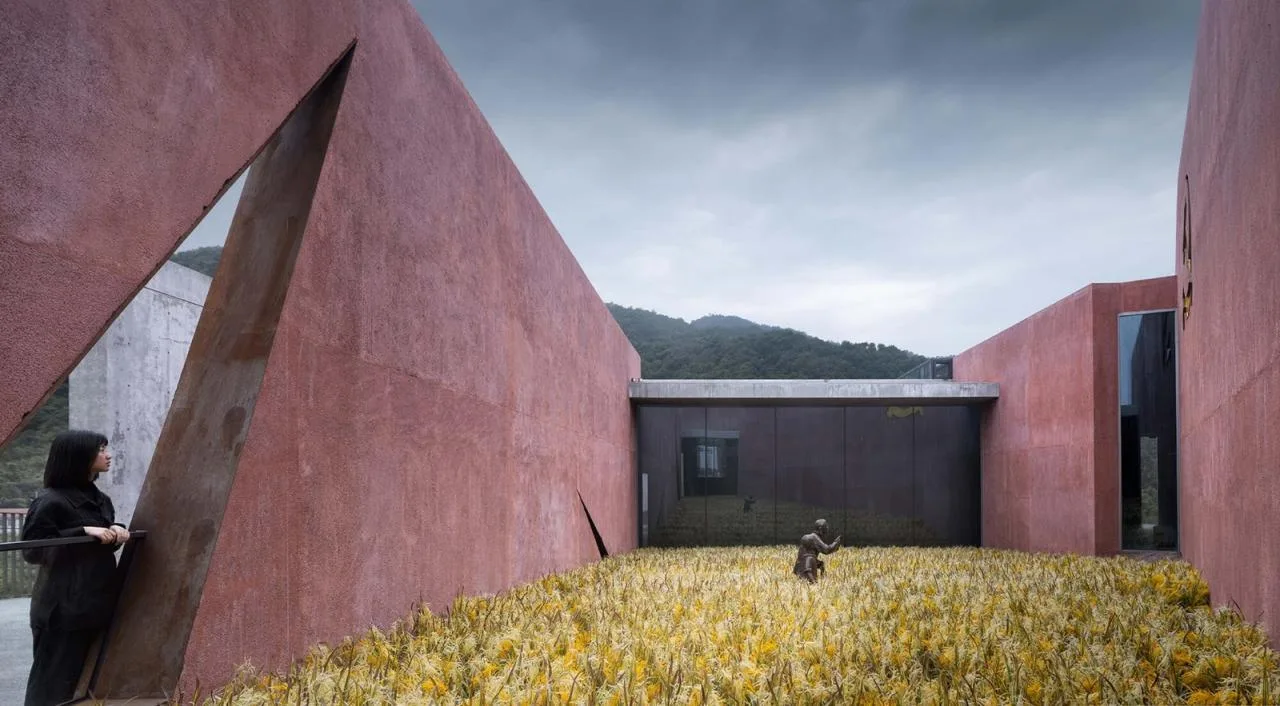
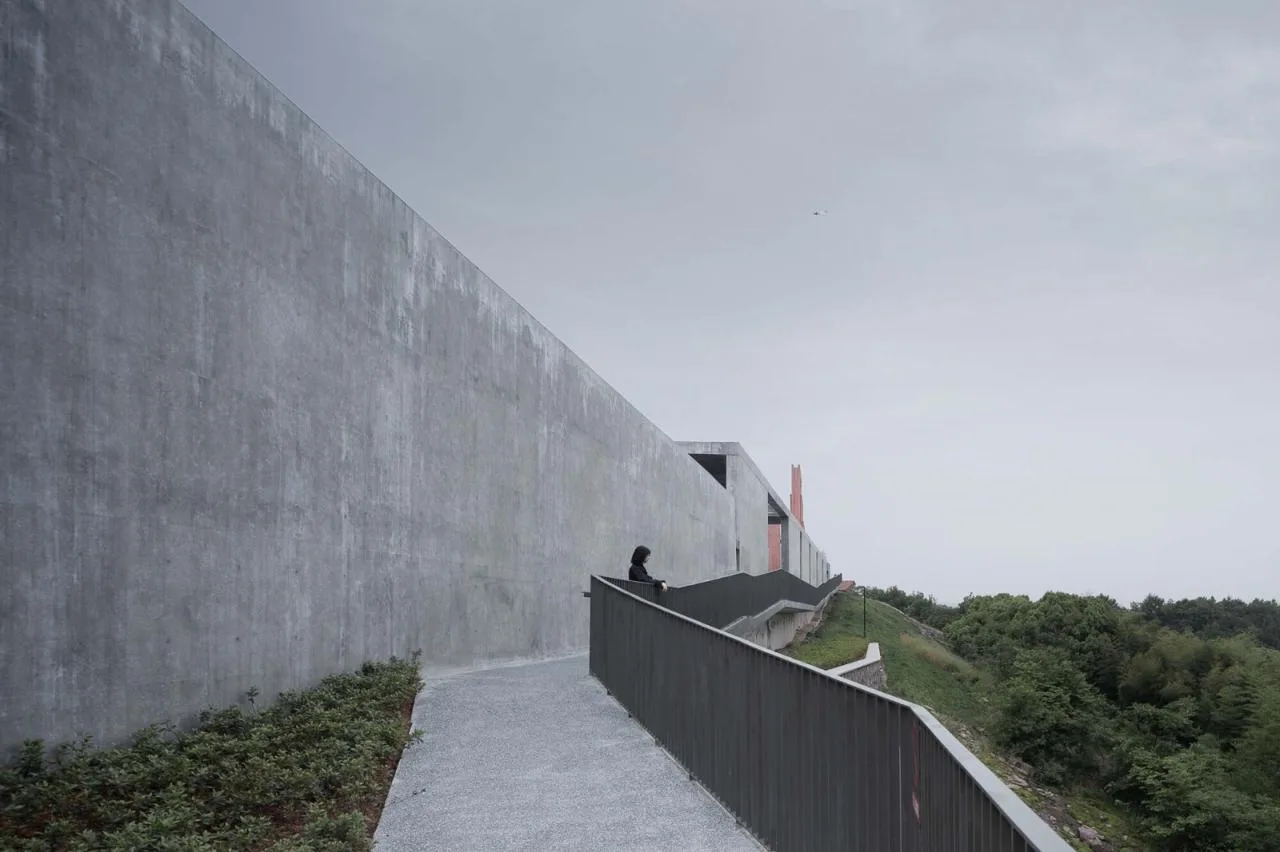
The fifth and final act offers a contemplative path back to the city and nature, distinct from the previous exhibition routes. Visitors overlook Zhuji City through an outdoor gallery featuring clear water walls, encouraging reflection and calm. The interplay of views through openings, framing of scenery inside and outside, and symbolic signage fosters a layered experience that blends multiple scenes, buildings, and environments. These connections and contrasts invite fresh associations and thoughtful engagement.
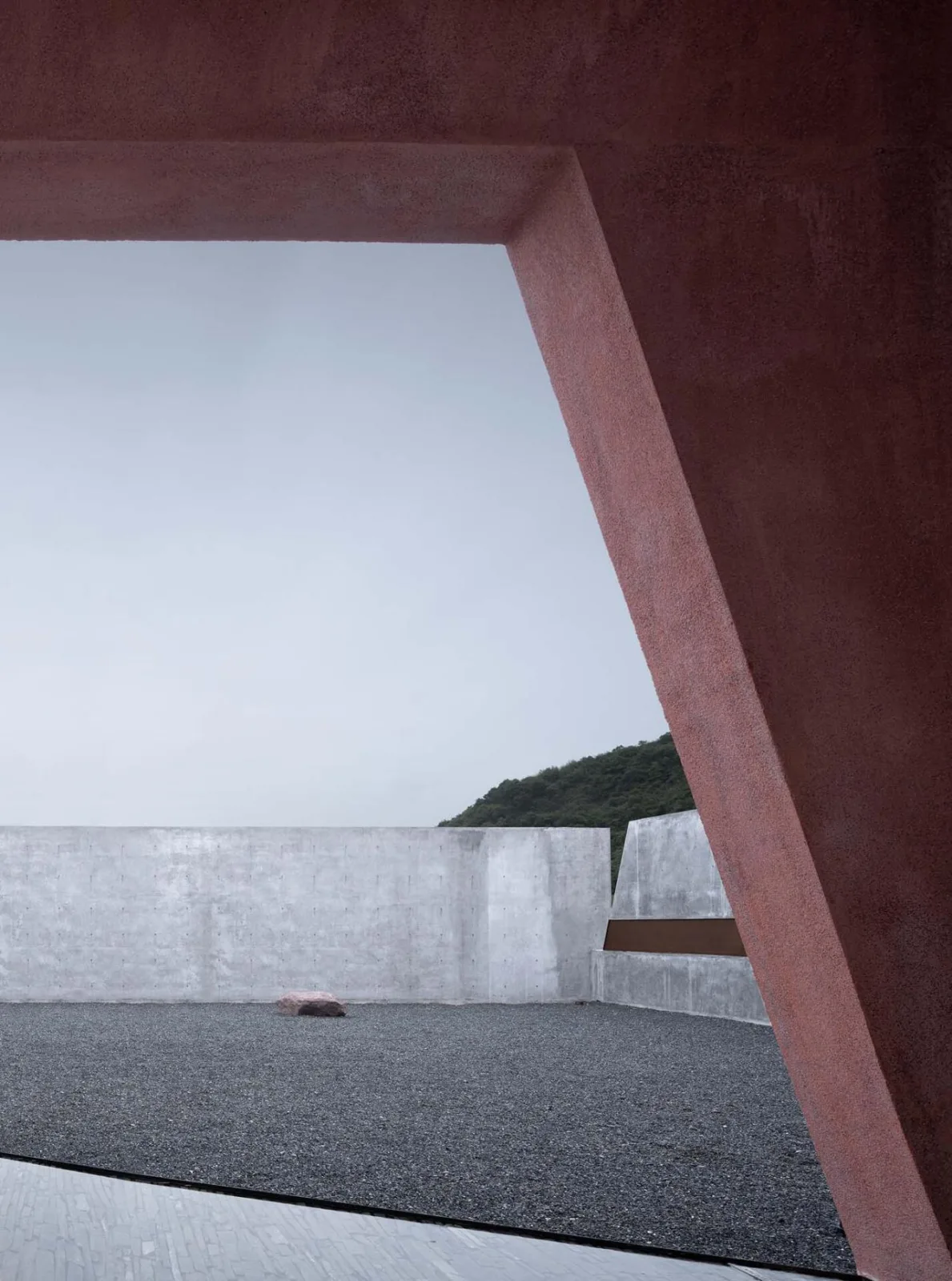
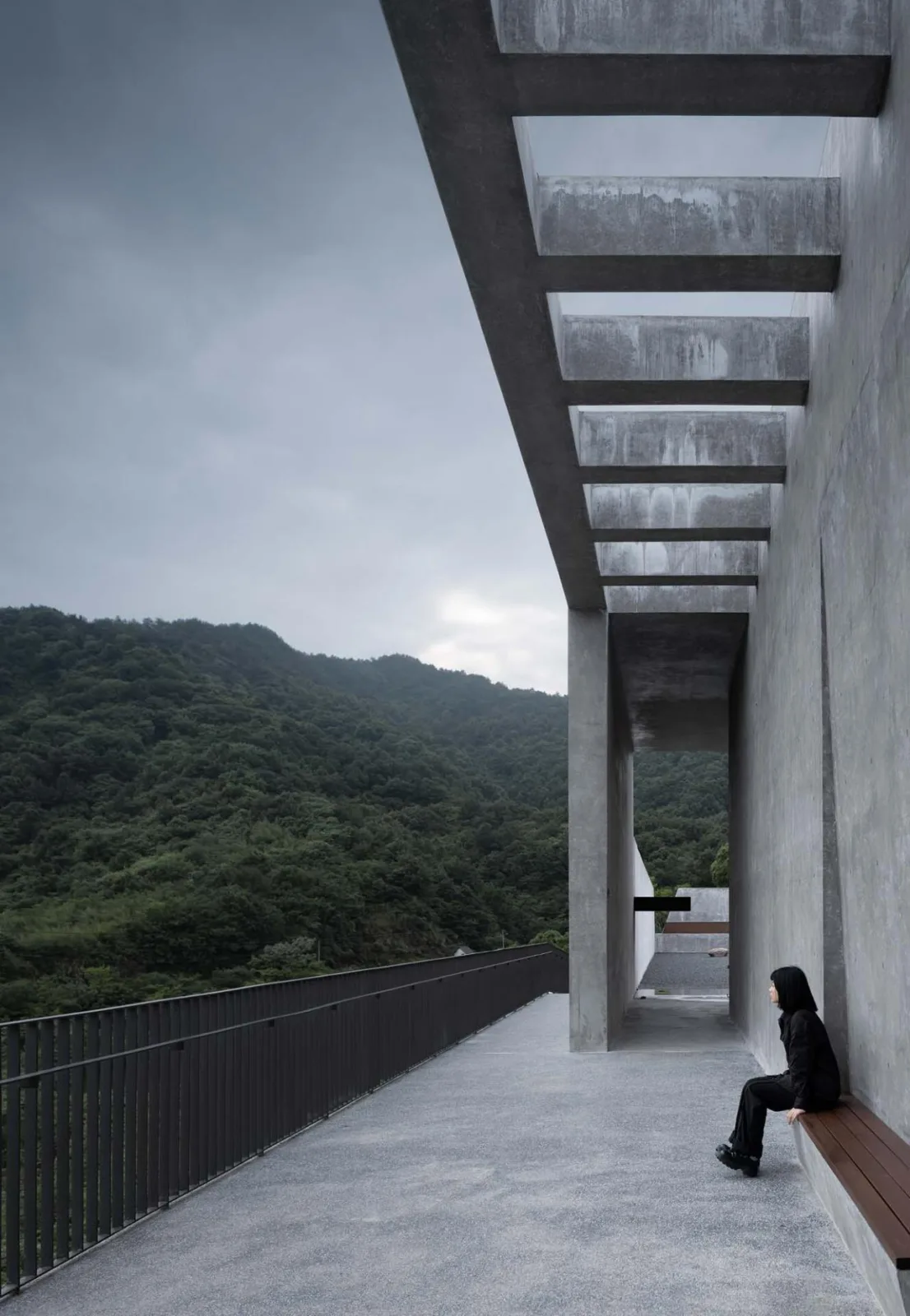
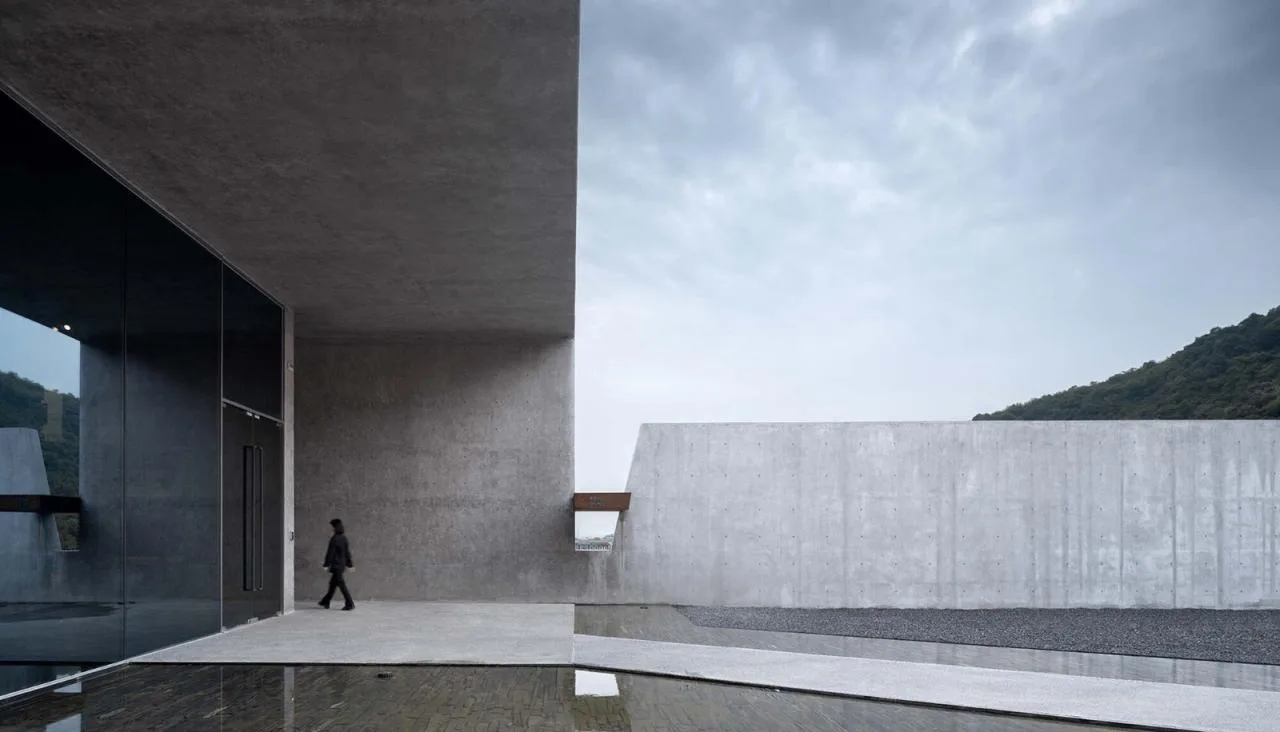
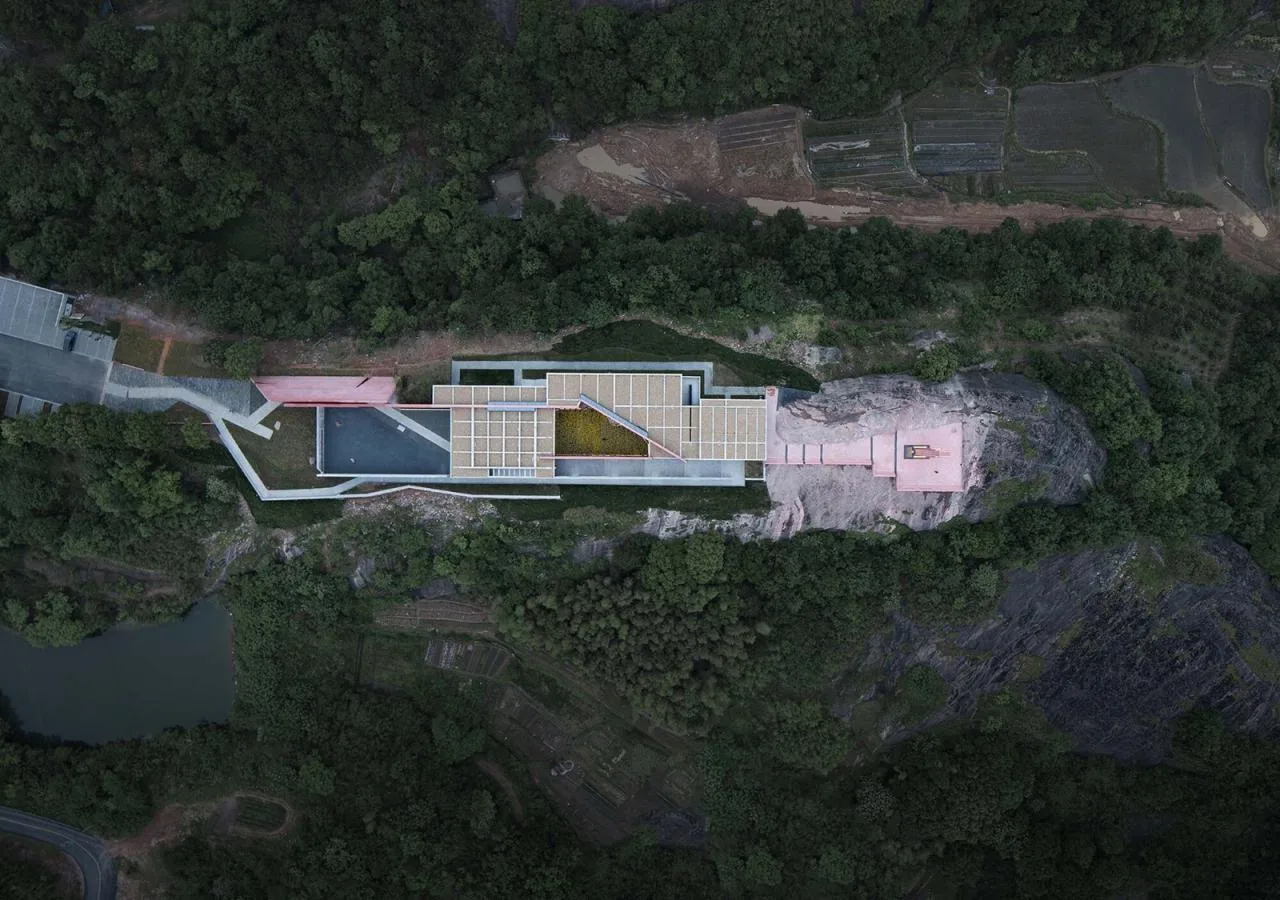
Originating from the integration of commemoration into everyday life with an open approach, this site was once a leisure spot for locals to relax and enjoy the scenery. Initially, the commemorative function was disconnected from rural life. The design not only creates a memorial building that blends harmoniously into the landscape but also aims for the site to remain a public open space for citizens. Two viewing routes were designed: when the exhibition hall is closed, visitors can explore the front courtyard water feature via the drip cliff landscape at the entrance, then proceed to the oath square and monument through the outdoor exhibition gallery. The entire route is equipped with barrier-free facilities. This open memorial site supports civic activities such as oath ceremonies, mountain tours, red education, and social leisure, fostering the red spirit rooted in the land and nurturing a new “collective memory.” It achieves a balance between commemorative significance and social value.
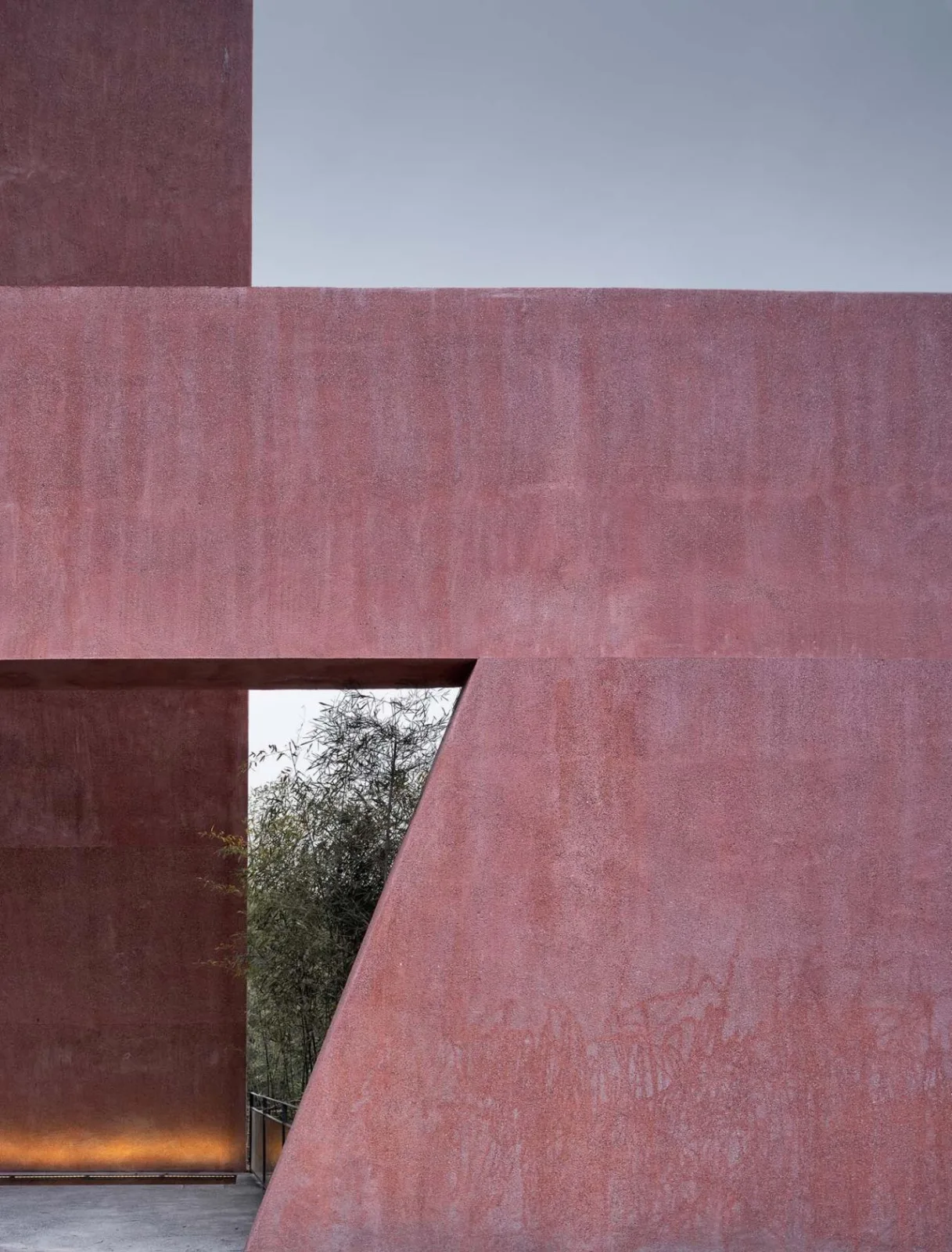
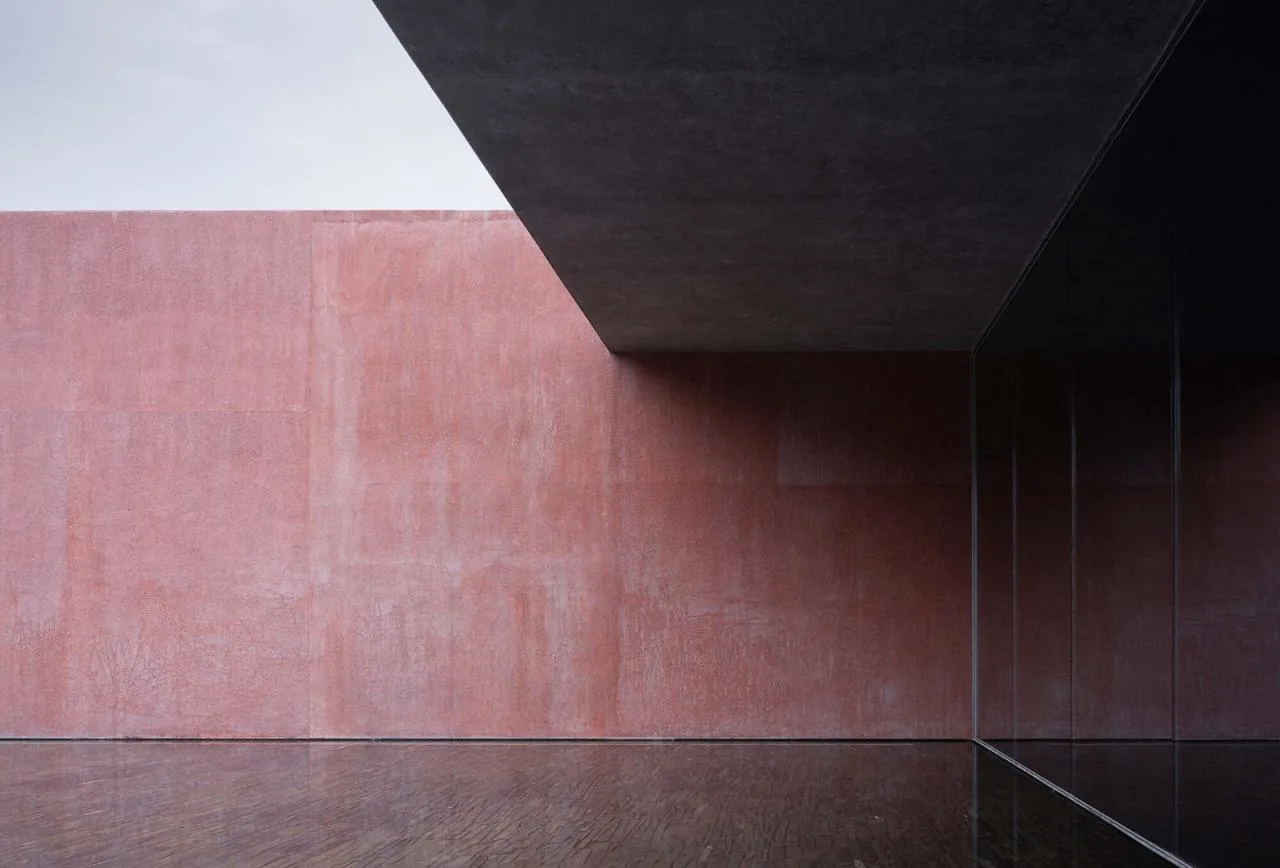
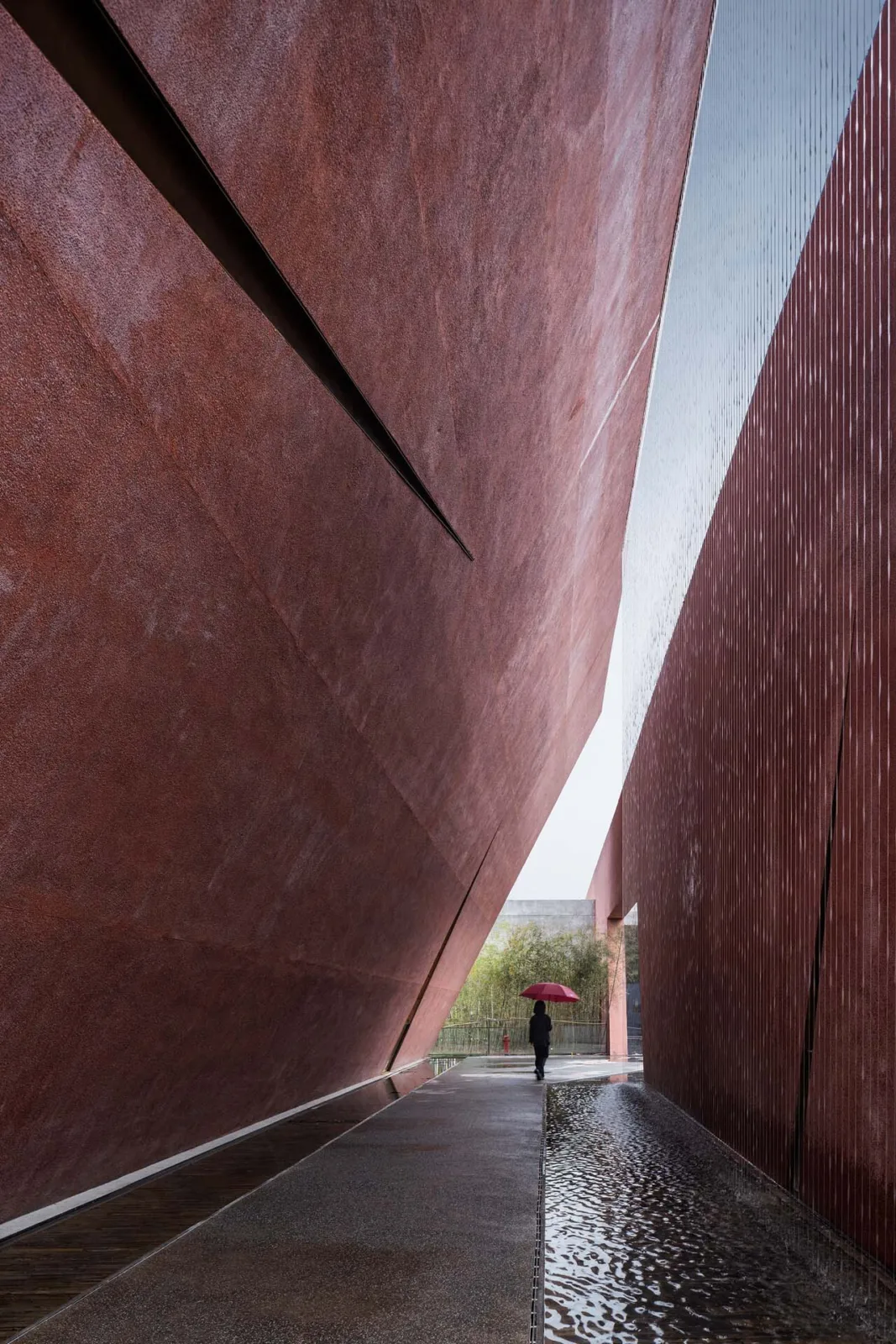
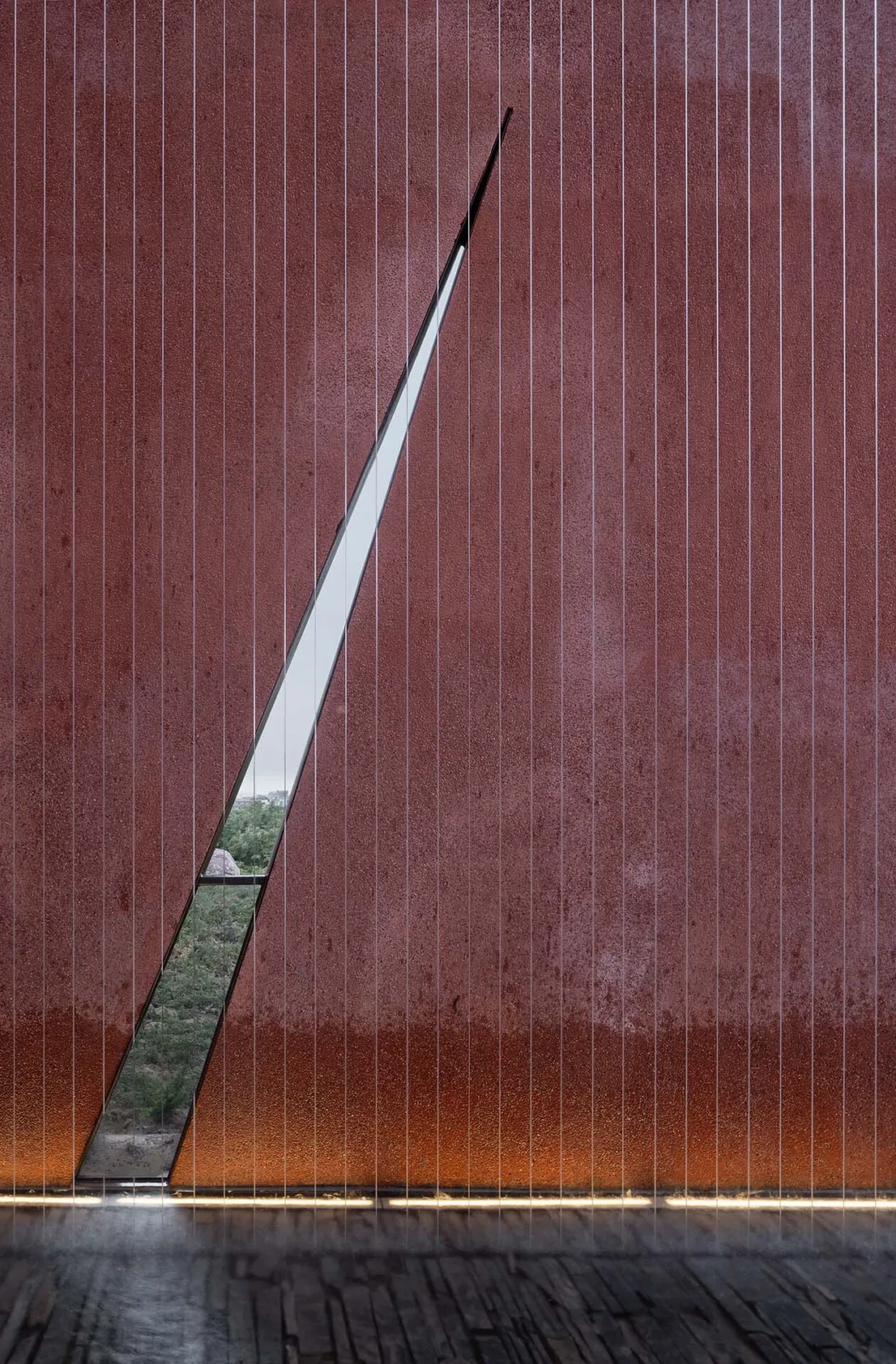
By unfolding spatial narratives through memory, this memorial building becomes a repository and showcase of historical memory. Through tangible scenes and artistic storytelling, it effectively transmits and re-educates visitors on the red spirit. People use “situations” as a medium to construct their understanding of history and infuse it with renewed spiritual meaning.
Project Drawings
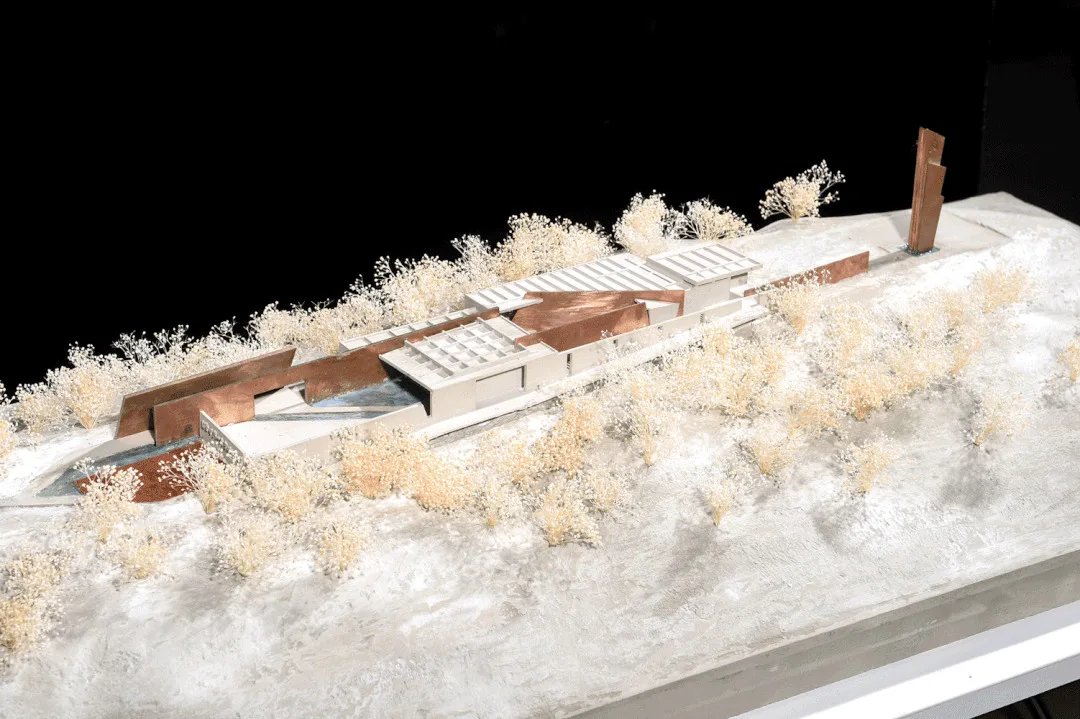
△ Model Diagram
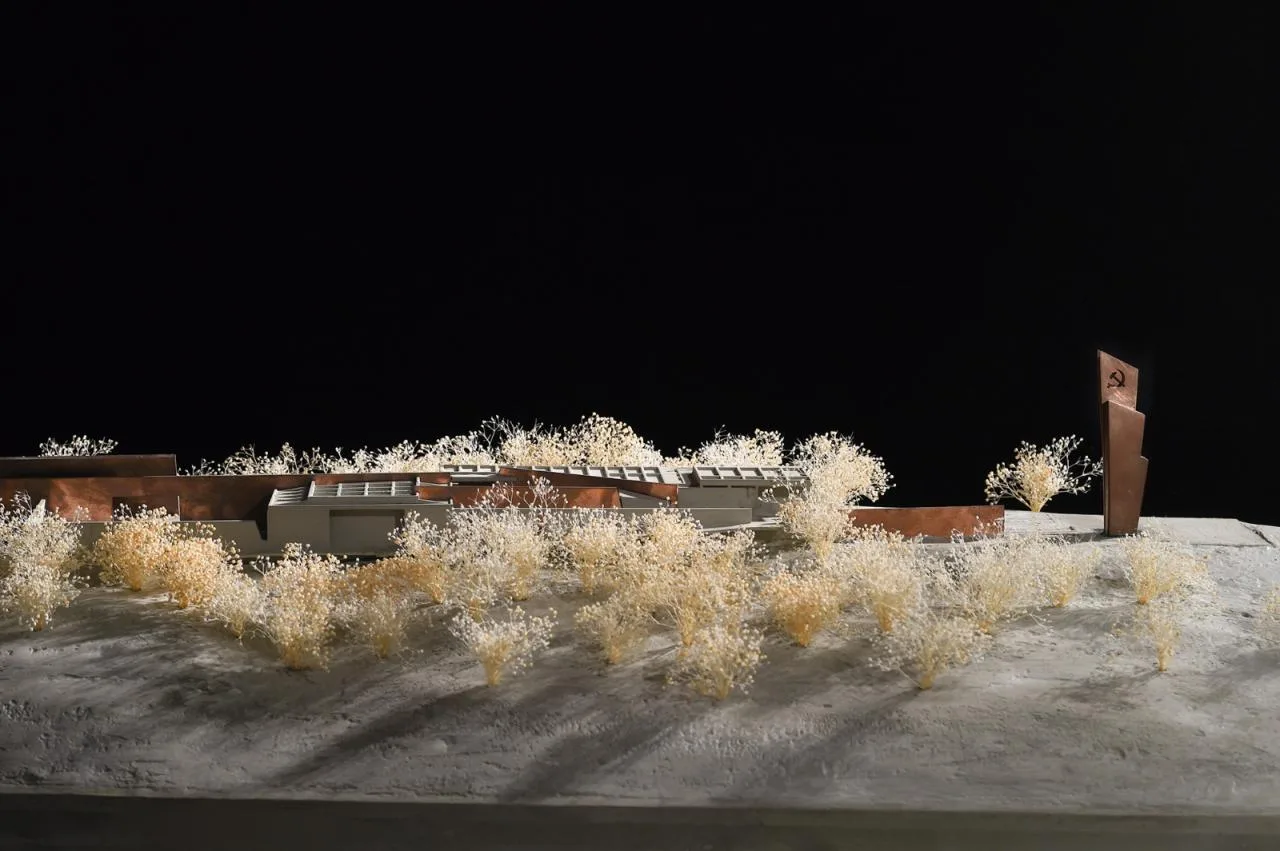
△ Model Diagram
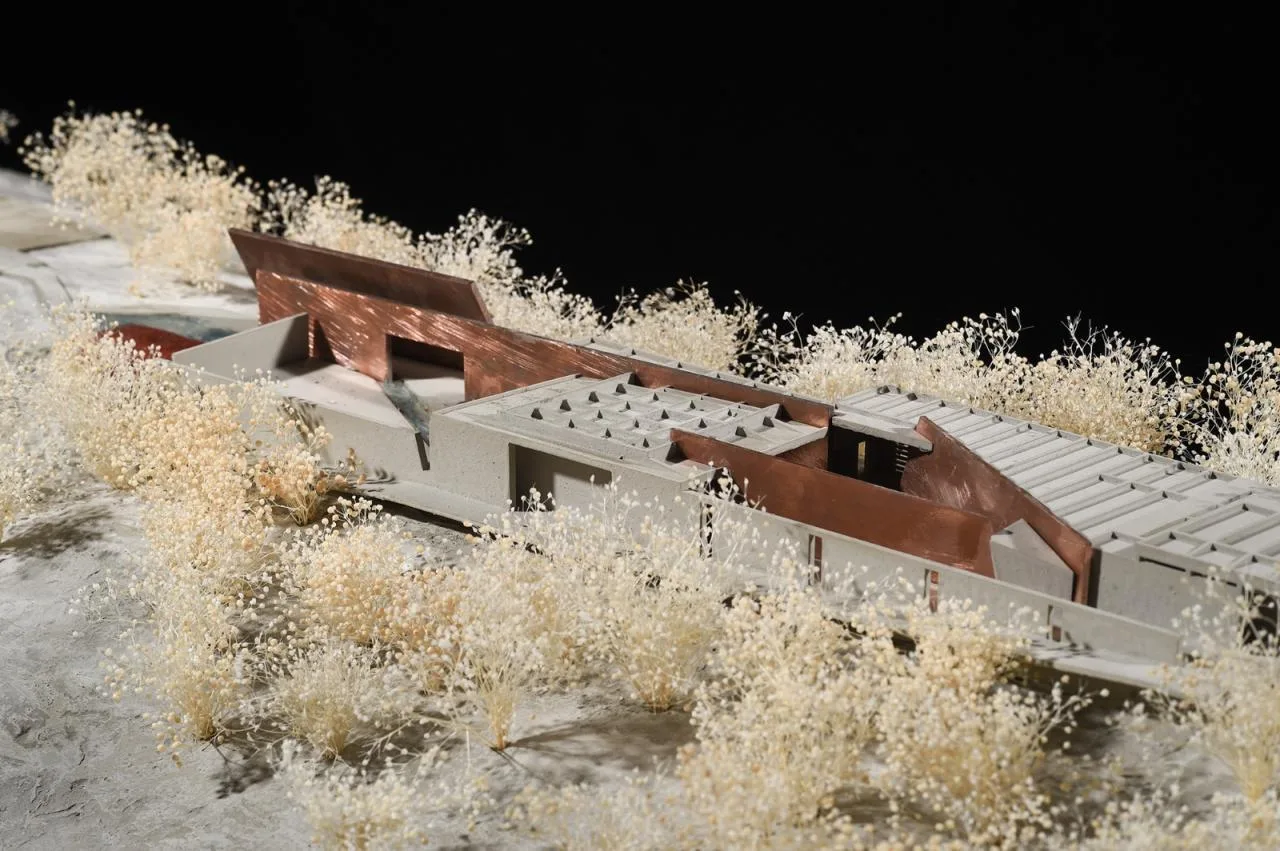
△ Model Diagram
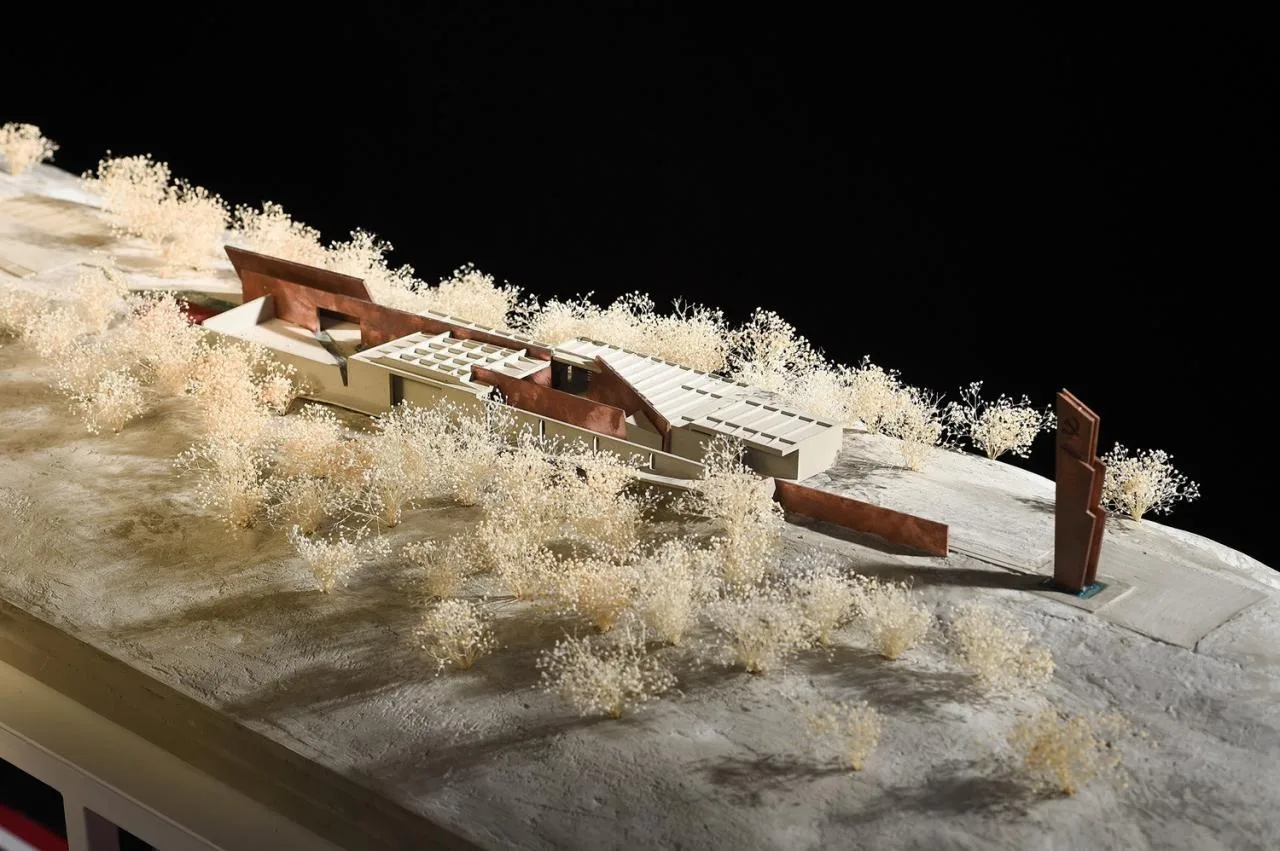
△ Model Diagram
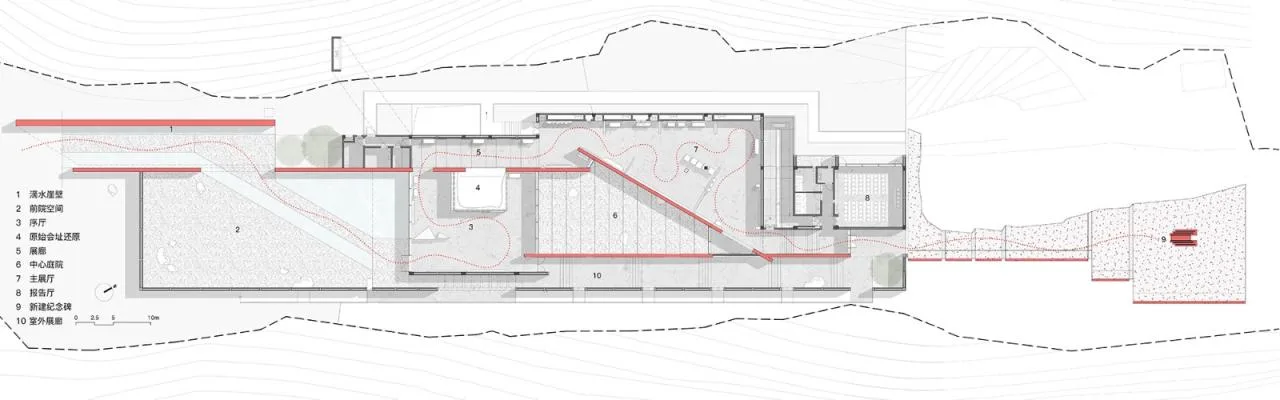
△ Plan View

△ Topographic Profile
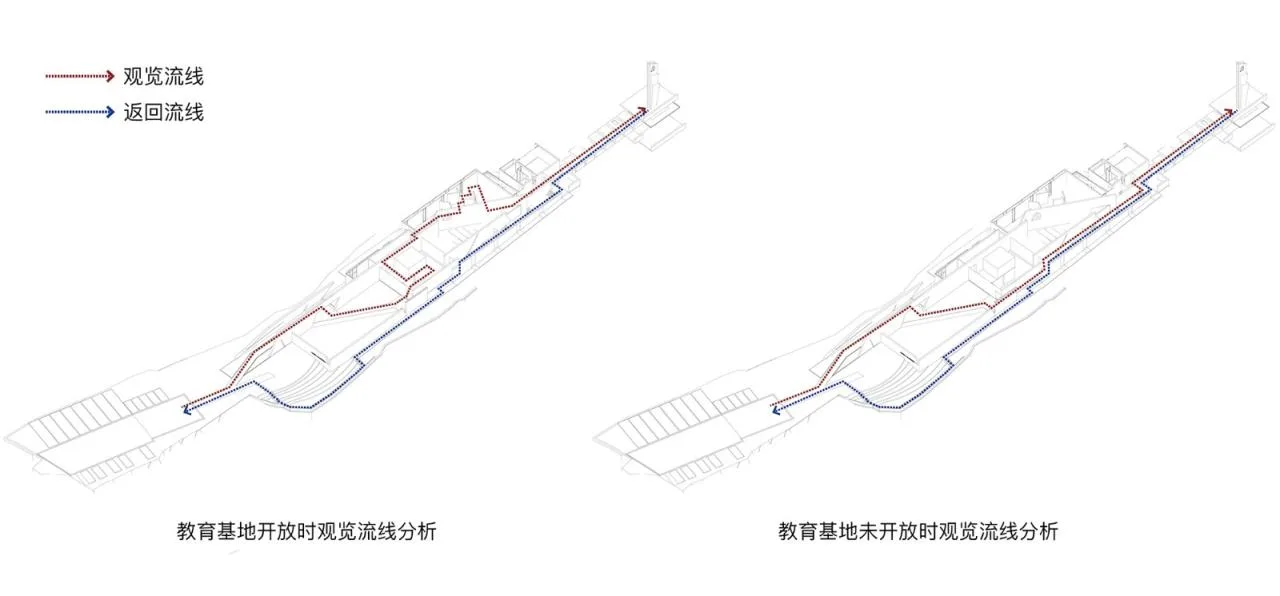
△ Streamline Analysis Diagram
Project Information
Architect: Zhejiang University Architectural Design and Research Institute
Area: 989 m²
Project Year: 2022
Photographer: Qiang Zhao
Manufacturers: Anhui Xinghua Energy Saving Materials Co., Ltd., Hangzhou Xindingshi Industrial Co., Ltd., Fujian Bimaite Environmental Protection Group Co., Ltd.
Design Director: Mo Zhoujin
Project Manager: Lv Miaohua
Architectural Design: Qu Jie, Kan Xinyu, Su Renyi, Wu Hegen
Structural Design: Jin Xingxin, Zhang Li, Chen Dong
Water Supply and Drainage Design: Sang Songbiao, Wu Weihao
Electrical Design: Shen Yueqing, Li Zhaoyu
HVAC Design: Guo Yinan, Shi Kaiyu
Intelligent Design: Ma Jian, Zhang Wubo
Landscape Design: Sun Dongming, Guo Shurui
Curtain Wall Design: Bai Qi’an, Yu Ping, Xi Rui
Decoration Design: Lu Zhefeng, Wang Lijia, Zheng Yanyan
Lighting Design: Pang Xiaoxiao, Lu Danyu, Zheng Long, Lv Jiaqi, Yu Zicheng, Xiao Shuzheng
Construction Economy: Zhang Ying, Ruan Shihan
Principal: Organization Department of Zhuji Municipal Committee of the Communist Party of China, Jiyang Street Office of Zhuji City, Zhuji Urban and Rural Investment Group Co., Ltd.
Location: Shaoxing, China












Must log in before commenting!
Sign Up