
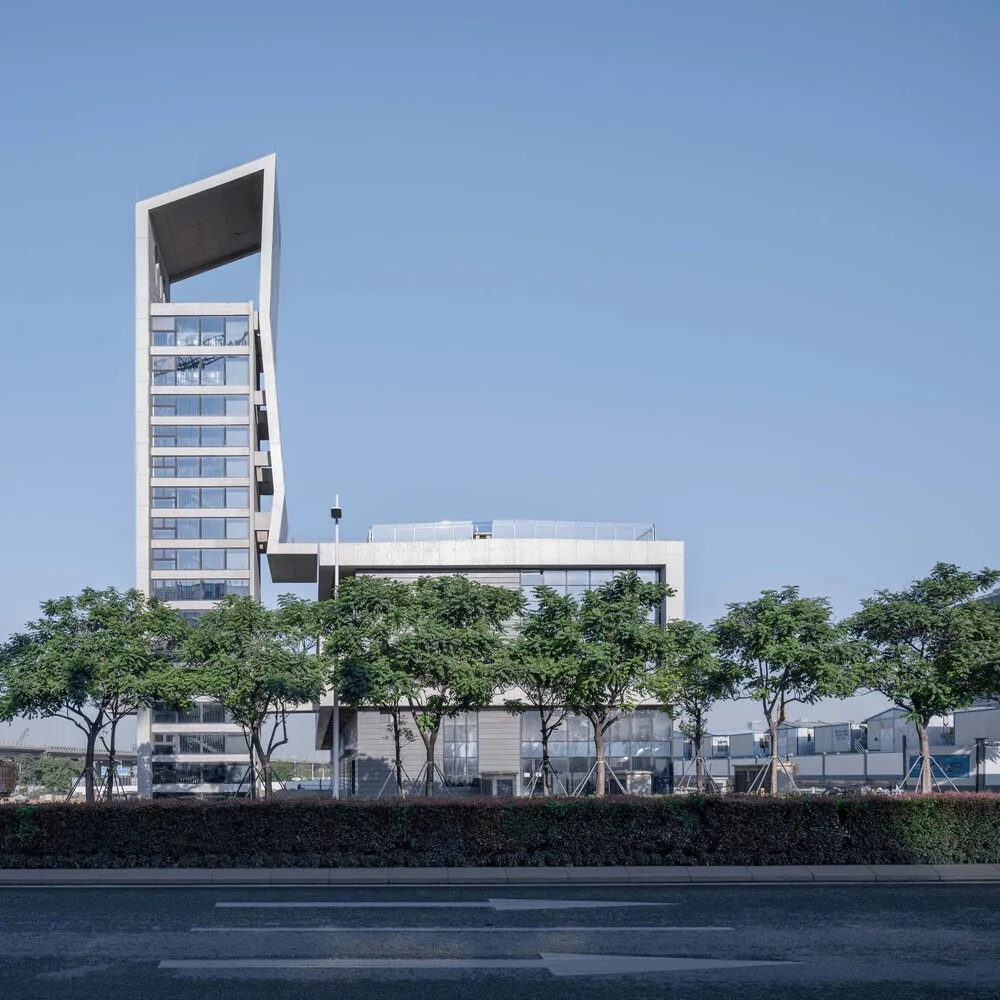
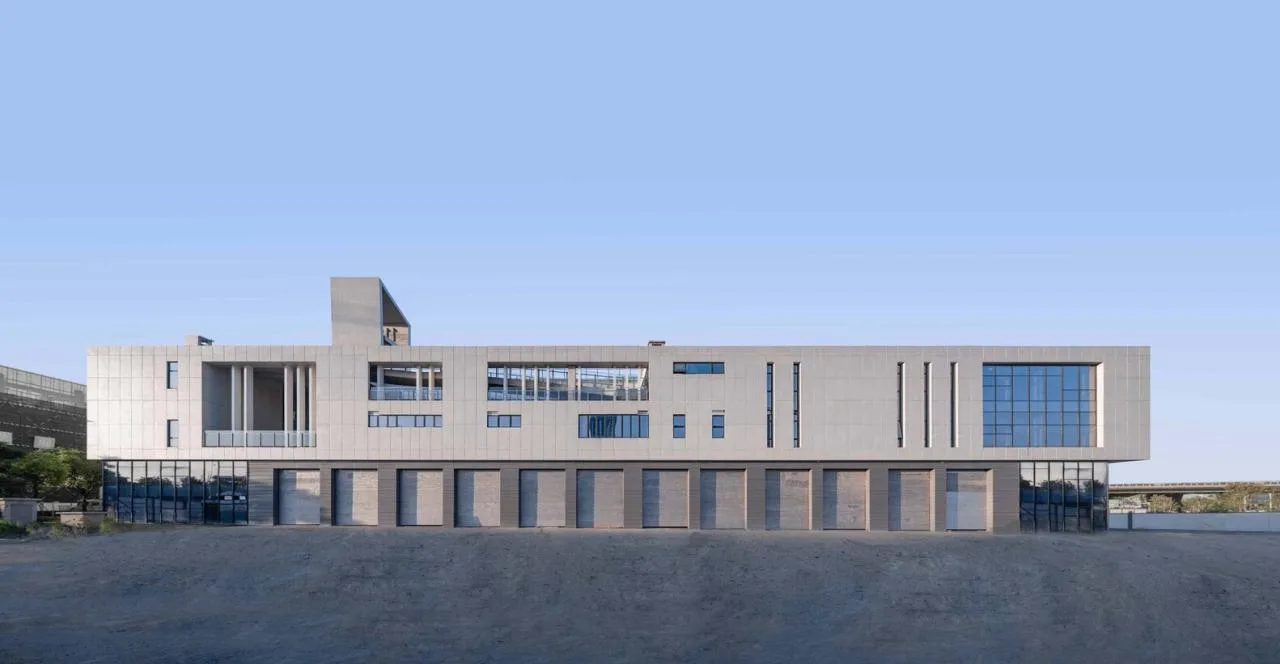
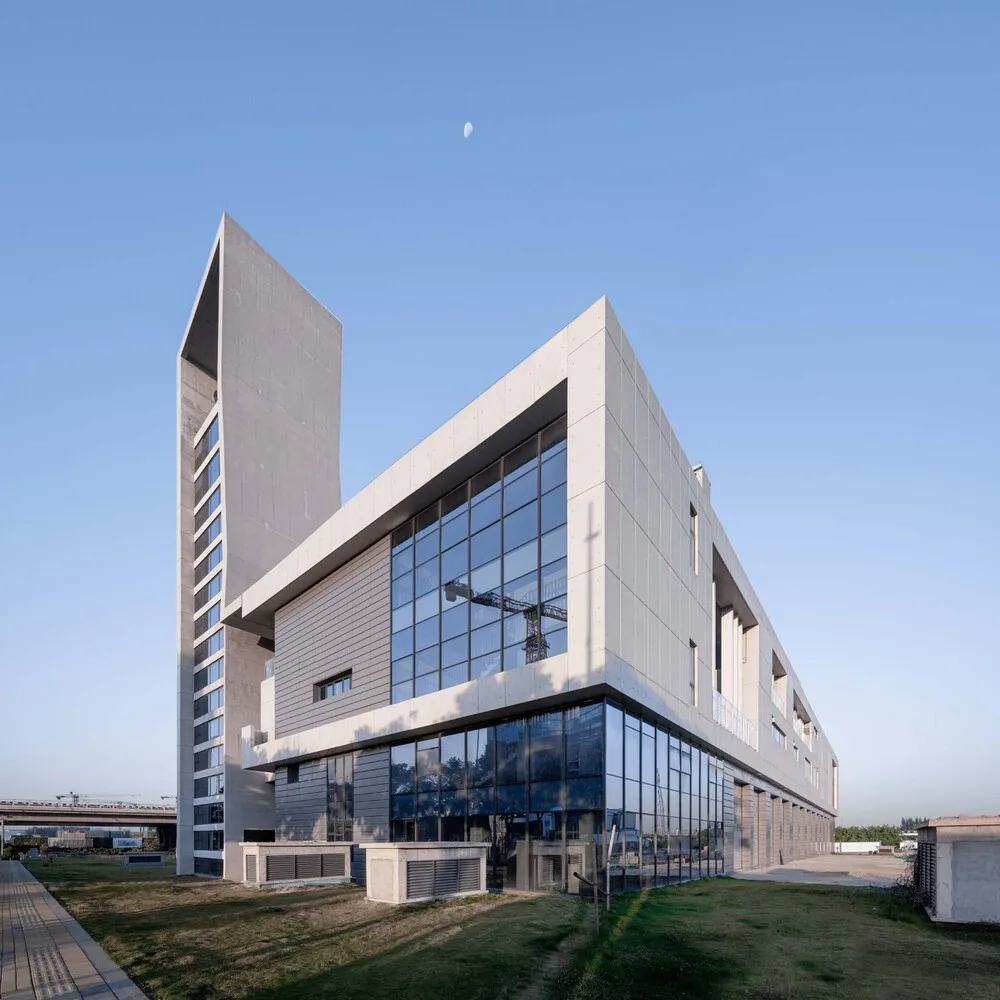
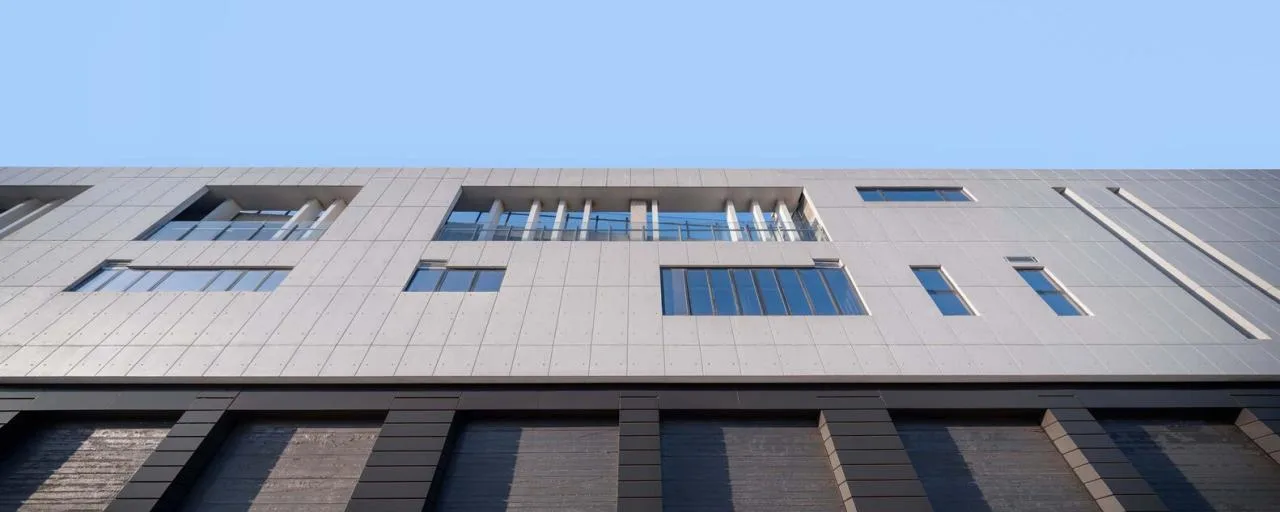
The Shenzhen Qianhai Fire Station is the first fire station constructed within the Qianhai Free Trade Zone. Its design features cast-in-place plain concrete continuous folded plates, giving it the appearance of a “sail” on the sea when viewed from a distance. The sharp southwest corner resembles a “blade,” symbolically protecting the peaceful lives of Qianhai residents. The fire training tower stands 37.5 meters tall, serving as a “beacon” at the mouth of the Pearl River.
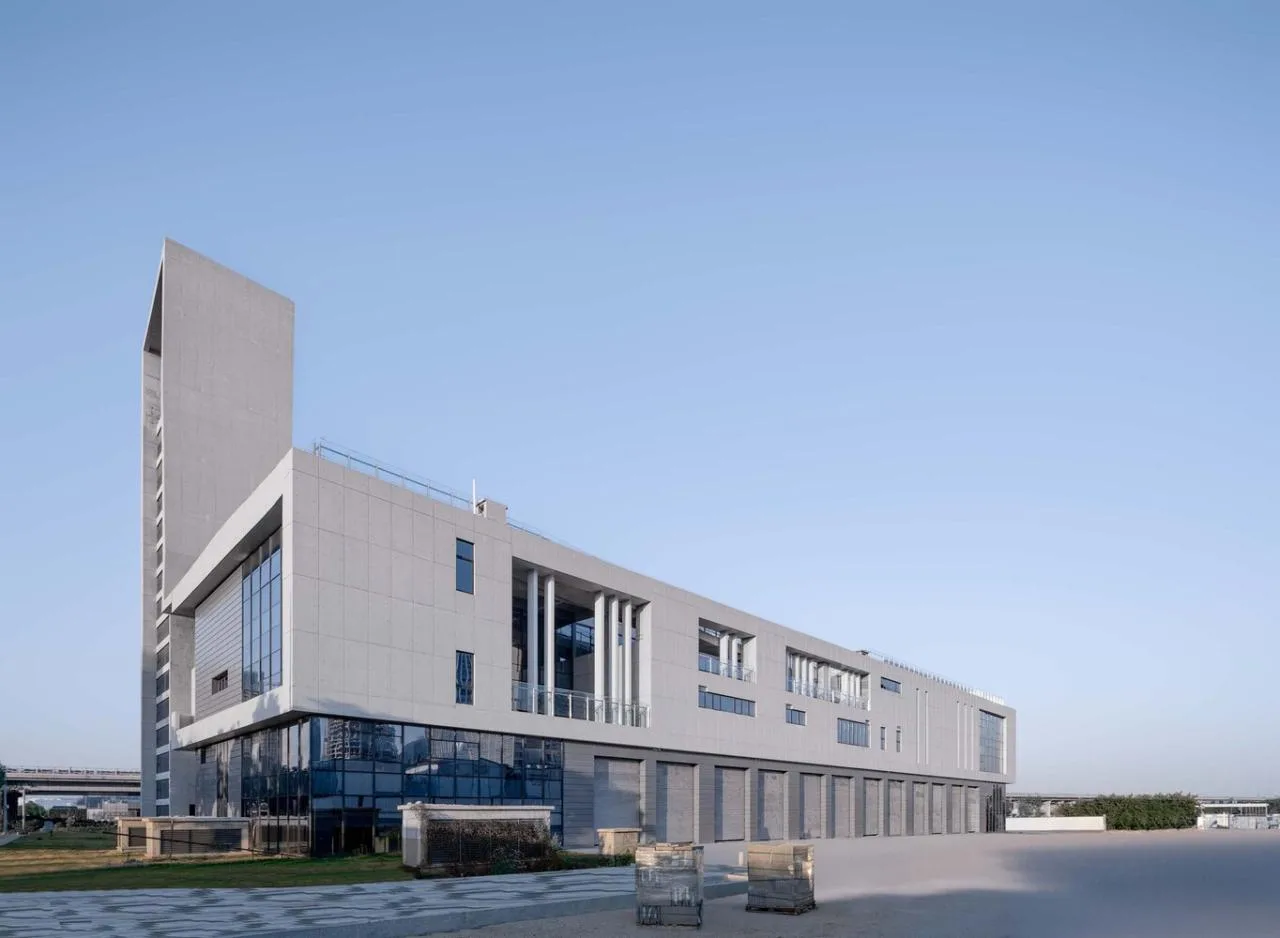
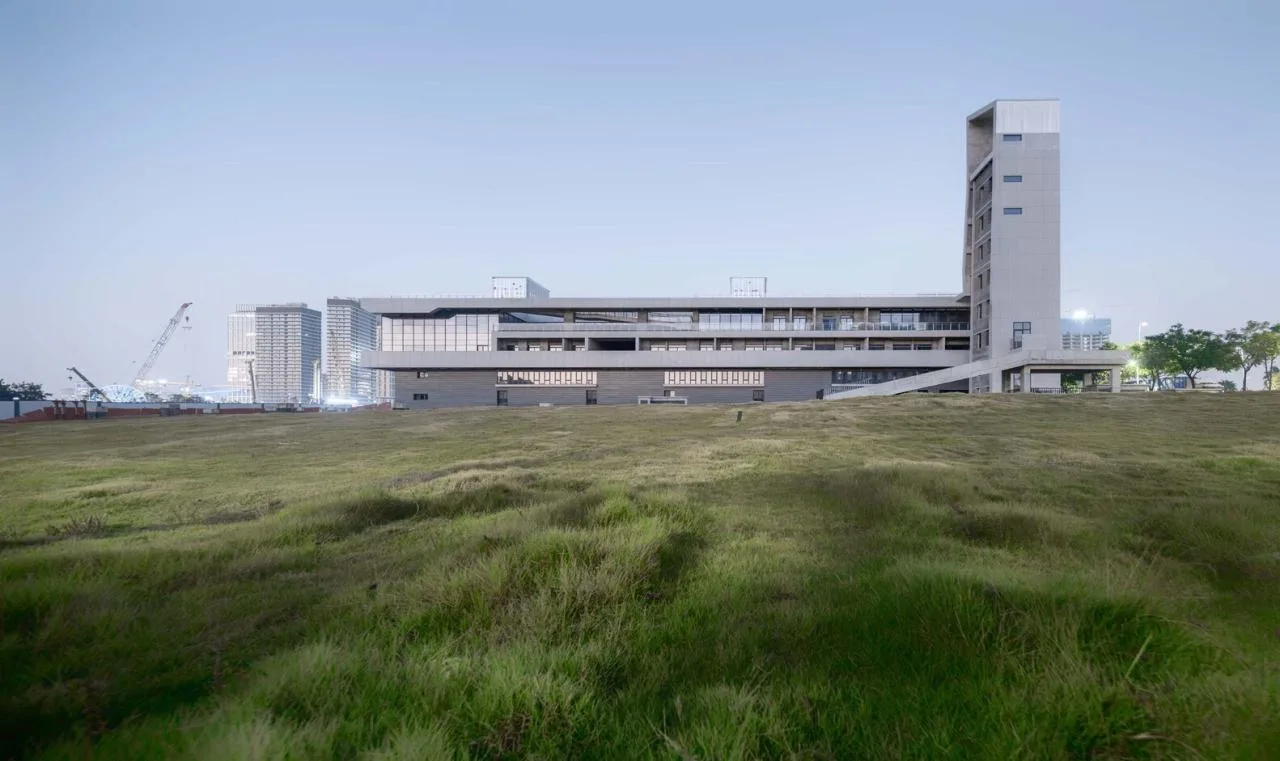
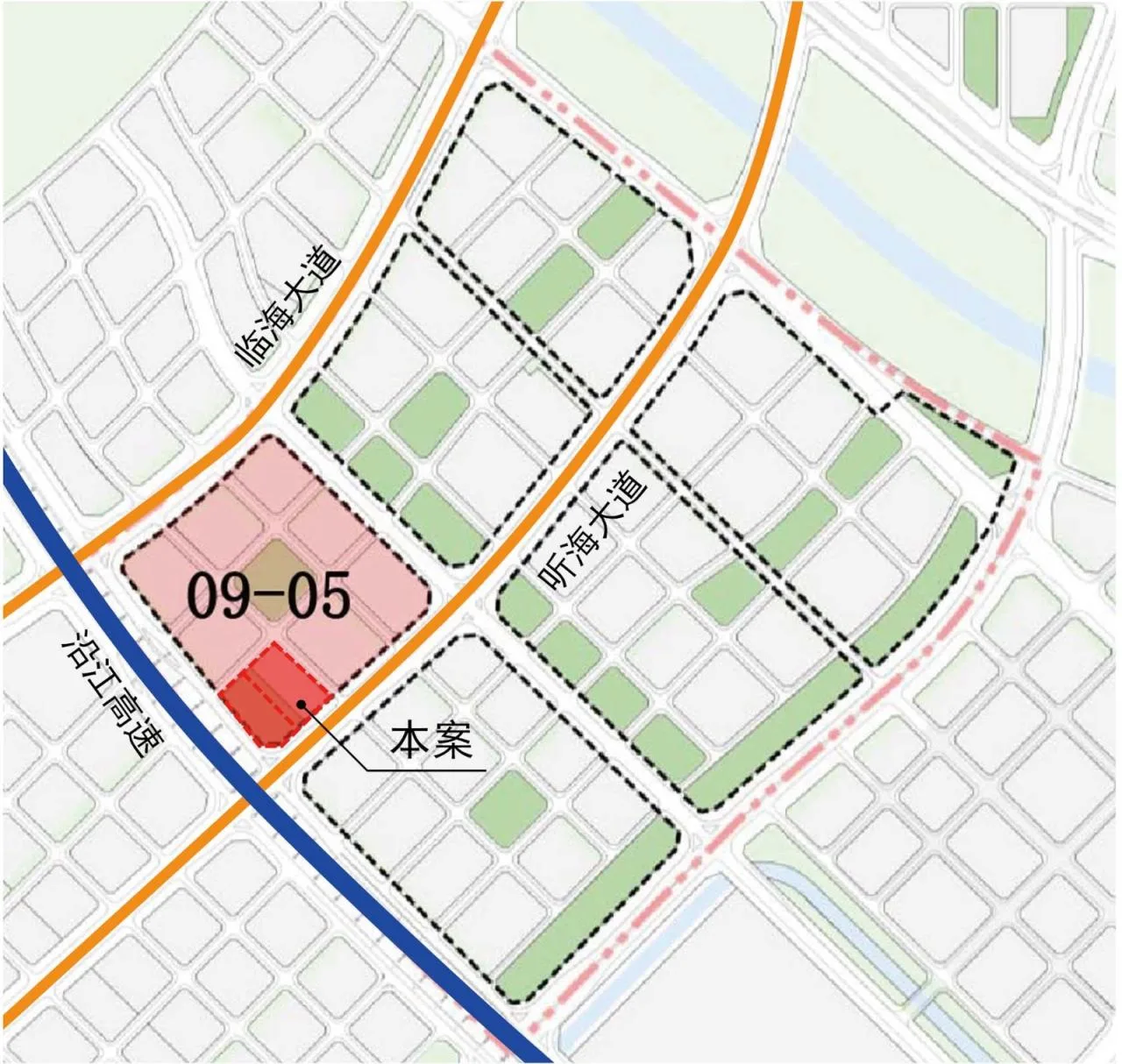
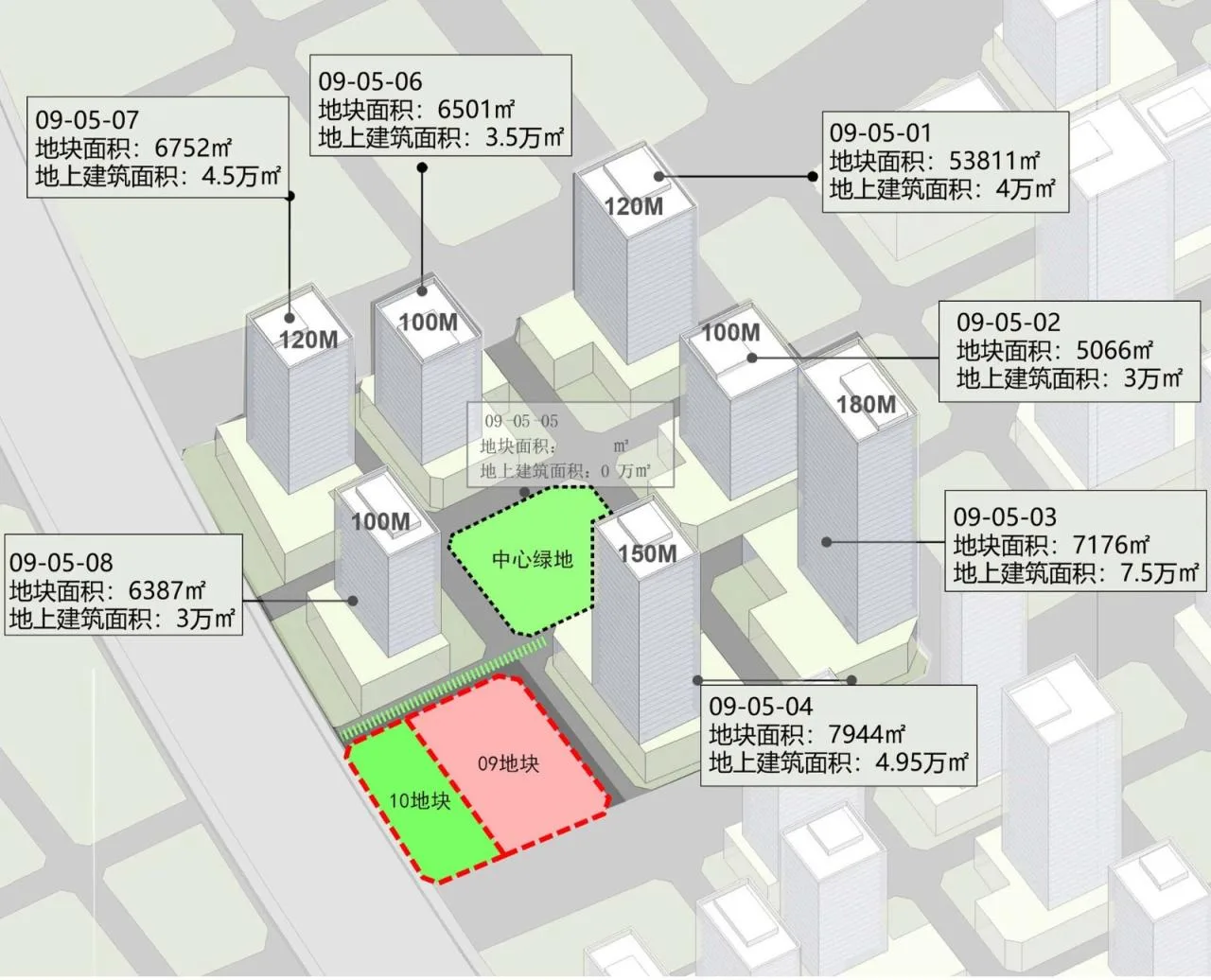
Project Overview: Located on plots 09 and 10, Block 5, Unit 9, in the Qianwan Area of the Qianhai Free Trade Zone, the Shenzhen Qianhai Fire Station is strategically positioned. To the southwest lies the Yangtze River Expressway, to the southeast Tinghai Avenue, and to the northeast and northwest, one-way Fangnei branch roads. On the northwest side, a leisure bike lane and a tree-lined avenue form part of the urban slow traffic system, extending to the central green space.
The site is roughly rectangular, featuring a gentle slope with the southeast side higher than the northwest by about 1.5 meters. The total site area covers 5,988 square meters, with the first phase construction area totaling 10,453 square meters—comprising a capacity of 5,600 square meters, a floor area ratio of 0.94, and 71 underground parking spaces.
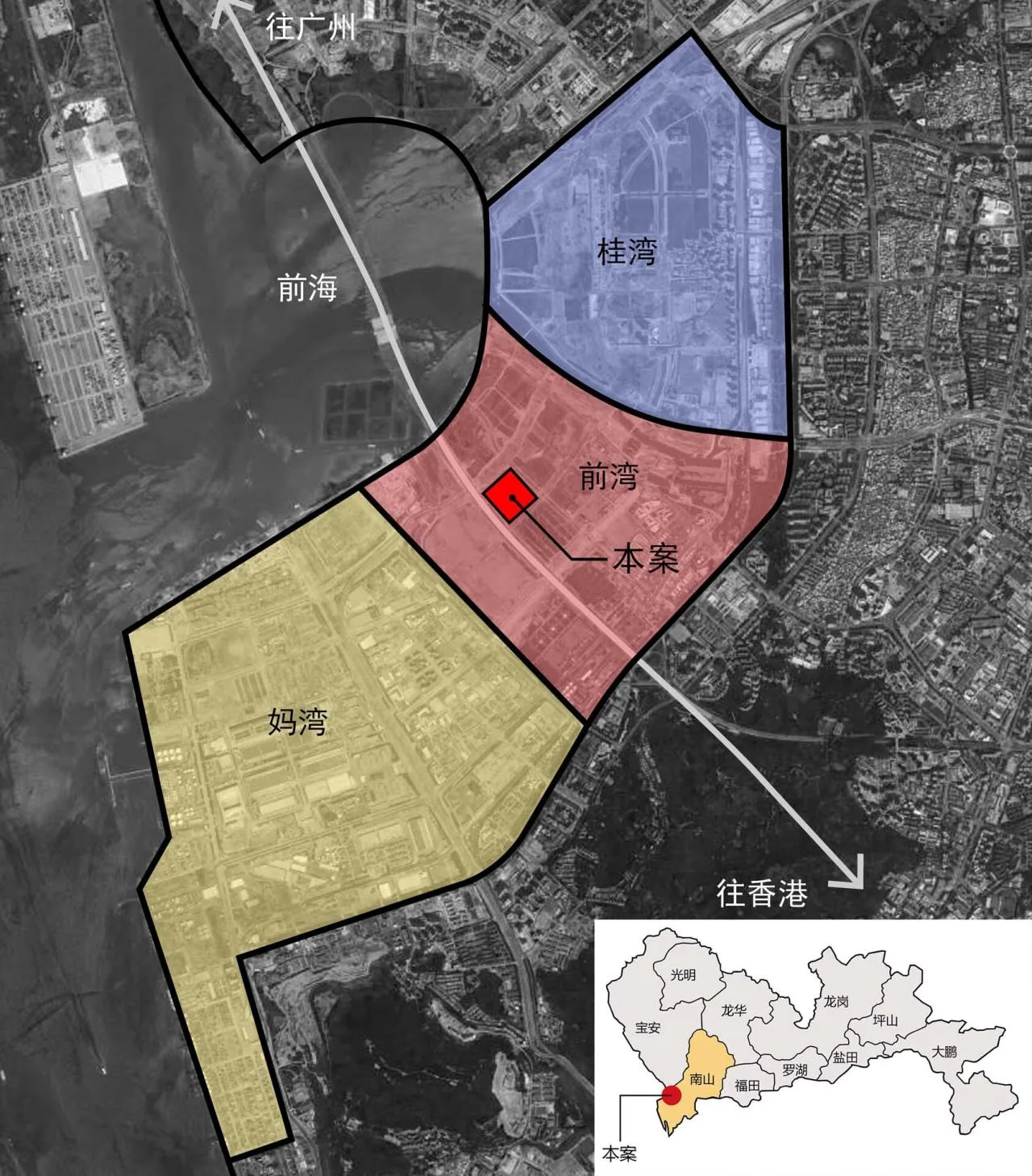
In October 2014, the “Fire Station Standardization Design Research Workshop” and architectural design competition were jointly organized by the Shenzhen Construction and Engineering Bureau, Shenzhen Public Security Fire Brigade, and Shenzhen Urban Design Promotion Center. Through a series of design research, thematic seminars, and public events, the project re-examined fire station functions and gradually developed a standardized construction model to support rapid design and construction of future fire stations in Shenzhen.
Guided by a unified “standardized design consensus,” multiple teams proposed their own solutions to meet the city’s urgent construction needs. The final outcome was the publication of the “Guidelines for Standardization and Personalized Design of Fire Stations in Shenzhen” and the “Research Atlas of Standardization of Fire Stations.” These documents established a standard construction framework, defining column grids, bays, vertical distribution, facade materials, and more.
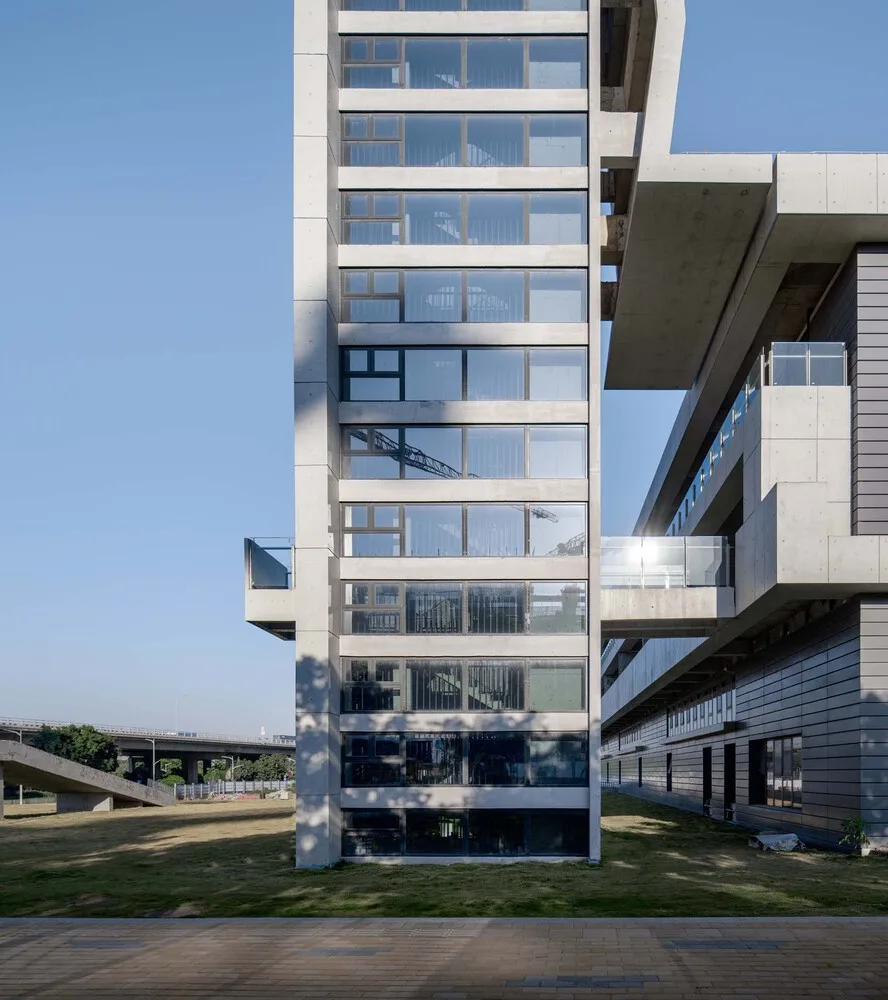
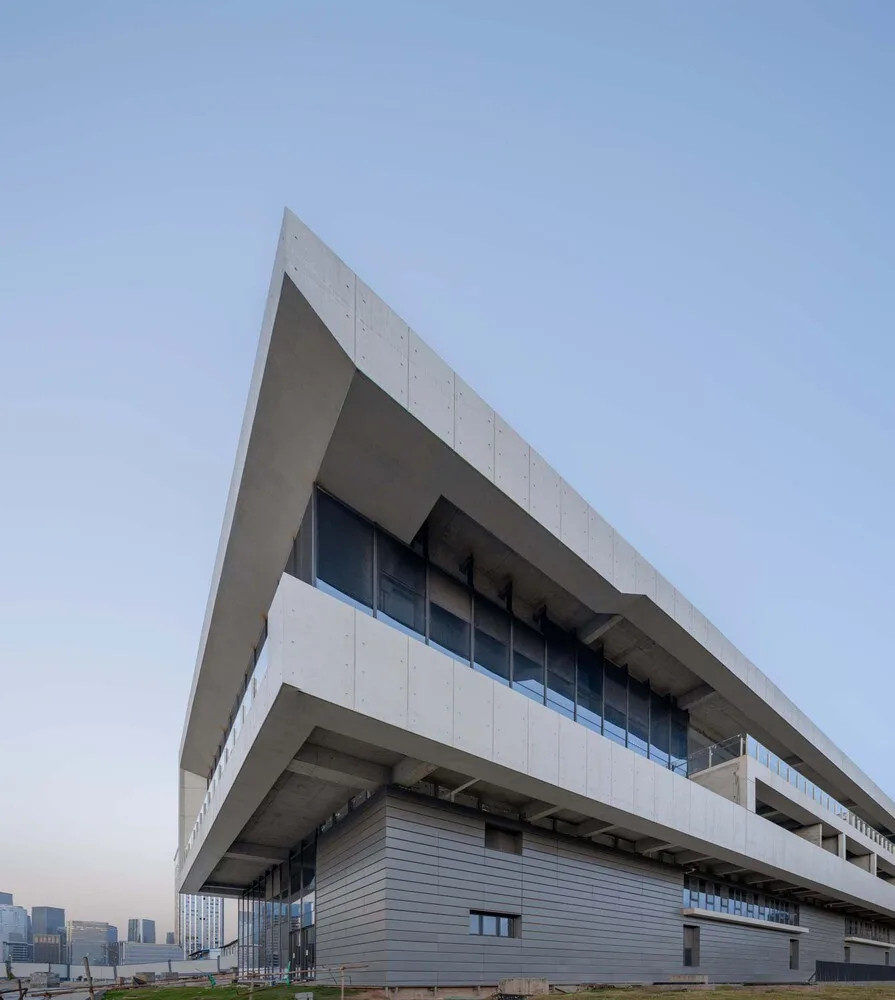
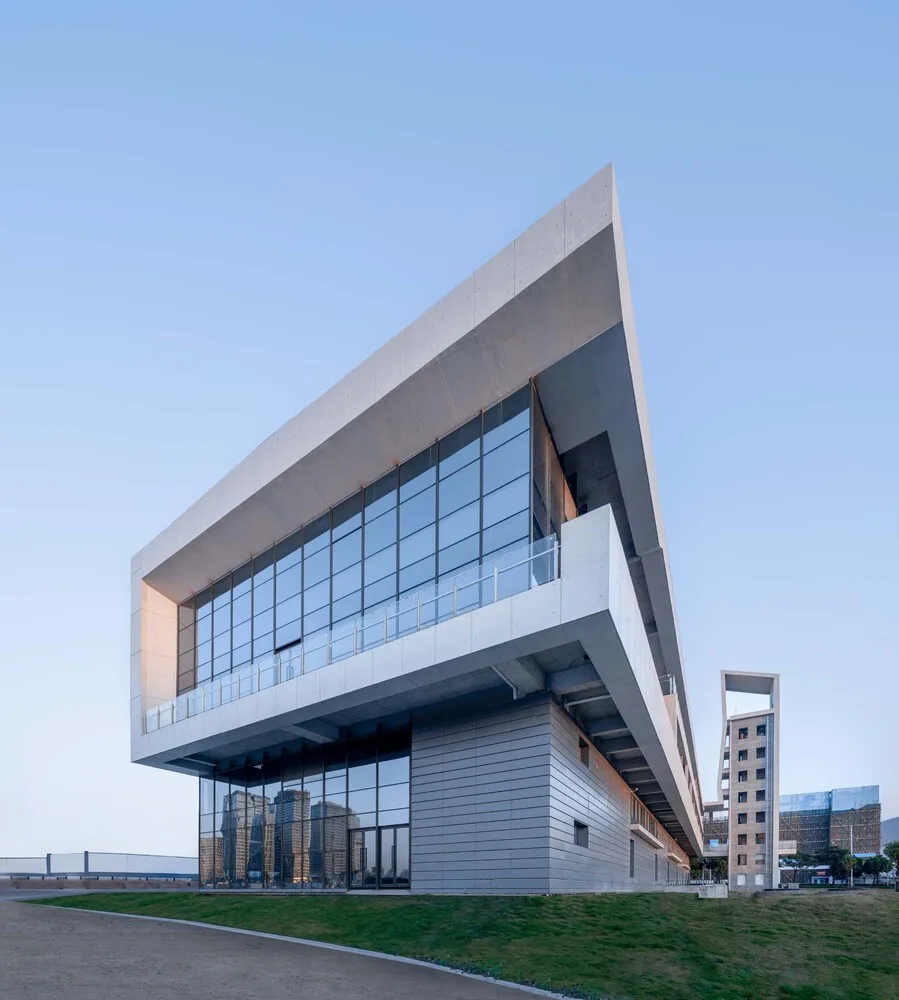
Design Trends for Shenzhen Fire Stations: The push for standardization focuses on core fire station functions such as the fire garage, backup rooms, basement, training tower, and signage. Implementing standardized design modules promotes economies of scale, a unified appearance, and consistent standards. This approach enhances fire safety efficiency, simplifies vehicle operations, shortens design cycles, reduces costs, and facilitates maintenance and management.
Personalization distinguishes the new fire stations from traditional ones. Built efficiently under accelerated project timelines, these stations feature reasonable and comprehensive facilities. While sharing common elements, they also incorporate individual characteristics, delivering a more humane and thoughtful design approach compared to pure standardization.
Integration addresses Shenzhen’s high-density urban environment and limited land resources. The refinement of social labor division and the shift from single-function to multi-functional buildings have driven the trend toward “fire station complexes.” For example, the second phase of the Qianhai Fire Station design includes a fire supervision bureau business building with approximately 7,000 square meters, reflecting the station’s comprehensive nature.
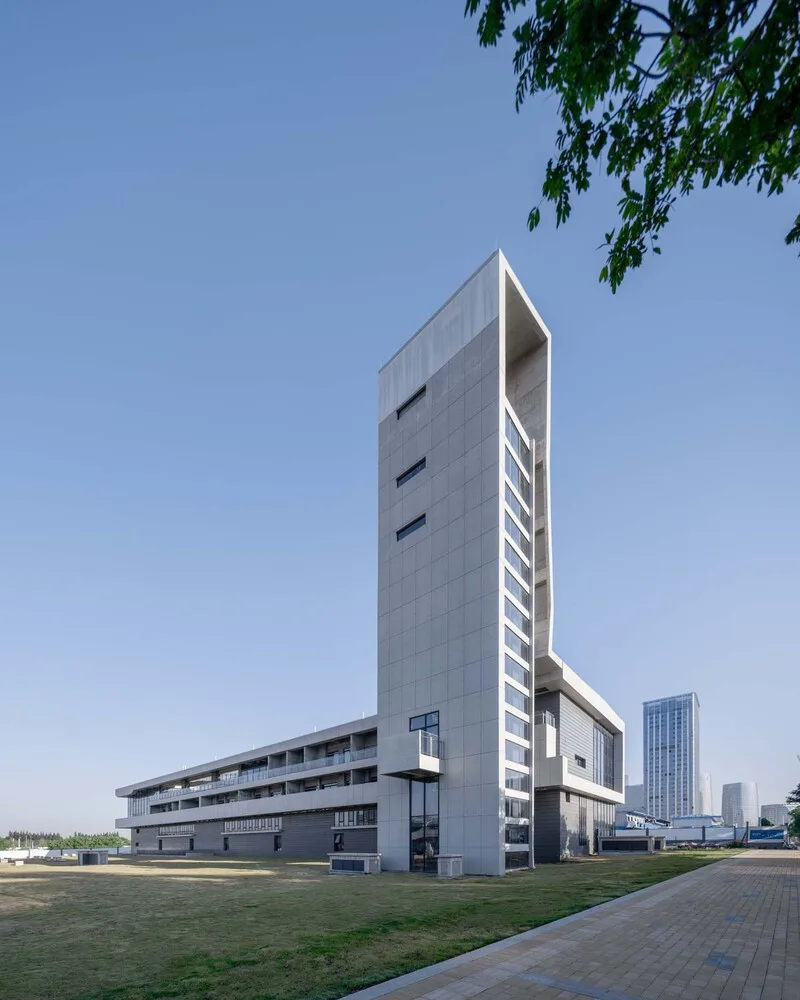
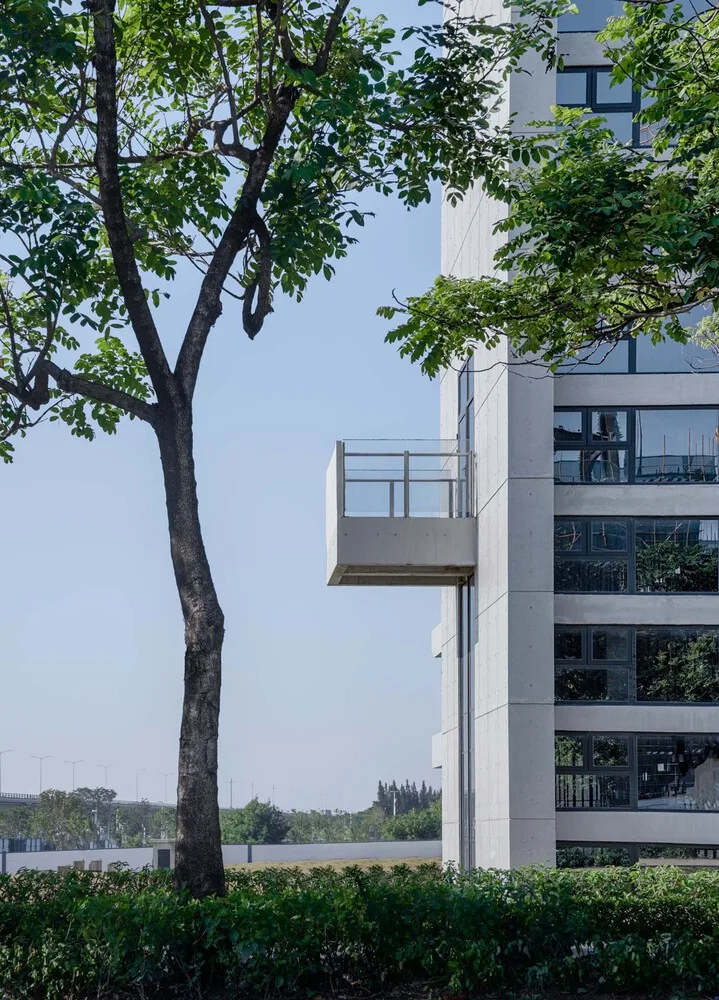
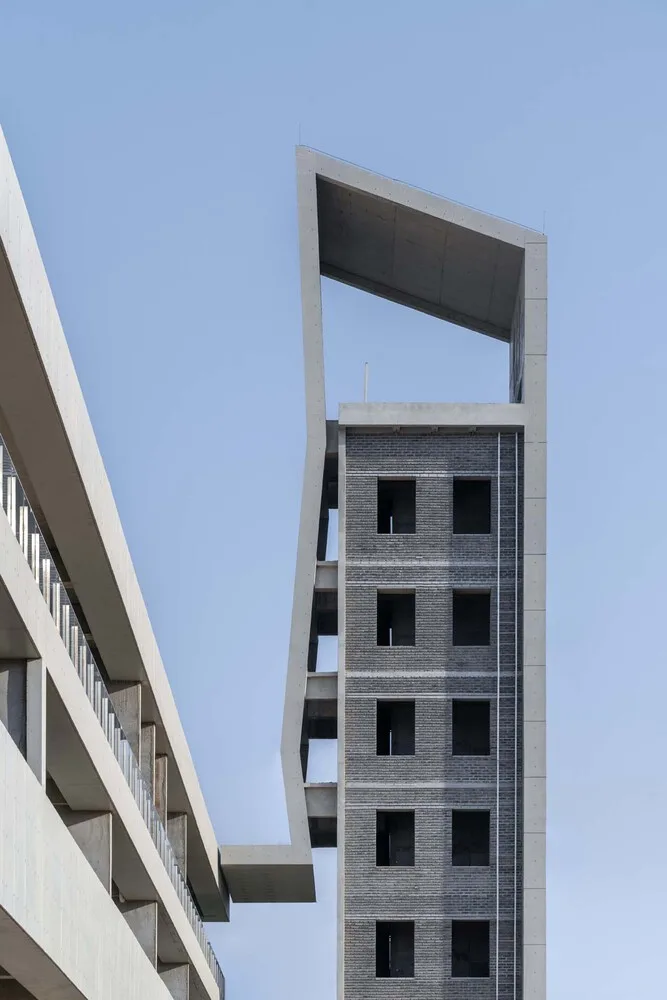
The urban design surrounding the Qianhai Fire Station embraces the concepts of “urban guidelines and interface optimization.” It integrates the central green space and Qianhai slow traffic system with land use, forming a continuous tree-lined avenue along the northwest side. The arcade space on the ground floor creates a comfortable pedestrian entrance and slow traffic corridor.
A pedestrian walkway runs alongside the branch road in the 9-05 neighborhood, connecting to a continuous underground pedestrian system across plots. Leisure bike lanes are developed along main public spaces, while commuter bike lanes follow urban arteries, complemented by bus stop transfer systems.
The site embodies the idea of “green space extension and spatial integration.” The emergency shelter on the southwest side connects to the fire station’s inner courtyard and extends to the central green space through a tree-lined walkway on the northwest side, creating a cohesive urban open space.
To meet the one-minute rapid response requirement, all fire trucks at the station use a “street-facing” exit. The fire garage exit spans 84.3 meters wide and is positioned 15 meters from the road. Additionally, it is located 60 meters from the main road, Tinghai Avenue, complying with Shenzhen’s Urban Planning Standards and Guidelines.
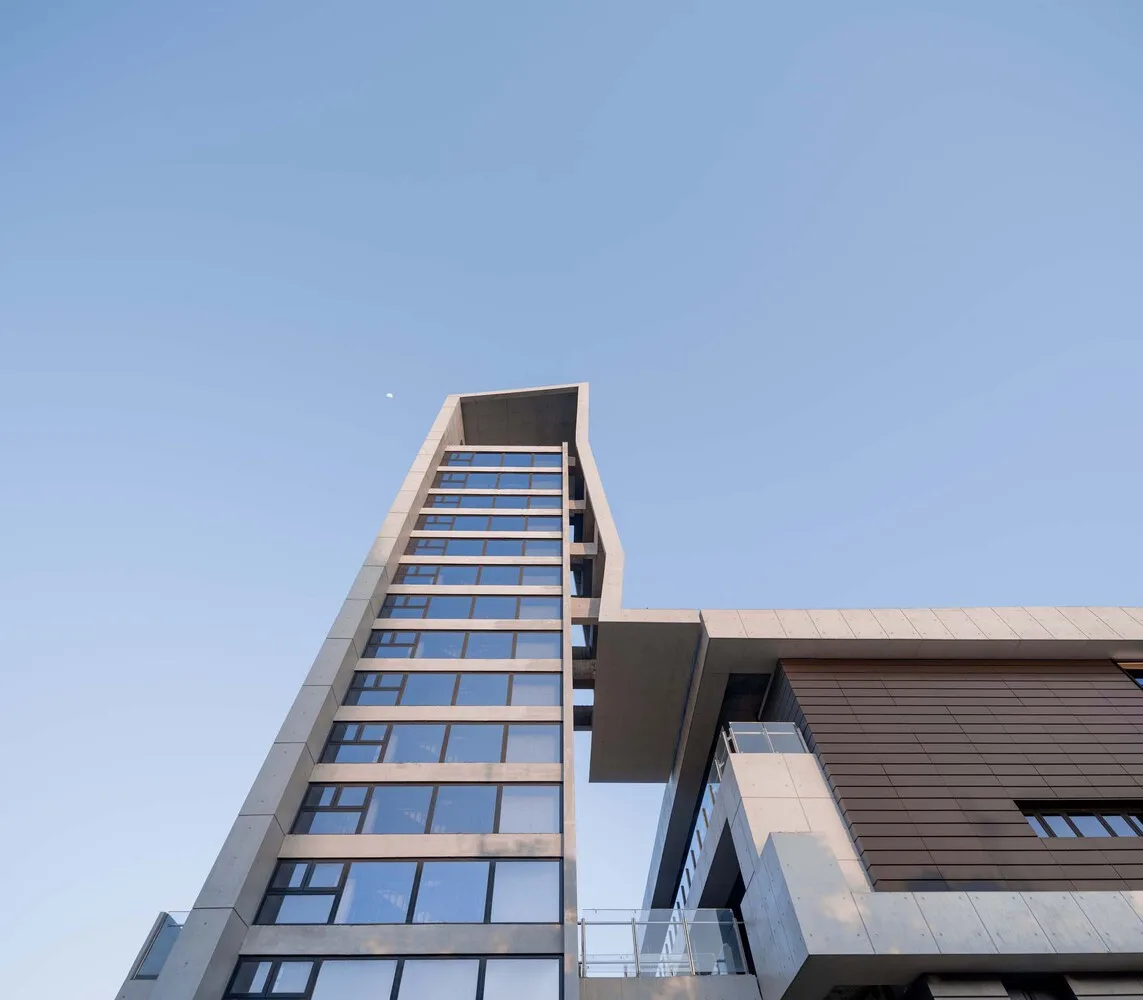
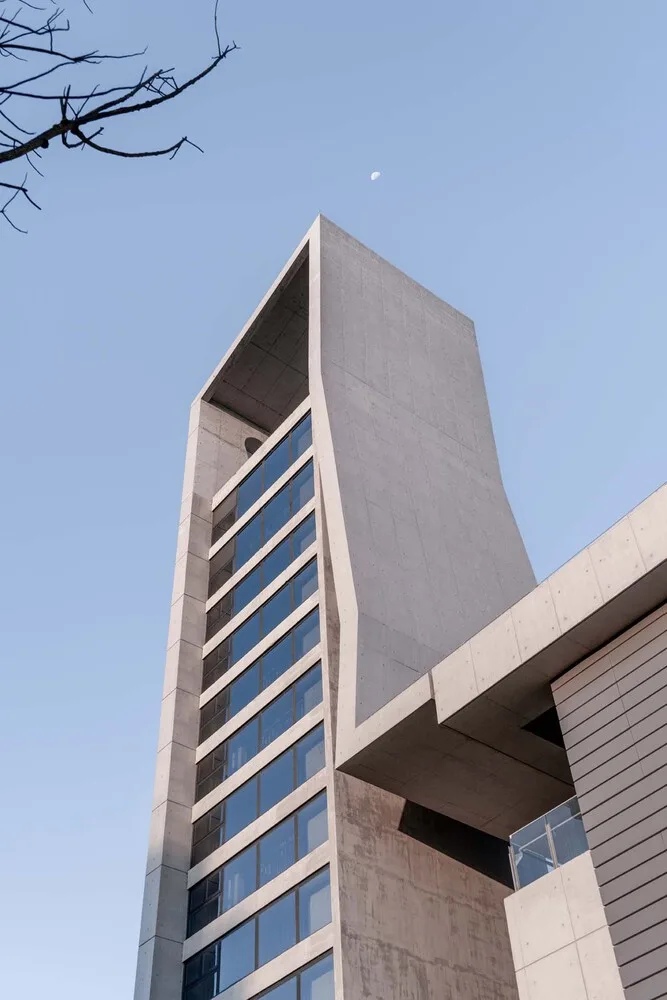
Project Drawings
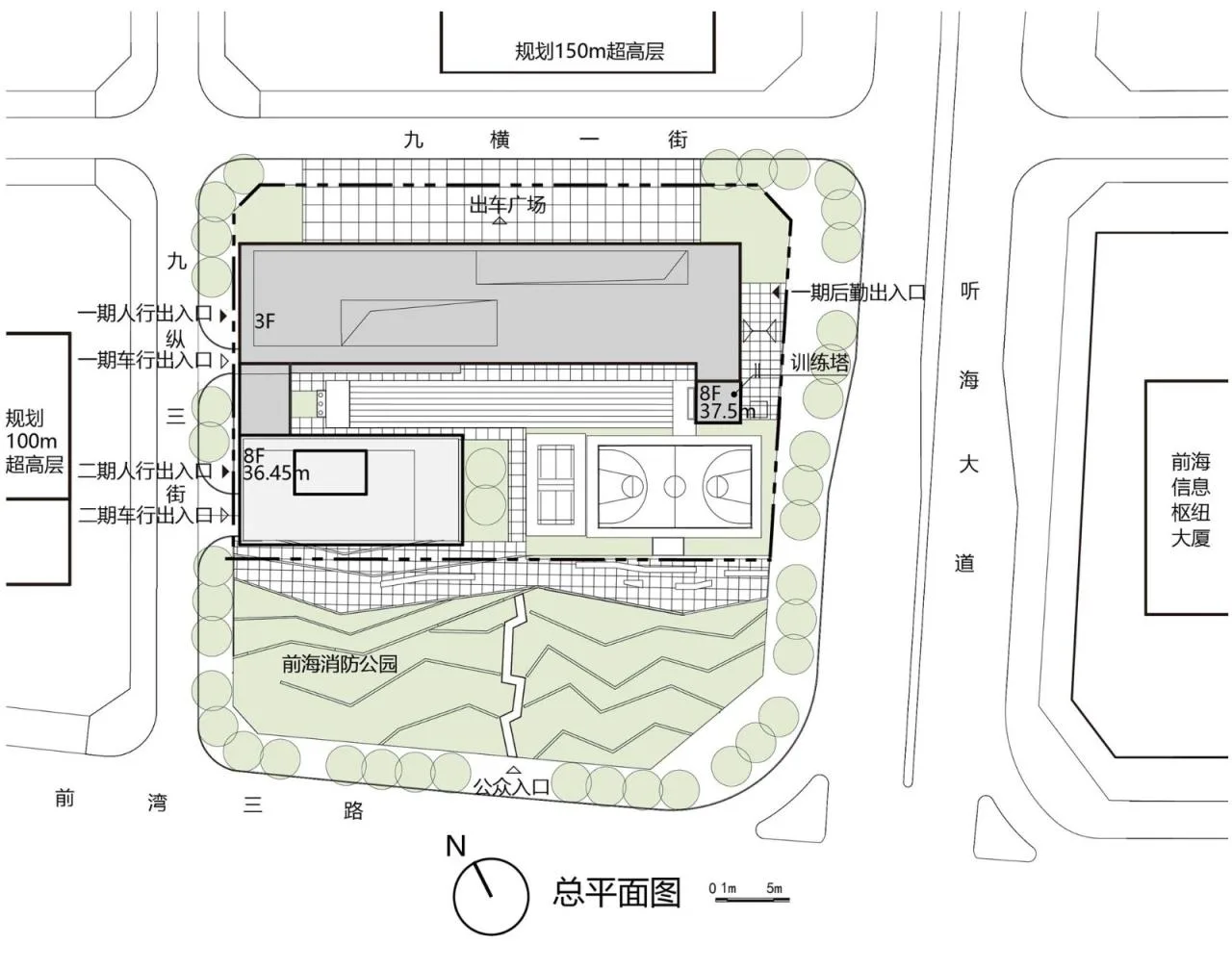
△ General Layout Plan
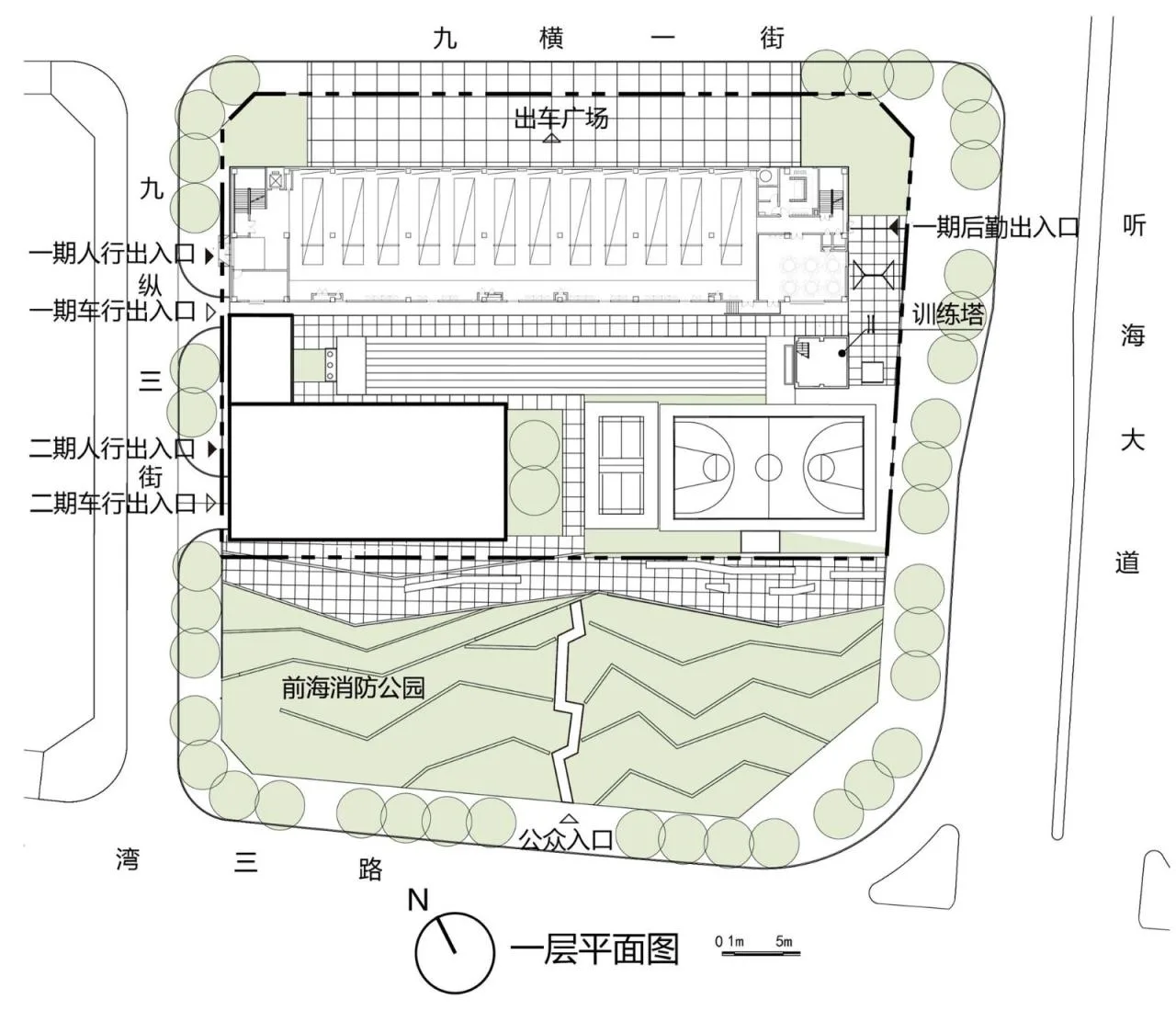
△ First Floor Plan
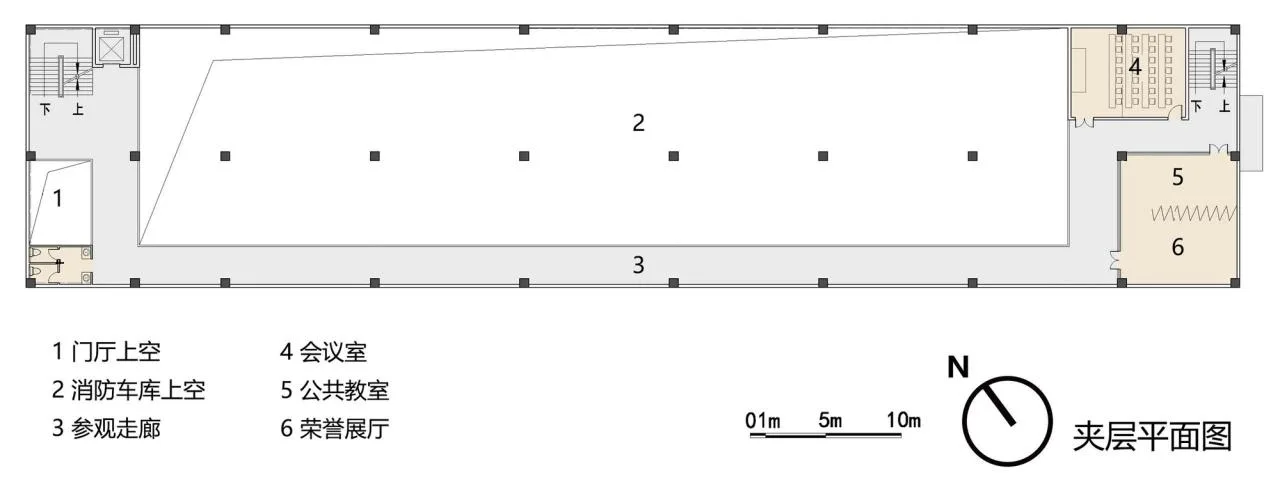
△ Mezzanine Plan
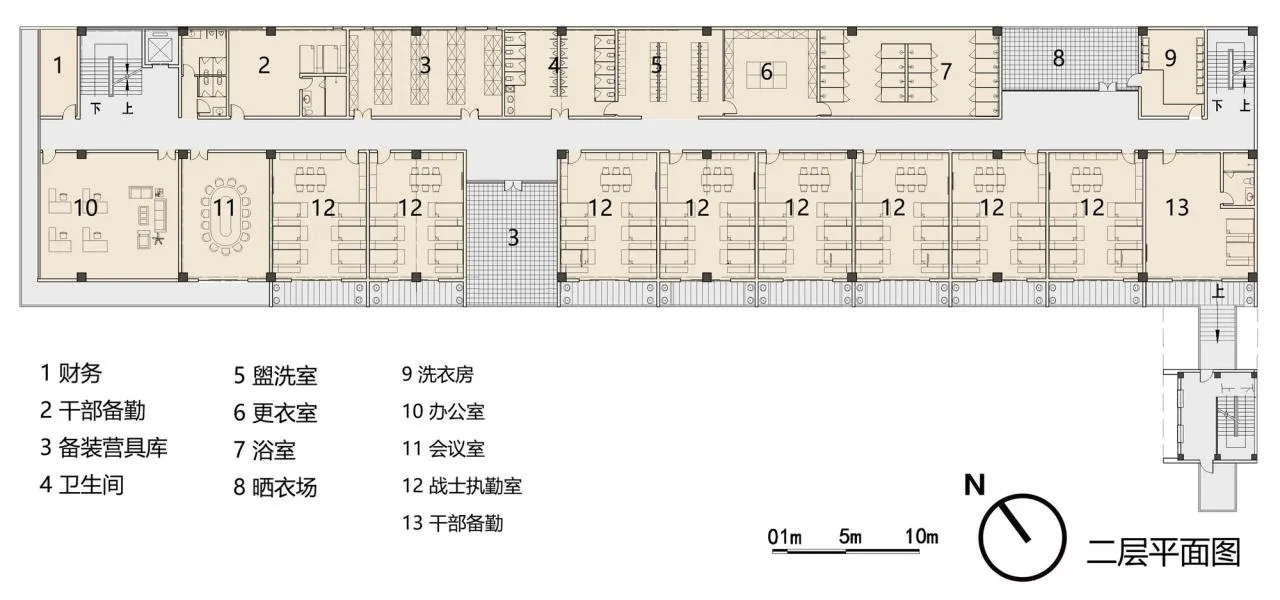
△ Second Floor Plan
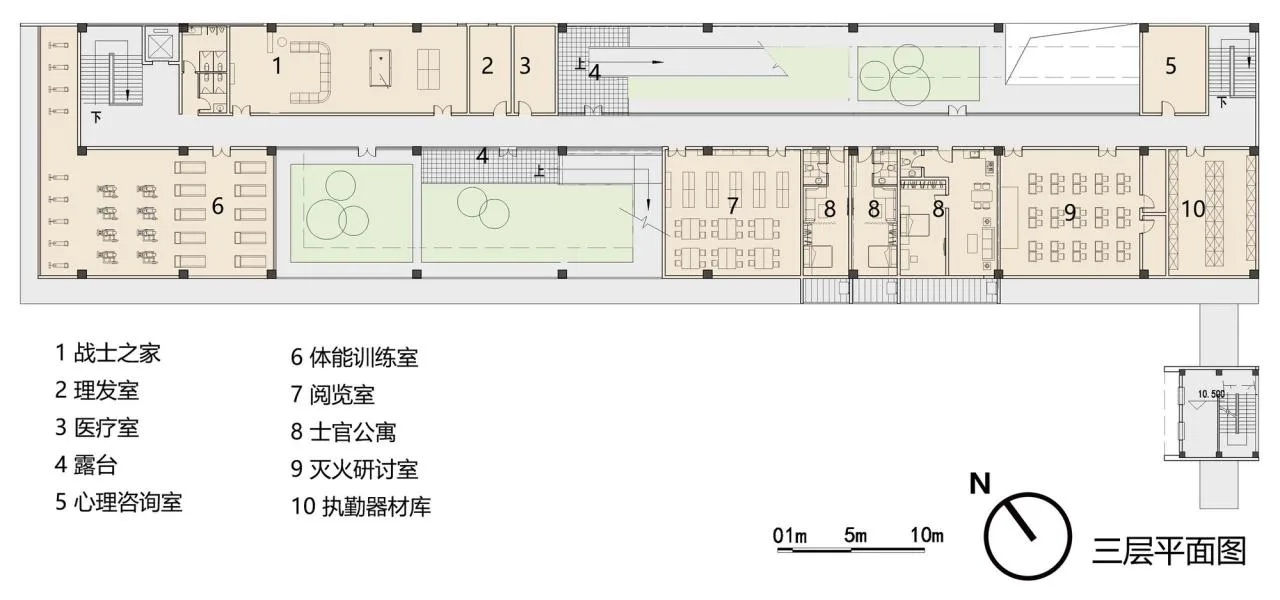
△ Third Floor Plan
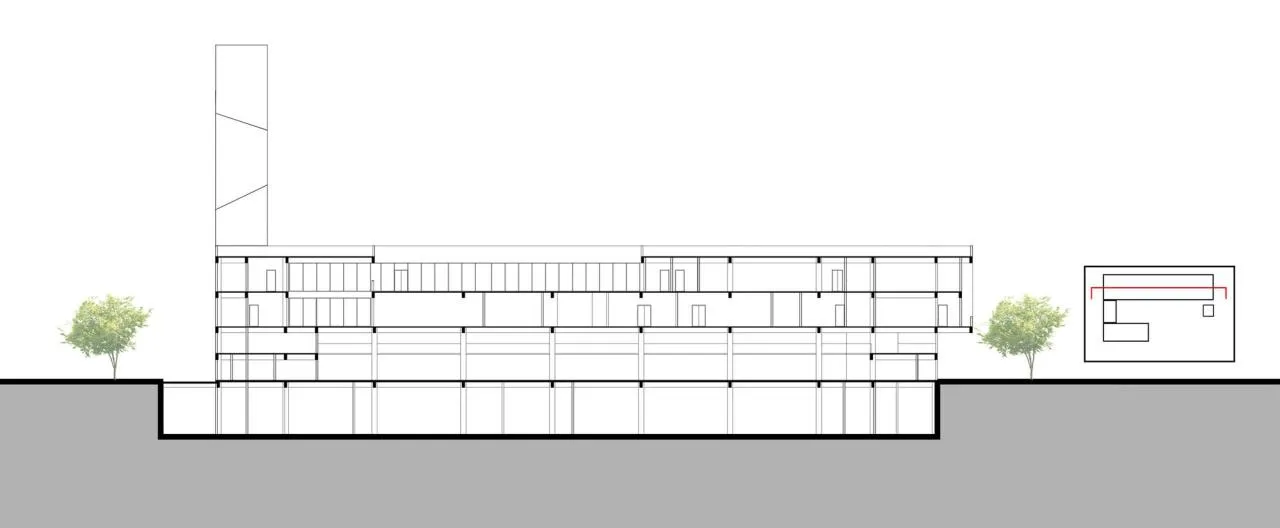
△ Section Diagram
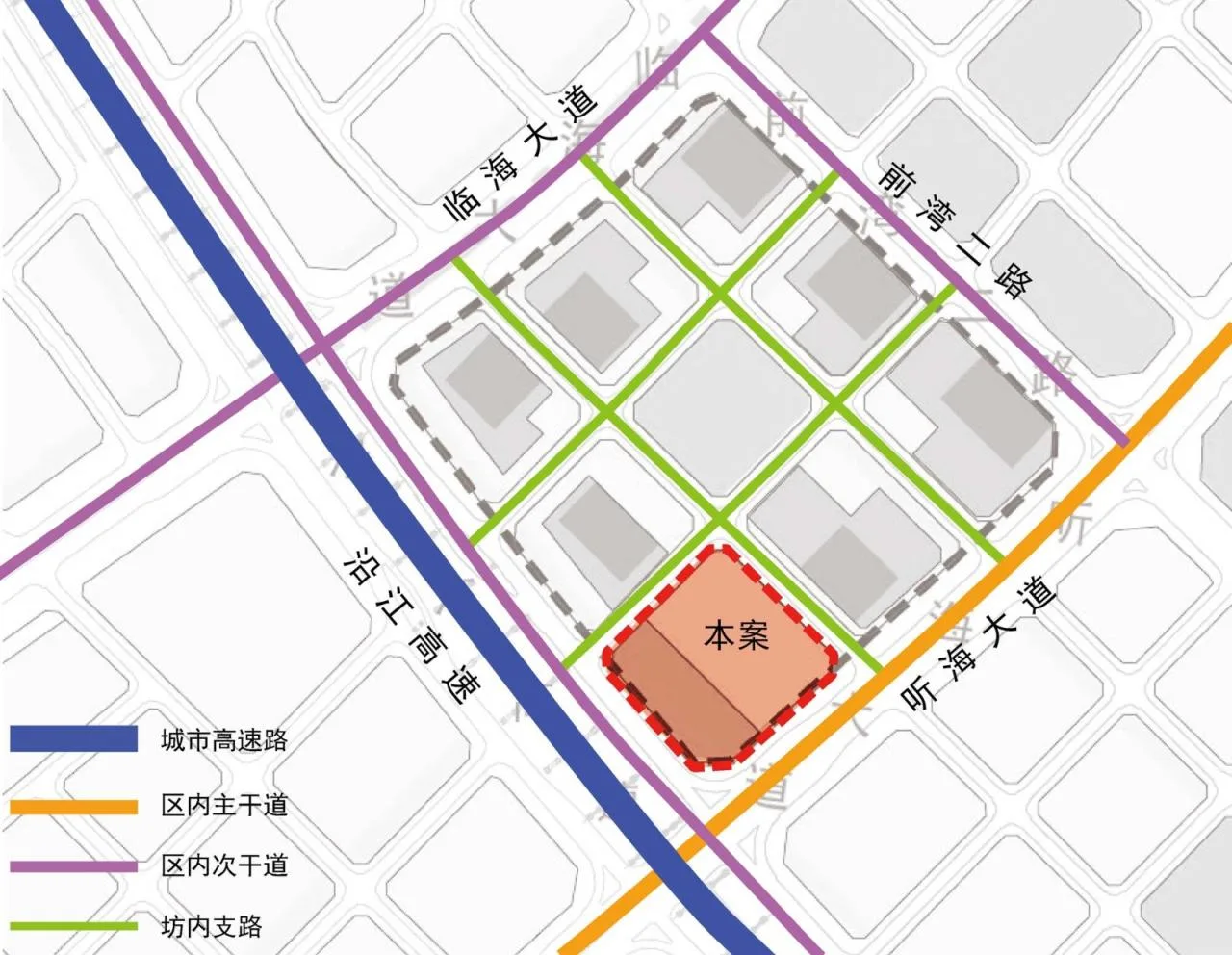
△ Road Analysis Diagram
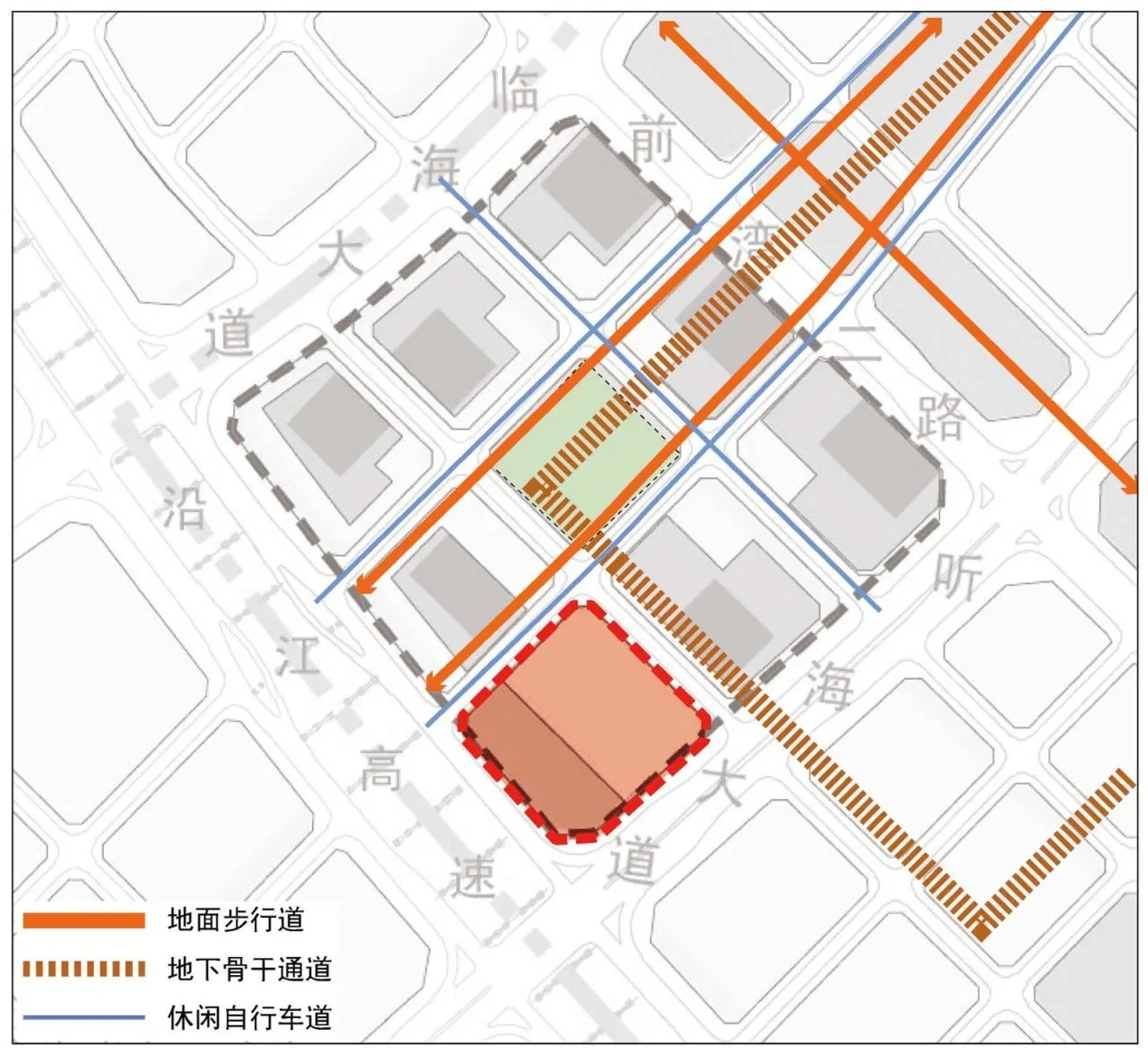
△ Road Analysis Diagram
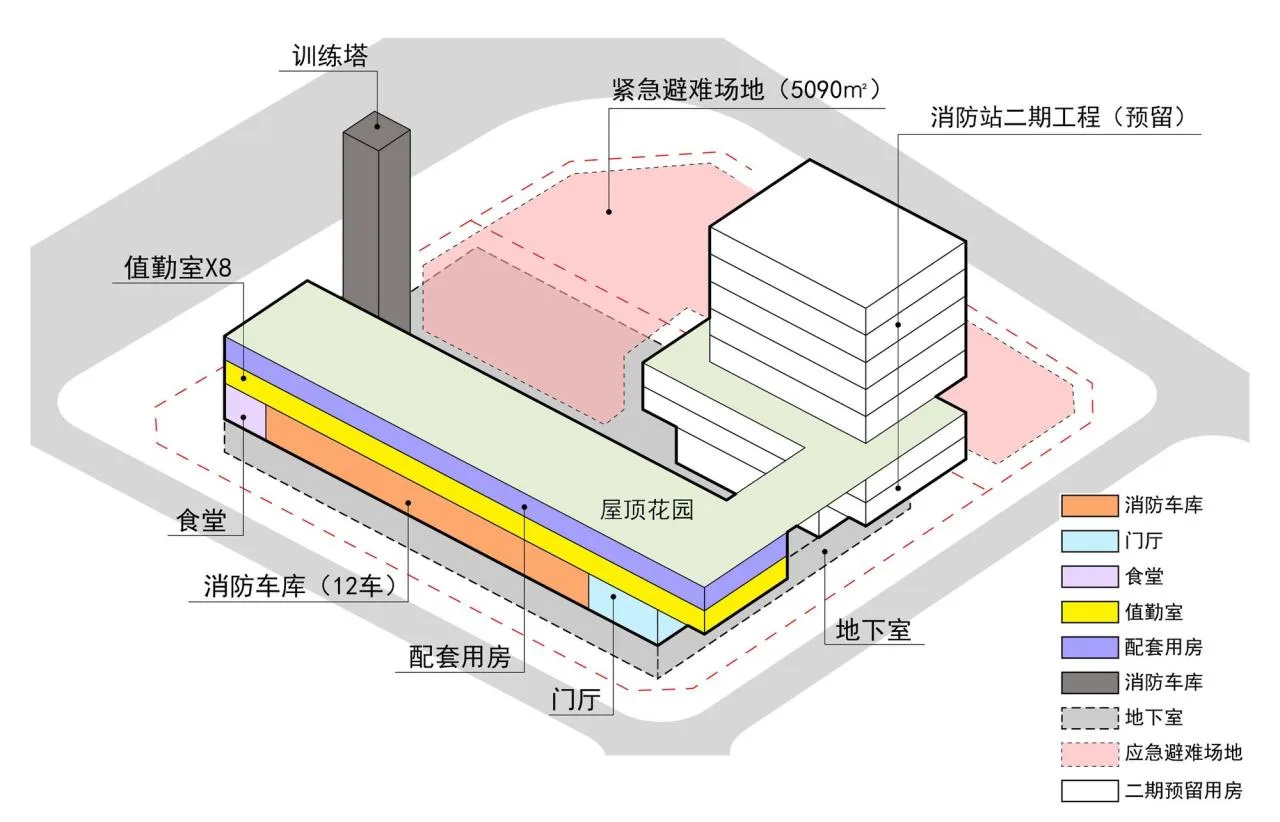
△ Functional Zoning Diagram
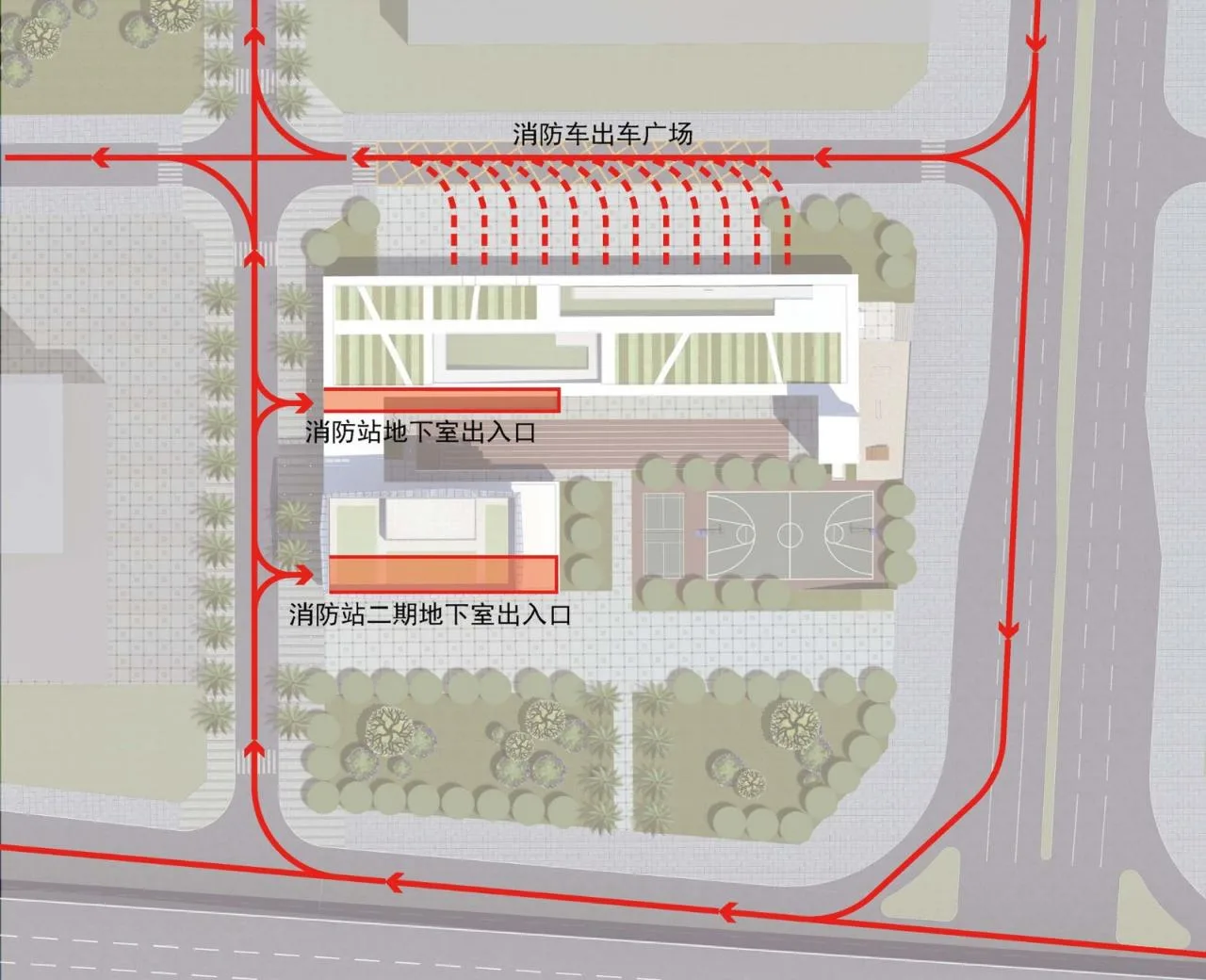
△ Streamline Analysis Diagram
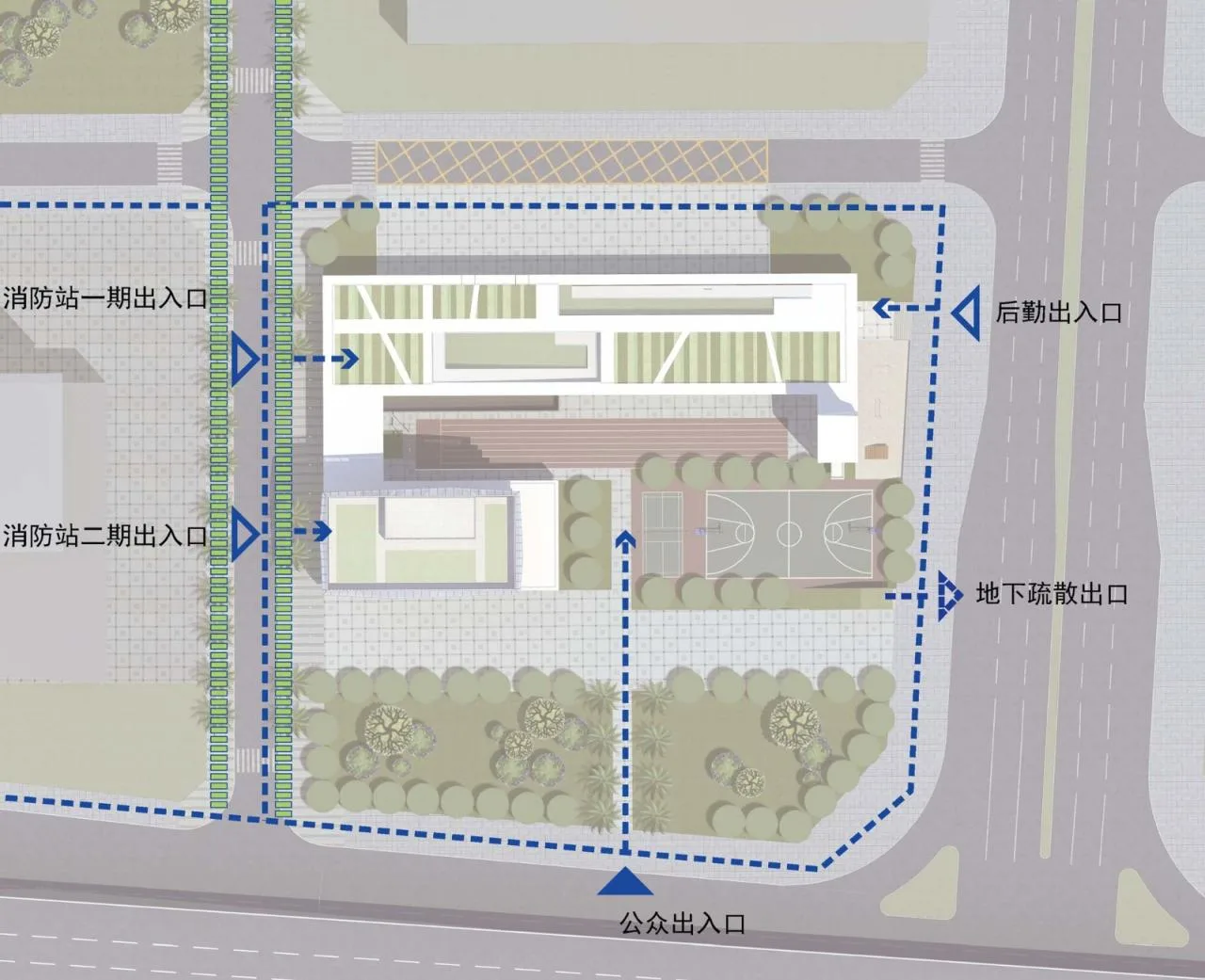
△ Entrance and Exit Analysis Diagram
Project Information
Architect: “Zhong Zhong+Zhong Botao” Studio, Shenzhen University Architectural Design and Research Institute
Area: 10,453 m²
Project Year: 2021
Photographer: Inter_mountain
Lead Architect: Zhong Zhong
Design Team: Zhong Zhong, Zhong Botao, Zhou Yuxi, Li Weichong, Zhang Zilu, Zhong Haihuan, Wang Min, Zhou Yiwen
Structural Design: Meng Meili, Wei Xianqiong
General Drawing: Liu Mu
Water Supply and Drainage: Xie Rong, Xiong Feng
Electrical: Liu Zhongping, Wang Weifang
HVAC: Wang Hongyue, Guo Hao
Cost Management: Tang Jin
Owner: Shenzhen Qianhai Construction Investment Holding Group Co., Ltd.
Location: Shenzhen, China















Must log in before commenting!
Sign Up