
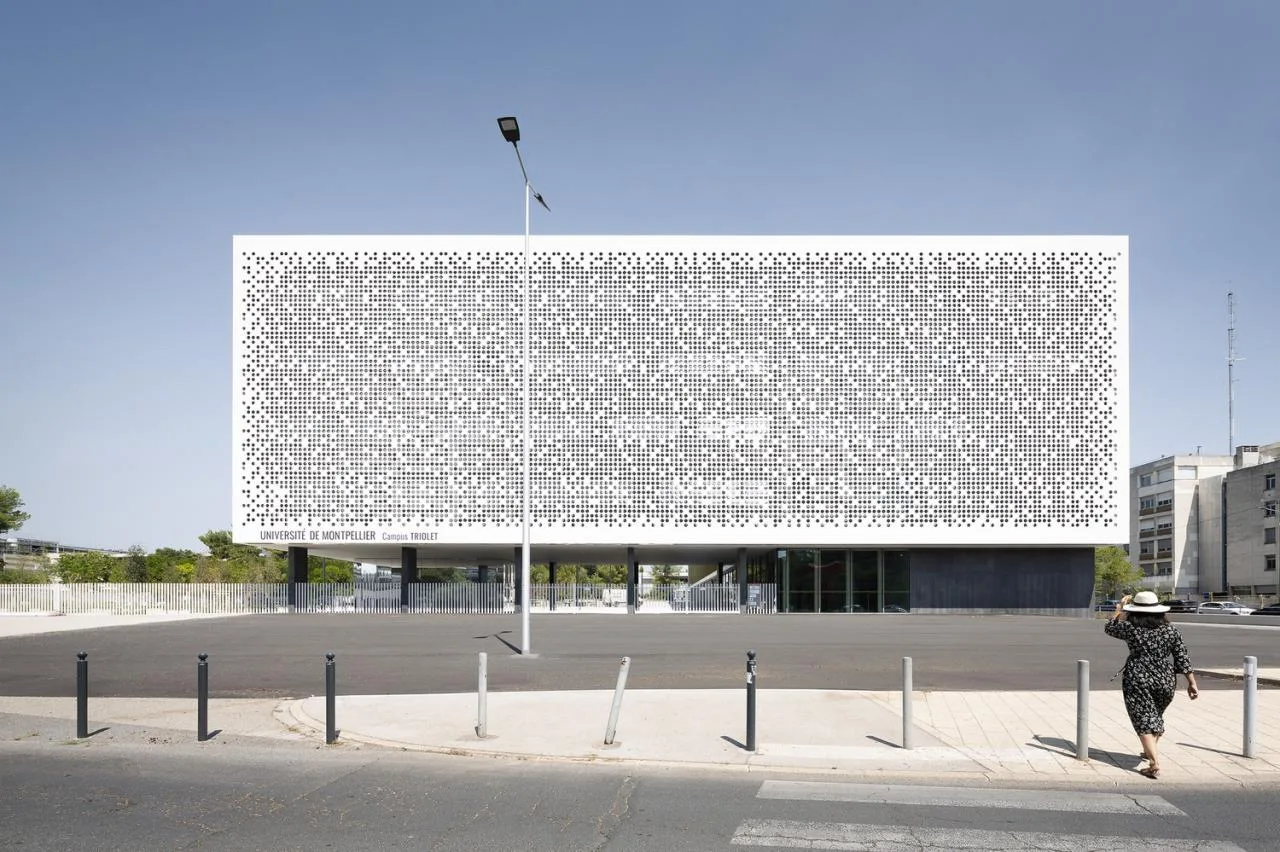
The project features two buildings that accommodate the majority of the teaching facilities at Montpellier II University. It was initiated as part of a special funding program launched in 2008 aimed at rebuilding and enhancing the architectural infrastructure of French universities.
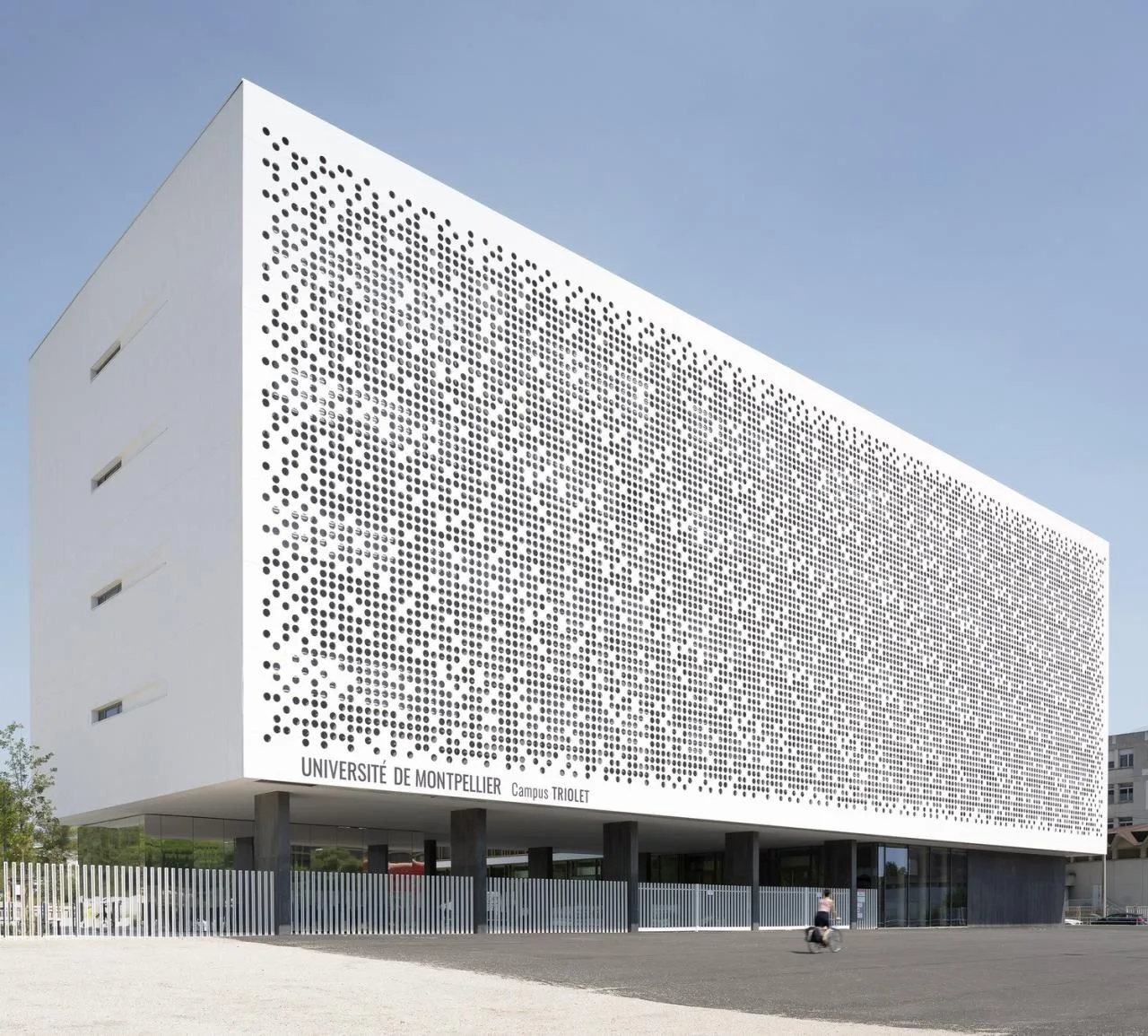
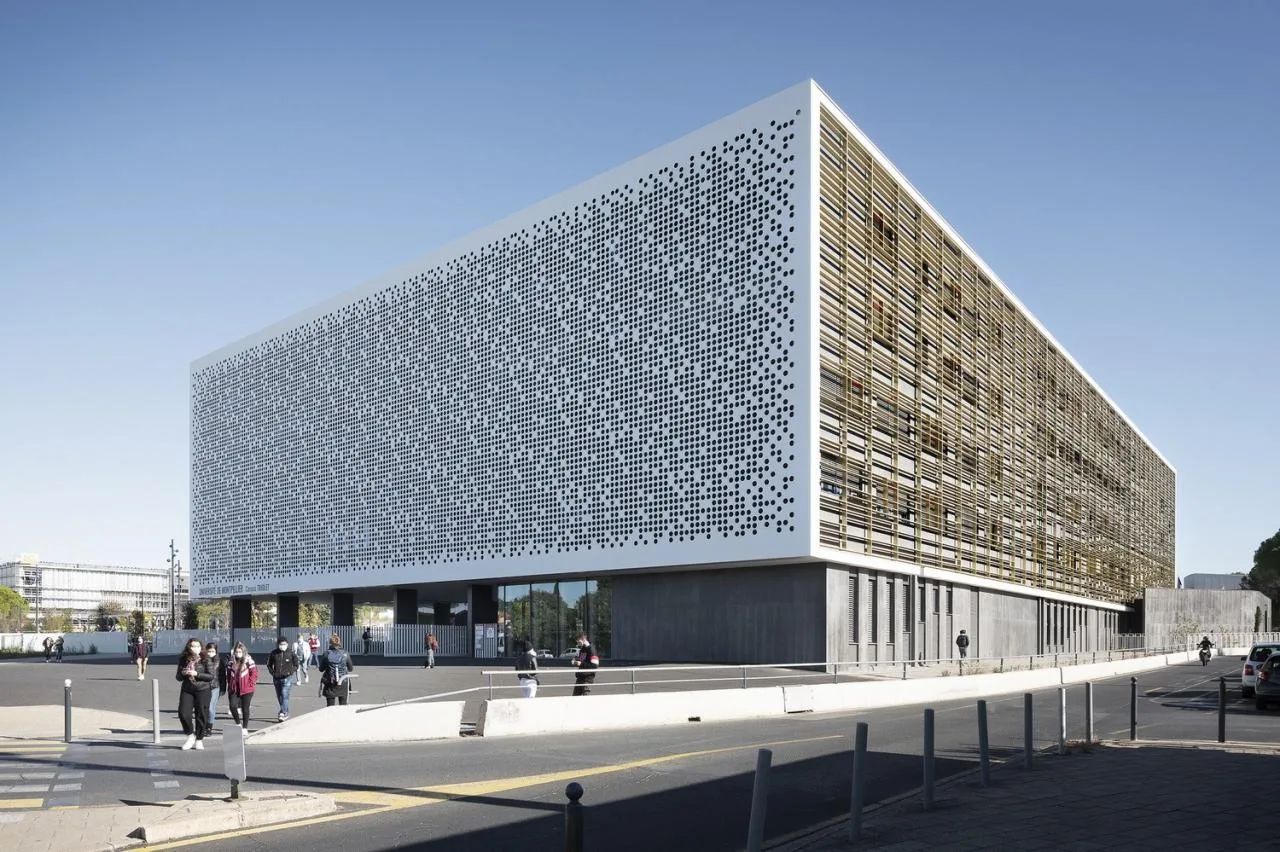
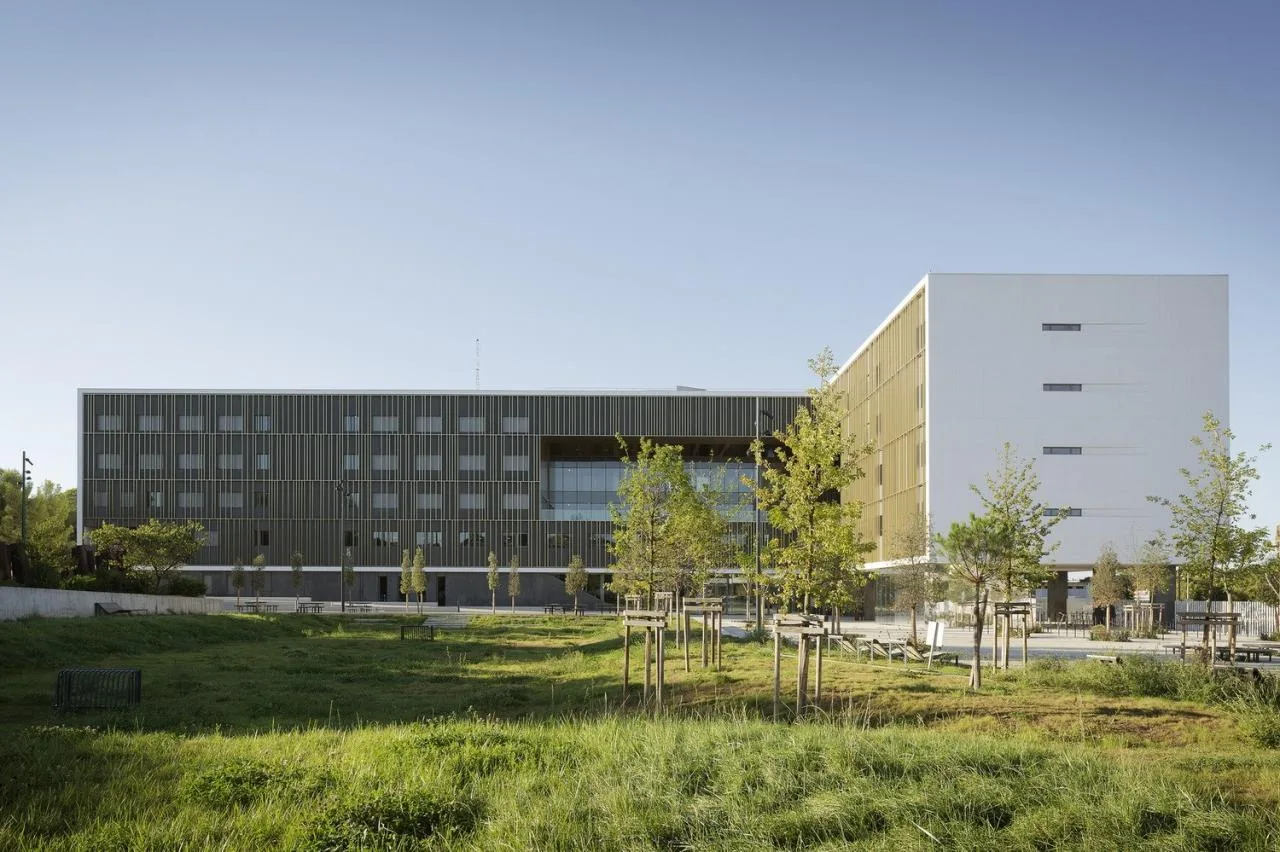
This large-scale development is divided into two key sections: shared spaces and the Biological Ecology Center of the School of Natural Sciences. It replaces five outdated buildings that no longer meet modern teaching standards. The final design responds to a complex context: while enhancing the location and footprint was necessary, the architects also aimed to preserve the core vision of the original master plan by the renowned French modernist architect René Egger. These objectives sometimes appeared contradictory.
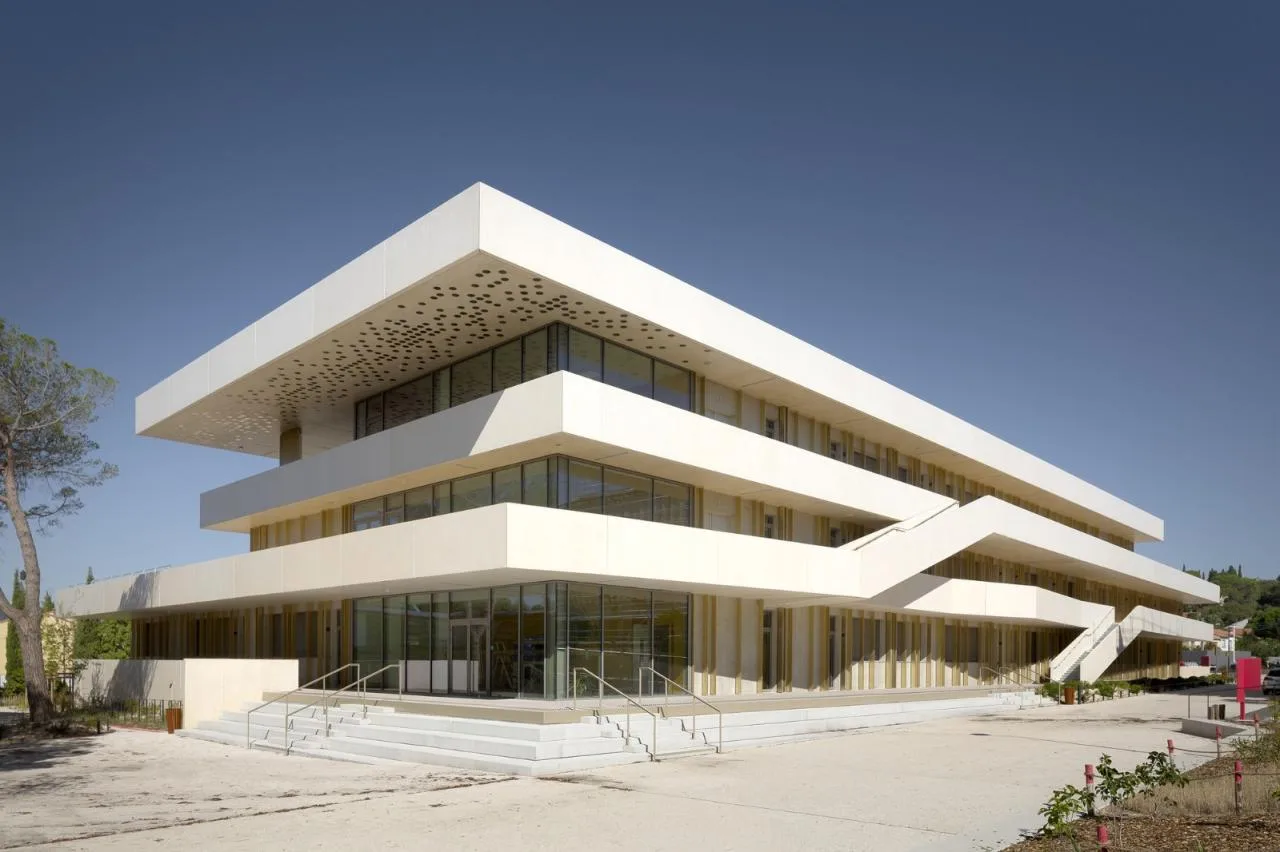
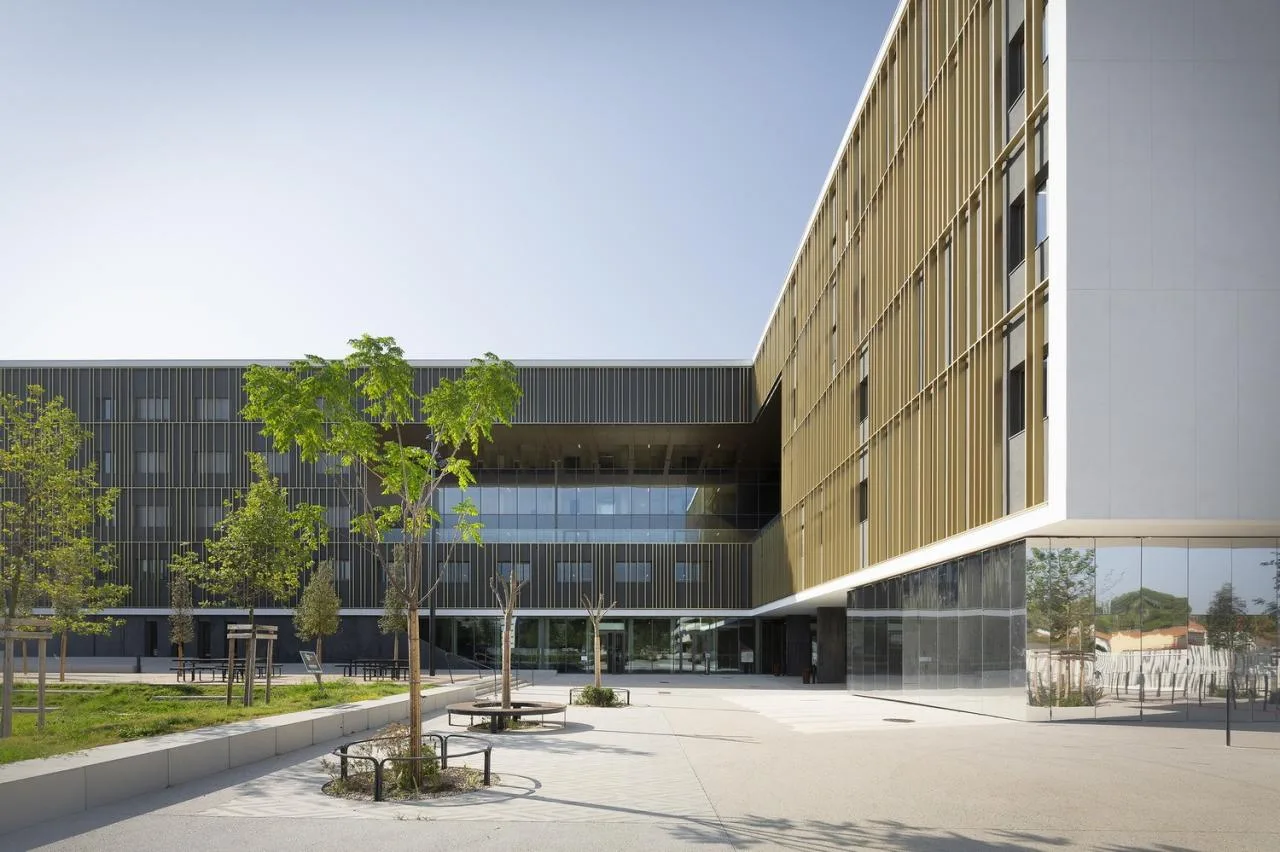
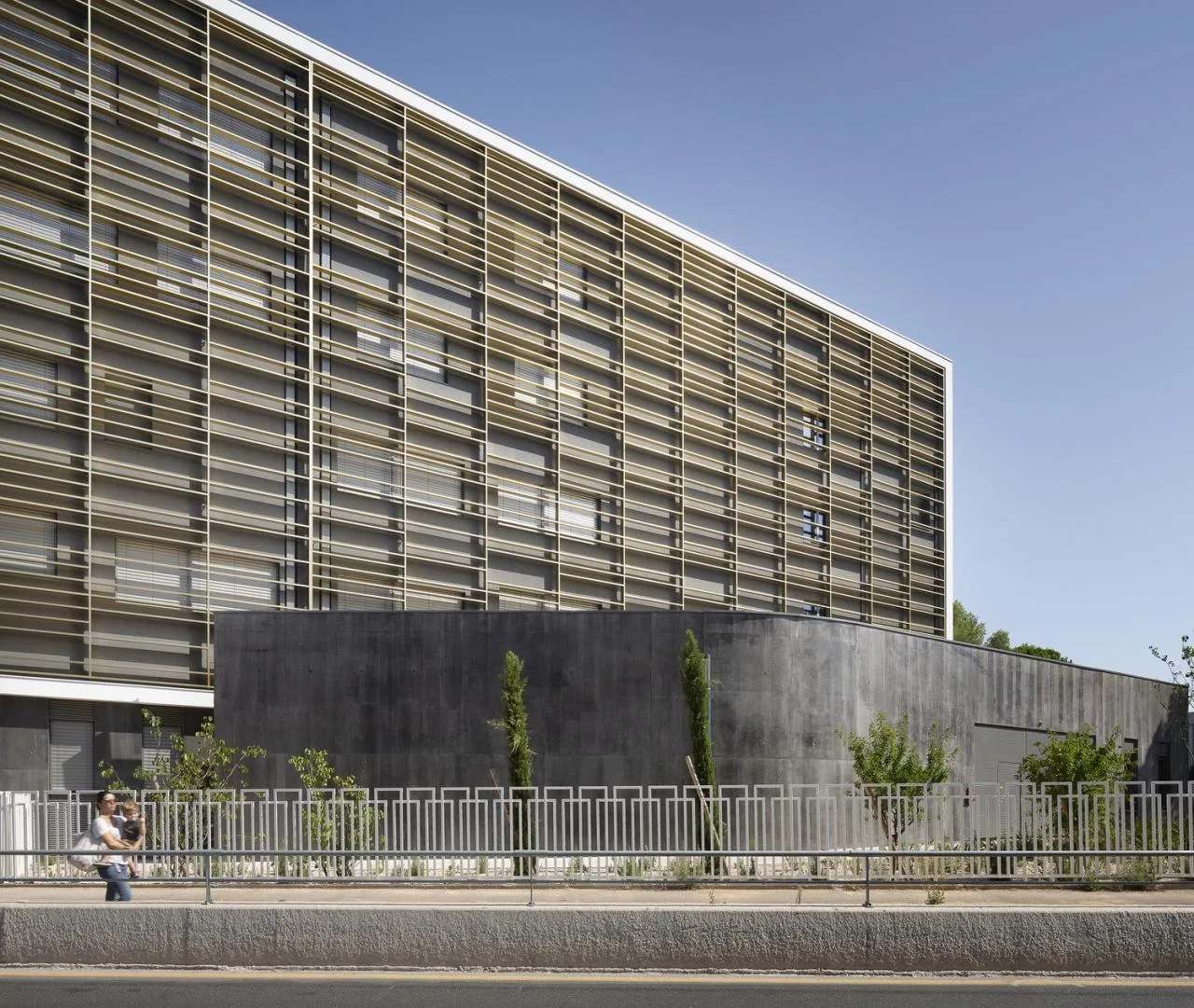
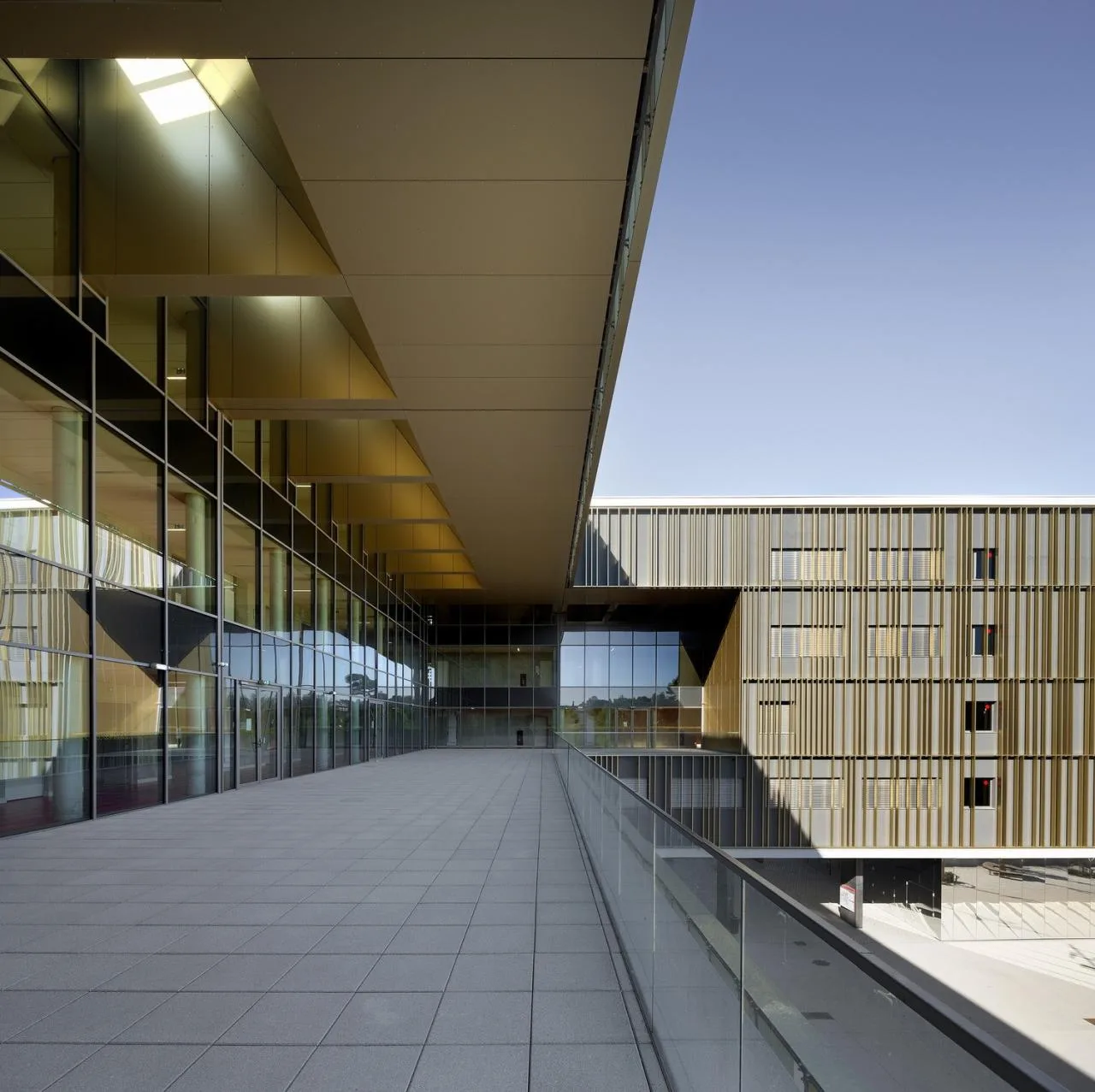
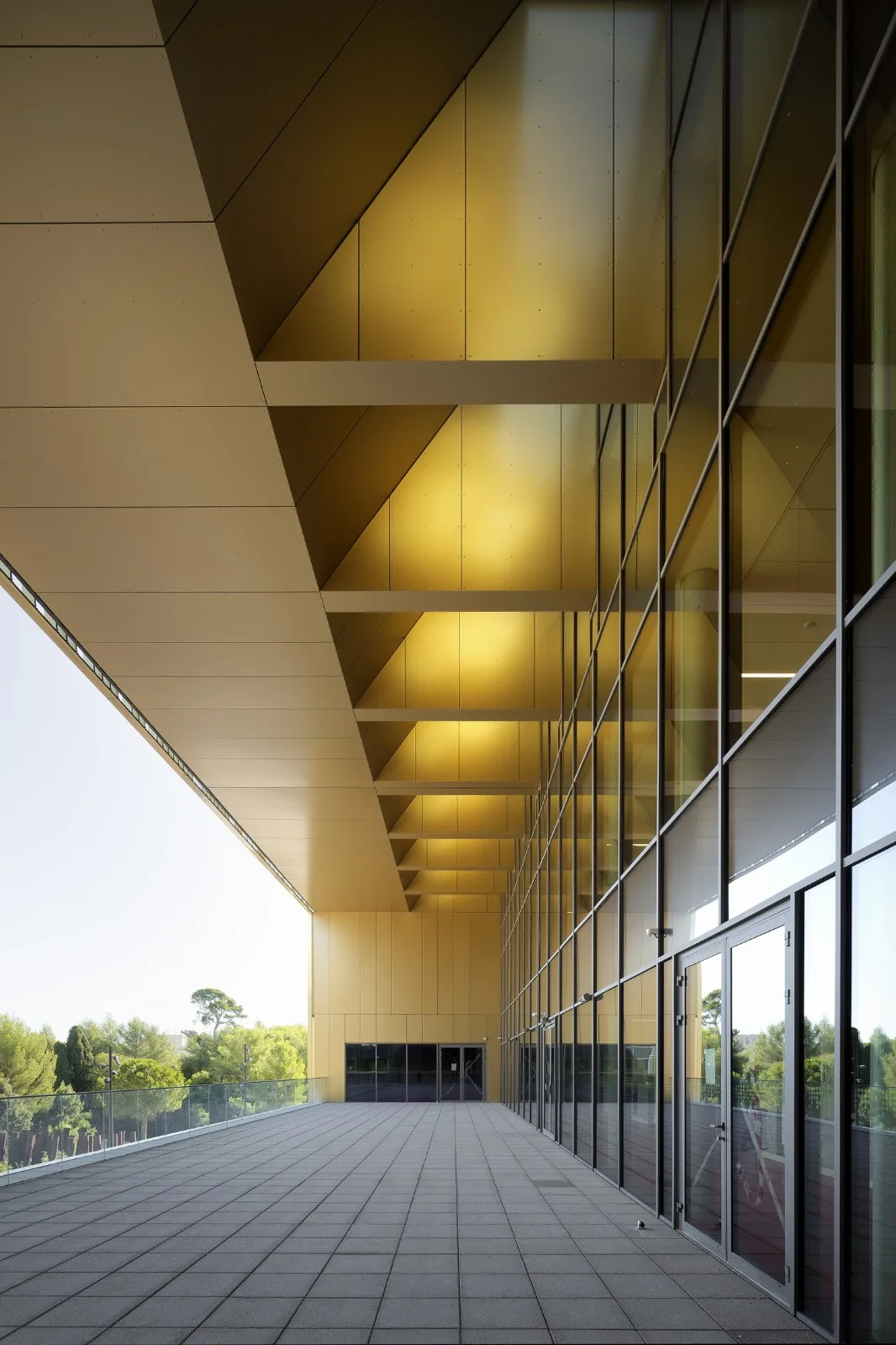
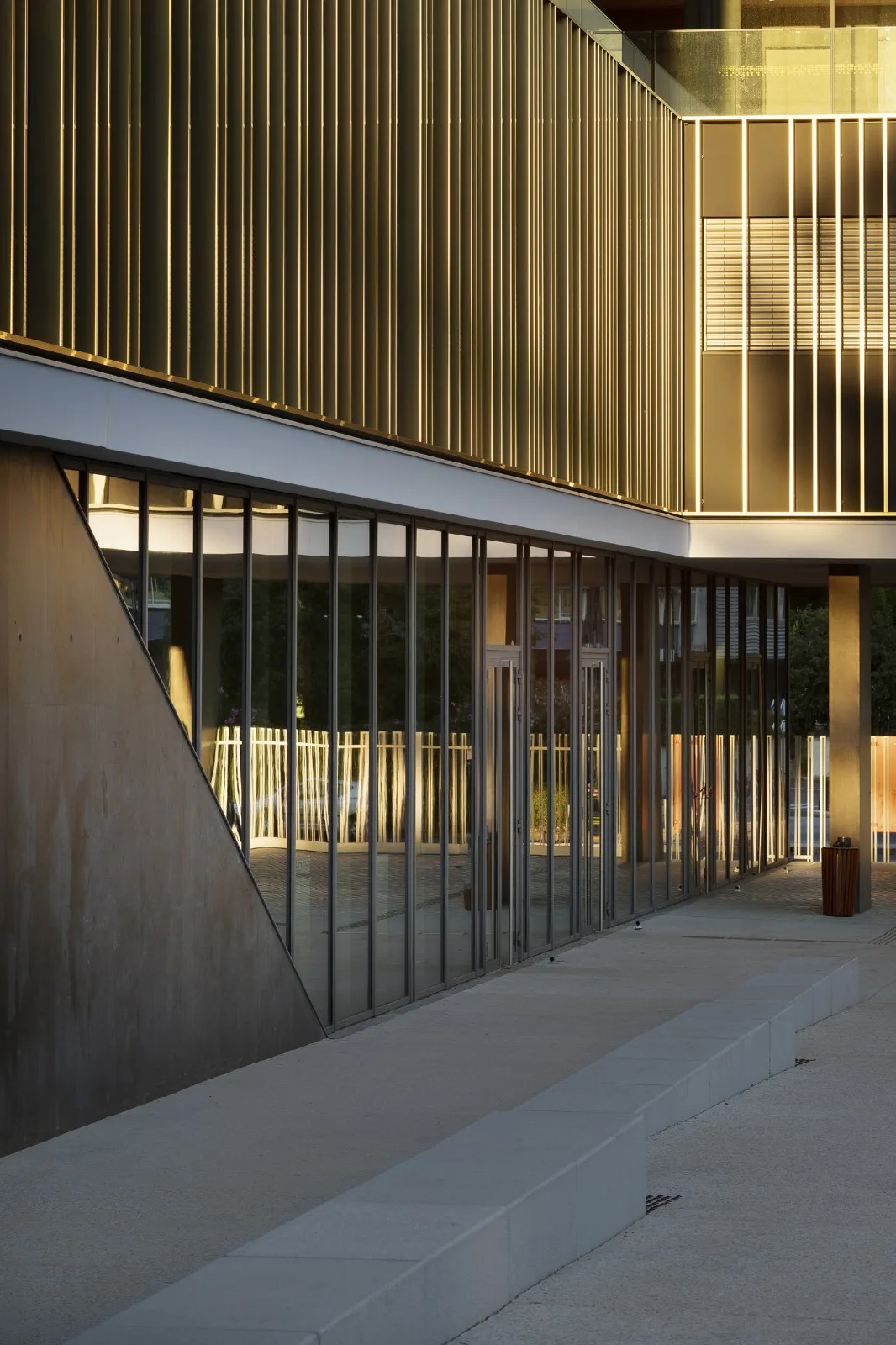
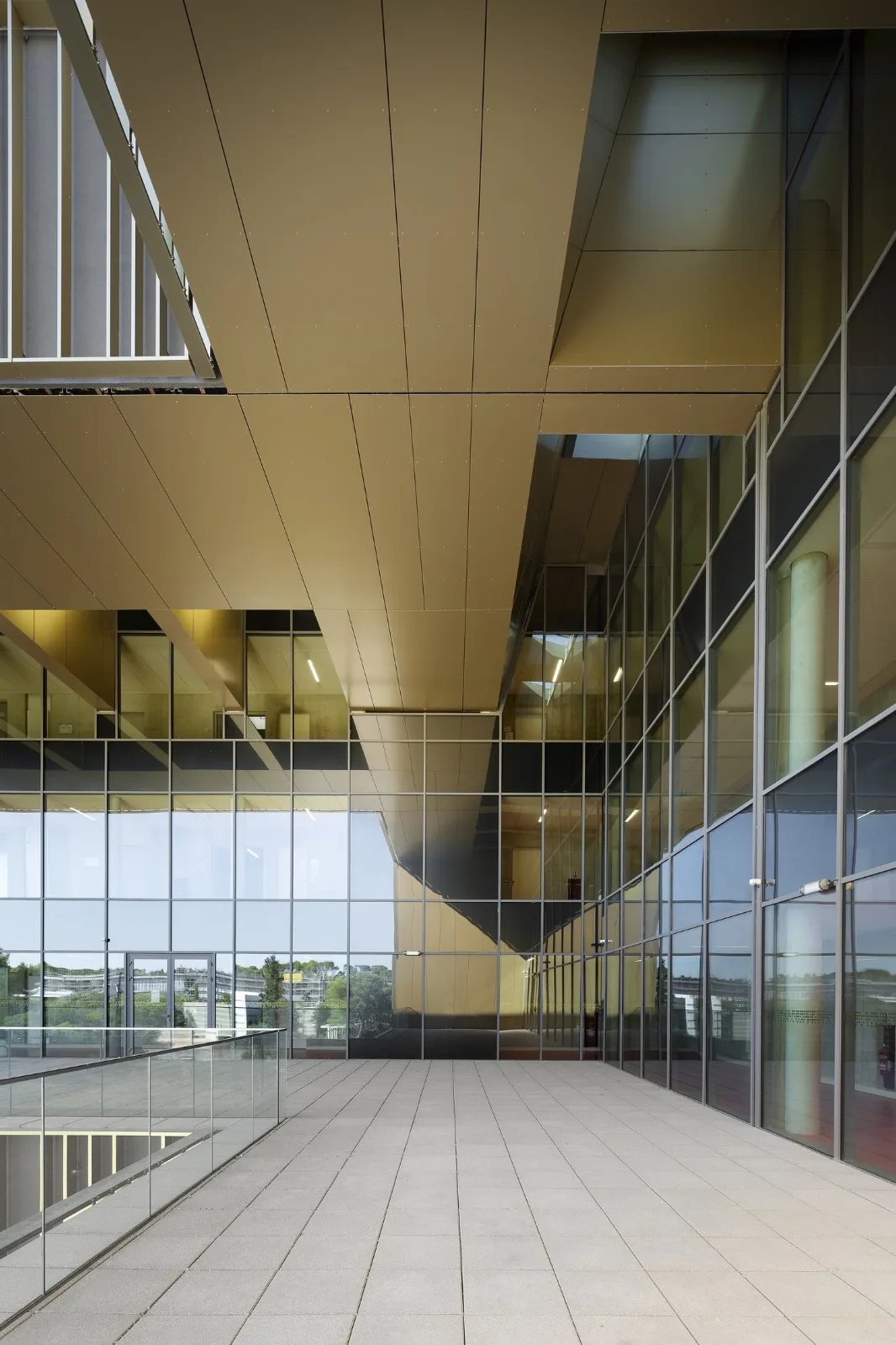
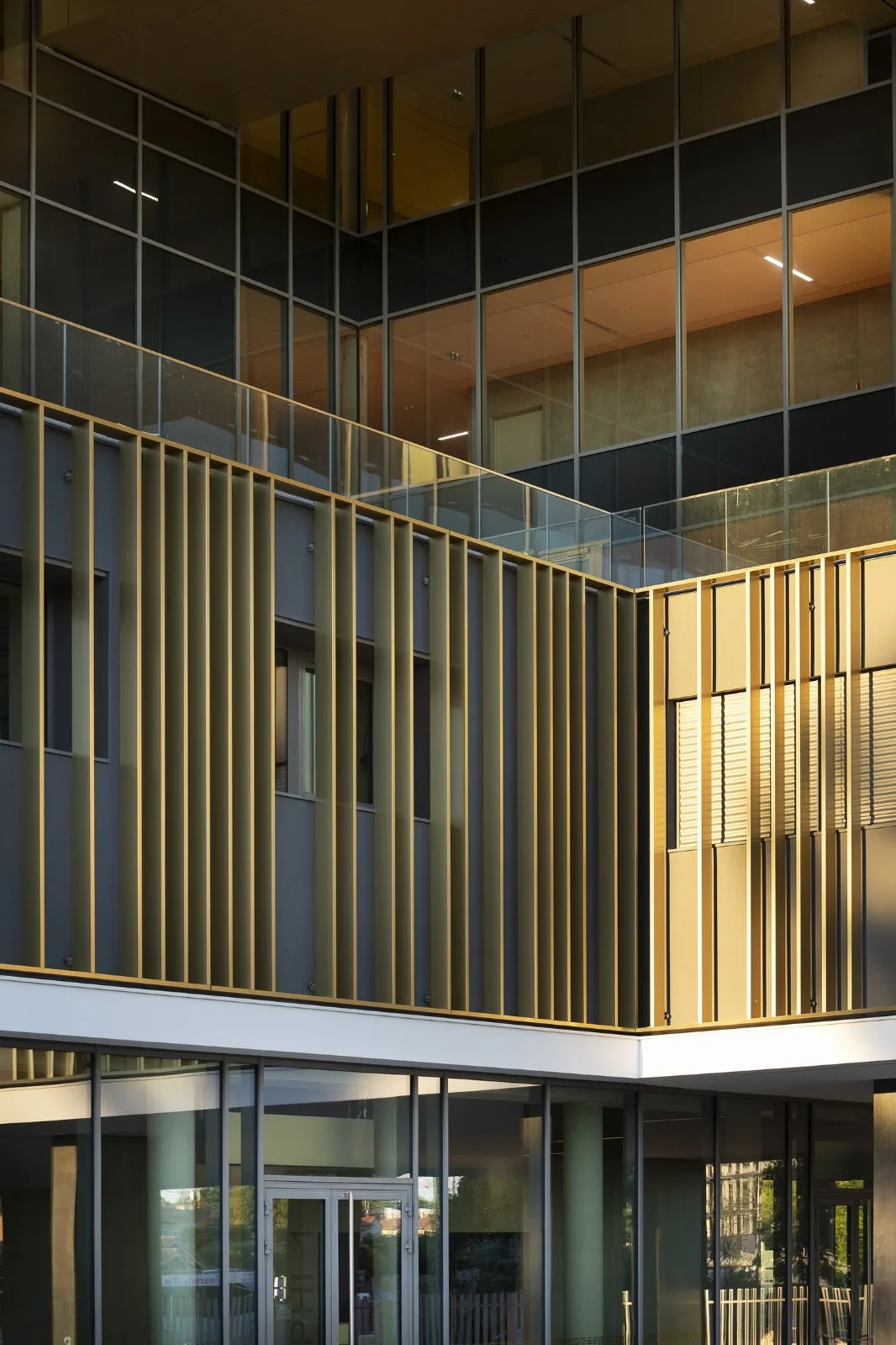
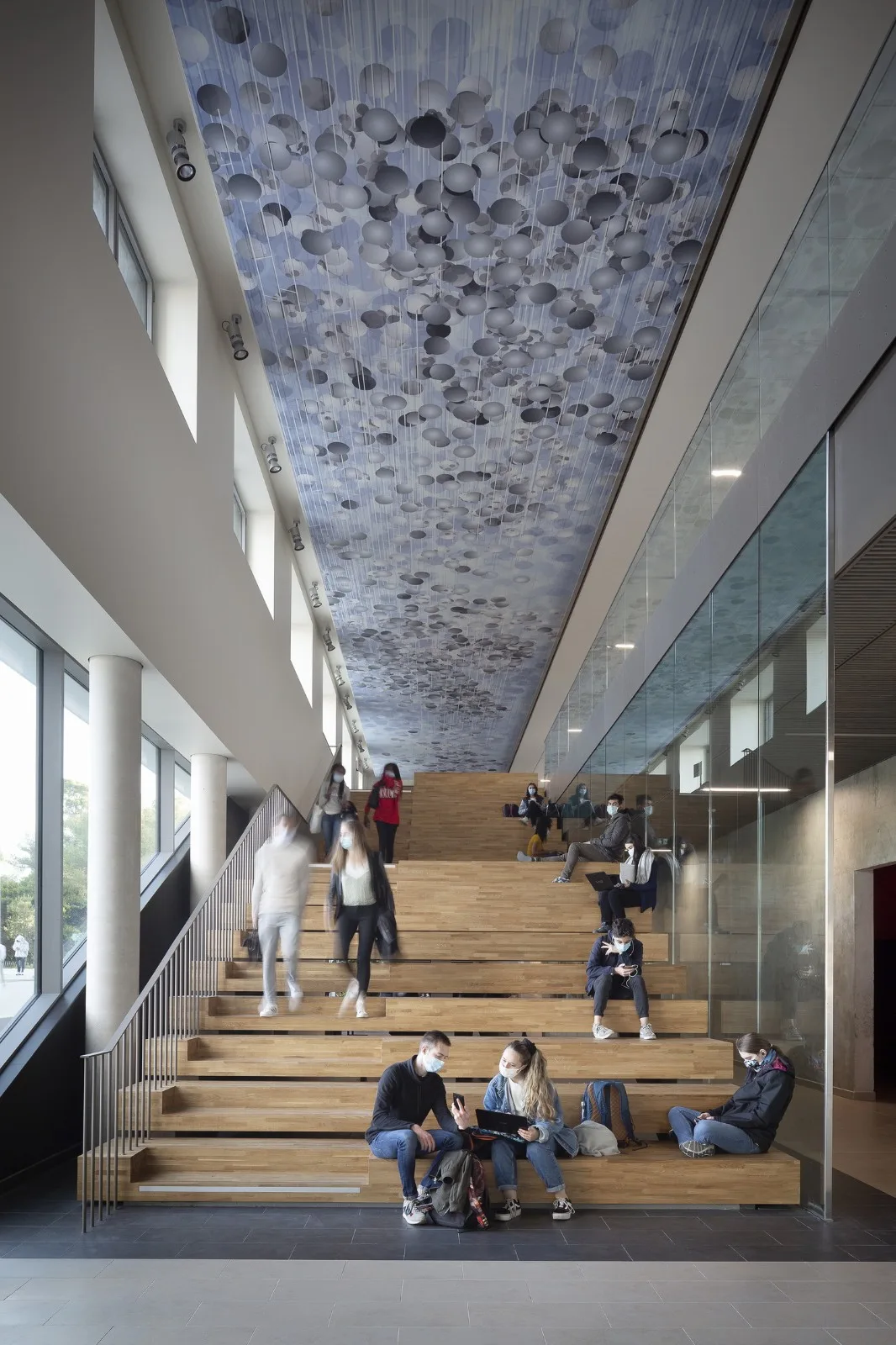
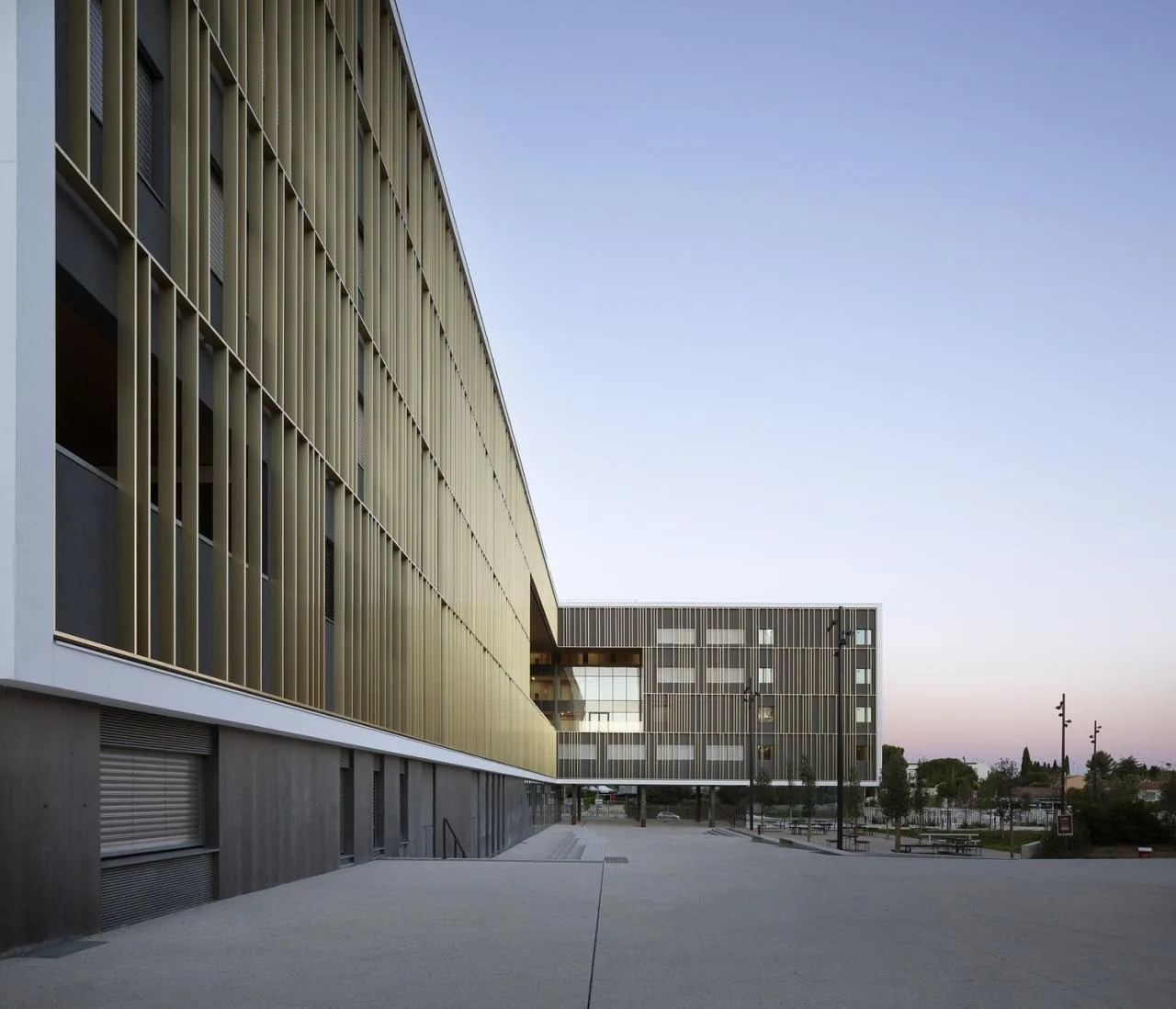
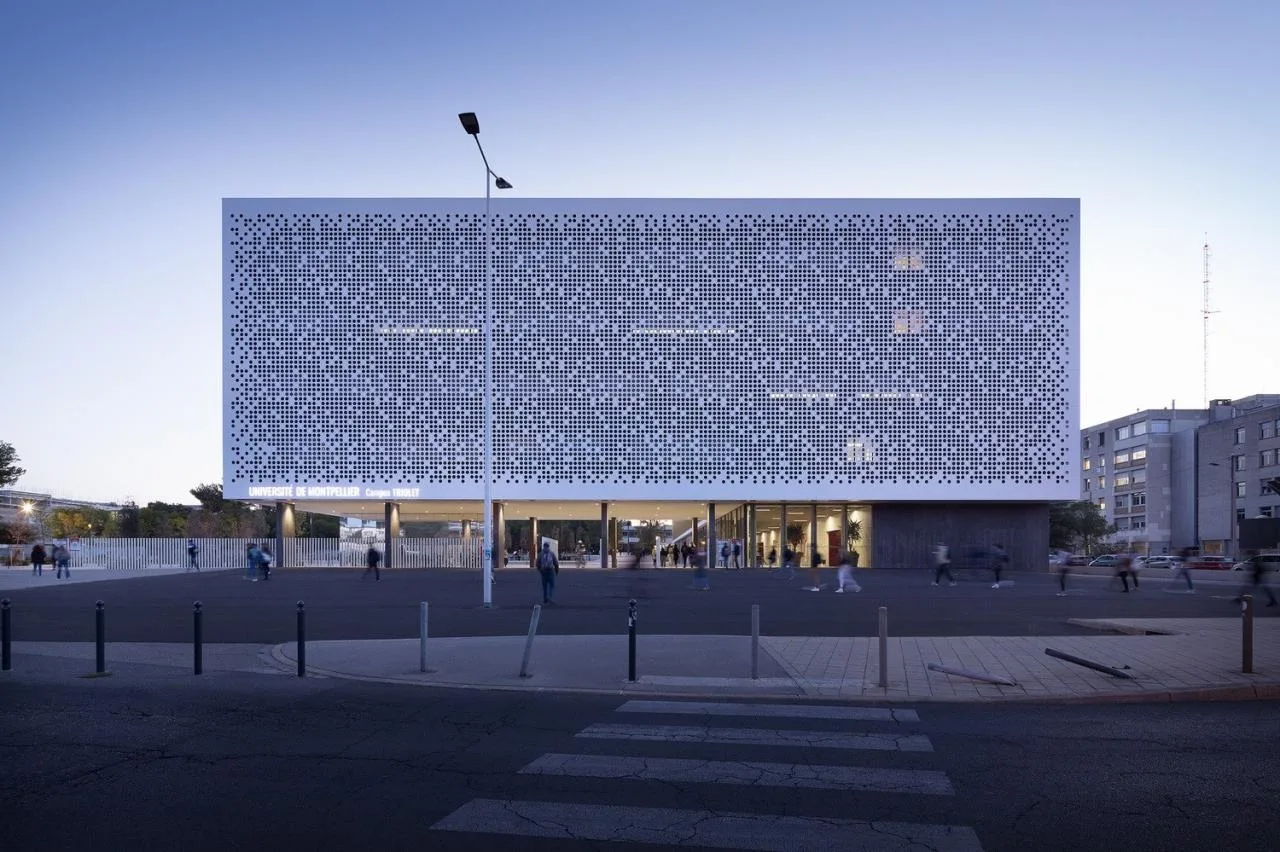
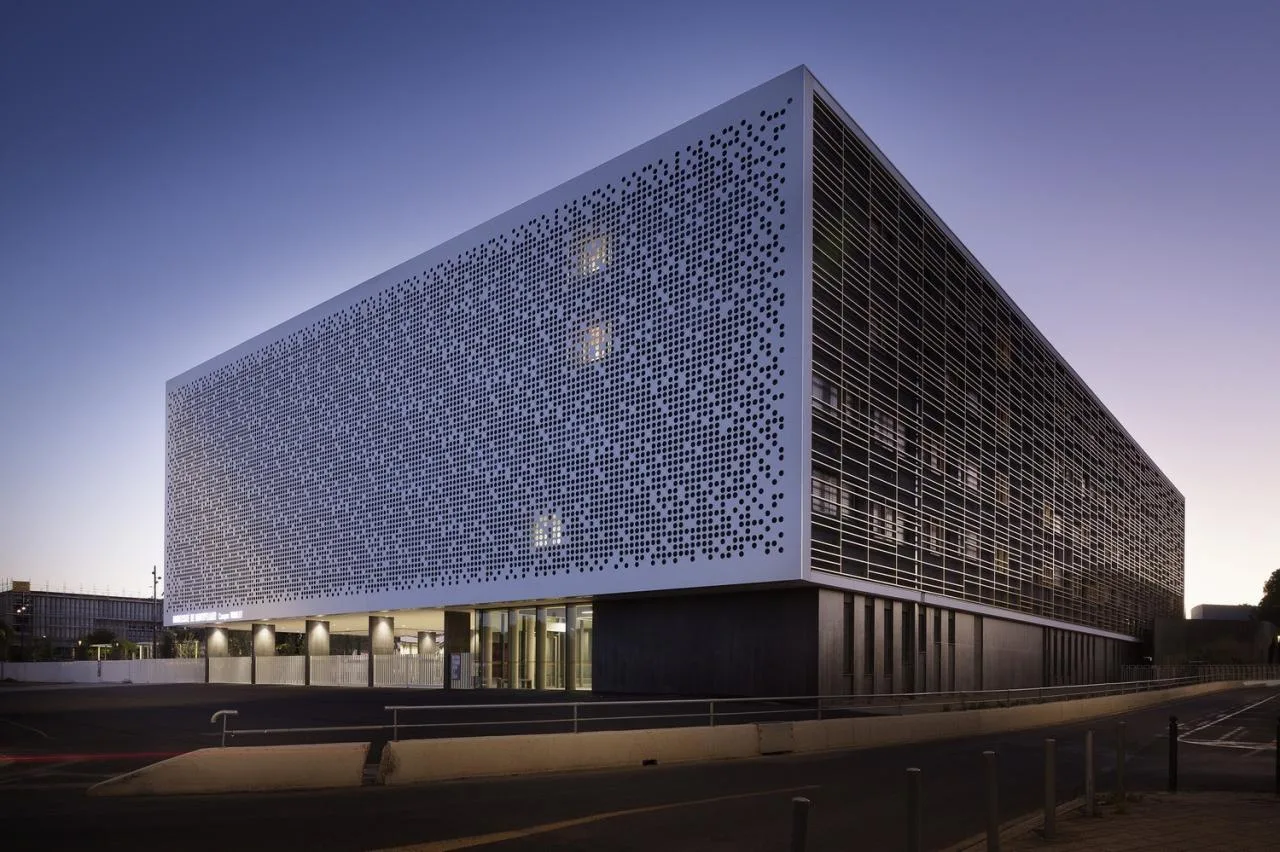
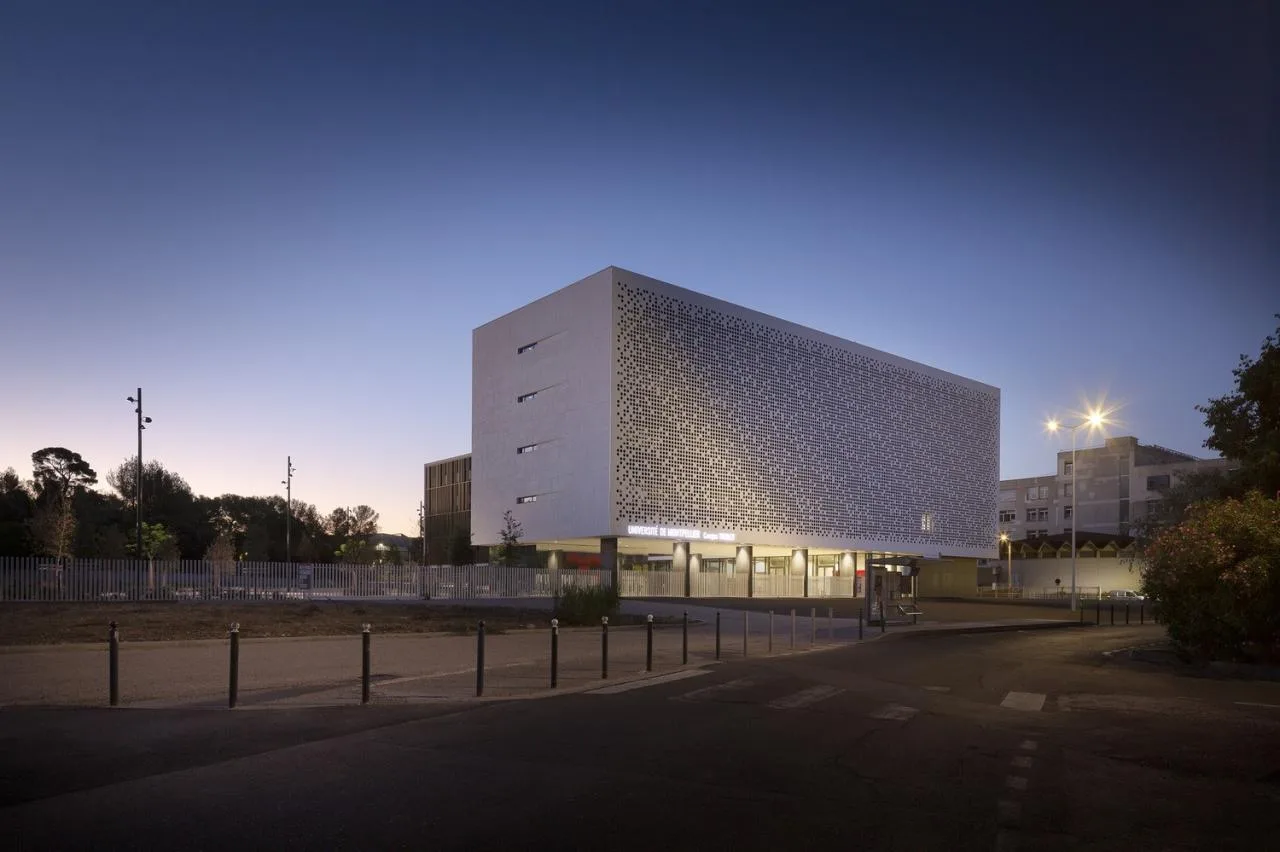
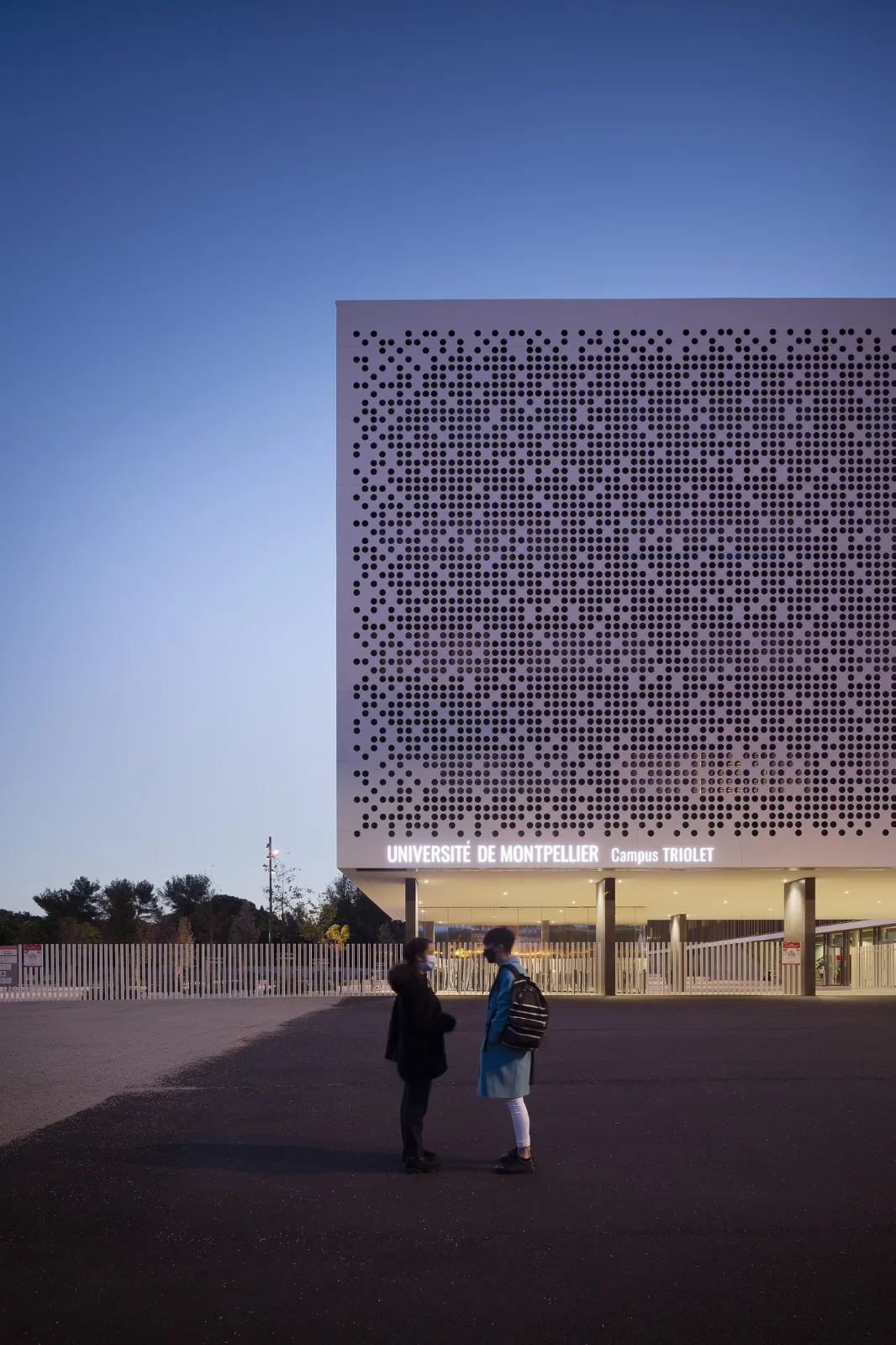
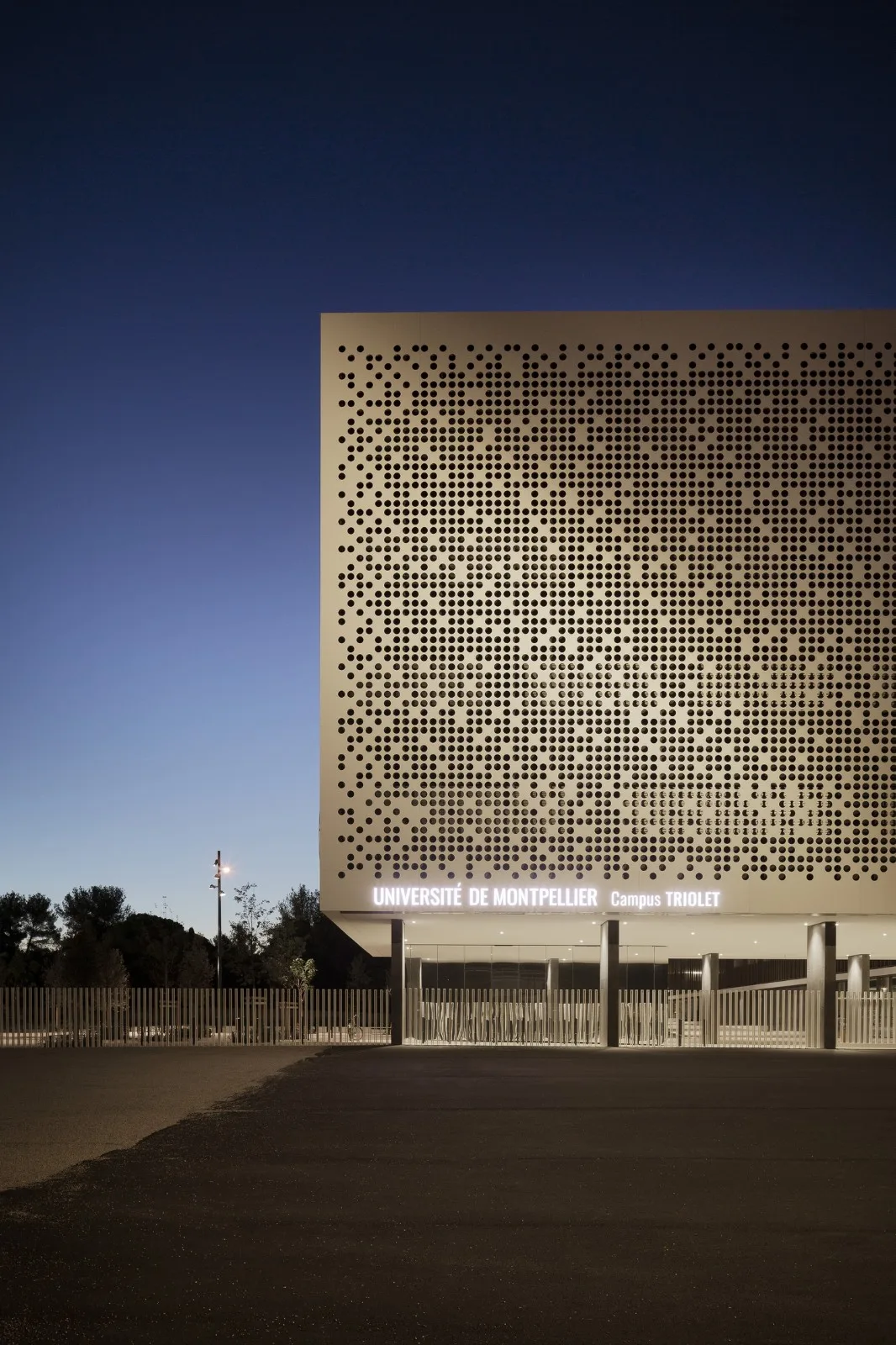
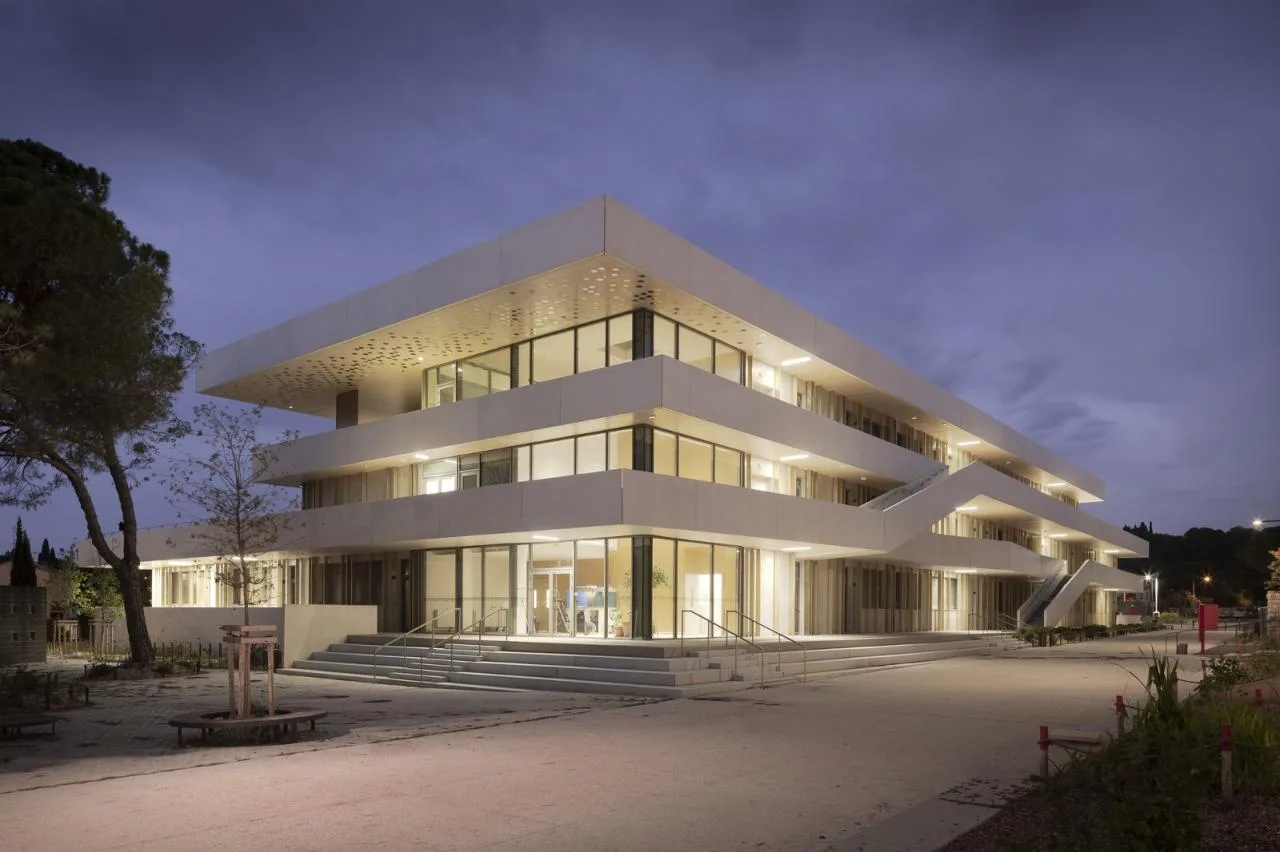
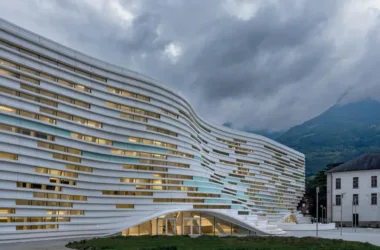
The building volumes strategically preserve Egger’s vision of openness while enclosing the originally planned garden space. The main structure is elevated above ground, creating a vertical entrance hall that leads towards an open-air theater. From the exterior, transparency is a defining element, and the reflective metal cladding of the emergency staircase gives the impression that the building is floating.
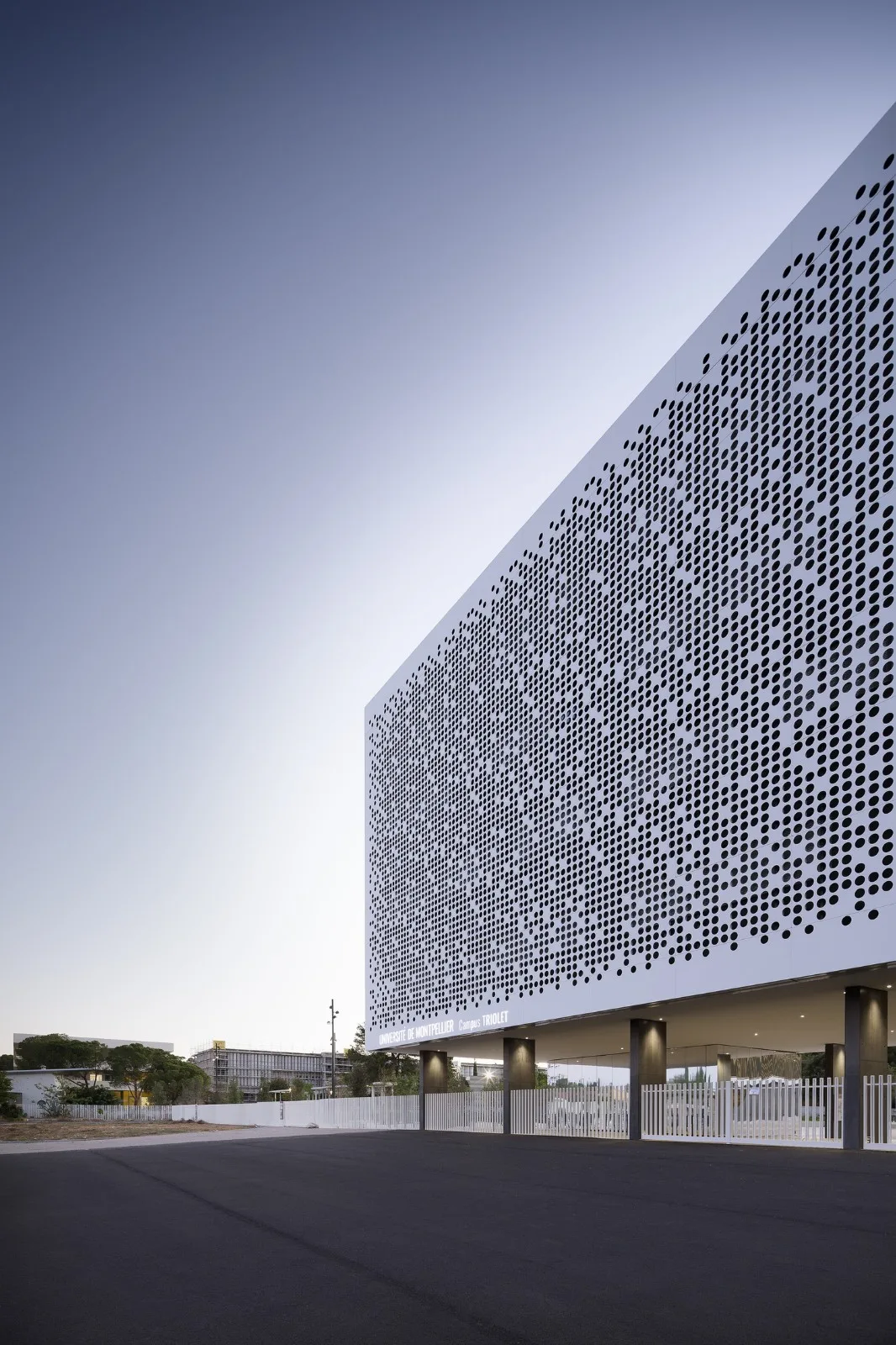
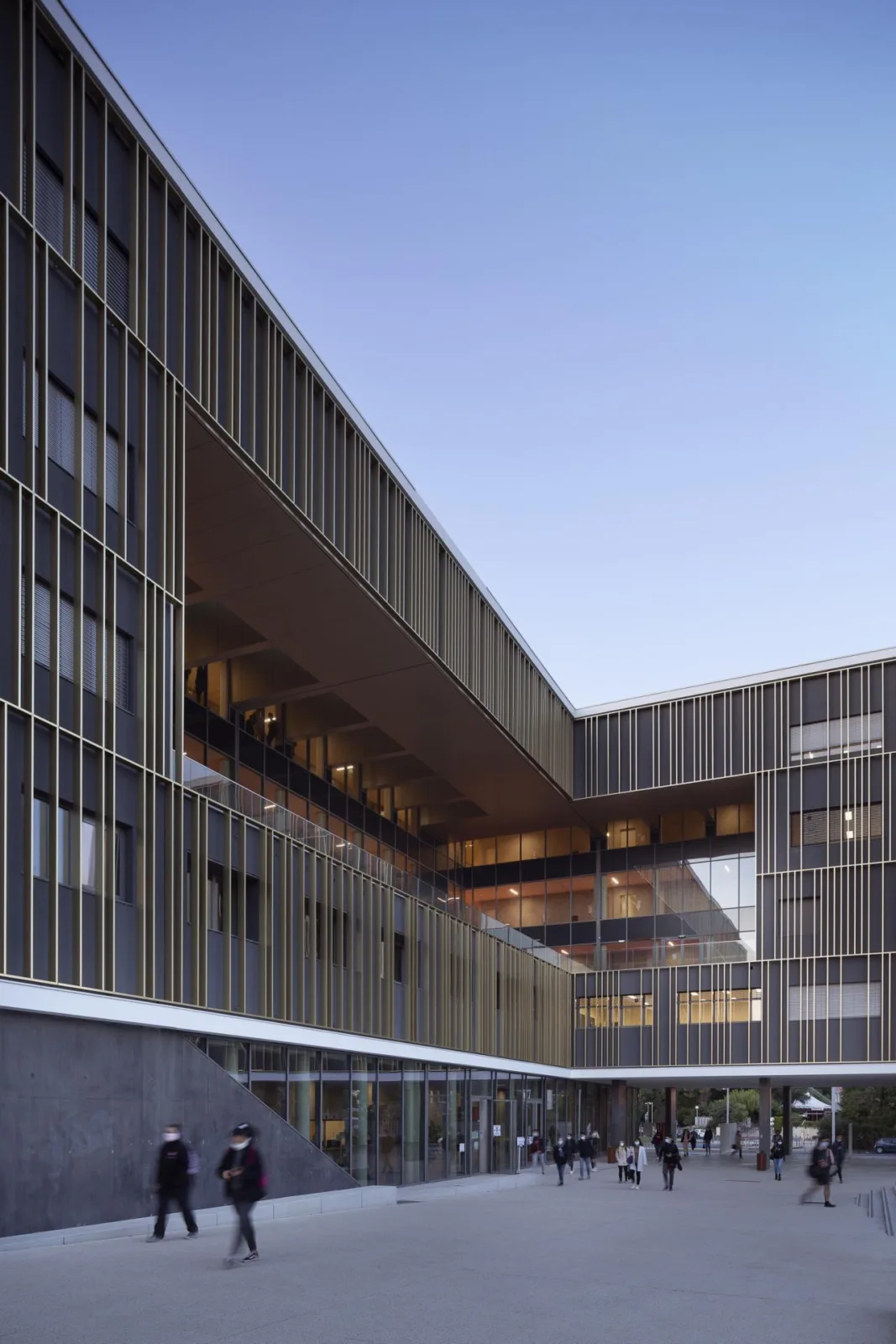
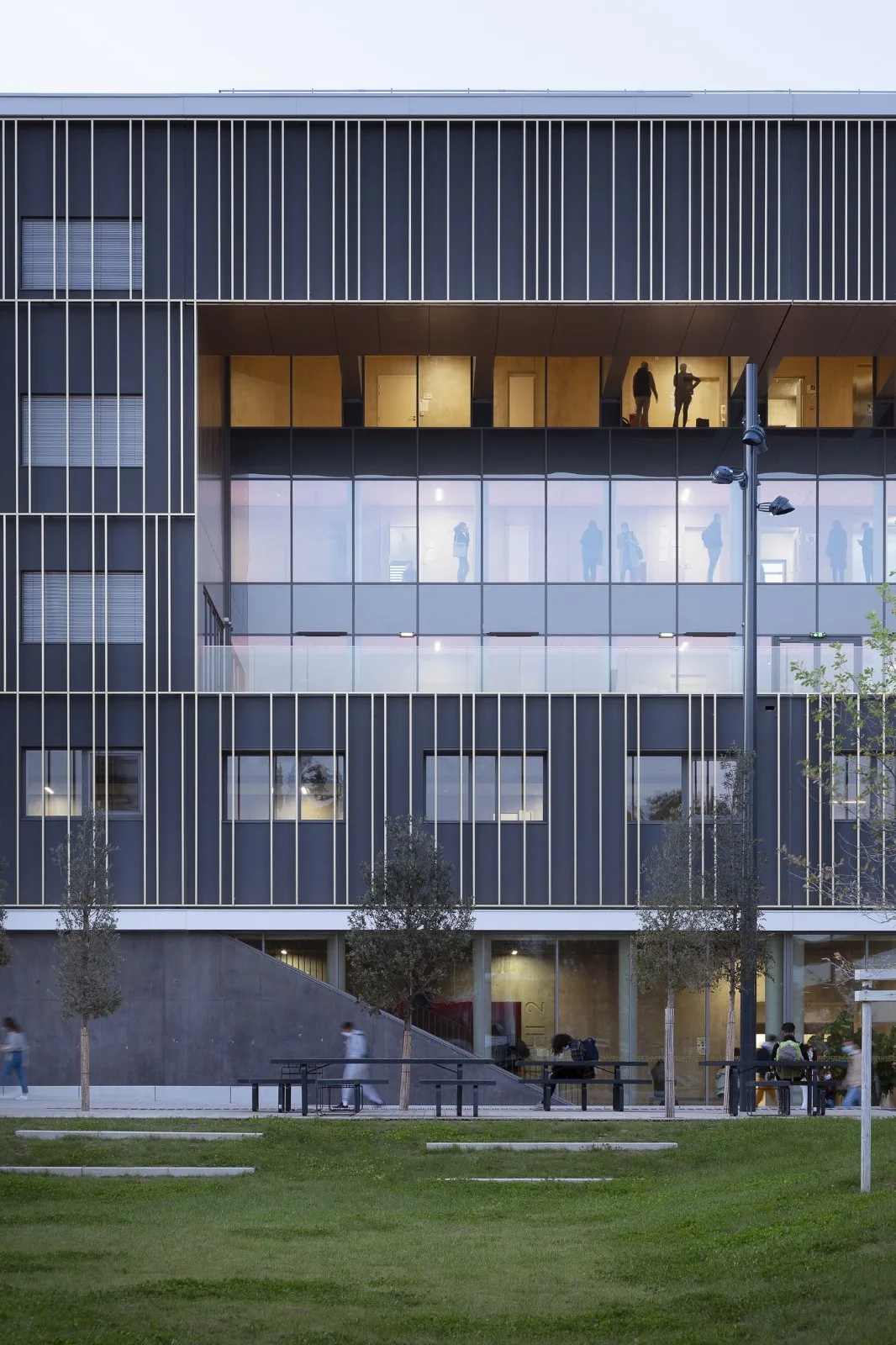
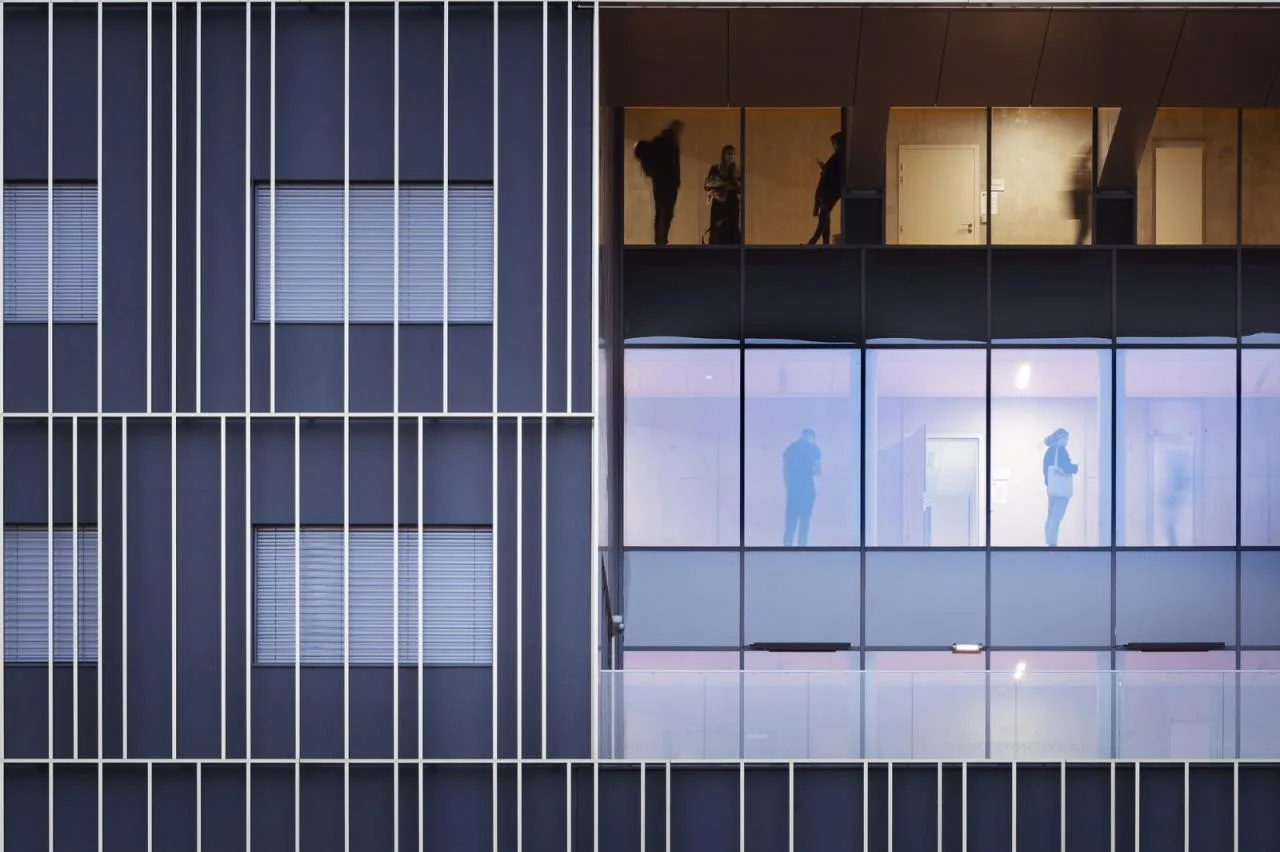
Inside, a tall corridor leads to a newly designed courtyard. The decision to increase the height and depth of the space supports the preservation of openness, extending the work and study environment outward towards the garden, which has been reopened for public use.
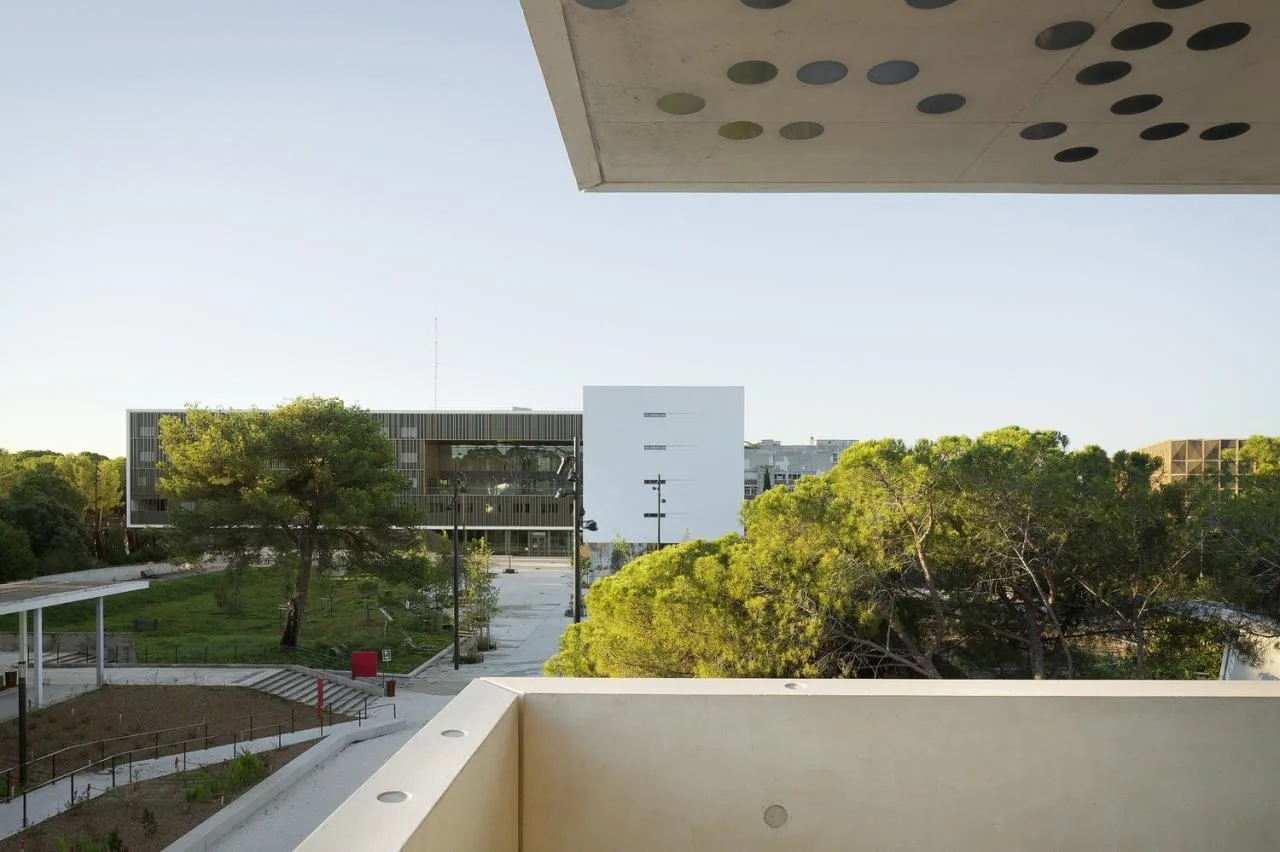
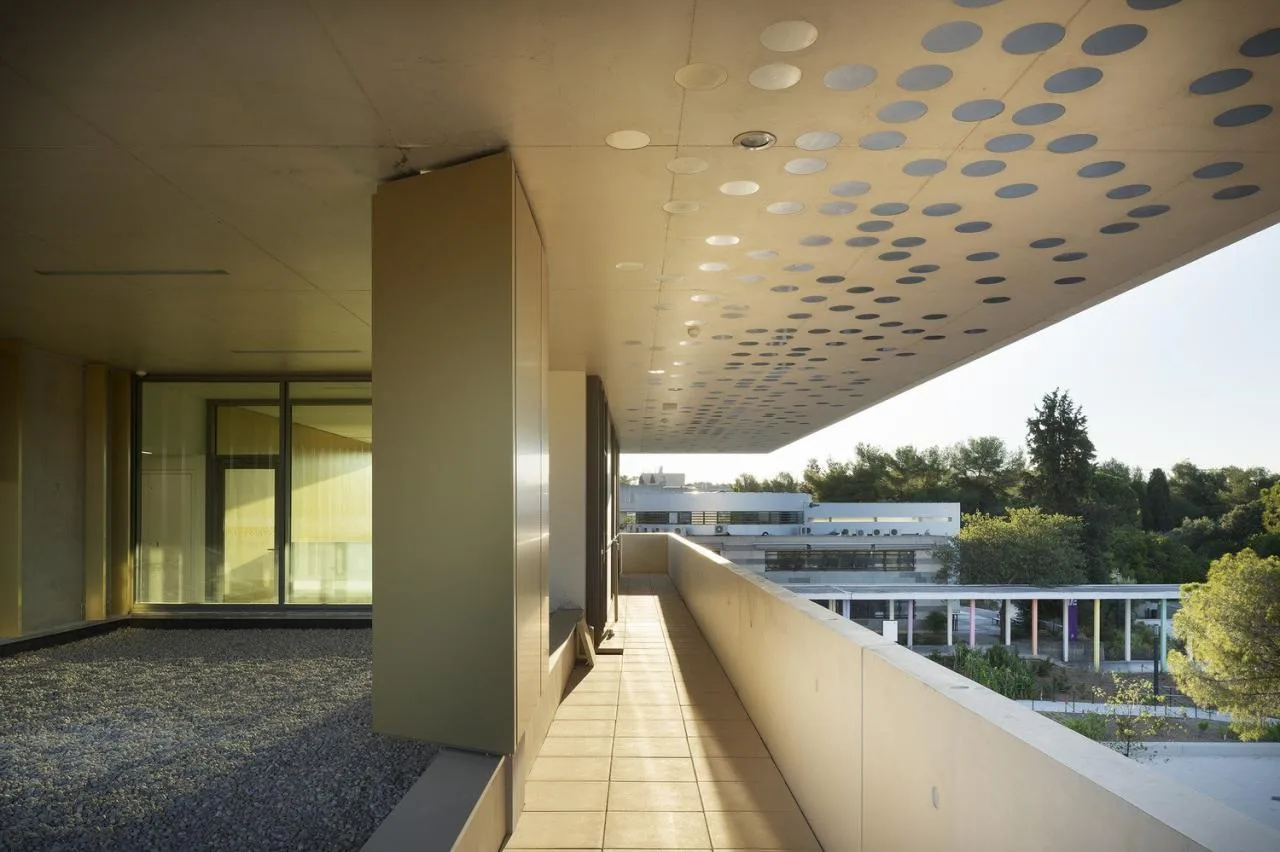
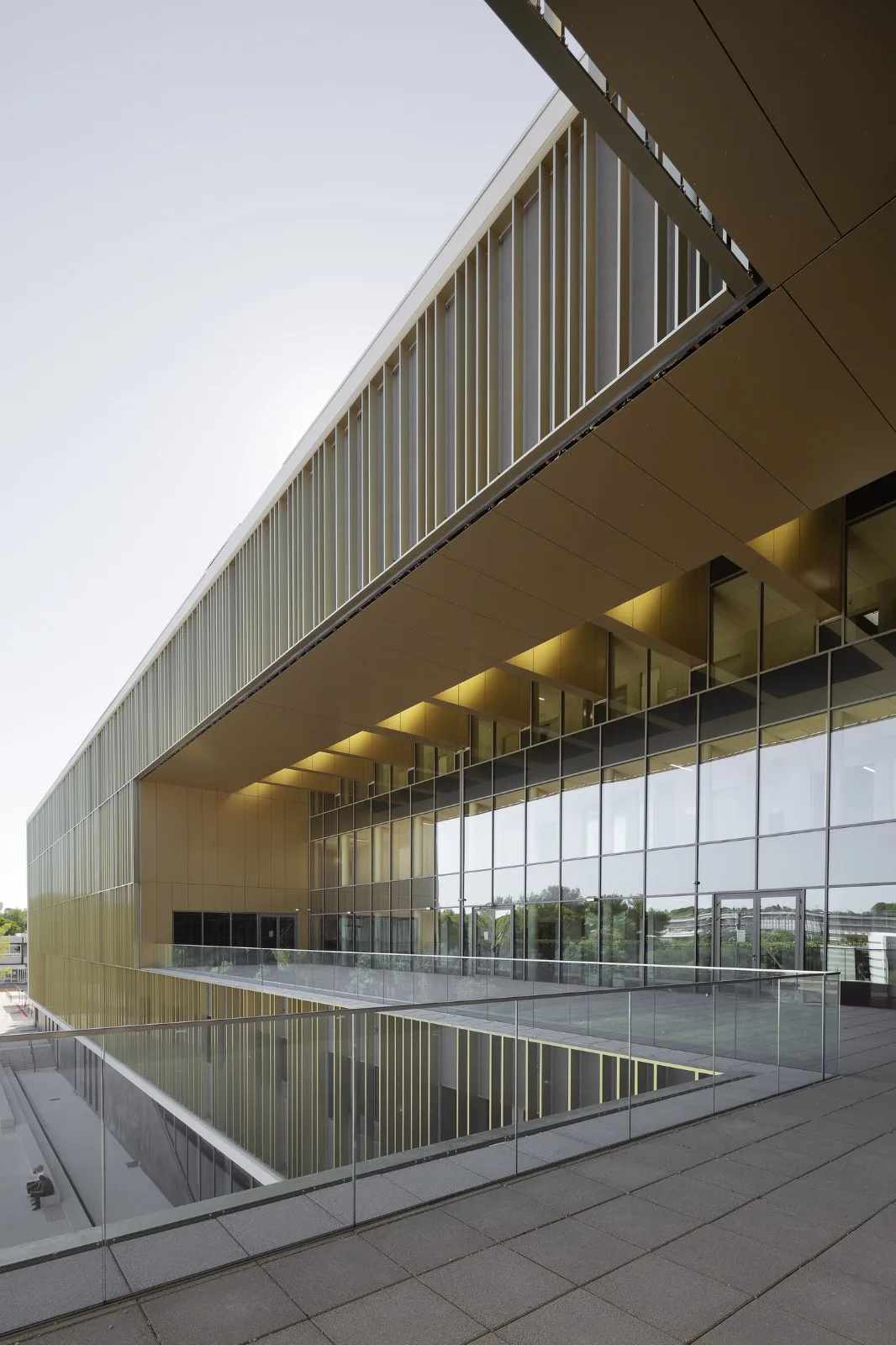
The black and white light poles complement each other, constructed from the same materials as the square’s framework. This creates a modern, timeless architectural style with a Mediterranean touch. Thanks to the strategic positioning of the two buildings, the project carefully considers the scale of both the campus and the surrounding area. It enhances the university’s presence and identity within the city, serving as a prominent gateway to the campus.
By redefining the entrance with transparency and offering views into the campus and communal spaces, the university projects itself as a dignified yet dynamic and open institution that reflects the spirit of its era.
Project Drawings
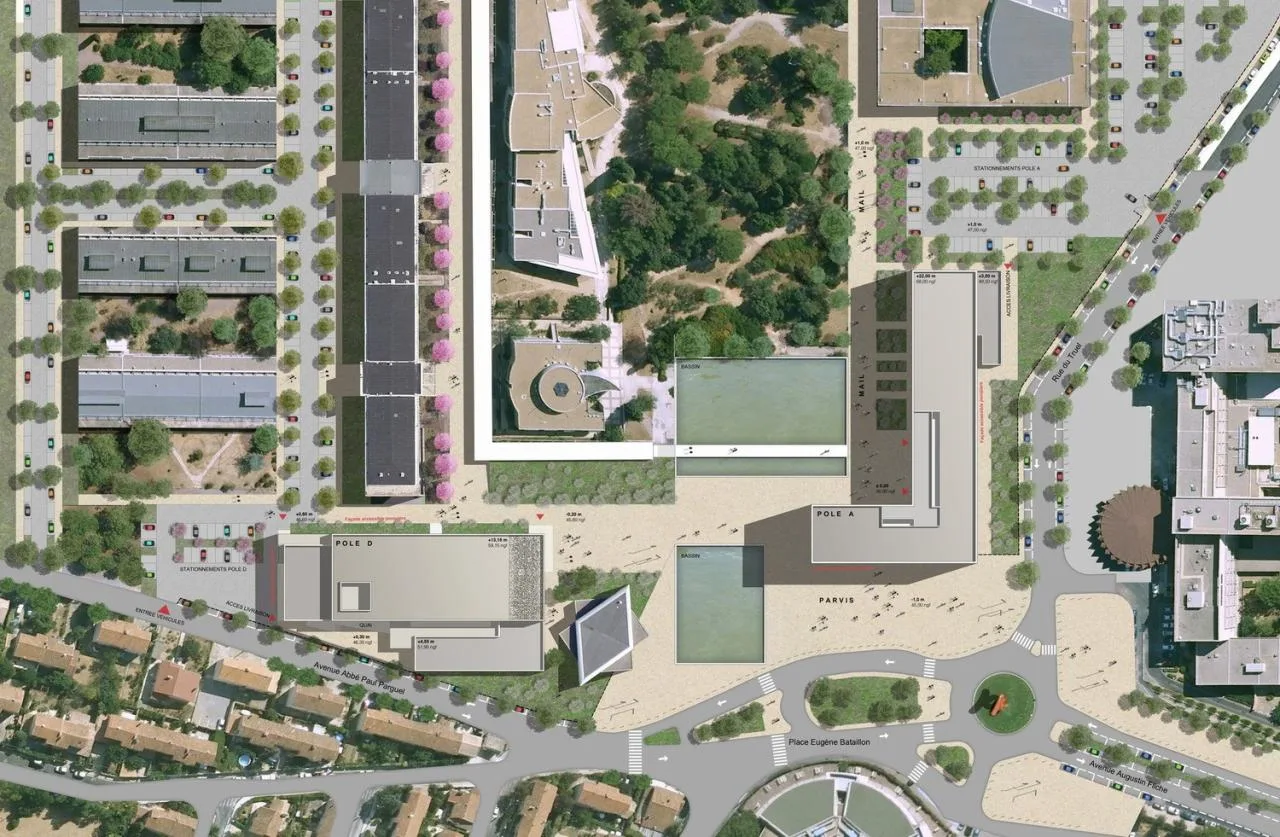
△ General Layout Plan
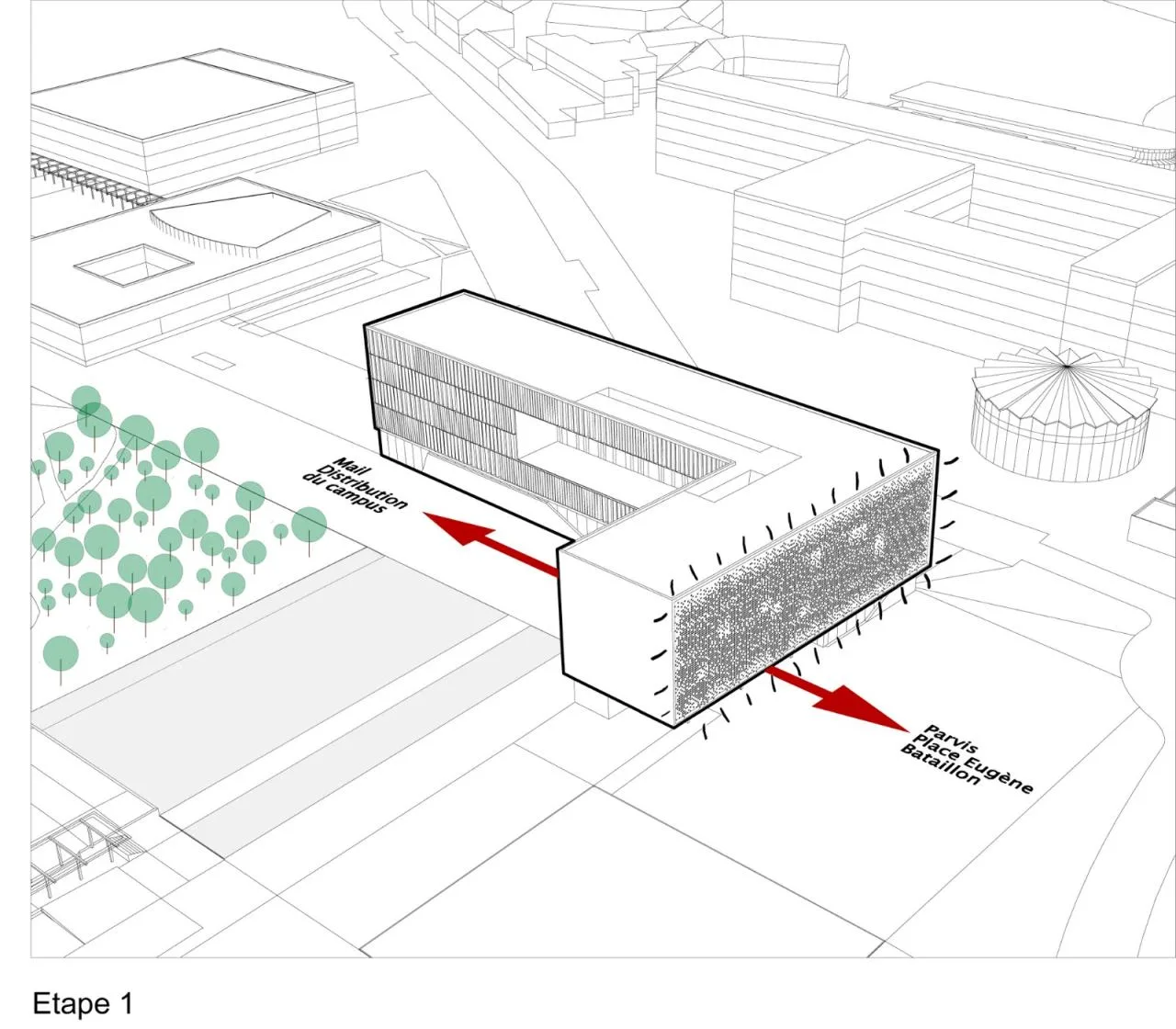
△ Analysis Chart
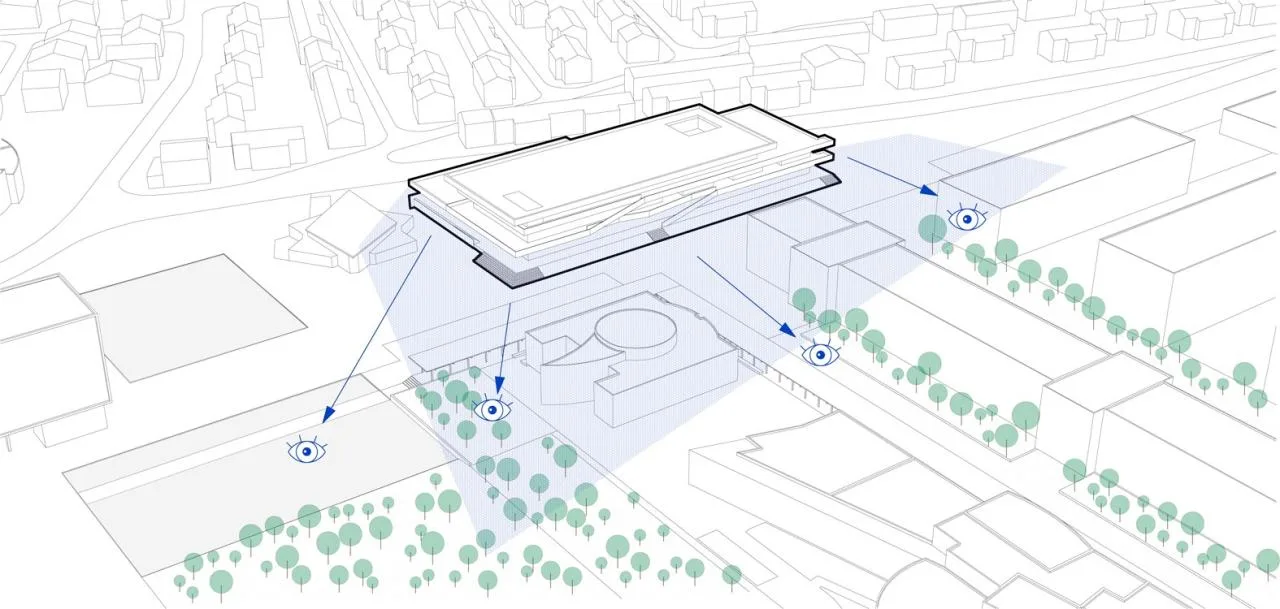
△ Visual Analysis Diagram
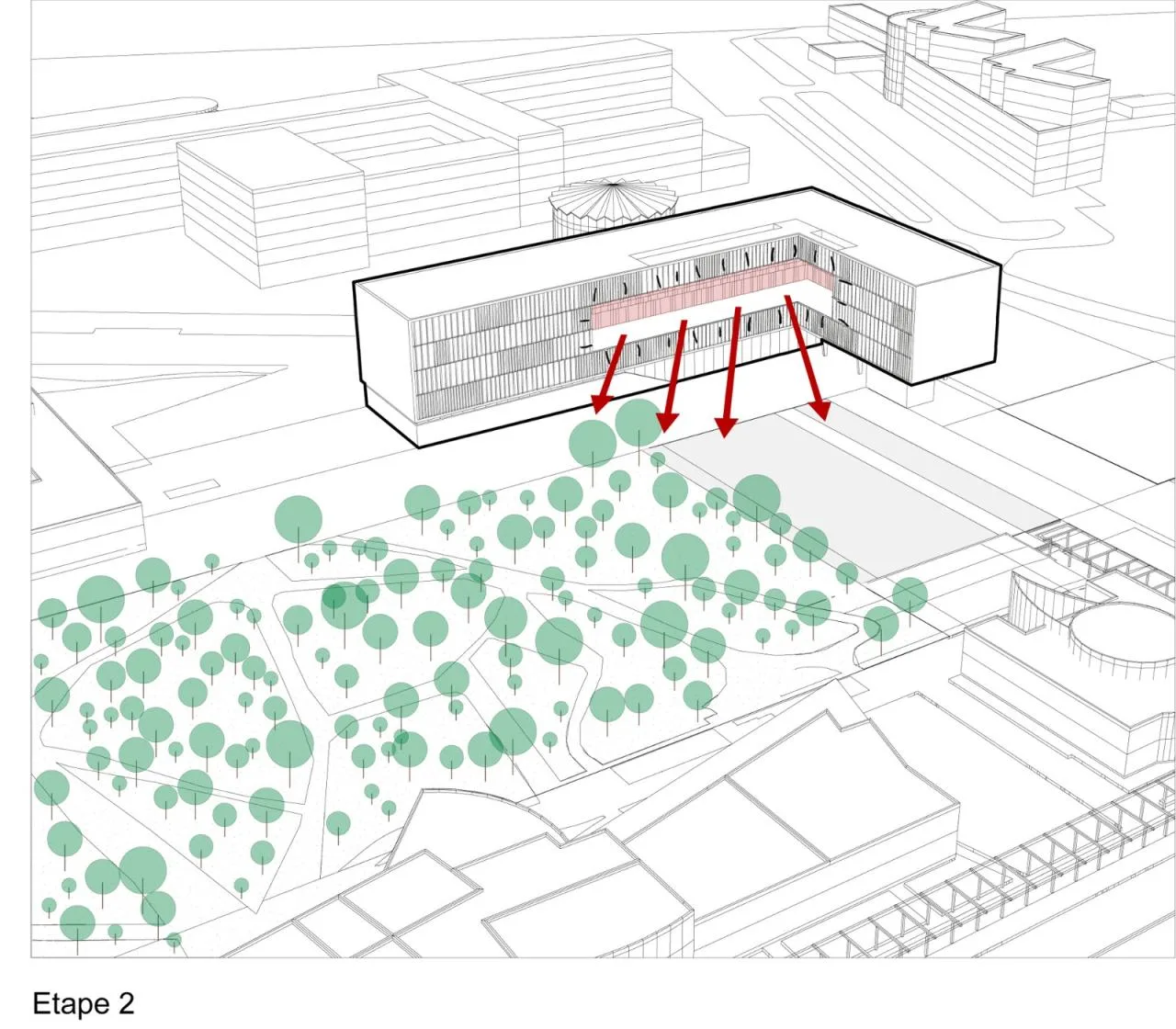
△ Visual Analysis Diagram
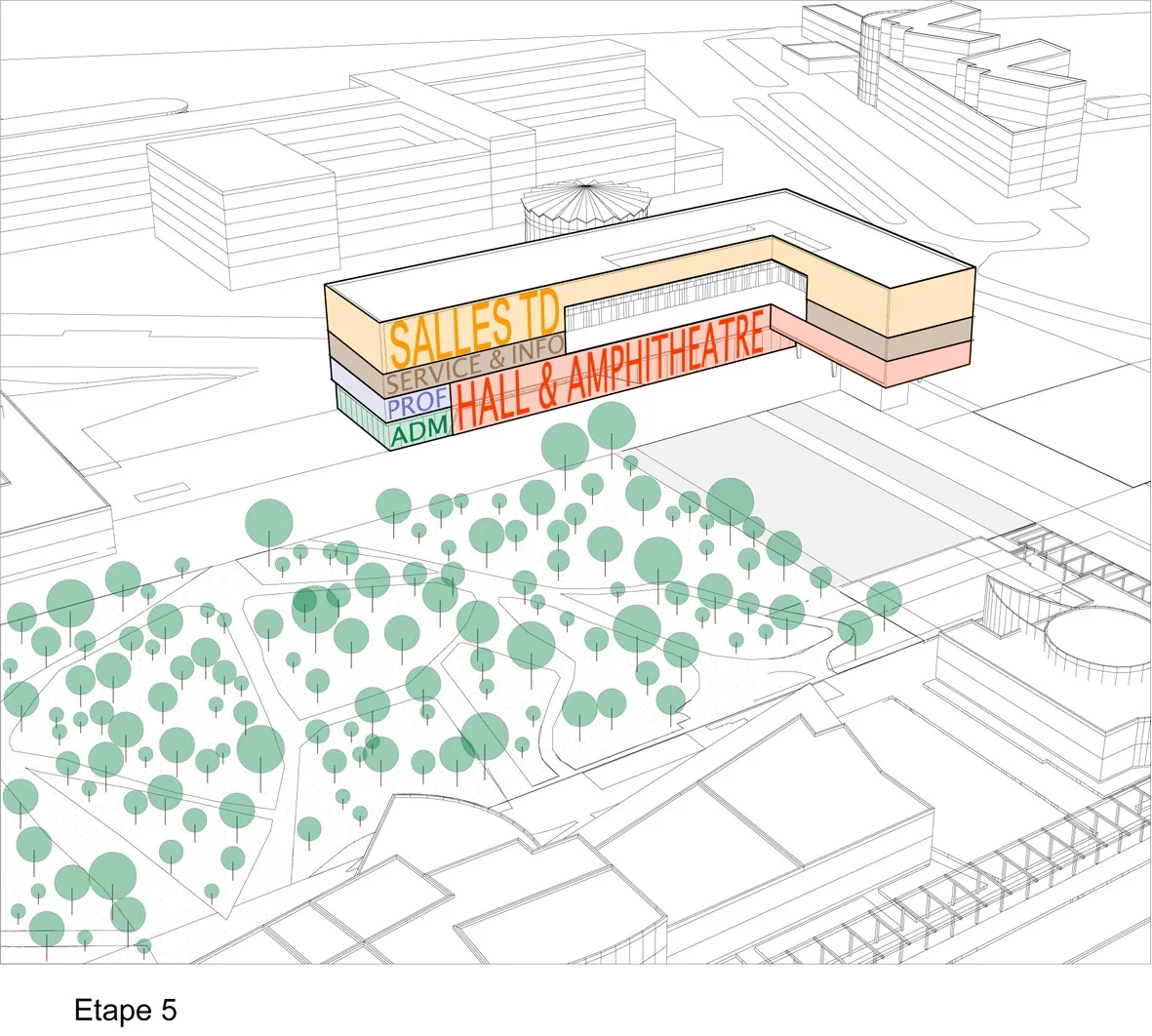
△ Functional Zoning Diagram
Project Information
Architectural Design: BPA Architecture
Area: 12,570 m²
Year: 2020
Photographer: Marie Caroline Lucat
Manufacturers: GRADHERMETHIC, Porcelanosa
Lead Architect: Antoine Assus
Project Designer: Marta De Prada
Collaborative Architect: TRACE ARCHITES
Landscape Architect: Base












Must log in before commenting!
Sign Up